

“Colonel Thorp Has Gone to York State” — Buying the Regiment’s Horses
Private George D. Benedict of Company G to his wife Sarah, Manassas Junction, 8 August 1863.
“we the 130 Regt are Released from all Army Duty for a long time Because we are agoing to be turned over into Cavelry Shure, and Colonel Thorp has gone to York State now and took 9 men with him to By Cavelry horses for the Regiment they are to be taken to Portage Station and thare the Government pays for them”
— George D. Benedict, 8 August 1863
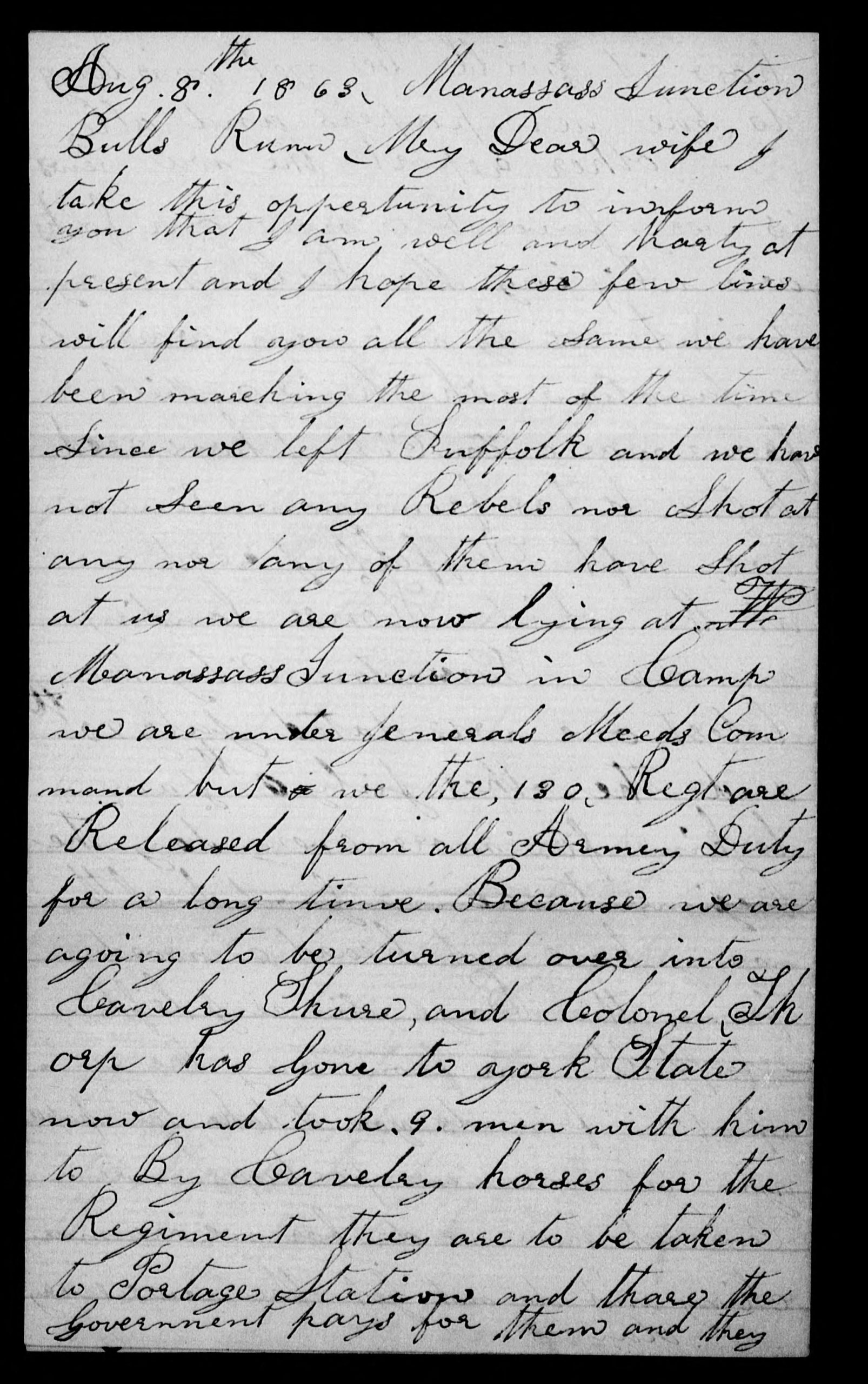
The whole page, transcribed
Aug 8th 1863 Manassass Junction Bulls Run
My Dear wife I take this oppertunity to inform you that I am well and harty at present and I hope these few lines will find you all the Same
we have been marching the most of the time Since we left Suffolk and we have not Seen any Rebels nor Shot at any nor any of them have Shot at us we are now lying at Manassass Junction in Camp
we are under Generals Meeds Command but we the 130 Regt are Released from all Army Duty for a long time Because we are agoing to be turned over into Cavelry Shure,
and Colonel Thorp has gone to York State now and took 9 men with him to By Cavelry horses for the Regiment they are to be taken to Portage Station and thare the Government pays for them and they
Most of what survives about Thomas J. Thorp is official — commissions, casualty returns, the roster he certified in 1865. This is different. It is a private in Company G, writing to his wife, who happens to record what his colonel was doing in the first week of August 1863.
Thorp had gone back to New York State with a detail of nine men to buy horses for the regiment, the animals to be gathered at Portage Station where the government would pay for them. The 130th New York Volunteers had just been released from all duty under Meade pending its conversion, and Thorp was the officer sent home to mount it. When the First New York Dragoons rode, it rode on horses he went and bought.
The date, the number of men and the delivery point are all specific, and they come from a witness with no reason to invent them — he was telling his wife why the regiment was standing still. For the conversion itself, and Colonel Alfred Gibbs’s part in bringing it about, see At His Solicitation: How the 130th New York Became the First Dragoons.
Benedict did not live to serve long under the change he reported. He was shot at Todd’s Tavern on 7 May 1864 and died of the wound on 25 May. The full run of his letters, transcribed page by page, is on his own page.
Source. Benedict, G. D. (1863–1864). George D. Benedict Papers (Collection #4943-z). Southern Historical Collection, Louis Round Wilson Special Collections Library, University of North Carolina at Chapel Hill.
“We Do Not Like Him at All” — 26 January 1864
Private George D. Benedict of Company G to his wife Sarah at Belvidere, from winter quarters near the Rapidan.
“Sarah, T. J. Thorp is with us now, we do not like him at all Because he drinks. The officers most all drink and Gamble … and dont Regard the Sabboth day at all. oh So much evil in the army, the Good Lord have mercy upon us all.”
— George D. Benedict, 26 January 1864
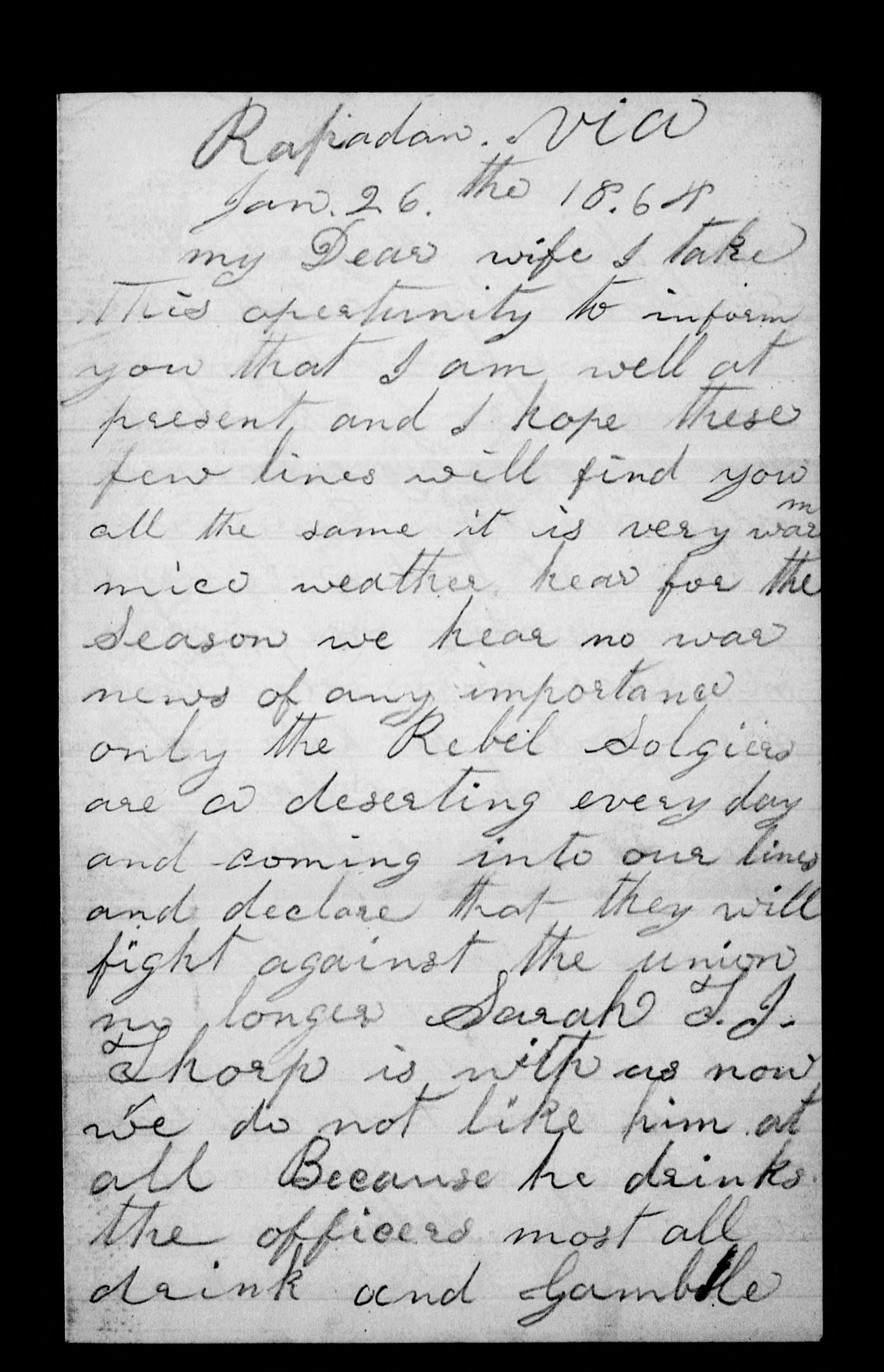
The whole page, transcribed
Rapadan Va Jan 26th 1864
my Dear wife I take this opertunity to inform you that I am well at present and I hope these few lines will find you all the same
it is very warm nice weather hear for the Season
we hear no war news of any importance only the Rebel Solgiers are a deserting every day and coming into our lines and declare that they will fight against the union ny longer
Sarah T. J. Thorp is with us now we do not like him at all Because he drinks the officers most all drink and Gamble
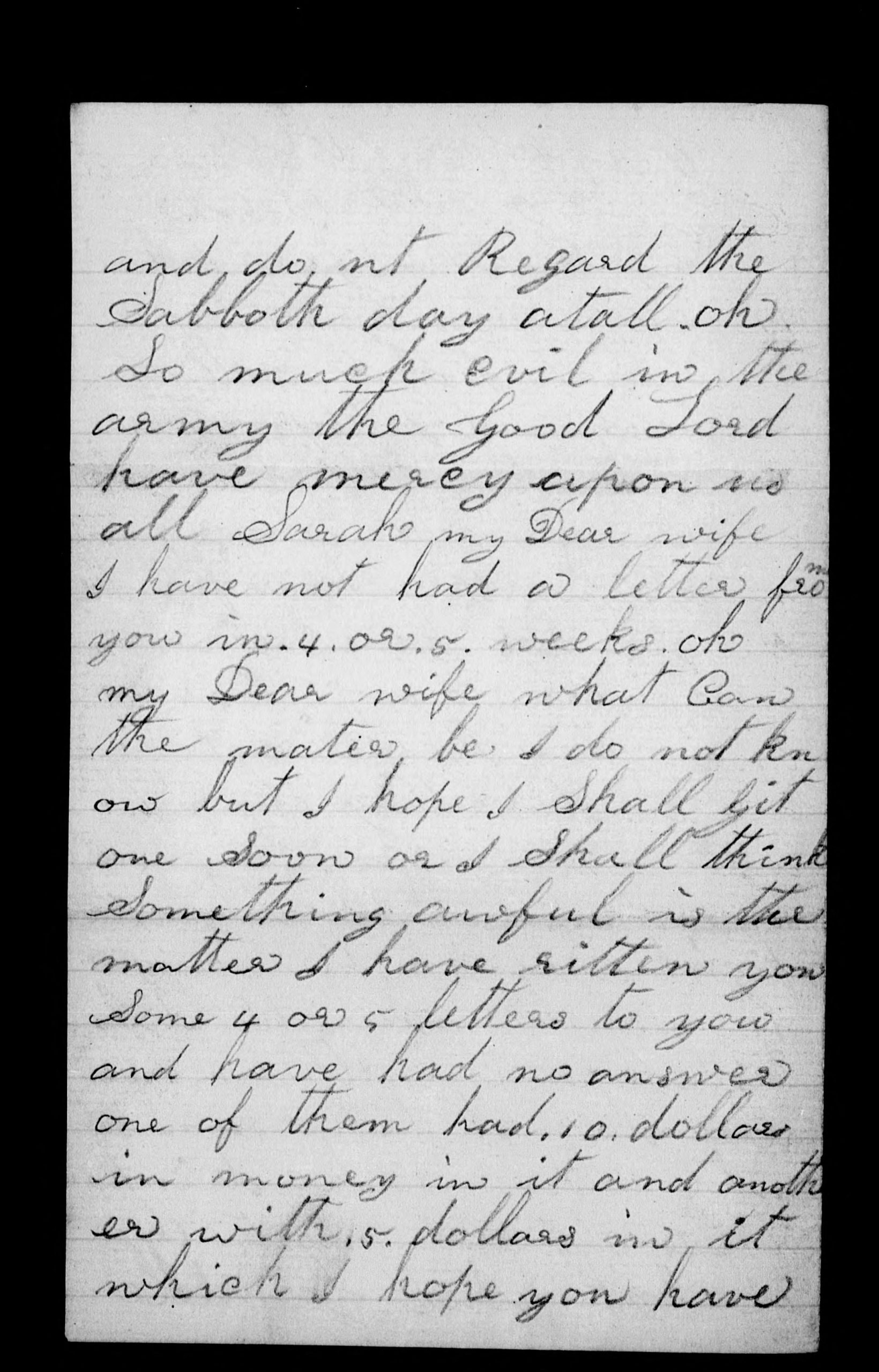
The whole page, transcribed
and dont Regard the Sabboth day at all oh So much evil in the army the Good Lord have mercy upon us all
Sarah my Dear wife I have not had a letter from you in 4 or 5 weeks oh my Dear wife what Can the mater be I do not know but I hope I Shall git one Soon or I Shall think Something awful is the matter
I have ritten you Some 4 or 5 letters to you and have had no answer one of them had 10 dollars in money in it and another with 5 dollars in it which I hope you have
This is published here because the other letter is. The same private, writing to the same wife in the same series, reported five months earlier that Colonel Thorp had gone home to New York with nine men to buy the regiment’s horses — the document that explains how the First New York Dragoons got mounted, and which appears elsewhere on this page. A site that carried that letter and suppressed this one would be flattering the record rather than keeping it.
How much weight it carries, honestly assessed. Benedict was a private in Company G. He was devout: he tented nine months with a Close Baptist preacher, thanked God in nearly every letter, and asked his wife for her prayers. The complaint he makes here is not aimed at Thorp alone — it runs straight on into the officers most all drink and Gamble and dont Regard the Sabboth day. It is a religious man’s indictment of army manners, with his colonel named as the nearest instance.
It should also be weighed against the man’s own habit of judgement. In July 1863 Benedict wrote that he hoped Captain Brundage would never rejoin the company, calling him a drinking, swearing, quick-tempered fellow whom the company mostly hated — and ten days later was applying to that same captain for a furlough and recording that he would do all he could. Benedict’s first impressions were strongly felt and did not always last.
What it does not do is touch Thorp’s record as a soldier. He was wounded five times with this regiment, commanded it, and certified its roster at muster-out in 1865. Officers who drank were the rule rather than the exception in the Army of the Potomac, and Benedict says as much in the same breath. The letter records what some of the men in the ranks thought of their colonel in the winter of 1864. That is all it records, and it is worth having.
The full run of Benedict’s letters, transcribed page by page, is on his own page. He was shot at Todd’s Tavern on 7 May 1864 and died of the wound on 25 May.
Source. Benedict, G. D. (1863–1864). George D. Benedict Papers (Collection #4943-z). Southern Historical Collection, Louis Round Wilson Special Collections Library, University of North Carolina at Chapel Hill.
Compiled Military Service Record
The index to the compiled service records confirms Thomas J Thorp in the 19th Cavalry (the regiment’s Fold3 designation; it is the First New York Dragoons), Company F and S, entering service as Lt. Col. and leaving it as Col..
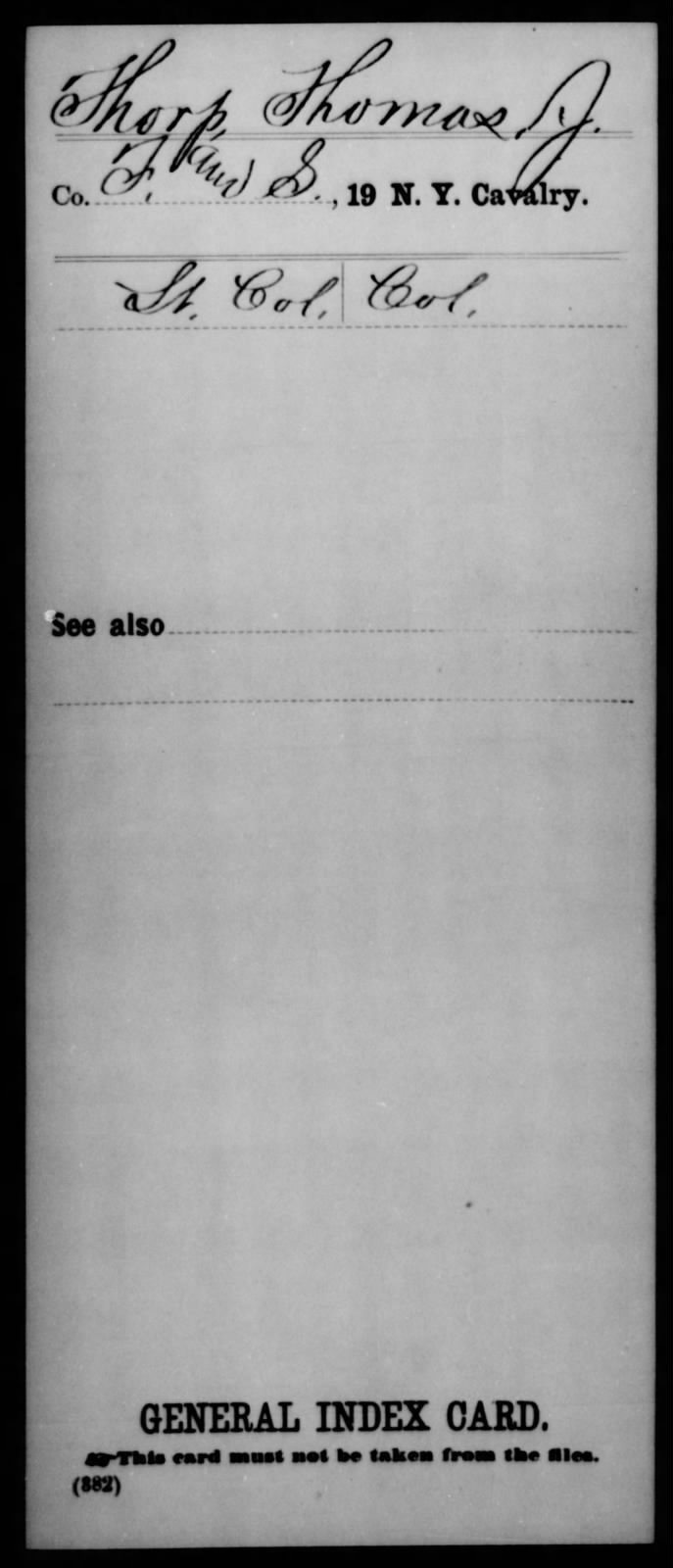
| Military unit | 19th Cavalry |
|---|---|
| Company | F and S |
| Enlistment rank | Lt. Col. |
| Discharge rank | Col. |
Thorp, Thomas J.
Co. F and S, 19 N. Y. Cavalry.
Lt. Col. -        Col. -
See also [blank]
[printed footer] General Index Card. This card must not be taken from the files. (382)
Source. Compiled Military Service Record, Thorp, Thomas J, Co. F and S, 19th Cavalry. Indexes to the Carded Records of Soldiers Who Served in Volunteer Organizations During the Civil War (NARA microfilm publication M551), Record Group 94. Digital image, Fold3 (https://www.fold3.com/image/292322110), accessed 18 September 2026. Transcribed from the original by sight.
Views: 65