The Fort Fillmore Surgeon
James Cooper McKee, M.D.
1830–1897 · Assistant Surgeon, U.S. Army
The post surgeon who watched a command surrender without a fight — and spent the rest of his life making sure the record told the truth.
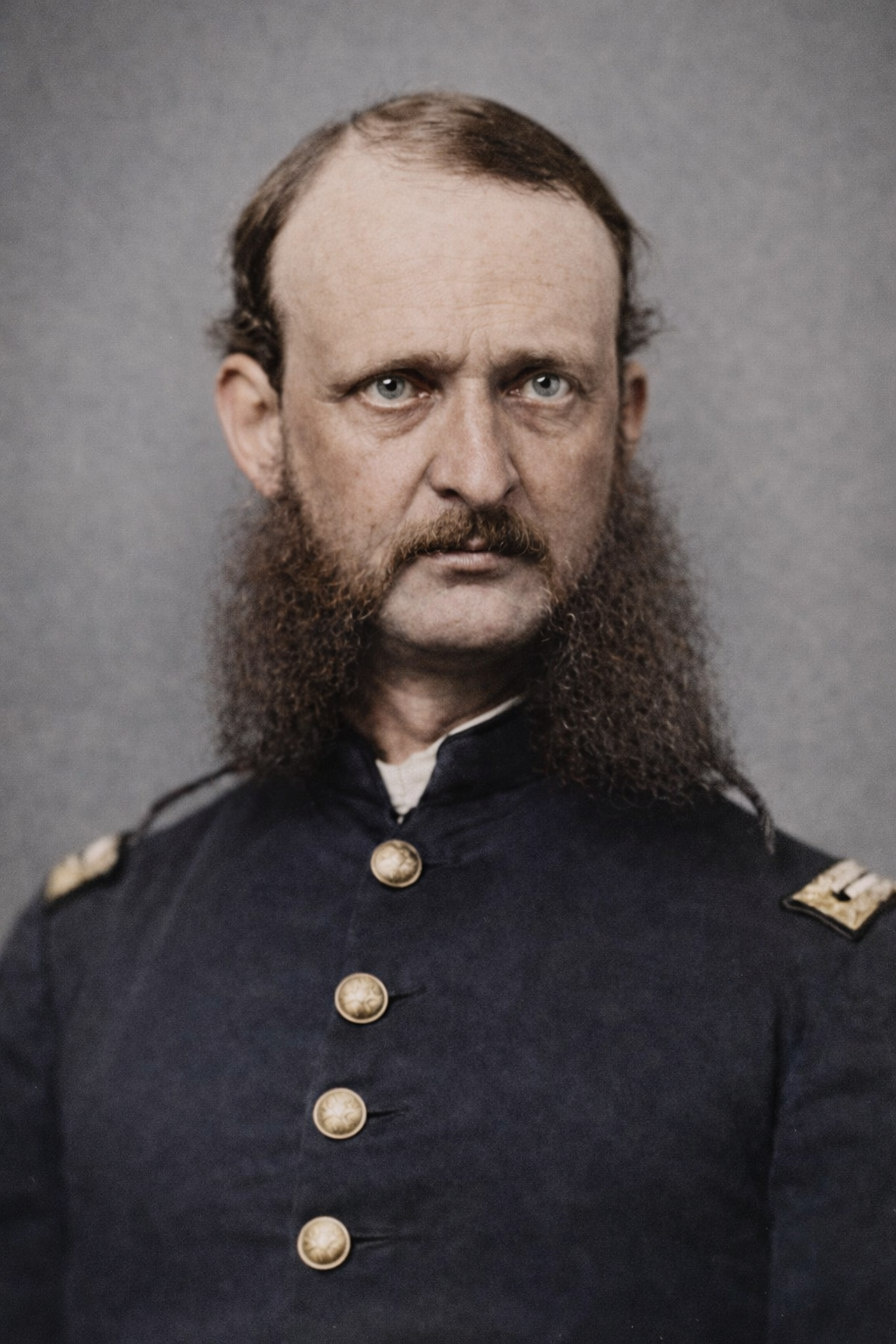
In July 1861, at Fort Fillmore in the New Mexico desert, Assistant Surgeon James Cooper McKee watched his commanding officer surrender some five hundred United States troops to a smaller Confederate force — without firing a shot. McKee never forgot it. His eyewitness Narrative of the Surrender, written in protest and run through three editions, is still the sharpest first-hand account of one of the Union’s most humiliating early-war episodes. But he was far more than that single day: a Brady-photographed army surgeon whose career ran from Navajo campaigns in the Southwest to the three-thousand-bed Lincoln General Hospital in wartime Washington.
The surgeon
McKee was born in Butler, Pennsylvania, on May 18, 1830, took his degree at the Medical University of Pennsylvania in 1852, and — after a bout of ill health that sent him to the Alleghenies to recover — passed the Army Medical Board and was commissioned an Assistant Surgeon in August 1857.
His first posting carried him straight to the frontier. From Fort Union, New Mexico, McKee served in three Indian campaigns — two against the Navajo, one against the Apache — and scouted the enormous stretch of country between Fort Massachusetts in Colorado and Fort Buchanan near the Sonora border. He was still in the territory in the spring of 1861, when the nation split.
Fort Fillmore, July 1861
That July, McKee was the surgeon of the command at Fort Fillmore under Major Isaac Lynde. Confronted by Confederate forces under Lt. Col. John Baylor, Lynde abandoned the post and retreated toward the Organ Mountains; his exhausted, thirst-broken column was overtaken at San Augustine Springs, where he surrendered the entire command without a fight.
“A surrender so disgraceful,” McKee wrote, that he felt bound to set down exactly what he had seen — and did, in the pamphlet that made his name.
Rather than let the affair pass into a fog of official excuses, McKee published his Narrative of the Surrender of a Command of U.S. Forces at Fort Fillmore, New Mexico. It is a physician’s clear-eyed, angry, minute-by-minute indictment — and it has been cited by military historians ever since.
The fight to clear his name
Paroled with the rest of the command, McKee made his way back to Fort Leavenworth and began a second, quieter battle — on paper. His oath of parole, his letter to the Adjutant General, and the Adjutant General’s office’s reply survive to trace it:


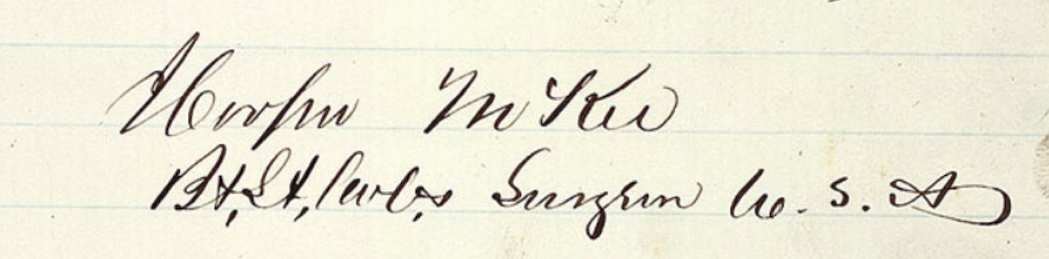
The original files. The manuscripts of McKee’s campaign are published on this site as cited document pages, with full scans and transcriptions:
The 1882 petition and the Adjutant General’s “unquestionably illegal” review · File 7460: the pamphlet the War Department refused (1885) · His last word, and the death of Isaac Lynde (1886) · All the documents, in story order
War and hospitals
Exchanged in June 1862, McKee spent the rest of the war building and running hospitals. He was Assistant Medical Director of Pope’s Army of Virginia through the Second Battle of Bull Run and Antietam, then Medical Director with the Army of the Potomac. He organized general hospitals in Chester, Baltimore, and Pittsburgh, and finally took command of the Lincoln General Hospital in Washington — three thousand beds, more than twenty-five thousand sick and wounded soldiers under his care before the war closed.
He served on across the post-war West — Santa Fe, the Presidio, Fort Whipple in Arizona, Vancouver Barracks — and was brevetted Lieutenant Colonel for faithful and meritorious service. Disabled by an accident, he retired in 1891 and died on December 11, 1897, his surrender narrative already in its third edition. (Some genealogical sources give 1904; Heitman’s official Historical Register of 1903 and Armstrong’s 1961 study both record December 11, 1897 — a contemporary obituary search is under way.)
In His Own Words
His Works & the Record
The Fort Fillmore Story, in Context
References
The works and primary sources this page draws on, in APA (7th ed.) style.
- Brady, M. (n.d.). [Portrait of Surgeon James Cooper McKee, U.S. Army] [Photograph; digitally colorized reproduction]. Reproduced at https://alfredgibbs.com/major-james-cooper-mckee-doctor/
- Kelton, J. C. (1885, December 18). [Reply of the Adjutant General’s Office to Assistant Surgeon J. C. McKee] [Letter]. Reproduced at https://alfredgibbs.com/major-james-cooper-mckee-doctor/
- McKee, J. C. (1890, December). Narrative of a doctor’s experience as a line officer and combatant, in the fall of 1860. Journal of the United States Cavalry Association, Fort Leavenworth, Kans. Reproduced at https://alfredgibbs.com/narrative-of-a-doctors-experience-as-a-line-officer-and-combatant-in-the-fall-of-1860-j-c-mckee/
- McKee, J. C. (1861a). [Letter to the Adjutant General] [Letter]. Reproduced at https://alfredgibbs.com/major-james-cooper-mckee-doctor/
- McKee, J. C. (1861b). Oath of parole [Archival document]. Reproduced at https://alfredgibbs.com/major-james-cooper-mckee-doctor/
- McKee, J. C. (1886). Narrative of the surrender of a command of U.S. forces at Fort Fillmore, New Mexico, in July, A.D. 1861 (3rd ed.). John A. Lowell & Co. Full text at https://alfredgibbs.com/narrative-surrender-of-a-command-of-u-s-forces-fort-filmore-full-text/
- WikiTree. (n.d.). James Cooper McKee (1830–1904). Retrieved November 27, 2024, from https://www.wikitree.com/wiki/McKee-1209
Accuracy review: this page was checked against primary and scholarly sources and corrected where the record required it on July 7, 2026. Historical research is never finished — if new evidence changes anything stated here, this page will be updated, and corrections will be noted rather than made silently.
Views: 40