Table of Contents
Introduction
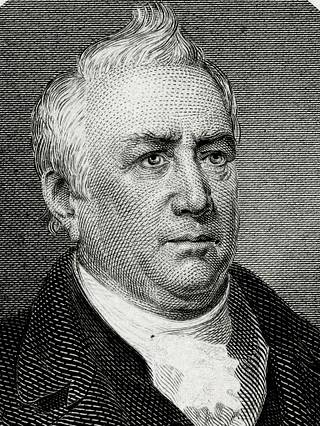
Welcome to this companion page for our latest historical feature, tracing the threads of legacy that connect one of the early architects of American governance, Oliver Wolcott Jr., to his grandson, General Alfred Gibbs. While the podcast above gives you a narrative feel for their stories, this page serves as your expanded guide into the enduring significance of their contributions. This isn’t just about revisiting a set of dusty biographies, it’s about examining how purpose and character echo through generations.
The Man Behind the Systems: Oliver Wolcott Jr.
Born in 1760, Oliver Wolcott Jr. entered public service at a time when the United States was more idea than institution. His early roles in the Treasury Department, first as Auditor and then as Comptroller, weren’t merely administrative. Wolcott was part of a foundational team tasked with creating a functioning financial system from scratch. He implemented the protocols, designed the forms, and built the machinery that would make the nation’s finances intelligible and sustainable. This wasn’t just bookkeeping, it was systems design on a national scale.
In 1795, President George Washington appointed Wolcott to succeed Alexander Hamilton as Secretary of the Treasury. That transition is often overshadowed by Hamilton’s long legacy, but it deserves far more attention. Wolcott maintained momentum during a delicate time in American politics. He relied on Hamilton’s insights not out of deference, but because he understood that vision is strengthened by humility and collaboration. That kind of leadership—strategic, grounded, and open to guidance, is as relevant today as it was in the 1790s.
Leading Through Challenge and Criticism
As Secretary of the Treasury, Wolcott had to find ways to finance a government that was expanding beyond its means. This meant negotiating not just financial solutions, but political ones. He faced significant opposition from emerging Democratic-Republicans like Albert Gallatin, who pushed for more congressional control over financial policy. Wolcott found himself caught between vision and resistance, tasked with maintaining stability while defending the very legitimacy of his office.
By 1800, criticism had reached a boiling point, prompting his resignation. But he didn’t quietly exit the stage. In 1801, he requested a full congressional investigation into the Treasury’s operations during his tenure. The investigation cleared his name. This act wasn’t just defensive, it was an assertion of transparent, accountable leadership. In today’s context, it would be the equivalent of a CEO inviting an audit during a storm of public doubt.
From Policy to Principle: Wolcott’s Enduring Impact
Wolcott’s approach to governance was defined by discipline, modesty, and an unwavering belief in public service. His life invites us to consider the kind of leadership that doesn’t rely on spectacle but on the integrity of systems and the consistency of values. Whether you’re leading a school, a nonprofit, or a government agency, his example reminds us that sustainable leadership demands structure, ethics, and courage under scrutiny.
Legacy Through the Generations: Enter General Alfred Gibbs
Oliver Wolcott Jr.’s story doesn’t end with his departure from Washington. It continues through his family, especially through his daughter Laura and her son Alfred Gibbs. Raised in a family steeped in civic tradition, Alfred would go on to graduate from West Point, serve with distinction in the Mexican-American War, and eventually lead cavalry forces in the Civil War.
What’s striking is not just what Alfred did, but how his values may have been shaped by the legacy he inherited. Family accounts and historical traditions tell us that Wolcott Jr. participated in the destruction of the statue of King George III at Bowling Green in 1776. According to those same accounts, Wolcott helped melt the lead from that statue into bullets for the Continental Army. These weren’t just stories around the dinner table, they were formative narratives, signaling that public duty and sacrifice were expectations, not exceptions.
Interpreting the Family Narrative
Imagine growing up with those tales as your moral compass. For a young Alfred Gibbs, hearing that his grandfather literally turned symbols of oppression into tools of resistance could only deepen his sense of purpose. It’s easy to see how this family lore, steeped in action and honor, influenced his decision to pursue military service. The idea that leadership involves both defending a nation and embodying its ideals likely found early roots in those stories.
Final Reflections and Gratitude
In revisiting the life of Oliver Wolcott Jr., we also begin to understand the groundwork he laid not only for American financial policy but for the generations that followed him. His legacy is not confined to office or title. It lives on in the lives of those he inspired, including a grandson who fought for the Union with the same sense of purpose his grandfather once applied to building a nation.
A special thanks goes to Dr. John Frederick Lizzi, whose insightful paper Oliver Wolcott Jr.: A Political Life served as the cornerstone for this exploration. His work brought clarity and texture to this story and helped direct much of the research that powers this site.
Thanks for exploring this story with me. For more, visit https://alfredgibbs.com/wolcott-at-litchfield-ct-statue-of-king-george-iii/.
References
Green, G. H. Jr. (2025). Wolcott at Litchfield, CT: Statue of King George III. AlfredGibbs.com. Retrieved from https://alfredgibbs.com/wolcott-at-litchfield-ct-statue-of-king-george-iii/
Views: 147