Corpus Christi Army Depot Department of Texas, 1852‑56

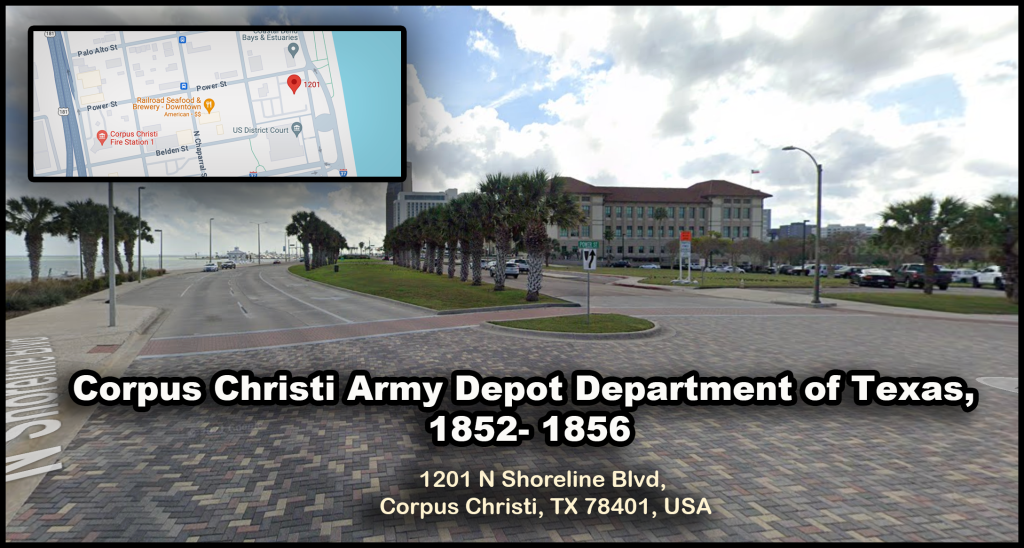
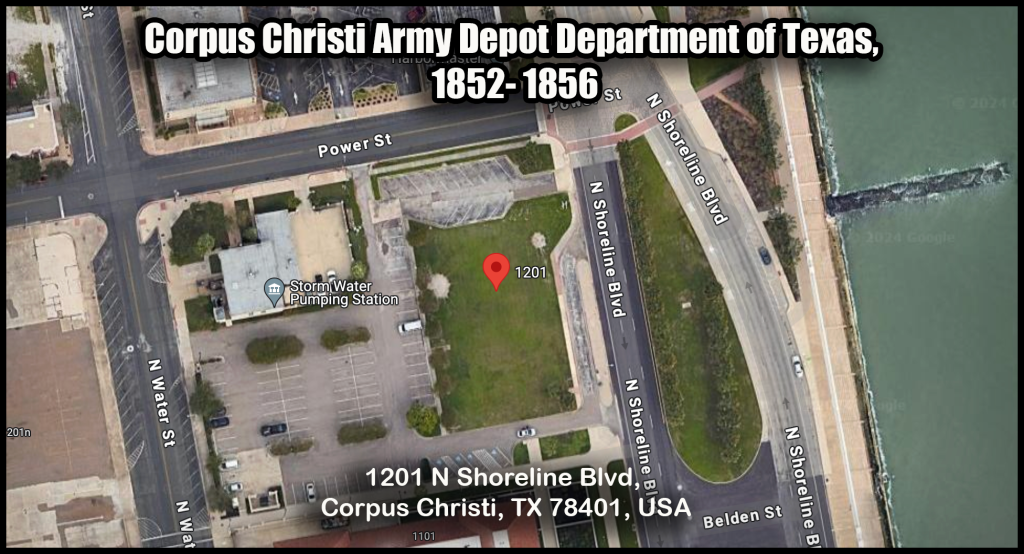
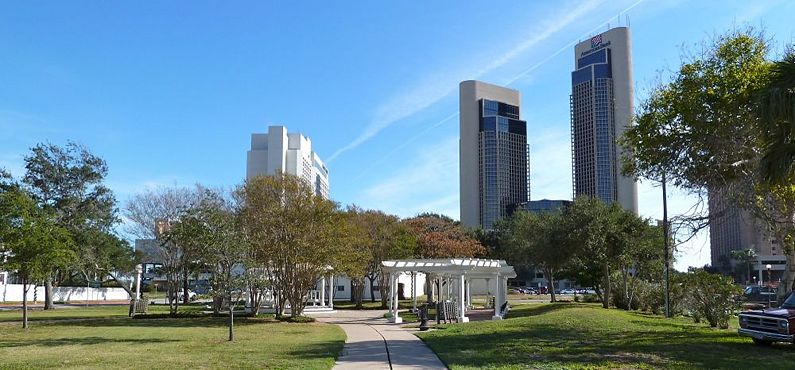
Location of Fort Marcy as it looks today. This is only a small area of what the fort looked like in Taylor's time.

Corpus Christi Army Depot Department of Texas, 1852‑56

Establishment

Camp Marcy was established in July 1845 when the first Federal troops arrived from St. Joseph’s Island Depot.

Location

Troops were encamped along the western shore of Corpus Christi Bay and the southern shore of Nueces Bay.

Marker

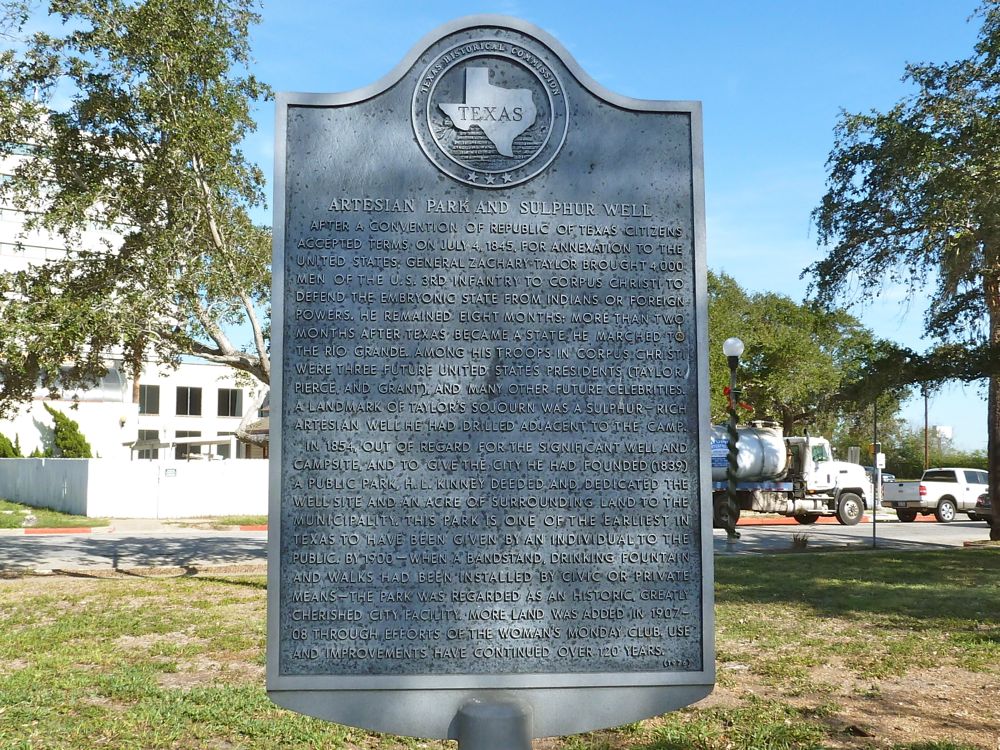
A historical marker is located in Artesian Park at 800 North Chaparral Street, recognizing the camp’s significance.


Construction

Built by General Zachary Taylor’s forces in early 1846.

Earthwork Batteries

The fort included earthwork (sand and shell) shore batteries built in 1846 along the bay, near what is now the Visitors Center at 1201 North Shoreline Blvd.

Mexican-American War

After Taylor’s main army left for the Rio Grande frontier in March 1846, the town of Corpus Christi was minimally garrisoned.

Federal Dragoons

Federal Dragoons occupied the city in 1849.

Civil War Use

The earthwork batteries were repaired and reused by Confederate forces in 1862, armed with guns from Kinney’s Fort and additional ones found elsewhere.

Reconstruction

The city was garrisoned again during Reconstruction from 1869 to 1870.

Historical Context

Mexican-American War

This conflict between the United States and Mexico was primarily over territorial disputes. General Zachary Taylor’s forces were stationed in the Corpus Christi area before advancing to the Rio Grande, leading to several significant battles.

American Civil War

During the Civil War, Corpus Christi and its fortifications, including Fort Marcy, saw activity as Confederate forces utilized and armed existing fortifications. The Union and Confederate forces contested control over Texas and its resources.

Reconstruction Era

Following the Civil War, Federal troops were stationed in many Southern towns, including Corpus Christi, to enforce new policies and maintain order during the Reconstruction period.

Significance of the Corpus Christi Army Depot Department of Texas, 1852‑56

Strategic Location

Corpus Christi’s location along the Gulf of Mexico made it strategically important for both supply lines and military movements.

Military Heritage

The establishment and use of Camp Marcy and Fort Marcy highlight the area’s role in significant military campaigns and its continuing importance through different conflicts and periods.

Historical Legacy

The remnants of these fortifications and their historical markers serve as a reminder of the military history that shaped the region.

Camp Marcy was initially established in July 1845 when the first Federal troops arrived from St. Joseph’s Island Depot. These troops were stationed along the western shore of Corpus Christi Bay and the southern shore of Nueces Bay. A historical marker for Camp Marcy can be found in Artesian Park at 800 North Chaparral Street.

Fort Marcy, constructed by General Zachary Taylor’s forces in early 1846, featured earthwork shore batteries made of sand and shell, initially positioned near what is now the Visitors Center at 1201 North Shoreline Blvd. After Taylor’s main army departed for the Rio Grande frontier in March 1846, the town was minimally garrisoned. Federal Dragoons later occupied Corpus Christi in 1849.

In 1862, the Confederates repaired and reused the earthwork batteries, arming them with three old guns transferred from Kinney’s Fort, along with three additional guns found elsewhere. The city was also garrisoned during the Reconstruction period from 1869 to 1870.


This image is a digitally and enhanced image of an Old Map Corpus Christi 1887. I have linked this version of the map to the original source image.
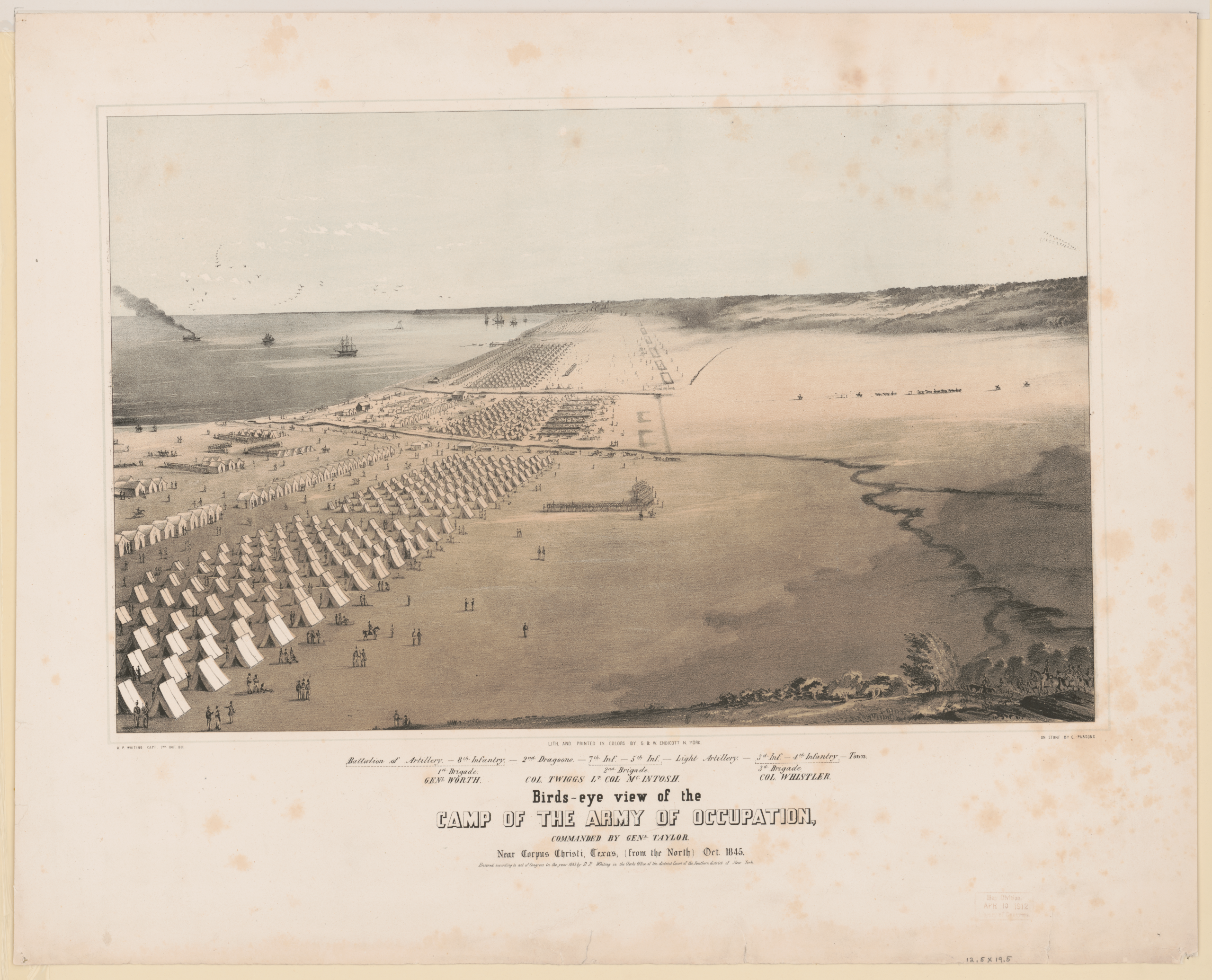
Colorized and enhanced birds-eye view of the camp of the army of occupation, commanded by Genl. Taylor, near Corpus Christi, Texas, (from the North) Oct. 1845 / D.P. Whiting, Capt. 7th Inf. del. ; on stone by C. Parsons. (LARGE IMAGE LINKED TO THIS PHOTO)
This is a bird's-eye view of the larger area. The inlet to the Gulf has been dredged considerably since that time.
Researcher’s Note: The following text is my interpretation of the primary source documents I have assembled to draw conclusions and piece together previously undocumented histories of General Gibbs. If you read the documents collected and believe you have a different interpretation or can add additional context to this page, don’t hesitate to contact me so I can honor your findings. – Garland H. Green, Jr. 
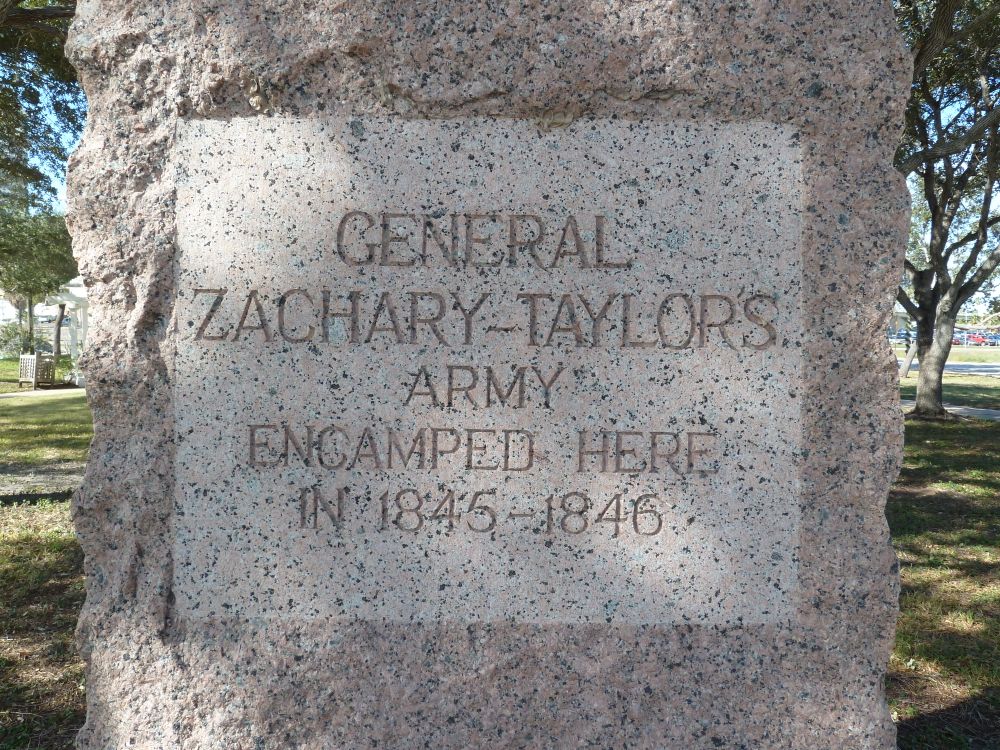
Artesian Park Zachary Taylor Marker, photo by John Stanton 7 Dec 2011
Artesian Park Site of Camp Marcy in Downtown Corpus Christi
Artesian Park Marker

TRANSLATION OF THE ABOVE IMAGE

TEXAS

ARTESIAN PARK AND SULPHUR WELL

After a convention of Republic of Texas citizens accepted terms on July 4, 1845, for annexation to the United States, General Zachary Taylor brought 4,000 men of the U.S. 3rd Infantry to Corpus Christi to defend the embattled state from Indians or foreign powers. He remained eight months. More than two thousand volunteers came to stay. The majority of the Rio Grande, among his troops were Corpus Christi men. There future United States presidents included Pierce and Grant, and many other future celebrities.

A landmark of Taylor’s sojourn was a sulphur-rich artesian well he had drilled adjacent to the camp. In 1851, out of regard for the significant well and campsite, and to give the city he had founded (1839) a public park, he signed deeds and dedicated the wellsite and adjacent surroundings to the municipality. This park is one of the earliest in Texas to have been given by an individual to the public (1845). When bandstand, drinking fountain, and walks had been installed by civic or private means, the park was regarded as an historic gem. Cherished city facility, more land was added in 1917–18 through efforts of the Woman’s Monday Club. Use and improvements have continued over 100 years.

This is a colorized and enhanced rendition of General Zachary Taylor. I have linked this rendition to the original photograph.

Views: 177