Enlisted Men of Fort Fillmore: A Working Database
A Working Database
Enlisted Men of Fort Fillmore
The rank and file, recovered name by name from the surviving papers, 1857.
These men gave their service and then vanished into the archives for more than a century and a half. We can name them again because the documents that recorded their pay survived, scanned from the originals held at West Point, and because the men signed for their own money. Reading those signatures, rather than the muster clerk’s roll, lets us correct names the records themselves got wrong and, for the first time, say what each man actually did.
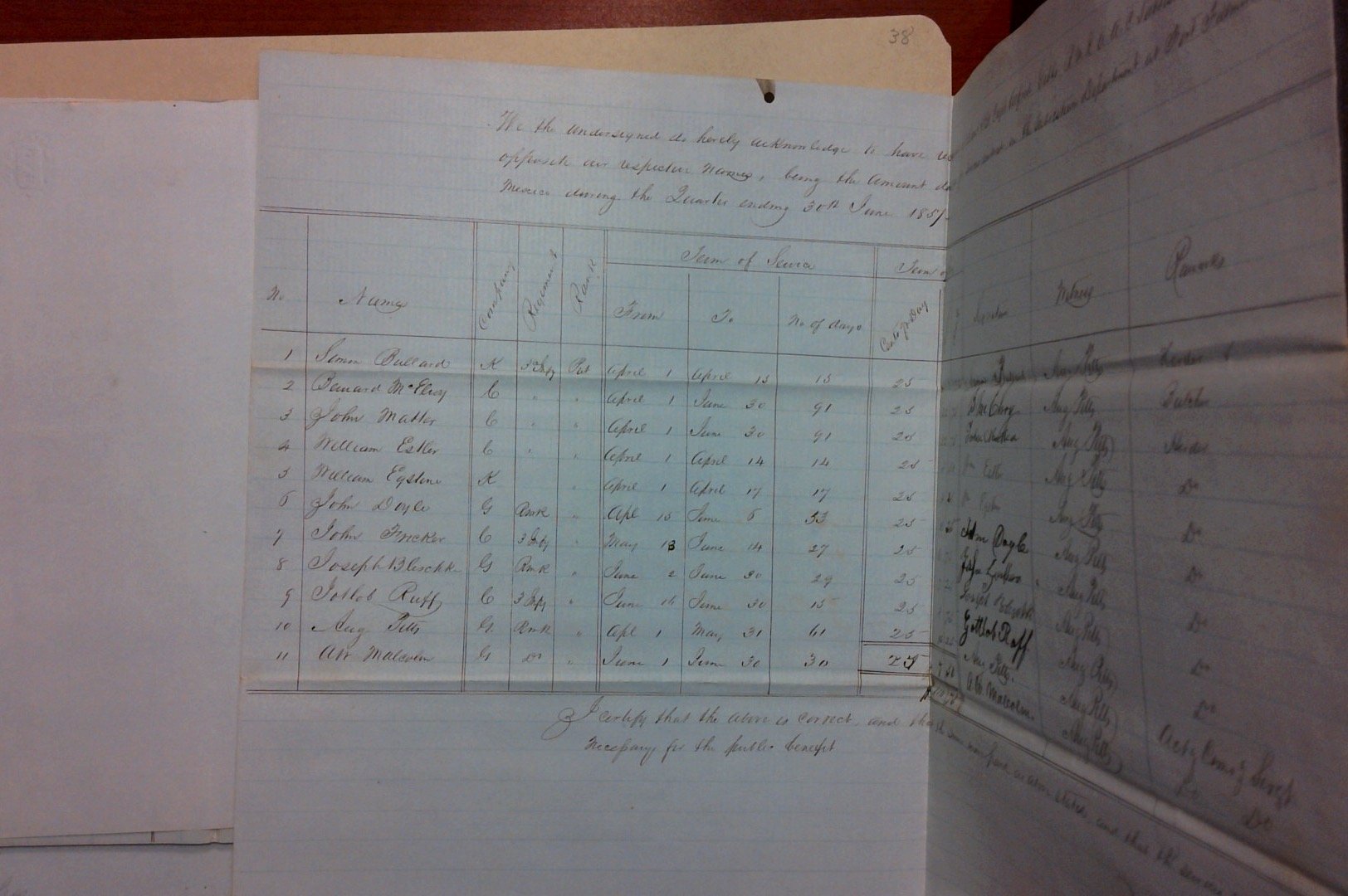
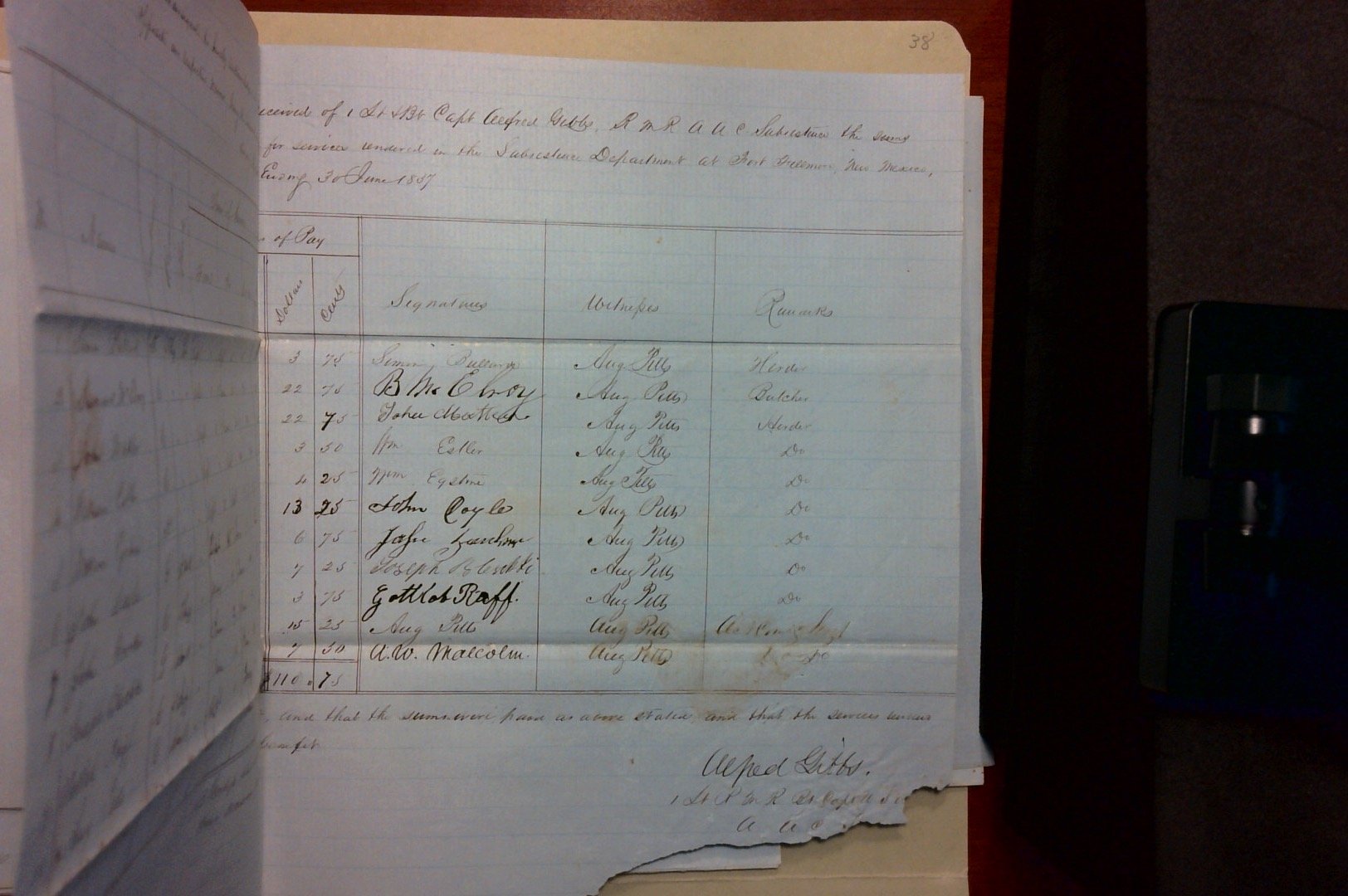
In the spring and summer of 1857, the food supply of Fort Fillmore was kept running by a small detail of enlisted men on extra duty in the Subsistence Department, under the eye of Bvt. Captain Alfred Gibbs, the officer responsible for paying them. They were herders, mostly, the men who drove and tended the post’s cattle, with one butcher among them, and they answered to Acting Commissary Sergeant August Pitts, who supervised the detail and witnessed every man’s pay. Several of them could not write their names and signed with a cross. One, Henry Eckstein, carried a German surname the American clerks could never quite spell. They were paid twenty-five cents a day.
From the West Point Papers
Where the Names Come From
Every name here was first read from General Gibbs’s own subsistence papers, scanned from the originals at West Point: the muster roll that records each man’s company and service, and the receipt the men signed for their pay. Click either sheet to enlarge.
Confirmed in the National Archives
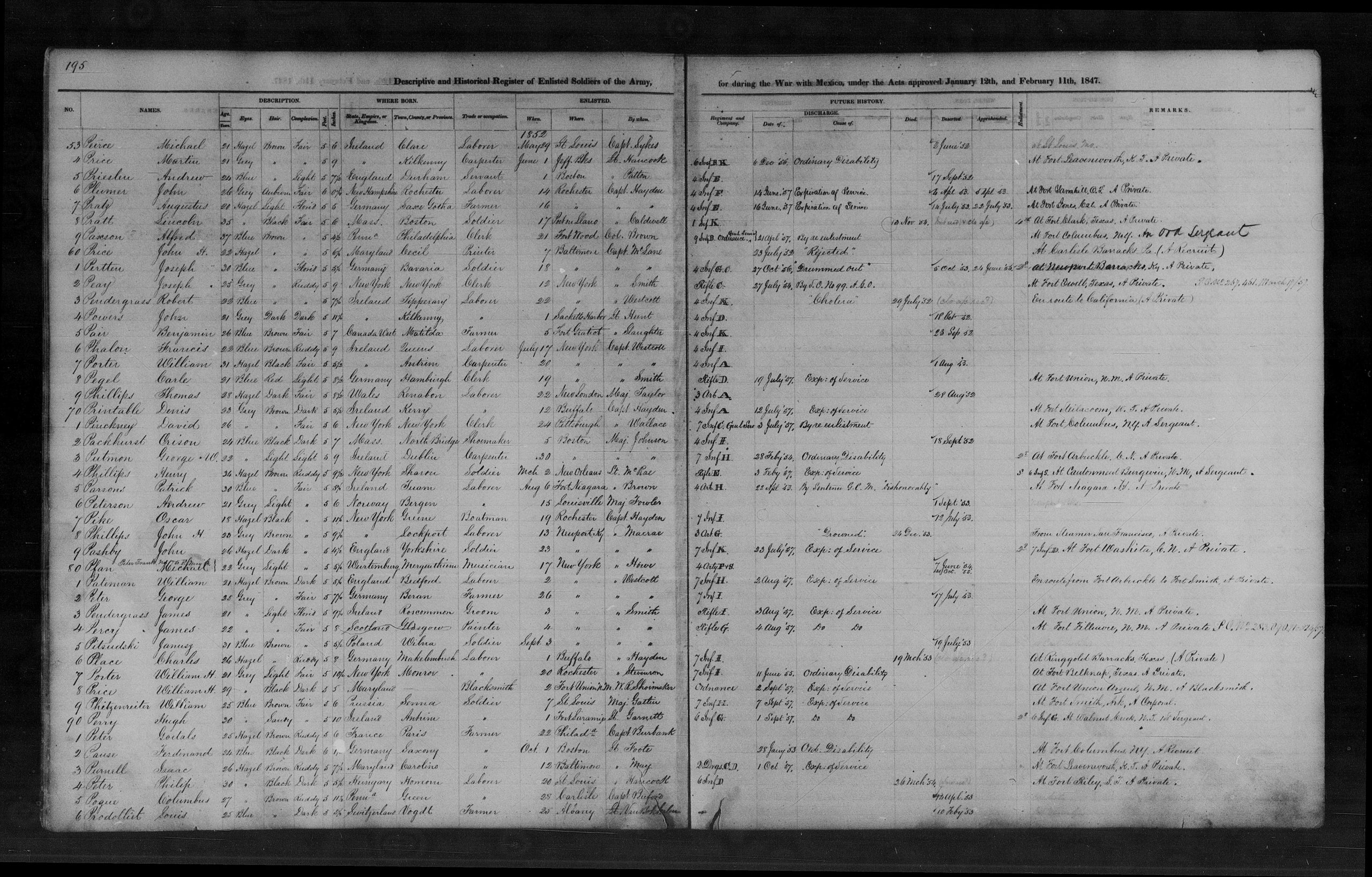
Three Men, Found in the Enlistment Registers
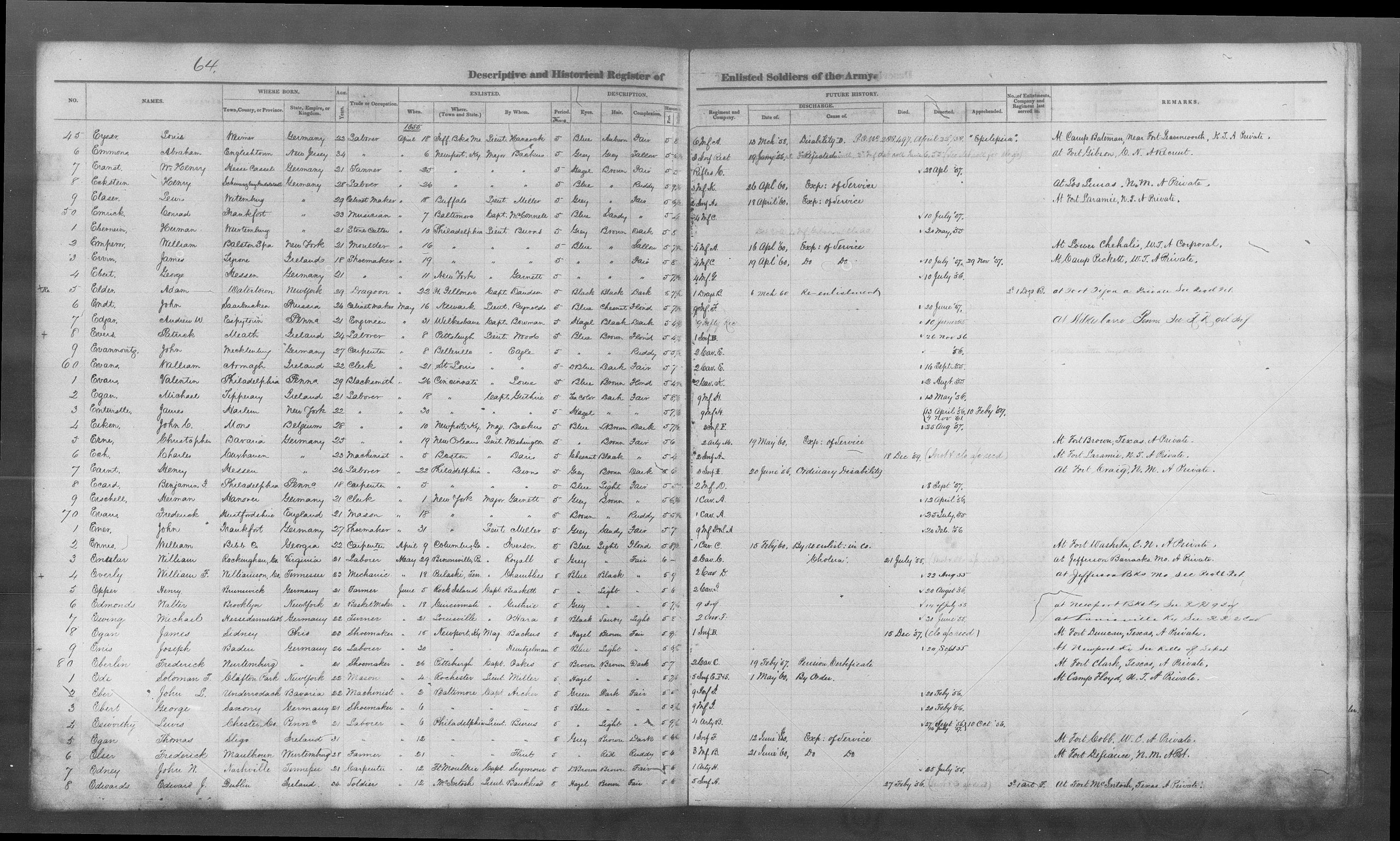
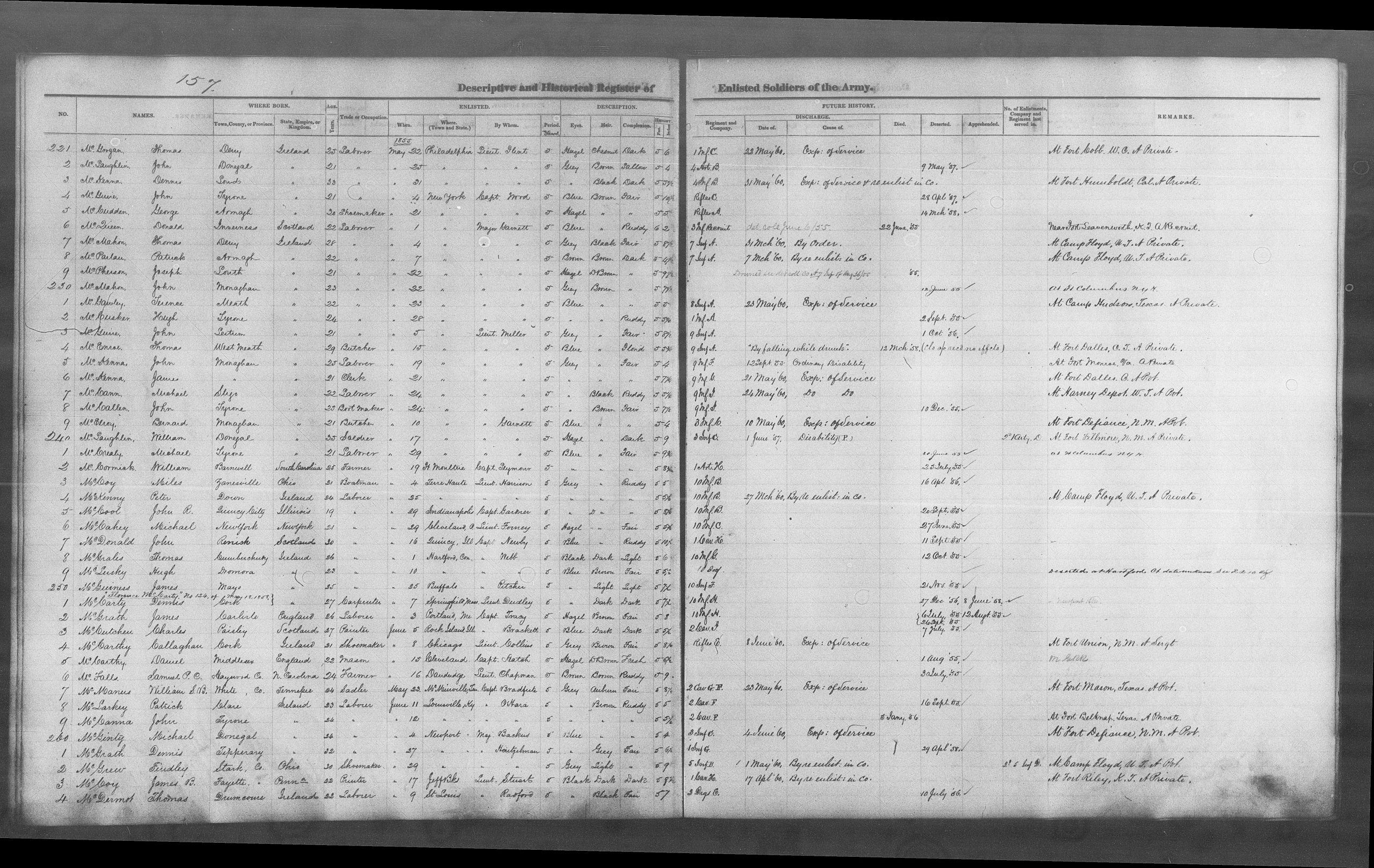
Matched against the U.S. Army’s own Registers of Enlistments (National Archives, M233). The registers confirm each man’s regiment — and McElroy’s very trade — and add, for the first time, where he was born, what he looked like, and what became of him.
Henry Eckstein
3rd Infantry, Co. K · b. Germany
- TradeLaborer
- Age & build26 · blue eyes · 5 ft 7¾
- Enlisted1855, Newport, Ky.
- Discharged26 Apr 1860, exp. of service
Bernard McElroy
3rd Infantry, Co. C · b. Monaghan, Ireland
- TradeButcher
- Age & build21 · blue eyes · 5 ft 4
- Enlisted10 May 1855
- Discharged10 May 1860, exp. of service
James Percy
Mounted Rifles, Co. G · b. Glasgow, Scotland
- TradePainter
- Age & build22 · fair · 5 ft 8
- Enlisted4 Aug 1852, New York
- Discharged4 Aug 1857, exp. of service
The Youngest Soldier
A Fourth Man: The Drummer Boy
Searching the same registers turned up one more Fort Fillmore enlistment, and the most affecting of all: a nine-year-old drummer of Company K, the same company as Eckstein and Bullard above.
James Williamson
3rd Infantry, Co. K · born Cincinnati, Ohio
- RoleDrummer
- Age & build9 years · 4 ft · grey eyes, red hair
- Enlisted9 Dec 1854, at Fort Fillmore
- Discharged9 Dec 1859, exp. of service — and re-enlisted
Source: National Archives, Registers of Enlistments in the U.S. Army (M233), microfilm 350330, page 234.
The Subsistence Detail
The eleven men who kept Fort Fillmore fed in 1857. Names follow each man’s own signature where he left one; the “reading” column tells you how confident we are.
| Name | Role at the post | Company / Regiment | Documented | Also written as | Reading |
|---|---|---|---|---|---|
| August “Aug.” PittsSupervised the detail and witnessed every man’s pay. | Acting Commissary Sergeant | Co. G, Mounted Rifles | Apr–Jun 1857 | Pille | solid |
| Bernard McElroyBorn Monaghan, Ireland. NARA register M233 (p. 157) independently confirms the butcher’s trade and Co. C, and records his honorable 1860 discharge at Fort Defiance, N.M. | Butcher | Co. C, 3rd Infantry | Jun 1857 | McElery, McClery, McCloey | solid |
| Simon BullardCould not write; signed with his mark (X). Appears in six documents. | Herder | Co. K, 3rd Infantry | Apr & Jun 1857 | Simeon, Stuart, Bulgard | solid |
| John MathewSignature reads Mathew; the clerk wrote Matter. | Herder | Co. C, 3rd Infantry | Apr–Jun 1857 | Matter, Matka, Mattea | solid |
| William Esler (Estler)Could not write; signed with his mark (X). | Herder | Co. C, 3rd Infantry | Apr & Jun 1857 | Ellis, Eelles | solid |
| Henry EcksteinA German laborer, age 26. NARA register M233 (p. 64) confirms Co. K and his honorable 1860 discharge at Los Lunas, N.M. The June clerk miswrote his name “William Eystone.” | Herder | Co. K, 3rd Infantry | Apr & Jun 1857 | Eystic, Eystone, Egston | solid |
| John CoyleSignature reads Coyle; the longest service on the detail. | Herder | Co. G, Mounted Rifles | Oct 1856–Jun 1857 | Doyle, Dayle | solid |
| Gottlob Raff (Roff)Also gave three sworn depositions (signed “Gottlob Roff”) about government mules that died in Gibbs’s charge. | Herder | Co. C (regiment uncertain) | Jun–Jul 1857 | Ruff, Roff | fair |
| A. W. Malcolm | Herder | Co. G, Mounted Rifles | Jun 1857 | Malcom | fair |
| Surname uncertain: Smaker / Zachine / GuthrieThe three surviving copies each read this man’s name differently; given name perhaps John or Jose. | Herder | Co. C (?) | May–Jun 1857 | Smaker, Zachine, Guthrie | uncertain |
| Joseph — surname uncertain: Blochk / Goble / BlesethSurname read three ways across the copies; given name Joseph. | Herder | Co. G, Mounted Rifles | Jun 1857 | Blochk, Goble, Bleseth | uncertain |
Two more, from sworn statements
Beyond the pay detail, two soldiers appear in depositions taken at the post, swearing to the death or straying of government animals.
| Name | Role at the post | Company / Regiment | Documented | Also written as | Reading |
|---|---|---|---|---|---|
| James PercyA Glasgow-born painter who swore that a government mule died in Gibbs’s charge. NARA register M233 (p. 195) confirms Co. G and records him “At Fort Fillmore, N.M.” at his 1857 discharge. | Soldier (deposition) | Co. G, Mounted Rifles | Apr 1857 | Piercy | solid |
| John Stretton (Stratton)Swore that a government animal strayed; surname uncertain. | Soldier (deposition) | regiment not stated | Jul–Sep 1857 | Statten | uncertain |
How these names were read, and what is still uncertain
Every name here was read directly from the scanned originals, and most were checked against three independent hands: the muster clerk’s roll, the men’s own signatures on the pay receipts, and a second fair copy of the June return. Where those hands agree, the reading is marked solid. Where the man signed for himself, his signature governs, which is why “McClery” becomes McElroy, “Matter” becomes Mathew, and “Doyle” becomes Coyle. Two men signed in hands the copies read three different ways; their surnames are still uncertain and are left open rather than guessed.
The working database
Download the database (CSV)Views: 52