The Surgeon’s War: James Cooper McKee and the Trial That Never Happened
The Gibbs Papers · Fort Fillmore, 1861
The Surgeon’s War
James Cooper McKee and the Trial That Never Happened
“I get so excited and even tremulous with indignation, that I can scarcely command my pen to make this record.”
Asst. Surgeon James Cooper McKee, writing of July 1861 a quarter-century later
Prologue: The Colonnade Hotel, December 1890
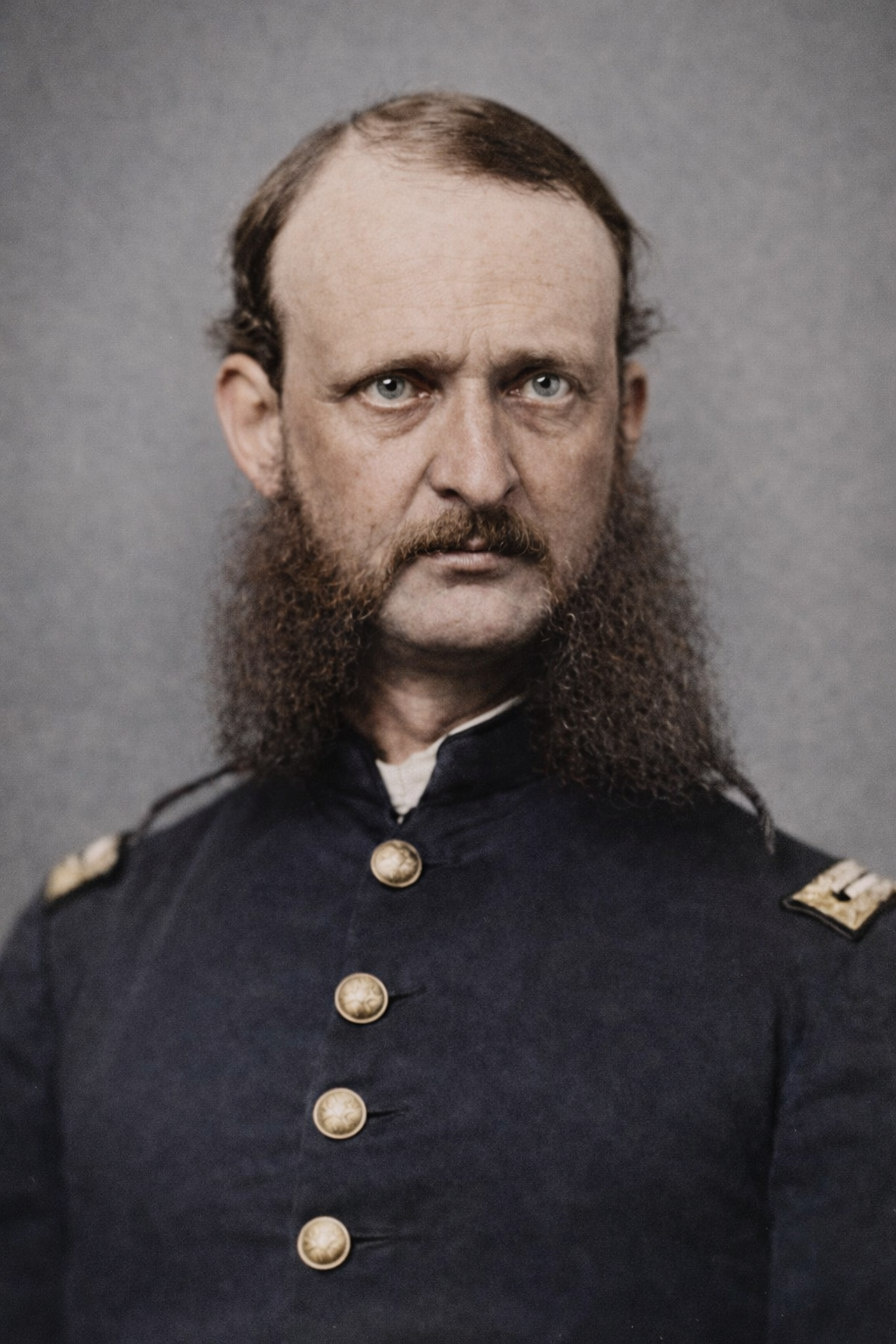
In the winter of 1890, in a Philadelphia hotel, an old Army surgeon sat writing about a war. Not the great war. His war. Lieutenant Colonel James Cooper McKee, U.S. Army, had by then served on the frontier and in the giant hospitals of the Civil War; he had directed the medical care of thousands. But the story he set down that December, “at the urgent request of an old friend with whom I have shared my blankets on the old frontier,” was about the time a doctor commanded cavalry: fifteen days at the head of Company G, Mounted Rifles, in the Navajo country, thirty years before. He remembered drilling the company. He remembered leading a pistol charge. He remembered, with an old wound’s precision, that no one ever thanked him, and that had he fallen, people would only have said “a doctor’s proper place is in the rear with the rear guard and pack train.”
He signed it Lieutenant Colonel and Surgeon, U.S.A., and closed with a creed. Duty, honor, and pride, he wrote, were “always good working capital for a soldier, an officer, and a gentleman.”
To understand why a retired surgeon needed the world to know he had once been a line officer, needed it in 1890, and needed it still, you have to go back to a July morning in the New Mexico desert, and to the twenty-five-year war he waged afterward against one man. Not against Baylor, the Confederate who beat him. Against Lynde, the major who surrendered him.
This is the story of that war. And because it is a story about a man who prosecuted another man for decades without a courtroom, we are going to do here what no one has done before: not the Army in 1861, not the surgeon in his pamphlets, not the historians since. We are going to hold the hearing. Every man will testify in his own words. The reader is the court.
I. The Court That Never Sat
Begin with the document that made every later document possible. On November 25, 1861, the War Department issued General Orders No. 102 (read the original in the War Department’s compiled orders of 1861–1863, digitized at the Internet Archive). It declared that Major Isaac Lynde, 7th Infantry, “for abandoning his post” at Fort Fillmore “on the 27th of July, 1861, and subsequently surrendering his command to an inferior force of insurgents,” was, “by direction of the President of the United States, dropped from the Rolls of the Army from this date.”
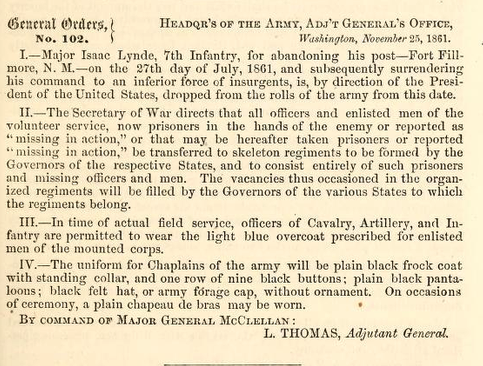
Read it carefully. It is not a sentence, because there was no trial. It is not a verdict, because there was no court. It is an administrative erasure: a thirty-four-year career ended by a paragraph, on a page that also regulated the buttons on chaplains’ coats.
Lynde asked for the trial. On December 5, 1861, he wrote seeking help toward a fair hearing “by my peers.” On December 24 he petitioned President Lincoln for restoration to rank, not to escape judgment but expressly so that he could be judged, by court-martial or court of inquiry. The Judge Advocate reviewed the file in January 1862 and answered, in effect, that the charges implied were capital ones, and that “the more lenient course” of discharging him had been taken instead. Leniency, in this construction, meant conviction without the inconvenience of evidence.
So the tribunal never met. And into that empty courtroom walked a volunteer prosecutor who would keep the case open for the rest of the defendant’s life.
II. Three Days in July
The facts first, because on the facts the prosecution’s witnesses and the defendant largely agree.
Fort Fillmore could not be held. This was not Lynde’s after-the-fact excuse; it was his written assessment before a single Texan marched. On July 7, 1861, three days after taking command, he reported the post “indefensible against a force supplied with artillery,” ringed by chaparral-covered sand hills, adding, “I do not think this post or the valley worth the exertion to hold it.” On July 9 he wrote again: the fort sat in a depression, commanded on three sides by hills within six-pounder range, its water a mile and a half away at the Rio Grande. Every stone of the archaeological and documentary record supports him. The fort was an open quadrangle of adobe, with no wall, no stockade, and no blockhouse, built to rest soldiers between Apache campaigns rather than to stand a siege. His orders from Colonel Canby anticipated exactly this situation: secure the post if possible, abandon it if threatened by a force that could not be resisted. As the historian F. Stanley put it a century later, “It seems remarkable that no one condemns him for leaving Fort Fillmore, only for surrendering without a fight.”
That is the whole case in one sentence. The abandonment was sound. What followed was not.
On July 25, after Baylor’s Texans occupied Mesilla, Lynde marched about 380 men against the town and sent a flag of truce demanding its surrender. The reply, in substance: if he wanted the town, come and take it. He lost three men killed in a brief, mismanaged skirmish, and withdrew. The next afternoon he ordered the fort’s stores destroyed, and at one o’clock on the morning of July 27 marched his command east toward the Organ Mountains. He was heading for San Augustine Springs on a route he did not know, in a New Mexico July, with roughly one hundred women and children in the column, and without ensuring that the men’s canteens held water.
What happened on that road is best told by the officer who rode into the middle of it. Captain Alfred Gibbs of the Mounted Rifles, escorting beef cattle down from Fort Craig and unaware the country had fallen, joined the column near the pass at noon and found catastrophe:
“Over 150 men were lying, unable to rise or to carry their muskets, and useless and disorganized in every way. This was the rear guard on which I was ordered to rely. Major Lynde had not seen it for several hours.“
Gibbs took over the rearguard. He deployed skirmishers, formed line three times, and kept the pursuing Texans in check, under what McKee himself would confirm was “Major Lynde’s positive order” that not a shot be fired. He tried to bring the two howitzers into action and discovered that “the ammunition for these pieces was not in the wagons to which the pieces were fastened, and the effort failed.” Four of Lynde’s baggage wagons, “filled with stores, and women and children, completely blocked up the road.”
At the Springs, where Lynde had ridden ahead and found “the supply of water so small as to be insufficient for my command,” Gibbs galloped in and reported himself “ready for action, and asked where I should take position.” He was told to dismount and water his horses. A quarter-hour later he heard his commander say to a man he did not recognize: “I agree to these terms.”
“Colonel Baylor, to avoid bloodshed, I conditionally surrender this whole force to you, on condition that officers and their families shall be protected from insult and private property be respected.”
“Nearly every officer,” Gibbs testified, “protested earnestly, and even violently, against this base surrender.” The protest grew so violent that Baylor had to ask who was actually in command. Lynde’s answer deserves to be quoted wherever this story is told, because it is the only sentence spoken on that field in which a man claimed responsibility rather than assigning it:
“I am commander of these forces, and I take upon my shoulders the responsibility of my action in the matter.”
Some five hundred regulars were, in Gibbs’s words, “voluntarily surrendered without striking a blow,” to perhaps three hundred Texans. The colors were burned to keep them from capture. The command was paroled at Las Cruces and turned loose to walk north.
III. The Captain’s Way
Now watch what the two accusers did with the same disgrace, because everything that matters in this story lives in the difference.

Alfred Gibbs was thirty-seven years old and a captain: a junior officer, two grades below the man he held responsible, with a career now shadowed by a surrender he had protested at the moment it was made. He reached Fort Craig on parole on August 6, 1861. By that day, within ten days of the surrender, his report could already state that “charges against Major Lynde, under the fifty-second and ninety-ninth Articles of War, have been preferred.” Those are the articles governing misbehavior before the enemy and shameful surrender. Not a grievance. Not a pamphlet. Charges, under named articles, lodged with Captain Joseph H. Potter of the 7th Infantry, himself a fellow prisoner of the surrender: by a captain, against his own commanding major.
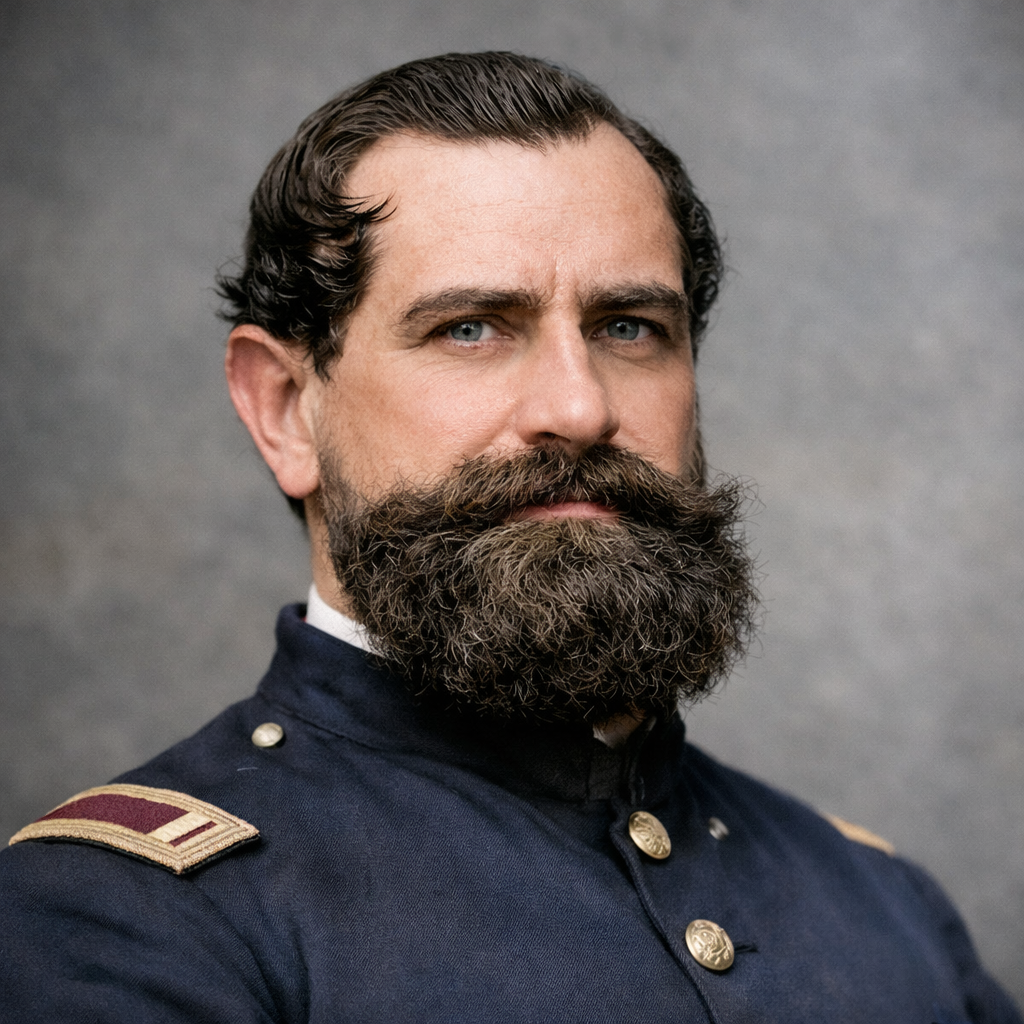
Then, that November, from Jefferson Barracks, he did the thing that defines him. He requested a court of inquiry into his own conduct, “in the name of all the officers connected with my command.” The captain who charged his major asked, in the same breath, to be tried himself. Men who fear scrutiny do not summon it.
Even at his angriest, Gibbs kept the discipline of an officer writing for the record. From parole at Fort Wayne, Detroit, in March 1862, seeking exchange for himself and his men, his harshest formulation was that his troopers “compose the cavalry force included in the ignominious surrender of San Augustine Springs, N. Mex., July 27, 1861, made by Major Isaac Lynde, Seventh Infantry.” Their disgrace, he was careful to say, came “by their obedience to the orders of their lawful superior.” He asked for exchange so that “we may show… that we are most anxious to do our duty in the field.” In that March packet the hard words belonged to his endorsers: Senator Howard wrote that the men had been “treacherously surrendered,” and William Gray that they were “so shamefully surrendered.” Gibbs’s own hardest word had come two weeks earlier, in his letter to Secretary of War Stanton of February 22, 1862, asking that his command be “released from the ignominious position in which we have been placed by the cowardice of our commanding officer.”
Update, November 1, 2026: This paragraph earlier said the words coward and traitor appear in the exchange correspondence only in the endorsers’ letters, never in Gibbs’s own. That was wrong on both counts. Gibbs himself wrote to Secretary of War Stanton from Fort Wayne on February 22, 1862, asking that his men be released from the position “in which we have been placed by the cowardice of our commanding officer” (Official Records, Series II, Vol. 3, pp. 298-299). And his March endorsers did not use those words: Senator Howard wrote “treacherously” and William Gray “shamefully.” Corrected.
And then he stopped. This is the point. He was exchanged in 1862, took command of the 130th New York, and went back to the war. There is no Gibbs pamphlet, no Gibbs petition of 1882, no Gibbs anniversary edition. His grievance had a purpose: to clear his officers and return them to duty. When the purpose was served, the grievance was retired.
IV. The Surgeon’s Way
James Cooper McKee’s campaign began just as fast, and never ended.
On August 16, 1861, nineteen days after the surrender, the post surgeon wrote to the Surgeon General from Albuquerque:
“I am unable to express to you the deep grief, mortification, and pain I, with the other officers, have endured from this cowardly surrender of a brave and true command to an inferior force of the enemy, without having one word to say or firing a single shot.”
Grief, in that first letter, and something already harder than grief: the charge that the women and children had been “kept in the garrison to paralyze us… seemingly preparing for the result, a surrender.” Nineteen days in, he was already insinuating that the disaster had been not incompetence but design. He described old soldiers who would “weep like children” recounting it. No one should doubt the grief was real. The question this article asks is what a man does with such grief across the twenty-five years that follow.
Here is what McKee did. In 1878, at Whipple Barracks, Arizona, he wrote out his account, drawn, he said, from notes “taken at Fort Filmore… at and before the time of its surrender.” He circulated it to senior officers who “with one accord, advised and urged its publication,” then printed it privately for “Army friends only.” It sold out. In 1881 he issued a second edition, adding a topographical description. And in the pamphlet Lynde is not merely blamed. He is dismantled, line by line, with a completeness that still startles:
“Was there ever such another instance in all history of such imbecility, neglect, or criminal indifference?”
“The gray beard and hair of Lynde were a fitting frame for that pale face and cowardly soul.”
“Was there ever such a suicidal, cowardly, pusillanimous surrender as that in all history?”
Lynde at the Springs, lunching as his command dissolved, displayed what McKee called “the sublimity of majestic indifference.” And then the summation: “our commanding officer was an imbecile if not a traitor… Charity may be so extended as to allow that he had not brains enough to be a traitor.”
Charity, in McKee’s courtroom, was the concession that the defendant might be too stupid for treason. Nor did he stop at Lynde. The post adjutant, Lieutenant Brooks, is convicted in a sentence: “a secessionist and a traitor… No doubt he urged non-resistance and surrender… as proof positive, he abandoned the service and disappeared into Texas immediately thereafter.” No doubt. The phrase does the work that evidence could not.
Then, in 1882, the campaign changed weapons. Sixteen years earlier, in November 1866, President Johnson had revoked the 1861 order, restored Lynde to his majority, and retired him. The restoration came on the recommendation of General Grant, whose family was connected to Lynde’s by marriage[1], and it was supported by a remarkable letter from Canby describing a commander who “appears to have lost all confidence in his officers and men… and to have experienced a mental paralysis that rendered him incapable of acting with judgment or energy.” The old man had his pension and his name back. McKee could not bear it. On May 18, 1882, he wrote to the Adjutant General of the Army arguing that Johnson’s restoration was illegal without Senate confirmation, and formally requesting “that his name be struck from the Army Register.” His constitutional authority for this was, of all things, the Fitz John Porter case: a case about giving a condemned officer the fair hearing he never had, invoked here to re-condemn one. The answer came on June 8, 1882: “the President is not disposed, at this late date, to make any change in the status of Major Lynde.”
In 1885 he tried a third front: history itself. On November 24 he wrote asking that his pamphlet be placed among the government’s files and published in the Official Records, reasoning that since it “has not been denied or disputed by Major Lynde (still living) or any of the other still-living actors” for seven years, “it is only fair to claim that it is a truthful report.” Silence as proof; an old man’s refusal to answer as confession. Kelton referred the pamphlet, by order of the Secretary of War, to Lieutenant Colonel Robert N. Scott of the War Records Office, the editor of the Official Records themselves. Scott returned it the same day, December 14, 1885, with a sentence of bureaucratic marble: “Under the uniform rulings of the Secretary of War Surgeon McKee’s pamphlet has no place in the official records of the War of the Rebellion.” Kelton signed the letter that carried the ruling to McKee four days later. The endorsement sheet itself, with both officers’ signatures, is now in this site’s archive.
McKee answered within a month. On January 20, 1886, from 159 High Street in Boston, he wrote the Adjutant General that he was “greatly disappointed,” asked what had better be done with the pamphlet, and added an offer the file clerk summarized without comment: should Major Lynde’s reconfirmation come before the Senate that winter, the pamphlet “may be useful.” The surgeon was offering his book as ammunition against a dying man’s status on the rolls. That letter survives too.
Isaac Lynde died at his residence in Picolata, Florida, on April 10, 1886, of what was reported to the Adjutant General as a “general breaking down of the system from advanced age.” (Correction, July 8, 2026: this page originally gave the date as April 3, following the published registers. His son Capt. F. Marcy Lynde’s report to the Adjutant General, written from Picolata the next day, states he died April 10. We follow the family’s contemporaneous report.) Within months, McKee published his third edition: three hundred copies, now with a map, an index, and a new appendix in which he printed the government’s two refusals, entering the court’s rejections into his own record as evidence against the court. And beneath the reprinted petition to strike a dead man from the rolls, one last footnote, the coldest sentence he ever wrote:
“Major Lynde died in April 1886, since this was official.”
Gibbs weaponized process; McKee weaponized print. Process has an end built into it: a verdict, an exchange, a war to return to. Print never ends.
V. The Witness Examined
Every court examines its witnesses, and McKee, who demanded for seven years that his testimony be made official, has earned the examination he asked for.
Note first what the witness says of Captain Gibbs, for it cuts against any suspicion that the pamphlet spares its author’s friends. McKee writes that Gibbs, riding down from Fort Craig with beef cattle, “fell into the trap, and was compelled to accept of our fate,” and then gives him the retreat’s only credit: “The only temporary security and intervening guard was, that Captain Gibbs kept his company deployed every now and then in line of skirmishers, as he covered our retreat, retarding the advance of the enemy.” The angriest witness of the surrender, examined on the man this site is named for, testifies for him. The page is here.
Begin with how the witness presents himself, for the pamphlet is a double portrait, and the second subject is its author. It is McKee who keeps a shotgun, revolver, and watchdog at his bedside; McKee who arms and drills the hospital staff and the band; McKee who drives Major Lynde about in his own buggy to point out the proper tactical dispositions; McKee who carries the flag of truce; McKee who confesses himself “praying, from my very soul” for battle. A medical officer, drilling other men’s troops and planning other men’s defenses. A. F. H. Armstrong, whose 1961 study in the New Mexico Historical Review remains the closest thing to a trial the case ever received, called him “officious, presumptuous, eternally right,” and found the narrative “far from dispassionate, seemingly intent on erasing Lynde as a human being.” Armstrong found something more damaging as well: passages of McKee’s “notes and memoranda taken at Fort Filmore” that track, nearly verbatim, the Mesilla Times of August 3, 1861. That was a secessionist newspaper. The witness who swore “I have endeavored to write nothing but facts… I feel compelled to tell the truth irrespective of friend or foe” had padded his evidence from the enemy’s press.
Note, too, a silence. The most famous legend of the retreat holds that the men filled their canteens with hospital whiskey and collapsed drunk in the sand. That story touches McKee’s own storeroom, and McKee never mentions it. He tells us instead, defensively and at length, how he and his steward smashed every bottle with tent poles the night before. “I have been bitterly blamed by many,” he wrote, adding, “I would repeat the same under like circumstances.” In fairness, his account is actually the best refutation of the whiskey story: if the liquor was destroyed, it could not have filled the canteens, and no contemporary participant mentions drink. The men fell because there was no water, on a July march their commander had not provisioned. But the surgeon’s defensiveness tells us the accusation stung. It also reminds us that on July 27 every officer in that column, the surgeon included, acquired a lifelong interest in a verdict that read Lynde, alone. The modern historian Richard Wadsworth put it without sentiment: “Lynde was a convenient scapegoat for them all.”
And yet, hold the light steady, for it must shine both ways. In 1862, paroled and awaiting exchange, McKee was assigned to Camp Butler, Illinois, where he took charge of a hospital full of sick and wounded Confederate prisoners. His reports from that duty show, in Armstrong’s words, “a marked concern for the prisoners’ welfare.” Read that again against the pamphlets. The man who could not extend one grain of mercy to a broken old Union major nursed the enemy’s dying with documented tenderness. He was a genuinely able medical officer, from Bull Run and Antietam to the three-thousand-bed Lincoln General Hospital, brevetted for faithful and meritorious service. The grief of August 1861 was real grief; the shame was real shame. James Cooper McKee was not a villain. He was something more instructive: a proud, capable, wounded man who confused his own vindication with justice, and who had the misfortune to possess, in his pen, a weapon that never required him to stop.
VI. The Defendant’s Words
And Lynde? The man at the center said almost nothing, ever, which is partly why McKee’s version became history. But the little he said is worth entering into the record entire. That the fort was “indefensible” and the valley not “worth the exertion to hold”: written before the invasion, and correct. That at the Springs he found the water “insufficient for my command,” that he was “so much exhausted that I could not sit upon my horse,” and that “honor did not demand the useless sacrifice of blood.” That he took the responsibility on his own shoulders, at the moment of surrender, in front of his raging officers. And that, twice, in the winter of 1861 and 1862, he asked the government that had erased him for the one thing it never gave him: a trial.
The military verdict, rendered at last in 1866 by Judge Advocate General Holt when Lynde petitioned for review, still stands, and this article does not quarrel with it. The precautions were inadequate; the retreat was “unsoldierly and culpable”; the surrender was “without excuse, and fully deserving of the rebuke with which it was visited.” Lynde failed, catastrophically, at the one hour of a thirty-four-year career when everything depended on him. But consider the distance between he failed and “pale face and cowardly soul.” Between a failed commander and “an imbecile if not a traitor.” Between a rebuke and a twenty-five-year pursuit that petitioned to strip a dying man’s name four months before his death. In that distance lies the entire difference between judgment and vengeance. Canby, who had more right to bitterness than anyone, understood a broken instrument when he saw one. McKee saw only a target.
VII. Verdict
So: have we now done to James Cooper McKee what McKee did to Isaac Lynde?
No, and the difference is the point of everything above. McKee prosecuted a man who kept silent; we have examined a man who published three editions and formally petitioned the United States government to canonize his account, a man who argued that an undisputed record must be treated as true. Very well. Here is the dispute he invited, one hundred and forty years late. McKee convicted with adjectives and inferred motives; every substantive charge in this article is drawn from documents, most of them in McKee’s own hand. And McKee allowed Lynde not a single virtue. We close by insisting on McKee’s: the mercy at Camp Butler, the competence in the great hospitals, the authentic grief of a proud officer who watched five hundred regulars stack arms without a fight.
The old surgeon at the Colonnade Hotel, still proving in 1890 that he had once commanded cavalry, was not lying about the things that mattered most to him. Duty, honor, and pride: he called them a soldier’s working capital, and he spent his freely all his life. But capital can be invested, or it can be hoarded against one debtor forever. Captain Gibbs, junior in rank to the man he accused and with far more at stake, filed his charges in ten days, demanded his own trial in four months, and gave the rest to the war. Surgeon McKee gave the rest of his life to a man he despised, and in the end the pursuit preserved the one thing it meant to destroy. Because we read Lynde today chiefly through McKee, every reader of the Narrative meets, on its final page, an author trembling too hard with indignation to hold his pen. And somewhere behind the page stands an old man in Florida who took the responsibility on his own shoulders, asked twice for a trial, and went to his grave still waiting for it.
This, at last, is the hearing. The reader may retire to deliberate.
Update: The Original Files (July 8, 2026)
The day after this article was published, the National Archives Catalog API delivered the three War Department files on which its story rests, and they are now digitized, transcribed, and readable in this site’s own archive: Lynde’s restoration file, L736-CB-1866 (85 pages: Grant’s letter, Canby’s “mental paralysis” letter, Holt’s report, the Kelton memorandum, and Lynde’s petition bearing President Johnson’s autograph endorsement); McKee’s petition file, No. 7460 of 1885 (127 pages: his letters, his pamphlets with his own ink corrections, and the Scott and Kelton refusals); and the 1861 file N-189 (156 pages: the surrender arriving at headquarters, with the complete parole rolls of San Augustine Springs). Several passages above have been corrected or sharpened against these originals, with changes noted in place, as this page’s accuracy policy promises.
Notes
[1] The Grant–Lynde connection. It ran through the general’s own household. Lynde’s daughter, Lou, was Mrs. Frederick Tracy Dent. Dent was Grant’s West Point classmate, both Class of 1843, a fact Armstrong verified in Cullum’s Biographical Register of the Officers and Graduates of the U.S. Military Academy, the standard record of every West Point graduate (the same register in which Alfred Gibbs is graduate No. 1313, the number written on the folders of this site’s own archive); he had served on the same frontier posts as Lynde, where he met and married the major’s daughter; his sister was Julia Dent, who became Mrs. Ulysses S. Grant; and by 1866 he was serving as Grant’s aide-de-camp. Dent was thus Lynde’s son-in-law, and Grant’s brother-in-law and aide, at once. Armstrong, who traced the relationship through local memory in Lynde’s home village of Williamstown, Vermont, was careful about what the record does and does not show: the name of whoever persuaded Grant to take up the case “does not appear anywhere in the official files, but it should not be difficult to guess.” The family relationships are documented fact; the lobbying is Armstrong’s inference, and we present it as such. He also permitted himself one dry aside: the Dictionary of American Biography says Dent “was not a brilliant soldier, and owed much to his relationship to General Grant,” to which Armstrong added, “Probably the same might be said of Major Isaac Lynde.” One further twist worth preserving: the Adjutant General’s Office memorandum that scaled Grant’s recommendation of a colonelcy down to restoration as major was written by J. C. Kelton, the same officer who, nineteen years later, would sign the letter refusing McKee’s pamphlet a place in the official records (on the ruling of R. N. Scott of the War Records Office). Sources: Armstrong (1961), pp. 32–33 and nn. 72–73 (Grant to Stanton, Sept. 18, 1866, and the Kelton memorandum, both in Lynde’s ACP file L736-ACP-1866, RG 94, National Archives); Brophy (1968), p. 216 (“Lynde’s daughter, Lou, was married to General Frederick Dent, whose sister, Julia, was General Grant’s wife”); Canby to the Adjutant General, Mar. 16, 1866, same file (the “mental paralysis” letter, quoted with minor wording variances by both Armstrong and Brophy; the National Archives file copy is the authority, and this page will be updated when we obtain the facsimile).
References
[Lynde case file]. (1866). L736, Commission Branch, 1866 [85 digitized pages]. Records of the Adjutant General’s Office, National Archives (naId 70339343). Readable in this site’s archive.
[McKee petition file]. (1885). File No. 7460, Adjutant General’s Office, 1885 [127 digitized pages]. National Archives (naId 146512242). Readable in this site’s archive.
[Surrender of Fort Fillmore file]. (1861). File N-189, Adjutant General’s Office, 1861 [156 digitized pages]. National Archives (naId 85329448). Readable in this site’s archive.
APA (7th ed.). Primary sources first as archival/government documents, then scholarship, then images. Where a document is reproduced on this site, the site page is given alongside the original.
Adjutant General’s Office. (1861, November 25). General orders, no. 102. Headquarters of the Army. In U.S. War Department, General orders of the War Department, embracing the years 1861, 1862 & 1863 (Vol. 1, 1864). https://archive.org/details/generalordersofw00unit (Transcribed at https://alfredgibbs.com/general-ordersgeneral-orders-no-102-major-isaac-lynde-7th-infantrygeneral-orders/)
Drum, R. C. (1882, June 8). [Reply of the Adjutant General to Assistant Surgeon J. C. McKee]. Reproduced in McKee (1886), appendix. https://alfredgibbs.com/narrative-surrender-of-a-command-of-u-s-forces-fort-filmore-full-text/
Gibbs, A. (1861–1862). Reports of Captain Alfred Gibbs, Third U.S. Cavalry, with application for court of inquiry. In The war of the rebellion: A compilation of the official records of the Union and Confederate armies (Ser. I, Vol. 4, pp. 7–11). Government Printing Office, 1882. https://archive.org/details/warofrebellionco0004vari (Transcribed and verified at https://alfredgibbs.com/the-reports-of-captain-alfred-gibbs-san-augustine-springs-official-records-vol-4/)
Gibbs, A. (1862, March 4). [Letter to Senator Jacob M. Howard seeking exchange, Fort Wayne, Detroit]. In Official records (Ser. II, Vol. 4, pp. 368–369). https://alfredgibbs.com/gibbs-parol-letter-official-records/
Kelton, J. C. (1885, December 18). [Reply of the Adjutant General’s Office declining to place McKee’s narrative in the official records]. Reproduced in McKee (1886), appendix. https://alfredgibbs.com/narrative-surrender-of-a-command-of-u-s-forces-fort-filmore-full-text/
Lynde, I. (1861, July 7 and 9). [Letters to the Department of New Mexico on the indefensibility of Fort Fillmore]. In Official records (Ser. I, Vol. 4). Discussed at https://alfredgibbs.com/what-fort-fillmore-actually-was/
Lynde, I. (1861, August 7). [Report of the surrender at San Augustine Springs]. In Official records (Ser. I, Vol. 4).
Lynde, I. (1861, December 5 and 24). [Letter to H. M. Rice and petition to President Lincoln requesting trial]. Appointment, Commission, and Personal file L736-ACP-1866, Record Group 94; consolidated file 107-1861, Record Group 153, National Archives. As documented in Armstrong (1961).
McKee, J. C. (1861, August 16). [Letter to the Surgeon General, Albuquerque, N.M.]. In Official records (Ser. I, Vol. 4, pp. 11 ff.), and reproduced in McKee (1886). https://alfredgibbs.com/narrative-surrender-of-a-command-of-u-s-forces-fort-filmore-full-text/
McKee, J. C. (1882, May 18). [Letter to the Adjutant General requesting that Major Lynde’s name be struck from the Army Register]. Reproduced in McKee (1886), appendix.
McKee, J. C. (1885, November 24). [Letter to Adjutant General R. C. Drum requesting publication of his narrative in the official records]. Reproduced in McKee (1886), appendix.
McKee, J. C. (1886). Narrative of the surrender of a command of U.S. forces at Fort Fillmore, New Mexico, in July, A.D. 1861, with related reports by John R. Baylor, C.S.A., & others (3rd ed.). John A. Lowell & Co. https://archive.org/details/narrativeofsurre00mcke (Complete text at https://alfredgibbs.com/narrative-surrender-of-a-command-of-u-s-forces-fort-filmore-full-text/)
McKee, J. C. (1890, December). Narrative of a doctor’s experience as a line officer and combatant, in the fall of 1860. Journal of the United States Cavalry Association. National Library of Medicine copy: https://archive.org/details/101733383.nlm.nih.gov (Transcribed at https://alfredgibbs.com/narrative-of-a-doctors-experience-as-a-line-officer-and-combatant-in-the-fall-of-1860-j-c-mckee/)
U.S. War Department. (1866, November 27). General orders, no. 94 [Revoking the order of November 25, 1861; Major Isaac Lynde restored to rank and retired as of July 28, 1866]. Filed in Lynde’s Appointment, Commission, and Personal file, L736-ACP-1866, Record Group 94, National Archives (Armstrong, 1961, p. 34, n. 74).
Armstrong, A. F. H. (1961). The case of Major Isaac Lynde. New Mexico Historical Review, 36(1), 1–35. https://digitalrepository.unm.edu/nmhr/vol36/iss1/2 (Reproduced with annotations at https://alfredgibbs.com/court-martial-of-major-isaac-lynde/)
Brophy, A. B. (1968). Fort Fillmore, N.M., 1861: Public disgrace and private disaster. The Journal of Arizona History, 9(4), 195–218. https://www.jstor.org/stable/41695494 (Reproduced at https://alfredgibbs.com/public-disgrace-and-private-disaster/)
Heitman, F. B. (1903). Historical register and dictionary of the United States Army, from its organization, September 29, 1789, to March 2, 1903 (Vol. 1). Government Printing Office. https://archive.org/details/historicalregist01heitrich
Lane, L. S. (1893). I married a soldier; or, Old days in the old army. J. B. Lippincott. (Serialized on this site beginning at https://alfredgibbs.com/i-married-a-soldier-part-1/)
Oliva, L. E. (1993). Fort Union and the frontier army in the Southwest: A historic resource study. National Park Service.
Stanley, F. (1961). The Fort Fillmore, New Mexico story. (Reproduced with annotations at https://alfredgibbs.com/fort-fillmore-new-mexico-story-by-f-stanley/)
Wadsworth, R. (2002). Incident at San Augustine Springs: A hearing for Major Isaac Lynde. Yucca Tree Press. (Cross-read notes at https://alfredgibbs.com/cross-read-wadsworth-on-gibbs-at-the-pass-research-note/)
[Portrait of Assistant Surgeon James Cooper McKee]. (ca. 1860s). Digitally colorized reproduction. https://alfredgibbs.com/storage/2026/06/james-cooper-mckee-fort-fillmore-colorized.png
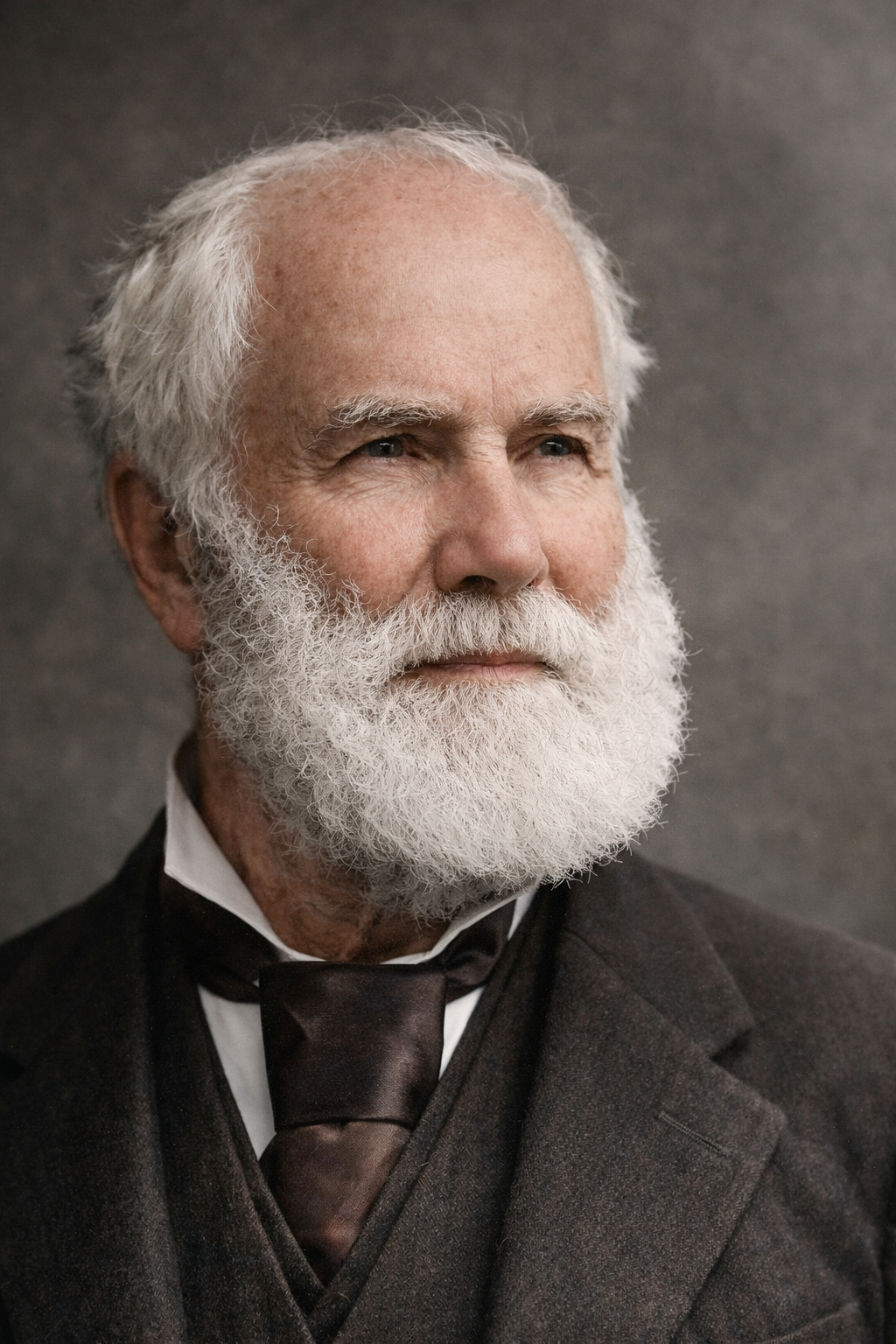
[Portrait of Major Isaac Lynde, later in life]. (n.d.). Digitally enhanced and colorized reproduction. https://alfredgibbs.com/storage/2026/02/MAJOR-ISAAC-LYNDE-Enhanced-and-Colorized-later-in-life.png
[Portrait of Alfred Gibbs]. (ca. 1860s). Digitally enhanced and colorized reproduction. https://alfredgibbs.com/storage/2026/02/alfred-gibbs-enhanced-and-colorized.png
[Portrait of Captain Joseph Haydn Potter]. (ca. 1860s). Digitally colorized and enhanced reproduction. https://alfredgibbs.com/storage/2026/02/Joseph-Haydn-Potter-captain-colorized-and-enhanced-2.png
A note on this article’s method: wherever possible, the participants speak in their own words, drawn from the primary documents transcribed on this site. These include Captain Gibbs’s reports and sworn statement from the Official Records (checked line by line against the digitized volumes), McKee’s complete 1886 narrative with its appendix correspondence, General Orders No. 102 (verified against the War Department’s compiled General Orders volume of 1861–1863 at the Internet Archive), and the parole and exchange papers. The scholarly framework rests on A. F. H. Armstrong’s “The Case of Major Isaac Lynde” (New Mexico Historical Review, January 1961) and A. Blake Brophy’s “Fort Fillmore, N.M., 1861: Public Disgrace and Private Disaster” (Journal of Arizona History, Winter 1968), both reproduced on this site, and on Richard Wadsworth’s Incident at San Augustine Springs. Where sources conflict, including on the date of McKee’s own death, the conflicts are noted on the relevant pages rather than resolved silently. If new evidence changes anything stated here, this page will be updated, and the correction will be noted.
Views: 50