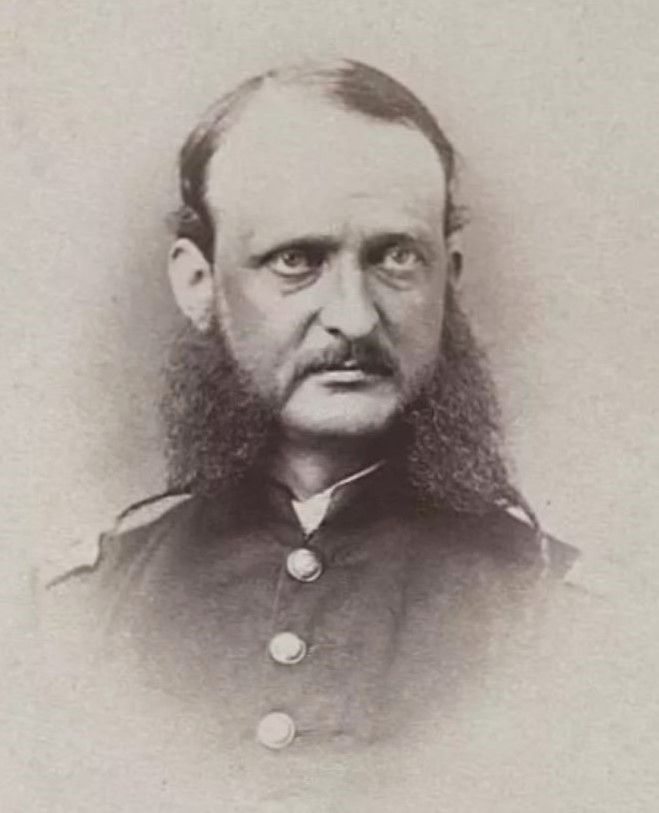
F. Stanley’s 1961 history of the post, reproduced in full with this site’s researcher’s notes and corrections.
F. Stanley (Stanley Francis Louis Crocchiola) · 1961 · Annotated Edition
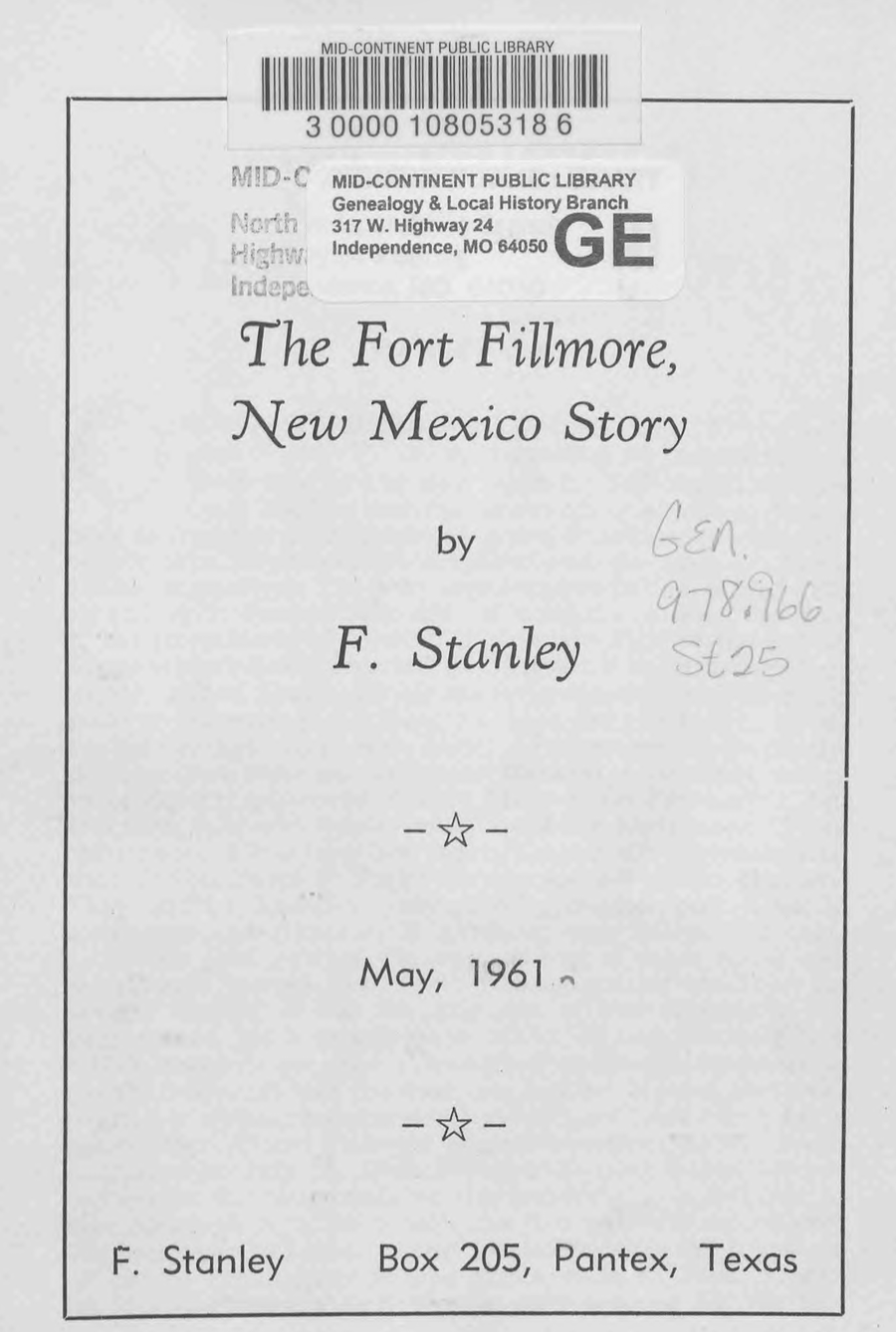
The original 1961 pamphlet.
About this text: F. Stanley was the pen name of Father Stanley Francis Louis Crocchiola, whose small-press histories of New Mexico’s forts and towns preserved material found nowhere else. His Fort Fillmore pamphlet of 1961 is reproduced here in full. Where Stanley’s text contains errors of fact, we have preserved his words and added bracketed corrections and Researcher’s Notes rather than editing silently.
The Fort That Surrendered — a short film companion to this page.
❦
Begin reproduced text — F. Stanley, 1961
OPINIONS VARIED as to the beauty or ugliness of Fort Fillmore, depending on the attitude of those who had to stay there for any length of time. Once Mesilla and the surrounding area were turned over to America through the Gadsden Purchase, the military took means to protect its property and the people against Indian marauders. The post was founded in the fall of 1851 by Col. E. V. Sumner, who did not want the soldiers too close to the temptations of Mesilla.
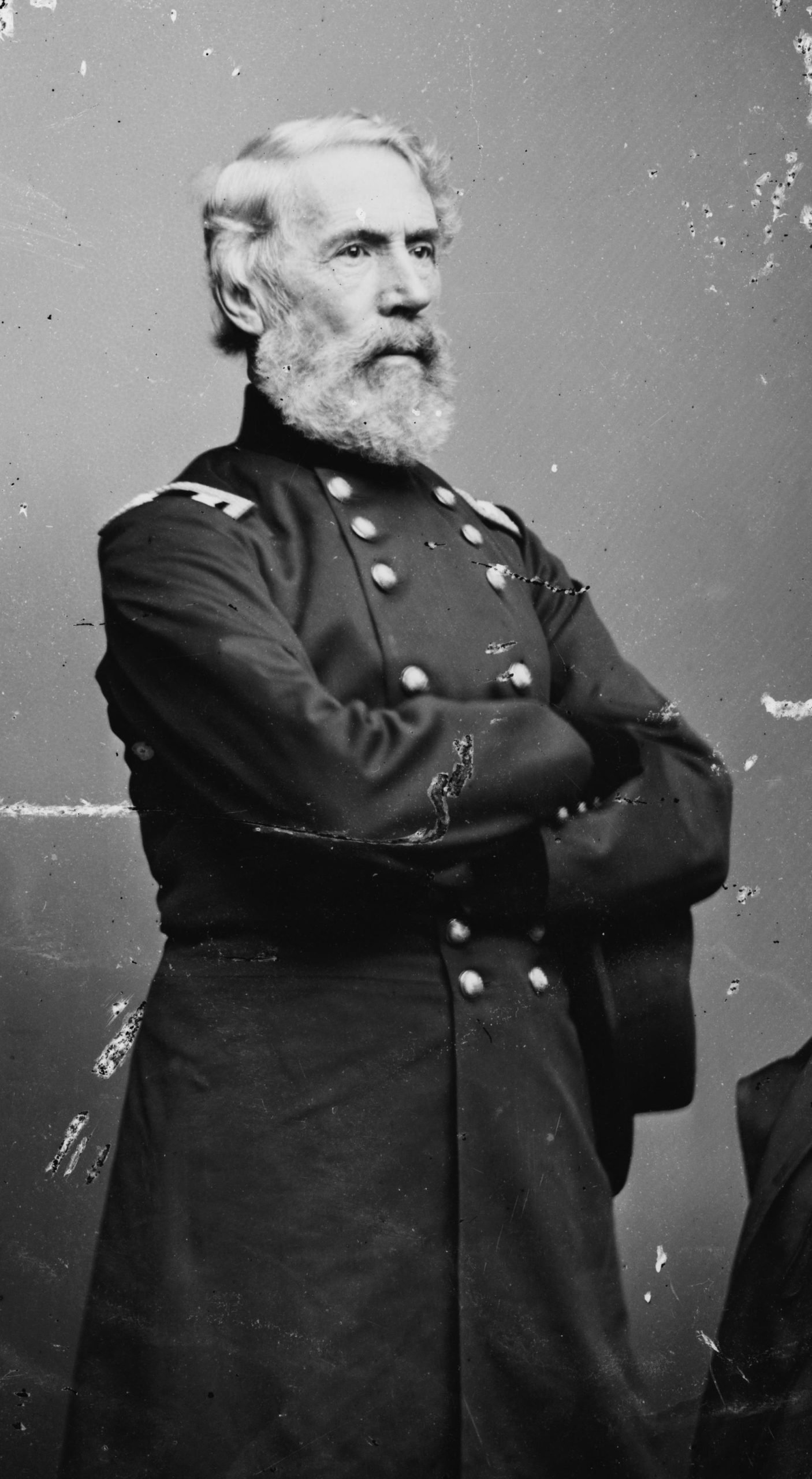
RESEARCHER’S NOTE: Edwin Vose Sumner (01/30/1797–03/21/1863) stands as one of the most seasoned and uncompromising professional soldiers of the antebellum and Civil War-era United States Army, a career officer whose service bridged the early republic, westward expansion, and the nation’s bloodiest conflict. Entering the army in 1819 after abandoning a mercantile career, Sumner rose steadily through decades of frontier duty, the Black Hawk War, the Mexican-American War, and numerous Indian campaigns, earning a reputation for discipline, physical courage, and blunt authority—traits that earned him the nicknames “Bull” and “Bull Head.” As commander of dragoons and later cavalry, military governor of New Mexico Territory (1851–1853), and colonel of the 1st U.S. Cavalry, Sumner played a direct role in shaping frontier military policy at posts like Fort Fillmore, where his insistence on order, separation from civilian vice, and soldier-built infrastructure reflected his old-school Regular Army worldview. During the Civil War he became the oldest corps commander on either side, leading the II Corps of the Army of the Potomac through the Peninsula Campaign, Antietam, and Fredericksburg, service marked by both decisive initiative, notably at Seven Pines, and controversy, particularly in the costly West Woods assault at Antietam. Though criticized late in the war and relieved of field command, Sumner remained loyal to the Union to the end; he died in 1863 while awaiting reassignment. Fort Sumner in New Mexico bears his name, a fitting marker for a soldier whose career embodied the transition from frontier constabulary warfare to industrial civil war, and whose influence loomed large over the military culture that produced Fort Fillmore and its officers.
By January 1 of the following year, the colonel reported that the work was coming along nicely, and it gladdened his heart to see the soldiers doing most of the work themselves. He expected the fort to be occupied in February and made arrangements accordingly. Sumner had reported to Major General Jones that troops were already quartered at Fort Fillmore on February 1, but two days later was compelled to scribble a hasty note:
“From information I received last night, I am disappointed to find that all the troops at Fort Fillmore are not yet in quarters. They will be, however, very soon.”
The new post failed to discourage the Apaches. If anything, they intensified their activities, glad now of the opportunity for more horse and mule herds to raid.
Fort Fillmore engages our attention for several reasons. It was the only post in New Mexico at the time named for a president in office. It was the only fort whose complete garrison surrendered to the Confederates in the Civil War. It was the only one in New Mexico that ever boasted a woman commander, even if unofficially and for a short time.
General Edwin Vose Sumner (January 30, 1797 – March 21, 1863)
Millard Fillmore became president upon the death of Taylor on July 10, 1850. Whether Sumner hoped for advancement by thus honoring the president is difficult to say. Although a military man, he had political aspirations and was close to Lincoln when the latter made his bid from Illinois to Washington to take office.
Both El Paso (Franklin and Magoffinsville) and Mesilla were anxious for the fort to be built within hailing distance, but Sumner would have none of these denizens of sin, as he called them, for he had enough trouble dealing with Indians. His attitude encouraged desertions.
The completed post was composed of the following buildings:
Commanding Officer’s Quarters — A main building containing two rooms, each twenty feet long by eighteen feet wide, and a passage; two wings containing three rooms and a kitchen. These wings were fourteen feet square.
Temporary Officers’ Quarters — Four buildings, each containing two sets of quarters: one room twenty feet long by eighteen feet wide; one room fourteen feet square; and a kitchen of similar dimensions.
Two Barracks — Two rooms, each thirty feet square; two wings, each fifty feet long and eighteen feet wide. One of the wings served as a smokehouse, the other as a bakehouse.
Quartermaster’s Storehouse — This building was sixty feet long by thirty feet wide.
The Hospital — This building was the same size as the storehouse.
The Guardhouse — A building twenty-five feet long by sixteen feet wide, with an adjoining wing thirty-seven feet long.
Then came the commissary storehouses, which were built of adobe brick. The hospital was partly of adobe brick and partly of wood. Corrals and the parade ground completed the picture.
Captain A. W. Bowman, who inspected Fort Fillmore in October 1852, wrote to Major General Thomas Jesup:
“Since my last report, the troops which occupied the advanced posts of Doña Ana and Paso del Norte have been removed from these points, and a new post called Fort Fillmore established about sixteen miles southward of Doña Ana, on the Rio Grande, and about forty miles from Paso del Norte.
The post is occupied by two companies of troops, one of dragoons and one of infantry. With much labor and expense, temporary quarters have been erected and a farm opened, which will probably yield a crop this fall that will cover the expenses incurred in its cultivation.
Owing to the decreased demand and an increase of production, forage has become less moderate in price than formerly, and there is every reason to expect a still further reduction. A step has been taken towards holding the Apaches in check by the establishment of Fort Webster, west of the Rio Grande and in their country. They are still troublesome, and I doubt much whether we can ever have peace with them permanently without giving them first a severe chastisement.”
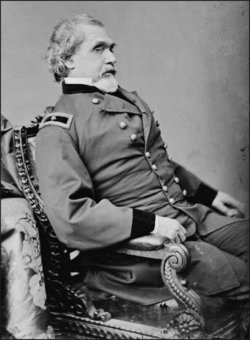
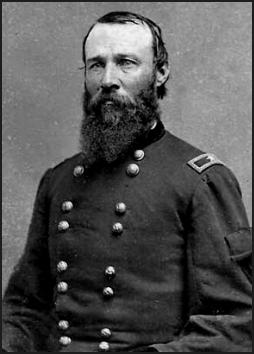
Col. Dixon Stansbury Miles (May 4, 1804 – September 16, 1862)
The first commander at Fort Fillmore was Lt. Col. Stansbury Miles, a native of Baltimore, Maryland. A graduate of West Point, he had been in the service since 1824. He served with Zachary Taylor at Fort Brown in March 1846 and fought the Mexican troops under Mariano Arista when the latter sought to intercept American supply trains moving from Point Isabel to the fort.
After the Mexican War, he served at several frontier posts before coming to Fort Fillmore. He was killed in action at Harpers Ferry on September 16, 1862. Such a man might have acted differently than Lynde had he still been at Fillmore when Baylor’s Babies decided to take it over for the Confederacy.
Four companies were stationed at the post during this first year: one company of the First Dragoons, one company of the Second Dragoons, and two companies of the Third Infantry. The roll call of officers and men amounted to two hundred and eighty-nine.
Circuit Judge Davis was quite impressed with Fort Fillmore.
“Fort Fillmore,” he wrote in his book El Gringo, “is a large and pleasant military post, and is intended to garrison a battalion of troops. The form is that of a square, the quarters of the officers and men enclosing the open space within on three sides, while the south is open toward the river. The buildings are adobe, but comfortable. A farm at that time was attached to the post, since discontinued, on which were raised vegetables for the troops. There is also a well-selected library for the use of the officers and men, which is an evidence that the government does not overlook the mental wants of her soldiers. The post was garrisoned by three companies of the Third United States Infantry, under the command of Major Backus (i.e., in 1855), an officer of experience and merit. I was received by the officers with the politeness that always characterizes them. Among others, I met Dr. S——, surgeon at the post, the son of a distinguished citizen and valued friend of my native state, whose acquaintance I made with more than ordinary pleasure in that distant region.”
Electus Backus, a native of New York, had graduated from West Point at the same time as Miles. He had also fought in the Mexican War and served at various frontier posts before coming to Fort Craig. He died on June 7, 1862.
The next commander, William B. Lane, was not a graduate of West Point, but joined the army in Kentucky. He fought in the Mexican War and made a career of the army. He died June 28, 1898.
RESEARCHER’S NOTE: William Bartlett Lane was born on October 10, 1825, in Kentucky, United States, to Daniel Smith Lane and Susannah Bartlett. At age 20, he enlisted as a private in the Regiment of Mounted Riflemen on July 17, 1846, during the Mexican-American War. He was commissioned as an officer in the same regiment on June 28, 1848. Lane’s military career saw steady advancement; he was promoted to Captain in the 3rd Cavalry (often mistakenly attributed to the 2nd Cavalry), brevetted Lieutenant Colonel on November 13, 1865, in recognition of his service, and promoted to Major on November 9, 1866. He retired from the army on December 15, 1870, after a distinguished career.
In 1854, Lane married Lydia Spencer Blaney in Carlisle, Pennsylvania. They had at least one son and three daughters, including Mary Biddle Lane Garrard and Susan Bartlett Lane Guilfoyle, both buried in Arlington National Cemetery alongside their husbands. William Bartlett Lane himself passed away on June 28, 1898, at age 72 and was laid to rest in Arlington National Cemetery.
During his military service, Lane was known as a determined and brave soldier. For example, in June 1861, he commanded a scouting party near the Rio Grande toward El Paso, preparing his men for a hand-to-hand fight against rumored advancing Texans. He was described as a “hot-headed Kentuckian” with a strong sense of loyalty and integrity. He was confident in fighting rather than surrendering, which contrasted with some other officers’ attitudes at the time. Lane was later ordered to Santa Fe with his company, thus avoiding the surrender of Fort Fillmore, which was a source of mortification for others involved.
His wife Lydia Spencer Lane wrote a book titled “I Married a Soldier: Old Days in the Old Army,” which provides a vivid account of her experiences as an army wife in the mid-19th century, including their life at frontier posts such as Fort Fillmore in New Mexico. Lydia’s writings offer insights into the hardships, social dynamics, and medical challenges faced on remote military posts during that era.
General Gabriel René Paul (March 22, 1813 – May 5, 1886)
Then came Gabriel René Paul, who graduated from West Point in 1834. He fought in the Battle of Chapultepec during the Mexican War and served at about every army post in New Mexico before the Civil War. As a regular army man, he resented interference from the Colorado Volunteers when they marched into Fort Union and transferred east. He took part in the Battle of Gettysburg and was promoted to the rank of brigadier general for his bravery during the engagement. He died in Missouri on May 5, 1886.
The commandant at the time the Confederates from Texas invaded the Mesilla Valley was Major Isaac Lynde of Vermont. There were other commanders, but of such short duration that their assignments might be considered temporary.
Lydia Spencer Lane, who penned her frontier experiences in a book (I Married a Soldier, published in 1910), was not impressed with Fort Fillmore:
“Fort Fillmore,” she wrote, “on the Rio Grande, was forty miles from Fort Bliss. Such a dreary-looking place I have seldom seen. We dined with Lt. and Mrs. John D. Wilkins. Most dreary and uninviting did Fort Fillmore look to us as we approached it. It was a cold, gray day, with a high wind, which blew the loose sand and dust in clouds all about us. The stiff line of shabby adobe quarters on three sides of a perfectly bare parade ground suggested neither beauty nor comfort, and for once I felt discouraged when we went into the forlorn house we were to occupy. It was filthy, too, and the room we chose for a bedroom must have been used as a kitchen. The great open fireplace had at least a foot of dust in it, which had to be dug out with a spade before a fire could be lighted. It took time to make the quarters comfortable; but by hard scrubbing and sweeping they at last looked clean and habitable. The woodwork was rough and unpainted; the modern method of oiling pine was not known in army quarters then. I was the only lady at the post except the wife of the sutler. Lt. Lane and Lt. Wheeler, and possibly one other officer, attended to all the duties of the garrison. Lt. Lane was in command. There was a hospital, but no doctor nearer than forty miles, for whom we once had to send; and on another occasion the doctor was at a fort eighty miles away when summoned; relays of mules were posted along the road to bring
“There had been no improvement in our many facilities, and a month was still required to get letters from the East. We read with intense interest anything bearing on the subject of secession in the papers, which were a month old when we were lucky enough to get any. There was an undercurrent of disquiet around us which was felt more than seen or heard, and there were plenty of men in the small towns ready at a moment’s notice, in case war was declared, to make a raid on Fort Fillmore, which, with its small garrison, could offer but little resistance. We were scarcely settled at housekeeping when an order came for all the troops to go on an Indian scout to Dog Canyon. There was nothing to be done but to obey, although everybody at the post knew there was far more danger from Texans than from Indians.
“A sergeant and ten men, all that could be spared from the little command, were left behind to guard the post and our small family, and they were picked men. Those in the guardhouse were taken on the scout. I was left in command of Fort Fillmore. All public funds were turned over to me, and the sergeant reported to me every day. He slept in our house at night, heavily armed, which gave us a sense of security.
“There was a flagstaff on the parade ground, but no flag. My husband had sent to Fort Bliss for one before he left for Dog Canyon. I knew I would feel safer to see it floating above us, and it was run up at reveille every morning through the summer before the post was abandoned. The public money in my hands gave me considerable uneasiness, and I hid it away in what I considered a secure place; then it seemed to me that would be the first spot searched, and I found a safer one. I was determined no one would have that money while I was alive to defend it. The state of affairs at Fillmore and the surrounding country had been represented at Santa Fe, and the folly shown of sending all the troops away from the post.
“An express was sent to Dog Canyon with orders to abandon the scout. When the soldiers returned, I relinquished the command of Fort Fillmore.”
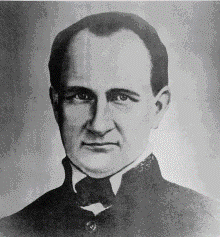
James Silas Calhoun (1802 – July 2, 1852) was an American politician and military officer who was the first Governor of New Mexico Territory from 1851 to 1852. This is a digitally enhanced image of the original photo, linked here.
Col. Sumner and Governor Calhoun had several differences of opinion, carried over by Miles at Fort Fillmore and Governor Lane at Santa Fe. Calhoun and Lane thought that the military existed to serve the Territory; the soldiers thought that they were either above the Territory or at least not subject to the governor’s orders. The Gadsden Purchase served to add to the confusion.
People at Doña Ana and Mesilla appealed to Miles to put down lawlessness as well as Indian depredations. Others wrote to Governor Lane that Miles was acting out of his jurisdiction and was brutal and rough to boot. Mexico complained that Miles was stepping out of his territory in interfering at Doña Ana and Mesilla, for it was still part of Mexico. James Gadsden did not sign the treaty until December 30, 1853. There was also a dispute over Bartlett’s boundary line.
All in all, the colonel was not in an enviable position. Lane wrote that the army was subordinate to and merely the auxiliary of civil authority. The governor could not understand why the commander of Fort Fillmore, with three hundred and fifty troops at his disposal, should sit idle while officials from Chihuahua pushed around people claiming to be American citizens. The post was only five miles away. The least Miles could do to show some interest would be to go and investigate the complaints.
The governor repudiated Bartlett’s line. Miles did not want to march American soldiers on foreign soil. He would not threaten soldiers from Chihuahua until he was certain that they were on American soil. Fortunately for all concerned, the disputed area became federal property by purchase. Outlaws, rustlers, con men, and others had a time for themselves while it lasted, much to the disgust of the decent citizens of Doña Ana, Mesilla, San Diego, and other little hamlets in the strip one hundred and seventy miles long by thirty-five wide.
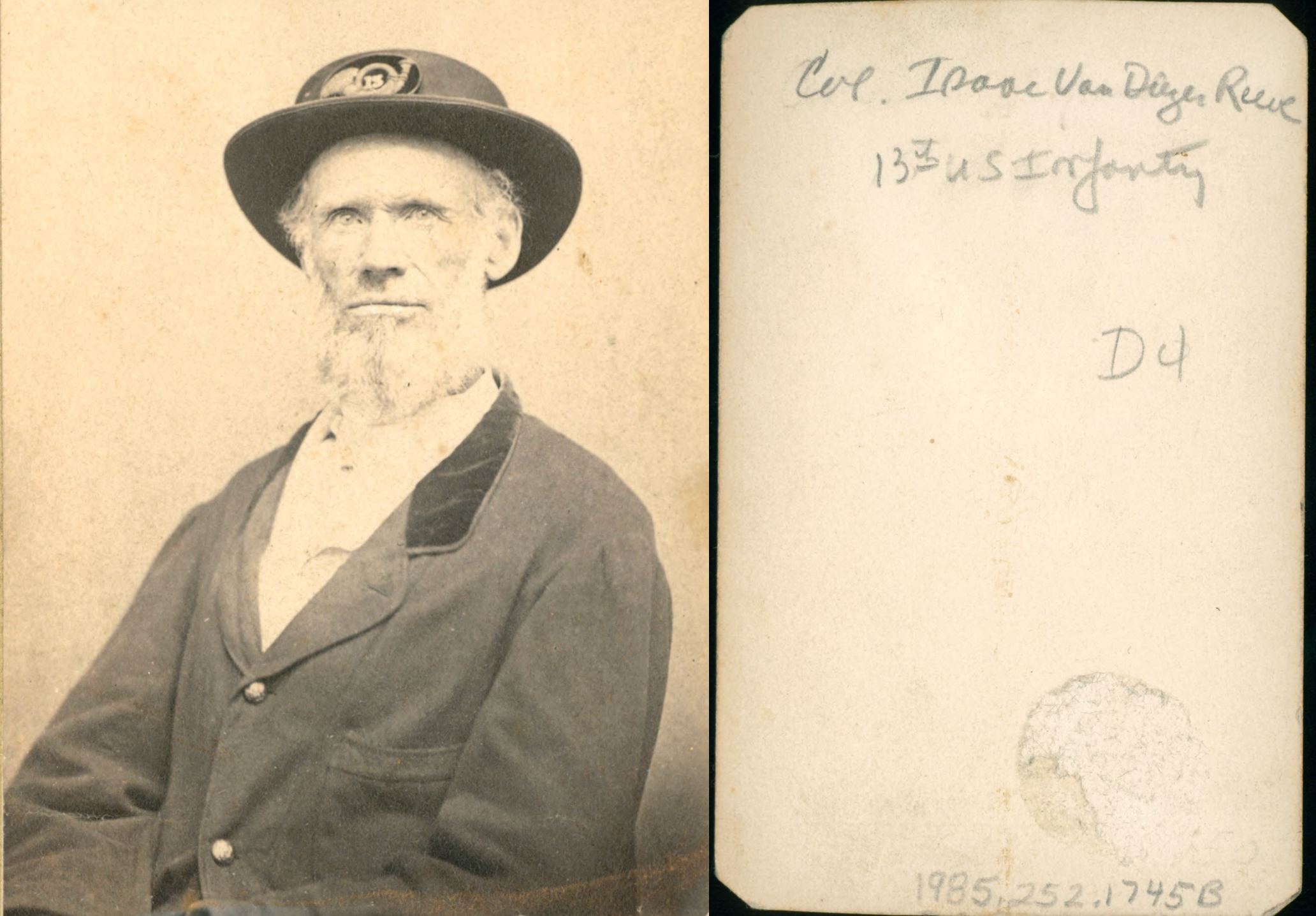
This is a digitized and enhanced image of Isaac V. D. Reeve, a graduate of the U. S. Military Academy at West Point, Class of 1835. He would later server in the 13th U.S. Infantry. I have linked the original photo to this rendition of the image.
Bvt. Col. I. D. Reeve was placed in command of an expedition against the Pinal Indians. Captain W. L. Elliot at Fort Fillmore, wrote to headquarters in Santa Fe about preparations for the expedition.
Washington Lafayette Elliott (March 31, 1825 – June 29, 1888) was a brigadier general in the Union Army during the American Civil War. He led a division of IV Corps at the Battle of Nashville in 1864. In 1866, he was awarded the honorary grade of brevet major general, U.S. Army. I have linked the original photo to this version of the image.
This gives us an insight into the details necessary for such a trip:
“Fifty rounds per man of rifle and carbine cartridges, and twenty-four of pistol, are being taken; also a pair of horseshoes and a pair of mule shoes, with nails for the same, and extra nails; twelve head of beef cattle will also be taken. The horses of Company I Rifles having recently joined from the field, and a greater portion of those of Company A Rifles having been received from Fort Leavenworth, are thin and require corn, which I have arranged to be taken, eight pounds to the animal, for fifteen days; without this the horses would not be in condition for the campaign on reaching the depot.”
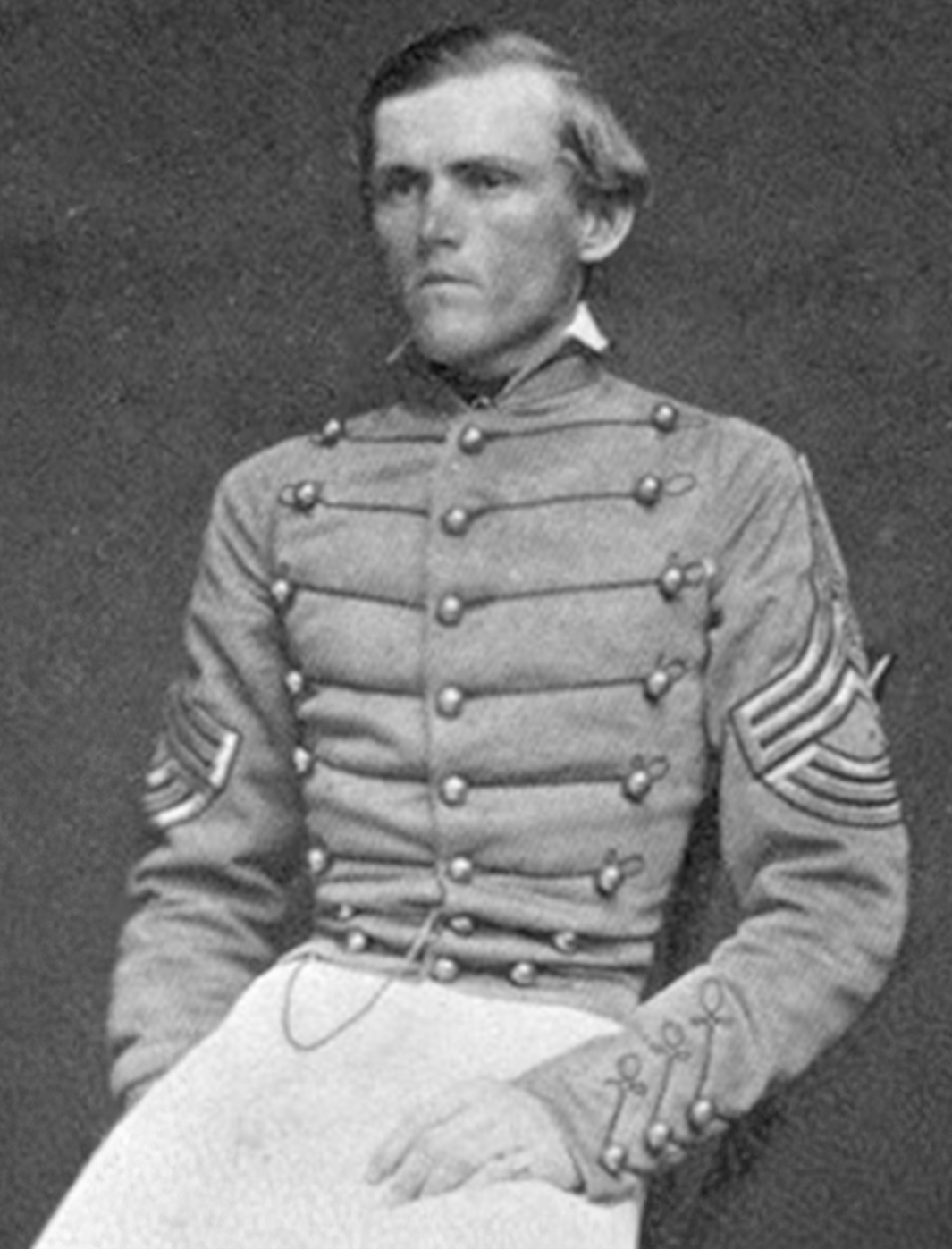
Henry Cameron McNeill receiving an appointment to the United States Military Academy at West Point, graduating there in 1857. He was ranked twenty-sixth in his class. After graduation, Henry Cameron McNeill served as an officer in the United States Army until May 12, 1861, when he resigned to join the Confederacy. I have digitally colored and enhanced this image and linked the original to this rendition.
Lieutenant H. C. McNeill, commanding a company, reported that he had left Fort Fillmore on October 23, 1859, with fifty-three horses and eighteen pack mules. No sooner were they a day’s march from the post than one horse gave out and another had to be abandoned because of a sore back. The next day three more horses gave out and were shot rather than abandoned for Indians to find. Within three weeks McNeill had only five horses fit for travel. He blamed this on the fact that most of the animals had been without forage from June to the middle of October. Of the pack mules, all but five had to be abandoned.
Reeve left Fort Fillmore with 171 men, five officers, and fifteen days’ rations. On the fourth day out the command was hailed by some Indians.
“I sent a guide out,” wrote Reeve, “to learn what Indians they were and what they wanted. After some delay, the guide returned, bringing with him seven of the Indians, informing me at the same time that they were Pinaleños; that they had asked him who we were and where we were going; to which he replied that we were friends; that we were not going out on a campaign, but were going to look for gold and find a place to put a fort. He told them to come and see the captain, and he would give them some tobacco and something to eat. These representations were made without my knowledge, for I had given instructions to the guide to ‘see who they were and what they wanted,’ never supposing that he would use any deception upon his own responsibility. There were others of the same party remaining amongst the hills, and those who had come to us called them to come also, but they would not do so. Twelve of them were, however, at one time in my power.
“Had the whole party come in, I would have seized them to prevent them from giving notice of our march, but should not, of course, have used any other violence towards them. As it was, to have a portion of them would not have prevented the others from giving notice to their friends, and I could not attack and kill them, as they had been placed in my power by the misrepresentations of the guide. As, however, the command was much in want of guides, I seized two of them and made them act in that capacity during the expedition. As the facts proved, notice had already been carried to the Indians of our advance by two men on horseback, who passed the command on the night of the third day’s march.”
“We reached the camp of a party of them on the morning of the sixth day, about one hundred and ten or one hundred and fifteen miles from this camp, on the north side of the Mescal Mountains, but of course found it deserted, it having been left probably the day before. The Indians had fled into the Mescal Mountains, where pursuit, which could be only on foot, would have been worse than useless, and it would have been easy for them to avoid us for a much longer time than we had rations for; besides, a delay in such a search would have prevented us from examining other localities where it was possible we might meet with success.
“On the night of the same day (the 17th), Captain Elliott and Lt. McNeill were dispatched with two companies of rifles (seventy men) to examine another location, which place they reached in the forepart of the following day, and by a night march were able to surprise a small camp of Indians, capturing one man, two women, and seventeen small children. The man and one woman (his wife) I kept prisoners for the purpose of making guides or messengers of them, as the service may require. The other woman (an old and wretched creature), with the children, I permitted to go free, as they could only be a useless burden to the command if retained.
“On the 18th I marched with the mounted companies of dragoons to visit the locations north of the Pinal Mountains, where the Indians are in the habit of planting, but there also I found everything recently deserted, notice of our advance having reached them in time for them to flee to the mountains. I remained in camp at this place during the 19th for Captain Elliott’s command to join me.
“From this point it became necessary to commence our homeward march, being over one hundred and forty miles from the depot, having but seven days’ rations on hand, many of our horses and mules being nearly tired out, and an excessively rough country to travel over. On the 18th the first horse (Company A Rifles) gave out, was abandoned, and shot. On the night of the 19th one of the Indian prisoners first taken escaped. From the 20th, during the march home, horses and mules were daily abandoned and killed, having given out and broken down from hard work and starvation.
“Of Company A Rifles, five horses and one mule were killed. Of Company C Rifles, three horses were killed. Of Company D Dragoons, one horse was lost and two killed (these latter belonged to Company C Rifles but were serving with Company D Dragoons), and three mules were killed. Of the horses of Company A and C Rifles, a large number had arrived from Fort Leavenworth but a short time before leaving the Rio Grande and were totally unfit for field service, being emaciated in flesh and in want of rest. The horses of Company D Dragoons had been most of the summer without corn and were not in proper condition for hard service.
“A large number of pack mules which came from the Rio Grande were in bad condition when they left, and being packed from there to this depot were, of course, in much worse condition when they arrived here, some twenty-five of them being unfit to go on the scout from this place. Those that did go were necessarily heavily packed, and of the number now remaining but fifteen are fit for immediate service. Of the horses and mules started from Company D Dragoons, none were broken down, having come fresh from Fort Buchanan.”
J During the early days of the post, Governor Lane agitated constantly for Doña Ana and Mesilla. He was even furious for another war with Mexico if it would bring the Rio Grande Valley into the federal domain. The situation as it stood made it too easy for Indians and the lawless element to move away from justice. Happily, the purchase of the disputed strip brought the area within the jurisdiction of Fort Fillmore. Now Miles, Backus, and their successors could scout after Indians without disturbing Mexican officials.
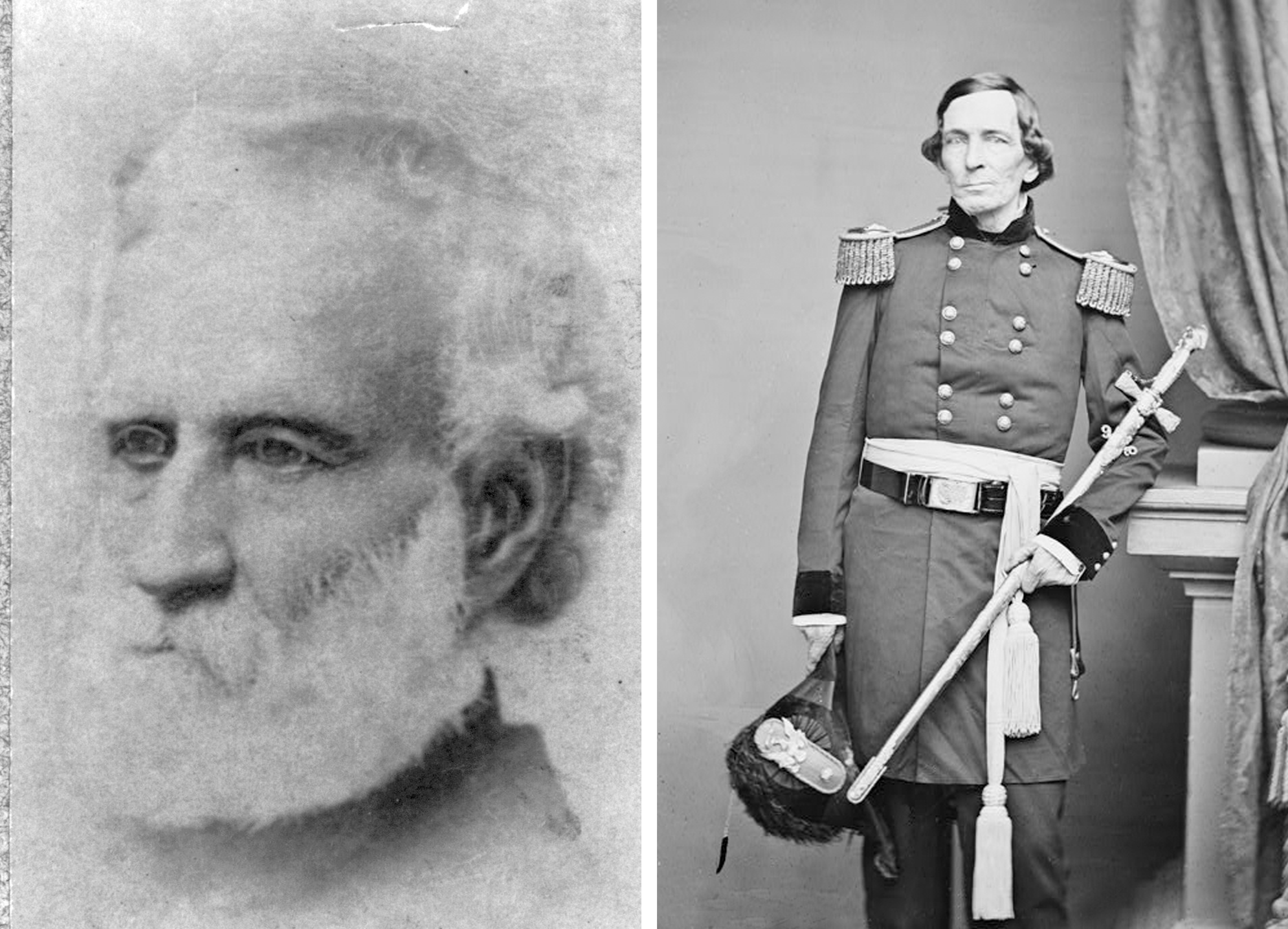
Col. Thomas Turner Fauntleroy (October 6, 1796 – September 12, 1883) and Col. John Garland (November 15, 1793 – June 5, 1861). This is a digitaly enhanced image. I have linked the original to the version.
Sumner had been succeeded by Col. Thomas J. Fauntleroy as head of the Department of New Mexico, and the latter in turn was succeeded by Col. John Garland (Bvt. Brig. Gen.), who received his appointment on July 20, 1853. He brought three hundred recruits with him, distributing them over the various posts, not overlooking Fort Fillmore, which he visited in person.
The additional troops he found inadequate for the needs of New Mexico, so he petitioned Congress for an additional three hundred and fifty recruits and five companies of volunteers. He ordered the men at Fort Fillmore to build new roads so as to open more lines of communication in New Mexico, and Commandant Miles had them build one from the post to the junction of the Ruidoso River with the Bonito, and another from the post at Albuquerque to the same point. This road was one hundred and fifty miles long. The men balked at the task and desertions were of common occurrence.
Garland also sent Miles on a three-month expedition through the White, Sacramento, and Guadalupe Mountains in an effort to break the power of the Apaches. Dr. Michael Steck, the Indian agent, pleaded their cause, and the Indians proposed to surrender stolen property, return prisoners in their possession, and sign a peace treaty if Miles would cease hounding them. When Miles became commander of Fort Defiance he went on another expedition against these Indians, under the direction of Col. B. L. E. Bonneville, who had succeeded Garland in a temporary capacity, Garland being away two years. He was then permanently transferred, never actively taking any part in New Mexico military affairs again.
This is a digitally enhanced image of Michael Steck (1818–1880) was a physician, Indian Agent (1852–1863), and Superintendent of Indian Affairs (1863–1865) in New Mexico Territory. I have linked the original photo used in the version of the photo.
Bonneville kept the pressure on the Apaches, organizing his military strength into two main columns. He placed one under the command of Col. William Loring, who took three companies of infantry, several detachments of rifles, and a company of spies in charge of Captain Manuel Chávez, and gave battle in the valley of the Gila River. This was more to the liking of the detachment from Fort Fillmore than building roads. The Indians were repulsed and their ranchería yielded considerable plunder. Miles was in charge of the other division. Moving with rapidity out of Fort Defiance, he opened a supply depot on the Gila. On June 27, 1859, he encountered the Indians some thirty-five miles from Mount Graham, and in the battle that followed killed forty, including some women. He took the same number of prisoners and destroyed ranchería property. Twelve of his men were wounded.
Nor were the Apaches the only troublesome Indians. The Navajos were overconfident about their stronghold at Canyon de Chelly. Miles had moved out of Fort Defiance against them. Bonneville ordered Major Electus Backus to take two companies of Mounted Rifles, four companies of militia, fifty-five spies and guides under Captain Valdez of the New Mexico Volunteers, and twenty friendly Utes from the Abiquiú Agency, and destroy the encampment at Canyon de Chelly. Fort Fillmore was a beehive of activity. The three hundred and forty-mile hike netted several hundred goats, a few Indians killed, but little else. On December 25, however, the Indians wished to talk peace with Col. Bonneville at Fort Defiance, closer to their habitat than Fort Fillmore.
This is a colorized and enhanced image of Benjamin Louis Eulalie de Bonneville, Union Army, image from the Missouri Historical Society. I have linked this image to the original photo.
Here both Col. Bonneville and Lt. Col. Joseph E. Johnson were not pleased with Fort Fillmore when they inspected the post, and decided to take away a number of the troops to support new posts going up all along the frontiers of Arizona and New Mexico. Fort Thorn was abandoned and its property moved to Fort Fillmore. The dragoons had been replaced some years before by a company of Mounted Rifles transferred from Texas. By 1858 Fort Fillmore had one company of infantry and some New Mexico volunteers. The following year it had a company of Mounted Rifles and a detachment of the Third Infantry. In 1860 it had but one company of the Third Infantry.
It was during this period, shortly before the Civil War, that Lydia Lane experienced her terror as post commandant. Each day brought more men staying for a brief time into the post, resigning their army commissions before moving to Texas and Confederate territory. Nor did they have to go far. They were received with open arms at Doña Ana, Mesilla, Hart’s Mill, and other little settlements.
Lt. W. W. Mills, later to rise in the political field, was a sutler for a year at Fort Fillmore, noting the various types who went into business at Hayward & McGroarty’s sutler store. It was interesting to watch the mounting tension when a pro-Union man was buying at the same time as a pro-Confederate (who was given the latter terms). It was Mills who grubstaked Birch, Gentry, and Hicks for their prospecting adventure into Arizona at Bear Creek and Pinos Altos. They found the first placer at Pinos Altos and eventually aroused the interest not only of prospectors but also of the military—both North and South—in the whole region.
The war was costing the North a million dollars a day; the South also lacked finance. The discovery of gold closer than California, and very close to the Confederate State of Texas, had a bearing on the expeditions of Baylor and Sibley. To take over Arizona and New Mexico meant conquering Fort Fillmore because of its proximity to Mesilla, the capital of the new Confederate State of Arizona, and Fort Union because it was a supply depot for necessary arms, ammunition, and food. Thus it was that Fort Fillmore came into the national limelight.
William Wing Loring was a career soldier who served as an officer with the U.S. Army during the Mexican-American War, as a major general in the Confederate Army during the Civil War, and for ten years as an officer in the Egyptian Army.
In spite of the fact that Loring’s sympathies were with the South, he performed his duties to the best of his ability until such time as he was no longer able to keep on this way. He then turned over his command to Canby and went to Fort Fillmore to await President Lincoln’s action on his resignation. Major Reynolds came to the post and paid the troops. Bvt. Major Gabriel R. Paul took over the command at Fort Fillmore, and much of his time was spent in quieting disturbances in Mesilla, Doña Ana, Alamosa, Paraje, Santo Tomas, San Diego, and wherever agitation followed arguments over secession.
Dabney Herndon Maury (May 21, 1822 – January 11, 1900) was an officer in the United States Army, instructor at West Point, author of military training books, and a major general in the Confederate States Army during the American Civil War. I have linked this version to the original image used for this photo.
Adjutant General Dabney H. Maury commended Paul for his action:
“The department commander directs me to express to you his approbation of your course in using a portion of your force to prevent violence and bloodshed amongst the people in your vicinity. I enclose herewith a communication from the people of Mesilla and from the governor of the Territory to the department commander requesting that troops be stationed in Mesilla for the preservation of the lives and property of citizens against lawless combinations too powerful for the civil authorities to resist. While the colonel commanding does not think proper to order you to station troops in Mesilla unless you perceive a necessity for it, he wishes you to understand that he entrusts full discretion to you in the matter, and that he wishes you, if in your judgment it seems necessary, to use any portion of your command to aid the civil authorities in preventing violence and bloodshed amongst the people.”
Surgeon James Cooper McKee, Union army. Bvt. Lieut. Colonel. Photographer: Mathew Brady, Washington, DC. I have digitally enhanced and colorized this image, but the original photo is linked to this photo.
In analyzing the surrender of the fort to the Confederates, we must not rely too completely on the biased report of Major James Cooper McKee, angered as he was by the affair, nor be completely taken over by Lt. Col. J. R. Baylor of the Confederacy, any more than lending a completely sympathetic ear to Major Isaac Lynde’s excuses for his action. The whole affair must be studied in dimension and perspective.
Paul had been transferred to Fort Union, a post of major importance. The threat to Fort Fillmore did not seem serious; consequently the district commander devoted more attention to Fort Craig and Fort Union, the two military installations he thought of sufficient strength to defend New Mexico. Troops were poured into Fort Fillmore not because it was the hub, but only because it was a spoke in the wheel. Furthermore, a show of strength there would calm the agitation in Mesilla and Doña Ana.
A number of the troops had been on a six-month campaign against the Navajos and looked forward to a long rest. They were quite surprised at the turn of events during their absence. The election of Abraham Lincoln as President left no doubt in their minds that the time for the showdown had arrived at last, after ten years of verbal threats and cold war.
In the first place, the fort was not built to resist a siege nor to withstand a concentrated attack. It was a place for soldiers to rest between Indian campaigns. The adobe houses were square and topped with flat dirt roofs; the walls extended up all around to form a parapet. The officers’ quarters and the barracks took up three sides. The Rio Grande side was vulnerable. The houses at the post were not connected in any way by palisades, nor even by earthworks so important to a frontier post.
It was almost a half mile between the post and the Rio Grande. This area was covered by a bosque, useful many times to Indians preparing to run off stock when the men of the post, for the most part, were out looking for stolen sheep, horses, and mules. The post was approachable from the river through three fording places. One was used by the people of Santo Tomas; the other by Mesilla; and the third by the citizens of the new little village of Las Cruces. Such fords meant good mail service, stagecoach convenience, and sutler supplies. They were also used for the common practice of smuggling.
The people of Mesilla were unsympathetic toward the military at Santa Fe ever since General Garland practically evacuated Fort Fillmore, thus forcing them to raise their own militia to battle Indians. The Mesilla Guard had its own method of recovering stolen property from the marauders. Sibley had hoped that this Guard would ally itself to him when he invaded New Mexico.
Samuel John Jones, new sutler at Fort Fillmore, openly avowed his leanings toward the South and often kept people at the store in order to listen to the reasons why they, too, should follow his example. The Confederate Congress at Montgomery, Alabama, appointed him Collector of Revenue for the Southern cause. The money was taken across the border into Mexico, to San Antonio, Texas, and east to the Confederate capital.
Perhaps Paul should have been retained as commander of the post. When he learned that on March 16, 1861, the people of Mesilla called a convention in which it was decided to accept Republican officials to run the country, and they agreed that it would annex that section of the country to the Confederacy if New Mexico acknowledged Lincoln as President, he shrugged his shoulders at what he called a “tempest in a teapot” and threatened to punish anyone molesting a civil official or attempting in any way to carry out their resolutions in favor of the South.
Paul was removed in July 1861 and Lynde transferred from Fort McRae [sic — Fort McLane; Fort McRae was not established until 1863]. He was given complete charge of the southern military district. Canby ordered him to transfer the troops and public property from that post to Fort Fillmore, where he was to secure “the interests of the United States against attack from any quarter.”
Included in the order was the further command to abandon Fort Fillmore if it should be threatened by a force that could not be resisted. He must disperse the troops and property to other stations. This part of the order is often overlooked by those who claim that Lynde was a complete coward, a Southerner at heart, or a doting old fool. We are not excusing his actions; we are condemning them—just stating the facts.
He was further enjoined to keep spies out at all times who would report the movement and strength of any threat from Texas. He was especially to watch all movement from Fort Bliss, now in the hands of Col. Baylor of the Confederacy. Nor was Lynde to anticipate the actions of the civil authorities with any military measure. He was to “quietly and effectively” frustrate “any opposition to the Government of the United States.”
Thus, McKee fussed and fumed because Lynde did not take the offensive, or at least throw up breastworks, take measures to guard against surprise, send the wives and families of the soldiers—numbering about one hundred souls—to Santa Fe, where there was comparative safety. The commander just waited and listened to reports.
Lynde looked quite venerable after thirty-four years in the service. His gray hair and gray beard gave him the look of wisdom and determination. He reminded many of the prophets and patriarchs of the Old Law. Grant thought enough of him to reinstate him after Lincoln gave him a dishonorable discharge [sic — Lynde was dropped from the rolls without trial on November 25, 1861, not court-martialed or dishonorably discharged] for the surrender of the federal troops to Baylor. These things are relative in retrospect, but quite important at the time. The commander of Fort Sumter surrendered but was treated as a hero; yet he received the same orders from his commanding officer as did Lynde. Put to the test, Lynde proved more of a humanitarian than a soldier, and for this shame is attached to his name. His men were in no position to fight; they were to be cut down and massacred. It seems remarkable that no one condemns him for leaving Fort Fillmore, only for surrendering without a fight. Was a fight practical at that given moment, with his men overcome by the heat? Were the ones that were sober strong enough to withstand the Texans?
Major Isaac Lynde was a U.S. Army officer whose career ended in disgrace after he surrendered his command to a smaller Confederate force at San Augustine Springs, New Mexico, in July 1861.
Lynde assumed command of Fort Fillmore the day following Independence Day. The war had already been in progress several months and rumors were flying from Santa Fe, Galveston, San Antonio, Fort Bliss, and Mesilla. Companies D, I, and K did not leave the post with Paul. The weather was stifling. The 7th Infantry Band, quartered in tents near the hospital some distance from the fort proper, were men ready and willing to give their lives for the Union.
The first thing Lynde did upon his arrival was to inspect Fort Fillmore to see how strong it was against the attack all said was forthcoming. He penned a letter to Canby on July 7 stating that Fort Fillmore could not be successfully defended. Two days later he wrote a second letter asking that the post be abandoned because “it was located in a depression; commanded on three sides by hills within six-pounder range … and water for the men and animals had to be taken from the Rio Grande, a mile and a half away.”
Baylor had his spies also. Fort McLane abandoned, Fort Fillmore indefensible, Baylor had but to march from Fort Bliss to Mesilla to proclaim the whole area part of the Confederate States of America. On July 23 he marched two hundred and fifty men out of Fort Bliss and headed for the ford of the river at Santo Tomas (a Spaniard and a New Mexican will not say San Tomas; it is always Santo Tomas). Night and twenty-three hours later found the Texans within five hundred yards of Fort Fillmore, waiting for daylight to begin the first major operations in New Mexico that were part of the campaign to win the Territory for the Confederacy.
But Lynde’s scouts gave such an inaccurate account of Baylor’s position that he decided against the assault. On Santiago’s Day, July 25, a festival day for native New Mexicans, Baylor withdrew his men several miles to the northwest to mingle with his sympathizers at Mesilla. Baylor had also learned that Canby was moving to make an offensive against the post, had sent in three hundred additional rifles and muskets, twelve thousand rounds of ammunition and cartridges from Fort Craig, and twenty thousand additional rations of subsistence from the post at Albuquerque. Also men from Fort Stanton had been loaned to Albuquerque to help bring in livestock for Fort Fillmore. Word was out that they wanted to fight Baylor.
At least we have the fact that on the afternoon of July 25 Lynde, who had seven howitzer effective troops, advanced toward Mesilla with one three-inch gun and six companies of the 7th Infantry, or a total of four hundred and eighty men, the others remaining at the post in case the Confederates should bypass the Federals.
Lynde could not have sent W. W. Lane (Lydia’s husband) on a scout with H. McNally and E. J. Cressy and seventy Mounted Rifles on June 22, because he was not at Fort Fillmore at that time. It was a scout from Fort McLane or from Fort Fillmore. July 22 would hardly have allowed time to march toward El Paso, back to Santa Fe, make his report, ready his company for the trek, and still be out of the march on Mesilla or the surrender shortly after Lynde’s attempt against Baylor.
It was on the march to Mesilla that Surgeon James Cooper McKee was not on the picture. Tortured for nights that perhaps Lynde was not the man to command Fort Fillmore, the doctor was hoping that the major would take the initiative and go hunting for Texans. Adjutant E. J. Brooks and McKee were sent forward with a flag of truce. They were received by Major Waller and Col. Herbert, and relayed the message that Lynde asked for the unconditional surrender of Mesilla and the Texans. Baylor sent back word that if Lynde wanted Mesilla he must come and take it. Baylor was prepared.
Actually, now was the ripe time for Lynde to open up. He fired two long-range howitzer shots, but both fell short of the mark. He then ordered an attack. As the men advanced, the Confederates opened fire from rooftops and in the fields along the roadside. Three Union soldiers were killed and six were wounded. Lynde ordered a retreat back to Fort Fillmore.
The attackers were not back an hour when Lynde ordered the post abandoned in favor of Fort Stanton. He felt he would have a better chance there, for Fillmore could not withstand Baylor’s artillery. He made this decision without consulting his officers, and this irked them. All would have several hours’ rest before the march to El Ojo de San Agustín (St. Augustine Springs), seventeen miles away.
The horses were hitched to wagons; wagons were loaded with ammunition and supplies; ambulances readied for women and children; livestock watered and fed. All went along fine until someone discovered that the whisky at the hospital was to be abandoned. Promptly many of the men not only sampled the hard liquor but emptied their canteens of water and refilled them with whisky. When the hot July sun brought on a thirst the following day, burning throats were made even worse with the equally hot liquid. Old John Barleycorn helped demoralize the command.
RESEARCHER’S NOTE: The whiskey-canteen story, which Stanley presents as fact, is almost certainly a legend. Surgeon McKee’s own narrative records that he and his steward smashed the hospital’s entire stock of “brandy, whiskey, and wine” with tent poles the day before the march, and no participant’s contemporary account mentions liquor on the retreat. See Life at Fort Fillmore.
Baylor’s scouts were on the alert and reported a huge cloud of dust like an army on the move. Baylor suspected what was happening and went in pursuit of the retreating caravan. All along his route he picked up stragglers whose only request was water—cool water, muddy water, any kind of water. At St. Augustine Pass, Baylor confronted Lynde and his men.
Meantime, word soon spread in Mesilla that Fort Fillmore had been abandoned. Before and after the Confederate carts, burros, and men on foot came in from Mesilla, Las Cruces, Santo Tomas, San Diego, and elsewhere, and soon thousands of dollars’ worth of supplies that the retreating Federals could not take with them were carried off. The sack and pillage of the empty post was complete. Baylor found broken furniture, destroyed hospital stores, and general devastation. The post was unfit for occupancy, and after he left others came to pick at leisure what the first had overlooked.
The final act of the tragedy we take from Lynde’s report:
“Until daylight the command advanced without difficulty, but when the sun arose the day became intensely hot, and soon after men and teams began to show signs of fatigue. Up to this time there was no indication of pursuit. I now determined to push forward with the mounted force to the Springs and return with water for the suffering men in the rear. On reaching the Springs I found the supply of water so small as to be insufficient for my command. After procuring all the water that could be transported by the men with me, I started back to the main body. After riding some distance I became so exhausted that I could not sit upon my horse, and the command proceeded without me, under the command of Lt. Cressey, and I returned to the Springs.
“After it was reported to me that a part of the teams had given out, that the infantry could not be brought up, and that large numbers of men had become totally overpowered with the intense heat, at this time an express from Captain Gibbs (who came in with a contingent bringing in one hundred head of animals destined for Fort Fillmore) reported that eight companies of mounted men, supported by artillery and a large force of infantry, were approaching our rear guard. I had the ground reconnoitered and found that I could not bring into action the infantry battalion. Captain Gibbs came in and told me that his company men and horses had been without water for twenty-four hours. Under these circumstances I considered our case hopeless; that it was useless to resist; that honor did not demand the useless sacrifice of blood after the terrible suffering that our troops had already undergone, and when that sacrifice would be totally useless.
“When I saw a body of mounted Texans following Captain Gibbs to the vicinity of the camp, when a parley was held, I surrendered my command to Lt. Col. Baylor, of the Confederate forces.”
Union officers and McKee sought to restrain Lynde. A few talked of placing Lynde under arrest, claiming they were within their rights to do so, assume command, and fight the Texans. But Baylor soon cooled the hot tempers when he pointed out that three out of four of the wagons had been captured, more than half the train was in his hands, and at best not more than two hundred and thirty men were in any condition to fight. What did they have to gain in the heat of the quasi-desert?
The Confederates went through the formalities and marched on. Fort Fillmore was left to the wind and the sand. The place was deserted; the events would live only in history books. McKee could never live down the shame. When Lynde was restored by President Andrew Johnson on November 7 [sic — November 27], 1866, through the intercession of Grant, the doctor resented it and became a one-man crusade to bar Lynde from the army forever. More than that, from the writings he left, it seemed almost an obsession. Perhaps there are many ways to love one’s hatred; these are two examples.
One might say that Gibbs loved honor and defeat and shame; Lynde loved his men. The solitary pass near the Rio Grande—what did it say? “This, too, shall pass.”
Ready References – Additional Reading – Government Documents – Rare Collections not listed.
These are for specialized studies. Here we hope to reach the average reader.
Crimmins, Col. M. L. Fort Fillmore.
New Mexico Historical Review, October 1931.
Tomlinson, M. H.; Brayer, Herbert O. Border Outpost.
New Mexico Magazine, May 1946.
Twitchell, R. E. The Fall of Fort Fillmore.
The Westerners (Denver), Brand Book, 1951.
Bancroft, H. H. Leading Facts of New Mexico History, Vol. II.
Kelleher, W. B. Arizona and New Mexico.
Bender, A. B. Turmoil in New Mexico Frontier Defense in the Territory of New Mexico.
New Mexico Historical Review, 193—.
Hunt, A. Prudent Soldier: E. R. S. Canby.
Hunt, A. Kirby Benedict, Frontier Federal Judge.
Kerby, R. E. The Confederate Invasion of New Mexico and Arizona.
Colton, R. C. The Civil War in the Western Territories.
McKee, James Cooper. Narrative of the Surrender of a Command of U.S. Forces at Fort Fillmore, N.M., July 1861.
End reproduced text
Accuracy review: this page was checked against primary and scholarly sources and corrected where the record required it on July 7, 2026. Historical research is never finished; if new evidence changes anything stated here, this page will be updated, and corrections will be noted rather than made silently.