Colonel Alfred Gibbs
Colonel Alfred Gibbs
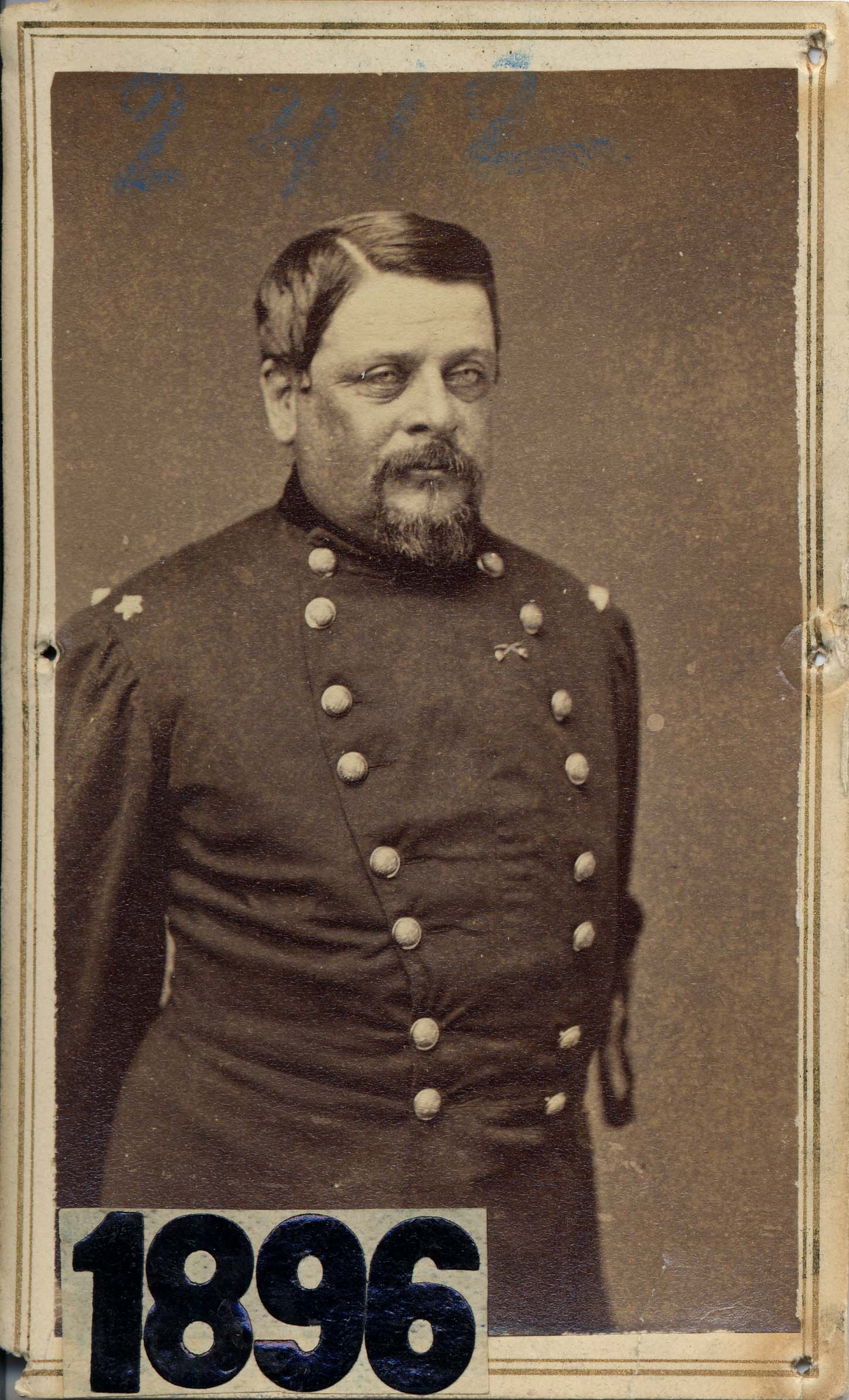
Source: New York State Military Museum and Veterans Research Center, Photograph Collection (Object ID PA.1999.0014.1357). Saratoga Springs, NY. Digital image.
Alfred Gibbs of Suffolk, New York, served with the Field & Staff of the regiment that became the First New York Dragoons, originally the 130th New York Volunteer Infantry, in September 1862, at the age of 39. He resigned his commission.
The Service Record
Enlisted: September 1862, at Suffolk, N.Y.; age 39.
Unit: Field & Staff, 130th New York Volunteers → First New York Dragoons.
Rank: Colonel.
Died: Fort Leavenworth, Kan.
Source: New York Adjutant-General’s register of the First New York Dragoons; Bowen, J. R. (1900). Regimental History of the First New York Dragoons.
The Record & the County History
The regiment’s own muster roll and the county history that remembered him, shown side by side.
From the Regimental Register
The regiment kept its own account of every man; his entry in the muster roll, printed in Bowen’s history, is reproduced below.
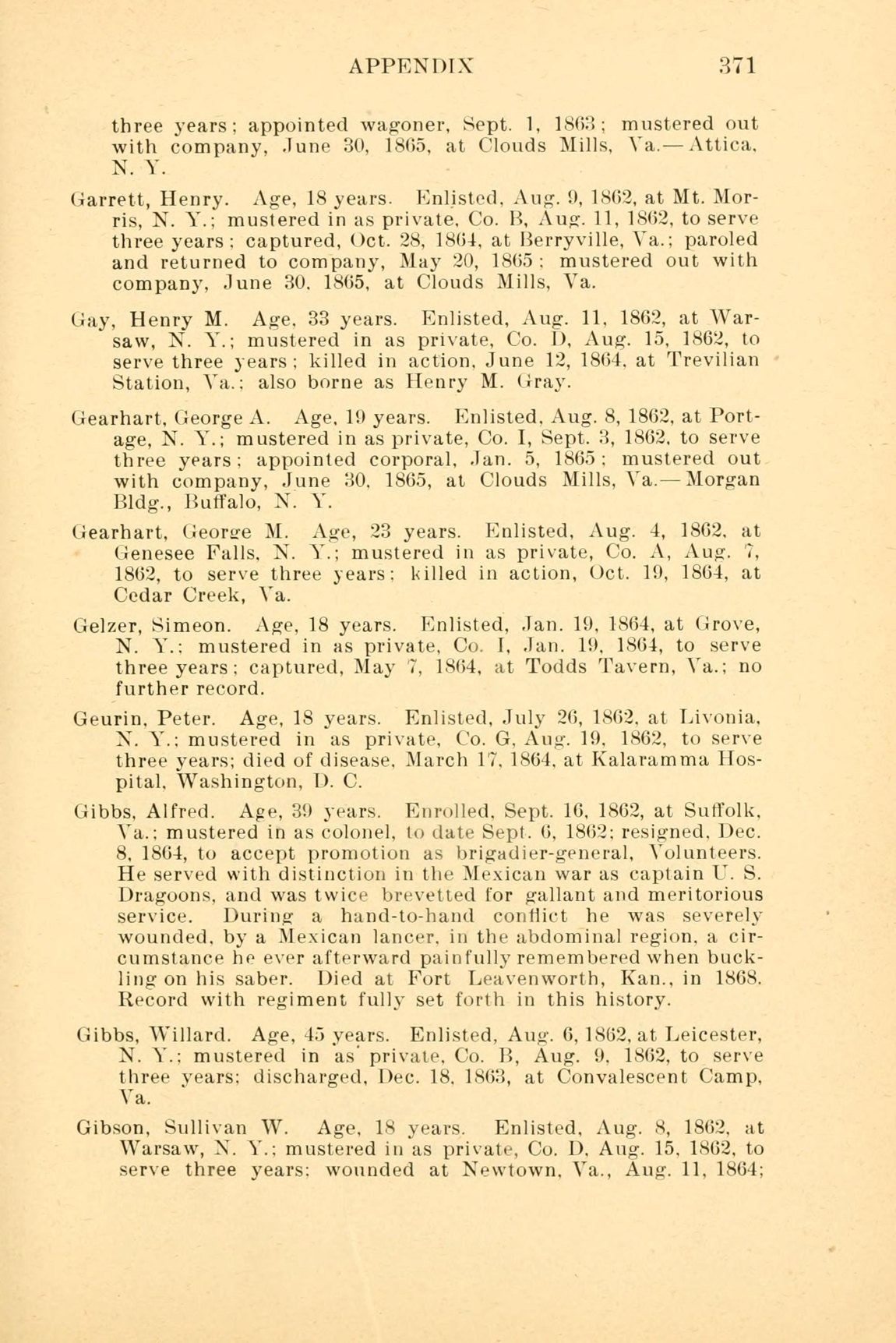
“Alfred Gibbs. Mustered in as colonel, to date Sept. 6, 1862; resigned, Dec. 8, to accept promotion as brigadier-general, Volunteers. He served with distinction in the Mexican war as Captain U. 8. Dragoons, and was twice brevetted for gallant and meritorious service. During a hand-to-hand conflict he was severely wounded, by a Mexican lancer, in the abdominal region, a circumstance he ever afterward painfully remembered when buckling on his saber. Died at Fort Leavenworth, Kan., in 1868. Record with regiment fully set forth in this history.”
Verbatim from the roster of the First New York Dragoons in the New York Adjutant-General’s report. The page reproduced above is from Bowen, J. R. (1900). Regimental History of the First New York Dragoons (originally the 130th N.Y. Vol. Infantry) (p. 371). Internet Archive. archive.org/details/regimentalhistor00bowe
In the County Histories
The county histories compiled within twenty years of the war named the men who went, and often recorded what became of them. His name appears on the pages reproduced below.
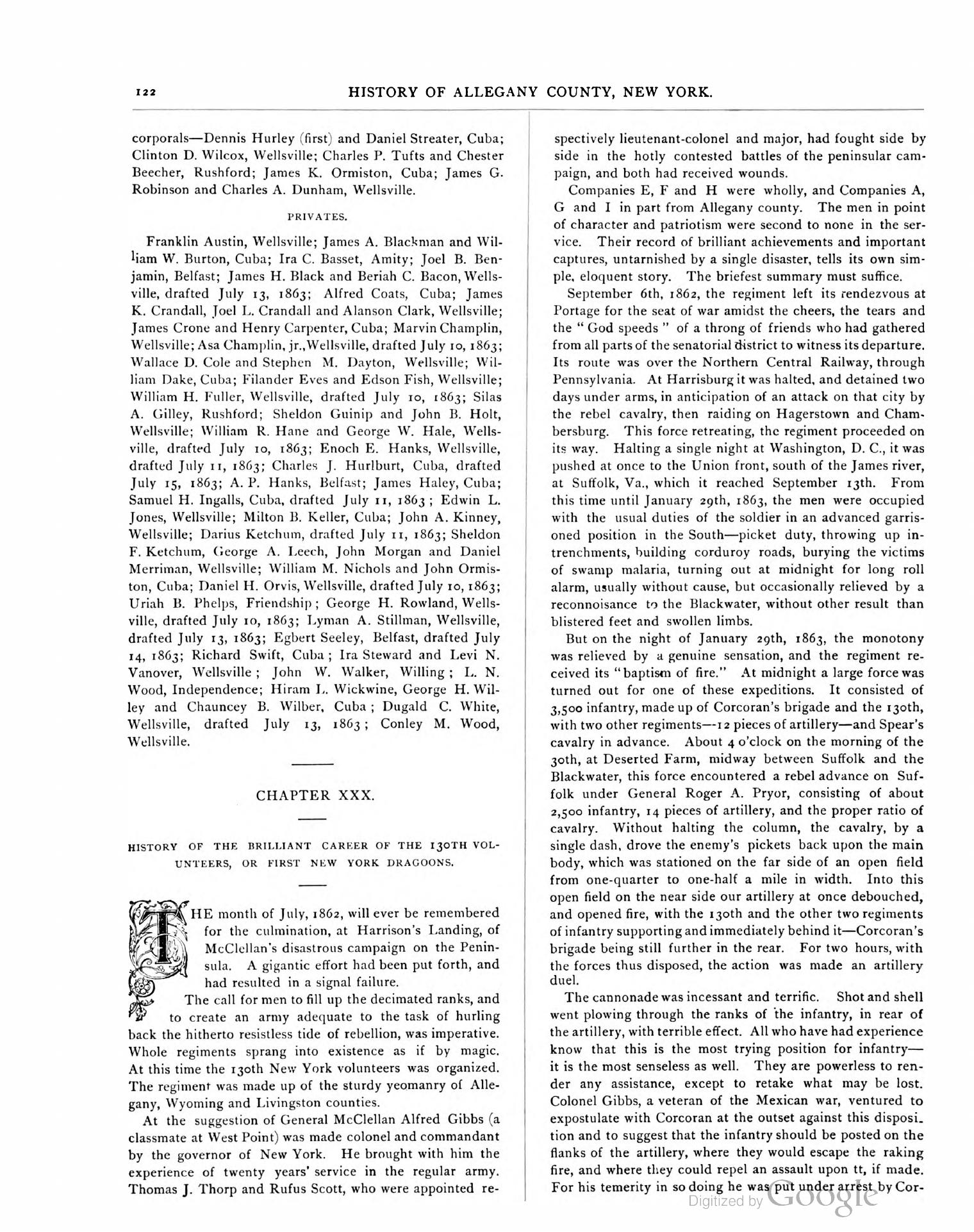
“Alfred Gibbs (a classmate at West Point) was made colonel and commandant by the governor of New York. He brought with him the experience of twenty years’ service in the regular army”
Source. F. W. Beers & Co. (1879). History of Allegany County, N.Y. (p. 122). New York, NY: F. W. Beers & Co.. Public domain; digitised copy held in the archive of this site.
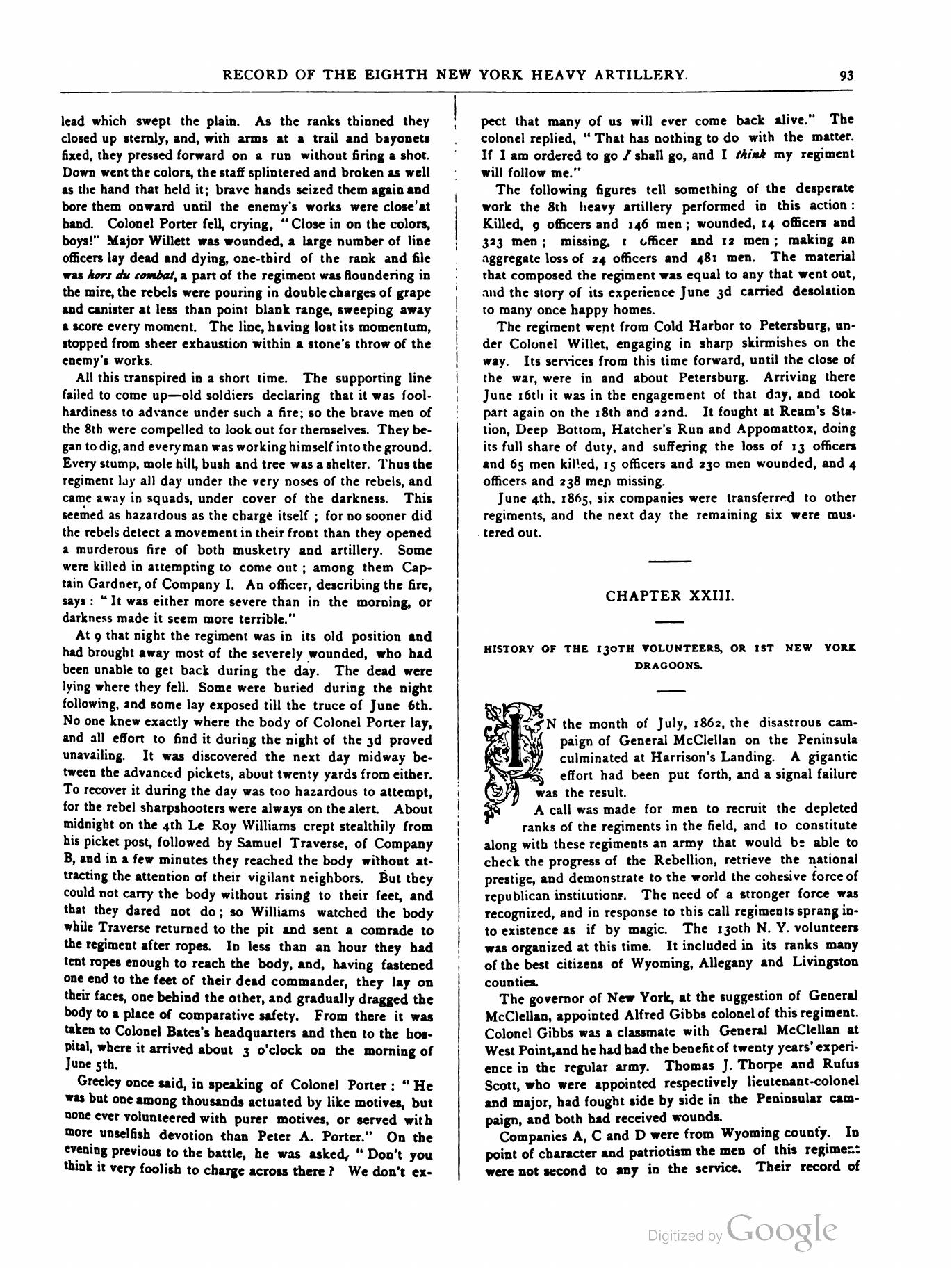
“Alfred Gibbs colonel of this regiment”
Source. F. W. Beers & Co. (1880). History of Wyoming County, N.Y. (p. 93). New York, NY: F. W. Beers & Co.. Public domain; digitised copy held in the archive of this site.
The Brady Photographs
Five glass plates of Gibbs survive in Mathew Brady’s studio negatives, now held by the National Archives. Two are uncut multi-exposure sheets — one sitting photographed three times across a single piece of glass, the way a studio worked when it expected to sell prints. They are reproduced here from the Archives’ own scans, undamaged and uncolourised.
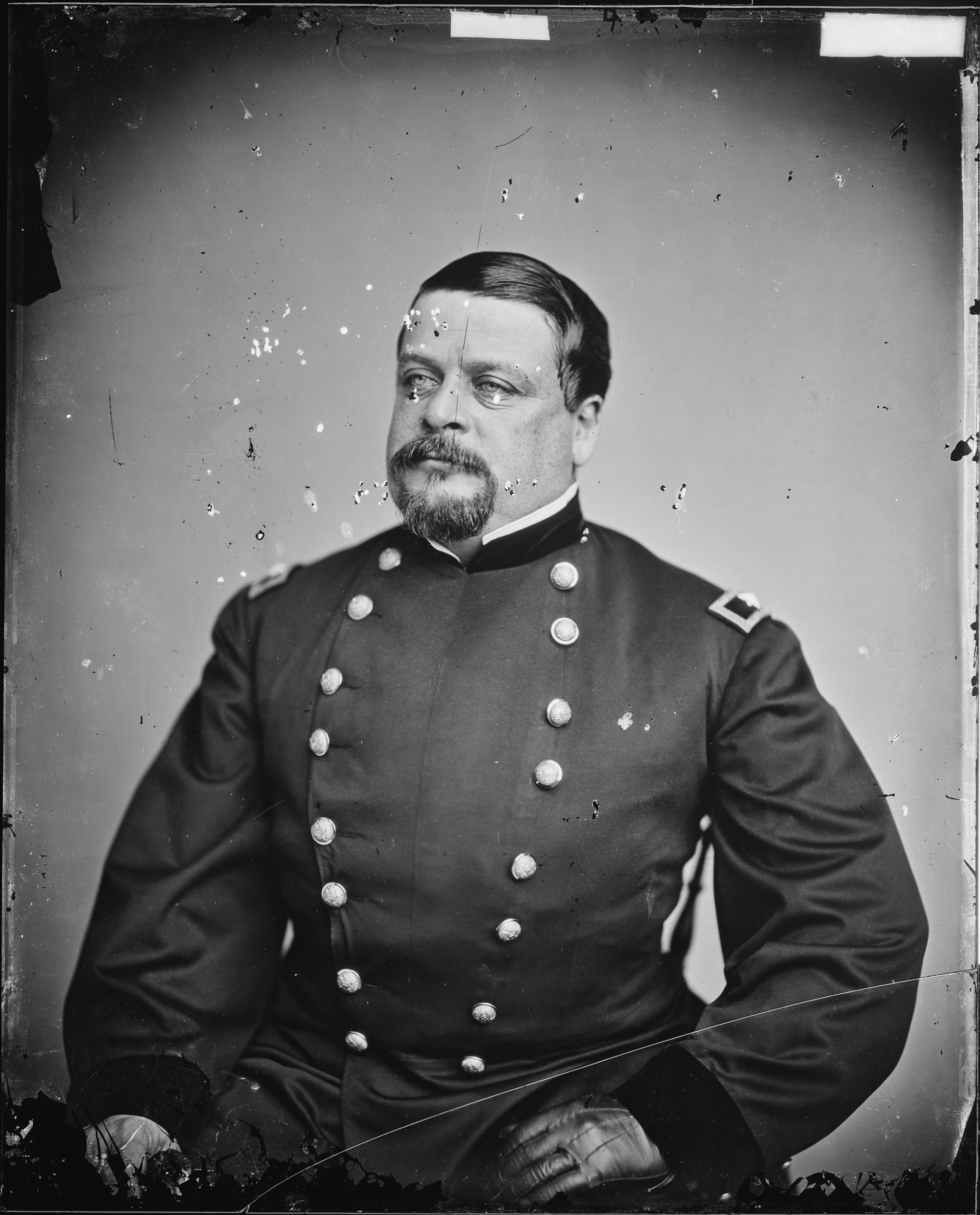
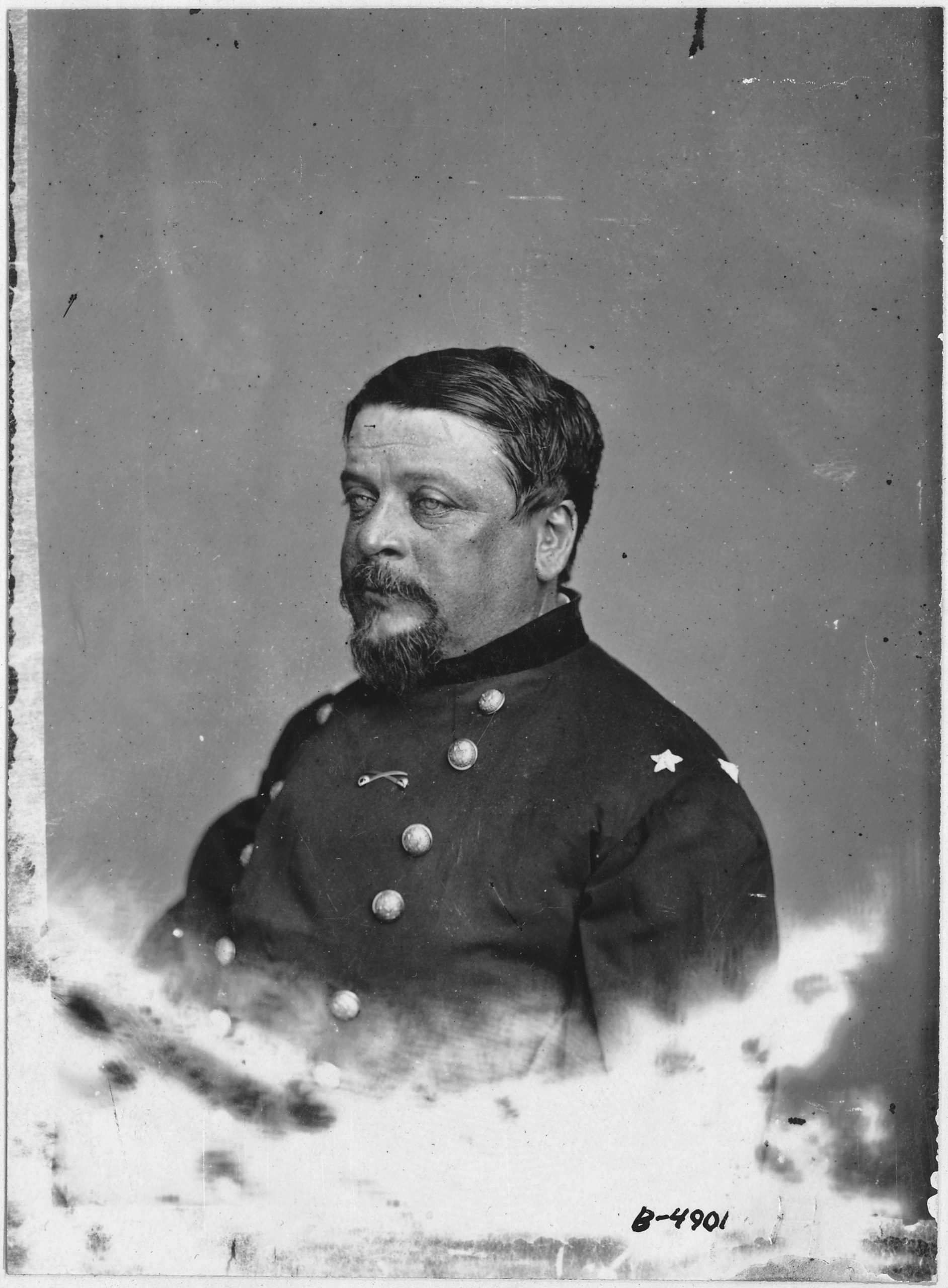
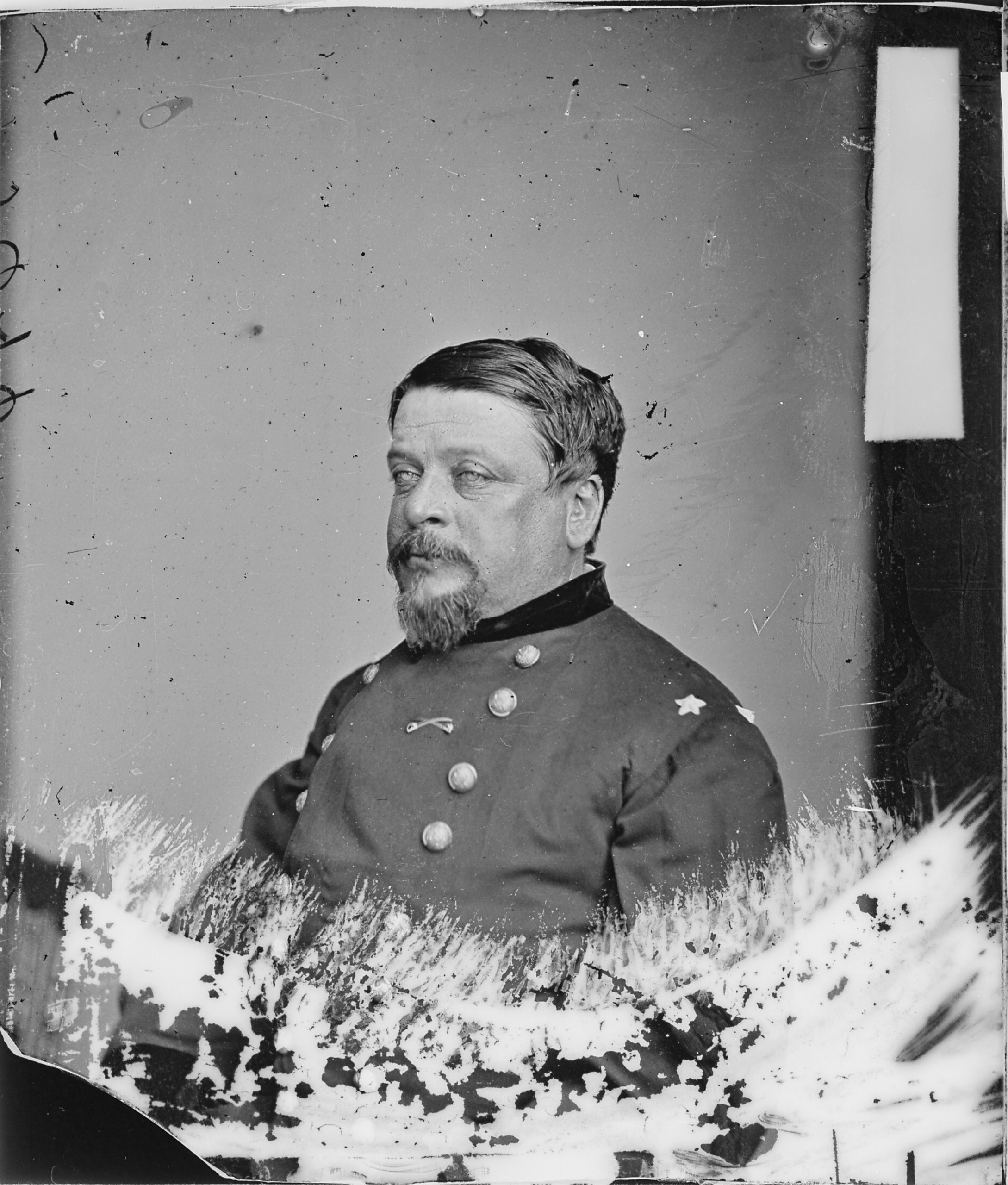
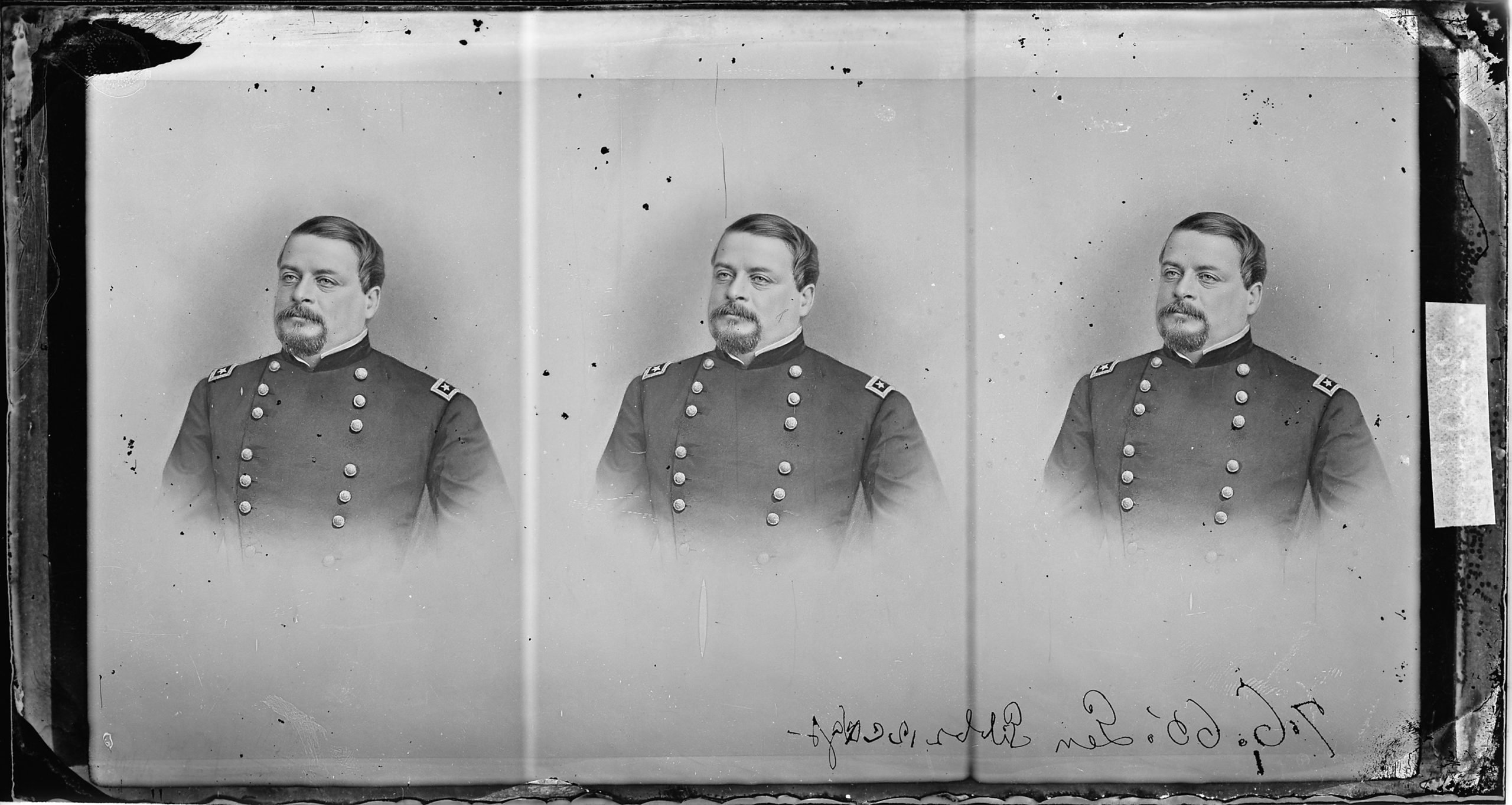
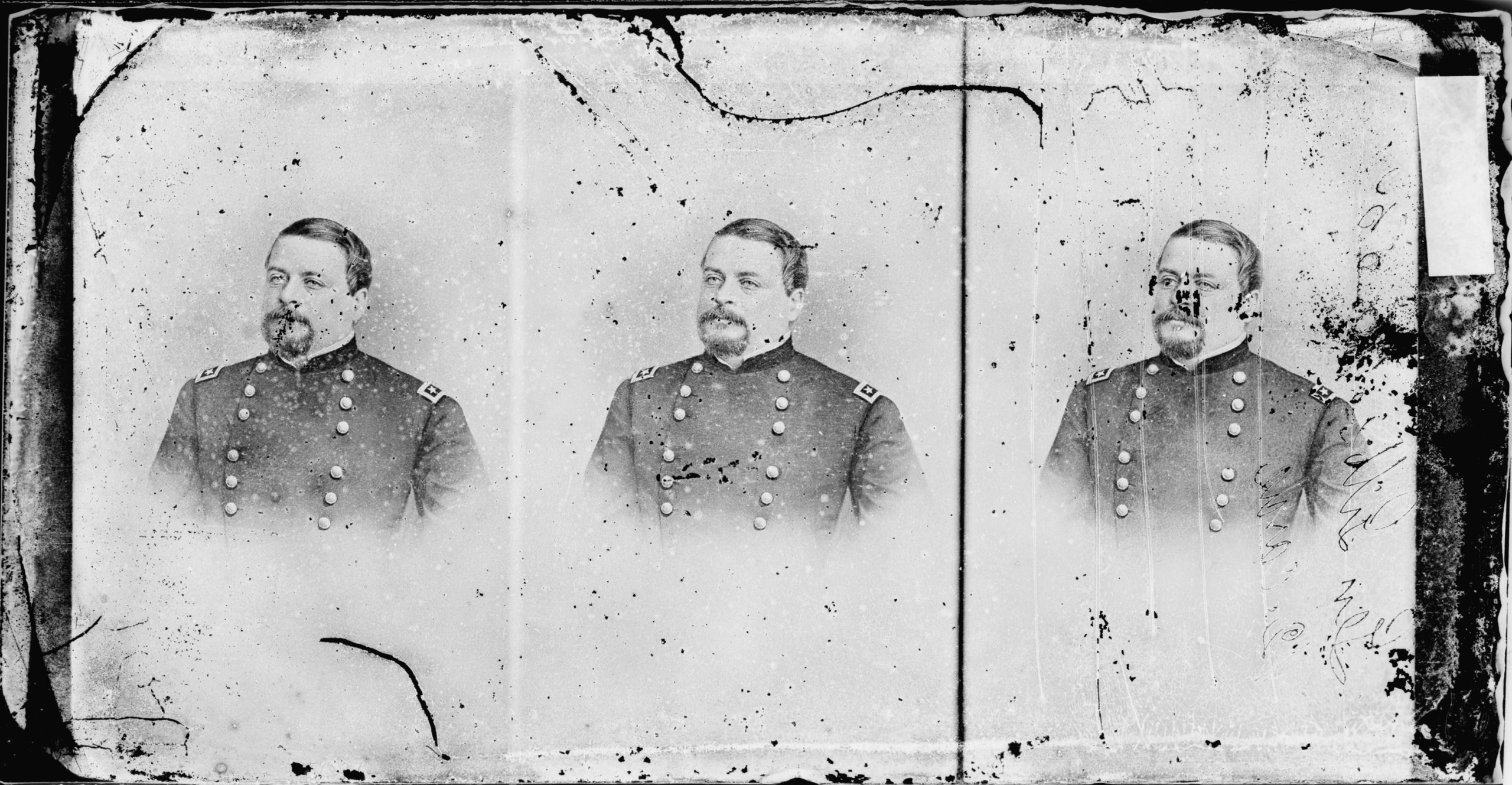
Source. Mathew Brady Photographs of Civil War-Era Personalities and Scenes, Record Group 111-B, National Archives, Washington, DC. National Archives identifiers 527842, 527860, 528783, 529012 and 530348.
Reading the Uniform: How These Photographs Are Dated
None of Gibbs’s photographs carries a date. They can be dated anyway, because the Army told its officers exactly how to dress, and the regulations of 1861 make rank readable at a glance (U.S. War Department, 1861).
- The coat. “Single-breasted for Captains and Lieutenants; double-breasted for all other grades” (para. 1442). A captain wears “one row of nine buttons on the breast, placed at equal distances” (para. 1448); a colonel two rows of seven, “at equal distances” (para. 1445); a brigadier general two rows of eight, “placed in pairs” (para. 1444).
- The shoulder strap. Two bars for a captain (para. 1581); one star for a brigadier general (para. 1539).
- The branch. Officers of cavalry wore “two gold-embroidered sabres crossed, edges upward” on the hat (para. 1485).
Read that way, his photographs fall into three periods. The dates below are worked out from the uniforms and the record of his service; none is written on the pictures themselves.
1. About 1861 to 1862: Captain, 3rd U.S. Cavalry
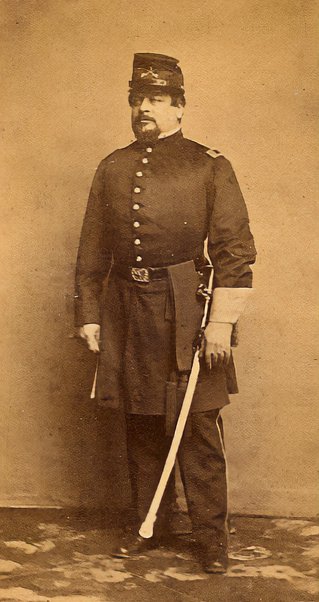
He stands in a single-breasted frock coat, a company officer’s coat, with the crossed sabres of the cavalry on his cap and a sword at his side. Gibbs was promoted captain on May 13, 1861, his regiment became the 3rd Cavalry that August, and he was made colonel of the 130th New York on September 6, 1862 (Cullum, 1891). The likeliest time and place is the year he spent on parole commanding Fort Wayne at Detroit, from December 1861 to August 1862. It is the earliest photograph of him known.
2. December 1864 to February 1866: Brigadier General
The five Brady plates above, and the carte de visite at the New York State Military Museum, show the double-breasted coat with its buttons in pairs and the single star on the shoulder strap; the Military Museum’s card also shows the cavalry’s crossed sabres on his breast. He was made brigadier general of volunteers for Cedar Creek, took the oath on December 8, 1864, and was mustered out of the volunteers on February 1, 1866, so these were taken between those dates. Brady’s studio was in Washington, and Gibbs was on leave from January 18 to February 5, 1865 (Cullum, 1891); that may be when he sat, though no record yet says so. The Library of Congress catalogues one print of this sitting as “Col. 130th NY Inf.” The coat is a general’s: the catalogue title names his best-known command, not the date of the picture.
3. The later 1860s: out of uniform
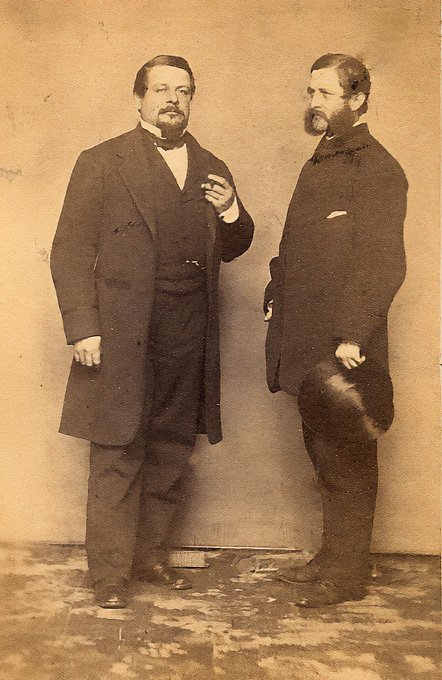
Here both men wear civilian frock coats, and the second man holds his hat in his hand. The carte de visite belongs to the 1860s, and civilian dress suggests a stretch of leave at home in New York, such as his long sick leave of December 1865 to April 1866, but nothing on the picture fixes the date. Which brother stands with him is also still being confirmed: the card is labelled Frank, and the back of the card, where photographers printed their name and city, may settle both questions.
References. Cullum, G. W. (1891). Biographical register of the officers and graduates of the U.S. Military Academy (3rd ed., Vol. 2, pp. 288-290). Houghton, Mifflin. U.S. War Department. (1861). Revised regulations for the Army of the United States, 1861 (paras. 1442, 1444, 1445, 1448, 1485, 1539, 1581). https://archive.org/details/revisedregulati00deptgoog
Update, November 1, 2026: This section was added to explain how the photographs of Gibbs are dated from his uniform, and to show two cartes de visite found through Deborah Anthony Dodge.
Compiled Military Service Record
The index to the compiled service records confirms Alfred Gibbs in the 19th Cavalry (the regiment’s Fold3 designation; it is the First New York Dragoons), Company F&S, entering service as Colonel and leaving it as Colonel.
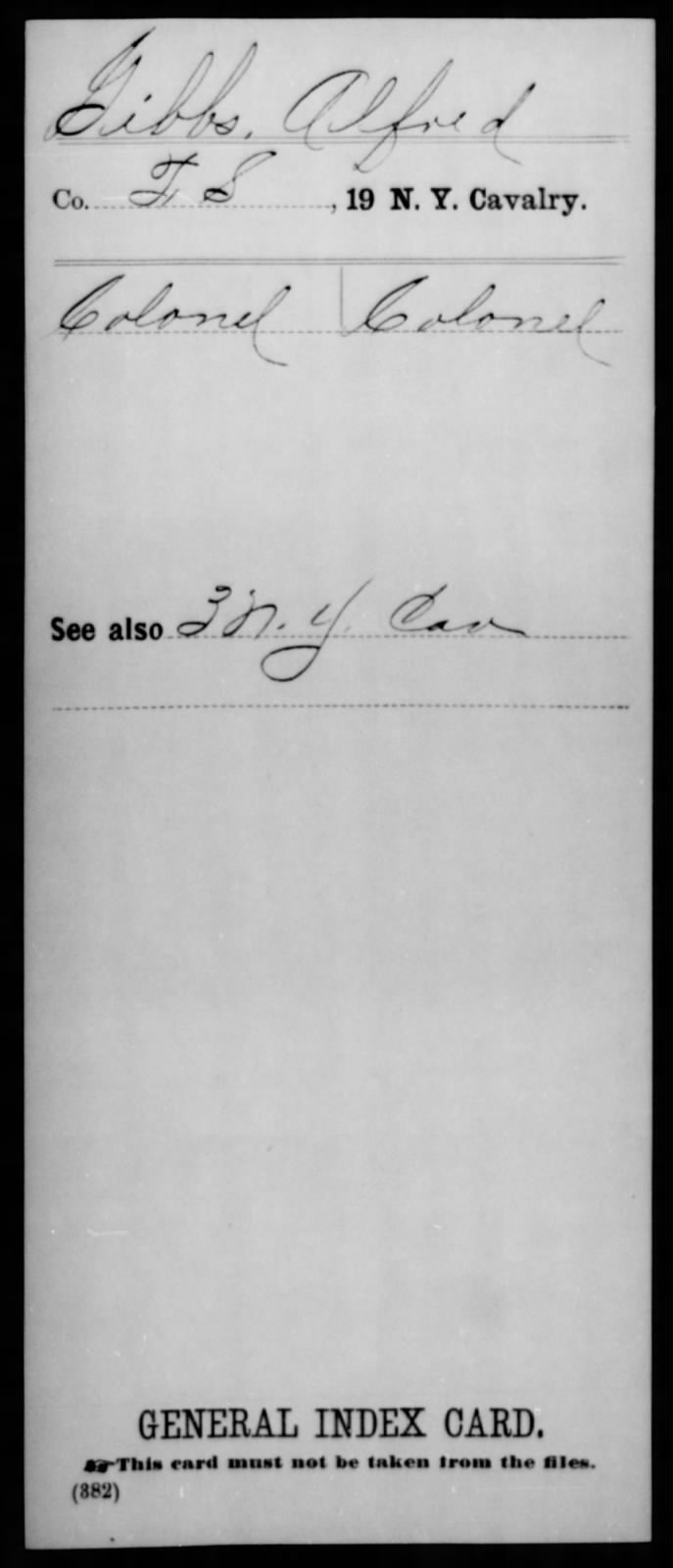
| Military unit | 19th Cavalry |
|---|---|
| Company | F&S |
| Enlistment rank | Colonel |
| Discharge rank | Colonel |
| See also | 3 N. Y. Cav. (cross-reference on the card; not yet followed) |
Gibbs, Alfred
Co. F & S, 19 N. Y. Cavalry.
Colonel        Colonel
See also 3 N. Y. Cav.
[printed footer] General Index Card. This card must not be taken from the files. (382)
Source. Compiled Military Service Record, Gibbs, Alfred, Co. F&S, 19th Cavalry. Indexes to the Carded Records of Soldiers Who Served in Volunteer Organizations During the Civil War (NARA microfilm publication M551), Record Group 94, roll 0052. Digital image, Fold3 (https://www.fold3.com/image/291019504), accessed 15 September 2026. Transcribed from the original by sight.
Terms on this page, from brevet and mustered out to the classes of the Roll of Honor, are defined in the site Glossary.
Views: 15