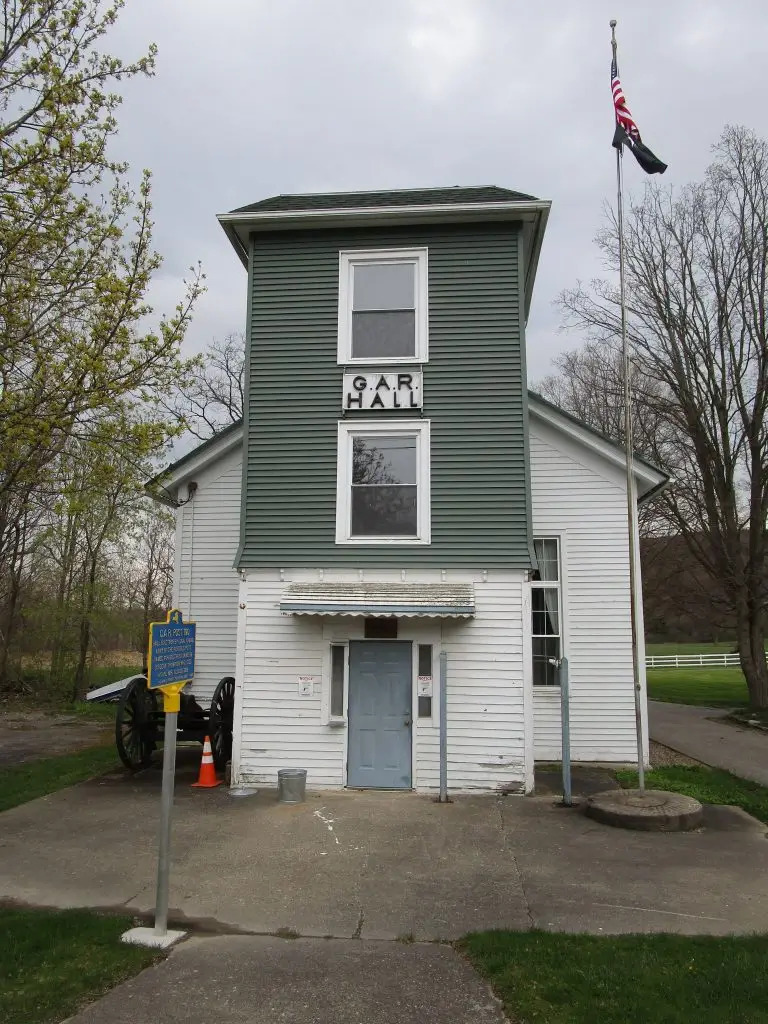
Link to Civil War Units During the War
NUNDA (2,849)
Artillery: 4L
Cavalry: 1st New York DragoonsI Co, l(Veteran)D
Infantry: 33F, 104A, 136I, 188I
During the American Civil War (1861-1865), the town of Nunda, New York, exemplified the patriotic fervor and sacrifice common to communities throughout the Northern states. Located in Livingston County, Nunda played a notable role in supporting the Union cause through its significant contributions of personnel, resources, and enduring spirit. Among its most distinguished contributions was the substantial enlistment in the First New York Dragoons, a regiment originally formed as the 130th Infantry before being reorganized as cavalry in 1863. The transformation from infantry to cavalry reflected tactical shifts in Union military strategy, seeking increased mobility and reconnaissance capability essential for operations in the Eastern theater of the war (Hand, 1908).
The soldiers from Nunda who enlisted in the First New York Dragoons displayed extraordinary courage and resilience, participating in several critical engagements that defined the trajectory of the war. Battles such as Todd’s Tavern, Cedar Creek, and Trevilian Station became synonymous with their bravery and sacrifice. At Todd’s Tavern in May 1864, one of the war’s fiercest cavalry engagements, soldiers from Nunda like William Black, John Gothard, and Hiram C. Roff lost their lives, vividly illustrating the severe sacrifices small towns endured in support of national unity (Hand, 1908).
The personal experiences of Nunda’s soldiers underscored both the bravery and the cost of war. Emerson Rude, who was severely wounded at the Battle of the Wilderness and later succumbed to his injuries, embodied the harsh realities of Civil War combat. Such losses deeply impacted families and the wider community back in Nunda, prompting support networks that strengthened communal bonds and provided mutual comfort during times of profound grief and uncertainty (Hand, 1908).
Despite the severe challenges of war, some soldiers from Nunda experienced notable advancement and recognition. Joseph M. Barker began his military service as a corporal and rose steadily through ranks, ultimately serving as a sergeant by the war’s conclusion in 1865. Wellington Batterson similarly progressed from the rank of private to sergeant, demonstrating leadership, resilience, and an unwavering commitment to his fellow soldiers. These examples highlight the leadership qualities fostered by small-town America and reflect the personal growth many young men experienced amid adversity (Hand, 1908).
An essential yet often overlooked element of Nunda’s contribution to the First New York Dragoons was musical. James R. Bowen, enlisted initially as a musician, quickly assumed a critical role as Chief Musician and later as a bugler. Bowen’s position was crucial for maintaining regiment morale and facilitating battlefield communication. Music was not merely an entertainment or ceremonial activity; it served as a practical means of command, conveying signals amid the chaos of battle. Thus, musicians like Bowen were indispensable, their contributions transcending entertainment to become integral components of military strategy and troop cohesion (Hand, 1908).
Younger enlistees from Nunda, such as Pascal T. Jackson and Corydon Lovejoy, faced particularly harsh realities during their service. Lovejoy’s tragic fate—capture at the Wilderness and subsequent death in the notorious Confederate prison at Andersonville—highlighted the often overlooked horrors experienced by prisoners of war. Such tragedies intensified the collective grief experienced in Nunda and illustrated the depth of sacrifice endured by the town’s youth, deeply influencing the collective memory of the community for generations afterward (Hand, 1908).
Throughout the conflict, the community of Nunda maintained a firm commitment to supporting their soldiers. Efforts on the home front included organizing aid societies, holding public gatherings for fundraising, and sending much-needed supplies to troops in the field. These communal activities fostered a strong sense of solidarity and purpose among Nunda’s residents, exemplifying broader trends throughout the Northern states where civilian efforts significantly supported military operations and soldier welfare. Community cohesion and active participation in war-support activities also offered a means of collective coping, helping to mitigate the emotional toll of prolonged conflict (Hand, 1908).
Post-war, the return of surviving soldiers brought mixed emotions to Nunda. While there was widespread joy at the homecomings, communities also grappled with the lasting impacts of war injuries, psychological trauma, and the permanent absence of those lost. Veterans of the First New York Dragoons from Nunda participated actively in local commemorations and memorial activities, ensuring their experiences and sacrifices were not forgotten. Memorial Day celebrations and the erection of monuments became central features of community life, underscoring a shared commitment to remembrance and historical preservation (Hand, 1908).
The Civil War’s lasting legacy in Nunda is evident through its continued remembrance and recognition of its soldiers’ valor. Names such as Barker, Batterson, Bowen, Lovejoy, and Rude resonate with significance, not merely as individuals but as representatives of collective sacrifice and endurance. These stories and memorializations serve as poignant reminders of the high cost of preserving the Union and the remarkable contributions of small communities like Nunda in shaping the broader narrative of American history.
Today, understanding Nunda’s role during the Civil War enriches appreciation for the town’s historical fabric and contributes significantly to broader studies of community involvement in wartime efforts. This collective memory continues to shape local identity and heritage, ensuring the sacrifices made by residents of Nunda remain integral to the town’s historical narrative. Thus, examining the experiences of Nunda’s soldiers in the First New York Dragoons offers valuable insights into the profound impacts of the Civil War on individual communities, reflecting a wider national experience that still resonates in contemporary American culture and memory.
References
Hand, H. W. (1908). Centennial history of the town of Nunda, with a preliminary recital of the winning of western New York. Rochester, NY: Herald Press.
List of Soldiers from Nunda, New York, in the First New York Dragoons:
1. Jacob Alvord
2. Joseph M. Barker
3. Wellington Batterson
4. William Black
5. Chester B. Bowen**
6. James R. Bowen**
7. Thomas Brick
8. Albert Butler
9. John Callahan
10. Owen Carrol
11. Chester C. Carter
12. James Christy
13. Charles Henry Clark
14. David W. Clark
15. William Clyne
16. Clarence L. Cudebec
17. Charles L. Daily
18. Levi C. Davis
19. George W. Durfee
20. Franklin E. Freeman
21. Gilbert I. Freer
22. Milo S. Goldthwait
23. Norton Goldthwait
24. John Gothard
25. Thomas B. Gray
26. Henry R. Greenfield
27. Cassius M. Havens
28. Myron H. Haver
29. Randall Haynes
30. Mark W. Heath
31. William C. Hendershott
32. Milton T. Hills
33. Andrew Jackson
34. Pascal T. Jackson**
35. Isaac Johnson
36. Eli H. King
37. James Lemen
38. Charles E. Lewis
39. Corydon Lovejoy**
40. Sidney Morris
41. Philo Mosher
42. Edgar R. Nelson
43. Corydon C. Olney
44. Horace C. Orton
45. David L. Randall
46. Richard Robinson
47. Hiram C. Roff
48. James W. Rogers
49. Emerson Rude
50. Hiram O. Seeley
51. Horace N. Shute
52. Christian Smith
53. Edward Smith
54. Godfret Smith
55. William Smith
56. William H. Spicer
57. Romeo St. Clair
58. Charles L. Strickland
59. George P. Tadder
60. Benjamin F. Town
61. Francis Marion Town
62. Walter E. Town
63. Martin Vanlieu
64. George D. Waldo
65. Harrison H. Wheeler
66. Asher C. Whitenack
67. Oliver C. Wymans
68. Henry E. Youells
** Indicates Member Bio Linked
Views: 22