A Reply, Long Overdue, From the Editor of alfredgibbs.com
In Defense of Alfred Gibbs
A Reckoning with Albert and Jennie Barnitz, Who Have Had Their Say for a Century
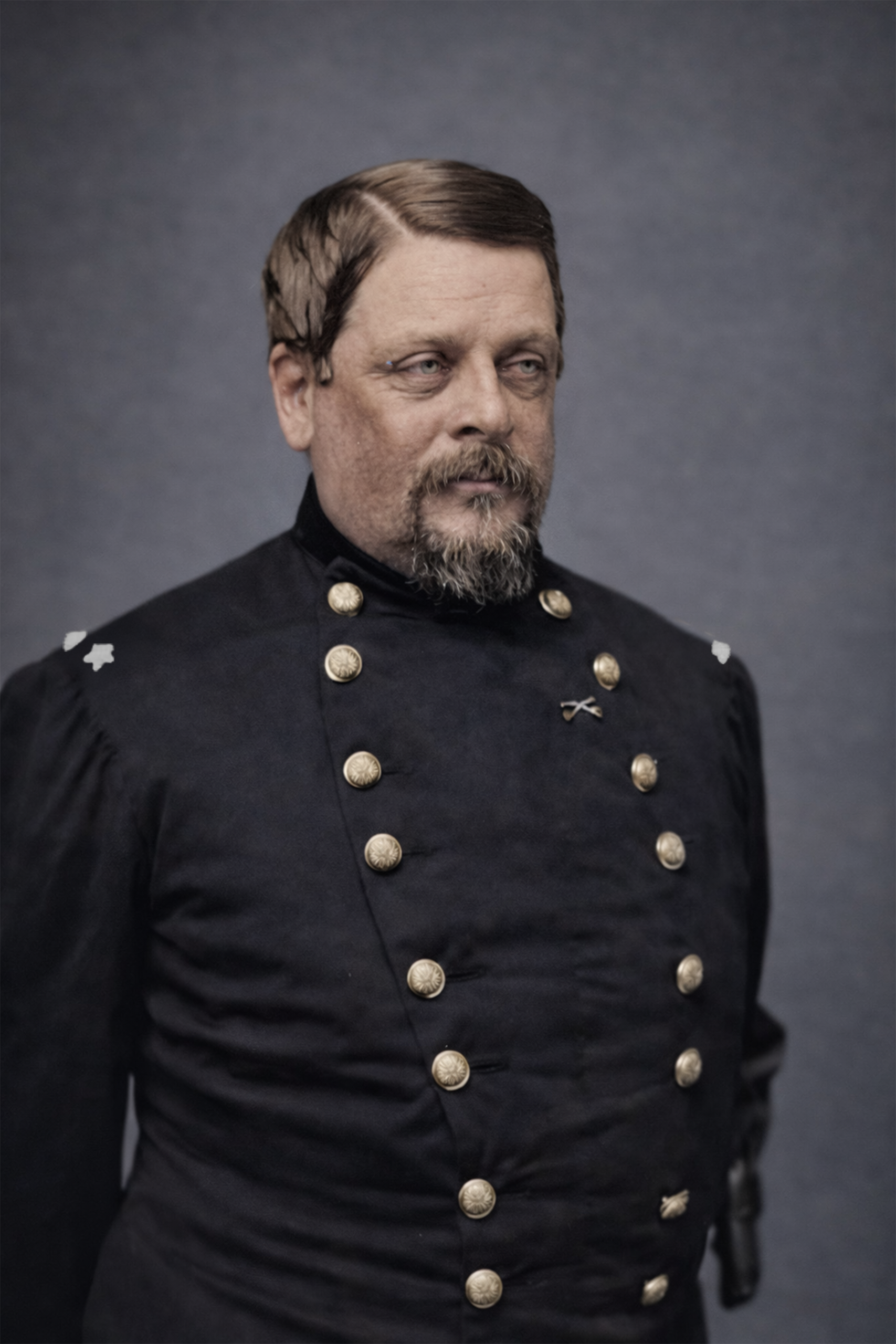
For more than a hundred years, two young people have been allowed to testify against Alfred Gibbs without cross-examination. Their names were Albert and Jennie Barnitz, and their diaries and letters, gathered in Life in Custer’s Cavalry (Barnitz & Barnitz, 1977), are charming, vivid, quotable, and, where my great subject is concerned, quietly poisonous. The editor who assembled them, the distinguished historian Robert M. Utley, did his honest work and reproduced the lot. But editing is not the same as judgment, and a witness left unquestioned is not the same as a witness telling the truth. So I am going to do here what no one has bothered to do in a century: I am going to put the Barnitzes on the stand. This is my say.
Companion piece: this essay clears his character. Its counterpart, Too Old for Glory: The General History Forgot to Make, asks the larger question, why a soldier of this record was forgotten, and answers it entirely from the documents.
Let me be plain about my purpose so no reader mistakes it. I am not pretending to neutrality. I have spent years with Alfred Gibbs, with his own battle reports, with the men who followed him, with the wound that nearly killed him in 1857 and never let him go. I have watched a small, sneering phrase from a lieutenant’s pen, “the silly old man,” get repeated and repeated until it became the whole of a soldier’s reputation. I think that is a slander, and I think the record refutes it. What follows is the refutation. I will concede every fair point against me as I go, I will mark those concessions plainly, because a defense that hides the other side’s best evidence is not a defense worth reading.
The Witnesses for the Prosecution
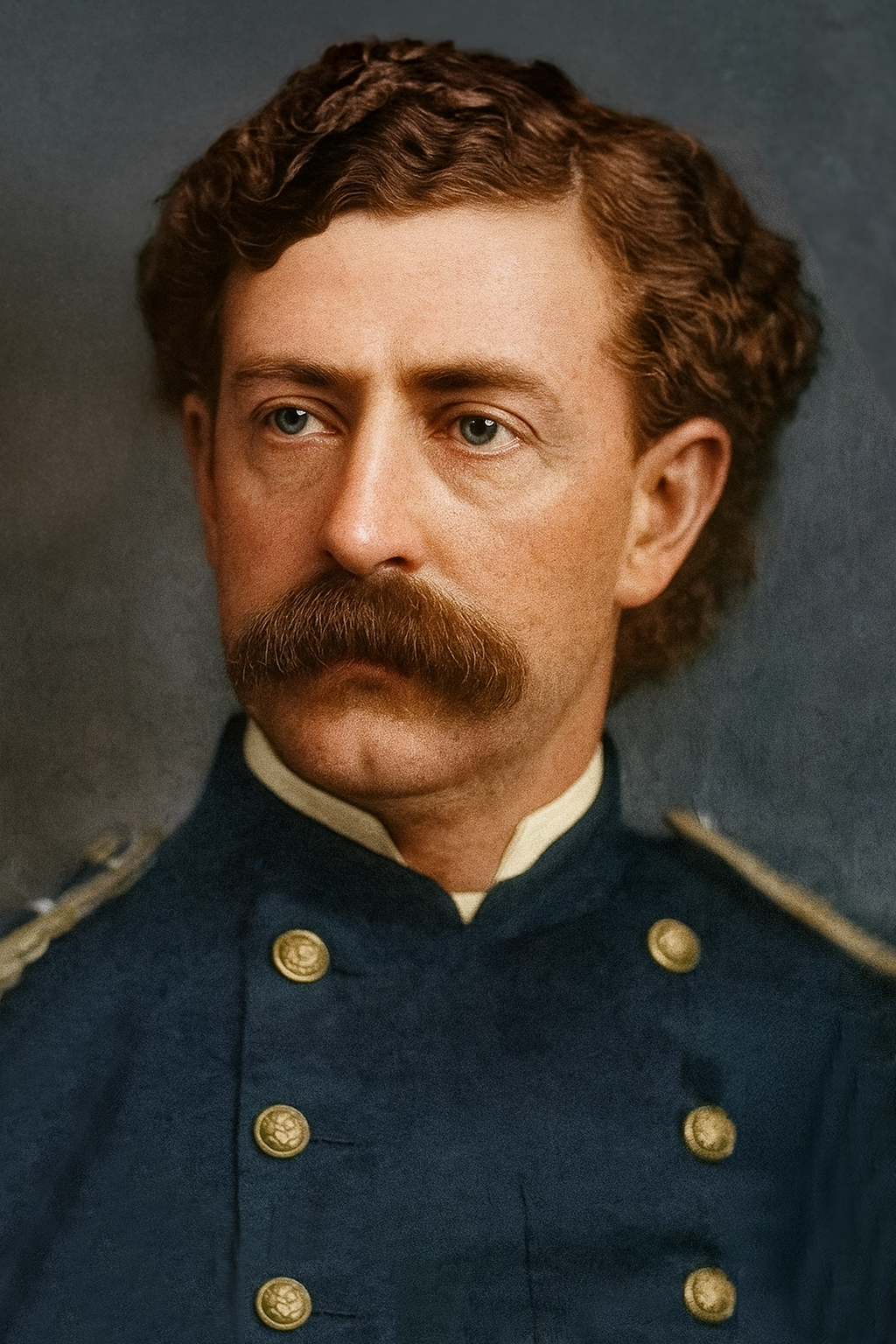

Albert Trovillo Siders Barnitz was a Pennsylvania-born poet and soldier, a genuinely brave one, who had ridden under Custer in the last campaigns of the Civil War and afterward took a captaincy in the newly raised 7th Cavalry. He wrote constantly, fluently, and well. He also wrote a twenty-five-stanza epic about his own adventures, “With Custer at Appomattox,” which he read aloud at veterans’ reunions for the rest of his life, and as he aged he “reveled in the status of scarred war hero” (Barnitz & Barnitz, 1977). His wife Jennie matched him: quick, observant, socially merciless, a cataloguer of who put on too much “style” and who could not hold up her end of a dinner conversation. Together they make superb reading. That is precisely the danger.
Here is the habit of mind I want you to watch for, because once you see it you cannot unsee it. Albert Barnitz did not dislike Alfred Gibbs from the start. He admired him, warmly, and then he turned. And he did exactly the same thing, admiration curdling into contempt, to nearly every senior man he served under. The souring was not a discovery about Gibbs. It was a pattern in Barnitz.
A Pattern, Not a Verdict
Set the three relationships side by side, with dates, and the machinery is exposed. In each case Barnitz opens with generous praise and closes with a sneer; and in each case the turn tracks his own grievances and disappointments far more faithfully than it tracks any change in the man he is describing.
| The officer | What Barnitz said first | What he said later |
|---|---|---|
| Maj. Alfred Gibbs | “Am very well pleased with Genl. Gibbs” (spring 1867). “He is an excellent man … very much respected by all. He is always genial, and reliable, and not a martinet, like Custer, although a perfect disciplinarian” (Barnitz & Barnitz, 1977, p. 53). | “The silly old man!” (winter 1867); “the inebriating old General” (1868). Jennie added that Mrs. Gibbs wore “that same cold, unfeeling look and manner … chilling, even to think of” (Barnitz & Barnitz, 1977). |
| Lt. Col. G. A. Custer | Rode under Custer with devotion in 1865 and wrote an epic poem celebrating it (Barnitz & Barnitz, 1977). | “I am thoroughly disgusted with him! He is the most complete example of a petty tyrant that I have ever seen” (p. 51); a man fit to be called “an incarnate fiend” (1977). |
| Capt. Robert M. West | “a thorough soldier and a polished gentleman, of the reliable type” (April 1867; Barnitz & Barnitz, 1977). | “crafty, scheming, envious, selfish, malicious” (June 1868; Barnitz & Barnitz, 1977). |
Three men, one curve. Utley himself, to his credit, noticed it about West: “It is interesting to follow Barnitz’s changing view of West: from ‘a thorough soldier and a polished gentleman’ … to ‘crafty, scheming, envious, selfish, malicious'” (Barnitz & Barnitz, 1977). What Utley observed about one officer I am telling you is the rule, not the exception. When a man’s good opinion of his commanders collapses this regularly, the instrument that needs calibrating is the man, not the commanders.
And it was not even confined to these three. Barnitz’s first commander on the frontier, General Hancock, led the grand expedition of 1867 that Barnitz watched grind to an embarrassing halt, and when Hancock was relieved, the Barnitzes welcomed it. Major Joel Elliott, who led the regiment in the field in 1868, Barnitz set down in his journal as “moderately drunk on Dr. Lippincott’s whiskey,” fussing that his men made too much noise. Even the regiment’s own colonel, A. J. Smith, he dismissed as too fond of his “toddies” to attend to business (Barnitz & Barnitz, 1977). It was not three officers who curdled under Barnitz’s pen. It was very nearly every senior man he ever served under.
And in one unguarded line we can see what powered the turning. When word reached camp in August 1867 that Custer had been placed under arrest, Jennie Barnitz recorded no dismay, only satisfaction: “I am glad. He had Albert put under arrest so wrongfully once. I don’t think it is wrong for me to feel so.” (Barnitz & Barnitz, 1977) There is the machinery, bare in the family’s own hand. The contempt did not weigh the officer; it repaid a grievance. A judgment that keeps such careful books of personal injury is not a verdict on a man’s worth. It is the settling of a score.
The Man They Called a “Silly Old Man”
Who was the object of that sneer? Robert Utley, no partisan of mine, sets out the bones of it in his own appendix. Gibbs was born on Long Island on April 22, 1823, “belonged to a family prominent in the nation’s scientific and political affairs,” attended Dartmouth, and graduated from West Point in 1846 (Barnitz & Barnitz, 1977). As a lieutenant in the Mounted Rifles he marched with Winfield Scott on Mexico City “and so distinguished himself as to earn brevets up to captain.” He served hard years on the California, Texas, and New Mexico frontiers. He was captured with a command of regulars at San Augustine Springs in 1861, led a New York volunteer regiment, rose to brigadier general in 1864, and under Sheridan “ably led a cavalry brigade in the Shenandoah Valley and in the Appomattox campaign,” earning brevets up to major general (Barnitz & Barnitz, 1977). More than any officer save Custer, Utley writes, “Major Gibbs placed his mark on the newly formed 7th Cavalry,” and its famous band “was largely the creation of Major Gibbs” (Barnitz & Barnitz, 1977).
This is the “silly old man.” A West Point graduate of twenty-two years’ service, a Mexican War brevet officer, a Civil War general of cavalry under Sheridan, the architect of the 7th Cavalry’s discipline and its band, the man who personally selected the relocated site of Fort Hays after the 1867 flood (Barnitz & Barnitz, 1977). One does not have to canonize him to see that a junior captain calling such a soldier “silly” tells us a great deal more about the captain than about the soldier.
But the heart of the matter, the thing the Barnitzes never reckoned with, and the thing I most want on this page, is the body inside that uniform.
The Lance at Cooke’s Spring

In the first days of March 1857, Brevet-Captain Alfred Gibbs led two corporals and fourteen men of Company “G,” Mounted Rifles, out of Fort Fillmore on the trail of Apache raiders who had run off a surveyor’s animals (Wadsworth, 2002). They tracked the band for some thirty-five miles across the broken country toward Cooke’s Spring, and late in the day they closed. The records do not agree on the day. Listing his own service two years later, Gibbs wrote “Severely wounded in affair with Apache Indians March 6th 1857” (Green, n.d.-b); other records give the 8th or the 9th. What happened next Gibbs set down himself, in a report dated March 11, from the hospital. Read his own words, because they are worth more than any summary of mine:
As I passed near him, he was making at one of our men on foot, whose horse had been shot, and I stopped and shot him a fifth shot with my revolver, he turned on me, and as my horse reared, he passed his lance into me, altho parried with my pistol. … Here becoming very faint from loss of blood, I dismounted to prevent falling off, and giving my horse to Corporal Collins … directed him to keep up with the party.
Alfred Gibbs, report from Fort Fillmore, March 11, 1857 (Wadsworth, 2002)
An Apache lance, driven into his body even as he parried it with his pistol; faint from loss of blood, dismounting so as not to fall from the saddle, and still giving orders. Richard Wadsworth, who reproduces the report, calls it plainly “a wound which could easily have caused his death” (Wadsworth, 2002). The post commander reported the wounding to the Department of New Mexico and lauded Gibbs for his bravery; a lieutenant had to be sent from Fort Craig to take temporary command “while the latter recovered in the Fort Fillmore hospital” (Wadsworth, 2002). My own account of that fight stands on this site under “The Battle of Cooke’s Spring” (Green, n.d.-a).
Here is the part I will not let the Barnitzes walk past. The wound closed, but it never let him go. The very book they wrote, Utley’s own appendix, concedes it: “Poor health, the result of an Apache lance wound sustained near Cooke’s Spring, N.M., in March 1857, kept him in garrison more than the field” (Barnitz & Barnitz, 1977). Think about what that sentence is admitting. Every time Albert Barnitz watched “the silly old man” fuss over a buckle on a parade ground instead of riding out on a hard scout, he was watching a man who ten years earlier had taken an Apache lance in the belly, had lain with the wound open for fifteen hours before a surgeon reached him, and had been paying for it since. The men who knew him swore to it for his widow. An officer of Sheridan’s staff remembered that in 1864 Gibbs “suffered a great deal from the effects of an old wound,” and near the end of the war a New York surgeon treated him “for a wound, from the effects of which he was still suffering” (U.S. Pension Office, 1869). That is the man the lieutenants laughed at.
The Colors at the Deserted House
If you want to know what Alfred Gibbs was made of, do not ask a 7th Cavalry lieutenant who met him in his broken-down fifties. Ask the volunteers of the 130th New York, later the 1st New York Dragoons, who watched him on the night of January 30, 1863, at the Battle of the Deserted House on the Blackwater, in Virginia. Their regimental historian, the Reverend J. R. Bowen, who was there, tells the story (Bowen, 1900).
Gibbs, then a colonel, was in command of all the infantry that night. The expedition was led by Brigadier General Michael Corcoran, in Bowen’s acid words, “that pompous Irishman, Corcoran, who haughtily resented any suggestion from an officer whom he ranked” (Bowen, 1900, p. 61). In the middle of the action, Gibbs saw that Corcoran had posted the troops badly, and he said so. What that cost him, and what he did about it, is one of the finest things I know about any soldier:
During the battle Colonel Gibbs ventured to expostulate with Corcoran against his disposition of troops, and suggested that the infantry should be posted on the flanks of the artillery where they would escape the raking fire, and where they could repel an assault upon it. For his temerity he was put under arrest by Corcoran, and his sword taken from him. But the wisdom of his suggestion was soon demonstrated. Corcoran’s own brigade broke in confusion and disorder, and began a precipitate retreat.
Bowen, 1900, p. 62
Read that again. Gibbs risked his command and his reputation to give a superior officer correct advice that would have spared the troops, Corcoran’s own troops, the raking fire. For his “temerity” he was arrested and disarmed on the field. And then he was proven right inside the hour, when Corcoran’s brigade broke exactly where Gibbs had warned it would. But the story is not finished, and what follows is why I keep his name alive:
Who that was there can ever forget that scene when the brave Colonel Gibbs, under arrest, swordless and horseless, seized the colors and bore them, like the hero he was, in front of the regiment throughout the whole of that charge. For various reasons he had not heretofore been popular with all his men, but from that hour his kingdom in the regiment was established, and every man in his command was now willing to die for him.
Bowen, 1900, p. 63
Under arrest. Swordless. Horseless. Stripped of his command by a vain superior whose blunder he had just tried to prevent, and he picks up the regiment’s colors and carries them on foot at the head of the charge. The enemy broke and ran. And the regiment’s verdict on the two men could not be more total. Of Corcoran’s generalship Bowen writes that “a feeling of dissatisfaction quite generally prevailed regarding the incompetency of Corcoran”; that “as to true soldierly qualities, he was not worthy of comparison with either Colonels Gibbs or Spear” (Bowen, 1900, p. 65). Of Gibbs, the man Albert Barnitz would one day call “silly”: from that hour every man in his command was willing to die for him.
“From that hour his kingdom in the regiment was established, and every man in his command was now willing to die for him.”
I would like Albert Barnitz, the poet of his own valor, to have stood in that field. I would like him to have seen the disciplinarian he mocked carry the flag on foot, under arrest, into the enemy’s fire. There is no stanza in “With Custer at Appomattox” that earns what Alfred Gibbs earned, swordless, in the dark, on the Blackwater.
The Discipline That the Young Men Laughed At
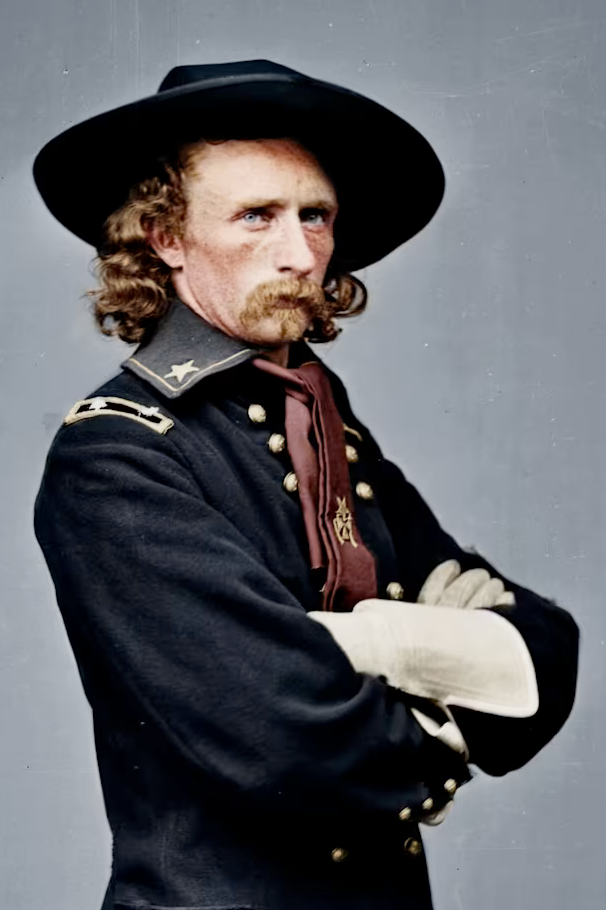
This is the thread the Barnitzes never followed to its end. The very quality they ridiculed, Gibbs’s relentless, “etiquettical” insistence on order, the trait that earned him the regimental nickname “General Etiquette”, was the same quality that made hardened volunteers willing to die for him. Elizabeth Custer, who had no grievance to nurse, saw it whole: Gibbs “was a famous disciplinarian, and he had also the quaintest manner of fetching every one to the etiquettical standard he knew to be necessary. He was witty, and greatly given to joking, and yet perfectly unswerving in the performance of the most insignificant duty” (Barnitz & Barnitz, 1977). The Dragoons had learned in blood what the young regulars of the 7th had not yet learned at all: that the opposite of a fussy old colonel’s discipline is not freedom. It is catastrophe.
The Drinking, Which I Will Not Explain Away
The prosecution brought two charges, and I have kept them apart on purpose. That he was silly, foolish, contemptible, a figure of fun, is false, and I have spent this whole essay showing why. That he was at times drunk is not slander; it is true. I will not let the false charge smuggle the true one past you, nor let the true one drag the false one along behind it.
Now I come to the hardest evidence against my subject, and I will not flinch from it, because a defense that dodges its weakest ground deserves to lose. Jennie Barnitz’s diary, in June 1867 at the camp on Big Creek, records two entries that I cannot and will not wave aside. During a night alarm, she wrote, “Gen Gibbs was so intoxicated he could not give an order, scarcely walk. Oh! it is dreadful!” (Barnitz & Barnitz, 1977). And the next night: “Tonight we were invited to Gen Gibbs. The Gen. was drunk, as usual!” (Barnitz & Barnitz, 1977).
I believe her. Of all the Barnitz testimony, this is the kind I trust most, a private diary, written in the moment, with nothing to perform and nothing to gain, by a frightened young woman in a camp where the guns were going off at random in the dark. Gibbs drank, and at times he drank to the point of dereliction, and that endangered the people around him. I concede it without qualification.
And consider what company the charge keeps. Drunkenness was the accusation the Barnitzes reached for again and again, against nearly every superior they had soured on. Gibbs was “drunk, as usual.” Major Elliott was “moderately drunk.” Old Colonel Smith was too fond of his “toddies” (Barnitz & Barnitz, 1977). I do not raise this to call Jennie a liar, for I have already said I believe her about that night. I raise it because a word that comes so readily to a writer’s pen, and falls on so many heads, is a softer kind of evidence than a charge reserved for the truly guilty. Weigh her account. But weigh it knowing how freely the word was spent.
But concession is not surrender, and context is not excuse. Hold the two facts in one hand. This was a man with a lance wound in his abdomen, ten years old, whose effects the officers around him had watched him suffer through a war. He was, Utley tells us, kept “in garrison more than the field” by exactly that ill health (Barnitz & Barnitz, 1977). I do not say the pain made the drinking right. I say the pain makes the man legible. The 7th Cavalry was full of drinkers, West had the delirium tremens; Cooper drank himself to death; Custer arrested half his officers for it, and of all of them, Gibbs is the one who had carried the effects of an Apache lance through two wars. Judge him. But judge him as the wounded man he was, not as the comfortable lieutenants who mocked him.
Mrs. Gibbs, the “Iceberg”
I will not let the lady go undefended either, because the case against her is even thinner and even crueler. Jennie Barnitz’s verdict on Mrs. Gibbs, Peggy Foushee Blair Gibbs, has been quoted as if it were a fact about Peggy. It is a fact about Jennie. Their first meeting, at Fort Riley, set the tone: “I dined on Friday with Mrs. Gen. Gibbs … who puts on an immense amount of style. I was relieved when dinner was over” (Barnitz & Barnitz, 1977). Later, in a despairing dream-entry, Jennie cast Peggy with “that same cold, unfeeling look and manner which is so characteristic of her, and which is chilling, even to think of” (Barnitz & Barnitz, 1977). That single phrase, the “iceberg”, has stood for a century as the sum of the woman.
But look at what the same diary cannot help recording. At the Big Creek camp it was Peggy who crossed the lines of “style” to be a neighbor: “Mrs. Gibbs brought me potatoes for dinner,” Jennie writes, and “I have spent the afternoon with Mrs. Gibbs” (Barnitz & Barnitz, 1977). At Leavenworth, Jennie confesses outright, “I never liked Mrs. Gibbs so well before,” and that she had “got some excellent recipes … of Mrs. Gen. Gibbs” (Barnitz & Barnitz, 1977). A woman who brings you potatoes, sits an afternoon with you, thaws your dislike, and shares her recipes is not an iceberg. She is a senior officer’s wife being kind to a junior officer’s young bride who could not stop appraising her.
The Officer Who Asked to Be Tried
There is one piece of evidence the Barnitzes never saw, and it may be the most telling of all, for it comes not from the twilight of Gibbs’s career but from its lowest hour. In July 1861, driving a herd of cattle toward Fort Fillmore, Captain Gibbs rode into Major Isaac Lynde’s surrender at San Augustine Springs, New Mexico, one of the most humiliating capitulations of the war in the Southwest. A lesser man, the vain, ridiculous martinet of the diaries, would have buried the episode and prayed the world forgot it.
And he rode into it with his eyes open. On the road below the Jornada del Muerto he met a wagon train coming north from the fort, under Lieutenant William Lane of the Rifles, with the Indian agent, Dr. Michael Steck. They told him the Texans were at La Mesilla in force. “He advised me not to go to Fort Fillmore,” Gibbs reported, “as I was certain to be cut off by their troops” (Official Records). Lane’s wife, Lydia, was in that train, and she set down what Gibbs did next:
Lieutenant Lane tried to induce Captain Gibbs not to go on to Fillmore, but he decided to obey orders, taking a roundabout way to reach the post, and so avoid, he hoped, the expected enemy.
Lydia Spencer Lane, I Married a Soldier (Lane, 1893)
Lane himself had been sent out of the fort to guard its stores. The post surgeon, Dr. James McKee, believed he knew why: Lane “was a fighting man, and had to be gotten rid of” (Lane, 1893). Gibbs was ordered in. Told that the road ahead was a trap, he hired a guide and took his company south through the dark to reach the post he had been sent to reach. When Lydia Lane learned what came of it, she wrote the fairest line anyone has written about that week of his life: “It seemed hard that while obeying orders he should have been so unfortunate” (Lane, 1893). A man who obeys an order after being told it will cost him his freedom may be many things. Silly is not one of them.
Nor did he take the surrender quietly when it came. A soldier who was there wrote home that Lynde gave up the command without consulting his officers, “and when Capt. Gibbs expostulated with him for surrendering his command,” Lynde ordered him off his horse; “and when Capt. Gibbs interrupted Maj. W., he (W.) drew his revolver on him” (New-York Daily Tribune, 1861). Waller was the Confederate major who had come to take the surrender. See the letter.
Gibbs did the opposite. Within ten days of the surrender, writing from Fort Craig on August 6, 1861, he reported to department headquarters that he had already preferred charges against Major Lynde under the 52nd and 99th Articles of War. And that November, from Jefferson Barracks, he formally requested that a court of inquiry be convened to examine his own conduct in the affair, a request he made, in his words, “in the name of all the officers connected with my command.”
Read those two acts again. This is not a silly old man. This is an officer who, at the most mortifying moment of his life, refused to let the record stand uncorrected, who demanded that his superior answer for failure, and demanded, in the same breath, to be judged himself. Men who fear scrutiny do not summon it.
The documents are now on this site, transcribed from the Official Records: The Reports of Captain Alfred Gibbs. I ask the reader to weigh them against the caricature, and to decide which man is the more likely to be real.
The Witness Who Kept the Only Record
Up to this point I have defended Alfred Gibbs the way any advocate would, charge by charge: the lance whose effects he carried for years, the colors he seized under arrest, the discipline his men came to bless, the drinking I refused to excuse, the wife they slandered, the court of inquiry he demanded against himself. Each is a fact, and each, I have argued, weighs for him. Now I want to set the particulars aside and raise a different question altogether, one that has run beneath every page of this essay without my once naming it. The question is no longer whether a given charge is true. It is whether the witness who brought the charges was ever fit to sit as Gibbs’s judge.
There is a deeper unfairness in this trial than any single sneer, and I have saved it for last, because it is the one that decides everything. Albert Barnitz kept a diary. Alfred Gibbs did not.
Consider what a diary is in the hands of a man like Barnitz: a published poet, a working journalist, a soldier who read a twenty-five-stanza epic of his own gallantry aloud at reunions for the rest of his life. Such a man does not write only for himself. He writes for the future, knowing, even hoping, that someone, someday, will read him. And no man who writes for posterity ever casts himself as the villain. In every quarrel he sets down, he is the wronged party; in every disagreement, the clear-eyed one; in every reversal, the victim of another man’s folly. A diary like that is not a confession. It is a brief, argued by the only attorney in the room, on behalf of the only client he ever loved.
I do not even fault him for it. I would have done the same; perhaps you would too. The instinct to be the protagonist of one’s own life is human, and Barnitz was nothing if not human. When a Confederate bullet tore through his thigh at Ashland Station in 1864, he wrote from his hospital bed not of fear or pain but of exultation: “I would not have missed this campaign for a dozen bullet holes.” That is the voice of a man who is the hero of every page he writes, even the page on which he is shot. It is a magnificent voice. It is also, precisely, the voice we must not mistake for a court of law.
Now set Gibbs beside him. No diary of his has ever been found. He wrote no memoir, composed no epic, left no doting wife to polish his legend for the historians. What he left was his battle reports, dry, official, and self-effacing; a scattering of letters home, kept in the family papers; his deeds; and the memory of the men who served under him. When the record of his life was finally written, it was written by the one man who troubled to keep a daily account of those years and who happened to despise him. Gibbs is judged today not by history but by Barnitz, because Barnitz was the one still holding the pen.
And we know how that pen behaved, because Gibbs was not its only target. It turned the same way on Custer, whom Barnitz first followed with devotion and then branded “a petty tyrant” and “an incarnate fiend.” It turned on Robert West, “a thorough soldier and a polished gentleman” in April, “crafty, scheming, envious, selfish, malicious” by June. The souring was not a discovery about these men. It was a reflex of the writer. A man whose good opinion collapses on schedule is not rendering verdicts. He is keeping a diary.
Here is the irony Barnitz never foresaw. He wrote for the future to secure his immortality, and the future came, and it can now read him whole. It can lay his contempt for Gibbs beside his identical contempt for Custer and for West, and see the pattern he could not see in himself. The very archive he built to be his monument has become the best evidence against his testimony. Give Gibbs a diary and a Peggy to keep it, and history would tell a different story. He had neither. He had only what he did, and the men who watched him do it, and they, every one, would have followed him into the guns.
My Say
So let me sum up the case as I would put it to any honest jury. The prosecution’s two witnesses are charming, literate, and partial. Their lead witness, Albert, soured on every commander he served, Gibbs, Custer, West alike, in a pattern so regular that the souring tells us about the witness, not the accused. The “silly old man” they mocked was a West Point soldier of twenty-two years’ devotion who took an Apache lance in the belly in 1857 and suffered its effects for years after, stood up to a vain general on the field of the Deserted House and was arrested for being right, and then seized his regiment’s colors and carried them on foot, swordless and horseless, into the enemy’s fire, after which every man in his command was willing to die for him. He built the 7th Cavalry’s discipline and its band. His severities were the severities that keep soldiers alive, as the survivors of the Little Bighorn, who had preferred Custer’s dash, would learn too late. He drank, and that was a real fault, and I have not hidden it. And he was loved, by his Dragoons, by the Custers, and in the end even by his accusers.
For it was Jennie Barnitz herself, who had catalogued his every failing, who wrote the truest line anyone ever wrote about him. Hearing of his sudden death at Leavenworth in the last days of 1868, he “went out Christmas evening to a little party, and the next morning was dead”, she set down the verdict I will give the last word, because if his harshest critic could see this much, the rest of us have no excuse not to:
Poor Old General! With all his faults he had a kind heart! … He told me about his long army life … indeed I am glad my last recollections of the Gen. are so pleasant. … Notwithstanding all his unpleasant ways he will be missed in the Reg.
Jennie Barnitz, on the death of Alfred Gibbs, 1868 (Barnitz & Barnitz, 1977)
With all his faults, he had a kind heart, and he will be missed. The witness for the prosecution rests there. So do I.
References
Barnitz, A., & Barnitz, J. (1977). Life in Custer’s cavalry: Diaries and letters of Albert and Jennie Barnitz, 1867–1868 (R. M. Utley, Ed.). Yale University Press. Borrow the book at archive.org. The underlying diaries are digitized in the Albert Barnitz Papers at Yale’s Beinecke Library.
Bowen, J. R. (1900). Regimental history of the First New York Dragoons (originally the 130th N.Y. Vol. Infantry) during three years of active service in the great Civil War. The Author. Read the full volume at archive.org.
Green, G. H. (n.d.-a). The battle of Cooke’s Spring. Alfred Gibbs. https://alfredgibbs.com/the-battle-of-cookes-spring/
Green, G. H. (n.d.-b). The Mexican War: A journey through the Gibbs papers. Alfred Gibbs. https://alfredgibbs.com/mexican-war-journey-gibbs-papers/
Lane, L. S. (1893). I married a soldier; or, Old days in the old army. J. B. Lippincott. Read the passage on AlfredGibbs.com.
U.S. Pension Office. (1869). Pension file of Peggy F. B. Gibbs, widow of Alfred Gibbs (WC 137,047). National Archives. Affidavits of M. V. Sheridan (sheet 46) and W. H. Van Buren (sheets 52 and 53), and the Army’s record of the cause of death (sheet 13). Transcribed on AlfredGibbs.com.
New-Mexico: Major Lynde’s surrender; great suffering. (1861, November 13). New-York Daily Tribune, p. 6. Scan and transcription on AlfredGibbs.com.
Wadsworth, R. (2002). Forgotten fortress: Fort Millard Fillmore and antebellum New Mexico, 1851–1862. Yucca Tree Press.
Note. This article is an avowedly argumentative essay in defense of Alfred Gibbs. The interpretation, that the Barnitzes’ contempt reflects a pattern in Albert Barnitz rather than a settled verdict on Gibbs, is the author’s, drawn from the contradictions the sources record about themselves. Page numbers are cited where they could be fixed from the running heads of the scanned editions; quotations whose exact pagination could not be verified are cited to the work without a page locator, in keeping with this project’s fidelity rules.
Supporting research: A close cross-read of Wadsworth’s account surfaces a point that strengthens this defense, in November 1861 Gibbs himself requested the Jefferson Barracks hearing to clear his name. See Cross-read: Wadsworth on Gibbs at the Pass.
Views: 40