Document: “Capt. Gibbs Expostulated”: The New York Tribune on Lynde’s Surrender, 1861
The Gibbs Papers · Document · New-York Daily Tribune, 1861
“Capt. Gibbs Expostulated”
A soldier’s letter on Major Lynde’s surrender, and the arrest that New York read about but never happened.
← The Fall of Fort Fillmore · Act IV · The Fall
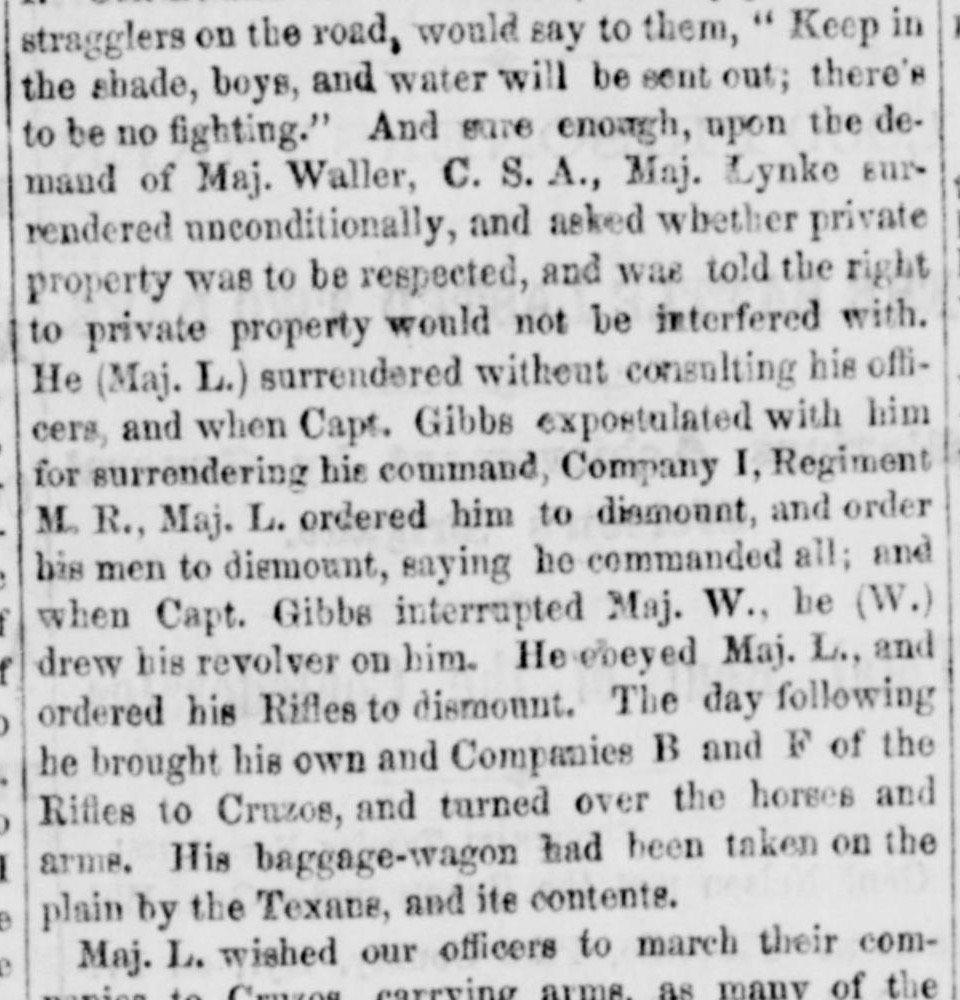
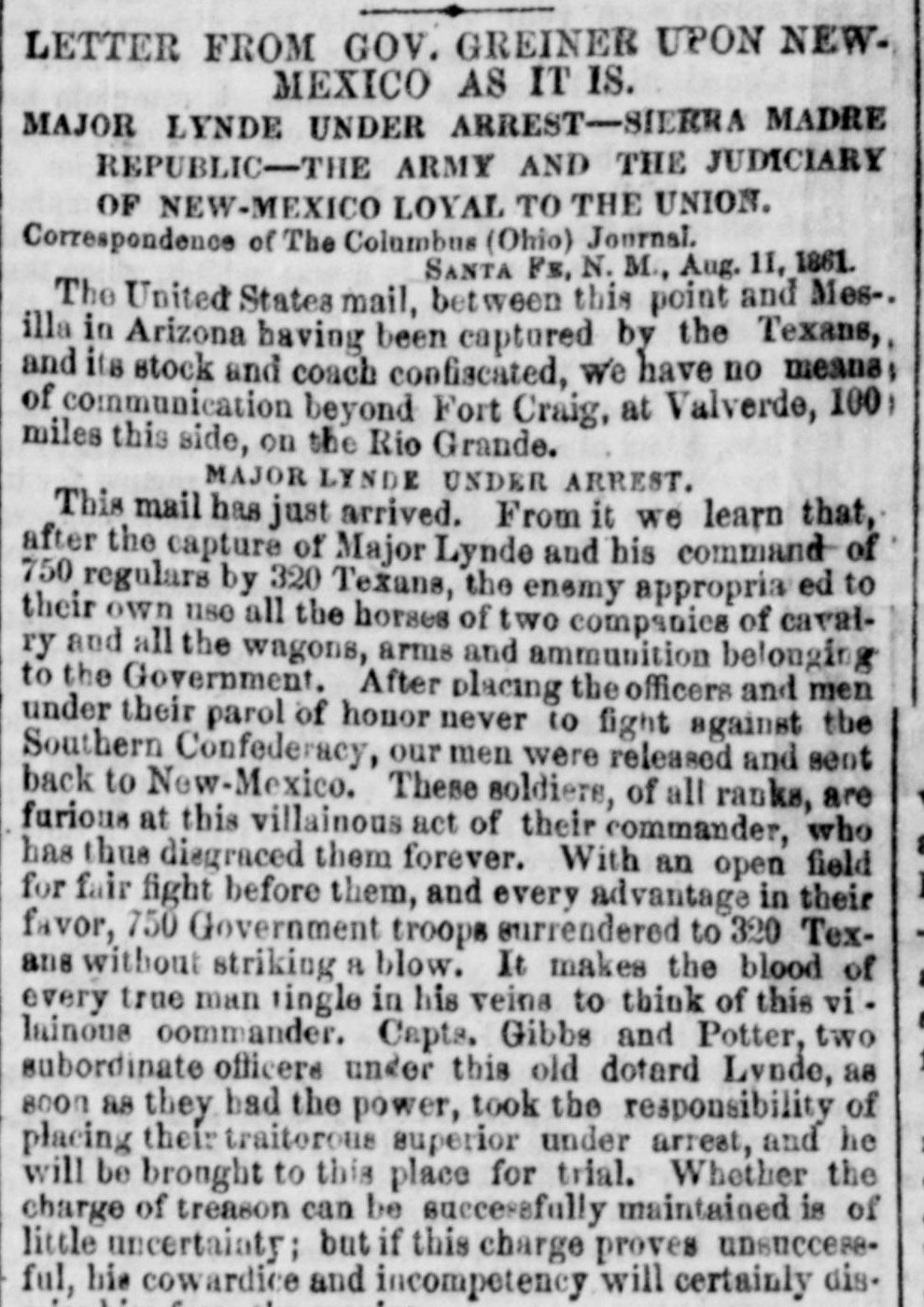
Two items from the New-York Daily Tribune in the autumn of 1861 put Alfred Gibbs at the center of the surrender at San Augustine Springs. The first is a private letter from a soldier who was there, written on the march to Fort Leavenworth: it says Gibbs protested the surrender to Major Lynde’s face, and that a Confederate major drew his revolver on him. The second is a report from Santa Fe that Gibbs and Captain Joseph Potter had put Lynde under arrest. The first agrees with Gibbs’s own sworn statement. The second was a rumor.
Both were found on November 2, 2026, in the Library of Congress’s Chronicling America collection, after Garland H. Green Jr. remembered reading of the arrest years ago.
IThe soldier’s letter
- Newspaper
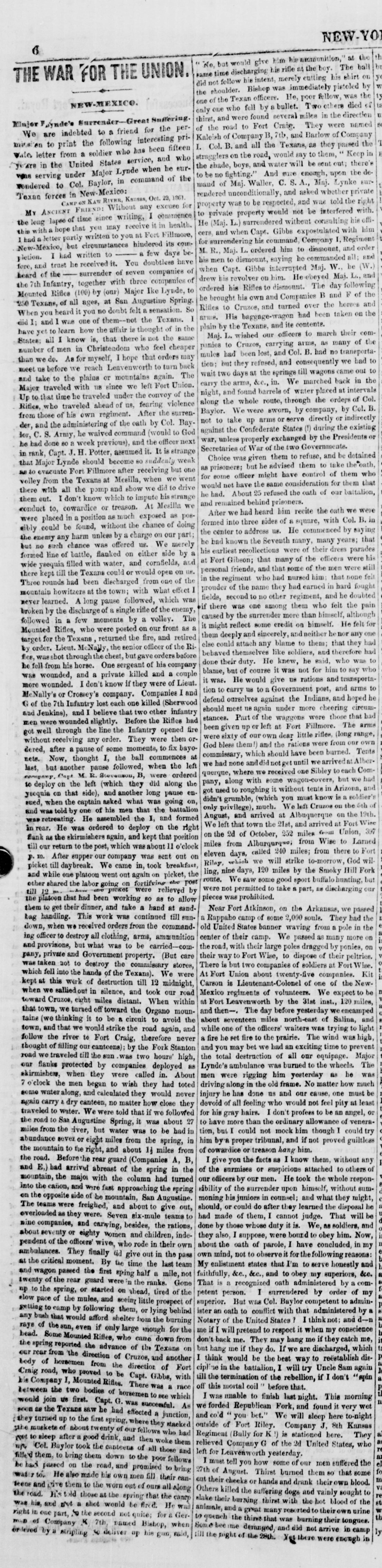
- New-York Daily Tribune, Wednesday, November 13, 1861, page 6, columns 1 and 2
- Heading
- “The War for the Union. New-Mexico. Major Lynde’s Surrender. Great Suffering.”
- Writer
- Not named. “A soldier who has been fifteen years in the United States service, and who was serving under Major Lynde when he surrendered to Col. Baylor.” He marched with the rear guard.
- Dated
- “Camp on Kaw River, Kansas, Oct. 23, 1861,” on the march from Fort Union to Fort Leavenworth
- Online
- Chronicling America, Library of Congress (public domain)
- Downloads
- The letter (PDF) · The whole page (image)
Gibbs’s own account says the same
Gibbs swore his own statement for the Official Records. “Nearly every officer protested earnestly, and even violently, against this base surrender; but Major Lynde said: ‘I am commander of these forces, and I take upon my shoulders the responsibility of my action in the matter.’ The altercation by Major Lynde’s subordinates became so violent that Colonel Baylor asked who was commander of that force and responsible for their action.” The soldier’s letter puts a name and a face on that altercation: Gibbs’s, and a Confederate revolver pointed at him. Read Gibbs’s full statement on The Reports of Captain Alfred Gibbs.
Lynde gives up the command
II“Major Lynde Under Arrest”
- Newspaper
- New-York Daily Tribune, Monday, September 9, 1861, page 5
- Heading
- “Letter from Gov. Greiner upon New-Mexico as it is. Major Lynde under arrest.” Correspondence of the Columbus (Ohio) Journal
- Dated
- Santa Fe, N. M., August 11, 1861, fifteen days after the surrender and some three hundred miles from it
- Online
- Chronicling America, Library of Congress · The whole page (image)
It did not happen
The men who were there say no one arrested Major Lynde at San Augustine Springs. Lydia Spencer Lane, who heard it from the escaped soldiers at Fort Craig, wrote: “No one seemed bold enough to place Lynde in arrest and take command” (I Married a Soldier). The post surgeon, Dr. James Cooper McKee, wished that one of the senior officers had done it (his Narrative). The soldier’s letter above says Lynde “waived command” after the surrender and Potter “assumed it.” Twelve days after Greiner wrote, the Tribune’s own Santa Fe correspondent reported that Lynde had been in the town and asked why he had not been arrested and court-martialed (September 21, 1861, page 6).
The arrest came later, from Washington, not from his captains. In 1865 Lynde told President Johnson he had been “arrested and guarded like a fellon by order of Gen McClelland” (his petition). What Gibbs and Potter did do was prefer charges: Gibbs reported on August 6, 1861 that charges against Lynde “under the fifty-second and ninety-ninth Articles of War, have been preferred, and are now in the hands of Captain Potter.” The Santa Fe letter may be that news, grown in the telling.
IIIThe road east, and St. Louis
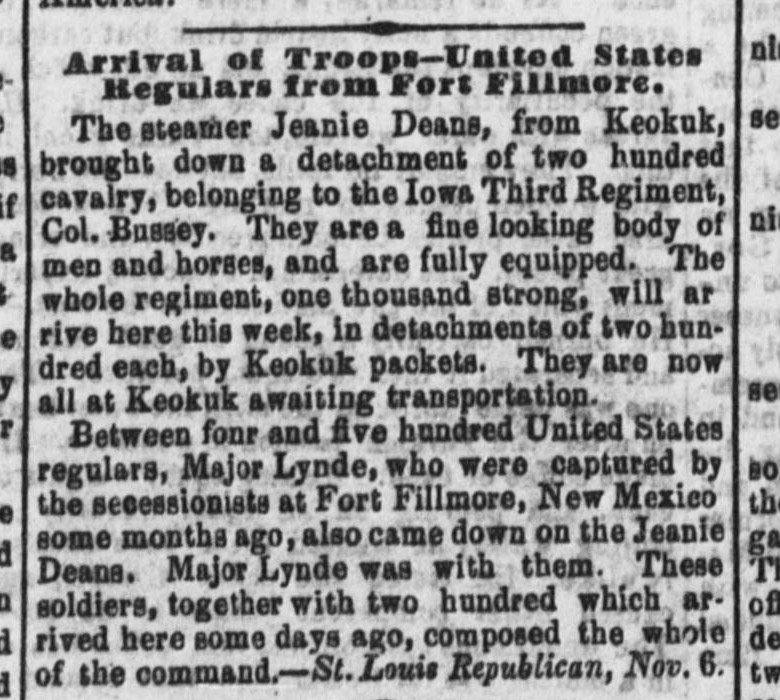
On October 18, 1861 the New York Herald printed a dispatch to the War Office from the commander at Fort Leavenworth “stating that Captain Gibbs, with three officers and one hundred men, had just arrived from New Mexico,” with ten officers, four hundred men and thirty women to follow: “the officers and men who were surrendered by Colonel Lynde to the Texans” (New York Herald, October 18, 1861, page 1). The soldier’s letter above was written on that same road, five days out from the fort.
The infantry came down the Mississippi behind them, and the St. Louis Republican counted them on November 6.
The road east, in the soldier’s words
Where this evidence is used
Added November 2, 2026. Transcriptions were made by sight from the scans; the Library of Congress’s own text of these pages is uncorrected machine reading.
Views: 4