Incident at San Augustine Springs
Captain Alfred Gibbs and the San Augustine Springs Surrender
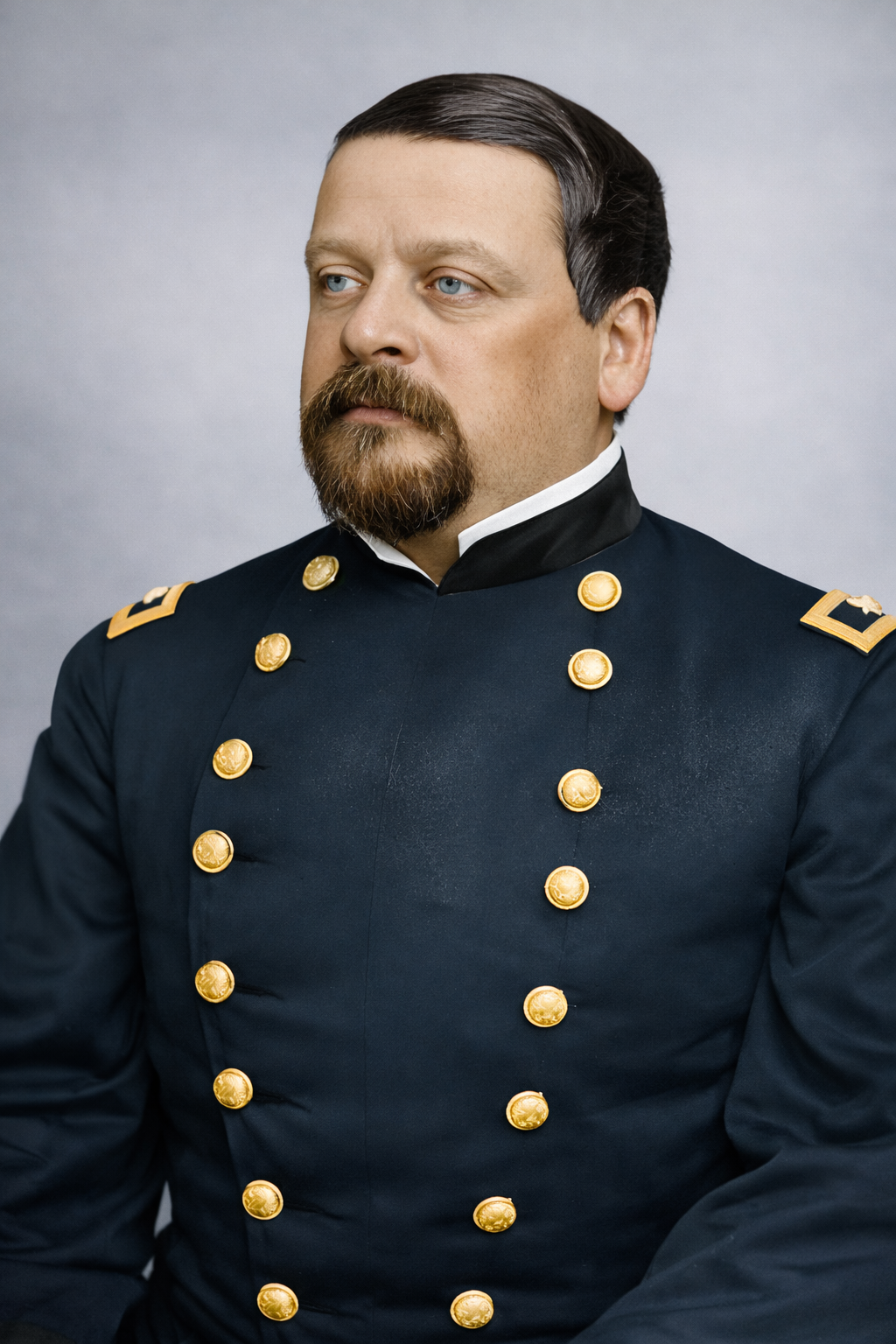
This site takes its name from Alfred Gibbs, and one of the most consequential days of his early career has, until now, gone untold here. In July 1861, Captain Gibbs was not seeking battle, he was driving a herd of cattle across the desert. By sheer chance he was swept into the surrender at San Augustine Springs, one of the most ignominious episodes of the Civil War in the Southwest. The account that follows draws on Richard Wadsworth’s Incident at San Augustine Springs: A Hearing for Major Isaac Lynde.
An Order to Drive Cattle
On July 17, 1861, Captain Alfred Gibbs of the Regiment of Mounted Rifles received an order directing him to take part of Company “I” and escort a herd of one hundred cattle from Fort Craig to Fort Millard Fillmore, and then to report to Major Isaac Lynde for duty. Gibbs set out from Albuquerque the next day. After a four-day march averaging about twenty-five miles a day, he reached Fort Craig on July 22, took charge of the herd, and almost immediately turned south onto the Jornada del Muerto with roughly thirty-five men of his company.
A Warning on the Road
By July 23, Gibbs had reached the Point of Rocks at the southern end of the Jornada. Two or three days later he encountered the wagon train of First Lieutenant William B. Lane, accompanied by his wife, Lydia Spencer Lane, whose memoir I Married a Soldier records the meeting. Lane tried to persuade Gibbs to turn back rather than press on to Fort Fillmore, which by then was menaced by Lieutenant Colonel John Baylor’s advancing Texans.
Lieutenant Lane tried to induce Captain Gibbs not to go on to Fort Fillmore, but he decided to obey orders, taking a round-about way to reach the post, and so avoid, he hoped, the expected enemy.
Lydia Spencer Lane, I Married a Soldier
Gibbs would not abandon his orders. Rather than take the main road through Doña Ana, he swung east toward the San Andres and Organ Mountains, aiming for the San Augustine Pass wagon road, a back door into Fort Fillmore. Unknown to him, Major Lynde had by then sent an express rider to warn him off entirely and send him back to Fort Craig. That message never reached Gibbs on the road he was actually traveling.
Swept Into the Column
By the time Gibbs neared the pass, events at Fort Fillmore had collapsed. Lynde had abandoned the post and was retreating eastward over the Organ Mountains toward San Augustine Springs with a column of infantry, mounted rifles, and a long tail of wagons carrying wives, children, servants, and the sick. Gibbs’s detachment joined the retreat, the column’s two companies of Mounted Rifles became four after he arrived. As Wadsworth notes, his presence there was “almost totally fortuitous”: a cattle escort, by accident of timing, had become part of a disaster.
Gibbs’s later sworn statement (preserved in Horn & Wallace, “Statement of Captain Gibbs,” November 7, 1861) is one of the most valuable eyewitness accounts of the column’s final hours, it places Lieutenant Crilly’s howitzer wagons just ahead of the two infantry companies forming the rear guard. When Lynde, his command broken by heat and thirst on the waterless climb, surrendered without a fight on July 27, 1861, Gibbs surrendered his small detachment of Mounted Rifles along with the rest at San Augustine Pass.
From Surrender to Major General
The surrender at San Augustine Springs ended Isaac Lynde’s career in disgrace. For Gibbs it was only a beginning. Paroled and exchanged, he returned to the war in the East, rose to command cavalry, and finished the Civil War as a brevet major general, the trajectory that makes him worth a website of his own. The man whose name this site carries first appears in the Southwestern record not as a hero, but as a junior captain caught in another man’s catastrophe, doing his duty to the letter on a road that led to the worst possible place.
Source: Richard Wadsworth, Incident at San Augustine Springs: A Hearing for Major Isaac Lynde (Yucca Tree Press). Eyewitness material from Lydia Spencer Lane, I Married a Soldier, and the Statement of Captain Gibbs, November 7, 1861.