
GENERAL PHILIP ST. GEORGE COOKE
By Carolyn Thomas Foreman
Major General Wesley Merritt, shortly after the death of General Philip St. George Cooke, wrote that the General’s career was remarkable alike for its length and its variety. His service exceeded that covered by the average life. “When it is remembered that for a quarter of a century or more after General Cooke entered the army, the school geographies eliminated much speculation by classing the Western Plains as ‘The Great American Desert,’ some idea of his frontier service may be formed.”
On June 10, 1809, Cooke was born at Leesburg, Virginia. He was a son of Dr. Stephen and Catherine Esten Cooke. He entered the Military Academy on July 1, 1823, and graduated twenty-third in his class on July 1, 1827. Assigned to the Sixth Infantry, he was in garrison at Jefferson Barracks, Missouri, in 1828. When Cooke joined his regiment in 1827, he commenced his career in a brigade of three regiments and had the benefit of this unusual experience for ten months, when he was detached to Fort Snelling, Minnesota, in charge of a detachment of recruits in open boats.
Cooke served with two other officers at Fort Gibson in 1828, and they made history while on a military escort for traders under Major Bennet Riley.
On Cooke’s return to Jefferson Barracks in 1829, he became engaged in an expedition to the Upper Arkansas, where he took part in skirmishes with the Comanche Indians on August 3 and 11, 1829. During the march to protect the traders, about five hundred Comanches suddenly charged the army camp on August 3. Cooke, as officer of the guard, met the charge with his thirty-six men. When the camp was threatened and a party of hunters attacked, the command was preparing to fight. On August 11, another skirmish took place.

General Wesley Merritt, in his account titled “Life and Service of General Philip St. George Cooke,” published in the Journal of the United States Cavalry Association (Leavenworth, Kansas), wrote about Cooke’s remarkable military career. Merritt remarked on how the challenges of frontier life shaped Cooke’s service.
Cooke was named “Philip St. George” in deference to his mother’s nationality, and he was appointed as a cadet to West Point under the name of Philip St. George, a mistake similar to that of General Grant. His two famous brothers, John Esten Cooke (1788–1853) and John Rogers Cooke (1788–1854), were notable figures.
On August 19, 1828, a general order was issued for the Fort Gibson troops. “Fort ‘Scoundrels,’ recruited at Natchez, was taken to Fort Snelling by Lieutenant Cooke.”
Lieutenant Cooke was sent to support his troops. While crossing the Arkansas River in front of his men and as the enemy appeared on the opposite bank and fired, he stooped down and caused his men to beat them off by firing over his head.
Lieutenant Cooke’s headquarters were at Fort Leavenworth from 1830 to 1832. He participated in the Black Hawk War against the Sac Indians in 1832 and fought in the Battle of Bad Axe on August 2, 1832. During the battle, while the regular brigade was in the dense bottom land of the Mississippi, Cooke discovered where the enemy was located in the greatest force on an island. He informed the commander and was ordered to lead the reserve of three companies into action, which he did. At the close of the war, General Atkinson appointed him Adjutant of his regiment.
Cooke was again at Jefferson Barracks until he entered the First Dragoon Regiment as a first lieutenant on March 4, 1833. His service in that famous regiment brings him into the history of Fort Gibson and the Indian Territory. In 1834, he was with the Dragoon Expedition when it left Fort Gibson on the noted march to the Tow-e-ash Village (Wichita Village) on the North Fork of the Red River, but illness forced him to leave the expedition near the Canadian River late in June and return to Fort Gibson on the surgeon’s certificate of ill health.
Lieutenant Cooke’s recruiting service carried him in the early summer of 1833 to western Tennessee. He visited “the villages of Columbia, Dover, Clarksville, and the squalid hamlet of Reynoldsburg.” In Perryville, Kentucky, he got “some hardy recruits, whose imagination inflamed them with the thought of scouring the far prairies on fine horses, amid buffalo and strange Indians.” Cooke was present in Jackson when Davy Crockett was elected to Congress. He left Nashville with Company C of the Dragoons and floated down the Cumberland River in a keelboat. The force was transferred at Paducah, Kentucky to a steamboat, and the young men from Tennessee soon arrived at Jefferson Barracks.
Cooke’s command encamped on Walnut Creek (present-day Kansas). His force of three Dragoons formed an advance guard for a caravan of about fifty wagons en route to Santa Fe. “As the trader had gotten within 12 miles,” Captain Nathan Boone thought, “and there was no guessing when the water would allow them to come on, and as they prepared…”
It appeared, by the intelligence furnished by Captain Cooke, that there was no sort of apprehension of an attack, so we prepared for a move tomorrow.
Captain Cooke wrote on September 9:
“It has rained again. We have been lying still, trying to keep warm and dry on the bank of the Little Arkansas. There are a few green trees and bushes, but little fuel. Worst of all is the case of the poor horses. They are starving and freezing before our eyes, for the grass is very coarse and poor; they have shrunk very sensibly in twenty-four hours.”
There, Cooke awaited the arrival of the traders who had been left in the rear. Finally, his forces moved forward for about twenty-two miles along the trail on the north bank of the Arkansas before an express from the tardy traders informed them that they were still water-bound at Cow Creek. On October 5, Cooke saw a Mexican escort at the Cimarron Crossing of the Arkansas. This stream formed the international boundary at that date, and President Santa Anna had sent about two hundred Mexicans to protect the traders from there to Santa Fe. Cooke waited to see the traders cross the Arkansas. “Mounting his command in order of battle, Cooke directed a salute in honor of the Mexicans to be fired from the howitzer battery,” before he and his dragoons turned toward home.
By steady marching, the return journey was made in two weeks, by way of Elk, Pawnee Fork, Ash Creek, and Council Grove. The troops abandoned the Santa Fe trace at that point, but the groves of 110-Mile Creek induced Cooke to linger for several days before going to Leavenworth.
In 1835, Cooke received his captaincy and was on recruiting duty until 1836, when he returned to Fort Gibson, where he remained until 1838, except for a trip to Nacogdoches, Texas, in 1836.
A squadron of the First Dragoons, consisting of three companies under the command of Captain Eustace Trenor, arrived at Fort Coffee, Indian Territory, on January 16, 1836, from Nacogdoches, Texas, in fourteen days. The officers and men were in fine health, and their horses in good condition for travel. The detachment was detained one day in crossing the Arkansas River before proceeding to Fort Gibson. The officers of the squadron were Captain Cooke, Captain David Perkins, Lieutenant James Monroe Bowman, and Lieutenant William Nicholson Grier.
The Army and Navy Chronicle of March 1836 announced the arrival of Captain Cooke in Washington on March 3 and stated that he was lodged at Mrs. McPherson’s. Captain Cooke, with his family, had been aboard the Tecumseh at Little Rock on February 26, and the party left there for Fort Gibson shortly thereafter.
At a meeting of the officers of the squadron of dragoons on Red River, June 18, 1836, resolutions were passed on the death of a former officer of the dragoons. The resolutions were signed by Captain Cooke as a tribute to the fallen officer.
After Cooke’s march to Nacogdoches in 1836, he returned to Fort Gibson the following year and settled down to steady frontier work on the plains, which took him as far north as Council Bluffs and to the Rocky Mountains.
Cooke arrived in Washington on May 8, 1838, and registered at Fuller’s Hotel. He informed Rodney Glisan at Carlisle Barracks that he would find “on the Arkansas River only a set of gamblers and cutthroats.” Cooke remained at the Barracks throughout the year and was stationed at Fort Wayne, Indian Territory, in 1840. He returned to Fort Leavenworth for parts of 1840, 1841, and 1842. The following year he spent escorting Santa Fe traders.
In the summer of 1843, General Edward Pendleton Gaines was ordered to send a military escort for traders leaving Missouri for Santa Fe, and he assigned Captain Cooke to the duty. Gaines issued orders for the officer to keep a journal and make maps of the country. Major Jacob Snively’s interference with the Santa Fe trade led to a determination to discover if the incident took place in the United States or Texas.
Captain Nathan Boone left Fort Gibson on March 12, 1843, with sixty men and pursued a route up the Arkansas and Cimarron rivers. He traveled north along the Cimarron until he reached the Santa Fe Trail. After a few days’ march with some traders, he encountered further challenges in safeguarding the trade routes.
They crossed to the south side of the Arkansas River and, on June 13, camped opposite the mouth of Walnut Creek, near the big bend of the Arkansas in Kansas. Here, Captain Cooke joined the camp with three companies of Dragoons. Snively, claiming to be acting under a regular commission, had been operating on both sides of the international border, capturing and confiscating property. Acting under orders, Cooke captured Snively and one hundred of his men and took them to Leavenworth. The prisoners were released there, and Cooke appeared before a Court of Inquiry, where his actions in the affair were upheld, and his capture of Snively was approved.
“The 175 men who had gone with Colonel Snively to capture the rich Santa Fe caravan were finally heard from. They had organized at the end of April and had unanimously declined to share the booty with the government of Texas. For their sins, instead of capturing the wagon train, they themselves were captured and disarmed by Captain Cooke and 300 United States Dragoons on what the Texans claimed was the soil of their Republic.”
The Court of Inquiry convened at Fort Leavenworth on April 2, pursuant to “General Orders No. 6” of February 28, 1844, “to examine into and report the facts and its opinions relative to the manner in which Captain P. St. G. Cooke discharged the duties for the protection of Santa Fe traders over the territory of the United States to the Texan frontier in May and June, 1843.” This court reported the following:
“In view of the facts, the court is of the opinion that Captain Cooke, on June 30, 1843, disarmed a Texan force under Colonel Snively within the territory of the United States by causing them to lay down their arms, and that there was nothing in the conduct of Captain Cooke that was ‘harsh and unbending.'” Cooke had in his party 190 men.
The court is further of the opinion that Captain Cooke did not exceed the authority for the protection of the lawful trade of the Santa Fe caravan and that the confidence reposed in him by his Government was not “in any degree misplaced.”
Captain Cooke’s actions brought forth much diplomatic correspondence between the Hon. Anson Jones, Secretary of State of the Republic of Texas, and Isaac Van Zandt, Charge d’Affaires of Texas. On August 15, 1843, Van Zandt wrote:
“In a personal interview today with Mr. [James] Secretary of War, that gentleman did me the kindness to allow me to peruse the principal portion of the report of that renowned Capt. Cooke, who lately captured one hundred of our citizens under Colonel Snively. I entertain but little doubt that this affair occurred within the limits of Texas and cannot be considered in any other light than an enormous outrage. I deem it unnecessary to send you a synopsis of Capt. Cooke’s report… it is evidently designed to be magnificently eloquent, and a full commentary upon international law, and the right of war.”
In accordance with the evidence offered by Texas concerning Snively’s expedition, it was charged that the Texans were on Texas territory when arrested. They were arrested near the site of present-day Fort Dodge, Kansas. The military inquiry determined that the arrest took place east of the 100th meridian and therefore in the United States.
From the Department of State, Washington (Texas), September 29, 1843, the following letter was addressed to Charge d’Affaires Isaac Van Zandt:
“Enclosed herewith is a copy of the official report to the Department of War and Marine by Col. Jacob Snively, who was lately in command of an expedition on our northwestern frontier, and also a copy of the instructions under which that officer was acting. By this report, you will perceive that a most extraordinary outrage has been committed upon this officer and his men by Capt. Cooke, who, in contempt of all laws human and divine, recklessly invaded our territory, captured the command under Col. Snively, disarmed and abused the officers and men, and turned them loose.”
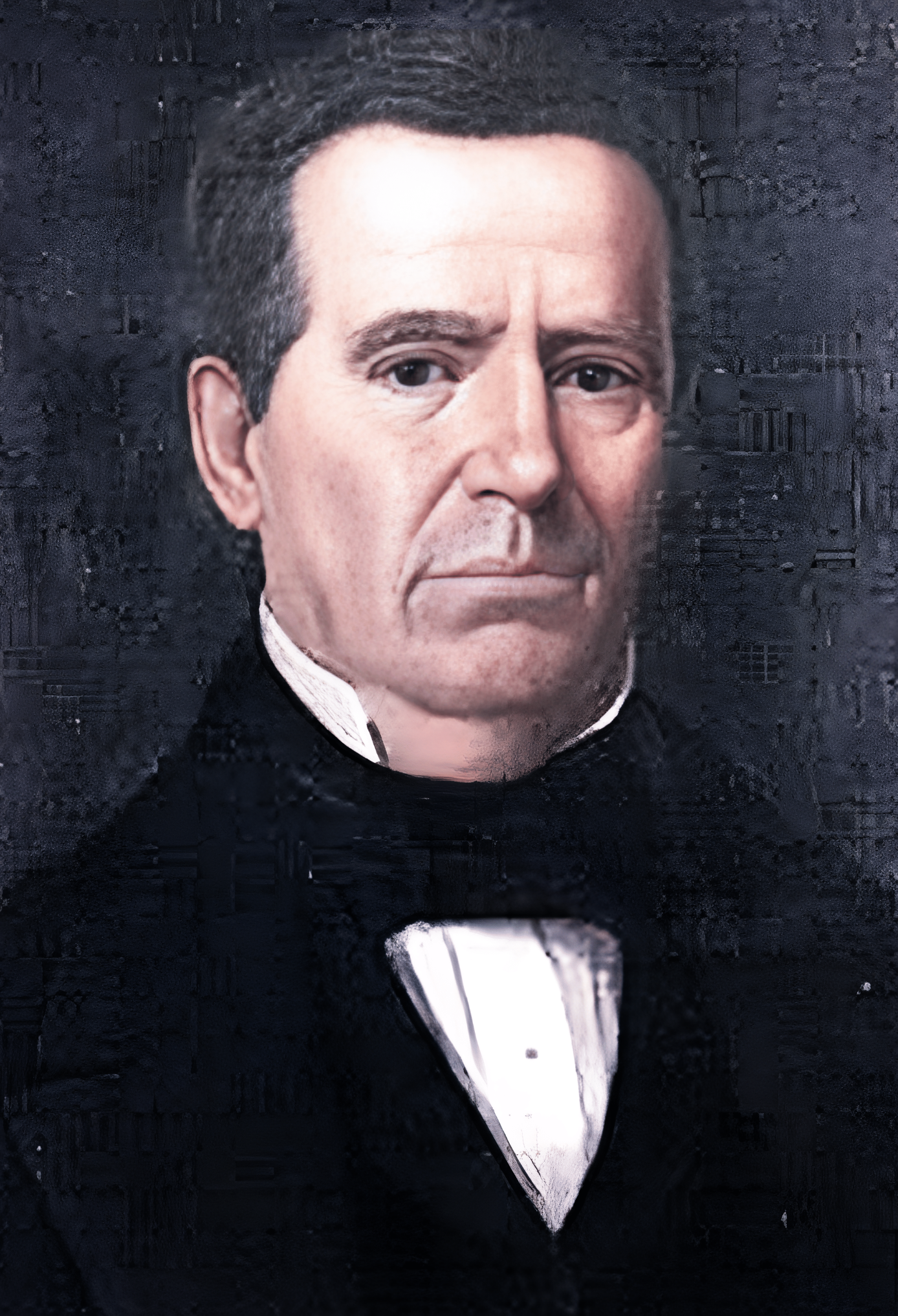
Anson Jones, an American physician born in Berkshire County, Massachusetts, in 1798, settled in Brazoria, Texas, in 1833. He played a prominent role in the political and military movements which led to the independence of that republic. He was appointed Minister to the United States in 1838 and served as Secretary of State for three years under President Samuel Houston. In 1844, he succeeded Houston as president of the Republic of Texas. Jones died by his own hand in 1858.
In an interesting history of the Snively Expedition, it was reported that Captain R. P. Crump wrote about the expedition in a book that was issued as a separate from Porter’s Spirit of Times for the friends of Edward Eberstadt & Sons (New York).
Philip St. George Cooke found himself adrift in a wilderness, several hundred miles from any settlement, with only five guns to protect his men from the hordes of ruthless savages by whom they were surrounded. His men had to procure the necessary means to save themselves from starvation and death through hunting.
“The President therefore directs that you make a prompt and energetic appeal to the Government of the United States in relation to the conduct of this officer, as well as that of General Gaines, by whose authority and under whose sanction, as appears from his published letter to General Taylor, this most unheard-of outrage upon national rights has been committed. You will now ask for the dismissal of these officers.”
In a letter to Hon. Anson Jones from Van Zandt, dated Washington, D.C., November 30, 1843, Jones spoke of Gaines as a “crazy man” and said that he was considered so in Texas.
On January 16, 1844, Secretary of State Abel Parker Upshur sent the following letter to Van Zandt:
“Captain Cooke of the Dragoons was detailed for this duty, and a force of about 190 men was placed under his command to carry out the orders of the Department. They rendezvoused at Council Grove, Neosho River (Kansas), on the 3rd of June and proceeded on their route with the caravan of traders. On the 22nd of June, Captain Cooke states that, when at Walnut Creek, he received intelligence that Colonel Snively, having about 180 Texans under his command, had avowed his intention to attack the caravan whenever he could find it unprotected, and had also made threats against the American portion of it. However, Cooke never proceeded with the escort and caravan in the direction of the crossing, and on the 30th of June, he saw three horsemen about a mile in advance, whom he supposed to be spies. In pursuing them, he came in sight of the Arkansas River, on the opposite side of which he saw a large grove, a force of men, and horses. They hung out a white flag, and he sent a subaltern, a trumpeter, and a flag to ford the river to their camp. The young officer demanded who they were and why they were there. Colonel Snively and his aid returned with the messenger. When Captain Cooke informed him that his people were in the United States and desired to know who they were and if he had a commission, he received his reply.”
General Gaines, when accused of complicity in the supposed outrage, was excused by the War Department on the grounds that he was not responsible for his actions but could not be dismissed because of his past valuable services. The truth is that the War Department acted spinelessly, backing up both Gaines and Cooke, neither of whom happened to be in the wrong.
Abel Parker Upshur, born in Northampton County, Virginia, was appointed Secretary of the Navy by President Tyler in September 1841 and succeeded Daniel Webster as Secretary of State in May 1843. Unfortunately, Upshur was killed in the explosion of the cannon Peacemaker aboard the steamer Princeton in February 1844 at the age of fifty-three. Upshur negotiated the Treaty of Annexation with Texas.
Snively replied that he had a Texan commission and a force of Texan volunteers—107 men. After Cooke was acquitted by court martial, Van Zandt wrote to Jones on August 16, 1844:
“If the President shall acquiesce in the acquittal of Captain Cooke and the offer to return or make compensations for the arms, it will be necessary to indicate at what point the arms are desired to be delivered. I have been told that Captain Cooke has a letter from Colonel Snively in which he expresses his gratitude for the kindness shown him by Cooke. If this be true, perhaps it would be unnecessary to prosecute the case further.”
Cooke was acquitted, as it was proved beyond a doubt that the capture of the Texans took place in the United States. Only two escorts had been furnished to Santa Fe traders until the large escorts under Captain Cooke in 1843, which accompanied two different caravans to the Arkansas River.
Another report on Captain Cooke and anticipated trouble with Snively’s force of Texans was made by Kit Carson, who had remained at Taos until April when he again started for the States with Bent and Colonel Ceran St. Vrain, serving as a hunter for the train:
“At Walnut Creek we found four companies of dragoons encamped, commanded by Captain Cooke. He informed us that the train of Armijo and several traders was a short distance in his rear. Captain Cooke had received intelligence that a large party of Texans was at the crossing of the Arkansas, waiting to overpower the train and kill or capture the Mexicans.” “I can say for Colonel Cooke that he is as efficient an Indian fighter as I have ever accompanied; that he is brave and gallant everyone knows.”
Cooke is mentioned a number of times in Kendall’s narrative on the capture of the Texans. When the prisoners reached Celaya, Mexico, on January 22, “General Cortazar, the gentlemanly and liberal governor of the State of Guanajuato,” was kind to the Americans, but Colonel Cooke invariably received the best treatment. Two of Cooke’s men escaped, and after the soldiers left Tula, they were marched towards the capital of Mexico and “the fate of all, whether good or evil, was soon to be decided. Upon the flimsy pretext that one or two of their companions had escaped, we knew that Santa Anna had chained Colonel Cooke’s men, and what was worse, had sent them to work in the streets and ditches—a punishment far beneath the dignity of a soldier.”
General Philip St. George Cooke’s party was confined at Santiago, where only criminals were typically imprisoned. A Mexican girl managed to slip a note to one of the Texans reporting that the prisoners “were all with Colonel Cooke’s party at Santiago, and in chains.” Smallpox was rampant among the prisoners, and a young man named Bowen in Cooke’s party was desperately ill and delirious with the disease. Kendall wrote, “I was unexpectedly in Santiago, greeted by Colonel Cooke, Dr. Brenham, Captain Sutton, and all the friends whom I had not seen for seven months. The prospect of chains and servitude was as nothing. I was among my old companions.”
Due to the influence of Senator Thomas H. Benton, James Wiley Magoffin was selected to pave the way for the entrance of General Kearny into Santa Fe and to gain possession of New Mexico. Cooke was Magoffin’s escort into Santa Fe. The officer noted that Magoffin’s life was in danger but was saved from execution due to his popularity with Mexican officers and his generosity, which included entertainment with 3,392 bottles of champagne.
In the summer of 1845, Colonel Stephen Watts Kearny, with a detachment of 250 dragoons, marched from Leavenworth 2,200 miles in 99 days to the South Pass. The start was made on May 18, with the Dragoons, armed with carbines, pistols, and cartridges, making a real military appearance. Officers such as Philip St. George Cooke, John Henry K. Burgwin, Henry Smith Turner, and Benjamin D. Moore were veterans of many western campaigns.
Cooke wrote an account of Fort Laramie, describing it as “a mongrel and unkempt crowd of women and children, whose jargon of mixed French, English, Spanish, and Indian sounded strange… while the male representatives of civilization… aided by alcohol and gunpowder, avarice, lying, and lust.” Hunting parties were sent out every day, and Cooke spoke of sage grouse, young antelope, hares, rabbits, and magpies. Some of the soldiers fished in the clear waters of the Sweetwater. During June, the days were intensely hot, but during the nights, ice would form, and the dragoons shivered under their blankets.
On the last day of June, the troops reached South Pass.
The gap called South Pass, with an altitude of 7,000 feet, divided the waters of the Atlantic from the Pacific. It is located in the southern part of what is now Fremont County, Wyoming. On August 3, 1845, Cooke’s outfit reached Chouteau’s Island, where Indians had attacked about four hundred traders sixteen years before.
The St. Louis Reporter, July 1, 1846, noted that “Last evening the Cecilia arrived here from the Upper Mississippi, bringing down Companies B and K, U.S. Dragoons, from Fort Atkinson (Wisconsin) and Fort Crawford (Wisconsin). The officers commanding are Capts. E. V. Sumner and P. St. George Cooke. The two companies number 115 men and have 119 horses and 15 mules.” The Reporter could not learn the destination of the corps.
Shortly after his arrival in St. Louis, Captain Cooke received directions through the War Department to join Colonel Stephen H. Kearny at Fort Leavenworth, who was then organizing an expedition to occupy New Mexico and California. War with Mexico had been declared late in the spring of 1846. Colonel Kearny had ordered Captain James Allen, First Dragoons, on June 19 to organize several companies of Mormons, who were encamped in Iowa Territory, for service in the war. The five new companies, known as the Mormon Battalion, reached Fort Leavenworth on August 1, where Captain Allen took sick and died three weeks later. A temporary commander was assigned, and the Mormon Battalion marched west, with all companies arriving in Santa Fe by October 12. In the meantime, General Kearny had left on September 25 with 300 of the First Dragoons on a line of march down the valley of the Rio del Norte (Rio Grande) for California. On October 2, after receiving word of Captain Allen’s death, Kearny appointed Cooke to take command of the Mormon Battalion as lieutenant colonel and gave him the additional assignment of cutting a wagon road to the Pacific Ocean in that region.
Cooke arrived at Santa Fe on October 7 with two companies of the First Dragoons, Major Edwin Vose Sumner in command, having arrived at Fort Leavenworth from St. Louis three days after Kearny had left for the West. Cooke took command of the Mormon Battalion on October 13 and six days later moved with his men, following General Kearny’s route down the Rio del Norte. After traveling twenty-five miles below the Jornada Mountain, Cooke struck off westerly over the southern spurs of the Sierra de los Mimbres. Seeing that these spurs ended abruptly and that a plain spread out south of them, he concluded that a pass might be discovered from the Rio del Norte to the Gila River, thus avoiding the mountains.
Before leaving the Rio del Norte valley, Cooke sent all of the sick Mormons and part of his baggage train back to Fort Pueblo, on the Arkansas River, above Fort Bent, where numerous Mormon families were congregating, preparing to start for California in the spring of 1847. Cooke followed the high plain through a gap in the Cornilleras, finding water and pasturage, and meeting no opposition. “He passed the deserted village, San Bernardino, which had once been very rich in cattle and other herds, but was now entirely abandoned on account of … incursions by the Apaches.” Thence, he passed over the San Pedro River, continuing down it for sixty miles before striking off and passing through Tucson.
When Cooke and his troops were encamped about six miles from Tucson, where 150 dragoons and two pieces of artillery were stationed, the Commandante had received express orders not to permit the passage of the Americans. Three commissioners were sent into camp to learn Colonel Cooke’s business and ask what terms he would require for passage through the village. The men begged Cooke to bypass the place, but he informed them he would require one piece of artillery and arms, with the munitions to be returned upon his departure. The following morning, when his troops were drawn up in order of battle, a messenger arrived and said, “Sir, your terms are hard, and such as the commandant never has and never will accede to.” However, Cooke passed the town after discovering a large body of horsemen fleeing in great haste. They abandoned the town, leaving only the old and helpless behind. Cooke’s troops found an abundance of wheat for their horses and some fruit and provisions for themselves before resuming their march.
When Cooke arrived at the Pima Villages, the chief delivered a letter and a bale of goods which General Kearny had deposited at different places. The Pimas had collected them knowing Cooke would pass that way. “Cooke commended him for his strict honesty and integrity and told him that in acting thus, he would always enjoy the friendship and good opinion of the Americans.”
The map made by Colonel Cooke on his route from the Rio Grande to the Gila River, in command of the Mormon Battalion, was later published in his report to General Kearny. This map is cited by Elliott Coues in his volume on Pike’s expeditions. Coues comments, “The Cooke trail is that made by Lieut. Col. Philip St. George Cooke, commanding the Mormon Battalion of the Army of the West, on the march from Santa Fe, N.M. to San Diego, Calif., under the guidance of Antoine Leroux in the autumn of 1846. It is clearly traced from the point of departure at the Rio Grande to the Pima Villages on the Gila, on the sketch map accompanying Cooke’s report.”
“I have failed to notice in the proper order that Lieutenant Colonel Philip St. George Cooke, commanding the Mormon Battalion (Capt. of the 1st Dragoons), had the honor of making the first wagon road from the stream of the Atlantic to the Pacific Ocean. This was a great undertaking at that time, which was in the autumn and winter of 1846-47, and entitles him to much credit. In his report to General Kearny, he recounts the hardships endured by himself and his men, and says that the general’s letters to him made it almost a matter of honor to take the wagons through to the Pacific. He was much retarded in making and following the road, often through the thickest of mesquite and other thorny bushes. Though worked on by pioneers, it was so laborious that it was necessary to relieve them every hour.”
Cooke reached San Diego with the Mormon Battalion on January 29, 1847, where he issued a congratulatory order the next day. He stated in part: “The Lieut. Colonel commanding congratulates the battalion on their safe arrival on the shore of the Pacific Ocean, and the conclusion of their march over 2,000 miles. History may be searched in vain for an equal march of infantry.”
This order described some of the details of the difficult march through the “trackless” wilderness and specially praised Lieutenants Andrew J. Smith and George Stoneman (later Governor of California) of the First Dragoons for having shared and given valuable aid in the journey.
Through his long career, General Philip St. George Cooke commanded various departments, including the Department of the Cumberland and the Department of the Lakes. He was commissioned as a Major General in the United States Army on March 13, 1865, for his gallant service during the Civil War.
Philip St. George Cooke was not only a distinguished soldier, but he also became well known as the author of three volumes of history and adventure. His Cavalry Tactics in two volumes was published in 1861, with many later editions. His Scenes and Adventures in the Army, which appeared in 1857, was autobiographical. Another book, The Conquest of Mexico and California, published in 1878, is an outstanding history on the subject, based on his own notes and journals kept in the field. Cooke’s journal and report on the Mormon Battalion also appear in other publications, and he is mentioned in many volumes by writers on the history of the period that saw his service in the Army.
General Cooke passed away on March 20, 1895, in Detroit at the age of eighty-six. He had retired on October 29, 1873, after serving continuously in the Army for forty-six years. He was a stern disciplinarian and was described as a “character of renown in western army annals; a very peppery man with language,” who “talked through his nose.” He had a high sense of honor and sincere religious feelings, but he also possessed a sense of humor and was notably fond of young people. His wife was Rachel Hertzog of Philadelphia.
A biographer paid tribute to this great American soldier:
“Throughout his varied career General Philip St. George Cooke gave us an example of loyalty, professional pride, and devotion to duty in its highest sense. He was the incarnation of a cavalry soldier. He was a splendid horseman and always looked every inch the soldier while mounted on his spirited, showy horse. He was a chivalrous soldier, a consistent Christian, and a model gentleman.”
In his delightful Scenes and Adventures in the Army or Romance of Military Life (1857), Colonel Cooke gives a vivid account of the march of the Dragoons from Jefferson Barracks on the noted Expedition via Fort Gibson (1834) to the Wichita Village in Southwestern Oklahoma. He says that the regiment was composed of men between the ages of twenty and thirty-five:
“… native citizens who, from previous habits, were well qualified for mounted service. The officers were authorized to inform candidates for enlistment that they would be well clothed and kept in comfortable quarters in winter…. The recruits had generally disposed of nearly all of their clothing, in anticipation of their uniforms, but in November, before the proper clothing or arms had been received … just at that season when all civilized, and, I believe, barbarous nations, even in a state of war, suspend hostilities and go into winter quarters, these five companies received an order to march out of theirs,—to take to the field!”
By great exertions and numerous expedients, enough clothing was obtained to cover them, though of various qualities, colors, and patterns. The march to Fort Gibson began on November 20. On the third day, they encountered a severe snowstorm. On December 19, they reached their destination, having marched five hundred miles. However, there were no comfortable quarters waiting for them, and they passed a severe winter, even for any climate, in tents. The thermometer stood at 8° below zero on some days. Of course, there were no stables, and there was very little corn. The horses were turned loose to sustain a miserable existence on cane in the Arkansas bottom:
“The Regiment of Dragoons has had, so to speak, bad luck. The winter at Fort Gibson has been one of unexampled severity; the corn crop of last season had been swept away by an unparalleled rise of the Arkansas River…. Some of the clothing arrived in February; after having been, with the sabres and pistols, sunk in a steamboat. The guns made for the dragoons, and some of the clothing, have not yet arrived. Their sabres and pistols are not those intended for the regiment; but of very rough, inferior quality.”
The other five companies of Dragoons joined the regiment at Fort Gibson in June:
“… and were hurried off like the others, on the 18th of the month, quite unprepared for the expedition. Nevertheless, the regiment marched full six weeks too late, when it is considered that we were to traverse the burning plains of the South; and the thermometer having previously risen to 105° in the shade, there was every prospect of a summer of unexampled heat.”
Views: 32