Following his capture at San Agustin Springs on July 8, 1861, Captain Alfred Gibbs was released on parole and designated to reside at Detroit, Michigan, in accordance with established military practice governing paroled officers (Cullum, n.d.). Under the laws of war as observed by both Union and Confederate authorities, parole imposed binding legal restrictions that rendered a captured officer ineligible for any form of active military service until formally exchanged. Gibbs’s designation as “on parole at Detroit” therefore reflected not a casual residence but a legally defined status of enforced inactivity under administrative supervision.

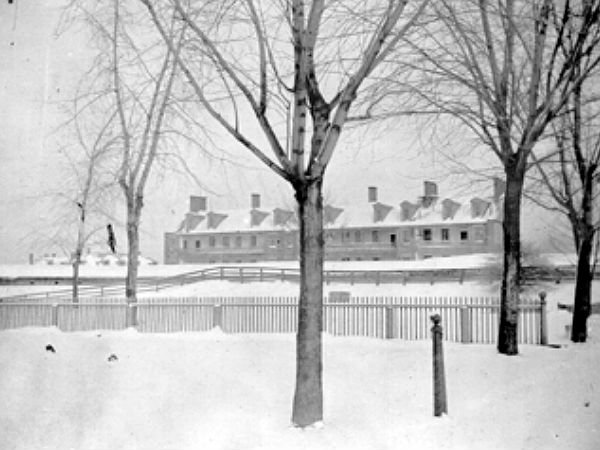
Detroit was a logical and deliberate choice for the placement of paroled Regular Army officers. By the mid-nineteenth century, the city functioned as a longstanding military and administrative center, anchored by Fort Wayne, an active U.S. Army post responsible for garrison, quartermaster, and oversight functions. Paroled officers were not confined within fortifications but were required to remain within a designated locality, report as directed, and abstain from any conduct that could be construed as resuming hostilities. In this context, Fort Wayne served as the probable administrative authority through which Gibbs’s parole was monitored, even as he resided in civilian quarters within the city.
Gibbs’s presence in Detroit was not passive. Correspondence preserved in the Official Records indicates that his parole status was the subject of active petitions and supporting testimonials during the spring of 1862. Letters submitted by civilians in Detroit attested to Gibbs’s character and urged favorable consideration of his exchange, demonstrating both his physical presence in the city and the visibility of his constrained situation within the local community (U.S. War Department, 1899, Series II, Vol. 4). These documents confirm that Gibbs’s parole was an unresolved legal condition rather than a settled administrative endpoint.
The Detroit parole period thus represents a critical interlude in Gibbs’s wartime career. Although professionally trained and urgently needed, he remained legally immobilized for more than a year, unable to accept command or perform military duties until a corresponding Confederate officer could be identified and exchanged. This enforced inactivity explains both the persistence of Gibbs’s own petitions and the significance of the exchange proposal initiated in May 1862. His residence at Detroit was therefore not incidental but integral to the administrative and legal framework that governed his status until the formal termination of his parole.
References
Cullum, G. W. (n.d.). Biographical register of the officers and graduates of the U.S. Military Academy (Entry for Alfred Gibbs).
U.S. War Department. (1899). The War of the Rebellion: A compilation of the official records of the Union and Confederate armies (Series II, Vol. 4). Washington, DC: Government Printing Office.


Views: 20