Charlottesville Raid, Feb. 28 to March 5, 1864 (UPDATED)
Custer’s Charlottesville Diversionary Raid, February
February 28 – March 1, 1864
In late February 1864, Brigadier General George A. Custer led approximately 1,500 Union cavalrymen on a diversionary raid into Albemarle County, Virginia. The expedition was intended to distract Confederate attention from Brigadier General Judson Kilpatrick’s simultaneous raid toward Richmond (Jordan, 1988). The objective was Charlottesville — a vital transportation and supply center supporting General Robert E. Lee’s Army of Northern Virginia. Custer was ordered to destroy Confederate supplies and, if possible, burn the Virginia Central Railroad bridge over the Rivanna River (U.S. War Department, 1880–1901).
Composition of the Command
Custer’s column included detachments from several cavalry regiments of the Army of the Potomac’s Cavalry Corps. Among them was a selected force from the First New York Dragoons (formerly the 130th New York Infantry), then serving in mounted service (Bowen, 1900, p. 120).
According to the regimental history, one hundred and fifty enlisted men and four officers from the Dragoons were detailed for the expedition:
Captain Hakes (Company E) (BIO)
Captain Britton (Company H)
Lieutenant Morey (Company D)
Lieutenant Schlick (Company K)
(Bowen, 1900, p. 120)
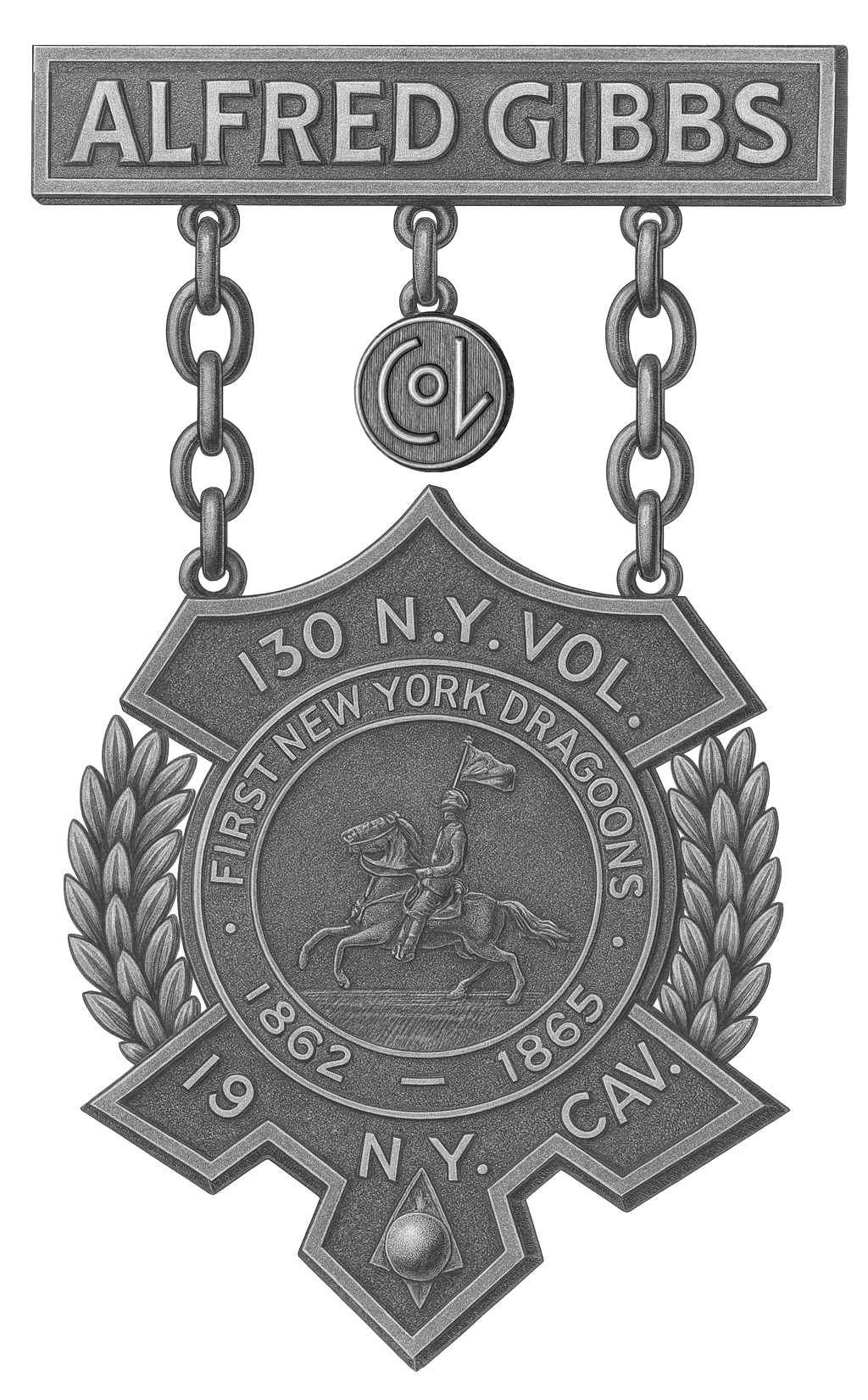
By February 1864, the regiment had completed its transition from infantry to cavalry and had been thoroughly drilled in mounted tactics under Colonel Alfred Gibbs (Bowen, 1900, p. 342). The Dragoons were no longer experimental horsemen; they were integrated cavalry operating within the mounted arm of the Army of the Potomac.
The Advance Toward Rio Hill
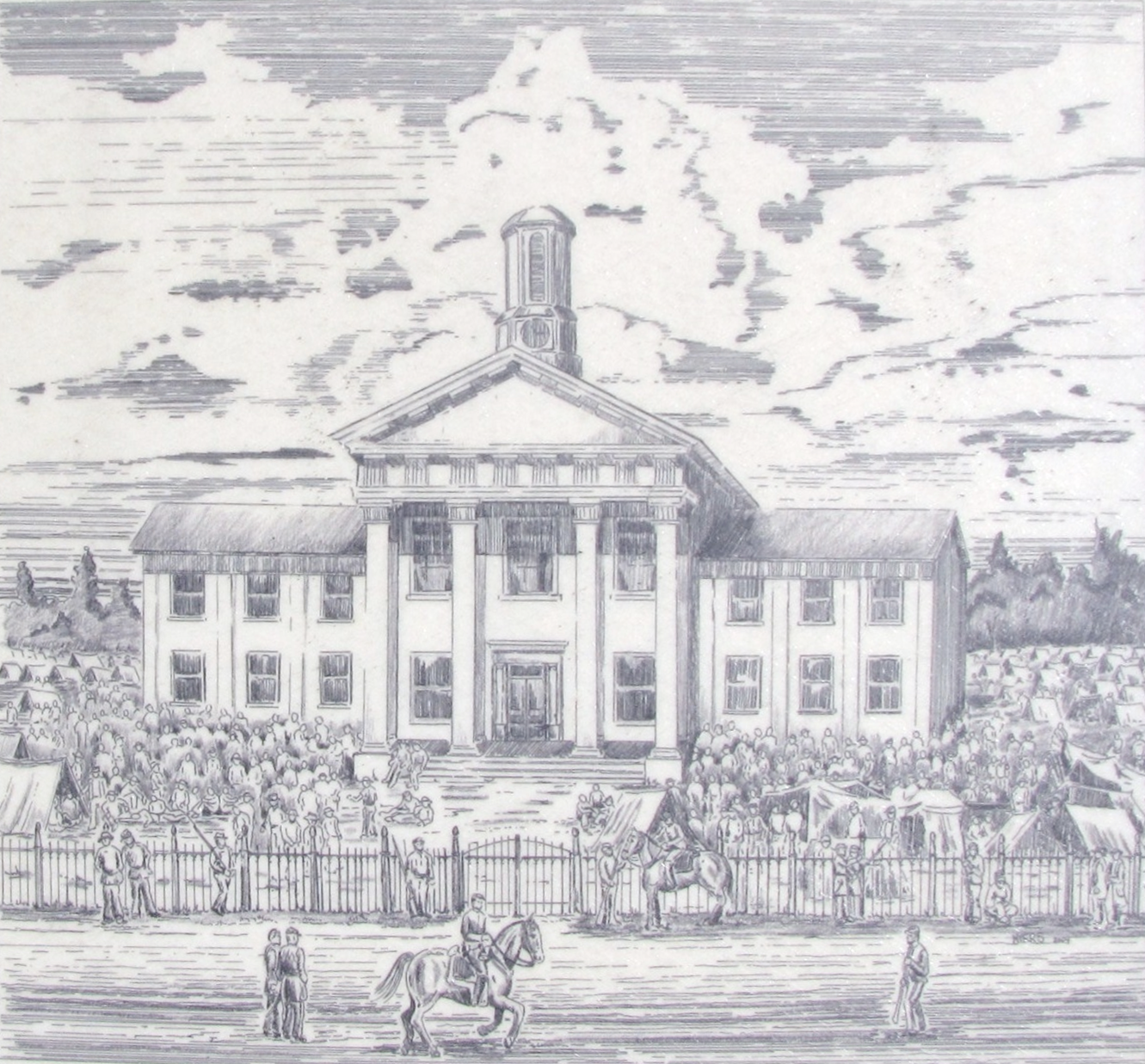
The command departed Pony Mountain on February 28 at 2:00 p.m., arriving at Madison Court House that evening (Bowen, 1900, p. 120). Reveille was sounded at 1:00 a.m. on February 29, and the column resumed its march at 2:00 a.m. The Rivanna River was crossed at approximately 3:00 p.m. that afternoon (Bowen, 1900, p. 120).
The only organized Confederate force in Custer’s immediate path was a battalion of horse artillery belonging to Major General J. E. B. Stuart. The artillery camp, located on Rio Hill near the Rivanna River, consisted of four batteries under Captains Marcellus N. Moorman, Roger P. Chew, James Breathed, and William McGregor — approximately 200 artillerymen manning sixteen guns (Jordan, 1988).
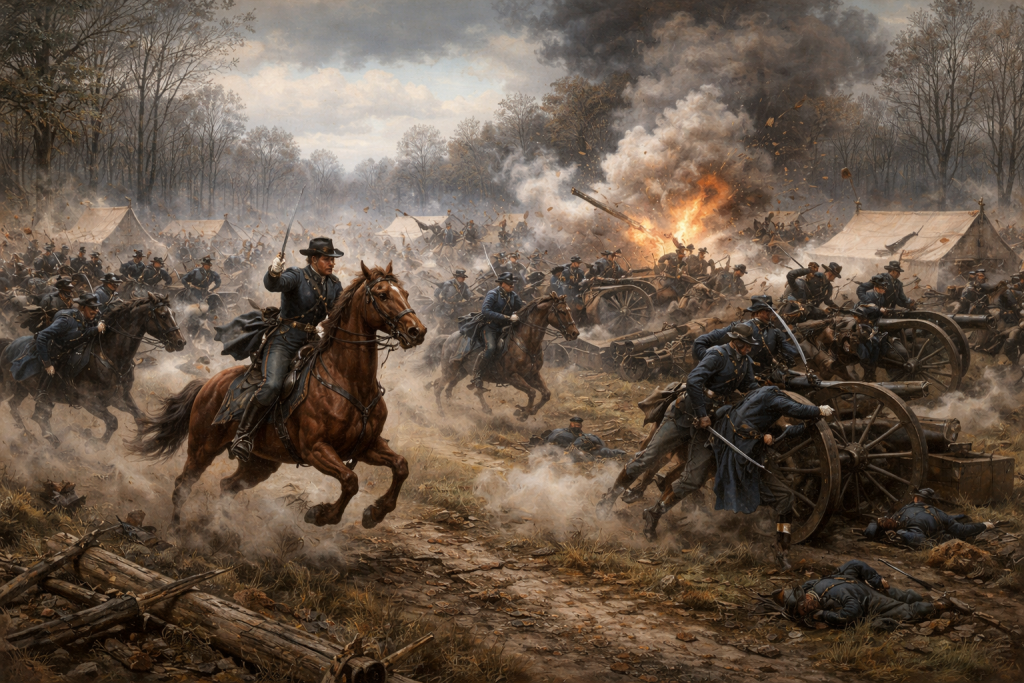
On February 29, Custer’s column seized the Rio Mills bridge and advanced toward the Confederate camp. Despite warnings, the Confederate artillerymen were initially unprepared. As Union cavalry pressed forward, Captain Joseph Ash of the 5th U.S. Cavalry charged into the artillery camp, capturing six caissons and two forges while burning camp equipment (Bowen, 1900, p. 121).
Moorman responded by hastily limbering several guns and withdrawing them while deploying others to fire over his own camp. In a desperate ruse, mounted artillerymen armed with pistols and improvised weapons rode forward to simulate arriving Confederate cavalry reinforcements. At nearly the same moment, a Confederate caisson exploded. Confusion spread within the Union ranks, and elements of Custer’s force fired into one another.
Believing himself confronted by stronger opposition than anticipated, Custer ordered a withdrawal (U.S. War Department, 1880–1901).
Federal forces burned the Rivanna bridge and several nearby flouring mills before retreating. The engagement lasted less than an hour.
Union casualties amounted to one man slightly wounded; two Confederates were captured. Although Custer inflicted material damage, the Confederate artillery battalion preserved most of its guns and quickly restored its camp.
The Dragoons and the Rear-Guard Action
 The most disciplined and decisive action of the expedition occurred during the retreat.
As Confederate cavalry maneuvered to intercept the withdrawing column near the fork between Burton’s Ford and Bank’s Ford, the First New York Dragoons formed the rear of the column (Bowen, 1900, p. 121).
Lieutenant Morey commanded the rear squadron, while Lieutenant Schlick led the detached rear guard (Bowen, 1900, p. 121). At dusk, Schlick’s rear guard came under fire from pursuing Confederates. Morey immediately wheeled his squadron about. With sabers drawn, the Dragoons charged down the darkened road. The sudden counterattack surprised the Confederate pursuers, who discharged a volley before retreating in confusion. The Dragoons pursued them for approximately half a mile before rejoining the main column (Bowen, 1900, p. 121).
The regiment completed the grueling march back to Union lines, having covered approximately 150 miles in just over two and a half days (Bowen, 1900, p. 122).
Results and Historical Significance

Custer reported the destruction of the Rivanna bridge and three flouring mills, the capture of six caissons, more than fifty prisoners, several hundred horses, and a Virginia state standard (U.S. War Department, 1880–1901; Bowen, 1900, p. 122). Although the Virginia Central Railroad bridge at Charlottesville itself was not destroyed, the raid temporarily disrupted Confederate logistics and forced defensive adjustments (Jordan, 1988).
The official itinerary of the First New York Dragoons records the “Charlottesville Raid, Feb. 28 to March 1, 1864” as a recognized engagement of the regiment (Bowen, 1900, p. 319).
The skirmish at Rio Hill remains the only significant Civil War engagement fought in Albemarle County. More broadly, the raid illustrates the increasing professionalism of Federal cavalry in 1864. For the First New York Dragoons — recently converted from infantry — the expedition demonstrated both operational endurance and disciplined mounted combat. Within weeks, these same troopers would face far bloodier tests during the Overland Campaign.
References
Bowen, J. R. (1900). Regimental history of the First New York Dragoons (One Hundred Thirtieth New York Volunteers). Buffalo, NY: Matthews-Northrup Works.
Jordan, E. L., Jr. (1988). Charlottesville and the University of Virginia in the Civil War. Lynchburg, VA: H. E. Howard, Inc.
U.S. War Department. (1880–1901). The War of the Rebellion: A compilation of the official records of the Union and Confederate armies. Washington, DC: Government Printing Office.
Views: 35