Corporal Albert D. Vanderpool
Corporal Albert D. Vanderpool
Albert D. Vanderpool of Angelica, New York, enlisted in Company G of the regiment that became the First New York Dragoons, originally the 130th New York Volunteer Infantry, in August 1862, at the age of 35. He was discharged for disability before the war’s end.
The Service Record
Enlisted: August 1862, at Angelica, N.Y.; age 35.
Company: Company G, 130th New York Volunteers → First New York Dragoons.
Rank: Corporal.
Fate: Discharged, Jan. 19, for disability.
Source: New York Adjutant-General’s register of the First New York Dragoons; Bowen, J. R. (1900). Regimental History of the First New York Dragoons.
From the Regimental Register
“Albert D. Vanderpool. Mustered in as Corporal, Co. G, Aug. 13, 1862; discharged, Jan. 19, for disability.”
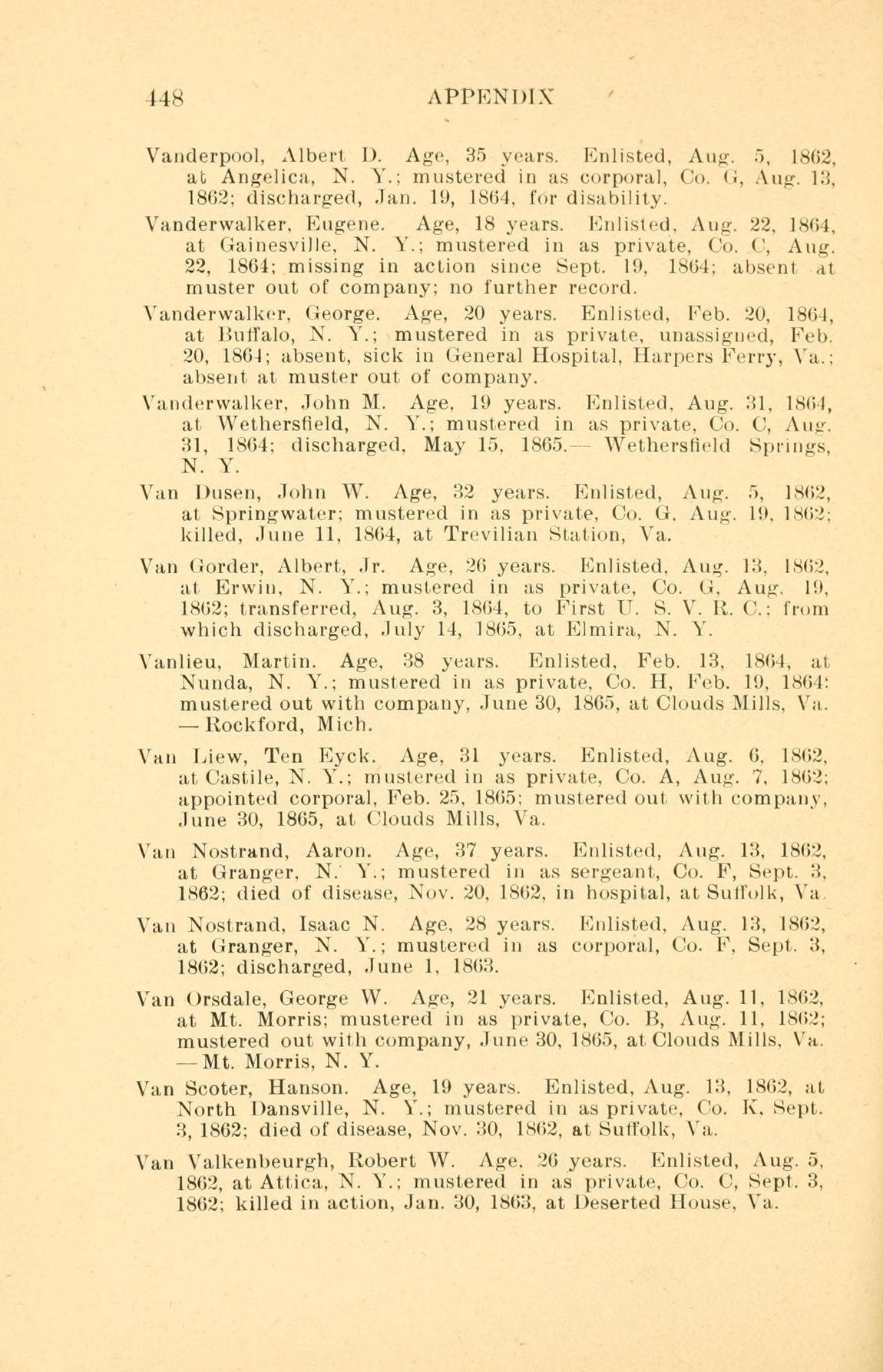
Verbatim from the roster of the First New York Dragoons in the New York Adjutant-General’s report. The page reproduced above is from Bowen, J. R. (1900). Regimental History of the First New York Dragoons (originally the 130th N.Y. Vol. Infantry) (p. 448). Internet Archive. archive.org/details/regimentalhistor00bowe
Terms on this page, from brevet and mustered out to the classes of the Roll of Honor, are defined in the site Glossary.
Named in a Comrade’s Letter — Warrenton, 29 July 1863
Private George D. Benedict of Company G wrote home to his wife Sarah at Belvidere through 1863 and 1864. His letters survive, and this one records this man.
“Vanderpool went thare to Sick from yorktown I have not Seen nor heard from him Since”
— George D. Benedict, Warrenton, Virginia, 29 July 1863
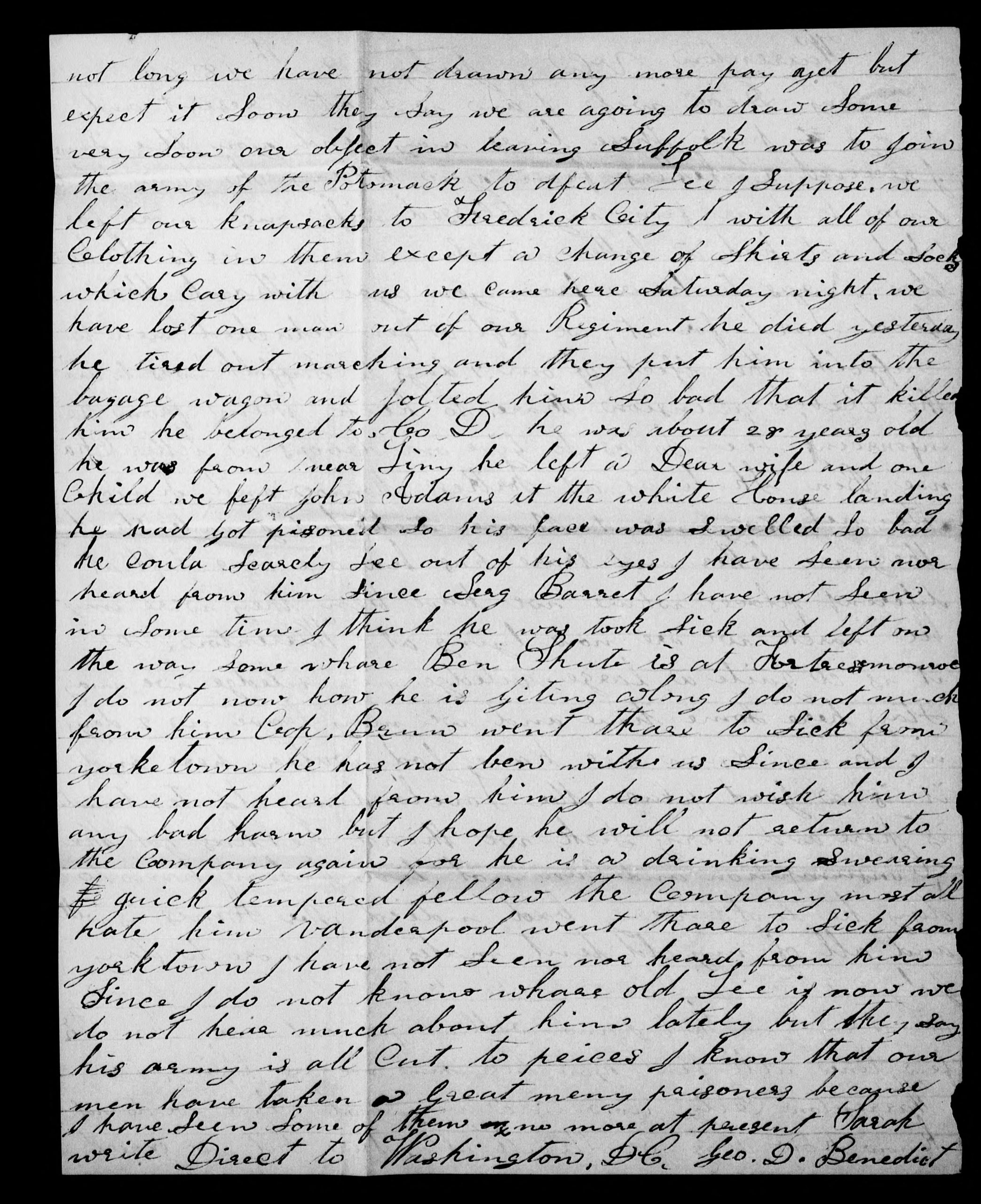
The whole page, transcribed
not long we have not drawn any more pay yet but expect it Soon they Say we are agoing to draw Some very Soon our object in leaving Suffolk was to join the army of the Potomack to defeat Lee I Suppose,
we left our knapsacks to Fredrick City with all of our Clothing in them except a change of Shirts and Socks which Cary with us we came here Saturday night,
we have lost one man out of our Regiment he died yesterday he tired out marching and they put him into the bagage wagon and jolted him So bad that it killed him he belonged to Co D he was about 28 years old he was from near Liny he left a Dear wife and one Child
we left John Adams at the white house landing he had got pisoned So his face was Swelled So bad he could Scarcly See out of his eyes I have Seen nor heard from him Since
Serg Barret I have not Seen in Some time I think he was took Sick and left on the way Some whare
Ben Shute is at Fortress monroe I do not now how he is giting along I do not much from him
Corp. Benn went thare to Sick from yorketown he has not ben with us Since and I have not heard from him I do not wish him any bad harm but I hope he will not return to the Company again for he is a drinking Swearing quick tempered fellow the Company most all hate him
Vanderpool went thare to Sick from yorktown I have not Seen nor heard from him Since
I do not know whare old Lee is now we do not hear much about him lately but they Say his army is all Cut to peices I know that our men have taken a Great meny prisoners because I have Seen Some of them
no more at present Sarah write Direct to Washington, D C
Geo. D. Benedict
Vanderpool was a corporal of Company G, Benedict’s own company, and came from Angelica — the same town as Benjamin Ames, the preacher who shared Benedict’s tent.
This letter catches the moment he disappeared from the regiment. He went sick from Yorktown, and by the end of July Benedict had neither seen nor heard from him. The roster confirms that he never came back: Vanderpool was discharged for disability on 19 January 1864, having been away from the company for the better part of a year.
The record gives the discharge. The letter gives the illness that led to it, and the date it began.
Men named on this same page.Alonzo Hodge · John J. Adams · Alonzo D. Barrett · Benjamin Shute. The full run of Benedict’s letters, transcribed page by page, is on his own page.
Source. Benedict, G. D. (1863–1864). George D. Benedict Papers (Collection #4943-z). Southern Historical Collection, Louis Round Wilson Special Collections Library, University of North Carolina at Chapel Hill.
Named in a Comrade’s Letter — Culpeper, 13 November 1863
Private George D. Benedict of Company G to his wife Sarah at Belvidere. Written in pencil, for want of ink.
“I understand Vanderpool has got his discharge and gone home”
— George D. Benedict, Culpeper, Virginia, 13 November 1863
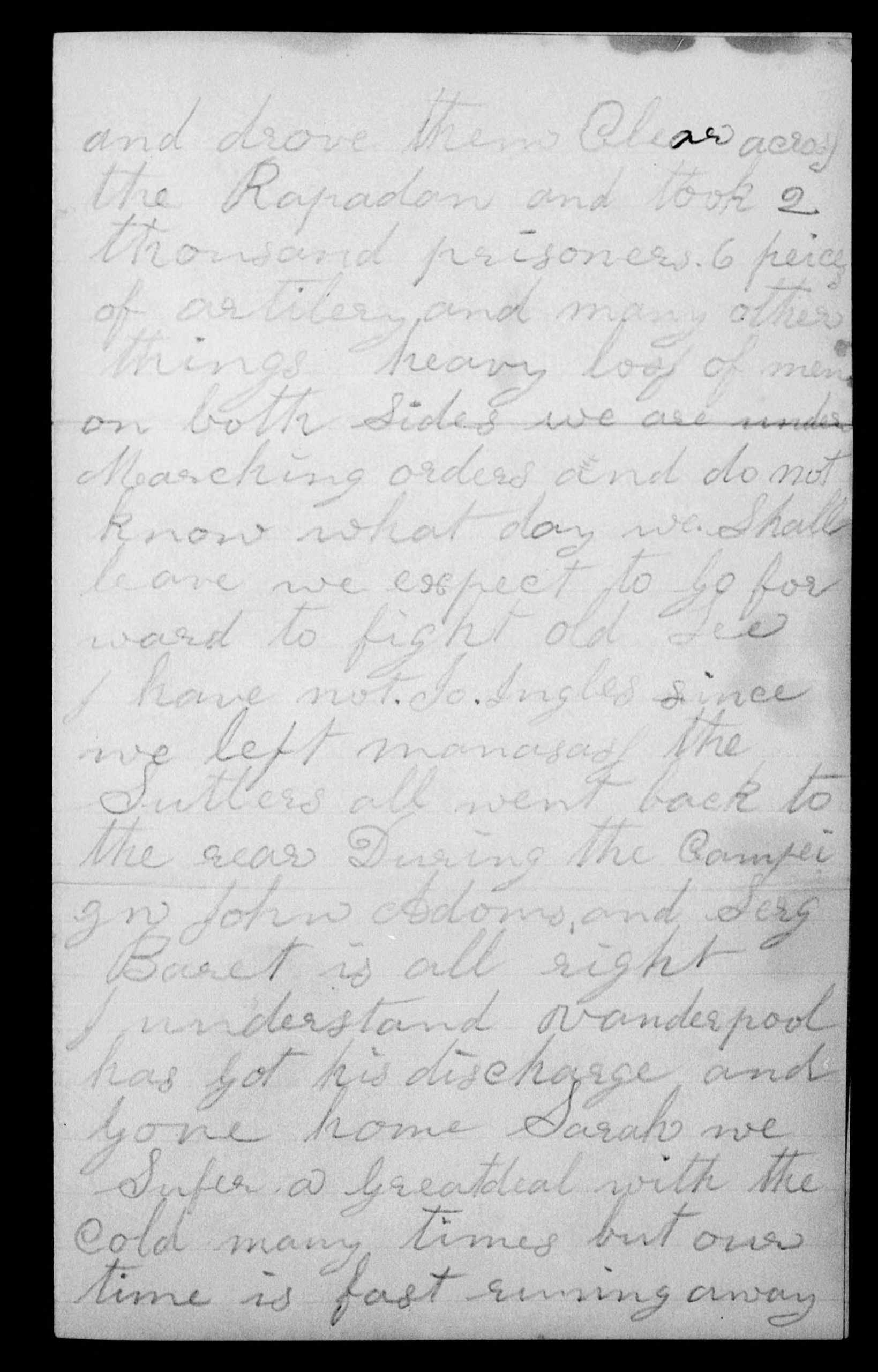
The whole page, transcribed
and drove them Clear across the Rapadan and took 2 thousand prisoners 6 pieces of artilery and many other things heavy loss of men on both Sides
we are Marching orders and do not know what day we Shall leave we expect to go forward to fight old Lee
I have not So Ingles Since we left Manasas the Sutlers all went back to the rear During the Campeign
John Adams and Serg Baret is all right
I understand Vanderpool has got his discharge and gone home
Sarah we Sufer a greatdeal with the Cold many times but our time is fast runing away
This is the end of Vanderpool’s war, reported by a man in his own company. He had gone sick from Yorktown in the spring and never rejoined; on 13 November 1863 Benedict writes that he has his discharge and has gone home to Angelica.
A conflict of dates, recorded rather than resolved. The muster roll dates Vanderpool’s discharge for disability to 19 January 1864 — two months after Benedict reports it as done. Benedict prefaces it with “I understand,” marking it as camp report, so it may simply have run ahead of the fact. Equally, the roster may record the date the paperwork was finished rather than the day a sick corporal actually went home. We set both down and choose neither.
Men named on this same page.John J. Adams · Alonzo D. Barrett. The full run of Benedict’s letters, transcribed page by page, is on his own page.
Source. Benedict, G. D. (1863–1864). George D. Benedict letters, 1863–1864 (Collection #4943-z). Southern Historical Collection, Louis Round Wilson Special Collections Library, University of North Carolina at Chapel Hill.
Views: 2