Fort Leavenworth: A Comprehensive Historical Report (1827–Present)
Table of Contents
Abstract
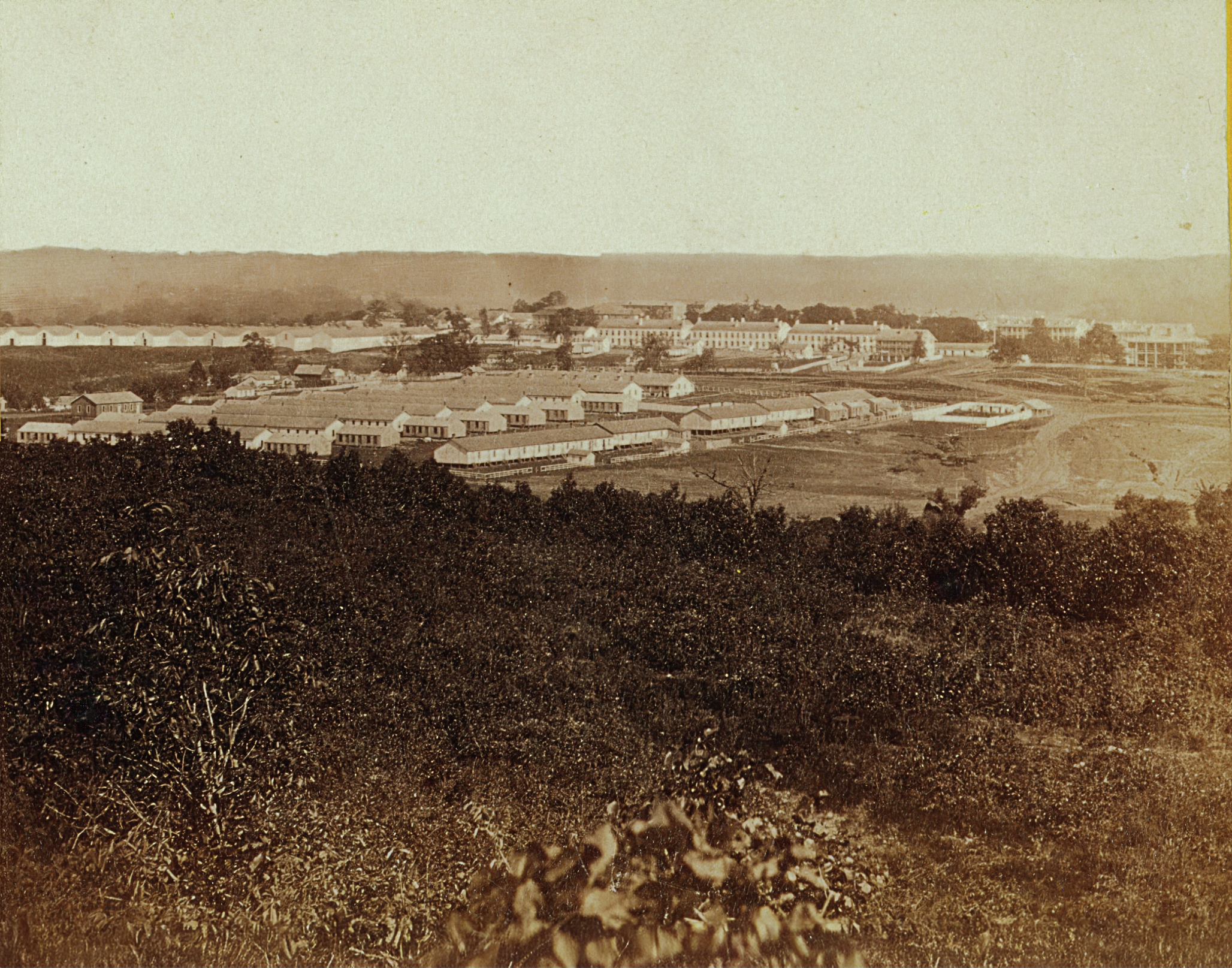
Fort Leavenworth, founded in 1827 on the west bank bluffs of the Missouri River, occupies a rare place in U.S. military history: it is simultaneously a frontier fort, a logistical engine for western expansion, an incubator for professional military education, and the home of the Department of Defense’s only maximum-security military prison. Over nearly two centuries, the post’s role has repeatedly shifted to meet national needs: protecting routes such as the Santa Fe Trail; supplying distant garrisons on the Plains; stabilizing a violent territorial border during “Bleeding Kansas”; training and organizing forces during the Civil War; helping shape the Army’s postwar approach to the West; and, later, institutionalizing officer education through the school system that made Leavenworth famous as the Army’s “intellectual center.” This report synthesizes a U.S. Army Command and General Staff College history volume edited in 1983 and the Fort Leavenworth Wikipedia entry to present a grounded, citation-driven narrative intended for permanent use on AlfredGibbs.com. (Partin, 1983; Wikipedia contributors, n.d.)
Introduction: Why Fort Leavenworth Matters
Fort Leavenworth is not merely “old.” It is institutionally consequential. It is the oldest permanent settlement in Kansas and one of the oldest continuously active Army posts in the United States west of Washington, D.C. (Wikipedia contributors, n.d.). Wikipedia The post’s longevity matters because it provides continuity across radically different eras of American military development, frontier constabulary operations, continental expansion, the professionalization of officer education, and the rise of doctrine-centered training institutions.
The 1983 official-history volume A Brief History of Fort Leavenworth, 1827–1983 frames the post’s significance in terms of landscape, heritage buildings, and (more importantly) “an integral position in the American defense effort” across time (Saint, 1983).
That is the right lens for a comprehensive account: Fort Leavenworth is a place where the Army repeatedly reorganized how it moves, educates, and disciplines its people. Those three verbs: logistics, learning, corrections show up again and again.
Setting the Stage Before 1827: People, Trade, and the River Corridor
Any serious history of Fort Leavenworth begins before the fort. The 1983 volume opens with deep time: human presence in the broader Great Plains region “perhaps as many as 15,000 years ago,” tied to water, game, and seasonal movement (Spiller, 1983).
This is not a decorative preface; it establishes that the Missouri River corridor and the bluffs overlooking it have long functioned as a strategic and livable landscape, conditions later military planners would also recognize.
The river itself is the second anchor. Fort Leavenworth’s location on the Missouri River positioned it naturally along trade and transportation routes and later made it a key node for moving supplies westward. The fort’s future identity as a quartermaster and supply hub was not accidental; it was baked into the geography (Saint, 1983).
Founding the Fort: A Permanent Cantonment on the Missouri (1827)
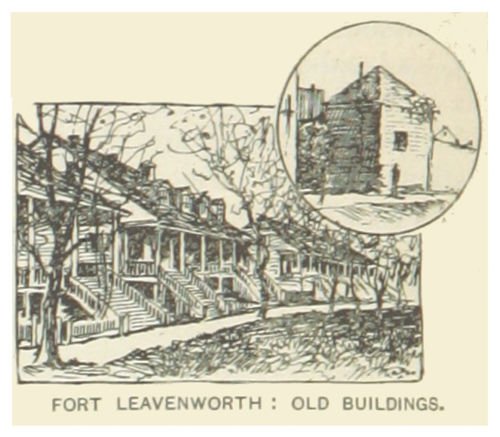
Fort Leavenworth was established in 1827 under Colonel Henry Leavenworth of the 3rd Infantry. The Wikipedia entry emphasizes the fort’s initial purpose: a forward base associated with protecting movement along routes such as the Santa Fe Trail during westward expansion (Wikipedia contributors, n.d.). Wikipedia The 1983 volume’s foreword likewise notes Leavenworth’s expedition up the Missouri River in spring 1827, selecting a location on bluffs above the river and naming the post for him (Saint, 1983).
The key idea is “permanence.” The directive (as preserved in Wikipedia’s history section) describes selecting a site “best calculated for the site of a permanent cantonment” and building “comfortable, though temporary quarters” for four companies—language that captures early Army planning for a durable foothold rather than a short-lived camp (Wikipedia contributors, n.d.). Wikipedia
Fort Leavenworth and Western Expansion: A Logistics Engine and Human Thoroughfare
“A forward destination” for the West
The Wikipedia article describes Fort Leavenworth as a “forward destination” for “thousands of soldiers, surveyors, immigrants, American Indians, preachers and settlers” moving through during westward expansion (Wikipedia contributors, n.d.). Wikipedia This is the fort’s early identity: not only a defensive post, but a place where mobility, governmental, economic, and human, concentrated before pushing outward.
The quartermaster role and freight networks
By the mid-19th century, the fort’s role expanded into a supply and contracting ecosystem that shaped the development of Leavenworth City. The 1983 volume states plainly that the fort served “as the quartermaster center for all Army installations west of the Missouri,” creating markets for local goods and services and subsidizing transportation solutions such as ferry services (Yates, 1983).
The same section highlights the fort’s decisive role in freighting and contracting, including government hauling arrangements that helped make Leavenworth a major transshipping point on the prairie (Yates, 1983).
This is one of the most important interpretive takeaways for your website: Fort Leavenworth helped “build the West” as much by organizing supply and contracts as by deploying troops. That is a traditional story of institutions—warehouses, depots, roads, and procurement, quietly shaping national outcomes.
Bleeding Kansas” and the Border Crisis: The Fort as a Federal Anchor (1850s)
The Kansas Territory crisis made Fort Leavenworth a stabilizing, but limited, federal presence amid civil conflict. In 1856 the headquarters of the Department of the West temporarily transferred to Fort Leavenworth, with Brevet Major General Persifor F. Smith in command; the volume notes that violence continued “unchecked by the handful of troops,” and that soldiers could do little more than protect the territorial legislature and escort officials (Childress, 1983).
This is a sobering lesson: military presence does not automatically resolve political violence. Fort Leavenworth’s soldiers were constrained by manpower, mission limits, and the reality that the crisis was fundamentally political and social. For a modern reader, especially one thinking about institutions and governance, this period reads like an early example of how “security” can be present without being decisive.
The Arsenal and Civil War Era: Security, Mobilization, and a Vulnerable Prize
Arsenal Hill and the ordnance role
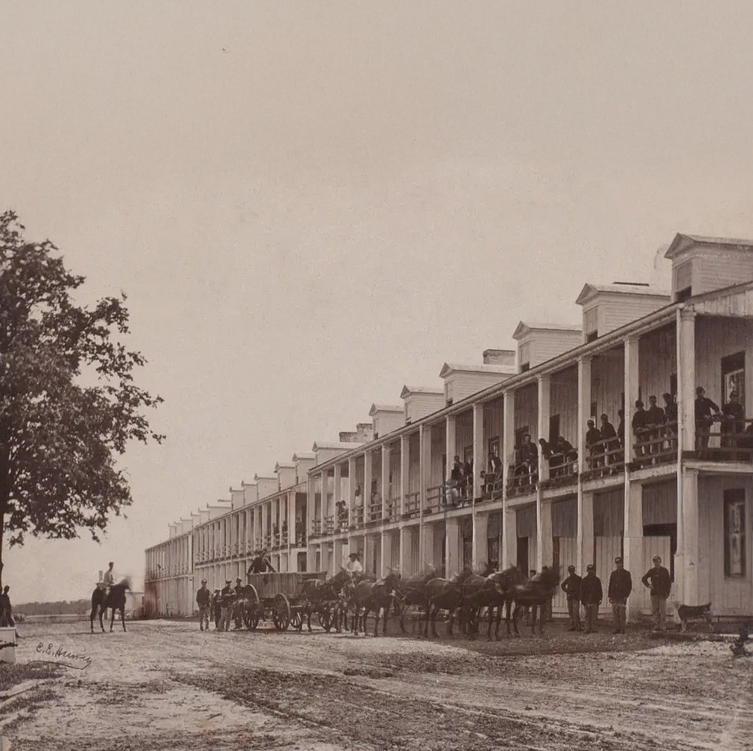
Fort Leavenworth’s logistical importance became strategic vulnerability when war loomed. The 1983 volume notes that in 1858 an ordnance depot was established and soon became an arsenal; the stone buildings associated with that arsenal survive today as Sherman and Sheridan Halls (Childress, 1983).
These buildings are not merely architecture, they embody the fort’s supply function as a tangible, enduring infrastructure.
Civil War mobilization and local risk
With the outbreak of the Civil War in 1861, the fort’s arsenal and supply stocks made it “a valuable prize to Confederate sympathizers” across the river in Missouri; the post commander sought local militia help, and reinforcements arrived under Colonel D. S. Miles (Robertson, 1983).
The same account emphasizes that the fort’s Civil War role was “important but generally unexciting”: enrolling, organizing, and equipping Kansas volunteer units at Fort Leavenworth and nearby Camps Lincoln and Lyon (Robertson, 1983).
The fort also served intermittently as headquarters for regional commands (including the Department of Kansas in 1862 and 1864), and the volume situates it within the broader threat environment that included guerrilla violence—most notably Quantrill’s raid on Lawrence (Robertson, 1983).
A historically grounded conclusion here is straightforward: Fort Leavenworth mattered in the Civil War less as a battlefield and more as an administrative and logistical hub, mobilizing men and matériel while trying to hold a volatile border.
Post–Civil War Responsibilities: Supply, Roads, Units, and the Long Westward Mission
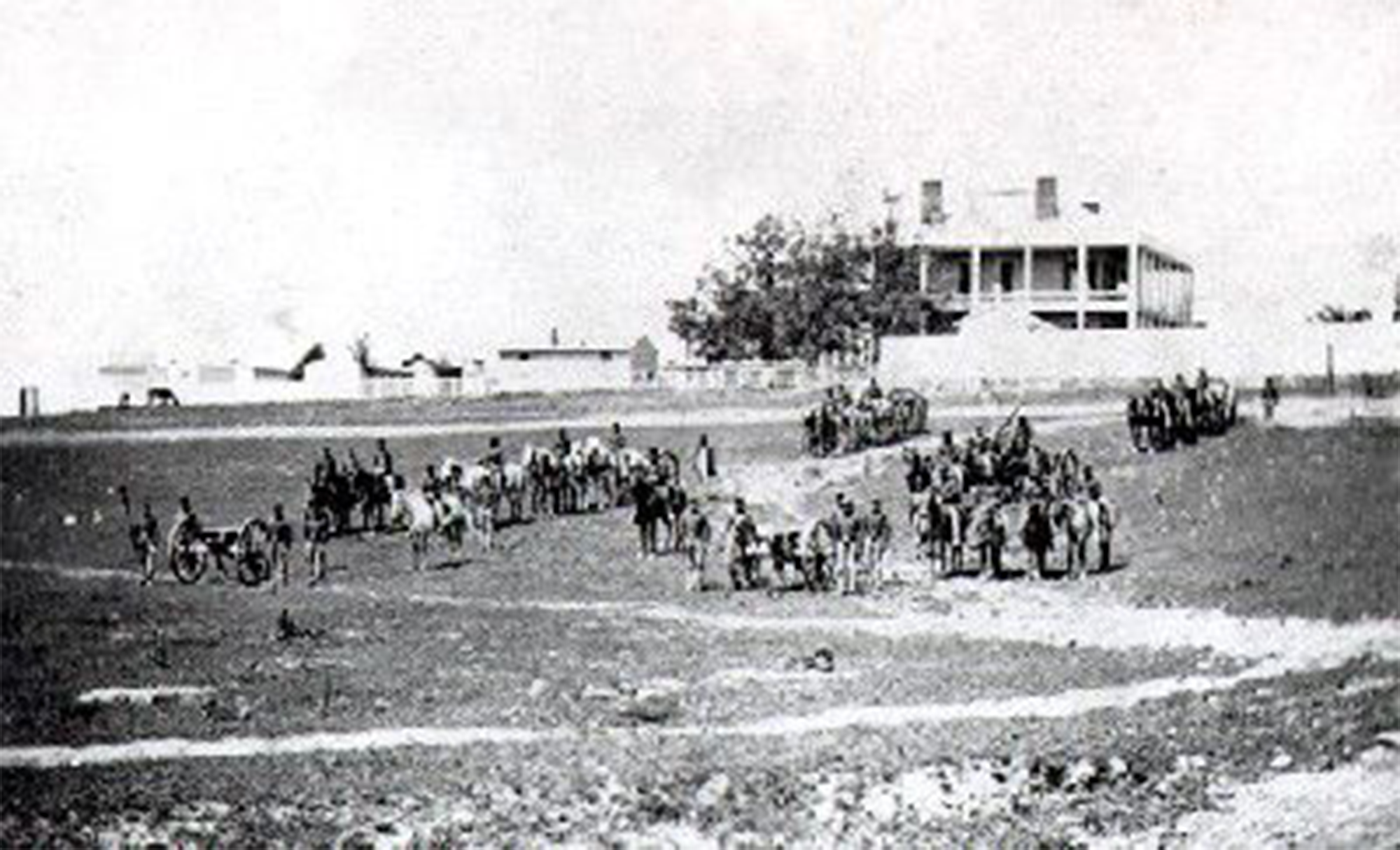
After the Civil War, Fort Leavenworth continued as a recognizable post with growing infrastructure. The 1983 volume describes depots and warehouses and explicitly characterizes the quartermaster and commissary depots as the “Chief supply depot for the posts on the Plains,” including large shipments of wagons and other stores (Wade, 1983).
The completion of railroad and wagon bridges across the Missouri River in 1871 is also noted, reinforcing the fort’s role within expanding transportation networks (Wade, 1983).
This period also ties Fort Leavenworth to units that loom large in American military memory. The 1983 volume records that a famous unit—the 10th Cavalry, had its origins connected to Fort Leavenworth after the Civil War, with Colonel Benjamin H. Grierson selected to organize the regiment there (Wade, 1983).
Wikipedia’s narrative similarly highlights the formation of Buffalo Soldier units and links the 10th Cavalry’s organization to Fort Leavenworth (Wikipedia contributors, n.d.). Wikipedia
The Military Corrections Complex: Discipline as Institution
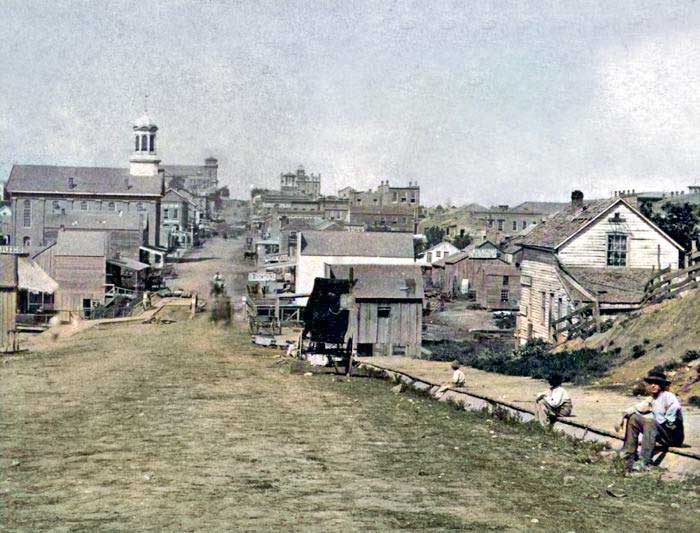
One of Fort Leavenworth’s most distinctive and enduring functions is military corrections. Wikipedia describes the Military Corrections Complex as including the United States Disciplinary Barracks (USDB)—the Department of Defense’s only maximum-security prison, along with the Midwest Joint Regional Correctional Facility (Wikipedia contributors, n.d.). Wikipedia
The USDB has its own detailed history. The USDB Wikipedia entry states that it was established by Act of Congress in 1874 (with construction beginning in 1875) and that it evolved into a long-running military correctional facility on Fort Leavenworth property (Wikipedia contributors, n.d.). Wikipedia The City of Leavenworth’s visitor information page likewise notes Congressional establishment in 1874 and operation beginning May 15, 1875, while emphasizing the prison’s historical significance (City of Leavenworth, n.d.). leavenworthks.gov
From the 1983 fort history, we also get critical institutional context: prior to establishment of the military prison, military offenders were confined in a patchwork of stockades and civilian penitentiaries, with widely varying punishment practices, one reason a centralized system mattered (Wade, 1983).
Interpretive point (grounded in documented functions): Fort Leavenworth became a place where the Army consolidated standards—not only for training and doctrine, but also for discipline and corrections. That is one reason the post remains symbolically weighty: it represents the Army’s mind, its supply chain, and its justice system in one location (Wikipedia contributors, n.d.). Wikipedia
Fort Leavenworth as the “Intellectual Center of the Army”: Professional Military Education
The rise of the school system
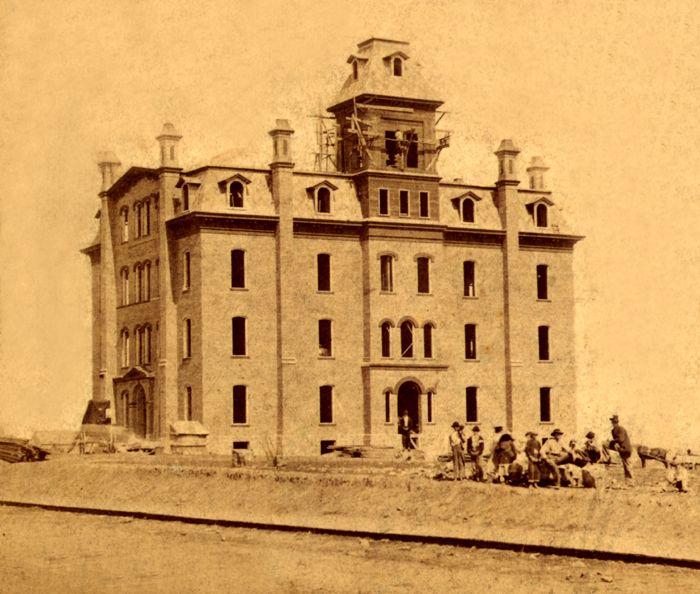
Fort Leavenworth’s most famous identity today is educational. Wikipedia emphasizes that the post has long been known as the “Intellectual Center of the Army,” and that the Command and General Staff College (CGSC) is a major tenant (Wikipedia contributors, n.d.). Wikipedia The 1983 history is particularly valuable here because it documents curriculum evolution, institutional closures, and reforms in response to war and doctrine changes.
A pivotal moment described in the 1983 text occurs after the Spanish-American War, when deficiencies in officer education became clear and reform-minded leadership pushed for a structured system. The volume explains that Elihu Root became Secretary of War in 1899 and recognized the need for both a General Staff and a system of officer education; by 1901 he established a hierarchy of officer schools with Fort Leavenworth as “the most important rung” (House, 1983).
Curriculum reforms and influential figures
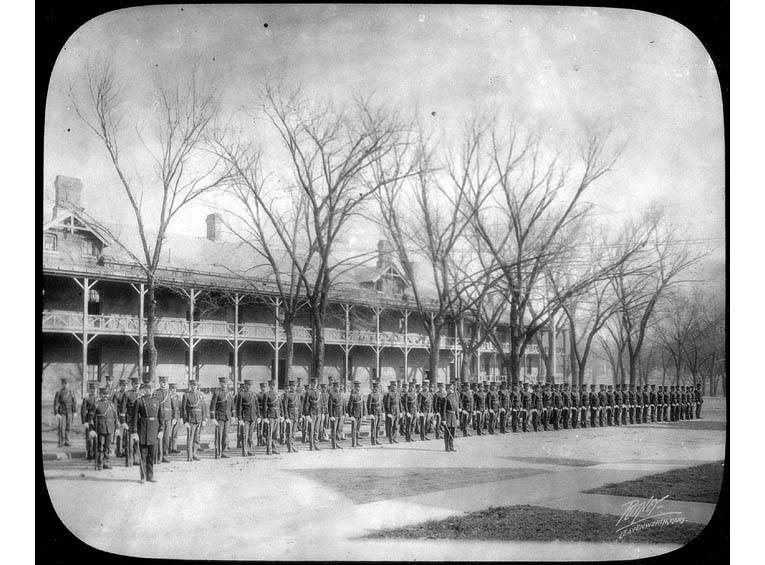
The 1983 history highlights the role of Major John F. Morrison (teaching at the post from 1906 to 1912) in reorganizing curriculum to teach tactics and staff procedures systematically, and it notes that notable figures, including George C. Marshall and Douglas MacArthur—appear within the Leavenworth orbit as students or instructors in that era (House, 1983).
War-driven disruptions and renewals
The Leavenworth schools closed in 1916 due to border problems with Mexico and remained closed into the World War I mobilization period; during WWI the post became active in officer production and induction activity (House, 1983).
After WWI, orders reopened the schools in 1919 and the National Defense Act formally established a progressive Army educational system that included the Fort Leavenworth schools (Heller, 1983).
The 1983 history also preserves telling contemporary reflections: it notes that Leavenworth-trained officers were “essential” to operational success in France and includes recollections that briefings and techniques near the front felt like being “back at Leavenworth,” underscoring the school’s influence on staff practice (Heller, 1983).
Education versus training in the mid-20th century
The volume traces how institutional priorities shifted after World War II, with an emphasis on “training” (staff procedures and techniques) sometimes outweighing broader “education,” and later efforts to swing back toward developing analytical competence (Partin, 1983).
It records reforms under Major General McGarr, who sought to graduate “military problem solvers,” supported by facilities like Bell Hall (Partin, 1983).

Modern Mission: TRADOC Support, CAC, and Doctrine Development
In contemporary terms, Fort Leavenworth is deeply tied to the Army’s training and doctrine enterprise. Wikipedia describes the garrison as supporting TRADOC by maintaining the home of the U.S. Army Combined Arms Center (CAC), whose mission includes leader development, collective training, and doctrine-related responsibilities (Wikipedia contributors, n.d.). Wikipedia
The Combined Arms Command (closely associated with this mission space and located at Fort Leavenworth) is described on Wikipedia as providing leadership and supervision for leader development and professional education, institutional and collective training, doctrine, lessons learned, and other designated responsibilities, placing Fort Leavenworth at the structural center of how the Army prepares itself intellectually (Wikipedia contributors, n.d.). Wikipedia
The 1983 history shows the roots of this modern identity in the 1970s and early 1980s: it documents Operation STEADFAST creating TRADOC and FORSCOM and establishing the Combined Arms Center (CAC) at Fort Leavenworth as a principal TRADOC element, with responsibilities that included doctrine writing and combat developments (Partin, 1983).
It further describes organizational and curriculum changes tied to doctrinal work, training developments activities, and battlefield simulations—evidence that Fort Leavenworth’s “intellectual center” label is not a slogan so much as a mission description (Partin, 1983).
Physical Scale, Landmark Status, and the Power of Place
Fort Leavenworth is also notable for its built environment and scale. Wikipedia provides specific present-day figures for acreage, floor area, and quarters, useful for illustrating the installation’s material footprint (Wikipedia contributors, n.d.). Wikipedia
The 1983 history emphasizes the post’s “physical beauty” and heritage buildings, explicitly naming the bluffs overlooking the Missouri River and the historic buildings as reminders of the post’s heritage (Saint, 1983).
It also records a key milestone in recognition: in September 1961, the Secretary of the Interior designated the fort as a “Registered National Landmark” (Partin, 1983).
For an audience reading AlfredGibbs.com, where place, material culture, and institutional lineage matter, Fort Leavenworth offers a case study in how the Army preserves continuity through architecture. Arsenal-era stone buildings remaining in use (e.g., Sherman and Sheridan Halls) function as physical evidence of mission continuity across eras (Childress, 1983).
Final Thoughts: Fort Leavenworth as a National Institution, Not Just a Post
Fort Leavenworth’s historical significance is best captured by its repeated reinvention without losing its core institutional purpose. From its founding as a permanent Missouri River cantonment in 1827, to its role as a supply hub for western posts, to its stabilizing (if limited) function during territorial violence, to its Civil War mobilization contributions, the fort consistently served as an enabling institution, supporting national power through movement and organization (Saint, 1983; Robertson, 1983; Wikipedia contributors, n.d.). Wikipedia
But the post’s lasting global relevance today stems from two later developments that “lock in” Fort Leavenworth’s identity: the establishment of enduring military corrections institutions and the rise of professional military education culminating in CGSC and the Combined Arms Center mission space (Partin, 1983; Wikipedia contributors, n.d.). Wikipedia
If you want one sentence that is historically faithful and website-worthy, it is this: Fort Leavenworth is where the Army learned to supply the nation’s expansion, educate its leadership, and institutionalize discipline, three functions that have defined the post’s influence far beyond the banks of the Missouri. (Partin, 1983; Wikipedia contributors, n.d.).
References
City of Leavenworth. (n.d.). Old-United States Disciplinary Barracks. leavenworthks.gov
Partin, J. W. (Ed.). (1983). A brief history of Fort Leavenworth, 1827–1983. Combat Studies Institute, U.S. Army Command and General Staff College.
Wikipedia contributors. (n.d.). Fort Leavenworth. In Wikipedia. Wikipedia
Wikipedia contributors. (n.d.). United States Disciplinary Barracks. In Wikipedia. Wikipedia
Wikipedia contributors. (n.d.). United States Army Combined Arms Command. In Wikipedia. Wikipedia
Views: 100