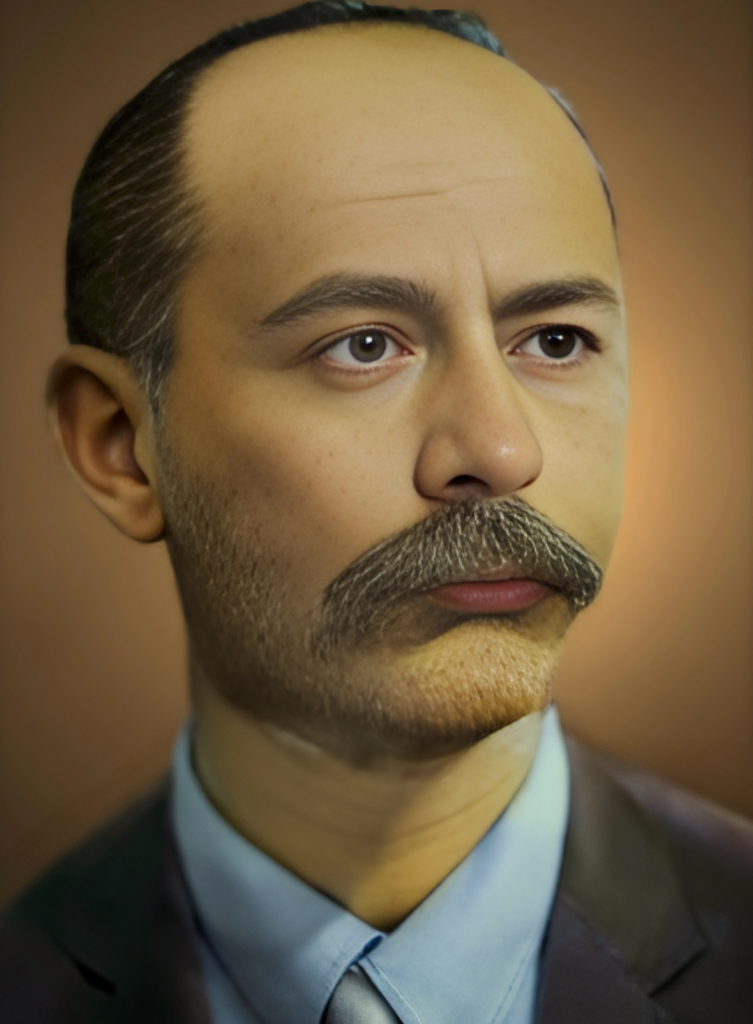
In remembrance of Dr. John Blair Gibbs”
For inclusion on https://alfredgibbs.com/dr-john-blair-gibbs-son/
Guantánamo Bay, Cuba – June 12, 1898, 12:45 a.m.
The night air clung thick with sweat and salt, stirred by the distant rumble of the Marblehead as she lay steady offshore. My lantern flickered, a jittering pulse of yellow against the canvas of the hospital tent. The men were restless, and so was I. The tropical dark was suffocating. I had written once that surgery demanded calm hands and clear eyes–but war tests the soul more than the sinew.
I sat at my small camp table, medical log open, though my pen lay idle. Outside, the Marines murmured low, trying to act as if the jungle wasn’t breathing back at them. Spanish rifles, Mausers, had barked from the thickets all day. We’d patched a few wounds, splinted a broken arm. But the real threat hadn’t yet stepped forward. It was watching, waiting, patient like death itself.
I thought of home, of New York, of my father Alfred’s portrait in the study, of the Columbia lecture hall, and of Theodore Roosevelt’s voice on the dock the day I departed: “You’ll make a fine doctor in blue, Gibbs.” I had smiled. We were younger men then.
But tonight, my mind drifted to my patients; the boys whose hands I’d steadied, whose pain I tried to lessen not just with medicine, but with the certainty that someone, anyone, was still calm when the world was losing its mind. That was the job. And it was enough.
12:58 a.m.
Outside, the air changed. There was a stillness that didn’t belong to rest, but to ambush.
I stood and stepped out into the black. The lantern glow behind me died the moment I crossed the tent’s threshold. I could barely make out the silhouette of Stephen Crane, scribbling something near a crate. The boy had guts, I’ll give him that–though his cynicism barely masked his awe.
“Doctor,” he called quietly, “how are the men?”
I nodded. “Braver than I’ve seen in any ward or city. And more anxious.”
He chuckled, nervously, as we all did these days. But his mouth never finished the next sentence.
The world exploded in light.
1:00 a.m.
Mauser flashes cut the night. A line of fire cracked from the undergrowth like the Devil’s knuckles on a drum. Bullets hissed past, some thudding into tents, others into bodies.
I turned to shout, but I never got the words out.
Something hit me, hard, hot, and fast. A sudden pressure at the side of my skull, and then silence. I dropped before I knew I’d been struck. My body crumpled, but my thoughts didn’t stop. Not yet.
There was no pain, not in that moment. Only the realization: I’ve been hit. My fingers twitched toward my temple. Wet. Warm. My vision blurred, then narrowed into a tunnel that pulsed with each beat of my heart. I could still hear the chaos—barely. Men yelling. Crane’s voice crying out. Then a long whistle of breath: my own? And the sense that something enormous and important was slipping from me, one breath at a time.
The ground welcomed me, cold and final.
1:10 a.m.
Crane later said I died hard. That the breathing sounded like machinery breaking down. That’s how he told it.
I don’t remember the pain, but I remember the fight. My mind wouldn’t let go. I thought of the men. I thought of my mother, of the letters I hadn’t sent. I thought of the oath I took, and wondered if dying under fire still counted as service in the eyes of Heaven.
Time became elastic, like molasses poured in reverse.
Around me, voices rose. “Where’s the doctor?” one shouted.
A voice answered: “Just died this minute, sir.”
1:30 a.m.
They covered me quickly. I was still warm. A few men looked down at me. One crossed himself. Crane did not speak.
The sniping did not stop, not even for the burial. As sailors began digging, the Spanish fired again, stray shots intended to disrupt grief. I felt nothing, but their dishonor was noted in the silence of my comrades. A brief prayer. A hasty salute.
And then the thud of soil.
In war, there is no time for mourning. Only for memory.
Today
You now read this with the calm of hindsight. You know I died with my boots on, not in an office or on a ship, but in the dirt beside my brothers.
Some say I was the first to die. Maybe I was. But the war didn’t end with me, and the cause didn’t die with my breath. I stood for something: the idea that even in battle, someone must heal. Someone must be willing to kneel in the crossfire not to destroy, but to restore.
If you remember me, let it not be for the bullet. Let it be for the chair I stood from. For the courage not to run. For the oath I carried to the end.
And let it be a call: to serve with dignity, to step forward when it matters most.
I am Dr. John Blair Gibbs, and this was my last watch.
As remembered and honored by Garland H. Green Jr.
Views: 20