
Introduction
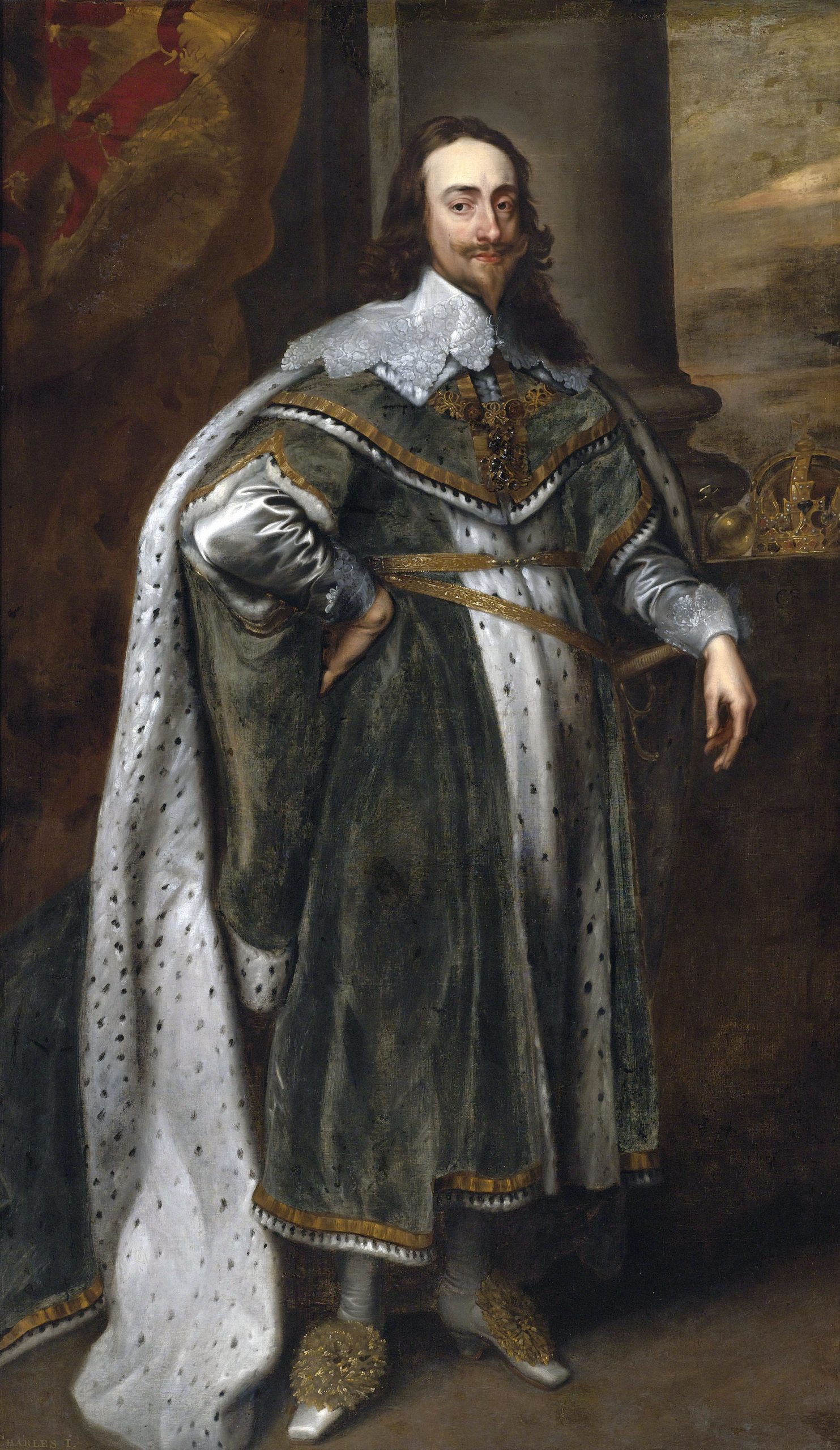
In the early decades of the seventeenth century, a group of English Puritans found themselves increasingly marginalized by the religious policies of King Charles I. Determined to secure a place where they could worship freely and establish a community reflecting their moral ideals, they secured a royal charter to form what became the Massachusetts Bay Colony (Massachusetts Bay Colony, n.d.). This colony would eventually encompass much of central New England, including present-day Massachusetts, Maine, New Hampshire, and parts of Connecticut (Massachusetts Bay Colony, n.d.).
Among the settlers who assumed a central role in shaping the colony’s direction was John Winthrop, an English lawyer and devout Puritan (John Winthrop, n.d.). Born in 1587/88 to a well-off family in Suffolk, England, Winthrop trained in the law and initially served as a county magistrate. As King Charles I grew more hostile to Puritan nonconformity, Winthrop and fellow investors realized that emigration offered not only religious sanctuary but also the possibility of self-governance far from the prying eyes of the king (John Winthrop, n.d.).
Winthrop was named governor of the Massachusetts Bay Company in October 1629 and soon led the “Great Migration,” departing England in April 1630. He traveled aboard the flagship Arbella, part of a fleet carrying around 700 eager colonists (Massachusetts Bay Colony, n.d.). Although historical debate persists, Winthrop is often credited with a sermon known as “A Modell of Christian Charitie,” which famously uses the phrase “city upon a hill” to describe the new colony’s vision (John Winthrop, n.d.). Whether he delivered it on shipboard or beforehand, its sentiments—that the colony was to serve as a righteous example, proved influential in American cultural memory.
When they arrived, the settlers first anchored at Salem, greeted by John Endecott, who had led an earlier contingent (Massachusetts Bay Colony, n.d.). Finding the area insufficient for the rapidly incoming population, Winthrop’s group surveyed coastal land and established themselves at Charlestown and, ultimately, Boston. The first few years brought tremendous hardship. An untimely arrival, close to winter, led to food shortages, disease, and many casualties. Even Winthrop himself lost a son, Henry, to drowning (John Winthrop, n.d.). Yet the settlers persevered, constructing rudimentary dwellings and organizing labor so that everyone, including the governor, joined in daily tasks (Massachusetts Bay Colony, n.d.).
Under the original charter, governing power belonged to a governor, deputy governor, and a council of assistants, all elected annually by the colony’s “freemen” (Massachusetts Bay Colony, n.d.). Early on, voting rights were restricted to individuals formally admitted to local Puritan congregations, reflecting the leadership’s view that civic virtue and religious conviction were inseparable (John Winthrop, n.d.). This restricted franchise produced tensions with newcomers who didn’t meet that requirement; however, Winthrop and other magistrates believed the community’s stability relied on religious uniformity.
Winthrop’s personal leadership style was at once paternalistic and visionary. He opposed unconstrained democracy, arguing it risked chaos; instead, he championed what he called “civil liberty,” or a government that guides people toward righteous living while preserving order (John Winthrop, n.d.). This position sometimes drew criticism, especially from more liberal colonists such as Henry Vane, or from radical religious voices like Roger Williams and Anne Hutchinson (Massachusetts Bay Colony, n.d.).
Religious Strife and Secular Growth
The Massachusetts Bay Colony, from its inception, was shaped by deep-seated faith. Yet not all settlers interpreted Puritan theology in the same way. Anne Hutchinson and minister John Wheelwright championed positions that challenged the religious mainstream, triggering the so-called Antinomian Controversy in the late 1630s (Massachusetts Bay Colony, n.d.). Winthrop saw their teachings as a dangerous heresy that threatened the colony’s unity. After much debate and official trials, Hutchinson, Wheelwright, and their followers were banished (John Winthrop, n.d.).
Meanwhile, economic life surged: fishing, lumber, and shipbuilding replaced the original vision of pure subsistence. By the 1640s, a merchant class had begun to rise (Massachusetts Bay Colony, n.d.). Ships from Boston traded with England, Mexico, and the West Indies. Though money was in short supply, colonists paid for goods with English pounds, Spanish pieces of eight, or wampum; by 1652, they even authorized local minting of the so-called “pine tree shilling” (Massachusetts Bay Colony, n.d.).
Relations with Indigenous peoples ranged from civil trade agreements to violent clashes. The Pequot War (1636-1638) and King Philip’s War (1675-1678) devastated Native communities and reshaped the regional political map (Massachusetts Bay Colony, n.d.). Winthrop’s journals detail both peaceful exchanges-like hosting Native leaders for dinner-and the grim reality that the colony’s population expansion displaced Indigenous nations (John Winthrop, n.d.).
Governance Tensions and the Dominion Crisis
Over its first half-century, Massachusetts Bay maintained a largely autonomous style of rule. But the Crown resented the colony’s disregard of royal trade policies (the Navigation Acts) and frowned on its near-exclusive Puritan structure. When King Charles II revoked the colony’s original charter in 1684, it was a step toward greater imperial control (Massachusetts Bay Colony, n.d.). King James II soon folded all of New England’s colonies, and even parts of New York and New Jersey, into the short-lived Dominion of New England (1686-1689), ruled by the unpopular Sir Edmund Andros (Massachusetts Bay Colony, n.d.). When the Glorious Revolution deposed James II, Massachusetts residents took the chance to arrest Andros. In 1691, a new royal charter converted Massachusetts Bay into the Province of Massachusetts Bay, merging it with Plymouth Colony (Massachusetts Bay Colony, n.d.).
Winthrop’s Final Years and Lasting Influence
John Winthrop, for his part, remained an influential figure until his death in 1649 (John Winthrop, n.d.). He served as governor or lieutenant governor for most of the colony’s formative two decades. Even after stepping down from governorship, he stayed active, mediating disputes, adjudicating religious controversies, and writing extensively in his journal.
That journal, published posthumously as The History of New England, is considered one of the core primary sources for the colony’s early history (John Winthrop, n.d.). Winthrop’s accounts combined daily observations with broader reflections on Puritan theology and governance. Though his approach to religion and politics was conservative by modern standards, he displayed a genuine concern for building a society that upheld education, moral living, and mutual accountability.
After 1649, the colony continued to evolve, eventually outgrowing its theocratic roots, particularly as commerce and broader political reforms took hold (Massachusetts Bay Colony, n.d.). Yet Winthrop’s “city upon a hill” vision reverberated for centuries, invoked by politicians, historians, and educators who see in Massachusetts Bay’s beginnings a unique moral aspiration. His descendants, moreover, played important roles in New England and beyond, fueling the notion that Winthrop’s example left an indelible stamp on early American life (John Winthrop, n.d.).
Today, one can argue that the Massachusetts Bay Colony showcased both the heights of communal endeavor, through an emphasis on mutual care, widespread literacy, and local self-rule, and the deep flaws of religious exclusivity and sometimes harsh governance. Similarly, John Winthrop stands as a figure of complexity: resolute in his determination to shape a devout society, yet emblematic of the tensions between personal liberty and collective discipline. Ultimately, their intertwined stories represent the triumphs and struggles of transplanting a fervently religious community into an uncertain, resource-rich New World, laying the foundations for many ideals and conflicts that would later define the United States.
References
Massachusetts Bay Colony. (n.d.). Wikipedia. Retrieved [Date Accessed], from https://en.wikipedia.org/wiki/Massachusetts_Bay_Colony
John Winthrop. (n.d.). Wikipedia. Retrieved [Date Accessed], from https://en.wikipedia.org/wiki/John_Winthrop
Views: 33