
Ona “Oney” Judge Staines (c. 1773 – February 25, 1848) was an enslaved woman who gained historical significance through her daring escape from George Washington’s household. Born at Mount Vernon, the Virginia plantation of the Washington family, she later served as a personal attendant to Martha Washington during George Washington’s presidency. In her early twenties, after learning she was to be given as a wedding gift to Martha Washington’s granddaughter, Oney made a bold decision to flee. She escaped to New Hampshire, where she married, had children, and embraced Christianity. Although she was never legally emancipated, the Washington family eventually ceased their efforts to return her to Virginia after George Washington’s death.
Oney Judge was born around 1773 at Mount Vernon. Her mother, Betty, was an enslaved woman, while her father, Andrew Judge, was a white English tailor working as an indentured servant at the estate. Due to the laws of the time, Oney was born into slavery despite her predominantly European heritage. Throughout her life, she had several half-siblings, including Austin, Tom Davis, Betty Davis, and Delphy, all of whom shared her status as enslaved persons.
As part of Martha Washington’s dowry, Oney and her family were among the slaves owned by the Custis estate, which passed to Martha upon her first husband’s death. When Martha married George Washington, she brought Oney’s family to Mount Vernon. At around 10 years old, Oney was moved to the Mansion House, where she likely served as a companion to Martha’s granddaughter, Nelly Custis. As she grew older, she became Martha Washington’s personal maid.
In 1789, when George Washington became the first President of the United States, Oney accompanied the family to New York City, then the nation’s capital. She was among the enslaved individuals who worked in the presidential household, a group that included her half-brother Austin, among others. When the capital moved to Philadelphia, Oney continued her service there, living under Pennsylvania’s Gradual Abolition Act, which presented a potential path to freedom for slaves residing in the state for more than six months.
To avoid the implications of this law, the Washingtons rotated their slaves out of Pennsylvania every six months, thus preventing them from claiming freedom under state law. However, when Oney learned that she was to be given as a gift to Martha Washington’s granddaughter, she made the courageous decision to escape. In 1796, Oney fled to New Hampshire, where she eventually married a free Black sailor named Jack Staines. Together, they had three children: Eliza, Will, and Nancy.
Despite efforts by the Washingtons to recapture her, Oney remained free for the rest of her life. Her story became well-known through interviews published in abolitionist newspapers in the 1840s, where she recounted her life in the Washington household, her escape, and her new life in freedom. These interviews provide a rare and valuable first-person perspective on the life of an enslaved woman who successfully sought her freedom.
Oney Judge Staines lived out her remaining years in New Hampshire, passing away on February 25, 1848. Her story is celebrated as a testament to the resilience and determination of those who sought freedom from slavery. Today, her legacy is honored through various commemorations and educational programs that highlight her life and the broader history of slavery in America.

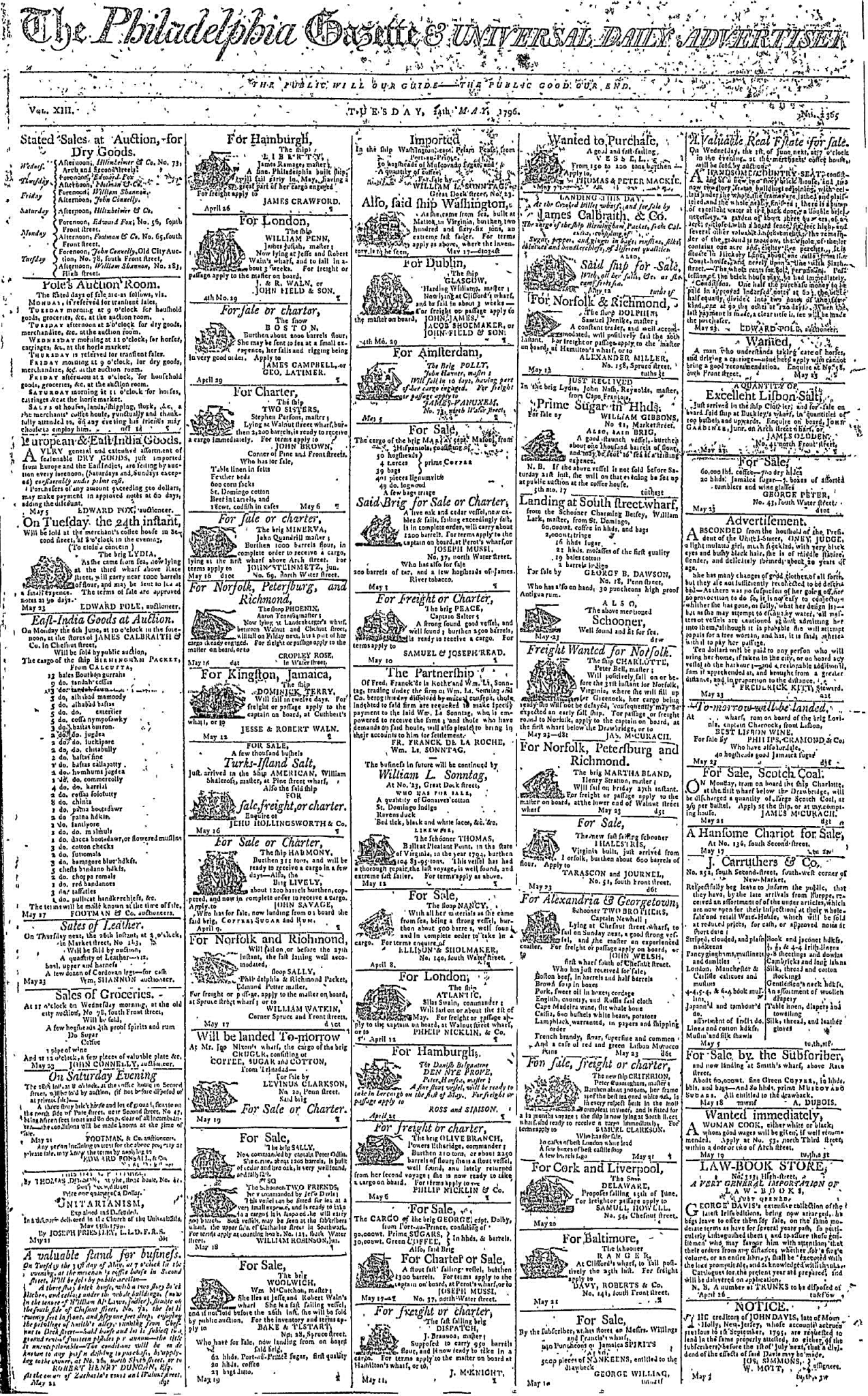
Philadelphia Gazette
May 23, 1796
Advertisement
ABSCONDED from the houshold of the President of the United States, ONEY JUDGE, a light mulatto girl, much freckled, with very black eyes and bushy black hair. She is of middle stature, slender, and delicately formed; about 20 years of age.
She has many changes of good clothes, of all sorts; but they are not sufficiently recollected to be described—As there was no suspicion of her going off, nor no provocation to do so, it is not easy to conjecture whither she has gone, or fully, what her design is; but as she may attempt to escape by water, all masters of vessels are cautioned against admitting her into them, although it is probable she will attempt to pass for a free woman, and has, it is said, wherewithal to pay her passage.
Ten dollars will be paid to any person who will bring her home, if taken in the city, or on board any vessel in the harbour—and a reasonable additional sum if apprehended at, and brought from a greater distance, and in proportion to the distance.
FREDERICK KITT, Steward.
Key references:
Dunbar, Erica Armstrong – Never Caught: The Washingtons’ Relentless Pursuit of Their Runaway Slave, Ona Judge. New York: 37 Ink/Atria Books, 2017. This book provides a detailed account of Oney Judge’s life, her escape from the Washingtons, and the broader context of slavery in early America.
Wiencek, Henry – An Imperfect God: George Washington, His Slaves, and the Creation of America. New York: Farrar, Straus and Giroux, 2003. This book explores George Washington’s relationship with slavery, including the story of Oney Judge.
Library of Congress – “Oney Judge: The Washingtons’ Runaway Slave.” This entry provides an overview of Oney Judge’s life, her escape, and the Washingtons’ efforts to recapture her. Available online through the Library of Congress.
National Park Service – Articles and resources about Oney Judge are available through the National Park Service, which manages historical sites related to George Washington and early American history.
These sources provide comprehensive details on Oney Judge’s life and her significance in American history.
This article “The Slave Who Outwitted George Washington” is a great article on this event.
One More:Ona Judge Staines, the Fugitive Slave Who Outwitted George Washington
Views: 594