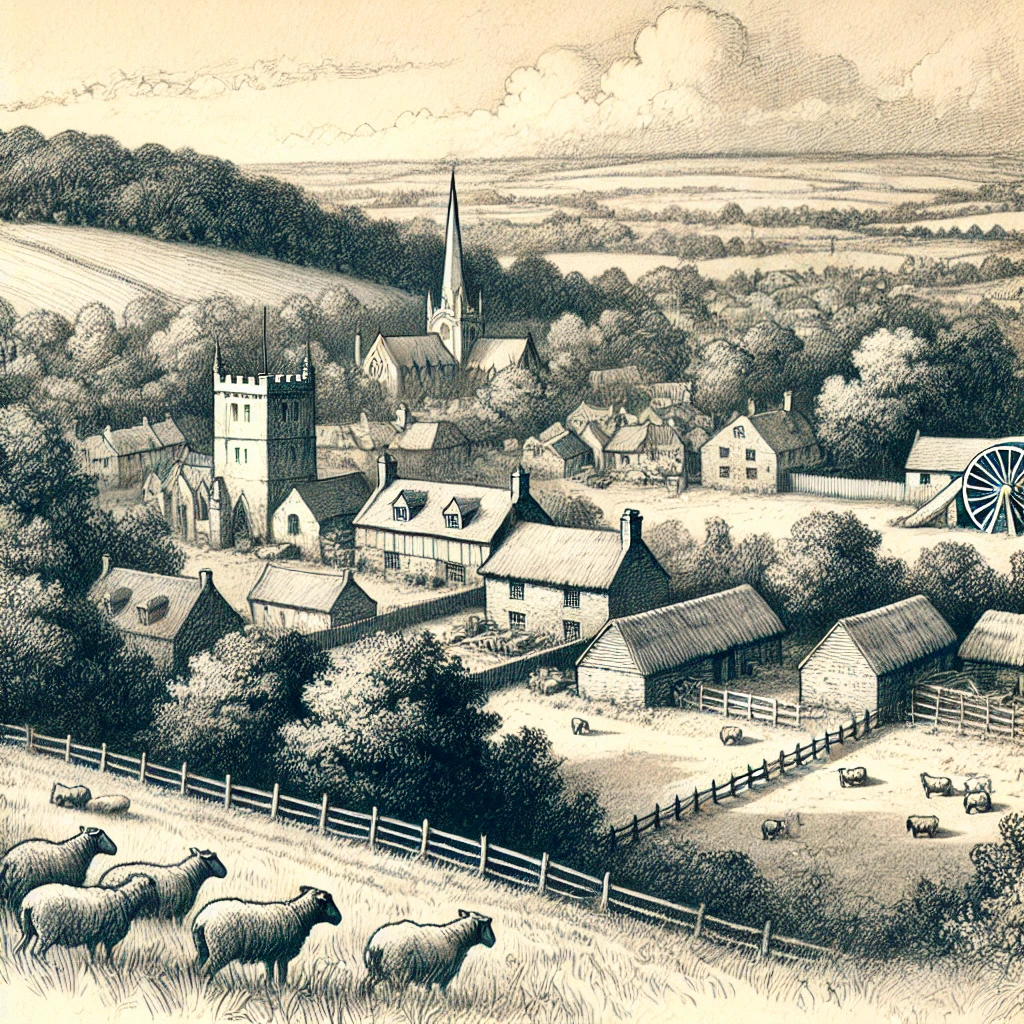
Gillingham, Dorset, England
Gillingham, located in the northernmost part of Dorset county in Southwestern England, has a rich history that dates back to ancient times. Originally inhabited by Celts, the area later saw settlement by Romans before becoming a Saxon village. The name “Gillingham” is derived from “Gylla inga ham,” meaning the village belonging to Gylla, a Saxon name.
By the time of the Domesday Book in 1086, Gillingham was already a significant settlement with a population of several hundred, which was considered large for that period. The village had 12 mills used for grinding grain into flour, and the Norman kings maintained a royal forest east of the village for hunting purposes.
During the Middle Ages, Gillingham continued to grow, becoming a fair-sized town. It gained a school in 1516, and by the 16th and 17th centuries, it was known for its woolen cloth-making industry. However, the industry declined in the late 18th century, and the town faced two major fires in 1694 and 1742.
In the 19th century, Gillingham saw various improvements in amenities. The arrival of the railway in 1859 marked a significant development, making it a small but thriving town. By 1921, the population had grown to over 3,300, and it continued to expand rapidly throughout the 20th century. Today, Gillingham has a population of about 12,000 and is a flourishing town with modern amenities like the Riversemeet Leisure Centre, which opened in 2010 (Local Histories) (Vision of Britain).
Historically, Gillingham was also notable for its ancient palace of the Saxon and Norman kings, who used the area for hunting. A significant battle against the Danes took place there in 1016, and during the Black Plague, the town experienced severe losses, with nearly half of its population succumbing to the disease. The surrounding meadows, now filled with sheep, are said to contain the remains of King’s Court Palace, where King John hunted deer and boar between 1205 and 1214 (Local Histories).
For more detailed historical insights, you can visit sources such as Local Histories and A Vision of Britain through Time.
Views: 253