George Gibbs to His Dearest Mother
Gullion’s Bar, on Salmon River, October 8, 1852
My Dearest Mother,
I am writing you from one of the far-off ends even of this far-off part of the world. It is one of the valleys which lie on the headwaters of the Klamath River and near the great snow peak which commands this vast mountain region, but you will look in vain for it upon any map until you see mine, for Fremont’s and the others are as far wrong as if they had been of the kingdom of Timbuctoo. Major [Henry W.] Wessells and Dr. John S. [?] Griffin return tomorrow from here to Sonoma with the command, and I write down by them. I remain here a week or ten days to see the commission wound up and pacificate a couple of thousand Indians, or less.

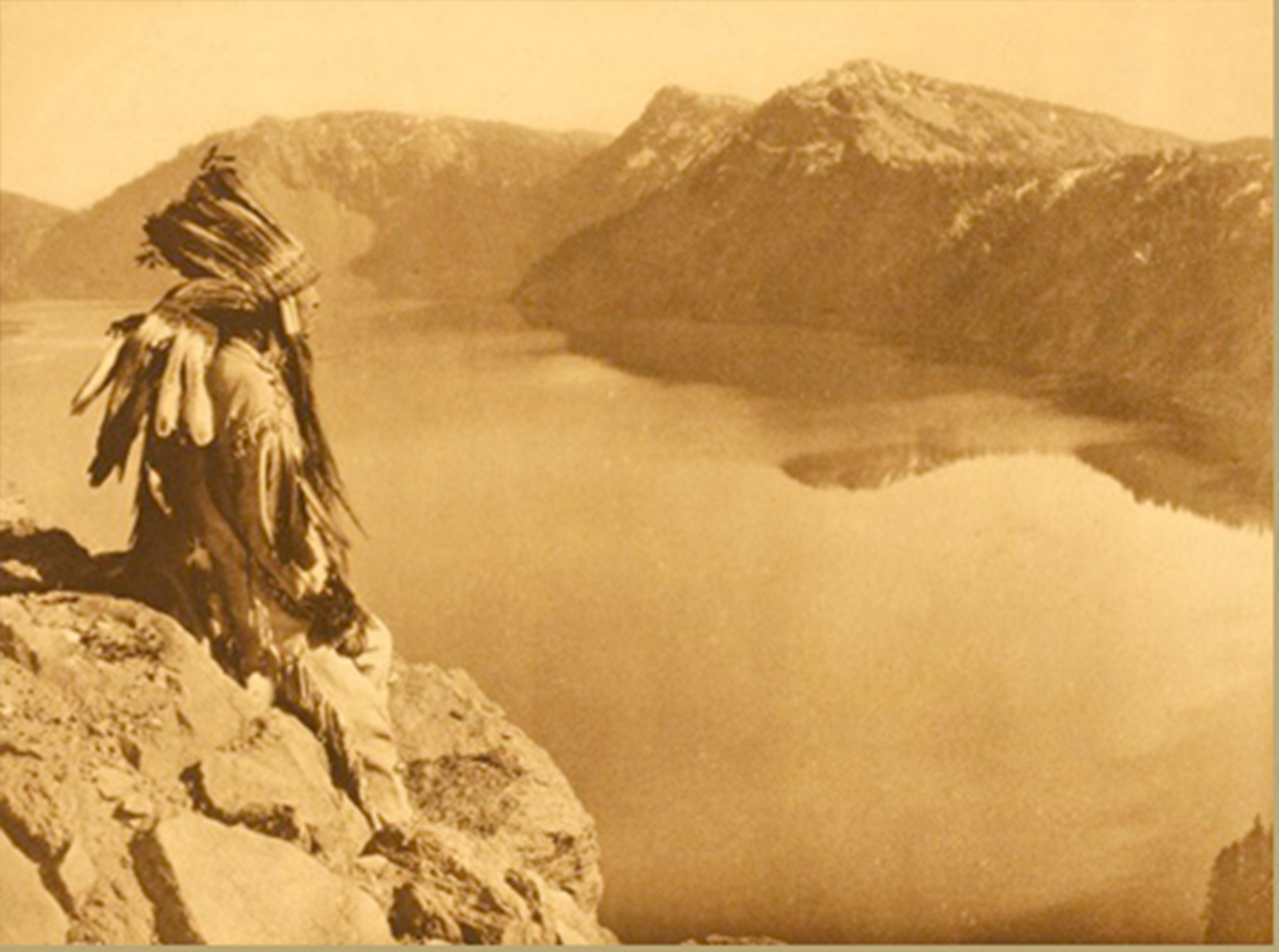
I wrote to Eliza (Elizabeth Wolcott Gibbs [Tuckerman] – his sister) before leaving the forks of the Klamath and Trinity. We left there on the 9th and followed the Klamath to the mouth of this river and thence to this place a few miles above it. The entire distance has been but 110 miles, but we seldom could make more than ten miles a day and were obliged occasionally to halt to have a talk with the natives. A more savage country I never saw. It is a wilderness of mountains through the gorges of which these huge mountain torrents have forced their way, and nothing but the extraordinary impetus given to human enterprise by the hope of gold would ever have explored it. As it is, it is tracked from end to end, up every stream and on every range by the trails of the miners, while upon the great routes the packers have made paths for their mule trains carrying Chili flour, Cincinnati pork, Brazil coffee, and Manilla sugar where a year ago bear meat and acorns or salmon and roots were the only articles of food.
To give you an idea of this wonderful traffic, a single town, started into existence a year ago, was accustomed to pack 100 tons of flour a month to the miners on the lower parts of the river. The vicissitudes which follow individuals have, however, attended that place, almost all the miners having been drawn from below by richer diggings recently found here and in the neighboring streams, and three thousand men are now at work upon the mountains around. The extent of their operations would astonish you. Scotts River for three miles above its mouth is turned into canals built of stone and earth ranging from one to two hundred yards long and ten wide and dammed more than thirty times. All this has been done in one summer.
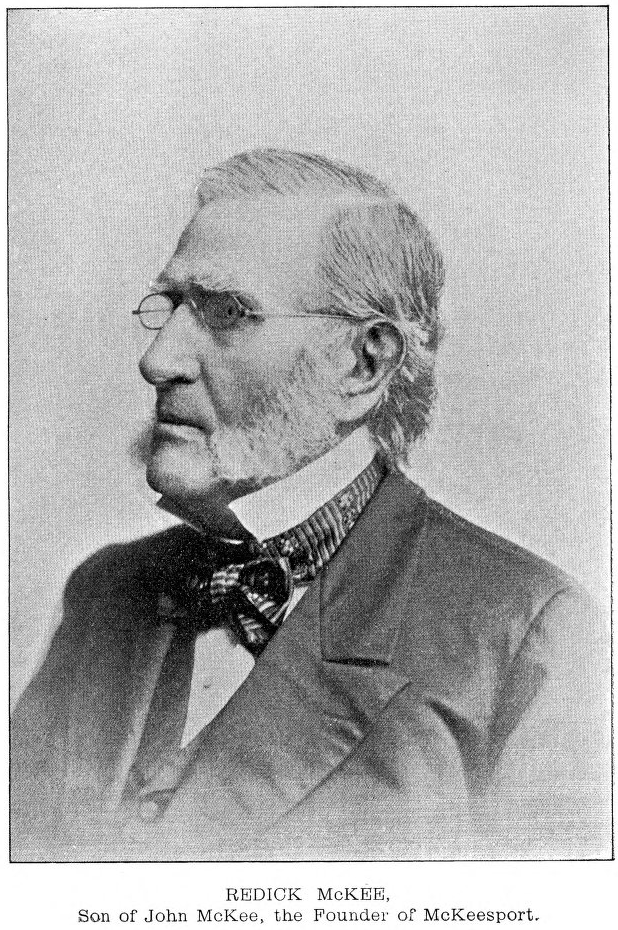
There are in this district a great number of Indians who have been very troublesome, being for that matter often provoked, and the miners had determined this winter to revenge the deaths of their comrades by a general war of extermination. We hope to avert this entirely and Col. [Redick] McKee in convening the Indians has also invited delegates from all the mining parties to be present in council. The leading men who have visited our camp have all promised their influence to bring about a peaceful settlement. I have prepared a pretty full map of our route and added all the information I could collect about the adjoining country, and I think that in my new trade of a geographer I shall succeed pretty well. My journal is also full and will contain a good deal of valuable information. Col. McKee expects to go on to Washington himself and has promised to get the map and sketches properly executed, and I shall write Schoolcraft to see that the vocabularies are spelt right. Of these I have obtained quite a number of new ones. I shall give McKee a letter to you and also one to Mr. Stevens, who I think will be glad to obtain information which he can give.
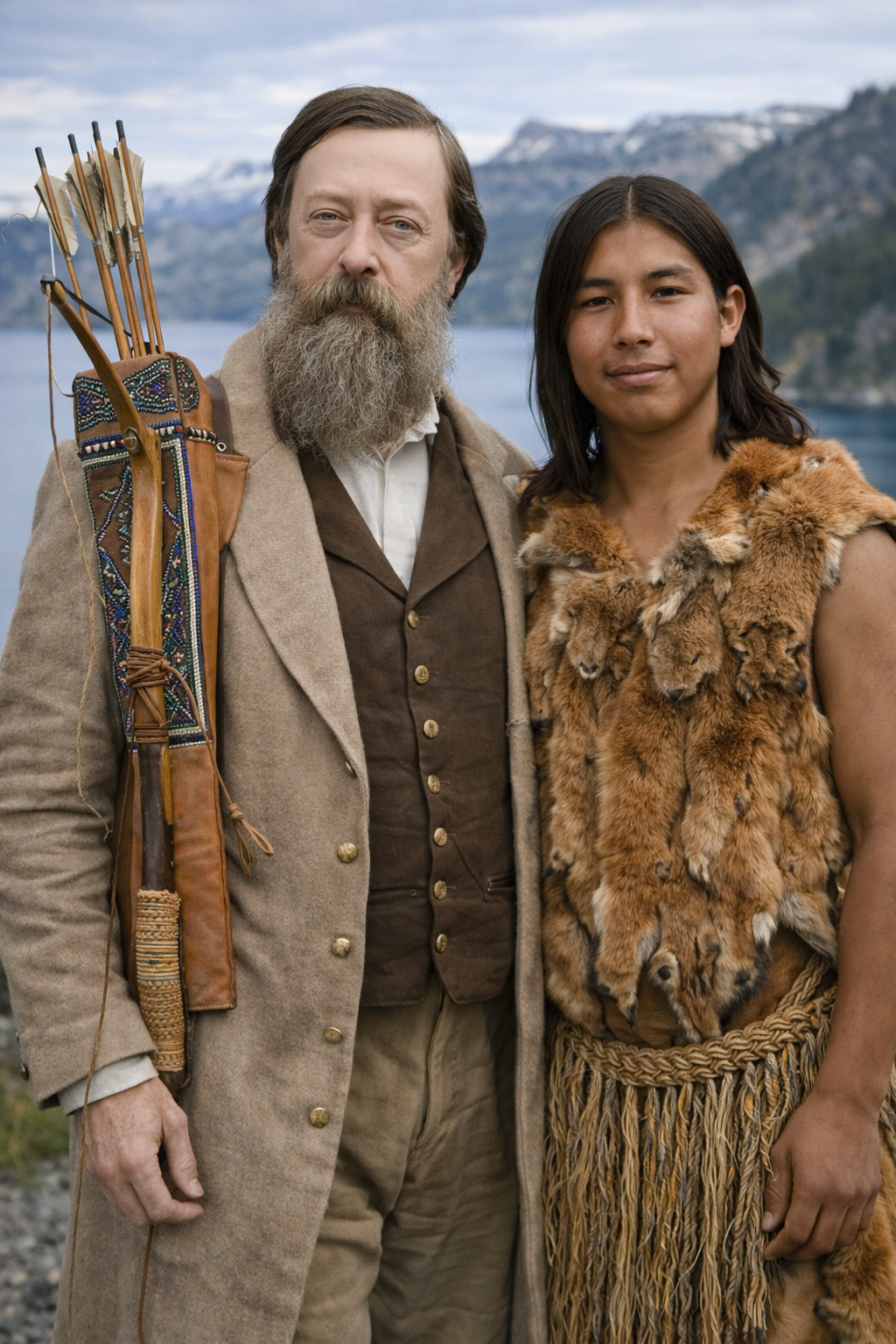
I have a handsome quiver with bow and arrows, and an apron made of deerskin and braided grass worn by the Klamet women (I tried hard to get a full dress, but did not succeed) and also the only garment of a young chief, a very particular friend of mine so long as my beads and brass buttons lasted. It is made of sewn skins of a small and very rare fox. These Indians set so high a value on their own manufactures and are so unwilling to part with them, that I could not afford to make large purchases as I should have liked to do.
I have not yet had a line either from Alfred or you since I left and am getting very anxious to hear. I wrote to him requesting my letters to be sent to Trinidad, but imagine that he did not get it in time. Whether I shall be able to see him before he leaves is very uncertain. I am afraid not. Which route we shall take from here, whether towards the coast and thence to San Francisco by water, or to the Sacramento River and down, will depend upon the state of the weather. We shall be here about a week or ten days, but as the season is late and the rains expected which become snows in the mountains, we may be in an awkward scrape. I had intended to remain here during the winter and mine, but am so anxious to get my map and journal properly completed, that I shall return to Sonoma for a couple of weeks first and decide after getting any letters whether to return here or go elsewhere. My health is perfect and the fat you were troubled about is pretty well worn off. I shall write as soon as I get into a post office country. At present, goodnight. Love to the girls and kind remembrance to all my friends.
George
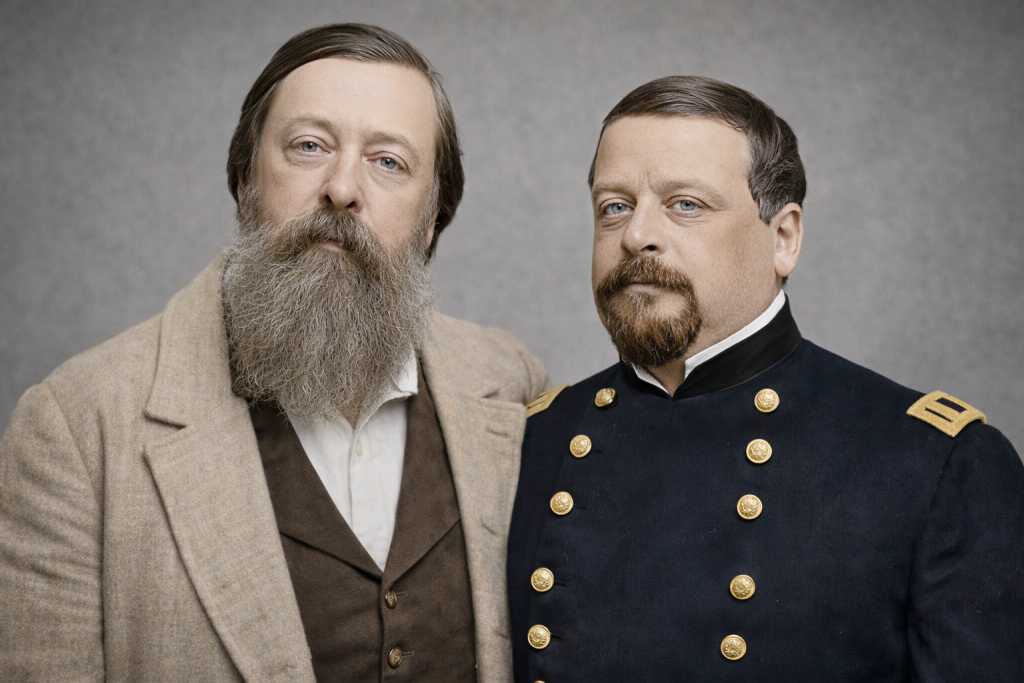
Researcher’s Note: It is fair to say that George Gibbs’s desire to go to Sonoma was likely influenced by the fact that he had a place to stay with his brother Alfred, who was stationed there. Alfred Gibbs served as an Aide-de-camp for General Persifor Smith in the Pacific Division from 1849 to 1852 and was stationed at the Sonoma Barracks in Sonoma, California. This familial connection would have provided George with a convenient and welcoming base during his time in the region.
Additionally, George Gibbs created a detailed sketch capturing what the Sonoma Barracks Plaza looked like in 1851. This drawing, made by George Gibbs, the older brother of Alfred Gibbs, is a valuable visual record of the military installation during that period. The original drawing is part of the Colonel Fred B. Rogers Collection at the Smithsonian Institution. This sketch not only reflects George’s artistic and topographical skills but also offers important historical insight into the setting where Alfred was stationed.
Together, these points highlight the close relationship between the brothers and provide context for George’s presence in Sonoma, as well as the significance of his artistic contribution to documenting the military environment of the time.
Views: 31