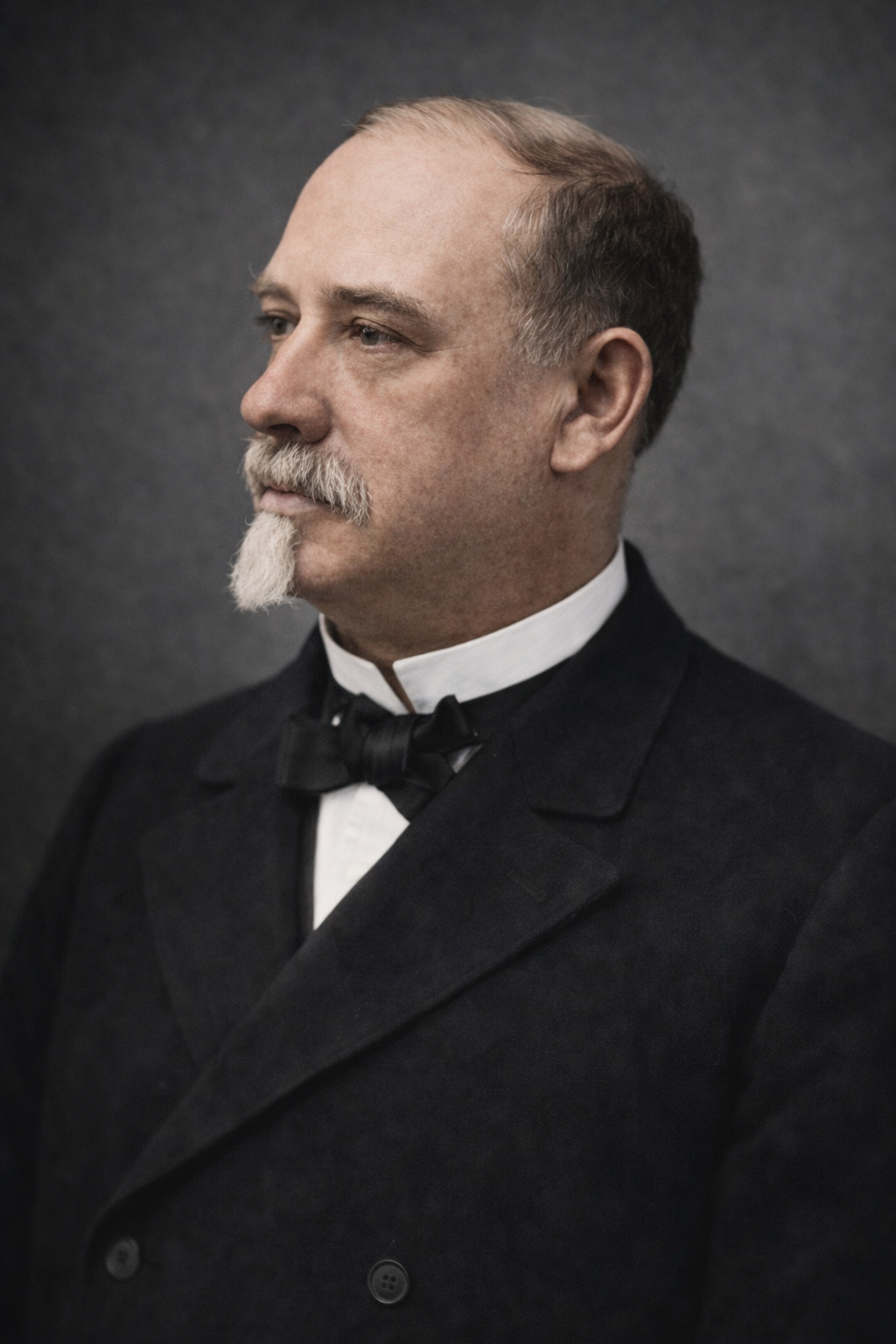
George Gibbs to J. Austin Stevens Jr.
On Salmon River, September 4, 1852
My Dear Austin,
I have owed you a letter for some time, but the very irregular life that a miner necessarily leads renders writing at all both difficult and irksome. I have been now for some months in the mines and find every reason to regret that instead of remaining in Oregon as I did, employed in projects that turned out abortive, I had not at once entered them before the cream was taken off. In everything I have undertaken the want of capital has foiled me, and to have obtained this by direct means should have been my first effort. It is now late to begin, but though my success hitherto has not been flattering, I do not despair of bettering my fortunes yet. If you have any curiosity about the operations in this part of the country, get Wolcott to show you a letter I wrote a few weeks ago, giving details of mining, etc.
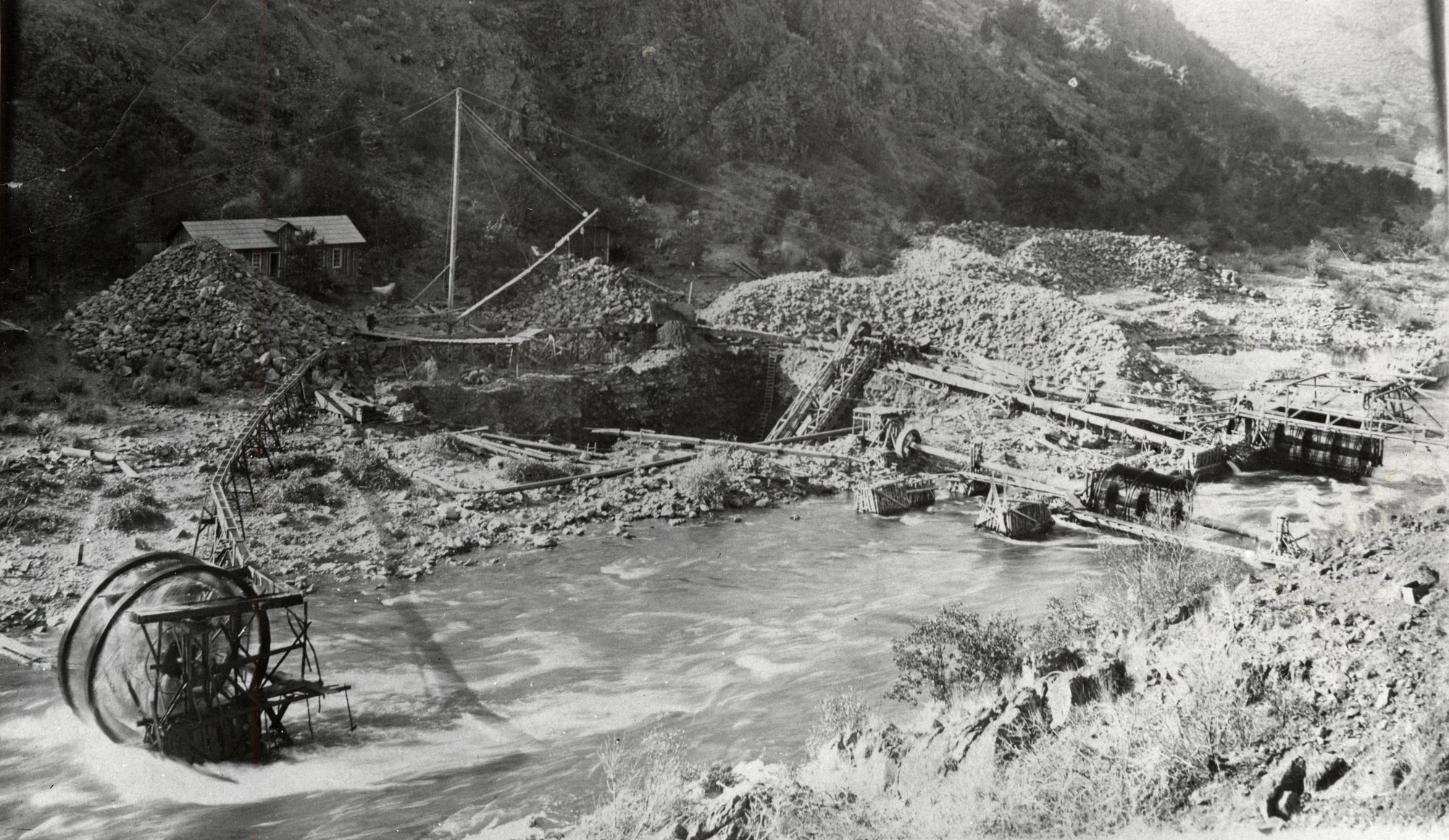
The northern mines, as those of the Klamath and its tributaries and of Rogue River are called, have not hitherto proved as rich as those on the Sacramento or still further south. They are, however, still undeveloped and this has been to me an inducement to prefer them, as well as the circumstance that I had already become acquainted with the country, and that the outfit required was far less than elsewhere. I have been for the last fortnight engaged in a “prospecting” excursion, examining the sources of a number of the tributaries of this river which is one of the larger branches of the Klamath, and though not successful in finding rich diggings in the direction we took, I believe that I have hit upon ground which will occupy me through the fall and ensuing winter. The expedition was moreover of some importance to me as I obtained an acquaintance with an entirely unexplored region.
I cannot, without running beyond the bounds of a letter, give you an account of our journey, though I should be glad to do so, as it presents a picture of the adventure which a pioneer in new diggings goes through with. Our party consisted of four, all thoroughly armed, and we took with us two mules, one carrying blankets, mining tools, a few cooking utensils, and such provisions as our rifles would not supply us with; the other intended to pack game or to ride in case of need. Our first day’s travel was directly up a long steep spur of a mountain between two creeks, lying in deep ravines, or gulches as they are called here, the object being to attain at once the crest of one of the high ridges. Upon these crests, it is necessary to travel altogether, for the smaller streams lie always in deep and broken beds, very narrow and filled with dense forest and underbrush. From eight to twelve miles a day was a good journey and the very severe march only enabled us to reach a level flat near the summit in which we found water and grass for the animals. These ridges, or sierras, at least the principal ones, are so near the snow line that we found occasional banks of snow lying on their northern exposures. Notwithstanding they are covered with dense thickets of chaparral manzanita and other scrubby growths, through which it is very difficult to force a way, except where the elk and grizzlies have trodden their well-worn paths, and the various evergreen trees, the balsams, firs, pines, etc., cover many of them.
A peculiarity of the country is that the only approach to valleys among these mountains are small flats lying at the very heads of the gulches and embosomed in the tops of the mountains. There the grass is fine and springs of the finest and coldest water abound, and to these the elk, the black-tailed deer, and bears resort. In them we always made our camps, descending to the gulches to prospect and returning towards night, no light labor as we often had to go down some 1200 or 2000 feet to the beds of the water courses below. The number of grizzlies that frequent these places is enormous and their trails and footprints are seen everywhere. It is not the season to hunt them for they are now as lean as racehorses, but we were on the constant lookout that they did not hunt us. One of our party going out alone one morning to get a deer saw an enormous old fellow come out of some bushes a short distance off and thought he would give him a shot for amusement. Before, however, he had time to fire another followed and then another until five marched out. He had very quickly concluded not to trouble them and was in some doubt as to the expediency of climbing a tree but they finally walked away, though as he remarked not in any hurry. The elk proved scarce for we ascertained that a party of Indians had been hunting them and had driven them off. We, however, got one enormous old bull, weighing very nearly 1000 pounds. He stood the shots and we chased him a couple of miles down the mountain before he concluded to die. As we could not carry him to camp, two of us watched him during the night making a huge fire to keep off the bears while the others went back for the mules, and in the morning they started down to the river with a lot of meat, which they sold and returned. Going to camp that evening, they found a grizzly already there taking provisions, and shot at him but without effect. They also saw two old cows grazing and four young ones promenading on the ridge over their heads, probably with the benevolent object of stealing a mule during the night, but the design was thwarted by setting the brush on fire. Such were a few of the little incidents of a trip by no means adventurous.
One of the men, however, thought he had lit upon a more substantial affair. The fire in the mountains had already warned us that Indians were hunting and we did not know to what tribe they belonged. Our man who was hunting alone suddenly came upon four of them, two of whom had firearms and concluded that he was to have a private fight as he did not recognize them under their paint. They, however, sang out the ai eguih or word for friend and the appearance of the women reassured him. They came on to our camp together and we found they were some of my old neighbors, very excellent Indians at present, as they do not want to have their houses burnt this winter and knowing from a late example that a white man’s revenge is sure if it is slow.
I am, however, getting towards the end of my sheet and must be brief. I write at a trading post to send by packer who goes to Trinidad tomorrow. I presume that Seward and Gricom have long since closed their accounts with you, though I fear that you made no profit on the consignment sincerely trust you lost nothing and that you were satisfied with their exertions. I have not heard from them since last winter and in fact but rarely get letters my way as the mail to Rumbolt Bay, the nearest seaport, is only sent occasionally. I am hoping for letters from home now by every packer who comes up. You are the only correspondent I have out of the family who has proved true to me and I trust you will even if not paid in full still give me a remembrance occasionally. Tell me all sorts of personal news, gossip and scandal particularly. You can’t think how this mountain air and the absence of all society whets the appetite for such items. The marriages and deaths of persons I never cared a d—n for are most interesting particulars. Can’t you stimulate the club to write me a letter? For my part, I can offer but little in exchange. Whether Osage Bill has got his wing dam in or Dancing Jack has found his mules would not interest you, any more than who won the last game of poker that some lazy dirts have been playing this evening for a pair of woolen socks. Besides the candle is burning low and I must soon retire to bed, to wit a pile of blankets which are lying under a tree not far off. Remember me very warmly to your father, mother and sisters and show this to Wolcott as it may leave the bay before I get another down. Direct always to San Francisco from whence my letters are sent when opportunity occurs. Farewell old fellow, good luck attend you. For my part, I hope to be a few ounces richer before this reaches you, but I must needs work out a good many before I see you in person.
Yours very truly,
George Gibbs
Views: 27