The 5th U.S. Cavalry: Regulars of the Reserve Brigade
Comrades of the Reserve Brigade · 1863–1865
The 5th United States Cavalry
The old 2nd Cavalry of the antebellum army, renumbered in 1861, and from October 1863 a brigade-mate of the First New York Dragoons in Merritt’s Reserve Brigade.
Update, July 23, 2026: fact-check, corrections, and additions. This page was checked line by line against its own sources. Three corrections. The summary line at the top said the 5th became a brigade-mate of the First New York Dragoons “from the summer of 1863,” which contradicted both the body of this page and Bowen, who dates the Dragoons’ arrival in the brigade to October 13, 1863; that line now reads October 1863. A caption misprint (“Company D o the 5th”) was corrected. And a note was added where Bowen’s list of the brigade omits the 6th United States Cavalry. Three additions. Sections were added on the regiment’s creation in 1855, which this page had almost entirely skipped; on its charge at Gaines’s Mill on June 27, 1862, its most famous action, which Dyer folds silently into “Seven days before Richmond”; and on its service under Brigadier-General Alfred Gibbs, who commanded the Reserve Brigade from December 1864 through Appomattox, a connection this archive had never made on this page. No earlier text, image, or link was removed. The Dyer transcription was verified and is unchanged, and its casualty figures add correctly to the printed total of 159.
Update, July 14, 2026: this page was rebuilt from primary sources, Dyer’s Compendium, exhibited below with the original page scans, and Bowen’s regimental history, replacing an earlier AI-assisted draft. Every image from the earlier page is preserved, and links to original photographs now point to copies hosted on this site.
When Congress reorganized the mounted arm in August 1861, the storied 2nd Cavalry — the regiment that had bred Lee, Thomas, and Hood on the Texas frontier — became the 5th United States Cavalry. Dyer’s Compendium, exhibited below, carries it from Cooke’s Cavalry Reserve on the Peninsula to the Reserve Brigade of the First Cavalry Division, where from the fall of 1863 the professionals of the 5th rode stirrup to stirrup with the volunteers of the First New York Dragoons — not always amiably, as Bowen admits, but to the same bugle calls and the same battles.
“Jeff Davis’s Own”: how the regiment was made, 1855
The 5th Cavalry did not begin as the 5th. On March 3, 1855, Congress authorized four new regiments for the Regular Army, two of infantry and two of cavalry, and the second of the new mounted regiments was raised that spring as the 2nd United States Cavalry. Its officers were not chosen by the usual workings of seniority. They were hand-picked by the Secretary of War, Jefferson Davis, who took a close personal interest in the regiment and filled it with men he rated highly, a great many of them Southerners. The rest of the Army noticed, and the regiment carried the nickname for the whole of its life under that number: Jeff Davis’s Own.
The roster Davis assembled is the reason the regiment is remembered at all. Its colonel was Albert Sidney Johnston. Its lieutenant colonel was Robert E. Lee. Its two majors were William J. Hardee and George H. Thomas. Among its captains and lieutenants were John Bell Hood, Earl Van Dorn, Edmund Kirby Smith, Fitzhugh Lee, Charles W. Field, and George Stoneman. On October 27, 1855 the regiment broke camp and rode for Texas, and it spent the rest of the decade strung out along that frontier.
Six years later secession split that one officers’ mess straight down the middle. The regiment had produced the Confederate commander who would be killed at Shiloh, the general who would command the Army of Northern Virginia, and the Union general who would hold the line at Chickamauga, and it would send them against one another. The 2nd Cavalry itself stayed loyal. When Congress reorganized the mounted arm, it was renumbered the 5th United States Cavalry on August 3, 1861, the designation under which it fought the war.
Gaines’s Mill, June 27, 1862
Dyer’s entry, transcribed below, disposes of the regiment’s most famous hour in a single line: “Seven days before Richmond June 25-July 1.” Folded silently inside those words is the charge at Gaines’s Mill.
Late in the afternoon of June 27, 1862, the Confederate assault broke Fitz John Porter’s line and came on toward the massed Federal guns, which had lost the infantry in front of them. Brigadier-General Philip St. George Cooke, commanding the cavalry, ordered the 5th up the slope to buy the artillery time. Roughly 250 troopers drew sabers and rode at advancing infantry across open ground. It was, in plain terms, a sacrifice. The charge was broken almost at once and a large part of the regiment went down with it. Some of the guns got off and some did not, and the argument over whether the charge saved the artillery or merely added the cavalry to the day’s casualties outlived most of the men who made it.
There is a bitterness in it that the regiment’s own veterans would have felt keenly. The Confederate assault that broke the Union line at Gaines’s Mill was spearheaded by the brigade of John Bell Hood, who had ridden out to Texas in 1855 as a lieutenant of this very regiment.
After leaving Manassas, October 13, and taking the field, we were attached to Gen. Wesley Merritt’s brigade (known as the reserve, or regular, brigade), Buford’s division of the cavalry corps… The brigade was composed of the First New York Dragoons, Sixth Pennsylvania Cavalry, and First, Second, and Fifth United States Regulars.— James R. Bowen, Regimental History of the First New York Dragoons (1900), ch. VII. Read the chapter on this site.
Editor’s note: the quotation is given exactly as Bowen printed it in chapter VII. His list omits the 6th United States Cavalry, which also served in the Reserve Brigade and which rode in it under Gibbs in 1865.
Under Gibbs: the Reserve Brigade, 1864–1865
Bowen catches the brigade in October 1863, under Wesley Merritt. It did not stay Merritt’s. On December 9, 1864, by Special Order No. 107 out of the headquarters of the Middle Military Division, Brigadier-General Alfred Gibbs, the officer this archive is built around, was assigned to command the Reserve Brigade of the 1st Cavalry Division. He reported it himself:
… dated Headquarters Middle Military Division, December 9th 1864; I was assigned to the command of the Reserve Brigade, 1st Cavalry Division, and during the temporary absence of the Division Commander, I have assumed command of the division.— Brig. Gen. Alfred Gibbs. The document on this site.
From that December to the end of the war, the 5th United States Cavalry was one of Gibbs’s own regiments. When the Petersburg lines broke on March 29, 1865, Gibbs rode out at the head of the Reserve Brigade, by then the First, Fifth, and Sixth United States Cavalry and the Second Massachusetts, a hard-used command of some 437 enlisted men, and took it through Dinwiddie Court House, Five Forks, Sailor’s Creek, and Appomattox Station to the surrender at Appomattox Court House on April 9. Every one of those actions stands in Dyer’s list for the 5th, below. The regiment raised as Jefferson Davis’s pet project in 1855 finished the war riding for Alfred Gibbs. Gibbs in the Appomattox Campaign, 1865.
The Regiment in Pictures
The images below are the page’s curated collection, several colorized or enhanced by the editor; each enhanced image links to its original, hosted on this site.

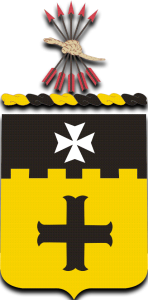

The Record
Dyer’s Entry: 5th U.S. Cavalry
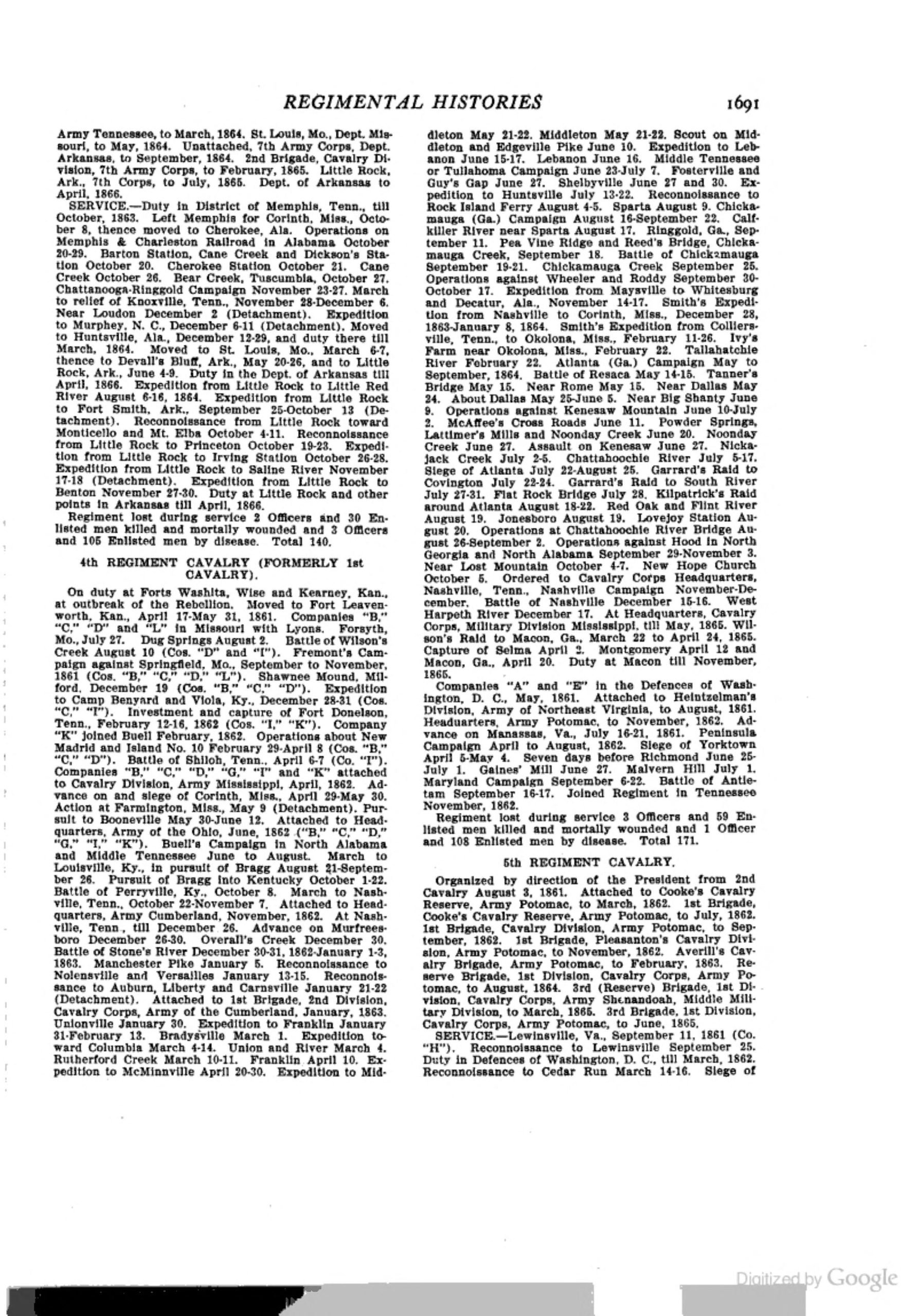
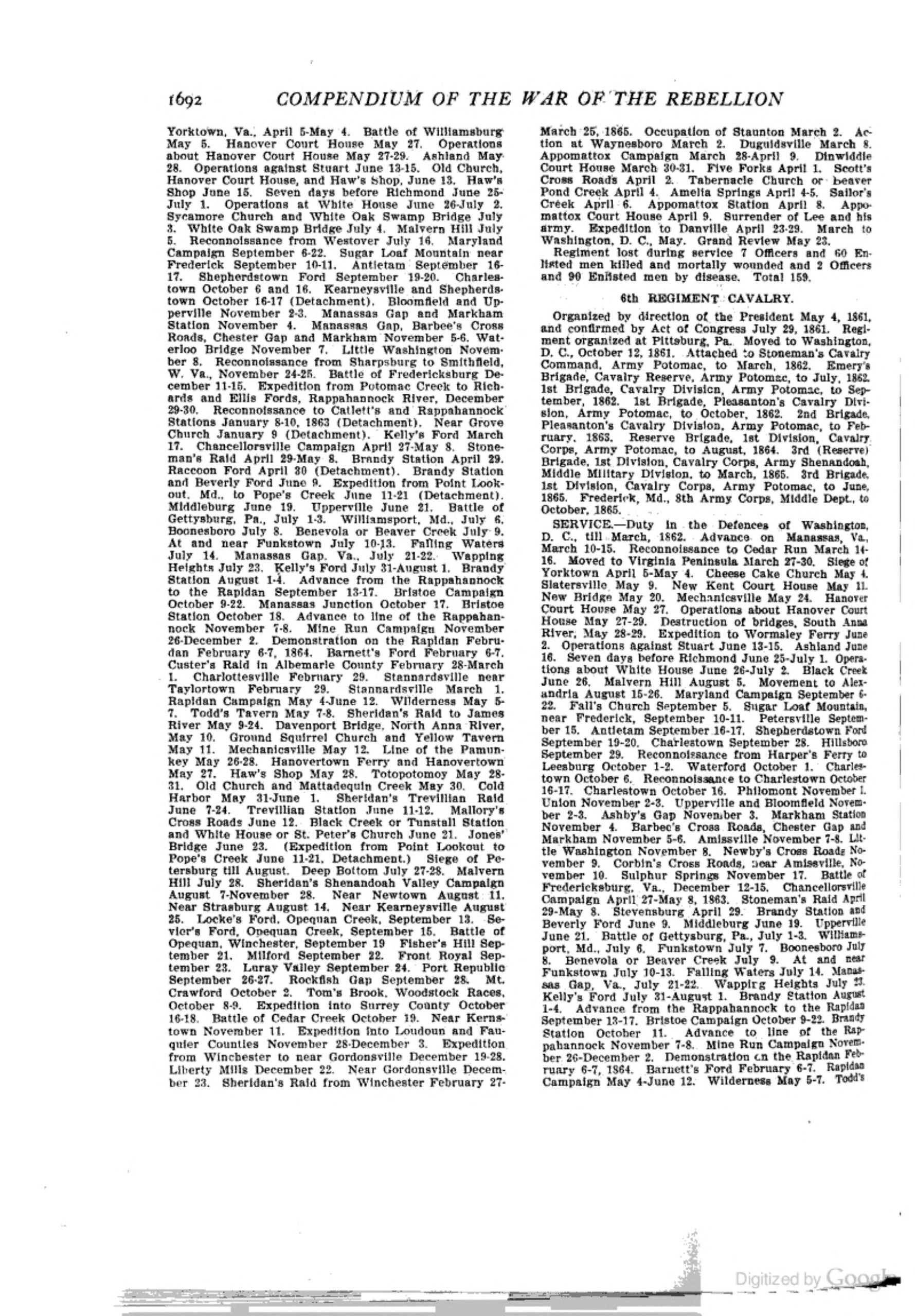
5th REGIMENT CAVALRY.
Organized by direction of the President from 2nd Cavalry August 3, 1861. Attached to Cooke's Cavalry Reserve, Army Potomac, to March, 1862. 1st Brigade, Cooke's Cavalry Reserve, Army Potomac, to July, 1862. 1st Brigade, Cavalry Division, Army Potomac, to September, 1862. 1st Brigade, Pleasanton's Cavalry Division, Army Potomac, to November, 1862. Averill's Cavalry Brigade, Army Potomac, to February, 1863. Reserve Brigade, 1st Division, Cavalry Corps, Army Potomac, to August, 1864. 3rd (Reserve) Brigade, 1st Division, Cavalry Corps, Army Shenandoah, Middle Military Division, to March, 1865. 3rd Brigade, 1st Division, Cavalry Corps, Army Potomac, to June, 1865.
SERVICE.—Lewinsville, Va., September 11, 1861 (Co. "H"). Reconnoissance to Lewinsville September 25. Duty in Defences of Washington, D. C., till March, 1862. Reconnoissance to Cedar Run March 14-16. Siege of Yorktown, Va., April 5-May 4. Battle of Williamsburg May 5. Hanover Court House May 27. Operations about Hanover Court House May 27-29. Ashland May 28. Operations against Stuart June 13-15. Old Church, Hanover Court House, and Haw's Shop, June 13. Haw's Shop June 15. Seven days before Richmond June 25-July 1. Operations at White House June 26-July 2. Sycamore Church and White Oak Swamp Bridge July 3. White Oak Swamp Bridge July 4. Malvern Hill July 5. Reconnoissance from Westover July 16. Maryland Campaign September 6-22. Sugar Loaf Mountain near Frederick September 10-11. Antietam September 16-17. Shepherdstown Ford September 19-20. Charlestown October 6 and 16. Kearneysville and Shepherdstown October 16-17 (Detachment). Bloomfield and Upperville November 2-3. Manassas Gap and Markham Station November 4. Manassas Gap, Barbee's Cross Roads, Chester Gap and Markham November 5-6. Waterloo Bridge November 7. Little Washington November 8. Reconnoissance from Sharpsburg to Smithfield, W. Va., November 24-25. Battle of Fredericksburg December 11-15. Expedition from Potomac Creek to Richards and Ellis Fords, Rappahannock River, December 29-30. Reconnoissance to Catlett's and Rappahannock Stations January 8-10, 1863 (Detachment). Near Grove Church January 9 (Detachment). Kelly's Ford March 17. Chancellorsville Campaign April 27-May 8. Stoneman's Raid April 29-May 8. Brandy Station April 29. Raccoon Ford April 30 (Detachment). Brandy Station and Beverly Ford June 9. Expedition from Point Lookout, Md., to Pope's Creek June 11-21 (Detachment). Middleburg June 19. Upperville June 21. Battle of Gettysburg, Pa., July 1-3. Williamsport, Md., July 6. Boonesboro July 8. Benevola or Beaver Creek July 9. At and near Funkstown July 10-13. Falling Waters July 14. Manassas Gap, Va., July 21-22. Wapping Heights July 23. Kelly's Ford July 31-August 1. Brandy Station August 1-4. Advance from the Rappahannock to the Rapidan September 13-17. Bristoe Campaign October 9-22. Manassas Junction October 17. Bristoe Station October 18. Advance to line of the Rappahannock November 7-8. Mine Run Campaign November 26-December 2. Demonstration on the Rapidan February 6-7, 1864. Barnett's Ford February 6-7. Custer's Raid in Albemarle County February 28-March 1. Charlottesville February 29. Stannardsville near Taylortown February 29. Stannardsville March 1. Rapidan Campaign May 4-June 12. Wilderness May 5-7. Todd's Tavern May 7-8. Sheridan's Raid to James River May 9-24. Davenport Bridge, North Anna River, May 10. Ground Squirrel Church and Yellow Tavern May 11. Mechanicsville May 12. Line of the Pamunkey May 26-28. Hanovertown Ferry and Hanovertown May 27. Haw's Shop May 28. Totopotomoy May 28-31. Old Church and Mattadequin Creek May 30. Cold Harbor May 31-June 1. Sheridan's Trevillian Raid June 7-24. Trevillian Station June 11-12. Mallory's Cross Roads June 12. Black Creek or Tunstall Station and White House or St. Peter's Church June 21. Jones' Bridge June 23. (Expedition from Point Lookout to Pope's Creek June 11-21, Detachment.) Siege of Petersburg till August. Deep Bottom July 27-28. Malvern Hill July 28. Sheridan's Shenandoah Valley Campaign August 7-November 28. Near Newtown August 11. Near Strasburg August 14. Near Kearneysville August 25. Locke's Ford, Opequan Creek, September 13. Sevier's Ford, Opequan Creek, September 15. Battle of Opequan, Winchester, September 19. Fisher's Hill September 21. Milford September 22. Front Royal September 23. Luray Valley September 24. Port Republic September 26-27. Rockfish Gap September 28. Mt. Crawford October 2. Tom's Brook, Woodstock Races, October 8-9. Expedition into Surrey County October 16-18. Battle of Cedar Creek October 19. Near Kernstown November 11. Expedition into Loudoun and Fauquier Counties November 28-December 3. Expedition from Winchester to near Gordonsville December 19-28. Liberty Mills December 22. Near Gordonsville December 23. Sheridan's Raid from Winchester February 27-March 25, 1865. Occupation of Staunton March 2. Action at Waynesboro March 2. Duguidsville March 8. Appomattox Campaign March 28-April 9. Dinwiddie Court House March 30-31. Five Forks April 1. Scott's Cross Roads April 2. Tabernacle Church or beaver Pond Creek April 4. Amelia Springs April 4-5. Sailor's Creek April 6. Appomattox Station April 8. Appomattox Court House April 9. Surrender of Lee and his army. Expedition to Danville April 23-29. March to Washington, D. C., May. Grand Review May 23.
Regiment lost during service 7 Officers and 60 Enlisted men killed and mortally wounded and 2 Officers and 90 Enlisted men by disease. Total 159.
Frederick H. Dyer, A Compendium of the War of the Rebellion (Des Moines: Dyer Publishing Co., 1908), Part 3, pp. 1691–1692. The heading sits at the foot of page 1691; the entry concludes on page 1692. Page scans hosted by this site from the original printing; the entry is transcribed in full above, preserving the original spelling and the printer’s own errors.
Sources & Further Reading
- Primary Frederick H. Dyer, A Compendium of the War of the Rebellion (1908), Part 3 — the regiment’s full service record, exhibited and transcribed above.
- Primary James R. Bowen, Regimental History of the First New York Dragoons (1900) — the Reserve Brigade’s composition and life, ch. VII and ch. VIII on this site.
- Primary Brig. Gen. Alfred Gibbs, report assuming command of the Reserve Brigade, 1st Cavalry Division (Special Order No. 107, Headquarters Middle Military Division, December 9, 1864), and his report of the Appomattox campaign, March 29 to April 9, 1865 — the document and the campaign on this site.
- Act of Congress, March 3, 1855, authorizing the four new regiments, of which the 2nd Cavalry (later the 5th) was one.
- American Battlefield Trust, “The 5th U.S. Cavalry at Gaines’s Mill” — battlefields.org.
- George F. Price, Across the Continent with the Fifth Cavalry (New York: D. Van Nostrand, 1883) — the regiment’s own published history, for the 1855 organization and the Peninsula service. Further reading.
- Note on this page: an earlier version was drafted with AI assistance and was retired on July 14, 2026 in favor of this rebuild from the records above.
The 2nd Massachusetts Cavalry · The 6th United States Cavalry · The 6th Pennsylvania Cavalry · The Dragoons
Views: 176