Levi D. Green and the Battle of Staunton River Bridge
Capture During the Wilson–Kautz Raid, June 1864
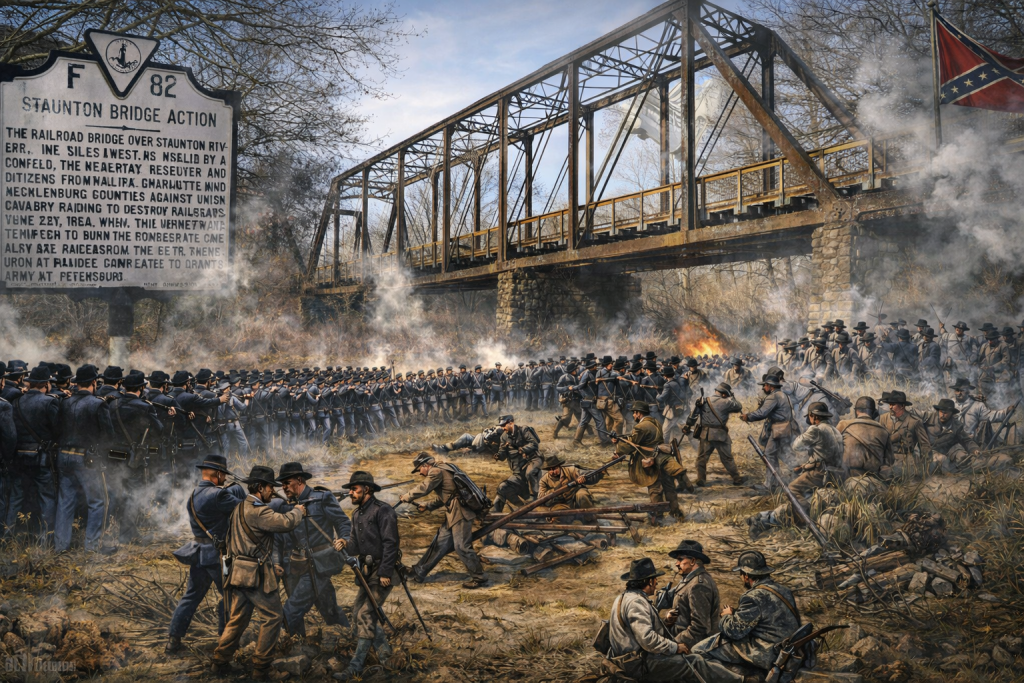
The capture of Levi Davis Green did not occur in isolation, nor was it the result of a single moment of carelessness or misfortune. It was the direct outcome of one of the most ambitious, and ultimately unsuccessful, Union cavalry operations of the Civil War: the Wilson–Kautz Raid and its culminating engagement at the Battle of Staunton River Bridge in late June 1864.
Understanding how and why Levi Green was captured requires first understanding the nature of the raid itself, the role of Battery K, 1st U.S. Artillery, and the conditions under which Union forces found themselves deep behind Confederate lines.
Strategic Context: The Wilson–Kautz Raid
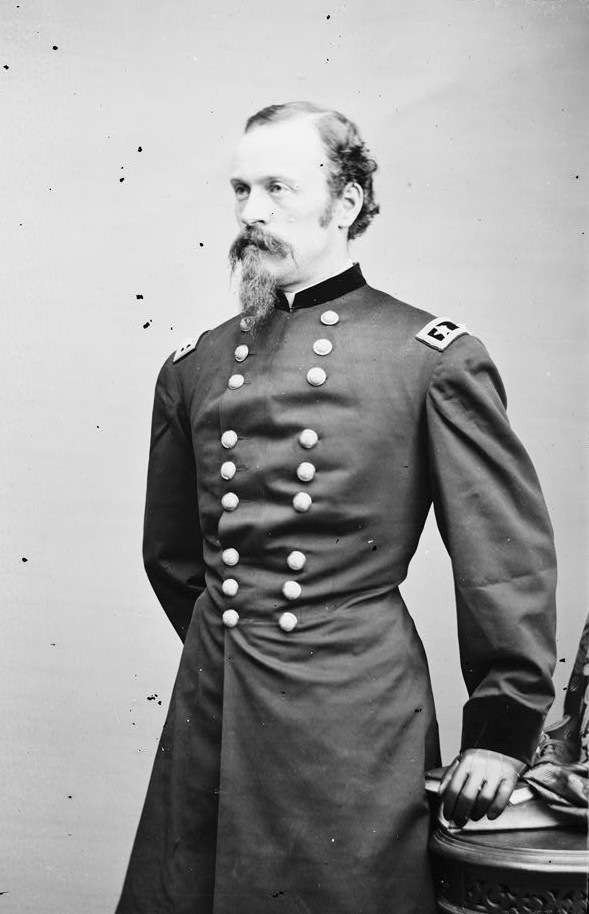
In June 1864, General Ulysses S. Grant sought to sever the vital railroads supplying Confederate forces defending Petersburg and Richmond. To accomplish this, he ordered a deep cavalry raid aimed at destroying rail infrastructure well beyond the immediate front lines.
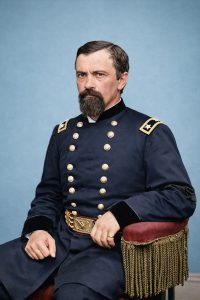
Two cavalry divisions, under Brigadier Generals James H. Wilson and August V. Kautz, were sent south and west from the Union lines. Their objectives included bridges, depots, rolling stock, and trestles along the Richmond & Danville Railroad, particularly the massive wooden bridge spanning the Staunton River in southern Virginia.
This bridge was no ordinary target. It was one of the Confederacy’s most critical logistical links, carrying supplies from the Deep South directly into Lee’s army. Its destruction would have had immediate and severe consequences.
Battery K, 1st U.S. Artillery: The Regulars in a Cavalry Raid
Unlike the volunteer regiments that dominate many Civil War narratives, Battery K, 1st U.S. Artillery, was a Regular Army unit. These professional artillerists were often attached to cavalry formations to provide disciplined, mobile firepower during raids.
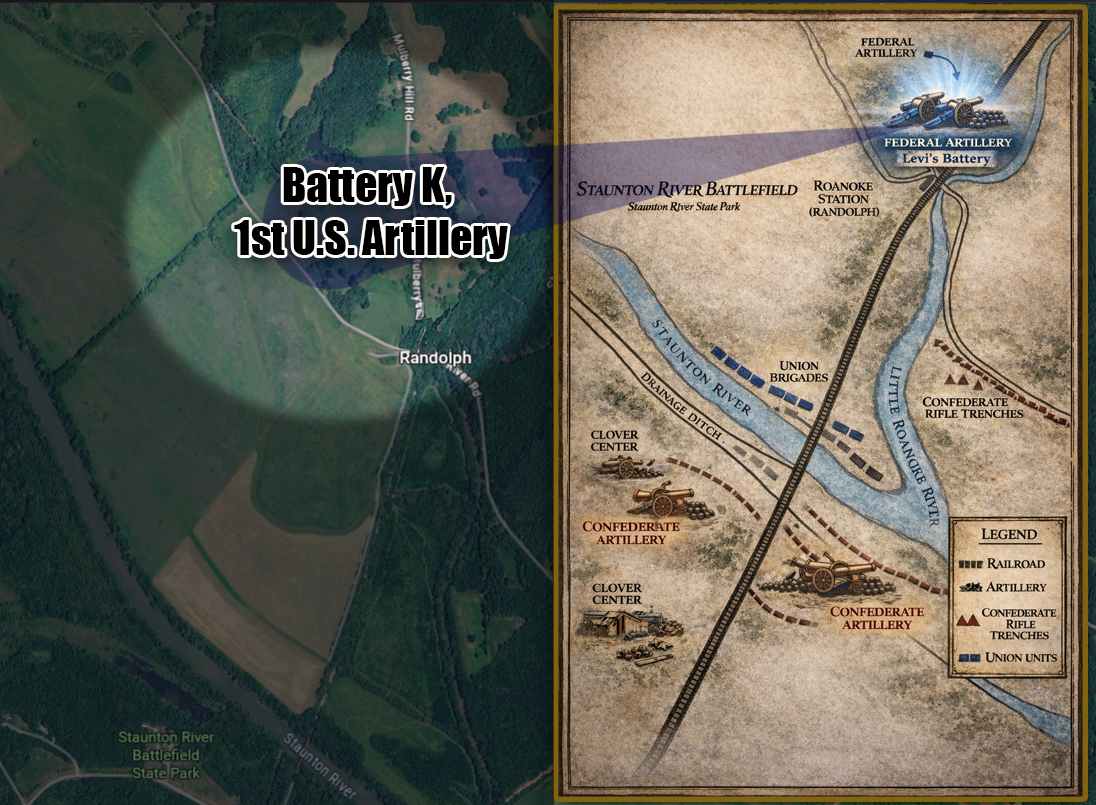
By June 1864, Battery K was operating as part of Kautz’s command, armed with 3-inch Ordnance rifles, accurate, reliable guns well suited for counter-battery fire and long-range support.
As the column advanced toward the Staunton River Bridge, Battery K’s role was clear: suppress Confederate artillery and defensive works long enough for dismounted cavalry to reach the bridge and destroy it with combustibles.
The Battle of Staunton River Bridge
On June 25, 1864, Union forces reached the Staunton River and immediately discovered that surprise had failed them.
Opposing them was a hastily assembled but well-positioned Confederate defense, often described as a force of “old men and young boys,” supported by militia, home guards, and crucially; heavy artillery entrenched on commanding ground overlooking the approaches to the bridge.
Battery K went into action from a ridge line, attempting to silence Confederate guns and cover repeated Union assaults across open fields. The fighting was intense and sustained. Four separate Union charges were made toward the bridge, each met by devastating canister and solid shot.
Despite accurate fire from the Union artillery, the Confederate positions held. The bridge remained intact.
Chaos, Retreat, and Capture
With the failure to destroy the bridge, the Union column was forced to withdraw. What followed was not an orderly retreat but a desperate withdrawal under pressure.
Confederate cavalry under General W.H.F. “Rooney” Lee pursued aggressively. The terrain around the Staunton River; marshy bottomlands, thick woods, and narrow crossings, worked against the retreating Union forces.
It was during this phase of the operation that men like Levi Davis Green were most vulnerable.
Levi D. Green’s Role and Capture
Levi Green was not a member of Battery K by enlistment. He belonged to Company E, 1st New York Dragoons. However, it was common during extended operations for cavalrymen to be detached temporarily to artillery units; as drivers, escorts, couriers, or to fill depleted gun crews.
Detached soldiers often found themselves separated from their parent units, without the cohesion or protection of familiar comrades during moments of crisis.
During the retreat from Staunton River Bridge, men became scattered. Horses were lost. Guns had to be abandoned or hurriedly withdrawn. In the confusion of pursuit, Levi Green was cut off, likely slowed by terrain, separated from mounted elements, and overtaken during the Confederate counter-pursuit.
He was captured on June 23, 1864, during the opening phase of the raid, just days before the main engagement at the bridge.
A Tactical Defeat with Human Consequences
The Battle of Staunton River Bridge ended as a clear Confederate victory. The bridge stood. The raid failed in its primary objective. Union casualties numbered approximately 116 killed, wounded, or captured, compared to roughly 34 Confederate losses.
For Battery K and the cavalrymen attached to it, the cost was especially severe. Experienced artillerists and soldiers like Levi Green were difficult to replace, particularly so late in the war.
For Levi, the battle marked the end of active service in the field and the beginning of a far harsher ordeal, one that would carry him deep into the Confederate prison system.
Transition to Captivity
Levi Davis Green’s capture at Staunton River Bridge was not the result of individual failure, but of a broader operational collapse during one of the Union’s most daring cavalry efforts.
His story does not end on the battlefield. What followed next was transport south, imprisonment, and survival under conditions few endured—belongs to the next chapter of his life.
That story will be told separately.
Views: 30