The March of the Mounted Riflemen, 1849
George Gibbs and the 1849 March of the Mounted Riflemen
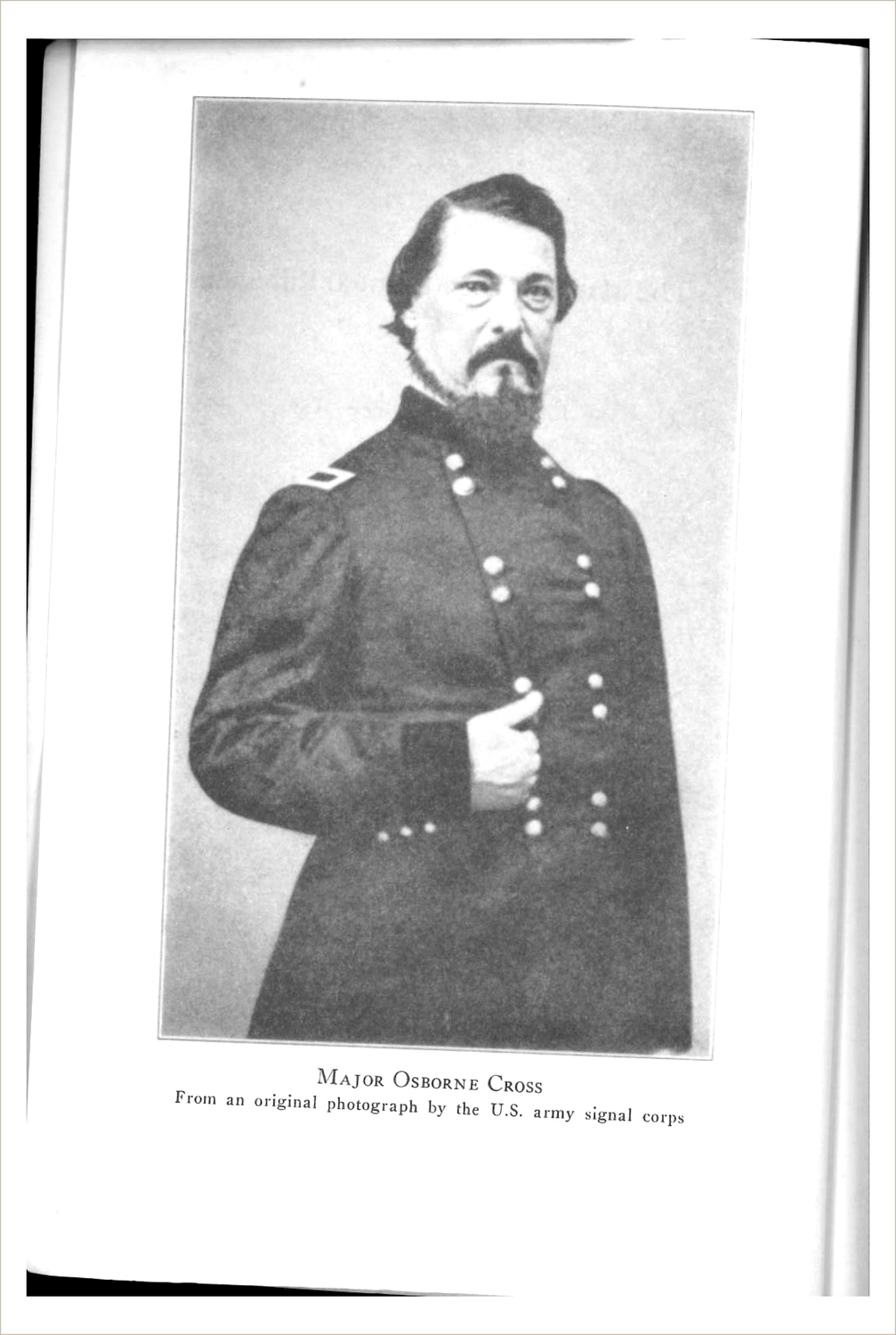
This site already holds a great deal on George Gibbs the diarist, the artist, and the ethnologist. It has had almost nothing on the expedition his most famous diary belongs to. In the spring of 1849 Gibbs, a New York lawyer with no military commission, attached himself to the Regiment of Mounted Riflemen and set out across the continent on what would become the first complete military march over the entire length of the Oregon Trail. The journal he kept along the way survives in Raymond W. Settle’s edition of The March of the Mounted Riflemen, printed alongside the journal of Major Osborne Cross and the official report of Colonel William Wing Loring. This article draws on those texts.
The Regiment of Mounted Riflemen
The Regiment of Mounted Riflemen had been raised in 1846 to garrison the Oregon country, and in 1849 it was finally ordered west to do so. Under Colonel William Wing Loring, the command marched from Camp Sumner, near Fort Leavenworth, on May 10, 1849. In his official report, written from Oregon City that October, Loring recorded a force of five companies, one hundred seventy-one wagons, and a supply train, setting out with animals that were weak and often unbroken, wagons overloaded and poorly equipped, and teams driven in part “by soldiers and inexperienced citizens.” It was, he wrote, “a very arduous” beginning.
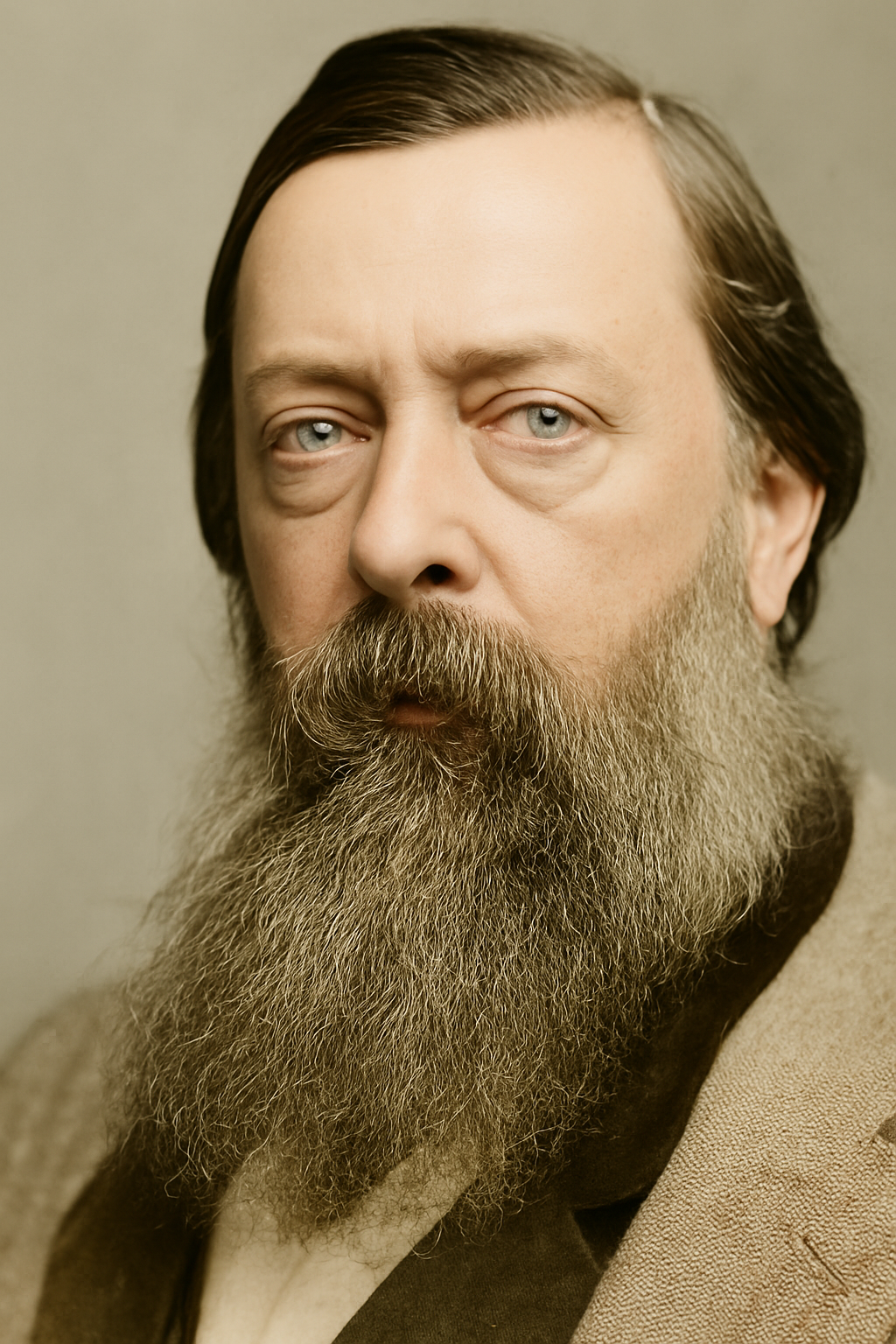
The regiment was the first military unit to travel the Oregon Trail from end to end, which gives the journals kept on the march their particular value as narratives of the route. Traveling with the column as civilians were George Gibbs and the artist William Henry Tappan, along with two other men. Loring’s command reached Fort Kearny on the Platte by the end of May and Fort Laramie on June 22, and it would not arrive at Oregon City until the middle of October.
A New York Lawyer Heads West
George Gibbs was born July 17, 1815, into one of the most distinguished families in the early republic; he was descended on his mother’s side from the Wolcotts of Connecticut, a line that counted a signer of the Declaration of Independence and a Secretary of the Treasury. He took up law in New York but, by the account in Settle’s edition, had “little real interest” in the practice. He had a deep love of the outdoors, of natural history, and of geology, and a real talent for drawing. When news of the discovery of gold in California swept the country, Gibbs abandoned his law office, hurried to Fort Leavenworth, and attached himself to the regiment as it prepared to march.
The editor of the volume contrasts the two principal diarists of the march directly: where Major Cross “at times writes as though bored by daily routine,” Gibbs “seems thrilled by new scenes and experiences.” That enthusiasm runs through every entry. Gibbs rode out almost daily with the regiment’s guide, Glenday, to scout the next camp, and the diary is as much a naturalist’s and an artist’s notebook as a traveler’s log, full of birds identified by name, rock strata read like pages, and landscapes measured against the painters he admired.
On the Trail
The early weeks of the march, through eastern Kansas toward the Platte, were a grind of swollen creeks and bad crossings. Gibbs found a grim comedy in the spectacle of the mule teams being forced through the ravines, and described it with relish.
The little wretches involve themselves in most inexplicable ways in their chains and harness, plunging, kicking, and falling on one another with a vicious perseverance that would kill a train of horses, and generally with as little injury to themselves as if they were of hammered iron.
George Gibbs, diary entry, May 15, 1849
He had an observer’s instinct for small distinctions. Watching the remains of campfires along the trail, he noted a way of telling who had made them: “The white man lights his wood in the center of the sticks; the Indian always at the end, moving it up as it burns. The scarcity of wood in the prairie has taught him this lesson of economy.” The same eye that catalogued these details on the prairie would, within a few years, be turned to the languages and lifeways of the peoples of the Pacific Northwest.
The Great Emigration of 1849
The regiment was moving in the midst of the gold rush, and the road was crowded with emigrant trains bound for California. Gibbs watched them with a mixture of fascination and foreboding. By the time the column reached Fort Kearny, he reckoned that nearly four thousand wagons had already passed that point, at least sixteen thousand people, with as many more behind them. His judgment of their prospects was unsparing.
It is hardly necessary to say that they are bound for California, and I learn that the most extravagant hopes animate most of them. Bitter disappointment is perhaps in store for all; distress and death for many most certainly.
George Gibbs, diary entry, May 16, 1849
The road bore out the warning. The emigrants’ graves grew more frequent as the regiment advanced, their headboards most often giving cholera or dysentery as the cause of death. Broken-down wagons and discarded provisions lined the trail. Gibbs noted that the regiment’s own forges were employed to help repair emigrant wagons where they could, though the pace of the march rarely allowed a halt.
Cholera and a Prairie Grave
Cholera came for the regiment as well. Gibbs recorded the burial of Private Patrick Caldwell, a farrier of Company F, who was laid in his blanket, the camp had no material for a coffin, at the head of a small ravine, with a rifle volley and a lively air from the band as the column moved on. The loneliness of that grave moved Gibbs to one of the most affecting passages in the diary.
There is a consolation in lying down to one’s last sleep amidst kindred and friends, or even where some eye shall now and then light upon the sod that covers us, but to lie there, with the howl of the wolf or the prairie wind alone to break the silence that broods over this green waste, is death indeed.
George Gibbs, diary entry, May 26, 1849
An Ethnographer in the Making
Along the North Fork of the Platte the regiment met a band of Sioux led by an old man named Bull Tail, who came to the officers in “a costume half military, half savage,” wearing a pair of epaulettes and a medal. A council was held and the pipe smoked, but the meeting broke down over a horse that an officer had seized from one of the Indians. With no interpreter, the government had provided none, and the regiment’s guide spoke only Crow, Loring sent Glenday back to the Sioux village to settle the matter, and Gibbs, characteristically, went along to see it.
He spent the night in the village, dined formally with Bull Tail and his family on dried buffalo meat and pomme blanche, and watched the old man display, with great satisfaction, a broken umbrella and a pocket handkerchief he had acquired from the whites. The curiosity Gibbs brought to that encounter, and his sharp note that the whole misunderstanding sprang from the government’s failure to provide an interpreter, anticipated the work that would occupy the rest of his life. After settling in Oregon in 1850, Gibbs became one of the most important early ethnographers and linguists of the Pacific Northwest, a maker of treaties, vocabularies, and maps among the very peoples he was only beginning to observe on the plains.
A Naturalist’s Eye
The Platte itself drew from Gibbs one of his most quoted descriptions, a catalogue of the river’s contradictions.
Straight and swift, shallow and muddy, it is unfit for navigation, bad to ford, destitute of fish, too dirty to bathe in, and too thick to drink, at least until custom habituates one to it.
George Gibbs, diary entry, June 4, 1849
He and Tappan repeatedly left the road to sketch and explore the strange formations of the upper Platte, Courthouse Rock, Chimney Rock, the castellated bluffs near Scott’s Bluffs, and Gibbs read their clay and sandstone with a geologist’s eye, describing the slow work of rain that was carving whole valleys and cutting the towers loose from their ranges. Riding back from Courthouse Rock with Tappan, he set down a passage that captures the whole meaning of the moment they were living through: the conquest of a war-ground by sheer numbers of ordinary travelers.
There were two of us, an artist from Boston and an ex-lawyer from New York, hunting the picturesque among the hills of the North fork of the Platte river with only one pistol between us, and that probably beyond discharging, miles distant from the great road, encountering only an occasional emigrant, and yet as free from danger as if we had been in Suffolk county or among the hills of Bergen. The country we were riding over was the war ground of the Sioux, where twelve months since men went only armed and in bodies sufficient to insure protection. The explanation was the line of white wagons which covered yonder road, the end who is to foretell?
George Gibbs, diary entry, June 18, 1849
Fort Laramie, and a Journal That Breaks Off
The regiment reached Fort Laramie on June 22 and rested a few days before entering the Black Hills. Gibbs recorded a last bit of trail theater there: a mock “drumhead court-martial” staged by some of the younger officers and citizens against an emigrant suspected of horse-stealing, complete with a sentence of death and a terrified prisoner sent fleeing across the river through a volley of deliberately misaimed shots. The whole affair, Gibbs noted, was carried on without Colonel Loring’s knowledge and “was censured extremely by him.”
Gibbs’s diary, as it survives, ends here. His last entry is dated Fort Laramie, Monday, June 25, 1849, and closes simply: “I hope to be able to write you again from Fort Plat[te]. The regiment has crossed the creek and is under way.” He signed it “G.G.” The journal was incomplete even in the volume that preserves it, and part of the reason is recorded in the book itself. Gibbs mailed his journal home in installments; the continuation covering the march from Fort Kearny to Fort Laramie was, by the postmaster’s endorsement, “recovered from the wreck of the steamer Algoma, which was burned at the wharf at St. Louis on the morning of the twenty-ninth of july 1849,” a boat carrying a large California mail, “a large portion of which was consumed.” What more Gibbs may have written beyond Fort Laramie does not appear in the corpus, and this article does not attempt to reconstruct it.
The regiment, of course, went on. Colonel Loring’s report carries the march all the way to Oregon City, where he dated it October 15, 1849. Gibbs went on too. Major Cross’s journal records that farther west, in the country of the Snake River, the guide led “Mr. George Gibbs and Lieutenant Lindsay” to a great waterfall, which they “pronounced one of nature’s great wonders”, the cataract now known as Shoshone Falls, of which Gibbs is credited with making perhaps the first drawing. He reached the Columbia that autumn and settled in Oregon the next year. But the diary that survives leaves him at Fort Laramie, a third of the way to the Pacific, still “thrilled by new scenes,” with the whole of the West still ahead of him.
Source: George Gibbs’s diary, with the journal of Major Osborne Cross and the report of Colonel William Wing Loring, in The March of the Mounted Riflemen, edited by Raymond W. Settle. Biographical detail is drawn from the editor’s introduction to that volume. Quotations preserve the spelling of the printed text.
Read George Gibbs’s own account of the journey, published here in full by the stages of the trail: George Gibbs’s Diary of the Mounted Riflemen, 1849.
A fuller companion essay, with the quoted lines shown as they stand in the printed volume: George Gibbs and the March of the Mounted Riflemen.