From Gillingham to Quidnessett: The Greene Family’s Journey and Legacy in the New World
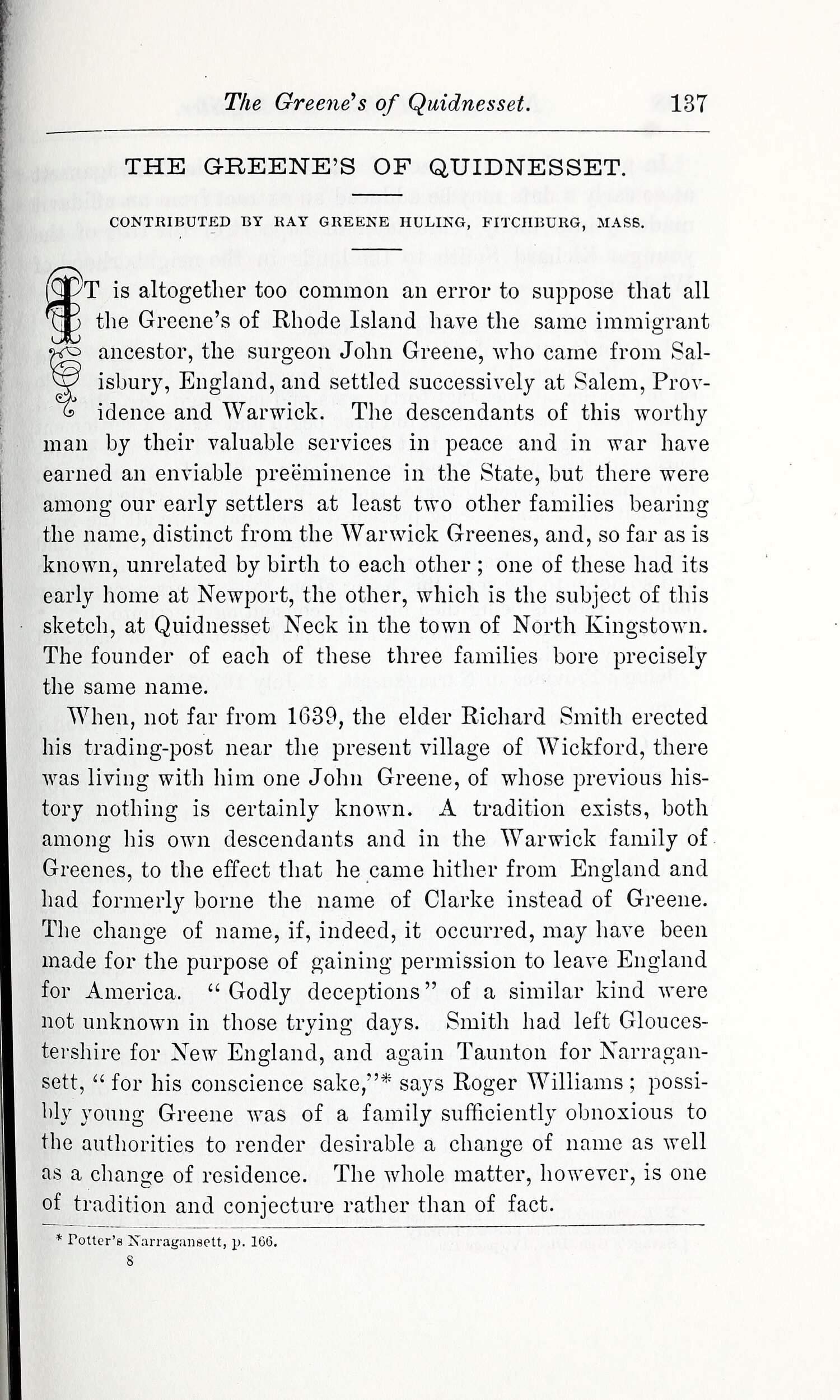
Introduction:
The Greene family’s history is a remarkable tale of migration, perseverance, and influence spanning centuries and continents. This report delves into the lineage and legacy of John Greene of Quidnessett, tracing his roots from Bowridge Hill in Gillingham, England, to his settlement in the Narragansett region of Rhode Island in the 17th century. The narrative explores the pivotal relationships, including the mentorship of Richard Smith and his marriage to Joan, that shaped John Greene’s life and cemented his family’s prominence in early Rhode Island. Through land disputes, trade partnerships, and the establishment of homesteads, the Greene family’s story reflects the complexities of colonial life and the resilience required to navigate it. This detailed account invites readers to uncover the interconnectedness of early settlers, the challenges they faced, and their enduring impact on the fabric of New England history.
From Gillingham to New England
The Greene family’s history is marked by several key migrations, both within England and to the New World.
- From Gillingham, England to the New World: The most significant migration was that of John Greene of Quidnessett, who traveled from England to the New World in 1635. He initially sailed to the West Indies on the ship Matthew, then made his way to the Massachusetts Bay Colony, before settling in the Narragansett region of Rhode Island.
- Within England: The family originated in Bowridge Hill, in the Parish of Gillingham, Dorsetshire, England. Over generations, different branches of the family moved to various locations in England.
- Robert Greene purchased the estate of Bowridge Hill.
- John Greene (1529-1560), the great-grandfather of John Greene of Quidnessett, had three sons: Robert of Langham, Jeremy of Gillingham, and Henry, who lived some distance from the old home.
- Henry’s son Robert had a son John, who was born in 1606 and became John Greene of Quidnessett.
- Settlement in the Narragansett Region: Upon arriving in the Narragansett region, John Greene initially lived and worked with Richard Smith at Cocumscussoc (present-day Wickford). He then established his own homestead in the nearby Quidnessett area by approximately 1639. This move marks a shift from being under the mentorship of Smith to becoming an independent landowner and community leader.
- Family Expansion and Movement: John Greene and his wife, Joan, settled in Quidnessett, where they raised a large family; the date of their marriage is not recorded. Later in life, after Joan’s death, John moved to live with his son John in Coventry, Rhode Island.
These migrations were not just physical movements, they also shaped the Greene family’s social, economic, and political standing. In the New World, their presence contributed to the early development of Rhode Island. The family’s connections to both the Narragansett and Massachusetts colonies highlight the interconnectedness of early settlements. The Greenes also became involved in land disputes between different colonies, further influencing their movement and settlement patterns.
John Greene of Quidnesset – The Details
John Greene of Quidnessett immigrated to the New World in 1635, aboard the ship the Matthew [Mathew]. Historical records suggest that this ship, under the command of Richard Goodladd, departed London on May 2, 1635, bound for St. Christopher (modern-day St. Kitts) in the West Indies. The ship’s manifest included a passenger named “Greene Jo,” aged 29, which matches John Greene’s profile at the time. While the connection is circumstantial, it aligns with Greene’s documented journey to the New World. The ship is referred to as both “Mathew of London” and “Matthew of London” in historical documents, with “Mathew” being the primary spelling when referencing the ship captained by Richard Goodladd.
After a brief period in the West Indies, Greene continued to New England, eventually settling in the Narragansett country.
Richard Smith played a pivotal role in John Greene’s life, acting as a mentor, a base of operations, and a connection to the broader community. Their relationship significantly shaped the early settlement of the Narragansett region.
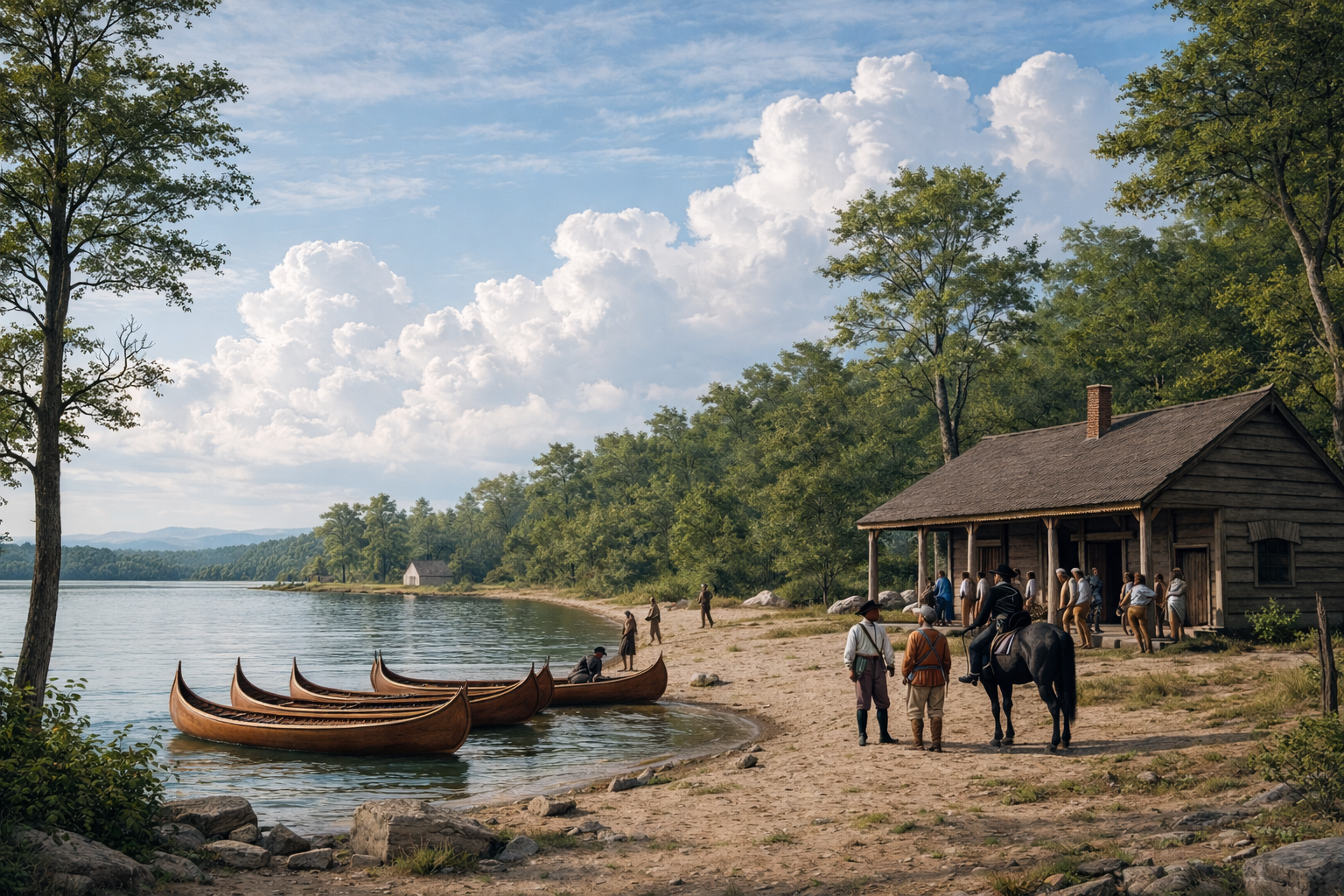
Key aspects of Richard Smith’s influence on John Greene’s life:
- Initial Support and Mentorship: Upon arriving in the Narragansett region, John Greene initially lived and worked with Richard Smith at Cocumscussoc (present-day Wickford). Smith, the first European settler in the area, provided Greene with a place to live and work. Smith also mentored Greene as they collaborated on trade with the Narragansett people.
- Shared Business Ventures: Smith and Greene worked together to establish a foothold in the Narragansett area, where there were initially no other English settlers within 20 miles. Their collaboration focused on trade with the local Indigenous people.
- Facilitation of Greene’s Independence: While Greene’s early years were closely tied to Smith’s resources, he eventually transitioned to becoming an independent landowner in the Quidnessett area by 1639. Smith’s initial support helped Greene establish himself and build his own homestead in the area.
- His marriage: The records do not say how or when Greene met his wife, Joan. (Corrected 23 September 2026: this item formerly said Smith introduced him to “Joan Beggarly” about 1642.)
- Long-term Relationship: Greene testified that he had lived with Smith for “forty years and more,” which underscores the closeness and length of their relationship. This long-term association highlights the deep connection between the two men.
- Economic and Social Foundation: Smith provided the initial economic and social foundation in the region, which allowed Greene to contribute to the area’s growth and governance.
In summary, Richard Smith’s role in John Greene’s life was multifaceted. He was not only a mentor and business partner but also the crucial link that enabled Greene to establish himself in the New World, marry, and eventually become a prominent figure in the Narragansett region. Their partnership was instrumental in the early development of the area.
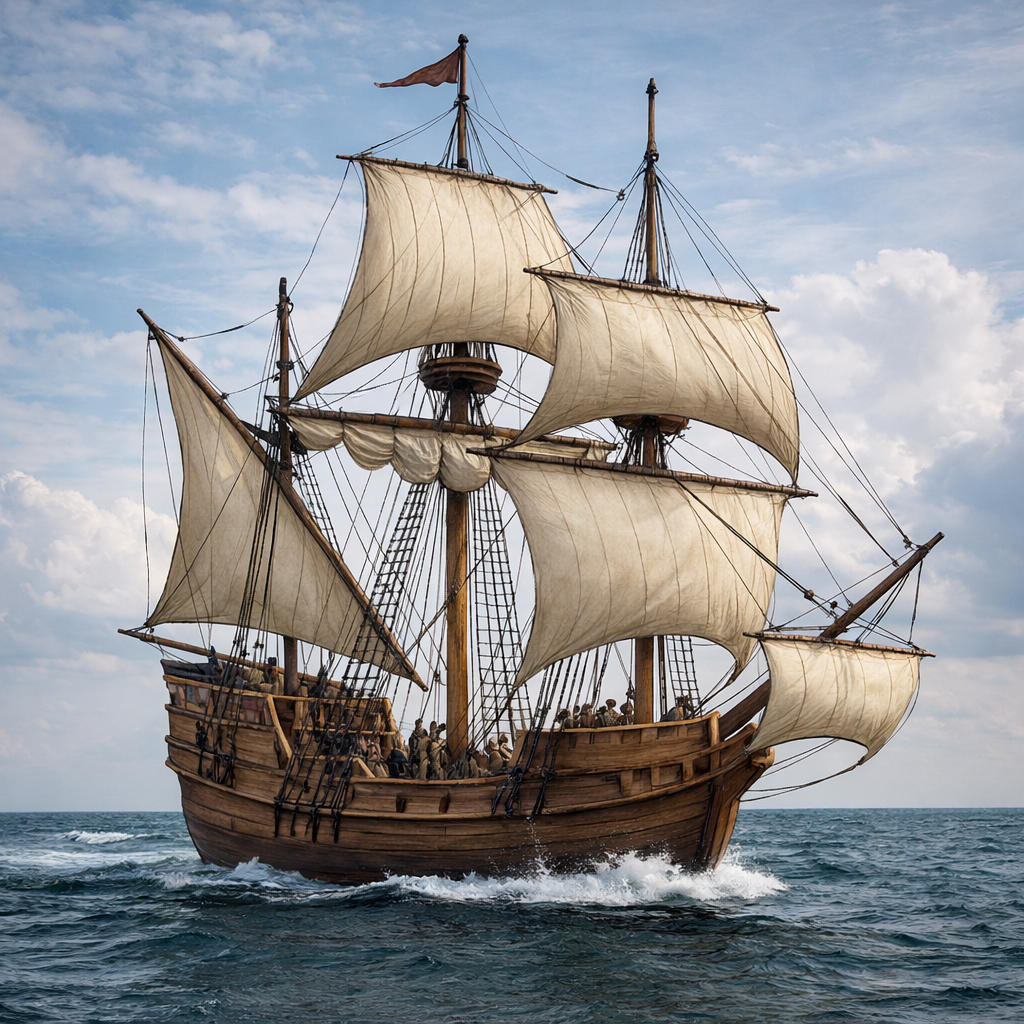
The Basics of the Trip – The Matthew:
John Greene sailed to the New World in 1635 aboard the ship the Matthew [Mathew]. The ship, commanded by Richard Goodladd, departed from London on May 2, 1635, and was bound for St. Christopher (modern-day St. Kitts) in the West Indies.
- Historical records list a passenger named “Greene Jo,” aged 29, on the Matthew, which aligns with John Greene’s age at the time.
- While the connection is circumstantial, it supports the documented journey of John Greene to the New World.
- The ship’s name appears in historical documents as both “Mathew of London” and “Matthew of London,” but “Mathew” is the primary spelling when referencing the ship captained by Richard Goodladd.
His wife, Joan
John Greene’s wife was named Joan. She is known from one set of records. On 24 March 1681/2 he deeded land at Quidnessett to his sons James and Daniel, each to pay thirty shillings a year “as long as the father or mother should live,” and the deed to James names “Joane Greene, his wife.” She was alive then. Her maiden name, birth, marriage date and death are not recorded, and no record calls her Beggarly. The deeds are shown and transcribed on Joan, wife of John Greene of Quidnessett: the Narragansett record.
Frederic L. Greene said the same in 1894: “His wife, in 1682, at the time of the transfer of land to his sons, was named Joan, but nothing further is known about her.” (Descendants of Joseph Greene of Westerly, R.I.)
Correction, 23 September 2026: Joan was not Mrs. Beggarly. Two sections stood here, “The Fascinating Joan Beggarly” and “Richard Smith: Matchmaker?” They said that John Greene of Quidnessett married Mrs. Beggarly of Massachusetts, a wife separated from Richard Beggarly, by December 1638 or about 1642, that Richard Smith introduced them, and that she died in January 1643/4. That woman was Alice Daniell, called Mrs. Beggarly, and she was the second wife of John Greene the surgeon of Warwick, not of John Greene of Quidnessett.
The proof is in the Providence town records. On 27 January 1682/3 the surgeon’s son wrote to the town about a lot “Layd out to my motherinlawe before my father Mr John Greene ser maried her who was at that time called Mrs Alse Daniell” (Early Records of the Town of Providence, XVII, p. 9). The deed of that lot was made by “John Greene of Warwick Senr” and confirmed in 1659 by his widow, Philip (Early Records, I, p. 105). Joan of Quidnessett was alive in 1682, so the death of January 1643/4 was not hers either.
The story that Mrs. Beggarly married John of Quidnessett was first printed by La Mance in 1904, with no source. Both Providence records are reproduced and transcribed on Alice Daniell, called Mrs. Beggarly: second wife of John Greene the Surgeon.
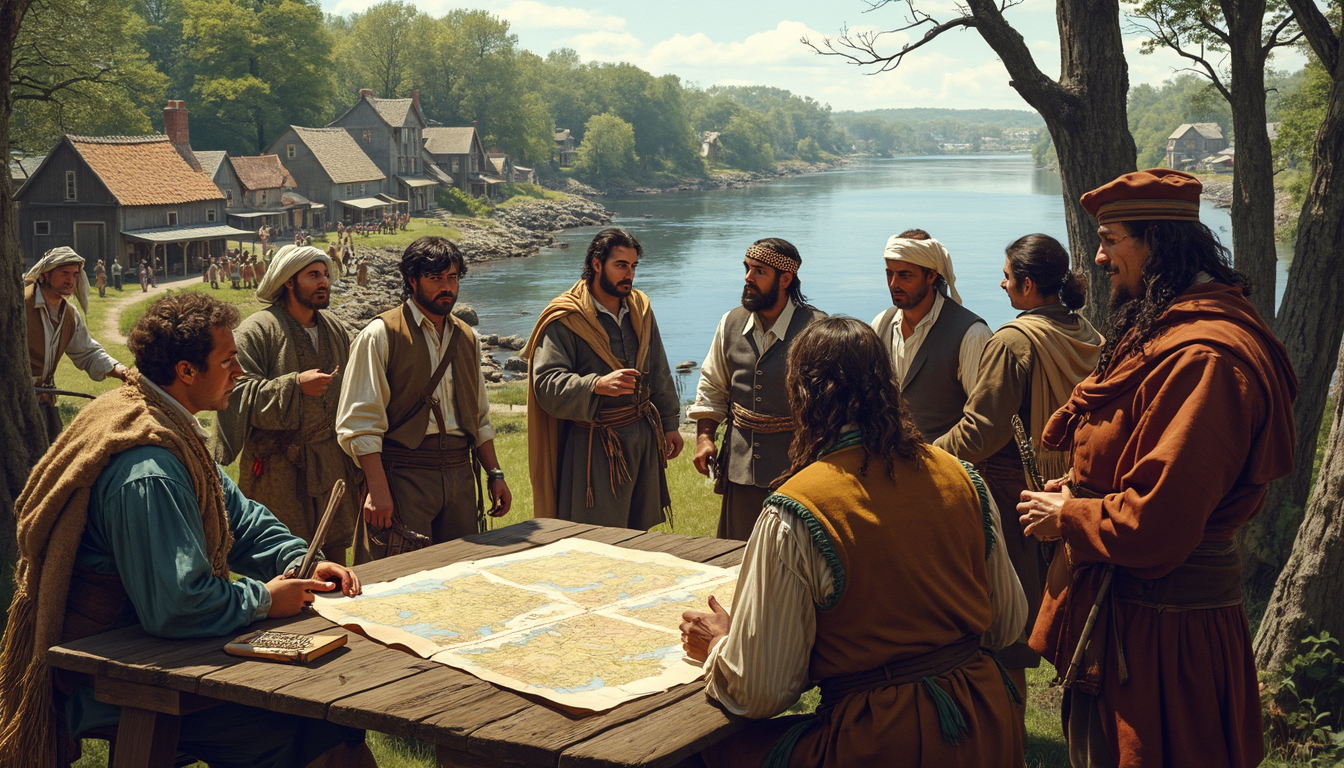
Avocation for Land Rights
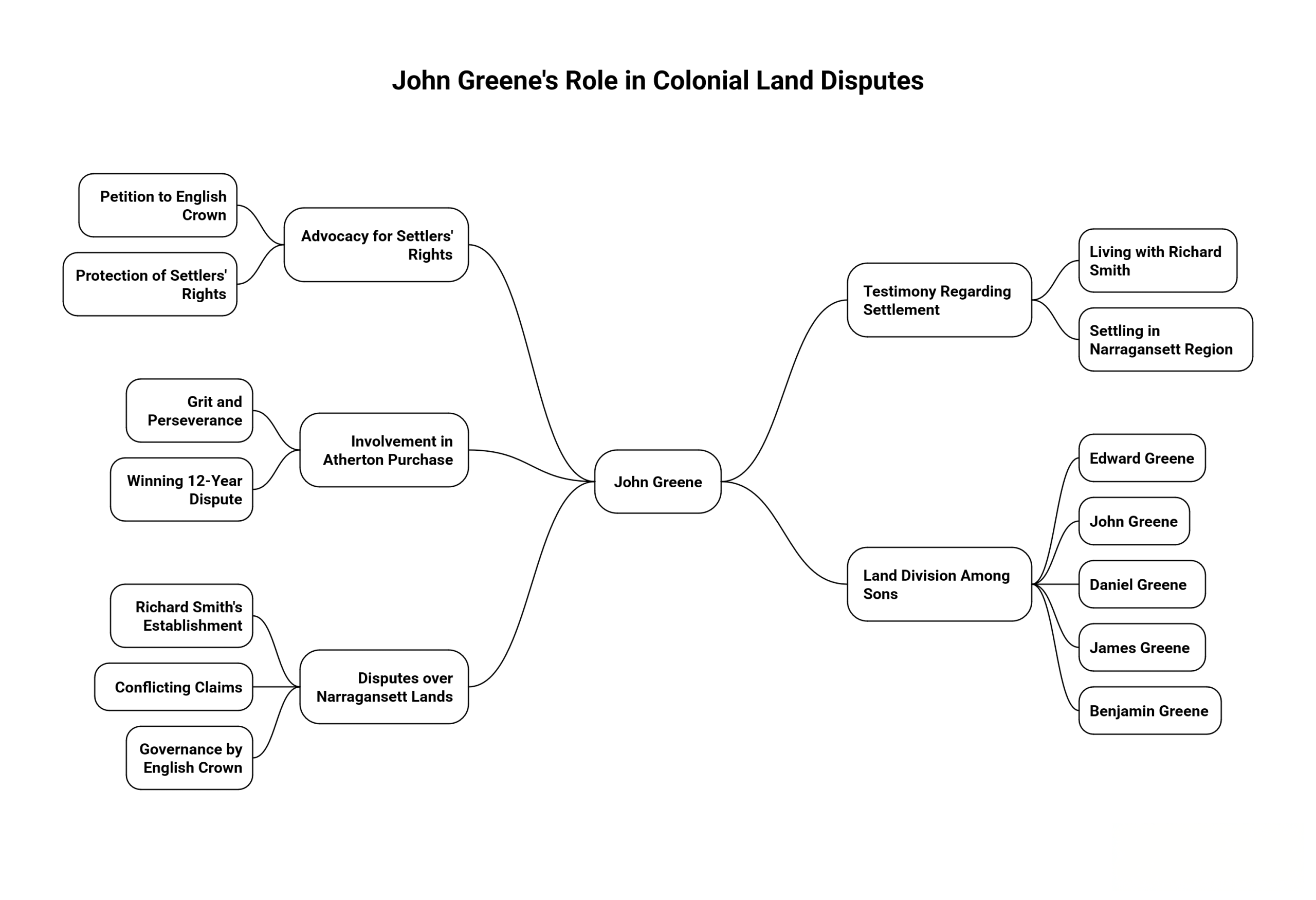
John Greene played a significant role in resolving land disputes in the early colonial period, particularly those involving lands purchased from Native Americans. These disputes often involved multiple colonies including Massachusetts, Rhode Island, and Connecticut.
- Advocacy for Settlers’ Rights: In 1676, John Greene signed a petition to the English Crown, advocating for stability and the protection of the settlers’ rights. This action demonstrates his leadership in defending the interests of his community.
- Testimony Regarding Settlement: In 1679, John Greene testified that he had lived with Richard Smith for “forty years and more” and that they had settled in the Narragansett region when there were no other English settlers within 20 miles. This testimony was part of a petition to the King, arguing that the land could not be given away to someone new because the colonizers had been defending it for 40 or more years. This testimony highlights the length of time he and Smith had been occupying and developing the land, and the legal basis they were claiming for their ownership.
- Involvement in the Atherton Purchase: John Greene’s “grit and perseverance” were critical in winning a land dispute involving the Atherton concession. The purchasers of the Atherton concession likely would not have won the 12-year dispute without Greene’s efforts.
- Land Division Among Sons: In March of 1682, John Greene divided his land among some of his sons who remained in Rhode Island. This act indicates his role in managing and distributing land within his family and community. The sons who inherited the land were Edward, John, Daniel, James, and Benjamin, and they are all considered to be the ancestors of “all the Quidnessett Greens”.
- Disputes over Narragansett Lands: Richard Smith’s establishment in the Narragansett lands was highly contested by several colonies, and he wanted his properties to fall under the jurisdiction of the Connecticut Colony. Conflicting claims to the area resulted in it being put directly under the governance of the English crown and being called King’s Province for a while. The Narragansett lands were not put under the governance of the Rhode Island colony until 1726. These disputes over land in the area highlight the context in which John Greene was involved in resolving similar conflicts, and demonstrates that land ownership and governance was a difficult and protracted issue in the early colonial period.
- Disputes Involving Richard Smith: Richard Smith sought to have his lands put under the jurisdiction of either the Plymouth Colony or the Connecticut Colony beginning in the 1650s because the lands on the west side of the Narragansett Bay were in dispute. In 1663, an agreement was made that allowed some of the Narragansett lands to come under the jurisdiction of Connecticut, and Smith became a selectman of that area, called Wickford. The fragile agreement did not hold, and disputes leading to violence erupted, which resulted in the Crown creating the separate royal province of King’s Province in 1665. The territorial battle continued until 1726 when the Narragansett lands were ultimately put into the hands of the Rhode Island colony. This demonstrates the ongoing nature of these disputes and how they shaped the early history of the region and impacted the lives of early settlers like John Greene.
In summary, John Greene was actively involved in resolving contentious land disputes, advocating for settlers’ rights, and contributing to the early governance of the Narragansett region. His efforts were essential in securing property rights for himself, his family and his neighbors.
FAQ on Richard Smith, John Greene, and Early Wickford
- Who were Richard Smith and John Greene, and why are they historically significant? Richard Smith was the first European settler in the Narragansett country, establishing a trading post at Cocumscussoc (later Wickford) around 1637. John Greene of Quidnessett, arriving a couple years later, worked with Smith and became a significant landowner and community leader. Together, they played pivotal roles in the early development of the region. Smith’s trading post was a key point on the Pequot Path (later the Post Road), connecting New York and Boston, while Greene’s perseverance was instrumental in land disputes that helped solidify their rights to the land.
- What was Cocumscussoc and why is it important? Cocumscussoc was the original name of the area where Richard Smith established his trading post. It later became known as Smith’s Castle and is present day Wickford, Rhode Island. This plantation became a hub of social, political, and religious life. It was a site of trade with Native Americans and a central location for the early European settlers. The development of this area laid the foundation for the future village of Wickford.
- How did John Greene and Richard Smith interact and collaborate? John Greene initially lived and worked with Richard Smith at Cocumscussoc after arriving in the Narragansett region. Smith, the first European settler in the area, mentored Greene and together they established trade with the Narragansett tribe. Greene lived with Smith for a number of years, and their partnership was crucial in shaping the early settlement of the region, with Smith providing the economic and social foundation while Greene contributed to its growth and governance.
- Who was Joan, the wife of John Greene of Quidnessett? She is named once, as “Joane Greene, his wife,” in his deed to his son James of 24 March 1681/2, and she was alive then. Her maiden name, birth, marriage and death are not recorded. She was not Mrs. Beggarly of Massachusetts: that woman, Alice Daniell, was the second wife of John Greene the surgeon (see the correction above). Corrected 23 September 2026: this answer formerly called her Joan Beggarly, gave her a Magna Carta descent, and put her death in 1643/4.
- What were the land disputes in the Narragansett country and what role did John Greene play? The Narragansett lands were the subject of continuous disputes between the Plymouth Colony, the Connecticut Colony, and the Rhode Island Colony. John Greene played an active role in advocating for the rights of the early settlers of the area and signed a petition to the English Crown in 1676, seeking stability and protection of the settlers’ land rights. Greene’s grit and perseverance were key factors in the settlers eventually winning their claims. The issue was not fully resolved until the English Crown officially designated the Narragansett lands under Rhode Island’s jurisdiction in 1726.
- How did Wickford develop from the early settlement to its modern form? After Richard Smith’s death, his grandson, Lodowick Updike, developed Cocumscussoc into a large plantation, later laying out a formal village in 1709 with a wide street leading to the harbor, which became Wickford’s Main Street. Wickford prospered as a port for trade and shipbuilding, experiencing a boom after the Revolutionary War. While it declined after the 1830s, it experienced a revival in the late 19th century. Despite considerable damage from a hurricane in 1938, it recovered and remains a vibrant village, preserving much of its historical character.
- What is the difference between John Greene of Quidnessett and John Greene the Surgeon? John Greene of Quidnessett (1606-1695) was a founder of the Quidnessett line of the Greene family who immigrated in 1635 and married a woman named Joan. John Greene the Surgeon (1597-1658), was a cousin of John Greene of Quidnessett. Both Greenes are prominent early settlers in Rhode Island who came from different branches of the Greene family of Bowridge Hill. They are often confused, as both were married to women named Joan. The surgeon’s second wife was Alice Daniell, called Mrs. Beggarly, whom the family long attributed to John of Quidnessett by mistake.
- Where are Richard Smith and John Greene buried? Richard Smith’s burial location is not explicitly mentioned in these sources. John Greene of Quidnessett, however, is believed to be buried in the “Old Field Lot” (now part of Maple Root Cemetery) in Coventry, Rhode Island, though his grave is unmarked. The graves of his son, Daniel, his son’s wife, Rebecca, and possibly his wife Joan, have been tentatively identified in that area and nearby.
Timeline of Main Events
- c. 1596: Richard Smith is born in Gloucestershire, England.
- 1606: John Greene of Quidnessett is born in England.
- 1635: John Greene immigrates to the New World, likely on the ship “Matthew,” arriving first in the West Indies before proceeding to Massachusetts.
- c. 1637: Richard Smith establishes a trading post at Cocumscussoc (later Wickford) in the Narragansett country. This marks the first European settlement in the area.
- c. 1639: John Greene settles in the Quidnessett area, living with Richard Smith at Cocumscussoc.
- c. 1641: Francis Brinley claims this to be the approximate year that Richard Smith establishes his trading post, as opposed to Roger Williams’ recollection of 1637.
- c. 1643: John and Joan’s oldest son, Captain Edward Greene, is born.
- c. 1645: Roger Williams establishes a trading post about a mile north of Smith’s at the Pequot Path.
- 1651: Roger Williams sells his property to Richard Smith.
- 1650s: Richard Smith begins to seek jurisdiction for his land under the Plymouth or Connecticut colonies due to contested claims on the land west of Narragansett Bay.
- 1659: Richard Smith seeks to put Hog Island under Plymouth jurisdiction.
- 1663: An agreement is brokered by John Clarke of Rhode Island and Governor John Winthrop of Connecticut. The Atherton Company’s land in the Narragansett country is put under Connecticut jurisdiction. Richard Smith Sr., Edward Hutchinson, and John Hewes are made selectmen, and Richard Smith Jr. becomes constable. Wickford is established as a settlement.
- 1664: Richard Smith Sr. writes his will.
- 1665: March, due to persistent land disputes, the Crown declares the Narragansett country a separate royal province called King’s Province.
- 1666: Richard Smith Sr. dies, and his will is proven.
- 1671: Several of John Greene’s sons are granted the status of freemen in Rhode Island, meaning they have the right to participate in local government.
- 1676: John Greene signs a petition to the English Crown advocating for the rights and stability of settlers in the region.
- 1679: John Greene testifies that he lived with Richard Smith when Richard first began a settlement in the Narragansett region, approximately 42 years prior.
- 1682: John Greene divides his land amongst his sons that remained in Rhode Island; the deed to James of 24 March 1681/2 names his wife, “Joane.”
- 1695: John Greene of Quidnessett dies at age 89, and is buried in the Old Field Lot, part of what is now Maple Root Cemetery.
- 1709: Lodowick Updike (grandson of Richard Smith) lays out a formal village plan for Wickford, with The Grand Highway leading to the harbor.
- 1726: The Narragansett lands are ultimately put under the jurisdiction of the Rhode Island colony by royal decree.
Corrected 23 September 2026: eight entries about Mrs. Beggarly (her birth about 1610, her arrival in 1630, the Skelton estate in 1634, the court hearing of June 1636, the suit of March 1638, the marriage of December 1638, the marriage “about 1642,” and the death of January 1643/4) were removed. They belong to Alice Daniell, the surgeon’s wife, and are on her page.
Cast of Characters
- Richard Smith Sr. (c. 1596-1666): The first European settler in the Narragansett country. Established a trading post at Cocumscussoc (Wickford), which became a center for settlement. He was a strong proponent of having his land under the jurisdiction of Connecticut. Described as a man of peace by Roger Williams.
- John Greene of Quidnessett (1606-1695): Immigrated to New England in 1635. Settled in Quidnessett near Smith’s trading post. Lived with Smith for several years, married Joan, had a large family, and became a prominent landowner and community leader. Known for his grit and perseverance in land disputes.
- Roger Williams: Co-founder of the Colony of Rhode Island and Providence Plantations. Established a trading post near Smith’s for a time but later sold it to him. Remembered Smith fondly despite differing views on jurisdiction.
- Richard Smith Jr.: Son of Richard Smith Sr. Became constable of Wickford in 1663. Built Smith’s Castle on the site of his father’s original home after it was destroyed in King Phillip’s War.
- Lodowick Updike: Grandson of Richard Smith Sr. Developed Cocumscussoc into a large plantation and laid out the village of Wickford in 1709.
- John Clarke: Rhode Island representative who brokered an agreement with Connecticut’s Governor John Winthrop regarding land claims in the Narragansett region.
- John Winthrop: Governor of Connecticut, involved in the land agreement with Rhode Island.
- Edward Hutchinson: Became selectman of Wickford in 1663
- John Hewes: Became selectman of Wickford in 1663
- Captain Edward Greene: Oldest son of John Greene of Quidnessett, born c. 1643
- Lieut. John Greene: Son of John Greene of Quidnessett. He married later, at 39 years of age, and was living in Coventry when his father died.
- Daniel Greene: Son of John Greene of Quidnessett. He married at about 39 years of age, and has a headstone in the old family cemetery.
- Henry Greene: Son of John Greene of Quidnessett.
- Richard Goodladd: Captain of the ship “Matthew” on which John Greene likely immigrated to the New World.
- Joan Greene: Wife of John Greene of Quidnessett, named in his deed to James of 24 March 1681/2. Nothing else is recorded of her. Corrected 23 September 2026: the entries for “Joan Beggarly Greene,” “Alice Beggarly/Daniel,” Samuel Skelton, and a Magna Carta descent were removed; they concerned Alice Daniell, the surgeon’s wife.
- Stonewall John: A Narragansett stone mason who worked for Richard Smith.
Views: 571