Battle of Deserted House: A Crucial Skirmish in the Blackwater Marches
Update, November 20, 2026: Added a link to the new film, The Arrest at the Deserted House.
The Civil War · Suffolk Campaign · January 30, 1863
Deserted House
The 130th New York’s first real battle — their “first severe baptism of fire,” and the dawn-lit charge in which Colonel Alfred Gibbs, under arrest and unarmed, seized the colors and became the idol of his regiment.
In the pre-dawn hours of January 30, 1863, the men of the 130th New York Volunteers prepared for what seemed like yet another reconnaissance march into enemy country near the Blackwater River. Such tramps had become a dull routine of their life around Suffolk, Virginia — long, muddy, and almost always without a fight. But this march would be different. At a lonely spot called the Deserted House, also known as Kelley’s Store, the regiment met the enemy “not only in force but in a fighting mood,” and received what their historian called their first severe baptism of fire.

Another Wild-Goose Tramp

Reconnaissances in force toward the Blackwater had become so frequent, and so often fruitless, that Bowen recorded the men “murmured at going out so frequently upon wild-goose tramps.” About eleven o’clock on the night of January 29, quiet orders went down the line to prepare to march at once with sixty rounds of ammunition and three days’ rations. There was one ominous difference this time. For the first time, Bowen — the regiment’s musician and bugler — was directed by Colonel Gibbs to bring along the stretchers, “with the assurance that we would probably have abundant use for them.”
First Severe Baptism of Fire
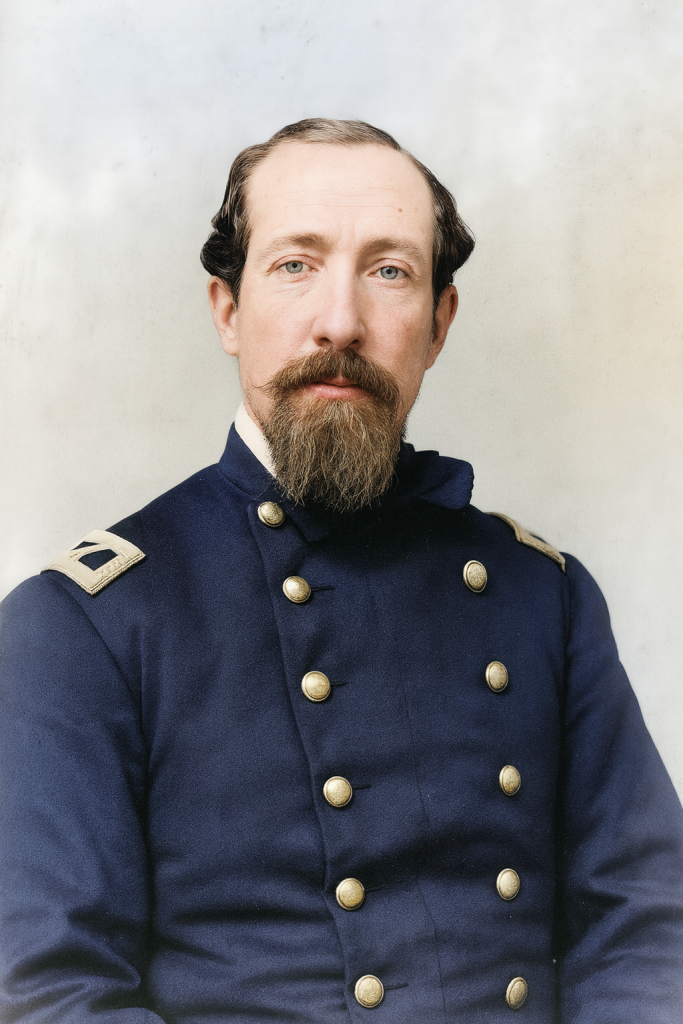
It was past midnight when the column moved out toward the Blackwater — about eight thousand men under Brig. Gen. Michael Corcoran, nine infantry regiments with their batteries. Colonel Spear’s cavalry led the extreme advance, followed by the veteran Thirteenth Indiana, with the 130th New York next in order. About eight miles out the cavalry exchanged shots with Confederate pickets, “which sent a thrill of animation through our ranks.” A mile farther on, at the edge of the cleared land around the Deserted Farm, Spear drove in the pickets and ran up his two mountain howitzers, opening on the enemy’s camp-fires across the open ground.
The men chuckled, sure the “Johnnies” were “catching it in good shape” — but Pryor’s gunners knew the lay of the land. They had ranged the ground exactly, and answered Spear with every gun at once. Through the darkness the regiment saw the flash of the cannon, and then the shells came “blazing and screaming through the air, tearing through the tree-tops or bursting in our midst, until it seemed as if pandemonium was let loose upon us.” The suddenness dazed the men for a moment; then they steadied. To the honor of the 130th New York, now for the first time under severe fire, “not a man flinched during the terrible ordeal.”
“It was during the early morning of Jan. 30, 1863, that we received our first severe baptism of fire. … Through the darkness we saw the flash of the cannon, and instantly their missiles of death came blazing and screaming through the air, tearing through the tree-tops or bursting in our midst, until it seemed as if pandemonium was let loose upon us. … to the honor of the One Hundred and Thirtieth New York, now for the first time under severe fire, not a man flinched during the terrible ordeal.”— James R. Bowen, musician and bugler of the 130th New York Volunteers, Regimental History of the First New York Dragoons (1900), ch. IV, “Black Water Marches and Battle of Deserted House.”
The Artillery Duel
The Federal batteries came up at a gallop, took position in the open field, and an artillery duel began that lasted three hours, “which for precision and rapidity of firing has seldom been equaled.” In the pitchy darkness the burning fuses of the shells drew long bright curves through the air — a spectacle Bowen called grand and beautiful but for the destruction it wrought, the bursting shells lighting up the ghastly faces of the dead and dying and the ground strewn with slain horses.
Through all of it the 130th New York held a position on the right of the Federal line, ten paces behind Davis’s battery, which it was supporting. To escape the storm of iron the men were ordered to lie flat upon the ground — but it did not spare them. The bursting of a single shell killed three men and wounded four of Company A. Captain Rowley Phidello Taylor of Company C had just raised himself on his elbow when a ball struck him squarely in the breast, hurling his body some twenty feet to the rear. He had told his men before the march that he would not survive it. By Captain Follett’s report the Union guns alone fired 1,140 rounds; not until daylight did the thunder of battle cease.
Gibbs Seizes the Colors
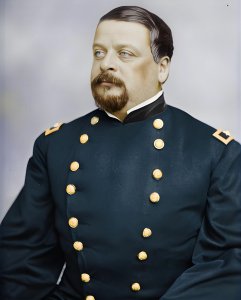
The most celebrated incident of the battle grew out of a quarrel. General Corcoran, who “haughtily resented any suggestion from an officer whom he ranked,” placed Colonel Gibbs under arrest and took his sword after Gibbs expostulated about the disposition of the troops — urging, rightly, that the infantry be posted on the flanks of the artillery, out of the raking fire. The wisdom of the suggestion was soon proved: Corcoran’s own brigade broke in confusion and began a precipitate retreat, and Corcoran had to leave the field to rally it.
With daylight breaking and no one giving orders, the cry went up among the regiments at the edge of the wood — “Let’s charge them.” Three regiments moved out in line of battle and swept across the open field. As Bowen reproduces it from the History of Wyoming County: “Who that was there can ever forget that scene when the brave Colonel Gibbs, under arrest, swordless and horseless, seized the colors and bore them, like the hero he was, in front of the regiment throughout the whole of that charge. … from that hour his kingdom in the regiment was established, and every man in his command was now willing to die for him.” It is the moment that turned a West-Point martinet, not at first popular with his men, into the colonel they would follow anywhere.
Driving Pryor to the Blackwater
The enemy broke and ran, leaving many dead on the field. The 130th New York, deployed as skirmishers under Lieutenant-Colonel Thomas J. Thorp, pushed into the woods beyond and drove the Confederate rear guard back from one position after another — three times the enemy came forward with their yell to dislodge them, and three times were “quickly driven back with much loss.” Both Corcoran’s and General Peck’s official reports singled out the regiment, and Peck’s report named Colonel Gibbs as commander of all the infantry. The pursuit ran on until noon, when Pryor escaped only by crossing the Blackwater and destroying the bridge behind him. He had boasted he would make “old Peck dig out” of Suffolk; instead he lost favor with his own army and was removed from command. The fight, Bowen judged, “though costly in life and limb, was invaluable in the confidence it gave the men.”
Roll of the Killed — 130th New York, Deserted House
Bowen put the regiment’s loss at twenty-nine: one officer and six enlisted men killed, two officers and eighteen men wounded, and two missing — by far the heaviest loss of any regiment engaged. The seven killed are named in the corrected casualty list published by the New York Times, which matches Bowen’s count exactly.
| Rank & Name | Company |
|---|---|
| Capt. Rowley Phidello Taylor | C |
| Pvt. Oliver Washburne | A |
| Pvt. Charles M. Wood | A |
| Pvt. George Abbot | H |
| Pvt. James Woodruff | B |
| Pvt. Taylor | C |
| Pvt. Robert Van Valkenburgh | C |
The Wounded — Ten Who Survived
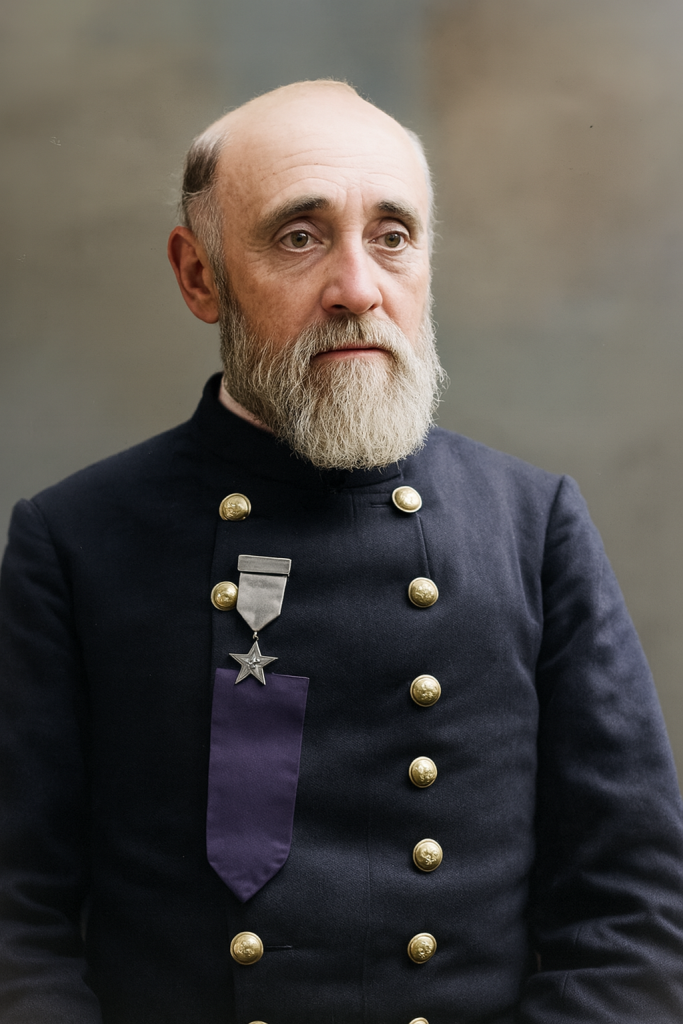
Bowen counted two officers and eighteen men wounded at Deserted House. Ten of them can now be followed by name — their enlistments, their later battles, and where the war left them. Among them Private Edward M. Jennings lost an arm, and Captain Andrew J. Leach, hit here, was wounded twice more before Appomattox. Each name opens that man’s page.
| Rank & Name | Company |
|---|---|
| Capt. Andrew J. Leach — wounded here, at Cold Harbor, and at Five Forks; brevet Major | K |
| Sgt. William M. King — discharged for disability | F |
| Cpl. George N. Barrell — wounded three times; rose to Corporal | A |
| Cpl. Isaac C. Dimmick | K |
| Cpl. George S. Harrington | A |
| Pvt. Leonard Aldrich — transferred to the Veteran Reserve Corps | F |
| Pvt. Ebenezer A. Bean | F |
| Pvt. George C. Belden | A |
| Pvt. Edward M. Jennings — lost an arm | A |
| Pvt. Hopkins Salisbury | D |
Sources & Further Reading
- Primary James R. Bowen, Regimental History of the First New York Dragoons (originally the 130th N.Y. Vol. Infantry) (Lyons, Mich., 1900), ch. IV, “Black Water Marches and Battle of Deserted House,” pp. 58–68 — the regiment’s own historian, an eyewitness in the ranks, who also reproduces Gen. Corcoran’s report and the account in the History of Wyoming County. Full text: archive.org/details/regimentalhistor00bowe.
- Primary “The Battle of Deserted House — Full Details of the Repulse of the Rebels Under Pryor,” The New York Times, Feb. 3, 1863 (datelined Suffolk, Jan. 31, 1863) — the source of the corrected casualty list and the Union order of battle: nytimes.com.
- Primary U.S. War Dept., The War of the Rebellion: Official Records of the Union and Confederate Armies, Series I, Vol. 18 (reports of Maj. Gen. Peck, Brig. Gen. Corcoran, and the engagement at Deserted House / Kelley’s Store, Jan. 30, 1863).
- Note on naming: the National Park Service / CWSAC battle-summary series does not list a separate entry for Deserted House (Kelley’s Store); the action is treated as part of the operations around Suffolk in early 1863. Confederate strength and intentions follow Bowen’s summary of Pryor’s own report.
Read the arrest and the charge, from the book · Trevilian Station · The Shenandoah Valley Campaign · The Audiobook
Views: 102