Document: Grant to Stanton on Isaac Lynde, September 18, 1866
The Gibbs Papers · Document · National Archives
Grant Recommends Lynde’s Restoration
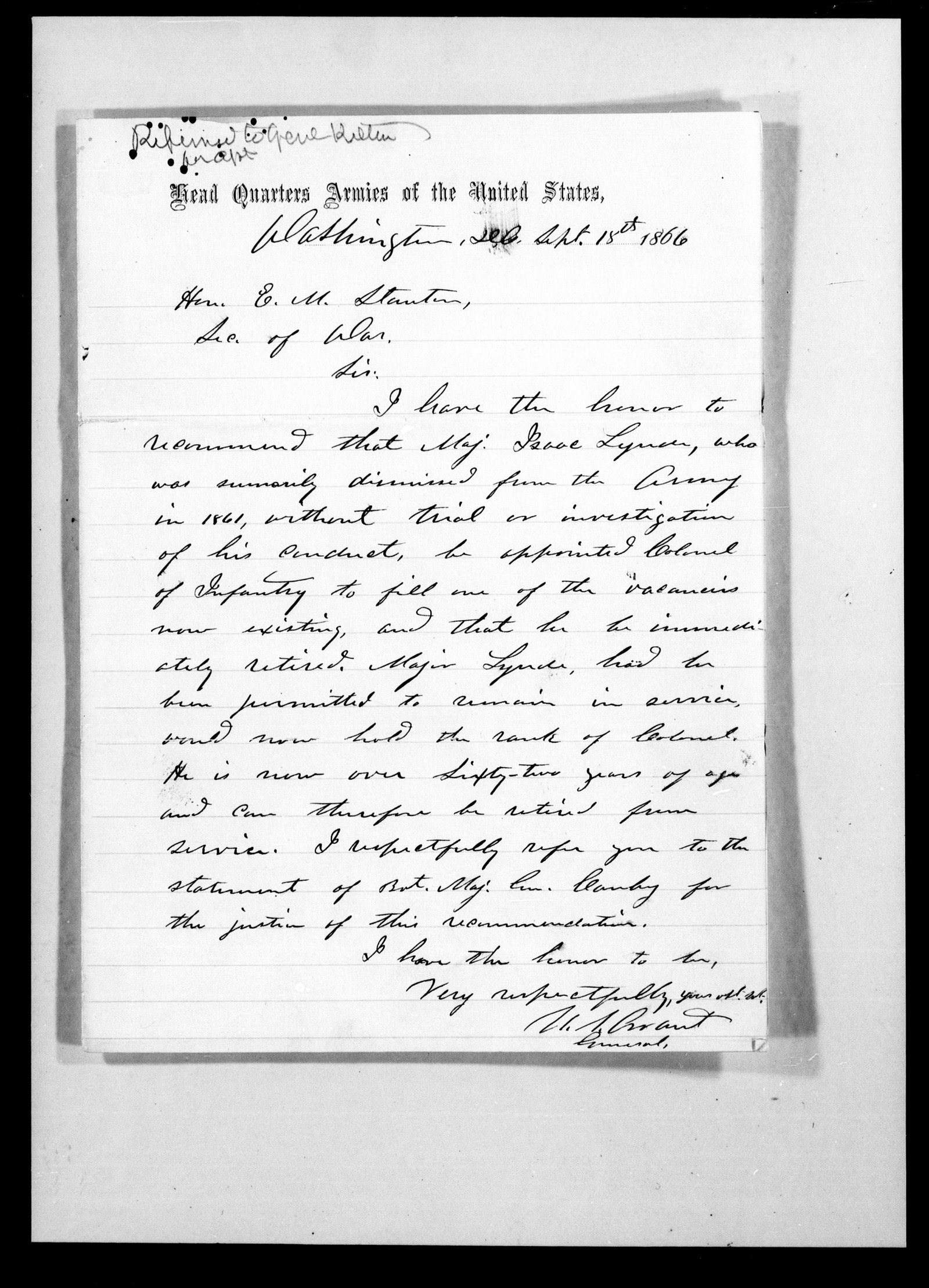
General U. S. Grant to Secretary of War Edwin M. Stanton, September 18, 1866.
Five years after Major Isaac Lynde was dropped from the rolls for surrendering Fort Fillmore, the General of the Army himself asked that he be restored. This is that letter, in Grant’s own hand, with the War Department wrapper that filed it. It is the document behind the phrase every later account repeats: that Lynde was “summarily dismissed… without trial or investigation of his conduct.” The words are Grant’s.
Archival citation
- Repository
- National Archives and Records Administration (NARA), Washington, D.C.
- Record Group
- RG 94, Records of the Adjutant General’s Office, 1762–1984 (NARA catalog naId 423)
- Series
- Letters Received by the Commission Branch of the Adjutant General’s Office, 1863–1870 (National Archives Microfilm Publication M1064)
- File Unit
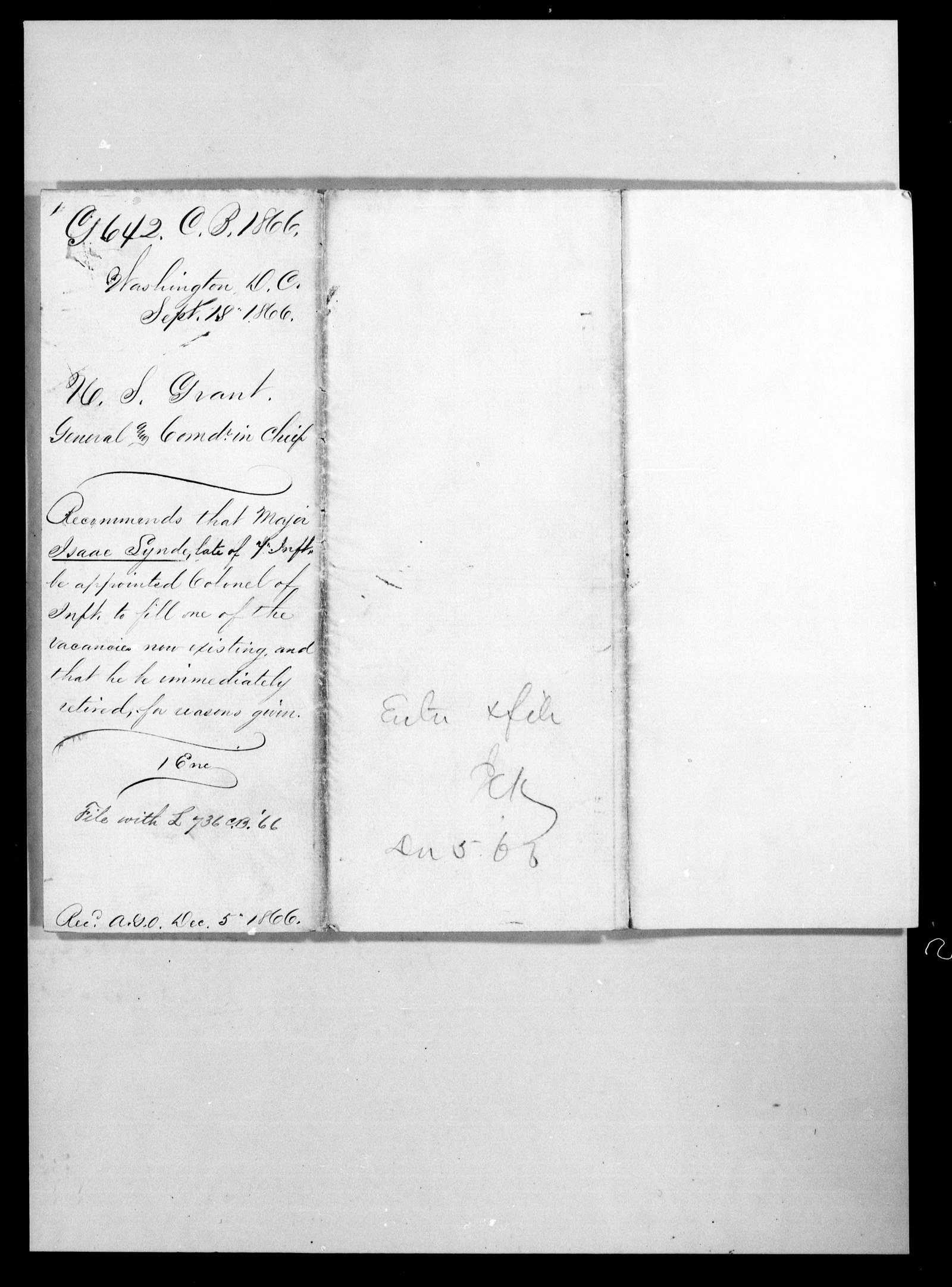
- Lynde, Isaac — 1866 (file L736 CB 1866; Grant’s letter docketed G642 CB 1866, filed with L736), naId 70339343
- Item
- Grant to Stanton, Sept. 18, 1866, received A.G.O. Dec. 5, 1866 (this file, images 0401–0402)
- Catalog permalink
- catalog.archives.gov/id/70339343
- Retrieved via the NARA Catalog API
GET https://catalog.archives.gov/api/v2/records/search?naId=70339343- Digitized & transcribed
- AlfredGibbs.com, July 8, 2026. Images and transcription reproduced from the National Archives digital copies (public domain).
The document
1. The file wrapper. Every letter in the Commission Branch files was folded and docketed on an outer sheet; this one records who wrote, what was recommended, and when it was received and filed.
2. The letter. One page, on the printed letterhead of the Headquarters of the Armies of the United States.
This letter is discussed in The Surgeon’s War and is Finding 5 in What the Files Establish. It sits inside the full 85-page restoration file, which can be read in sequence in the site archive.
Transcribed from the National Archives digital copy on July 8, 2026. The transcription follows the manuscript; uncertain readings are marked with (?). Corrections against better readings will be noted rather than made silently.
Views: 15