Tom’s Brook, Va., Oct. 8, 1864
The Civil War · Shenandoah Valley · October 8, 1864
Tom’s Brook
The “Woodstock Races” — the day Sheridan’s troopers turned on their pursuers and chased the Confederate cavalry twenty miles down the Valley, in a rout a young colonel named Gibbs christened with a laugh.
The action at Tom’s Brook was a cavalry battle fought during Maj. Gen. Philip H. Sheridan’s 1864 Shenandoah Valley Campaign. Turning on the Confederate cavalry that had been dogging their rear as the army withdrew down the Valley, Union horsemen routed their pursuers so completely that the affair became known in the ranks as the “Woodstock Races.” The First New York Dragoons rode in the fight as part of Brig. Gen. Thomas C. Devin’s Second Brigade, Merritt’s 1st Cavalry Division — their own Colonel Alfred Gibbs giving the rout the mocking name it has carried ever since.
Background
Through late September and early October 1864, Sheridan’s Army of the Shenandoah moved down the Valley, systematically destroying barns, mills, grain, and livestock — the campaign of devastation later called “The Burning.” As the Federals withdrew, the Confederate cavalry, now reinforced and led by Maj. Gen. Thomas L. Rosser and Maj. Gen. Lunsford L. Lomax under Lt. Gen. Jubal A. Early, pressed close behind and grew bold, taking the retreat for a sign that they were driving Sheridan. Rosser, fresh from Richmond with a brigade of veteran horsemen, proclaimed himself the “savior of the valley.” Irritated by the harassment, Sheridan ordered his cavalry chief, Brig. Gen. Alfred T. A. Torbert, to turn on the pursuers and “whip them, or get whipped.”
The Action
This was a contest of horsemen, not of the infantry corps. Roughly nine thousand Union troopers — the divisions of Brig. Gen. Wesley Merritt and Brig. Gen. George A. Custer, under Torbert — faced about thirty-five hundred Confederate cavalry under Rosser and Lomax. Custer’s division engaged Rosser along the Back Road while Merritt’s division, with the Dragoons, struck Lomax along the Valley Pike. Outnumbered and pressed on front and flank, both Confederate divisions broke. The retreat became a rout that the troopers chased for some twenty miles toward Woodstock and beyond. Federal captures included eleven guns with their caissons, the wagon trains and ambulances, and roughly three hundred prisoners; Union losses were light.
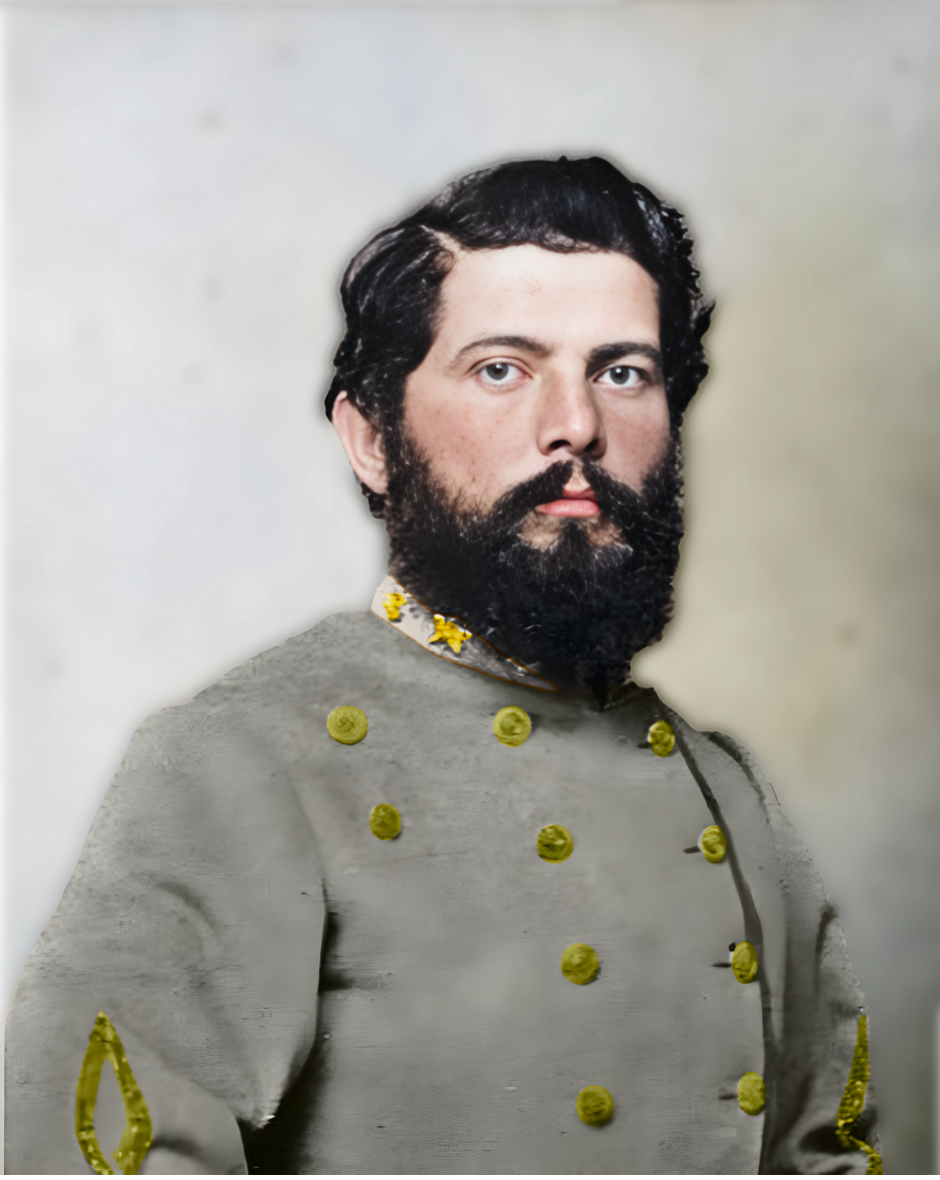
The First New York Dragoons
By October 1864 the Dragoons had left the Reserve Brigade and were riding in the Second Brigade of Merritt’s 1st Cavalry Division, under Brig. Gen. Thomas C. Devin — “Uncle Tommy,” the old war-horse — with Col. Alfred Gibbs commanding the regiment. On October 8, well out on the army’s left flank and at the work of destruction, the regiment was suddenly struck from the rear near Tom’s Brook. Bowen records that the rebel cavalry “saw fit to follow us up,” and that the brush gave the advantage “decidedly in our favor, the enemy being chased back several miles.”
In the general engagement on the 9th, Bowen places the brigade “near the center” of a Union line of battle nearly four miles long, on smooth ground “free from fences” that made “a magnificent place for a cavalry fight.” When the bugles rang out “Forward! Draw sabers! Charge!” the long line crushed upon the Confederates “like an avalanche,” and the enemy broke in wild confusion. Bowen credits the regiment’s own brigade with naming the affair, noting that the movement became “famous under the name of ‘Woodstock Races,’ a title facetiously originated by Colonel Gibbs.” On the return from the chase, Bowen remembered, the victory put the “staid old colonel into a sportive mood,” and Gibbs sent his orderlies down the column ordering the men to raise “the greatest racket possible” as they passed through Woodstock in the darkness — bedlam that spread regiment to regiment until the townsfolk “must have imagined themselves in a veritable pandemonium.”
“On the 8th, as we moved down the valley on our work of destruction, the rebel cavalry saw fit to follow us up. We were well out on the left flank, and when near Tom’s Brook, were suddenly attacked from the rear, and in Southern parlance, ‘hit was a right smart scrimmage.’ The advantages gained were decidedly in our favor, the enemy being chased back several miles.”— James R. Bowen, Regimental History of the First New York Dragoons (1900), ch. XVI, “Battles of Fisher’s Hill and Woodstock Races.”
Casualties
Union losses in the battle were slight — by Torbert’s report, not exceeding about sixty killed and wounded across the entire cavalry corps. Confederate losses are harder to fix, but the Federals carried off eleven pieces of artillery, the Confederate trains, and roughly three hundred prisoners. Bowen records the First New York Dragoons’ loss in the action as small and lists no fatalities for the regiment in this engagement — a rare thing in a year that had cost them dearly at Trevilian Station and Third Winchester.
Aftermath
Tom’s Brook was a decisive and lopsided Union victory that effectively ended the Confederate cavalry as an offensive force in the Valley. The capture of most of Early’s horse artillery and the headlong, twenty-mile flight gave the battle its mocking nickname; some Federal humorist, Bowen recalled, even labeled a captured gun “General Sheridan, Care of Jubal Early.” Coming on the heels of Third Winchester and Fisher’s Hill, it left Sheridan confident that Early’s army was too crippled to take the offensive — a confidence that would be tested, and very nearly shattered, ten days later at Cedar Creek.
Sources & Further Reading
- Primary James R. Bowen, Regimental History of the First New York Dragoons (originally the 130th N.Y. Vol. Infantry) (1900), ch. XVI, “Battles of Fisher’s Hill and Woodstock Races,” pp. 243–249 — the regiment’s own historian and eyewitness, the source of the “right smart scrimmage” passage and of Colonel Gibbs originating the name “Woodstock Races.” Full text: archive.org/details/regimentalhistor00bowe.
- Primary U.S. War Dept., The War of the Rebellion: Official Records of the Union and Confederate Armies, Series I, Vol. 43 (Torbert’s, Merritt’s, and Custer’s reports of the cavalry actions of October 8–9, 1864).
- American Battlefield Trust — Battle of Tom’s Brook: battlefields.org/learn/civil-war/battles/toms-brook (also “10 Facts: Tom’s Brook”).
- National Park Service — The Battle of Tom’s Brook: nps.gov/articles/000/battle-of-toms-brook.htm.
Fisher’s Hill · Third Winchester · The Shenandoah Valley Campaign
Views: 87