Mt. Jackson, Va., Sept. 23, 1864
The Civil War · Shenandoah Valley · September 23, 1864
Mt. Jackson
A single hard paragraph in the regiment’s own history: the running cavalry pursuit after Fisher’s Hill, in which the First New York Dragoons — “in the lead” — charged and routed Early’s rear guard where it made a stand at Mt. Jackson.
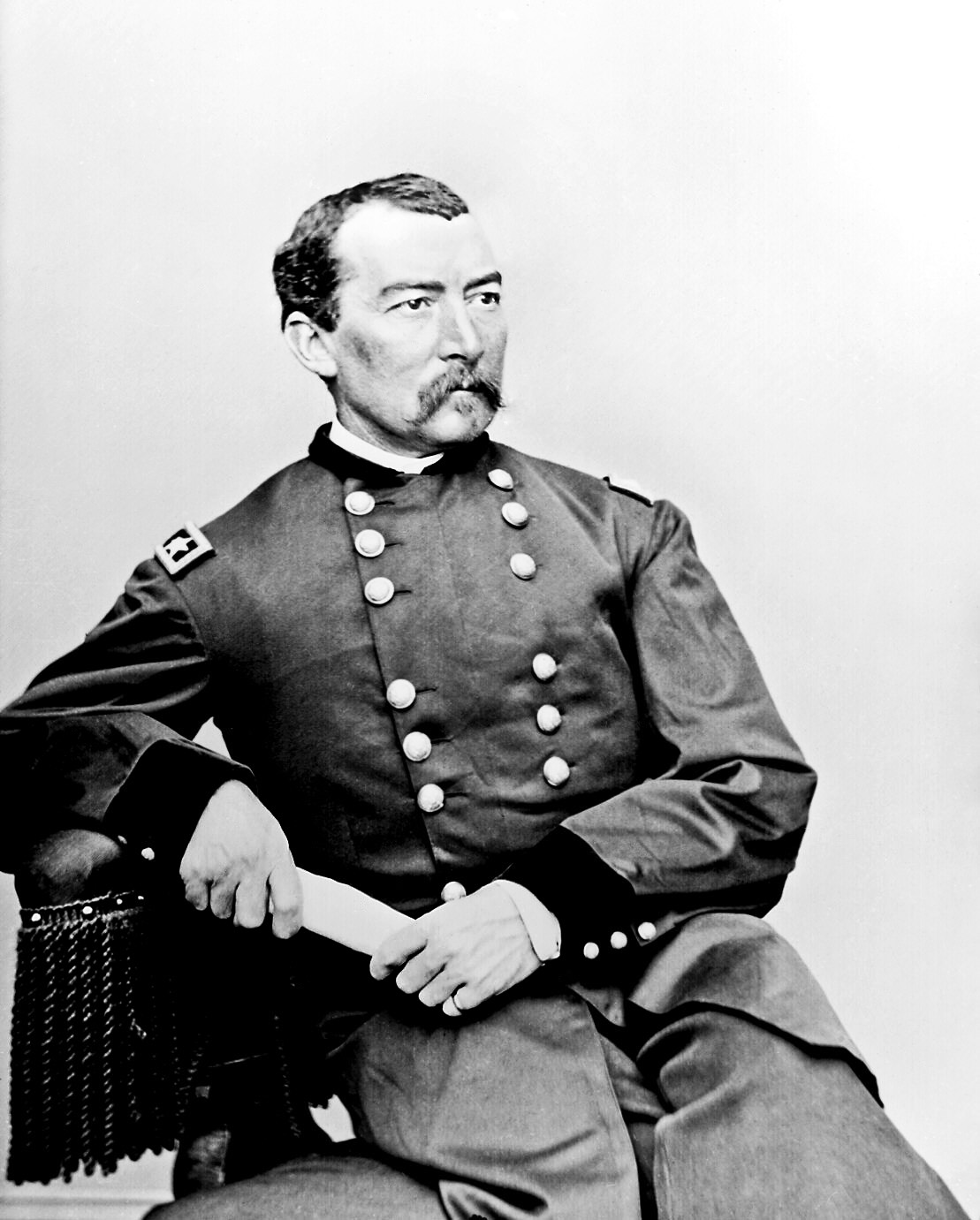
Mt. Jackson was not a set-piece battle but a moment in a chase. On the morning after the Union victory at Fisher’s Hill, September 22, 1864, Maj. Gen. Philip Sheridan threw his cavalry after Jubal Early’s retreating army up the Valley pike. Brig. Gen. Thomas C. Devin’s brigade led the chase, the First New York Dragoons foremost, and kept it up “all night and part of next day” until the Confederates turned to make a stand at Mt. Jackson, in Shenandoah County. There, on September 23, the Dragoons charged and routed them, gathered up stragglers and two guns — and again, as the regiment’s historian dryly noted, darkness saved the rebel army.
Background: After Fisher’s Hill
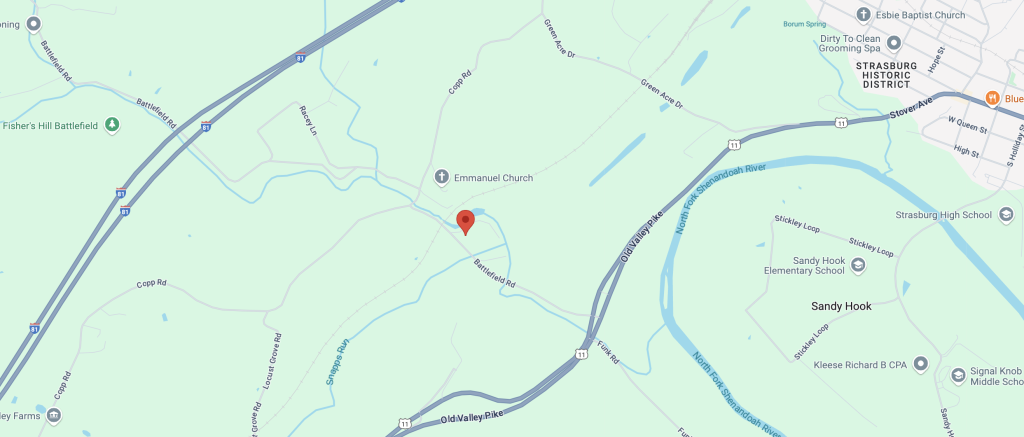
Mt. Jackson followed directly from the rout at Fisher’s Hill. There, on September 22, 1864, Early’s army held a strong line between Little North Mountain and the Massanutten range, but Sheridan sent Maj. Gen. George Crook’s corps by forest paths around the Confederate left while his infantry demonstrated in front. Crook’s surprise volley and charge into the trenches, Bowen wrote, was “the first warning the Confederates received of their impending calamity,” and the rebel army again fled “without semblance of organization,” leaving fourteen hundred prisoners, sixteen cannon, and most of its wagon train. The road south now lay open, and Sheridan, true to his promise to be “after them,” pressed the pursuit at once.

The Stand at Mt. Jackson
To cut off the retreat, Sheridan sent most of the cavalry — Wilson’s division and all of Merritt’s except Devin’s brigade — around through the Luray Valley under Torbert. That left the direct chase up the Valley pike to Devin’s brigade alone, with the First New York Dragoons in the lead. They kept it up, in Bowen’s words, “all night and part of next day,” until the enemy turned and made a stand at Mt. Jackson on September 23.
There the Dragoons charged and routed the Confederate rear guard. As at Fisher’s Hill, the coming of darkness spared Early’s army from worse, but the regiment swept up a large number of stragglers and captured two more pieces of artillery before the night closed the action. Torbert’s wider movement through the Luray Valley, on which Sheridan had pinned high hopes, came to nothing — a failure that left Sheridan, by his own account, “astonished and chagrined.” The next morning, September 24, the Dragoons were again in the advance, taking up the chase toward New Market.
“The chase on the pike was taken up by our brigade, the Dragoons in the lead, and kept up all night and part of next day, until the enemy made a stand at Mt. Jackson, where we charged and routed them. Again darkness had saved the rebel army. We, however, picked up a large number of stragglers, and captured two more pieces of artillery.”— James R. Bowen, Regimental History of the First New York Dragoons (1900), ch. XVI, p. 240. Bowen rode through the campaign as orderly bugler close to Col. Gibbs.
Afterward: “The Burning”
The pursuit ran on past Mt. Jackson — to New Market on the 25th, then toward Harrisonburg, Port Republic, and Brown’s Gap — and was followed by the systematic destruction of the Valley’s crops, mills, and barns that soldiers came to call “The Burning.” The aim was to strip the “breadbasket of the Confederacy” of the supplies that had sustained Early’s army and, beyond it, Lee’s. Mt. Jackson itself became a vantage point on that desolation: from there, Bowen recorded, “the writer counted, from just one standpoint, one hundred and sixty-seven barns in flames at one time.”

Roll of Loss — Mt. Jackson, September 1864
The named casualties of the First New York Dragoons traceable to the action at Mt. Jackson, from the regimental service records in Bowen’s appendix. (Sgt. Norton’s service record dates his wound September 24; the engagement itself is carried in the regiment’s list under September 23, the close one-day discrepancy of a fight that ran into the night.)
| Type | Name | Company | Rank |
|---|---|---|---|
| Wounded | Norton, Merritt W. Bio | A | Sergeant |
| Wounded | Goodrich, Albert D. | F | Private |
Sources & Further Reading
- Primary James R. Bowen, Regimental History of the First New York Dragoons (1900), ch. XVI, “Battles of Fisher’s Hill and Woodstock Races,” p. 240 (the Mt. Jackson paragraph), with the “barns in flames” observation at p. 241 — the regiment’s own historian, an eyewitness who rode as orderly bugler beside Col. Gibbs. Full text: archive.org/details/regimentalhistor00bowe.
- Primary U.S. War Dept., The War of the Rebellion: Official Records of the Union and Confederate Armies, Series I, Vol. 43, Pt. 1 — the reports of Sheridan, Torbert, Merritt, and Devin covering the pursuit up the Valley after Fisher’s Hill.
- Primary P. H. Sheridan, Personal Memoirs of P. H. Sheridan (New York: Charles L. Webster & Co., 1888), Vol. II — for the pursuit and Sheridan’s “astonished and chagrined” verdict on Torbert’s Luray Valley failure.
- American Battlefield Trust — Battle of Fisher’s Hill and the 1864 Valley Campaign: battlefields.org/learn/civil-war/battles/fishers-hill.
- National Park Service / CWSAC Battle Summary, Fisher’s Hill (VA120), the engagement that opened the pursuit through Mt. Jackson: nps.gov/abpp/battles/va120.htm.
New Market · Third Winchester · The Shenandoah Valley Campaign
Views: 777