Winchester, Va., Sept. 19, 1864
The Civil War · Shenandoah Valley · September 19, 1864
Third Winchester
Also called the Battle of the Opequon — the day the First New York Dragoons rode in “the grandest charge ever made in this war,” and two of them earned the Medal of Honor.
The Third Battle of Winchester, fought on September 19, 1864, and known to the army as the Battle of the Opequon, was the largest and bloodiest engagement of the entire Shenandoah Valley Campaign. Some fifty thousand men met in the rolling country east of Winchester, and by nightfall Maj. Gen. Philip H. Sheridan had broken Lt. Gen. Jubal Early’s army and sent it “whirling through Winchester.” For the First New York Dragoons it was a day of glory and of grief: the regiment helped deliver the climactic cavalry charge that decided the battle, captured three Confederate battle flags and more prisoners than it had men in the fight, and lost the gallant Captain Alexander Thorp, brother of its own colonel.
A New Brigade
Ten days before the battle the regiment received news it had long wanted. On September 9, 1864 the First New York Dragoons were transferred out of the Reserve Brigade — and away from the U.S. regular regiments the men had come to resent — and into the Second Brigade of Merritt’s First Cavalry Division, commanded by Brig. Gen. Thomas C. Devin, “the old war-horse.” Bowen recorded “great rejoicing” in the ranks. The brigade now joined the 4th, 6th, 9th, and 17th Pennsylvania cavalry; the Dragoons still carried their old infantry designation as the 19th New York. Colonel Alfred Gibbs led the regiment.
The Wolf Drive
After Grant visited the army and left Sheridan with two words — “Go in” — Sheridan moved. Helped by intelligence smuggled out of occupied Winchester by Rebecca Wright, a young Union woman of the town, he learned the dispositions of Early’s army and struck on the morning of the 19th. Bowen likened the plan to a wolf drive, with Winchester as the corral toward which every Union column converged. The Dragoons were in the saddle at two o’clock in the morning.
Merritt’s division, with the Dragoons, struck the Confederate outposts at Seever’s Ford on the Opequon, about seven miles northeast of the town, crossed the river with the rest of Devin’s brigade, and pushed west for some three miles, contesting every foot with McCausland’s cavalry and Breckinridge’s infantry. In one sharp moment the brigade was thrown into confusion by an enemy column; Devin formed the Dragoons across the road and held the line. It was here, facing McCausland’s men across a deep railroad cut, that Captain Alexander K. Thorp — brother of Colonel Thorp, who had been captured at Trevilian Station that June — was struck in the forehead and killed. Bowen, in conversation with him at that very instant, helped carry his body from the field.
The Grandest Charge
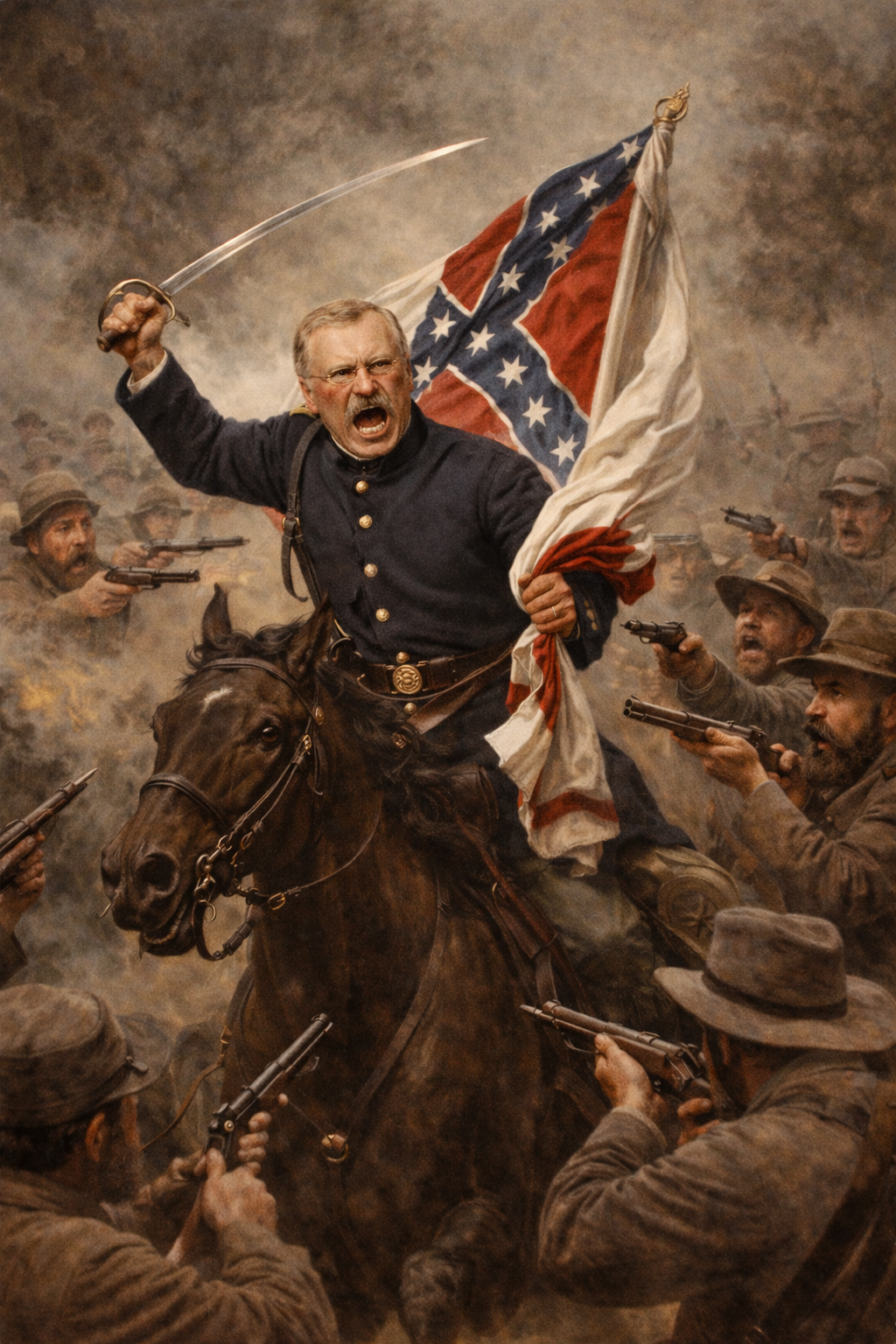
By three in the afternoon Merritt’s and Averell’s divisions had joined north of Winchester, and five brigades of horsemen — Custer, Lowell, Devin, Powell, and Schoonmaker — formed a single continuous line, bands playing and sabers glittering, and swept south upon Early’s left. The Dragoons rode well to the left of the line, within a hundred rods of the rebel infantry’s flank, on open ground that gave a mounted charge a rare clear run. At the division bugle’s “Forward!” some three thousand troopers went from walk to trot to gallop and crashed into the Confederate ranks. The charge broke Early’s left and, in Bowen’s words, “changed the fortunes of the day, deciding the battle in favor of the Union arms.”
“The brave Colonel Gibbs, of the First New York, and Nichols, of the Ninth, led their regiments in gallant style, and won unfading laurels in this the grandest charge ever made in this war.”— Brig. Gen. Thomas C. Devin, commanding the Second Brigade, in his report of the Battle of the Opequon, quoted in Bowen’s regimental history.
Three Flags and Two Medals of Honor
In the wild melee that followed, members of the regiment seized three Confederate battle flags. Commissary Sergeant Andrew J. Lorish and Color Corporal Chester B. Bowen each charged clear through the first rebel line and brought off enemy colors. Cornered as he took his flag, Lorish brandished his saber, spurred straight at the men leveling their guns, and bluffed them into grounding their arms before he galloped back to his own lines. Eight color-takers from Sheridan’s cavalry carried their captured flags to Washington and presented them to Secretary of War Edwin Stanton on September 23, who promised each man a medal with his name inscribed. Lorish and Bowen were both awarded the Medal of Honor for Third Winchester. A third flag, taken by a Dragoon recruit, was seized from him by an officer of the regulars, and the man never received credit for it. The regiment, Bowen noted, “alone captured more prisoners than we had men in the fight.”
Aftermath
With his left shattered and Custer’s troopers pressing the rest, Early’s army broke and fled south through Winchester, saved from destruction only by nightfall. Sheridan wired his superiors: “We have sent them whirling through Winchester, and we are after them to-morrow. This army behaved splendidly.” It was the first great Union victory in the Valley, and it set Sheridan’s army on the road to Fisher’s Hill two days later and, ultimately, to Cedar Creek. The cost was heavy on both sides: modern accounts put Union losses near five thousand and Confederate near thirty-six hundred, while Bowen, writing as a private soldier, reckoned the loss at about forty-five hundred on each side.
Sources & Further Reading
- Primary James R. Bowen, Regimental History of the First New York Dragoons (1900), ch. XV, “Sweeping Victories and Decisive Battles — the Shenandoah Valley Regained,” pp. 224–238 — the regiment’s own historian, an eyewitness, drawing on his letters and on the official reports. Full text: archive.org/details/regimentalhistor00bowe.
- Primary Brig. Gen. Thomas C. Devin, official report of the Battle of the Opequon, in U.S. War Dept., The War of the Rebellion: Official Records, Series I, Vol. 43, Pt. 1 (the source of the quotations praising Col. Gibbs and the regiment).
- Primary Medal of Honor citations, Sgt. Andrew J. Lorish and Color Corp. Chester B. Bowen, First New York (Lincoln) Cavalry, for the capture of Confederate colors at Winchester, Va., September 19, 1864.
- Jeffry D. Wert, From Winchester to Cedar Creek: The Shenandoah Campaign of 1864 (Carlisle: South Mountain Press, 1987).
- American Battlefield Trust — Third Battle of Winchester (Opequon): battlefields.org/learn/civil-war/battles/third-winchester.
- National Park Service / CWSAC Battle Summary, Third Winchester / Opequon (VA110): nps.gov/abpp/battles/va110.htm.
The Shenandoah Valley Campaign · Trevilian Station · The Audiobook
Views: 217