Manassas Plains, Va., Oct. 17, 1863
The Civil War · Bristoe Campaign · October 17, 1863
Manassas Plains
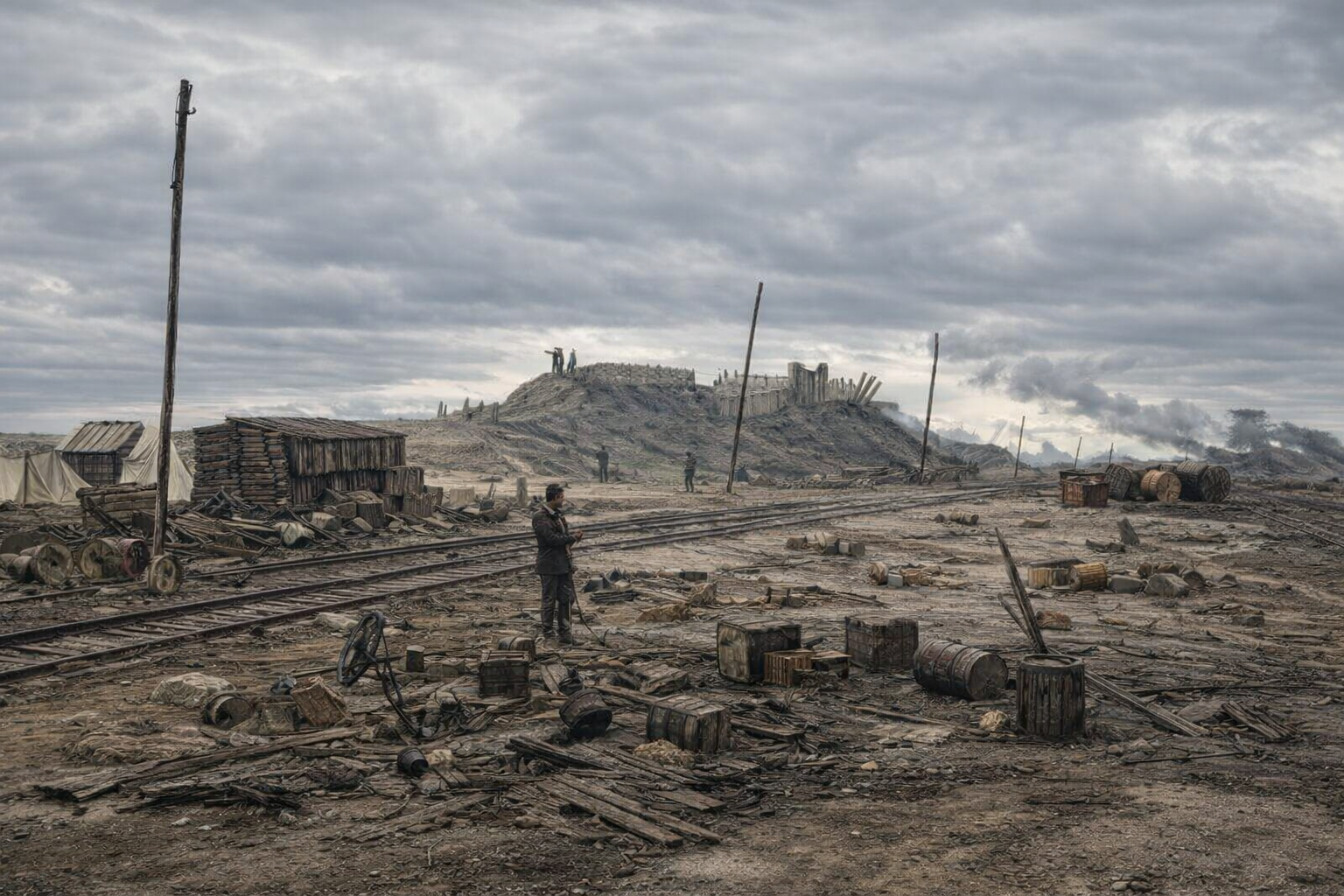
Not the great battles of Bull Run, but a night cavalry fight on the old Manassas drill ground — the First New York Dragoons’ baptism as horsemen, led in person by Col. Alfred Gibbs.
The action at Manassas Plains on October 17, 1863, was the First New York Dragoons’ first battle as a cavalry regiment. Fought during the Bristoe Campaign and led in person by their colonel, Alfred Gibbs, it was a Union success: the Dragoons led the advance, closed after dark with drawn sabers, and drove the enemy nearly to Bristoe Station before falling back to hold Manassas Junction until reinforcements came up. Their own historian, J. R. Bowen, calls it “a glorious victory.”
A Camp of Instruction at Manassas
On July 28, 1863, the 130th New York Volunteer Infantry was converted to mounted service. For a short while the regiment was carried on the rolls as the Nineteenth New York Cavalry — the designation the Official Records most often use — before taking the name under which it became famous, the First New York Dragoons, read out on dress parade October 10. Through August, September, and early October the men lay in a camp of instruction at Manassas, drilling in cavalry tactics under Colonel Alfred Gibbs, a regular-army cavalryman, and skirmishing constantly with Mosby’s guerrillas on the outskirts of the camp.
On October 13 the regiment took the field, attached to the Reserve, or Regular, Brigade of Buford’s First Cavalry Division — a brigade of United States regulars and the 6th Pennsylvania in which the volunteer Dragoons were the odd men out, and were made to feel it. Within days Lee had outmaneuvered Meade and driven the Army of the Potomac back toward Centreville, and the cavalry found itself covering the retreat over the very ground the regiment had trained upon.
The Night Fight
On October 16 the brigade crossed Bull Run at Blackburn’s Ford on a reconnaissance from Centreville, found the enemy in force, and came back without a general engagement. The next afternoon, the 17th, the column moved over the same route, the Dragoons leading the advance — and, as Bowen marveled, the fight developed on the very drill ground where the men had so lately “sportively charged upon imaginary foes.” Part of Company I, under Lieutenant Charles E. Lewis, went forward as advance guard. Near the regiment’s old hospital the enemy was found in line of battle and opened with heavy volleys; Lewis was knocked from his horse, shot through the groin, and carried off by his men.
Colonel Gibbs led his regiment in person. By Bowen’s account he ordered the two regiments of regulars to form on the Dragoons’ line; by Albert Swift’s, written five days later, the regulars never came up, and Gibbs charged without them. As the Confederates threatened to charge, Gibbs gave the word — “Forward,—guide right, charge!” — and led the men in person. The fighting ran on into pitch darkness, both sides aiming by the flash of the other’s guns, until the Dragoons closed with drawn sabers and drove the enemy nearly to Bristoe Station. The regiment then fell back and held Manassas Junction until reinforcements arrived. By Bowen’s bitter account the regulars fell back when the firing began and left the Dragoons to fight alone — a grievance that colored the volunteers’ view of their brigade for months.
Update, 2 November 2026: who commanded the brigade. This page first said that Colonel Gibbs commanded the Reserve Brigade on 17 October 1863. Four documents say otherwise. General Wesley Merritt’s dispatches from Manassas Junction that afternoon, and his casualty list for “the engagement at Bull Run, October 17, 1863,” are signed as commanding the brigade (Official Records, Ser. I, Vol. 29, Pt. 1, pp. 351-354). Gibbs’s own statement of his service, written in 1866, places him under Merritt from 13 October and in command of the brigade only from November. And Albert Swift of the regiment wrote on 22 October that the Dragoons left Centreville “in company with a brigade of regular Cavalry” and “expected the regular brigade to follow immediately in our rear.” Two accounts give Gibbs the brigade: Bowen’s letter of 21 October (“though in command of the brigade,” quoted below as he wrote it) and Thorp’s regimental history of 1865. Every witness agrees on what Gibbs did: his regiment led the advance across Bull Run, he was at its head, and when the regulars did not come up he charged without them. The facts table and the paragraph above have been corrected accordingly.
“It seems a remarkable coincidence that on the very drill ground where we so recently had received our training and had sportively charged upon imaginary foes, we should meet a real enemy and fight our first cavalry battle, achieving a glorious victory.”— J. R. Bowen, in his letter from Bristoe Station, Va., October 21, 1863, reproduced in the regimental history. Of the charge he added that Colonel Gibbs, “though in command of the brigade,” kept with the Dragoons and “led by the colonel in person, rushed upon the enemy.”
Casualties
Bowen records the regiment’s loss as three enlisted men killed and one officer and two men wounded, besides several hurt by falling horses and a number of horses killed. Two named casualties are given in the account and confirmed in the regimental roster printed in the same volume:
- Lieutenant Charles E. Lewis, Company I — wounded through the groin while leading the advance guard. He recovered, rose to first lieutenant, and mustered out with his company at Cloud’s Mills in June 1865.
- Sergeant Nathan Bradley, Company H — misled in the darkness and captured. The roster records that he died a prisoner at Richmond, Virginia, in January 1864.
Aftermath
Having held Manassas Junction until reinforced, the Dragoons came out of their first cavalry engagement having driven a larger force from the field, and, Bowen wrote, Colonel Gibbs was “so proud of his boys, he can hardly contain himself.” The appendix to the regimental history marks the day plainly among the regiment’s engagements: “17, engagement at Manassas Plains.” Two days later, and unrelated to this fight, Stuart routed Kilpatrick at Buckland Mills. The Dragoons rode on through the exhausting marches of the Bristoe Campaign to winter quarters at Mitchell’s Station, and toward the far harder service of 1864 — the Wilderness, Cold Harbor, and Trevilian Station — but Manassas Plains remained their proving ground as cavalry.
Sources & Further Reading
- Primary James R. Bowen, Regimental History of the First New York Dragoons (originally the 130th N.Y. Vol. Infantry) (1900), ch. VII, “Manassas to Mitchell’s Station,” pp. 96–107 — the regiment’s own historian, reproducing his verbatim October 21, 1863 letter written four days after the fight. Full text: archive.org/details/regimentalhistor00bowe.
- Primary U.S. War Dept., The War of the Rebellion: Official Records of the Union and Confederate Armies, Series I, Vol. 29 (Bristoe Campaign; the regiment appears under its cavalry number, the 19th New York).
- American Battlefield Trust — the Bristoe Campaign of October 1863, in which this action was fought: battlefields.org/learn/civil-war/battles/bristoe-station. Note: this small October 17 cavalry skirmish on the Manassas plains has no standalone NPS/CWSAC battle summary of its own; it is documented here chiefly through Bowen and the Official Records.
Trevilian Station · The Shenandoah Valley Campaign · The Audiobook
Views: 76