Life at Fort Fillmore: Daily Life at the Post
Daily Life at the Post
Life at Fort Fillmore
A tent camp on the Rio Grande, a town with a library and a sutler, a son born and a captain lanced, and a surrender in the desert. The whole of it, pieced together from the records.
Fort Fillmore was never photographed, and for a long time it was barely remembered. But it was not silent. A commander wrote home to his wife. A private kept a diary. A wounded captain filed a report in his own hand. An officer’s wife wrote a memoir. A bitter surgeon settled his scores in print. And the ground itself, dug up a century later, gave back the broken dishes and the clay pipes the soldiers smoked. Set those side by side and the post comes back to life, eleven years of it, from a row of tents to a column collapsing in the heat. This is that story, told from the records, with every claim tied to where it came from.
September, 1851
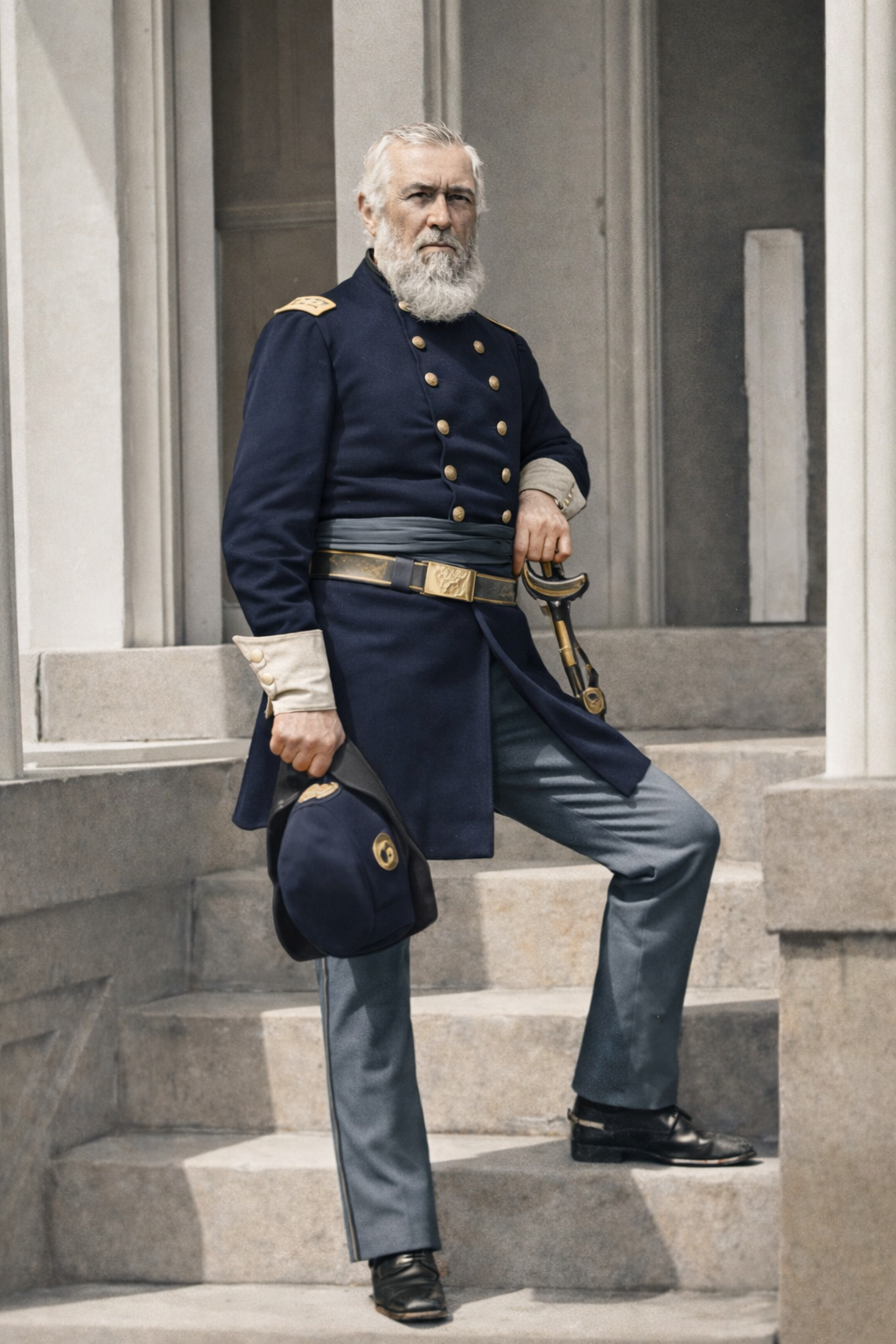
Lieutenant Colonel Dixon Stansbury Miles, forty-seven years old, established Fort Fillmore on the east bank of the Rio Grande on September 23, 1851. He chose the date deliberately, for the anniversary of the Battle of Monterrey, where he had fought. He had come a long way to do it: roughly twelve hundred miles from Fort Leavenworth, fifty-four days on the road, on a horse he called George.1
What he found, he could only call beautiful. “Such a beautiful situation is all I can say of it,” he wrote his wife in Baltimore that October. The rest was hard. The nearest town was Las Cruces, twelve miles off, and “we have no marketing, and it is hard living on commissary alone.” He got onions sometimes, and “peaches, grapes and pears, which we have to eat to keep off the scurvy, as I have had some symptoms of it.” The whole command lived in tents. Miles had two wall tents facing each other, one for his bed and one for a parlor, a third for dining, and his Irish servant Patrick had two more and a bower to cook under. The tents had floors, but the nights were bitter.1
They built as fast as they could. The first shelter was jacal: walls of close-set wooden stakes cut from the river brush, plastered with mud, roofed with straw, thrown up in a hurry while the adobe brick was made. Local Mexican laborers were hired to teach the soldiers the craft, at seventy-five cents a man per day and rations.16
The first winter nearly killed them. “For the last week it has been rainy, sleety and snowy, cold and damp,” Miles wrote. “I thought more than once I would have frozen to death.” And then a line that no muster roll records: “One of my soldiers did die from the extreme change of the weather.”1
What the Post Was
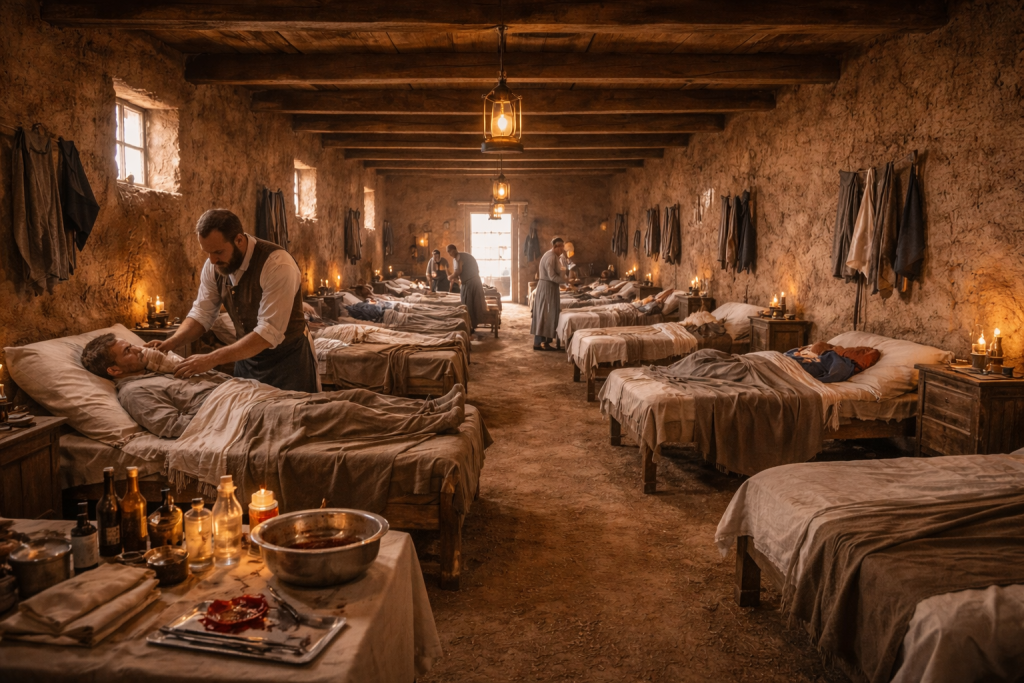
By 1853 the tents and the jacal had given way to adobe. When the surgeon J. C. McKee set it down in 1861, the fort was “square adobe houses, with the usual flat dirt roofs, the walls extending up all around, forming a parapet,” the officers’ quarters on one side and the soldiers’ barracks on two others, a quadrangle enclosing about three acres, the side toward the river left open. The buildings stood twenty or thirty feet apart, joined by no wall.4 It was a post, not a fortress, and that openness would matter at the end.
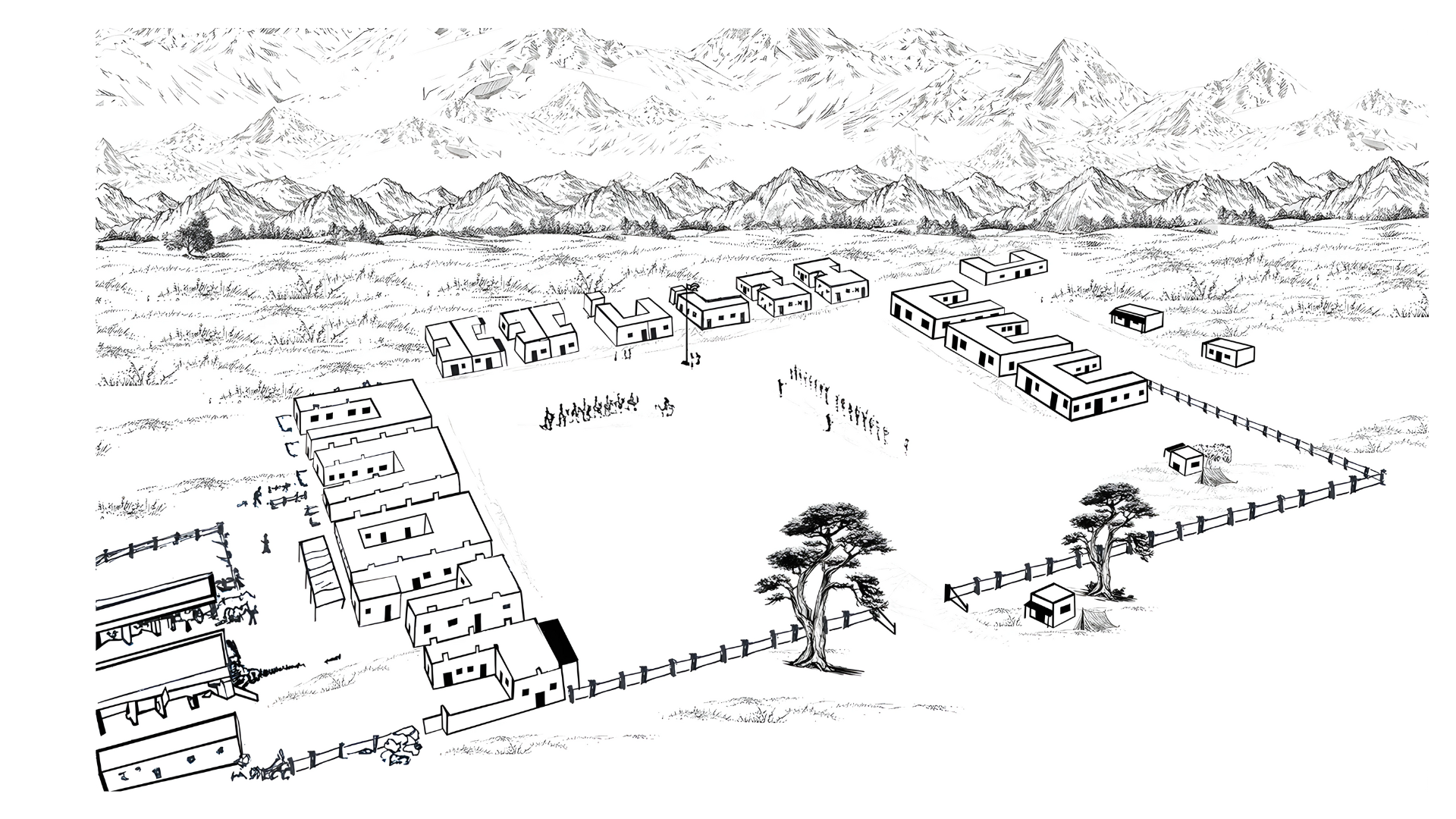
Inside, rank was written into the floors. The officers’ quarters had tiled floors and carpets; the men’s barracks had floors of packed adobe, with red brick tile laid into some of them later in the decade.6 The garrison ate beef above all, in steaks and roasts, with bacon, hard bread, rice, coffee, sugar, beans, and vinegar. One surviving Fort Fillmore provision invoice was signed by a young commissary captain named James Longstreet, who would be a Confederate lieutenant general before the decade was out.67
The post had a sutler’s store at its northwest corner, run by George Hayward, who in August 1852 became the first postmaster in all of southern New Mexico. And it had a library: on Christmas of 1852 Private Sylvester Matson spent the holiday reading N. P. Willis’s Dashes at Life, a book the records place in the Fort Fillmore post library.210
The People Who Made It a Town
For all its drill and its sentries, Fort Fillmore was as much a town as a garrison. It had children and weddings, laundresses and a postmaster, dances and holidays.
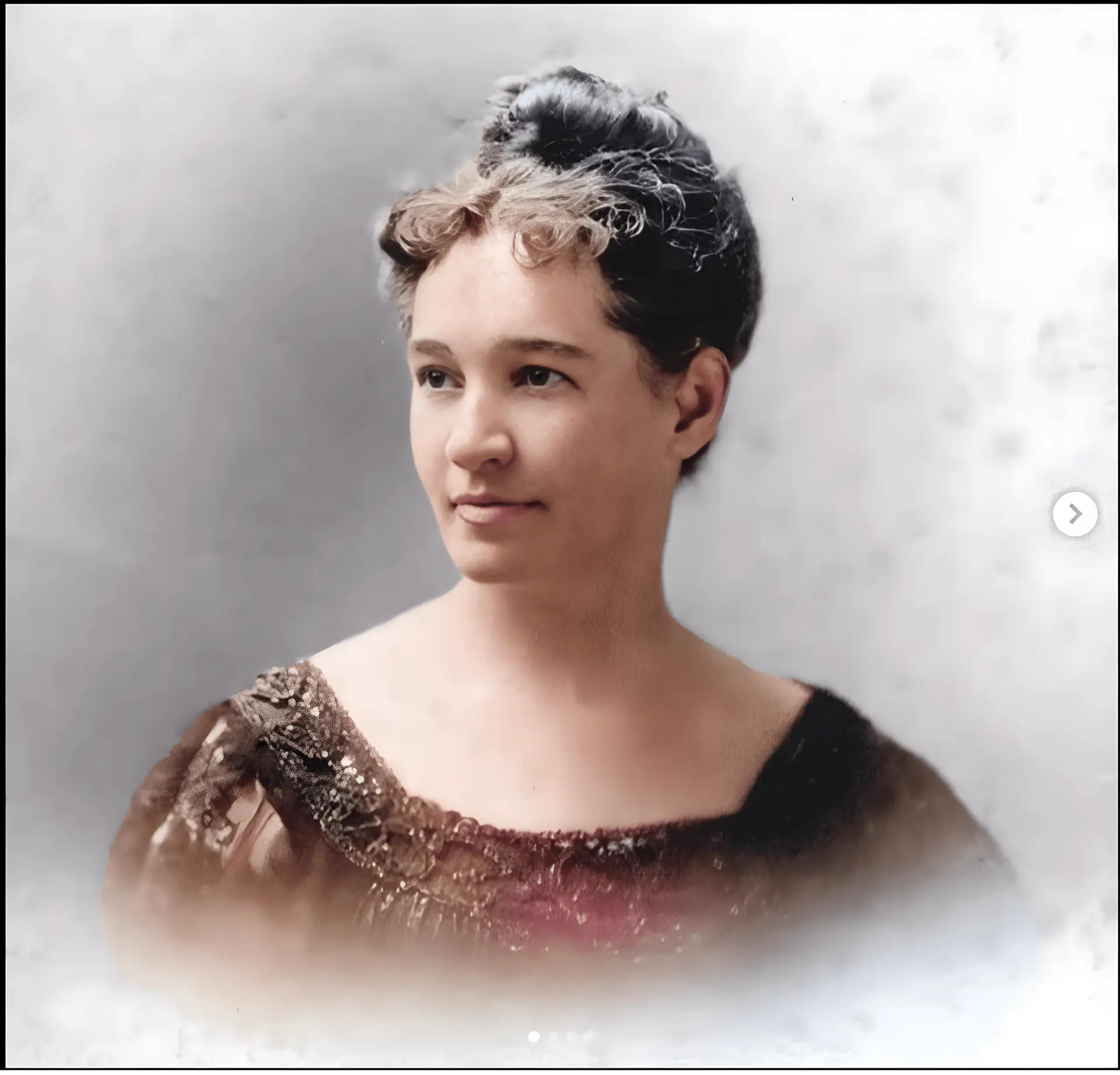
The post’s most vivid chronicler was an officer’s wife, Lydia Spencer Lane, whose memoir I Married a Soldier preserves much of what we know of daily life on the Rio Grande, and who would, in 1861, find herself very nearly in command of the place.5
The four laundresses allotted to each company lived in the barracks and were, by the 1860 census, an Irish and Mexican immigrant community: Maria McKane and Onez Snyder, married to laborers; Bridget Lander, married to a clerk; Dolores Morales with her three children. One laundress of the regiment was said to have served at least thirty-five years.10 In the spring of 1856 a grand garrison wedding, one of Colonel Miles’s daughters, drew guests from every fort within a hundred miles, ladies in ball gowns, the bride in white, a Methodist missionary officiating, and among the guests Colonel Bonneville and Captain James Longstreet.10
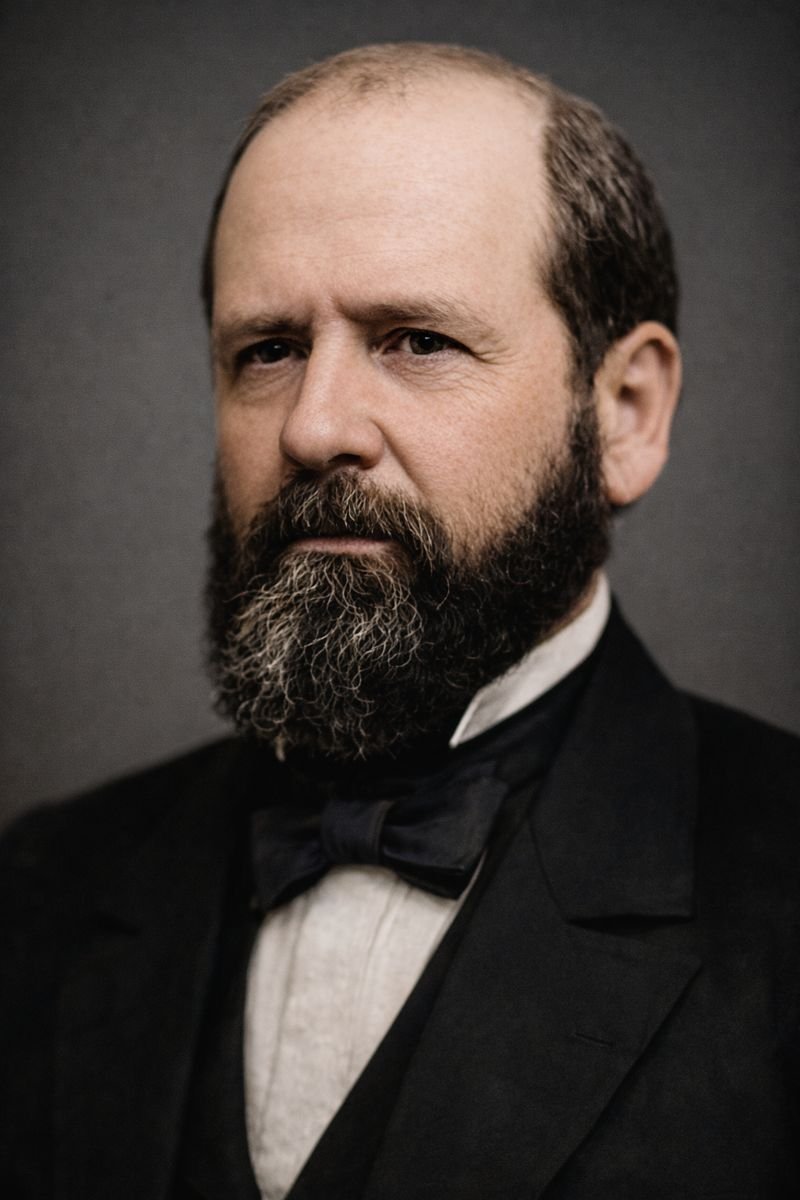
Private Matson, who kept the diary that records most of this, noted an officers’ soiree on Christmas night of 1852, the first dance known at the post, and a year later, on St. Valentine’s Day, a full-dress parade held to honor the birthday of Lieutenant McFerran’s little daughter, with Mexican lancers under Colonel Langberg joining the line.2
And in the trash behind the quarters, the archaeologists found the smallest, most human thing of all: clay tobacco-pipe bowls molded as the faces of politicians, Franklin Pierce most common of all, then Millard Fillmore, Andrew Jackson, Henry Clay, Winfield Scott, George Washington. There were none of Buchanan or Lincoln, which dates the dumps to the early and middle 1850s. The soldiers, in other words, sat in the evening and smoked the face of the sitting president.6
Gibbs’s Blood

Captain Alfred Gibbs reached Fort Fillmore on September 5, 1856, with Company G of the Regiment of Mounted Rifles. Seven weeks later, on October 27, 1856, his son Alfred Wolcott Gibbs was born at the post.8 It was Gibbs’s first field command since the Mexican War, and it very nearly killed him.
On March 8, 1857, Gibbs rode out with two corporals and fourteen men after Apaches who had run off a surveyor’s stock near Robledo. They camped twenty-two miles out, took up the trail at daybreak, crossed the Rio Grande, and ran the raiders down in an arroyo the next afternoon. What happened next Gibbs wrote in his own report three days later, from the fort, while too wounded to rise. The badly hit Apache chief kept rallying and charging. As the chief lunged at a dismounted soldier, Gibbs fired his fifth pistol shot into him, and the chief turned: “he passed his lance into me, altho parried with my pistol.” A soldier shot the chief down. Gibbs rode on a quarter mile, then, “becoming very faint from loss of blood, I dismounted to prevent falling off,” handed his horse to Corporal Collins, and ordered the pursuit pressed. The chief was found “dead with ten balls in him.” Not one of Gibbs’s men was hurt, though some had their clothes cut by lances.3
— Capt. Alfred Gibbs, his report, 11 March 1857

They camped on the spot and sent forty-five miles back for help. At daylight the post surgeon, George Cooper, rode out with a carriage and brought the whole party in, three wounded horses and all. Major Gouverneur Morris reported the wounding to department headquarters and lauded Gibbs for his bravery, and Gibbs recovered, slowly, in the Fort Fillmore hospital.310 He was up by summer and serving as adjutant, and that October he and Company G left for Fort Union. He would not see Fort Fillmore again until July 1861, when he arrived in time for its ruin.310
The End, 1861
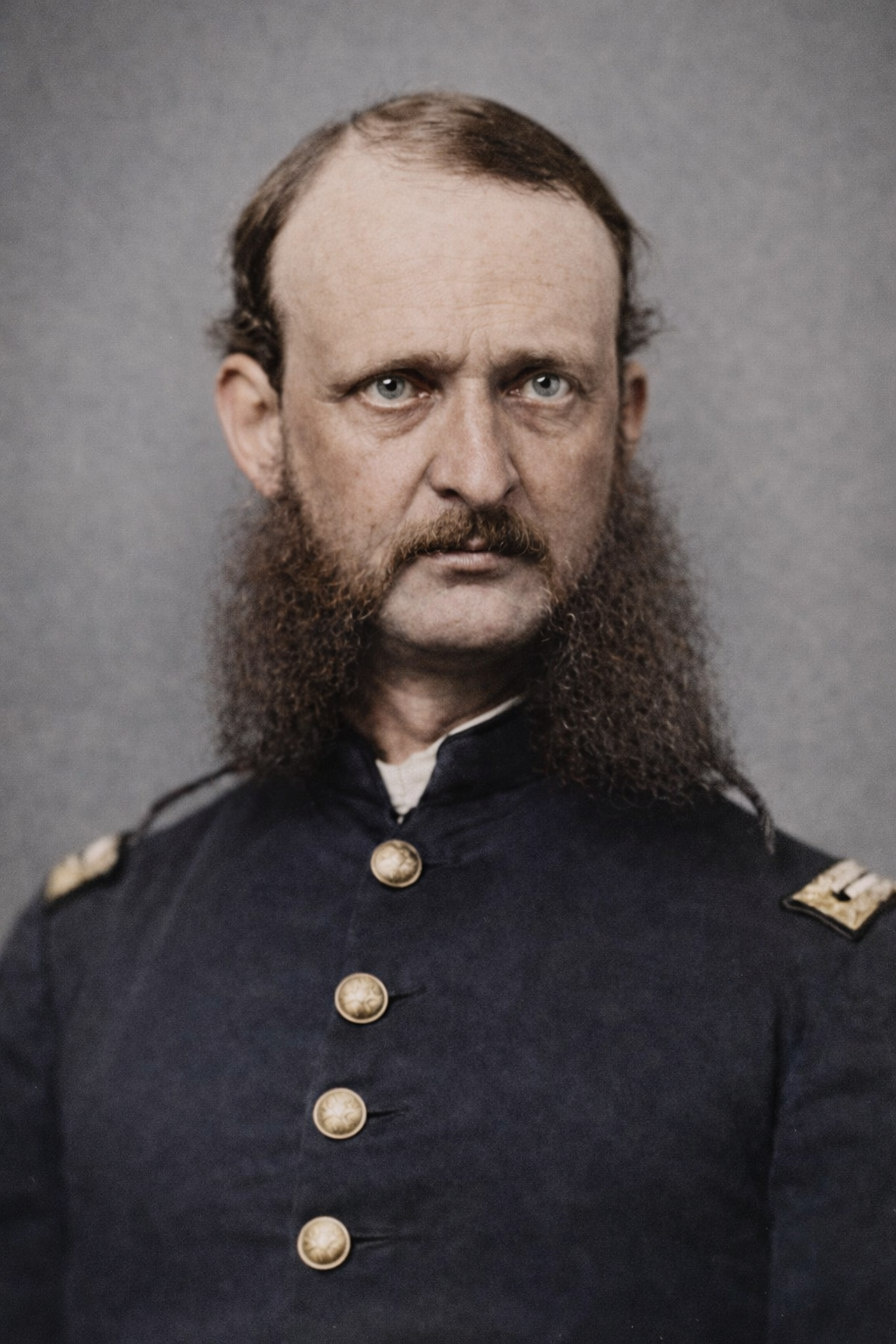
By the spring of 1861 the war had reached the Rio Grande. With her husband ordered out, Lydia Spencer Lane, an officer’s wife who had first called the post “such a dreary-looking place I have seldom seen,” was left more or less in charge of it with a handful of men, while smallpox raged just outside the gates and she arranged to have the company vaccinated.5 In July the post’s commander, Major Isaac Lynde, abandoned Fort Fillmore and marched his column east across the Organ Mountains toward San Augustine Springs.
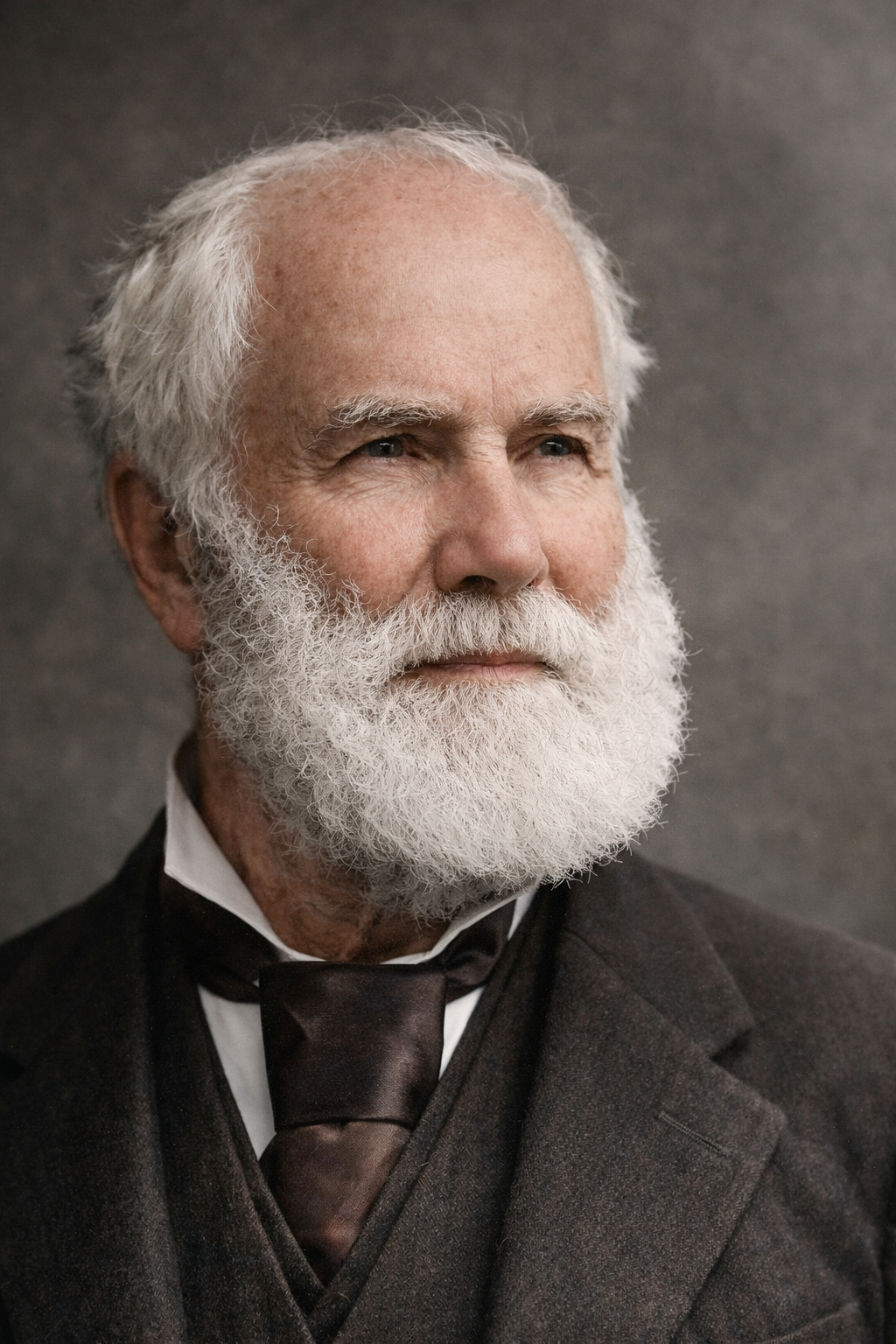
The march destroyed them. “The day was excessively warm,” McKee wrote, “and there being no water, many men dropped out of the ranks almost dead from fatigue and thirst.” The column strung out for miles, helpless, and at the springs Lynde surrendered some five hundred veterans to about three hundred Texans “without firing a shot.”4
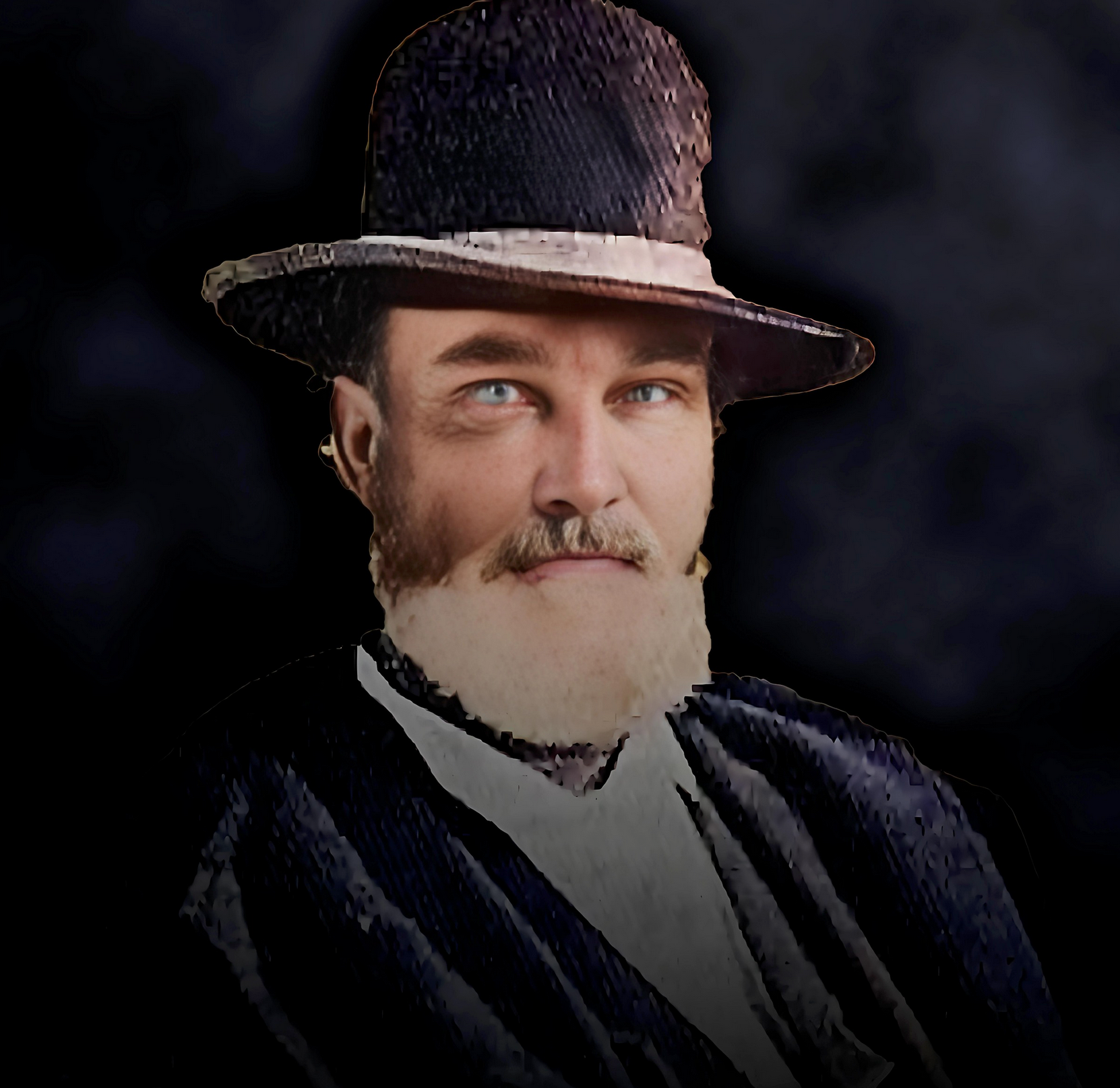
Gibbs was there again. Four years after he had left the post wounded, he came back to it in July 1861, driving beef cattle down from Fort Craig, and rode straight into the trap. He covered the retreat as well as any man could, his company deployed as skirmishers to hold off the enemy, but Lynde’s “positive order” forbade him to fire a single shot, and he was surrendered with the rest. The man who had bled for the post in 1857 was made a prisoner at its disgrace in 1861.410
One legend should be put down here, because it has clung to the story for over a century: that the men filled their canteens with whiskey instead of water, and lost the day drunk. The surgeon’s own account does not support it. The only whiskey McKee records was the hospital’s medicinal stores, which he himself smashed at the post the day before the march; the collapse he lays to heat and thirst alone.4 The post’s modern historians agree the drunkenness tale is a myth, there was nowhere near enough liquor to fill a garrison’s canteens, and the story was too good to have been kept quiet at the time.10
McKee, who despised his commander and said so for the rest of his life, left the sharpest scenes: a howitzer dragged up onto his kitchen roof “but never fired”; Lynde found at the end “enjoying a comfortable lunch, as if nothing were going on… the sublimity of majestic indifference”; and old soldiers who had faced the Mexican War left to “weep like children.”4 The Confederates held the post for a year, lost it, and in 1863 it was pulled down for its timber and hardware and carried away.610
A Note on the Telling
No single document tells this story. It comes from a colonel’s homesick letters, a private’s diary, a captain’s bloodied report, a wife’s memoir, a surgeon’s bitter pamphlet, and the broken pipes in the ground. Set side by side, they give back a place that was a town as much as a fort: where a child was born and a man was lanced, where soldiers danced and read borrowed books and smoked the president’s face, and where, in one hot week in 1861, all of it came apart in the desert. The references below mark where a witness is partisan, McKee hated his commander, and where a thread rests on a single source. Everything else is where the records lead.
- Lt. Col. Dixon S. Miles, 1851. His official dispatches (Miles to Buell and to the Assistant Adjutant General, September 1851) are in the National Archives (microfilm M1102, Letters Received, 9th Military District, Department of New Mexico). His personal letters home, the source of nearly every Miles quotation here, the “beautiful situation,” the tents, the scurvy fruit, and the soldier who froze, are from an unpublished private collection, the “Kuethe Correspondence,” acquired by the post historian from Mr. Bill Kuethe of Glen Burnie, Maryland. We have those only as that history (ref. 10) reproduces them; the originals are privately held and we do not possess them.
- Pvt. Sylvester W. Matson, diary, 1851–1855. Transcribed and reproduced on this site: The Lost Diary of Private Sylvester W. Matson. Source for the Christmas reading, the soiree, the post library, and the St. Valentine’s parade.
- Bvt. Capt. Alfred Gibbs, field report of the Robledo scout, written 11 March 1857 (National Archives; reproduced in the post history at ref. 10). The lance wound is in Gibbs’s own hand.
- Maj. James Cooper McKee, Narrative of the Surrender of a Command of U.S. Forces at Fort Fillmore, N.M., in July, A.D. 1861 (Boston, 1886). Public domain: Internet Archive. The post surgeon’s firsthand account: vivid, quotable, and openly hostile to Major Lynde, so used with that caution.
- Lydia Spencer Lane, I Married a Soldier; or, Old Days in the Old Army (Philadelphia, 1893). Public domain: Internet Archive.
- Edward Staski, with Joanne Reiter and Paul S. Johnston, archaeological studies of Fort Fillmore: Historical Archaeology 24:3 (1990), 26:2 (1992), and 30:3 (1996). The floors, the dishes, the foodways, and the politician pipes.
- Gibbs’s 1857 commissary and subsistence papers (scanned from the originals at West Point), including the Longstreet-signed provision invoice. See The Garrison of Fort Fillmore and the Enlisted Men Database.
- Alfred Wolcott Gibbs, the general’s son, born at Fort Fillmore on 27 October 1856: see his page on this site. (The two post histories do not mention the birth; this thread rests on the family record.)
- Col. J. K. F. Mansfield, 1853 inspection of Fort Fillmore, in Robert W. Frazer, ed., Mansfield on the Condition of the Western Forts, 1853–54 (Norman, 1963), Plate 13: Internet Archive (borrowable).
- The modern histories of the post: Forgotten Fortress: Fort Millard Fillmore and Antebellum New Mexico, and F. Stanley, The Fort Fillmore, New Mexico Story (1961). Used for the founding narrative, the people, the laundresses, the 1856 wedding, the Apache war, and the analysis of the whiskey legend.
All About Fort Fillmore · What Fort Fillmore Actually Was · The Matson Diary
Accuracy review: this page was checked against primary and scholarly sources and corrected where the record required it on July 7, 2026. Historical research is never finished — if new evidence changes anything stated here, this page will be updated, and corrections will be noted rather than made silently.
Views: 40