Major Rufus Scott, of the First New York Dragoons
Rufus Scott, born on October 8, 1838, in Friendship, New York, lived a life deeply rooted in hard work and commitment to education and public service. As a young boy, Scott’s early years mirrored those of countless other farm boys across the United States during that time. He spent his formative years attending a district school year-round until he reached an age when his duties on the farm limited him to the winter sessions only. Despite these limitations, Scott made exceptional use of the education he received. By the time he was sixteen, he had already demonstrated his remarkable intellectual abilities, securing a position as a teacher in the very school where he had been a student (Allegany History, 2024).
Brief stints of formal education at both Alfred University and the Friendship Academy followed, where Scott not only studied but also served as an assistant teacher. These early experiences laid a solid foundation for his intellectual and professional development. However, like many young men of his generation, Scott’s path took a sharp turn with the outbreak of the Civil War. When President Lincoln issued the proclamation on April 15, 1861, calling for 75,000 men to serve the Union cause, Scott was quick to answer the call. In May 1861, his name was officially added to the roster of the 23rd New York Infantry, marking the beginning of what would become an illustrious military career (Allegany History, 2024).

Initially enlisted for two years, Scott had little inkling of the magnitude of the conflict ahead. In the early days, as Bowen notes, soldiers like Scott likely “had but faint premonition of the awful struggle that was to take place” (Bowen, p. 9). Indeed, Scott began his service as a private, but his military talents quickly caught the attention of his superiors. By August 22, 1862, he had been promoted and commissioned as a major in the 130th New York Volunteer Infantry. The 130th was later reconstituted as a cavalry regiment in 1863, adopting the name of the 19th New York Volunteer Cavalry, and soon after, becoming the 1st New York Dragoons. Scott’s leadership abilities were undeniable, and he steadily rose through the ranks, ultimately achieving the rank of brevet brigadier general by the war’s end (Allegany History, 2024).
Scott’s time in the field was marked by a series of fierce engagements, none more grueling than those that took place during the Shenandoah Valley campaign of 1864. Over the course of the war, he was wounded six times, with four of those wounds occurring during this campaign. One of the most dramatic of these episodes occurred on August 11, 1864, at the Battle of Newtown, Virginia, when Scott sustained a serious wound to his back. Despite this injury, he demonstrated remarkable composure, assisting at the field hospital and attending to other wounded soldiers before acknowledging his own need for care (Bowen, p. 314).
Throughout his military career, Scott was known not only for his bravery but also for his compassion toward his fellow soldiers. He led by example, often prioritizing the well-being of others over his own. On one occasion during the Shenandoah campaign, after a full day of fighting, Scott spent the night tending to the needs of the wounded, despite having been shot in the arm earlier that day. This selfless act of leadership reinforced the deep respect his men had for him (Bowen, p. 430).

By the time the Civil War drew to a close, Scott had been promoted to lieutenant colonel and was further elevated to brevet colonel and then brigadier general. His contributions were acknowledged through an appointment as captain of cavalry in the regular army, though he declined this position, preferring to return to civilian life. Scott’s funeral took place on October 19, 1896, a date with historical significance, as it marked the anniversary of the Battle of Cedar Creek, one of the most important engagements in which Scott had commanded his regiment (Allegany History, 2024).
After leaving military service, Scott returned to New York and embarked on a new chapter in his life. He settled in Belmont, New York, and began studying law. In 1866, Scott was admitted to the bar, setting the stage for a long and successful legal career. He practiced law in Belmont until 1883 before moving to Wellsville, where he continued his practice until his death. His dedication to public service did not end with his military career. From a young age, Scott was an ardent supporter of the Republican Party. Before reaching the age of 21, he took the political stage in Allegany County to stump for Abraham Lincoln. His speeches were well-received, and Scott became a much-sought-after speaker in New York and Pennsylvania. While he eventually stepped away from active politics, he continued to hold public office, serving as district attorney of Allegany County on two separate occasions and as a member of the county’s board of supervisors (Allegany History, 2024).
Scott’s post-war life was not without its share of challenges. After years of professional work, his health began to suffer, leading him to explore new avenues for personal and professional fulfillment. In 1881, Scott turned his attention to the oil industry, which was booming in Allegany County. His foray into oil production proved highly successful, and his investments in the industry thrived. He played a key role in developing and managing the Waugh and Porter oil fields, transforming them into valuable assets. Scott also became one of the key players in the Producers’ Oil Co., Limited, and was instrumental in shaping the company’s policy. His success in the oil industry further solidified his reputation as an astute businessman and leader (Allegany History, 2024).
RESEARCHER’S NOTE: The Producers’ Oil Co., Limited emerged in the early 1880s as one of the most consequential attempts by independent oil producers in New York and Pennsylvania to resist the economic dominance of Standard Oil during the height of the Gilded Age petroleum boom. Organized through the Producers’ Protective Association, the company represented a deliberate break from earlier, largely ineffective agreements that sought to limit production under terms favorable to Standard Oil. Instead, Producers’ Oil was founded on a far more ambitious principle: that independent producers could survive only by controlling their own oil from the wellhead to market. To that end, the company pursued independent gathering and transportation infrastructure—most notably pipelines intended to bypass the National Transit Company’s monopolistic fee structure—while simultaneously coordinating production and sales among its members. Rufus Scott, who worked closely with and helped shape the organization, was among the central figures guiding this effort. A lawyer and former district attorney, Scott brought legal sophistication and strategic clarity to the company at a moment when antitrust law was still embryonic and economic power often trumped regulation. His influence extended beyond Producers’ Oil itself; he later played a formative role in the creation and policy direction of Pure Oil Company (1895), which functioned as a national marketing and refining counterweight to Standard Oil. The success of Producers’ Oil must also be understood within the context of the Allegany County oil boom that followed the 1881 discoveries at Richburg and Bolivar, briefly transforming the region into New York’s petroleum capital and supplying the scale necessary for independent enterprise. Together, these developments place the Producers’ Oil Co., Limited not as a footnote, but as a serious, organized, and ideologically driven challenge to monopoly power—one in which Rufus Scott played a meaningful and often underappreciated role.
Scott’s contributions to the oil industry were not limited to production. He was deeply involved in the “shut-in movement,” an initiative designed to protect the interests of both capital and labor within the industry. Through this movement, Scott saw millions of dollars in profits equitably divided, ensuring that the financial rewards were shared fairly among those who contributed to the industry’s success. His innovative thinking extended beyond oil, as he also helped revitalize the carbon black industry, taking charge of the works at Allentown, New York, and Ludlow, Pennsylvania. The Peerless Carbon Black product, developed under Scott’s leadership, became a market leader with little to no competition (Allegany History, 2024).
In addition to his professional accomplishments, Scott remained actively involved in his community. He frequently contributed editorials and letters to local newspapers, addressing various issues of public interest. He was also a member of several local social organizations and played an active role in the Episcopal Church. Throughout his life, whether as a soldier, lawyer, politician, businessman, or community leader, Rufus Scott exemplified the values of hard work, integrity, and public service.
Major Rufus Scott later in life. This image is a digitally remastered version of the original photo that is linked to this image.
In many ways, Scott’s life after the Civil War was a continuation of the leadership and resilience he demonstrated during his time in the military. He transitioned from leading men on the battlefield to leading businesses, shaping policies, and contributing to the growth of his community. His ability to adapt to new challenges and his dedication to the welfare of others remained consistent themes throughout his life.
To fully appreciate the breadth of Scott’s life and career, it is essential to recognize the significant impact he had on both the military and civilian spheres. His military service, marked by bravery, leadership, and sacrifice, laid the foundation for his post-war success in law, business, and politics. His involvement in the oil industry and his contributions to local governance reflected his commitment to improving the lives of those around him.
Rufus Scott’s life is a testament to the power of perseverance, intellect, and leadership. From his humble beginnings as a farm boy in Friendship, New York, to his rise through the military ranks during the Civil War, and later his success as a lawyer, businessman, and community leader, Scott’s legacy is one of resilience and dedication. His contributions to both his country and his community continue to resonate, making him a figure worthy of remembrance and respect. The fact that his funeral coincided with the anniversary of the Battle of Cedar Creek, one of the pivotal moments of his military career, serves as a fitting reminder of the lasting impact Scott had on those who knew him and the country he served (Allegany History, 2024; Bowen, p. 430).
References:
- Bowen, J. R. (1900). Regimental History of the First New York Dragoons.
- Allegany History. (2024). Biography of Rufus Scott.
Pension Index Card
Rufus Scott’s card in the General Index to Pension Files. It records his service, the pension claims made on it, and, where the clerk noted it, his death. The card is an index: the claim files it points to are held separately at the National Archives.
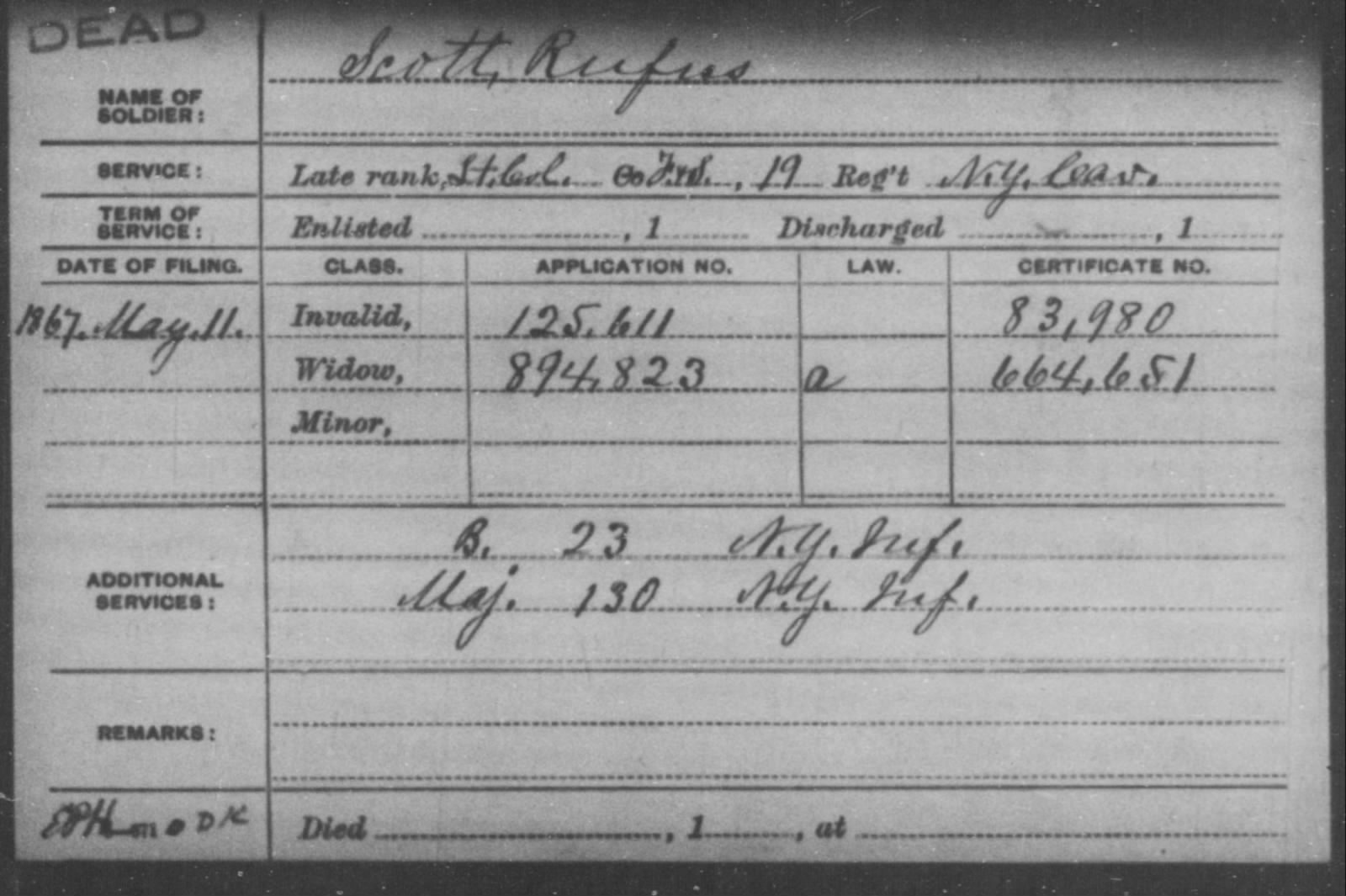
| Late rank | Lt. Col. |
|---|---|
| Company | F&S |
| Regiment | 19th N.Y. Cavalry |
| Invalid claim | application 125611, certificate 83980, filed 11 May 1867 |
| Widow claim | application 894823, certificate 664651 (filing date blank; law column reads “a”) |
| Additional service | B, 23rd N.Y. Infantry; Major, 130th N.Y. Infantry |
| Died | [blank on this card; DEAD stamp present] |
[stamped] DEAD
NAME OF SOLDIER: Scott, Rufus
SERVICE: Late rank, Lt. Col., Co. F&S, 19 Reg't N. Y. Cav.
TERM OF SERVICE: Enlisted [blank] Discharged [blank]
DATE OF FILING CLASS APPLICATION NO. LAW CERTIFICATE NO.
1867 May 11 Invalid 125611 83980
[blank] Widow 894823 a 664651
Minor [blank]
ADDITIONAL SERVICES: B. 23 N. Y. Inf. / Maj. 130 N. Y. Inf.
REMARKS: [clerk's initials]
Died [blank], at [blank]Source. Pension Index Card, Scott, Rufus, Co. F&S, 19th N.Y. Cavalry. General Index to Pension Files, 1861-1934 (NARA microfilm publication T288), Record Group 15, roll [not read]. Digital image, Fold3 (https://www.fold3.com/image/4990298), accessed 15 September 2026. Transcribed from the original by sight.
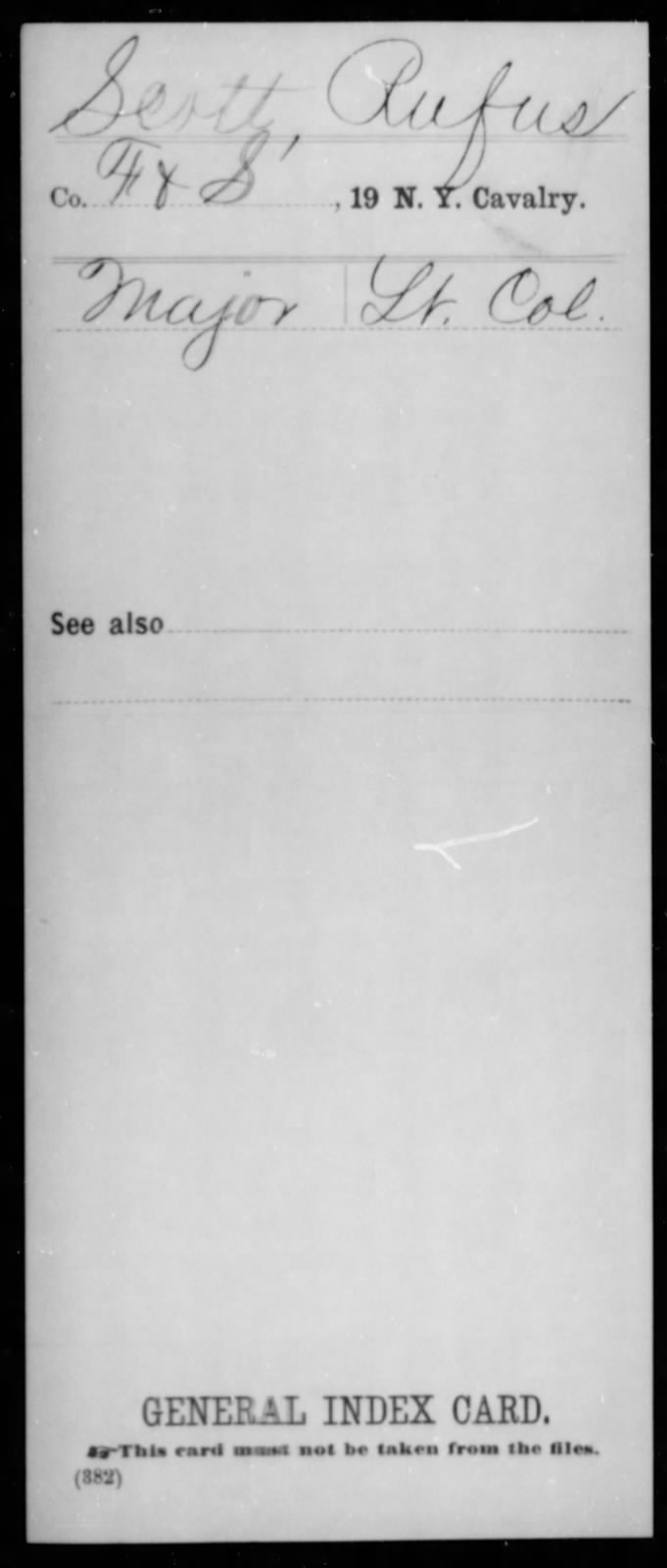
Compiled Military Service Record
The index to the compiled service records confirms Rufus Scott in the 19th Cavalry (the regiment’s Fold3 designation; it is the First New York Dragoons), Company F&S, entering service as Major and leaving it as Lt. Col..
| Military unit | 19th Cavalry |
|---|---|
| Company | F&S |
| Enlistment rank | Major |
| Discharge rank | Lt. Col. |
| See also | [blank] |
Scott, Rufus Co. F&S, 19 N. Y. Cavalry. Major Lt. Col. See also [blank]
Source. Compiled Military Service Record, Scott, Rufus, Co. F&S, 19th Cavalry. Indexes to the Carded Records of Soldiers Who Served in Volunteer Organizations During the Civil War (NARA microfilm publication M551), Record Group 94, roll [not read]. Digital image, Fold3 (https://www.fold3.com/image/291756910), accessed 15 September 2026. Transcribed from the original by sight.
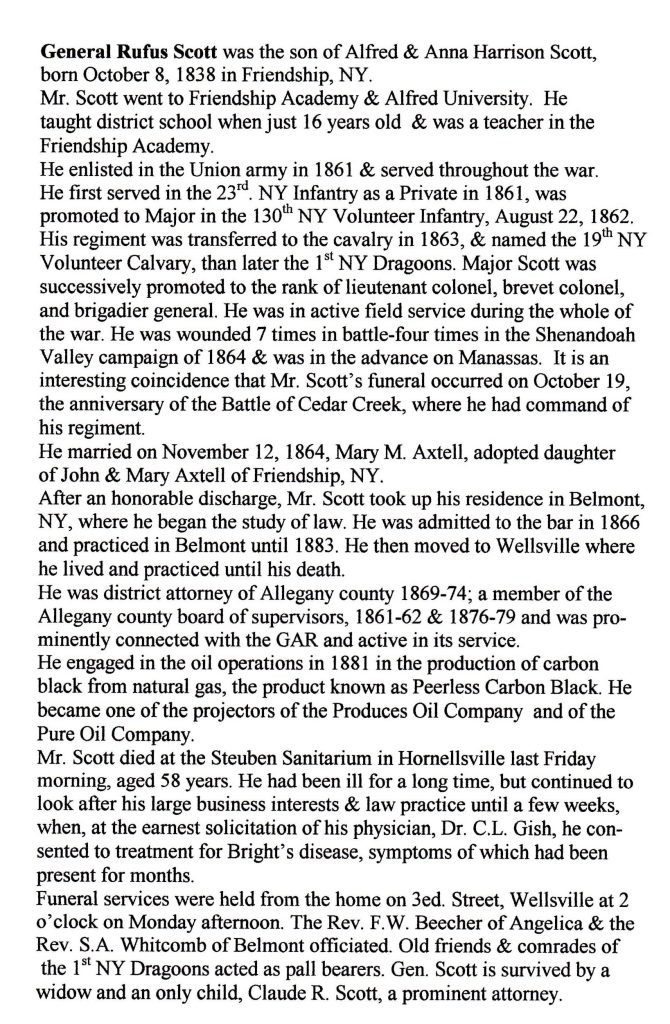
General Rufus Scott was the son of Alfred & Anna Harrison Scott, born October 8, 1838 in Friendship, NY.
Mr. Scott went to Friendship Academy & Alfred University. He taught district school when just 16 years old & was a teacher in the Friendship Academy.
He enlisted in the Union army in 1861 & served throughout the war. He first served in the 23rd NY Infantry as a Private in 1861, was promoted to Major in the 130th NY Volunteer Infantry, August 22, 1862. His regiment was transferred to the cavalry in 1863, & named the 19th NY Volunteer Cavalry, then later the 1st NY Dragoons. Major Scott was successively promoted to the rank of lieutenant colonel, brevet colonel, and brigadier general. He was in active field service during the whole of the war. He was wounded 7 times in battle—four times in the Shenandoah Valley campaign of 1864 & was in the advance on Manassas. It is an interesting coincidence that Mr. Scott’s funeral occurred on October 19, the anniversary of the Battle of Cedar Creek, where he had command of his regiment.
He married on November 12, 1864, Mary M. Axtell, adopted daughter of John & Mary Axtell of Friendship, NY.
After an honorable discharge, Mr. Scott took up his residence in Belmont, NY, where he began the study of law. He was admitted to the bar in 1866 and practiced in Belmont until 1883. He then moved to Wellsville where he lived and practiced until his death.
He was district attorney of Allegany County 1869–74; a member of the Allegany County board of supervisors, 1861–62 & 1876–79 and was prominently connected with the GAR and active in its service.
He engaged in the oil operations in 1881 in the production of carbon black from natural gas, the product known as Peerless Carbon Black. He became one of the projectors of the Produces Oil Company and of the Pure Oil Company.
RESEARCHER’S NOTE: Carbon black is a fine, black powder composed of elemental carbon, primarily used as a reinforcing agent in rubber products, such as tires, and as a pigment in inks, paints, and coatings. It is produced through the incomplete combustion or thermal decomposition of hydrocarbons, such as natural gas or oil. By contributing to the Peerless Carbon Black Company and later becoming one of the projectors of the Produces Oil Company and the Pure Oil Company, Scott positioned himself at the forefront of industrial innovation during this period, leveraging natural gas for byproducts like carbon black and advancing industries ranging from transportation to printing.
Mr. Scott died at the Steuben Sanitarium in Hornellsville last Friday morning, aged 58 years. He had been ill for a long time, but continued to look after his large business interests & law practice until a few weeks, when, at the earnest solicitation of his physician, Dr. C. L. Gish, he consented to treatment for Bright’s disease, symptoms of which had been present for months.
Funeral services were held from the home on 3rd Street, Wellsville at 2 o’clock on Monday afternoon. The Rev. F. W. Beecher of Angelica & the Rev. S. A. Whitcomb of Belmont officiated. Old friends & comrades of the 1st NY Dragoons acted as pall bearers. Gen. Scott is survived by a widow and an only child, Claude R. Scott, a prominent attorney.
Primary Sources & Records
Original documents located in federal and state archives that name this soldier. Each is shown with its full transcription and citation.
The Regimental Register (Bowen, 1900)
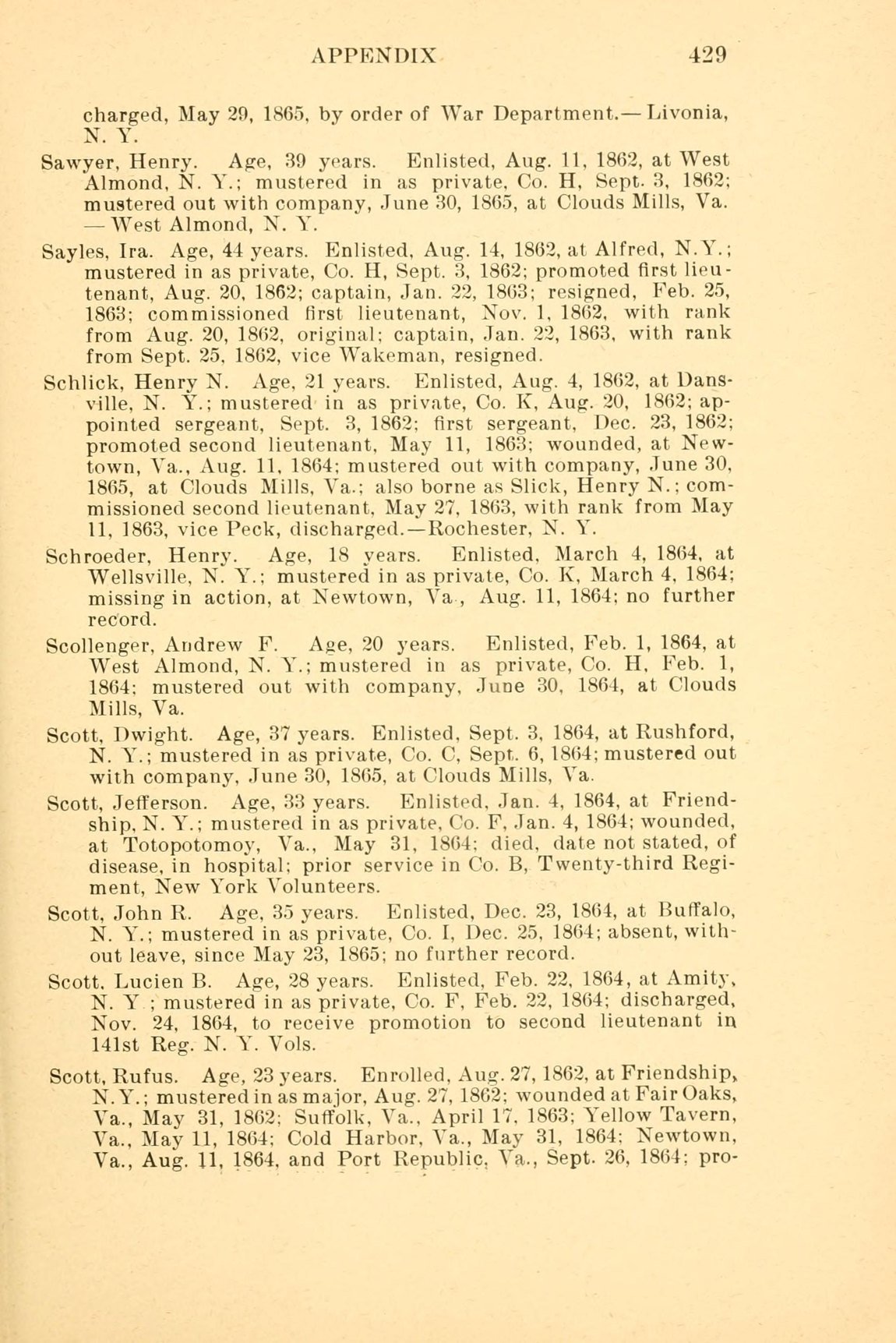
“Rufus Scott. Mustered in as Major, Aug. 27, 1862; wounded at Fair Oaks, Va. , May 31, 1862; Suffolk, Va. , April 17, 1863; Yellow Tavern, Va. , May 11, 1864; Cold Harbor, Va. , May 31, 1864: Newtown, Va. , Aug. 11, and Post Republic, Va. , Sept. 26, 1864; promoted to Lieutenant-Colonel, Dec. 24, 1864; mustered out with regiment, June 30, at Clouds Mills, Va;commissioned Major, Aug. 27, with rank from Aug. 27, original, Lieutenant-Colonel, Dec. 24, with rank from Dec. 17, 1864; vice Thorp, promoted; brevetted brigadier-general; died, , Oct. 16, 1896. His military record is quite fully given in this history. During the thirty years following the close of the war h*e was active and successful in the legal profession, and in the prosecution of great business enterprises.”
Source. Bowen, J. R. (1900). Regimental History of the First New York Dragoons (originally the 130th N.Y. Vol. Infantry) (p. 429). Internet Archive. archive.org/details/regimentalhistor00bowe
In the County Histories
The county histories compiled within twenty years of the war named the men who went, and often recorded what became of them. His name appears on the pages reproduced below.
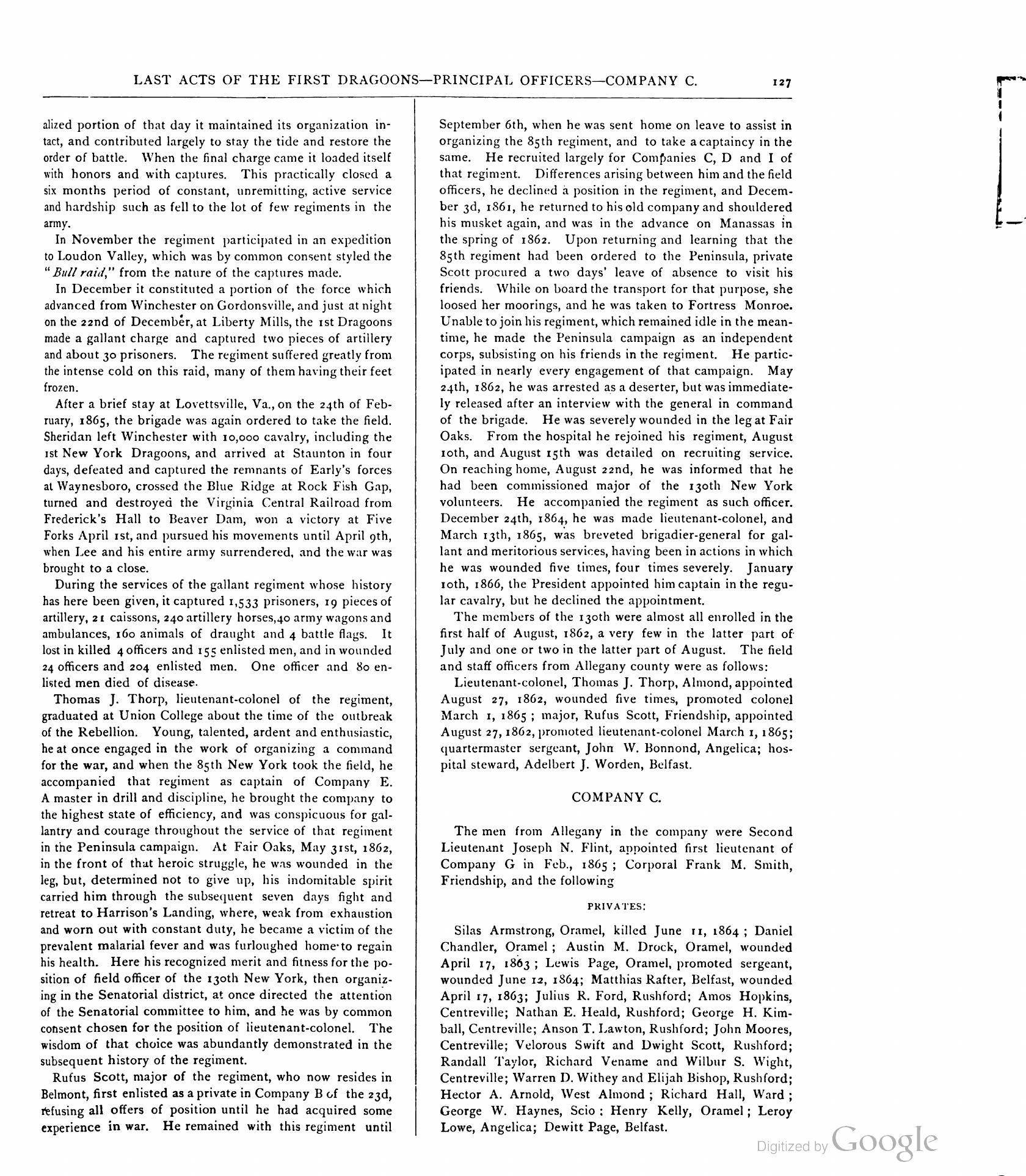
“Rufus Scott, major of the regiment, who now resides in Belmont, first enlisted as a private in Company B of the 23d, refusing all offers of position until he had acquired some experience in war. He re”
Source. F. W. Beers & Co. (1879). History of Allegany County, N.Y. (p. 127). New York, NY: F. W. Beers & Co.. Public domain; digitised copy held in the archive of this site.
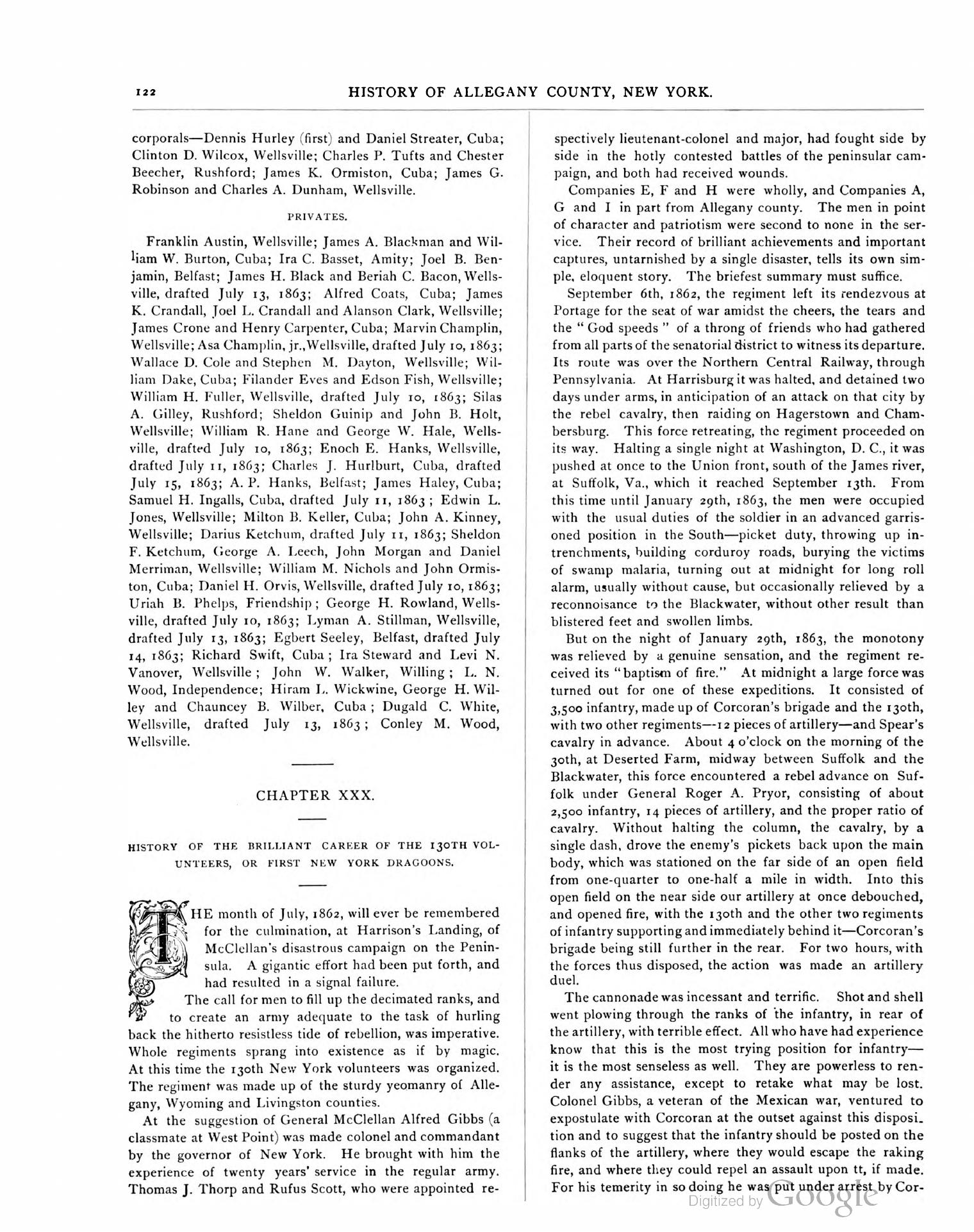
“Rufus Scott, who were appointed re”
Source. F. W. Beers & Co. (1879). History of Allegany County, N.Y. (p. 122). New York, NY: F. W. Beers & Co.. Public domain; digitised copy held in the archive of this site.
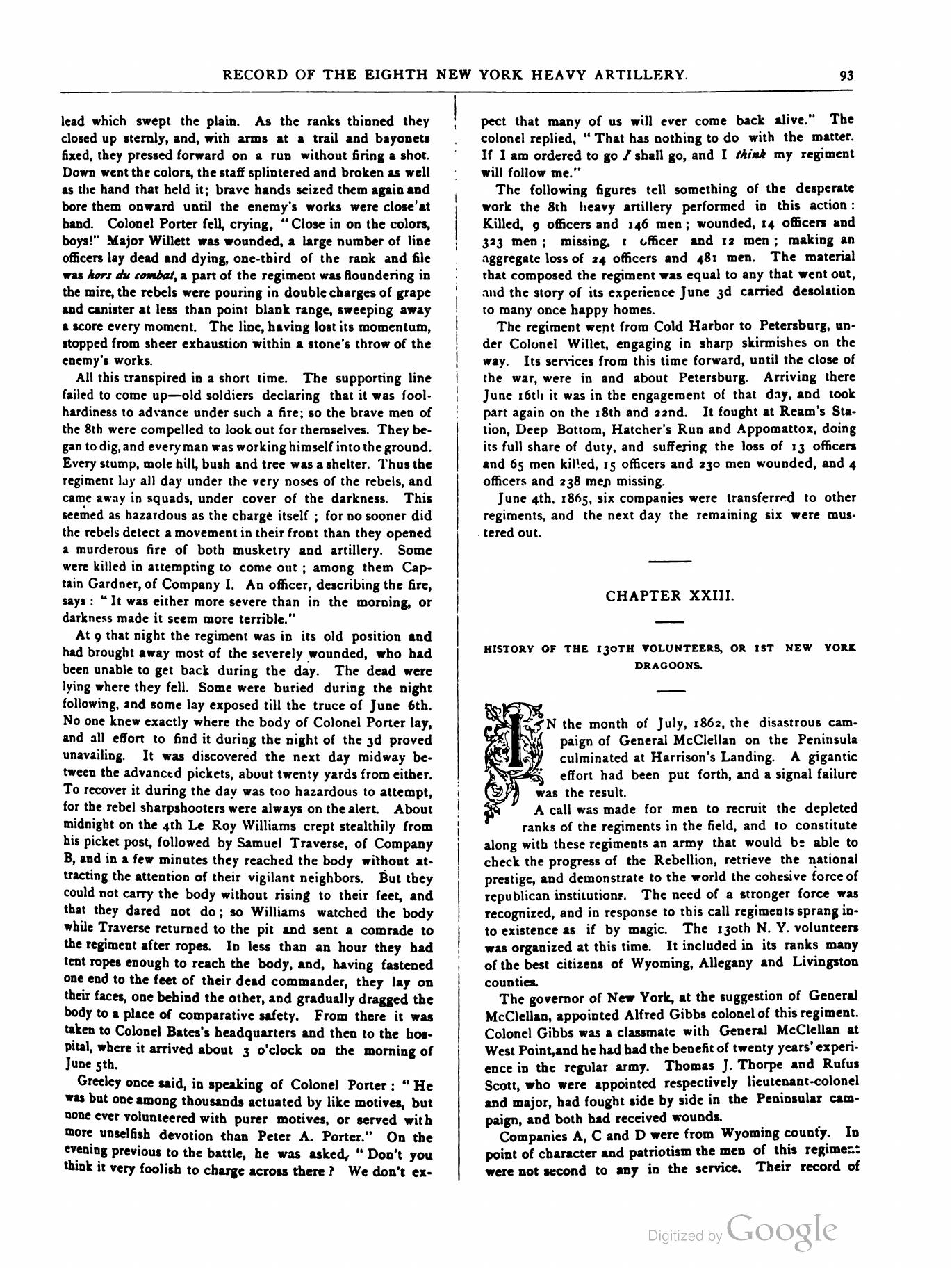
“Rufus Scott, who were appointed respectively lieutenant-colonel and major, had fought side by side in the Peninsular campaign, and both had received wounds”
Source. F. W. Beers & Co. (1880). History of Wyoming County, N.Y. (p. 93). New York, NY: F. W. Beers & Co.. Public domain; digitised copy held in the archive of this site.
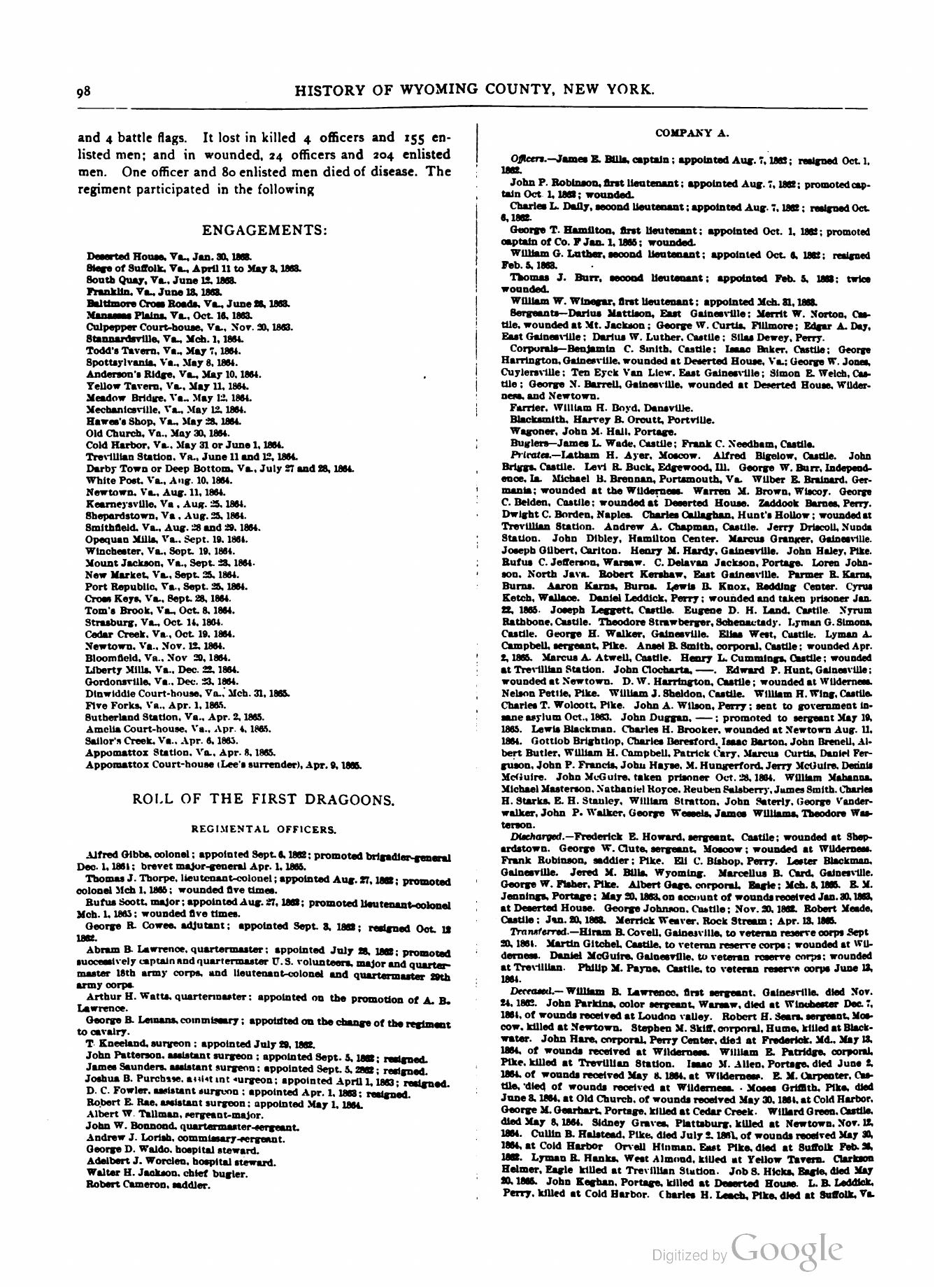
“Rufus Scott, major”
Source. F. W. Beers & Co. (1880). History of Wyoming County, N.Y. (p. 98). New York, NY: F. W. Beers & Co.. Public domain; digitised copy held in the archive of this site.
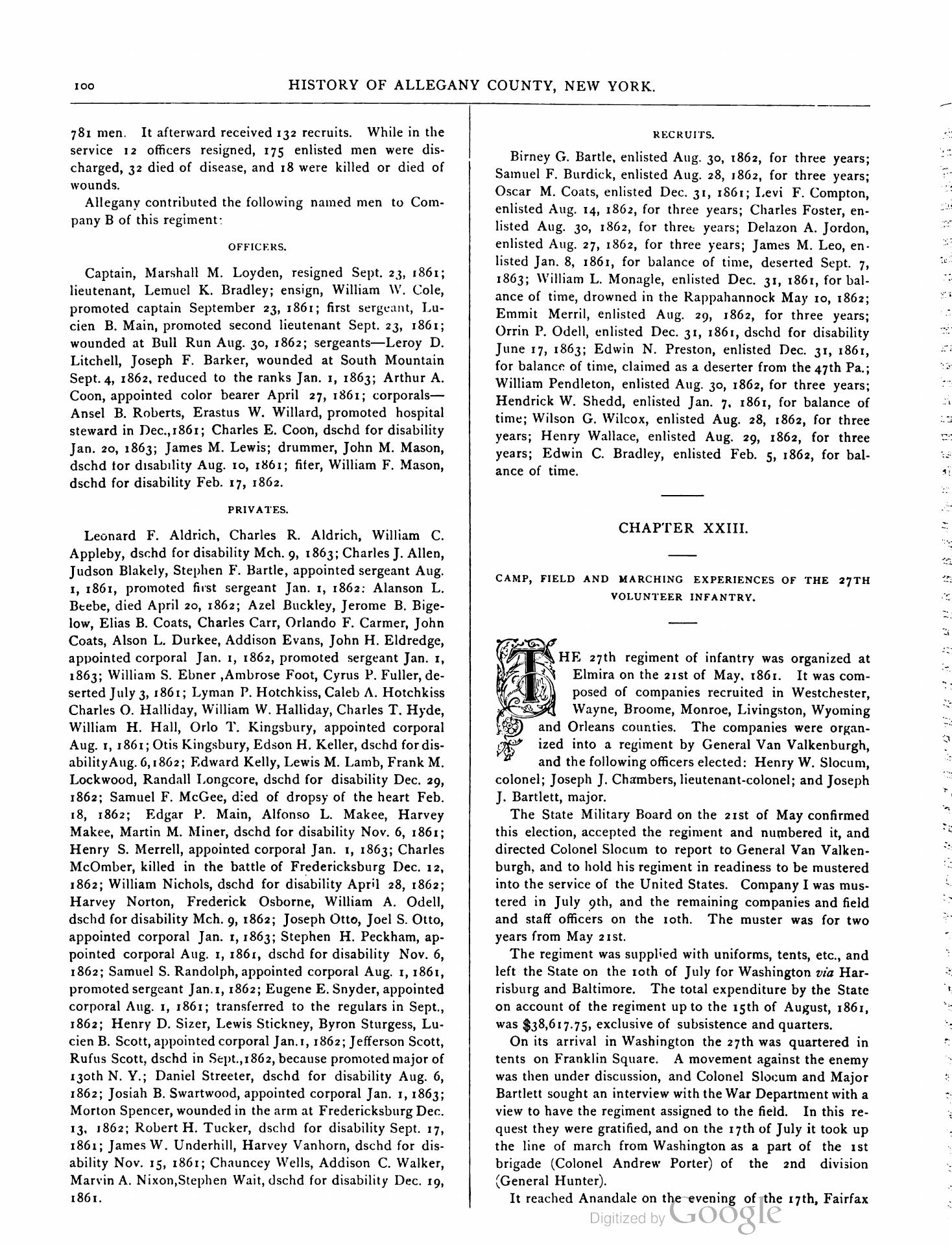
“Rufus Scott, dschd in Sept., 1862, because promoted major of 130th N. Y”
Source. F. W. Beers & Co. (1879). History of Allegany County, N.Y. (p. 100). New York, NY: F. W. Beers & Co.. Public domain; digitised copy held in the archive of this site.
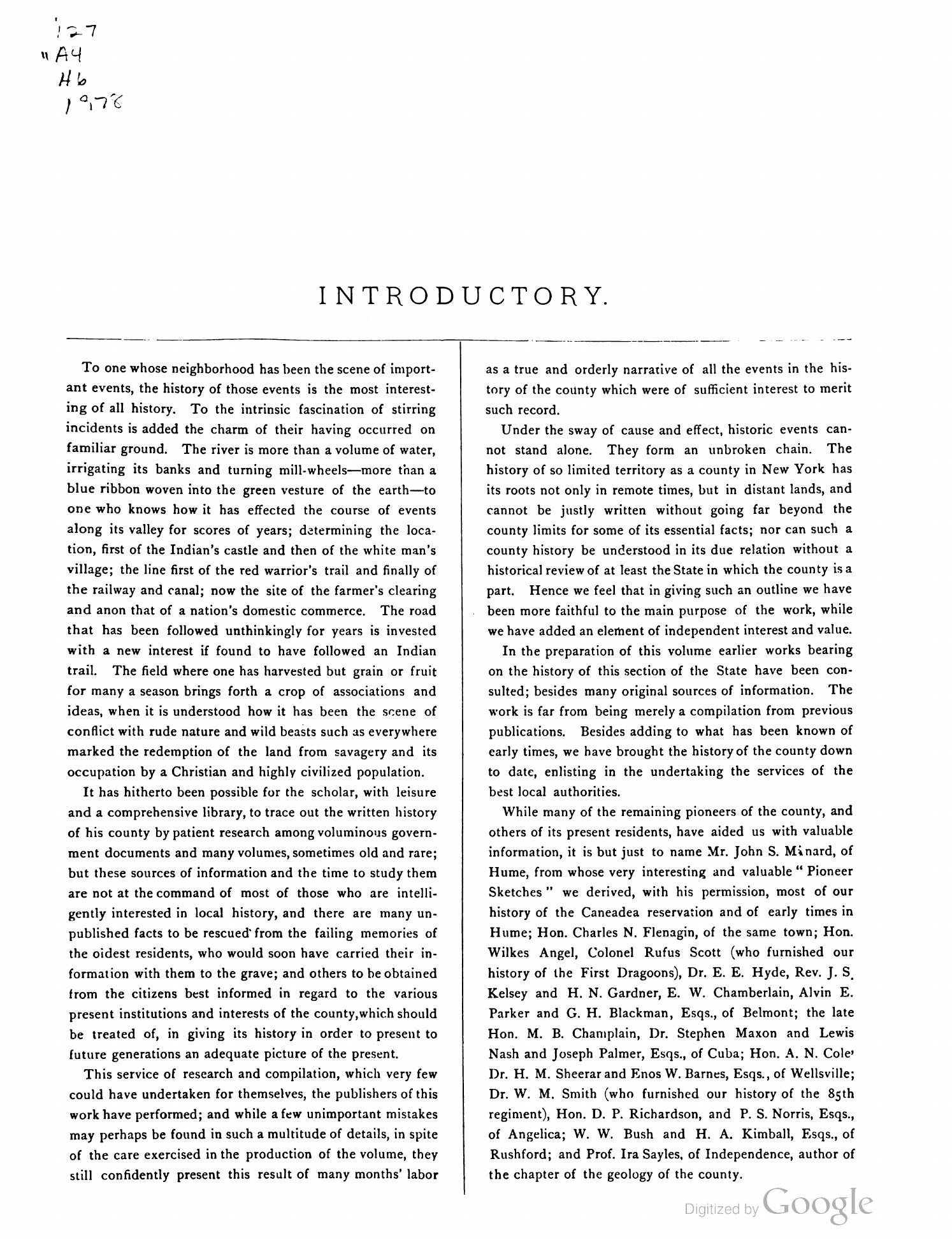
“Rufus Scott (who furnished our istory of the First Dragoons), Dr. E. E. Hyde, Rev. J. S. elsey and H. N. Gardner, E. W. Chamberlain , Alvin E. arker and G. H. Blackman , Esqs., of Belmont”
Source. F. W. Beers & Co. (1879). History of Allegany County, N.Y. (p. 197). New York, NY: F. W. Beers & Co.. Public domain; digitised copy held in the archive of this site.
His Service Record
Scott’s own muster roll abstract, kept by the State of New York, lists his wounds one by one. There were six.
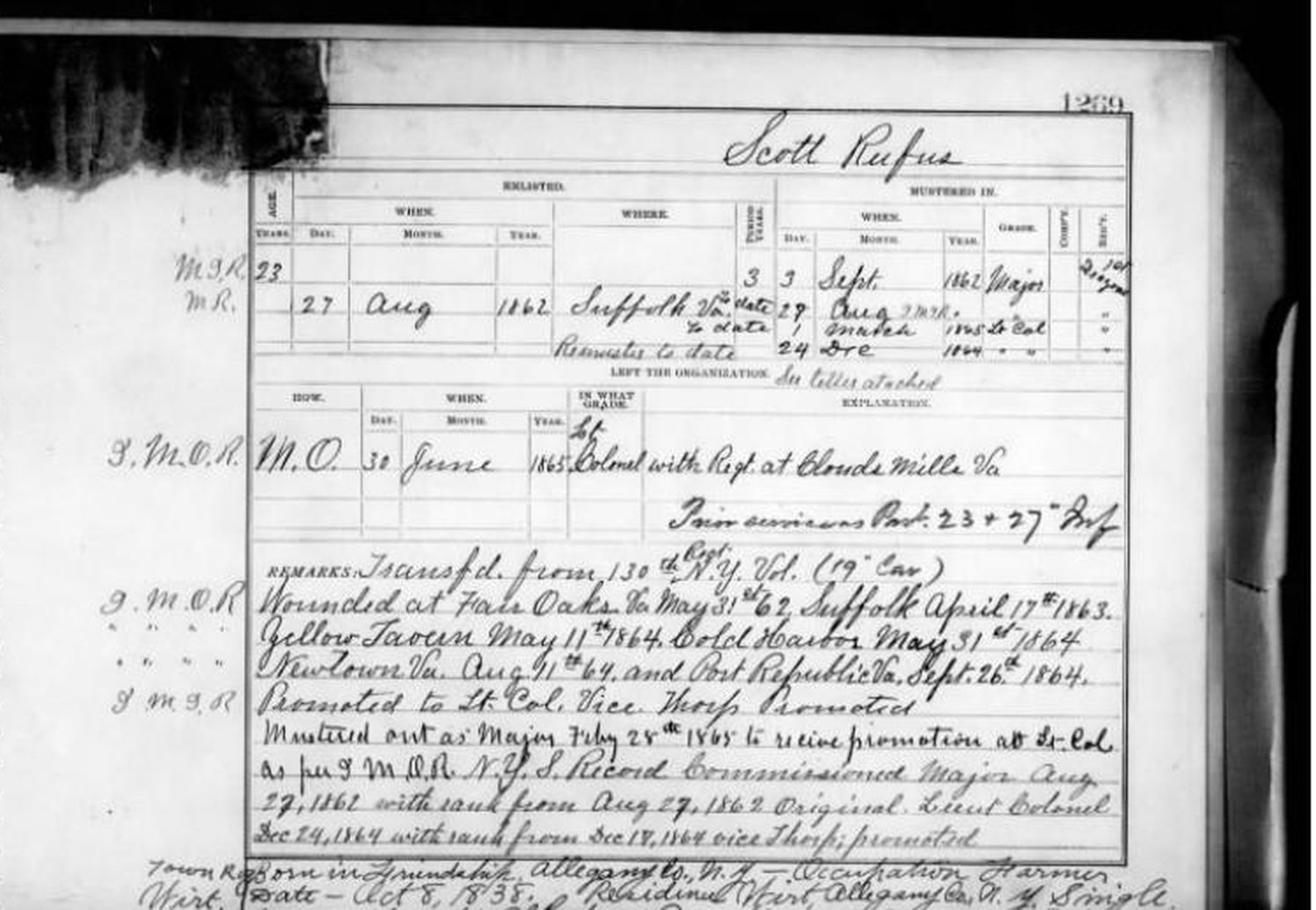
“Scott, Rufus — Age 23. Enlisted 27 August 1862 at Suffolk, Va., to serve three years; mustered in 3 September 1862 as Major; 29 August 1864 [to date] 1 March 1865; remusters to date 24 December 1864. Left the organization: Mustered out 30 June 1865, Colonel [rank], with Regt. at Clouds Mills, Va. Prior service Cos. 23 & 27 Inf. Remarks: Transf’d from 130th N.Y. Vol. (19th Cav.). Wounded at Fair Oaks, Va., May 31st ’62; Suffolk, April 17th 1863; Yellow Tavern, May 11th 1864; Cold Harbor, May 31st 1864; Newtown, Va., Aug. 11th ’64; and Port Republic, Va., Sept. 26th 1864. Promoted to Lt. Col. vice Thorp promoted. Mustered out as Major July 28th 1865 to receive promotion as Lt. Col. N.Y.S. Record: Commissioned Major Aug. 27, 1862, with rank from Aug. 27, 1862, original; Lieut. Colonel Dec. 24, 1864, with rank from Dec. 18, 1864, vice Thorp promoted. Born in Friendship, Allegany Co., N.Y. Occupation, farmer. Date — Oct. 8, 1838. Residence, West Allegany Co., N.Y. Single. Names of parents: Alfred and Ann Harmon. P.O. address, Belmont, N.Y.”
He was born at Friendship on 8 October 1838, a farmer’s son, and was twenty-three when he went to war. His parents were Alfred and Ann Harmon. He was wounded at Fair Oaks before the regiment was even mounted, and five more times after that — the last at Port Republic, three weeks after Colonel Thorp had been taken prisoner at Trevilian Station. It was Scott who wrote the history of the First Dragoons printed in the History of Allegany County in 1879.
Source. New York State Archives. Civil War muster roll abstracts, 1861–1900 [1st Dragoons, Scott, Rufus]. Albany, N.Y. Digital image consulted via Fold3 (file 316441794).
Recognised by the War Department, 1891
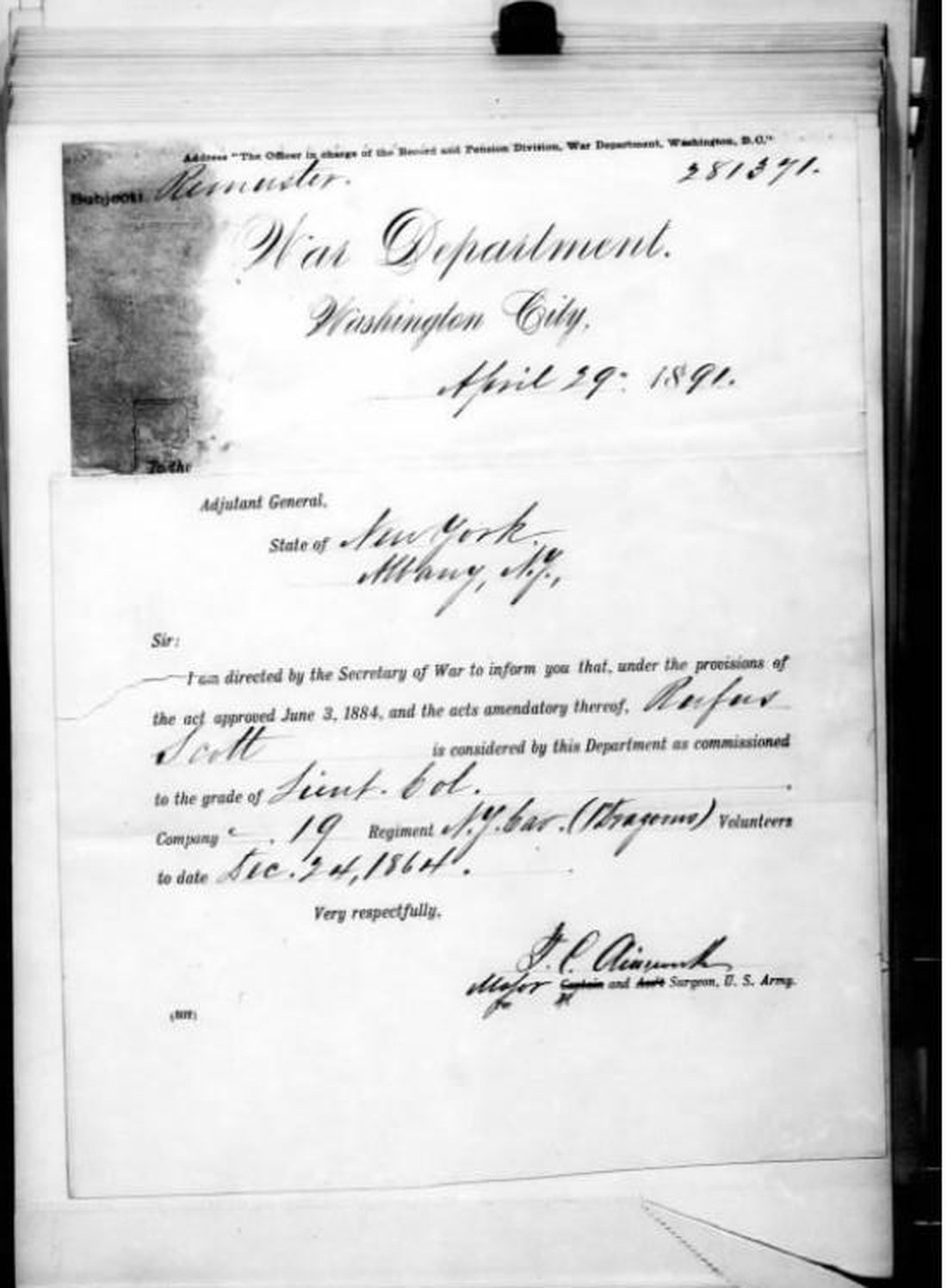
“War Department, Washington City, April 29, 1891. To the Adjutant General, State of New York, Albany. Sir: I am directed by the Secretary of War to inform you that, under the provisions of the act approved June 3, 1884, and the acts amendatory thereof, Rufus Scott is considered by this Department as commissioned to the grade of Lieut. Col., 19th Regiment of Cavalry (Dragoons) Volunteers, to date Dec. 24, 1864. Very respectfully, [signed] Major and Asst. Surgeon, U. S. Army.”
Source. War Department. (1891, April 29). Remuster: Rufus Scott. Filed with the New York muster roll abstracts, New York State Archives. Digital image consulted via Fold3.
Named in a Comrade’s Letter — the Rapidan, February 1864
Private George D. Benedict of Company G to his wife Sarah at Belvidere.
“Rufus Scott is our major and Wiley Wells is our Captin”
— George D. Benedict, February 1864
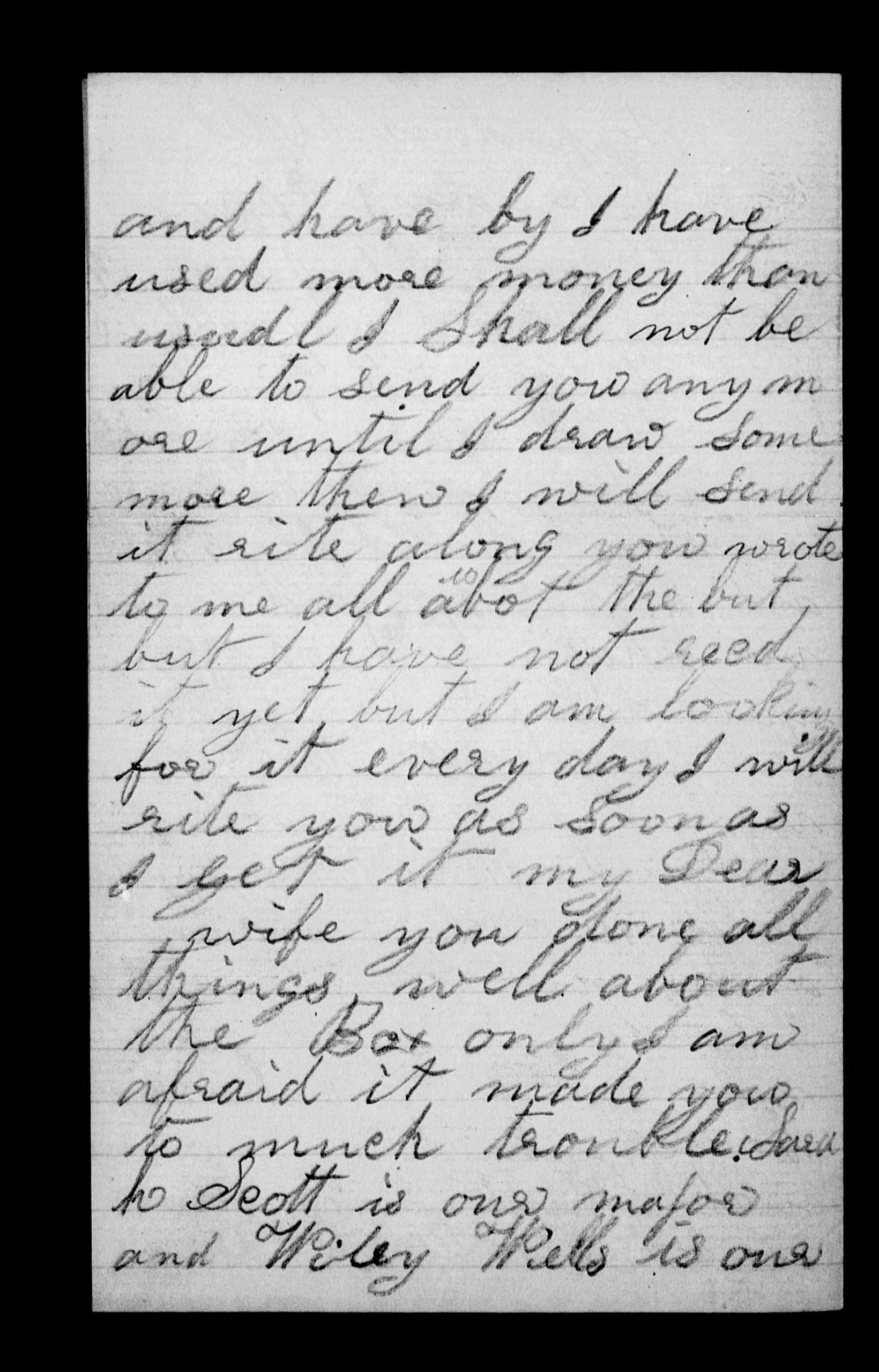
The whole page, transcribed
and have by I have used more money than usual I Shall not be able to send you any more until I draw Some more then I will Send it rite along
you wrote to me all about the but but I have not recd it yet but I am looking for it every day I will rite you as soon as I get it
my Dear wife you gone all things well about the Box only I am afraid it made you to much trouble
Rufus Scott is our major and Wiley Wells is our
A private of Company G, writing to his wife in February 1864, sets down who his officers were: “Rufus Scott is our major.”
It is a small line and it does useful work. Scott had been commissioned major at the regiment’s organisation in August 1862 at Friendship, aged twenty-three, and this letter confirms him still serving in that rank eighteen months later, through the conversion to cavalry and the first winter on the Rapidan — written by a man in the ranks with no reason to record it except that his wife would want to know who he served under.
Scott was wounded five times with this regiment. He survived the war and later wrote the account of the Dragoons that appears in the Allegany County history — which makes him both a subject of this archive and one of its sources.
Also named on this page: Captain Wiley Wells of Company G. The full run of Benedict’s letters, transcribed page by page, is on his own page. He was shot at Todd’s Tavern on 7 May 1864 and died of the wound on 25 May.
Source. Benedict, G. D. (1863–1864). George D. Benedict Papers (Collection #4943-z). Southern Historical Collection, Louis Round Wilson Special Collections Library, University of North Carolina at Chapel Hill.
Views: 114
