THE SKIRMISH AT MESILLA by MARTIN HARDWICK HALL
by
MARTIN HARDWICK HALL
The author is an assistant professor of history at McNeese State College, Lake Charles, Louisiana.
On July 25, 1861, a small force of Confederates repulsed a Union assault on the New Mexican town of Mesilla. Though only a minor engagement, it was of vast importance to the inhabitants of this Far Western region, for it led to the abandonment by Federal forces of all southern New Mexico, and consequently paved the way for the creation of the Confederate territory of Arizona.
When Texas seceded from the Union in February, 1861,1 General DavidE. Twiggs, commander of the Department of Texas, surrendered all Federal troops and military installations to state authorities. Although the Texas and later the Confederate governments attempted the reoccupation of all the nineteen abandoned posts as quickly as possible, it was a slow process in some instances. Fort Bliss, located near Franklin,2 across the Rio Grande from the Mexican town of El Paso del Norte (present-day Ciudad Juarez), was the westernmost post in Texas. Before the Union commandment evacuated the fort on March 31, he turned over a valuable supply of

1 On February 1, 1861, the Texas Secession Convention voted 166 to 8 in favor of secession. The ordinance of secession was later ratified by popular vote. – J. G. Randall, The Civil War and Reconstruction ( New York, 1937), pp. 191-192.
2 Franklin was also called El Paso. This dualism prevailed until 1873 when the town was incorporated as El Paso.- William J. Glasgow, “On the Confusion Caused by the Name of El Paso,” Pass Word, v. 1 (1956), pp. 65-67.
(343]
ordnance and quartermaster goods to two prominent residents of the area who served as commissioners for the state.3
As weeks turned into months, and still no Confederate troops had arrived, apprehension mounted steadily among the zealous local inhabitants. Only forty miles to the north in the Territory of New Mexico- unaffected by Twiggs’ surrender- lay the Union bastion of Fort Fillmore. A force from that quarter could easily descend upon Fort Bliss, seize the military supplies, and remain to occupy the post. Such fears were fully justified. But during the latter part of June and early July, just before the Federals were ready to move, four companies of the Second Regiment of Texas Mounted Rifles and a battery of howitzers finally reached Fort Bliss. In command of these Confederate troops was Lieutenant-Colonel John R. Baylor, a rugged, intrepid product of the frontier.
Stretching along the Rio Grande north of the Texas boundary was the fertile Mesilla Valley of New Mexico.4 The American residents here were avowedly pro-Southern in sympathy, and politically dominated the larger native Mexican population. A similar situation prevailed throughout most of the region encompassed in the Gadsden Purchase, by now generally called “Arizona.” As early as March, 1961, conventions of the “People of Ari zona” had met in the two principal towns of Mesilla and Tucson to declare for secession from the Union and annexation to the Confederacy. A Southern flag soon was waving at Mesilla, and Union men were openly warned to leave. One ultra-Unionist visitor to Mesilla bitterly complained that “this country is now as much in the possession of the enemy as Charleston is.”5 Located in the midst of this hotbed of secessionism was Fort Fillmore. With the outbreak of hostilities between the North and the South, the Federal War Department ordered the withdrawal of all regular soldiers from New Mexico. Compliance meant the abandonment of a number of military installations,° and some temporary concentration at Fort Fillmore of some of the troops involved in the transfer. Major Isaac Lynde, who had assumed command of the post on July 4, 1861, was chagrined to find that the fort was built in a basin partially surrounded by chaparral-covered sand hills. So dense was the growth that an enemy could come within 500 yards of the post without fear of detection. If artillery were mounted on the hills, the post would be rendered completely helpless. A further weakness, the major observed, was that the only water supply for the stock was at the Rio Grande, a mile and a half to the west. The fort’s defenseless position as well as the hostile attitude of the surrounding population, prompted Lynde to inform his superior that he did “not think this post or the valley worth the exertion to hold it.”7 The departmental commander at Santa Fe concurred in this view, and ordered Lynde to abandon Fort Fillmore and withdraw upriver to Fort Craig just as soon as the garrisons from the abandoned posts in western Arizona had arrived. It was perhaps because Lynde knew that he would soon be leaving that he took few precautionary measures against any possible offensive coming from the Confederates in nearby Texas.
3 The commissioners were Simeon Hart and James B. Magoffin. The war materiel was estimated to be a twelve-months supply of subsistence and ammunition for about two companies. – H. H. Sibley to W.W. Loring, June 12, 1861, in War of the e bellion: A Compilation of the Official Records of the Union and Confederate Armies, Series I, v. 4, p. 55. Hereafter cited as 0. R. A. with all citations to Series I.
4 In 1861 the Territory of New Mexico included the present-day states of Arizona and New Mexico, and a part of southern Nevada.
5 W.W. Mills to John S. Watts, June 23, 1861.- 0. R. A., v. 4, p. 56.
6 The abandonment of Forts Buchanan, Breckinridge, and Mclane left the people of central and western Arizona to the mercy of the Apaches.
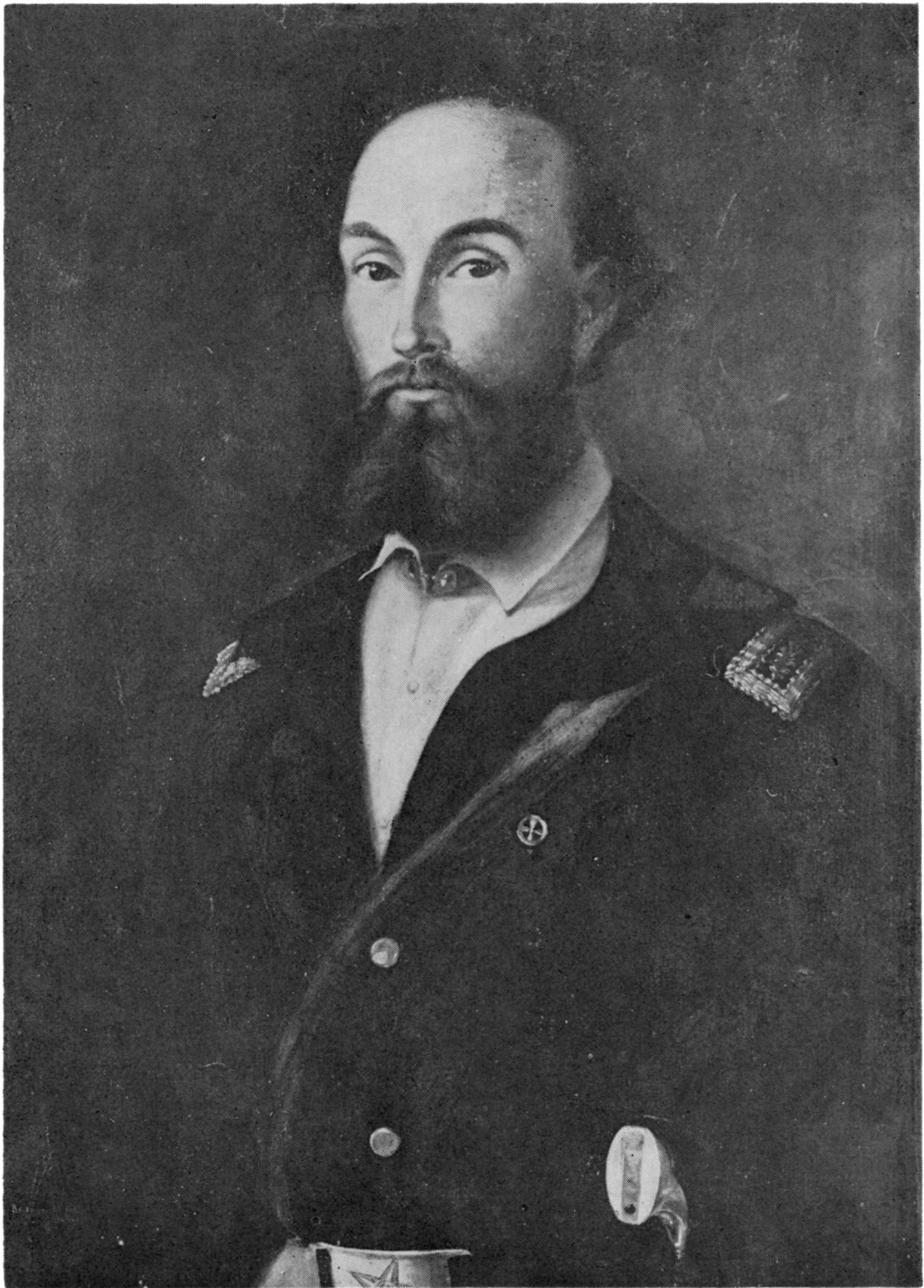
Shortly after his arrival at Fort Bliss, Lieutenant-Colonel Baylor learned that Federal troops had been concentrating at Fort Fillmore. Interpreting this to mean that the enemy was planning to march against him, Baylor determined to strike first, even though he knew the Federals outnumbered him. To move against Fort Fillmore would mean an invasion of the Territory of New Mexico, but Baylor had already received authorization to do this – should he deem it expedient – from General Earl Van Dorn, his departmental commander at San Antonio. After a reconnaissance party had reported the feasibility of moving upriver under cover of darkness, Baylor set out from Fort Bliss on the night of July 23 with a mounted force consisting of the following units: Captain Peter Hardeman’s Company A, Second Regiment Texas Mounted Rifles, ninety men; Captain Isaac C. Stafford’s Company E, Second Regiment Texas Mounted Rifles, eighty-five men; Captain Bethel Coopwood’s San Elizario Spy Company ( recruited in El Paso County), forty men; and Lieutenant Jordan W. Ben nett’s section of Captain Trevanion T. Teel’s Light Battery B, First Regiment Texas Artillery ( no guns brought along), thirty-eight men. A number of civilians from the Franklin area and the Mesilla Valley augmented the command, giving the Confederates a total force of about 300.
7 Lynde to E. R. S. Canby, July 7, 1861. – 0. R. A., v. 4, p. 58.
Moving cautiously northward, Baylor successfully reached a point on the river near Fort Fillmore without detection on the night of July 24. He hoped to entrench his men between the post and the Rio Grande so as to be able to cut off the enemy’s animals when they went to water early the next morning. The Federals would then be compelled to attack him in his strong position, “thus rendering the protection afforded by the fort of no use.”8 Obviously Baylor was unaware of the vulnerability of Fort Fillmore and how easily it could have been invested.
His strategy might have succeeded had it not been for a picket from Teel’s artillery, who slipped off to inform the Federals of the Confederate approach. When Baylor heard the sound of the long-roll from Fort Fill more summoning the Union troops to arms, he knew he had been discovered. Discarding his original plan, he crossed the river to occupy Mesilla. Mesilla, the second largest town in the territory, was of strategic importance because it commanded the principal routes to the north and to the west. About ten o’clock in the morning of July 25 the Confederates entered the town in triumph, “Vivas and hurrahs … [ringing] them wel come from every point.”9 Baylor lost no time in preparing for an expected assault, and in this he was aided by patriotic citizens who offered all the supplies at their command.
News of the Confederate occupation of Mesilla was sufficient to shake Lynde from his lethargy. About four-thirty in the afternoon, with Lieutenant C.H. McNally and twenty-two mounted riflemen leading the advance, the major allied from Fort Fillmore with about a380 men, consisting of two companies of mounted rifles and six companies of the Seventh Infantry,10 one of which manned the howitzer battery of three guns. One company of infantry, the band, and the convalescents remained to garrison the post.
Seeing great clouds of dust on the road between Fort Fillmore and Mesilla, the Confederates were able to discern Lynde’s intentions within half an hour of his departure. Baylor quickly moved his whole force to the southern end of town to form a skirmish line. Several main streets converged at this point, with a number of scattered adobe houses forming an angle, and several old corrals and the proximity of corn fields along both sides of the road made the location admirably suited for defense. The Confederates, including a number of civilians, took position on the adobe housetops, behind the corrals, and under other cover. Captain Hardeman’s company, stationed behind an adobe corral to the left front, formed the advance. Only Captain Coopwood’s company remained mounted for maneuverability.
8 Baylor to T. A. Washington, September 21, 1861.- ibid., p. 17.
9 (Mesilla) Times, July 27, 1861.
10 Because of resignations, desertions, and other causes, the various companies were understrength.
When the Union column was about two miles from Mesilla, Lynde dispatched Lieutenant Edward J. Brooks and Surgeon James C. McKee under a flag of truce to demand the immediate unconditional surrender of the town and the Texan forces. They were met by Majors Ed. Waller, Jr. and Philemon T. Herbert,11 both of whom carried double-barreled shotguns on the front of their saddles. After relaying the Federal ultimatum to Colonel Baylor, they returned with his terse reply: “If you wish the town and my forces, come and take them.”12
Brooks and McKee trotted back with Baylor’s challenge, and Lynde – whose force was now within approximately 300 yards of the outskirts of Mesilla – ordered his howitzers forward to fire two rounds. The first shell struck the top of a building on which part of Teel’s company was stationed, but it exploded harmlessly. Several shells were hurled into different partS of the town, but no one was hurt. Noncombatants were apparently of no concern to either side, for no one even suggested removing them before the commencement of hostilities.
After the initial blasts from his guns, Lynde threw his infantry to the right and left of the battery to form a skirmish line. He then ordered his cheering troops to advance. Their speed was greatly impeded, however, by the battery which had to be pushed by hand through the heavy sand in the road. As the guns moved slowly along, the infantry, which had been on the flanks, now found themselves behind the artillery. Apparently the corn in the fields bordering both sides of the road was so tall and so dense that the infantrymen’s pace was soon slowed to an even greater extent than that of the battery. It also appears that the corn severely hampered the maintenance of an orderly line of advance. Nevertheless, the resultant chaos and confusion was due primarily to Lynde’s ineptness.
11 Herbert had been a Member of Congress from the State of California. Leaving that state after his involvement in a murder, he settled in Franklin to practice law. He was one of two delegates to the Texas secession convention elected by the citizens of El Paso County. The convention later appointed him special commissioner to encourage the people of Arizona to join Texas in secession.
- 12 (Austin) State Gazette, August 10, 1861. This is but one of several versions of Baylor’s reply.
The Union major may have been distinguished in appearance with his flowing silver-gray hair and neatly trimmed beard, but he was sadly lacking in those qualities needed by a combat commander. Not only should he have seen to it that his skirmish line moved forward in an orderly fashion, but he should have thrown a small number of infantry skirmishers ahead of the main body to feel out the position of the enemy. Instead he ordered Lieutenant McNally and his mounted riflemen to lead the assault upon the entrenched Confederates. Undoubtedly Lynde greatly underestimated his adversary’s fighting ability. Perhaps he thought that once he made a show of force, Baylor’s men would throw down their arms and surrender. If such was his belief, he was in for a rude awakening.
McNally formed his men and moved forward toward the Confederate line. As he pushed forward, preparatory to launching his charge, he neared the adobe corral behind which Captain Hardeman’s company was drawn up. Baylor’s troops had withheld fire up to this time, as the enemy had been out of range of their muskets, rifles and shotguns; but with McNally’s forward charge, Baylor hastily instructed Hardeman to open fire with his front rank to see if the enemy was in range. A well-directed volley ripped through the Federal horsemen, wounding three and killing one. One shot cut away McNally’s saber, while a second struck him in the chest. Al though gravely wounded, McNally dismounted, commenced firing at random, and vainly attempted to rally his shaken command. When Harde man’s men fired another volley, McNally, finding himself without support, hoarsely ordered his men to fall back to safety. As they galloped back in confusion and disorder, their infantry mistook them for the enemy and opened fire, fortunately without inflicting any damage. Undaunted by this faux pas, the riflemen continued to flee pell mell until they were safely behind the battery amid the infantry in the rear. Confederate fire continued to be so hot that the battery’s gunners-who had moved forward until within range of the Confederates – were compelled to lie down, but not before two had been killed.
After McNally’s repulse, Lynde reformed his command. But, “as night was coming on, and the fields and houses on both sides of the road were filled with men, and the howitzers useless, except as a field battery, owing to the difficulty of moving through the sand,”1” Lynde discontinued the attack, and ordered his forces to return to Fort Fillmore. As the Federals withdrew, loud confederate cheers and shouts filled the air. Baylor made no effort to pursue his retreating foe, for he suspected Lynde’s retreat might be a feint designed to draw him from his strong position. As dusk settled over the Mesilla Valley, the jubilant Southerners celebrated their first victory in the Far West. While the Confederates suffered no losses, the brief skirmish of Mesilla had cost the Federals nine casualties – three killed and six wounded.
13 Lynde to Acting Assistant Adjutant-General, July 26, 1861.- 0.R. A., v. 4, p. 4.
Baylor anticipated a renewal of the attack the following day. When it did not materialize, he sent out a reconnaissance party which reported the Federals were throwing up breastworks around Fort Fillmore. Immediately he sent an express to Fort Bliss ordering Teel to bring up the howitzers. As soon as the artillery arrived, Baylor planned to attack the fort. Through spies Major Lynde was shortly apprised of Baylor’s plan. The Union commander was now in a quandary. If he sent a force large enough to intercept the Confederate reinforcements coming from Fort Bliss, he felt it would weaken his garrison to such an extent that the post might fall if Baylor attacked with his main command. With an assault upon the fort imminent regardless, Lynde and most of his officers were convinced that they would be compelled to surrender if they remained where they were. Believing that the only hope of saving his command from capture was in reaching some other Union post, Lynde ordered Fort Fillmore evacuated- and such public property as could not be transported to be destroyed, as far as time would allow.
The Confederates controlled the main road leading northward to Fort Craig. Rather than risk another engagement, Lynde decided to march northwest to Fort Stanton, some 140 miles distant. At one o’clock in the morning of July 27 the Federals, having put the torch to their post, set out on the long, dusty trail. The road to Fort Stanton ran over table lands and foothills to a pass through the Organ Mountains. The Federal column proceeded without difficulty until daylight, but as the sun rose higher and the heat became increasingly intense, the infantrymen and the teams pulling the heavy baggage wagons began to show signs of exhaustion. About six miles from San Augustin Springs – the first water hole on the route- the trail began a short ascent to the pass. From this point on, many soldiers were so overcome from heat and thirst that they fell by the wayside. It seems incredible that Lynde, or at least his subordinates did not have the foresight to carry along a sufficient supply of drinking water.14
14 A contemporary asserted that when it came to destroying the supplies at Fort
Shortly after daylight, Confederate scouts reported clouds of dust about fifteen miles away, on the Fort Stanton road. Climbing to the top of a house with a spyglass, Baylor sighted the whole Federal column. He quickly ordered his men to saddle up, for he hoped by a forced march to overtake the enemy in the vicinity of the pass. As the Confederates approached the foothills, they overtook the Union rear which was composed chiefly of stragglers. From this point to the summit of the pass, exhausted Federals were captured and disarmed without a struggle. From the summit to the springs, five miles distant, the road was lined with fainting, thirsty soldiers who threw down their weapons and surrendered as Bay lor’s men rode up.
By now Lynde, himself almost overcome from the heat, was informed of the enemy’s approach. When the call-to-arms was sounded only 100 infantrymen were able to respond. Under these circumstances, and believing “that honor did not demand the sacrifice of blood after the terrible suffering that … [his] troops had already undergone,” Lynde considered it useless to resist. Without the firing of a shot, he surrendered his command of approximately 500 men15 three companies of mounted rifles and seven of infantry16 to a Confederate force numbering less than 300.
After a two-day rest at San Augustin Springs, the Federals were marched back to the Mesilla Valley. At Las Cruces they were paroled and allowed to proceed northward to Fort Craig.11 Baylor had hoped to capture the column coming to Fort Fillmore from western Arizona, but these troops had Fillmore which could not be transported, many soldiers emptied their canteens of water and filled them with the hospital whiskey. This, he implied, accounted for the large number of Federals who fell out from heat exhaustion. The anonymous author’s “Notes on the Affair at Valverde and Glorieta in the Late War of the Rebellion,” is reprinted in F. Stanley, Fort Union ( Canadian, Texas, 1953). His contention is a gross exaggeration. The medical officer at Fort Fillmore was quite thorough in the destruction of his supplies. What little whiskey might have escaped destruction could have affected only a very limited number of soldiers.
15 Confederate estimates ranged from 600 to 700. According to the “Recapitulation of troops surrendered at San Augustine Springs, N. Mex., July 27, 1861,” (0. R. A.,v. 4, p. 15), the exact number was 492.
16 One company of mounted rifles set out from Fort Craig to escort a herd of cattle to Fort Fillmore. On learning that the Confederates held Mesilla, the company took a detour which would bring the unit to Fort Fillmore by way of the Fort Stanton road. The company met Lynde’s command after it had abandoned the post, and was included in the subsequent surrender.
17 Twenty-six Union enlisted men joined the Confederates, while Baylor, for some unknown reason, kept sixteen men in confinement as prisoners of war.- “Recapitulation of troops surrendered at San Augustine Springs, N. Mex., July 27, 1861,”
0. R. A.,V. 4, p. 15.
received notice of Lynde’s surrender and took a detour which brought them safely into Fort Craig.
With Arizona freed of Union soldiers, Baylor issued a proclamation on
August 1, 1861, designating all of New Mexico south of the thirty-fourth parallel to be the “Confederate Territory of Arizona.” Fixing the capital at Mesilla, Baylor assumed the military governorship and appointed the key officials.18 The aspirations of the people of Arizona for separate territorial status in the Confederacy were at last realized. Of prime importance in obtaining this goal was the skirmish of Mesilla. Though only a minor engagement, it had been the deciding factor which prompted the abandonment of Fort Fillmore and the flight of the Federal column out of the territory.

18 President Jefferson Davis issued a proclamation on February 14, 1862 – authorized by the Confederate Congress on January 21 – which affirmed Baylor’s actions in establishing the “Territory of Arizona.”
Views: 56