Huntington Frothingham Wolcott
The Gibbs Family · A Kinsman at the End
Huntington Frothingham Wolcott
1846–1865 · Second Lieutenant, 2nd Massachusetts Cavalry · aide-de-camp to General Alfred Gibbs in the campaign that ended the war.
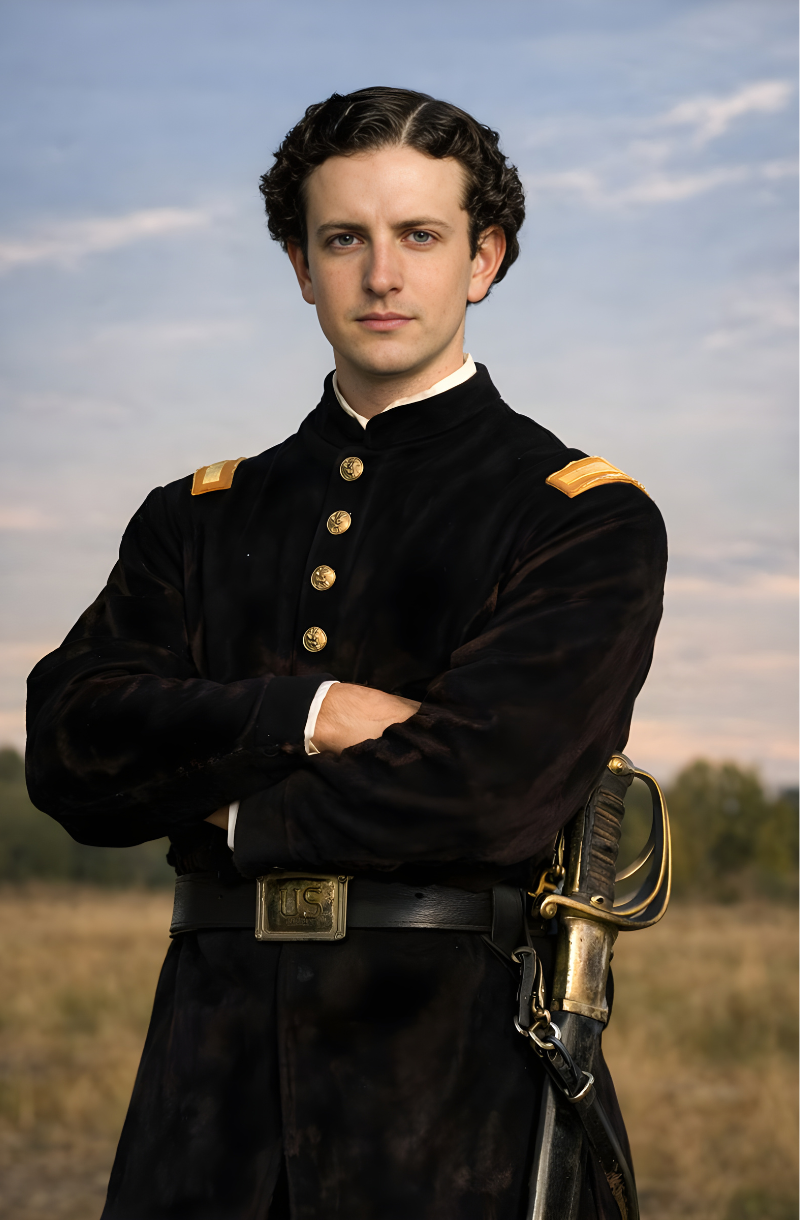
Lieutenant Huntington Frothingham Wolcott, born on February 4, 1846, was the eldest son of Joshua Huntington Wolcott and Cornelia Frothingham. He was raised in a prominent family with deep roots in American history, including ancestors like Connecticut Colonial Governor Roger Wolcott and Declaration of Independence signer Oliver Wolcott. Despite losing his mother at a young age, Wolcott grew up with a keen interest in the natural world and science. His father, a successful businessman and treasurer of the Boston branch of the U.S. Sanitary Commission, remarried Cornelia’s elder sister, Harriet, a year after Cornelia’s death.
At the onset of the Civil War, Wolcott was too young to join, but his passion to serve his country grew. On February 4, 1865, he turned 19 and commissioned as a second lieutenant in the 2nd Massachusetts Cavalry on March 2, 1865. He was assigned as an aide-de-camp to General Alfred Gibbs, a family relation via his mother, which likely provided his family some comfort. Despite joining the war late, Wolcott participated in significant battles, including the historic Battle of Five Forks, where General Grant’s forces defeated the Confederates under General George Pickett. General Gibbs praised Wolcott’s bravery and dedication in letters, highlighting his noble behavior and gallantry in action.
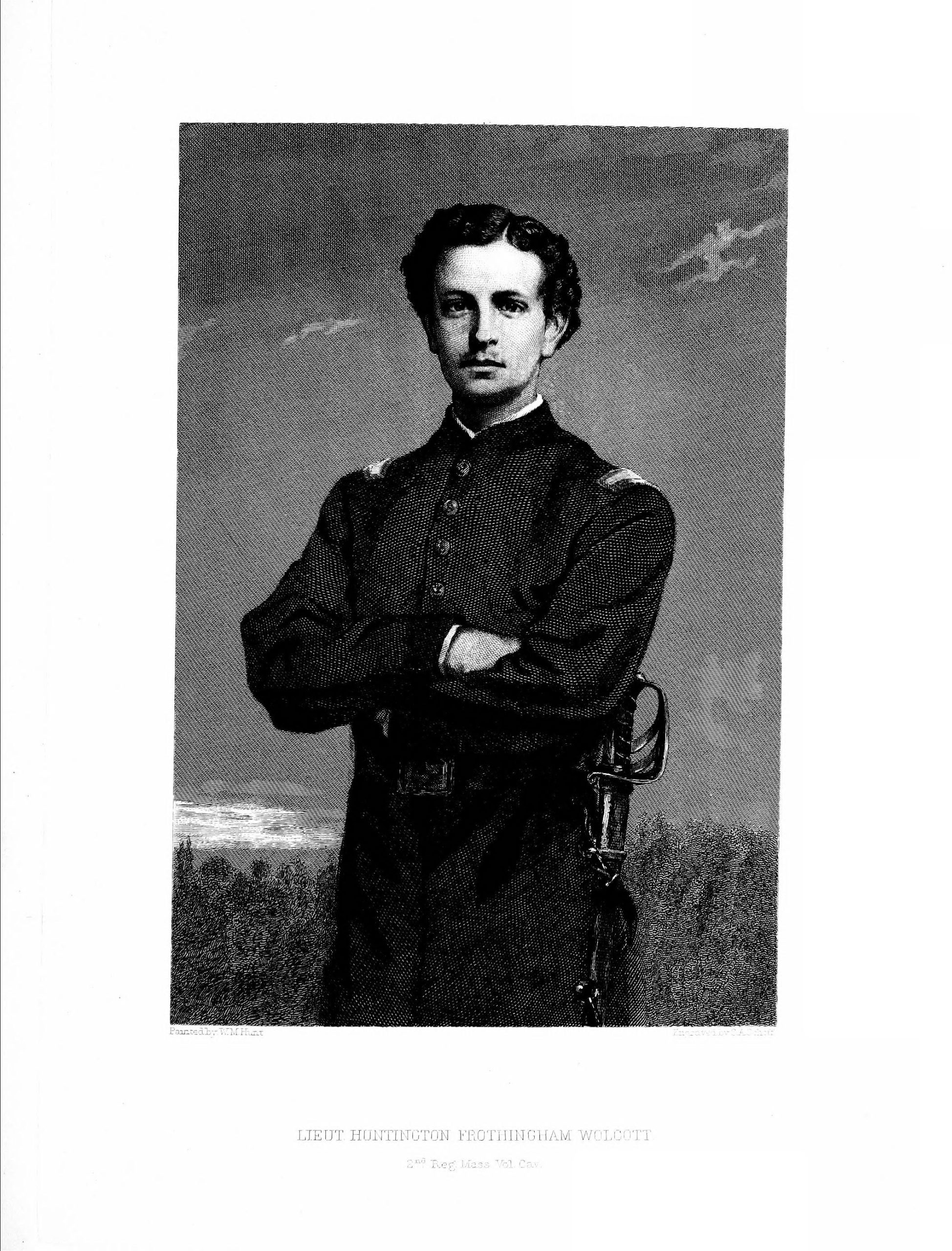
Tragically, after the Confederate surrender, Wolcott fell seriously ill. Despite efforts to save him, including sending him home to recover, he died on June 9, 1865, likely from “camp fever,” a term encompassing diseases like typhoid or yellow fever. His death was mourned deeply by his family and community. Commemorations of his bravery include a portrait by William Morris Hunt, a marble bust by Richard S. Greenough, and the Huntington Frothingham Wolcott Fund at Harvard. His ornate gravestone at Mount Auburn Cemetery reads: “He died for his country,” a testament to his brief but impactful service.
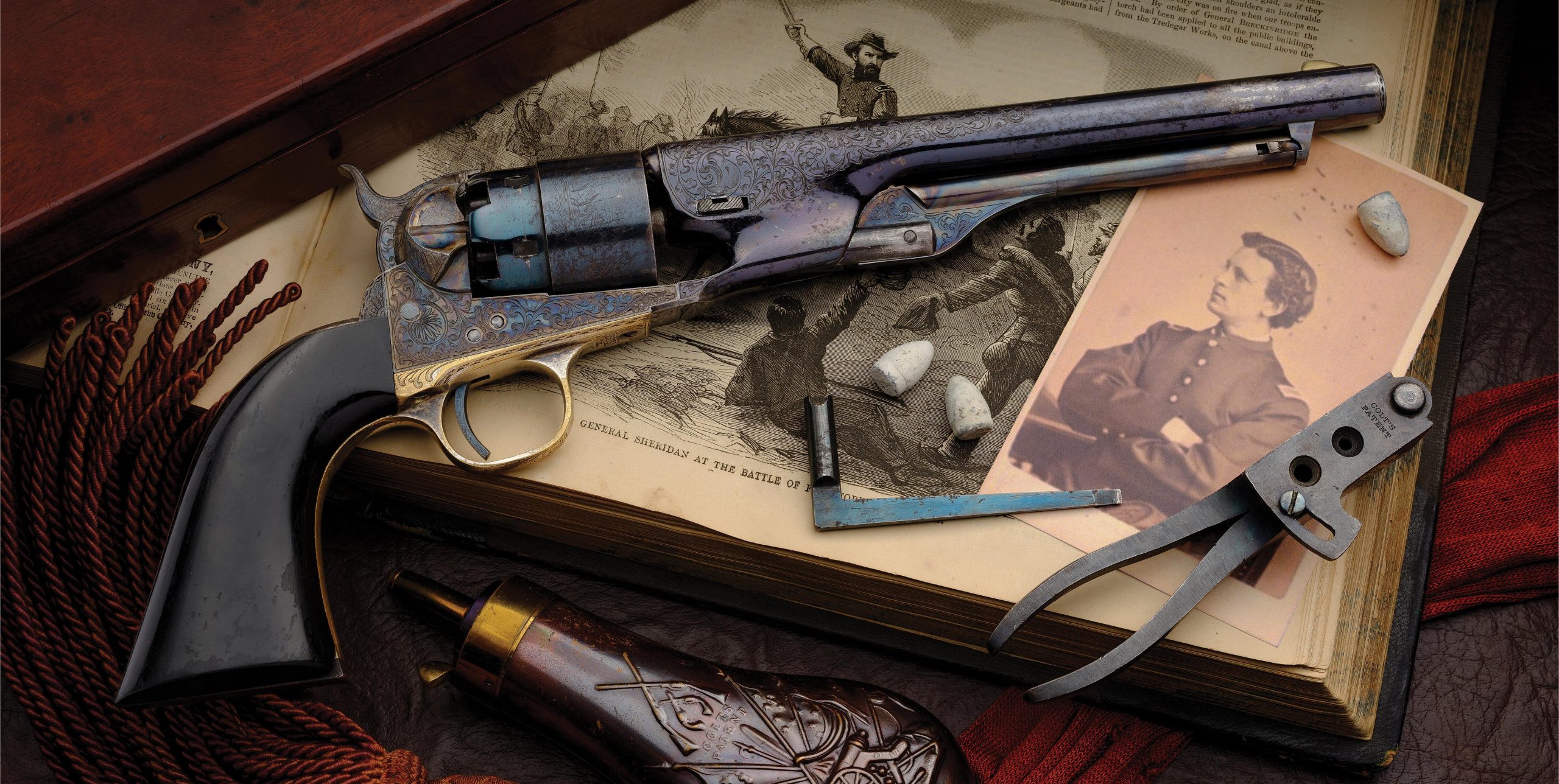
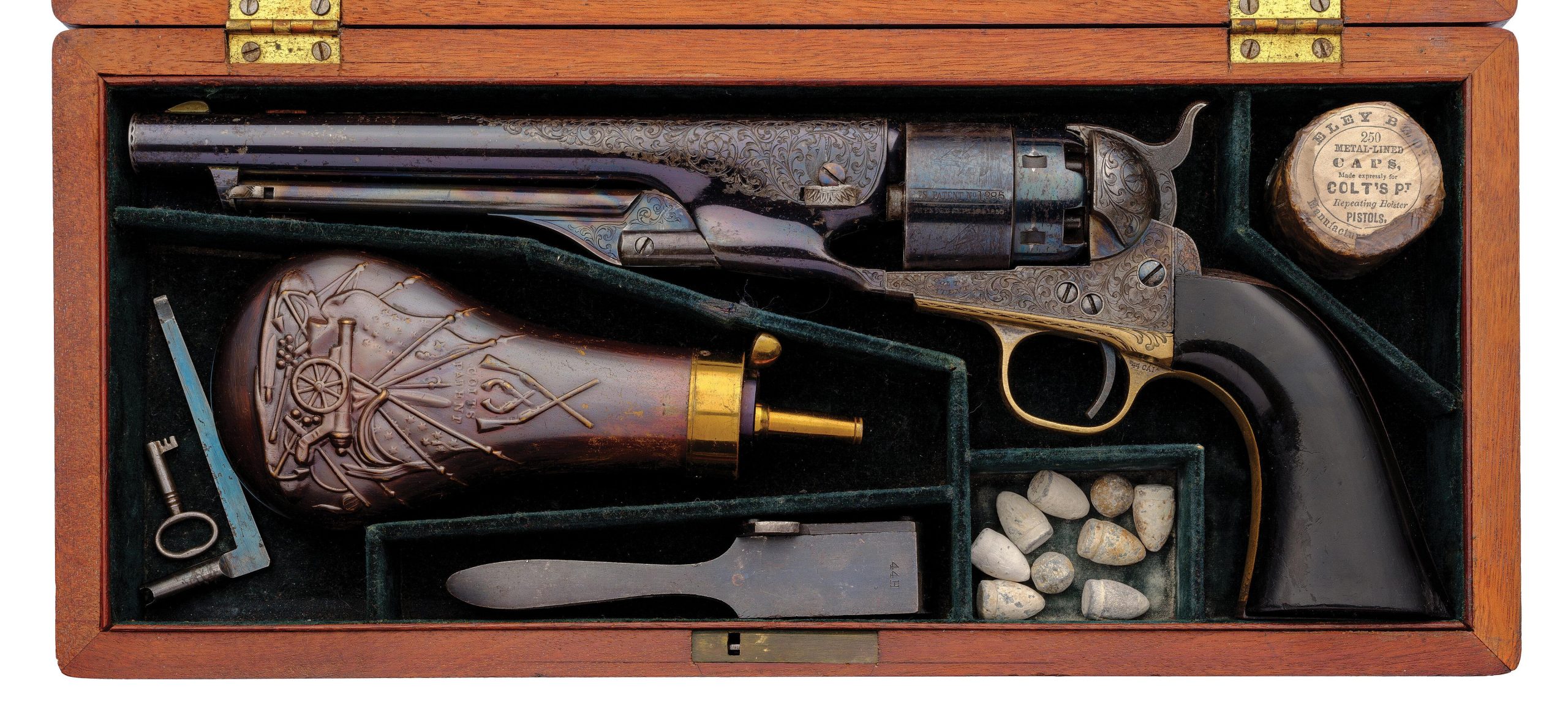
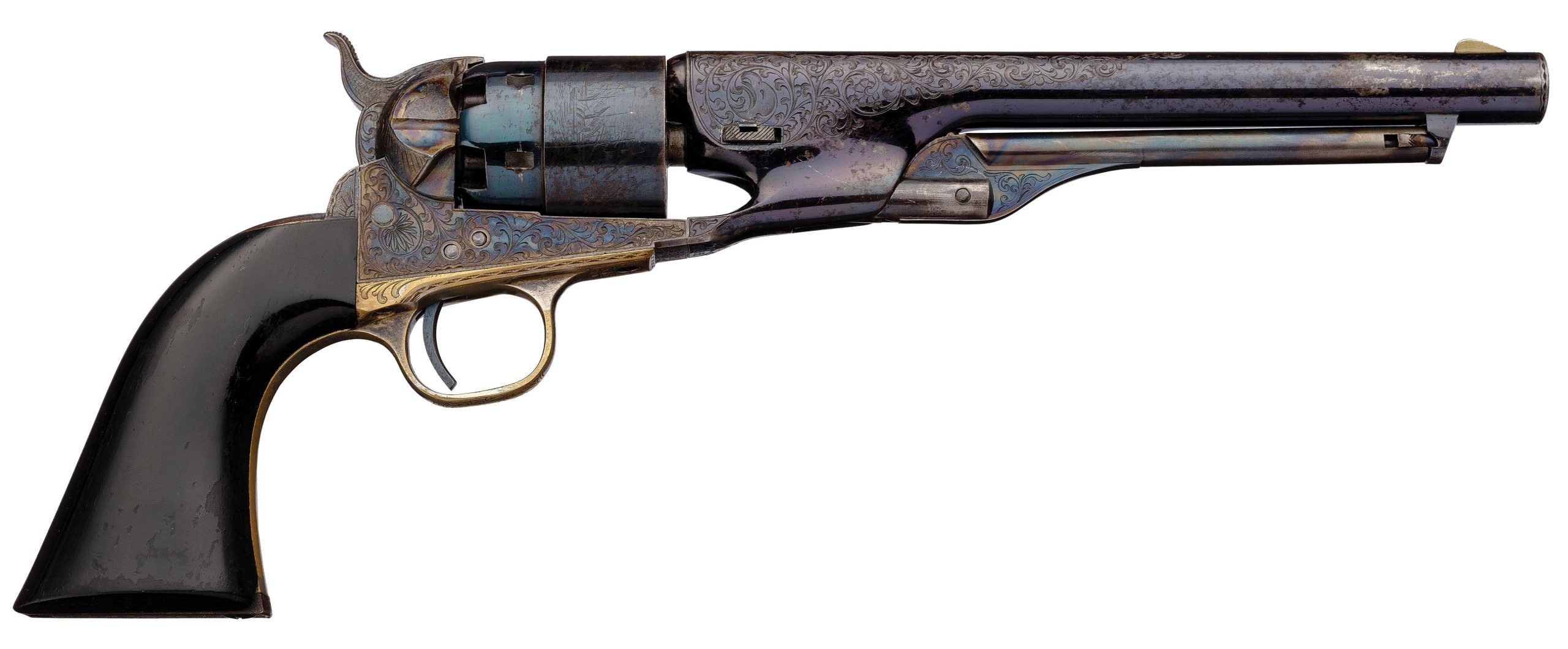
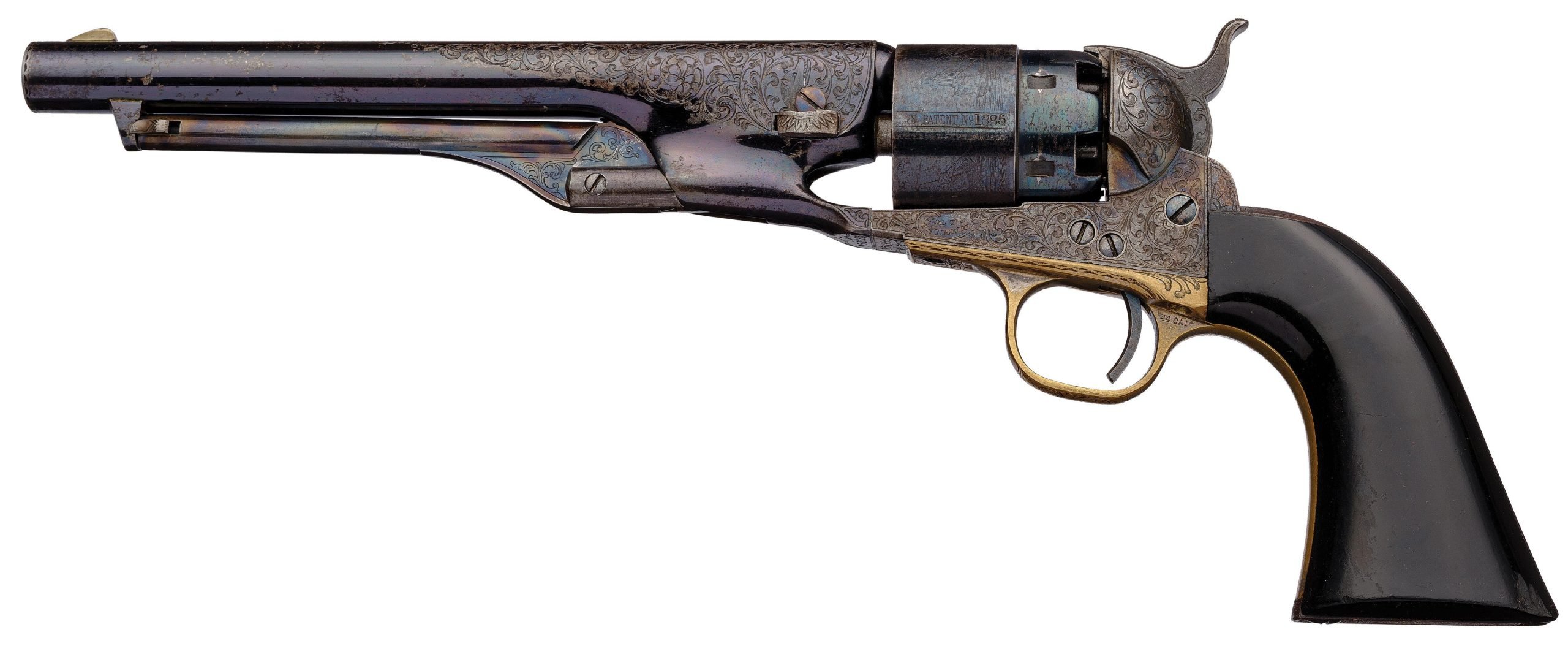
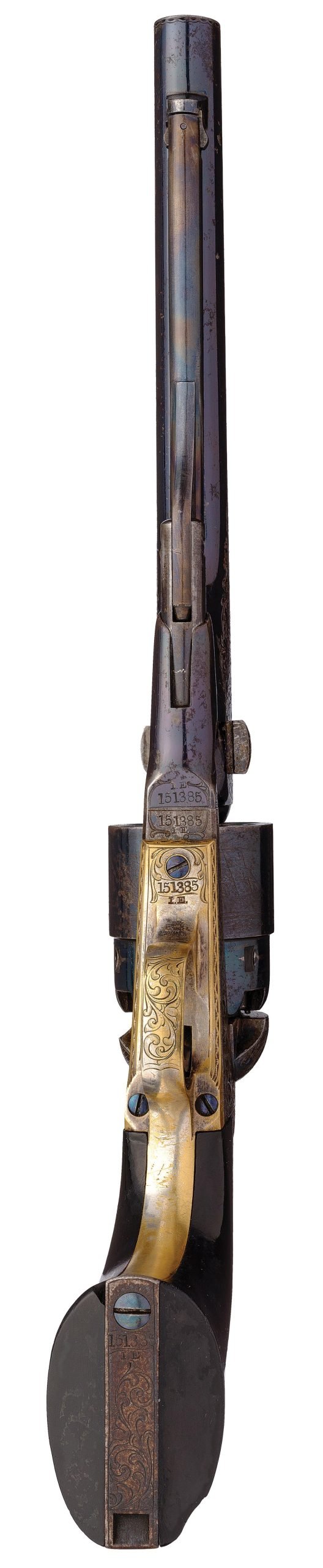
Wolcott owned a stunning Colt Model 1860 Army revolver, a piece of history and art that remained in the family until 2000. This revolver, with intricate engraving and an ebony grip, was part of a limited production during the Colt factory fire in 1864. It serves as a poignant reminder of Wolcott’s courage and the sacrifices made by so many during the Civil War. The revolver’s elaborate design and pristine condition reflect the honor and pride felt by his family for his service.
❦His Revolver
The engraved, cased Colt Model 1860 Army revolver (serial 151385) that descended in the Wolcott family until 2000 — a survivor of the limited engraving done during the Colt factory fire of 1864, with matching numbers and an ebony grip.
In General Gibbs’s Own Words
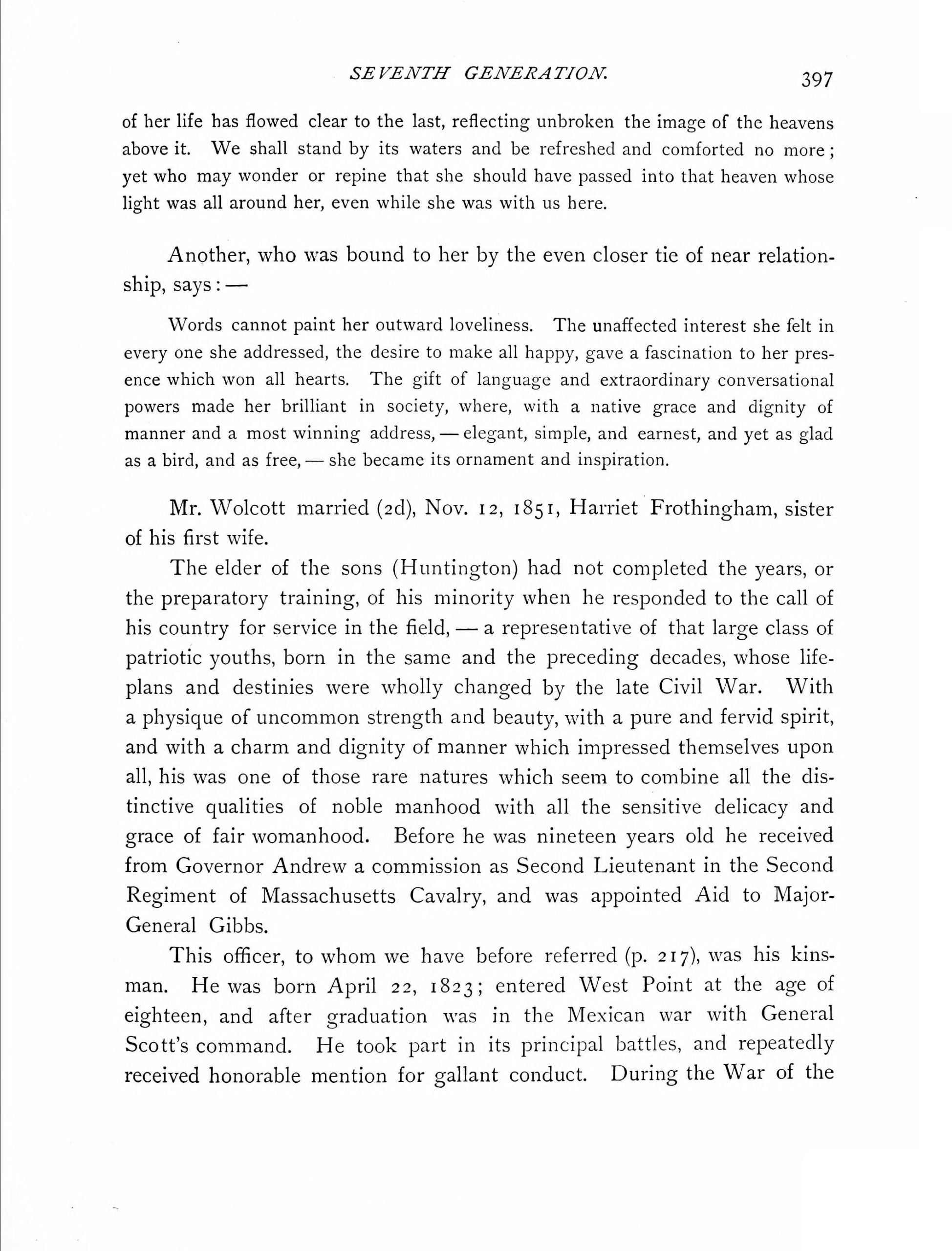
The letters the biography above refers to — Gibbs writing home to the lieutenant’s father from the field, at each turn of the last campaign. They come to us as printed excerpts in the family’s 1881 memorial, shown in full below; the original manuscripts in Gibbs’s hand are not known to survive.
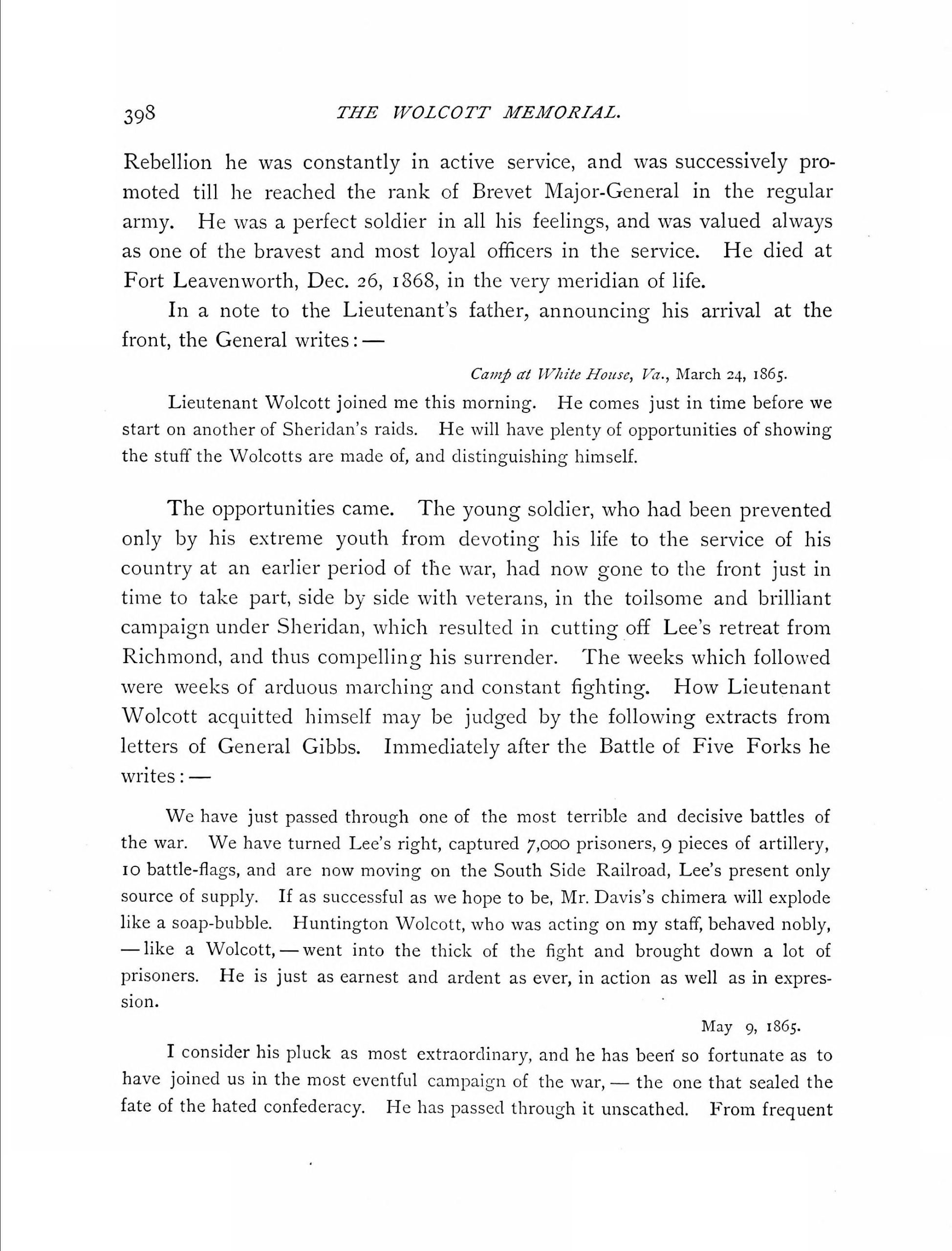
Lieutenant Wolcott joined me this morning. He comes just in time before we start on another of Sheridan’s raids. He will have plenty of opportunities of showing the stuff the Wolcotts are made of, and distinguishing himself.
We have just passed through one of the most terrible and decisive battles of the war. We have turned Lee’s right, captured 7,000 prisoners, 9 pieces of artillery, 10 battle-flags, and are now moving on the South Side Railroad, Lee’s present only source of supply. If as successful as we hope to be, Mr. Davis’s chimera will explode like a soap-bubble. Huntington Wolcott, who was acting on my staff, behaved nobly, — like a Wolcott, — went into the thick of the fight and brought down a lot of prisoners. He is just as earnest and ardent as ever, in action as well as in expression.
“behaved nobly, — like a Wolcott, — went into the thick of the fight and brought down a lot of prisoners.”
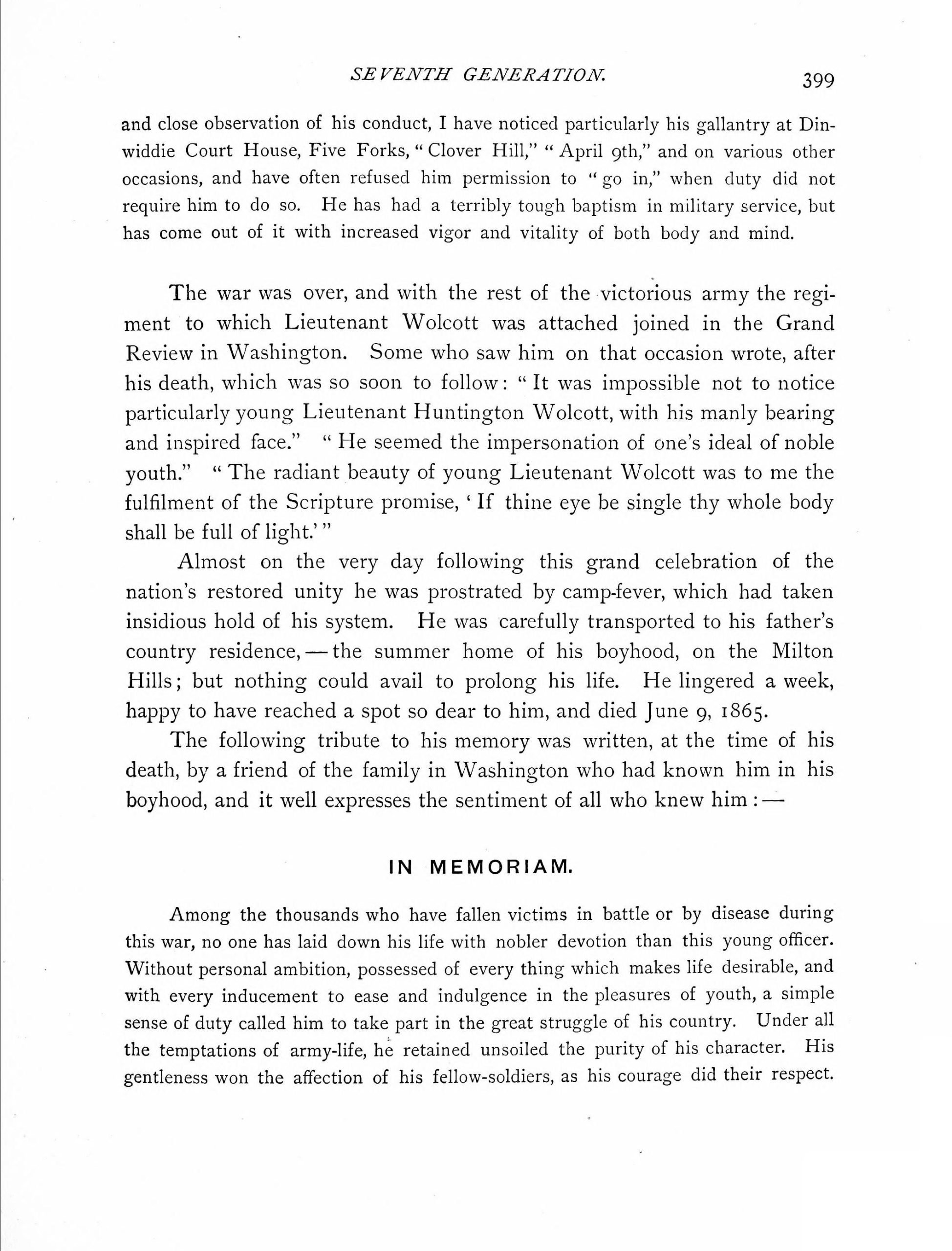
I consider his pluck as most extraordinary, and he has been so fortunate as to have joined us in the most eventful campaign of the war, — the one that sealed the fate of the hated confederacy. He has passed through it unscathed. From frequent and close observation of his conduct, I have noticed particularly his gallantry at Dinwiddie Court House, Five Forks, “Clover Hill,” “April 9th,” and on various other occasions, and have often refused him permission to “go in,” when duty did not require him to do so. He has had a terribly tough baptism in military service, but has come out of it with increased vigor and vitality of both body and mind.
Of the general who wrote these letters, the same memorial set down its own verdict: a soldier who “reached the rank of Brevet Major-General in the regular army … valued always as one of the bravest and most loyal officers in the service,” and who “died at Fort Leavenworth, Dec. 26, 1868, in the very meridian of life.” The kinsman he had welcomed to his staff had gone before him by three years.
❦The Memorial Pages
Gibbs’s letters as printed in the 1881 volume, with its own engraved portrait of the lieutenant. Click any image to enlarge.
About These Letters — and the Evidence
These are Gibbs’s words as his family preserved them in print — not scans of his manuscript. The letters were quoted in Samuel Wolcott’s Memorial of Henry Wolcott, One of the First Settlers of Windsor, Connecticut, and of Some of His Descendants (New York: Anson D. F. Randolph & Company, 1881), pp. 397–399, and are given here verbatim; the three pages shown above are scans of that printed source. The original manuscripts in Gibbs’s hand are not known to survive in any public collection, and the 1881 memorial is their primary surviving witness.
Lieutenant Wolcott’s own letters to his parents from the field, March–May 1865 — different documents, in the young man’s hand — do survive, in the Wolcott Family Papers II at the Massachusetts Historical Society (Box 2, Folders 3–4). The original of the portrait above is William Morris Hunt’s, at the Museum of Fine Arts, Boston. Digitized memorial: archive.org.
Views: 44