Regimental History of the First New York Dragoons
Chapter I
Portage to Suffolk
The history of the First New York Dragoons is, in one respect, unique, it having as an unbroken organization served in two distinct branches of military service, one year in infantry and two in cavalry. During the first year we were known asthe One Hundred and Thirtieth New York Volunteer Infantry, and had abundant experience as ‘‘dough boys” in fighting on foot, as well as in long and exhausting marches with blistered feet and aching joints. As cavaliers we also had our turn of pitying the poor boys who still had to ‘*‘ hoof it.” We also learned full well that, though riding our prancing steeds, the mounted service was not all fun, especially under such 1

vigorous leaders as Sheridan.
After our transfer to the cavalry branch of service, we became not simply “ mounted infantry,” but full-fledged cavalrymen, having changed not only our regimental name, but exchanged everything pertaining to infantry,— our Enfield rifles, together with all accouterments and clothing, for the carbine, saber, and revolver, as well as foll cavalry uniform.
Proceeding to Washington, we stretched our tired bodies that night on the commons near the capitol.
This explanation is made at the outset, that those unacquainted with the facts may not get confused. So far
as the men were concerned, the One Hundred and Thirtieth Infantry and the First Dragoons were the same.
The regiment was organized at Portage, N. Y., in August, 1862, our place of rendezvous being near the famous high bridge. It was recruited mainly from Livingston, Allegany, and Wyoming Counties, and composed of men who, for intelligence, high moral character, patriotism, nobility of manhood, and genuine fighting qualities, were unexcelled by any regiment in the service. Although the majority were from well-to-do farm homes, almost every trade and profession was represented — the legal, medical, ministerial, and educational. There were engineers, machinists, carpenters, painters, jewelers, printers, and other skilled mechanics; editors, bankers, merchants, college graduates, and professional musicians, — all actuated by a stern sense of duty and one common purpose to serve their country in time of her greatest need.
At the call of the president for more men, the regiment sprang into existence as if by magic. It was marvelous how guickly ten full companies were enlisted and the organization completed.
Time and space forbid lingering long at Portage, but we can not forego a few reminiscences of our camp organization.
We all remember Col. W. S. Fullerton, with his antiquated uniform, who was active there, but for certain reasons did not accompany the regiment to the front.
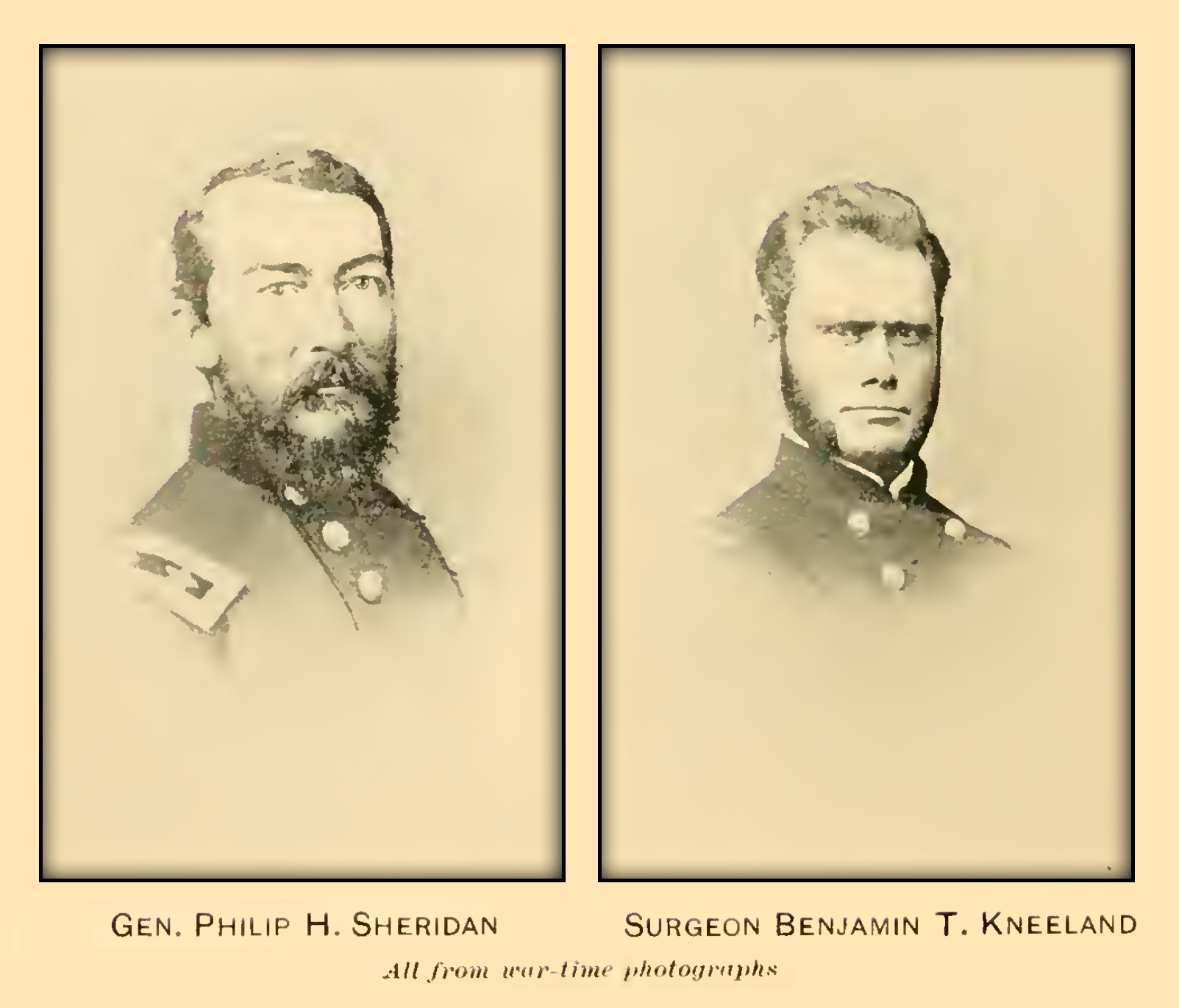
None of us will ever forget our thorough medical examination by Surgeon Kneeland; how he stripped, pounded, pinched, and pulled us, examining every limb, bone, muscle, and tooth, tested our hearts and lungs, accepting only those he could pronounce ‘‘ sound as a
PORTAGE TO SUFFOLK y
new silver dollar.”” We were turned over to the government as sound, healthy men. Yet, many of these noble fellows after three years of active and faithful service, exposed to hardships and the terrible strain of army life, returned home broken in health; but now, strange as it may seem, when application is made for a pension, they are required to search from Dan to Beersheba for evidence to prove that they were not invalids and cripples at the time of their enlistment.
After our acceptance by the surgeon came the formality of mustering into the service for three years, taking the oath of allegiance to the government in whose defense we were soon to fight.
Then came the lettering of companies and the distribution of uniforms, the establishment of camp guard, squad drill, and election of officers. |
We do not forget the thousands of visitors who overwhelmed us with good things to refresh the inner man, nor our evening camp-fires, where we listened to the yarns spun by the champion story-tellers of the regiment.
We recall the romantic marriage of Lieutenant-Colonel Thorp, performed on the battalion line, backed up by the regiment at ‘‘ parade rest.”’ thus presenting us with one more ‘‘ major” than the blue book provided for. (Mrs. Thorp’s maiden name was Mandana Major.)
At last the eventful day (Sept. 6, 1862) came, and with it the order to break camp and go to the front. With knapsacks in place, a thousand newly made soldiers were in line of march for the railway station at Portage Bridge. Not less than ten thousand visitors were present to witness our departure. Who, present upon that occasion, will ever forget the touching scene, when for a short time the regiment broke ranks, that the boys might
speak their last good-by, or receive the parting embrace or kiss from fathers, mothers, wives, or sweethearts?
‘* Attention! ” ‘* All aboard!” rings out in stentorian tones from our young commander. The locomotive shrieks, and the cars move out midst cheers from men and the waving of a thousand handkerchiefs from the sad-faced women, who watched us as we passed out of sight.
The journey to Elmira was an ovation all the way. At that place the Enfield rifles and other equipments were issued, but not distributed until reaching Harrisburg.
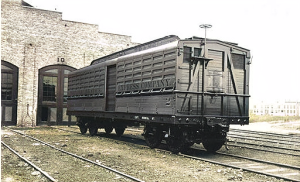
Few of us will forget that night of torture as we moved out from Elmira, crowded into offensive-smelling cattle cars, seated with rough hemlock boards, without backs, affording us accommodations far removed from the luxurious Pullman and Wagner cars in which soldiers of to-day are carried.
Stiff and sore we disembarked Sunday morning at _ Williamsport, Pa., just as the church bells were calling the people to worship. But the kind-hearted citizens were at the depot, loaded with baskets of provisions, and gave us a sumptuous repast.
Our patriotism was so highly extolled by these good people that we almost imagined the collapse of the Confederacy must occur when it became known that the One Hundred and Thirtieth New York was headed South. But somehow the obstreperous rebs, instead of throwing down their arms, kept us dodging bullets for three long years.
After three rousing cheers for our kind-hearted hosts, we sped on to Harrisburg, where, under our new experiences, in the dirt of Camp Curtin, we made our first acquaintance with shelter, tents, and army ‘‘ gray-backs.”
ee
Here, too, we received our first scare, as wild rumors were afloat that Lee was moving in that direction, and some of the more timid tremblingly awaited the onset of the enemy.
Monday evening we were hustled aboard a train of dirty coal cars, our destination being Baltimore, where we arrived a begrimed and disconsolate set, this being our second night of rough riding, giving us a foretaste of the rougher experiences awaiting us. Nearly all day we lay in the hot streets of the city, where, not long before, the famous Sixth Massachusetts had received their baptism of brickbats.
Public sentiment was divided; while some scowled and manifested extreme hatred, we found others intensely outspoken in their loyalty. Some who purchased and drank milk there became sick, leading to the belief that it had been purposely poisoned.
Proceeding to Washington, we stretched our tired bodies that night on the commons near the capitol. First, however, we were marched into the rough room called the ‘‘ Soldiers’ Rest,” where was spread before us army bread, boiled pork, and dirty-looking coffee in tin cups. Many of the boys, just from homes of plenty, turned away in disgust, and ate nothing that night. A year or two later, however, less palatable food was devoured with avidity. |
Following us came another New York regiment, more fastidious than ours. They were marched to the same place for supper, and after noting the general appearance of things, bolted outright, declaring: ‘‘We are Uncle Sam’s soldiers, but not his hogs.”
Still fresh in our memory is our odoriferous camp at Washington, containing more bad smells to the square
inch than any spot we ever saw; and no wonder, it being on the border of a dried-up govuse pond.
Everything about Washington presented a military aspect. Regiments were moving here and there. Ofticers in bright new uniforms, with their gaily dressed orderlies, were galloping along the streets, while in striking contrast were seen the shabby, bronzed veterans, just from the front, and the maimed and crippled soldiers lounging in the shade of houses and trees. Everywhere we caught the gleam of the bayonet, and heard the roll of drums, and unceasing rumble of army wagons. Dirt and filth were everywhere visible.
Street fakirs and peddlers besieged us at every turn, offering every imaginable device for the convenience of soldiers. Vile women plied their vocation, and viler men offered their services to pilot the unsuspecting boys to dens of infamy.
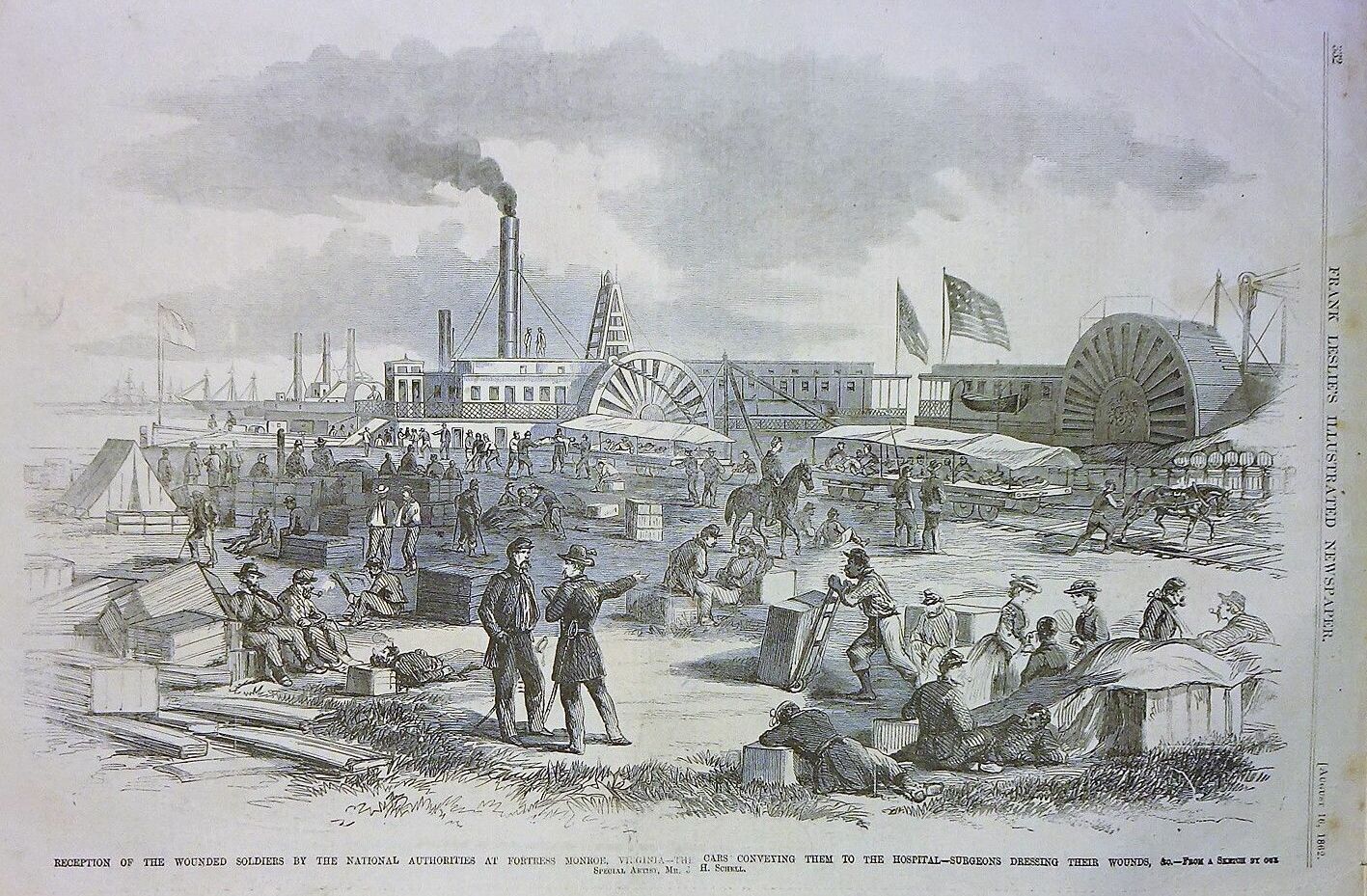
Embarking on the transport *‘ New York,” we left the Capitol City for Fort Monroe, making a pleasant trip down the historic Potomac. We recall the tolling of our bell as we passed Mt. Vernon and the tomb of the immortal Washington, also our ride over the Chesapeake Bay and arrival at the famous fortress, the recent scene of so many stirring events. We were permitted also to enjoy an invigorating sea bath, and a pleasant stroll about the fortifications.
Passing over Hampton Roads, we disembarked at Norfork, Va., a city recently recaptured from the enemy, but still a stronghold of rank traitors. Here we caught whiffs of genuine secesh atmosphere, and were forcibly reminded by the haughty and insulting demeanor of both men and women that rebeldom had finally been reached The women in particular were emphatic in manifestation
of supreme contempt for Yankee soldiers, and when in response to Colonel Thorp’s request the regiment lustily sang ‘‘John Brown,” their anger and disgust were unbounded.
One or two incidents described in a letter at the time, will serve to illustrate their venom. A number of the regiment were quietly awaiting orders, when a bevy of ladies (?) approached for the apparent purpose of offering insults, as one of them, looking directly at the boys, in a loud voice remarked: —
‘¢ What a horrid lot of dirty creatures they are; nothing but the dregs of society.”
‘¢We’ll be all right, madam,” replied one of our boys, “when we get washed up.”
‘Yes, but that won’t make gentlemen of you,” she exclaimed. ‘Our Southern soldiers are al] gentlemen.”
To which our spokesman quickly retorted: ‘* Perhaps they are; but, madam, if you are a sample, all Southern women are not ladies.” Her face flushed with rage, and her attempt to scream out a reply was drowned by shouts of laughter.
Soon after this occurrence, a large, pompous man, who we learned had been a prominent city ofticial, was boasting in the presence of some of the One Hundred and Thirtieth about the superiority of Confederate soldiers over the Yankee hirelings, reiterating the stale, old assertion that ‘one Southerner is as good as a dozen Yankees in a fight.” He had scarcely got the words out of his mouth when a small, wiry young man of the regiment stepped up to him, and remarked: —
‘‘ See here, Mister, are you a Southerner?”
‘‘]’m proud to say I am, sir.”
‘* Well, you old traitor, I’m a Yankee, and not as big
as you are, but if you don’t get out of here, or take your words back, Ill knock them down your belly.”
Without a word the fellow turned instanter and disappeared around a corner..
Taking the train we reached Suffolk, some eighteen miles southwest, about dark, Saturday, Sept. 13, 1862, just a week after leaving Portage. This place is about fifty miles southeast from Petersburg, and eight or ten miles from the North Carolina line. Here was being collected an offensive army to threaten the rebel capital from the south. This proved to be our army home for about nine months, as well as our training school for the severe and trying ordeals we were to pass through later on.
Notes
- Text transcribed from James R. Bowen, Regimental History of the First New York Dragoons, Chapter I. ↑