
CONTINUED FROM Chapter II Part 5
It is necessary to make only a few additions to the admirable characterization of my grandmother made by Dr. Bellows.
[ 23 ]
He has referred to her intense interest in the Civil War; tales of her special interest in the welfare of the sick and wounded might be cited from the recollections of members of the family. She was a strong abolitionist and used to hide negro slaves in her cellar at 261 Greene Street ( renamed Winthrop Place). Even in New York City it was the custom to hunt down these refugees, and houses where they were suspected of being concealed were marked by a cross in chalk; Mrs. Gibbs, when she found such a mark, would go down at night and remove it. Her love of beautiful objects and her own artistic gift should be enlarged upon. She drew with pencil and charcoal and also painted in watercolors extremely well. Partly from memory, partly from the study of other pictures, notably those of Trumbull, she executed in water color a portrait of Alexander Hamilton, which, having been engraved, remains one of the most generally admired portraits of Hamilton, and widely used for the illustration of books. It represents him in early manhood, with an expression of much vigor and liveliness, in every way in his happiest moments. I do not know what became of the original, but the engraving from it is frequently met with and bears the name, «L. W. Gibbs, pinxit.”
The furniture and paintings of the house in Winthrop Place, where Mrs. Gibbs lived so long, made a collection such as is rarely seen. Almost everything was an heirloom and recalled colonial times or the early days of the Republic.
[ 24]
In the dining-room was Cleven ger’s bust of Oliver Wolcott, his portrait and that of his wife by Trumbull, and the portraits of Laura Wolcott by Stuart and of Elizabeth Wolcott Gracie by Trumbull. Also, there were four Gilbert Stuarts,- of George Gibbs (II.); his wife, Mary Channing; his partner Captain Anthony; and one of Colonel George Gibbs. In the drawing-room hung one of the two sets of Stuart portraits of the first :five presidents of the United States. The drawing-room furniture was bought, at the time of Gibbs’s marriage, from Col. Humphrey, our first Minister to Spain, who disposed of much of his collection upon his return to America. This furniture, which is very beautiful, is Spanish Louis XVI; the set is now owned by Mrs. J. West Roosevelt. Among the many memorials of the Wolcott and Gibbs families, and of Washington and Hamilton, was Wolcott’s commission as Secretary of the Treasury, signed by Washington and Randolph, and a silver wine-cooler given to him by Washington when he retired from the presidency. There was also a gold locket containing a lock of Washington’s hair. This was cut by Mrs. Washington and presented to Mrs. Wolcott, from whom it has descended to George Gibbs (V.). This interesting collection has been dispersed among the descendants of George and Laura Wolcott Gibbs.
[25]
George Gibbs (III.) and Laura Wolcott Gibbs had seven children as follows:
- George (IV.), born July 17, 1815; died April 9, 1873; married Mary Kane Gibbs, his cousin, daughter of Gov. Wm. Channing Gibbs.
- Mary, died in infancy.
- Elizabeth Wolcott, born July 8, 1819; died August 25, 1906; married Lucius Tuckerman, April 2, 1844.
- Oliver Wolcott, born February 21, 1822; died December 9, 1908; married Josephine Mauran.
- Alfred, born April 22, 1823; died December 26, 1868; married Peggy Forshee Blair, of Richmond, Va.
- Laura Wolcott, born August 12, 1827; died December 1, 1908; married Marie Theophile d’Oremieulx.
- Francis Sarason, born June 24, 1831; died December 27, 1882; married Eliza Gay Hosmer.
These children should be referred to at length:
GEORGE GIBBS (IV.), the eldest, was born in “Sunswick,” Astoria, N.Y. He was educated at the Round Hill School at Northampton, Mass., then in charge of George Bancroft, the historian, and Joseph S. Cogswell, who was afterwards librarian of the Astor Library. He graduated in law at Harvard in 1838, and practiced his profession in the office of Prescott Hall in New York City. But literary and scientific tastes led him in other directions. He acted as librarian of the New York Historical Society from 1842 to 1848. In 1848 he accompanied the Mounted Rifles in their march across the continent. Resident at Olympia, Washington Territory, he was appointed in 1854 Collector of the Port of Astoria by President Fillmore, and was also attached as geologist to the United States Boundary Commission. In connection with this assignment, he was engaged, under Capt. George B. McClellan, Commanding the Western Division of the “Northern Pacific Railroad Expedition,” to make a geological survey of the Cascade Mountains and the Olympian peninsular country.
[Editor’s note: The date is in error, and the mistake originates with Stevens’s 1873 eulogy. Fillmore left office in March 1853; he appointed Gibbs Collector in late 1852, and the Pierce administration restored Gibbs’s predecessor by April 1853 — as George’s own letters from that spring, elsewhere on this site, attest. See Correcting the Record: the Astoria Collectorship.]
[26]
In 1857 he was appointed a member of the Boundary Commission. While in the Far West, he studied intensively the Indian dialects and manners and was considered an outstanding authority in these subjects; his reports and papers are now in the Smithsonian Institution. He returned to the East to become Secretary to the Hudson Bay Commission at Washington. When the Civil War broke out in 1861, he helped to defend the national capital and to suppress the draft riots in New York. He aided the Smithsonian Institution in arranging manuscript reports on the ethnology and philology of the Indian tribes, largely made up of his own contributions to the Institution. Receiving from his mother the custody of the papers of Oliver Wolcott, he wrote the Memoirs of the “Administrations of Washington and Adams,” edited from the papers of his grandfather, Oliver Wolcott (1846). Among his other published papers are “Instructions for Research Relative to the Ethnology and Philology of America” (1863); “A Dictionary of the Chinook Jargon or Trade Language of Oregon” (1863); “Comparative Vocabularies” (1863); and “Suggestions Relative to Objects of Scientific Investigation in Russian America” (1867).
[27]

He was married late in life (in 1871) to Mary Kane Gibbs, his cousin, daughter of Governor William Channing Gibbs and Mary Kane. After his death in New Haven, Conn., in 1873, our Cousin Mary married the Rev. Mr. Brewster, of New Haven. She had possessed many fine old Gibbs and Wolcott family relics – furniture, silverware, books, etc. These she left at her death in 1876 to Mr. Brewster, but after his death, his children returned the heirlooms to our family.
The following gives additional facts of interest regarding George Gibbs’s (IV.) life and is abstracted from a paper by John Austin Stevens, read before the New York Historical Society, October 7, 1873. In the account Stevens gives, will be noticed some amplified statements of facts already briefly set down in this Record, but the historical value of his paper, and its interest, remain.
“George Gibbs, so long familiar to the members of this Society as its unwavering and faithful friend, and for many years its Librarian and Custodian, has passed from the scenes of his busy and useful life. The son of Colonel George Gibbs, of the Newport, R.I., family of that name, and of Laura Wolcott, he was born on the 17th of July, 1815, at Sunswick, Long Island, near the village of Hallett’s Cove, now known as Astoria. His father was a man of singular culture and talent. Brilliant in conversation, polished in manners, and of large and various experience of men and life, Colonel Gibbs was one of the marked men of his day, and his large mansion at Sunswick was the seat of a broad and elegant hospitality rarely to be met with in this country at that time. As an instance of the extent of this hospitality, it may be stated that during the cholera summer of 1832, several families found refuge here and at the lodge during the whole time of the pestilence. The beautiful mansion, with its front upon the East River at one of its most picturesque points, and its rear opening upon a broad inward landscape of fertile farm-fields, was then one of the landmarks of the river.
[28]
And its stone descent from the terrace to the shore still marks the old house, which is now occupied as the Convent of the Sacred Heart. In Colonel Gibbs’s day, fine horses and dogs were always to be found about a gentleman’s residence. Passionately fond of field sports, he was constantly at the south side of Long Island, where deer and small game were then the certain reward of the day’s hunt, and his son was often his companion. For access to the city, he had for years a small yacht which he styled the ‘Laura.’ His gardens were celebrated for the character and abundance of their splendid crops. To these, as to all that he touched, Colonel Gibbs brought the resources of his well-stored mind. Within was his fine library, abounding in the works of the best authors, and in many tongues. These incidents in the life of the father are alluded to here as having a direct bearing upon the career of the son.
“The mother of George Gibbs was Laura Wolcott, daughter of Oliver Wolcott, the Secretary of the Treasury under Washington and the elder Adams, one of the fathers of the country. It is not necessary in this city, where her true, brave character, her well-stored and independent mind are still fresh in remembrance, to dwell upon the influence of such training upon her rising family. The original purpose of Col. Gibbs was to give his son a West Point education and to fit him for an army career; this and the navy were at that time considered as the only true occupations for the sons of gentlemen. As a preliminary step, he was sent to the Round Hill school, at Northampton, Massachusetts, then kept by Mr. George Bancroft, the historian, and Mr. Cogswell, the late learned and distinguished
Superintendent of the Astor Library. At seventeen, it having been found impossible to secure for the youth an appointment to the Military Academy—political favor then, as now, being indispensable to success—he was taken to Europe by his maiden aunt, Miss Sarah Gibbs, and for two years enjoyed the advantage of foreign travel.
“On his return to New York, he entered the law office of the late Prescott Hall, and by degrees attached himself to his profession and engaged in such practice as he could obtain. With this agreeable and genial gentleman, he continued the most friendly and intimate relations until his death. A great part of his time, however, he passed in the country. His early taste for an outdoor life always clung to him. Shooting and fishing were his favorite amusements, diversified with a practical and useful attention to geology and natural history.
[29]
“He loved politics also. Ardent in all that he engaged in, he soon found himself occupied in a history of the times of Washington and Adams, and a vindication of the policy of his grandfather as Secretary of the Treasury and a member of the cabinet of John Adams. The hot feud between the Federalists and the Republicans had not died out, and the young polemic took up the ‘burning brand,’ which in those days was indeed passed on from sire to son as thoroughly as ever by Scottish partisan in Scottish feud. To use his own words, Mr. Gibbs ‘felt himself not only the vindicator, but in some sort the avenger of a bygone party and a buried race.’
“This work occupied a great part of his time. He embraced in it the correspondence of Oliver Wolcott, and it stands today as a textbook of the history of the day—as an unquestioned authority upon the personages and the politics of that stirring period. It is written in a strong, nervous style, with great clearness and simplicity. This publication, under the title of ‘The Memoirs of the Administration of Washington and Adams, edited from the papers of Oliver Wolcott, Secretary of the Treasury,’ was printed in 1846, in two volumes octavo.
“In 1848, an event occurred which strangely affected the minds of all those restless spirits who chafed under the confinement of city life and yearned for the freedom of nature. Goldfields were discovered in California. Dissatisfied with the dull routine of a sluggish practice, and urged on by his unwearied taste for practical scientific research, Mr. Gibbs took advantage of an occasion which the march of the Mounted Rifles overland from St. Louis to California afforded him, and accompanied them to Oregon, where he established himself at Columbia.
“When Mr. Fillmore succeeded to the Presidency of the United States, Mr. Gibbs received, in 1854, the appointment of Collector of the port of Astoria, which he held during his administration. Later, he removed from Oregon to Washington Territory and settled upon a ranch a few miles from Fort Steilacoom, at a small settlement called by the same name. Here he had his headquarters for several years, devoting himself to the study of the Indian languages, and to the collection of vocabularies and traditions of the north-western tribes. During a great part of the time, he was attached to the United States Government Commission in laying the boundary as the geologist or botanist of the expedition.
[Editor’s note: The date is in error, and the mistake originates with Stevens’s 1873 eulogy. Fillmore left office in March 1853; he appointed Gibbs Collector in late 1852, and the Pierce administration restored Gibbs’s predecessor by April 1853 — as George’s own letters from that spring, elsewhere on this site, attest. See Correcting the Record: the Astoria Collectorship.]
[30]
Each Commission in turn sought eagerly for the aid of his practical experience, his varied and extensive acquirements, and the comfort of his brave, cheerful, genial nature. He was specially attached as geologist to the survey of a railroad route to the Pacific under Major, afterwards General Stevens. His associates on this expedition were Drs. George Suckley and S. G. Cooper, as naturalists, to whose reports Mr. Gibbs made large contributions.
“In 1857, he was appointed to the northwest boundary survey, under Mr. Archibald Campbell as commissioner, with General J. G. Parke, as chief engineer, and after the close of the survey, prepared an elaborate report on the geology and natural history of the country. “In 1860, Mr. Gibbs returned to New York, not intending to remain permanently. The outbreak of the war, however, brought with it other occupations and other duties. Too uncertain in health for continuous service, and even then laboring under the painful disease which finally brought him down, he threw himself with his strong character, his great perseverance, and his abundant energy, into the service of the Union in another form. He was an early and active member of the Loyal National League, which did so much to crystallize public opinion in the second year of the war, and also of the Loyal Publication Society, which distributed such masses of tracts and healthy patriotic literature over the whole country. Of great personal bravery, he was always ready to expose life in defense of principle. In Washington, during the dark hours of March and April 1861, he took his musket and went upon duty to guard the Capitol at the first sign of danger. And in the New York riots, he sought the place of greatest peril, and volunteered for the defense of the house of General Fremont, when a night attack was threatened.
“Later, he resided in Washington, and was mainly employed in the Hudson Bay Claims Commission, to which he was secretary. He was also engaged in the arrangement of a large mass of manuscript bearing upon the ethnology and philology of the American Indians. His services were availed of by the Smithsonian Institution to superintend its labors in this field, and to his energy and complete knowledge of the subject, it greatly owes its success to this branch of service.
[31]
“He published, some years since, a series of the vocabularies of the Clammal, and Lummi and Chinook languages, and of the Chinook jargon, besides other tracts of a similar kind; and at the time of his death, was engaged in superintending the printing for the Smithsonian Institution of a quarto volume of American Indian vocabularies, and had fortunately arranged and carefully criticized many hundred series before his death. His large collection of papers on the Indian languages, of translations of many and curious legends, all of incalculable value to science, has been bequeathed to the Smithsonian Institute; his numerous maps and charts to the Geographical Society, and such of his books as were suitable for the purpose to this Society. “To whatever work Mr. Gibbs was engaged in he devoted his whole heart and every energy he possessed. This Historical Society owes its present prosperity as much to his aid as to that of any person. Its revival, in 1840, was largely owing to his determined efforts, – its Librarian for six years, from 1842 to 1848, and long a leading member of the Executive Committee and Library Committee, he never wearied in his efforts to promote its prosperity.”
[Editor’s note: An editing error at this point, which cut the concluding lines of Stevens’s tribute and duplicated an earlier passage, was repaired on July 10, 2026; the missing lines were restored the same day from the original 1933 volume.]
ELIZABETH WOLCOTT GIBBS was born at Sunswick in I 819. She married Lucius Tuckerman, a well-born young Bostonian, the son of Rev. Joseph Tuckerman, a well-known Unitarian clergyman of that town. In early life Lucius Tuckerman came to New York, and rose to be a successful business man and well-known patron of art. Lucius Tuckerman and Aunt Eliza had nine children,1 of whom only one, Paul, is now living.
The Tuckermans, who had lived in New York City for many years, left 220 Madison Avenue in I 887 to take up residence in Washington, D. C., where they had built a beautiful house at I 600 I Street; this for many years was a center of social activities. During the summers they lived in Stockbridge, Mass. ( from 1870), where they bought a large estate which they
1 See genealogical Table, Chapter X, for list of the children. called “Ingleside;” this was a fine place and contained beautiful and extensive gardens. Upon Aunt Eliza’s death in Stockbridge, my cousin Emily Tuckerman sold Ingleside and bought in r 908 the old Dwight house, which she restored and furnished in exquisite taste; since her death this place has passed out of the family.
[32]
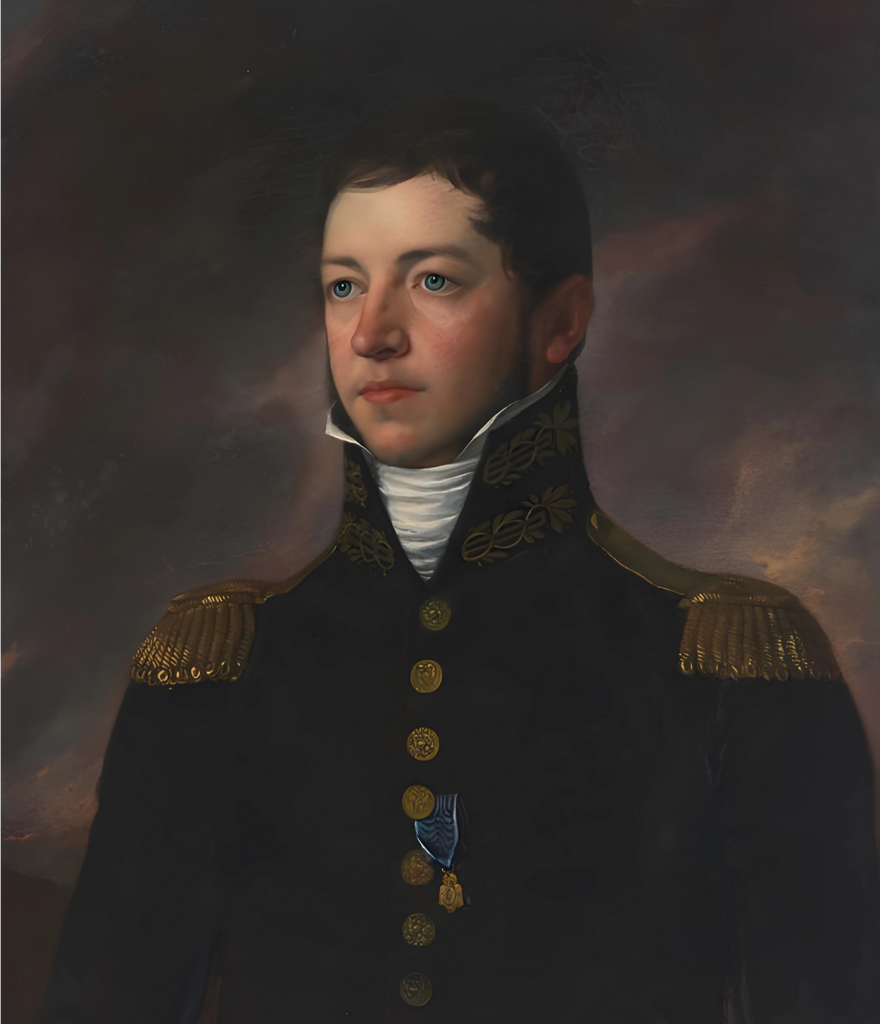
My aunt was a sweet and cultivated woman who devoted her life to her husband and children. As a boy and young man I was frequently a guest in her house in New York, at Stockbridge and in Washington; they were an unusual family of representative old-school ladies and gentlemen of the best type.
OLIVER WOLCOTT GIBBS, best known as Wolcott Gibbs, fourth child and second son of George and Laura (Wolcott) Gibbs, was the most distinguished of their sons, and is spoken of in the “American Journal of Science” as “the most commanding figure in American Chemistry.” Many accounts of his life by men able to estimate his work are to be found published; certain of these are given in Chapter IX, and a bibliography of the many papers and press notices will also be found there. He was graduated from Columbia, A.B. 8:41, A.M. 1844, and at the College of Physicians and Surgeons in 1845. Then he studied chemistry at the University of Berlin in the laboratories of Rose and Rammelsberg and subsequently spent five months with Liebig in Giessen, and attended courses of lectures on physics in the College of France in Paris. Returning to America he was lecturer on chemistry at Delmore College, Newark, Delaware, 1848; professor of chemistry and physics at the New York Free Academy (afterwards the College of the City of New York) (1849-63) ; Rumford professor and lecturer on the application of science to the useful arts, Harvard, 1863-87; and was made professor emeritus in 1887. He was a member of the executive committee of the United States Sanitary Commission in New York during the Civil War, and was a founder of the Century and Union League Clubs, New York City (seepage 1 54).
[ 33 ]
Dr. Gibbs was elected an honorary member of the American Chemical Society; first American honorary member of the Royal Academy of Sciences of Berlin; a charter member of the National Academy of Sciences (American), and served as its foreign secretary, vice-president, and later as its president; vice-president of the American Association for the Advancement of Science in 1866, and president in 1896. In 1873 he was appointed United States Commissioner to the Vienna Exposition, which was held that year. He received the honorary degree of LL.D. from Columbia in 1873 and from Harvard in 1888. Shortly before his death, at the time when age prevented his leaving home, he received the degree of LL.D. “in absentia” from the University of Pennsylvania. The list of the honors he had received is well covered in Dr. Richter’s paper (Chapter IX.). It should also be mentioned that on the :fine bronze doors of the new National Academy building at Washington his portrait will be found as representing the National leader in “Chemistry,” with the :figure of Rowland repre senting “Physics,” Dana “Geology” and Newcomb “Astronomy” in adjoining panels. His many contributions to the American Journal of Science, the American Chemical Joumal and the Proceedings of the Academy of Arts and Sciences include papers on various subjects, both in chemistry and physics.
[ 34]
He was for a number of years engaged upon a remarkable series of researches on “Complex Inorganic Acids” (1877 to 1890) and was a pioneer in this :field. After his death his old students, his friends and his family, raised a fund to build and endow the “Wolcott Gibbs Memorial Laboratory ” at Harvard University. This :fine building was opened in January, 1913.
I shall not further here enlarge upon Wolcott Gibbs’s career and attainments, as these are covered in the references to him to be found later, especially in the admirable paper by Dr. Richter, and the one by Miss Powel.1
My attachment to my uncle was as close as that of a son to his father; he was my mentor throughout my mature life. I cannot here give an adequate estimate of this great man’s personal qualities; these and his professional work have been set forth elsewhere by his associates, but some indication of the extent of his
1 See Chapter IX.
scientific attainments may be drawn from them. I would wish, however, to mention the sweetness and unselfishness of his character, his modesty and dislike of sham and self-advertising which were outstanding characteristics of the man; he especially scorned to attach his name to certifications or testimonials which had a commercialized object; for this reason, perhaps, his name was not widely known among laymen, who are influenced in their estimates of men by newspaper publicity.
Wolcott Gibbs married in 1853, Josephine Mauran, who died 1887, leaving no issue. They adopted her nephew and niece – Cornelius Grinnell Betton and Elizabeth Lane Betton, who lived with them as far back as I can remember, and whom I regarded as my beloved cousins. Elizabeth Betton is living; Neil died in May, I 901. My aunt, known in the family as Aunt Phine, was one of the most brilliant, talented and fascinating women of her day. She was a passionate music lover and herself a beautiful singer and fine pianist. To the day of her death, when she had been almost blind for years, she could play the most difficult music from memory. It was part of the delightful daily routine at her house, both in Cambridge and at Newport, for her to accompany Neil Betton at the violin and also Sally Norton ( daughter of Prof. Norton) when she was available. This lovely woman I regarded as a second mother during the many years when it was my good fortune to spend much time in her house.
[ 36]
ALFRED GIBBS, third son of George Gibbs( III.), was born at Sunswick. He was educated at White Plains, N. Y., and afterwards passed a year or two at Dartmouth College, entering West Point in 1842 and graduated in 1846. His first appointment was Brevet Second Lieutenant of Mounted Rifles. He served in the war with Mexico, 1846-1848 and fought in the siege of Vera Cruz and in the battles of Cerro Gordo, Contreras, Churubusco, Chapultepec, and the City of Mexico. He was breveted First Lieutenant April 18, 1847, and Captain, September 1 3, 1847, for gallant conduct at Garita de Belem, City of Mexico. After the Mexican War he was chiefly stationed in New Mexico, and was severely wounded in a campaign against the Apaches. July 8, 1861, he was captured by Texas insurgents and paroled until exchanged on August 27, 1862.
[Editor’s note: “July 8” is an error that originates in Cullum’s Biographical Register, from which this Record drew Alfred’s service history. The surrender at San Augustine Springs took place on July 27, 1861 — the date given in General Orders No. 102 and in the official reports of both Major Lynde and Captain Gibbs. See The Fall of Fort Fillmore.]
Having served during the War of Secession from 1862 to 1 866 as Colonel of the 1 3oth New York Volunteers and First New York Dragoons, and having taken part in a great number of engagements, he was breveted Major June 11, 1864, for gallant and meritorious services at the Battle of Winchester, Va.
[Editor’s note: The date and the battle are here conflated. Per Cullum’s Biographical Register, the Major’s brevet of June 11, 1864 was for the Battle of Trevilian Station; the Winchester (Opequon) brevet — Lieutenant Colonel — followed on September 19, 1864.]
He received subsequently four more brevets for conduct and services, became in succession, Brigadier-General of Volunteers, Brevet Colonel U.S.A., Brevet Brigadier General U.S.A., March 1 3, 1 865. After the war he served chiefly on the frontier.
A few years before the Civil War he married Peggy Forshee Blair, member of a large and distinguished
[ 37]
Richmond, Va., family. Many of her male relatives were in the Confederate Army, and she found herself obliged to live in the North whilst her husband, known to them as “Bridge-burning Gibbs,” was raiding the country where he had courted her. She was a very lovely person, and during these four terrible years of the war lived in perfect harmony with her in-law relatives.
I have no recollection of ever having seen Uncle Alfred; during the war he was, of course, away from New York City, and afterwards was stationed in the West until his death. My aunt I was very fond of and made long visits at her home in New Brunswick, N. J., where my two favorite cousins grew up to manhood. General Gibbs died at Fort Leavenworth, Kansas, December 26, I 868, leaving two sons. Mrs. Gibbs, born 1831, died February 25, 1908, in Richmond, Va.
Alfred W. Gibbs, the eldest son, was born October 27, 1856, and died at Philadelphia, May 9, 1922. He graduated at Stevens Institute of Technology, Class I 878, as Mechanical Engineer. For his entire professional life he was engaged in the machinery and motive power department of various railways, but for the last thirty years of his life, with the Pennsylvania Railroad Company as Master Mechanic, Mechanical Engineer, General Superintendent of Motive Power, and, lastly, Chief of Motive Power of the entire system. Of exceptionally sound judgment, he was a valuable official and a man of fine character, universally beloved by a host of friends.
[ 38]
I was very close to him personally and professionally; his death was a great blow to me. He married in I 890 Marianne Skelton of Richmond, Va., who is living. They had one child, a daughter, who married Lee L. Layton, of Dover, Del. John Blair Gibbs, younger son of General Gibbs, was born in 1858. He graduated from Rutgers College in r 878, and then took the medical course at the University of Pennsylvania. After graduating he spent two years at Vienna, under Billroth, a great surgeon. Returning to New York City, he became house surgeon at Bellevue Hospital and acquired a successful private practice. A man of great modesty and a keen sense of humor, he was beloved by his patients and large circle of friends. Blair, as he was known, never married. When the War with Spain broke out he was among the first to volunteer and to be sent to the front, landing at Guantanamo with the advance expedition. His tent, unfortunately, soon became a mark for the enemy. While arranging his instruments and supplies within, bullets pierced the canvas. Saying, “I am not going to be shot in here,” he stepped outside and stood facing the line of attack, and in another moment fell mortally wounded, the first officer, if not the first man, to fall in the war. In New York, the desire for a fuller expression of sympathy, not only among his friends but by the public, resulted in a memorial service at Trinity Church, the large attendance at which testified to the widespread regret felt at his death. A bronze tablet was erected in his memory in the Chapel at Rutgers College:
[ 39]
JOHN BLAIR GIBBS, M.D.
ASSISTANT SURGEON UNITED STATES ARMY
BORN SEPTEMBER TWENTY-FIFTH, 1858
GRADUATED RUTGERS COLLEGE 1878
KILLED IN BATTLE, JUNE TWELFTH, 1898 AT GUANTANAMO BAY, CUBA
ERECTED BY HIS CLASSMATES, A.D. 1898
The tablet was unveiled on “Founders’ Day” at the College, in the presence of a large assemblage of College men and Naval officers.
LAURA WOLCOTT, daughter of George Gibbs (III.), married Theophile Marie d’Oremieulx, descendant of an old Royalist family of Picardi, France. His father had been imprisoned in the Luxembourg prison during the Revolution; his two brothers aided Charles X. to escape to England. The French Revolution having impoverished the family, the young man came to this country with excellent letters of introduction and was immediately appointed Assistant Professor of French at West Point, where he lived for r 8 years. He was a very popular man with the Army, counting many of the Generals and higher officers among his friends. In I 85 3 occurred his marriage to Miss Laura Wolcott Gibbs. When he brought his bride to the West Point Academy a dinner was given in their honor by Colonel Robert E. Lee, then superintendent.
1 A full account of the proceedings will be found in the Rutgers College paper, “The Targum,” November 17, 1898.
[40]
As he handed Mrs. d’Oremieulx to her seat beside him she exclaimed at the sight of four silver jardinieres on the table, which were very familiar to her, as her grandfather, Oliver Wolcott, Secretary of the Treasury under Washington, had left one exactly like them to her mother. “These four,” said Colonel Lee, “are of a set of six; they are really wine-coolers, meant for two bottles each. I inherited four and the other two Washington presented, one to General Hamilton, the other to Governor Wolcott!” At a large reception in New York given to General Philip Sheridan after the War, Sheridan, as he caught sight of d’Oremieulx, ex claimed,”Well, Dorry, I taught you a lot of English, but I’ll be hanged if you could ever teach me any French!”
Uncle Dorry, when I knew him, was a fine-looking old man, with a handsome face and courteous manner. His hobby was working with the microscope; I remember, as a boy, looking with awe at the fine instruments with which he conducted his research.
Aunt Laura, was an accomplished linguist and musician – in fact, one of the best amateur pianists in New York – a remarkable daughter of a remarkable mother. When the Civil War broke out she joined Miss Louisa Lee Schuyler, Miss Ellen Collins, Mrs. Wm. Preston Griffin and Mrs. Wm. B. Rice in forming the Women’s Central Relief Association, which became the central source of medical and surgical supplies for the whole country.1
[41]
During her whole life she was greatly interested in hospital work and helped start the Bellevue Training School for Nurses, modeled upon the work of Florence Nightingale in England; this was the :first attempt in this country to train women for the profession of nursing, a movement which, at the start, met with much vigorous opposition from the doctors of that day. She also helped Miss Schuyler in her e:fforts to alleviate the condition of the insane in the State of New York. Until her death at 81 she was alert and active, keeping up her interest in public affairs, in music, and in her very large circle of friends. A son, Leon Francisque, was born November 1 3, 1854, and died at Oyster Bay, July 28, 1899. He married Helen L. H. Granbery, leaving no issue.
1 See “Sanitary Commission,” page 156.
A daughter, Laura Henriette d’Oremieulx, born January 7, 1858, is living; she married Dr. J. West Roosevelt, February 26, 1884. He died April 10, 1898. They had six children of whom three are living, viz., Lorraine, born January 1, 1887, married Langdon Warner May 10, 1910; Oliver Wolcott, born November 27, 1891; married Grace Temple Olmstead; his second wife is Mary de Verdery Akin, of Atlanta, Ga. Nicholas, the younger son was born June 1 2, 1 893, and is now U. S. Minister to Hungary. Laura Roosevelt is my favorite cousin and is likewise a great favorite in a very large circle of friends; she is a worthy daughter of her talented mother, a charming woman, and a :fine musician and linguist.
[42]
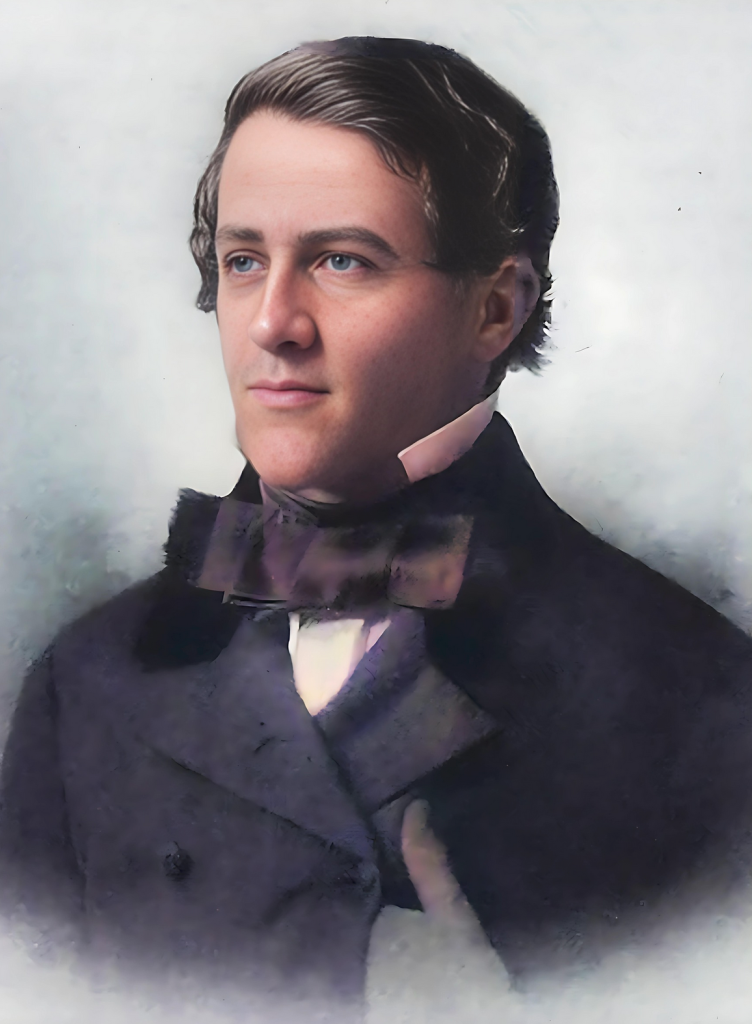
FRANCIS SARASON GIBBS, my father, was the youngest child of George Gibbs (III.). He was born at Sunswick, and was a handsome and attractive man of lovable character. At the age of 20 he was sent to China, accredited to the house of Wolcott, Bates & Company, Canton, and was appointed their resident agent in Shanghai. He sailed from New York in March, 1851, and arrived in San Francisco (via Panama) on May 5th, thence he went to Portland, Oregon, to meet his brother, George, and finally left for the Orient on October 3rd, arriving at Canton, China, in December, where he spent two years. His position was obtained through his relative, Henry D. Wolcott, member of the firm, which conducted an extensive shipping business to Shanghai, Bombay, Madras, Calcutta, Penang, Batavia and Manila. My father’s later years were spent in New York City and at Nyack,
N. Y., from 1871. He was engaged for the greater part of his life in the grain exporting business. Failure of the English firm, with whom he and his partner, Mr. Ledoux, of New Orleans, had large shipments on consignment, caused in tum their failure, and thus left my father in straitened circumstances during the last years of his life.
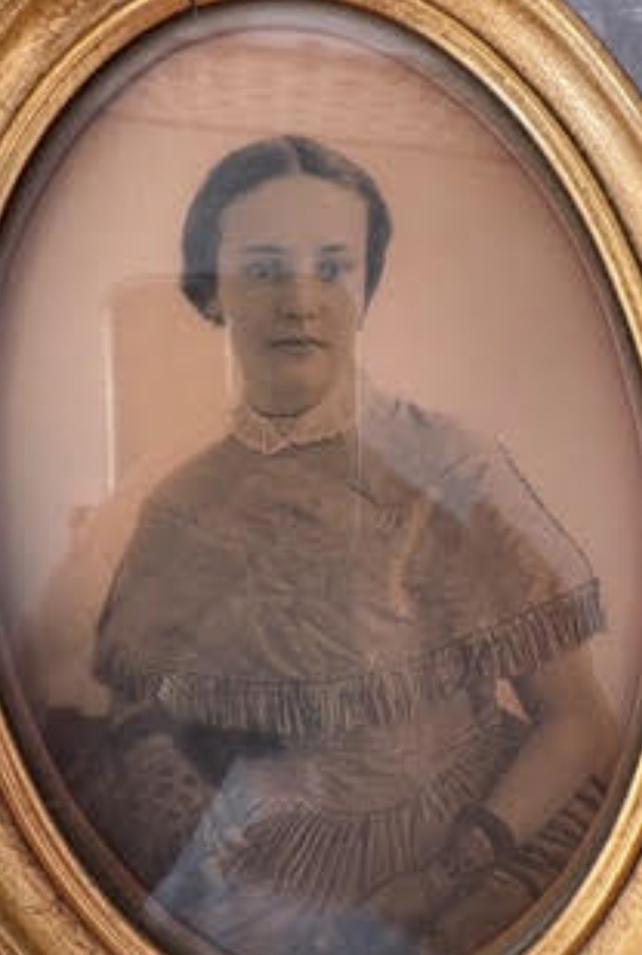
On June 6, r 860, he married Eliza Gay Hosmer, (born October 27, 1836; died November 24, 1885), daughter of Oliver Ellsworth Hosmer and Nancy Post Hawes, of New York. An account of the genealogy of the Hosmer family will be found elsewhere. My mother, who was a beautiful woman was obliged to travel much for her health during many years.
[ 43 ]
Her children were with her in California for two years, and we received our early education there at Santa Barbara. She was a woman of fine, strong character; I feel that I owe much of such success as I have had in life to traits inherited from her. She had four children:
George Gibbs (V.), born April 19, 1861, unmarried and living.
Annie M. Gibbs, born December 16, 1862, died unmarried March 5, 1922, in Florence, Italy, where she is buried in the English and American cemetery.
Laura Wolcott Gibbs, born in New York City, October 8, 1865; married Wm. H. Miller (born October 15, 1862) of Milwaukee, Wis., September 6, 1891. He died September 23, 1923. Laura has three children:
Marjorie, born July 4, 1892, married W. F. Peterson, December 1, 1917, living in Baltimore, Md.
Anne McLean, born January 2, 1894; married October 7, 1915, George Holden; married October 8, 1926, Joseph McGrath.
Constance, born August 2, 1896, married October 15, 1919, Robert N. Williams.
Both Anne and Constance are living in Milwaukee.
[44]
Lucius Tuckerman Gibbs, born February 14, 1869, married Angelica Singleton Duer, April 7, 1901. He died in Baltimore, Md., January 1909, where he held the position of Chief Electrical Engineer of the Baltimore & Ohio Railway Company. He had two children:
Wolcott, born March 15, 1902, married Elizabeth Crawford 1929, who died 1930; married Elinor Mead Sherwin, November 1933.
Angelica, born June 7, 1908, married Robert Canfield on June 7, 1932.
GEORGE GIBBS (V.). My excuse for setting down here at some length an autobiographical sketch must be that this Record is of a very personal character, and that I take pride in being a member of an old and representative New England family; also that my immediate family may wish to have the Record brought up to date in one of the names.
Throughout a long and active life I have been fortunate in having good friends, and owe much to the careful bringing up by a good mother who taught me the importance of faithfulness in the performance of responsibilities. Inherited qualities determined the direction of my career in life; thus, several generations of the Gibbs had been fond of the natural sciences – chemistry and mineralogy; these leanings in my case took the form of a fondness for engineering -a specialized department of the natural sciences,- largely, furthermore, because it afforded a practical and congenial direction in which to earn a livelihood. I graduated in 1882 from Stevens Institute of Technology, one of the earliest engineering colleges in the country, and was among the first of its graduates. Generally speaking, this Institution trained men for mechanical engineering, but in reality its course of study aimed to lay a general foundation for all engineering, as then known.
[ 45]
This was fortunate, as the.: first work I was able to secure was as laboratory assistant to Thomas A. Edison, and the duties were chiefly chemical and electrical, – not mechanical.
After some months with Edison I was sent by him to become Superintendent of Meters in the World’s .:first Central power station, in Pearl Street, New York. This position, after the necessary routine had become established, offered to a restless young man few opportunities; there£ore the pressure of necessity ( my father had then died, leaving my mother and three children to be supported), led me to take the more important position of Chief Chemist of the Orford Nickel & Copper Co., at Bergen Point, N. J.
Before my graduation from college, an intimate friend of my father’s, Mr. Roswell Miller, had promised him to give me a position on his railroad – The Chicago, Milwaukee & St. Paul. Accordingly, he came forward with an offer which, being a young man who was loath to leave the East, would not accept. But after two years of changing around jobs, I began, under pressure of necessity, to see where my real opportunity lay, so when Mr. Miller later renewed his offer, I promptly accepted it, packed up and went West to Milwaukee, Wis., to organize and assume charge of a new department of the railway – that of physical and chemical tests of materials used in the operation of the road. This was a most fortunate move in all respects, and laid the foundation of my future career.
[46]
Explanation of this broad statement, it may be said that it was rare .fifty years ago to find college-bred men in service on railways, especially in the West; the field of possible usefulness was wide, however, and not overcrowded; all that was necessary for success was a good educational grounding and a willingness to work hard to learn practical matters to which this grounding could be usefully applied. It was a great opportunity and I received a sympathetic welcome from the officers of the road in my endeavors to make the place a success. I was given many problems to work out in the direction of improving safety and efficiency in operation; in fact “safety” in railway operation has been my chief concern during my professional life. To cover this broad field, I was soon advanced to the position of Mechanical Engineer of the Company, and placed, in addition to Chief of the Department of Tests, in charge of all machinery, locomotive and car designing. Perhaps the most far-reaching and important work given me at this early date ( 1 885) was to devise a safe and practical method of heating trains, to displace the coal stoves in universal use in railway cars. This was an urgent commission, because of a particularly bad train accident on the road which resulted in wrecking and setting the cars afire and the death of a score or more passengers. After much experimentation, a practical steam heating system for trains was devised and adopted as the best solution for the entire road, making the St. Paul the pioneer in a great advance in safety in railway operation.
[ 47]
For more complete protection of trains from fire, it remained necessary to abolish the use of kerosene oil lamps in the cars; I then designed as a substitute a system of electric lighting which could be practically applied for the heavy through trains; this proved a great success and came into extended use on that Road.
During these years in the West I was active on Committees of the various Mechanical and Operating Rail way Associations, especially so in conducting tests of brakes for freight trains; tests of locomotives; improved signaling systems, etc., and became patentee of numerous inventions, notably in the direction of safety appliances; several of these inventions have since come into general use.
In the early ’90s my brother Lucius, who was also of an inventive tum of mind, devised a practical line of electric motors for general factory use, and wished to form a small company to manufacture them. I raised among my friends the capital for the purpose and was obliged, in addition to my railway duties, to take the presidency of the company. This modest venture grew rapidly in importance and took the lead in these early days, of the larger companies in equipping steel mills, machine shops, etc., with electric motors applied to individual tools – quite a new departure in practice. My numerous responsibilities were, however, becoming burdensome and it was soon evident that I should have to drop either the railway or the outside duties.
[ 48]
MRS. FRANCIS S. GIBBS (ELIZA HOSMER!
FROM A DAGUERREOTYPE
At this juncture a solution of the difficulty presented itself; I had made the intimate acquaintance of two remarkable men, Mr. George Westinghouse and Mr. Samuel Vauclain,- the latter of the Baldwin Locomotive Works. They had come of the opinion that heavy electric traction might soon be a possibility and might thus become of great importance in their manufacturing fields. They approached me with an offer to become associated with them in the development of electric locomotives. The purchase by them of the Gibbs Electric Company made the acceptance of this offer possible; I severed my connection with the St. Paul Railway and went to live in Philadelphia. In this new work I was drawn more and more in intimate association with George Westinghouse, who became a very warm friend. The connection involved much travel with him personally in Europe, over about three years’ time, and a residence in England for over a year, when he was extending his foreign manufacturing companies. I became, while retaining connection with the American Companies, Chief Engineer of his Companies in England, France, Germany, Austria and Russia. While there I prepared plans and estimates and carried out many projects for the electrification of railways; for instance, for the Mersey Railway (Liverpool and Cheshire); the Metropolitan (Inner Circle Railway) in London, one of the new tube railways in London; and was called in for consulting work on the Paris Underground Railway, and many projects of the kind on the Continent.
[ 49]
In work with the Baldwin Locomotive Works, I developed a type of electric locomotive for restricted headroom in mines, which has become the standard in America.
The starting of highly important engineering works in New York City, such as the great terminal project of the Pennsylvania Railroad Company, the first City subway system, etc., caused another change in my professional activities; I came to New York and took the position of First Vice-President of Westinghouse, Church, Kerr & Company, Engineers, a well known: firm who specialized in the design and execution of these large projects. This connection permitted me to take on independent consulting work; thus, from I 902 to I 906 I was Member of the Board of Engineers of the New York Central Railroad in the planning of the electric traction system for its new terminal; Consulting Engineer of the Rapid Transit Subway Construction Company, in charge of track, signal equipment and rolling stock for :first New York City subway lines; Member of the Board of Engineers of the Pennsylvania Railroad Company in determining the design of its system of subaqueous tunnels which were a part of the great New York City terminal project of the Company. While engaged on these highly important undertakings, I designed and obtained U. S. patents on the: first all-steel passenger car ever put into practical use on a railway; a revolutionary idea at the time, but one which seemed essential for high speed tunnel operation.
[ 50]
The New York Subway adopted my plans and put into use initially 3oo of this new type of car; the Long Island Railroad adopted it for its new electric lines into Brooklyn; and the New York Central Railroad did the same for its services into its new City terminal; and the Pennsylvania Railroad, seeing the success of the new car, determined to bar out all wooden cars from its new tunnels and terminal,- a very far reaching decision, as it meant the adoption of the steel car everywhere on its system. The result has been that today no more wooden cars are built, and very few remain in use anywhere on American railways.
It soon became evident to the Pennsylvania Railroad Co. officials that the design and execution of its great New York terminal project would require a responsible chief official on the ground, to coordinate and direct the multitude of construction operations and the handling of the very large expenditures involved. The President of the Road, Mr. A. J. Cassatt, therefore, asked me to sever my other connections and become Chief Engineer of the Terminal project (aside from the tunnel construction, which was under others). The work done in my office under this arrangement involved the expenditure of over $60,000,000. and required about four years’ time for its completion in 1910.
Since leaving Milwaukee in 1 897 I had become deeply involved, as will appear from the foregoing, in electric traction projects and was, in fact, identified with the development of this art from its earliest and crude examples.
[ 5 1]
To carry on in this special field, after the completion of the Pennsylvania Railroad Terminal, I formed a partnership with an old associate, M.E. R. Hill, as Consulting Engineers, and we have been responsible during the last 22 years for the design and execution of much of the heavy electric traction installations on American railways, and we have acted as Consulting Engineers for many railway companies.
I have personally also acted as Consulting Engineer at different times for English Railways – notably the Great Eastern Railway, and the Southern Railway in their terminal and traction problems.
The most important and far reaching electric traction project, in magnitude of the traffic and the money expenditure involved, undertaken in the world has been that of the Pennsylvania Railroad Company which has, by steps, completed the equipment of its main line from New York to Washington for electric operation of all services – passenger and freight. All of the designing, and the greater part of the construction work, has been done for the Railroad Company by my organization over the past ten years’ time, and will eventually involve the expenditure of $100,000,000. This project will practically complete my professional work, up to the time of retirement at the age limit.
Aside from this brief statement of professional endeavor may be mentioned, perhaps, other activities engaged in and duties undertaken.
[ 52]
On the entry of the United States in the World War, I was appointed with the rank of an official of the State Department, a member of the “United States Railway Commission to Russia,” and spent seven months in Russia (April to November, 1917). This Commission was sent, at the urgent solicitation of the Allies, to assist in keeping Russia in the War during this critical time by such reorganization of the transport facilities of that country as might be possible at the time. Broad powers were given to us by our Government, and by the “Provisional Government” of Russia. Detailed examination of the 30,000 miles of the railways of Asiatic and European Russia were made. The main and important results of our mission were to encourage the Russians to maintain their status quo in the War during the Spring and Summer of 1917.
Membership in various technical Societies:
Member and Past Director, American Society of Civil Engineers (Awarded Normal Medal in 1912, Awarded Wellington Medal in 1931)
Member, British Institution of Civil Engineers
Member, American Society of Mechanical Engineers
Past President, American Institute of Consulting Engineers
Fellow, American Institute of Electrical Engineers
Member of Council, American Society for the Advancement of Science
Member, American Railway Engineering Association.
[53]
Member, American Railway Association, and Past Chairman of the Electrical Section
Member, American Mathematical Society
Past President, Western Railway Club
Member, New York Railway Club
Author of numerous technical papers published in the Proceedings of Societies and in the press.
Membership in non-technical societies:
Descendants of the Signers of the Declaration of Independence (Great-great-grandson of Oliver Wolcott)
Society of the Cincinnati (Connecticut)
Member of numerous charitable and educational societies and institutions, chiefly in New York City
Charitable Work:
Trustee of the Presbyterian Hospital – Presbyterian-Columbia University Medical Centre
Vice-President and Chairman of the Executive Committee, Women’s Hospital in New York
Life Trustee of Stevens Institute of Technology
Honorary Degree:
In 1930 was given the honorary degree of Doctor of Engineering, with the following Citation: “Mr. Chairman of the Board of Trustees: I present to you for the degree of Doctor of Engineering, honoris causa,” international authority on the electrification of railways; introducer of the all-steel car; during the Great War a member of the United States Railway Commission to Russia; for many years designer and constructor of equipment mainly electrical, for the intricate surface, underground, and underwater arteries of travel that serve and control the concentrations of peoples and industries in the centers of population of this and other countries; human servant of the public through his effective participation in the direction of two great hospitals; a son of this college who has brought to it honor and affectionate service.”
[54]
GEORGE GIBBS
GEORGE GIBBS V
FROM LIFE
My Club membership is:
- The Century Association, Past Trustee, New York Union ( Past Governor), New York
- University, New York Brook, New York
- Down Town Association, New York Rittenhouse (Philadelphia)
- South Side Sportsmen’s (Long Island)
- Cascapedia Salmon Club, Canada
[ 55]
Read the full story, told through the family’s own 1833 letters: The Sale of Sunswick and the Move to New York.
The Gibbs Family History — Complete Index
- Chapter I: The Gibbs Family in England
- Chapter II: The Gibbs Family of Rhode Island
- Chapter II, Part 2
- Chapter II, Part 3
- Chapter II, Part 4
- Chapter II, Part 5
- Chapter II, Part 6
- Chapter III: The William Channing Gibbs
- Chapter IV: The Channing Family
- Chapter V: The Wolcott Family of Connecticut
- Chapter VI: The Hosmer Family of Connecticut
- Chapter VII: Further Account of Certain Members of the Gibbs Family
- Chapter VIII: Family Portraits
- Chapter IX: Miscellaneous Notes
- Chapter X: Condensed Genealogical Record
- Chapter XI: Early Family Data
Reproduced verbatim from the 1933 volume, including the author’s spelling and punctuation. Editor’s notes in bracketed boxes mark points where the book’s statements conflict with the documentary record. Corrections will be noted rather than made silently.
Views: 137
Explore the evidence
View this article’s connected sources and media →
About this page
This article was brought over from AlfredGibbs.com. Its preserved text, media and citations remain available for comparison.