
CONTINUED FROM Chapter II Part 4
His great interest in art induced a strong friendship with Gilbert Stuart; the acquaintance was made while Stuart was painting the portrait of Gibbs’s father, about 1798.1
1 See “Family Portraits,” Chapter VIII.
[20]
When George Gibbs (III.) died in 1833, his widow, for the sake of improving educational facilities for her children sold “Sunswick” and moved to New York City.
LAURA WOLCOTT GIBBS. It is fitting that an extended reference be made to his wife, our grandmother, who was a remarkable woman and one who extended a wide and beneficent influence during a long life passed in New York. My recollection of her are, of course, only those of a child who lived in her house in Winthrop Place. I was naturally somewhat in awe of her but could not fail, even in my very early years, to feel that she was a wonderful personality. When she died in 1870, Dr. Henry W. Bellows, the great Unitarian clergyman thus wrote of her:
One of the last links binding the present with the early and heroic period of our national history has parted. The daughter of Oliver Wolcott, a member of the cabinet of Washington, will carry into her tomb a store of vivid recollections of the men and the times when our national life was young and earnest, anxious and devoted – after having given in her own person and life one of the best illustrations of the spirit and character of the fathers. Her earliest years were too thoroughly steeped in the memories and traditions of the great struggle that made us a nation, to allow her character to escape the most shaping and permanent effects from it. The ancestral home for three generations must have been the resort of all the chief friends of the country and the cause, and Oliver Wolcott’s daughter, the heiress of his vigorous intellect and decisive will, motherless from childhood, and taking her place in her early teens at the head of her father’s table, must from very infancy have been more accustomed to the discussion of public questions and the sight of public men than to the prattle or the playthings belonging to the nursery.
[21]
So fresh and active were these impressions that it was impossible to be in the company of Mrs. Gibbs for the shortest time without feeling that public questions, public interests and duties were her natural or inherited concern. I always felt, in the presence of Mrs. Gibbs, as if I were talking with Oliver Wolcott himself, and saw in her self-reliant, self-asserting and independent manner and speech, an unmistakable copy of a strong and thoroughly individual character, forged in the hottest fires of national struggle. The intense individuality of her nature set her apart from others. You felt that she was a piece of the original granite on which the nation was built. It was very easy, from such a sample of the old stuff, to understand how the Revolution was accomplished. Mrs. Gibbs brought down to our times in rare perfection these marks of our heroic age. She stood amid feeble, impressionable and plastic people, of which every society must be largely composed, like a rock that had been grooved and sculptured in some grander time. Nobody went to her for echoes of their own opinions or repetitions of the current notions of the day. But if you wanted to hear the truth plainly or even severely told, if you wanted a strong independent judgment, to feel the force of a vigorous nature, full of observation and reflection and common sense, brought to bear upon the matter in hand, where could you so certainly find it as in her presence?
Rectitude, veracity, a simple, natural faith and trust in great verities, with a noble skepticism for sentimental make-beliefs, self-reliance, with a fund of dry humor and sharp satire, marked her character. In the Civil War, she had the passionate patriotism of a young soldier. She lived in the news from day to day, and stimulated all about her to ceaseless labors and services. It was not unusual for her to rebuke, even as she went along her outdoor visits to the butcher or the grocer, any expressions of an unpatriotic character that chanced to meet her ear. And thus she exercised, through her genuine earnestness of conviction, a positive political influence among the working-class in her own neighborhood. They respected, after long acquaintance, her strength of judgment and reason, her uprightness and downrightness, her simplicity of manners and courage of deportment and speech, and treated her like that almost extinct personage, the Lady of the Manor.
It must not be inferred, from the emphasis laid upon the strong points in her character, that Mrs. Gibbs was deficient in tenderness and gentleness of heart. She had been a devoted and affectionate wife; she was a fond mother and warm friend. Those who knew her most intimately would probably insist that the largeness, depth, and self-sacrifice shown in her heart were her most striking grace and glory.
[22]
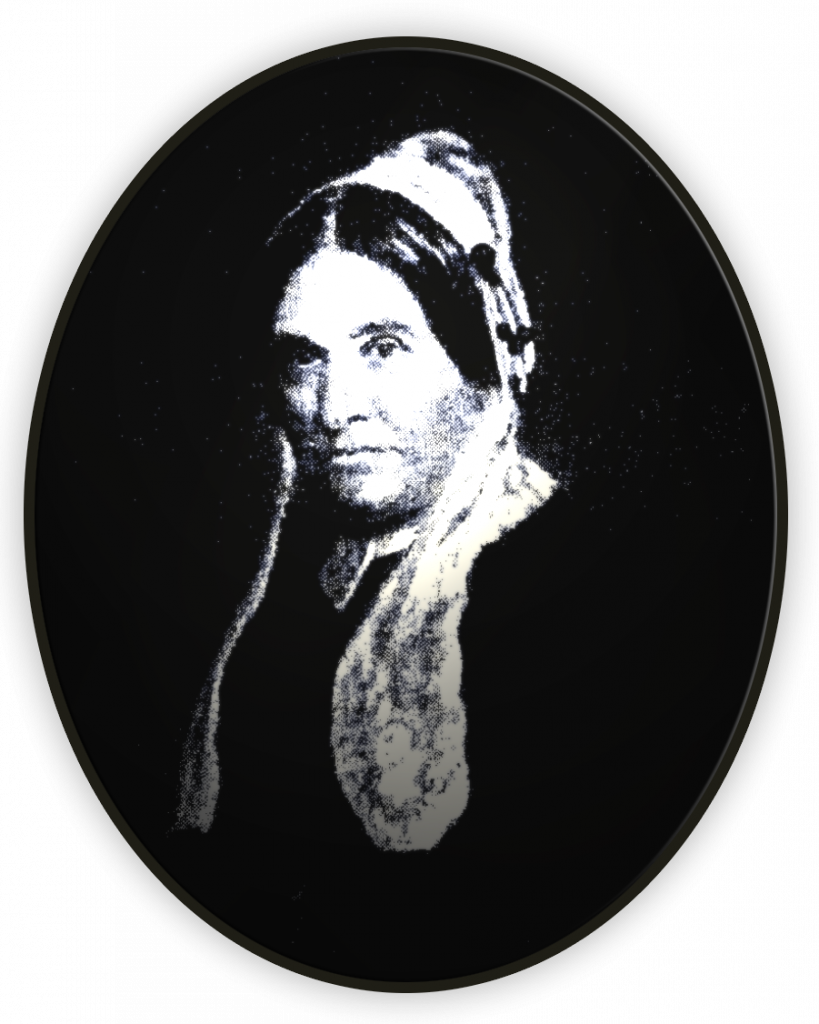
To all, a certain magnanimity and grandeur of feeling must have been apparent. Constant and persistent in her friendships, painstaking and wise in her charities, she was an excellent woman, doing good as she had an opportunity, in an unostentatious and secret way. Few people, I heard one say who had the best opportunities of knowing, have made as good a use of a long life in the way of steady, quiet service to the poor and the sick and the unfortunate, or in the exercise of sound and restraining counsel. It was not merely her strength of mind and her play of wit that drew so large a circle of friends about her, but her essential goodness of heart, reliability of friendship, and the worth and weight of her sympathy.
Widowed at an early period of her life, she brought up her family in such a way that her strong will neither hampered their independence nor weakened their union. It was delightful to see how rigorously she kept her house and home upon the footing on which her husband left it – a center for all her children, ever the resort of the best and most marked people, herself always the jealous head of the family; hospitable, able, and wise in her administration, and the object of a venerating and yet a most companionable intercourse with her children. I rarely entered her doors without finding some interesting visitor there. She seemed to exercise to the last a powerful attraction for all superior spirits.
I have thought it a duty to take this brief public view of the feelings aroused by the death of this strong woman, who represented so much of the past history of the country. I beg seriously to commend her example to the consideration of those who think the home and the family a small sphere for a woman to occupy. She proved how large, how decisive, how excellent may be a woman’s sway who merely improves her domestic and social opportunities. She was one of the heirs of the great women who matched our Revolutionary sires, and who did their full part in achieving and consolidating our liberties, without once deserting the woman’s place, or imagining her sphere to be contracted. May her death add a fresh sense to the lesson her worthy and vigorous life inspired.
[23]
The Gibbs Family History — Complete Index
- Chapter I: The Gibbs Family in England
- Chapter II: The Gibbs Family of Rhode Island
- Chapter II, Part 2
- Chapter II, Part 3
- Chapter II, Part 4
- Chapter II, Part 5
- Chapter II, Part 6
- Chapter III: The William Channing Gibbs
- Chapter IV: The Channing Family
- Chapter V: The Wolcott Family of Connecticut
- Chapter VI: The Hosmer Family of Connecticut
- Chapter VII: Further Account of Certain Members of the Gibbs Family
- Chapter VIII: Family Portraits
- Chapter IX: Miscellaneous Notes
- Chapter X: Condensed Genealogical Record
- Chapter XI: Early Family Data
Reproduced verbatim from the 1933 volume, including the author’s spelling and punctuation. Editor’s notes in bracketed boxes mark points where the book’s statements conflict with the documentary record. Corrections will be noted rather than made silently.
Views: 36
Explore the evidence
View this article’s connected sources and media →
About this page
This article was brought over from AlfredGibbs.com. Its preserved text, media and citations remain available for comparison.