
CONTINUED FROM Chapter II Part 2
The aggressions of the French upon commerce on the high seas after their Revolution caused especially great losses to American merchants, and Gibbs suffered severely. For example, the ship “Russell,” owned by him, was captured by a French privateer on August 8, I 799; this was at the time when commercial inter course had been suspended between the United States and France and her dependencies. Out of such acts as these arose the controversy known as the “French Claims,” a settlement for which was afterwards made by the French Government and a lump sum paid over to the United States Government to be distributed by it to the rightful owners of property destroyed. The money received is still, for the most part, retained by our Government; the Gibbs heirs a few years ago received a small reimbursement for the loss of one particular vessel, but the greater part of the sum went to the lawyers, and the main claims cannot to this day be collected from our Government.
[13]
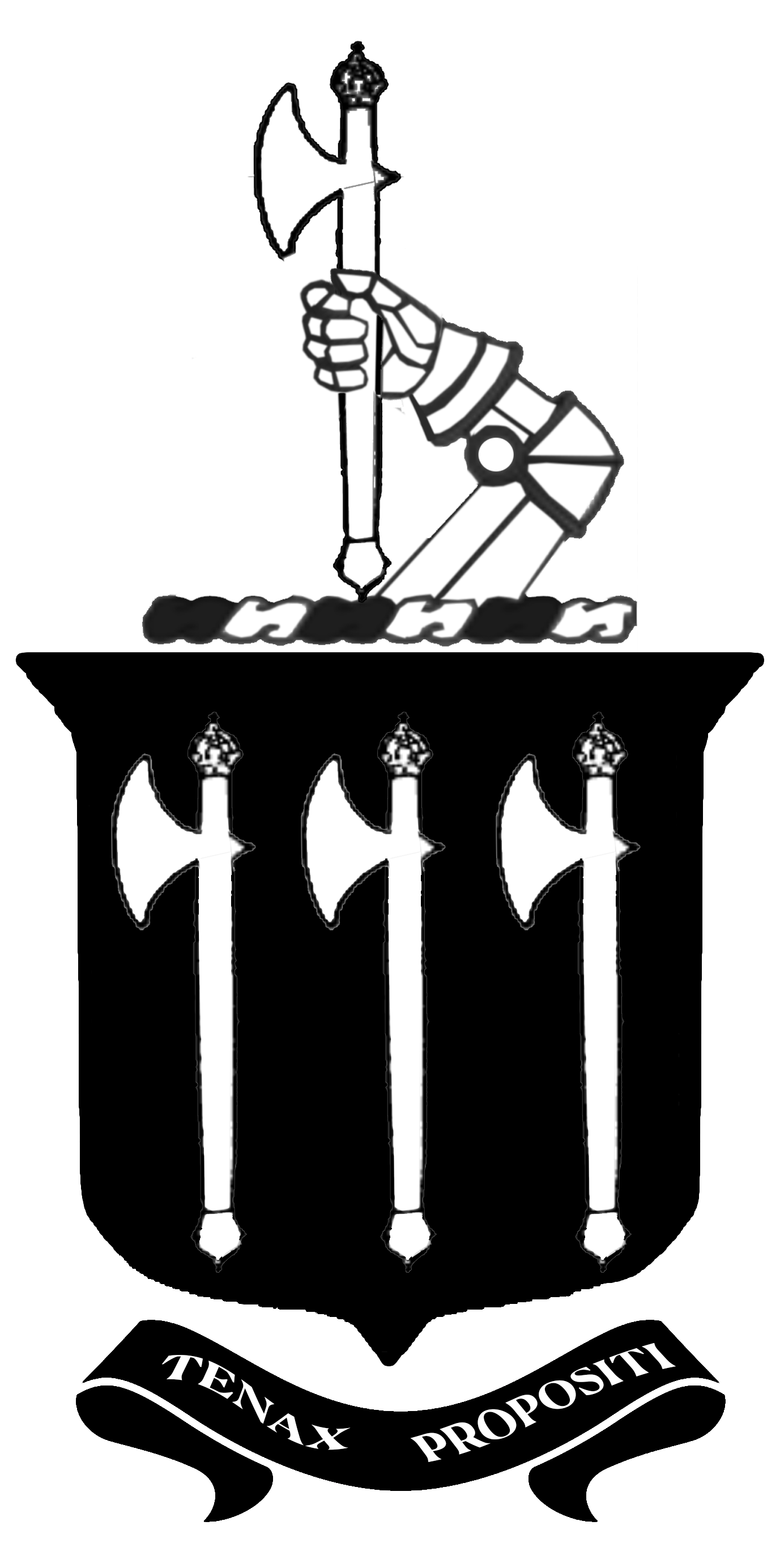
George Gibbs’s family belonged to the Church of England, and he was a staunch supporter and a vestry man of old Trinity Church in Newport. The Gibbs pew here is worthy of a visit; it has been occupied continuously by the family up to the present time. The last owner was Mrs. Theo. Kane Gibbs; it was left by her to the Church, to be made a free pew. In the churchyard, close to the edifice, stand the tombstones of himself and some of his family. Two of these monuments, carrying the Gibbs Coat of Arms, are notable for their beauty and were made, I believe, in England. In the real estate in Newport owned by George Gibbs, or afterwards purchased by his widow, included the fine colonial house in Mill Street and the land adjoining, now occupied by Truro Park in which the Mill stands. This house was built prior to r 770 by John Tillinghast. It was afterwards the home of the younger son, William Channing Gibbs, three times Governor of Rhode Island. During Nathaniel Greene’s residence in Newport he occupied the house and was visited in it by such Revolutionary time celebrities as Kosciusko, Baron Steuben and Lafayette.1 About I 760 the Truro family came to live in Newport. They were Jews of Portuguese extraction -probably from South Carolina. Isaac became priest of the small synagogue which still stands on Truro Street.
[14]
His son Abraham became a prominent and highly regarded merchant; he purchased from Governor Gibbs the Mill lot, which he gave to the town to be used as a park. He and his brother, Judah, endowed the Jewish cemetery, which is located at the top of Truro Street. With the decline of Newport as a seaport, the Truro family removed to New Orleans, but both brothers lie buried in the Newport Jewish cemetery. It is interesting to add something about the “Old Mill,” which stands in the centre of the park mentioned above. This is a circular stone building of a type not uncommon in England and used there as a grist mill driven by wind-power. In “Notes” 1 I have given an account of the controversy which arose a few years ago as to the origin of a structure of the kind in America.1
1 From Mason’s book, “Reminiscences of Newport.”
[14]
The extensive Gibbs property in Newport included the whole of Easton’s Point, between First and Second Beaches, and about one hundred acres within the town of Newport, roughly speaking, between Rhode Island Avenue and the pond back of the First Beach.
The Easton tract was purchased by Mrs. Gibbs in 1808 from Jonathan Easton for $22,000; it comprised about 1 35 acres. The Smith farm tract, comprising 1 oo acres, was purchased about the same time for $21,000. Several other small plots were purchased by her in 1814 from various owners. Much of this large property was retained in the family, up to my father’s time, but was then gradually sold and now the various parcels are included in the residential district of the City. There was also the farm called “Oakland” at South Portsmouth, the country home of the family for many years, and more particularly referred to below.
1 See page 153.
[ 15]
George Gibbs’s (II.) first wife was Susannah Scott, by whom he had one child who lived but eleven weeks. His second wife was Mary Channing, sister of his partner, Walter Channing. By her he had had ten children. His widow, two sons and :five daughters survived him. The eldest daughter, Mary, married Luther Bradish, afterwards Governor of New York State; Ruth married her first cousin, the Rev. William Ellery Chan ning, eminent clergyman and founder of the Unitarian denomination in America. Ruth long outlived her distinguished husband, dying in Boston at the age of ninety-one. Through the Channings we trace our relationship to the Eustis family of Boston and the Sisters of Philadelphia. (See “The Channing Family.”) George Gibbs’s daughter, Sarah, born 1784, also lived to an old age and never married. She was spoken of in the family as “Aunt Sarah.” She occupied the :fine estate at South Portsmouth ( six miles from Newport), known as “Oakland;” this had been purchased in I 796 by her father from John Faxon and comprised about 80 acres. After her death, the house and farm were sold to August Belmont. He, in turn, sold the estate to Cornelius Vanderbilt, from whom it descended to his son Alfred G., who built in 1907 a large structure to be used for an interior ring and exercising track for his horses. On Alfred Vanderbilt’s death (he was lost on the Steamship “Lusitania”), the estate became the property of his son, Wm. H. Vanderbilt, who now lives there with his young family.
[16]
Miss Gibbs built and endowed a beautiful little church at “Oakland” in memory of her parents, known as “St. Mary’s.” The cornerstone was laid September 2, 1847. It is of stone, similar in design to the old English parish churches and was designed by Upjohn, a famous English architect; this building with its setting of lawn and fine trees, makes a scene of beauty rare in this country. Within the church is a carved mural monument, extending from floor to ceiling, erected as a memorial of George and Mary Channing Gibbs; it was designed by Washington Allston and bears an inscription written by Dr. Channing.1 The churchyard of St. Mary’s is now the family burial-place. In order that Miss Gibbs might proceed from her house to the church unobserved from the public road, she planted a spruce hedge extending from one building to th-e other. This hedge has grown to a large size and is of itself a beautiful feature of the park.
The “Oakland” house was furnished with rare and valuable objects brought from Europe and the East by the ships of Gibbs & Channing. When Miss Gibbs died, in the closets and bureau drawers were found an accumulation of laces, gloves, scarfs and silks, which she enjoyed gathering, but seldom used.
[17]
The Gibbs Family History — Complete Index
- Chapter I: The Gibbs Family in England
- Chapter II: The Gibbs Family of Rhode Island
- Chapter II, Part 2
- Chapter II, Part 3
- Chapter II, Part 4
- Chapter II, Part 5
- Chapter II, Part 6
- Chapter III: The William Channing Gibbs
- Chapter IV: The Channing Family
- Chapter V: The Wolcott Family of Connecticut
- Chapter VI: The Hosmer Family of Connecticut
- Chapter VII: Further Account of Certain Members of the Gibbs Family
- Chapter VIII: Family Portraits
- Chapter IX: Miscellaneous Notes
- Chapter X: Condensed Genealogical Record
- Chapter XI: Early Family Data
Reproduced verbatim from the 1933 volume, including the author’s spelling and punctuation. Editor’s notes in bracketed boxes mark points where the book’s statements conflict with the documentary record. Corrections will be noted rather than made silently.
Views: 44
Explore the evidence
View this article’s connected sources and media →
About this page
This article was brought over from AlfredGibbs.com. Its preserved text, media and citations remain available for comparison.