
The First New York Dragoons
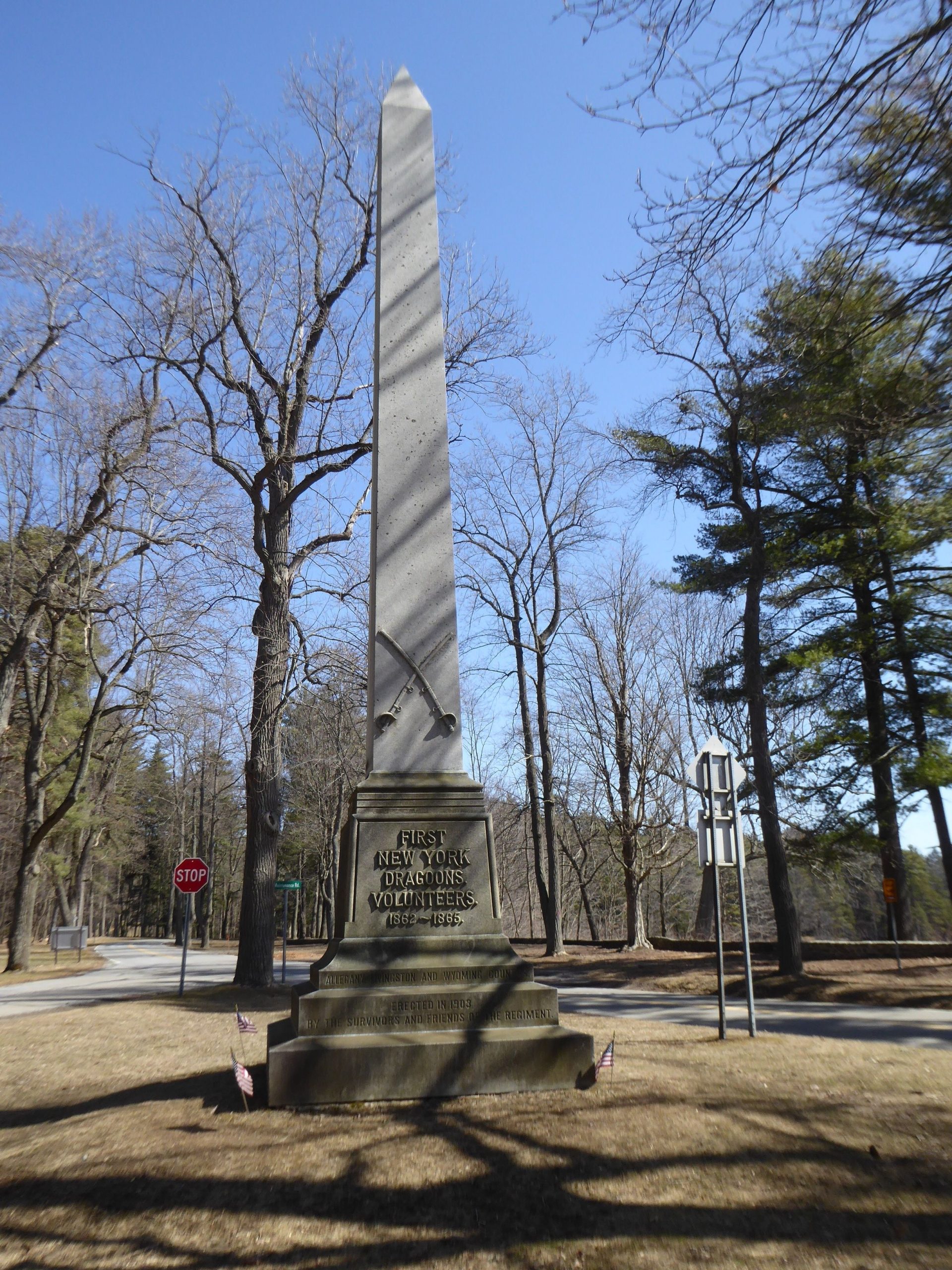
Historical Overview
Source: New York State Military Museum and Veterans Research Center
- Mustered in as the 130th Regiment of Infantry: September 2, 1862
- Converted to Cavalry: July 28, 1863
- Designated 19th Regiment of Cavalry: August 11, 1863
- Designated 1st Regiment of Dragoons: September 10, 1863
- Mustered out: June 30, 1865
The following is taken from New York in the War of the Rebellion, 3rd ed., Frederick Phisterer. Albany: J. B. Lyon Company, 1912.
First New York Dragoons Leadership
- Col. Alfred Gibbs; Col. Thomas J. Thorp
- Lieut.-Col. Rufus Scott
- Majs. Rufus Scott, Jacob W. Knapp, Howard M. Smith
July 25, 1862, Col. William S. Fullerton, succeeded by Col. Alfred Gibbs, received authority to recruit a regiment of infantry — the 130th — in the counties of Allegany, Livingston and Wyoming. It was organized at Portage, and there mustered into the service of the United States for three years, on the 2d of September, 1862.
It was converted, July 28, 1863, into a regiment of cavalry, and August 11, 1863, designated the 19th Regiment of Cavalry; this designation was changed September 10, 1863, to the 1st Regiment of Dragoons.
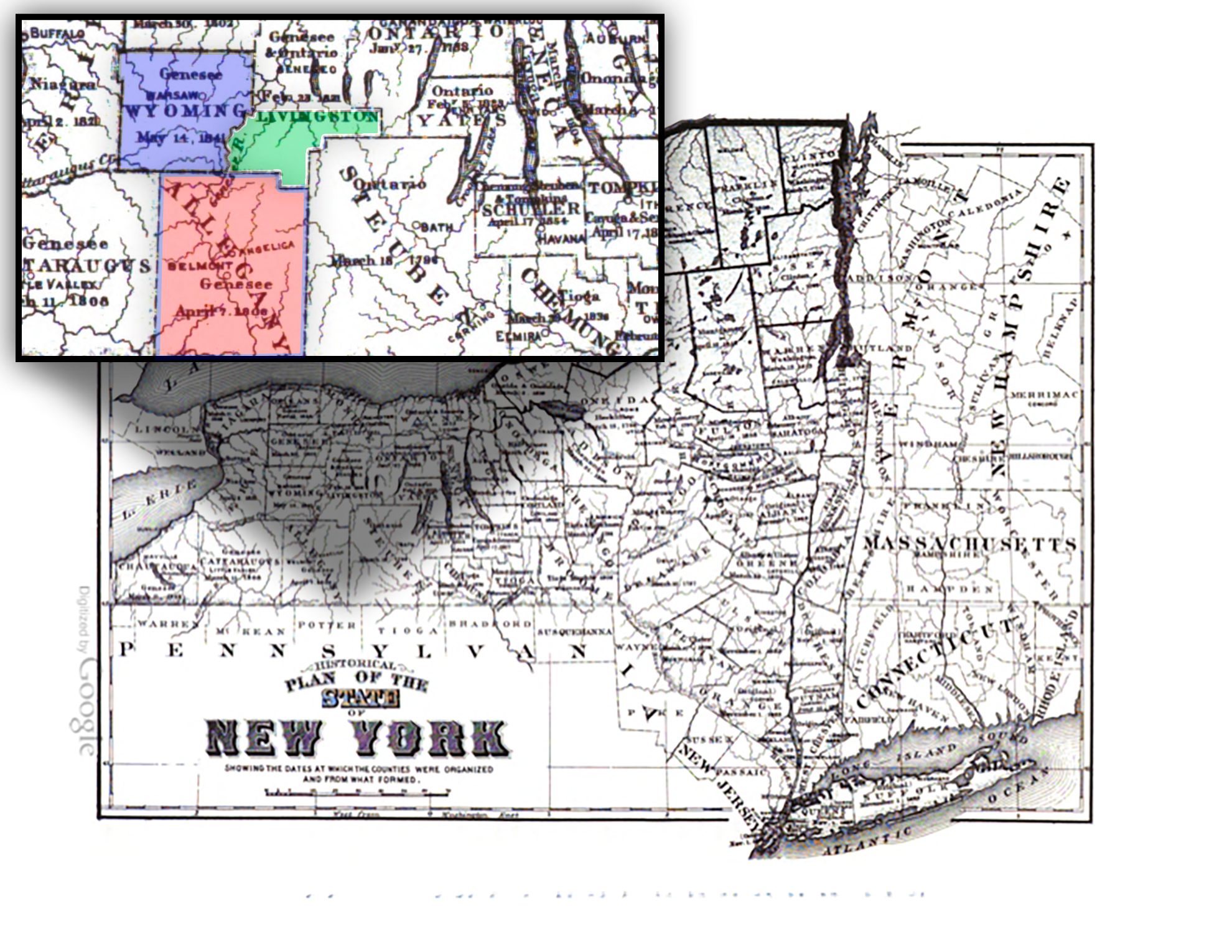
The Companies — Recruited from Allegany, Livingston & Wyoming Counties
Each company links to its full roster and soldier pages.
- Company A — Castile, Gainesville, Pike, Portage, Perry and Genesee Falls
- Company B — Dansville, Mt. Morris, Portage, Groveland, Scottsburg and Leicester
- Company C — Attica, Eagle, Colesville, Bennington, Arcade, China, Oramel, Sheldon, Java and Portageville
- Company D — Middleburg, Warsaw, Wyoming, Perry, Covington and Wethersfield
- Company E — Wellsville, Andover and Independence
- Company F — Portageville, Oramel, Hume and Centreville
- Company G — Angelica, Lima, Genesee Falls, Conesus, Livonia and Springwater
- Company H — Birdsall, Almont, Oramel, Amity, Genesee Falls, Portageville, Belmont, Ward and Alfred
- Company I — Nunda, Grove, Burns, Portage and Belfort
- Company K — Dansville and Genesee Falls
Service
The regiment (ten companies) left the State September 6, 1862, and served at:
- Suffolk, Va., from September 13, 1862; in Terry’s Brigade, Peck’s (later Corcoran’s) Division, 7th Corps, from March, 1863;
- 1st Brigade, 1st Division, 7th Corps, from June, 1863;
- the Army of the Potomac, from July, 1863;
- the Reserve Brigade, 1st Division, Cavalry, Army of the Potomac, from August, 1863;
- the 2d Brigade, 1st Division, Cavalry Corps, Army of the Potomac, from September, 1864;
- the Army of the Shenandoah, from October, 1864;
- the Army of the Potomac, from March, 1865.
Mustered Out of Service
The regiment was mustered out and honorably discharged, commanded by Col. Thomas J. Thorp, June 30, 1865, at Cloud’s Mills, Va.
Casualties
- Killed in action: 3 officers, 88 enlisted men
- Wounded in action: 1 officer, 39 enlisted men
- Lost to disease and other causes: 1 officer, 142 enlisted men
- Breakdown by designation: 5 officers, 269 enlisted men
Combined total: 274 Dragoons lost
The Rolls — browse the men by fate
Each roll lists the men individually, with the record from Bowen’s regimental roster, linked to their pages.
☉ The Roll of Honor
▸ Killed in Action
▸ Died of Wounds
▸ Died of Disease
▸ Died as Prisoner of War
▸ Died in Service
▸ Captured & Survived
▸ Wounded in Action
A Note on the Author’s Heritage
Finally, there were 36 enlisted men who died in the hands of the enemy, among whom was my relative Levi Davis Green (L. D. Green) — the reason for my discovery of the First New York Dragoons and my exploration of Alfred Gibbs. I will post an entire section on Levi and his brother Marvin Green, in hopes that everyone will become aware of the contribution of these two men.
Lives of the Men — Biographical Sketches
The regiment is being documented one soldier at a time. Each man’s page transcribes his service record and sources in full:
▸ Browse the roster by company
Individual soldiers — officers, sergeants, and privates — documented from the regimental roster and period sources.
Views: 162
Explore the evidence
View this article’s connected sources and media →
About this page
This article was brought over from AlfredGibbs.com. Its preserved text, media and citations remain available for comparison.