
The first in a series introducing the soldier history forgot: the veteran of Mexico and the Apache frontier who stood beside Custer and steadied the Seventh Cavalry.
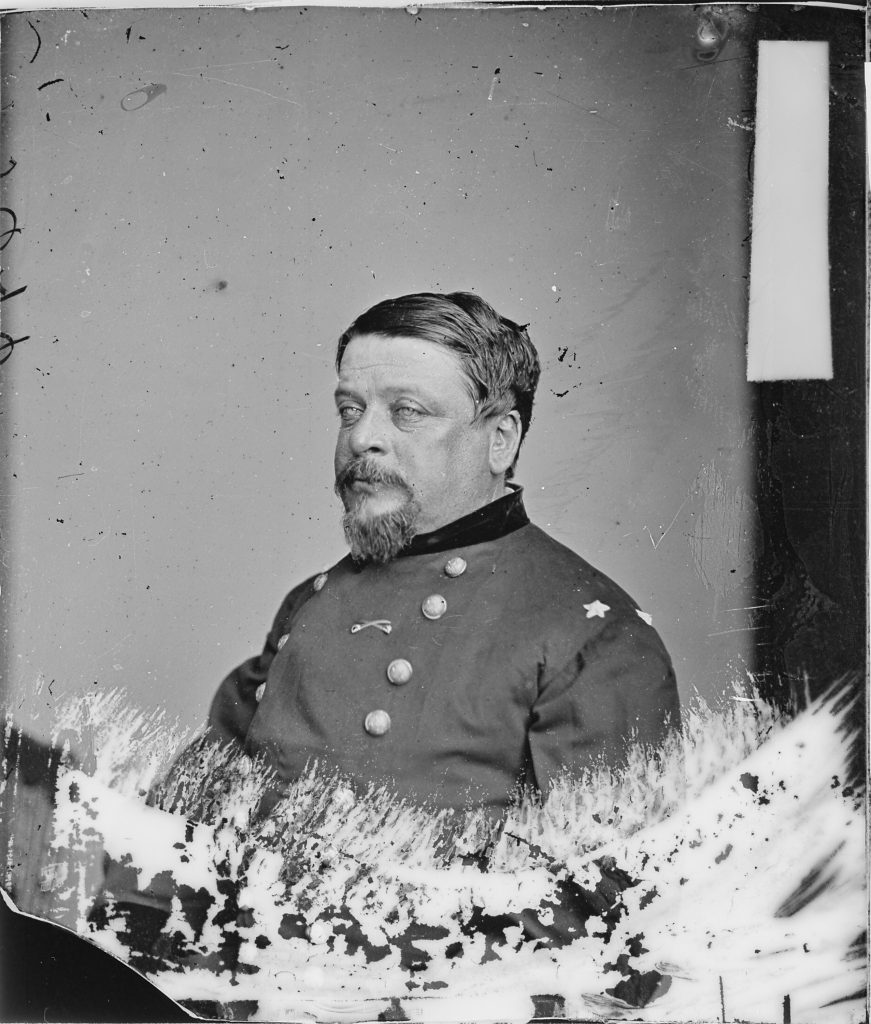
The story you are about to read is the first in a series we are presenting to introduce you to a man forgotten by history. His story belongs beside those of George Armstrong Custer, Stonewall Jackson, George Pickett, James Longstreet and the others whose names every student of the era knows. It was not left out because it lacked courage or consequence. It was left out because Alfred Gibbs died too soon, and because he was not a man of self-promotion. He had no biographer to keep his legend alive, the way Libbie Custer kept her husband’s. He was a warrior first and a father second. Leadership was his to command, and that left no room for self-aggrandizement.
Two Men, One Regiment
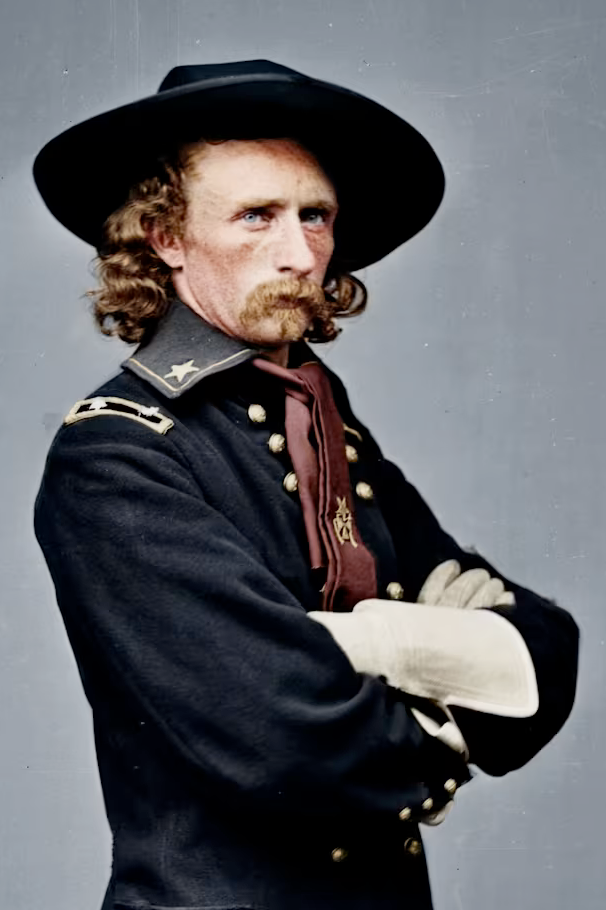
In the summer of 1866 the Army raised a new regiment of horse soldiers for the Plains: the Seventh United States Cavalry. Its field commander was a lieutenant colonel of twenty-six, the most famous cavalryman in the country, George Armstrong Custer. Its senior major was a man of forty-two who had already spent twenty years in uniform, fought in two wars, and carried in his body a wound that should have killed him. His name was Alfred Gibbs.
History remembers the first man. This series is about the second, and it begins where their two lives crossed.
A Lieutenant in Mexico
Gibbs graduated from West Point on July 1, 1846, in the celebrated Class of 1846, the same class as George B. McClellan. He was commissioned into the Regiment of Mounted Riflemen and sent straight to war.
Within a year he was in Mexico with Winfield Scott’s army. He served through the siege of Vera Cruz in March 1847. On April 18, at the mountain pass of Cerro Gordo, Scott turned Santa Anna’s line and opened the road to Mexico City, and the new lieutenant was wounded in the fighting. He was brevetted first lieutenant for gallant and meritorious conduct that day. Regimental tradition holds that his wound came from a Mexican lancer; the official record says only that he was wounded. That September, in the assault on Mexico City at the Garita de Belén, he won a second brevet, to captain.
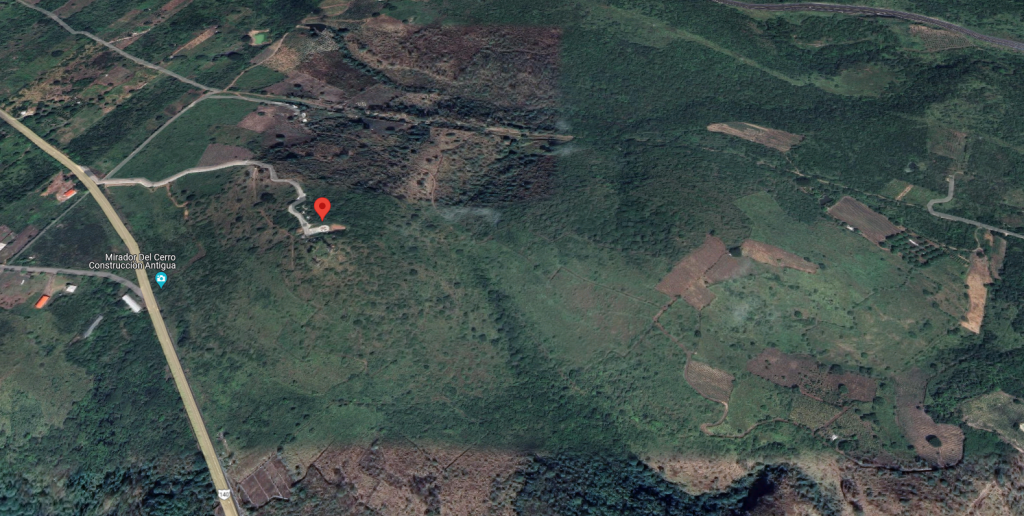
He was twenty-four, and he had already learned the first lesson of a soldier’s life: courage is common, but steadiness under fire is rare.
Cooke’s Spring, 1857
Ten years later Gibbs was a first lieutenant of the Mounted Riflemen at Fort Fillmore, on the Rio Grande in the New Mexico Territory. On March 8, 1857, a small Chiricahua Apache party ran off the stock of a deputy surveyor. Gibbs took sixteen troopers and two civilians and rode after them.
He pushed the pursuit through the night. Around half past one the next afternoon, at Cooke’s Spring below the Mimbres Mountains, his men came on the raiders. Gibbs dismounted his troopers for a volley, remounted them, and drove after the Apaches at a gallop. The Apache leader, badly wounded, kept rallying his warriors and turning them back in furious charges.
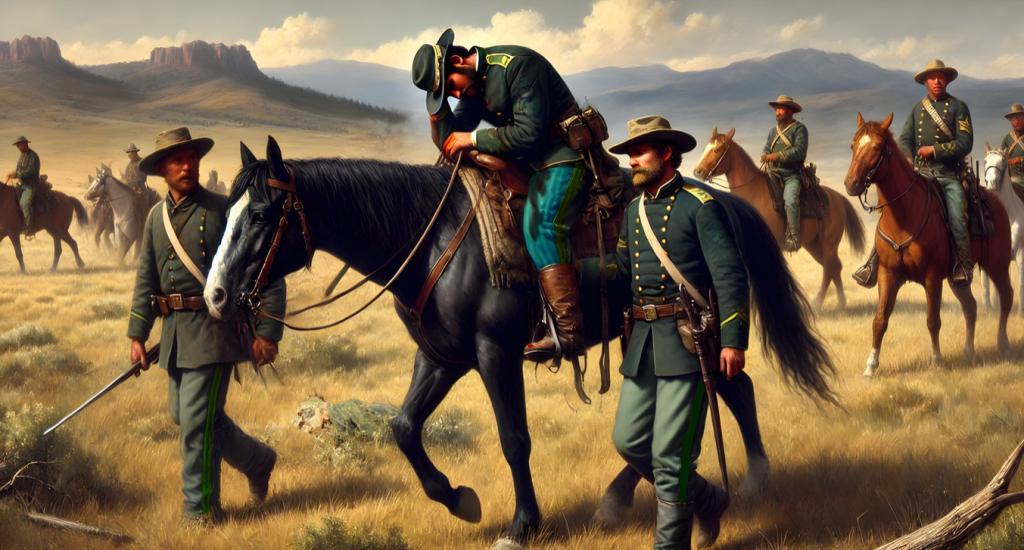
When the chief went for a trooper whose horse had been shot, Gibbs rode in and fired into him. The chief turned on Gibbs as his horse reared and drove a lance into his side. In his own report Gibbs gave the wound a single clause:
“He turned on me, and as my horse reared, he passed his lance into me although parried with my pistol.”
The surgeon gave it pages. The lance opened the wall of his abdomen and turned only when its point struck a rib. His intestines came out through the wound. Faint from blood loss, Gibbs climbed down so he would not fall, gave his own horse to a corporal whose mount had been shot, and ordered the pursuit carried on. Then he lay on the ground at Cooke’s Spring for fifteen hours before a surgeon reached him, and endured twelve more hours being carried back across open country to the fort.
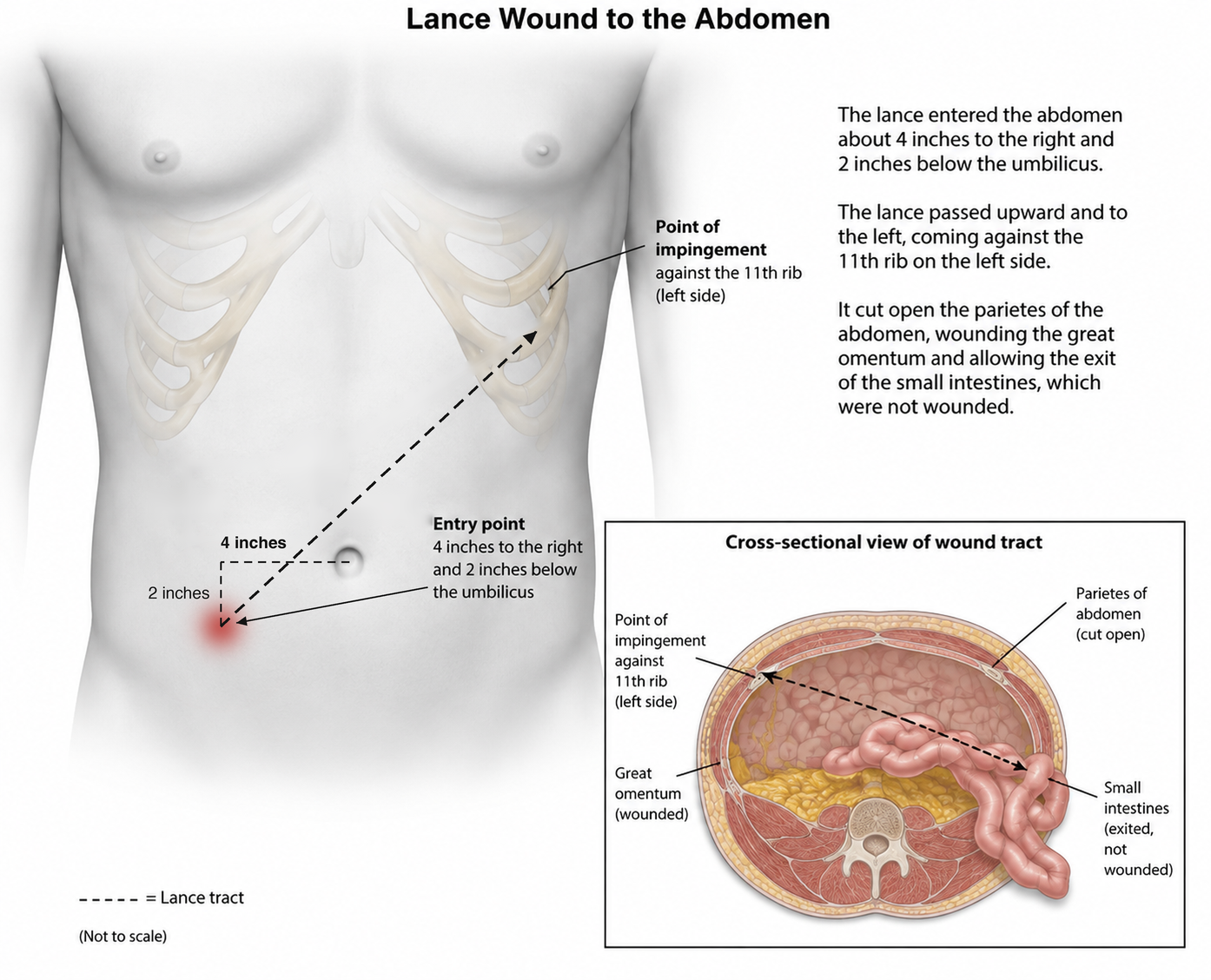
He was the only American hurt that day. He lived. But the wound never truly healed, and he carried it for the rest of his life.
The Colonel Who Called Them “My Boys”
In 1862 the farm boys of western New York who made up the 130th New York Volunteers needed a colonel, and the choice fell on Gibbs, suggested by his West Point classmate McClellan. He ran them like cadets. The regiment’s historian, James Bowen, remembered that no excuse was accepted for dirt, disorder or disobedience. The camp streets were kept as clean as a parlor floor.
The men did not resent it. They loved him for it. Bowen wrote that his kindness of heart drew the regiment to him in a strong bond of confidence and respect, and that long after his promotion to general, Gibbs still called the Dragoons “my boys.” Under his hand the infantry regiment was reforged into the First New York Dragoons, one of the hardest-riding cavalry regiments in the Union army.
That is where Custer comes back into the story.
In February 1864 a picked detachment of Gibbs’s Dragoons, 150 men and four officers under Captain Hakes, rode with Custer’s column on the raid toward Charlottesville, a diversion for the Kilpatrick and Dahlgren strike at Richmond. Gibbs did not ride with them. He did not need to. The men he had trained drove in the enemy at Stannardsville going out and covered the fighting retreat coming back.
In June the Dragoons did Custer what he later called “a good turn” at Trevilian Station. On August 25, 1864, near Shepherdstown, Custer repaid it. Gibbs was commanding the Reserve Brigade of Merritt’s division, and his old regiment, led that day by Major Howard Smith, was serving as rear guard. Other regiments turned off without warning and left the Dragoons cut off at the edge of town, with Confederate infantry racing to close the road. Custer heard the firing, told his staff that the Dragoons must be in trouble, and charged into the Confederate rear to cut them out. Bowen titled the chapter “How Custer Saved the Dragoons.”
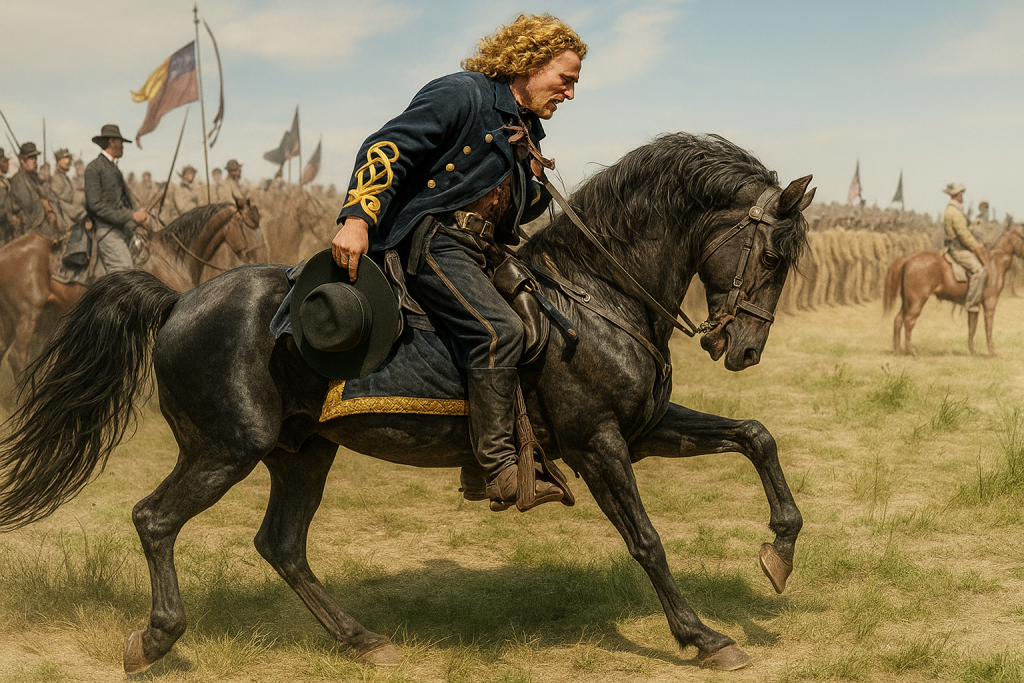
By the final campaign Gibbs had been brevetted brigadier general for his service in the Shenandoah. On April 8, 1865, at Appomattox Station, Custer’s division made the headlong charge that seized Lee’s supply trains. Gibbs’s old Dragoons, now under Devin, went in dismounted on Custer’s right and held the ground so the captures could be brought off. That night they stood across the road Lee needed. The next morning brought the white flag. Bowen, never an admirer of Custer’s habit of collecting every laurel, put it plainly: Custer’s charge was magnificent, but it was the steady men who guarded the tree while the cavalier gathered the fruit.
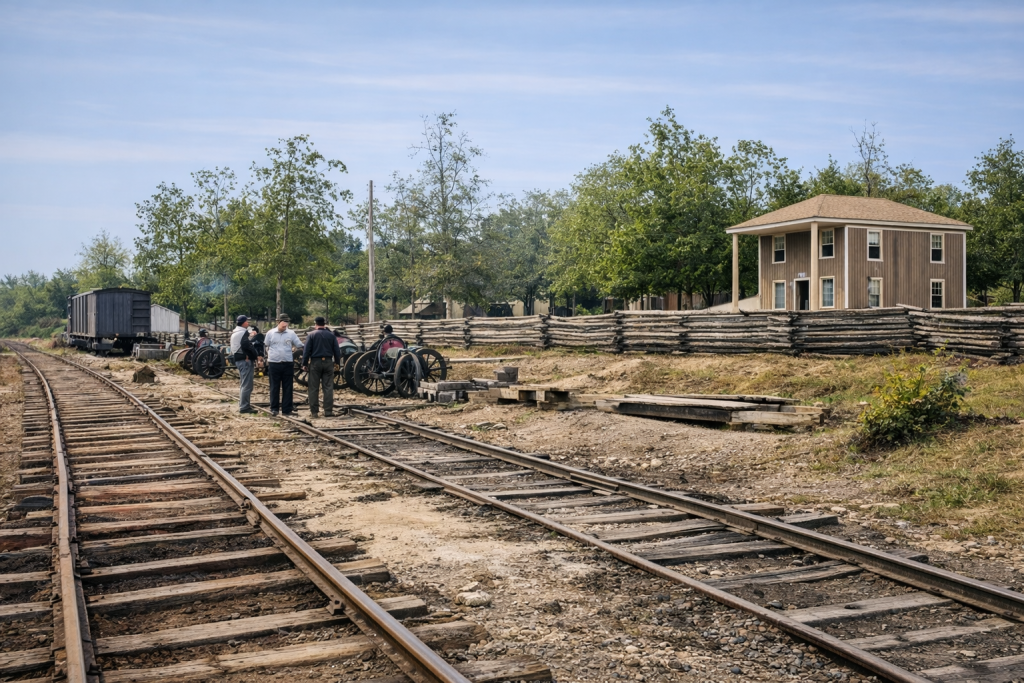
Gibbs was not named in those last pages. He did not need to be. They were his men, doing what he had taught them to do.
“General Etiquette”
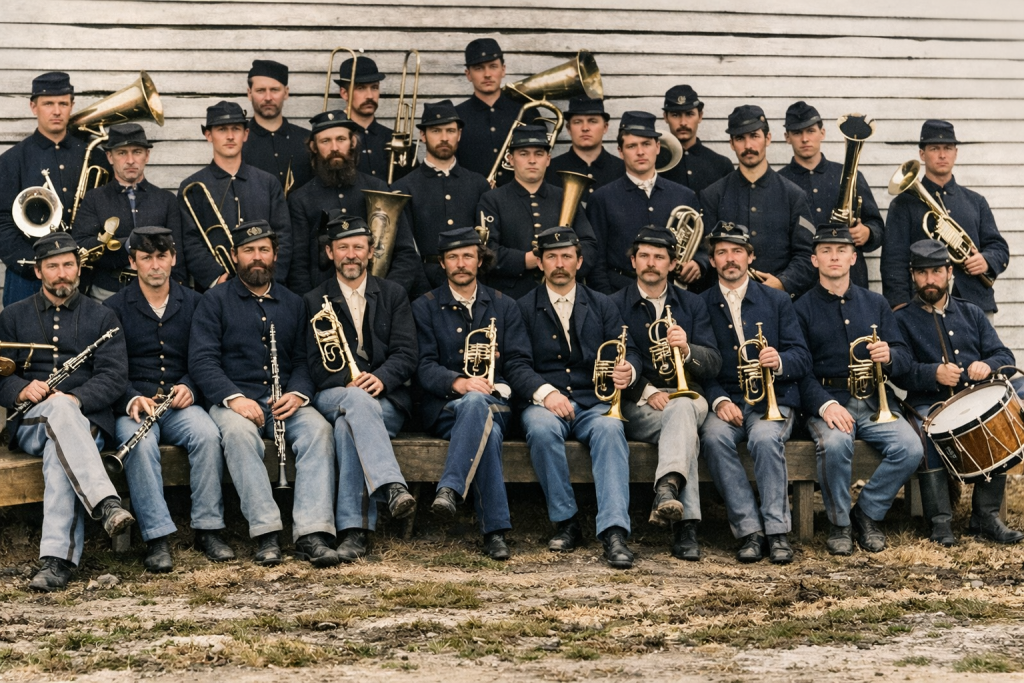
When the war ended, Gibbs returned to the regular army and became senior major of Custer’s new Seventh Cavalry. For long stretches he commanded it. In the autumn of 1867, from Fort Harker, he signed the regimental orders that placed nearly every lieutenant in the regiment into his company: Cooke, Yates, McIntosh, Algernon Smith, Godfrey, and more. He built the regiment’s famous mounted band. Libbie Custer found him at Fort Riley staking out the parade ground into walks and planting grass seed.
The young officers laughed at him. They called him “General Etiquette.” To ambitious lieutenants in a hurry, the old major’s insistence on doing every small duty exactly right looked like fuss. They did not see what Libbie Custer saw: a man witty and fond of a joke, and yet perfectly unswerving in the most insignificant duty. Nor did many of them see that the fastidious major inspecting a buckle was often a man in pain from a lance wound ten years old.
When gossip spread that Gibbs resented serving under a man so much younger, he did not let it fester. He went straight to Custer and told him it was false, that their years of service together in the war had given him an abiding regard for Custer’s soldierly ability. Libbie Custer, who recorded the scene, broke off her own sentence to wish more men had that kind of courage.
That was the steady hand. Not the absence of ambition, but ambition held in check by duty.
The Steady Hand and the Bold One
Gibbs and Custer stood for two different ideas of command. In 1867 Custer was court-martialed, in part for ordering suspected deserters shot. Gibbs’s discipline was the other kind: the counting, the caution, the refusal to accept any excuse for disorder.
Gibbs did not live to see which idea the frontier would choose. He went to Fort Leavenworth for the holidays in December 1868, attended a small party on Christmas evening, and was found dead the next morning. He was forty-five.
Eight years later, at the Little Bighorn, Custer divided his command and charged a village he had not counted. Among the dead were officers Gibbs had placed in their companies with his own hand. No one can say Gibbs would have saved them. It is fair to say the habits he insisted on are the habits whose absence cost them their lives.
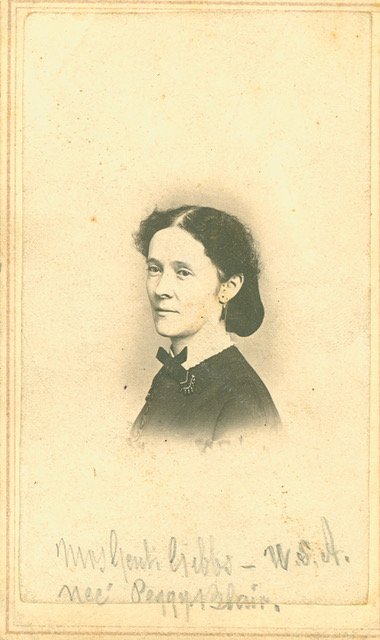
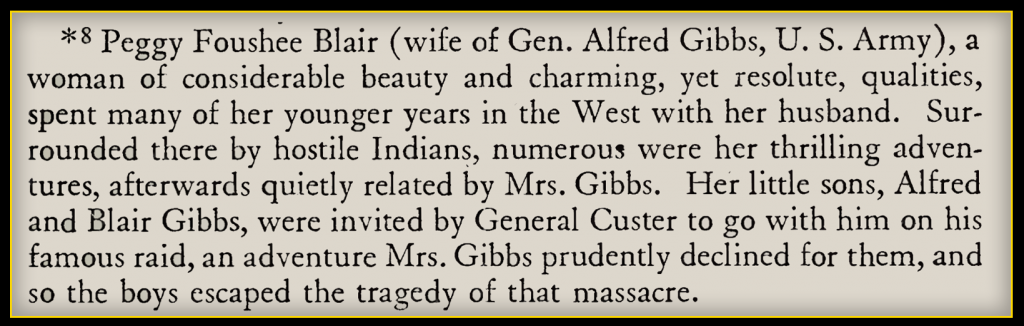
One more thing survived him. When Custer invited the two Gibbs boys to ride along on one of his expeditions, their mother, Peggy, declined for them. The prudence the young officers had mocked in the father lived on in his widow, and it kept his sons off the field.
Why He Was Forgotten
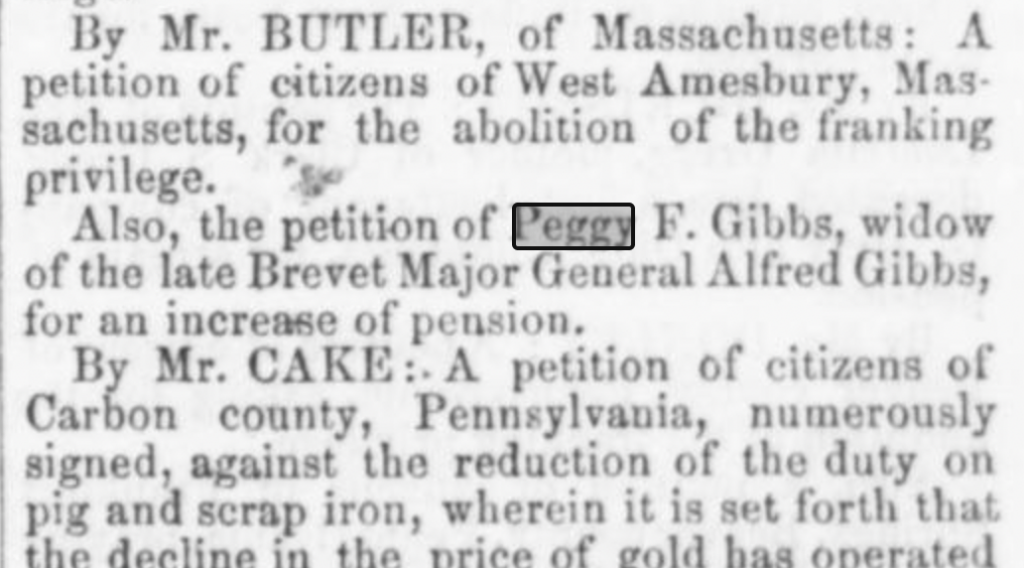
Custer had Libbie, who spent more than fifty years and three books defending his name. Gibbs had a widow petitioning Congress for a larger pension and two young sons to raise. He left no memoir. He did not court the newspapers. He did the work in front of him and trusted it to speak for itself.
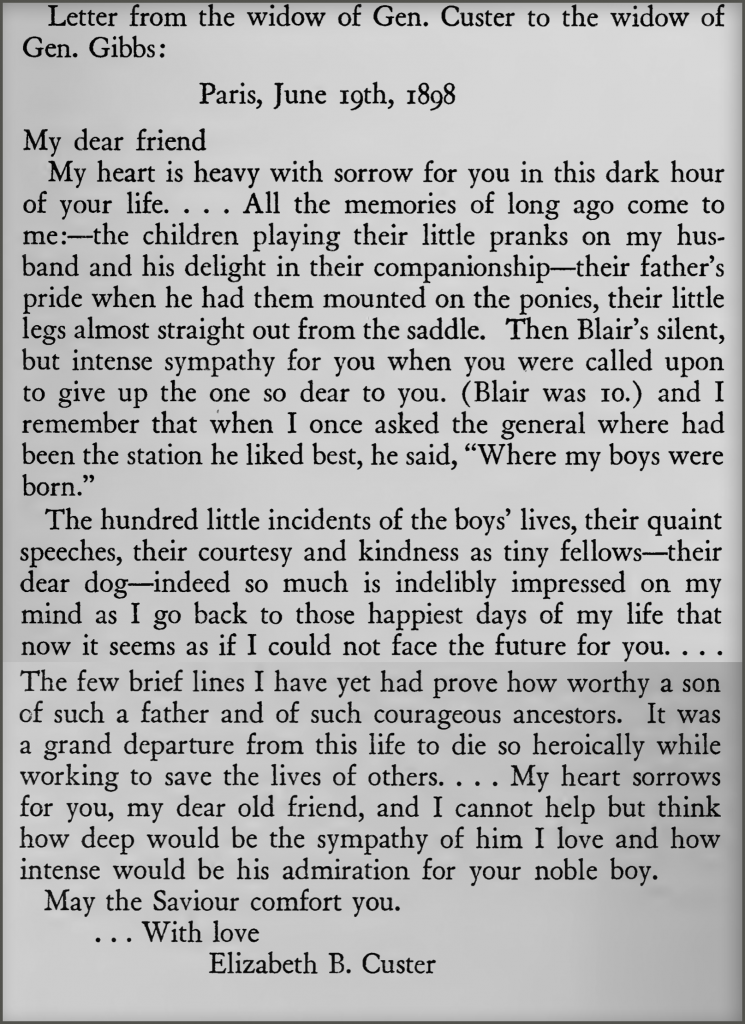
It did, for a while. Then the men who remembered him were gone. Even so, the families did not forget each other. Thirty years after the General’s death, when Peggy’s son Dr. John Blair Gibbs was killed at Guantanamo, Libbie Custer wrote to her from Paris.
This series is our attempt to give Alfred Gibbs back his place. In the stories that follow, we will ride with him from Mexico to the Apache frontier, from the fall of Fort Fillmore to the Shenandoah, and into the Kansas garrisons where he shaped the regiment that would make Custer immortal.
Further Reading on AlfredGibbs.com
- The Discipline They Laughed At
- The Regiment Gibbs Built
- Stannardsville, Va., Feb. 23, 1864
- Shepherdstown, Va., Aug. 25, 1864
- Appomattox Station, Va., April 8, 1865
- The Battle of Cooke’s Spring
- Battle of Cerro Gordo, April 17-18, 1847
References
Bowen, J. R. (1900). Regimental history of the First New York Dragoons (originally the 130th N.Y. Vol. Infantry) during three years of active service in the great Civil War. J. R. Bowen.
Cullum, G. W. (1891). Biographical register of the officers and graduates of the U.S. Military Academy at West Point, N.Y. (3rd ed.). Houghton, Mifflin.
Custer, E. B. (1887). Tenting on the plains; or, General Custer in Kansas and Texas. Charles L. Webster.
Green, G. H., Jr. (2022, April 29). The Battle of Cookes Spring. General Alfred Gibbs. https://alfredgibbs.com/the-battle-of-cookes-spring/
Green, G. H., Jr. (2022, June 26). Battle of Cerro Gordo, April 17-18, 1847. General Alfred Gibbs. https://alfredgibbs.com/battle-of-cerro-gordo-april-17-18-1847/
Green, G. H., Jr. (2023, March 14). Appomattox Station, Va., April 8, 1865. General Alfred Gibbs. https://alfredgibbs.com/appomattox-station-va-april-8-1865/
Green, G. H., Jr. (2023, March 14). Shepherdstown, Va., Aug. 25, 1864. General Alfred Gibbs. https://alfredgibbs.com/shepherdstown-va-aug-25-1864/
Green, G. H., Jr. (2023, March 14). Stannardsville, Va., Feb. 23, 1864. General Alfred Gibbs. https://alfredgibbs.com/stannardsville-va-feb-23-1864/
Green, G. H., Jr. (2026, June 19). The discipline they laughed at: Alfred Gibbs, “General Etiquette,” and the lesson of the Little Bighorn. General Alfred Gibbs. https://alfredgibbs.com/alfred-gibbs-general-etiquette/
Green, G. H., Jr. (2026, August 5). The regiment Gibbs built. General Alfred Gibbs. https://alfredgibbs.com/the-regiment-gibbs-built/
Sweeney, E. R. (1998). Mangas Coloradas: Chief of the Chiricahua Apaches. University of Oklahoma Press.
Utley, R. M. (Ed.). (1977). Life in Custer’s cavalry: Diaries and letters of Albert and Jennie Barnitz, 1867-1868. Yale University Press.
Views: 8
Explore the evidence
View this article’s connected sources and media →
About this page
This article was brought over from AlfredGibbs.com. Its preserved text, media and citations remain available for comparison.