
Update, November 20, 2026: Libbie Custer's 1898 letter says only "the general"; the page now says that reading him as Alfred Gibbs is my inference from the letter's context (Blair, 1933, p. 119).
From the Regimental History & Life in Custer’s Cavalry
The Discipline They Laughed At
Alfred Gibbs, “General Etiquette,” and the Lesson of the Little Bighorn
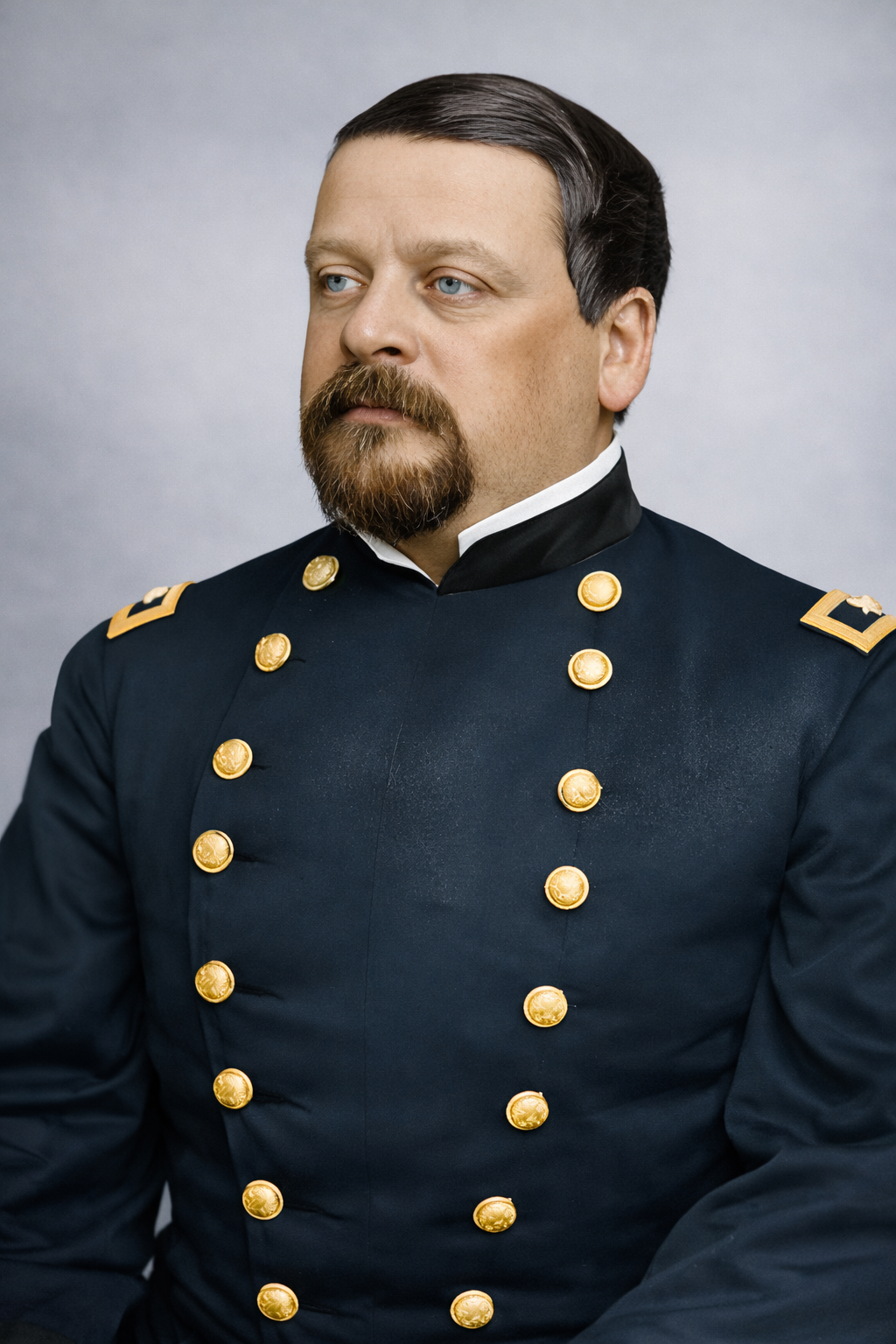
Two regiments knew Alfred Gibbs, and they remembered two different men. To the volunteers of the 1st New York Dragoons he was the colonel who called them “my boys,” a rigid disciplinarian whose “kindness of heart soon drew the regiment to him in a strong bond of confidence and respect.” To the young regular officers of the 7th Cavalry, a few years and one war later, he was a fussy old martinet they nicknamed “General Etiquette.” The strange thing is that, in both cases, he was doing exactly the same thing. The difference was never in Gibbs. It was in the men who watched him, and in what they had not yet learned about the price of indiscipline.
The Colonel They Loved
In the summer of 1862 the 130th New York Volunteers, raised from the farms of western New York, needed a colonel, and the choice fell on a regular officer of twenty years’ standing. “He had been appointed at the suggestion of General McClellan (his classmate at West Point),” the regiment’s historian wrote, “and brought with him the experience of twenty years’ service in the regular army.” Gibbs ran his volunteers as if they were cadets. “Colonel Gibbs had brought with him the rigid requirements of West Point,” they recalled, “and we were taught that no excuse would be accepted for dirt, disorder, or disobedience.” The camp streets and parade grounds, they remembered, “must be kept as clean as a parlor floor,” the arms “furbished and kept bright.”
And the men loved him for it. “Though a rigid disciplinarian,” the history goes on, “his kindness of heart soon drew the regiment to him in a strong bond of confidence and respect. That these feelings were reciprocated we never had reason to doubt. After his promotion to brigadier and brevet major-general, he always referred to the Dragoons as ‘my boys.’” The strictness was not the enemy of the affection; it was the source of it. Drilled and disciplined, the regiment was reforged from infantry into the 1st New York Dragoons, rode under Sheridan through the Shenandoah Valley and on to Appomattox, and at one stage served in a brigade under Alfred Terry, a name worth keeping in mind. The boys who kept their parade ground clean as a parlor floor became one of the hardest-riding cavalry regiments of the war.
The affection had a hundred small sources, and the men carried them for the rest of their lives. H. C. Hollenbeck, who came to the Dragoons as a sixteen-year-old bugler at Mitchell’s Station in the winter of 1863, remembered a colonel who could thunder at a boy too green to sound a bugle call, and then, a few nights later on a freezing march, do this:
I remember one bitter cold night, when on the march, he called to know if I were cold, and had me lie down in his tent; and as the cold increased before morning, he took me into bed. While a peculiar man, and a strict disciplinarian, yet at heart he was tender and considerate of his men, and I shall always remember him kindly.
H. C. Hollenbeck, bugler, 1st New York Dragoons
“General Etiquette”
When the war ended, Gibbs went back to the regular army as the senior major of the newly raised 7th Cavalry, serving in Kansas from 1866 to 1868 alongside a far more famous officer, George Armstrong Custer. He brought the same standard he had always carried. At Fort Harker he was “always present in the centre of the Parade ground to receive the reports”; on dress parade he was, one lieutenant noted, “very ‘military.’” The splendid 7th Cavalry Band was largely his own creation, and his pride. But to ambitious young West Pointers in a hurry, the old major’s punctilio looked like nothing but fuss.
Lieutenant Albert Barnitz, whose letters and diaries survive in Life in Custer’s Cavalry, admired Gibbs at first: “He is an excellent man,” he wrote, “very much respected by all. He is always genial, and reliable, and not a martinet, like Custer, although a perfect disciplinarian.” The admiration curdled. By the end of 1867 Barnitz was writing of “the silly old man” whose “over-solicitude to have everything done exactly right resulted in his having everything done exactly wrong.” Gibbs’s “preoccupation with military trivia,” the editor notes, “amused the regiment.” Elizabeth Custer remembered it with more affection: Gibbs “had the quaintest manner of fetching every one to the etiquettical standard he knew to be necessary,” she wrote, “witty, and greatly given to joking, and yet perfectly unswerving in the performance of the most insignificant duty.” “General Etiquette,” his associates labeled him.
What the young men did not always see was the body the standard was carried in. A lance wound, taken in an Apache fight near Cooke’s Spring, New Mexico, in 1857, had never truly healed; poor health kept Gibbs in garrison far more than in the field. The fastidious old general inspecting the brightness of a buckle was very often a man in pain, holding the line on the only ground left to him.
The Discipline That Keeps Men Alive
Here is what the officers laughing at “General Etiquette” could not yet measure. The opposite of his punctilio was not freedom. It was Custer. The same Custer who, in 1867, was court-martialed, an affair Barnitz heard described as being “taken up for murder,” for, among other things, causing suspected deserters to be shot; the same Custer whose “unfeeling treatment of enlisted men and shameful discourtesy to officers” had turned the once-loyal Barnitz “thoroughly disgusted.” Gibbs’s fussiness and Custer’s flash were two opposed philosophies of command, and the frontier was about to choose between them.
Gibbs did not live to see the verdict. He died in December 1868. Eight years later, on a ridge above the Little Bighorn in Montana, the question was answered in blood. Custer divided his command and charged a village he had not troubled to count; five companies were wiped out. Among the dead were officers who had learned their trade under Major Gibbs in Kansas, including Captain George Yates, the very officer Gibbs had once kept at his side, and Captain Myles Keogh. The dash that the younger men had preferred to an old major’s parade-ground discipline carried them into a trap that discipline might have refused to enter. It is not possible to say that Gibbs would have saved them. It is fair to say that the habits he insisted on, the counting, the caution, the refusal to accept any excuse for disorder, are exactly the habits whose absence cost those men their lives.
Peggy
Behind the public martinet was a private man the regulars never met. In Texas in the 1850s, Captain Gibbs courted Peggy Foushee Blair of Richmond, Virginia (they were married at Richmond on December 27, 1855), the tenth child of John Geddes Blair, “a woman of considerable beauty and charming, yet resolute, qualities.” His courtship letters home to his sister Laura, written from Corpus Christi, read less like a disciplinarian’s orders than a confession of vulnerability. Peggy followed him into the West and “spent many of her younger years” on the frontier with her husband, where, “surrounded by hostile Indians, numerous were her thrilling adventures.” On the army posts she was “Mrs. Gen. Gibbs,” who, Jennie Barnitz thought, “puts on an immense amount of style”: a formal lady to match a formal general.
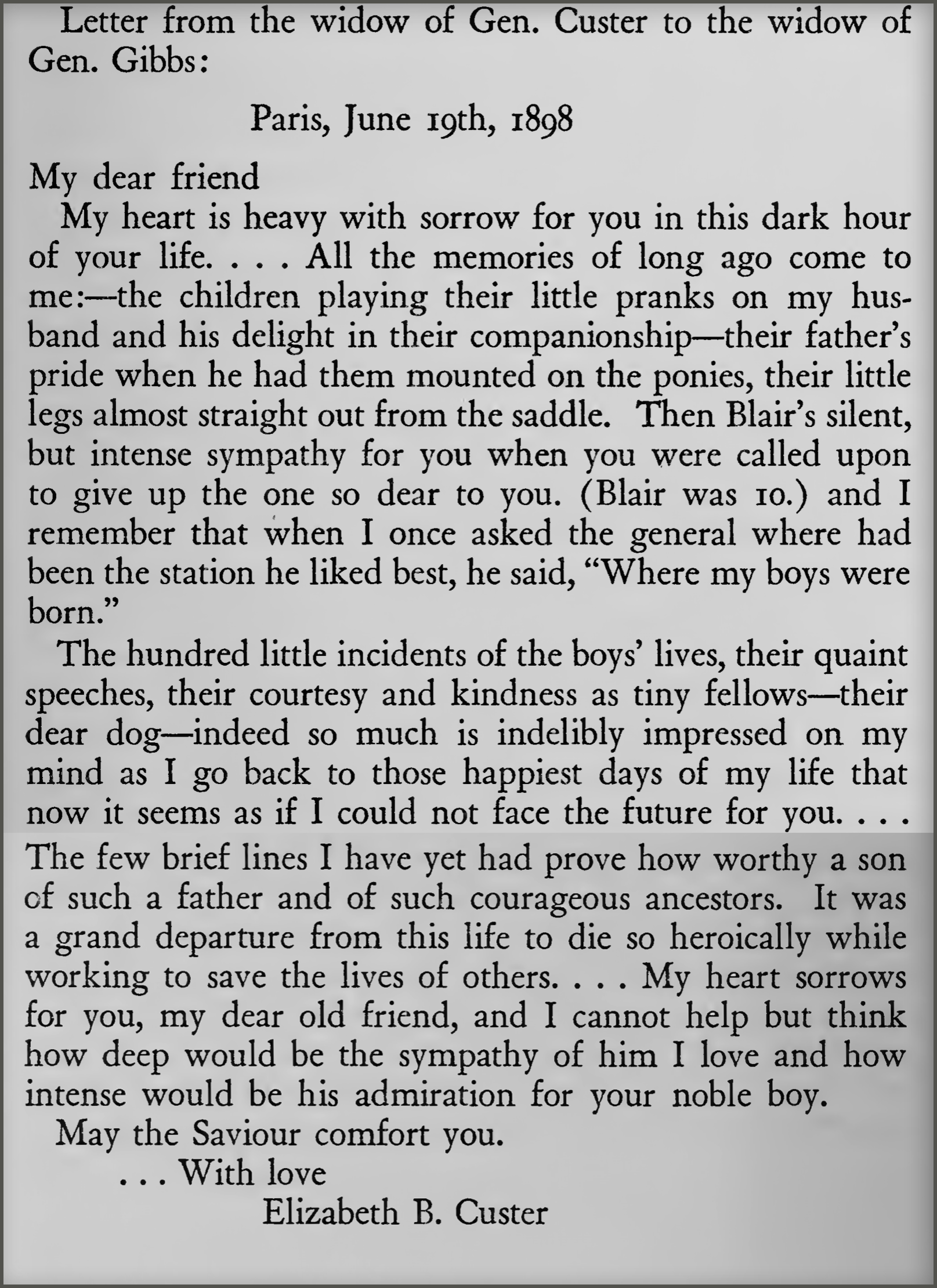
Update, October 31, 2026: Two corrections. Peggy Blair and Alfred Gibbs were married at Richmond on December 27, 1855, not in Texas. And Elizabeth Custer's letter of condolence to Peggy, cited here earlier as of 1869, is dated Paris, June 19, 1898, and was written after their son Blair's death at Guantanamo (see Peggy Gibbs: The Widow, 1868 to 1908). The text and the reference have been corrected.
But Peggy possessed the one quality Custer most conspicuously lacked: judgment. When General Custer invited the two small Gibbs boys, Alfred and Blair, to ride along on one of his “famous” expeditions, it was their mother who “prudently declined for them, and so the boys escaped the tragedy of that massacre.” The discipline her husband had preached his whole life, the prudence the young officers had mocked in the old major, survived in his widow, and it kept their sons off the field where Custer’s daring destroyed his own command. One of those boys, John Blair Gibbs, would grow up to die a hero anyway, as a Navy surgeon at Guantanamo in 1898; but he would not die at the Little Bighorn, because his mother had the sense the famous general did not.
“With All His Faults, a Kind Heart”
Gibbs’s death was as sudden as it was human. He went to Fort Leavenworth for the holidays, “went out Christmas evening to a little party, and the next morning was dead,” carried off by apoplexy at the end of December 1868. It was Jennie Barnitz, who had catalogued his every fault, who wrote his truest epitaph: “Poor Old General! With all his faults he had a kind heart!” She remembered him at a railway depot only weeks before, sitting with her two hours while she waited for a delayed train, his “eyes filled with tears when he spoke of” her husband, pressing on her every kindness he could think of: “Mrs. B, you cannot ask too much of me.”
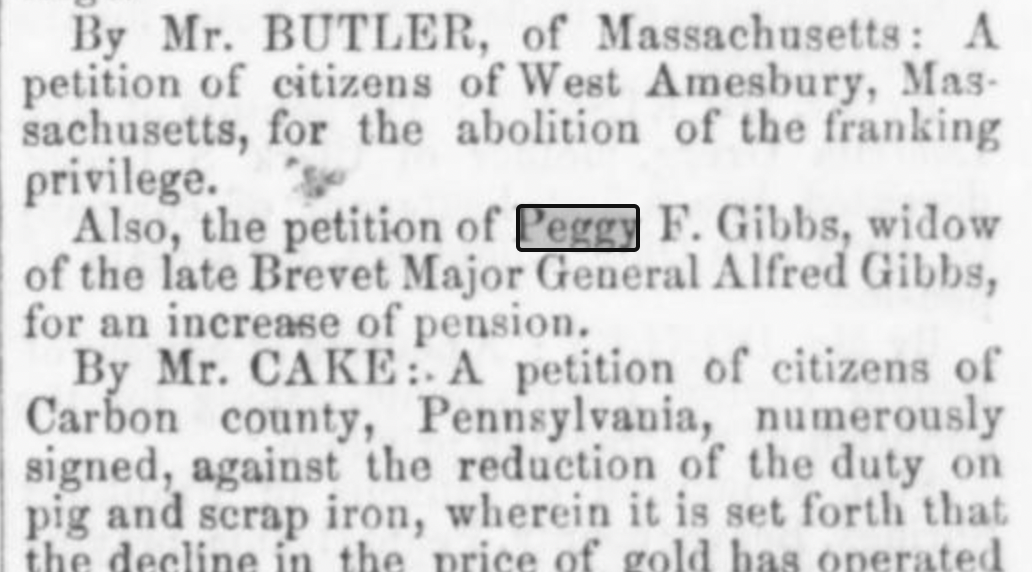
From inside the Custer circle, Elizabeth Custer would one day write Peggy a letter of condolence too, though not for the General: she wrote from Paris on June 19, 1898, after Blair's death at Guantanamo, remembering that the station “the general” liked best was “Where my boys were born.” Her letter does not name him; Custer had no sons, so I read the general as Gibbs. And Peggy, left with two sons and the thin provision of an officer’s widow, twice petitioned Congress, in 1869 and again in 1871, for an increase in her pension. The man who would accept “no excuse for dirt, disorder, or disobedience” turned out to have, beneath the regulations, the same thing the Dragoons had seen under the rigor and the regulars had missed under the etiquette: a kind heart, and an old soldier’s conviction that the smallest duty, faithfully done, is what stands between soldiers and catastrophe. The young men laughed at the discipline. The Little Bighorn did not.
References
Barnitz, A., & Barnitz, J. (1977). Life in Custer’s cavalry: Diaries and letters of Albert and Jennie Barnitz, 1867–1868 (R. M. Utley, Ed.). Yale University Press.
Bowen, J. R. (1900). Regimental history of the First New York Dragoons (originally the 130th N.Y. Vol. Infantry) during three years of active service in the great Civil War. The Author.
Custer, E. B. (1898, June 19). Letter of condolence to Peggy F. Gibbs [Letter]. Alfred Gibbs family archive. https://alfredgibbs.com/peggy-foushee-blair-wife-mother/
Gibbs, P. F. (1869, December 6; 1871). Petitions to Congress for an increase of pension. The Congressional Globe. https://alfredgibbs.com/peggy-foushee-blair-wife-mother/
Green, G. H. (n.d.). Peggy Foushee Blair (Wife and mother). Alfred Gibbs. https://alfredgibbs.com/peggy-foushee-blair-wife-mother/
Note. The reading of Custer’s indiscipline as a contributing cause of the Little Bighorn disaster is the interpretation of this article, drawn from the contrast the sources themselves record.
Explore the evidence
View this article’s connected sources and media →
About this page
This article was brought over from AlfredGibbs.com. Its preserved text, media and citations remain available for comparison.