
On August 25, 1864, the First New York Dragoons were caught up in the cavalry fighting near Kearneysville and Shepherdstown, part of the opening maneuvers of Sheridan’s 1864 Shenandoah Valley Campaign. Pressed back by Confederate infantry and very nearly cut off outside Shepherdstown, the regiment was extricated by a sudden charge of Brig. Gen. George A. Custer — an episode Bowen titled, with feeling, “How Custer Saved the Dragoons.”
Background
In late August 1864 Jubal Early’s Confederates probed toward the Potomac in the lower Shenandoah Valley, and Sheridan pushed his cavalry north and east of Charlestown to develop the enemy. On the night of August 24 the First Cavalry Division camped at Shepherdstown on the upper Potomac; the next morning it moved out toward Winchester. Near Leetown the column routed a body of Confederate cavalry — and then ran headlong into Confederate infantry, Breckinridge’s command, supported by cavalry, and was thrown on the defensive.
The Dragoons belonged to the Reserve Brigade of Merritt’s division, commanded by Col. Alfred Gibbs; the regiment itself was led in the field that day by Maj. Howard M. Smith. (The transfer of the Dragoons to Devin’s Second Brigade came two weeks later, on September 9, just before Third Winchester.)
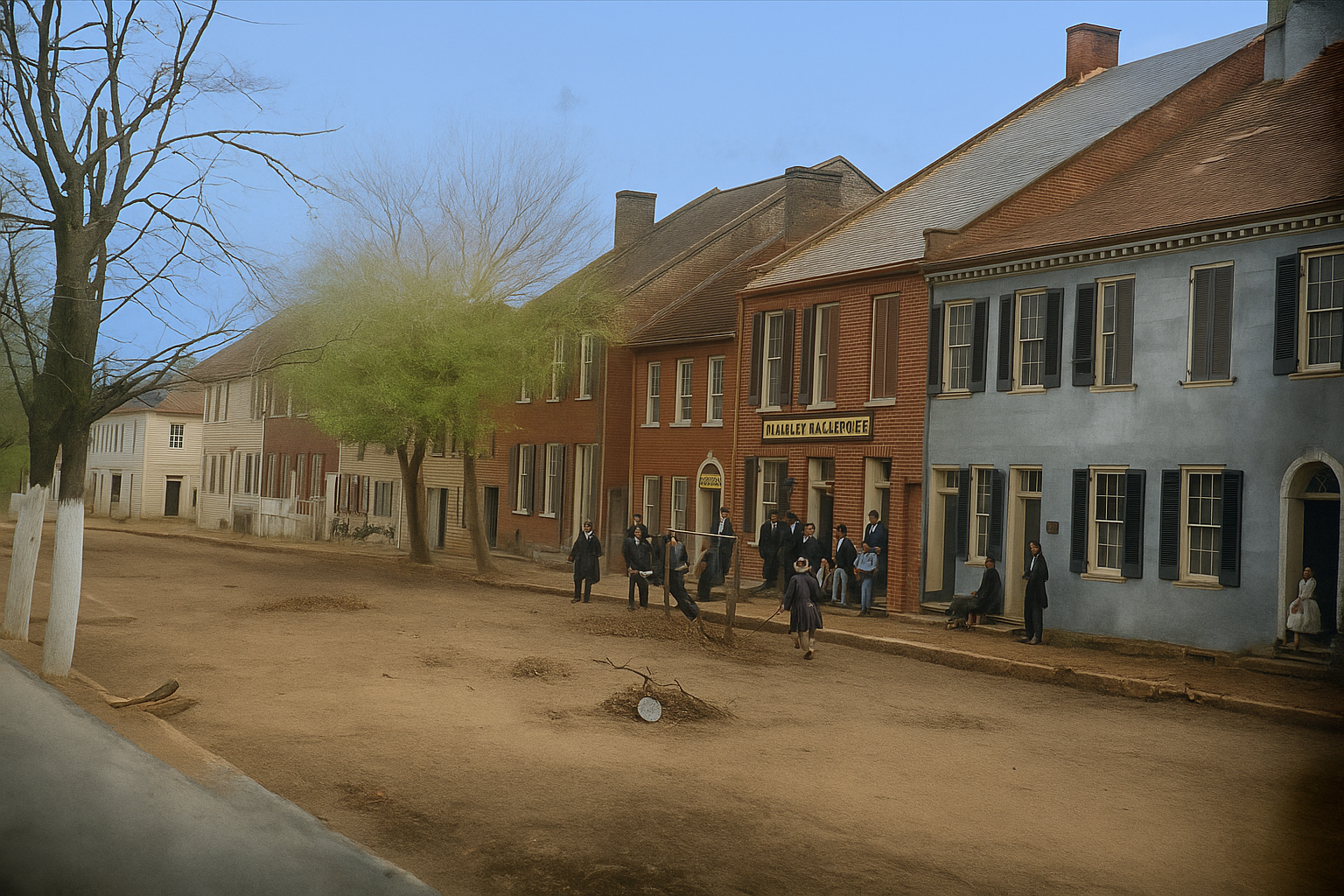
The Action
Outnumbered and facing both infantry and cavalry, the division was compelled to fall back toward Shepherdstown after a lively engagement at Kearneysville on the Baltimore & Ohio Railroad — “the Dragoons covering the retreat.” Major Smith was ordered to give ground no faster than forced, with the understanding that the column would withdraw by way of Shepherdstown.
Outside the village the retreat went wrong. The regulars in the advance — the other regiments of the very brigade the Dragoons belonged to — turned off on a road toward Harper’s Ferry without notifying or supporting Major Smith, leaving the Dragoons exposed. Confederate cavalry pressed the regiment at the edge of town while Confederate infantry double-quicked across the fields to seize the road of escape. Halted on a rise with the enemy closing in, the regiment faced capture or a desperate charge. As Bowen records Major Smith’s reply when his captains asked what he proposed to do: “There are but two things to do; surrender, or charge them, and cut our way out the best we can.”
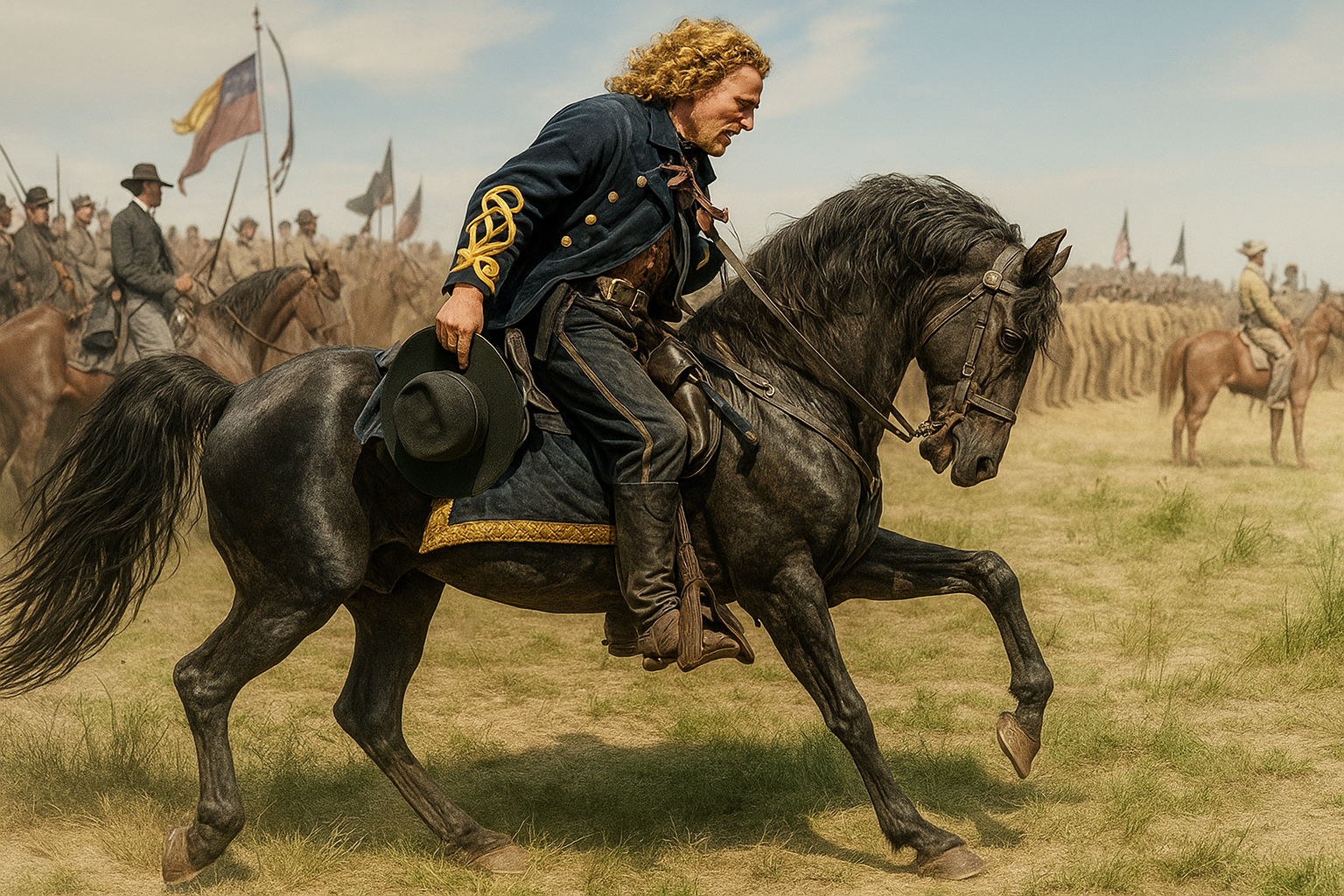
At that moment cheering broke out in the rear of the Confederate line. Custer, at the head of his staff and headquarters guard — his wide-brimmed hat flapping and his long golden curls streaming — charged down upon the enemy’s rear, his command coming up behind him. The attack threw the Confederate line into confusion. Custer reached the trapped regiment, took charge, and turned it about: “Wheel about, boys, and charge them! Forward! Charge!” The Dragoons cut back through the Confederate line while Custer’s battery and brigade held the enemy in check. The command then forded the Potomac below the village, encamped near the old Antietam battlefield, and crossed the Antietam bridge the next morning to rejoin the brigade at Harper’s Ferry.
“When Custer heard the firing, he said to his staff: ‘The Dragoons must be in trouble over at the town. They did me a good turn at Trevilian, and I am going to return the compliment.’ It was a timely and daring rescue, worthy of the gallant Custer.”— James R. Bowen, Regimental History of the First New York Dragoons (1900), ch. XIV, “With Sheridan in the Shenandoah Valley.”
The First New York Dragoons
The regiment served as rear guard throughout the withdrawal and bore the brunt of the day’s danger. Bowen relates that when Custer heard the firing he told his staff that the Dragoons must be in trouble, and remembered the debt he owed them from Trevilian Station that June — “a timely and daring rescue, worthy of the gallant Custer.” One of the regiment’s captured men, Sergeant Harrison W. Green of Company H, left an account, preserved by Bowen, of being unhorsed and overhauled in the streets of Shepherdstown:
“Our regiment was rear guard, and Co. H, rear guard of the regiment… My horse was shot in the bowels, and becoming unmanageable, ran into Shepherdstown, and dropped dead. I was badly hurt, but ran down the street, expecting every minute to receive a bullet… The rebs overhauled me… They went through my pockets, taking money, watch, knife, and my wife’s photograph.”
— Sgt. Harrison W. Green, Co. H, quoted in Bowen’s regimental history
Aftermath
The Kearneysville–Shepherdstown action of August 25 ended with Early’s infantry driving Sheridan’s cavalry back across the Potomac to the Sharpsburg side. After a breathing spell of two days the Dragoons were again in the saddle, fighting the two-day engagement at Smithfield on August 28–29. Within weeks Sheridan would take the offensive that led to the decisive victories at Third Winchester (Opequon) on September 19 and, a month later, at Cedar Creek.
Roll of Loss — Shepherdstown, August 25, 1864
Men of the First New York Dragoons lost in the action at Shepherdstown, compiled from Bowen’s regimental roster (the Appendix). The roster dates Sergeant Howard’s wound August 24, the night the division reached the town.
| Fate | Name | Company | Rank |
|---|---|---|---|
| Killed | Martin W. Snyder | G | Private |
| Killed | Isaac K. Pealer | K | Sergeant |
| Captured | Harrison W. Green | H | Sergeant |
| Captured | Horace Hoover (Haver) | K | Private |
| Wounded | Frederick E. Howard | A | Sergeant |
Sources & Further Reading
- Primary James R. Bowen, Regimental History of the First New York Dragoons (originally the 130th N.Y. Vol. Infantry) (1900), ch. XIV, “With Sheridan in the Shenandoah Valley,” “Battles of Kearneysville and Shepherdstown — How Custer Saved the Dragoons” (the account is drawn from comrades Ezra Marion, Harry Green, and Marvin W. Lindsley), and the regimental roster in the Appendix. Full text: archive.org/details/regimentalhistor00bowe.
- Primary U.S. War Dept., The War of the Rebellion: Official Records of the Union and Confederate Armies, Series I, Vol. 43, Pt. 1 — Sheridan’s, Torbert’s, and Merritt’s reports and itineraries of operations in the lower Valley, which record the August 25, 1864 engagement at Shepherdstown and the cavalry’s withdrawal across the Potomac to Sharpsburg.
- Historic Shepherdstown & Museum, “Sketch of actions near Kearneysville and Shepherdstown, Va.”: historicshepherdstown.com.
- Shenandoah Valley Battlefields Foundation, “Sheridan’s 1864 Valley Campaign”: shenandoahatwar.org.
- American Battlefield Trust — Sheridan’s 1864 Shenandoah Valley Campaign overview: battlefields.org.
Third Winchester · The Shenandoah Valley Campaign · The Audiobook
Views: 41
Explore the evidence
View this article’s connected sources and media →
About this page
This article was brought over from AlfredGibbs.com. Its preserved text, media and citations remain available for comparison.