
George Gibbs to Wolcott Gibbs
Astoria, Oregon, June 14, 1853
My Dear Wolcott,
I received yours and Mother’s and Laura’s of the 28th and 29th April by the steamer yesterday. I am glad to hear that there is a chance of an awakening in Columbia College. I suppose you would retain both professorships should you get that unless the salary was an independent one. How the devil does Trinity Church permit a heretic to enter the sacred wall—sacred to religious, classical, and scientific fogyism?
As to Schoolcraft’s books, get Austin Stevens to ship them by the first clipper ship that sails, directed to [address omitted]. I trust that Schoolcraft published the map, with the report. It is worth nothing without, and I want to get a few copies of the map separate to insert the boundaries of the Indian tribes on. Fitch’s proposition is a fudge. No one could prepare a work of that kind worth a continental dime without years of labor and travel. To do it by Nov. 1st would be a physical as well as mental impossibility.

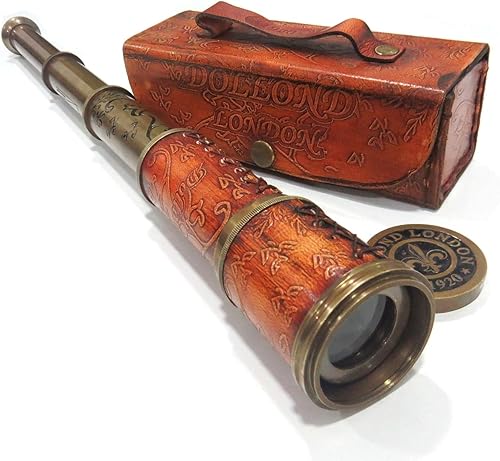
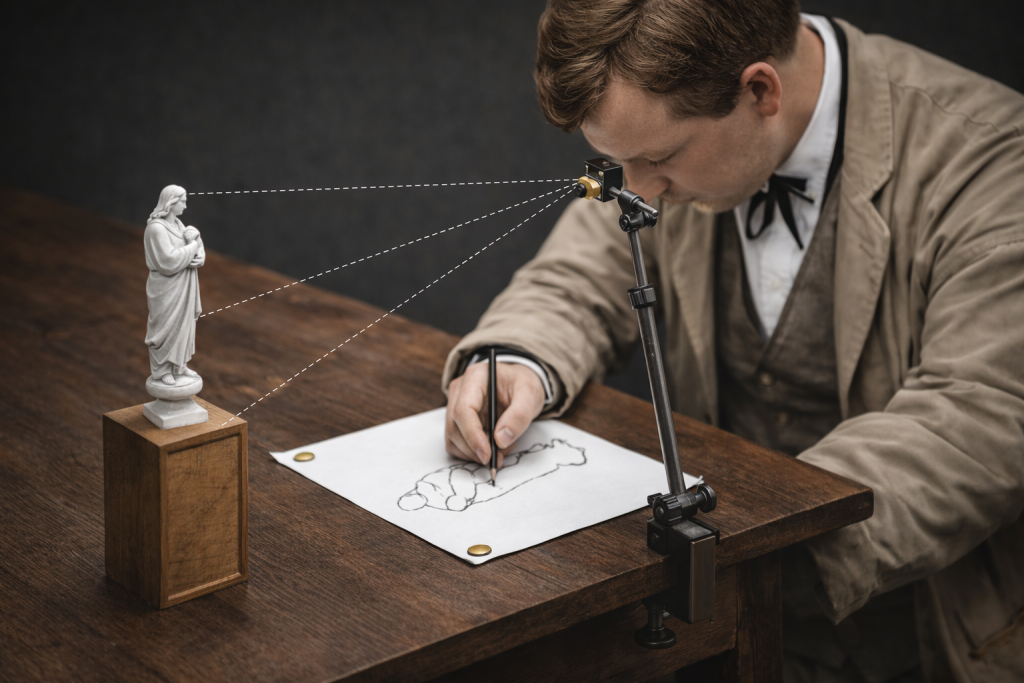
I wrote some time since to ask you to send me a Treasury Draft for the money Mother offered to lend me and that I should not draw on Lucius in consequence. I am sorry I did not think of telling you to pay it to Leonard who would have given me an order on his house here, which is as good as possible. If you have not done it, buy for me a good plain Camera Lucida, having a magnifying power so as to embrace a small field on a good scale. A Schmalcalder Azimuth compass, and a good but light and portable spyglass with case—not to have more than 3 joints. My glass which William gave me was stolen with my other traps 10 months ago on the boat from San Francisco to Benitia. The Azimuth should have a leather case with a loop to pass a belt through. Deduct the price of these and a half year’s interest at 10 percent from the money and send me the balance by draft.
A Mr. Cary, a friend and correspondent of Agassiz in San Francisco, has sent me a ten-gallon keg of alcohol in which I am putting up specimens of the fish of this river for him and hope by and by to know something certain about the varieties of the salmon.
Adair is to arrive by the next steamer, which will give me six months in office—something of an object as it has enabled me to square all the yards here and will leave something over. I understand he brings out a whole raft of his family connections.
I wrote to George Moore a couple of weeks ago and asked him to send me a copy of Bartlett’s report and some other geographical and Indian reports to Congress. Stir him up about them. Where is George Arthur nowadays?
I still think Frank might do well by establishing himself in this country. Goods are low now in consequence of the large stocks sent out, but in five months they will be as high as ever. Don’t let him fail to send me the fur reports at any rate.
The spring here has been late, at least the spring rains continue far beyond the usual time. The last reports are that gold has been discovered on one of the branches of the Willamette, the Santiam, and they are digging from $10 to $50 per day. If so, I shall break for there as soon as I am released. My papers and everything will be ready to turn over but I want to hurry them in the settlement of my accounts. Ask Schell if there is no way in which I can get them put through at Washington. The department has not vouchsafed me one line since I have been in office, except to order the payment of one of Adair’s old matters—and if they are proportionately long in auditing my quarterly returns, I may be in the Sandwich Islands or Sitka or Sydney before they take them up. The Columbia is tremendously high this year. At Vancouver, nearly up to the fort, a rise of 20 feet or more. All the lowlands are overflowed and the Pikes who have squatted wherever they saw any “flats” are drowned out like musquashes. The election for Delegate has just come off. Lane, who resigned his office of Governor to run, is elected over Skinner by 1000 or 1200 I presume. This country is unmitigatedly Pike and of course Loco foco.
Researcher’s Note: This section of the letter provides a candid and revealing glimpse into the political and cultural tensions of the Oregon Territory in 1853. George Gibbs uses the term “Pike,” a pejorative slang of the era, to describe the dominant settler population, whom he characterizes as uncultured, ignorant populists hailing from frontier states like Missouri and Illinois. He directly links this demographic to the “Loco foco” movement, a radical, anti-establishment faction of the Democratic Party that championed populist figures like Andrew Jackson. Gibbs’s frustration culminates in his commentary on the recent election, where Joseph “Joe” Lane, a popular figure who resigned the governorship to run, was overwhelmingly elected as the territorial Delegate to Congress. For Gibbs, Lane’s victory is the ultimate confirmation that the region is “unmitigatedly Pike,” revealing a deep-seated disdain held by the educated Easterner for the raw, Jacksonian-style democracy taking root on the American frontier.
Perhaps you don’t know what a Pike is. He is a native either of Pike County, Missouri, or of Posey County, Illinois, brought up in Pike, Missouri aforesaid, and is in the writ the representative of Hoosierdom in the abstract, as characteristic a first family is in Virginia. Ignorant, conceited, arrogant, dirty, hog and hominy people are the Pikes—the women with big feet, dirty clothes, and a drawl to which the veriest Connecticut is outspoken. The men believe in Gen Jackson, Tom Benton, and “Old Joe” Lane who drinks whiskey with them and kisses their children. Voya.
I don’t remember anything certain about the Gracie lots. Howe will undoubtedly find the deeds among my old law papers. Wm. Gracie owed me some money, but that is nothing. I would not receive it on any account. If the lots are in my name, I suppose they were put there to save them from his creditors. Tell Howe to see that it is all right for me. Give my regards to the old villain and tell him I wish I could send him a 40 lb salmon. They are here in abundance. In fact, we get hardly anything else and I don’t eat any except particular cuts. He is a lazy rascal, or he would have written me long since telling me how the bar gets on and what has become of the old crowd. Every now and then I see some burning and shining light that we never thought of, exalted in the newspapers. Tell him I met that little squirt Alex Wells that married Miss Van Wyck in San Francisco last winter. He is a judge and great loco foco leader, God save the people.
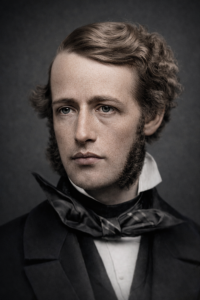
Researcher’s Note: An investigation into George Gibbs’s dismissive reference to “that little squirt Alex Wells” reveals the subject to be a significant political figure of the era, Alexander Wells. Corroborating Gibbs’s details, historical records confirm that Wells was indeed a judge, serving as an Associate Justice of the California Supreme Court at the time of the letter. The mention of his marriage to “Miss Van Wyck” is also accurate; Wells was married to Ann V.R. Van Wyck. Gibbs’s labeling of Wells as a “great loco foco leader” is a pointed political insult, framing the judge as a radical populist Democrat, a faction for which the more conservative Gibbs held clear disdain. The encounter in San Francisco, where Gibbs felt his own “dilapidated exterior” was judged by the successful Wells, provides a rich, personal context for the political animosity expressed in the letter, illustrating the deep cultural and ideological divides present in mid-19th century America.
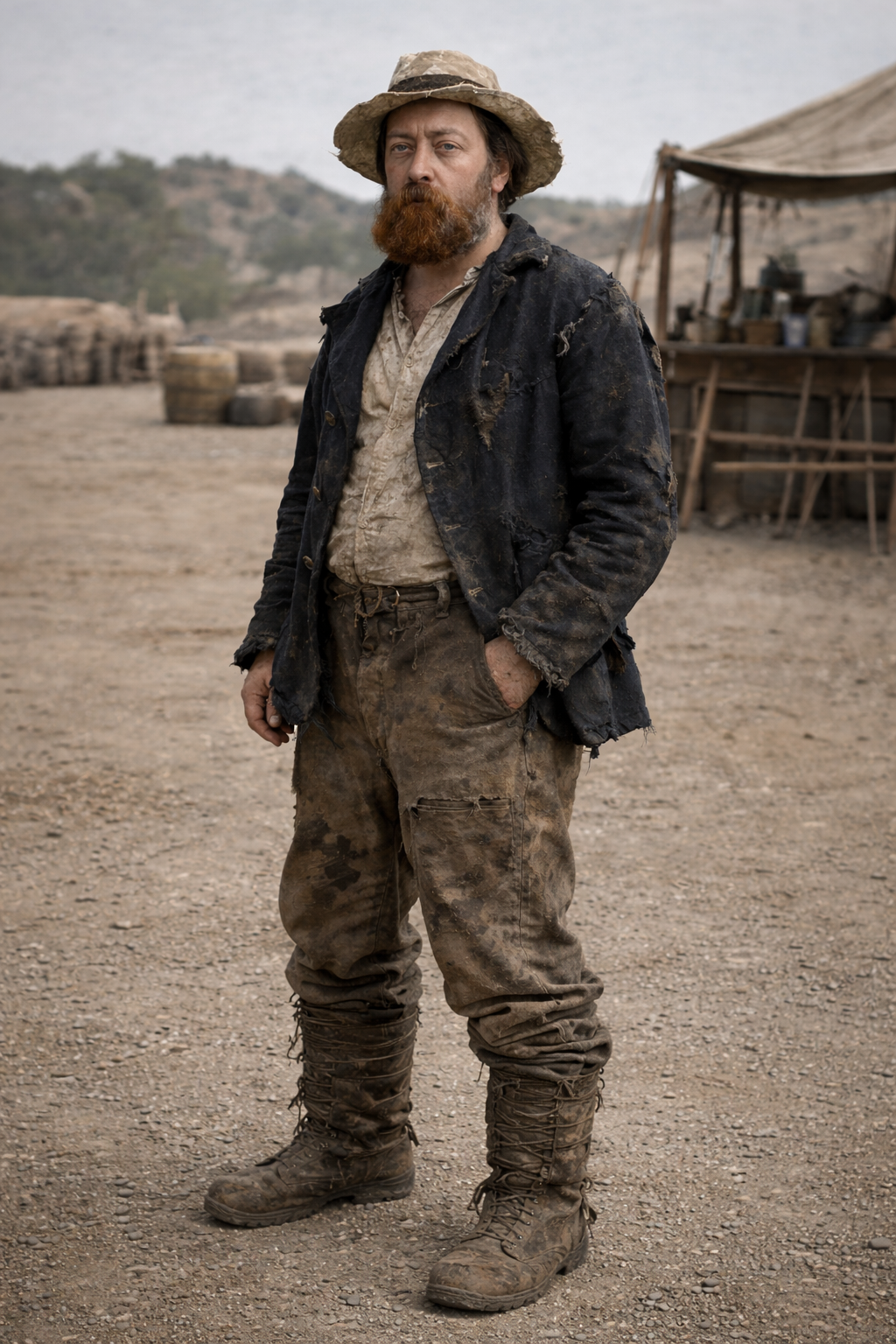
I was just landed from the mines—in an old Panama hat—a ragged pea jacket and indescribable boots and breeches. We contemplated one another as we passed and it gave me a sort of serious satisfaction to detect the look of triumph in his fat oily countenance as he regarded my grizzly beard and dilapidated exterior and thought to himself that pride had had a fall—that he was a judge and perhaps I might come before him for trial for horse stealing, which is possible, but not probable.
Love to all and goodbye,
GEORGE
Views: 53
Explore the evidence
View this article’s connected sources and media →
About this page
This article was brought over from AlfredGibbs.com. Its preserved text, media and citations remain available for comparison.