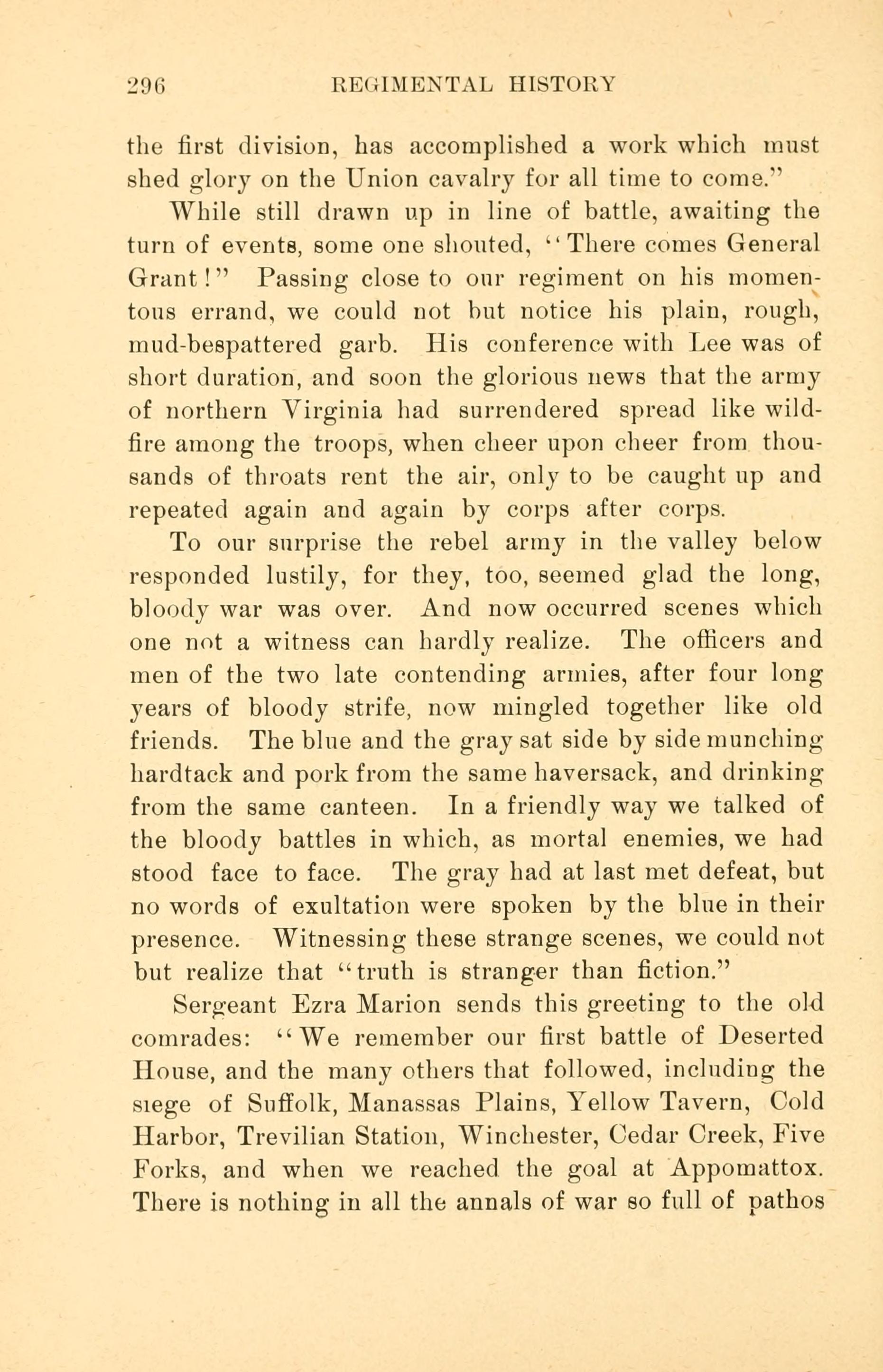
Start with the guided reading below, or search this chapter for a person, quotation or topic. Follow the writing and evidence behind this part of GIBBS.
What would you like to explore in Appomattox?
Go beyond the book · Appomattox
Follow the last campaign in Gibbs’s own report
The chapter moves rapidly from the Petersburg lines to Appomattox. A report written on April 15 lets readers follow the brigade’s movements and losses through the commander’s account.
New to these records? A little context.
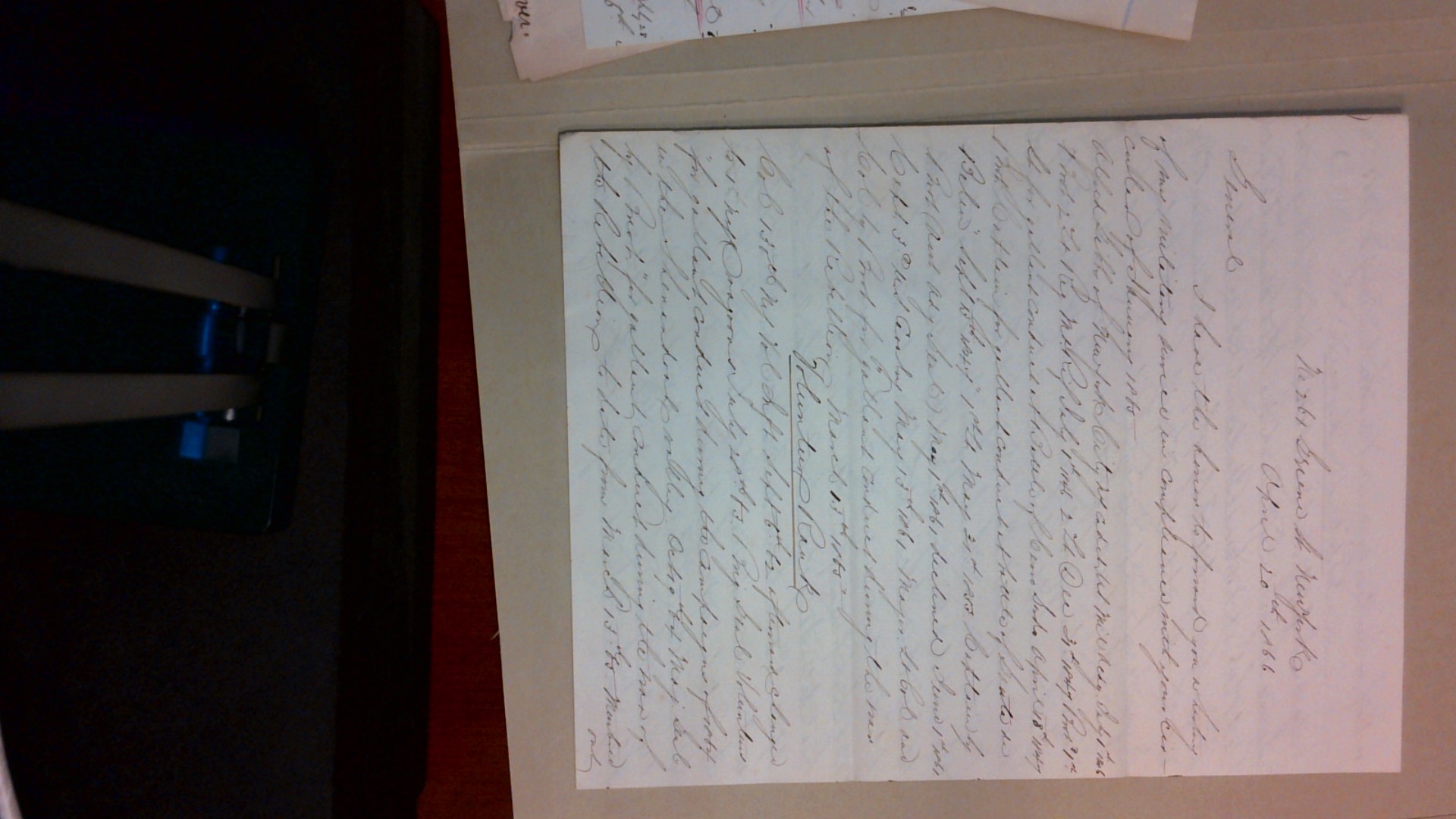
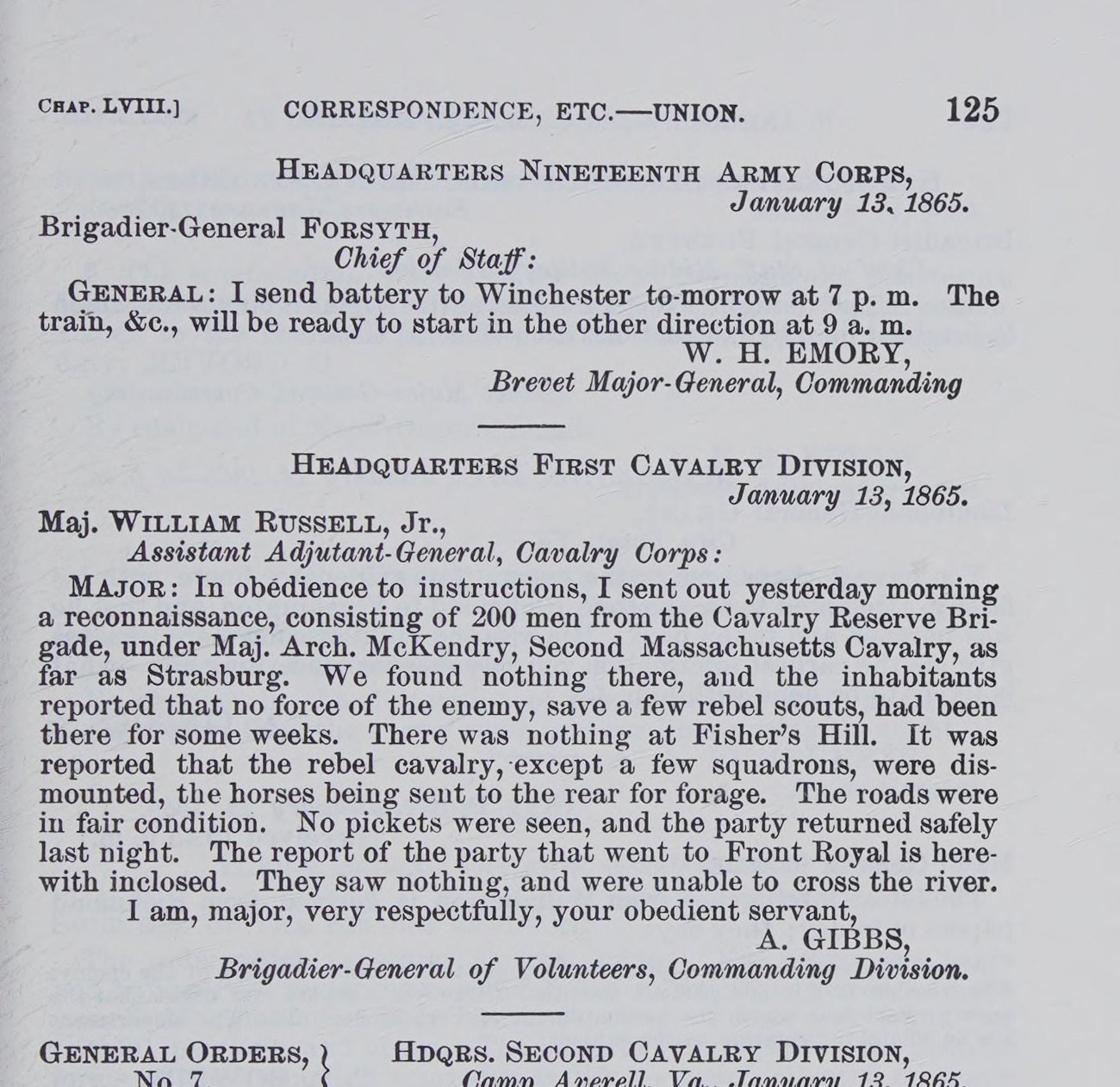
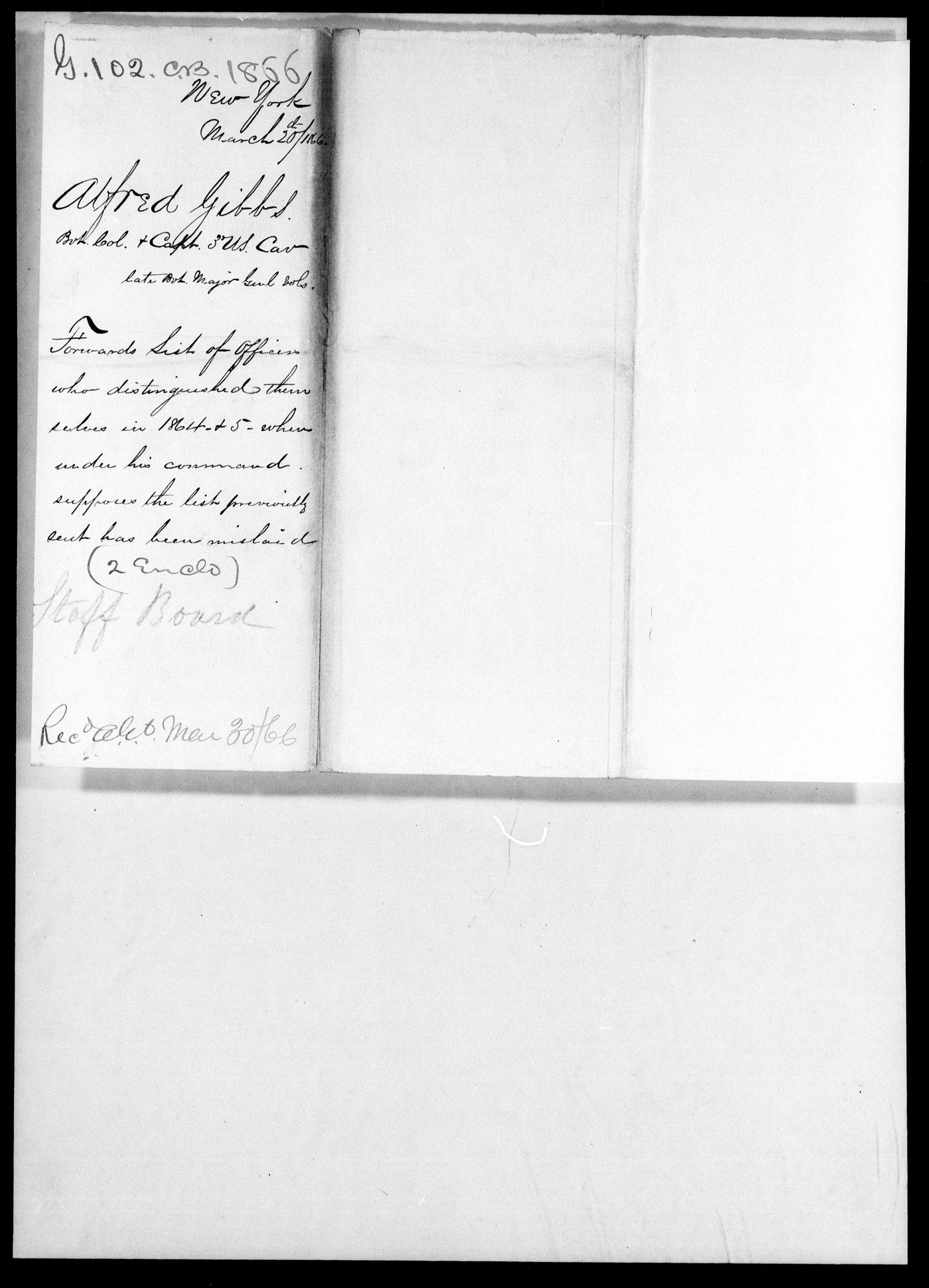
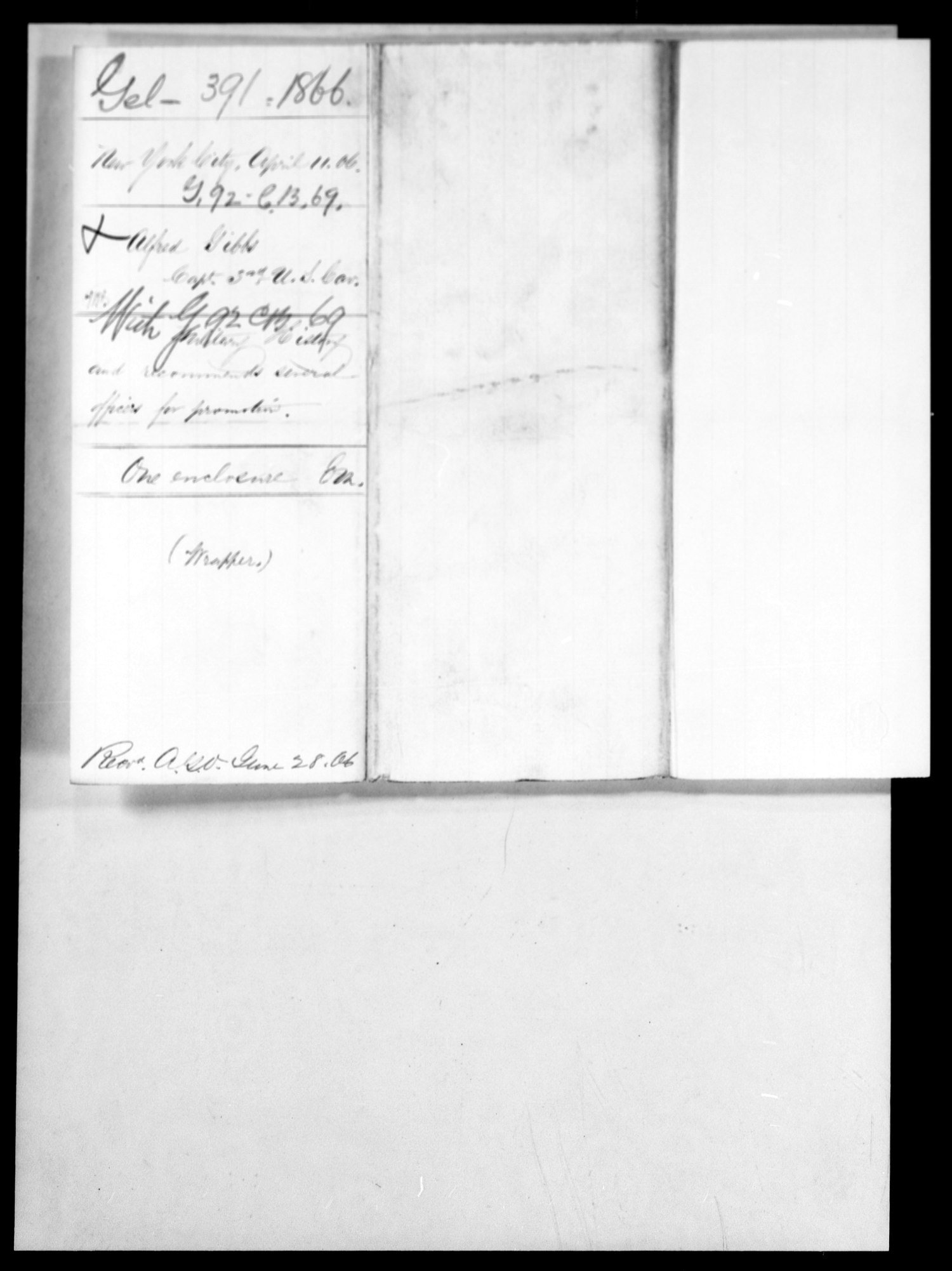
A docket is an office’s summary or filing note; it may be on a wrapper rather than in the letter. An endorsement is another official’s response or forwarding note. Read each voice and date separately. A transcription is a reading of a document, with uncertain words marked where the exhibit provides them.
What did Gibbs choose to record after the fighting ended?
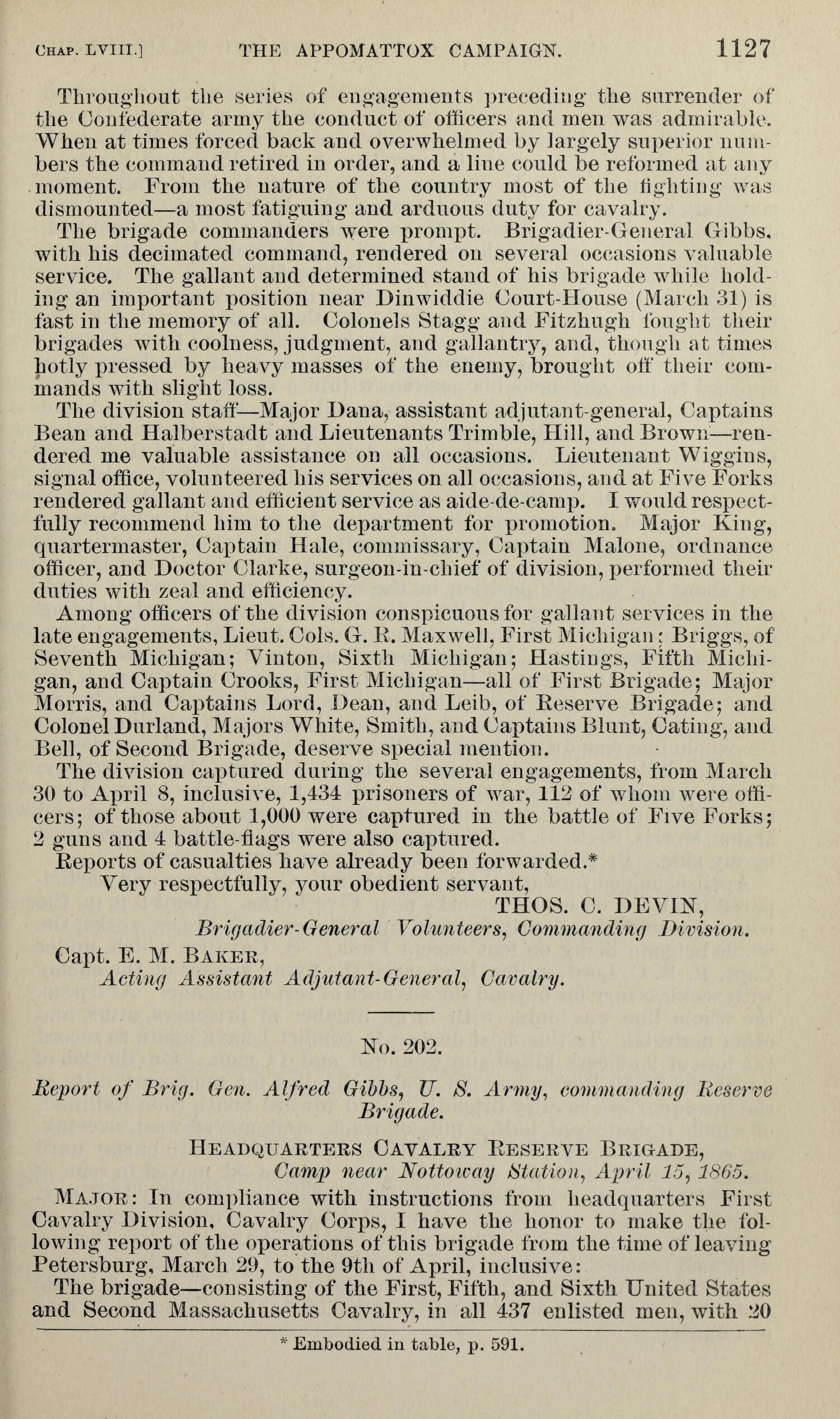
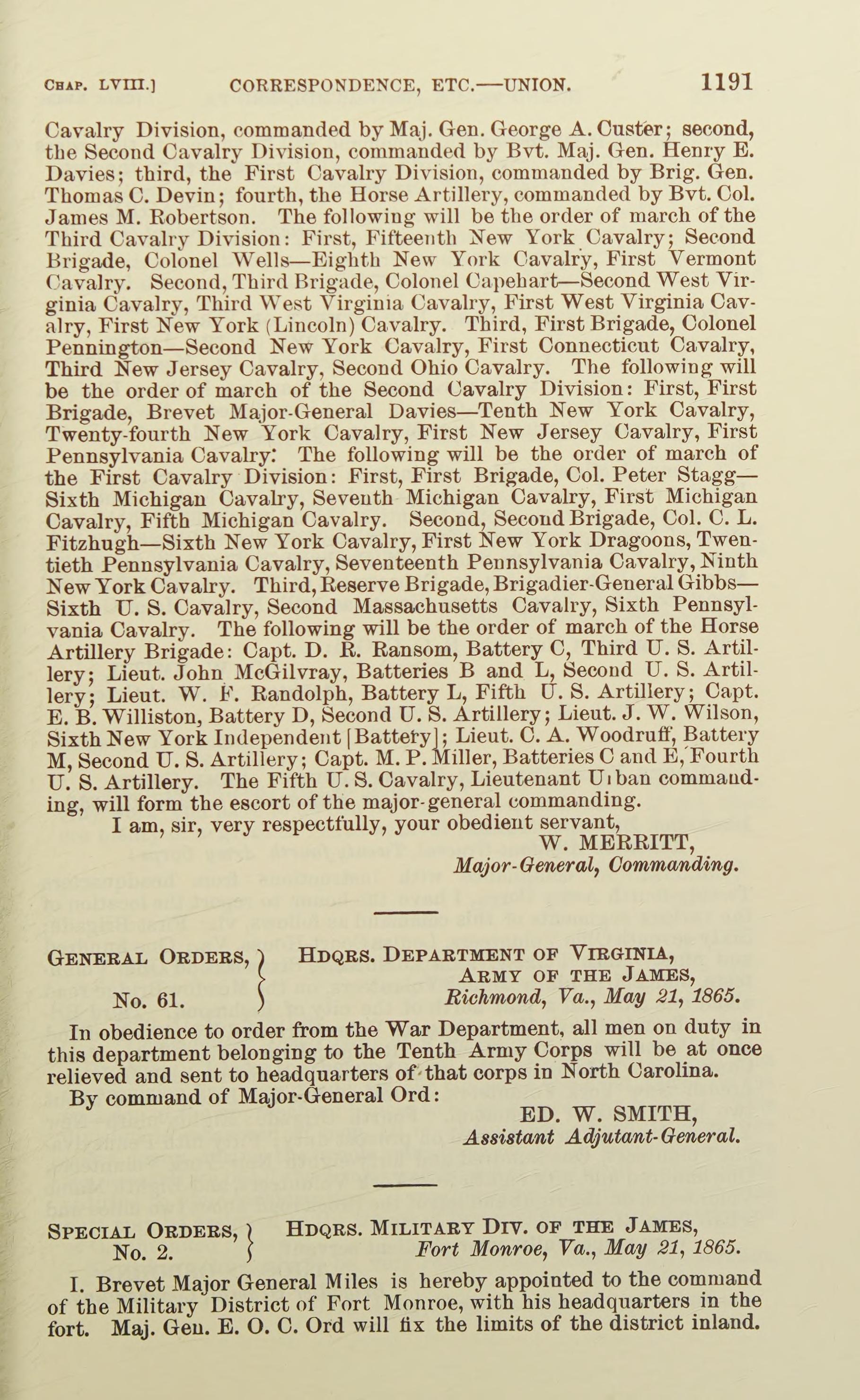
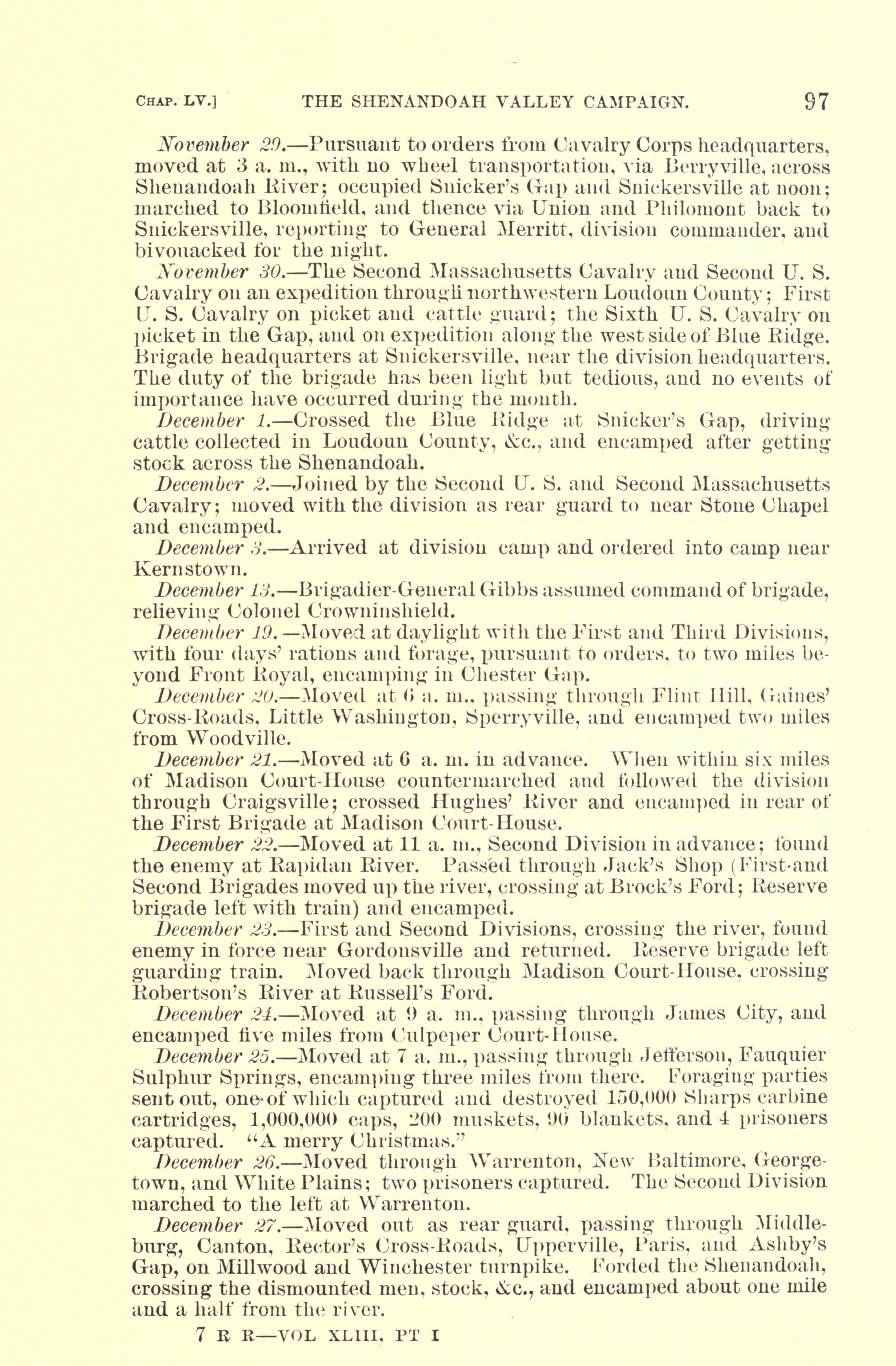
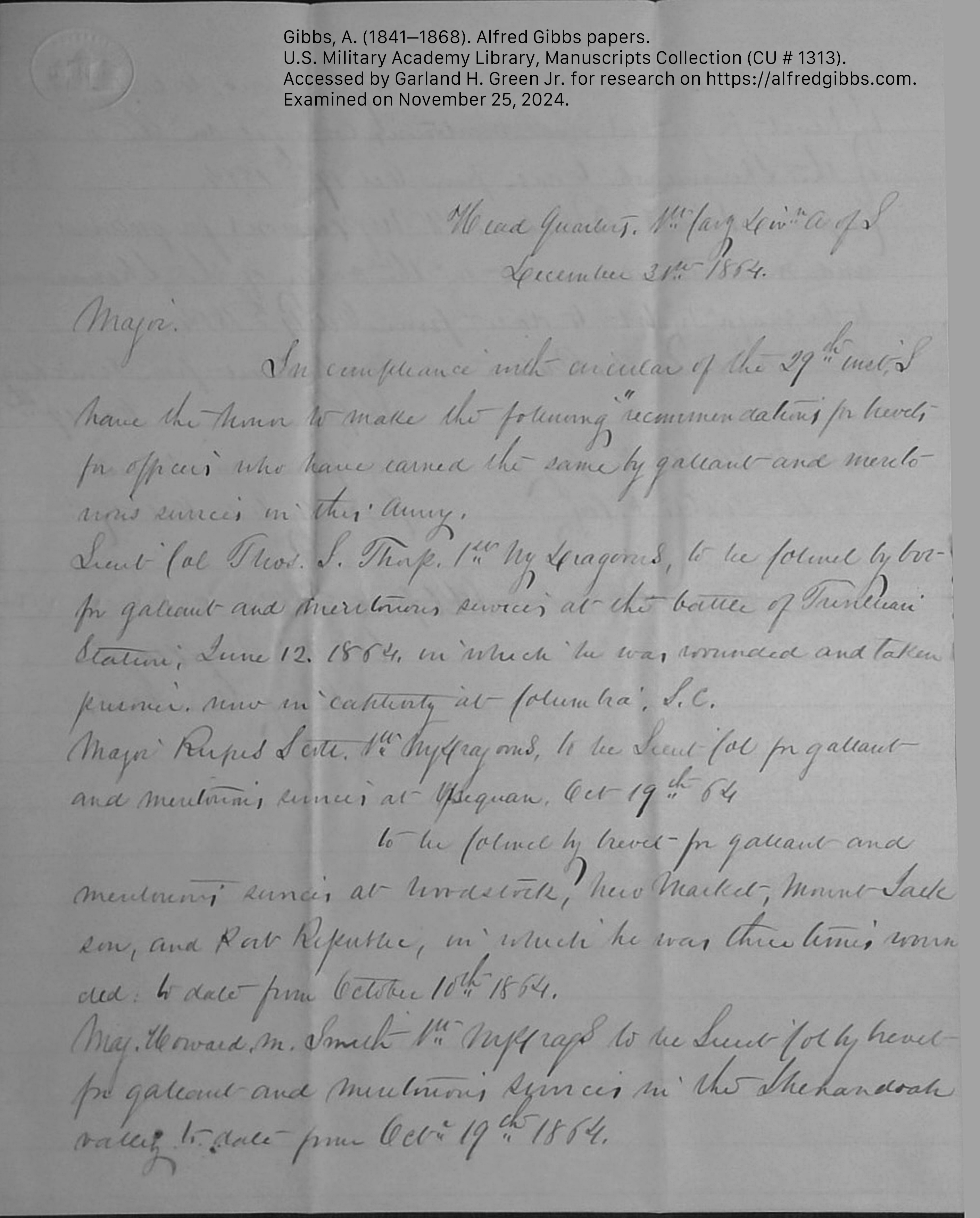
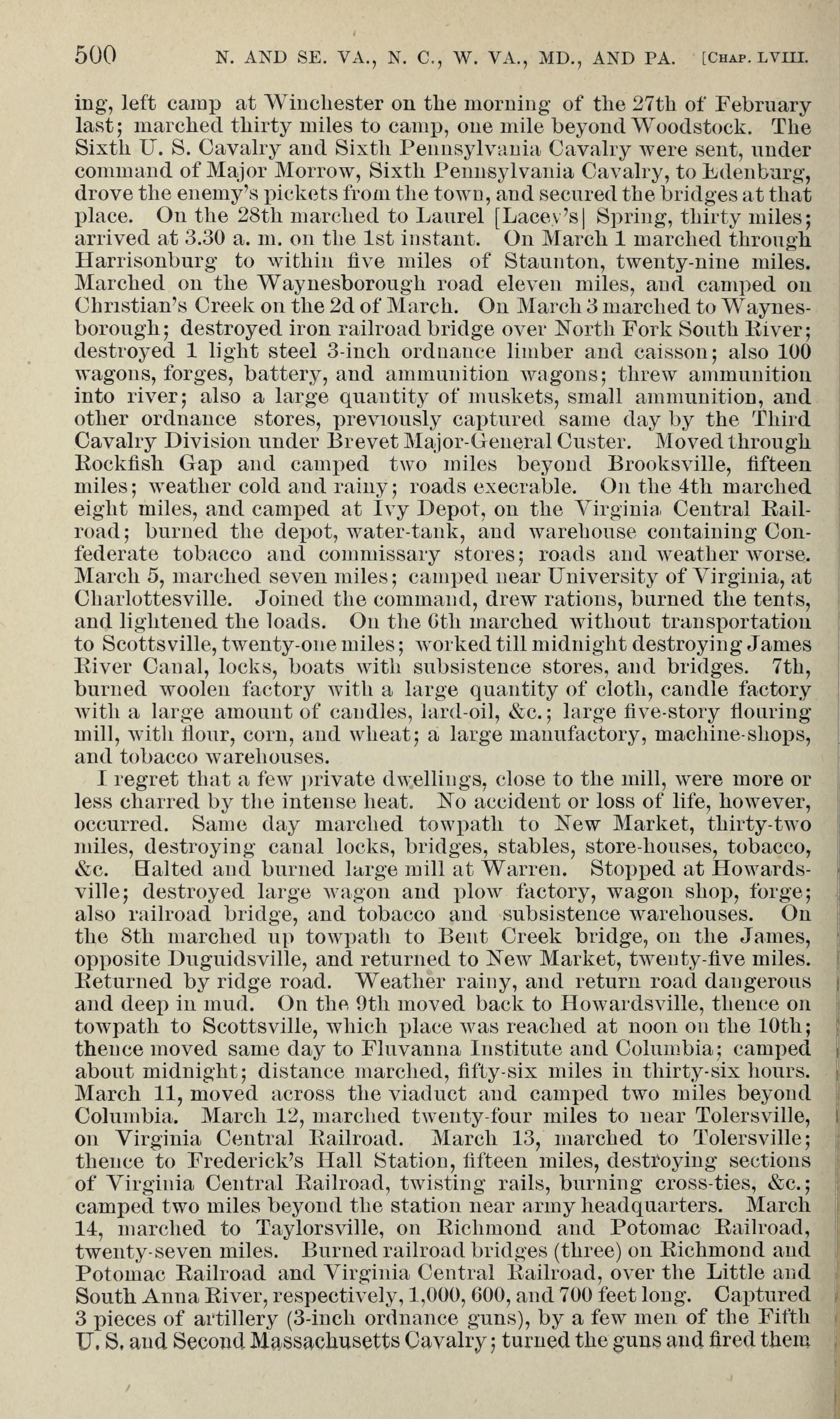
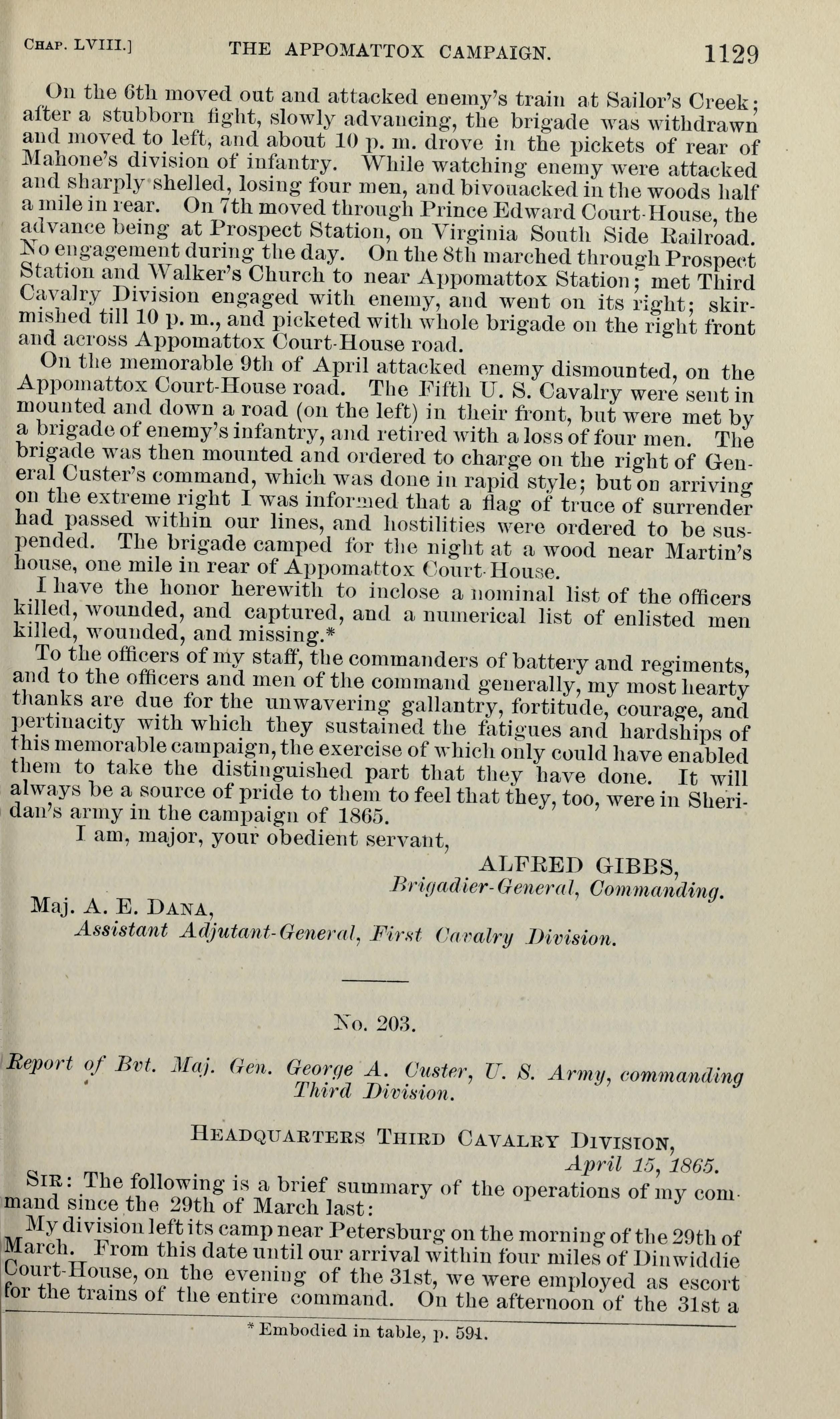
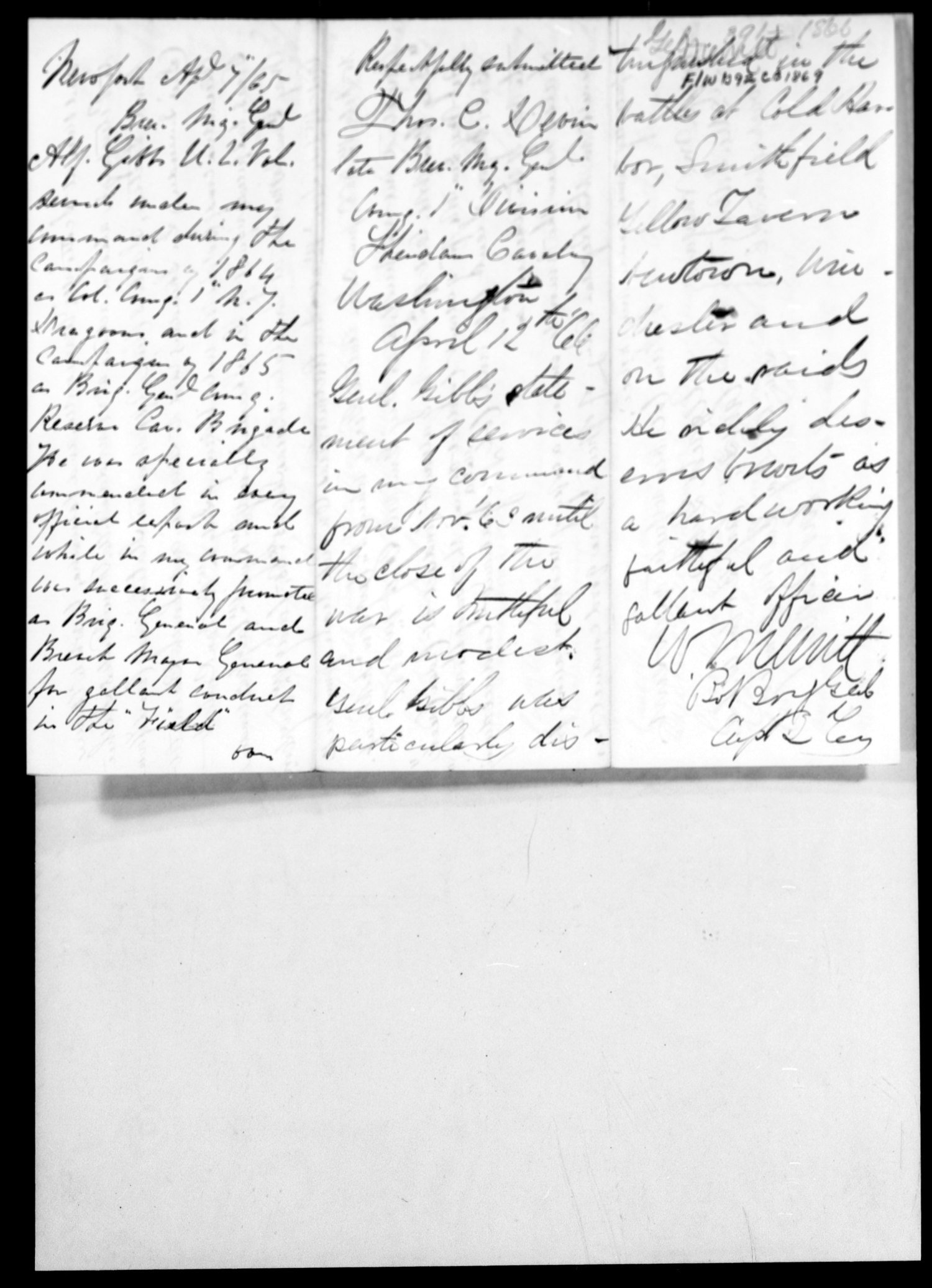
Gibbs OR report No.202, Reserve Brigade, Appomattox 1865 (p.1127) · From the linked account. Its original credits and image status are preserved there.
Read the source exhibit & its explanation
Gibbs’s campaign report, April 15, 1865
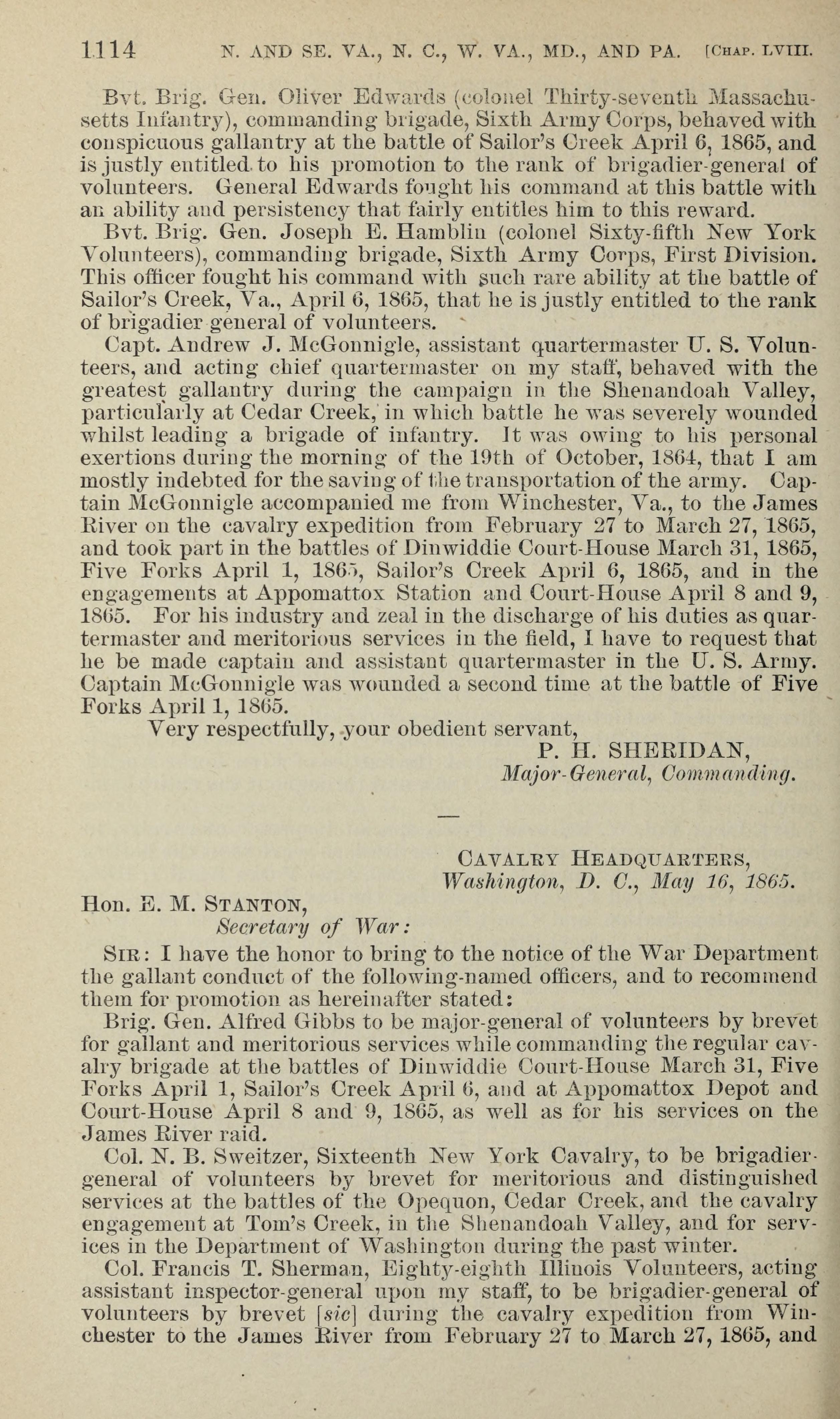
The exhibit reproduces Report No. 202, with scans of pages 1127–1129 and a transcription. It gives a bounded primary text for investigating a large campaign.
What to examine: Follow the dates and places through the report. Notice the units named, the casualty figures, and whom Gibbs credits, then compare the narrative with other accounts.
Keep this distinction in mind: This is a retrospective official report by a participant. It records his account of the brigade, not every action of the army or every soldier’s experience.
Keep your question in view as you explore. The reading tray retains Appomattox. Close it to return to this point, or deliberately choose to explore outside the chapter.
Follow a life beyond the page
People you meet here
The book brings you into these lives. Follow a person to the family, service and research records available here. Pension material is identified separately from biography and recollection.
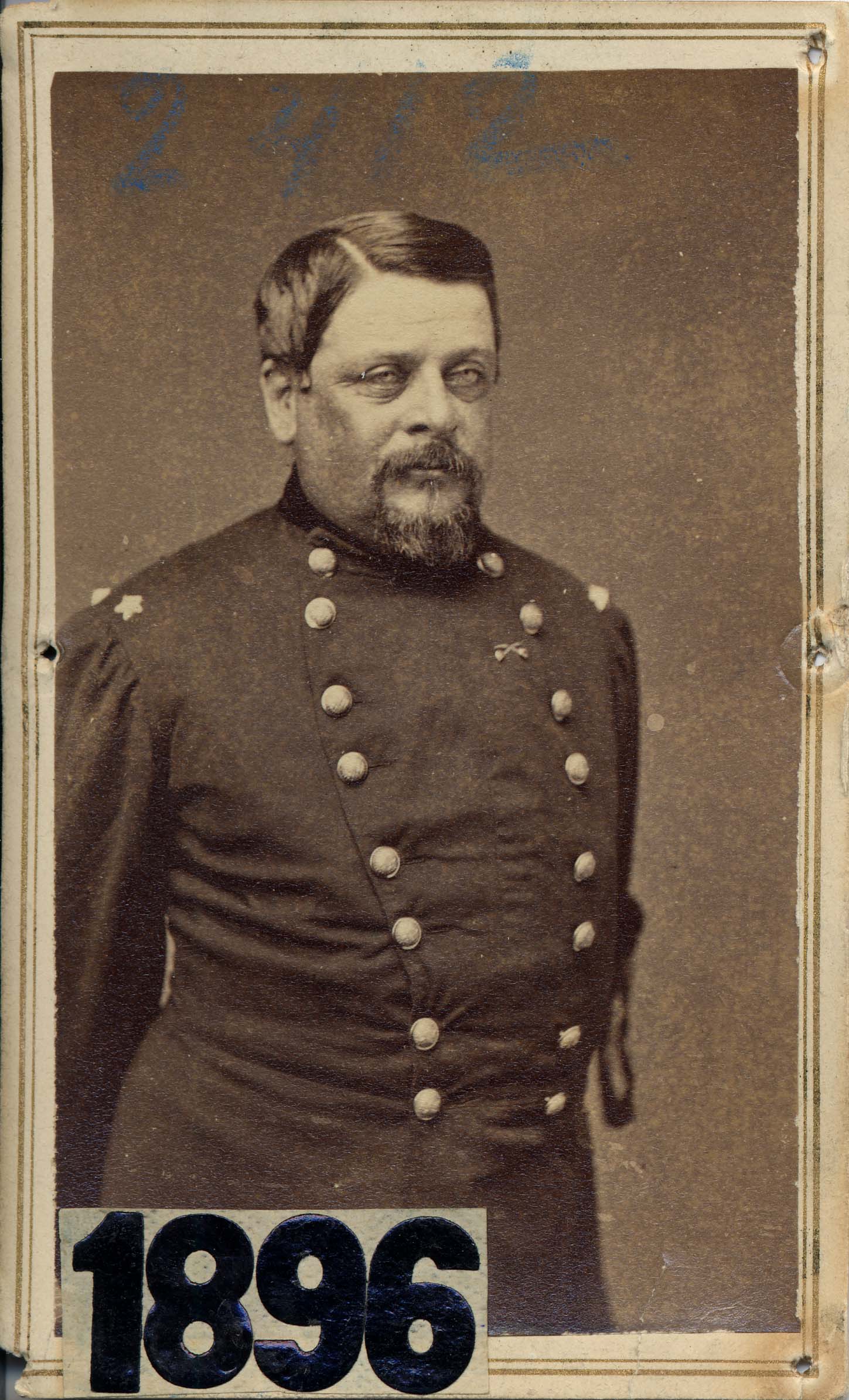
Follow Gibbs through the service and medical records, then Peggy’s petitions after his death. These sources let you distinguish what a doctor observed, what a widow asked for and what an official record actually establishes.
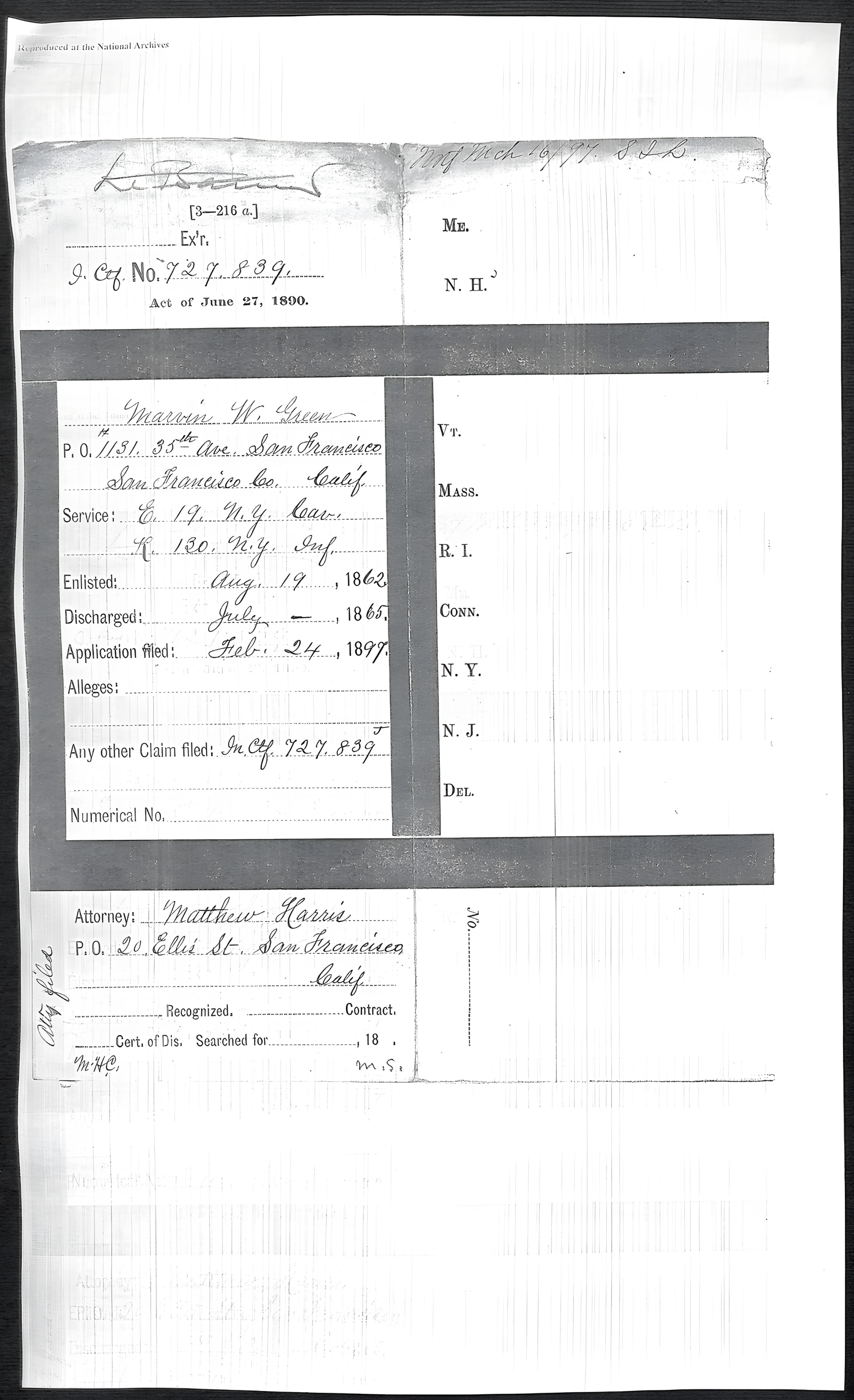
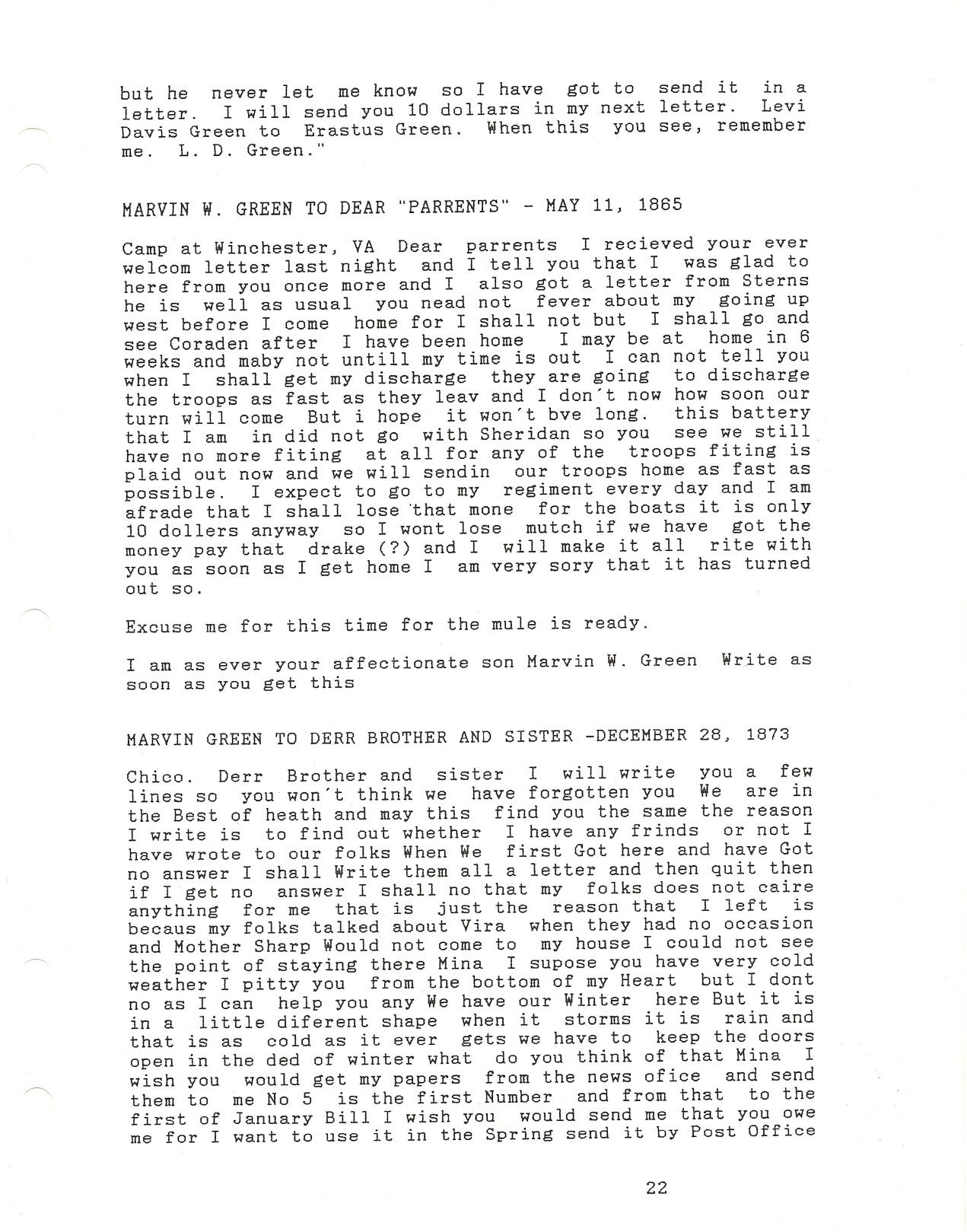
Marvin survived the war that took his brother Levi. Follow his letters, then the pension applications, medical evidence and Elvira’s widow’s claim to see how their family history continues after the fighting.
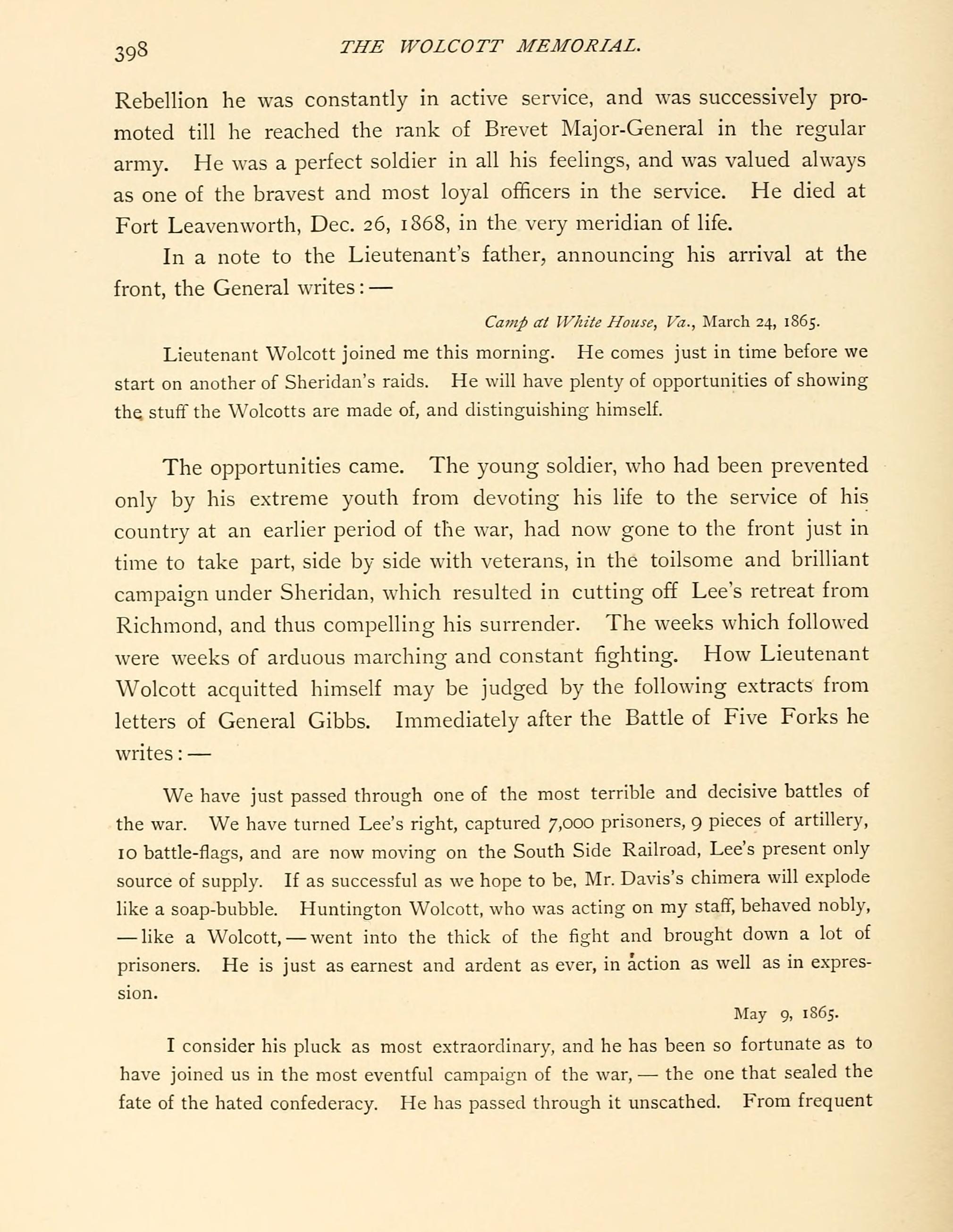
Lowell's appointment moved the Dragoons out of the Reserve Brigade for a time. His death at Cedar Creek also places command changes alongside the human cost of the Valley fighting.
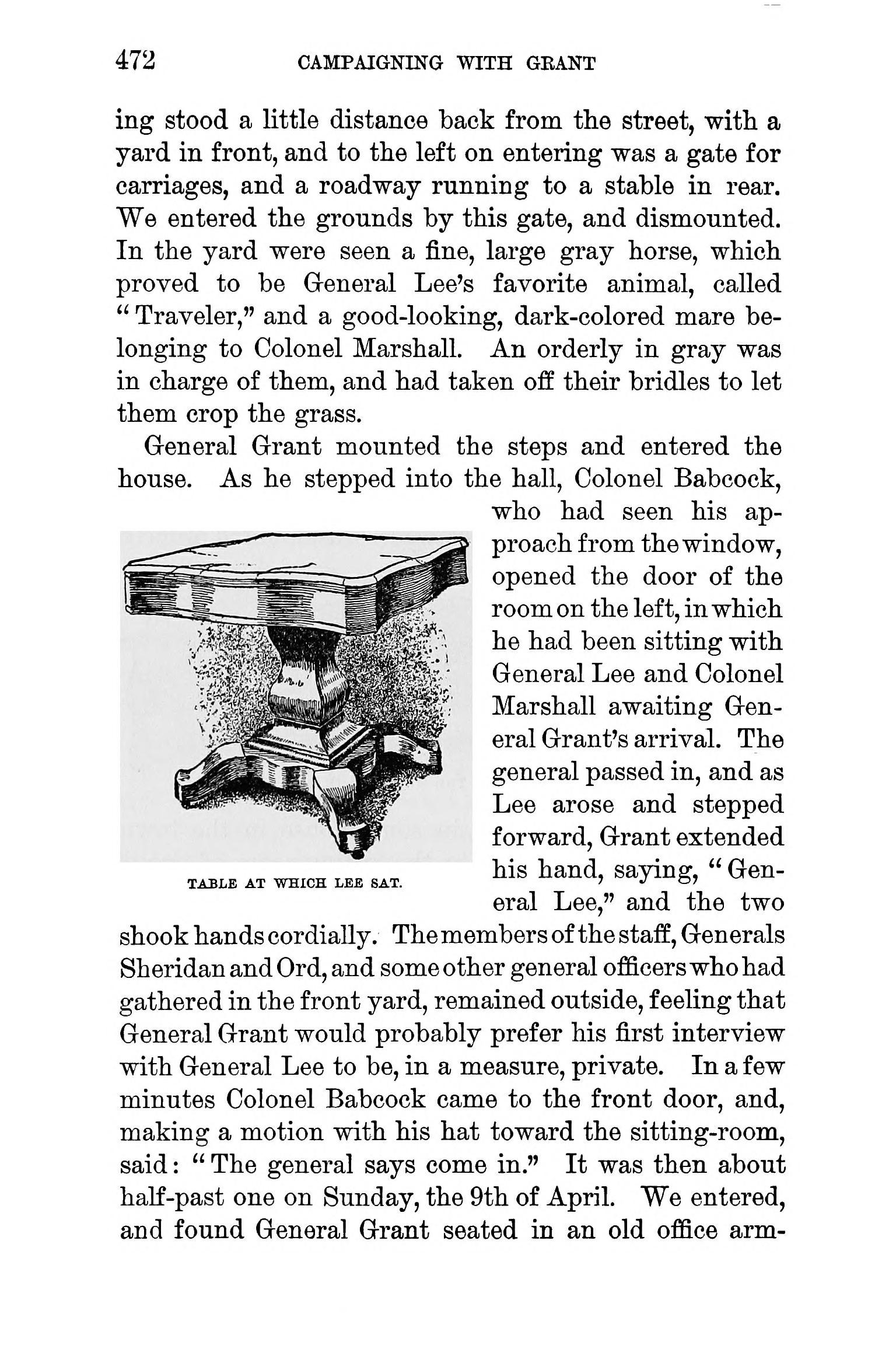
Ord is named by witnesses inside the McLean House at Appomattox. Compare that explicit identification with what the sources do not establish about Gibbs’s presence in the room.
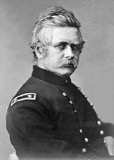
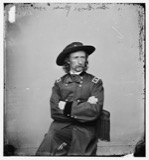
Custer's career crosses Gibbs's through cavalry command and the postwar army. Follow Garland's research on their relationship rather than assuming a famous name supplies all the context a reader needs.
McCausland’s cavalry faced the Dragoons in the Valley. Follow the opposing officer to understand whose troops appear across the railroad cut and river crossings.
These connections come from the v172 manuscript and existing subject pages. A pension not connected here may still exist elsewhere. Namesakes and uncertain identities are not silently joined.
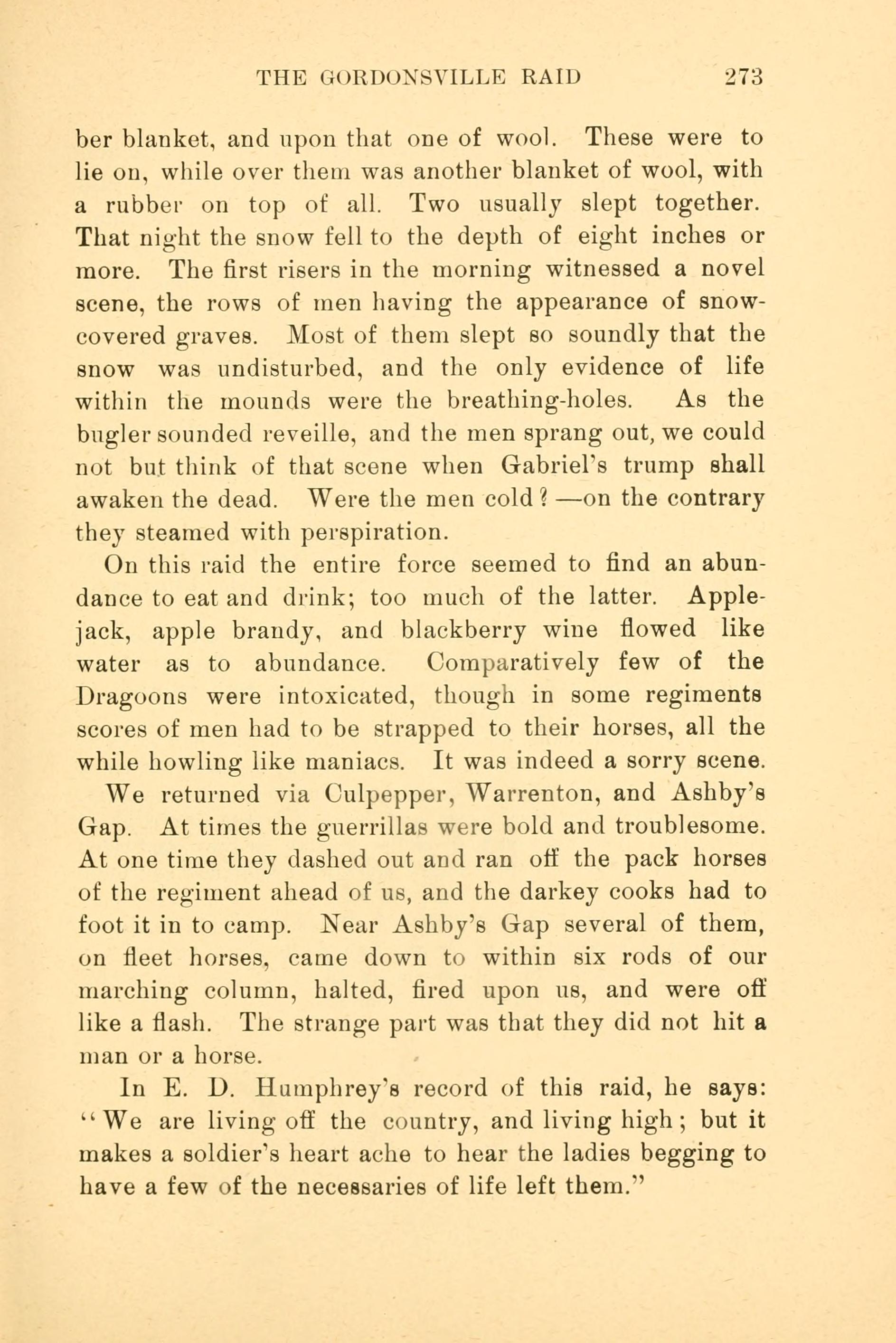
Follow the words into the evidence
What caught your attention?
Find a line from your reading, then follow its document and the record around it. Matching words helps locate evidence; checking who wrote them, when, and why helps you understand it.