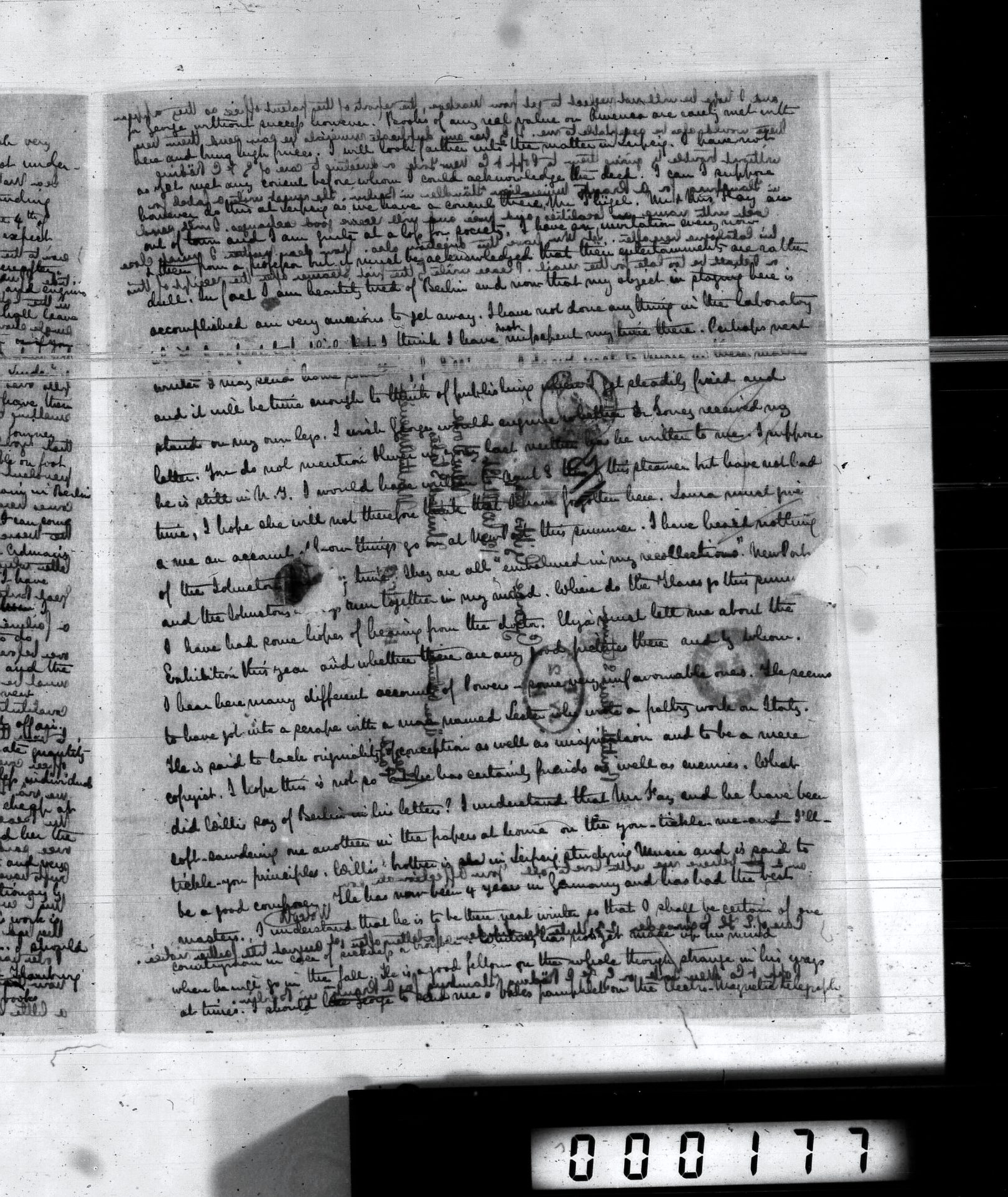
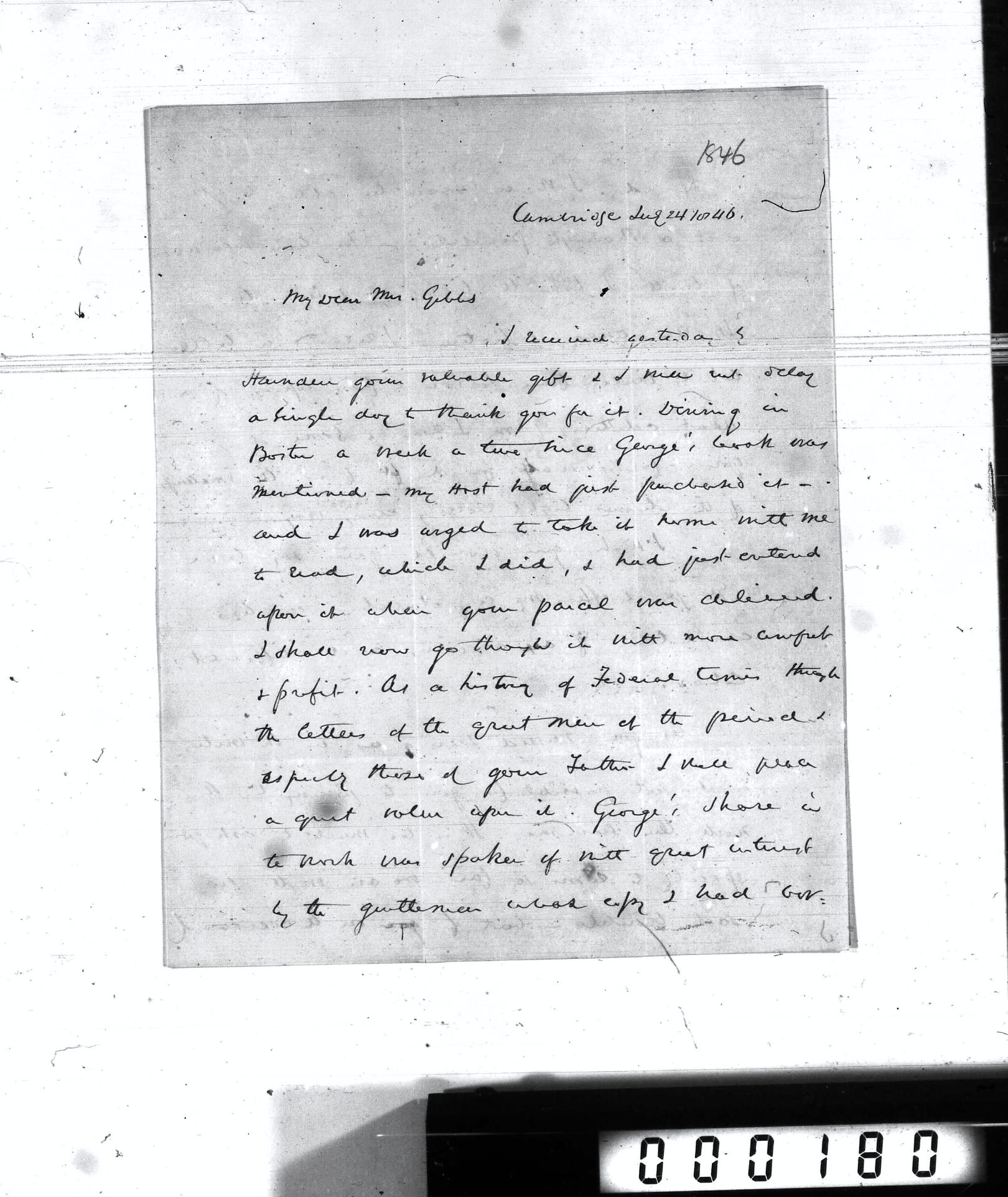
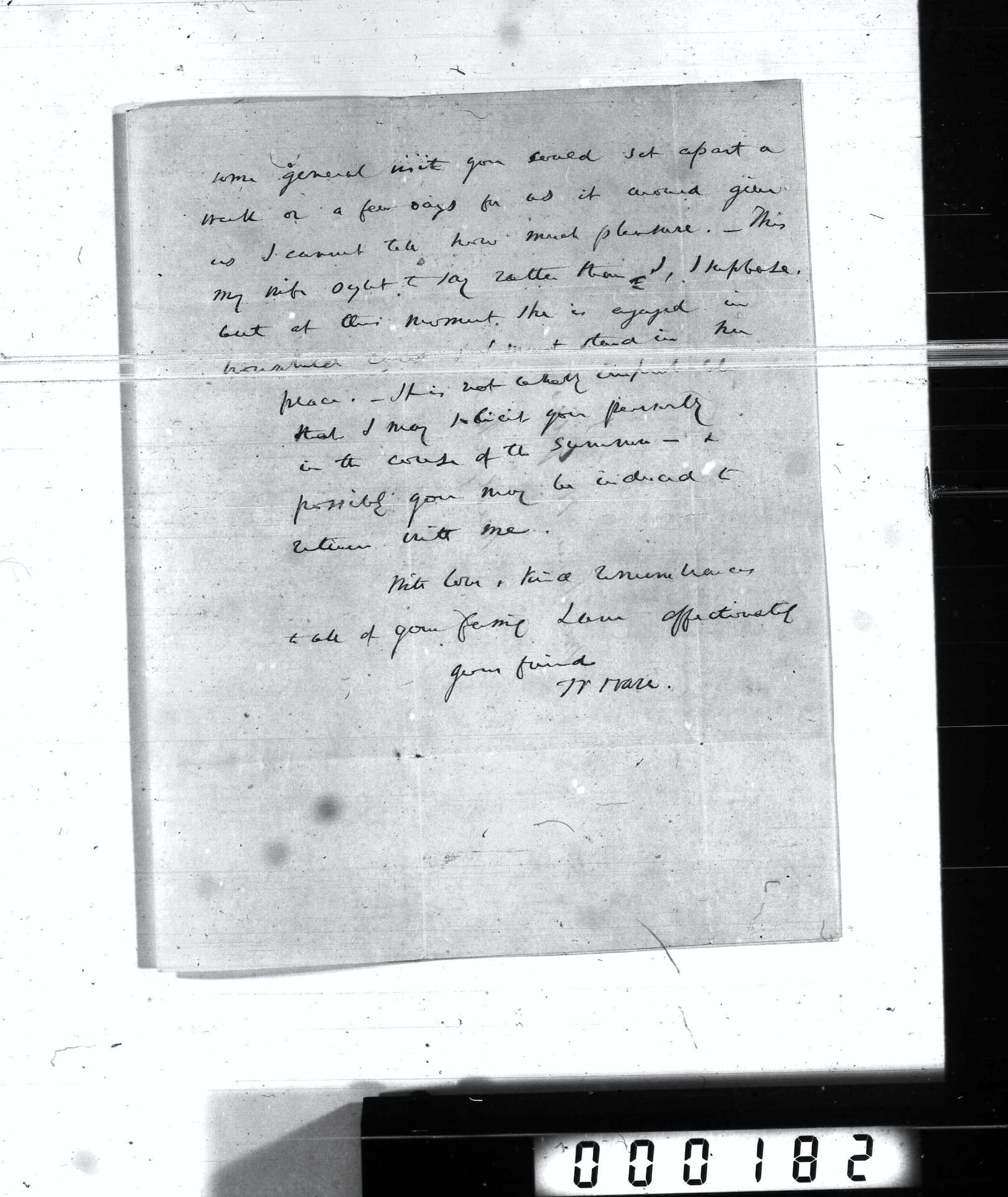
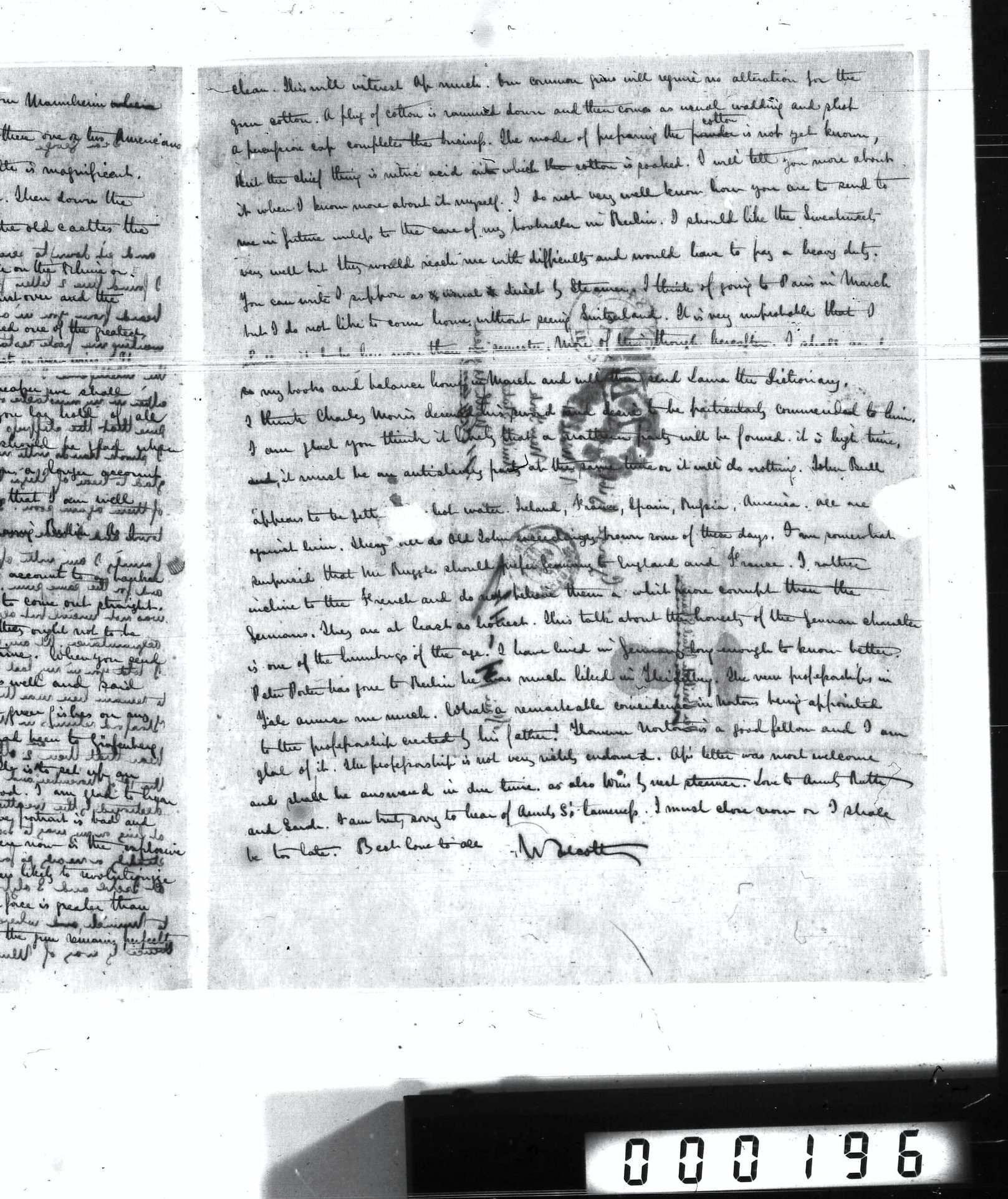
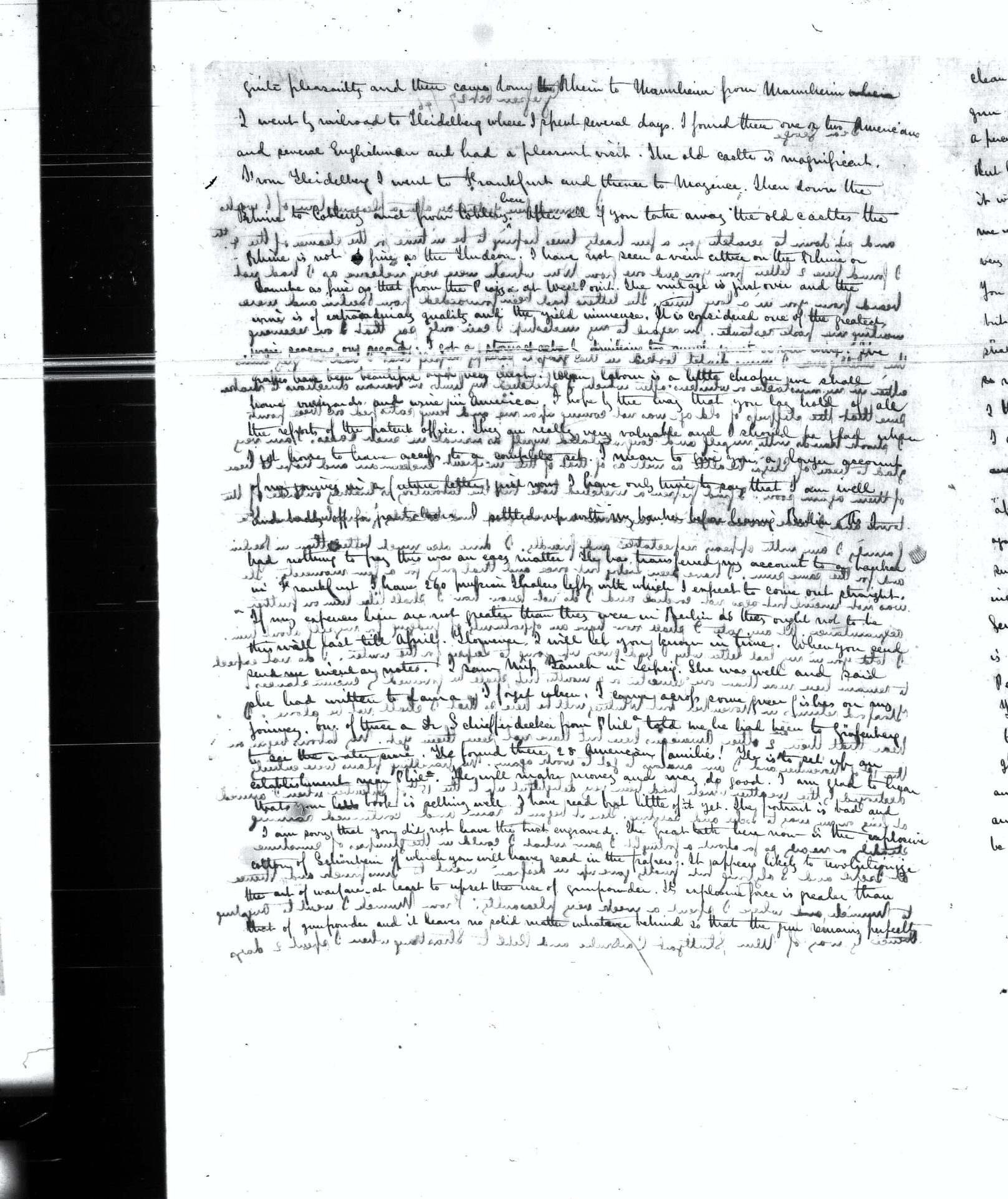
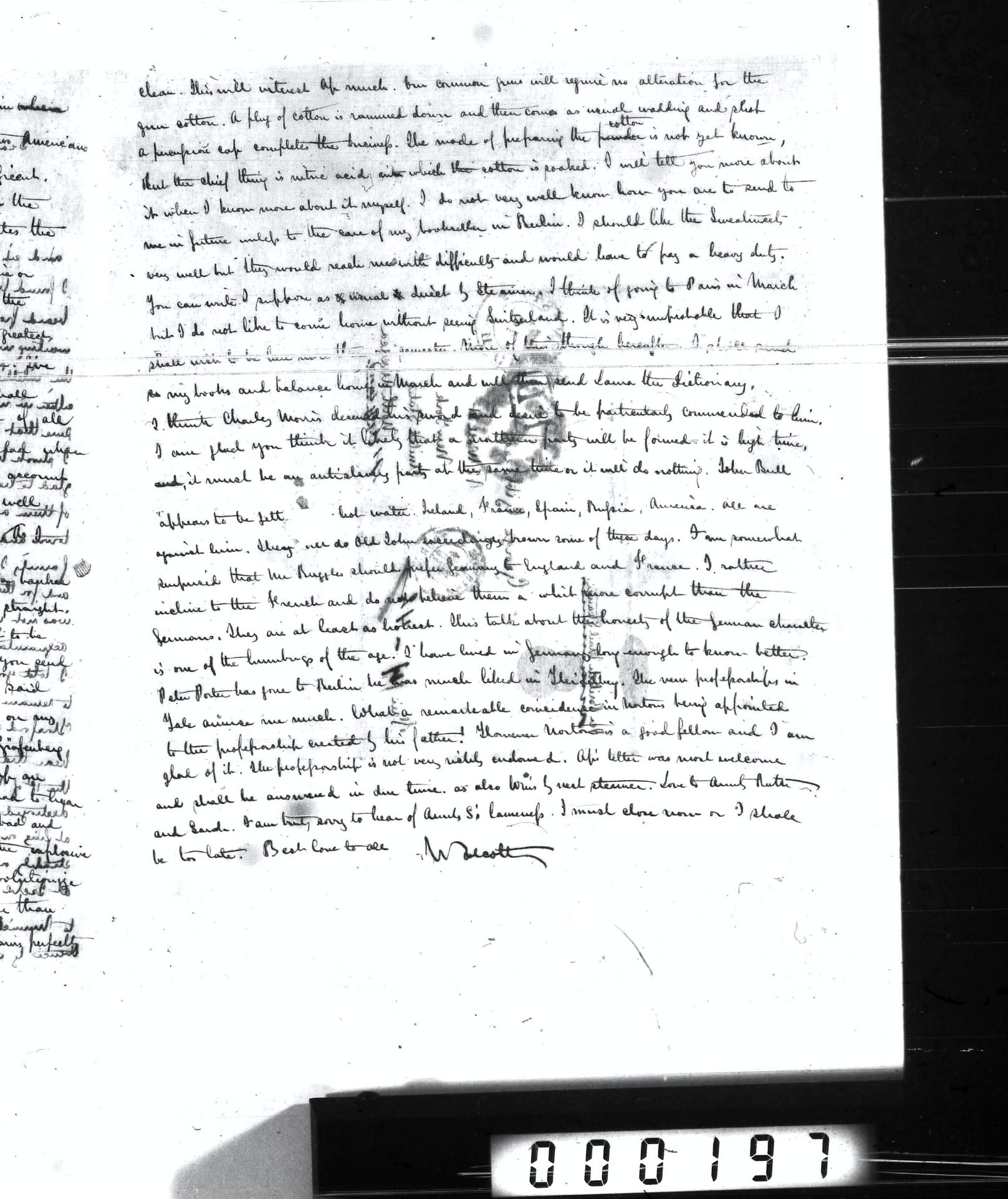
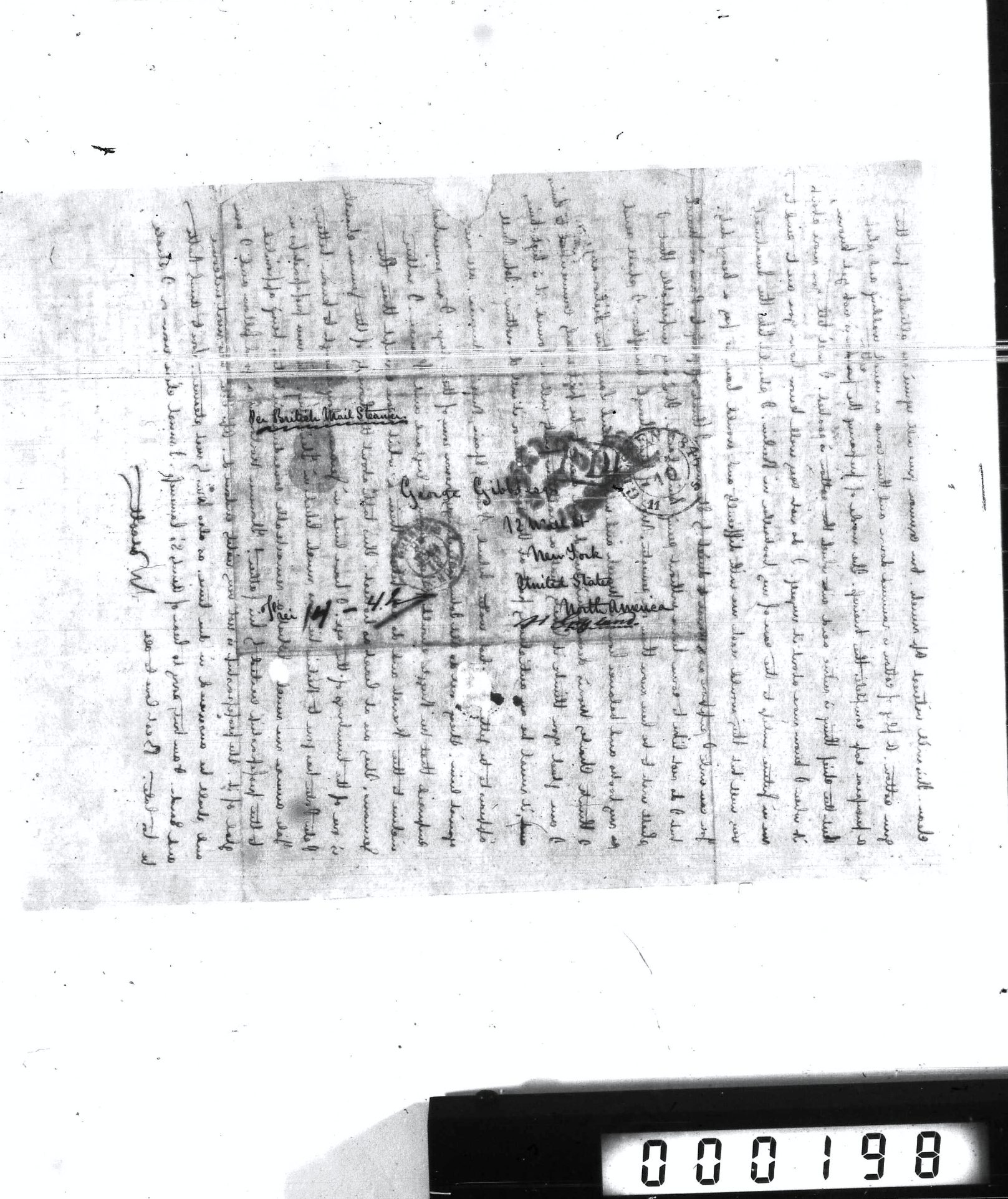
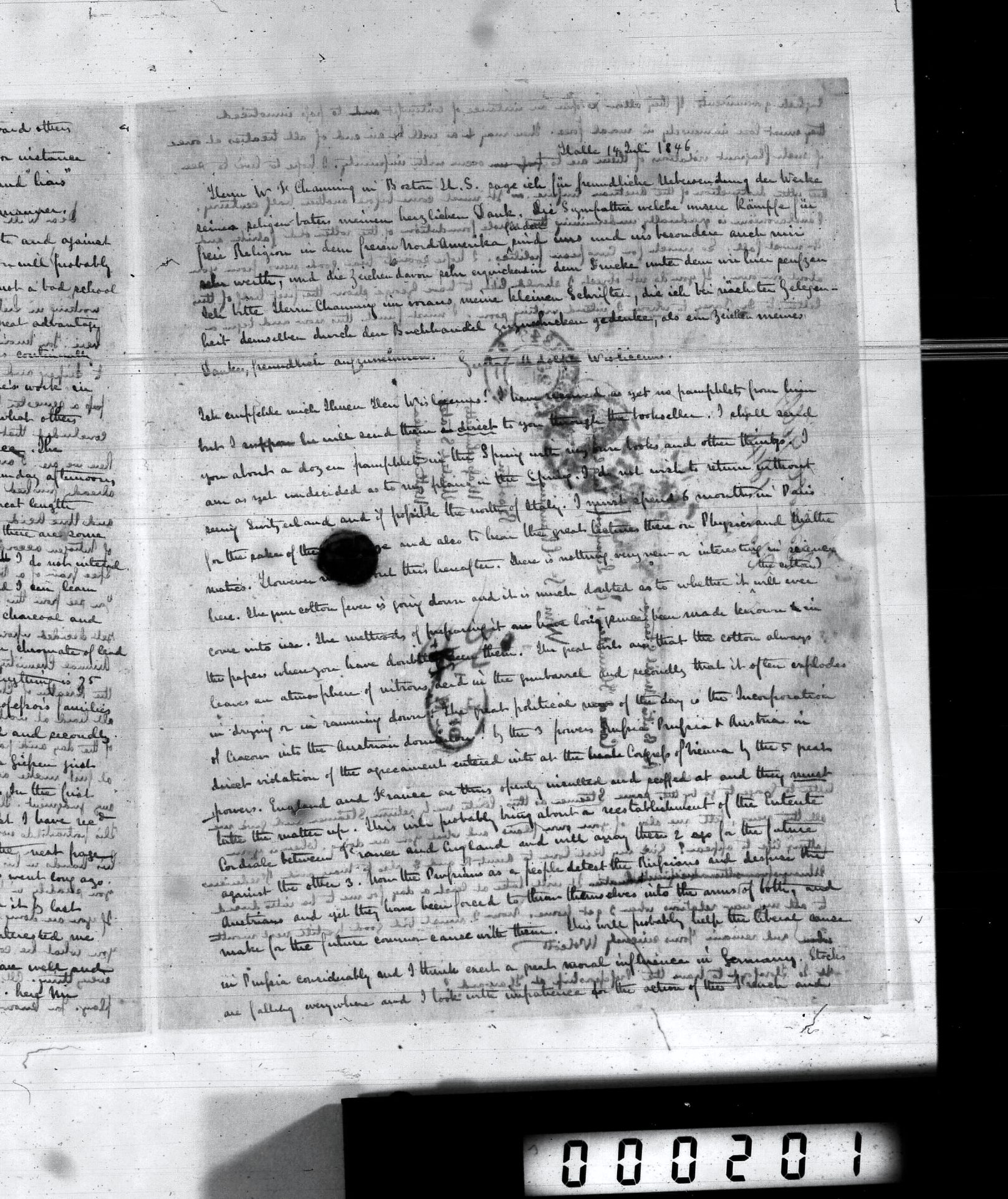
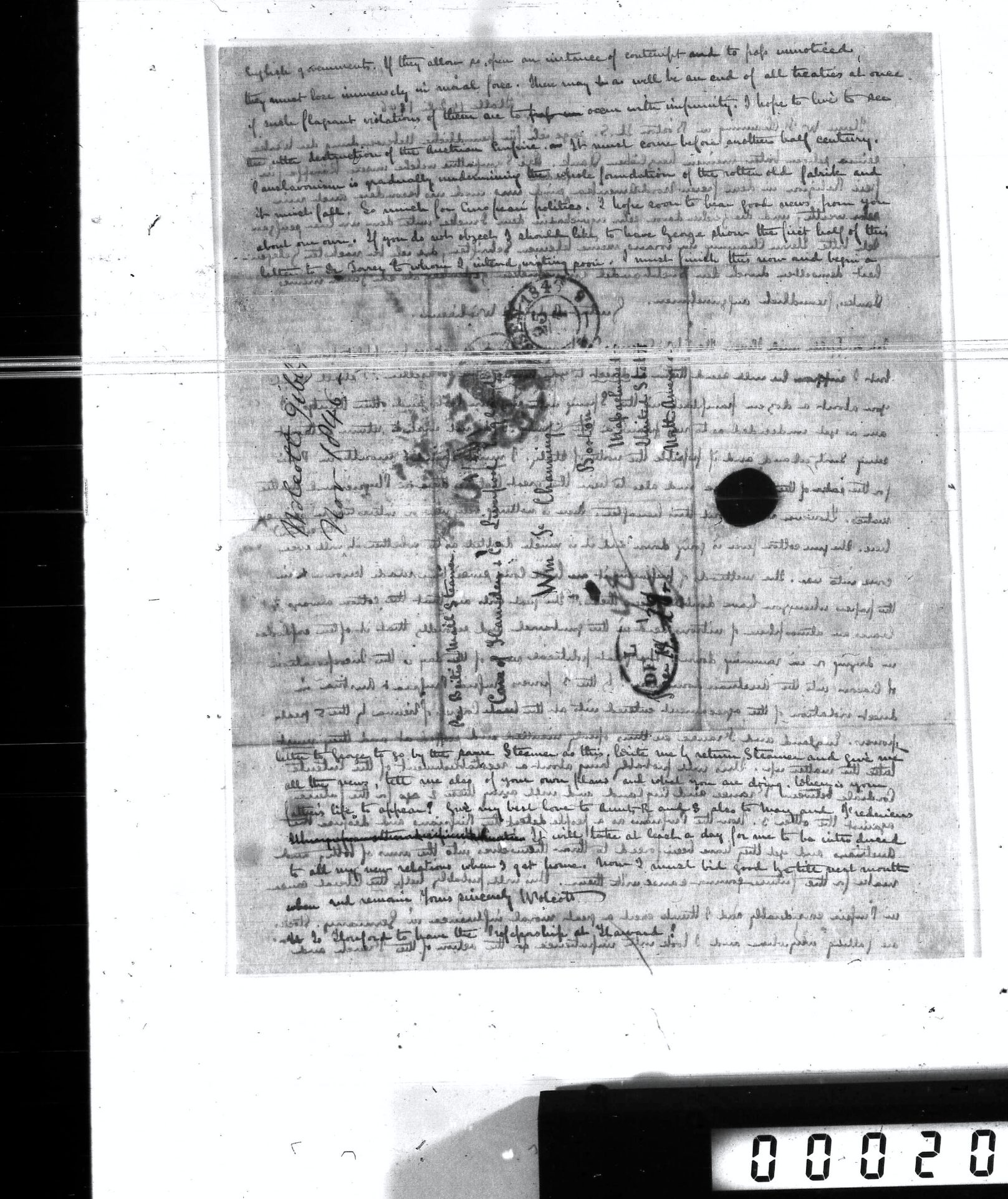
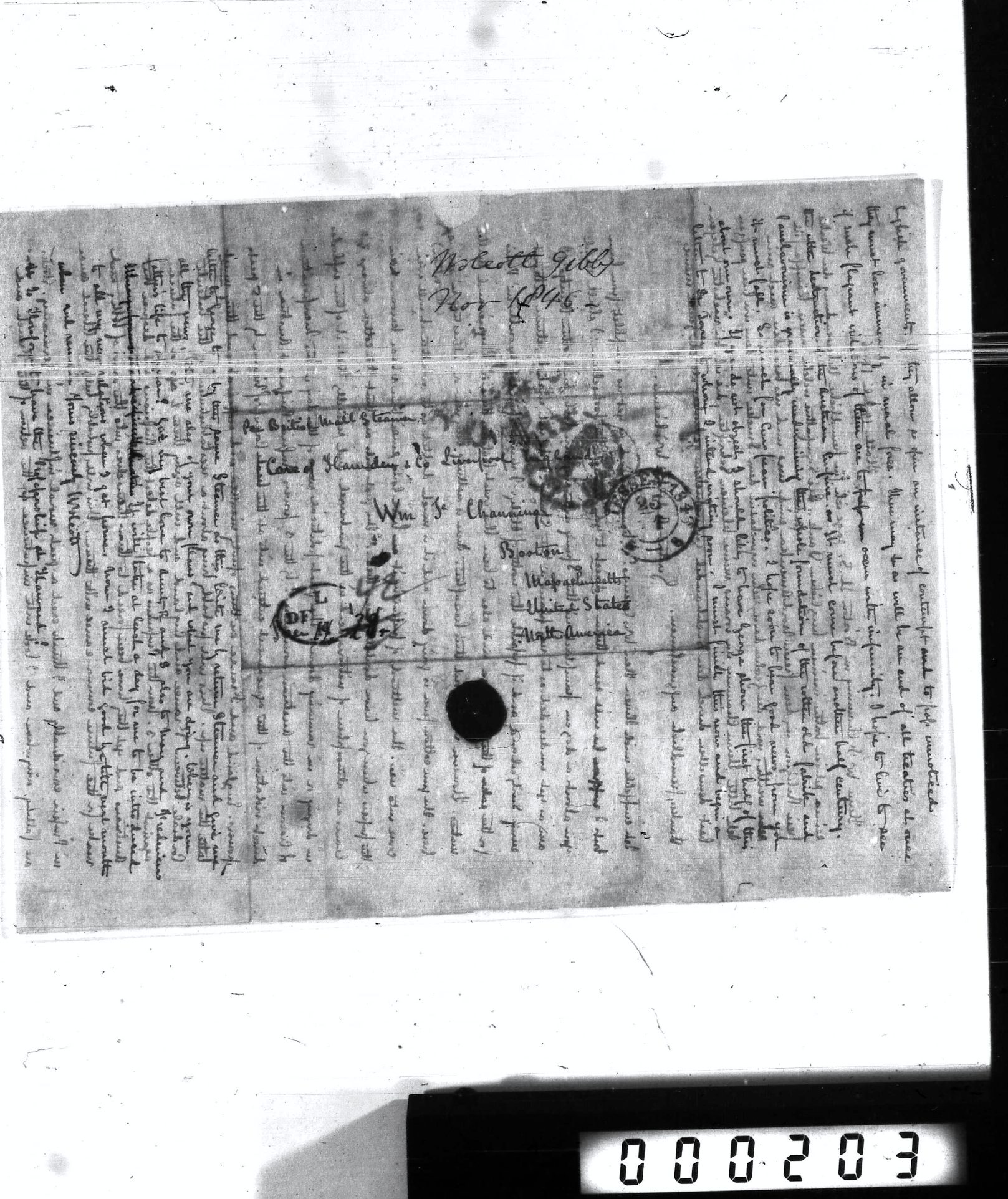
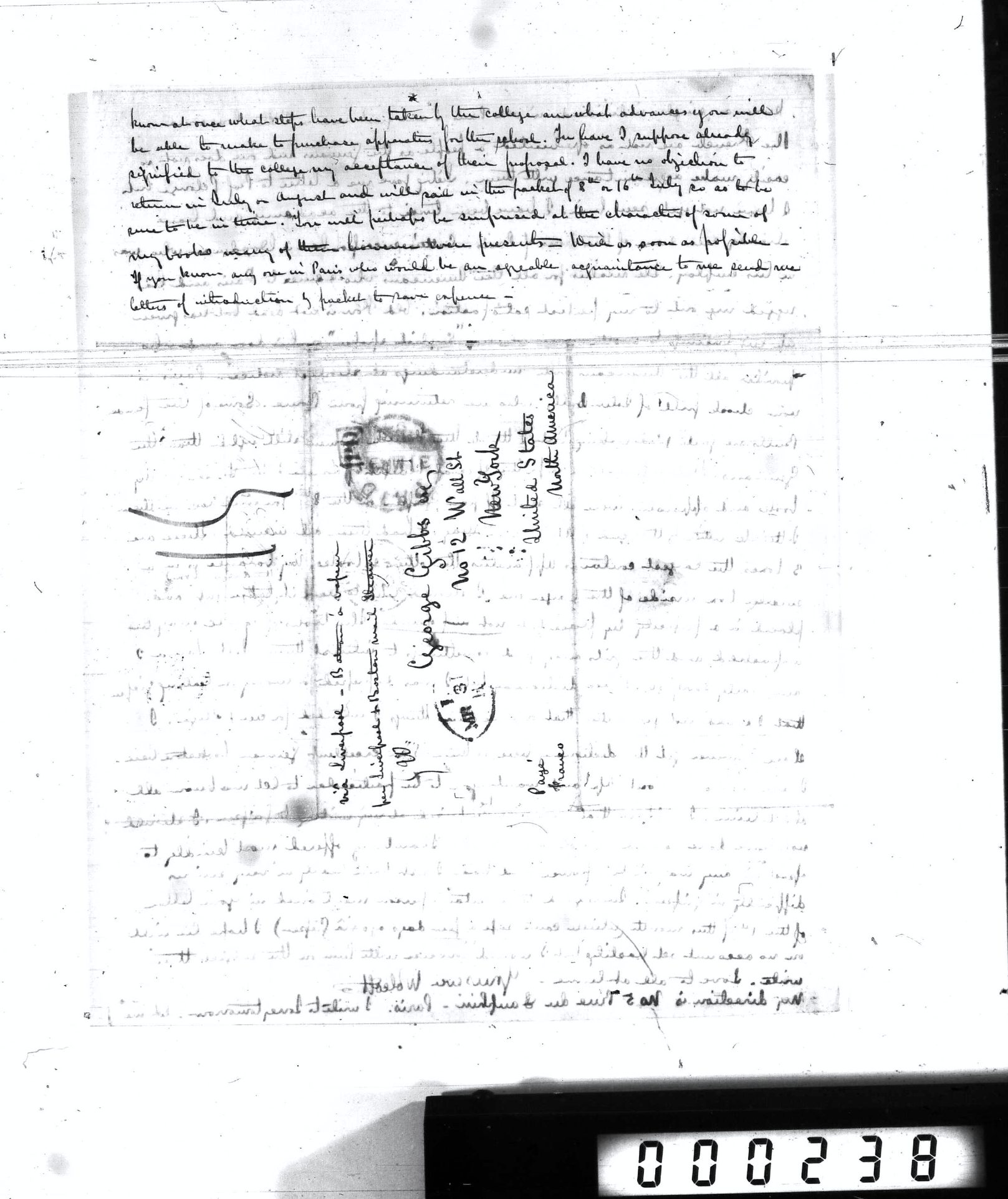
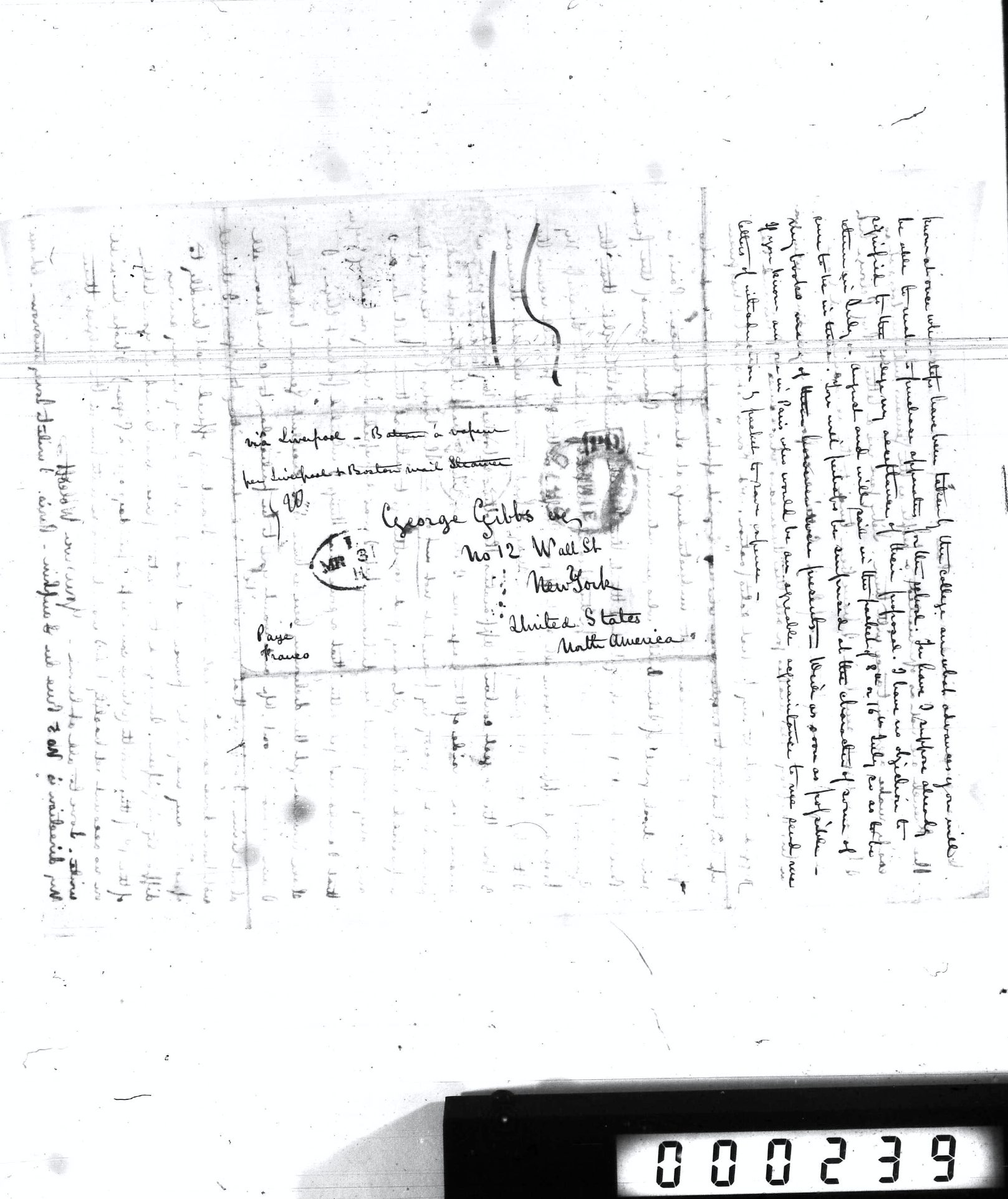
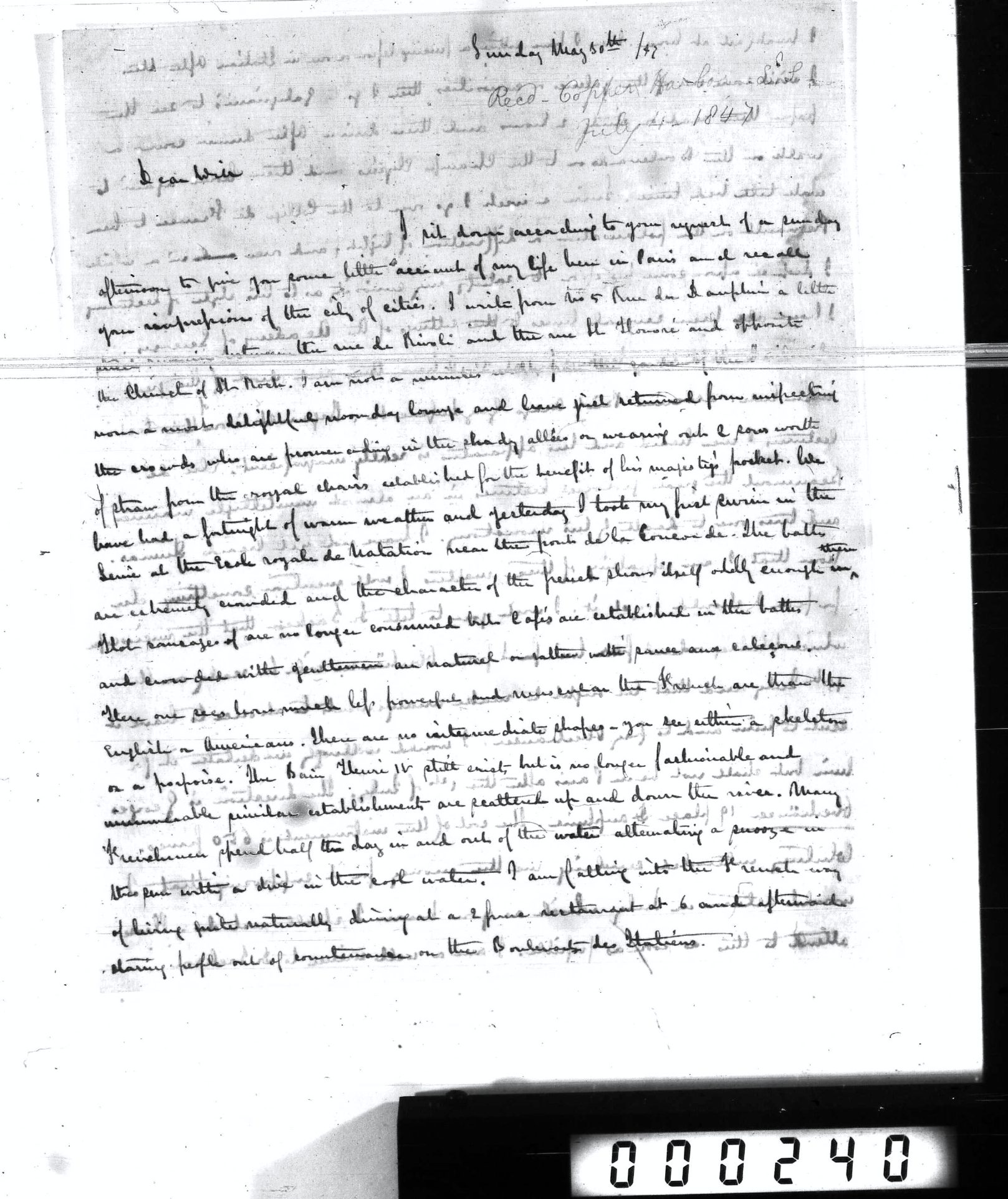
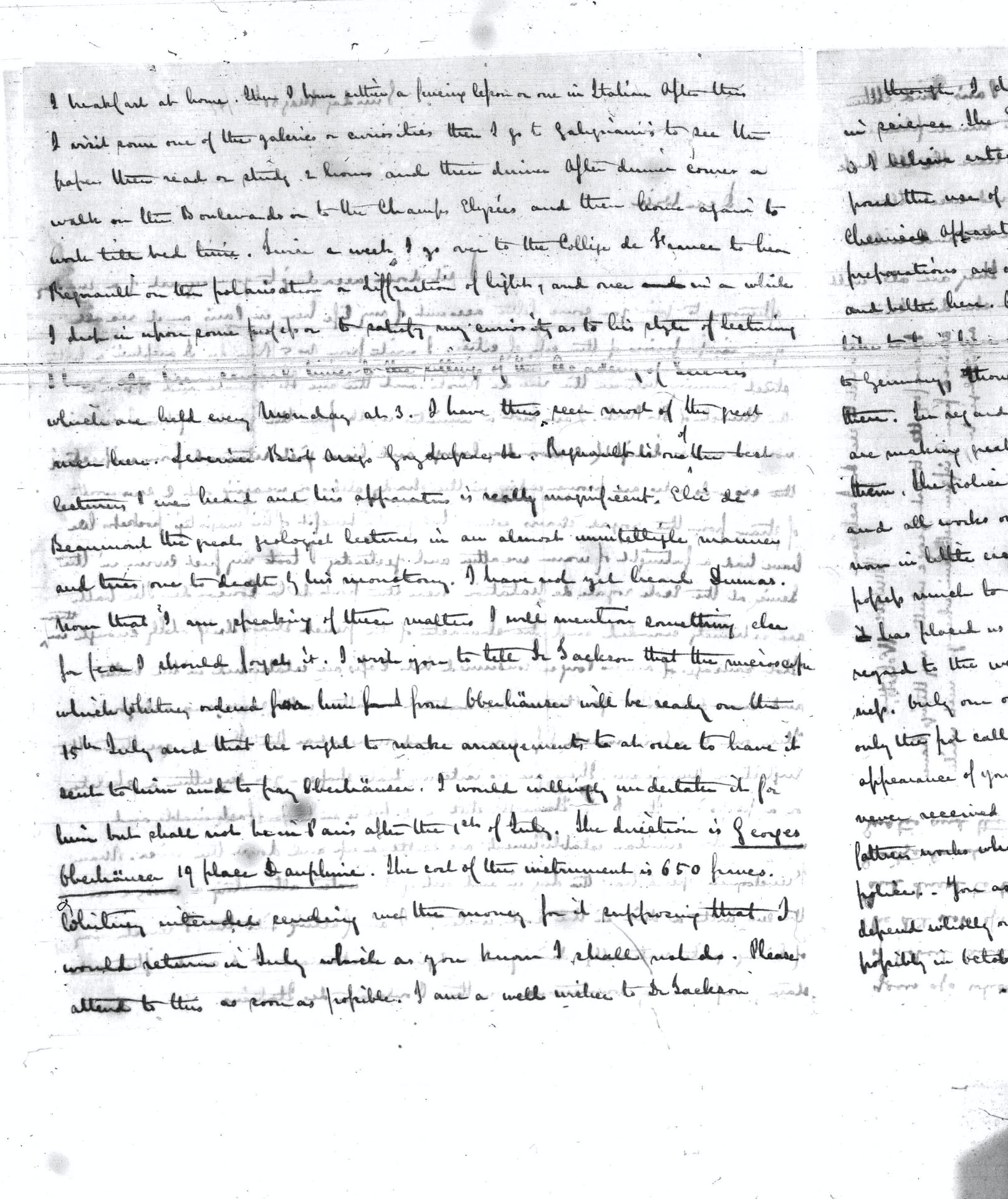
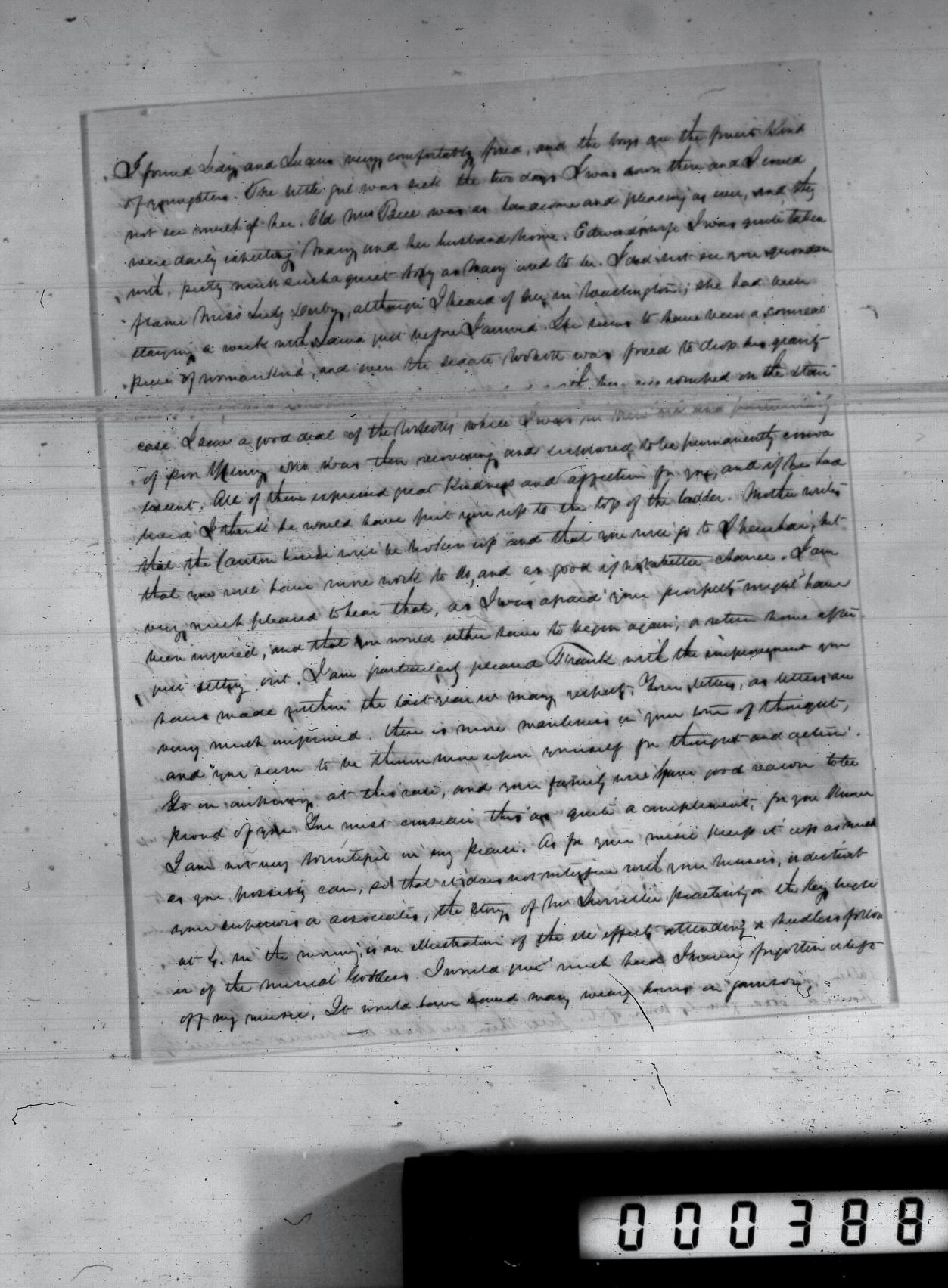
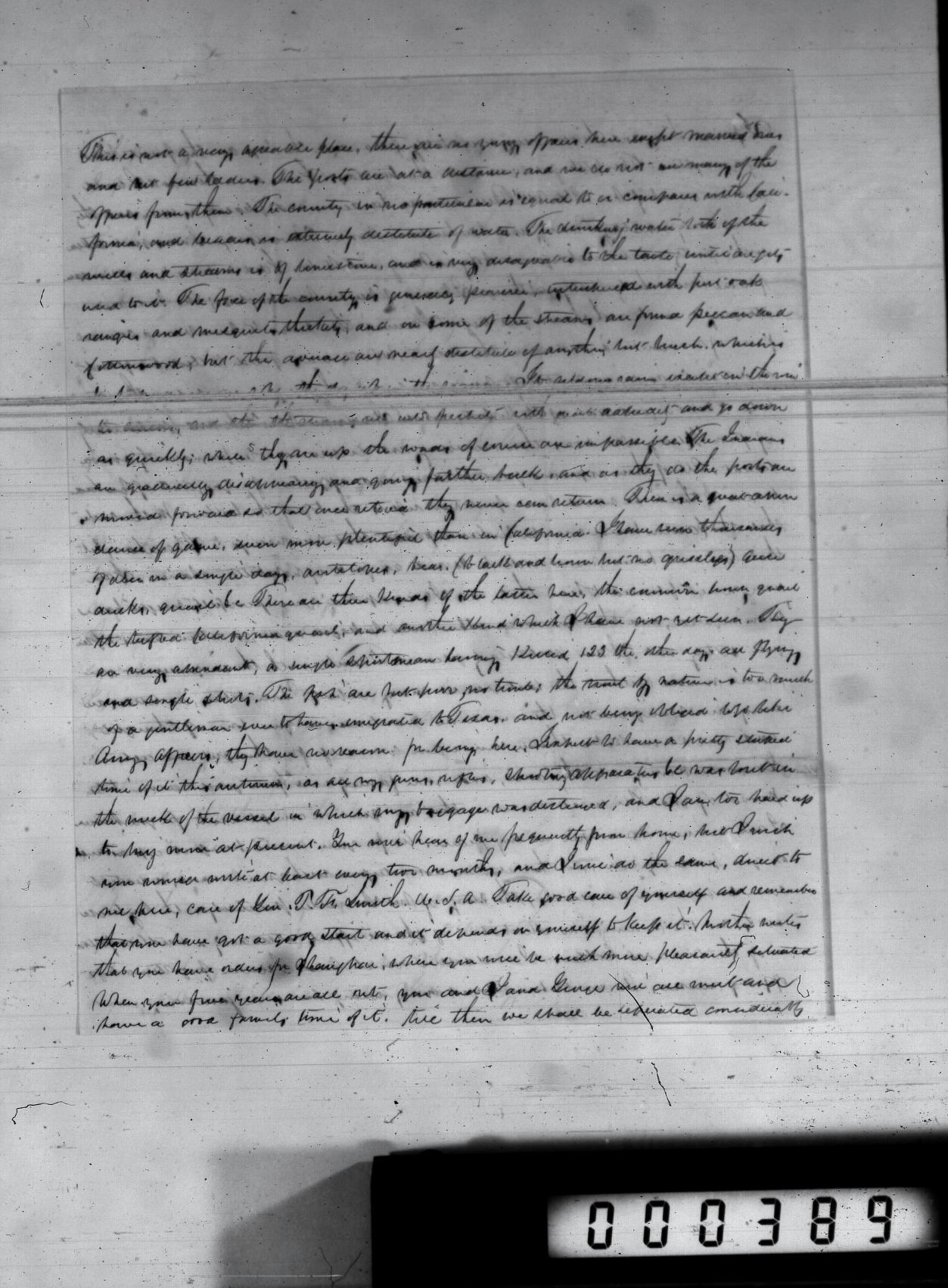
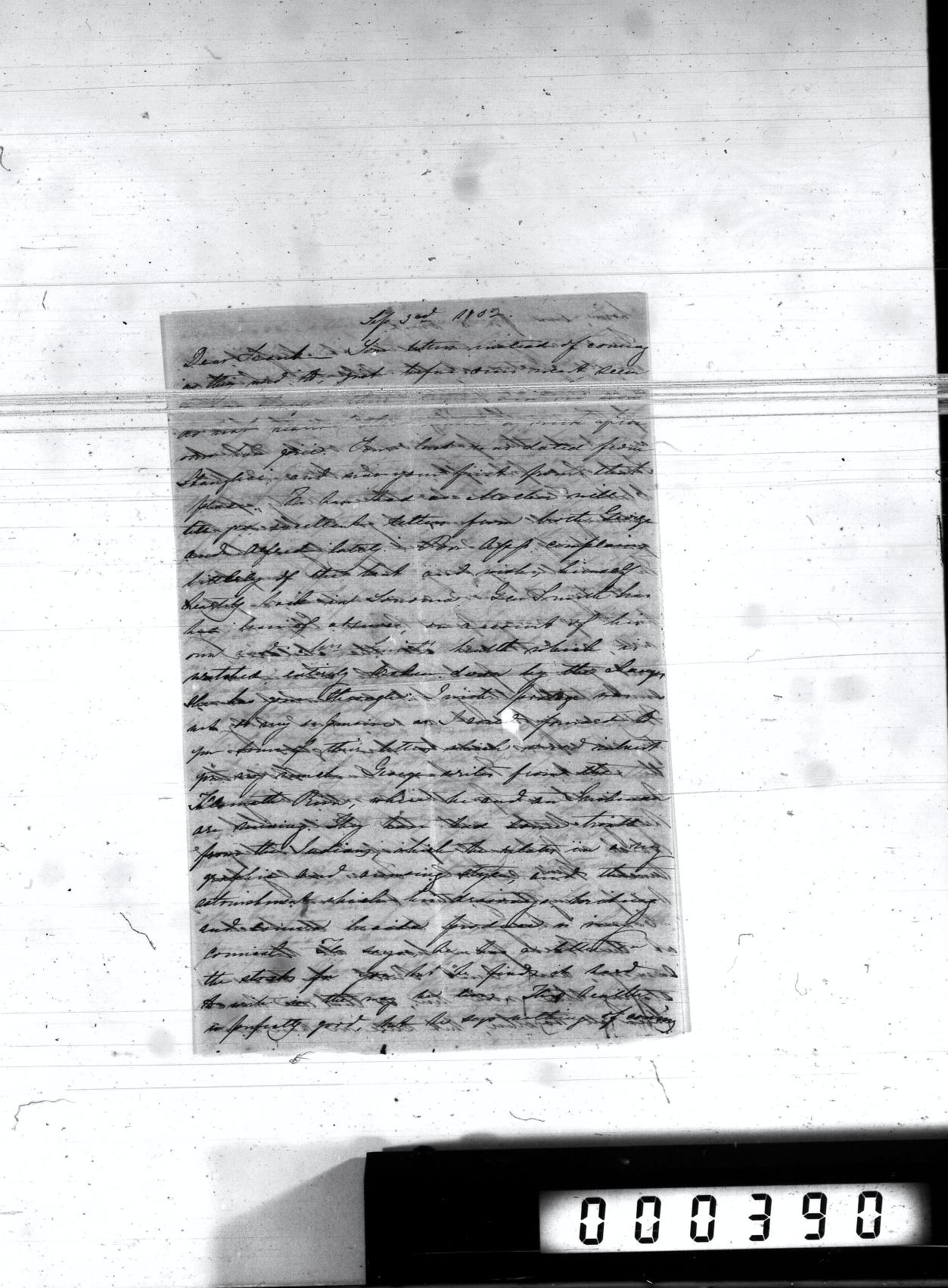
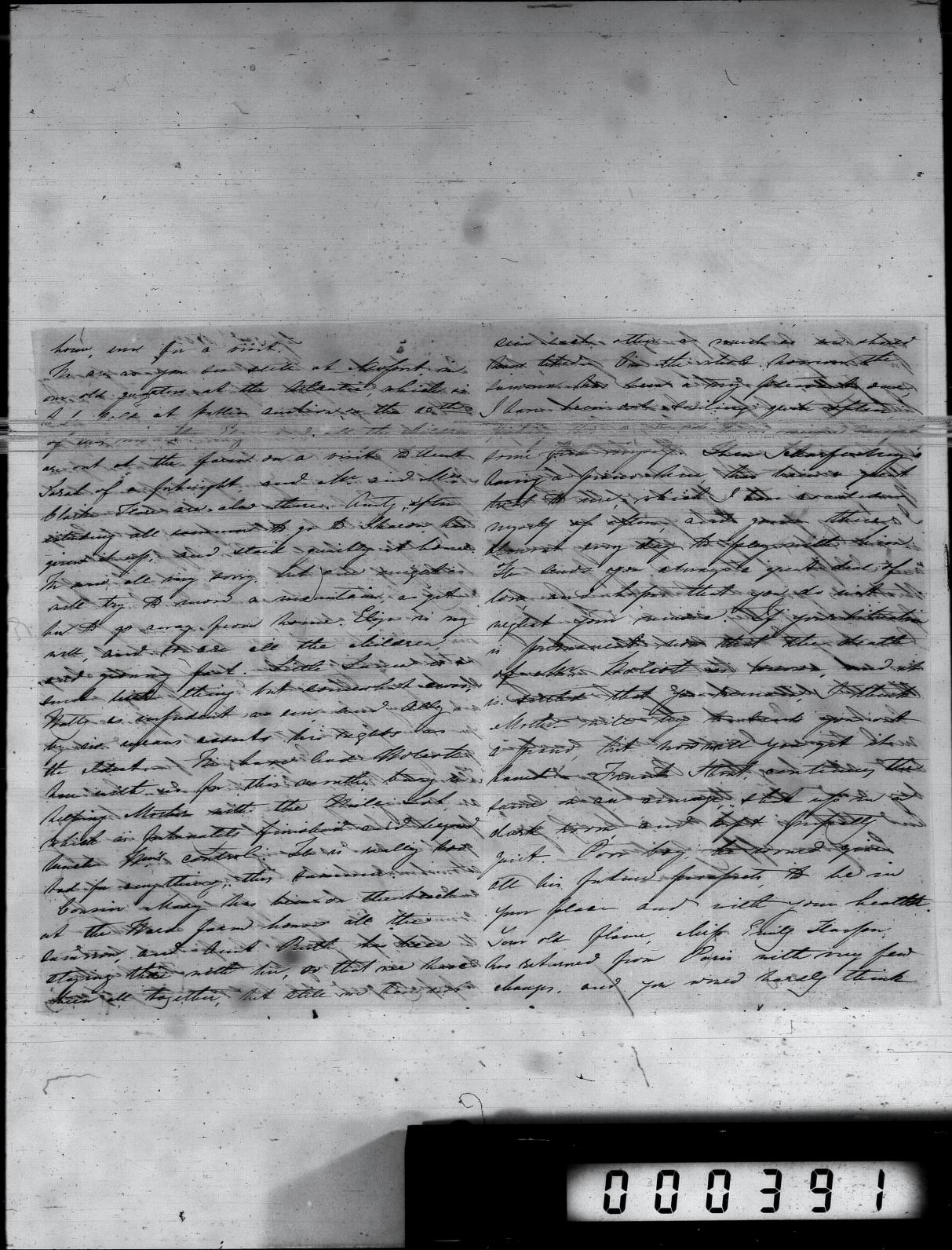
The Gibbs Archive · Wisconsin Historical Society
Reel 2: The Complete Plate Gallery
982 frames · 467 documents
 Alfred GibbsThe research archive
The Gibbs Archive · Wisconsin Historical Society
982 frames · 467 documents
Frames 1000–1007 · 5 documents
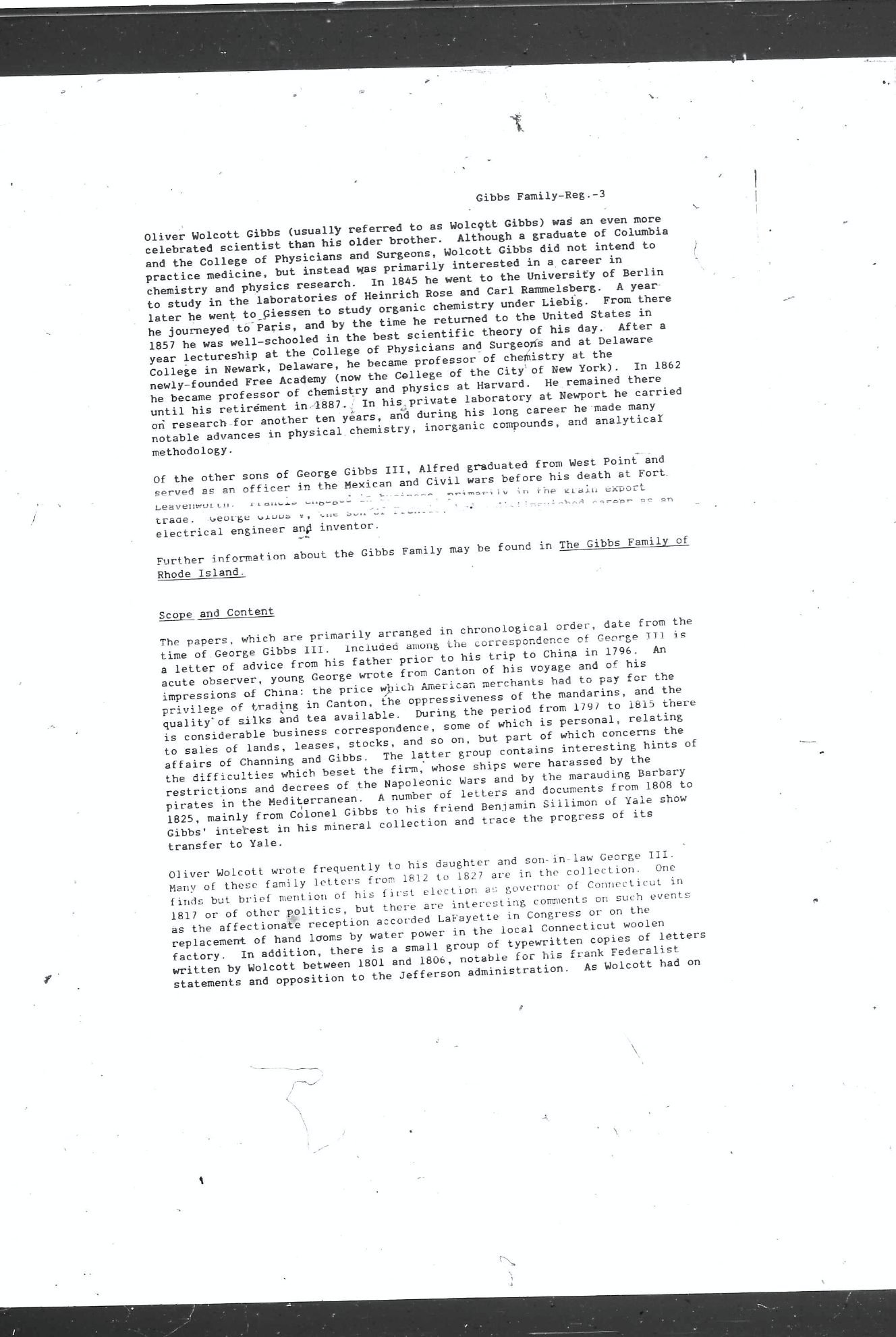
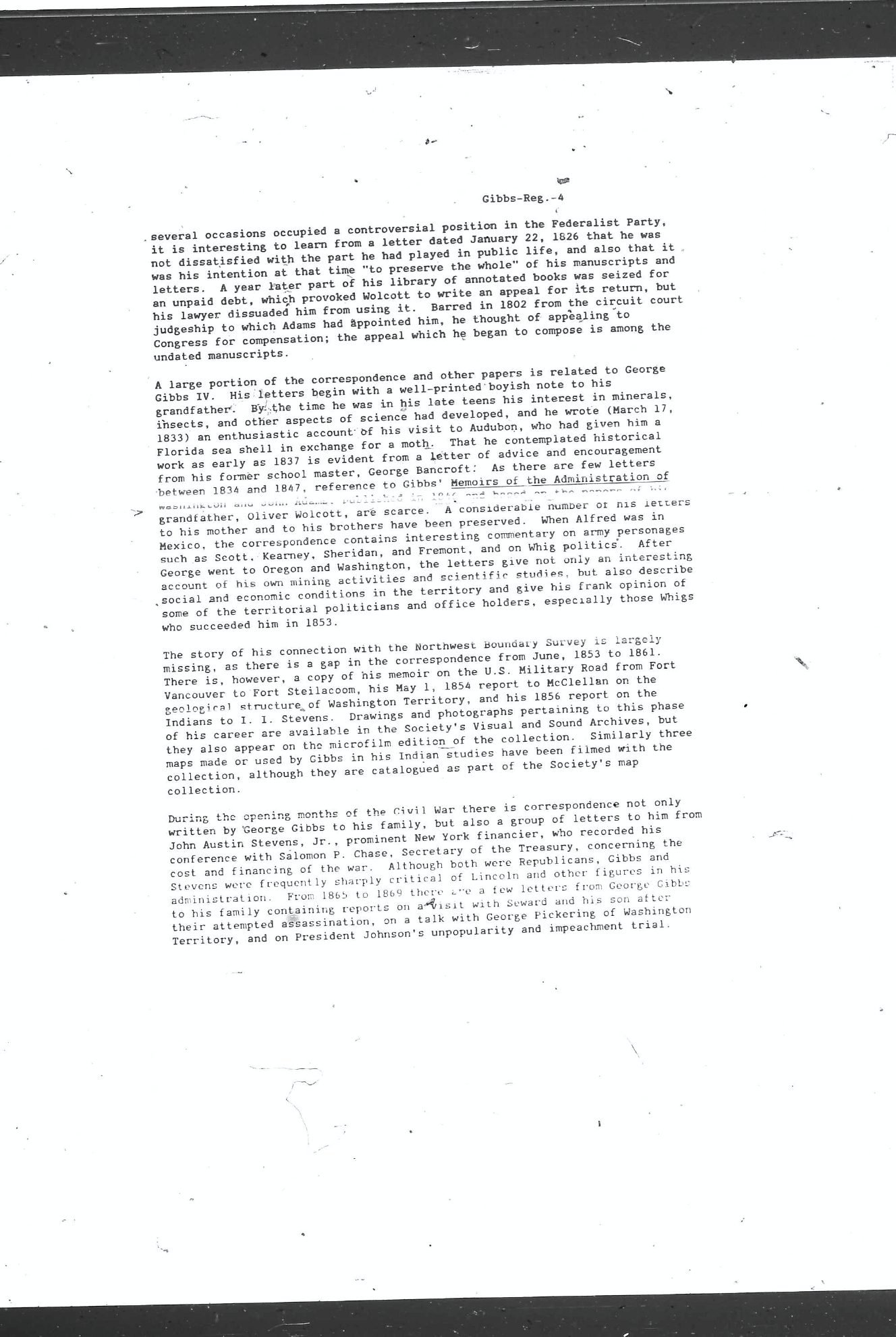
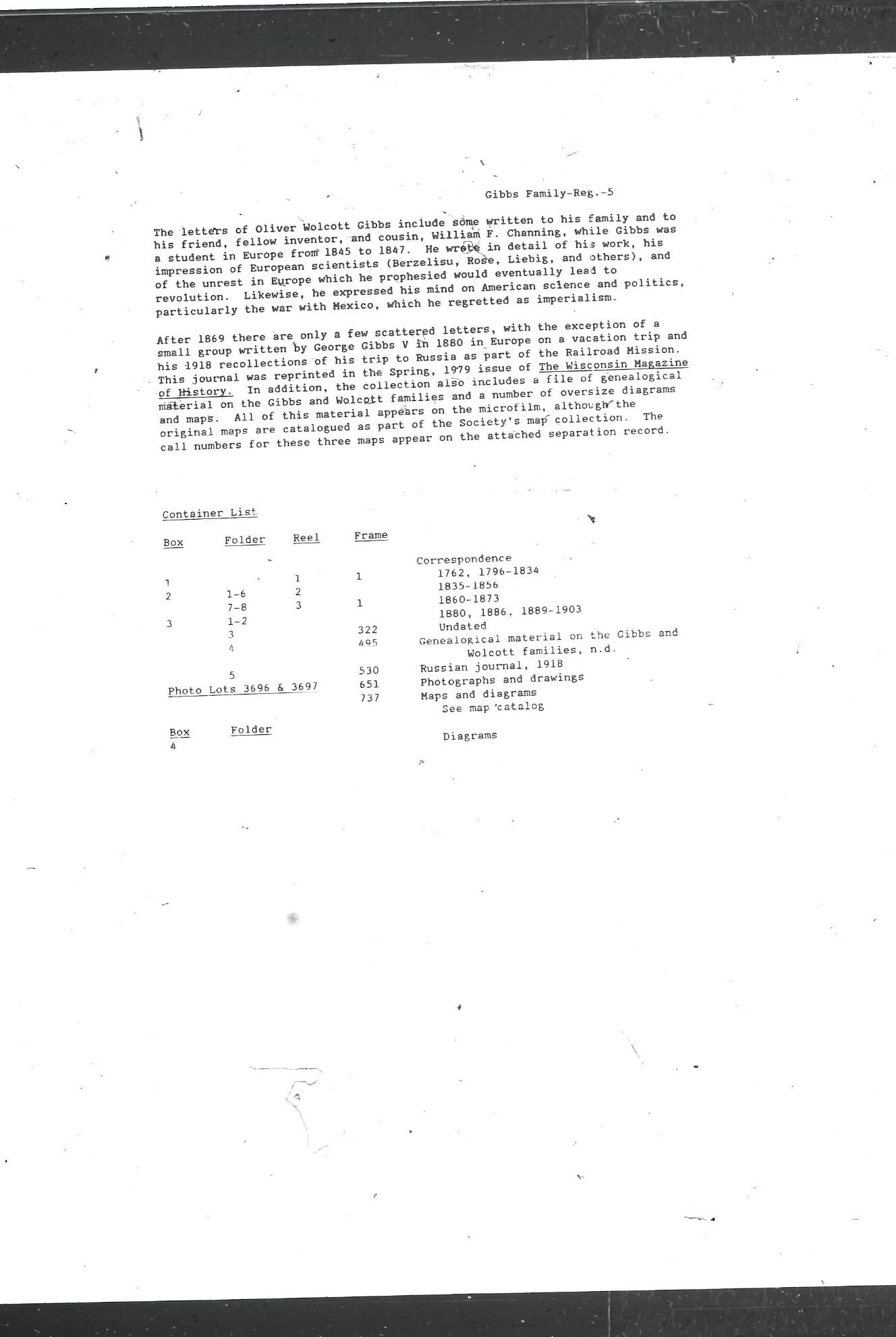
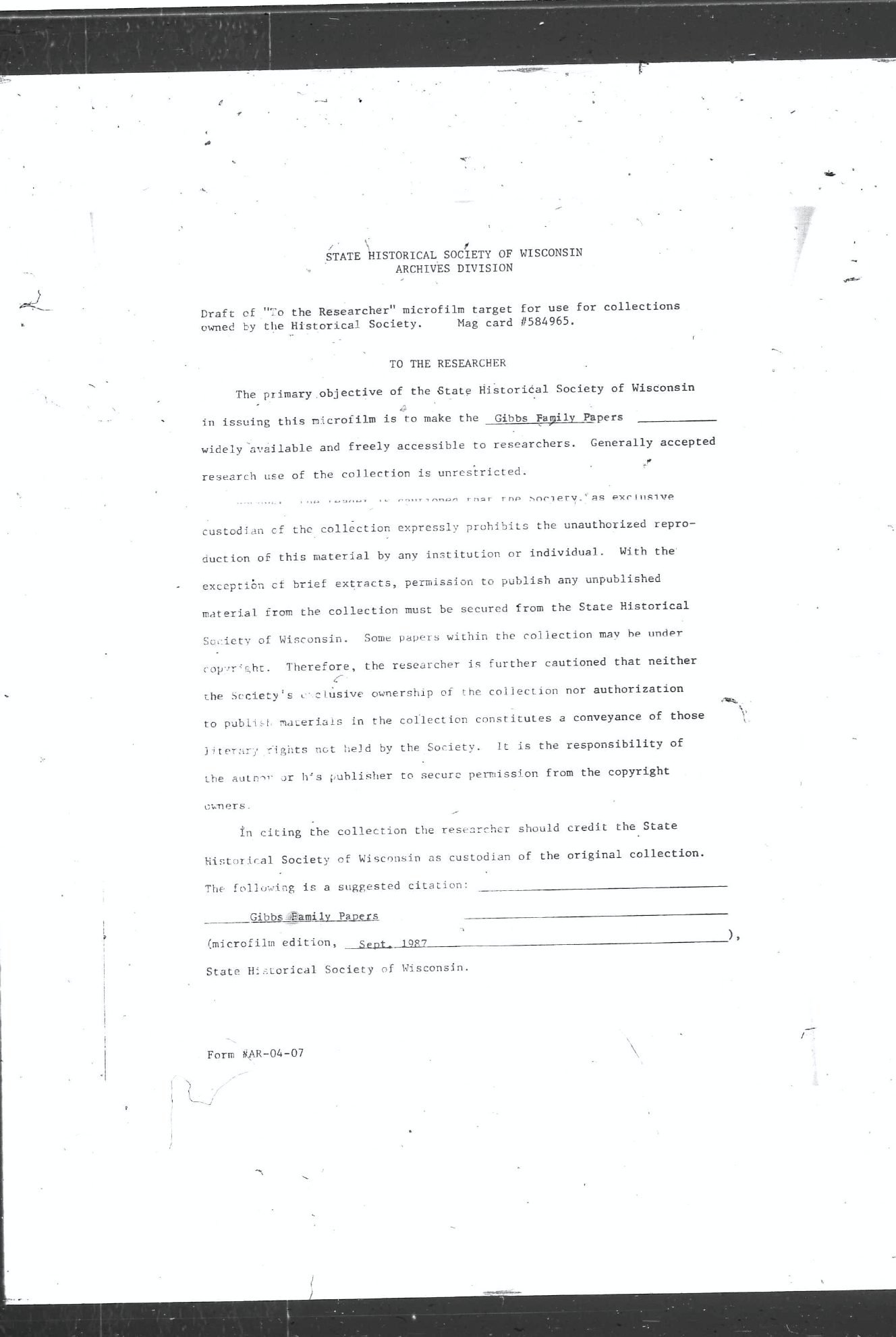
Microfilm targets and the Wisconsin Historical Society’s typescript register of the whole collection.
"Microfilmed by the State Historical Society of Wisconsin" title card
SHSW Archives Division: Gibbs Family Papers 1763-1918, Micro 1117, Photo Lots 3696-3697
1948+
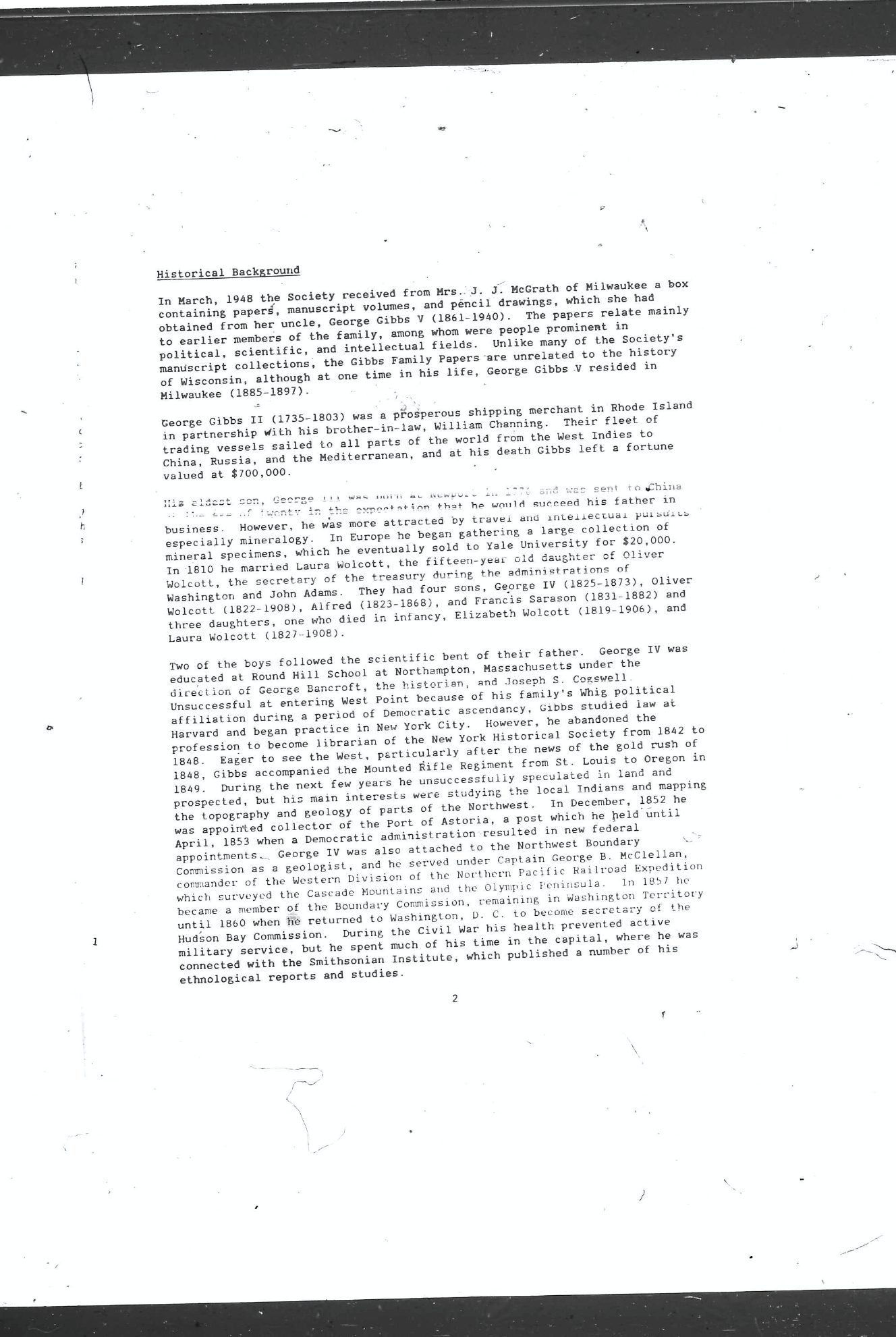
Historical background: provenance from Mrs. McGrath 1948; family biographies incl. George IV
1987
SHSW use/citation restrictions for Gibbs Family Papers microfilm, Sept. 1987
Frames 1008–1528 · 174 documents
Laura’s estate management after Sunswick, including the 1835 completion of the sale at $20,276.70 and the 528-lot Ravenswood mortgage schedule; Bancroft’s letters on the Wolcott biography; Wolcott’s European letters from Berlin and Giessen, some to cadet Alfred; George’s 1847–48 letters to Alfred in Mexico; his 1849 memoranda before the Mounted Riflemen march; and the original western letters of 1850–1857.
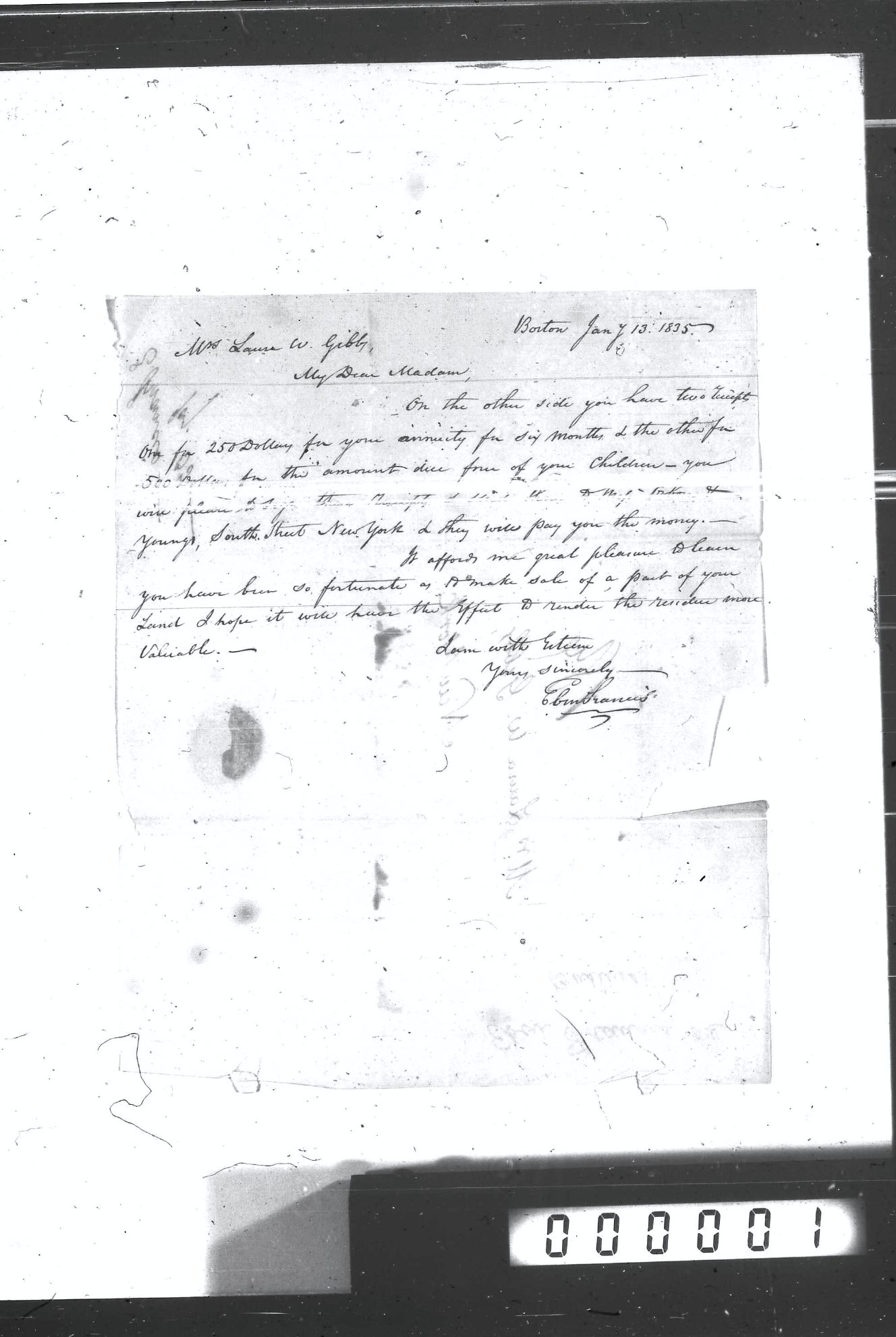
1835-01-13
Encloses drafts: $250 annuity, $500 due four children; glad of land sale
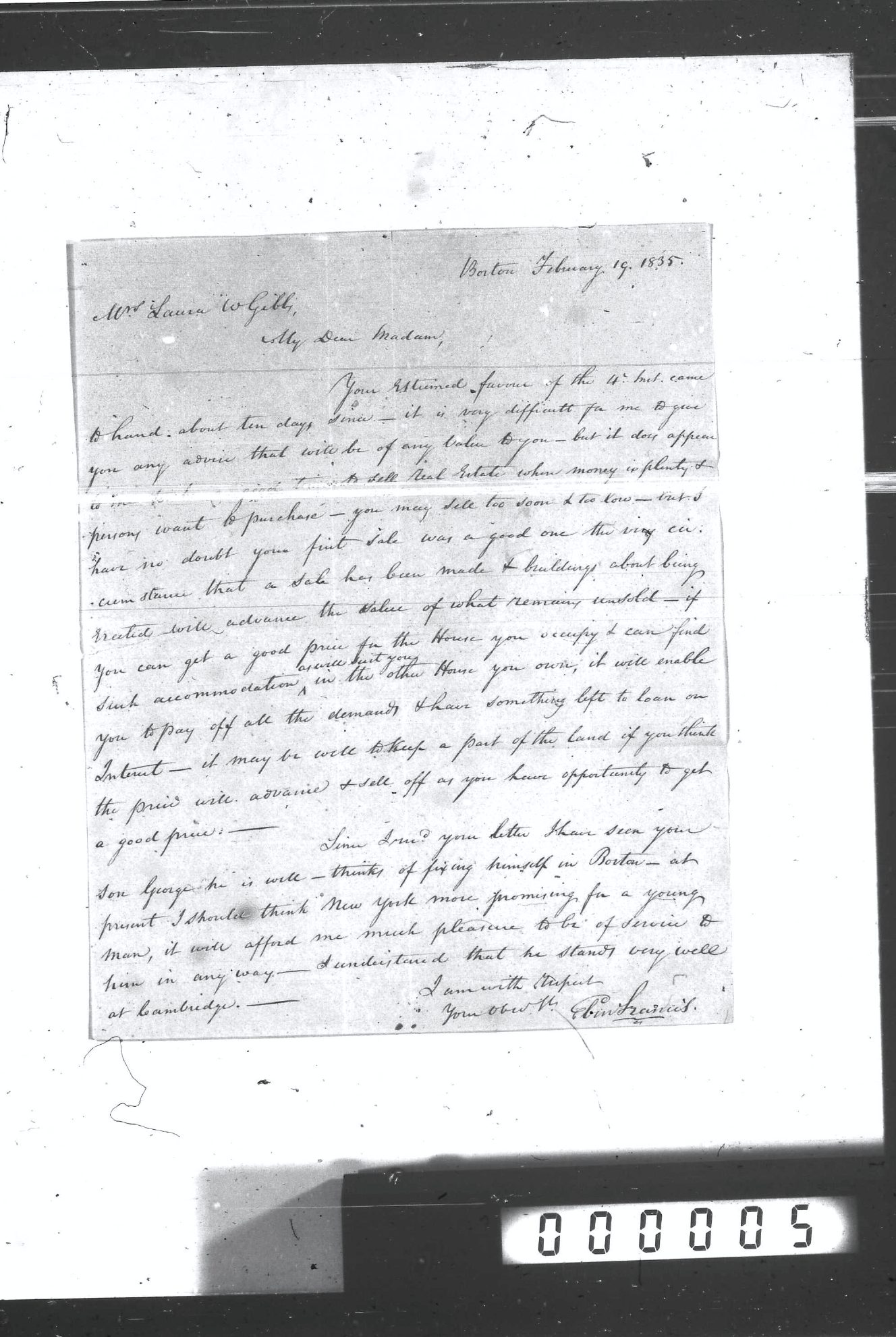
1835-02-19
Real-estate selling advice; son George well at Cambridge, considers settling Boston
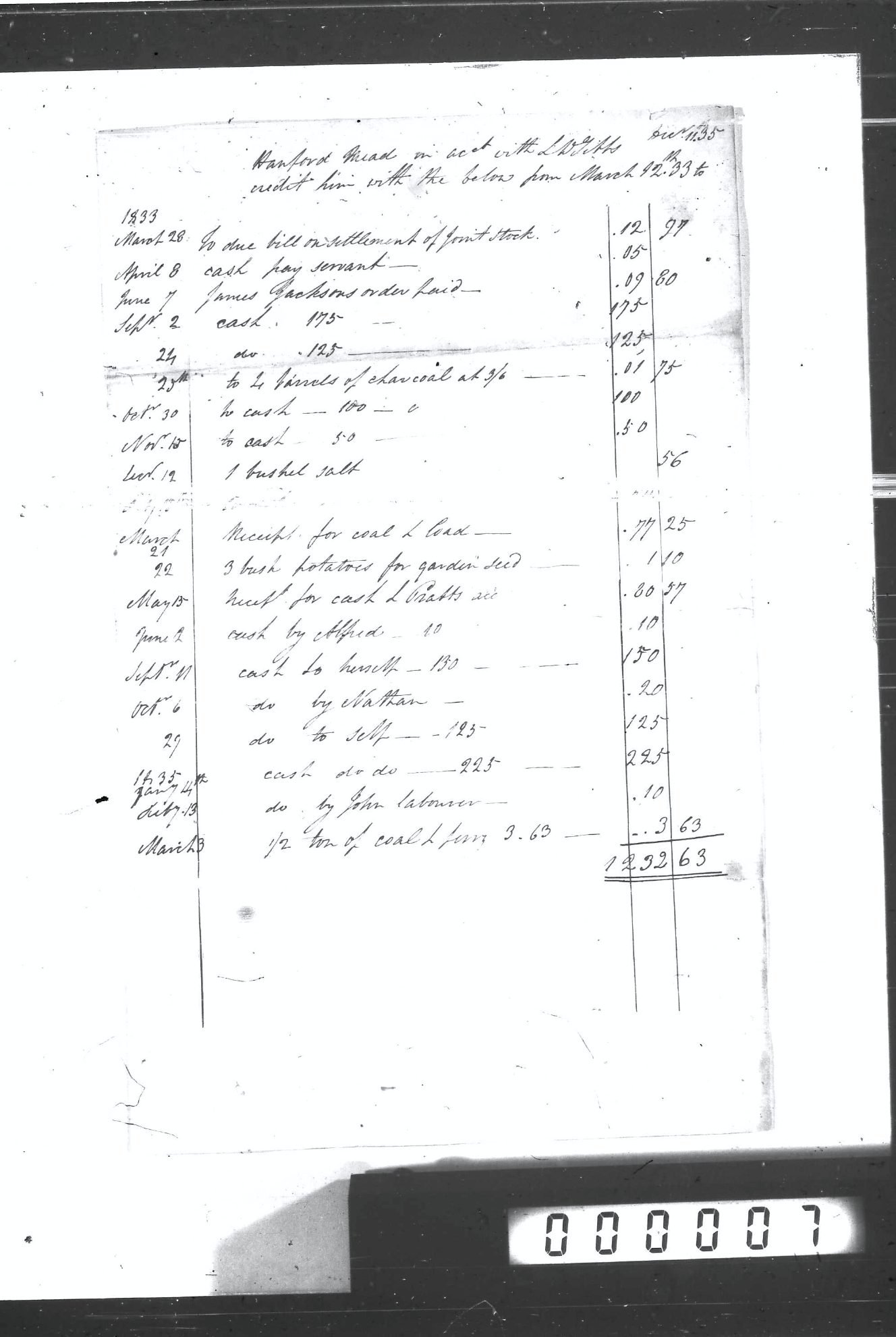
1833-1835
Farm/household account: coal, salt, servants; entry "cash by Alfred" June 1834
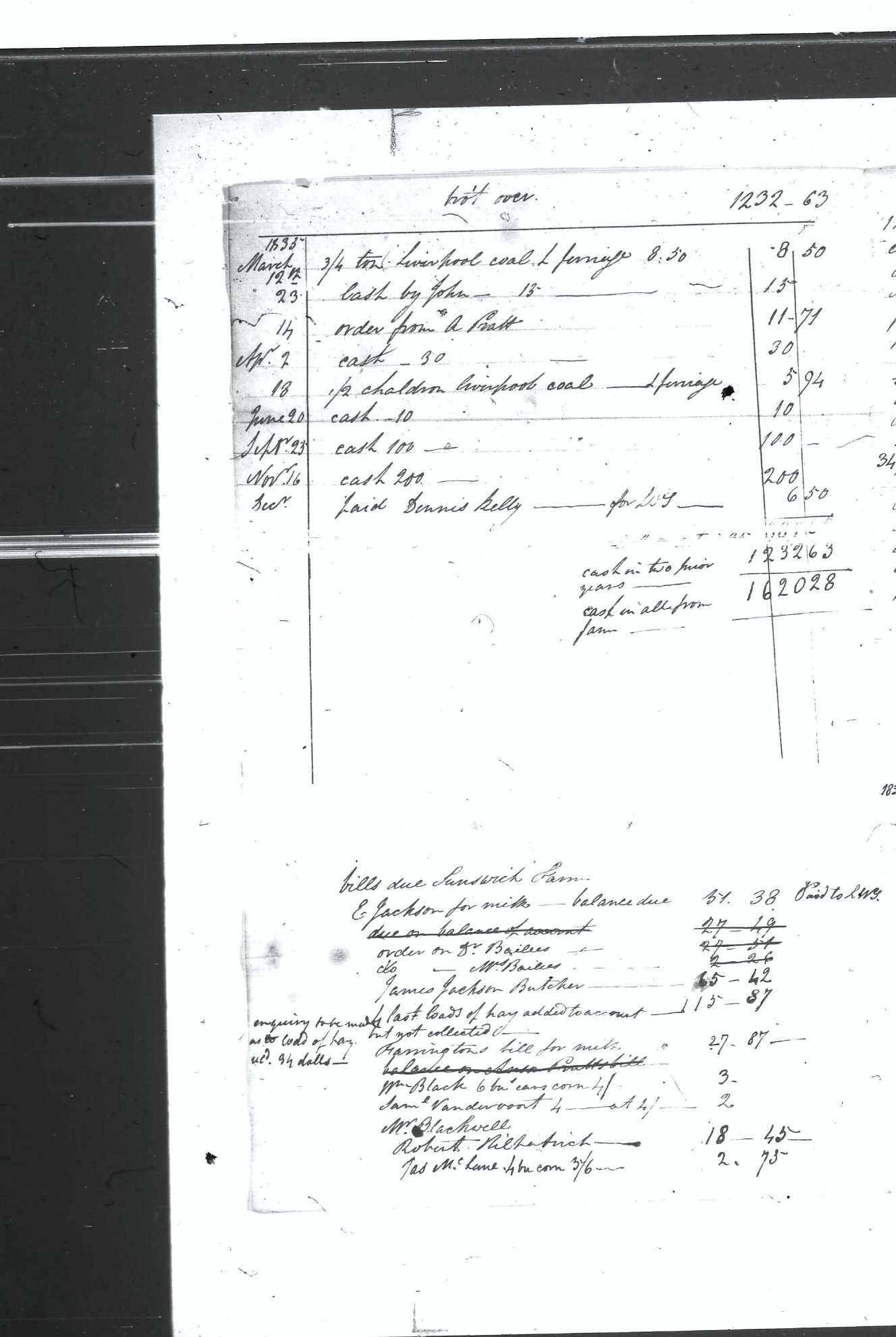
1833-1835
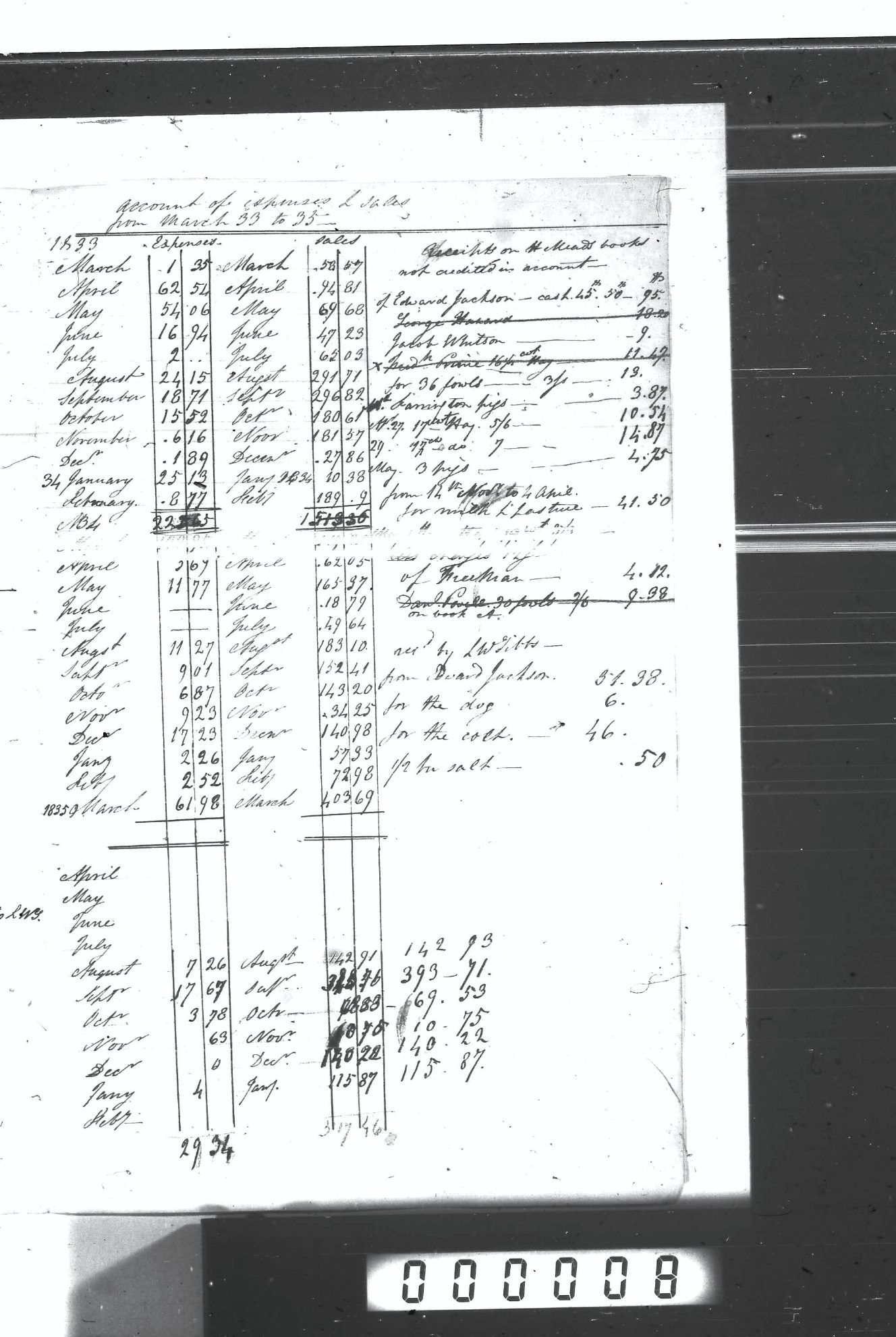
Sunswick Farm monthly expenses/sales March 1833-1835; receipts on H. Mead's book
1835-05-21
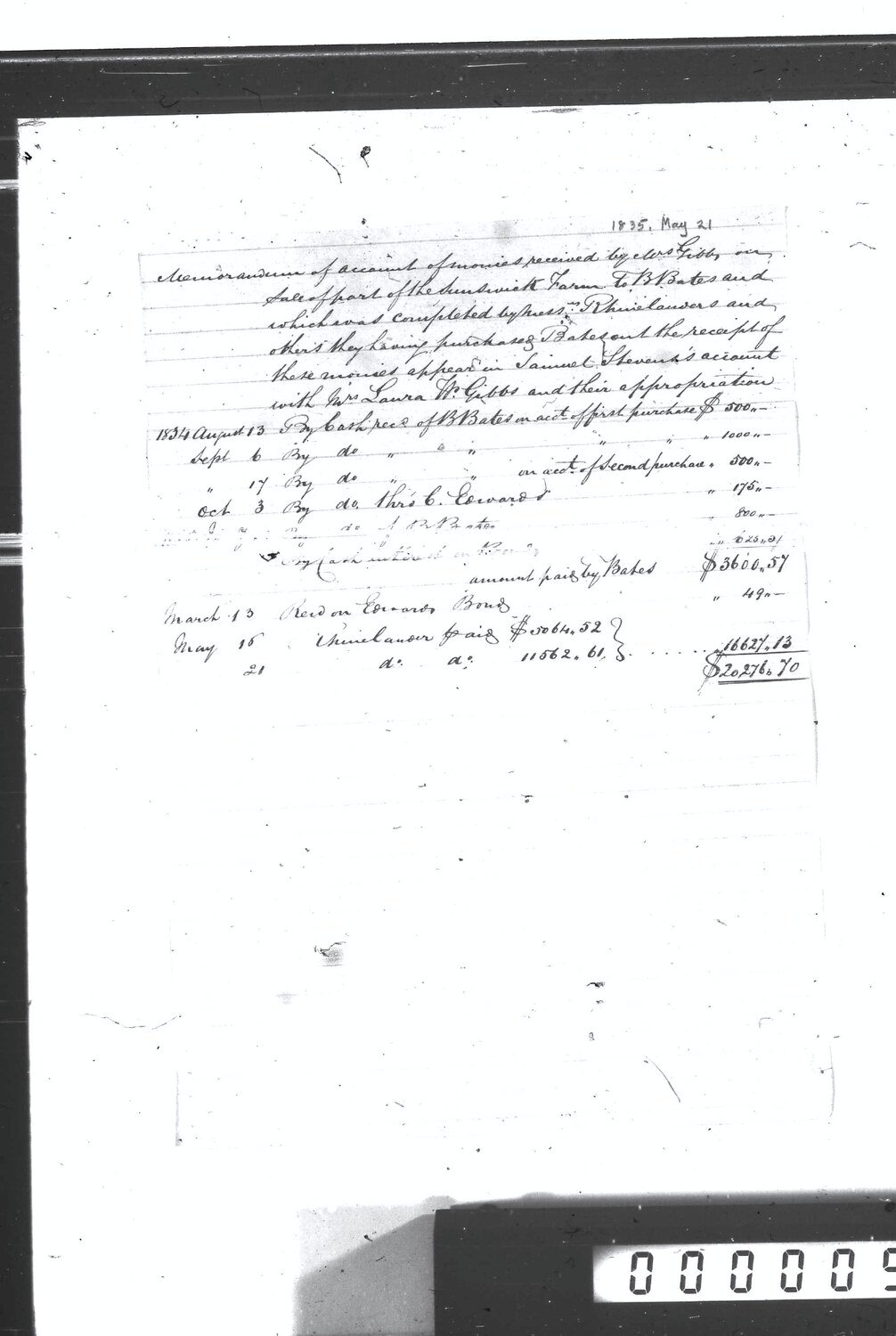
Monies received on sale of part of Sunswick Farm to Bates/Rhinelanders, $20,276.70
1835-05-30
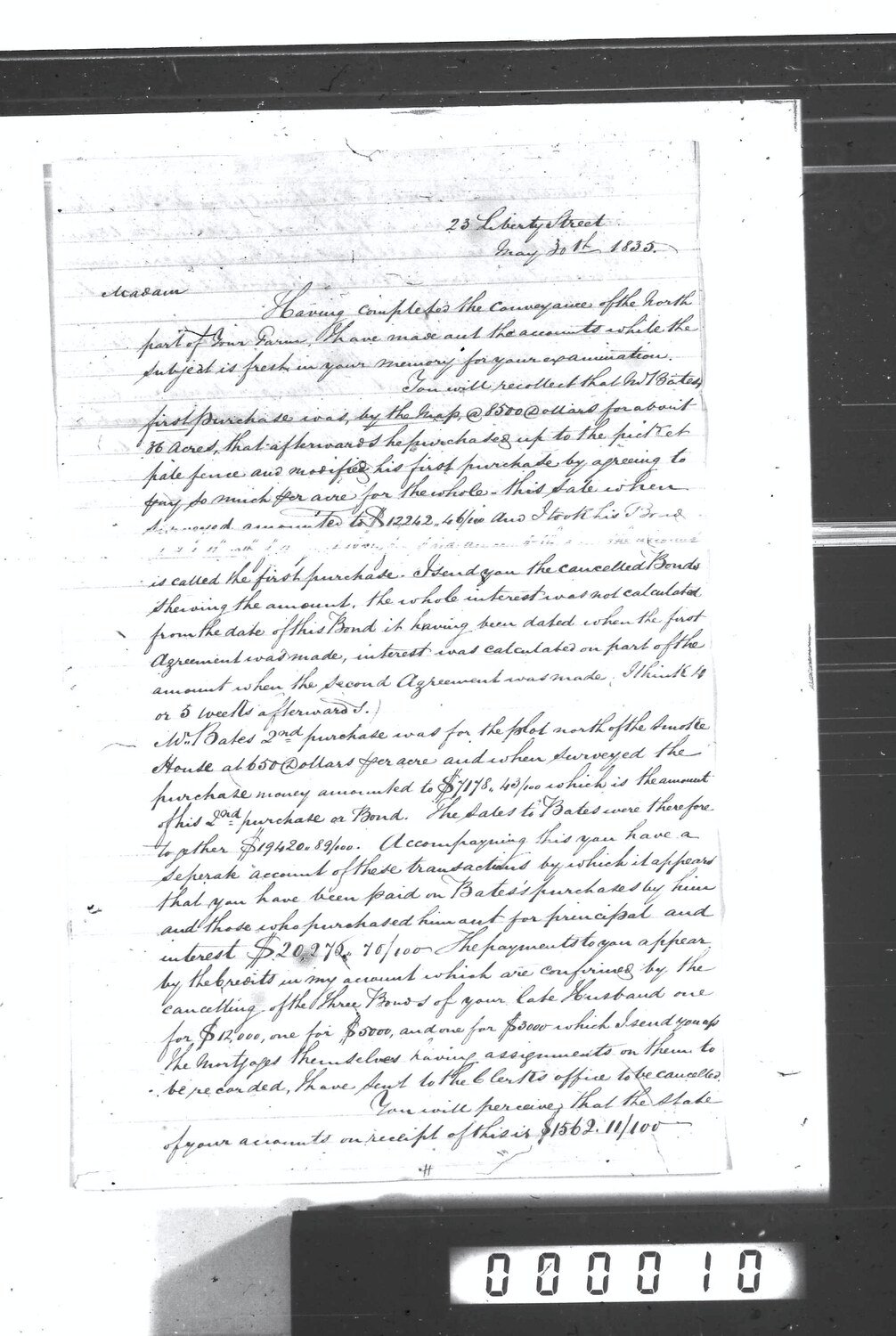
Conveyance of north part of farm complete; Bates purchases detailed; husband's bonds cancelled
1835-05-30
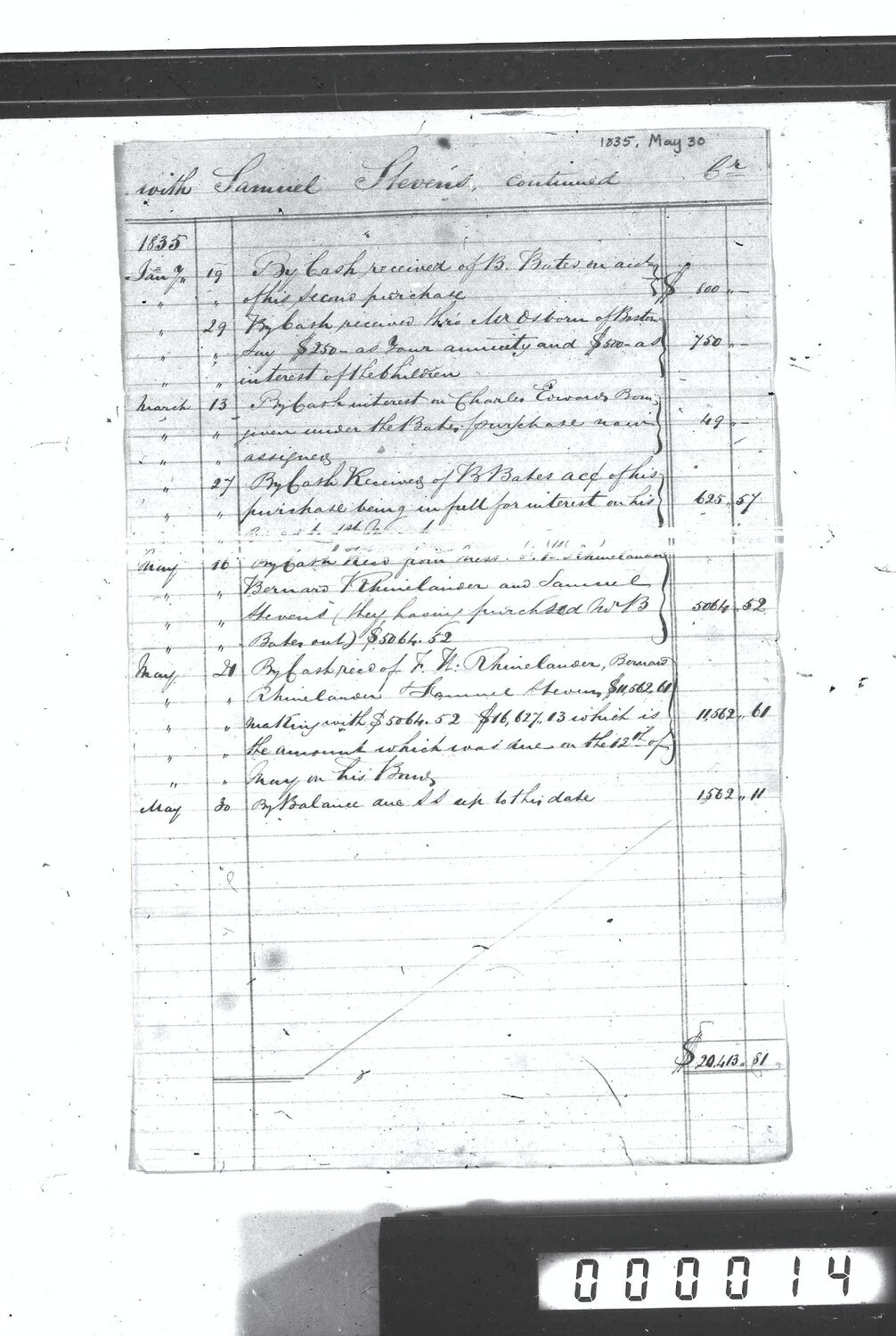
Cash received of Bates, Osborn, Rhinelanders on Sunswick sale; total $20,413.81
1835
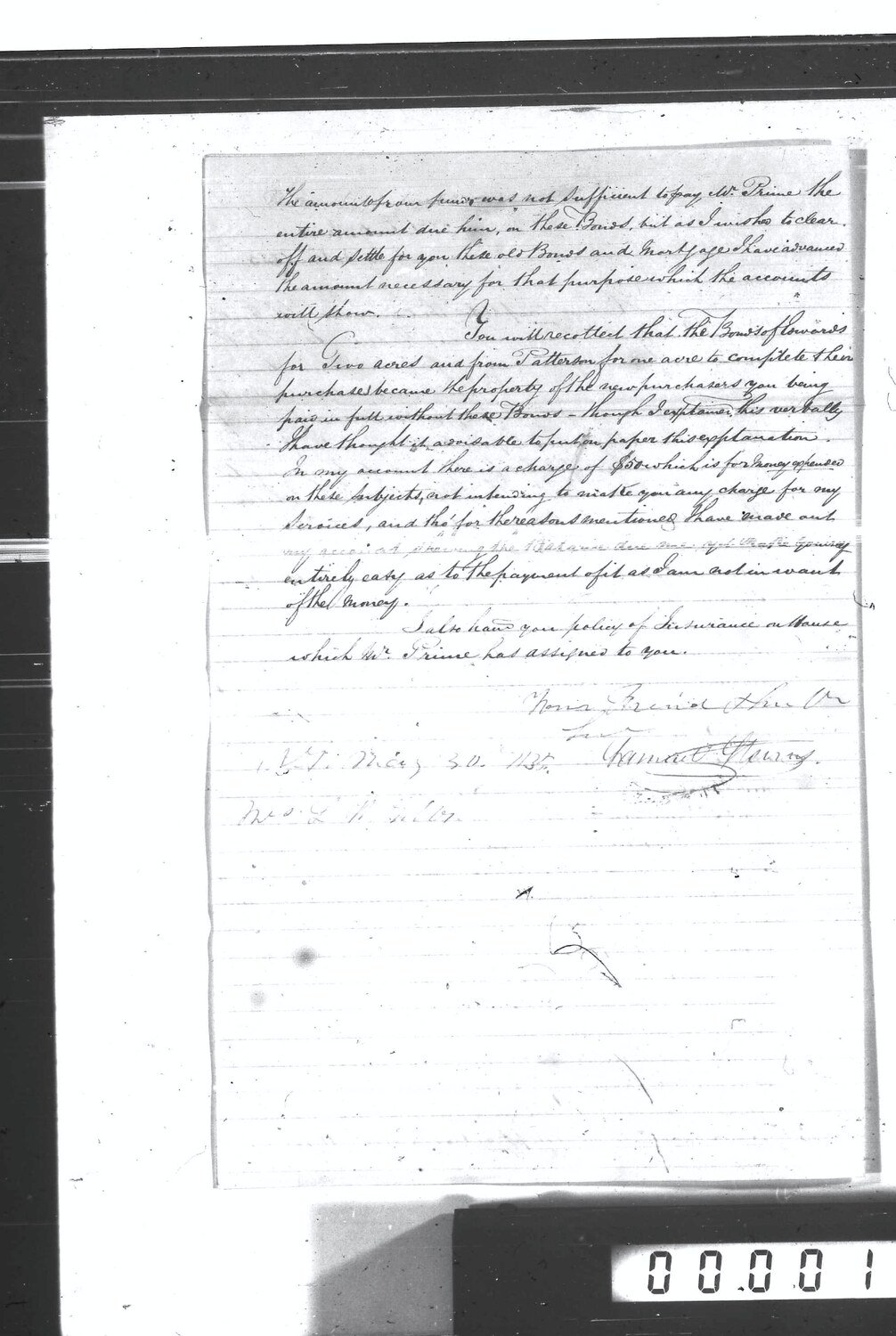
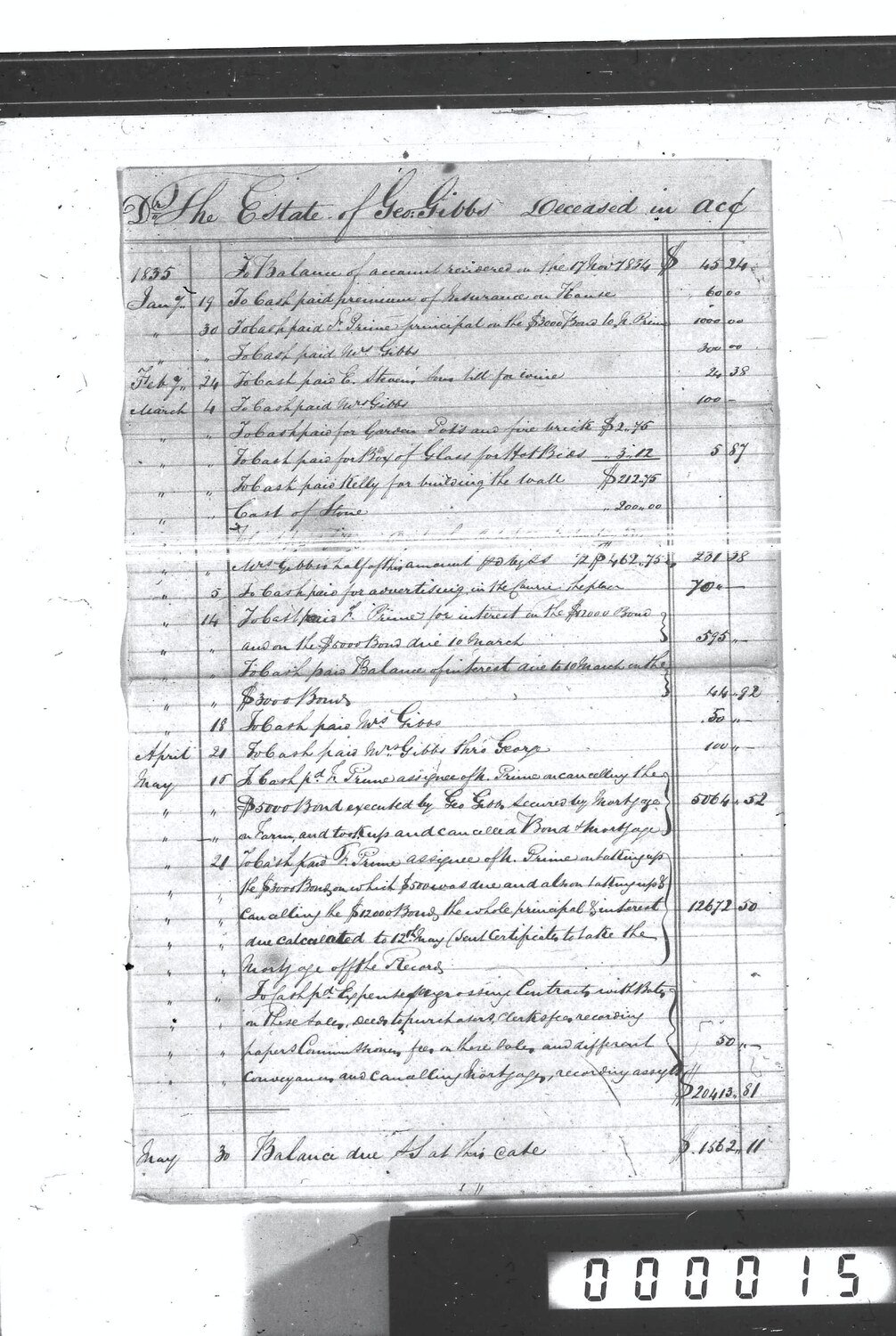
Estate payments: Prime bonds, insurance, wall, Mrs. Gibbs cash; balance $1,562.11
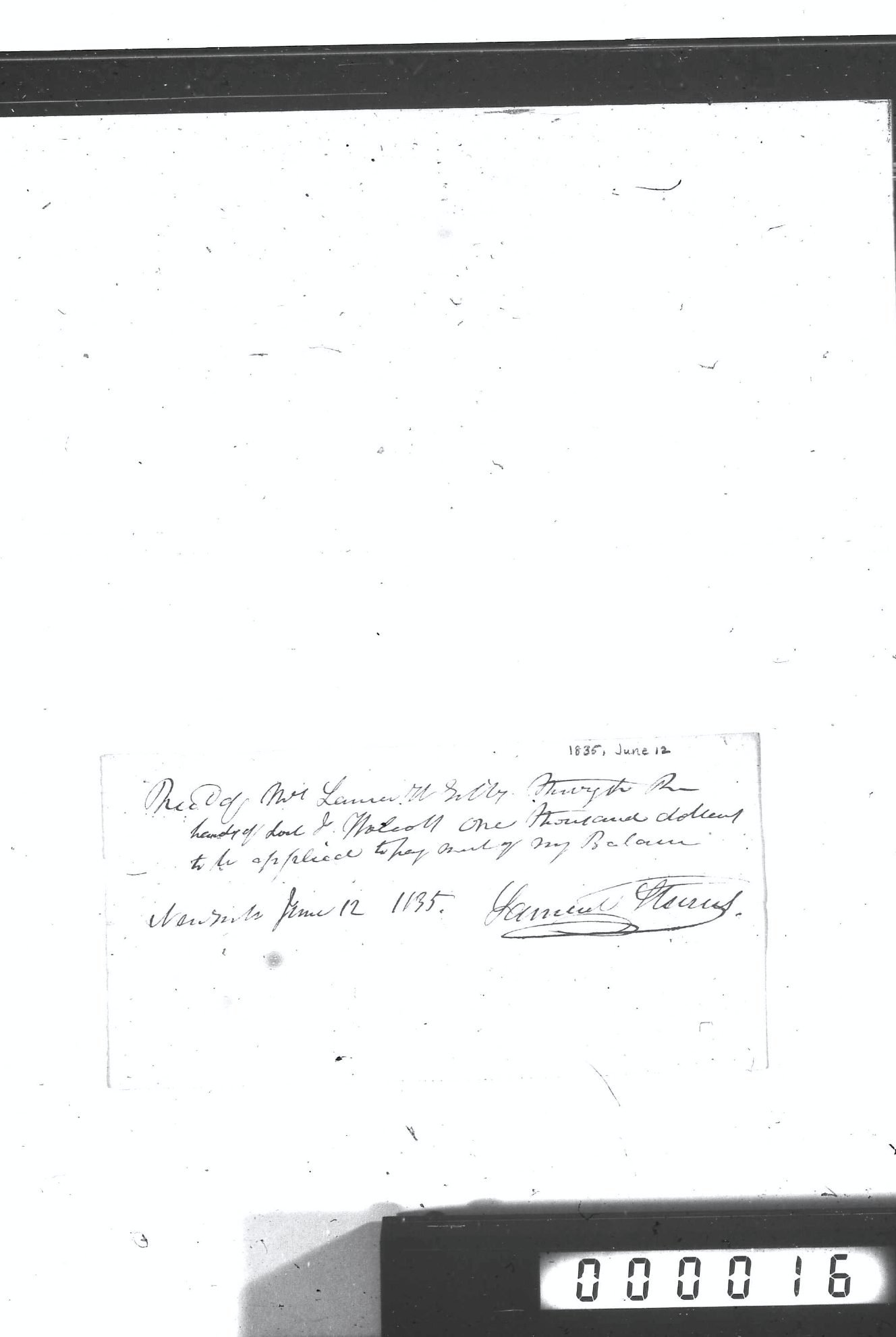
1835-06-12
Received $1,000 of Mrs. Gibbs through J. Wolcott toward balance due
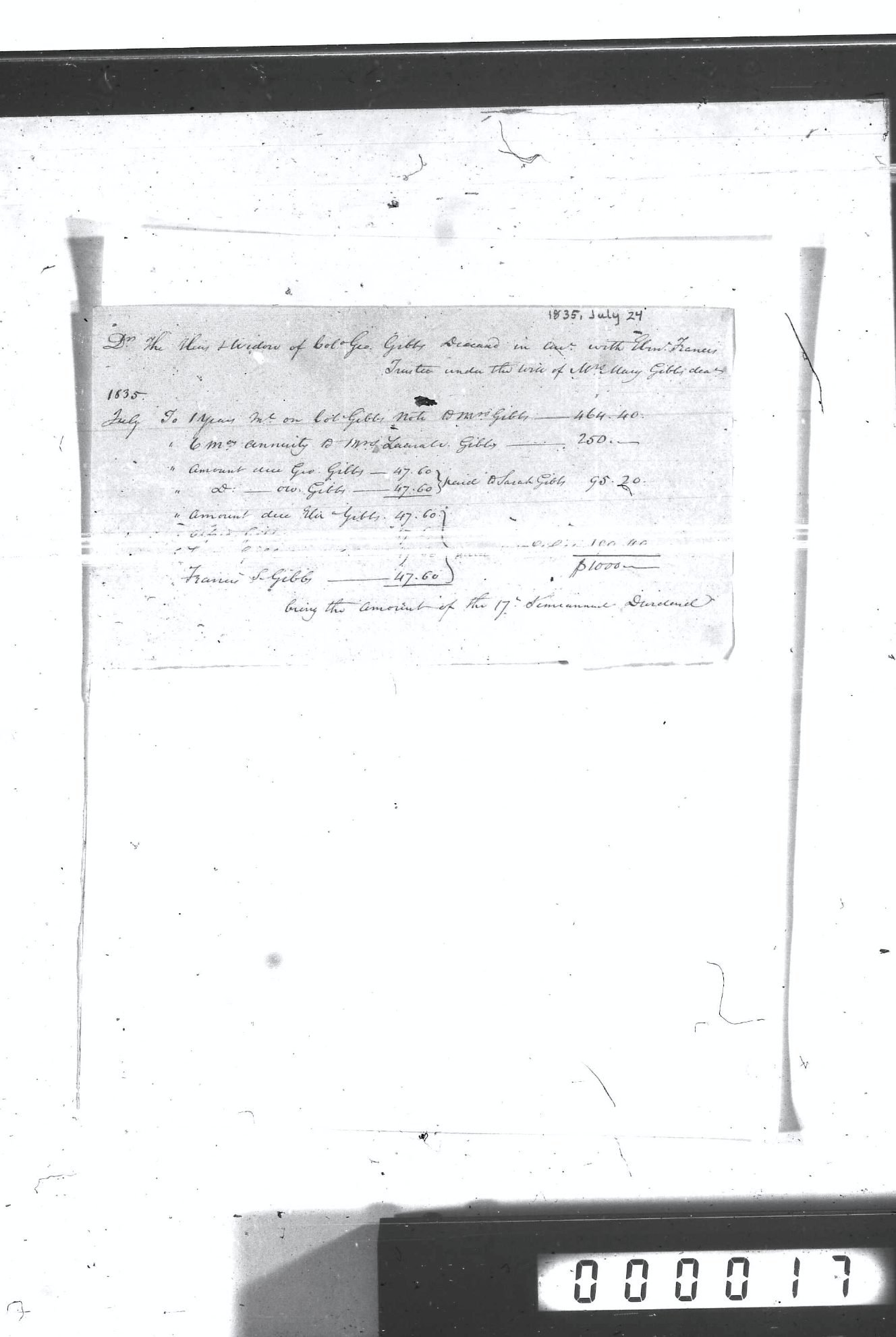
1835-07-24
17th semiannual dividend under Mary Gibbs's will; $47.60 each child, $250 annuity
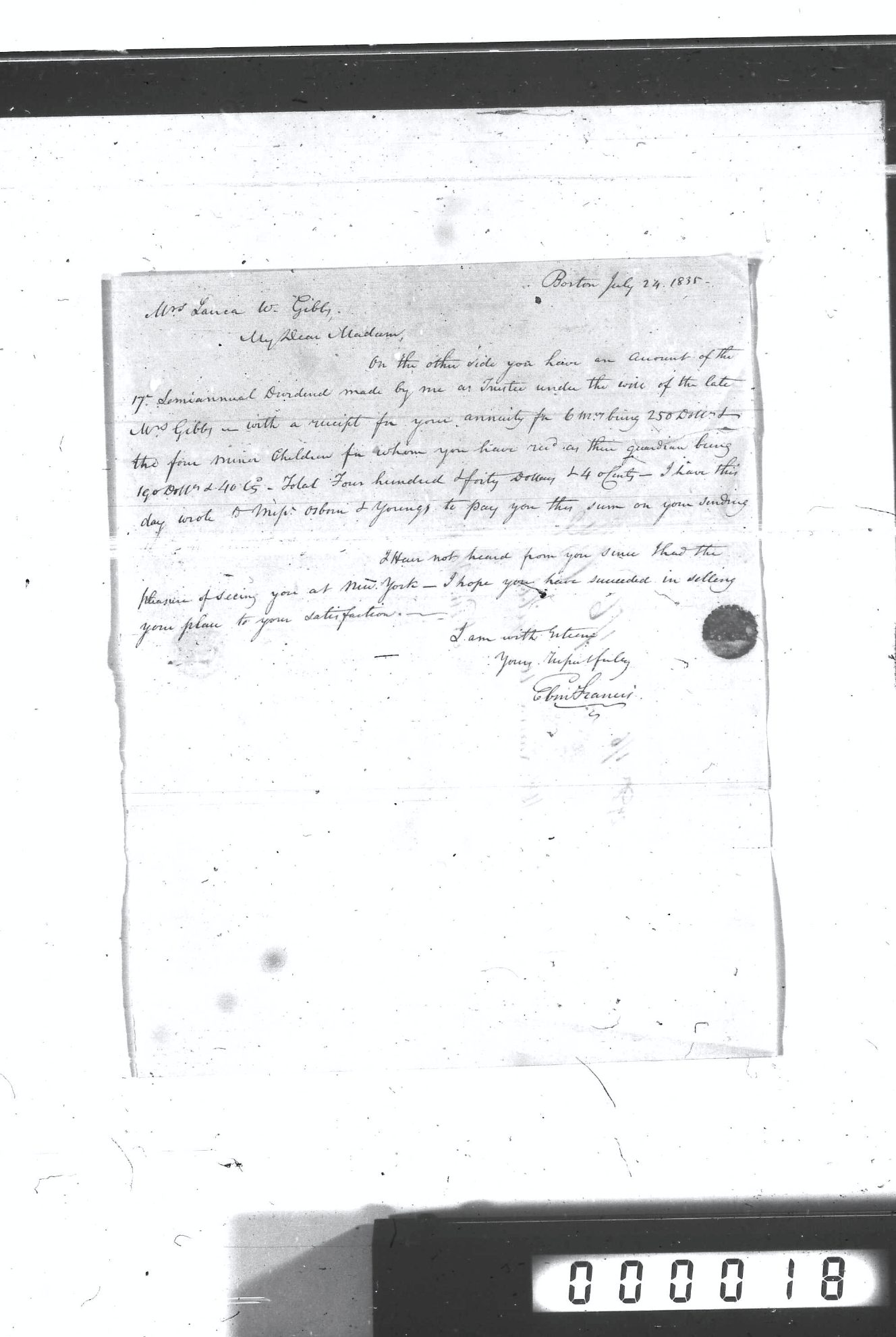
1835-07-24
Covers dividend account: annuity plus four minors' shares, $440.40 total; hopes place sold
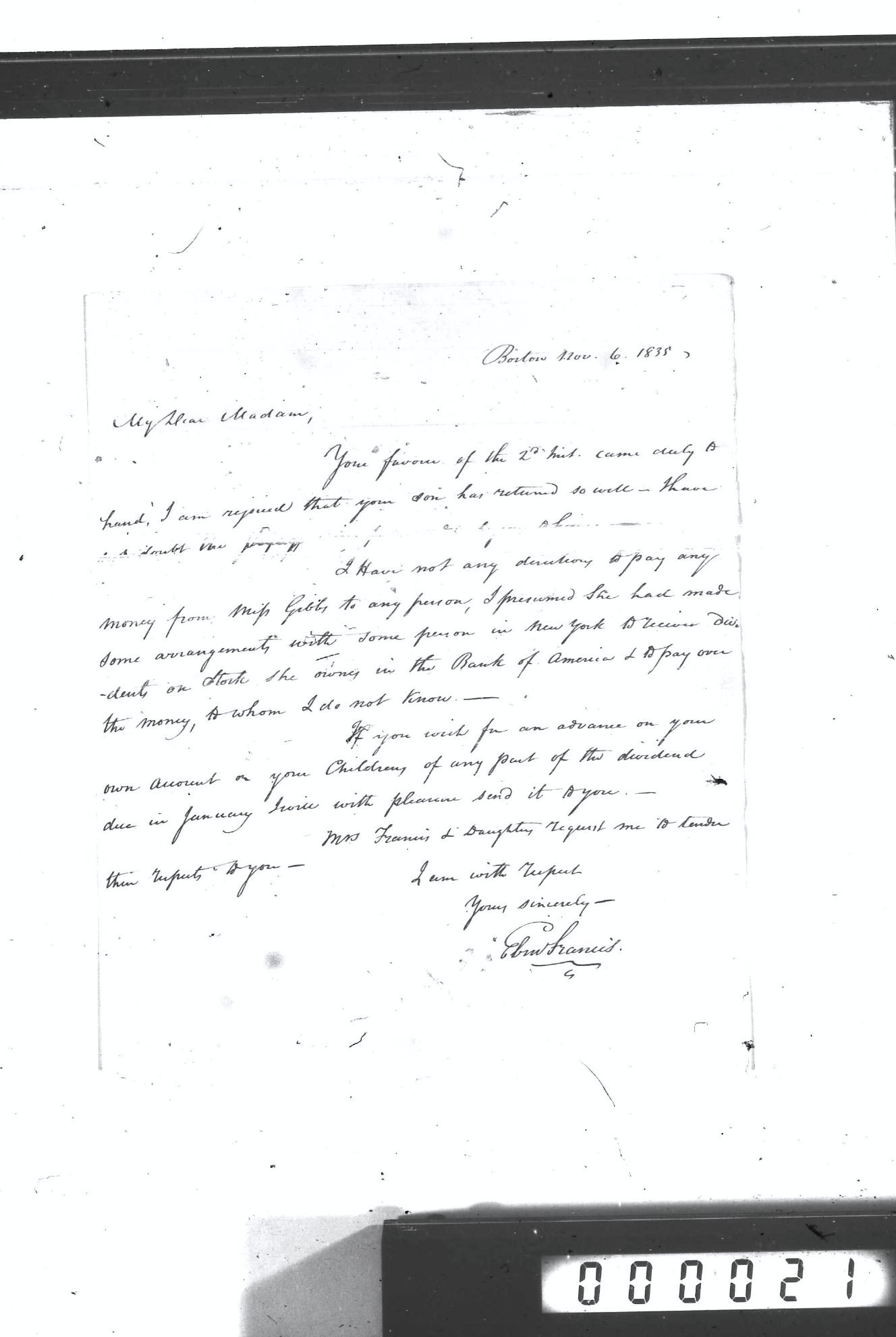
1835-11-06
Glad son returned well; Miss Gibbs's Bank of America dividends; offers January advance
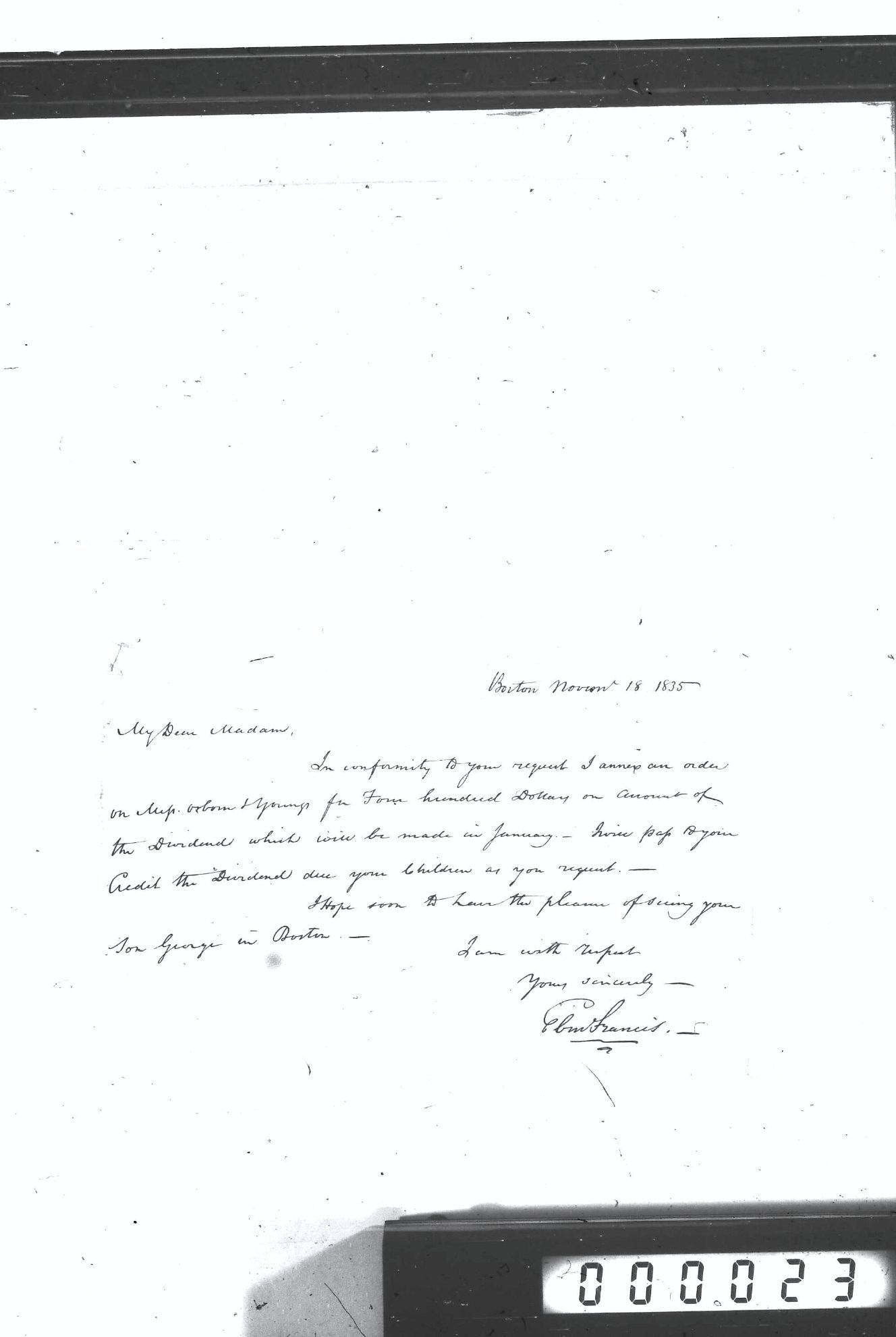
1835-11-18
Annexes $400 order on Osborn & Youngs against January dividend; hopes to see George
1835-12-26
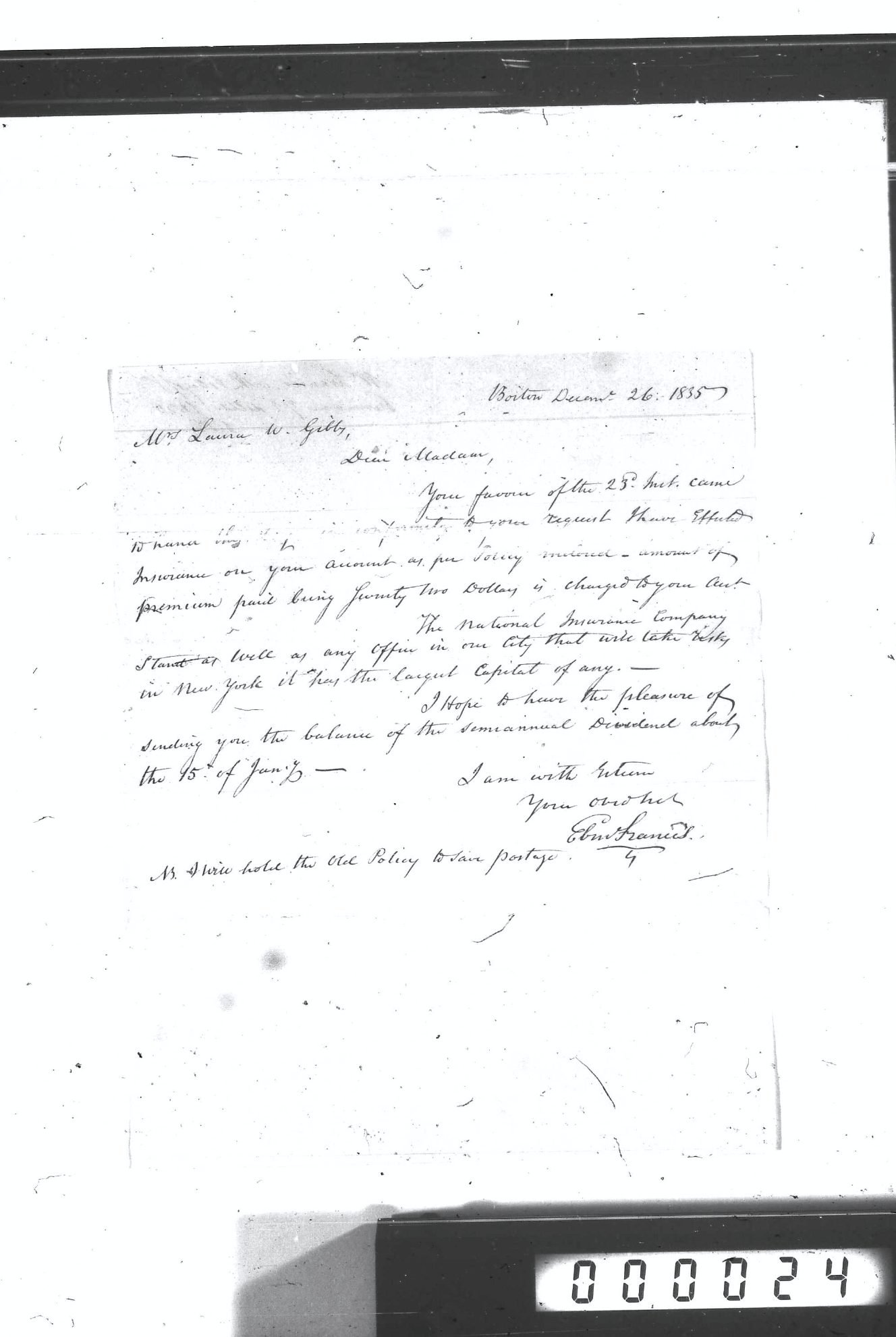
Effected National Insurance Co. policy, $72 premium; semiannual dividend balance due mid-January
1836-03-17
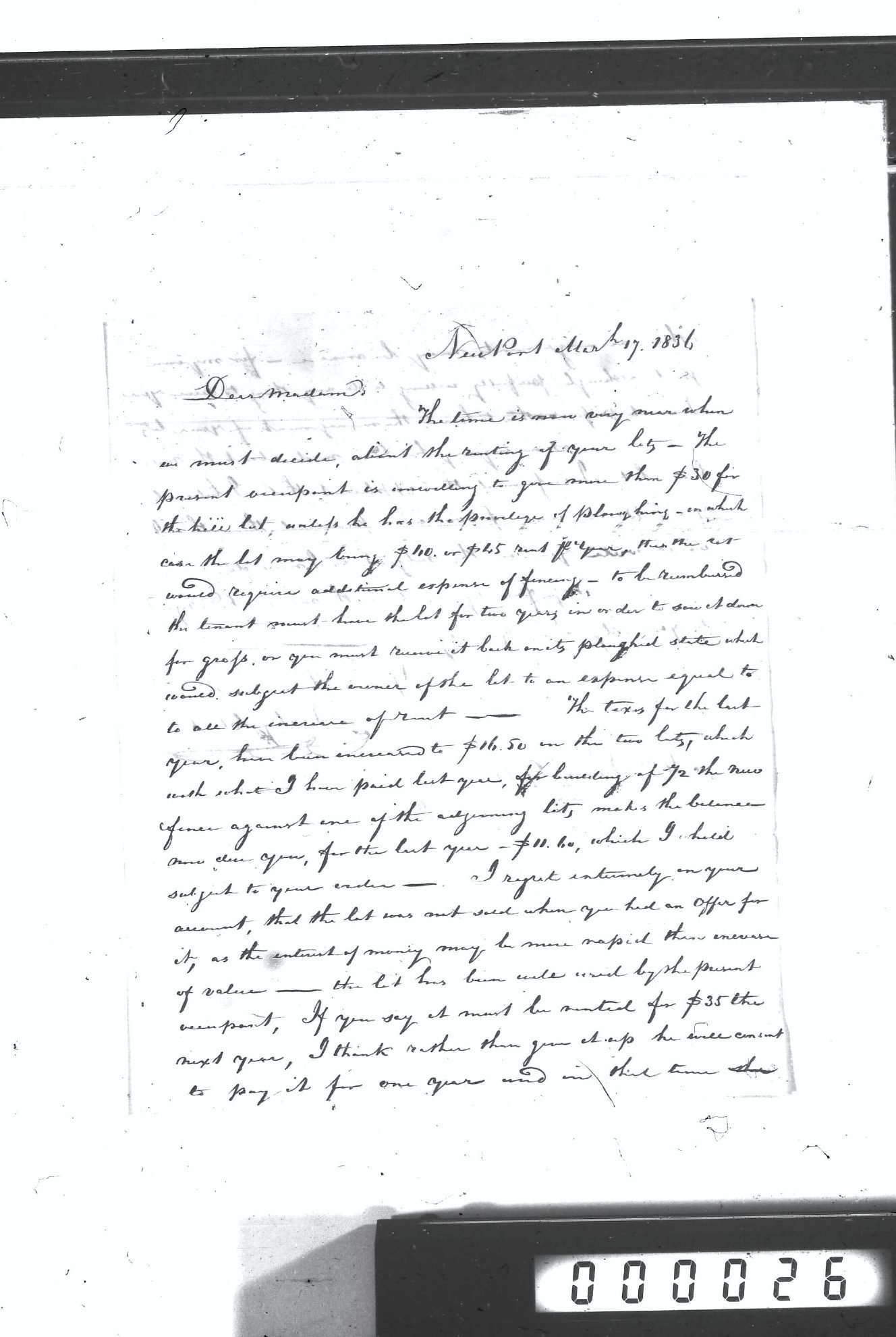
Renting her Newport lots: tenant offers $30, taxes risen, $11.60 balance held
1836? Mar
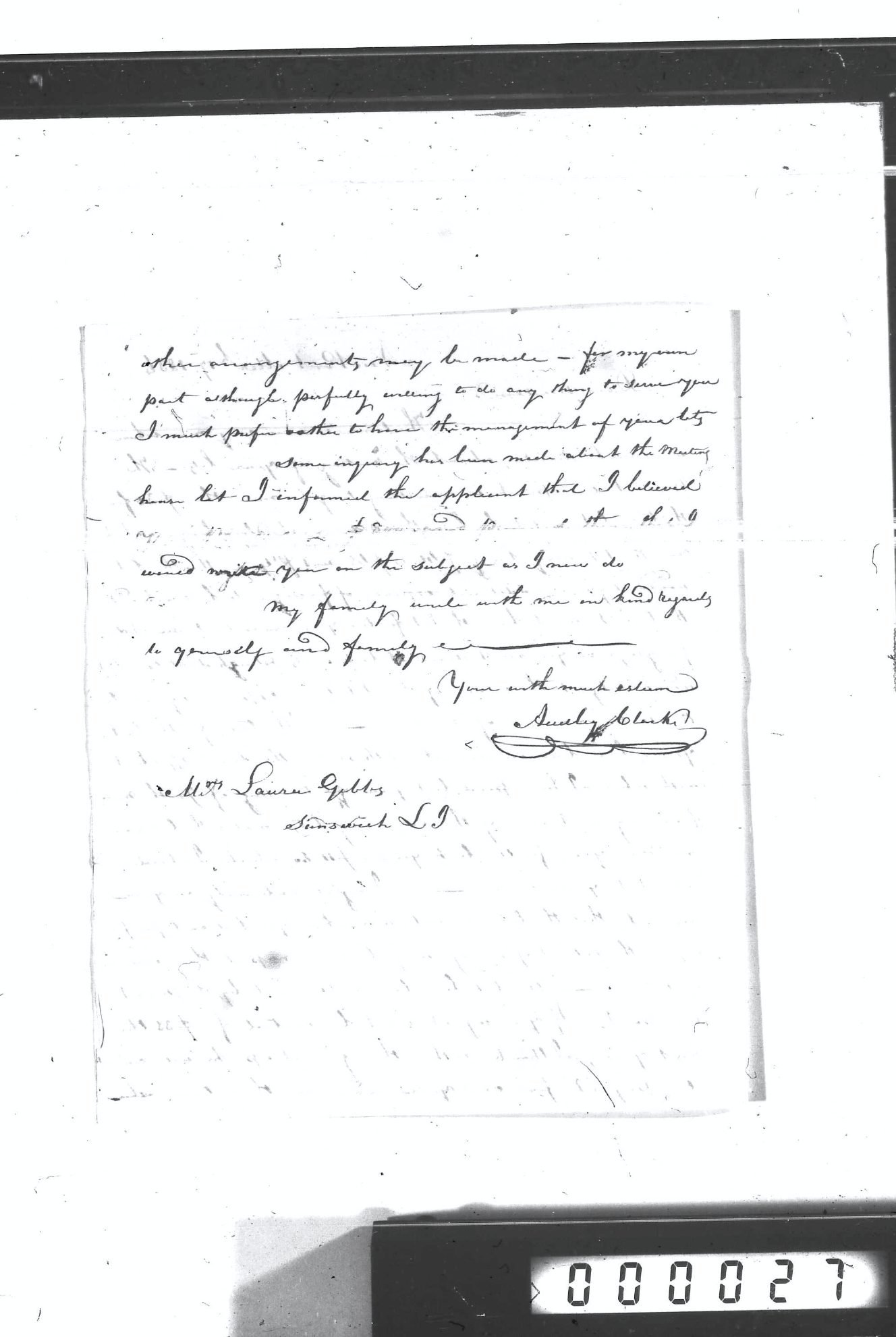
Closing page: managing her lots, Meeting-house lot inquiry, family regards
1834-1836
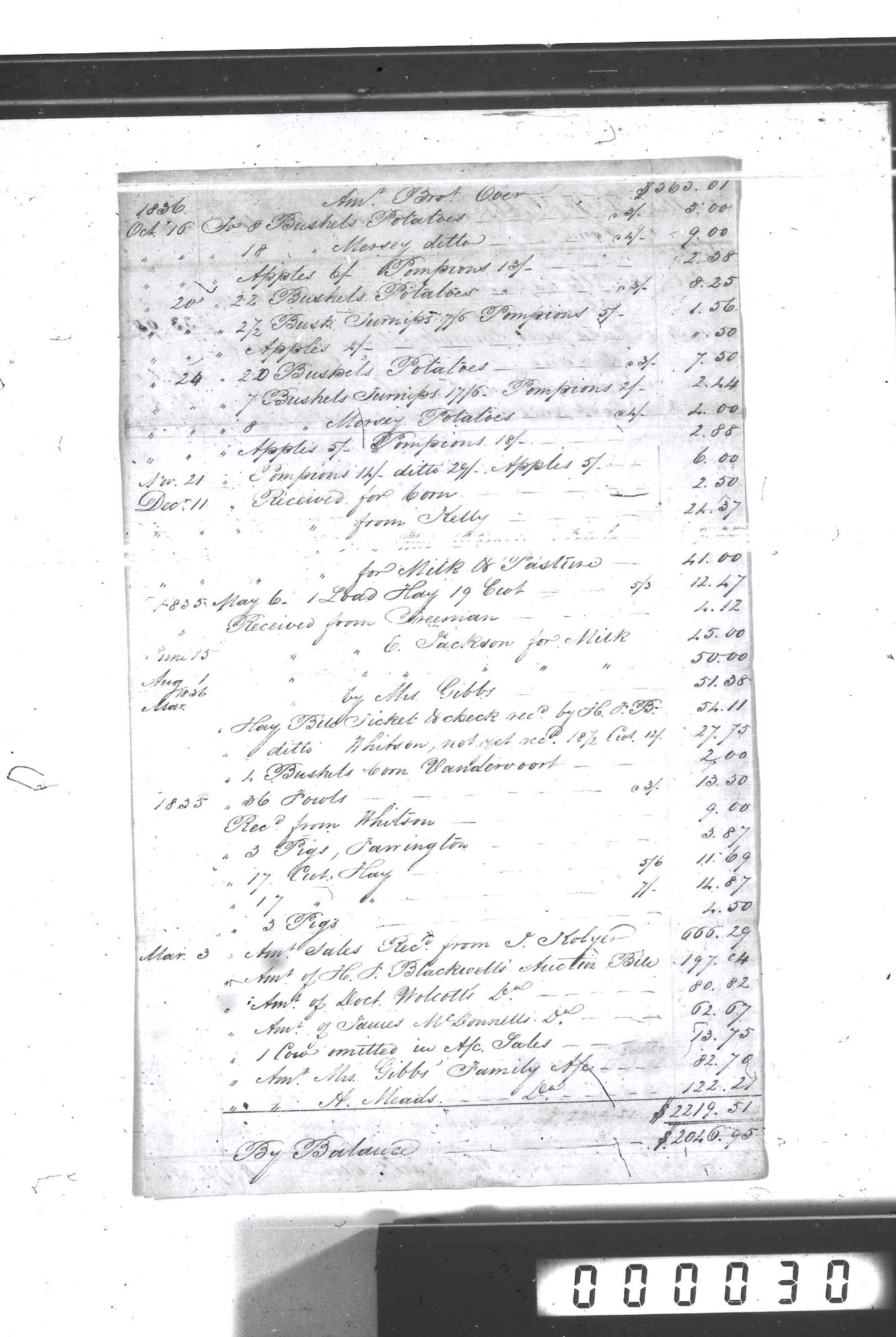
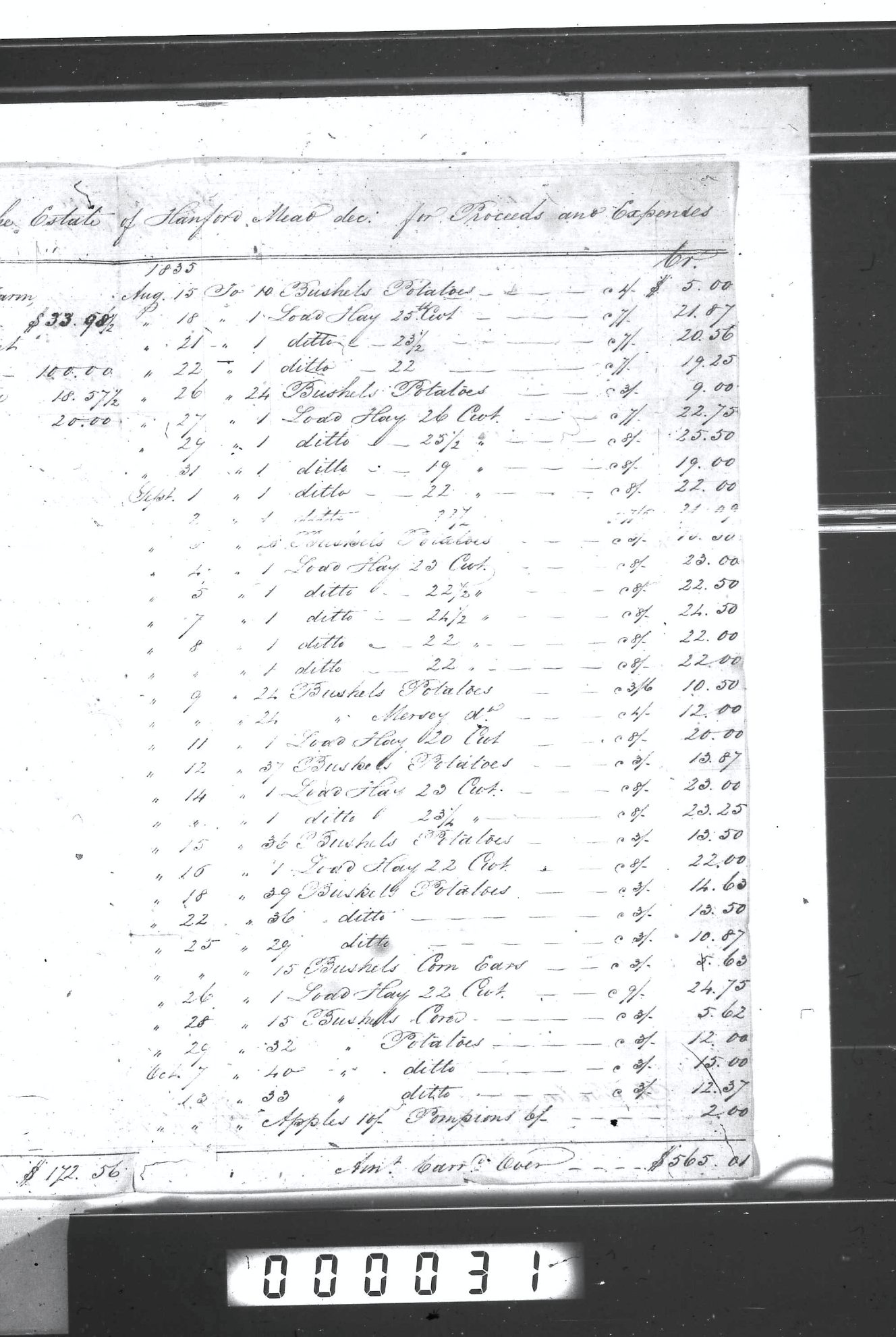
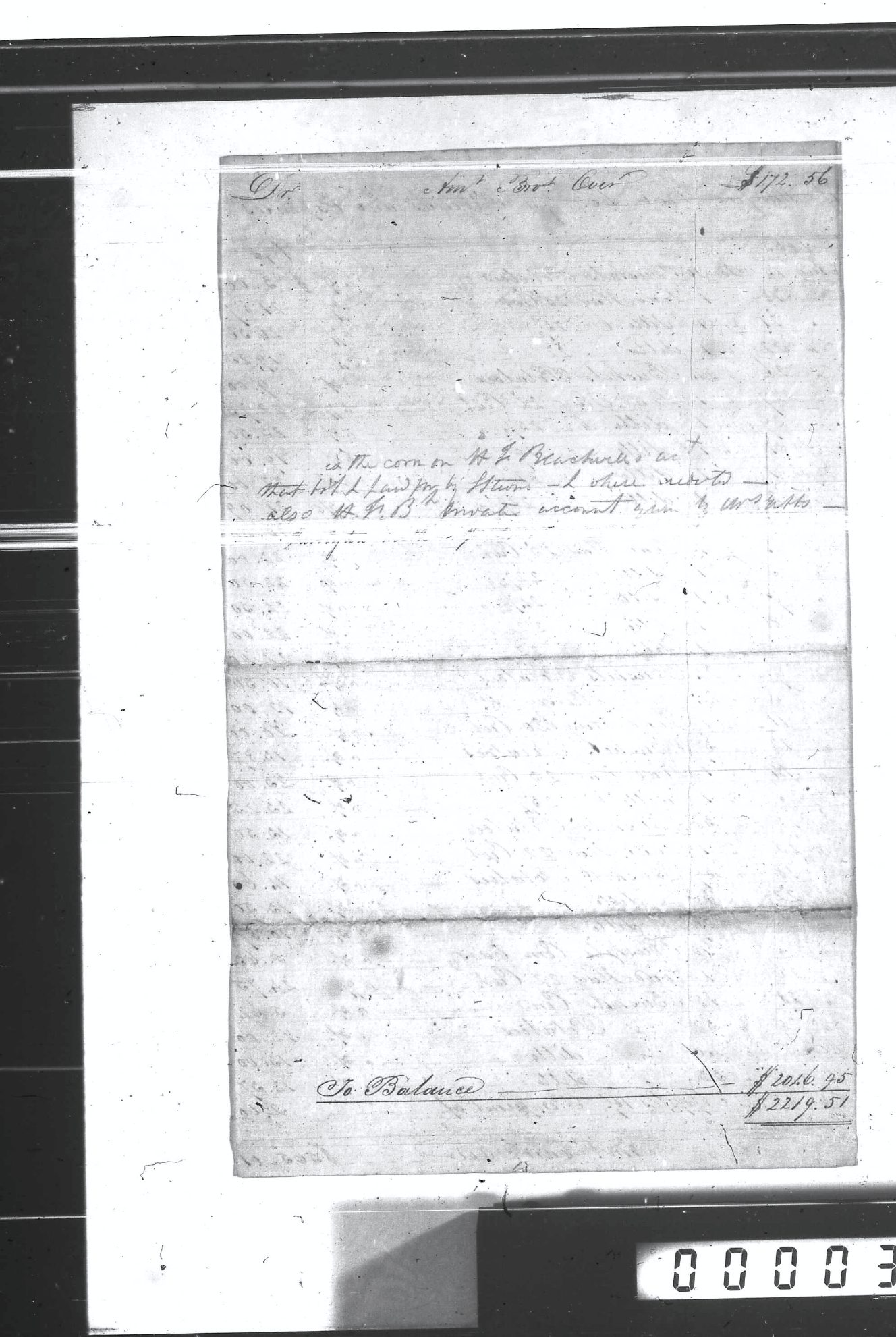
Farm produce sales: potatoes, hay, pompions; Kolyer auction, Blackwell bill; balance $2046.95
1835-1836
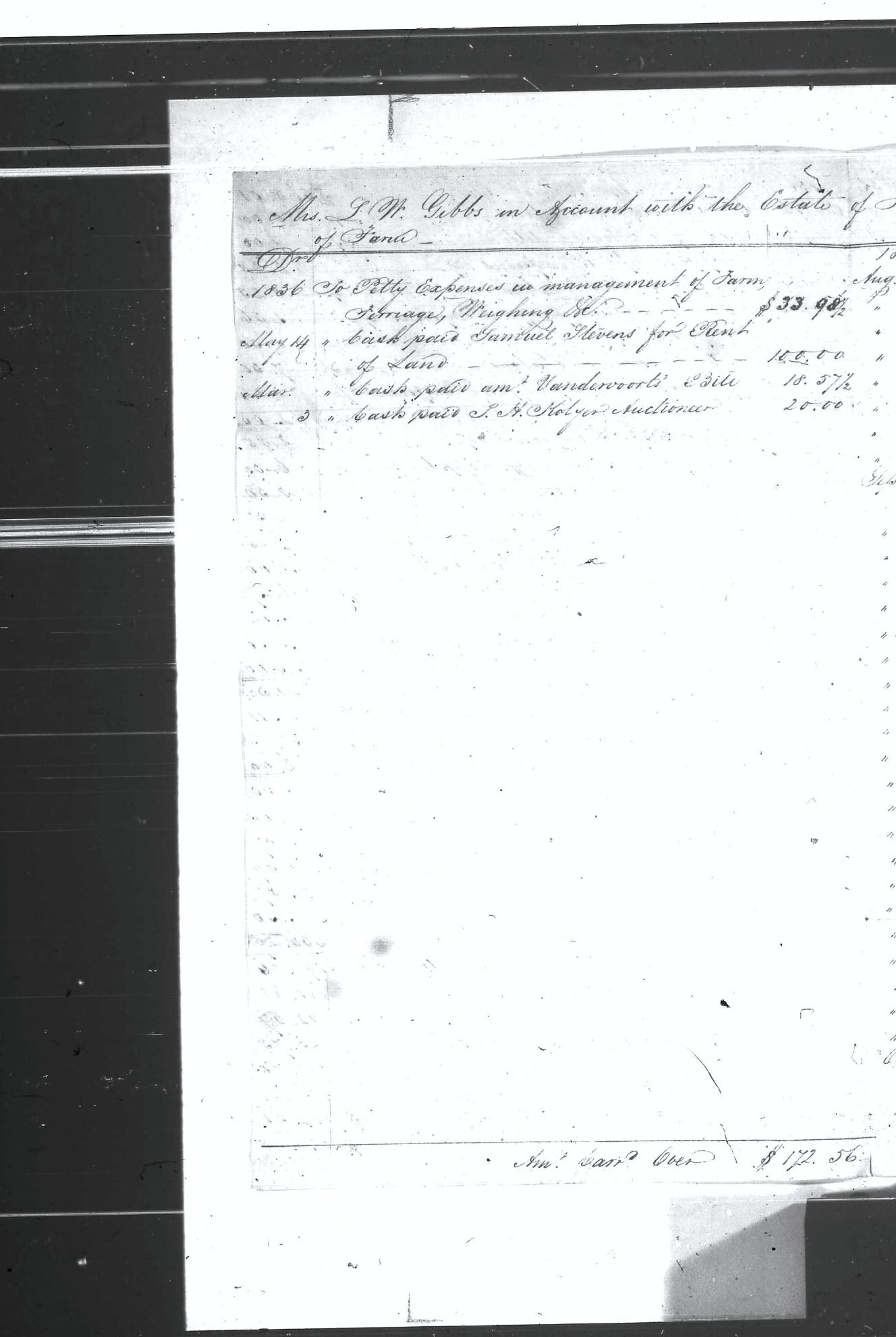
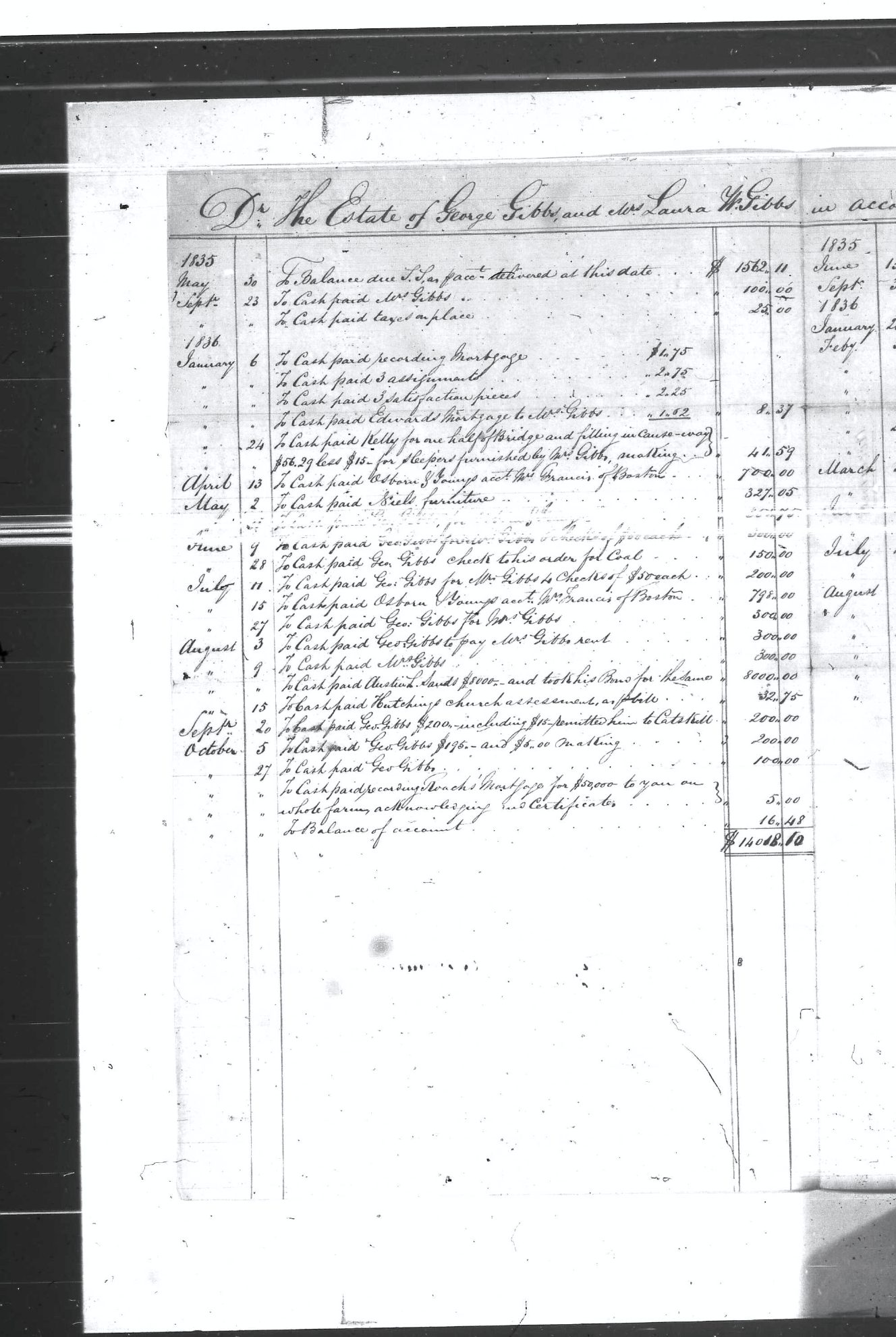
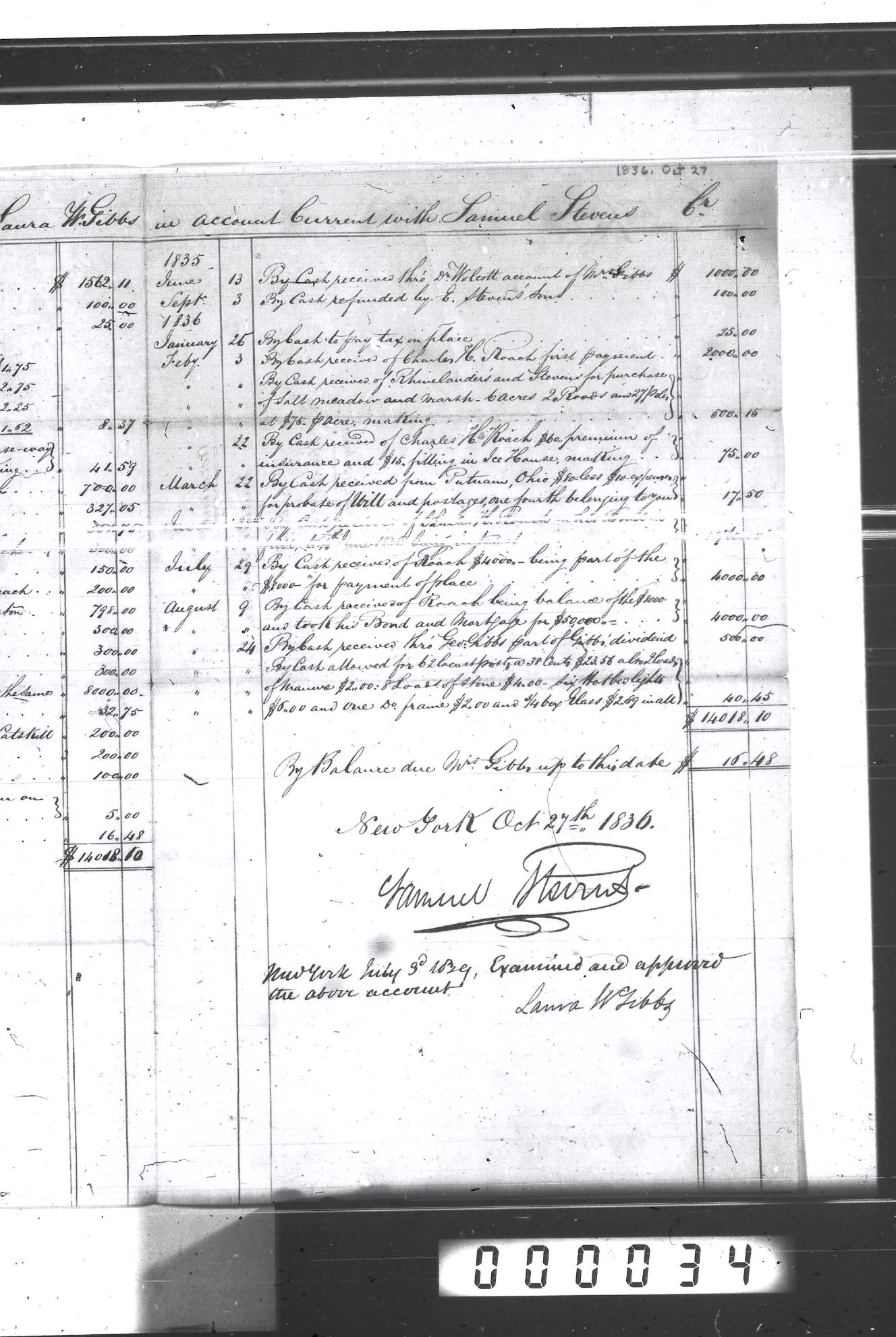
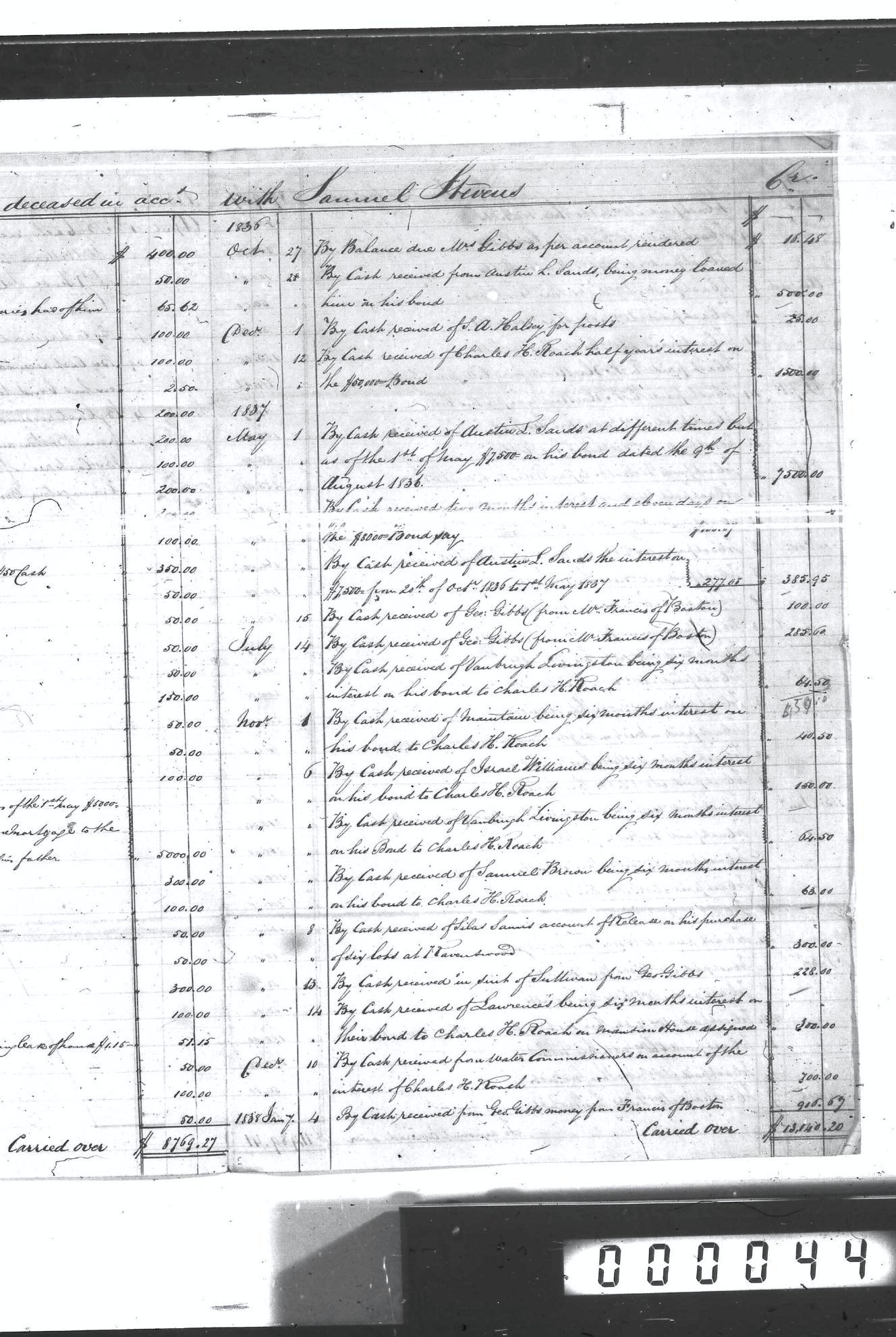
Debits: mortgages recorded, cash to Geo. Gibbs, Sands bond $8000, Roach's $50,000 farm mortgage
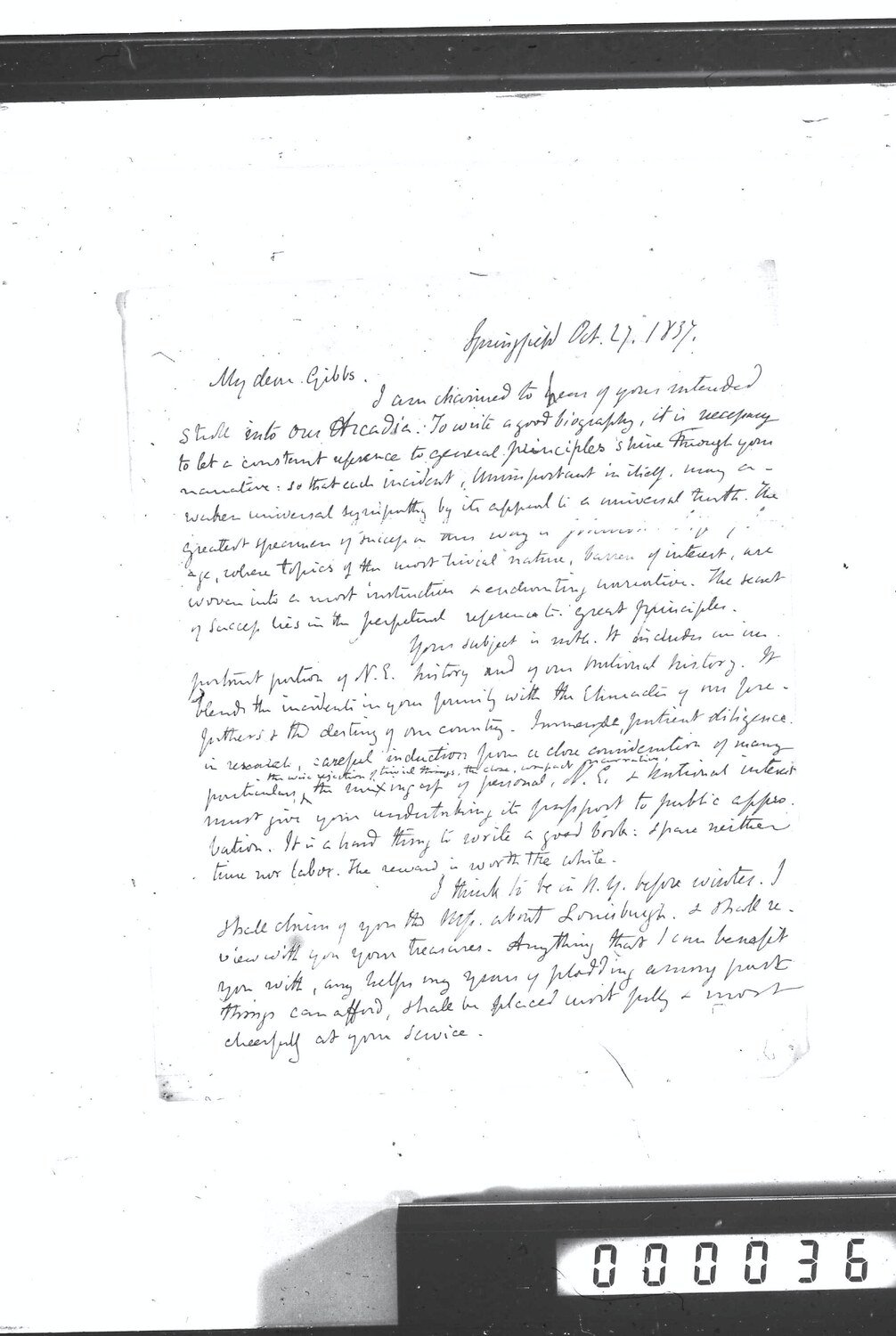
1837 Oct 27
Springfield: advice on writing the Wolcott biography; noble subject; offers to review Louisbourg MSS
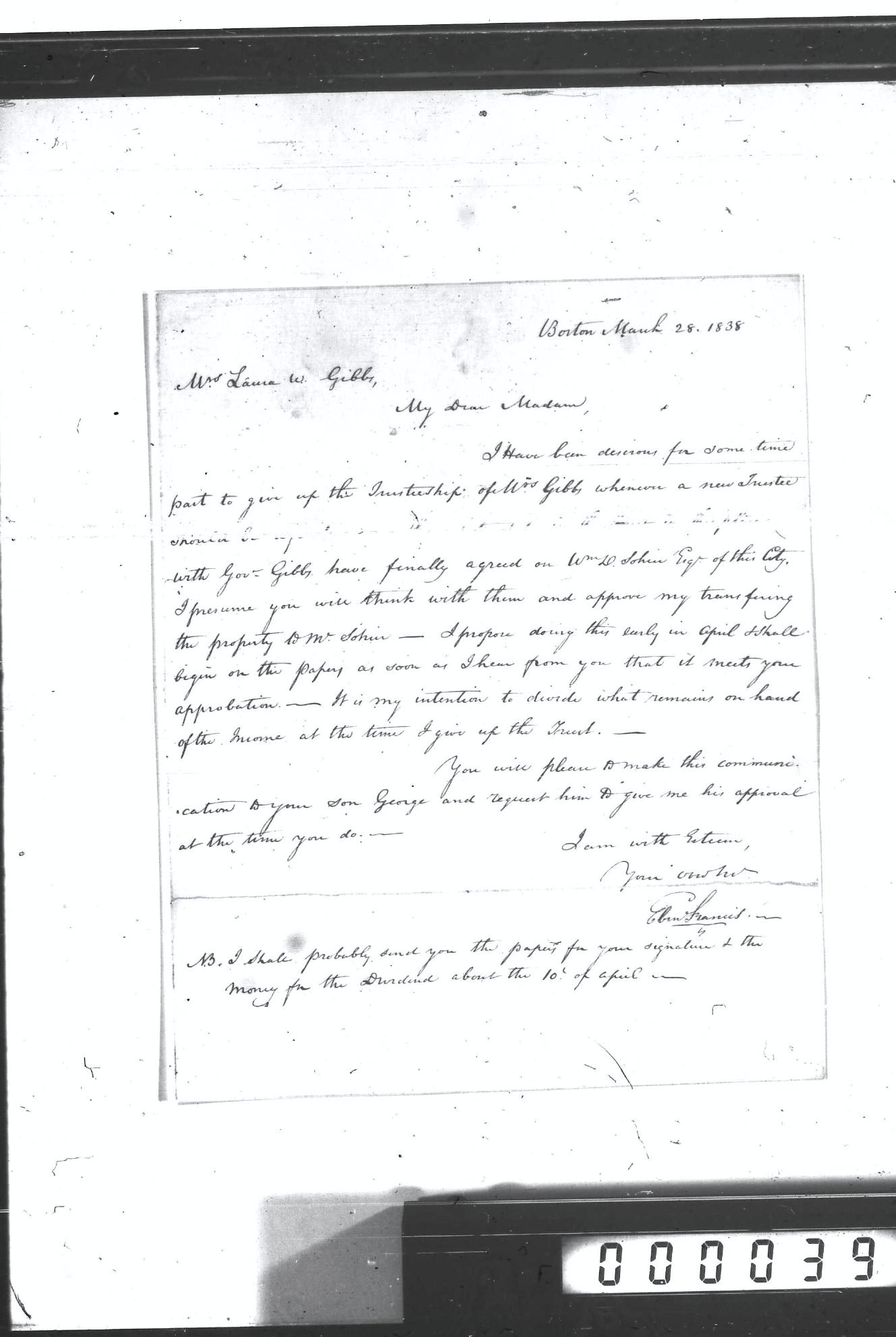
1838 Mar 28
Boston: resigns trusteeship of Mrs. Gibbs's trust; Wm. D. Sohier proposed; asks George's approval
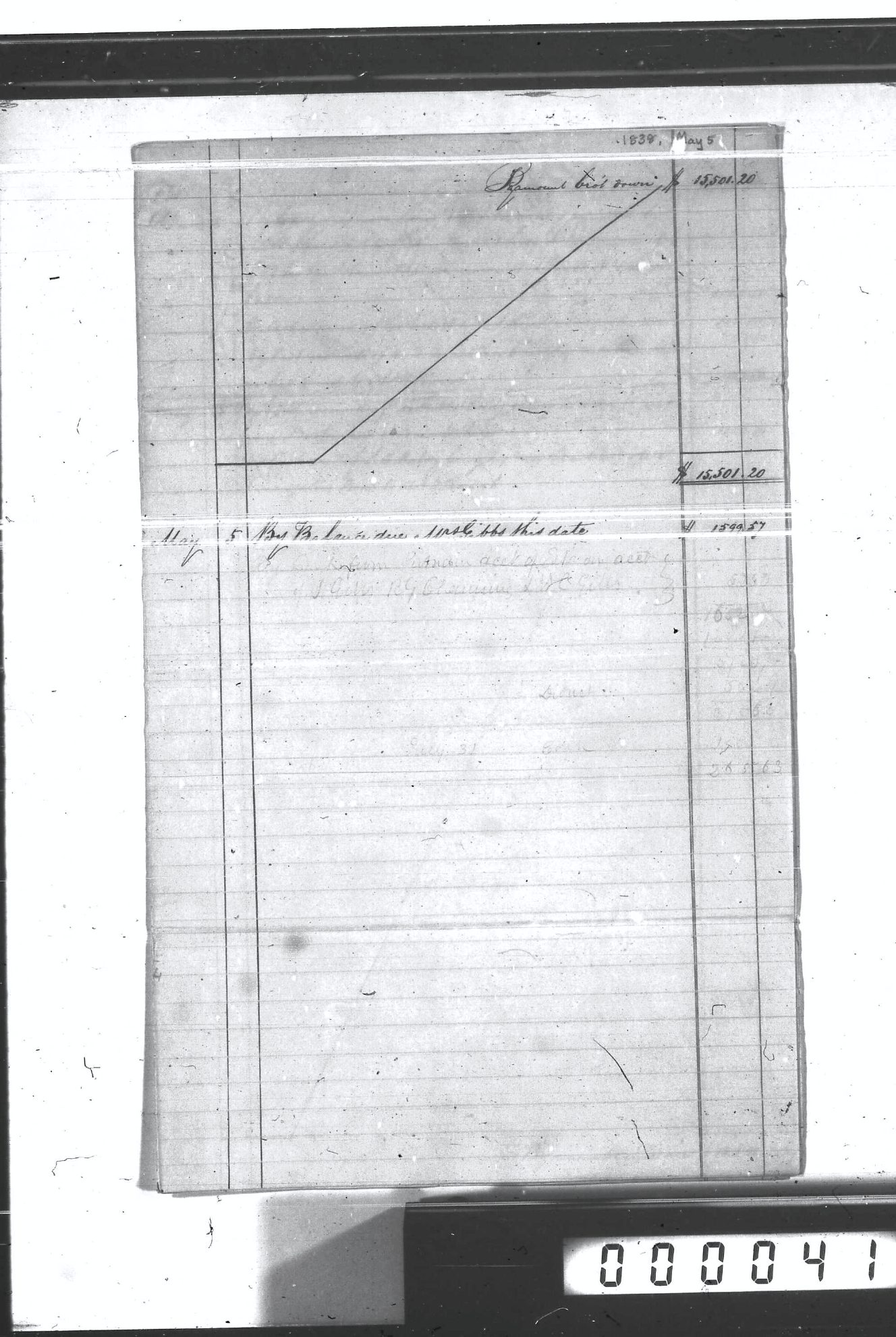
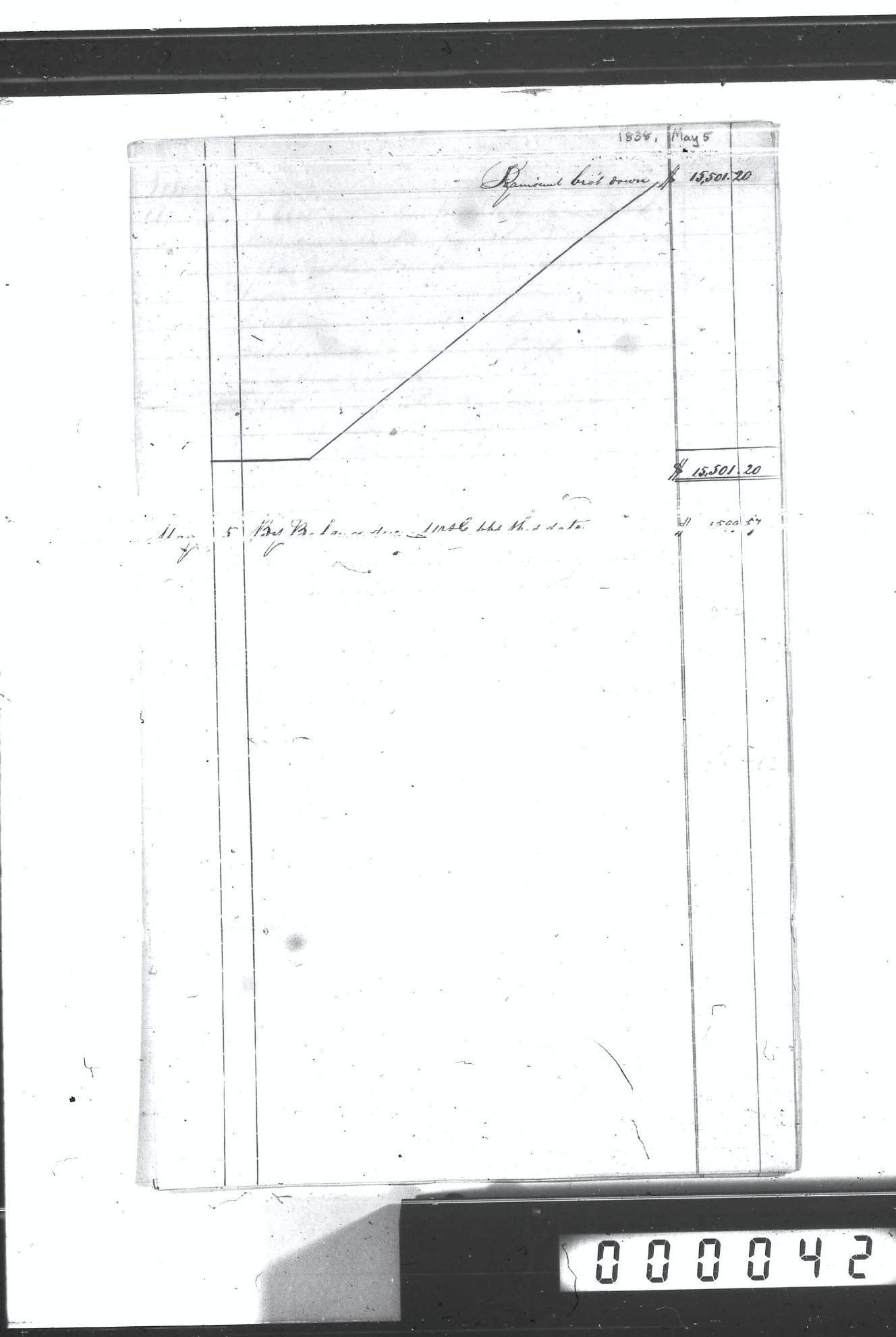
1838 May 5
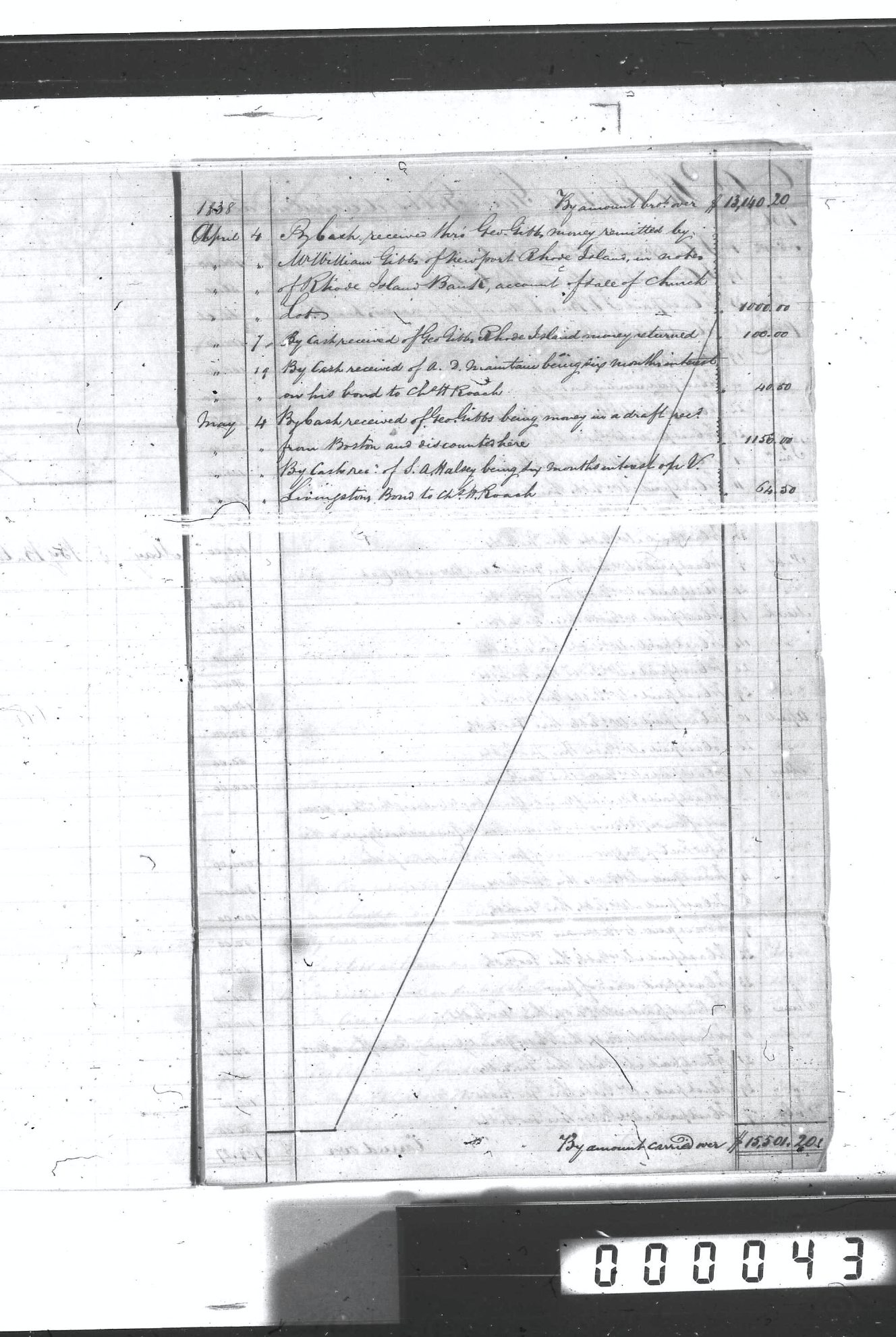
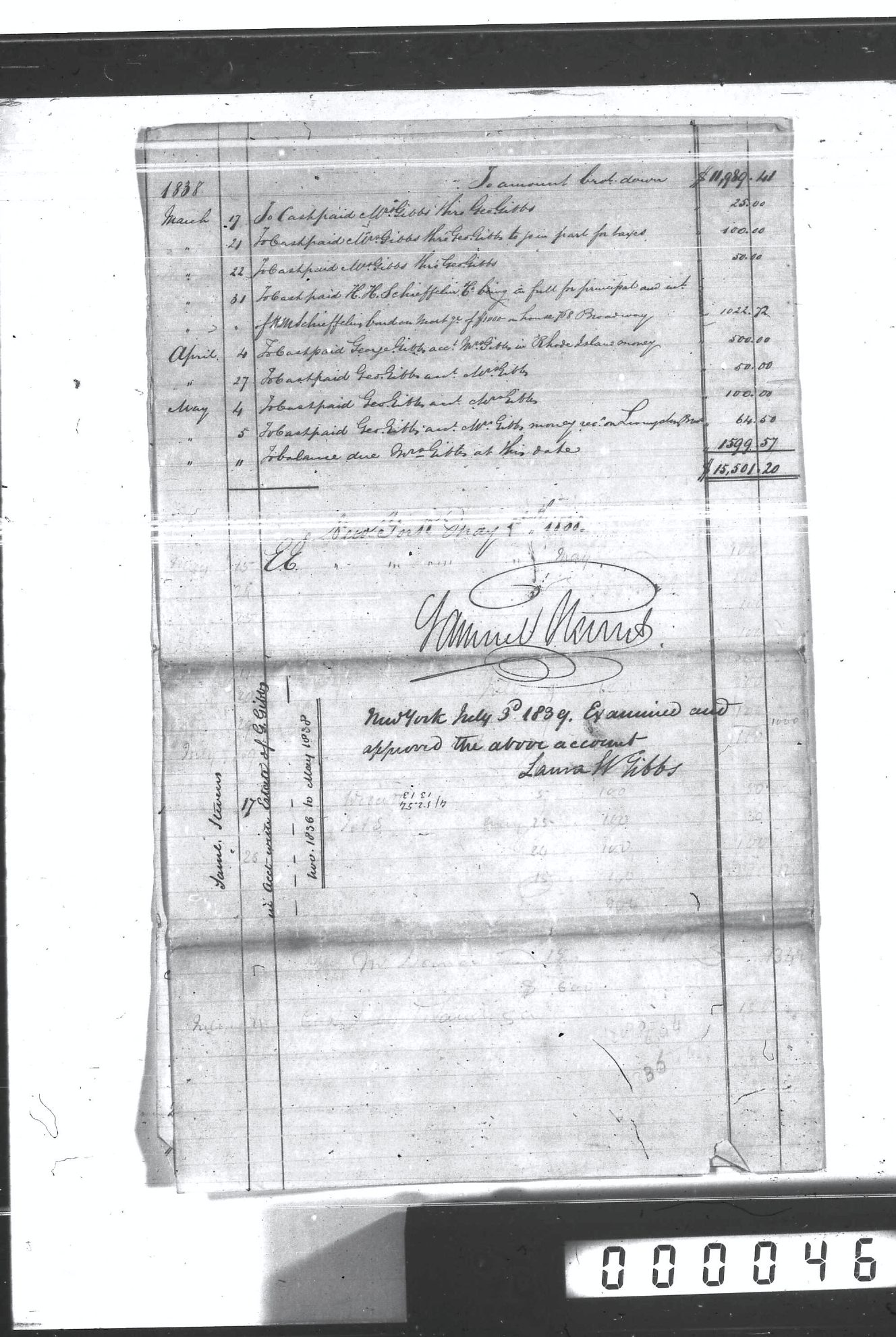
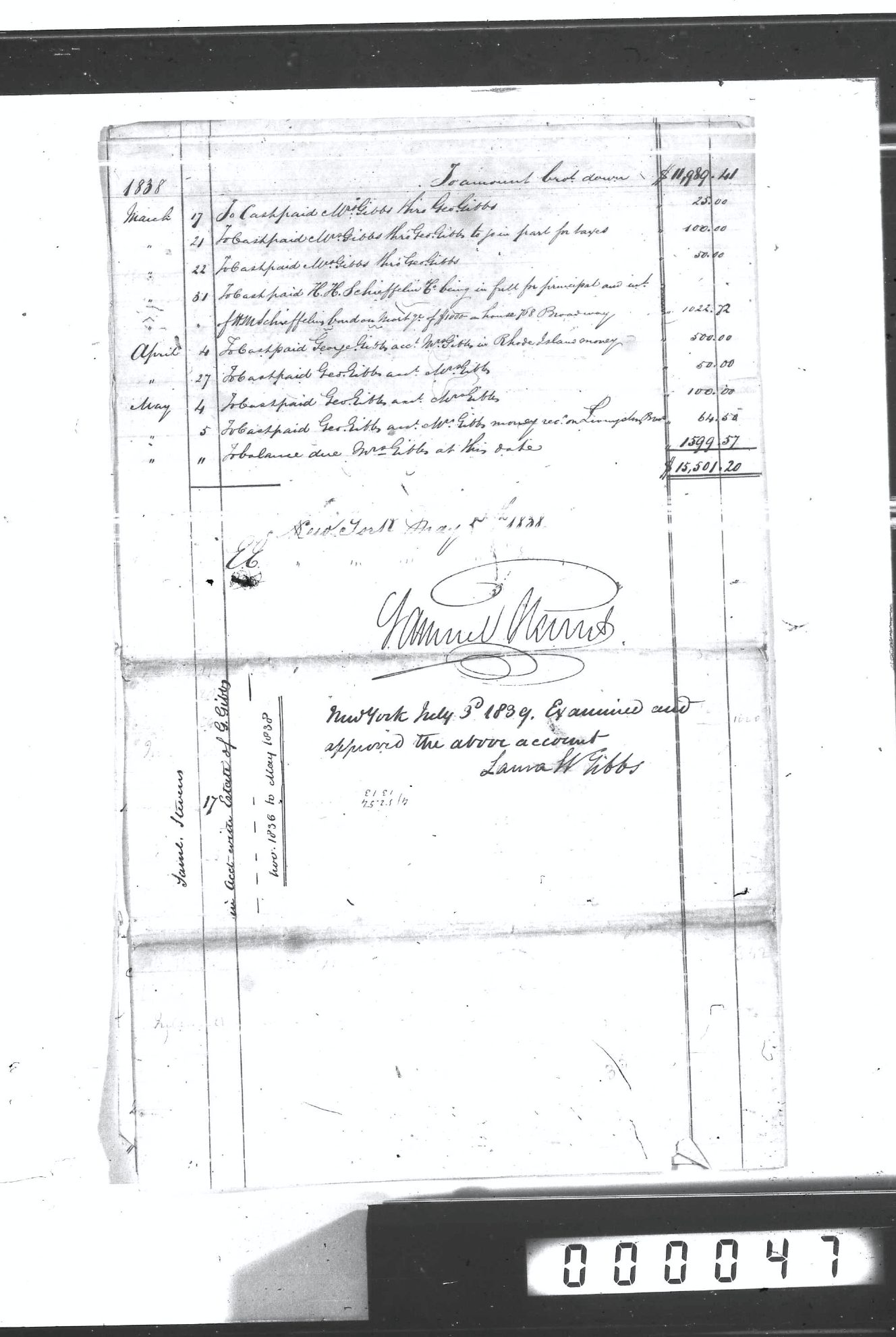
Amount brought down $15,501.20; balance due Mrs. Gibbs $1599.57
1836-1838
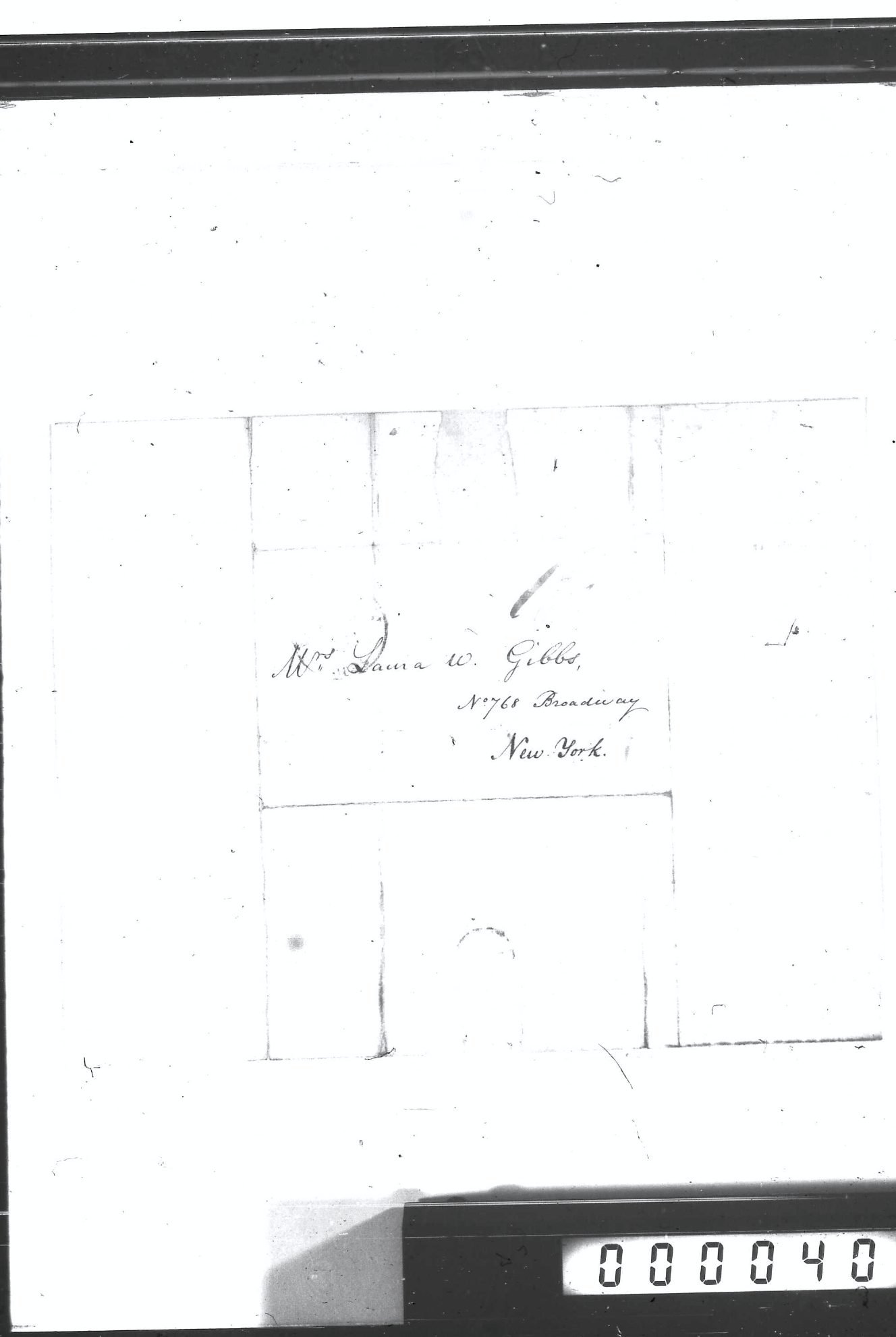
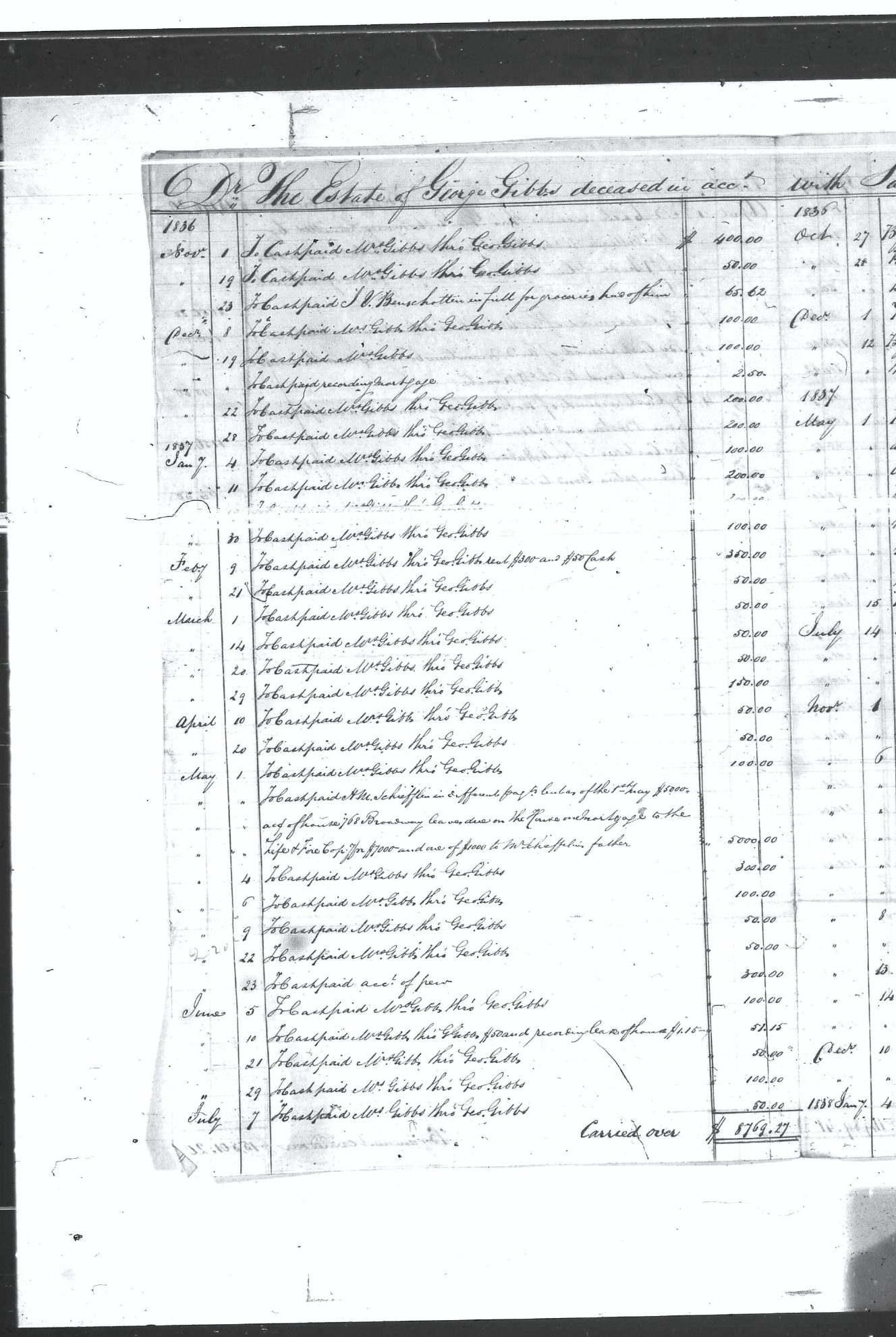
Debit side: cash paid Mrs. Gibbs thro Geo. Gibbs; Schieffelin 768 Broadway mortgage $5000
1838 May-Dec
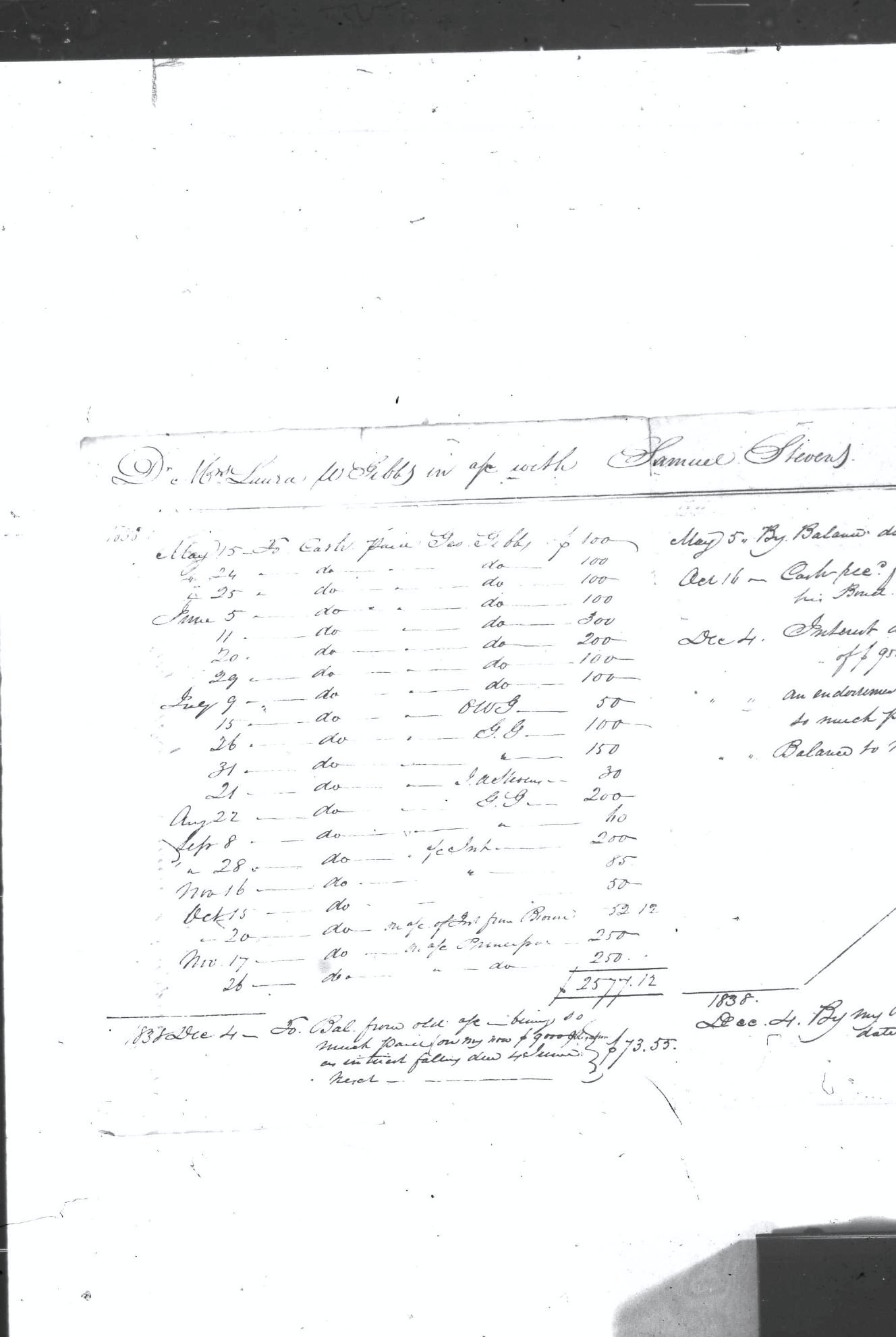
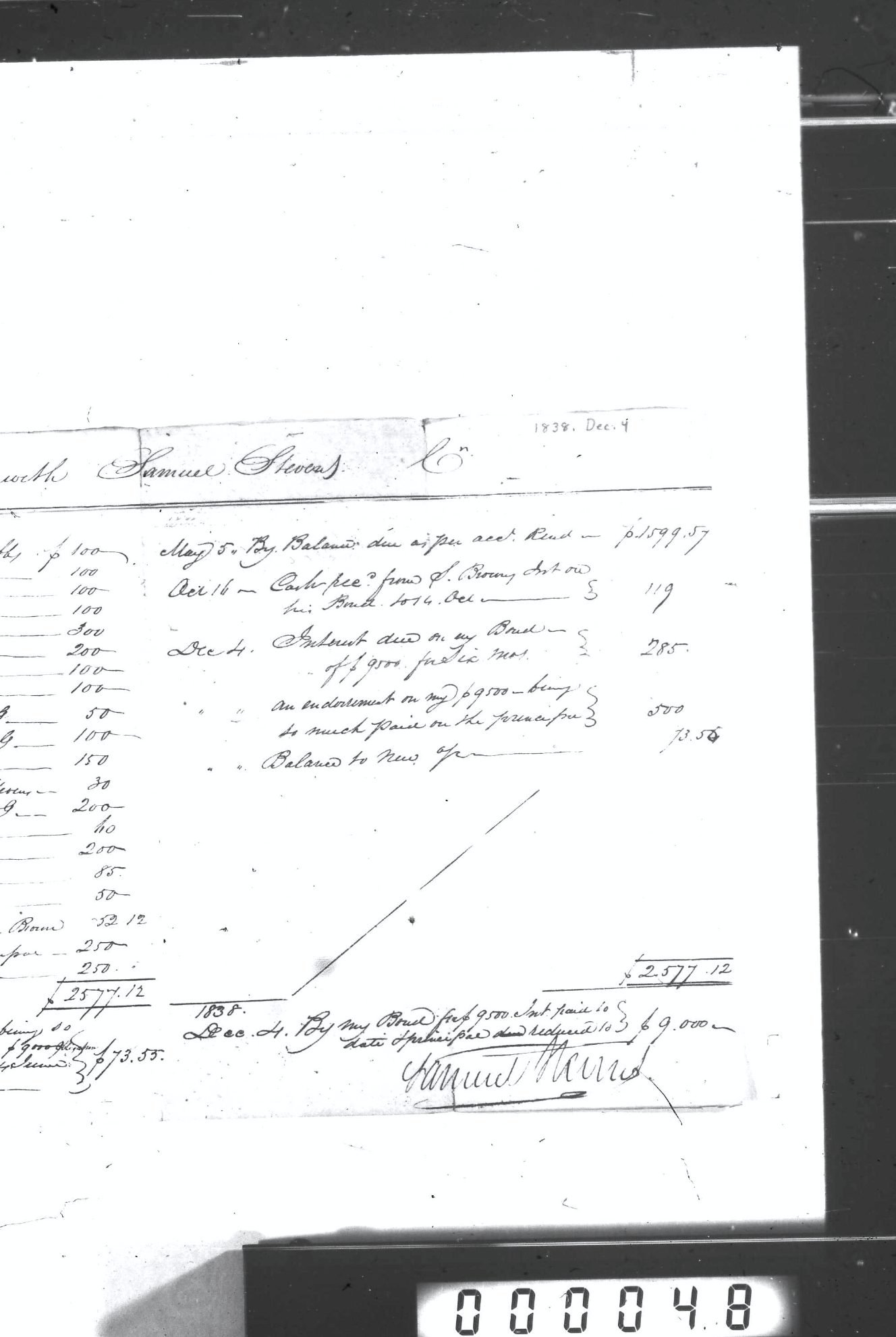
Cash paid Geo. Gibbs and O.W.G. (Wolcott) through year; total $2577.12
1839?
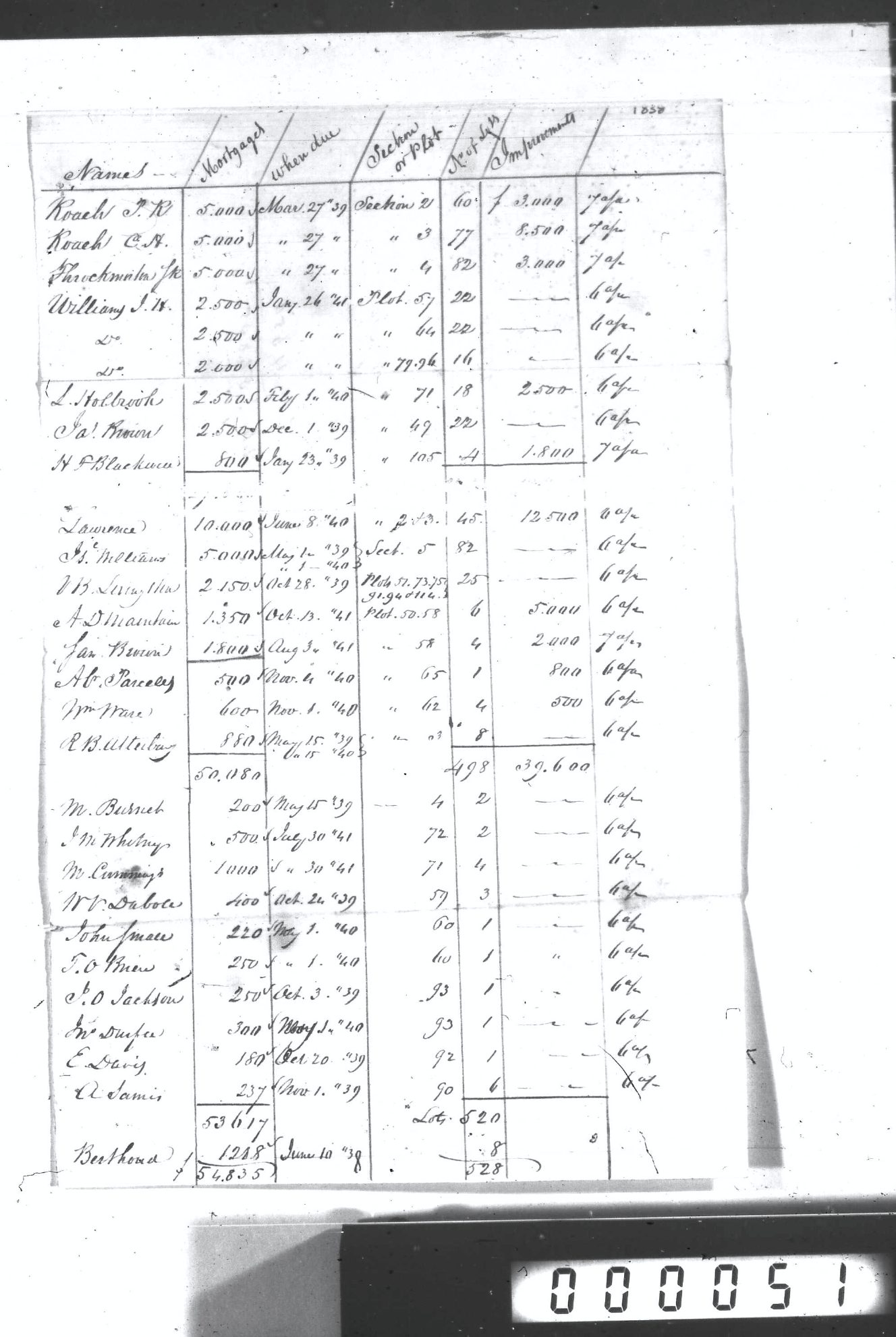
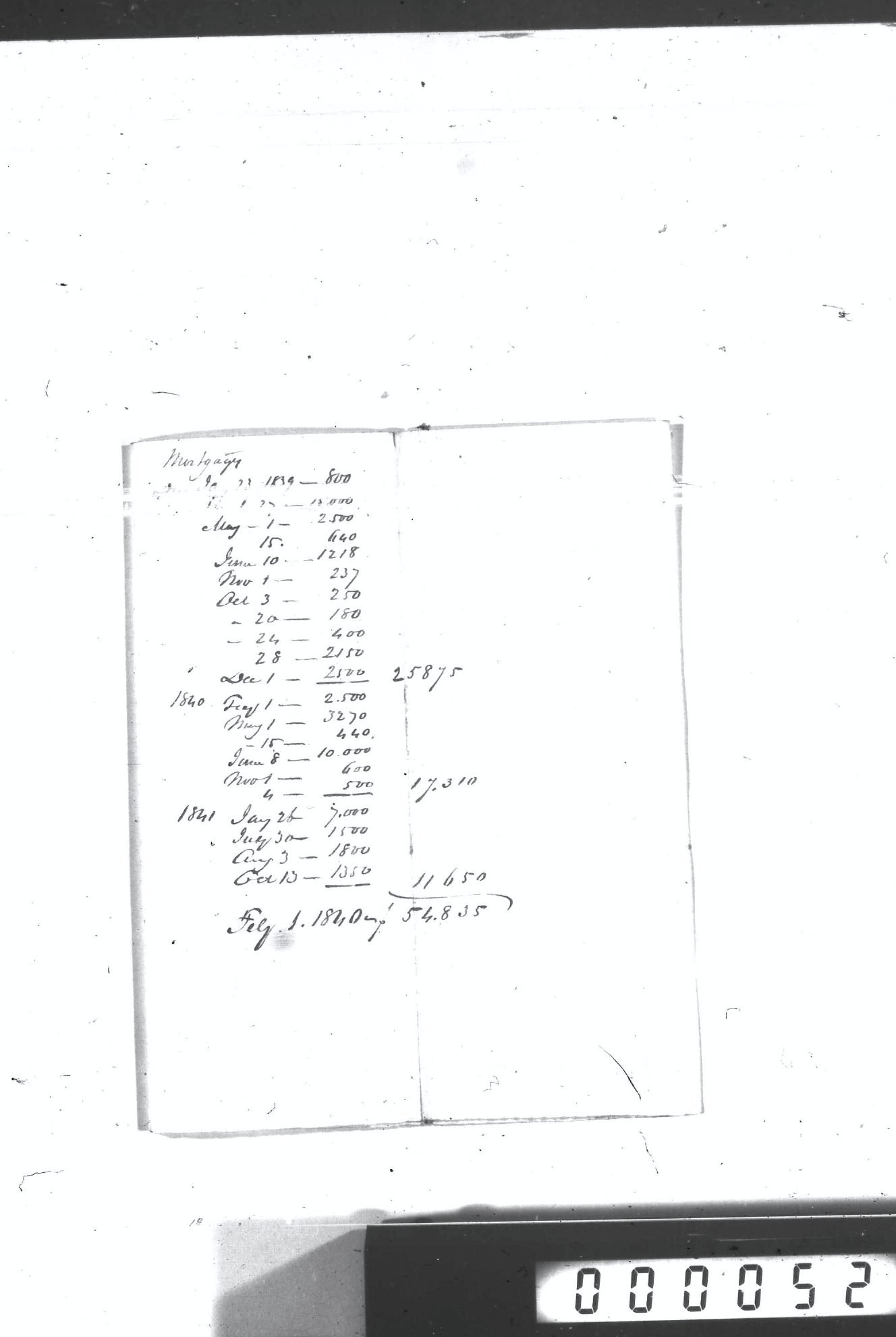
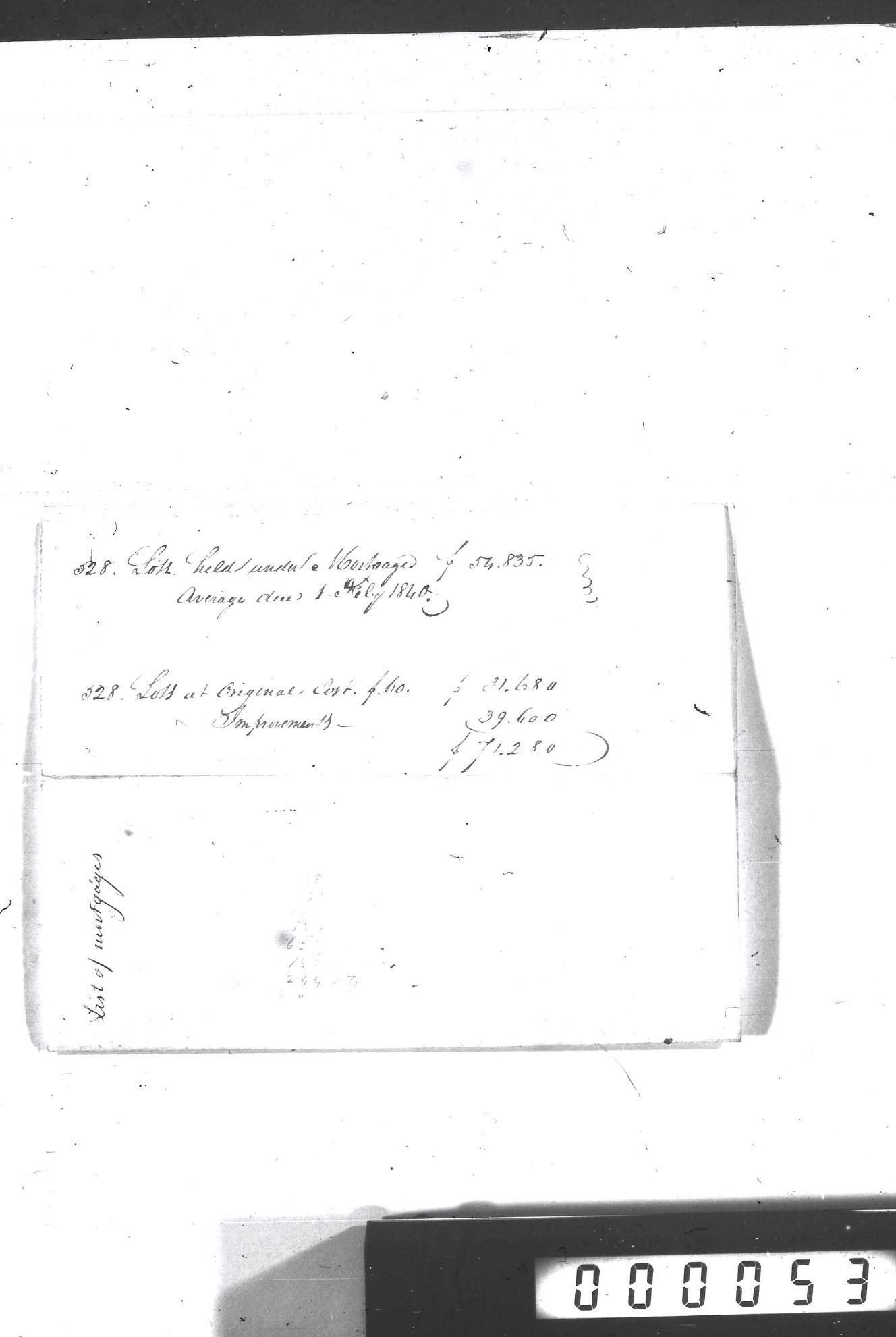
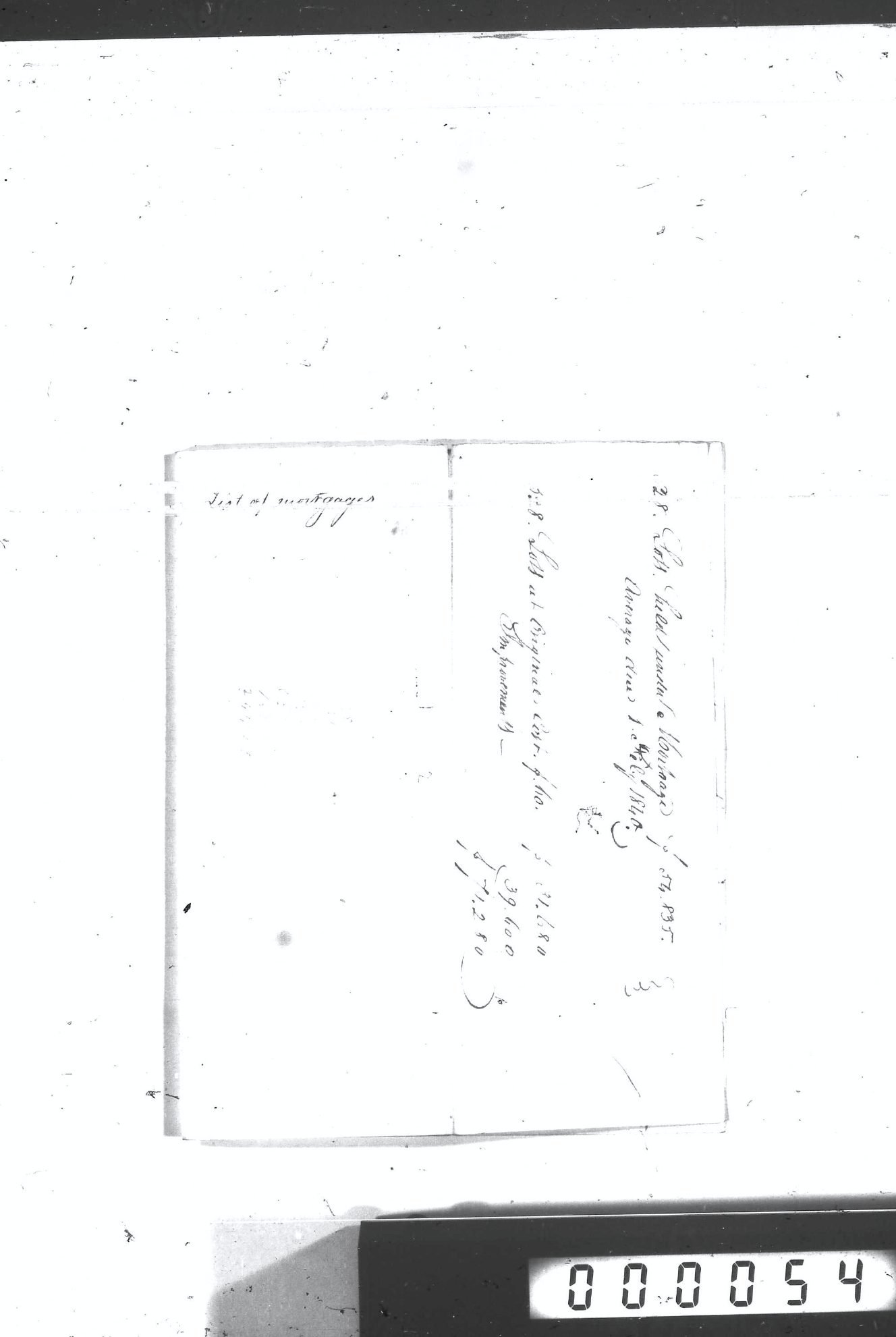
Mortgagors Roach, Throckmorton, Williams, Blackwell etc.; 528 lots, $54,835, improvements $39,600
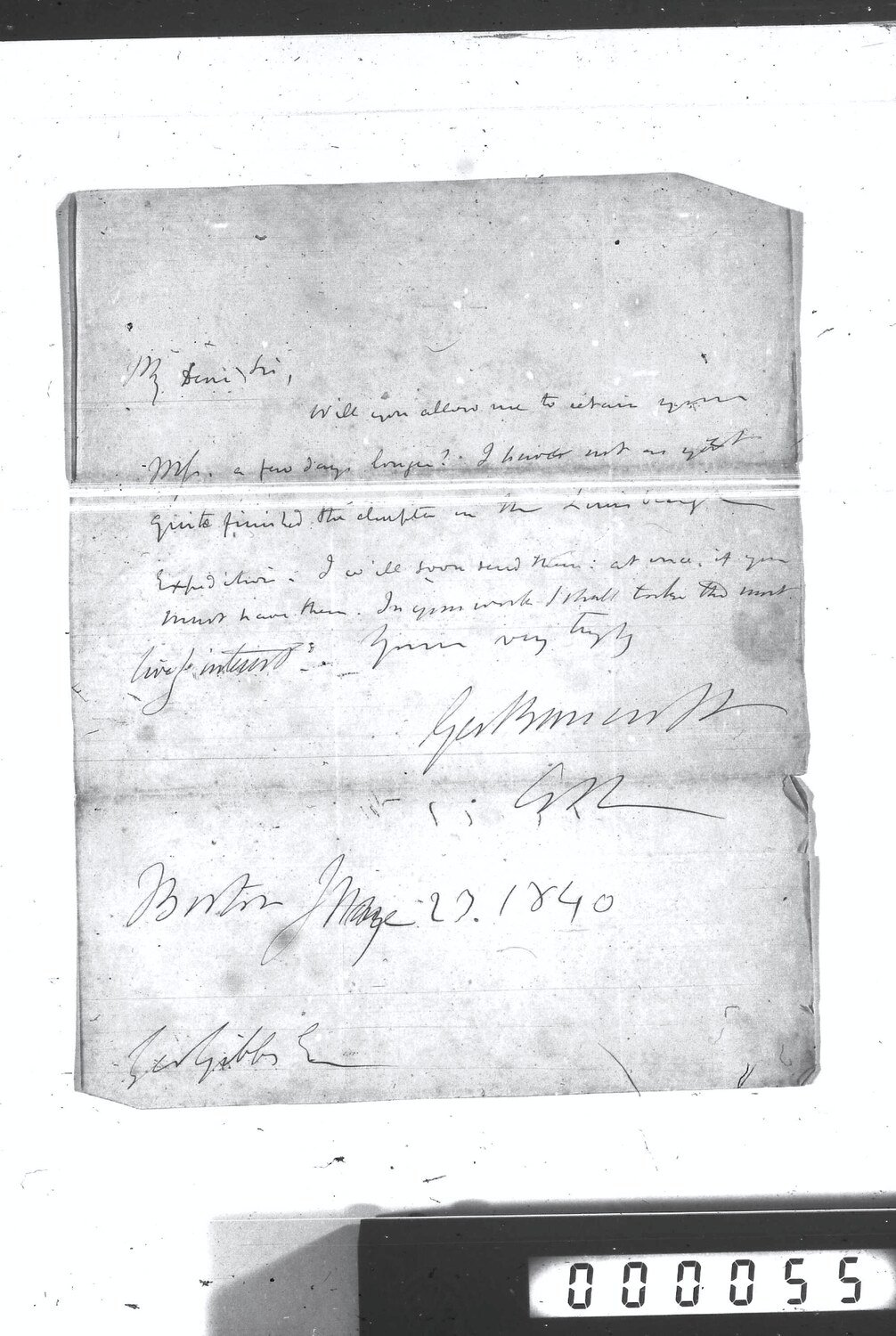
1840 May 27
Boston: begs to keep Gibbs's MSS longer; finishing his Louisbourg Expedition chapter
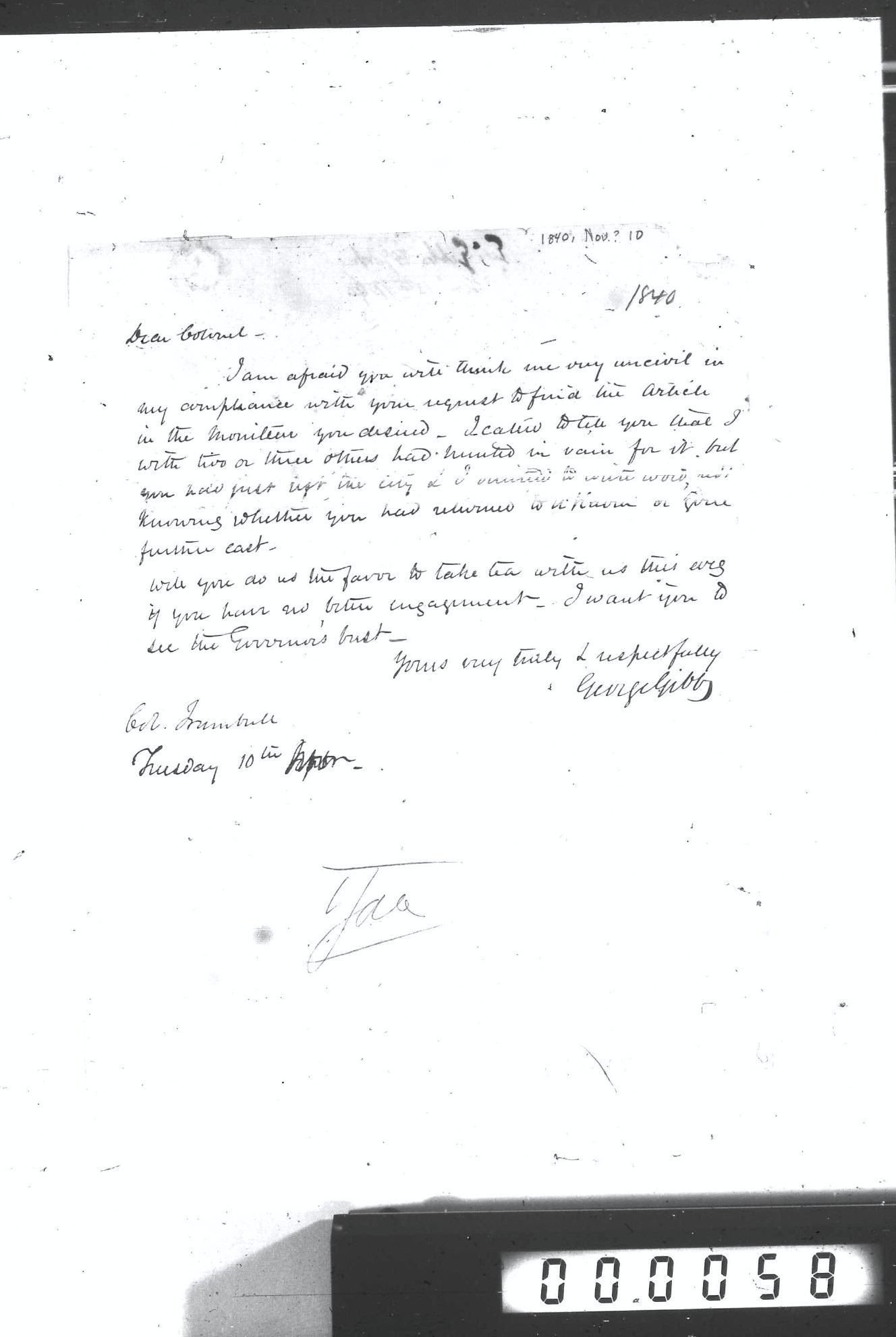
1840 Nov? 10
Hunted vainly for Moniteur article; invites him to tea to see the Governor's bust
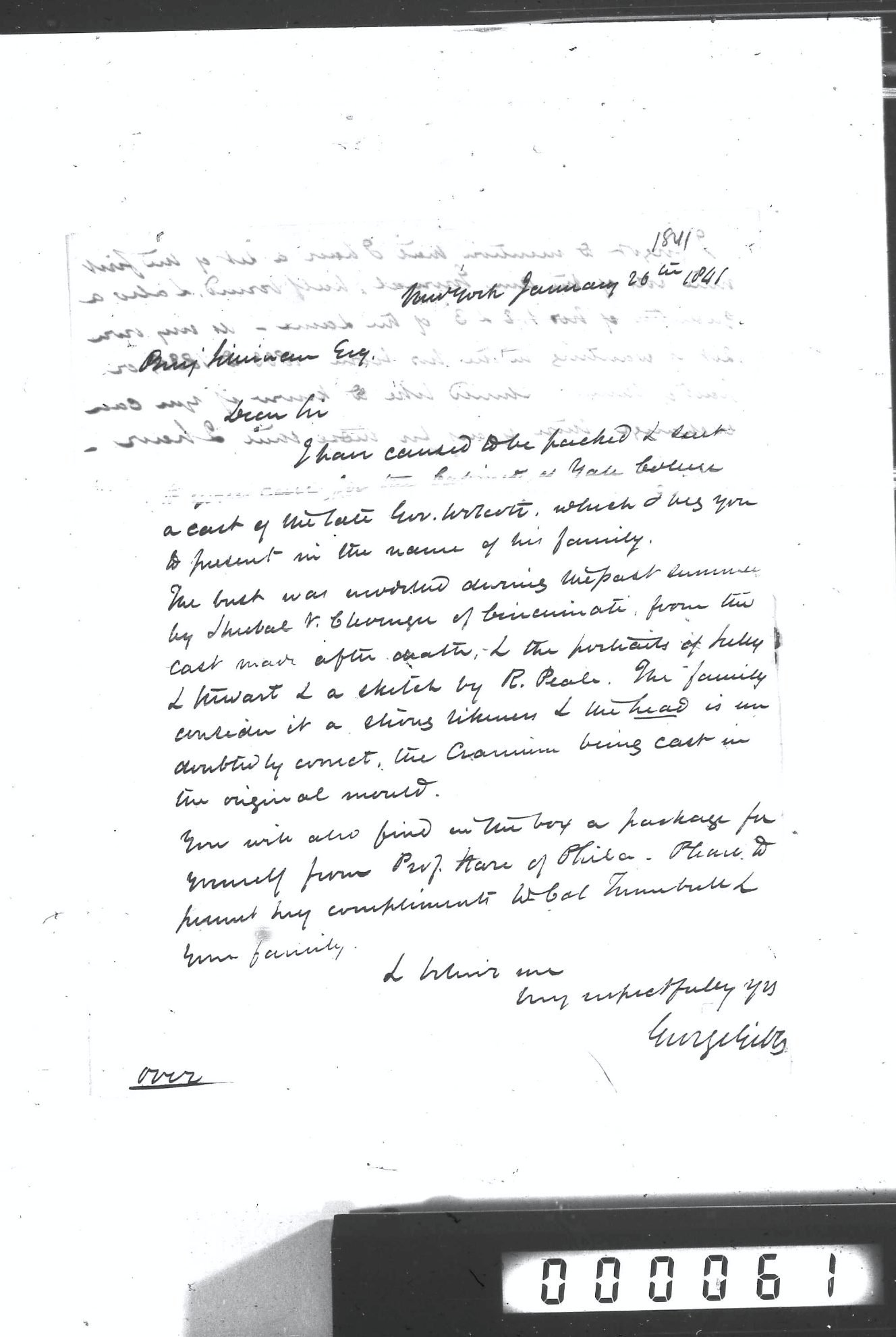
1841 Jan 26
sends Clevenger's bust of late Gov. Wolcott to Yale cabinet; package from Prof. Hare
1842?
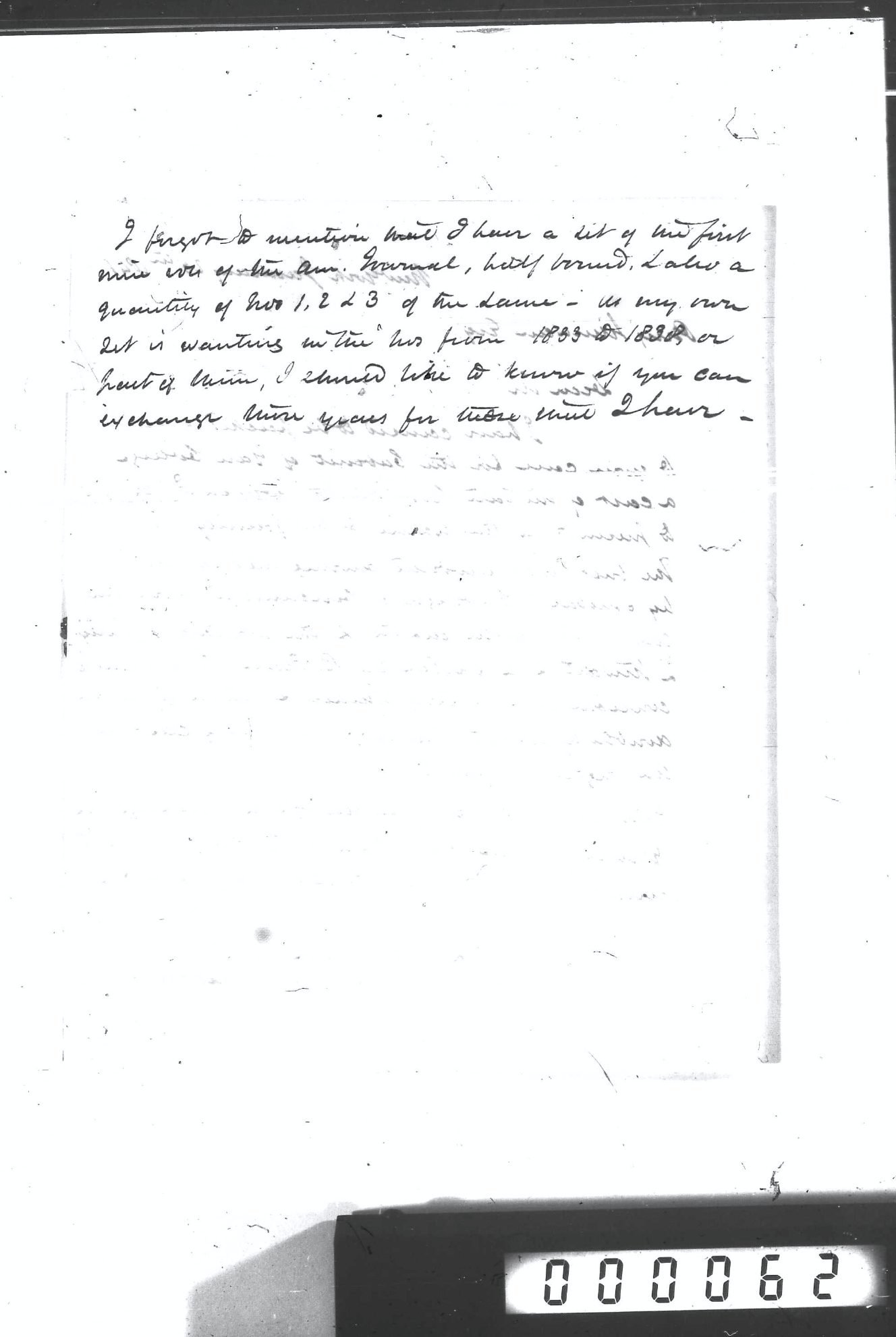
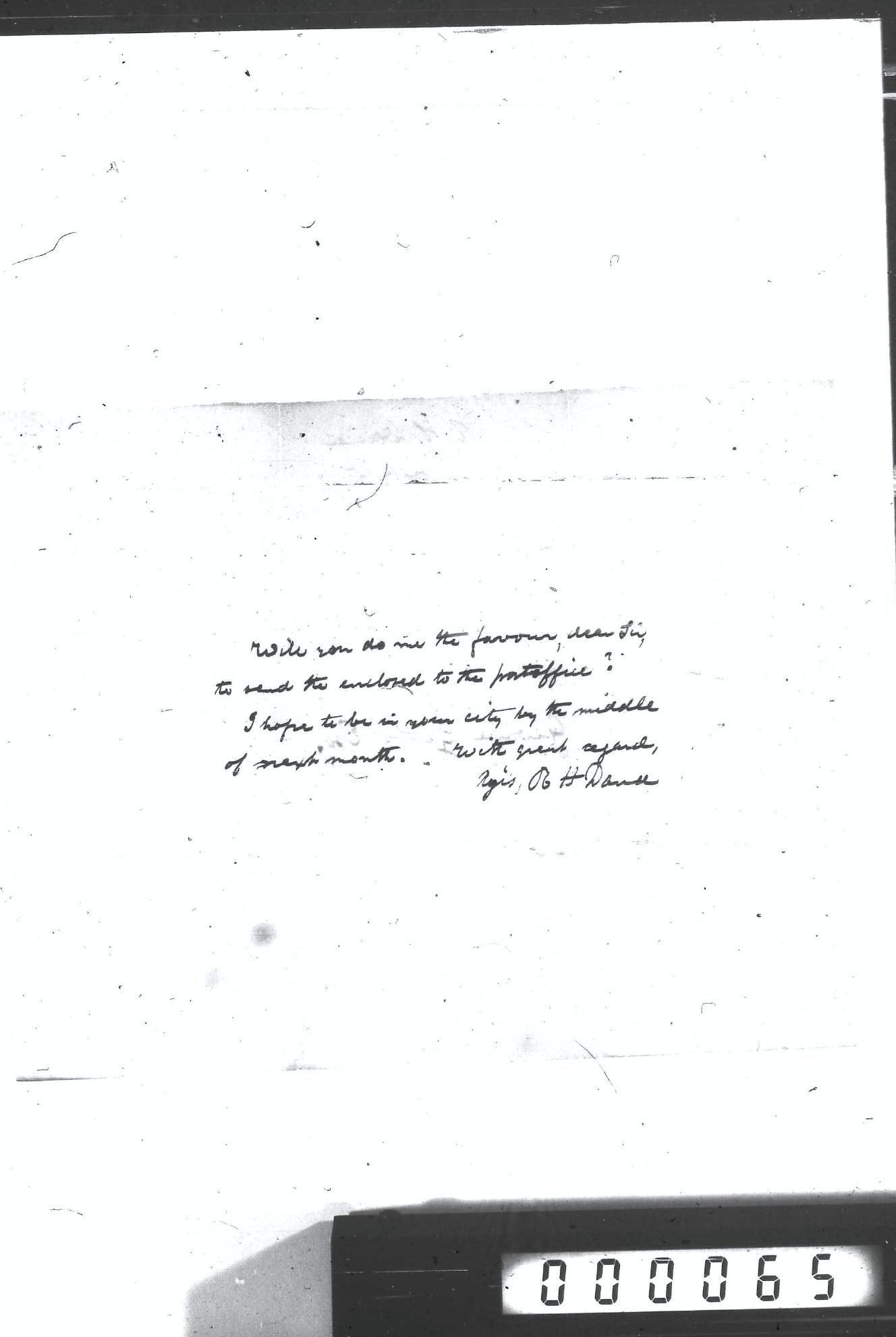
brief note: mail the enclosed; hopes to be in New York next month
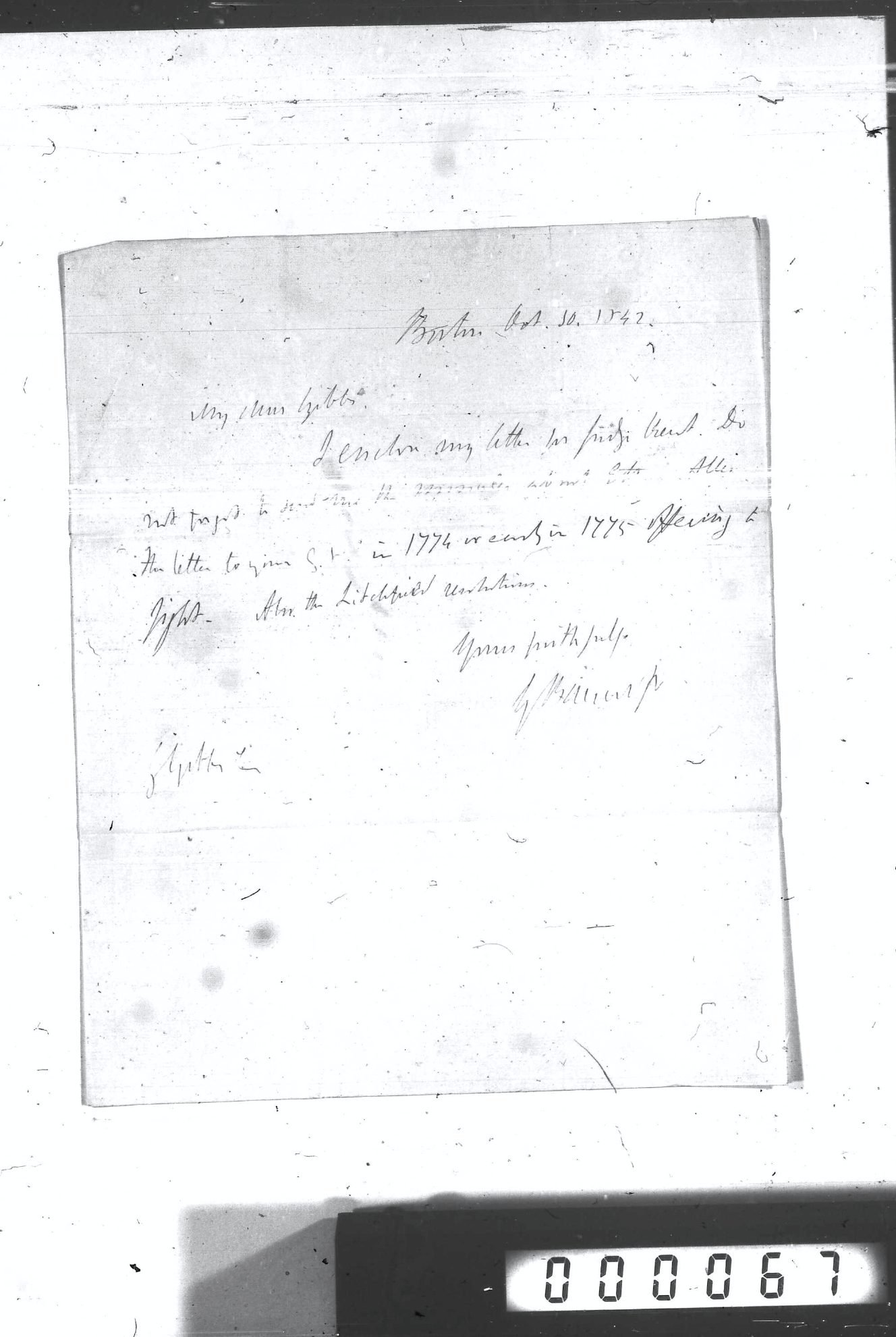
1842 Oct 30
encloses letter for Judge Kent; wants 1774-75 letter and Litchfield resolutions
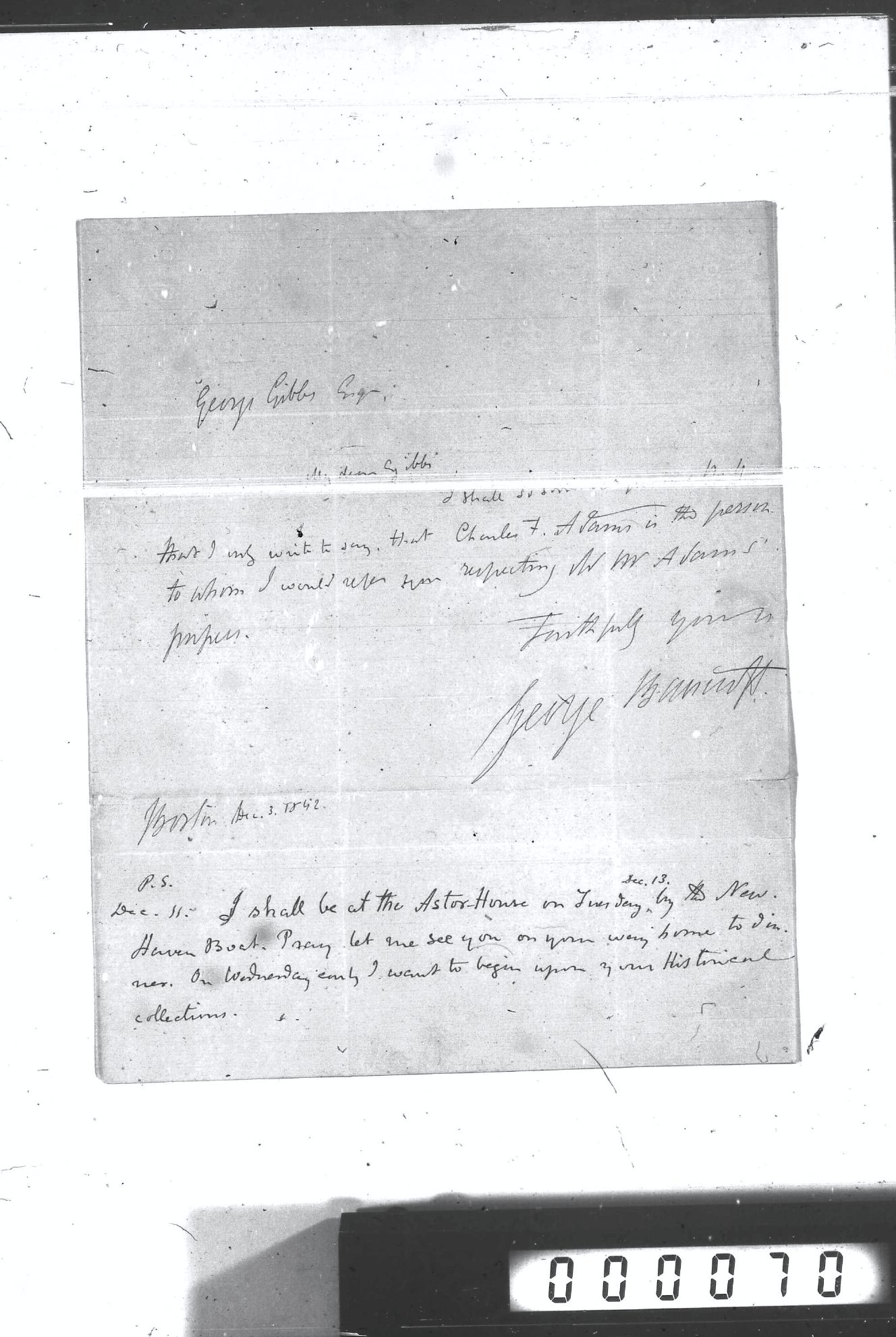
1842 Dec 3
refers him to Charles F. Adams for Adams papers; PS: coming to examine Gibbs's historical collections
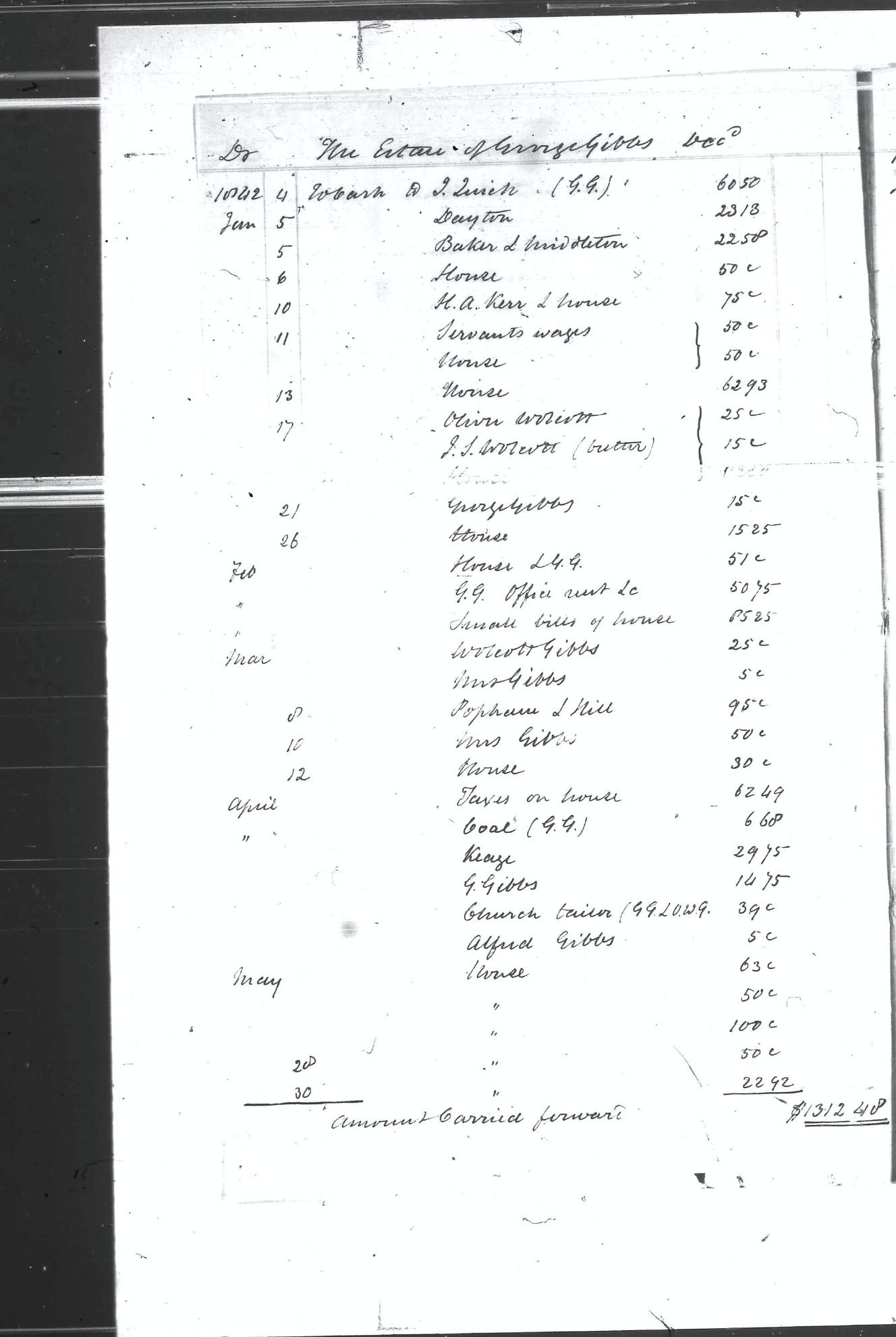
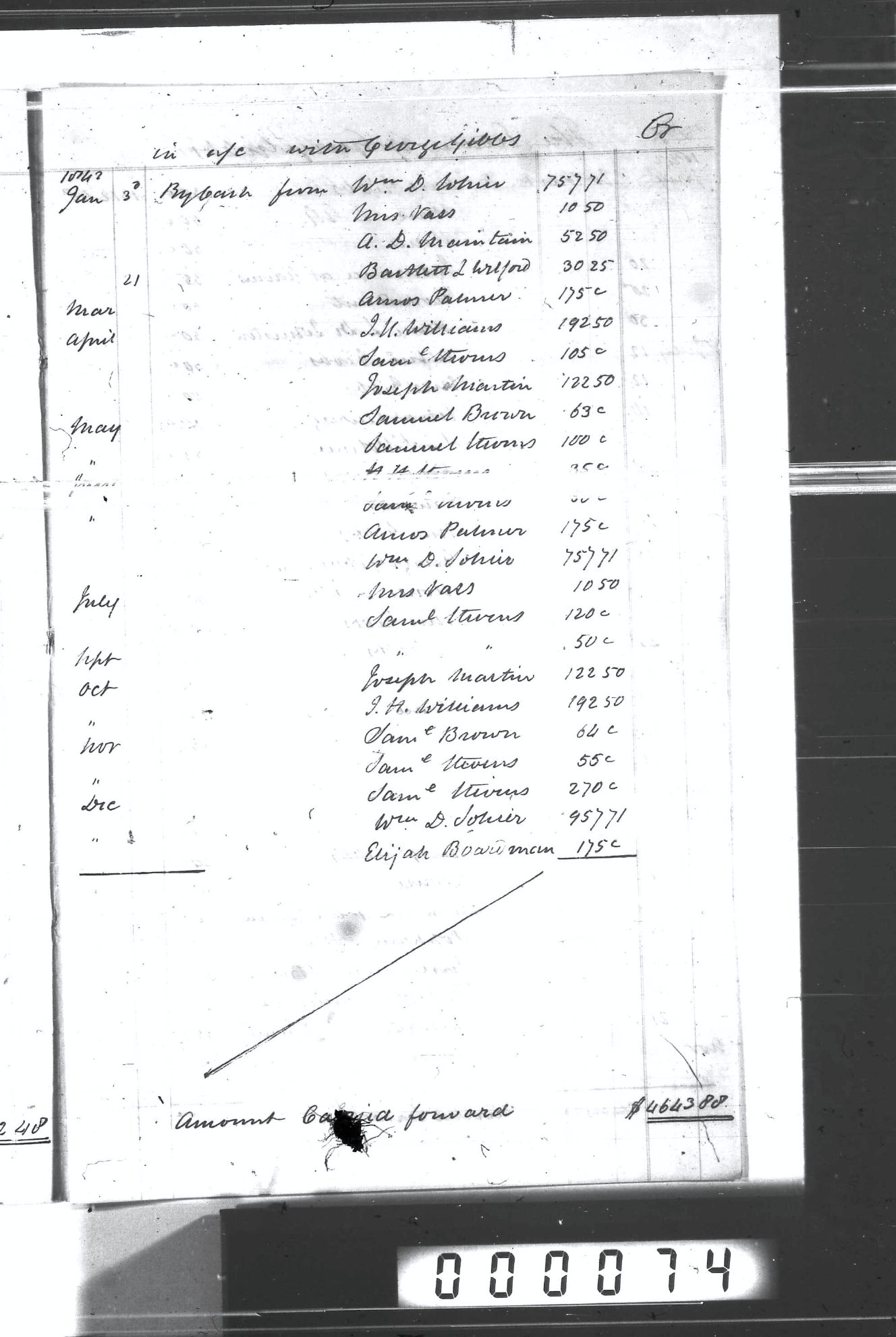
1842
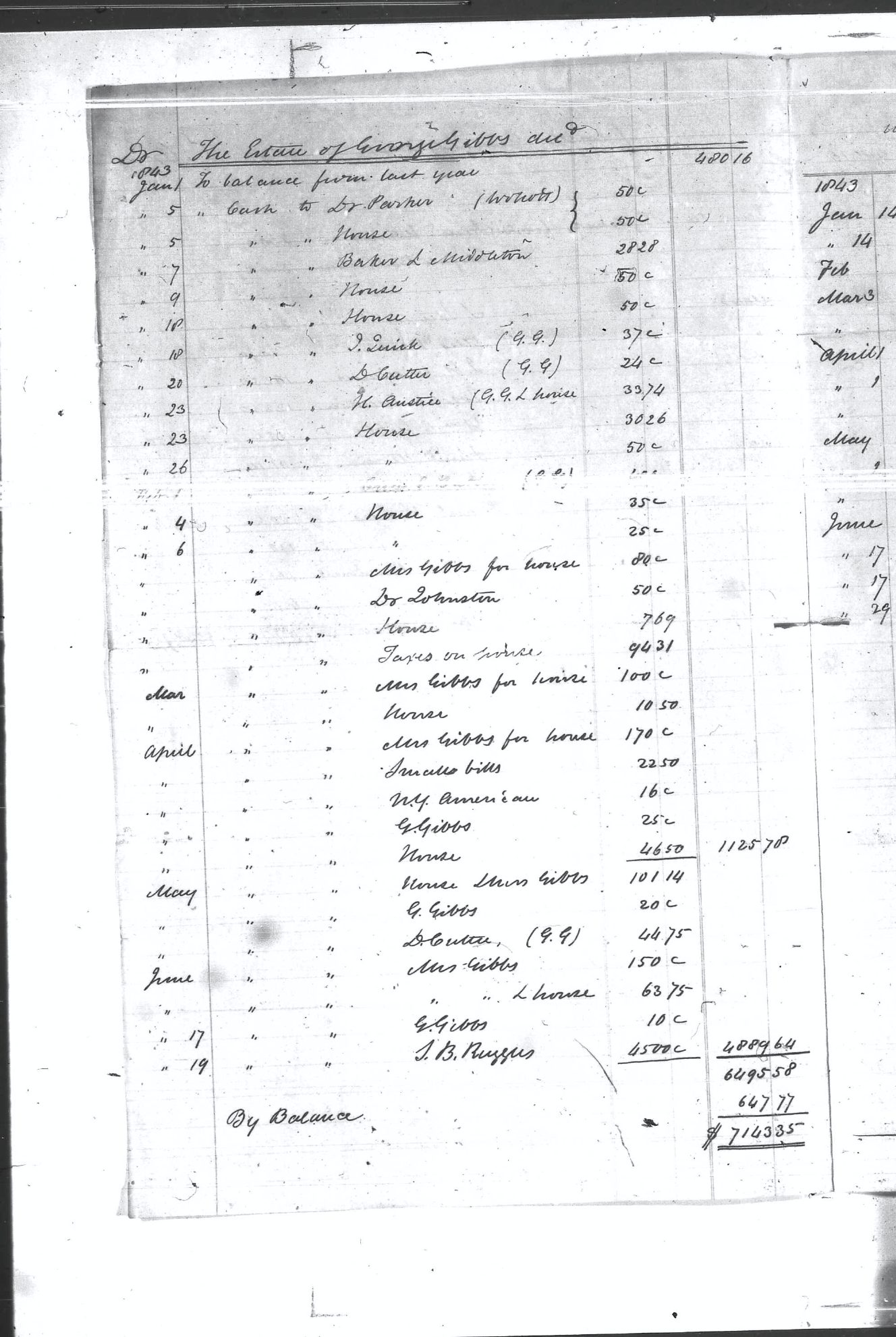
debit side Jan-May 1842: house, servants, entries for family members incl. Alfred
1843
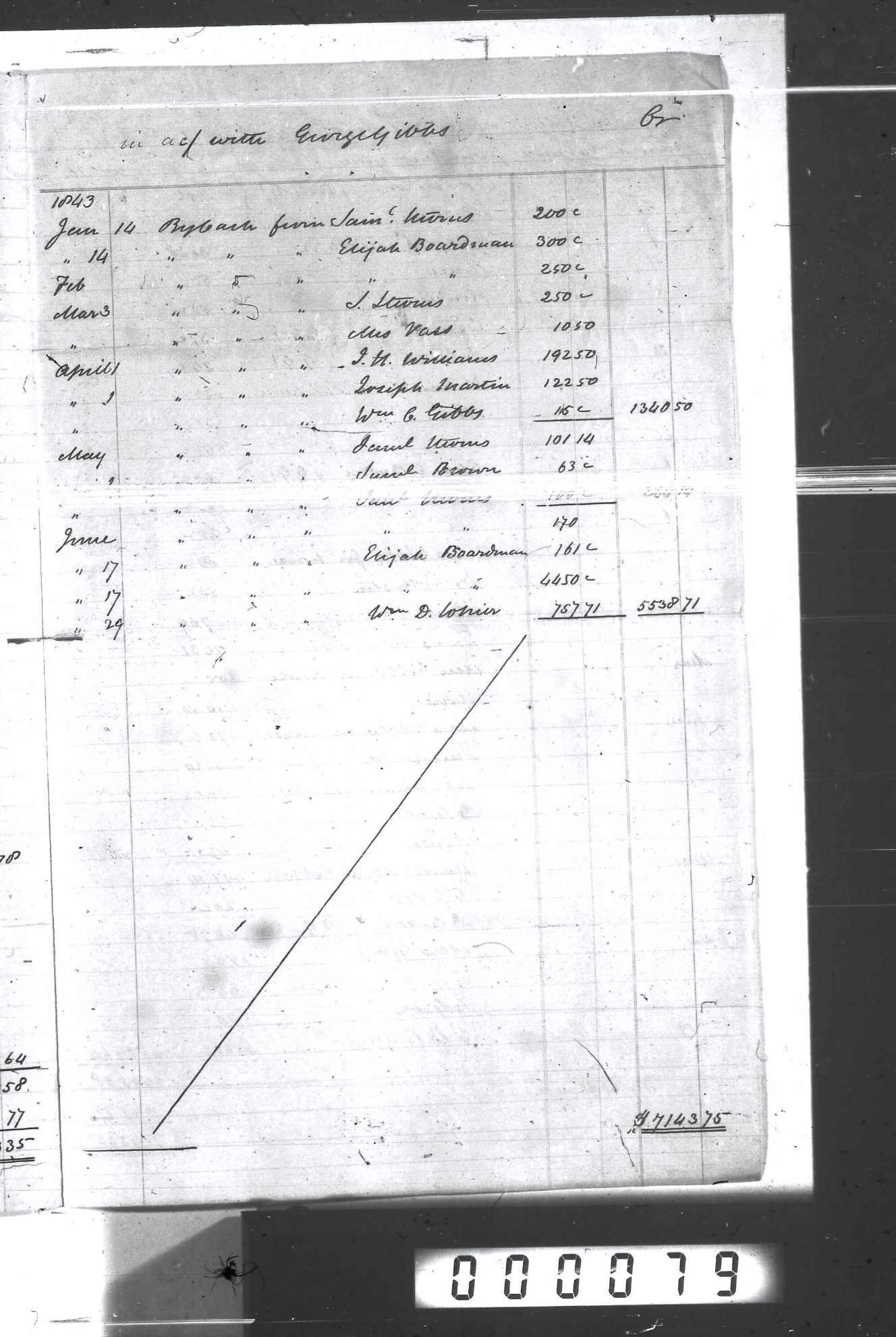
debits Jan-June 1843: Dr Parker for Wolcott, taxes, Mrs Gibbs, J.B. Ruggles
1843
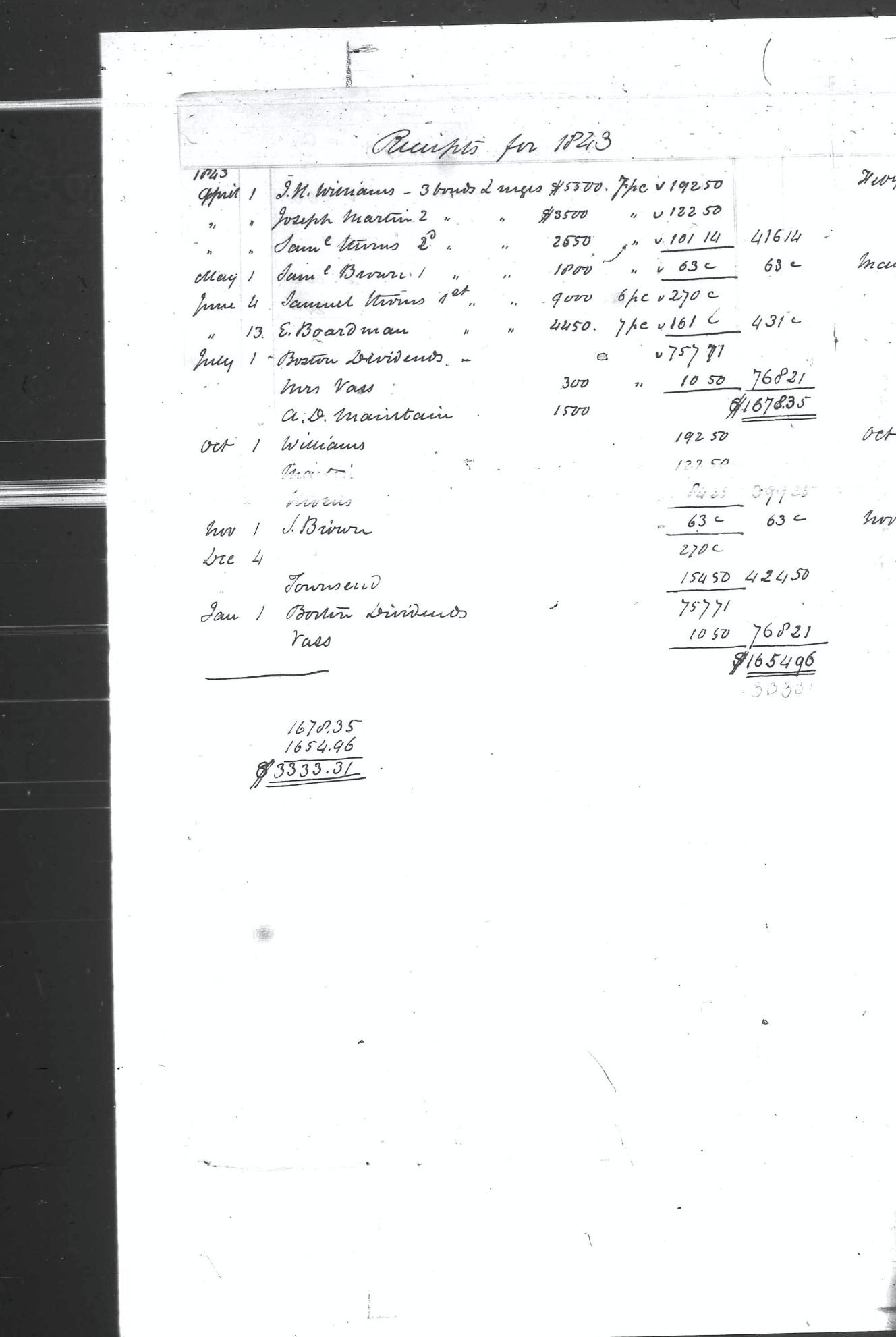
"Receipts for 1843": bond/mortgage interest, Boston dividends; total $3333.31
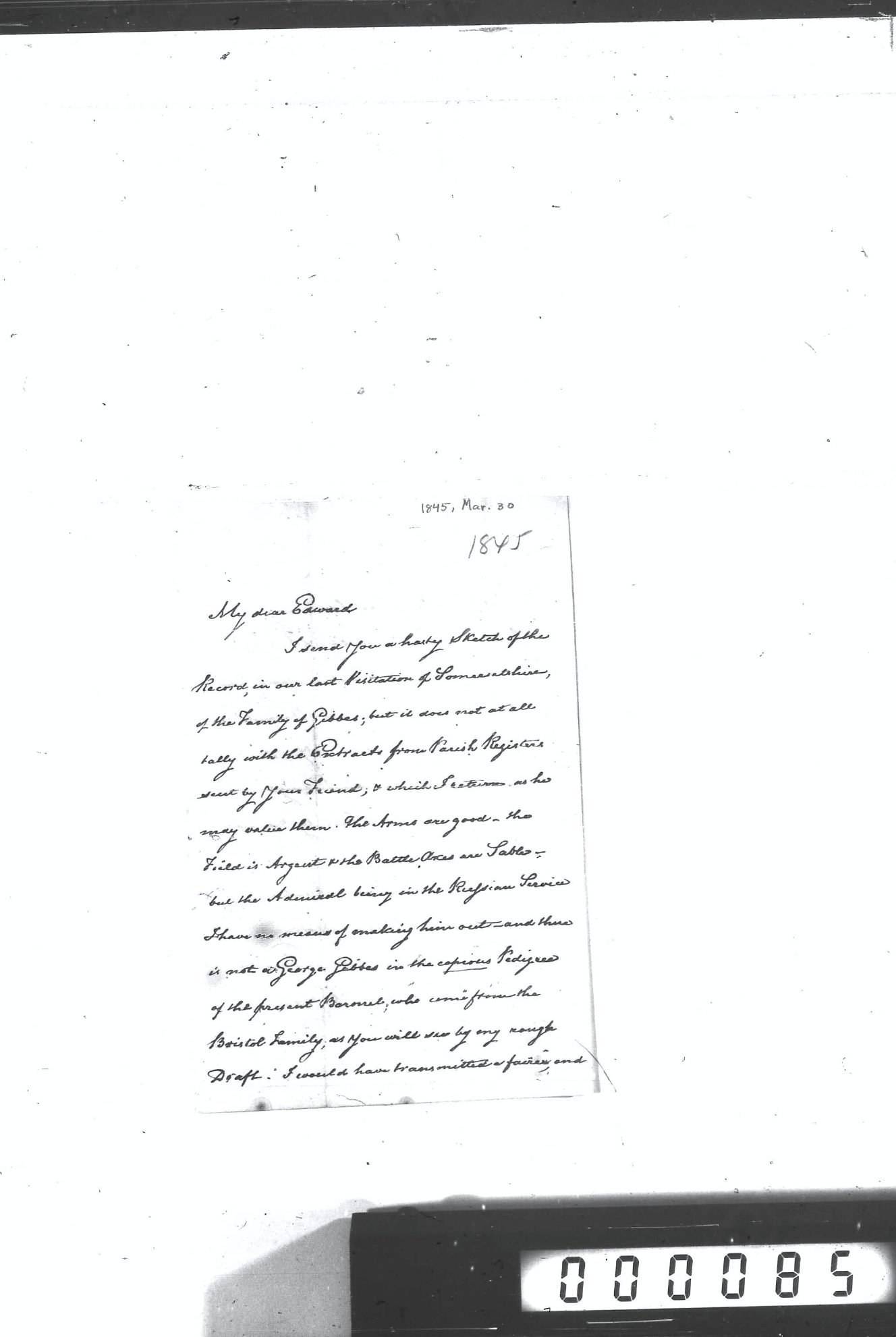
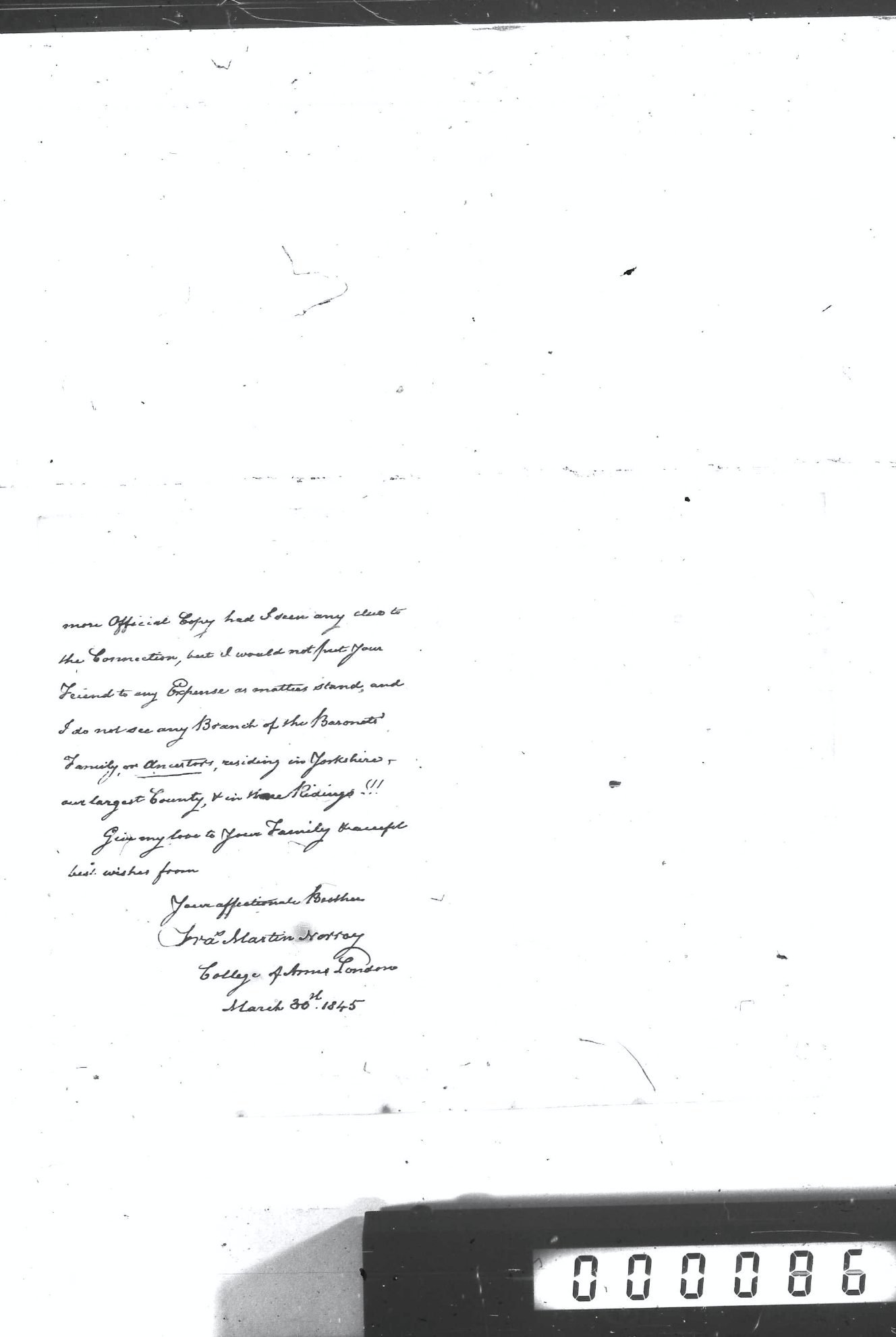
1845 Mar 30
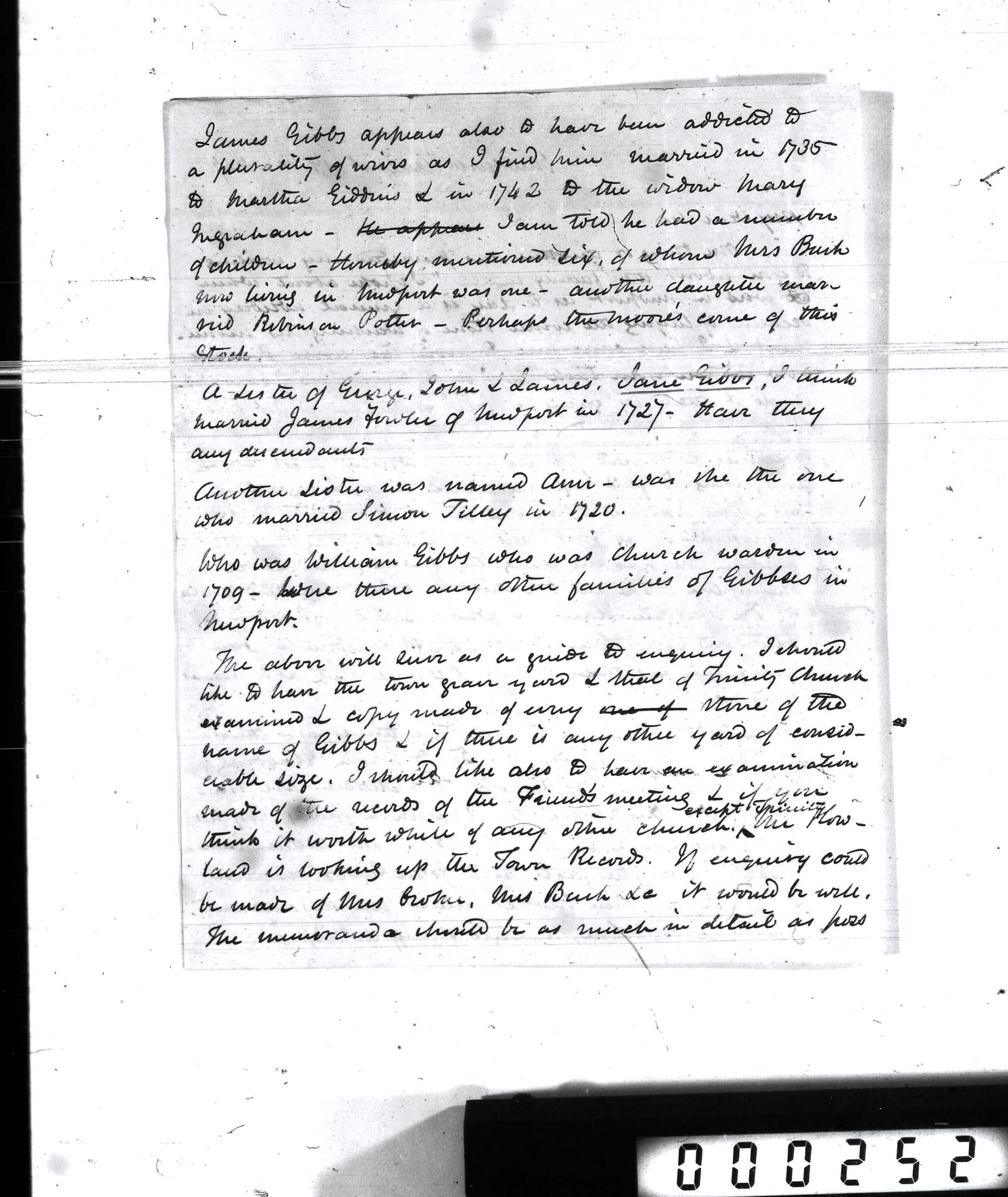
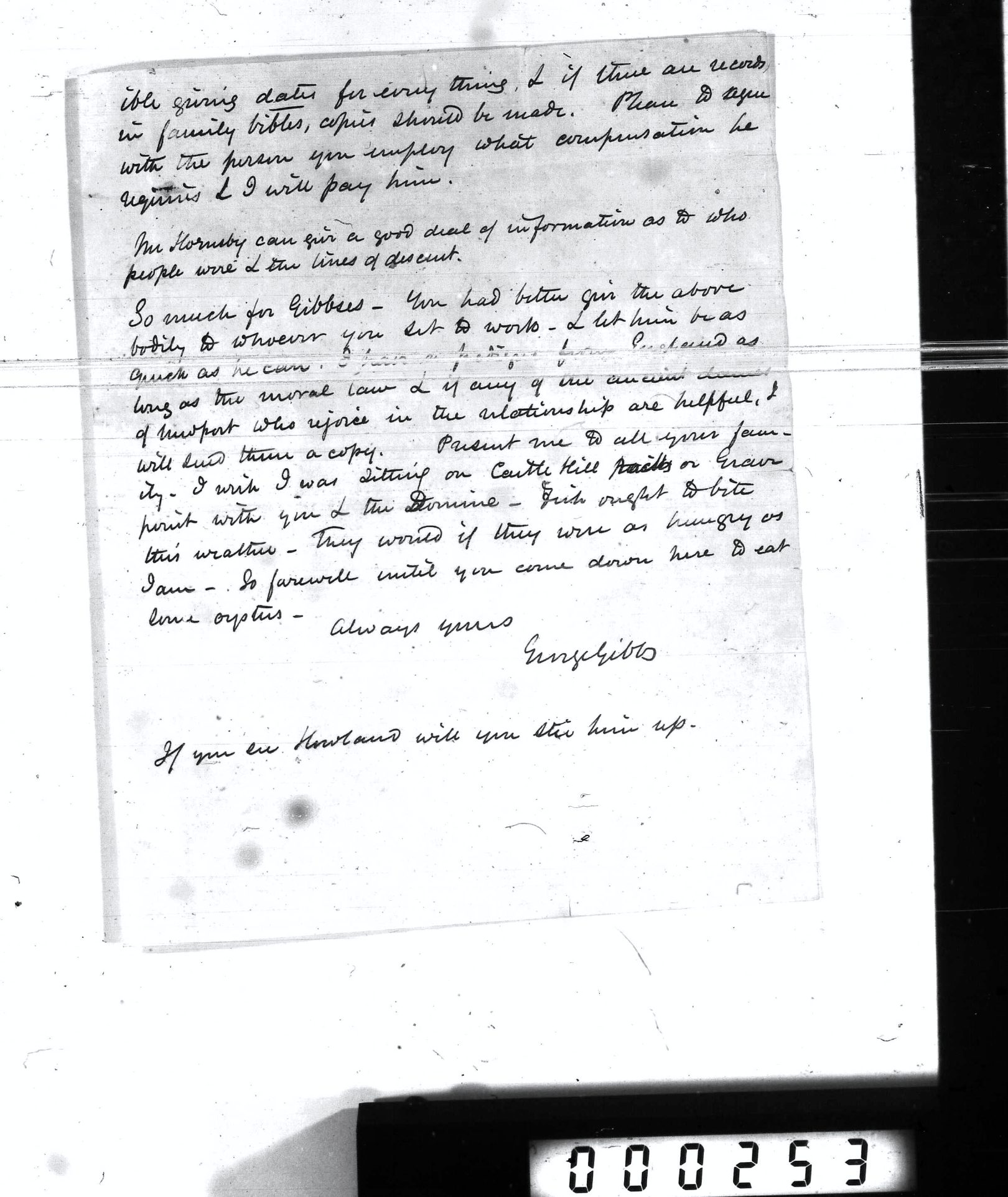
Gibbes pedigree from Somersetshire Visitation; arms argent, battle-axes sable; no George Gibbs found
1845 Apr 30?
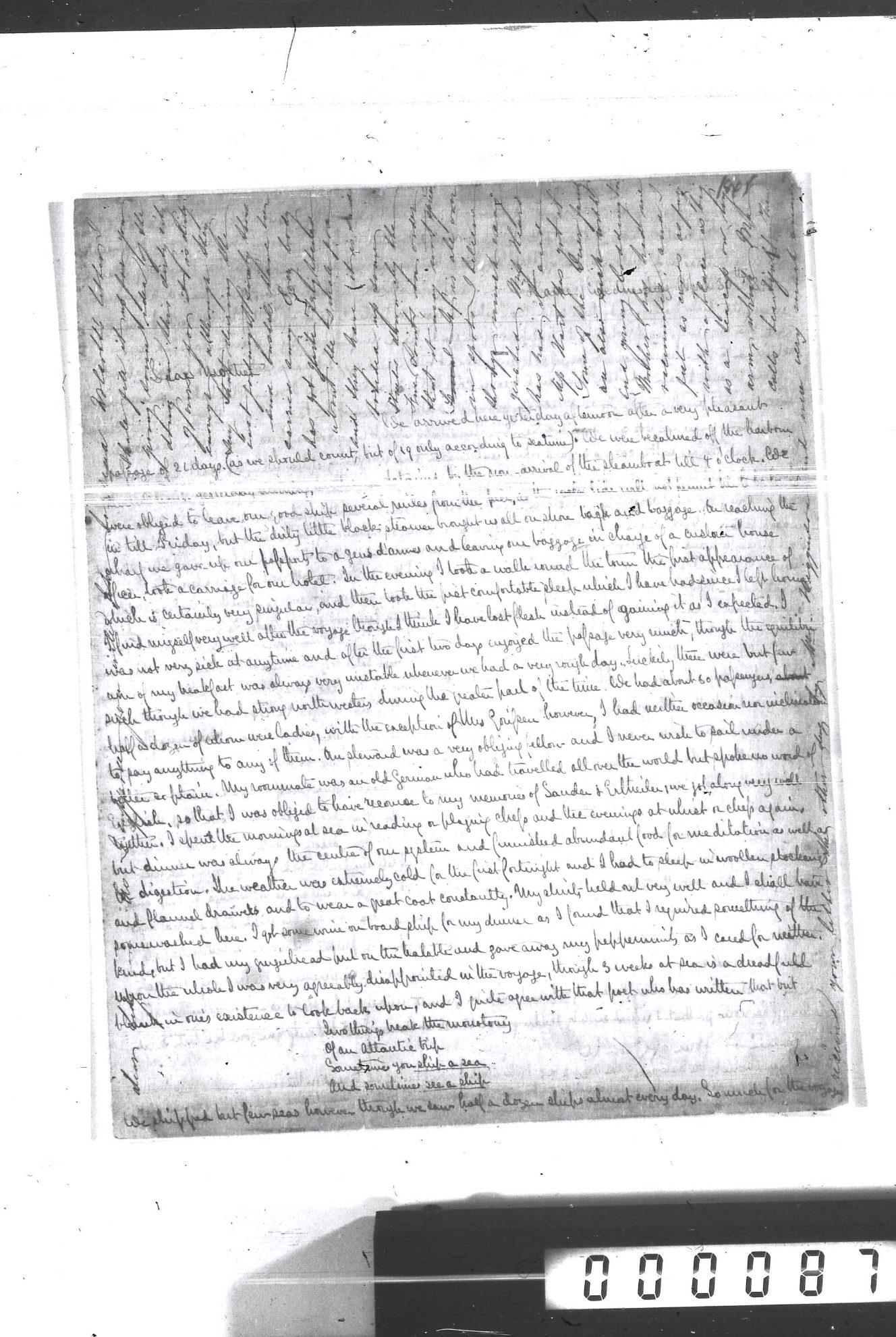
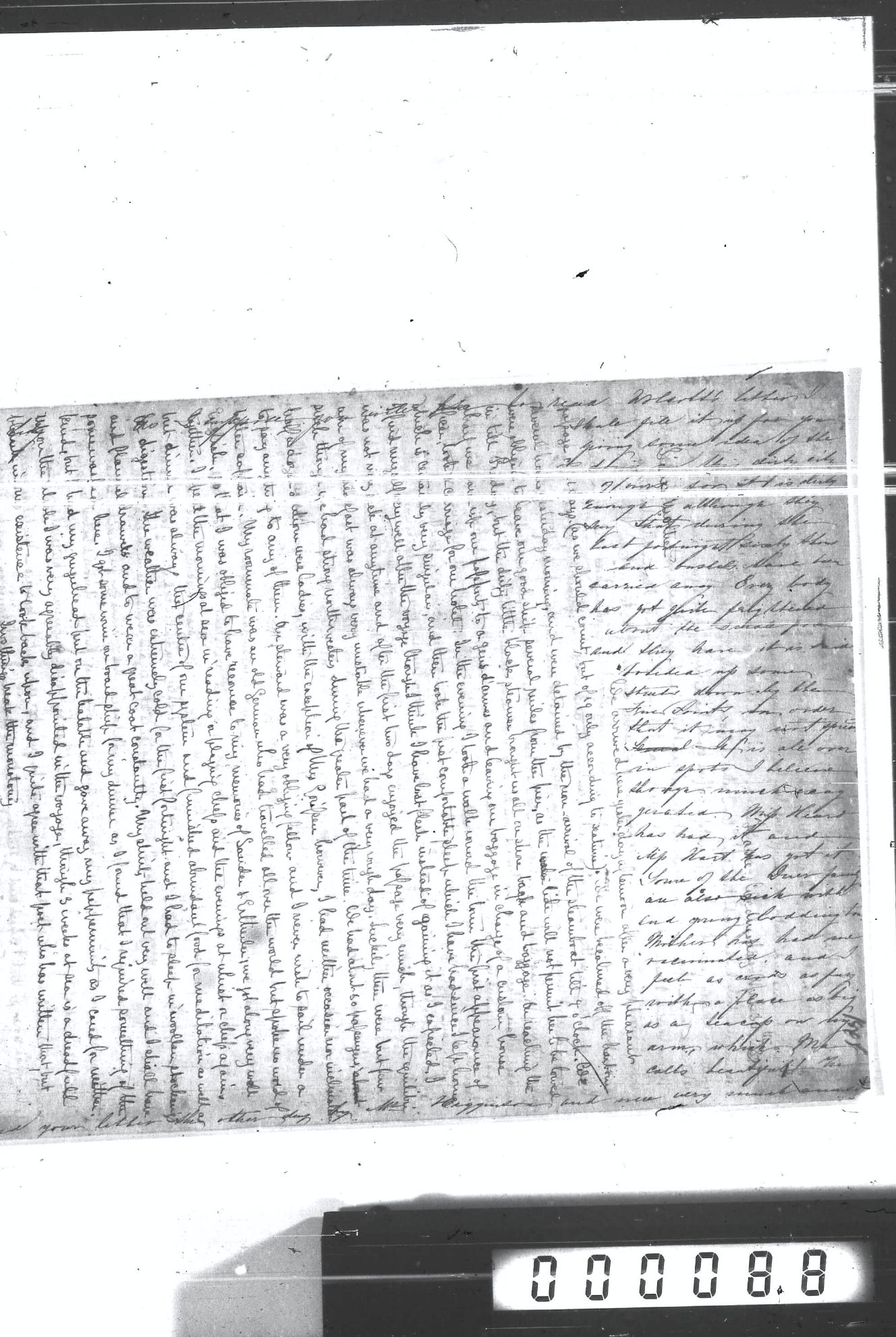
arrived Havre after 21-day crossing; cross-written; seasickness, German cabin-mate, shipboard life
1845?
family news: George took clothes to Alfred at West Point, studying hard for examination; weddings, Caroline's death
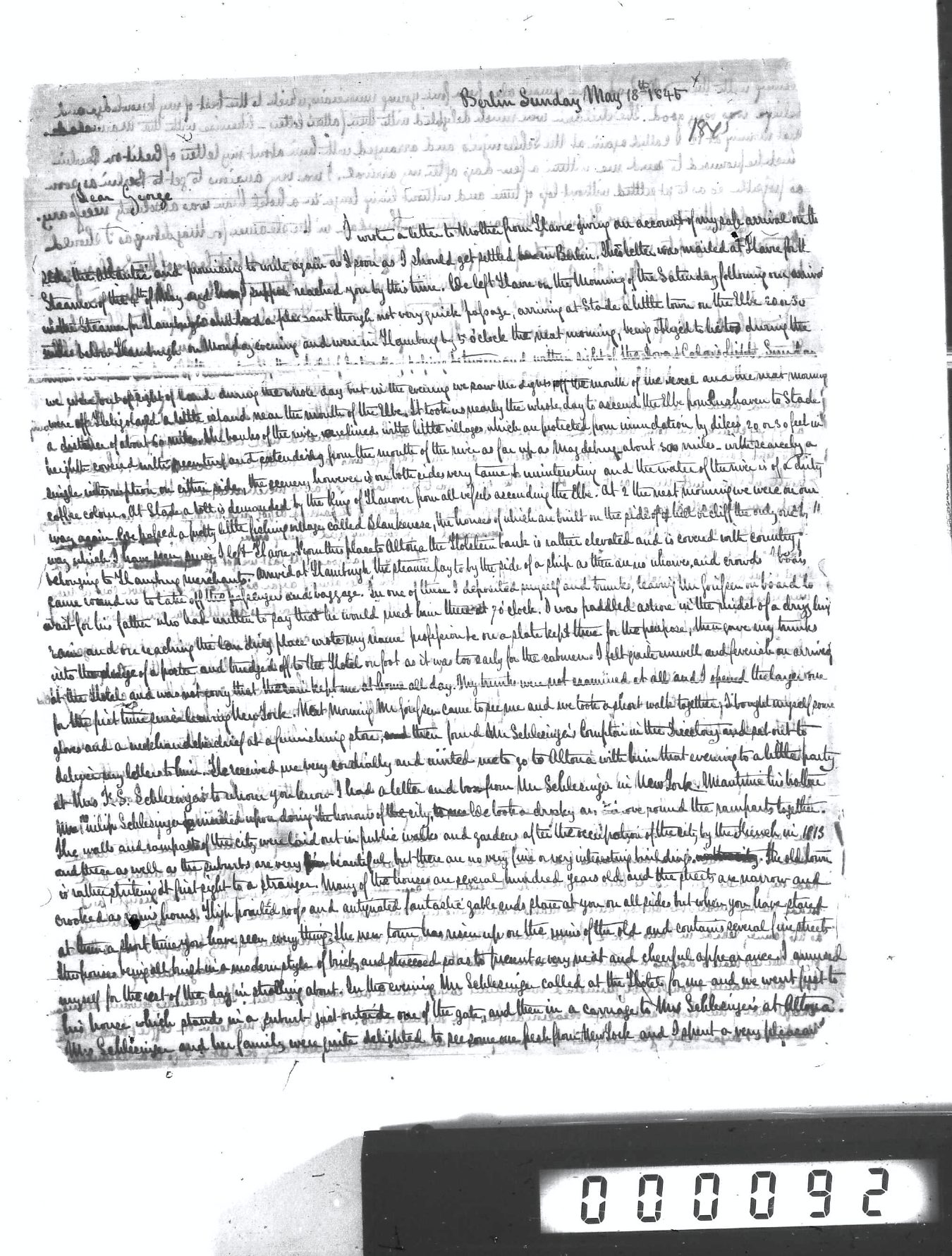
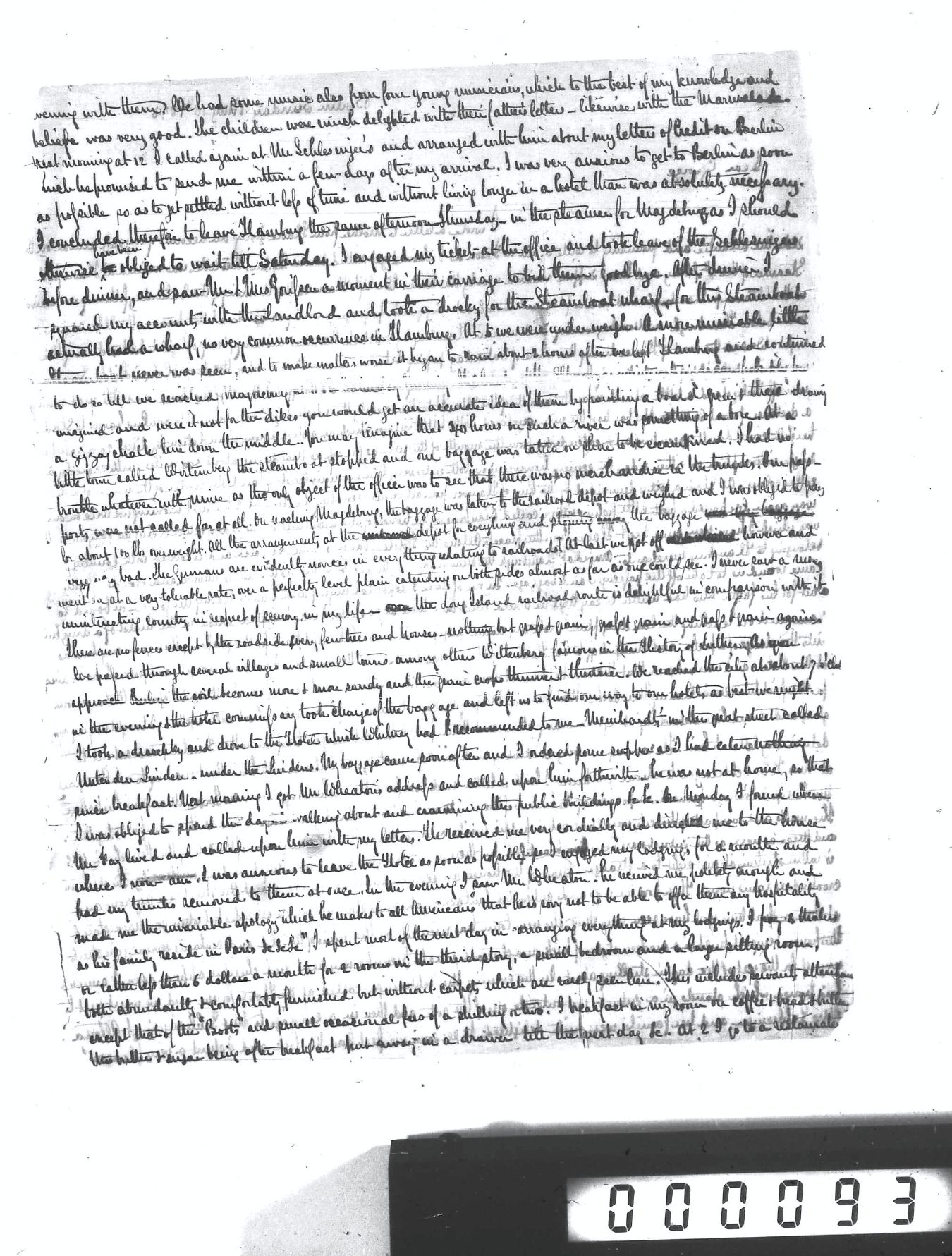
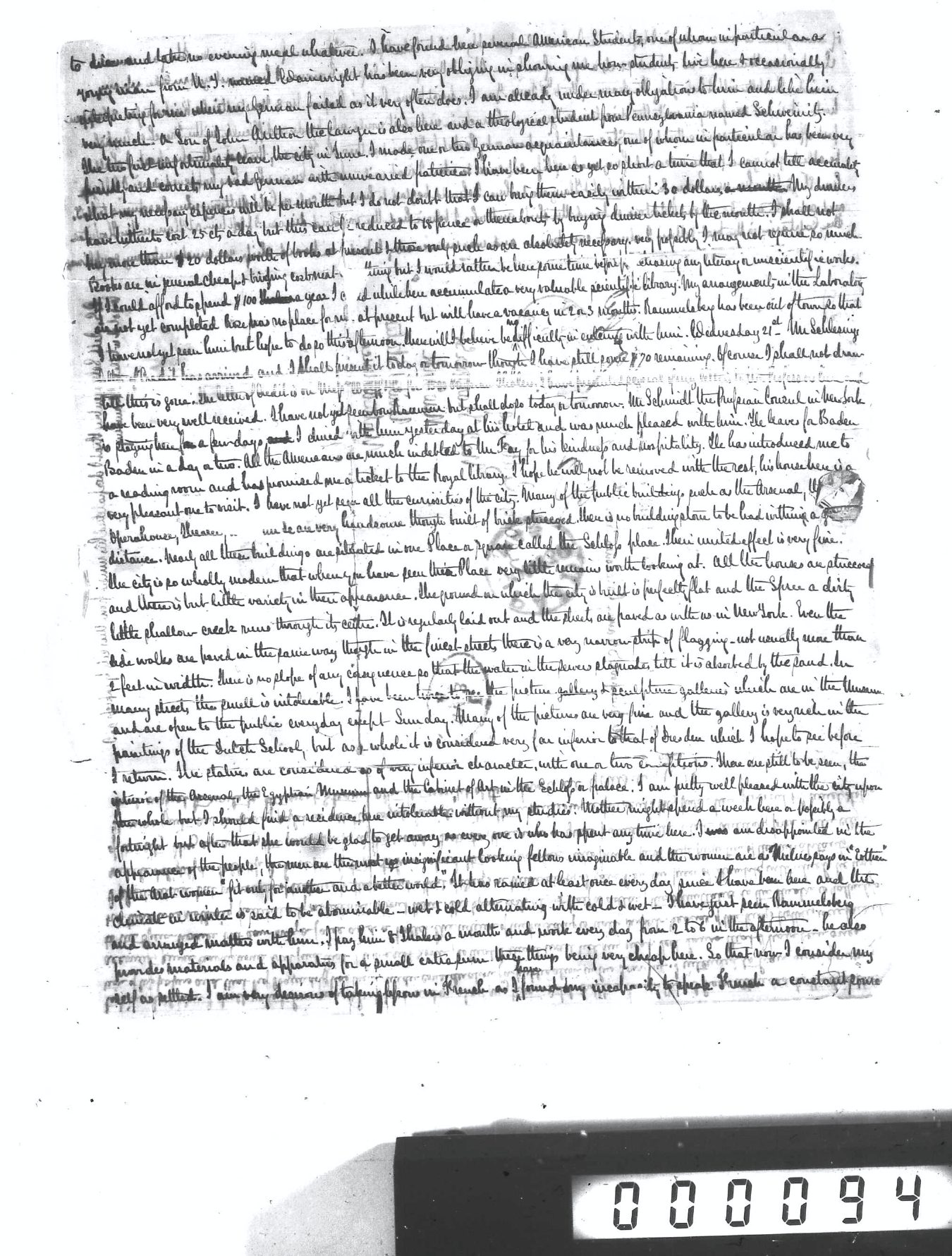
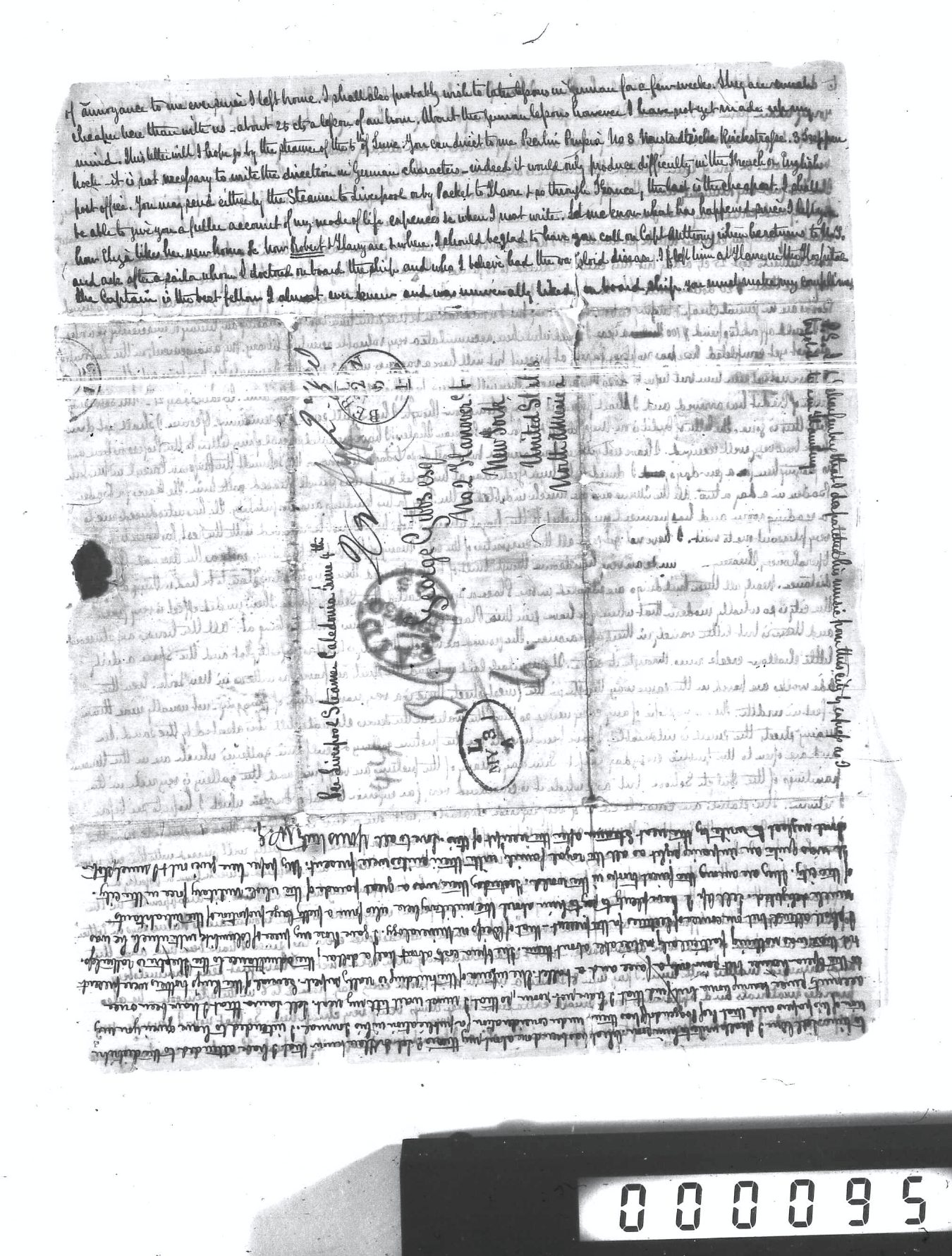
1845 May 18
Voyage Havre-Hamburg, Elbe steamer to Berlin; Schlesinger hospitality in Altona
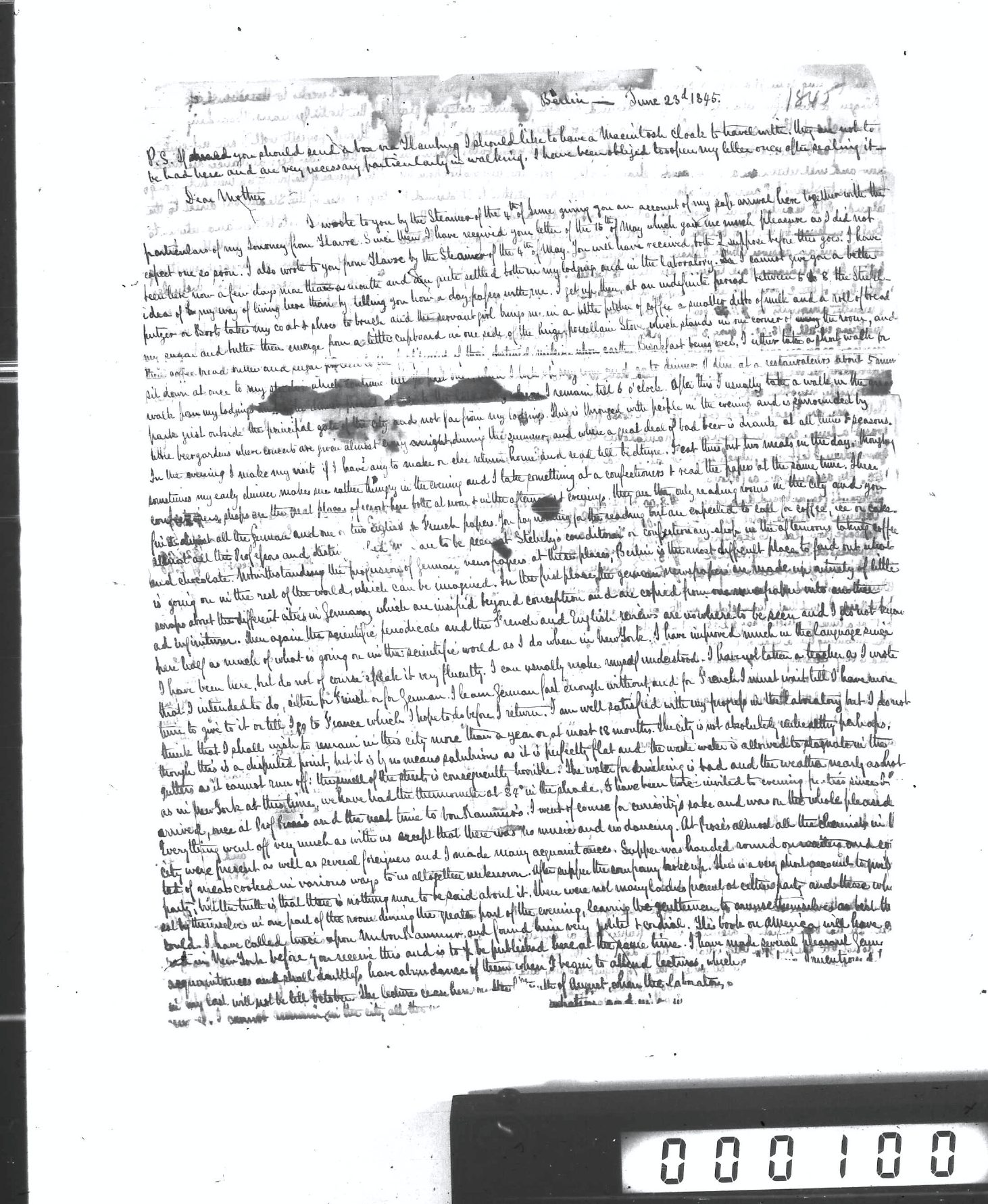
1845 Jun 23
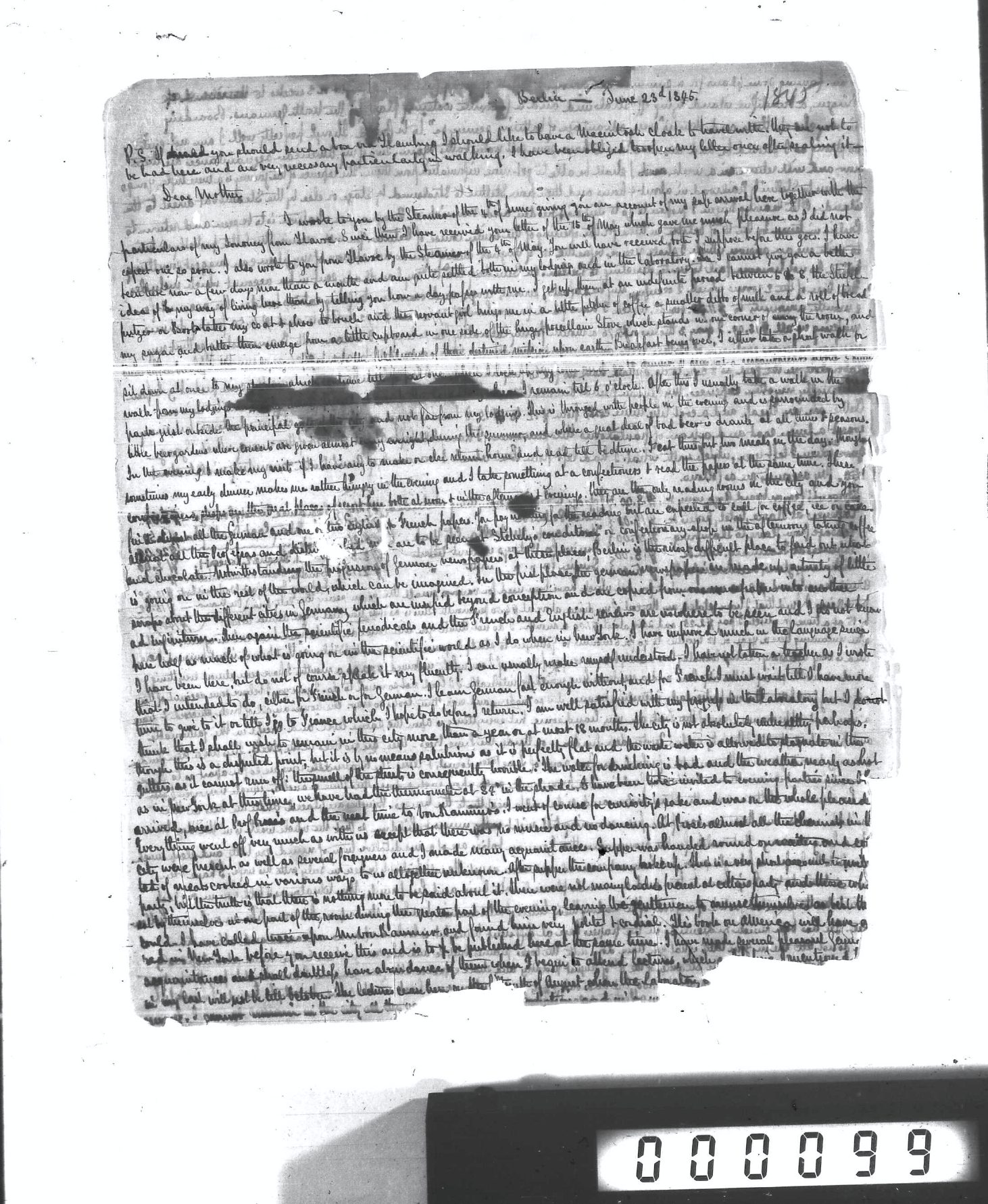
Daily routine in Berlin lodgings, German food, beer gardens, newspapers, language progress
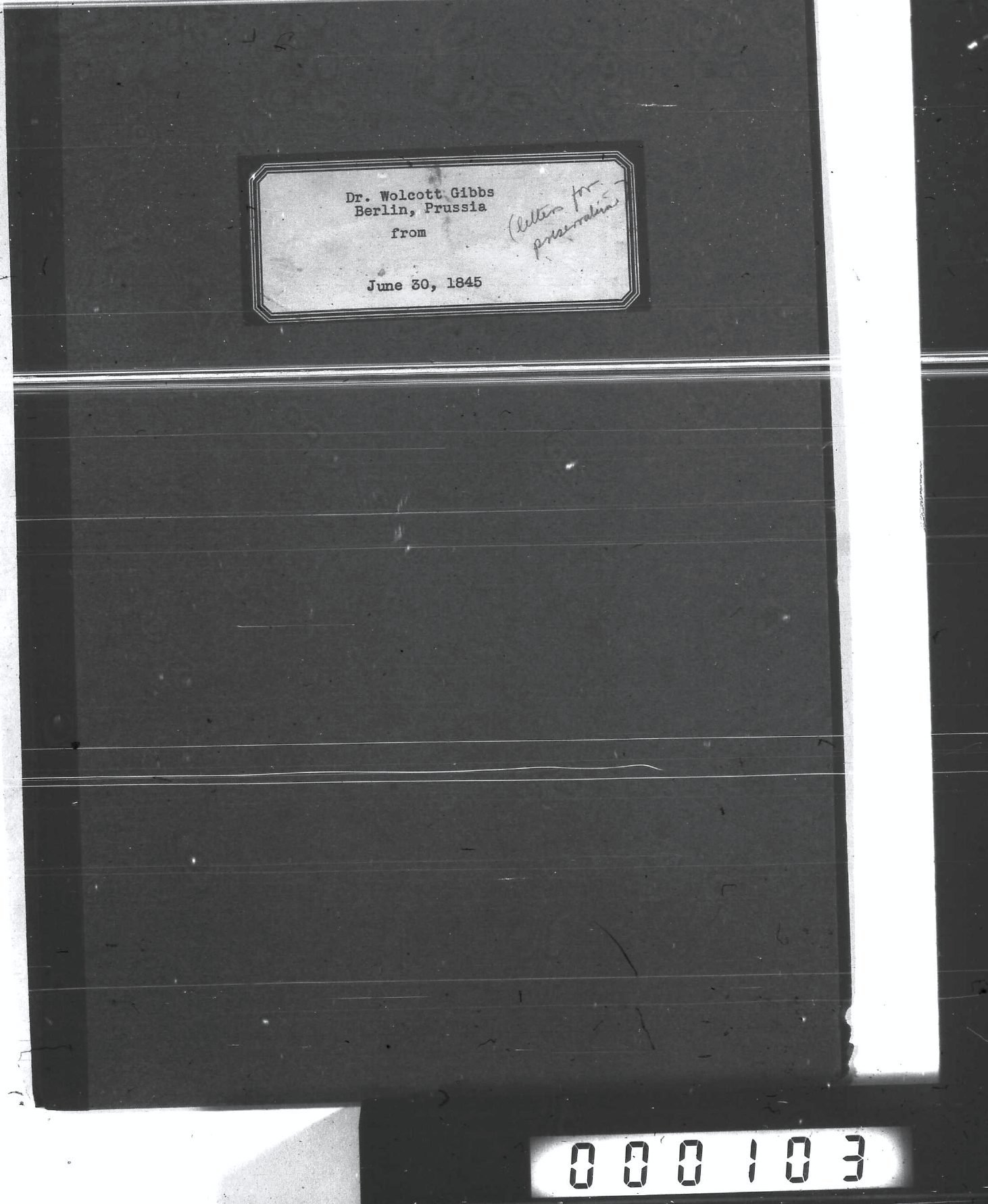
Preservation folder label: "Dr. Wolcott Gibbs, Berlin… June 30, 1845"
Typed title page: letter to Wolcott from Milton near Boston, June 30 1845
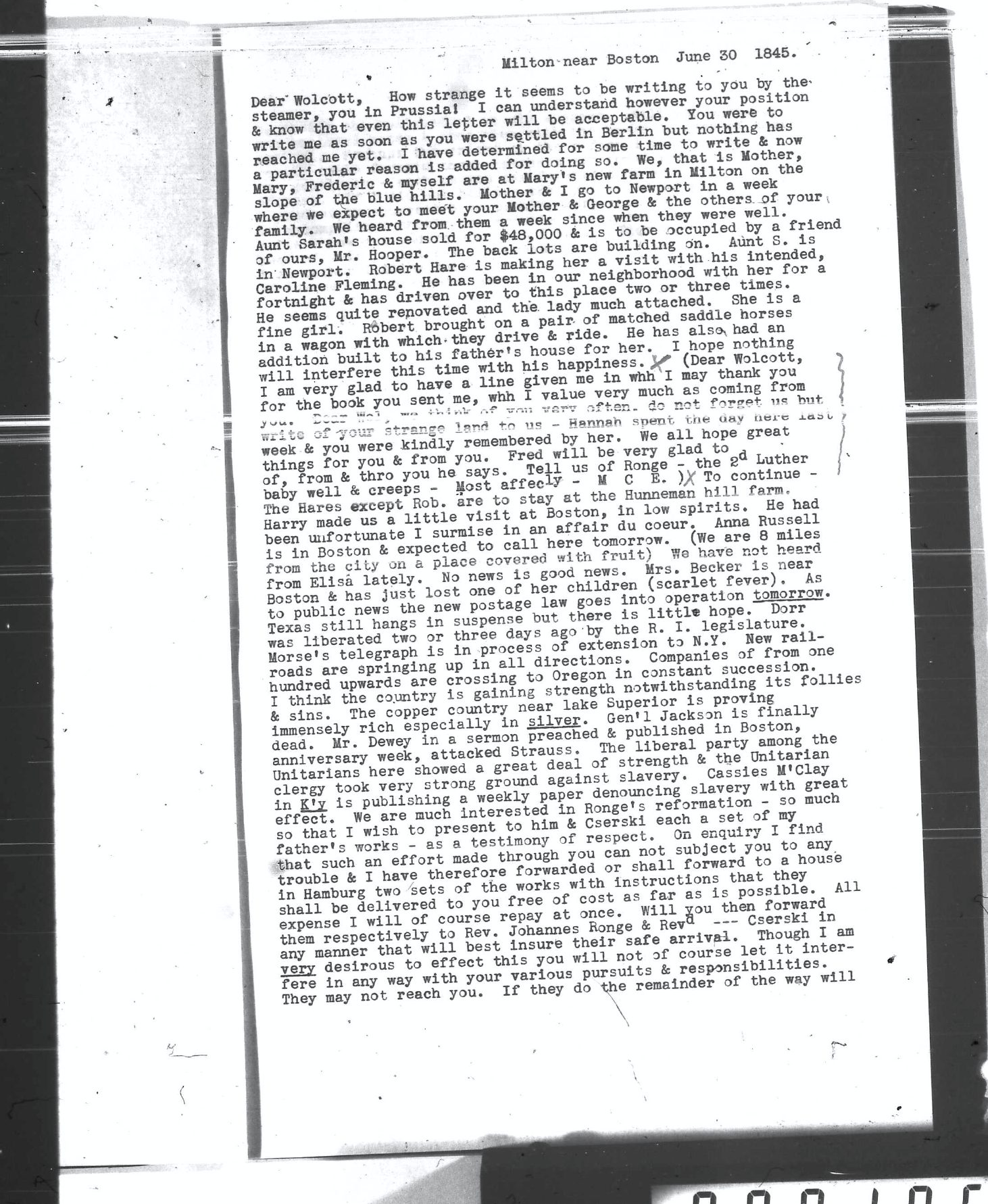
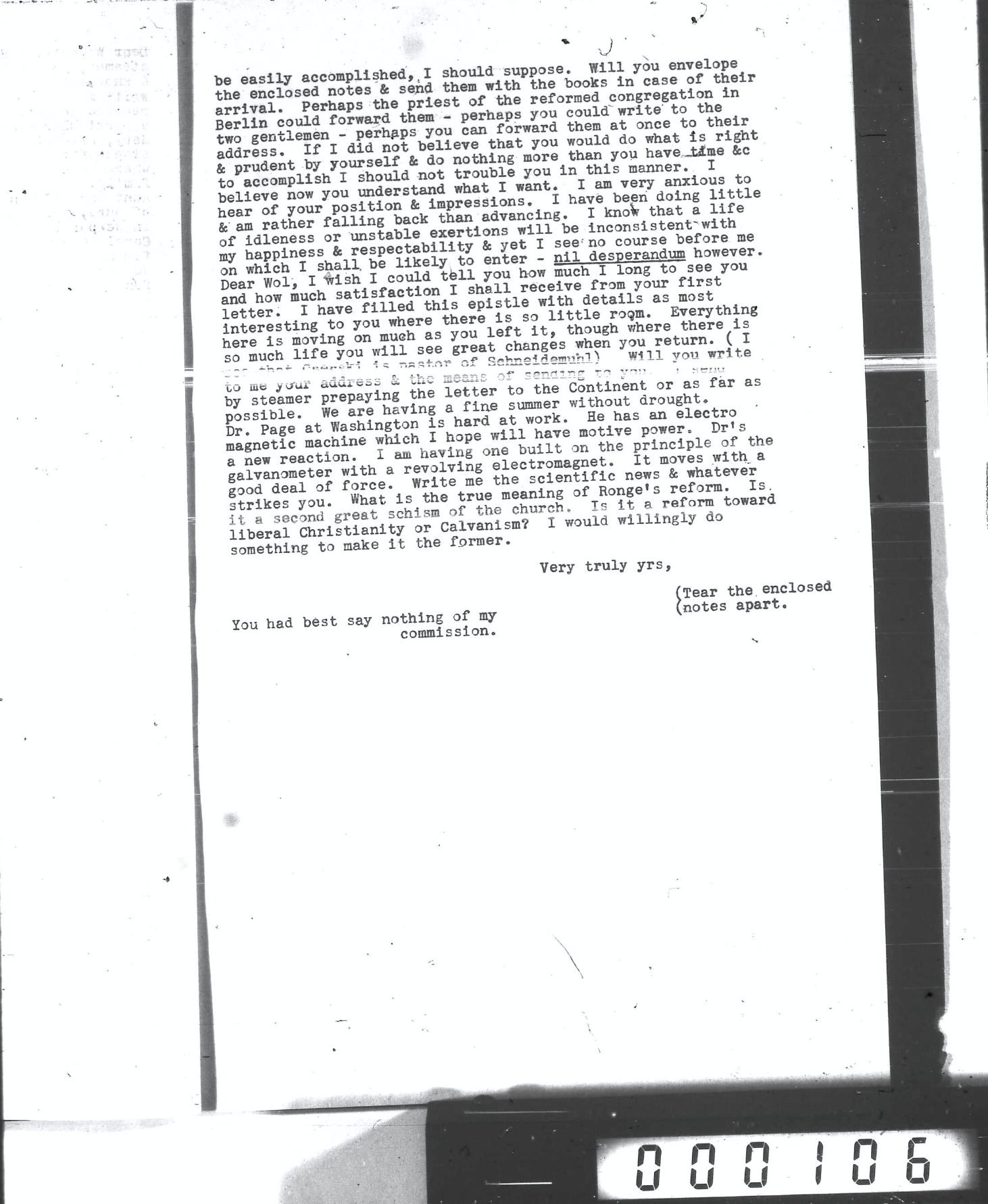
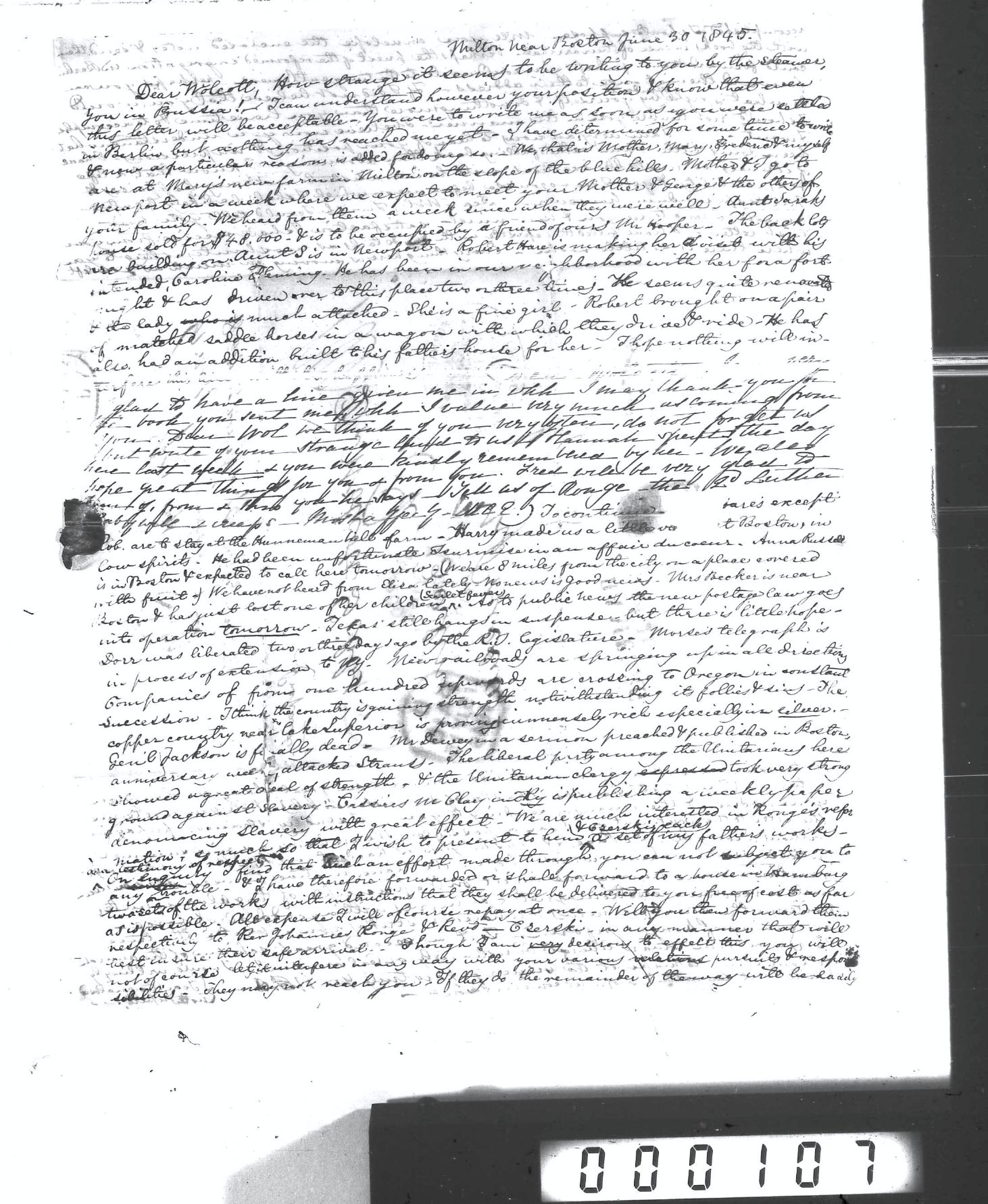
1845 Jun 30
Milton family news, Newport, antislavery, telegraph, Channing's works for Ronge and Czerski
1845 (Jun?)
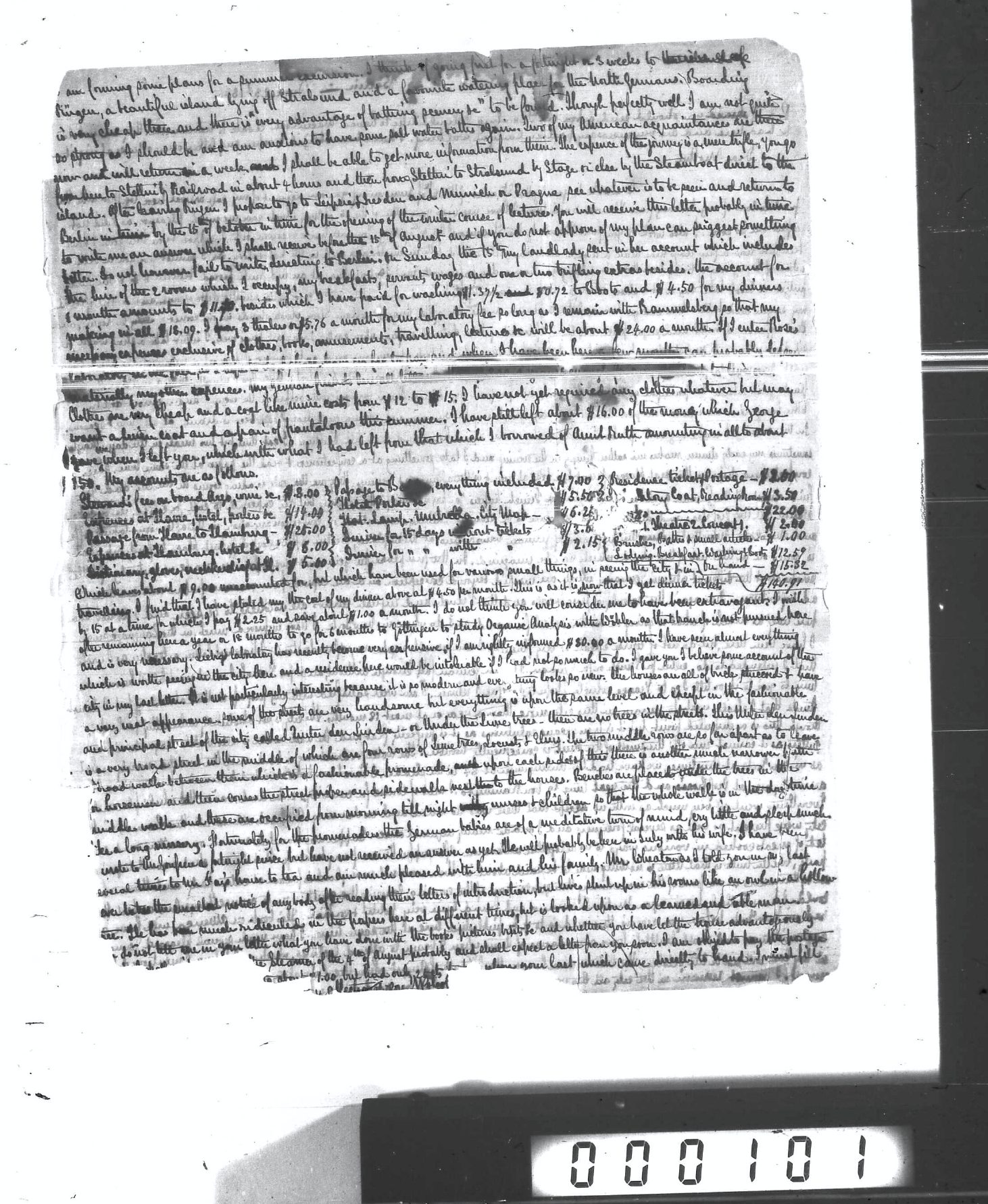
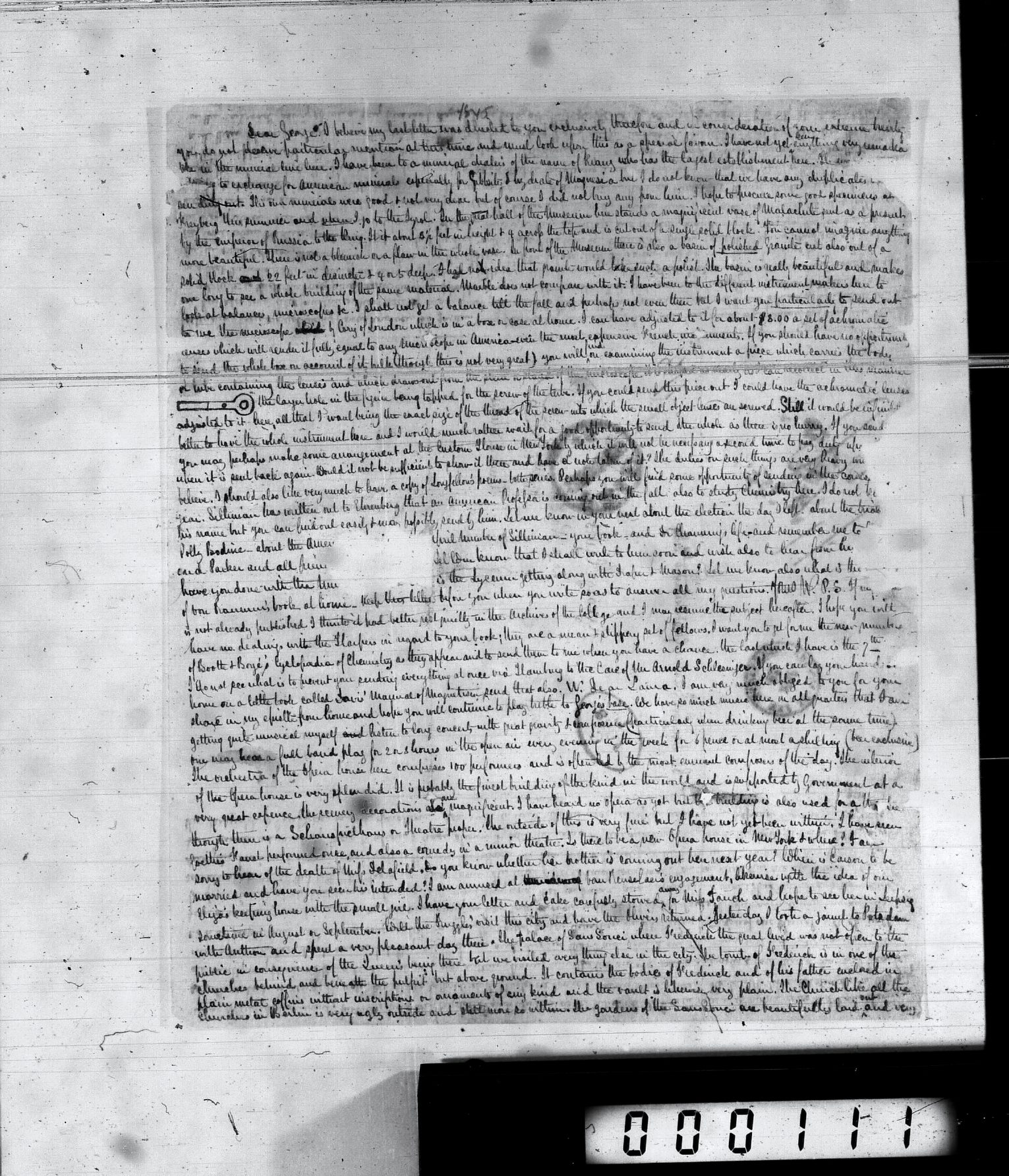
Berlin mineral dealers, malachite vase, balances and microscopes for George, Silliman, opera
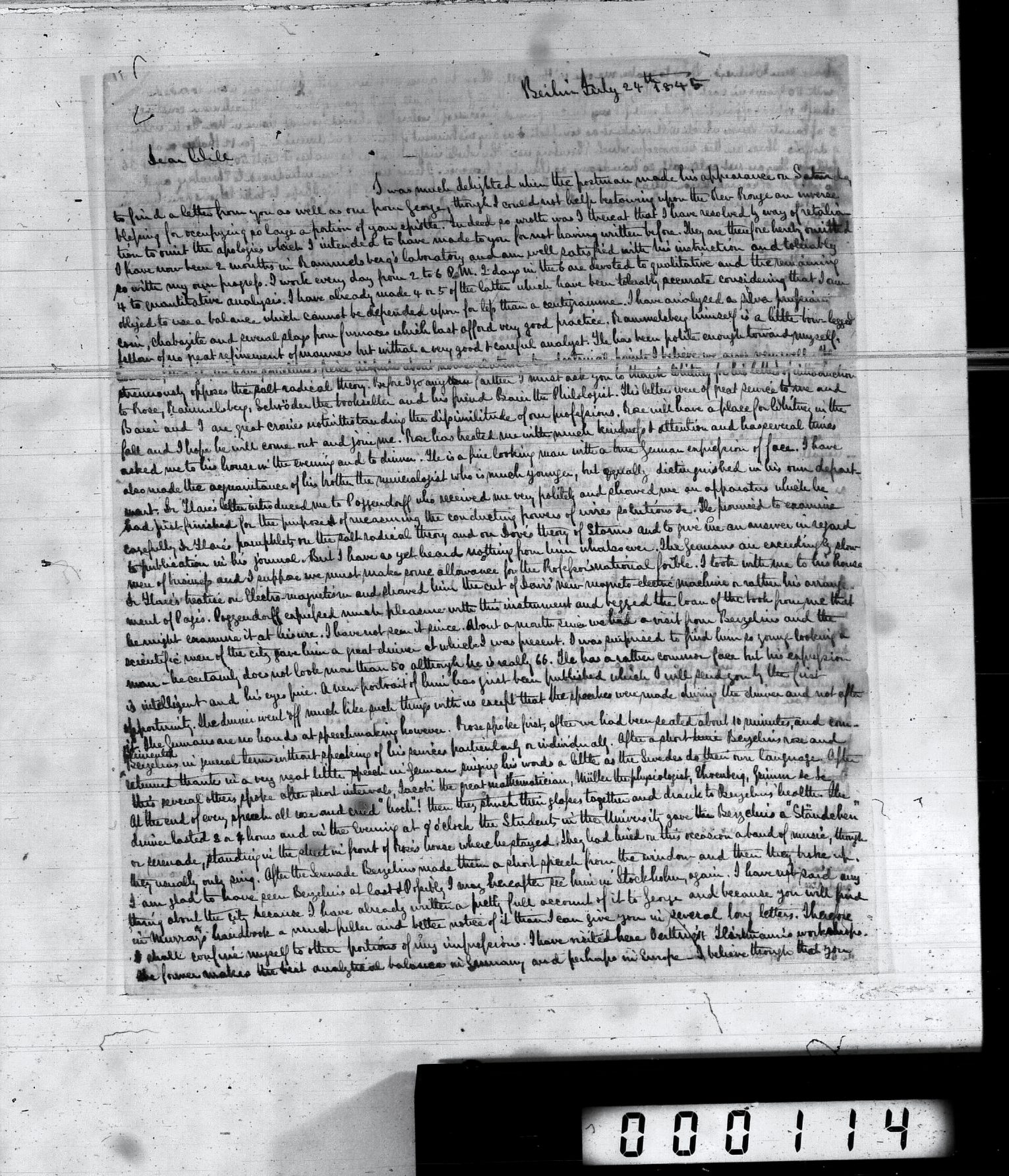
1845 Jul 24
Rammelsberg lab work, Poggendorff, dinner honoring Berzelius, Berlin scientists described
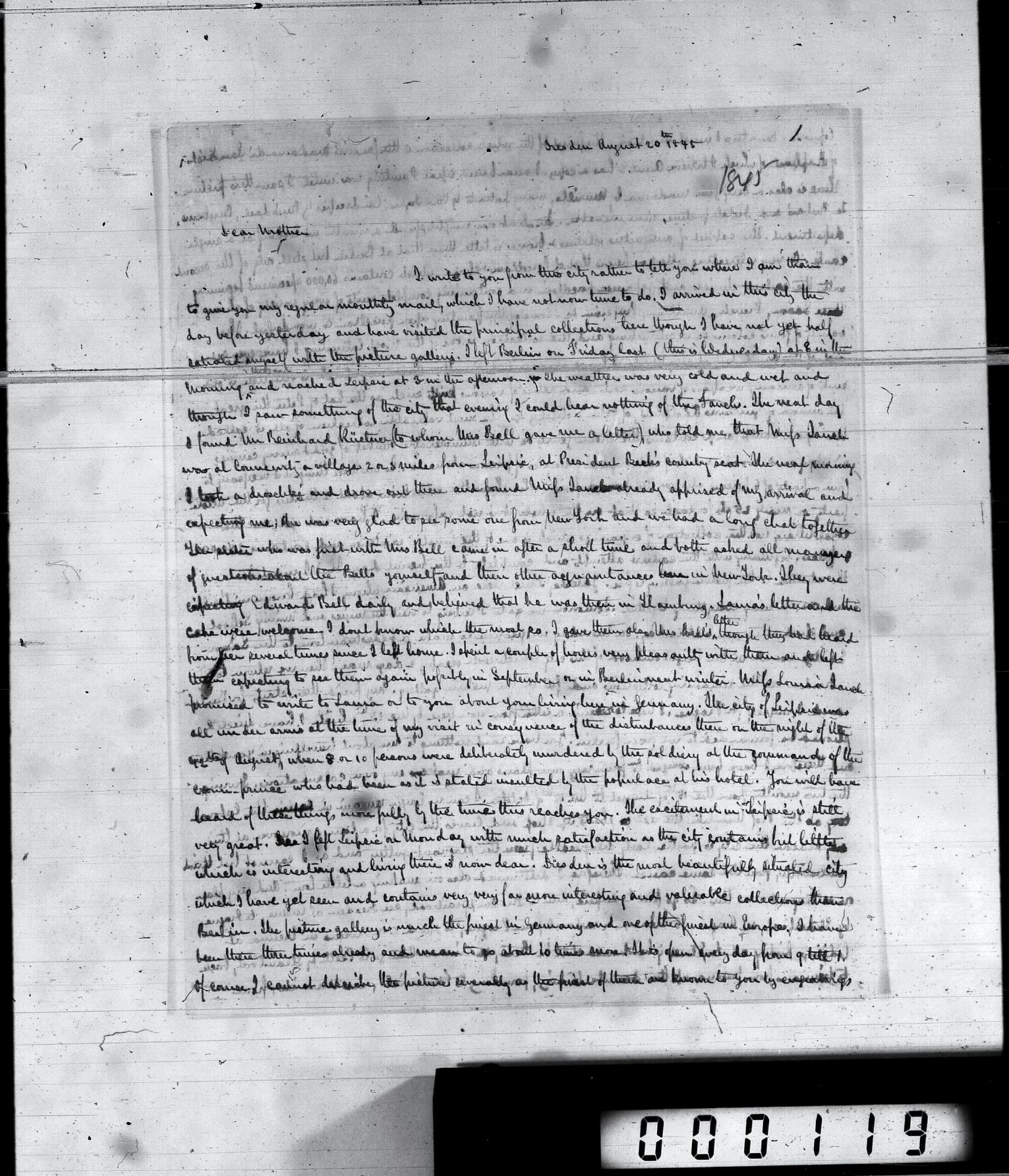
1845 Aug 20
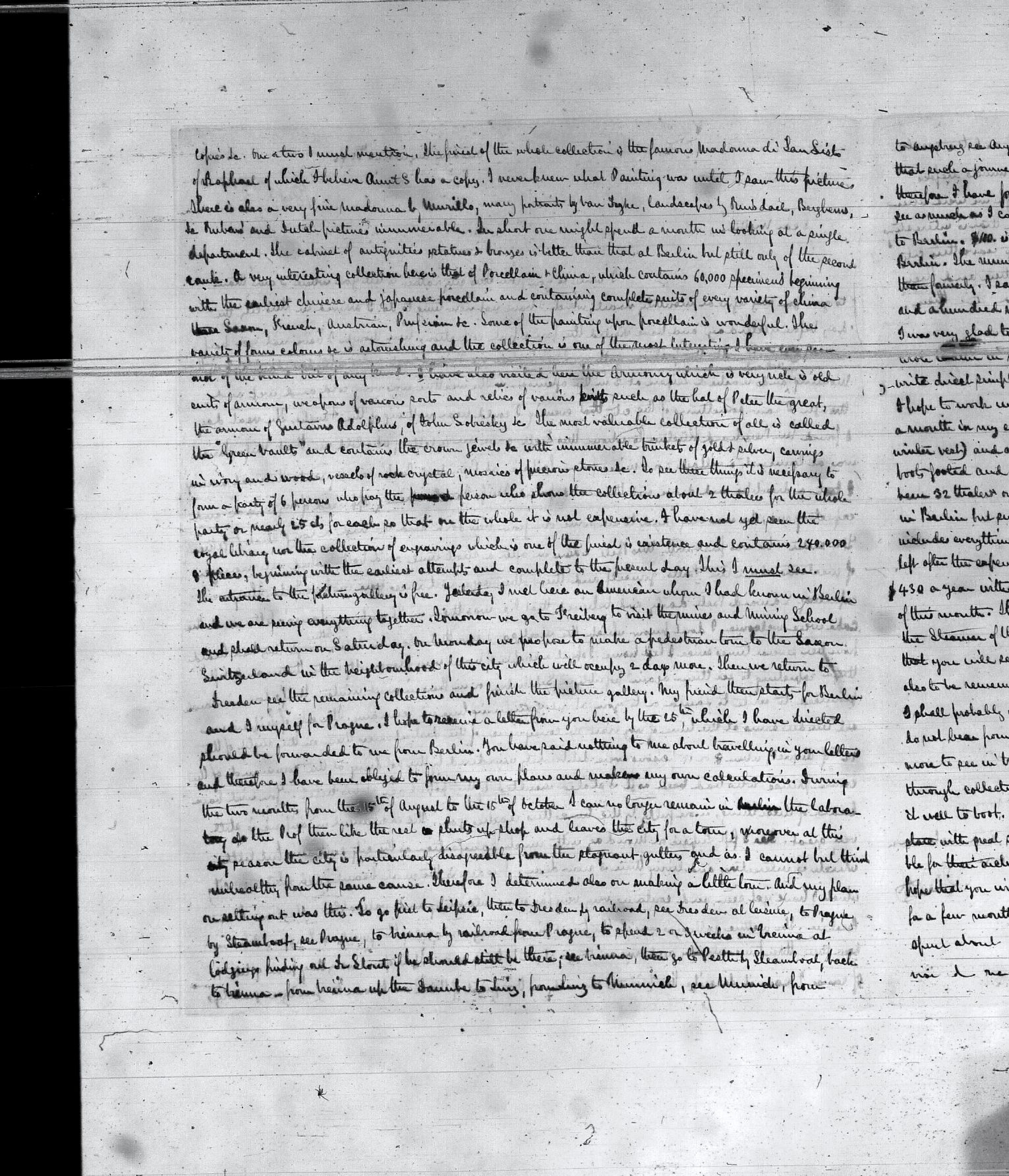
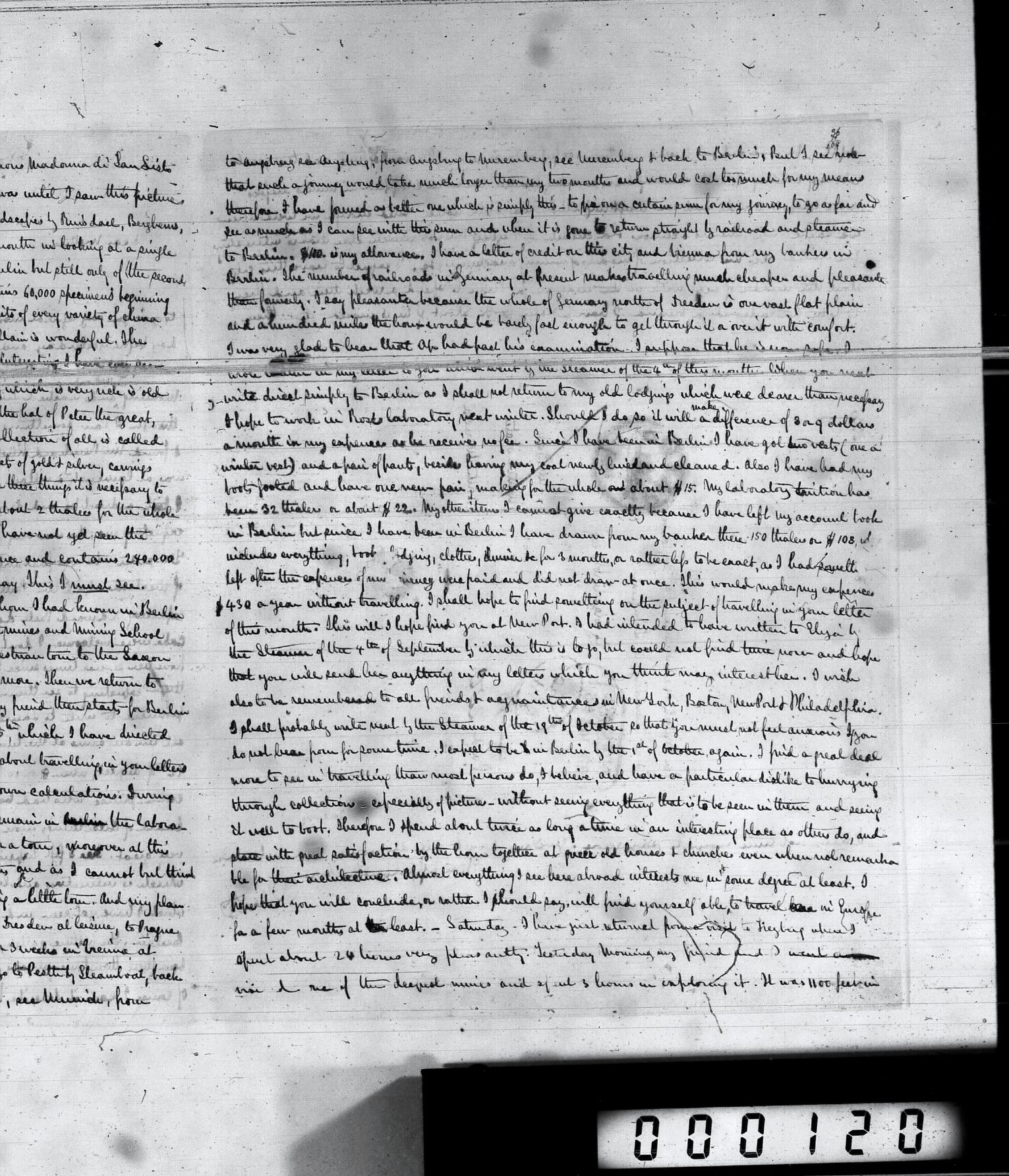
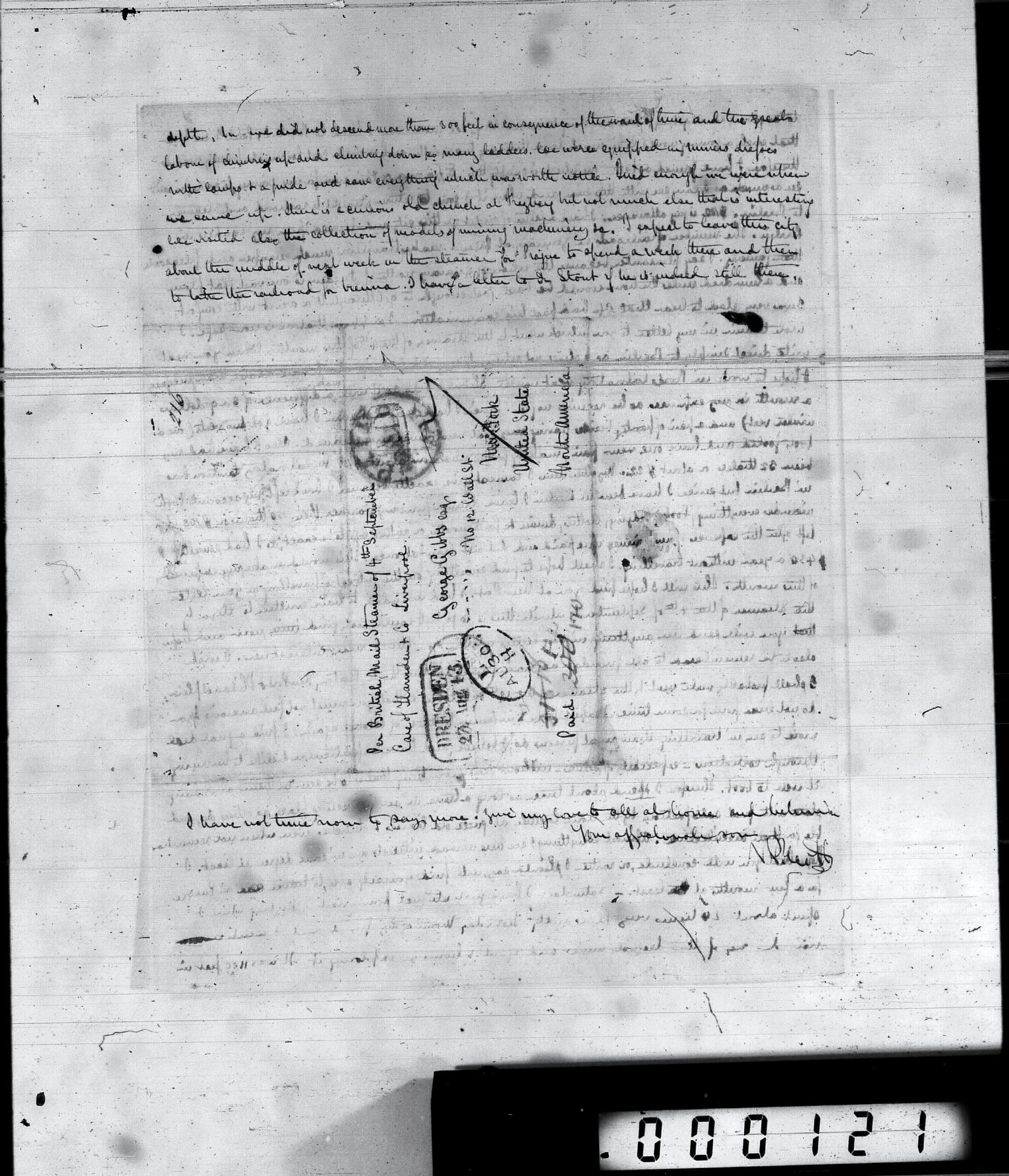
From Dresden: Leipzig visit, August riot shootings there, Dresden picture gallery praised
1845 Jul?
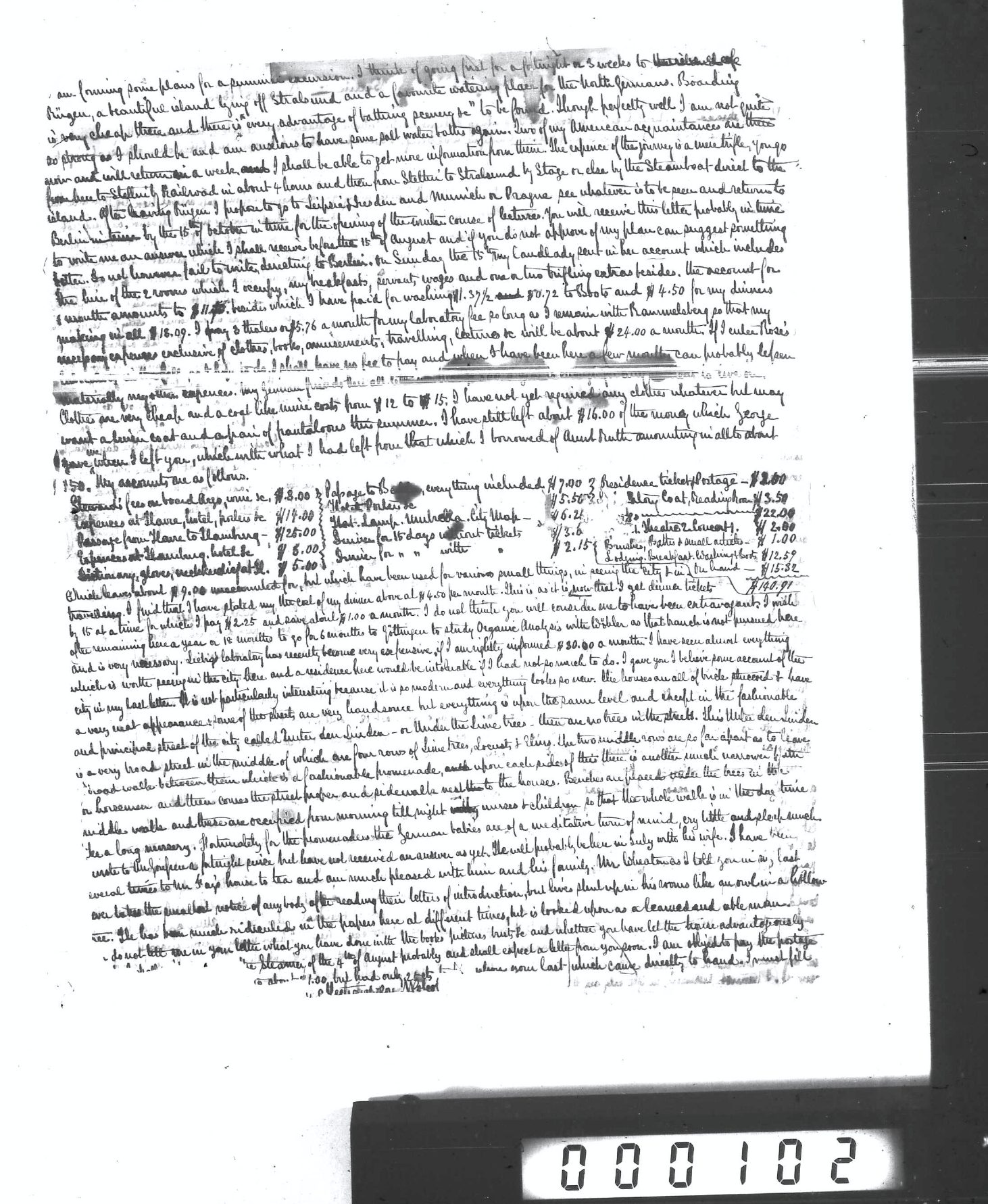
Planned Leipzig-Dresden-Prague tour, Wheaton's trouble with Harpers, Von Raumer, George's book subscription
1845 (Aug?)
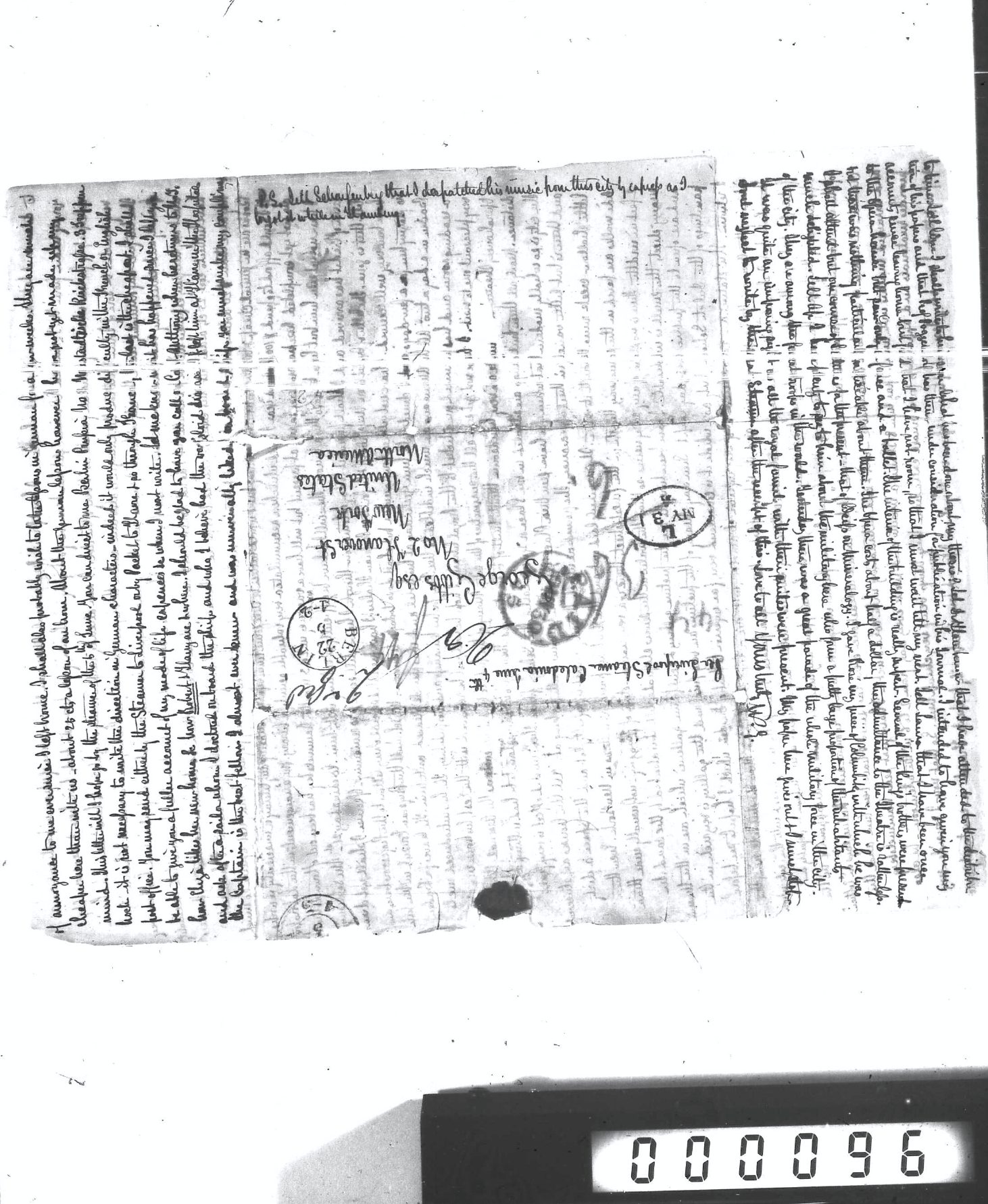
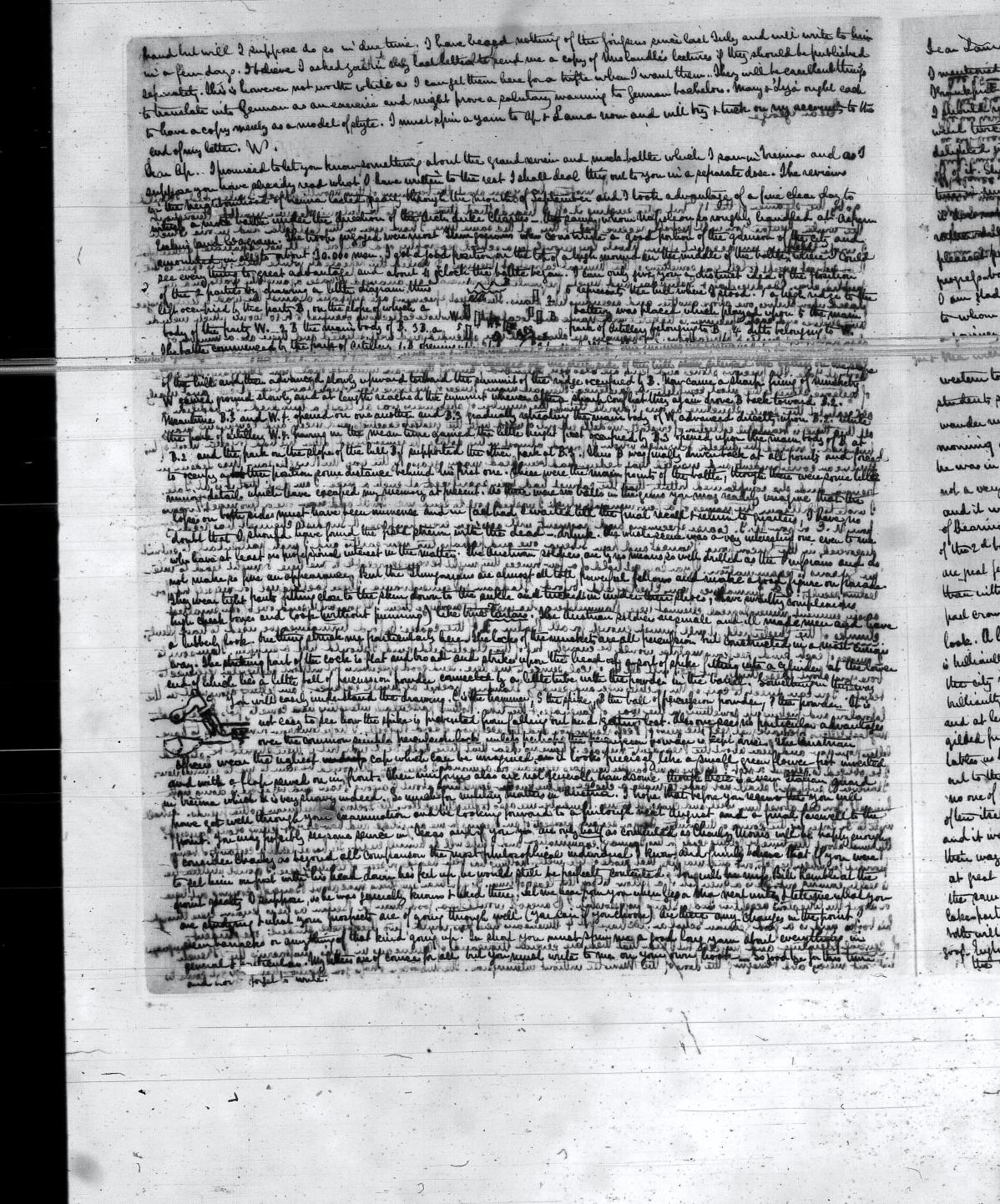
Prussian army detailed for cadet: grand review before King, arsenal, West Point comparisons, exam congratulations
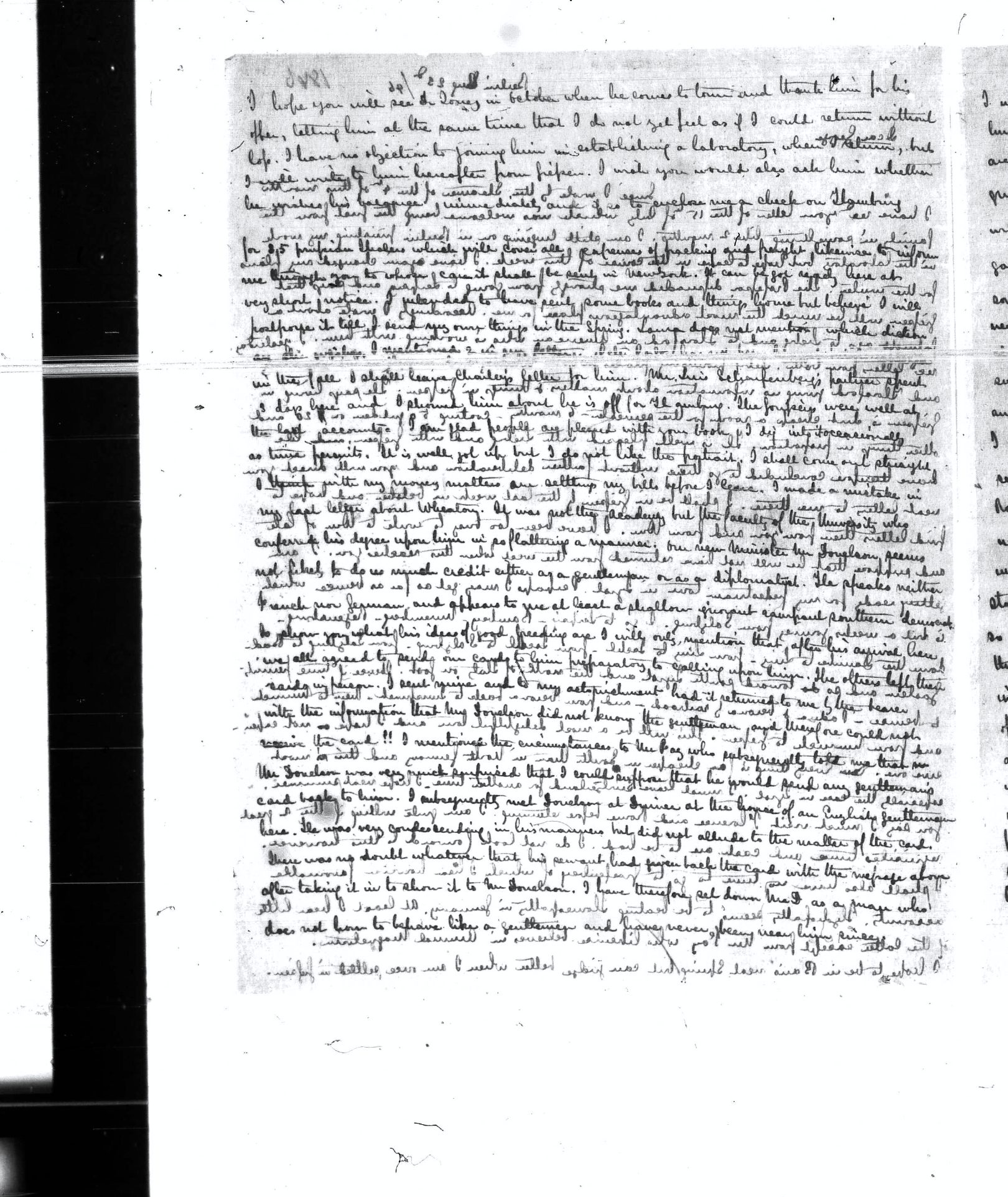
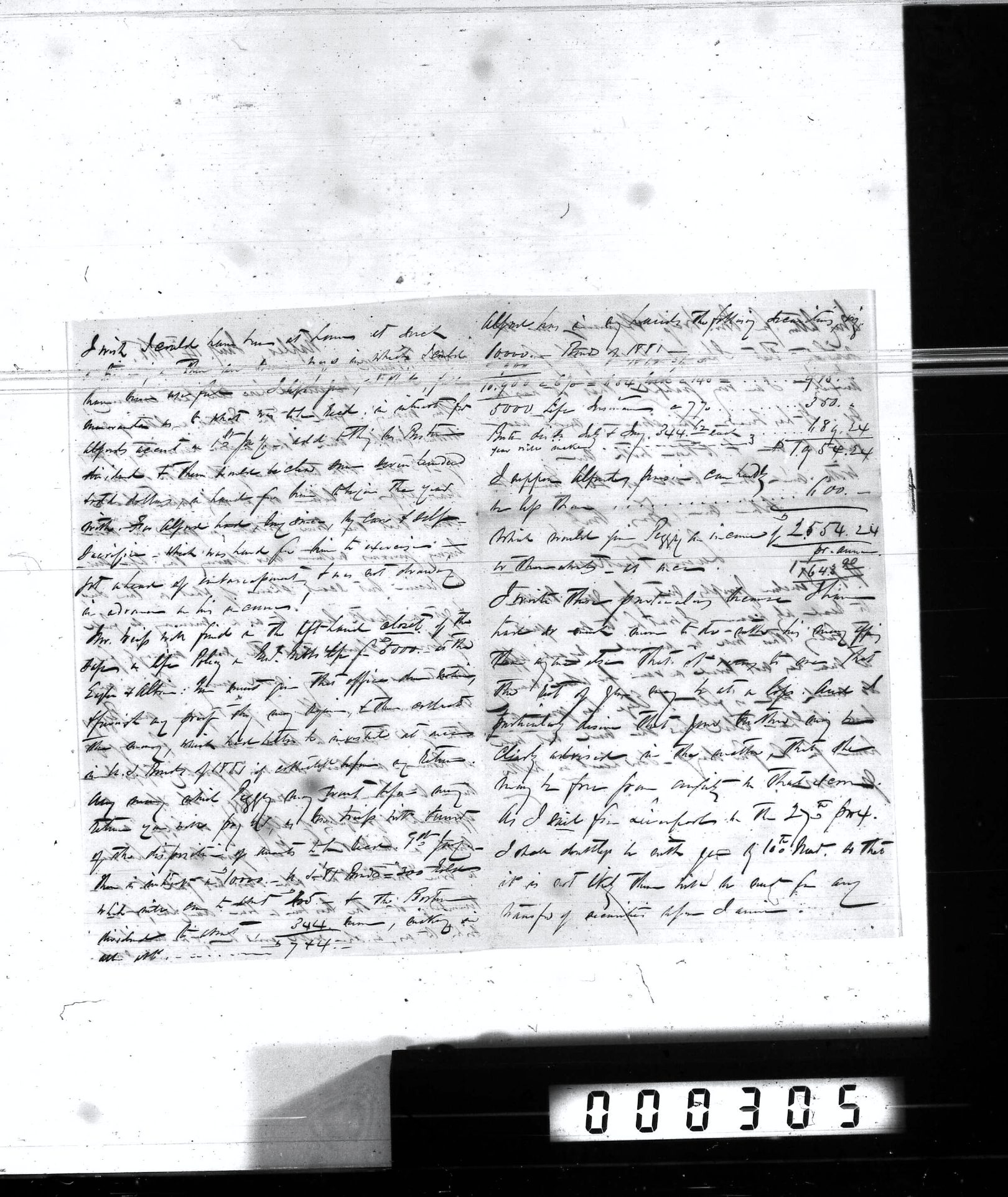
Dear Lieutenant
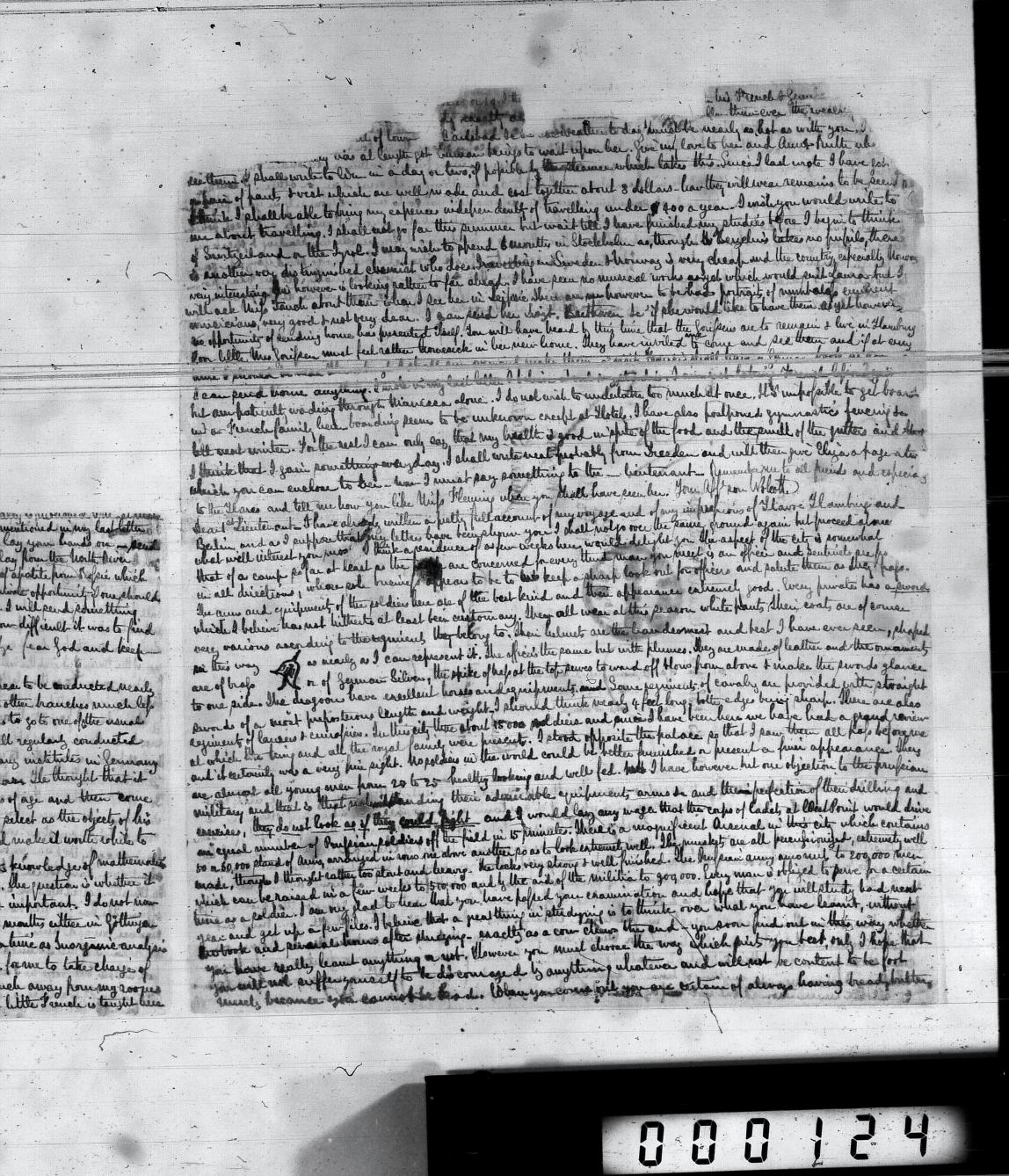
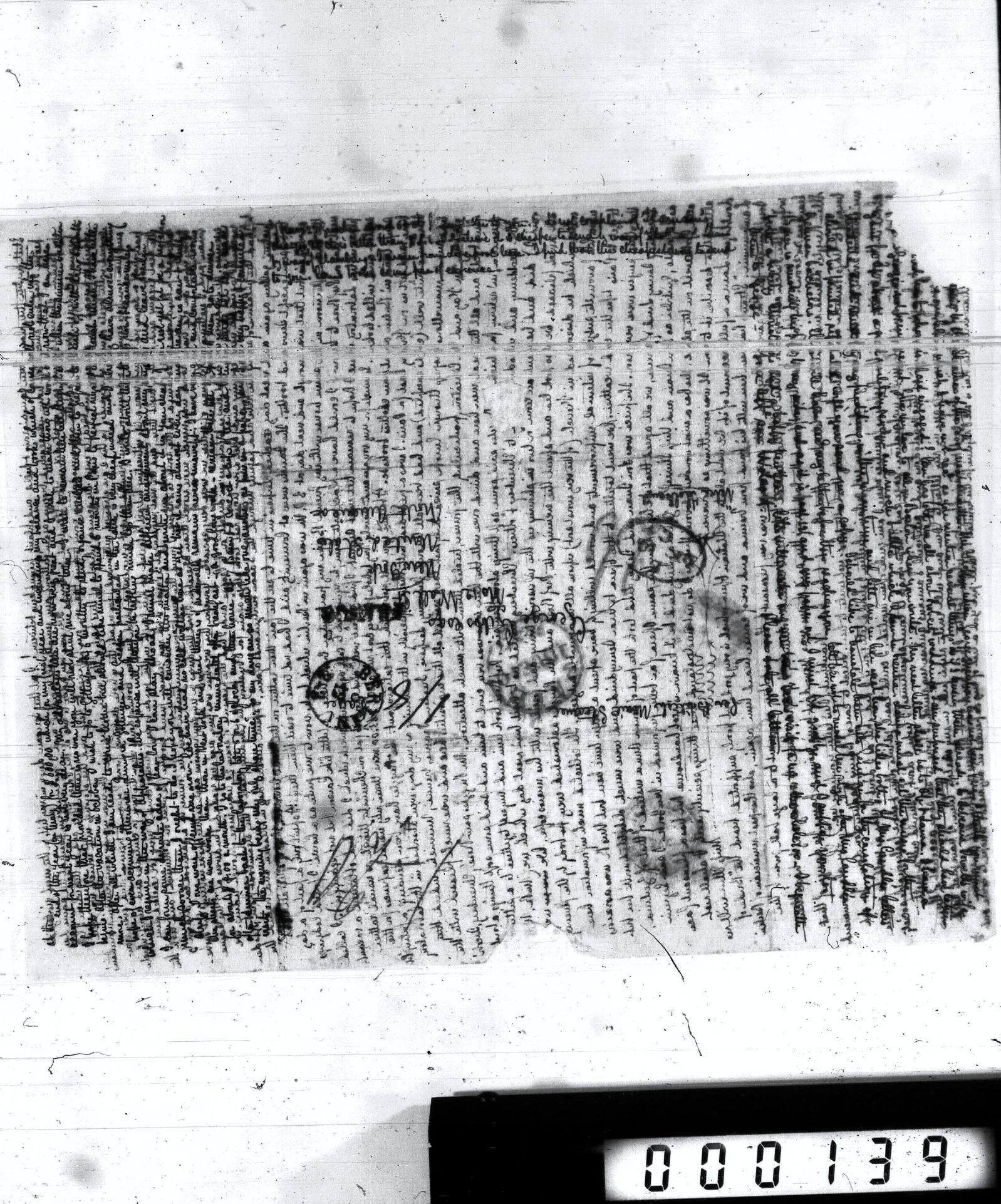
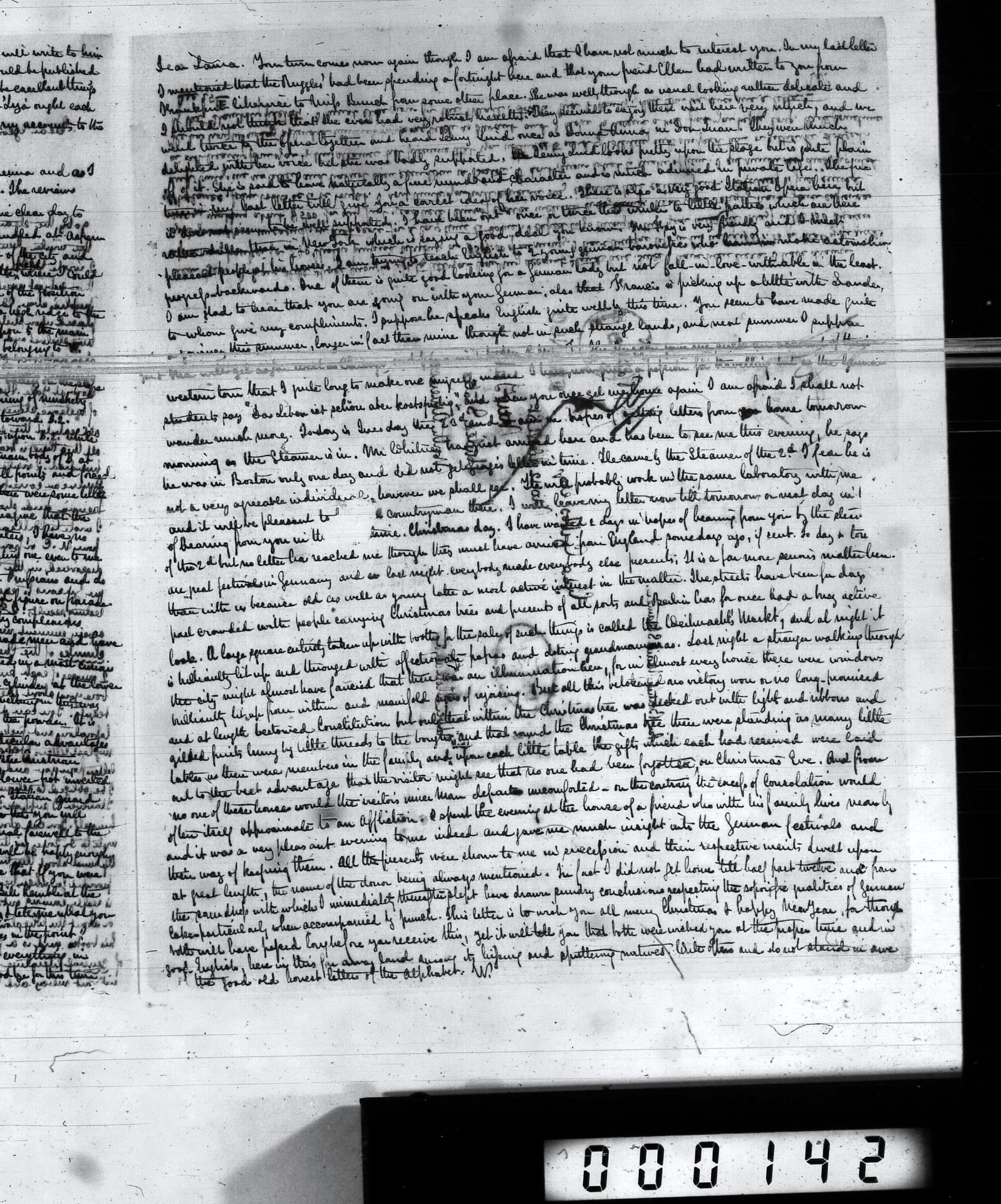
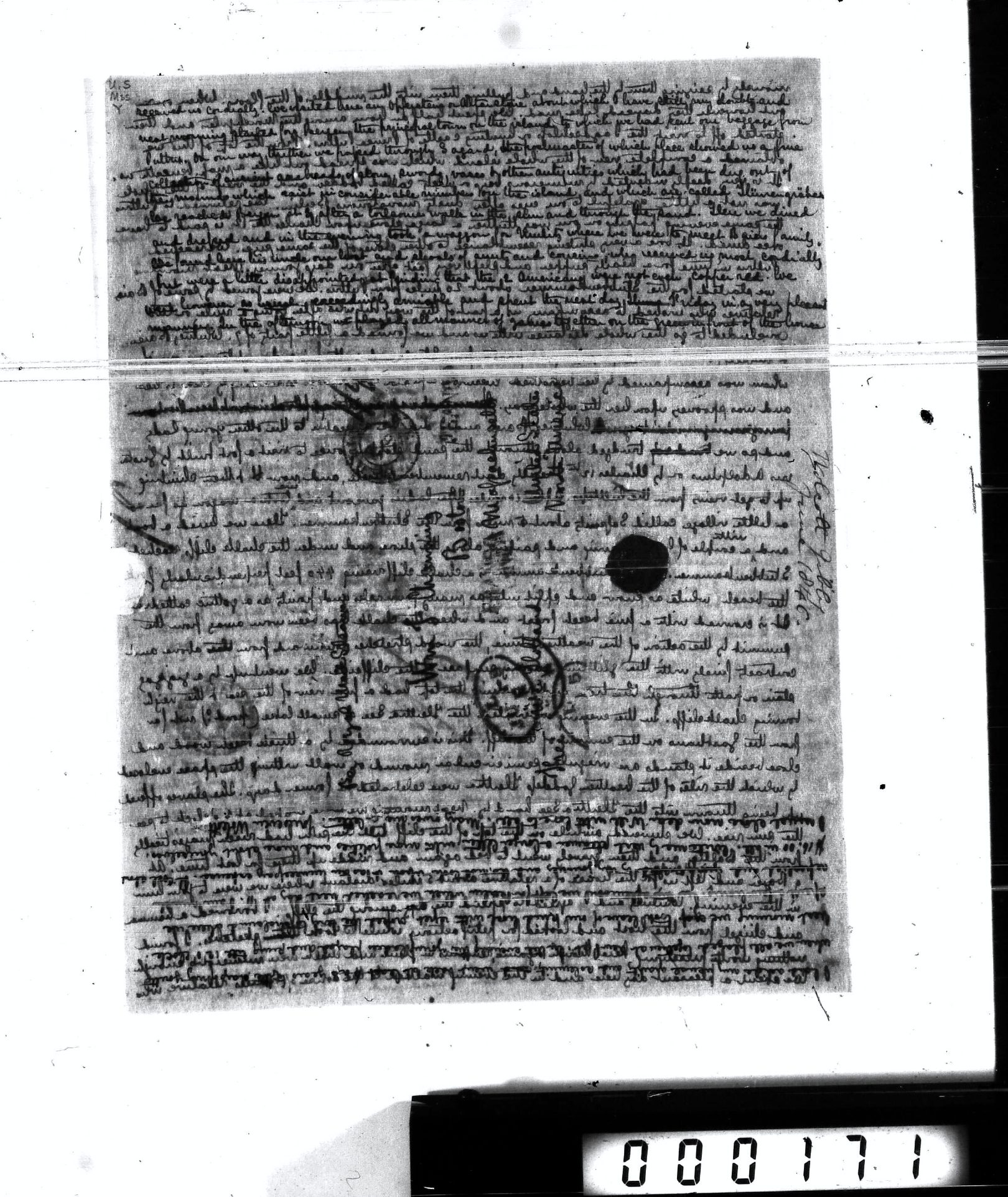
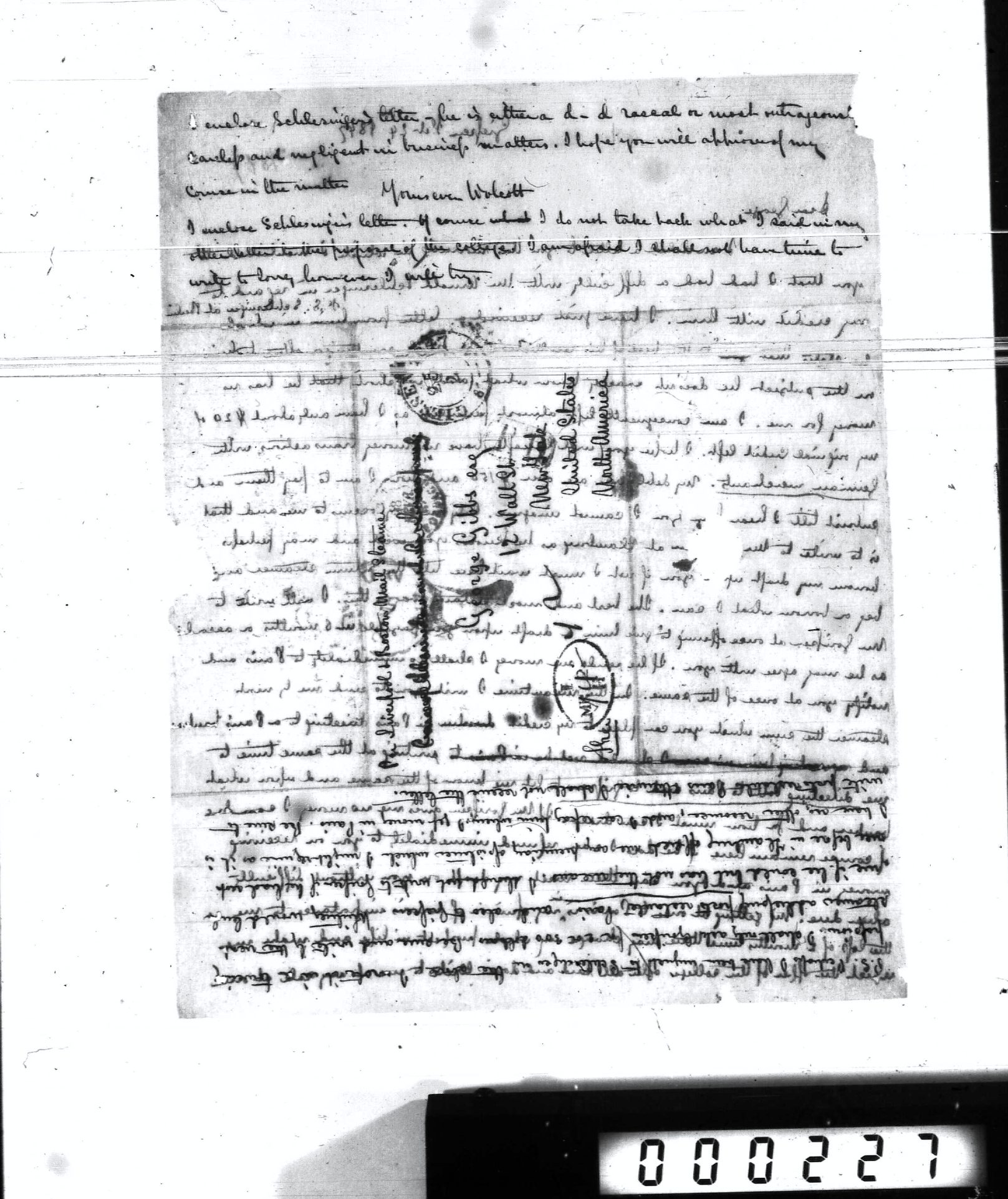
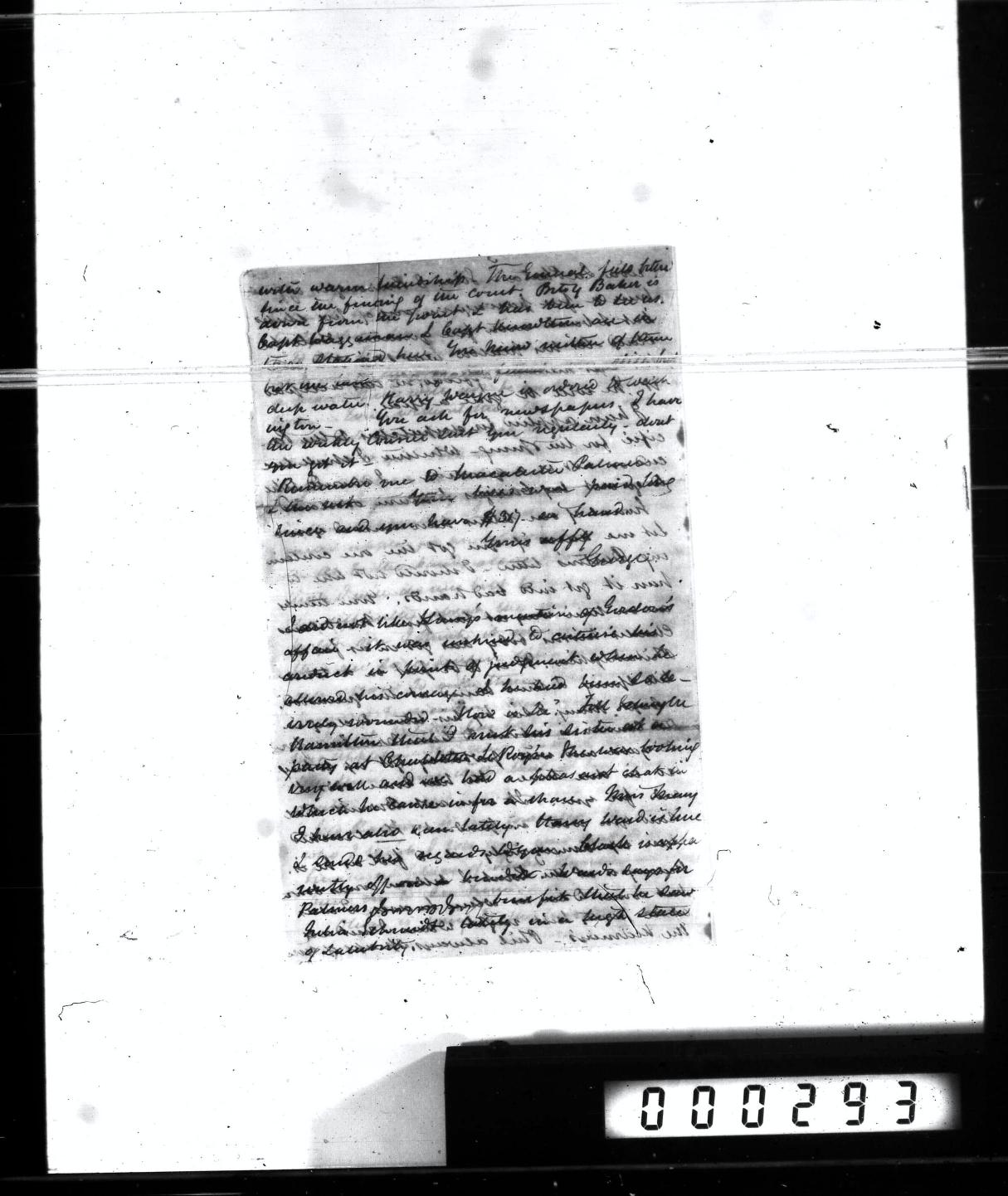
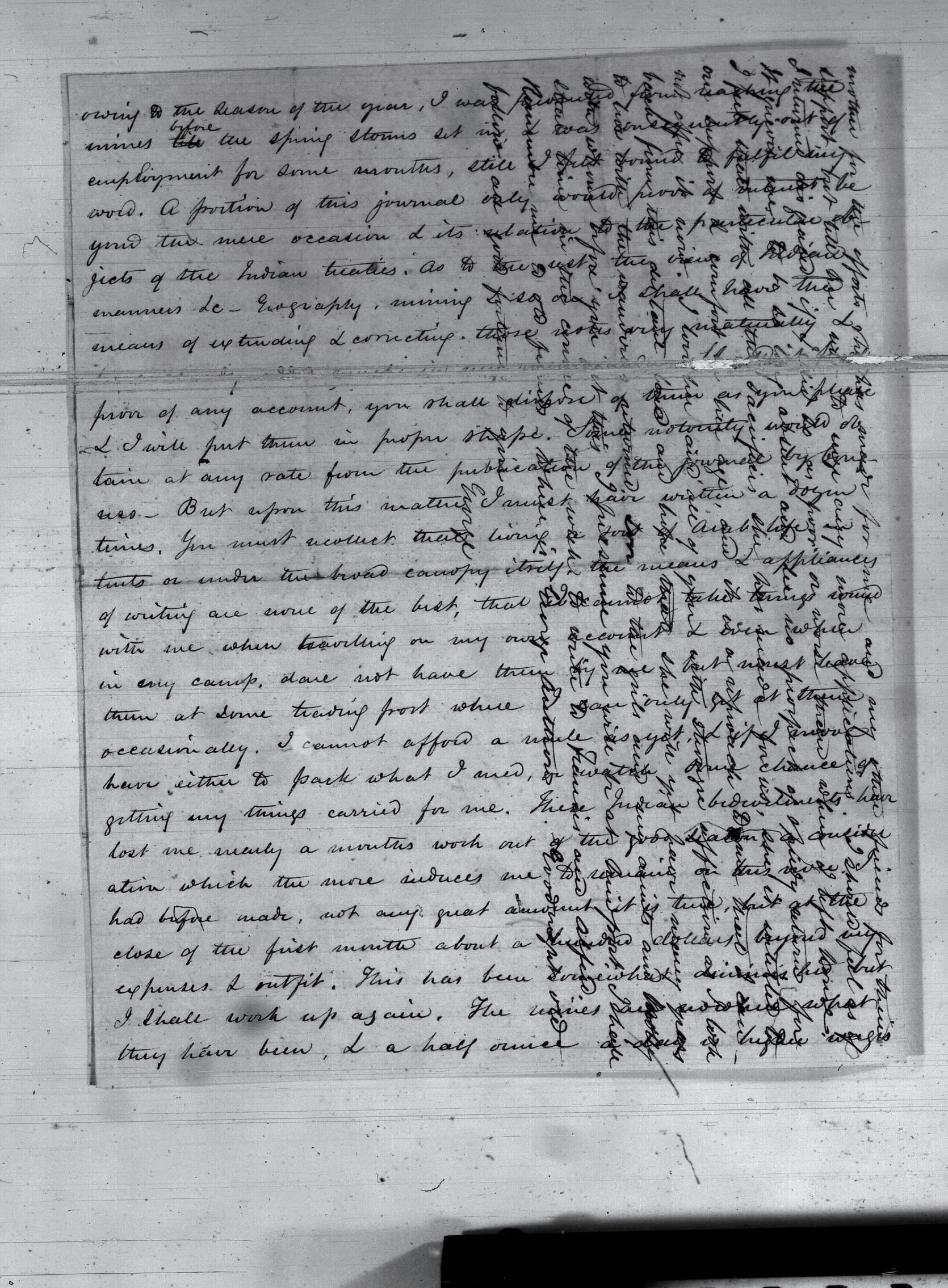
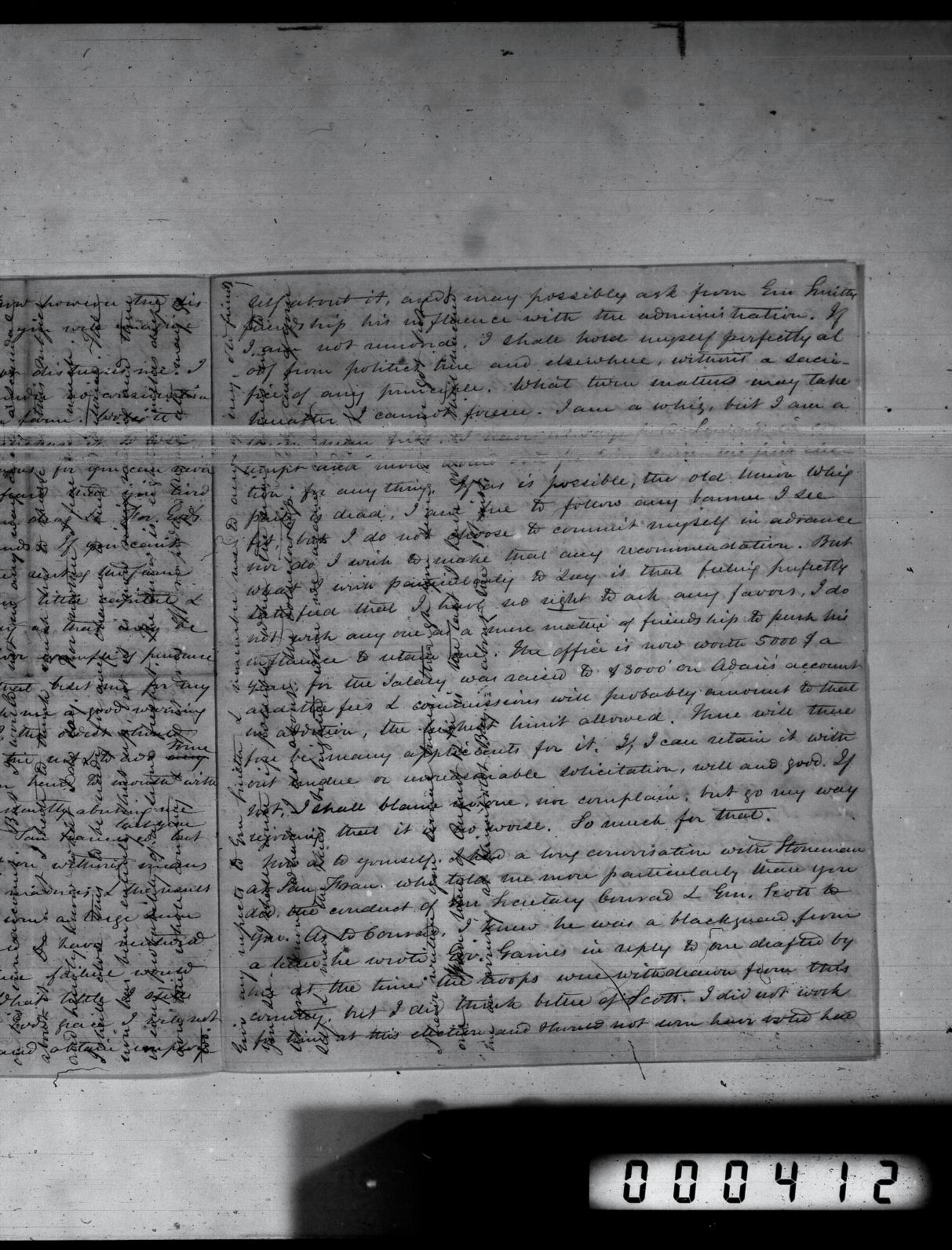
[Upper part of the leaf: the closing pages of a letter to his mother. The head of the sheet is torn away in a ragged diagonal and the first lines survive only in part.]
[torn] his French & German
[torn]er than ever the weather
[torn]t of town [torn] Carlsbad. It is [illegible] weather to day which must be nearly as hot as with you. [torn]
[torn]ry was at length got human beings to wait upon her. Give my love to her and Aunt Ruth wh[o] [torn]
[torn] I shall write to Ellen in a day or two, if possible by the steamer which takes this. Since I last wrote I have got a pair of pants & vest which are well made and cost together about 8 dollars – how they will wear remains to be seen I think I shall be able to bring my expences independent of travelling under $400 a year – I wish you would write to me about travelling. I shall not go far this summer but wait till I have finished my studies before I begin to think of Switzerland or the Tyrol. I may wish to spend 6 months in Stockholm as, though Berzelius takes no pupils, there is another very distinguished chemist who does. travelling in Sweden & Norway is very cheap and the country especially Norway very interesting. this however is looking rather too far ahead. I have seen no musical works as yet which would suit Laura – but I will ask Miss Tauch(?) about them when I see her in Leipsic. there are however to be had portraits of numberless eminent musicians, very good & not very dear. I can send her Beethoven &c if she would like to have them. As yet however no opportunity of sending home has presented itself. You will have heard by this time that the Snissens(?) are to remain & live in Hamburg for life. Mrs Snissen(?) must feel rather homesick in her new home. they have invited me [interlined: and] to come and see them and if at any
[two entire lines destroyed by a broad flare and scratch band across the film; only ascenders and descenders survive – illegible]
I can send home anything, I will [illegible] but am patiently wading through [illegible] alone. I do not wish to undertake too much at once. It is impossible to get board in a French family here. boarding seems to be unknown except at Hotels. I have also postponed gymnastics fencing &c. till next winter. For the rest I can only say that my health is good in spite of the food and the smell of the gutters and that I think that I gain something every day. I shall write next probably from Sweden and will then give Eliza a page also which you can enclose to her – now – I must say something to the — Lieutenant – Remember me to all friends and especially to the Hares(?) and tell me how you like Miss Fleming when you shall have seen her.
Your Affte son
Wolcott.
[Lower part of the same leaf: the letter to Alfred begins here in the same hand, without a new date line.]
Dear Lieutenant –
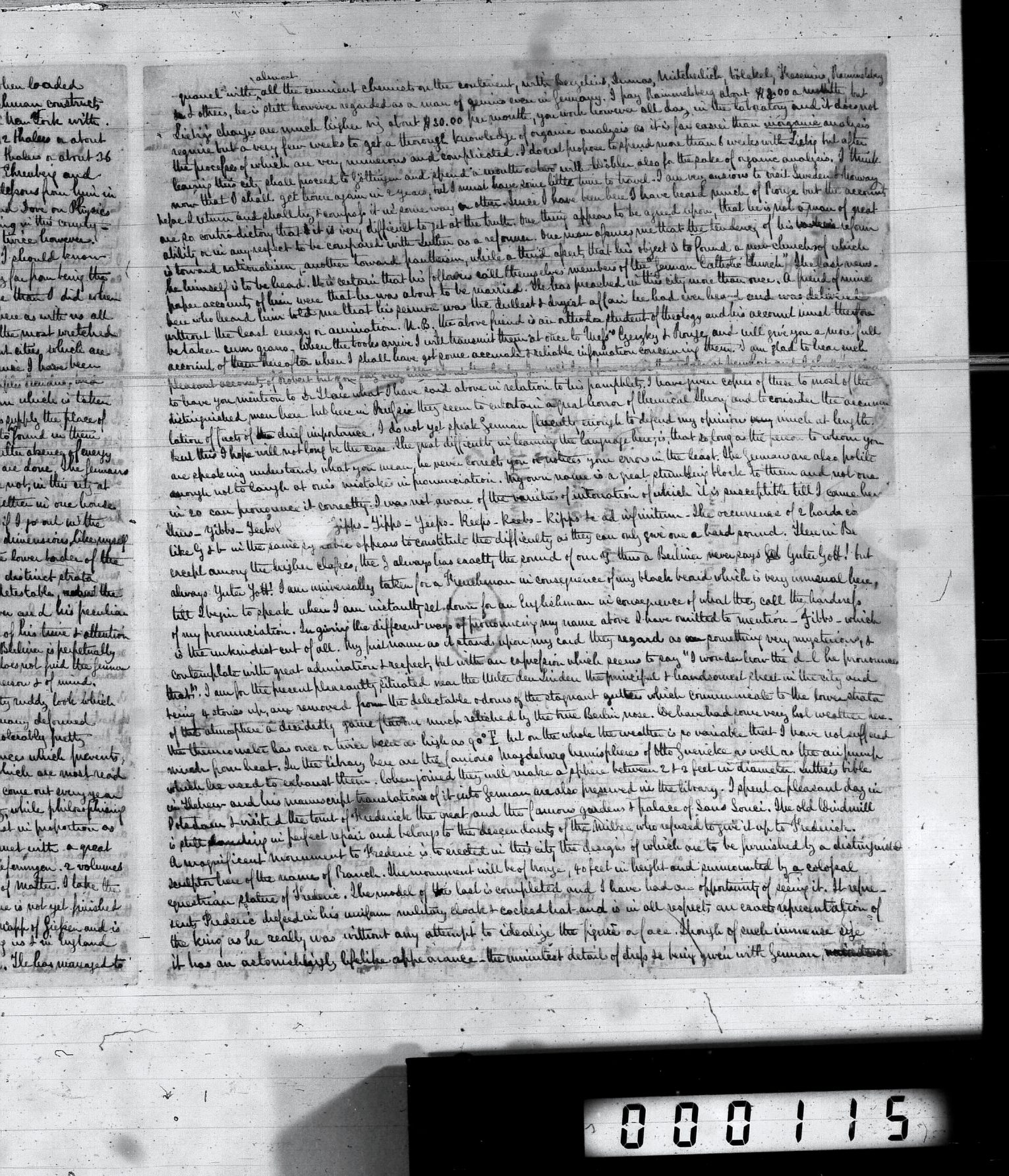
I have already written a pretty full account of my voyage and of my impressions of Havre & Hamburg and Berlin, and as I suppose that my letters have been shewn you I shall not go over the same ground again but proceed at once to what will interest you most. I think a residence of a few weeks here would delight you the aspect of the city is somewhat that of a camp so far at least as the [word obliterated by a large ink blot] are concerned. In every third man you meet is an officer and sentinels are po sted in all directions, whose sole business appears to be to [struck through] keep a sharp look out for officers and salute them as they pass.
the arms and equipment of the soldiers here are of the best kind and their appearance extremely good. Every private has a sword which I believe has not hitherto at least been customary. they all wear at this season white pants, their coats are of course very various according to the regiment they belong to. their helmets are the handsomest and best I have ever seen, shaped in this way [pen sketch of a spiked Prussian helmet drawn in the line] as nearly as I can represent it. the officers the same but with plumes. they are made of leather and the ornaments are of brass, or of German Silver, the spike of brass at the top serves to ward off blows from above & make the swords glance to one side. The dragoons have excellent horses and equipments. Some regiments of cavalry are provided with straight swords of a most preposterous length and weight, I should think nearly 4 feet long, both edges being sharp. There are also regiments of lancers & cuirassiers. In this city there are about 15,000 soldiers and since I have been here we have had a grand review at which the king and all the royal family were present. I stood opposite the palace so that I saw them all pass before me and it certainly was a very fine sight. No soldiers in the world could be better furnished or present a finer appearance. they are almost all young men from 20 to 25 healthy looking and well fed. [struck through] I have however but one objection to the prussian military and that is that notwithstanding their admirable equipment, arms &c and their perfection of their drilling and exercises, they do not look as if they could fight and I would lay any wager that the corps of Cadets at West Point would drive an equal number of Prussian soldiers off the field in 15 minutes. There is a magnificent Arsenal in this city which contains 50 or 60,000 stand of Arms, arranged in rows one above another so as to look extremely well. The muskets are all percussionised, extremely well made, though I thought rather too stout and heavy. the lock is very strong & well finished. The Prussian army amounts to 200,000 men which can be raised in a few weeks to 500,000 and by the aid of the militia to 900,000. Every man is obliged to serve for a certain time as a soldier.
I am very glad to hear that you have passed your examination and hope that you will study hard next year and get up a few files. I believe that a great thing in studying is to think over what you have learnt, without book and several hours after studying – exactly as a cow chews the cud – you soon find out in that way whether you have really learnt anything or not. However you must choose the way which suits you best, only I hope that you will not suffer yourself to be discouraged by anything whatever and will not be content to be foot merely because you cannot be head. When you come out you are certain of always having bread & butter
[The text runs off the foot of the leaf here; the continuation and signature of the letter to Alfred are not on this frame.]
[Along the left edge of the frame the outer margin of a different leaf, in the same hand, has been caught by the camera. Only the ends of its lines are within the film. What can be read, line by line:]
[…] mentioned in my last letter
[…] lay your hands on — [struck through]
[…] lay from the North River
[…] of apatite from Bopie(?) which
[…] opportunity I one should
[…] I will send something
[…] ow difficult it was to find
[…] ye fear God and keep —
[gap]
[…] ear to be conducted nearly
[…] other branches much less
[…] s to go to one of the usual
[…] ll regularly conducted
[…] ary institutes in Germany
[…] ass He thought that it
[…] s of age and then come
[…] select as the objects of his
[…] d make it worth while to
[…] s knowledge of mathematics
[…] the question is whether it
[…] important. I do not now
[…] months either in Gottingen
[…] ture as Inorganic analysis
[…] for me to take charge of
[…] uch away from my rooms(?)
[…] little French is taught here
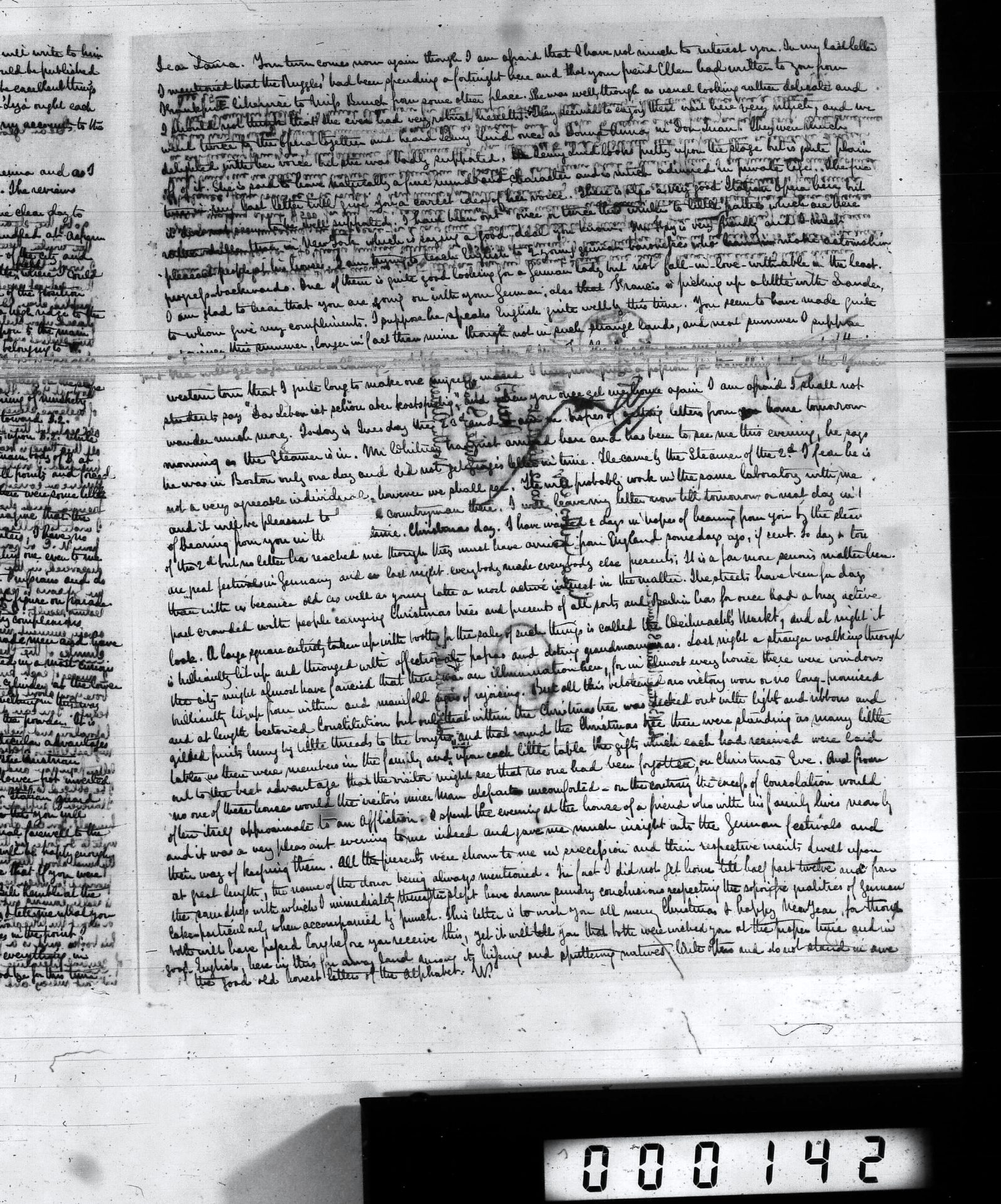
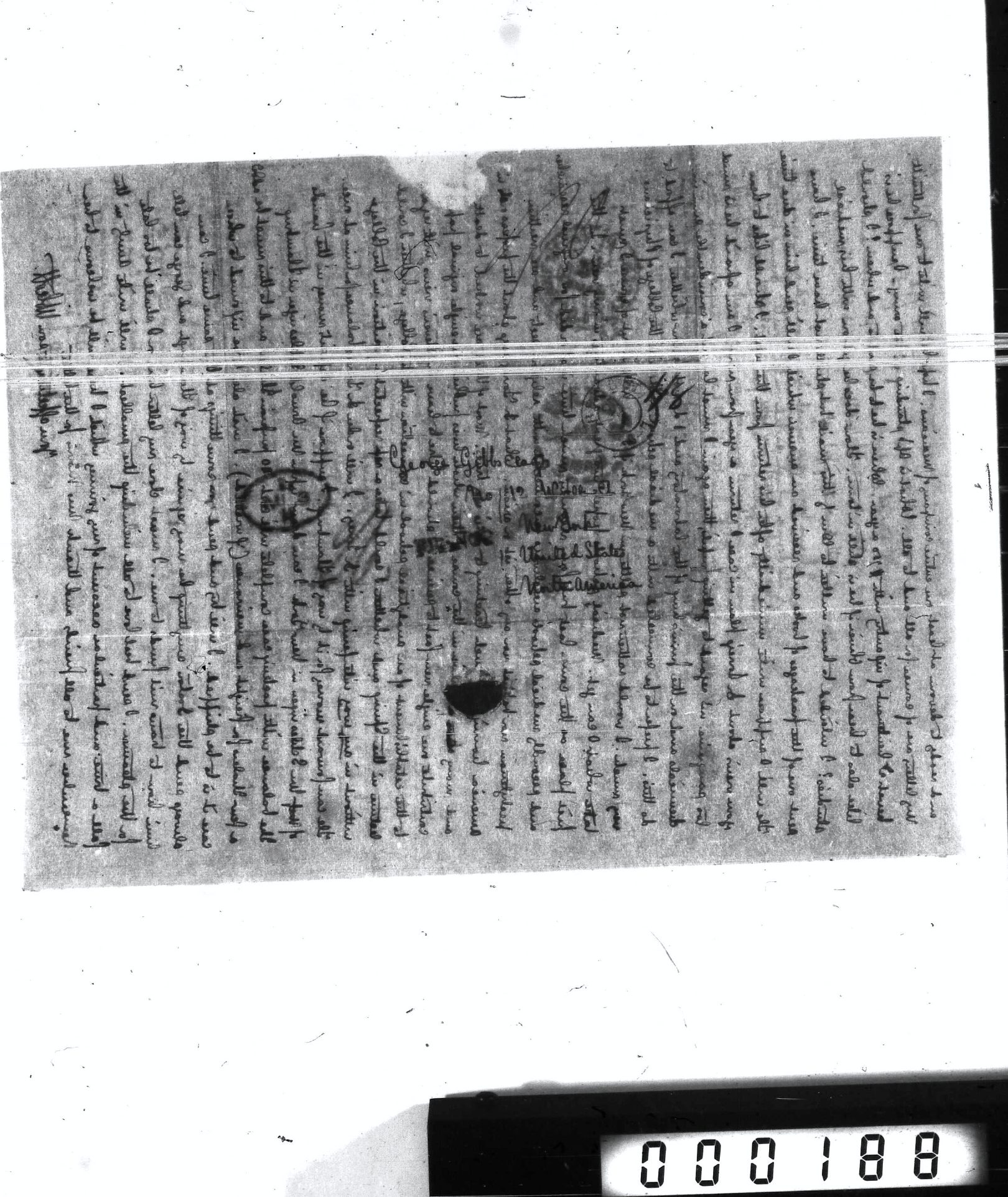
One frame, one leaf written on both the recto shown and (by show-through) the verso. The microfilm target number at the foot of the frame is 000124. The head of the leaf is torn away in a ragged diagonal, so the first four or five lines of the letter to his mother survive only in part; there is no place-date and no year on what remains. A broad horizontal flare and scratch band crosses the film about two thirds of the way down the upper block and has destroyed two complete lines beyond recovery. A large ink blot obliterates one word in the sentence beginning 'the aspect of the city'. A small pen sketch of a spiked Prussian helmet (Pickelhaube) is drawn into the line of writing, and the text reads 'shaped in this way [sketch] as nearly as I can represent it'. Two surnames defeated repeated reading and are given as best readings with a query: 'Miss Tauch(?)' and 'the Snissens(?) / Mrs Snissen(?)'; likewise 'the Hares(?)'. One word after 'wading through' could not be read at any magnification and is marked [illegible]. Along the left edge of the frame the camera has caught the outer margin of a second, different leaf in the same hand; only the ends of its lines are on the film, and they are transcribed as a separate marked fragment at the end rather than mixed into the letter. The letter to Alfred breaks off at the foot of the leaf without a signature; its continuation is not on this frame. The scan supplied is 1531 x 1784 pixels, which sets a hard limit on what can be resolved.
c. Jul 1846?
Congratulates his lieutenancy; urges perfect French, chemistry reading, study abroad after West Point
1845-10-02
Berlin; describes Freiberg mine descent (~450 ft on ladders) and Saxon Switzerland excursion
1845-11-04
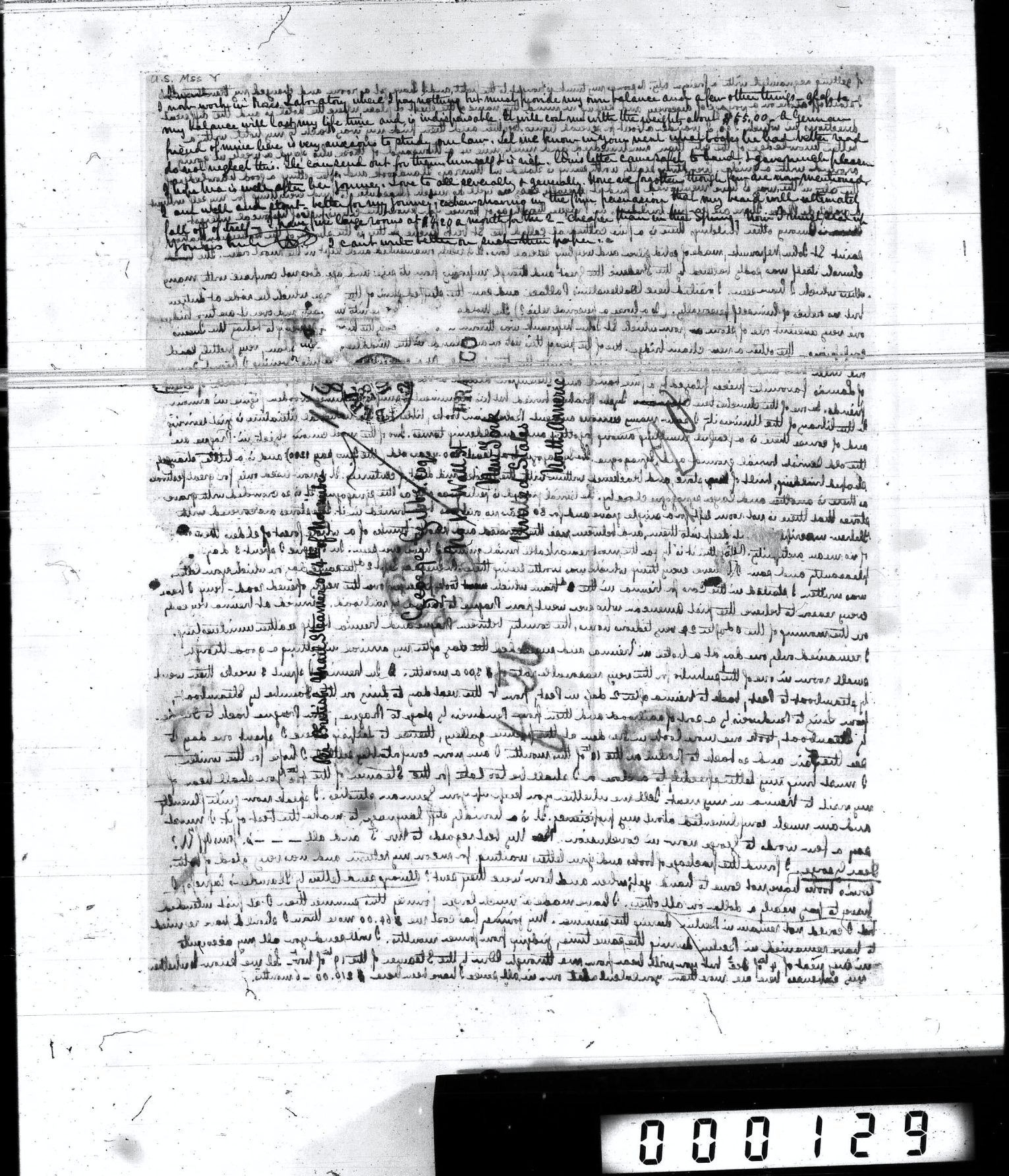
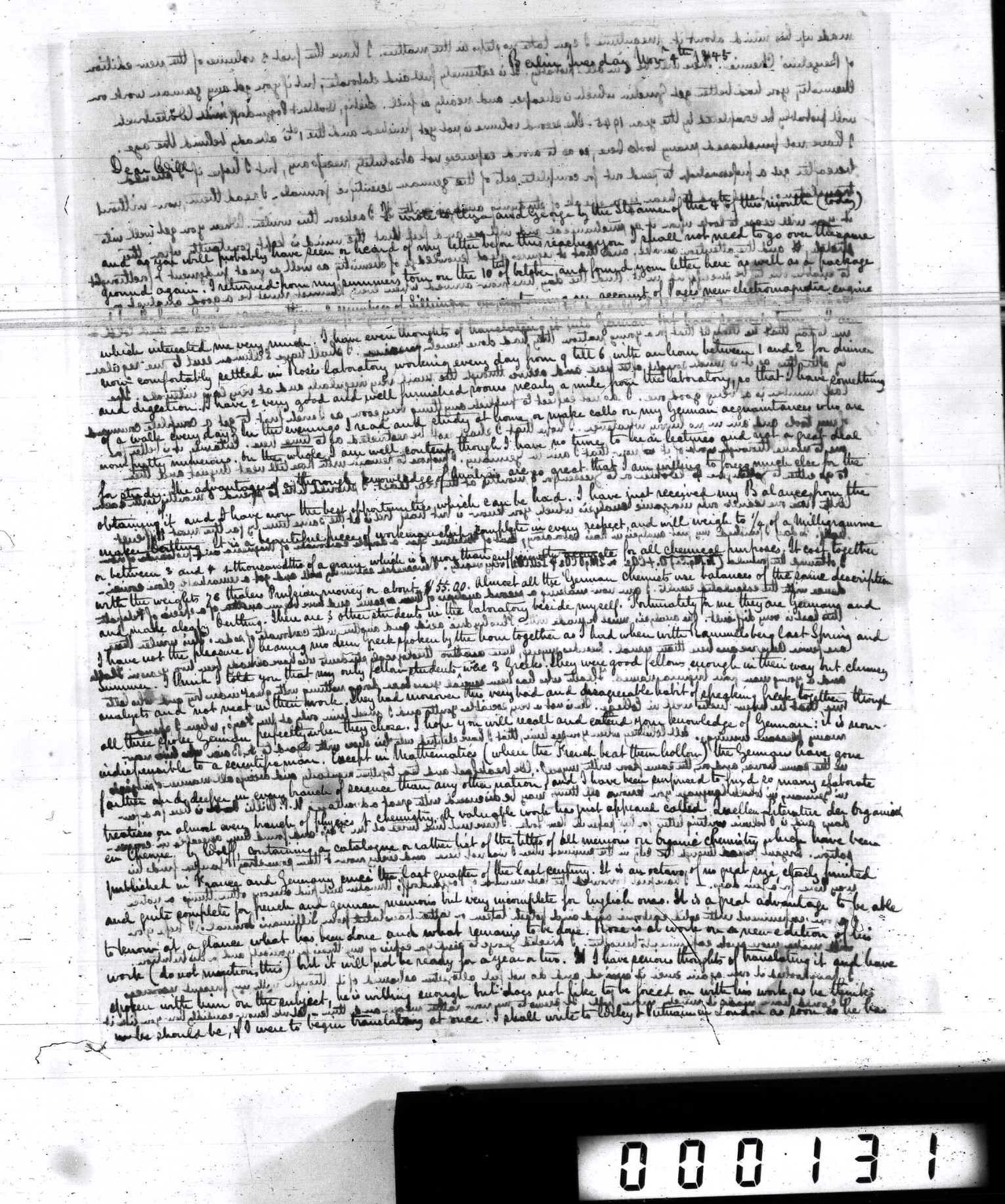
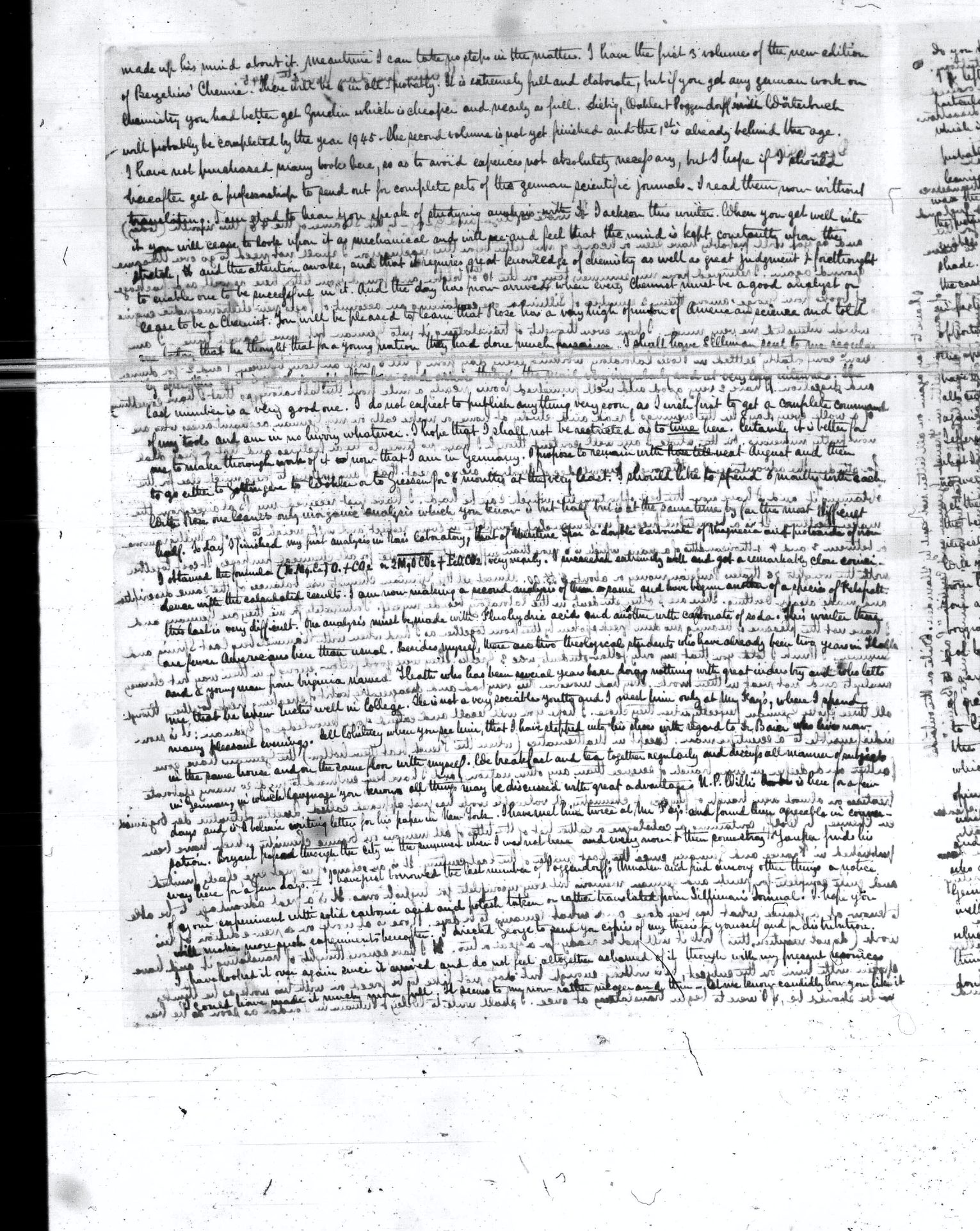
Berlin; daily work in Rose's laboratory; new precision balance; German chemical literature, translation project
1845-11-30
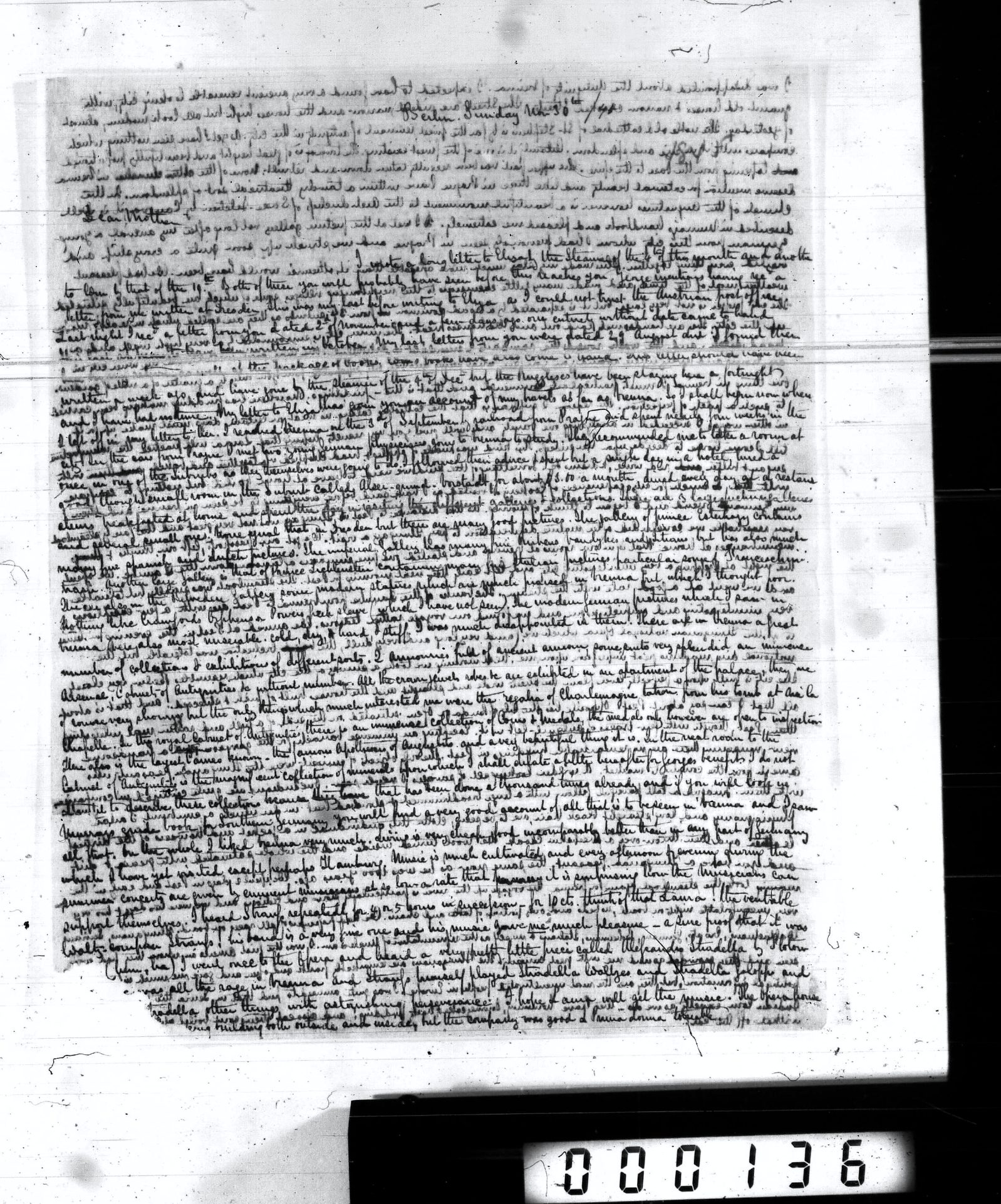
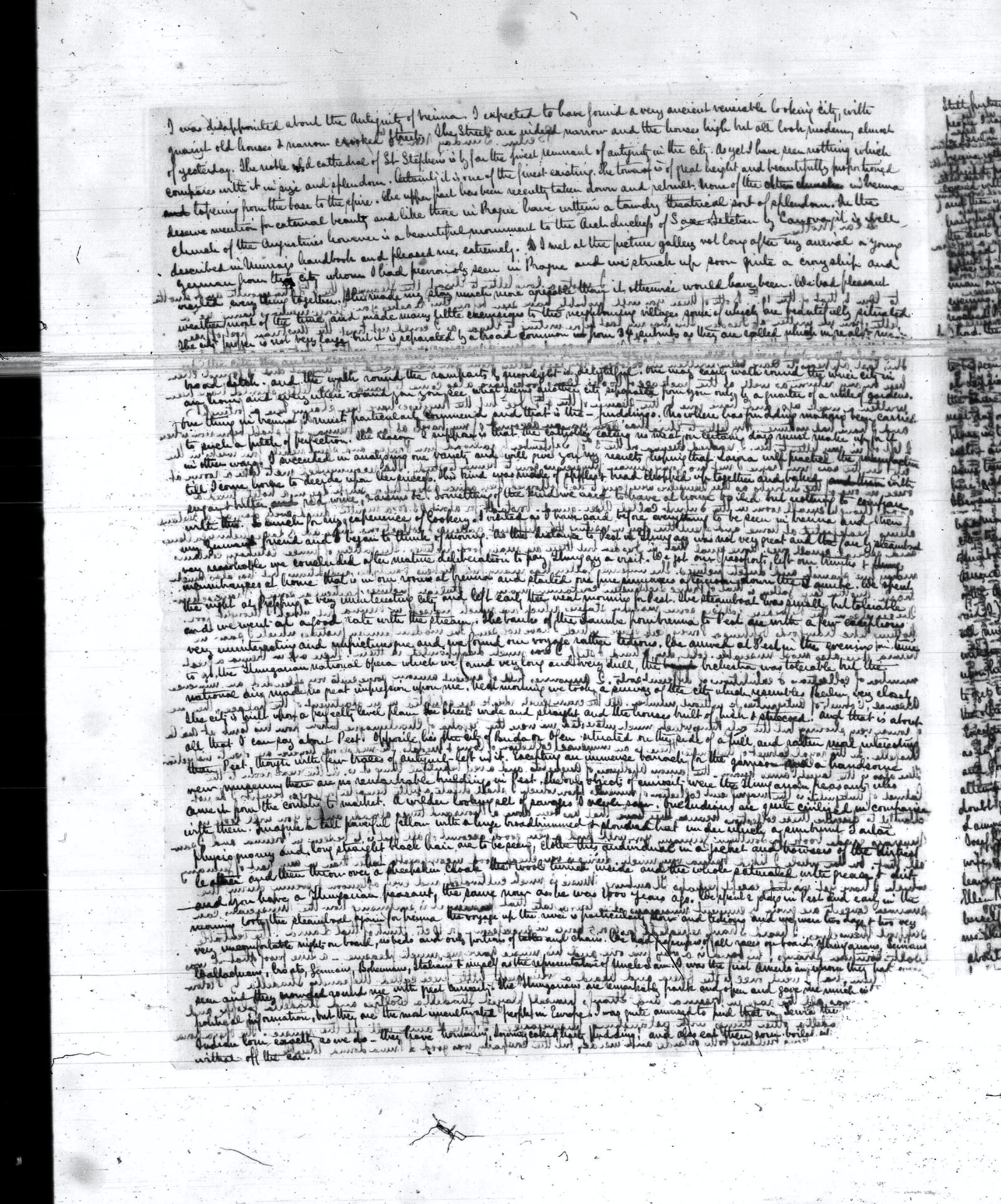
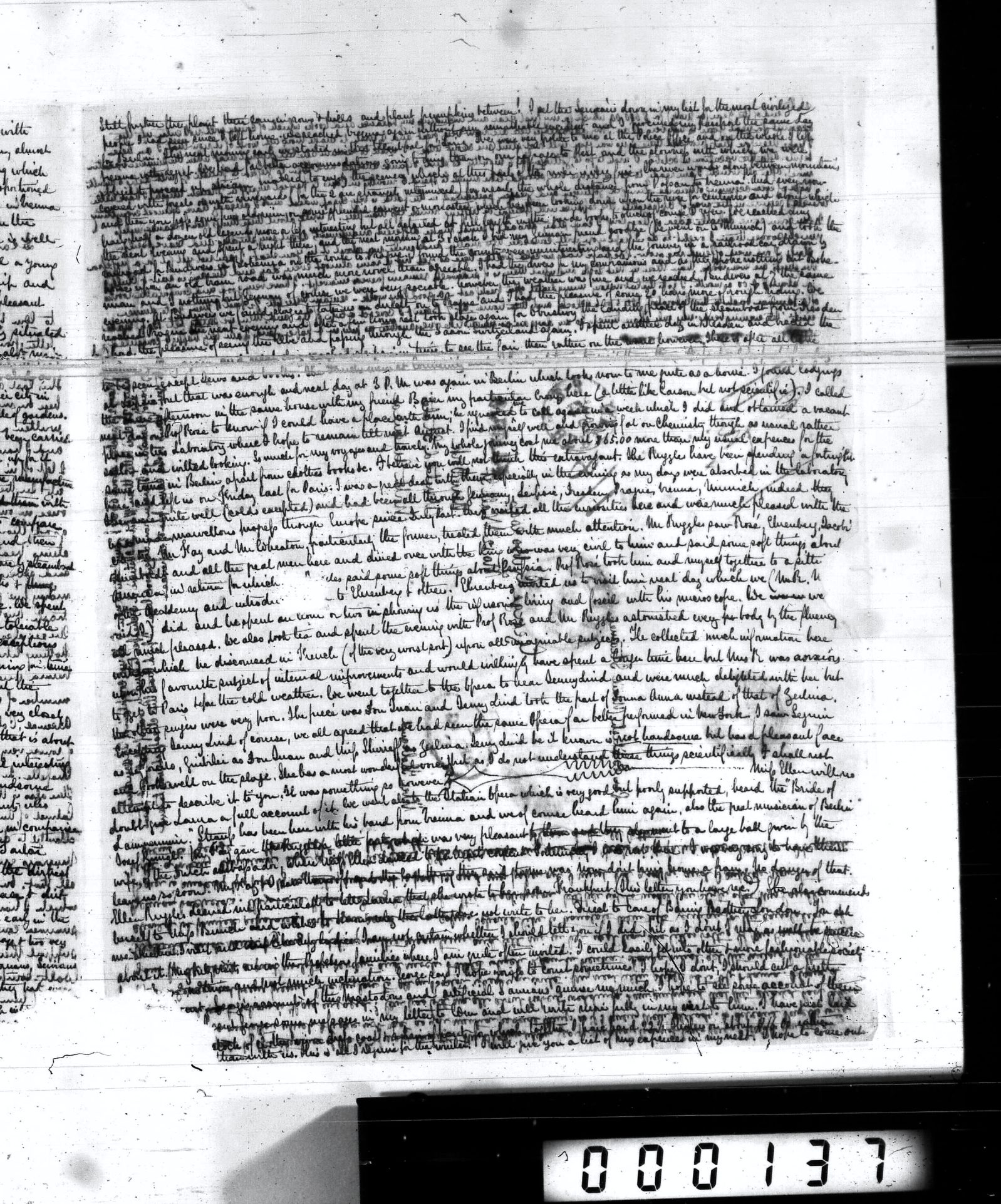
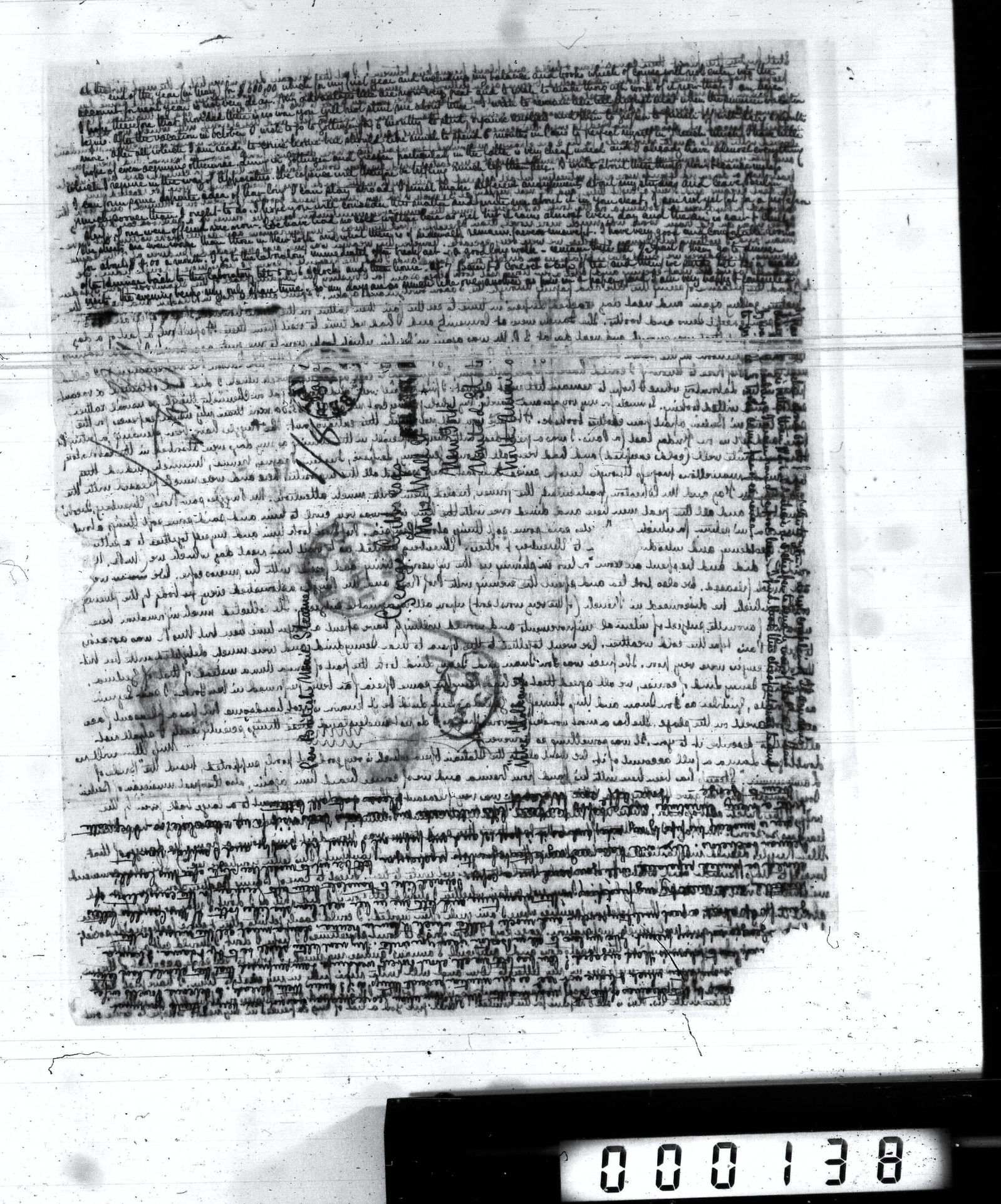
Berlin; Vienna account: lodgings, galleries, crown jewels, Charlemagne regalia; Strauss waltzes, Stradella opera
23? Dec 1845
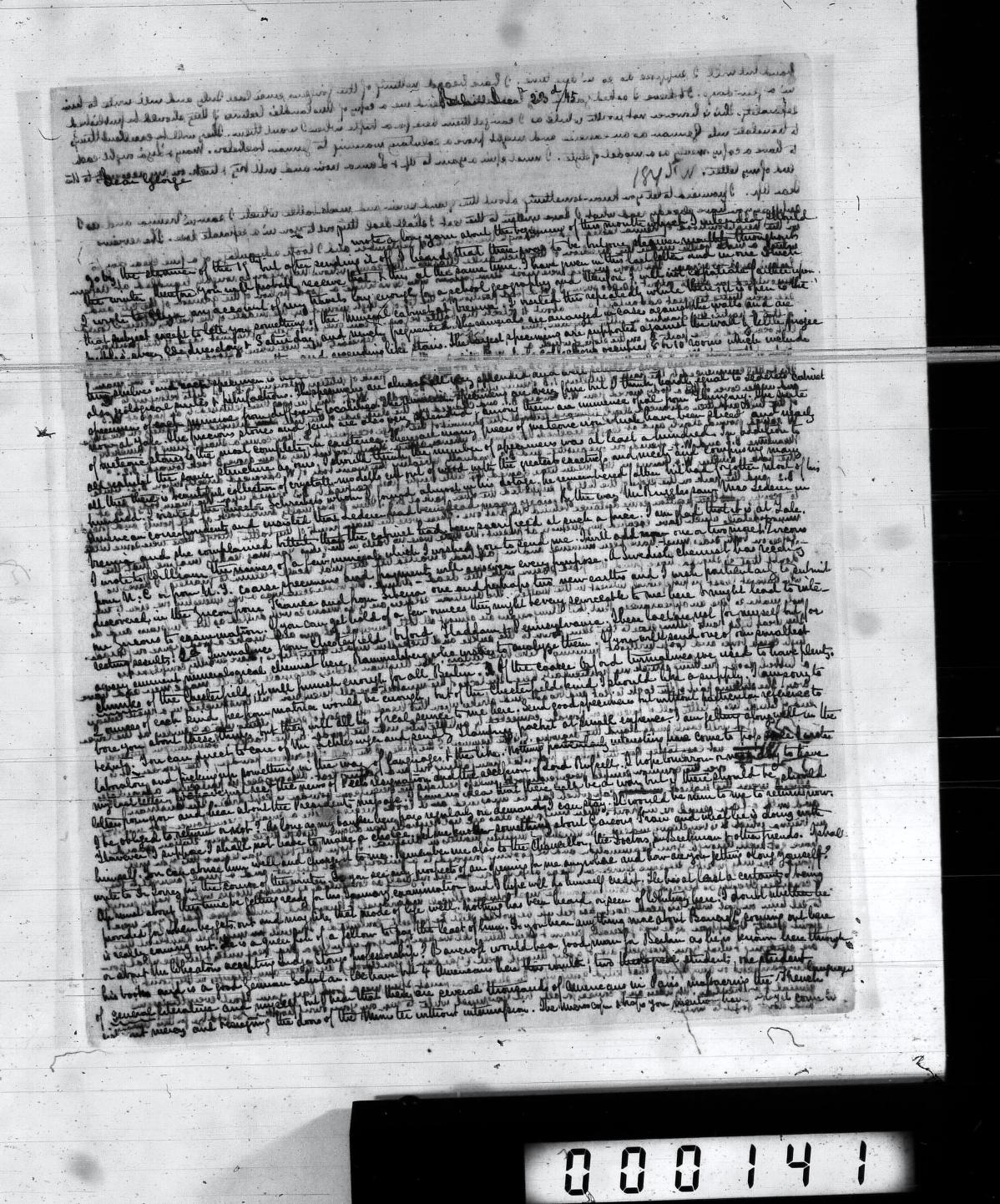
From Berlin: royal mineral cabinet, meteoric stones, crystal collection; proposes specimen exchanges with Yale
(cont.)
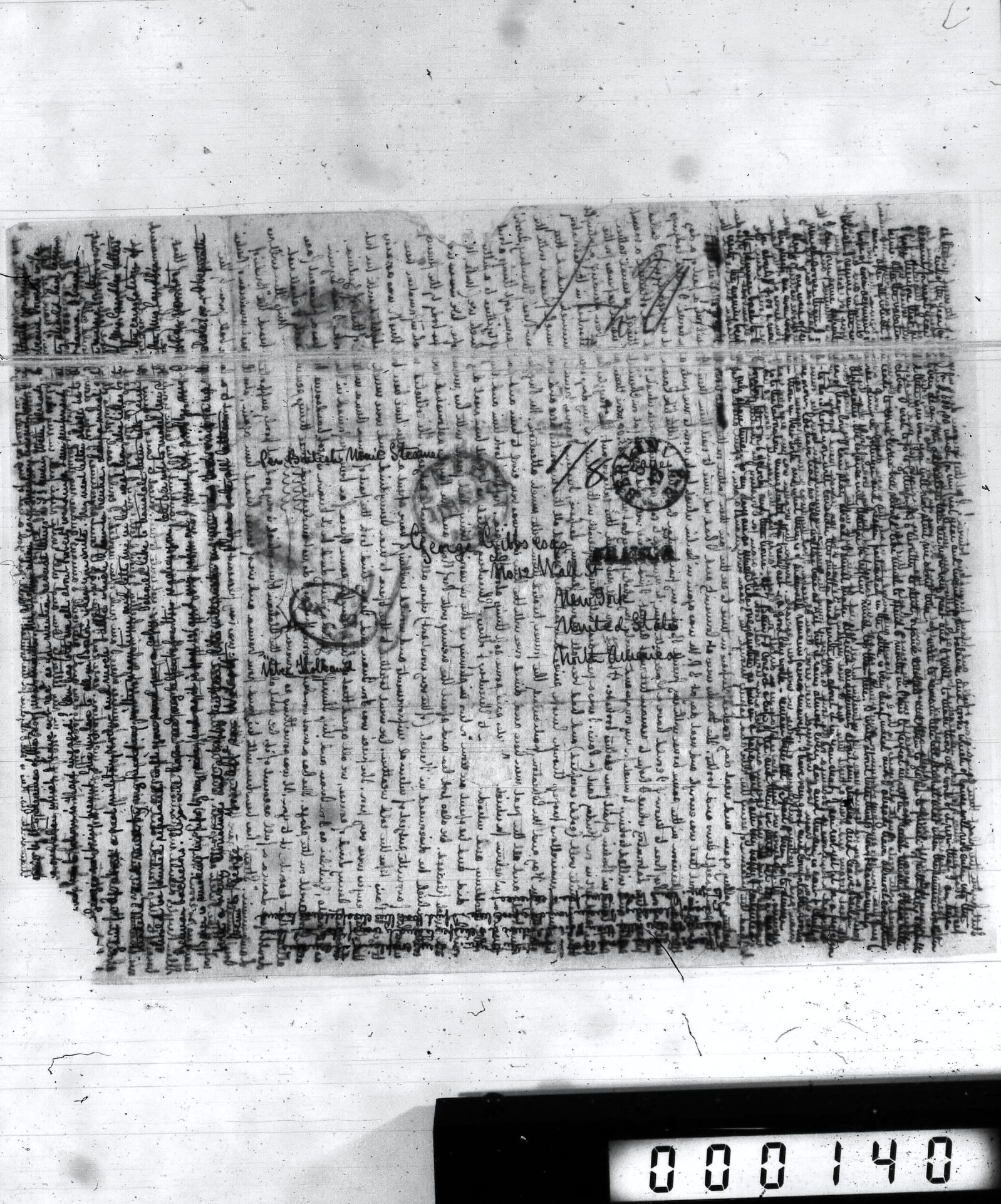
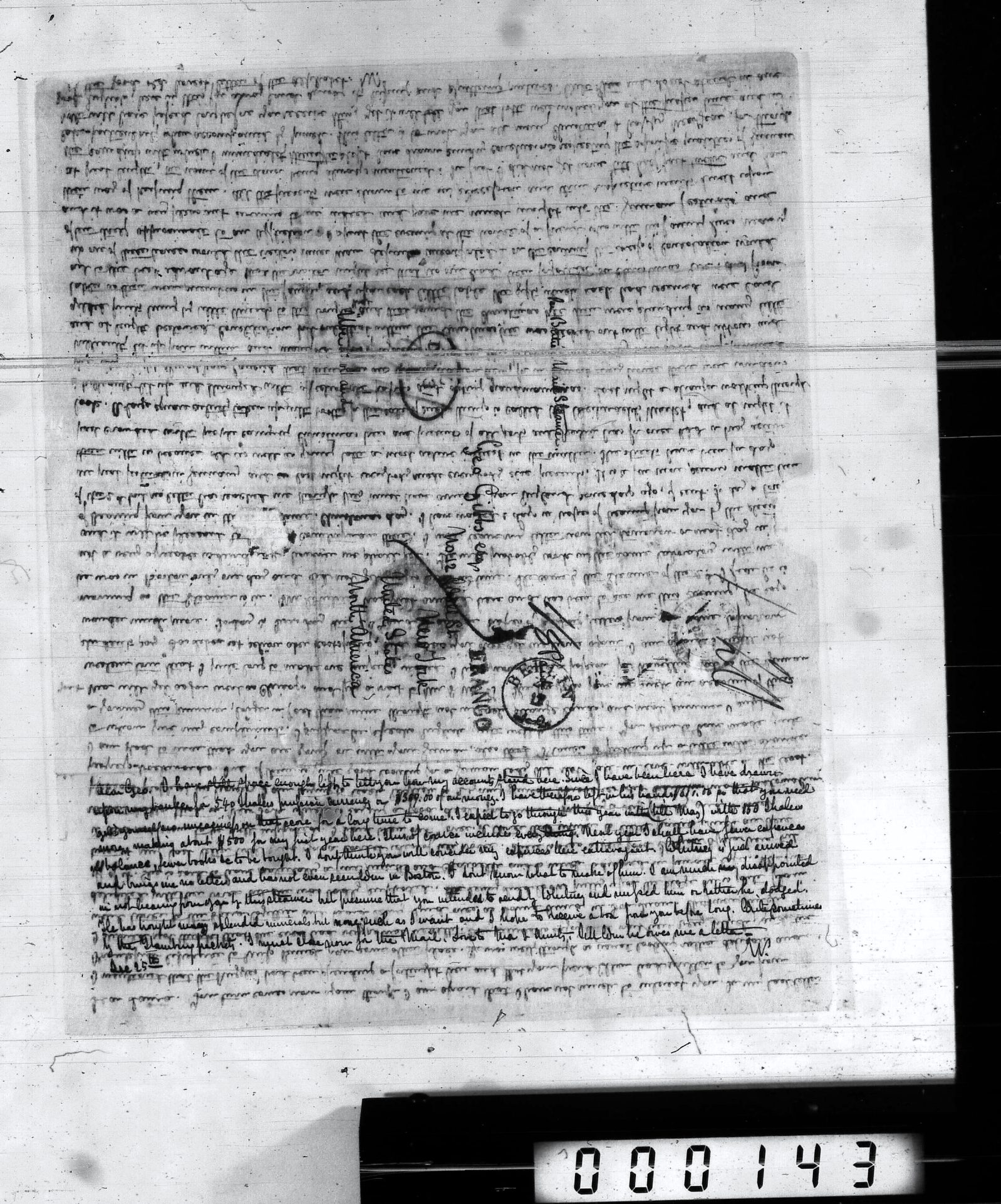
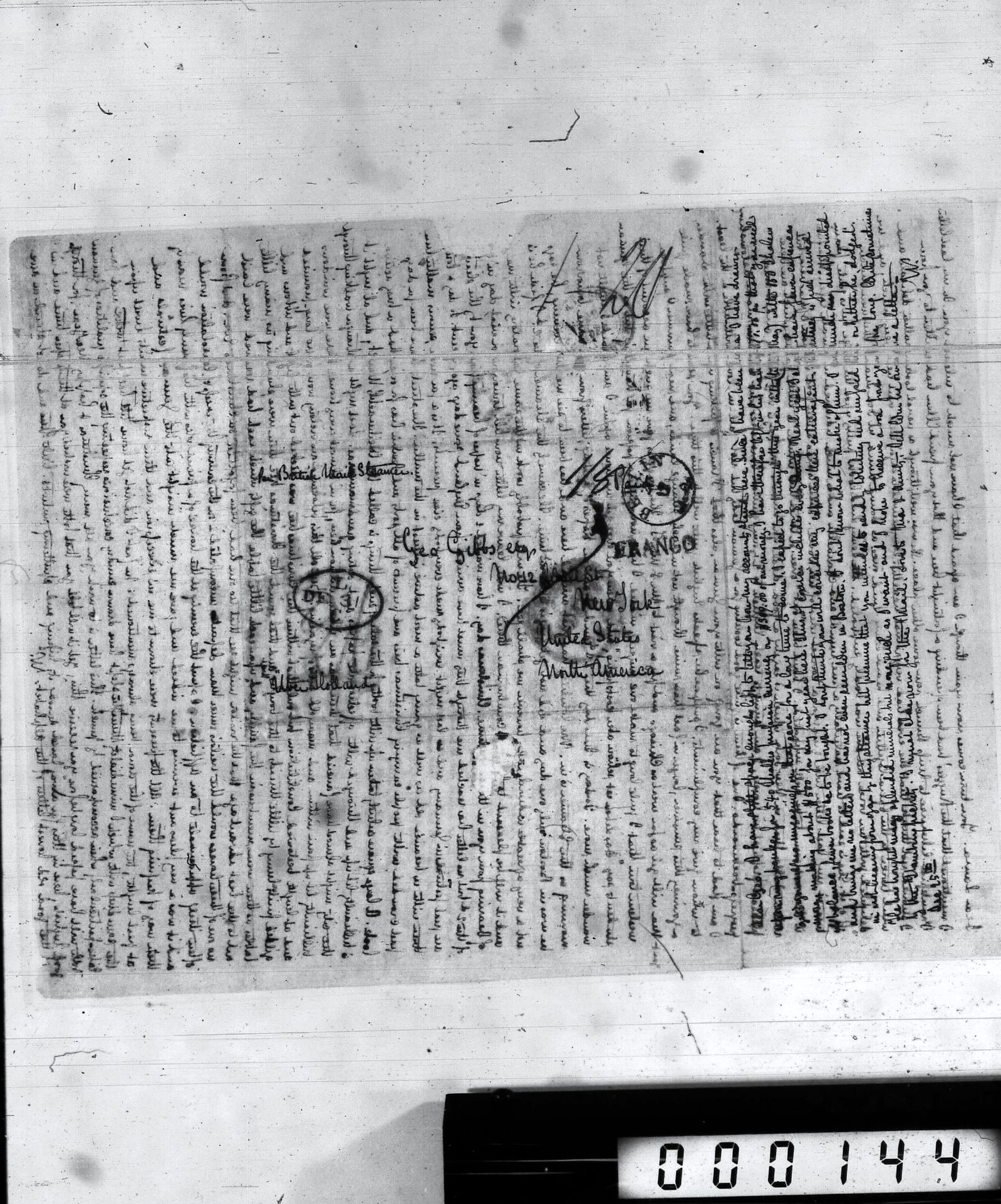
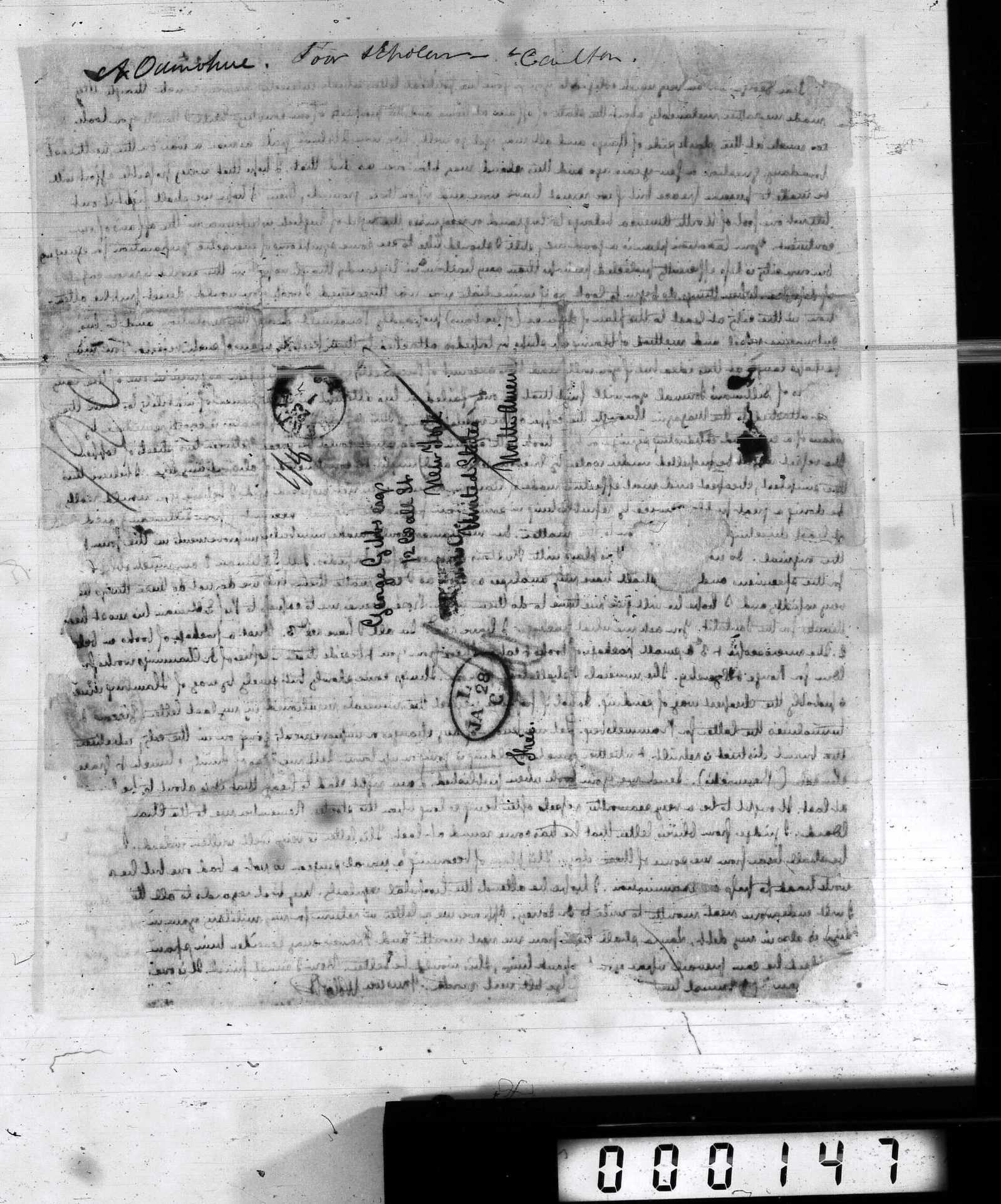
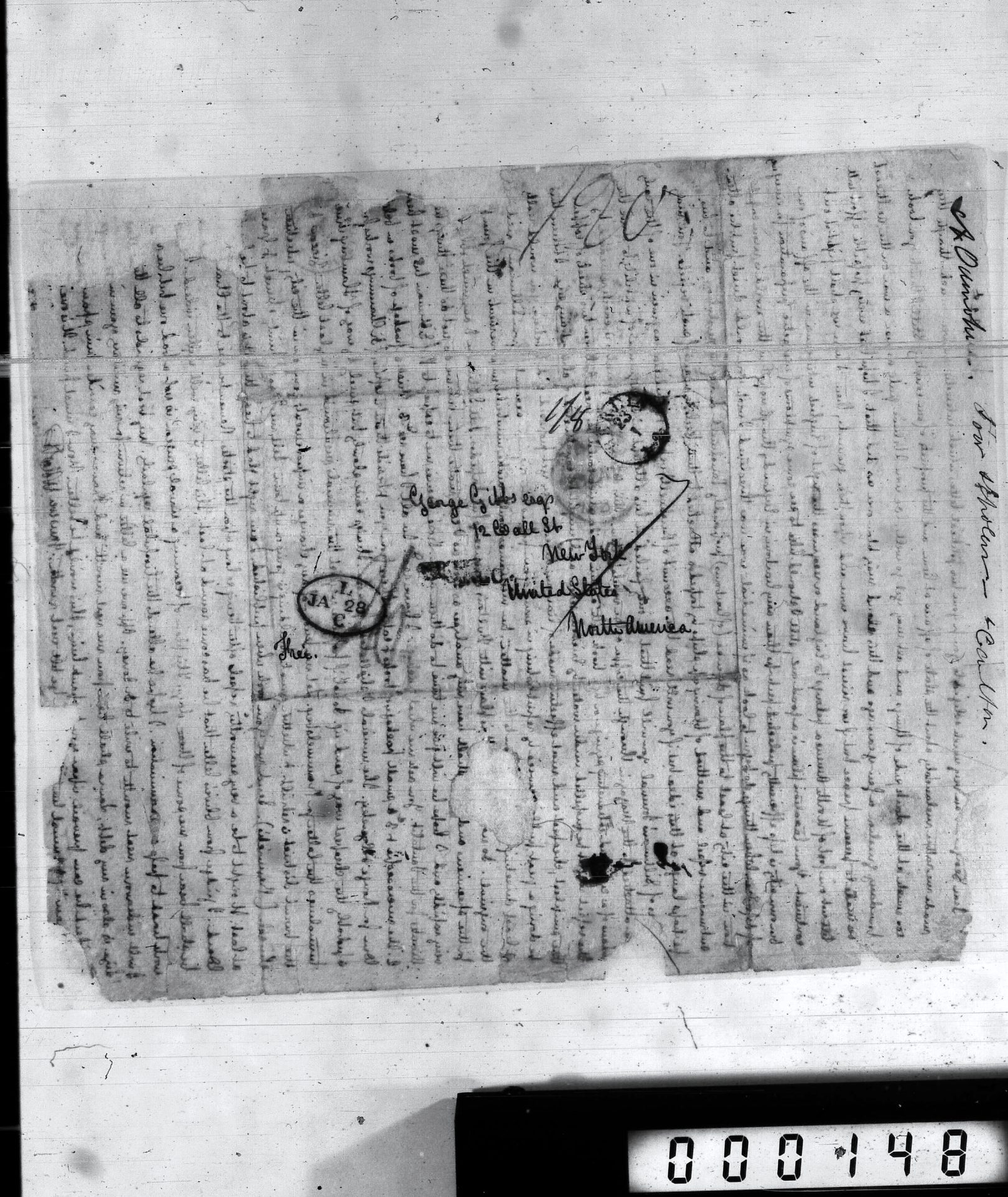
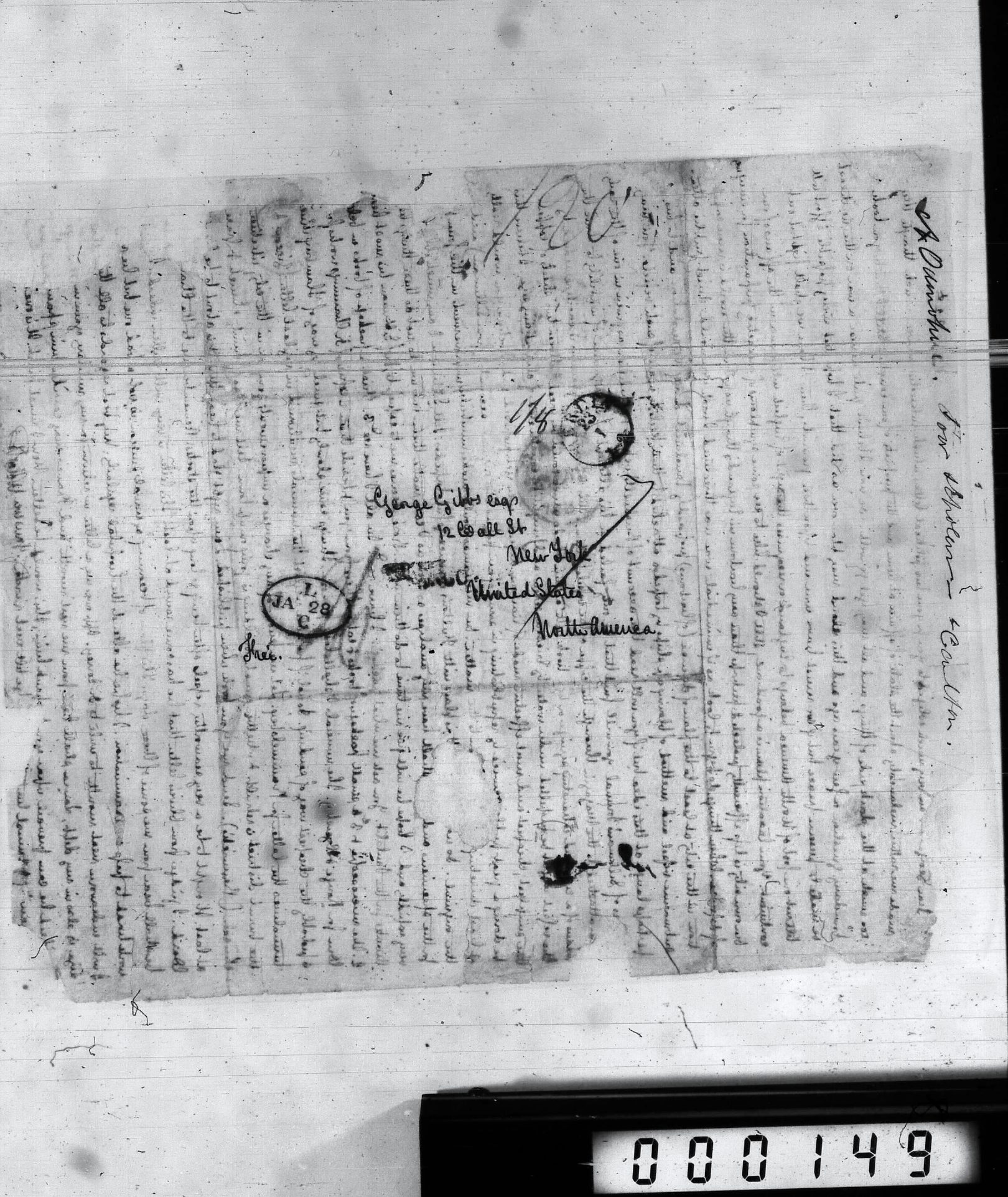
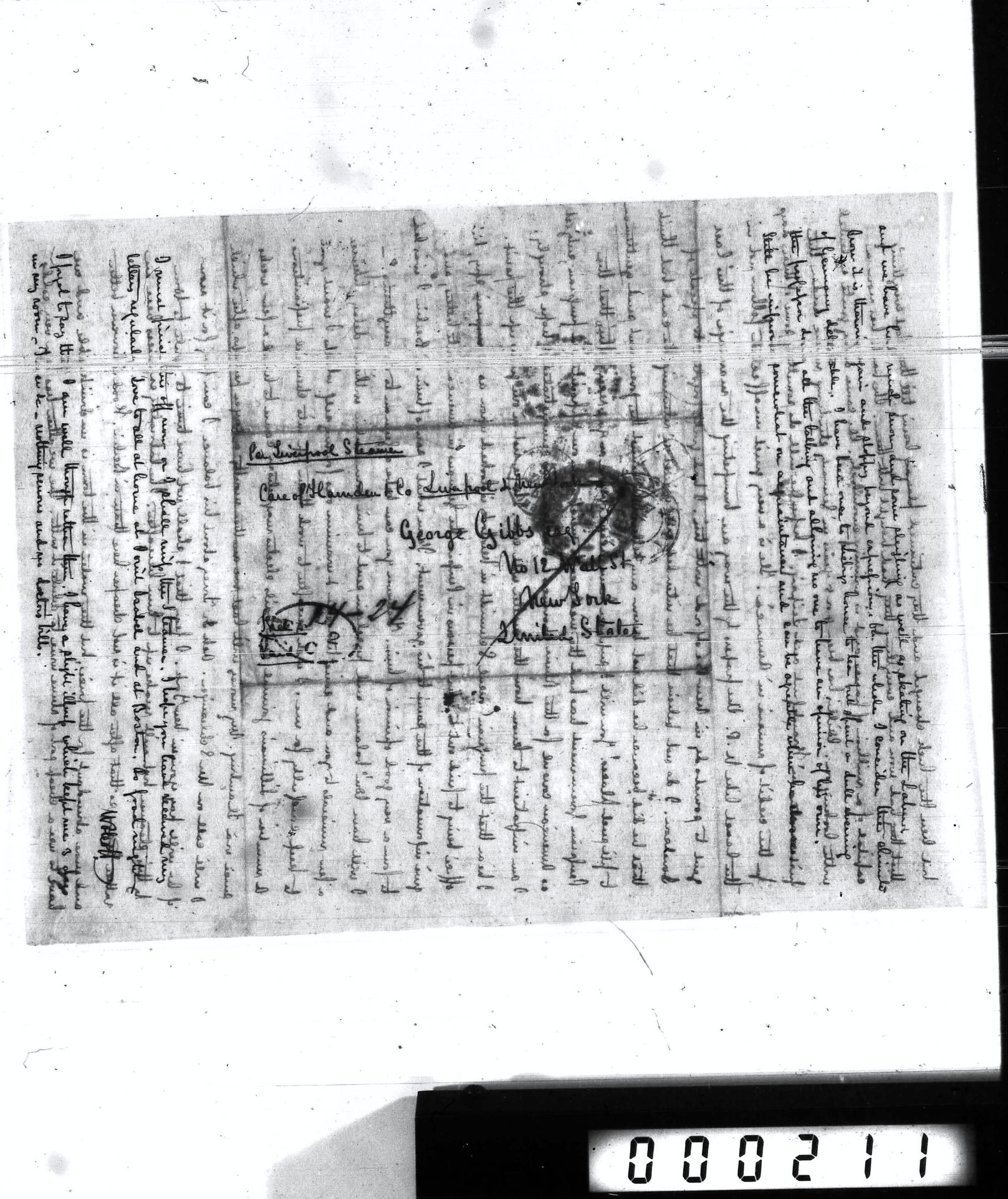
Same address leaf as 1163 photographed rotated (frame 000144)
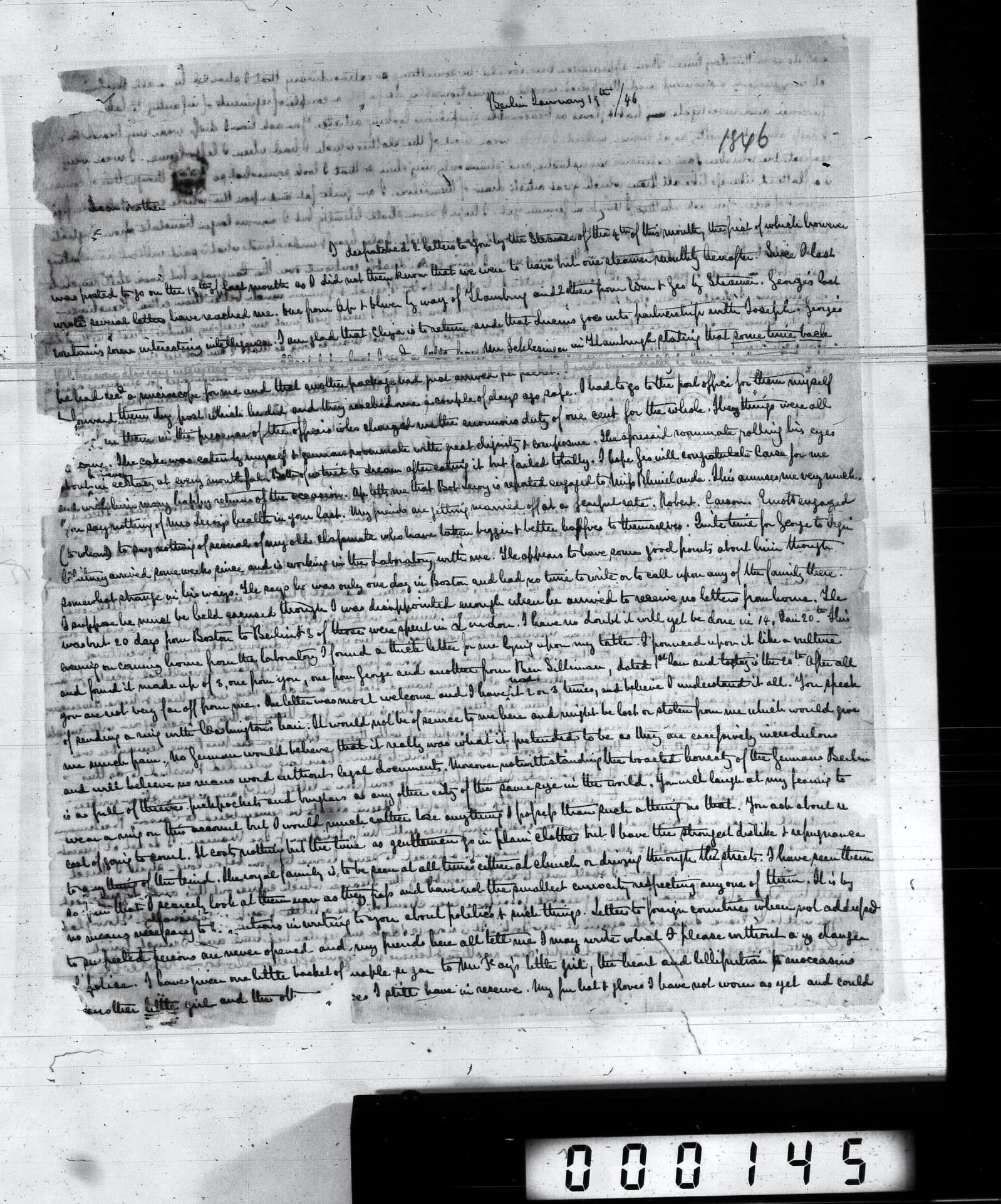
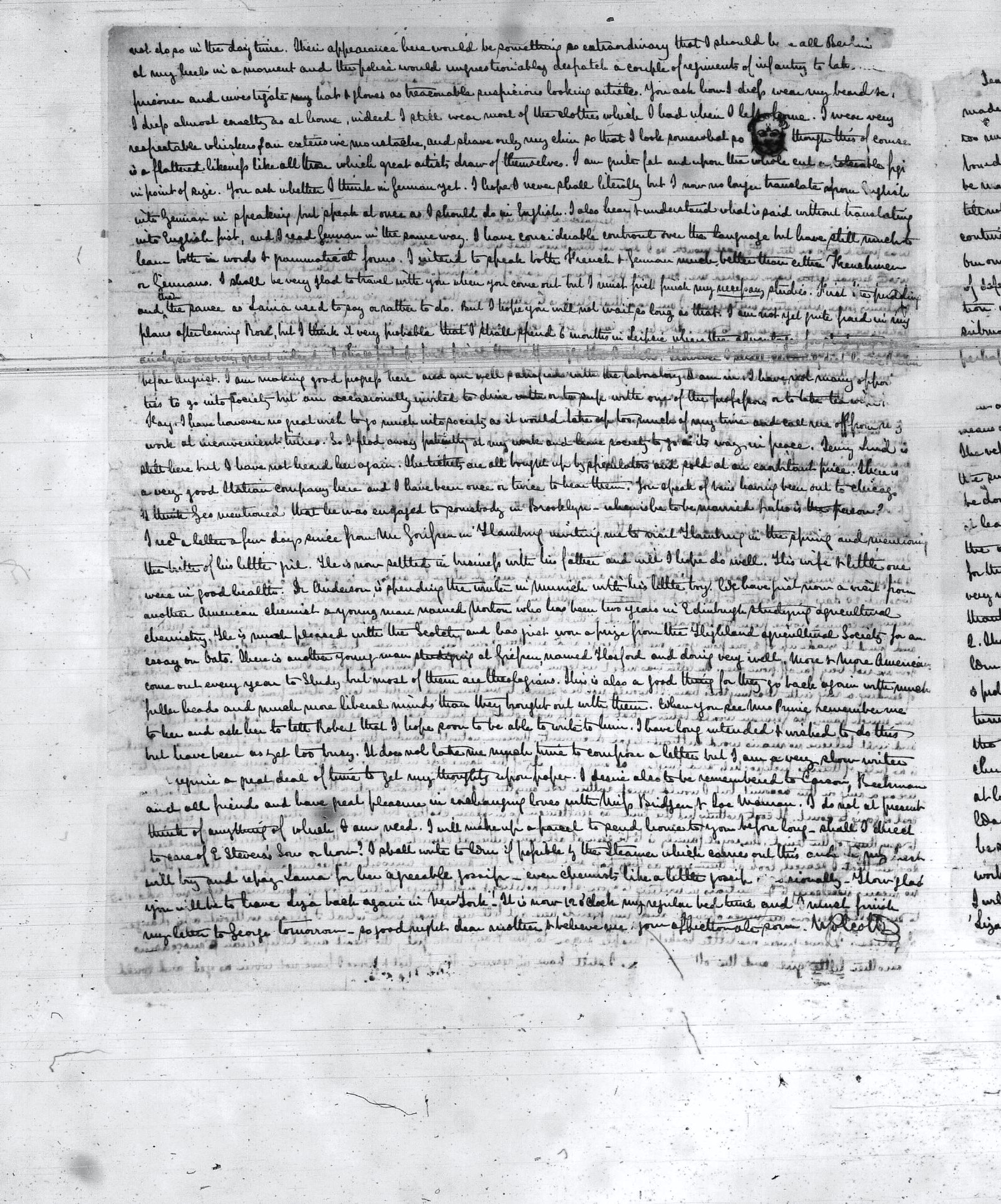
19 Jan 1846
Berlin: microscope arrived, Silliman letters, Eliza returning; warns against sending Washington's-hair ring; Berlin thieves
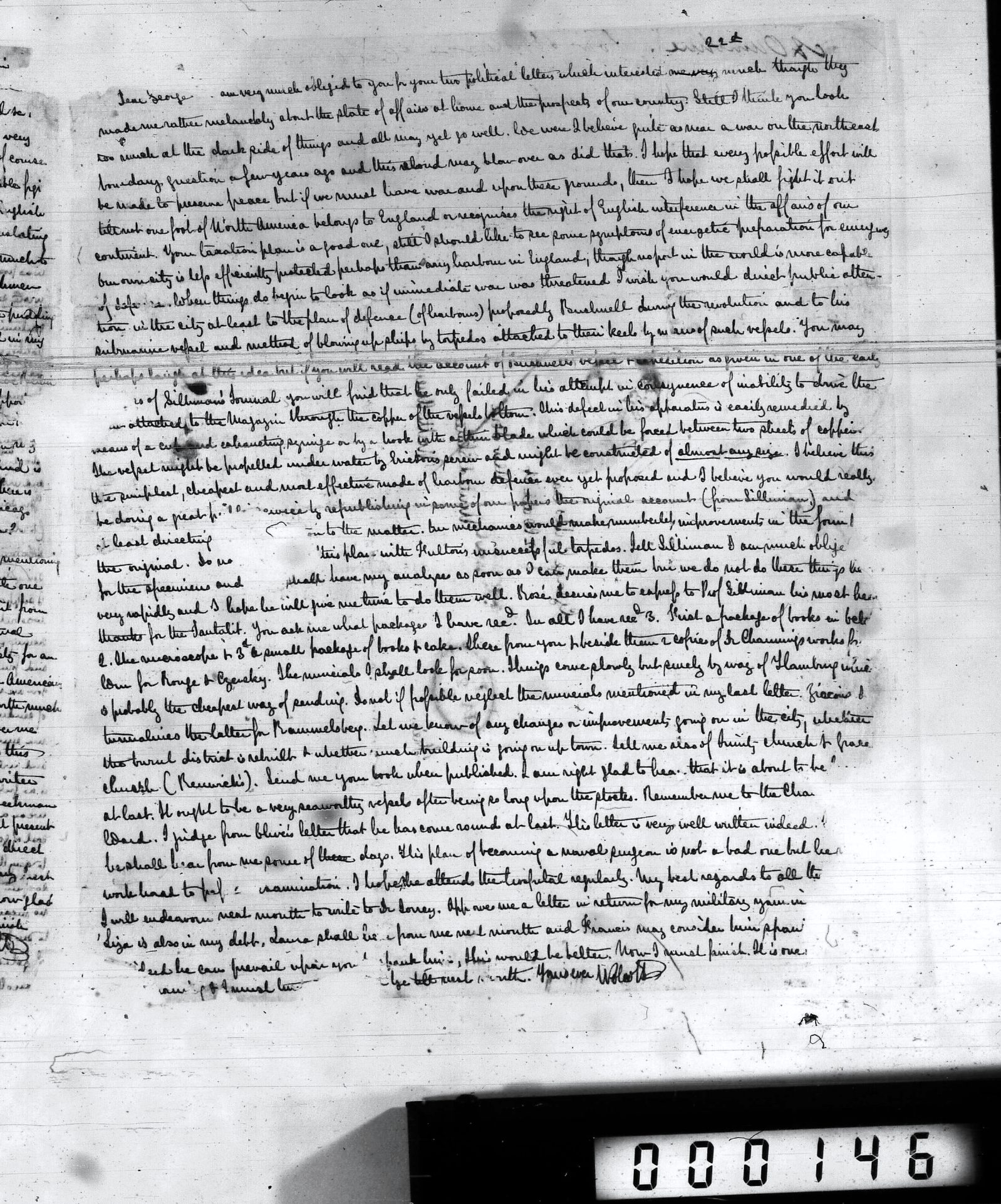
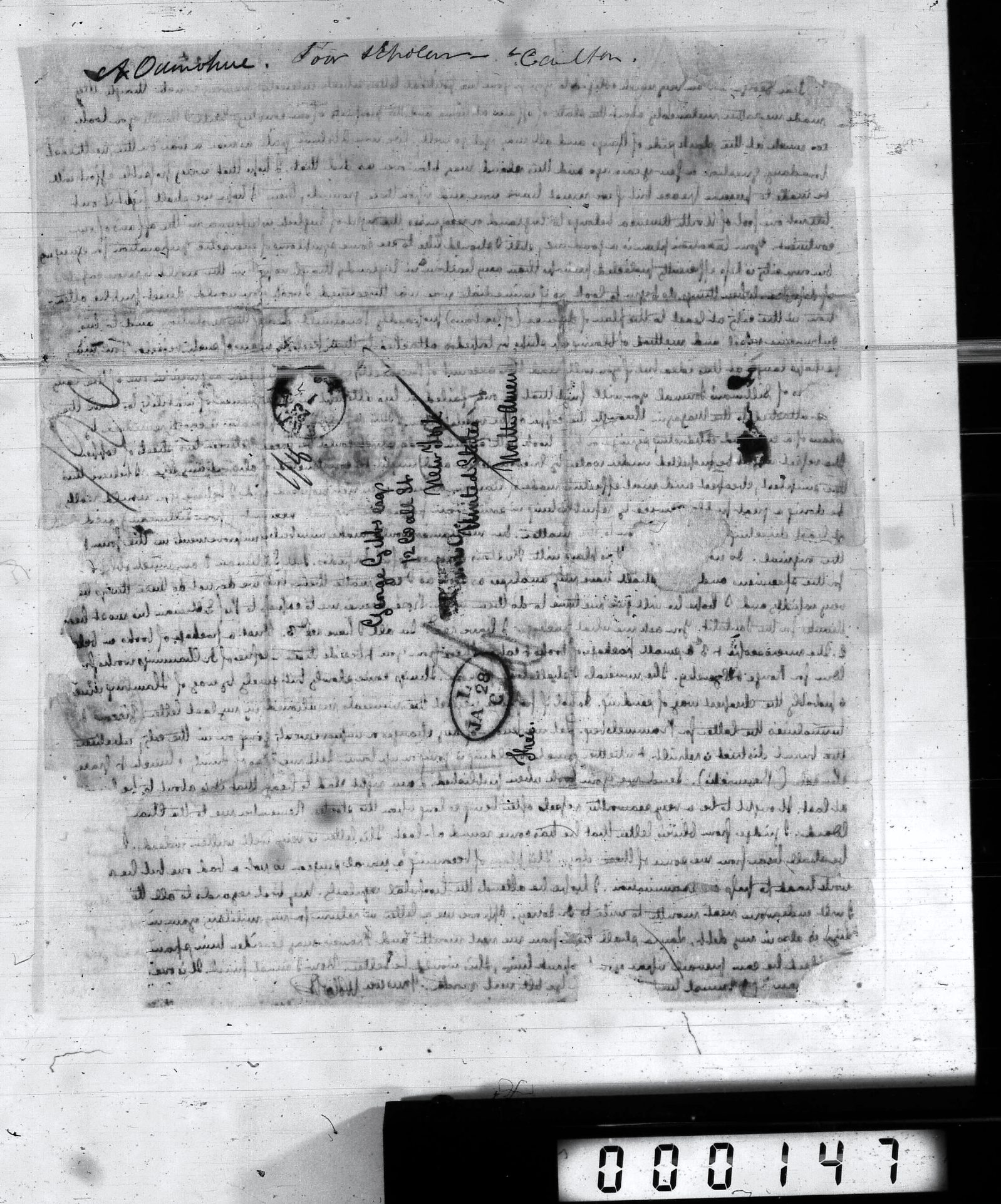
22 Jan 1846
Oregon war scare; urges Bushnell-style submarine torpedo harbor defense per Silliman's Journal; "Alf owes me a letter"
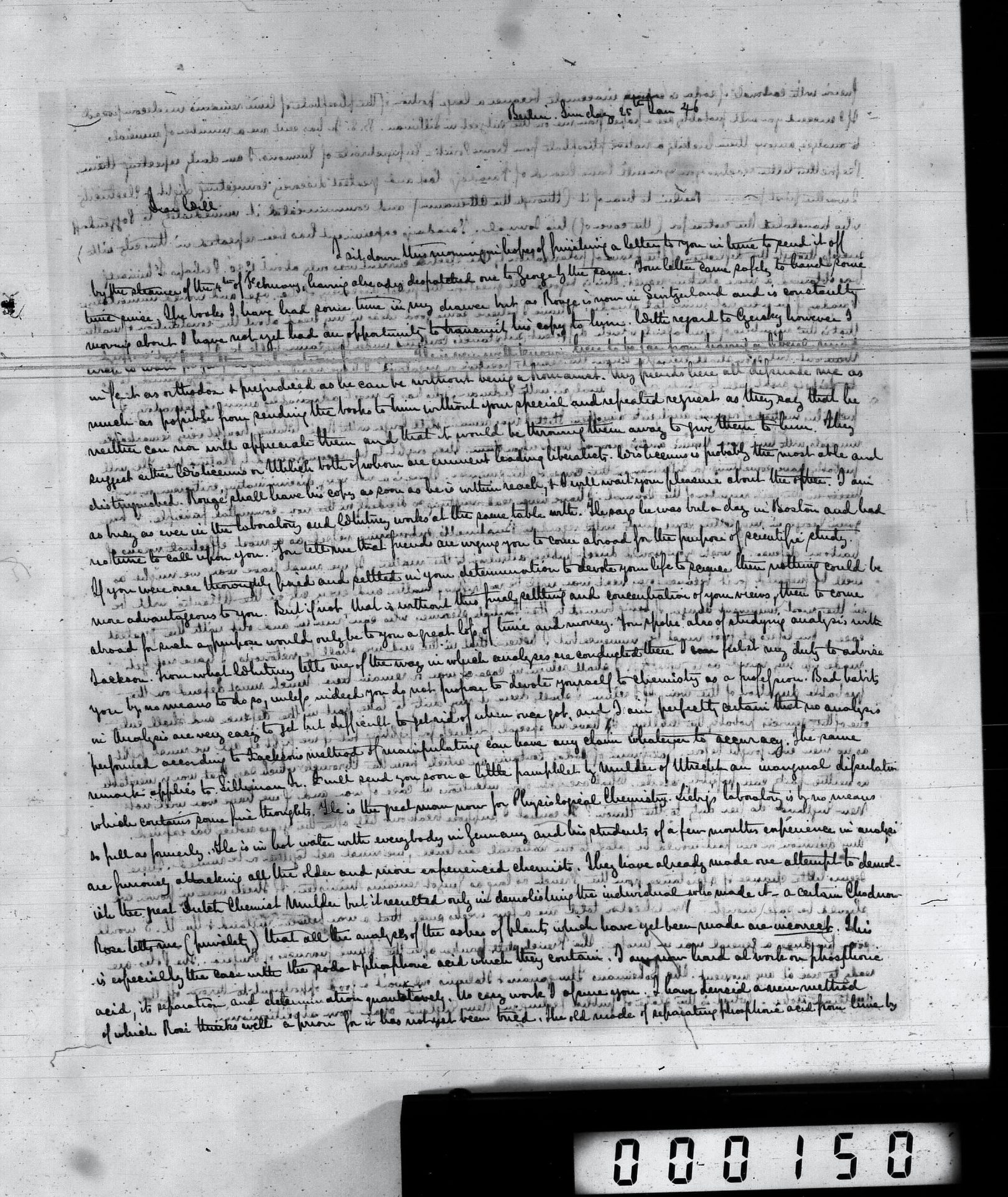
25 Jan 1846
Career advice: avoid Jackson's and Silliman Jr.'s sloppy analysis; Liebig's feuds, Mulder, Rose, Whitney labmate
22 Feb 1846
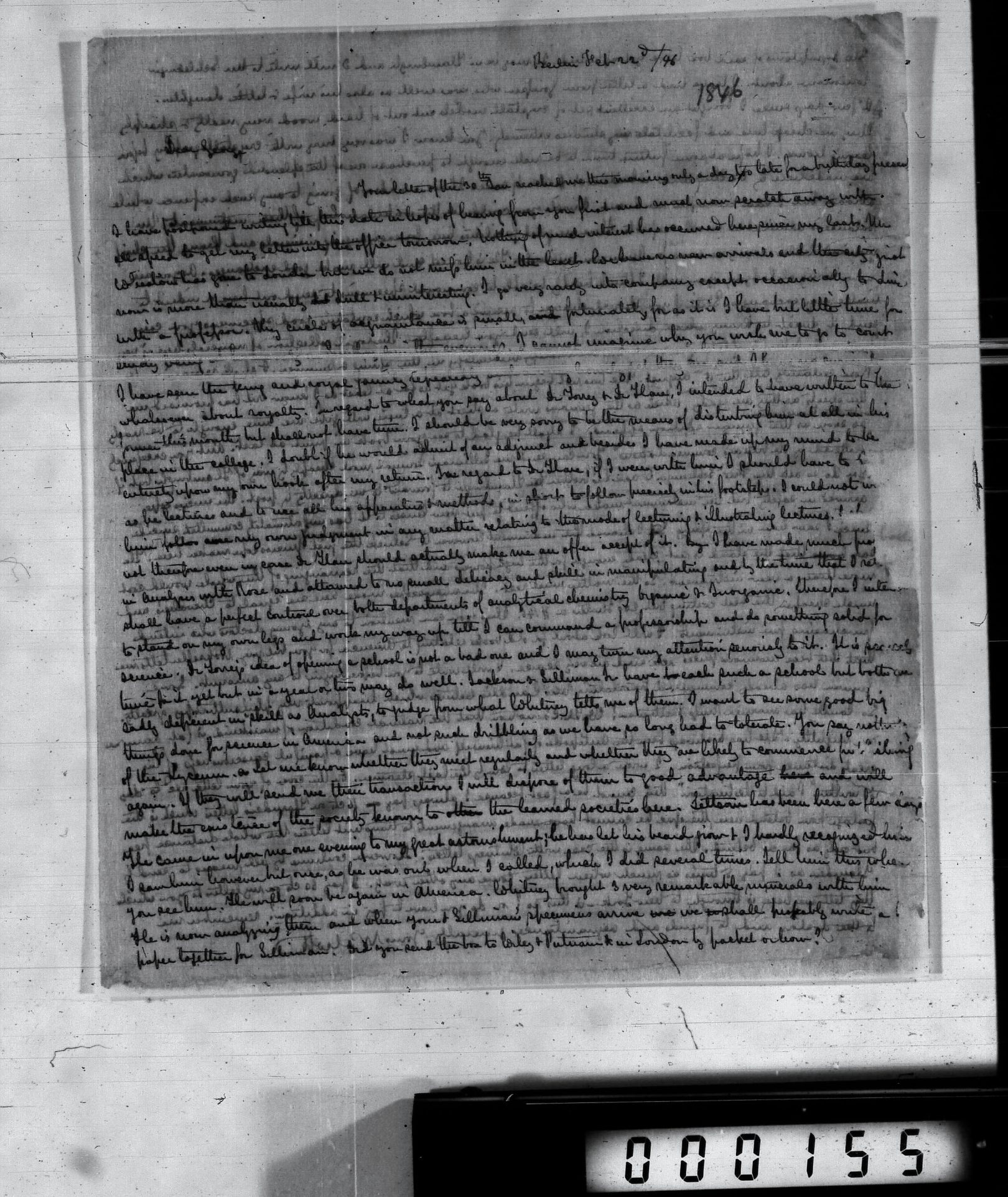
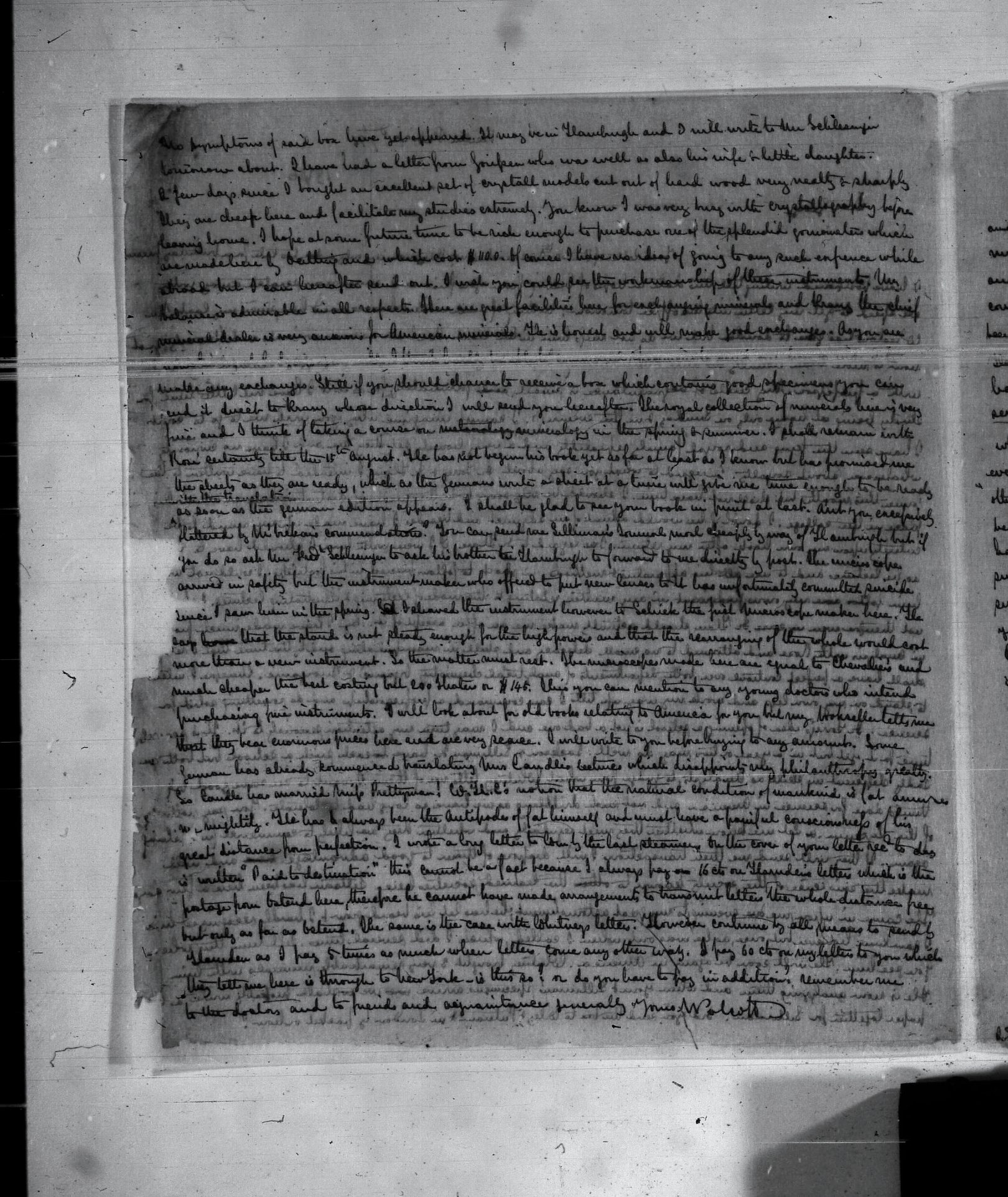
Berlin; birthday letter; chemistry career plans, Torrey/Hare lecturing, professorship ambitions, Whitney's minerals, Silliman
n.d. [Feb 1846]
Berlin lab routine, horn virtuoso Vivier?, Litolff; Alfy sure of coming out in July, ignored "extremely military letter"
(cont.)
same closing page of 22 Feb letter re-photographed
(cont.)
same "Dear Mother" letter re-photographed, incl. Alfred graduation passage
13 Mar 1846
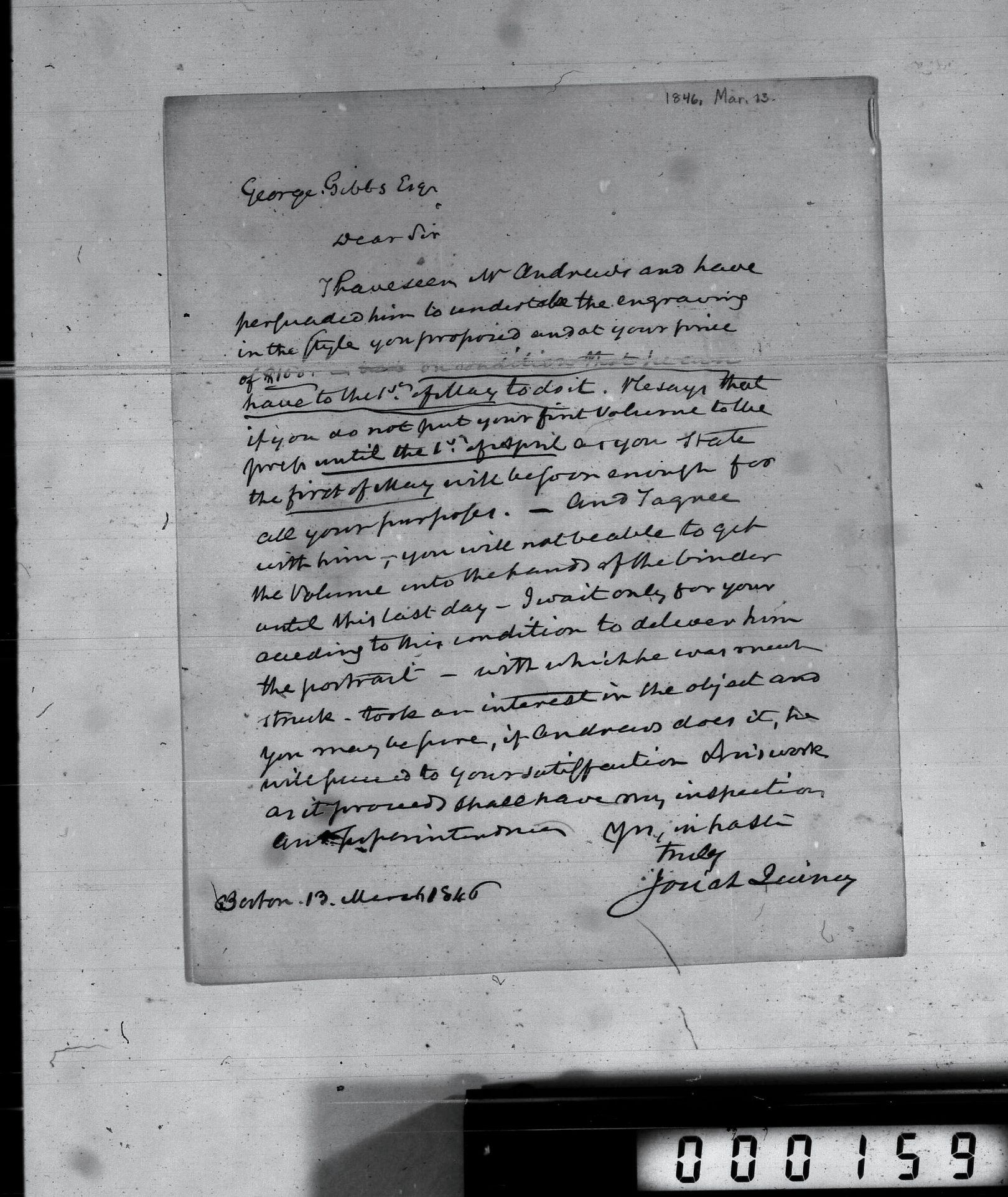
Boston; engraver Andrews agrees to portrait plate at $100 for George's first volume by May 1
23 May 1846
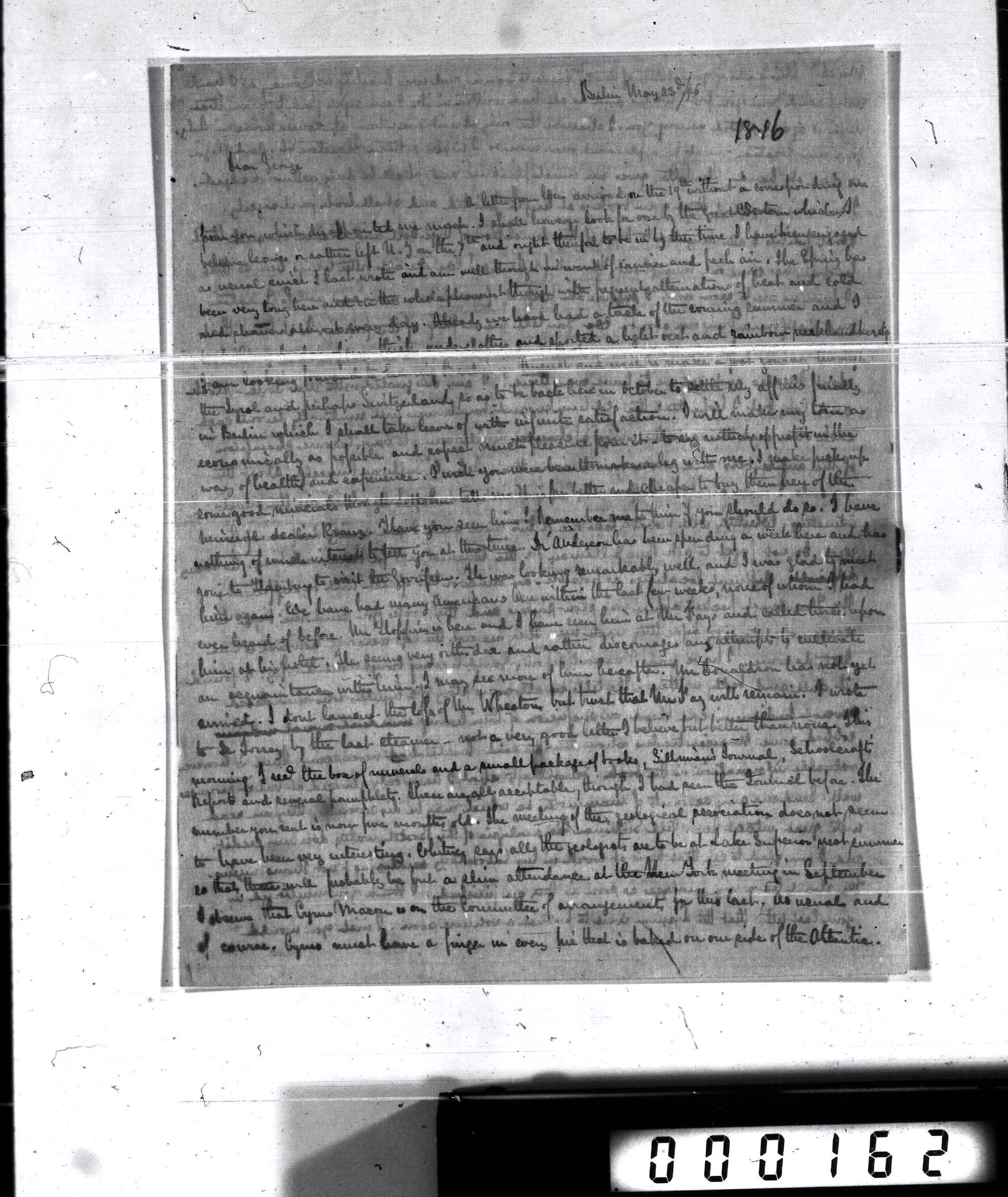
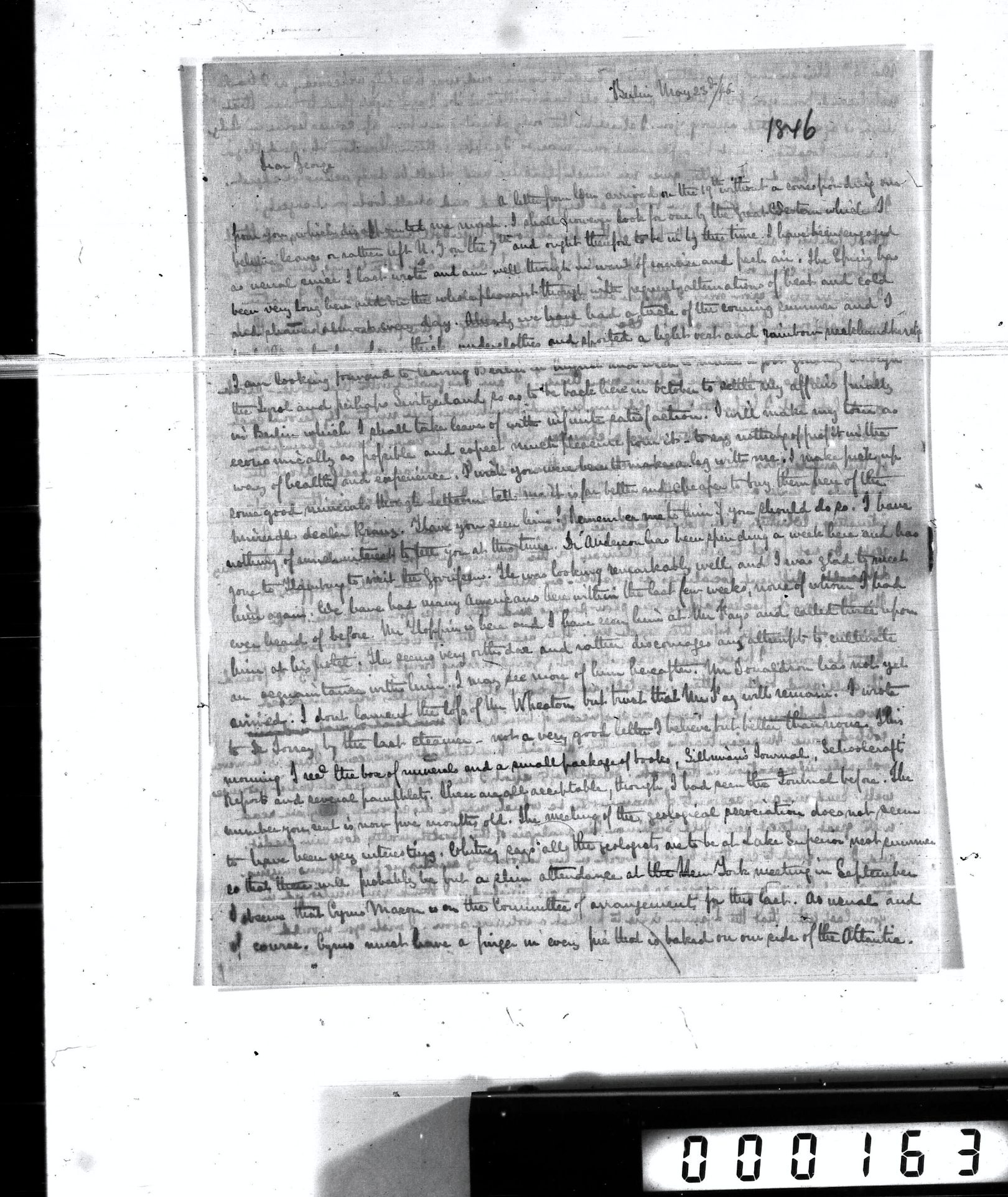
Berlin; Tyrol-Switzerland travel plan, Krantz minerals, Wheaton, Americans in Berlin, Schoolcraft report, geologists to Lake Superior
(cont.)
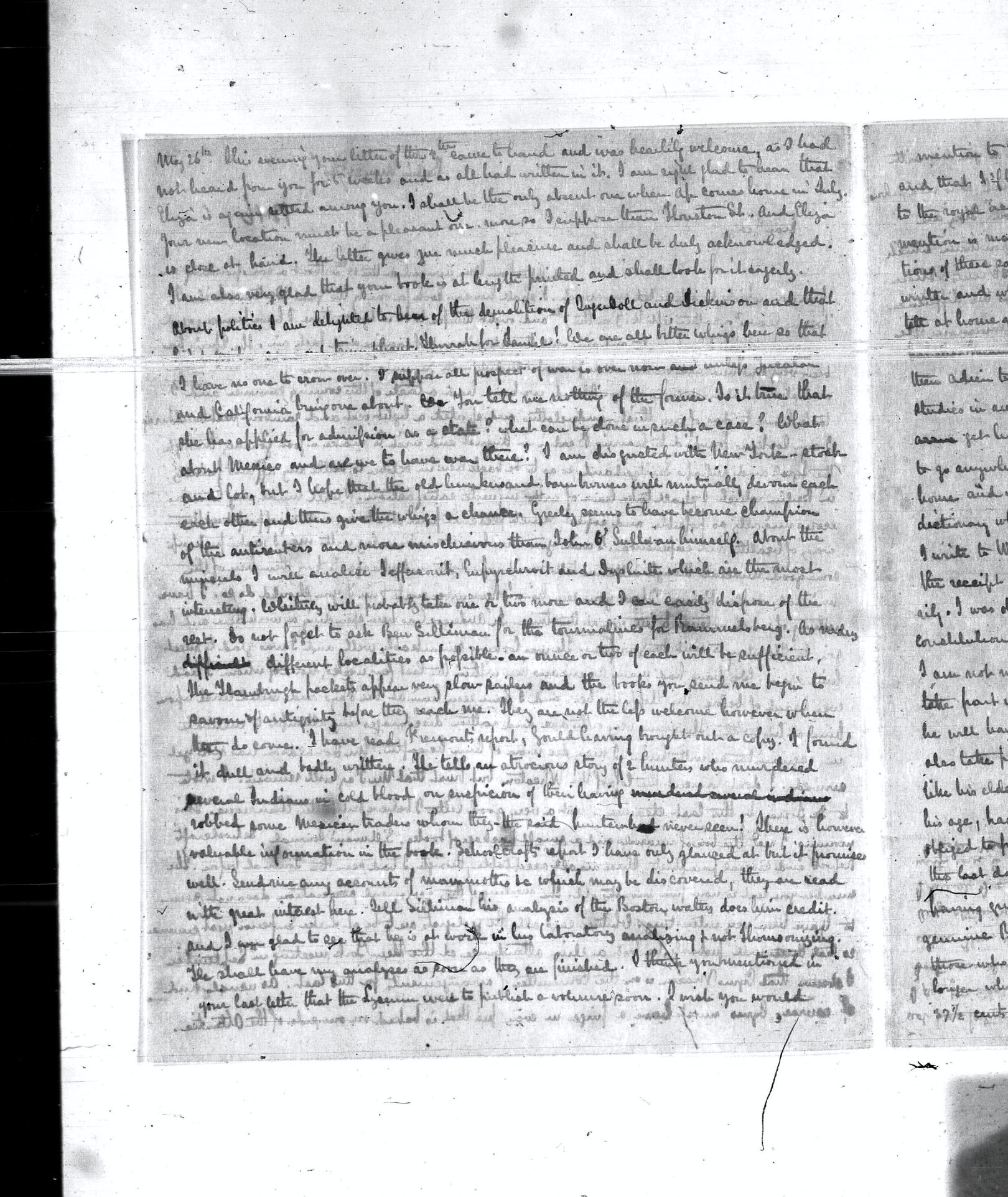
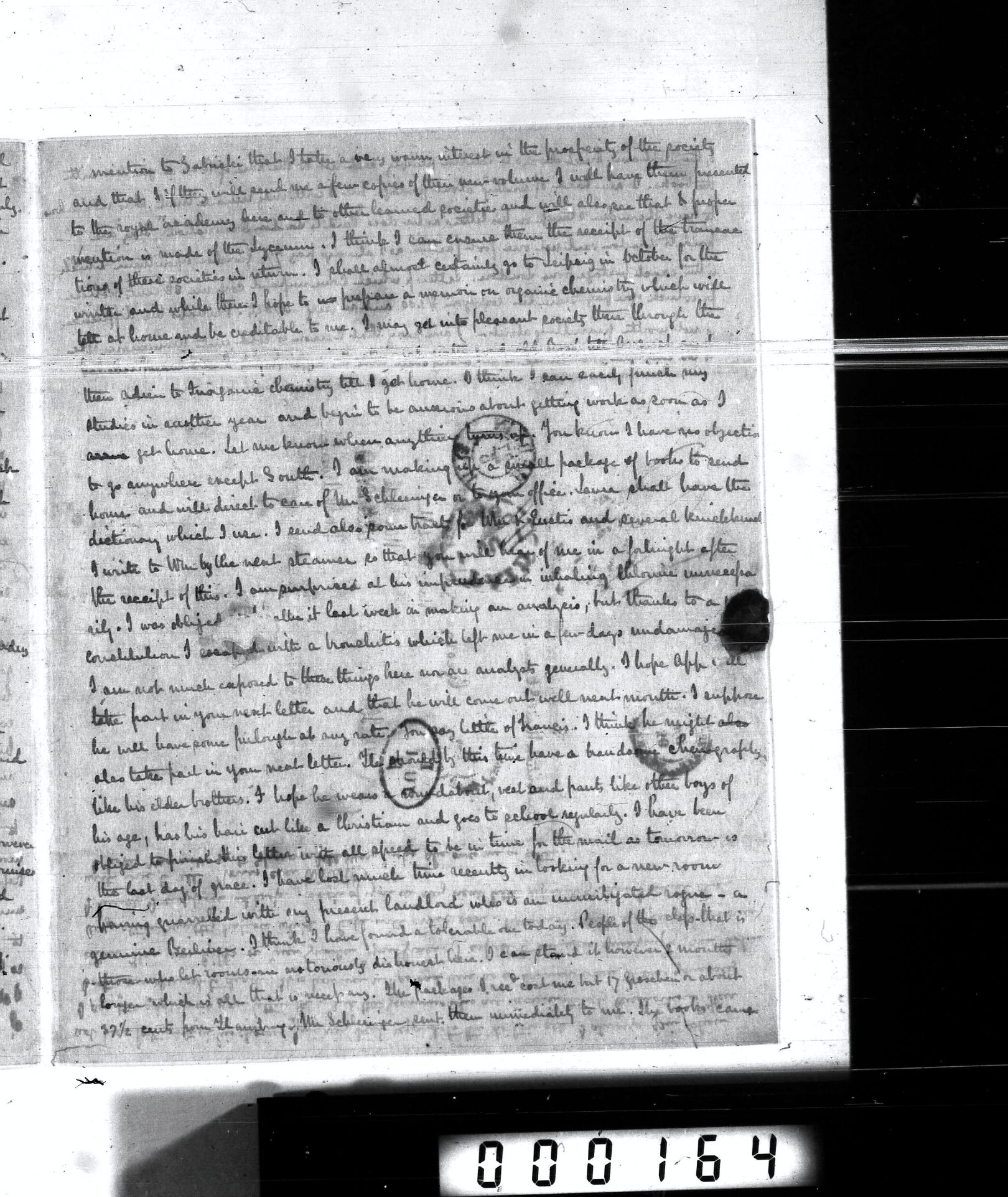
same 23 May first page re-photographed
1846 May 27 (postmark)
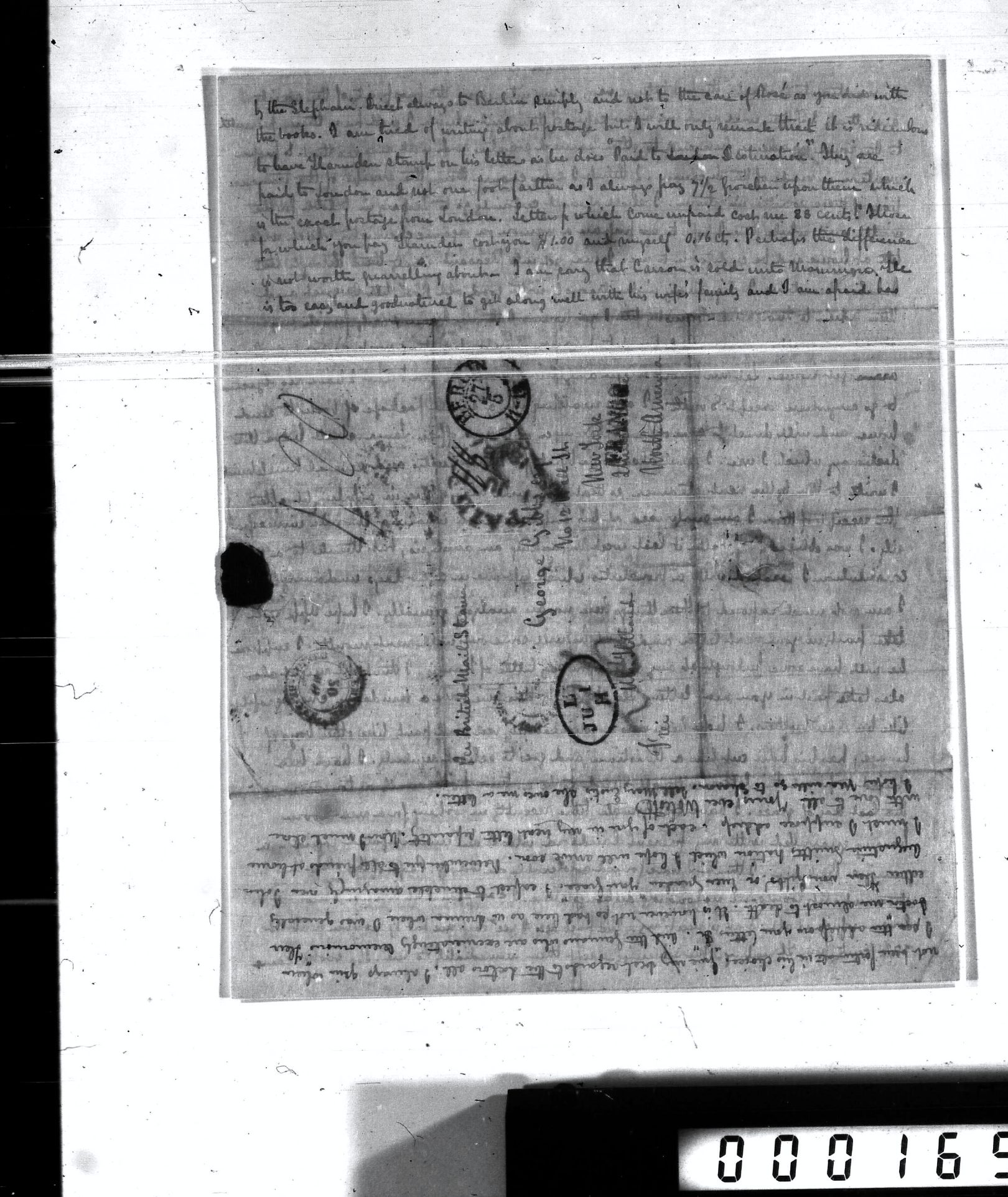
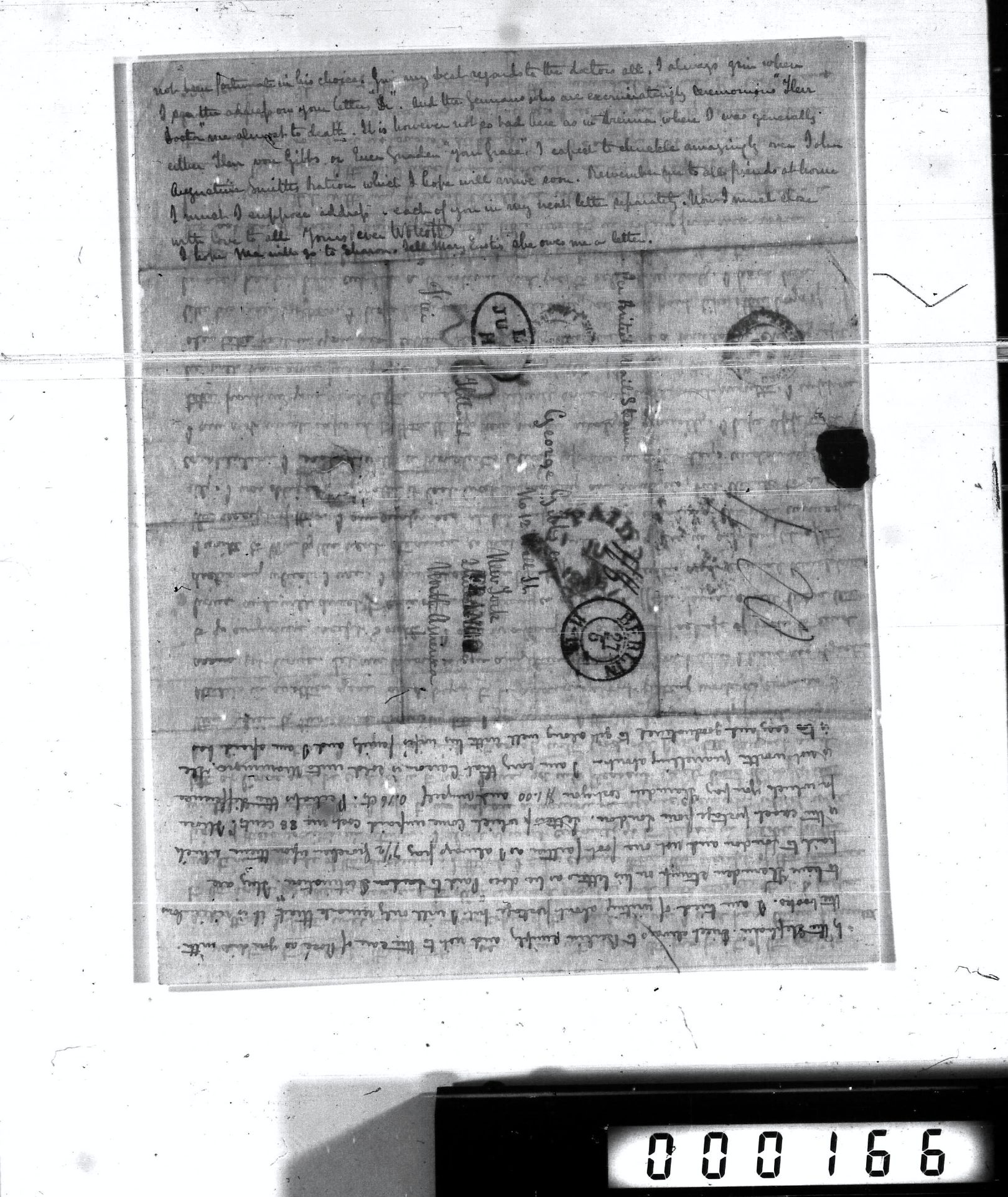
Letter close: "Herr von Gibbs" jokes, German ceremony, greetings; Ma to visit Sharon
1846 Jun 8?
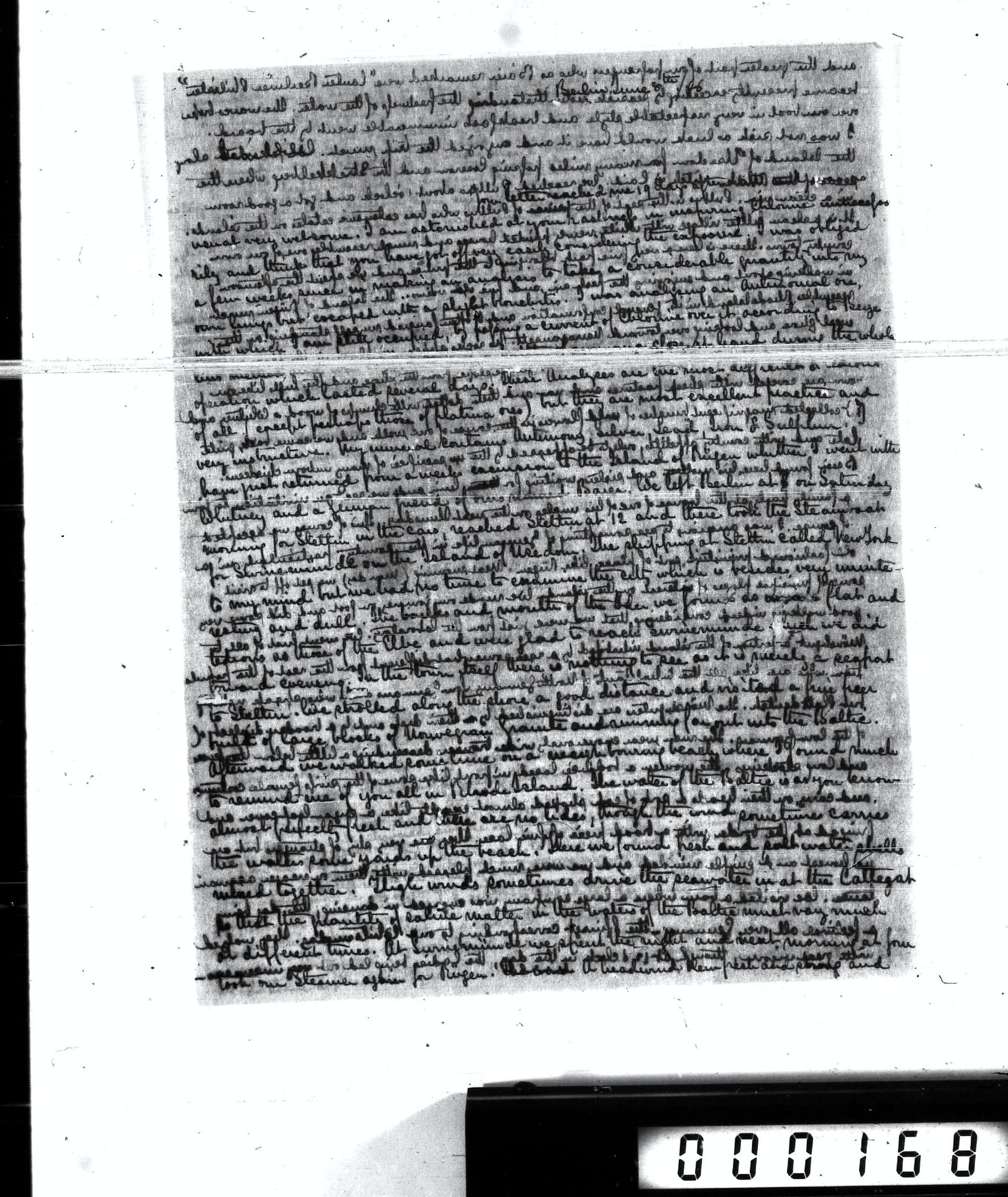
Berlin: chemistry analyses, platina; Rügen trip begun via Stettin, Oder, Swinemünde, Baltic salinity
(cont.)
same page re-photographed
(cont.)
same Stubbenkammer/Hertha page re-photographed
1846 Jun
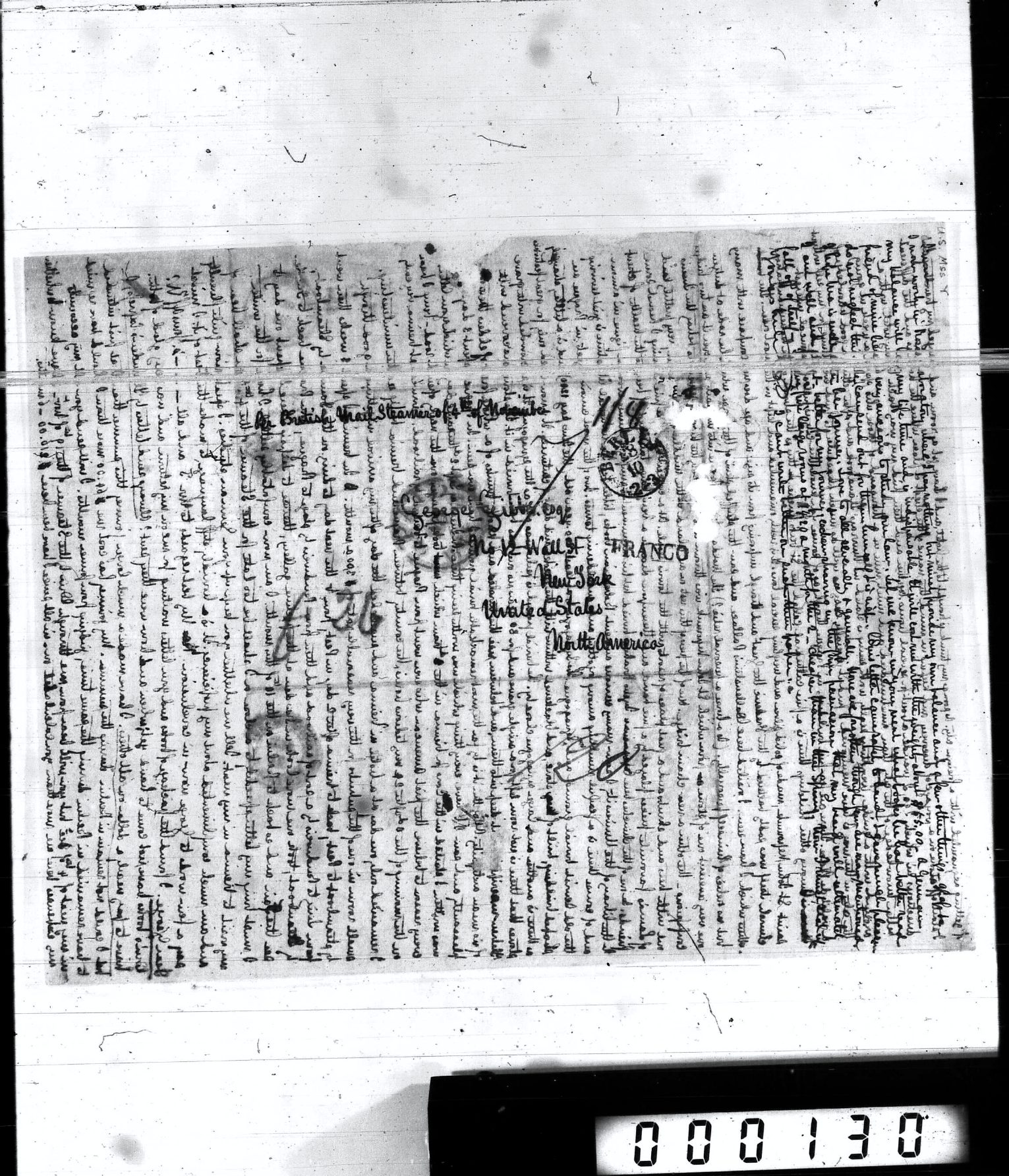
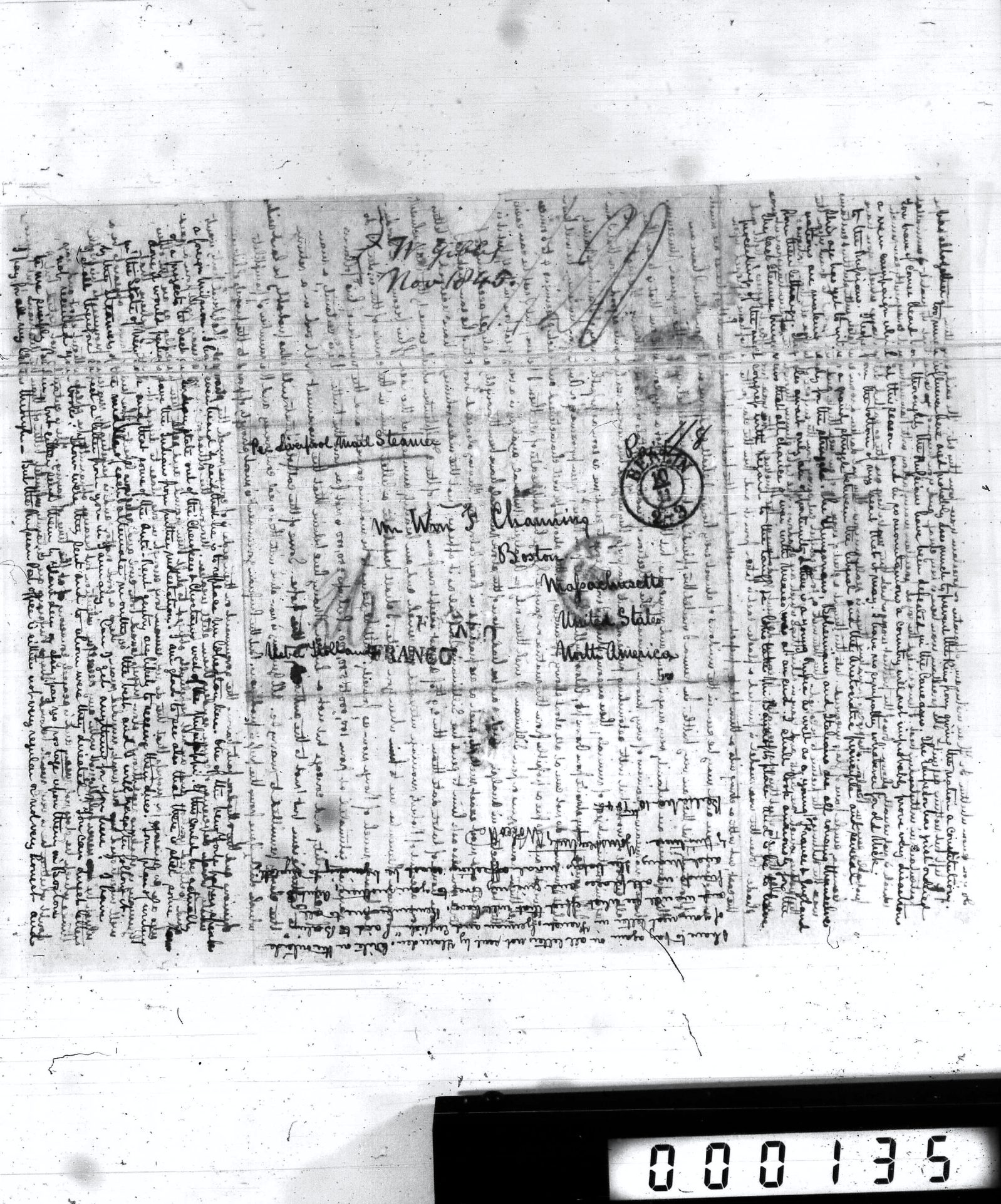
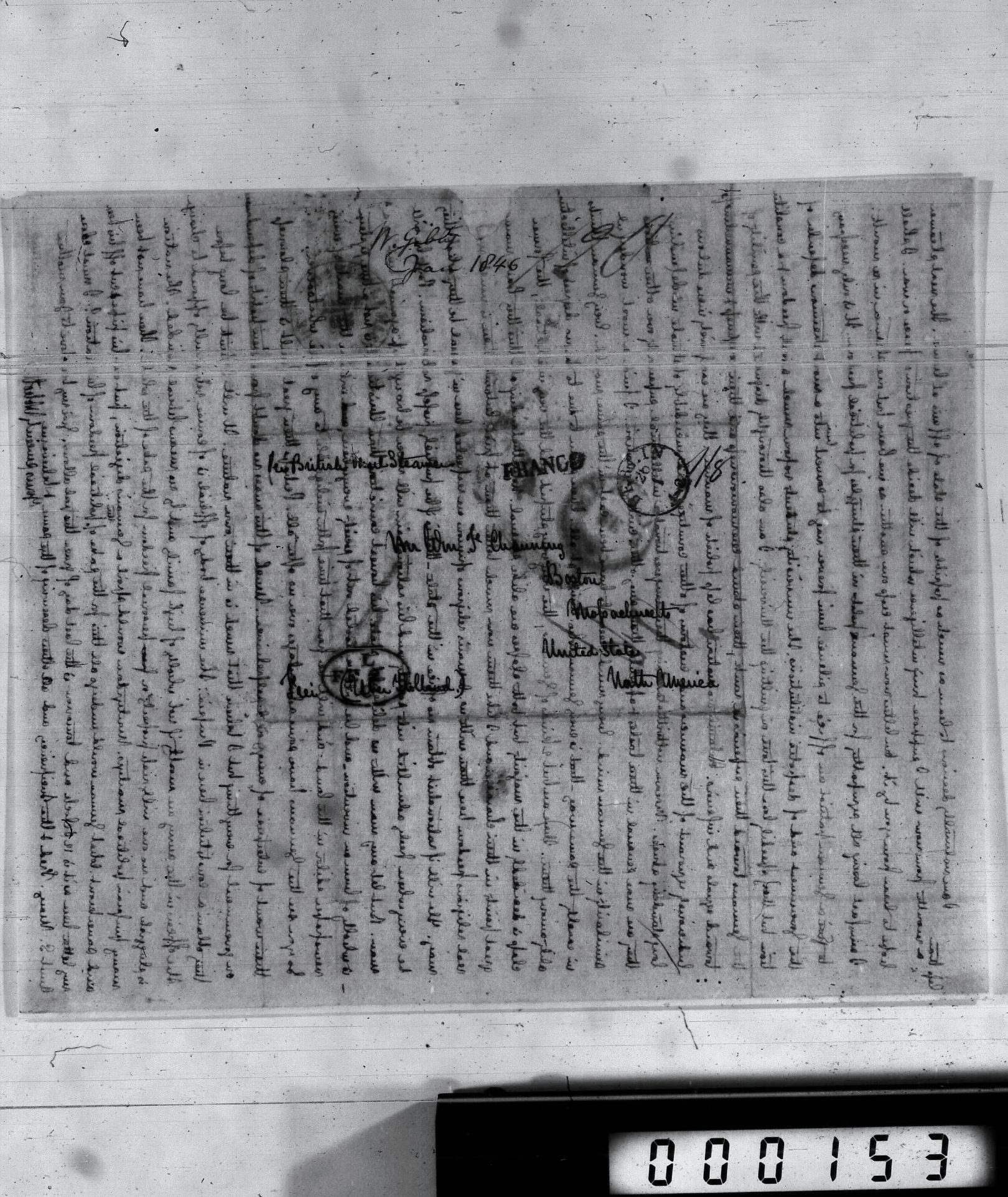
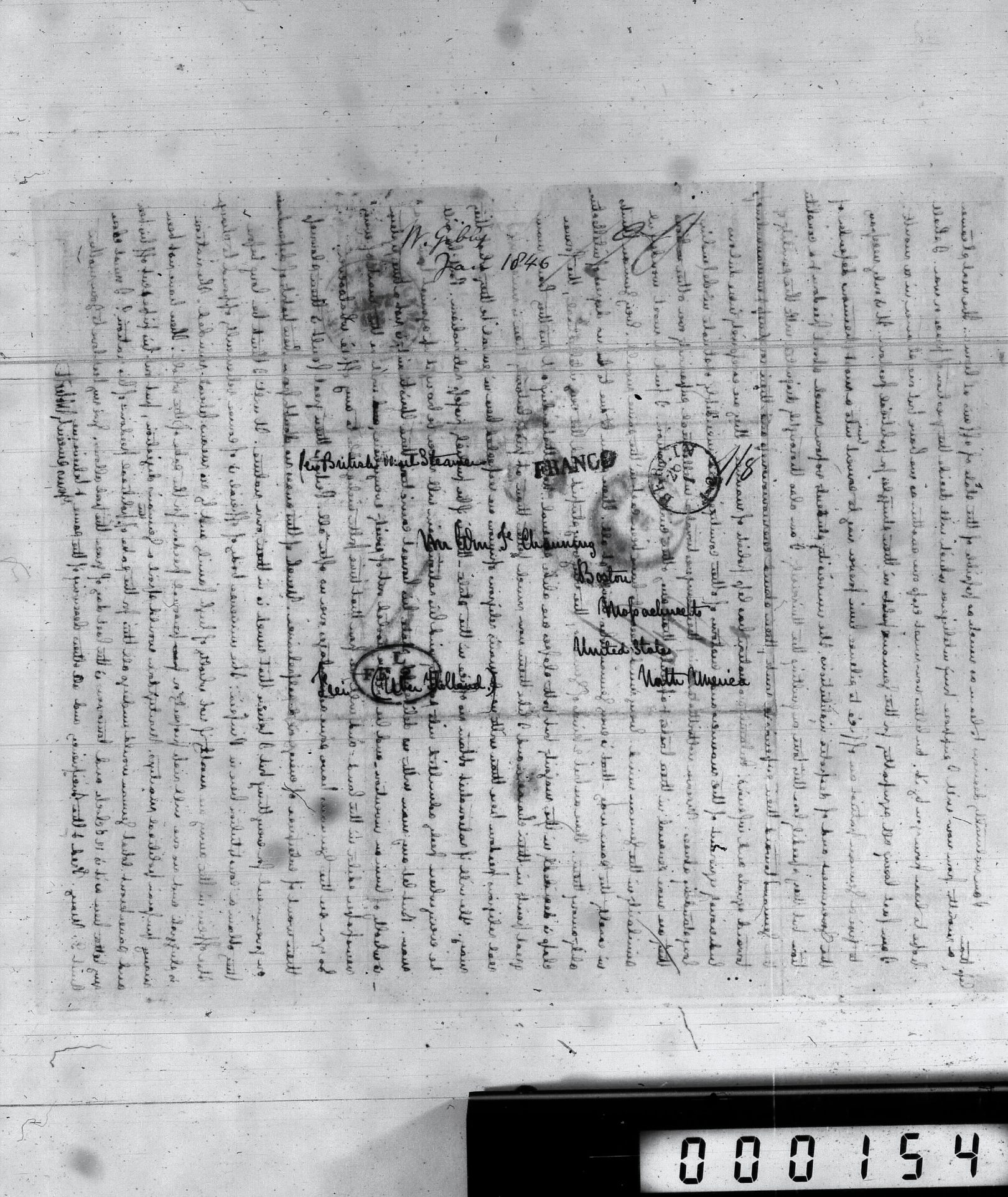
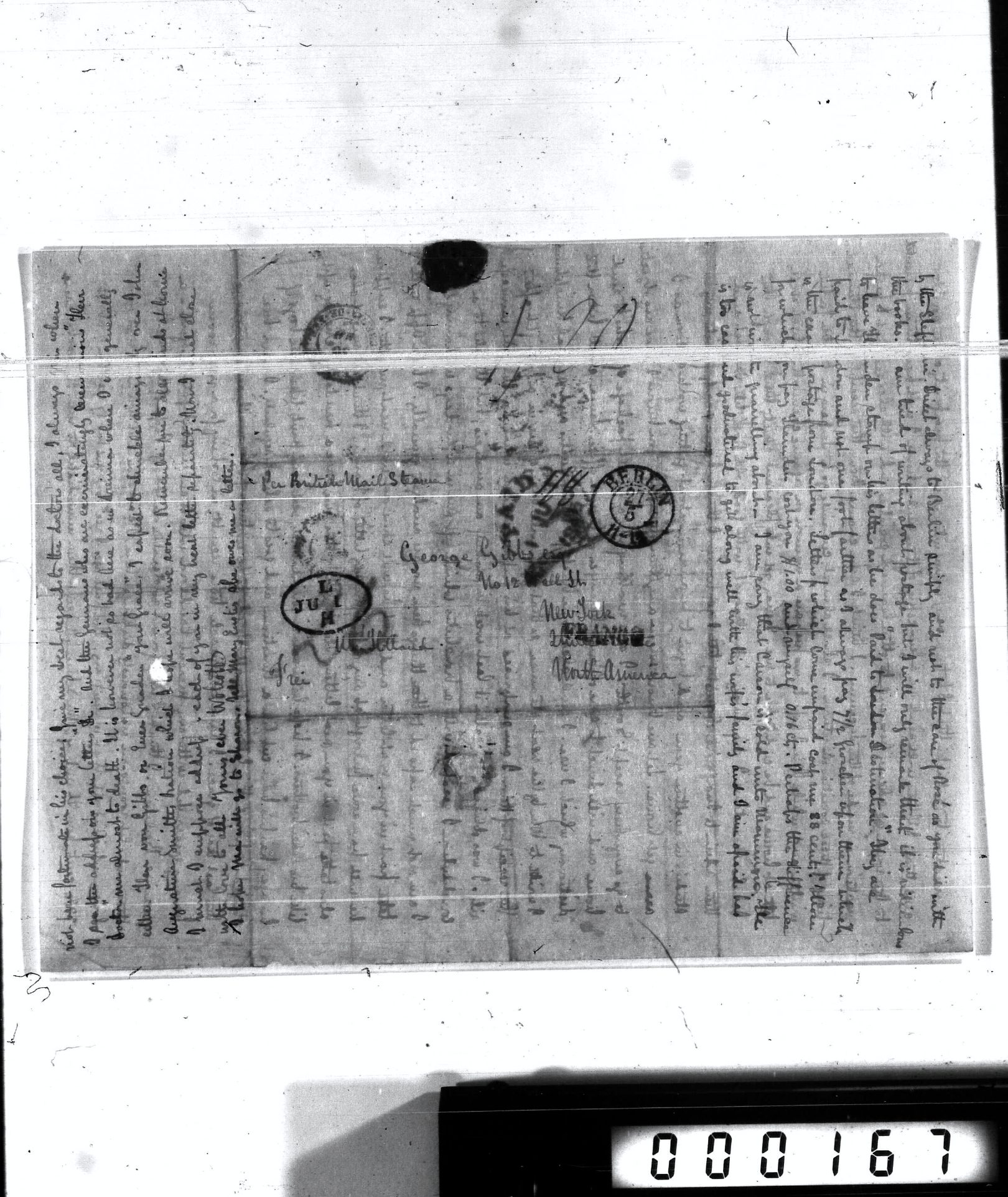
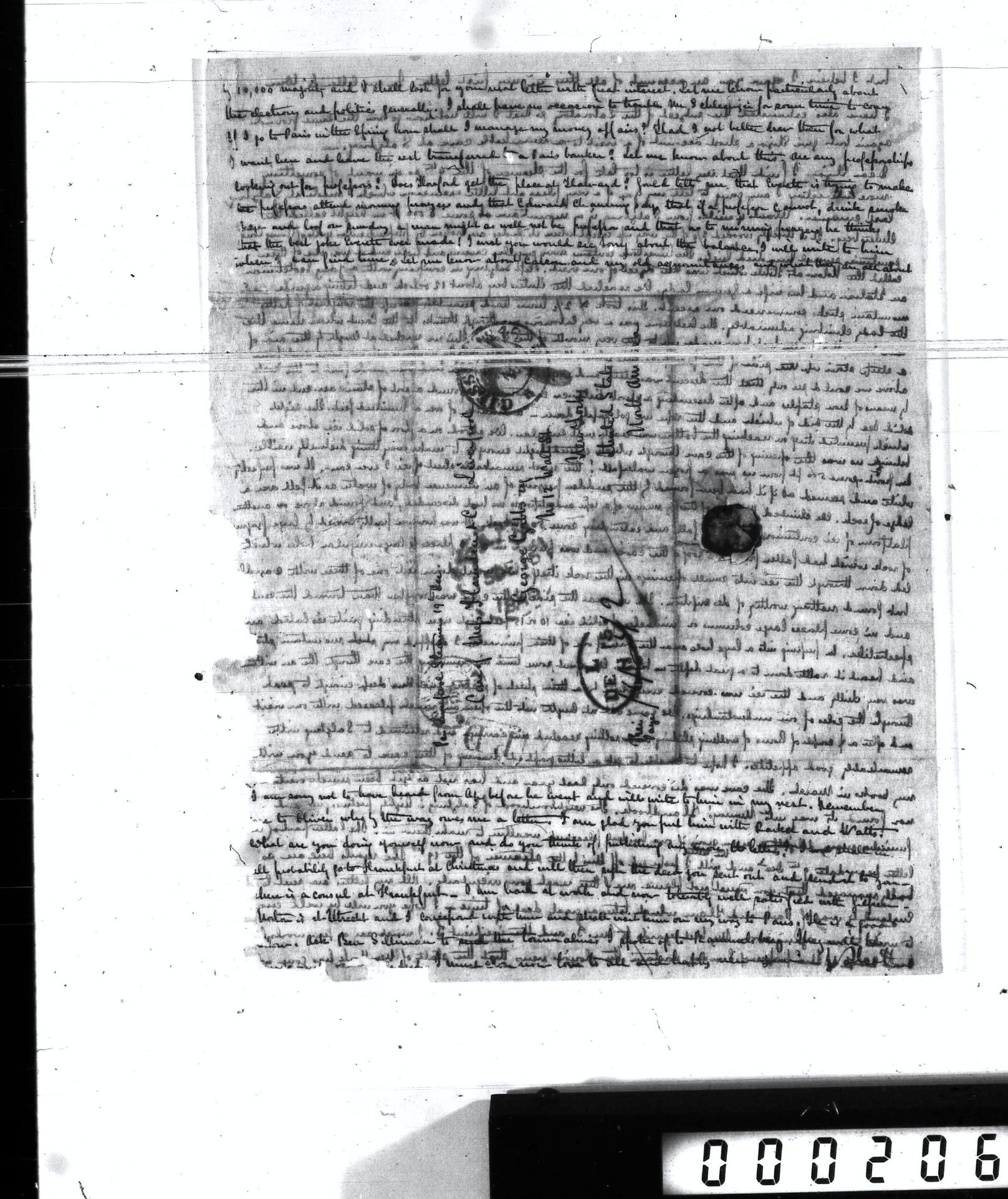
Cross-written address leaf: Channing, Boston, Massachusetts, per Royal Mail Steamer, via Holland
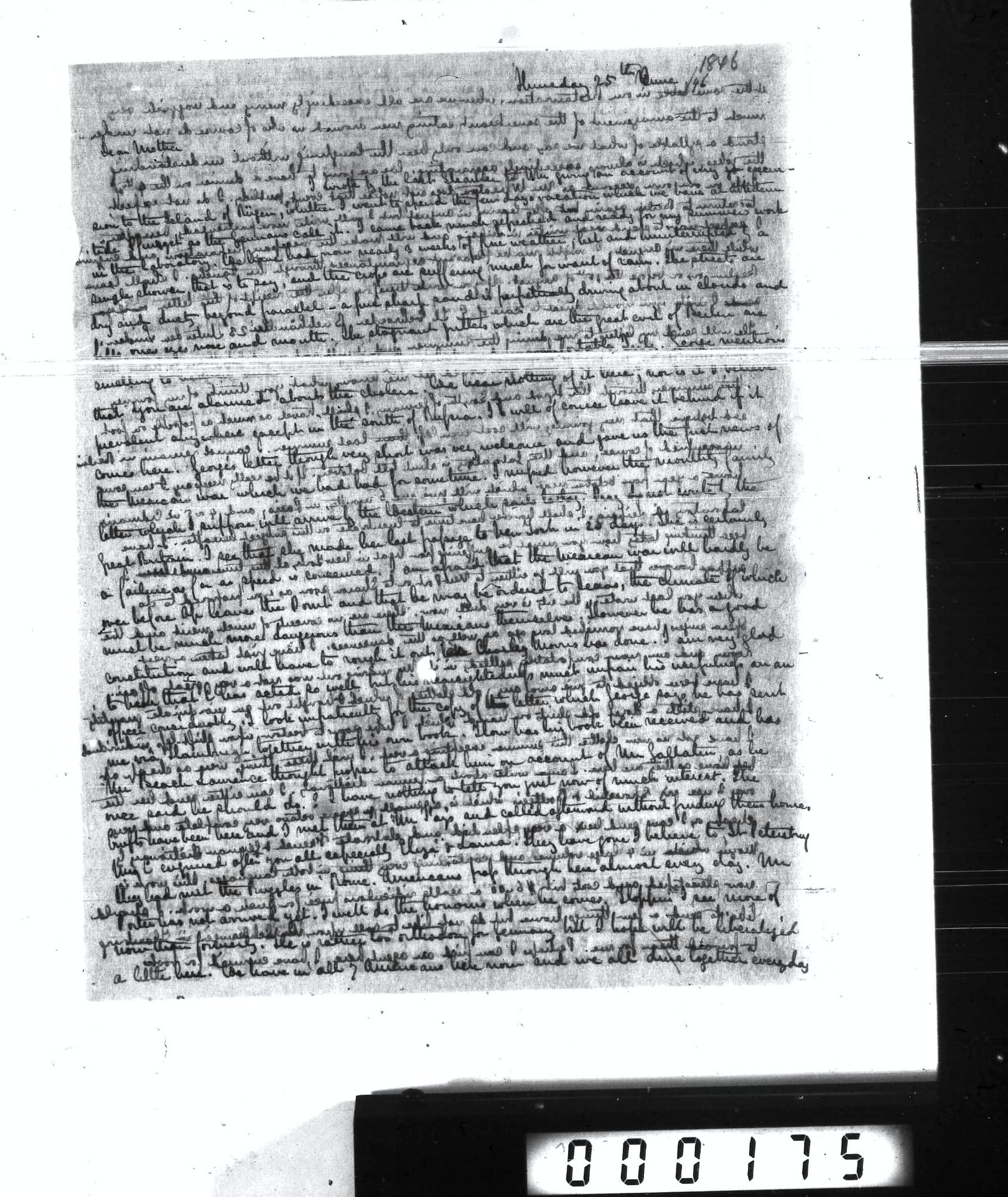
1846 Jun 25
Berlin: George's letter brought first Mexican War news; war/Texas orders talk; Gallatin; St. Petersburg
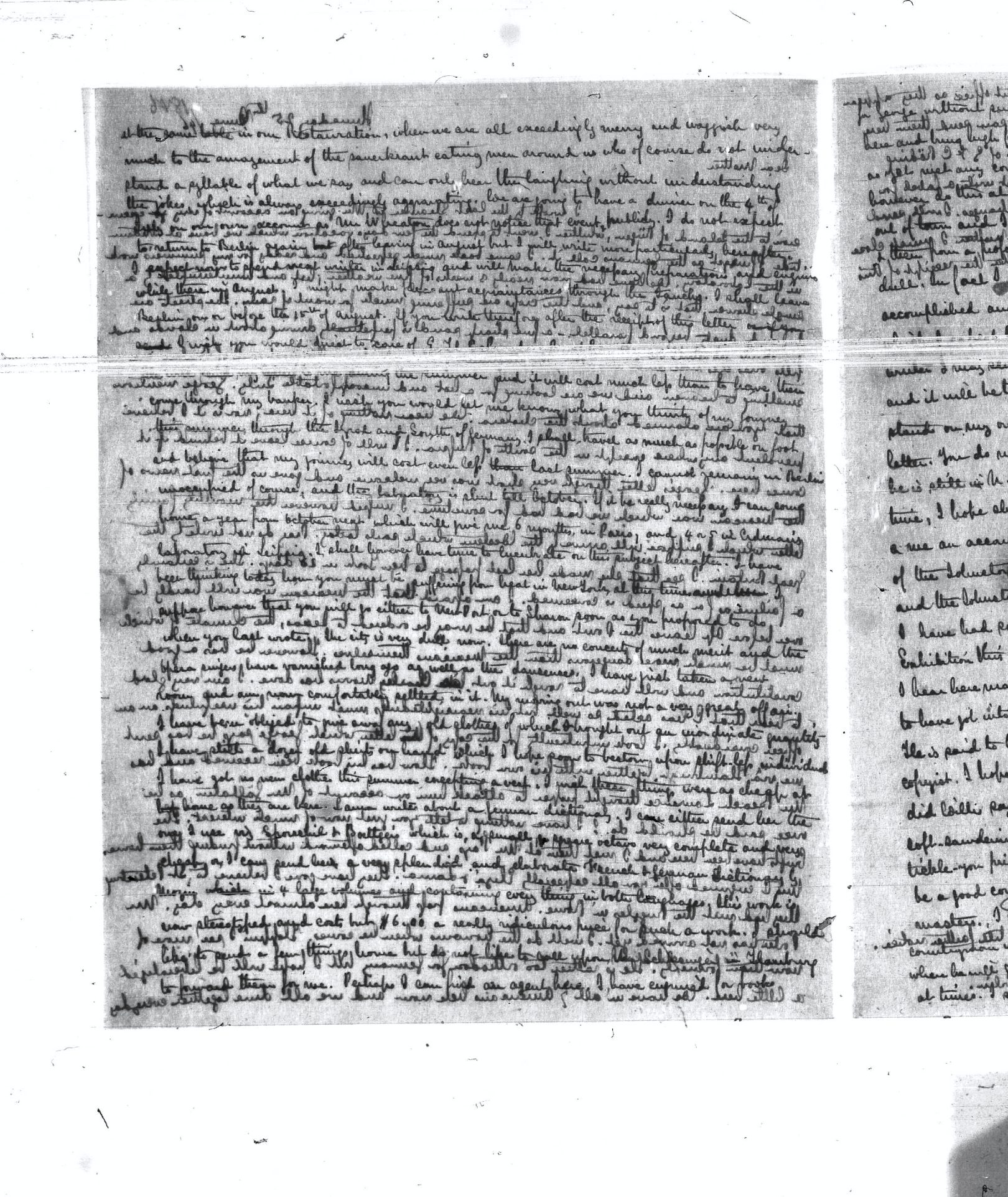
(cont.)
same Restauration/travel-plans page re-photographed
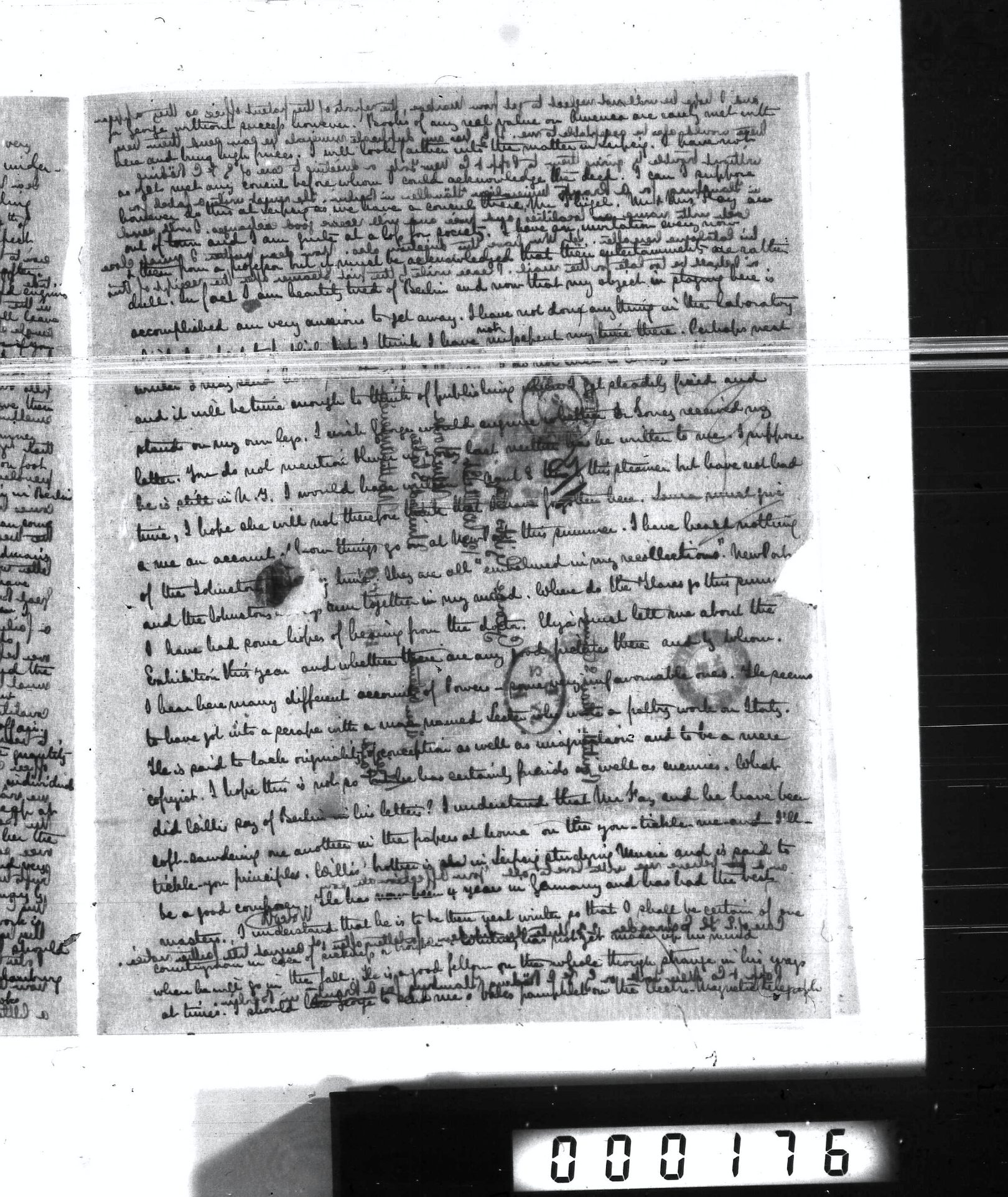
(cont.)
same Berlin-weary/Powers/telegraph page re-photographed
1846?
Closing page: mineral exchanges via Krantz of Berlin, patent-office reports, mailing directions
1846 Aug? 24
Thanks for gift of George's Memoirs; praises Wolcott-papers book of Federal times
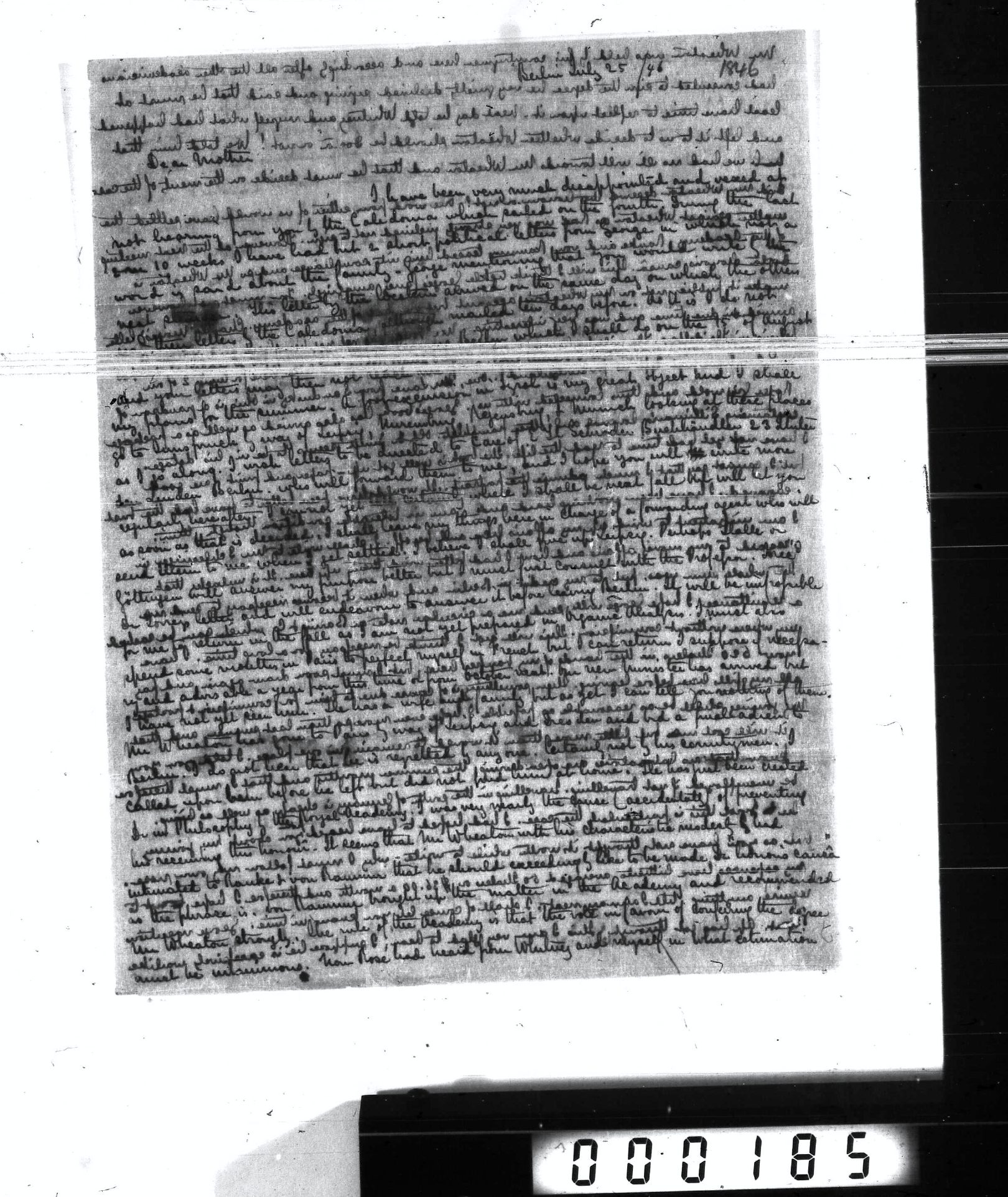
1846 Jul 25
From Berlin: vexed at ten weeks without home letters; studies, travel plans
1846 Aug 23
From Berlin: first family letter in weeks; finishing work, travel and money plans
1847 Sep 24
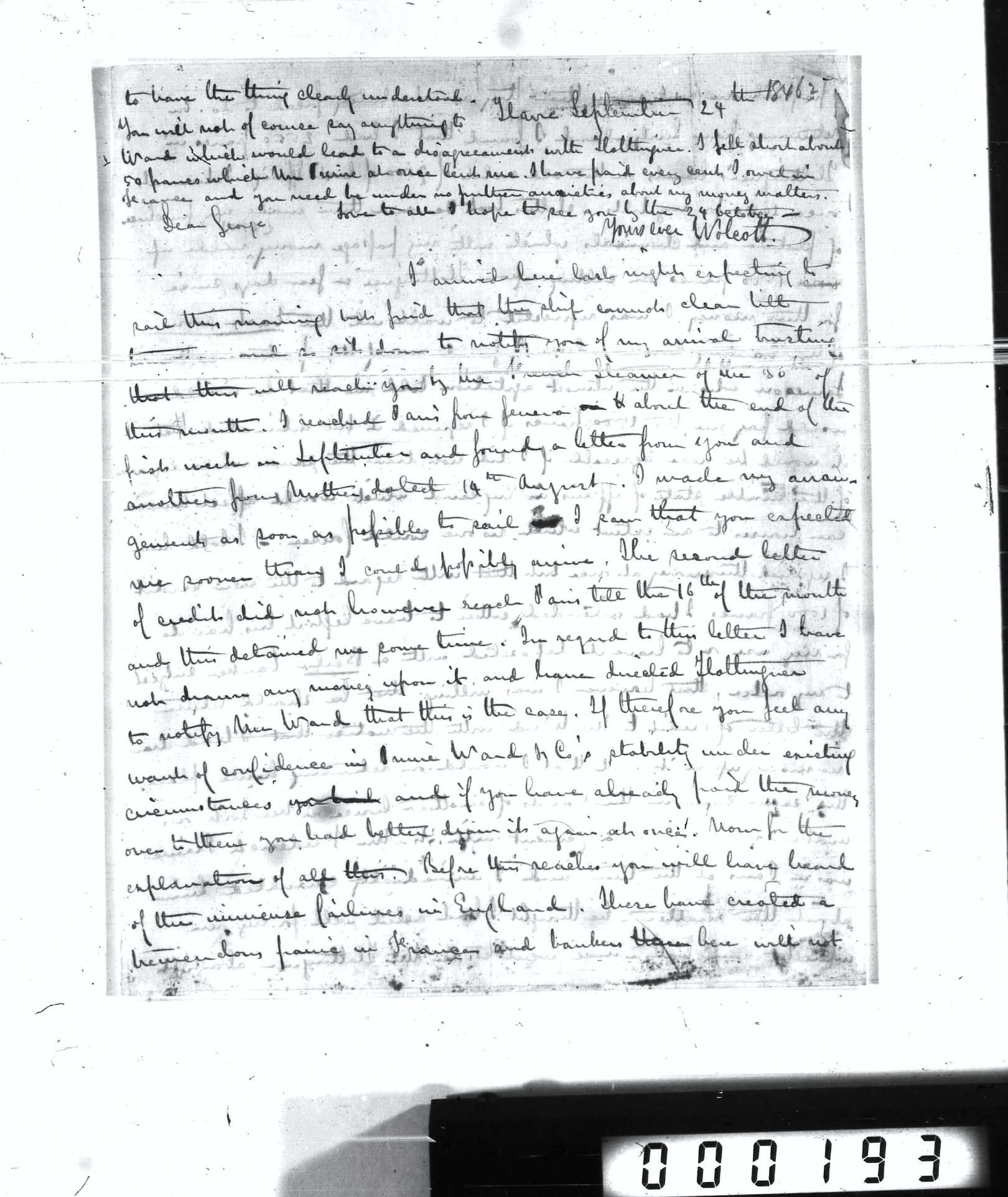
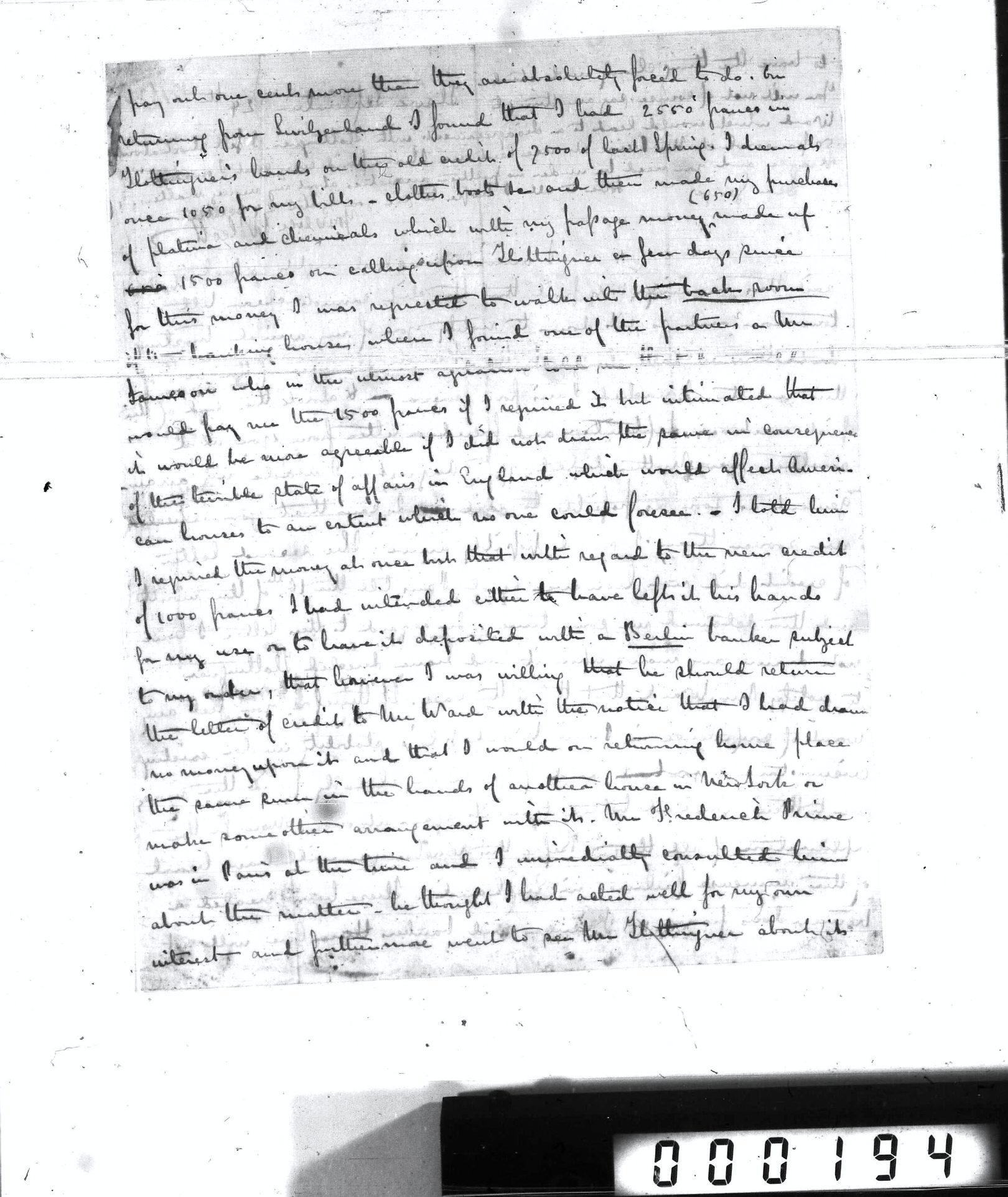
From Havre awaiting ship home; 1847 English failures, panic, letter-of-credit troubles
1846 Oct 27
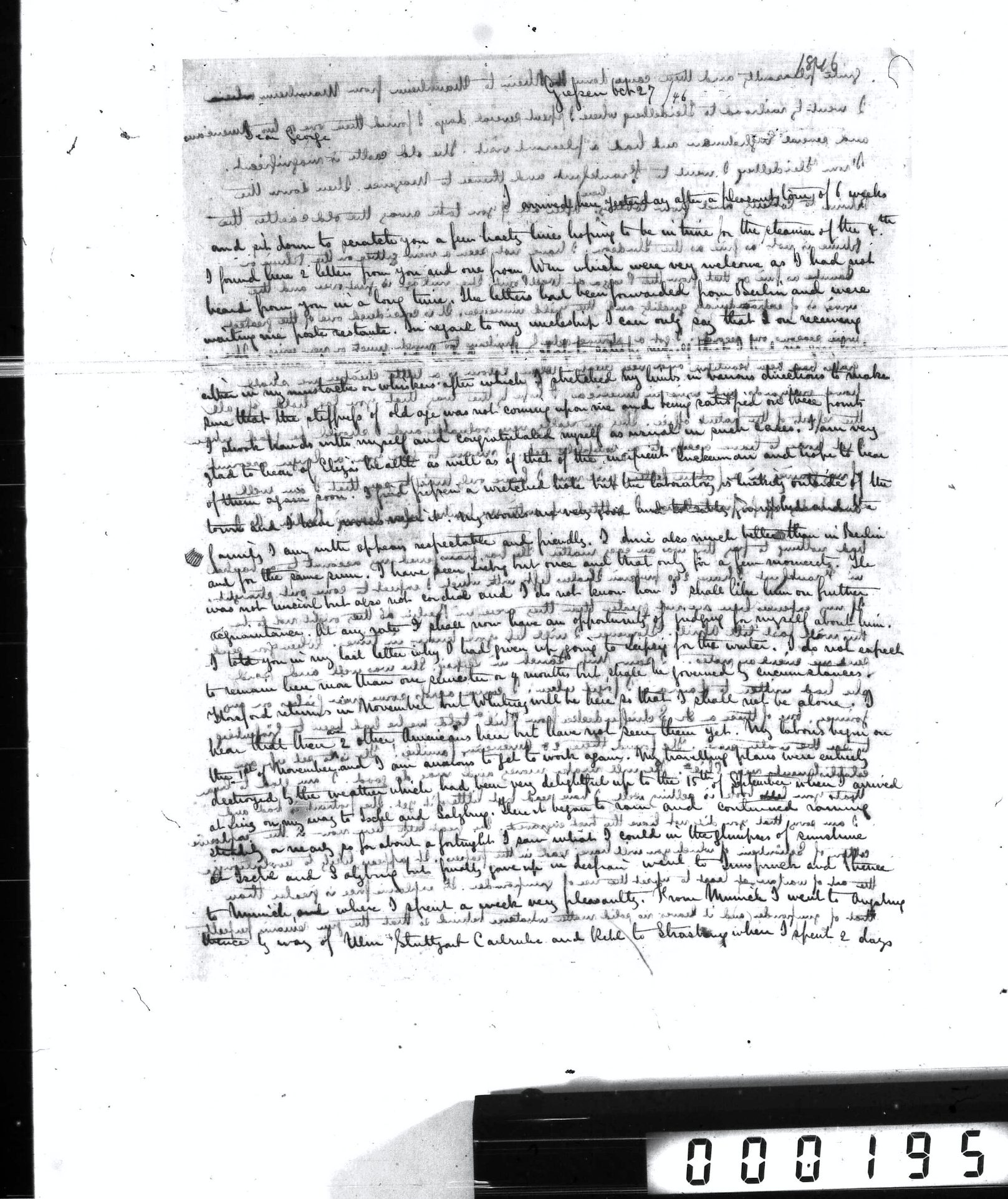
Arrived Giessen after six-week tour; Eliza's health and "incipient Tuckerman"; Liebig laboratory
1846 Nov 22
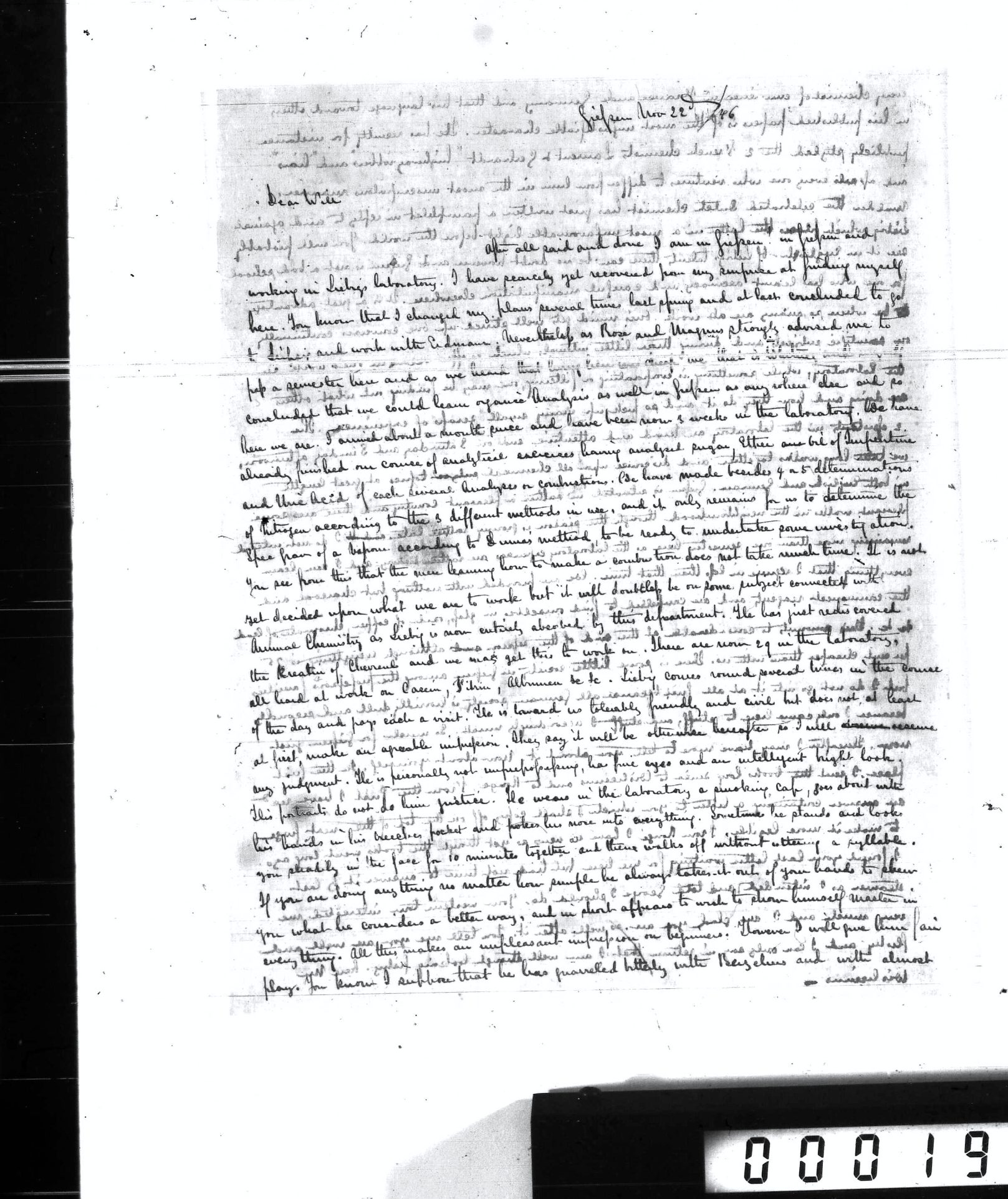
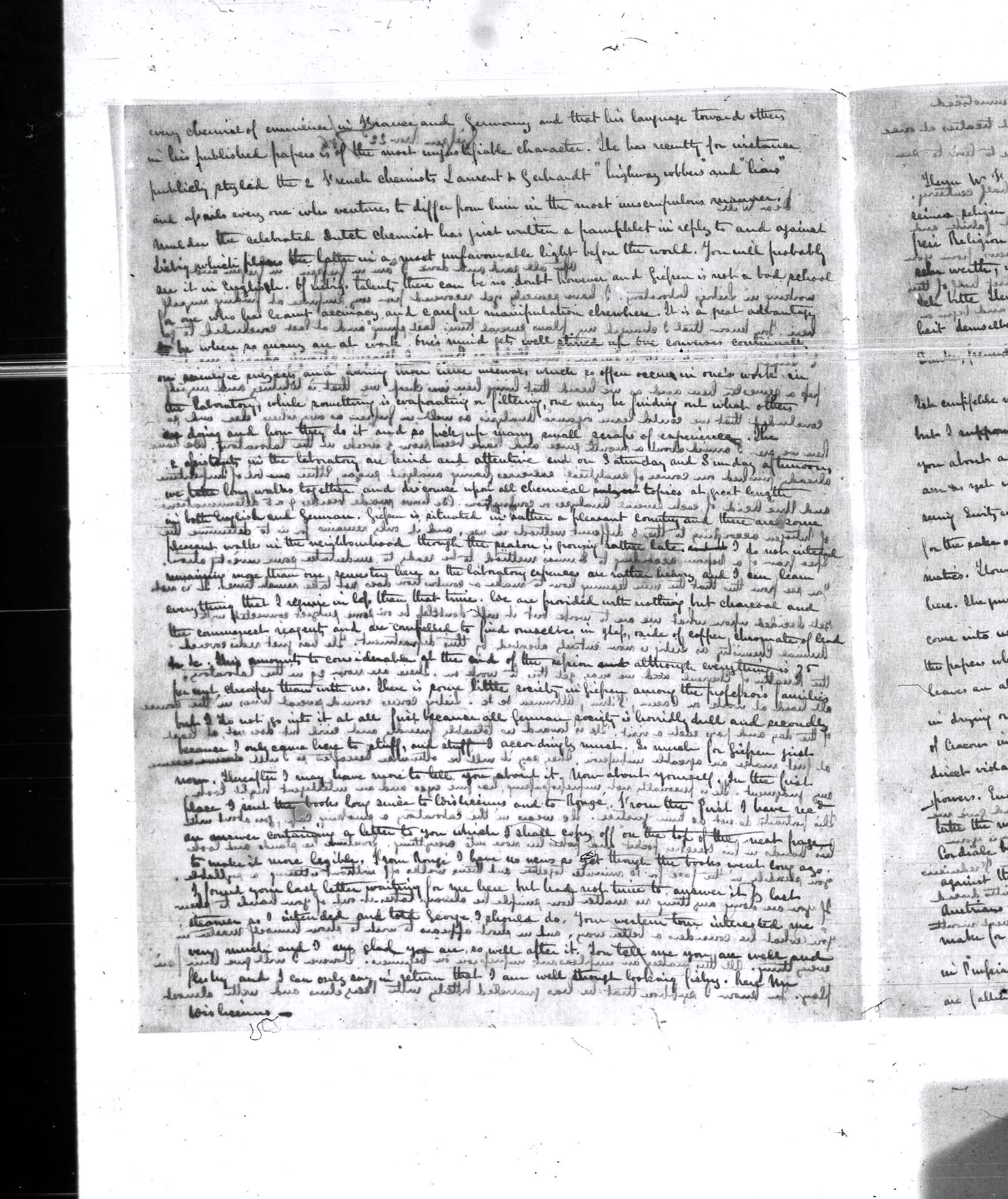
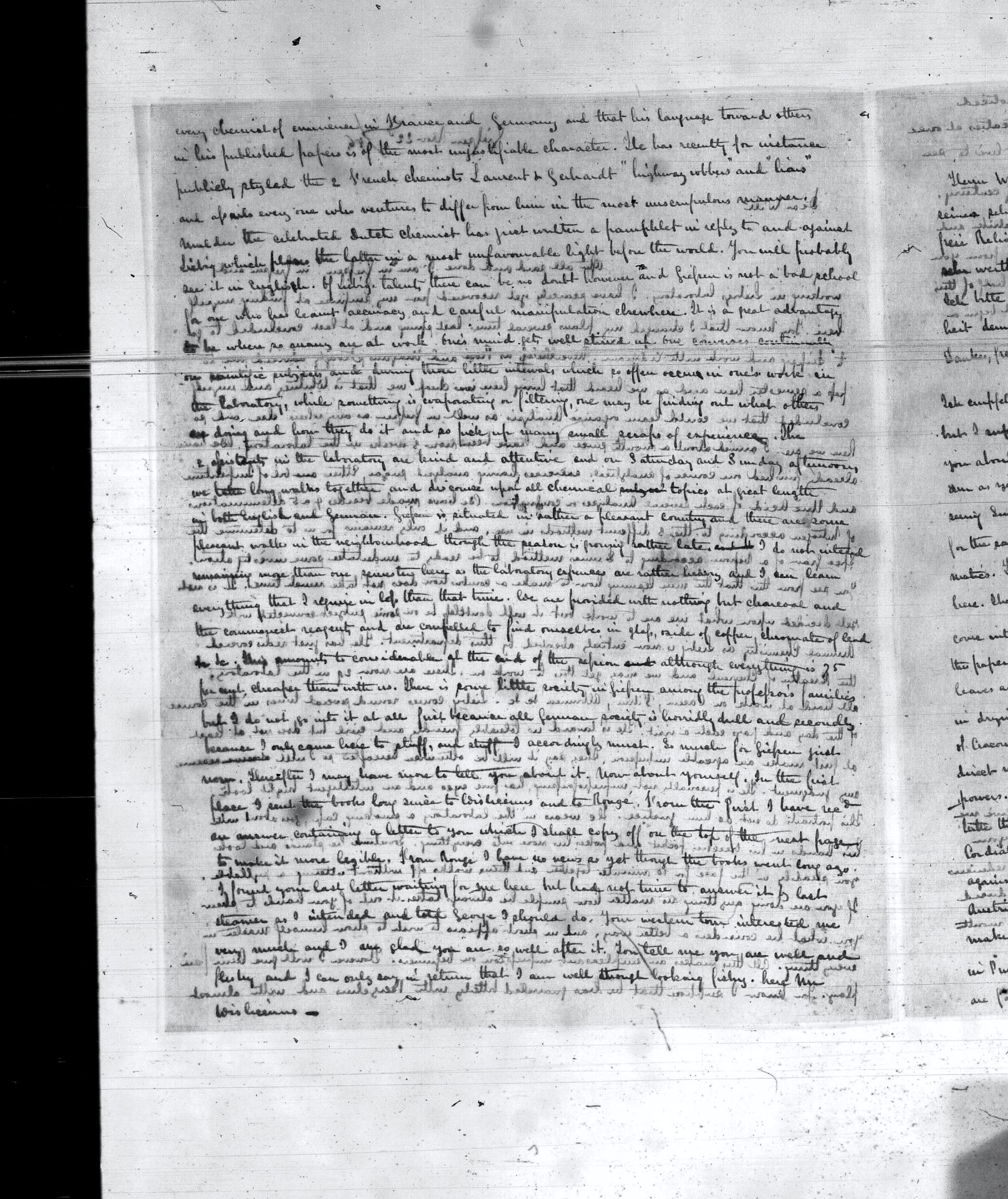
Working in Liebig's Giessen laboratory; vivid personal portrait of Liebig
1846 Nov 24
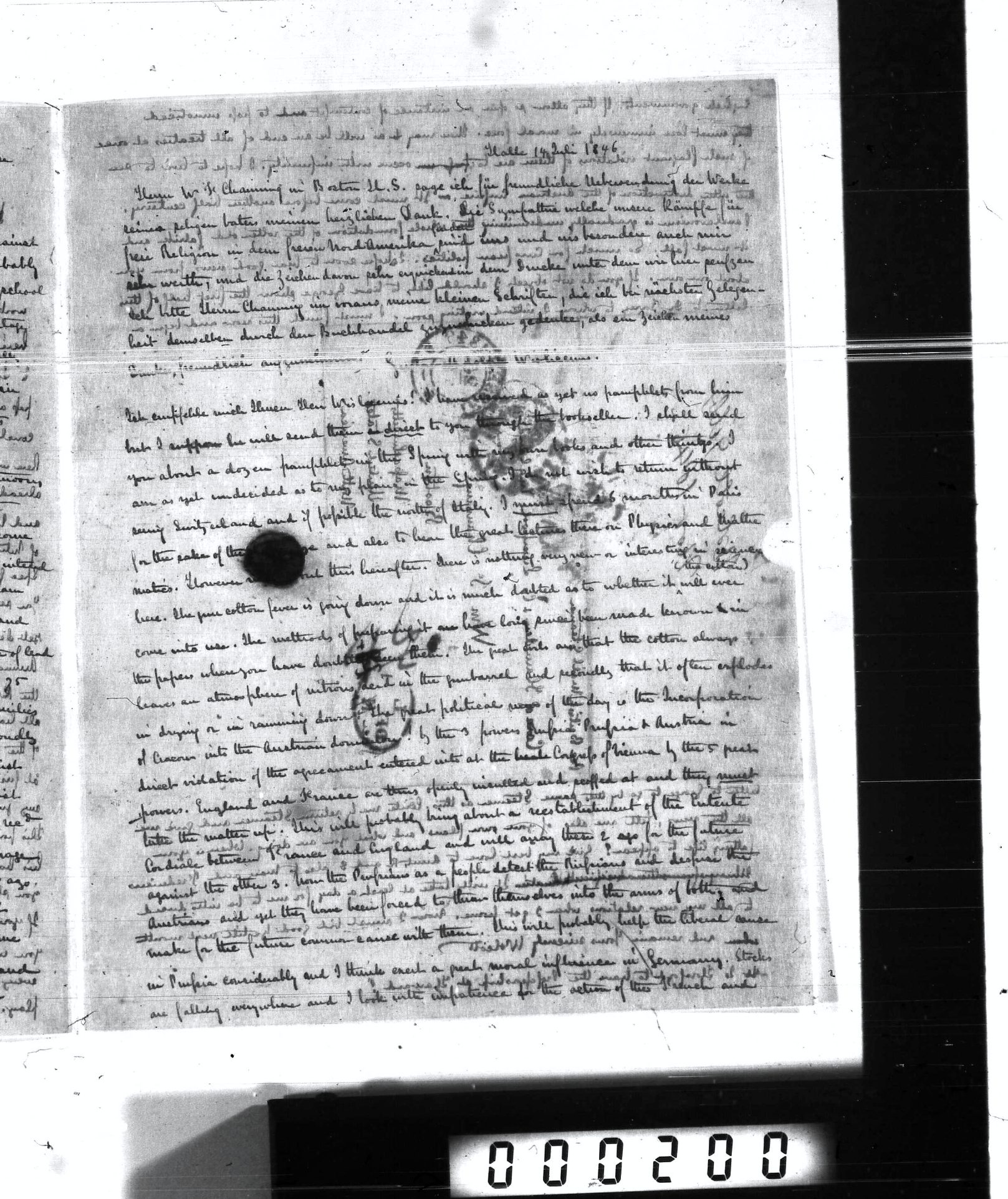
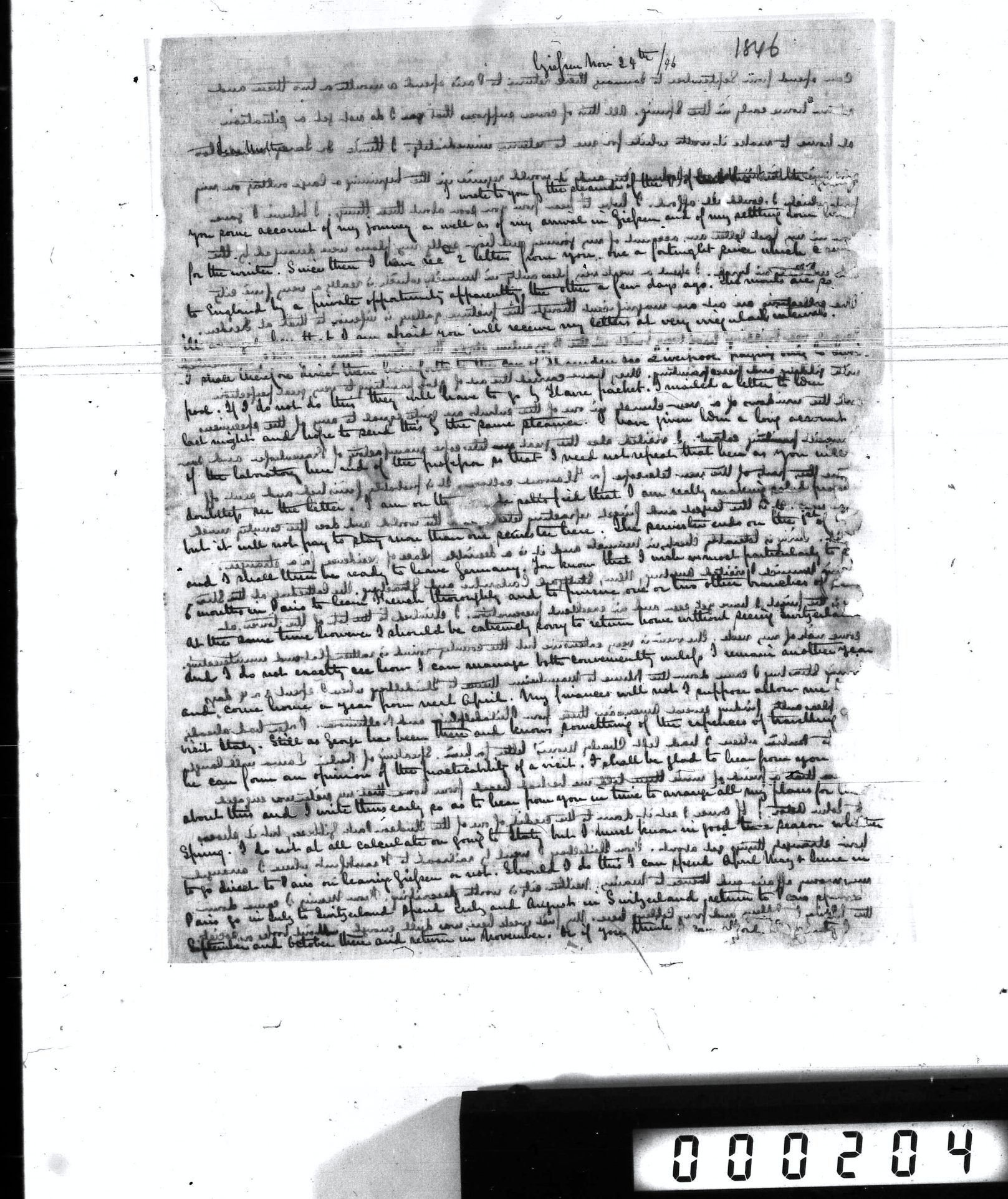
From Giessen: spring plans, six months Paris, Switzerland, Italy doubtful on finances
1846 (late, Nov/Dec)
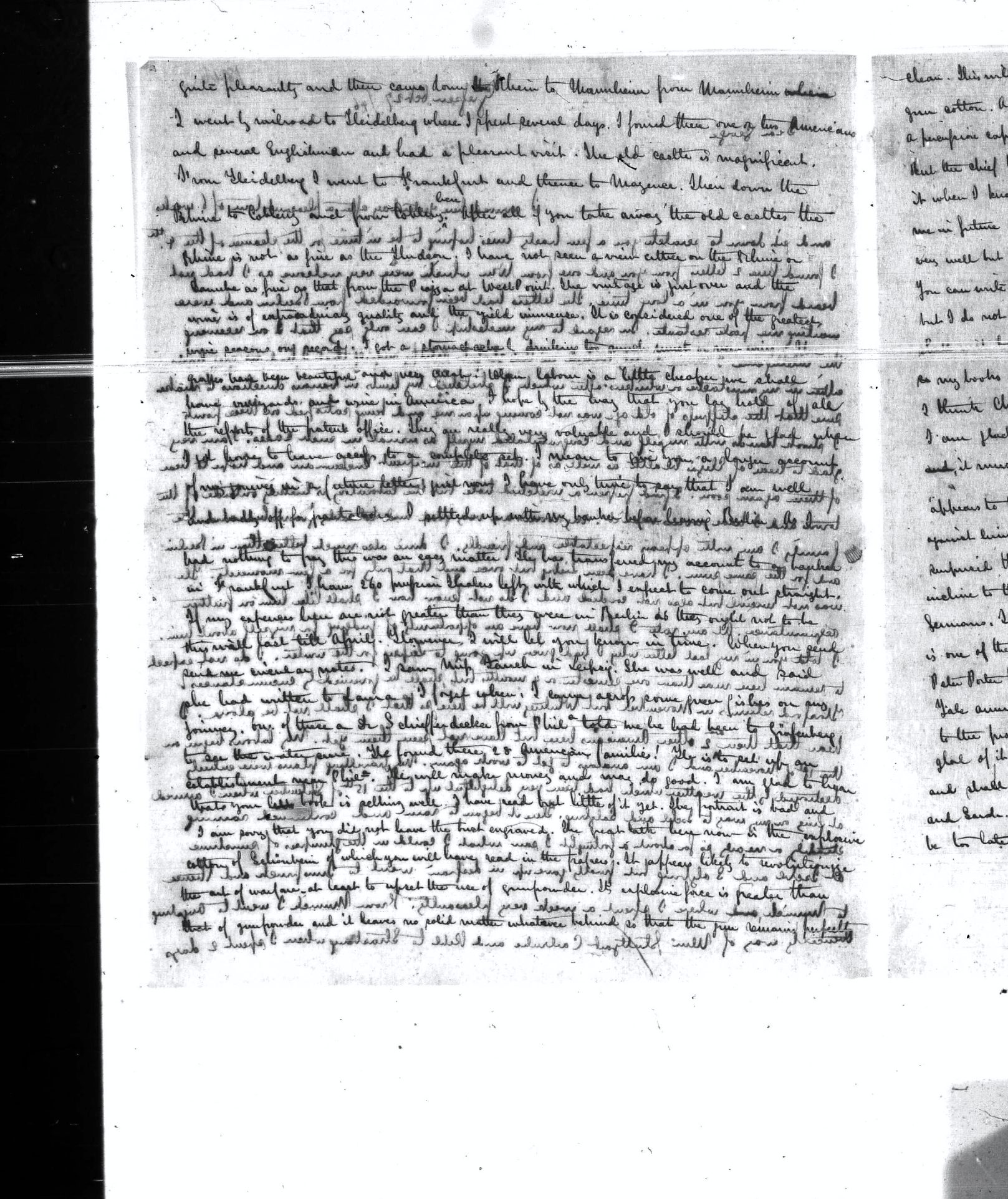
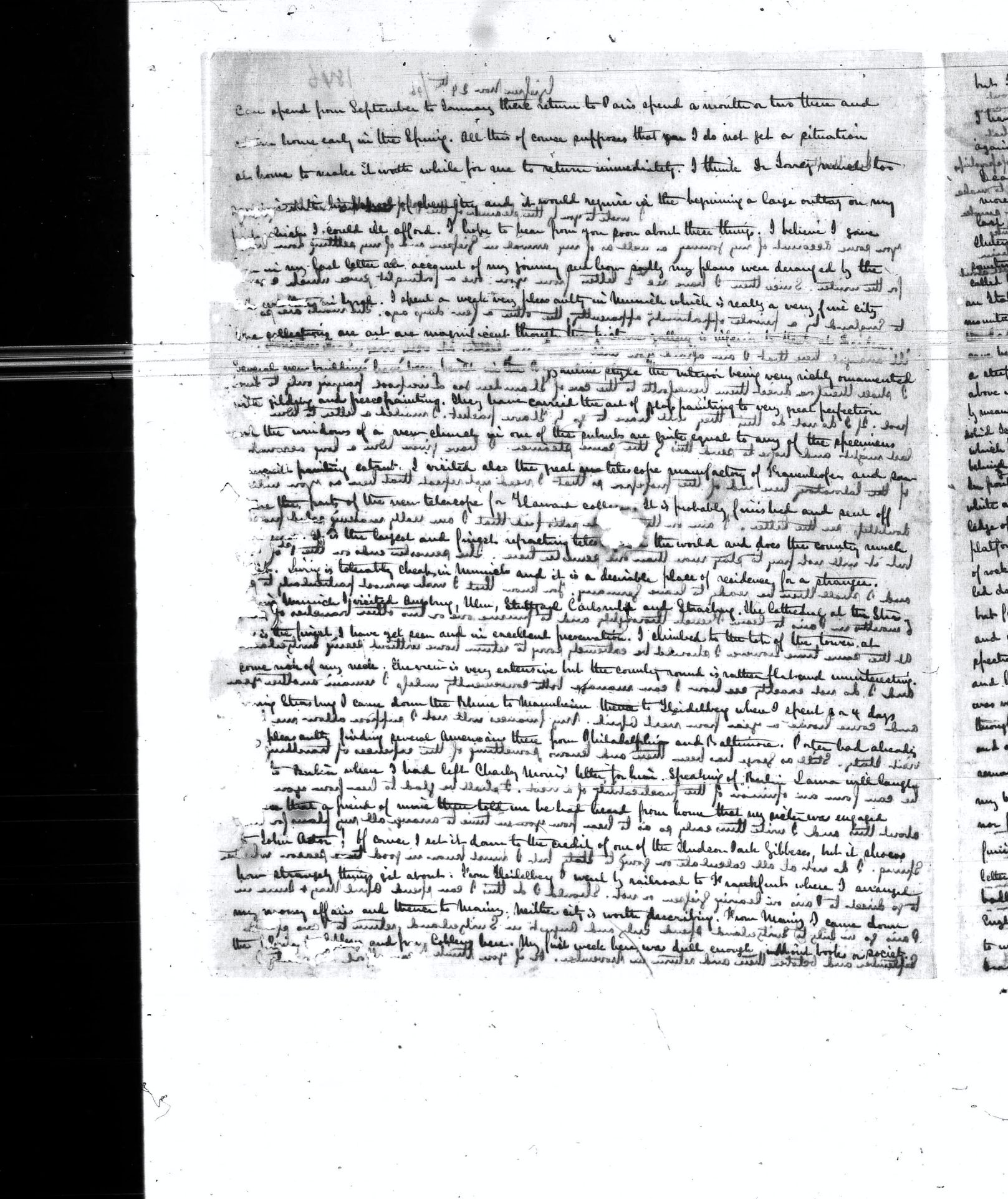
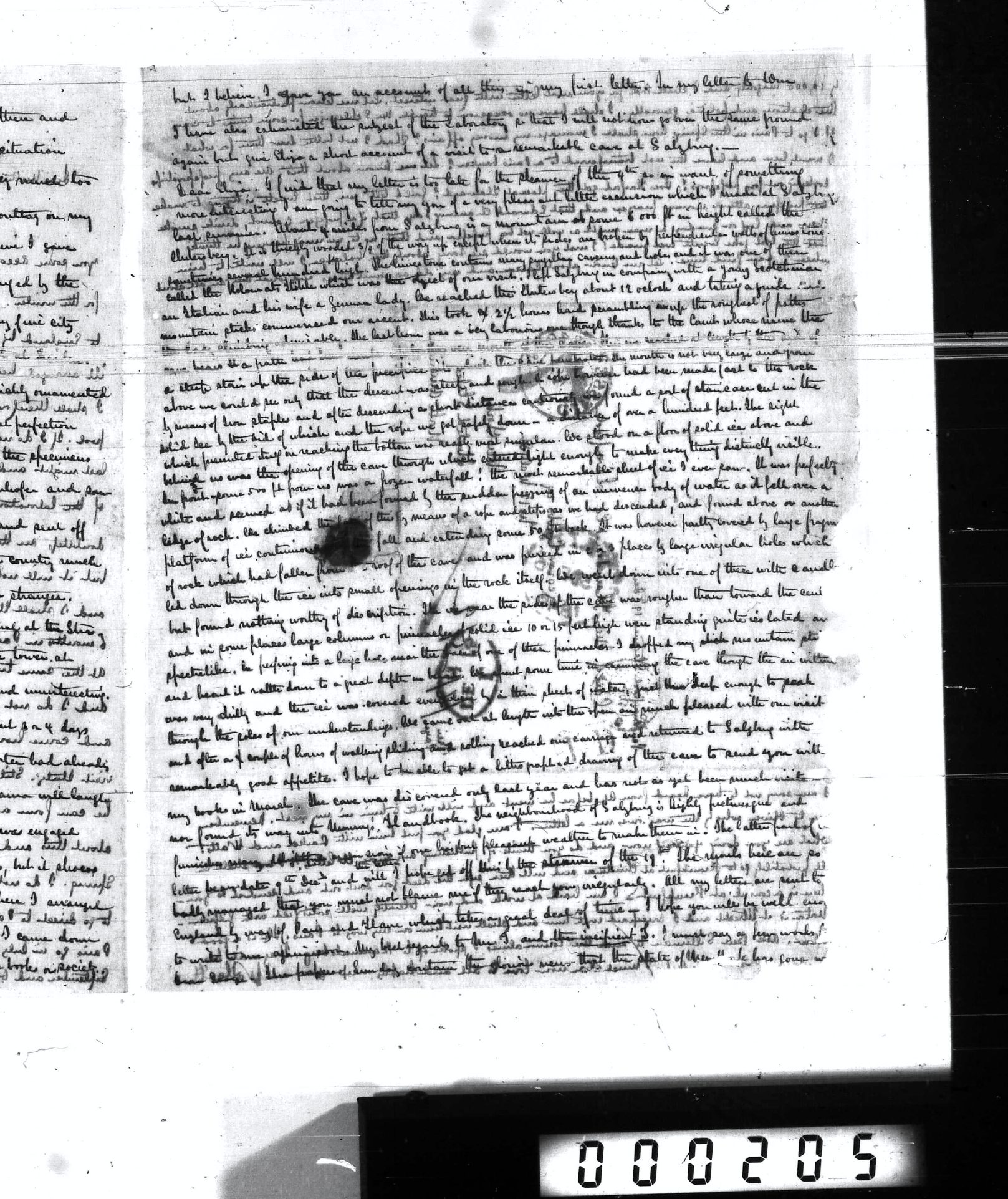
European tour: Munich galleries/museums, telescope factory, Heidelberg, Mannheim, observatory
26 Jan 1847
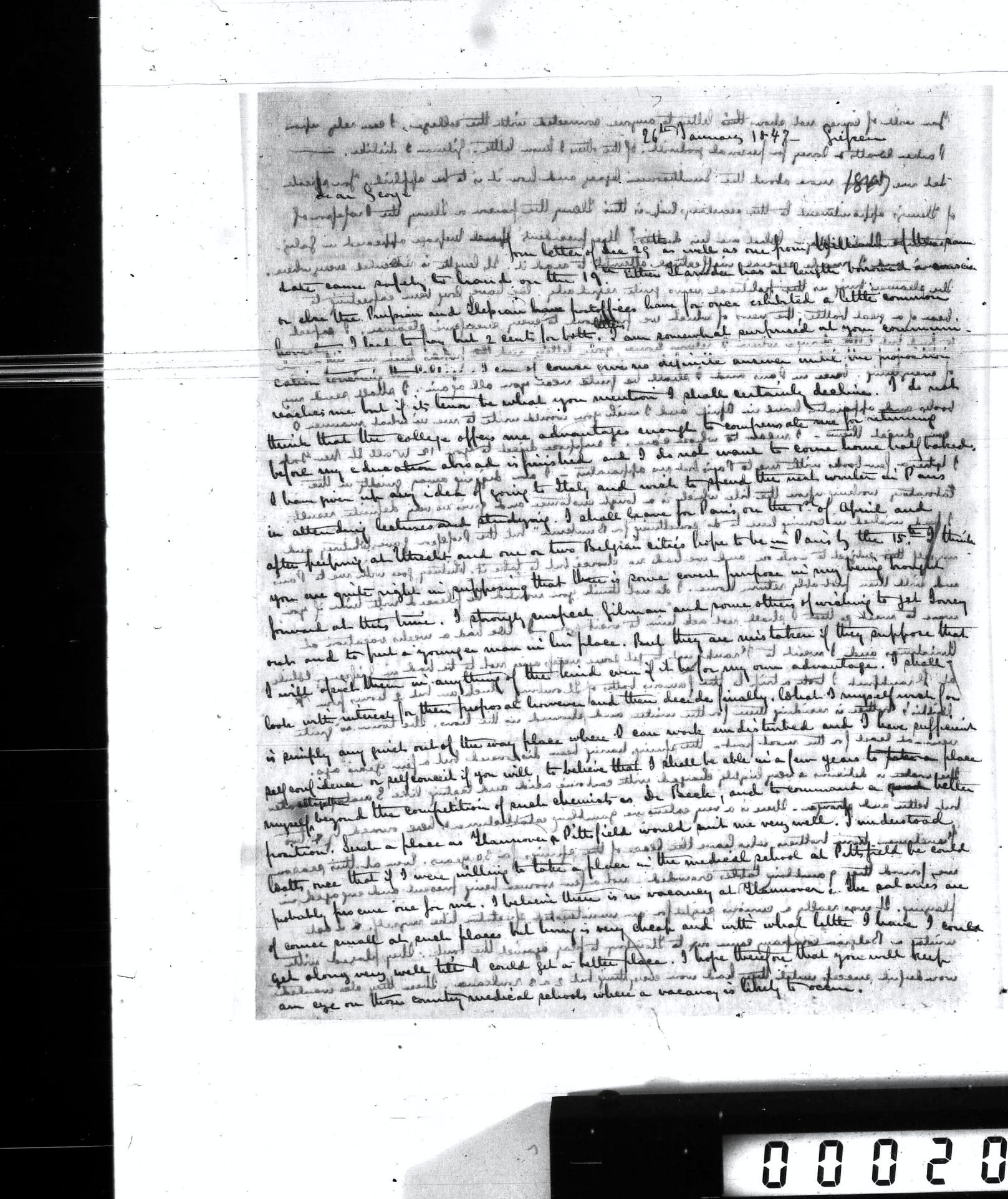
Giessen; declines college professorship offer, plans Paris via Utrecht in April, weighs medical-school posts (Pittsfield/Hanover)
30 Jan 1847
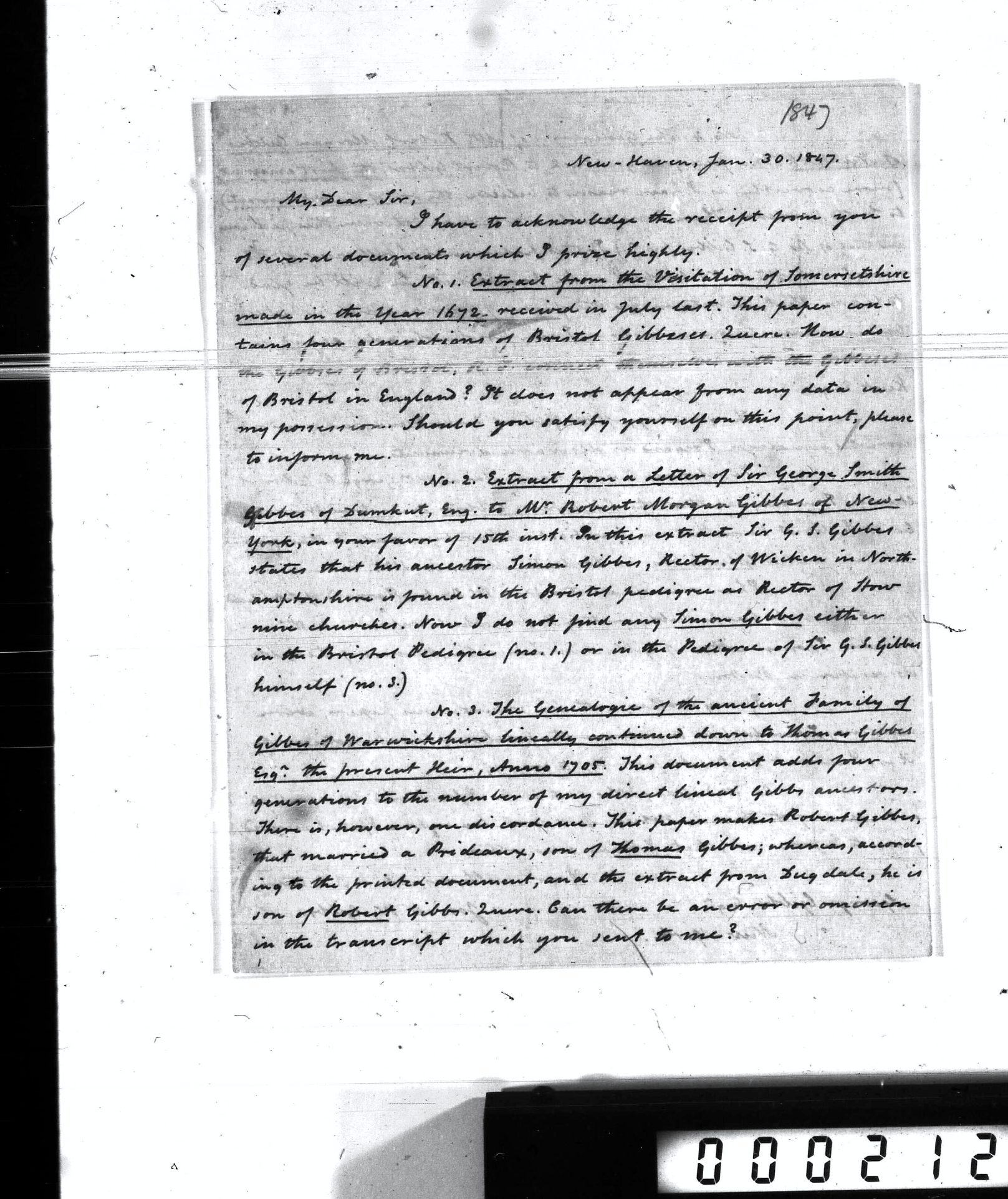
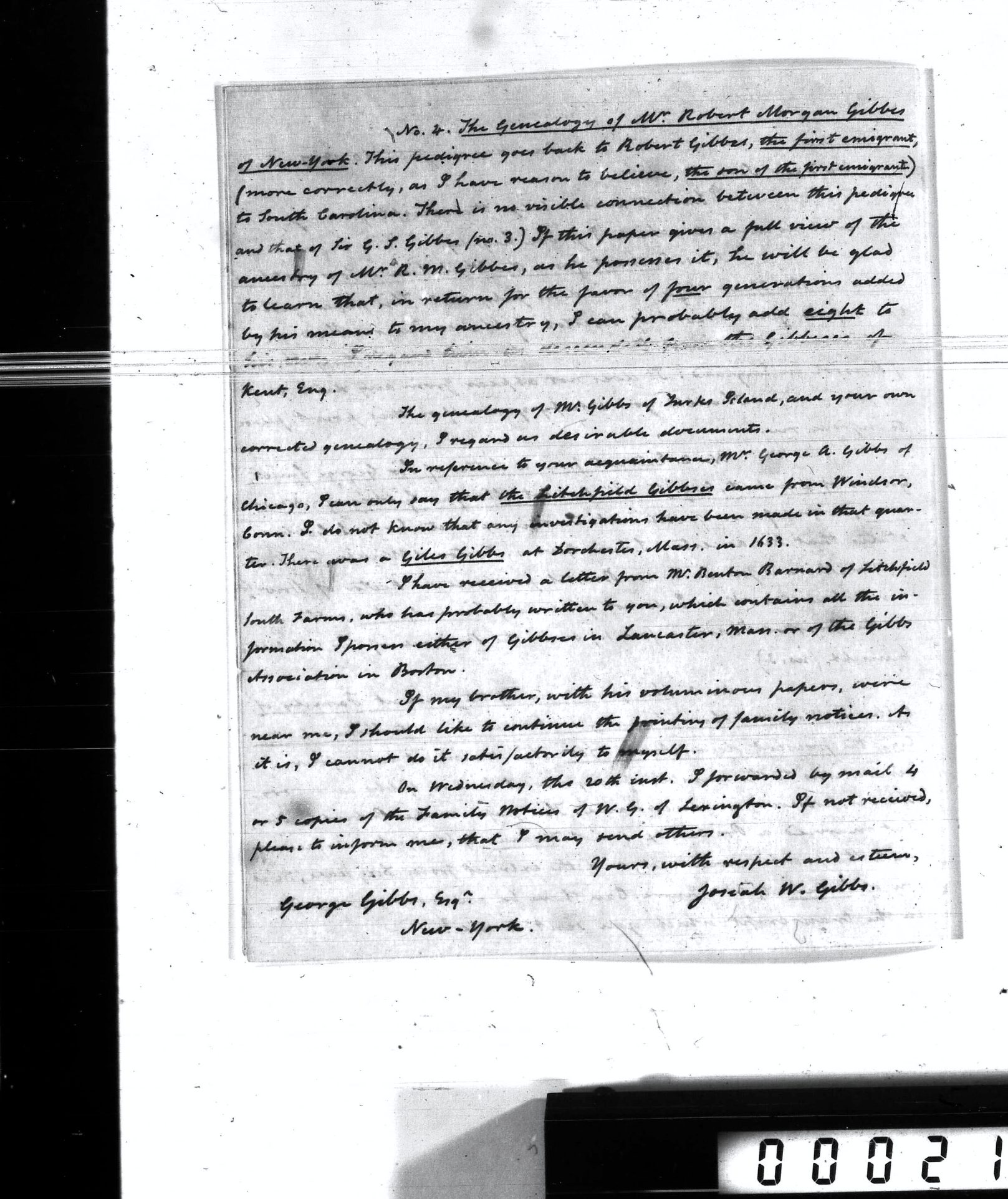
New Haven; acknowledges Gibbs genealogy documents (Somersetshire Visitation 1672, Warwickshire pedigree to 1705, discrepancies)
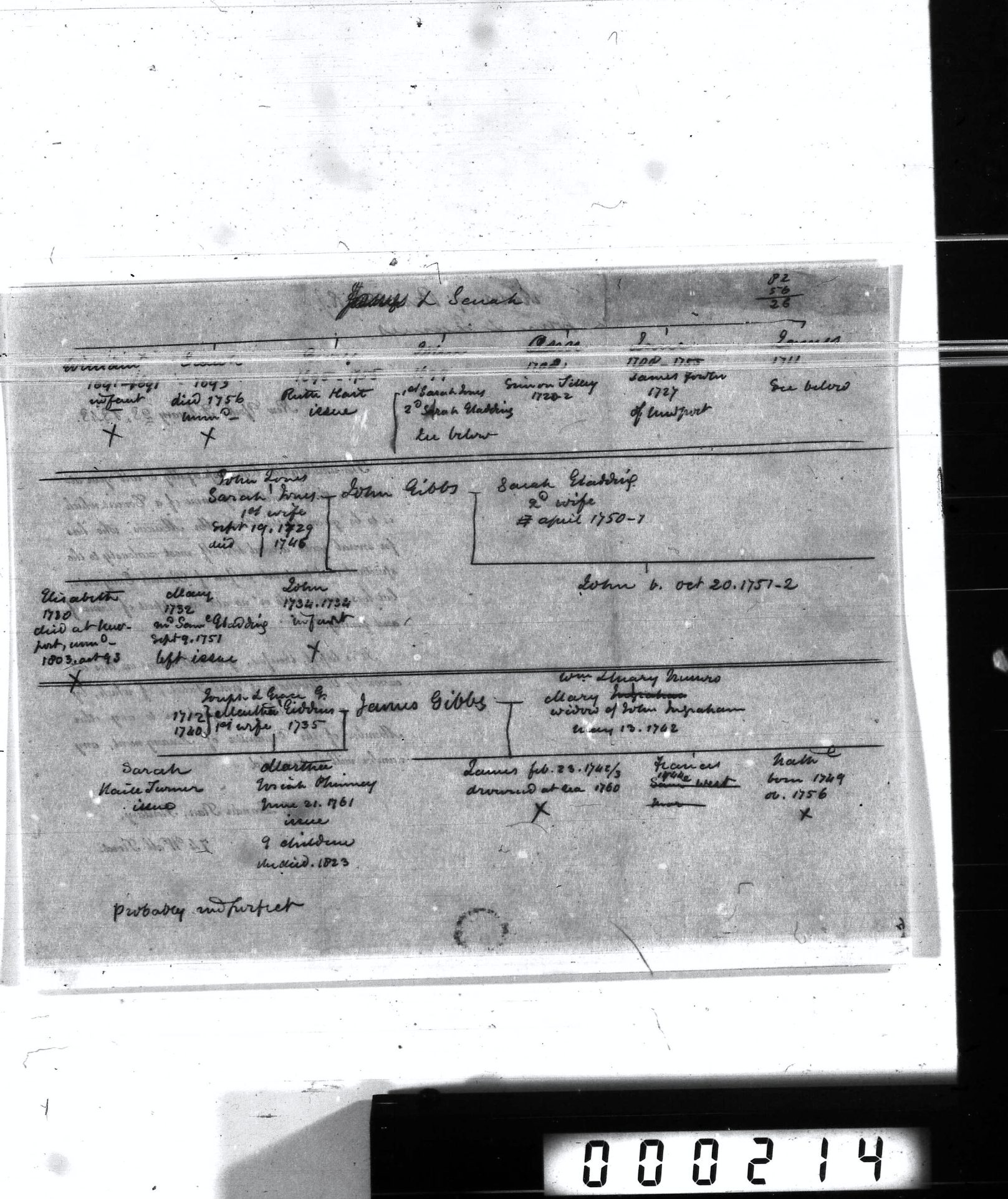
Gibbs pedigree table: James & Sarah, John Gibbs, James Gibbs and issue, 1700s dates ("probably imperfect")
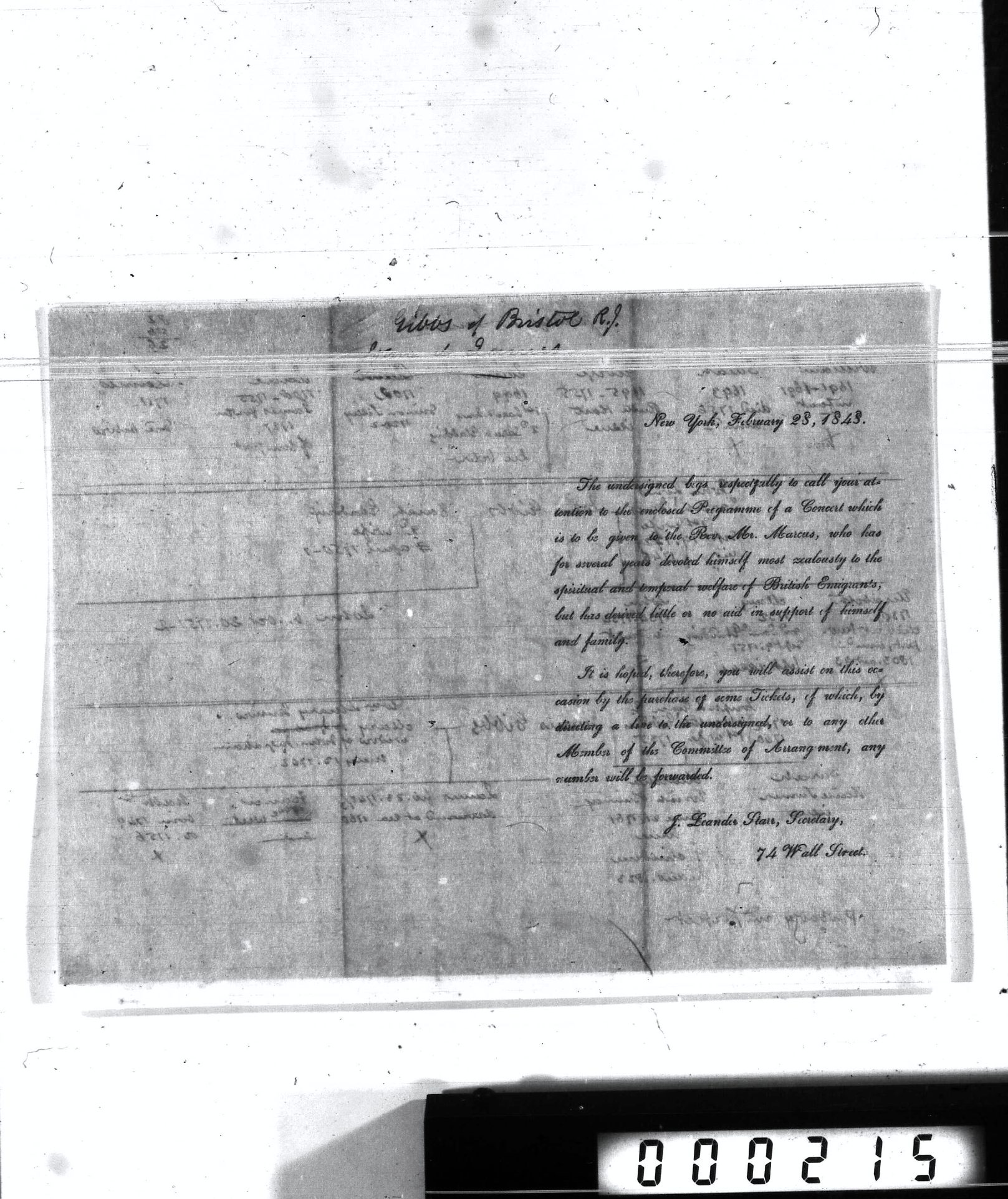
28 Feb 1843
ticket appeal for a benefit concert for Rev. Mr. Marcus / British Emigrants; verso = "Gibbs of Bristol R.I." pedigree
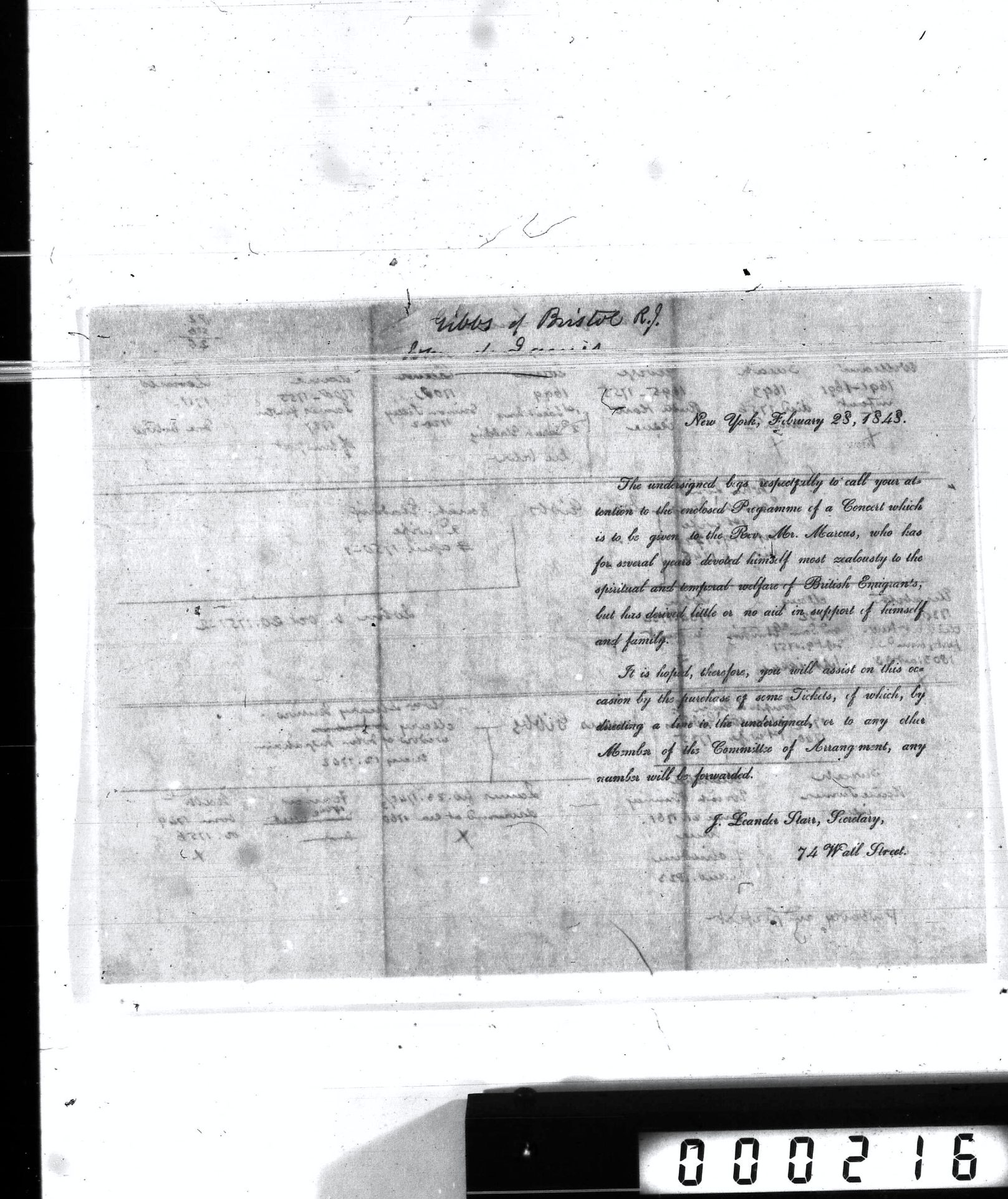
(cont.)
second exposure of the same circular/genealogy leaf
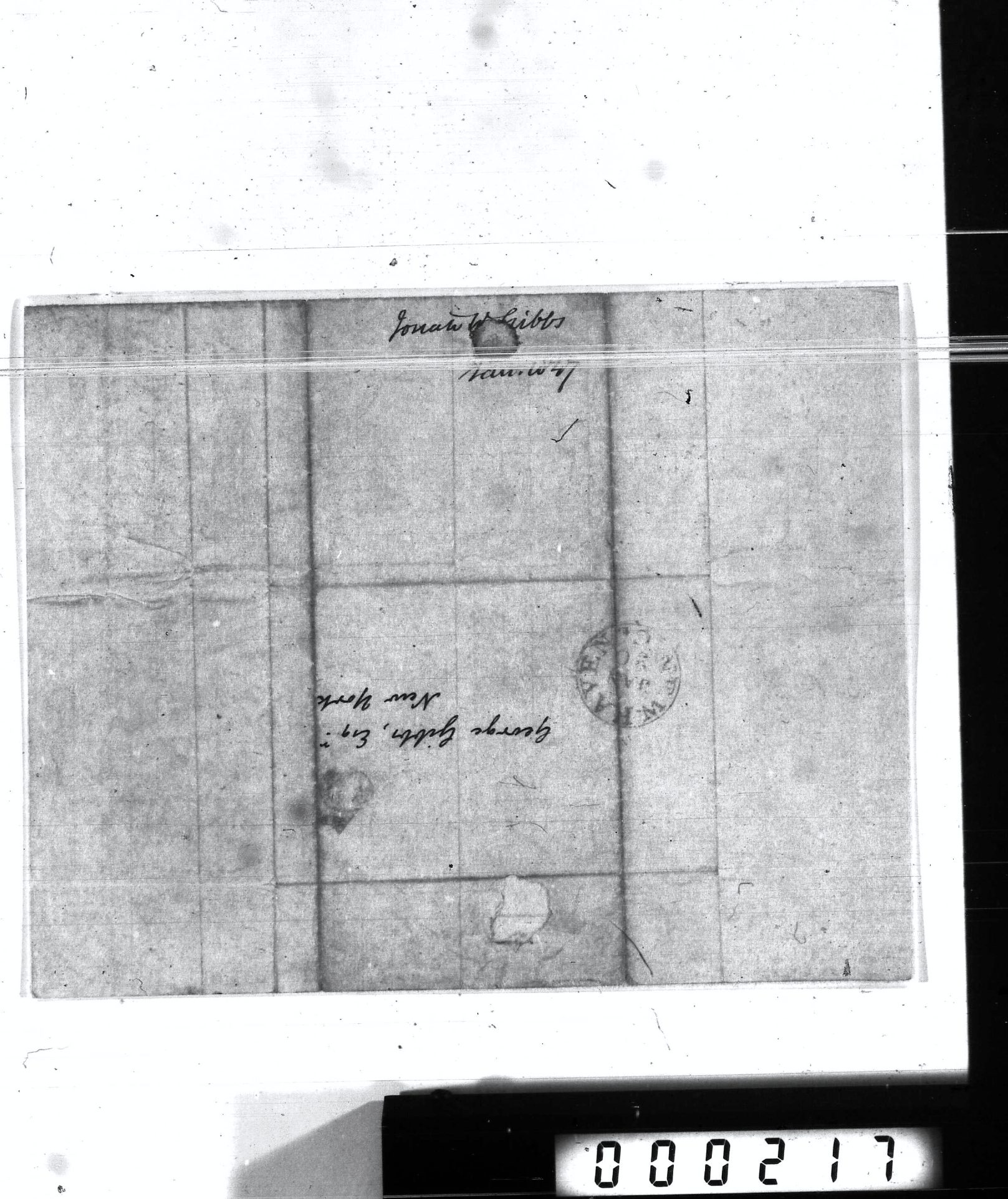
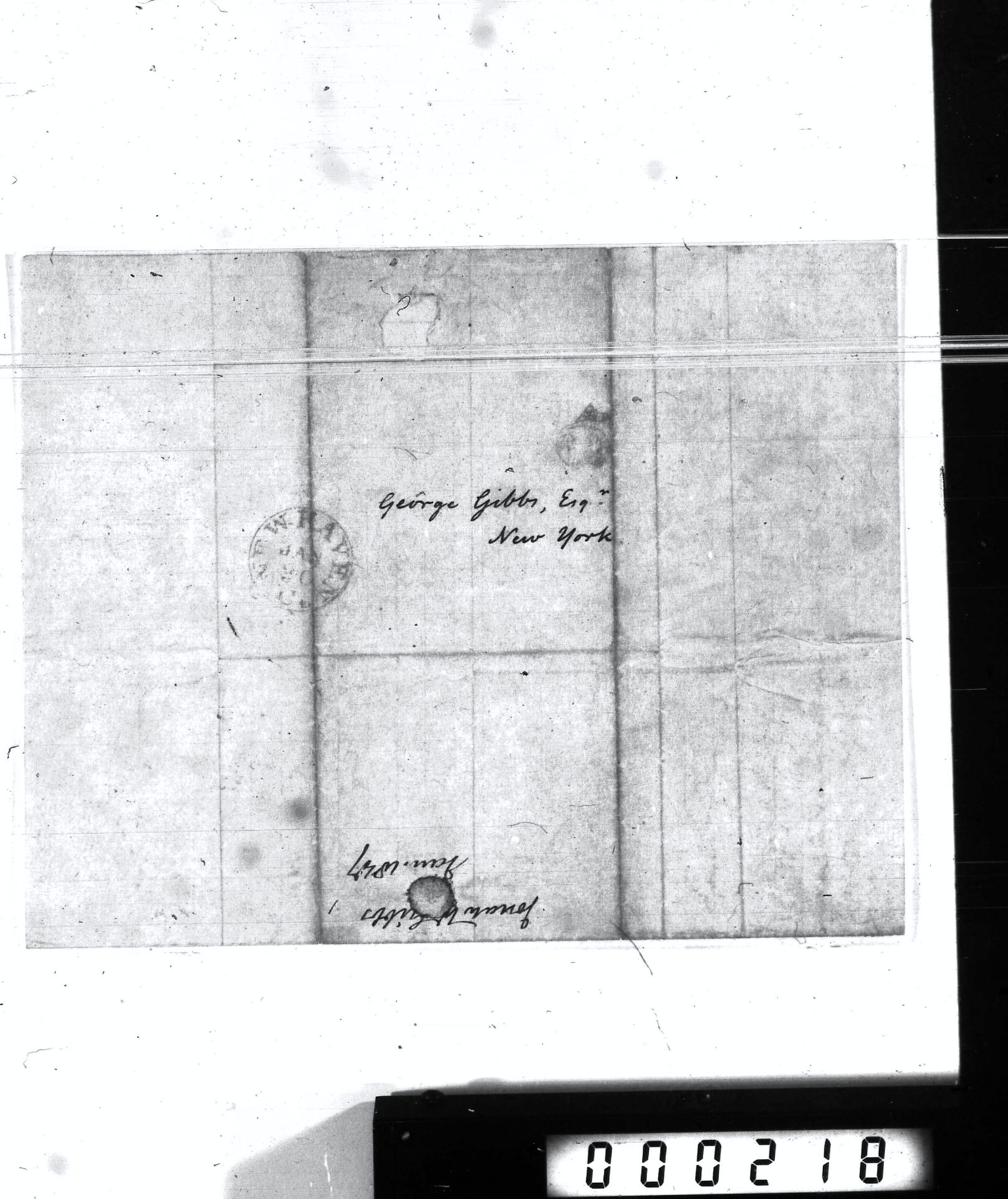
Jan 1847 (?)
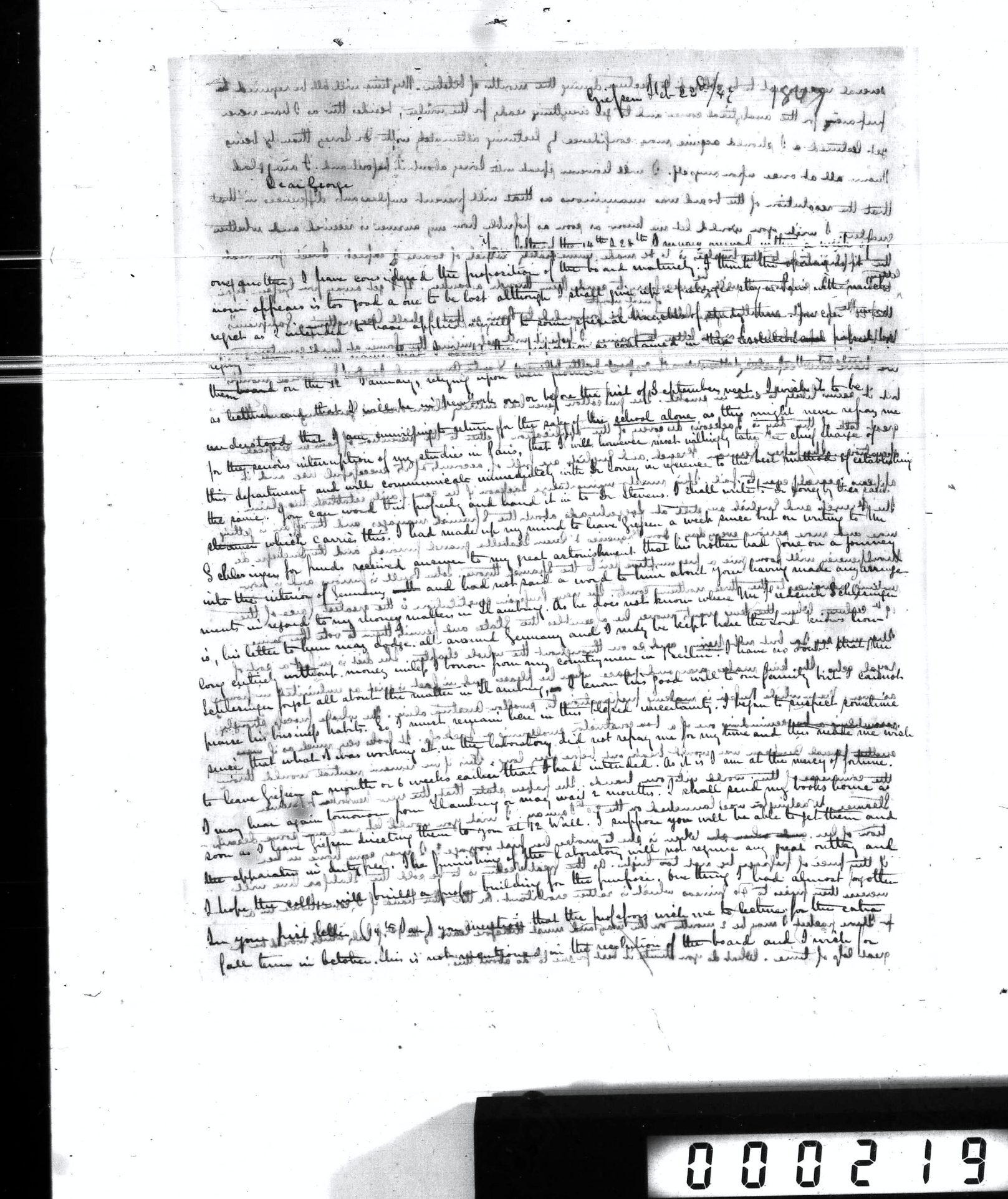
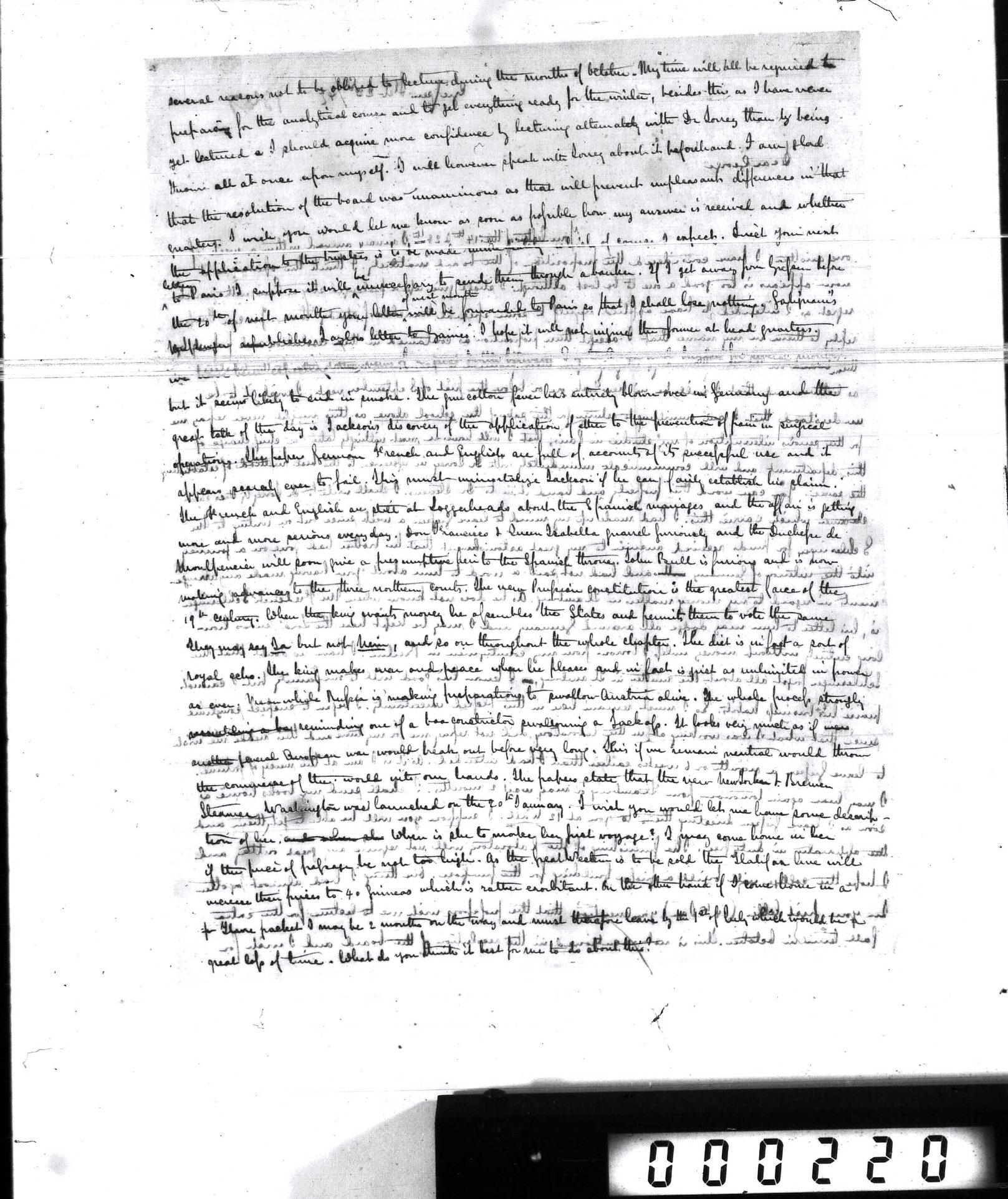
Giessen, "Dear George"; cross-hatched letter on leaving Giessen for Paris, medical-school/lecturing plans, Silliman journal
1847 Feb 24
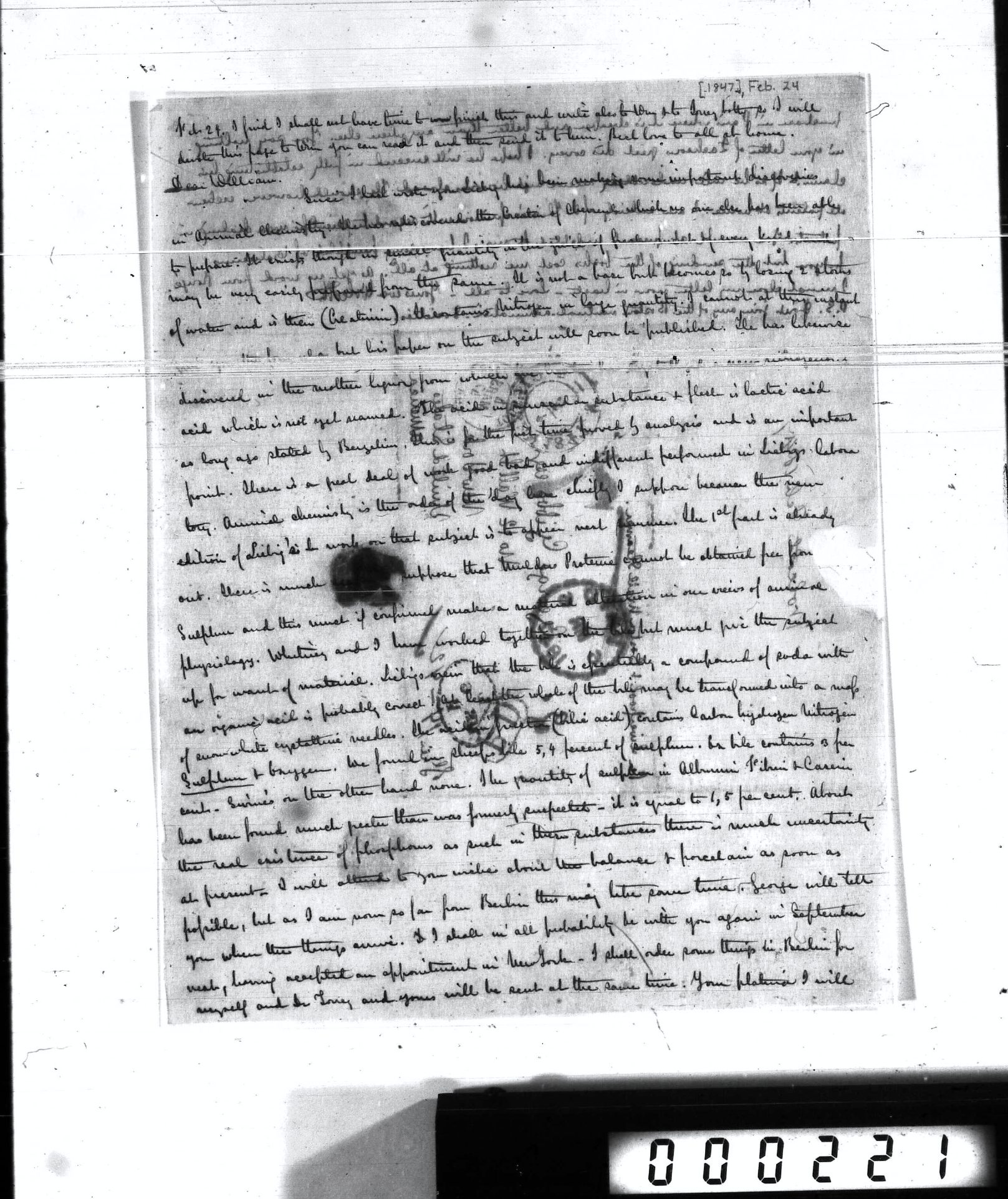
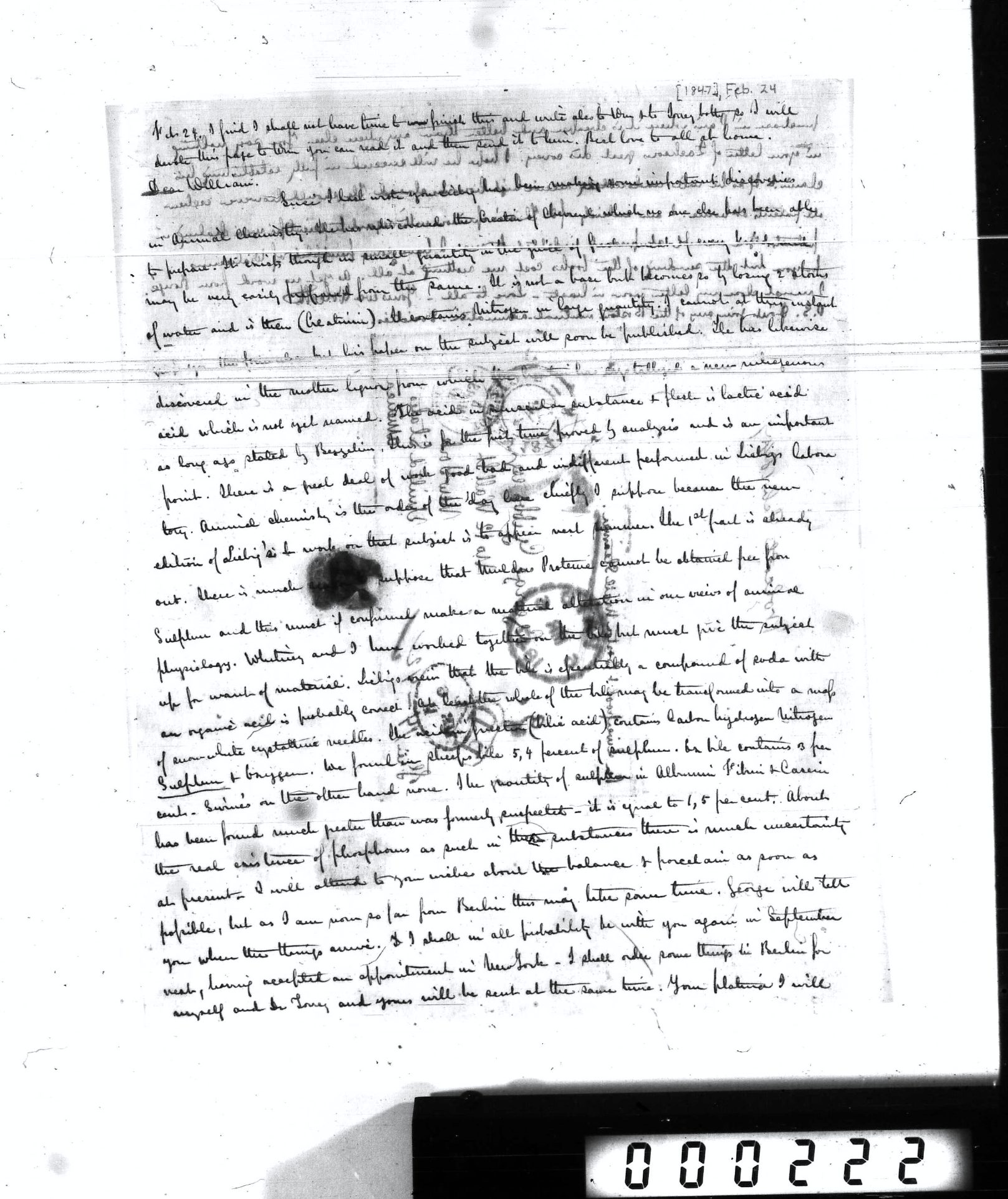
Liebig lab news: animal chemistry, kreatinin, bile/sulphur work with Whitney; NY appointment, returning September
1847 Feb 24
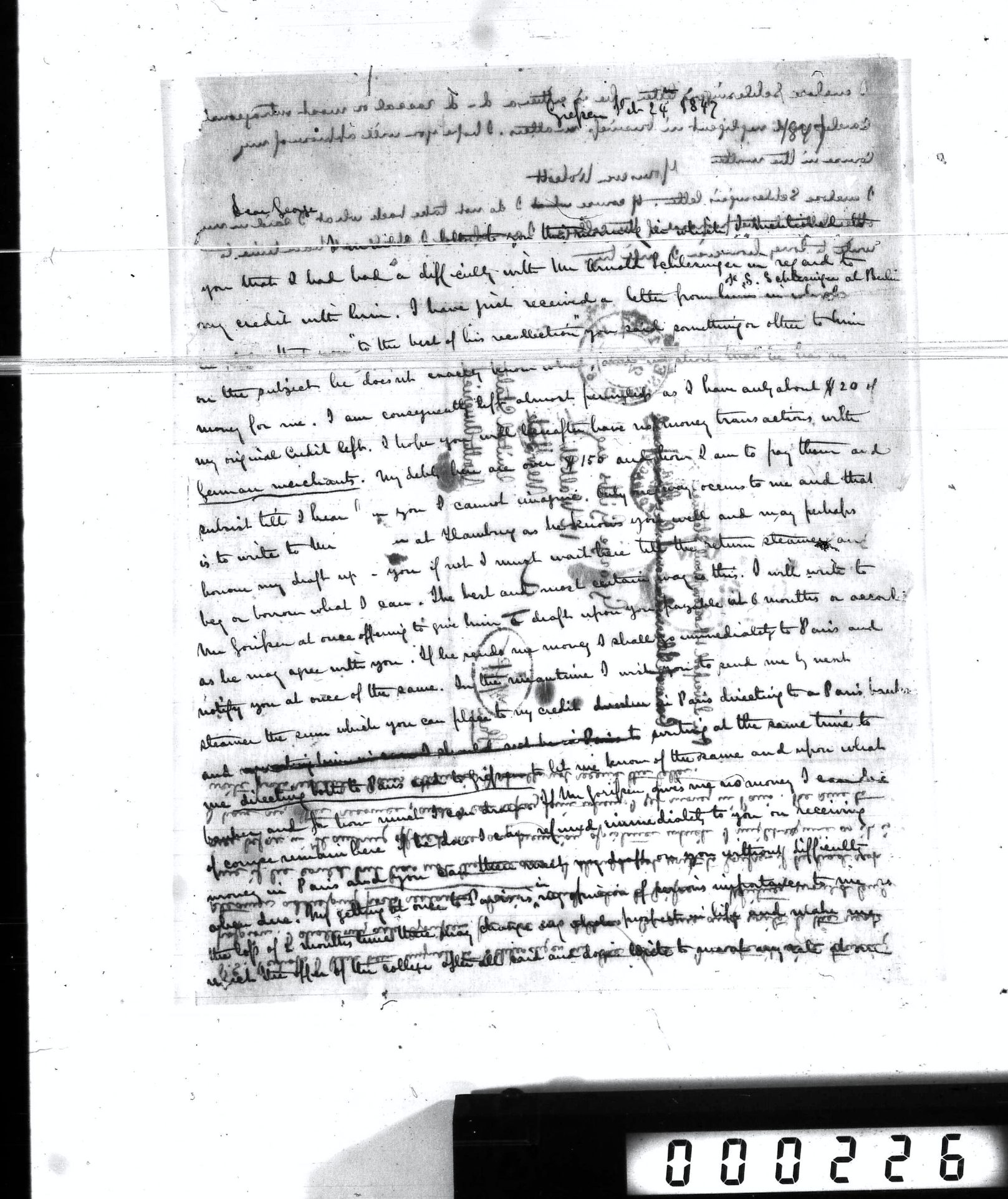
Schlesinger credit collapse: nearly penniless, $150 in debts; will seek draft, then move to Paris
1847 Feb 26
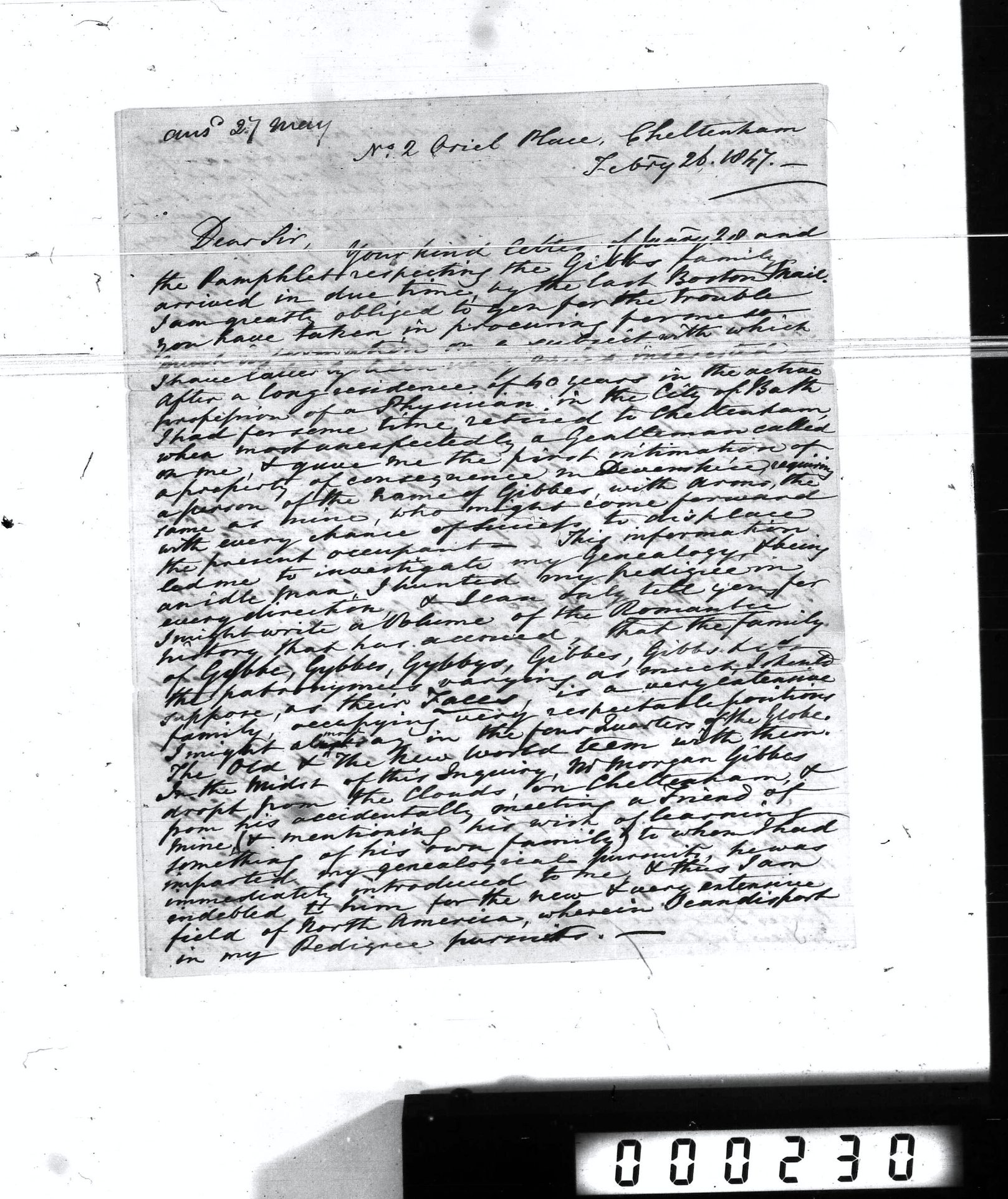
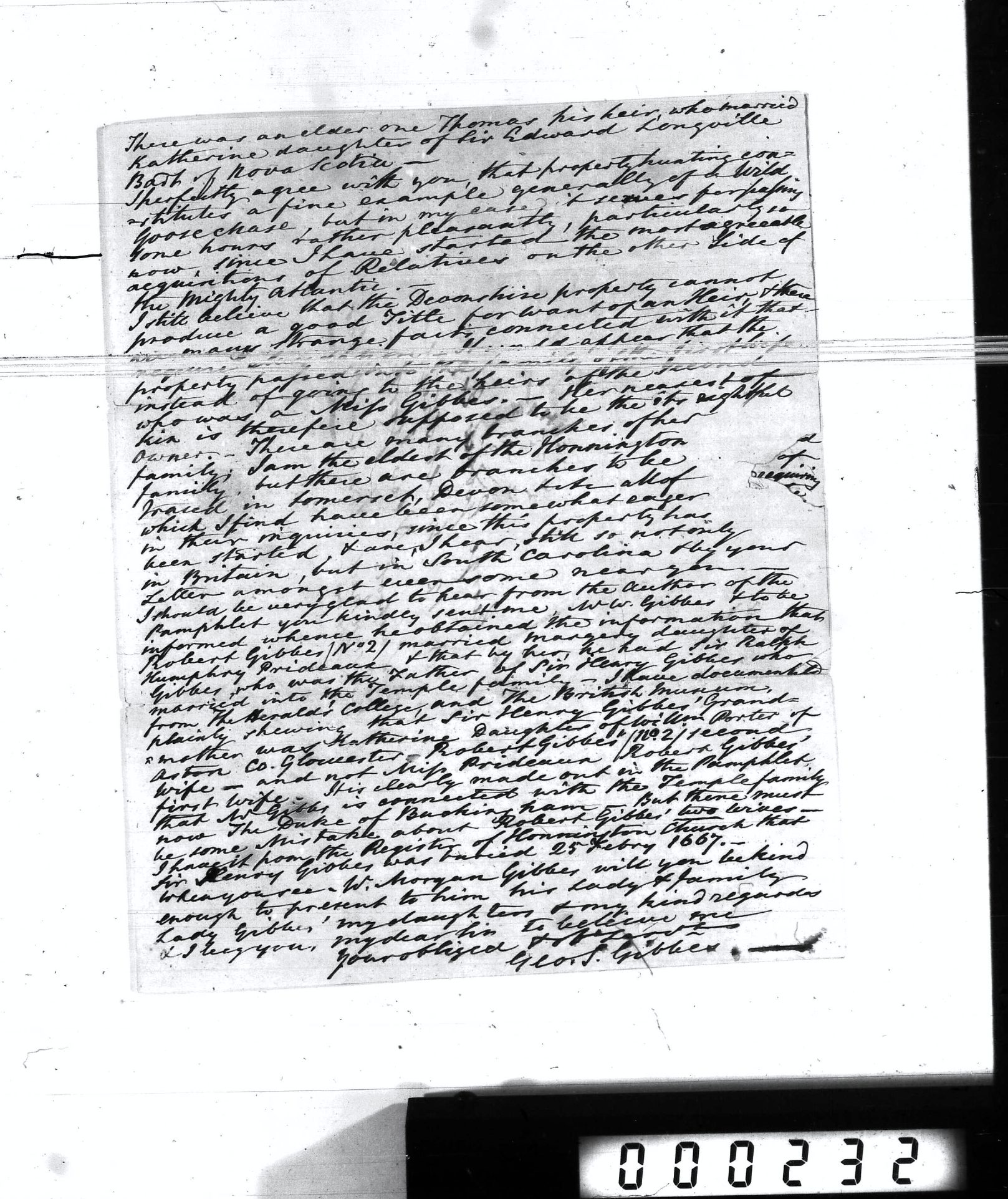
Thanks for pamphlet; Devonshire property claim sparked pedigree hunt; Morgan Gibbes introduced North American branch
1847 May 12
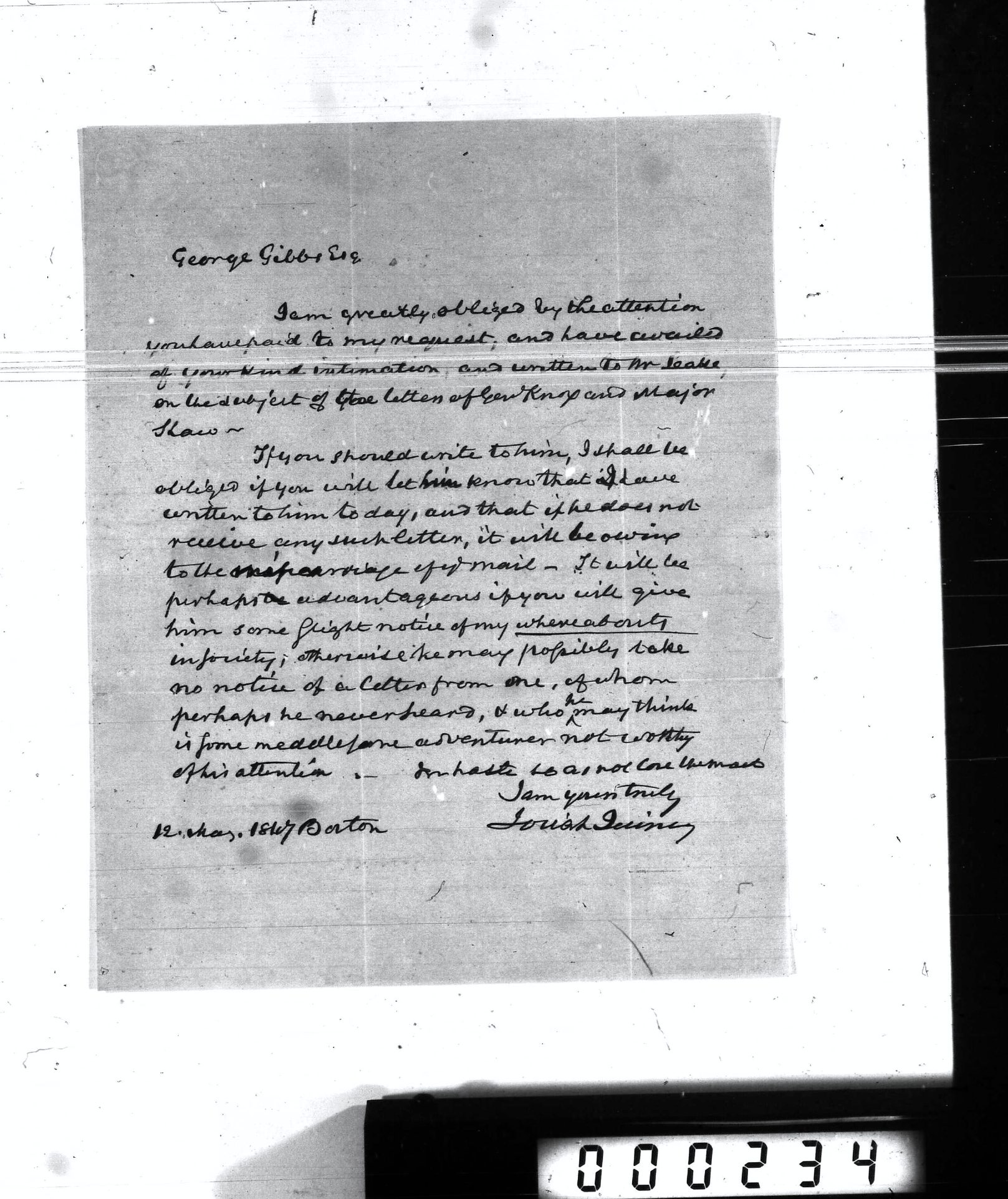
Thanks; has written Mr Leake about Gen. Knox and Major Shaw letters; asks George vouch for him
1847 Mar 28
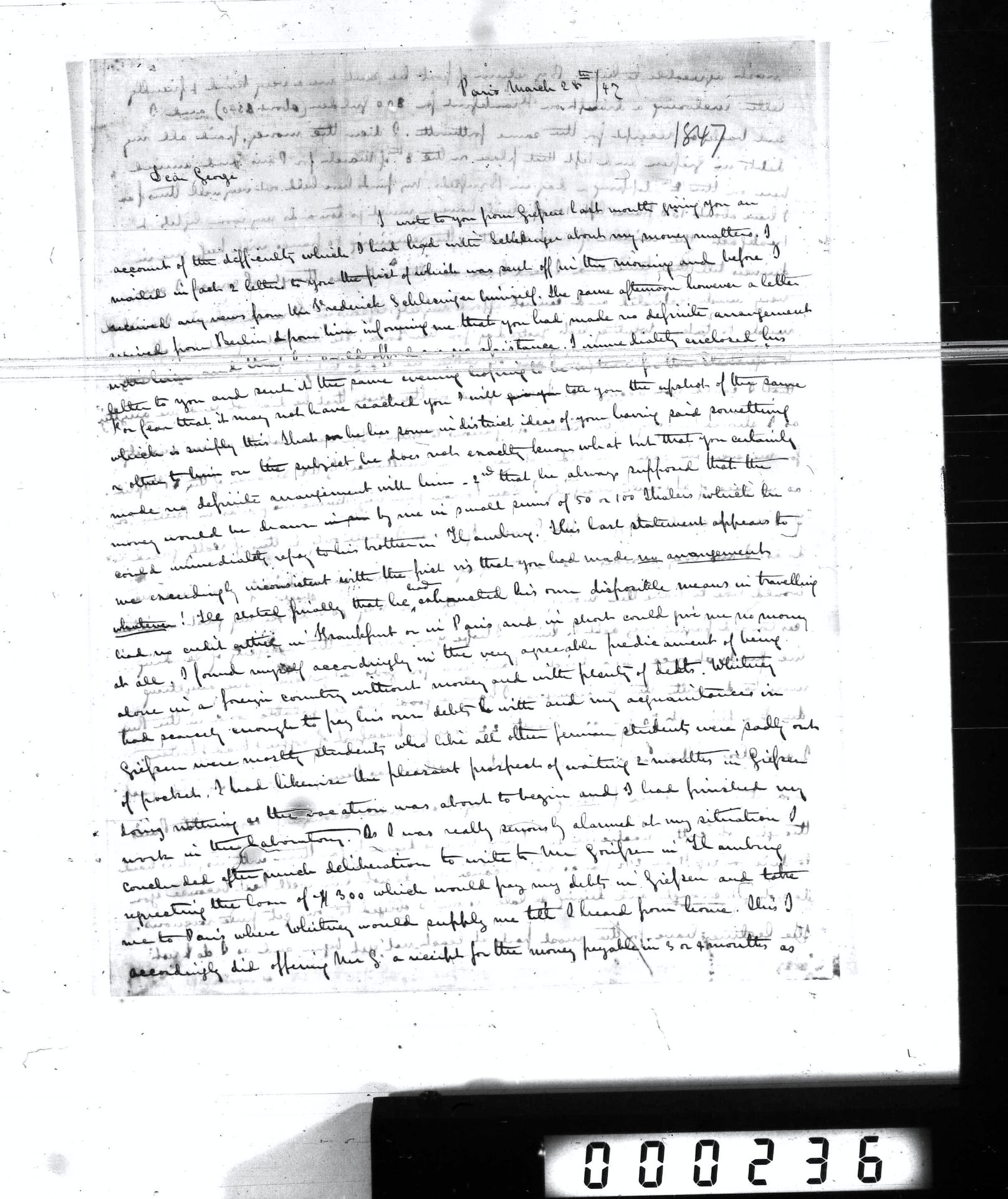
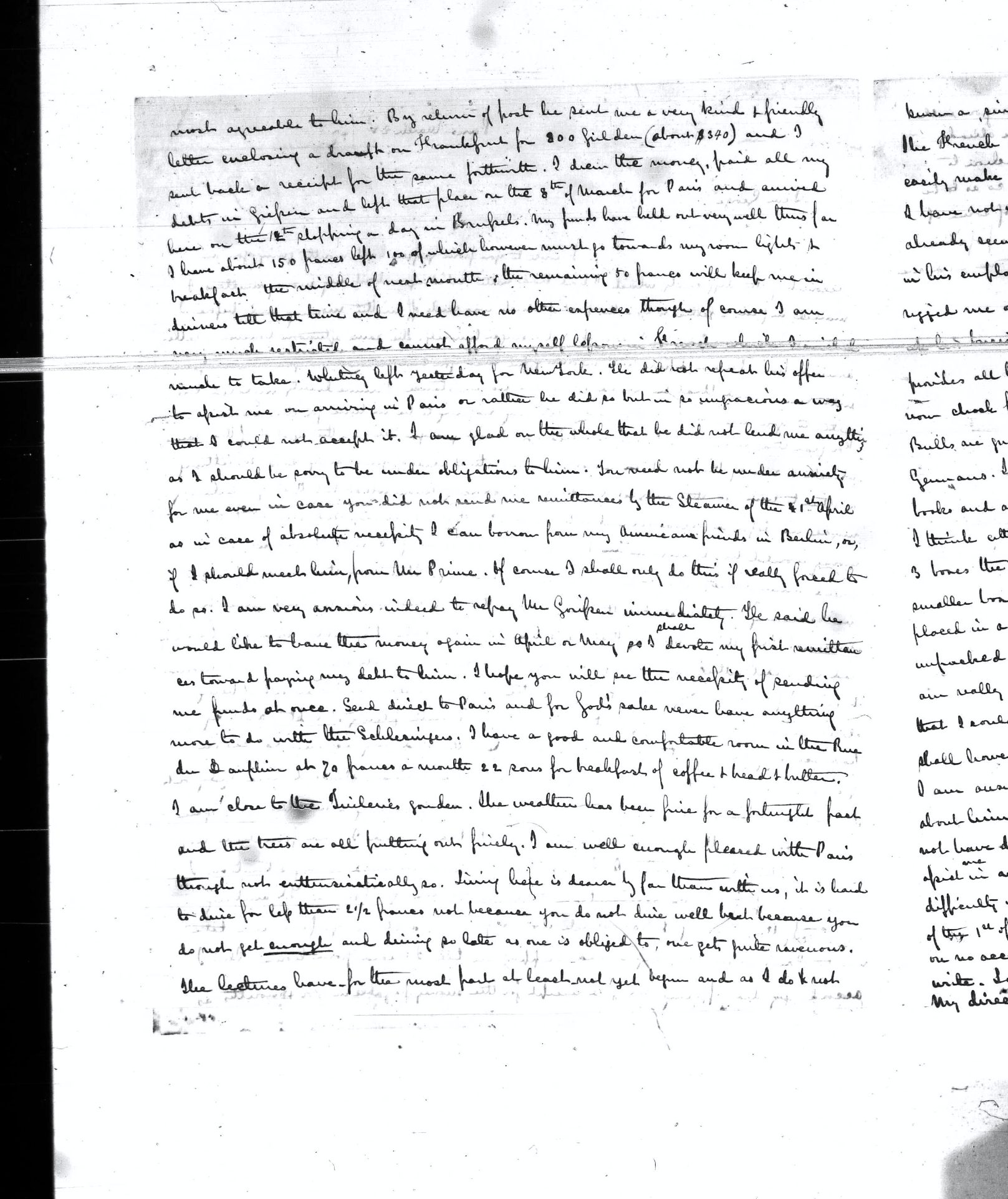
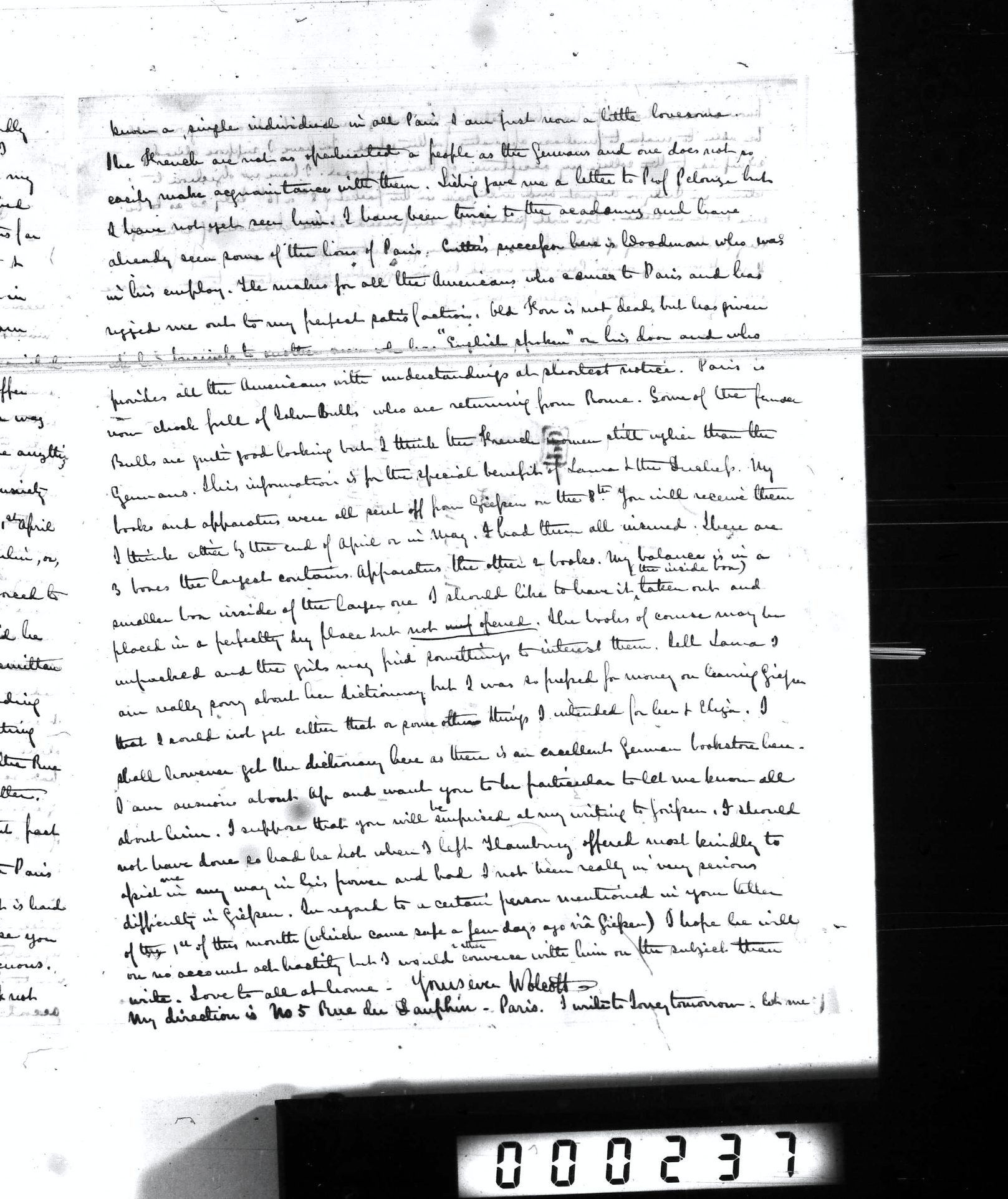
Full Schlesinger saga: stranded moneyless in Giessen, Whitney couldn't help; borrowed ~$300 from Hamburg
Mar 1847?
Newly arrived Paris; books/apparatus shipped from Giessen; anxious about Alf
30 May 1847
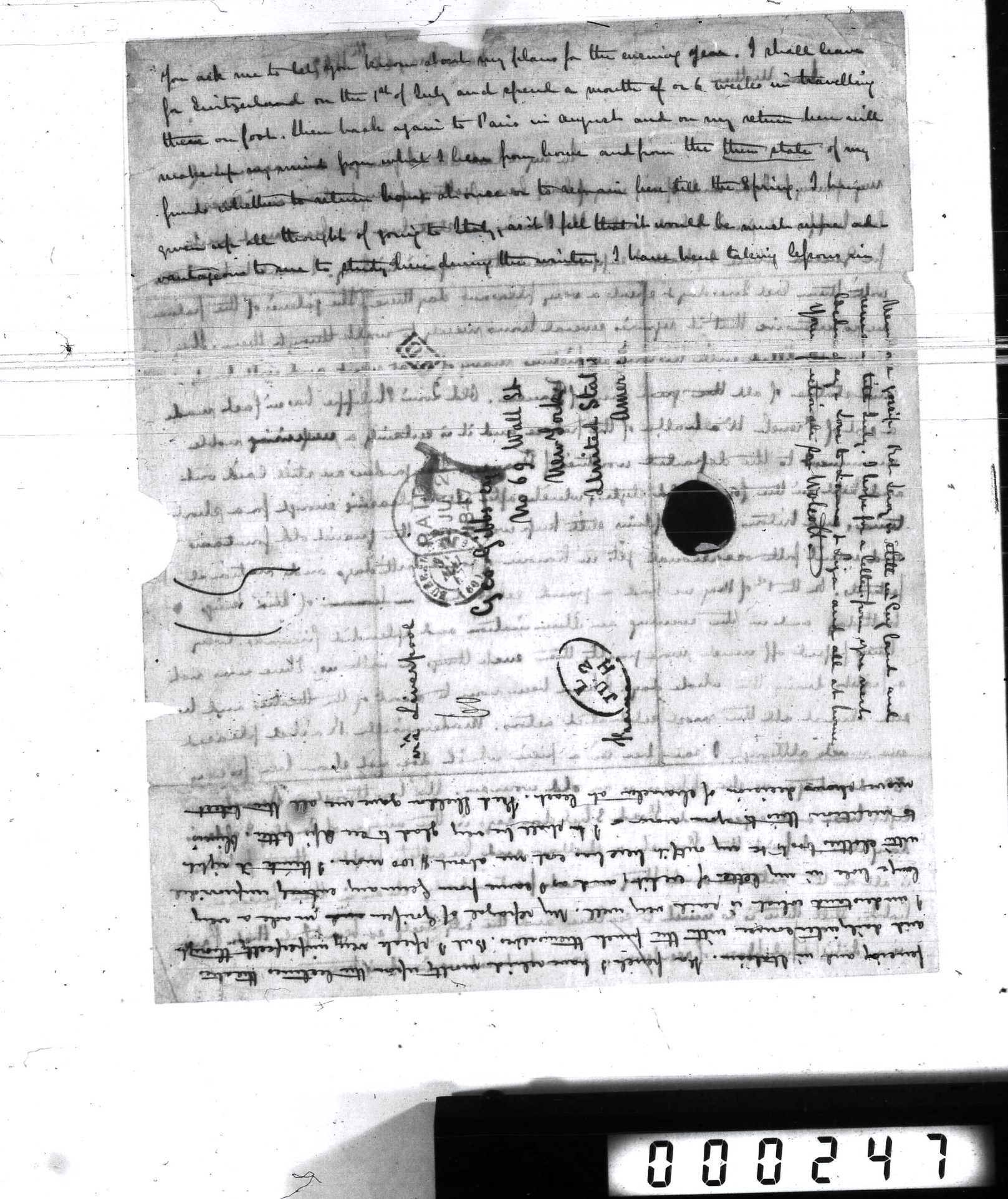
Life in Paris from 5 Rue du Dauphin; Seine swimming school; recd Copper Harbor
26 May 1847
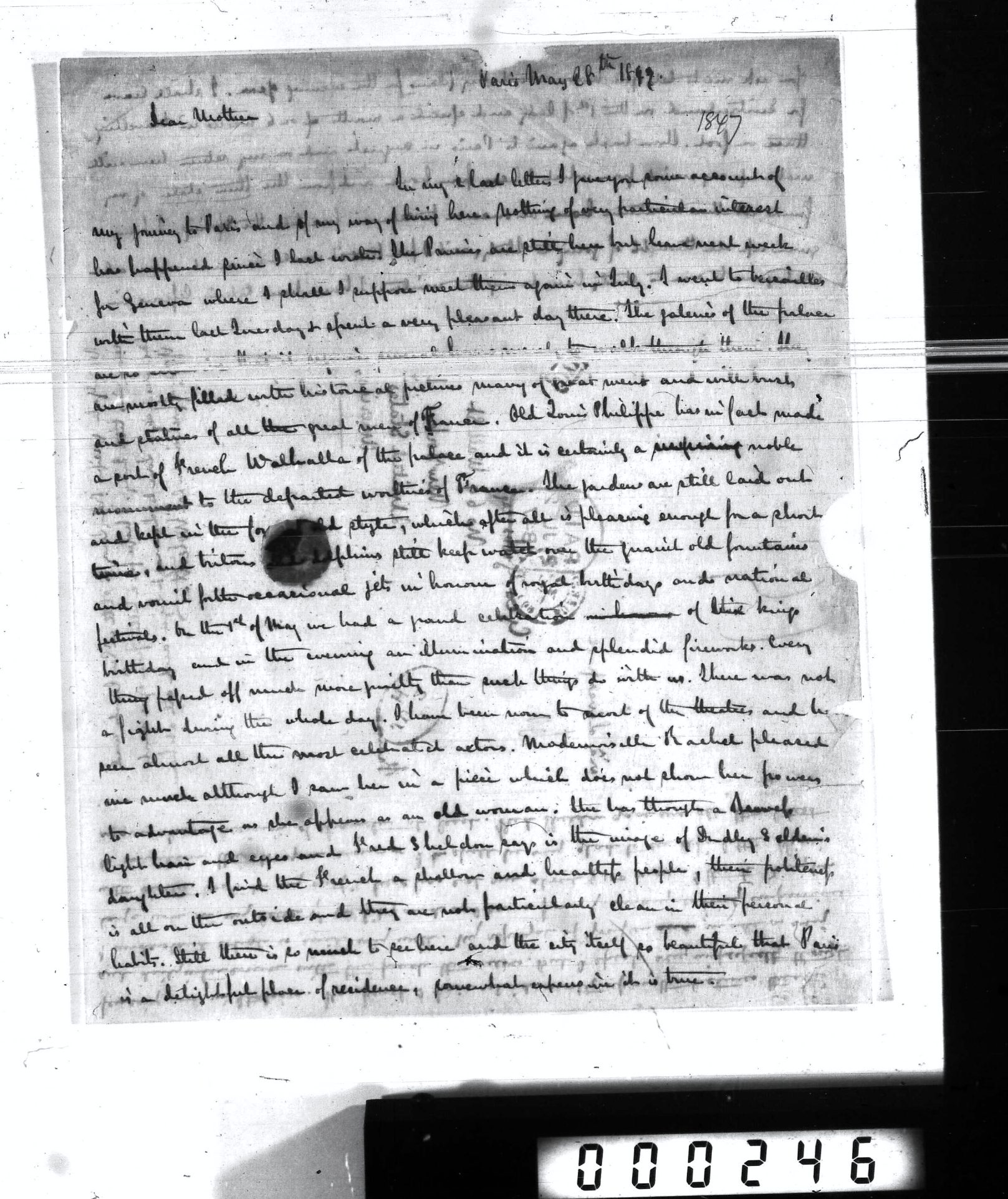
Paris life: Versailles galleries, Louis Philippe, king's-birthday fireworks, Mlle Rachel
19 Aug 1847
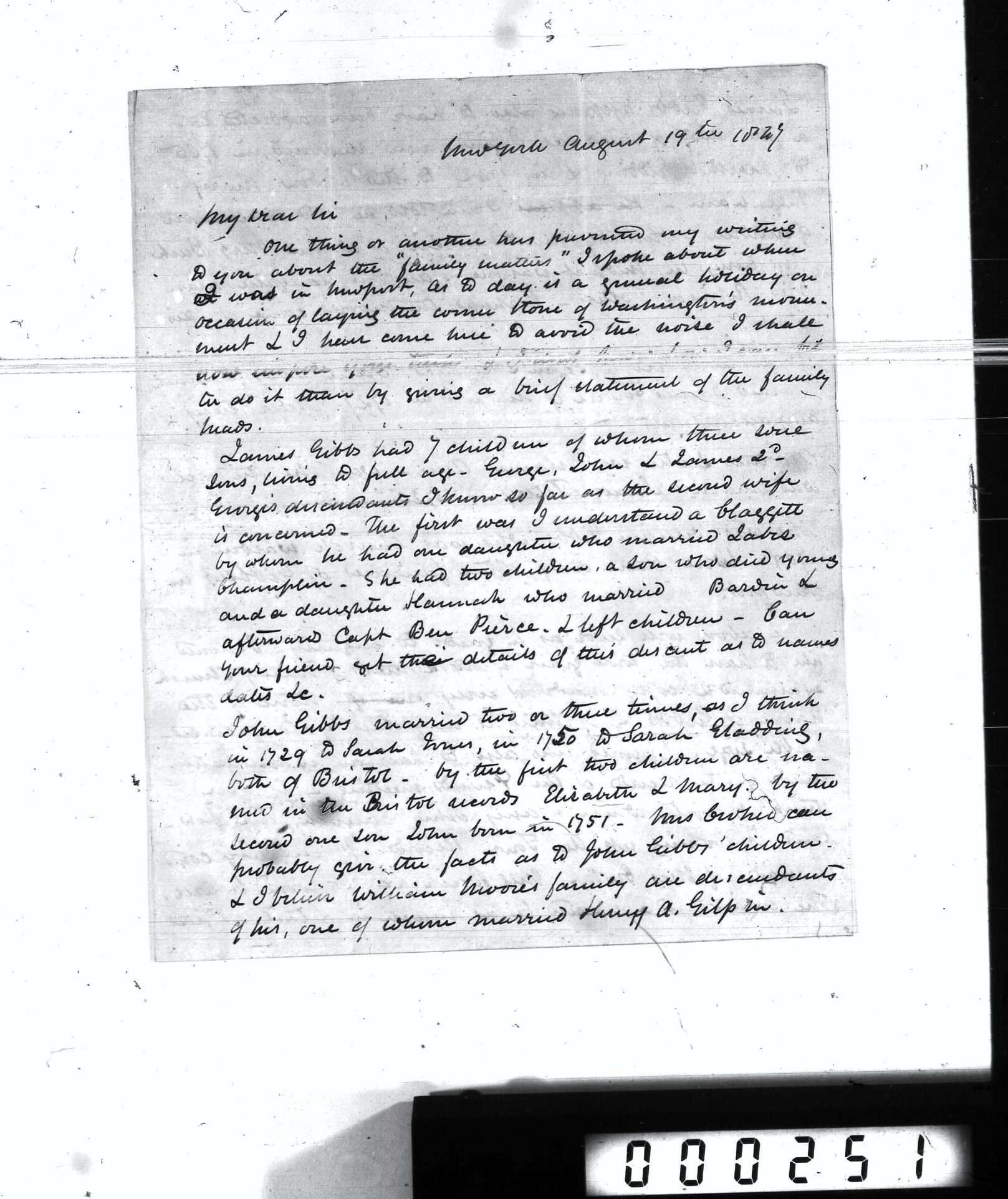
Gibbs genealogy: James/John Gibbs of Bristol-Newport; Washington monument cornerstone holiday
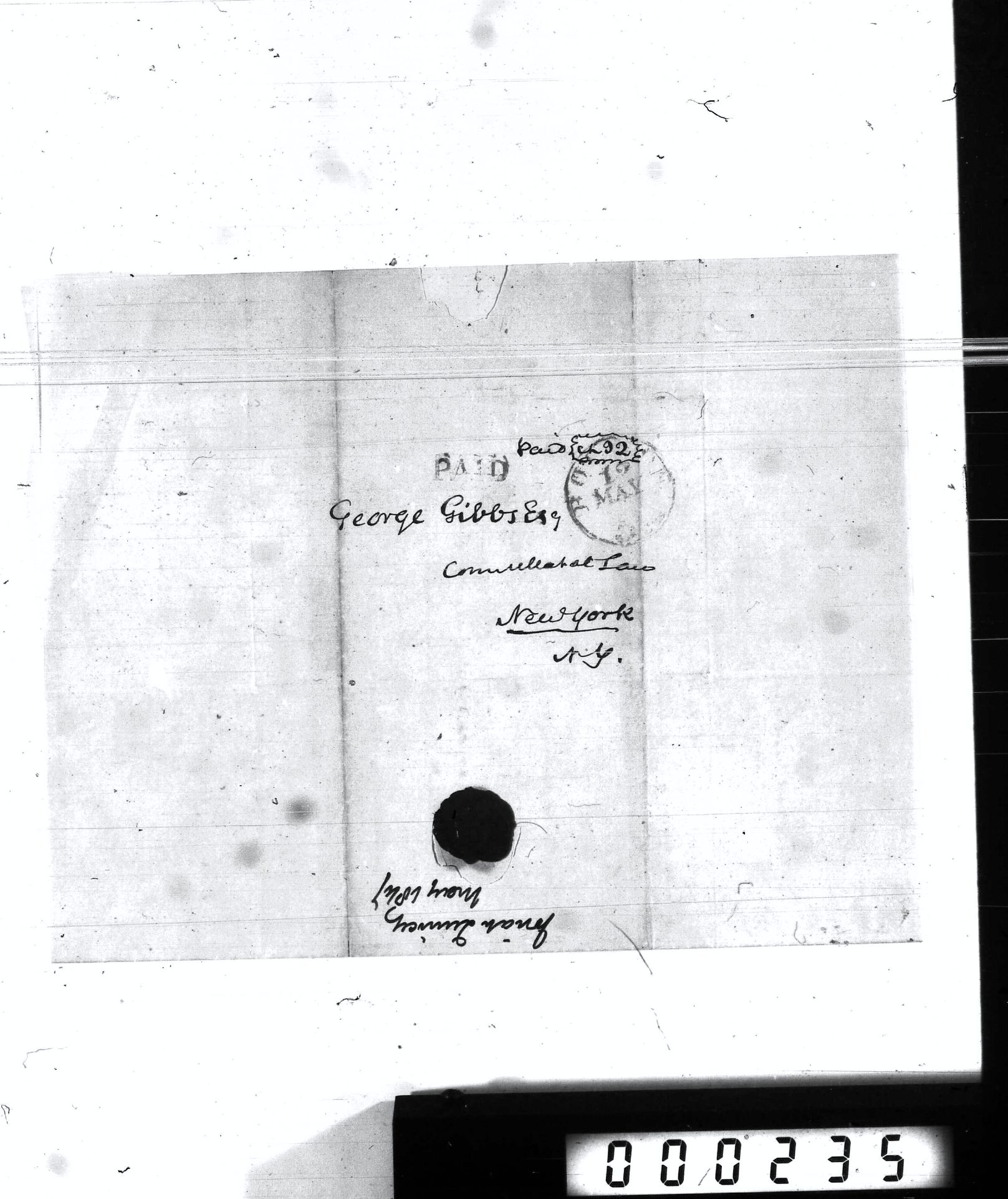
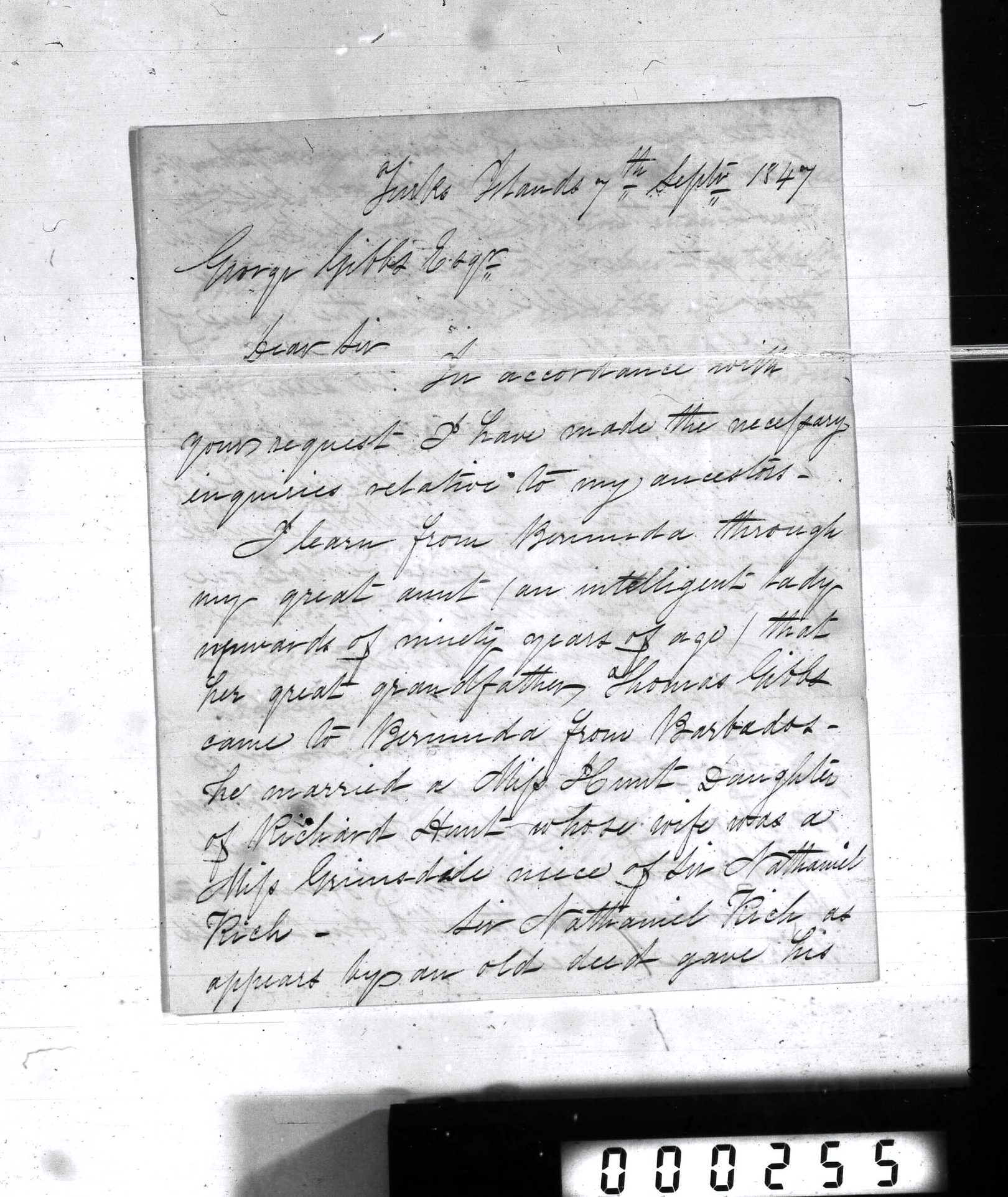
7 Sep 1847
 FRAME 1309
 FRAME 1310
 FRAME 1311
 FRAME 1312
 FRAME 1313
 FRAME 1314
 FRAME 1315
 FRAME 1316
 FRAME 1317
 FRAME 1318
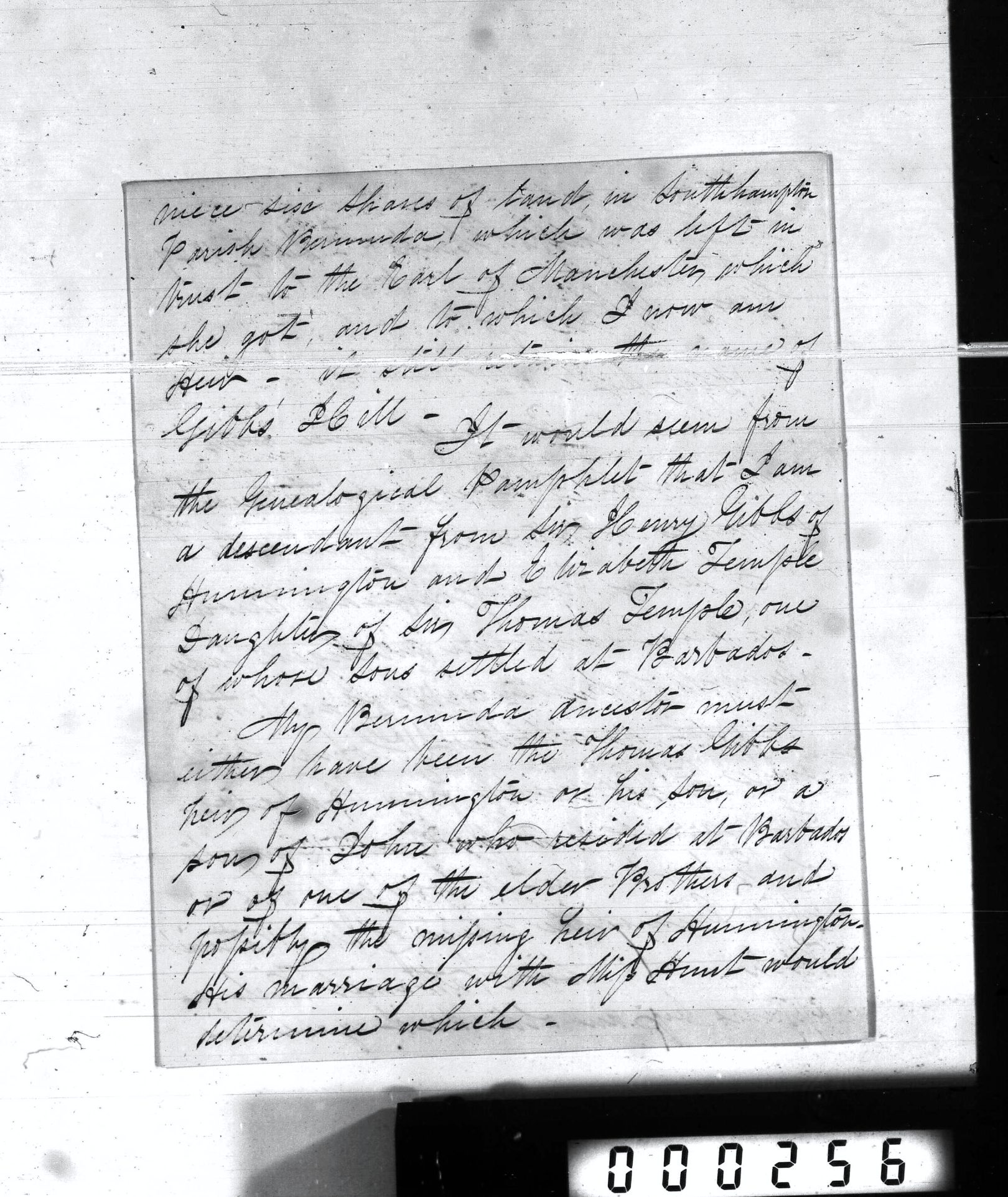
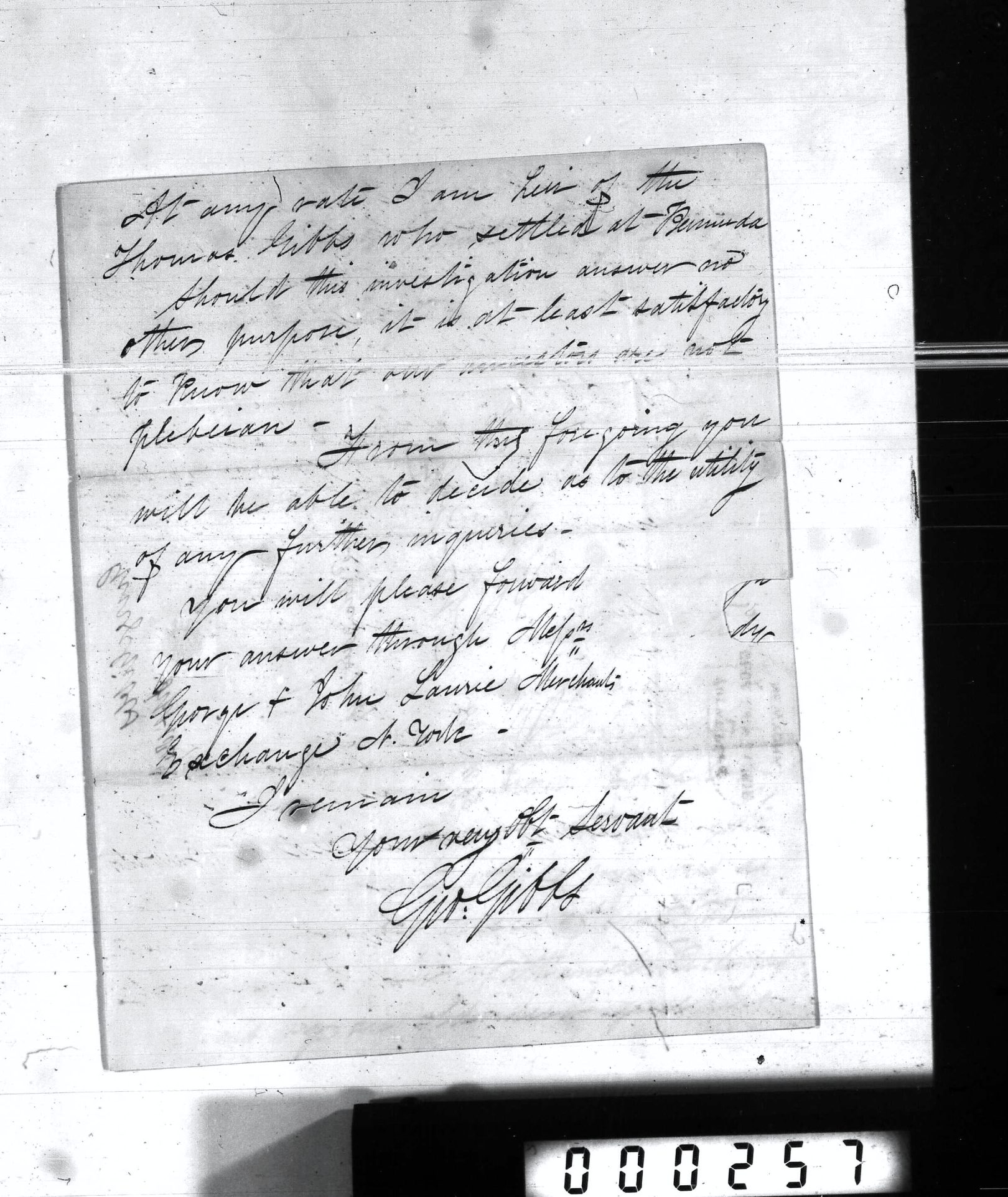
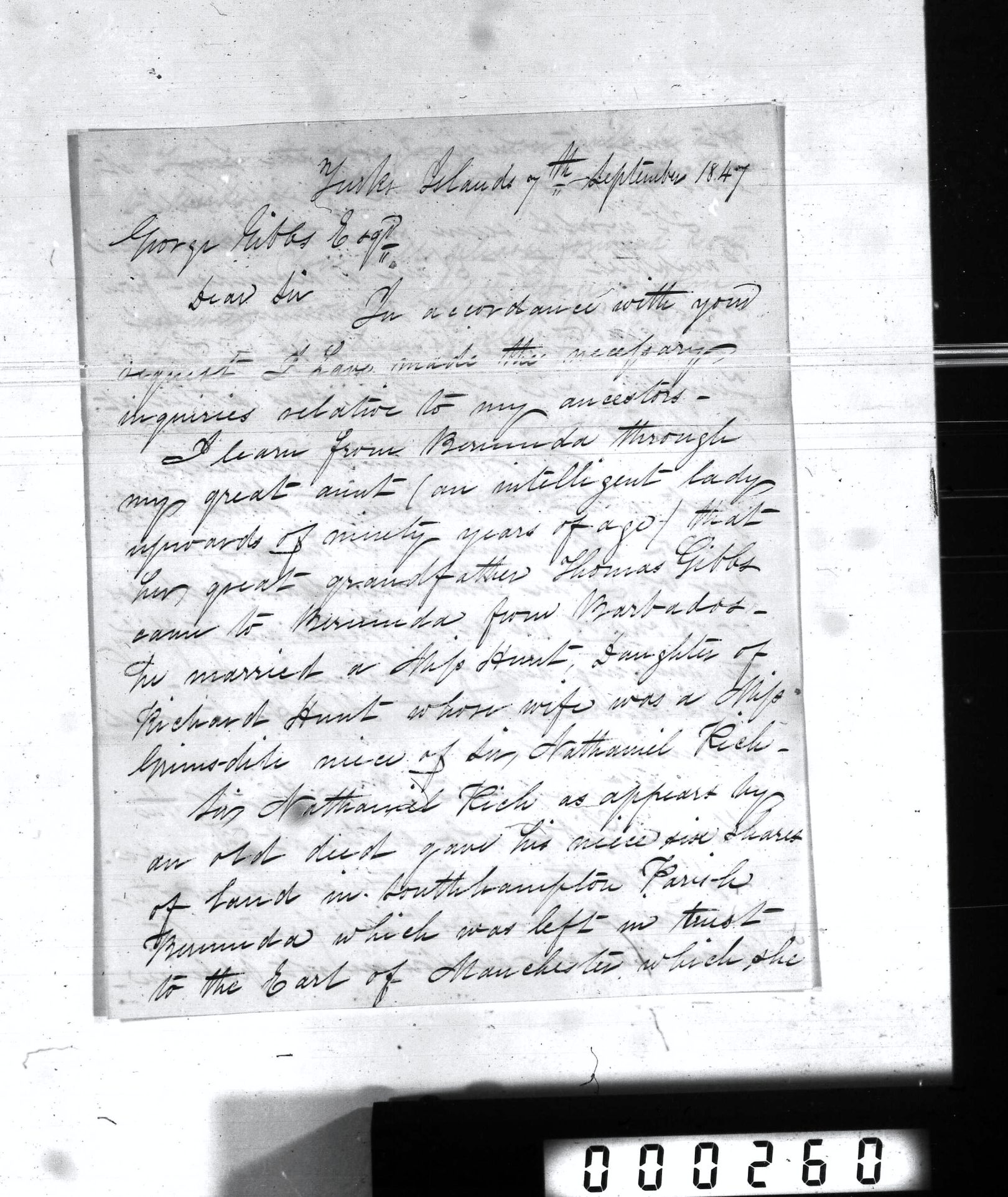
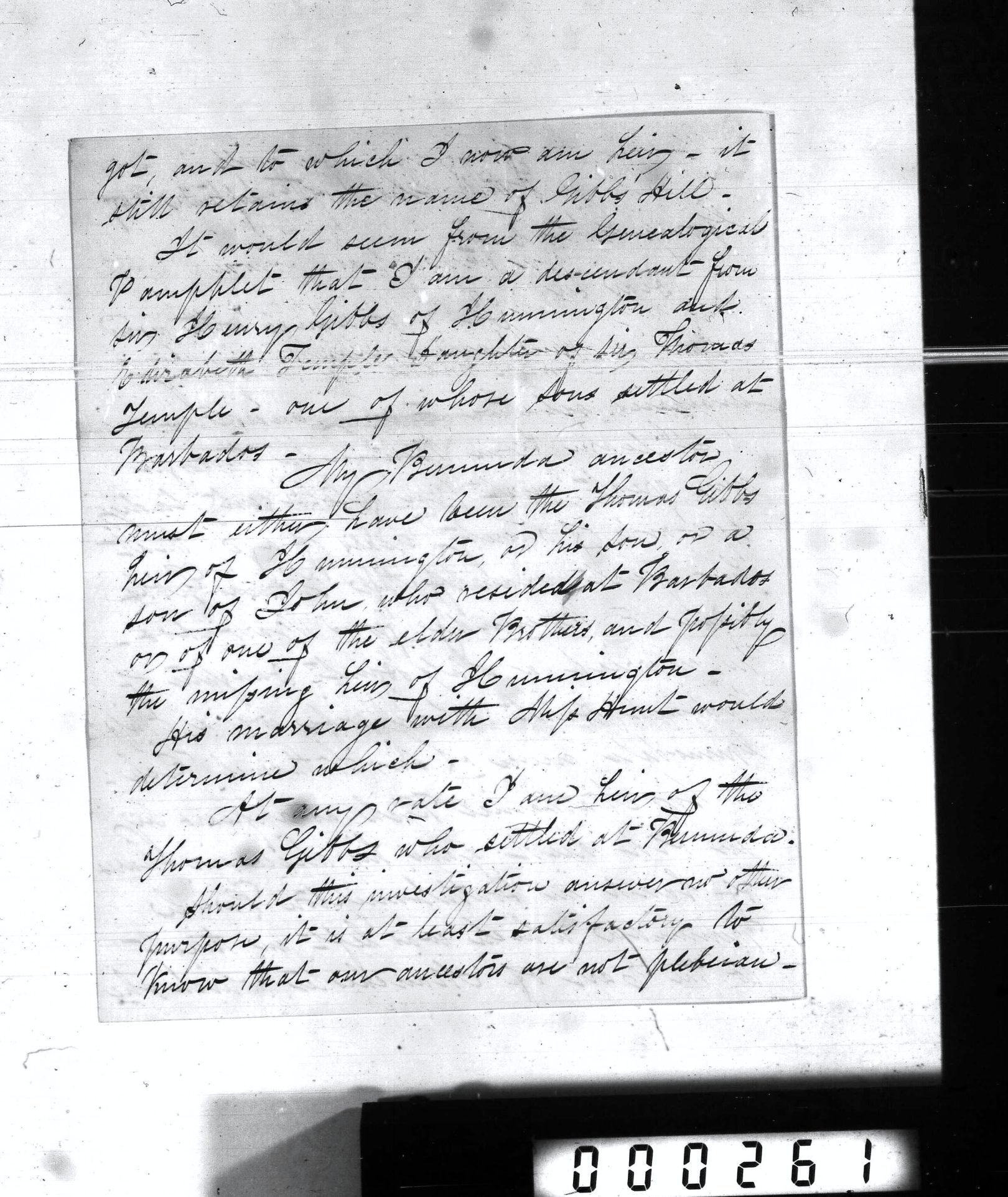
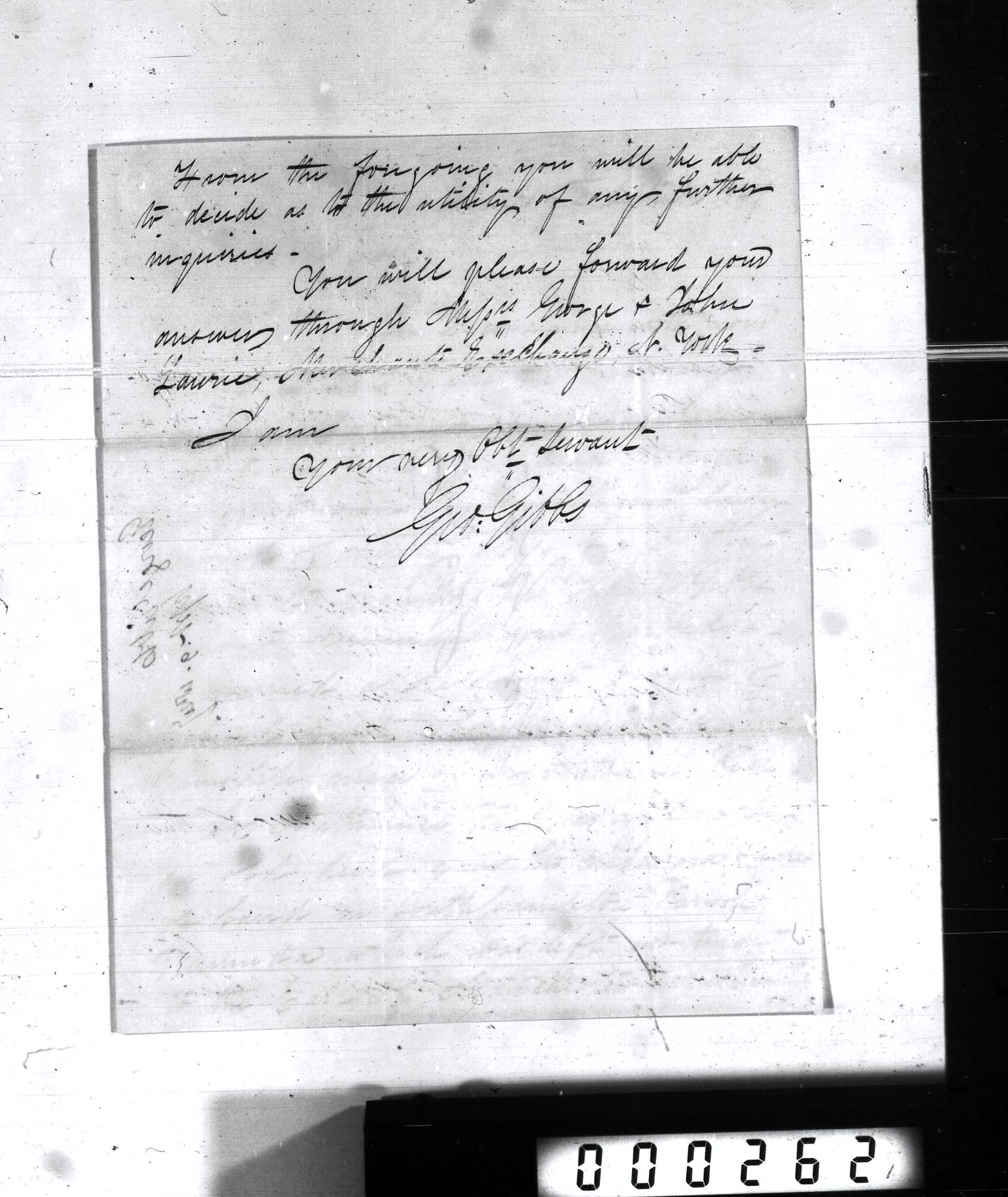
Bermuda ancestry via aged great-aunt: Thomas Gibbs from Barbados, Hunt/Rich connections
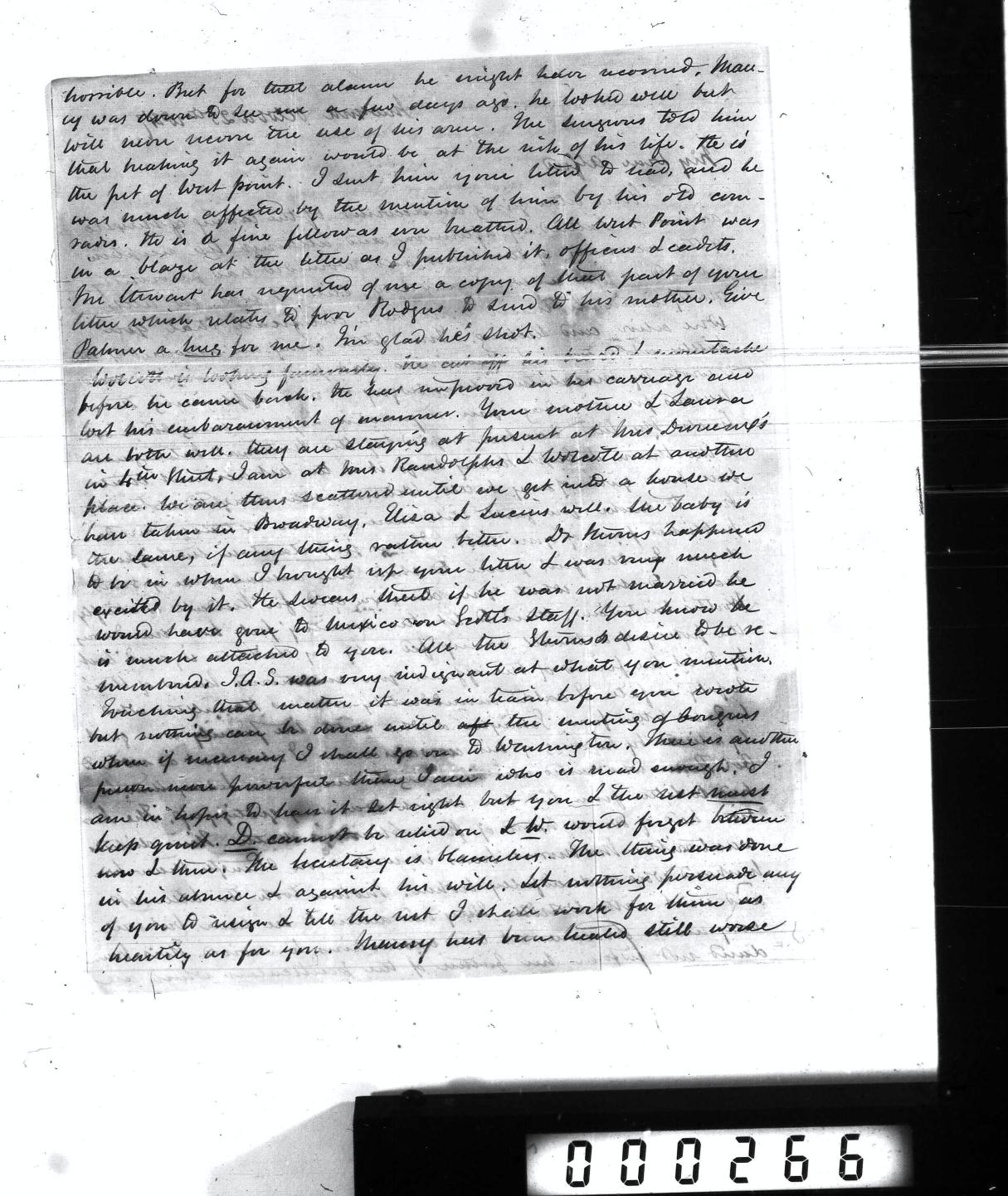
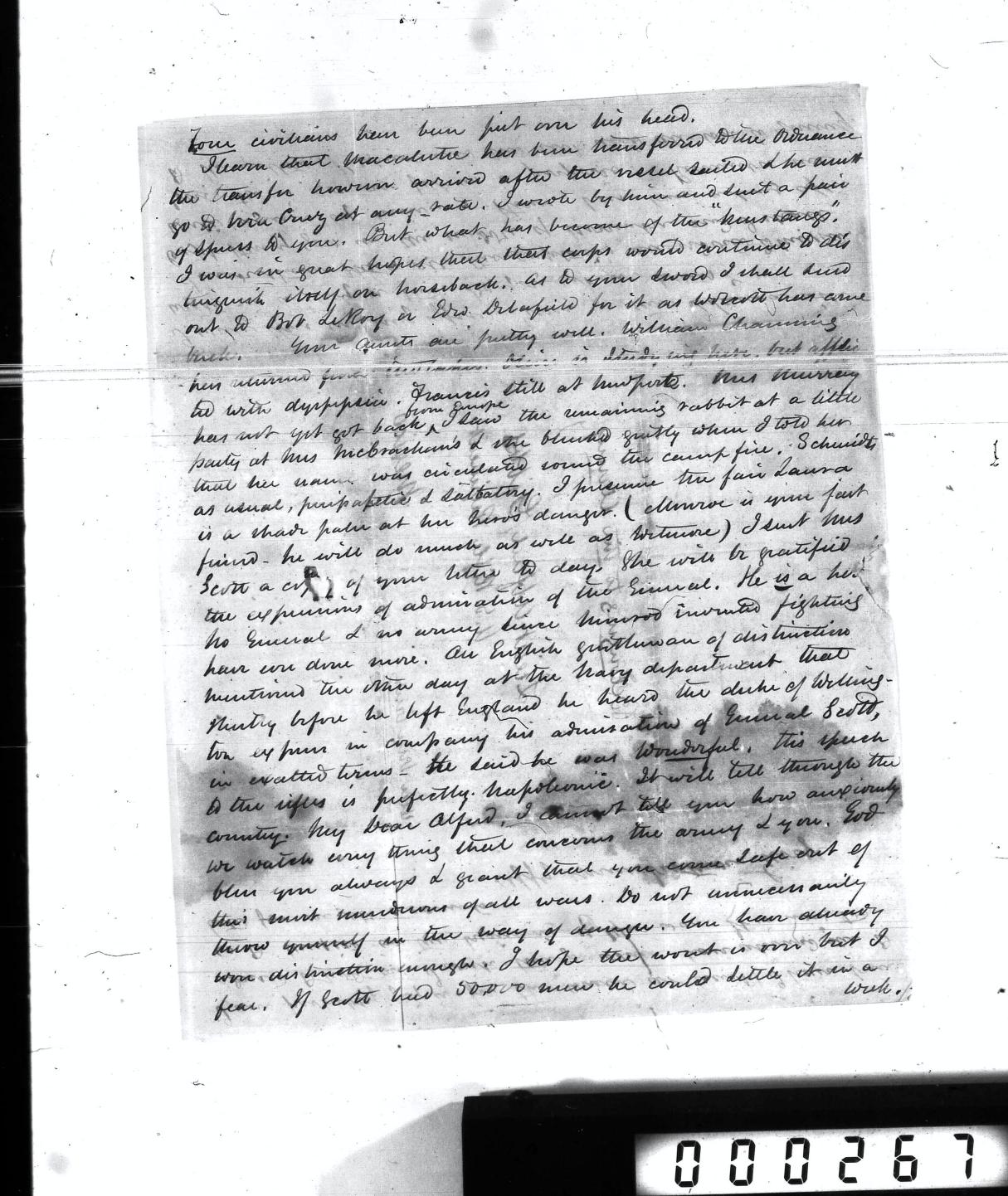
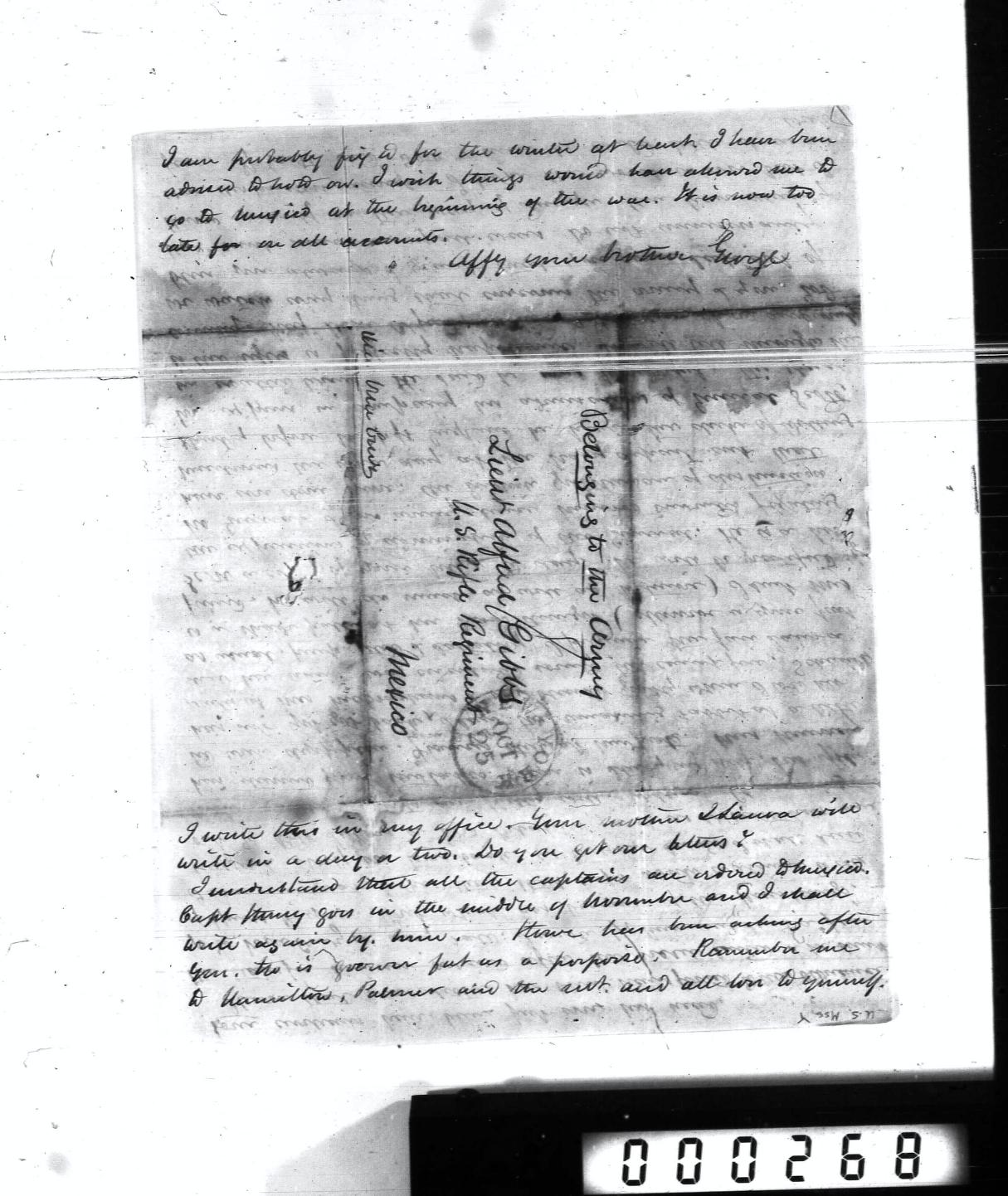
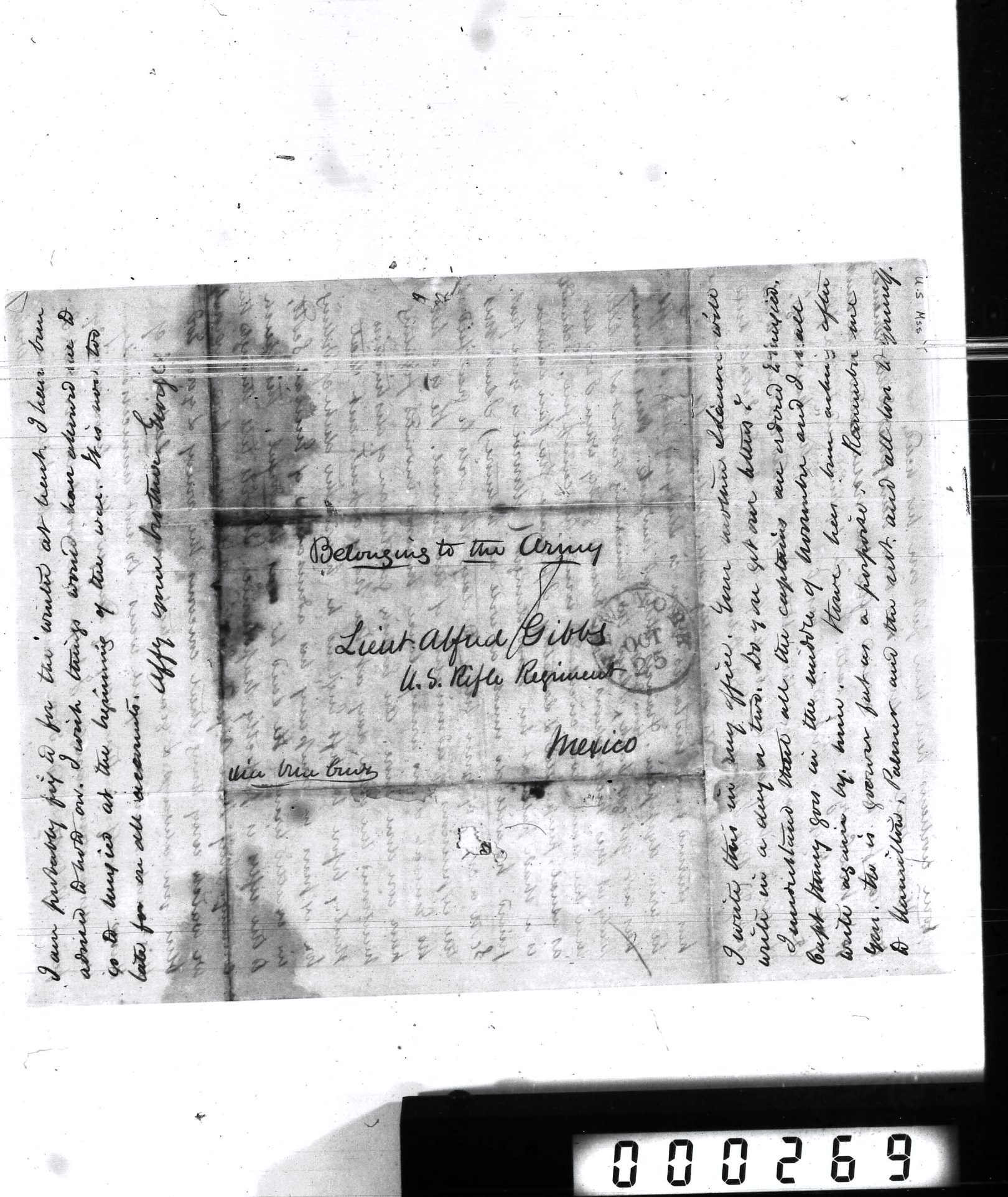
1847 Oct 25
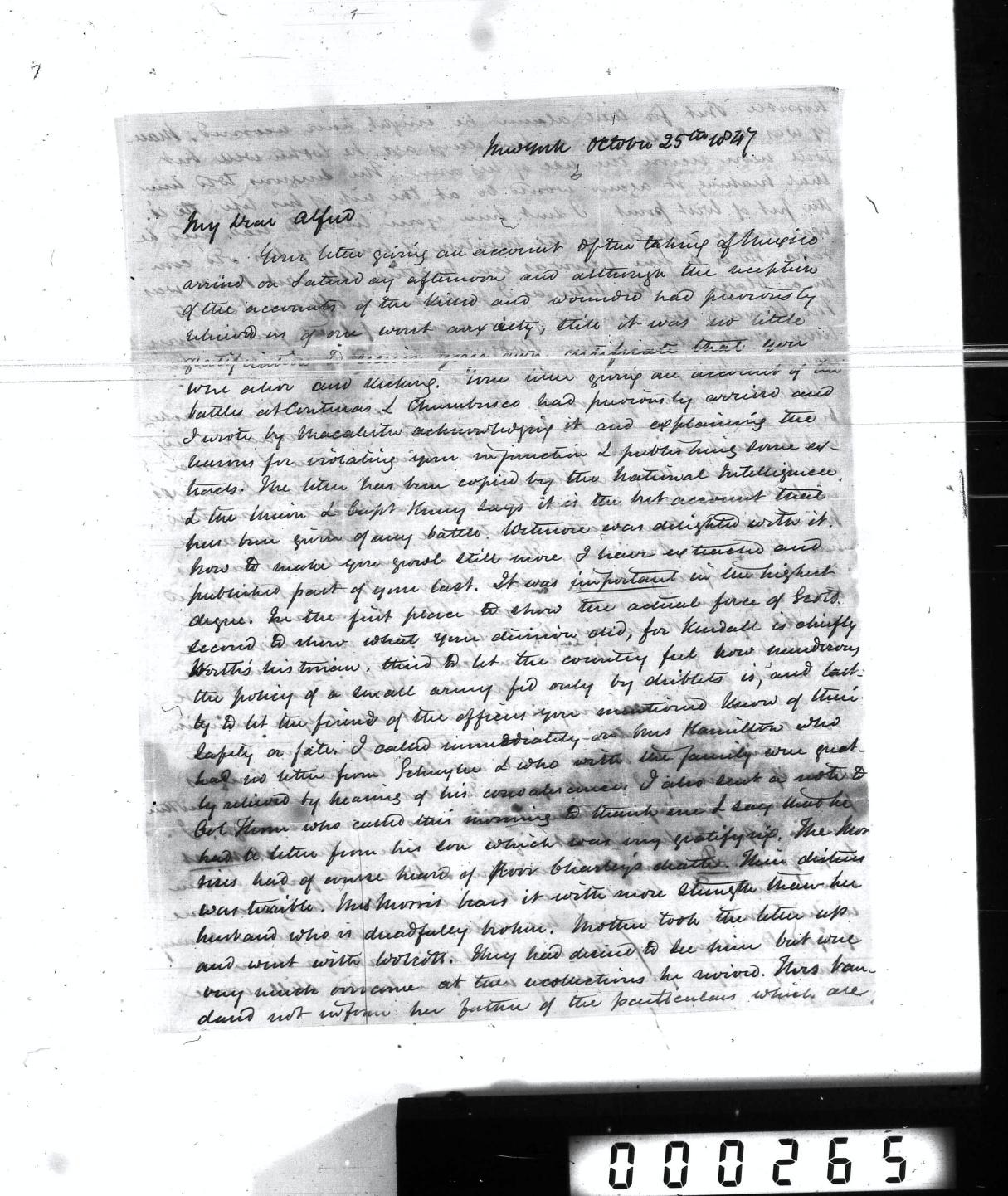
Alfred's Contreras/Churubusco/Mexico City battle accounts published in National Intelligencer; family relieved
(cont.)
refilm of 1322 address panel, "Belonging to the Army," via Vera Cruz
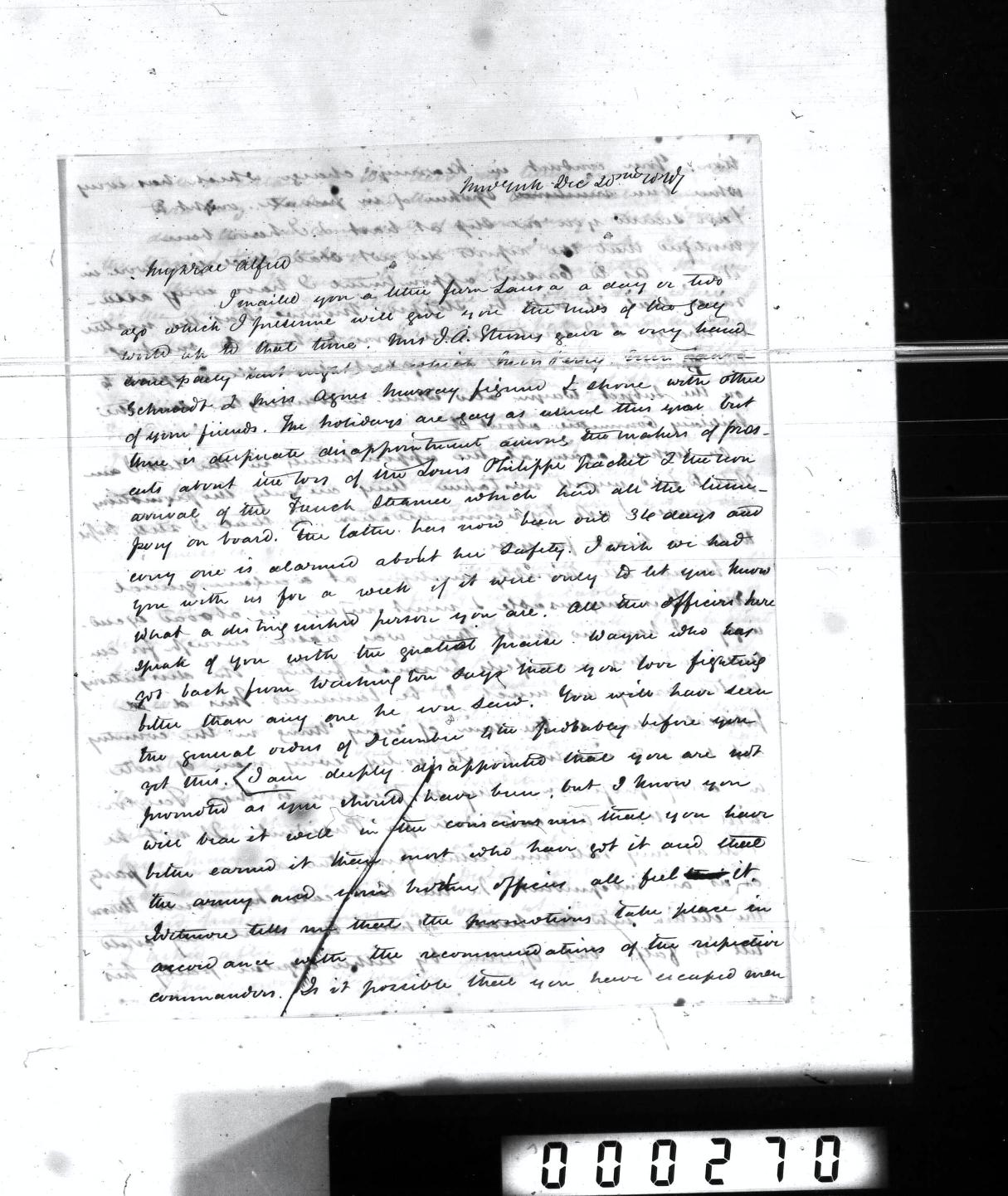
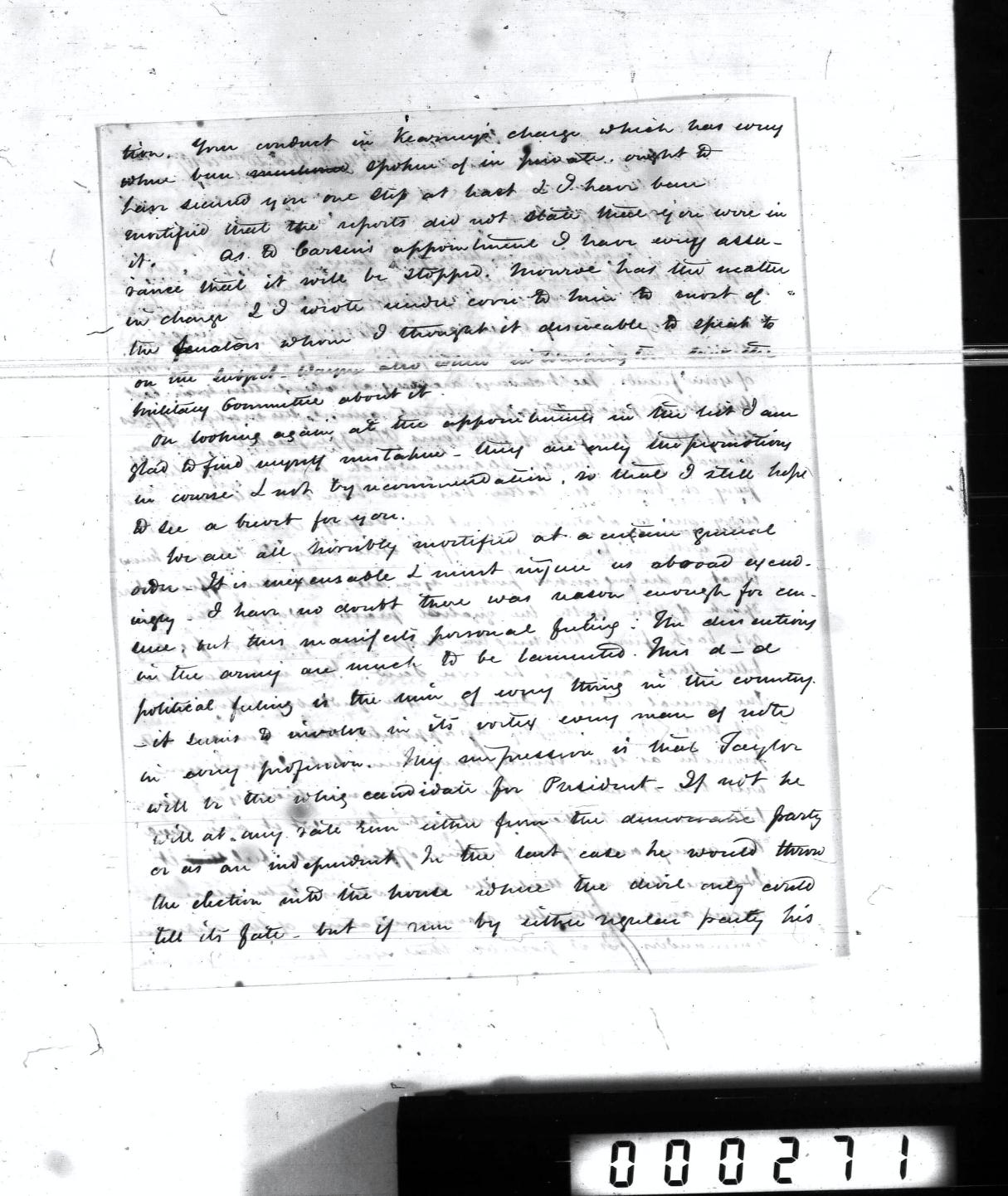
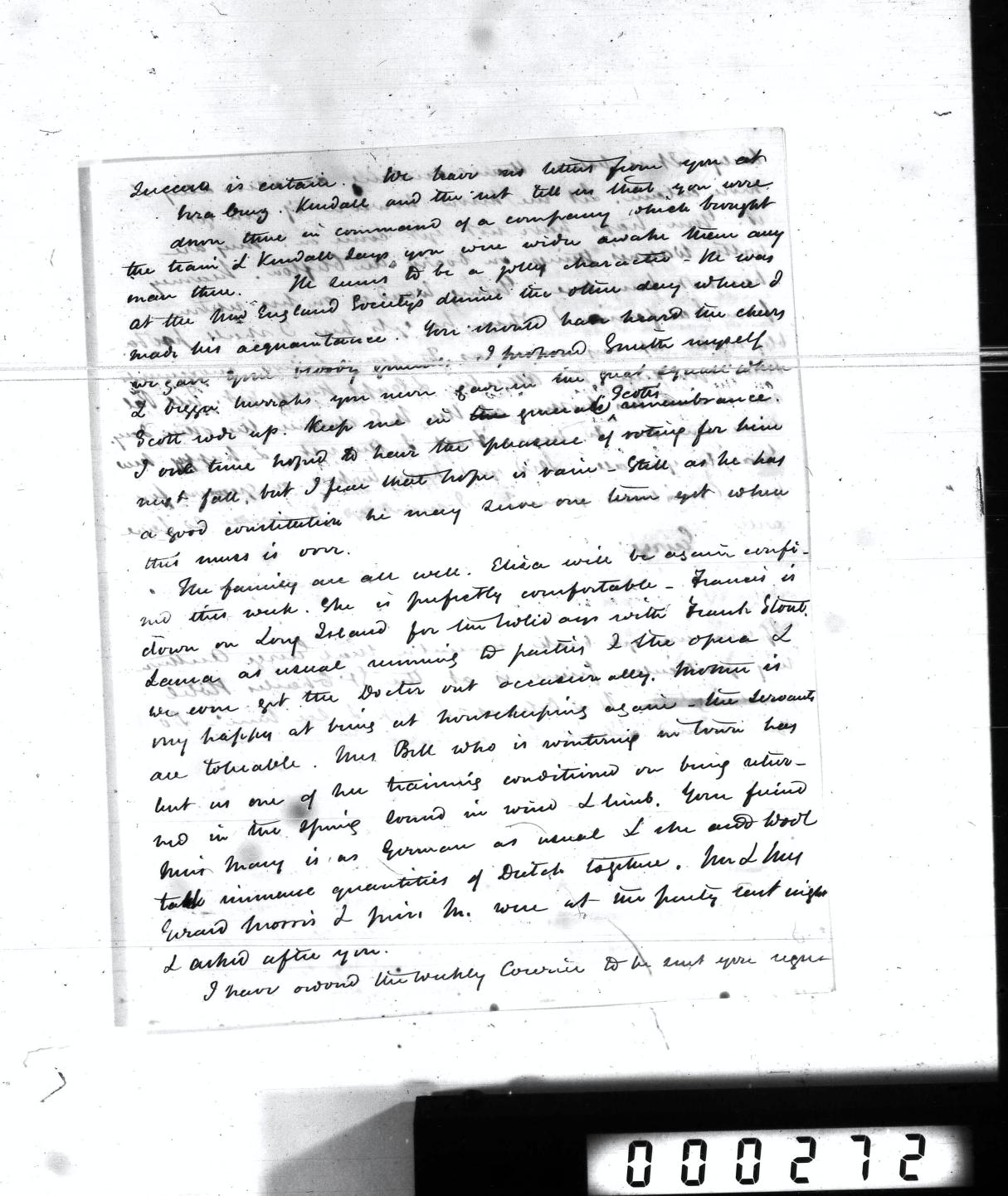
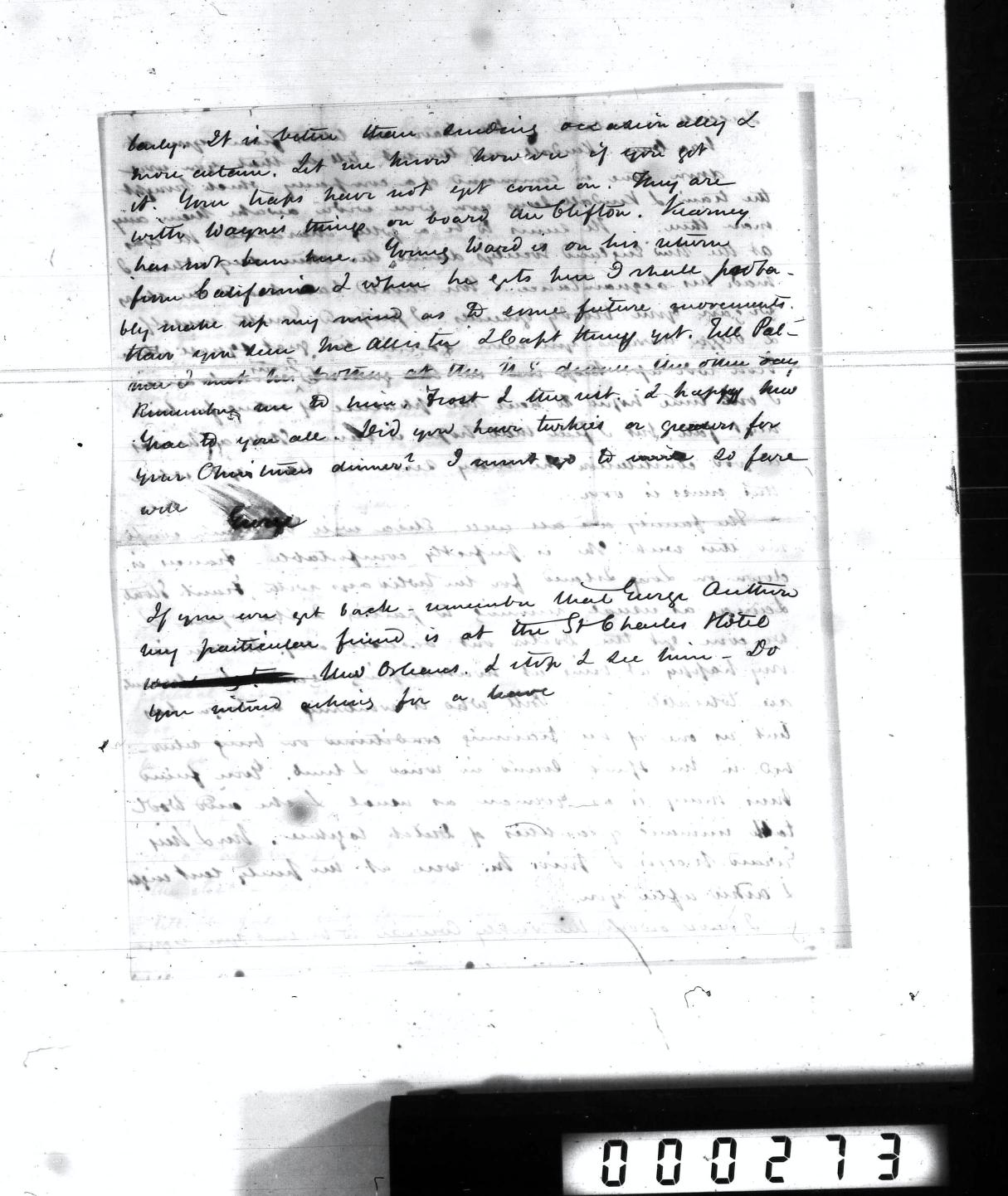
1847 Dec 20
holiday news; officers praise Alfred; deep disappointment he was passed over for promotion
[1847 Nov]
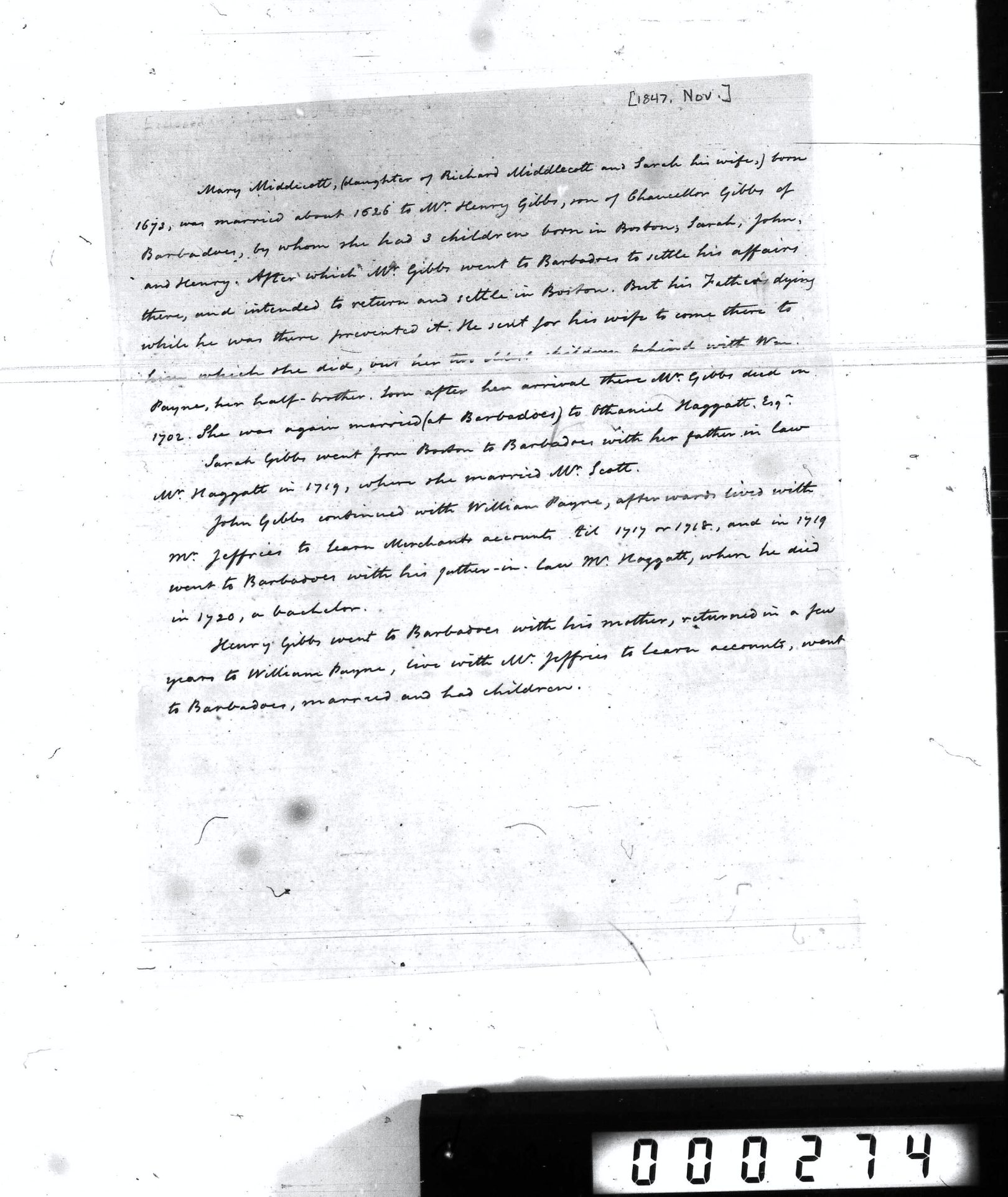
Henry Gibbs of Barbadoes m. Mary Middlecott 1696; Boston-Barbadoes family notes
(cont.)
"Barbadoes Gibbses, memoranda recd from Prof. J.W. Gibbs of New Haven, Nov. 1847"
1848 Jan 4
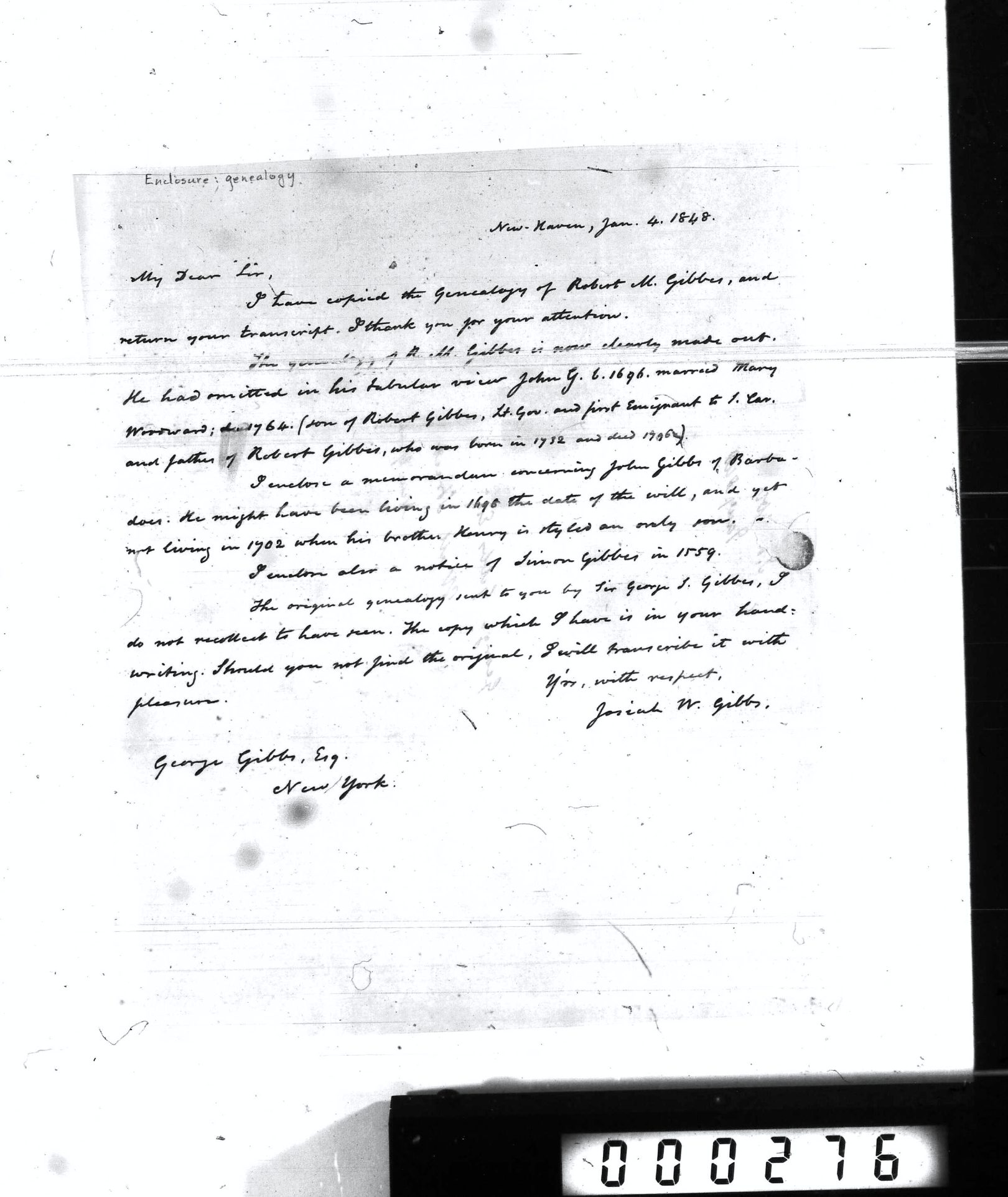
returns transcript; genealogy of Robert M. Gibbes; John Gibbs of Barbadoes memorandum
(cont.)
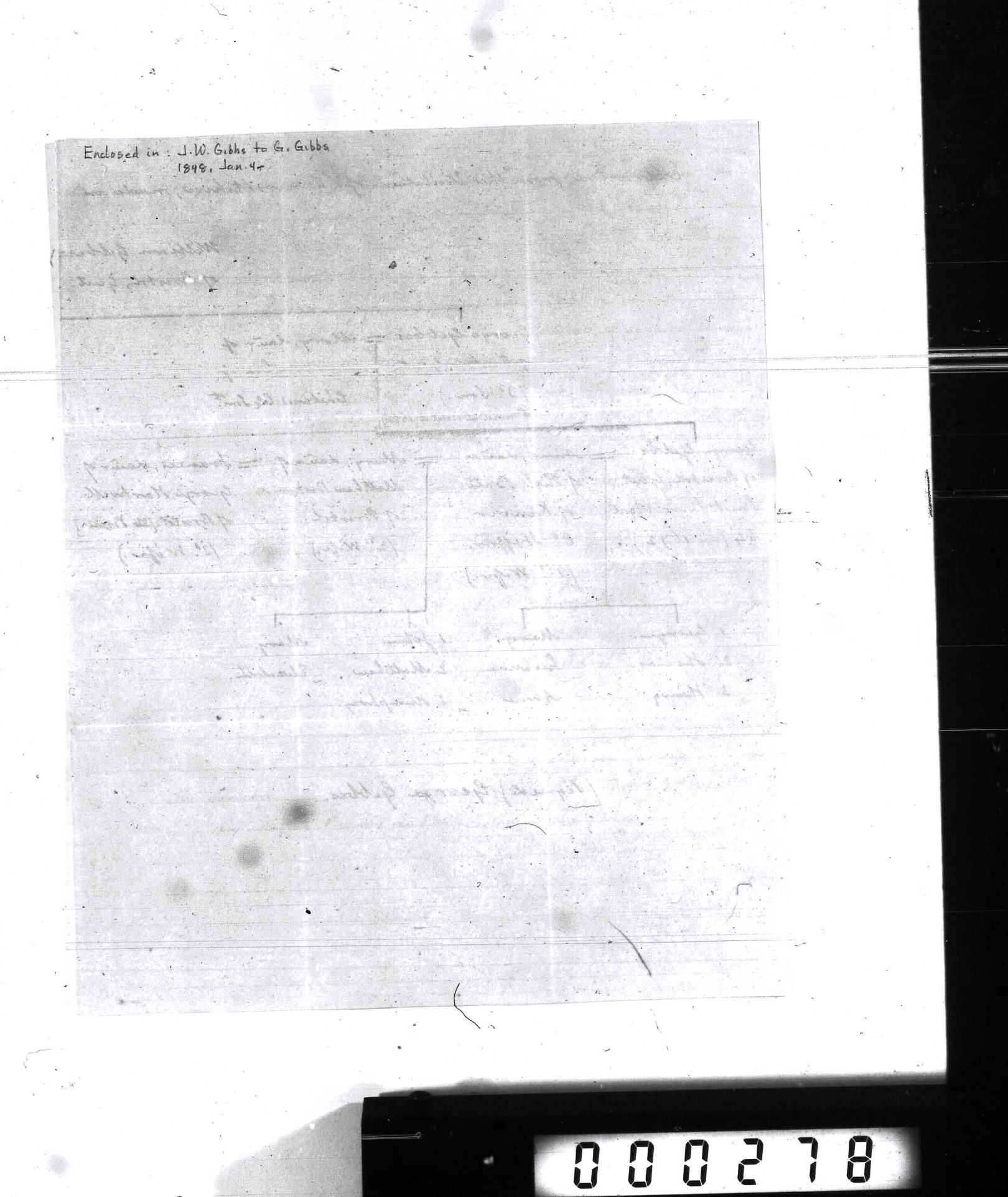
very faint Gibbs family tree enclosed in J.W. Gibbs letter
n.d. [1845 extract]
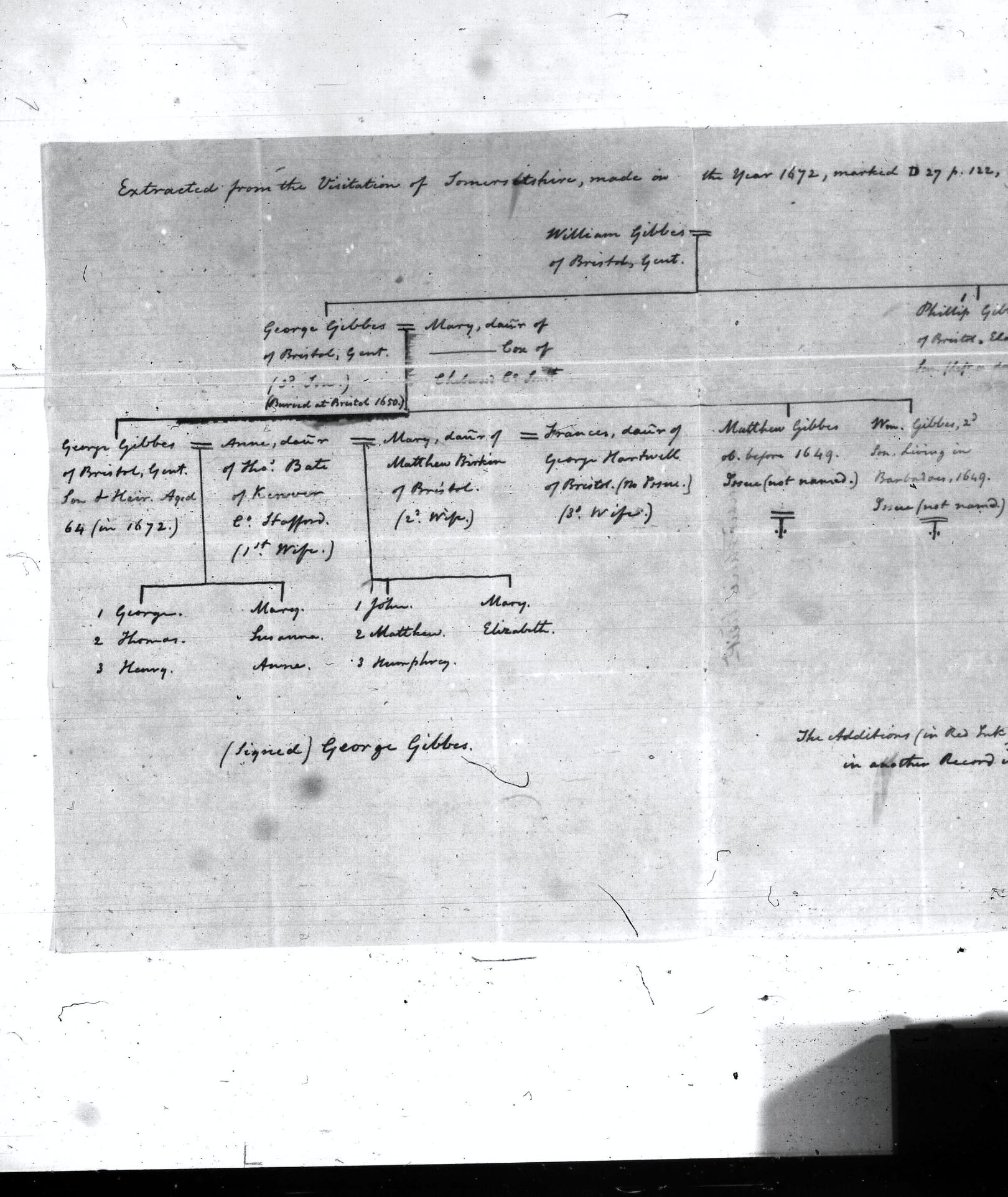
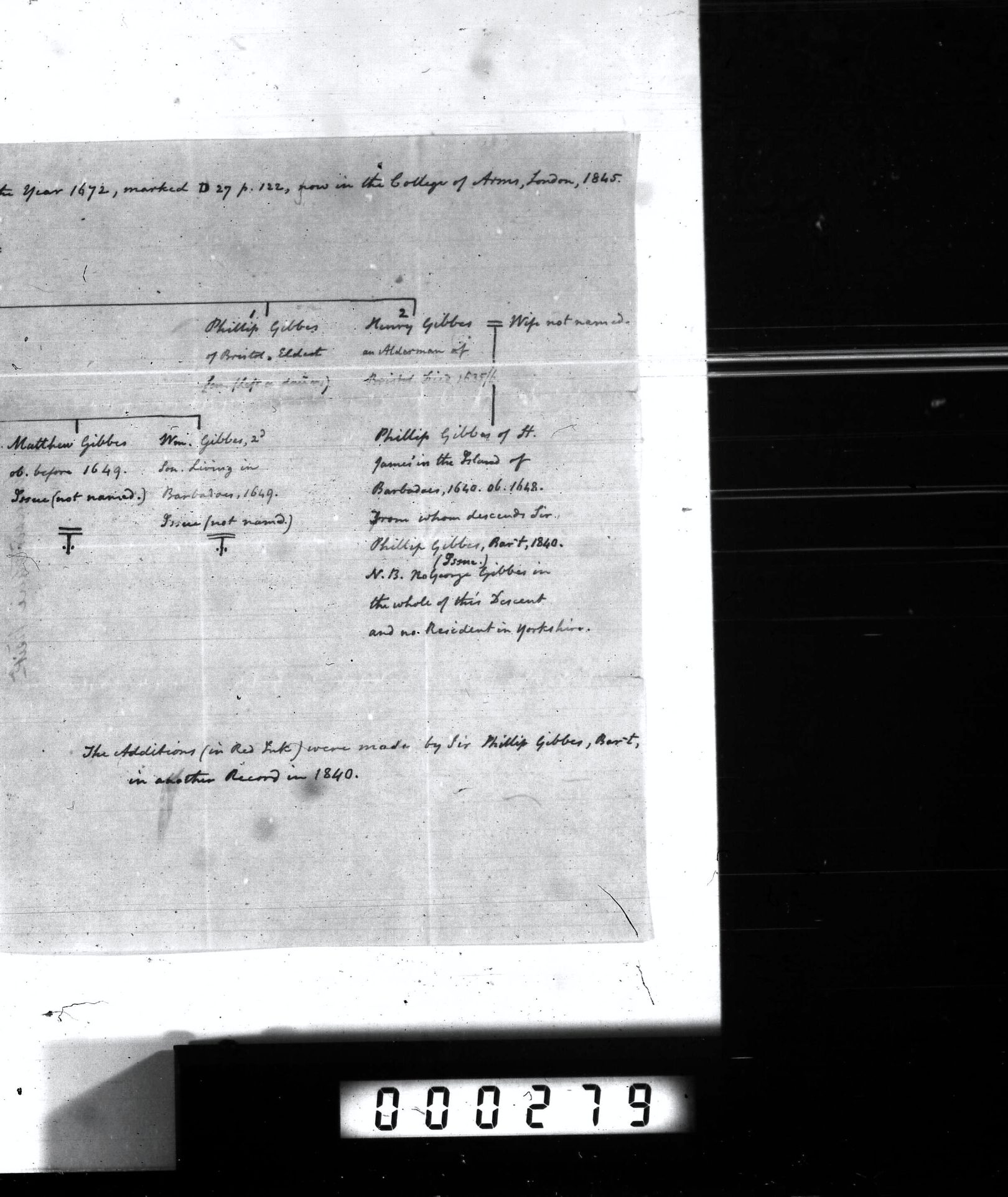
Gibbes of Bristol pedigree from 1672 Somersetshire Visitation, College of Arms
(cont.)
"Somersetshire Visitation" docket, otherwise blank show-through
(cont.)
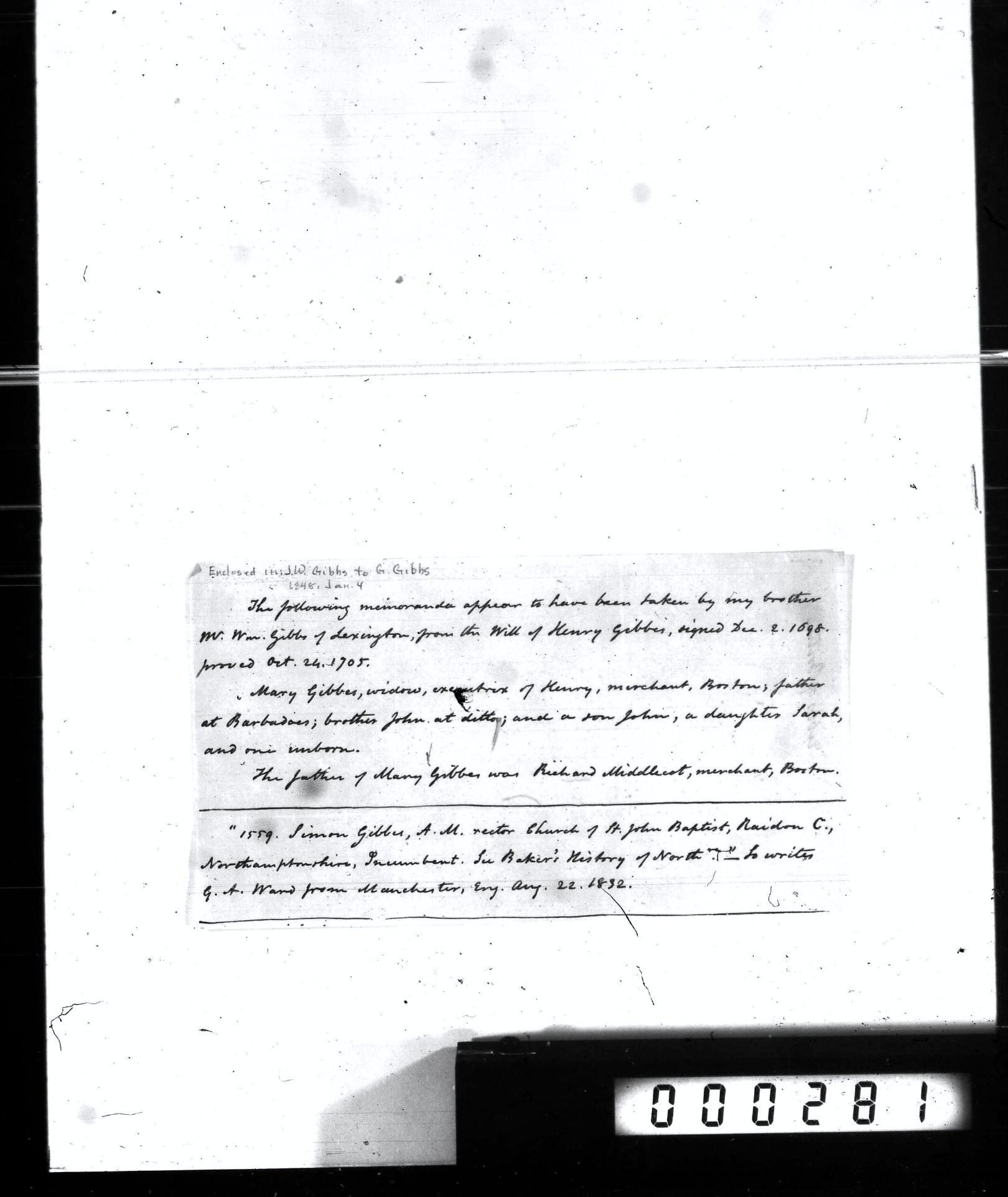
extracts from will of Henry Gibbes 1698; Simon Gibbes 1559 rector note
1847 Dec 14
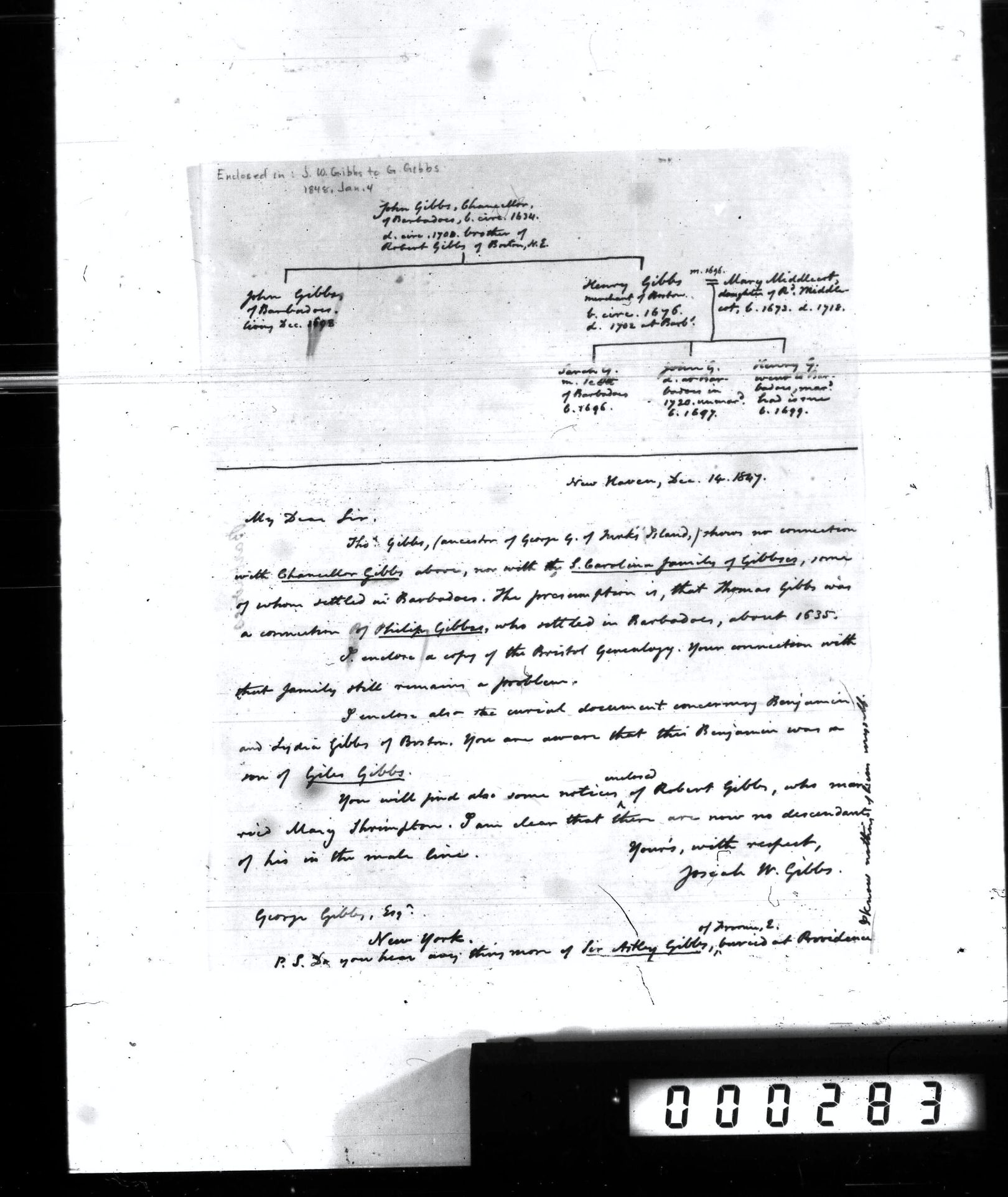
pedigree of Chancellor Gibbs of Barbadoes; no S. Carolina link; Bristol genealogy enclosed
1848 Jan 15
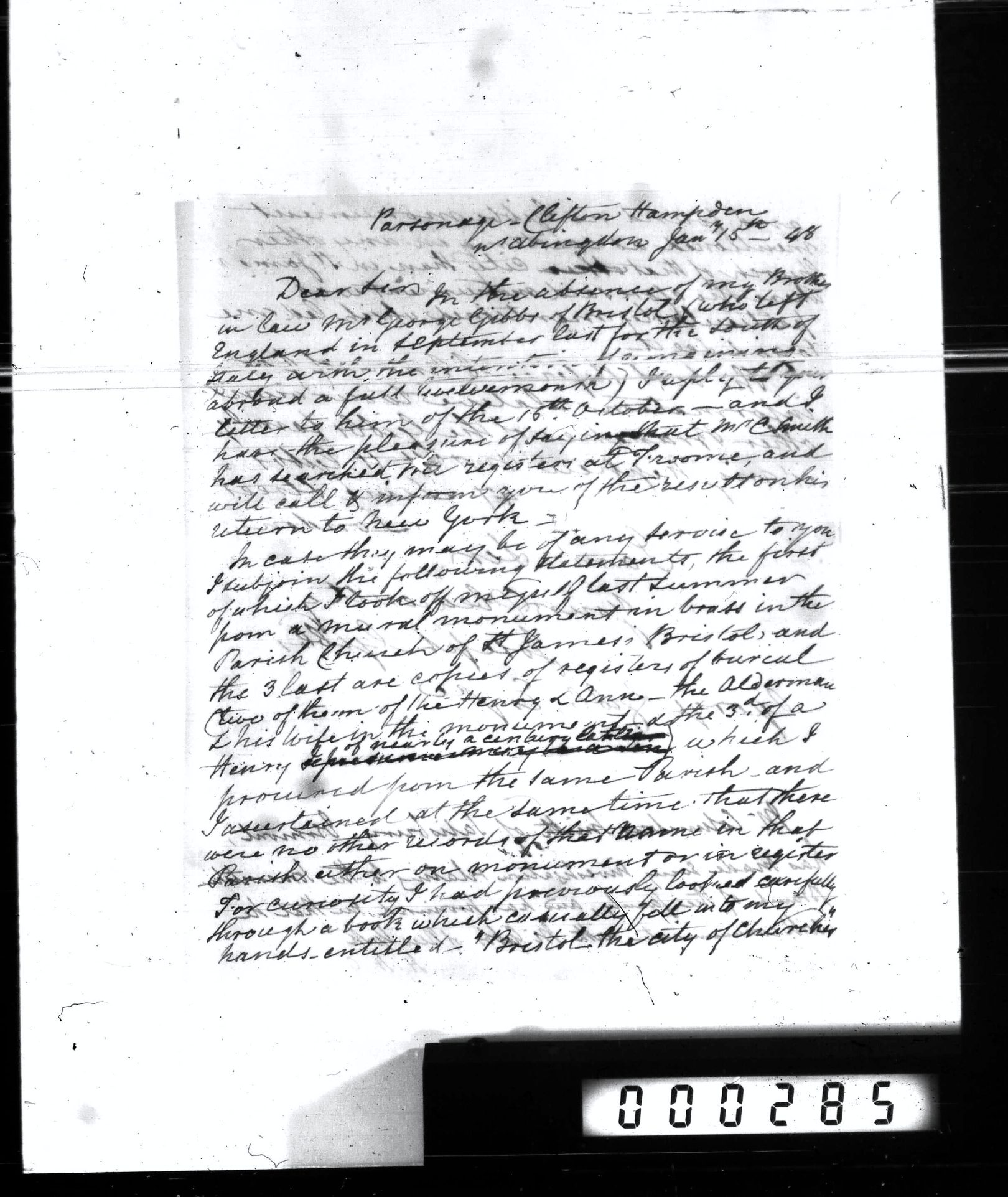
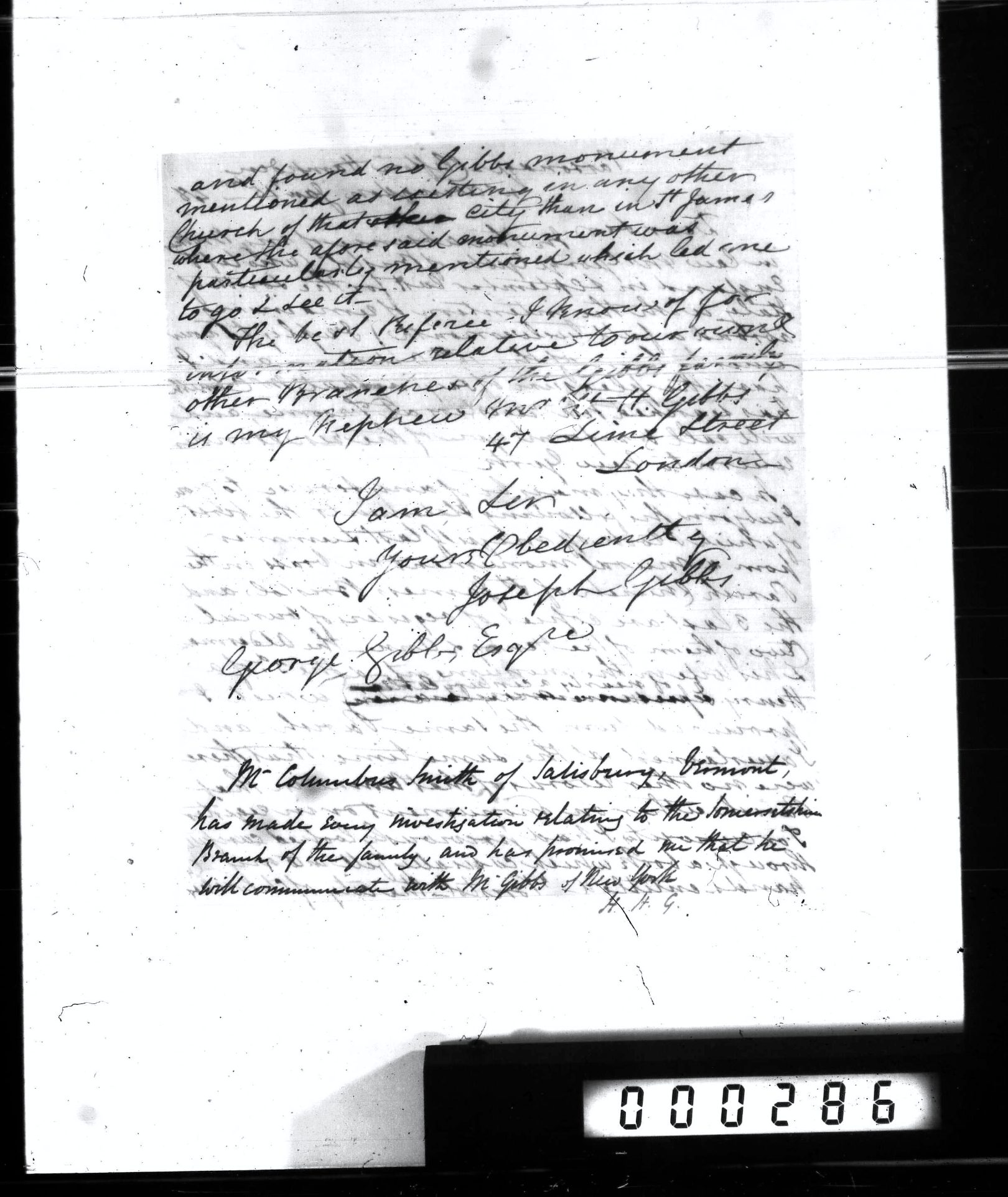
Bristol St James church brass and Gibbes burial registers; Frome register searched
1848 Feb 8
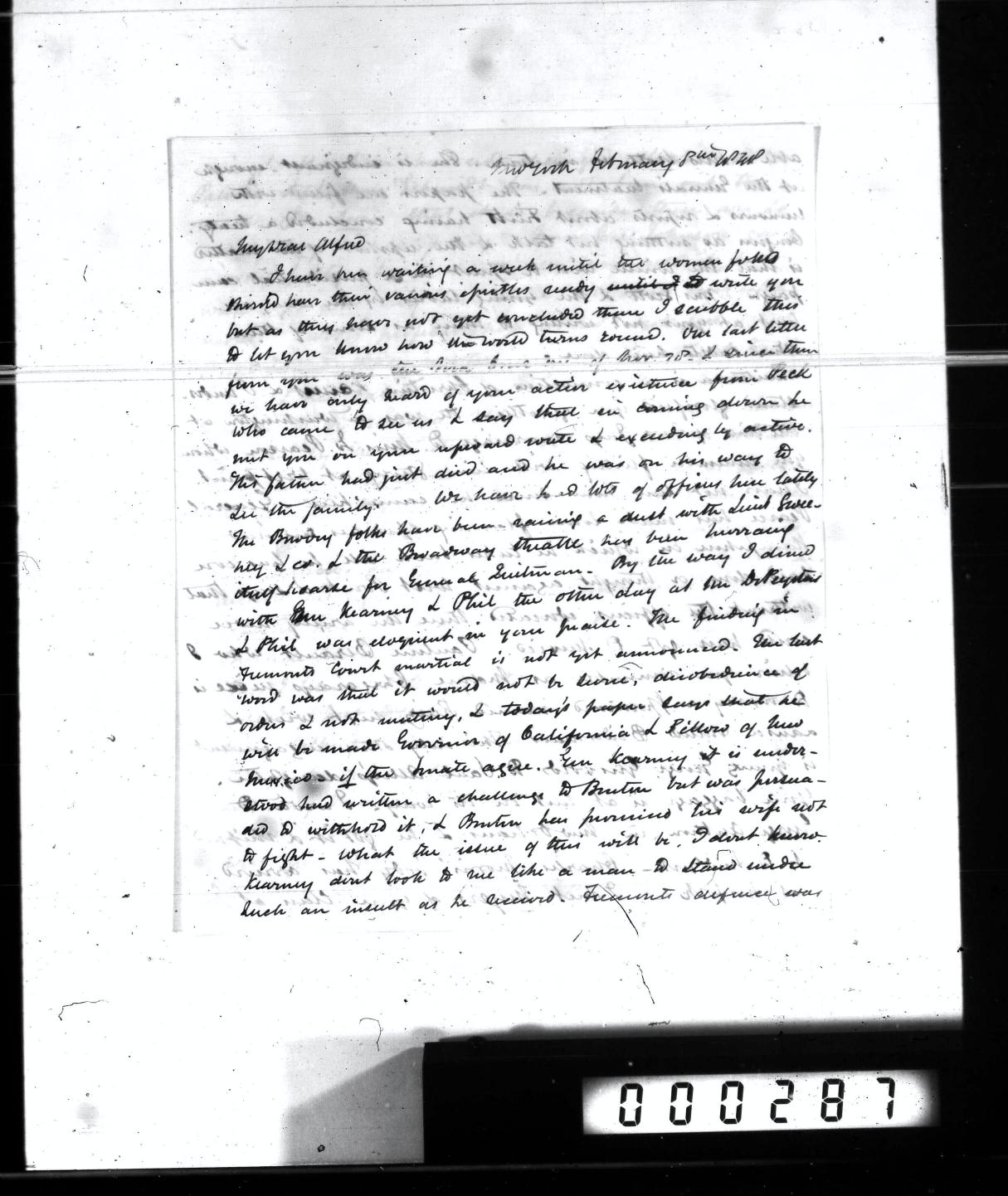
Fremont court-martial verdict awaited; Kearny's withheld challenge to Benton; Quitman feted
New York February 8th 1848
My dear Alfred
My dear Alfred
I have been waiting a week until the women folks should have their various epistles ready [struck through] to write you but as they have not yet concluded them I scribble this to let you know how the world turns round. Our last letter from you was [several words struck through] of Nov 7th. & since then we have only heard of your actual(?) existence from Peck who came to see us & says that in coming down he met you on your upward route & exceedingly active. His father had just died and he was on his way to see the family.
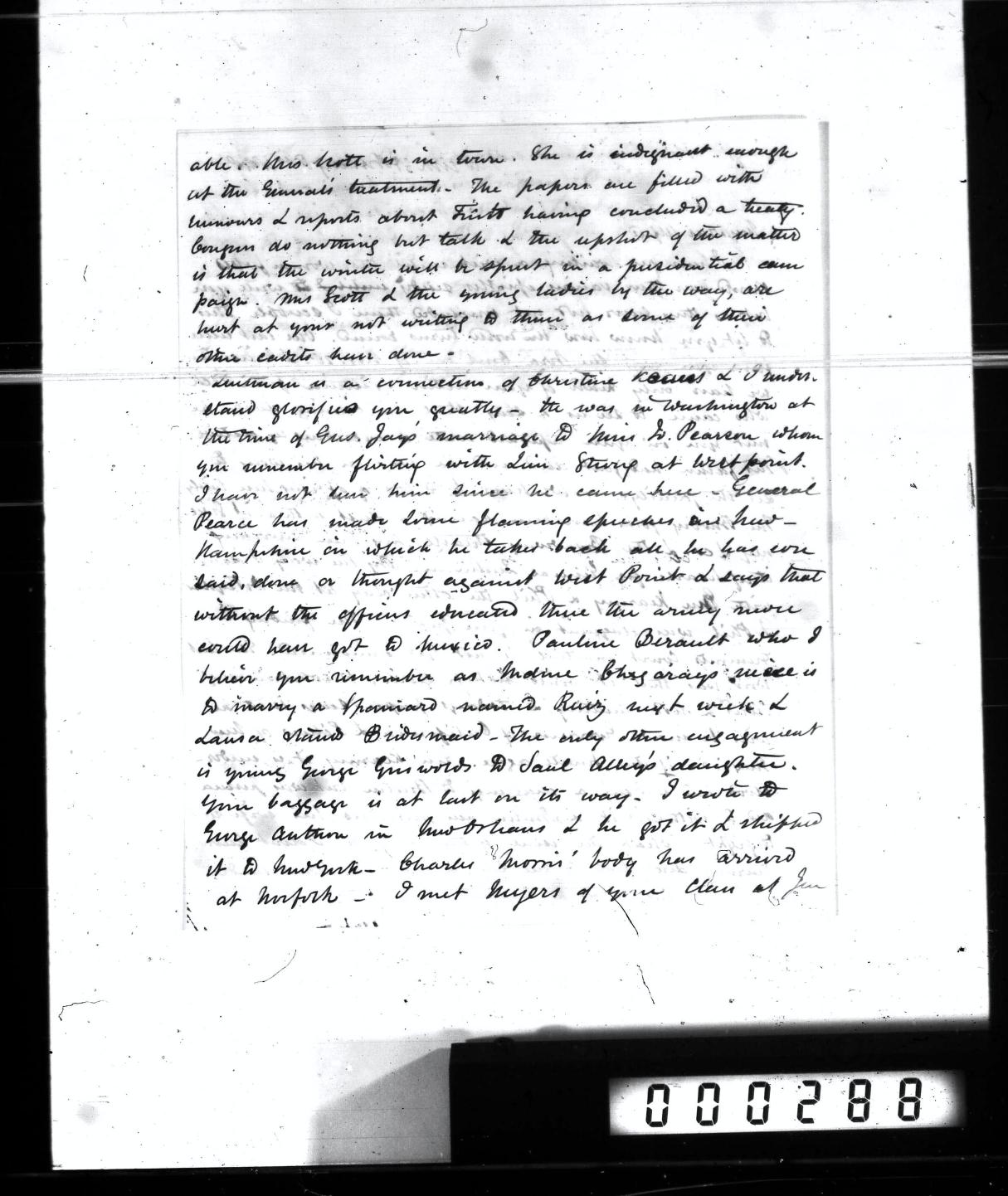
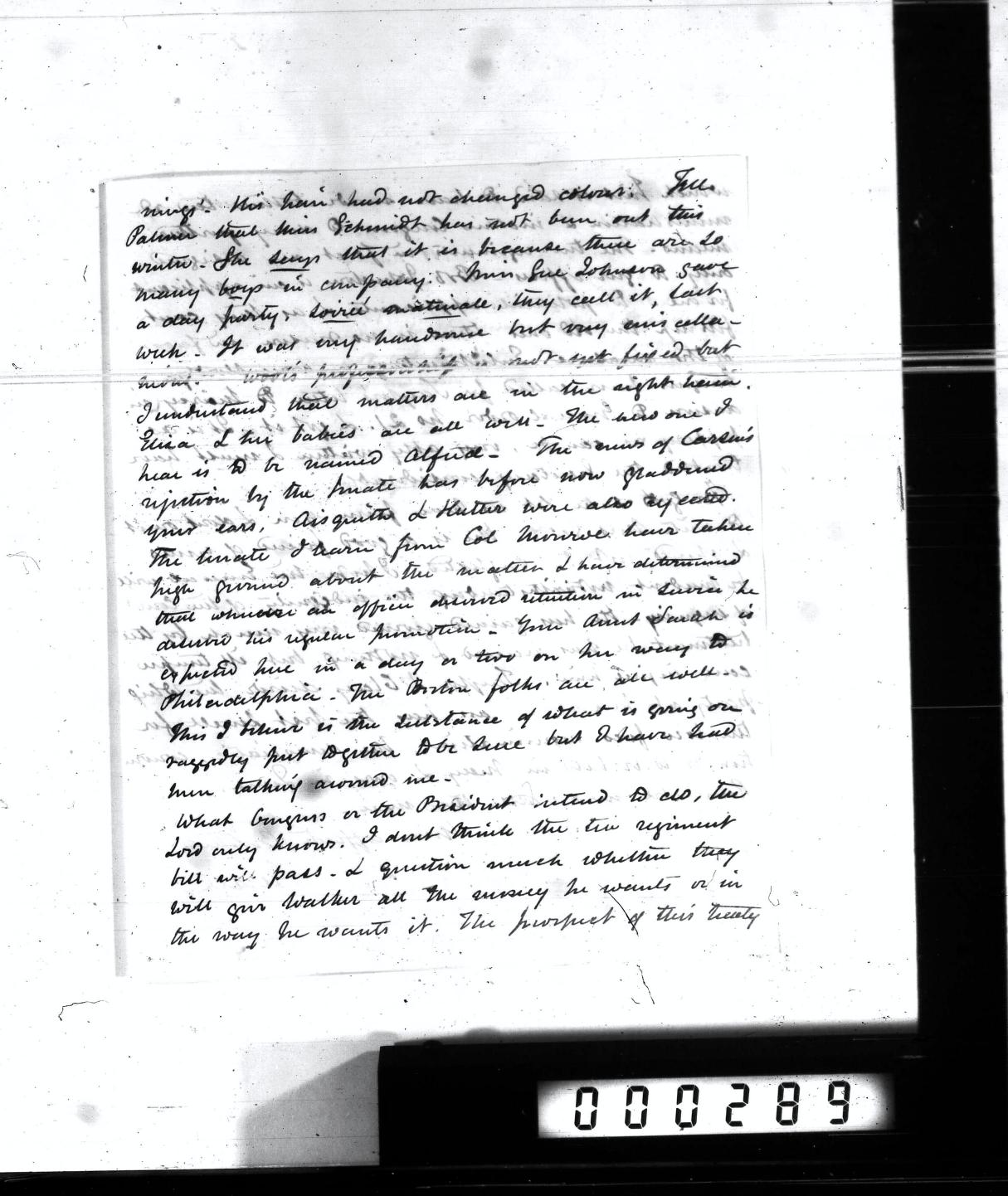
We have had lots of officers here lately. The Bowery folks have been raising a dust with Lieut Sweeney & co. & the Broadway theatre has been hurraing itself hoarse for General Quitman. By the way I dined with Gen Kearny & Phil the other day at Mr DePeysters & Phil was eloquent in your praise. The finding in Fremonts Court martial is not yet announced. The last word was that it would not be severe; disobedience of orders & not mutiny, & todays paper says that he will be made Governor of California & Pillow of New Mexico if the Senate agree. Gen Kearny it is understood had written a challenge to Benton but was persuaded to withhold it, & Benton has promised his wife not to fight – What the issue of this will be, I dont know. Kearny dont look to me like a man to stand under such an insult as he received. Fremonts defence was able. Mrs Scott is in town. She is indignant enough at the Generals treatment – The papers are filled with rumours & reports about Trist having concluded a treaty. Congress do nothing but talk & the upshot of the matter is that the winter will be spent in a presidential campaign. Mrs Scott & the young ladies by the way, are hurt at your not writing to them as some of their other cadets have done –
Quitman is a connection of Christine [one word blotted and struck through, illegible] & I understand glorifies you greatly – He was in Washington at the time of Gus. Jays marriage to Miss S.(?) Pearson whom you remember flirting with Lieu Sturgis at West point. I have not seen him since he came here – General Pearce has made some flaming speeches in New Hampshire in which he takes back all he has ever said, done or thought against West Point & says that without the officers educated there the army never could have got to Mexico. Pauline Berault who I believe you remember as Madme Chegarays niece is to marry a Spaniard named Ruiz next week & Laura stands Bridesmaid – The only other engagement is young George Griswolds to Saul Alleys daughter. Your baggage is at last on its way – I wrote to George Anthon in New Orleans & he got it & shipped it to New York – Charles Morris' body has arrived at Norfolk – I met Meyers of your class at Jennings(?) – His hair had not changed colors. Tell Palmer that Miss Schmidt has not been out this winter – She says that it is because there are so many boys in company. Mrs Sue Johnson gave a day party, soiree matinale, they call it, last week – It was very handsome but very miscellaneous. Wools promotion is not yet fixed but I understand that matters are in the right hands. Eliza & her babies are all well – The new one I hear is to be named Alfred – The news of Carsons rejection by the Senate has before now gladdened your ears, Aisquith & Hunter were also rejected. The Senate I learn from Col Monroe have taken high ground about the matter & have determined that whenever an officer deserved retention in service he deserved his regular promotion – Your Aunt Sarah is expected here in a day or two on her way to Philadelphia. The Boston folks are all well – This I believe is the substance of what is going on raggedly put together to be sure but I have had men talking around me –
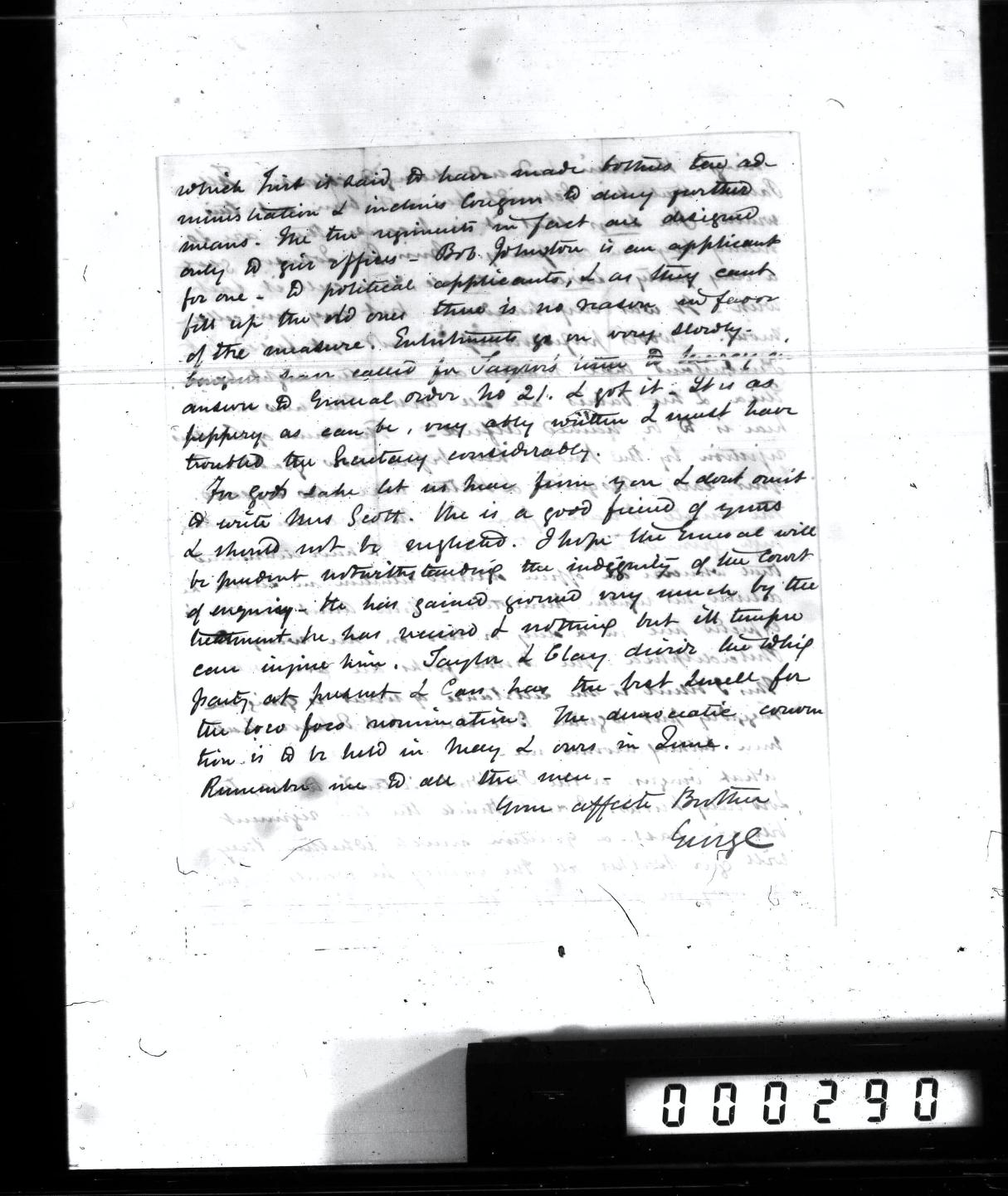
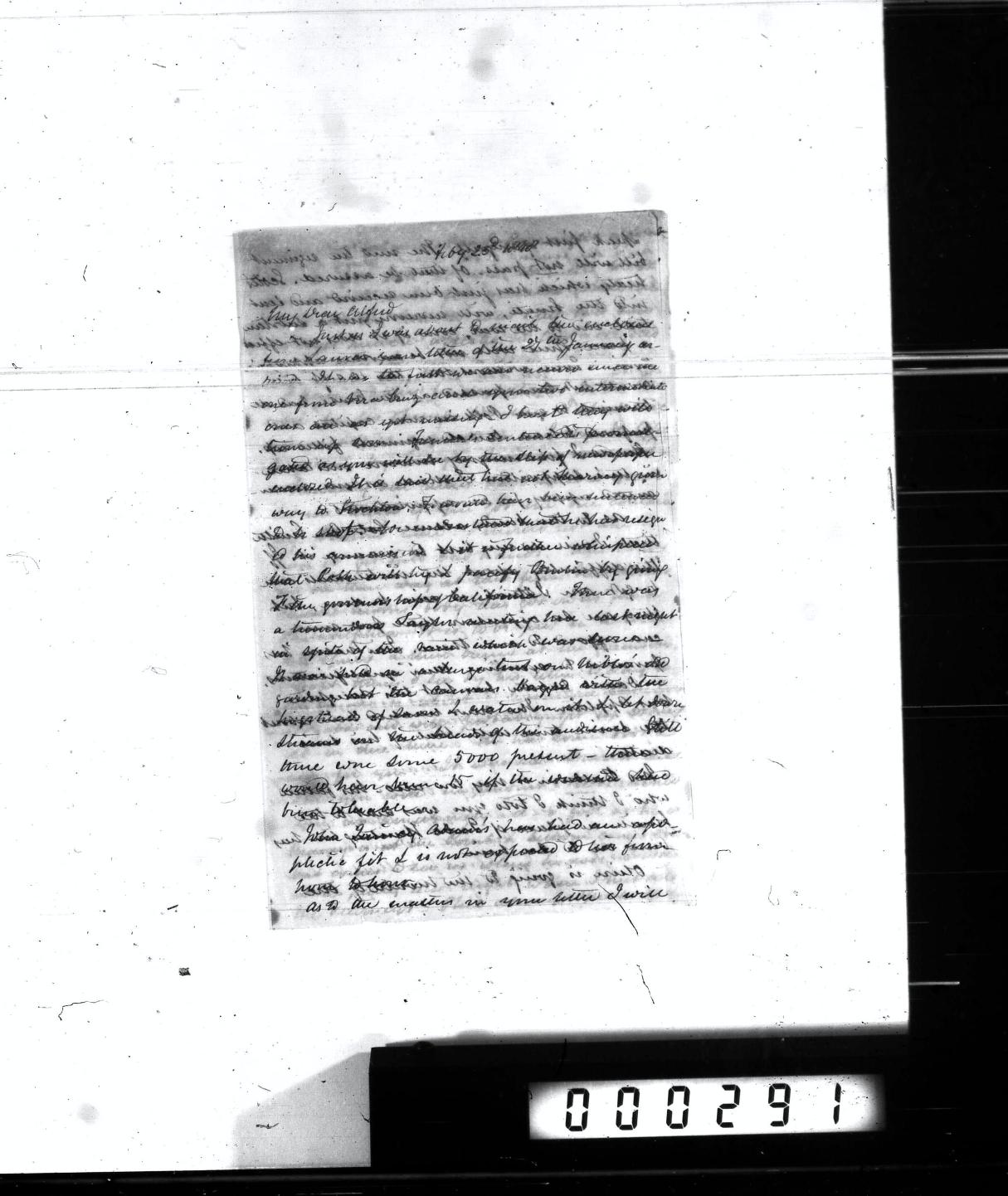
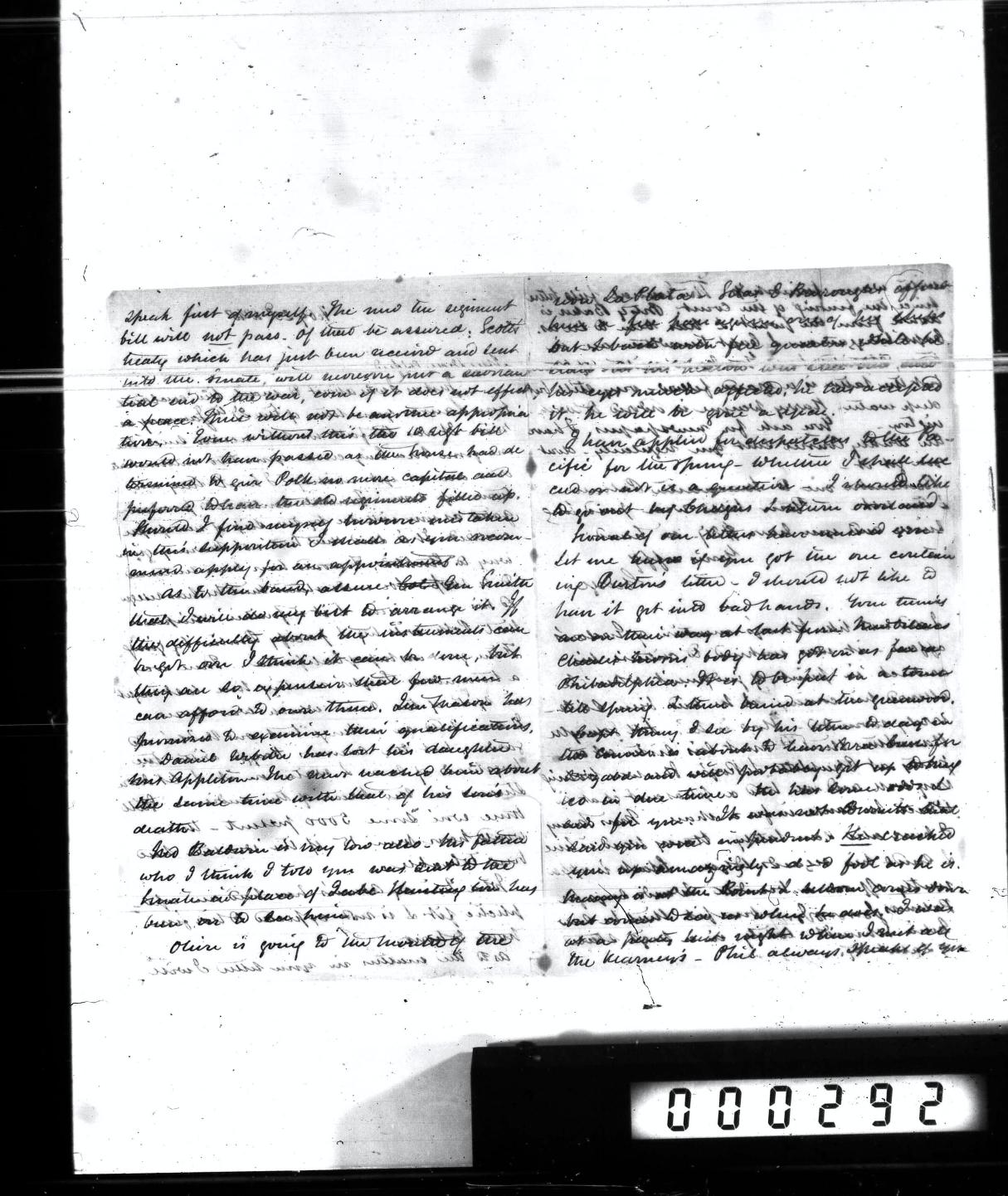
What Congress or the President intend to do, the Lord only knows. I dont think the ten regiment bill will pass – & question much whether they will give Walker all the money he wants or in the way he wants it. The prospect of this treaty which Trist is said to have made bothers the administration & inclines Congress to deny further means. The ten regiments in fact are designed only to give offices – Bob Johnston is an applicant for one – to political applicants, & as they cant fill up the old ones there is no reason in favor of the measure. Enlistments go on very slowly – Congress have called for Taylors letter in answer to General order No 21. & got it – It is as peppery as can be, very ably written & must have troubled the Secretary considerably.
For Gods sake let us hear from you & dont omit to write Mrs Scott. She is a good friend of yours & should not be neglected. I hope the General will be prudent notwithstanding the indignity of the court of enquiry – He has gained ground very much by the treatment he has received & nothing but ill temper can injure him. Taylor & Clay divide the whig party at present & Cass has the best show(?) for the loco foco nomination. The democratic convention is to be held in May & ours in June.
Remember me to all the men –
Your affecte Brother
George
Four consecutive leaves of a single letter; the microfilm target numbers on the frames run 287, 288, 289, 290. The sheets are thin and there is heavy show-through of the writing from the reverse of each leaf, which crosses the lines in the film; two horizontal film scratches run across frames 1342, 1343 and 1345. The word before 'existence' on the first leaf is written over and is read here as 'actual' with reservation. On the second leaf the surname following 'Christine' has been blotted and struck through and cannot be read. A catchword breaks 'Jen-/nings' across frames 1343 and 1344. No wrapper or address panel was filmed with the letter.
1848 Feb 25
treaty and peace prospects; huge Taylor meeting; whisper Polk to give Benton California governorship
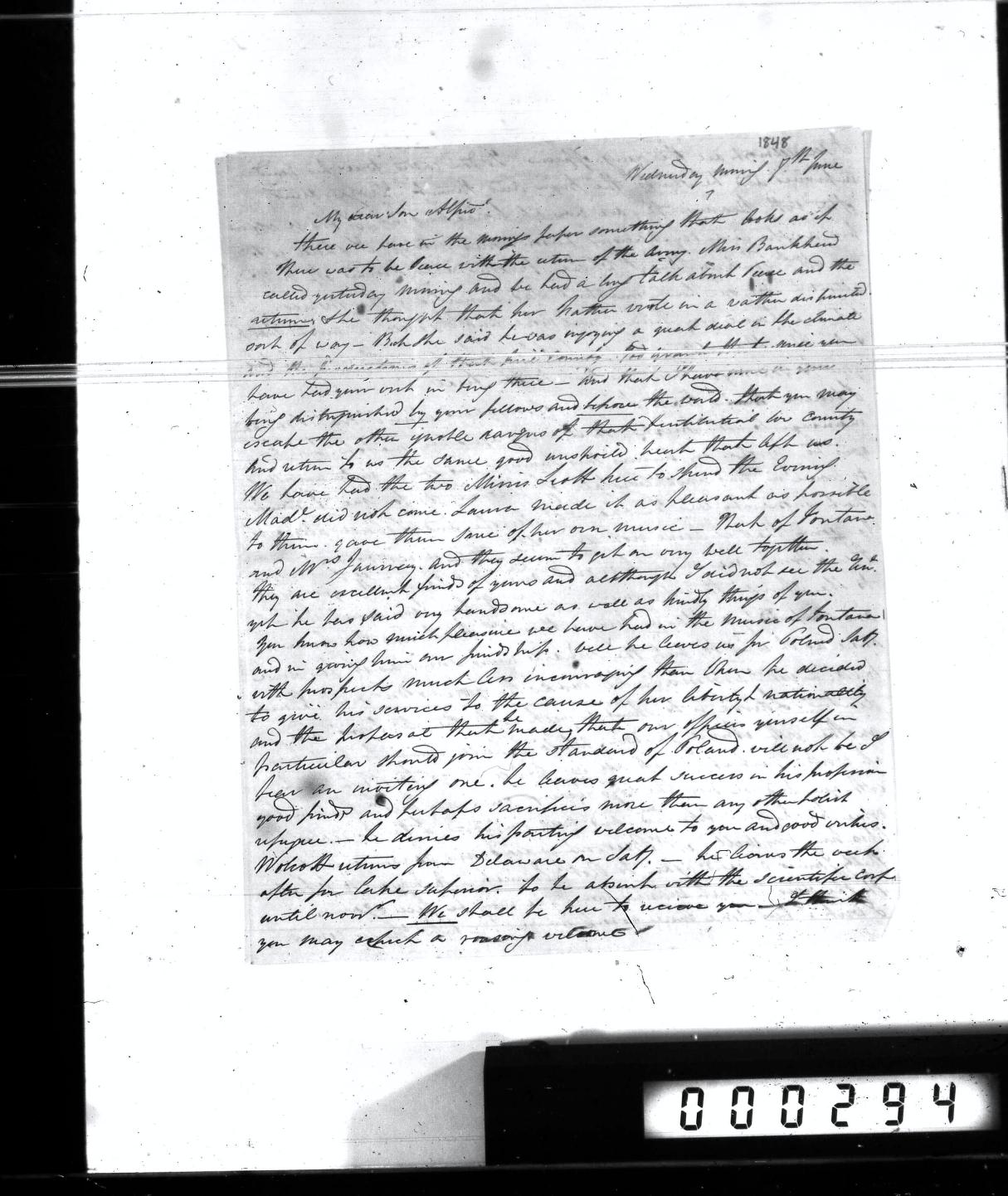
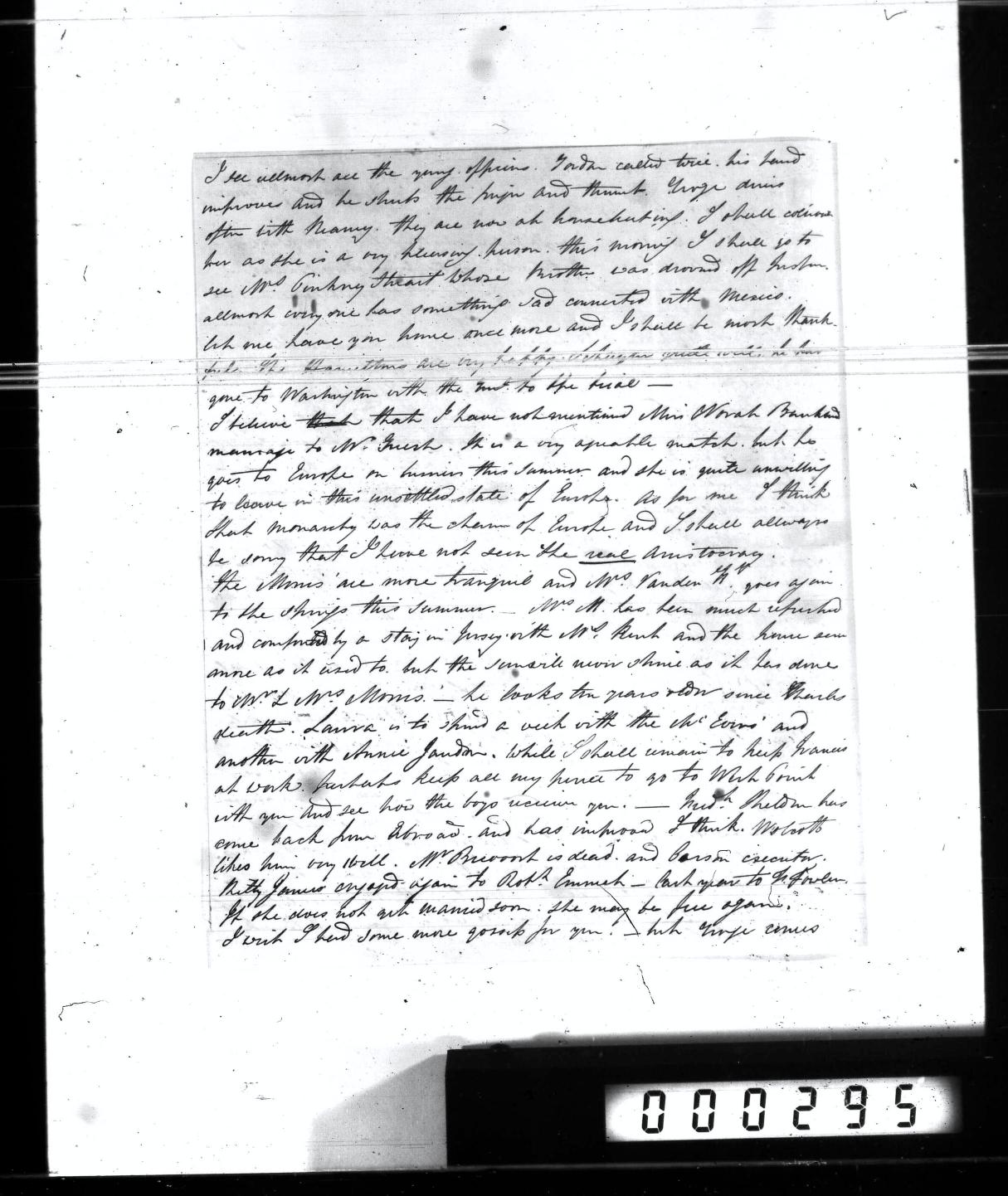
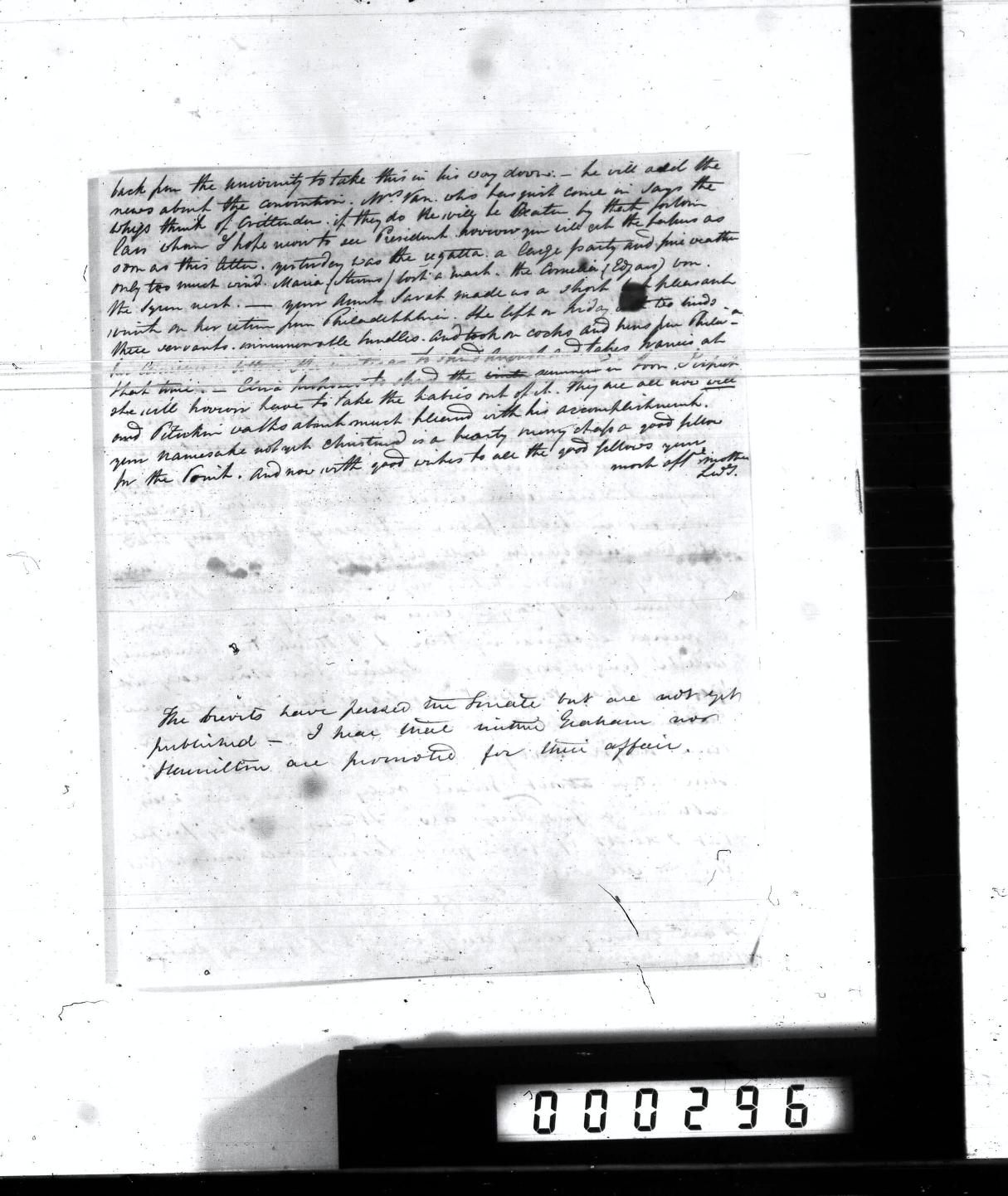
1848 Jun 7
peace and army's return expected; Misses Scott visit; Wolcott joins Lake Superior scientific corps
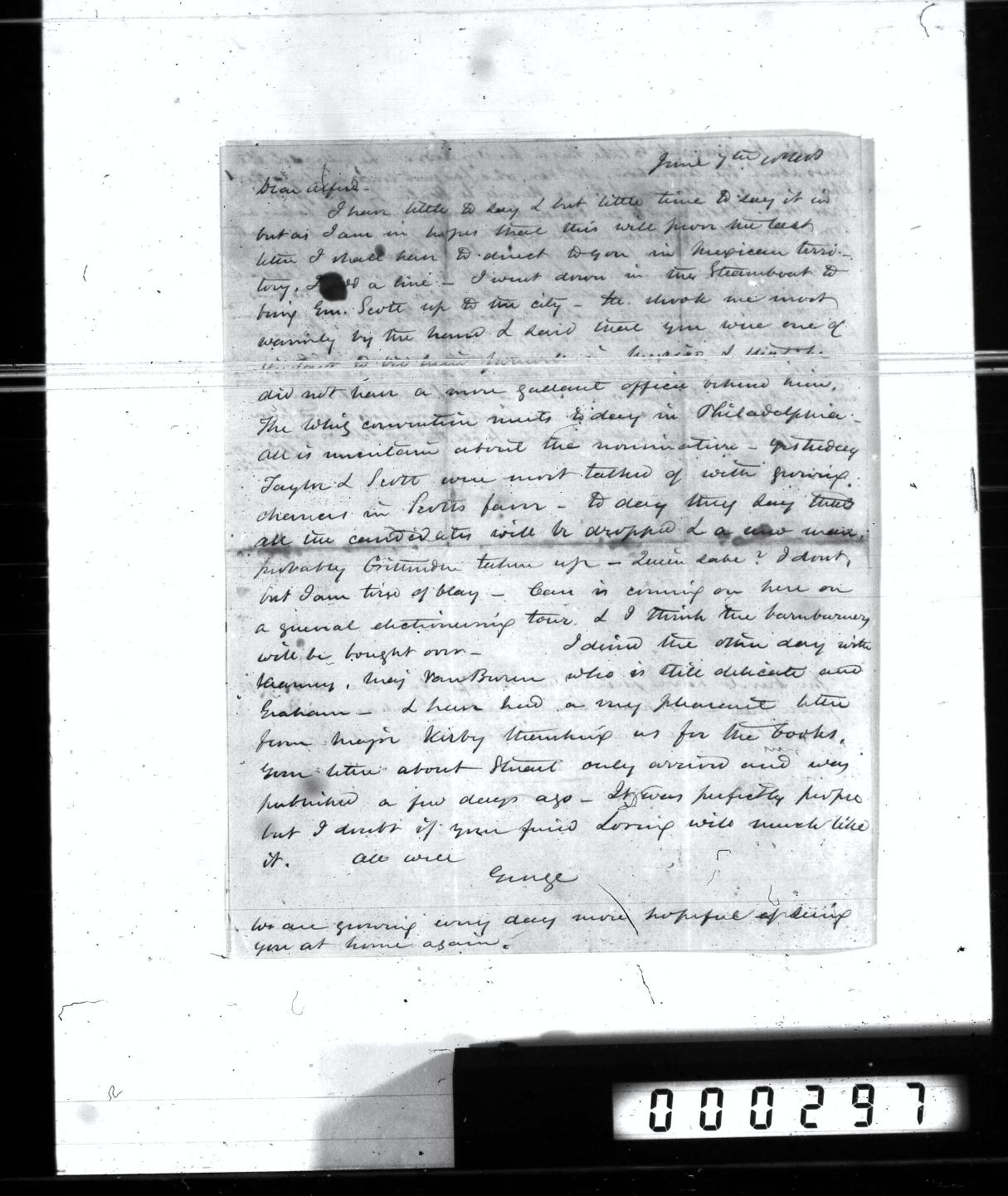
Jun 7, 1848
Gen. Scott's warm praise of Alfred; Whig convention; Alfred's published Stuart letter
Jul 3, 1848
Alfred remains till Aug 1; vomito warning; Wolcott at Detroit with Agassiz party
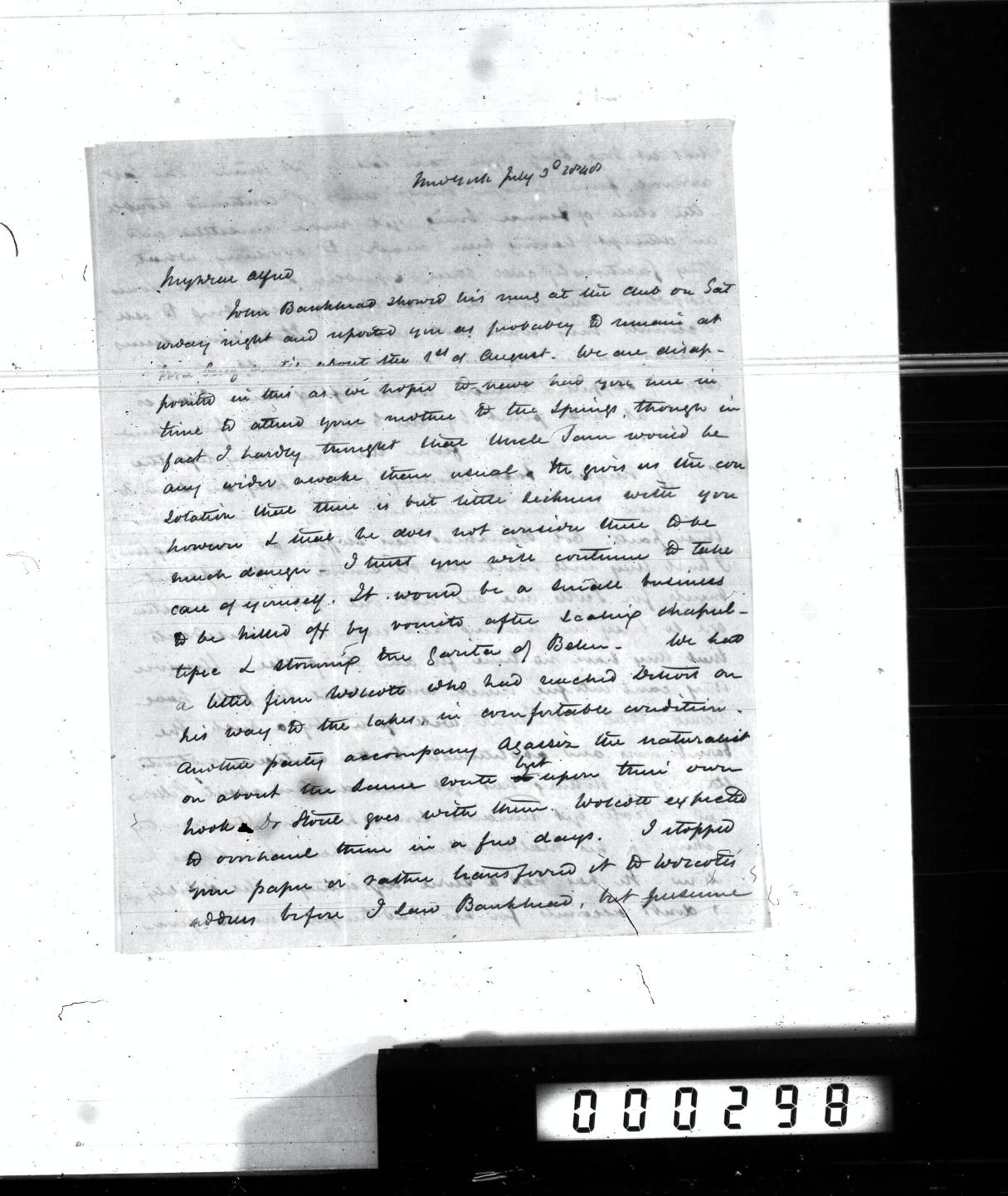
New York July 3d 1848
My dear Alfred
My dear Alfred
John Bankhead showed his nose at the club on Saturday night and reported you as probably to remain at [struck through: Vera Cruz] till about the 1st of August. We are disappointed in this as we hoped to have had you here in time to attend your mother to the Springs, though in fact I hardly thought that Uncle Tom would be any wider awake than usual. He gives us the consolation that there is but little sickness with you however & that he does not consider there to be much danger — I trust you will continue to take care of yourself. It would be a small business to be killed off by vomito after scaling Chapultepec & storming the Garita of Belen — We had a letter from Wolcott who had reached Detroit on his way to the lakes in comfortable condition. Another party accompany Agassiz the naturalist on about the same route but upon their own hook. Dr Stone(?) goes with them. Wolcott expected to overhaul them in a few days. I stopped your paper or rather transferred it to Wolcotts address before I saw Bankhead, but presume that at Vera Cruz you can easily get them.
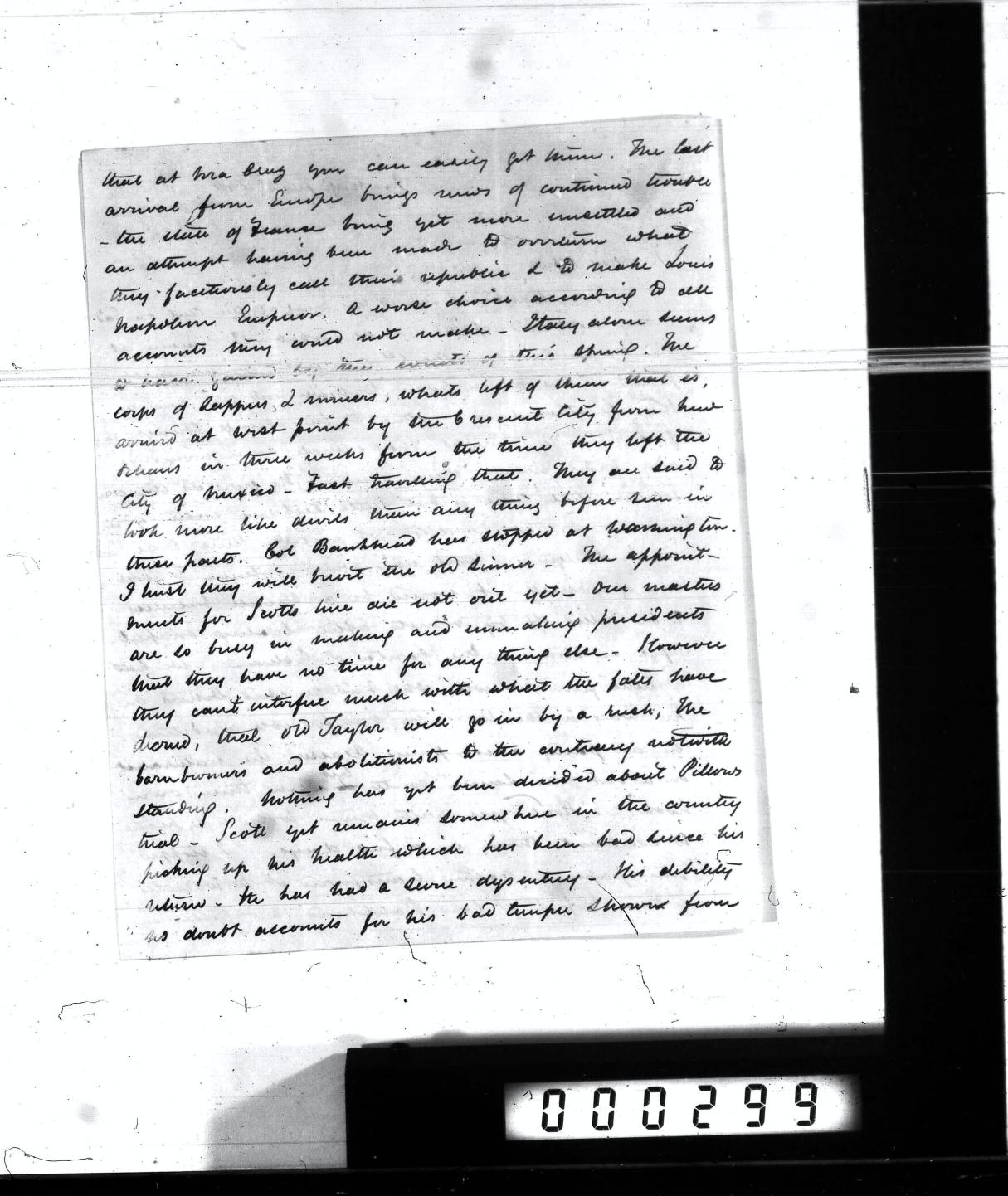
The last arrival from Europe brings news of continued trouble — the state of France being yet more unsettled and an attempt having been made to overturn what they facetiously call their republic & to make Louis Napoleon Emperor. A worse choice according to all accounts they could not make — Italy alone seems to have gained by the events of this spring. The corps of Sappers & miners, whats left of them that is, arrived at west point by the Crescent City from New Orleans in three weeks from the time they left the city of Mexico — Fast traveling that. They are said to look more like devils than any thing before seen in these parts. Col Bankhead has stopped at Washington. I trust they will brevet the old sinner — The appointments for Scotts line are not out yet — our masters are so busy in making and unmaking presidents that they have no time for any thing else — However they cant interfere much with what the fates have decreed, that old Taylor will go in by a rush, the barnburners and abolitionists to the contrary notwithstanding.
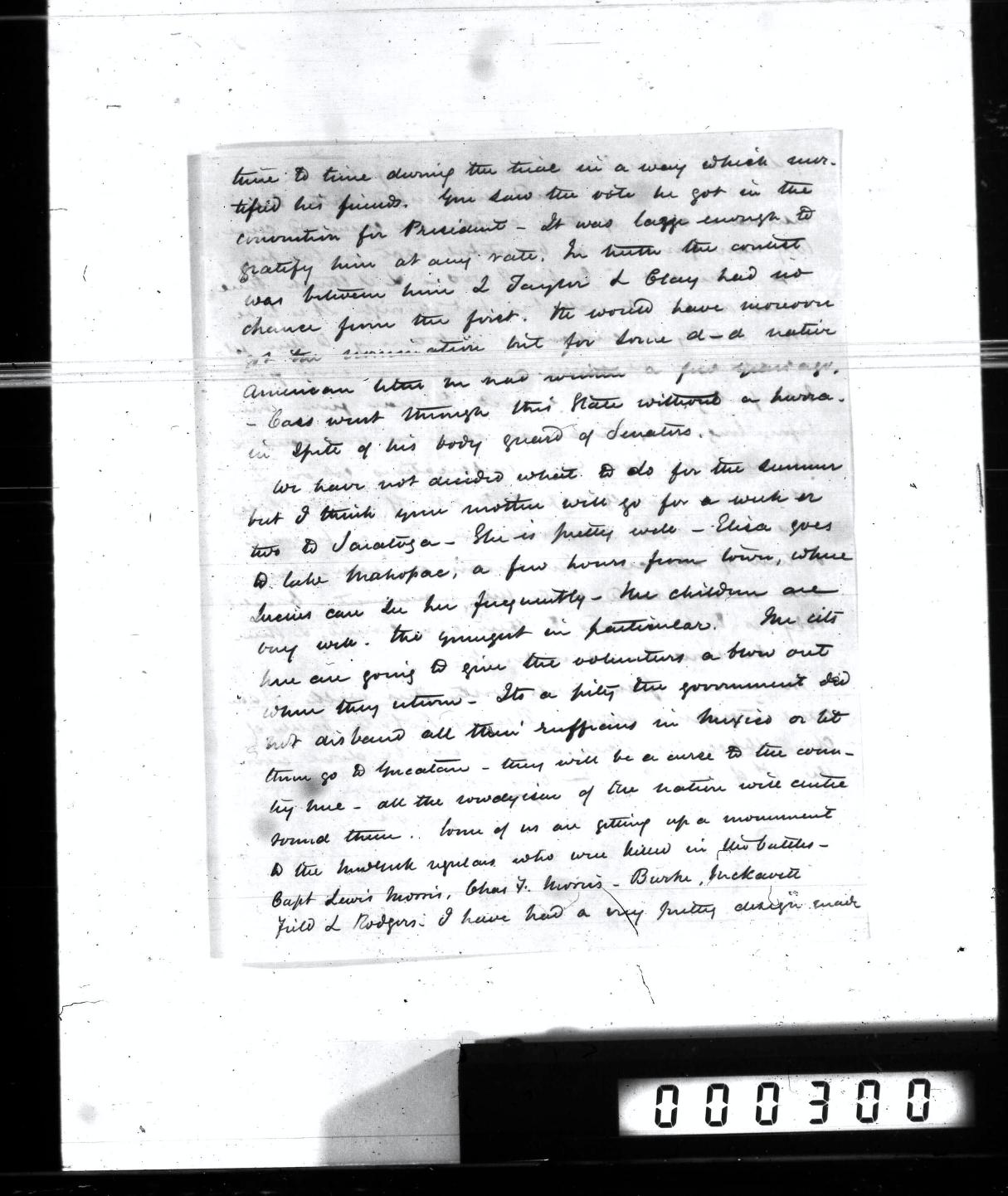
Nothing has yet been decided about Pillows trial — Scott yet remains somewhere in the country picking up his health which has been bad since his return — He has had a severe dysentery — His debility no doubt accounts for his bad temper shown from time to time during the trial in a way which mortified his friends. You saw the vote he got in the convention for President — It was large enough to gratify him at any rate. In truth the contest was between him & Taylor & Clay had no chance from the first. He would have moreover got the nomination but for some d—d native American letter he had written a few years ago. — Cass went through this state without a hurra — in spite of his body guard of Senators.
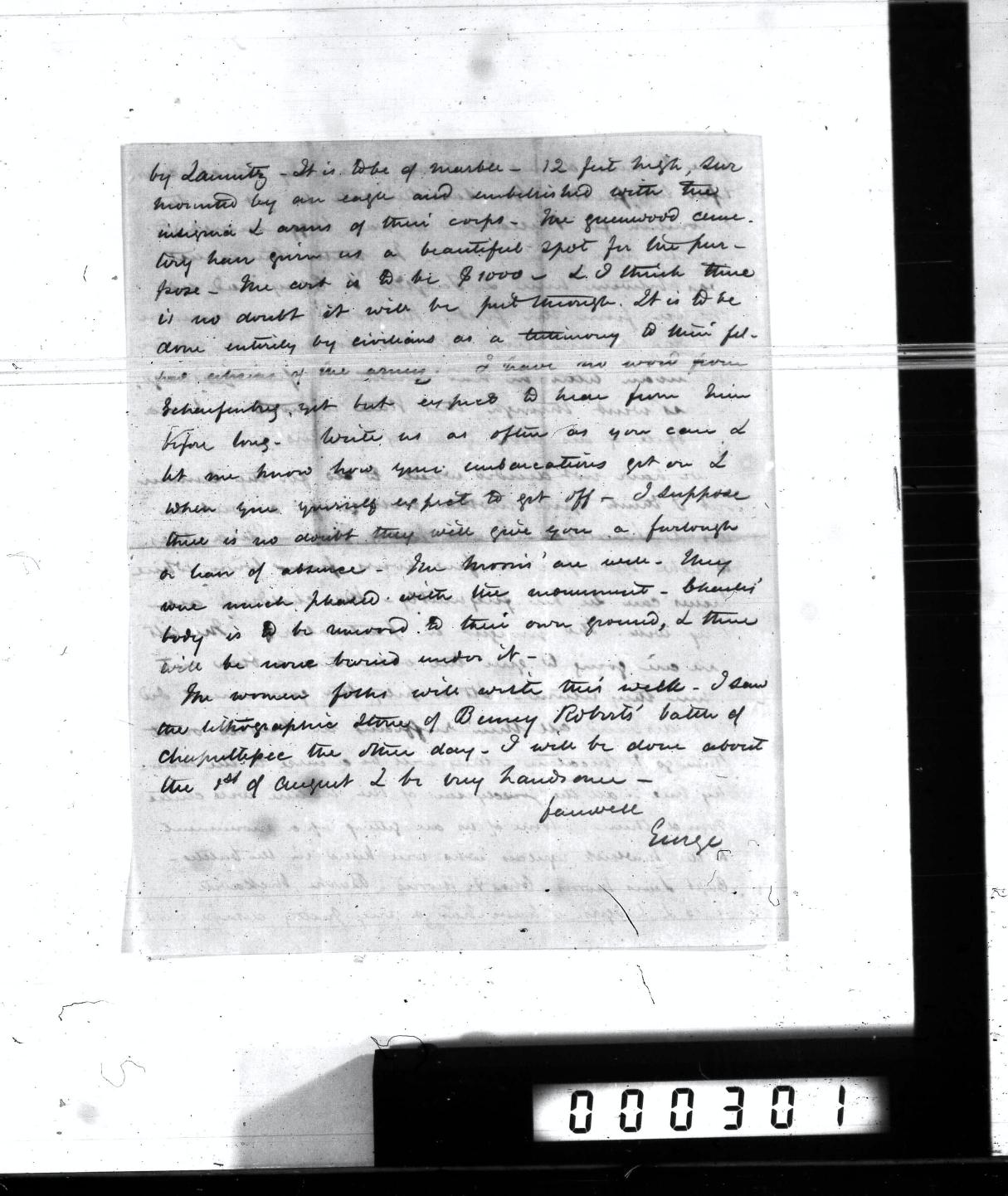
We have not decided what to do for the summer but I think your mother will go for a week or two to Saratoga — She is pretty well — Eliza goes to Lake Mahopac, a few hours from town, where Lucius can see her frequently — The children are very well. The youngest in particular. The cits here are going to give the volunteers a blow out when they return — Its a pity the government did not disband all their ruffians in Mexico or let them go to Yucatan — they will be a curse to the country here — all the rowdyism of the nation will centre round them. Some of us are getting up a monument to the [illegible] regulars who were killed in the battles — Capt Lewis Morris, Chas F. Morris — Burke, McKavett Field & Rodgers. I have had a very pretty design made by Launitz — It is to be of marble — 12 feet high, surmounted by an eagle and embellished with the insignia & arms of their corps — The Greenwood cemetery have given us a beautiful spot for the purpose — The cost is to be $1000 — & I think there is no doubt it will be put through. It is to be done entirely by civilians as a testimony to their fellow citizens of the army.
I have no word from Schaufenberg(?) yet but expect to hear from him before long — Write us as often as you can & let me know how your embarcations get on & when you yourself expect to get off — I suppose there is no doubt they will give you a furlough or leave of absence — The Morris' are well — They were much pleased with the monument — Charles' body is to be removed to their own ground, & there will be none buried under it —
The women folks will write this week — I saw the lithographic stone of Benny Roberts' battle of Chapultepec the other day — It will be done about the 1st of August & be very handsome —
farewell
George
Four frames (1353-1356), one continuous four-page letter written across the leaves of a folded sheet; frames carry film counter numbers 000298-000301. The film is a negative-style microfilm plate: several lines fall inside a horizontal light-leak band running across every frame (notably on f1354 the clause about Italy and on f1355 the clause about the nomination), and those readings are recovered from partially bleached script. A word before 'regulars' on f1355 (the corps or state the Green-Wood Cemetery monument was to honour) could not be read with confidence and is marked [illegible]. The struck-through place name on f1353 line 3 appears to read 'Vera Cruz'. Bleed-through from the reverse leaf is visible on every page.
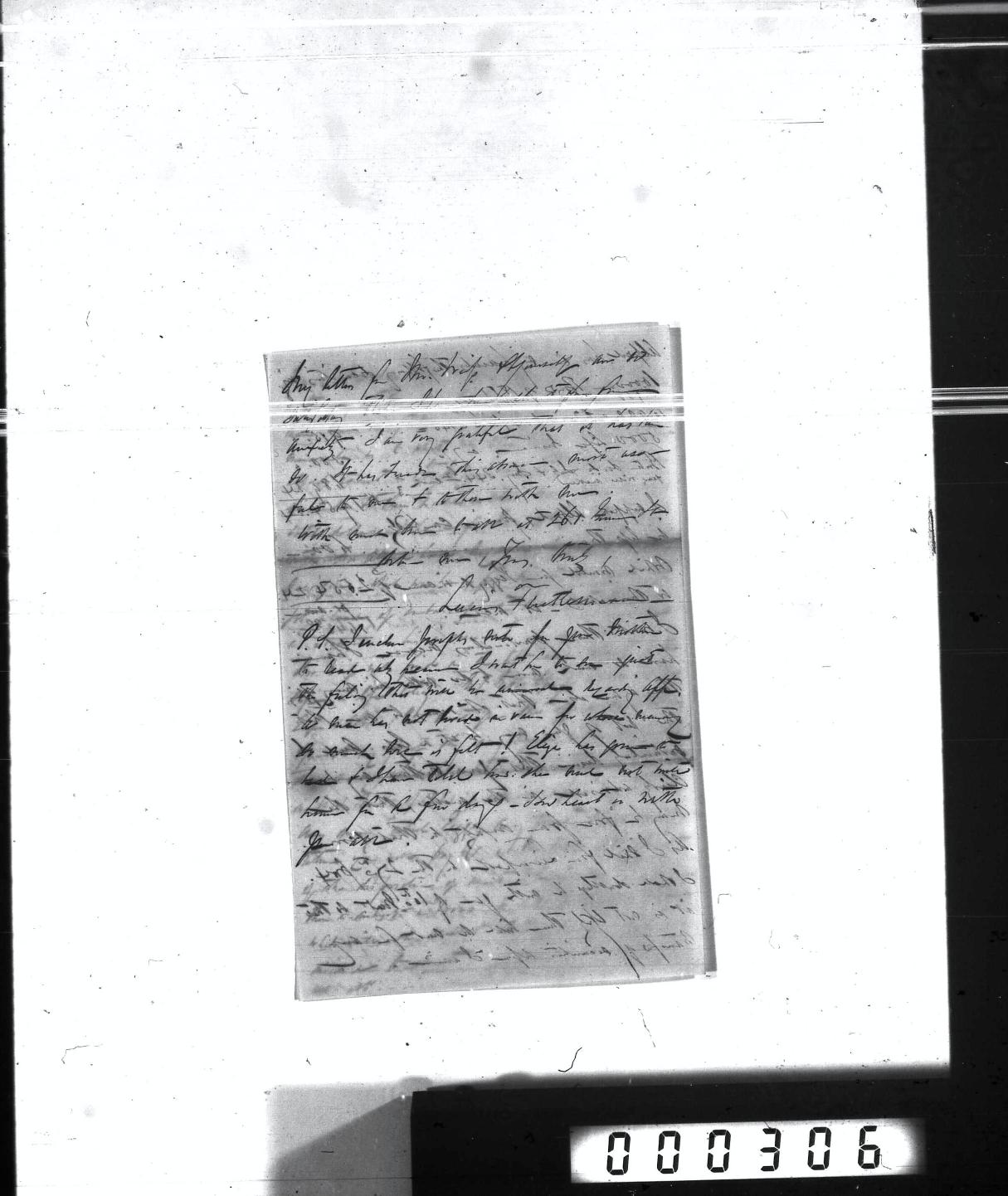
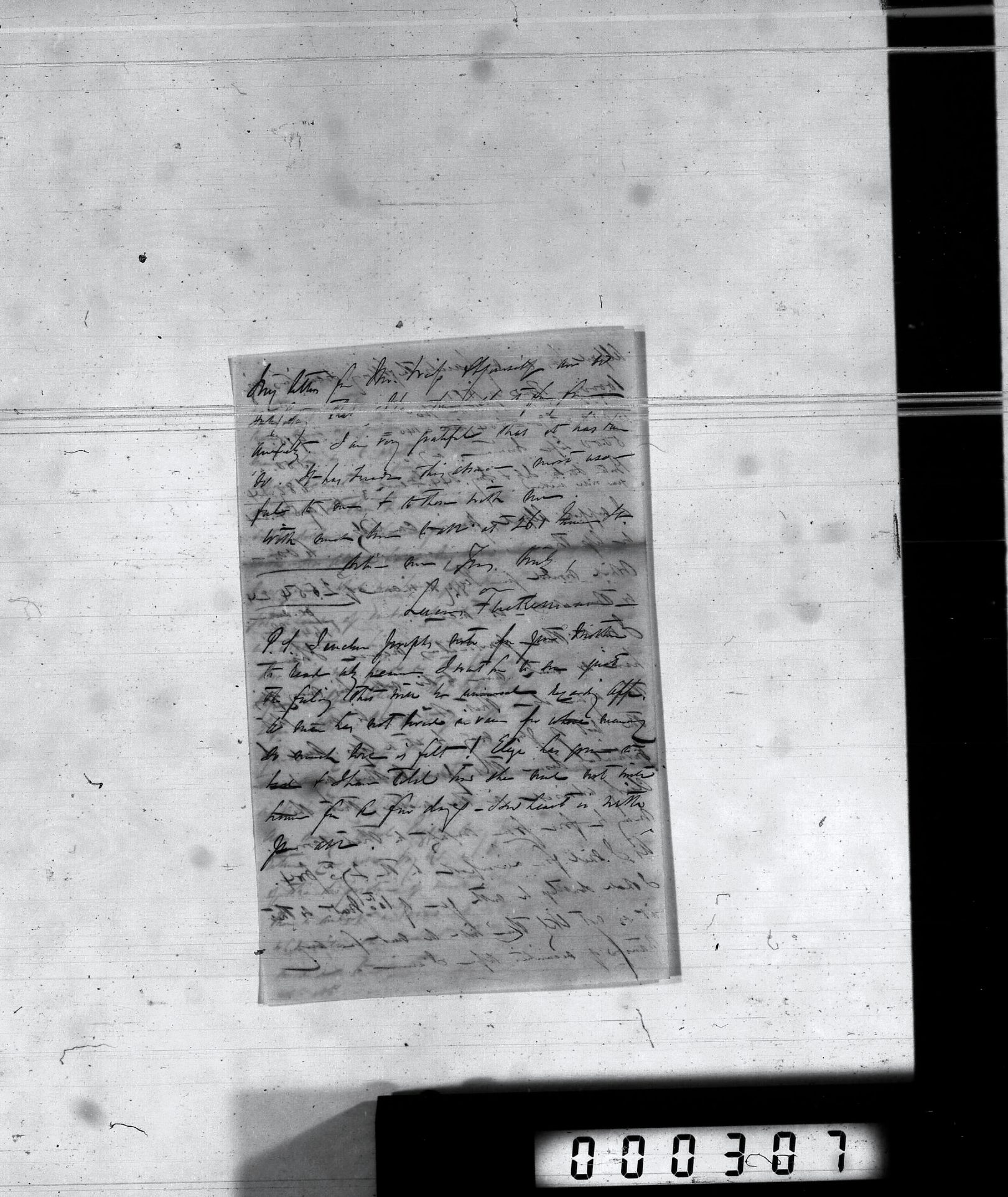
Jan 11, 1869?
Grief at news of dear Alfred's(?) death; consolation; Eliza much overcome
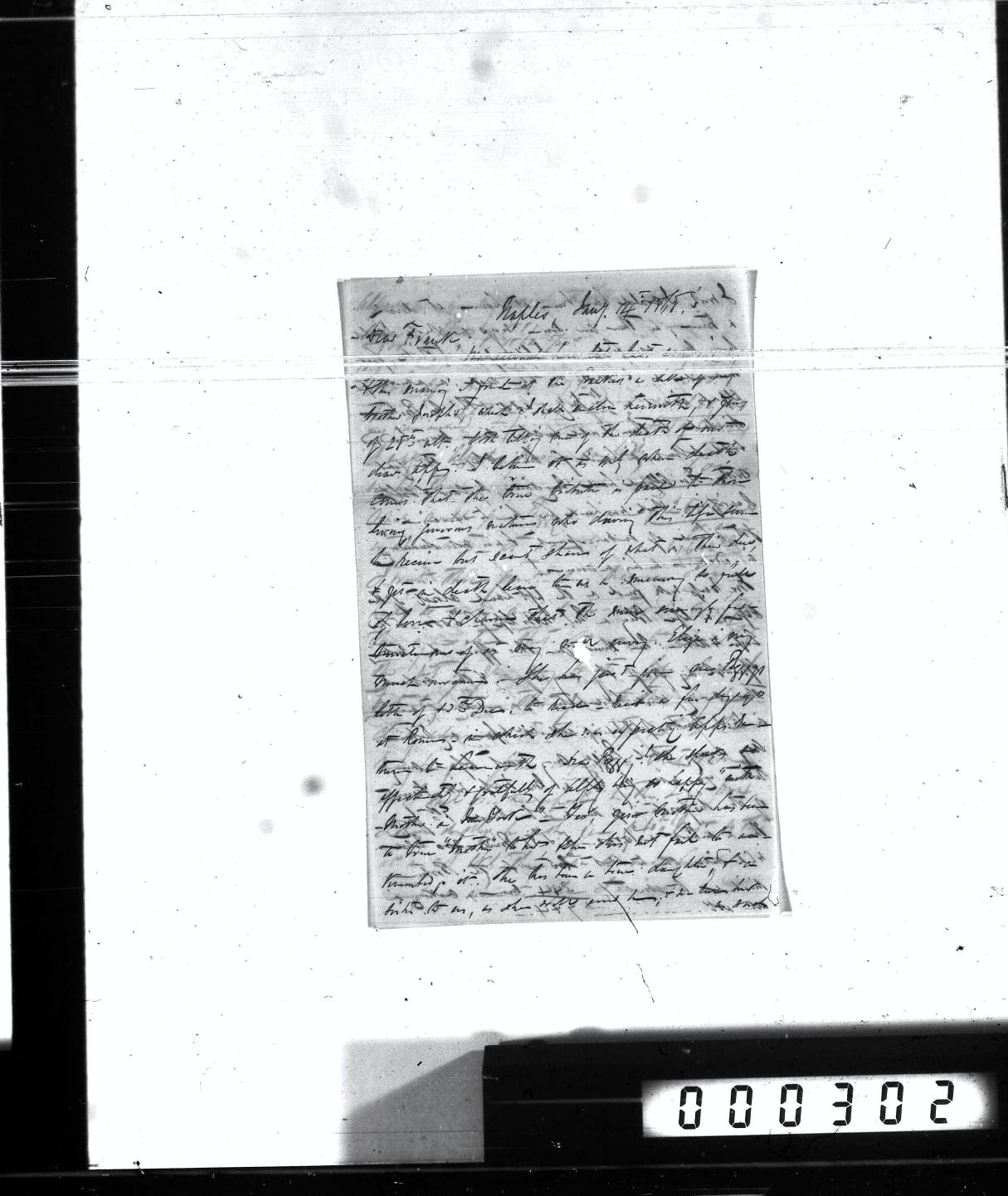
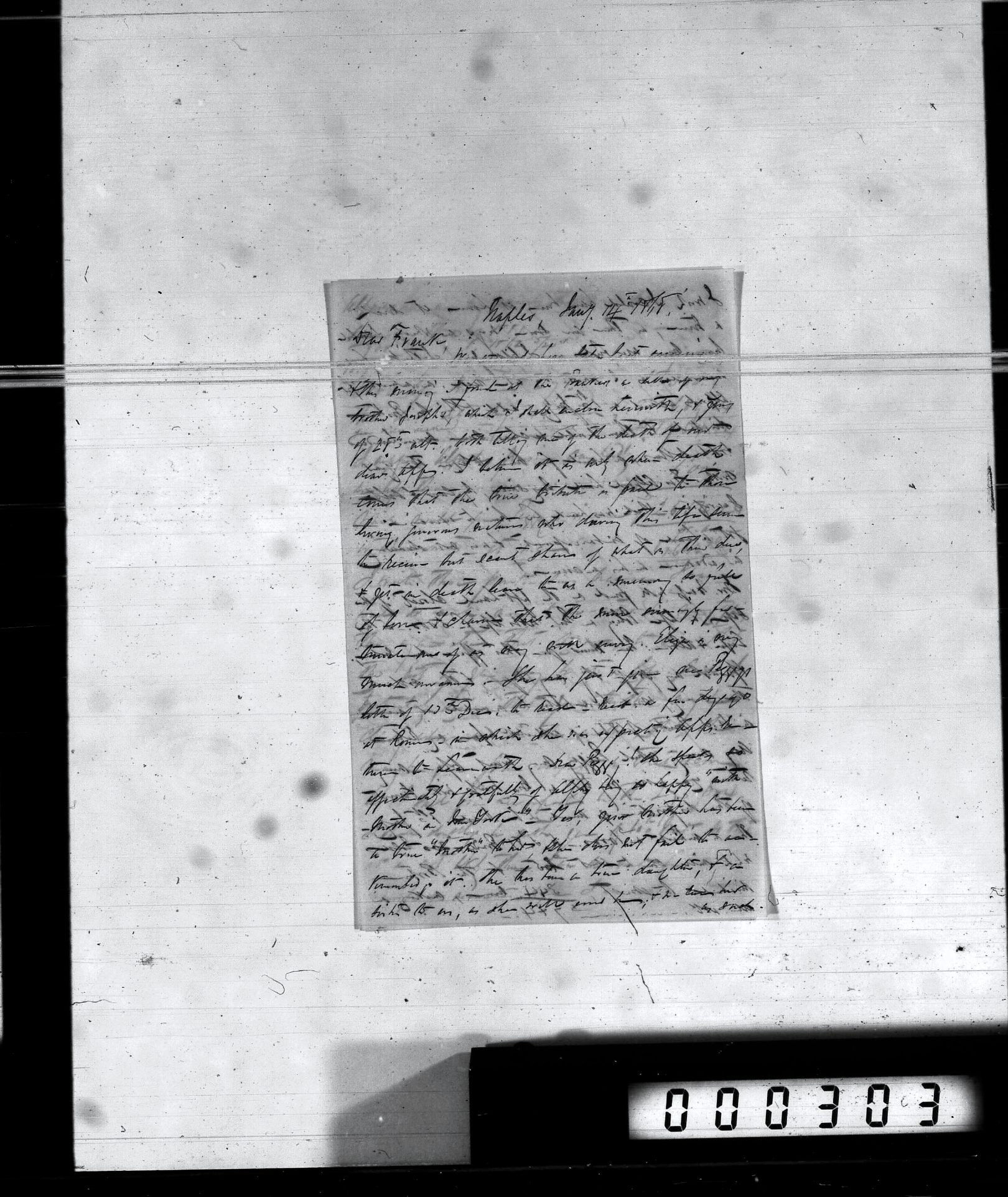
Naples Jan.y 11 [year illegible; 1869 by context]
Dear Frank
Dear Frank
We [illegible] before but received this morning at the Banker's a letter of your brother Josephs, which I shall enclose herewith, of 24th(?) ult. telling me of the death of our dear Alfred. I feel it is only when death comes that the true tribute is paid to these [illegible], generous natures who during this life-time receive but scant share of what is their due, & yet in death leave to us a memory so [illegible] of love & [illegible] that the [illegible] of it is [illegible].
Eliza is very much overcome. She has just [seen] Peggy's(?) letter of 3 Dec, to [illegible] — [written] a few days ago at Rome, in which she was so [illegible] hopeful [illegible]. [Two lines illegible] affectionate & grateful [illegible] so happy with [illegible] brother in law [illegible] — Yes, your brother has been to him "brother" [illegible] that she has not felt [illegible] [illegible] for it. She has been a true daughter [to us], as she will ever be, & [illegible].
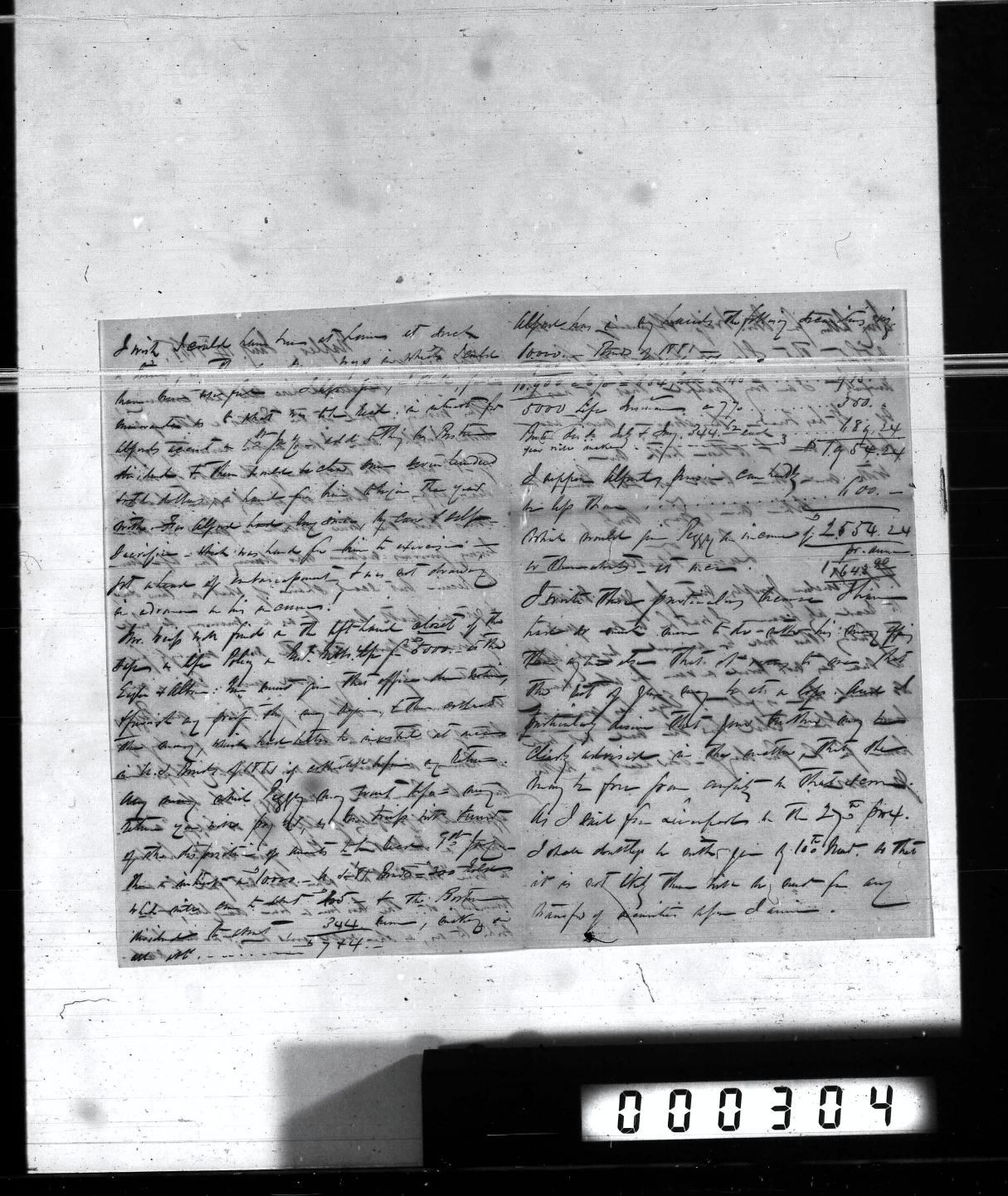
I wish I could [illegible] him at home at such [a time]. [Three lines illegible — the microfilm light-leak band crosses the page here.] Alfreds account [illegible] this leads to them [illegible] hundred [illegible] dollars a [illegible] for him [illegible]. For Alfred had long since, by love & self-sacrifice — which was hard for him to exercise — got ahead of embarassment & has not [drawn] [illegible] in advance on his account.
Mrs. [Weiss?] will find in the left-hand closet of the [desk] a life Policy in the [illegible] Mut.l Life for $5000. — in the [illegible] & Alken(?). She must give that office due notice, furnish [illegible] proof [&] the [necessary] papers, & then collect the money, which [I wish] her to invest at once in U.S. Bonds of 1867 if attainable(?) [illegible] before my return. Any money which Peggy may want before [my] return you will [pay] her by [illegible] [illegible] of the [illegible] of [illegible] to be [illegible].
Alfred has, I [think], in [my] hands the following securities [say] — 16.000. Bond of 1881 — 10.900 @ 6 % = 654 [illegible] @ 140 ……… 9[illegible]0. —
5000 Life Insurance @ 7 % ……… 350. —
Boston debts July & Jan.y 344 1/2 each 3 ……… 189.24
[illegible] gold value making ……… $1,954.24
I suppose Alfreds pension can hardly be less than ……… 600. — which would give Peggy an income of
2,554.24 pr. annum in currency — [illegible] 1,643.[illegible]
I write these particulars because I have had [illegible] occasion to [illegible] them [illegible]. The last of June may be at a loss, and I particularly desire that [illegible] Clark advised in the matter, that [she] may be free from anxiety [in] that claim. As I sail for [illegible] on the 27th prox. I shall doubtless be with you by 10th Mar. So that it is not likely there will be any transfer of securities before I arrive.
Any letters for [illegible] [illegible]. I am very grateful that it has been [illegible] as it has [illegible] [illegible] to me & to those [illegible] with [illegible] to all [illegible].
Yours [truly]
Lucius Tuckerman
P.S. I enclose Josephs note to read with [illegible] The [feeling] which was [illegible] has not [illegible] in vain, for whose memory the [illegible] love is felt [illegible]. Eliza has [illegible] [illegible] she had not [illegible] [illegible] for [illegible] days — [illegible] heart is with [illegible].
SIX frames, THREE physical pages: 1357 and 1358 are the same leaf filmed twice, 1359 and 1360 are the same bifolium opening filmed twice (two columns, left column read first), 1361 and 1362 are the same final leaf filmed twice. Each page was therefore transcribed once. This is by far the hardest hand in the run: a rapid, heavily abbreviated cursive on very thin paper with severe bleed-through from the reverse, filmed with a horizontal light-leak/scratch band that crosses every frame and erases whole lines (worst on the first page and the top of the second column). Frames were cropped and enlarged 5x for reading and much of the letter still defeated recovery; every unread word is marked [illegible] rather than reconstructed. What IS secure: the writer is Lucius Tuckerman, writing from Naples to 'Frank' (Francis Gibbs) on the news of Alfred Gibbs's death, forwarding a letter from 'Joseph'; his wife Eliza is overcome; and the second page is a detailed reckoning of Alfred's securities and of the income his widow 'Peggy' will have. The year in the dateline falls in the light-leak band and could not be read; the surrounding evidence (Alfred Gibbs died 26 December 1868) points to 1869 but that is inference, not a reading. The figures 16,000 / 10,900 / 5,000 / 344 1/2 / 189.24 / 1,954.24 / 600 / 2,554.24 are read directly off the page; the digits in '9[?]0' and '1,643.[?]' are broken by the film band.
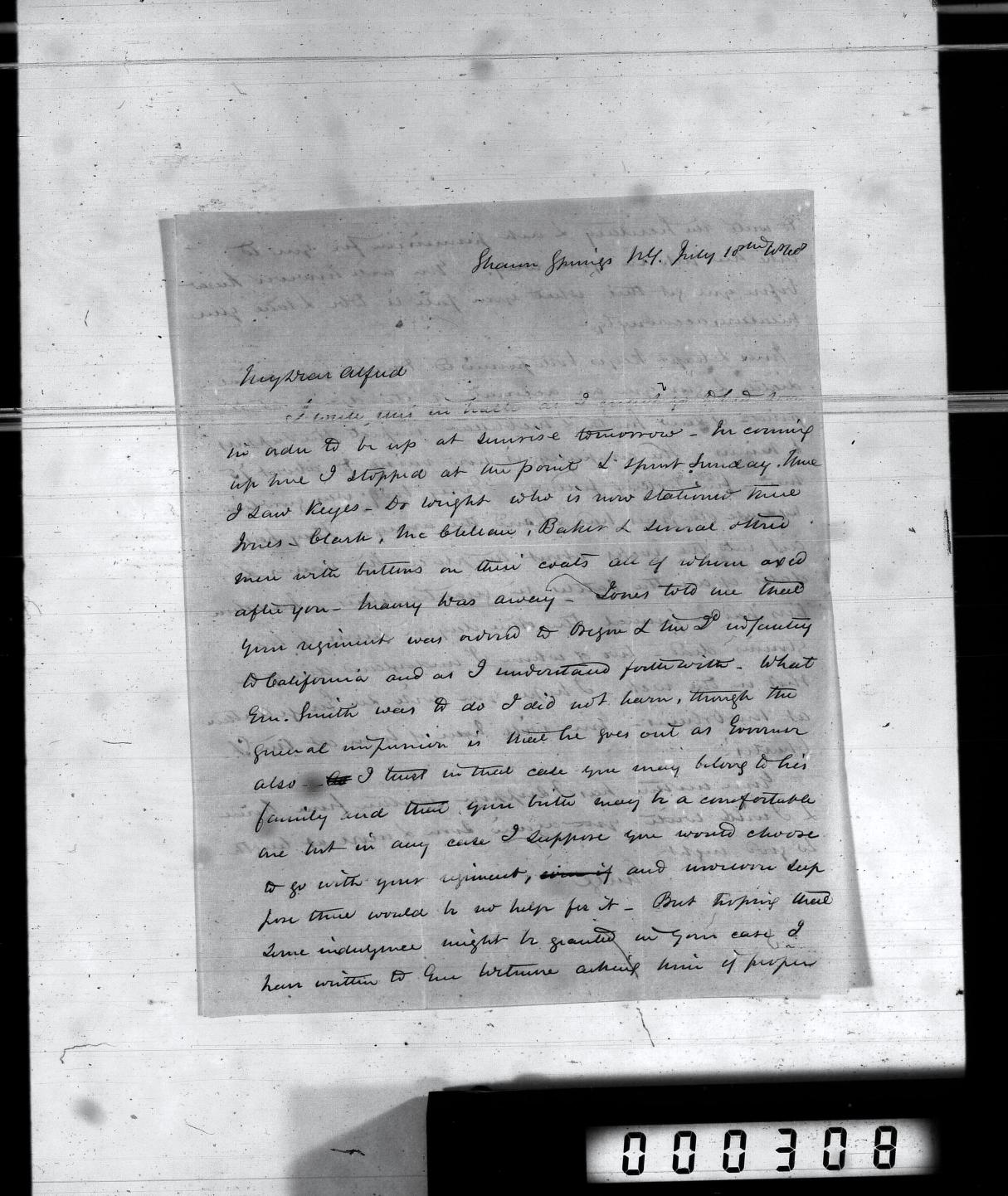
Jul 18, 1848
Riflemen ordered to Oregon; Gen. Smith likely governor; hopes Alfred joins his staff
Sharon Springs N.Y. July 18th Wed
My dear Alfred
My dear Alfred
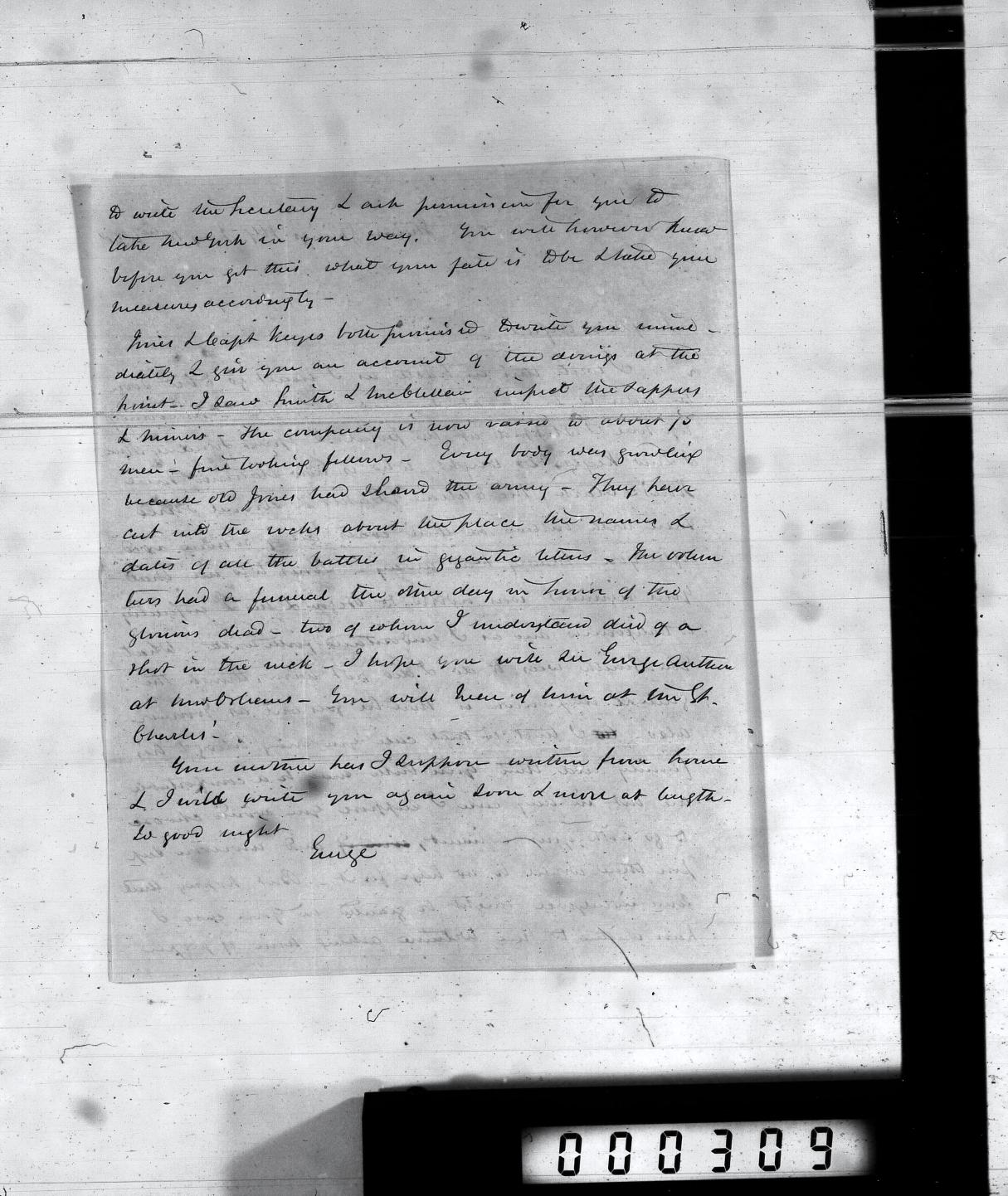
I write this in haste as I [illegible — this line falls inside the film light-leak band] in order to be up at sunrise tomorrow — In coming up here I stopped at the point & spent Sunday there. I saw Keyes — Dr Wright who is now stationed there Jones — Clark, McClellan, Baker & several other men with buttons on their coats all of whom asked after you — Manny was away — Jones told me that your regiment was ordered to Oregon & the 2d infantry to California and as I understand forthwith — What Gen. Smith was to do I did not learn, though the general impression is that he goes out as Governor also — [struck: I] I trust in that case you may belong to his family and that your billet may be a comfortable one but in any case I suppose you would choose to go with your regiment, [struck: even if] and moreover suppose there would be no help for it — But hoping that some indulgence might be granted in your case I have written to Gen Wetmore asking him if proper to write the Secretary & ask permission for you to take New York in your way. You will however know before you get this what your fate is to be & take your measures accordingly —
Jones & Capt Keyes both promised to write you immediately & give you an account of the doings at the point — I saw Smith & McClellan inspect the Sappers & miners — the company is now raised to about 75 men — fine looking fellows — Every body was growling because old Jones had shaved the army — They have cut into the rocks about the place the names & dates of all the battles in gigantic letters — The volunteers had a funeral the other day in honor of the glorious dead — two of whom I understand died of a shot in the neck — I hope you will see George Anthon at New Orleans — You will hear of him at the St. Charles' —
Your mother has I suppose written from home & I will write you again soon & more at length — so good night
George
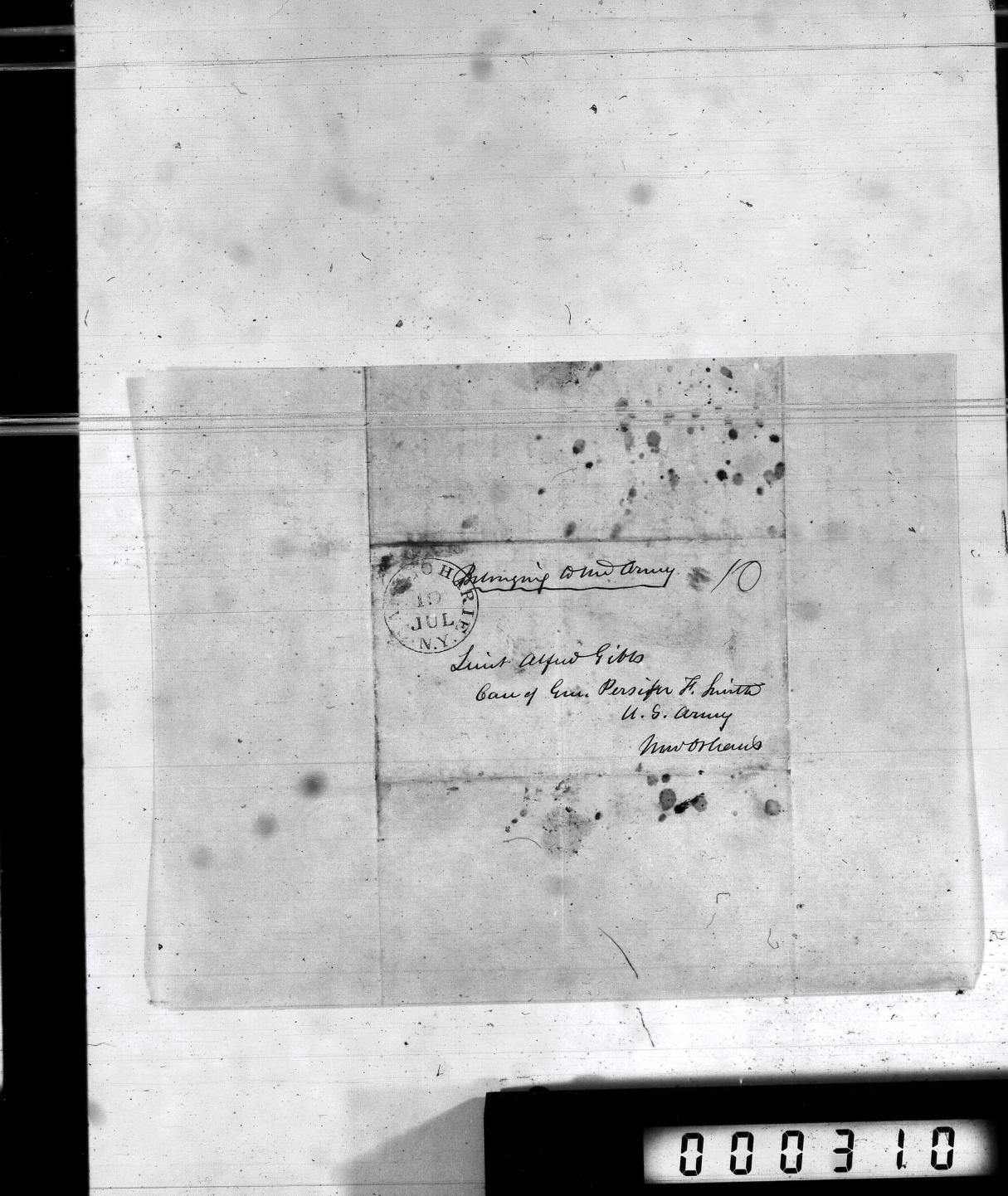
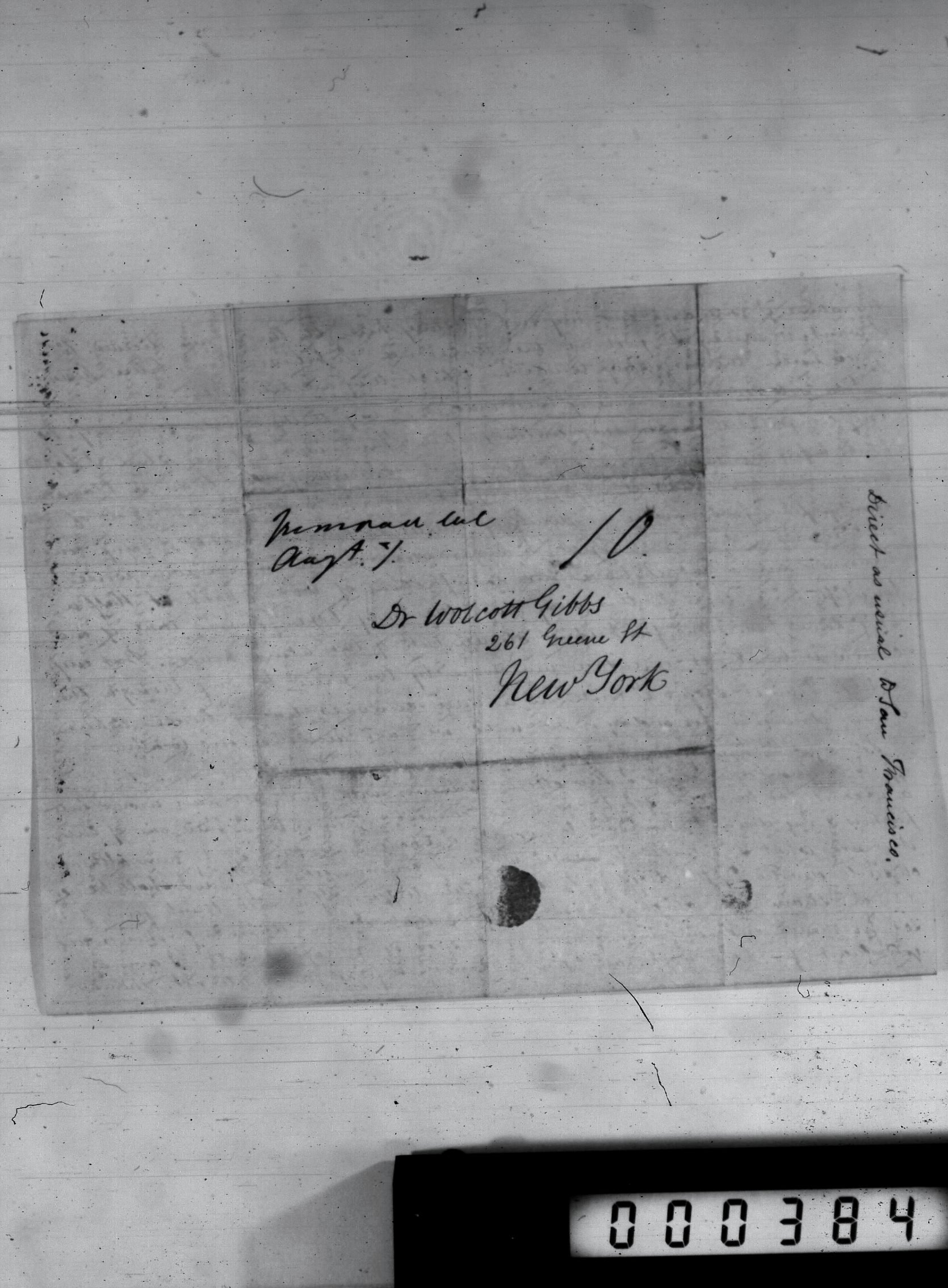
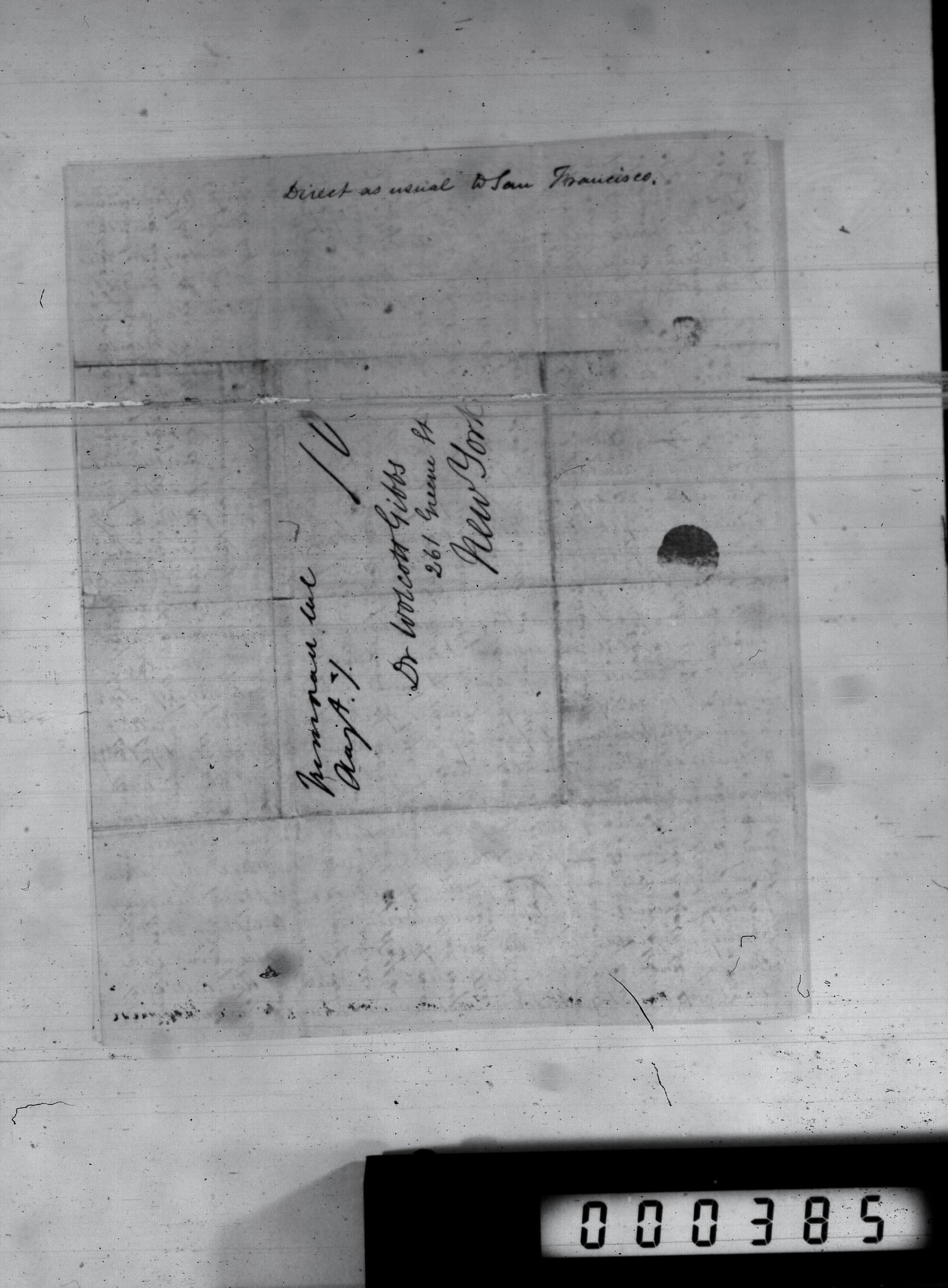
Endorsed: Address leaf (frame 1365), in George Gibbs's hand: "Belonging to the Army" (written across the top of the address panel and underlined with a long flourish) / "Lieut Alfred Gibbs / Care of Gen. Persifor F. Smith / U.S. Army / New Orleans". Circular black postal datestamp at left, partly struck and partly off the sheet: the letters "…H A R I…" of the town name are legible around the rim, with "19" and "JUL" and "N.Y." inside; consistent with SHARON SPRINGS N.Y. but not fully readable. Manuscript rate mark "10" at the right of the panel.
Three frames (film counters 000308-000310): 1363 = page 1, 1364 = page 2, 1365 = the outer address leaf of the folded letter. The letter is written on both sides of a single sheet and is complete; the hand is clear and this transcription is close to certain except where noted. Two horizontal light-leak / scratch bands cross each frame; on 1363 one of them falls squarely on the first line of the body ('I write this in haste as I ___'), which could not be recovered and is left as [illegible] rather than guessed. Two of George's own cancellations are preserved as [struck: …]. The year is not written on the letter; the July 18 / Wednesday dateline, the Oregon orders and the reference to Persifor F. Smith fix it to 1848 (18 July 1848 was a Tuesday, so 'Wed' may be George's slip or may indicate the 19th, which matches the JUL 19 postmark).
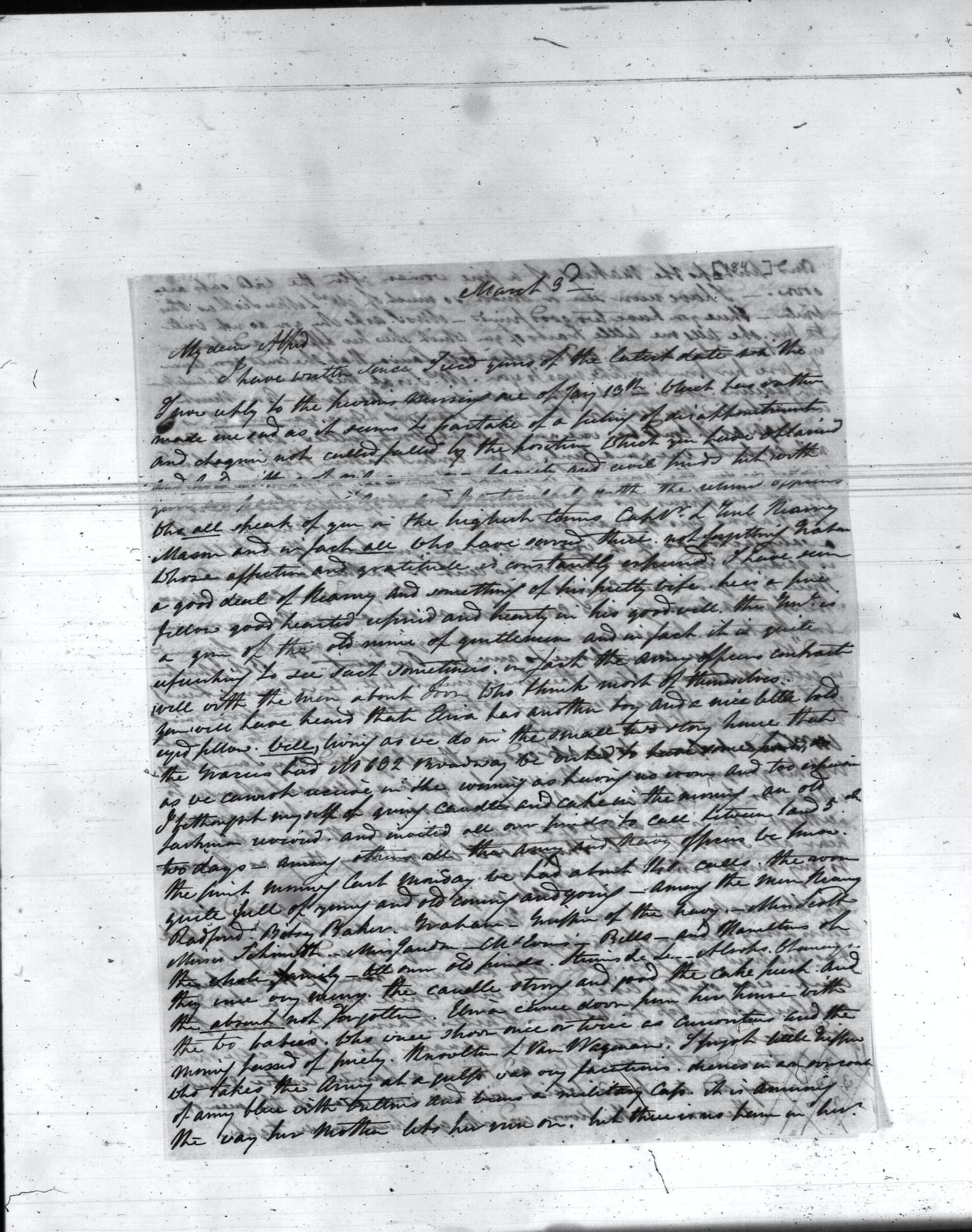
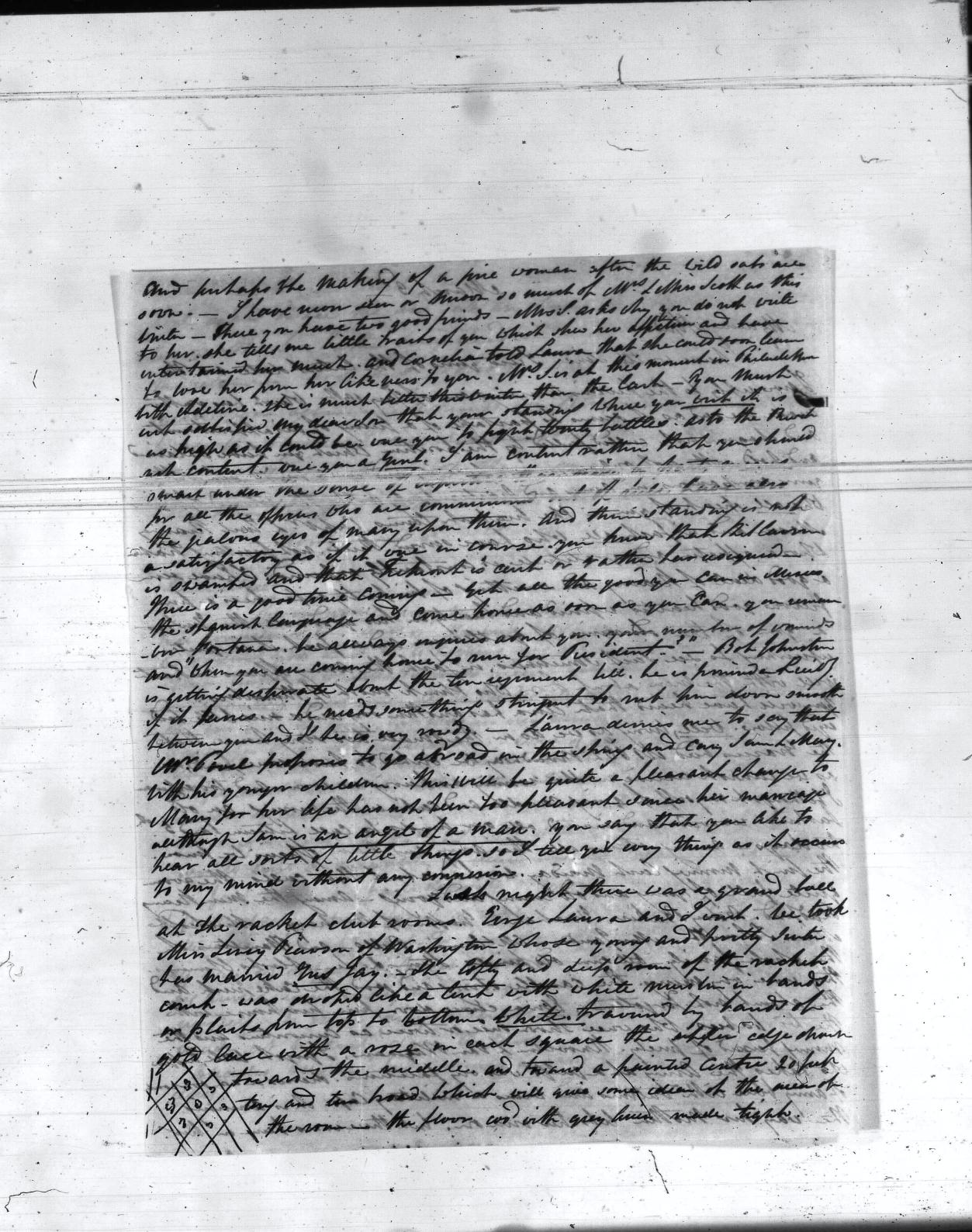
Mar 3, 1848?
Alfred's new position; Kearny/Mason/Graham praise him; Eliza's new boy; New Year army calls
n.d. [1848]
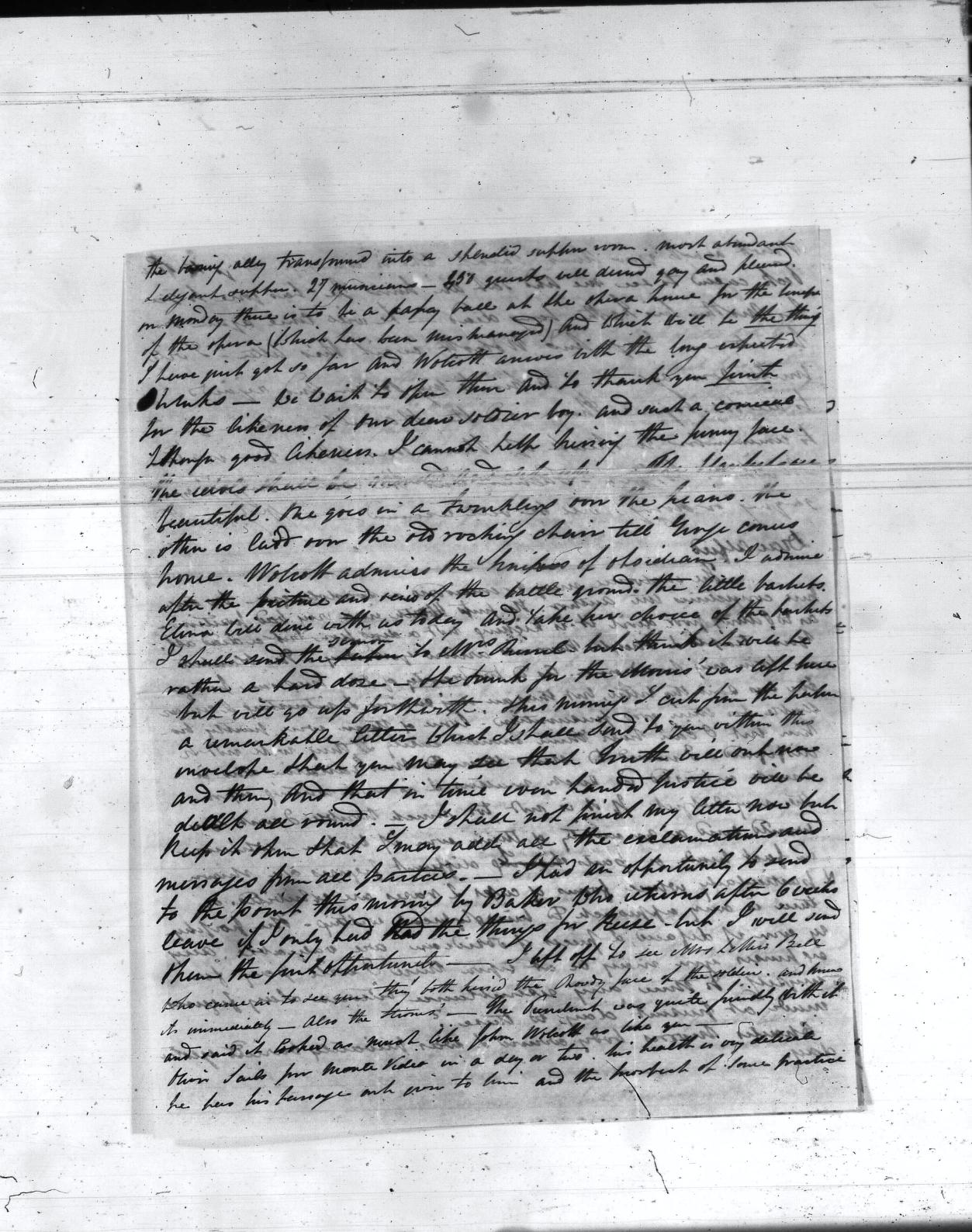
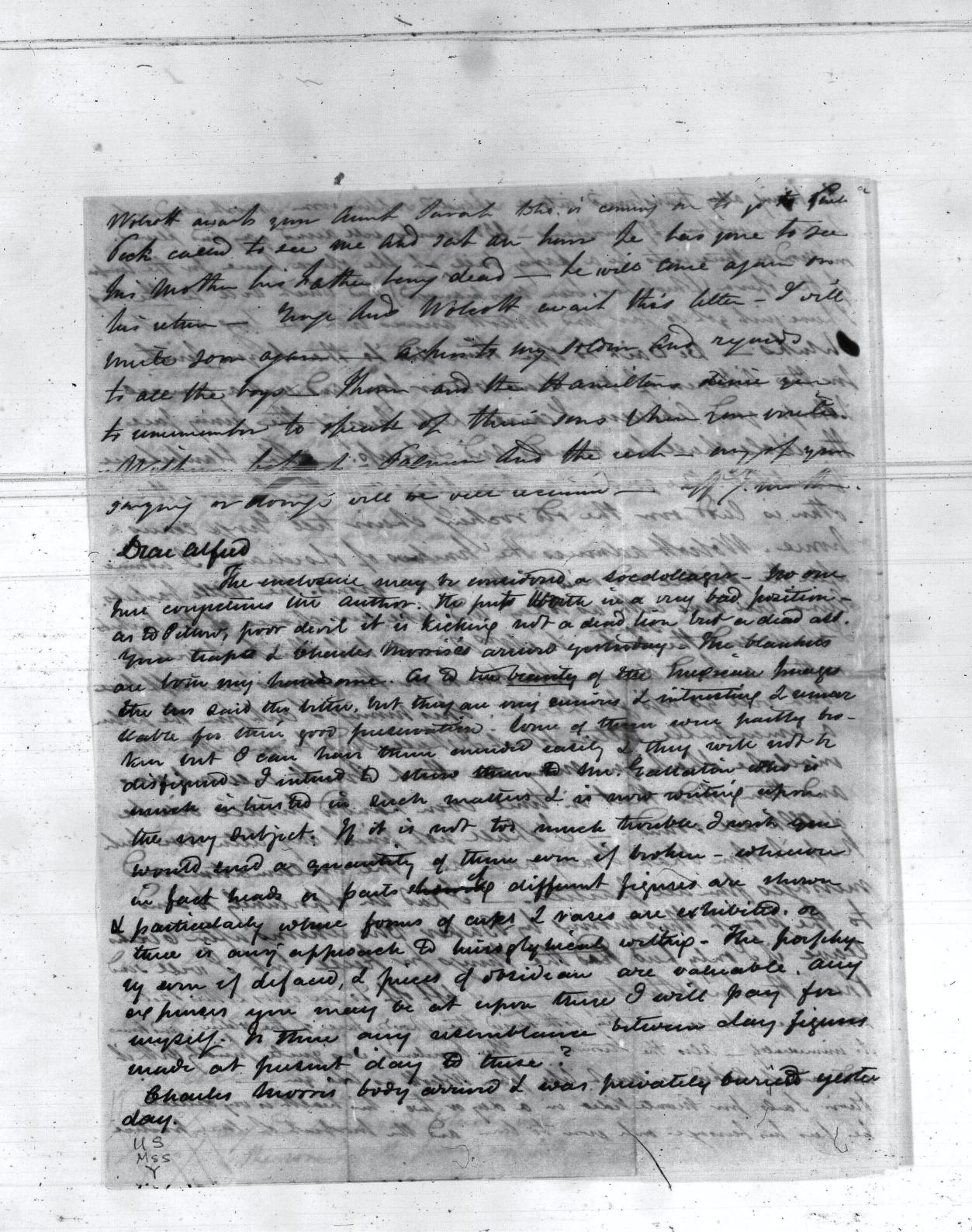
Laura's close (signed "yr mother"): Aunt Sarah coming, regards from Thorn, the Hamiltons, Palmer. George's note: the enclosed anonymous pamphlet is a "sockdolager" putting Worth in a bad position and kicking Pillow, "a dead ass"; Alfred's and Charles Morris's trunks arrived; the Mexican clay images curious and well preserved — will show them to Albert Gallatin, "now writing upon the very subject"; asks Alfred to ship more antiquities (heads, cups, vases, anything approaching hieroglyphic writing, the porphyry urn, obsidian) at George's expense; asks if modern Mexican clay figures resemble the ancient; Charles Morris's body arrived and was privately buried yesterday
[Apr 1849]
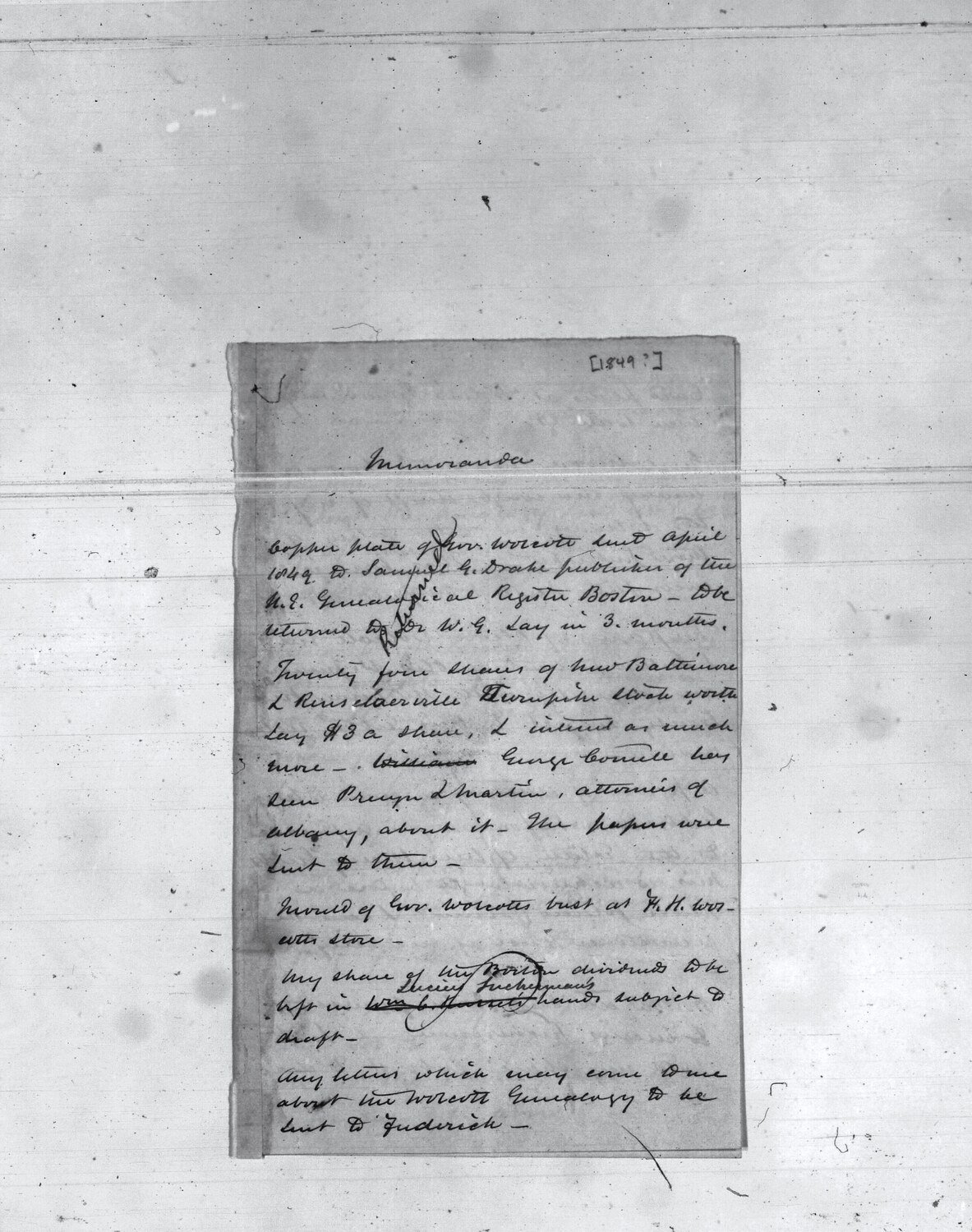
Copper plate of Gov. Wolcott sent Apr 1849 to Samuel G. Drake, publisher of the N.E. Genealogical Register, Boston, to be returned in 3 months; 24 shares New Baltimore & Rensselaerville Turnpike stock (~$3/share; Pruyn & Martin, Albany attorneys, have the papers); mould of Gov. Wolcott's bust at F. H. Wolcott's store; Boston dividends to Lucius Tuckerman subject to draft; Wolcott Genealogy letters to be sent to Frederick
[Apr 1849]
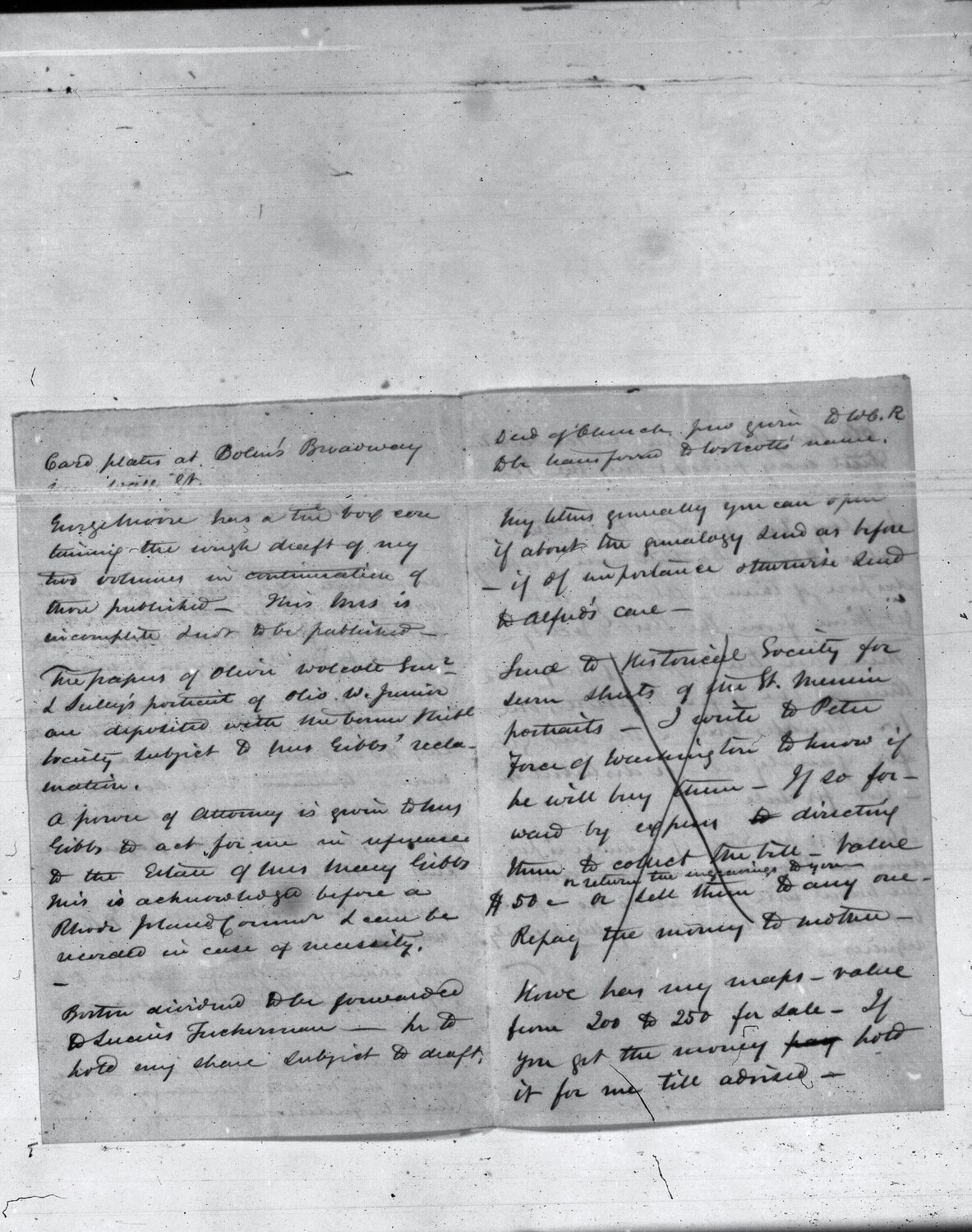
Rough draft of his two further Wolcott volumes in a tin box with George Moore — "incomplete & not to be published"; Oliver Wolcott Sr. papers and Sully's portrait of Oliver Wolcott Jr. deposited with the Historical Society subject to Mrs. Gibbs's reclamation; power of attorney to Mrs. Gibbs re the estate of Mrs. Mercy(?) Gibbs, acknowledged before a Rhode Island commissioner; church pew deed to be transferred to Wolcott; "my letters generally you can open… if of importance otherwise send to Alfred's care"; crossed-out plan to sell the St. Memin portrait sheets via Peter Force ($50); Howe holds his maps, value $200-250
[Apr 1849]
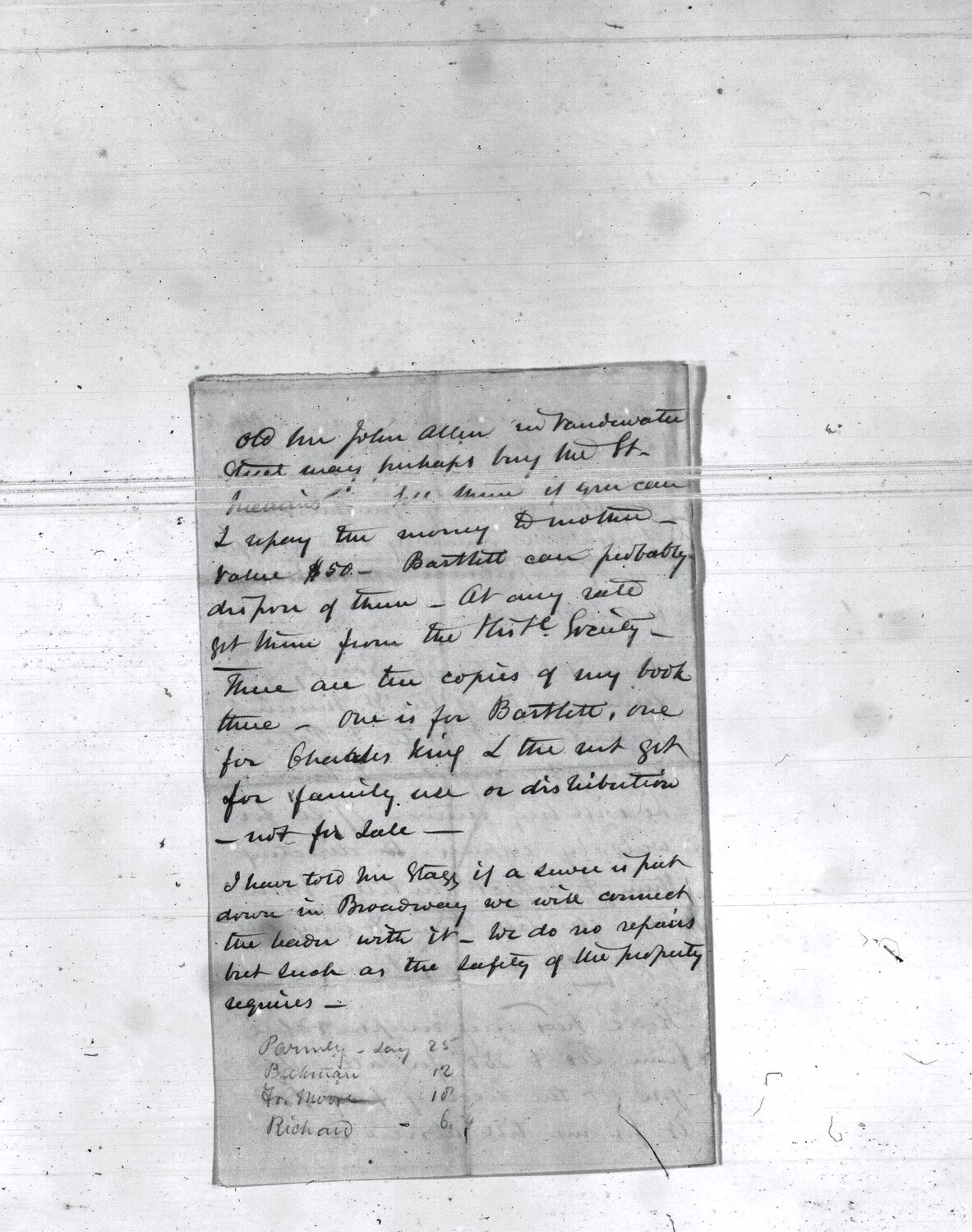
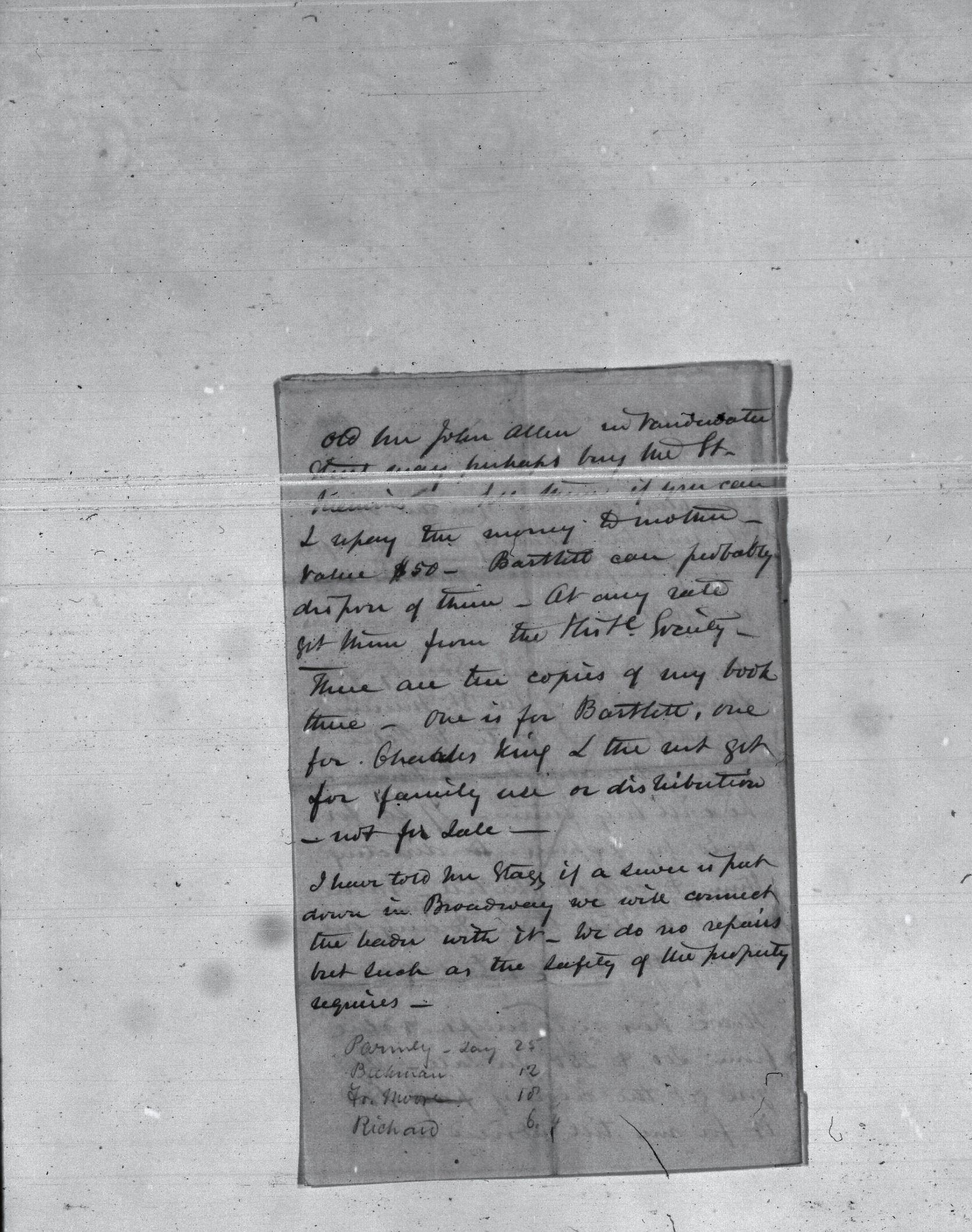
John Allen of Vandewater St. may buy the St. Memins ($50, repay mother), or Bartlett can dispose of them; ten copies of "my book" at the Historical Society — one for Bartlett, one for Charles King, rest for family distribution, not for sale; told Mr. Stagg the Broadway property will connect if a sewer is laid, repairs only as safety requires; rent list (Parmly 25, Beekman 12, G. Moore 18, Richard 6)
7 Mar 1849
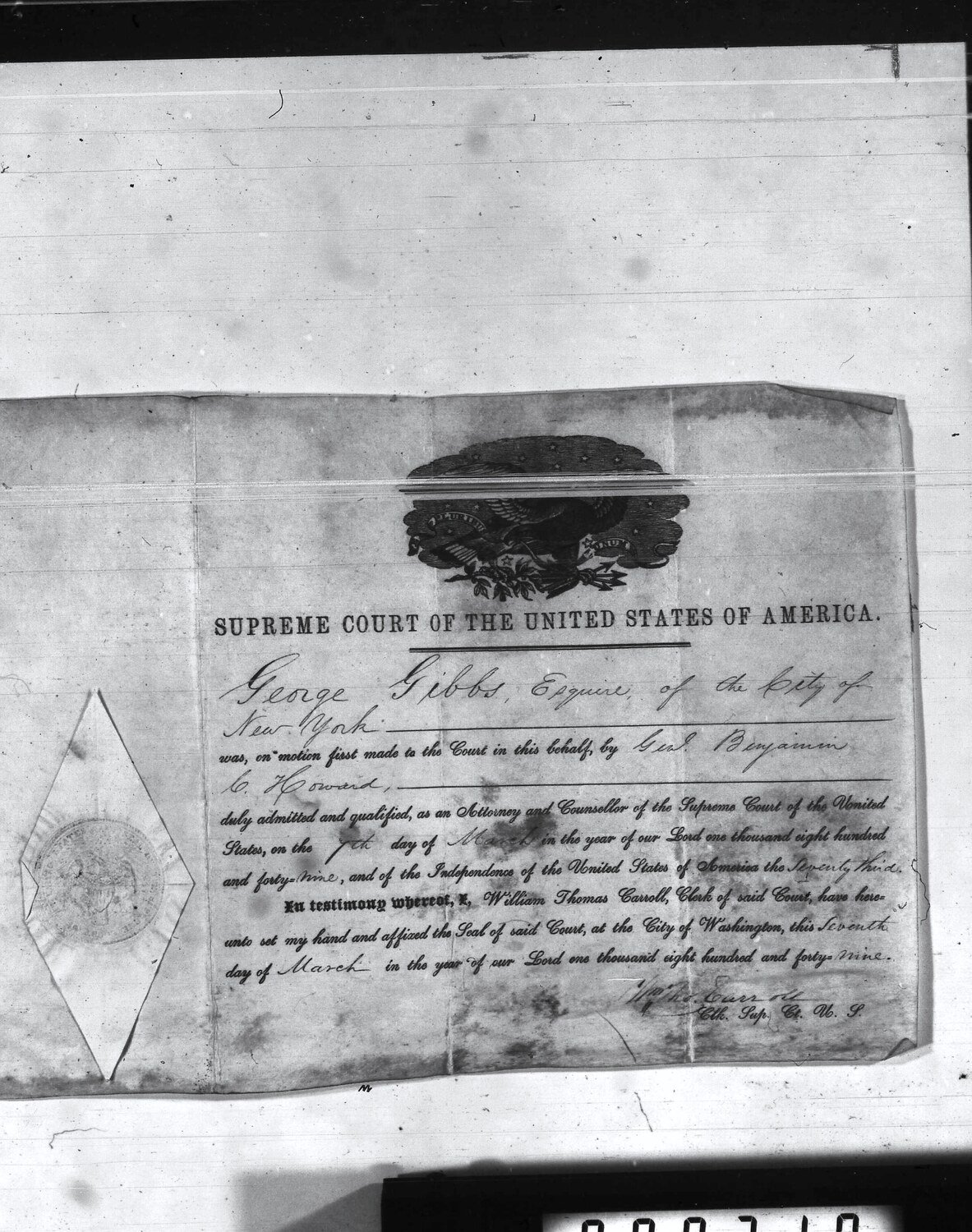
George Gibbs, Esquire, of the City of New York, admitted and qualified as Attorney and Counsellor of the Supreme Court of the United States on motion of Gen. Benjamin C. Howard; signed Wm. Thos. Carroll, Clerk, Washington, with seal — weeks before his departure west
n.d. [1848]
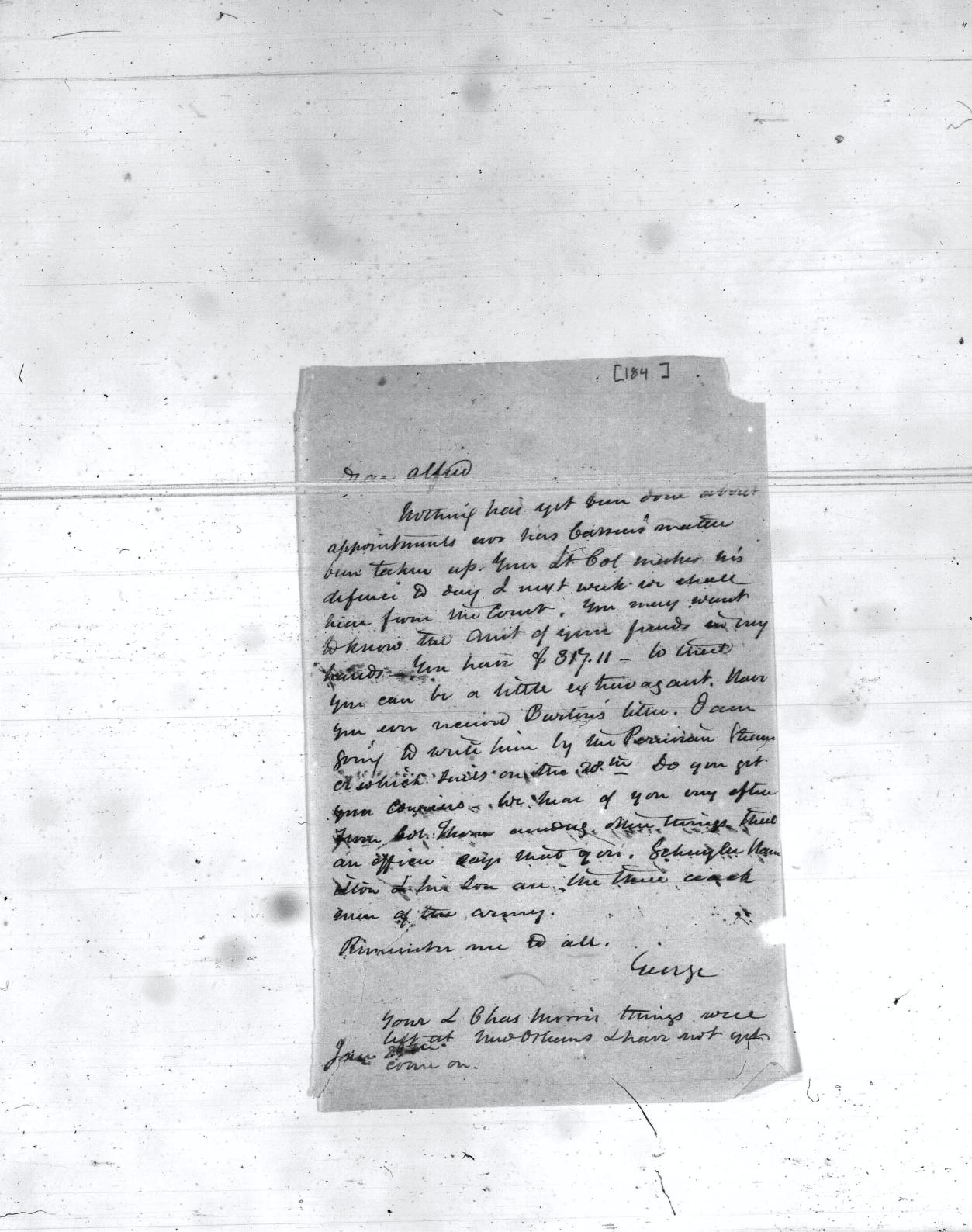
Nothing yet done about appointments nor Cassin's matter; "your Lt Col makes his defence to day" before the court; Alfred's funds in George's hands = $317.11 ("you can be a little extravagant"); will write Burton by the steamer of the 28th; Col. Thorn relays that an officer rates Alfred, Schuyler Hamilton, and one other as "the three crack men of the army"; PS — Alfred's and Chas. Morris's things left at New Orleans, not yet come on
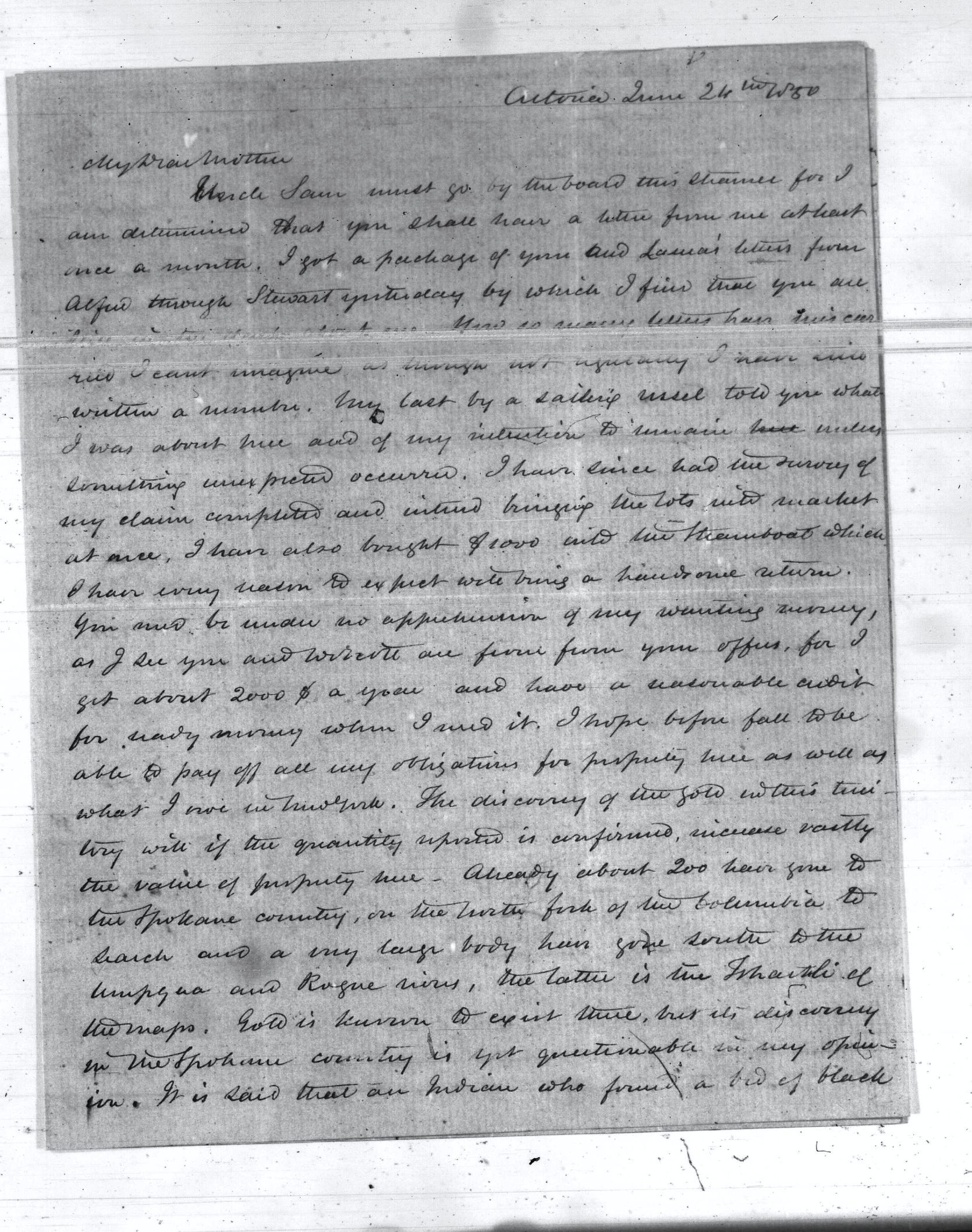
24 Jun 1850
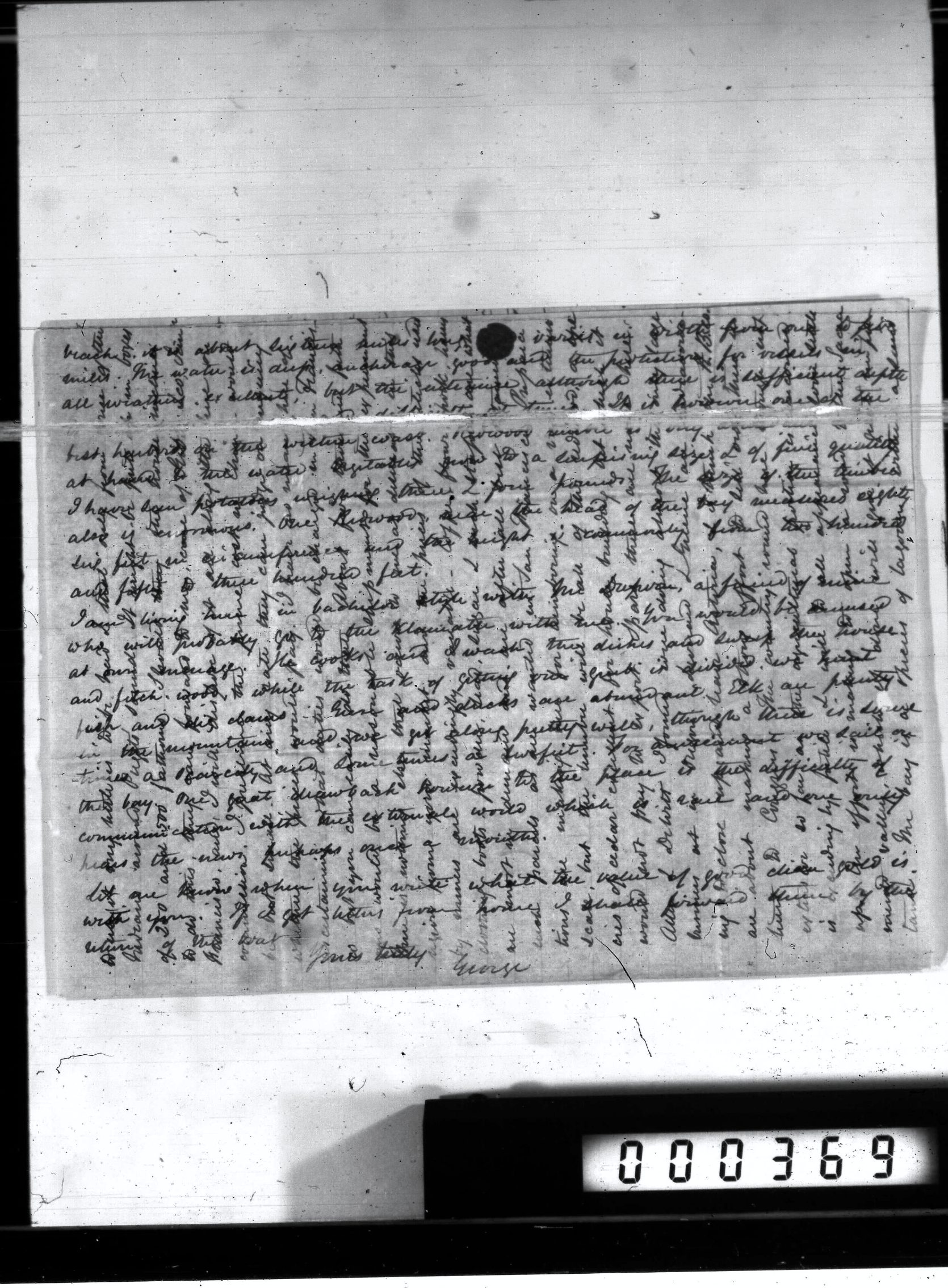
Resolves to write monthly; received a package of her and Laura's letters "from Alfred through Stewart"; survey of his Astoria claim complete, lots going to market; put $1,000 into the steamboat; earns ~$2,000/yr as no cause for worry; hopes by fall to clear all obligations in Oregon and New York; gold reported in the territory — ~200 men gone to the Spokane country on the north fork of the Columbia, a very large body south to the Umpqua and Rogue rivers ("the latter is the Klamath of the maps")
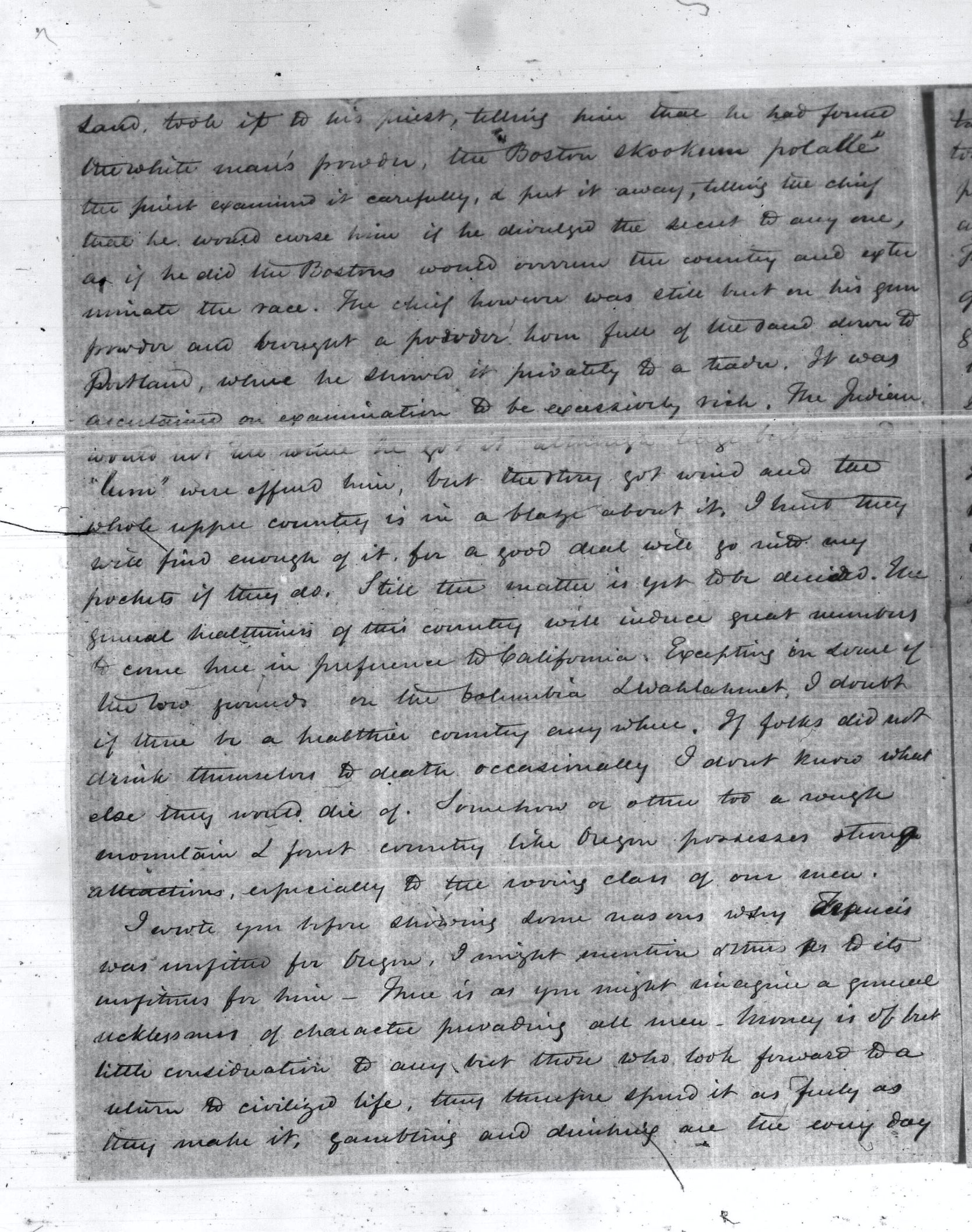
(cont.) 24 Jun 1850
Story of an Indian who found rich gold-bearing black sand and took it to his priest, calling it the white man's powder (gives the Chinook-jargon phrase); the priest hid it and threatened to curse him if he divulged the secret, warning that Americans would overrun the country and exterminate his people; the chief showed a powder horn of the sand to a Portland trader — "excessively rich," the whole upper country "in a blaze"; George hopes to profit; Oregon's healthfulness ("if folks did not drink themselves to death occasionally I don't know what else they would die of"); why Francis was unfitted for Oregon — general recklessness, money squandered, everyday gambling and drinking
(cont.) 24 Jun 1850
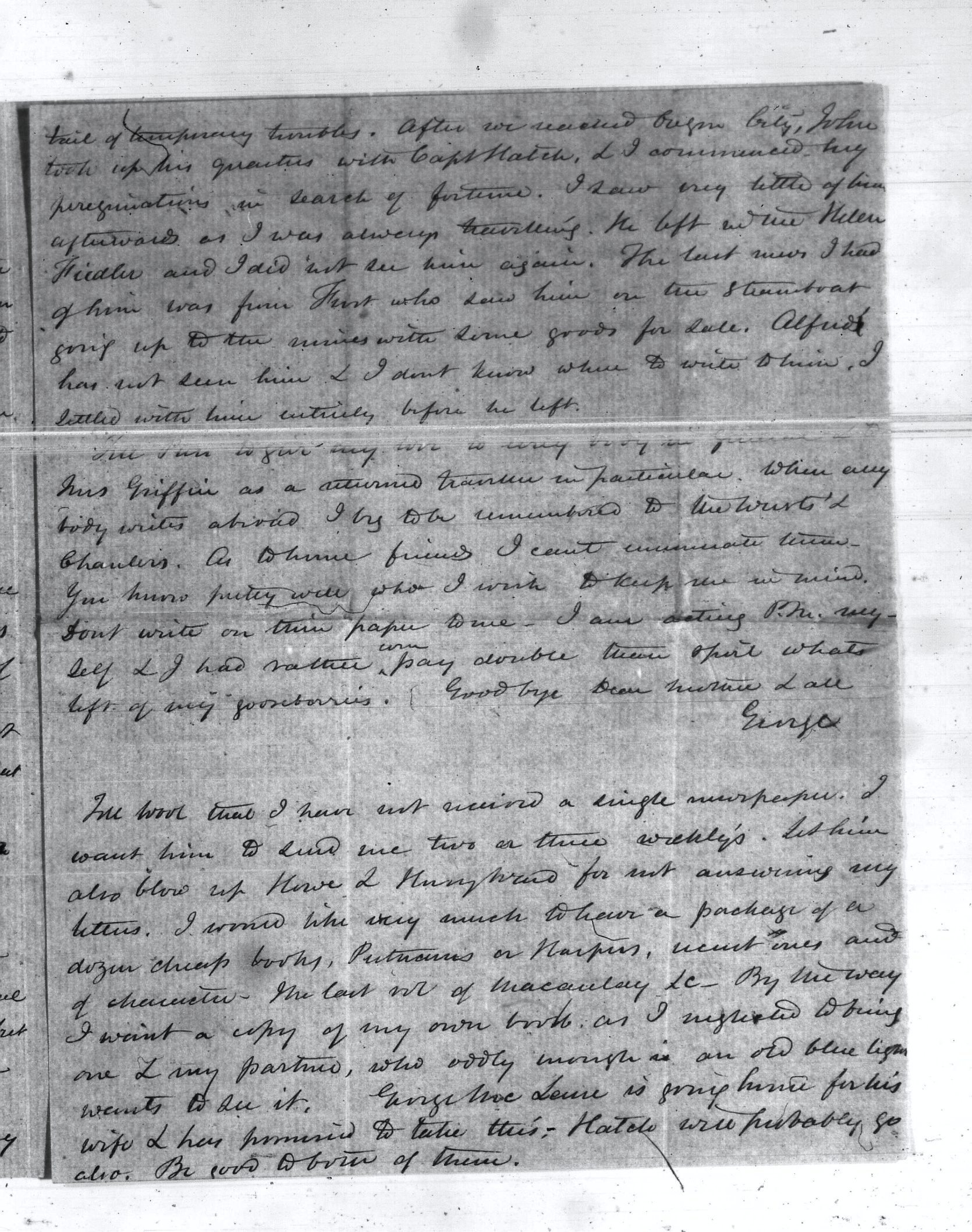
After reaching Oregon City, John quartered with Capt. Hatch while George began his "peregrinations in search of fortune"; John left on the Helen Fiedler(?) and was last seen by Frost on a steamboat headed to the mines with goods to sell; "Alfred has not seen him"; George settled accounts with him before he left; remembrances to Mrs. Griffin, the Wursts, Chaunceys; "I am acting P.M. myself"; signed George. PS: tell Wool not one newspaper has arrived — send two or three weeklies; scold Howe and Honeywell(?) for not writing; wants a dozen cheap Putnam's/Harper's books, the last volume of Macaulay, and a copy of his own book for his partner ("an old blue light"); George MacLure, going home for his wife, will carry this; Hatch probably going too
n.d. [ca. 1850-51]
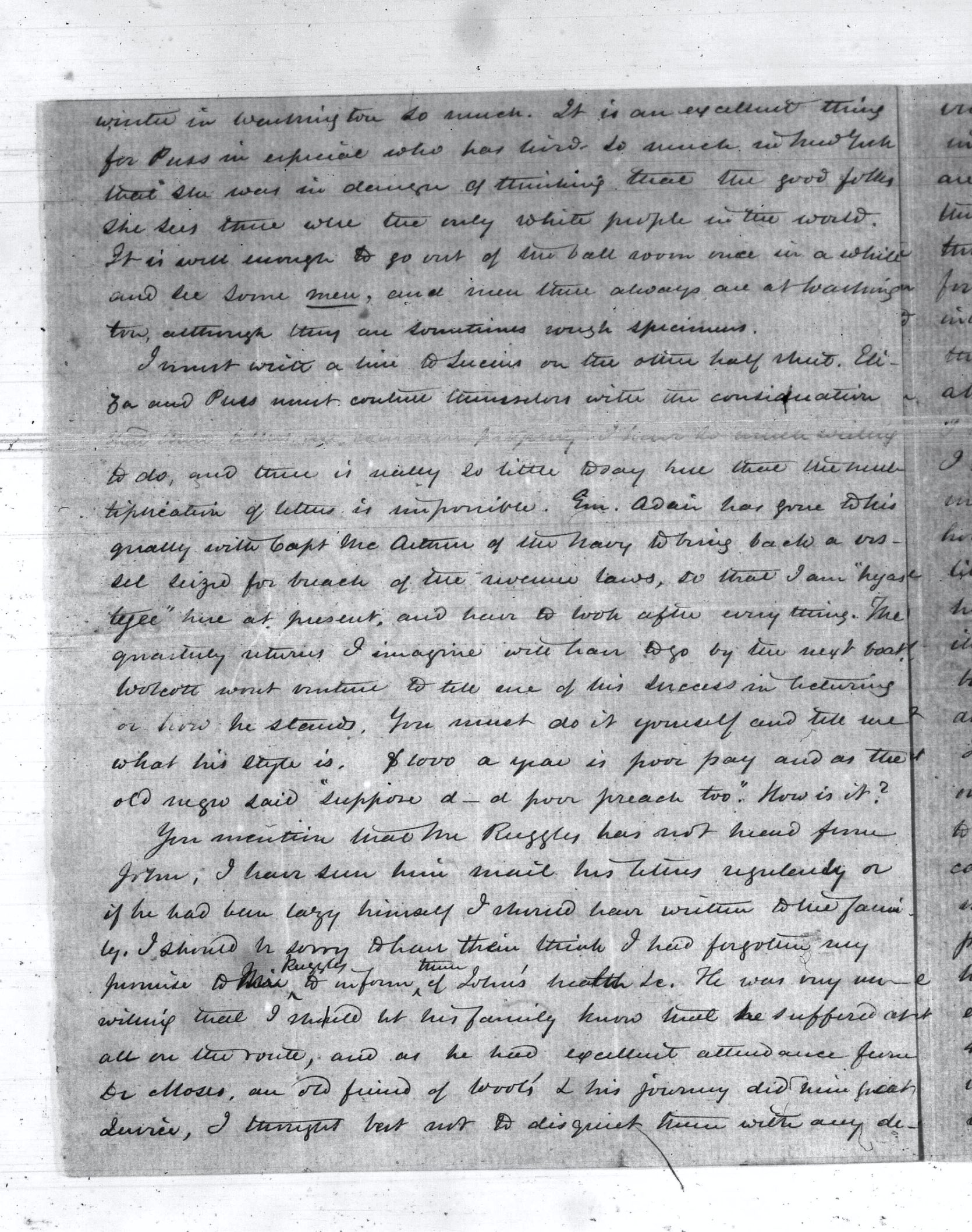
Glad the family wintered in Washington — good for "Puss," who risked thinking New Yorkers "the only white people in the world"; will write Lucius on the other half sheet; Adair has gone with Capt. McArthur of the Navy to bring back a vessel seized for breach of the revenue laws, leaving George "hyas tyee" (Chinook: head chief) in sole charge of the customs house and the quarterly returns; presses for word of Wolcott's lecturing — $1,000 a year is poor pay (adds a dialect joke in period racial language to that effect); assures her John Ruggles mails his letters regularly and kept his promise to Mrs. Ruggles — Ruggles did not want his family to know he suffered on the route, had excellent care from Dr. Moses (an old friend of Wool's), and the journey did him great service
(cont.) [ca. 1850-51]
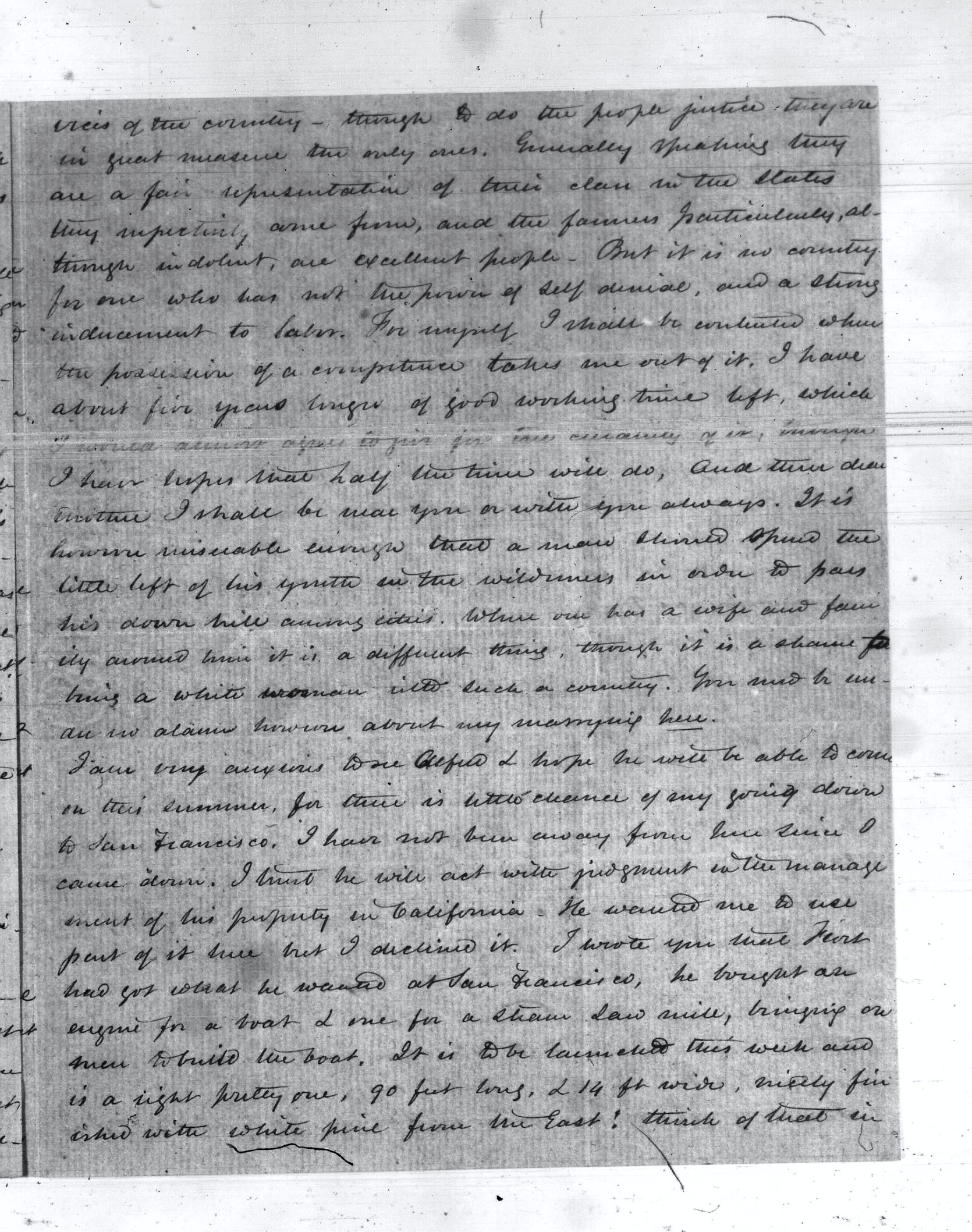
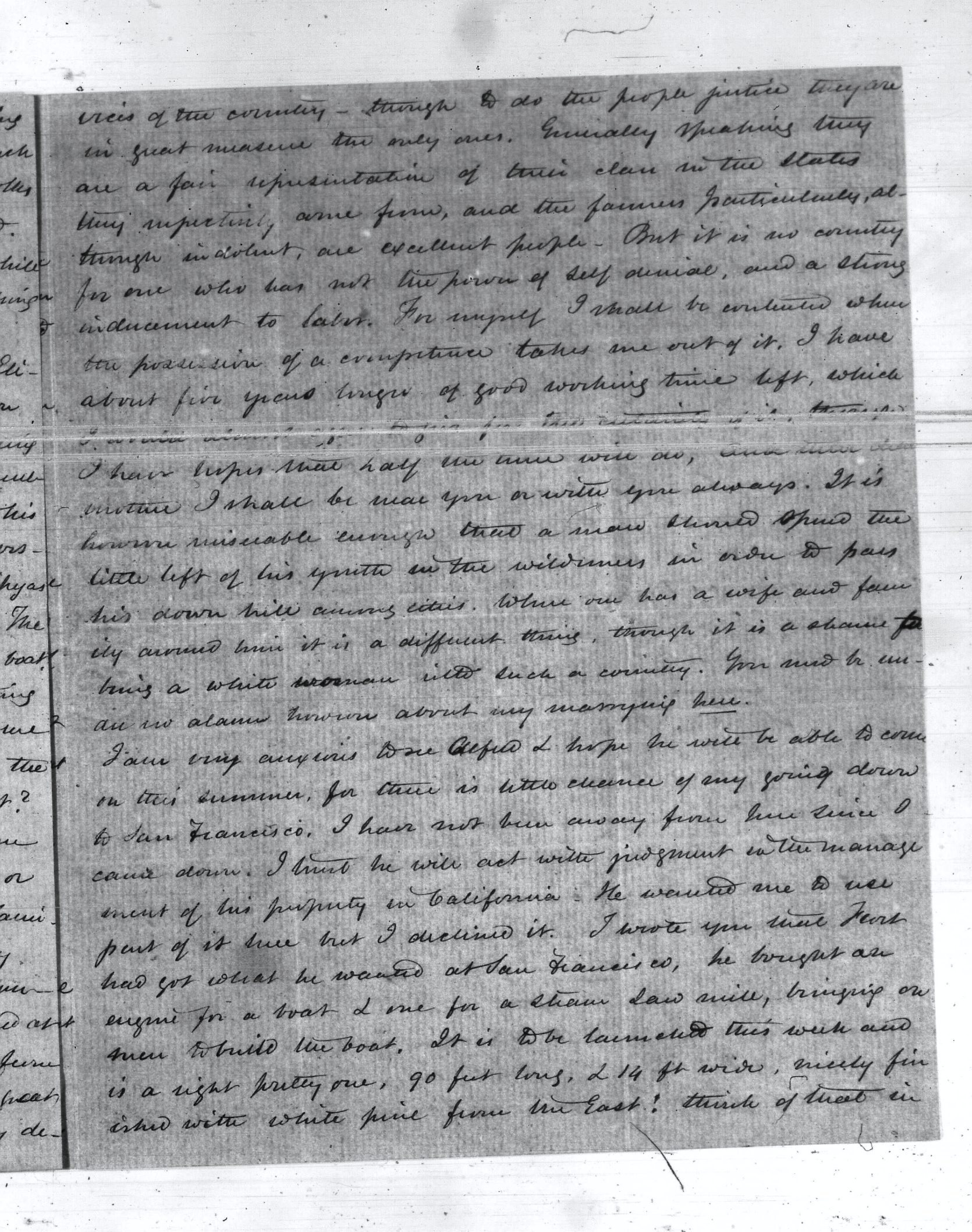
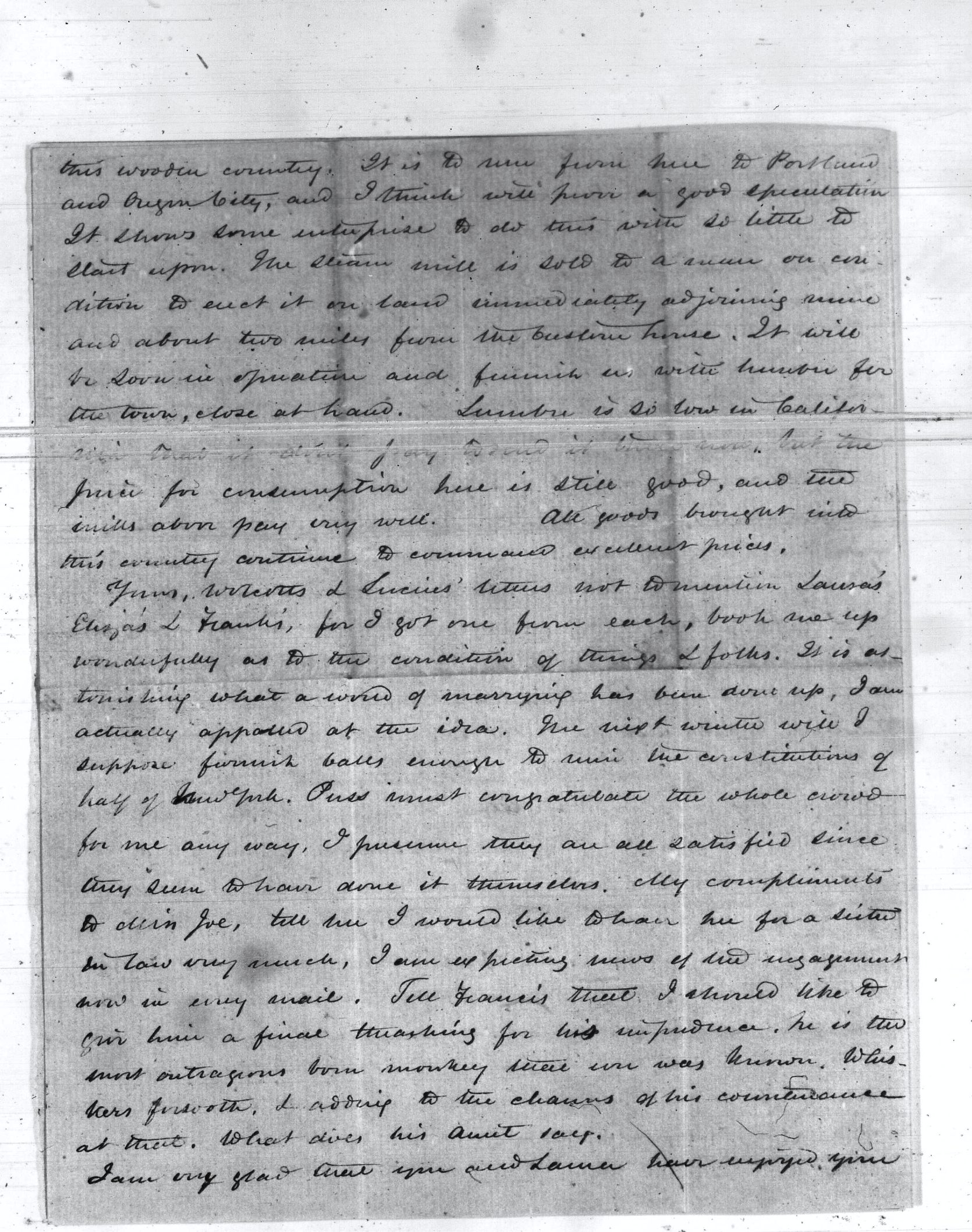
Character of Oregon settlers — fair representatives of their class, the farmers indolent but excellent people, "but it is no country for one who has not the power of self denial"; gives himself about five working years before a competence lets him come home to her, hopefully half that; laments spending "the little left of his youth in the wilderness," remarks (in period terms) that no white woman should be brought to such a country, and assures her he will not marry there; "I am very anxious to see Alfred & hope he will be able to come on this summer" — little chance of George getting to San Francisco; trusts Alfred will manage his California property with judgment — Alfred offered George the use of part of it, declined; Frost bought a boat engine and a steam sawmill engine at San Francisco; the 90 ft x 14 ft boat, finished in Eastern white pine, launches this week
—
same interior page
1851-01-26
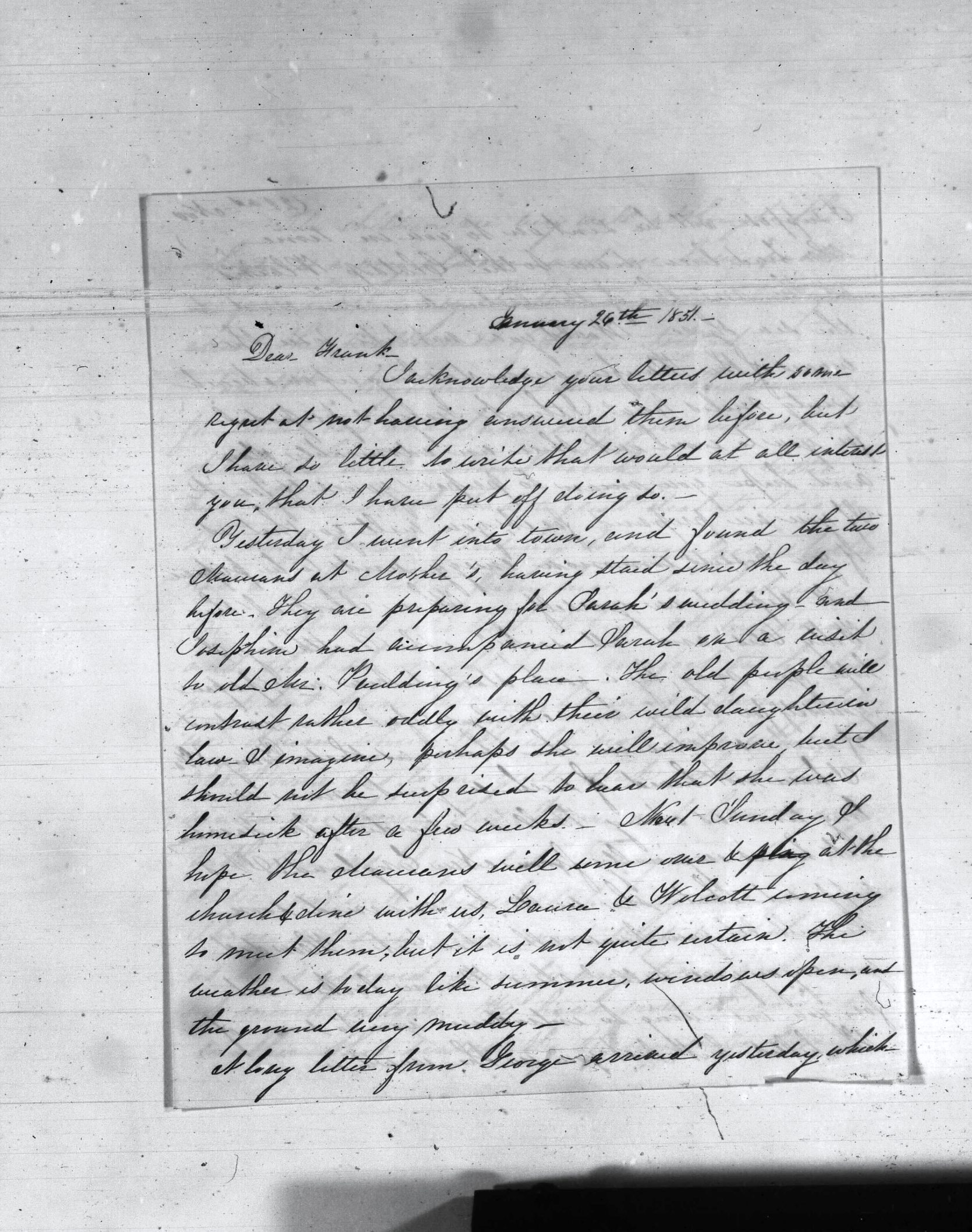
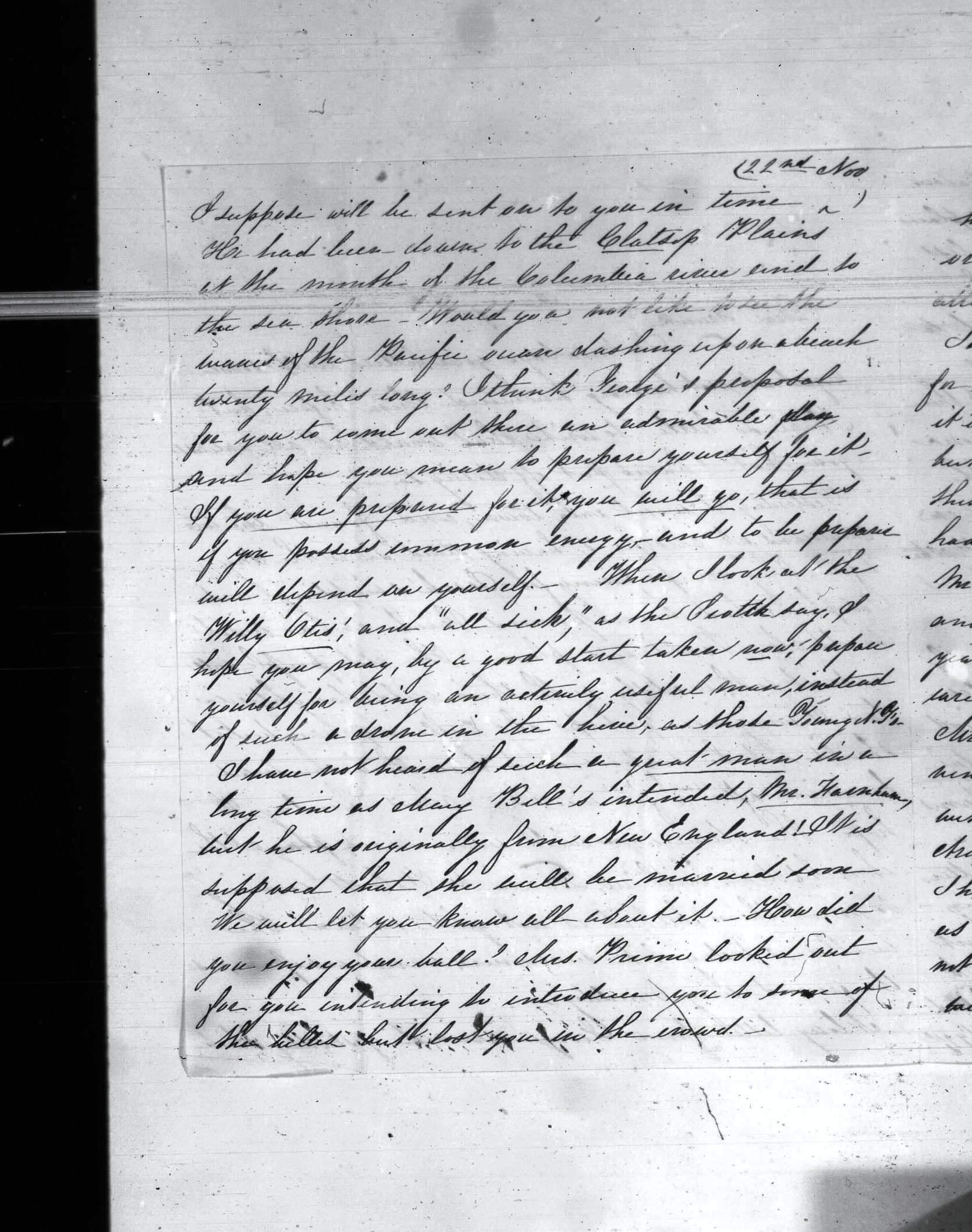
Mauran girls at Mother's, Sarah's wedding plans, Paulding visit, George's long letter arrived
1851-03-27
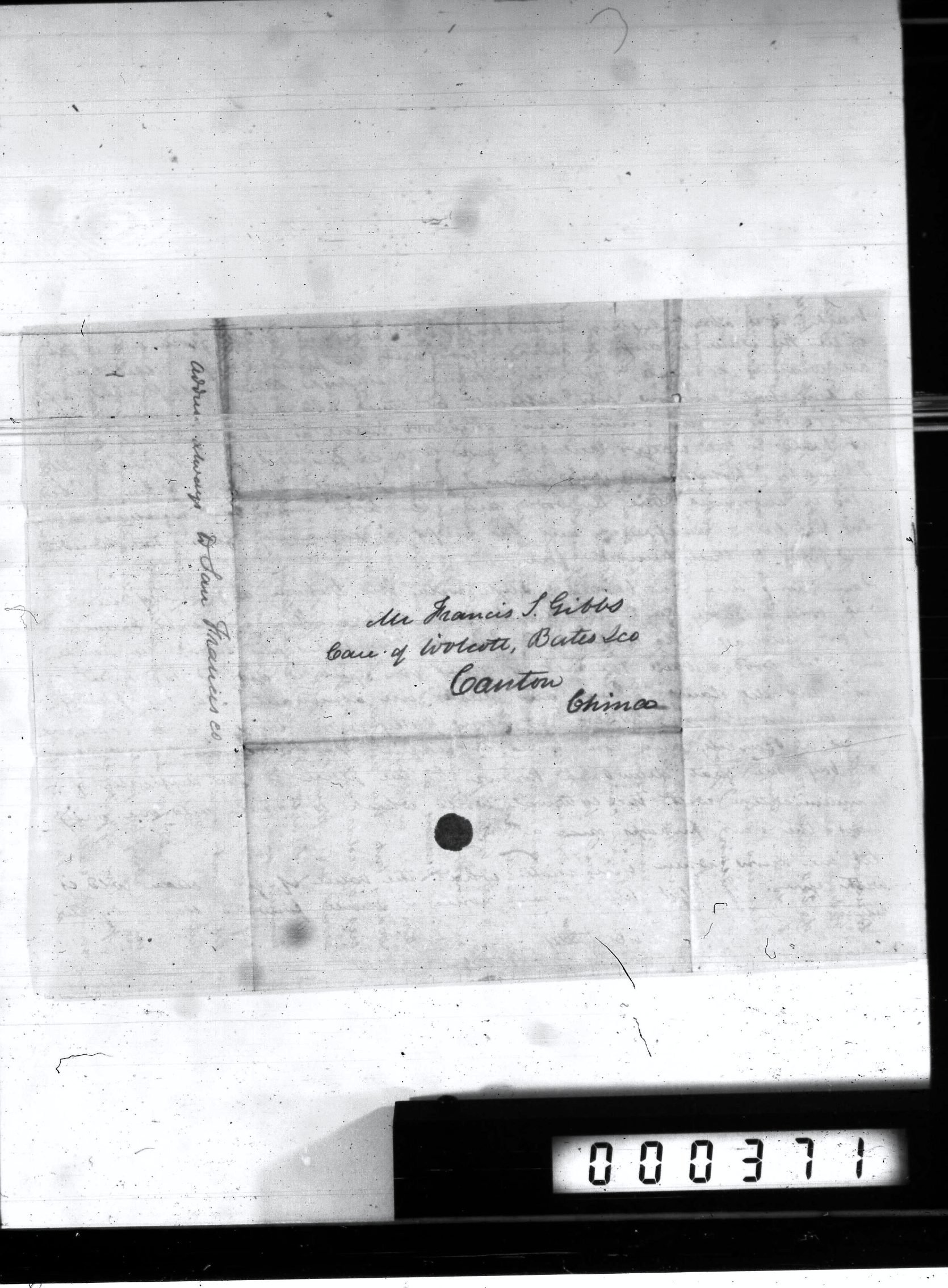
Terms of Francis's three-year engagement with Wolcott Bates & Co, Canton
1851-03-26
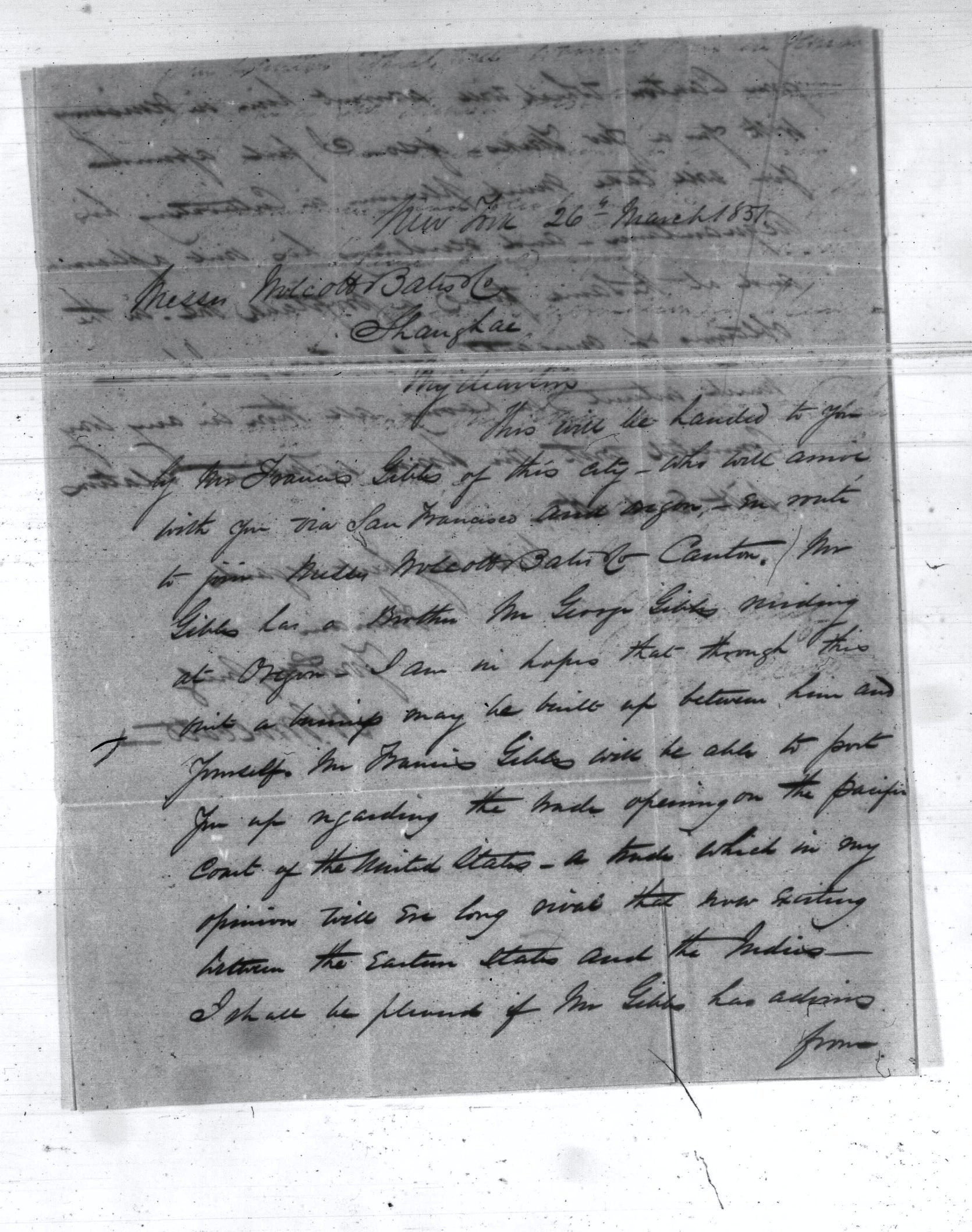
Introduces Francis, traveling via San Francisco AND Oregon; hopes for trade with brother George
(cont.)
Same introduction letter, re-photographed
1851-03-27
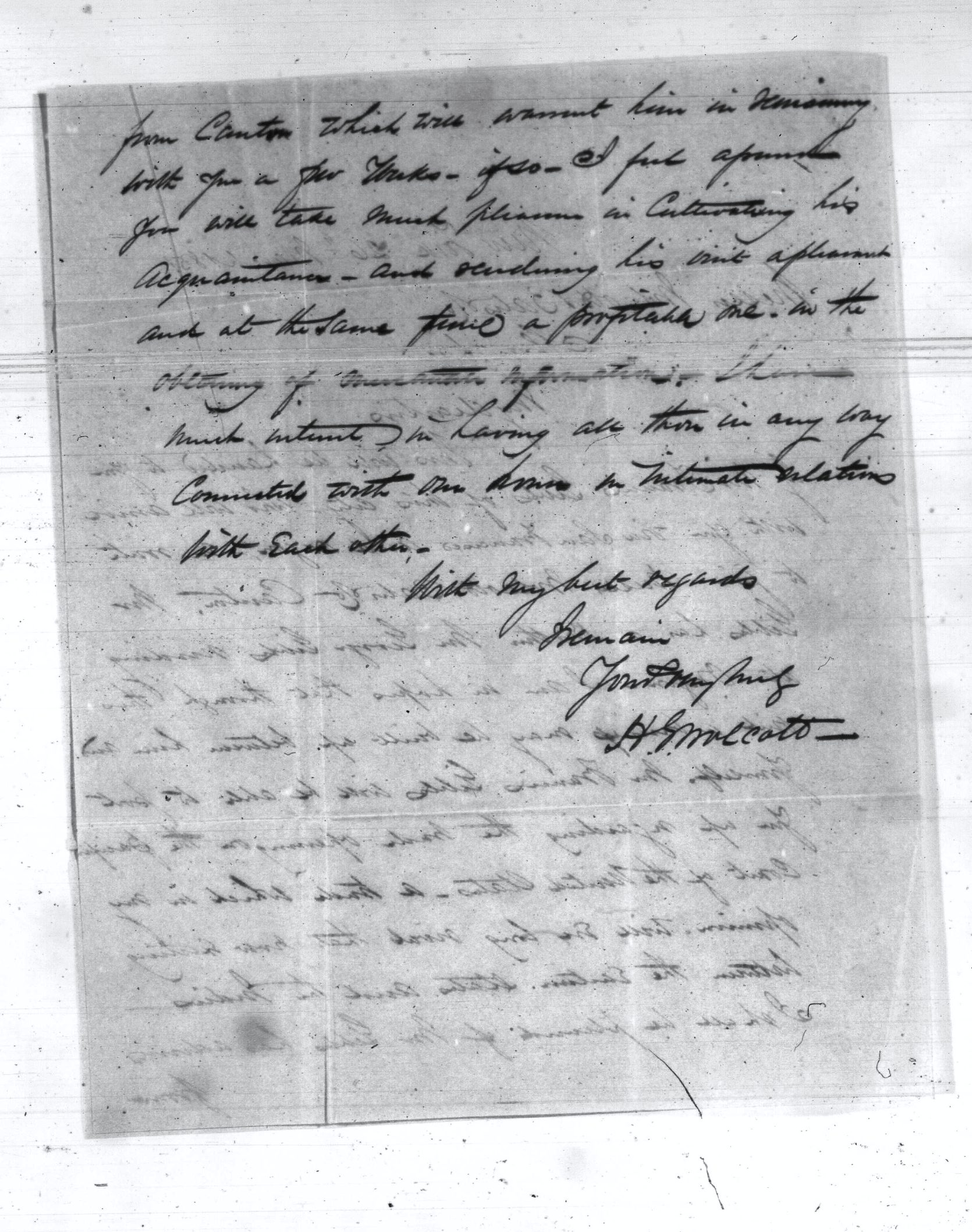
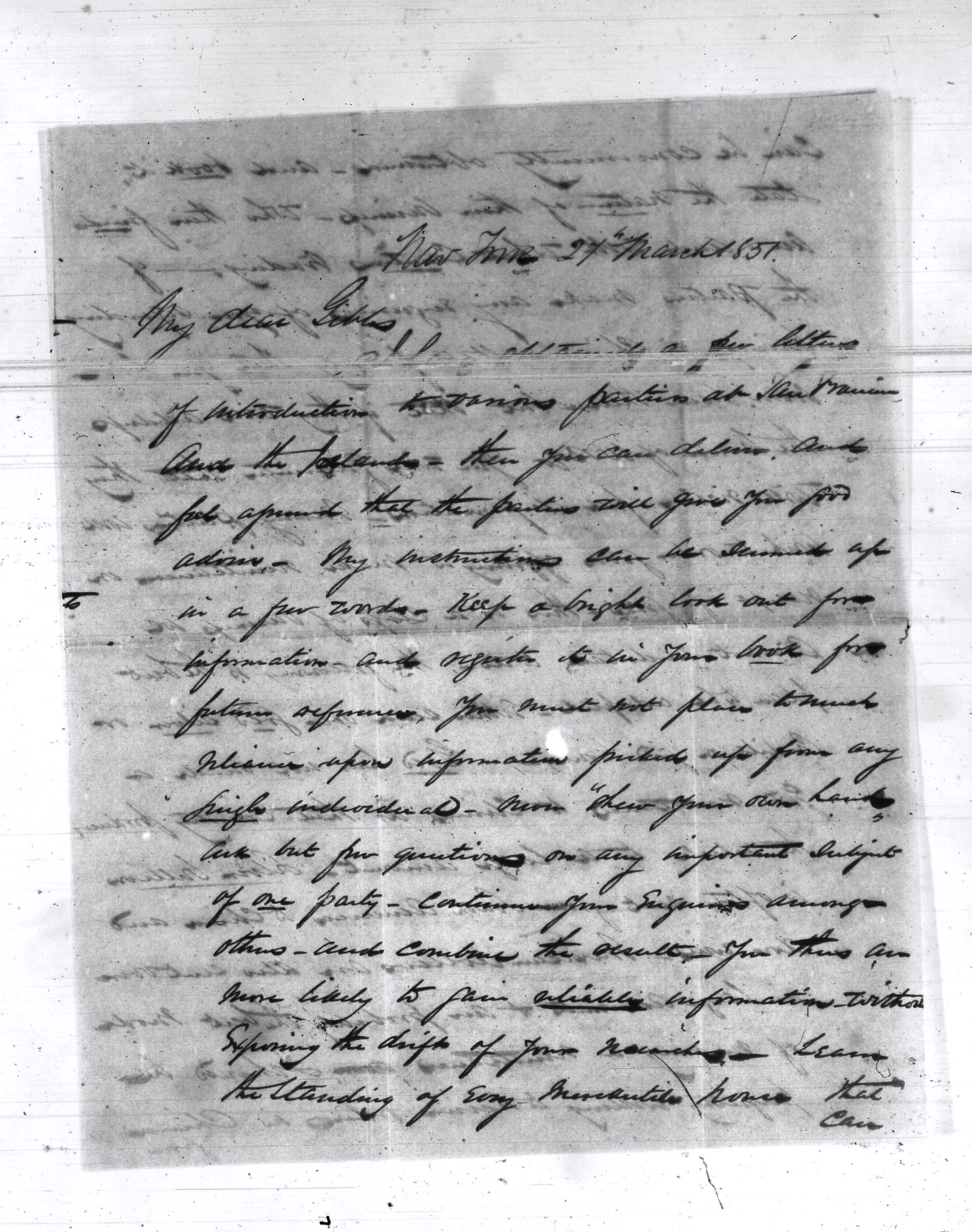
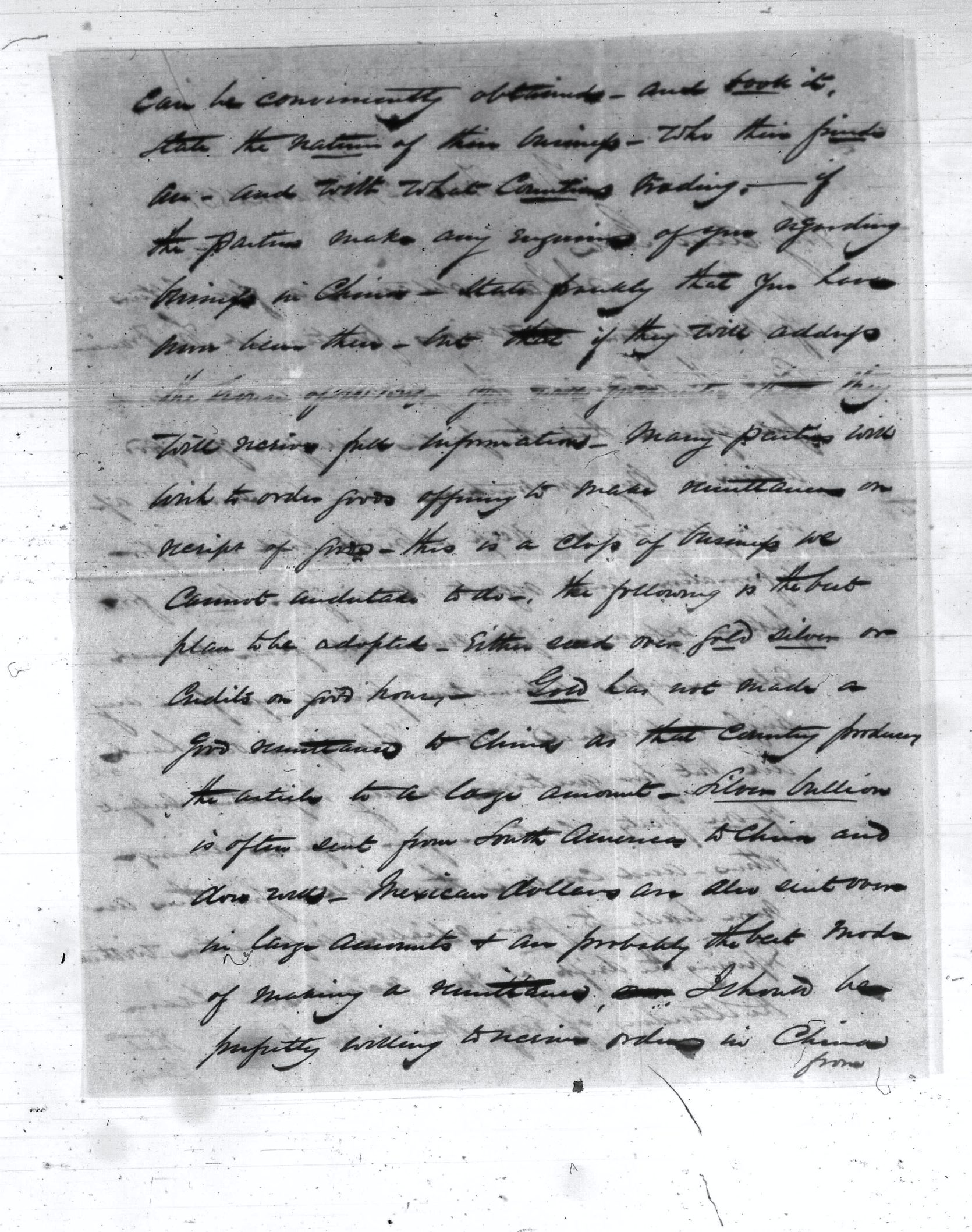
Instructions: letters of introduction for San Francisco/Islands; gather commercial intelligence discreetly
1851-04-10
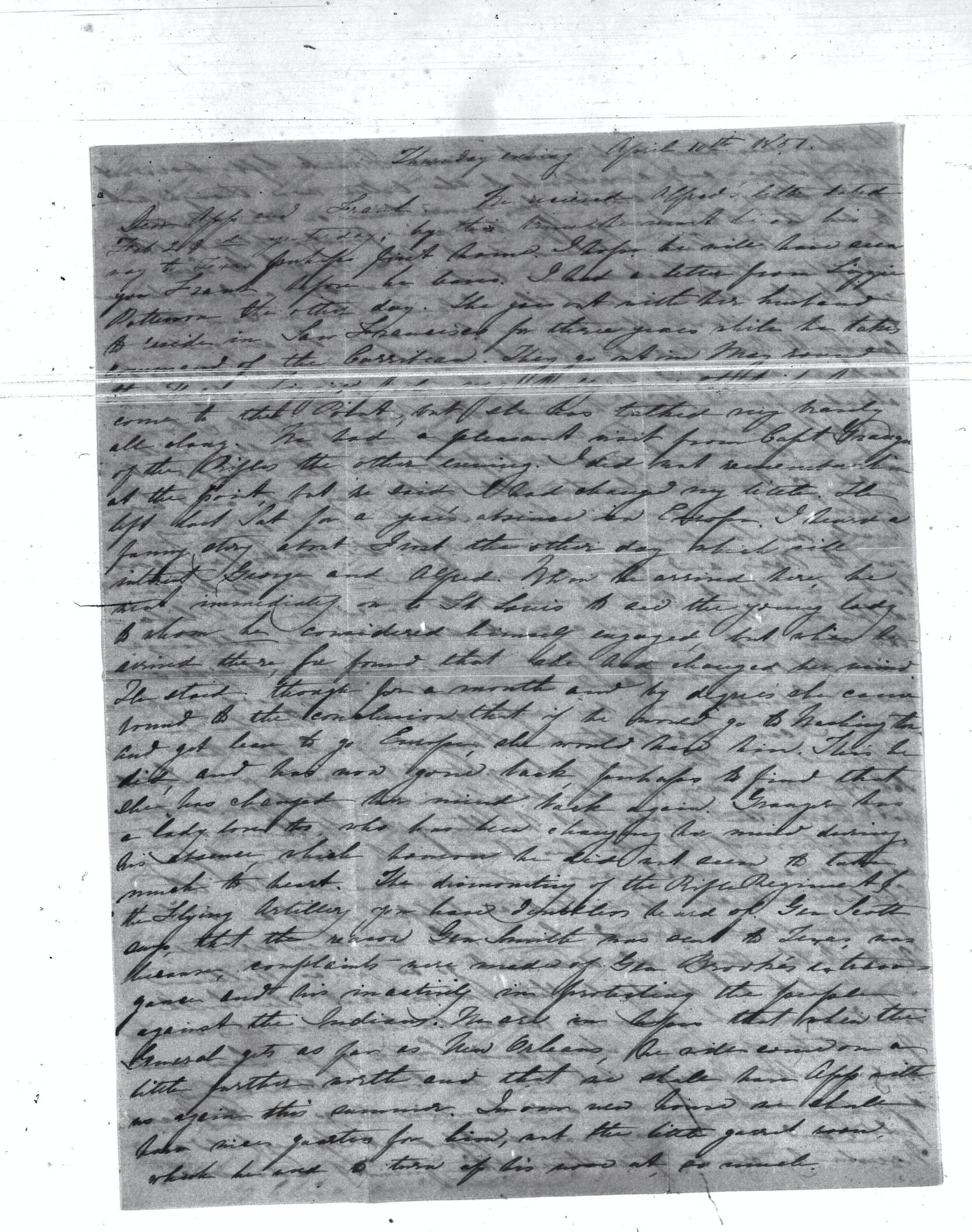
Alfred's Feb letter, heading Texas, may visit; Rifles dismounted; Capt Granger gossip; Gen Smith/Brooke
n.d. (c. late Apr 1851)
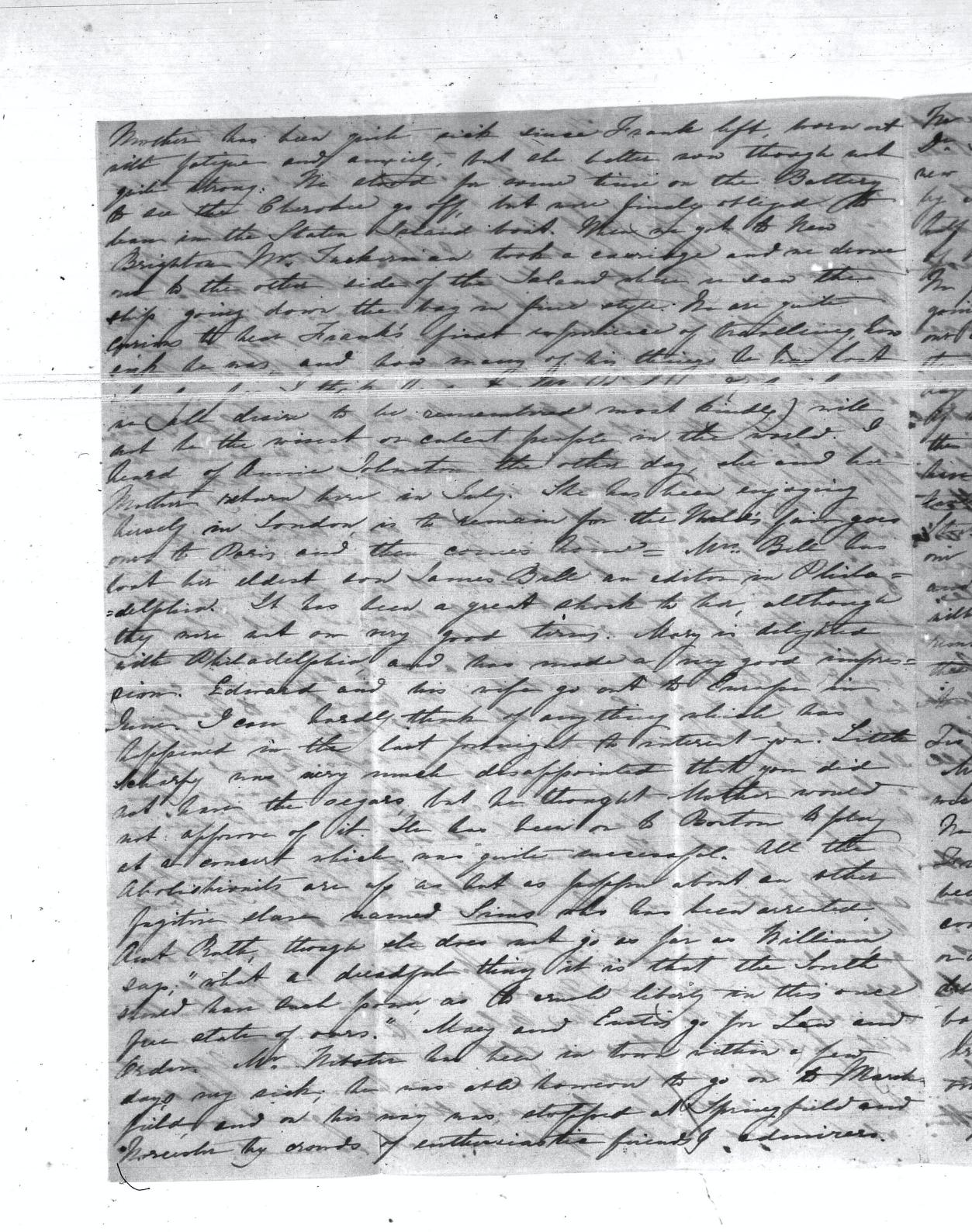
Watching Frank's steamer Cherokee depart from Battery; Mother ill; Sims fugitive-slave arrest news
n.d. (c. Apr-May 1851)
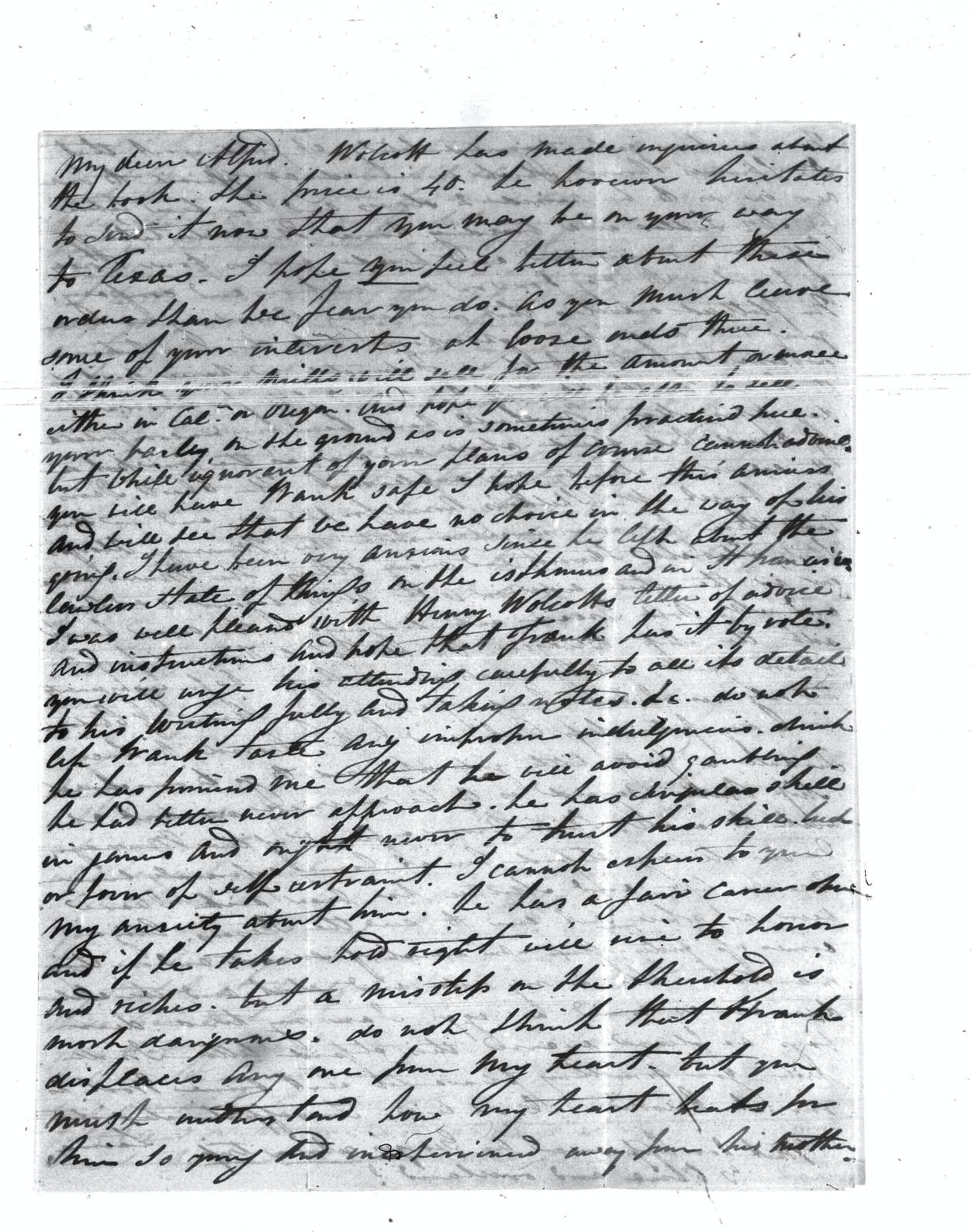
Book from Wolcott; Alfred's Texas orders, California interests; anxiety for Frank crossing Isthmus
9 May 1851
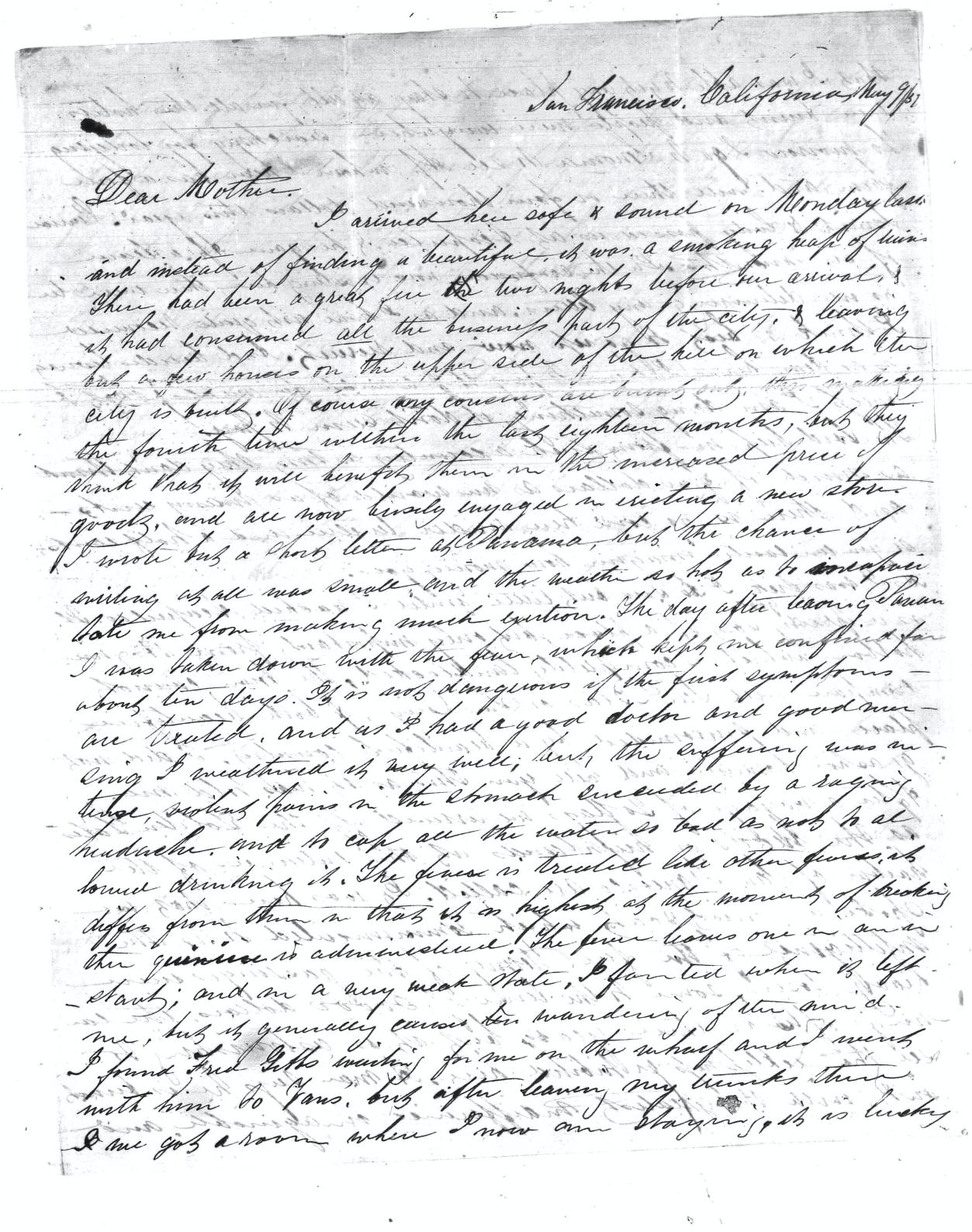
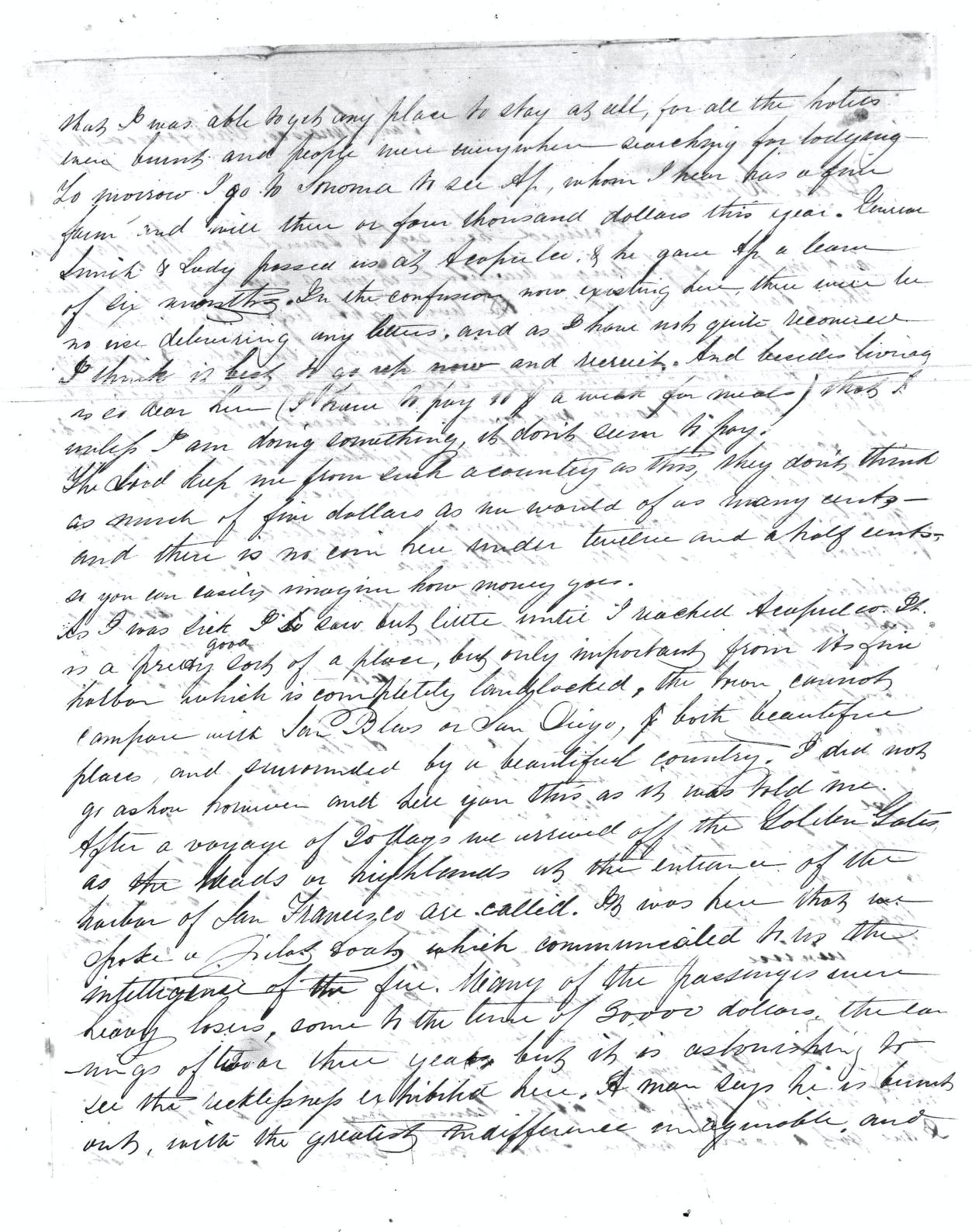
Arrived to find San Francisco a smoking ruin after great fire; Panama fever en route
11 May 1851
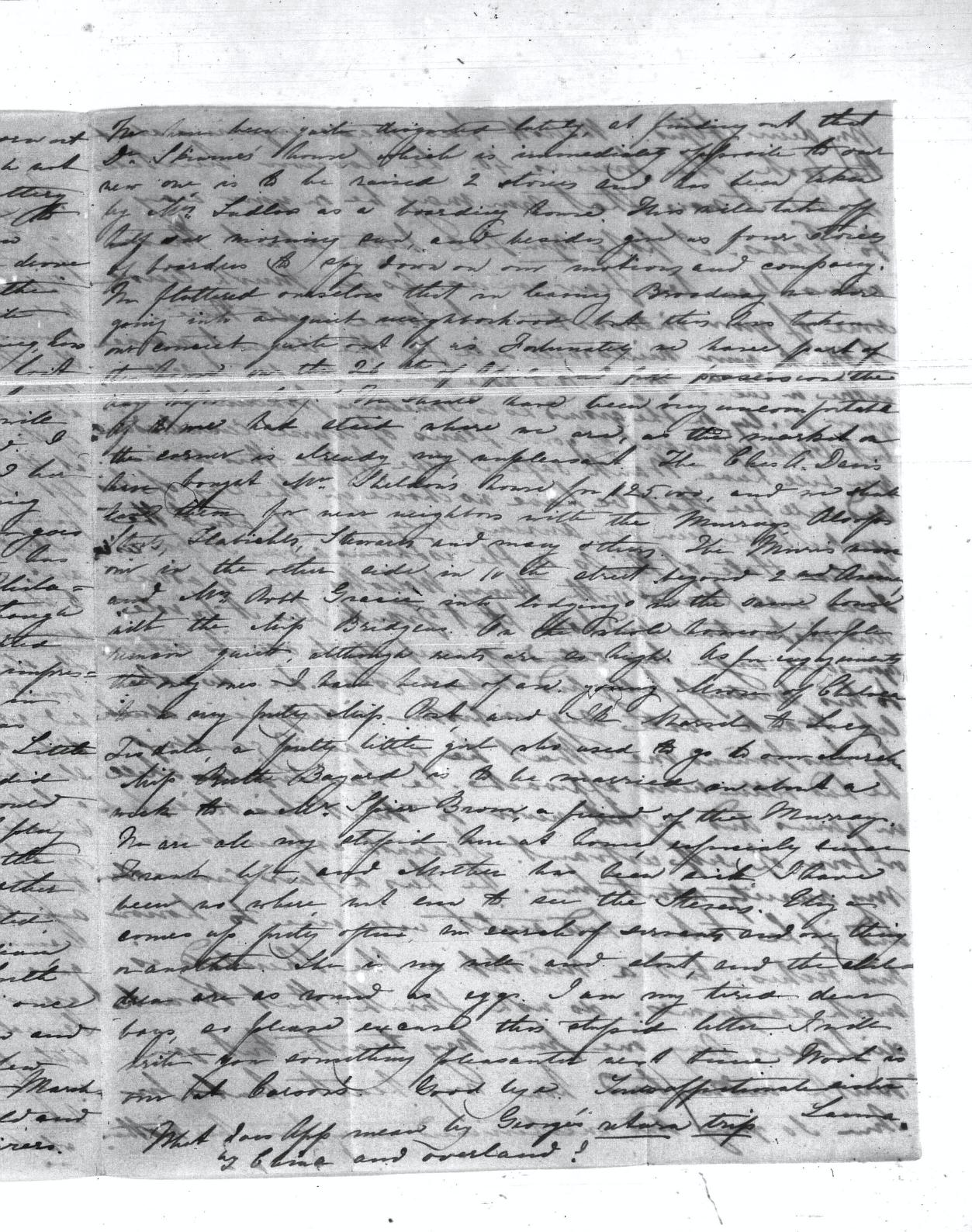
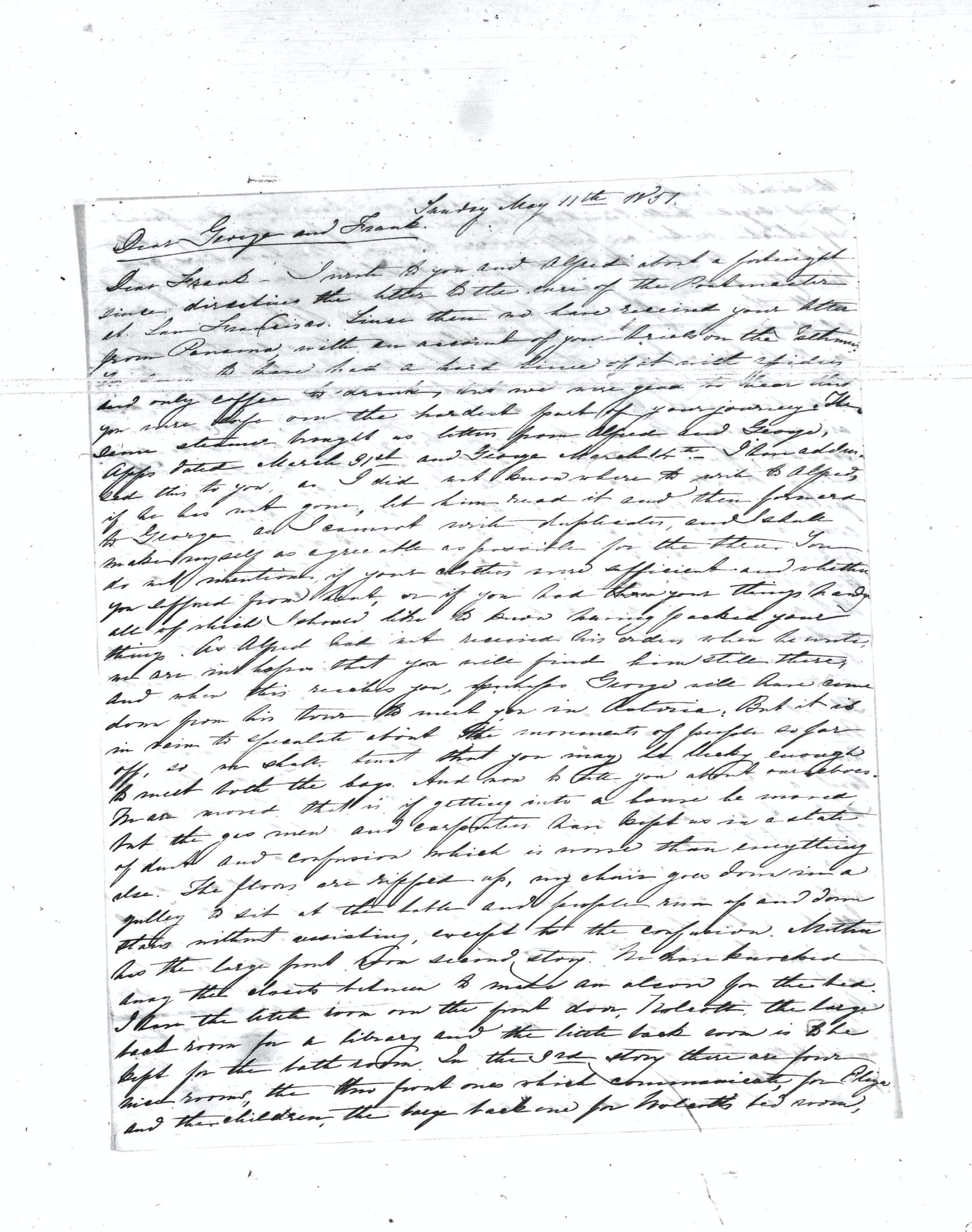
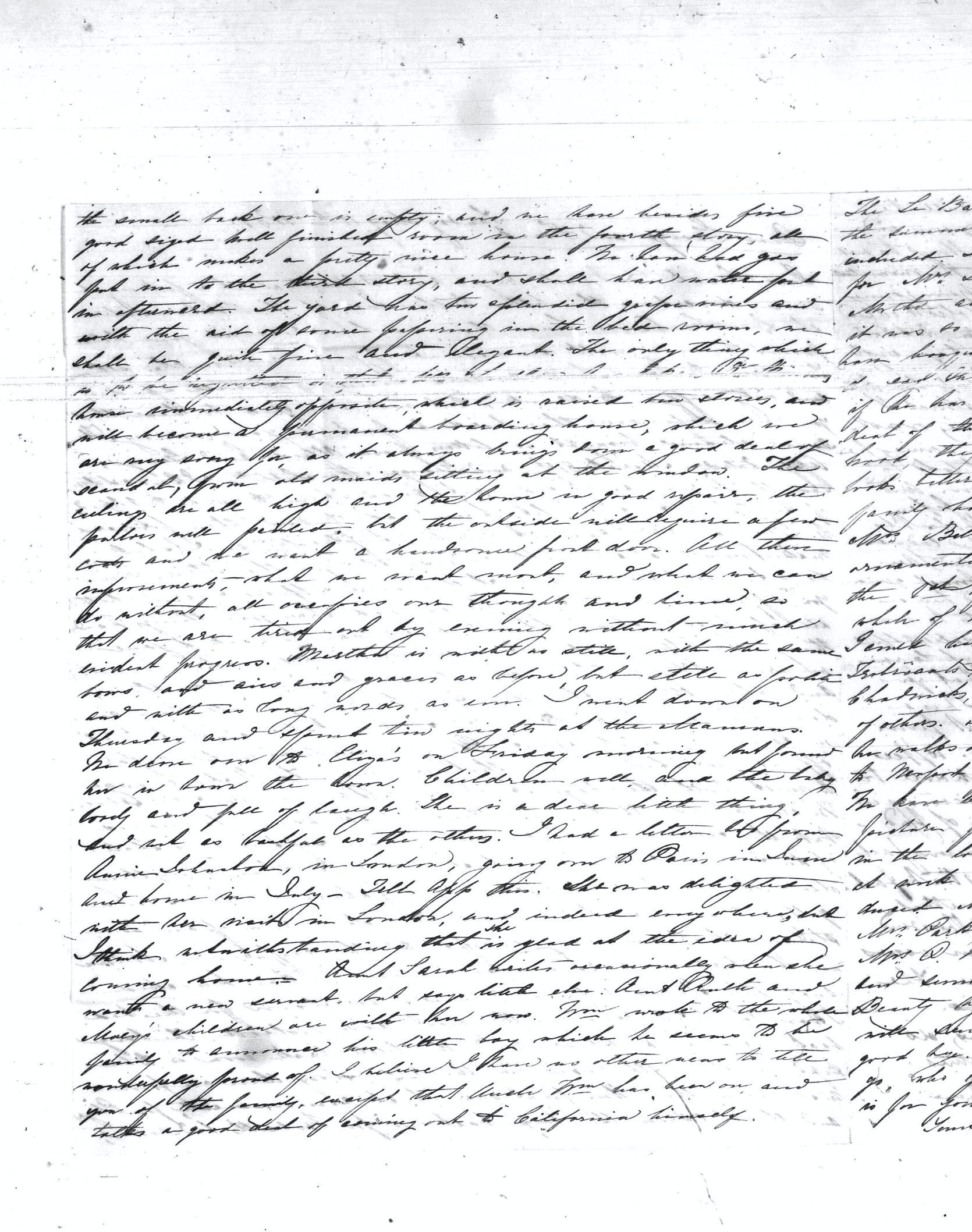
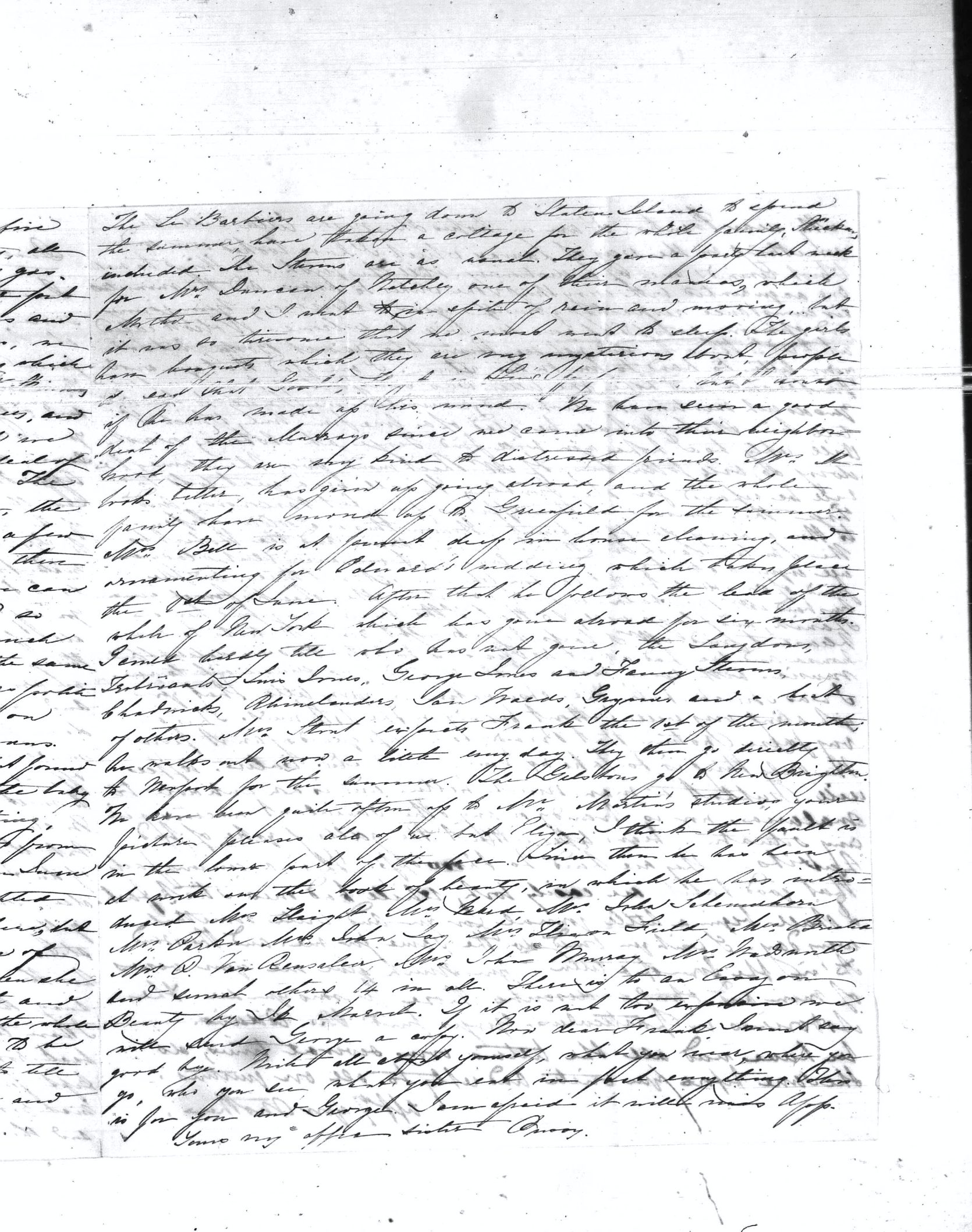
Letters from Panama, Alfred (Mar 21), George (Mar 14); family's new house move described
n.d. (c. May 1851)
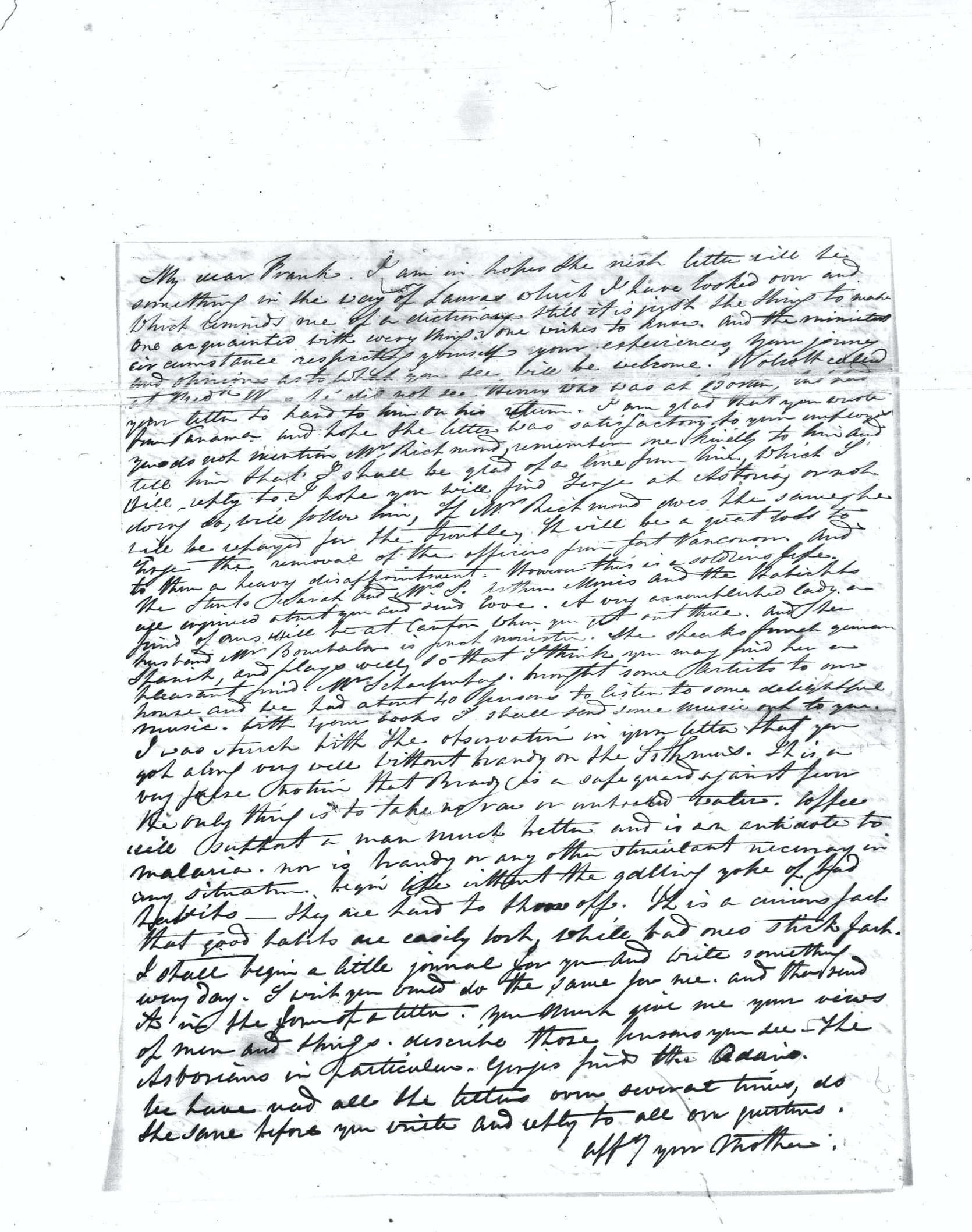
Hopes he finds George at Astoria; Fort Vancouver officers removed; shun brandy, gambling; journal request
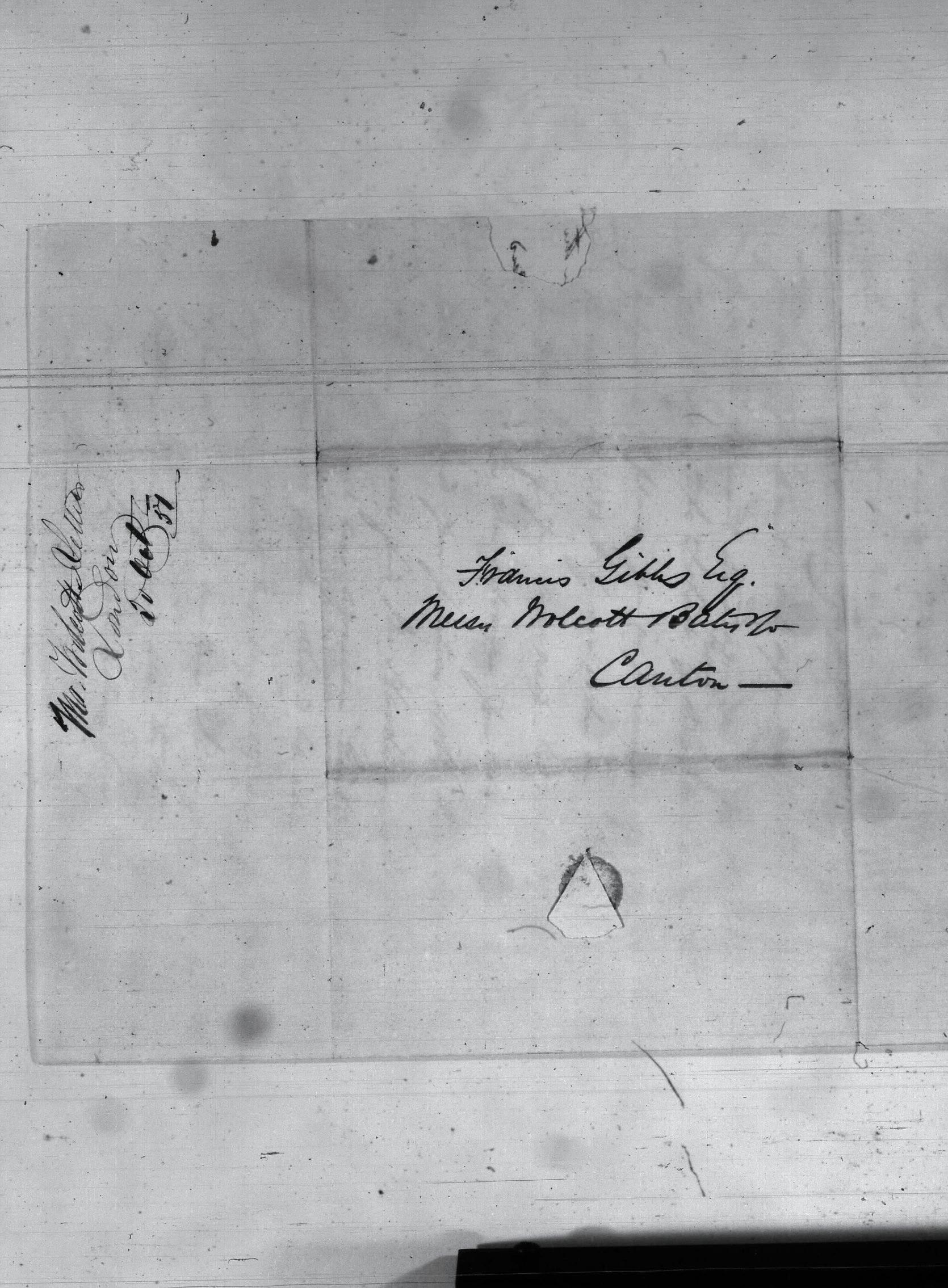
20 Oct 1851
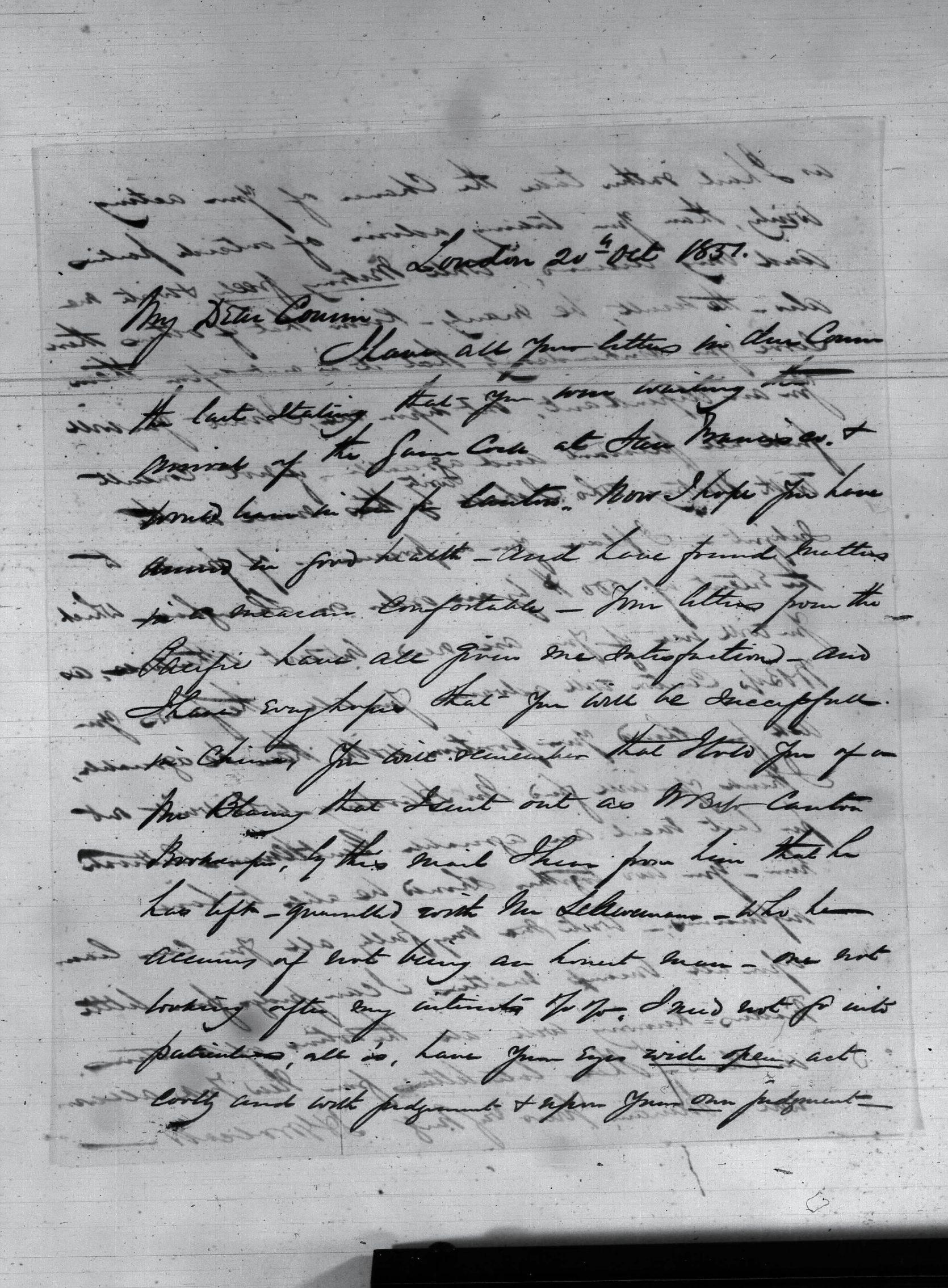
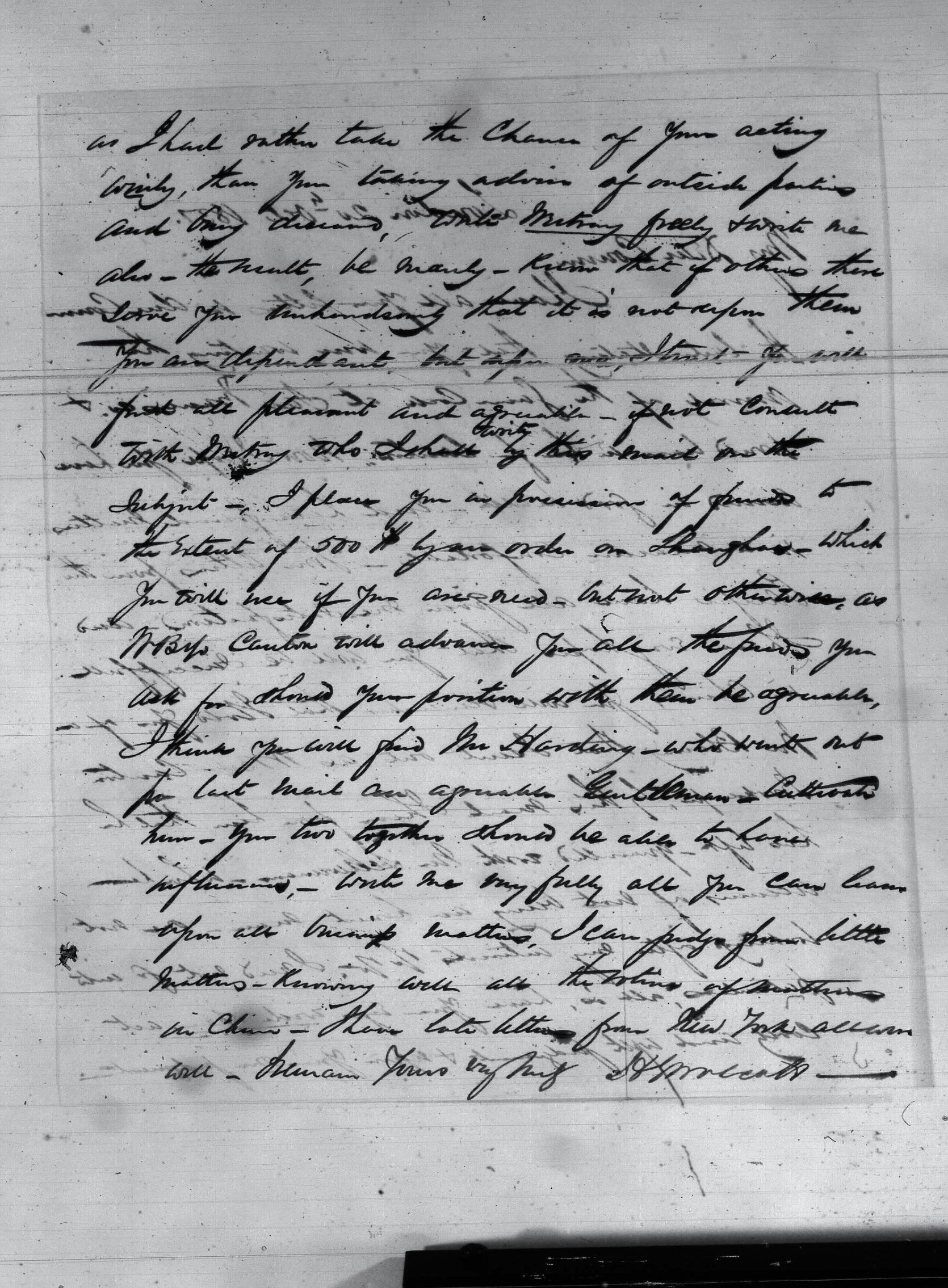
Awaits Frank's arrival at Canton per clipper Game Cock; warns of quarrelling Canton agents
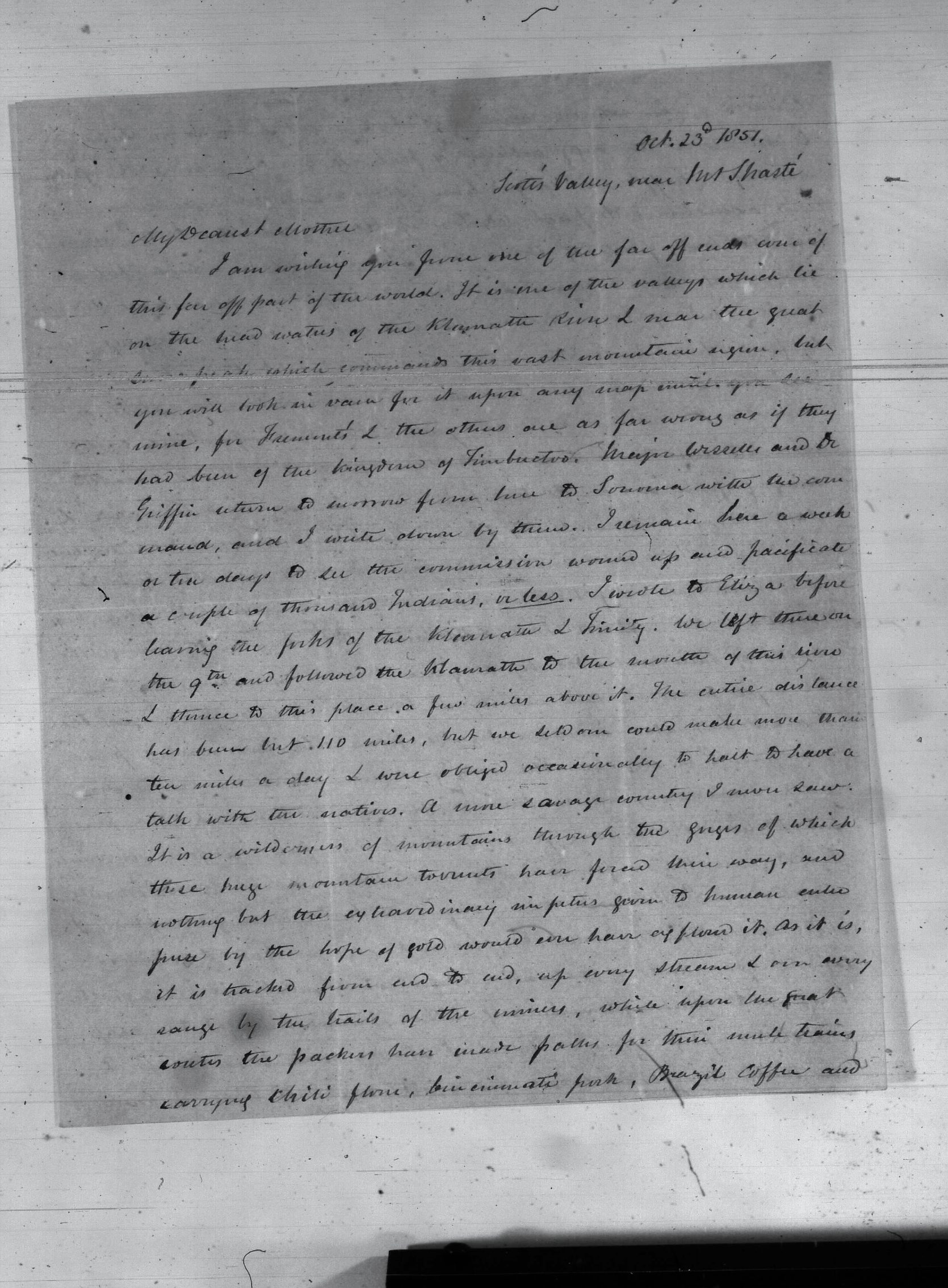
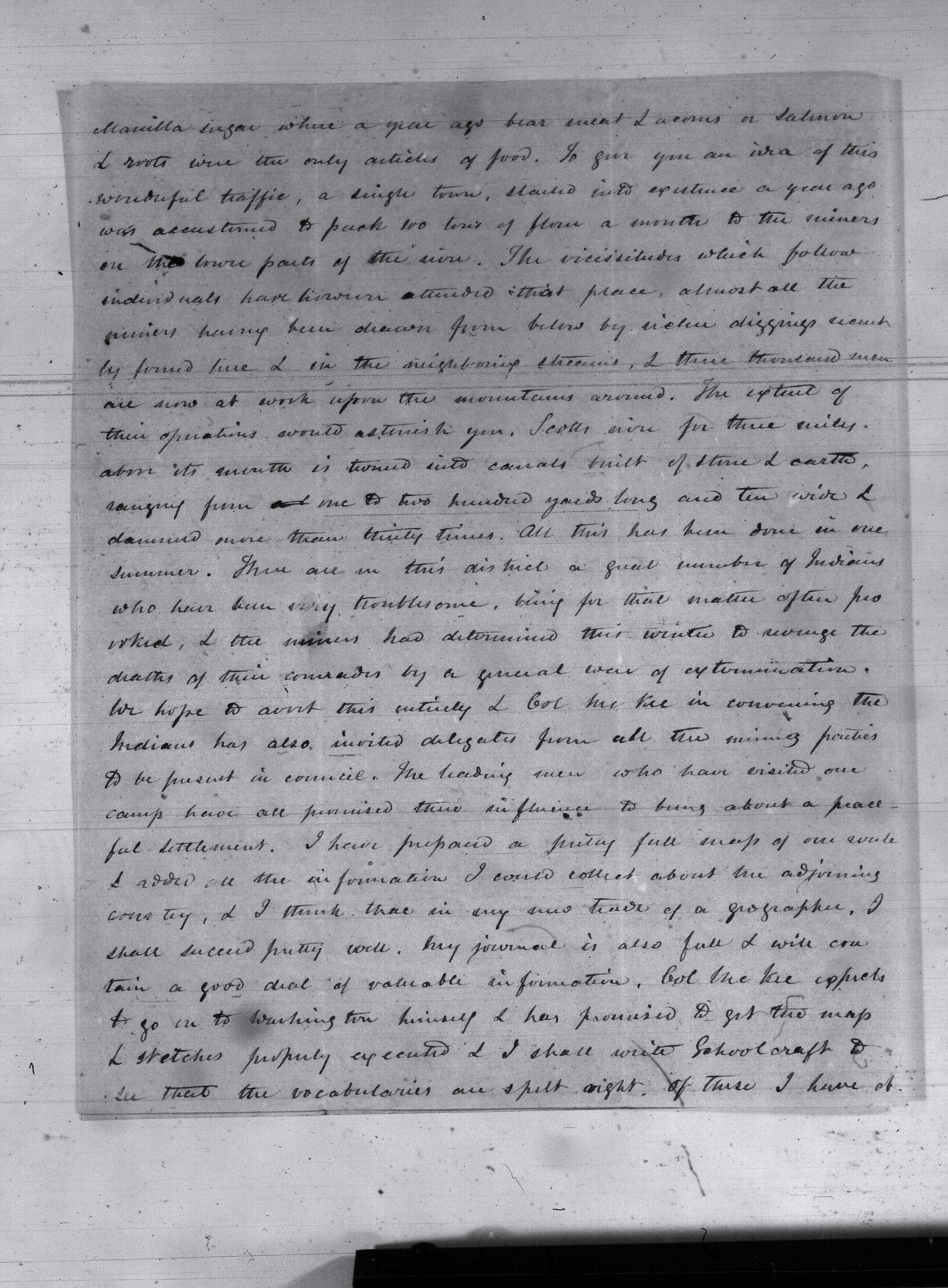
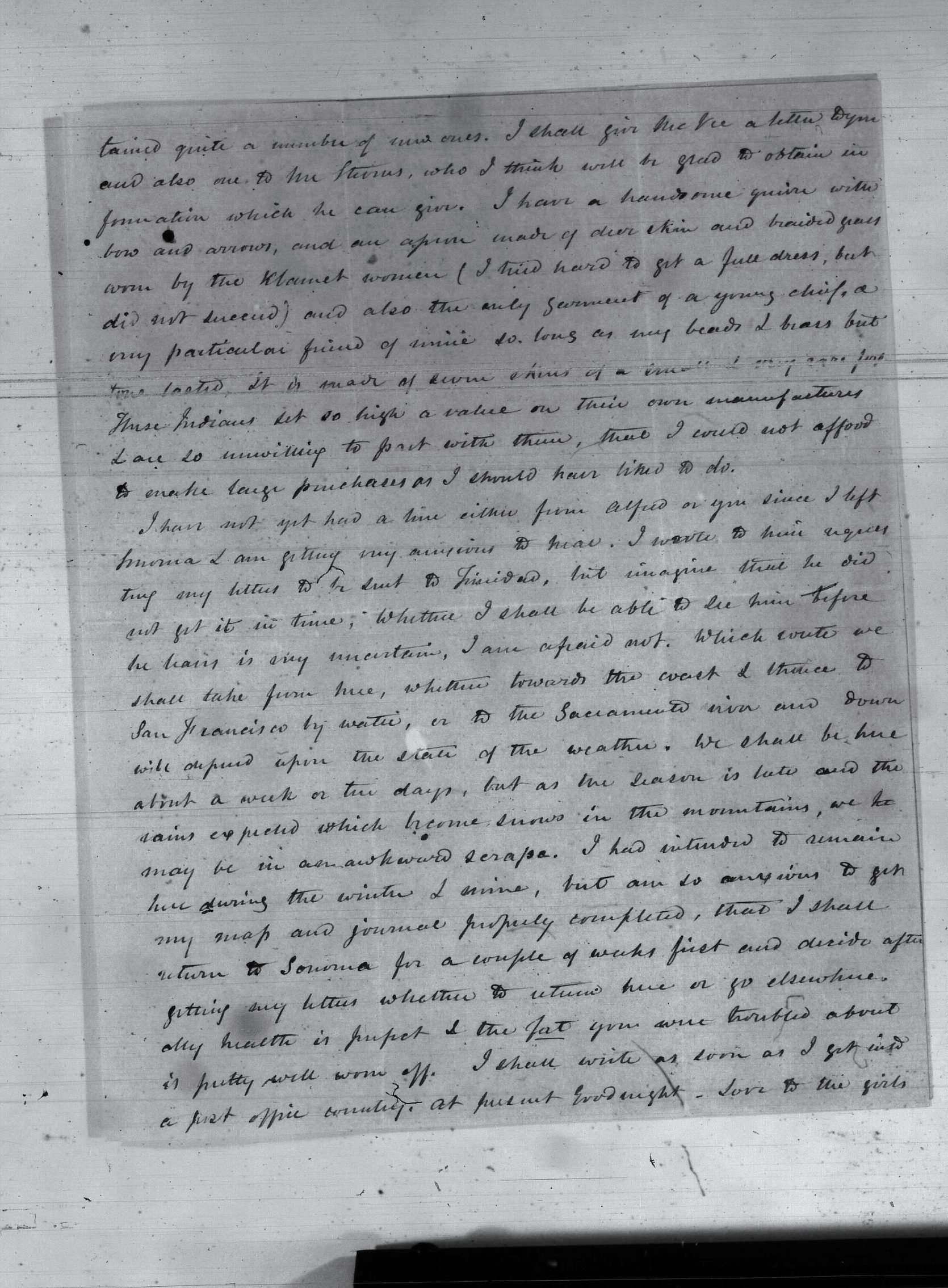
23 Oct 1851
From Scott's Valley near Mt. Shasta on McKee Klamath expedition; mapping; Wessells returns to Sonoma
9 Dec 1851?
health failing since parting; China accounts brilliant; sending Westray to take his place
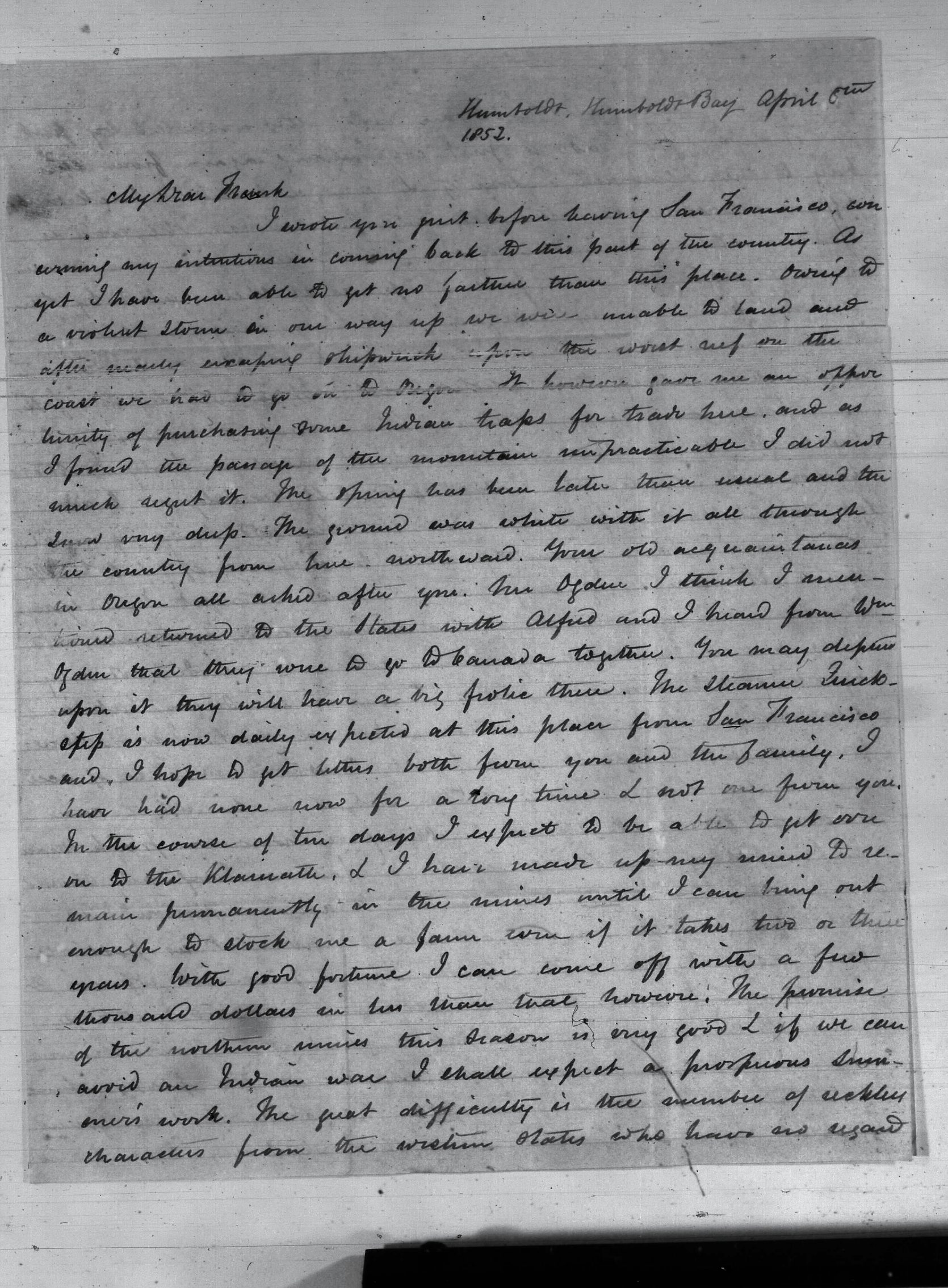
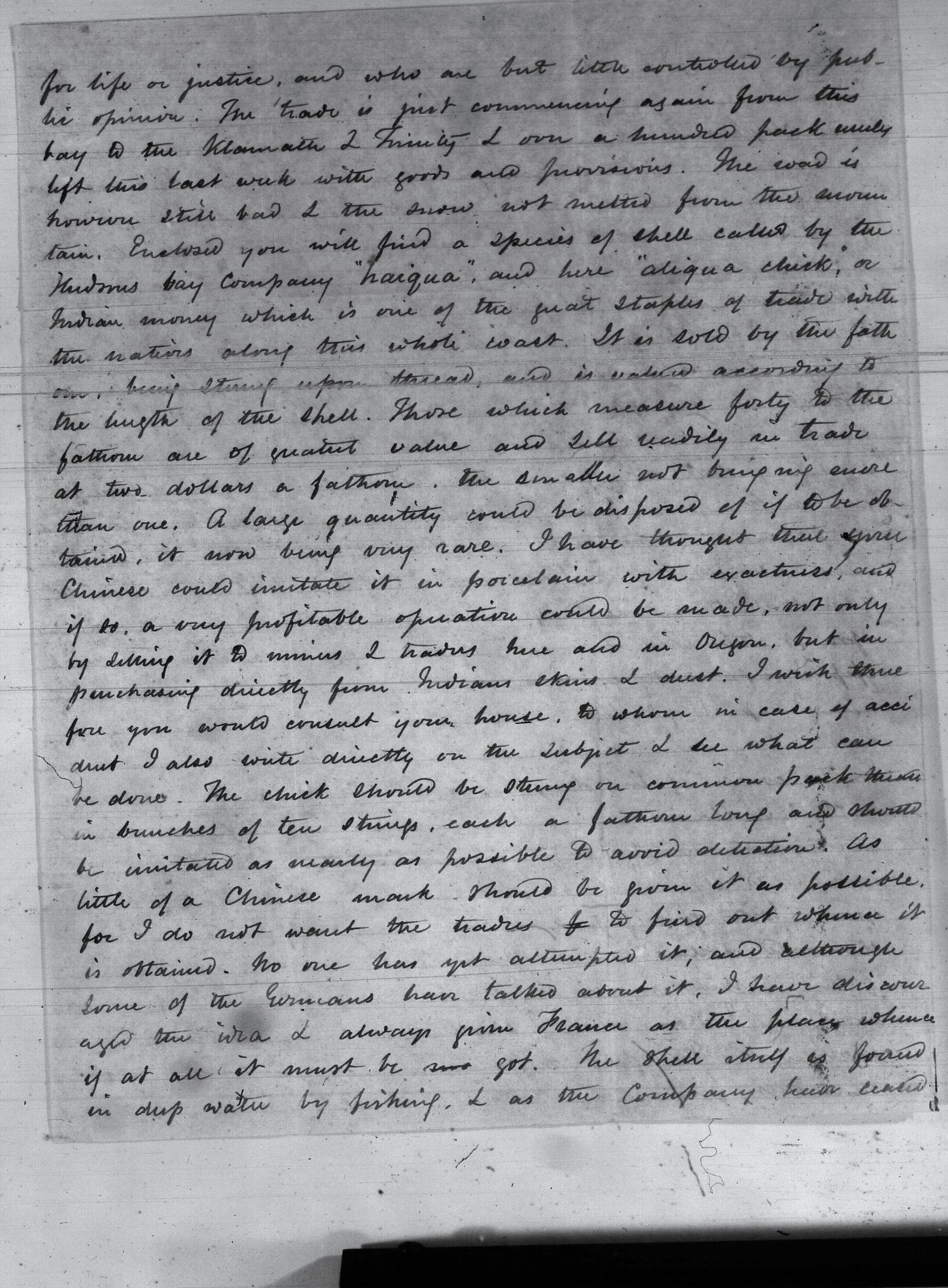
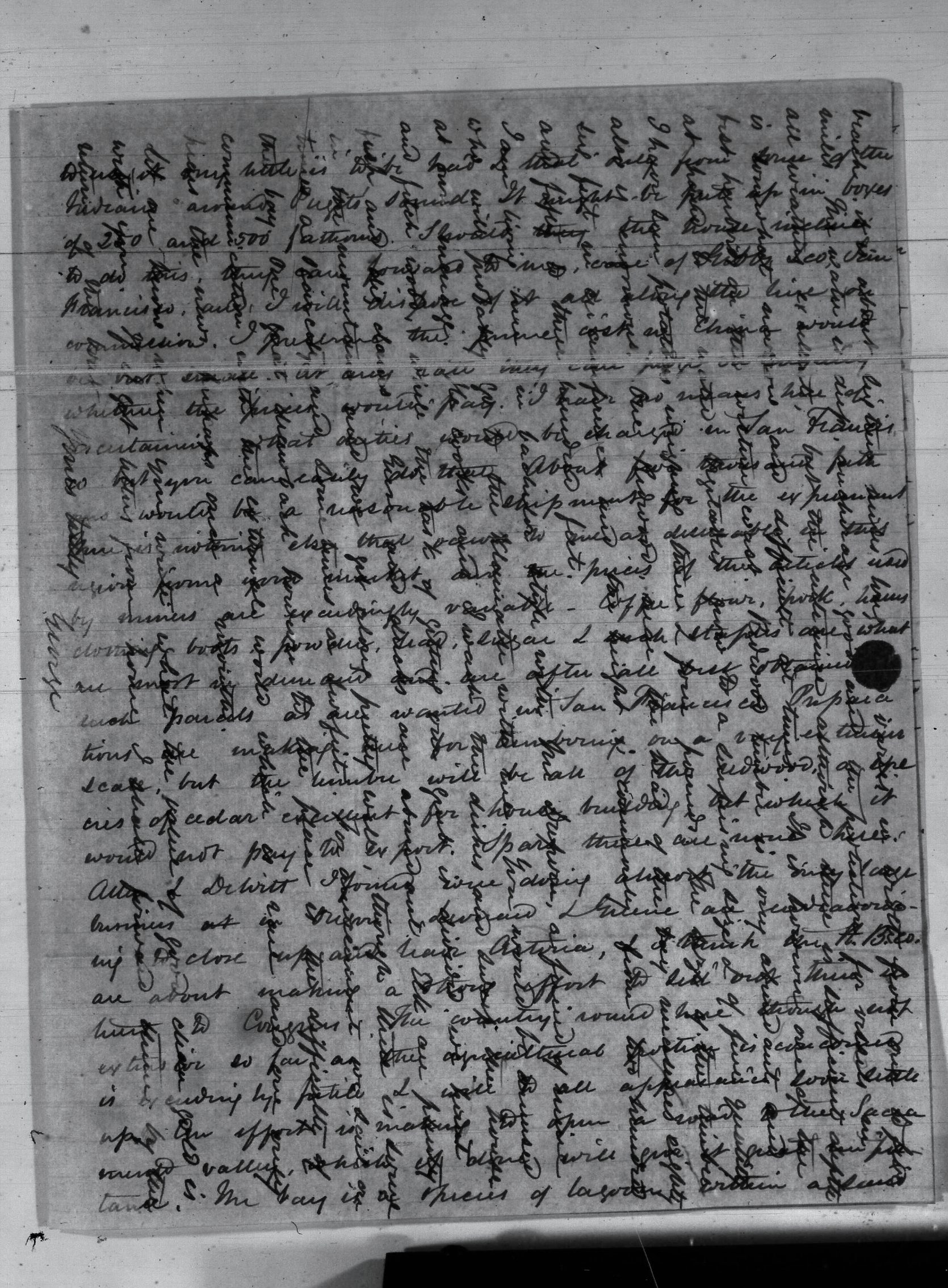
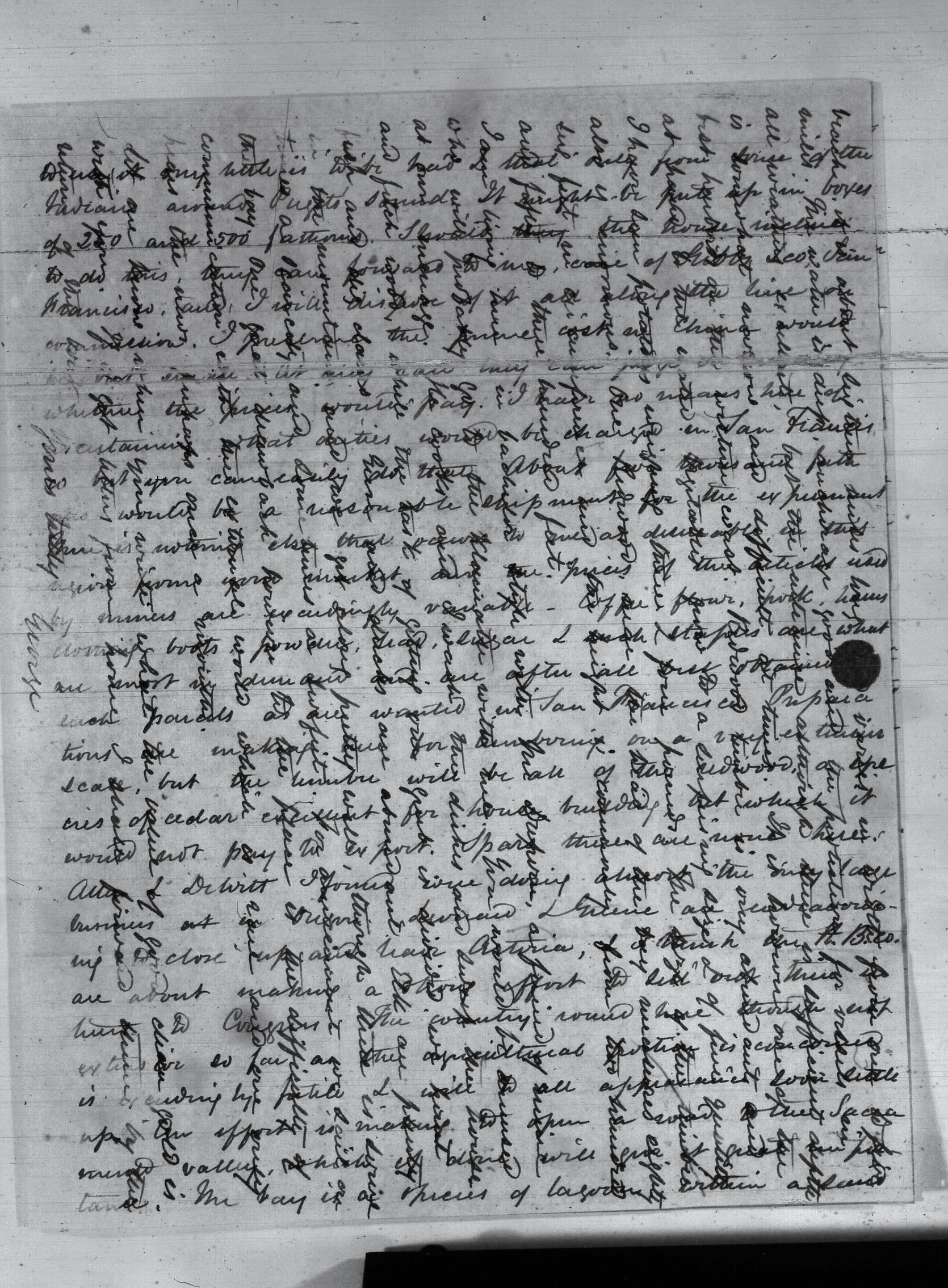
6 Apr 1852
from Humboldt Bay: near-shipwreck, Indian trade goods, Ogden east with Alfred, Klamath mining plans
9 Apr 1852
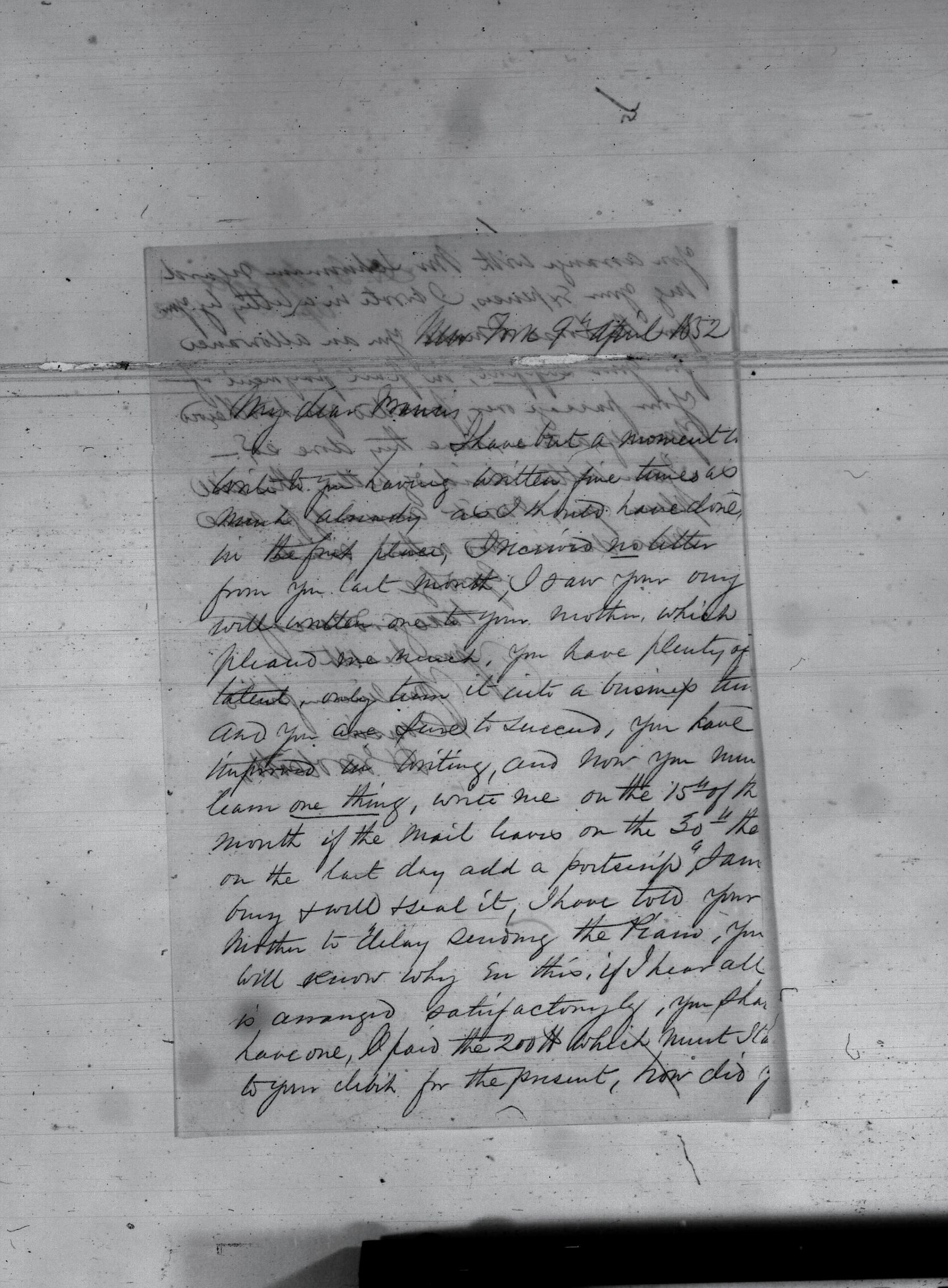
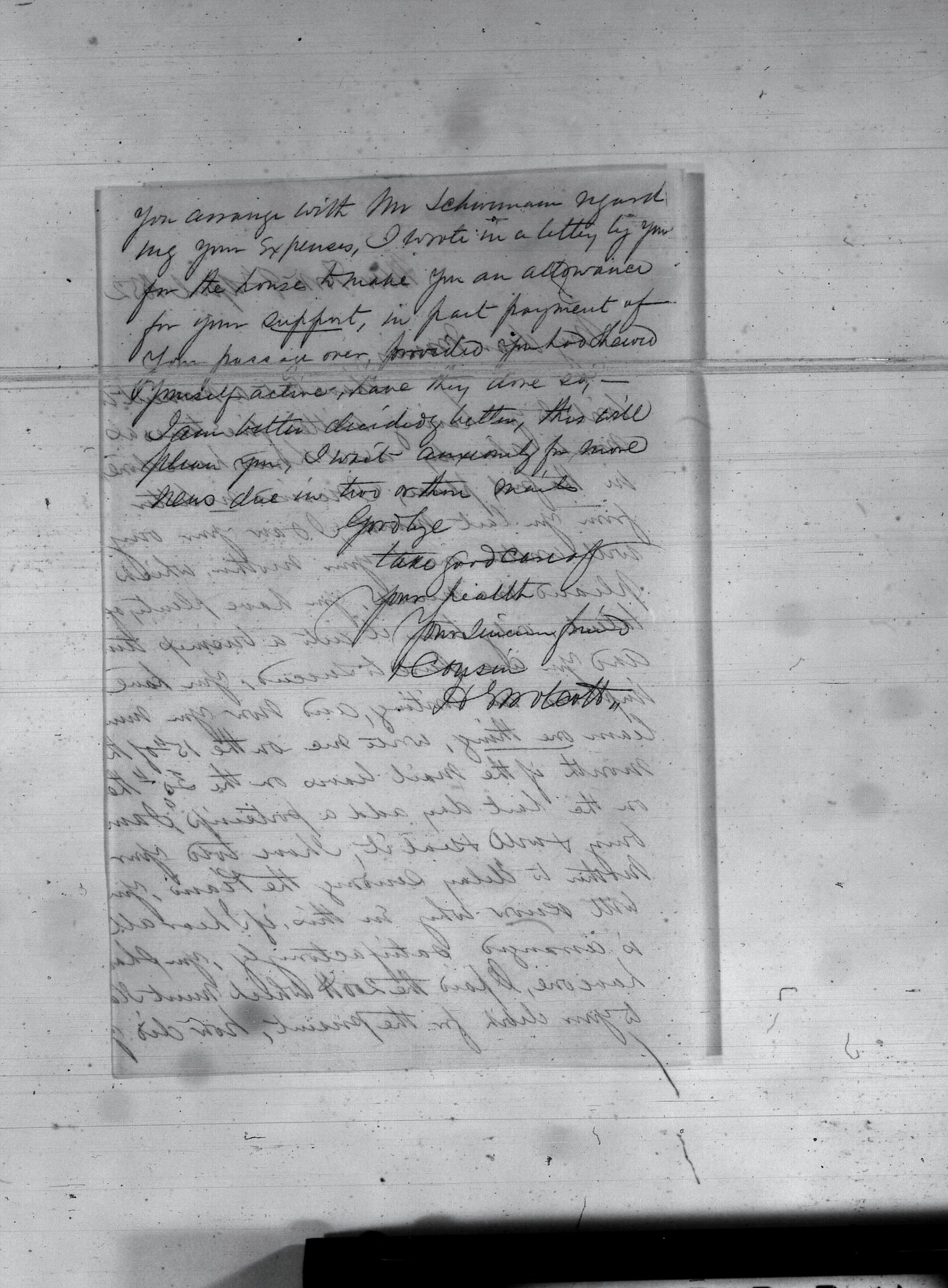
no letter last month; business advice; piano delayed; paid $200 to Francis's debit
8 Jun 1852
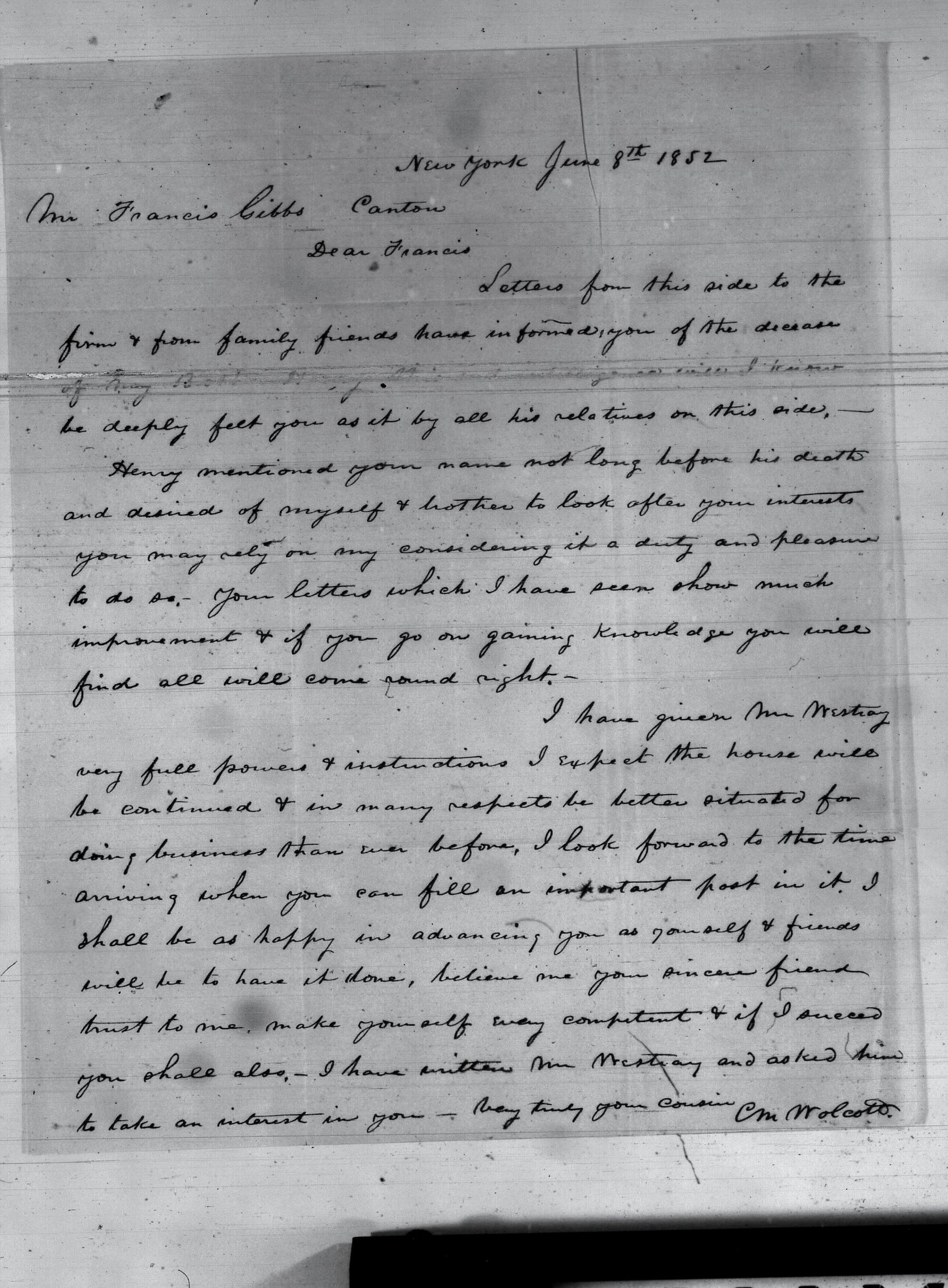
announces Henry Wolcott's death; Westray given full powers; will look after Francis's interests
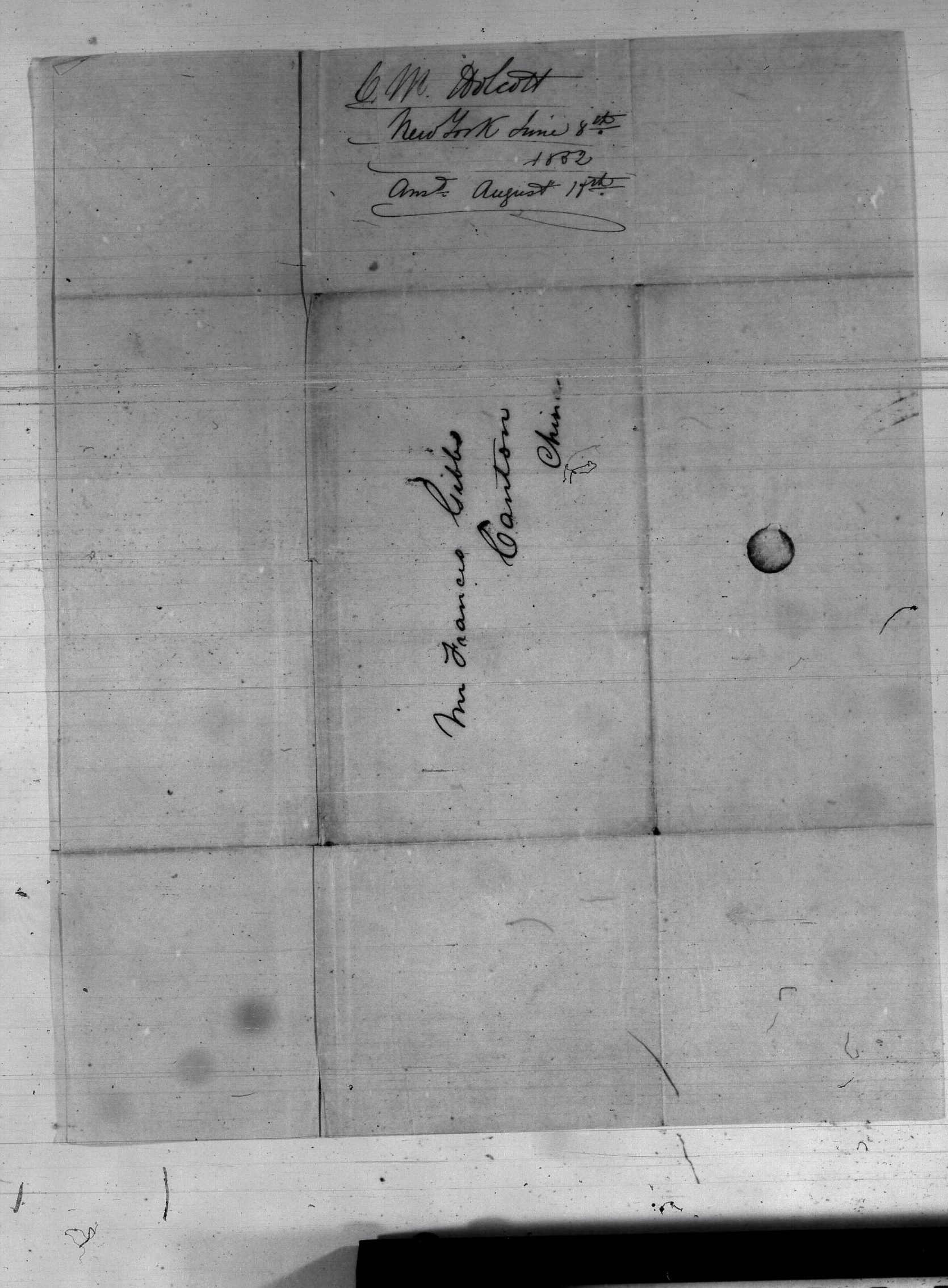
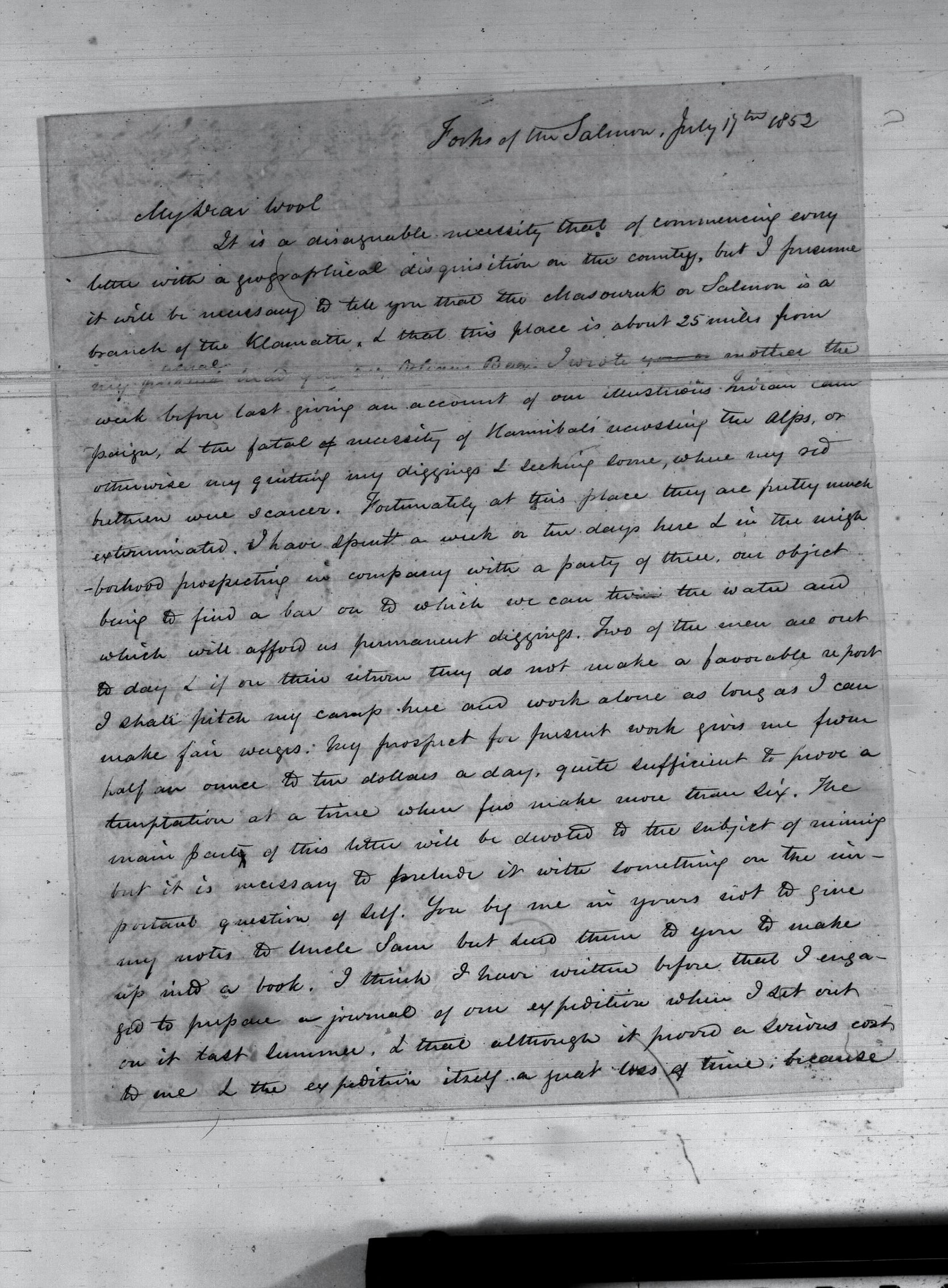
17 Jul 1852
Forks of the Salmon: Klamath mining yields, Indian campaign account, expedition journal for a book
17 Aug 1852
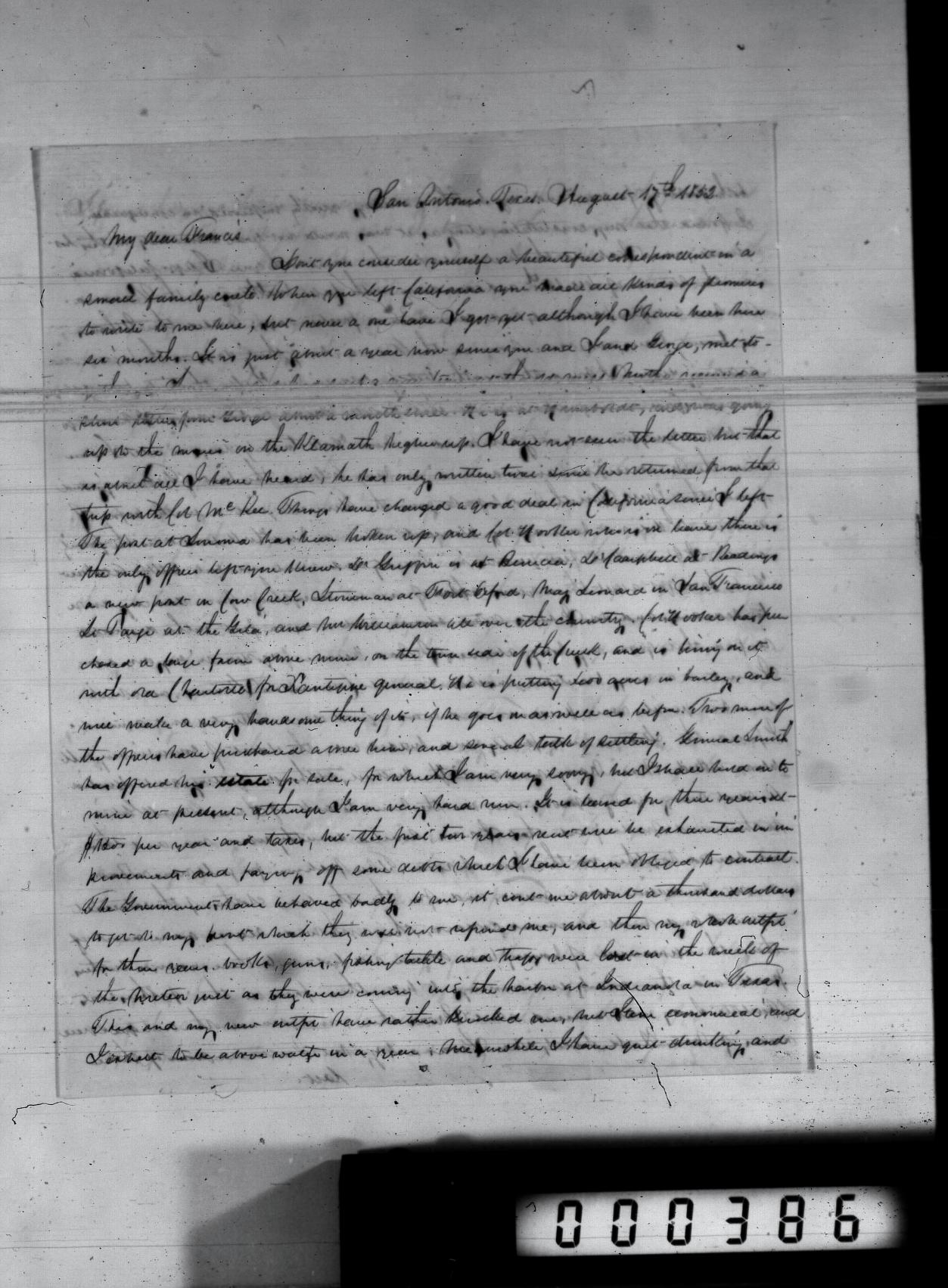
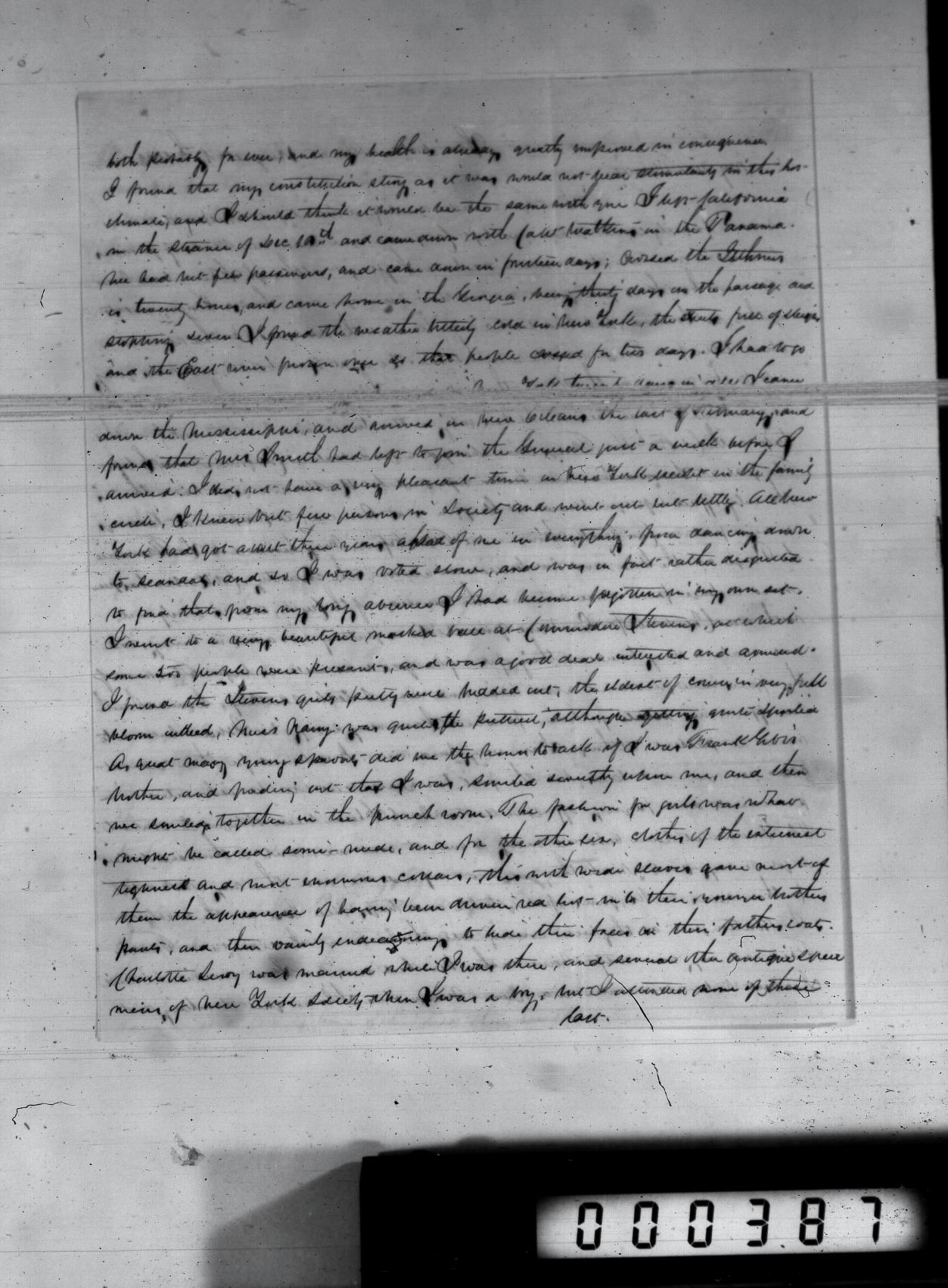
San Antonio: Sonoma post broken up, officers dispersed, Gen. Smith selling estate, Indianola shipwreck losses
3 Sep 1852
relays news: Alfred hates Texas heat, misses Sonoma; George mining on Klamath with an Indian
4 Sep 1852
Salmon River mining life: want of capital, prospecting Klamath tributaries, Rogue River diggings compared
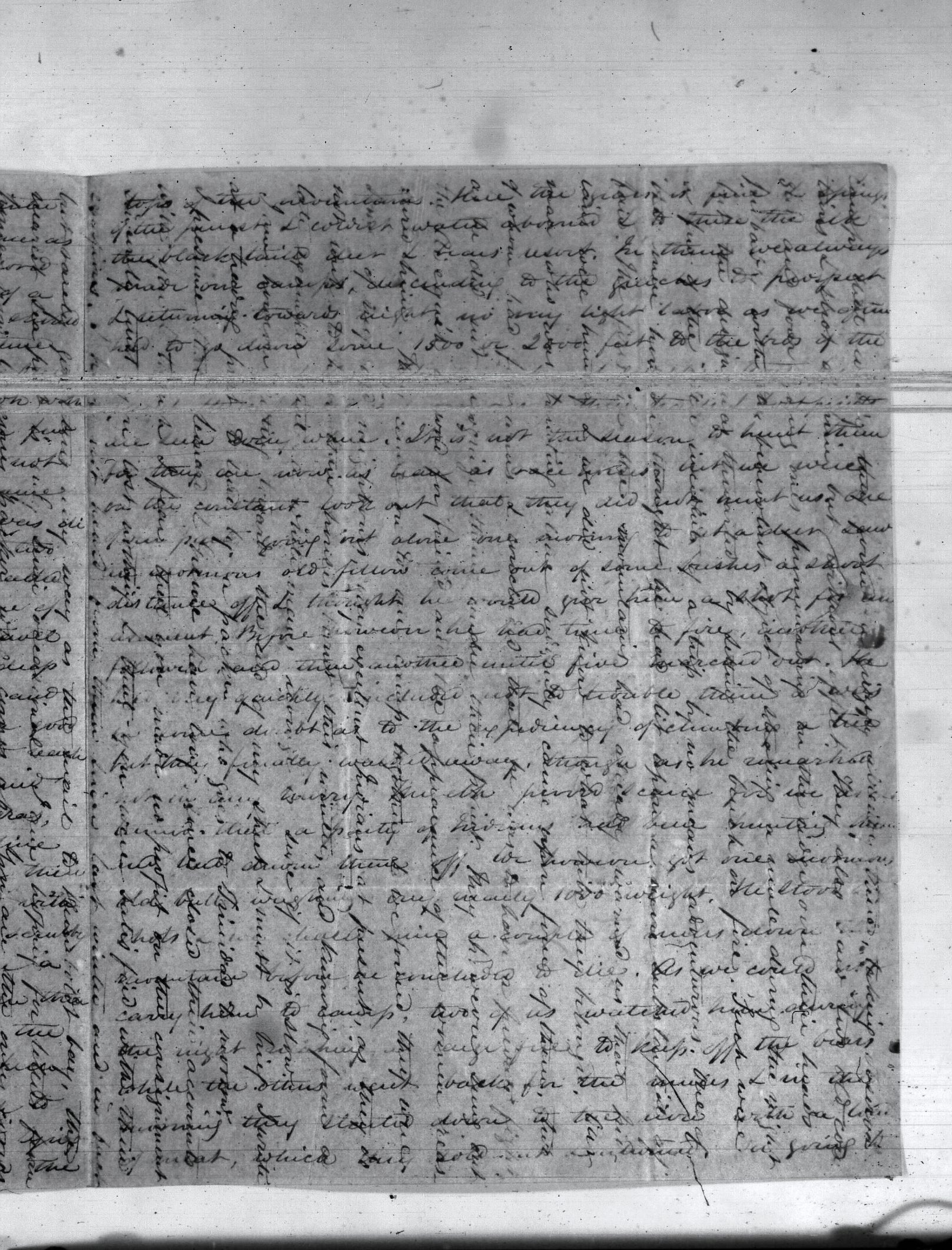
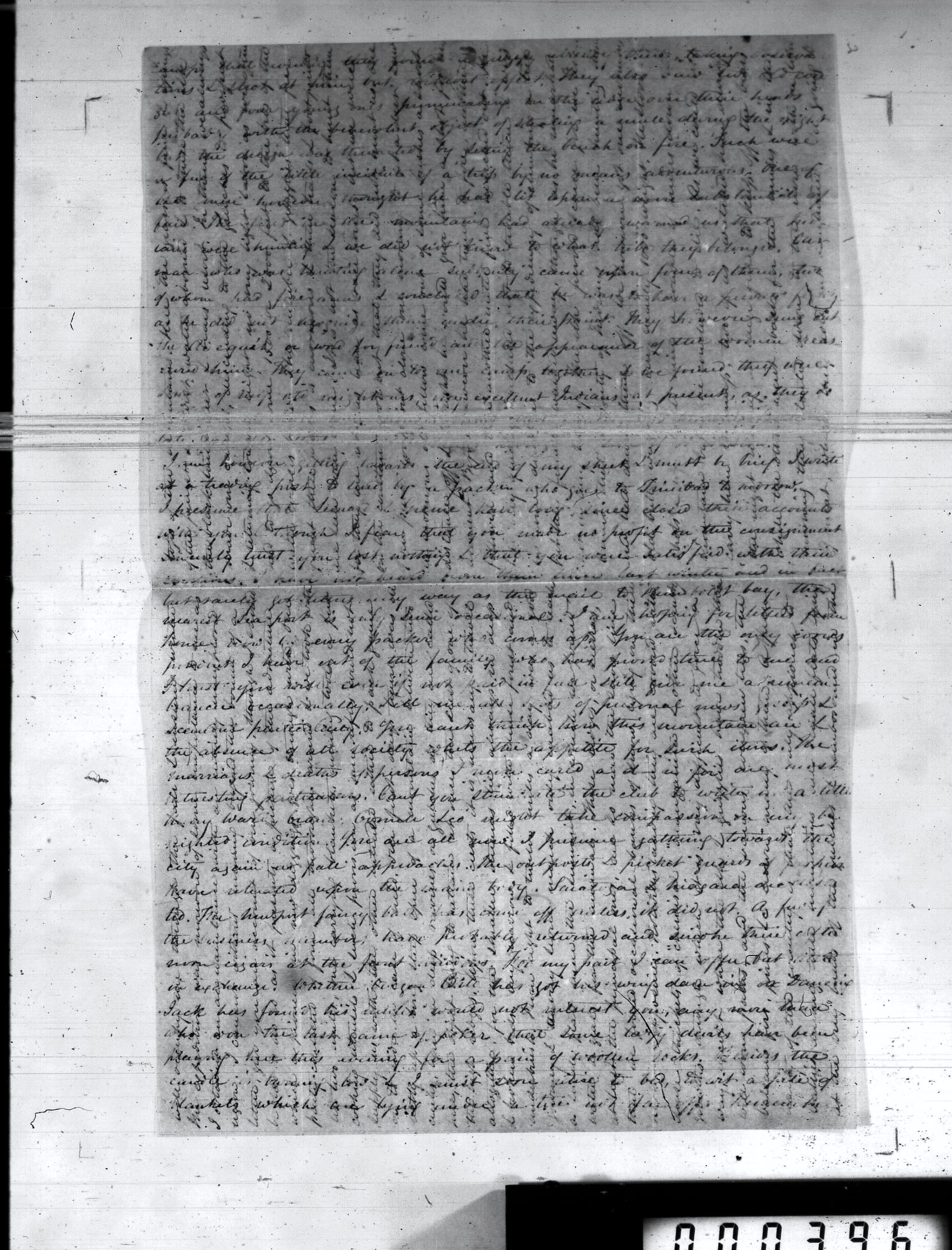
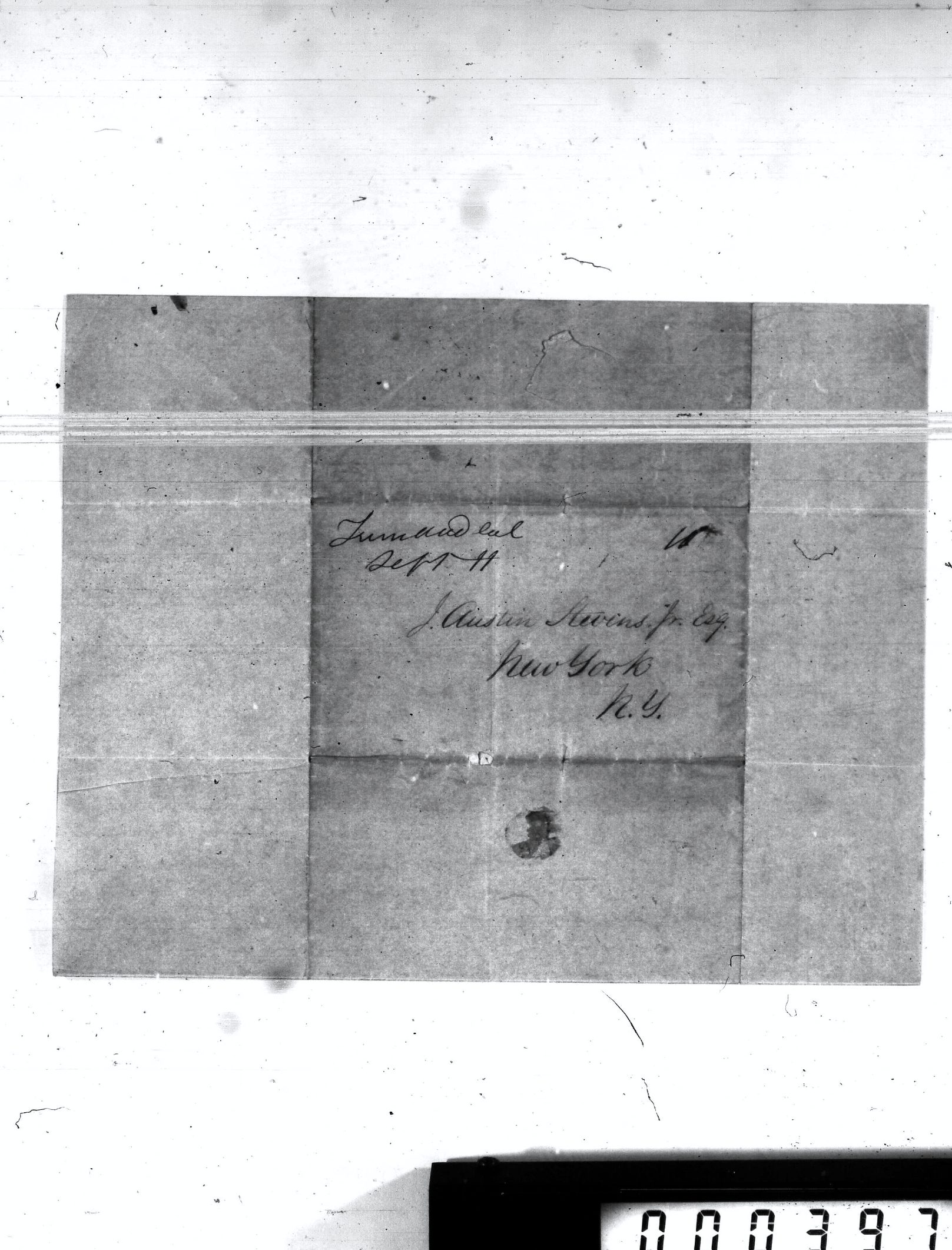
Sept 11 [1852?]
Mountain expedition into unexplored region; mule travel, chemisal thickets, grizzly bears
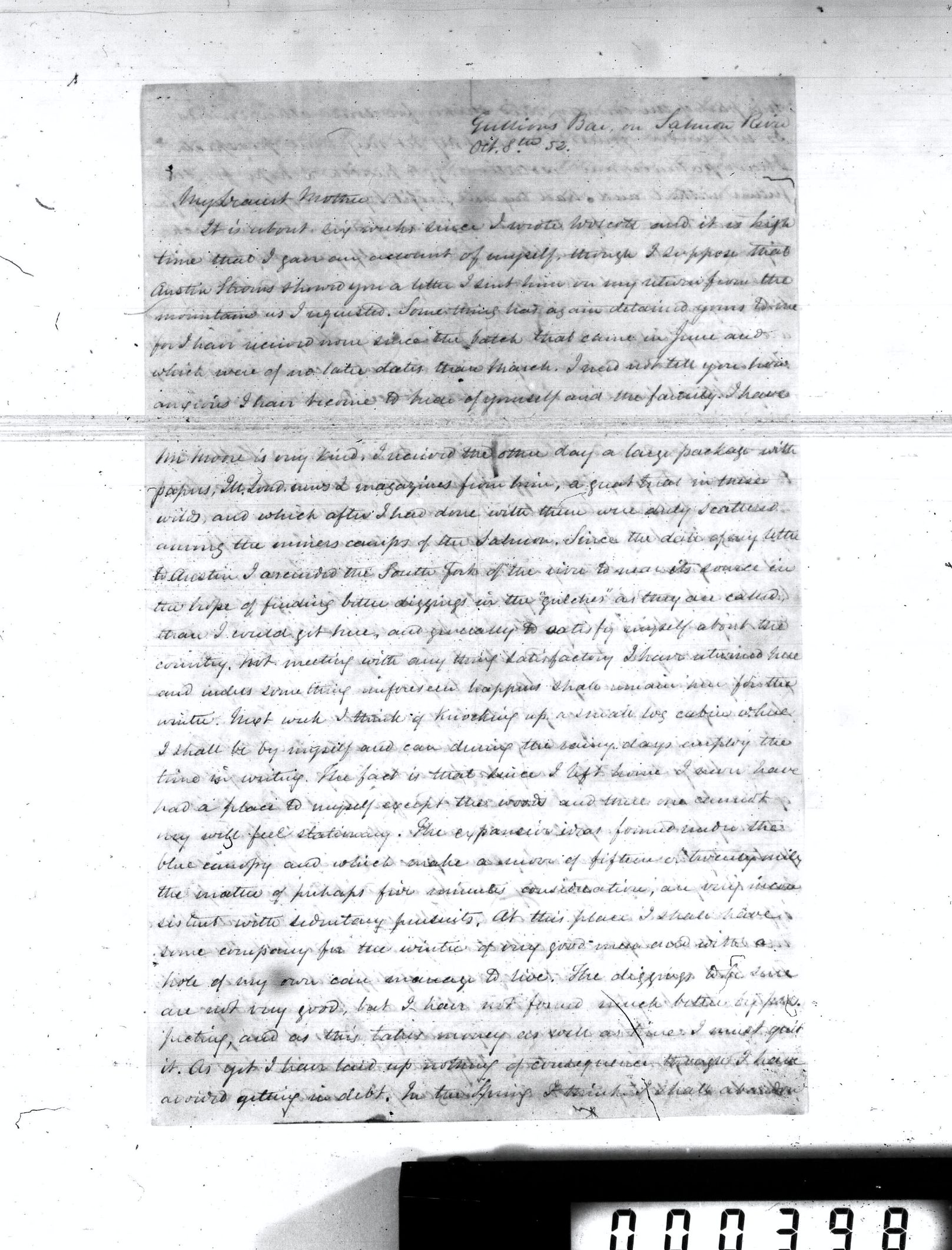
Oct 8 1852
From Gullions Bar, Salmon River; poor diggings; building log cabin to winter
n.d. [1852-53?]
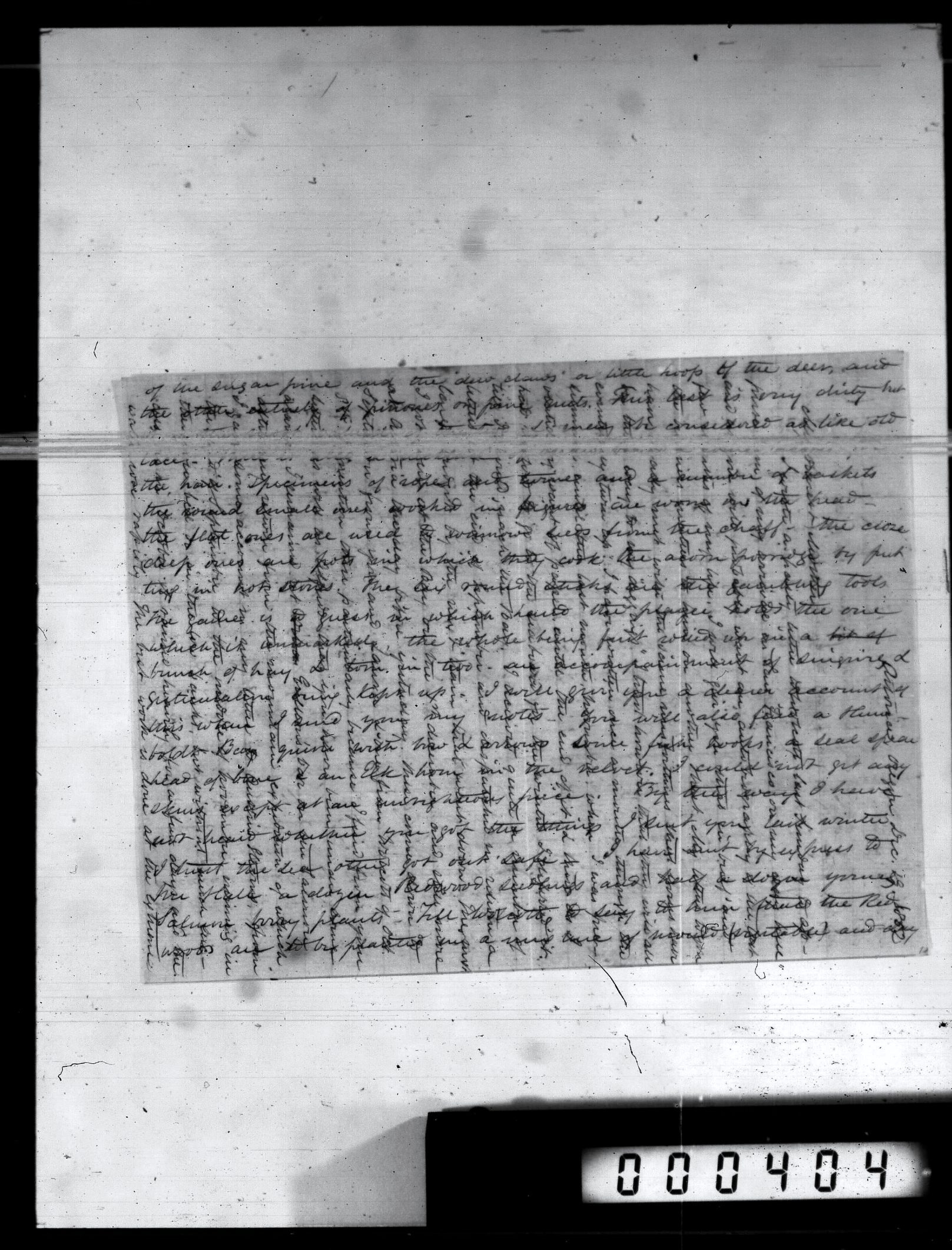
Indian baskets, acorn cooking, gambling game, deer-hoof rattles, curiosities being sent home
n.d. [Nov-Dec 1852?]
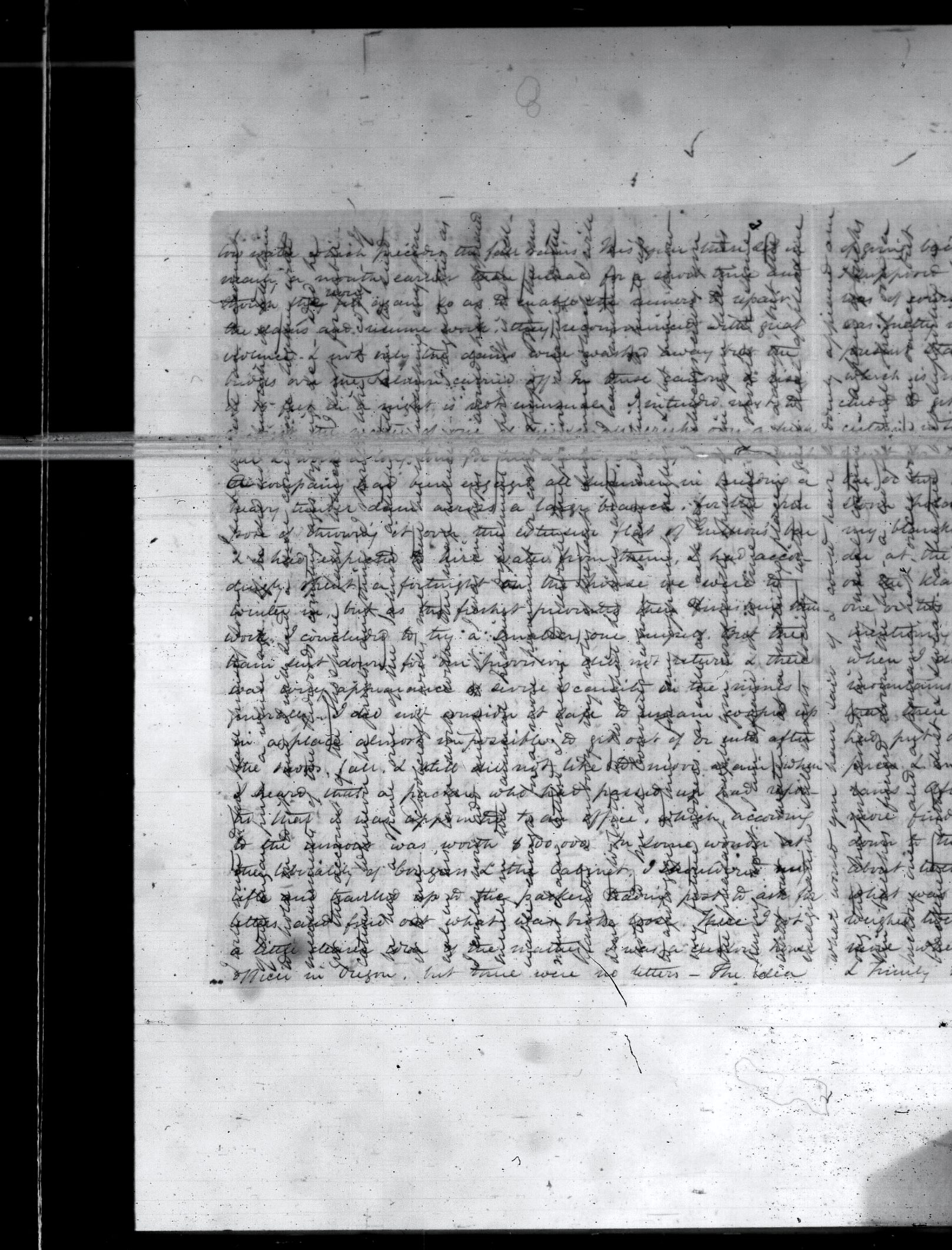
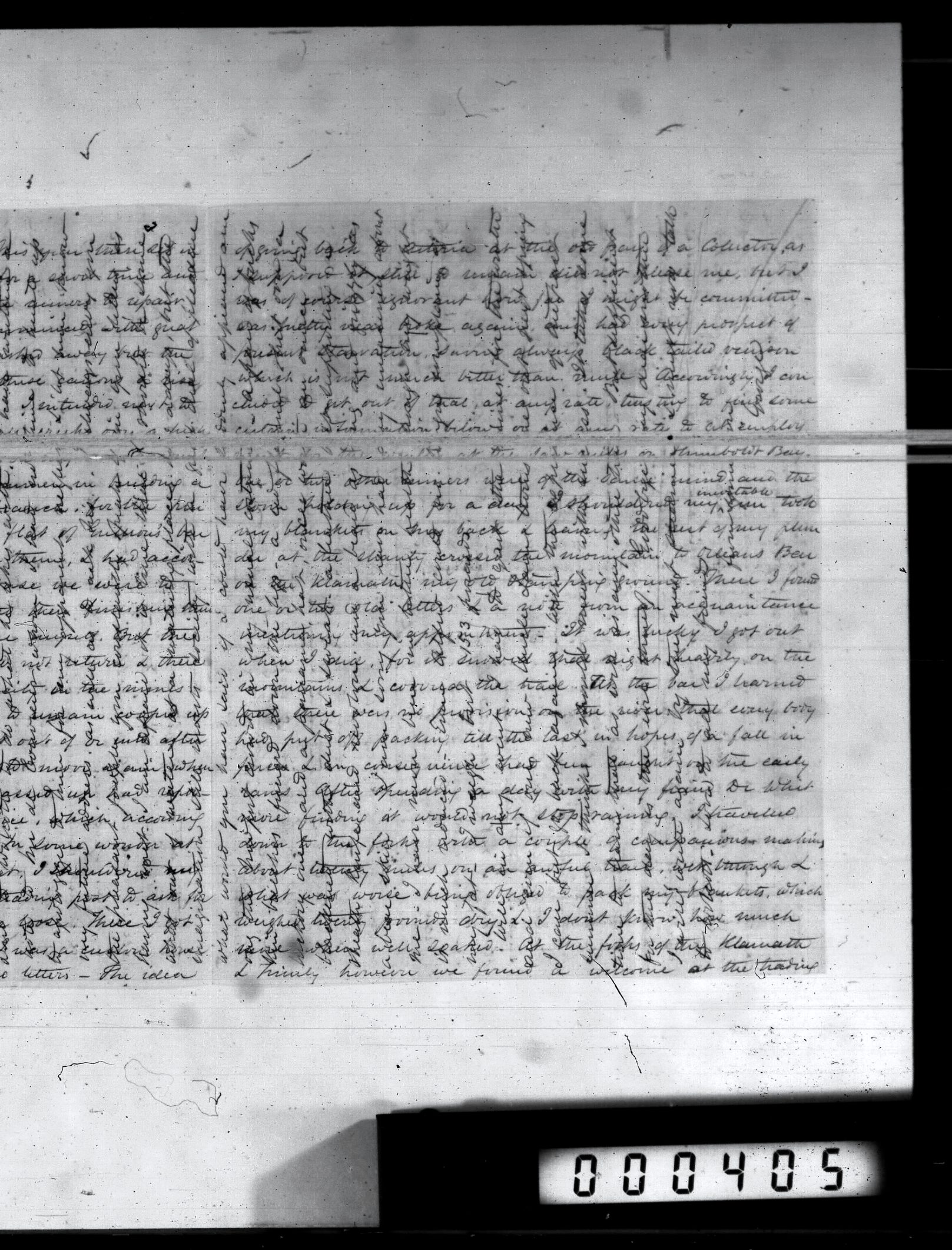
Winter floods destroyed mining dams and claims; rumor by packer of office appointment
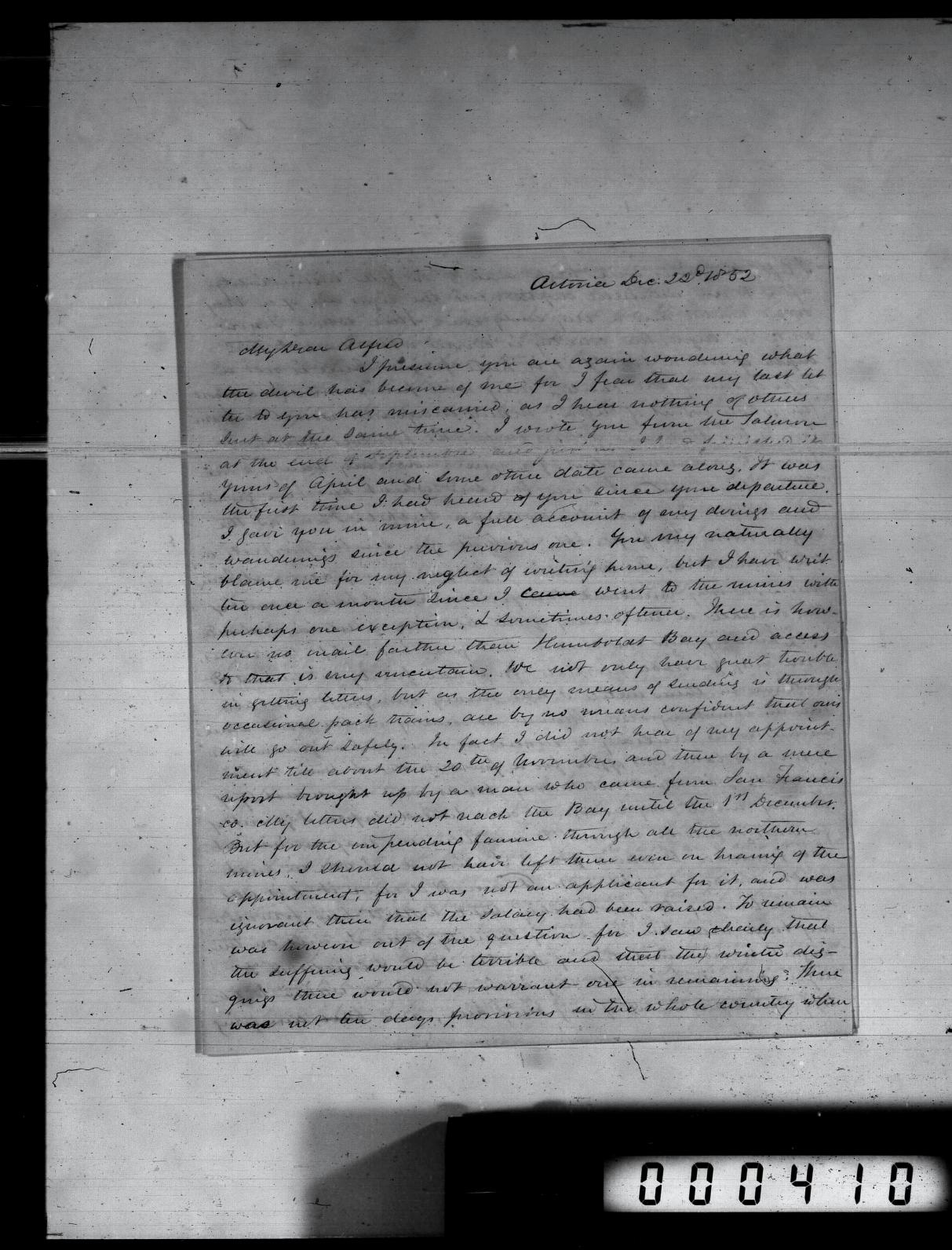
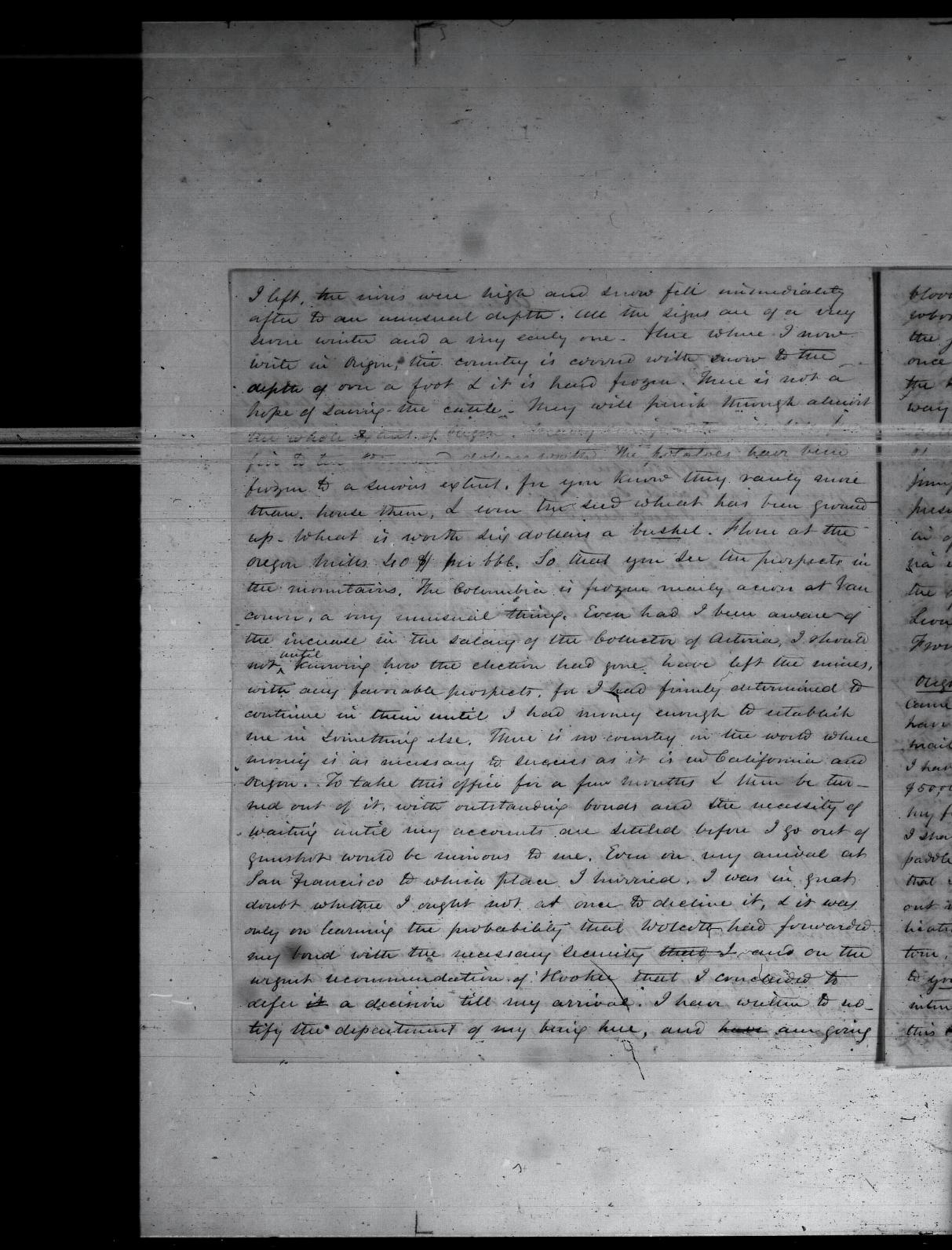
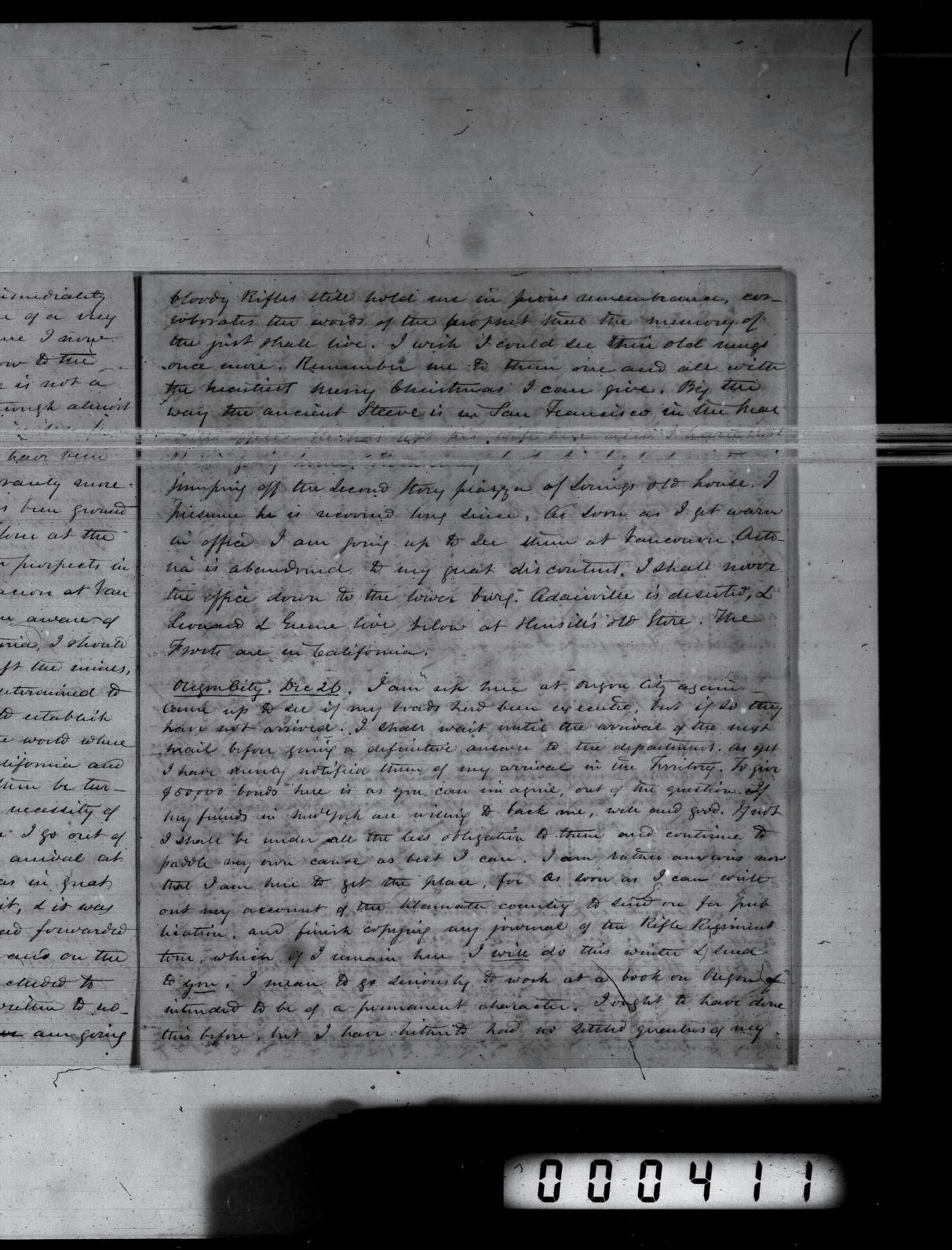
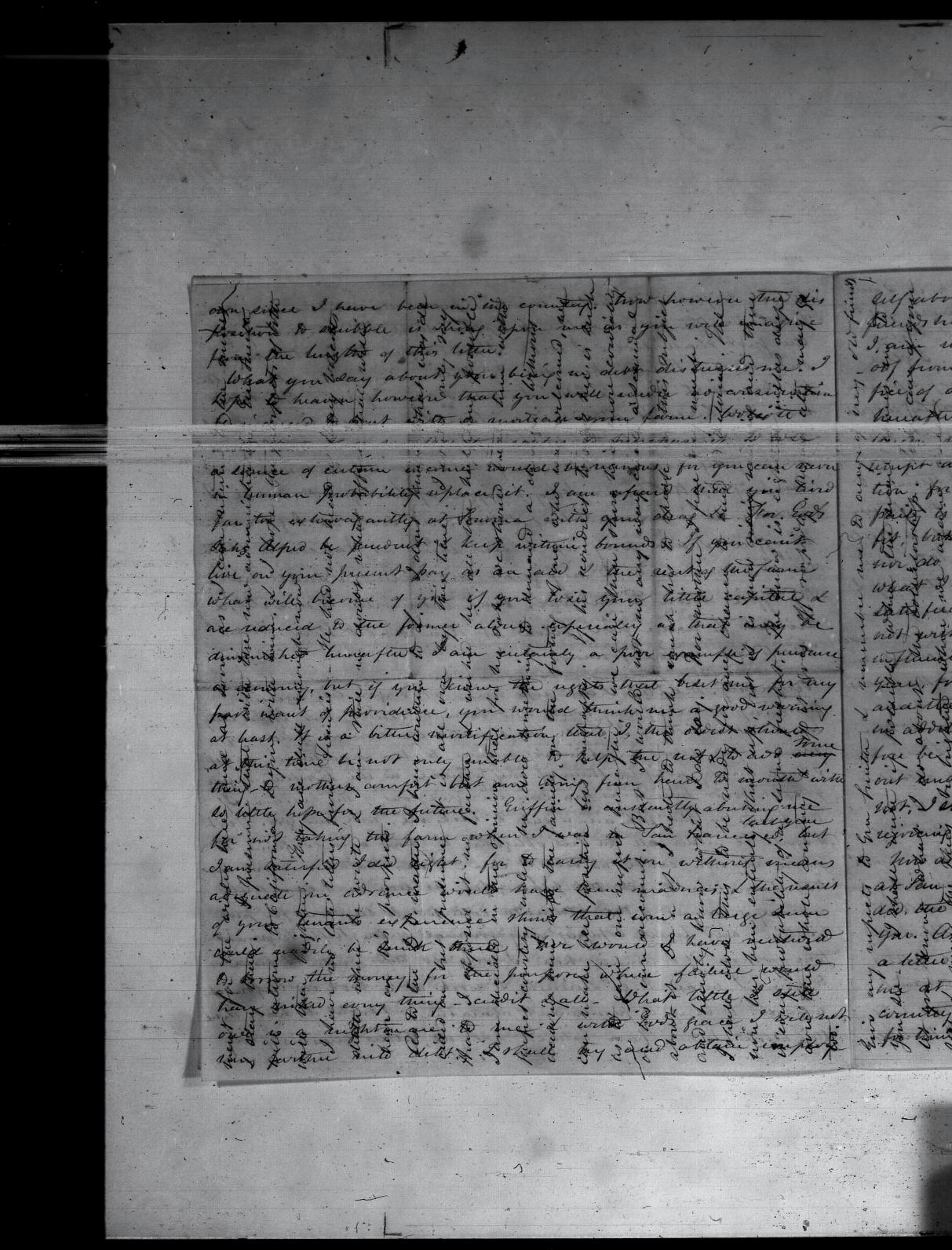
Dec 22 1852
From Astoria: heard of collectorship by rumor; impending famine in northern mines
Dec 31 1852
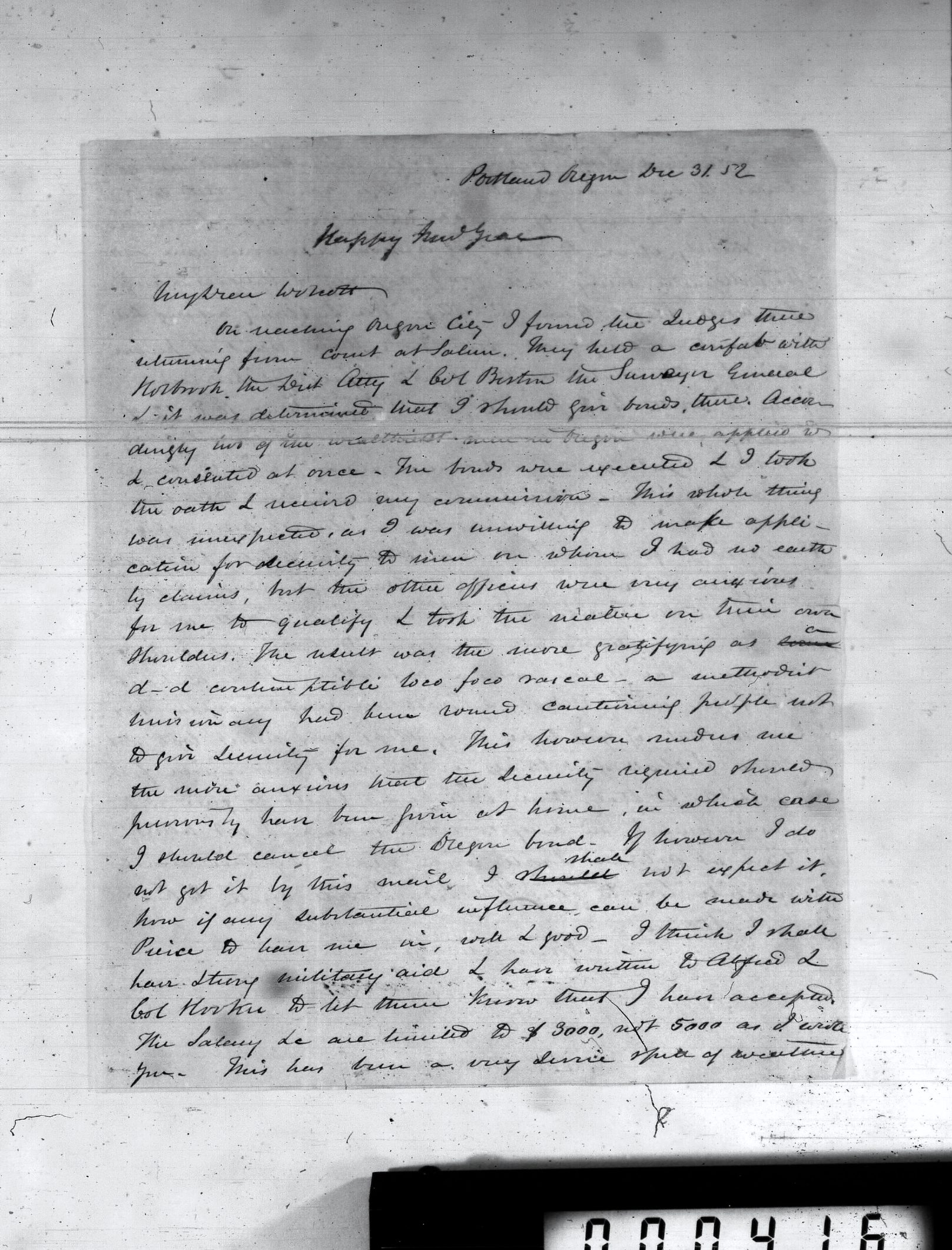
Bonds executed, oath taken, commission received as Collector of Astoria; salary $3000
Jan 3 1853
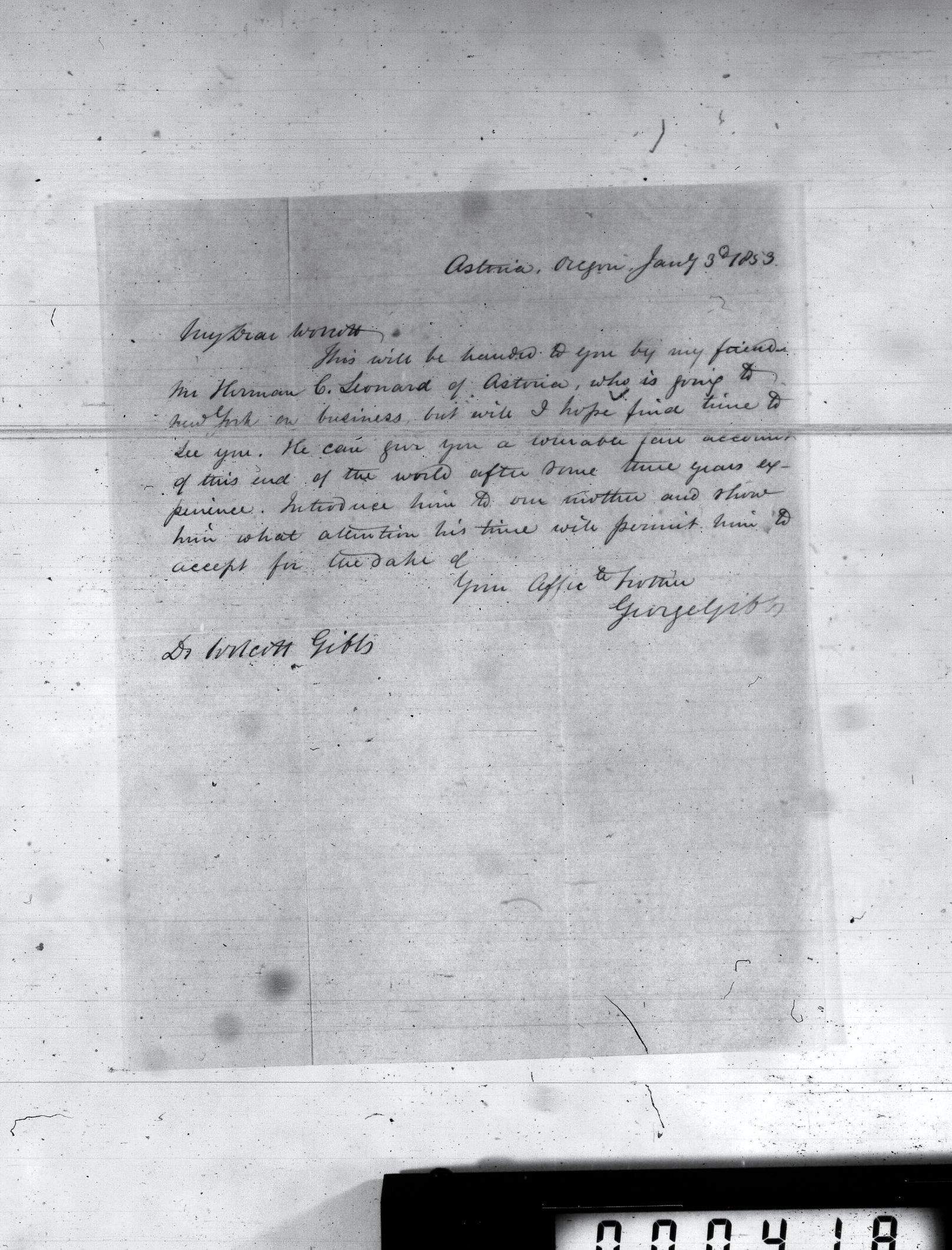
Introduces Herman C. Leonard of Astoria visiting New York; present him to mother
Jan 20 1853
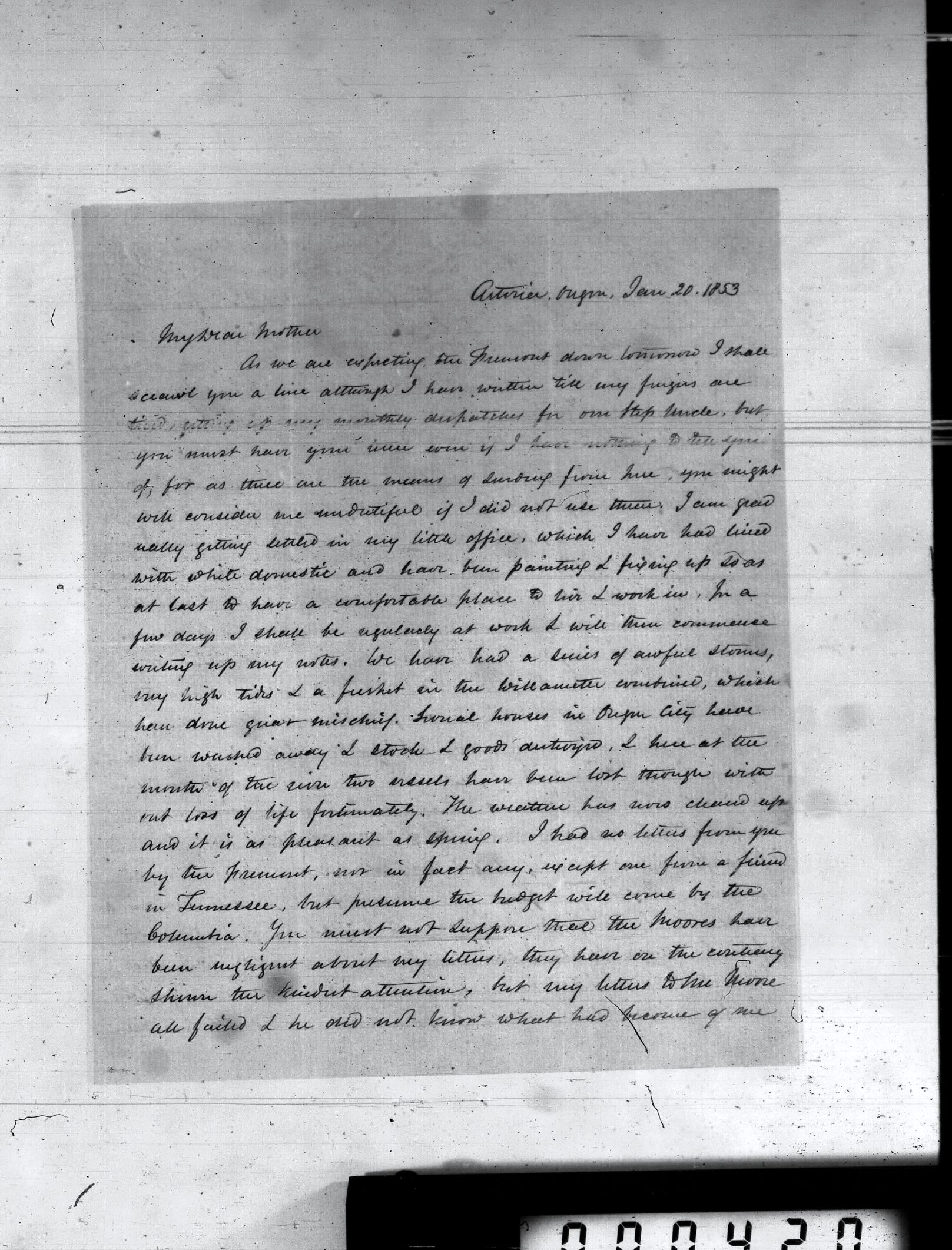
From Astoria: fitting up office; storms, Willamette freshet, Oregon City houses washed away
1853 Jan 24
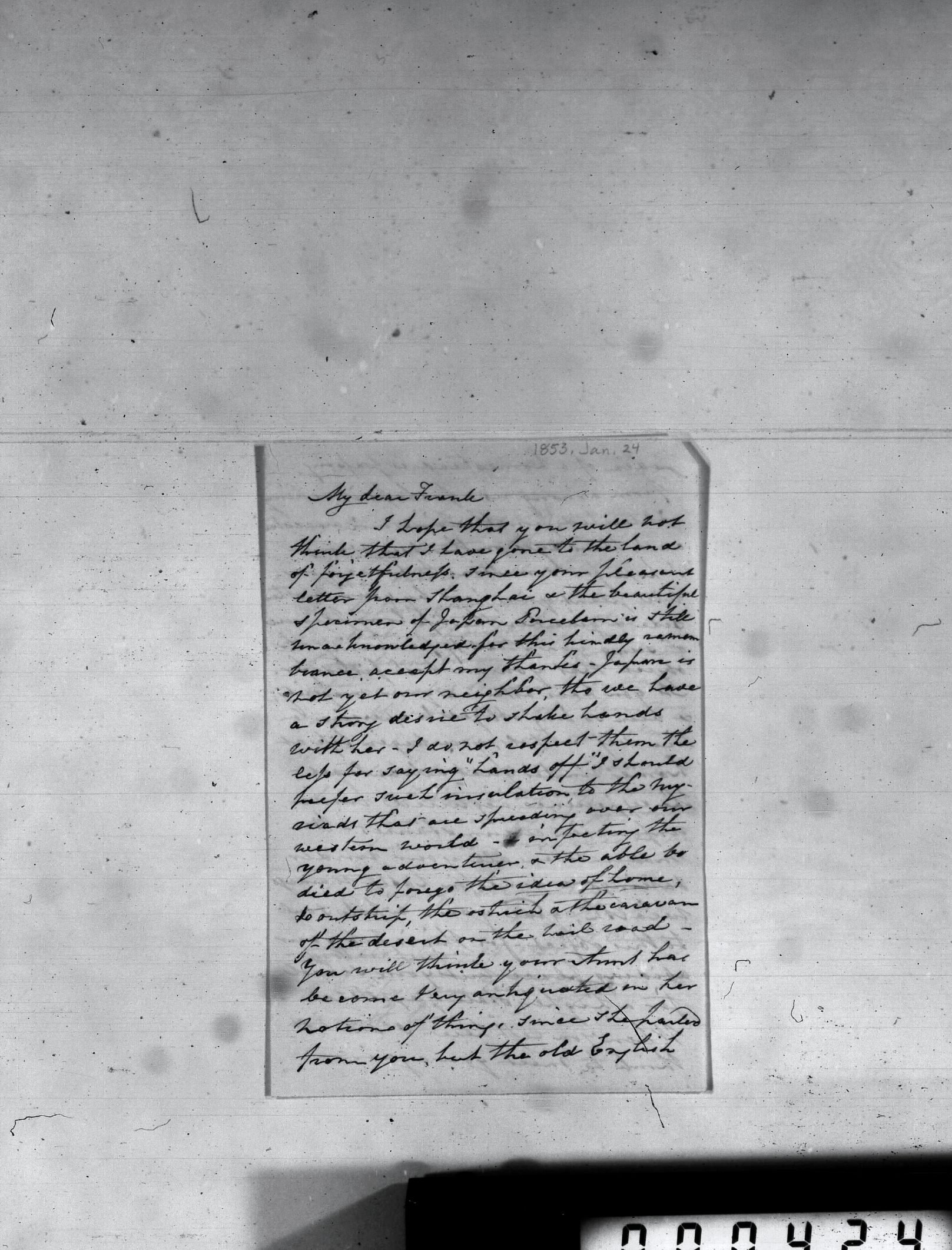
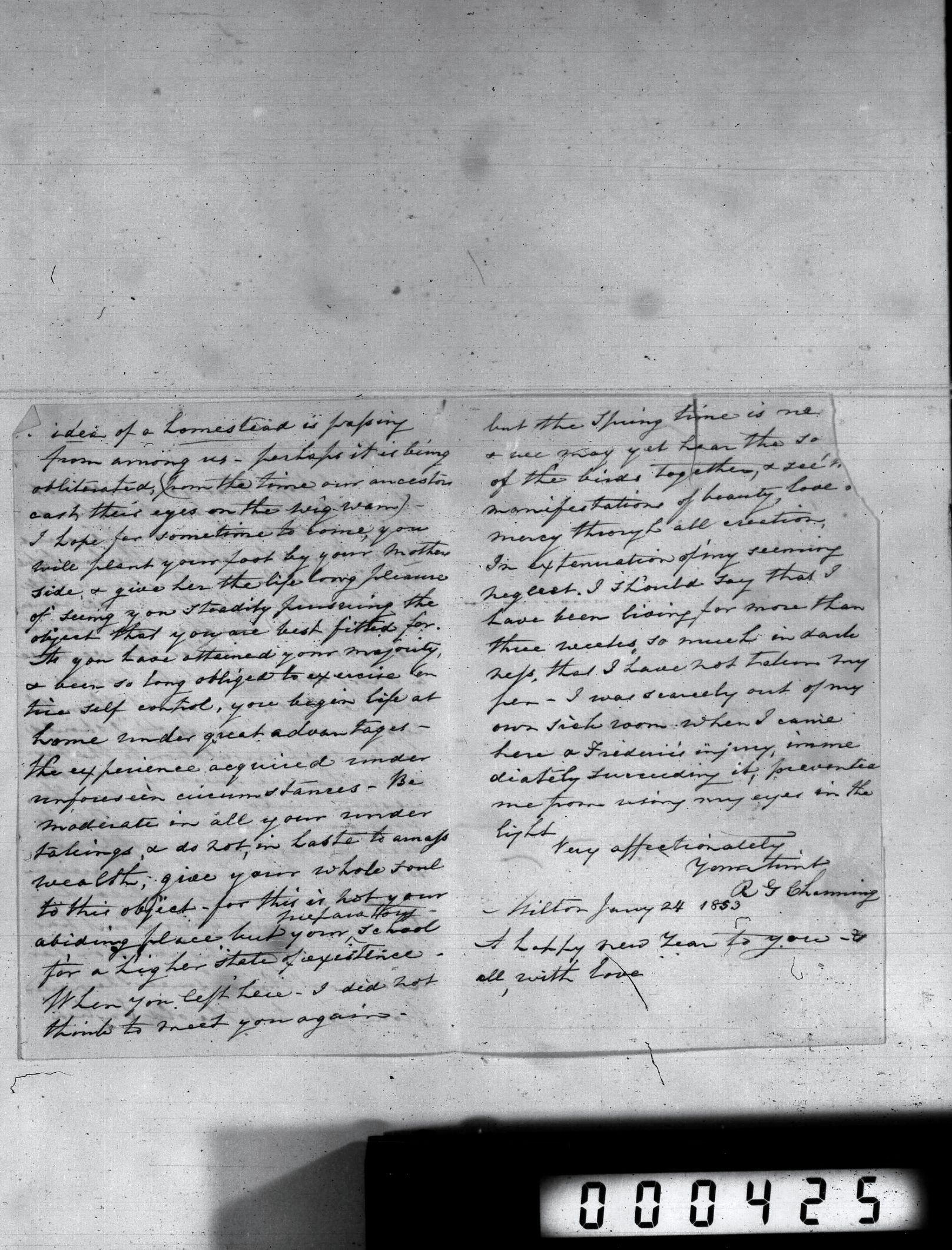
Thanks for Shanghai letter and Japan porcelain; Japan not yet our neighbor; aunt's musings
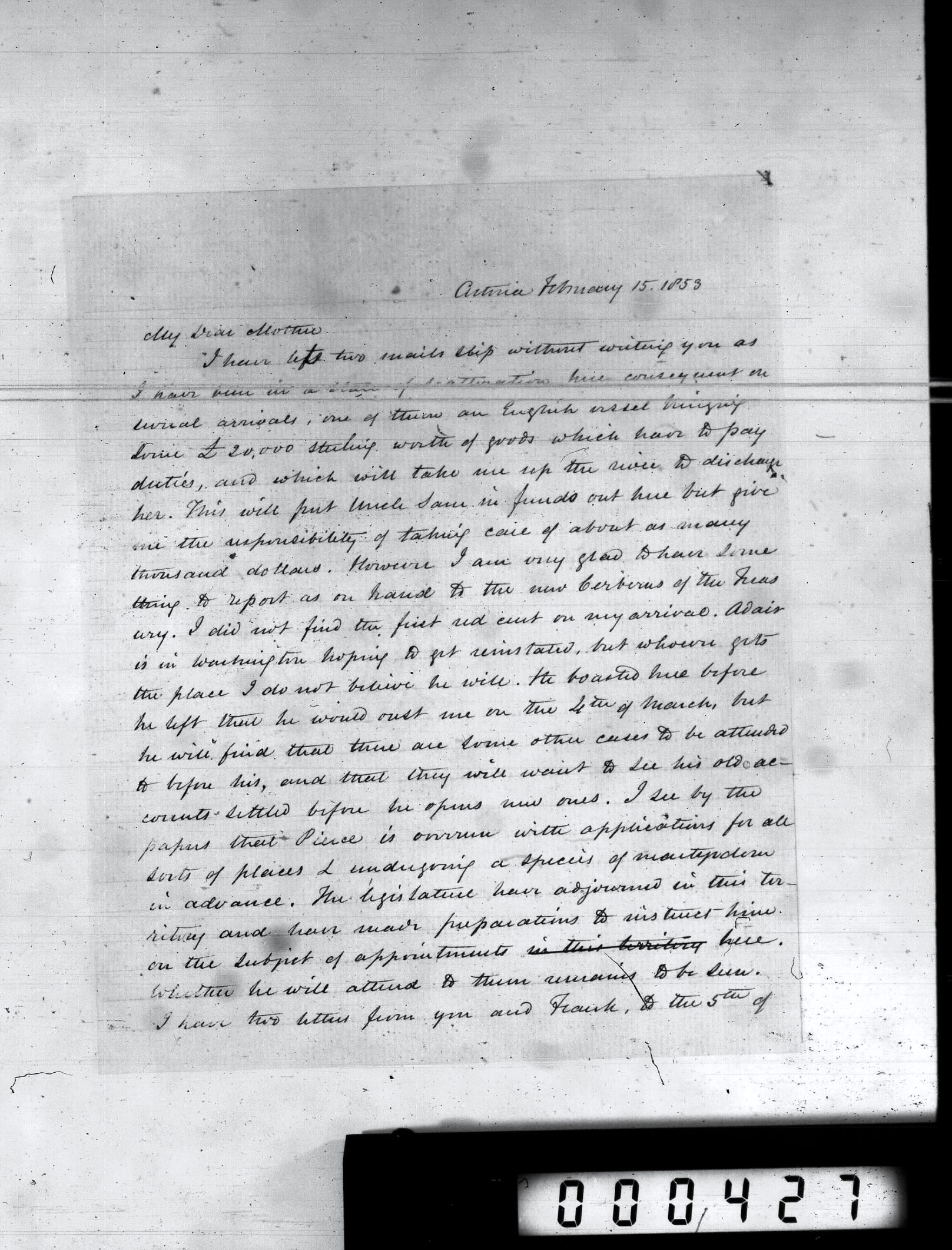
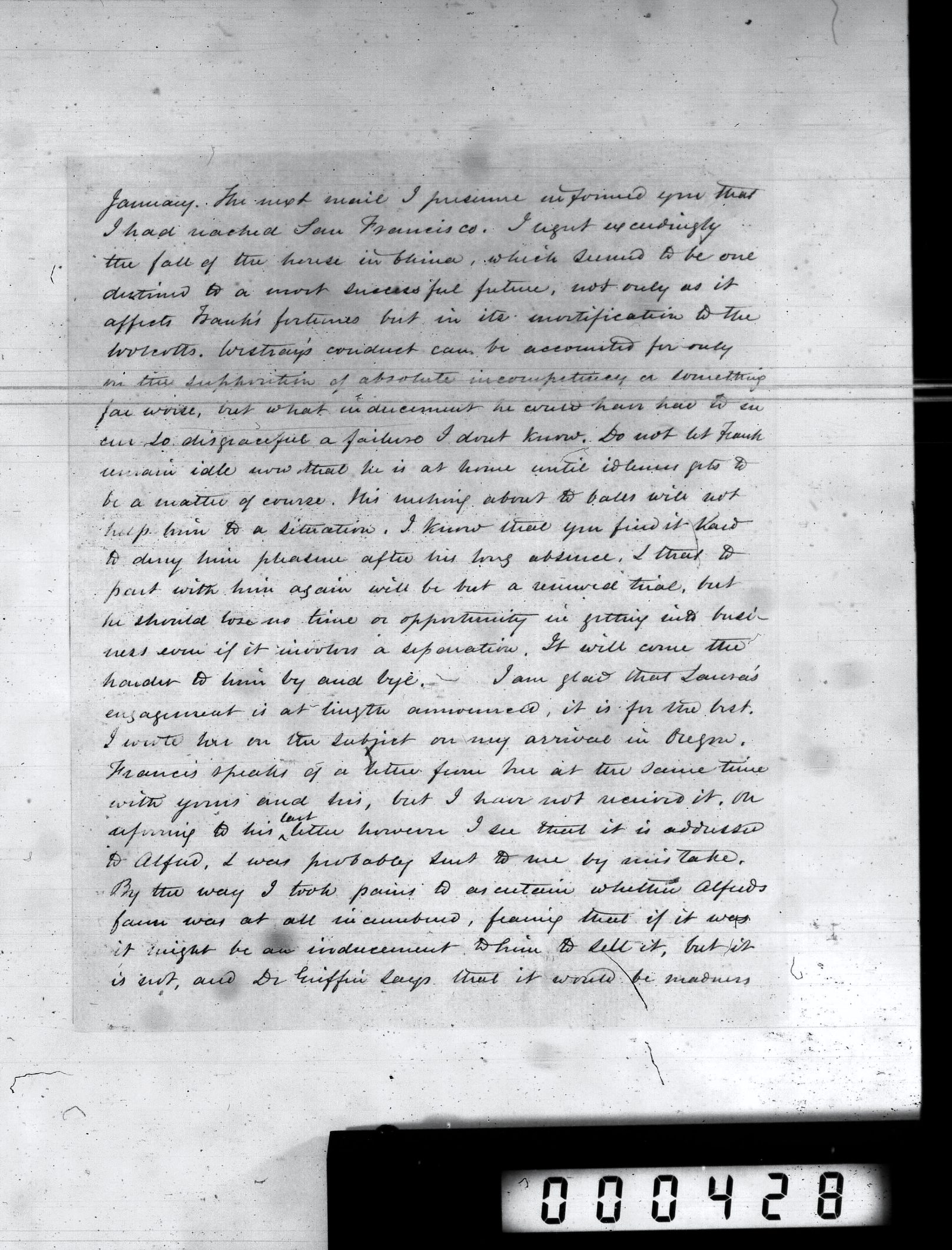
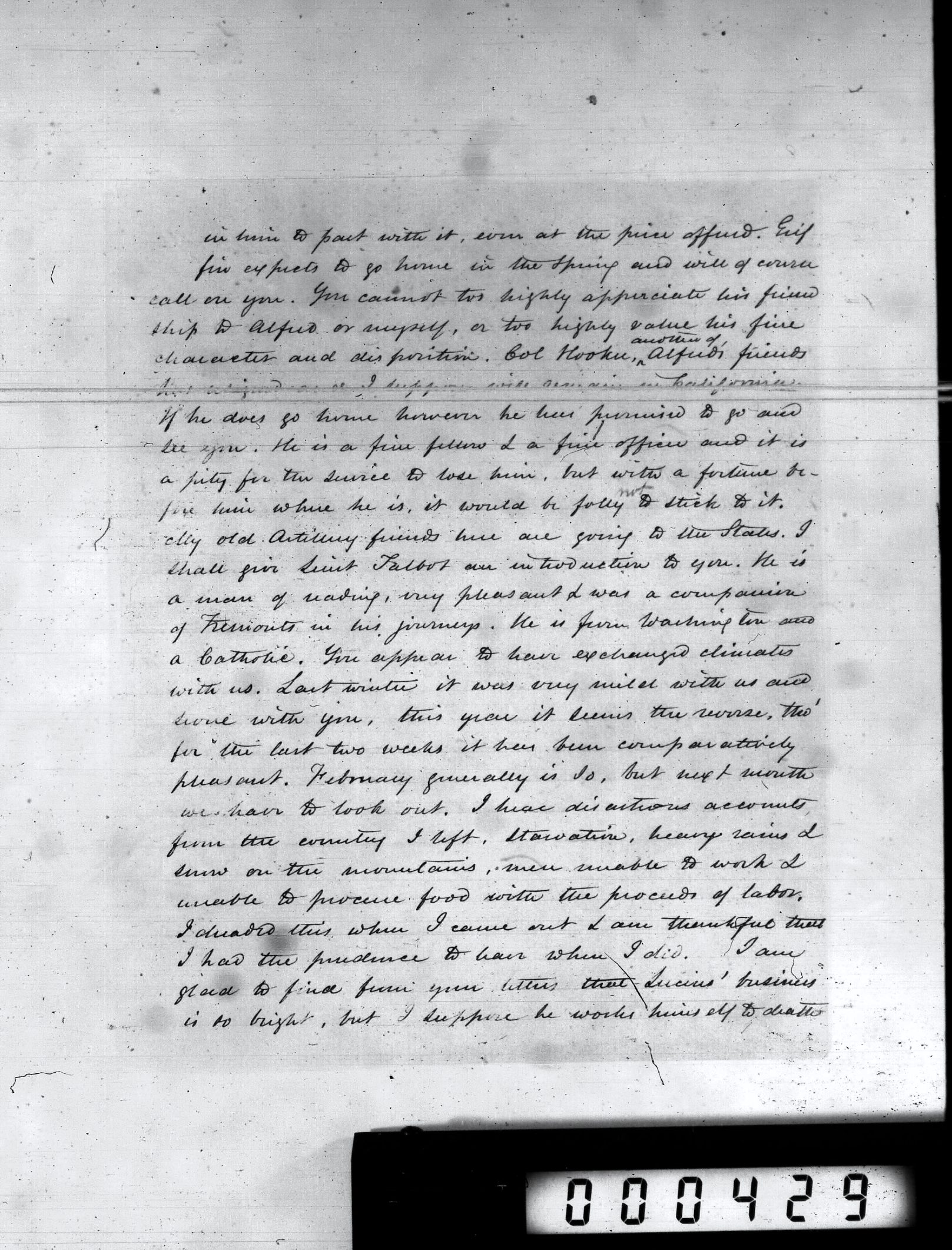
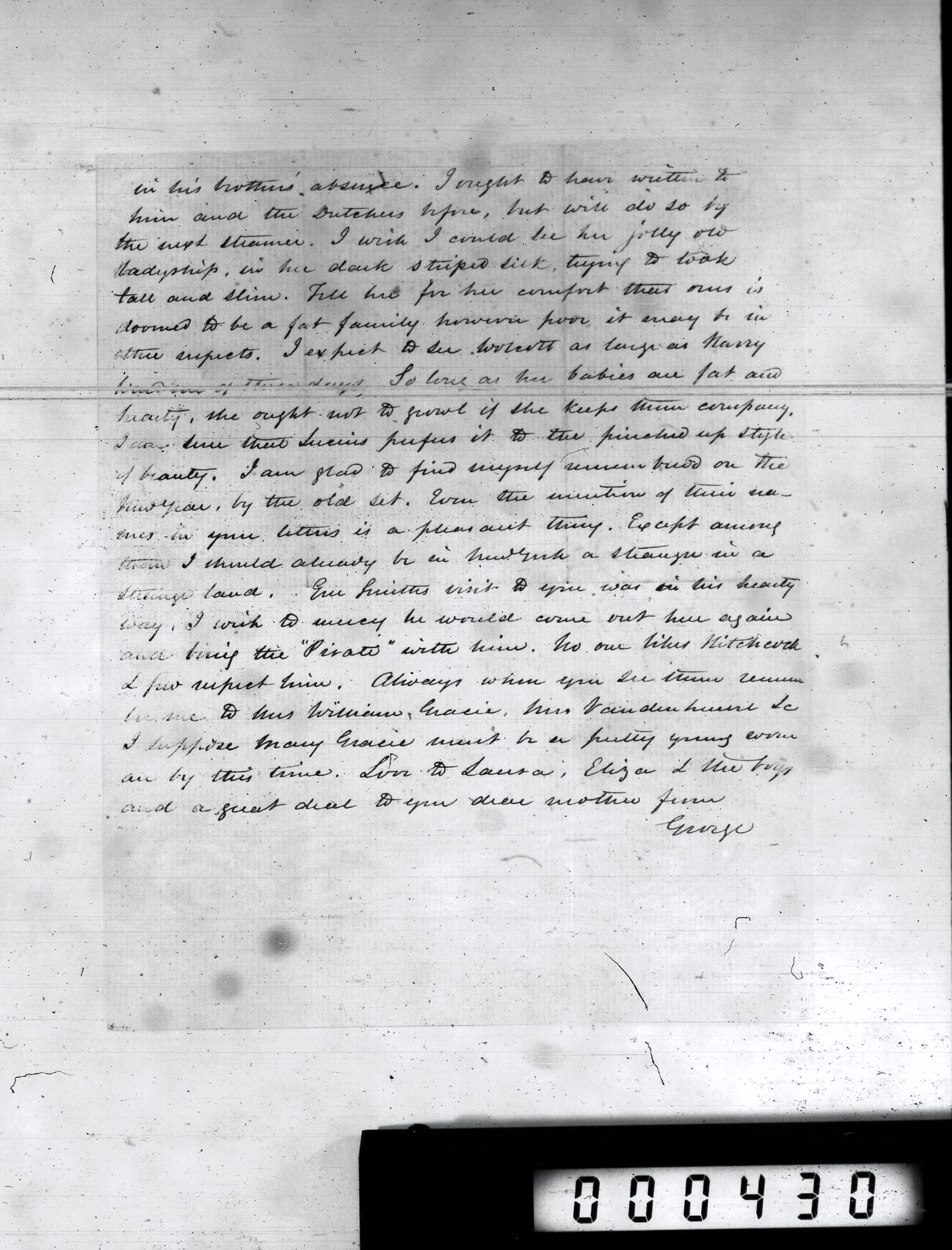
1853 Feb 15
English vessel's £20,000 duties; Adair seeking reinstatement; Pierce overrun with office-seekers
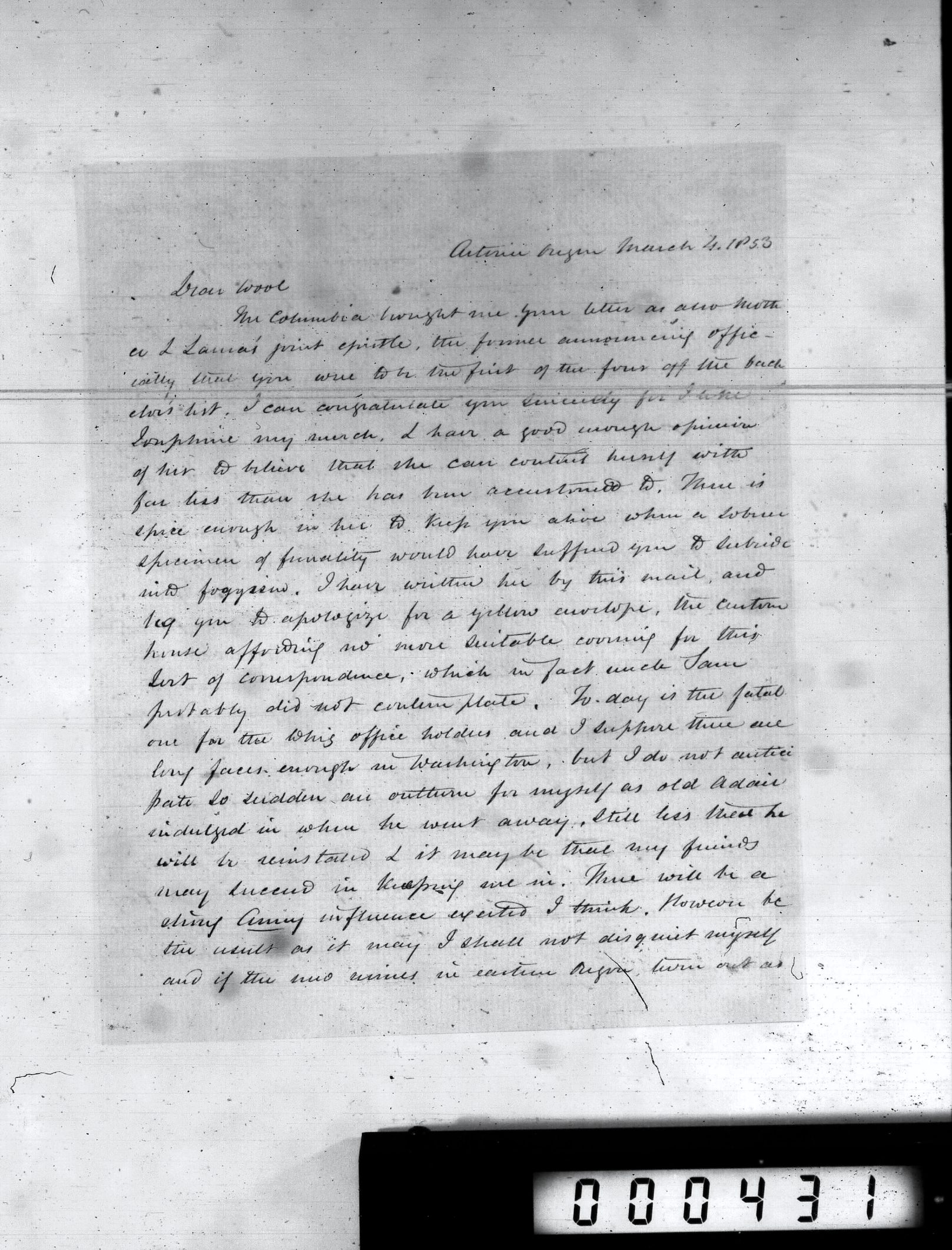
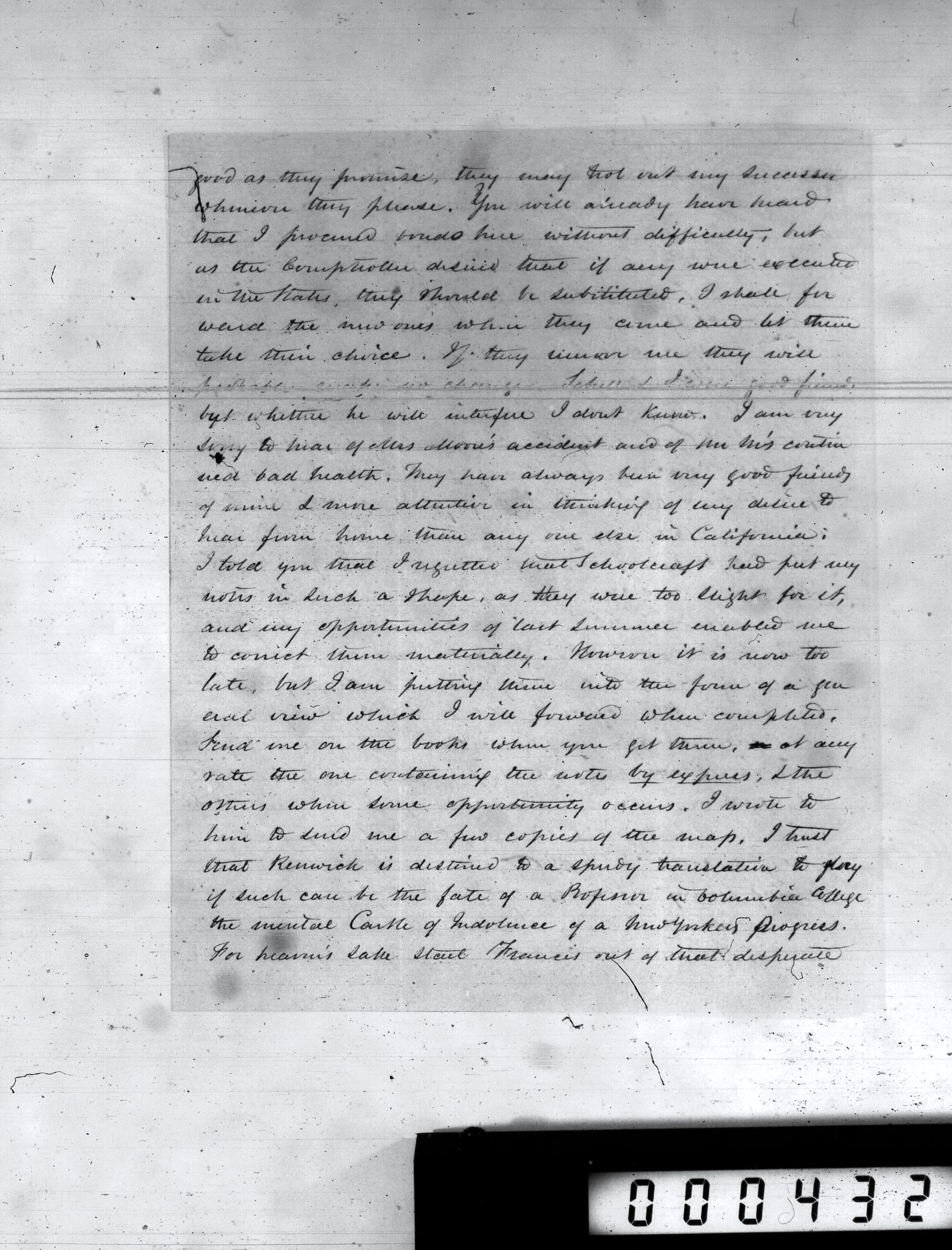
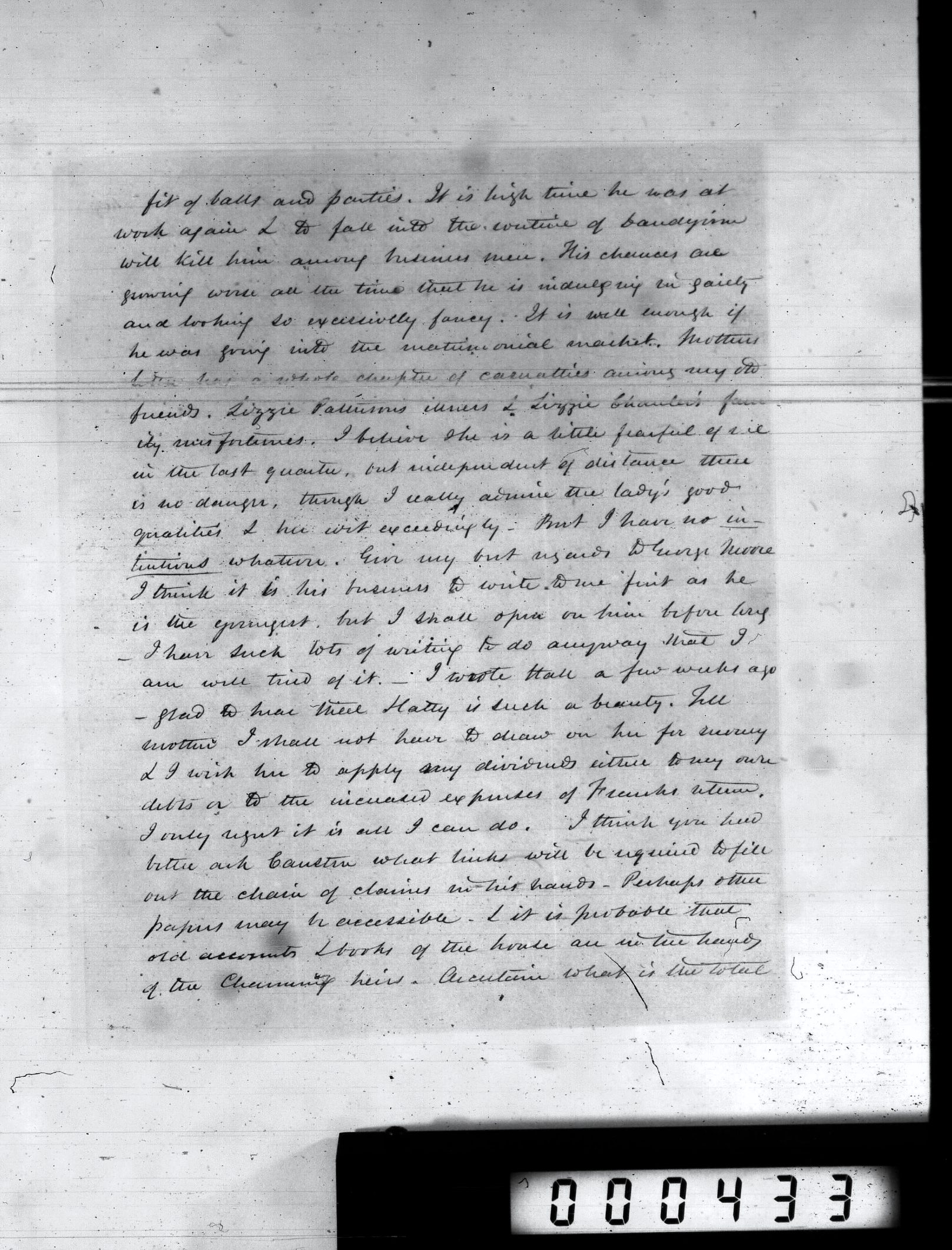
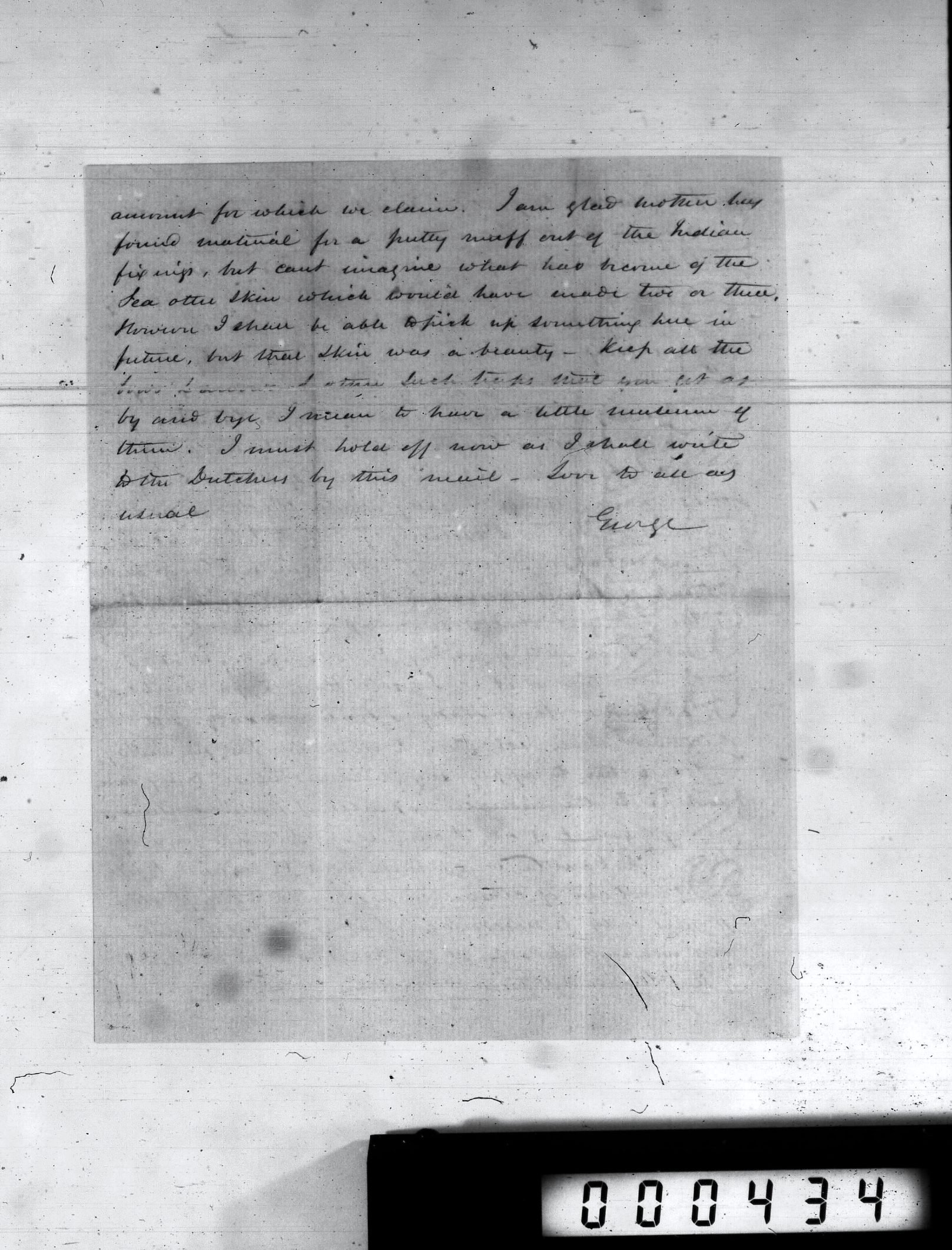
1853 Mar 4
Congratulates Wolcott's engagement to Josephine; Whig officeholders' fatal day; Adair's reinstatement threat
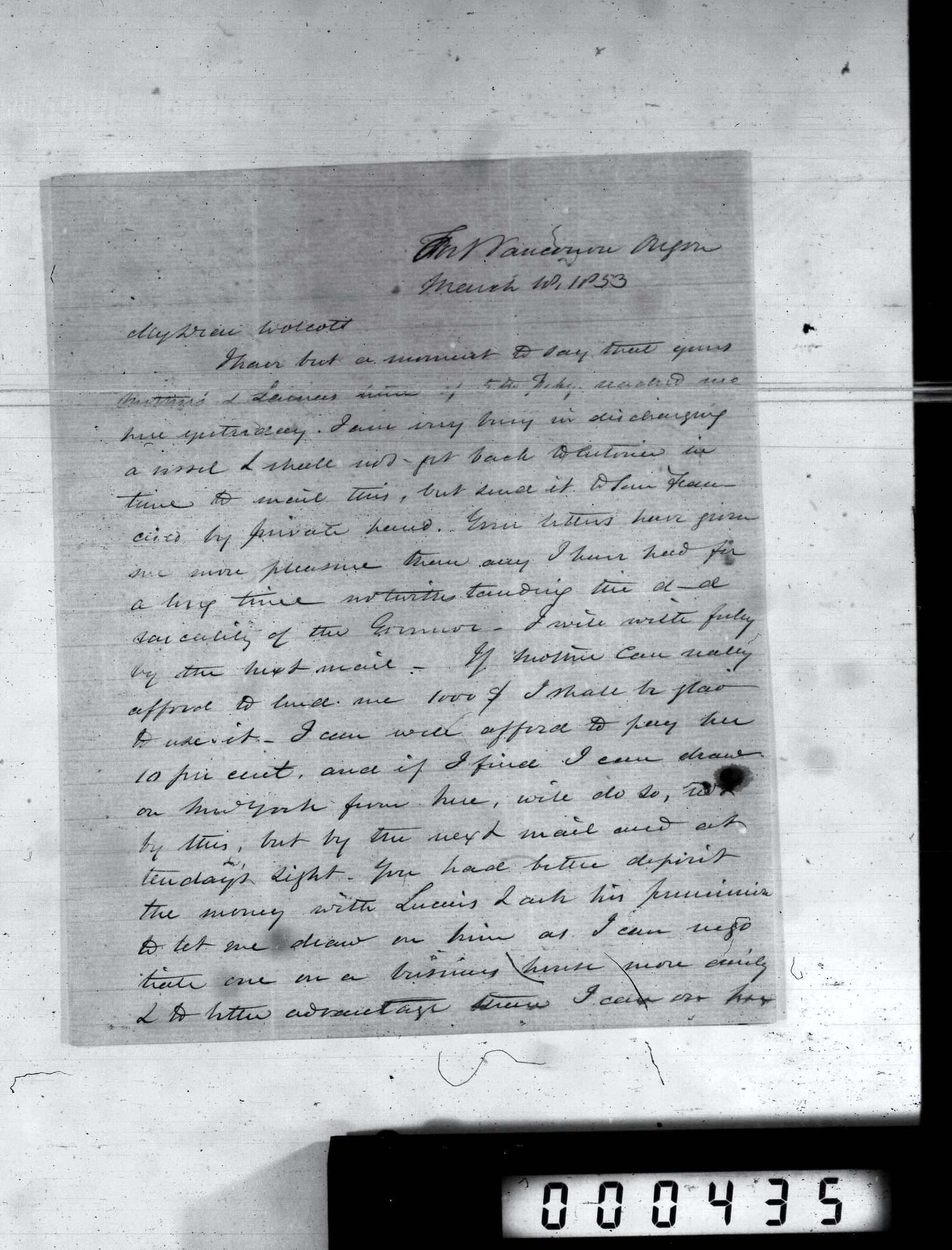
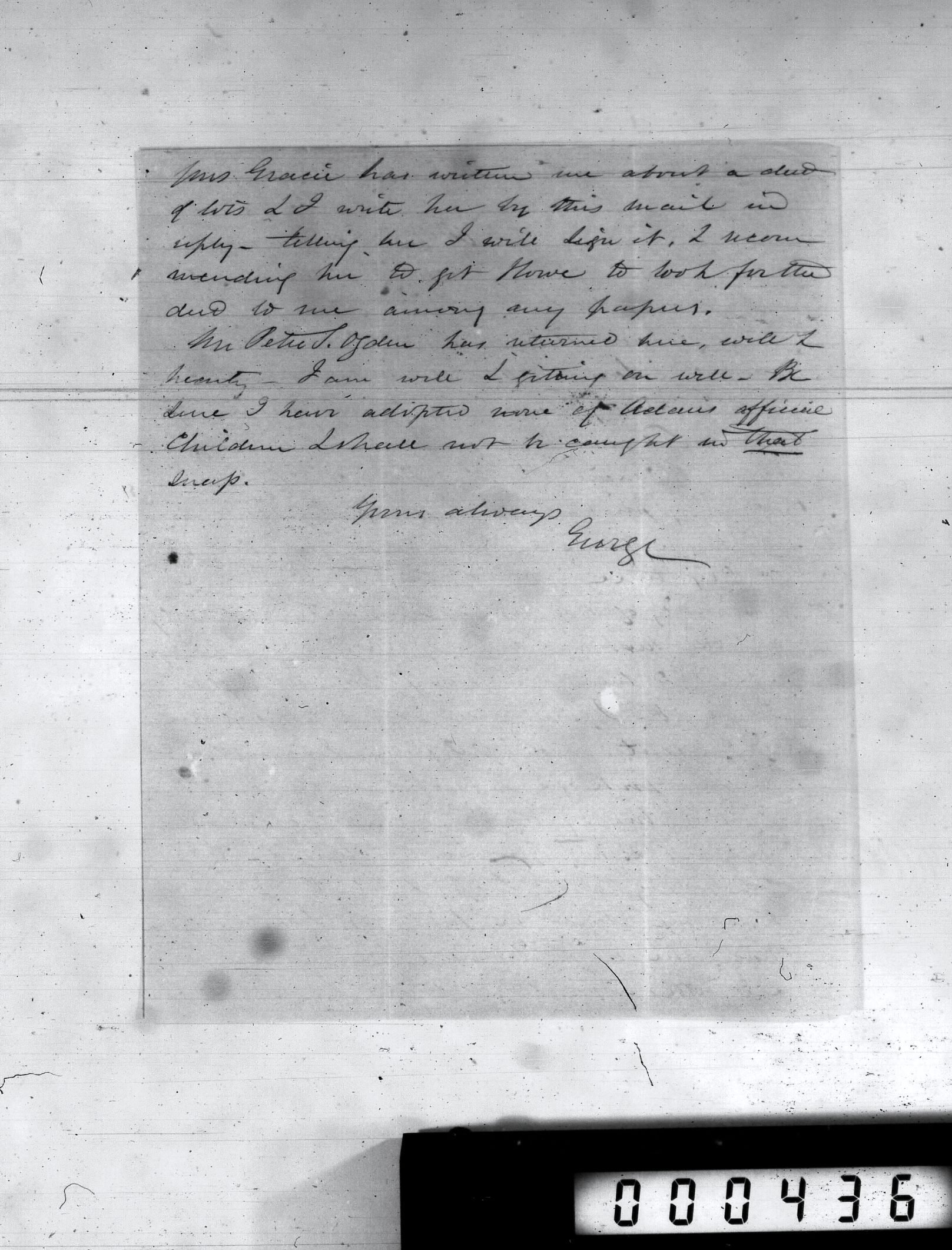
1853 Mar 10
Discharging vessel; asks mother's $1000 loan at ten percent; deposit with Lucius, drawing arrangements
1853 Apr 13
Alfred's Feb 5 letter, regrets Mrs. (Persifor) Smith's death; Oliver in want; visited Lewis & Clark's rotting hut
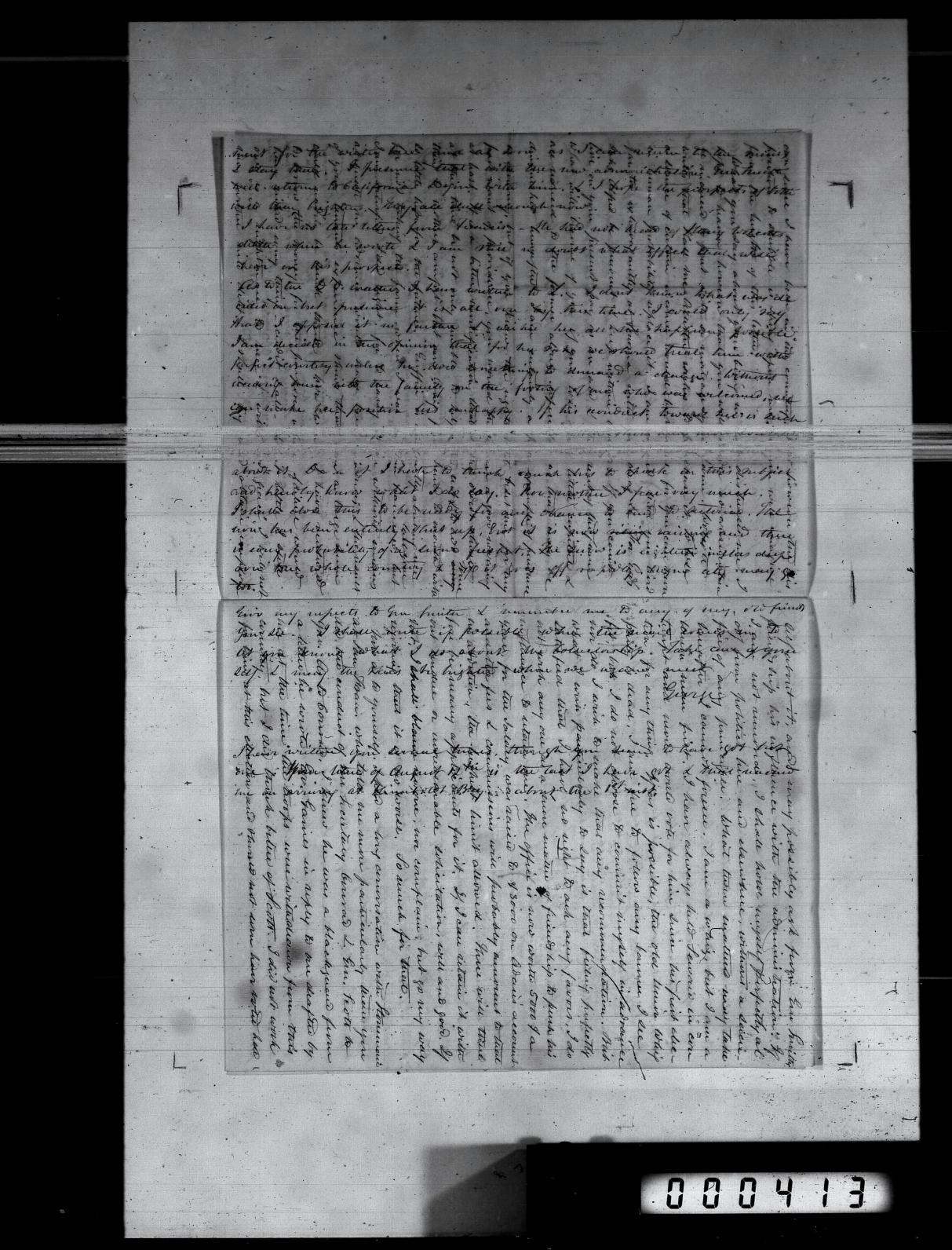
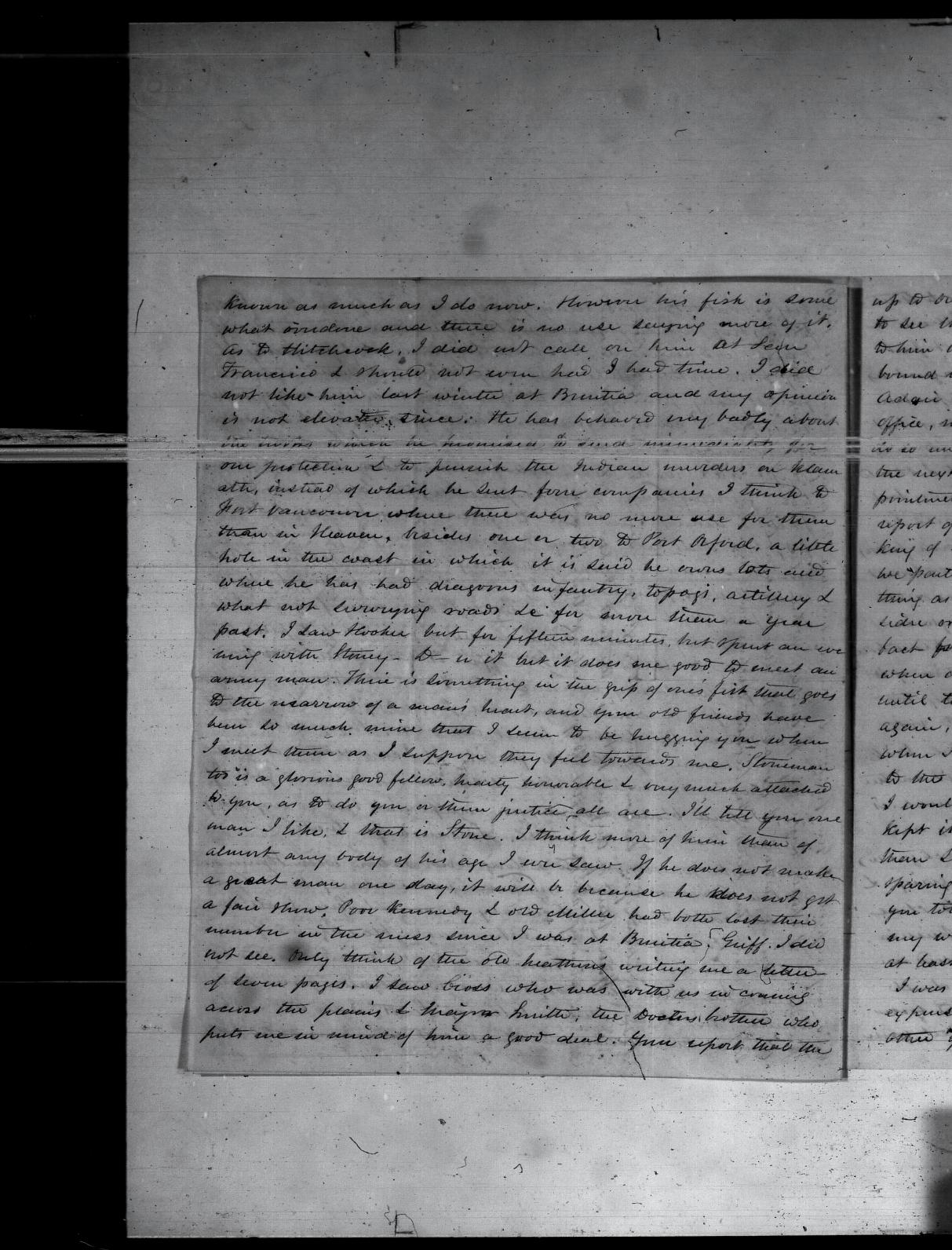
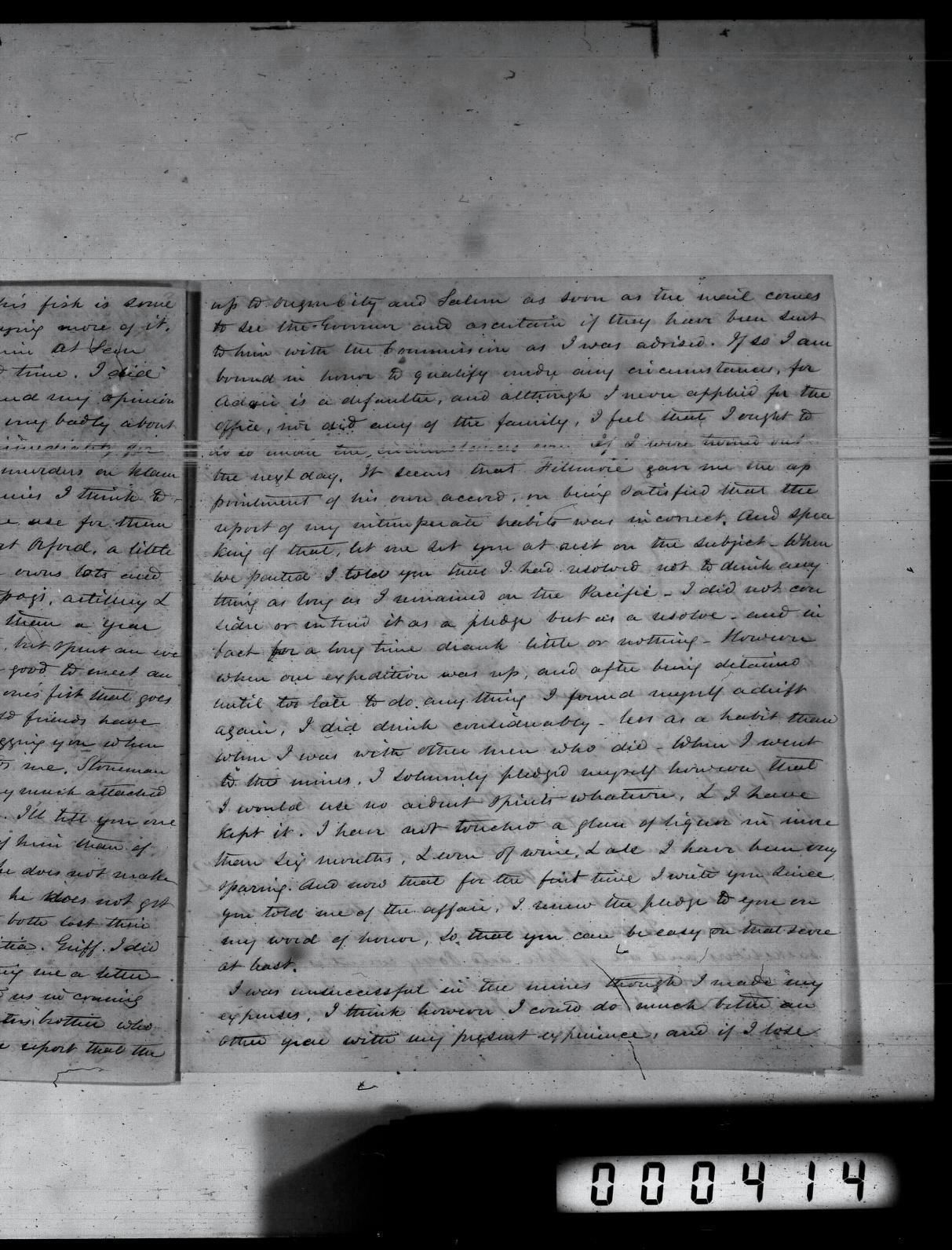
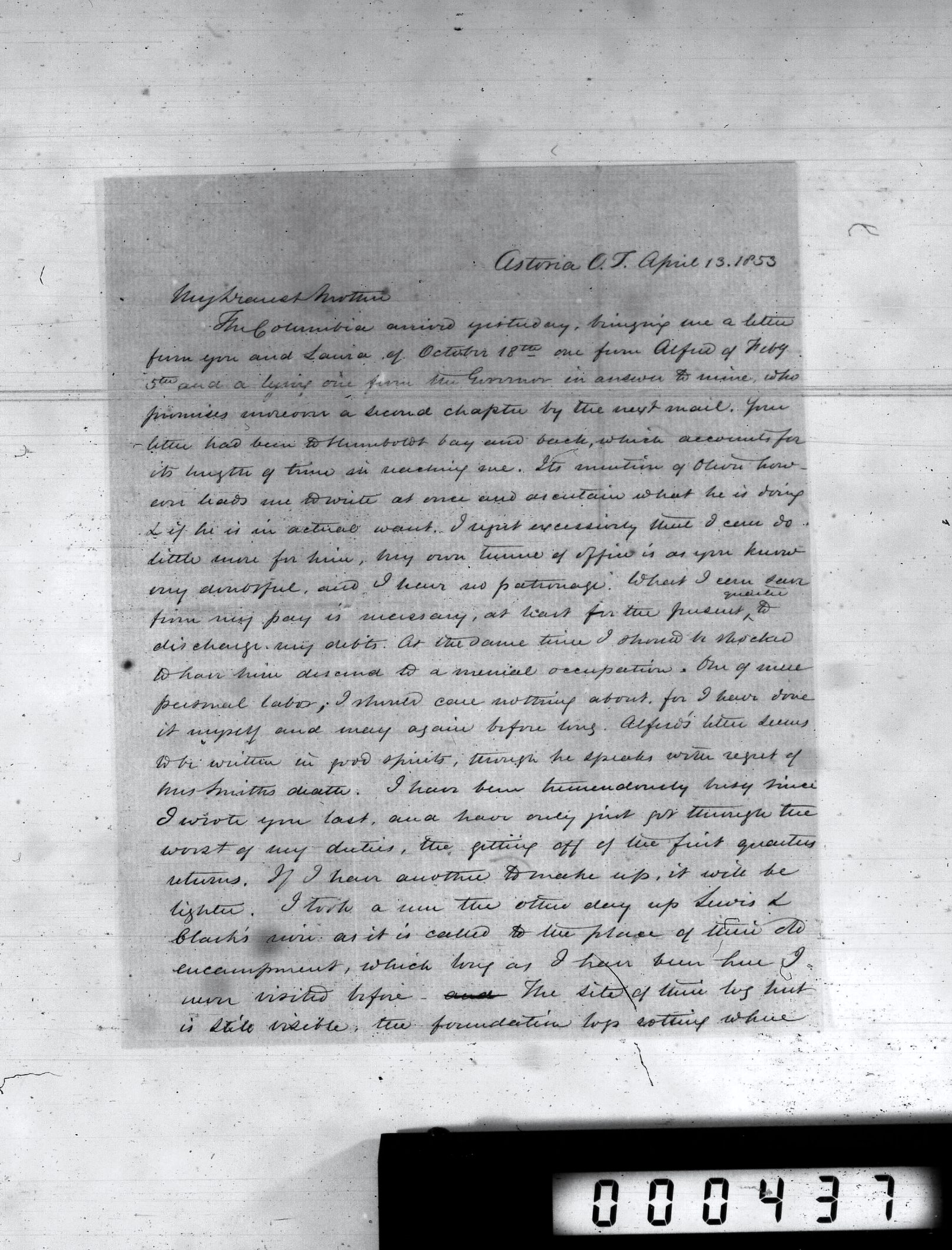
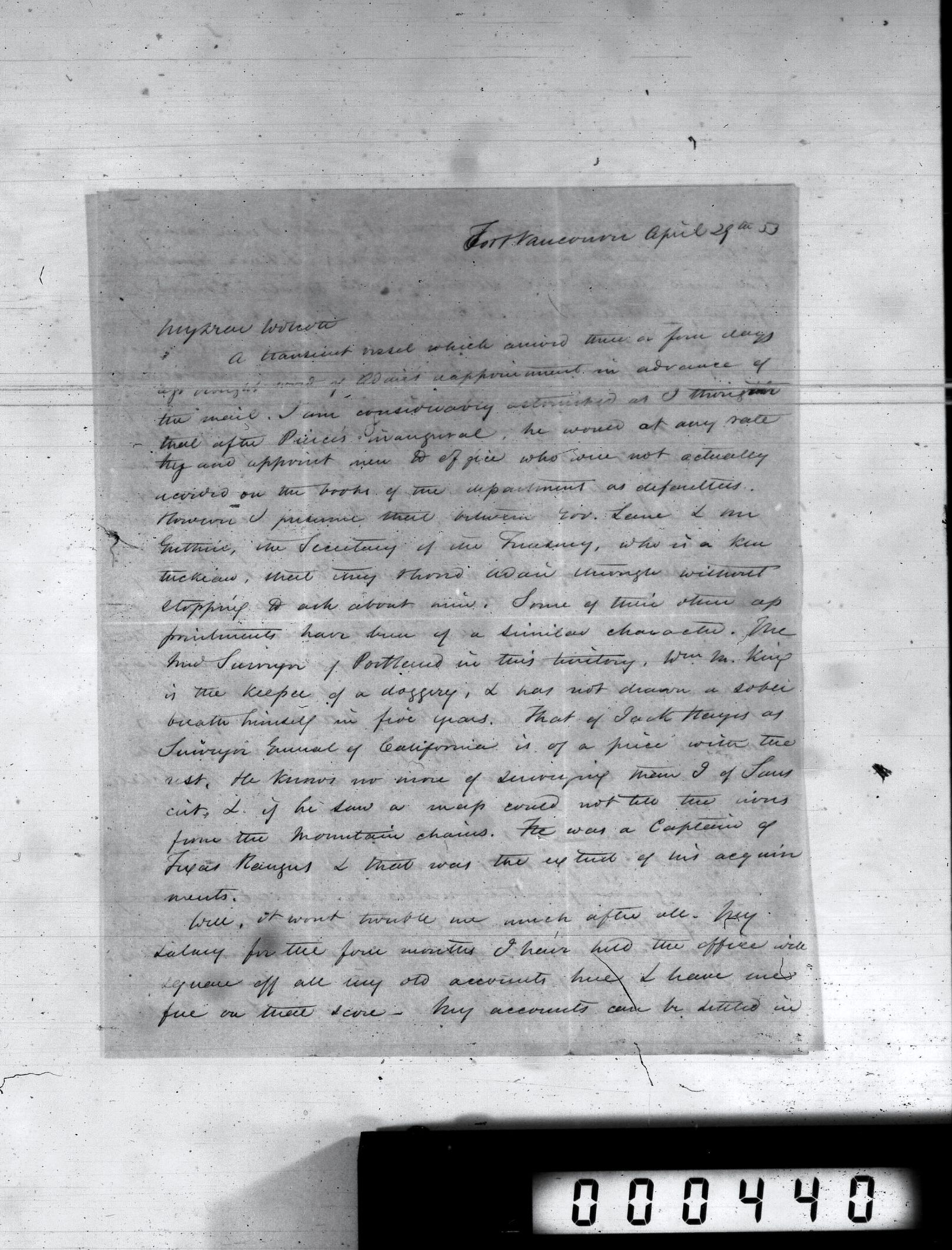
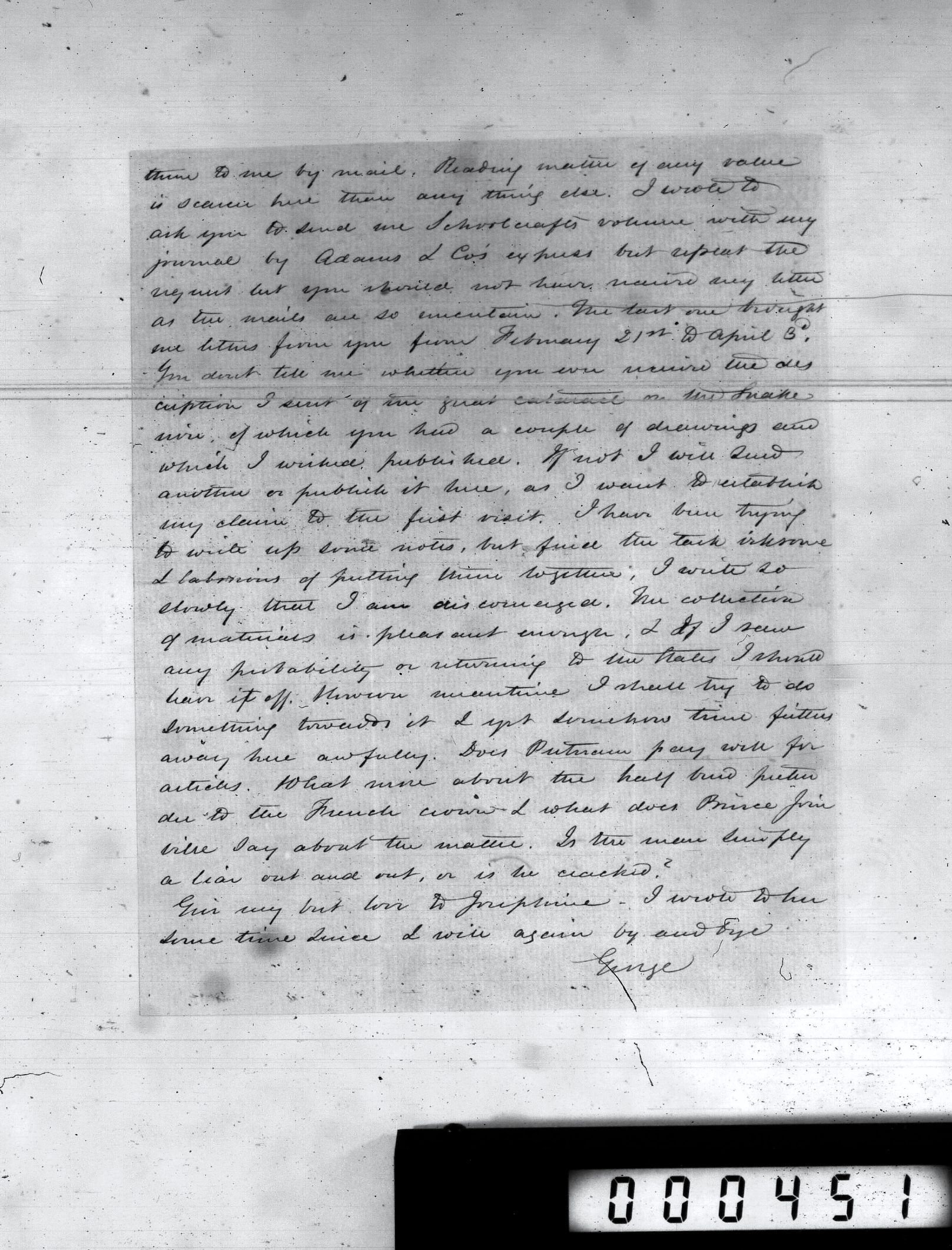
Astoria O.T. April 13. 1853
My Dearest Mother
My Dearest Mother
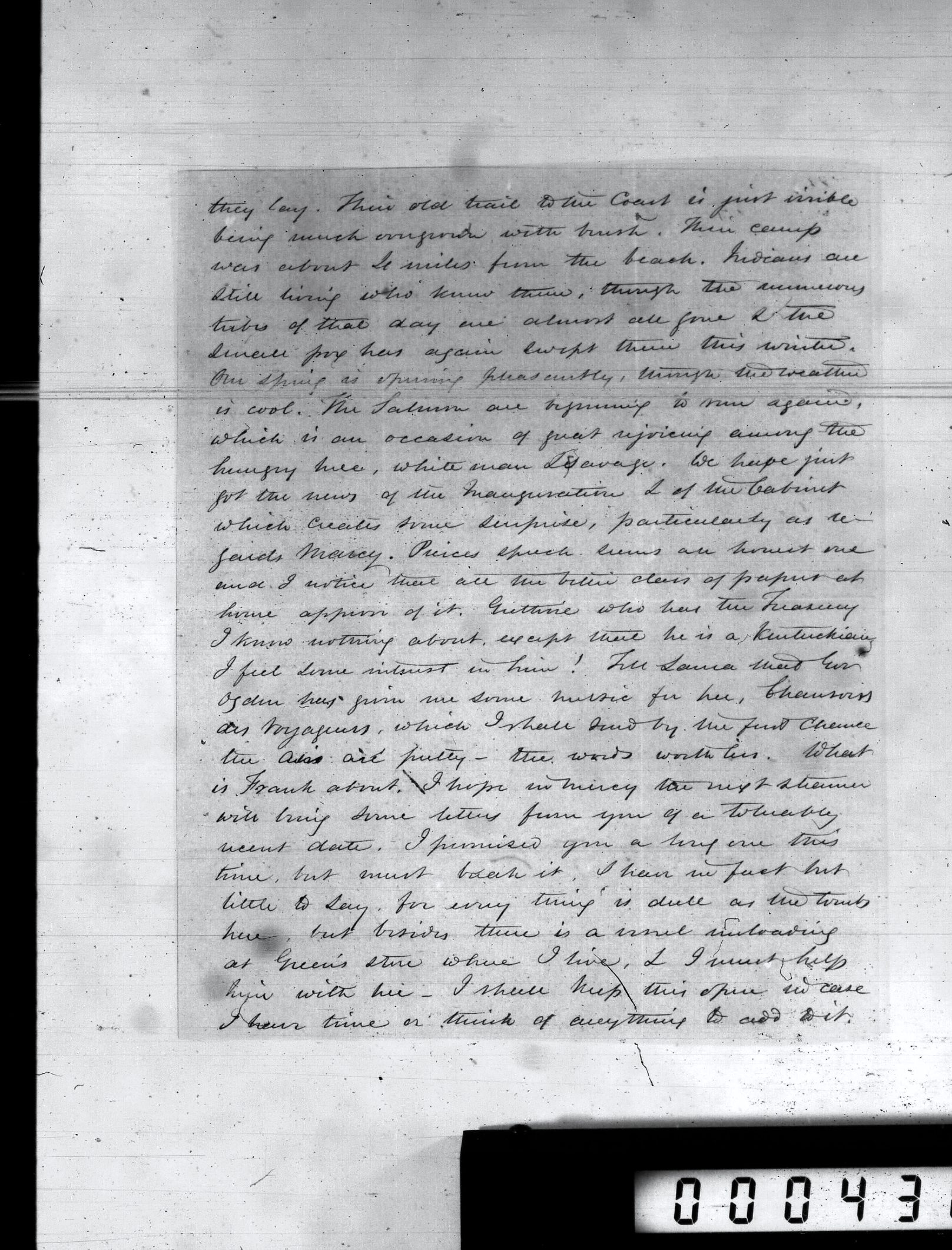
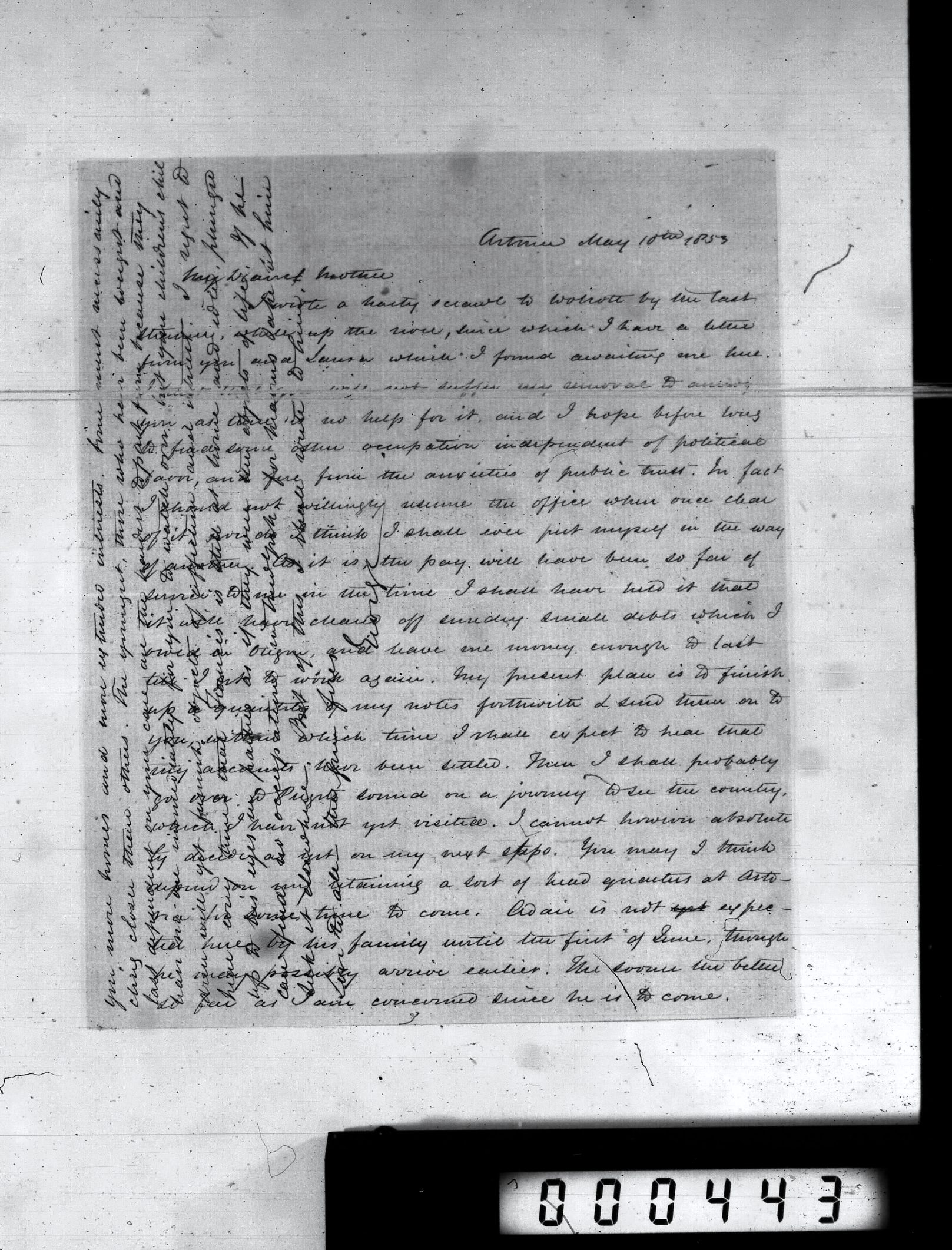
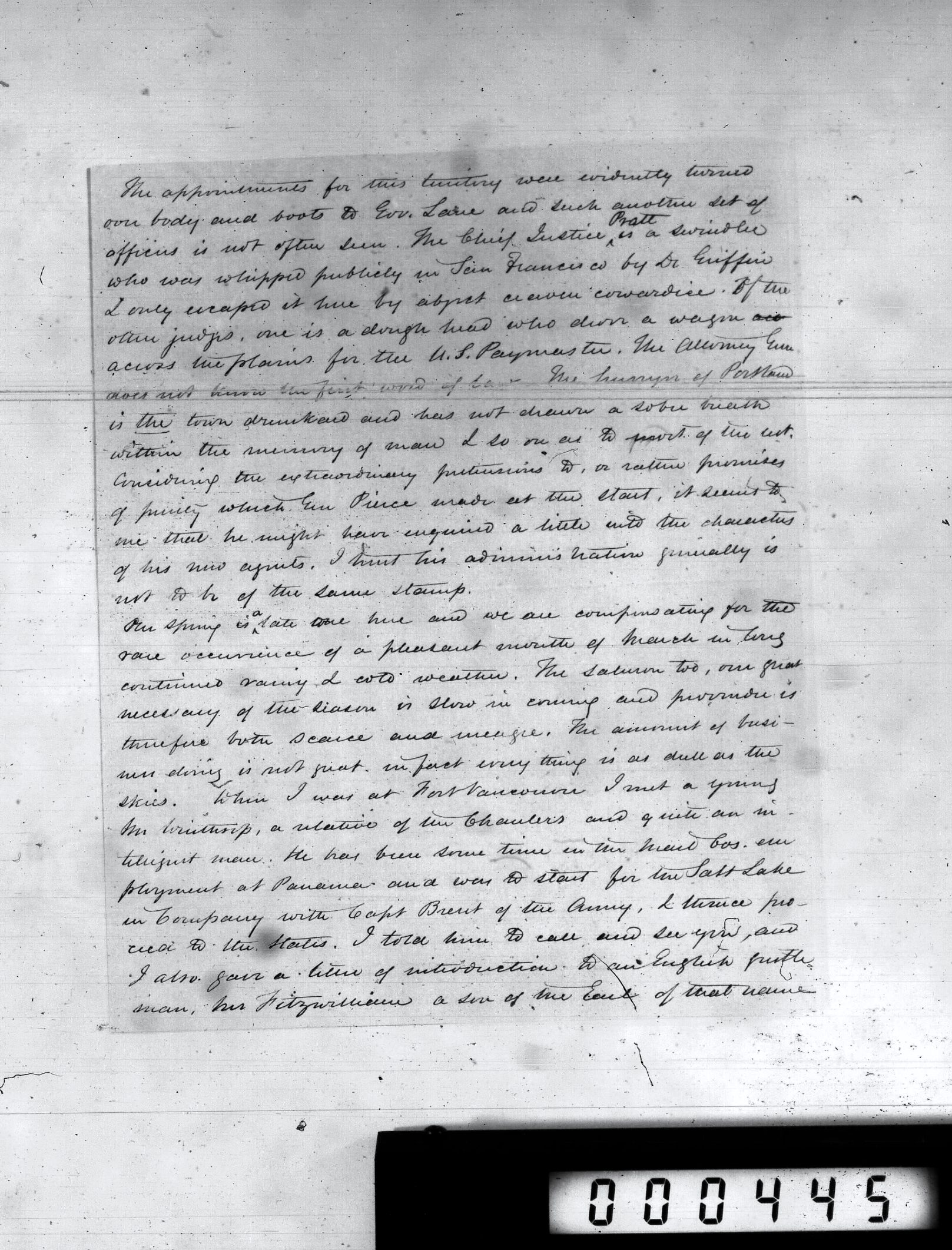
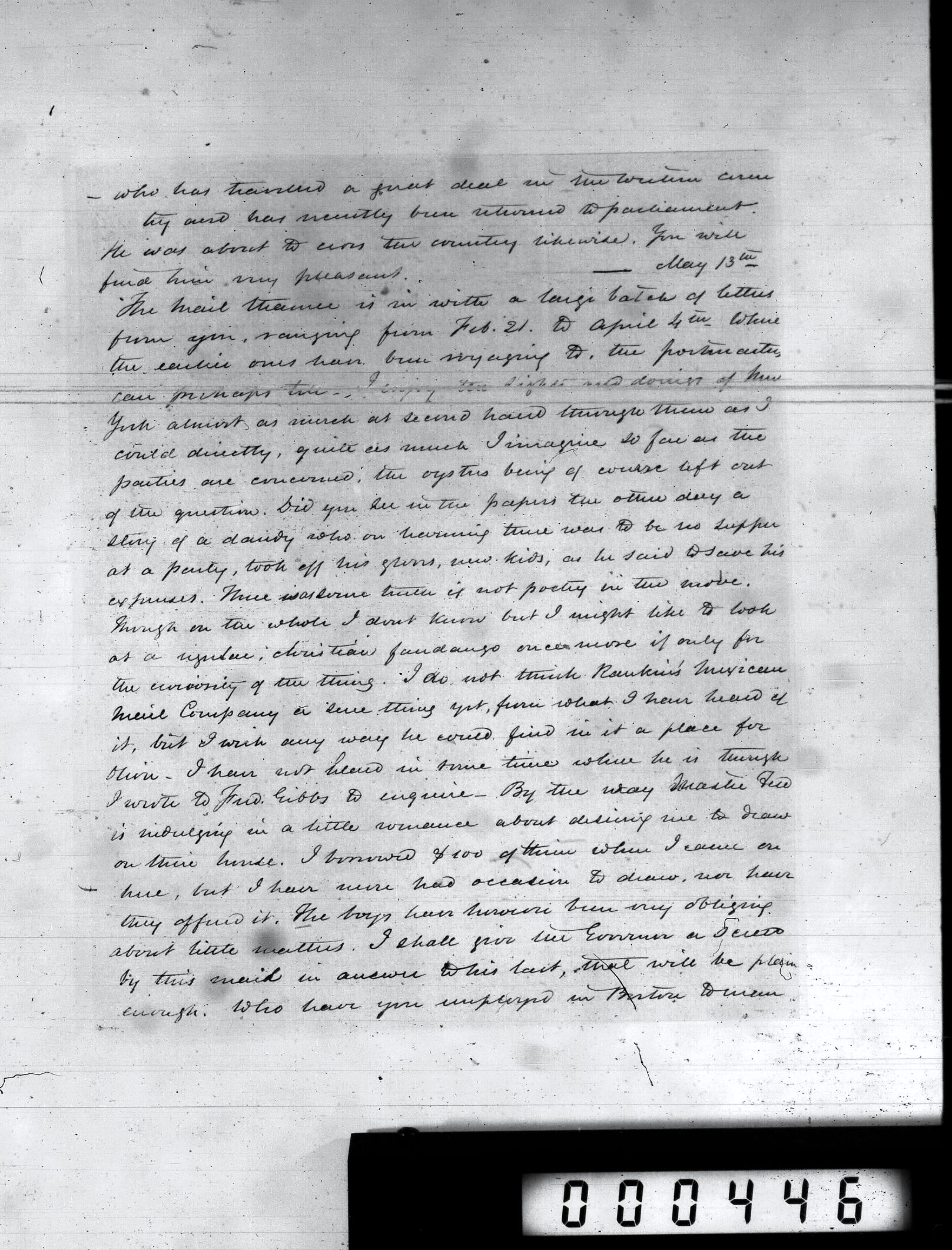
The Columbia arrived yesterday, bringing me a letter from you and Laura of October 18th one from Alfred of Feby 5th and a lying one from the Governor in answer to mine, who promises moreover a second chapter by the next mail. Your letter had been to Humboldt bay and back, which accounts for its length of time in reaching me. Its mention of Oliver however leads me to write at once and ascertain what he is doing & if he is in actual want. I regret excessively that I can do little more for him, my own tenure of office is as you know very doubtful, and I have no patronage. What I can save from my pay is necessary, at least for the present quarter, to discharge my debts. At the same time I should be shocked to have him descend to a menial occupation. One of mere personal labor, I should care nothing about. for I have done it myself and may again before long. Alfred's letter seems to be written in good spirits, though he speaks with regret of Mrs Smiths death. I have been tremendously busy since I wrote you last, and have only just got through the worst of my duties, the getting off of the first quarters returns. If I have another to make up, it will be lighter. I took a run the other day up Lewis & Clark's river as it is called to the place of their old encampment, which long as I have been here I never visited before – [struck through: and] The site of their log hut is still visible, the foundation logs rotting where they lay. Their old trail to the Coast is just visible being much overgrown with brush. Their camp was about 6 miles from the beach. Indians are still living who knew them, though the numerous tribes of that day are almost all gone & the small pox has again swept them this winter. Our spring is opening pleasantly, though the weather is cool. The Salmon are beginning to run again, which is an occasion of great rejoicing among the hungry here, white man & Savage. We have just got the news of the Inauguration & of the Cabinet which creates some surprise, particularly as regards Marcy. Pierces speech seems an honest one and I notice that all the better class of papers at home approve of it. Guthrie who has the Treasury I know nothing about, except that he is a Kentuckian I feel some interest in him! Tell Laura that Gov Ogden has from me some music for her, Chansons des Voyageurs, which I shall send by the first Chance the airs are pretty – the words worth less. What is Frank about. I hope in mercy the next steamer will bring some letters from you of a tolerably recent date. I promised you a long one this time, but must break it, I have in fact but little to say, for every thing is dull as the tomb here, but besides there is a vessel unloading at Green's store where I live, & I must help him with her – I shall keep this open in case I have time or think of anything to add to it.
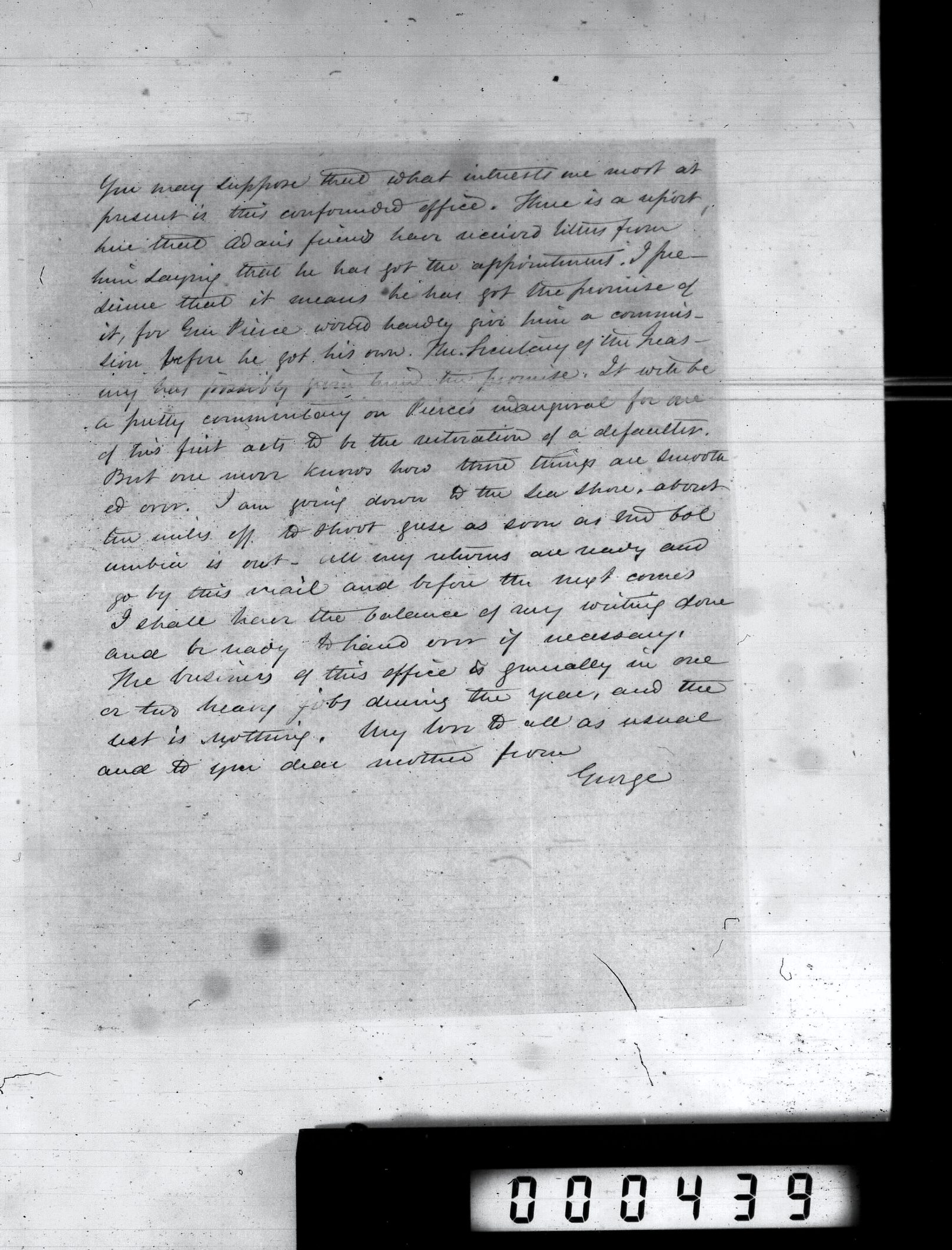
You may suppose that what interests me most at present is this confounded office. There is a report here that Adair's friends have received letters from him saying that he has got the appointment. I presume that it means he has got the promise of it, for Genl Pierce would hardly give him a commission before he got his own. The Secretary of the Treasury has probably given(?) [illegible] the promise. It will be a pretty commentary on Pierce's inaugural for one of his first acts to be the restoration of a defaulter. But one never knows how these things are smoothed over. I am going down to the sea shore, about ten miles off to shoot geese as soon as the Columbia is out – all my returns are ready and go by this mail and before the next comes I shall have the balance of my writing done and be ready to hand over if necessary.
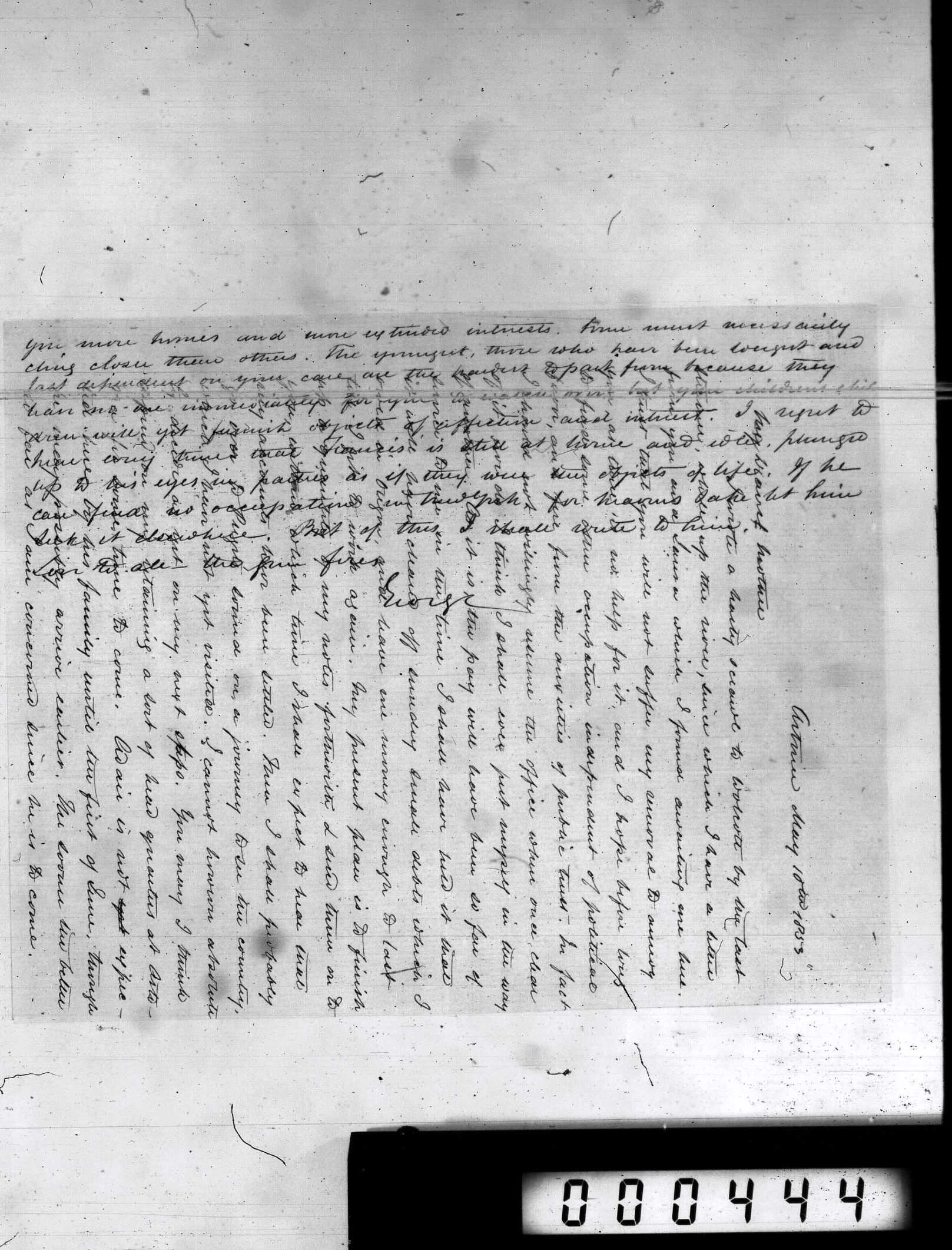
The business of this office is generally in one or two heavy jobs during the year, and the rest is nothing. My love to all as usual and to you dear mother from
George
Three frames (1503-1505), film counters 000437, 000438 and 000439; a single letter written on the leaves of a folded sheet, the fourth leaf blank. A horizontal light-leak band from the microfilming crosses every frame: on f1505 it falls squarely on the line beginning 'ury has probably …', where the two words following 'has probably' are largely bleached out – the first is read as 'given(?)' and the second could not be recovered and is marked [illegible]. On f1503 the word 'quarter' is interlined above the line with a caret after 'present', and 'and' is struck through after 'I never visited before'. Bleed-through from the reverse of each leaf is visible throughout.
1853 Apr 29
Adair's reappointment confirmed; scorns spoils picks—doggery-keeper King, Jack Hays surveyor general California
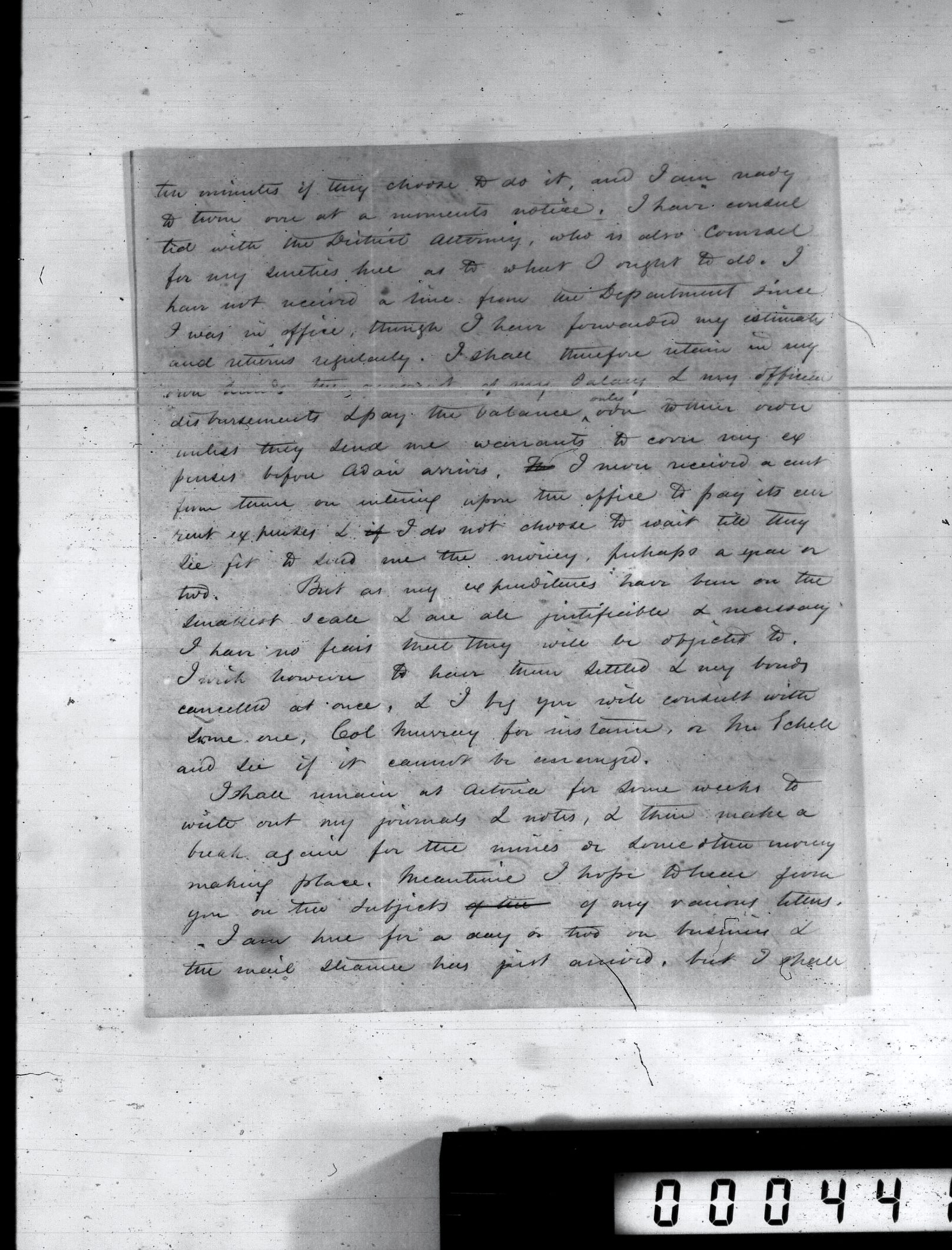
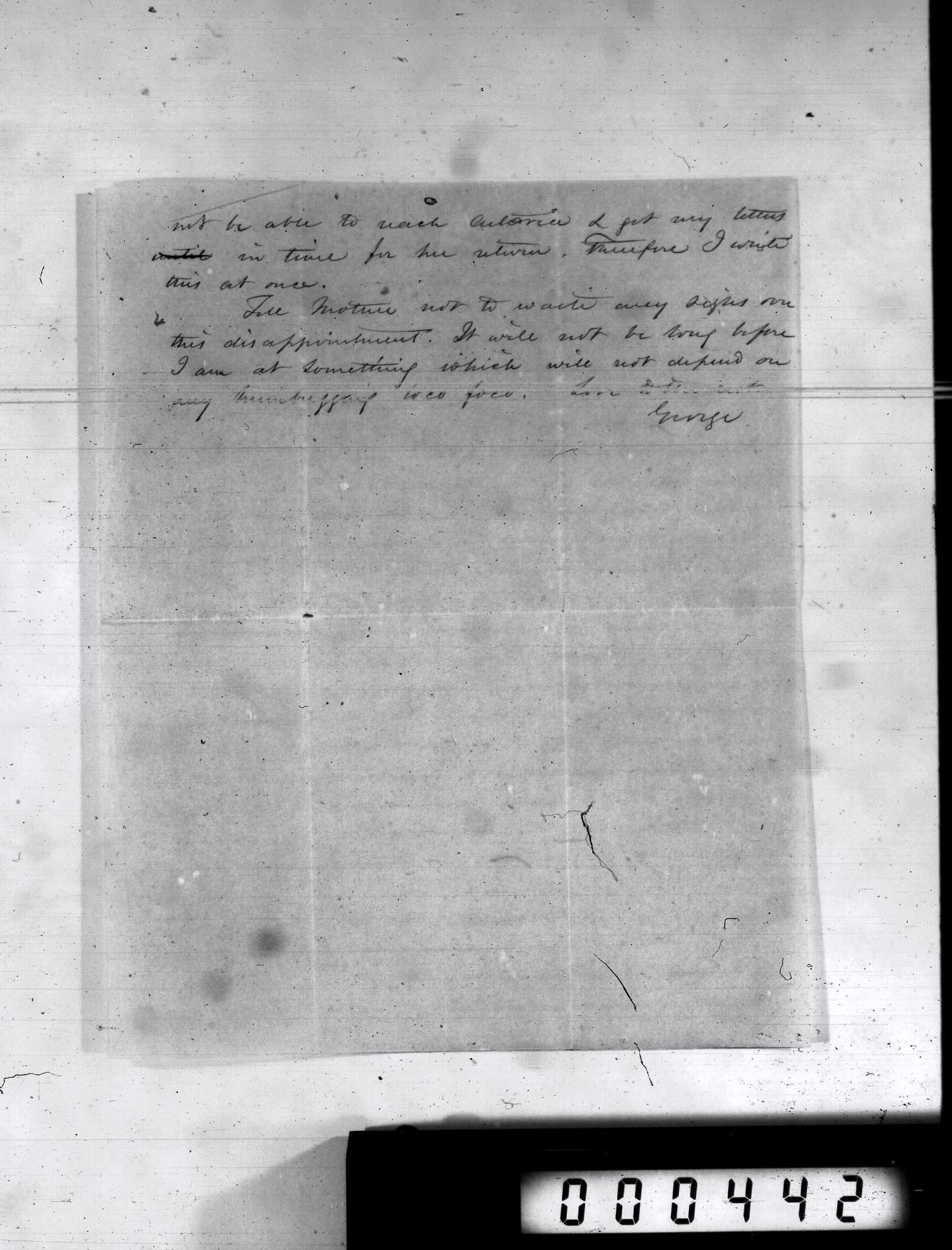
1853-05-10
Astoria: removal from collectorship, debts paid, plans Puget Sound trip, Adair awaited
1853-05-23
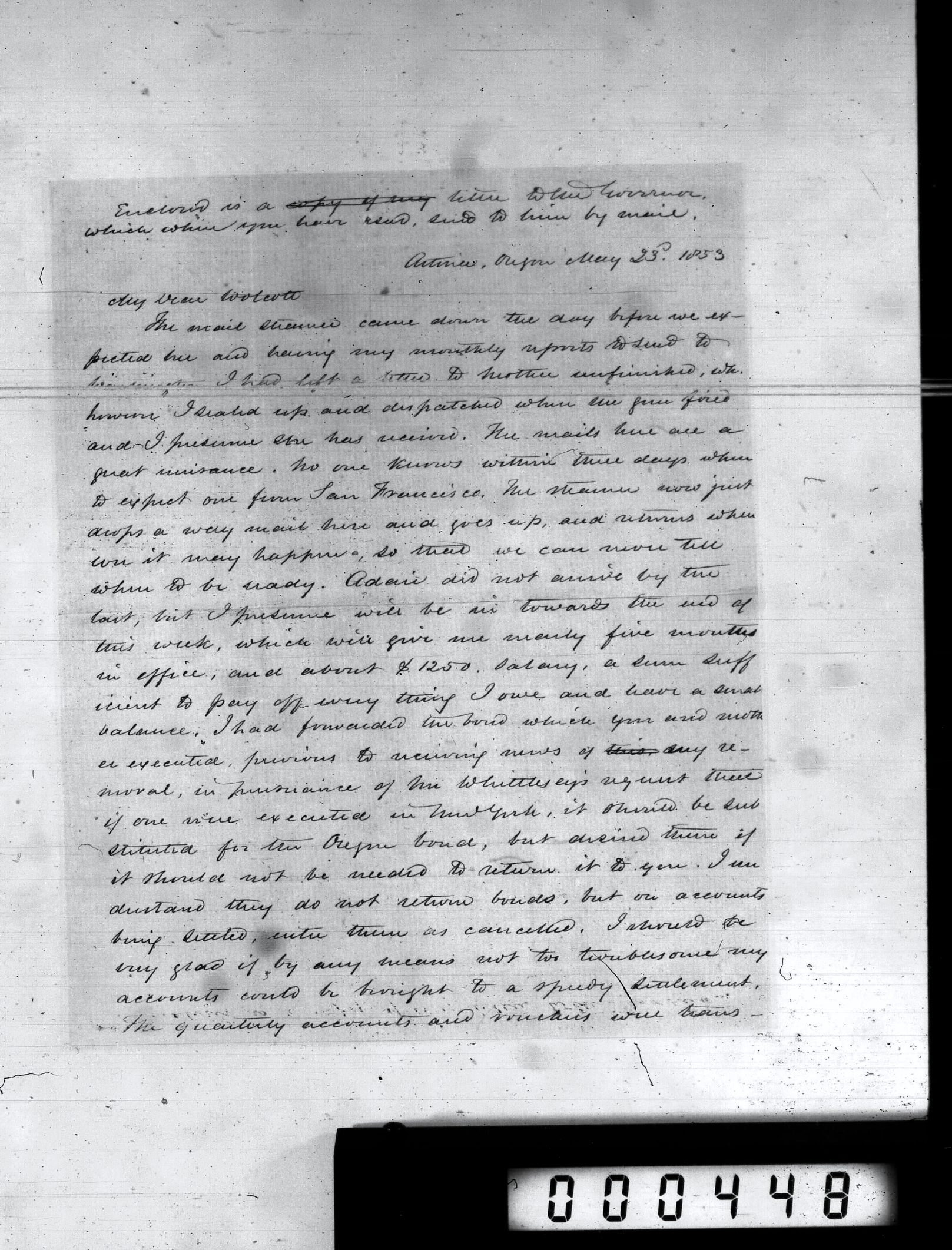
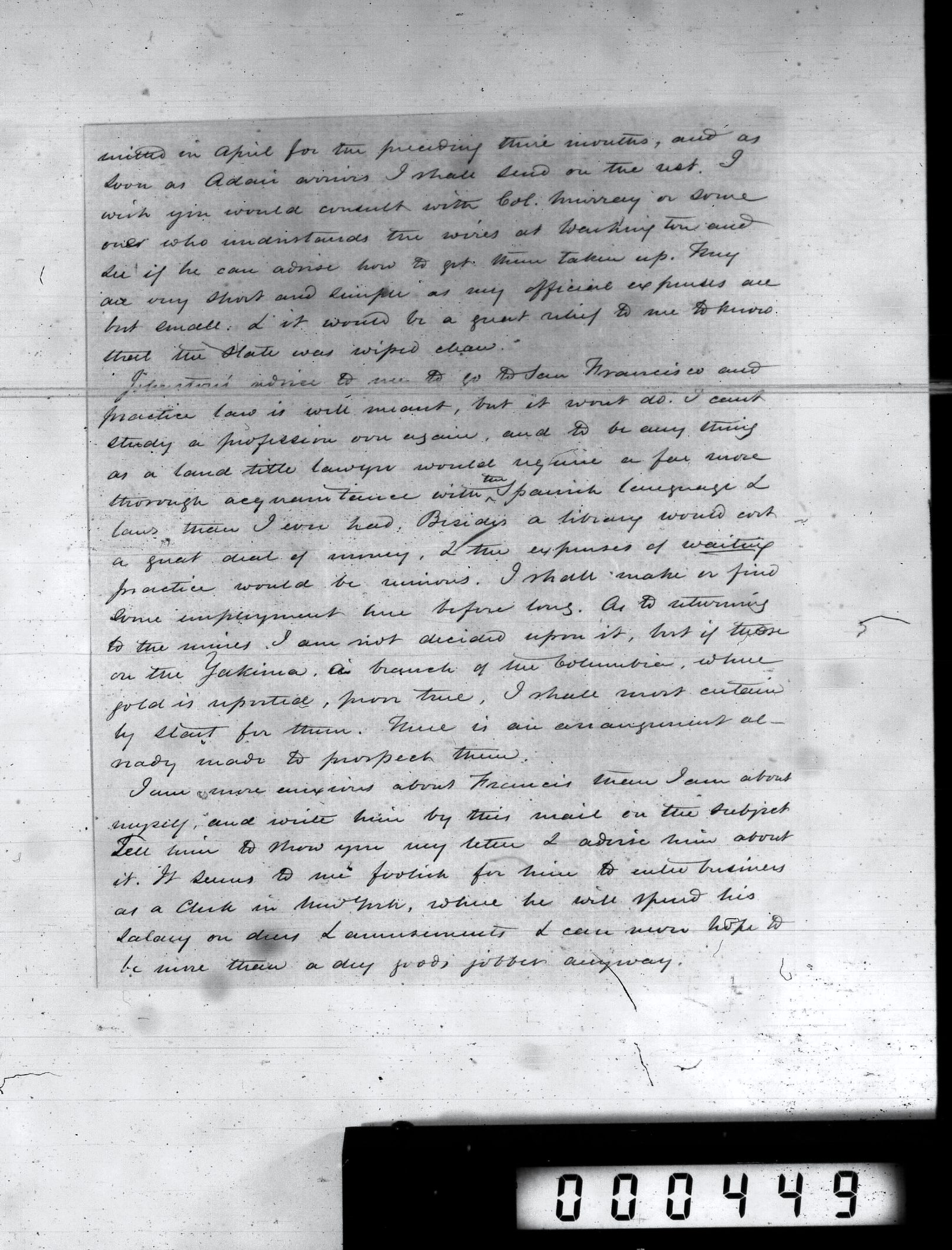
Astoria: still in office, ~$1250 salary, customs bond substitution, settling accounts
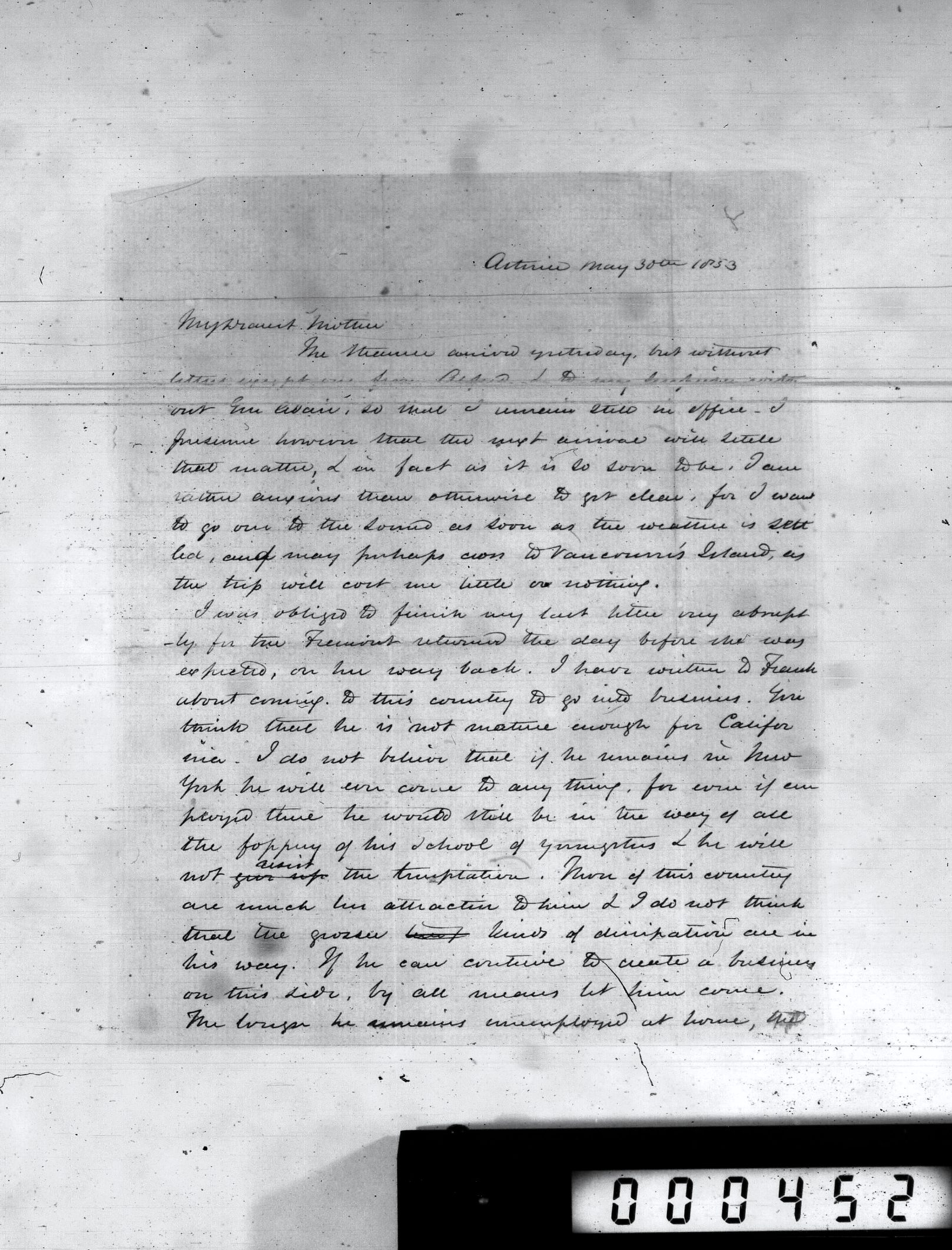
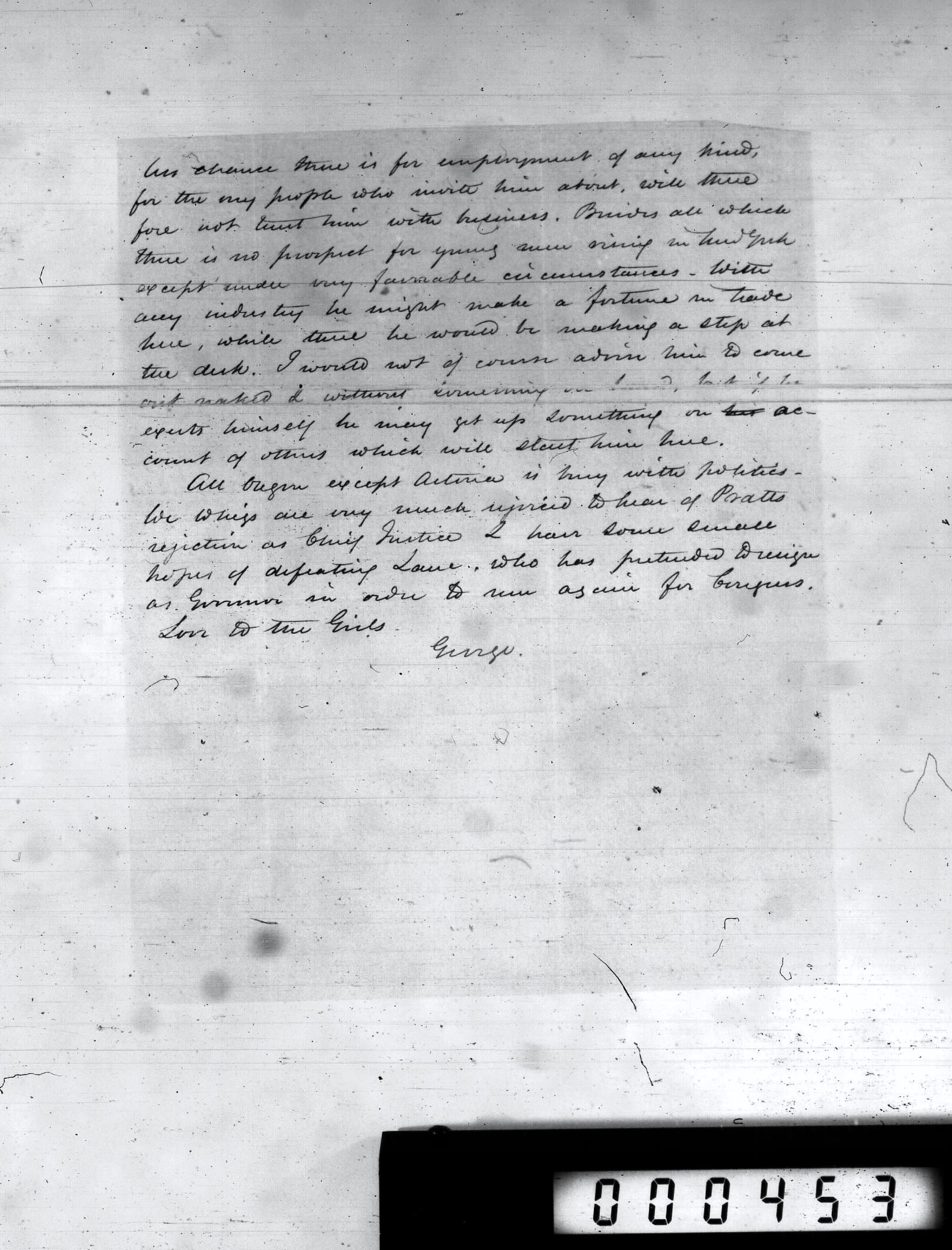
1853-05-30
Astoria: letter from Alfred arrived; Adair delayed; urges Francis west for business
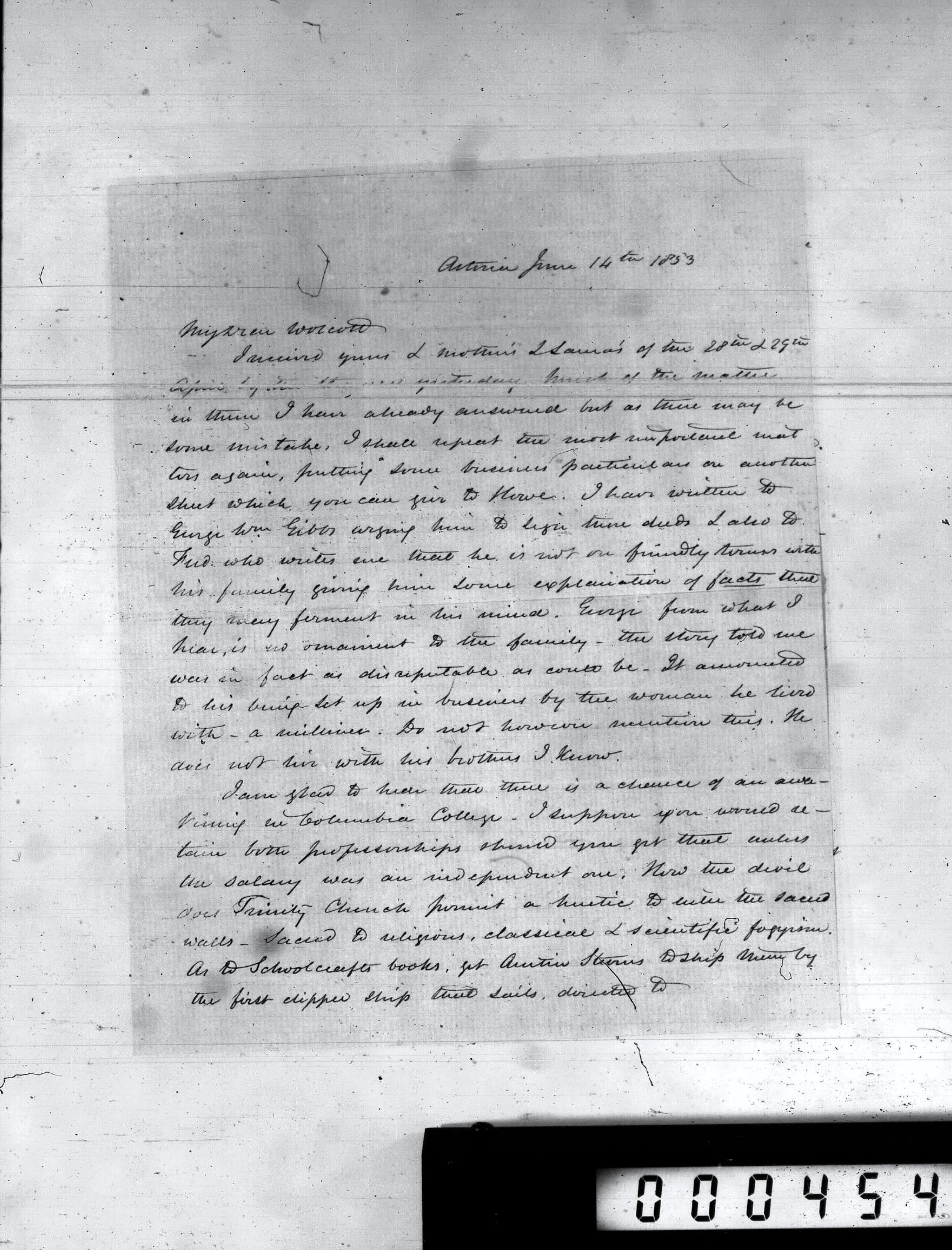
1853-06-14
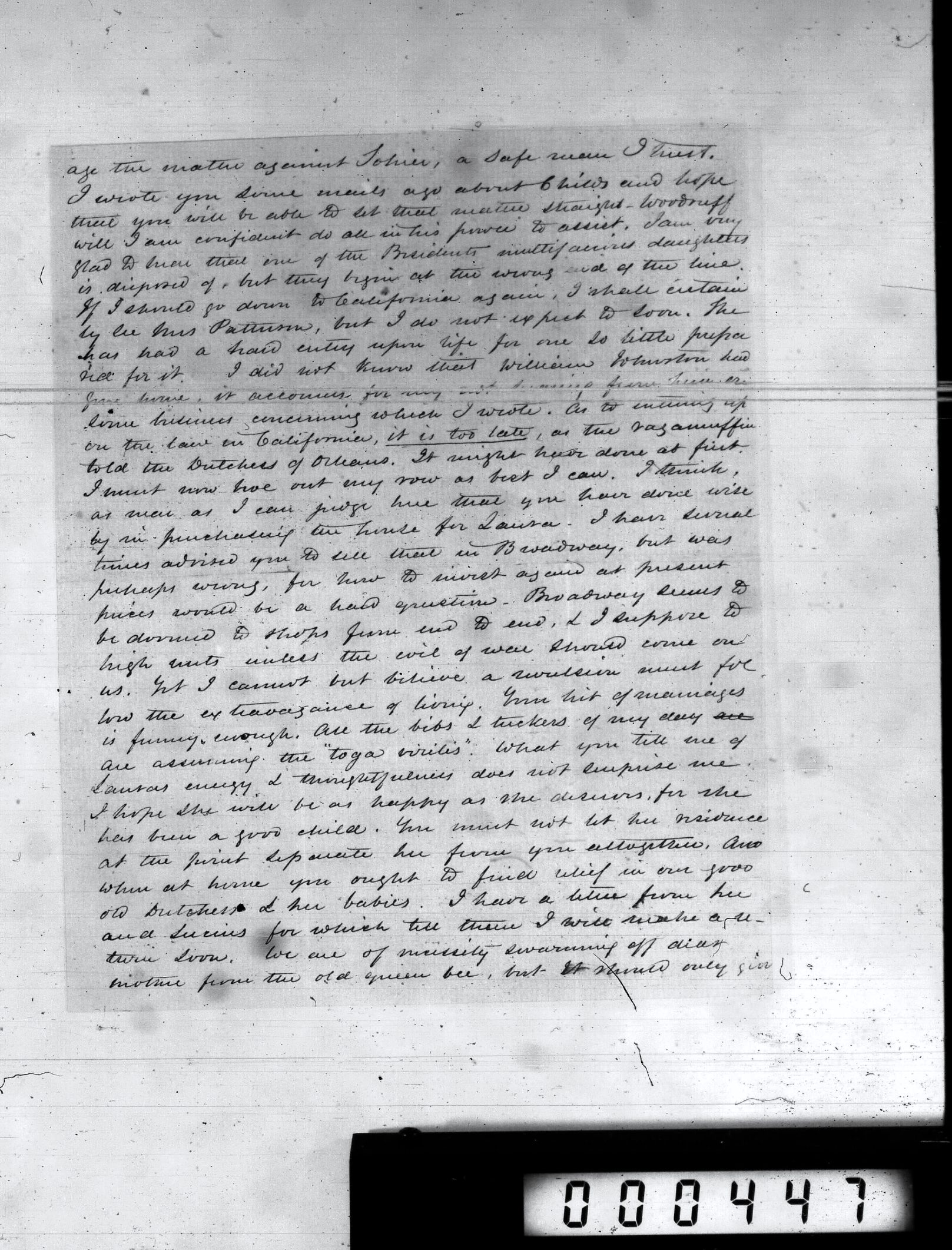
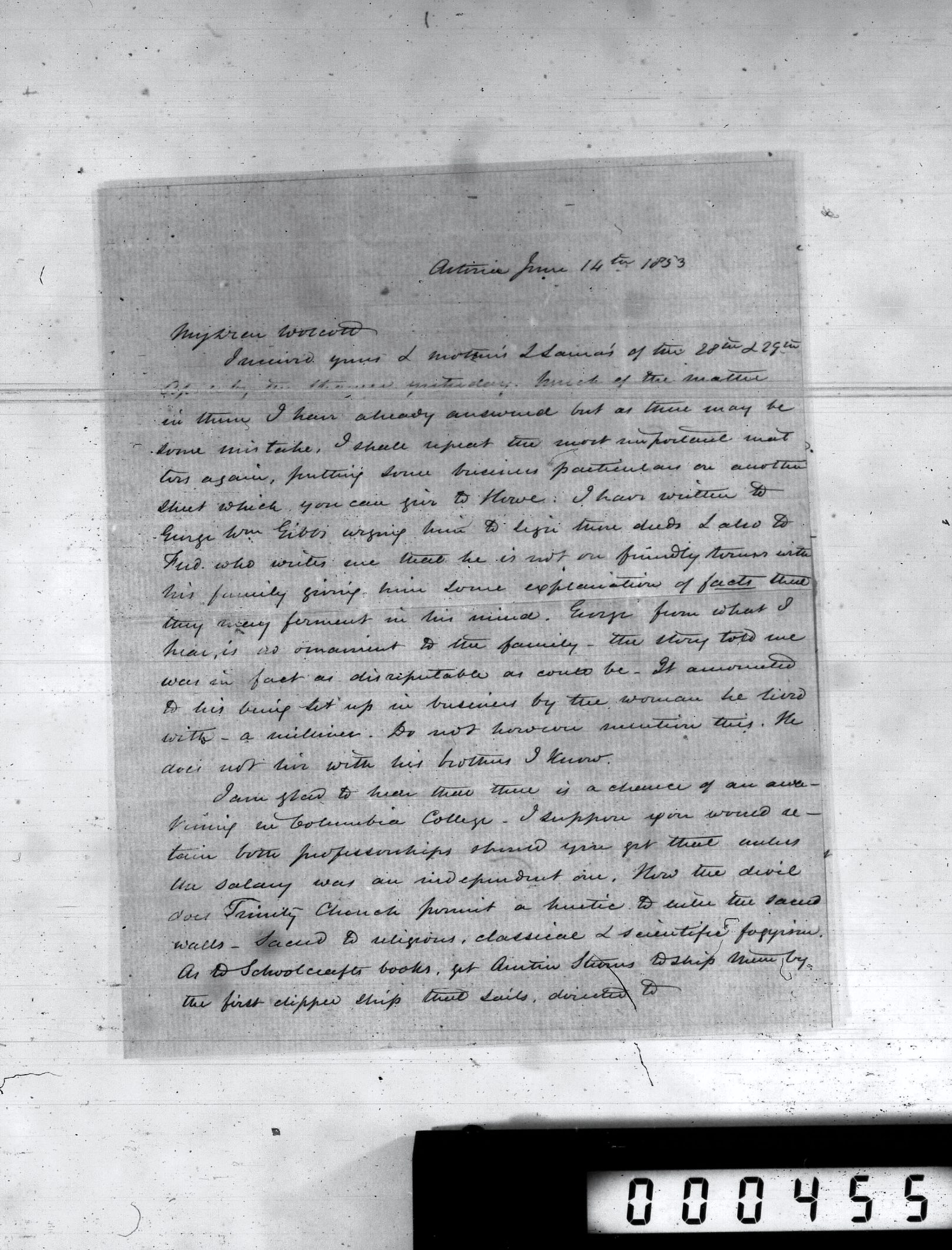
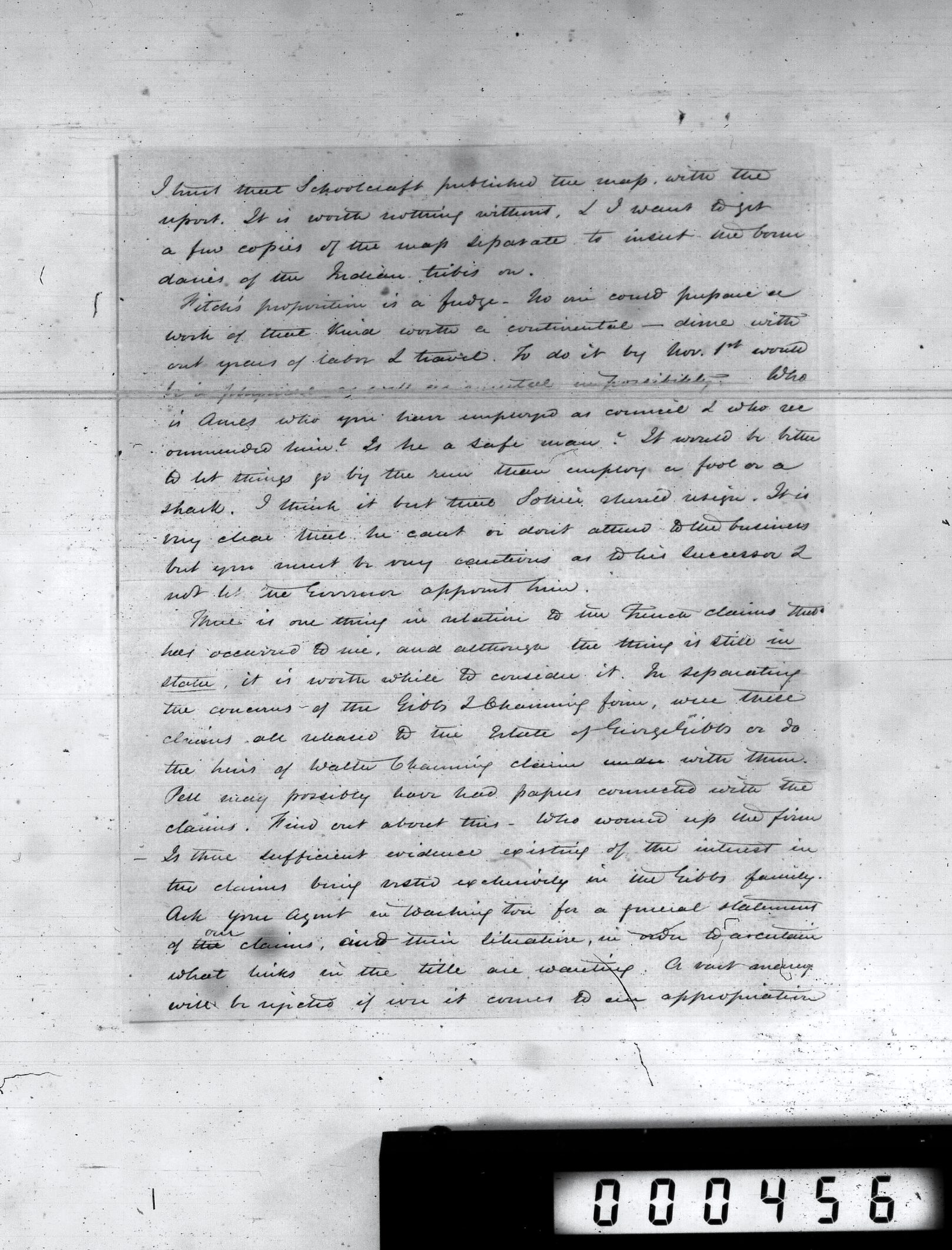
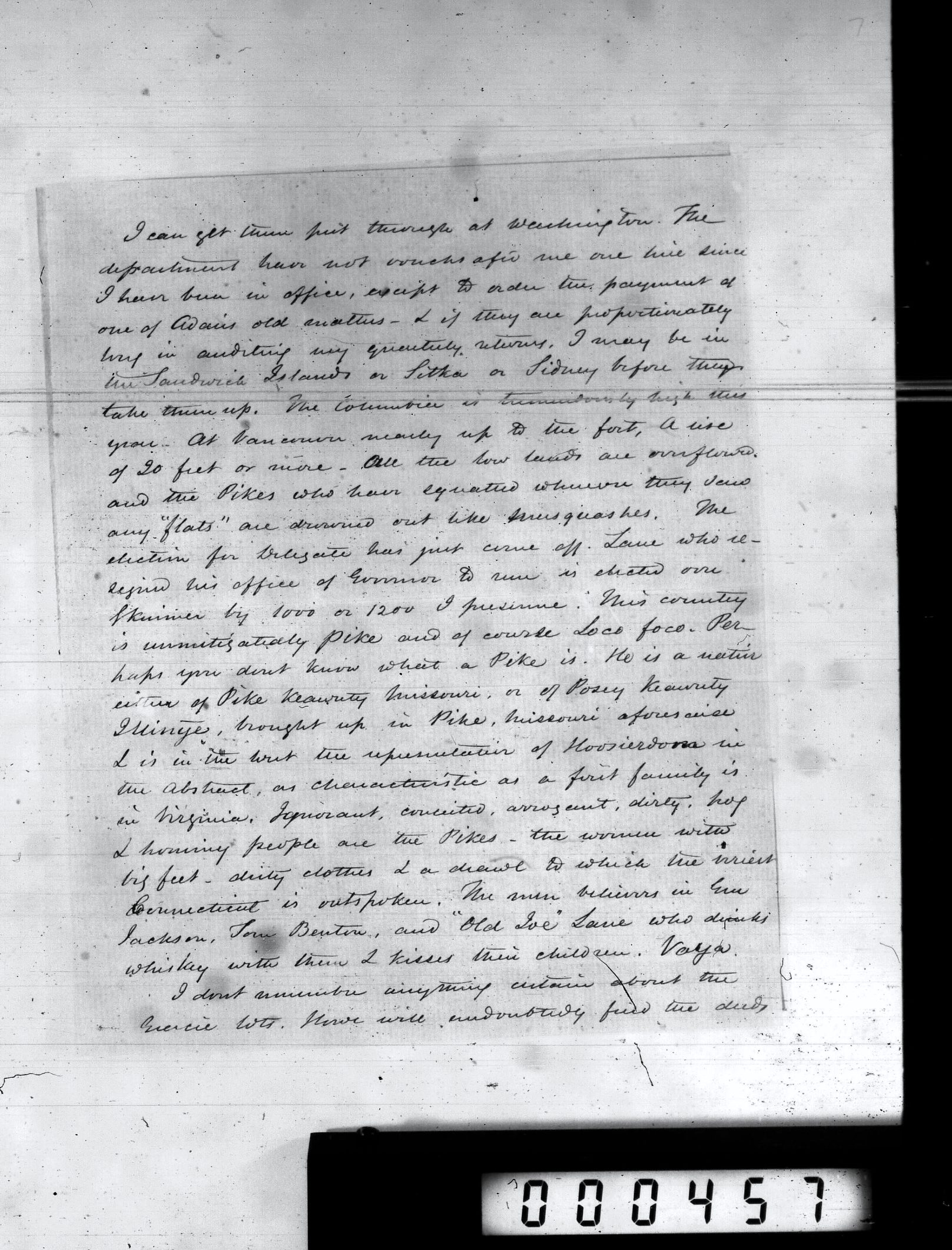
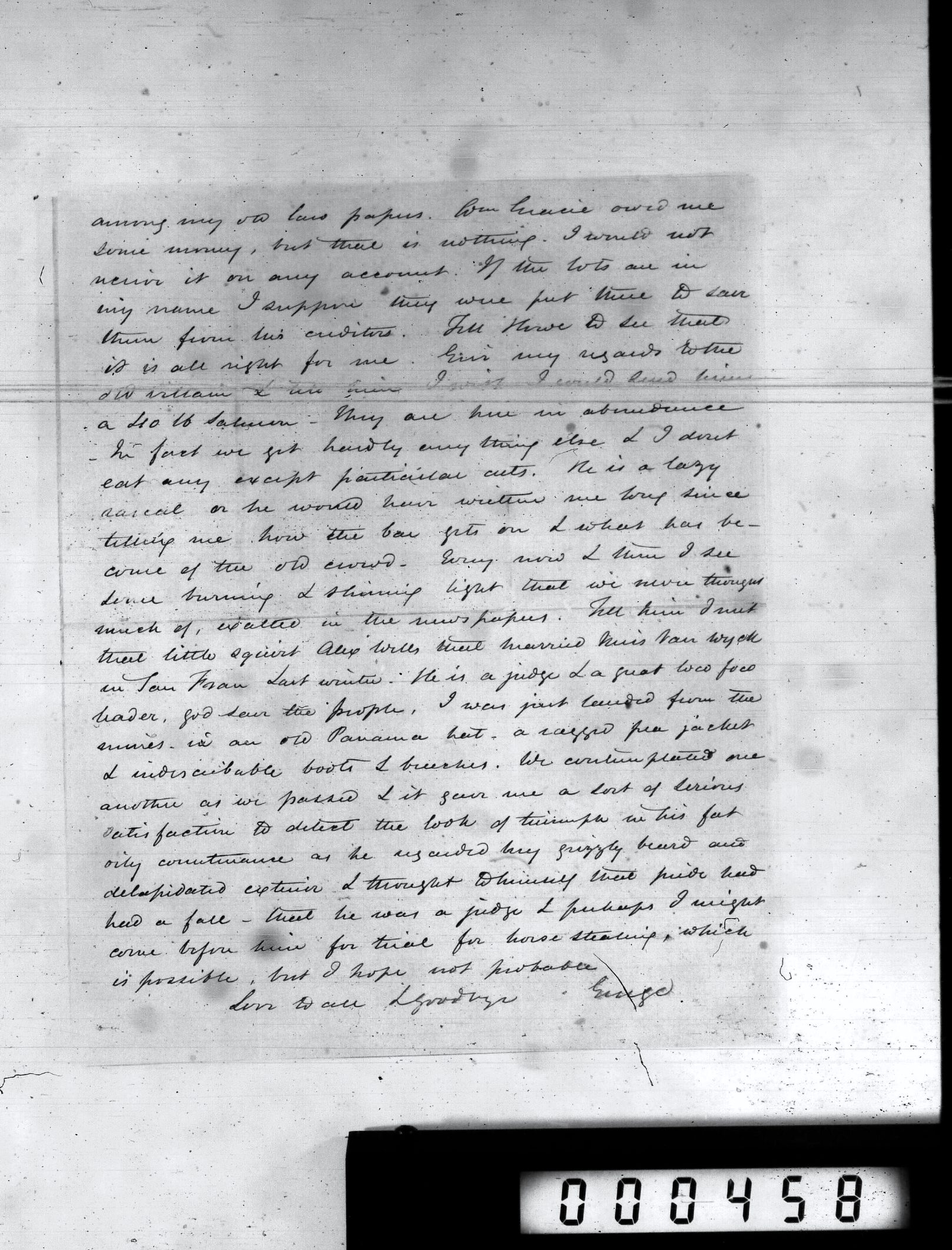
Astoria: deeds via George Wm. Gibbs scandal; Wolcott's Columbia College professorship chance
(cont.)
Second exposure of same June 14 first page as 1520
[1853?]
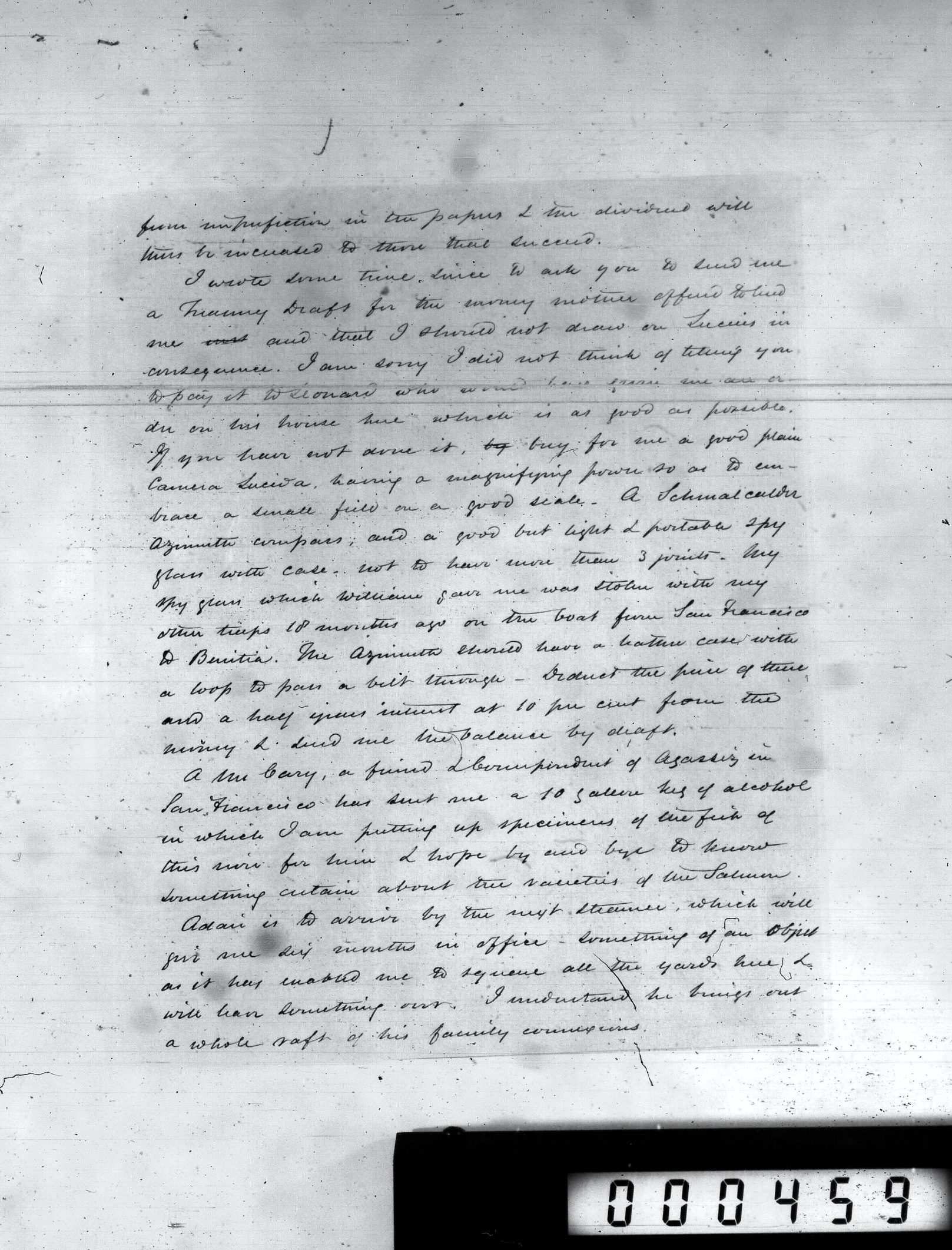
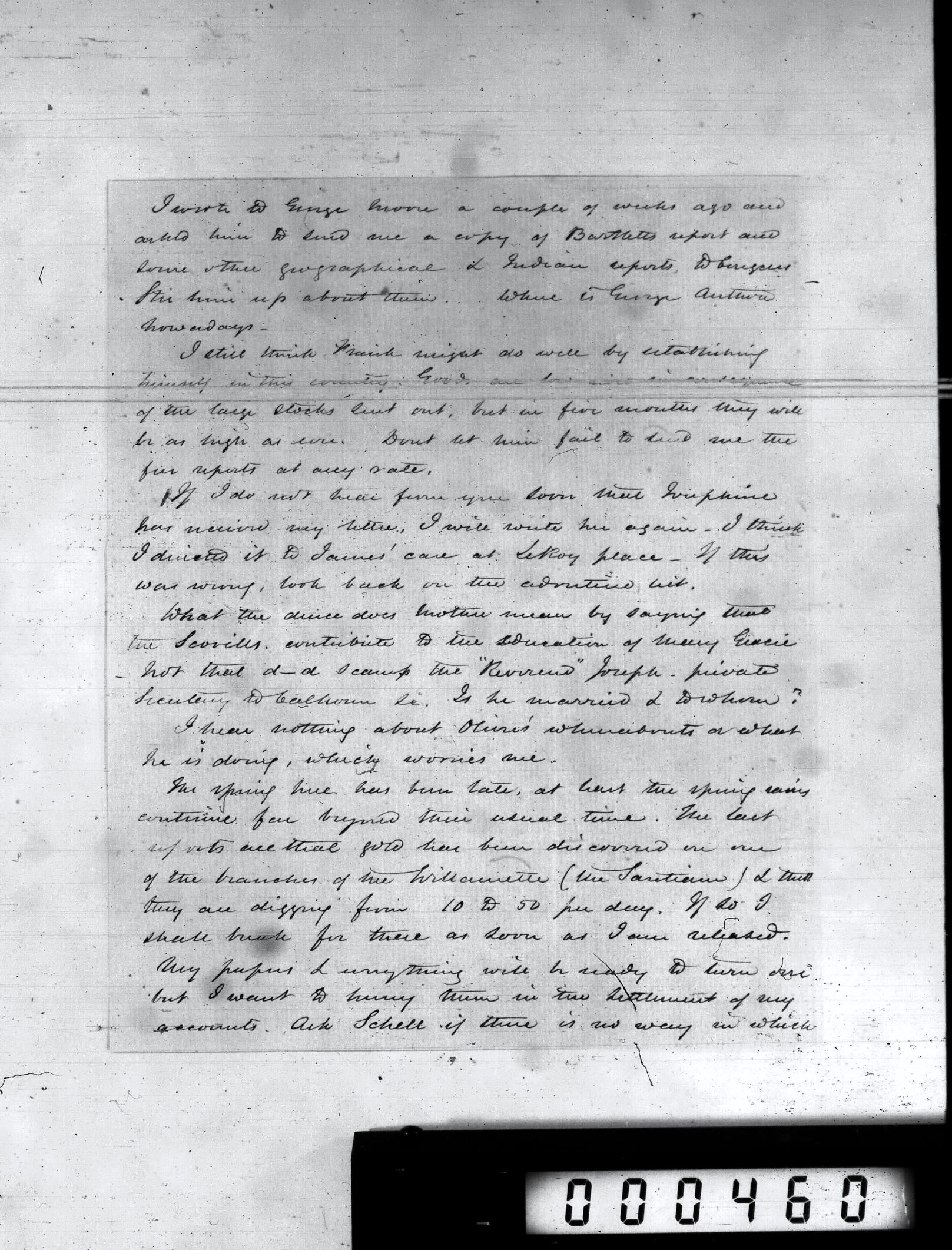
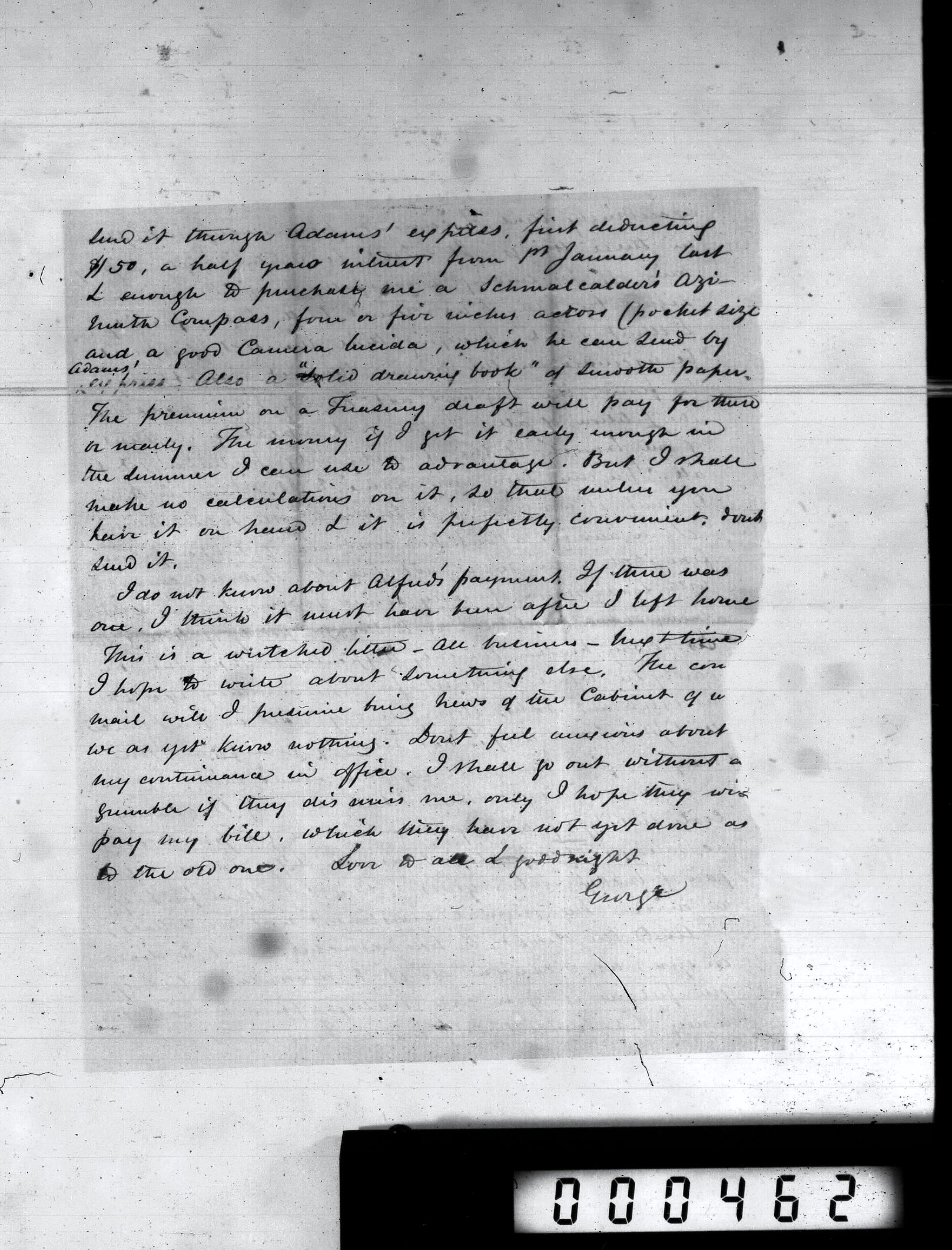
Requests camera lucida, Schmalcalder azimuth compass, spy glass; Agassiz salmon specimens; Adair arriving
[1853]
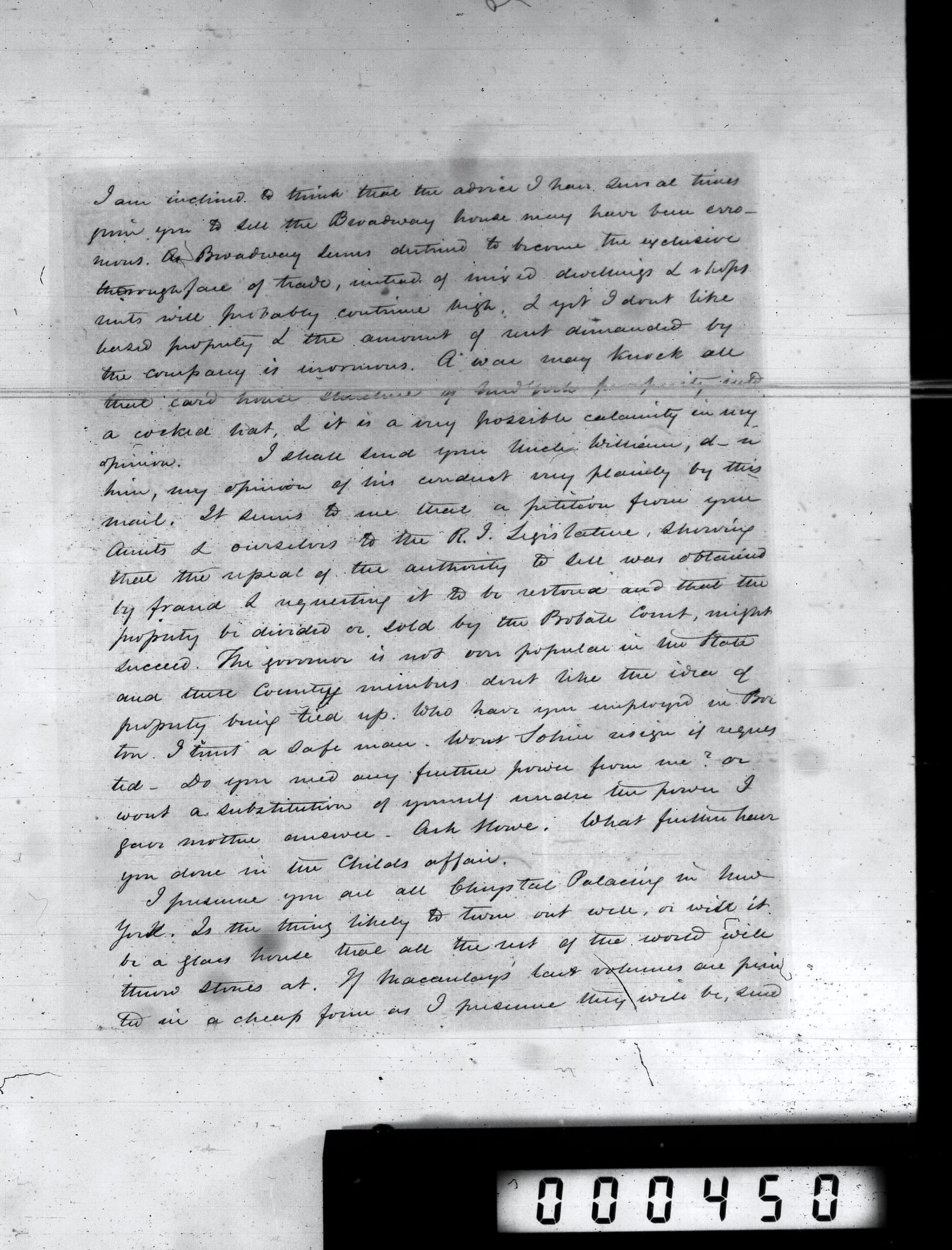
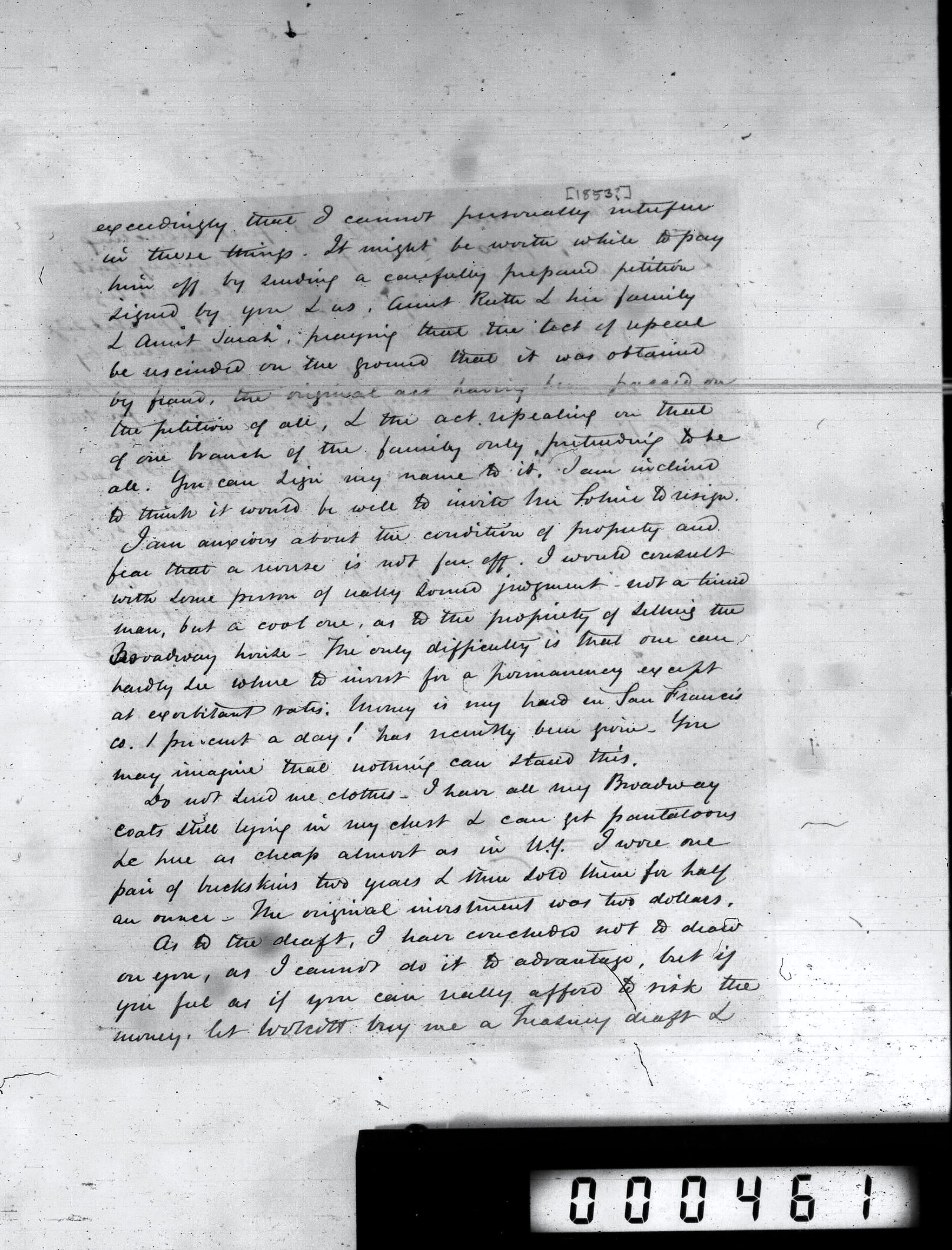
Family petition to rescind fraudulent repeal act; selling Broadway house; San Francisco interest rates
Frames 1529–1583 · 11 documents
George Gibbs’s geological report on the Pacific Railroad survey route, in his own hand with his errata sheets. Printed as 33 Cong. 1 sess. H.Ex.Doc.129.
1854
Marbled cover labeled "Gibbs, George — Report to Capt. G. B. McClellan, 1854"
George Gibbs autograph; note: printed in 33 Cong. 1 sess. H.Ex.Doc.129, serial 736
1854-05-01
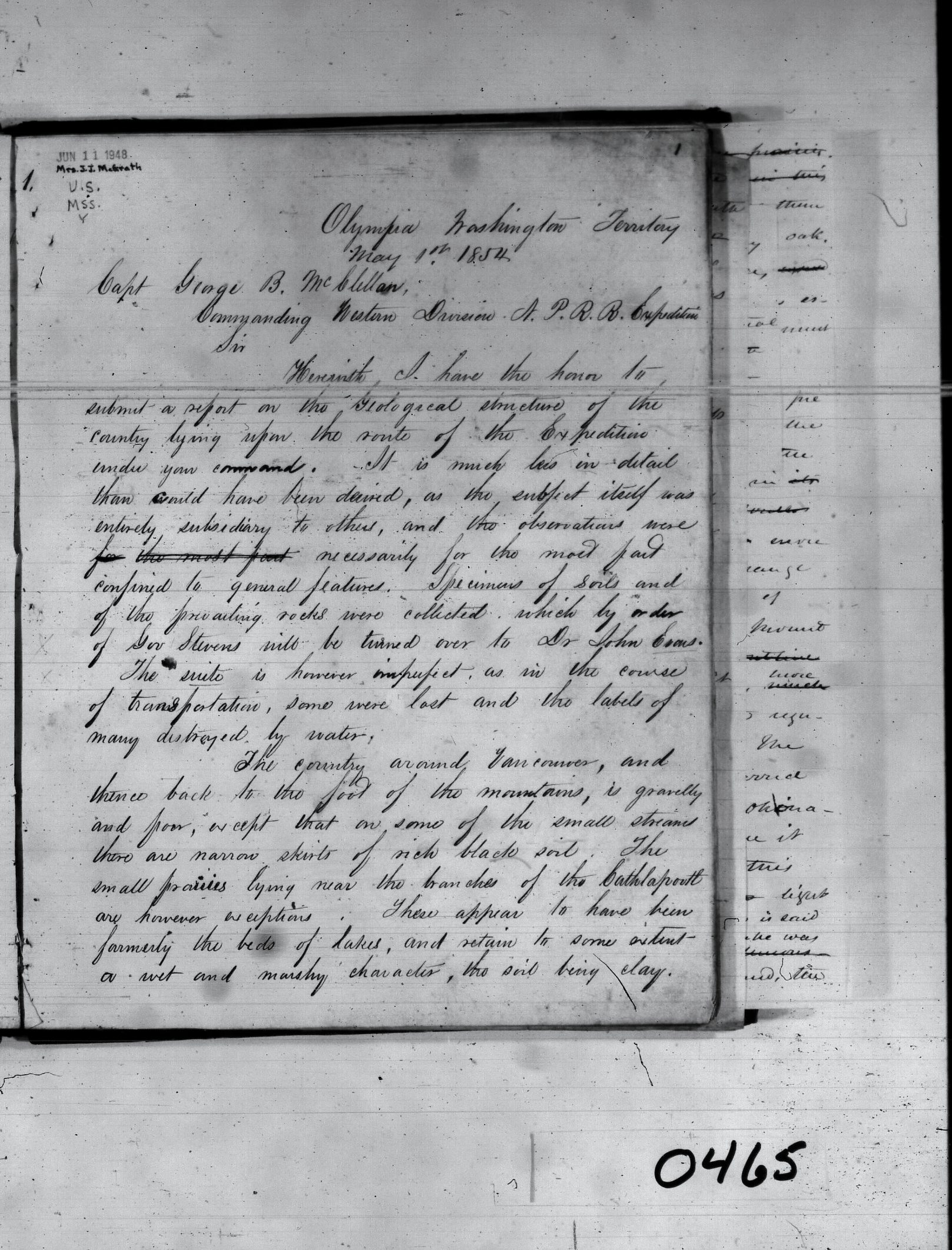 FRAME 1531
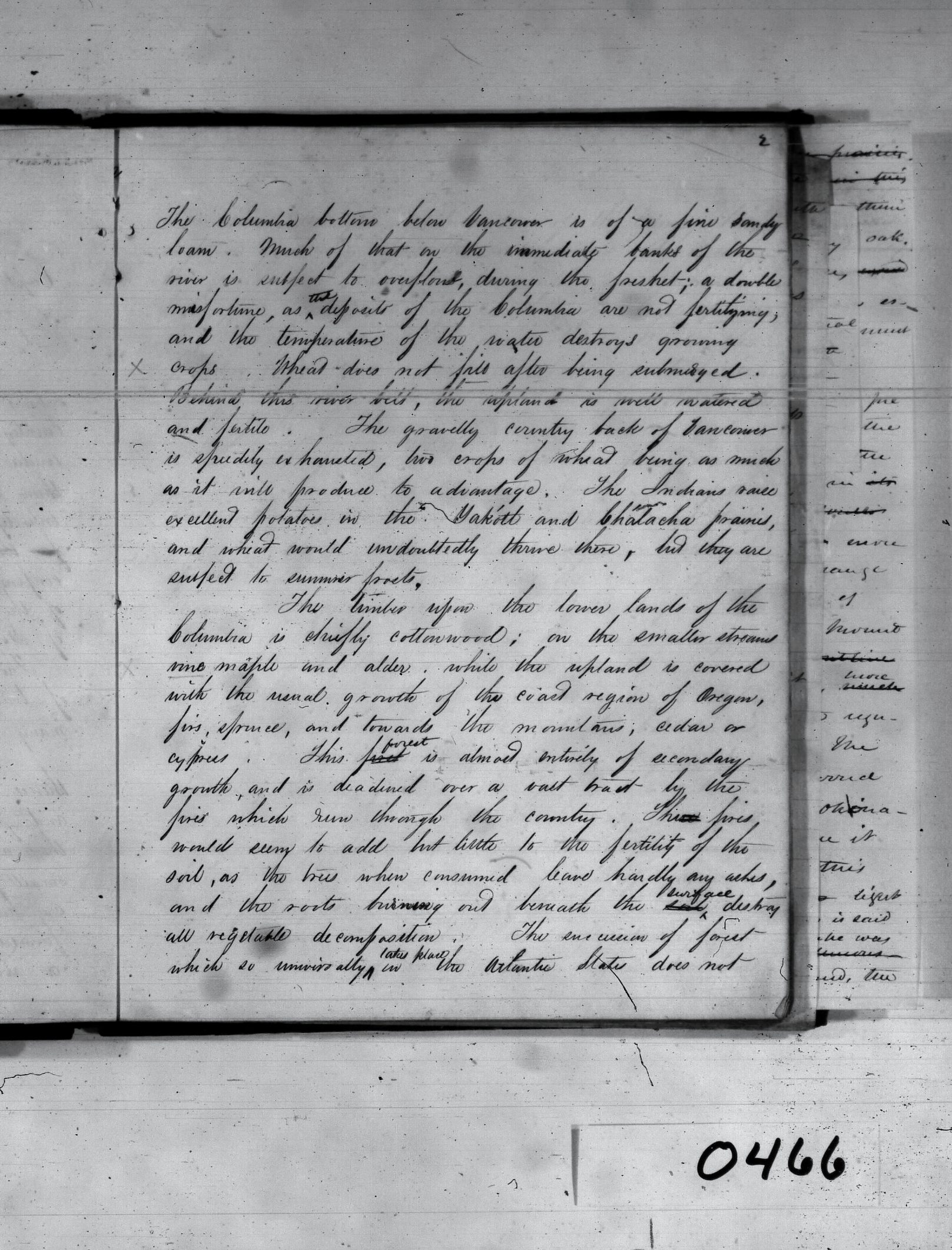 FRAME 1532
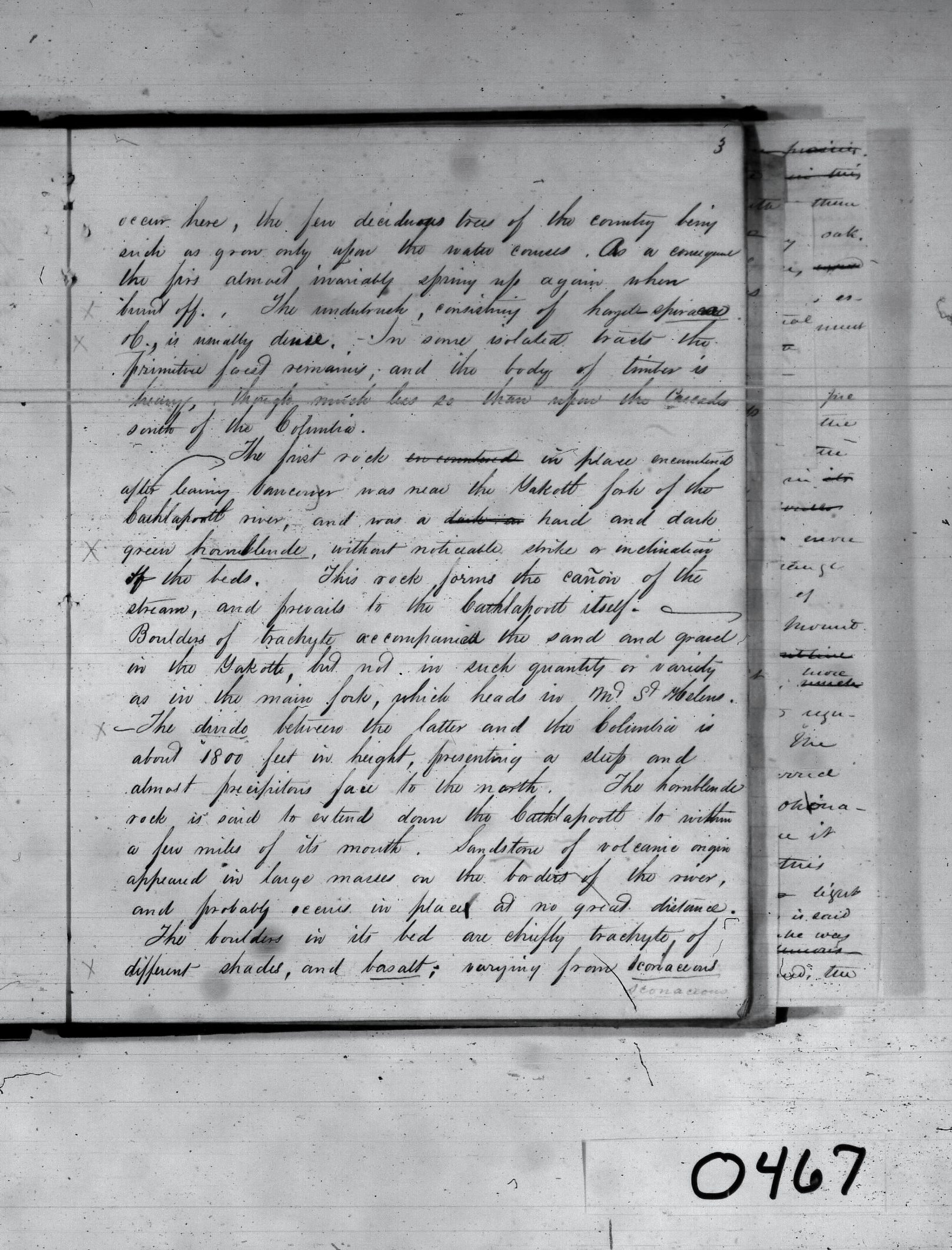 FRAME 1533
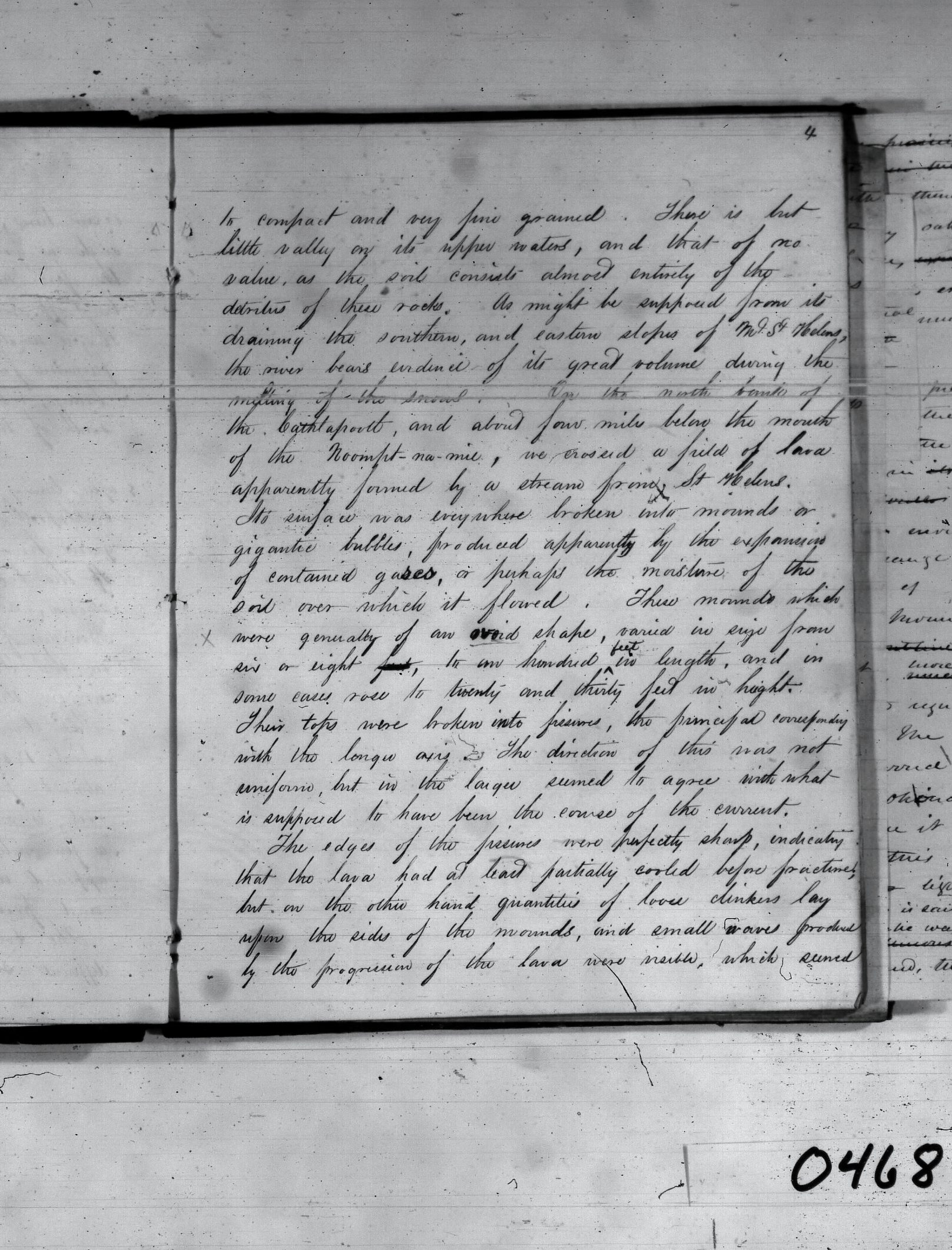 FRAME 1534
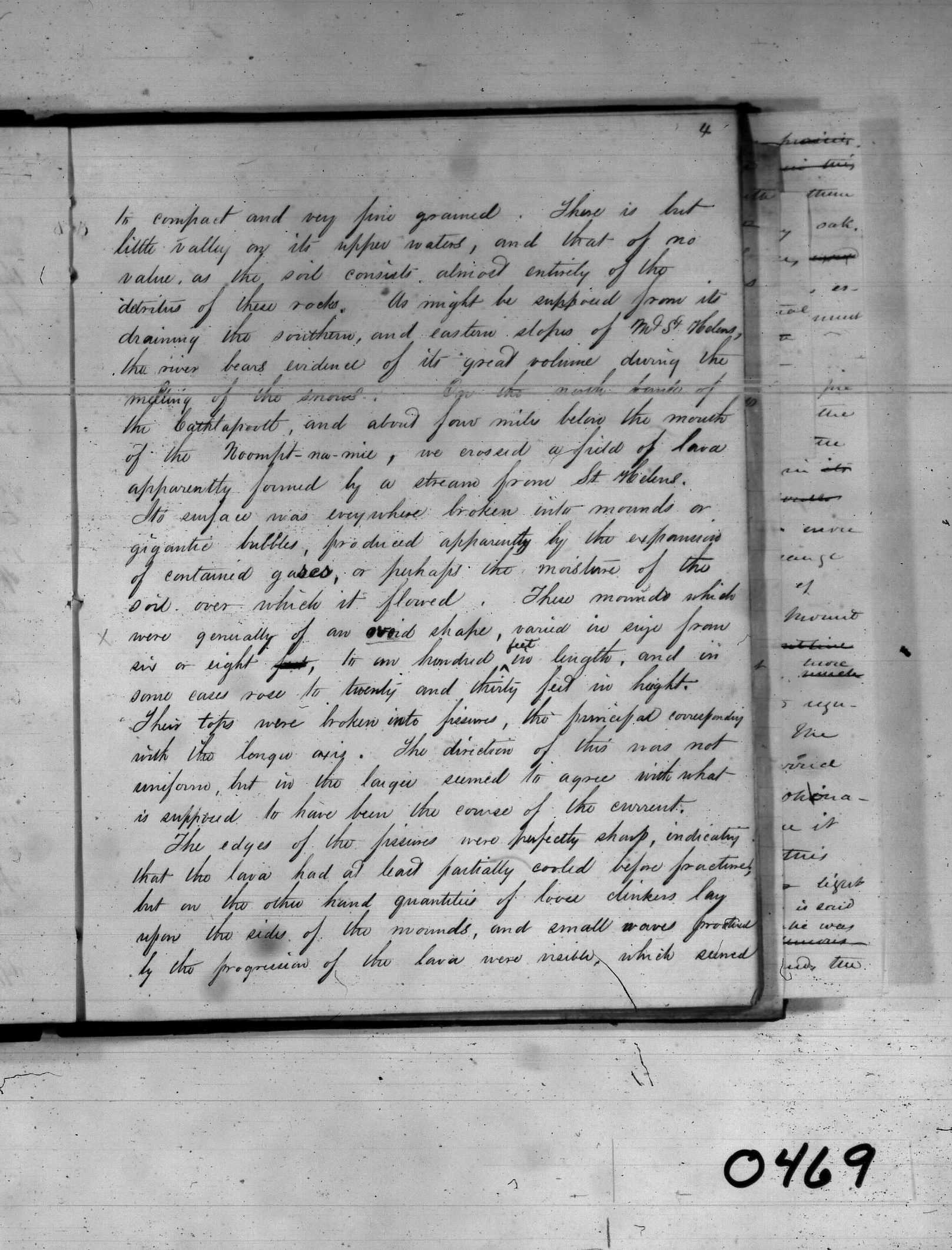 FRAME 1535
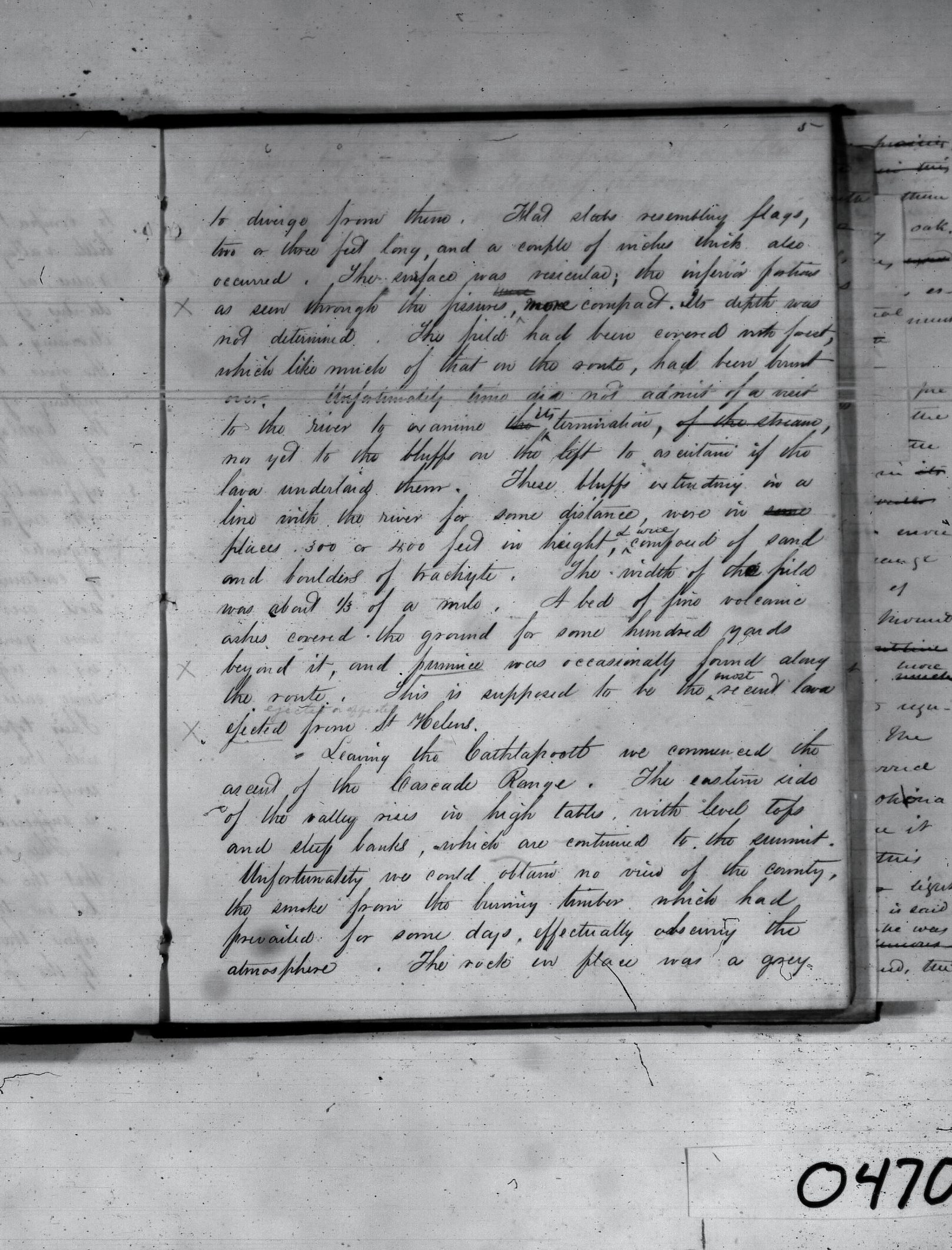 FRAME 1536
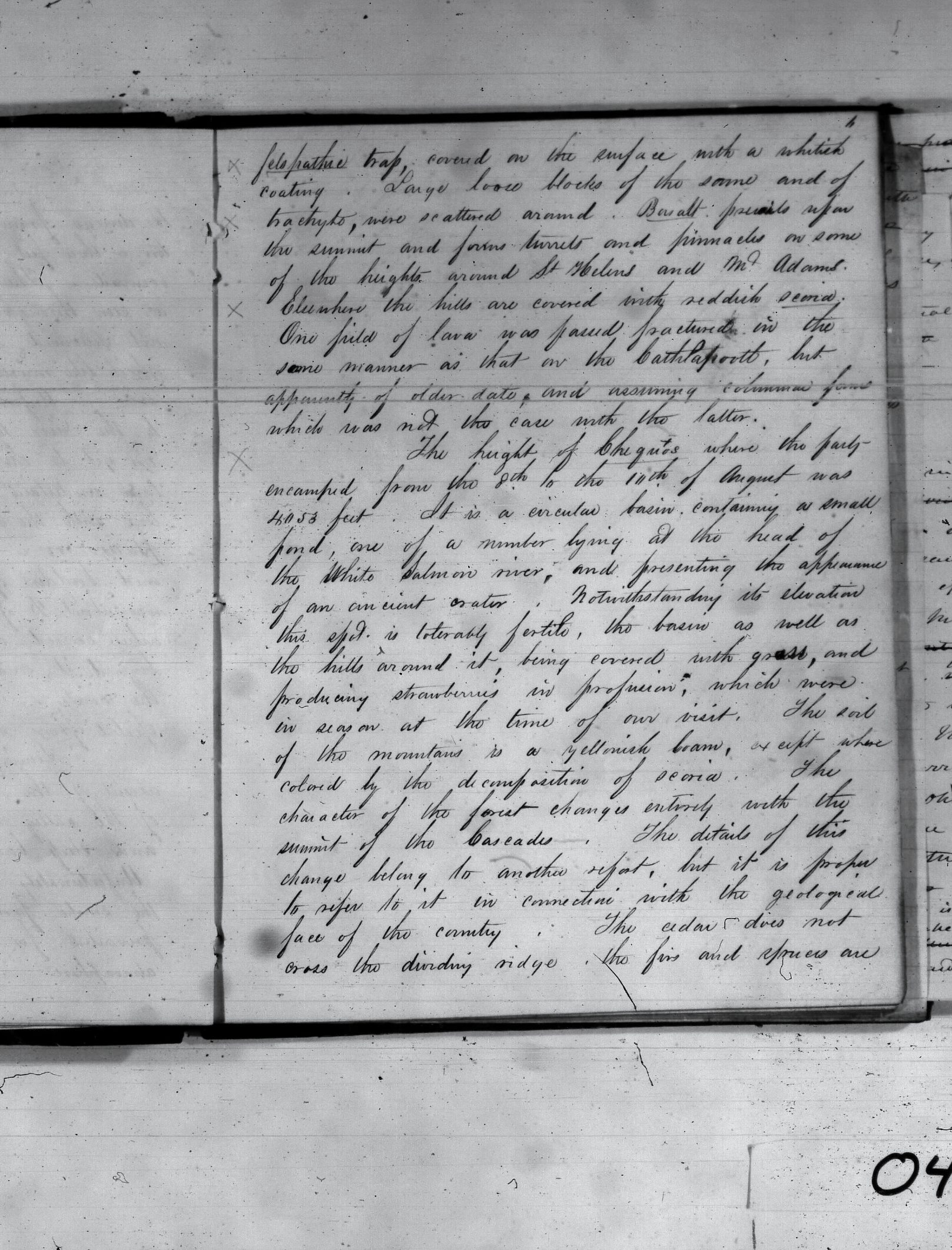 FRAME 1537
 FRAME 1538
 FRAME 1539
 FRAME 1540
 FRAME 1541
 FRAME 1542
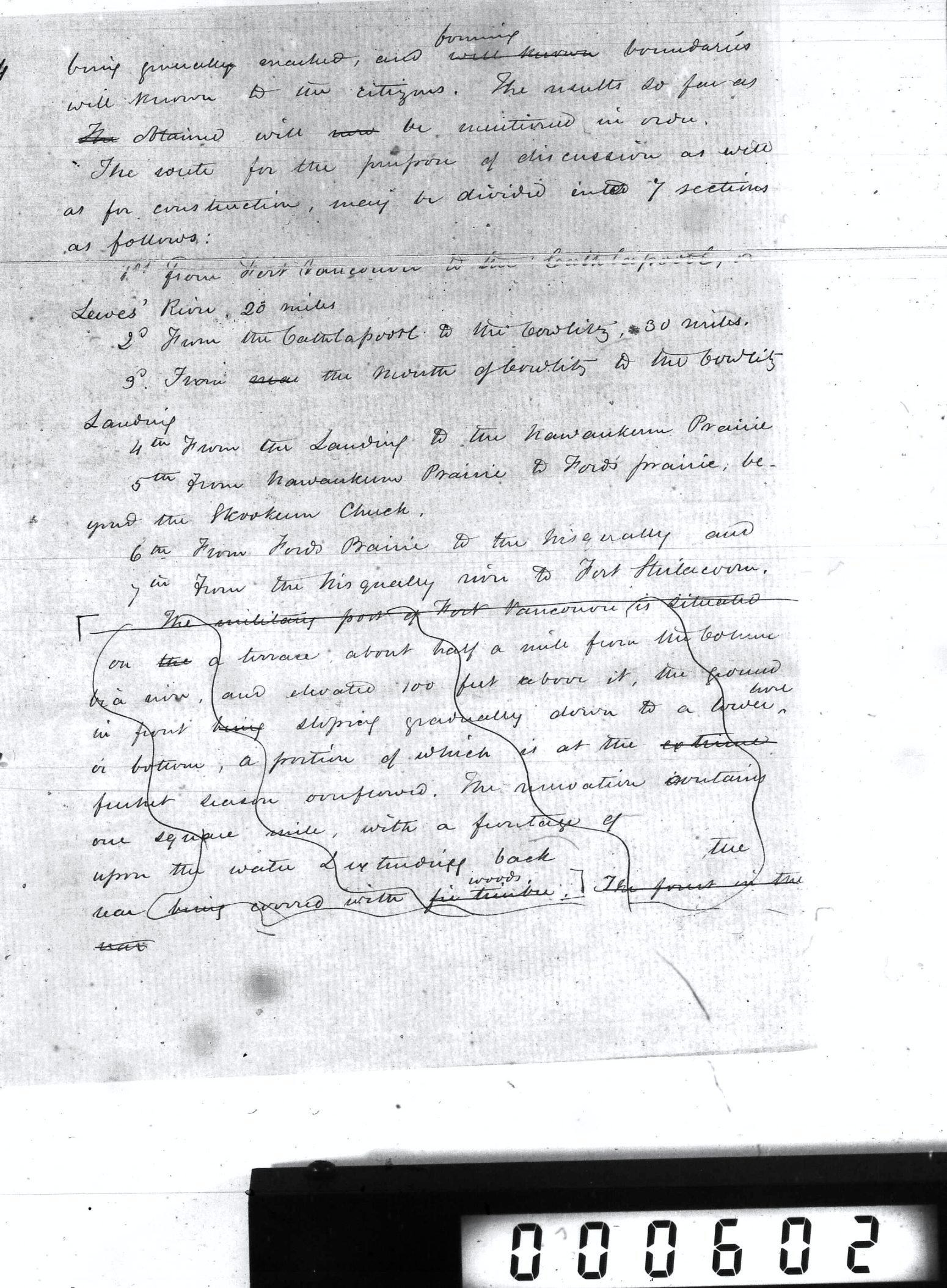
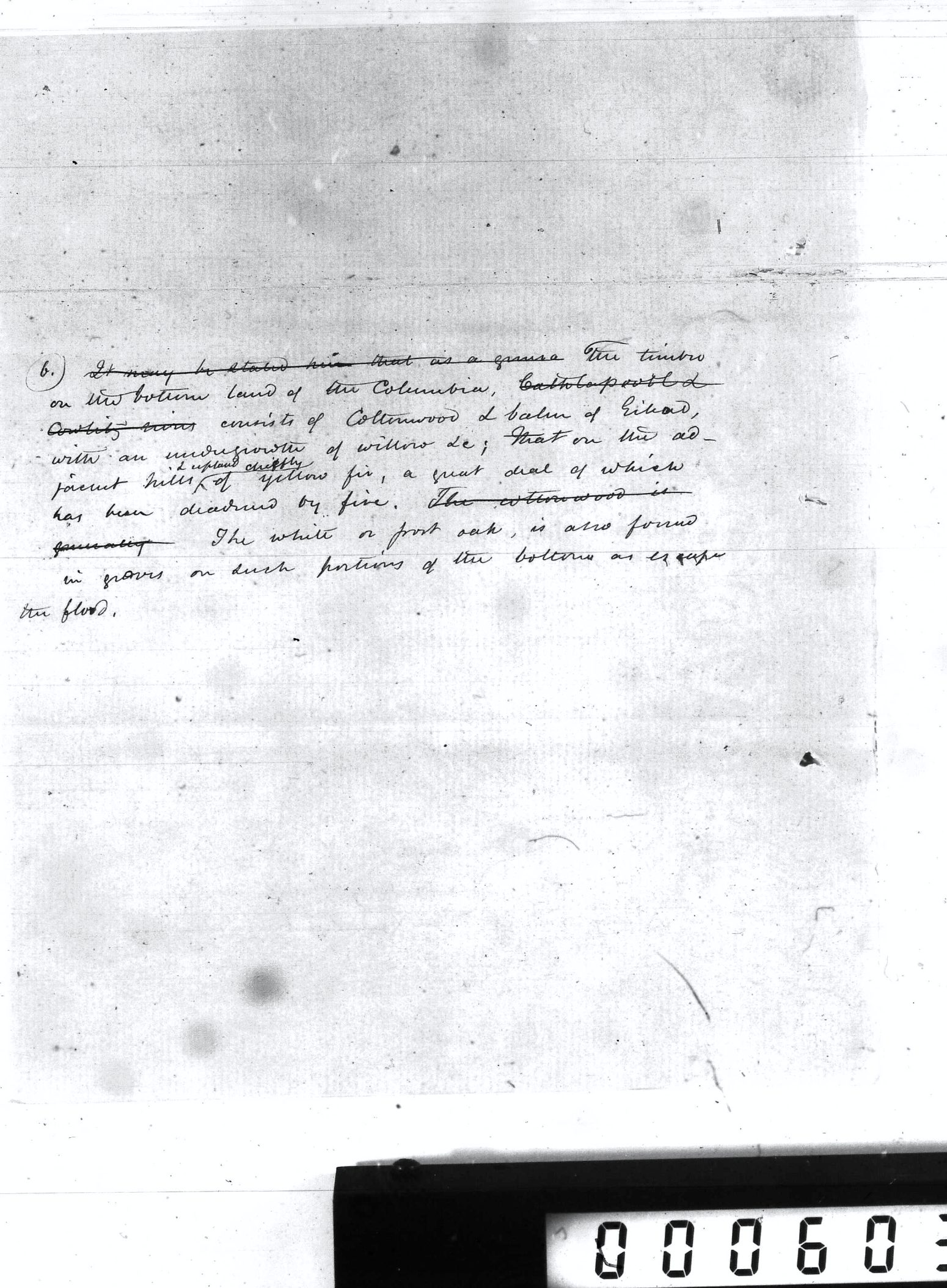
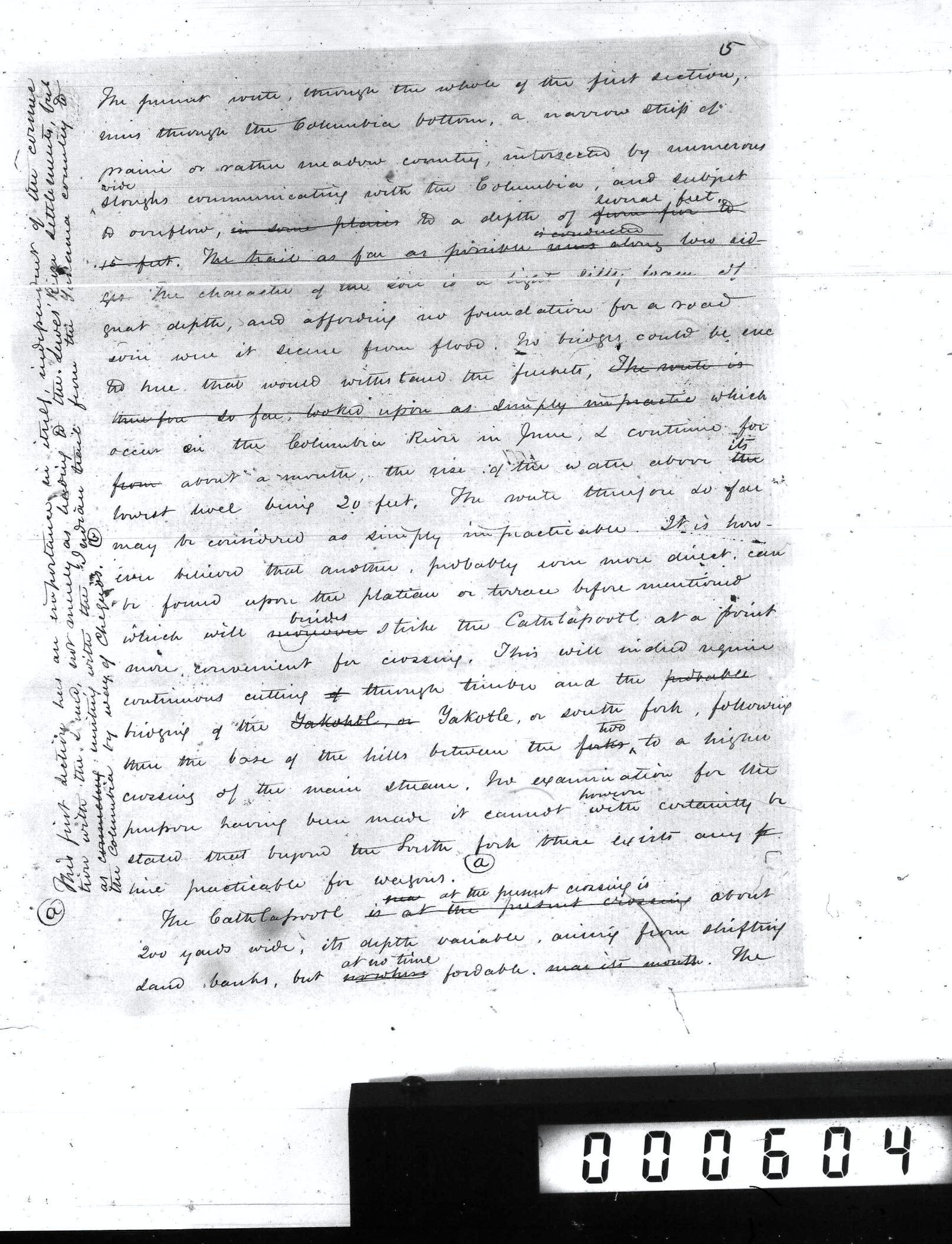
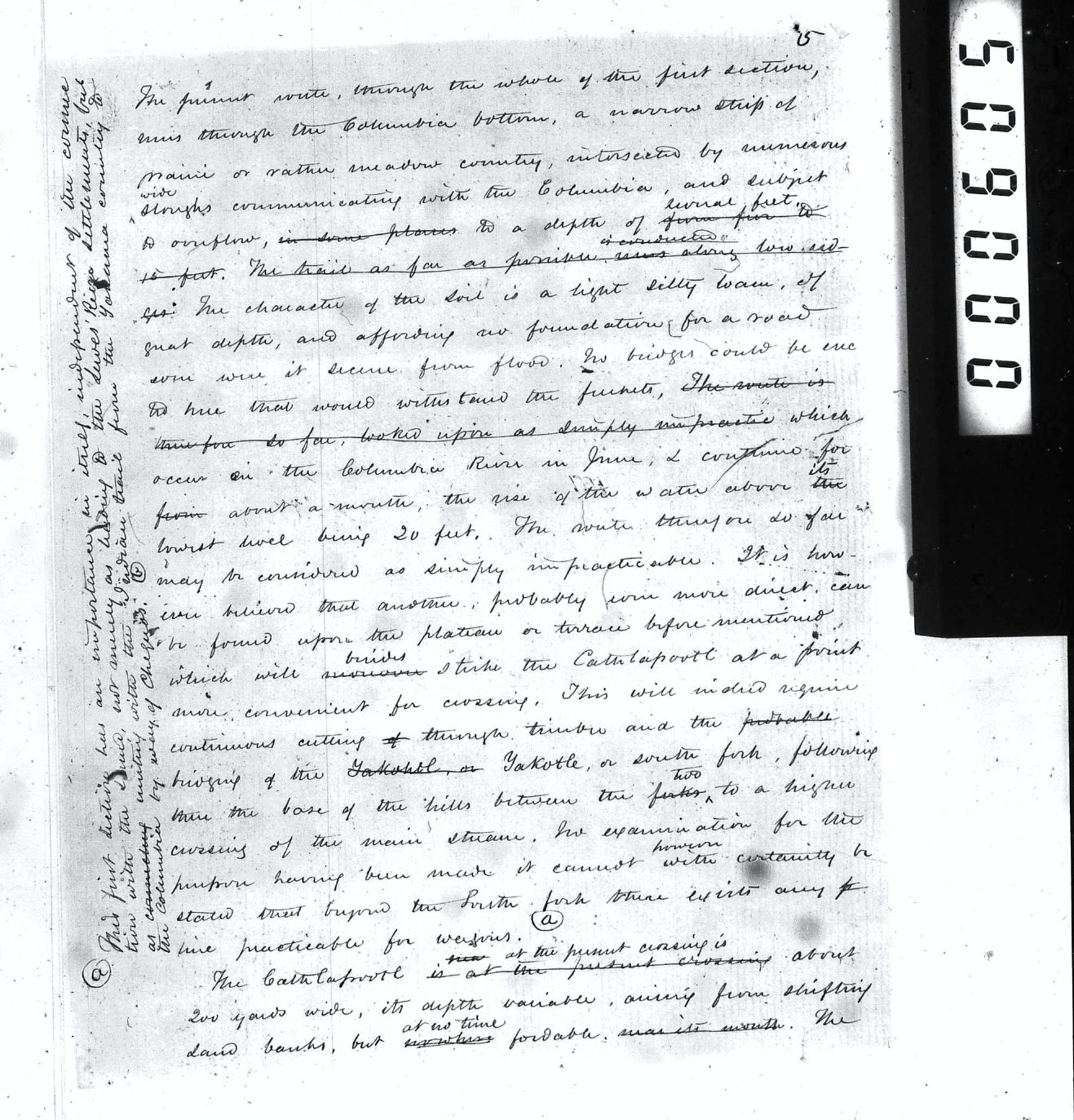
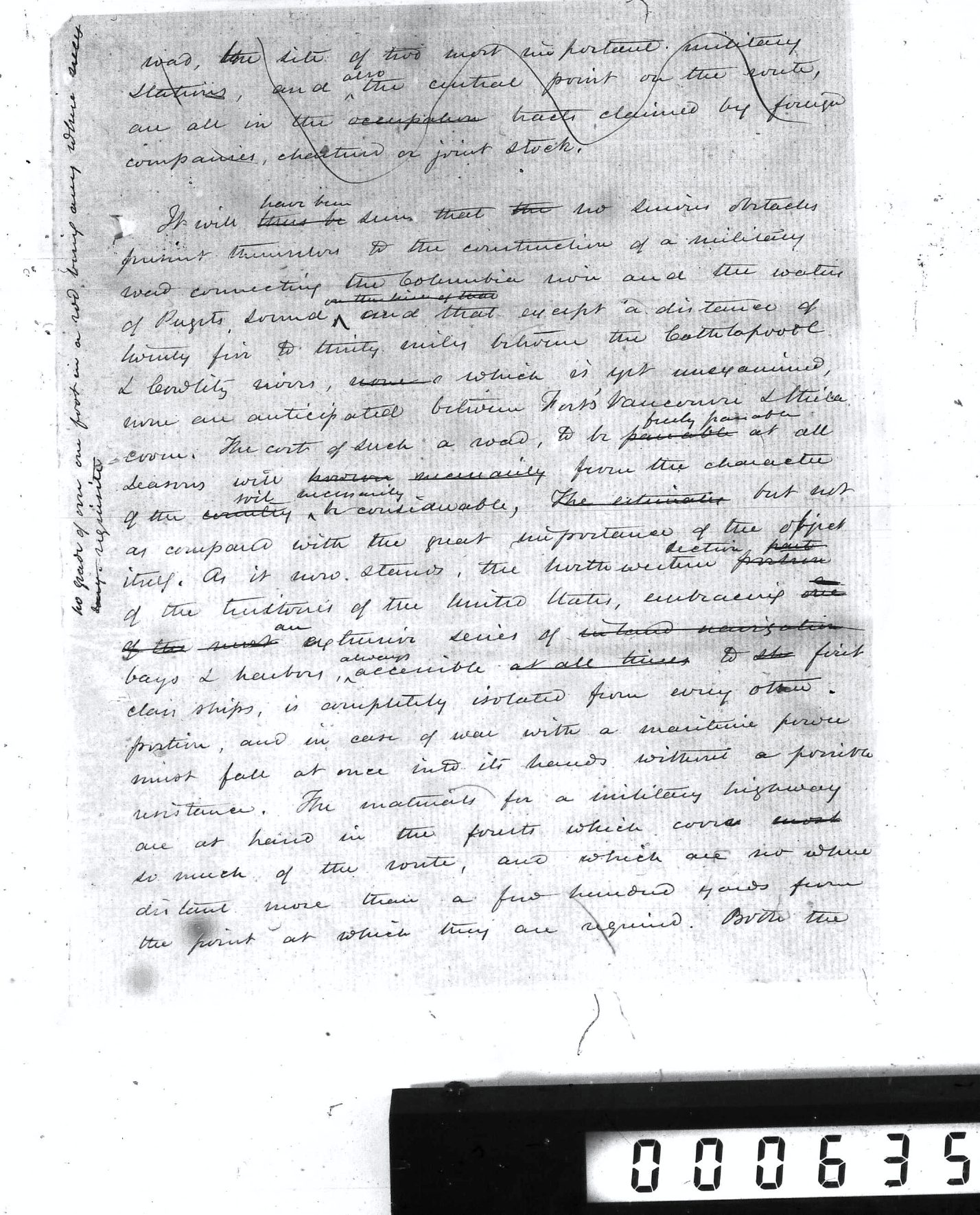
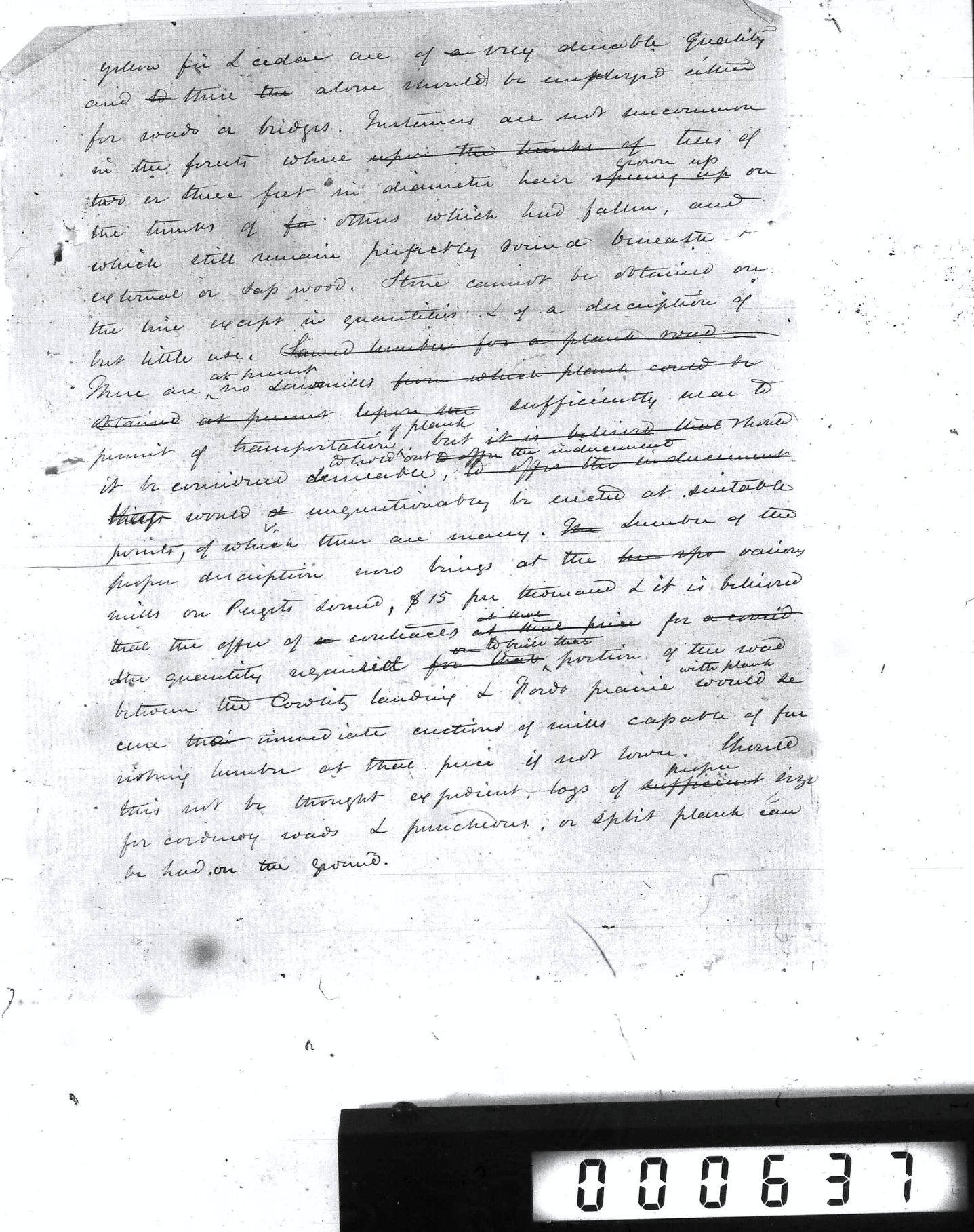
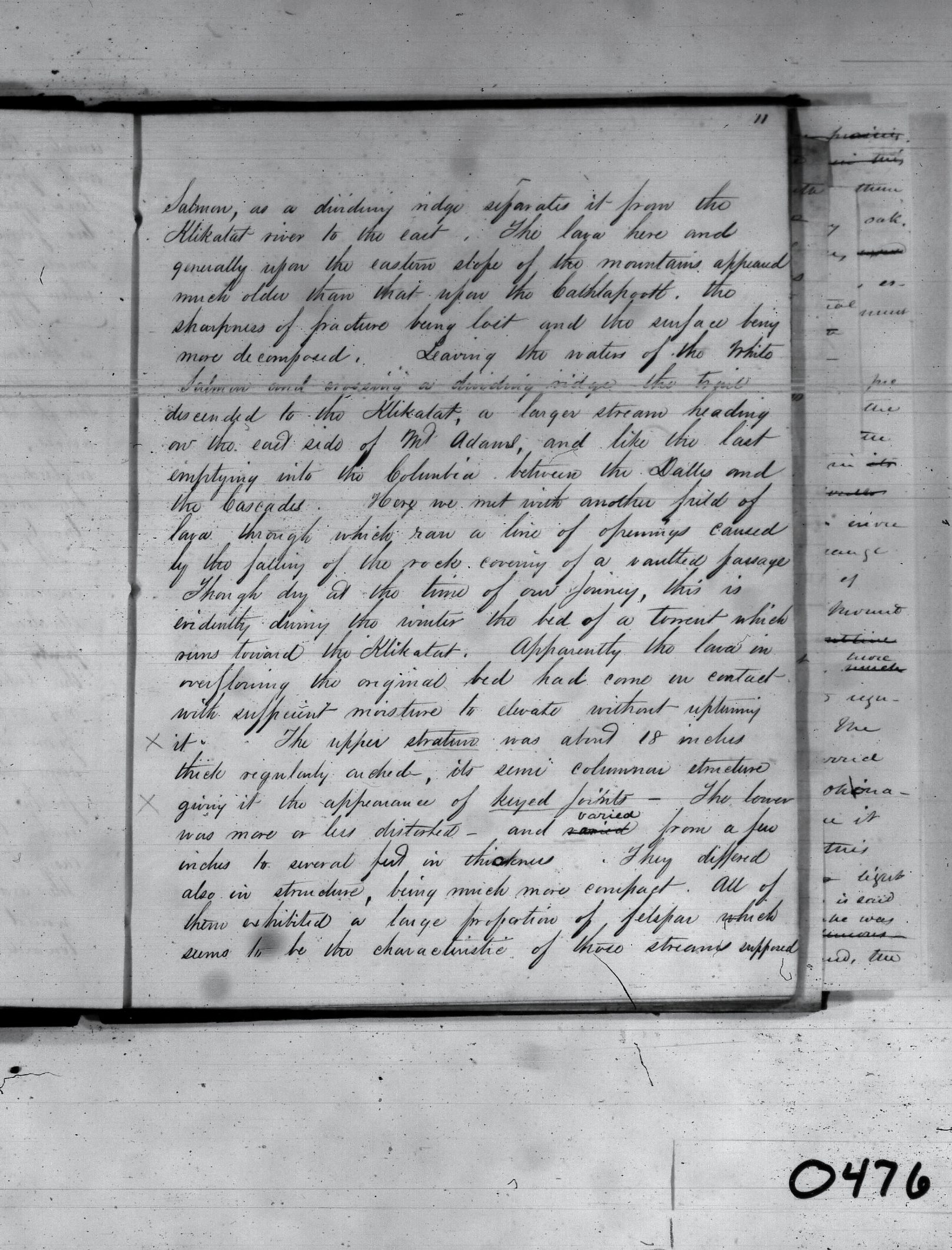
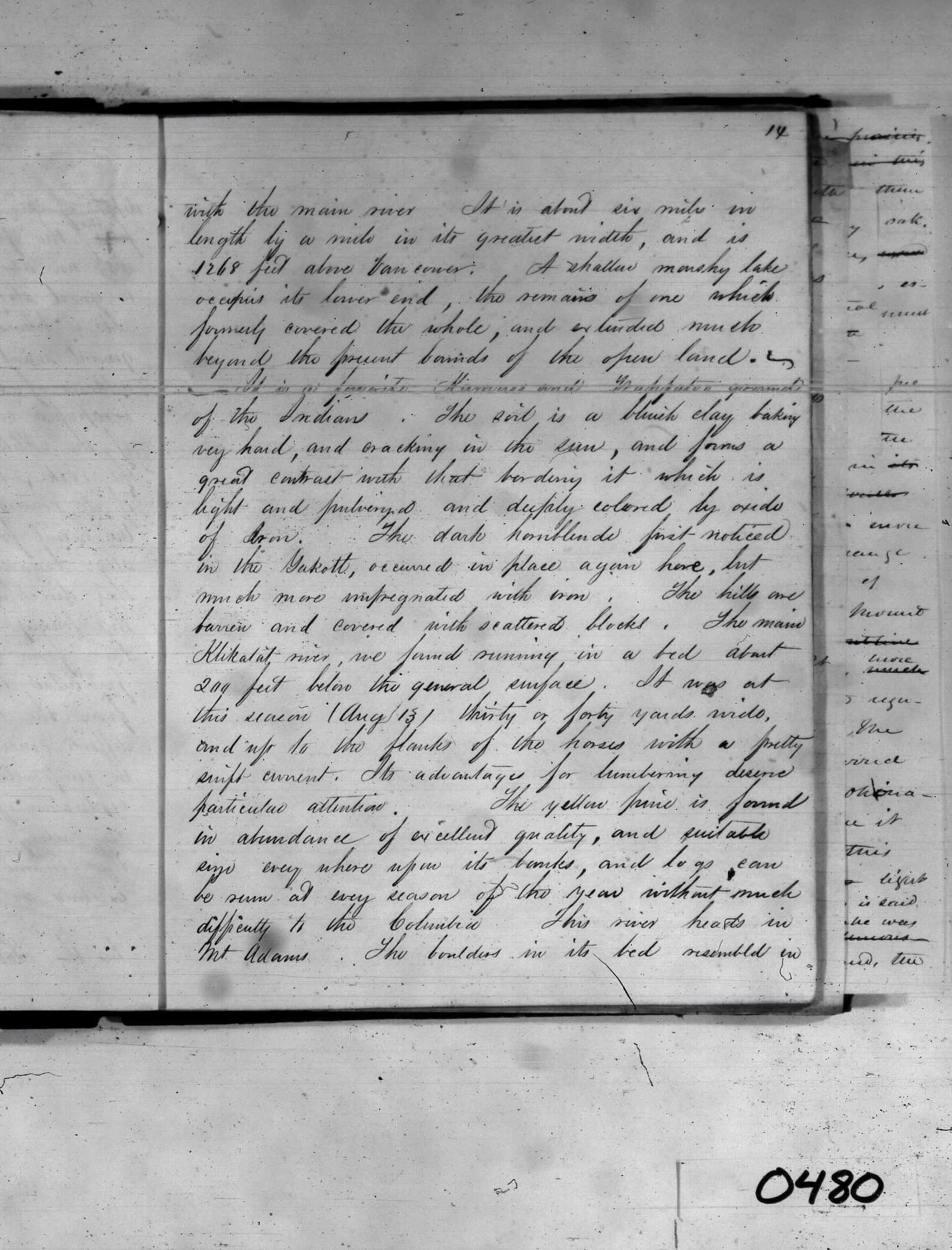
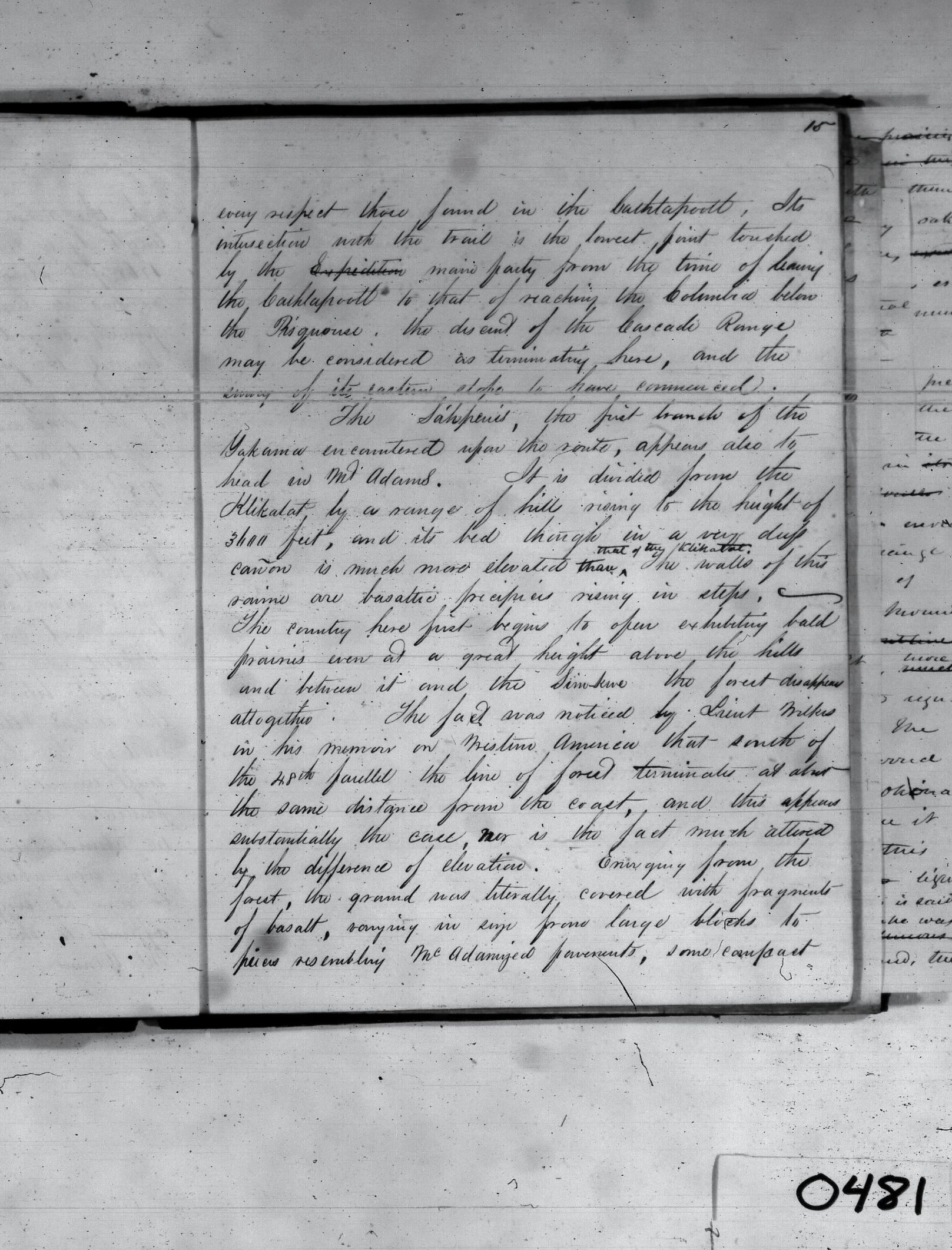
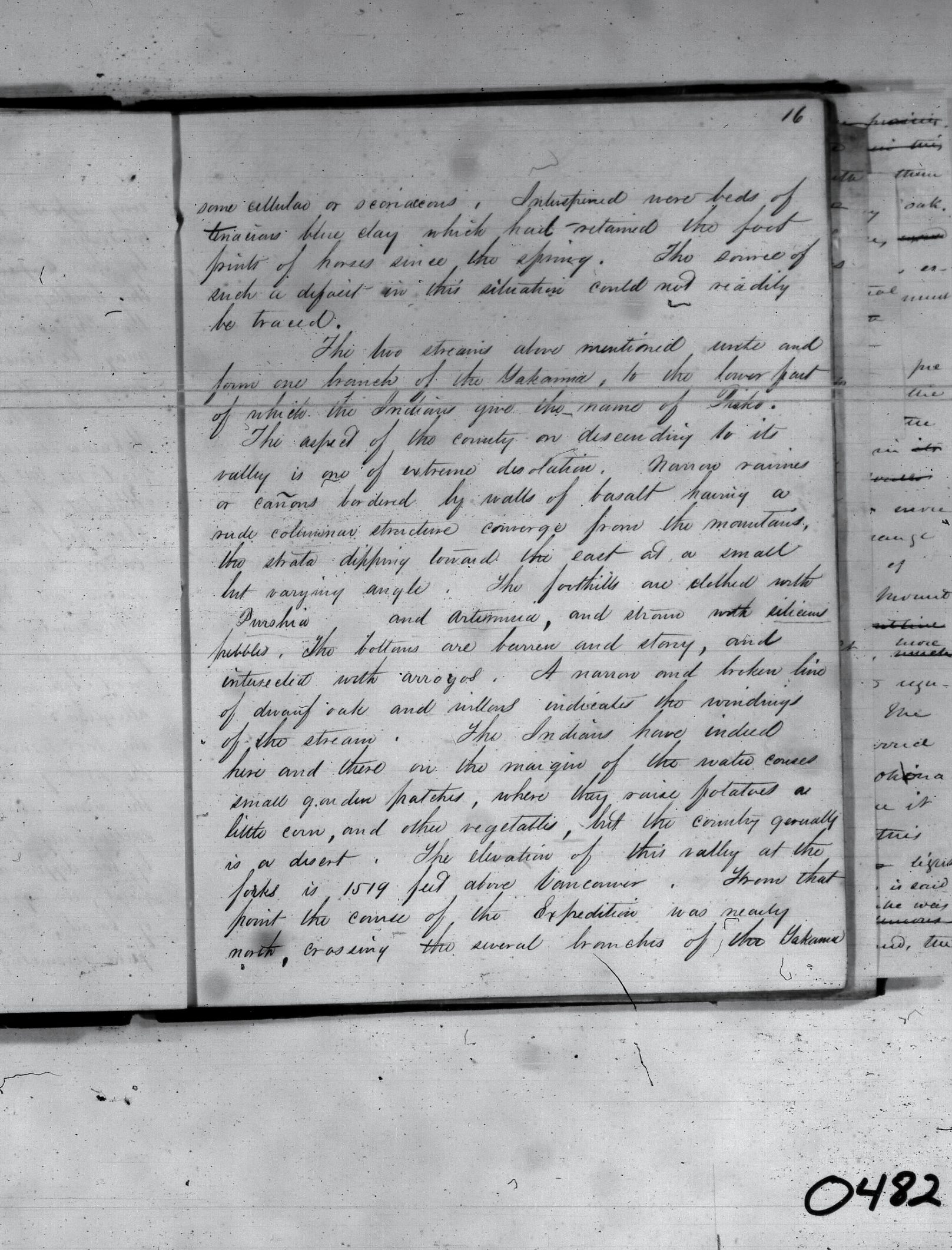
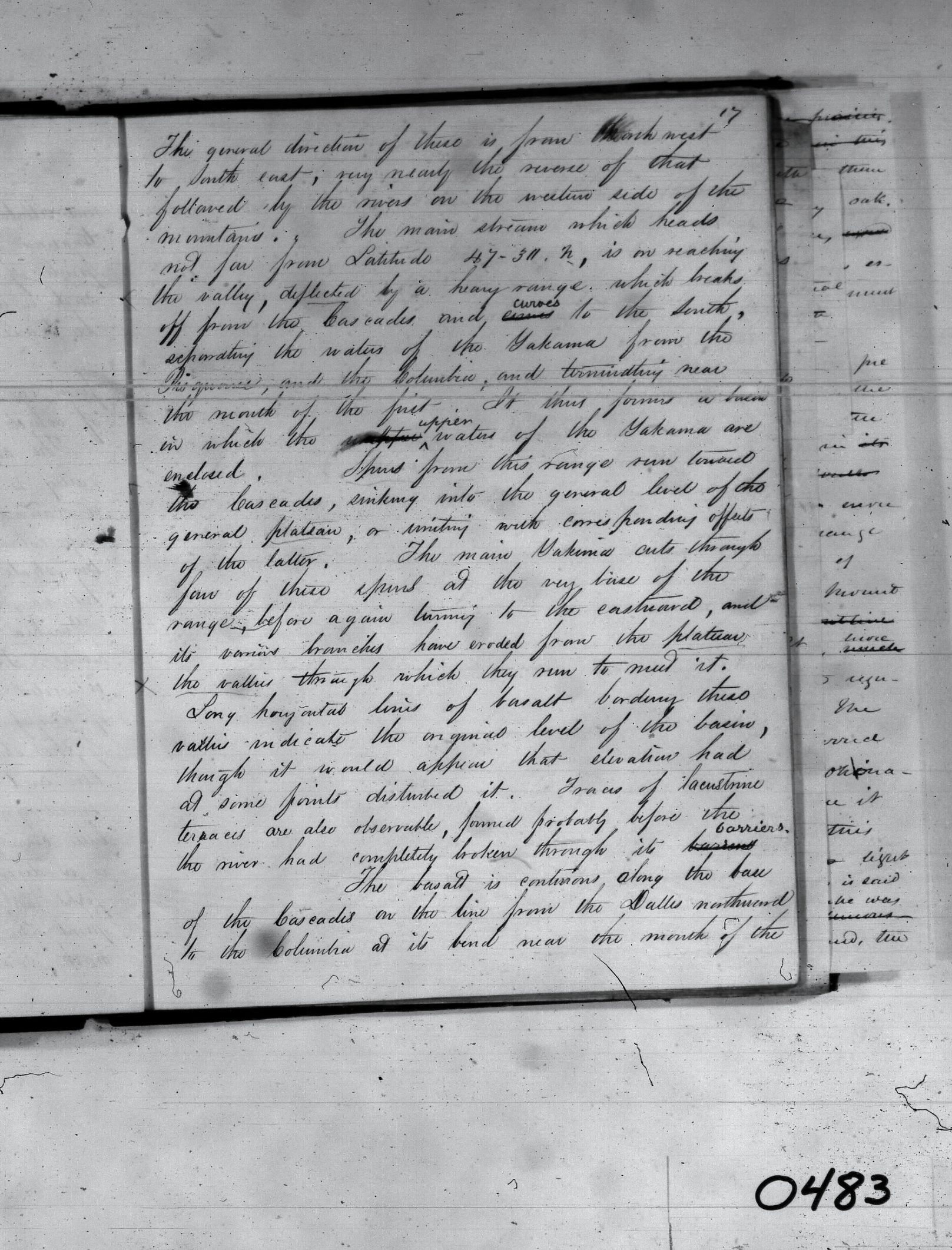
Geological report on Pacific Railroad survey route begins; Vancouver country, Cathlapootle prairies
c.1853-54
 FRAME 1543
 FRAME 1544
 FRAME 1545
 FRAME 1546
 FRAME 1547
 FRAME 1548
 FRAME 1549
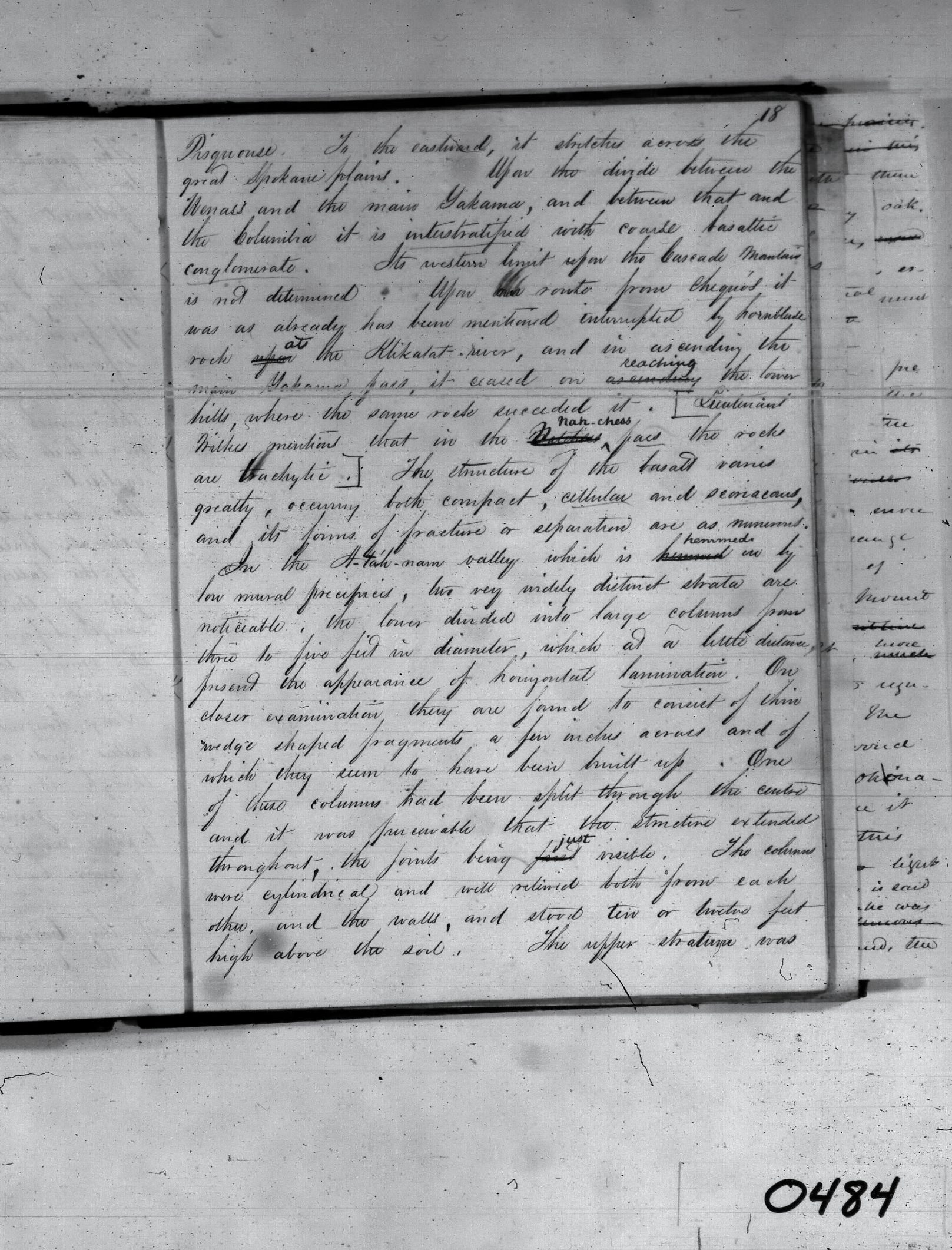 FRAME 1550
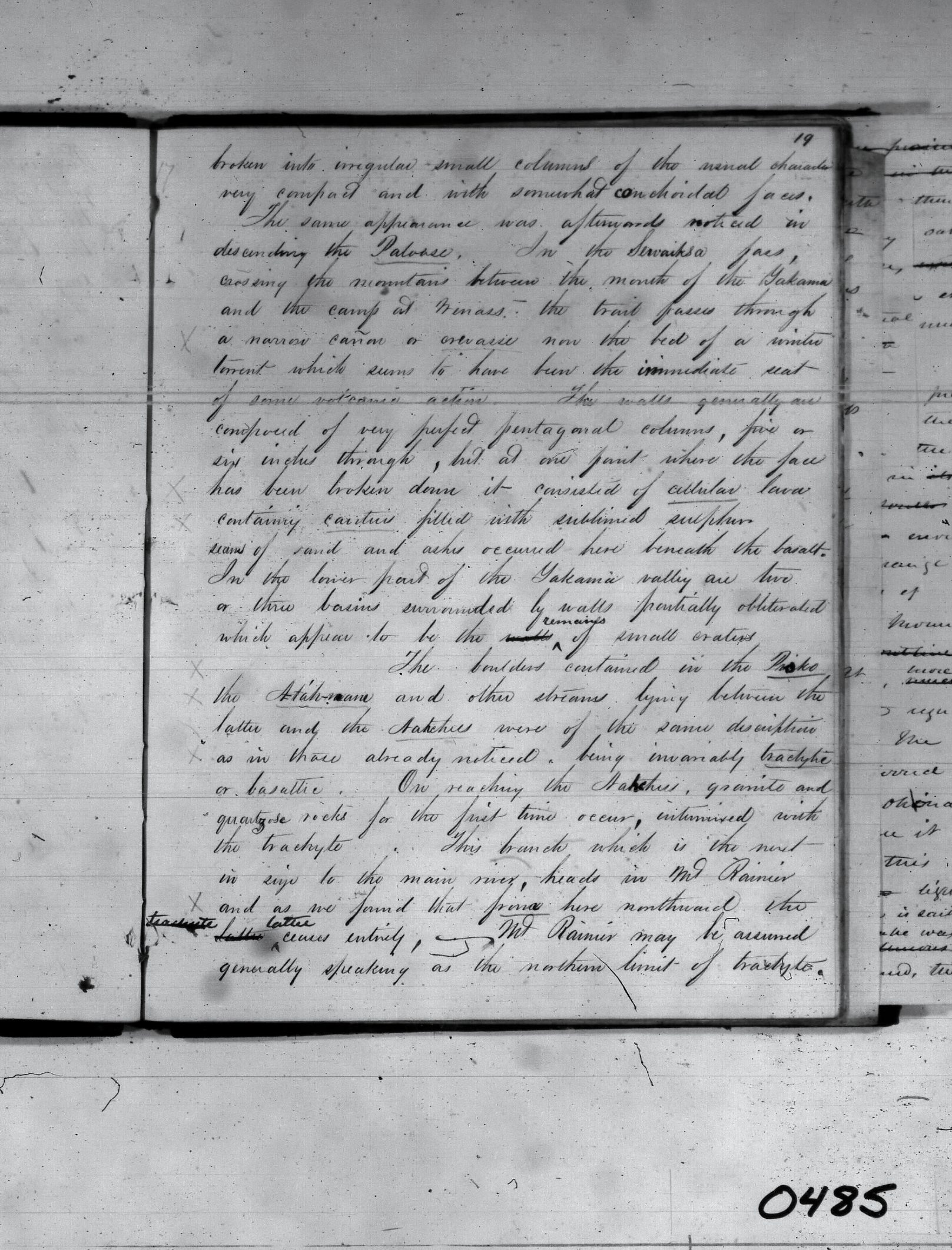 FRAME 1551
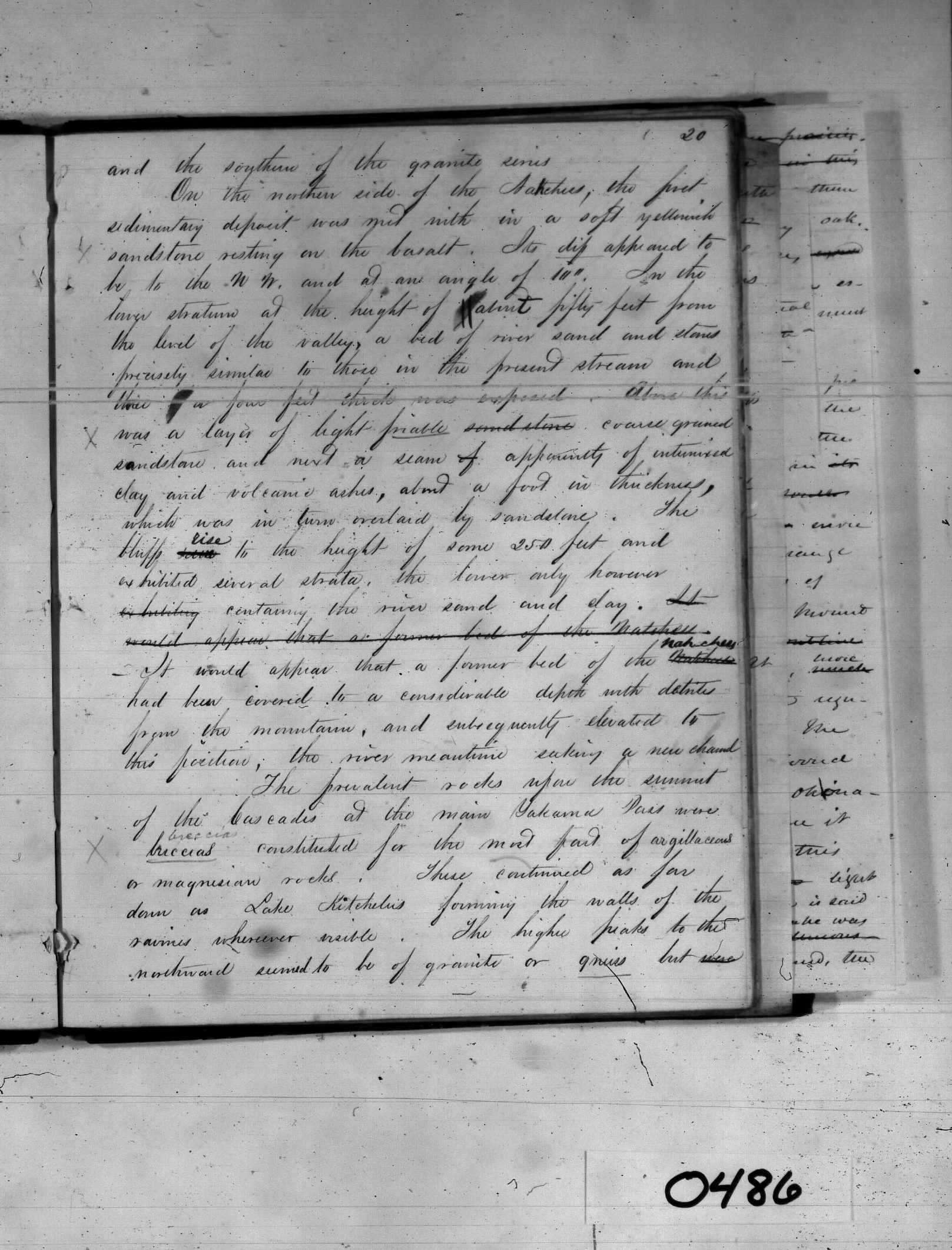 FRAME 1552
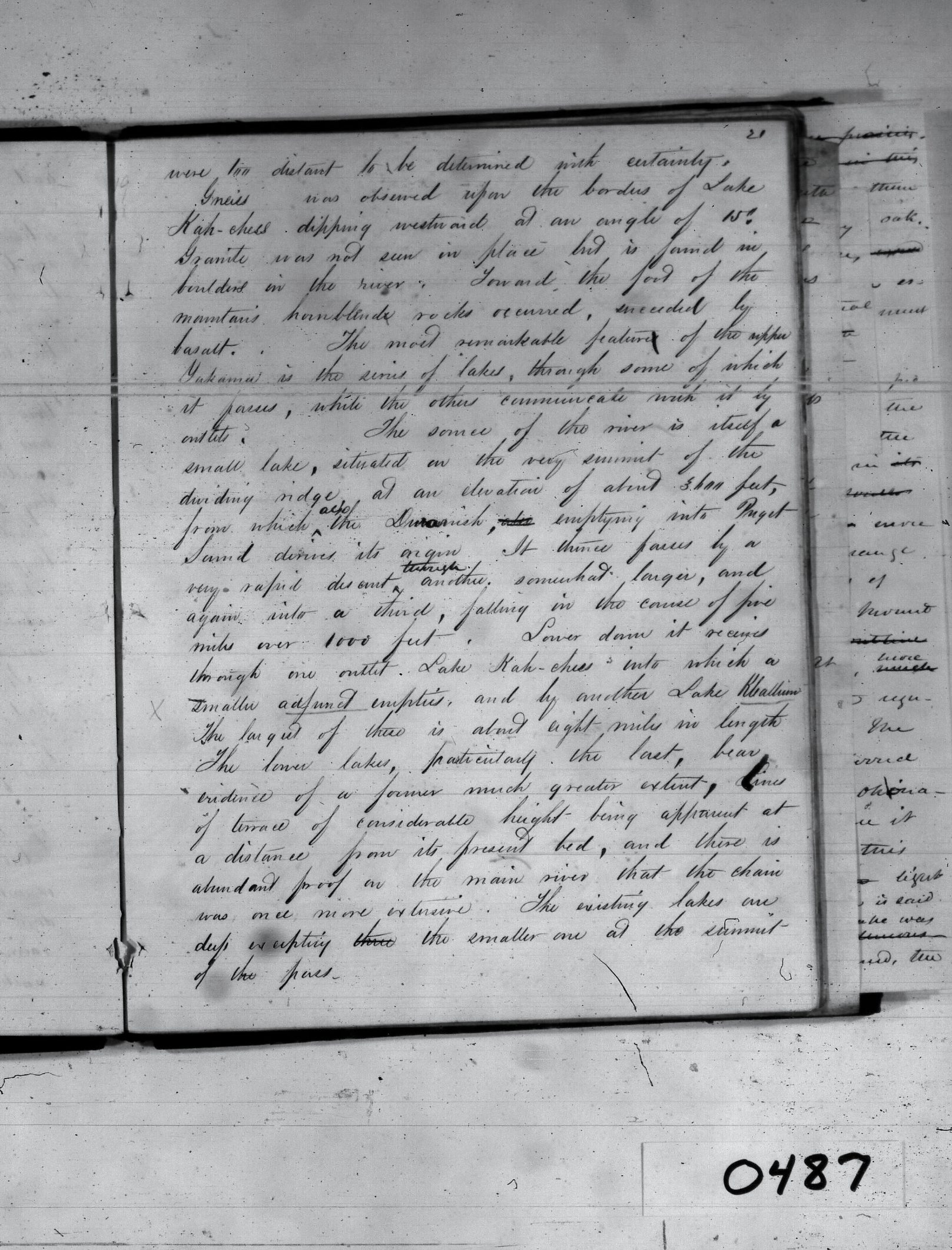 FRAME 1553
 FRAME 1554
 FRAME 1555
 FRAME 1556
 FRAME 1557
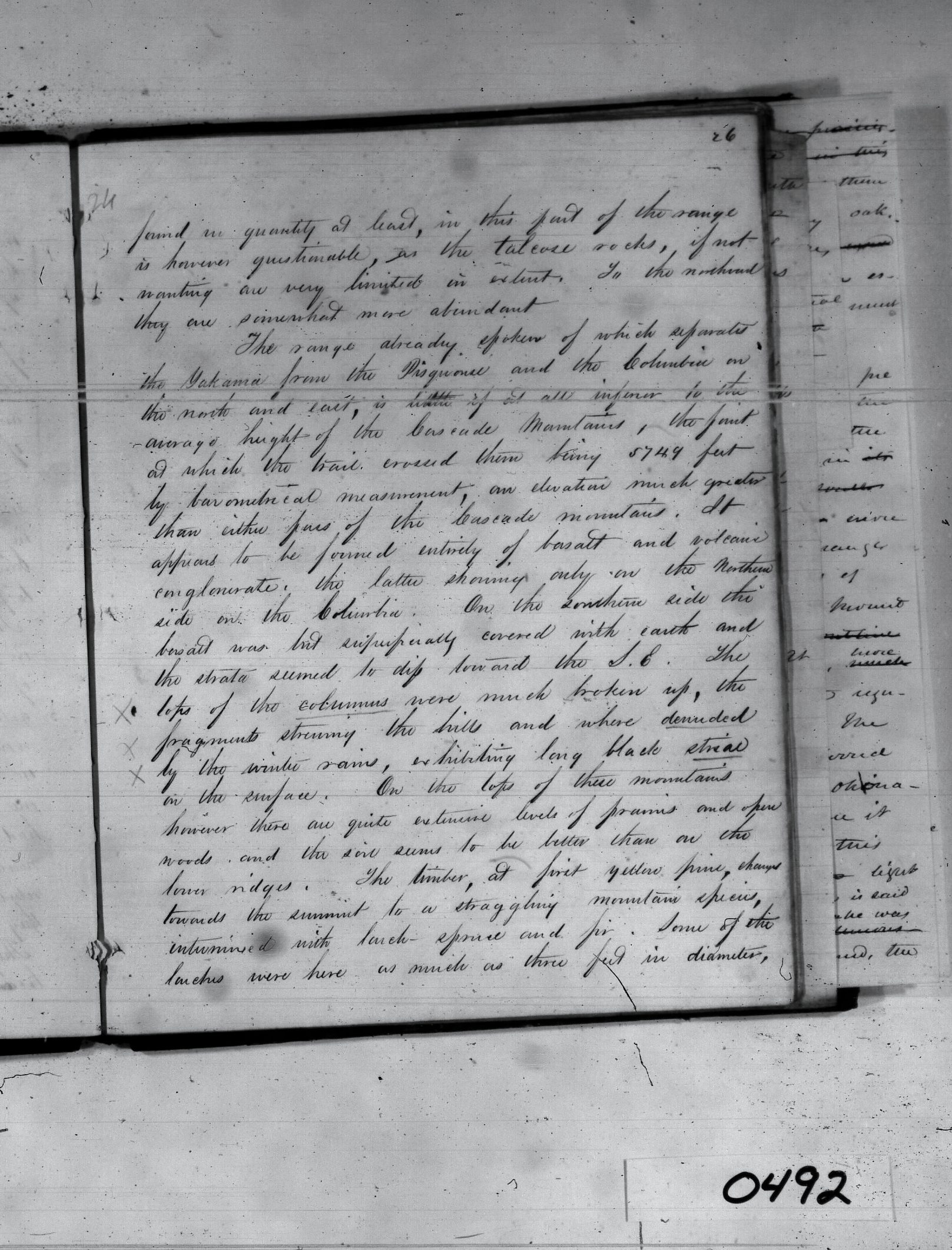 FRAME 1558
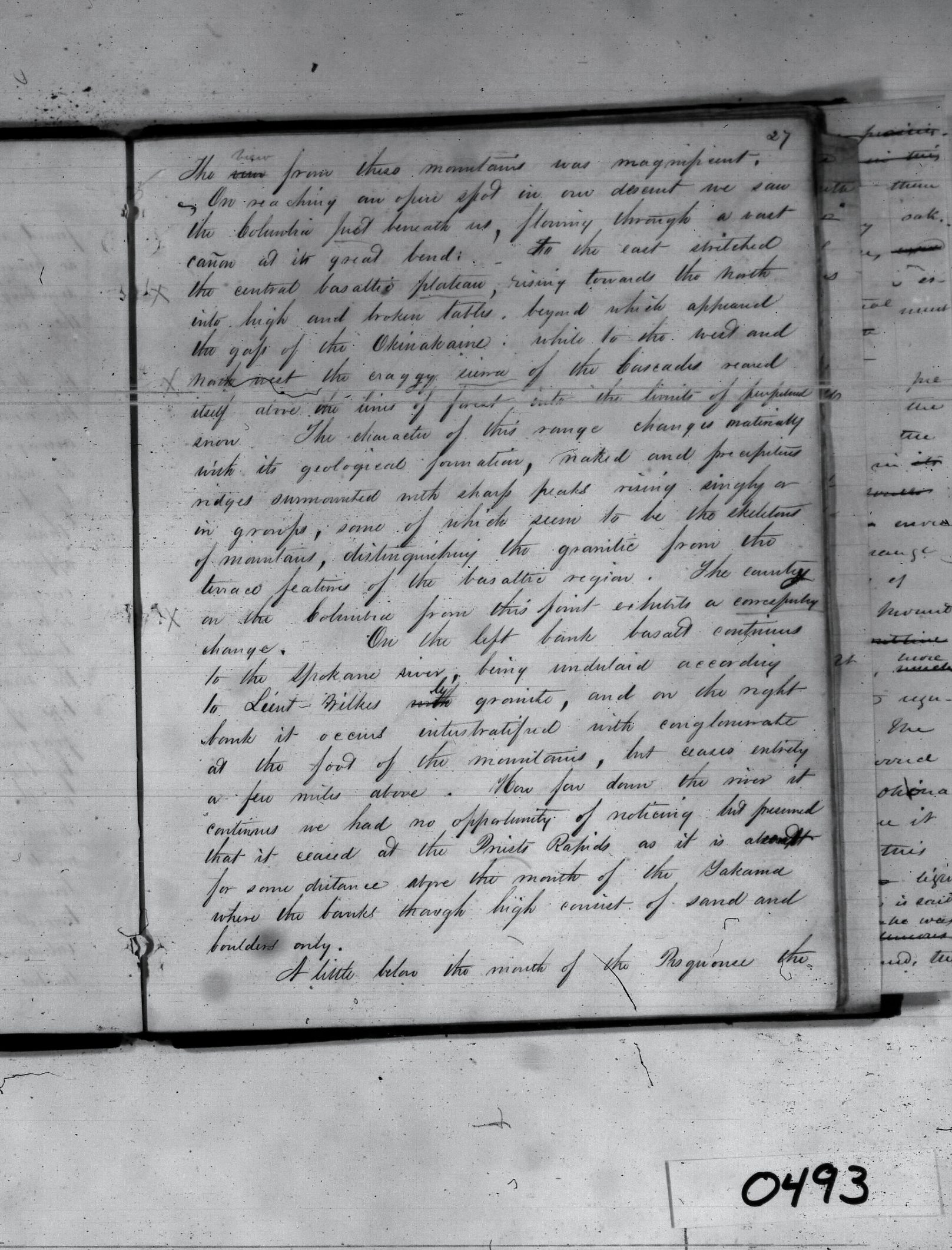 FRAME 1559
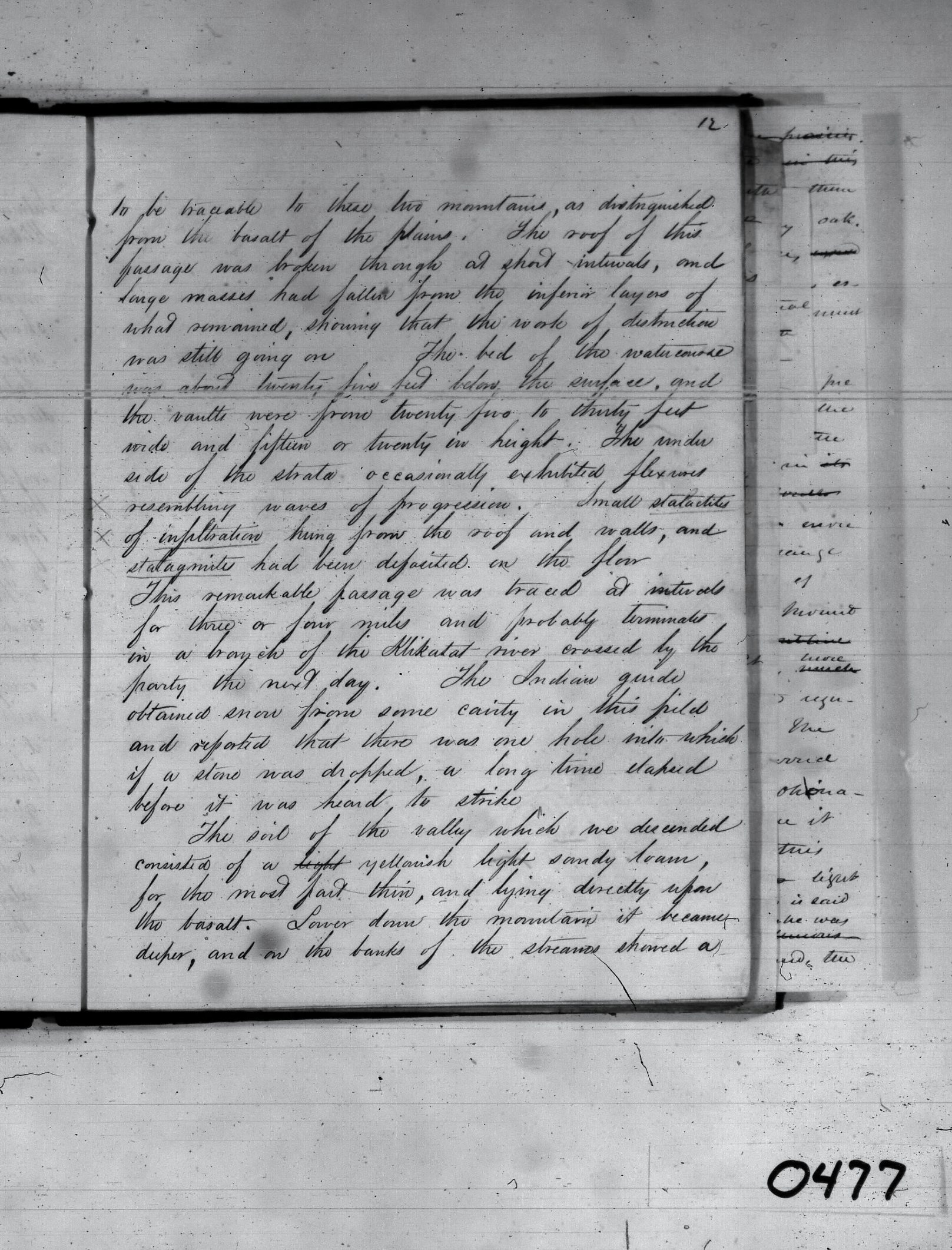
Lava-tube passage near Klikatat river; stalactites; Indian guide's snow cavity; valley soils
n.d. [c.1853-54]
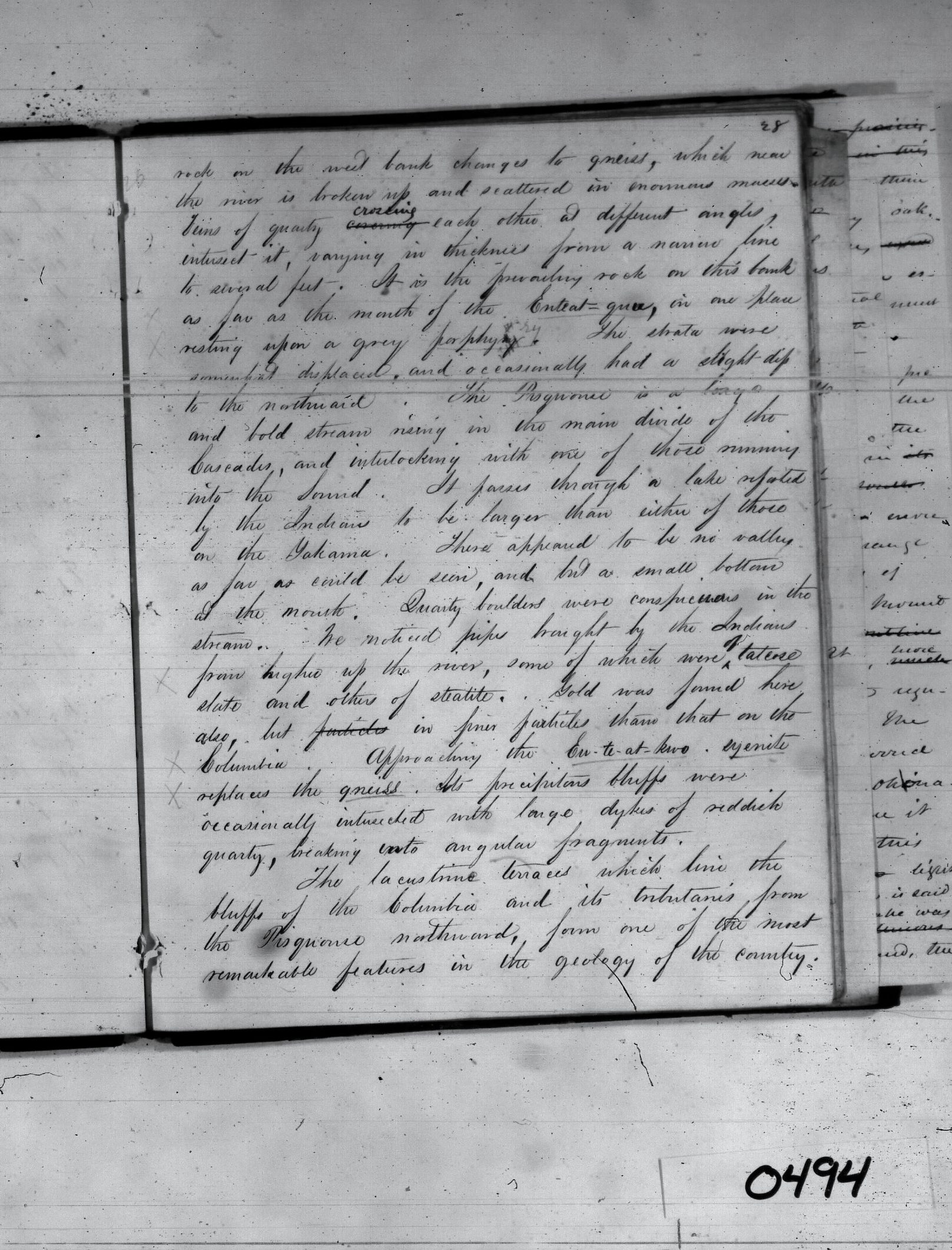 FRAME 1560
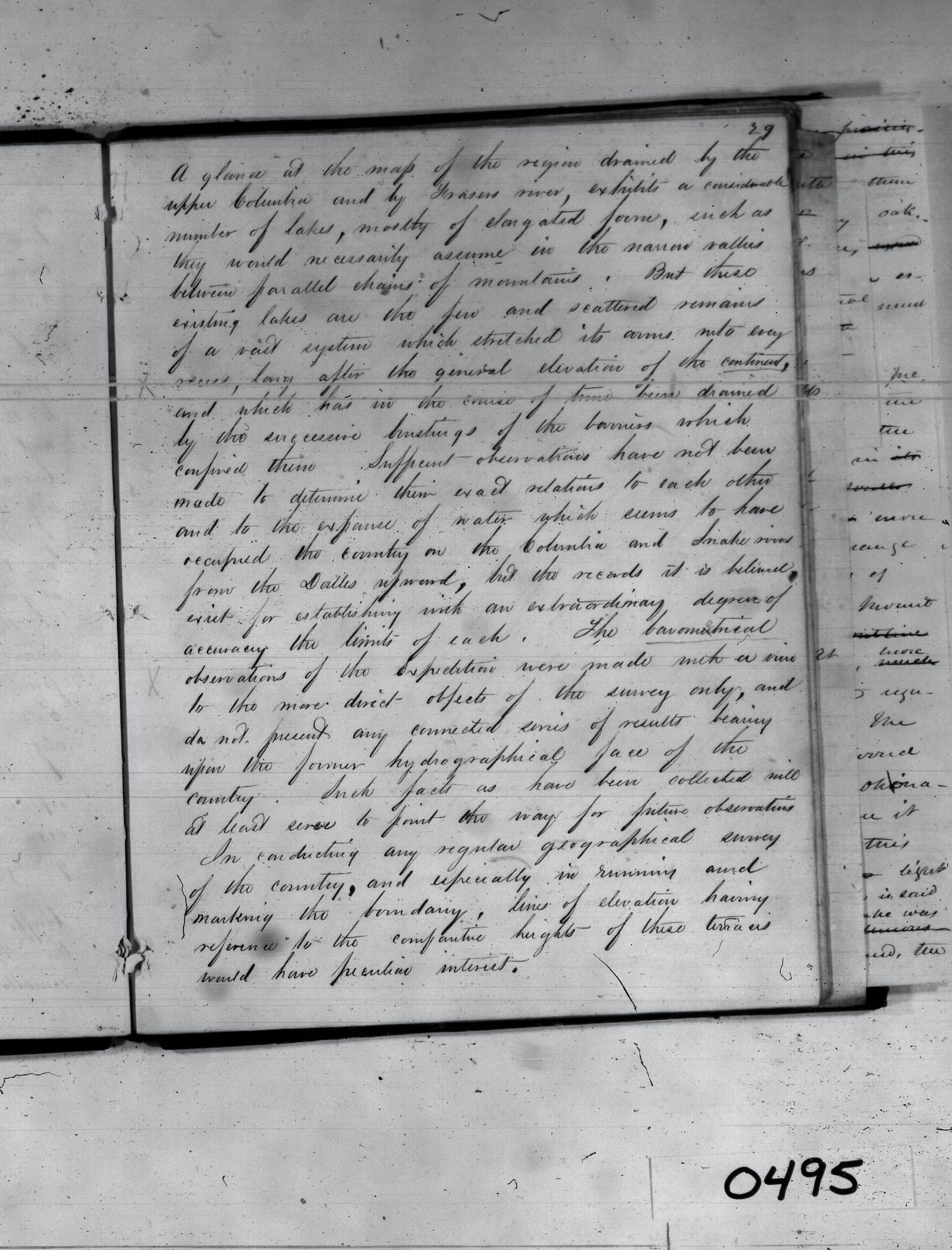 FRAME 1561
 FRAME 1562
 FRAME 1563
 FRAME 1564
 FRAME 1565
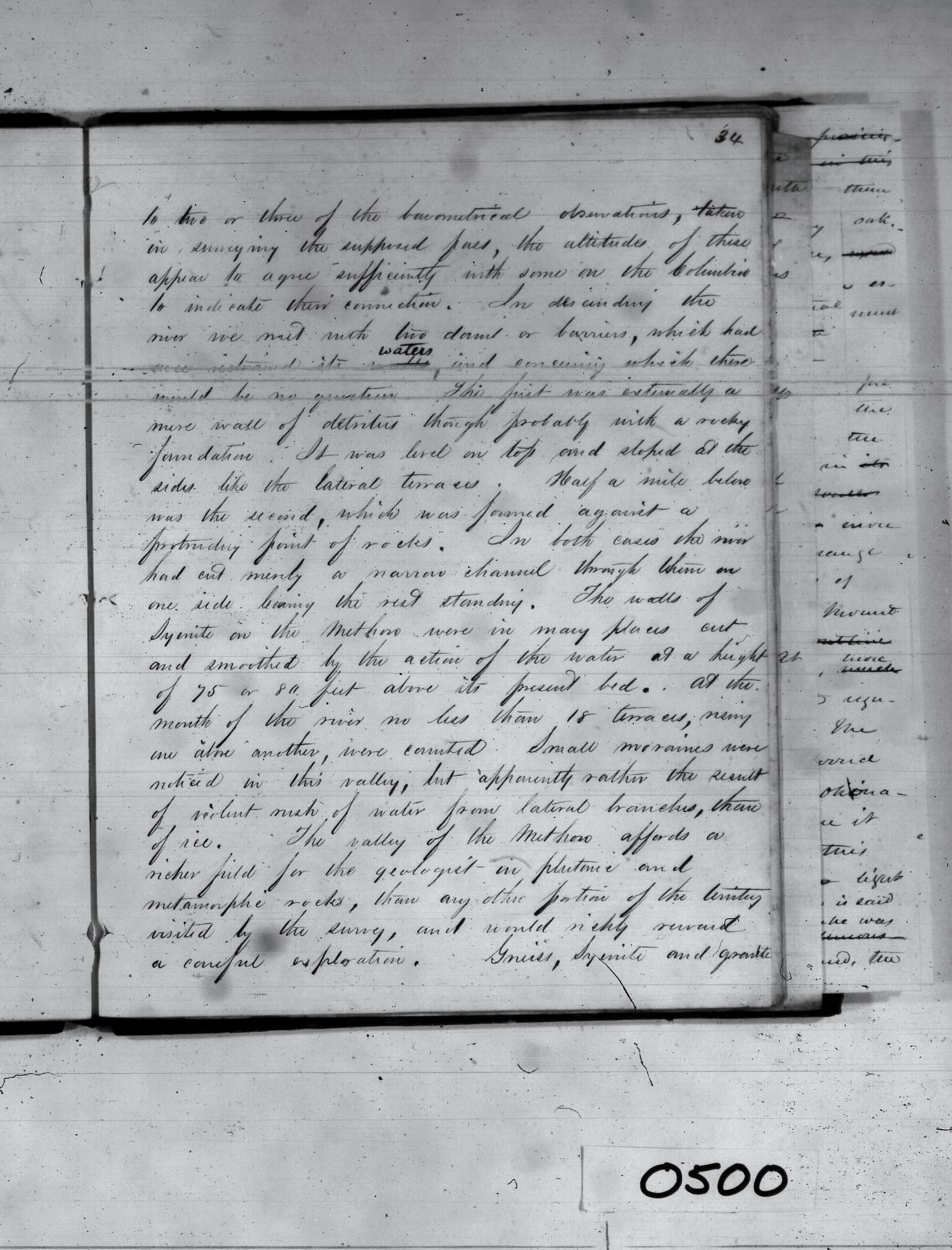 FRAME 1566
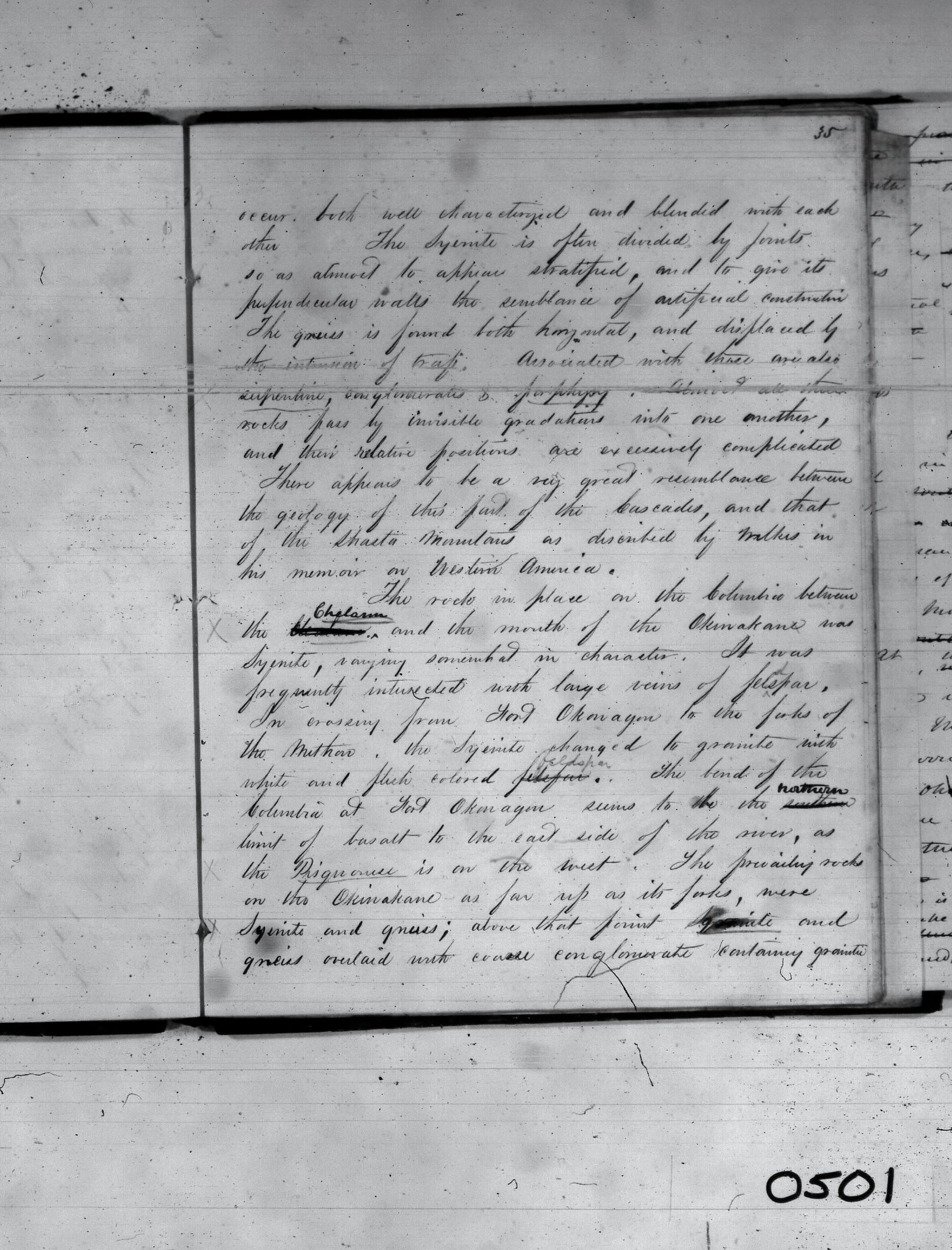 FRAME 1567
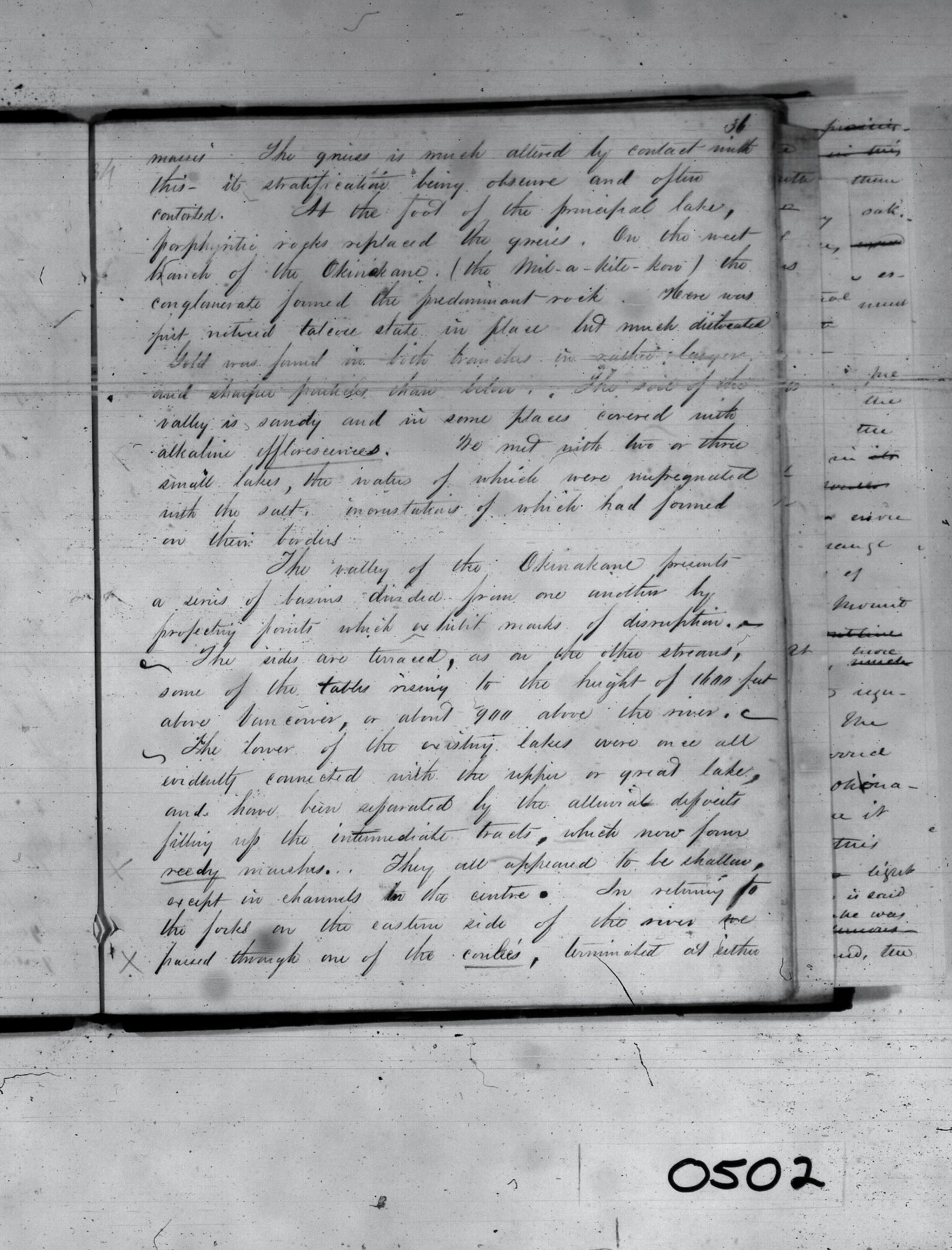 FRAME 1568
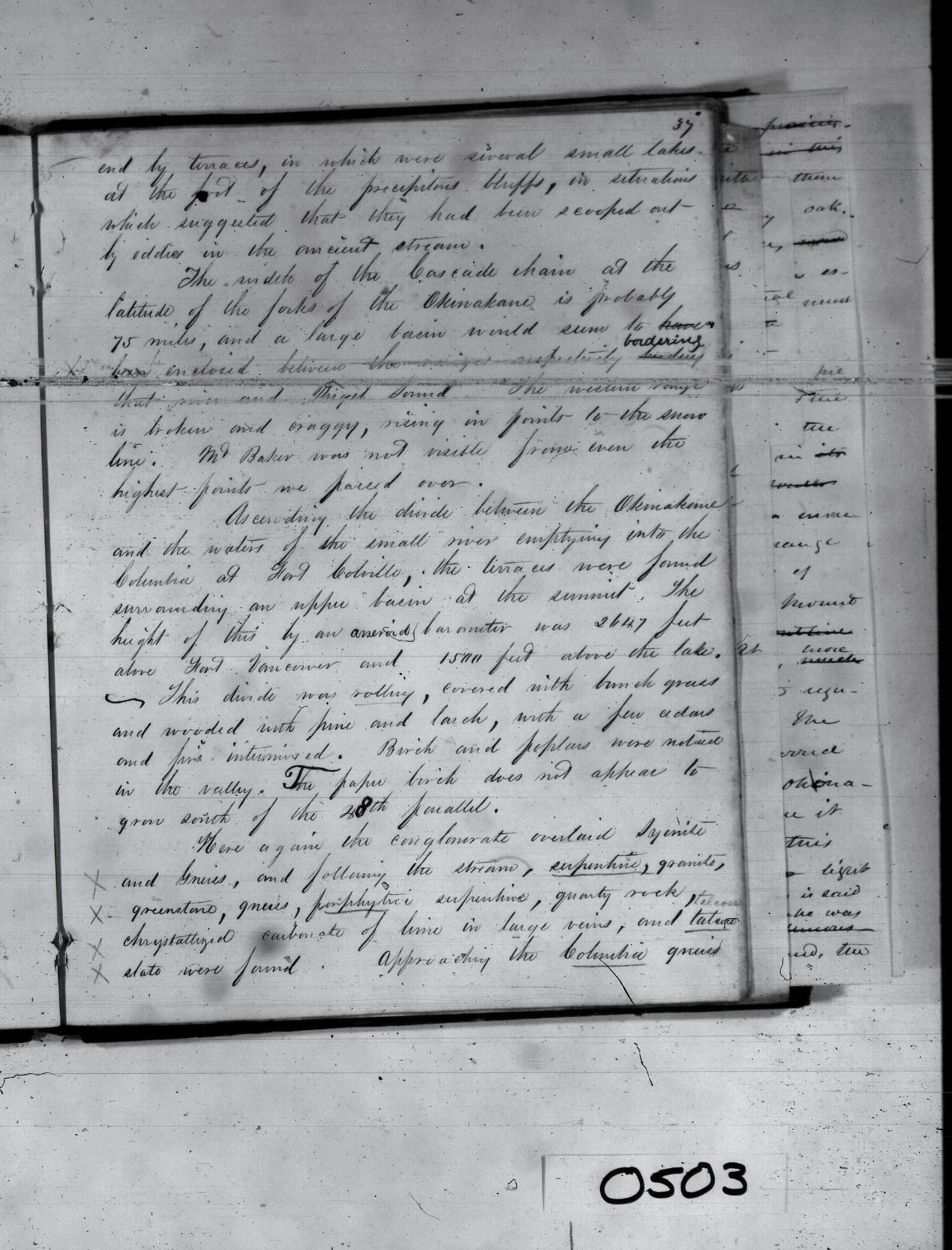 FRAME 1569
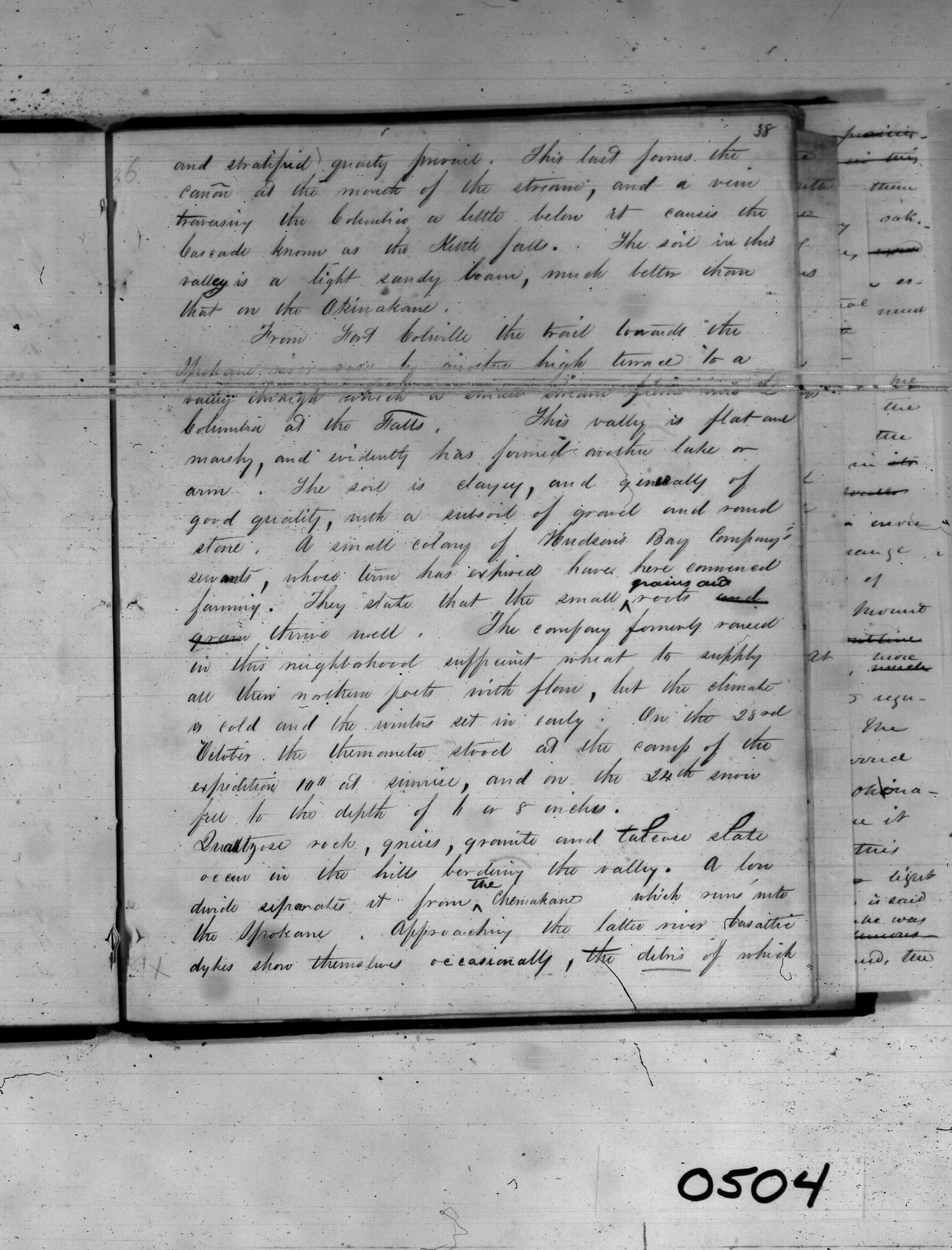 FRAME 1570
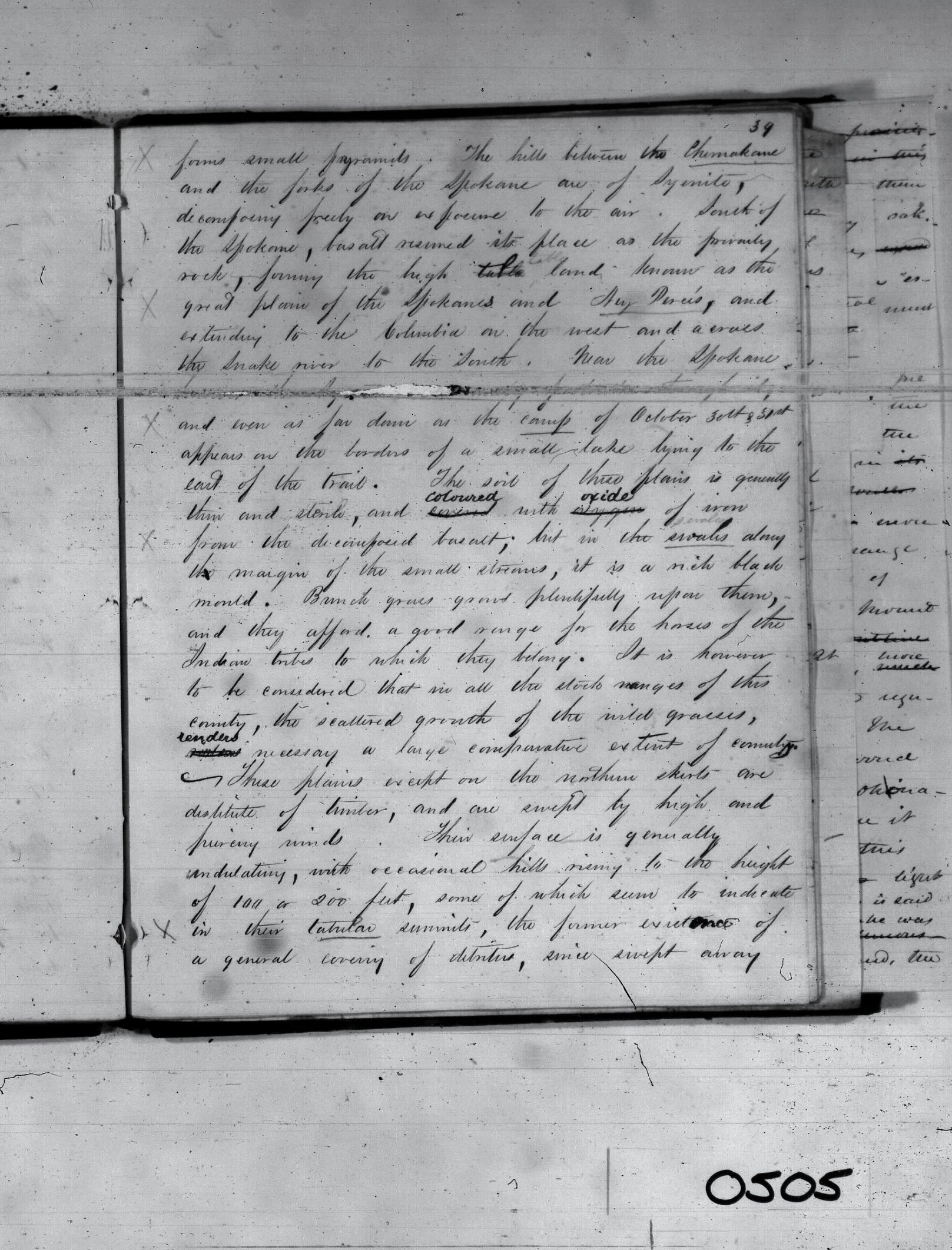 FRAME 1571
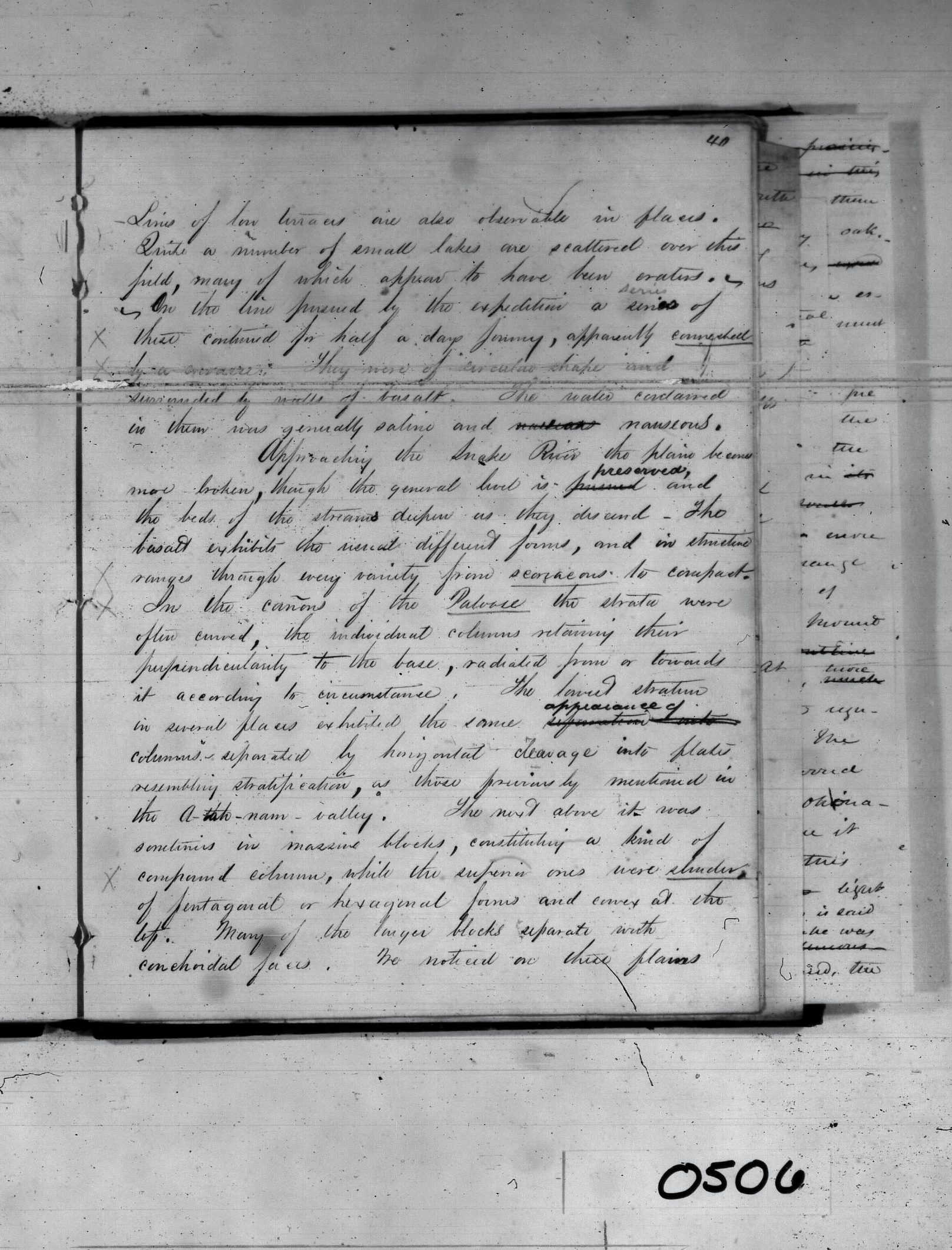 FRAME 1572
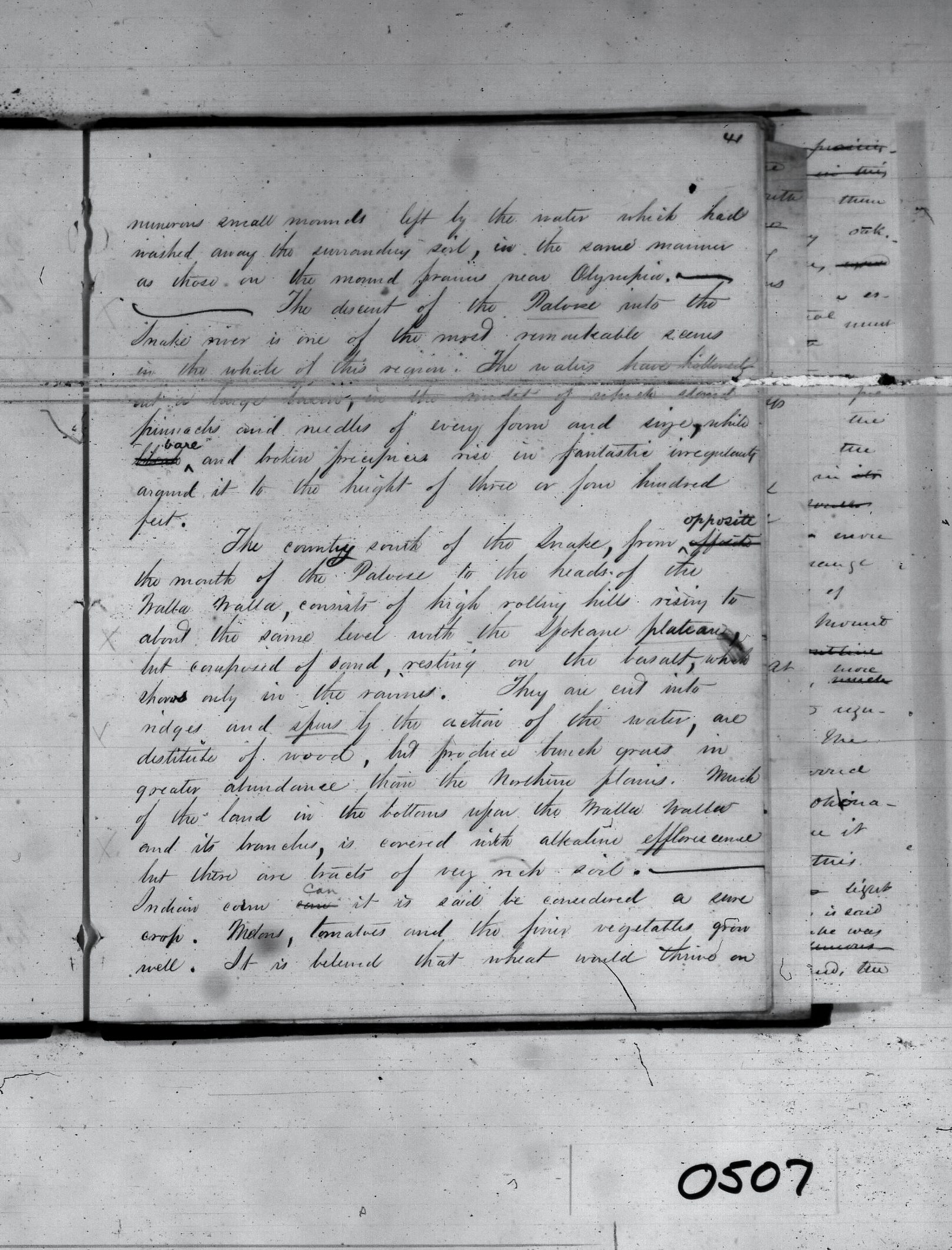 FRAME 1573
 FRAME 1574
 FRAME 1575
 FRAME 1576
Ms p.28: gneiss/quartz veins near Enteatqua; Pisquouse River, Indian pipes, gold, lacustrine terraces
n.d. [c.1853-54]
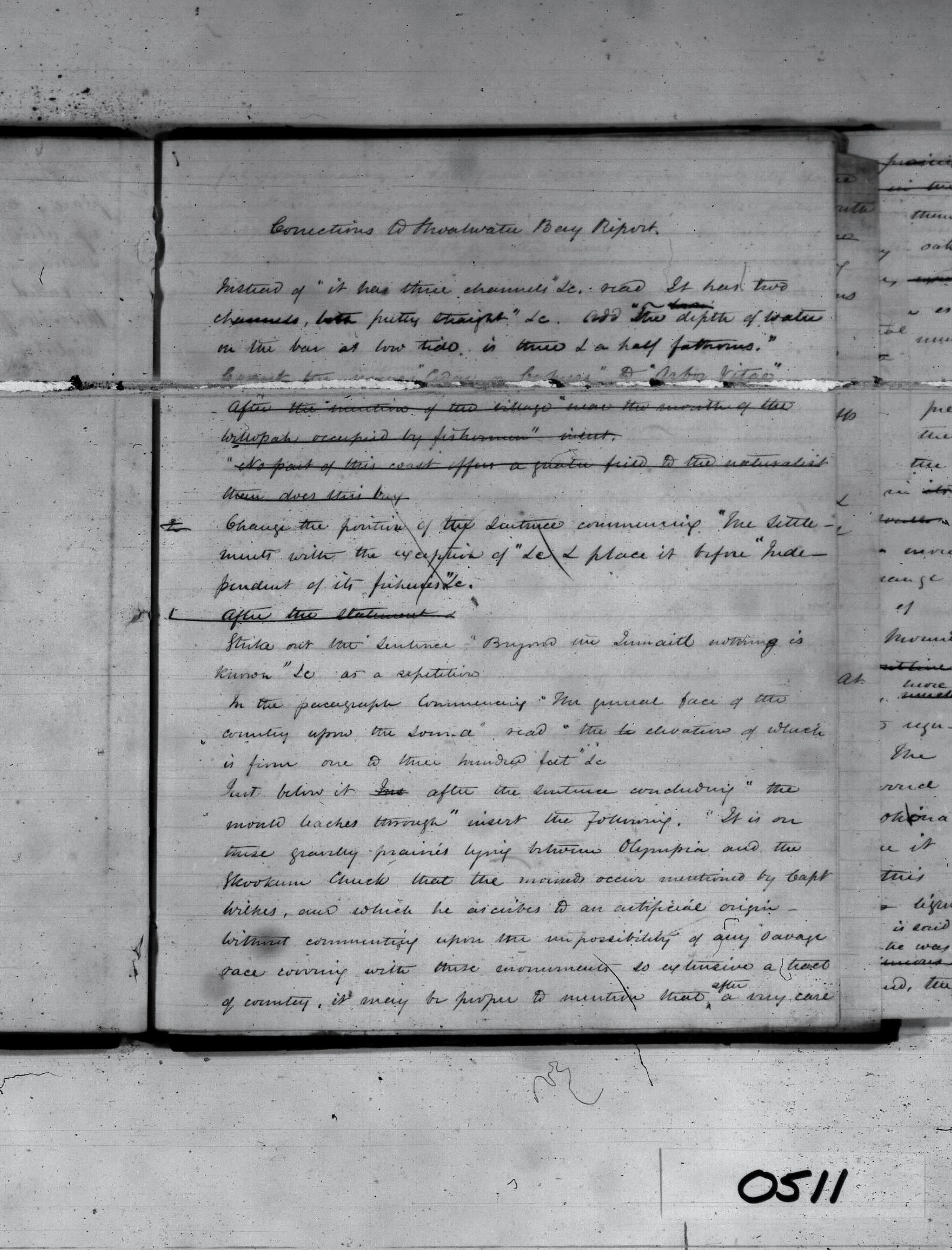
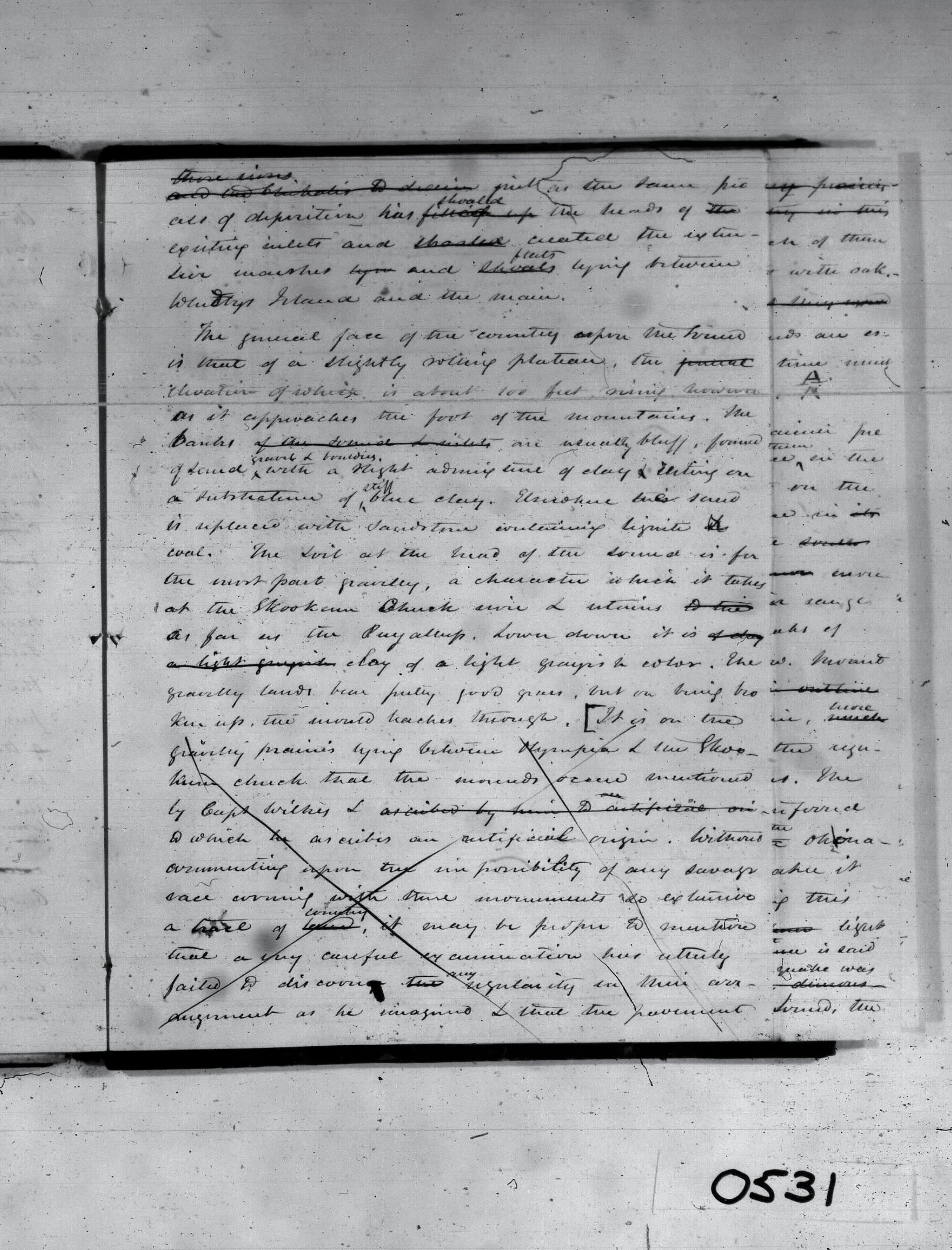
Editorial fixes; insert on Olympia-Skookum Chuck mounds, rebutting Wilkes's artificial-origin theory (dismissive period phrasing re Native builders paraphrased)
n.d. [c.1854]
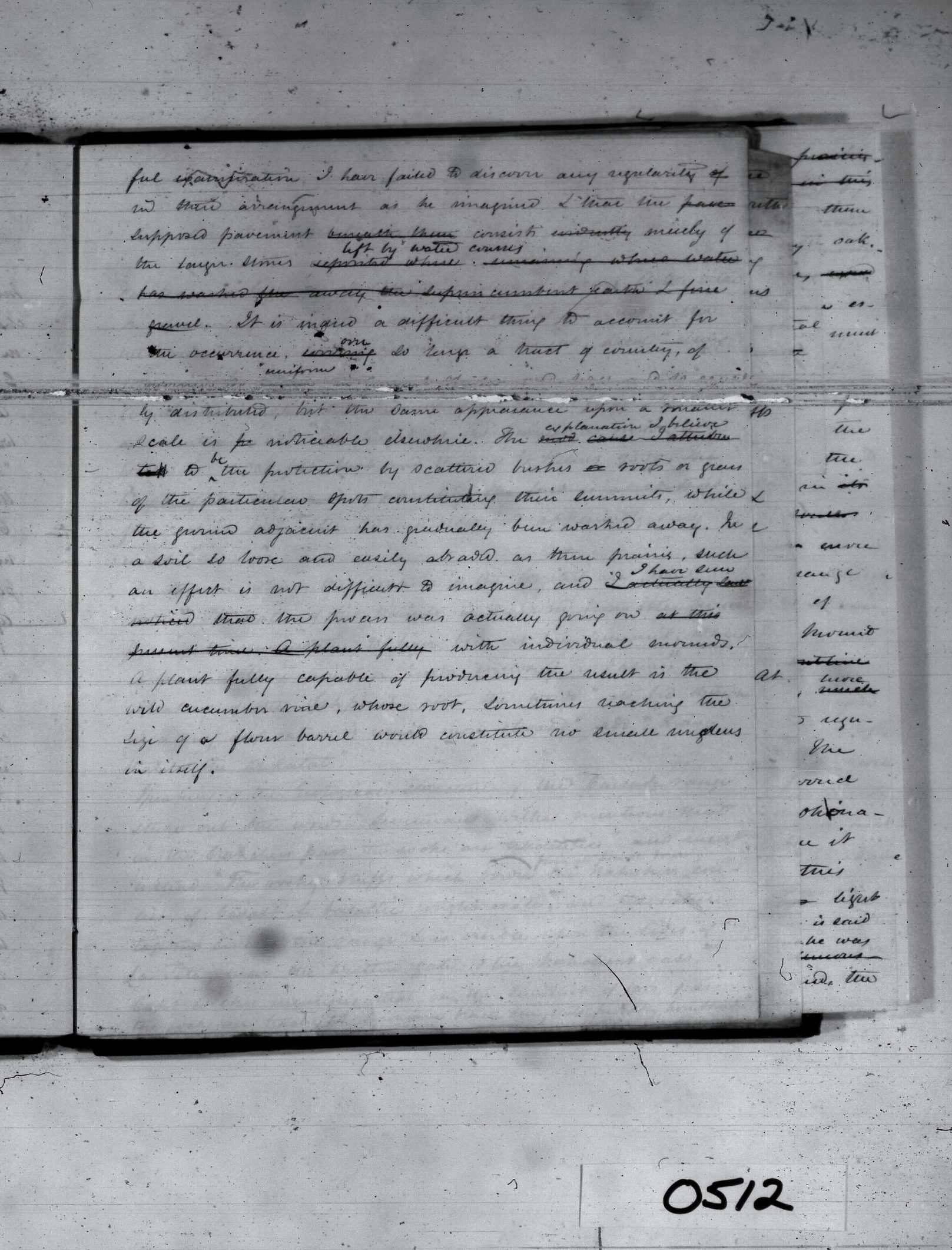
Corrected draft on prairie stone "pavement" and mounds; wild-cucumber-vine root theory
n.d. [c.1854]
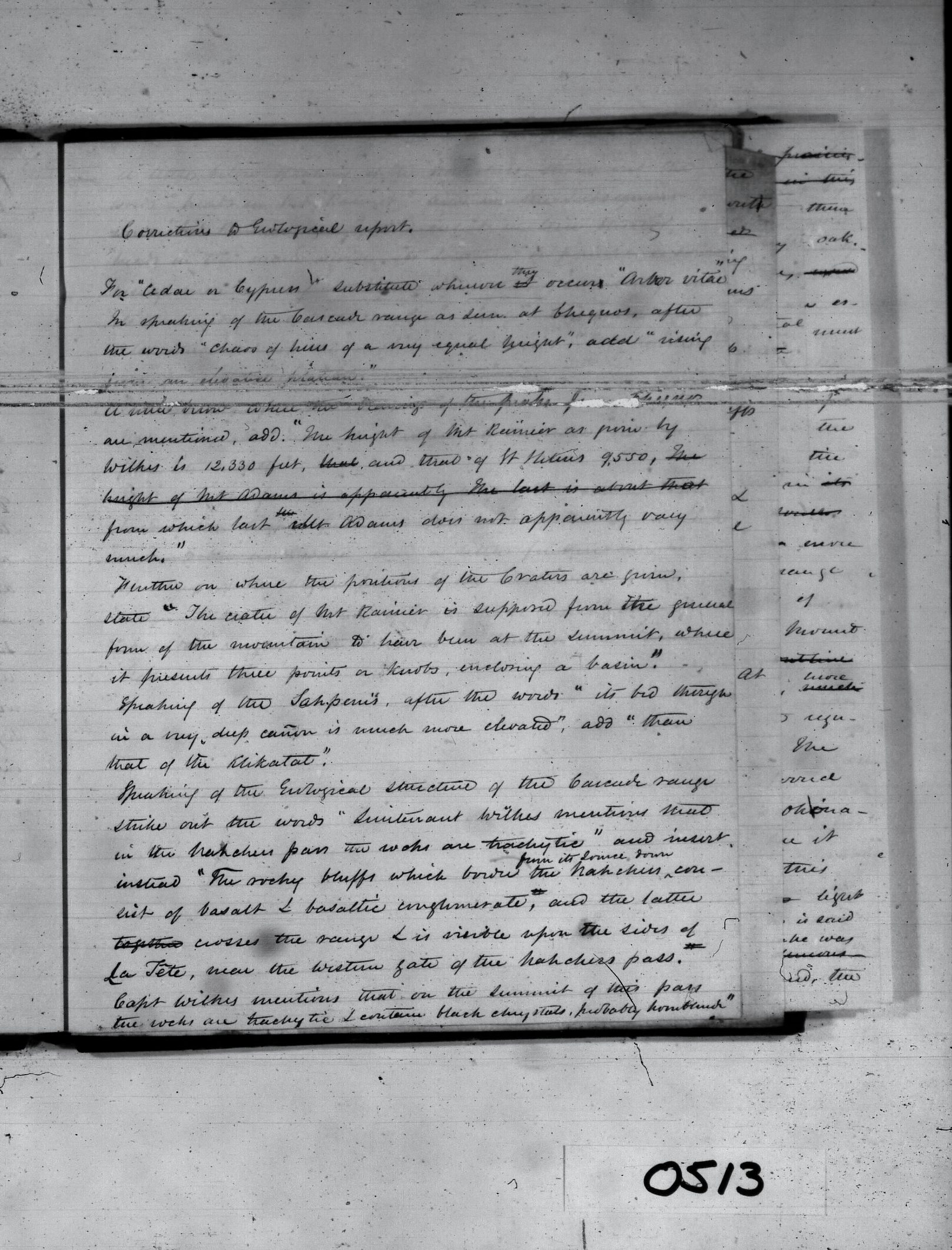
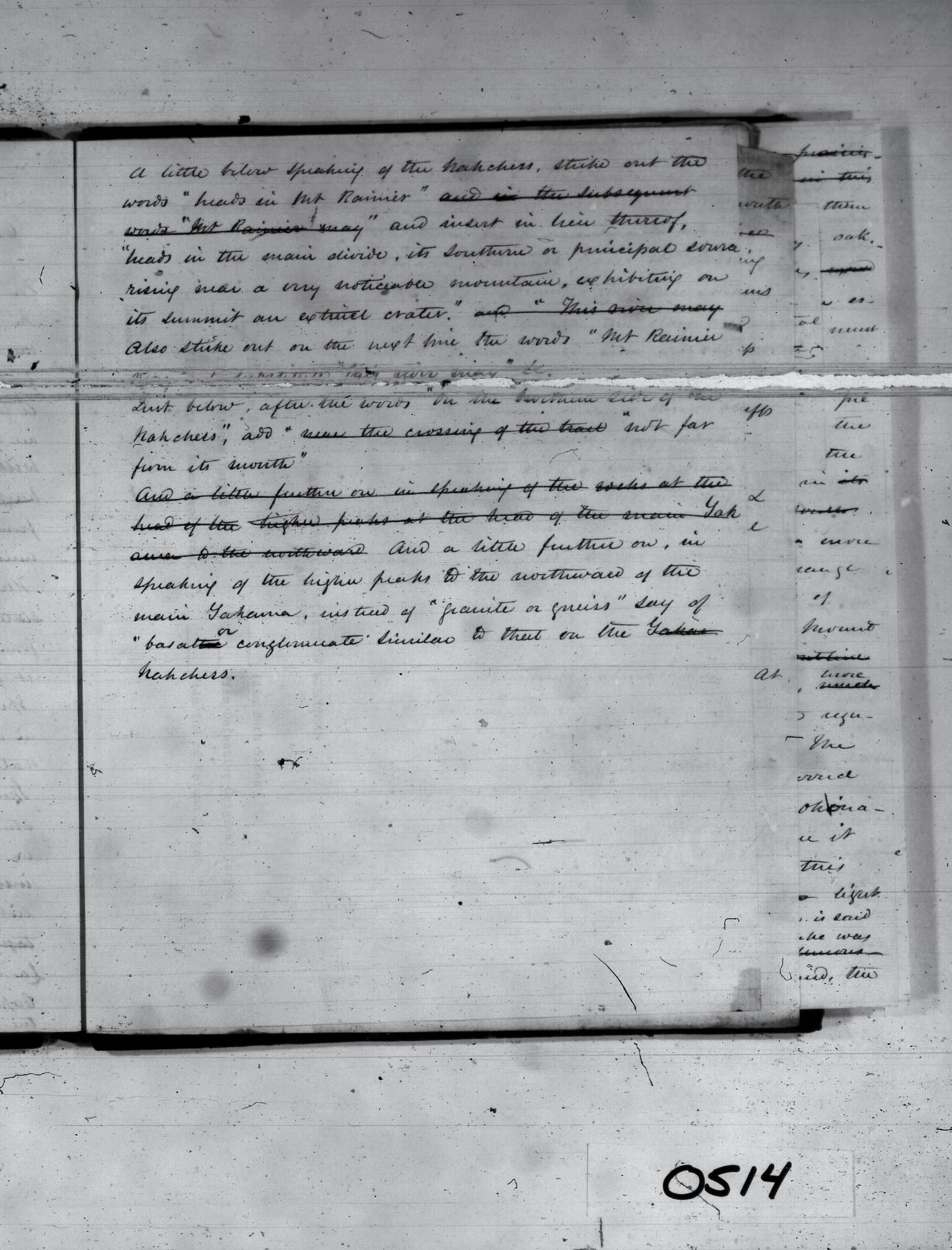
Errata list: arbor vitae, Rainier 12,330 ft, St Helens crater, Nahchess pass basalt
n.d. [1854]
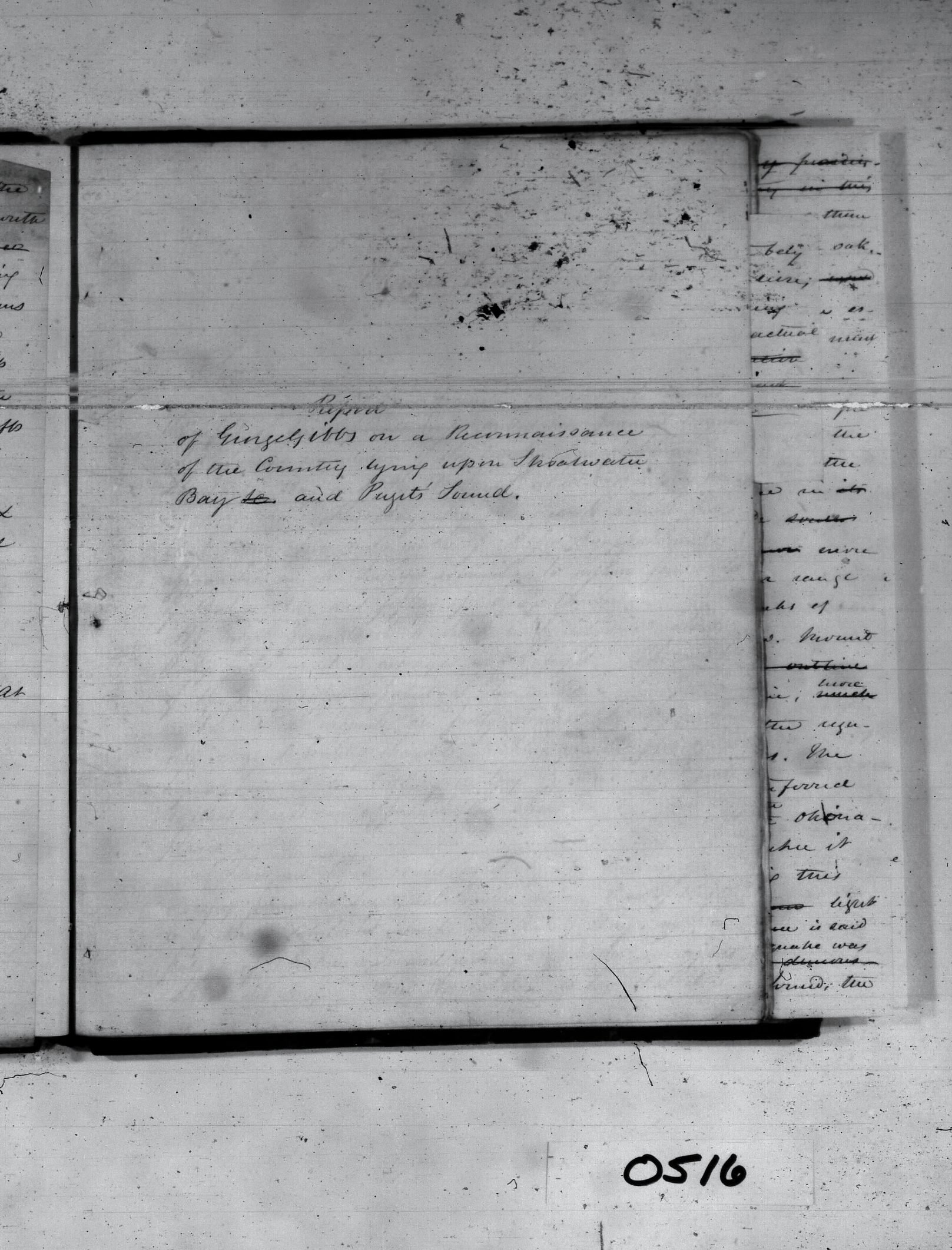
"Report of George Gibbs on a Reconnaissance… Shoalwater Bay and Puget's Sound"
n.d. [c.1854]
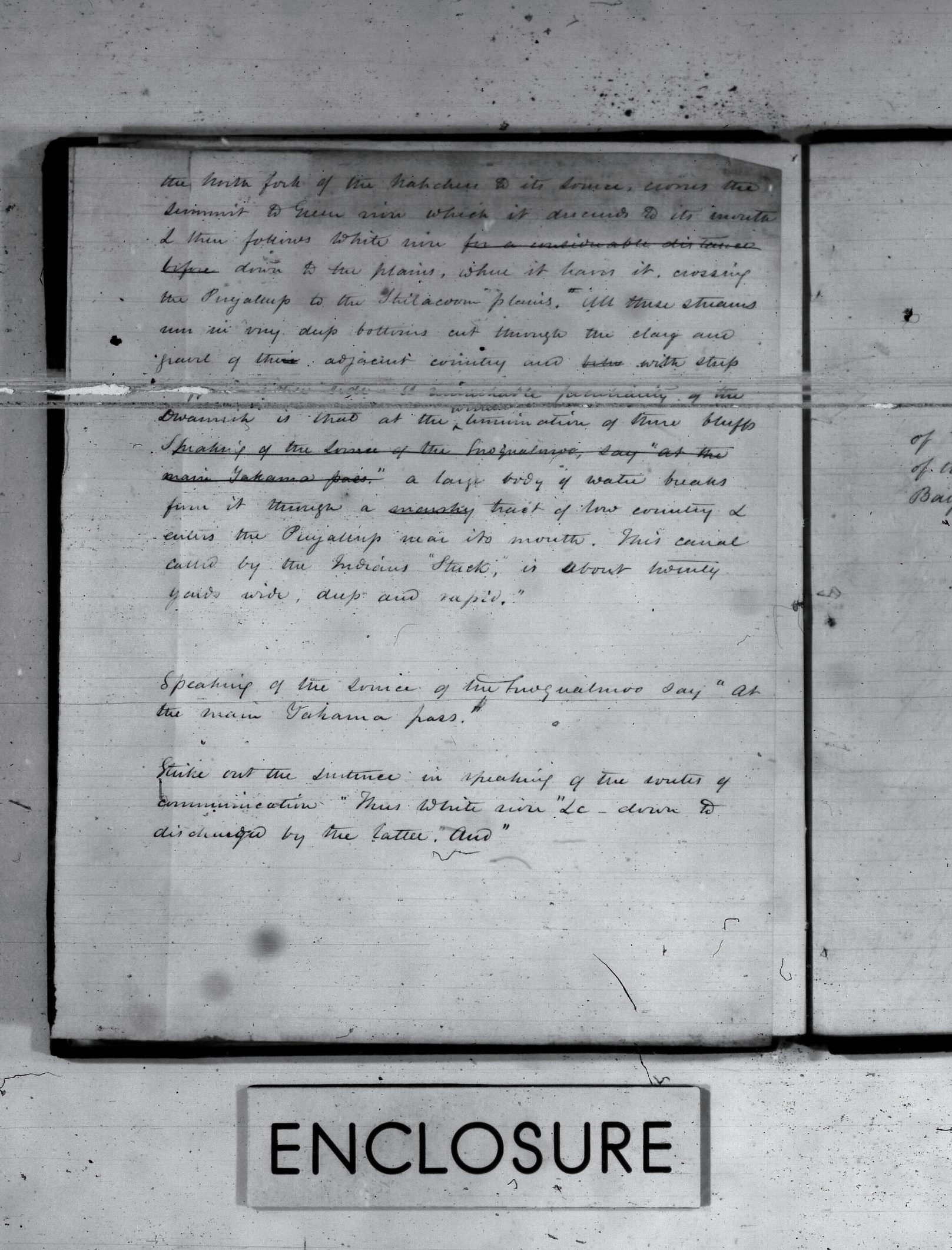
Errata: Nahchess-Green-White river route; Puyallup "Stuck" canal named by Indians
n.d. [1854]
Same Shoalwater Bay/Puget Sound reconnaissance report title page refilmed
Frames 1584–1623 · 22 documents
The Olympia report of 26 February 1854, with its correction slips and coal-bed pages.
1854-02-26
 FRAME 1584
 FRAME 1585
 FRAME 1586
 FRAME 1587
 FRAME 1588
 FRAME 1589
 FRAME 1590
 FRAME 1591
 FRAME 1592
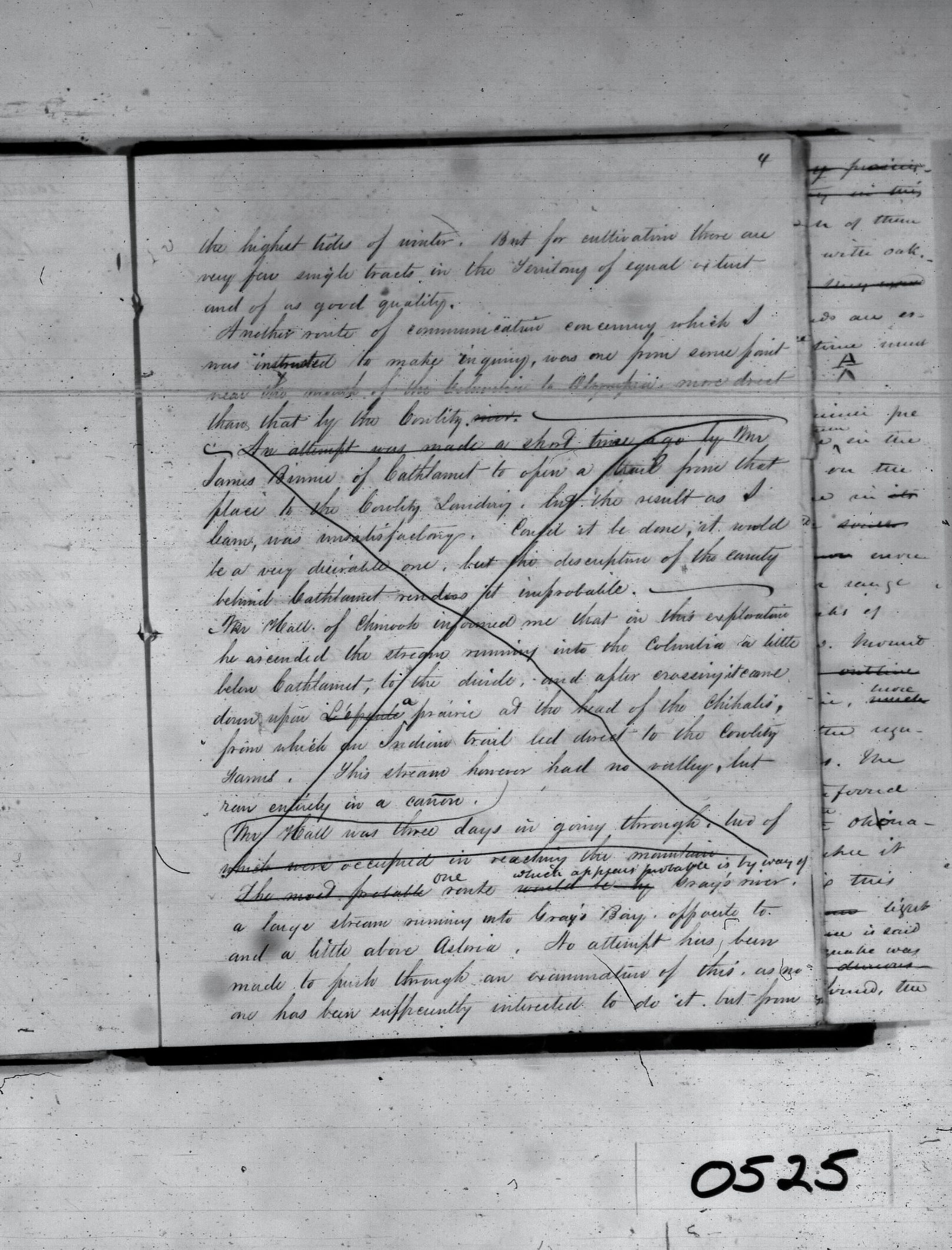 FRAME 1593
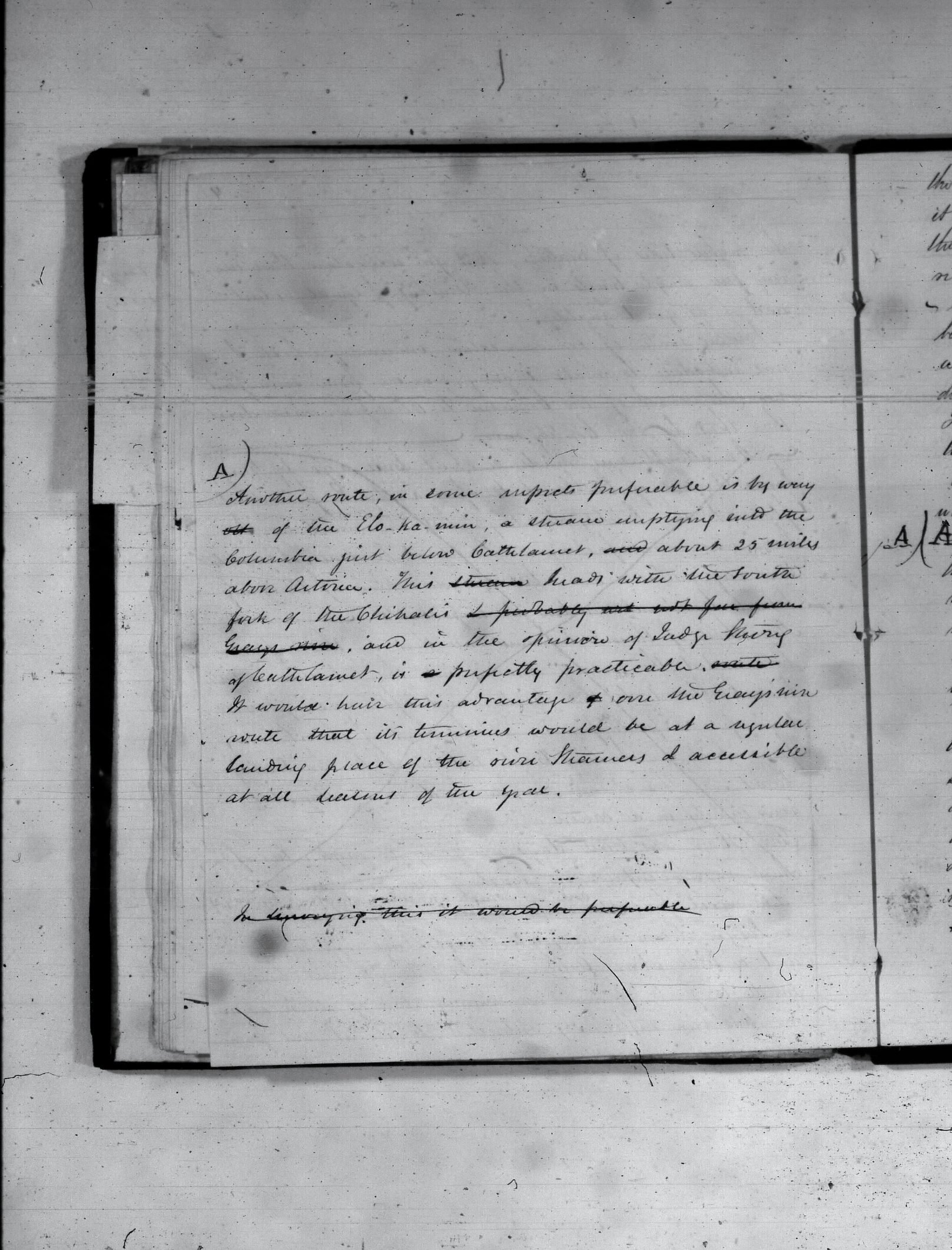 FRAME 1594
Olympia; Shoalwater Bay reconnaissance opens: channels, mud flats, Indian crossing routes
n.d. (c.1854)
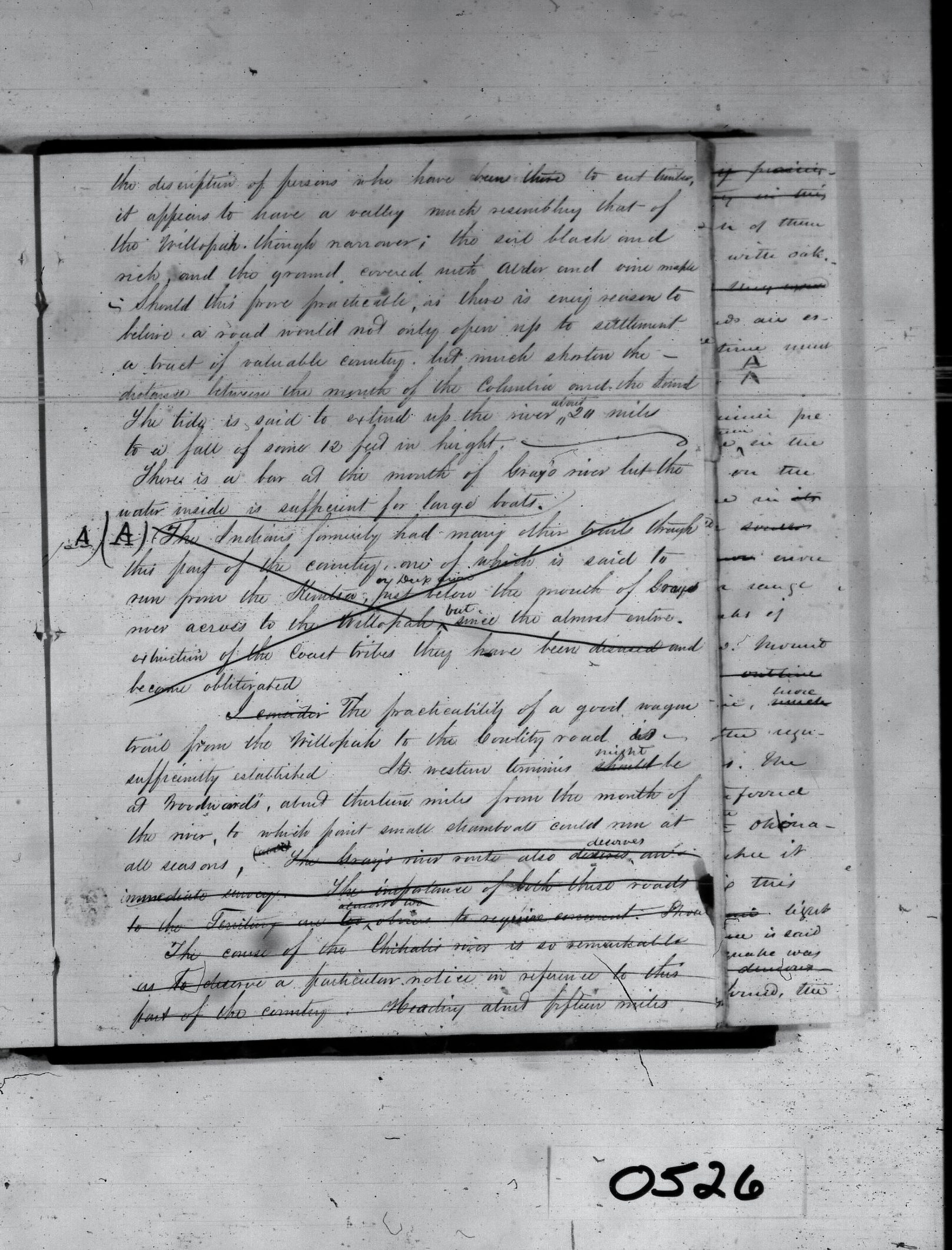
Willopah valley road; Gray's river bar; coast tribes' old trails obliterated by extinction
n.d. (c.1854)
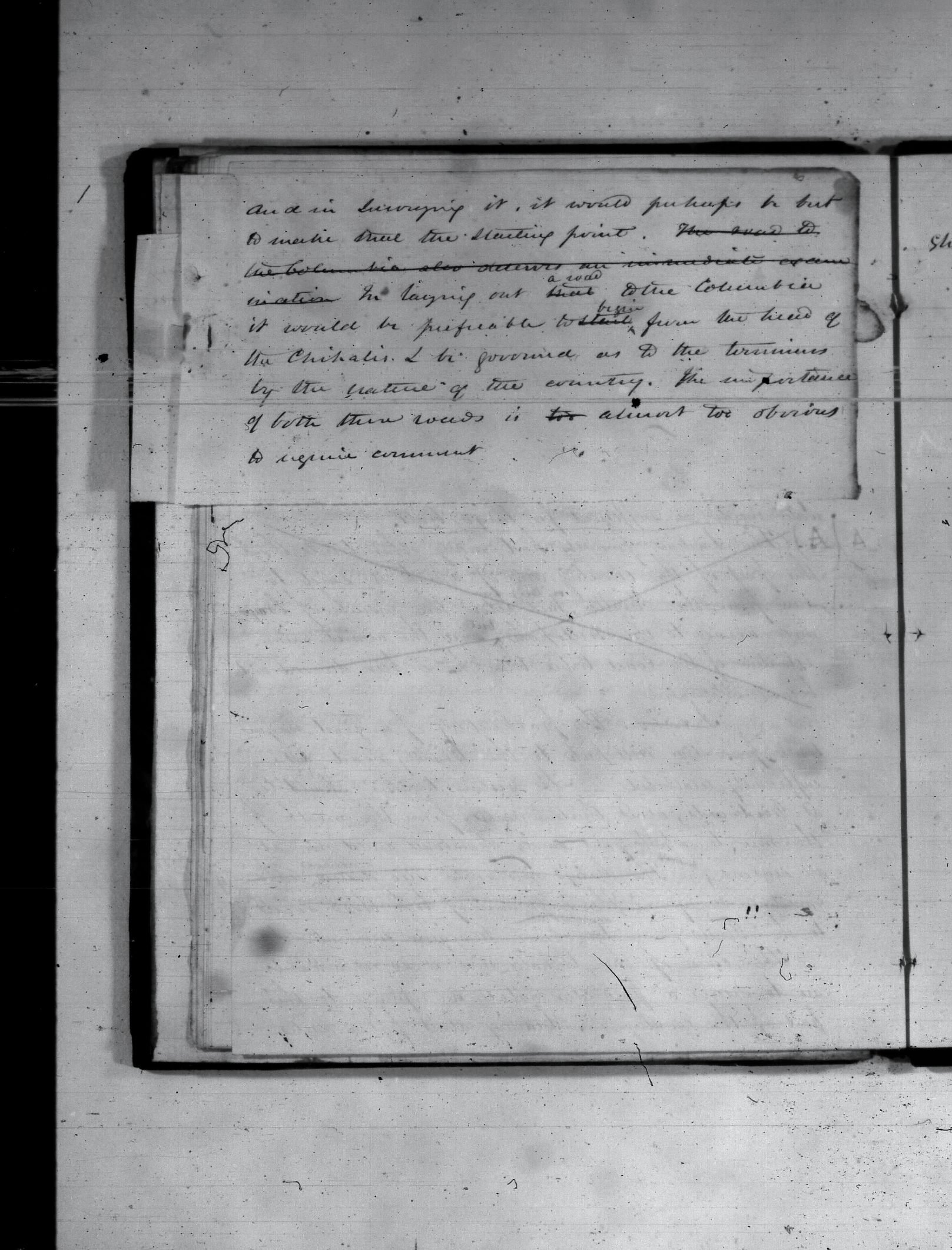
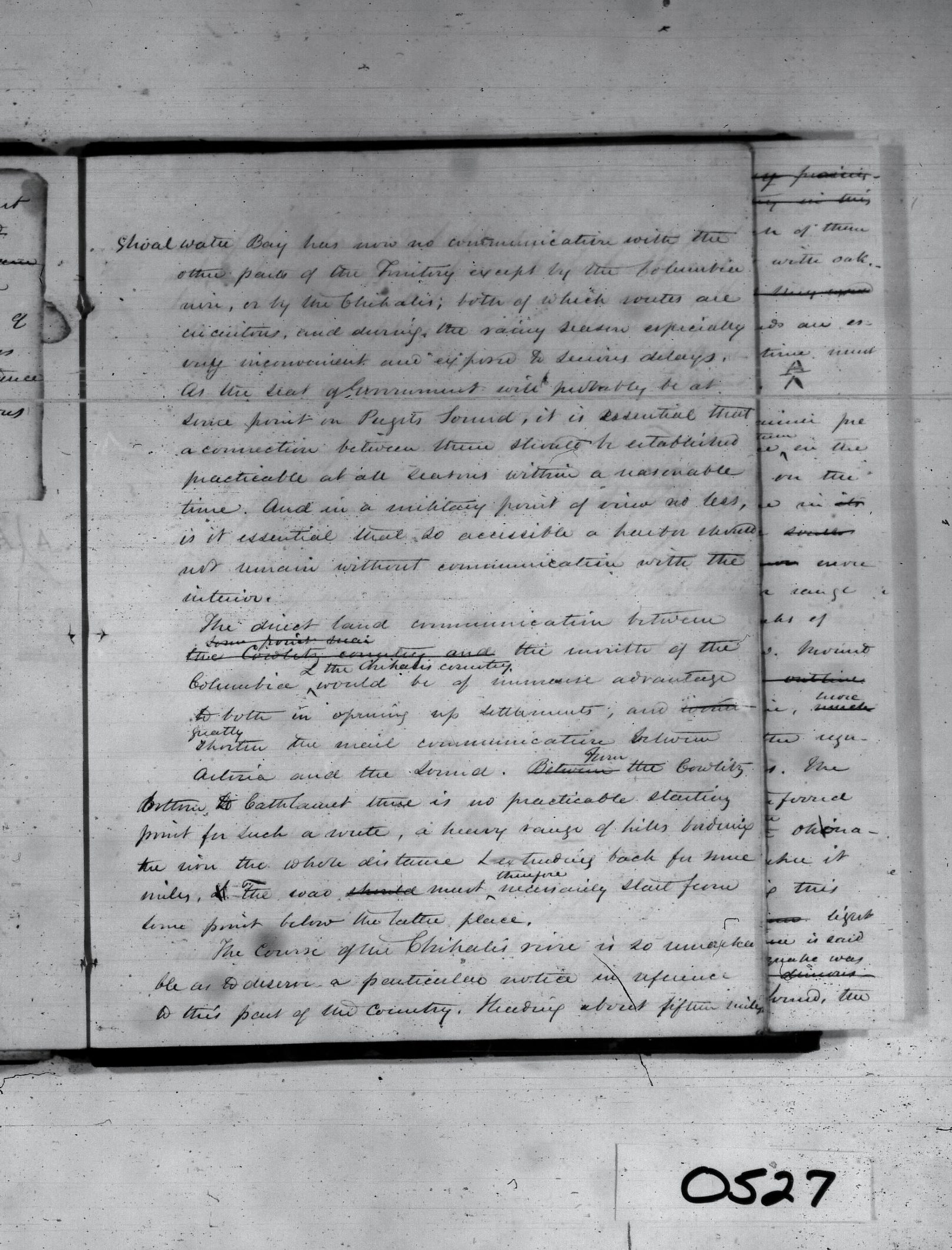
Shoalwater Bay isolation; seat of government on Puget Sound; Astoria mail route; Cowlitz
n.d. (c.1854)
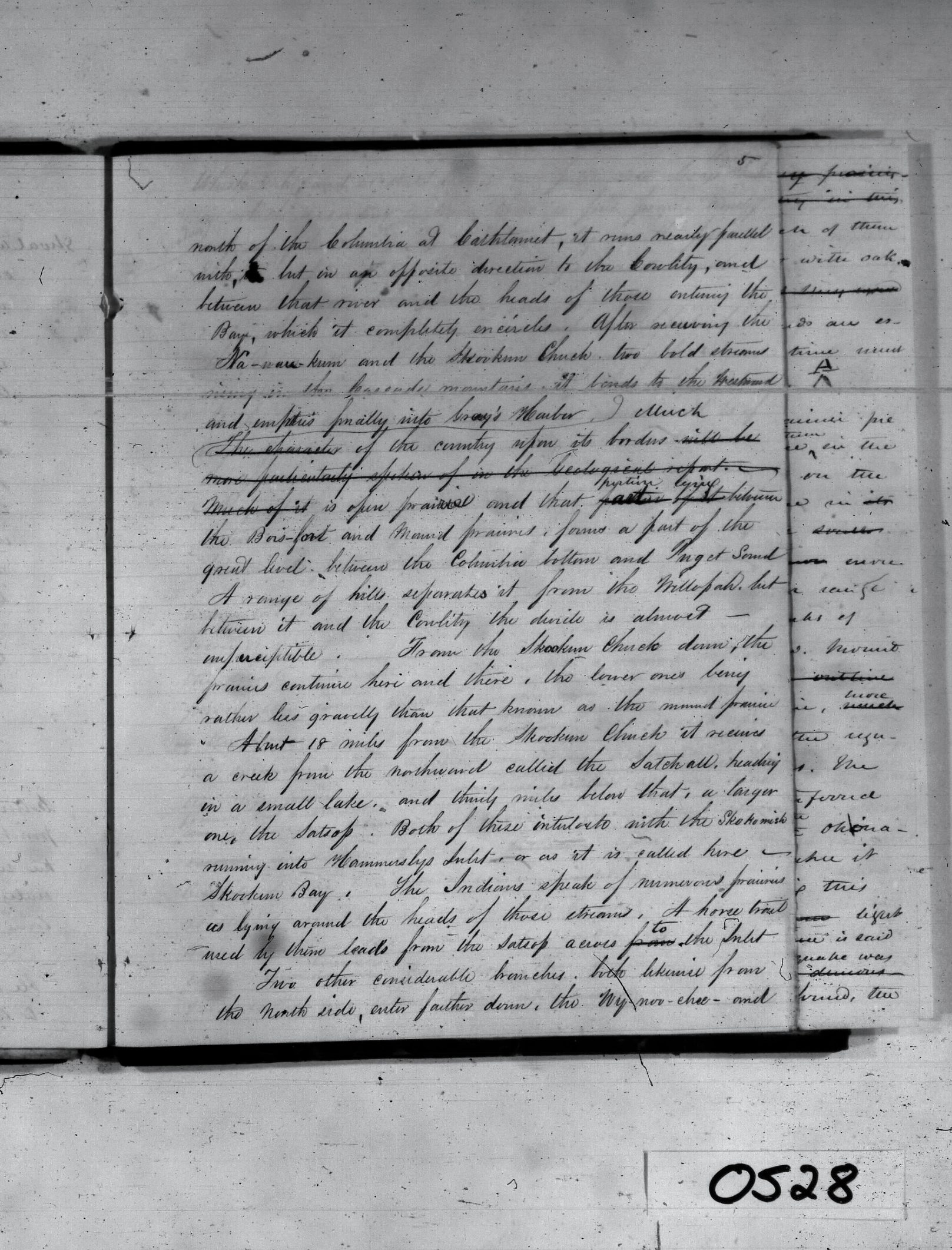
Chehalis river course; Skookum Chuck, Satsop; Indians report prairies and horse trail
n.d. (c.1854)
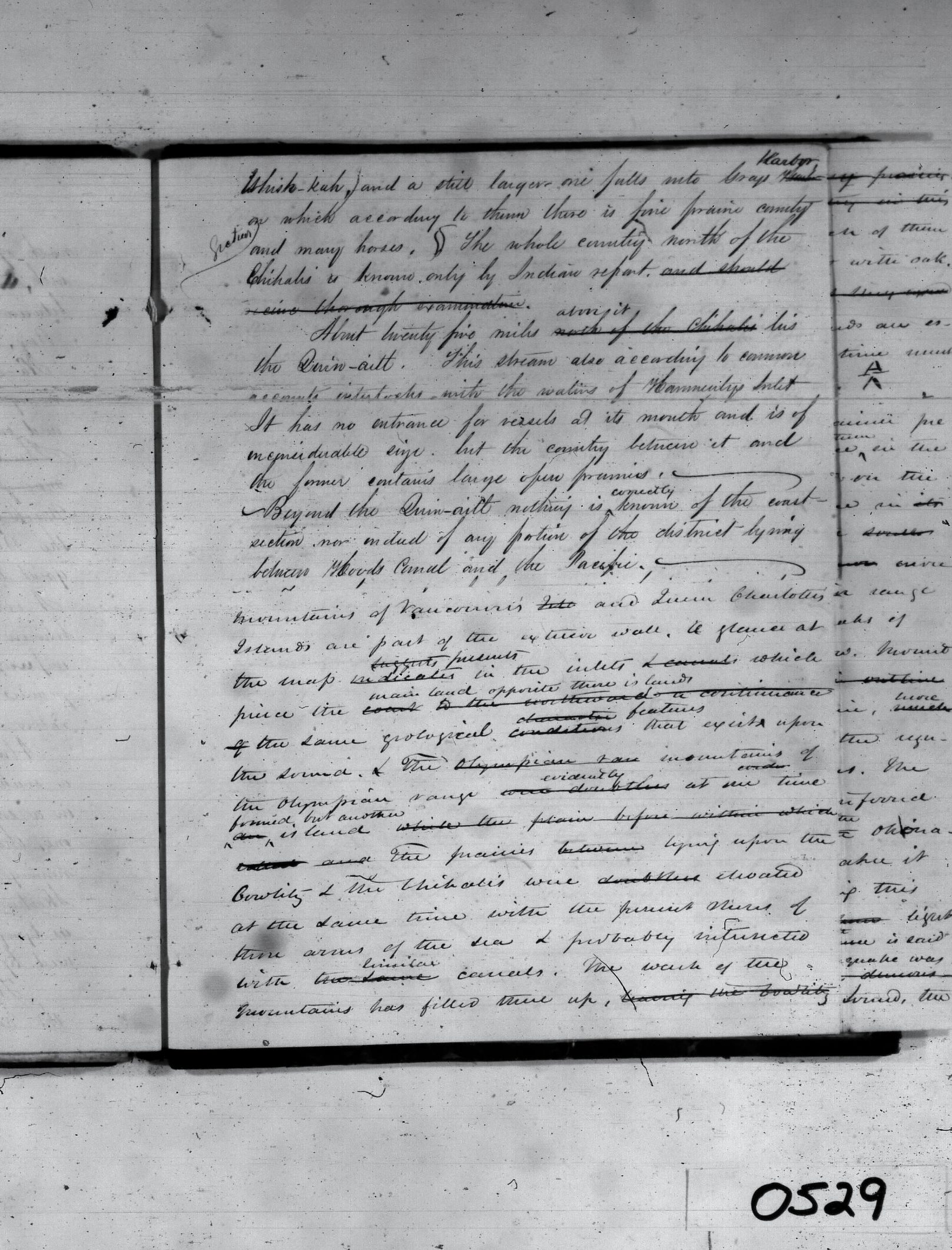
Gray's Harbor, Quin-aielt river; country north of Chehalis known only by Indian report
n.d. (c.1854)
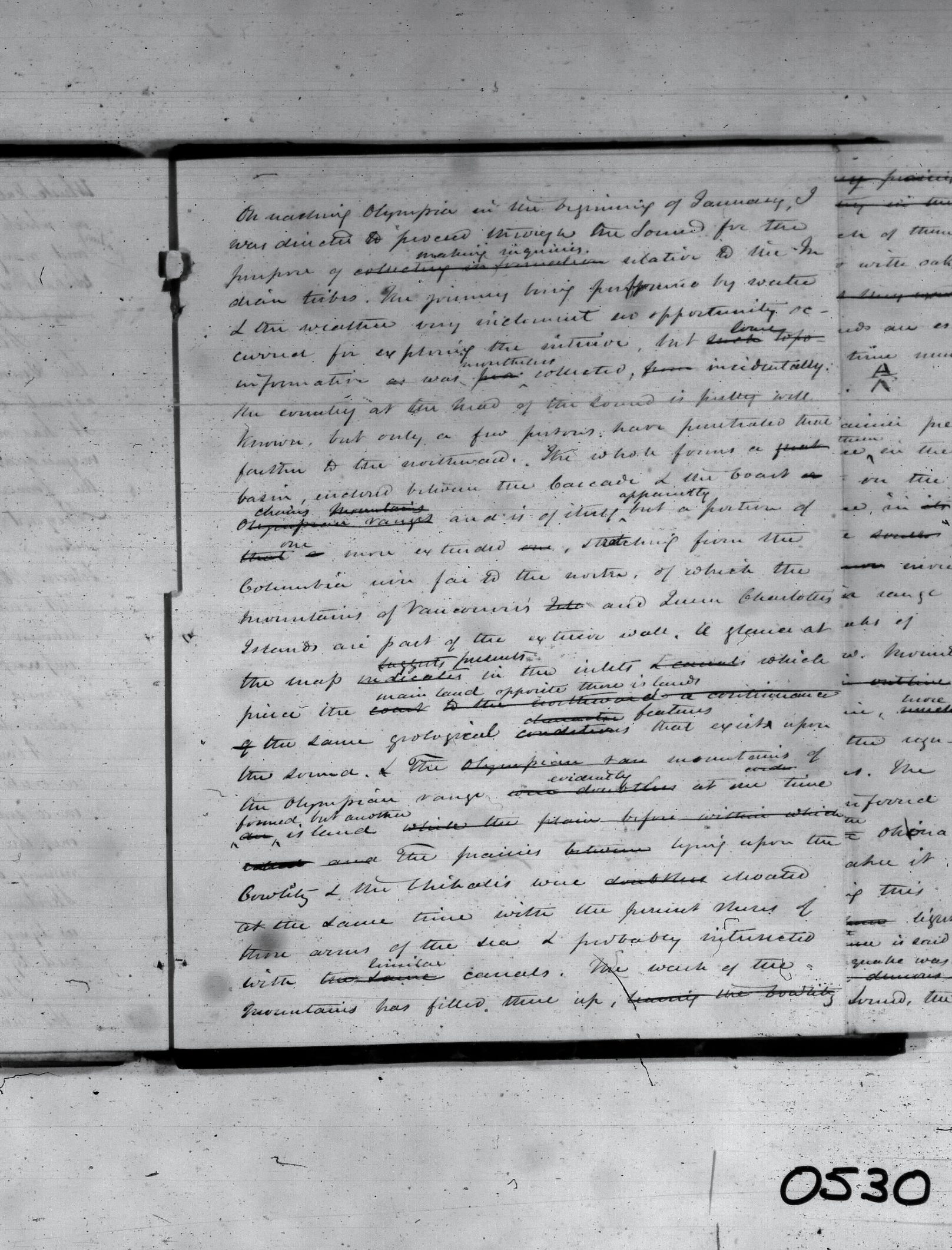
Reaching Olympia in January; directed through Sound for inquiries on Indian tribes
n.d. (c.1854)
Sound geology, lignite coal; disputes Wilkes's artificial-origin theory of prairie mounds
n.d. (c.1854)
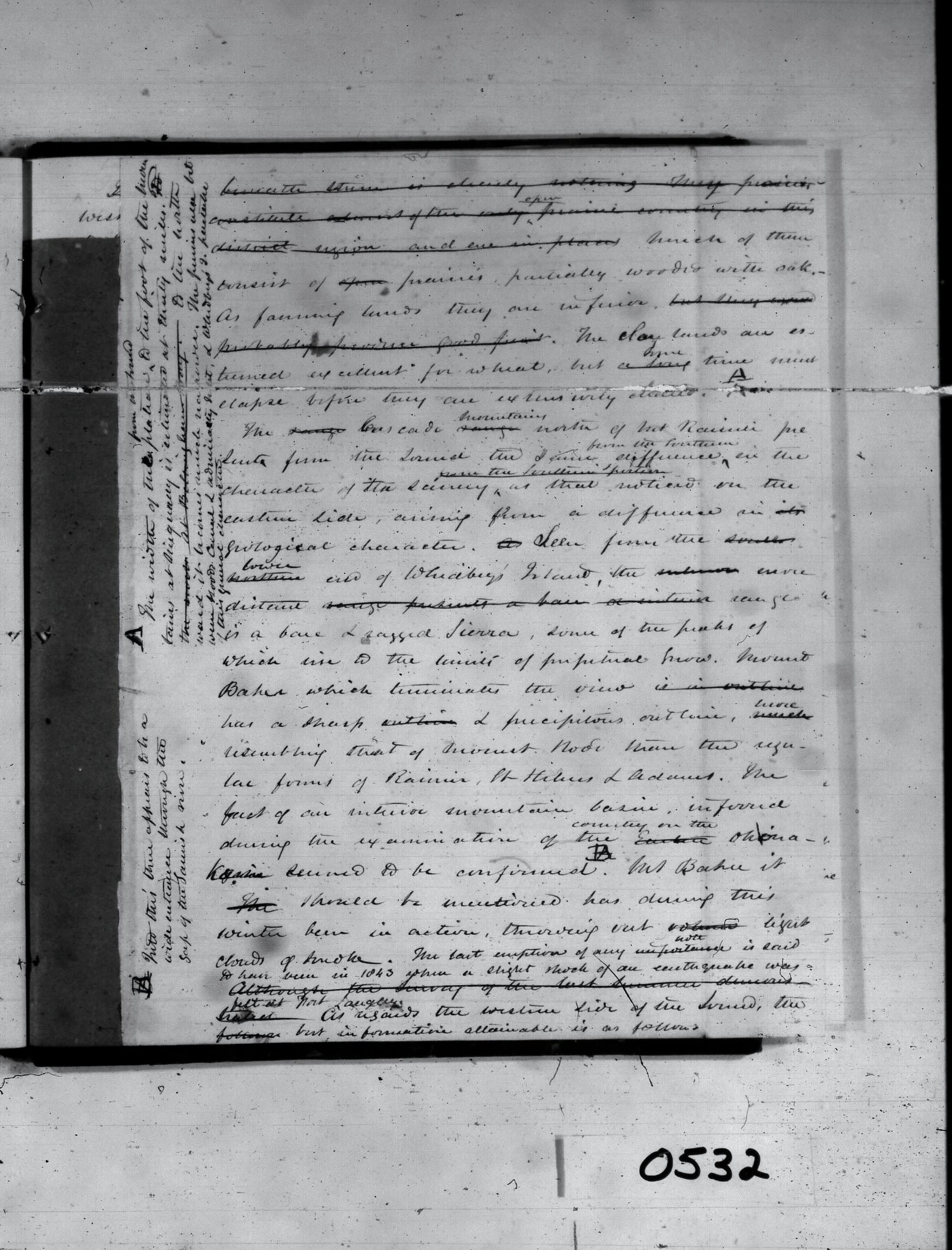
Oak prairies; Cascade scenery; Mount Baker active, smoking; 1843 eruption and earthquake
n.d. (c.1854)
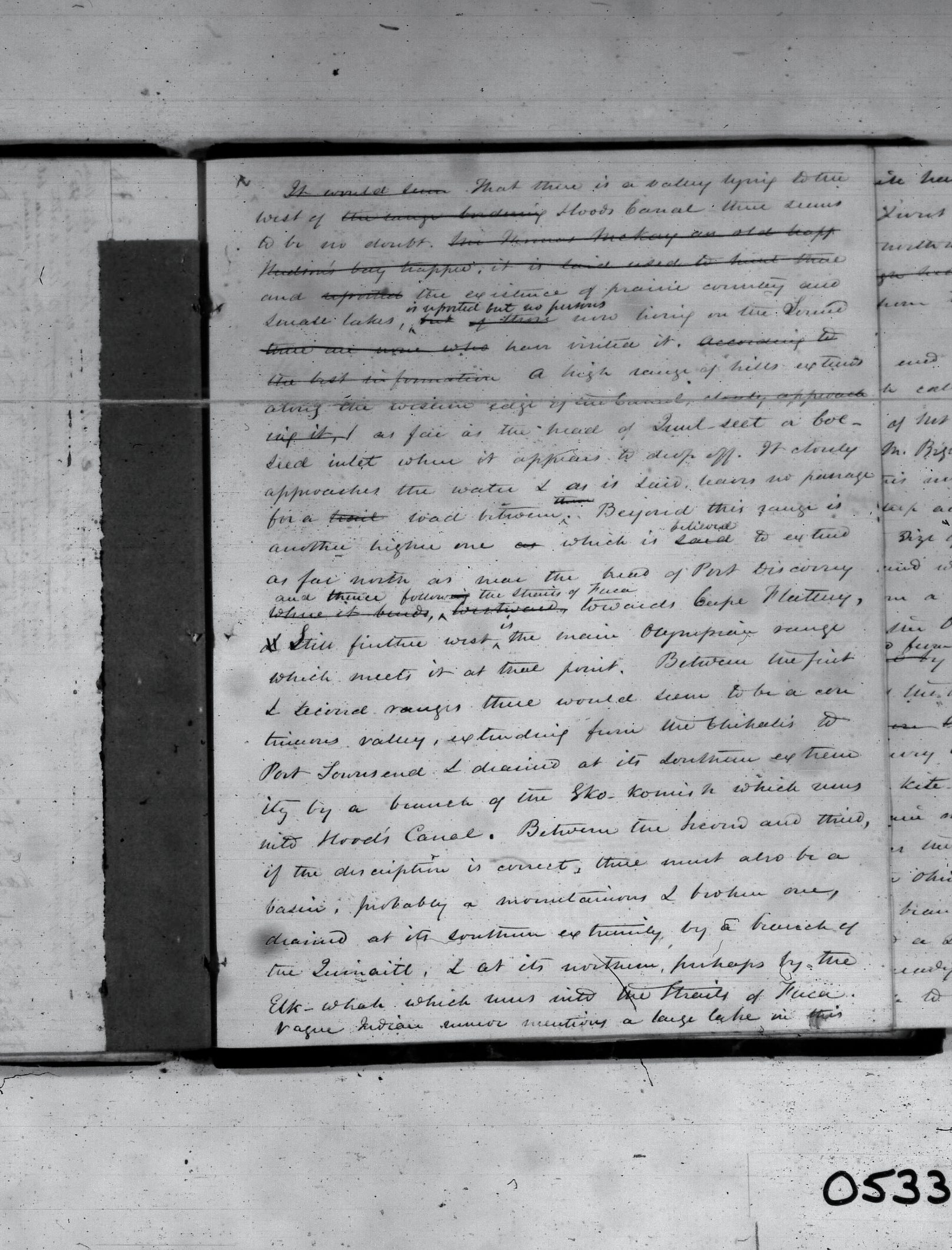
Valleys west of Hood's Canal; Olympic ranges; Elk-whah river; Indian rumor of lake
n.d. (c.1854)
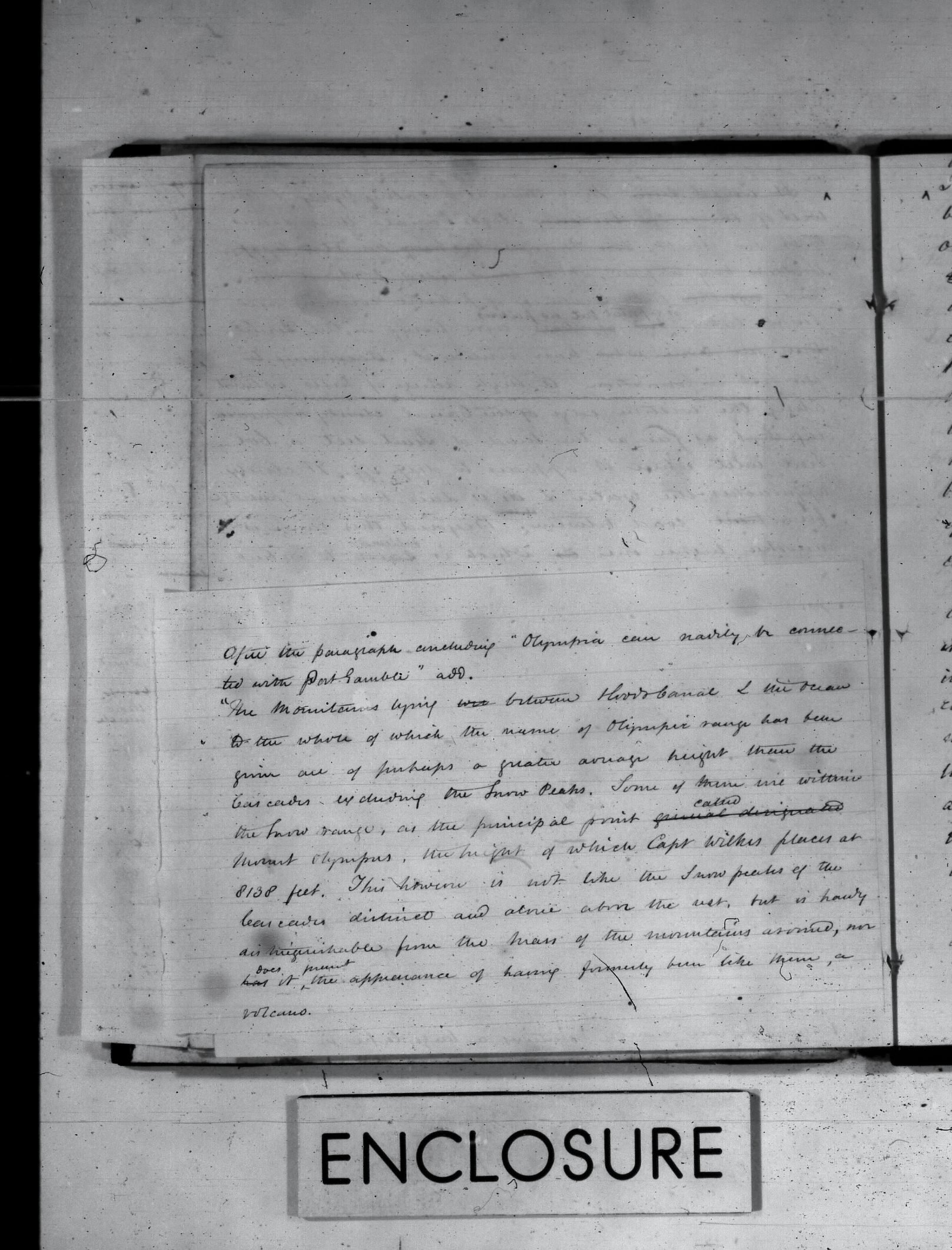
Addition on Olympic range; Mount Olympus 8,138 feet per Wilkes; not a volcano
n.d. (c.1854)
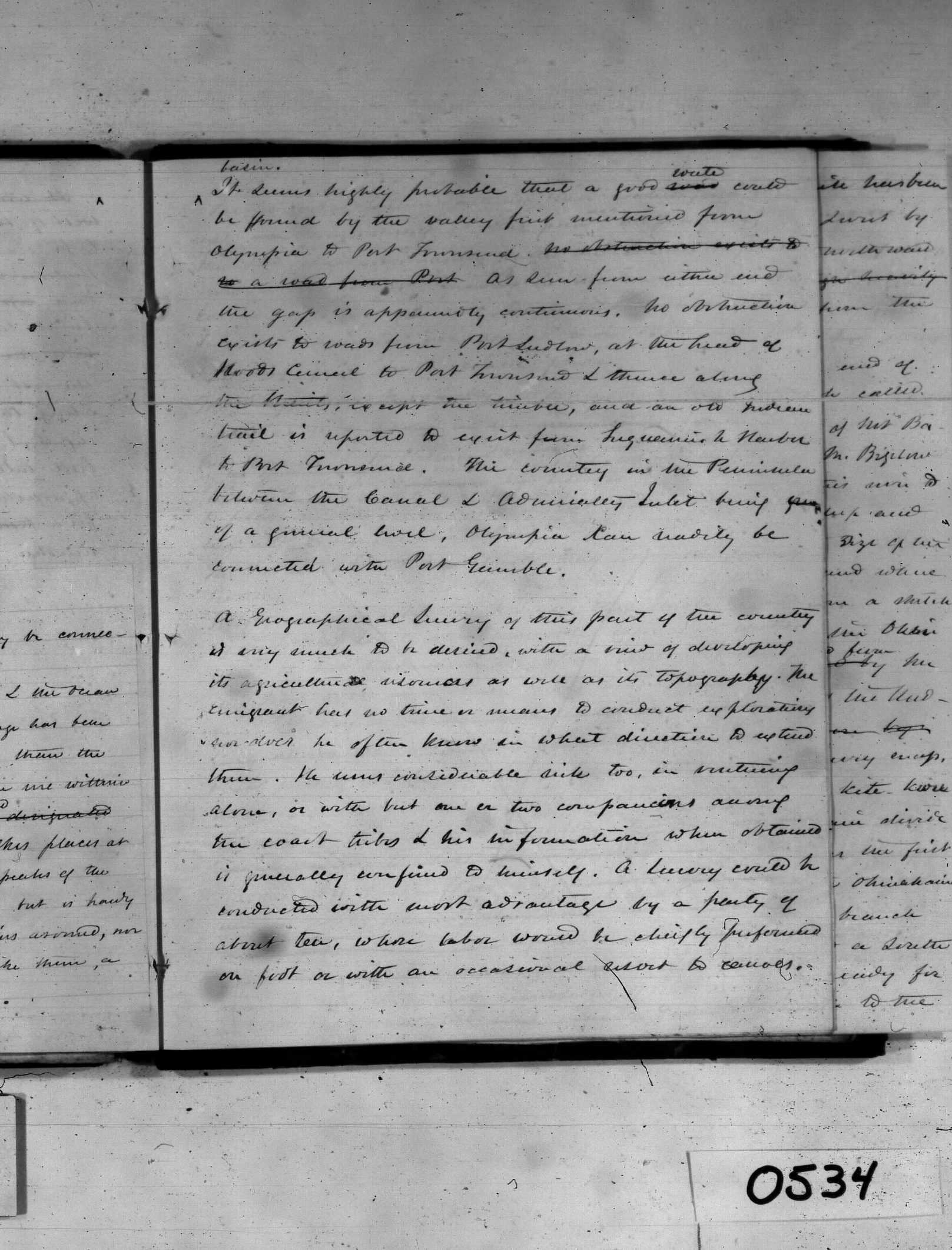
Olympia–Port Townsend route; old Indian trail; urges ten-man topographical survey party
n.d. (c.1854)
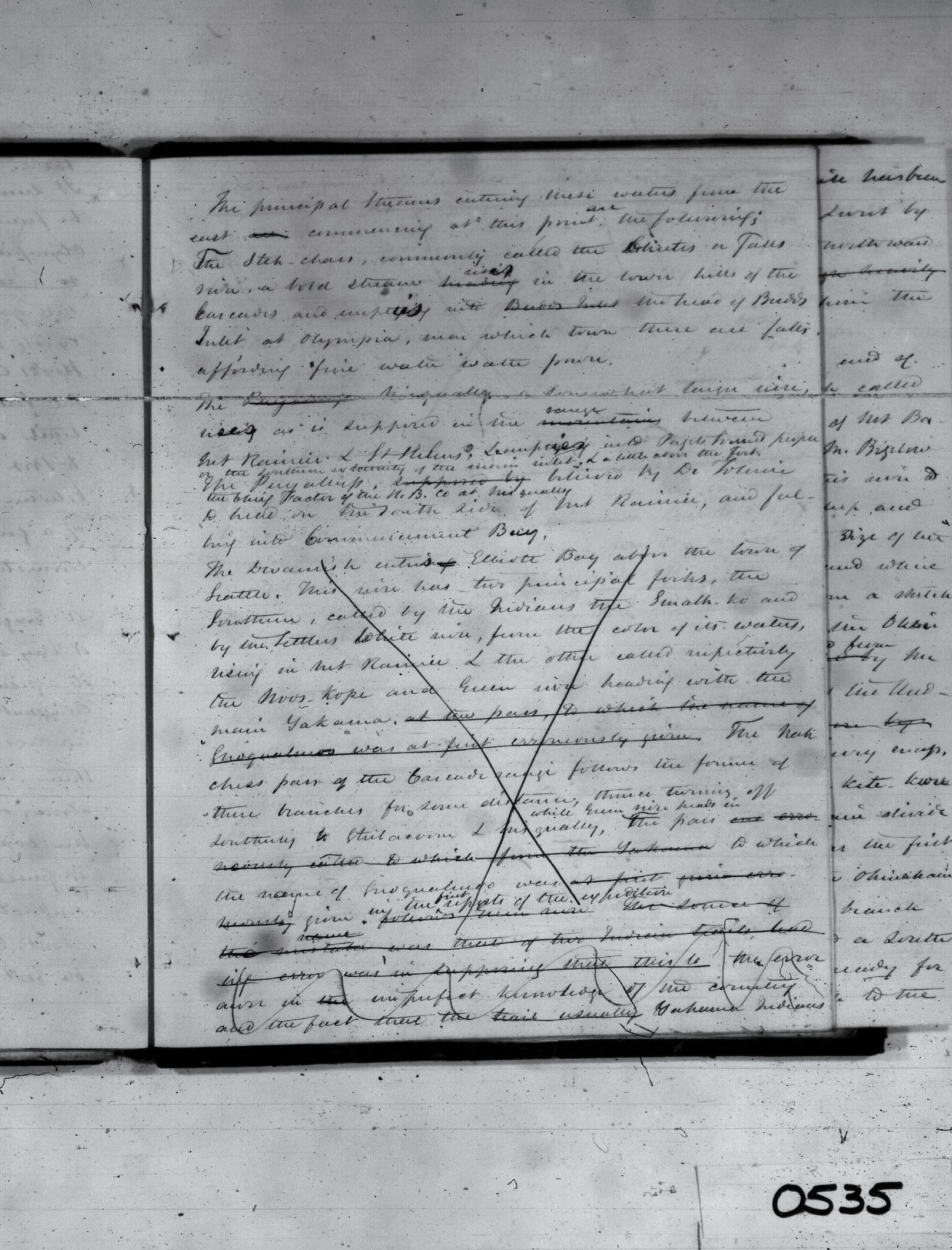
Eastern Sound rivers: Deschutes falls, Nisqually, Puyallup, Duwamish forks; Naches pass naming error
n.d. (c.1854)
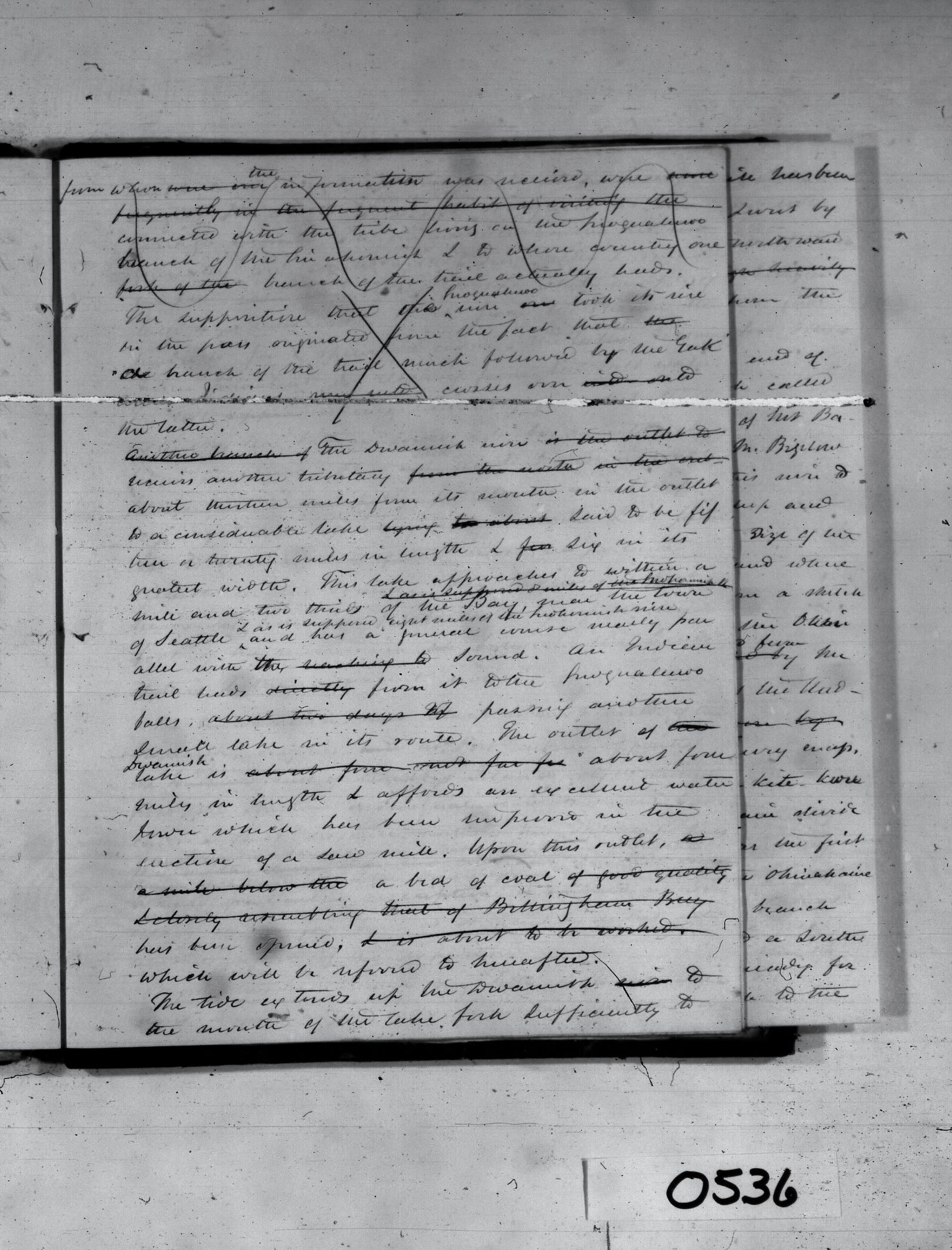
Duwamish tributaries; large lake near Seattle; sawmill; coal bed opened on outlet
n.d. (c.1854)
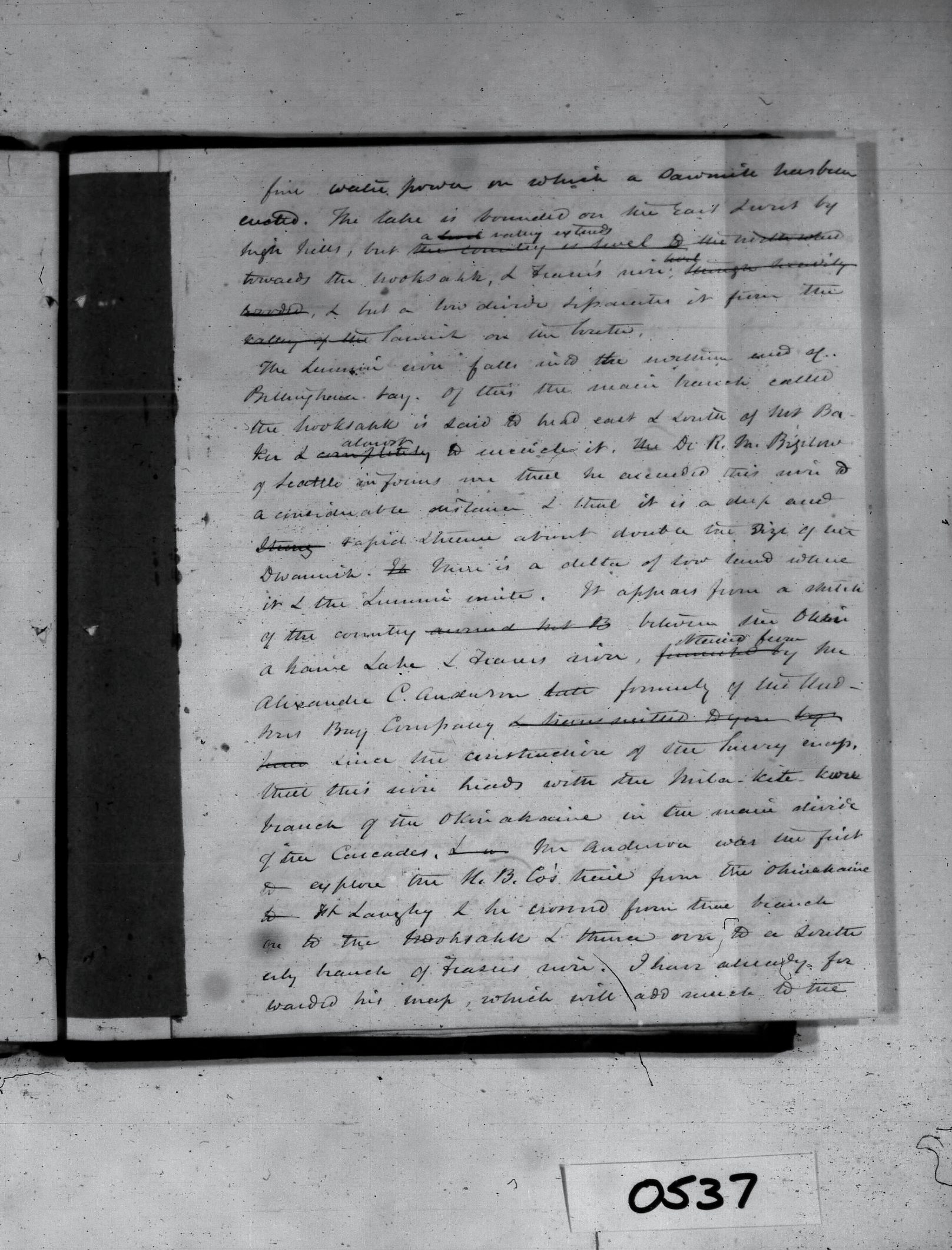
Lummi and Nooksahk rivers; Dr. Bigelow's ascent; A.C. Anderson's HBC map forwarded
n.d. (c.1854)
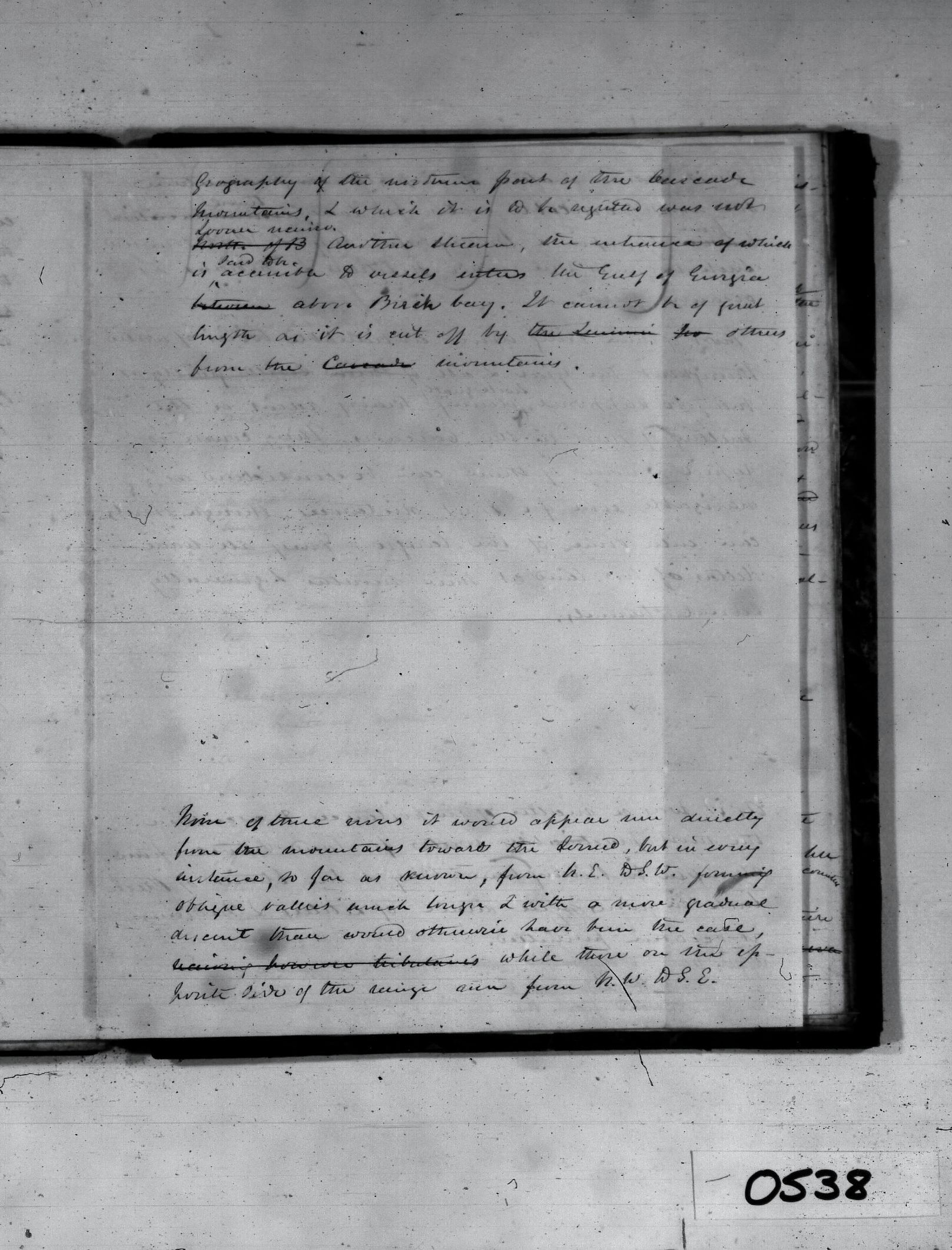
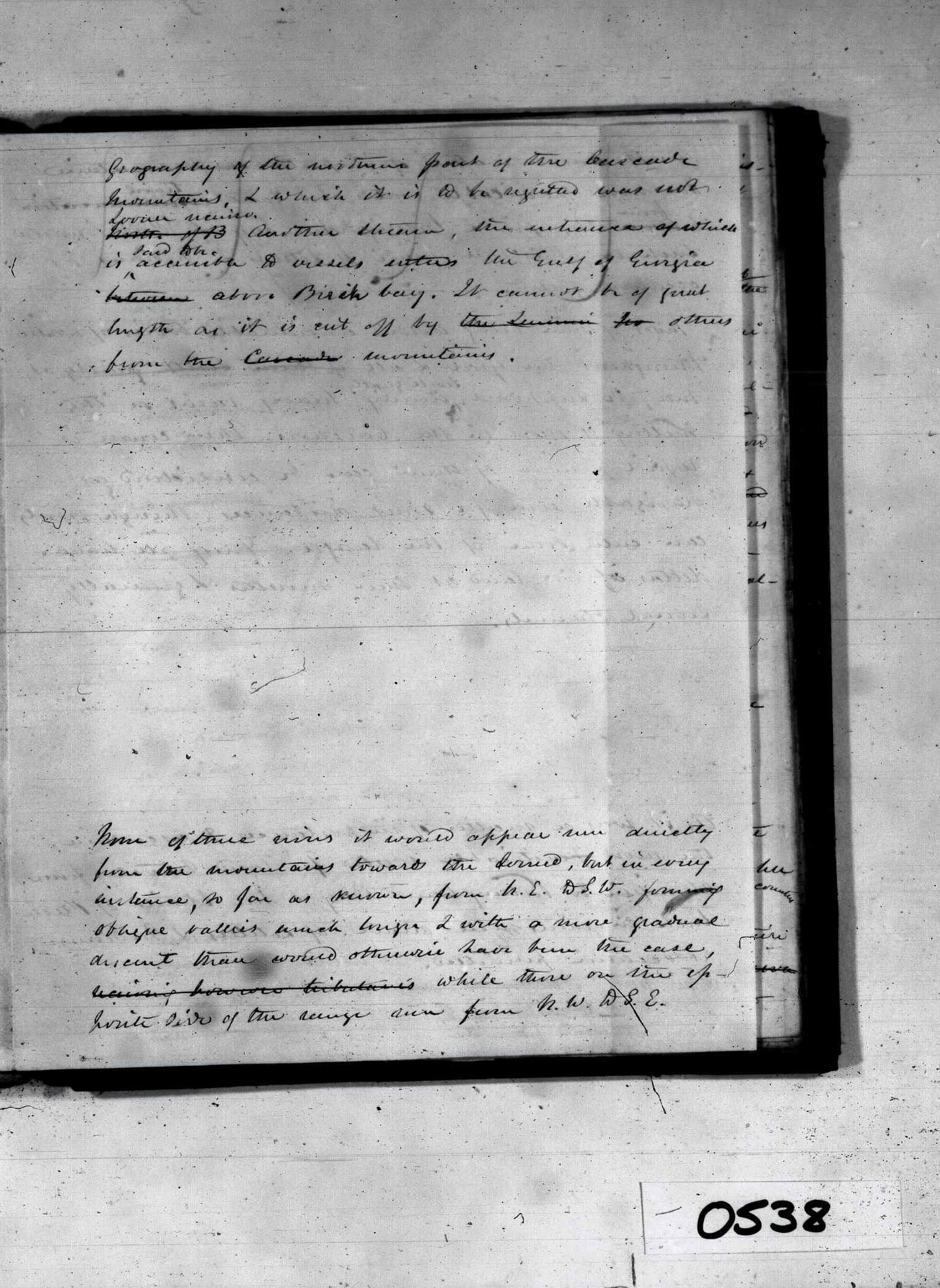
Stream entering Gulf of Georgia above Birch Bay; rivers' oblique NE-SW valleys
(cont.)
Birch Bay stream and oblique river valleys, refilmed
n.d. (c.1854)
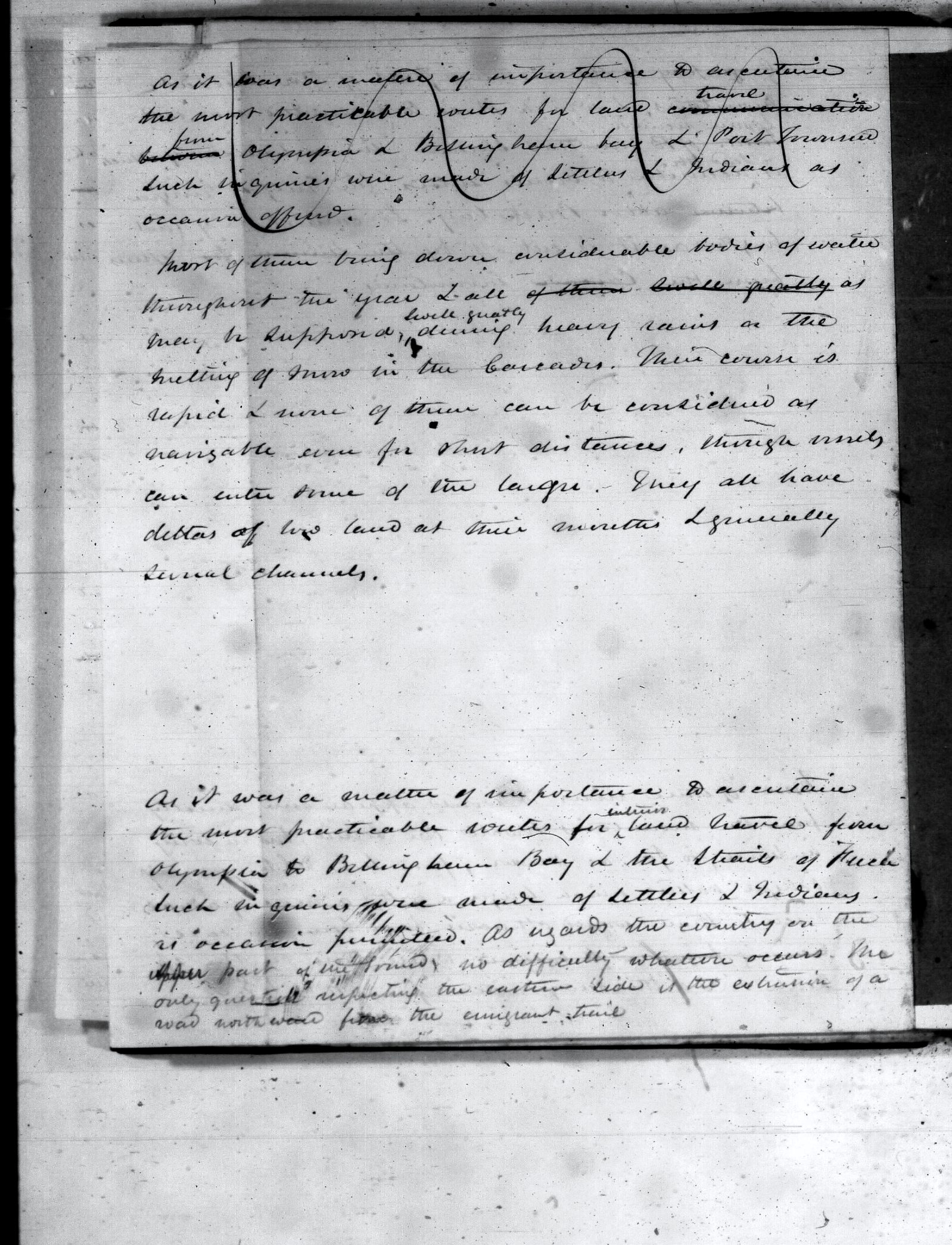
Routes Olympia to Bellingham Bay/Port Townsend; inquiries of settlers and Indians; unnavigable streams
n.d. (c.1854)
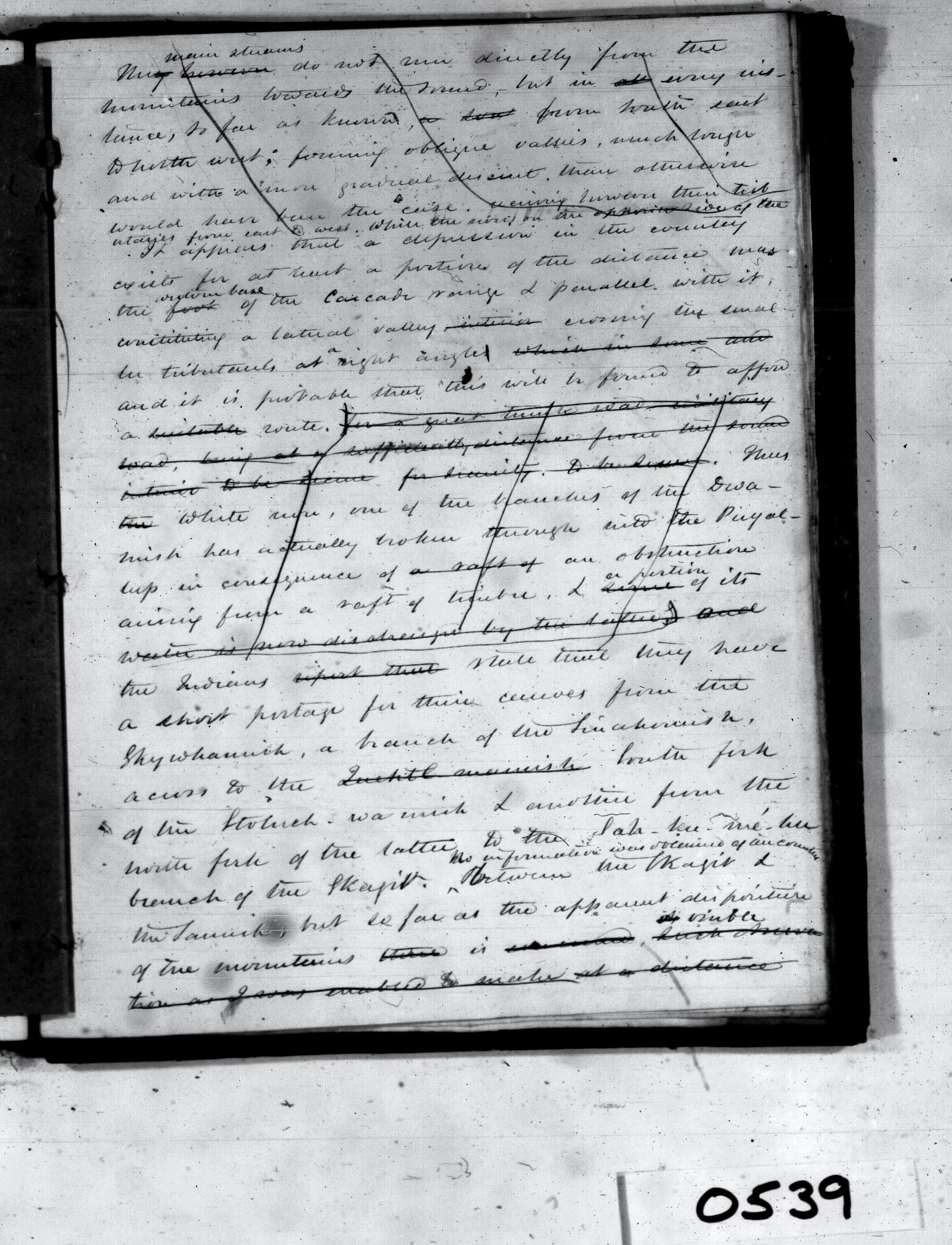
White river broke into Puyallup; Indian canoe portages Skywhamish to Skagit branches
n.d. [c.1853-54]
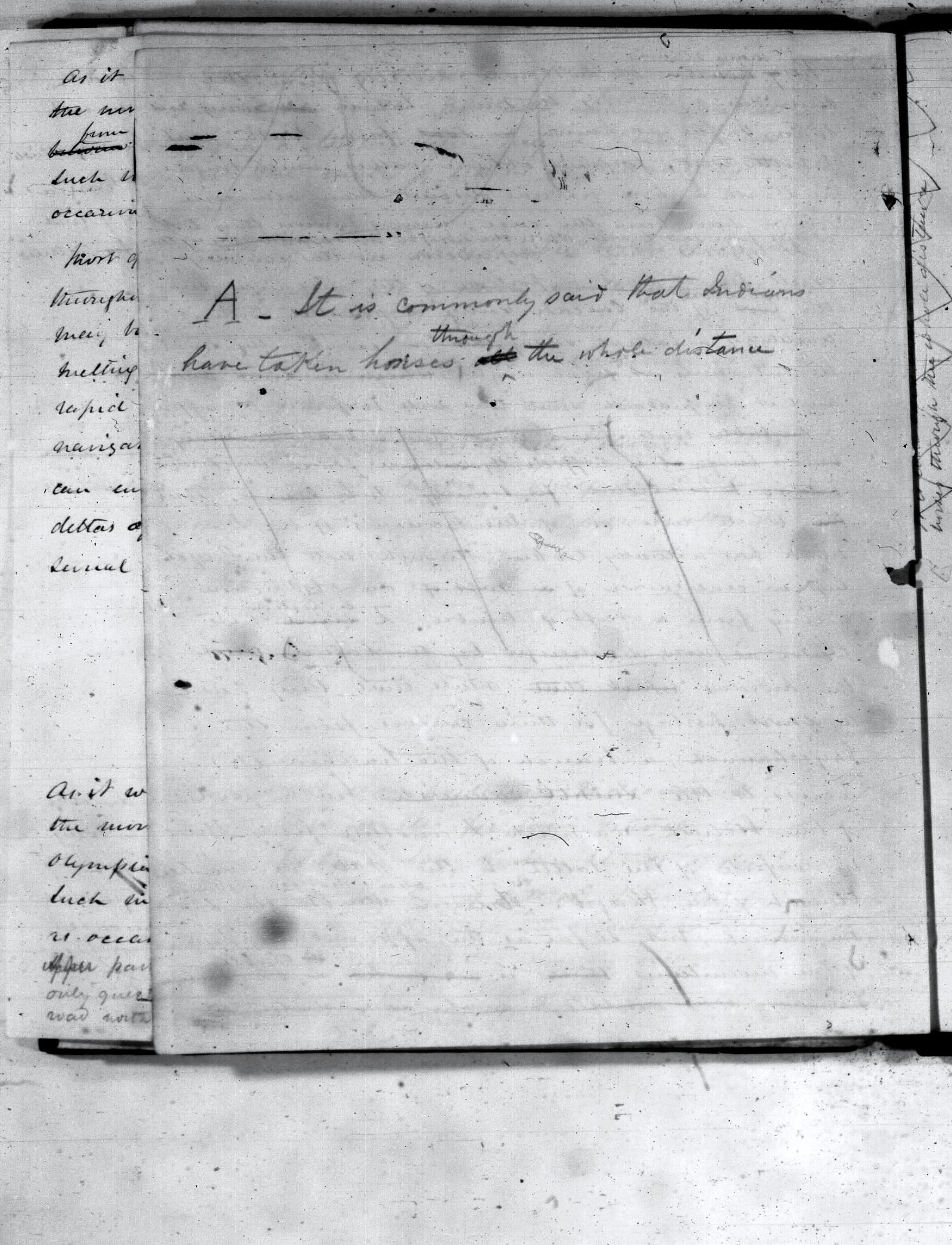
Insert "A": Indians said to have taken horses through the whole distance
n.d. [c.1853-54]
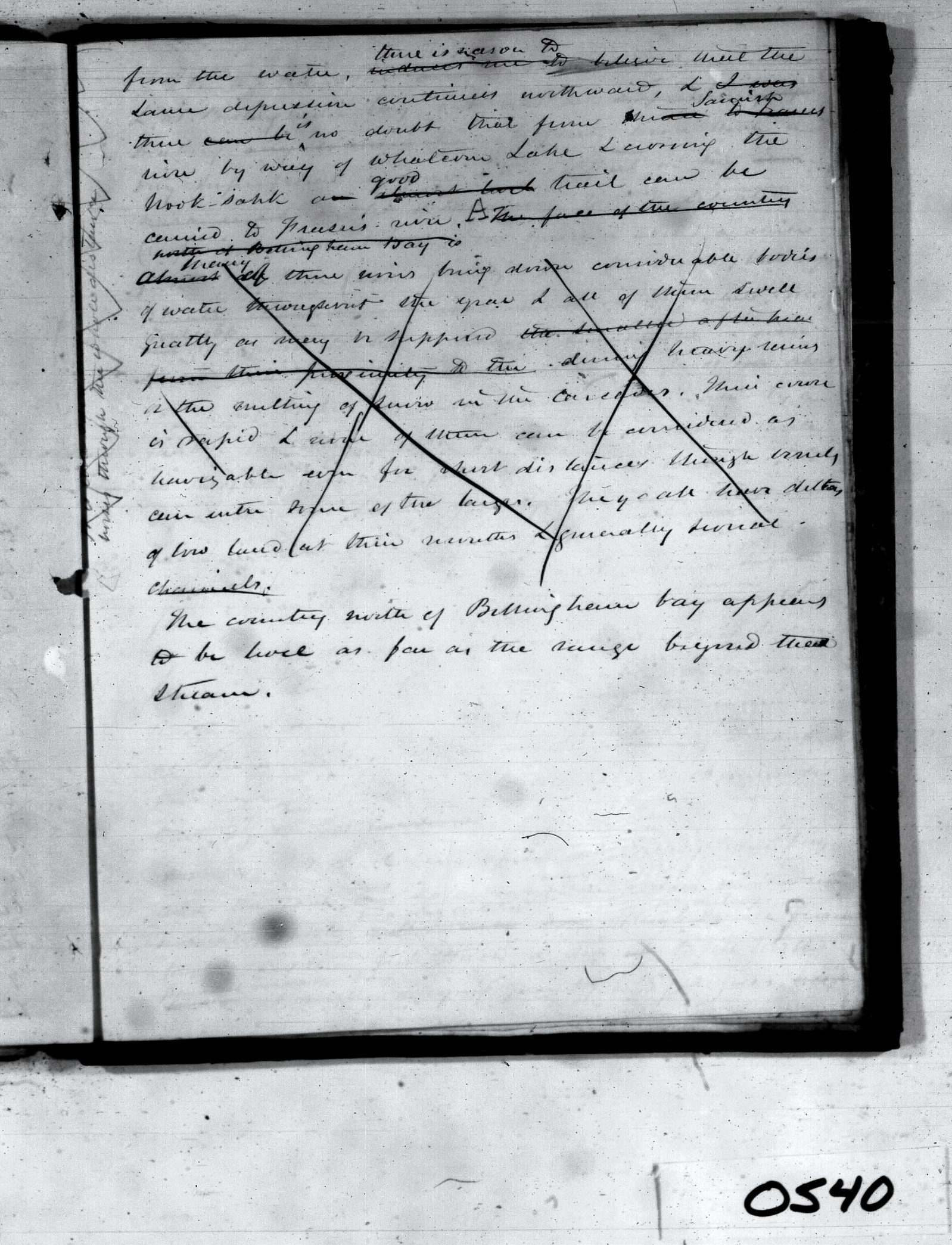
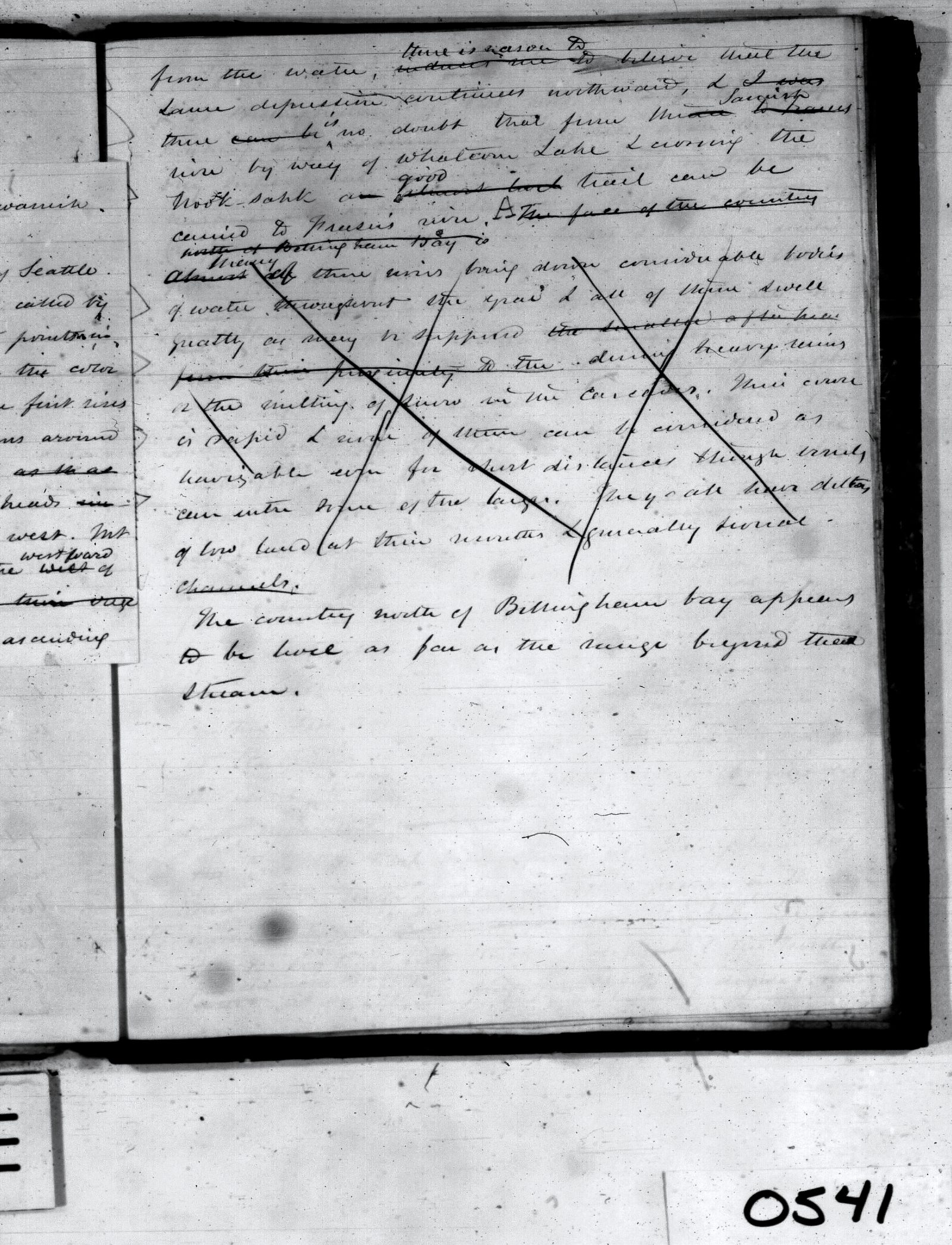
Whatcom Lake–Nooksack trail to Fraser's River; rivers, deltas; country north of Bellingham Bay
n.d. [c.1853-54]
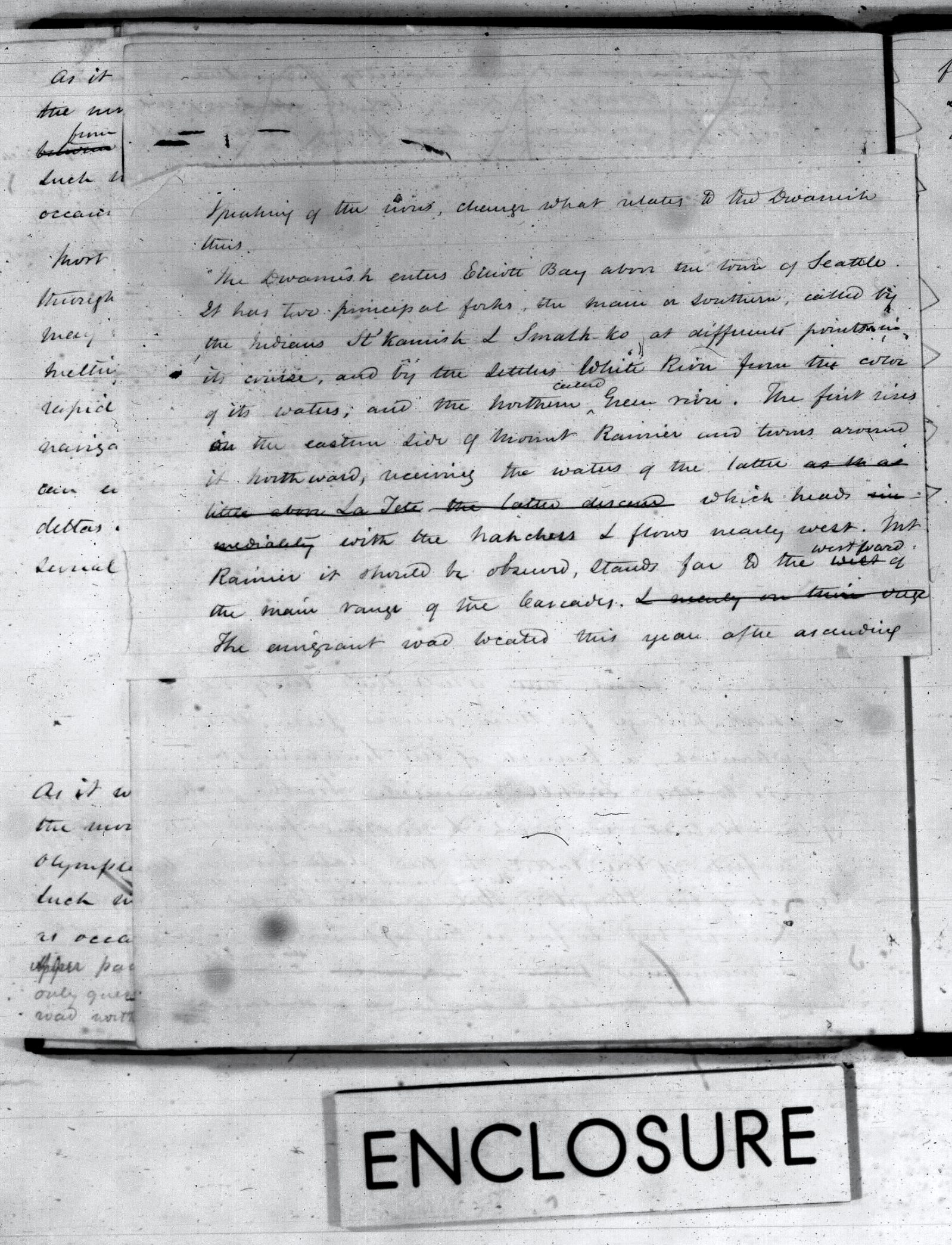
Rewrite on Dwamish River forks (White/Green rivers), Mount Rainier, emigrant road
n.d. [c.1853-54]
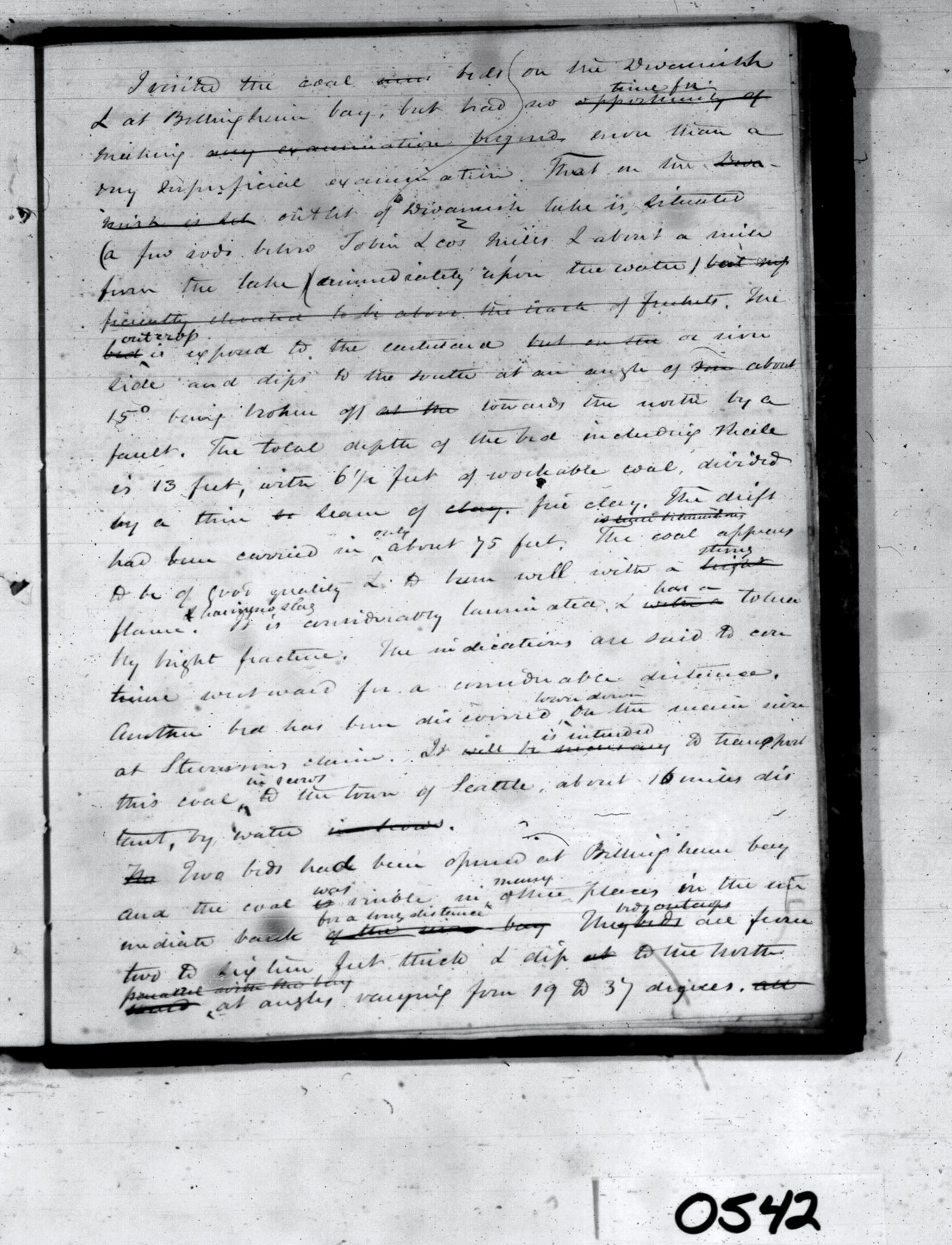
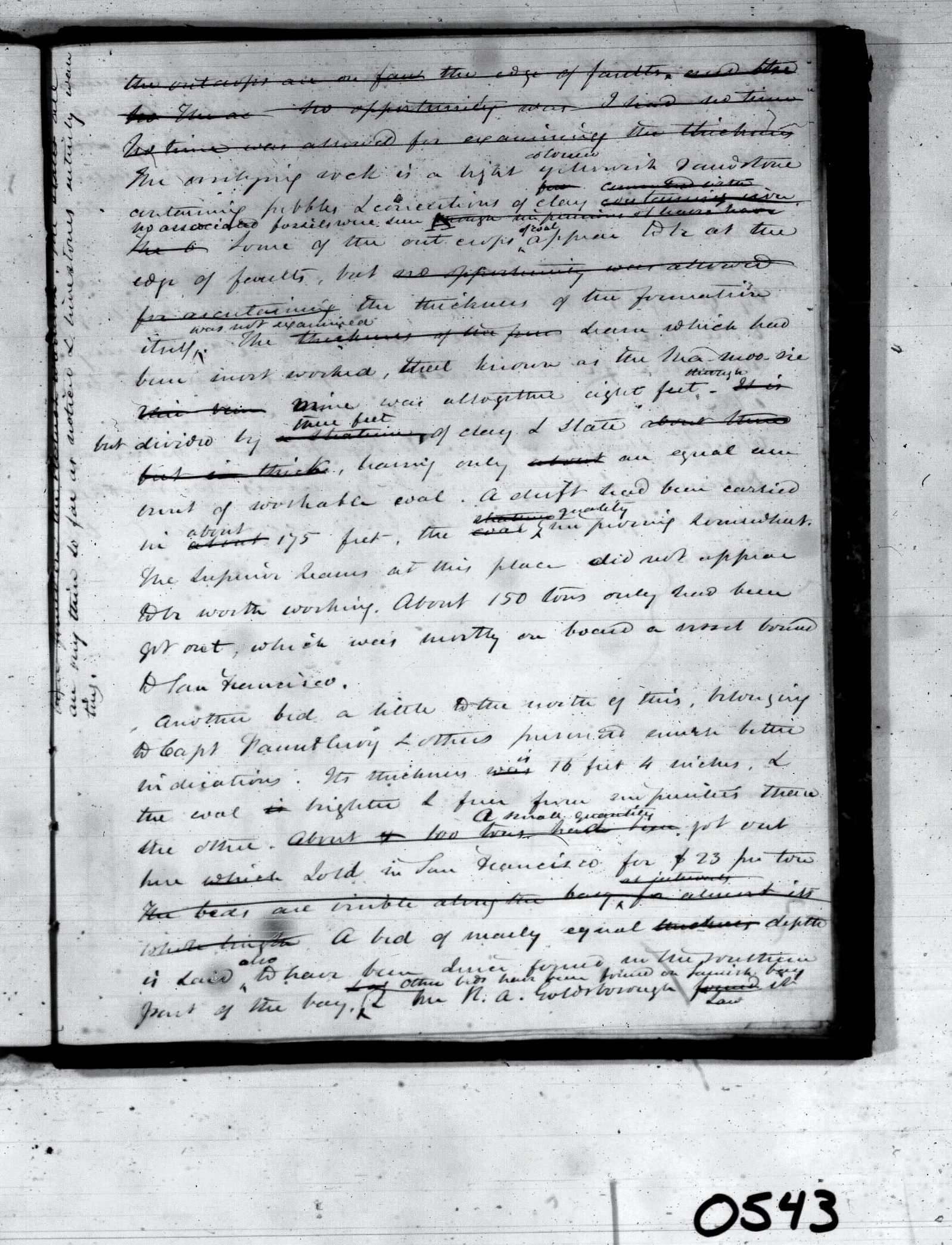
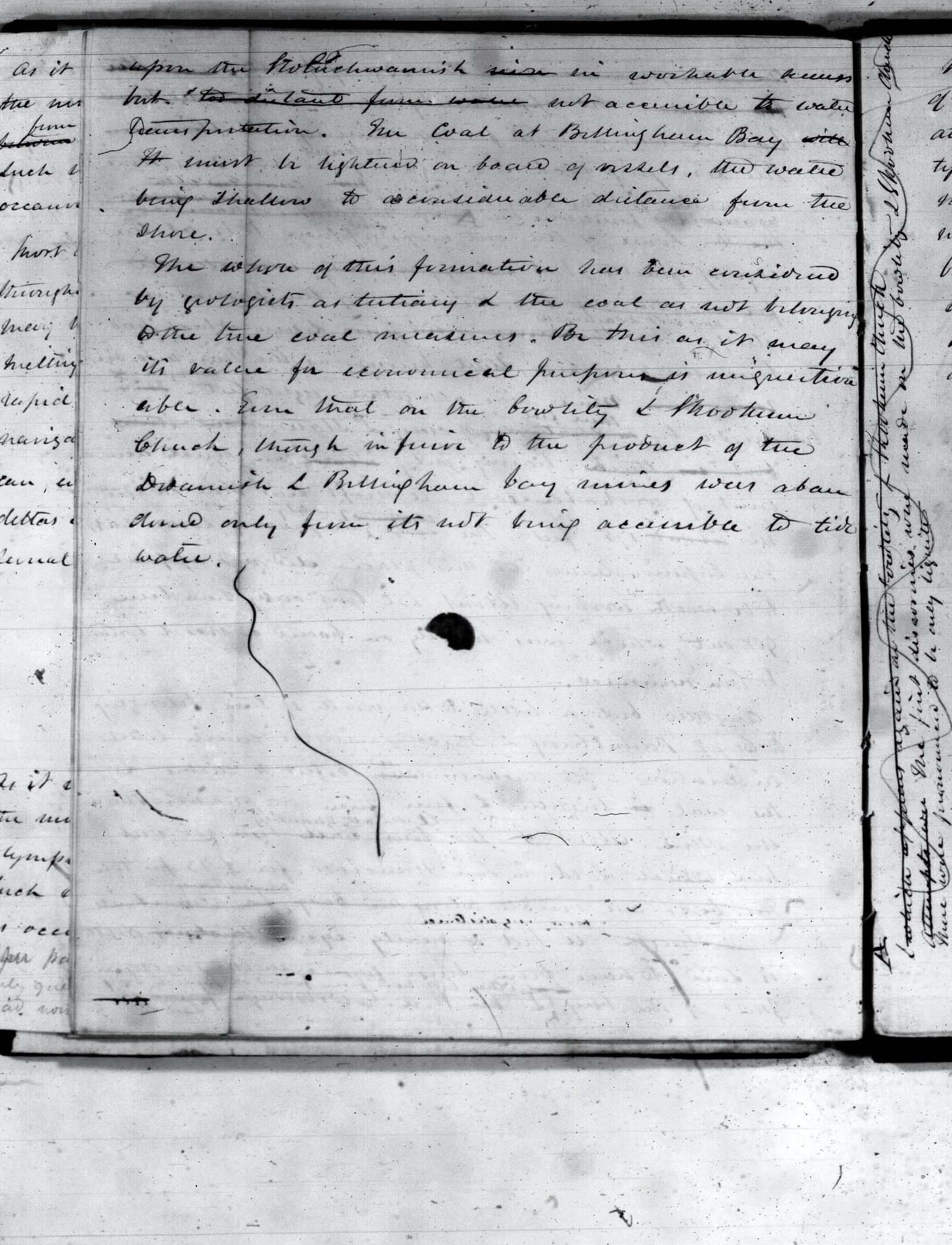
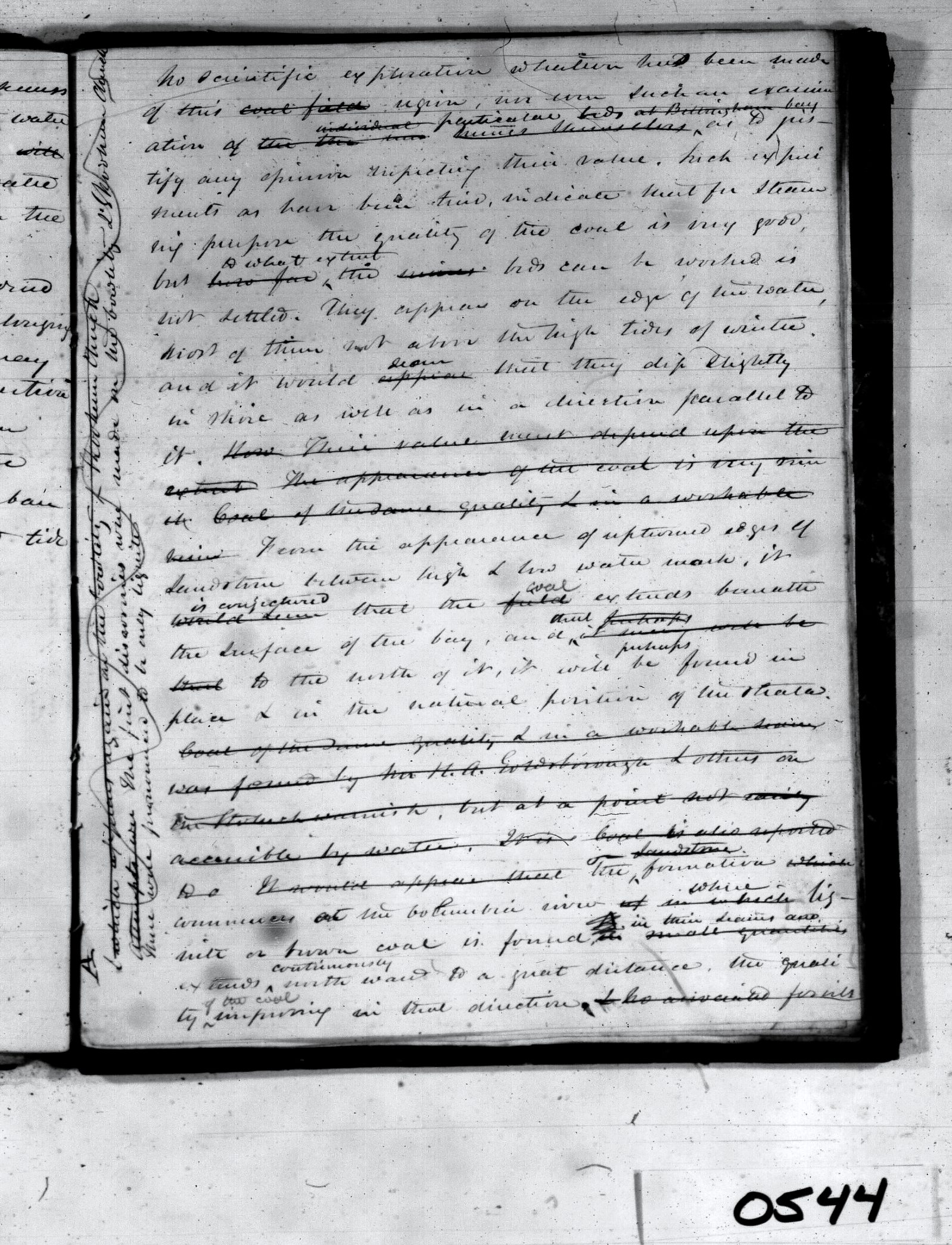
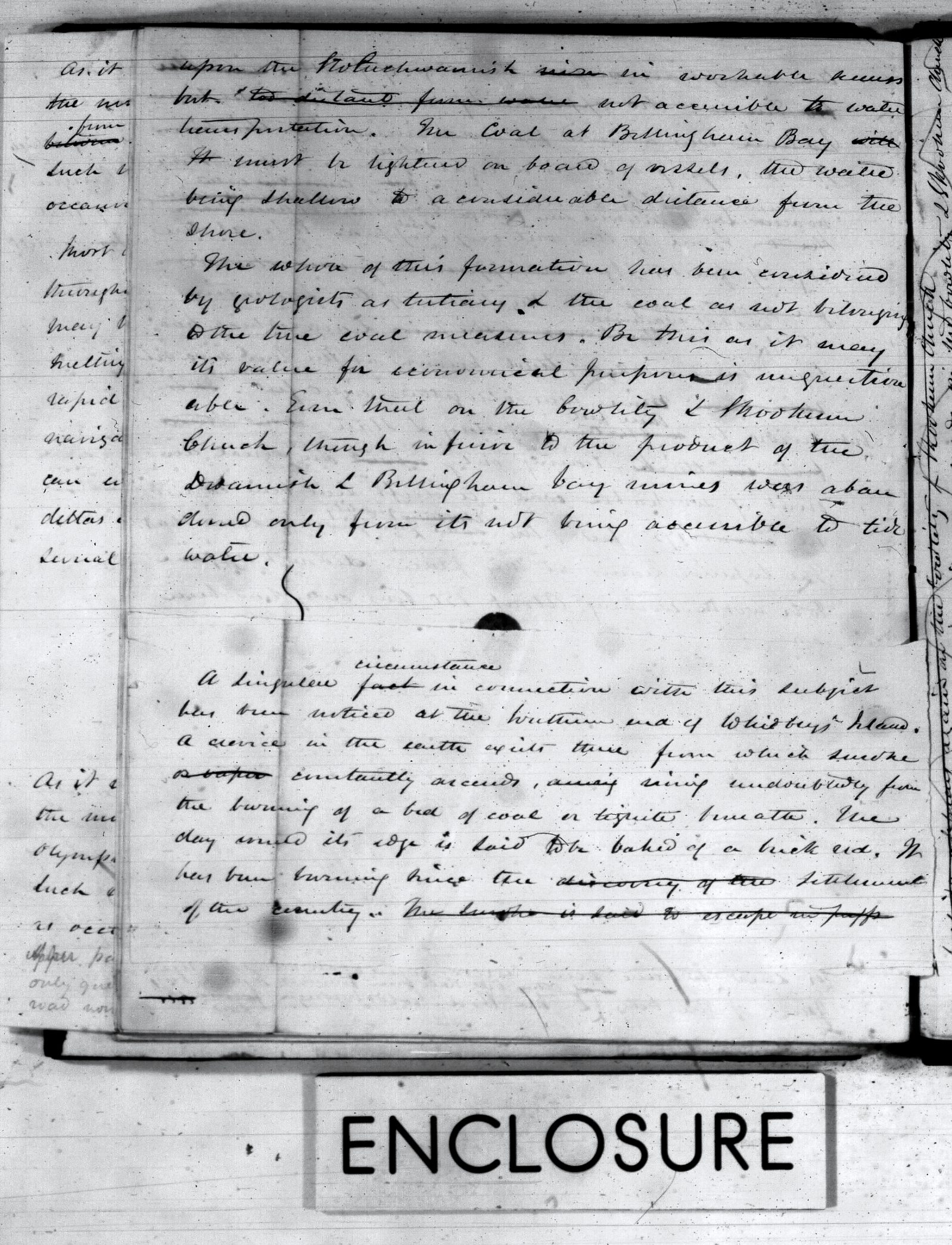
Coal beds visited: Dwamish Lake outlet near Tobin's mill; Bellingham Bay seams
Frames 1624–1632 · 3 documents
Corpus Christi, Texas, to his brother Frank: the Laguna Madre, the two-thousand-mile El Paso trip, Captain Van Buren killed by a Comanche arrow, and his engagement. The General’s own hand.
1854-07-21
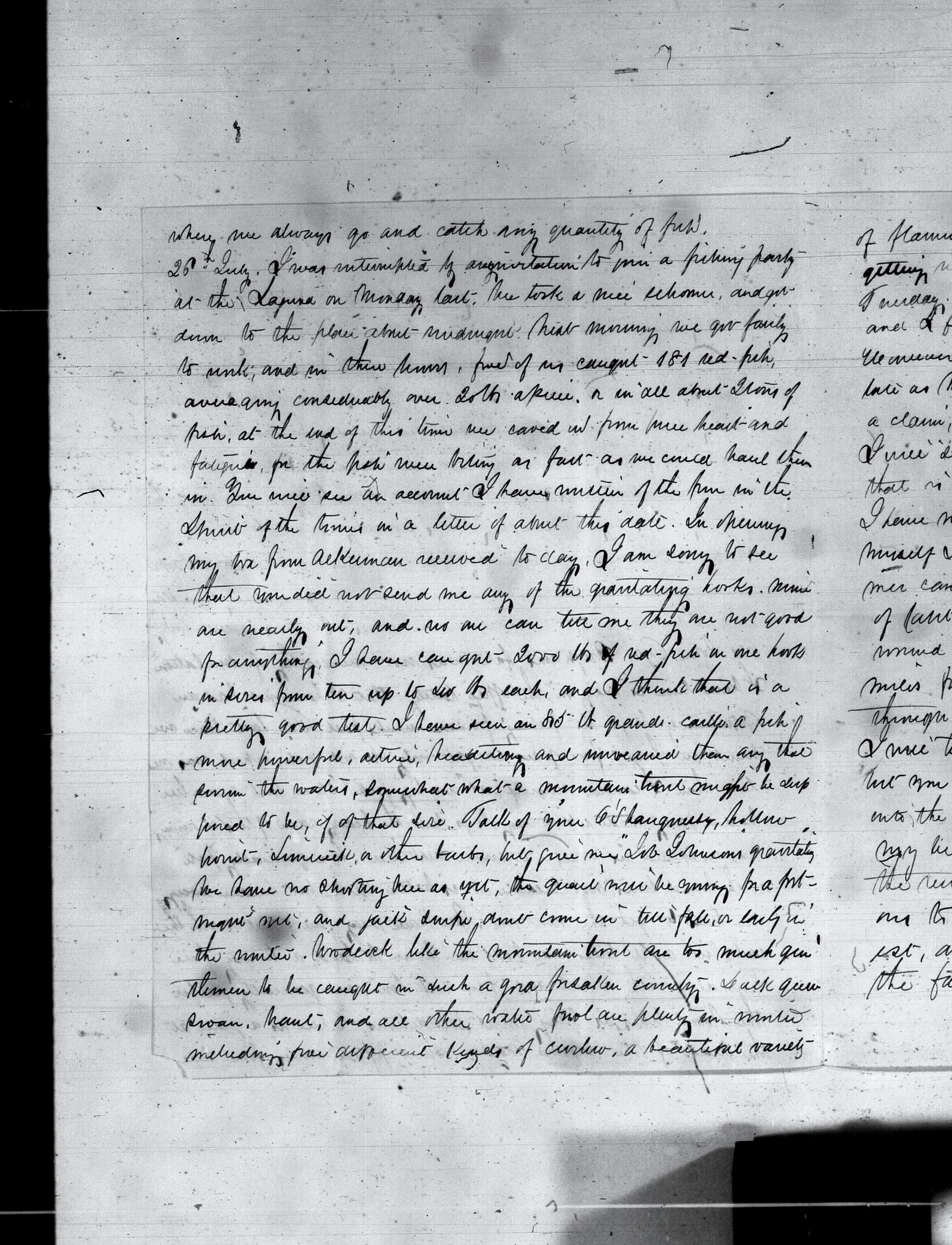
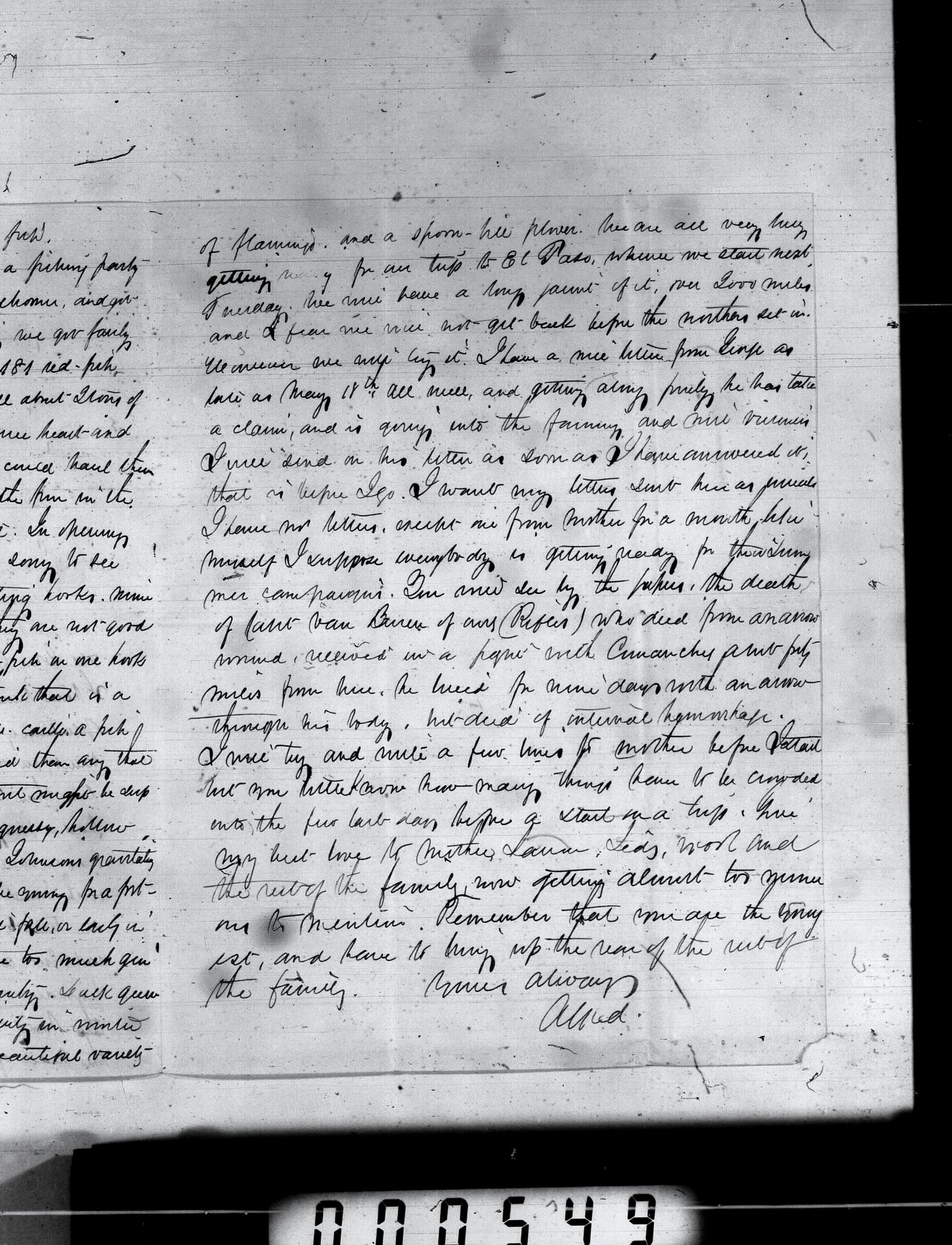
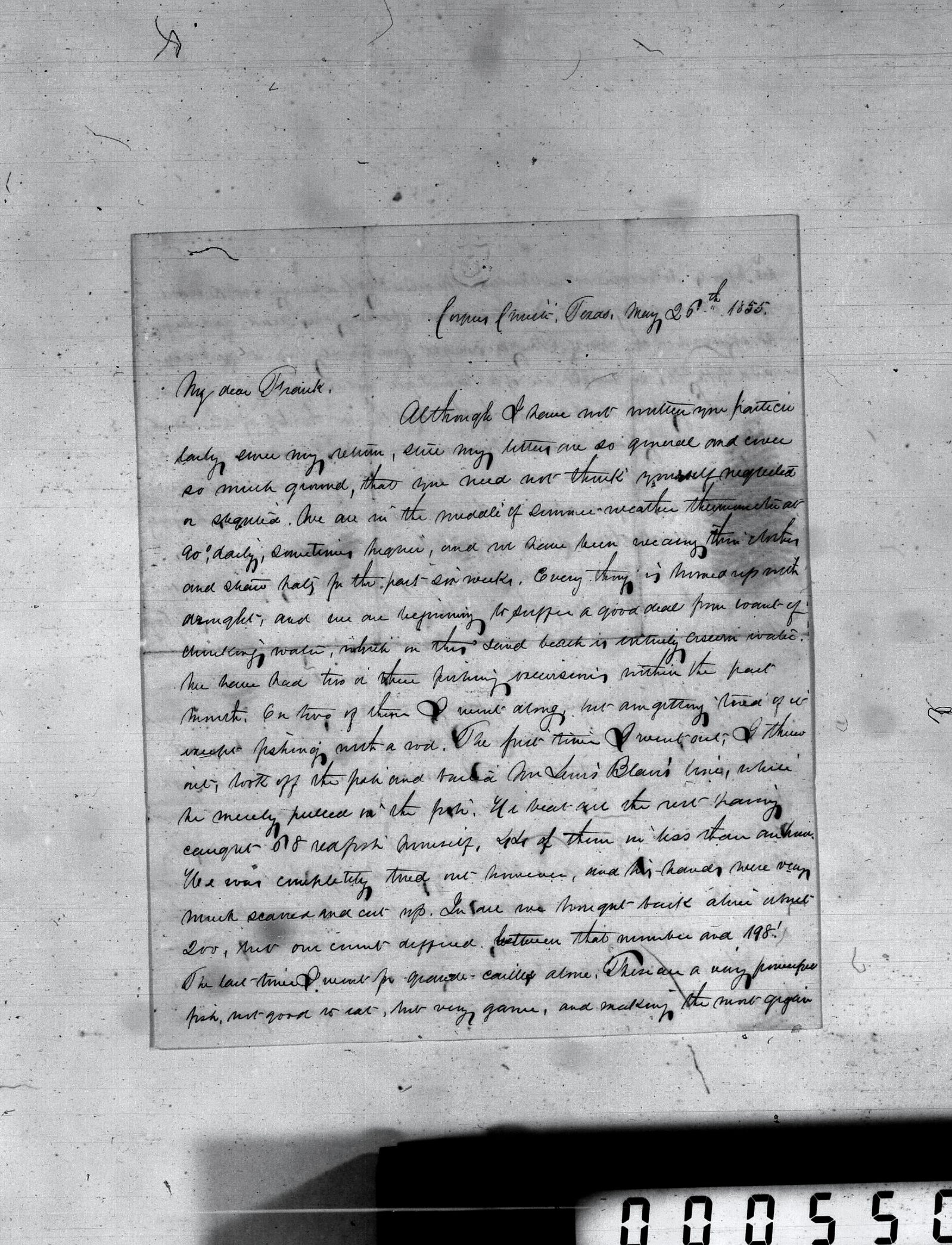
Fortnightly family letters; joshes Frank's store job; office duty; redfish fishing, Laguna Madre
1855-05-26
Summer drought, 90-degree heat, cistern water; fishing excursions, Louis Blanc's 58 redfish
n.d. (c.1855)
mid-letter: tarpon fishing off Texas coast, 20-100 lb silver fish, mullet-baited bottle rig
Frames 1633–1737 · 9 documents
The first filmed portion of the great ethnography of Washington Territory.
1856
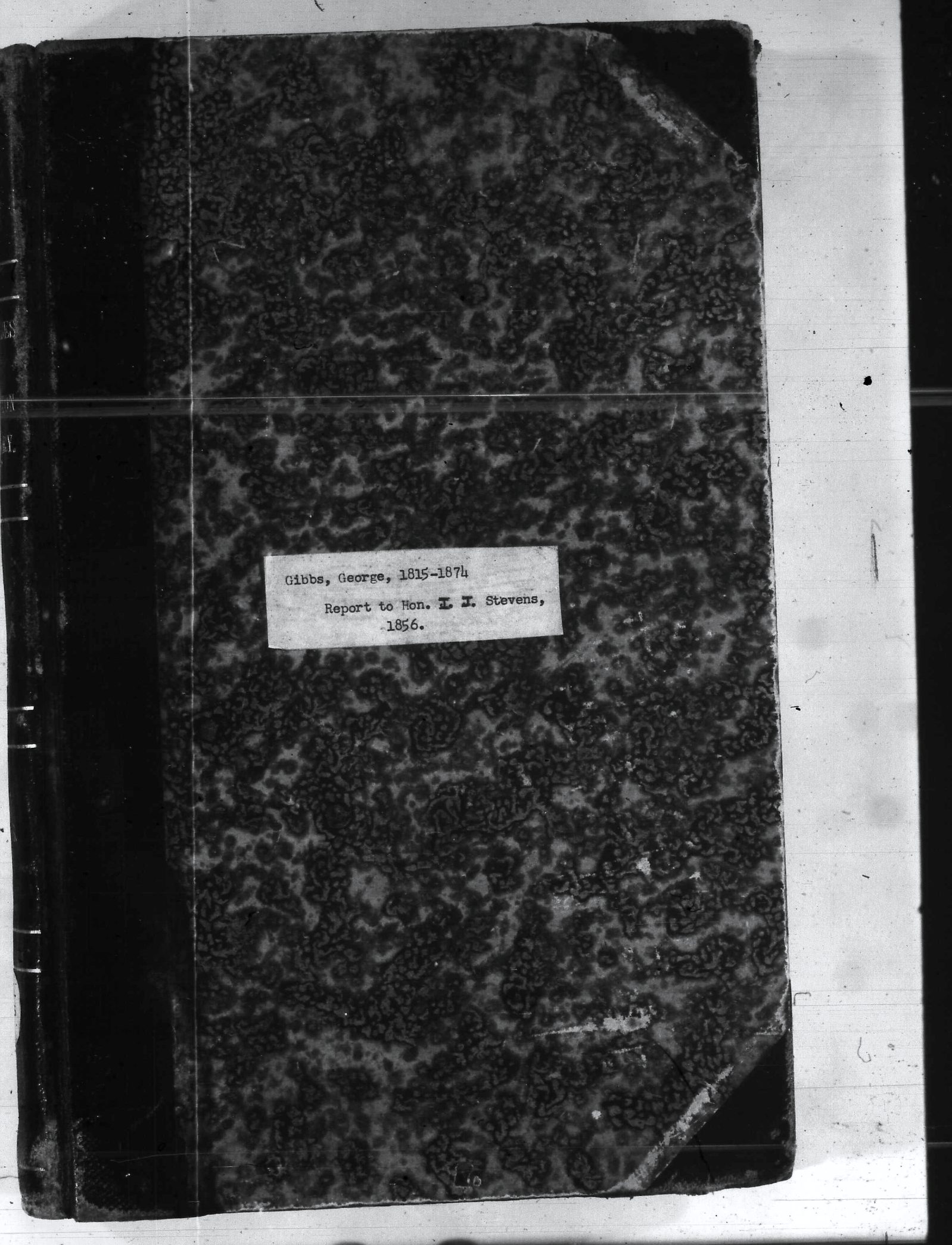
volume label: "Gibbs, George, 1815-1874. Report to Hon. I. I. Stevens, 1856"
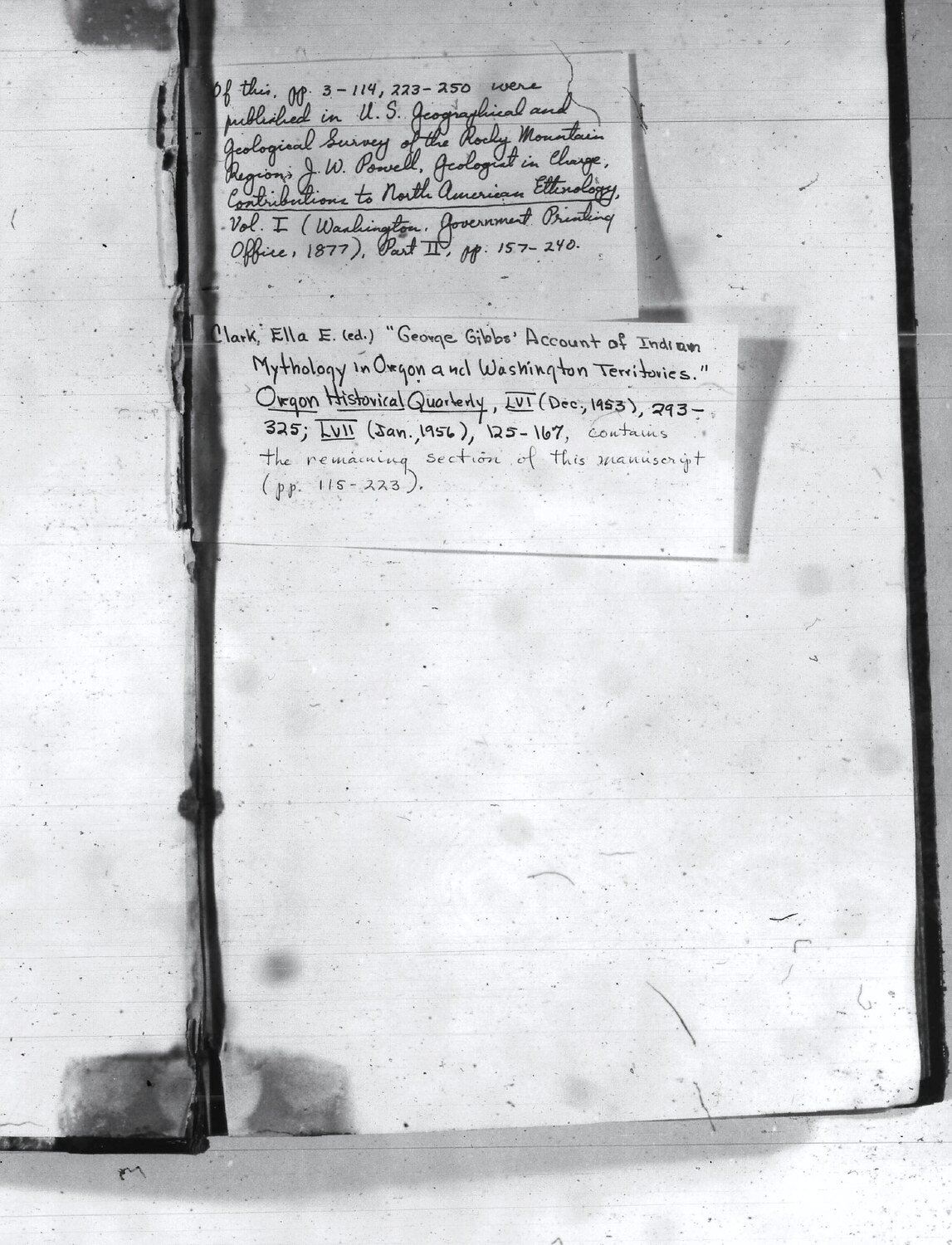
pp.3-114/223-250 printed in Powell's 1877 Ethnology; pp.115-223 in Ella Clark, OHQ 1953-56
1856
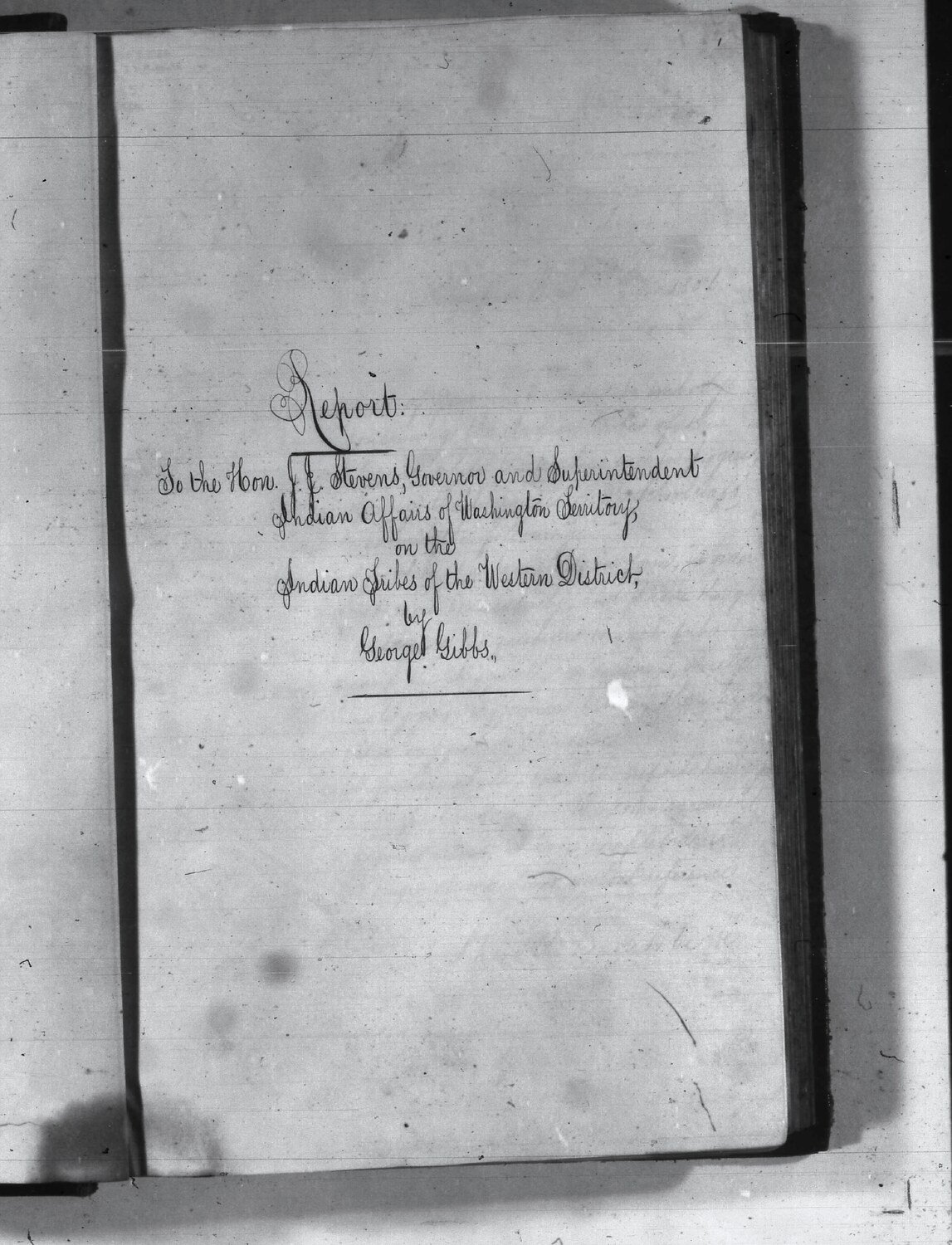
"Report to Hon. I. I. Stevens… on the Indian Tribes of the Western District, by George Gibbs"
1856
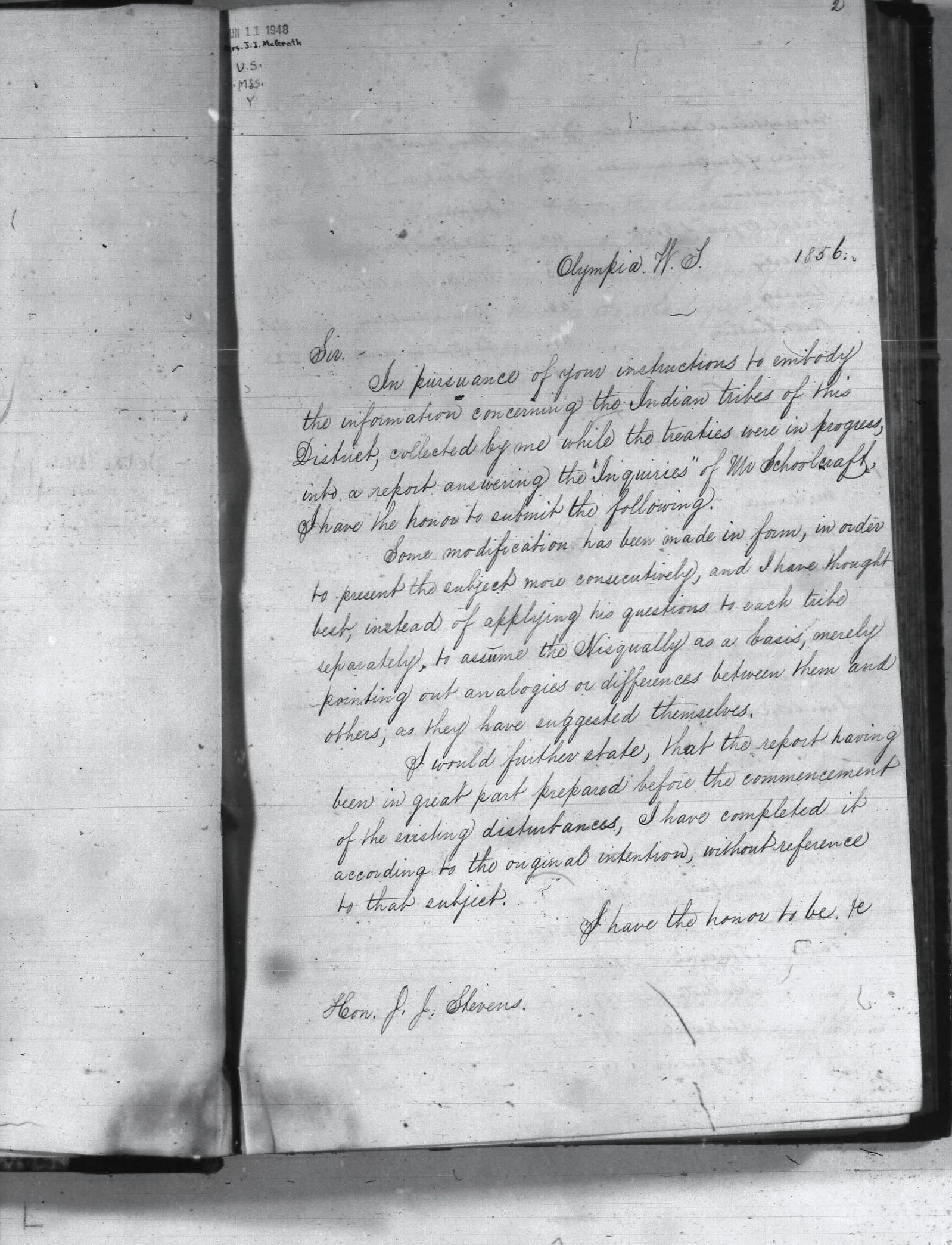 FRAME 1636
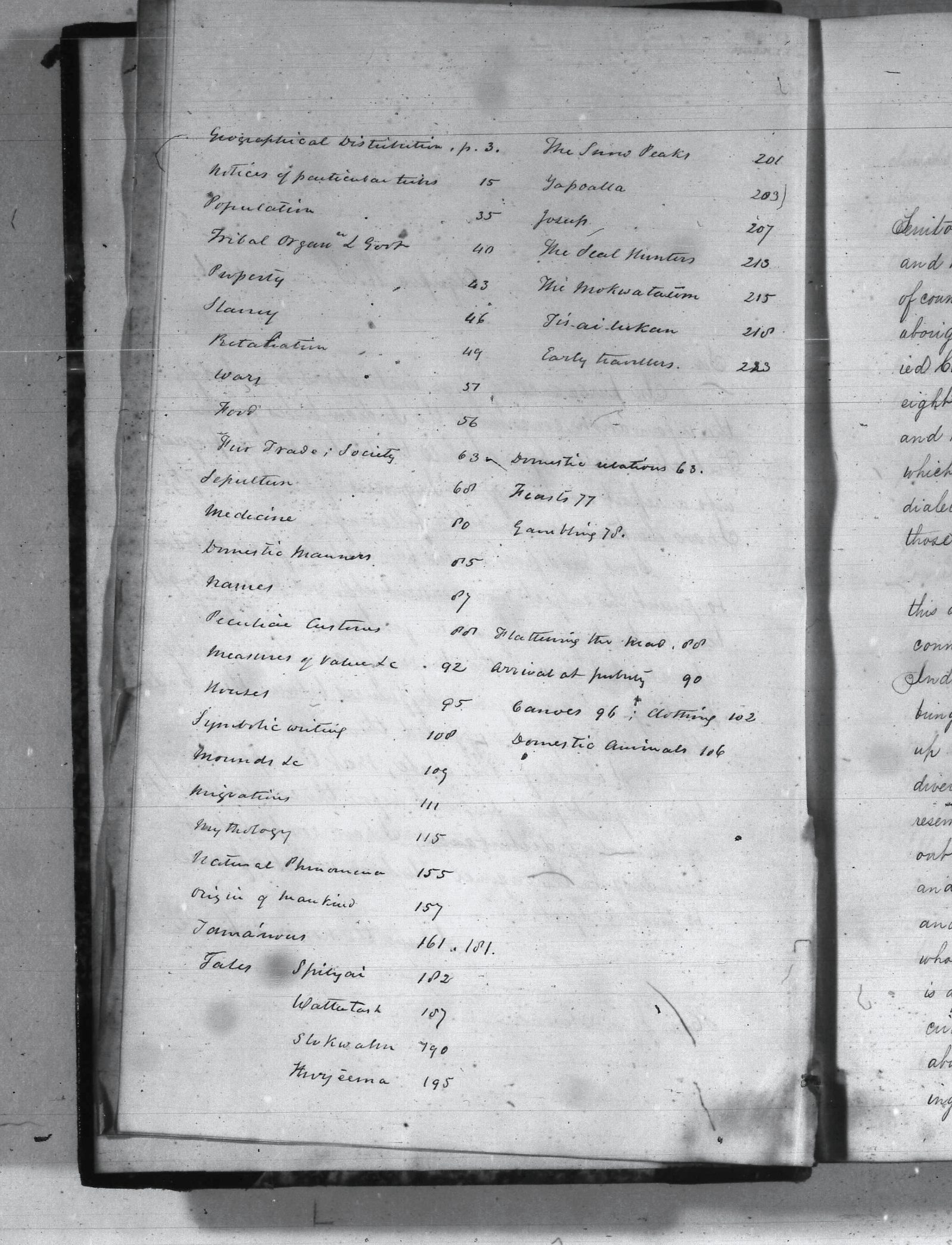 FRAME 1637
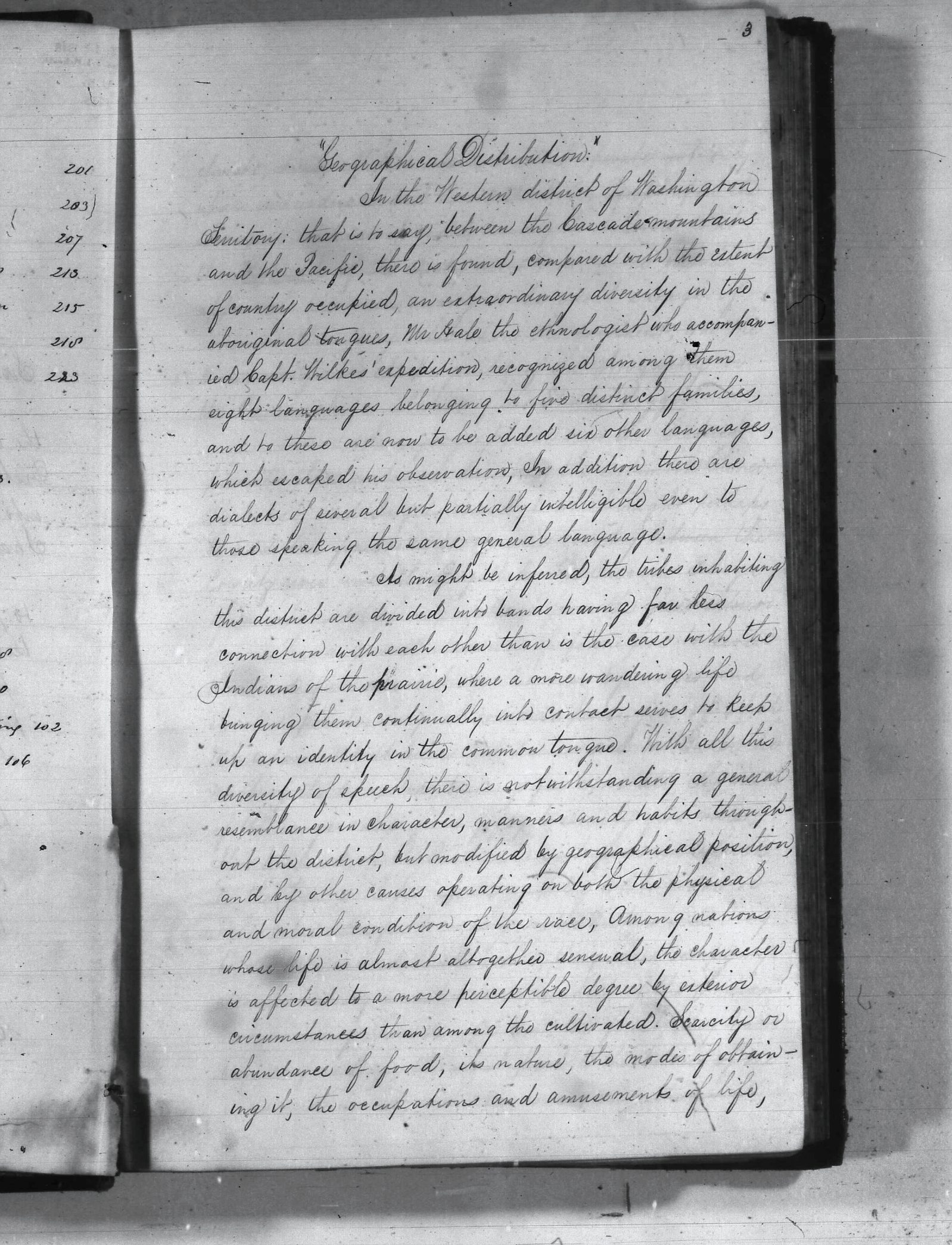 FRAME 1638
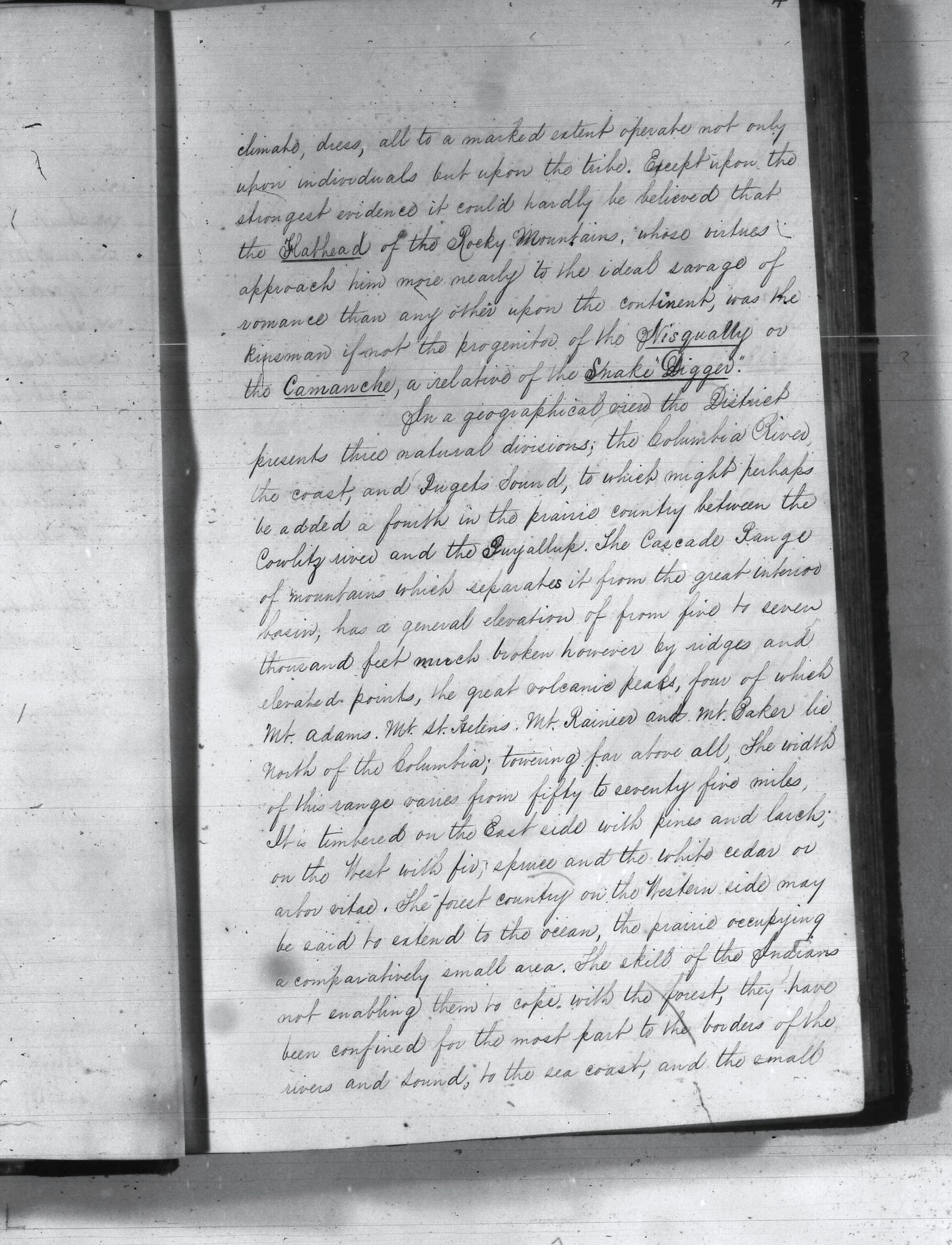 FRAME 1639
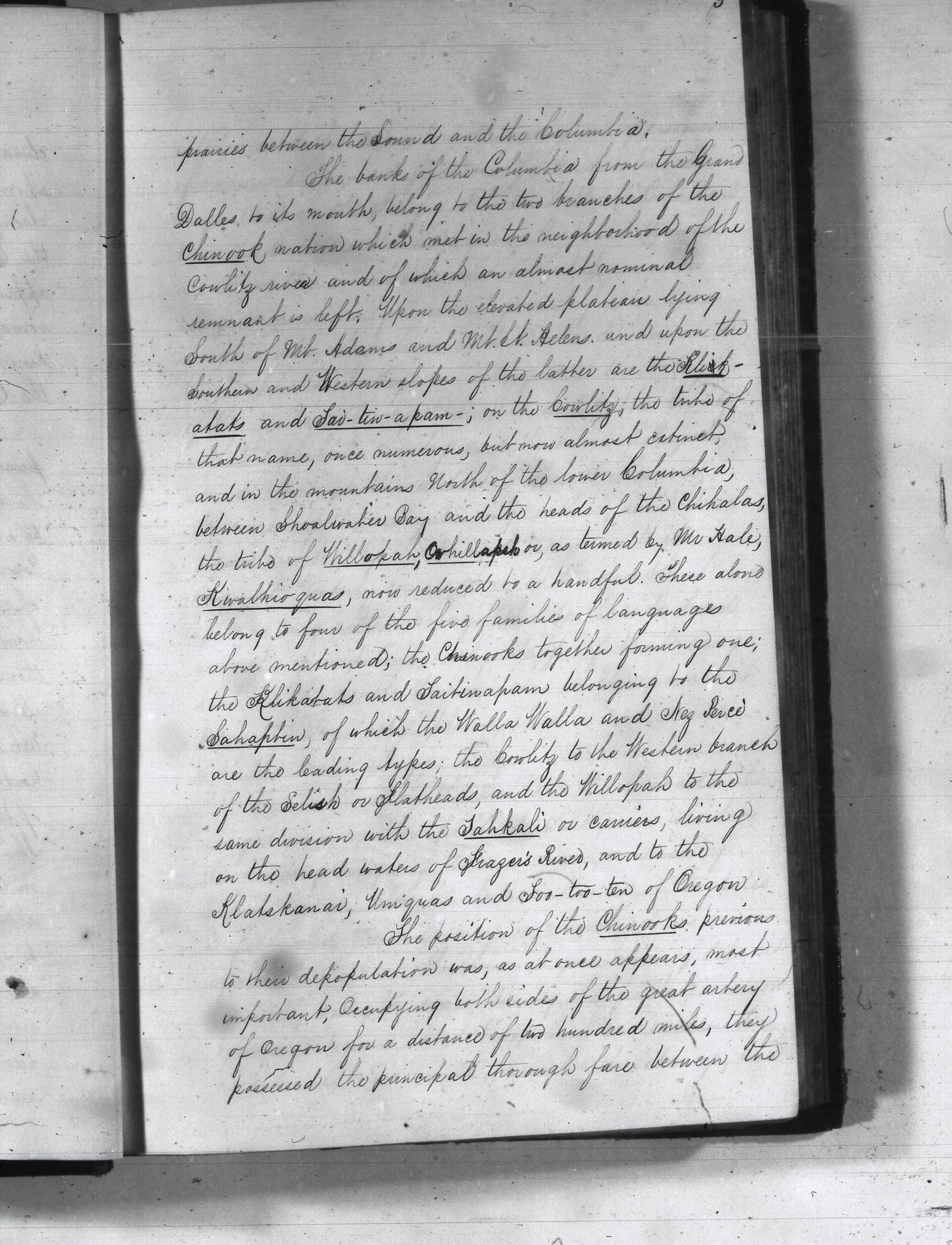 FRAME 1640
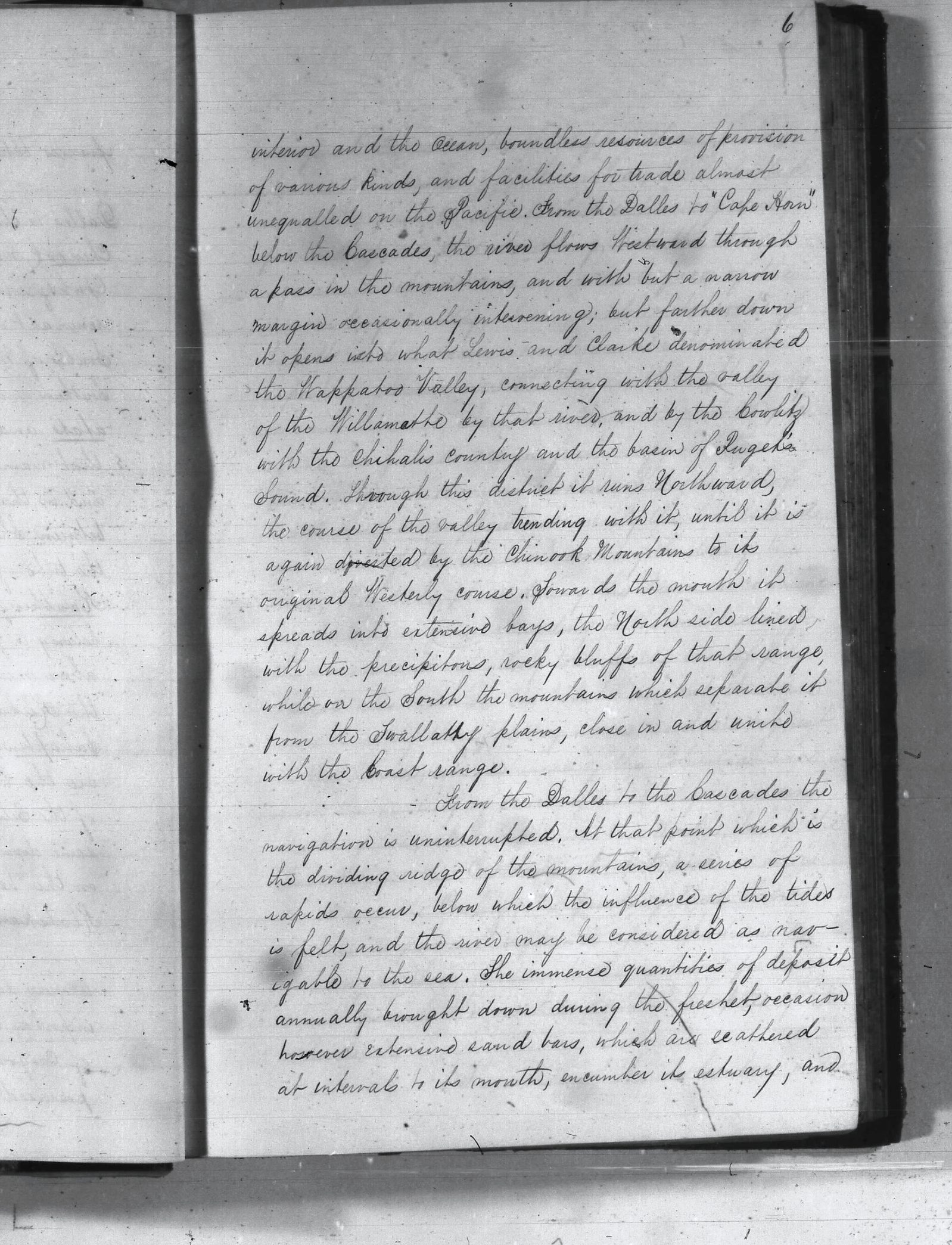 FRAME 1641
 FRAME 1642
 FRAME 1643
 FRAME 1644
 FRAME 1645
 FRAME 1646
 FRAME 1647
Olympia transmittal (ms p.2): report answers Schoolcraft's Inquiries, Nisqually as base tribe, predates war
c.1856
 FRAME 1648
 FRAME 1649
 FRAME 1650
 FRAME 1651
 FRAME 1652
 FRAME 1653
 FRAME 1654
 FRAME 1655
 FRAME 1656
 FRAME 1657
 FRAME 1658
 FRAME 1659
 FRAME 1660
 FRAME 1661
 FRAME 1662
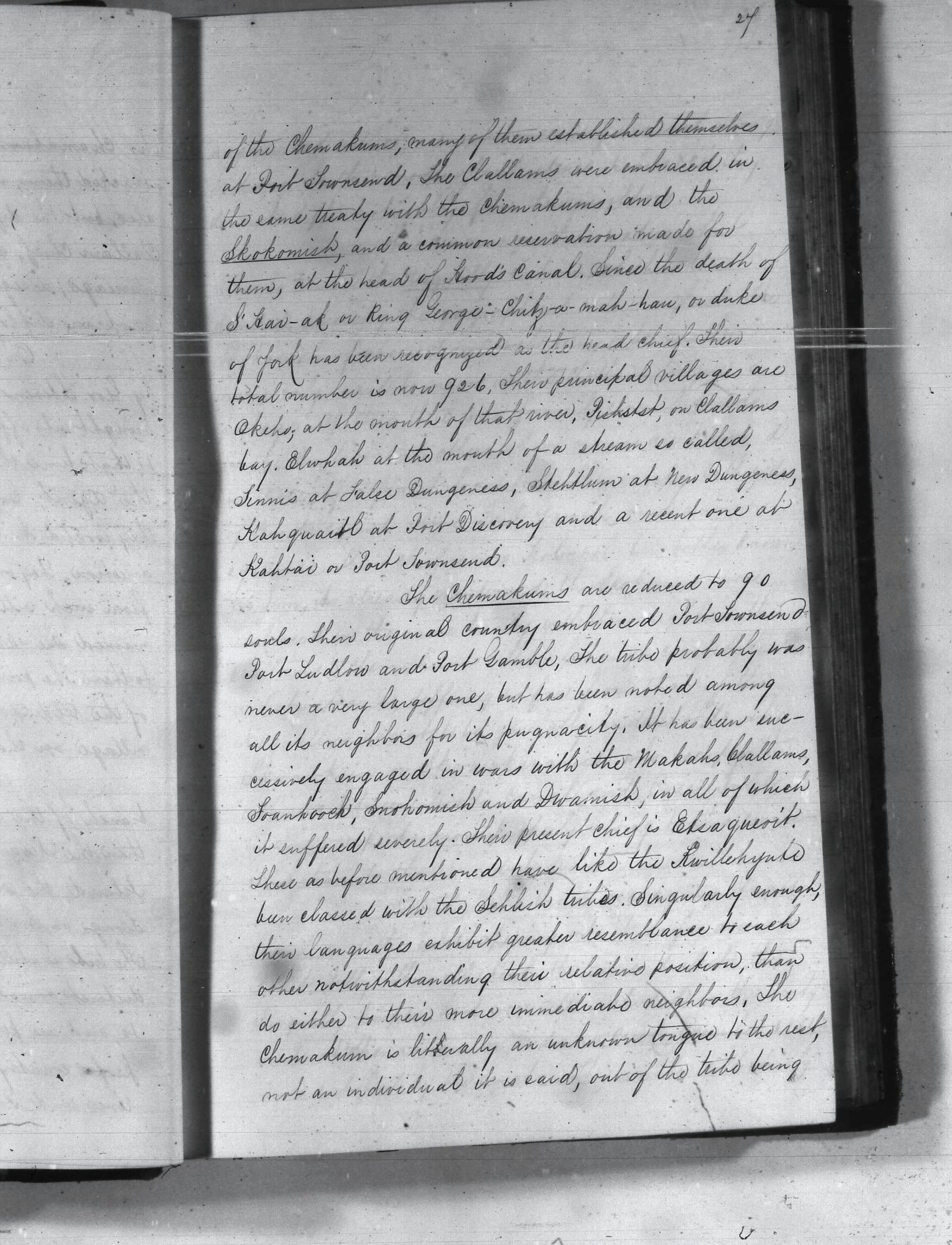
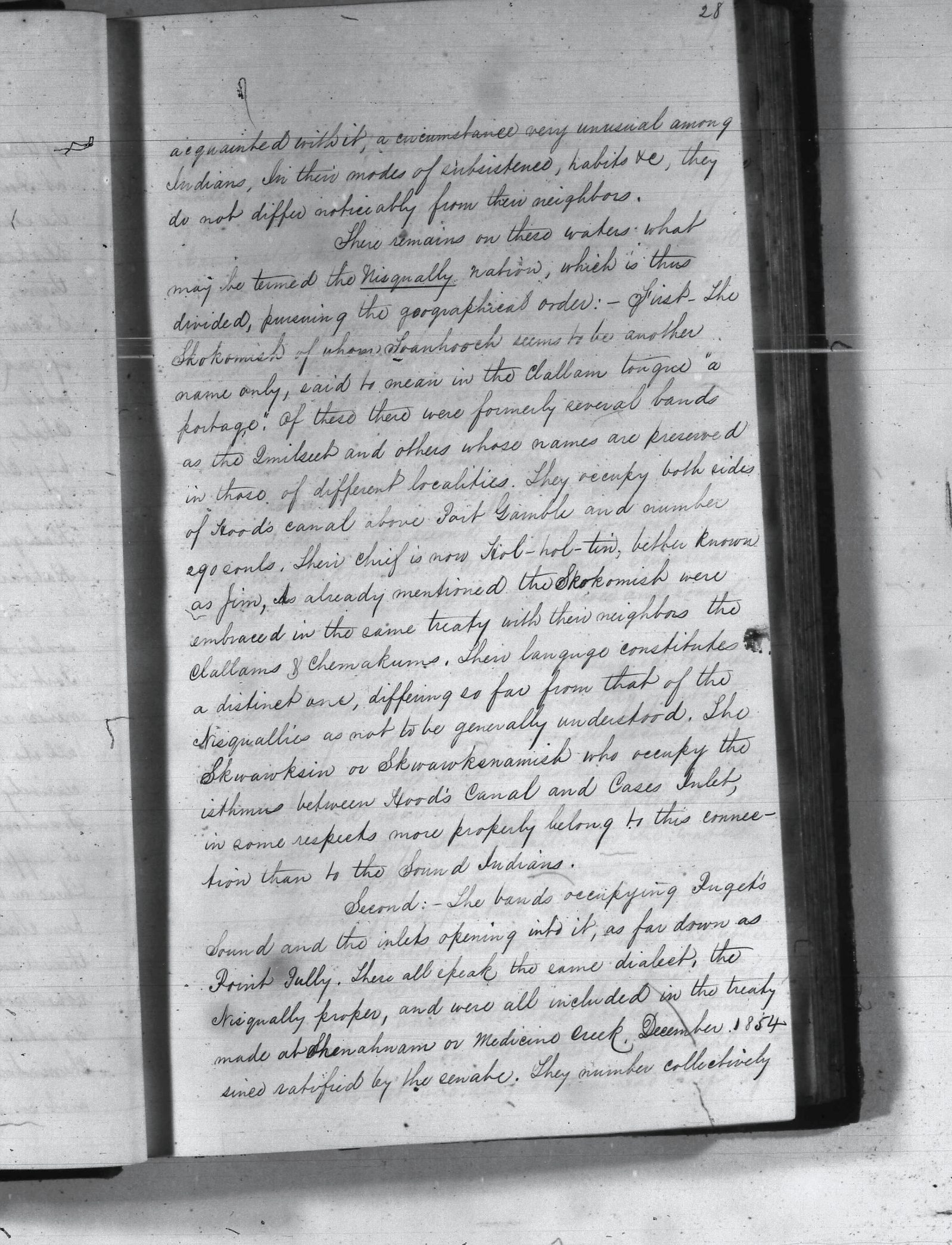
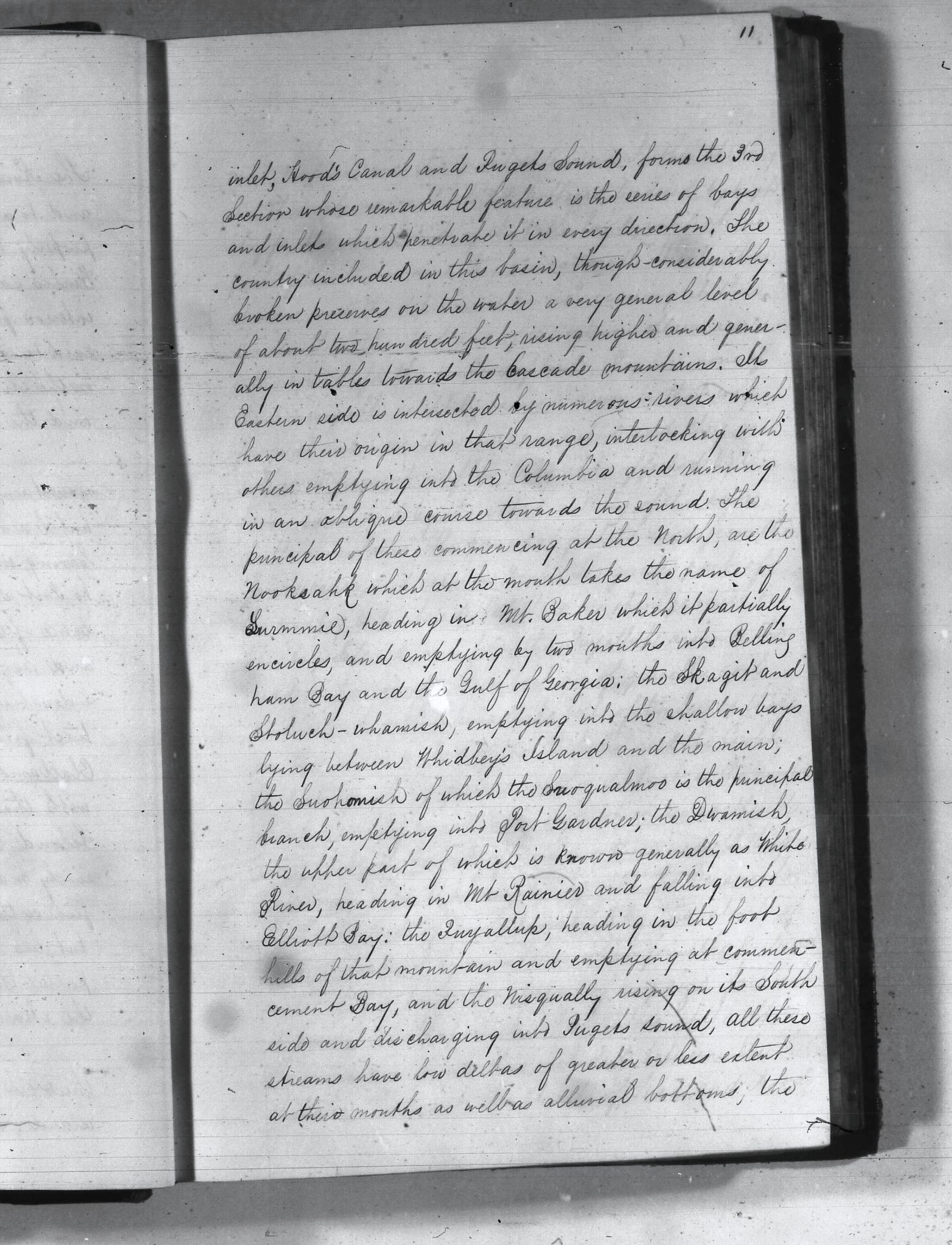
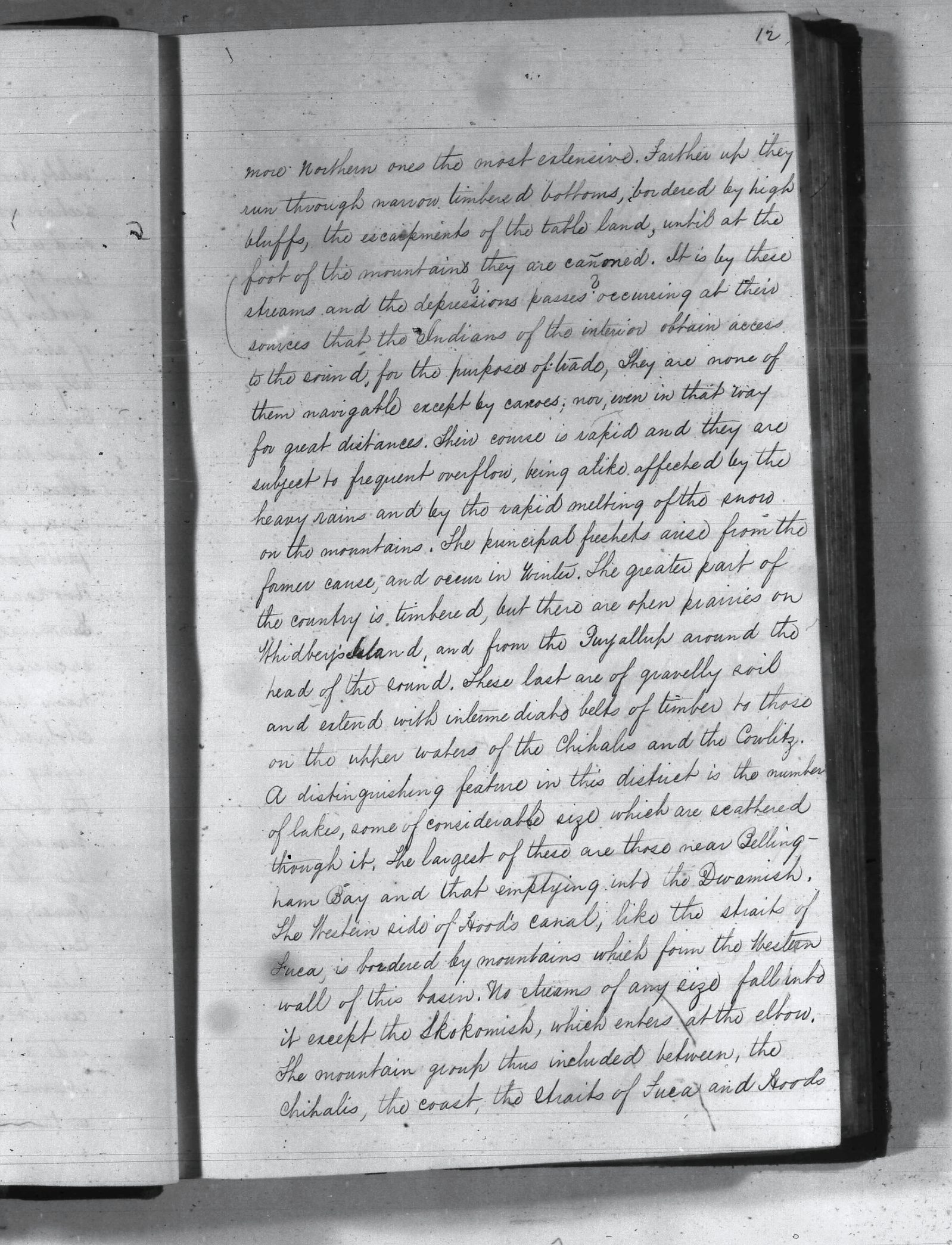
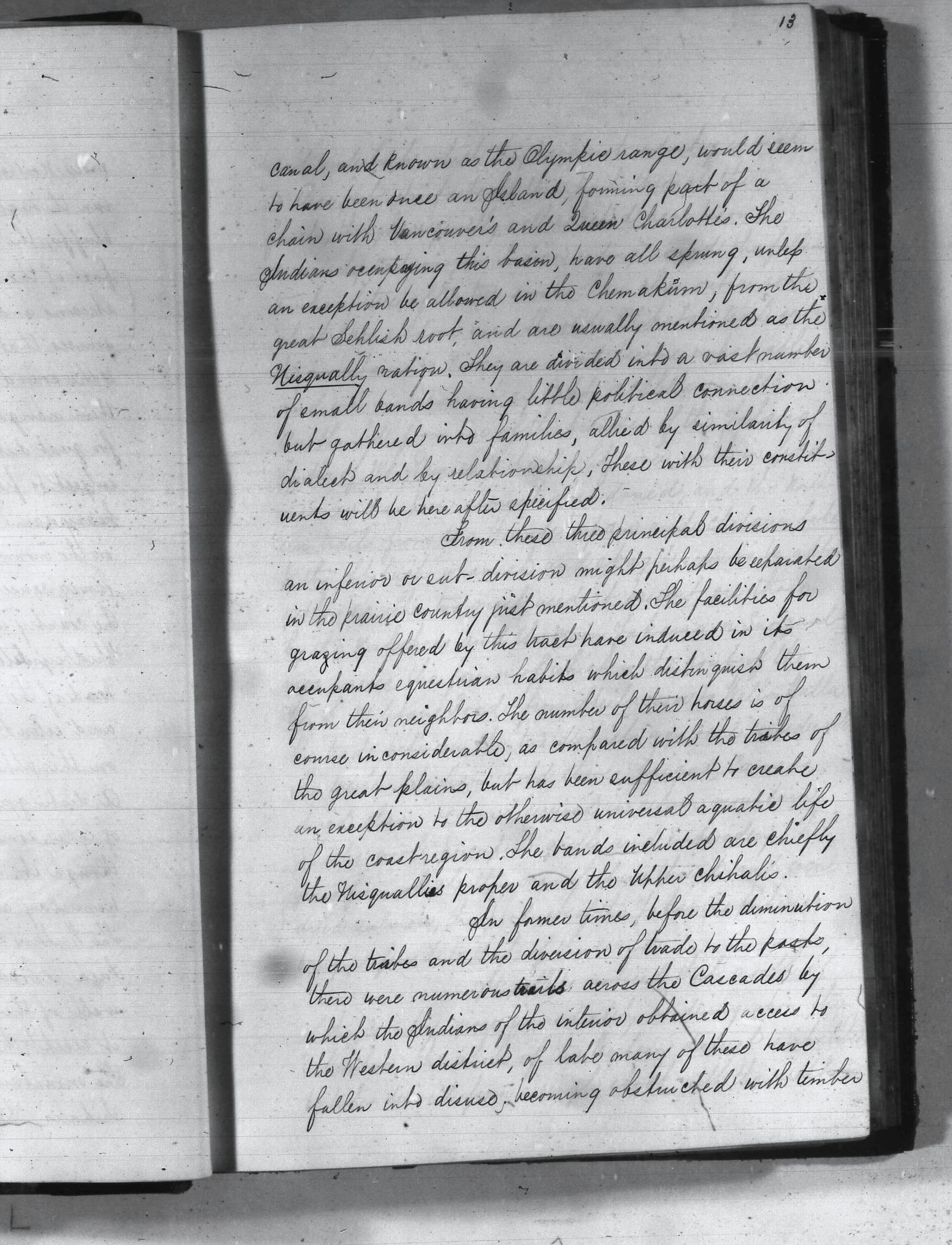
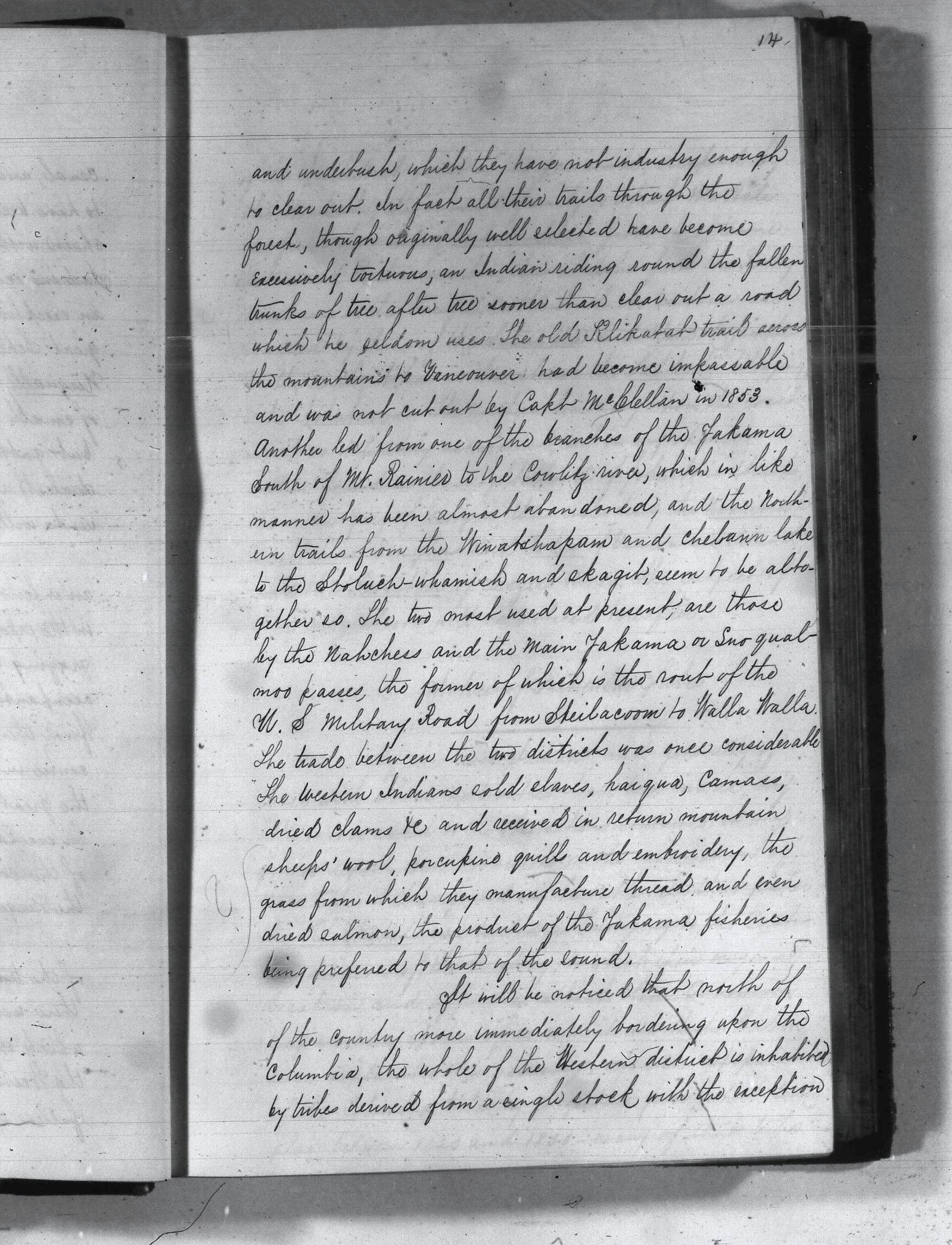
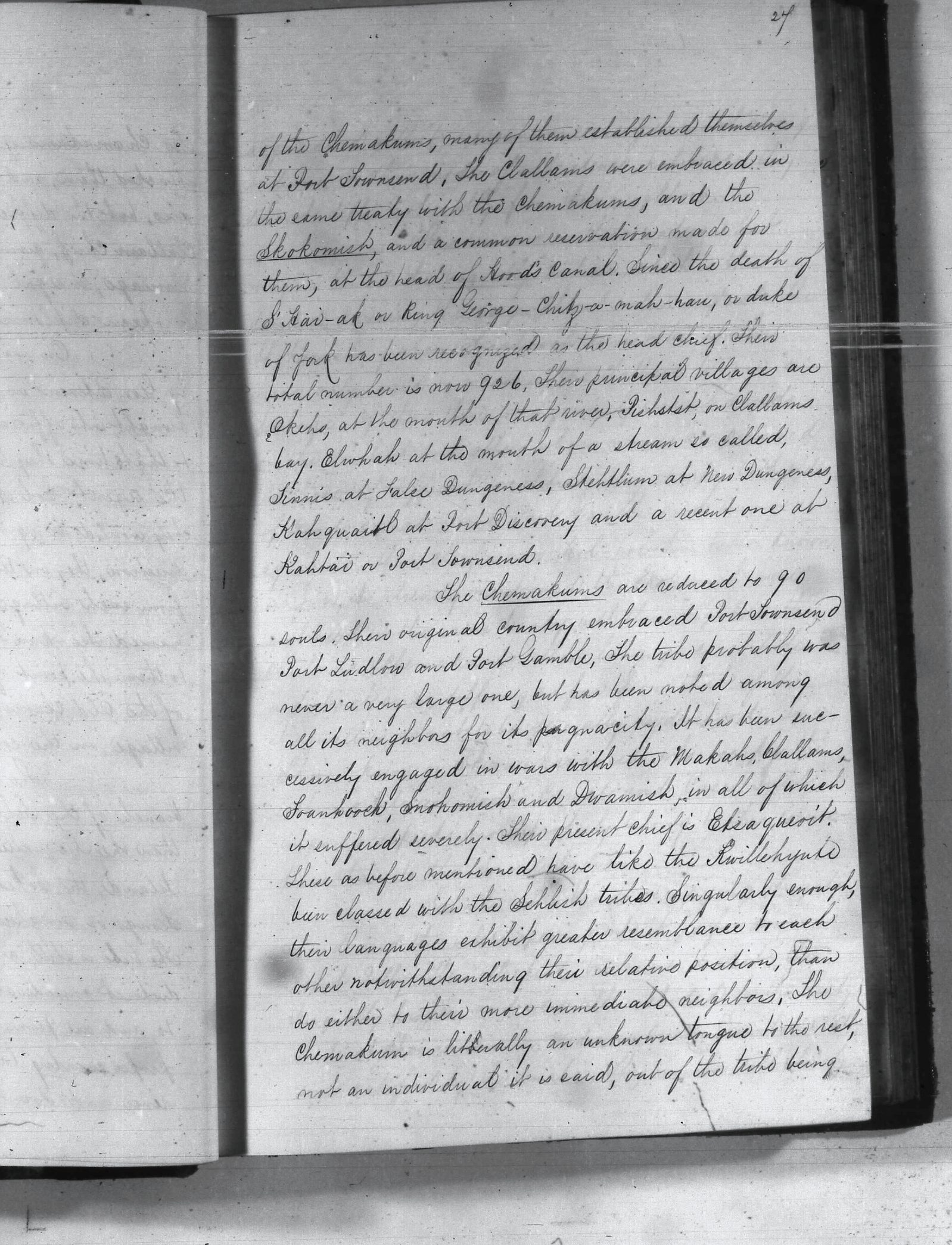
Olympic basin tribes all Selish stock; "Nisqually nation" bands; equestrian prairie sub-division
(cont.)
same Clallam/Chemakum page refilmed
n.d. [c.1856]
 FRAME 1665
 FRAME 1666
 FRAME 1667
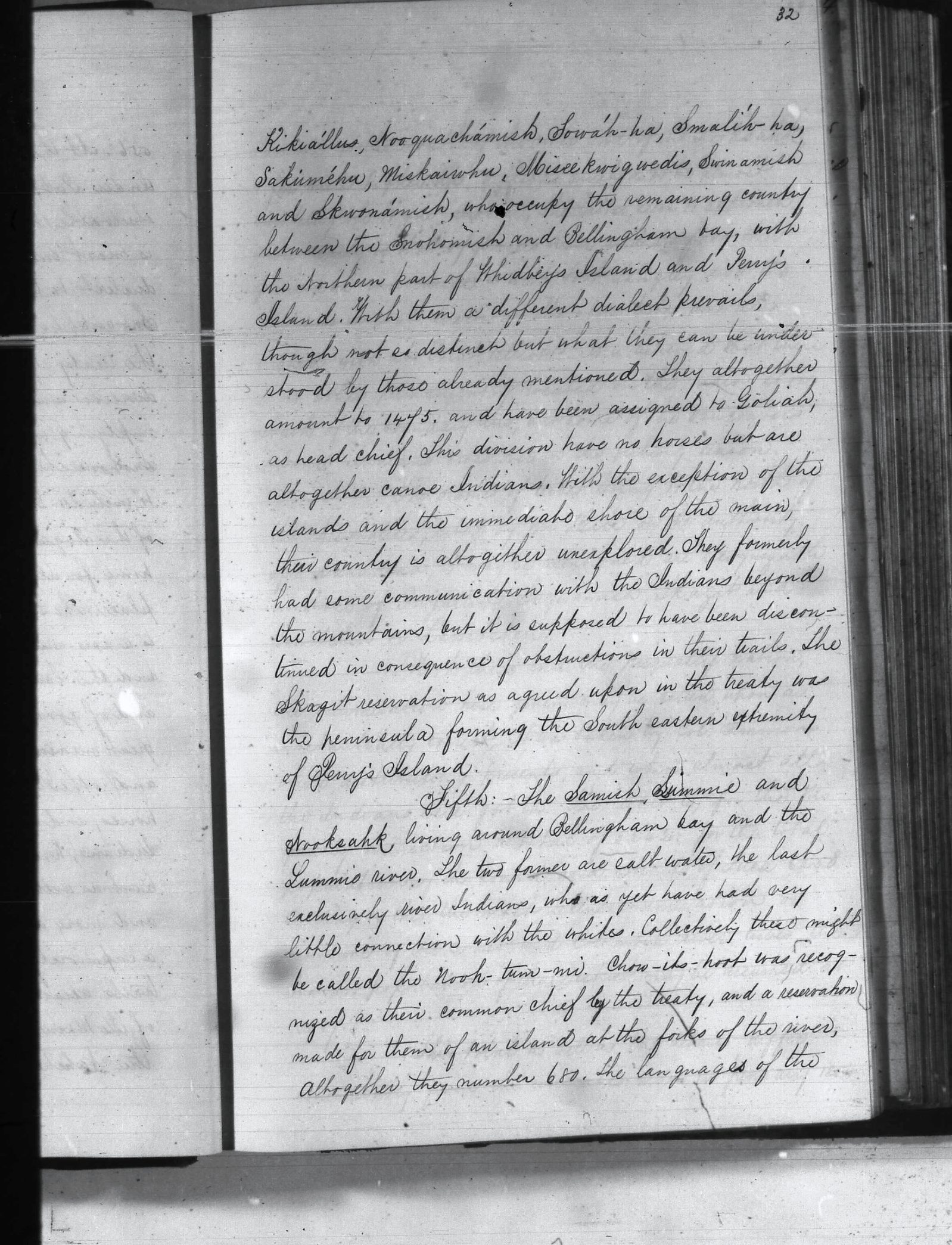 FRAME 1668
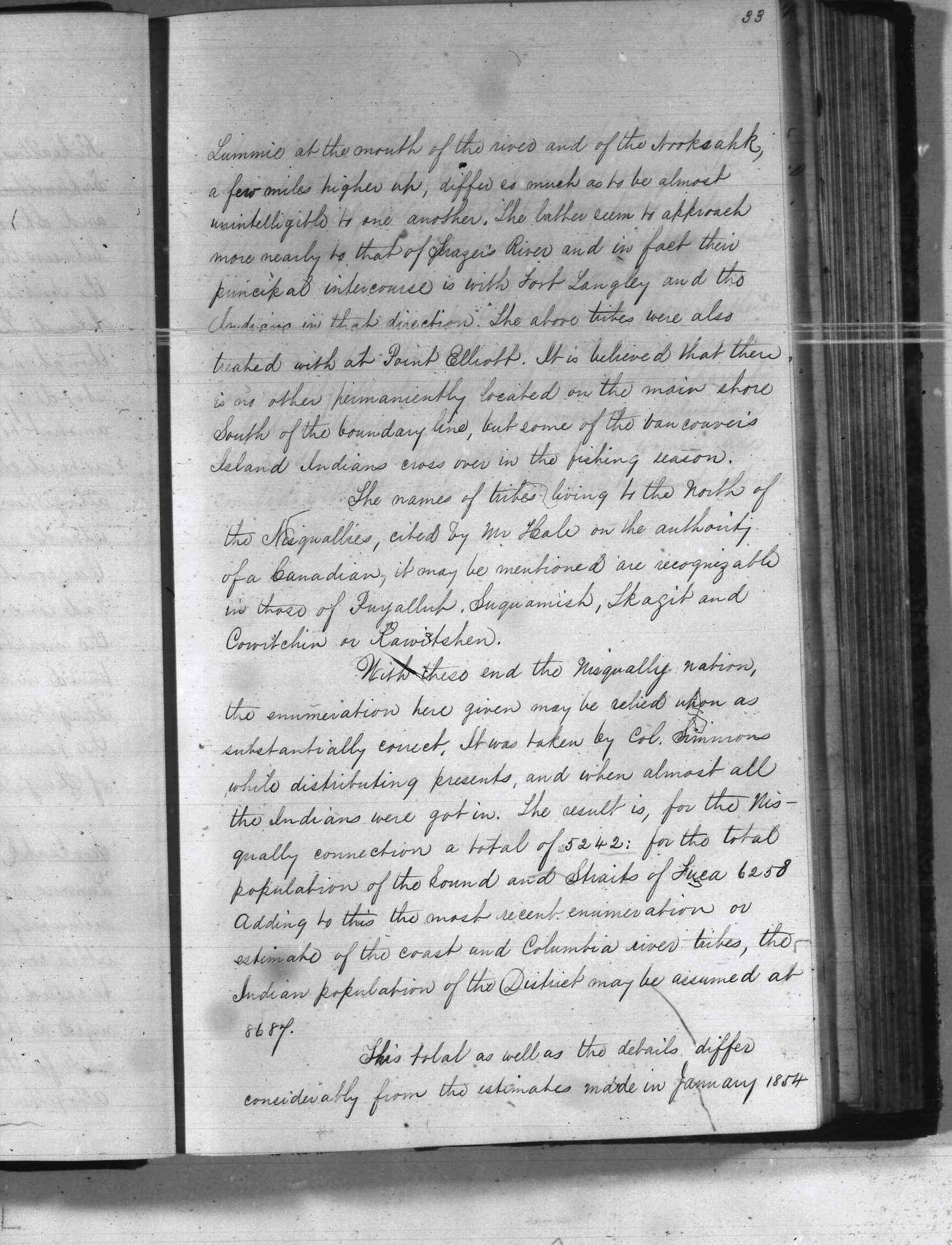 FRAME 1669
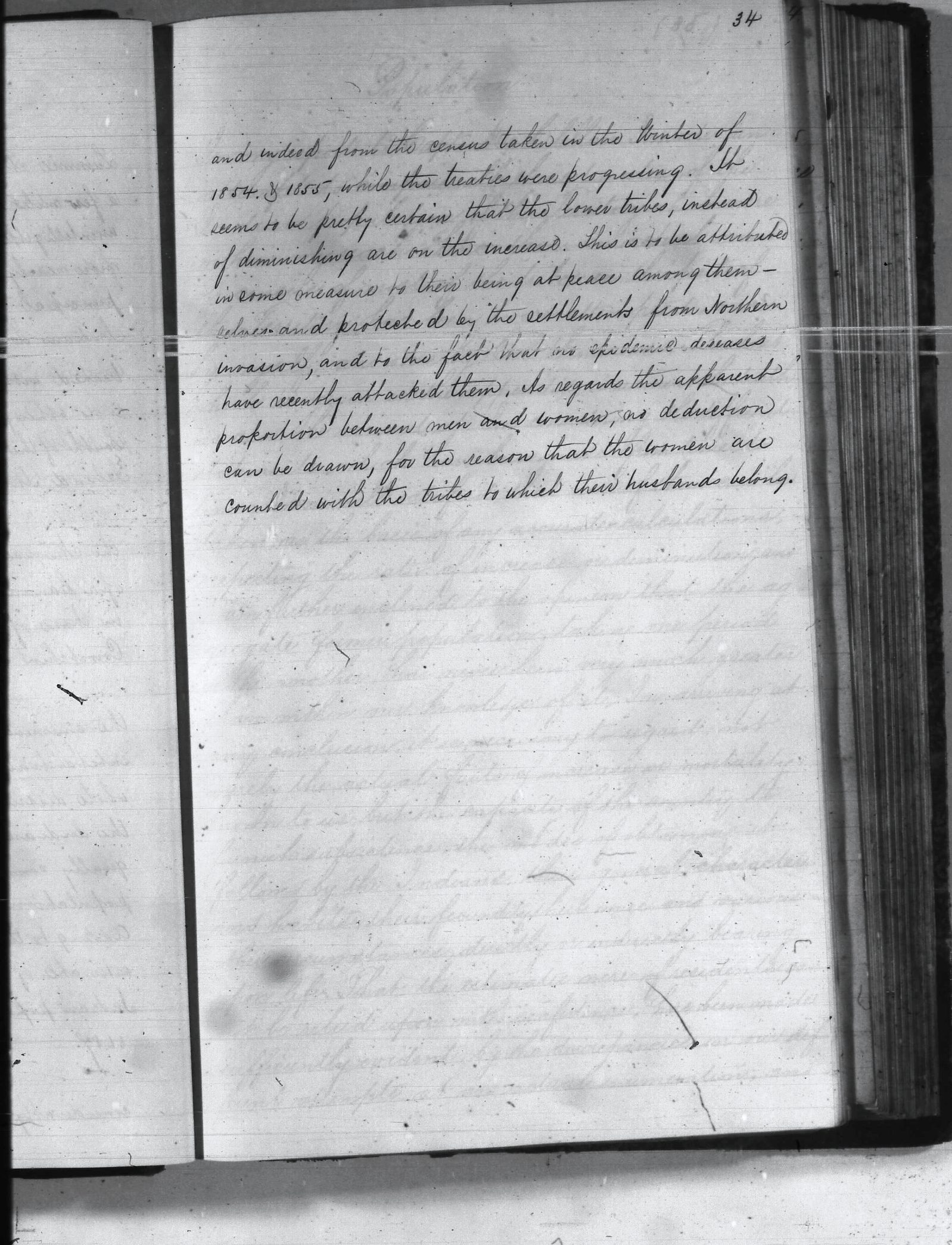 FRAME 1670
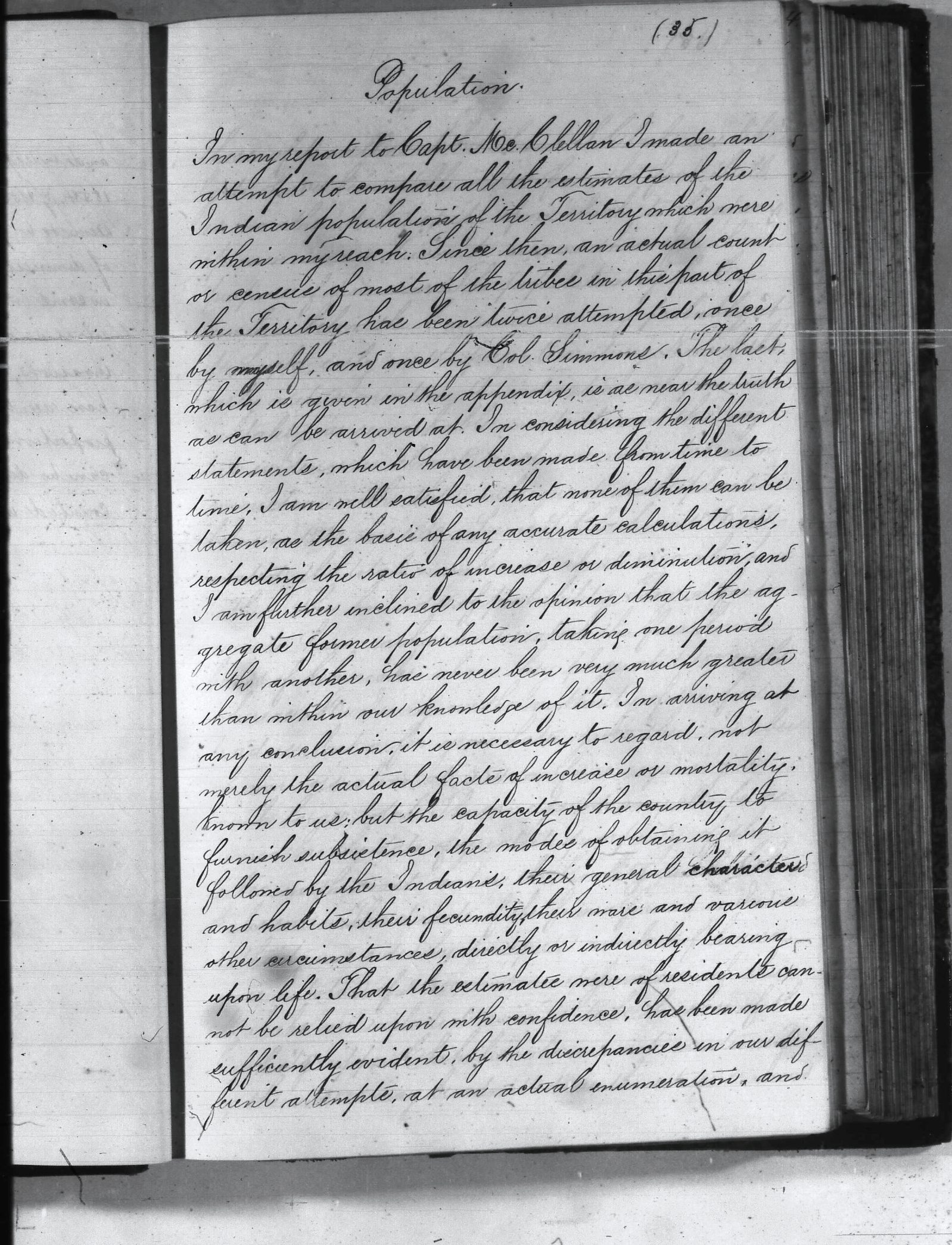 FRAME 1671
 FRAME 1672
 FRAME 1673
 FRAME 1674
 FRAME 1675
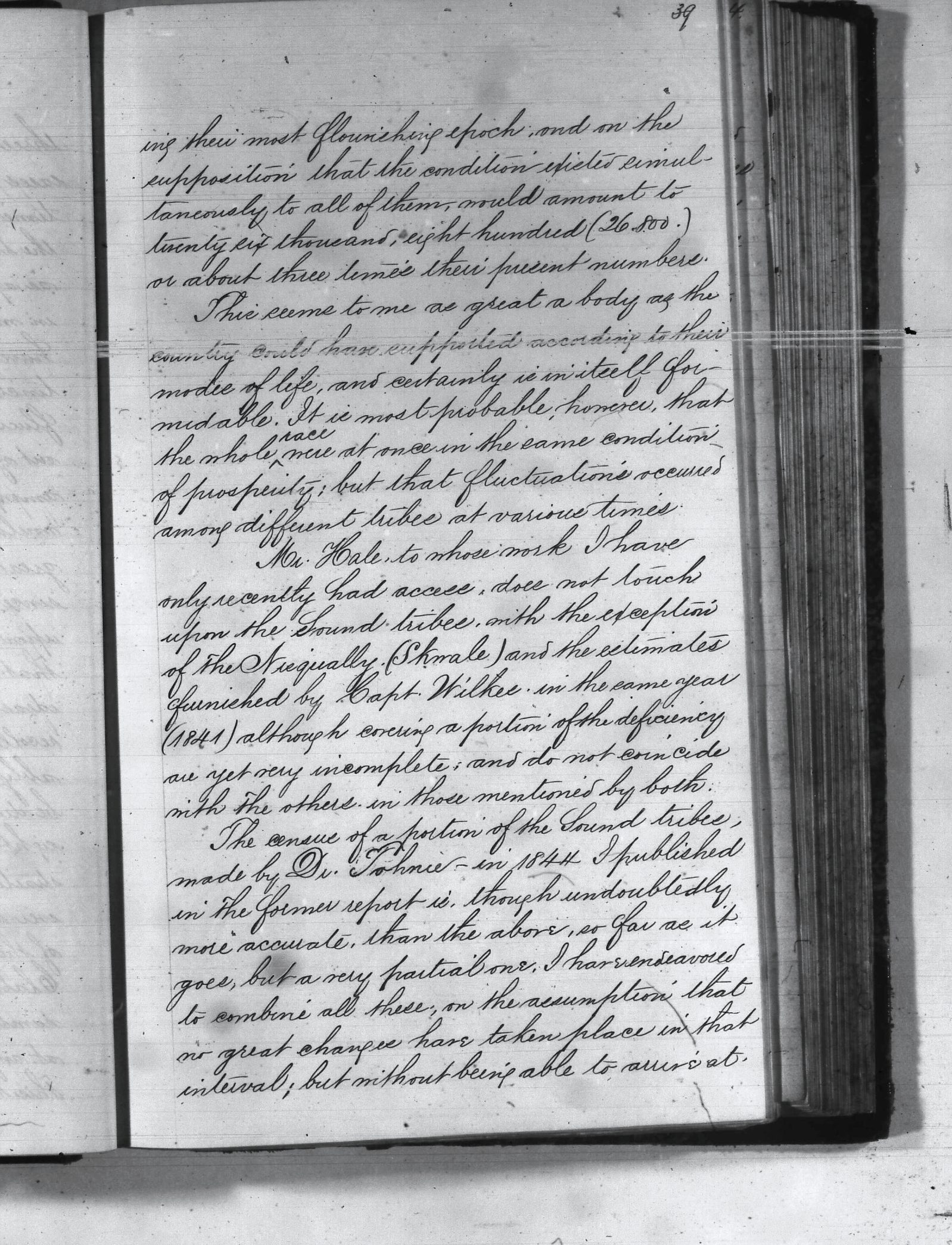 FRAME 1676
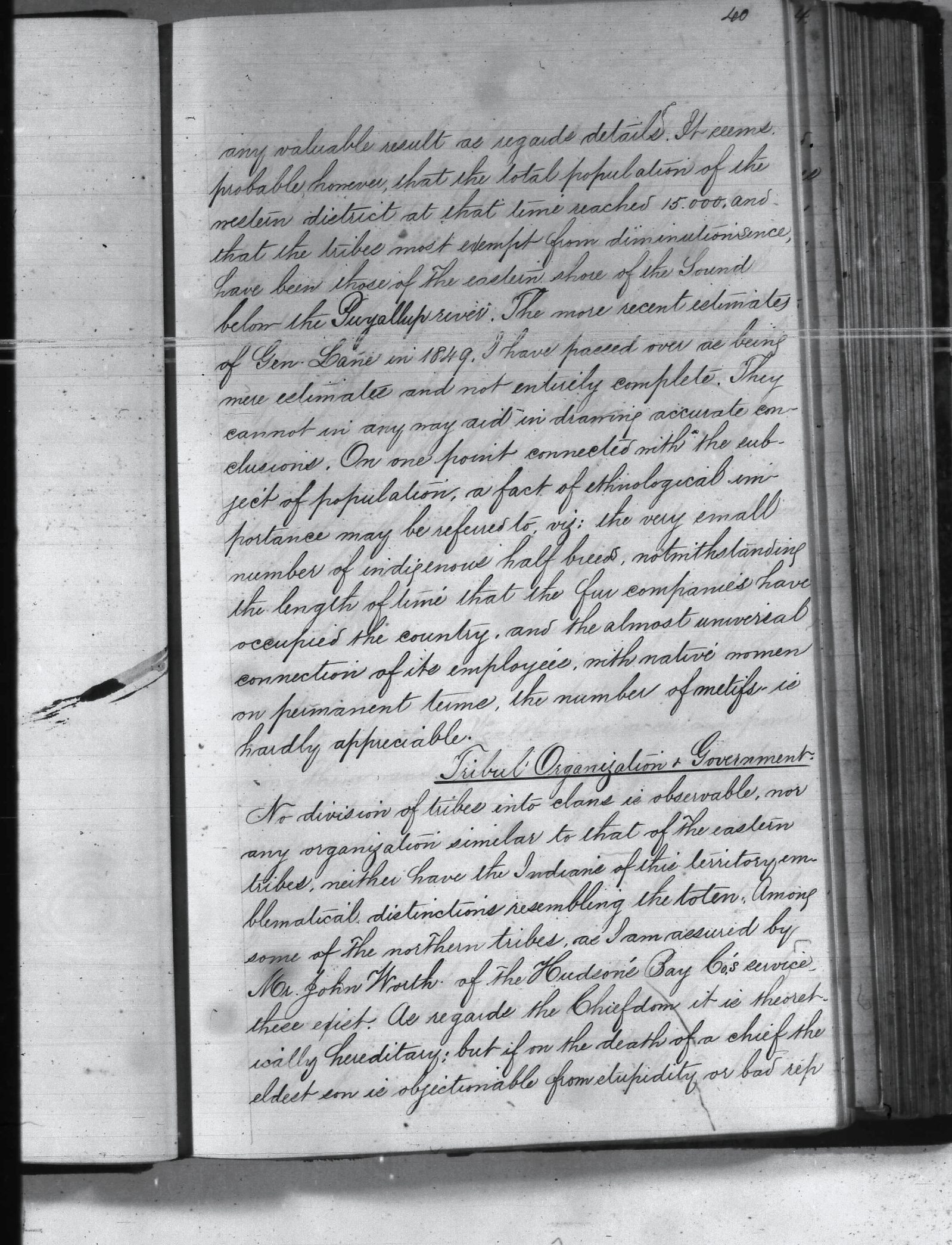 FRAME 1677
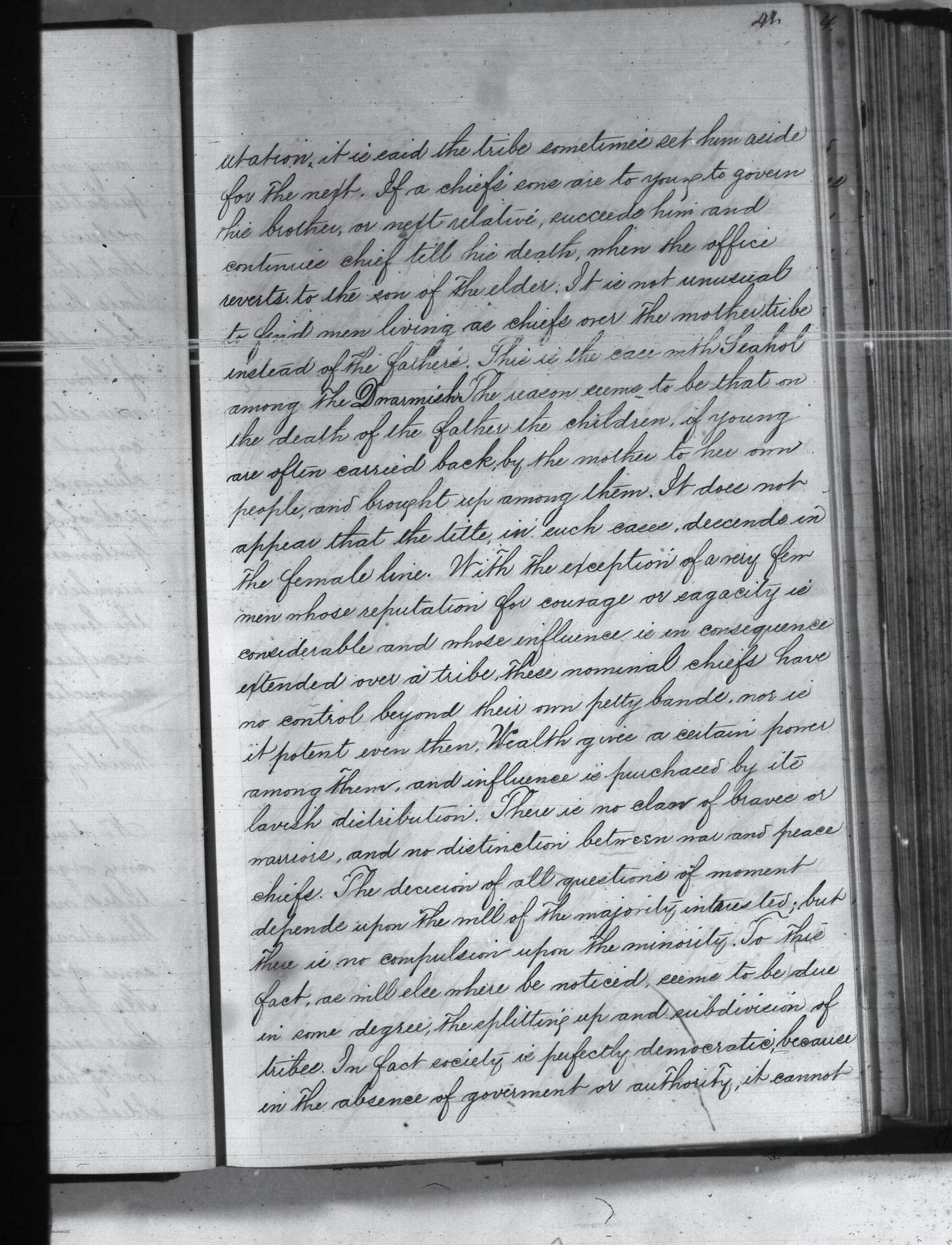 FRAME 1678
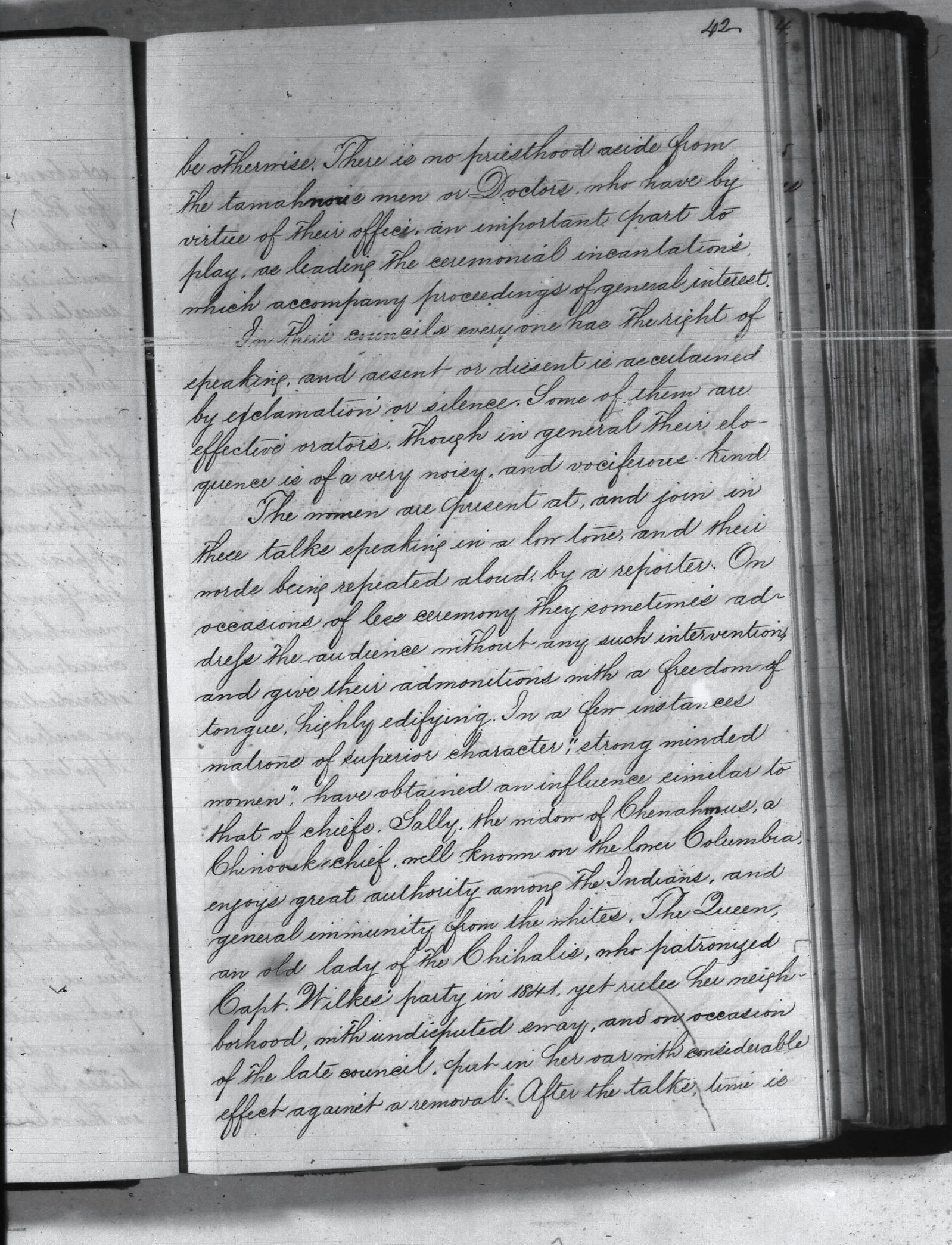 FRAME 1679
 FRAME 1680
 FRAME 1681
 FRAME 1682
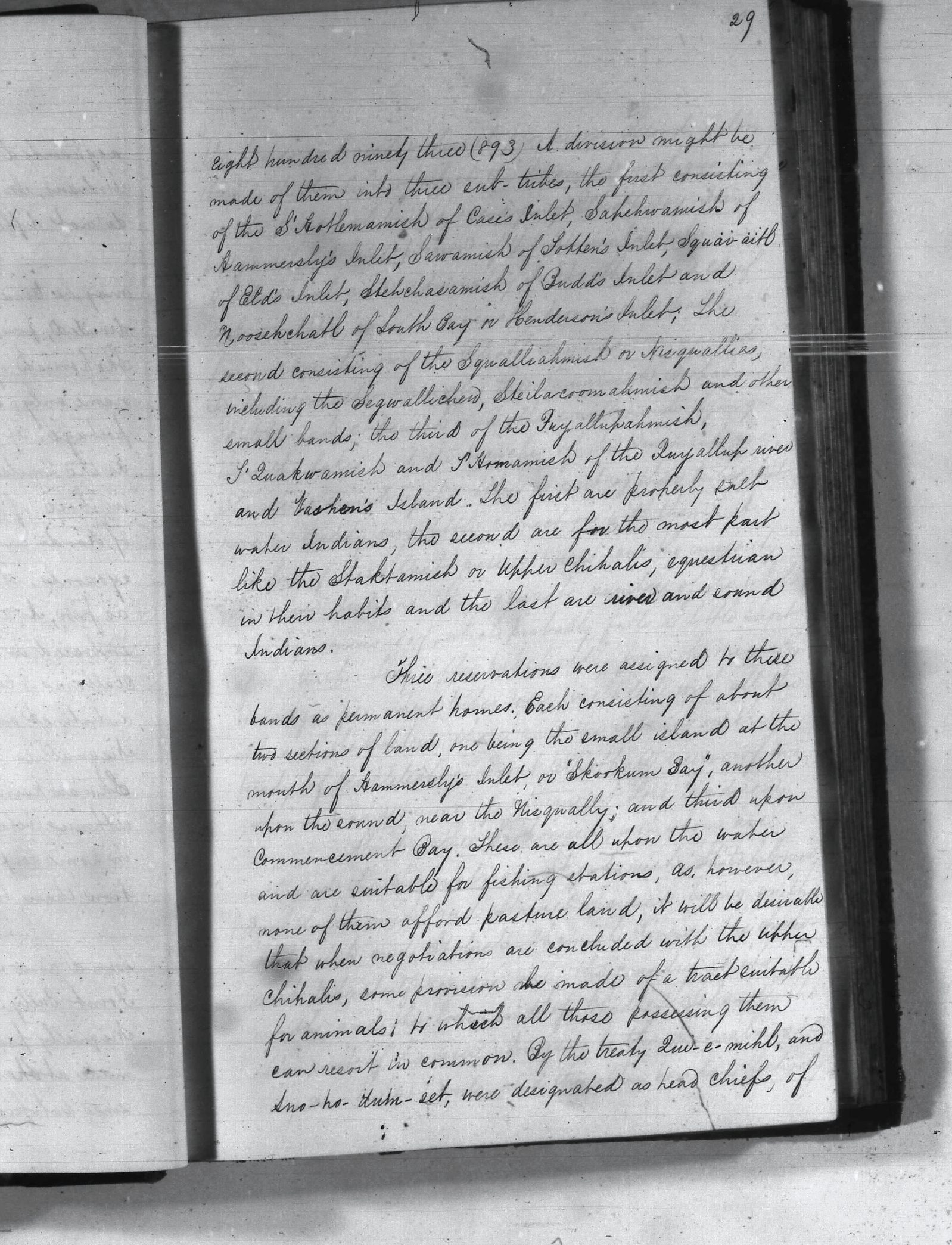
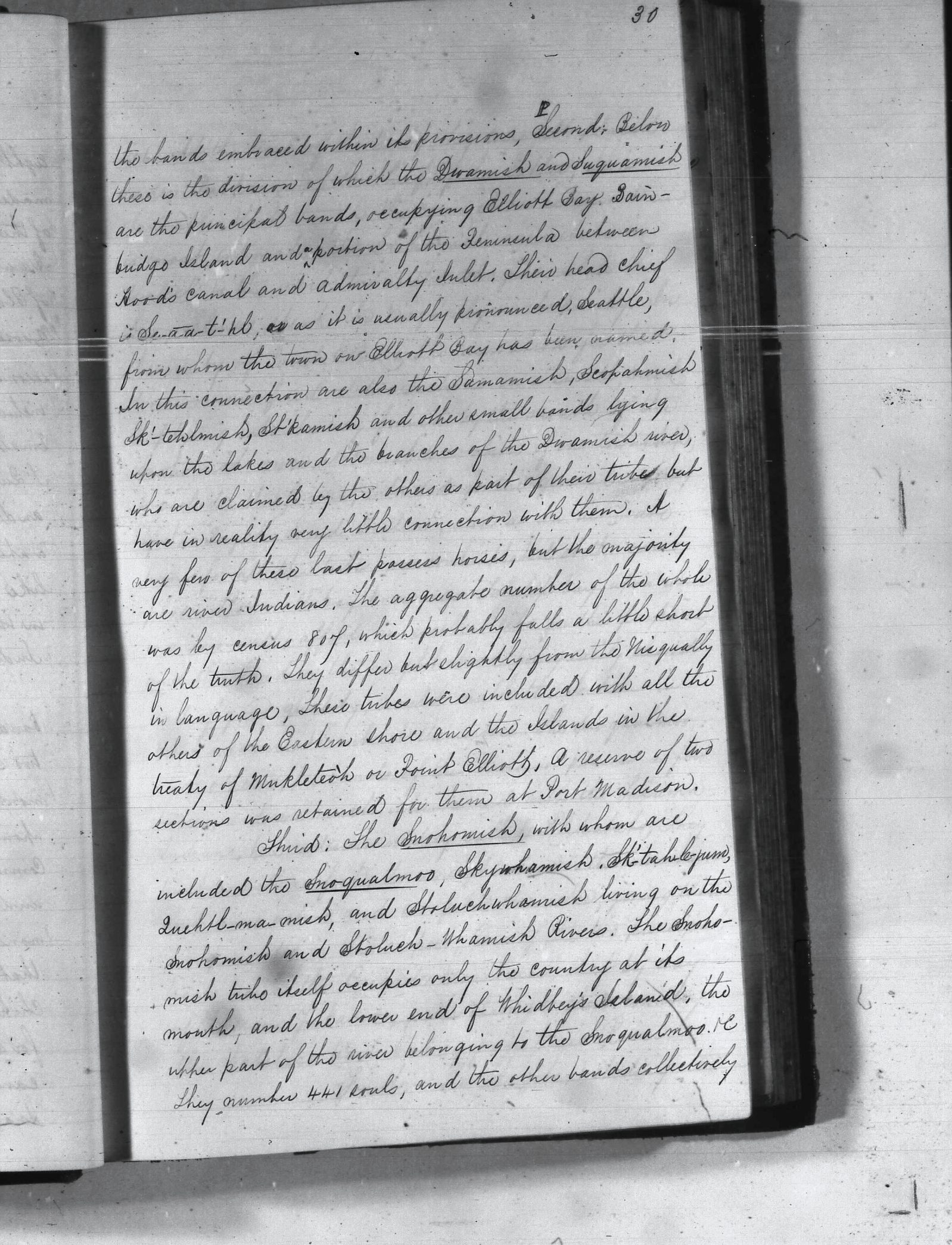
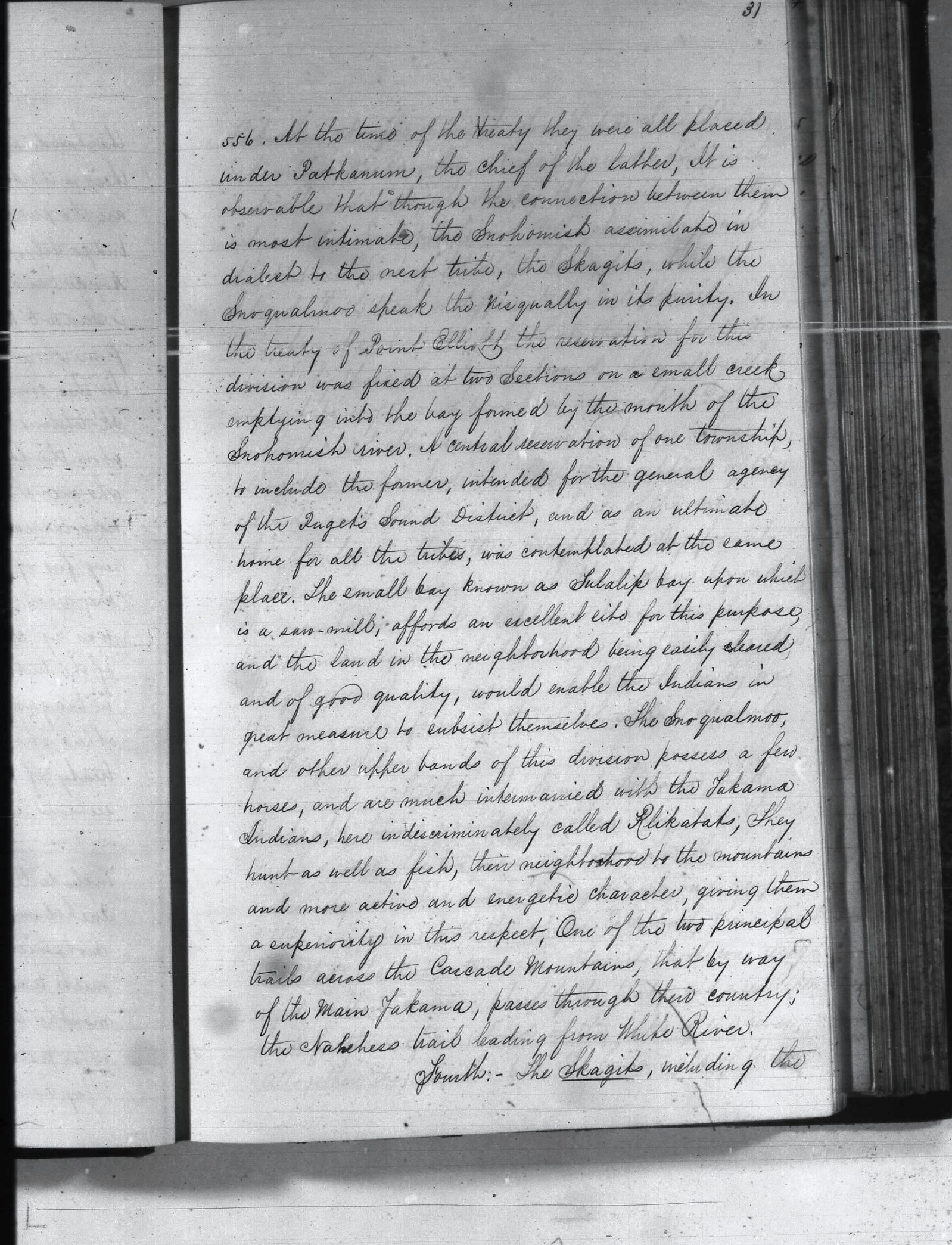
Squaxin/Nisqually/Puyallup sub-tribes, population 893, three fishing-station reservations, head chiefs named
 FRAME 1683
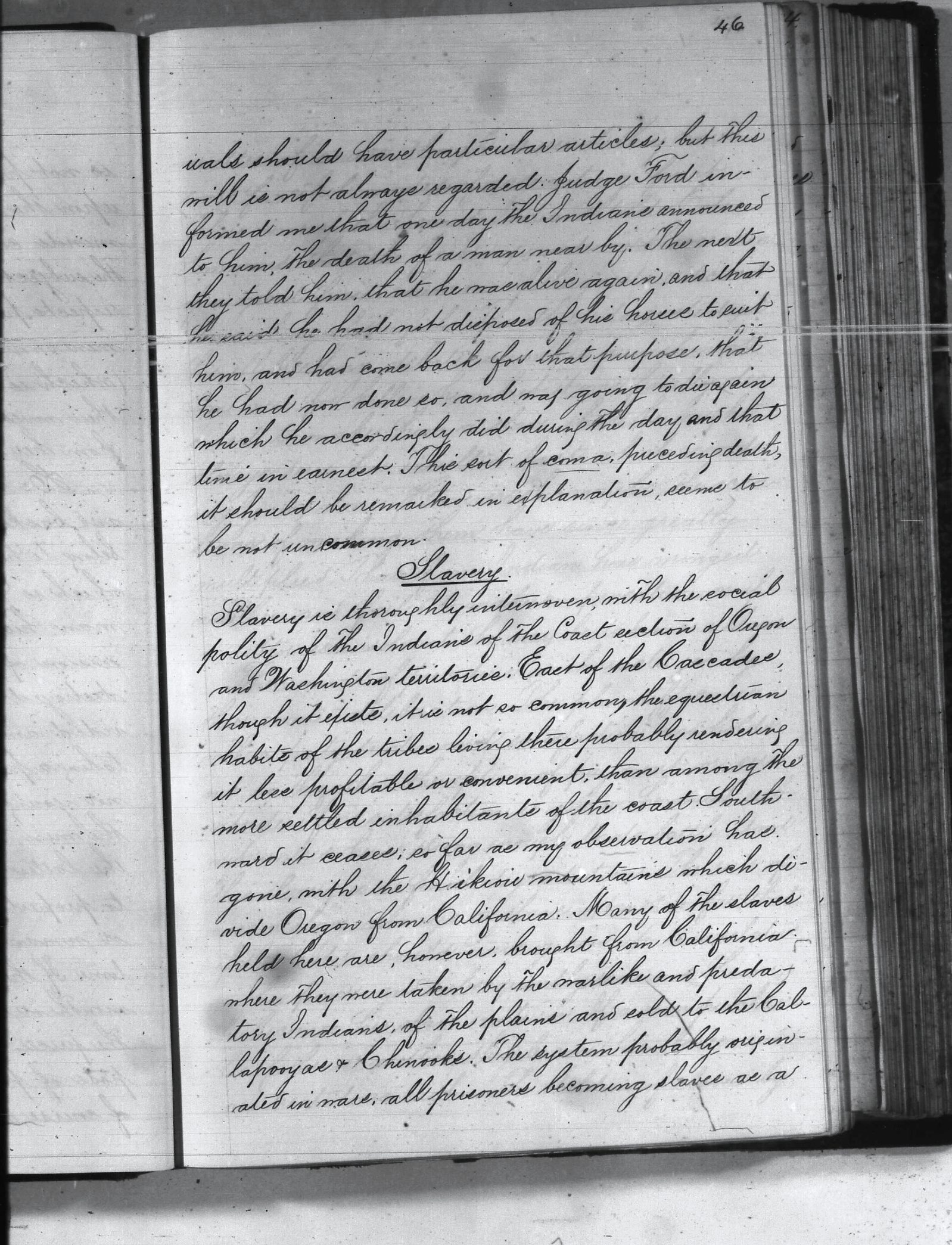 FRAME 1684
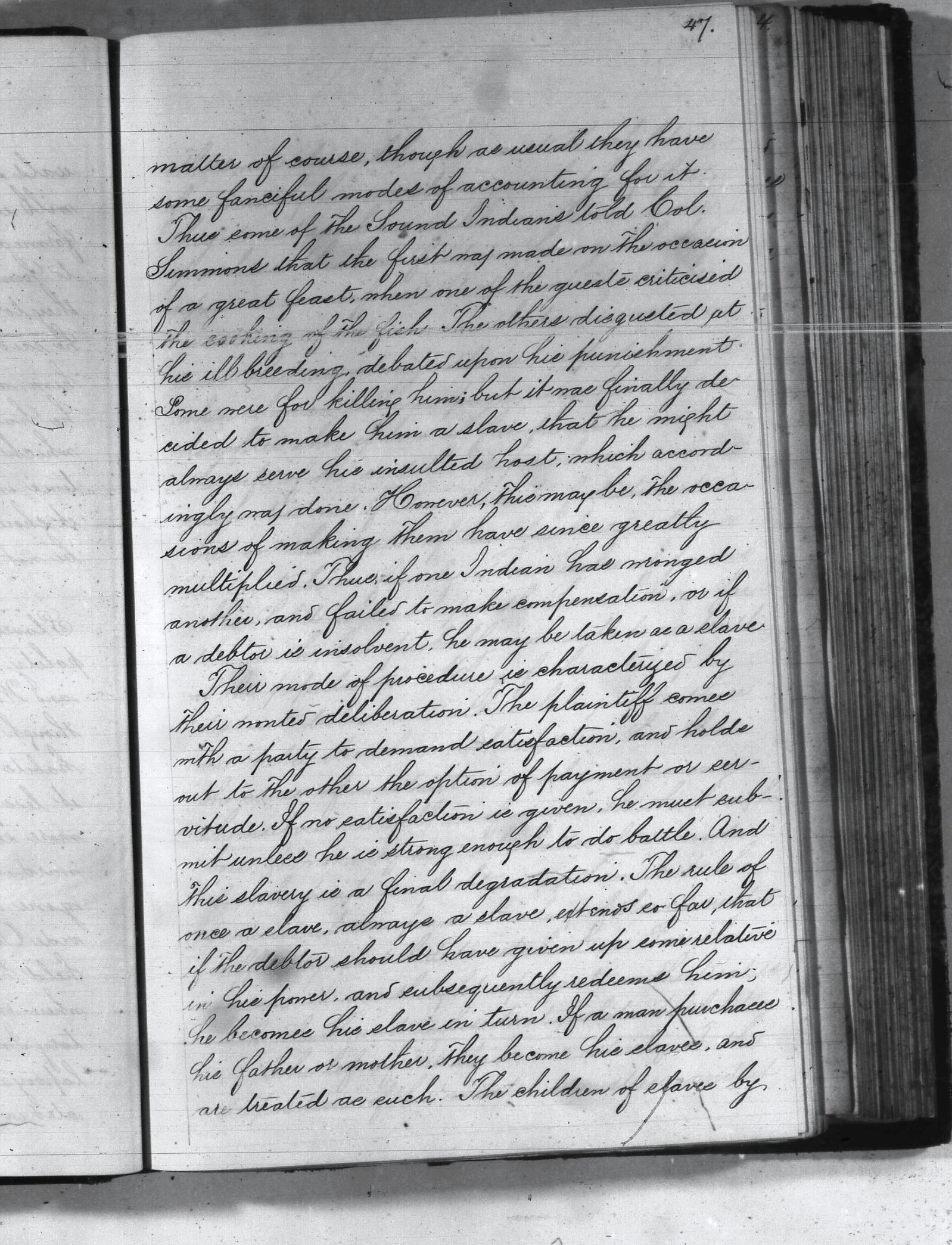 FRAME 1685
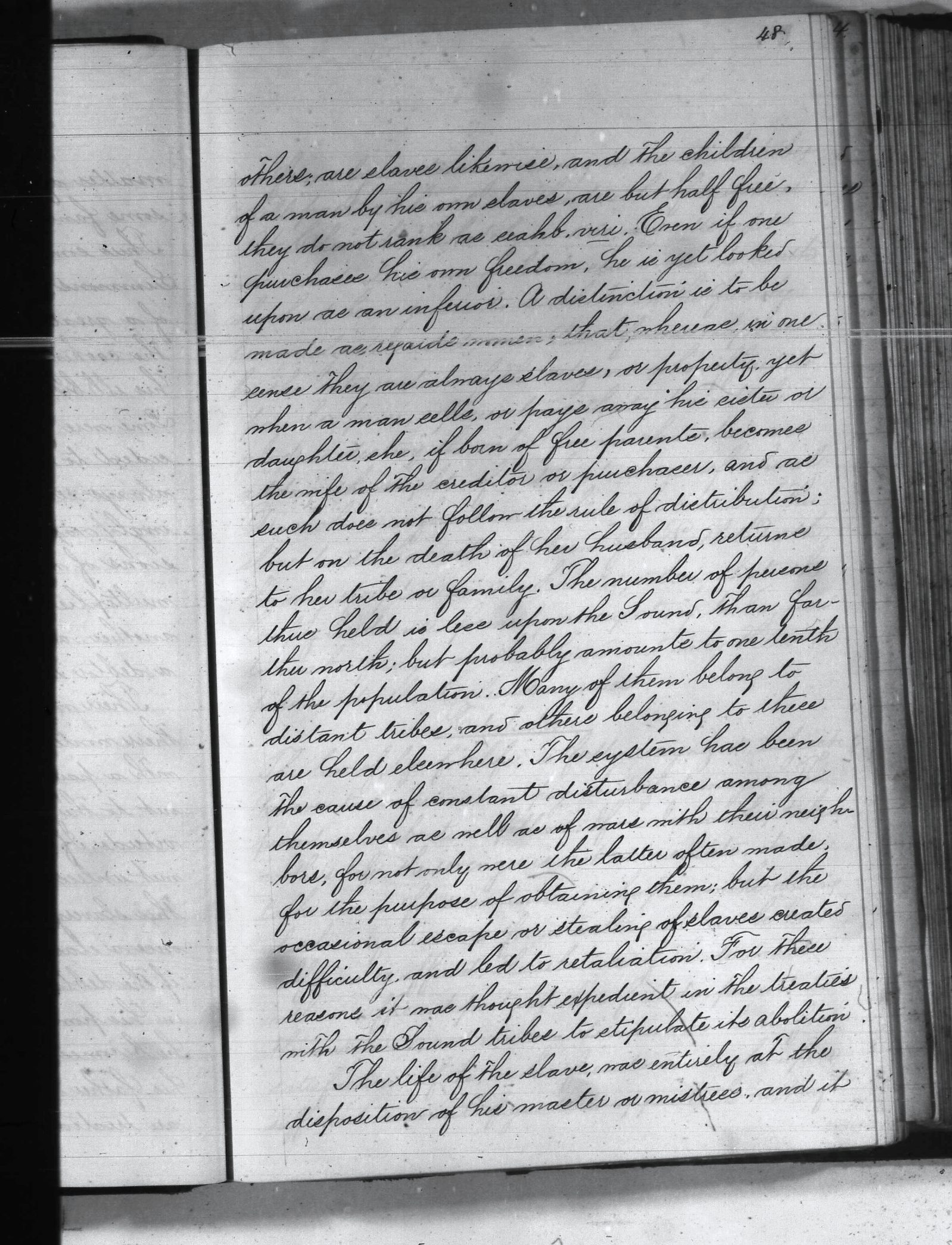 FRAME 1686
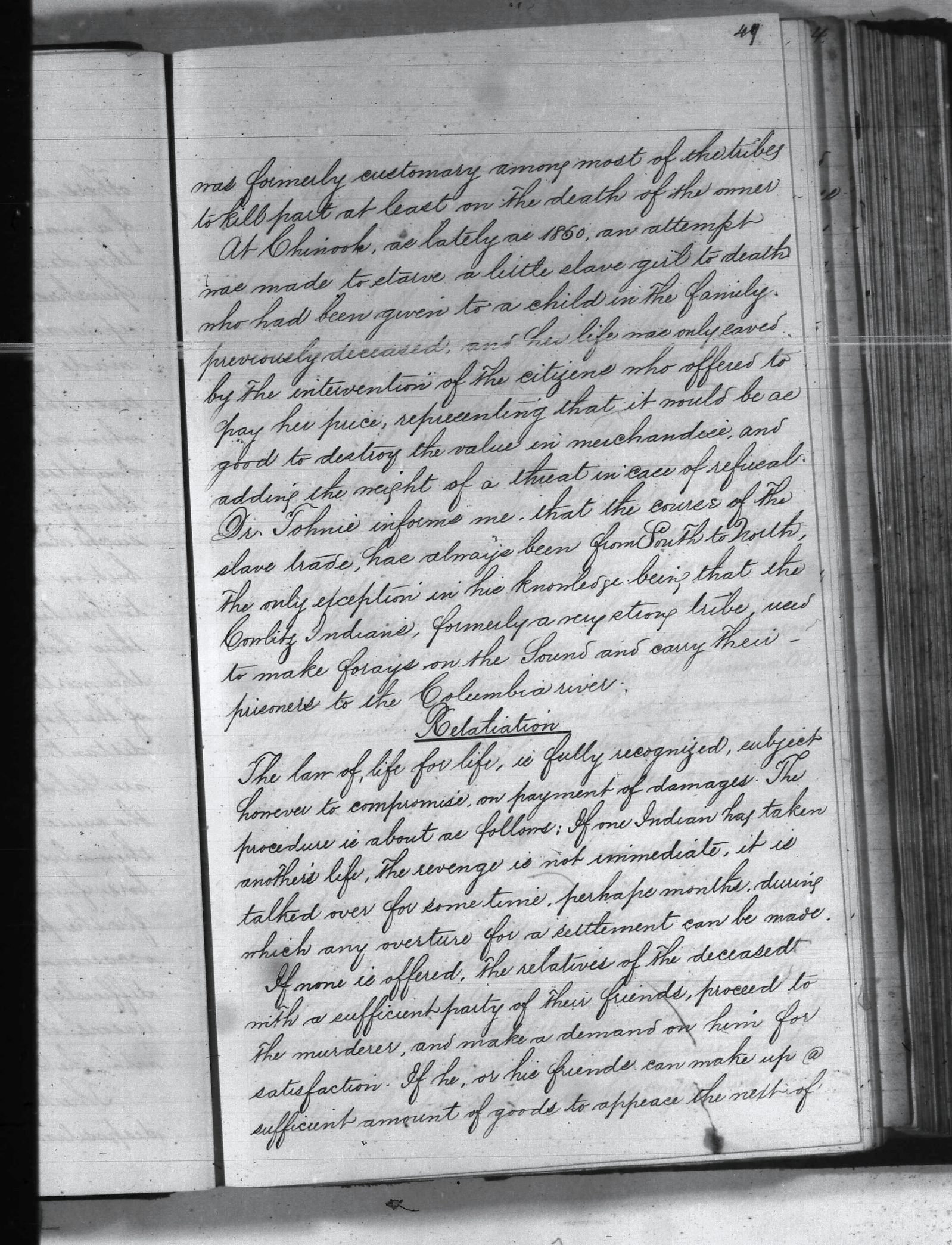 FRAME 1687
 FRAME 1688
 FRAME 1689
 FRAME 1690
 FRAME 1691
 FRAME 1692
 FRAME 1693
 FRAME 1694
 FRAME 1695
 FRAME 1696
 FRAME 1697
 FRAME 1698
 FRAME 1699
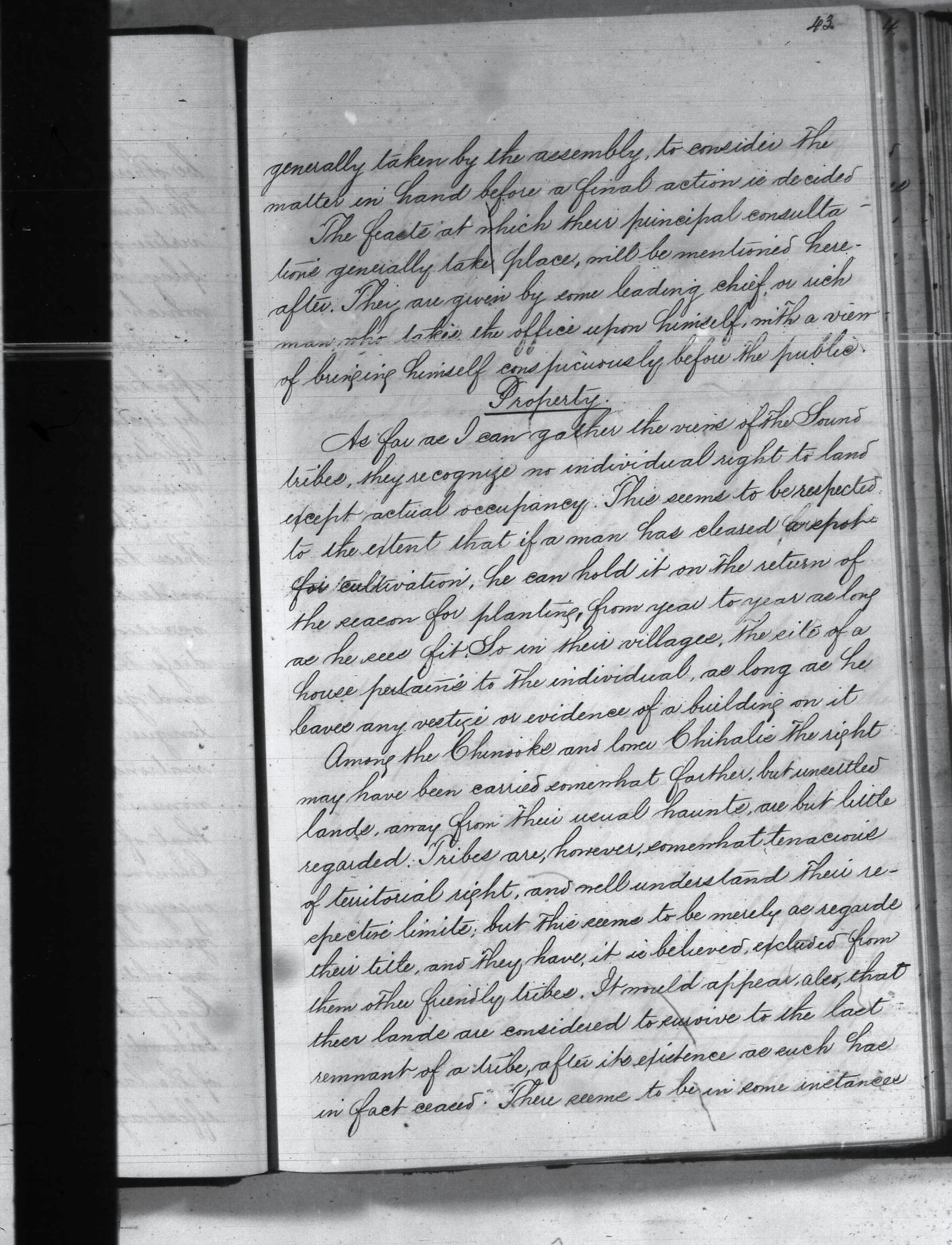
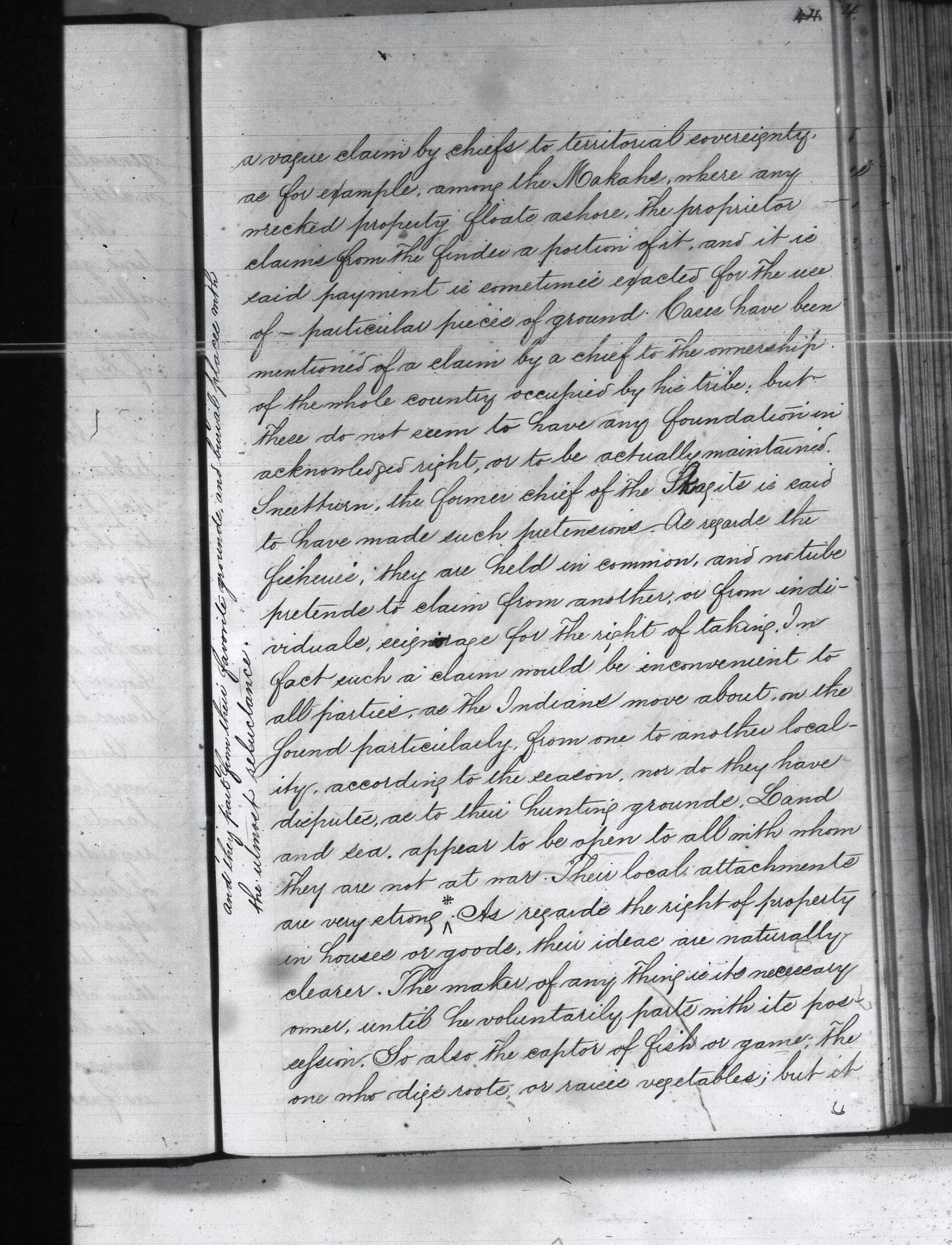
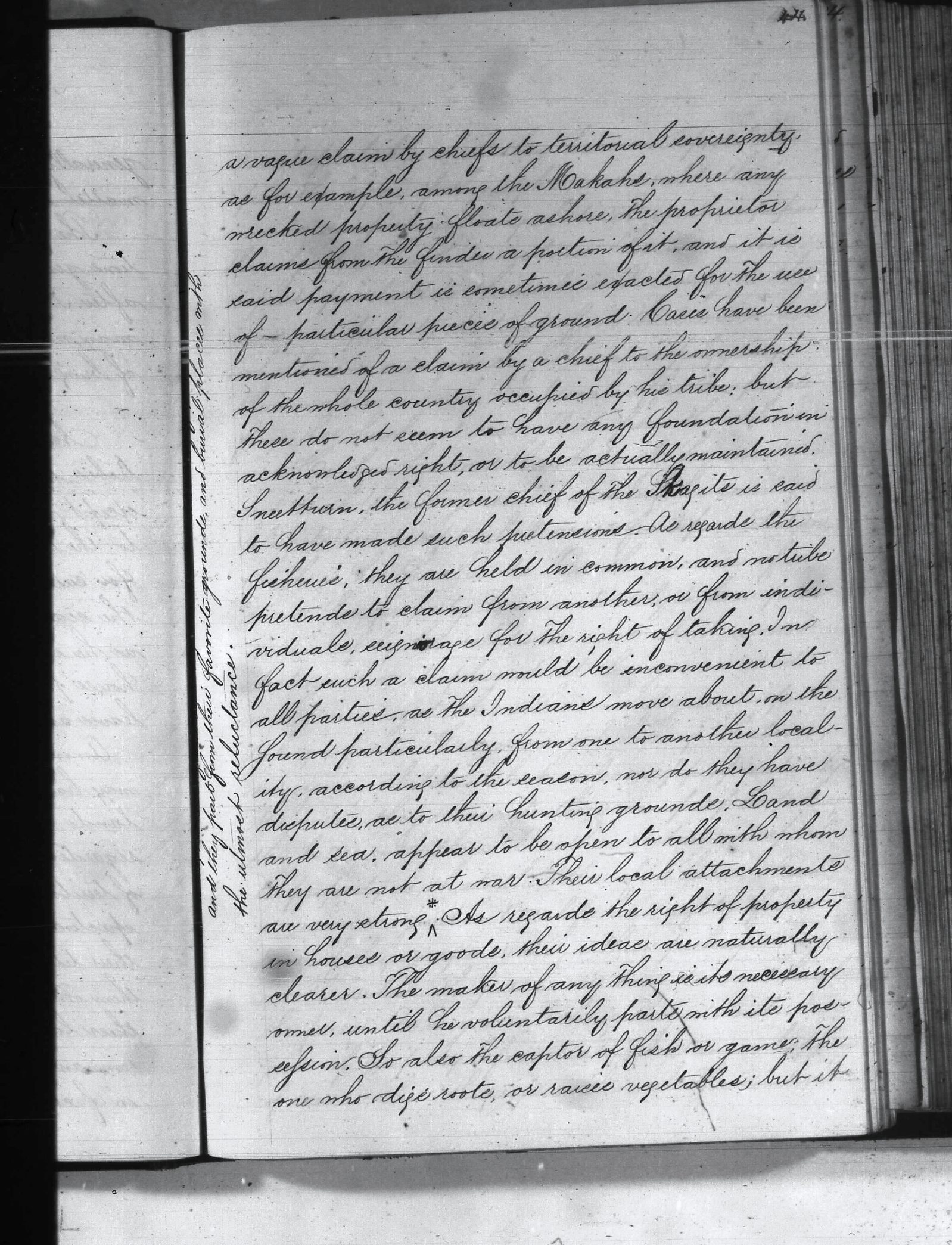
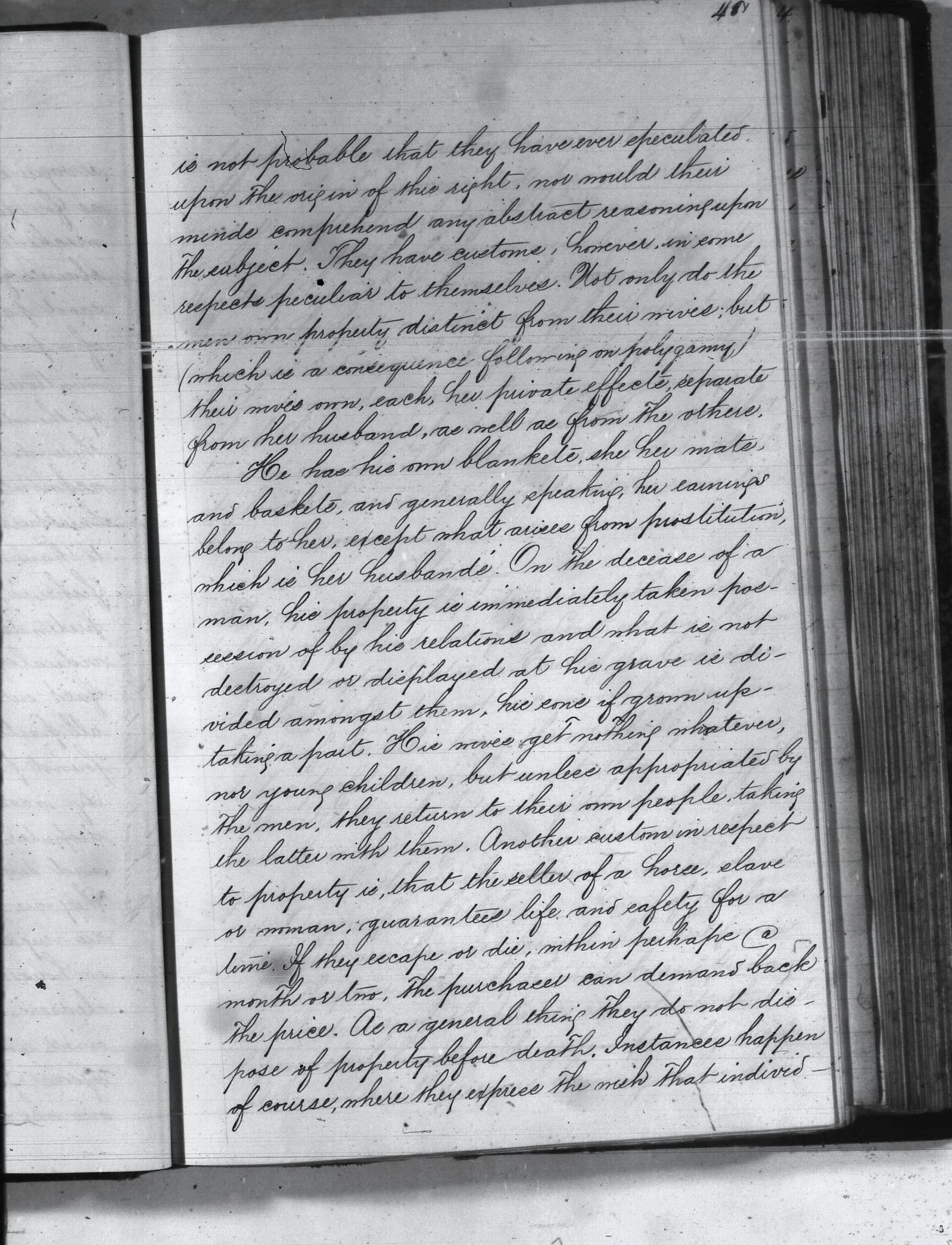
Notebook p.45: property rights, wives' separate effects, division at death
n.d. (c.1854-57?)
 FRAME 1700
 FRAME 1701
 FRAME 1702
 FRAME 1703
 FRAME 1704
 FRAME 1705
 FRAME 1706
 FRAME 1707
 FRAME 1708
 FRAME 1709
 FRAME 1710
 FRAME 1711
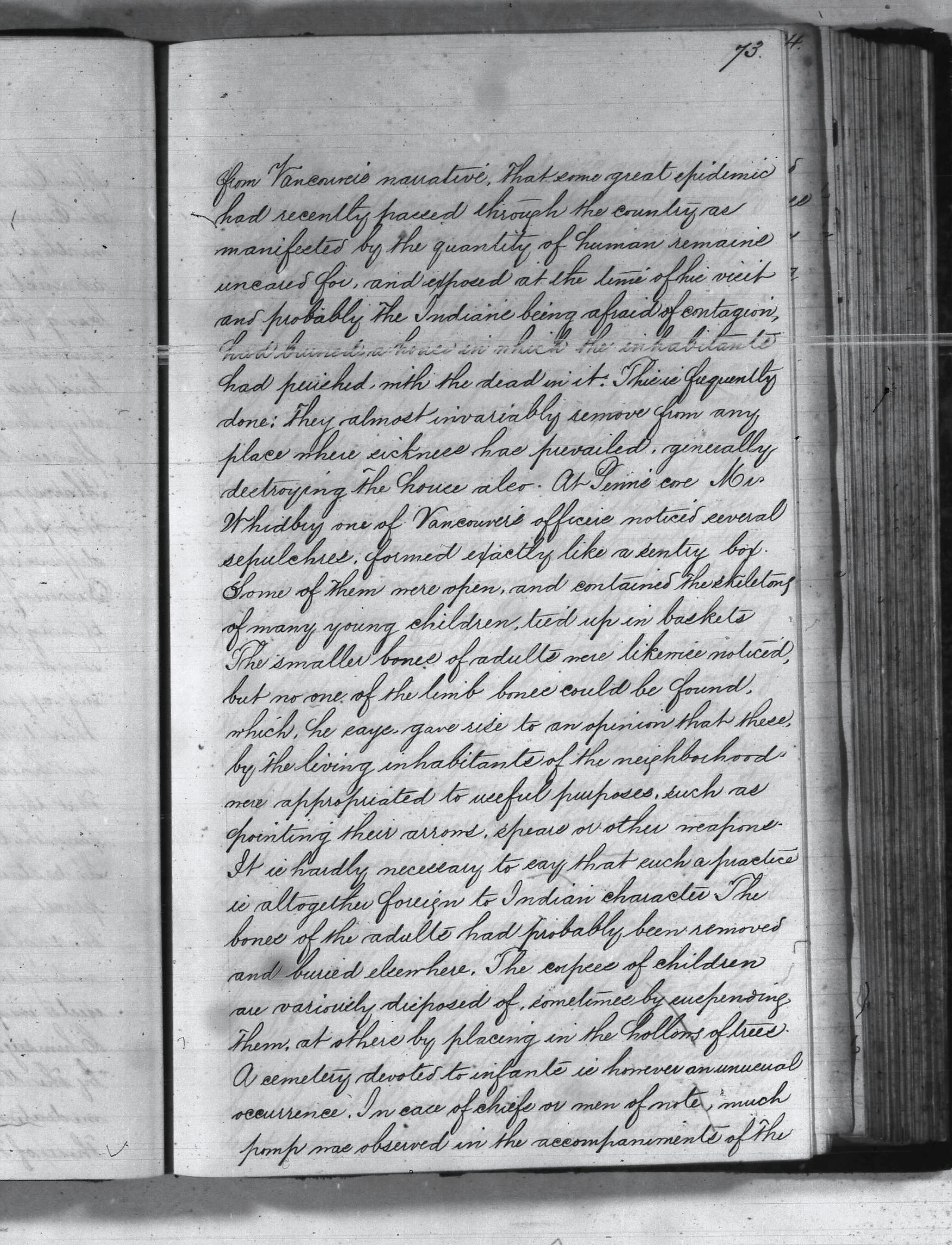 FRAME 1712
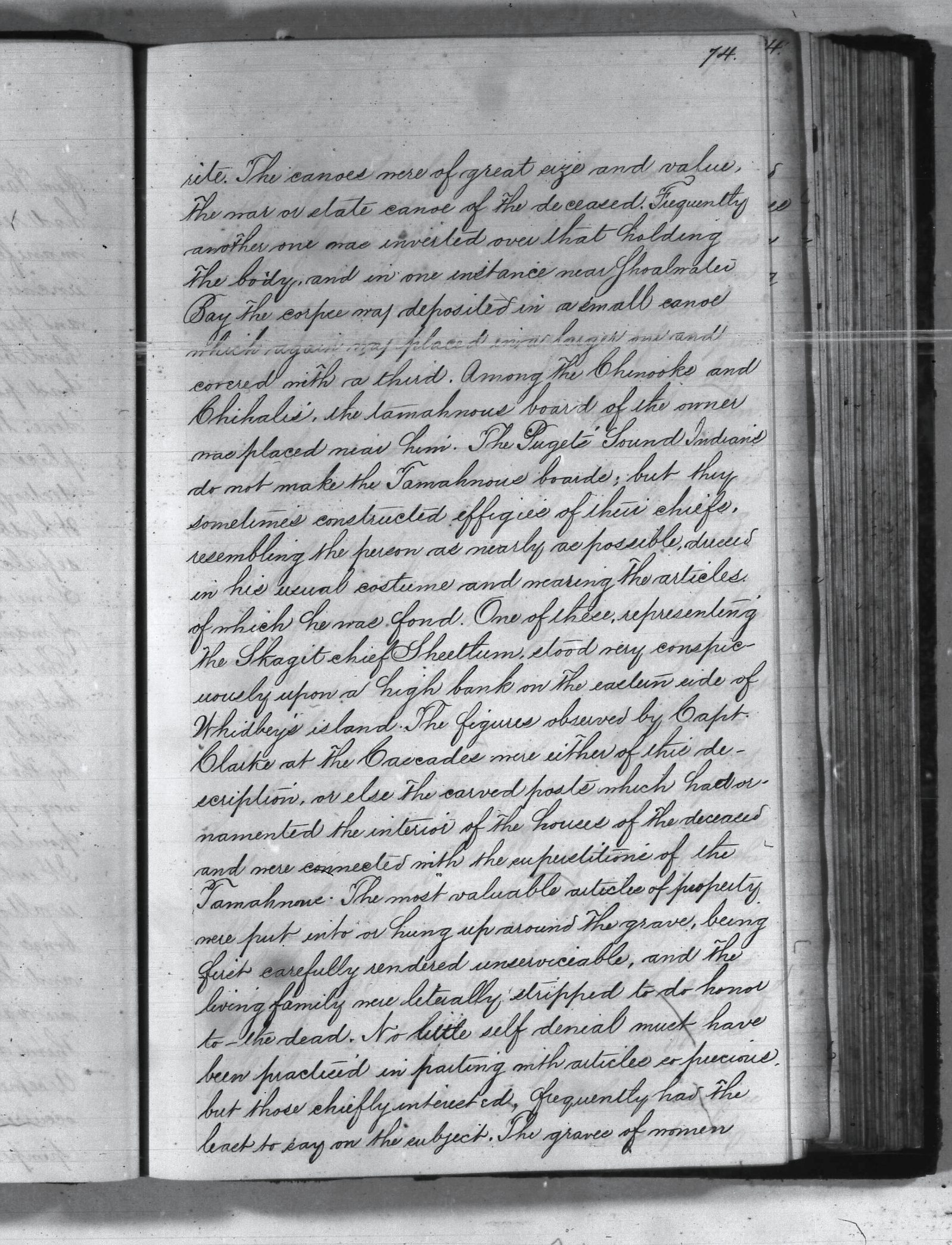 FRAME 1713
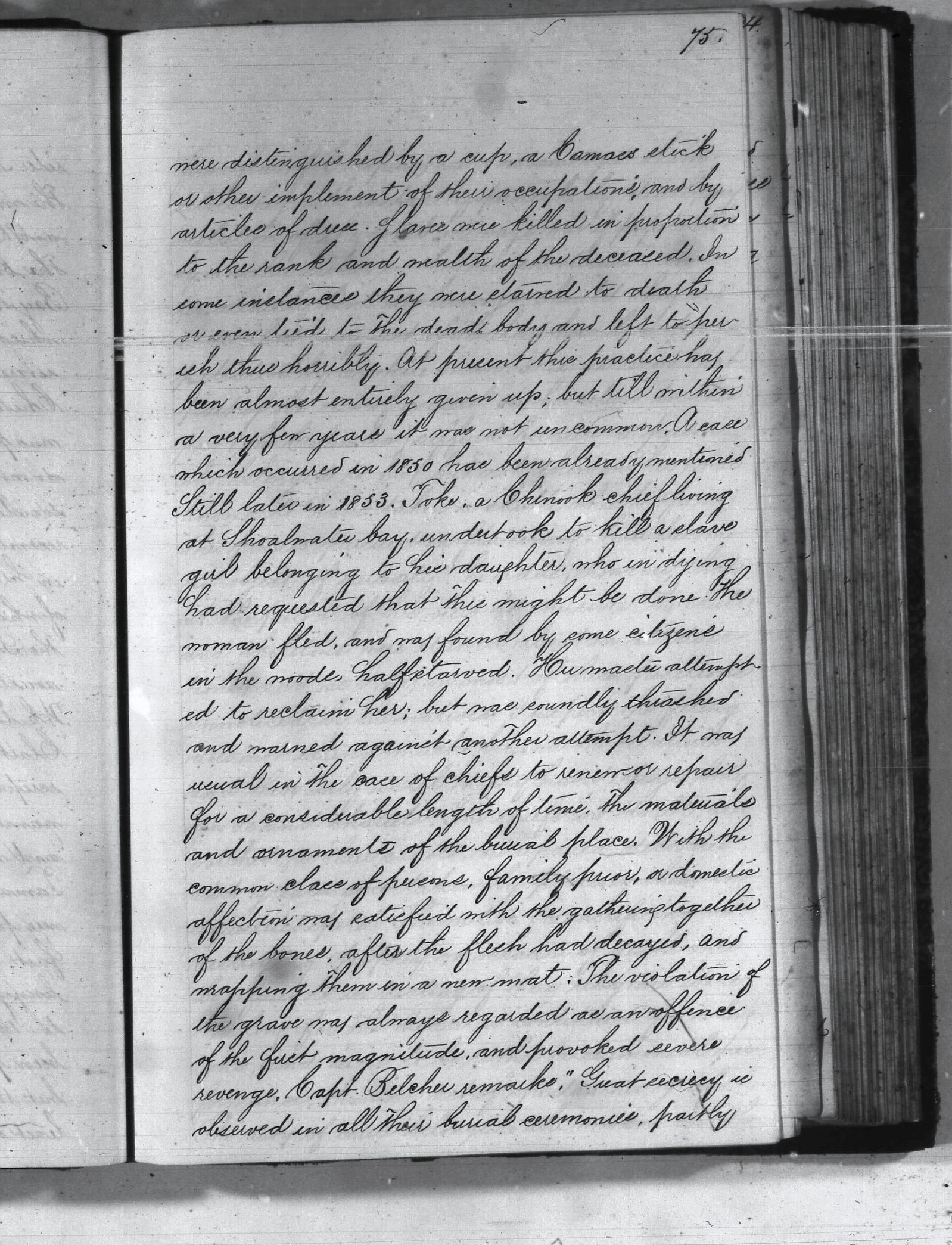 FRAME 1714
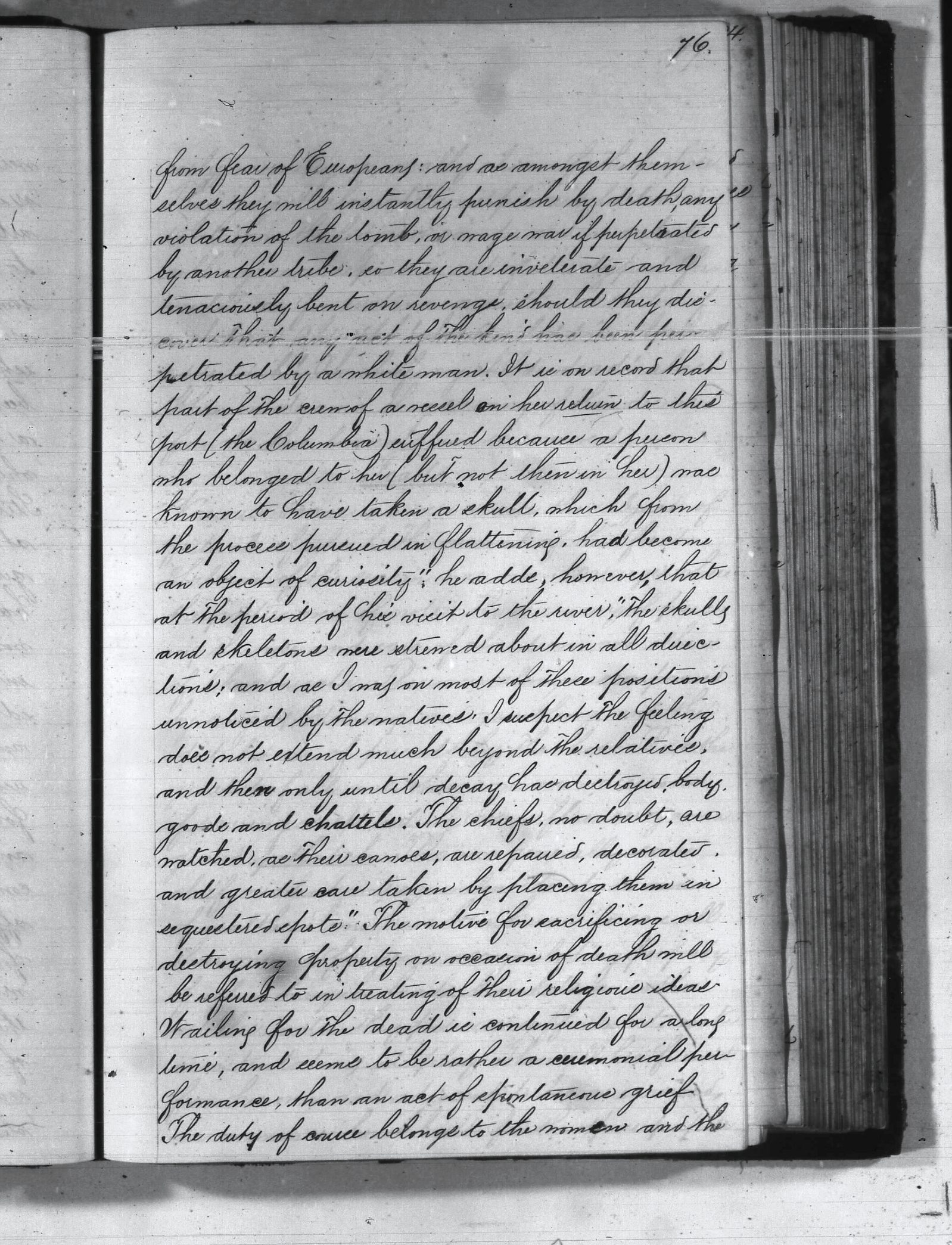 FRAME 1715
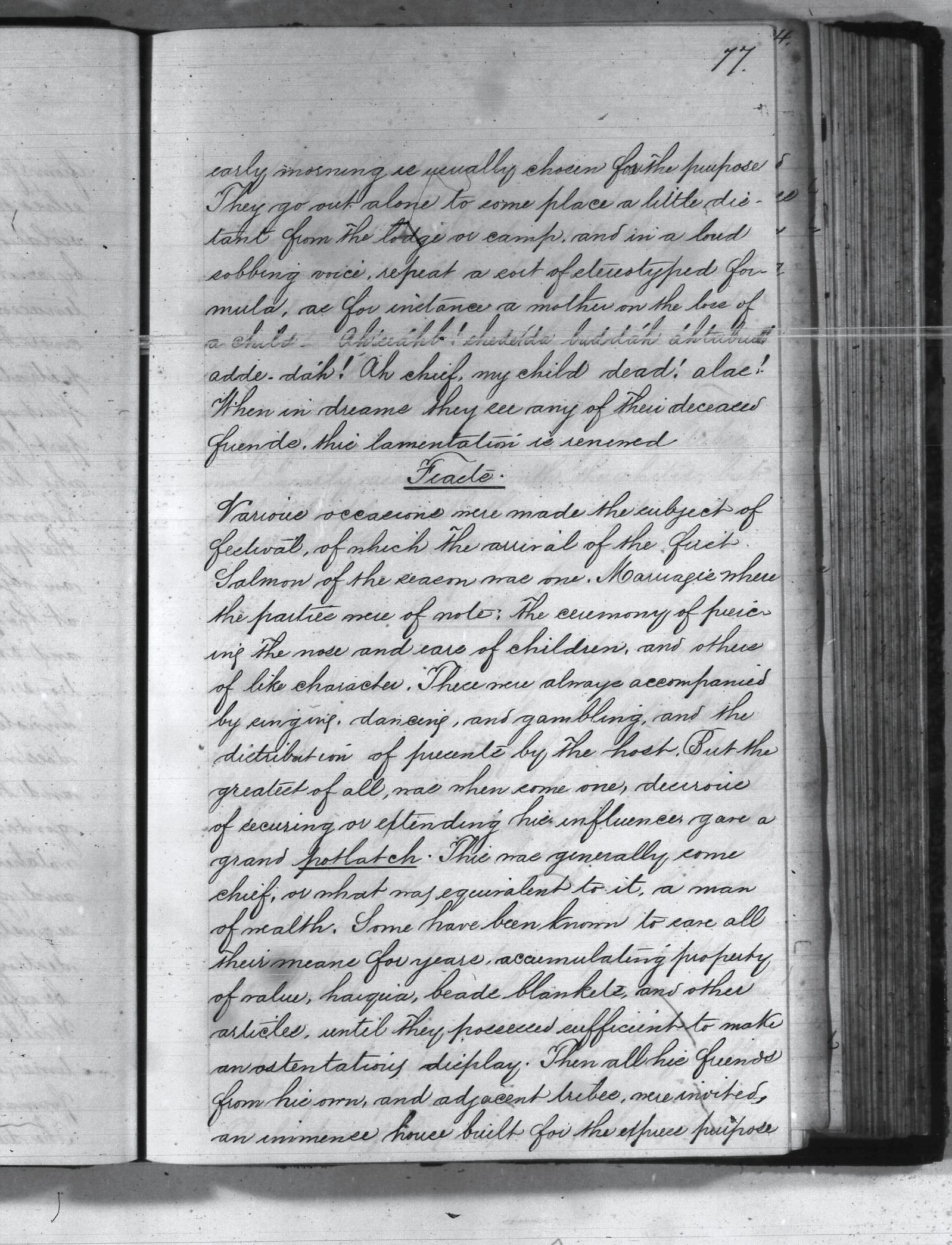 FRAME 1716
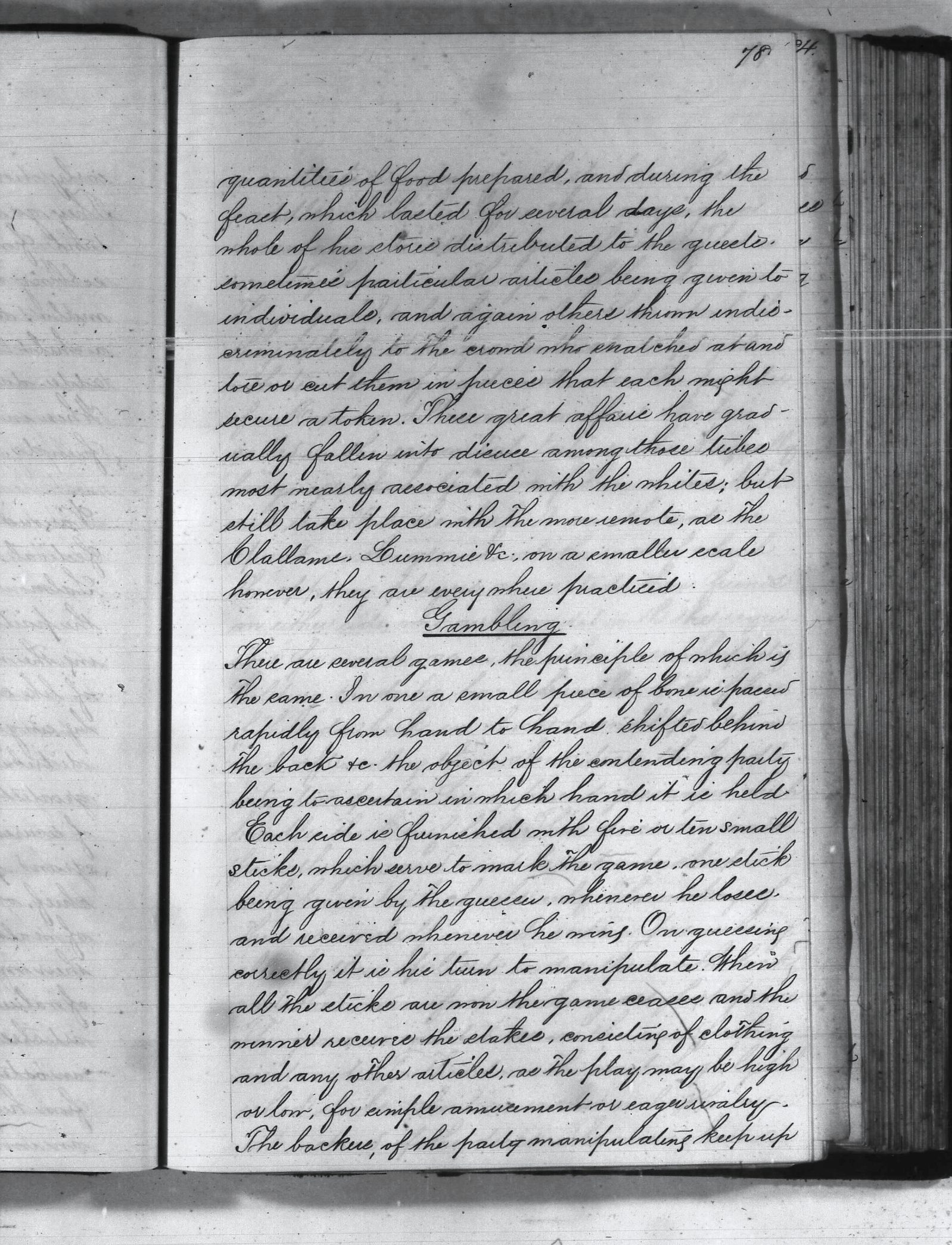 FRAME 1717
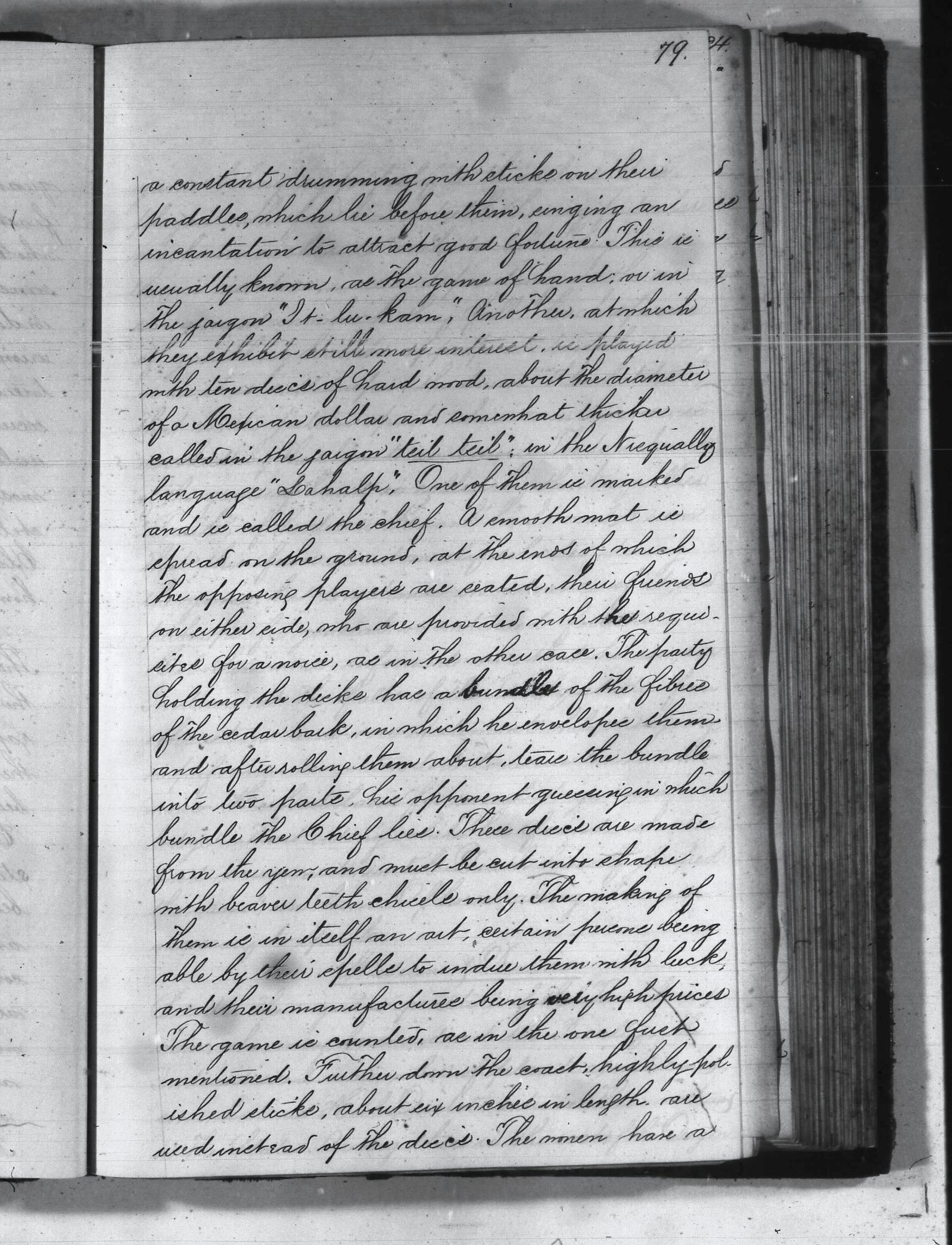 FRAME 1718
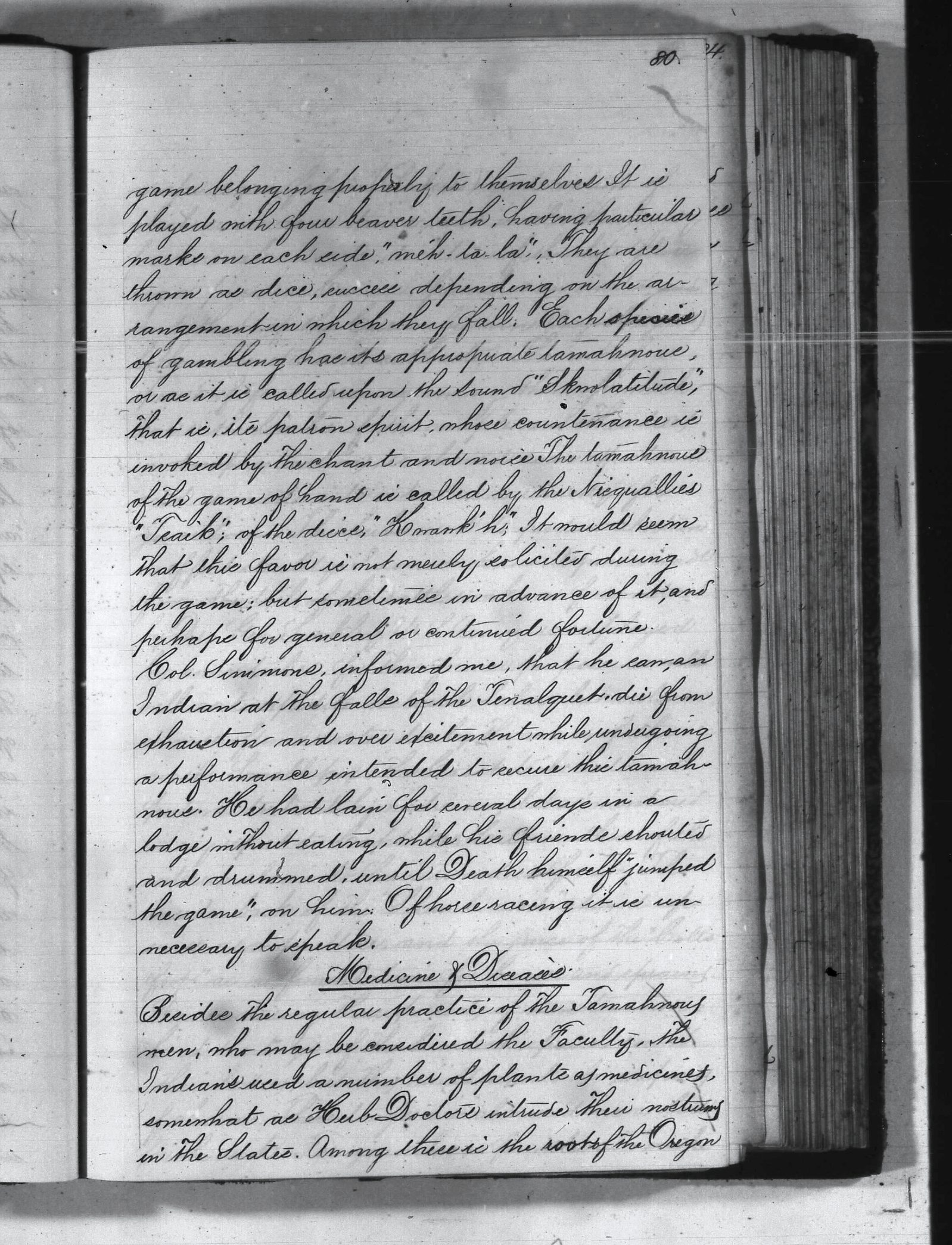 FRAME 1719
 FRAME 1720
 FRAME 1721
 FRAME 1722
 FRAME 1723
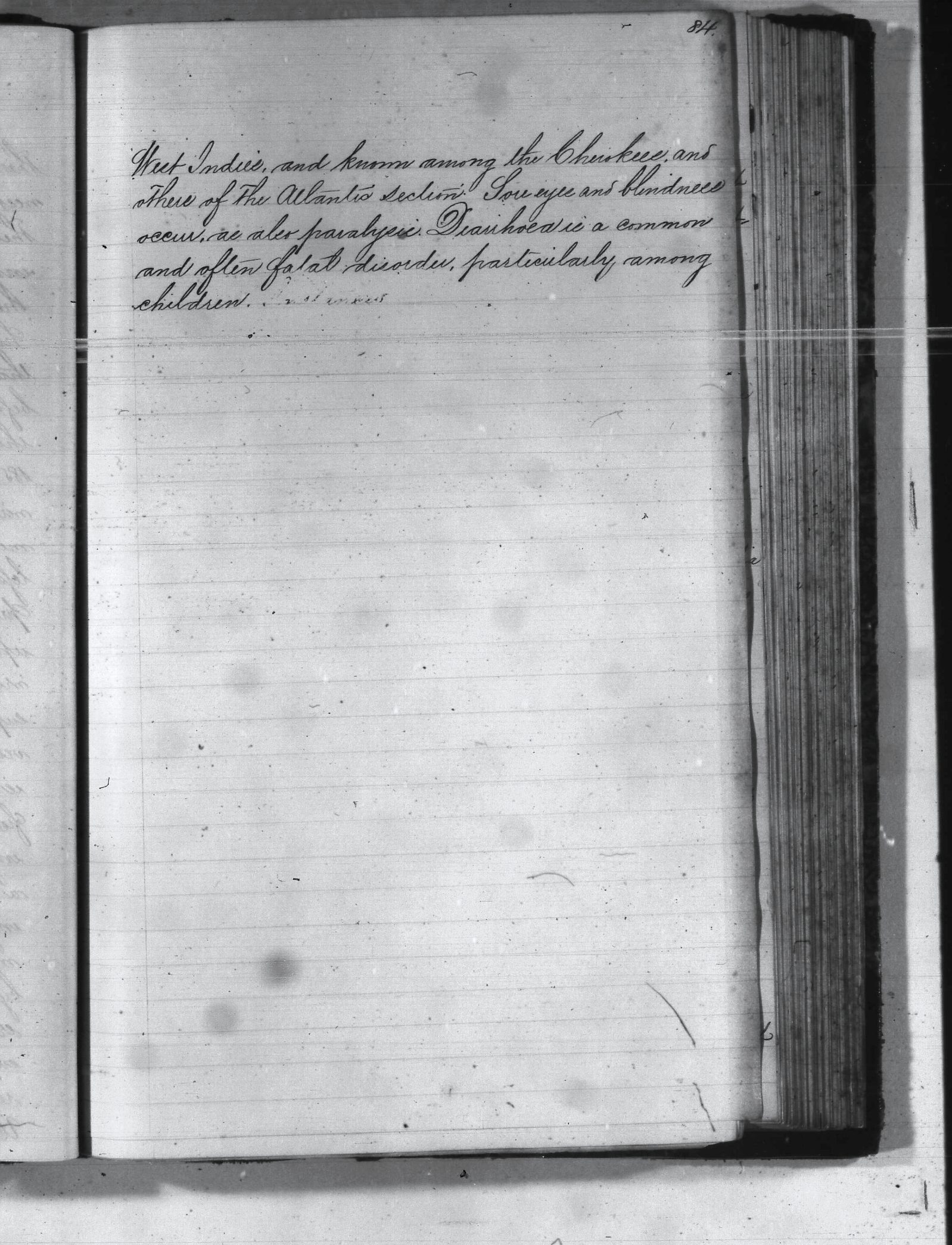 FRAME 1724
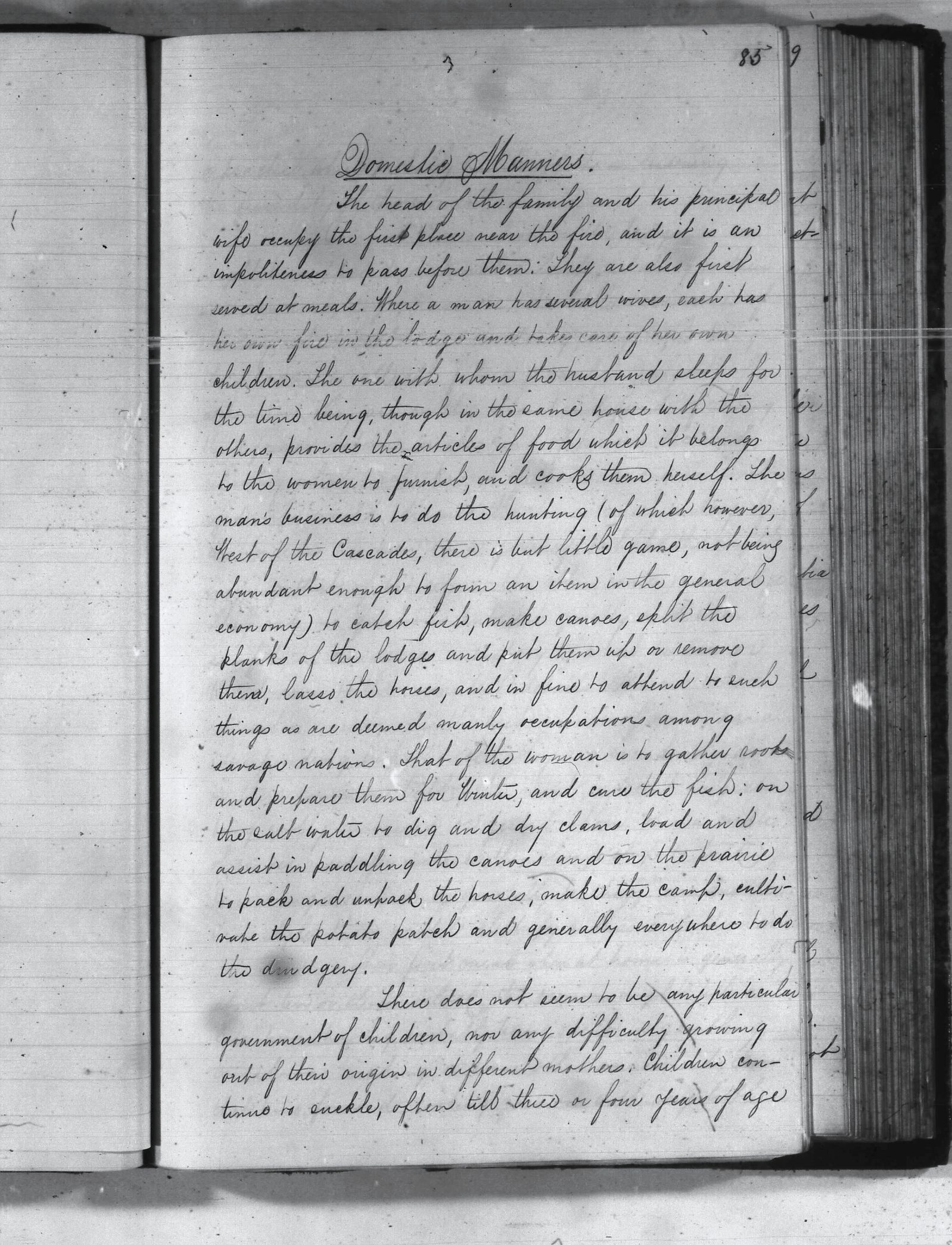 FRAME 1725
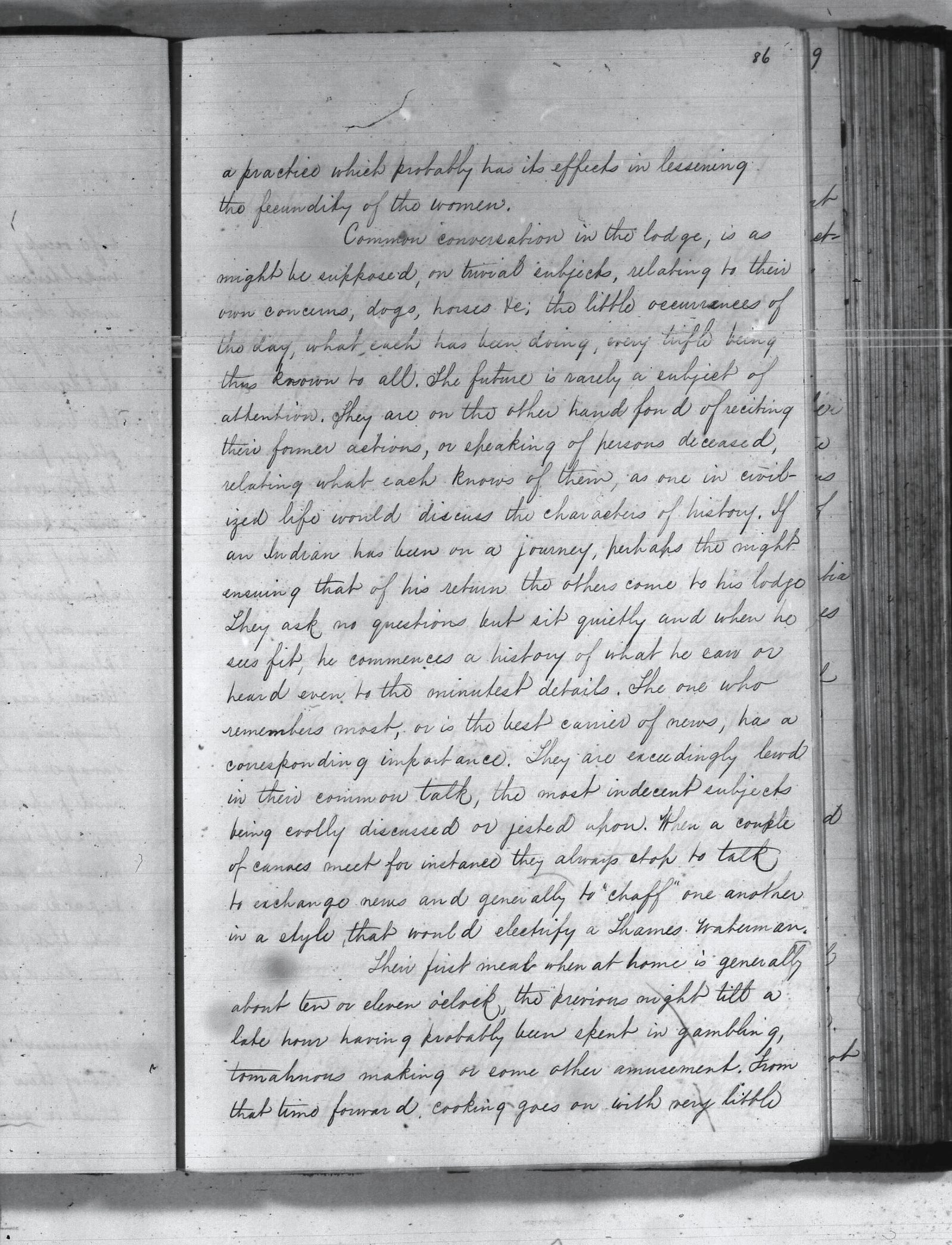 FRAME 1726
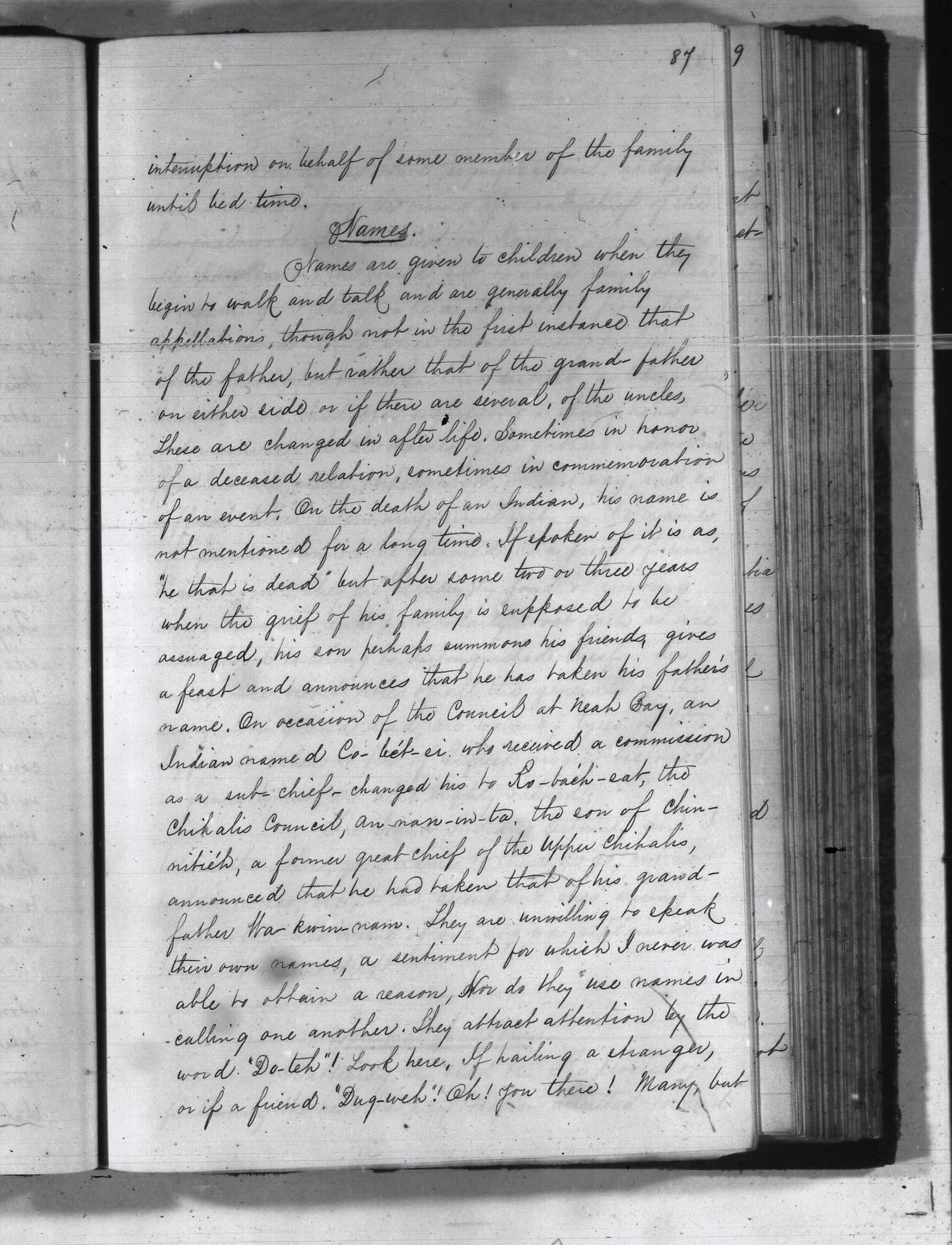 FRAME 1727
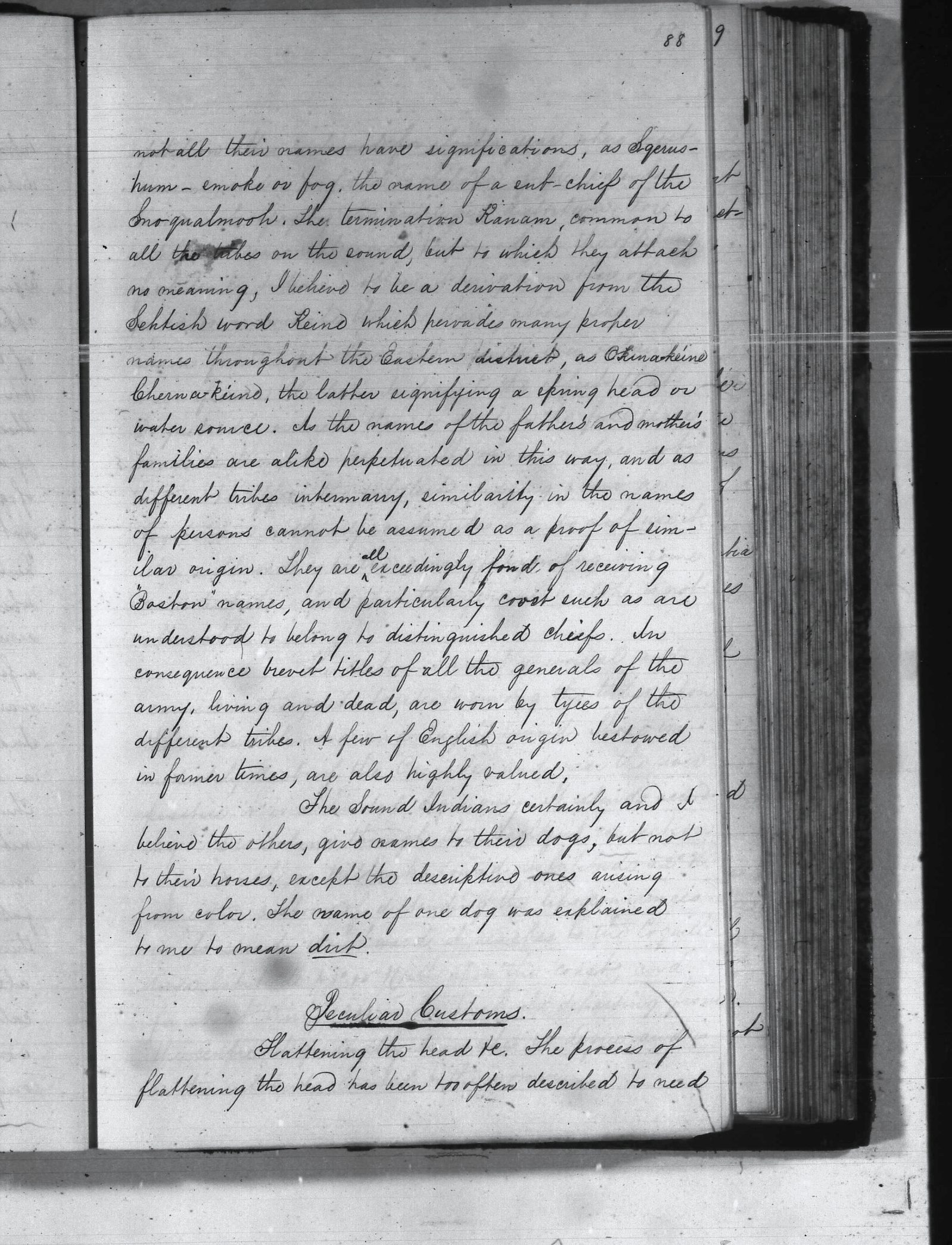 FRAME 1728
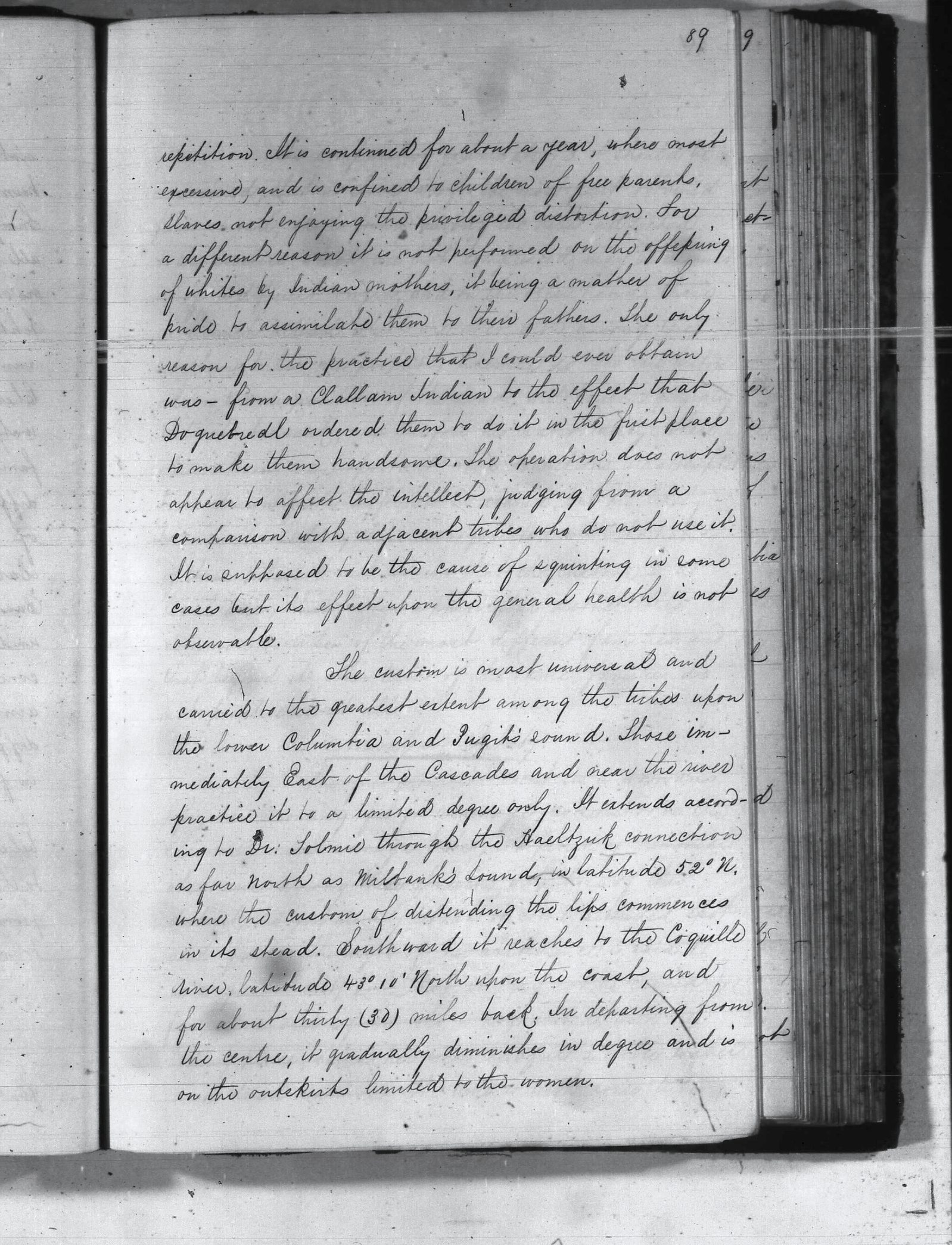 FRAME 1729
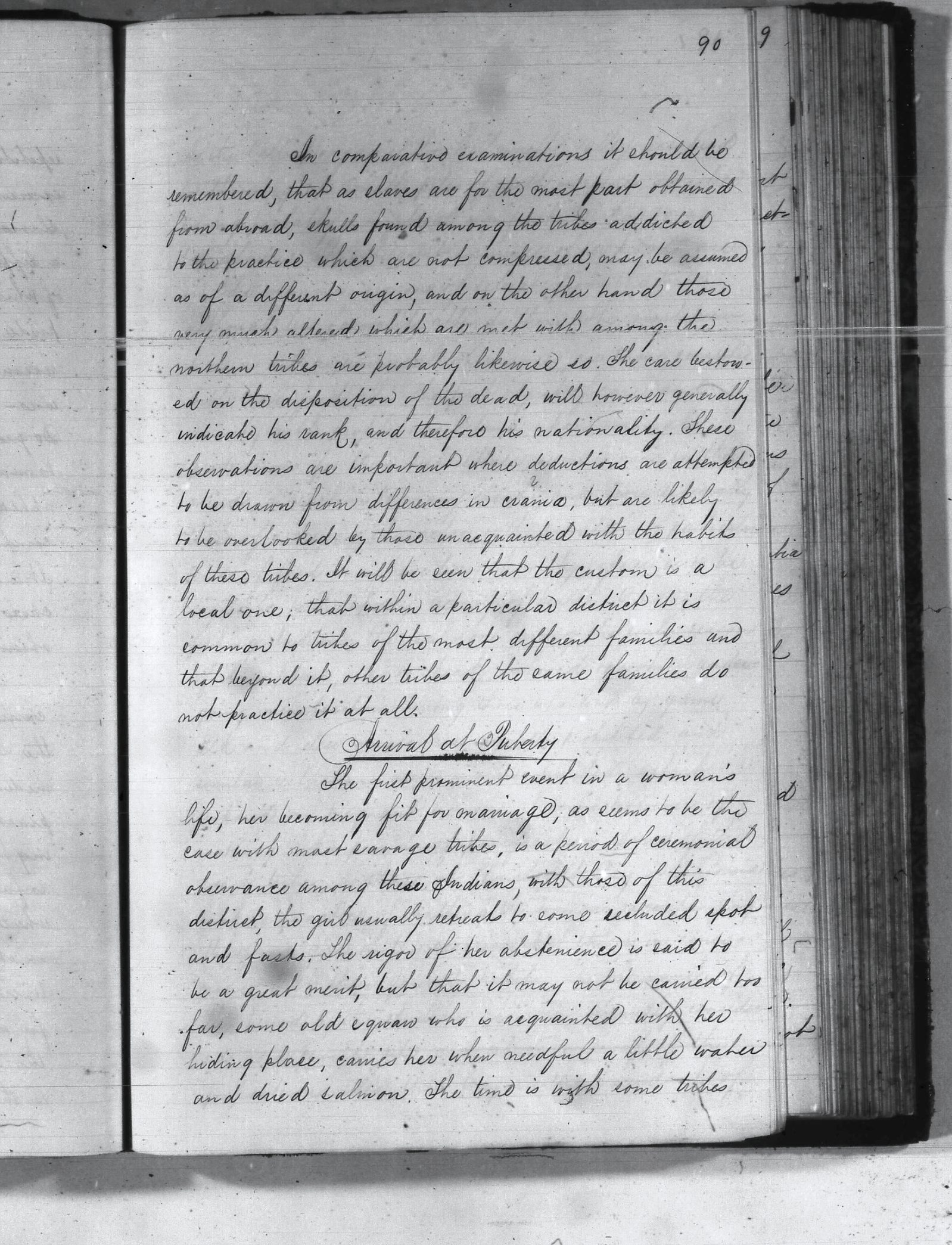 FRAME 1730
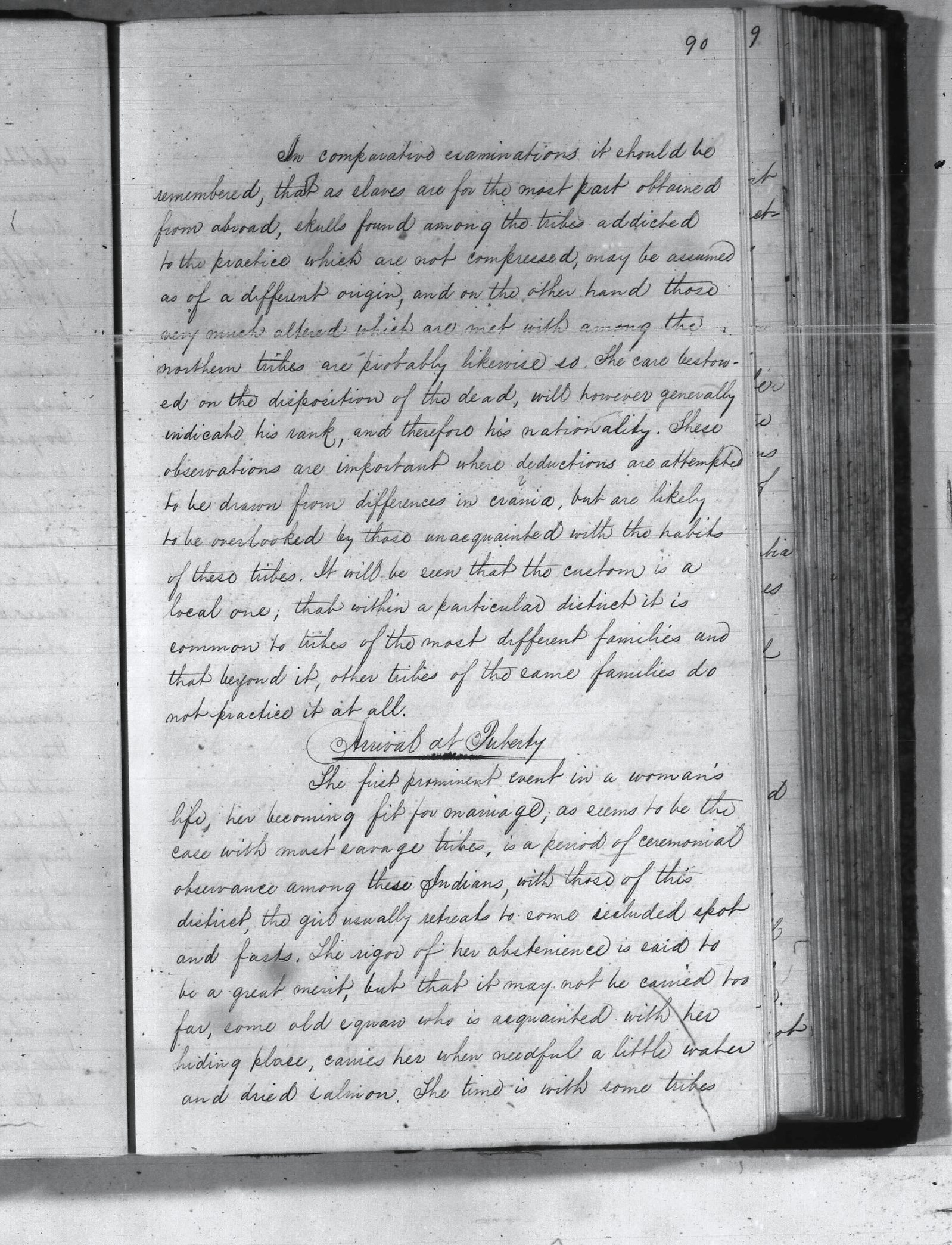 FRAME 1731
 FRAME 1732
 FRAME 1733
 FRAME 1734
 FRAME 1735
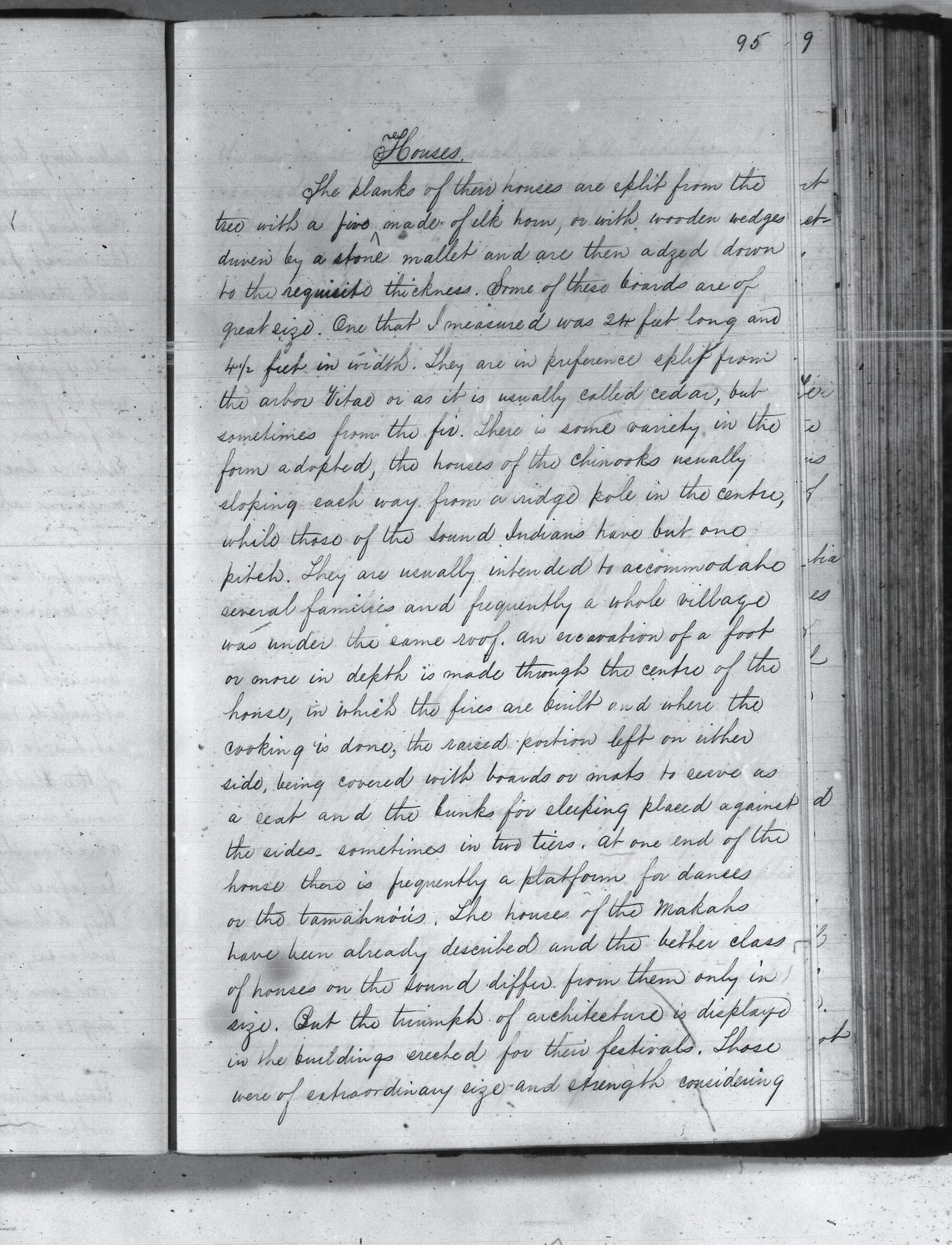 FRAME 1736
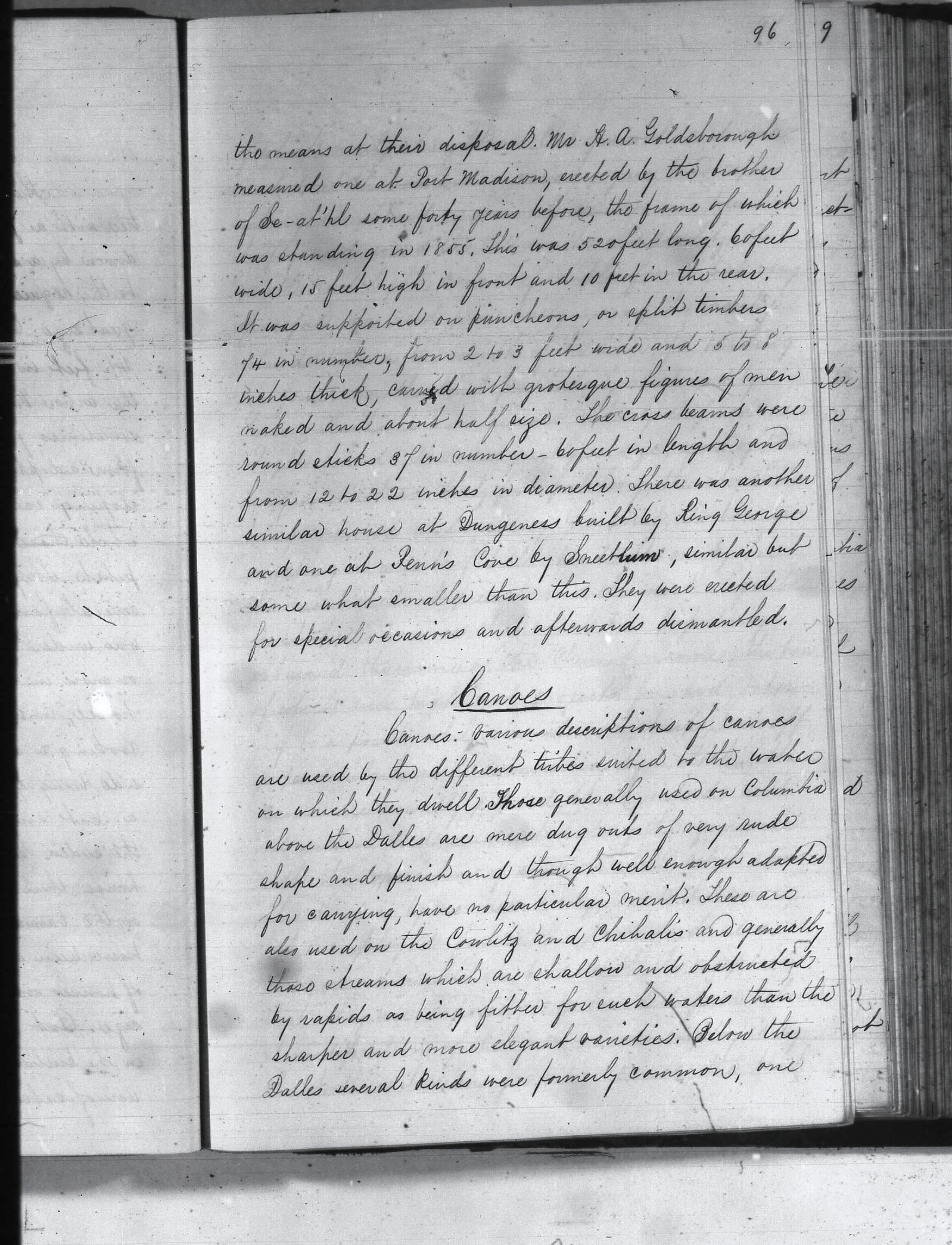 FRAME 1737
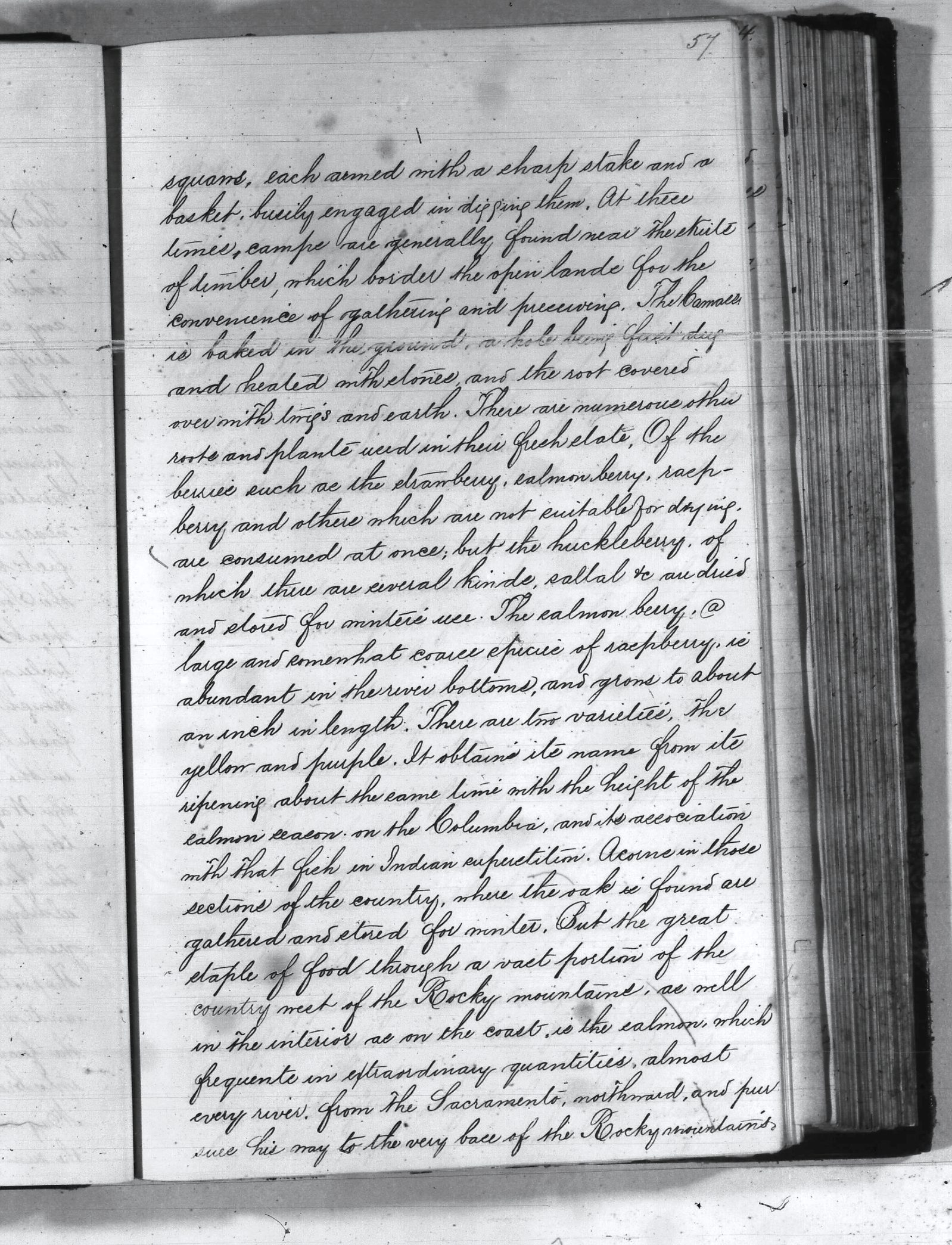
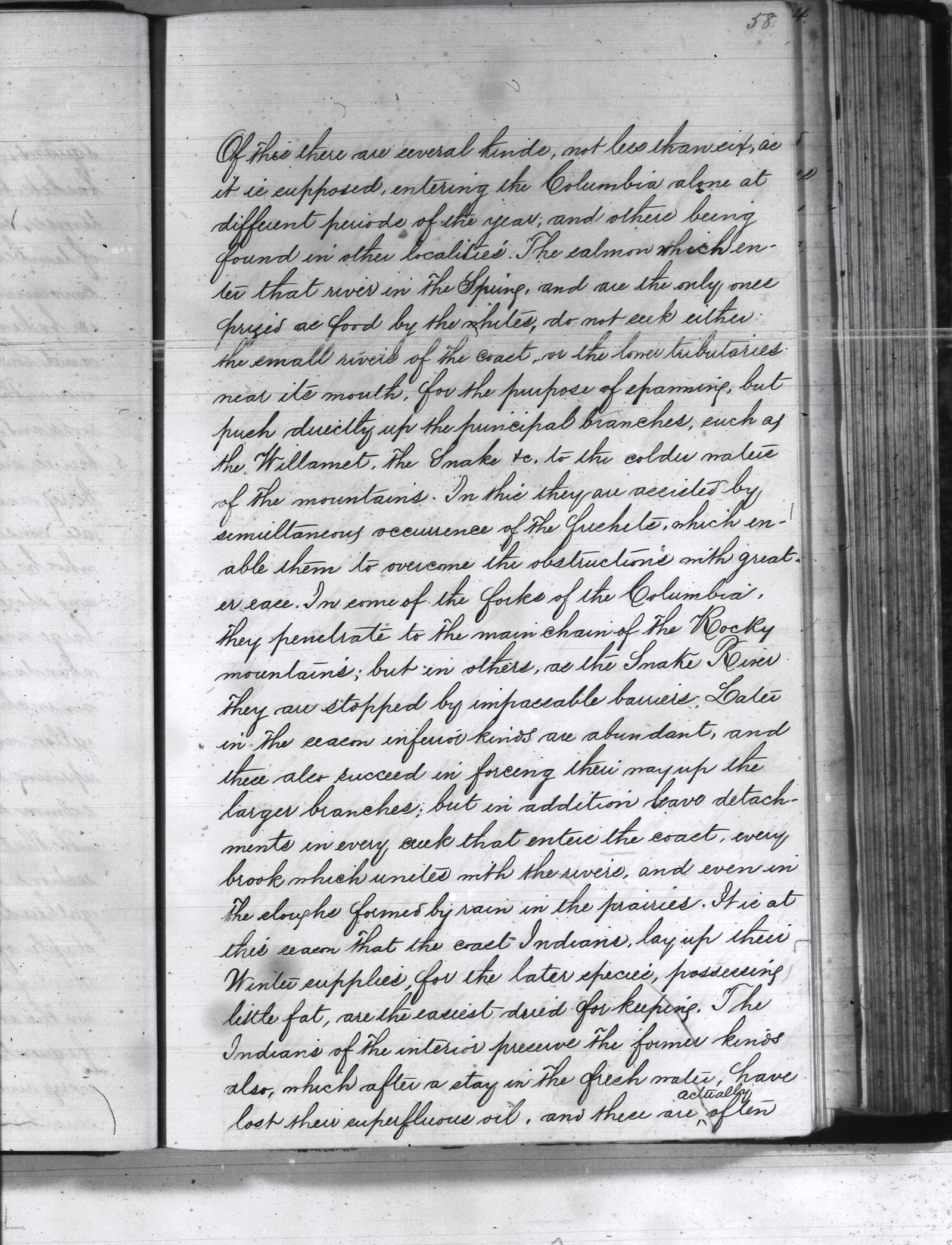
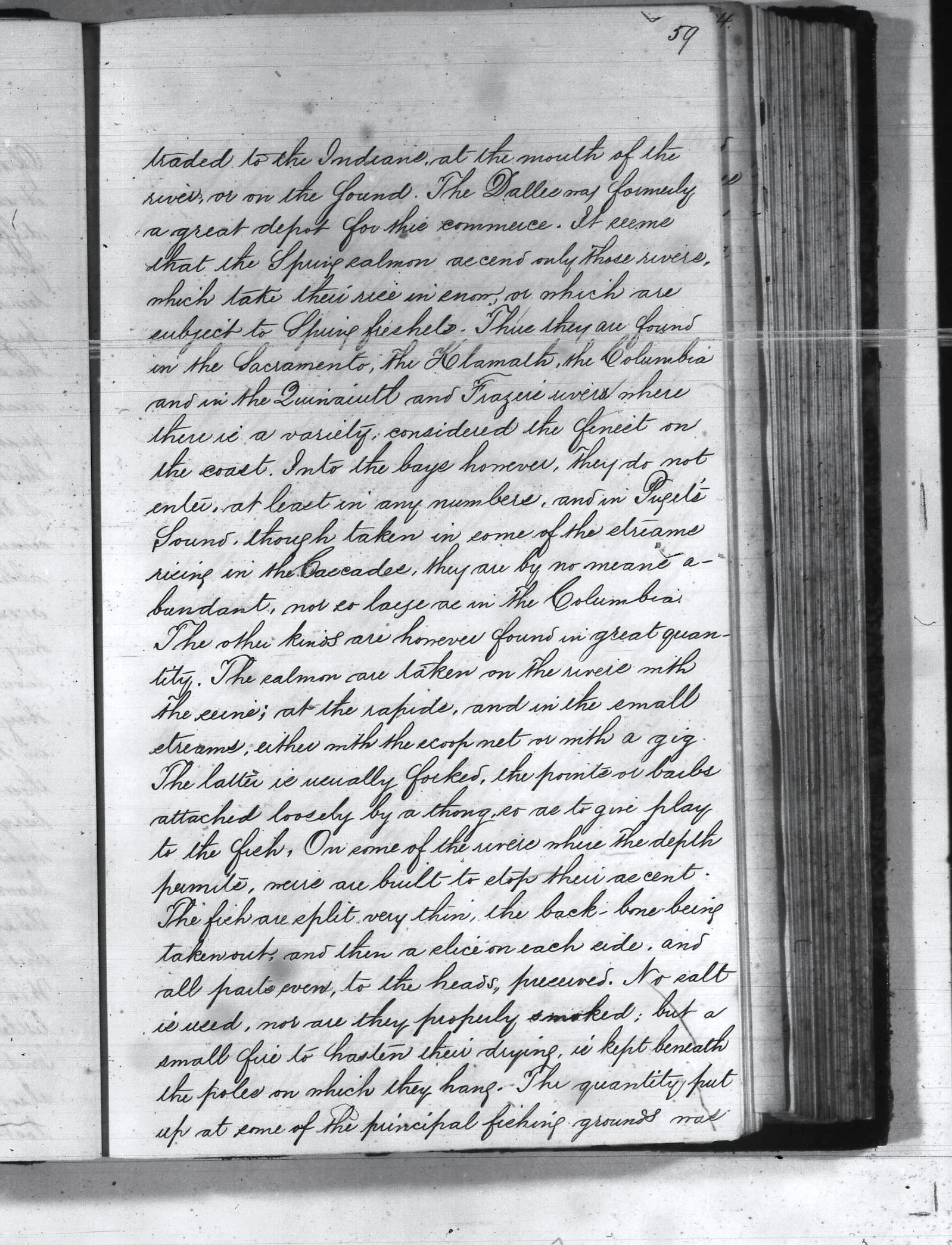
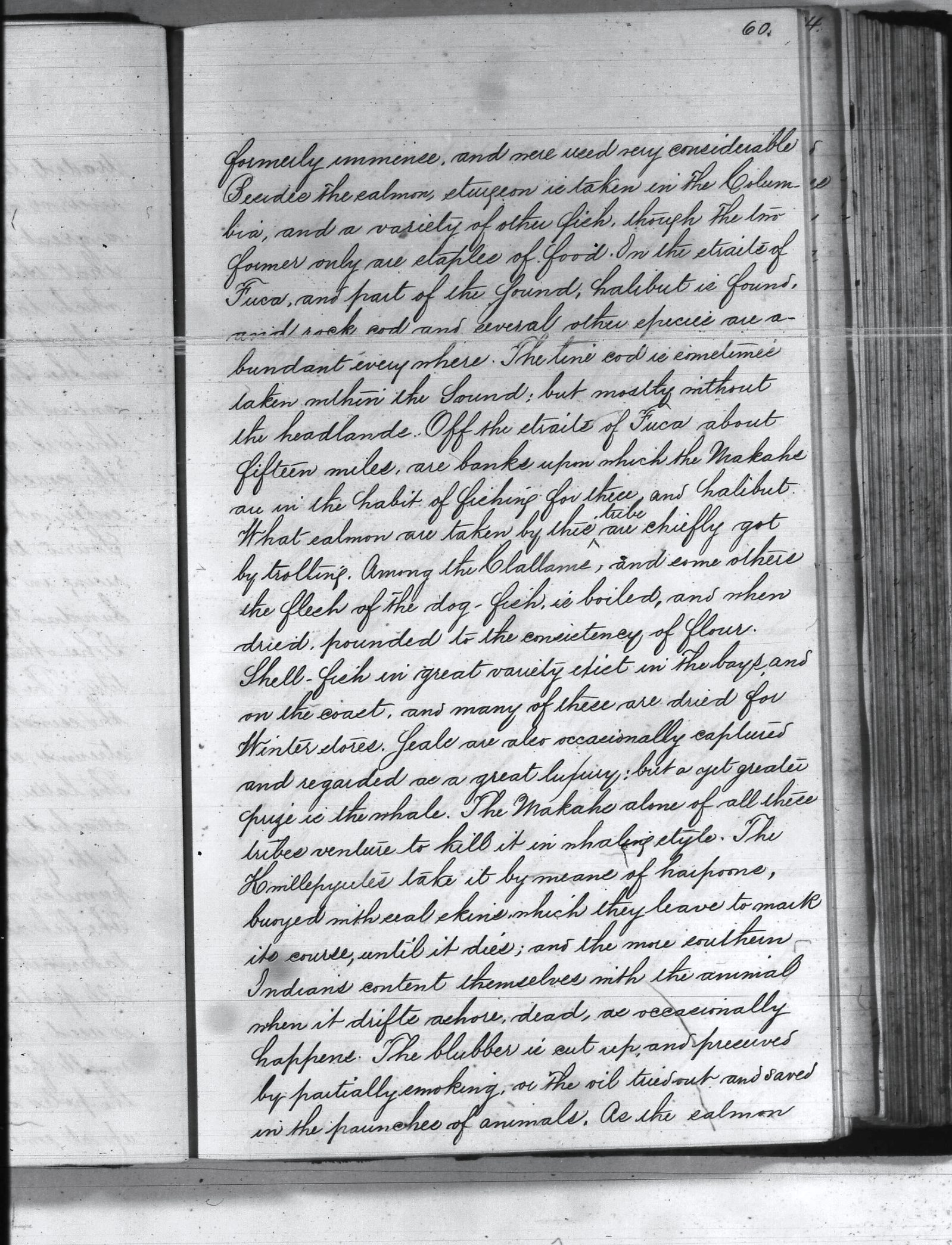
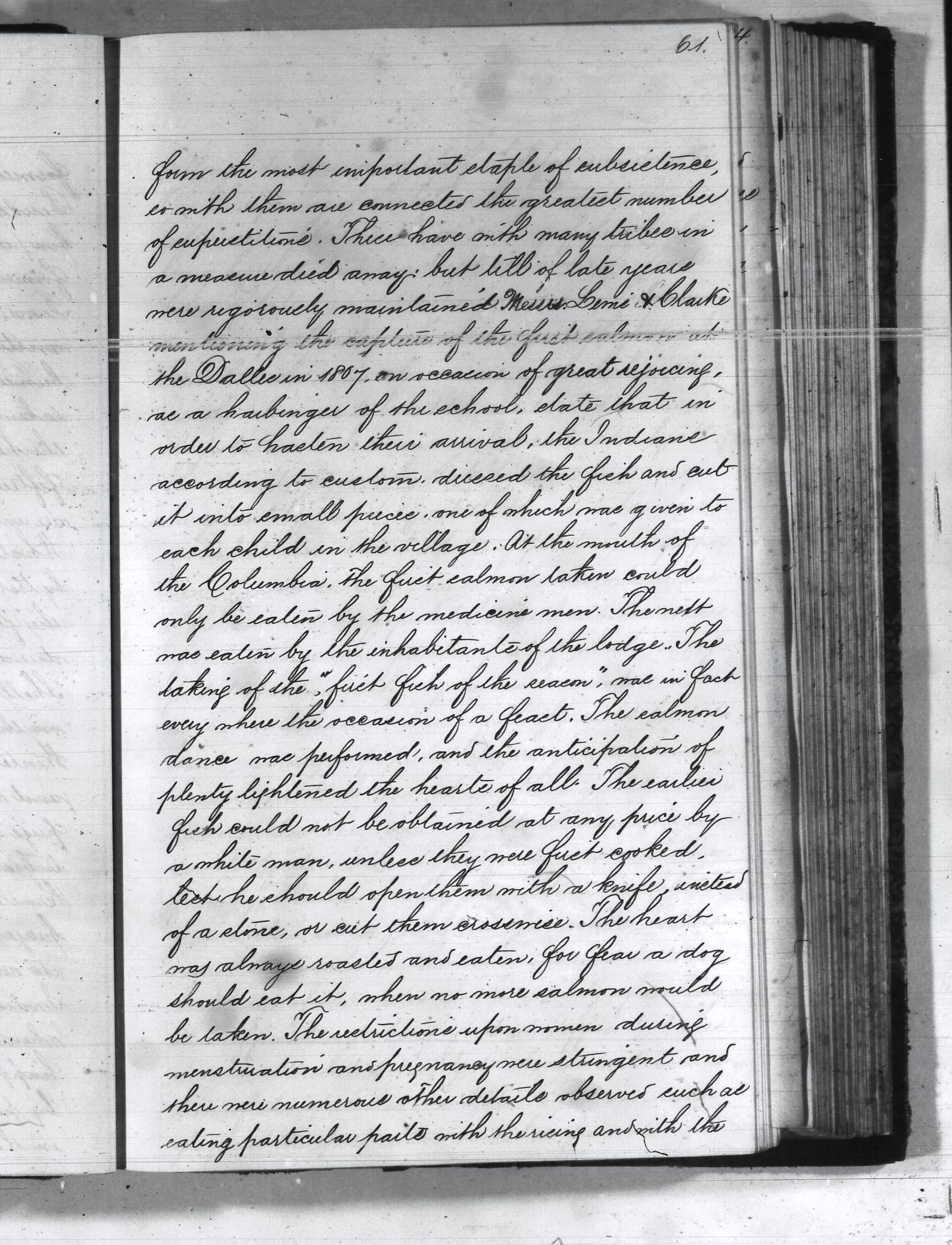
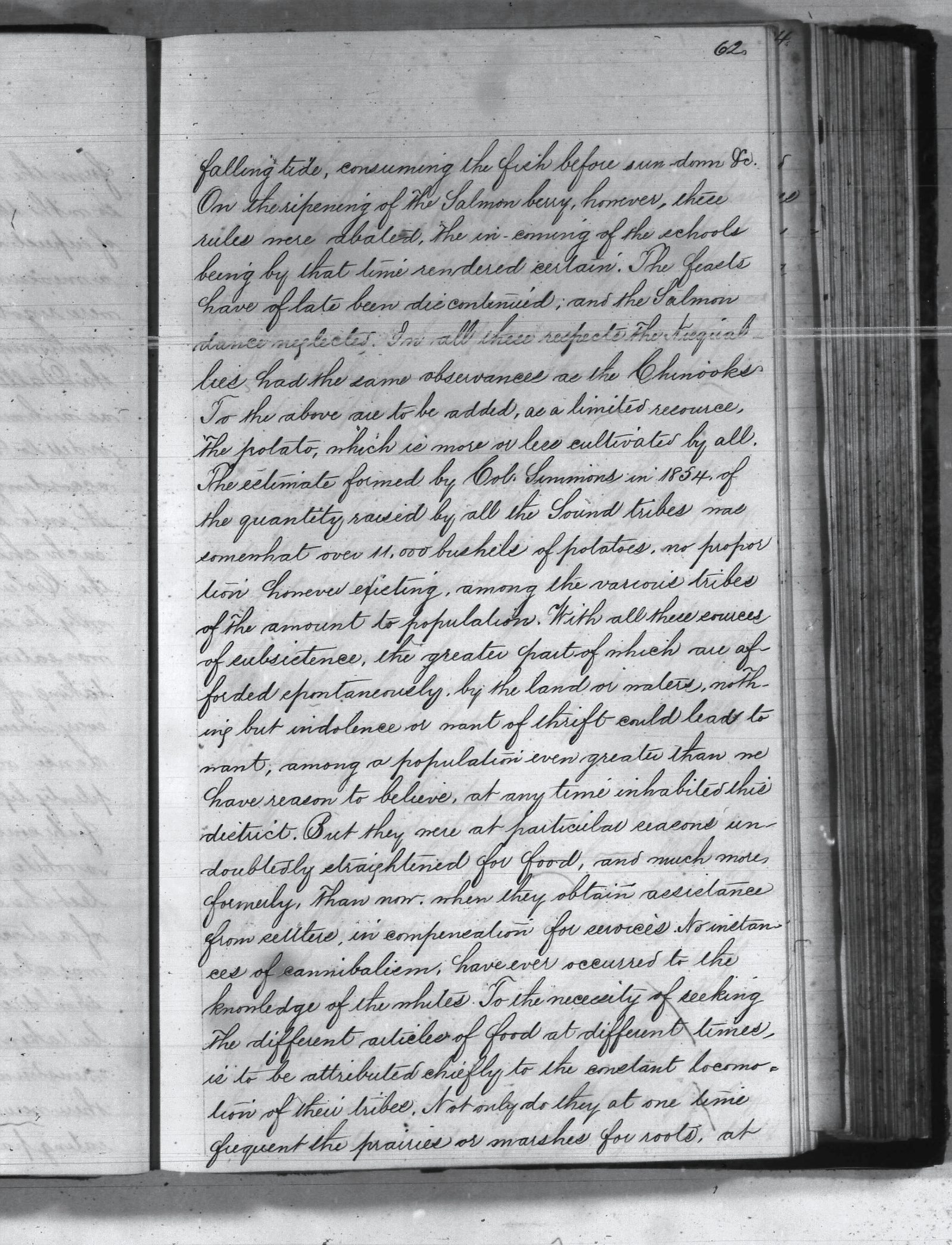
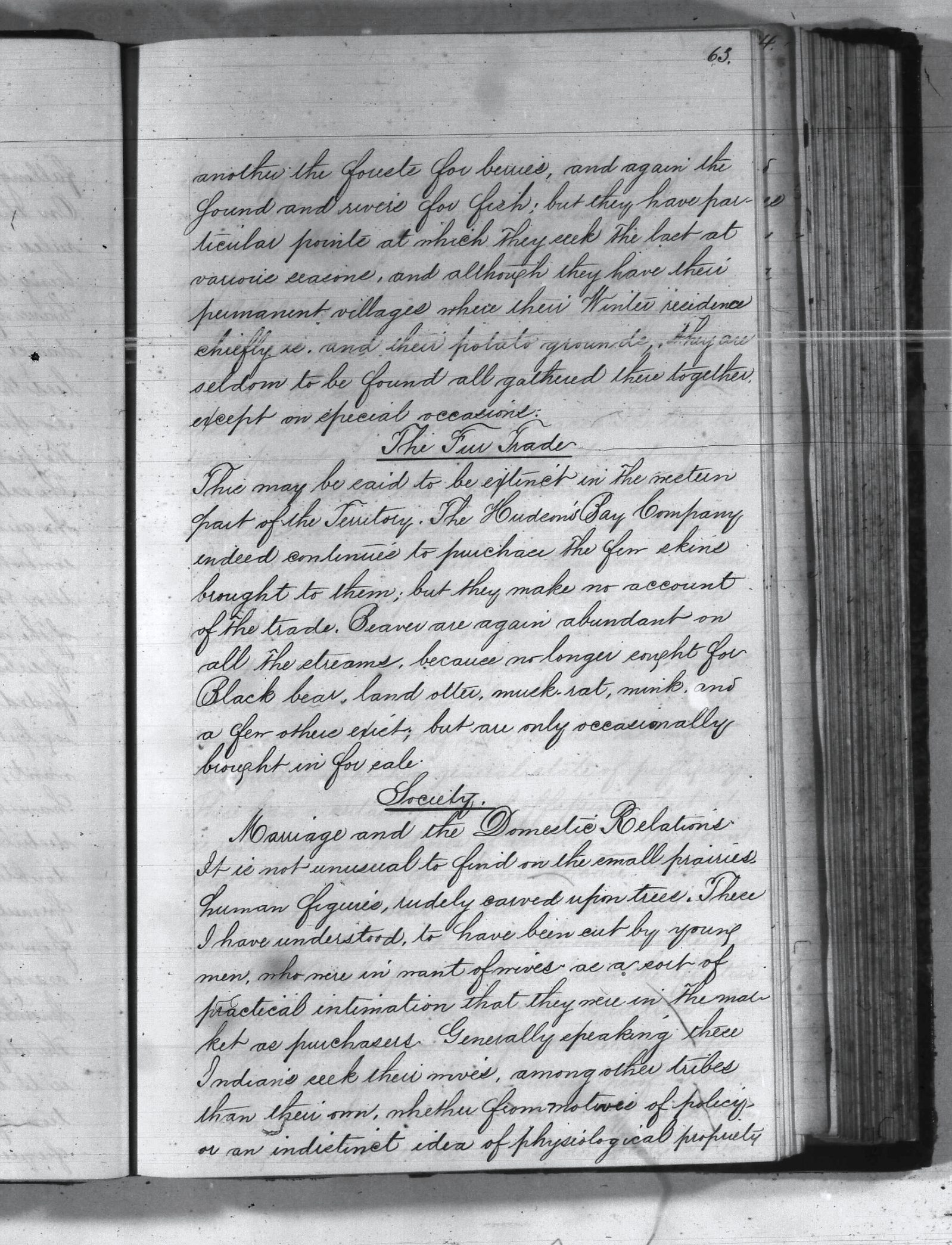
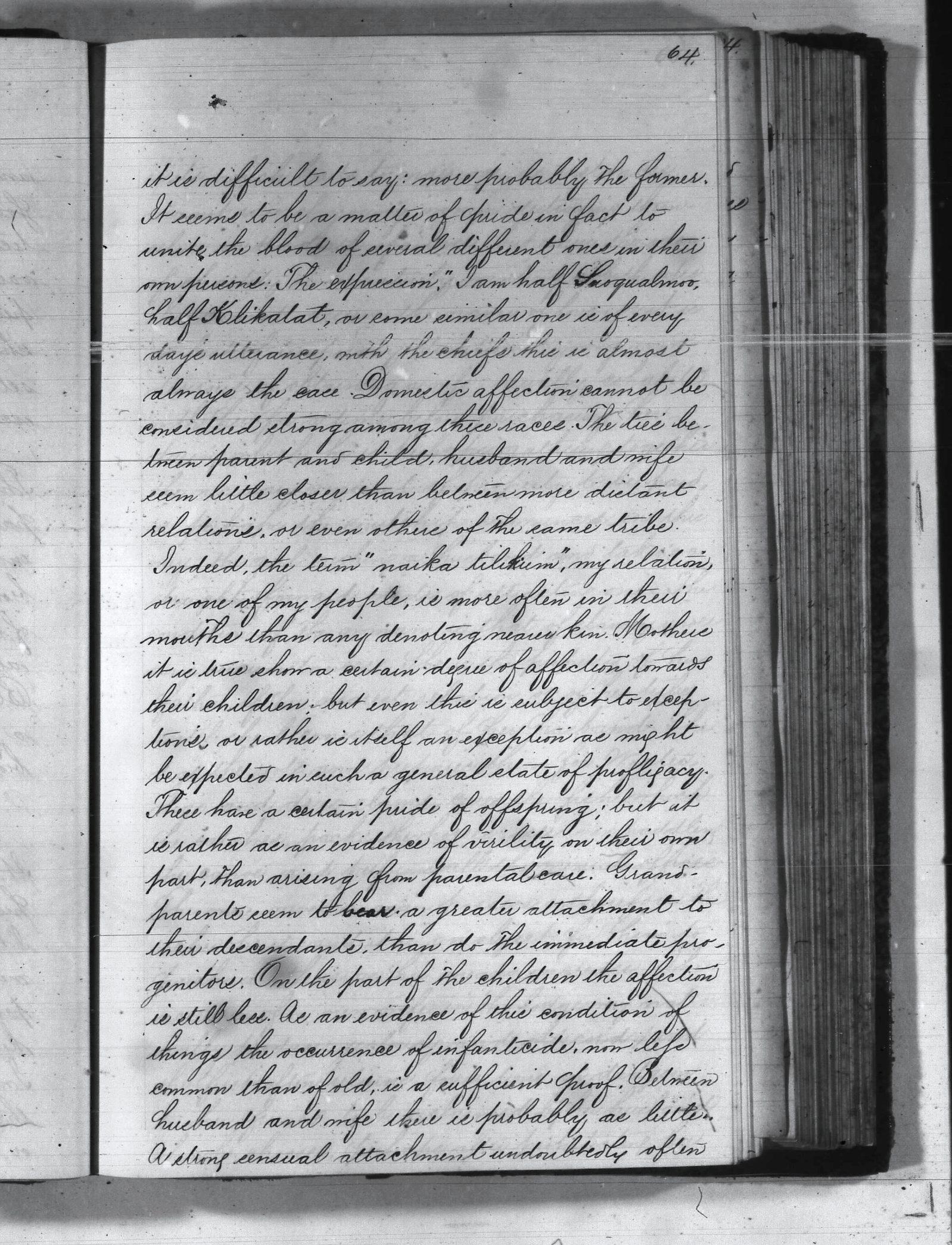
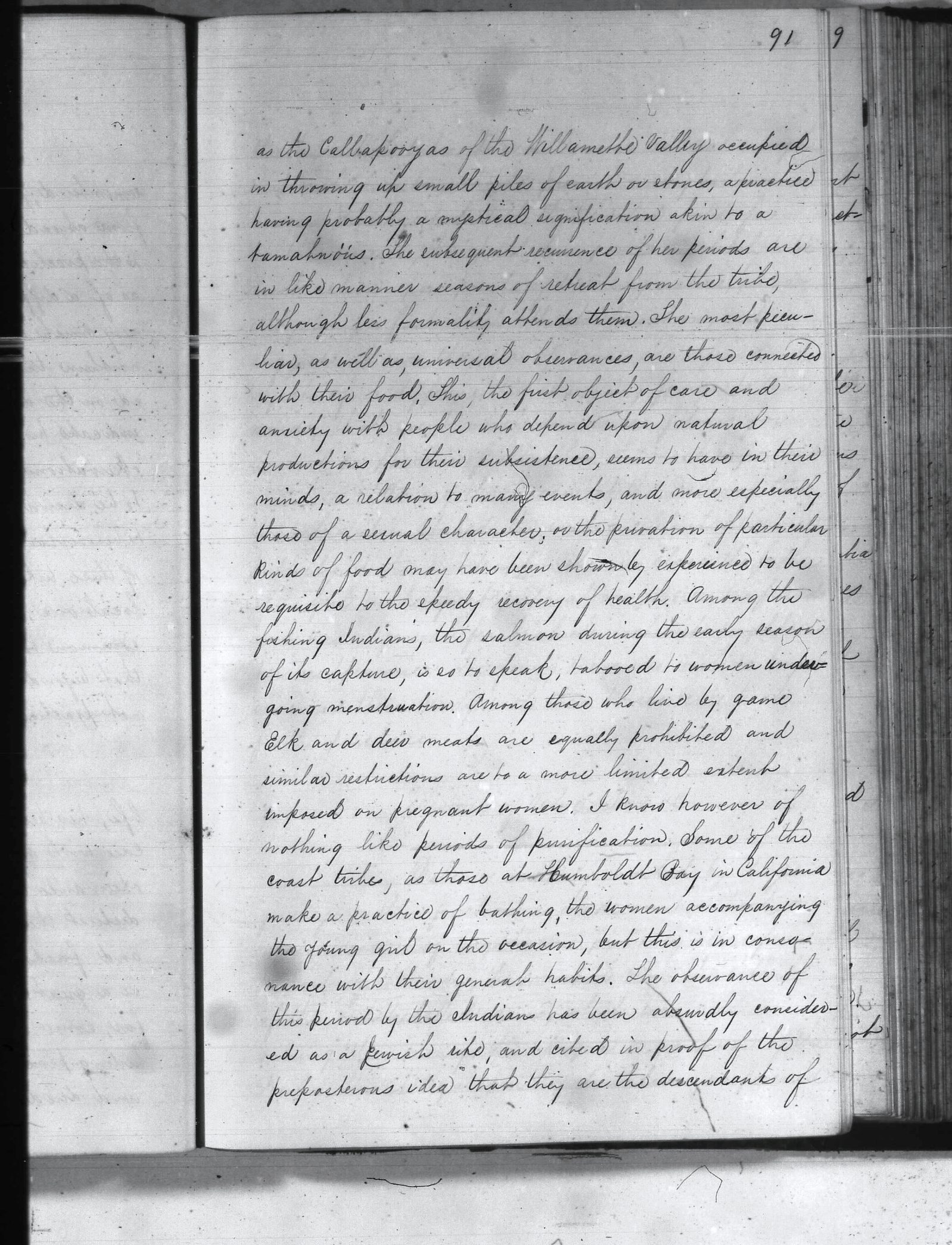
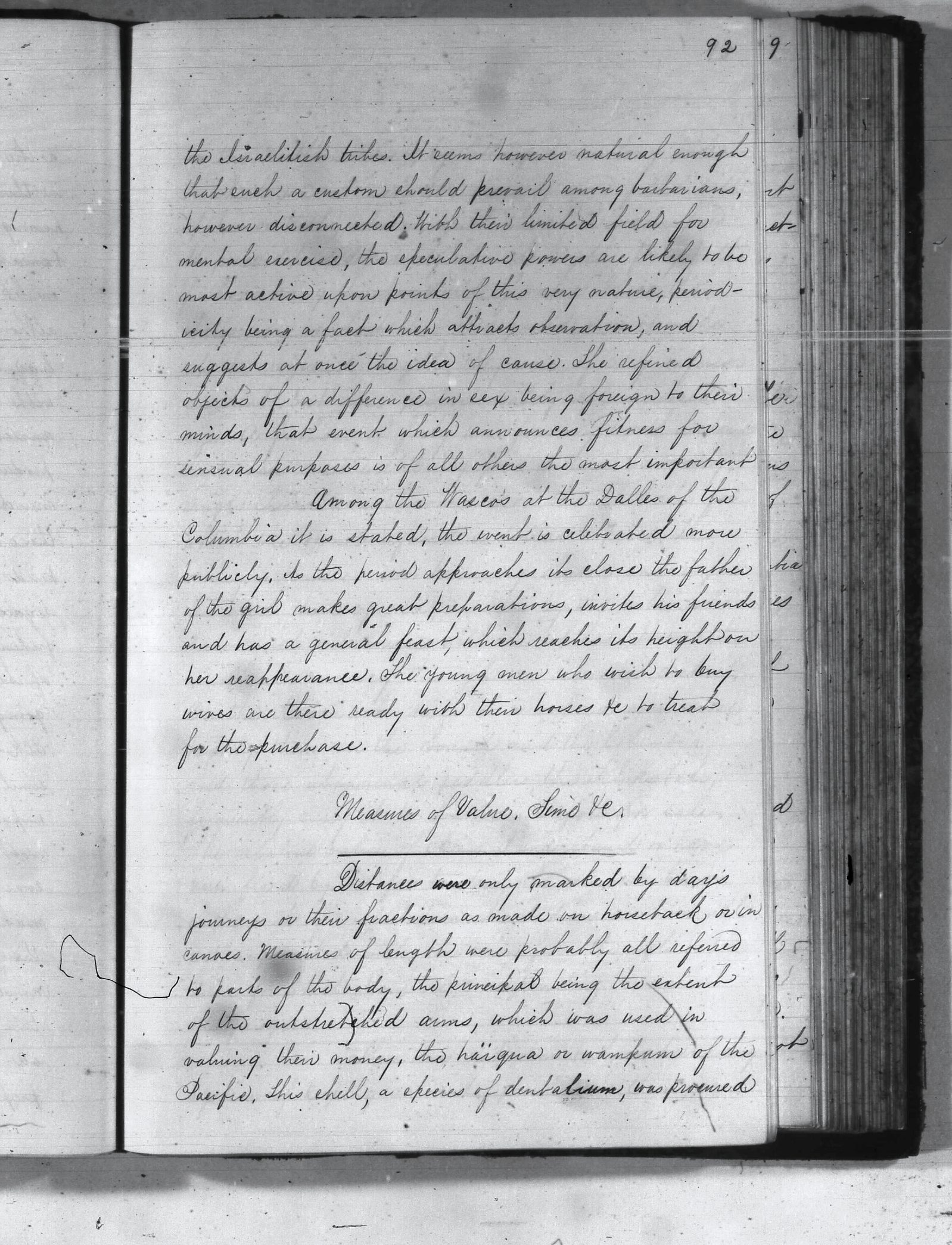
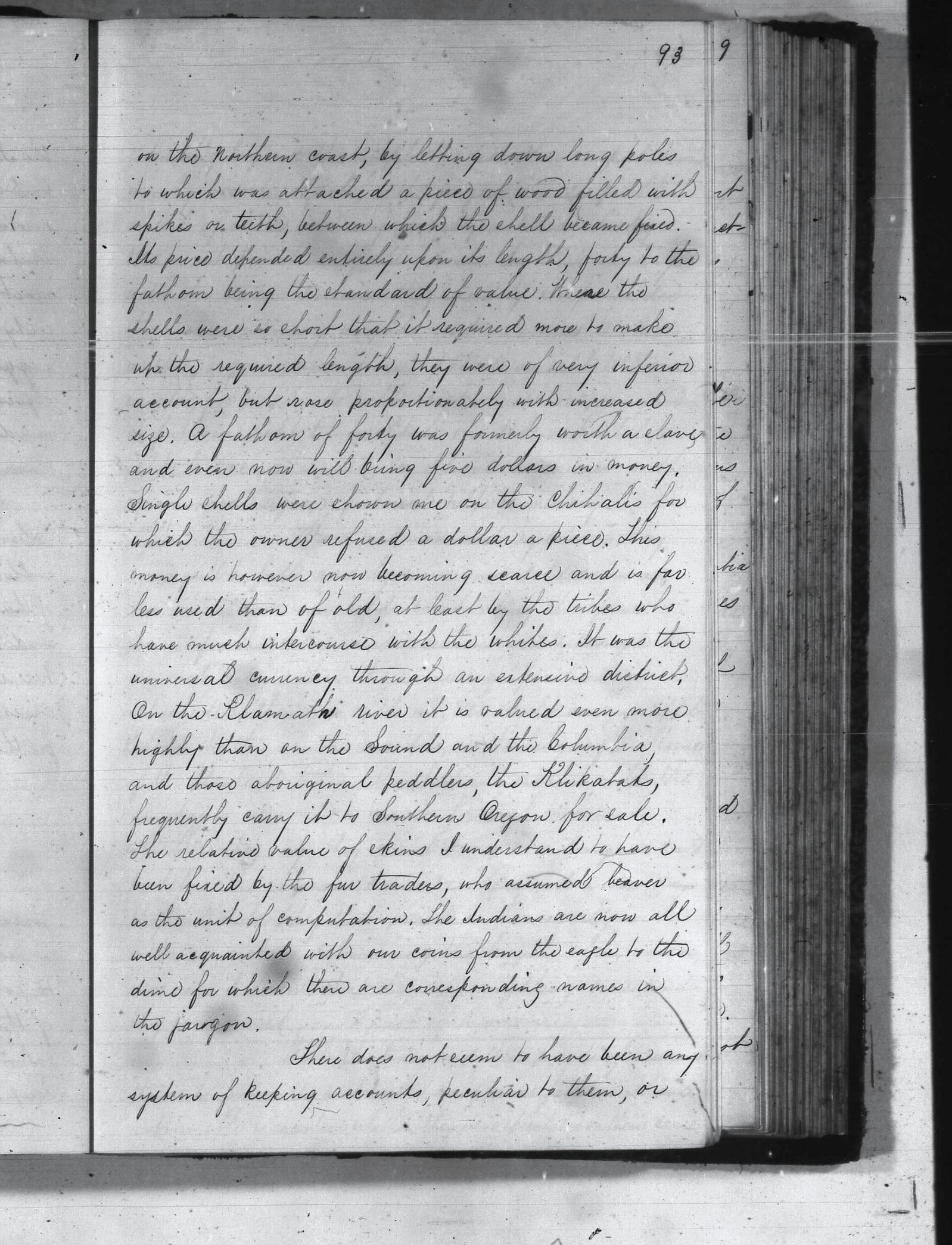
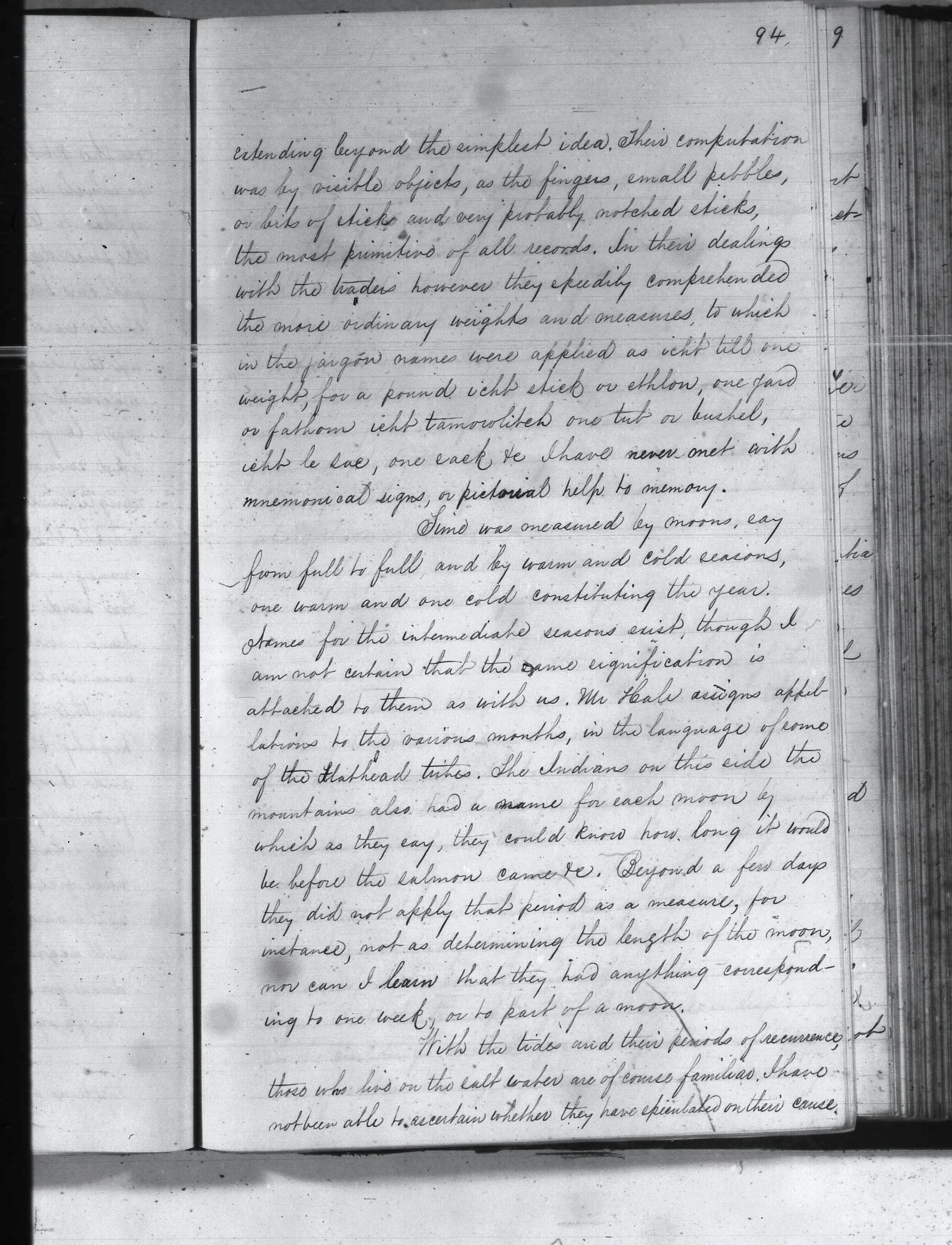
salmon staple, first-salmon superstitions, menstruation/pregnancy food taboos; Lewis & Clark cited
Frames 3031–3902 · 164 documents
The bound manuscript continued, read page by page for the first time in August 2026. Tribal geography and censuses, government, slavery, food, marriage, burial, medicine, houses, canoes and clothing; then the mythology, the Tamahnous, and the transcribed Tales. Manuscript pages 3–114 and 223–250 were printed in Powell’s Contributions to North American Ethnology (1877); the Tales, pages 115–223, by Ella Clark in Oregon Historical Quarterly, 1953–56.
1856 (Olympia) and later additions
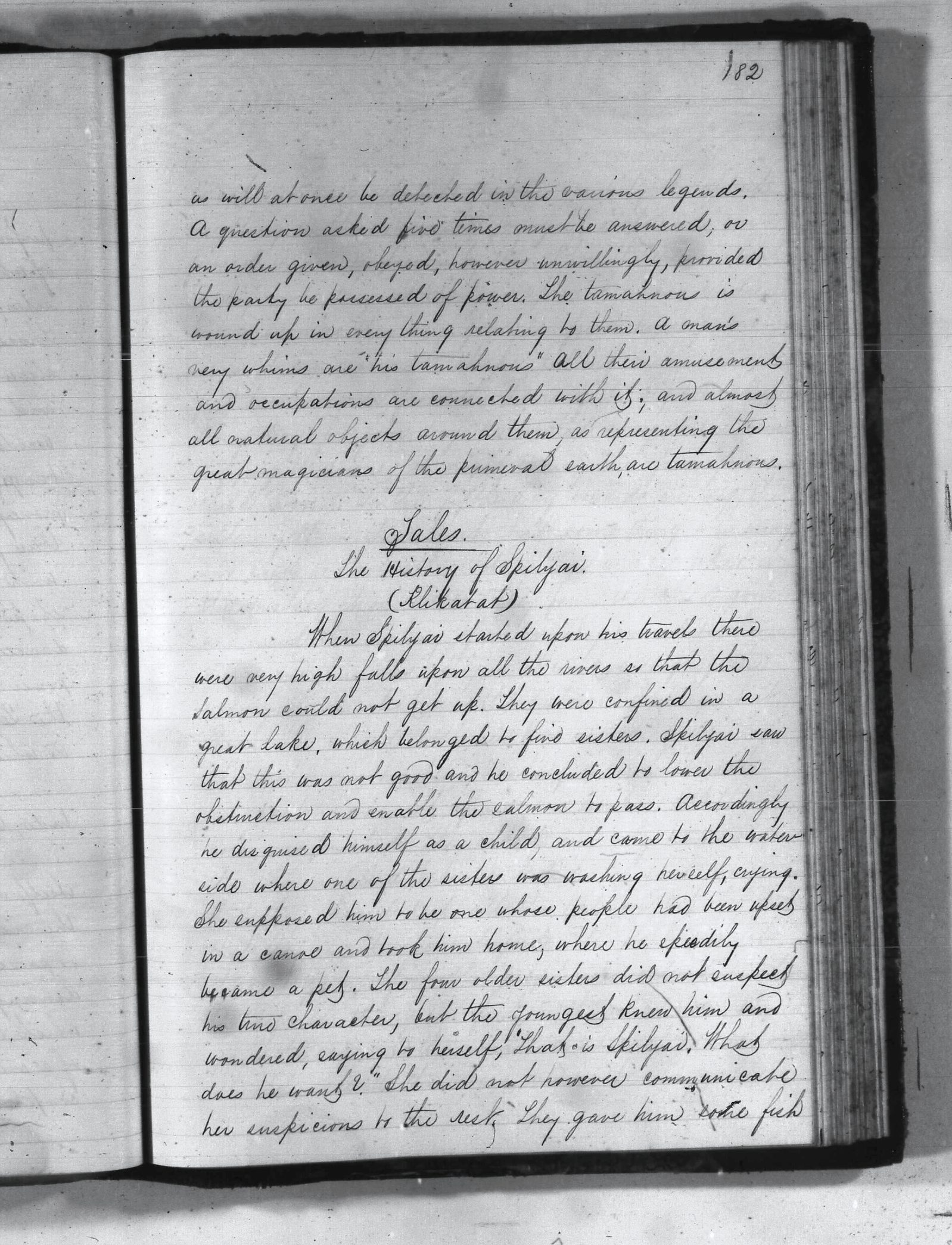
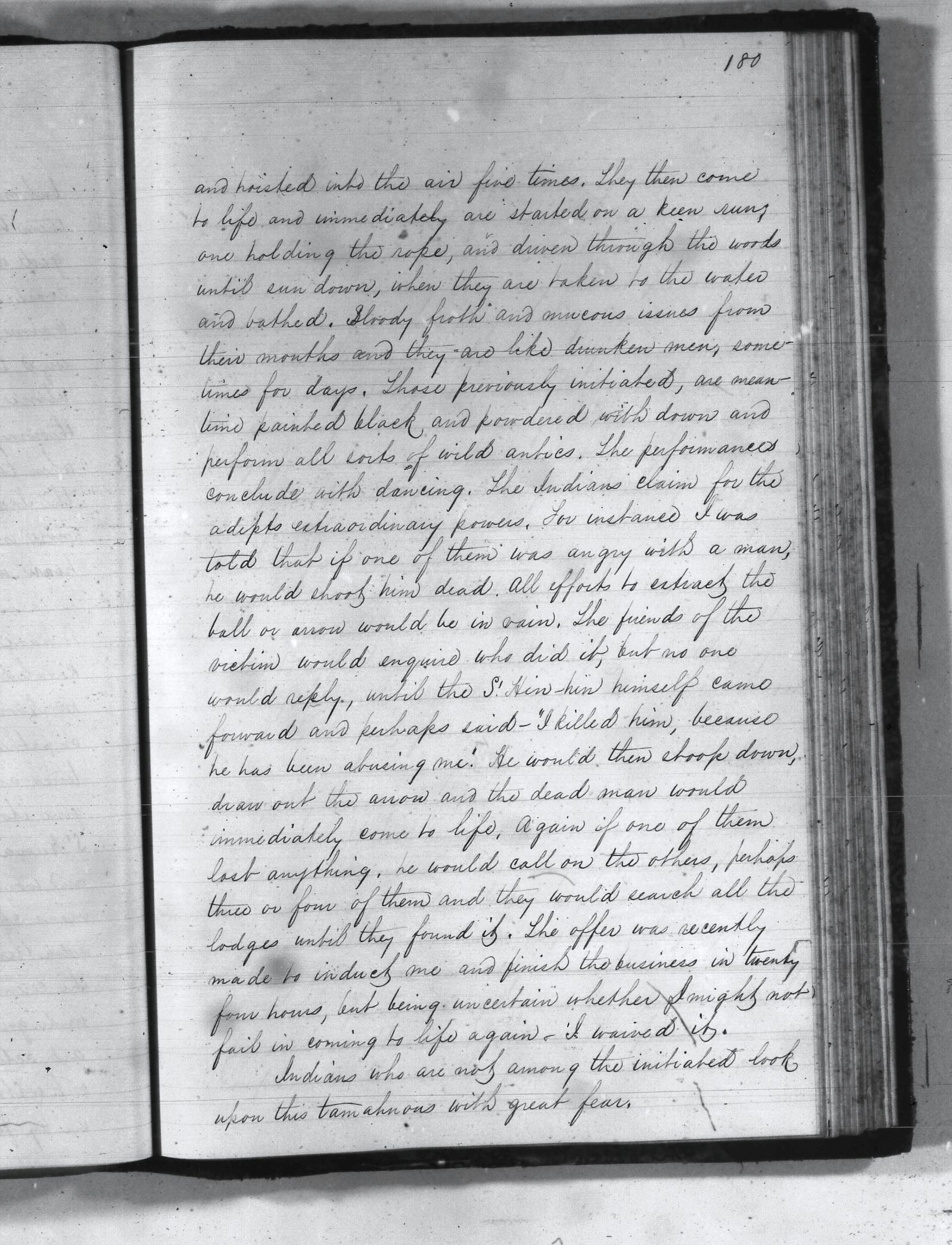
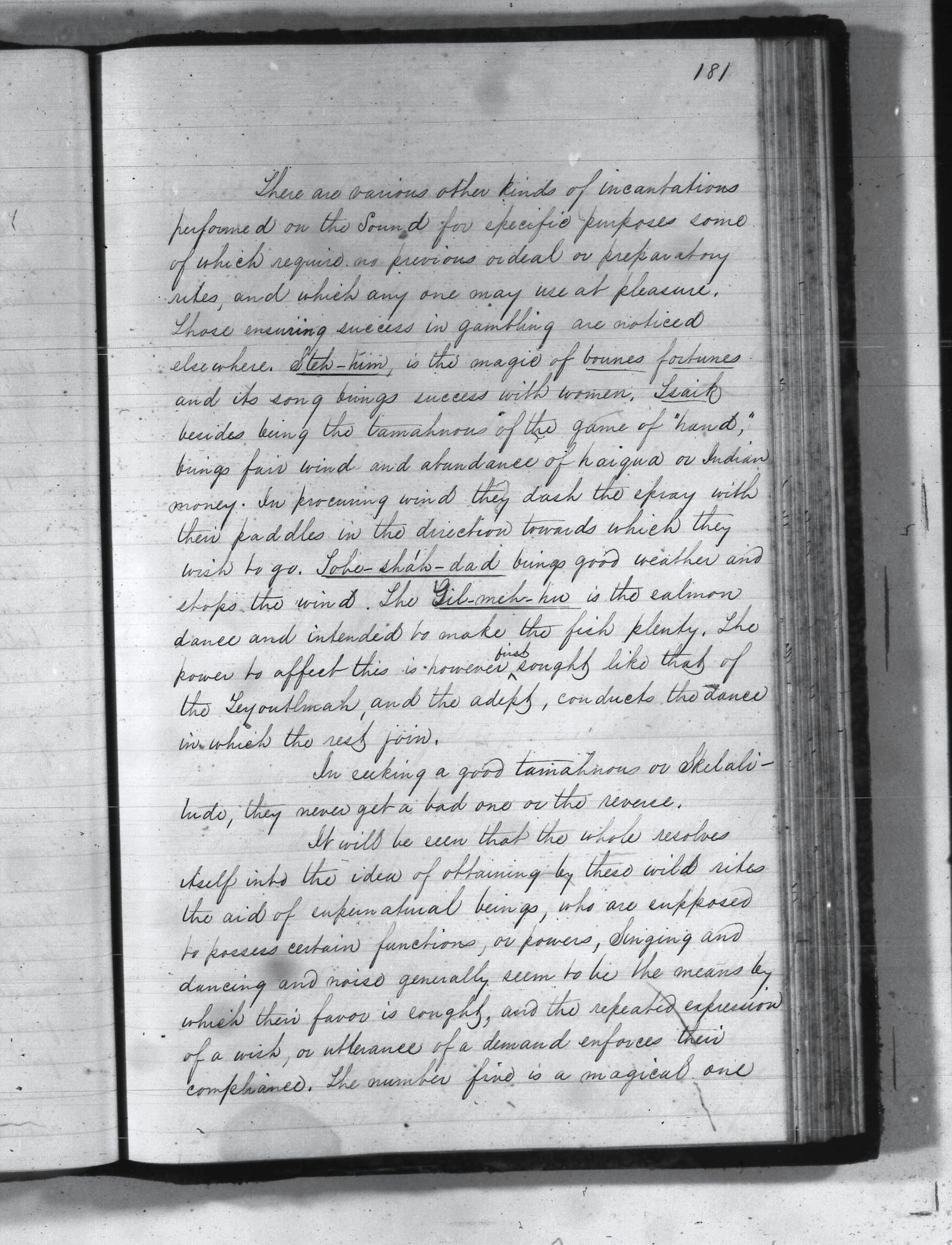
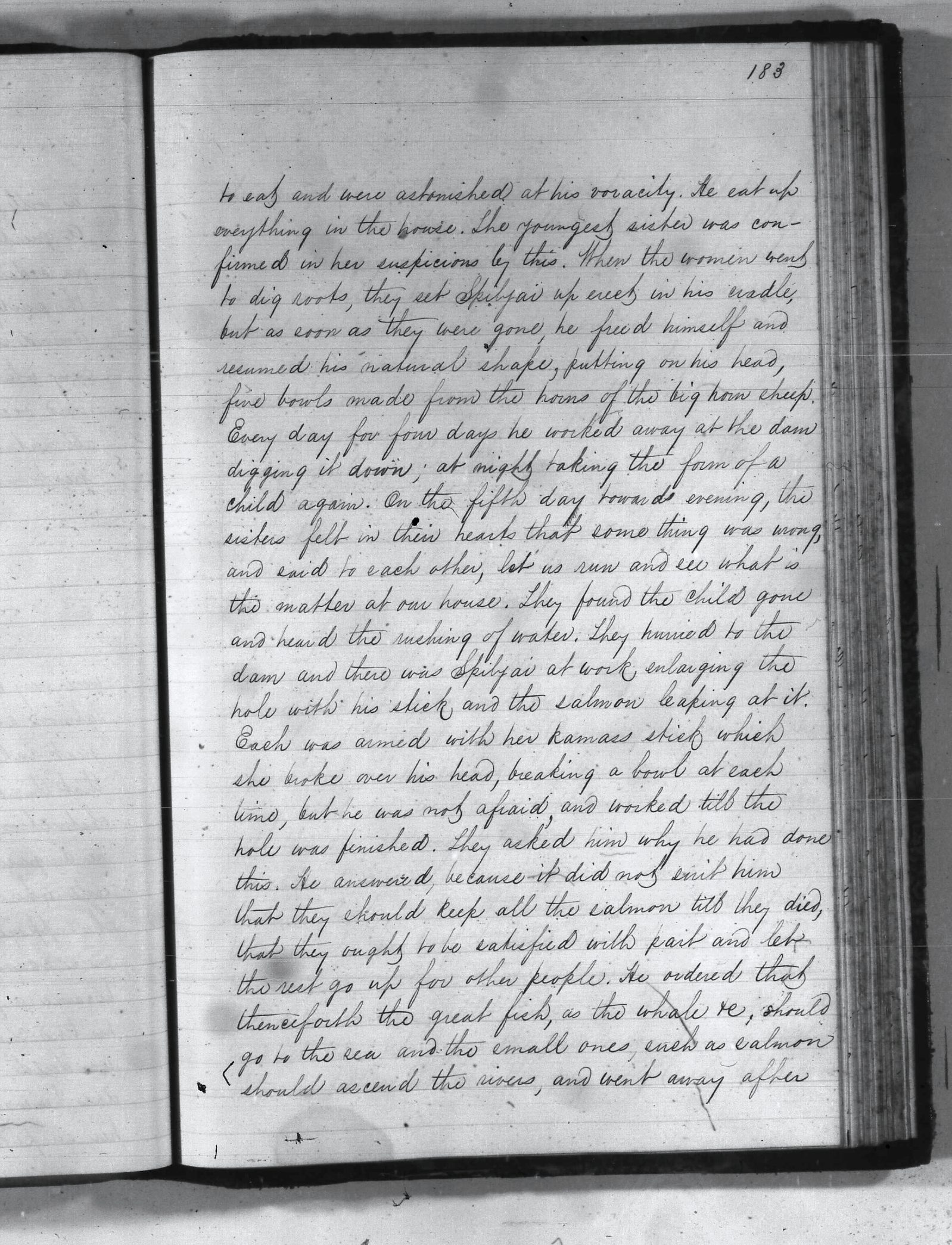
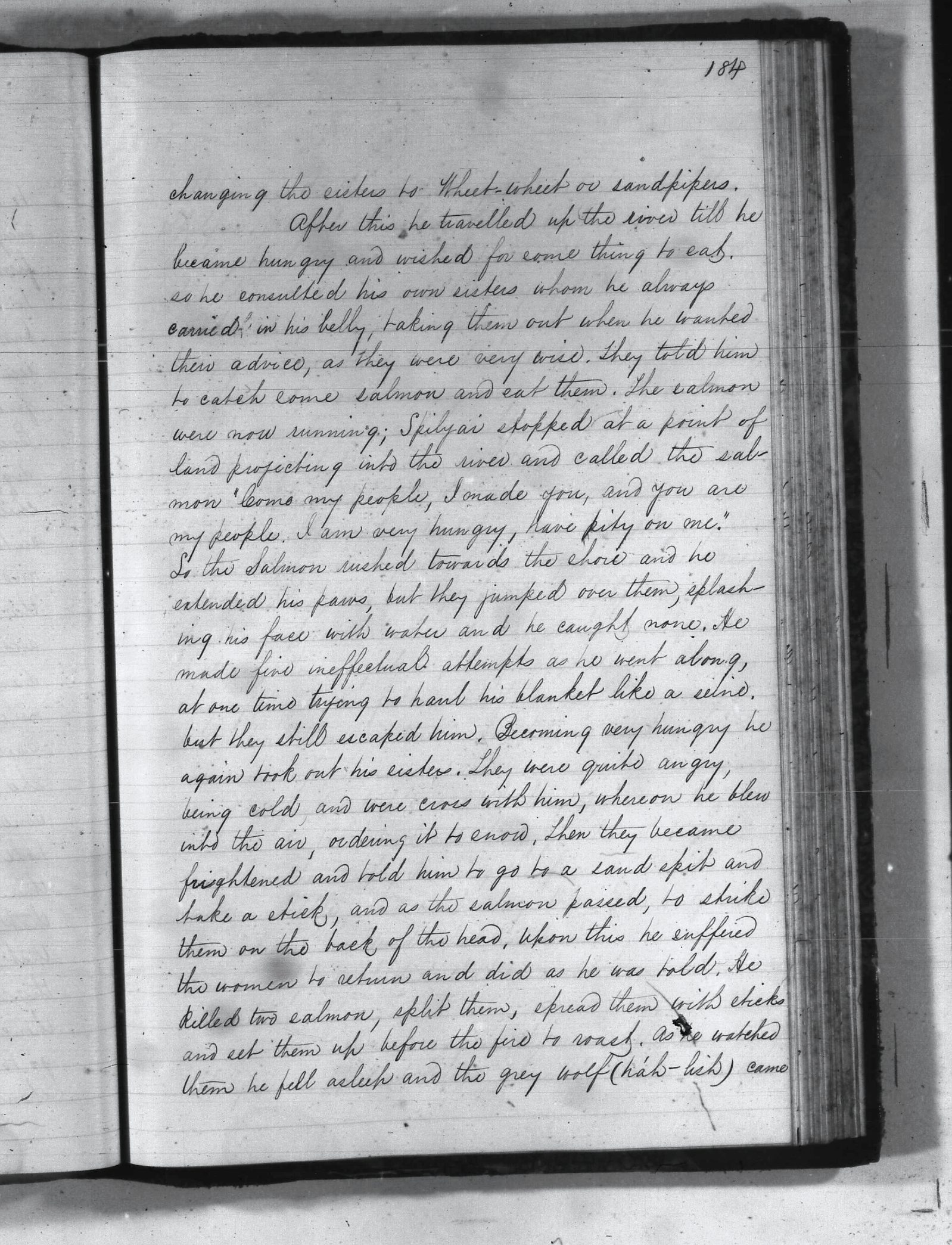
Tamahnous (conclusion) into "Tales.". Close of the tamahnous discussion: "A question asked five times must be answered, or an order given, obeyed, however unwillingly, provided the party be possessed of power. The tamahnous is wound up in every thing relating to them"; a man's very whims are "his tamahnous"; natural objects, "as representing the great magicians of the primeval earth, are tamahnous." Then the section heading "Tales." and the tale title "The History of Spilyai. (Klikatat)": Spilyai starts on his travels; very high falls on all the rivers keep the salmon from getting up; the salmon confined in a great lake belonging to five sisters; Spilyai disguises himself as a child and comes to the water side crying; a sister takes him home where he "speedily became a pet"; the four older sisters do not suspect his true character but the youngest says to herself, "That is Spilyai. What does he want?"
1856 (Olympia) and later additions
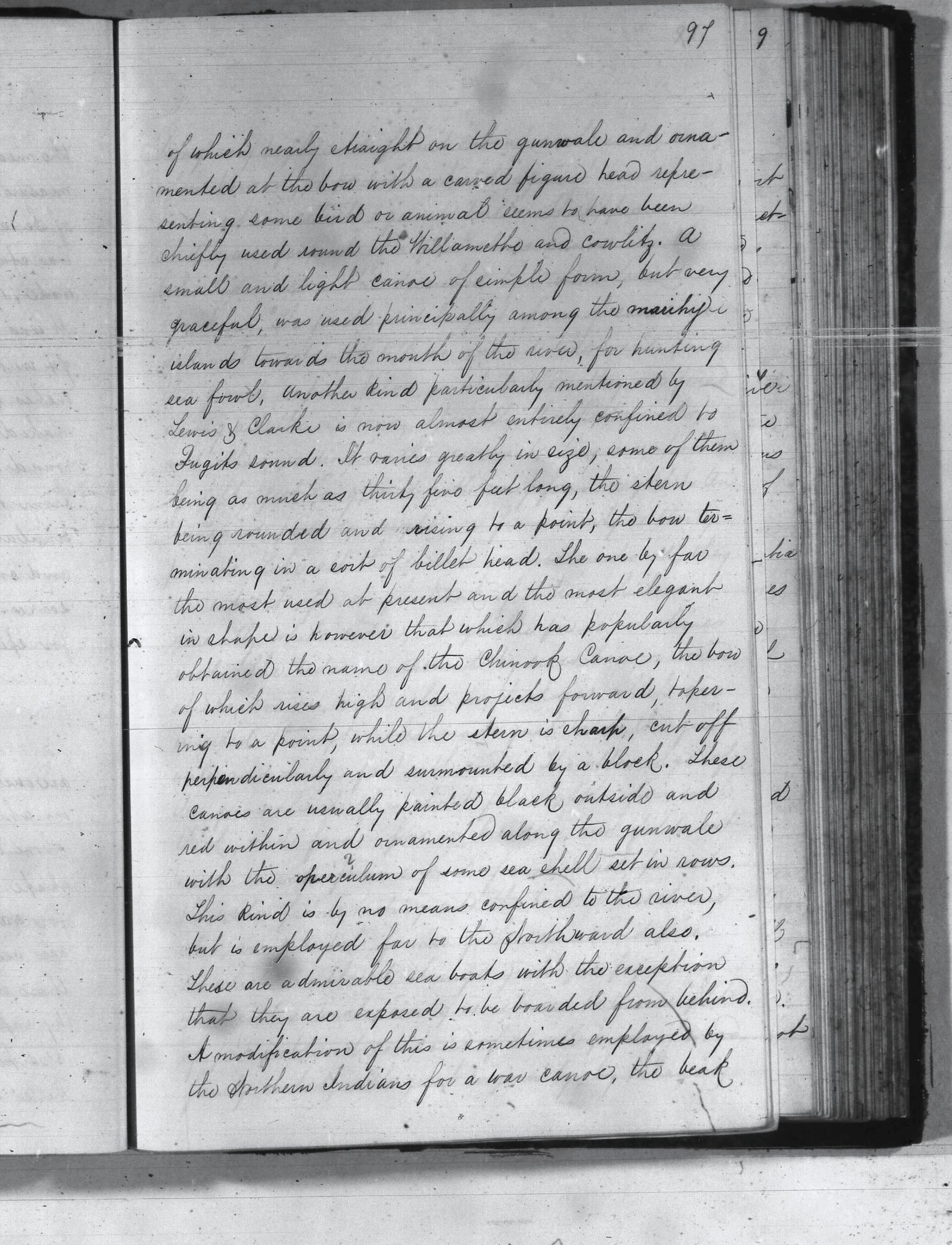
Canoes. Canoe nearly straight on the gunwale "ornamented at the bow with a carved figure head representing some bird or animal" chiefly used round "the Willamette and Cowlitz"; a small light canoe "used principally among the marshy(?) islands towards the mouth of the river, for hunting sea fowl"; another kind "particularly mentioned by Lewis & Clarke" now almost entirely confined to "Pugets Sound", up to thirty five feet long, stern rounded and rising to a point, bow "terminating in a sort of billet head"; the most used and most elegant is "the Chinook Canoe", bow rising high and projecting forward tapering to a point, stern "cut off perpendicularly and surmounted by a block"; these canoes "are usually painted black outside and red within and ornamented along the gunwale with the operculum of some sea shell set in rows"; employed far to the Northward; admirable sea boats but "exposed to be boarded from behind"; a modification used by the Northern Indians for a war canoe
1856 (Olympia) and later additions
Canoes. Duplicate exposure of frame 3738 (same volume page 97, same Chinook canoe text, framed slightly wider and lighter). No additional or different content
1856 (Olympia) and later additions
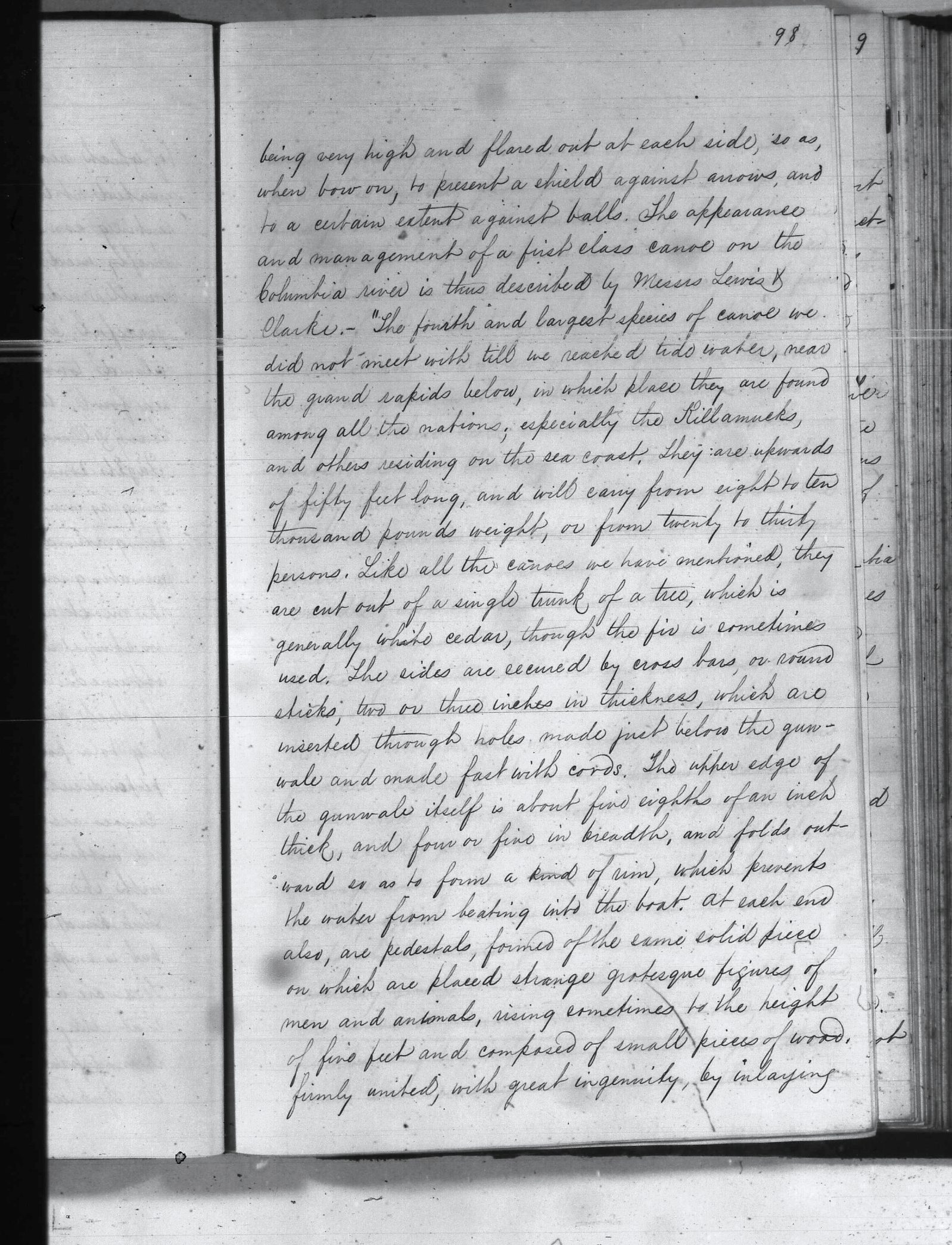
Canoes. War canoe beak "being very high and flared out at each side, so as, when bow on, to present a shield against arrows, and to a certain extent against balls"; then a long block quotation from "Messrs Lewis & Clarke" on "The fourth and largest species of canoe", not met till tide water near the grand rapids, found "among all the nations, especially the Killamucks, and others residing on the sea coast", "upwards of fifty feet long", carrying eight to ten thousand pounds or twenty to thirty persons, cut from a single trunk "generally white cedar, though the fir is sometimes used", sides secured by cross bars of round sticks two or three inches thick through holes below the gunwale and lashed with cords, gunwale five eighths of an inch thick and four or five in breadth folding outward as a rim to keep out water, pedestals at each end bearing "strange grotesque figures of men and animals, rising sometimes to the height of five feet" built of small pieces of wood inlaid
1856 (Olympia) and later additions
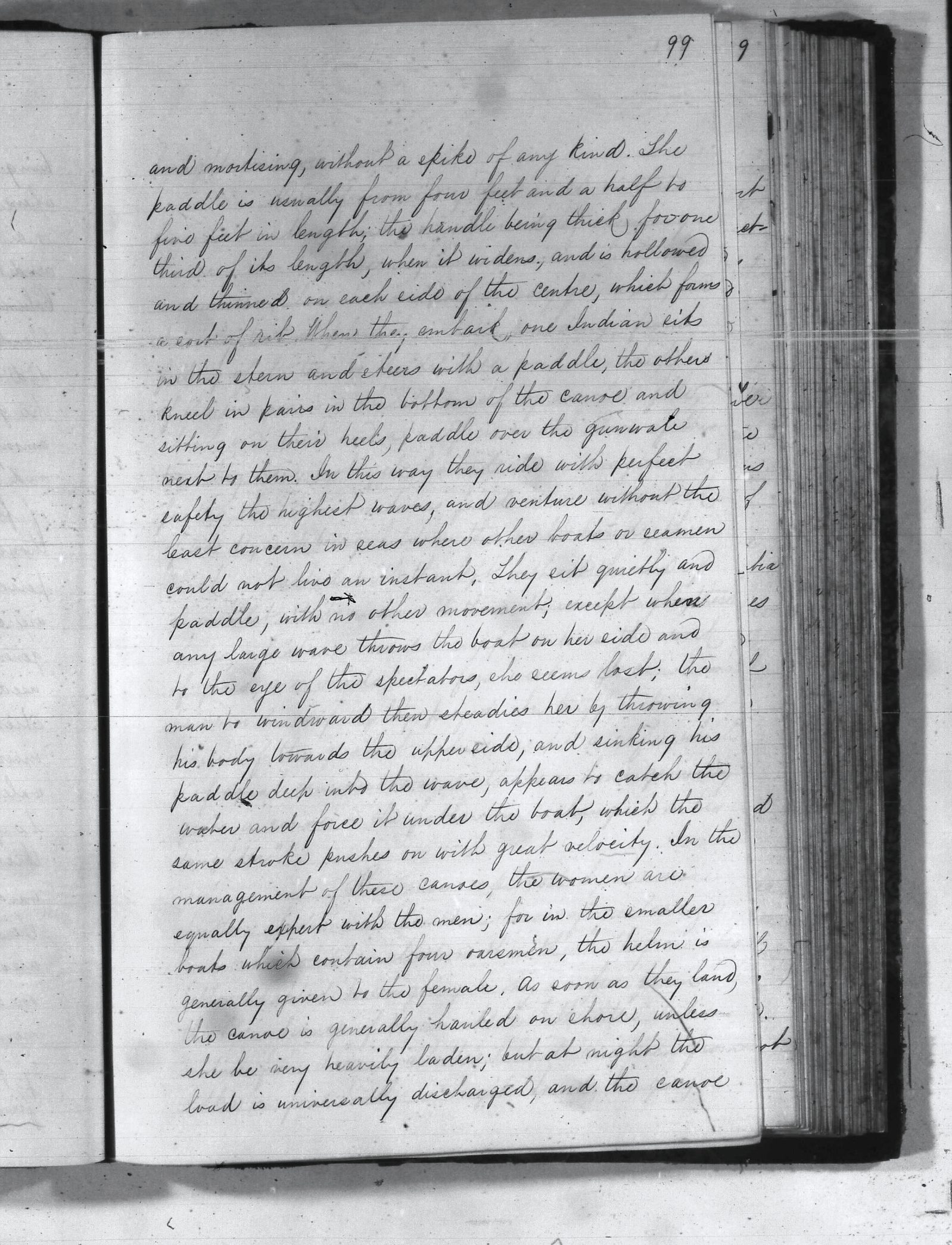
Canoes (Lewis & Clarke quotation continued). Figures united "by inlaying and mortising, without a spike of any kind"; paddle "from four feet and a half to five feet in length", handle thick for one third its length then widening, hollowed and thinned each side of the centre "which forms a sort of rib"; one Indian steers in the stern with a paddle, the others "kneel in pairs in the bottom of the canoe and sitting on their heels, paddle over the gunwale next to them"; they ride the highest waves and venture "in seas where other boats or seamen could not live an instant"; when a large wave throws the boat on her side the windward man steadies her by throwing his body to the upper side and sinking his paddle deep into the wave; "In the management of these canoes, the women are equally expert with the men; for in the smaller boats which contain four oarsmen, the helm is generally given to the female"; canoe hauled ashore on landing, load discharged at night
1856 (Olympia) and later additions
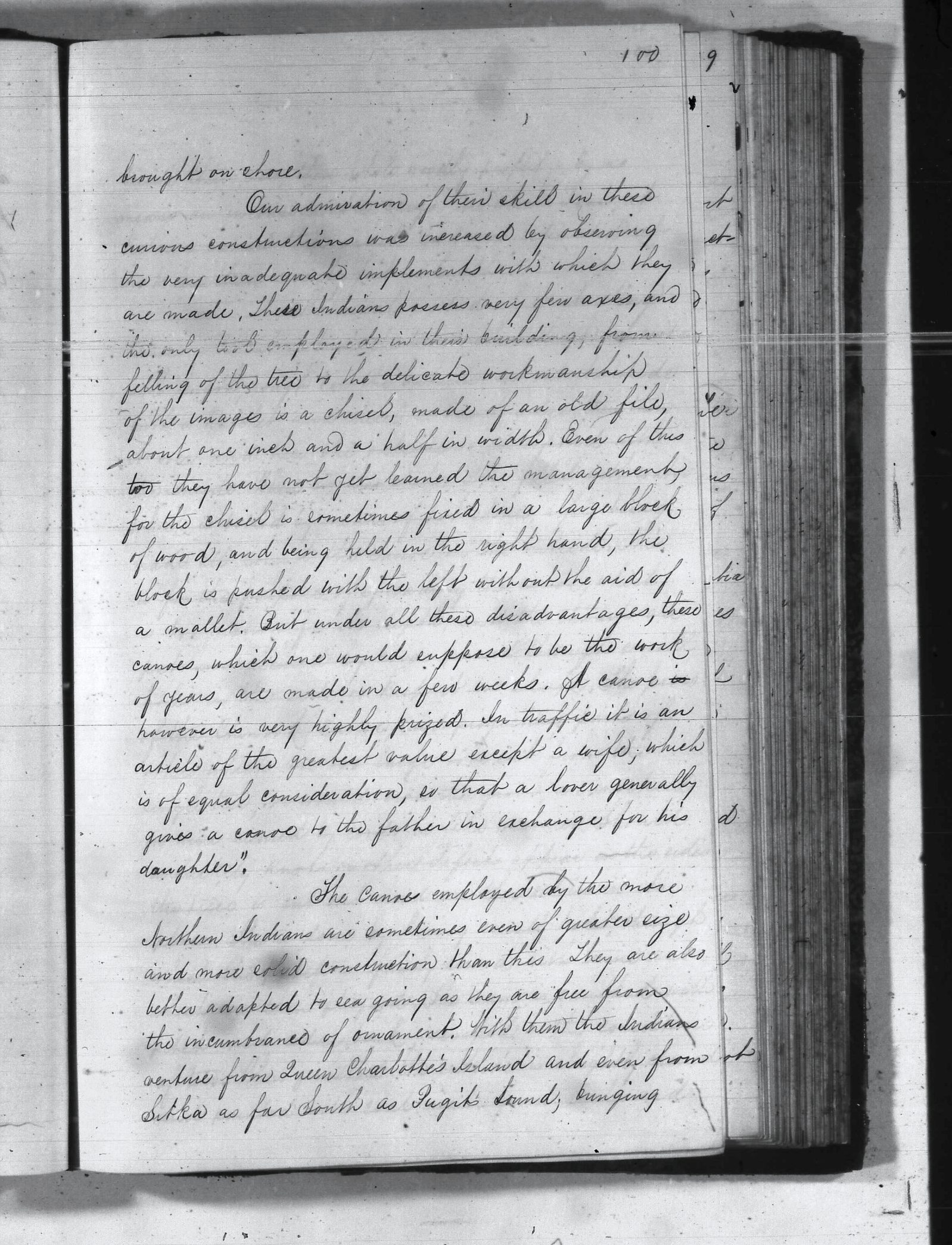
Canoes (end of Lewis & Clarke quotation; Northern canoes). "These Indians possess very few axes", the only tool from felling the tree to the delicate workmanship of the images being "a chisel, made of an old file, about one inch and a half in width", sometimes fixed in a large block held in the right hand and pushed with the left "without the aid of a mallet"; canoes that seem the work of years "are made in a few weeks"; "In traffic it is an article of the greatest value except a wife, which is of equal consideration, so that a lover generally gives a canoe to the father in exchange for his daughter". Gibbs then resumes: canoes of the more Northern Indians are larger and more solid, "free from the incumbrance of ornament", better sea boats; with them the Indians venture "from Queen Charlotte's Island and even from Sitka as far South as Pugits Sound"
1856 (Olympia) and later additions
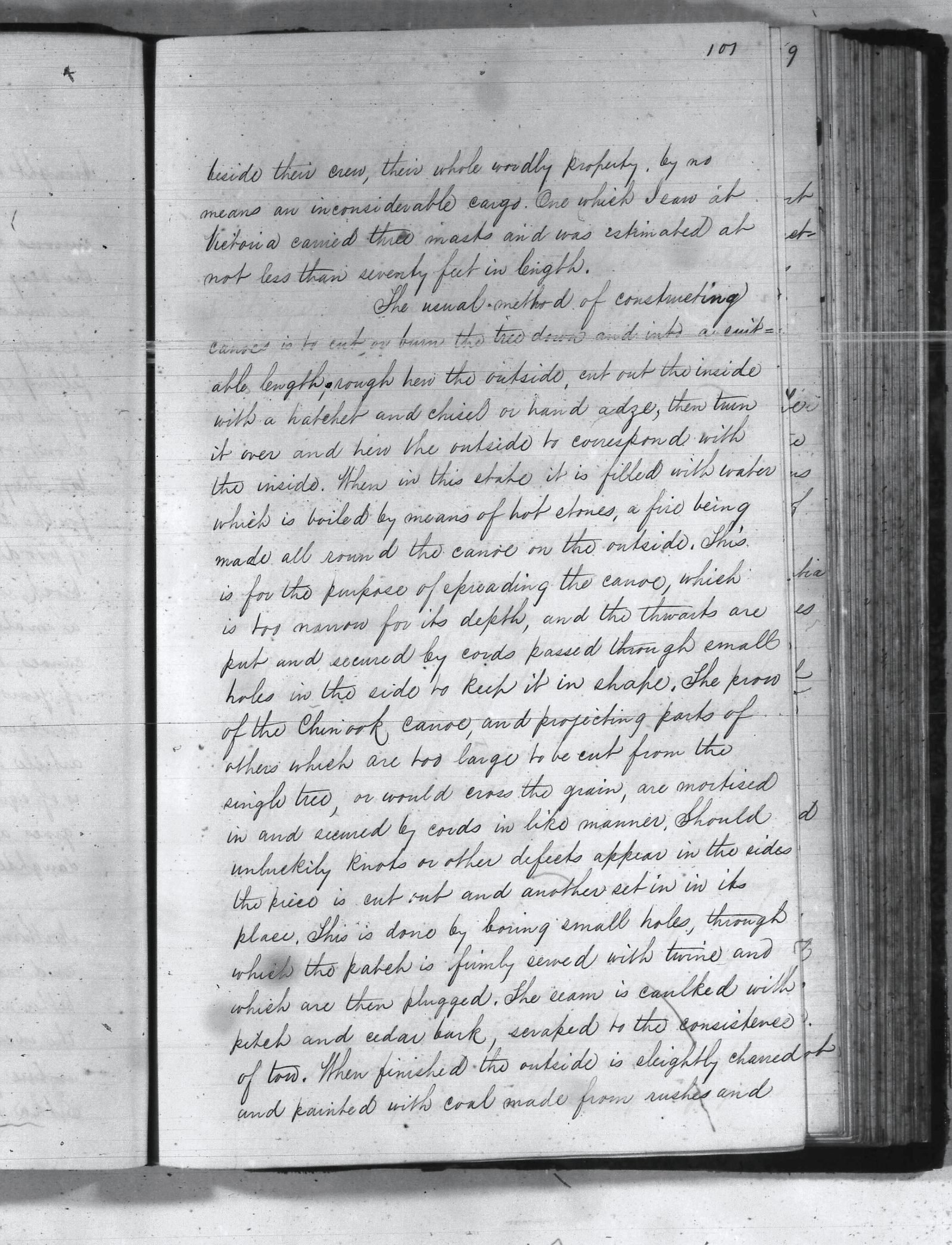
Canoes (construction). Northern canoes carry crew and "their whole worldly property"; one seen at Victoria "carried three masts and was estimated at not less than seventy feet in length"; usual method of construction: cut or burn the tree down and into a suitable length, rough hew the outside, "cut out the inside with a hatchet and chisel or hand adze", turn it over and hew the outside to correspond; then filled with water "boiled by means of hot stones, a fire being made all round the canoe on the outside" to spread the hull, which is too narrow for its depth, thwarts put in and secured by cords through small holes; the prow of the Chinook canoe and other projecting parts too large to cut from the single tree "are mortised in and secured by cords in like manner"; knots or defects cut out and a patch "firmly sewed with twine" and plugged; "The seam is caulked with pitch and cedar bark, scraped to the consistence of tow"; when finished the outside is slightly charred "and painted with coal made from rushes"
1856 (Olympia) and later additions
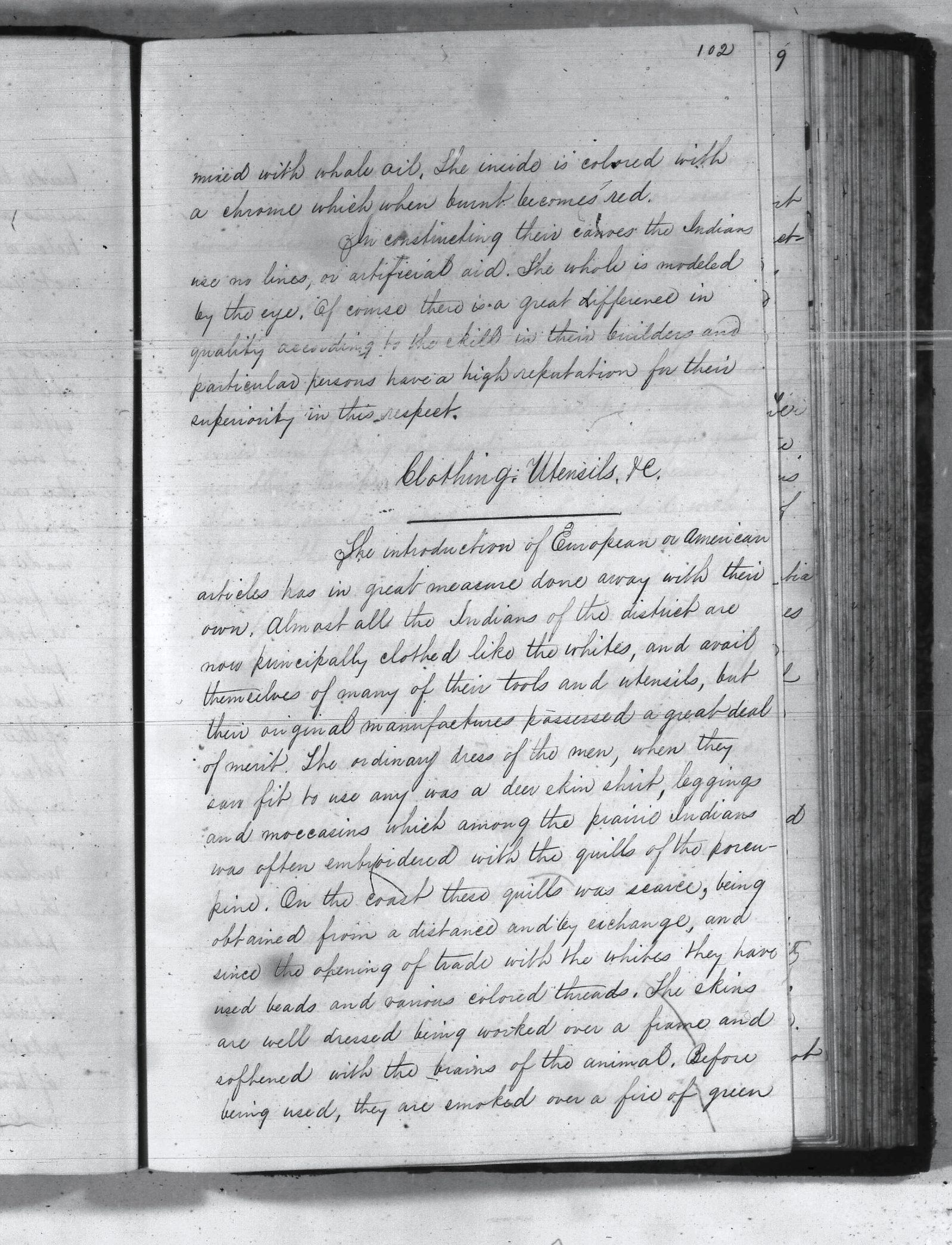
Canoes (end); new section "Clothing: Utensils, &C.". Coal "mixed with whale oil. The inside is colored with a chrome which when burnt becomes red"; "In constructing their canoes the Indians use no lines, or artificial aid. The whole is modeled by the eye", quality varying with the builder, particular persons having "a high reputation for their superiority in this respect". New centred and ruled section heading "Clothing: Utensils, &C." (heading underscored by a ruled line): the introduction of European or American articles "has in great measure done away with their own"; ordinary dress of the men "a deer skin shirt, leggings and moccasins which among the prairie Indians was often embroidered with the quills of the porcupine"; on the coast quills scarce and obtained by exchange, beads and colored threads used since the opening of trade; skins dressed over a frame "and softened with the brains of the animal", then smoked over a fire of green [twigs]
1856 (Olympia) and later additions
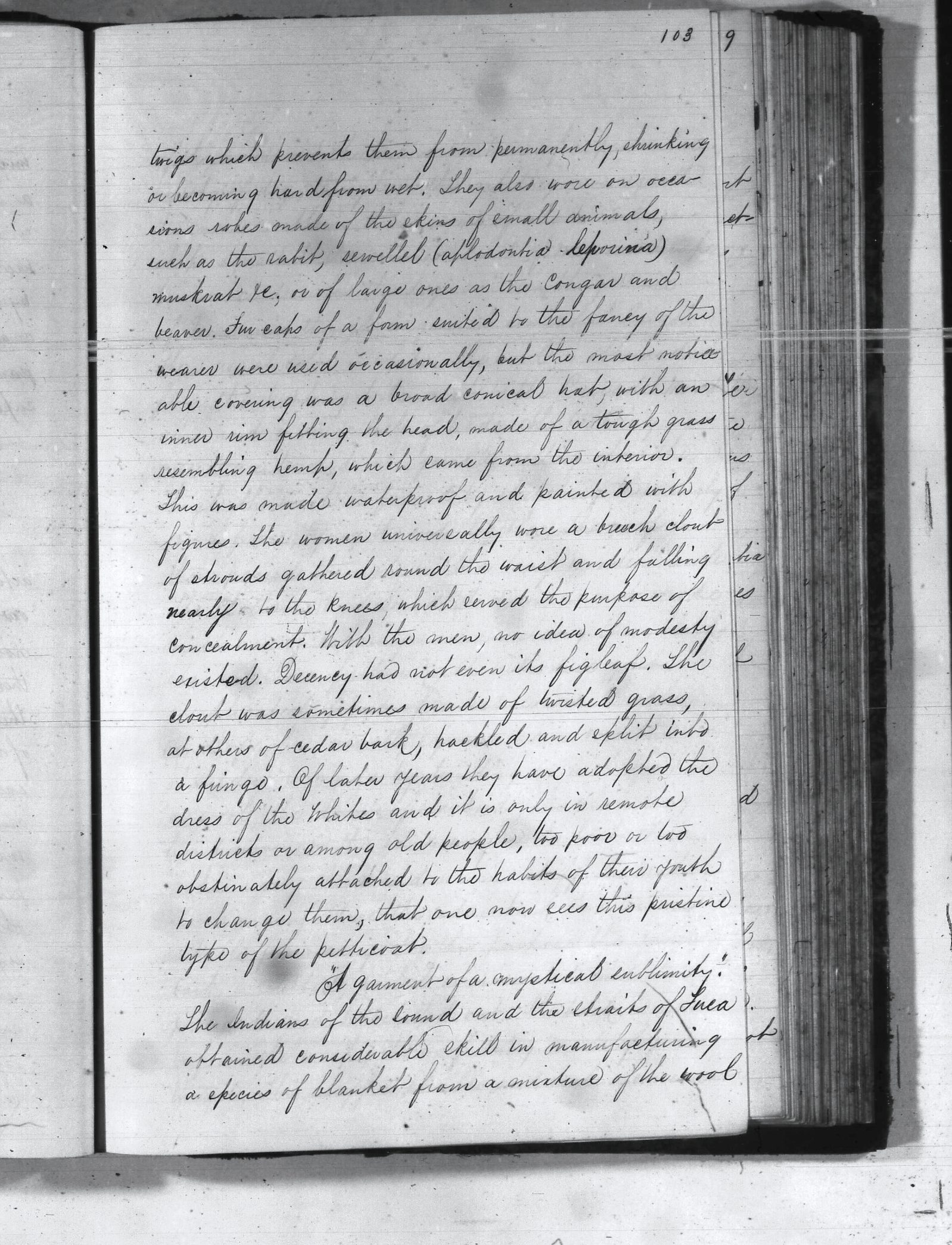
Clothing, Utensils, &c.. Skins smoked over green twigs to prevent shrinking or hardening from wet; robes of small animals "such as the rabit, sewellel (aplodontia leporina) muskrat &c., or of large ones as the cougar and beaver"; fur caps; "the most noticeable covering was a broad conical hat, with an inner rim fitting the head, made of a tough grass resembling hemp, which came from the interior. This was made waterproof and painted with figures"; the women "universally wore a breech clout of strouds gathered round the waist and falling nearly to the knees, which served the purpose of concealment. With the men, no idea of modesty existed. Decency had not even its figleaf."; the clout sometimes of twisted grass, at others "of cedar bark, hackled and split into a fringe"; white dress now adopted except in remote districts or among old people, so that one rarely sees "this pristine type of the petticoat" – quoted as "A garment of a mystical sublimity"; the Indians of the Sound and the Straits of Fuca skilled in making "a species of blanket from a mixture of the wool"
1856 (Olympia) and later additions
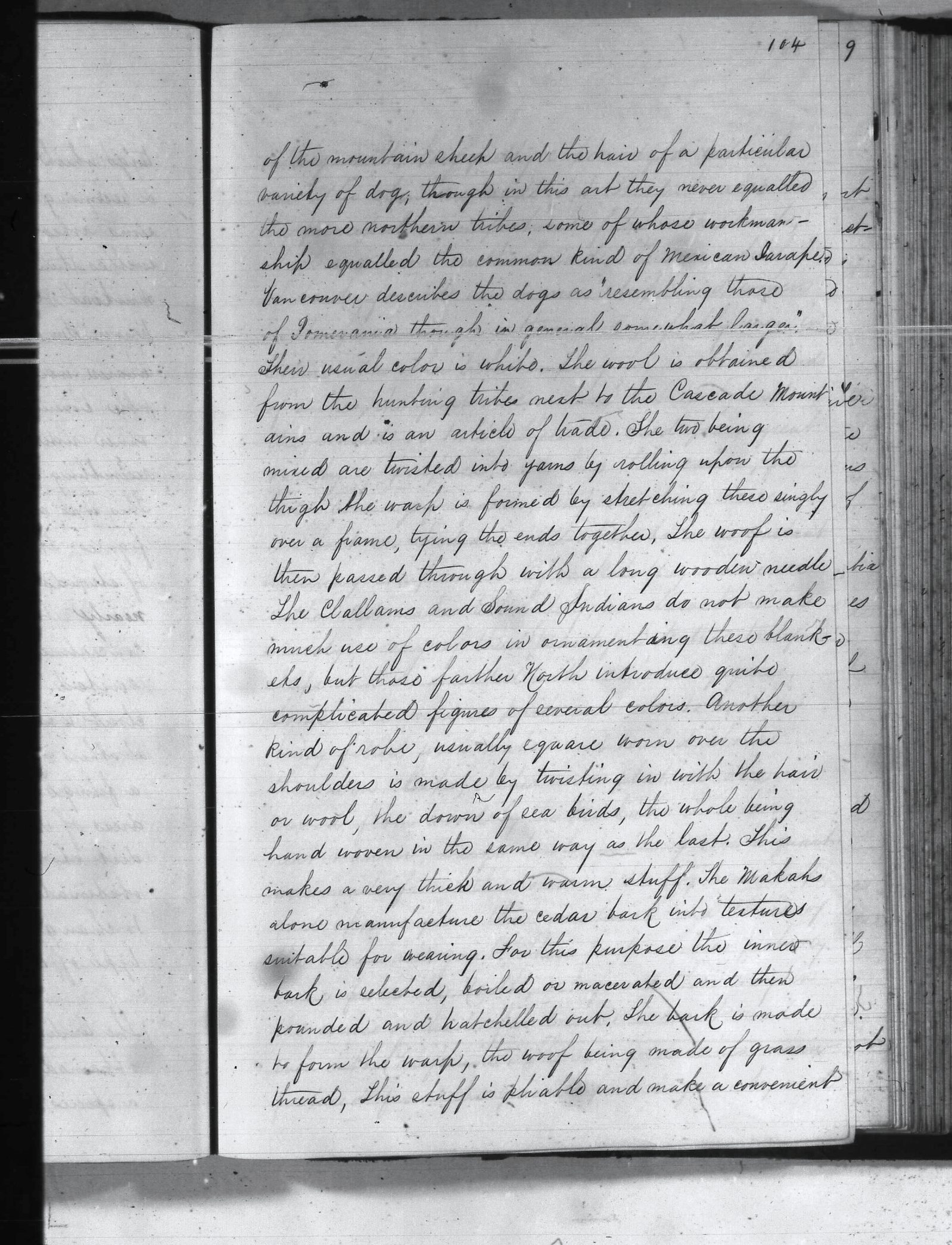
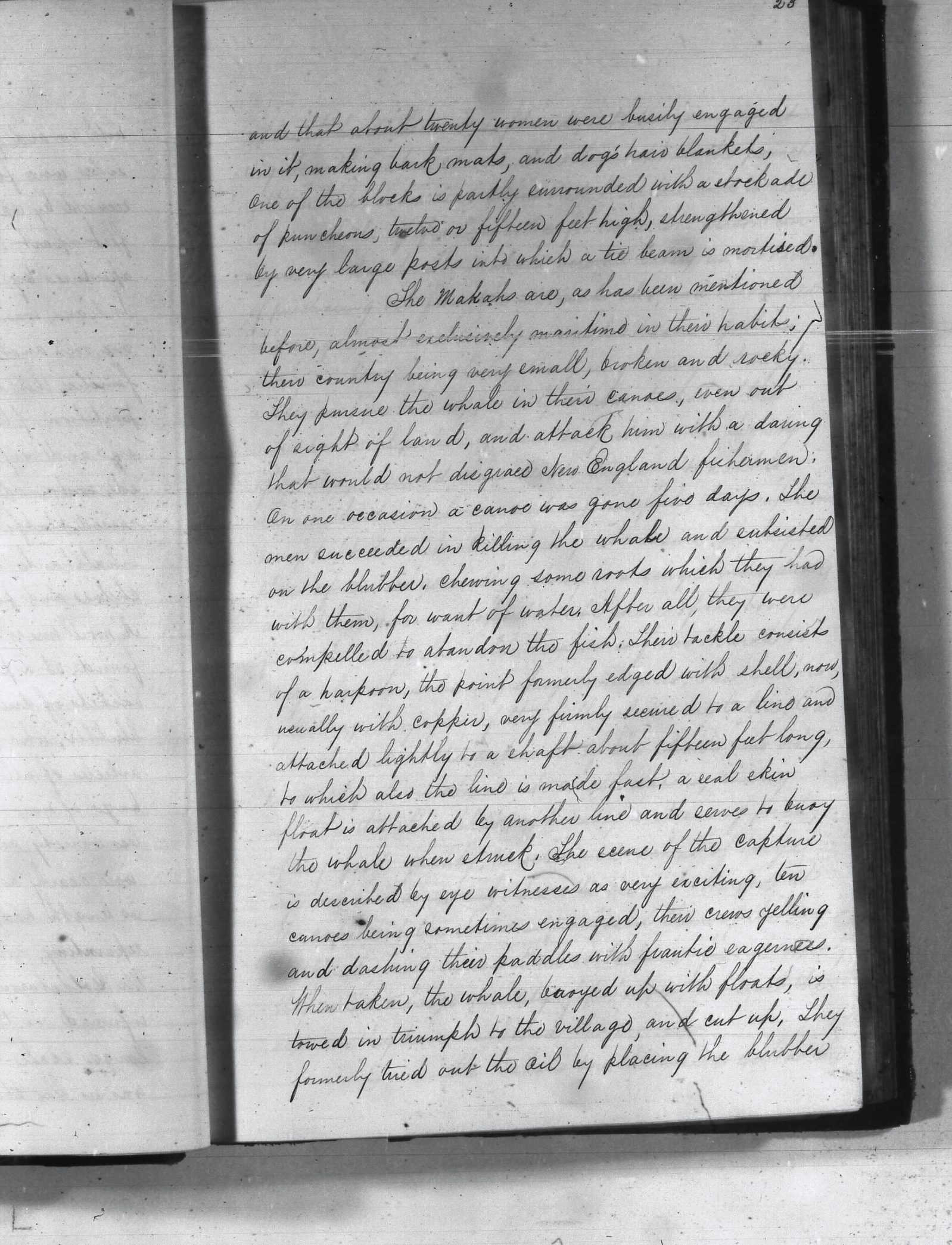
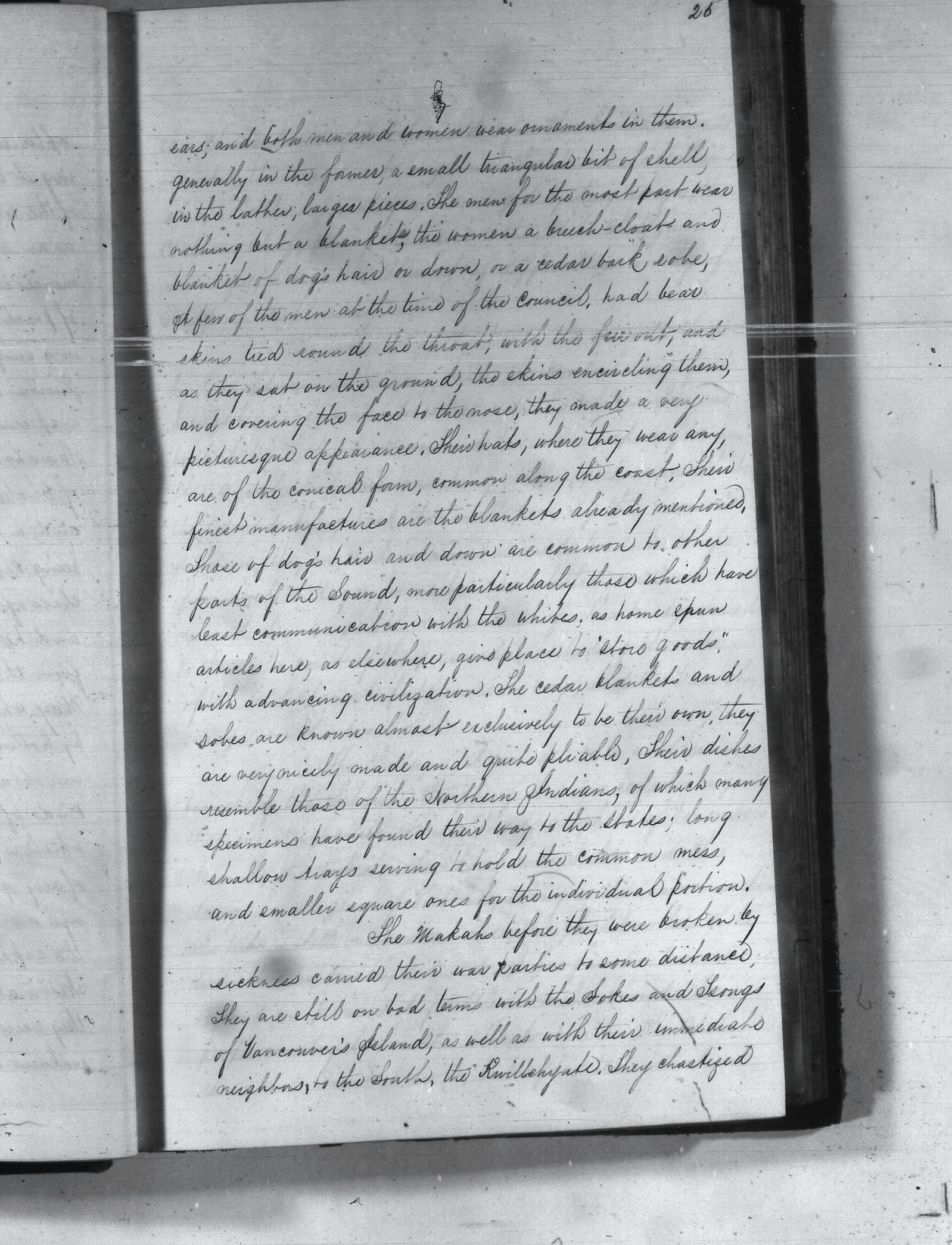
Clothing, Utensils, &c. (weaving). Blankets of "the mountain sheep" wool mixed with "the hair of a particular variety of dog", never equalling the northern tribes, some of whose workmanship "equalled the common kind of Mexican Sarapes"; "Vancouver describes the dogs as 'resembling those of Pomerania though in general somewhat larger'. Their usual color is white."; the wool obtained by trade "from the hunting tribes next to the Cascade Mountains"; the two mixed and twisted into yarn "by rolling upon the thigh", the warp stretched singly over a frame with the ends tied, the woof "passed through with a long wooden needle"; "The Clallams and Sound Indians do not make much use of colors in ornamenting these blankets, but those farther North introduce quite complicated figures of several colors"; another robe, usually square and worn over the shoulders, made "by twisting in with the hair or wool, the down of sea birds"; "The Makahs alone manufacture the cedar bark into textures suitable for wearing" – inner bark selected, boiled or macerated, pounded and hatchelled out, the bark forming the warp and "the woof being made of grass thread"
1856 (Olympia) and later additions
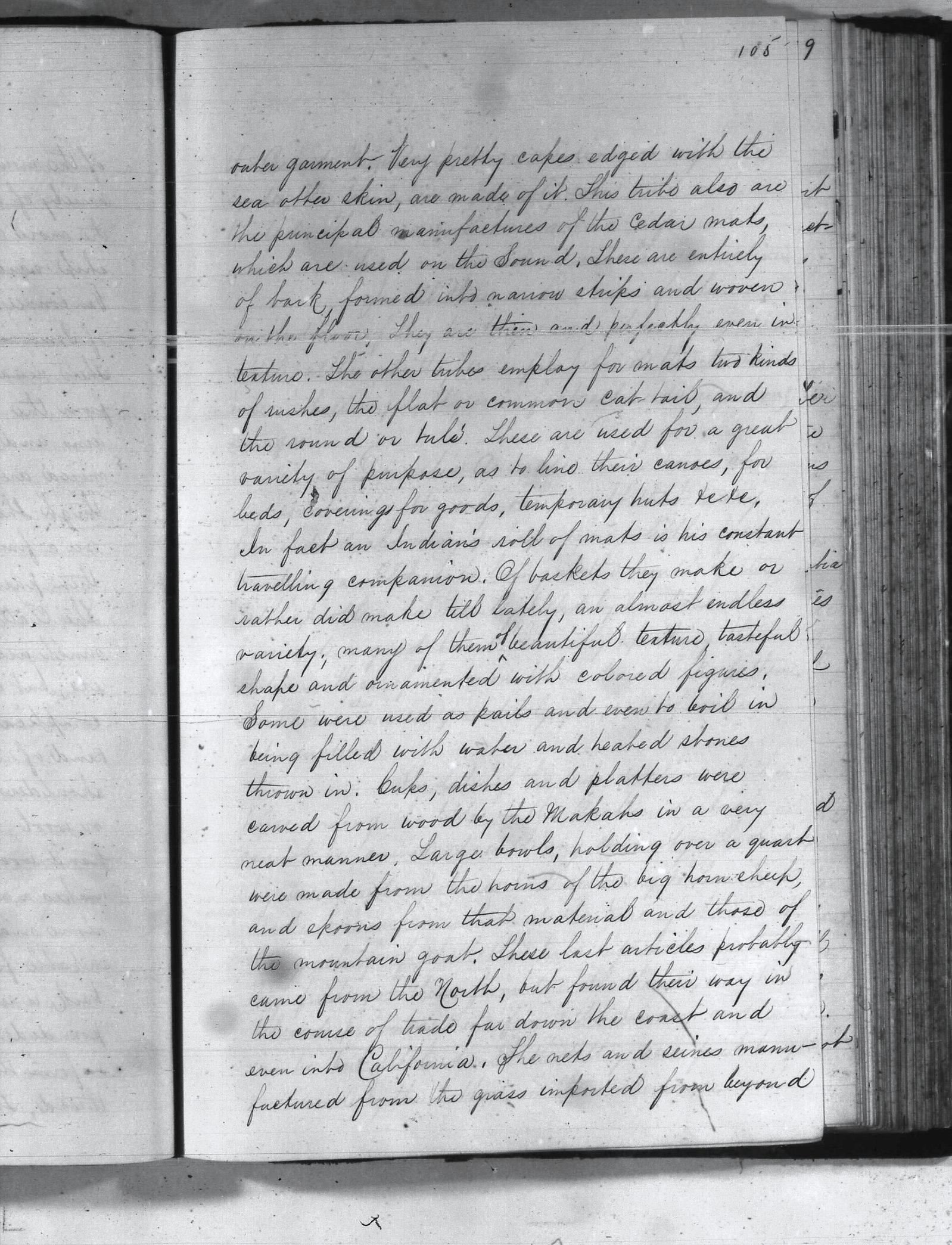
Clothing, Utensils, &c. (mats, baskets, wooden and horn vessels). "Very pretty capes edged with the sea otter skin"; this tribe (the Makah) "are the principal manufactures of the Cedar mats, which are used on the Sound", entirely of bark formed into narrow strips and woven on the floor, thin and perfectly even in texture; other tribes use two kinds of rushes for mats, "the flat or common cat tail, and the round or tule", used to line their canoes, for beds, coverings for goods, temporary huts; "In fact an Indian's roll of mats is his constant travelling companion"; baskets of "an almost endless variety, many of them beautiful texture, tasteful shape and ornamented with colored figures", some used as pails "and even to boil in being filled with water and heated stones thrown in"; "Cups, dishes and platters were carved from wood by the Makahs in a very neat manner"; large bowls holding over a quart "made from the horns of the big horn sheep, and spoons from that material and those of the mountain goat", probably from the North but traded down the coast "even into California"; nets and seines made from grass imported from beyond [the Cascade Mountains]
1856 (Olympia) and later additions
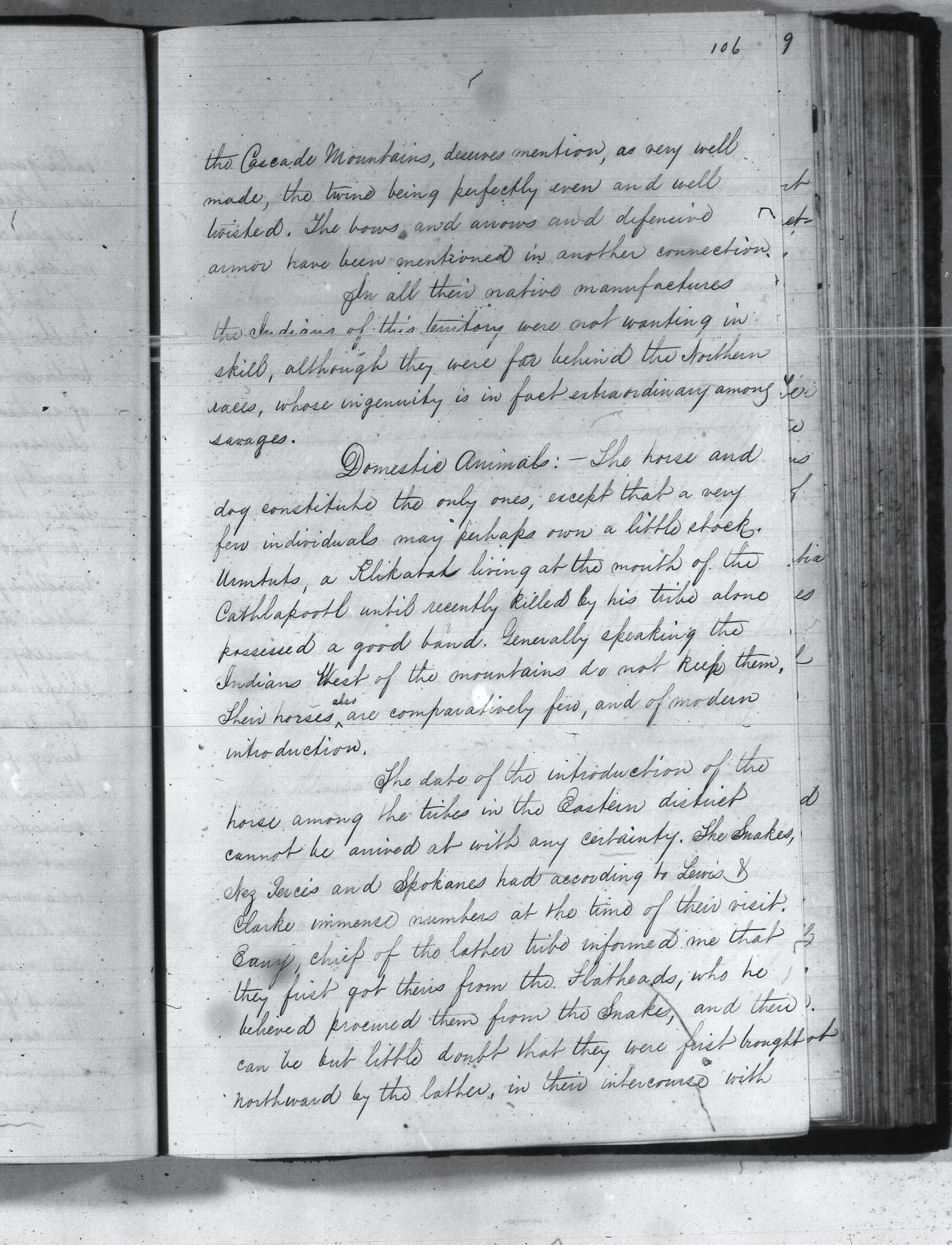
End of manufactures; new section "Domestic Animals:". Twine of the imported grass "very well made, the twine being perfectly even and well twisted"; bows, arrows and defensive armor "have been mentioned in another connection"; in native manufactures the Indians of this territory "were not wanting in skill, although they were far behind the Northern races, whose ingenuity is in fact extraordinary among savages". Section "Domestic Animals: – The horse and dog constitute the only ones", a few individuals owning a little stock; "Umtuts, a Klikatat living at the mouth of the Cathlapootl until recently killed by his tribe alone possessed a good band"; Indians west of the mountains generally do not keep horses, theirs "comparatively few, and of modern introduction"; date of introduction east uncertain, "The Snakes, Nez Perces and Spokanes had according to Lewis & Clarke immense numbers at the time of their visit"; "Eary, chief of the latter tribe informed me that they first got theirs from the Flatheads, who he believed procured them from the Snakes", first brought northward by the latter in their intercourse with [the Camanches]
1856 (Olympia) and later additions
Domestic Animals (horses and dogs). The Cayuse "added to their stock by theft from the Spaniards, as Franchere mentions seeing them with Spanish brands"; "Dr Suckley(?) considers the dogs to be of two breeds, one resembling the coyote or prairie wolf and very probably crossed with that animal, which is the kind used for hunting; the other a long bodied short legged turnspit looking cur, which is the peculiar property and pet of the women"; a probable third, "the dog used by the Skagits Clallams and others of the lower part of the Sound and Gulf of Georgia, which is shorn for its fleece", Vancouver's Pomeranian-like dog, of good size, generally white, longer and softer hair but the same sharp muzzle and curling tail as the hunting dog; among tribes of Northern California, "as on the Klamath river", a variety with a broad tail six or eight inches long "which appears to be natural and not the result of docking", supposed a distinct one; hunting dogs much valued by their owners
1856 (Olympia) and later additions
Symbolic Writing. Section heading "Symbolic Writing." – Gibbs is unsure how far it is carried among the Sound tribes, probably no essential difference from "their neighbors of the plains in this art"; best explained by an example "given me by a veteran mountaineer, Dr Robert Newell of Champoeg": a party of Snakes going to hunt strayed horses; "The figure of a man with a long queue, or scalp-lock, reaching to his heels denotes Shoshonee; that tribe being in the habit of braiding horse or other hair into their own"; a number of marks follow "signifying the strength of the party"; "A foot print pointed in the direction they take shows their course, and a hoof mark turned backward, that they expect to return with animals"; if well armed and expecting attack "a little powder mixed with sand tells that they are ready, or a square dotted about the figures indicates that they have forted"; such pictographs studied and deciphered by "the shrewder or more experienced old men"; no permanent symbolic writings below the Cascades "like those which occur upon some of the rocks on the Columbia river above them, and attributed by the present Indians to the Elip Tilikum, or primeval race" (described in words only; no drawing on the page)
1856 (Olympia) and later additions
Mounds & Earthworks. Section heading "Mounds & Earthworks." – reference to "a circular work on the Yakama River, the construction of which those Indians disclaimed", the first of the kind Gibbs had seen or heard of "within this Territory or Oregon"; "Dr Newell has informed me that in some parts of the Willamette Valley, as on the Twallalty plains for instance, there are indubitable earthworks, some of them of various forms, of which he instanced the letter L. None of them to his knowledge presented the figures of animals"; none on the lower Columbia or Pugets Sound deserving the name; garden enclosures banked with refuse thrown out in clearing come to resemble a low wall; "as at the old Snohomish fort on Kwultschoa Creek they made external ditches, which were filled with pointed stakes and covered over"; near "the house of Mr Cameron at Esquimalt, Vancouver's Island" a trench cutting off a small point of rock near the shore "about six feet deep and eight wide"; Governor Douglass's information follows
1856 (Olympia) and later additions
Mounds & Earthworks (continued) and a "(Foot Note)". Gov. Douglass: such trenches "not unfrequent on the Island", generally surrounding "some defensible place", often with an escarpment facing the sea, the earth thrown indiscriminately on either side of the ditch; "The present Indians have no tradition of their origin. He supposes them to have been made by their ancestors and the authors forgotten by their decendants"; near Victoria "a number of small mounds which I was unfortunately unable to visit", one dug into without finding anything; "Some of the gentlemen of the Company supposed them to have been Camass ovens"; until these and the Willamette Valley works are examined "the question may be considered as still open whether any works analogous to those of the Ohio Valley and others of the State, exist on the Pacific coast"; "(Foot Note)" – reference to "the mounds noticed by Sir Edward Belcher in parts of the Sacramento Valley, which he states were raised by the existing race of Indians for the purpose of elevating their houses beyond the reach of inundation"
1856 (Olympia) and later additions
Migrations. Section heading "Migrations." – tribes generally "claim for themselves to have sprung from the identical country which they now occupy", their legends giving no account of remote changes of place; "A Chinook story related elsewhere points to a southern origin for the ancestors of the tribe, but not for the people themselves"; direct interrogatories are less satisfactory than indirect evidence "as they are quick at suspecting some object in regard to their lands"; the southward movement of part of the Klikatats at a very recent period; "the statement by the Willopahs that the Klatskania had likewise changed their location"; "the Chemakum and Toanhooch once lived on the upper waters of the Nisqually and the Cowlitz rivers and the Satsop and Satsall upon the South fork of the latter", but the informants declared "that their own people, the Shaktamish(?), had never moved. Their country they said was the 'navel of the world'"; east of the mountains the Snakes have in modern [times been driven southward]
1856 (Olympia) and later additions
Migrations (continued). "Dr. Suckley was positively assured by aged Indians that the Klikatats and Yakamas, branches of the Sahaptin family had pushed their way into the country formerly occupied by members of the Se'lish", an extension northward as well as westward "out of the usual line of travel"; insufficient investigation to determine routes or the relative periods of the offsets from the great families, some having probably passed over others of an early date and located beyond; Gibbs's conjecture "that the Sah-Kali(?) and Selish families with perhaps the Shoshonees and some others, originated East of the Rocky mountains; that the country between that chain and the great lakes has been a centre from which population has diverged; that these two tribes crossed by the Northern passes of the mountains and that their branches have since been pushing Westward and Southward"; question whether the southern branches of "the Tahkali" were separated and driven on "by the subsequent irruption" [of the Selish]
1856 (Olympia) and later additions
Migrations (continued). Dialect comparison proposed as evidence, "it being reasonable to infer that those which differ most from the parent are oldest in date of emigration"; "The route of the Selish has obviously been along the courses of the two great rivers, Frazers and the Columbia. By journeying they seem to have penetrated to the sea, while on the latter they were stopped by the Sahaptin and the Chinook"; some branches crossed the Cascade range at different points to the Sound and the intermediate country, "and the Tilemooks have overstepped that boundary and fixed themselves on the coast of Oregon"; "The southern limit of the Tahkali is not yet ascertained. Mr Hale identified the Umpqua as an offshoot; Lieut. Kautz has lately shown the Too-too-tens to be another and it is possible that some of the California languages may also be assimilated."; "Dr Newell states that since he first was in the Indian country, all the great tribes have been gradually breaking up into bands. Whenever two chiefs attain about an equality of power and influence, jealousies arise which lead to a separation of the tribe."
1856 (Olympia) and later additions
Migrations (end of section). Causes fomenting tribal separation, "the chattering of women of course among others"; "Before the introduction of fire arms the range of the different tribes was more limited than now. They did not travel so far from their own country", less applicable to the coast tribes than the interior; the coast tribes "even more split up and those of the sound country perhaps most of all"; the influence of those claiming to be head chiefs "has become almost nothing", and on any disagreement "the dissatisfied party move off to a little distance and take the name of the ground they occupy", or a man "induces a party of his immediate followers to accompany him and start as it were a new colony"; "It is to this separation and to the petty hostilities which often grew out of it, that we must mainly attribute the diversity of dialects prevailing." Lower half of the page left blank; no drawing or table
1856 (Olympia) and later additions
Mythology. Section heading "Mythology." – it is "much less easy" than supposed "to obtain a clear idea of the Indian mythology, partly from imperfection in the means of communicating with them"; not merely have their teachers, where they have had intercourse with "priests of any denomination", desired "to extirpate the recollection of their former superstitions, but the Indians themselves are prone to mix up a little biblical knowledge with their own legends, thus rendering it as difficult to distinguish between the original fabric and the subsequent additions as it was with the coats in the 'Tale of a Tub'"; not understanding the motive for inquiry "they on their part are apt to look upon it as impertinent"; their ideas "are not systematized even among themselves, but are wrapped up in fables, the origin of which is lost"; "the imagination has among them a vast deal more activity than the reasoning faculty"; the frequent statement that "the Indians of the Pacific coast, had no idea of a divinity before their acquaintance with whitemen" – Gibbs is satisfied that belief in one or more superior or supernatural beings "was universal and that generally some creative agency" [was ascribed to them]
1856 (Olympia) and later additions
Mythology (foot note slip). Badly over-exposed / washed-out exposure of volume page 116: the body text is illegible, only faint line-beginnings visible at the left edge, and no reading can be given for it. Legible at the foot of the page is a pasted-in slip headed "Foot Note.": "Mr Dunn in his 'Oregon Territory and British North America' gives an account of the Chinook ideas of religion which I believe to be mostly imaginary. I certainly have never been able to trace any such theory myself. His mention of idols and of sacrifices in particular appear to me incorrect. Idolatry properly speaking seems to have been unknown." (The slip is a physical inserted paper, not a drawing.)
1856 (Olympia) and later additions
Mythology (continued). Readable exposure of page 116: creative agency ascribed to the supernatural beings does not, in Gibbs's opinion, imply "any particular duty or obligation to worship or offer sacrifice", nor does belief in a future state follow, nor is it necessarily connected with "rewards and punishments for conduct in this life"; among most tribes "invocation, if not adoration, was in some form employed" and though not strictly idolatrous "they occasionally addressed prayers to visible as well as invisible objects. That this was so with the Flatheads the evidence of Father Mengarini, which will be presently mentioned, is conclusive."; observances with "the semblance of propitiation, as their throwing food to the Tatathlea(?), painting their faces on the arrival of the first ships 'to please Doquebut'" (an asterisk keyed to a note); "None of their languages contain, so far as is known, a word conveying the abstract idea of Deity", introduced terms involving the white man's God, "in the jargon phrase Sah'-hali Tyee, literally the 'chief above'", no apt rendering of "Great Spirit" having been found; a blank space is left in the line for the corresponding phrases "for heaven, Devil and Hell"; "a slight admixture of hypocritical humility is moreover visible in 'Christianized' Indians", who "always stand ready to assure the inquirer that 'formerly they'" [believed otherwise]
1856 (Olympia) and later additions
Mythology — introduction to the report on tales and beliefs. Argues education varies among "Savages" as among whites, "very perceptible in the purity of the language they use and in the pronunciation of words"; young men "corrupted by familiarity with the whites" deficient in this branch of the "humanities"; states he will not "dissect the tales in which their mythology is embodied" but present them "in as near their savage dress as possible"; the mythic foundation is the same "throughout all the tribes of the Selish race from the Rocky mountains to the coast, as well as, the Sahaptin and Chinook families"; world first inhabited by beings, some extinct or "converted into inanimate objects", possessing supernatural powers; one of them "gave to the world its present form, fitting it for the habitation of man". No sketch or table.
1856 (Olympia) and later additions
Mythology — the transformer/creator figures and their tribal names. A second beneficent being destroyed the giants and demons, "taught mankind the arts of life and gave him fire"; "the last mentioned personage became the moon"; equates the Chinook Italipus with the Klikatak Spilyai, "both signifying prairie wolf", with the Smeow of the Spokanes and the "Hoddeh or Whunneh of the upper Chihalis and Nisquallies"; the Chinook Kannum or Ecannum equals Watteetash (Klikatak), Stoqualm (Nisquallies), Spikani of "the Selish or Flatheads", "these two latter names signifying the sun or moon"; Watteetash said also to be a generic name "including all the Elip Silikum or primeval race"; credits Franchere as first to mention the Chinook legend: Italipus created mankind imperfect and Ecannum "opened their eyes and mouths and taught them the arts".
1856 (Olympia) and later additions
Mythology — Spilyai (prairie wolf) of the Klikatak. Corrects "the recent translation of Franchere's work" for supposing Ecannum "to be the representation of Lucifer"; likens Spilyai's history to "the German Reinecke Fuchs, than whom he is hardly a more reputable character"; describes him as having "the head of a man past middle age, his hair grizzled, with the body of a prairie wolf"; not creator of the earth in Klikatat ("Seechahm" (?)) but fitted it for man; broke down obstructions blocking salmon and made rapids and cascades so fish could be taken, "presently there would be people who would take fish"; assigned tribes to opposite sides of the falls and ordained where roots should grow; taught fishing modes — "the seine at Chinook, the dip net at the cascades" — first built fishing scaffolds and smoke-houses, and first dried salmon unsmoked, pounding them into "bales covered with rushes".
1856 (Olympia) and later additions
Mythology — Spilyai continued; Watteetash and the Elip Silikum. "is done at the Dalles"; Spilyai acted from "the teaching of his two sisters, who dwelt within him and knew every thing afar off"; "At the first start people were foolish and knew nothing"; one story makes him creator not of man but of the Elip Silikum, who at first "had no eyes, mouth or orifices to the nose or ears" and "talked inwardly with their hearts"; Watteetash opened their eyes and mouths "with a flint knife and gave them fire"; Spilyai immortal — burned or drowned, his heart continued to talk and at night he was restored; some say he converted "all the Skookooms or demons into stones and animals".
1856 (Olympia) and later additions
Mythology — Spilyai's vices; Watteetash as culture-hero. "All agree in conceding his libidinous propensities, which created great scandal in primeval society"; took women from the Elip Silikum, "getting children by them, who were always wolves", and a greater power changed the whole to stone, Spilyai included; in another version he and his family were changed into prairie wolves "looking for something"; sees inferential reference to a higher power "probably corresponding with the Aniotkan of the Flatheads"; one Indian "supposed Spilyai to be chief only on the earth, and that there was another above"; "The Indians have no fear to kill the prairie wolf"; some tales ascribe fire and the arts not to Spilyai but to Watteetash, "in form like a man; not old, but a grown man and handsome", who destroyed the demons.
1856 (Olympia) and later additions
Mythology — Klikatak variants; Flathead mythology from Rev. Gabriel Mengarini, S.J.. Notes agreement with "the Chinook story, and the Staktamish tale of Stoqualm, or the moon"; Klikatak claim Watteetash generic for all the Elip Silikum; wishes a council "similar to that of Nice" be "held at Chequos for instance, to regulate it" for "all future ethnologists"; introduces "The following account of the mythology of the Flatheads was sent me by the Rev Gabriel Mengarini, S.J. who for some years was a missionary among them"; Flathead cosmology: earth flat, water on all sides "like an island in the midst of a lake", heaven "a huge hollow mountain, covering the earth, as the covering of a kettle"; Skomeltem, "an obsolete word meaning mother, and which has been superceded by the word skoi", a powerful woman who "took existence by herself, begot a son without cooperation of man".
1856 (Olympia) and later additions
Flathead mythology (Mengarini) — Amotkan and the four generations. Skomeltem's son "chose the summit of the covering, viz: heaven, whence he took the name of Amotkan" meaning "he who sits on the top of the mountain"; Skomeltem remained alone "on another land beyond the waters"; Amotkan created other globes "under, above and around us"; the "invisible God" with many sons though no wife; Indians first took whites for "the natural sons of Amotkan, and consequently immortal until one of them was killed by the Blackfeet"; first generation drowned in a general inundation; second, "twice as tall as the first ones", destroyed by fire from heaven; third by "a general pestilence"; the fourth spared when "mother Skomeltem interceded with her son". Footnote at foot of page keyed by #: "Eh moote, third person of a verb signifying 'to sit high' changed in composition to Ah mote kan, head or mountain."
1856 (Olympia) and later additions
Flathead mythology (Mengarini) — the enlightening of the world; Sinchlep and Spakani. Amotkan promised "never to destroy his creations any more"; world in "imperfect darkness, there being no sun"; at a general council all refused but "Sinchlep (the small prairie wolf) being the smartest of all the animals" undertook it and gave light "a very little less than the actual sun"; being cunning he "published the actions which the people performed in secret", so the people "took Sinchlep by the tail, which in that time was very long, brought him to the ground"; the crow next offered but "being naturally so very black gave very little light" and retired in shame; Amotkan then sent his son Spakani, who wished to marry a woman of the earth and "landed just in the camp of the Flatheads" but was refused admittance. Ink blot obscures one word ("cause[?]") in line 4.
1856 (Olympia) and later additions
Flathead mythology (Mengarini) — Spakani and the frog wife (sun and moon). Spakani, refused the lodges, went to "a small cottage inhabited by a family of frogs"; one frog "very large and fat" thought herself happy to become his wife and "with one jump she became one flesh, or incarnated with the cheek of Spakani"; the people, seeing his cheek disfigured, "tried with sticks to kill her"; ashamed, she prayed him to leave the earth and "since he had come to make himself Sun, to go up immediately"; in revenge he hides himself by day "with a shining robe", at night deposits it, "crosses the waters under the earth and then only shows himself as he is with his wife Frog on his cheek"; "Thus with these Indians the sun and the moon are the same thing", both called Spakani.
1856 (Olympia) and later additions
Flathead mythology (Mengarini) — the moon's spots; immortality of the soul. "the spots on the moon are nothing else than a frog"; Mengarini's account of questioning several chiefs whether they believed the fable — "they answered that they did, not knowing better"; asked what they thought when sun and moon appeared together by day, they "were all startled", searched the sky, "joined in a general laugh, and covered their faces as ashamed", one saying through his fingers, "well we were all beasts, and sure enough not one of us has ever observed and remarked what you say now"; since then the moon is called "Spakani Skukuez, meaning the sun of the night"; on the soul: man "dies only half, viz: the body", the other half anciently unnamed, later called "Singapius", the good going to stay with Amotkan, the wicked "to another place, not determined".
1856 (Olympia) and later additions
Flathead mythology (Mengarini) — sins, the end of the world, Sinchlep and the giants. Only punishment for the wicked is "to be deprived of the company of Amotkan"; the wicked "they intended liars and thieves, for lying and theft were among the Flatheads the two, if not exclusive at least the greatest sins"; earth and people to end, after which "all the dead shall come to life again, and shall be placed in another land, better than the present"; despite Amotkan and Skomeltem the deity worshipped was "Spakani, the sun"; after him "as geniuses, animals of every kind, the beaver, the crow, the deer &c; but Sinchlep, the prairie wolf was regarded as the most powerful and favorable to mankind"; giants called "Nathiskiligw-ten, which in the ancient language means killers of men" killed by Sinchlep and turned to stone; Flatheads crossing the mountains seeing "a basaltic rock standing upright on the top" said "keep aside, there is a Nathiskeli-".
1856 (Olympia) and later additions
Flathead mythology (Mengarini) — coyote omens; sun worship; footnote on Lt. R. Arnold, 1853. Flint ("Silex") fragments taken for "the fragment of an arrow of the killers of men"; old women believe "that Sinchlep in howling foretells them the arrival, by the next day, of somebody, friend or foe, provided he howls only three times"; sun worship "consisted in raising up towards it a morsel of meat or roots, before eating them". Footnote (keyed #) at foot of page: "Lt. R Arnold, 3rd artillery mentions a circumstance connected with the indirect or inferential transmission of intelligence by the prairie wolf"; in the Flathead Camp in 1853, awaiting Gov. Stevens from beyond the Rocky Mountains, Indians said Stevens "had come through Hellgate pass the last night", thirty miles off, because "the coyotes howled, as they used to do when the Blackfeet came in"; "Mr Edward Lander, one of the party, in fact reached the village the same evening, having camped within the pass the one preceding".
1856 (Olympia) and later additions
Flathead prayer and worship (Mengarini, quoted) — first of two exposures of this page. Prayer: "Sun have pity on us, so that animals and fruits may grow abundantly"; each prayed "to whatever his eyes met with, be it a tree or a stone"; Blackfeet more fervent, cutting "off large pieces of flesh, and offer them to their Natosa (the sun) particularly when they go to war"; an old man "well nigh a hundred years of age" recounts his mother taking him into the woods to "a dry pine tree, broken and rotten from old age", bidding him "scratch yourself well to that tree and pray", saying "Oh! my good tree, have pity on me and let me live as long as you lived", until "our sore shoulders compelled us to put an end to our prayer"; prayers generally "asking to live a long time, to kill plenty of animals and enemies, and to steal the greatest number of horses possible"; "no man could ever hope to become a chief unless he had killed at least seven Blackfeet and stolen twelve horses". This exposure is skewed and partly shadowed at the left; frame 3773 is a second, cleaner exposure of the identical page.
1856 (Olympia) and later additions
Flathead prayer and worship (Mengarini, quoted) — duplicate exposure of page 129. Duplicate exposure of the page filmed as frame 3772; same text, cleaner and squarer on the plate: the sun prayer "Sun have pity on us, so that animals and fruits may grow abundantly"; the Blackfoot "Natosa (the sun)"; the near-hundred-year-old man's account of praying to a rotten pine tree at his mother's bidding; and the chief-qualification of "at least seven Blackfeet and stolen twelve horses".
1856 (Olympia) and later additions
Close of the Mengarini account; Nez Perce tamahnous; Do-kwe-butl of the Sound. Thunder "regarded as an evil genius, and the rainbow was for them nothing else than the same thunderbolt looking down for prey amongst the people", the remedy being to break camp and "go to encamp at some miles distant"; Mengarini closes that the rest about the Flatheads "is so common with other tribes of Indians that I think it quite useless to repeat here what you have already acquired elsewhere"; "According to Mr W. H. Ganey"(?) among the Nez Perces "each man has a particular divinity, equivalent to the tamahnous of the Chinooks" — animals, birds — and a hunter "bathes and invokes the eagle to aid him in pursuit of game"; "They make no idols but set up a wing or feather, a skin &c"; new section headed "Do-kwe-butl": the Snohomish, Clallams and other lower Sound tribes have a deity "Do-kwe-butl or No-kwe-mutl", supposed identical with Amotkan, living "upon the Eastern edge of the world", maker of land, rivers, sun, moon and stars.
1856 (Olympia) and later additions
Do-kwe-butl continued; Scotam and Smee-ow, deities of the Sound. "at his bidding men came into being"; formerly all animals were men but became wicked and he "metamorphosed them to the forms they now bear, as wolves, crows &c"; No-kwe-mutl "gave names to every thing, to the different countries, grounds and rivers, to all the fish and animals" and "fixed the places to which fish should come"; one Indian said there were two No-kwe-mutls, "one good, the other bad", and in the eclipse story "the good one sided with the ant, the bad one with the bear"; two further Sound personages: "Scotam", "a great female chief who lived in the sun's road in the West", powerful for mischief, "brought the small pox and other deseases among the Indians"; and "Smee-ow, a great man chief, whose home is on the sun's trail in the East", at war with Scotam; "they made medicine against one another"; Scotam "hardened her flesh so that she was proof against knives, arrows &c" but Smee-ow prevailed by a medicine made from an herb root.
1856 (Olympia) and later additions
Place-names of the deities; section "Elip Silikum" (the pre-Adamite race). The herb-root medicine "since then the Indians use it as a remedy against the small pox"; "The name of Scotam's country is At-klan-ole-qwan-hoo, that of Smee-ow, and Doquebutl is K-kole-qwan-hoo"; "The name of Smee-ow occurs also in the Spokane Walhalla"; new section headed "Elip Silikum": the "primitive inhabitants of this world, or demon race" hold "a far more conspicuous place in the Indian superstitions"; "almost every thing remarkable in the natural world represents one of these Pre-adamites" — "The great snow peaks, isolated rocks along the shores, the boulders upon the prairies, the columns of basalt and pinacles of volcanic conglomerate occurring in the mountain region, the large old firs and cedars, all once lived as people"; "The word 'Skookoom' signifying in Chinook sturdy or powerful" applied to these beings, restricted to "those especially who were hurtful to the human race", who retain magic powers "for which reason they are frequently propitiated".
1856 (Olympia) and later additions
Manner of telling the tales; no metempsychosis; the blue jay at the Chehalis council. Indians "are very anxious to impress the idea of their personality; that they were really people, at that time and were afterwards transformed"; tales "told with excessive minuteness of detail, each circumstance being separately narrated, as for instance, each of the five times anything is said or done is particularized, and the personages all speak in dramatic form"; the finer "points" are "necessarily lost in translating, particularly as the language of narration is an imperfect one, but the recital evidently gives immense satisfaction to Indian listeners"; "no trace of the doctrine of metempsychosis exists in these fables" — the transformation was confined to individuals then living, and descendants "are simply what they seem to be, wolves, jays, rattle snakes or what not"; yet "all animals understand the Indian languages in virtue of their progenitors"; anecdote begins at "the council grounds on the Chehalis river", where a blue jay stealing potatoes from a field.
1856 (Olympia) and later additions
Animal lore — the jay, crow, dogs, wolf; mammoth bones; list of Skookooms begins. The jay flew into a tree "and commenced chattering vehemently"; an Indian shot it, answering "that the bird was abusing him"; "The jay plays a conspicuous part in all the tales, having a high reputation for cunning and newsmongering"; a story of the crow: paddlers "always used the edge of their paddles, until one day accidentally the steersman turned his blade flatwise and found that to be the best way"; "Dogs were originally deer hunters"; "The large wolf and the rattlesnake rank as among the worst of the Skookooms"; "The bones of the mammoth have been discovered in the Willamette valley, but I could not learn that any tradition existed respecting it" — an Indian "supposed they were bones of one of the Skookooms who formerly inhabited the lakes"; begins an enumeration of Skookooms "who do not appear to have left any legal heirs", the first entry headed "Sat-at-hlia".
1856 (Olympia) and later additions
Skookooms — Sat-at-hlia (Klikatat ogresses); propitiated rocks; "Chan-a-hop". "Sat-at-hlia", so called by the Klikatats, "were ogresses of gigantic stature who carried kettles on their backs as women do kamass baskets. They were painted and had great eyes. When they caught a child they put it into the kettle with water and boiled it with hot stones. They have all been changed to stone"; of this class "the two wicked women who stand on the bank of the Columbia below the mouth of the Winatshapam, as narrated in my former report"; on the Willamette "just above Rock Island" a prominent rock the Indians propitiate in passing, "throwing pieces of bread toward and saluting it"; "Dr Tolmie is of opinion that these rocks may be the representatives not of many Sat-at-hlia, but of those of different tribes"; bread thrown "only to the evil ones who formerly killed and eat people"; new entry "Chan-a-hop", "a great bird that lives by the lake on the South fork of the Cowlitz, near Mount St Helens. It feeds upon men, and cannot be killed with arrows or bullets", probably the same "that was sent to eat out the brains of the Sat-at-hlia".
1856 (Olympia) and later additions
Skookooms continued — A-yah-hos, Kwak-wa-stas-mewh, Mo-kwa-tah-oom, Hweh-kwa-deh / Nah-ween-at-hlah. "A-yah-hos is a demon half deer and half snake with two heads and two pair of horns. He lives every where in the mountains and bears the same name both with the Klikatats and Nisquallies"; "Kwak-wa-stas-mewh" are "a little people who live to the North. They eat the haiqua", the shape of their mouths "or rather perhaps beak, allowing them to pull the meat from the shells", beds of which "lie round their lodges like those of clams round the houses of the Sound Indians"; their flesh "is proof against knives or arrows, but is vulnerable by feathers", pierced in "their wars with the geese"; they figure in "the story of the 'Seal Hunters' given below"; an informant reported "in his father's time there was a slave among the S'Homamish who had lived with them and cured many of their wounded with gum"; one can "paddle a great canoe by himself and catch it full of salmon halibut and sturgeon"; "Mo-kwa-tah-oom, are the inhabitants of the land of bones, or the dead world", described in a Staktamish legend; "Hweh-kwa-deh of the Sound Indians, Nah-ween-at-hlah of the Klikatats is the thunder bird, the sound of whose wings produces the noise".
1856 (Olympia) and later additions
Thunder bird continued; St-plah, Tsiah, Kelo-samish; introduces the Upper Chehalis tales from S. S. Ford. The thunder bird "has sometimes been seen by the medicine men. He is very fierce, casting fire at whatever he is angry with"; Klikatats say that long ago "the Nez Perces made a large hole in the ground and filled it with water, which they heated by stones", and while "several tens" sat around it "the fire came and they all died"; "The figure of the bird in the act of carrying off a whale has been already mentioned"; "St-plah (Klikatat) are a gigantic race, having very long hair. They are of both sexes. They inhabited lakes and when they saw any one looking down into the water, rose suddenly, seized and took them down"; among the Staktamish, lake demons "called Tsiah, which seemed to be the same as the Jugwa or Zugwa of the Nisquallies"; "Kelo-samish, or Kesloh-sumsh, gigantic hunters, inhabiting the Cascade Range and known to both Klikatats and Sound Indians", connected in a Snohomish tale "with the story of the deluge"; introduces "local tales of the Upper Chihalis, relating to the Tsiahs, the following will serve as specimens, given me by S. S. Ford, Esq."
1856 (Olympia) and later additions
Upper Chehalis tale (from S. S. Ford) — the Tsiah bear at the forks of the Chehalis. Untitled tale: "There was once a lake at the forks of the Chihalis, the neighborhood of which was haunted by a Tsiah or demon, in the shape of an enormous bear", which "devoured all whom it saw"; "a very powerful 'tamahnous' man volunteered", stuck an arrow at the water's edge and "planted arrows in the ground at short distances" along the trail, wounded the bear, then fled, turning to discharge each arrow "still flying"; reaching the water "he plunged in and changed himself to a salmon, of which the lake was full"; the bear "drank it dry, swallowing all the fish"; the man resumed his form and "with a flint knife, cut the bear to pieces severing his heart strings"; all the Indians were summoned to see the monster and skinned him, "so large was his hide that the pieces covered all the prairies around. One ear alone covered Ford's prairie, which contained by survey several sections of land"; "The lake never reappeared but there".
1856 (Olympia) and later additions
Religion and superstition: demons embodied in stones; haunted prairies. Prairie west of "the Chihalis," formerly a lake, frequented by [illegible] monsters; Indians from a hill overlooking it "heaped a great number of large stones and threw them in, thus drying up the water and dispersing or destroying these monsters"; one stone still visible, feared, passers "always leave a leaf of the Sallal(?), or of the Oregon grape, by the stone on entering the prairie, and a small pile of them may usually be seen round it"; prairie called "the Nah-chall" avoided because night noises "(ewi-li-tchin)" are heard there, like surf or "distant explosions" – "The occurrence of these sounds is no fiction. White men themselves have heard them."; class of demons represented by stones, "the only ones upon which I have noticed carving," connected with the weather; "The Multnomah stone" a block of basalt in the alluvial land of "Multnomah or Souvies island" in the Columbia River, touching it brings rain; Gov. Douglas named. No sketch or diagram.
1856 (Olympia) and later additions
Religion and superstition: weather stones, Skookooms turned to stone. Gov. Douglas of the Hudson Bay Company pushed the Multnomah stone against his half-breed guide's protest and "a violent storm arose shortly after," attributed "entirely to the wrath of the Skookoom"; "Another four sided prism of basalt, having a rude resemblance to a human face carved upon one angle" stands in Douglas's garden at Victoria, held by "the Kawitchin tribe as possessing great power over the weather"; "Jahotowit an intelligent Klikatat" states many such rain-stones exist – "They were a race of Skookooms who have been changed to stone," and if a squaw sits on one while berry-gathering "it speedily rains"; a similarly sculptured basalt block "lately found by Mr Alex Abernethy in an old burial ground opposite Oak Point on the Columbia," covered with moss and unknown to living Indians. No sketch or diagram.
1856 (Olympia) and later additions
Religion and superstition: weather stones; Cascade passes. Named informant is the brother of Gov. Abernethy: at "Green point, just below Oregon City on the Willamette" a stone by the river bank belongs to the class of demons; "In the winter of 1849 when the great freshet took place, a deputation of Indians came from up the river to see it," told Governor Abernethy that if left uncovered "the river would rise and wash away every thing," found it bare and covered it with earth; a second freshet in the spring of 1850 brought another delegation which re-covered it and cautioned him to keep it so; crossing the Cascade passes Indians "are unwilling to talk, lest as they say the Skookoom of the place should send rain and snow"; "Mr Tinkham, one of Gov. Stevens Surveying party" saw snow shoes hung on trees on the summit in the winter of 1853-54, left by Indians and not to be taken – "They were possibly a propitiatory offering." No sketch or diagram.
1856 (Olympia) and later additions
Religion and superstition: weather stones; Cascade passes. Duplicate exposure of frame 3785 (same page 141, slightly different crop): Gov. Abernethy's brother at Green point below Oregon City; 1849 great freshet and 1850 second freshet delegations covering the river stone; silence in the Cascade passes lest the Skookoom send rain and snow; Mr Tinkham of Gov. Stevens's surveying party and the snow shoes hung on the summit trees, winter 1853-54, "possibly a propitiatory offering."
1856 (Olympia) and later additions
Religion and superstition: transformation rocks of the Strait of Juca. Tamahnous performed by blowing into the air and "splattering the saliva at the same time"; "The isolated rocks of sandstone which occur scattered along the shores have been the subject of particular attention by the inventors of Indian tales"; near the boundary between "the Makahs and the Clallams on the straits of Fuca called Seh-tok," Clallams went down to Neah to take salmon, a man remained with his two sisters and slept with them, "but becoming ashamed of what he had done, turned from them when the Great Spirit changed them into stone"; "The rock representing the man has its head inclined towards the water. Their dogs, also become stone lie around them."; near "Pishtst(?) (Clallam bay)" rocks are Indians and a whale – the men cut off a living whale's fins and tail to tow him ashore "when for their cruelty the whole were converted to stone"; informant added that in old times the Great Spirit came down to punish the worst in this manner. No sketch or diagram.
1856 (Olympia) and later additions
Religion and superstition: transformation rocks; the Tsiatko introduced. "The well known land mark in the Columbia river, called Pillar Rock, was once a young Chinook" who loved "a Klatskanai girl" whose people the Chinooks were at war with; his people hid the canoes, he waded the river, "turned and abused them, and for his impiety was thus transformed"; a pile of rocks near the Island in Shoalwater Bay is "a wicked tamahnous man, his wife and child" – this magician "first introduced among the Indians the scourge of lice" and as punishment the insects dragged him and his family into the water by order of the Great Spirit, "unfortunately the lice did not perish with them"; a race classed separately, not properly "Elip Tilikum": "They are the Tsiatko, in the Upper Chihalis, Steh-tathl; in Klikatat Sheahah" (all three underlined); some describe the Tsiatko "as of gigantic size, their feet eighteen inches long and shaped like a bear's." No sketch or diagram.
1856 (Olympia) and later additions
Religion and superstition: the Tsiatko. Tsiatko "wear no clothes, but the body is covered with hair like that of the dog, only not so thick"; others say natural size, resembling men "except that they gibber and chatter, one Tsiatko making noise enough to represent a dozen persons"; live in the mountains "in holes under ground, and to smell badly"; come down in the fishing season, at the report of one "they all run for their houses, fire their guns and shout"; visible only at night, "steal salmon, carry off young girls and smother children"; voices "like those of the owl," possessing "the power of charming, so that those hearing them become demented, or fall down in a swoon"; a Klikatat informant held they were not "Elip Tilikum" (underlined) but came afterwards, part still men dwelling beyond the mountains, hospitable hunters; "Dr Tolmie" states an Indian woman married to a Canadian at Fort Vancouver told of being taken prisoner by the Tsiatkos and carried into the woods between the fort and the mill; "Lash-high and Swatiltoh, a couple of Nisqually Indians" begin the next anecdote. No sketch or diagram.
1856 (Olympia) and later additions
Religion and superstition: the Tsiatko; genealogy of a Nisqually woman. Lash-high and Swatiltoh "pretended to have wounded a Tsiatko and tracked him by his blood for some distance," and near where he was shot "a piece of a mountain sheep blanket was found"; another Indian told "Judge Ford" he wounded one carrying off a young girl, tracked him all next day, found him sleeping against a tree, but the Tsiatko started and ran; Dr Tolmie states a wandering hunter tribe on "the Frazer's River Mountains," like the Klikataks, "known as Stay-tahl, are called Tsiatko by the Snohomish and are sometimes confounded with the bogles of that name, a fact that explains the Klikatat account"; other such beings "too numerous to mention" occur in the legends given below; Dr Tolmie's suggestion concerning "the Satathlia" that it is not a class but an individual variously represented; "Ke-kav-ei-mi-loot(?), an old woman of the Nisqually, daughter of So-was-tan, a former chief and related to half the nobility of the country," not content with a human pedigree of three generations. No sketch or diagram.
1856 (Olympia) and later additions
Future state (section heading on this page). The old Nisqually woman "informed me that she was sprung from four generations of Skookams, Tshits-no-wehtsh(?), Ai-yah-hose(?), Hutl-kwus-keh-nam(?) & Tsutl-tsah-lup-tu(?). after which they became Indians. Ke-uch-keh-nam(?) being the first."; new underlined heading "Future state:" – belief presumed common to all tribes; "there are two countries of the dead" (marked with a footnote dagger); the dead remain in the first until flesh and bones disappear, revisiting earth at night, coming "to their friends in dreams and urge them to follow," after which the Indians "go out in the morning and lament"; after dissolution they pass to the second country, "crossing a river by the way and from this time they are lost"; "The road to the land of the dead is by the West, for which reason the head of the corpse is placed towards the setting sun"; view given "by an old woman of note among the Staktamish"; FOOTNOTE at foot of page: "moo-kwo-tah-o-mich, and Skwi-ah-ha-eo-mich. in the language of the upper Chihalis". Footnote is the only marginal matter; no sketch or diagram.
1856 (Olympia) and later additions
Future state. Two worlds, one where "sun always shines and salmon, game &c are abundant," the other "cold and dark and where the inhabitants suffer from hunger and thirst"; account "confirmed by Jahotowit, a Klikatat," who added that some think death "was the end of it"; whether it is "simply the Indian version of the Christian heaven and hell, it is difficult to decide positively"; "It would appear from Father Mengarini's account to have been indigenous among the Flatheads at least"; "There is a Klikatat story about Spilyai, founded on the unnatural conduct of one of his sons, which I did not succeed in obtaining," indicating that before it all souls went to one place but after, by decree of Spilyai, "some went up and others down"; "The Klikatat word tumnah (underlined) which means 'heart' also signifies apparently the mind or organ of thought and the soul or life"; a resident of Astoria married to a native woman: his wife, insensible for hours and thought dead, property cut or burned in preparation for burial, on recovery said she had been to the "mameloose illahee". No sketch or diagram.
1856 (Olympia) and later additions
Future state; grave goods. The Astoria woman "saw there many persons, some of whom she had known, others who were strangers. That it was a good country and they seemed to be happy and well off, with good canoes, clothes &c and plenty to eat," but they told her "they did not want her yet, she must go back"; other claimed visits to the nether world, "Lash-high, the Nisqually chief among them"; the universal custom of depositing household utensils and implements of war with the body is not proof they are meant for use in the other world; "Garry the Spokane chief" quoted verbatim: "If", he said, "a father has lost a son whom he loved, he kills his horse, because whenever he saw it, he would say, that is my son's horse, and he is dead."; Gibbs holds the principal motive "is undoubtedly ostentation"; Sound tribes said canoes and other things were placed by the dead "merely to please them, not because they would get them again, for every thing was new in that country"; Father Mengarini named. No sketch or diagram.
1856 (Olympia) and later additions
Future state; the dead and their property. Father Mengarini states that with the Flatheads killing horses at the grave "is intended only to do honor to the deceased and not with a view to use"; "Mr W. H.(?) Gray of Clatsop, formerly secular agent of the A. B. C. F. M.," reports that "the Nez Perces used to burn as well as kill horses and that they informed him that they did this for the use of the dead in the other world"; Chinooks say the dead revisit earth at night "and would be very angry if they found their property in use by others, for which reason it is put by their graves"; "It seems however permissible to purchase from the dead," a Bay resident being allowed to take boards covering "dead canoes" on replacing their value in white cloth; "Mr James G. Swan" narrates a case of seeing the dead: an Indian named Charley "who had 'found his tamahnous'" sat in his house by a bright fire when the dog began "jumping up and down and wagging his tail as if fawning on some one," and Charles "stood transfixed and exclaimed that there was a mamelooso, or dead man in the" house. No sketch or diagram.
1856 (Olympia) and later additions
Cosmogony (section heading on this page). Conclusion of the Swan ghost story: the dead man was "George, another Indian who had recently died there, and two others with him," angry at Charles being on his ground and asking where his brother and sister were; next day the other Indians insisted Swan send Charles away; "Mr Swan was fully persuaded that the Indian's terror was not counterfeited," and "added that the dog's share in the transaction, however puzzled him"; new heading "Cosmogony:" – "Their idea of the earth appears every where to be that it is round and flat, and surrounded with water"; sun and moon tales confused among tribes but "all clearly spring from a common origin"; "The Snohomish story is as follows: – The moon (sloqualm(?)) was first made, and formerly lived upon the earth, but it was too hot and burnt every thing, so Doquebutl ordered it to go above and be for the night. Its woman asked it where she should go if he ascended, and the moon answered, into its eyes" (a small interlined word stands above "eyes," reading uncertain). No sketch or diagram.
1856 (Olympia) and later additions
Cosmogony: sun, moon, stars, eclipses. "The moon was then like a young child, always wetting itself, Doquebutl took his clothes and dipped them in the moon's urine, made them up into a ball and put it above to be for the day, and this was the sun, Kloquatl(?)"; he then made "the Evening star, Klah-hil-lel-lus, (twilight, or dark is come) to be the moon's younger brother and always follow it; and the morning star, Le-heh-lel-lus (daylight is come) to bear the same relation to the sun"; sun and moon confounded by some tribes, "only one name existing for them"; eclipses explained by Sound Indians as the sun missing his road and, "being ashamed of himself, drew his blanket before his face"; a Klikatat said "the sun and moon stopped to talk"; general alarm lest "hereafter there should be no light"; a Snohomish story: while the sun was absent "the bear and the ant or rather their prototypes among the Elip Tilikum, made tamahnous in relation to it, the first wishing that it should shine only in intervals of six months." No sketch or diagram.
1856 (Olympia) and later additions
Cosmogony: sun, moon, stars, eclipses. Duplicate exposure of frame 3796 (same page 151): moon as wetting child, Doquebutl making the sun Kloquatl(?) from the ball of clothes; Evening star "Klah-hil-lel-lus," morning star "Le-heh-lel-lus"; eclipse explanations (blanket before the face; sun and moon stopped to talk); opening of the Snohomish bear-and-ant tamahnous contest.
1856 (Olympia) and later additions
Cosmogony: the bear and the ant; star lore and constellations. The ant wished "that there should be alternate day and night. The one danced and sung 'one warm one cold' the other 'Sun come presently, sun come presently'. He proved strongest in magic and the sun appeared." The bear-wisher "became an actual bear, that his wish of sleeping all winter might be fulfilled," the other tightened his belt in excitement "so that his waist became very small, and he was turned into a pismire. The Klikatats have the same story, but they substitute the frog for the ant."; "The Chinooks believe that great chiefs become stars and that falling stars indicate the death of such a one. If with trains they are female chiefs, the train representing the woman's dress."; a Klikatat said common falling stars "were merely going after women, and that meteors were chiefs, or rather the hearts of chiefs about to die"; constellations: the latter call the Great Bear "Spilyai or the prairie wolf"; "The Sound Indians, Quagwitch (a deer)," representing "two Indians and a dog, chasing one"; Chihalis and Chinooks give corresponding names; on the Sound "the belt and sword of Orion (Le-lee-yo-was) is supposed to be three Indians catching fish, the sword representing the fish"; "The Pleiades (S'Kodai) is a school of fish of the Cottus(?) family." No sketch or diagram.
1856 (Olympia) and later additions
Cosmogony: the bear and the ant; star lore and constellations. Duplicate exposure of frame 3798 (same page 152): bear and ant magic contest, "one warm one cold" against "Sun come presently, sun come presently," bear and pismire; Klikatats substitute the frog for the ant; Chinook belief that great chiefs become stars and falling stars with trains are female chiefs; Great Bear called Spilyai or the prairie wolf, Sound name Quagwitch (a deer); Orion's belt and sword "(Le-lee-yo-was)"; Pleiades "(S'Kodai)".
1856 (Olympia) and later additions
Cosmogony: constellations; Nisqually tale of the star husbands. "Other constellations are Edad, a fish weir, H'-dah he-set, the needle with which they make mats, &c."; the Pole Star and its relation to the Pointers "I believe they have never noticed"; new tale: "The Nisquallies have the following tale, indicating the idea that the stars are men: – Two girls once went out to dig for roots and remained all night." Lying by the fire they wished for particular stars as husbands; "The stars were young men, and taking the girls at their word, came down and carried them off to the upper world," which they found like their own, with the same roots to dig and same tasks; one had a child by the star; pining for home, while digging they made "a deep hole and finding the air come through, commenced making a rope of hazel twigs"; the husband scolded her for bringing few roots and she pretended the infant had cried. No sketch or diagram.
1856 (Olympia) and later additions
Cosmogony: Nisqually star-husband tale concluded. The women "continued their occupation, and when the rope was long enough, descended by it to the lower world"; the star father followed and demanded his son, the woman refused and eluded him; "He then employed the blue jay who was very cunning, to get it for him. The jay entered into conversation with the woman as she rocked her child on the end of a stick, and having succeeded in attracting her attention from it, substituted a piece of wood and carried off the infant to the father who took it to the world above. The mother was much incensed, but could not recover it."; "Another version of the story is that the women first dug down to a lower world, to which they descended, and looking up from thence saw the stars above them, two of which they selected for husbands, and that they afterwards returned by their rope. Hence they concluded that the stars above were in like manner people, and that there was an upper as well as a lower world."; the lower half of the page is blank (text ends mid-page). No sketch or diagram.
1856 (Olympia) and later additions
Natural Phenomena (section heading on this page). Underlined heading "Natural Phenomena:" – "The aurora borealis, (Uq-was-seh-a-kat) a phenomenon by the way not so frequent as in the Eastern Atlantic States, they dread as the forerunner of sickness"; "Thunder, Hweh-kna-deh, has already been noticed"; no superstition found as to the echo, Indians questioned "appearing to understand its cause tolerably well"; "Of the rainbow they only said that the rain made it"; at Shoalwater bay, where elevation and depression of the land are visible, "the Chinooks it is said have traditions of earthquakes that have shaken their houses and raised the ground"; "The volcanoes are an object of awe to the tribes in their vicinity, and enter largely into the legends particularly of the Klikatak"; "the eruption of St. Helens in 1842 caused great alarm," before which the Klikatat visited it "but since they have been afraid to do so"; mountains "at present active are Baker, St. Helen's and as it has recently been ascertained Mt Hood and probably Mt Rainier also"; Puget Sound Indians report "another smaller peak to the North of Mt Rainier" (continues). No sketch or diagram.
1856 (Olympia) and later additions
The Deluge (section heading on this page). "once smoked."; new heading "The Deluge:" – "References to a deluge or general flood of their respective countries seem to be universal, but so far as appears, are connected with the extinction of a former and demon race, not of the present"; distinctly stated in Father Mengarini's Flathead account; "An allusion to it appears in the Klikatat tale of 'Iosup(?)'"; Skagit story: "Doquebutl once got angry and made the water come over the country. At that time there was a people living at the mouth of the Skagit river called Skah-ka-jet. When the flood came they took to their canoes, and sat there till the water dried up." One went into the mountains "to kill wild [illegible], all the animals having taken refuge there," and was himself shot by the rest, who "had in the meantime been turned into Kelohsamish, of whom mention is made elsewhere," and did not recognize him; "Captain Scarborough, an old navigator of the Hudson's Bay Company," heard among "the Tongas(?) Indians of Russian America" a deluge story in which survivors ascended a mountain and, when it subsided, "a black bird flew out and came back with a pine branch"; Gibbs's caution: "Some of these tales have however too much of the flavor of Genesis about them for absolute credence." No sketch or diagram.
1856 (Olympia) and later additions
The Deluge. Duplicate exposure of frame 3803 (same page 156): heading "The Deluge:"; Father Mengarini and the Flatheads; "the Klikatat tale of 'Iosup(?)'"; the Skagit flood story of Doquebutl and the "Skah-ka-jet" at the mouth of the Skagit river, the hunter shot by his own people turned into "Kelohsamish"; Captain Scarborough of the Hudson's Bay Company on the "Tongas(?) Indians of Russian America," the black bird and the pine branch; "too much of the flavor of Genesis about them for absolute credence."
1856 (Olympia) and later additions
The Deluge; creation of mankind. Gibbs argues the scripture deluge "is one of those which would be first related by a christian to savages, and would take the strongest hold upon their minds," but that "the visible proofs of changes in the earth's surface" would not escape "the observant eye of the Indians. Sea shells, and the bones of marine animals, found at great elevations alone might suggest the idea," and they have "recognized the features of once existing lakes in the numerous small prairies of the Chihalis and elsewhere, in which they are unquestionably correct"; "Of the creation of mankind, there are probably as many stories as there are tribes"; Snohomish account: "Doquebutl first made their country and that of the Skagits, and a man and woman to each, and in time the world grew and the people increased in number and divided into tribes. The Snohomish were made of the heart of some animal the Sugwamish of the liver, the Clallams of the right hand and arm to the elbow, The Vancouver's Island Indians of the upper arm, the Skagits of the bones, the Klikatats of the feet, and the Indians of the upper part of the Sound of the mouth, wherefore they have very large mouths now." A different version follows (page ends). No sketch or diagram.
1856 (Olympia) and later additions
Origin traditions of the Sound tribes. End of a "Winakat a chief" account: five original peoples, "the Snohomish, Skagits, Suquamish, Cowitchins and Sklallam"; "Doquebatl did not make them, but they grew from the ground like trees"; Klikatats and Makahs omitted from the story. Begins the Clallam origin account given to Gibbs: a lone man carves a woman from a fir log with "the dry rot, red and yellow", puts a deer's entrails, heart, tongue and teeth into the figure, an eagle's eyes into her head, tickles her under the arms until she laughs "a sort of giggling laugh". No sketch.
1856 (Olympia) and later additions
Origin traditions (Clallam, Makah). Clallam carved-woman tale concludes: she bears a boy the first day, a girl the second, "and from them came the Clallams". A second Clallam account: two people at "Pishtst" (?), two at "Jennis" (?), brothers married sisters until they found other people "at the Skagits" and got wives there. A Makah origin legend "narrated … to Capt E. S. Fowler" and received by Gibbs: at Neah Bay an old man and wife flee an attacking tribe to a cave in the rocks and emerge to find both parties vanished. Named informant chain.
1856 (Olympia) and later additions
Origin traditions (Makah, Chinook). Makah legend ends: the old couple's revived vigor produces a son and daughter, "the ancestors of the Makahs"; the woman dug clams, the man fished and "made arrow points and hooks of bone, which he sharpened on the sandstone found at Neah". A Chinook origin account "given me by Mr Swan of Shoalwater Bay": an old woman and two young girls from a country far to the north; a man opens the earth, the girls see two young men "all apparently of fire"; the men go up above "and became stars"; their children became the Chinooks. Gibbs calls it "a version of the star story of the Nisquallies" pointing to "a Northern origin of the Chinook race".
1856 (Olympia) and later additions
Origin traditions; new section "The Samahnous". "Judge Ford" received from an old upper Chihalis Indian a flood tale: all men were once white, the Great Spirit sent a flood, one woman with a little dog took refuge in a treetop on a high mountain three days, a muskrat brought up earth; "The dog was the father of the Indian race which accounts for their fondness for that animal". Section heading written and underlined: "The Samahnous." — the Chinook term for incantations and for everything having supernatural properties.
1856 (Olympia) and later additions
The Samahnous. Tamahnous compared with "the Medicine of the prairie tribes"; traced to the universal desire for power "beyond their actual sphere of existence", animating "the magician, the astrologer and the alchemist"; the tamahnous men are "as completely their own dupes as the most innocent spirit rapper" and "can themselves produce many of the phenomena of mesmerism". Chinook doctrine that every man has a good and a bad tamahnous, "analogous to an attendant spirit or angel"; initiation required of Doctors or Magicians, and chiefs and ambitious young men "seek their tamahnous".
1856 (Olympia) and later additions
The Samahnous. Vision quest described: consecrated elevated places, "The narrows on the Killopah river" frequented by the Shoalwater Bay Indians; the aspirant purifies by washing, fasts and watches by a fire in the mountains until he "saw visions" and "dreamed dreams"; the first living object seen, "as a bear or bird", becomes the emblem of his tamahnous, painted or carved upon a board kept in the lodge and later set near his grave. A grave board from the Killopah river was converted by "some irreligious white man" into a log cabin door, "painted with human heads and hands and with cockle shells", said to have belonged to a famous doctor.
1856 (Olympia) and later additions
The Samahnous. Duplicate exposure of volume page 163 (same text as frame 3811, framed slightly differently). No new content.
1856 (Olympia) and later additions
The Samahnous — painted boards, Thunder Bird. Grave designs compared with "the sepulchres described by Lewis and Clarke"; made by "The Chihalis, the Makahs and the Clallams" but not, Gibbs believes, the Puget Sound Indians. Detailed description of a painting in a Makah lodge at Neah Bay: two or three boards worked to an even face, joined with cords, "five by twelve feet in size", the upper part an eagle with wings extended the whole length of the plank, beneath "a monstrous fish which the bird grasped in its talans", intended to represent "the great Thunder Bird as he was once seen carrying off a whale". Northern painting style noted.
1856 (Olympia) and later additions
The Samahnous — Skelalitude and Le-youtl-mah. The "primeval, or demon race" preceding man; the word "Ske-lat-li-tude", also used for luck or fortune, applied to all of these and to incantations. The most coveted is "Le-youtl-mah, the tamahnous of success or good fortune". Long narrative from a Snohomish Indian about his father "S'Hootst-hoot, an old chief yet living": as a poor young man he went up "the Stoluch-wamish river" with his sister, who traded dried clams for mountain sheep wool and wove him a blanket; ashamed of dependence he sought Le-youtl-mah at a place near "Skagit head, the south eastern point of Whidbey's Island", washing himself perfectly clean. Named informant and vocabulary terms.
1856 (Olympia) and later additions
The Samahnous — S'Hootst-hoot's quest. The quest continues: after fasting three days he falls into a trance; a man "with a very handsome face and bright eyes" directs him to a point and to the chief living "in the house under the water"; he ties a cedar withe to a large black stone (a white stone would not do, "as a fish might swallow it and carry him off") and dives where the water was "about fifteen feet deep"; the stone breaks the house to pieces, the contents float up, Le-youtl-mah pushes him ashore; the water rises to his breast three times; on the fourth attempt he finds Le-youtl-mah.
1856 (Olympia) and later additions
The Samahnous — benefits and seekers. Good fortune followed S'Hootst-hoot at "two places, Skagit head and another near it"; the benefit is that other Indians are "seized with a desire to make them presents". "The son of Klo-thuch-tam, or S'Komahmish" said his father was always finding dead seals and porpoises. Only chiefs, "(Se-ahm) that is, freemen of some rank or distinction", find Le-youtl-mah; liars about finding him died; the seeker must be chaste or "be detected by the smell". Named as having passed the ordeal: "Chow-its-hoot, chief of the Lummi" and "Kai-ga-watst, Em. Pierce's father". Begins the account of "Kwi-han, a young Satsop Indian" taken to the mountains by his father.
1856 (Olympia) and later additions
The Samahnous — Sho-nahm. Kwi-han's failed quest: he washed night and morning in the brook "rubbing himself down with spruce twigs", jumped over the fire shouting all night, "but he saw nothing. Probably faith was not strong enough or his constitution was too strong." "The parentage of hy-outl-mah is mentioned in the legend of Sisailuchan" — one of "the Elip Tilikum or primeval race". A Sound tale: a pretty young Chemakum woman bathing at Point Wilson washed her hair with urine "(sarash soap)" and was carried down by one of Le-youtl-mah's slaves; when a canoe upsets she is seen bearing a child, "with seaweed growing from her nostrils". The tamahnous of medicine among the Nisquallies is "Sho-nahm or Sho-nahb"; Dr Tolmie cited.
1856 (Olympia) and later additions
Medicine men and a curing ceremony. "the small lakes in the Nisqually plains" the especial haunt of the Sho-nahm; medicine men's hold weakened by familiarity with the whites; the "Shonahm or doctors are not only physicians skilled in cure, but necromancers who can bring calamity or death at will", hated and feared and sometimes killed. Gibbs's eyewitness account of one operation begins: the doctor "a wild looking old fellow, dark skinned and much wrinkled", hair tied "in a knot in front", dress "parti-colored, made of a blue and a red flannel shirt cut up and sewed together in parts"; the patient a young woman "sick of consumption" lying on a pile of mats with a dozen men ranged about.
1856 (Olympia) and later additions
Curing ceremony (continued). The assistants drive away the spirit of the disease: paddles placed before them, each with "a short stick", small bark fires at either end of the hut, a pan of water by the practitioner; a chant "in which I could recognize no particular words", time kept by beating sticks on the paddles. The doctor dips his hands in the water, blows on them, sucks the woman's uncovered chest, spits into his hands and squeezes the saliva into the pan, holds up joined fists "with one thumb upward" to show he had brought away part of the disease, throws his hands upward "as if casting the disease into the air".
1856 (Olympia) and later additions
Curing ceremony (concluded). "The sweat meanwhile poured from his face and arms." The performance lasted about an hour; the patient told in "a low plaintive voice" what she had dreamed in her stupor, "In these dreams they place great faith"; the doctor responded "with a gentle ah!" and explained the beneficial effects to her friends; the seat of pain moved from chest to throat and he sucked there; the spot "had become very red like a scald, but no actual blister was raised". The performance usually terminates in "the production of a small black stone or bit of wood, previously concealed", cast into the fire or thrown away.
1856 (Olympia) and later additions
Doctors: etiquette, fees, and risk. Indians "showed no unwillingness that we should witness the performance" and were "highly amused with my curiosity"; standing up during the ceremony is out of order, since the practitioner "is supposed to blow the evil spirit into the air"; they let Gibbs stand over the patient, thinking "that as a Boston I was proof against it". A sick doctor charges it to "the bad tamahnous" of a rival; an old practitioner at Steilacoom attributed his illness "to the spirit of the Black Hand". Fees are proportioned to the patient's wealth and consist of "blankets, guns, haiqua and other articles"; if the patient dies "his own life is forfeited unless he succeeds in appeasing the wrath of his friends".
1856 (Olympia) and later additions
Decline of miracles; the northern magician tale. Foreign physicians enjoy greater reputation, "the 'Stick Indians' in particular, being supposed to have the most potent familiars"; powers "become greatly enfeebled in modern times, the age of miracles having passed away among the Chinooks as well as elsewhere". Tale of "a great magician [who] came from the far North with his brother to the Chinook country": the brother drowned in Shoalwater Bay, "which seems then to have been a lake"; the magician heated stones in the mountains, cast them into the lake and dried it up, recovered the body and "put into his own belly"; "The stones are visible at this day at what is called Rocky Point"; at Chinook an old woman skilled in magic turned the people against him.
1856 (Olympia) and later additions
Haunted lakes; Klikatat tamahnous. The magician tale ends: the old woman made him swell up, opened him with a knife "as he sat on Scarboroughs hill" and "converted him and his brother into rock". Lakes in the prairies between the Nisqually and the Puyallup "were formerly all haunted", the resort of young men seeking "the inspiration of the Shonahn"; a lake five miles back of Fort Nisqually called "Nis-jug-wa (jug-wa is a fright or monster)"; another above Steilacoom "called the lake of the Black Hand, because from it a gigantic sable hand was seen to arise". The Klikatats seek the tamahnous wandering in the mountains until they meet a bird or deer "that has formerly been a Skookoom"; the doctor's samahnous names the disease and its seat, sought out "in the shape of a small object, which is black, green, red &c according to its nature".
1856 (Olympia) and later additions
Women doctors; mesmerism at the Dalles. From "Doctor Suckley": when a doctress dies a female descendant is bound to take up the profession; the wife of "a well known citizen at the Dalles", granddaughter of a doctress, saw the apparition of her relative at a brook, "shrieked and fainted" and refused to return. Mesmerism discussed as akin to the tamahnous. A remarkable instance related by "Dr Suckley and by Lieut Archibald Gracie (5th Inf y)", both present: "An Indian named Tomasowit, a great medicine man, at the Dalles was the operator"; the patient a young girl with "a spinal affection"; the Wascoes had danced five days, the band assembled in a lodge with a raised board platform on which Tomasowit danced, sang and shouted.
1856 (Olympia) and later additions
Mesmerism at the Dalles (continued). Tomasowit tears off his clothing until "he stood perfectly naked", exclaims "I feel a wind coming which will make me strong to put her to sleep", grasps the roof pole with his back horizontal; the girl is laid on his back, "her head lying over his shoulder", held by two women, wearing only a shift; in ten or fifteen minutes she sleeps, is laid on the floor, and the doctor kneeling begins "a low wailing cry"; the Indians said "no one but he could awaken her"; waking she cried, then sang, "and finally got up and danced with all her strength". "Mr W. H. Gray" assures Gibbs that before mesmerism was known in Oregon he saw a third person made a medium by an Indian doctor at Clatsop, the patient an old woman with cancer in the breast.
1856 (Olympia) and later additions
Mesmerism; animating inanimate objects. The Clatsop case concludes: the entranced young man communicated that the patient would die, and on recovery "said that he had been to the other world", seeing the spirit of the old woman "who had arrived there but had not got settled"; in such a case "there could be no vengeance taken on the practitioner". Indians all assured Gibbs the patients "could only be awakened by the doctors themselves", and could be pricked "with knives or pins without their feeling it"; dreams of the sick during this insensibility are "one of the chief means of diagnosis". A further claimed power, "communicating self action to inanimate objects", reported by "Mr James Strong of Cathlamet", who witnessed the performance by "So-telikum, the chief at Woody Island".
1856 (Olympia) and later additions
The "Skookum Sticks". "Two large carved sticks or poles" manipulated with great violence until "a rapid and tremulous or waving motion was communicated to them"; the Indians said only the operator could arrest the motion, and Mr Strong tried and failed. Gibbs never saw the exhibition; it is "not … a branch of medicine, but simply of magic", confined to tribes on or near the coast and Sound. "Koh-hoke or the Raven, a Cowlitz Indian, and a very old man living on the Puyallup" are the only others named to him as possessing it; every Indian questioned "corroborates the story of the 'Skookum Sticks'". The Klikatats have seen but do not exercise it. The sticks "are bars of cedar wood, carved and painted, and are sometimes smeared with grease and feathers"; the operator's motions are "similar to mesmeric passes". Interlined correction: "the Raven" written above a struck-out reading.
1856 (Olympia) and later additions
Skookum Sticks; the S'Keena secret society. The sticks may be held by others, whose fingers "become clenched so that they cannot be disengaged unless the exhibitor blows on them", after which they "remain stiff till soaked in warm water"; no number of men can stop the motion, only the operator, "by throwing out his hands, and blowing at the same time". A further kind of tamahnous said to have originated among the Clallams, known chiefly to Indians on Hood's Canal and the western Sound, "or rather to the fraternity in whose breasts its mysteries are deposited"; Gibbs, "Not being initiated", reports it as "variously called S'Keena, S'Kin-hin and S'kehn, heh-nim"; men, women and children are received, chastity not required; the ceremony lasts five days during which "the novitiates are actually dead", and on the fifth day are brought out with a rope around the waist, "raised up by five persons, holding them on their fingers ends".
1856 (Olympia) and later additions
tamahnous / initiation of the adepts (continued from prev. page). Novices "hoisted into the air five times," then "come to life" and are "driven through the woods until sun down" and bathed; "Bloody froth and mucous issues from their mouths and they are like drunken men, sometimes for days"; previously initiated men "painted black and powdered with down" perform "wild antics," concluding with dancing; claimed powers of the adept, called the S'kin-hin(?) — he can shoot a man dead so no ball or arrow can be extracted, then "stoop down, draw out the arrow and the dead man would immediately come to life"; adepts also find lost property by searching all the lodges; Gibbs was "recently" offered induction "in twenty four hours, but being uncertain whether I might not fail in coming to life again – I waived it"; uninitiated Indians "look upon this tamahnous with great fear." No sketch or table.
1856 (Olympia) and later additions
tamahnous / incantations of the Sound, named by kind. "There are various other kinds of incantations performed on the Sound for specific purposes," some needing no ordeal, "which any one may use at pleasure"; gambling ones treated elsewhere; "Steh-kim, is the magic of bonnes fortunes(?) and its song brings success with women"; "Tsaik" is "the tamahnous of the game of 'hand,'" and "brings fair wind and abundance of haiqua or Indian money" — "In procuring wind they dash the spray with their paddles in the direction towards which they wish to go"; "Sohe-shák-dad brings good weather and stops the wind"; "The Gil-meh-hu(?) is the salmon dance and intended to make the fish plenty," its power sought like that of "the Teyoutlmah(?)," the adept conducting the dance; "In seeking a good tamahnous or Skelalitude(?), they never get a bad one or the reverse"; the whole resolves into obtaining "the aid of supernatural beings" by singing, dancing and noise; "The number five is a magical one." No sketch or table.
1856 (Olympia) and later additions
myth: Spilyai (Coyote) and the five sisters' salmon dam (tale already in progress; vol. p. 182 not present in this run of frames). Spilyai in the form of a ravenous infant "eat up everything in the house"; the five sisters set him "up erect in his cradle" while they dig roots, and he "freed himself and resumed his natural shape, putting on his head, five bowls made from the horns of the big horn sheep"; four days digging down their dam, by night a child again; on the fifth day the sisters "felt in their hearts that some thing was wrong," found him "enlarging the hole with his stick and the salmon leaping at it"; each broke "her kamass stick" over his head, "breaking a bowl at each time"; he answered "it did not suit him that they should keep all the salmon till they died, that they ought to be satisfied with part and let the rest go up for other people"; he ordained "that thenceforth the great fish, as the whale &c, should go to the sea and the small ones, such as salmon should ascend the rivers." No sketch or table.
1856 (Olympia) and later additions
myth: Spilyai (cont.) — the sisters turned to sandpipers; Spilyai calls the salmon. He went away "after changing the sisters to Wheet-wheet or sandpipers"; travelling up the river hungry, he "consulted his own sisters whom he always carried in his belly, taking them out when he wanted their advice, as they were very wise"; at a point of land he called the salmon: "Come my people, I made you, and you are my people. I am very hungry, have pity on me."; the salmon jumped over his paws, "splashing his face with water"; "five ineffectual attempts," at one "trying to haul his blanket like a seine"; his sisters, angry and cold, are frightened when he "blew into the air, ordering it to snow," then tell him to take a stick on a sand spit and "strike them on the back of the head"; he killed two salmon, "split them, spread them with sticks and set them up before the fire to roast"; falling asleep, "the grey wolf (kah-lish)" came. No sketch or table.
1856 (Olympia) and later additions
myth: Spilyai (cont.) — the wolves steal his salmon; Spilyai steals their eggs. Kah-lish and "his four brothers" say "It is Spilyai, He is fast asleep. Let us steal his salmon," then "greased his mouth and paws with the skin" so that he "concluded that he must have eaten his fish and forgotten it"; this "occurred five times"; his sisters scold, "You fool Spilyai! You were fast asleep and Kah-lish has stolen your fish," and direct him to the wolves' "pile of eggs"; he calls "are you asleep?" and "Are you fast asleep?", eats the whole pile and daubs "the faces of the wolves with a little"; the wolf on waking "concluded that he must have eaten them himself"; closes: "On his way up the river (the Columbia) Spilyai stopped at Wasco, where the Dalles now are". No sketch or table.
1856 (Olympia) and later additions
myth: Spilyai (cont.) — origin of the Columbia rapids; footnote on the Spokane falls. "There were then no rapids in the river by which the Indians, who had just been created, could catch fish"; Spilyai to the chief: "Give me a girl to sleep with to night, and in the morning I will build you a dam"; "towards morning built the Dalles"; next night at "Waiapum(?)" he "made the Falls," the third night at "Wanwanwie (the mouth of John Day's river)"; at "Walla-Walla" the chief's consent failed "or else the girl was unwilling, and he broke it down again. A huge rock standing in the river is the witness of his revenge"; "In this way he travelled, taking maidenheads and creating rapids every where." Author's asterisked footnote at foot of page: "The falls of the Spokane river, which are impassable by salmon were made by him to prevent the fish from going to the Coeur d'Alene country, where he had been refused his fee." No sketch or table.
1856 (Olympia) and later additions
TALE, headed "The Wattetash." / "(Klikatat.)". Titled tale in full: "Wattetash had a son born to him and his wife invited every one to come to a feast, and had a great deal of singing and dancing"; among the guests "five Skookoom women from beyond the sea (or where the surf breaks.)"; one says to the mother, "See, my breast is sick, it is so full of milk, lend me your child to suckle and I will give it back to you"; the sisters steal the child, who grows to manhood in their house "fed him on frogs, which were their food"; he asks "how is it, that I am different from these people. They are black, and I am white"; while "making arrow heads, the blue jay came to him and stood talking"; struck in the eye by a chip, the jay says "Why do you treat me so, when I come to talk to you, and tell you about your relations"? "Take the stone out of my eye and I will tell you all about them"; the jay reveals the theft and that "the haiqua which he had on at the time" was hidden. No sketch or table.
1856 (Olympia) and later additions
TALE: "The Wattetash" (cont.) — the jay carries him home; teaching nets and fire. The haiqua "was hidden in his cradle and hung up to the roof of the lodge"; the jay tells him to put it on and starts "where the sisters went out to dig camass"; afraid to pass "through the surf," the jay "took him under his wing, and brought him along over the sea"; on this side he found the people fishing for salmon "making a weir, by standing in the water and bending their bodies so as to touch their heads like the slats of a weir"; "They had no fire; but put their salmon on sticks and stood them up as if before one and then they danced and made tamahnous. Unless they danced very high and a long time, the fish did not become cooked"; pitying them ("See how tired my people are"?), he cut and split a tree, "showed them how to make weirs," and taught fire "with two sticks; turning one rapidly between the hands; with the point upon the other"; he came to a house asking for water, and "the white salmon (the hook nose or winter salmon, an inferior sort)" came up. No sketch or table.
1856 (Olympia) and later additions
TALE: "The Wattetash" (concl.); NAMED INFORMANT; author's footnote on the name. The old man cries "there was a skookoom in the water that wished to eat him"; Wattetash spears the fish and says "See, it is not a skookoom but a fish. When you are hungry and cannot get the other kind, eat this"; reaching his father's house there "was great rejoicing, and the young man then made tamahnous five days, washing himself and at the end of the dance, put on his blanket"; the Skookoom sisters follow, claim "there is our child," and when he refuses "they changed him into a loon"; "According to this account Spilyai himself turned all the skookooms into animals, stones &c."; Gibbs adds that "The version given below, received from a Staktaiaish, or upper Chihalis woman named Kekai-si-mi-loot, is the more popular one." Footnote at foot: "In the absence of the article it is difficult to ascertain through the imperfect medium of the jargon whether this is an individual name, or one of a race, a wattetash. I am [continues p.190]". No sketch or table.
1856 (Olympia) and later additions
footnote concluded; then TALE, headed "The story of Sloqualm ( the moon )" / "(Stak-tamish.)". Footnote ends: "inclined to think that it is the latter." New titled tale: "Hoddeh (who is the same as Spilyai) first went to the Falls above Stehchas (Olympia) where he made the ground barren, and ordered that there should be no kamass on the shores of the Sound"; he then went to "the hooeolupsh(?), or upper Chihalis country, carrying a basket of it upon his back, which he planted every where on the prairies"; "He built a dam or weir on the Chihalis for salmon," opened a male fish, "took the milt and wished, five times that it should become a child to him, but corrected himself, and wished for a wife"; two women "had sprung from the milt of the salmon," but refused to be his wives, "said that they were his children," and ran into the woods; they reach "the house of an old blind woman called Yuk-kwalt-tum(?)" rocking her grandchild in "a cradle suspended to a branch by a cord," and steal the boy, "leaving a piece of rotten wood in his place." Marginal footnote written vertically down the left edge: "* the childs mother was absent on the other side of the hill. this child was Twin(?), as was the mother, without the aid of a man." No sketch or diagram.
1856 (Olympia) and later additions
TALE: "The story of Sloqualm" (cont.) — the pursuit, the lakes, the birth of the second boy. The old woman "called five times to her daughter, whose heart on the fifth call became sick (that is, she became alarmed)"; the daughter "Smalleh(?)" carries her mother in pursuit and "shortened the distance, so that she came up with the fugitives five times; but on their laughing, Smalleh dropped her mother, each time," and they escape with the boy; "At each place where the old woman fell, there became a lake. These lakes are the upper prairies in the Chihalis"; Smalleh, on losing her son, "took some of her own urine, and mixing it with water, drank it, and became with child of another"; the first boy grown "took the girls who had stolen him as wives, and had a great many children by them, among whom the Cedar and the Sucker fish"; while "making arrow heads of flint, the blue jay came to him, chattering as usual," was blinded with dust, and came "to tell him who his relations were"; he "wrapped them up in his blanket and left them in the house." No sketch or table.
1856 (Olympia) and later additions
TALE: "The story of Sloqualm" (cont.) — mountains raised; the man-eating demons; the killing woman. On his return "he pushed up the earth behind him into mountains and prevented them"; he comes to "a country full of demons called S'Hoi-yookh(?), who were in the habit of eating men," who "put him under a great fire to bake him as one does kamass; but he came out unhurt," and he drove the demons into the fire, "when they burst with a noise like a gun"; he freed all the Indian prisoners; then met "another demon, a woman who emasculated and killed all the men, that slept with her. Slo-qualm, for that was his name, proposed to stay with her"; asked "five times, and finally prevailed"; told her to shut her eyes since "he always made the women with whom he staid do so"; "He then took a stone chisel and hammer and split her open, and restored to life all the people she had killed"; he went on "destroying demons until nothing bad was left: they were all dead. There were many such. Fire was once a demon, and it was every where, the earth and stones were all fire". No sketch or table.
1856 (Olympia) and later additions
TALE: "The story of Sloqualm" (cont.) — Sloqualm as culture hero; the five houses and the sixth woman. "Sloqualm put it out, and ordained that when men wanted to warm themselves, they should make a small one. He changed the earth, and made every thing good"; finding Indians chilled standing in a stream to intercept salmon, "he built a fire to warm them, and constructed a weir"; "They had before then used their hands for a wedge in splitting wood and their heads as a mallet; but he showed them to use tools"; "The crow had defiled them as they stood in the water, and he turned him black"; "He came to the beaver and called him, 'My grandfather', and gave him his blanket of fur, and taught him to build a house," the beaver answering "Oh! Chief, I have no house. take pity on me! Thank you."; he killed an elk and dried the meat; at "five houses, with five nice young women" none could lift his load; "There was a sixth woman, all dirty and foul. She was poor and a common person, while the others were high born (Seahb chiefs)" — she took up the load and followed him. No sketch or table.
1856 (Olympia) and later additions
TALE: "The story of Sloqualm" (cont.) — Swat-kwuk the frog; the sun and moon appointed. "As they went he brought on a storm of rain," and the five houses "were all wet"; the poor woman's was "a miserable house; but perfectly dry. This woman's name was Swat-kwuk (the frog) Her grandmother, Chole-swich(?) washed her and smoothed her hair, and Sloqualm slept with her, for he said, 'The one who carries my load is my wife': 'The one whose house is dry is my wife.'"; "His woman carried five sacks with her"; his mother knew him, his younger brother "was grown up; but she had never ceased to cry for his loss"; "He proposed to his brother to become the moon," but the young man "went out five times into the night; but each time, he became afraid, and returned"; "Sloqualm finally said to him, 'Do you become the sun, and I will be the moon', and his mother said 'Good! let it be so.'"; the brother "to go round above during the day, and below in the night"; "It is the urine of which the sun was made, that [continues p.195]". Marginal note written vertically down the left edge, largely illegible in this exposure.
1856 (Olympia) and later additions
end of "The story of Sloqualm"; then TALE, headed "The Story of Why-ei-ma" / "(Klikatat.)". The urine of which the sun was made "causes the eyes to smart when we look at it"; Sloqualm "went up above with his woman, who may be seen with him, carrying his five sacks in her hand"; parenthetical: "(The Klikatats also point out the figure on the moon as a frog holding a bag of ictahs (various articles, property); but they say that the moon tries to throw it off, for if it was not for the frog, it would be warm at night, as well as in the day.)"; when there is no moon "his mother cries, and is very unhappy"; "His mother and grand mother are now rocks in a prairie on the Chihalis, and whenever the Indians go there, they throw stones at them. If the stones bound off, they say there will be no moon; but if they rebound towards them, there will be"; "As to Hoddeh, he went over to the Columbia river, and is always travelling, giving food of different kinds at different places and teaching games." New tale opens: "There lived a man named Whyeema (the War Eagle) and his wife at Whulate(?), in the Yakama country, and opposite to them on the other side," No sketch or table.
1856 (Olympia) and later additions
TALE: "The Story of Why-ei-ma" (cont.) — the cougar's household; the young eagle's hunts. "of a stream, lived Kwy-a-wh(?) (The Cougar) and his wife"; the war eagle's son "in the fashion of those times grew to manhood in five days"; the cougar's daughter also grew up; the young eagle "made a bow and arrows from the horns of the big horn sheep with which he could shoot through five animals at once"; day one he "killed five of the big horn," carried them home on his shoulders "two on the left, and three on the right, holding them by the fore feet, and without using a rope. His bow and arrows he carried on his head"; his father skinned them and dried the meat; "The young man then took the skins and chewed them, and forthwith spit them out, already dressed soft"; day two "ten antelopes, lying down asleep in two bands," stalked up "the dry bed of a stream, and shot an arrow through one band of five, killing them all"; "These also were very fat, as they were in those days, while for some reason the antelopes now are lean." No sketch or table.
1856 (Olympia) and later additions
TALE: "The Story of Why-ei-ma" (cont.) — the moccasins, the caribou shirt, the false deer. The son asks "My father, do you make me a pair of moccasins, for I run about every day like a slave, barefooted and my feet are sore"; the father: "My son, do not talk so, for I too go about every where barefooted"; "Then Whyeema rolled the skins up in two bundles, put them under his arms, and pressed them to his sides, and immediately they became moccasins, one hundred and ten pair, and all embroidered"; day three "five cariboo," and a request for "a pair of leggings, and presently a shirt with fringe, and garnishing on them," made "of cariboo skin"; day four "five black tailed deer," day five "the white tailed," since "he always wished a different kind each day"; the band he followed "were not real deer; they were false ones that the cougar's daughter had made to deceive him"; "The young Whyeemas had never known a woman, and did not wish to marry. He preferred to hunt. The chiefs around had all offered him their daughters; but he had" No sketch or table.
1856 (Olympia) and later additions
TALE: "The Story of Why-ei-ma" (cont.) — the cougar's daughter takes deer form and traps him. "refused them. The cougar's daughter had seen and fallen in love with him, and she had in the same way refused all the young men of the country. She determined to catch him and changed herself into one of the deer"; aiming "behind the fore leg," "she caught the arrow under her arm and stopped it, so that the head protruded in front, and the feathers behind. She pretended to be wounded badly, and ran over a hill, leaving a trace of blood"; on the summit he saw no deer "though there was nothing to hide one; but a woman standing by the water side, with her head bent down washing and combing her hair, which was long and reached to the ground"; he calls "Nah! have you seen a deer pass by."; she answers only at "the fifth time," laughing: "Why don't you come nearer? Are you afraid? See, I have no fur on my skin, I am not a Skookoom, If you don't come nearer I won't tell you about your deer"; she orders him "to come close to her, to put his toes so as to touch hers. He was bashful". No sketch or table.
1856 (Olympia) and later additions
TALE: "The Story of Why-ei-ma" (cont.) — the courtship by fives; the arrow of sheep's horn. "If you do not I won't tell you about your deer. Why are you afraid of me? And you will lose your arrow too."; "The arrow she had buried in the sand, and stood upon it"; she says "closer, press your feet against mine"; he thinks "If I lose that arrow, where shall I get such another, for it was very strong, not a common arrow; but made of sheep's horn, straightened"; "She saw his heart and knew what he thought, though he did not speak aloud"; "Now, said she, give me your hand" — refused, "being ashamed, and put his hand behind him. She teased him thus five times, till he gave her his hand"; then a kiss, "and the girl laughed and coaxed him the more, telling him that he ought to have a wife, to take care of him, and make his clothes"; "He resisted however, until she bid him the fifth time, when his mind changed, and he became willing to marry her"; "Well then, come home with me now. Don't go to your father's to day"; "at the end of five days, she brought him a son, exactly like" No sketch or table.
1856 (Olympia) and later additions
TALE: "The Story of Why-ei-ma" (cont.) — the precocious son; the witchcraft venison and "tea"; footnote on urine baskets. The son is like "his father, with a hooked nose and all. The son grew up in five days more, and became a man"; asked "Do you know who I am"? he replies "Yes, you are the son of Whyeemash. Your father is a great chief. I knew it when I was in the womb. But my mother is not a chief. She is beneath you. You and I are indeed chiefs, you first and I your son"; Whyeemash: "Let us go together from here. To-day I found your mother with another man, and I shall put her away"; told to cook, she answers "I am not a slave, Cook for yourselves if you want food"; the son "took some venison; not real deer's meat; but made to look like it, by means of witchcraft, cut it into a large thin slice, and put it on sticks before the fire. Then he took a small basket, and filled it with his urine, and called to his mother, asking her if she did not wish to eat"; he told her "it was tea, and asked if she did not know tea." Author's footnote runs across the foot of the page, its opening words lost in the gutter: "[bas]kets of urine, stand in every lodge, that being used instead of soap."
1856 (Olympia) and later additions
end of "The Story of Why-ei-ma"; then TALE, headed "The Snow Peaks." / "(Klikatat.)". The mother drank it "and said that it was very sweet. Then she ate up all the meat, which her son had cut and laid in a wooden tray"; at the door of Whyeema's house "she fell down. Froth came from her mouth and her body turned black. She was dead. Her husband divided her corpse, saying 'You wanted to go up above, but it is well, that you should go down there.'" New titled tale: "Mt. St. Helens, Mt. Hood and Mt. Rainier, were formerly people, brothers.) Their names were, Pahtoo. Weeiet, and Wacheum. St. Helens or Pahtoo, being the oldest. Weeiet became angry with Pahtoo, for some reason, and prepared a bow and arrows, to go to war with him. The bow was made very strong, covered with glue, and the sinews of the deer. He had also a long knife, like a sword"; he says "My elder brother, I have come to have an explanation with you. Why is your heart always sick towards your people? Why do you bend your head whenever the wind blows"? — spoken "five times," after which "Weeiet drew his knife, and cut off the head of Pahtoo" No sketch or table.
1856 (Olympia) and later additions
TALE: "The Snow Peaks" (cont.) — the severed heads become Mt. Adams and a peak in the Winatshapum country. The head "flew over, and fell on the other side of the mountains, and became Tahoma, or Mt. Adams. Weeiet then stamped on his neck, and rounded it off, as it now is Pahtoo was not killed. His heart remained strong"; Weeiet then goes to "Wacheum" — "My youngest brother, Why are you always behaving so badly to your people, taking their women to sleep with?" — and Wacheum thinks "Where has he been to see me? I have not seen him any where"; "Pahtoo then struck Wacheum's head off. which flew and lit in the Winatshapum country, at the head of the river, and he stamped on his neck in the same way as had been done to himself" (the manuscript here names Pahtoo, not Weeiet, as the striker); Pahtoo afterwards "made a bow and twenty arrows, straight and strong. He took these and his knife, and went to Weeiet," who "after cutting his brother's head off, had stolen his son and taken him with him. He forms the elevation or shoulder of the old crater on the south side"; Pahtoo "dissembled and addressed Weeish(?), another(?) old subject of binding the head" [text continues on the next page]. No sketch or table.
1856 (Olympia) and later additions
Klikatat myth of the mountain brothers (Pahtoo / Weeist / Wacheum), continued from p.201. Severed head "flew over, and fell on the other side of the mountains, and became Tahoma, or Mt. Adams"; Weeist "stamped on his neck, and rounded it off, as it now is"; Pahtoo rebukes Wacheum ("My youngest brother," Why are you always behaving so badly to your people; taking their women to sleep with?"), strikes his head off, "which flew and lit in the Winatshapum country, at the head of the river"; Pahtoo makes "a bow and twenty arrows, straight and strong"; Weeist had stolen his son; "He forms the elevation or shoulder of the old crater on the south side"; closes addressing Weeish(?) "another old subject of binding the head"
1856 (Olympia) and later additions
End of the mountain-brothers tale; new tale begins. Pahtoo "pretended to sheathe his knife; but passed it between his legs, and immediately cut Weeist's head off. also throwing it to the Klamath country. where it now stands"; "The latter forms the shoulder on St. Helens"; "The three brothers afterwards agreed to become only mountains. They all smoke but their heads do not." Then the titled tale "The Story of Yahpohalla / (Klikatat)": a man, wife and one son "lived at the Vancouver lake"; "His name was Yahpohalla (the water spider)"; "his foot being a fathom long, and an arm's length wide"; "his mother's name was T'ken"; he obtained "five more wives from the coast Awaih (apparently a species of fish) one from each place where a chief lived"
1856 (Olympia) and later additions
"The Story of Yahpohalla" (Klikatat), continued. The son "knew every thing (by intuition as in "second sight")"; jealous father cuts the sleeping son's head off with a long knife "filling the whole house with his blood"; the mother answers "You need not, for you did it yourself." / "Now look out for me, for you will not see where I am going"; she "slipped through a crack in the floor, and went down and into the water"; the father fears "the Chief above" would "even overturn the world"; he replaces the head and "leaped backwards and forwards over him five times, and his son came to life again"
1856 (Olympia) and later additions
"The Story of Yahpohalla" (Klikatat), continued. Son will not answer "My son, what people have done this?"; asks five times "What have you done with my mother"; goes down through the floor, and on reaching the water "he took two hairs from his head, laid them on it, and they became a canoe"; follows his mother to his grandmother's; the father hunts him with his bow; questions "his five new wives"; the favourite answers "Are you not ashamed to talk so." "You are a chief, I am not"; the grandmother's house "was a cave under water, very strong, and the door made so that she alone could open it"
1856 (Olympia) and later additions
"The Story of Yahpohalla" (Klikatat), continued. The grandmother "was very powerful a great Skookoom" and "saw in a dream, what had happened"; she is found making arrows, with "fifteen quivers of skin, each holding the arrows. hanging round the room which she had made for him. to kill his father with"; the son steals away his father's favourite wife; "Yahpohalla slept alternately with his five wives. five nights with each"; he sends word by the wife "who was from Chinook" to summon her brothers-in-law; "They came in seventeen canoes all armed"; the son "came every night and put him to sleep by tamähnous; tied up some of his property and carried it off"; "the men sitting two on a seat and paddling"
1856 (Olympia) and later additions
End of Yahpohalla; new tale begins. The attacking women "had stripped themselves stark naked, throwing off each their breech-clouts, and had quivers of arrows slung under their arms, and their bows ready slung"; the young man "had his five slaves, the blue jays"; "The Ar-aih woman then shot him through and he fell dead from the canoe"; the arrows went through all the men on one side of a canoe "for the arrows were "Skookoom.""; the young man "running upon the water, broke the canoes in pieces". Then the titled tale "The Story of Josup (Klikatat)": "Spilyai first took for his wife, a star (Hahkeloh)"; he "was himself not a chief (or well born) but a common person. She on the contrary was of very high lineage, and white"
1856 (Olympia) and later additions
"The Story of Josup" (Klikatat), continued, with author's footnote. Spilyai "said he did not want a boy; but a girl, and proposed to cut its head off"; the boy walks upright in ten days, "in a month he was a grown man"; "then took the dove (Me-mim'), for a wife"; "This was just after the deluge. It had rained for four years. The earth had been covered with water. and was still soft, the mountains had been broken down flat, there were no trees, and the people were all drowned."; the Star bears a girl; a voice from above bids him take his sister "and they should have many children, and produce a people"; "This young man's name was Josup*". Footnote at foot of page: "* The Indian who narrated this, said that it was the same as his own name Joseph. which he pronounced in that way, and unless this was a mere fancy, there is a biblical interpolation in the tale."
1856 (Olympia) and later additions
"The Story of Josup" (Klikatat), continued. Josup "knew every thing, even in the womb"; Spilyai goes into the mountains with two wives, "the Dove, and his sister. Those two and himself were the only people on the earth"; Josup meets "a man entirely white. not merely his skin, but his hair and beard, although he was young"; the stranger names himself only at the fifth asking: "Hoh-hoke (the raven) which was then white"; Hoh-hoke is "travelling every where to look for people"; tells Josup to take his name; going home Josup "saw five female mice (hool-hool) and three crickets? (Slik-silk)(?)" and takes them to his house; tells the Star he "wished to have ten wives in order to beget children rapidly"
1856 (Olympia) and later additions
"The Story of Josup" (Klikatat), continued. Spilyai envies his son's possessions and plots "to get rid of him by leaving him on a high pinnacle of rock"; "I have found the nest of Whyáma. (the war eagle)"; interlinear insertion above the line: "Josup said. "My father, I am much pleased""; "Josup gave his father, a pair of moccasins embroidered with beads, and porcupine's quills, and a pair of leggings"; Spilyai "said to himself" Now, I am a chief too.""; the eagle's nest "was a deception. The bird was Spilyai's dung, and he had made the rock himself"; "My son, don't look down, or you will become giddy and fall. look up at the bird"; Spilyai puts on Josup's things and runs off, leaving him "naked, and without any thing to eat"
1856 (Olympia) and later additions
"The Story of Josup" (Klikatat), continued. "the dove, and the crickets knew him, and did nothing but cry. for they were wise and knew what had happened; but the mice and Josup's sister knew nothing about it"; Spilyai, "personating Josup", taunts the dove; the Star: "Let him go, I don't want to see him." and "went up above again"; Josup five days on the rock "naked. hungry. cold, and the skin worn from his hands"; then "Weh-hal-hal-li (the spider) came down from above, on its rope"; Josup: "My father Spilyai, left me here, but now he is no more my father. You are my father"; "the spider made a line, twisted as large as a ship rope, with a loop at the end" and lowers him to the ground
1856 (Olympia) and later additions
"The Story of Josup" (Klikatat), continued. The clothes left on the ground carry a paper, "a present from his elder brother, the raven who was no other than Watteetash. the sun's son"; the dove carries her child "astride of her shoulders"; the child says "Mama. my father is coming." and she answers "Hush, my child, your father is dead"; Josup punches her in the side with a stick: "You Spilyais woman! What are you crying for."; he asks "who cut her hair off. She told him that Spilyai was mad with, and did it"; "the crickets knew it was Spilyai; but the mice did not, and had been making merry with him"; Spilyai kills a fawn and "gave the best parts to the mice. whom he was fond of, because they were white and soft"
1856 (Olympia) and later additions
End of "The Story of Josup"; new titled tale "The Seal Hunters:". Spilyai leaves "one foreleg for the dove, and the other for the crickets"; Josup appears "who had concealed his face in a mantle or robe made of the green slime from the water, dried, and had a club, slung to his wrist"; "Spilia was struck with terror, and said to him," My son. let me go, and I will be your slave."" Then the titled tale "The Seal Hunters:" with named translator and informant: "The following was translated for me by Dr. Tolmie. as repeated by a Nisqually Indian "Alm-cot-tŭ""; "four brothers of the S'ho-mah-mish tribe who were seal hunters"; an envious medicine man "made an image of a seal in cedar wood, and placed it on the point"; each lance strikes and "the point detached itself from the wooden shaft, and the seal slid from the rock into the water, towing the canoe after him"
1856 (Olympia) and later additions
"The Seal Hunters", continued. The youngest brother is told "to return to their mother, and not to perish also"; "The cedar seal towed the brothers a long way, to an island"; they follow "by the trail of their lines. till the found their spears stuck in a cedar tree"; a canoe with "a very little man in it" who anchors, dives, and brings up salmon all day; the hungry brothers steal his fish; he "creeping his hand round the horizon, rested it. pointing to where the brothers were hid"; he takes them "to a village. inhabited by people like himself, who instead of mouths had beaks with which they could extract the meat of the haiqua"
1856 (Olympia) and later additions
End of "The Seal Hunters"; new titled tale "The Mo-kwo-tah-oon". War "declared against the little people by the swans. and geese"; the birds retire "leaving the little people pierced with feathers", which the men pull out "for the hands of the little people were not like those of men"; the grateful dwarfs "hired a whale to carry them"; thrown off by a freak of the whale "they became grampuses, the dorsal fin of the fish, representing the paddles, and the beard(?) The brush at the bottom of a canoe"; the grampuses "since assist their S'Homamish brethren by driving seals ashore, and they abstain from injuring their canoes"; the mother "went down to the eastern shore of Vashons Island, and looked for them" and "was there turned into a rock, which the passer by can yet see in proof of the tale"; "The little men were Kwakwastaimenh." Then the titled tale "The Mo-kwo-tah-oon. related by Ke-kai-si-mi-loot(?), a Staktamish": a chief's daughter of marriageable age; canoes arrive after dark and a visitor proposes to purchase the girl
1856 (Olympia) and later additions
"The Mo-kwo-tah-oon" (Staktamish), continued. The strangers depart with the bride to "a far country" with "five very large houses"; they "sung and danced, and finally retired to rest"; in the morning "she saw that he was a skeleton" and "All the others lay there. heaps of bones"; she flees, "pushing aside with her foot, a number of small skeletons, that were near the door"; she reaches an old decrepid woman "busy making baskets. Her name was Slaht-la-kwo (the screech owl)"; the old woman: "it is always so at that house; in the night they sing and dance. in the day time. they are bones"; she has "done wrong" in shoving the children, "for they were children who had no fathers or mothers"
1856 (Olympia) and later additions
"The Mo-kwo-tah-oon" (Staktamish), continued. The hurt husband: "See how you have hurt me and all these children."; after dark "he got well again, and all the flesh came back upon these people"; she bears a boy in five days, "In the day time it was a skeleton, like its father, and she kept it wrapped in her blanket, and never looked at it. At night it was a child with flesh like herself"; she visits her father and mother, warned "not to let any one see her child. during the day"; she goes to the lake "to gather moss to lay her child on"; the grandmother lifts the blanket "and saw only bones"
1856 (Olympia) and later additions
End of "The Mo-kwo-tah-oon"; new titled Staktamish story. The grandmother throws the bones out of doors and the child dies; "if the grandmother had not thrown it away, on the fifth day it would have become like other people, except that it would never have died, nor would Indians die; but live forever. This was in the beginning, when the world was new made and it was the cause of death coming"; "These people were not dead Indians; but the Mo-kwa tah-oom, another race of beings, those of the former world"; all killed "except Klukutlikik (the beaver) who jumped into the water, dove, and became really a beaver, and Skunneh (the musk-rat) who also dove. and took her two young ones with her. These two became people, and were the parents of the present Indians"; "The Slaht-la-kwo is the screech owl. When any one is about to die, she comes to the house and calls them by name." Then the underlined heading "Tis-ai-luck-han(?), a Staktamish story": "There was a very old man among the Clip Tilikum. called Sis-ai-luck-han, who had a son of the same name"
1856 (Olympia) and later additions
"Sis-ai-luck-han", a Staktamish story, continued. An orphan young woman "whose father Stra-ha-laks(?), was dead"; "She was very rich, having five beds, and many slaves"; the younger Sisailuchan goes to her bed at night "all covered with haiqua of which he had five dresses"; feeling his head and arms and "misled by the haiqua, thought he was some bad Indian. and covered with leprosy, so she took a stick and struck him"; in the morning "she found her bed covered with the shells"; she takes "all her money and five blankets, and five baskets of things"; "Wherever she sat there became a large prairie"; five boys playing answer only at the fifth asking, the smallest pointing to a cloud: "There it is"
1856 (Olympia) and later additions
"Sis-ai-luck-han", a Staktamish story, continued. She goes "up and up, till she came to his house"; sits five days without eating; "His grandmother dressed his head for him"; after five days he is ashamed "that he had slept with her, without marrying (or purchasing her formally,)"; "He took all his people and went to her house, and bought her for a high price"; "when she bored his nose and ears, gave a great feast as the Indians do, and gave away many presents"; seeing lice in his hair she says "Let me look at your head; it seems as if it had been hurt"; she orders "five baskets of haiqua" to follow; he thinks "She broke my head, and now she is making sport of it." and "created five lakes behind him as he went"
1856 (Olympia) and later additions
"Sis-ai-luck-han", a Staktamish story, continued. She "willed the lakes to be dried up, and prevailed against her husband and they became dry"; Sisailuchan "had meantime built a fence round his house"; she orders the slaves "to throw the haiqua into the house. for she would have none of it"; she resolves to "go past three of the prairies, and kill her child in the fourth. for why should she carry her shame, when she had no husband"; "she took the child, and impaled it on a stick, and set it up in the ground"; the blue jay asks after the child but "his elder brother (Snaiiw)(?) told him to be quiet. he would make the woman chief angry"
1856 (Olympia) and later additions
"Sis-ai-luck-han", a Staktamish story, continued. He finds the child "impaled. It was not dead; but died soon after he took it off the stick"; he buries it and returns with goods, telling her "the child was crying for her at home"; on reaching the prairie "he impaled her on a stick as she had done the child"; her people "found a great many strawberries on the prairie as it was summer, and ate them as they went along" — "It was her blood that they had been eating, supposing it to be berries"; the blue jay "complained of a pain in his bowels. He was cold inside"; they find her "stuck upright on a stick"; "Now the woman had a sister, exactly like her in the face"
1856 (Olympia) and later additions
End of the Sis-ai-luck-han story; new section "Notices of early Travellers". He "mistook her for his wife, and staid five days with her, when his people killed him. and cut him to pieces with a great knife Whereon these pieces of flesh fell, there came a lake, which is the occasion of all the lakes in the country"; "The child who was killed, became Teyoutlmah. The mother's grandfather was named Wakule-kule, another great Tamahnous among the Upper Chihalis." Then the underlined section heading "Notices of early Travellers": "The first notices of the Indians of Oregon and Washington Territories that we have. are by Vancouver, whose voyage was performed in 1792"; Gibbs quotes him at length "because they present a view of the condition of these tribes before they had been affected by intercourse with the whites"; Vancouver "seems to have had a holy horror of land, and sedulously kept at such a distance that he made no discoveries whatever"; "Passing Destruction Island, he noticed a canoe or two, paddling near the shore"
1856 (Olympia) and later additions
"Notices of early Travellers" — Vancouver (1792) quoted. Vancouver on the coast of "New Albion" and "the southward of Cape Orford", having "not… seen any inhabitants, or met with any circumstances, that in the most distant manner indicated a probability of the country being inhabited"; then "Of the Classets or Makahs, he says. "The few nations who came off resembled in most respects, the people of Nootka. Their persons, garments, and behavior, are very similar: some difference was observed in their ornaments, particularly in those worn at the nose, for instead of the crescent, generally adopted by the inhabitants of Nootka. these were straight pieces of bone. Their canoes, arms and implements were exactly the same. They spoke the same language"; they did not approach "with the familiarity observed by those people on visiting the Resolution and Discovery"; the village "situated about two miles within the cape, had the appearance of being extensive and populous"; the Indians "requested permission before entering his ship"
1856 (Olympia) and later additions
Early explorers' notices of the Puget Sound tribes (Vancouver quoted). Vancouver's slight notices of the "Clallams"; quoted account of New Dungeness huts "composed of nothing more than a few mats thrown over cross sticks," unlike the plank houses "east ward of Classet" built "exactly after the fashion of the houses erected at Nootka"; inhabitants fished before their huts "with the utmost indifference and unconcern"; on the low land of New Dungeness "a number of very tall straight poles like flagstaves or beacons, supported from the ground by spars" whose purpose was debated. No sketch or table.
1856 (Olympia) and later additions
Early explorers' notices of the Puget Sound tribes (Vancouver quoted). Gibbs mocks the debate over the New Dungeness poles ("A liberty pole or a gallows probably would have filled the alternatives suggested"); cites Capt. Wilkes that the erections served "to suspend the nets, with which the Indians catch wild fowl"; Vancouver disgusted that Indians paid no more regard to Mr. Whidbey's boat "than if she had been one of their own canoes"; notes Kendrick had preceded Vancouver up the strait; Port Discovery natives brought fish and venison for sale and resembled "the inhabitants of Nootka." No sketch or table.
1856 (Olympia) and later additions
Early explorers' notices of the Puget Sound tribes (Vancouver quoted). Port Discovery people wore ear ornaments but none in the nose, understood "a few words of the Nootka language," dressed in deer and bear skins "but principally in a woollen garment of their own manufacture, extremely well wrought"; bartered bows and implements for knives, trinkets and copper, and "offered for sale two children, each about six or seven years of age"; at Port Townsend a deserted village at the site of the "Chemakum" town; about 50 Indians near the head of Hood's canal "undoubtedly of the Skokomish tribe"; the region "seemed nearly destitute of human beings." No sketch or table.
1856 (Olympia) and later additions
Early explorers' notices of the Puget Sound tribes (Vancouver quoted). Gibbs's critique of Vancouver as an ethnographic source: his remarks bear on "the Clallams, Chemakums and Stokomish"; Vancouver "does not seem to have sought for the names of the tribes, and none are mentioned in his book," never refers to the Salmon among the fish of the Sound, and "says nothing of the custom of flattening the head"; quoted Vancouver on traveling "nearly one hundred and fifty miles of their shores" from New Dungeness without seeing that number of inhabitants, who "so nearly resembled the people of Nootka." No sketch or table.
1856 (Olympia) and later additions
Early explorers' notices of the Puget Sound tribes (Vancouver quoted). Quoted Vancouver on Sound people vs. Nootka: less paint, hair not loaded with oil and colouring matter but "neatly combed and tied behind"; native woollen garment "most in fashion," next skins of deer and bear, "a few wore dresses manufactured from bark"; spears, arrows and fish gigs shaped like those of Nootka but none pointed with copper or muscle shell, points of "common flint, agate and bone," though more arrows were pointed with "thin flat iron"; bows two and a half to three feet long, an inch and a half broad in the middle. Hand changes to a rounder copyist script here. No sketch or table.
1856 (Olympia) and later additions
Early explorers' notices of the Puget Sound tribes (Vancouver quoted). Detailed quoted description of the bow: yew, chosen with "a naturally inverted curve," ends terminating "in a shoulder and hook for the security of the bow string"; a strip of elastic hide or "the skins of serpents" cemented along the back with an adhesive "which I never saw, or heard of being equalled," unaffected by dry or damp weather; bowstring "made of the sinew of some marine animal laid loose, in order to be twisted at pleasure"; dexterity of "one of the natives of Port Discovery." No sketch or table.
1856 (Olympia) and later additions
Early explorers' notices of the Puget Sound tribes (Vancouver quoted). Quoted Vancouver on settlement and population: deserted villages "tend to strengthen the conjecture of their being wanderers"; territorial property of little importance; temporary huts "principally composed of cross sticks, covered with a few mats"; argues the country "has been infinitely more populous," each deserted village nearly equal to contain all the scattered inhabitants seen, "according to the custom of the Nootka people"; clear spaces possibly cleared by manual labor. No sketch or table.
1856 (Olympia) and later additions
Early explorers' notices of the Puget Sound tribes (Vancouver quoted). Quoted Vancouver: vacant spaces once allotted "to the habitations of different societies," now bearing only small shrubs since their "abdication or extermination"; in excursions near Port Discovery "the skull, limbs, ribs and back bones or some other vestiges of the human body, were found in many places promiscuously scattered about the beach, in great numbers," producing "an idea that the environs of Port Discovery were a general cemetery for the whole surrounding country," warranting an opinion the country had lately been far more populous. No sketch or table.
1856 (Olympia) and later additions
Early explorers' notices of the Puget Sound tribes (Vancouver quoted). Duplicate exposure of volume page 232, the same page filmed at frame 3883 (text identical, from "eminences, protected by the forest on every side" to "this country had been far more populous than"). No sketch or table.
1856 (Olympia) and later additions
Early explorers' notices of the Puget Sound tribes (Vancouver quoted). Quoted Vancouver on canoe burial: "Canoes were suspended between two or more trees about twelve feet from the ground, in which were the skeletons of two or three persons"; larger canoes hauled into the woods holding "from four to seven skeletons, covered over with a broad plank"; broken bows and arrows found inside prompted, then defeated, a conjecture about mortally wounded warriors; the carefully deposited skeletons "were probably the chiefs, priests or leaders of particular tribes"; Vancouver solicitous to prevent indignity to "their departed friends." No sketch or table.
1856 (Olympia) and later additions
Early explorers' notices of the Puget Sound tribes (Vancouver quoted). Quoted Vancouver on mortuary practice near Port Discovery: baskets suspended on high trees "each containing the skeleton of a young child," some with "small square boxes filled with a kind of white paste… supposed to be made of the saranne root"; graves where "human bodies were interred slightly covered over"; half a mile north of the tents a canoe suspended between two trees with three human skeletons; a cleared space of nearly forty yards where among the ashes were "the sculls and other bones of near twenty persons in different stages of calcination," the fire not having reached the suspended canoe. No sketch or table.
1856 (Olympia) and later additions
Early explorers' notices of the Puget Sound tribes (Vancouver quoted). Quoted Vancouver: canoe and basket burials "bore a very small proportion to the number of sculls and other human bones indiscriminately scattered about the shores," cause unknown, "whether occasioned by epidemic disease or recent wars"; the few inhabitants were civil and friendly with no sign of fear; strongest men seen naked, "their skins were mostly unblemished by scars excepting such as the small pox seemed to have occasioned; a disease which there is great reason to believe is very fatal amongst them"; conjecture that depopulation partly reflects removal toward the exterior coast. No sketch or table.
1856 (Olympia) and later additions
Early explorers' notices of the Puget Sound tribes (Vancouver quoted). End of the depopulation passage (removal to the coast for European articles of commerce); new section on Admiralty Inlet: "Of the Suquamish he says" Vancouver went ashore at "the village point (Southern end of Bainbridge Island)" for the latitude and found "the most lowly and meanest of its kind," huts built "after the fashion of a soldiers tent, by two cross sticks about five feet high, connected at each end by a ridge pole," covered with coarse mats or loose branches, fish hung inside to be cured by the constant smoke. No sketch or table.
1856 (Olympia) and later additions
Early explorers' notices of the Puget Sound tribes (Vancouver quoted). Quoted Vancouver at the Bainbridge Island village: clams, muscles and fish laid up for winter, clams "strung and worn about the neck… eaten, two, three or half a dozen at a time"; the village of "about eighty or an hundred men, women and children" busily "rooting up this beautiful verdant meadow in quest of a species of wild onion" and two roots resembling "the saranne," gathered to make the paste; the people "as much besmeared with oil and different colored paints, particularly with red ochre, and a sort of shining chaffy mica, very ponderous." No sketch or table.
1856 (Olympia) and later additions
Early explorers' notices of the Puget Sound tribes (Vancouver quoted). Copper "the article most valued and esteemed among them"; "about eighty of the Dwamish visited the ship," cleaner than the people on the island who were there only temporarily to dig roots; a party of Indians "turned the tables on Vancouver so far as the suspicion of cannibalism is concerned," rejecting a venison gift with disgust and pointing to their own bodies, so that the character ascribed to "the northwest Indians of America in his day" was unjust; the numbers met by Mr. Puget in the inlets of the Sound no greater than in Admiralty Inlet and Hood's Canal. No sketch or table.
1856 (Olympia) and later additions
Early explorers' notices of the Puget Sound tribes (Vancouver quoted). The single hostile encounter, with Mr. Puget "in what is now called Hale's Passage"; the Indians showed no surprise at small arms but "merely imitated the sound of the muskets by exclaiming poo! poo!" and on the swivel's discharge unstrung their bows and came forward in friendship; Mr. Whidbey met "the Snohomish and Skagits," their district estimated by Vancouver at "about six hundred" inhabitants, exceeding all natives before seen; European goods already arriving: iron and copper arrow points, and a chief with "two hangers, one of Spanish, the other of English manufacture." No sketch or table.
1856 (Olympia) and later additions
Broughton on the Columbia River Indians. Mr. Broughton's account of the Columbia River Indians judged "far less minute," with no estimate of numbers; Gibbs notes Broughton's December visit fell when most bands near the mouth "were on Shoalwater bay, engaged in taking winter Salmon"; quoted Broughton on decoration surpassing all other tribes "with paints of different colors, feathers and other ornaments," houses more comfortable than at Nootka, roofs of greater inclination and planking "thatched over with the bark of trees," entrance "through a hole, in a broad plank covered in such a manner as to resemble the face of a man, the mouth serving for the purpose of a doorway"; sunken fireplace confined by a wooden frame. No sketch or table.
1856 (Olympia) and later additions
Broughton on the Columbia River Indians; the sources reviewed. Quoted Broughton on the pipe: hard-wood bowl "externally ornamented with carvings," tube about two feet long "made of a small branch of the elder," smoking a mild native herb but taking great pleasure in English tobacco, "hence it is natural to conclude, it might become a valuable article of traffic amongst them"; Mr. Whidbey at "Gray's Harbor" estimated one hundred inhabitants, the rest at Shoalwater bay, "the winter ground of the Chihalis equally with the Chinooks"; Lewis & Clarke, thirteen years later, praised as accurate and free of speculation, though their band nomenclature is problematic. No sketch or table.
1856 (Olympia) and later additions
The sources reviewed; Indian band nomenclature. Gibbs on naming: "There are in fact no generic names used by the Indians among their own tribe, but each band is distinguished by its appropriate appellation, that of the 'ground' which it occupies"; such appellations "die out with the abandonment of a particular locality," so bands can be identified only "by their locality, or order of succession"; assessment of later authorities – Franchere, "whose simplicity of narration and air of truth induce a regret that his work is not more in detail," the basis of much of Mr. Irving's description, and Ross Cox's adventures, accurate in description but "liable to give very false impressions of motive and idea." No sketch or table.
1856 (Olympia) and later additions
Early Visits of White Men.. Section heading "Early Visits of White Men." Traditions of the first white men at the mouth of the Columbia, before Gray's arrival, told to Gibbs by "The wife of Mr Solomon H. Smith who belonged to the Clatsops and was born about the year 1810": three men came ashore from a wrecked vessel and landed on "Clatsop point (Point Adams)," where one soon died; first seen by a woman who had gone out at morning to mourn a lost child; the seamen held out "a bright kettle" motioning for water; the newcomers "looked like men except that they had long beards, like bears"; Indians burned the wreck to get the metals and "lost all"; copper kettles and "pieces of money having a square hole through the centre." No sketch or table.
1856 (Olympia) and later additions
Early Visits of White Men.. The two surviving seamen held "as slaves to the Clatsops" until one proved "a worker in iron" and was made a chief; both then started east "towards the rising sun," one stopping and marrying at the Dalles, the other returning to "Multnomah Island," whose descendant Gibbs identifies with the man Franchere mentions, "whose son Soto was alive and a very old man"; second tradition: a vessel anchored off "Mah-carnie head (False Tilamook)" at the mouth of the "Netvalem" (?) river, about twenty men with cutlasses carrying an iron chest two miles inland, burying it between two rocks east of an Indian trail and south of a brook, cutting "an inscription on the rock," then killing a man; Oregonians later searched for it as treasure. No sketch or table.
1856 (Olympia) and later additions
Early Visits of White Men.. The treasure search failed because "their Indian guides would not approach it," and the killing "is probably an Indian addition, drawn from their own usages"; the beeswax wreck: a vessel with "a large quantity of bees-wax" cast away on the spit north of the Nehalem, the crew built a house and lived peaceably until they took the Indians' wives, and after a chief's wife was seduced away the tribe voted to fight and killed them all, the seamen "throwing stones behind them and under their arms with great force, as the Indians say" (that clause underlined in the manuscript); beeswax pieces still found after westerly storms; Gibbs judges the vessel "probably a Japanese junk," and notes many of "the Tilamook tribe" differ in appearance, "their complexion is yellower than ordinary and their eyes more oblique and elongated." No sketch or table.
1856 (Olympia) and later additions
Early Visits of White Men.. Lewis & Clarke's winter encampment site still discernible, foundation logs remaining till a year or two since, "on the West bank of a little river called by the Indians the Netul [word left blank/uncertain] but generally known as Lewis & Clarke's river, about two miles from its mouth"; an old Indian told a settler "the Captains were real chiefs and the Americans who had come since were but tilicum or common people"; "Ske-mah-que-up, the chief and almost the last survivor of the Wah-kia-kum band of Chinooks," kept the medal given him by Lewis & Clarke until it was lately lost "to his great grief"; "Cow-cow-an, the old chief at Chihalis Point," told Gibbs he had seen Gray, who gave them a musket with the balls cut off, plus axes and knives, "the first they had seen." No sketch or table.
1856 (Olympia) and later additions
Ethnographic volume: Sound Indians' recollections of the first ships. Early maritime contact remembered on Puget Sound: after Gray came "a Captain Tomlinson"(?), who gave "a small blanket", "probably a piece of coarse cloth, for a dressed deer skin"; "Lach-kan'am, father of the Duke of York, the S'klallam Chief", "apparently a very old man", was about ten when the first ship arrived, "had only one stick or mast, and was probably the Washington, Captain Kendrick, which entered in 1789, or the Princess Royal (Spanish) Lieut. Quimpa in 1790"; "The Indians thought it was Do-kwe-butl for they knew nothing of the Kwa-neh-tum or white men, and they feared lest some great sickness should follow"; the vessel anchored at "New Dungeness"; old men and women called "Do-kwe-butl! Do-kwe-butl!"; the chiefs "washed, oiled and painted their faces as when making tamahnoüs, thinking to please Do-kwe-butl"; a sailor motioned them not to come near till the paint was washed off. Running prose, no sketch or table.
1856 (Olympia) and later additions
Ethnographic volume: Lach-kan'am's account of the first ships (cont.). Lach-kan'am "who was small and afraid did not go"; sailors got into his canoe and tried to paddle it and he cried till "Hai-ya-watst"(?), "Em Pierce's father", came down into the canoe and told him not to cry; the Captain "made them all presents of buttons and knives" and "wanted to buy one of the dog's hair blankets and one of cedar bark"; his trade stock was "buttons, knives and sheathing copper and the shell called Sea Ear (Haliotis)"; a year or year and a half after, "a three masted and two masted vessel came in. Neither of them went further up than Port Discovery"; the two-master traded "iron hoops and broken iron", bought deer and elk skins and "gave from eight to twelve small blankets! or a musket, for one skin!", also sold shot and powder, and gave away "knives, looking glasses and other small articles as presents"; Gibbs judges his remembrance of prices "very much exaggerated by distance, the good old times being a golden age with the Indians also, but the narrator is probably substantially accurate."
1856 (Olympia) and later additions
Ethnographic volume: Lach-kan'am's account of the first ships (cont.). "Several had touched at Cape Flattery before the first came to New Dungeness"; the crews "came ashore at once and put up a tent, and many of the Clallams came to see her"; captains named "Lelis", "Taput" and "Kelalimook" (Gibbs: the names "cannot be recognized and very possibly were of Indian bestowal"); the traders "always wanted skins"; "The Indians had no beaver, but elk, deer and sea otter. For a large sea otter they gave twenty blankets. They also bought haiqua for blankets, five fathoms for a blanket. These blankets were different from the first, being heavier"; the last two vessels came up to Port Discovery, "he thought they then went to Clayoquot"; several trading vessels apparently passed up the straits before Vancouver, with "some confusion as to times if the sloop was Gray's"; Lach-ka-nam also recollects "when the white people (the Russians) lived in a house at Neah Bay", where "A vessel was lost there and the Makahs plundered her and behaved badly. The house was only a tent."
1856 (Olympia) and later additions
Ethnographic volume: Snohomish testimony on the first ships (section ends). Lach-ka-nam "knew nothing of a stone house such as the adobe building erected by the Spaniards"; "Winakat, or as he is called by the whites Bonaparte, one of the old Snohomish chiefs informed me that the first ship came up only as far as Whidbey's Island. Until then a piece of iron as long as one's finger was worth two slaves. That ship brought it to them directly"; when he was a very small boy two ships came, "one of which stopped in the Clallam country and the other went up to the Puyallup. They carried off a chief – Chee-chichs-on"; Gibbs notes probable error, "if the ships were Vancouver's as he makes no mention of taking away any Indians." Lower two-thirds of the leaf blank; end of this section of the volume.
Frames 3903–3917 · 15 documents
George B. McClellan to “My dear Gibbs,” Philadelphia, November 1856, docketed “to Uncle George”; George to Frank from his Steilacoom farm; and Newport family letters to Frank bound for China.
1856 (Olympia) and later additions
Correspondence (loose letters follow the volume): G. B. McClellan to George Gibbs, p. 1. Autograph letter headed "Phila. Nov 16th 1856", "My dear Gibbs": on the Northwest Boundary Commission he "at once wrote to Archy Campbell, to find out how things stood – & who was the head devil", reply "that everything is in the wind as yet – that neither Commissioner nor Astronomer is appointed – all to whom the appointment has been tendered have declined. It seems probable that Jim Williams, an old army man, will get one or the other"; promises to write on Gibbs's behalf once the appointment is made; "I see by the late papers that hell & the Indians are breaking loose again on the Walla Walla – & that the invincible Lair(?) & boots was forced to beat a rapid retreat & evacuate the country, what a glorious prize his scalp would make – & how it would delight our old friend Skloom!"; post-election calm, "now & then a raving fanatic from Massachusetts or South Carolina howls with indignation", "the bleeding wounds of unhappy Kansas can no longer humbug the simplest into a moment's commiseration". Frame counter 000554.
1856 (Olympia) and later additions
Correspondence: G. B. McClellan to George Gibbs, p. 2 (close and signature). Conclusion of the Nov. 1856 letter: "the people are sick of it. I saw Withers & Stark(?) the other day – they were both looking well – they promised to stop & see me again but have not done so. I have to leave here in an hour or two on private business that will occupy me a couple of weeks – so you must excuse the brevity of this – which is only to tell you how matters stand about the boundary. I have been worked almost to death of late – but hope to find time before the steamer sails to sit down & write you a good long letter – of Europe &c – Remember me kindly to all my friends – particularly Goldsborough & Simmons – give my love to Charly Mason & believe me as ever your friend"; signed with the flourished initials "Geo B McC——" (George B. McClellan). Frame counter 000555.
1856 (Olympia) and later additions
Correspondence: docket leaf of the McClellan letter. Otherwise blank folded address/docket leaf, endorsed in pencil in three lines: "G. B. McClellan / Nov. 6. 1856 / to Uncle George" (the endorsement date differs from the "Nov 16th" written on the letter itself, frame 3903). No other text; fold lines and show-through only. Frame counter 000556.
1856 (Olympia) and later additions
Correspondence: George Gibbs, Steilacoom, to "Frank", p. 1. Autograph letter headed "Steilacoom August 8th 54", "My Dear Frank.": acknowledges a letter of June 21st, "the latest by a month that I have heard from any of the family"; glad Frank likes work, "$600 per annum is certainly not much, but where it is certain & there is a prospect of an increase, it is not to be sneezed at in a city like New York where there are so many idle men"; hopes his sales "are not confined to Champagne, for though even the finest in France, fashion changes greatly in regard to it, and the sale of a single wine is an uncertain business"; "I am sorry to hear that the Wolcotts have not paid you your money – What is it owing to, have they not settled up the business or was the house insolvent without means to discharge its debts"; his own debt to [illegible surname] "is a very different affair, due to another person & you cannot ask him to discharge his brother's debt out of his own funds"; may remit "this fall".
1856 (Olympia) and later additions
Correspondence: George Gibbs, Steilacoom, to "Frank", p. 2. Continuation: rebukes Frank for asking him "to buy or negotiate the sale of a planing machine without even telling me the name or address of the owner – whose patent it is, or even the price of machines or rights for territories"; "I have given up the sawmill speculation myself, preferring to improve my farm, the more especially as the price of lumber in San Francisco has declined greatly"; "If I can get a lot of Black bear skins this fall, I will send them on… The grizzly is not found here, but the Black bear are very fine"; "I write from my farm but am going into town to day or tomorrow to carry this & get some provisions. I had a small dinner party here yesterday, two of the neighbors wives came over to examine my bachelor housekeeping, on notice & I sent for one of the officers from the fort. Jack, my Indian, cooked a very respectable dinner, & the ladies considered me a very suitable man to get married. I think I shall get a cookery book & give Jack regular lessons. He only wants to be shown any thing once to do it well the next time." Frame counter 000558.
1856 (Olympia) and later additions
Correspondence: George Gibbs, Steilacoom, to "Frank", p. 3 (close and signature). "Next week I have got to put up a kitchen & woodhouse as we cook now out doors, and I left all my out buildings till I got other work through with. We get ducks and grouse every day & in the winter the geese come in swarms, so that most of my provision to be purchased consists of pork, flour, coffee & so on, & the expense is reasonable. Next year I shall have the finest garden in the county. I think my place will be a very good investment, as I have sufficient means with good management, to put it in order, & as this part of the country is in many respects desirable & is fast filling up. I am only half a mile from the military or emigrant road across the cascades, about 4 miles from the Post and 5 1/2 from the town of Steilacoom."; closes "Love to mother Wolcott & Josephine, and success to yourself / from George." Frame counter 000559.
1856 (Olympia) and later additions
Correspondence: blank verso/address leaf of the Steilacoom letter. Effectively blank leaf, heavy show-through of the recto's writing through the paper, with a single line written across the middle in the same hand: "My accounts are settled". No address panel, docket, drawing or table visible. Frame counter 000560.
1856 (Olympia) and later additions
Correspondence: Laura Gibbs to "Frank", p. 1. Autograph letter headed "Saturday. Aug 9th 185[1?]" (final digit unclear; 1851 or 1856), "Dear Frank.": "We received your letter with Morgan's and one from Alfred, dated June 19th two days since, and with it the account of the second great fire in San Francisco. By the time this reaches you, I suppose you will be in China, though I hardly know whether the mails go direct or by San Francisco, and shall therefore send it to the boys to read first and then forward"; a summer of bathing and driving among "a very pleasant circle of friends"; "Mrs Stout(?) has a cottage quite close by, with Frank, whose health seems very critical. He had the folly to go over and haul(?) and brought a dangerous attack, and since then I think he has been very feeble"; "Henry Brevoort(?) is at the Bellevue(?) with Mrs Bainbridge(?), and I think he has improved in his manners and conversation very much. He says he envies your good fortune very much"; urges him to "improve your handwriting and not write so fast". Frame counter 000561.
1856 (Olympia) and later additions
Correspondence: Laura Gibbs to "Frank", pp. 2-3 (two pages photographed side by side). Left page: on express vs. mail, "Uncle Wm gets all his letters from his sons by that way"; "if you or Alfred will enquire at Berford's express San Francisco you will undoubtedly get all the letters, though they will be very old"; family news – "Miss Eaton spent the month of July there"; "Aunt Ruth and Cos Mary's children"; "Mr Curtis came down last Sunday to engage rooms at Perkins's or the Second for himself and his boys"; "Cousin Mary has been very ill with a fever, but is out of danger now and convalescent." Right page (Newport summer life): "we met Mrs Fillmore and the [illegible]. They were all delighted with the place"; "The dining room has all been painted and the rafters of the ceiling papered with white paper and dark [illegible] round the edges"; "We are at the Atlantic as usual and instead of travelling, shall remain here all this month"; "\"Wol\"(?) writes in excellent spirits from Paris, he goes over this week to London and returns home the first of September after a nice little trip. His friend Gould followed him a fortnight since"; "We have a great treat here in the Germania band which play every day here. The band of 23 is divided between this house and Ocean and we have the wind instruments"; "Mr Habicht(?) an old college friend of George's is here". Frame counter 000562.
1856 (Olympia) and later additions
Correspondence: Laura Gibbs to "Frank", p. 4 (close and signature). "…with his family, and he is a great addition to our musicals as he plays the flute better than any amateur I ever heard. Then your old master Mr Parker sings, and altogether we have very respectable music. I have not heard any thing of Mr Schaefenberg(?) since we came on; he sent for my piano to have it put in complete order & I expect to have quite a treat when I get home – Uncle Wm is quite despondent about his boys being burnt out again, it seems a hopeless business to try to succeed when one is so constantly thrown back"; the season's calls – "Miss Harper receives on Tuesday evenings, Mrs Seymour Wednesday, the Wrights Thursday and the Hopps(?) at the different hours almost every night. Still Newport is very different from what it was four summers ago; the most curious people you ever saw are congregated together at the Ocean House. They dance there every evening and are decidedly gayer than we are, though not nearly as genteel. Mother thinks I had better direct this to China, so I hope you will find it there when you arrive."; signed "Your sister Laura". Frame counter 000563.
1856 (Olympia) and later additions
Correspondence: the mother's letter, Newport, to "Frank", p. 1. Autograph letter headed "Newport Friday Augt 10th" with archivist's pencil "[1855?]" beneath, "My dear Frank.": "I have written by this steamer a letter directed and intended for all, for I felt that in Oregon you would not be even at the time I was writing. And this is direct to China, where I hope you will find that you are never forgotten by us"; asks him to "create for us an interest in your new home, to bring to us as vividly as possible your new life down to the room you inhabit, its furniture and aspect, your dress and that of your fellows"; "It is only with this bond of constant and cordial correspondence that you will reunite yourself with us without coldness or change. And for me your mother it will be the sole compensation for our separation"; "your letter of June 11th was a most comforting one to me. It contains much of what I wished to know, and made me feel that you were more & more able to stand alone and go alone. It is very true that my illness was caused by the pain and unhealthiness(?) of parting with you, but I doubt whether the step had…"; ends mid-sentence "assurances of steadiness and devotion to your duties." Frame counter 000564.
1856 (Olympia) and later additions
Correspondence: the mother's letter, Newport, to "Frank", pp. 2-3 (two columns). Left column: "If I thought I had turned you out into a world with principles so unstable as to be unable to uphold yourself under all circumstances it would make me quite wretched, but my dear boy Frank I do rely upon your good heart, your respect for your name and position, and that you will cultivate in yourself the higher principles of religion and duty without which good resolves are unsure and fail one in need. I can easily imagine how much your meeting with George was an event to both. George so long shut out from home to have you and the pictures of the other youngsters to look upon must have felt suddenly at home. I am very glad that you have seen that noble country. And whatever may be the end of George's [illegible] projects there, hope he will not divest himself of all interest. I think that a few years will make it another thing entirely when China trade and agricultural pursuits will give it a place among nations. Mr Covell(?) is very thankful for the mention by George of Barry(?)…"; "Mr Brooke gave us a good sermon last Sunday and stopped to enquire for you." Right column: disappointment that his letter "did not mention Mr Richmond"; regret at not sending "your books and music"; a vessel "going to sail which I am to make…"; closes "Love your mother and remember her morning and night in your prayers." Frame counter 000565.
1856 (Olympia) and later additions
Loose manuscript: "Montagnais Legends" – Deluge I. Heading: "Montagnais Legends / taken down literally by Rt Rev. Vitalis Grandin, D.D. O.M.I. Bishop of Satala and Coadj. of St Boniface." Then "Deluge. I / Related in Montagnais and according the Montagnais by Beaulieu, at Rivière au Sel January 1857". Literal English translation of the flood tale: "In the spring suddenly much water was there, said they; then the great trees by the top only appeared, said they. Then all the earth not at all, said they"; the ducks dive without success, "then all at once the rankaule* dived: on his back he came up, so tired was he; then he dived back again, then he came up tired again; in his hands he had some earth"; the magpie starts with "a kind of epinette" in her hand; "Because the rankaule the earth alone had raised, he alone is a chief, said they"; famine follows, the crow alone does not reappear, the screech owl reports "his neck is very fat, I have seen him"; the crow has penned all the food animals "(in a park) so that man might die of hunger"; the fox finds the gate, the lynx and then the wolverine follow. Continuous prose with author's interlineations and asterisk footnote marker. Frame counter 000566.
1856 (Olympia) and later additions
Loose manuscript: Montagnais Legends – end of Deluge I, footnotes, and "Deluge II". End of Deluge I: the lynx seizes the crow, "the wolf opened the gate and then all the animals came out. Then the crow: Let me live, said he. what you have, with that let me live, said he, it is said. Since that time there are many animals; since that time man lives properly without doubt"; footnotes: "* Rankaule. The Montagnais thus term the spirit-ducks which fly in flocks and keep up a constant cry."; "† It is only by the old man's explanation that I know that it was in a park, the montagnais text says nothing." Then the heading "Deluge II. / Related by Samuel Tsakailni, Fond du lac Attabaskaw March 1857": "By water all was covered; then the earth not at all, then the ducks and all the large birds, these on the water swam"; "the one that is called rantkaule dived in the water; he alone long did not reappear, at last all at once in his claws earth he bore"; then the colouring of the birds – the crow refuses to be "a handsome bird", is rubbed in the coal, "therefore he has no color"; a starling is rubbed in the coal, "Be like me". Frame counter 000567.
1856 (Olympia) and later additions
Loose manuscript: Montagnais Legends – end of Deluge II with footnotes, and "Deluge No III". End of Deluge II (crow seized by the throat, "and so his voice is not fine"; steals the men's eyes and meat; the screech owl watches him, "then they threw ashes before his eyes and he appeared anew"). Four footnotes, including a linguistic note: "* Gu. As far as I can see the Montagnais designate by this all small living creatures, of which they know no name, all insects generally. If I recollect right, they call the crab: gu that bites with the claws: and their name for Mr. Kennicott is Gutk'ayenithenyaye (the little searcher for little beasts)"; "† He seized him by the throat. I cannot positively tell from the Montagnais whether the crow or the starling seized the other by the throat"; "§ This division of colors among the birds seems to have no connexion with the rest of the story. Is it not the animals passing before Adam to receive their names?" Then the heading "Deluge No III / Related by Jerome Sakanette, (Grosse Tête) Fort Rae, May 1862": a woman and her young brother; "Big fish, swallow me"; she drags him from the fish's maw with her shoestrings; he builds "a great canoe" and puts all the animals and birds in it, spears the great fish and the water spouts out and inundates the earth. Frame counter 000568.
Frames 3918–3946 · 26 documents
Bishop Vital Grandin’s Montagnais and Dene tales in English fair copy and in his French originals, with his Fort Rae cover letter of 1862. The Kennicott and Smithsonian collecting network in the raw.
1856 (Olympia) and later additions
Loose manuscript: end of Deluge III, and "Origin of the Dog Rib Indians". End of Deluge III (Fort Rae, 1862): he had put all the animals in the canoe "but the earth he had forgotten it (he had forgotten to take the earth aboard)"; the muskrat(?) "the rat, he plunged in last: when he came up he had the arms stiff with fatigue, in one hand he brought a little earth, in the other nothing"; the young man breathes on the little earth till it grows "like the palm of your hand", puts a little "tlandatiai" on it, then a larger bird, then the wolf, who makes the circuit of the earth in a day, then after two sleeps, then nine, and "when he had to sleep ten times, he returned no more, because the earth was great"; footnote "* Tlandatiai, a very small bird that always runs along the water's edge." Then the heading "Origin of the Dog Rib Indians / Related in Montagnais and according to the Montagnais by Beaulieu / Rivière au Sel January 1857": "As long as man shall be*. An old woman, her boy his dog had tied up. Therefore to his sister: Sister, my dog, go look for him, said he"; a handsome young man at the camp, "Let us marry, said he to her"; he becomes a dog again; she bears "two dogs and a slut"; her brother abandons her; her little ones play on the ashes leaving children's footprints. Frame counter 000569.
1856 (Olympia) and later additions
Loose manuscript: end of "Origin of the Dog Rib Indians" with notes. Conclusion of the Beaulieu version: the woman returns from visiting "the hare traps", frightens the children, "seized the three dog skins which she put in the fire and burned. After that there were many men"; the eldest asks "my mother who is my father said he. Thy father, they have killed him said she, I suppose. Then the young man was angry with the relations of his mother for which reason they made wars with the Montagnais. It is for that, that they are called Dog Ribs (Côtes de chien). For that the Dog Ribs & Montagnais make war always." Notes: "(1) 'As long as men shall be'. I cannot comprehend what connection these words can have with the rest. Perhaps they mean, to perpetuate the remembrance."; "(2) After having written down this story, I asked for explanations to understand the beginning of it. I was told that the Indians in breaking up camp had forgotten their dog which they had fastened to a tree. In the evening, having arrived at a new camping place, the young hunter sent his sister in search of it." Lower half of leaf blank. Frame counter 000570.
1856 (Olympia) and later additions
Loose manuscript: "No. 5 – The same story according to Jerome Sakanetta". Heading: "No. 5 / The same story according to Jerome Sakanetta* / Fort Rae, May 1862." Second version of the Dogrib origin story: "An old dog, they had turned him away. Then a woman although grown up was not yet married, she went to look for him. She had not yet reached him when a fine young man came to her. Now you are mine, said he. Then she was his"; a dog eats the meat though the camp has no dog; the woman finds "the old dog near to the fire was lying. It is that dog that has done this surely"; "For me he has become a man surely, that dog there"; the man tells her "because she has married with a dog with us you do not live", the relations abandon her, "She lived alone, lived on hares. By the dog seeing that she was pregnant, she lived yet alone when she dropped four little dogs, two bitches and two dogs". Lower half of leaf blank. Frame counter 000571.
1856 (Olympia) and later additions
Loose manuscript: end of "No. 5" Dogrib origin story, with linguistic and historical footnotes. Conclusion: she wraps the pups in a bag; "children's footprints, I recognize, said she; on the ashes are the prints of children's feet"; she goes to the traps with the bag cord in hand, draws it shut, "then a little slut within leaped, but three because it was shut, they alone were men. So two dogs were boys and one little slut a little girl"; the sons grow to be tireless hunters and "her mother and brother dwelt with them, by their nephews they lived very well (were in abundance) it is said. On this account they are called Men dogribs, it is said." Footnotes: "* Before consenting to dictate this story to me the old man took care to remark to me, that he was a Dogrib, only on the mother's side, his father being a Yellowknife."; "† I believe this is said by the woman"; "‡ Dene Kunive (Denne koon, l.c.) means human habitation as well as montagnais habitation"; "§ Etchouwe, which is translated in the country by plat côté means simply side, flank: Litchaouwe, dog side, side of dog."; and a historical note: "I know from Beaulieu, then when Mackenzie's river was discovered by the whites, a band of Dogrib Indians went to see him and the chief of this band's name was Libeta (Thlee betah, l.c.), dog his father, who has a dog for his father." Frame counter 000572.
1856 (Olympia) and later additions
English translation of Montagnais/Chipewyan tale No. 6. Titled "Discovery of copper by a Montagnais woman according to Roch Datsiwison (?), an Indian who frequents Churchill, Hudson's Bay and Fond du Lac, the end of Lake Athabasca [inserted above the line], May 1857."; "Once an Esquimaux stole some one" – woman carried off with "a blanket he put" over her head, taken by canoe across "the great Lake"; she cuts her husband's throat "with a great Knife"; a wolf licks the water from her eyes and "gaped"; she poles her canoe over shallow water, plants a stake and ties her canoe to it; kills caribou with "an awl" lashed to a pole; roasts meat; resolves to abandon the little Esquimaux child; interlinear corrections and footnote marks (*, dagger, double-dagger, section, **, ++) throughout
1856 (Olympia) and later additions
Tale No. 6 concluded, with the collector's numbered footnotes; opening of the next tale. End of the copper tale: the sky "was like fire", "it was soussonnai, which made that. I have found soussonnai, said she"; footnotes: the young informant "had to be long solicited before he consented. Only the old men, he said, are capable of telling these things"; "Otelna, a name given by the Chepewyans of the Ile a la crosse, and Athabasca to the Esquimaux. It means literally men of the flat, open country. The Indians of McKenzie's river call them Enake, which means in Chepewyan, two strangers or stranger's foot"; "The Indians generally call the sea the great lake"; "To sit down with one, means in Chepewyan, marrying"; "Sonsonnai. The Chepewyans give this name generally to all Kinds of hard metal. Sonsonnai delkozi, red metal, copper." Then heading: "Story related by Samuel Tsak'ailni (?), Fond du lac. Athabasca, Spring of 1857." – lost child, an old white-headed woman follows "a caribou's track" and finds him; "The old woman's name was Betsounaiyenelchian"
1856 (Olympia) and later additions
Tale of the child found by the old woman (Samuel Tsak'ailni), continued. Boy demands "A marrow bone"; camp struck, only his grandmother stays; the child "to deceive those who had gone on made caribou tracks"; grandmother sets a hook in the bay and "took a large pike with the hook"; "With a cloak wrongside out he is come to us, and with an old worn out caribou skin"; snowshoes put on him; he touches "the mouth of a caribou" and kills many; gives his grandmother "the ends of the tongues" of all the caribou he killed; roasting of the caribou head
1856 (Olympia) and later additions
End of the Samuel Tsak'ailni tale with footnotes; opening of story VIII. "the magpies with him also eat"; the boy goes to his uncle and "he was no longer a man, he was a caribou"; footnotes: "It was after much hesitation that I resolved to translate this curious story… and yet the Indians of Fort Rae say that they Know the story and have helped me somewhat to translate it"; "Betsonnai yenelchian, means his grandmother who brought him up"; "This child found is a kind of manitou, who makes everything plenty where he is"; he "imitated caribou tracks" by enchantment so they were lost. Then heading: "VIII. Story related by Jerome Sak'anetta. Fort Rae. May 1862" – "Two squinteyed boys [Loucheux]… on the borders of the great lake went to look for animals. Then they came to the Esquimaux" and built "a great canoe"
1856 (Olympia) and later additions
Story VIII (Jerome Sak'anetta) continued and concluded. Voyage of the two squint-eyed Loucheux down the river past successive peoples: men "altogether dangerous"; "Whence comes this smell of men that we perceive?"; then "they were black men", then "white men"; then "on a river which comes from heaven"; then men "red", then "yellow"; the elder brother stays, the younger embarks; goods given at each people; on return "the elder his hair was entirely white… his younger brother, his hair half white, half black"; they are named "Enethekwi bezaze" (underlined); footnotes: "Dangerous is not the literal meaning, it would be powerful or wicked" and "The old man his son."
1856 (Olympia) and later additions
Covering letter in French. Autograph letter: "Fort Rae 7 juin 1862 / a M. L. Clarke E[sq] (?)"; Grandin explains "je ne vous traduirai point, mon cher Monsieur, ce que j'ai recueilli des traditions montagnaises en francais, aussi bien que pour M. Ross je ne vous donnerai que le mot a mot", condensing the phrase construction, bracketing in parentheses "les mots qui ne se trouvent point dans le Montagnais", and putting his remarks at the end of each narration indicated by ciphers; signed "Votre tres humble et reconnaissant serviteur + Vital J. Ev. de Satala O.M.I."; folded letter sheet, blank surround
1856 (Olympia) and later additions
French original: flood myth No. 1. Written in two columns. Heading: "Deluge No 1 / Raconte en montagnais et d'apres les Montagnais par Beaulieu. Riviere au sel. Janvier 1857." Earth-diver flood: the ducks dive but find no earth; "le raukanli (1) plongea sur son dos il remonta (tant il etait fatigue)" and at last brings earth in his hands; "la pie partit, dans sa main un bourgeon d'epinette elle apporta"; the raven "les avait enfermes dans un parc (2)" so that man should starve; the owl ("la chouette") sees the raven; the fox scents the door, the lynx ("le lynx l'epia") seizes him, "c'est pourquoi le corbeau le lynx le prit"; the wolf opens the door and all the animals come out; carcajou (wolverine) named among the meat-eaters
1856 (Olympia) and later additions
End of flood No. 1 with footnotes; French original of flood myth No. 2. Footnotes: "(1) Raukanli. Les Montagnais appellent ainsi des plongeurs qui volent par bandes en criant toujours" and "(2) Ce n'est que par l'explication que m'en a donne le vieux que je sais que c'etait dans un parc, le texte montagnais n'en dit rien." Then heading: "Deluge No 2 / Raconte par Samuel Tsak'ailni (?) / Fond du lac Attabaskaw. Mars 1857." – all covered by water, ducks and big birds swim, the meat-eating birds starve, "celui-la qui s'appelle raukanli" dives long and brings earth "dans ses ongles"; the lynx and other flesh-hungry animals
1856 (Olympia) and later additions
Flood No. 2 continued: the coloring of the birds. "tous furent colories": the raven is asked what he wants to be, refuses to be "un bel oiseau", contradicts man, so "tous les hommes dans le charbon l'ont frotte, c'est pour cela qu'il n'a point de couleur"; the starling ("un etourneau") rubs him in charcoal and the raven "le saisit a la gorge, c'est pour cela que sa voix n'est pas belle"; the raven steals men's eyes and puts them at his neck and steals their meat; ashes thrown before the owl's eyes. Footnote (1) is a major linguistic note: "les sauvages montagnais appellent ainsi tous les petits etres vivants dont ils ignorent les noms, tous les insectes en general; ils appellent, si je m'en souviens, l'ecrevisse le gu qui mord par les pattes et ils nomment M. Kennycott. Guk'ayenitherzage le petit chercheur de petites betes" – the Montagnais name for the naturalist Robert Kennicott
1856 (Olympia) and later additions
Last footnotes of flood No. 2; French original of flood myth No. 3. Footnote (4): "Ce partage de couleurs entre les oiseaux ne semble n'avoir aucun rapport avec le reste de la narration: ne seraient-ce pas les animaux qui passent devant Adam pour recevoir leur nom?" Then heading: "Deluge No 3 / Raconte par Jerome Sak'anetta, dit la grosse tete / Fort Rae. Mai 1862." – a woman and her young brother alone; a big fish swallows the boy at his own bidding ("Gros poisson, avale-moi"); with the strings of her shoes she pulls him from the fish's jaws; he builds "un grand canot" and puts all the animals and birds in it; he darts the big fish, "l'eau jaillit, inonda, c'est pourquoi la terre fut couverte d'eau"; he had forgotten to embark the earth; beaver and otter put in the water, "le rat, lui le dernier plongea" and returns with stiff arms full of mud and "un peu de terre" in one hand; the young man blows on it and it grows to the size of a palm
1856 (Olympia) and later additions
End of flood No. 3 with footnote; French original of the Dogrib origin legend. Earth enlarged by successive birds and animals set upon it; "un petit tlandatsai (1) il mit dessus"; the wolf runs round the earth in a day, then sleeps once, twice, at last nine times, and when he should have slept ten times "il ne revint plus parce que la terre etait grande". Footnote: "(1) tlandatsai tout petit oiseau qui marche toujours sur le bord de l'eau." Then heading (a numeral after the title struck through): "Origine des Plats-cotes-de-chiens. / Raconte en montagnais et d'apres les Montagnais par Beaulieu / Riviere au sel, Janvier 1857." – an old woman, her boy, and their tied dog; the dog becomes "un beau jeune homme", they marry, he becomes a dog again, she conceives and bears "deux chiens et une chienne"
1856 (Olympia) and later additions
Dogrib origin legend (Beaulieu version) concluded; opening of the same story from Sak'anetta. The children's footprints in the ashes while the mother visits her hare snares ("les collets a lievre"); she seizes "les trois peaux de chien" and burns them, "ensuite de cela il y eut beaucoup d'hommes"; the eldest asks who his father was and is told "ton pere, on l'a tue"; "c'est pourquoi avec les Montagnais ils se font la guerre. C'est pour cela qu'ils s'appellent cotes de chien". Footnotes (1) on the untranslatable opening formula "Pour tant que l'homme sera" and (2) explaining that the camp had forgotten the dog tied to a tree and the young hunter sent his sister for it. Then heading: "Meme histoire, d'apres Jerome Sak'anetta (1) No 5 / Fort Rae Mai 1862"
1856 (Olympia) and later additions
Dogrib origin legend, Sak'anetta version, continued. A dog is seen eating meat where there is no dog; the woman rises and finds "le chien vieillard aupres du feu"; her parents abandon her because "tu es mariee avec un chien"; she lives alone on hares; bears "quatre petits chiens, deux chiennes et deux chiens"; she keeps the pups in a bundle ("une enveloppe a butin"); returning from the hare snares she finds children's footprints in the ashes; she leaves the bundle's cord loose and watches from a distance; "dans la maison montagnaise (3) on parla de nouveau"
1856 (Olympia) and later additions
End of the Sak'anetta Dogrib legend; etymological footnotes; a note in English in a second hand. Because the bundle was still closed for three of them "eux seuls furent hommes… deux chiens furent des garcons et une petite chienne fut une petite fille"; the family lives in abundance by their nephews, "c'est pour cela qu'ils s'appellent hommes cotes de chien". Footnotes: (1) the old man observed "qu'il n'etait plat cote de chien que par sa mere, son pere etant couteau jaune [Yellowknife]"; (3) "Denne Kunwe" struck through and corrected to "Denne Koow (S.G.)", "Vent aussi bien dire habitation humaine que habitation montagnaise"; (4) "Etchaouve que l'on traduit dans le pays par plat cote signifie tout simplement, cote flanc. Litchaouve chien cote, cote de chien." Closing paragraph: "Je sais par Beaulieu que lorsque les blancs ont decouvert la riviere McKenzie, une bande de Plats cotes de chien vint les trouver et le chef de cette bande s'appelait Libeta (?) Chien son pere. Lui a un chien pour pere." Pencil/ink note at foot in English: "The 'L' should be pronounced 'Shlee' or the word Shlee=ue-tah. Dog his father – S.G."
1856 (Olympia) and later additions
French original of the copper-discovery tale. Heading with interlined corrections: "Decouverte du cuivre par une Montagnaise / d'apres Roch Datsiwison (?), sauvage qui frequente + Charche-isle [corrected in margin to "Churchill Hudsons Bay"] et le Fond du lac Attabaskaw (1) / Mai 1857 No 6". French text corresponding to the English on frame 3922: the Eskimau steals her, a blanket over her head "la terre pour qu'il ne la reconnaisse pas"; the great lake; she kills her husband "avec un grand couteau sa gorge elle coupa"; the wolf licks the water from her eyes; she plants a stake and ties her canoe to it. Note in English across the foot of the sheet in a second hand: "This word will be better translated howled instead of yawned; I think it has the same meaning in the [illegible] text"
1856 (Olympia) and later additions
Copper-discovery tale (French) continued. Land appears; "si ce sont des Eskimaux, ils vont me tuer sans doute"; the land proves full of caribou; she lashes "une aline [alene, awl] au bout d'une perche" and spears the caribou as they take to the water, their horns entangling; she makes fire and roasts meat; the little Eskimau keeps robbing her so she abandons him: "assis-toi (attends-moi) lui dit-elle"; at night "le ciel etait comme du feu" – "c'etait du soussounai qui faisait cela (7)"; "J'ai trouve du soussounai dit-elle, on alla avec elle, tous les hommes en eurent connaissance. C'est elle par qui on connait le soussounai dit-on (8)"
1856 (Olympia) and later additions
Numbered footnotes to the copper-discovery tale (French). Eight footnotes: (1) the young man who dictated the story hesitated long, "il n'y a que les vieillards, me disait-il, capables de raconter ces choses la"; (2) "Otelna nom que les Montagnais de l'Ile a la crosse et d'Attabaskaw donnent aux Eskimaux, signifie litteralement etranger du pays plat, du pays decouvert. Les sauvages de la riviere McKenzie les appellent Enake ce qui signifie en montagnais: deux etrangers, ou pied d'etranger"; (3) the person stolen was a woman; (4) "les sauvages appellent generalement la mer le grand lac"; (5) "s'asseoir avec quelqu'un, signifie en montagnais se marier"; (6) she travelled day and night for want of camping ground; (7) "Soussounai. Les Montagnais donnent generalement ce nom a toute espece de metal dur. Soussounai delkozi le metal rouge le cuivre"; (8) doubt whether the woman really returned to her own country
1856 (Olympia) and later additions
French original of the tale of the child found by the old woman. Heading: "(1) Histoire racontee par Samuel Tsak'ailni (?) / Fond du lac Attabaskaw, printemps 1857 / 1857 No 7". French text answering frames 3923-3924: the crying child hidden from the world; the very old white-headed woman follows a caribou track and finds him; "La vieille s'appelait Betsounai yenelchian (2)"; abundance follows his word (3); "Un os a moelle donne-moi dit-il"; the camp moves and only his grandmother stays; the boy "pour tromper ceux qui etaient partis fit comme une piste de caribou (4)"; the old mother of the children foretells "une ourse ils vont trouver sans doute"
1856 (Olympia) and later additions
Tale No. 7 (French) continued. The grandmother carries him; she sets a hook in the wood and "prit un gros brochet a l'hamecon (5)"; "Avec un capot a l'envers, il nous et venu et avec une vieille peau de caribou usee"; she builds the lodge and puts on his snowshoes ("mets-moi mes raquettes"); among the caribou "il toucha la bouche d'un caribou" and killed perhaps all of them; the caribou "jouaient avec lui"; she finds his head cold and wakes him, he gives her the ends of all the tongues; the roasted head; the magpies ("les pies") eat and play with him; he goes to his uncle and "il n'etait plus homme, il etait caribou"
1856 (Olympia) and later additions
End of tale No. 7 (French) with the collector's five footnotes. Parents follow his track thinking "une ourse a fait cela peut-etre", reach the house and live well "parce qu'il y avait bien de la viande". Footnotes: (1) "Je ne me suis decide qu'avec peine a vous traduire ce curieux conte, car il me semble qu'il n'en vaut absolument pas la peine… et cependant les sauvages du Fort Rae disent connaitre cette histoire et m'ont un peu aide a la traduire"; (2) "Betsounai yenelchian signifie sa grand-mere qui l'a eleve"; (3) "Cet enfant trouve est une espece de manitou qui fait tout abonder ou il se trouve, qui a la malice de nuire beaucoup a ceux qui le contrarient"; (4) he simulated a caribou track by his enchantments so that they lost their way; (5) the collector cannot make out the passage about the hooks
1856 (Olympia) and later additions
French original of story No. 8, the voyage of the two Loucheux. Heading: "Histoire rapportee par Jerome Sak'anetta / Fort Rae Mai 1862 No 8". French text answering frames 3925-3926: "Deux jeunes loucheux etant encore petits, sur le bord du grand lac allerent pour chercher des animaux. Alors ils arriverent chez les Eskimaux"; they build "un grand canot" and travel night and day; the men on the far shore "etaient tout a fait dangereux (1)"; "D'ou vient cette odeur d'homme que nous sentons, disaient-ils"; goods ("du butin") given; down the river "c'etaient des hommes noirs", then "des hommes blancs"; then "sur une riviere qui vient du ciel, une riviere qui coule du ciel"; then men who "etaient rouges", then yellow
1856 (Olympia) and later additions
Transcribed tale in French (closing portion), with two authorial footnotes. End of a French-language tale of two brothers and "le grand canot": "La le frere aine demeura, le jeune s'embarqua avec les autres"; each time they pass "chez les hommes, ils donnaient du butin"; they return to where "ils avaient fait le grand canot" and seek their parents; they set out as "petits enfants" and come back aged, "l'aine tout a fait ses cheveux sont blancs dit-on. Son jeune frere ses cheveux sont a moitie blancs et a moitie noirs"; they recognise no one; a very old woman and old man say "Nos enfants, deux jeunes gens sont partis"; the pair's underlined native name is written "Enethehe[illegible] be[illegible]zoze(2)" [reading uncertain]; closes "Ceux-la c'est nous autres, disent les jeunes gens." Footnotes: "(1) dangereux n'est pas le sens litteral, ce serait puissant ou mechant"; "(2) Le vieillard son enfant." Accents are largely omitted in the original.
Frames 3947–3989 · 36 documents
A draft memoir: route sections, river crossings, the Mima Mounds, and advice for the dragoon trail.
1856 (Olympia) and later additions
Title leaf opening a new document; microfilm exposure counter 000595 begins here. Wisconsin Historical Society stamp "U.S. MSS. Y" at upper left. Centred manuscript title: "Memoir / on the / U.S. Military Road from Fort Vancouver / to / Fort Steilacoom, W.T." Remainder of the leaf blank. No author, date, or signature appears on the leaf. This is a heavily revised draft report on a road reconnaissance, NOT the ethnographic volume — the George Gibbs IV ethnography does not continue in this block.
1856 (Olympia) and later additions
Memoir, opening text page (exposure 000596); heavy authorial cancellation and interlineation throughout. "The military post of Columbia Barracks, or as it is usually called Fort Vancouver, is situated … about 1000 yards from the Columbia river on a terrace elevated 100 feet above the water" sloping to a bottom "overflowed during the freshets." Three reservations laid off at different times by commanding officers, none confirmed by the President: the first "made in 1850 by order of Bvt. Col. Loring, Mounted Riflemen, contained an area of four square miles"; the second by "Lieut Col Bonneville 4th Infantry", under the Act of [blank left in ms] relating to military reservations, "contained one square mile, having a water front of two thirds of a mile, & is now provisionally occupied." The reservation contains the Hudson's Bay Company trading post of the same name, "which till the establishment of Fort Victoria, on Vancouver's Island, was their principal depot on the Pacific. It is a rectangle, of 225 by 120 yards, surrounded by a stockade, & containing store houses & dwellings for officers." HBC claim to "Possessory rights" under the treaty of 1846 covers an undefined tract "some 20 miles along the Columbia"; a further claim recently set up by the Catholic Church attached to the Company's establishment to a square mile embracing the principal part of the reservation.
1856 (Olympia) and later additions
Memoir, continuation (exposure 000597); lower two-thirds of the leaf blank. Church claim asserted "under the pretext of its being a missionary station, & as such granted by act organizing the Territory of Washington." American settlements already made on most of the unimproved parts of the Company's claim, "& the village of Vancouver, otherwise called 'Columbia City' has sprung up … on the land adjoining the station." "The site is the only one between the [illegible: mountains] & the sea, suitable for an extensive post, no other possessing at once good landing, elevated ground and open pasturage. It is by Commander Wilkes' observation in Lon. 122.39.34. W. Lat. 45.36.53 North." "The distance on a direct line between Fort Vancouver and Steilacoom, according to the Land Office survey, is 108 miles, the latter being a few miles east of north of the former."
1856 (Olympia) and later additions
Memoir, redrafted opening (exposure 000598); struck heading "Memoir" at head. Distance between the termini 108 miles, "Ft Steilacoom being about four miles eastwardly of due north of Columbia Barracks, as it is now officially termed, Ft. Vancouver. The travelled distance by the usual route amounts now to nearly 150 miles, a deflexion of 24 miles to the westward being rendered necessary by the conformation of the country." The portion "from the mouth of the Cowlitz northward, is the only present land communication between the Columbia and Pugets Sound, and almost the only practicable one." Cancelled passage names two rival lines starting at "Oak Point and Cathlamet, and intersect the Cowlitz road at Fords on the Chihalis. Both have been viewed as territorial roads but never opened." Retained text: except at two points lower down west "the northern shore of the Columbia furnishes no suitable landing place with access to the interior, the banks being either subject to flood during freshets or lined with steep rocky bluffs, inapproachable from the water"; those two are Oak Point and Cathlamet, "from which territorial roads, intersecting that from the Cowlitz have been viewed but not opened."
1856 (Olympia) and later additions
Memoir p. 2 (exposure 000600). "Of the existing route, only a portion is traversable by wagons at any season." The part between Vancouver and the mouth of Cowlitz "is rarely used … at all, except by persons living upon it," travellers for the Sound proceeding to Monticello by water; canoes generally used. "The importance of a good land communication between these sections of the territory for military as well as every day purposes has been rendered sufficiently obvious during the present winter; all travel on the river being effectually closed at a most critical period, by the ice, and the trail to the Cowlitz being next to impassable for horses." Freshets of the Columbia "occur in June" and of its tributaries "often twice in the winter season," stopping travel. The route "leads down the Columbia bottom, with occasional interruptions from the bluffs, a distance of about 50 miles on a general course approaching North 25 west, it thence ascends the Cowlitz to the 'Landing' about 27 miles, N. 15 East, then crossing the ridge separating its waters from those of the Chiha[lis]".
1856 (Olympia) and later additions
Memoir p. 3 (exposure 000601); route itinerary and the plan of the reconnaissance. "-lis, follows the Nawaukum & Chihalis bottoms N. 15 West about 30 miles; thence turns & crosses the ridge between the Chihalis & the Finalquet(?) [or Sinalquet(?)], a small river running into Pugets sound inlet, North 60 East, about 15 miles. From that point there are two routes … running north 15 East 14 1/2 miles and crossing the Nisqually at Packwoods ferry, thence N. 35 E 10 miles to Fort Steilacoom; the other N. 55 E. 9 miles to the Nisqually at Yelm Prairie and thence about north, 18 miles to the Fort." Method: starting from Fort Vancouver "to examine first the old trail & on returning to survey such other routes as appeared practicable & calculated to lessen the detour"; the advanced season made it impossible to complete the review "further back than from Fort Steilacoom to the Cowlitz landing." "The routes reconnoitred are shown on the accompanying maps, those finally recommended for adoption being designated in red, the others in interrupted blue lines. In constructing these maps, the projection of the United States Land Office survey was adopted, as affording greater facility to persons disposed to contract for the work, the township lines being generally marked". Refers to accompanying maps (not present on this frame).
1856 (Olympia) and later additions
Memoir p. 4 (exposure 000602); the seven-section division of the road. "The route for the purpose of discussion as well as for construction, may be divided into 7 sections as follows: 1st From Fort Vancouver to the Cathlapootl, or Lewes' River, 25 miles / 2o From the Cathlapootl to the Cowlitz, 30 miles. / 3o From the mouth of Cowlitz to the Cowlitz Landing / 4th From the Landing to the Nawaukum Prairie / 5th From Nawaukum Prairie to Fords prairie, beyond the Skookum Chuck. / 6th From Fords Prairie to the Nisqually and / 7th From the Nisqually river to Fort Steilacoom." Below, a wholly cancelled and bracketed paragraph on Fort Vancouver's site: post on a terrace half a mile from the Columbia, 100 feet above it, part of the bottom overflowed at freshet season; "The reservation contains one square mile, with a frontage of … upon the water & extending back … the rear being covered with fir woods."
1856 (Olympia) and later additions
Memoir, an inserted lettered paragraph "(6.)" (exposure 000603); rest of leaf blank. Timber note keyed "(6.)": the timber "on the bottom land of the Columbia, Cathlapootl & Cowlitz rivers consists of Cottonwood & balm of Gilead, with an undergrowth of willow &c; that on the adjacent hills & upland chiefly of yellow fir, a great deal of which has been destroyed by fire. The white or post oak, is also found in groves on such portions of the bottom as escape the flood."
1856 (Olympia) and later additions
Memoir p. 5 (exposure 000604); First Section, Fort Vancouver to the Cathlapootl; two lettered marginal insertions written vertically in the left margin. Present route runs through the Columbia bottom, "a narrow strip of prairie or rather meadow country, intersected by numerous wide sloughs communicating with the Columbia, and subject to overflow … to a depth of several feet." Soil "a light silty loam, of great depth, and affording no foundation for a road even were it secure from flood. No bridges could be erected here that would withstand the freshets," which "occur in the Columbia River in June, & continue for about a month, the rise of the water above its lowest level being 20 feet. The route therefore so far may be considered as simply impracticable." A better line is believed to exist "upon the plateau or terrace before mentioned which will bridge & strike the Cathlapootl at a point more convenient for crossing," requiring "continuous cutting through timber and the bridging of the Yakoltl, or Yakotle, or south fork, following then the base of the hills between the two forks, to a higher crossing of the main stream." "The Cathlapootl at the present crossing is about 200 yards wide, its depth variable, owing from shifting sand banks, but at no time fordable." Marginal note (a), partly illegible, argues this first section "has an importance in itself, independent of the course of the road" as opening communication with the Lewes' River settlements and (illegible) the Yakima country.
1856 (Olympia) and later additions
Memoir, continuation on the Cathlapootl crossing (exposure 000606); lower two-thirds blank. "bottom consists of sand, gravel & round stones. Its banks of sand & soil, liable to fall in, twelve or fifteen feet high and overflowed at least on one side. This river has its freshets in winter, which raise it nearly as high as does the backing up of the Columbia. Like all the larger streams on the route it brings down in high water great quantities of drift wood. Bridging may therefore be considered out of the question, and it remains to seek some point for a ferry admitting of approach at all times, which the present crossing does not. For the purpose of determining the line from here to Vancouver, it will accordingly be most advisable to ascend the river in a boat or canoe, and having fixed the point of departure from its banks in each direction."
1856 (Olympia) and later additions
Memoir p. 6 (exposure 000607); Second Section and the opening of the Third. "The Second Section, extending from the Cathlepootl to the Cowlitz, runs partly through bottom land, partly over hills which at intervals approach the borders of the river." Bottoms subject to overflow and "excessively soft & miry"; requisite to carry the road entirely upon the hills, "and a further survey is essential to ascertain if this can be done with advantage for wagons, so much of the present trail as runs over them being used for animals alone." "Three streams, the Kalama, an unnamed brook, and the Coweema(?) or Cobar's(?) river, a branch running into the Cowlitz near its mouth, cross the range" and require descents and ascents from their bottoms; "it is uncertain whether the hills admit of proper grades for the purpose. No material difficulty is apparent in following the summits when once gained." Third Section: this section proving impracticable for a wagon road, "it is recommended that a good & permanent dragoon trail be constructed along the hills, striking the Cowlitz river at a point not liable to overflow, which will subserve the purpose of travel during times when the Columbia is impassable from ice, or the Cowlitz bottom overflowed."
1856 (Olympia) and later additions
Memoir, short paragraph after cancelled lines (exposure 000608); rest of leaf blank. Cancelled opening "A glance at the map … Such a trail must … keep near the …" Retained: "No direct route from the Cathlapootl to a point farther up the Cowlitz is practicable, the mountains becoming higher & more broken as they recede from the rivers."
1856 (Olympia) and later additions
Memoir p. 7 (exposure 000609); the Cowlitz as a water route, Monticello. "Except at such times, supplies can be transported to the Cowlitz in the smaller class of river steamboats." "The Cowlitz … is at Monticello, some two miles from the Columbia, about 150 yards wide. Its mouth or rather mouths, are unfortunately much obstructed by drift timber, but it is nevertheless constantly entered, and has a sufficient depth of water for such purposes, to the distance of several miles near the mouth. The bottom on both sides is subject to both its own freshets & the back water of the Columbia." A wagon road to the Sound from some favorable point attainable by boats "can be constructed without unreasonable expense" and would, "except in the short interval of obstruction from ice, be generally available." The Cowlitz in high water is "exceedingly rapid & bringing down vast quantities of drift timber," with "some danger at times [to] its navigation"; it is usual on either bank "to employ canoes between Monticello & the 'Landing,' for ordinary travel, freight being transported in barges. This in ascending the river is a tedious & difficult operation from the number of rapids & general swiftness of the current."
1856 (Olympia) and later additions
Memoir, description of Monticello (exposure 000610); lower two-thirds blank. Monticello, "the usual stopping place of the river steamboats[,] is a small settlement, containing a Hudsons bay store house, tavern & a few dwelling houses. It is situated on the right or west bank of the river, & is backed for some distance by low bottom lands, similar in character to that on the east bank. A trail has been cut from this place to opposite the forks of the Cowlitz, but no advantage would be obtained in crossing the river here, which would countervail the objection to traversing the low grounds."
1856 (Olympia) and later additions
Memoir p. 8 (exposure 000611); heading "3d Section."; Norton's mountain. Heading "3d Section." The point at which a wagon road leaves the river "must depend in some measure upon the course ultimately decided upon as to the last section. It is recommended that at all events such a road be constructed down along the bank from opposite Monticello, even should a trail from Vancouver strike the river higher up." "The immediate bank of the Cowlitz is as usual in alluvial districts, somewhat more elevated than the land farther back, and a level road can without difficulty be made from that place to Norton's mountain, so called, where a spur from the general range first strikes the river." At a small additional expense this "will secure access by water as well as by land." Of Norton's mountain: "Where the trail now crosses it, it is exceedingly steep, but by a short detour to the rear, where the ridge is lower, a very good grade can apparently be attained. The bluff face to the river, judging from such inspection as could be given, would not admit of cutting. This forms the only very serious obstacle to a road to the landing. The present location of the trail is a bad one, lying too near the river and crossing many small bottoms, overflowed at high water, as well as numerous ravines."
1856 (Olympia) and later additions
Memoir, forest note and the plan to send a mountaineer ahead (exposure 000612); upper half of the leaf blank. Timber/undergrowth note: "however true of the cedar, which is often found on the tops of mountains, requiring only a moist soil. Much of this forest is of great size & the removal of the timber is the principal cause of expense. Underwood is very dense everywhere, consisting on wet lands chiefly of vine maple, & the Salmon berry, on the upland of various species of Gaultheria, Spiraea &c." Then: "For the purpose of facilitating the examination of these portions of the route, it is proposed to send an experienced mountaineer, with one or two Indians to carry provisions, through the country in advance of the surveying party."
1856 (Olympia) and later additions
Memoir p. 9 (exposure 000613); East Fork crossing and Cowlitz Landing; long vertical insertion filling the left margin. "-tively easy. The road to the crossing of Sehquin(?), or East Fork, is broken and not mountainous, and the principal difficulties will be from the ravines. That branch must be crossed about 3/4 mile from the mouth where, as is said, it can be bridged, the south bank at the Gardiners(?) being overflowed to a considerable distance. From here to the Landing, the same objection exists to the line of the trail, which follows closely the river, from bottom land. The country is not however so hilly, & the citizens have already cut out a road for a great part of the distance, shortening the route by several miles. This road was not open at the time of the survey. Throughout the whole of this section the timber is continuous & for the most part heavy. The survey in this, as in the two previous ones, was confined to the usual trail and no reconnaissances made for its improvement. For this reason it has not been considered necessary to particularize the obstructions." Then: "Cowlitz Landing is another small settlement, the point of embarcation for travel from the Sound to the Columbia. It is situated on the west bank of the river, which is here about 120 yards wide. At low water the river is fordable by crossing on the edge of a rapid to a sand bar in the middle & thence diagonally to the opposite shore. The western bank is of sand about 20 feet high and". Left margin carries a long vertical insertion on the fir and cedar of the country, alder, and the fir groves beyond the land – largely illegible in this exposure.
1856 (Olympia) and later additions
Memoir p. 10 (exposure 000615); heading "Section IV"; the Cowlitz Farms. "the water during the winter freshet rises to the edge. The left bank is overflowed. A ferry will be requisite at this place as on the Cathlapootl, which will doubtless be established by citizens. It will however be expedient to select & construct the approaches in all cases." "Section IV. With this commences the survey so far as the location of the road is recommended. For the purpose of avoiding prolixity, the details of the work requisite are subjoined in a separate statement, and the memoir will be confined as in the previous sections to a description of general features." "The Cowlitz bottom is here not quite a mile wide, the country beyond rising to a plateau about 100 feet above the level of the river. It is here, on an open prairie overlooking the river, that the 'Cowlitz Farms' a tract embracing a number of square miles of territory claimed by the Pugets Sound Agricultural Company, are situated." Soil of the plateau "resembles that at Vancouver & at Pugets Sound, is clayey, and during the rainy season becomes very soft. A narrow strip of thin woods separates the farms from the Sakamass(?) creek a sluggish stream embarrassed by numerous beaverdams, which in the winter season overflows its low banks and renders its borders an almost impassable quagmire. The materials for constructing a more solid road are however at hand in the small pines of which there are extensive thickets around". A long vertical insertion fills the left margin (read from frame 3967).
1856 (Olympia) and later additions
Military road reconnaissance report, Cowlitz-to-Puget-Sound route; close of Section IV and opening of "Section V.". NOT ethnography: heavily corrected draft prose on road location. "wood is rare in the country west of the Cascades, the prevalent timber, as has been already mentioned being the different species of fir & spruce, & the cedar"; for the proposed way "a raised causeway, with underlaid with brush" / "or corduroy road with culverts will be sufficient"; "The dividing ridge between this branch of the Cowlitz & the Nawaukum" reached "with a gradual ascent"; ground "covered with forest of secondary growth"; cost "arises simply from the wet & clayey nature of the ground." Section heading: "Section V. The 5th section is the one which requires the greatest amount of expenditure. These two streams are branches of the Chihalis, heading in the secondary ranges of the Cascade mountains & running a general west course to the main stream." Chihalis basin "is on a high level, the river having but little current, while it is fed by considerable tributaries, descending with rapidity from the mountains and swelling into torrents during heavy rains"; the whole valley "is swollen into a lake". Vertical left-margin insert keyed "(a)": "lying generally between the [illegible] & Skookum Chuck". Dense cancellations and interlineations throughout; no drawing.
1856 (Olympia) and later additions
Inserted revision leaf: the Nawaukum crossing and bridge. "The width of the Nawaukum is about 40 yards"; the left bank "is about 30 feet in height (at the crossing of the road), while the right is not more than 6 or 8 [feet], & for nearly half a mile, is subject to flood." A careful search "for some [distance] … where both banks were of a height suitable for bridging, but without success"; half a mile above the road the banks "are of equal [height] but not higher than the freshet mark, and their sandy [nature] … exposes them to abrasion"; the river "is fordable at ordinary stages, but becomes exceedingly dangerous when raised, and forms such an obstruction that a suitable bridge over it is recommended as the very first expenditure on the whole route." Bottom beyond needs "causewaying for nearly half a mile to the height of from four to six feet"; timber "should be cut exclusively on the lower side lest the accumulation of spoil should obstruct the water ways."
1856 (Olympia) and later additions
Section V continued: Nawaukum valley, Saunders', Skookum Chuck, winter canoe travel. Waters not drained off "until it turns westward round the foot of the Black hills toward the sea"; soil "the same tenacious clay" as at "the Sakamass(?)" [place-name reading uncertain]; "The old wagon road, which is not passable in the rainy season, traverses the valley of the Nawaukum, but another has been laid out along the edge of the hills," and "Even this will require corduroy throughout most of its length." "Between Saunders' and the Skookum chuck, a prairie, half or three quarters of a mile in length is sometimes overflowed to the depth of several feet, by a creek which passes near it"; other parts of the road "are in like manner submerged." "These interruptions occur often two or three times during the winter, passage being at such times impossible & travelers taking canoes from the mouth of the Nawaukum down the Chihalis as far as Fords' prairie." Remedy: "keep round the foot of the hills, crossing … a small creek, together with the swamps which they traverse, on raised causeways, to the Skookum chuck prairie near Cochrans." Closing: "The Skookum Chuck in its general character resembles the Nawaukum, but is yet more rapid."
1856 (Olympia) and later additions
Section V concluded: the county bridge over the Skookum Chuck; cost; rejected alternative routes. Stream "about 30 yards wide, with banks six or eight feet high, but not raised beyond the mark of the freshets." "A bridge has been thrown across by the county, which is elevated 15 feet above its ordinary stage, aprons being extended out on either side – this is rendered necessary by the drift." "This bridge withstood the freshet of the winter of 1854.55, one of the highest known since the settlement of the country, and will probably be sufficient for some years. Its cost was about 600 $." "A raised causeway is needed to connect this with the more elevated land beyond." "Very thorough examinations of the adjacent country were made for a better route through this section, but the broken and irregular form of the hills, & the deep swamps which are interspersed among them have compelled a return to this as the only one at all practicable." "The present appropriation will probably not more than cover the expense of a good communication through it."
1856 (Olympia) and later additions
"Section VI." with "& VII." interlined above: Skookum Chuck to the Nisqually divide; Grand Mound prairie mounds. "Beyond the Skookum Chuck another change takes place in the character of the route, the prairies becoming more extensive and the soil gravelly & dry, though with occasional exceptions." A change of location can be made with advantage "between the Skookum river and the [Grand, struck] Mound prairie at Coopers(?), throwing it rather more to the eastward & farther from the old bed of the Chihalis river, which will involve but little outlay." Level maintained "until, leaving Scatter Creek, the route turns over the dividing ridge to the Snalgqut" [i.e. the Nisqually]; "some causewaying is necessary at the Scatter Creek crossing … and several swales." Interlined footnote on Scatter Creek: "derives its name from its irregular width – unlike the other streams its runs on the surface of the prairie & is dry in summer, in winter it reaches 50 or [illegible]." "At the separation of the Stilacoom & Olympia routes … the former ceases as a wagon road a pack trail only existing across this ridge." "The height of this divide is roughly estimated at 300 feet [figure ambiguous; the rotated duplicate at frame 3974 reads 800], the descent being greater towards the Snalgqut than the rise from the Chihalis." Long left-margin note keyed "(a)": "A very peculiar feature of these gravelly plains, [illegible] more or less between this point & Stilacoom, but especially on the one known as the Grand Mound prairie, is the great number of small mounds, resembling potato hills except in size, scattered over them. They appear to be the results rather of abrasion than of deposit though the real nature of their formation is unexplained."
1856 (Olympia) and later additions
Section VI/VII continued: blazed line across the hills; the Snalgqut (Nisqually). Short page, lower two thirds blank. "its mouth being less than from the landing to the mouth of Cowlitz." "Some changes in the trail line across these hills will be found expedient. They were not marked, as the surveying party went over this ground only in the preliminary examination from Vancouver out, & returned by a different route. They will not however require any formal survey as an experienced woodman can easily decide upon them, on knowing the grades permitted." "The Snalgqut is about 20 yards wide, with rather low banks, but not overflowing any extensive bottom like the others." "A bridge can be thrown over it without difficulty."
1856 (Olympia) and later additions
Reconnaissance between the Snalgqut and the Cowlitz; the Willamette Meridian line rejected. Cancelled opening: "The Stilacoom terminus was adopted as the initial point". "A very careful reconnoissance of the country between the Snalgqut river and the Cowlitz rivers was made … for a route avoiding the detour of the old road and escaping from the tract overflowed by the Chihalis. Common report indicated the existence of a practicable one near the Willamette Meridian, and upon an even cursory examination a more easterly point was found to be impossible, by the height of the mountains." "A very favorable opening or gap, leading from the Snalgqut valley, to one of the northern heads of the Skookum Chuck was found a short distance from the line, and a general south course pretty direct, obtained without heavy grades across nearly all the sources of that river to the dividing ridge between it and the Nawaukum." Intermediate water sheds "generally low," difficulties "from occasionally overflowed bottoms and very dense timber"; side cutting and embanking "considerable," but cost "would not have much exceeded that on the 5th section, while the saving of distance would have been material."
1856 (Olympia) and later additions
The Nawaukum divide; the meridian route declared impracticable; fall back on the old route. "Nawaukum divide is insurmountable except at an excessive cost, and from its height would expose the road to obstruction from winter snow. The natural grades of this mountain are on the north side from 15 to 30 degrees & on the south the descent to the river is almost precipitous for some 200 feet, the soil being moreover of such a character as to require walling wherever cut into." "In addition the Nawaukum bottom which must be followed for several miles is subject to overflow." Between the upper forks and "Cowlitz landing" the country is "more open, the hills lower & nearly divested of timber by fire." "The meridian route must consequently be looked on as impracticable." The Skookum Chuck was followed down and the reconnoissances "demonstrated that no other could be found between it & the existing road. The country is exceedingly broken & filled … basins filled with impassable swamps. No alternative therefore presents itself, but to make such improvement on the old route, … from the Cowlitz to the Nisqually."
1856 (Olympia) and later additions
"Section VII" (heading struck through): the two routes from the Nisqually to Steilacoom. Upper half of leaf blank. "It has already been mentioned that two routes exist from this point to Stilacoom, one by way of Packwoods ferry, the other by Yelm prairie. The difference between the two in distance is not material. That by way of Packwoods is rather shorter, & has the advantage of passing only a very slight range of hills, lying between Chambers' Prairie & McAllisters Creek." Countervailing: "between McAllisters & the Ferry it traverses the Nisqually bottom, about a mile in width, of very deep cedar swamp, most of which is in the high freshets of the river overflowed, the whole being at all seasons very wet & difficult of travel. To form a good & permanent road here, a double corduroy, or" [continues on frame 3979].
1856 (Olympia) and later additions
The Nisqually at Packwoods; tides and freshets; road on to Fort Steilacoom. "else a raised plank road would be necessary." "The crossing itself is a bad one, the river having recently changed its course, cutting off a bend, round which it is necessary to conduct the road." "Beyond the crossing, the rise from the valley of the river is here very steep, the total height being about 200 feet, which is the general level of the adjacent plains." The Nisqually "runs through a narrow bottom, bordered on each side in the lower part of its course by almost perpendicular bluffs of gravel & sand." Width at Packwoods "an average of [figure struck; 'yards' interlined] with a rapid current." "It is fordable … at low tide in its ordinary stages, the rise of the tide being about 8 feet, and is raised by freshets some four feet higher. The immediate banks are of sand, some 12 feet high and constantly changing." "Between the River & Fort Stilacoom, the road after ascending the bluff, which it does at the most favorable point, runs through gravelly country, somewhat rolling, with a few skirts of timber, & thence to Fort Stilacoom over an almost uninterrupted level prairie, requiring no improvement."
1856 (Olympia) and later additions
The Yelm prairie route recommended; Canadian and Muck prairies; the two fords. "On the other route, a strip of irregular woody hills about four miles in extent, requires to be traversed between the Snalgqut & Yelm prairies. The road through here was not located, but the general line simply blazed through, as it was taken on the return & it was deemed important to waste as little time as possible upon the plain & obvious portions of the road." "For the same reason, the route between the Canadian prairie, north of the Nisqually river & Deem's(?) way not fixed, a newer trail being found to exist than the one by Muck prairie, & believed to be equally good." On the proposed Yelm road "no difficulty is anticipated in carrying a line with easy grades through them, and this route is recommended in preference to the other as affording both a better ford & better ferrying place. This is so much the case that teaming between Stilacoom & Olympia is carried on by this very circuitous route, in consequence of the steepness of the bluffs & the muddy bottom below." Adjacent prairie "not over 50 feet above the level of the river at this place, & the descent gradual, with but a very narrow bottom." "Two points were examined here, the upper of which is the usual wagon ford, & the lower or 'stony ford', though passable for horses is not so for wheels."
1856 (Olympia) and later additions
The Nisqually ferry and a proposed pierless bridge near Sheltons. Short page; lower two thirds blank. "the width of the [river] between the banks, about 70 or 80(?) yards, does not preclude the idea of erecting one [a bridge]." "Neither of these places are convenient for a ferry, which is otherwise requisite at seasons when the water is high, but there is a point at the head of the [Yelm, struck] Prairie near Sheltons, well adapted to the purpose." "As the amount of drift descending in winter is very considerable, a bridge would require to be thrown clear of the water, & without piers. The banks at the point spoken of are firm, rising directly from the water, & elevated several feet above the extreme rise of water freshets."
1856 (Olympia) and later additions
Fort Steilacoom: site, roads, cove landing, mills, quarters. "As before mentioned the route pursued by the party between this crossing & Stilacoom is for a portion of the distance not the one recommended for final adoption, a shorter line existing, equally good." "No obstacles present themselves to good road through this part of the district, the soil being gravelly & hard at all seasons & the only woods being narrow belts." "Fort Stilacoom is situated on the platform of the Sound, some 200 feet above the water, and on the edge of the woods which skirt it. A county road runs to the town of Stilacoom, about 1 1/2 miles distant, & another, cut by the garrison, leads to a small cove at the mouth of Stilacoom Creek, 3/4 of a mile distant, to which it descends in a zigzag course. This cove has generally been used for the landing of stores, as accessible to boats, & there being until recently no wharf at the town. It is however very inconvenient from the steepness of the ascent." "There are two saw mills and a gristmill within a little over a mile of the post, but no reservation having yet been made or appropriation for buildings, the quarters are merely log of logs." "The site is on the claim of the Pugets Sound Agricultural Co. and a part of the buildings are owned by them. The garden belonging to the garrison is situated about 5 1/2 miles distant."
1856 (Olympia) and later additions
Fort Steilacoom continued: the abandoned reservation survey, the Walla Walla military road terminus, latitude and longitude. "that point, and a survey for a reservation was made as indicated on the map, but the objections to the situation are understood to have been such that no further action was taken in the matter. This also is on the land claimed by the English company. The present site is sufficiently convenient to the water to require no depot for stores, which would be the case were it removed elsewhere." "Fort Stilacoom is likewise the terminus of the U.S. Military road (so called) from Walla Walla, by way of the Natchess pass, & is the highest point at which vessels of burden can find a good harbor & landing, Fort Nisqually having in front but an open roadstead, & of difficult access from the height & steepness of the bluffs, & the head of Budds' inlet on which Olympia is situated, being filled with mud flats, bare at low water." "The position is thus an important one for military purposes in every point of view, & especially as being within the defensible portion of the Sound." Coordinates, with an earlier reading struck out ("It is in Longitude 122.32 East"): "The onward Longitude at the mouth of the Creek is 122.33. W. Latitude 46.10.57 North." Lower third of leaf blank.
1856 (Olympia) and later additions
The Puget Sound Agricultural Company claim between the Nisqually and Puyallup; soil, timber, stock, settlement. "The prairie or open country between the Nisqually & Puyallup rivers, extending back from the timber which skirts the Sound eastward to the line of continuous forest and embracing about 250 square miles, is claimed by the Pugets Sound Agricultural Company under color of the treaty of 1846. It embraces the greater part of the open country upon this series of inland waters, almost all the rest being forest." "The company has one post, Fort Nisqually, consisting of a series of dwellings & stores, enclosed by a stockade, similar to that at Vancouver but on a much smaller scale. It has also several enclosed farms, at different points, chiefly used for the herding of sheep. A considerable number of wild cattle of the Spanish stock formerly pastured on these plains but they have been killed or driven to the mountains. The Company also possess two or three bands of horses." "The soil of this district is almost altogether gravelly, with skirts of interval on the streams. Numerous small lakes and isolated hills are scattered over the country. It is sufficiently timbered with yellow fir & white oak, & affords good pasturage. Wheat & the other small grains produce well." "In consequence of the yet unsettled right of the Company this district has never been surveyed, but it is nevertheless now being pretty thickly settled by Americans in anticipation of the extinction or limitation of this claim." Closes: "It is noteworthy that both termini of the" [continues on frames 3985/3986].
1856 (Olympia) and later additions
Four-line continuation leaf; remainder blank. Only four lines at the head of an otherwise blank leaf: "road, the site of two most important military stations, and also the central point on the route, are all in the tracts claimed by foreign companies, chartered or joint stock." Rest of the sheet blank with foxing and an ink blot; no drawing.
1856 (Olympia) and later additions
Concluding argument: feasibility of a military road from the Columbia to Puget Sound; strategic isolation of the Northwest. Opens with a struck-through second version of the sentence on frame 3985 ("… are all in the occupation tracts claimed by foreign companies, chartered or joint stock"), cancelled with a large ink flourish. "It will thus have been seen that no serious obstacles present themselves to the construction of a military road connecting the Columbia river and the waters of Pugets Sound, and that except a distance of twenty five to thirty miles between the Cathlapootl & Cowlitz rivers, which is yet unexamined, none are anticipated between Forts Vancouver & Stilacoom." "The cost of such a road, to be freely passable at all seasons will necessarily be considerable, but not as compared with the great importance of the object itself." "As it now stands, the north western section of the territories of the United States, embracing an extensive series of bays & harbors, always accessible to first class ships, is completely isolated from every other portion, and in case of war with a maritime power must fall at once into its hands without a positive resistance." "The materials for a military highway are at hand in the forests which cover so much of the route, and which are no where distant more than a few hundred yards from the point at which they are required." Left-margin note: "no grade of over one foot in a rod being any where [illegible] required."
1856 (Olympia) and later additions
Building materials: fir and cedar, absence of stone, sawmills and lumber prices. "yellow fir & cedar are of a very durable quality and these the above should be employed either for roads or bridges." "Instances are not uncommon in the forests where trees of two or three feet in diameter have grown up on the trunks of others which had fallen, and which still remain perfectly sound beneath the external or sap wood." "Stone cannot be obtained on the line except in quantities & of a description of but little use." "There are at present no sawmills sufficiently near to permit of transportation of plank, but it is believed that should it be considered desirable, they would unquestionably be erected at suitable points, of which there are many." "Lumber of the proper description now brings at the various mills on Pugets Sound, $15 per thousand & it is believed that the offer of contracts for a considerable quantity requisite … for the portion of the road between the Cowlitz landing & Fords prairie would secure the immediate erection of mills capable of furnishing lumber at that price if not lower." "Should this not be thought expedient, logs of proper size for corduroy roads & puncheons, or split plank can be had on the ground." Text ends here; lower third of leaf blank.
Frames 3990–3991 · 2 documents
The collection card reading 1762–1935, and the end of reel target.
1856 (Olympia) and later additions
Microfilm collection target card. Hand-lettered target card photographed as a frame, black on white, three lines: "GIBBS" / "FAMILY PAPERS" / "1762 – 1935". No manuscript content.
1856 (Olympia) and later additions
End-of-reel card – CONFIRMED. Printed card, black on white, four lines: "END OF REEL" / "PLEASE REWIND FILM" / "THANK YOU". Film leader edge visible as a black border at left and bottom. This is the last file on the reel; the report on frames 3968-3988 and its "Draft. Memoir." wrapper (3989) are the volume's final content, with no index or table of contents filmed.
Source. Gibbs Family Papers, 1763–1918. Wisconsin Historical Society, Archives Division, U.S. Mss Y; Micro 1117, reel 2; Photo Lots 3696 and 3697. Scanned from the microfilm by Garland H. Green Jr.; read and catalogued frame by frame, 2026. Thumbnails are cropped to the document for legibility; the linked scan is the full uncropped frame.
Views: 10
View this article’s connected sources and media →
This article was brought over from AlfredGibbs.com. Its preserved text, media and citations remain available for comparison.