The Gibbs Archive · Wisconsin Historical Society
Reel 3: The Complete Plate Gallery
741 frames · 341 documents
 Alfred GibbsThe research archive
The Gibbs Archive · Wisconsin Historical Society
741 frames · 341 documents
Frames 1–1 · 2 documents
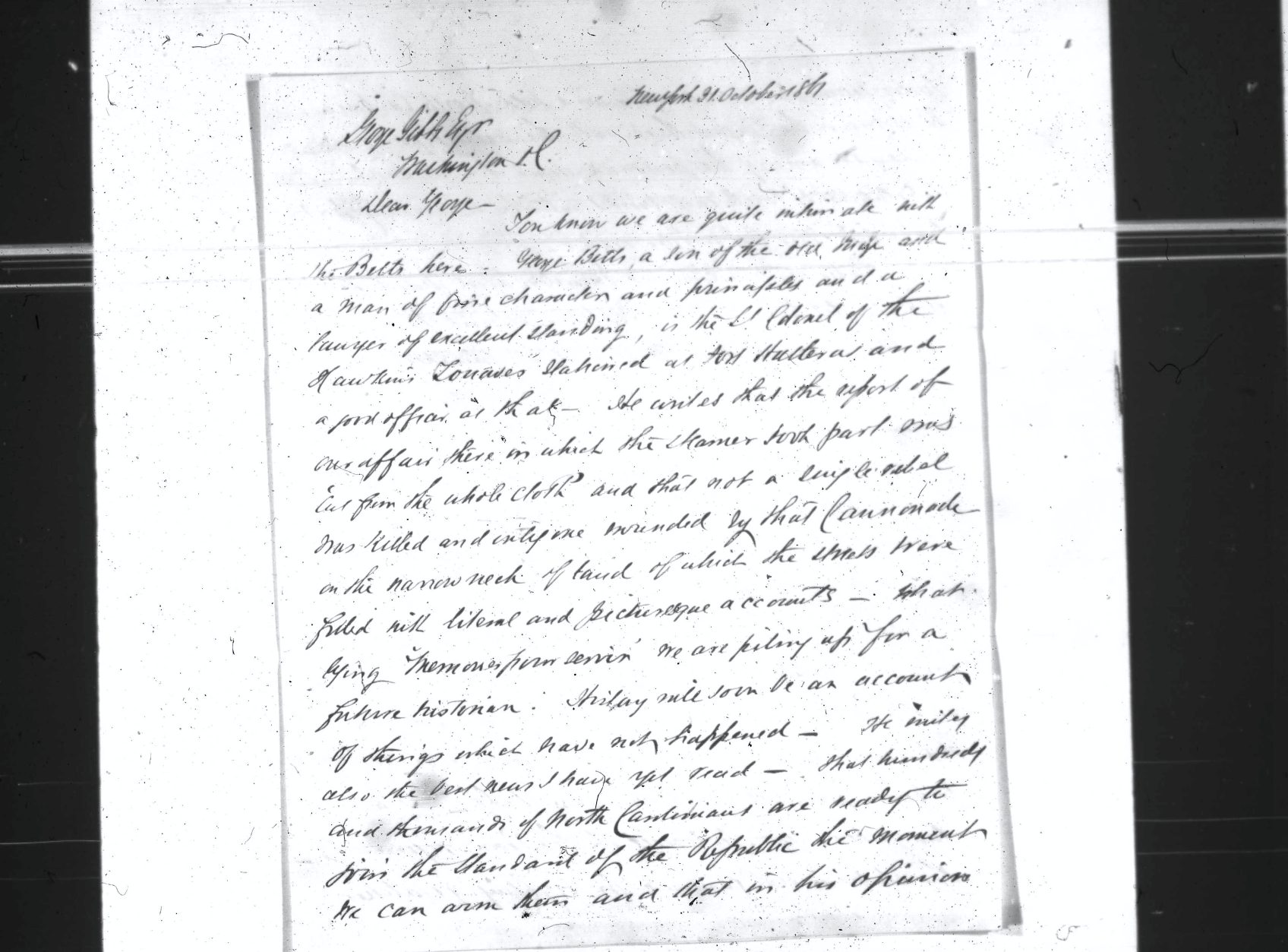
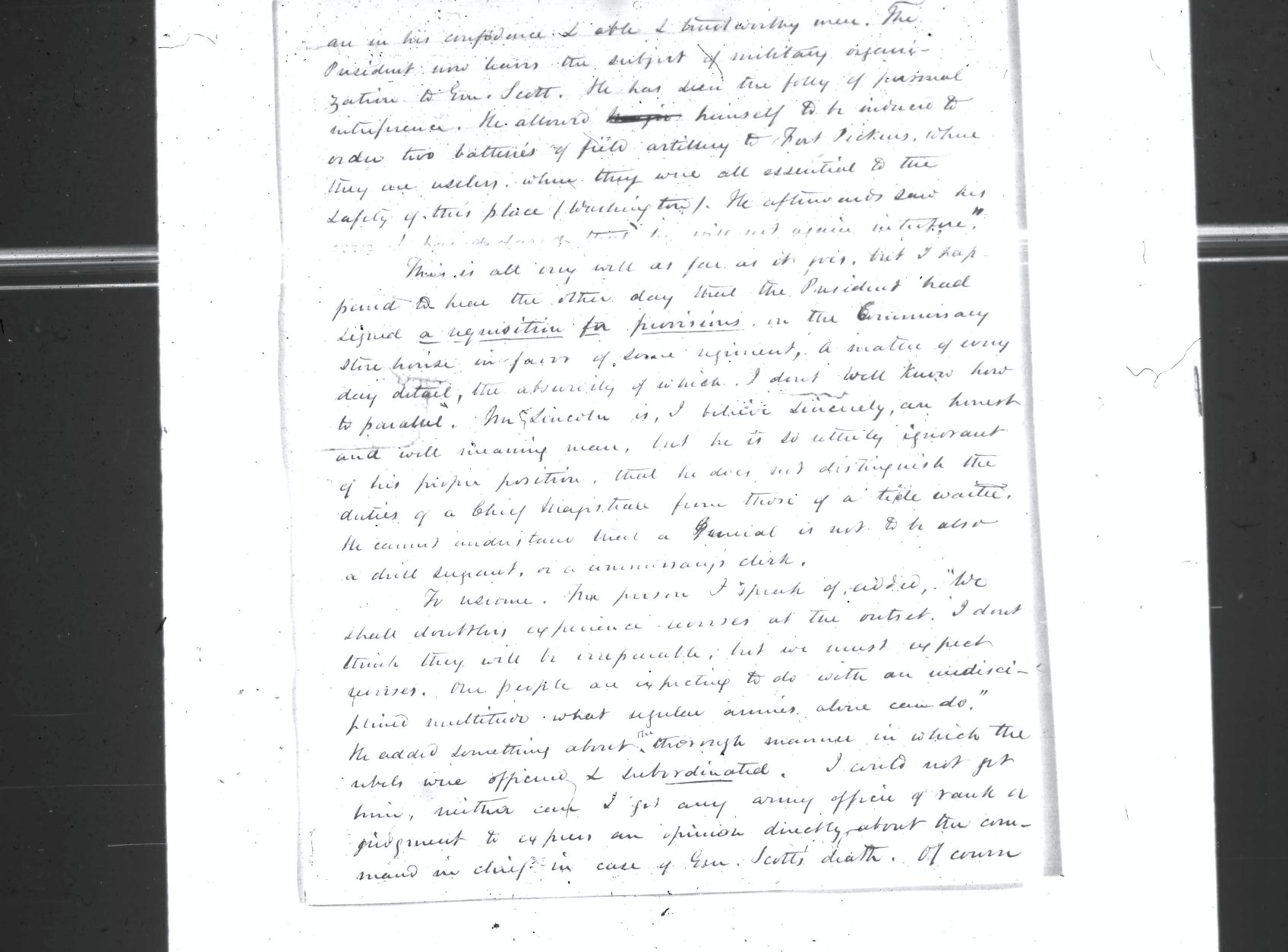
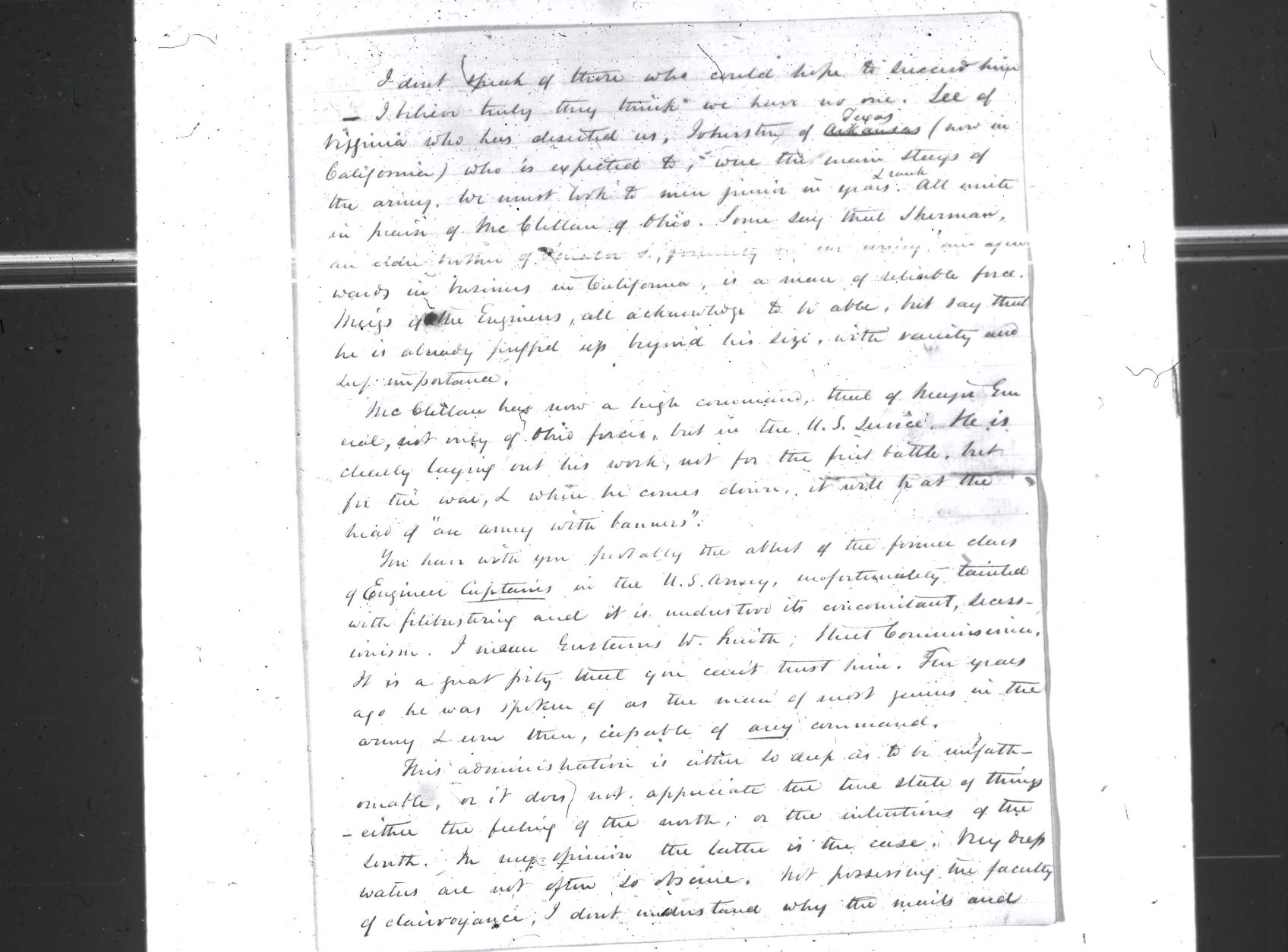
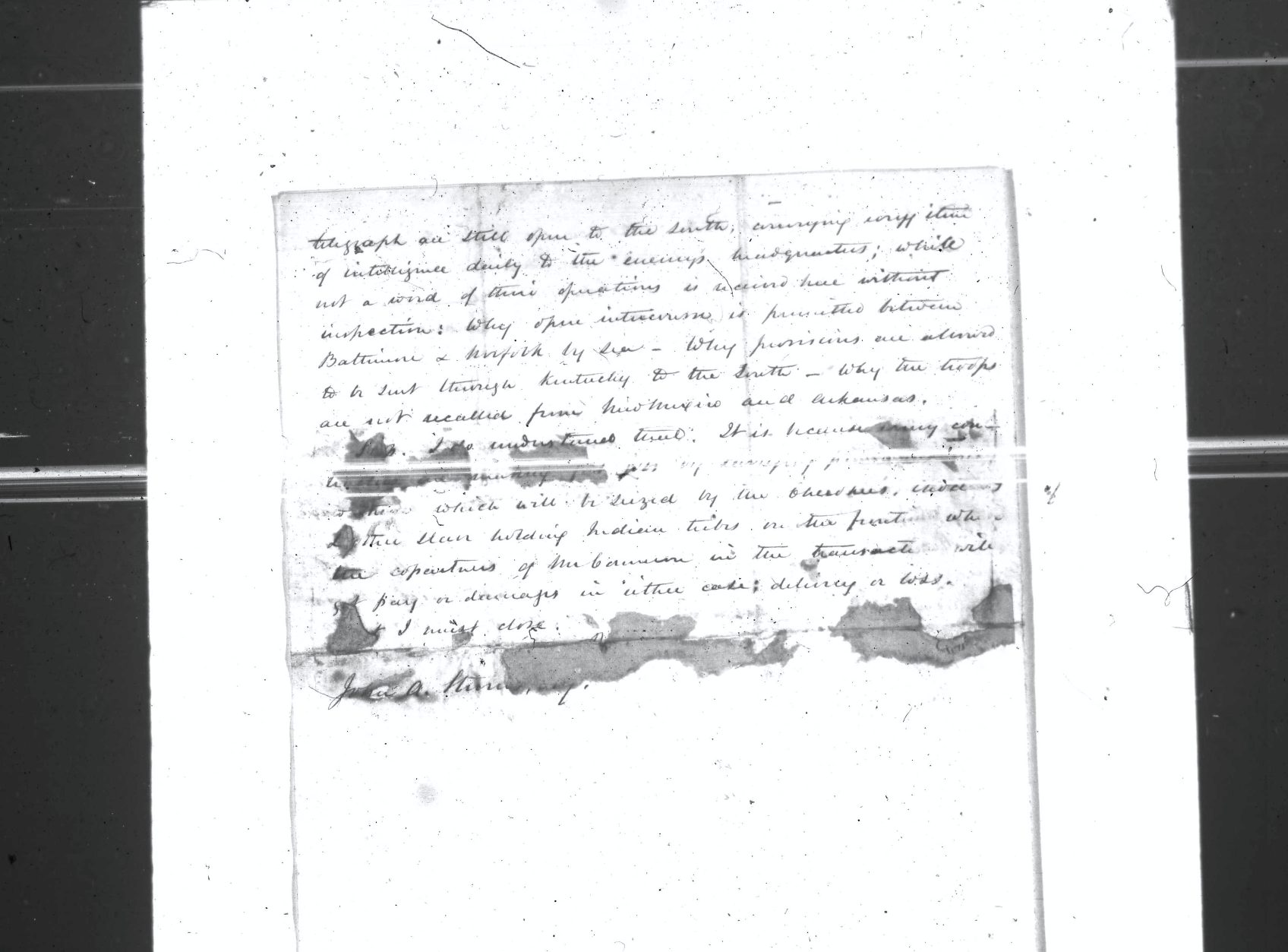
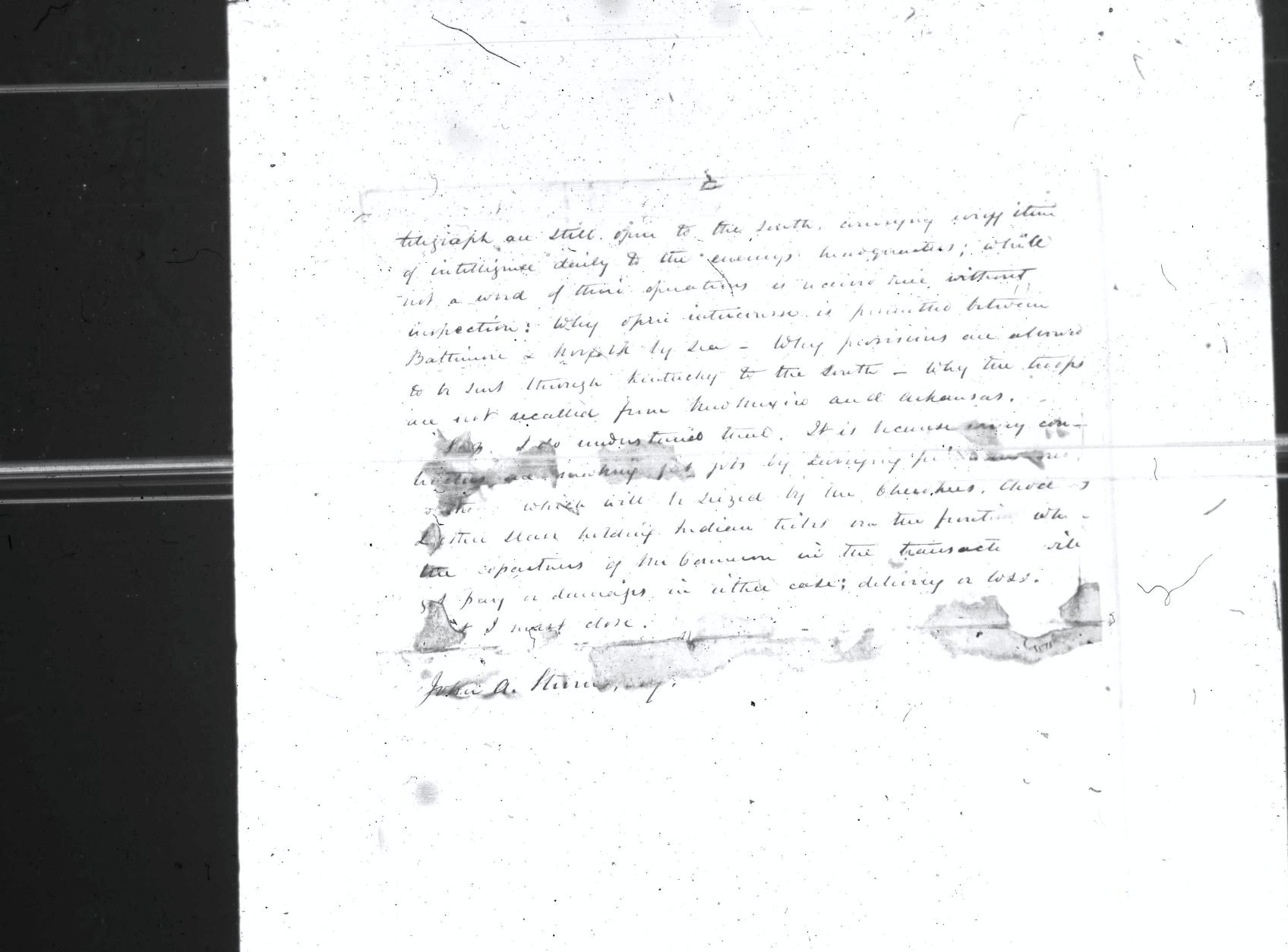
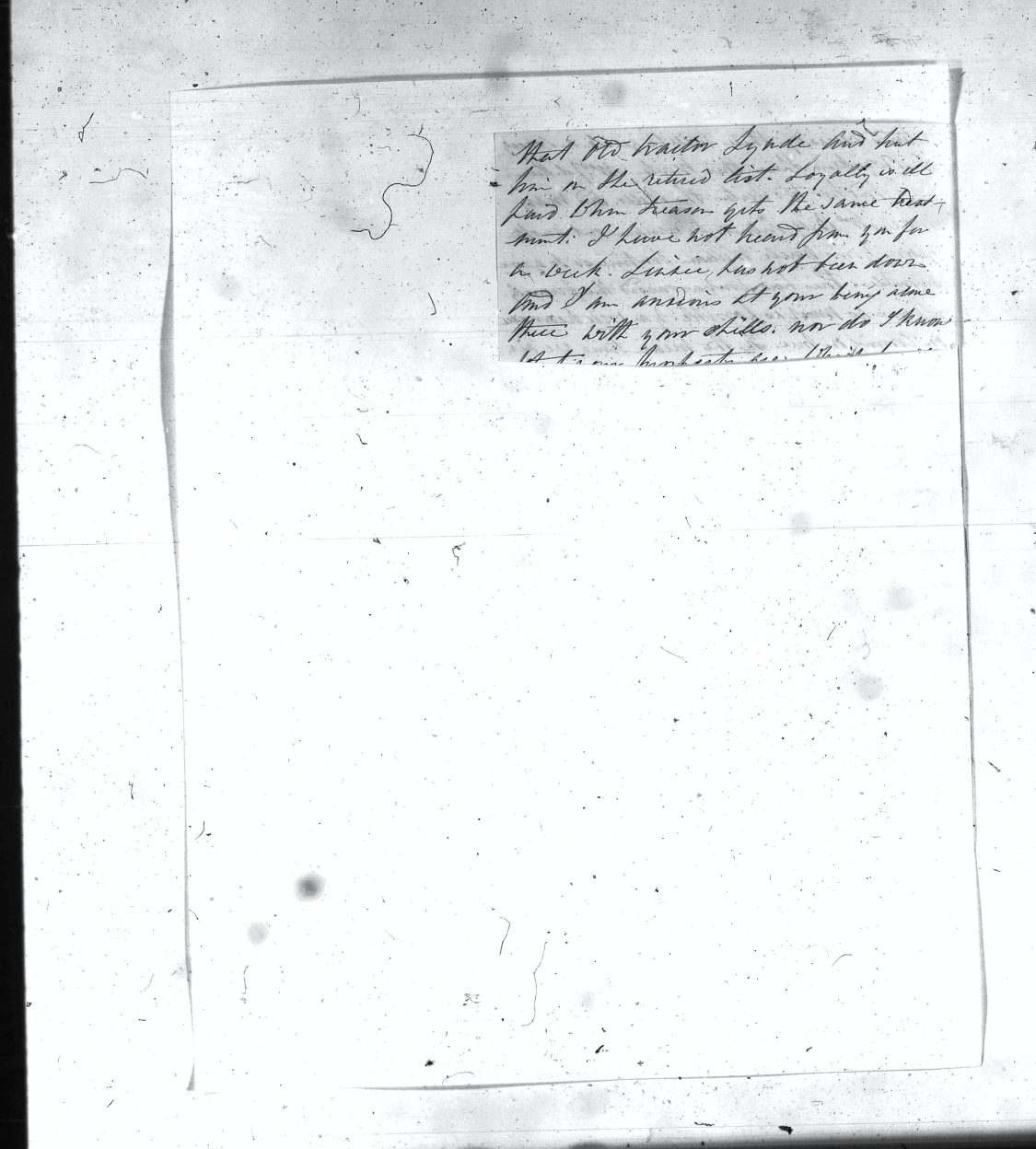
One 1861 letter filmed ahead of the Society’s own targets.
1861-10-31
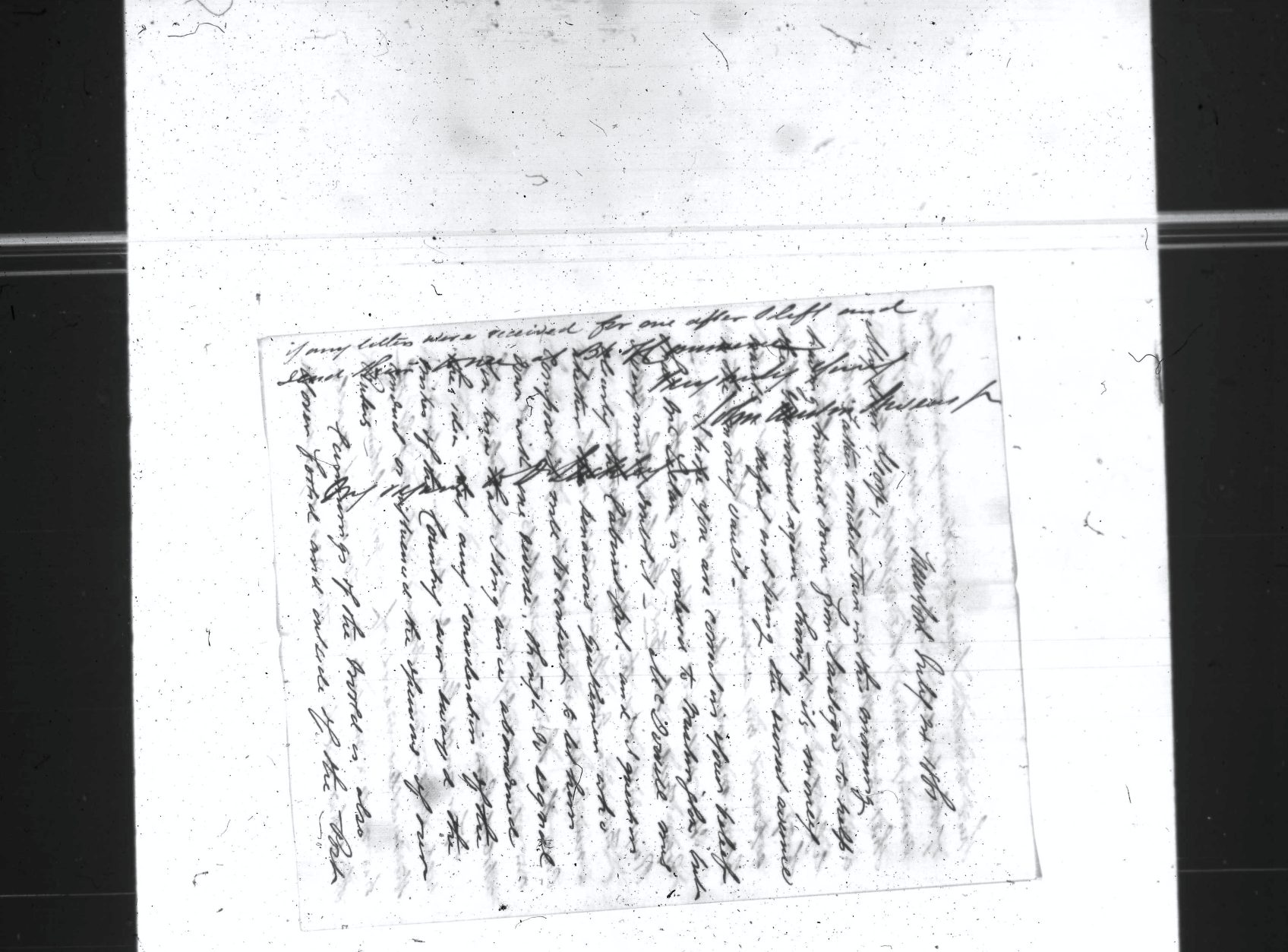
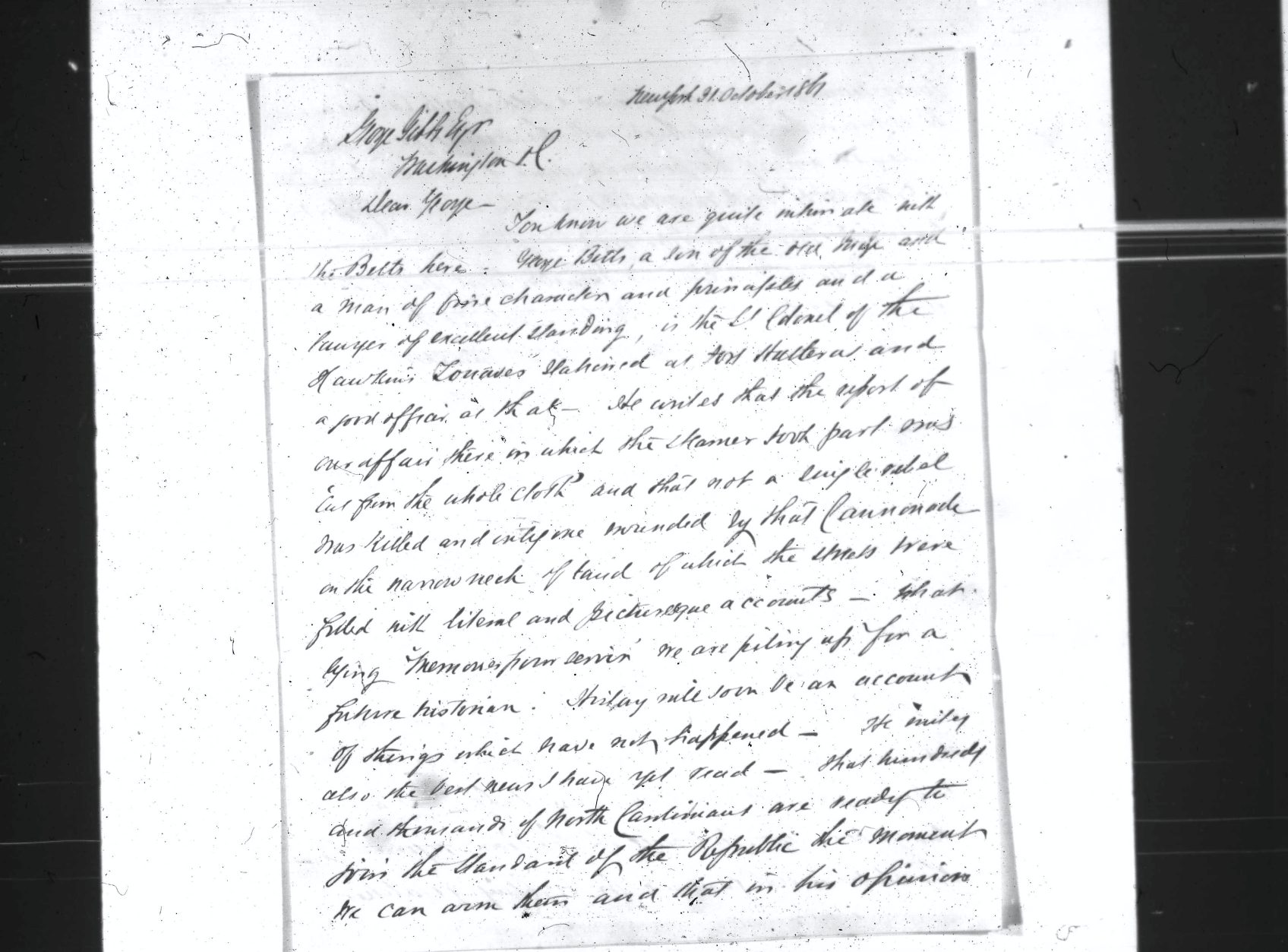
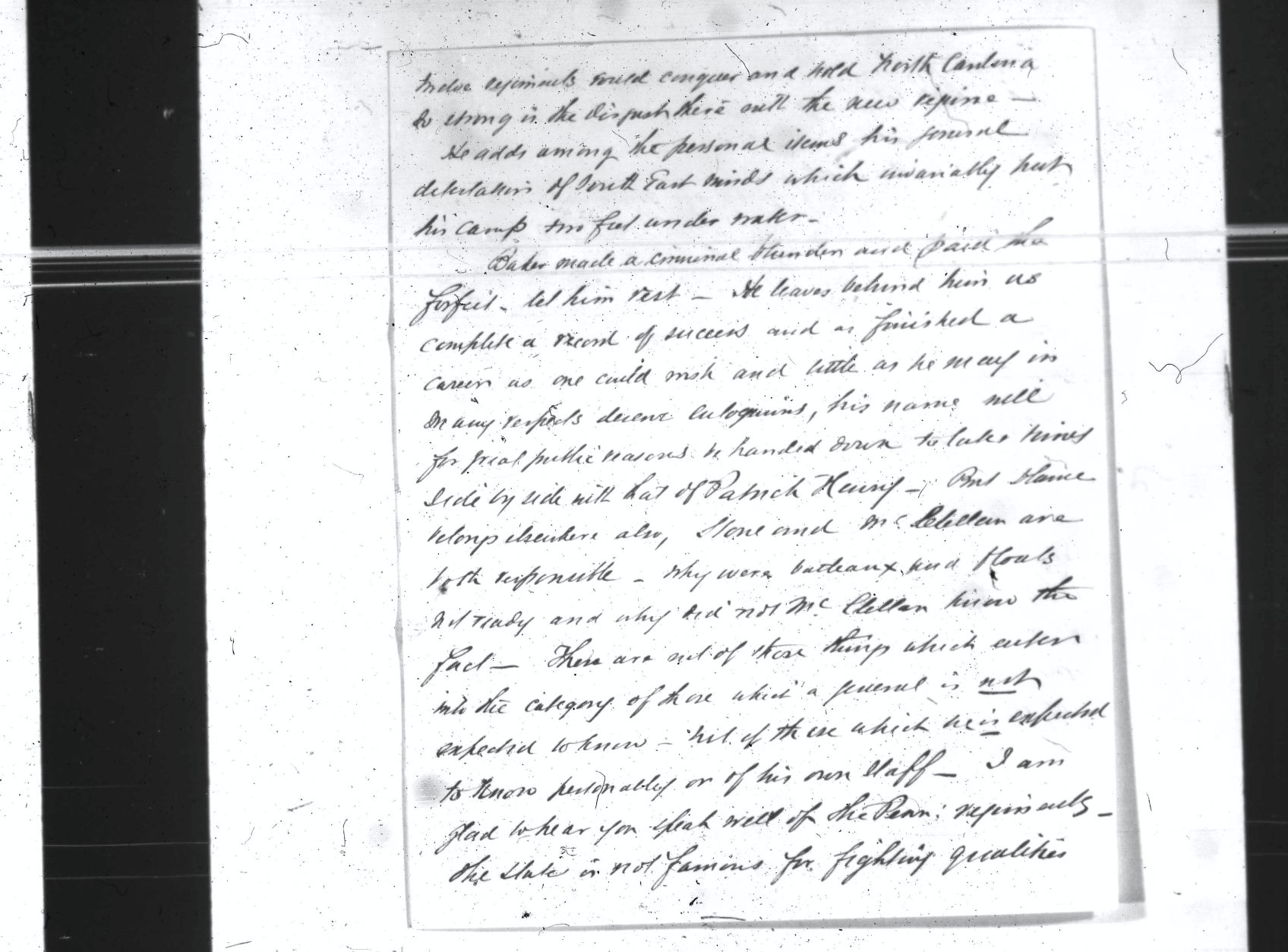
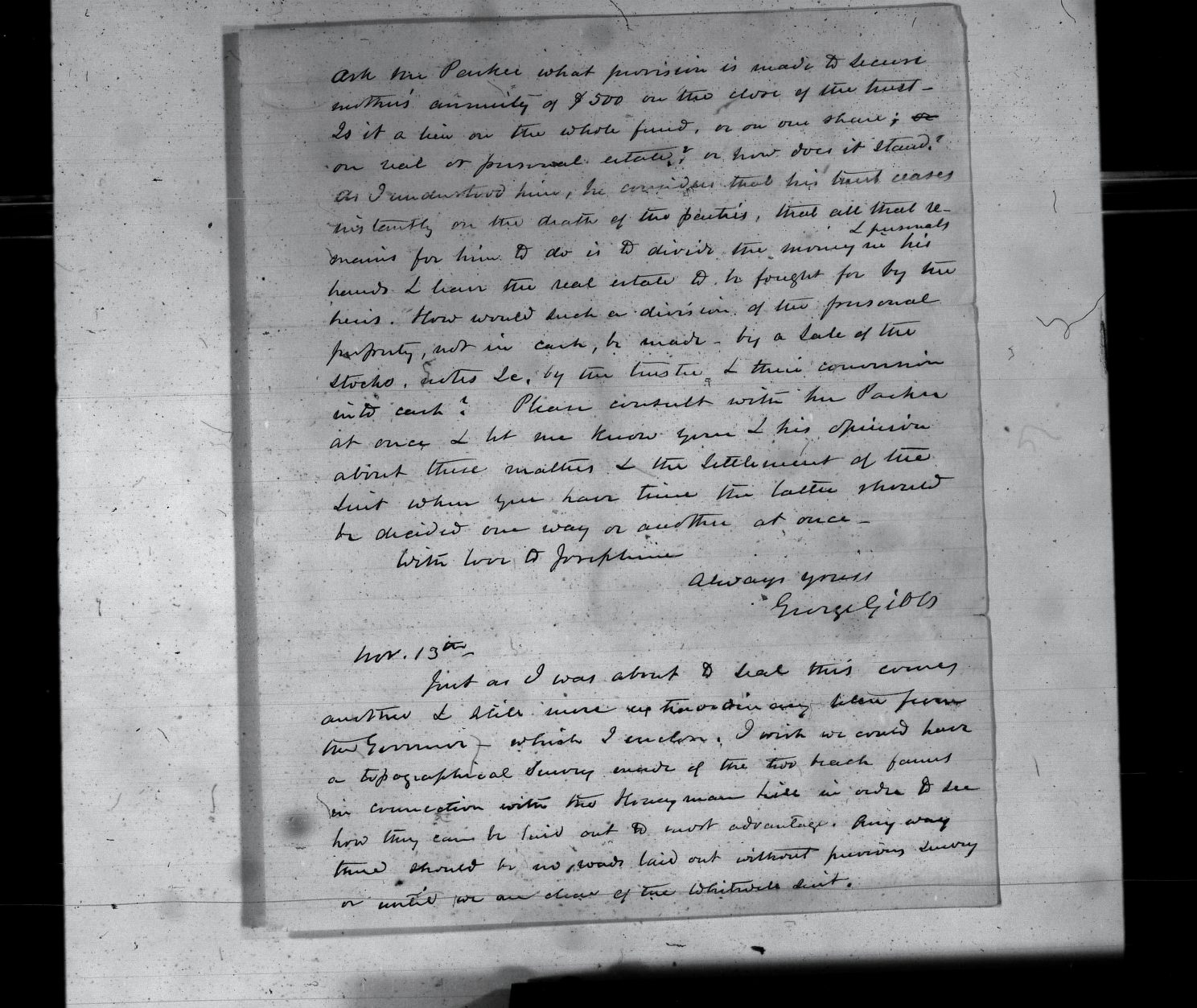
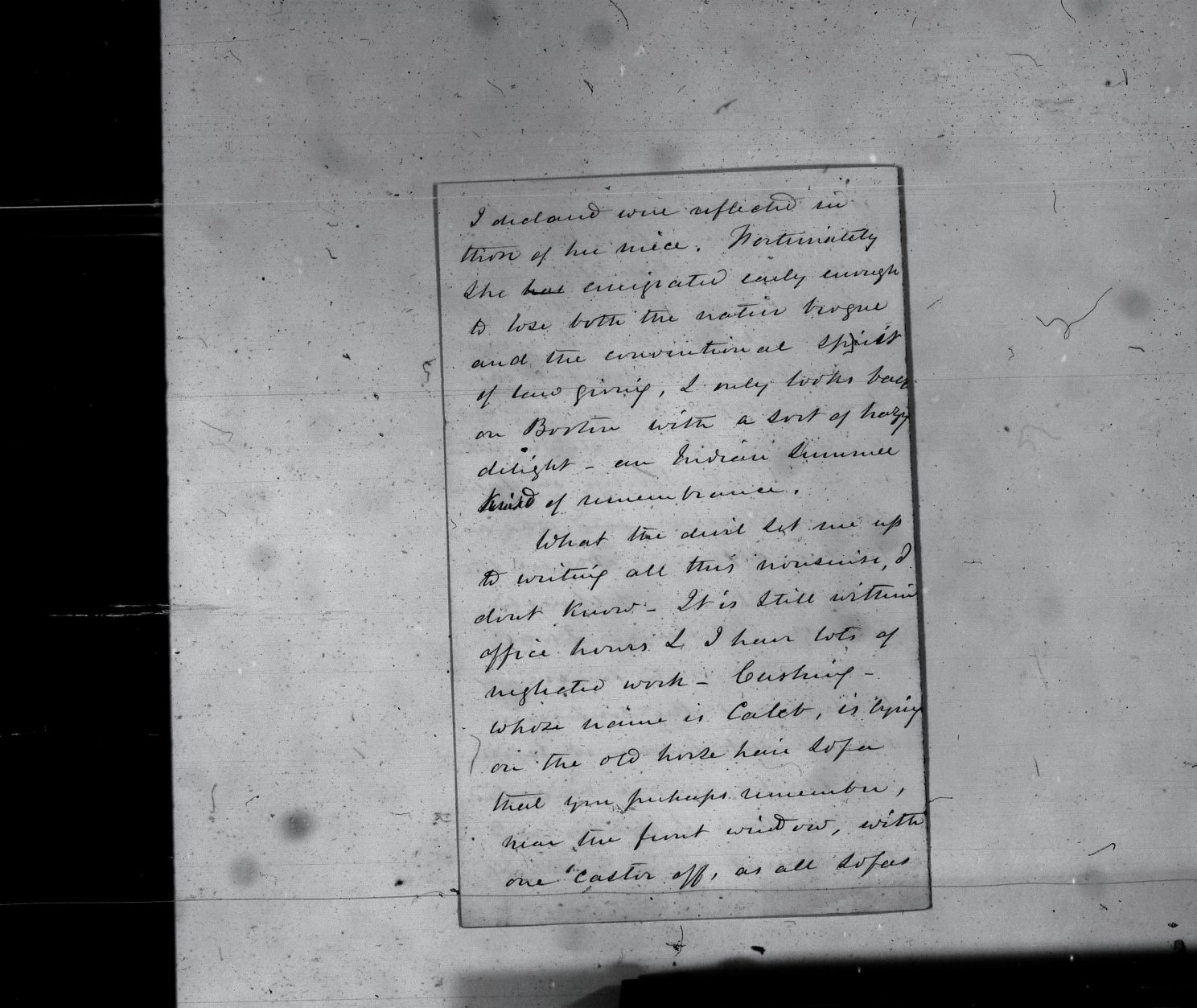
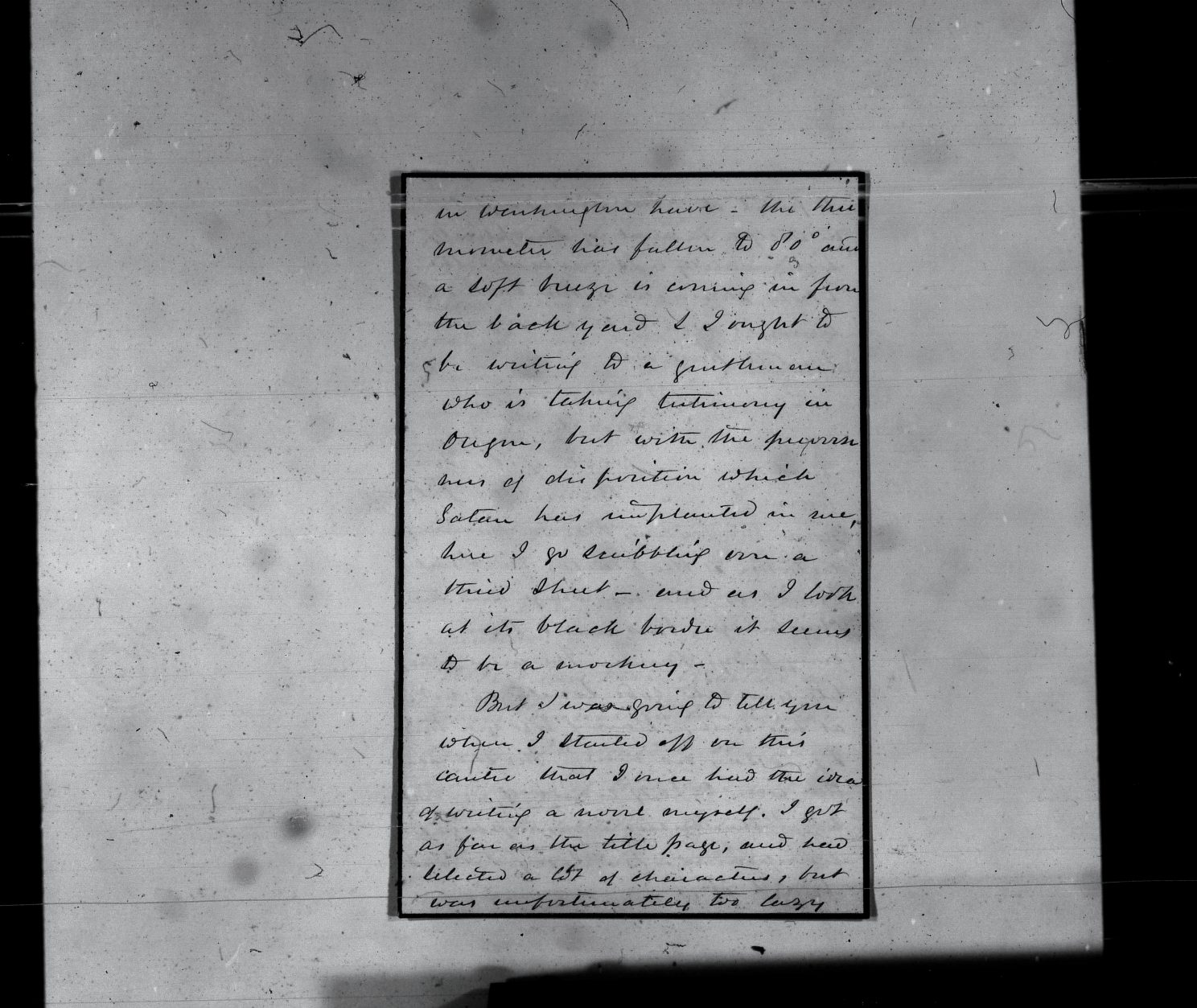
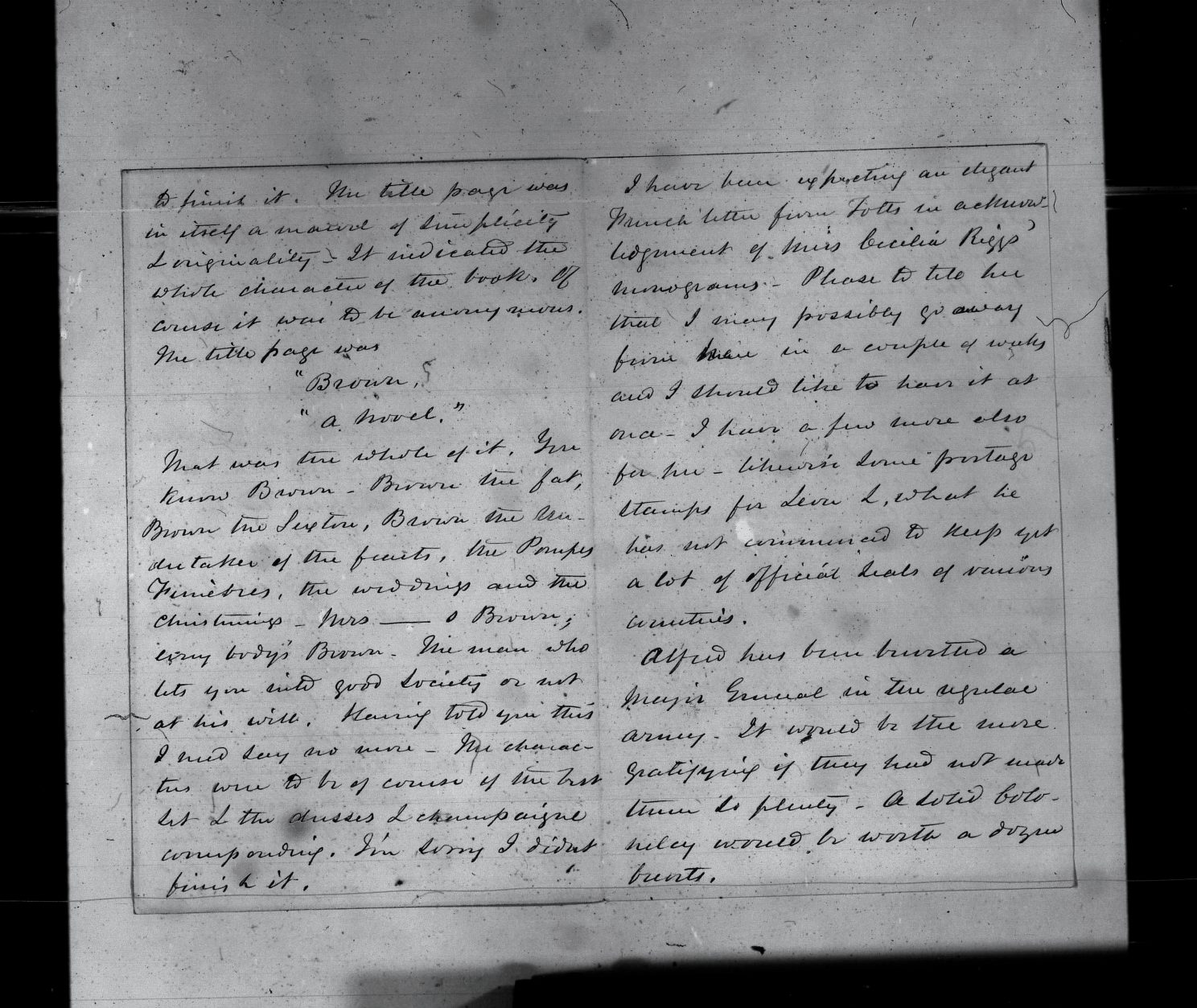
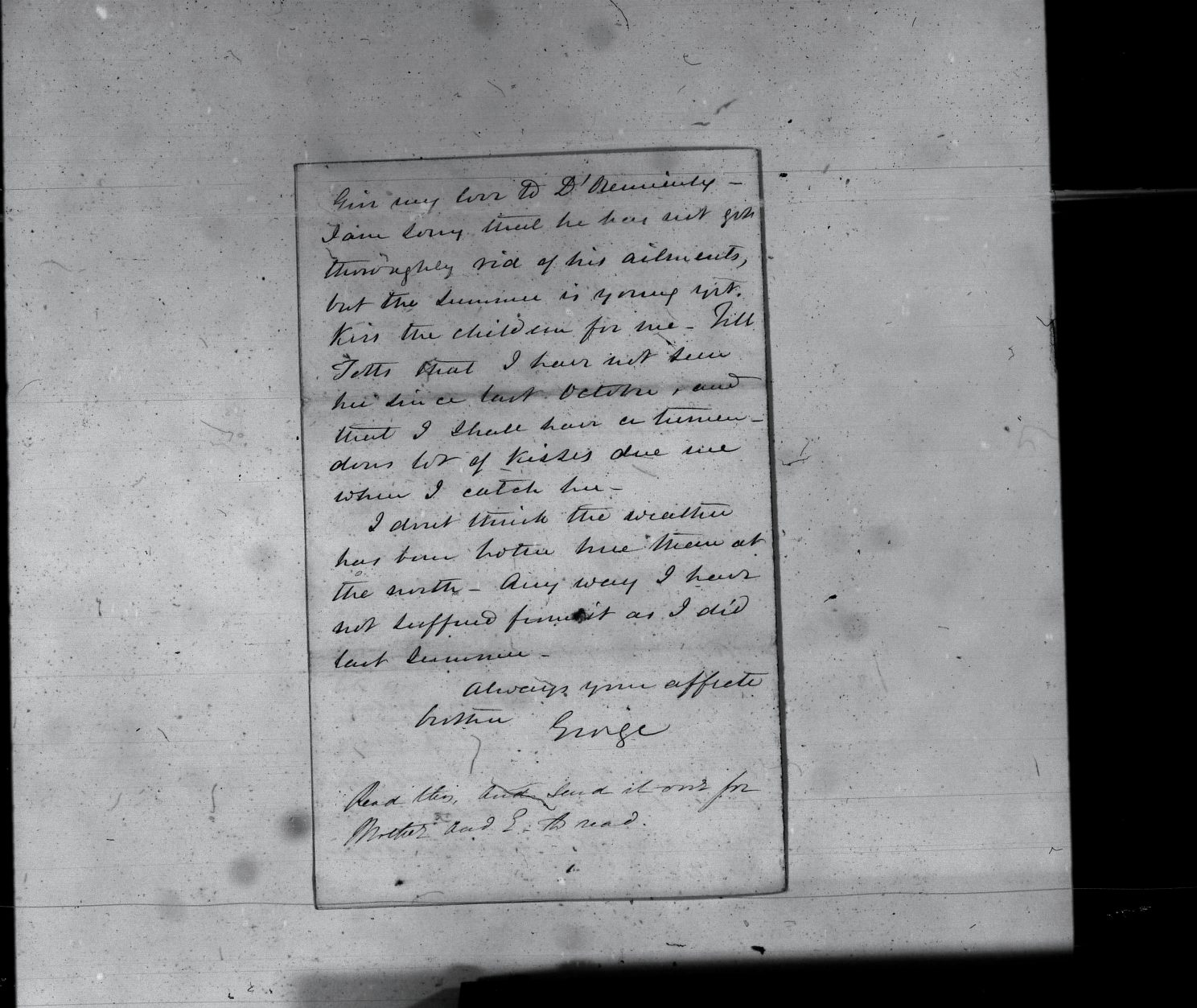
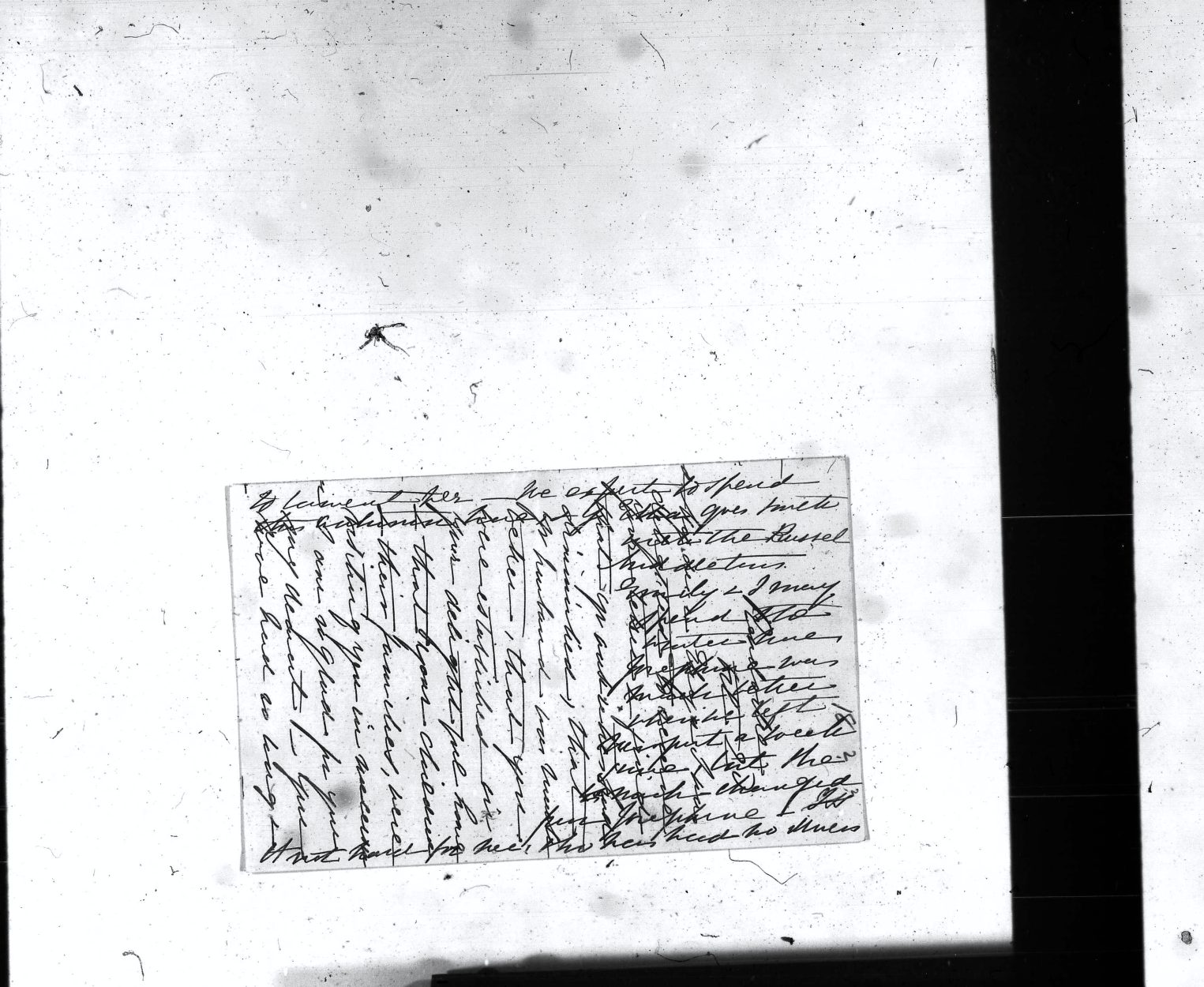
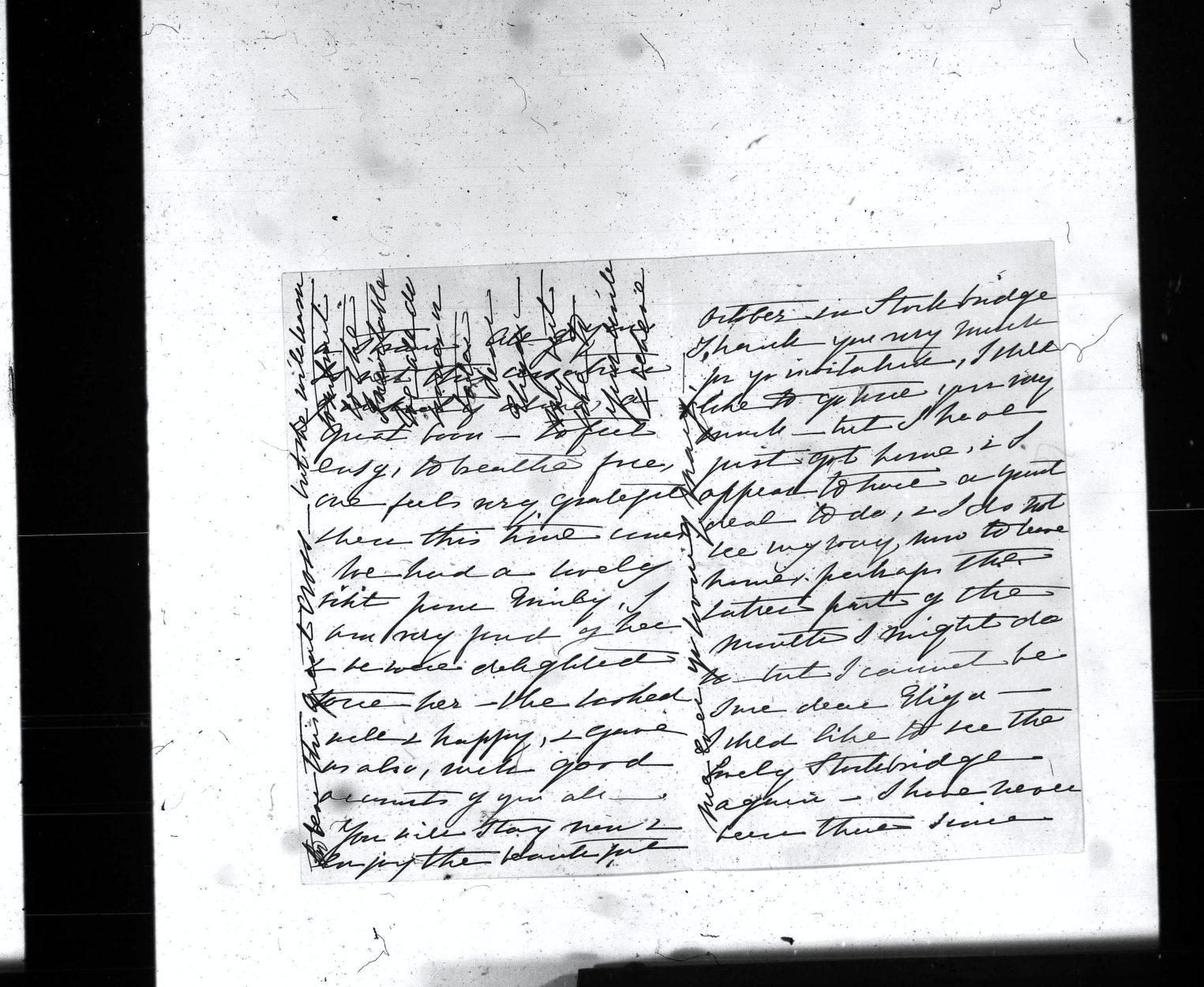
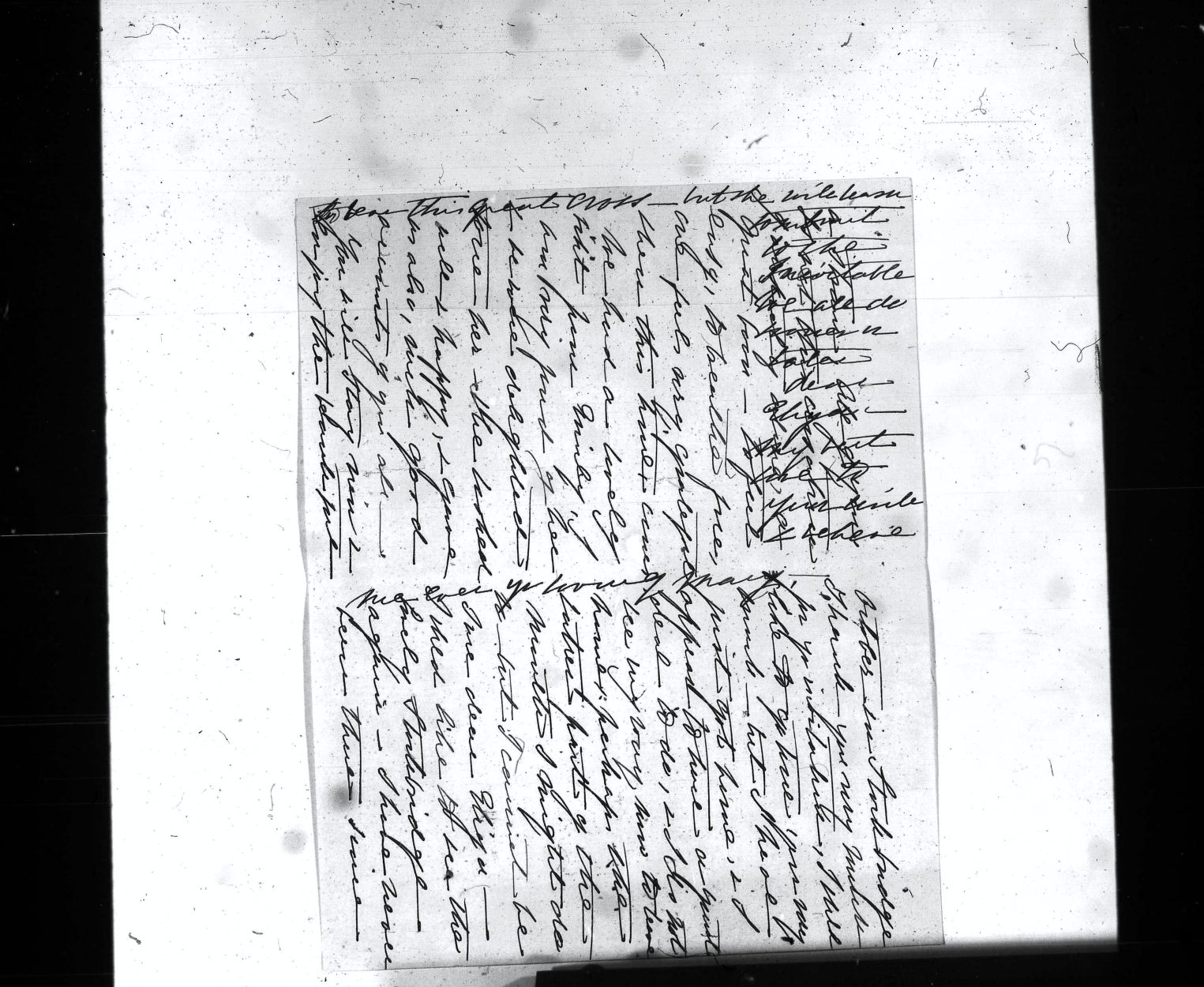
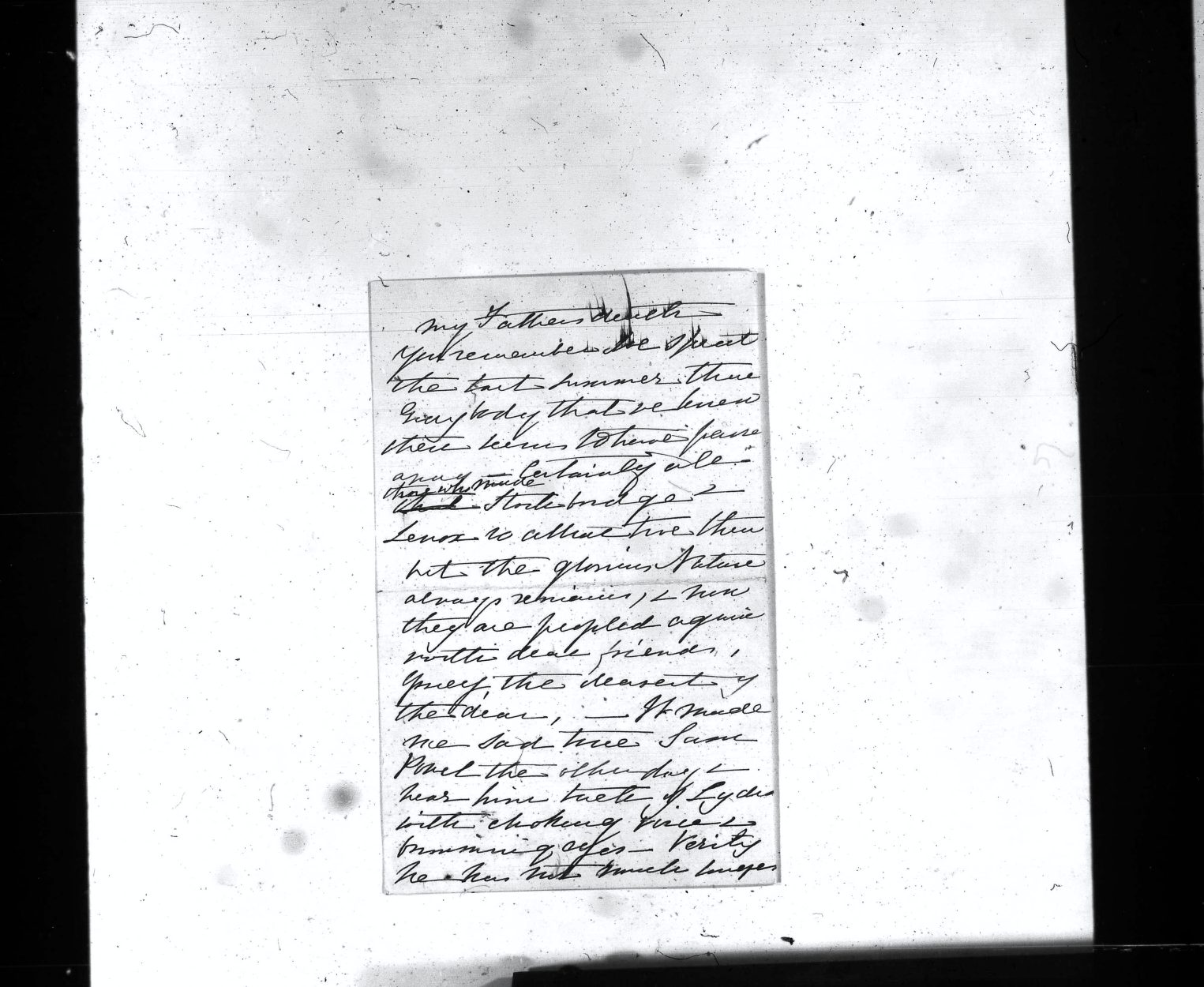
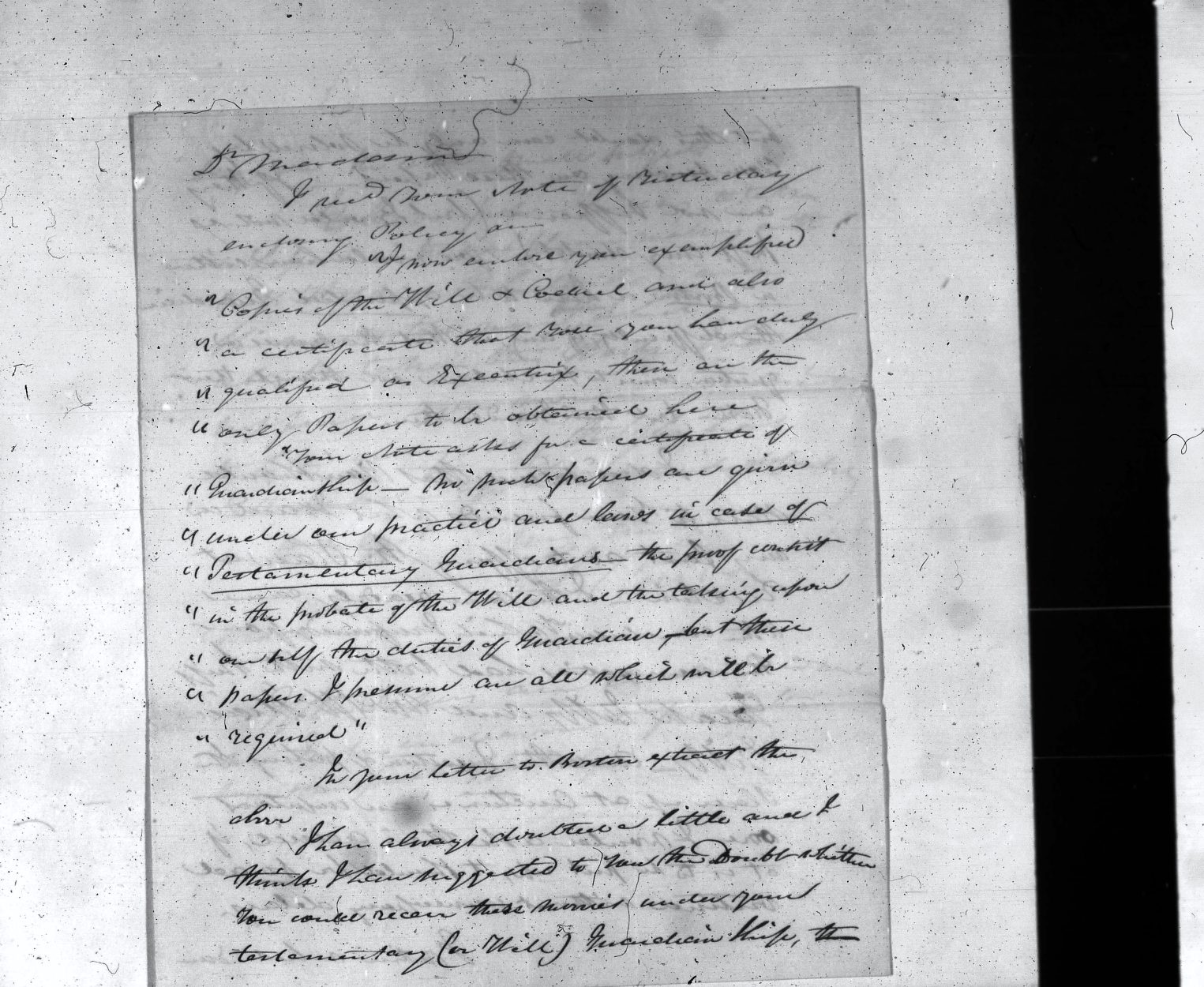
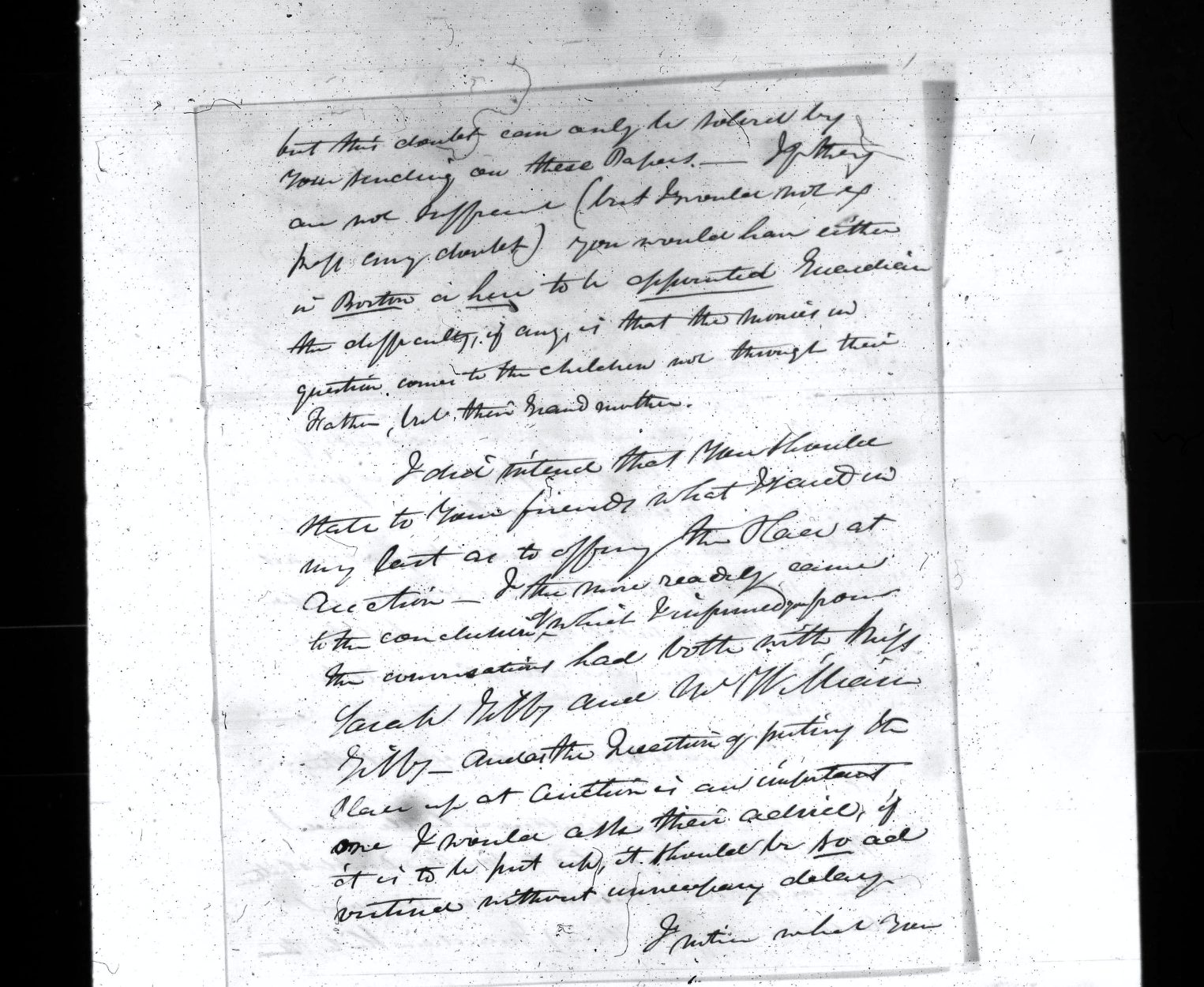
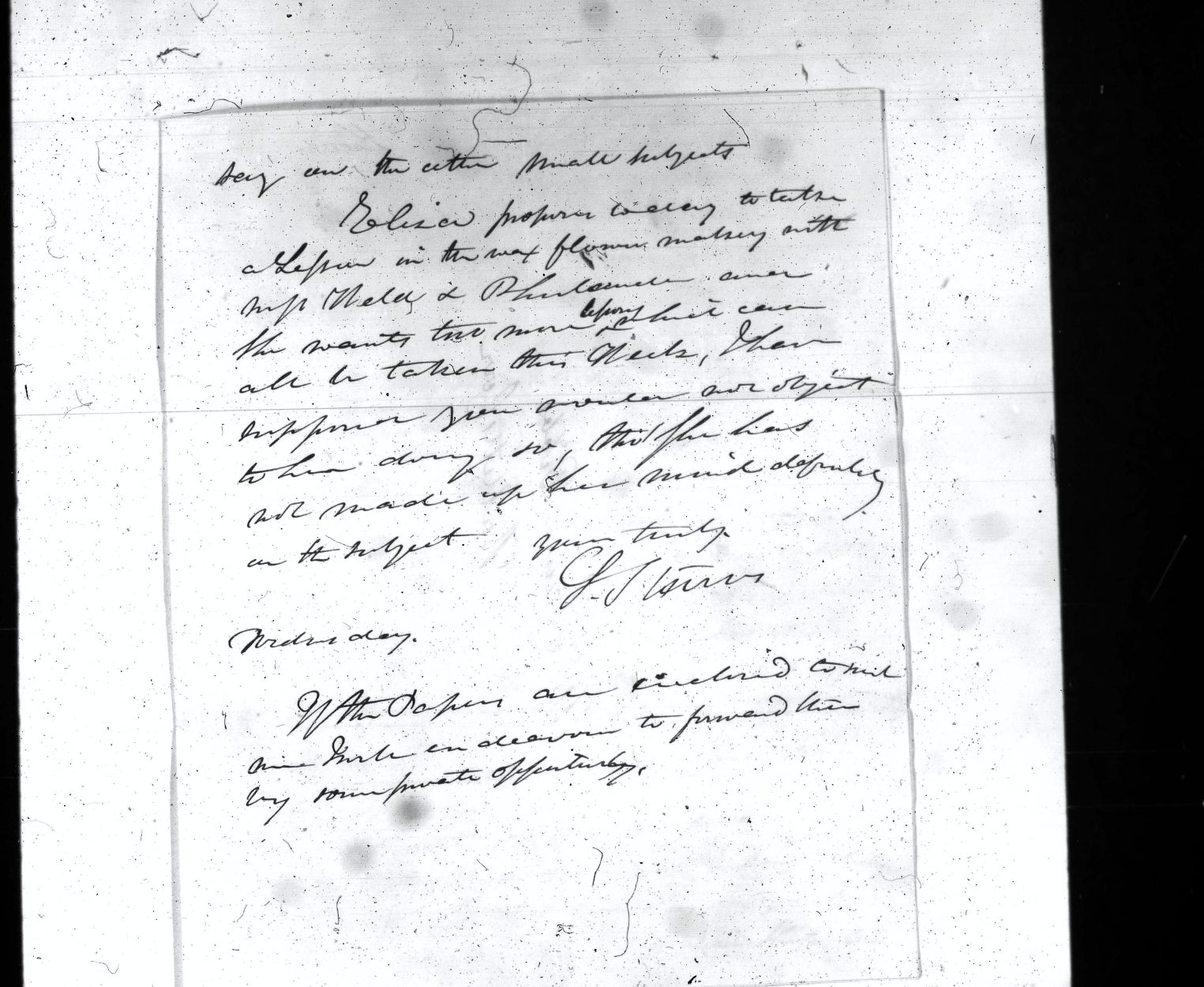
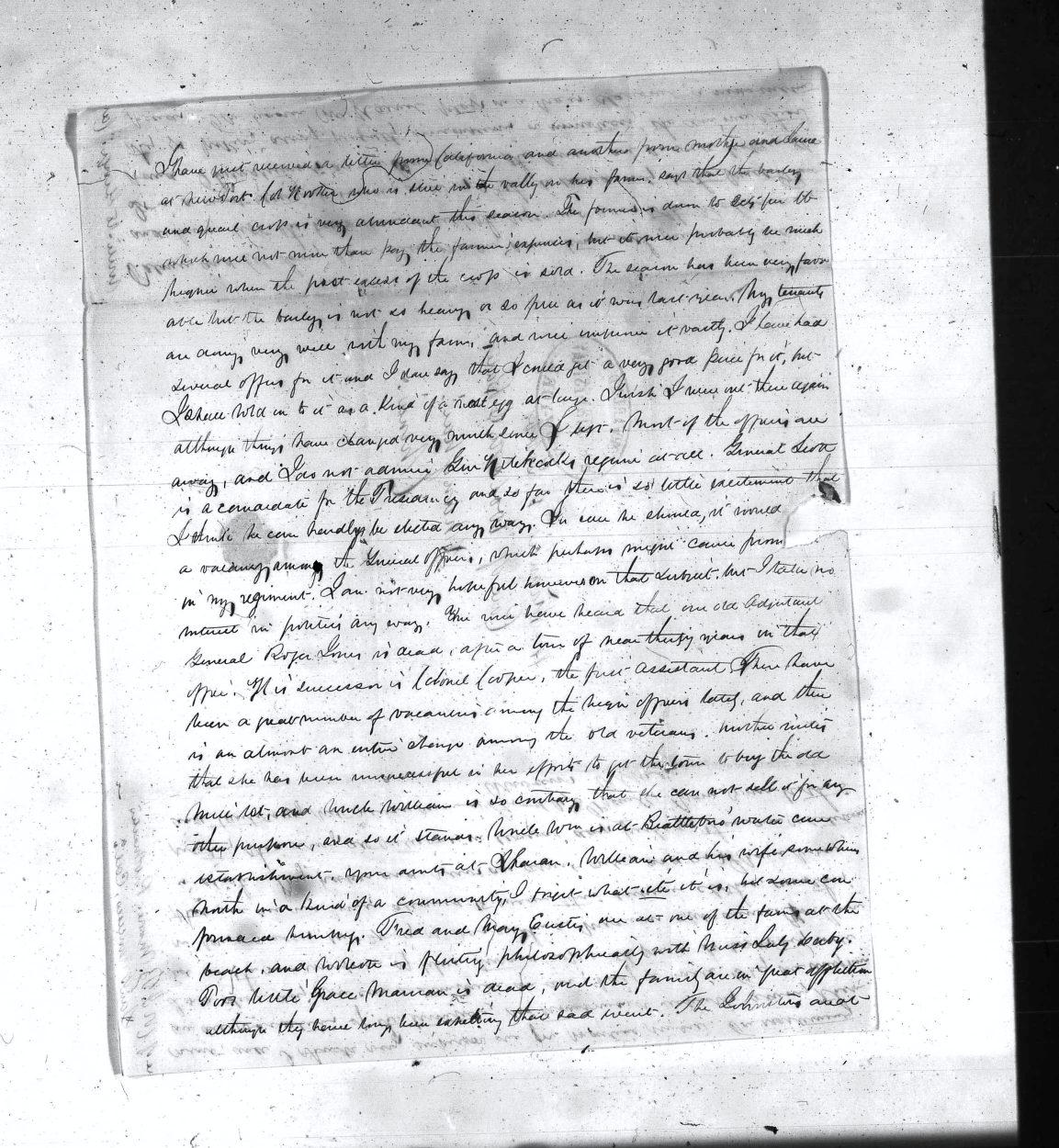
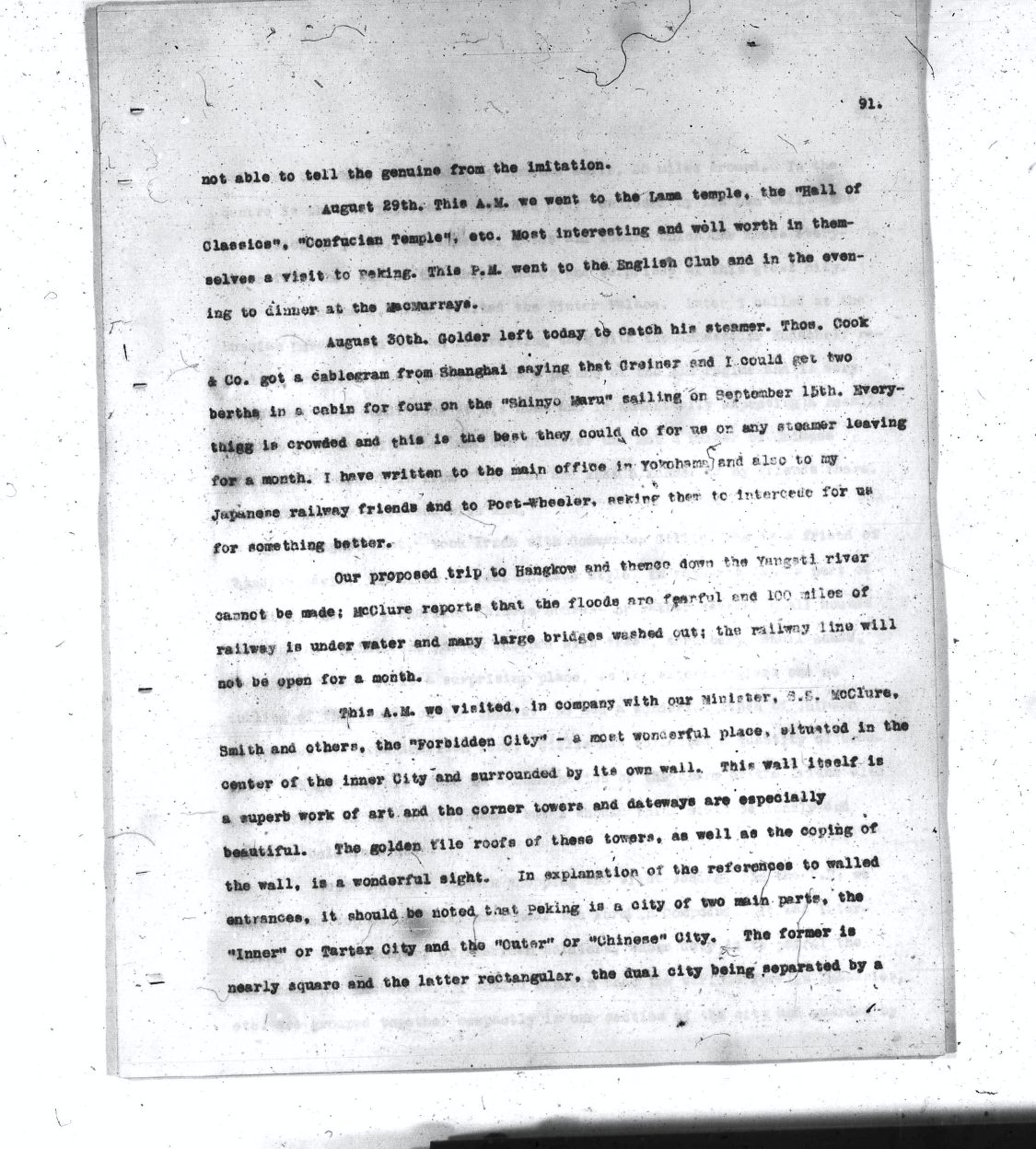
Reports on Fort Hatteras: "Geo. Betts," son of the old Judge and a lawyer of excellent standing, is Lt. Colonel of Hawkins' Zouaves stationed at Fort Hatteras; he writes that press accounts of the affair there in which "the steamer Fanny(?)" took part were "cut from the whole cloth," that not a single rebel was killed and only one wounded by the cannonade on the narrow neck of land; adds that "hundreds of thousands of North Carolinians are ready to join the standard of the Republic the moment we can arm them"; ends mid-sentence, continues on next sheet
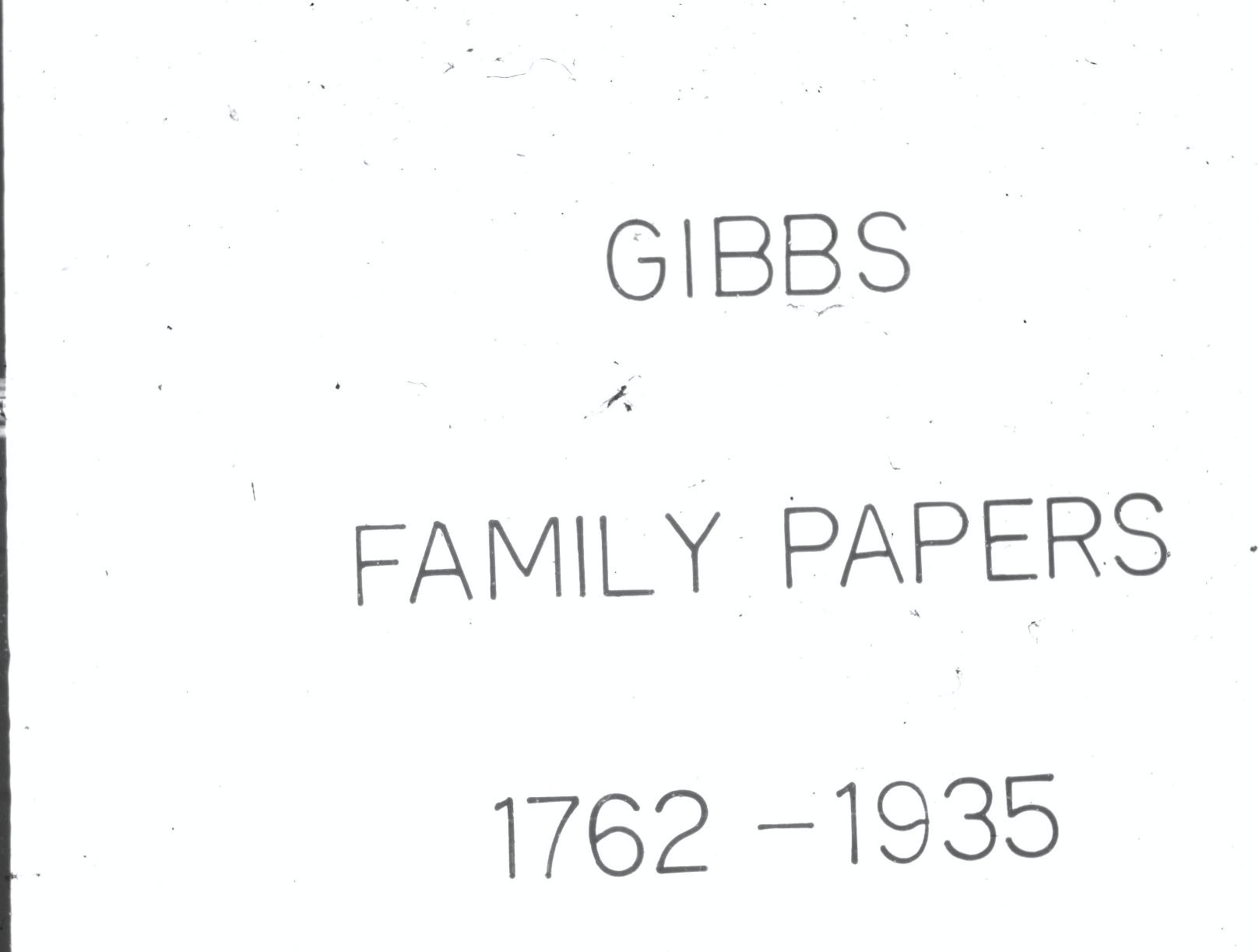
COLLECTION TITLE CARD photographed against the film: hand-lettered "GIBBS FAMILY PAPERS / 1762 – 1935". Note the span: the CATALOGUED collection is described everywhere else as 1763-1918, but the card the Society filmed reads 1762-1935
Frames 2–10 · 9 documents
The State Historical Society of Wisconsin’s microfilm targets and its printed Register of the collection. Frame 9 carries the container list that maps the rest of the reel.
Printed target: "MICROFILMED BY THE STATE HISTORICAL SOCIETY OF WISCONSIN / DIVISION OF ARCHIVES & MANUSCRIPT[S]"
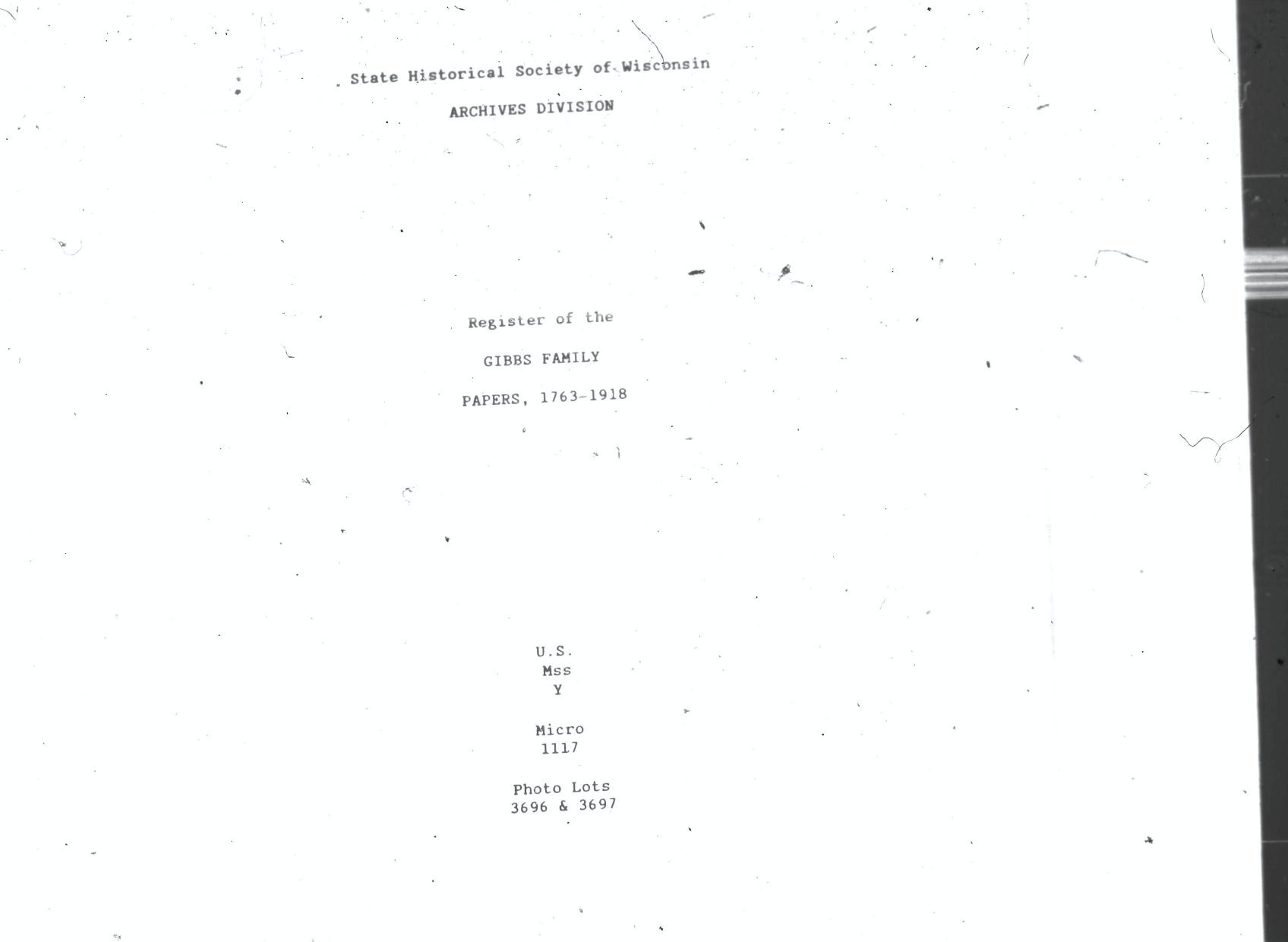
State Historical Society of Wisconsin, Archives Division, "Register of the GIBBS FAMILY PAPERS, 1763-1918"; call numbers U.S. Mss Y, Micro 1117, Photo Lots 3696 & 3697
n.d. (film prepared 1987)
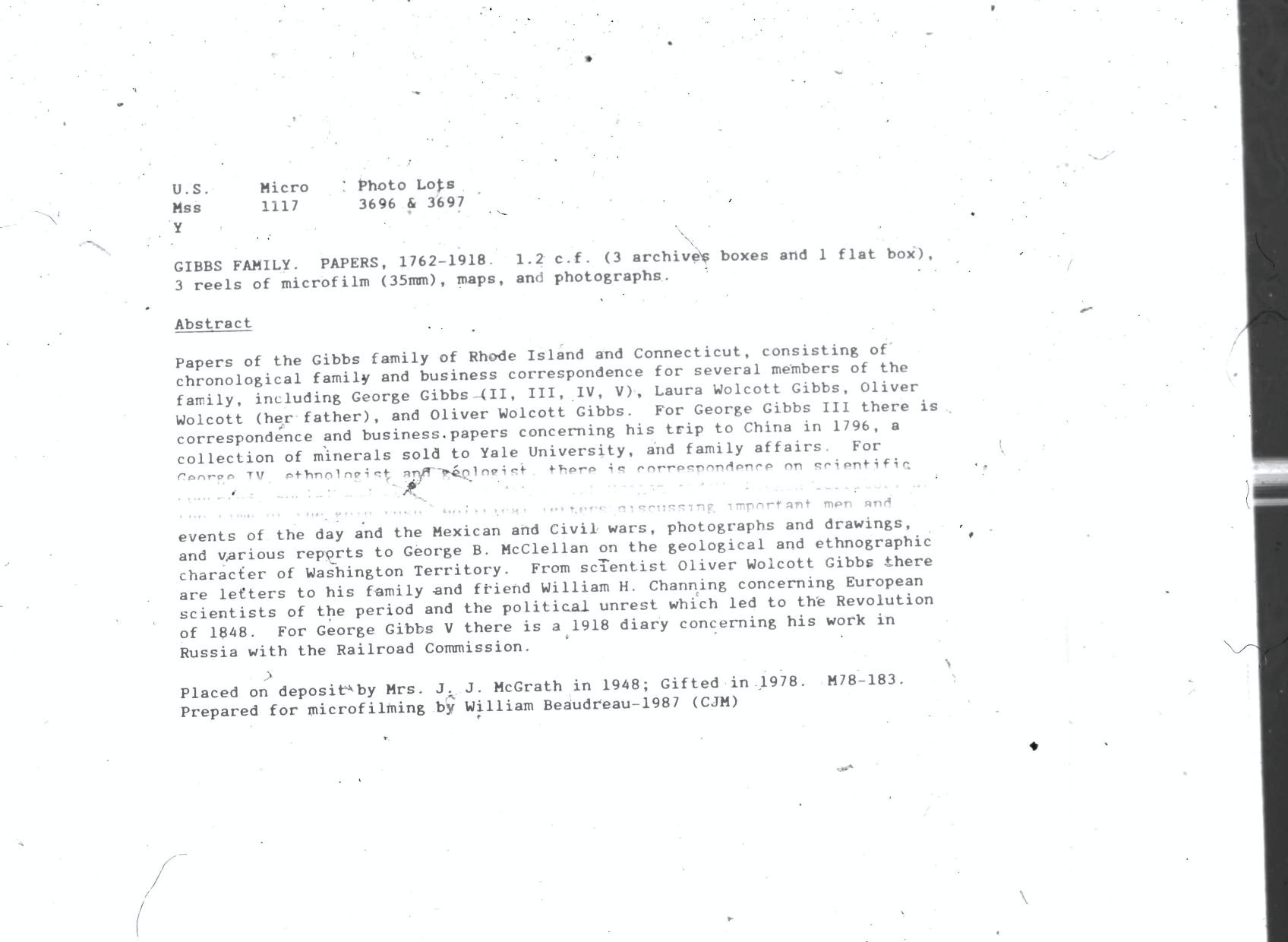
Register p.1: collection abstract – 1.2 c.f., 3 boxes + 1 flat box, 3 reels 35mm, maps and photographs; covers George Gibbs II, III, IV, V, Laura Wolcott Gibbs, Oliver Wolcott, and Oliver Wolcott Gibbs; notes George IV's reports to George B. McClellan on the geology and ethnography of Washington Territory and family letters on the Mexican and Civil wars; deposited by Mrs. J. J. McGrath 1948, gifted 1978 (M78-183); prepared for microfilming by William Beaudreau, 1987
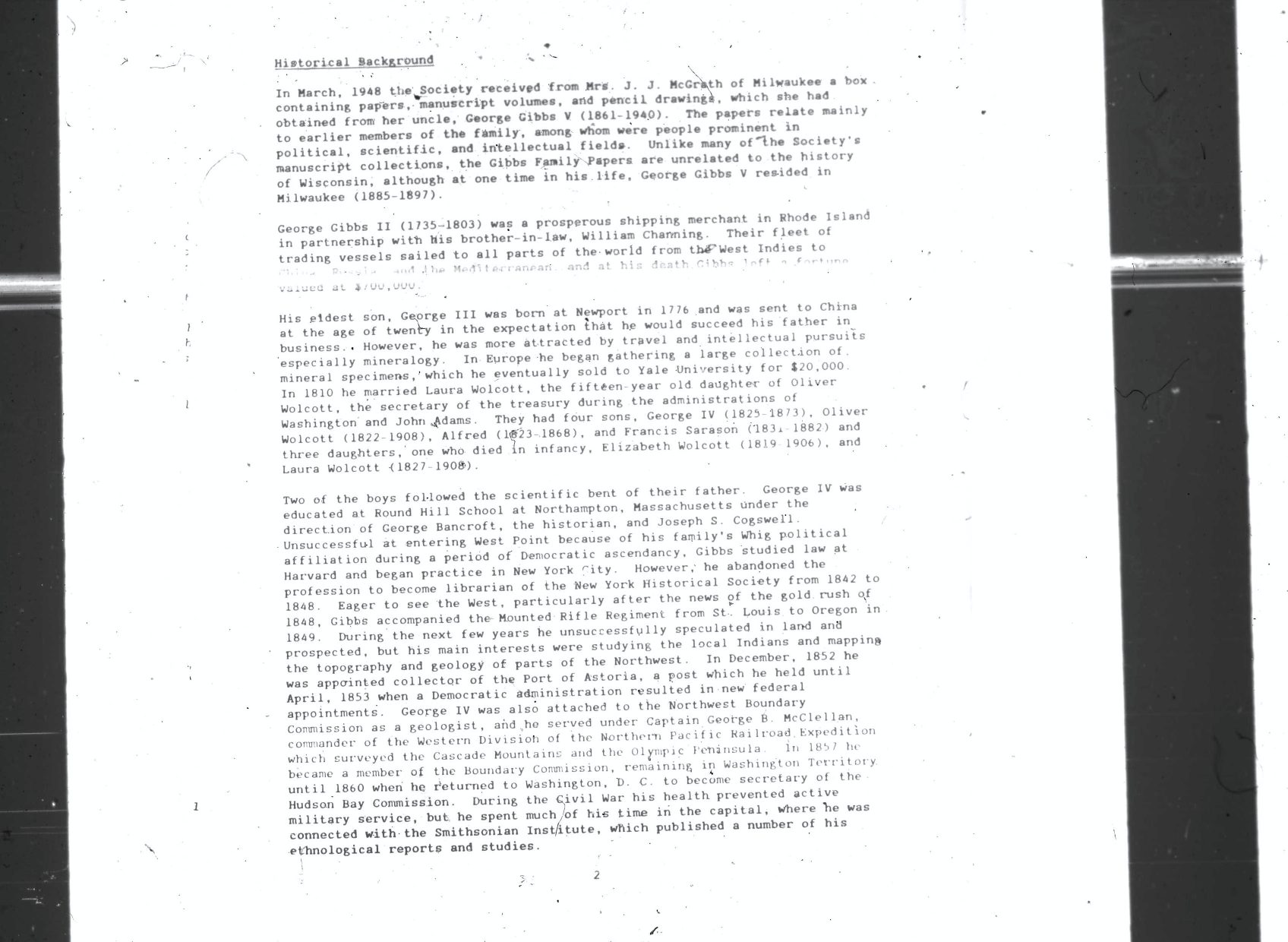
Register p.2 "Historical Background": George Gibbs II (1735-1803) shipping merchant, estate ~$700,000; George Gibbs III born Newport 1776, China at twenty, mineral collection sold to Yale for $20,000, married Laura Wolcott 1810, daughter of Oliver Wolcott; children George IV (1825[sic]-1873), Oliver Wolcott (1822-1908), Alfred (1823-1868), Francis Sarason (1831-1882), Elizabeth Wolcott (1819-1906), Laura Wolcott (1827-1908); George IV's Round Hill School education, failed West Point entry, Mounted Rifle Regiment march St. Louis to Oregon 1848-49, Collector of the Port of Astoria Dec. 1852-Apr. 1853, Northwest Boundary Commission geologist under Capt. George B. McClellan, Hudson Bay Commission secretary 1860, ill health prevented Civil War service
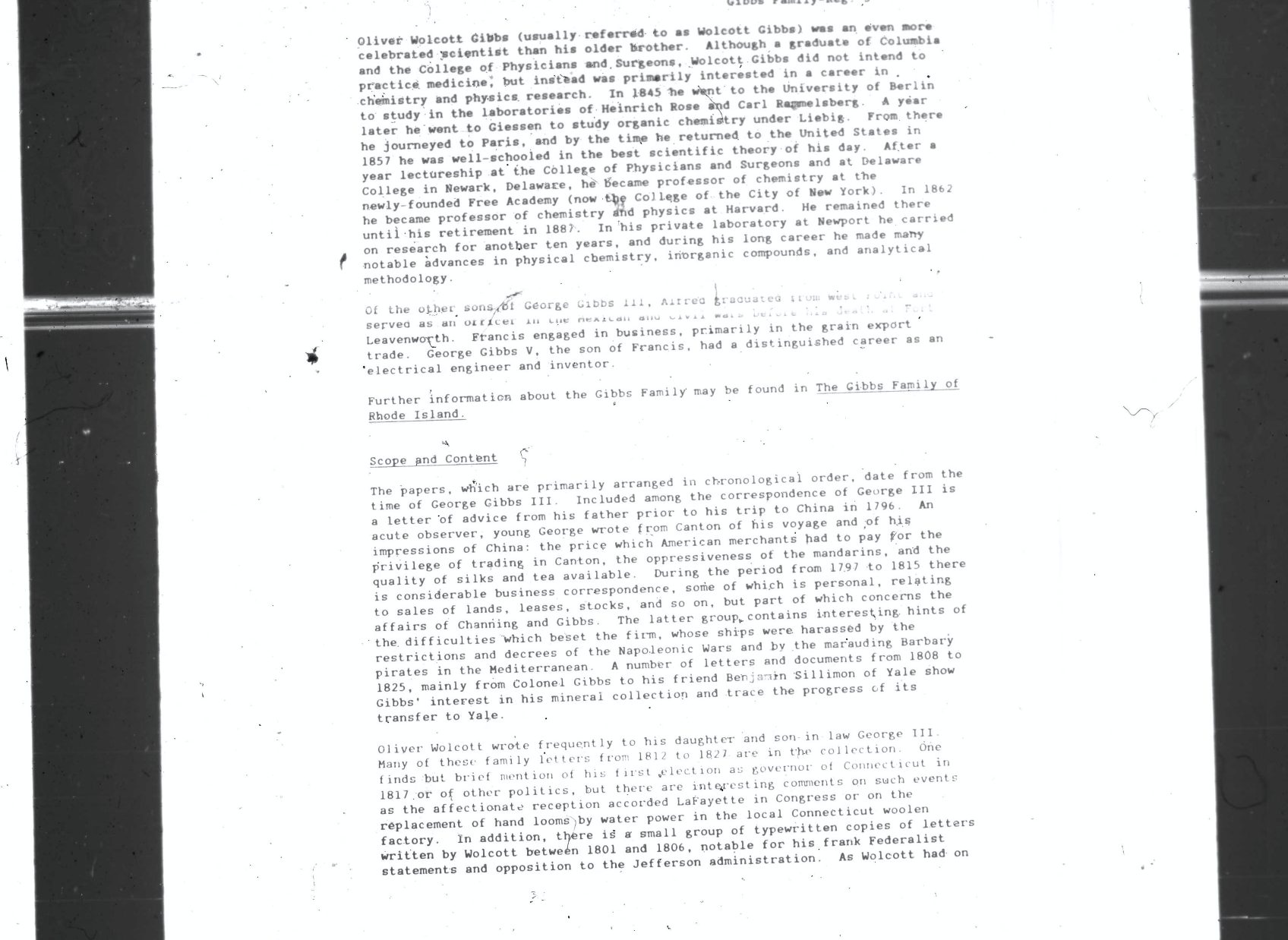
Register p.3: Oliver Wolcott Gibbs's career (Berlin under Heinrich Rose and Rammelsberg 1845, Giessen under Liebig, Free Academy/City College, Harvard professor 1862, retired 1887); one line noting Alfred graduated from West Point and served as an officer in the Mexican and Civil wars before his death at Fort Leavenworth; Francis in the grain export trade; "Scope and Content" begins – George III's 1796 China voyage letters, Channing & Gibbs business papers, Barbary pirates and Napoleonic decrees, 1808-1825 letters to Benjamin Silliman of Yale on the mineral collection
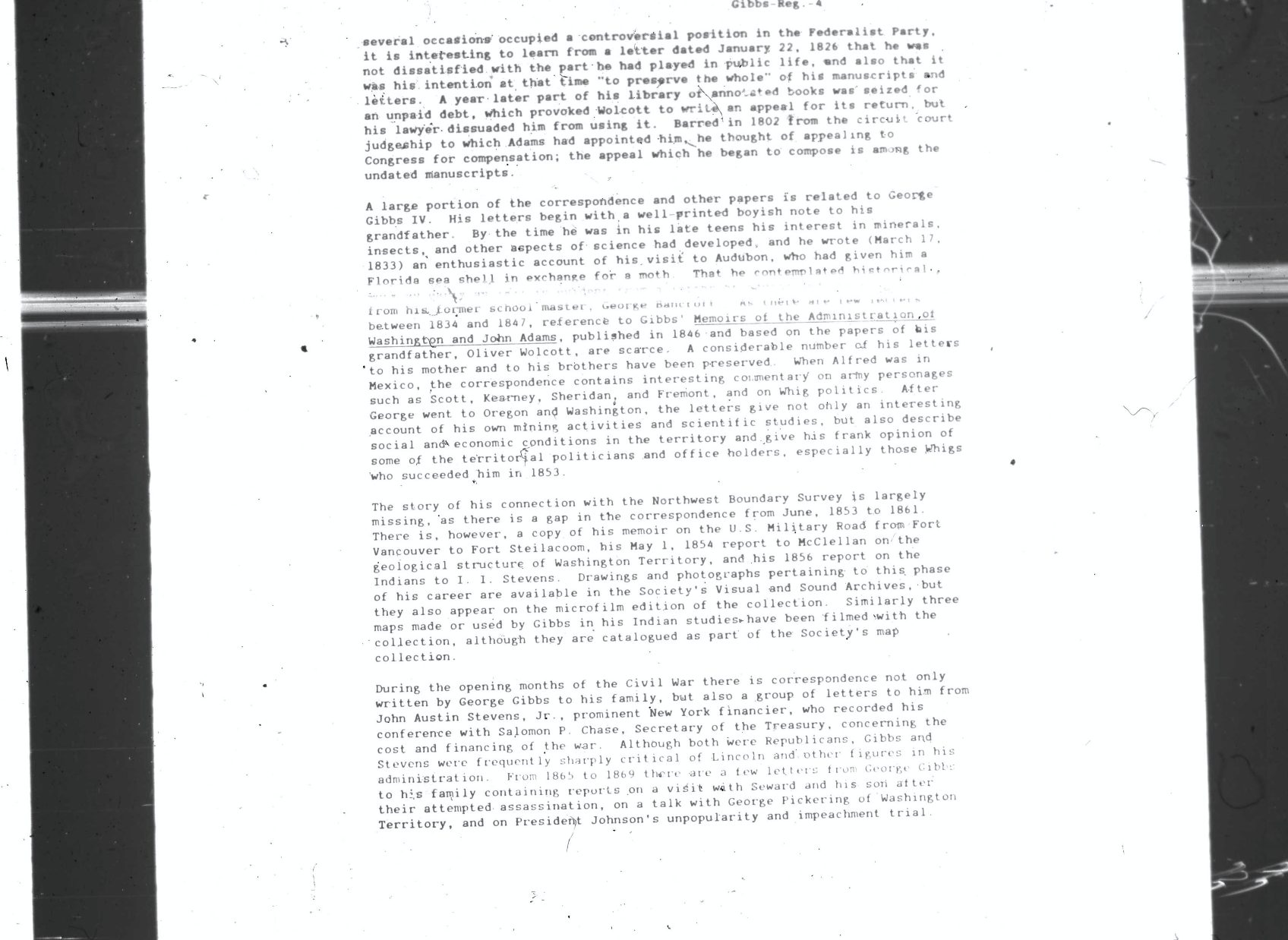
Register p.4: Oliver Wolcott's 1826 letter on preserving his manuscripts and the seizure of his library for debt; George Gibbs IV's papers – March 17, 1833 account of visiting Audubon (traded a Florida sea shell for a moth), Alfred's Mexico letters commenting on Scott, Kearney, Sheridan and Fremont and on Whig politics; gap in correspondence June 1853-1861 over the Northwest Boundary Survey; his May 1, 1854 report to McClellan and 1856 Indian report to I. I. Stevens; three Gibbs maps filmed with the collection; Civil War section notes letters from John Austin Stevens, Jr. on his conference with Salmon P. Chase on the cost and financing of the war, sharp criticism of Lincoln, and 1865-1869 letters on a visit to Seward and his son after the attempted assassination and on Johnson's impeachment
Gibbs-Reg.-4
several occasions occupied a controversial position in the Federalist Party, it is interesting to learn from a letter dated January 22, 1826 that he was not dissatisfied with the part he had played in public life, and also that it was his intention at that time "to preserve the whole" of his manuscripts and letters. A year later part of his library of annotated books was seized for an unpaid debt, which provoked Wolcott to write an appeal for its return, but his lawyer dissuaded him from using it. Barred in 1802 from the circuit court judgeship to which Adams had appointed him, he thought of appealing to Congress for compensation; the appeal which he began to compose is among the undated manuscripts.
A large portion of the correspondence and other papers is related to George Gibbs IV. His letters begin with a well-printed boyish note to his grandfather. By the time he was in his late teens his interest in minerals, insects, and other aspects of science had developed, and he wrote (March 17, 1833) an enthusiastic account of his visit to Audubon, who had given him a Florida sea shell in exchange for a moth. That he contemplated historical [one full line obliterated by a film flare and illegible] from his former school master, George Bancroft. As there are few letters between 1834 and 1847, reference to Gibbs' Memoirs of the Administration of Washington and John Adams, published in 1846 and based on the papers of his grandfather, Oliver Wolcott, are scarce. A considerable number of his letters to his mother and to his brothers have been preserved. When Alfred was in Mexico, the correspondence contains interesting commentary on army personages such as Scott, Kearney, Sheridan, and Fremont, and on Whig politics. After George went to Oregon and Washington, the letters give not only an interesting account of his own mining activities and scientific studies, but also describe social and economic conditions in the territory and give his frank opinion of some of the territorial politicians and office holders, especially those Whigs who succeeded him in 1853.
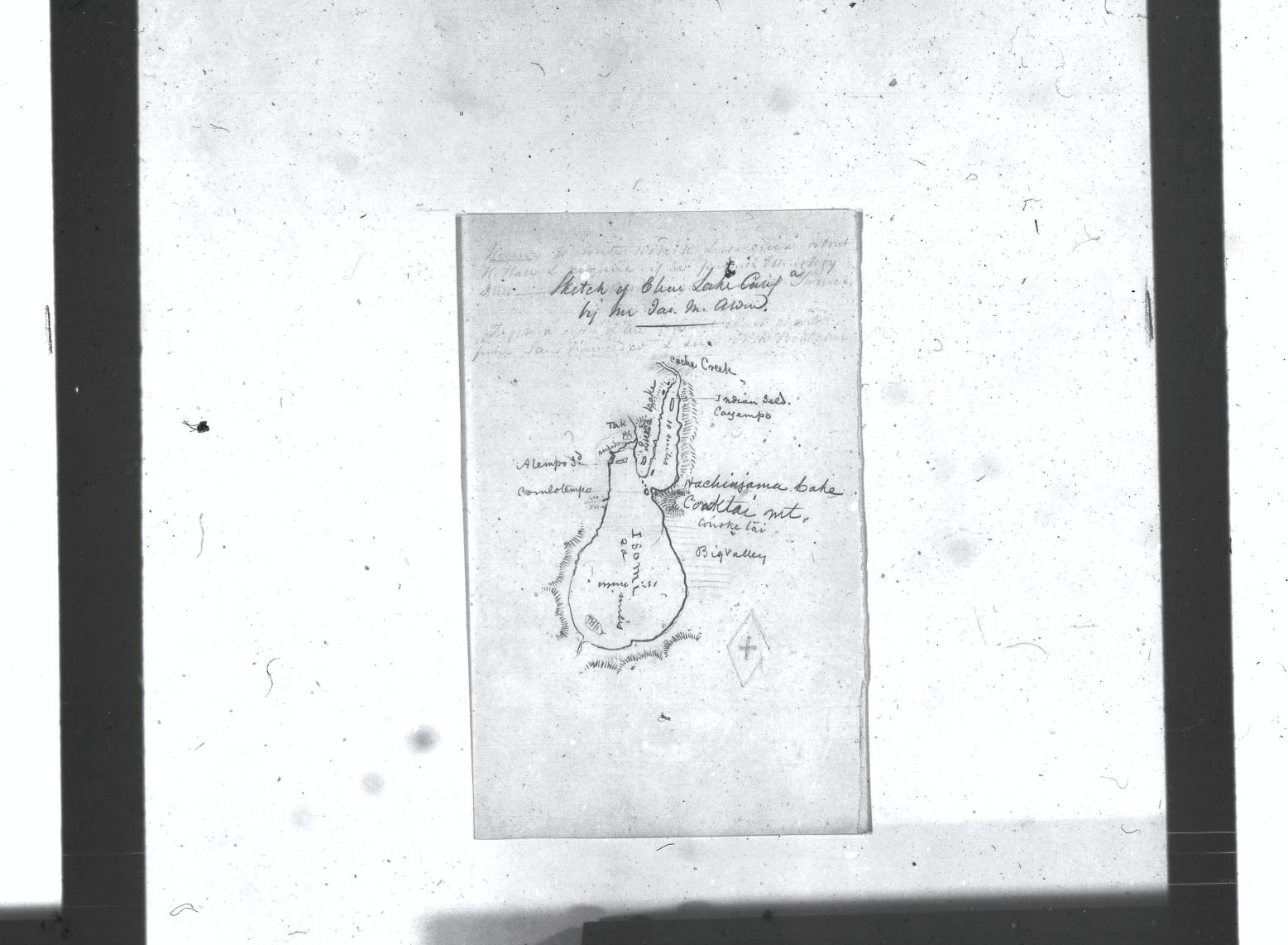
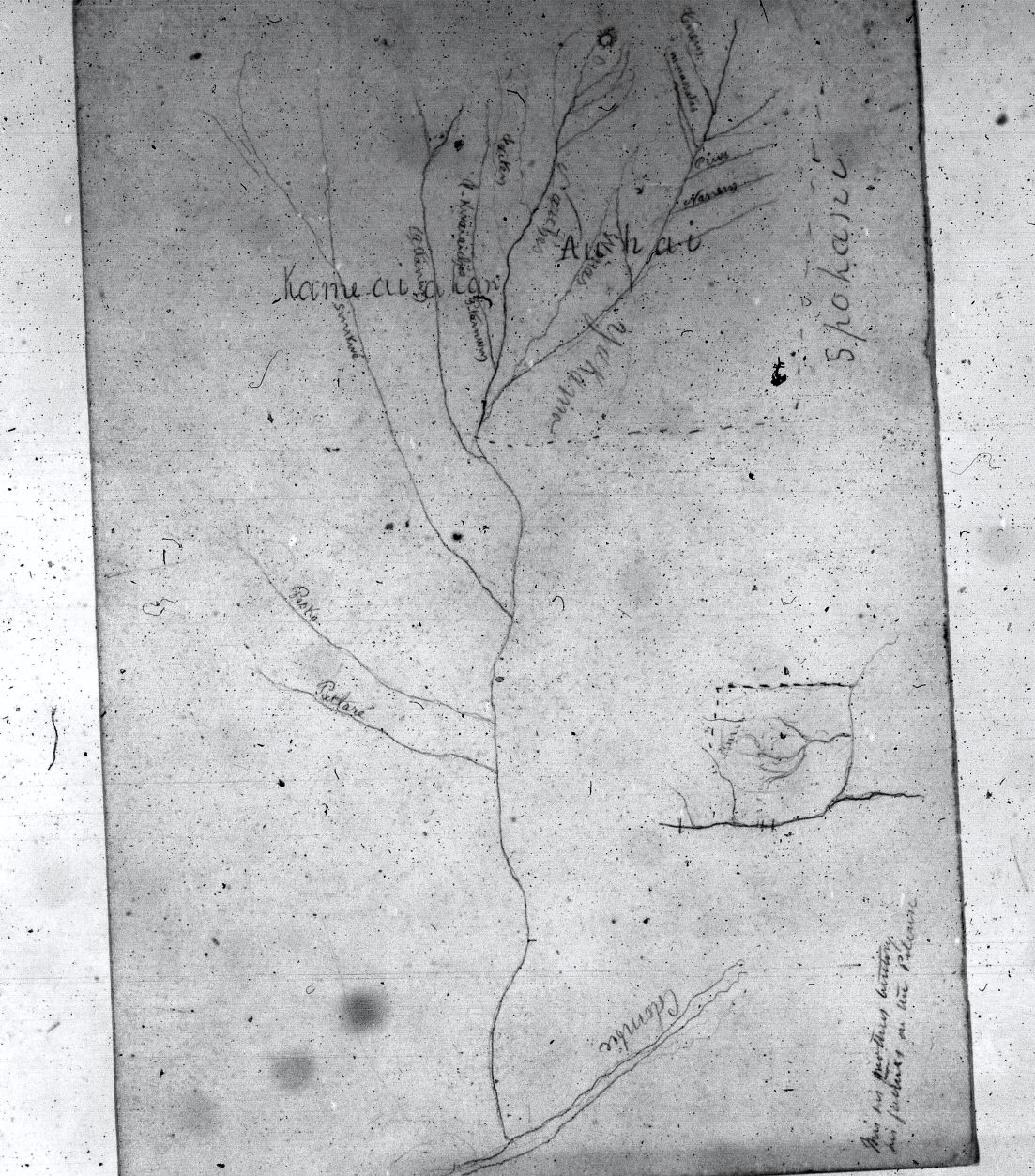
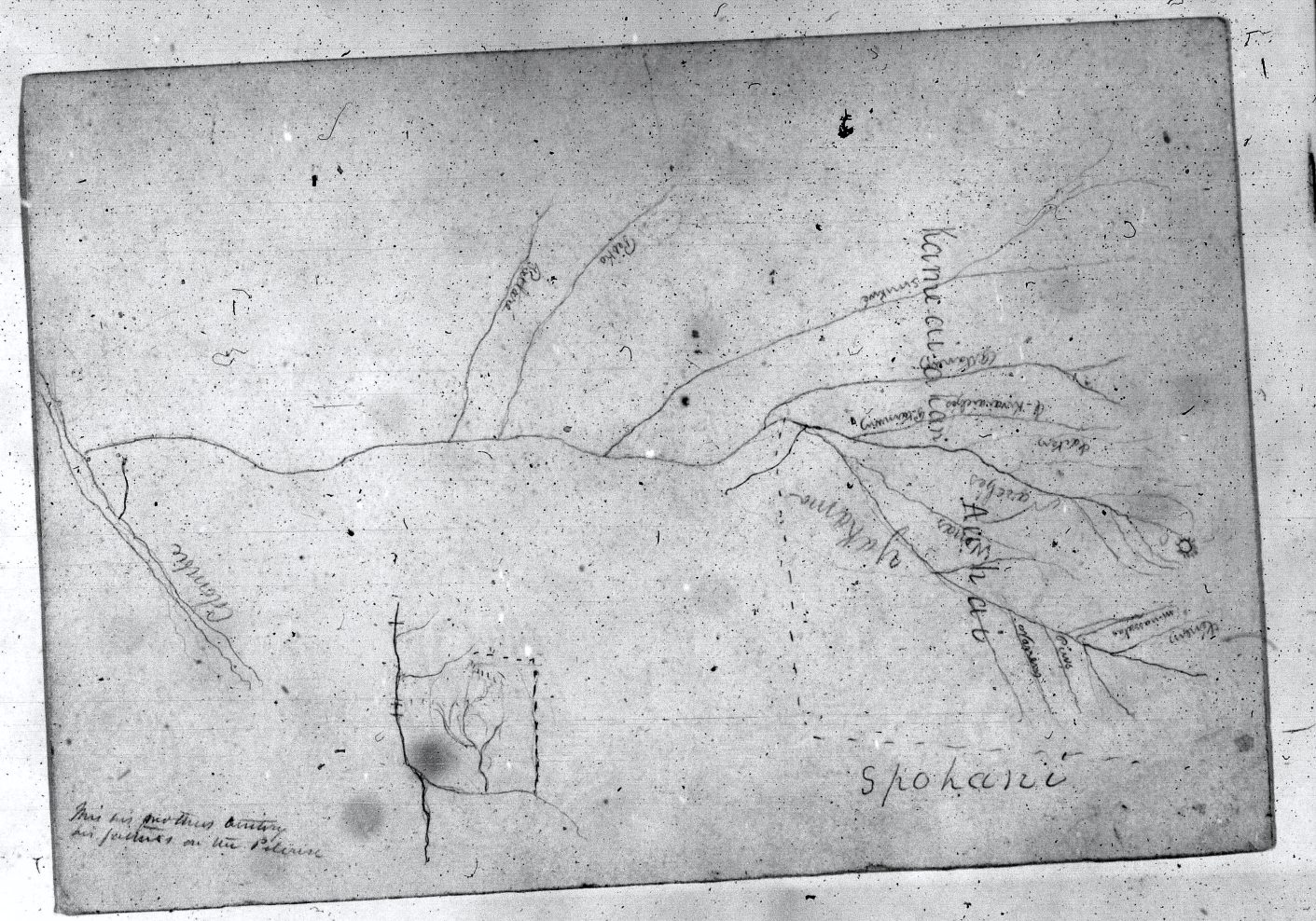
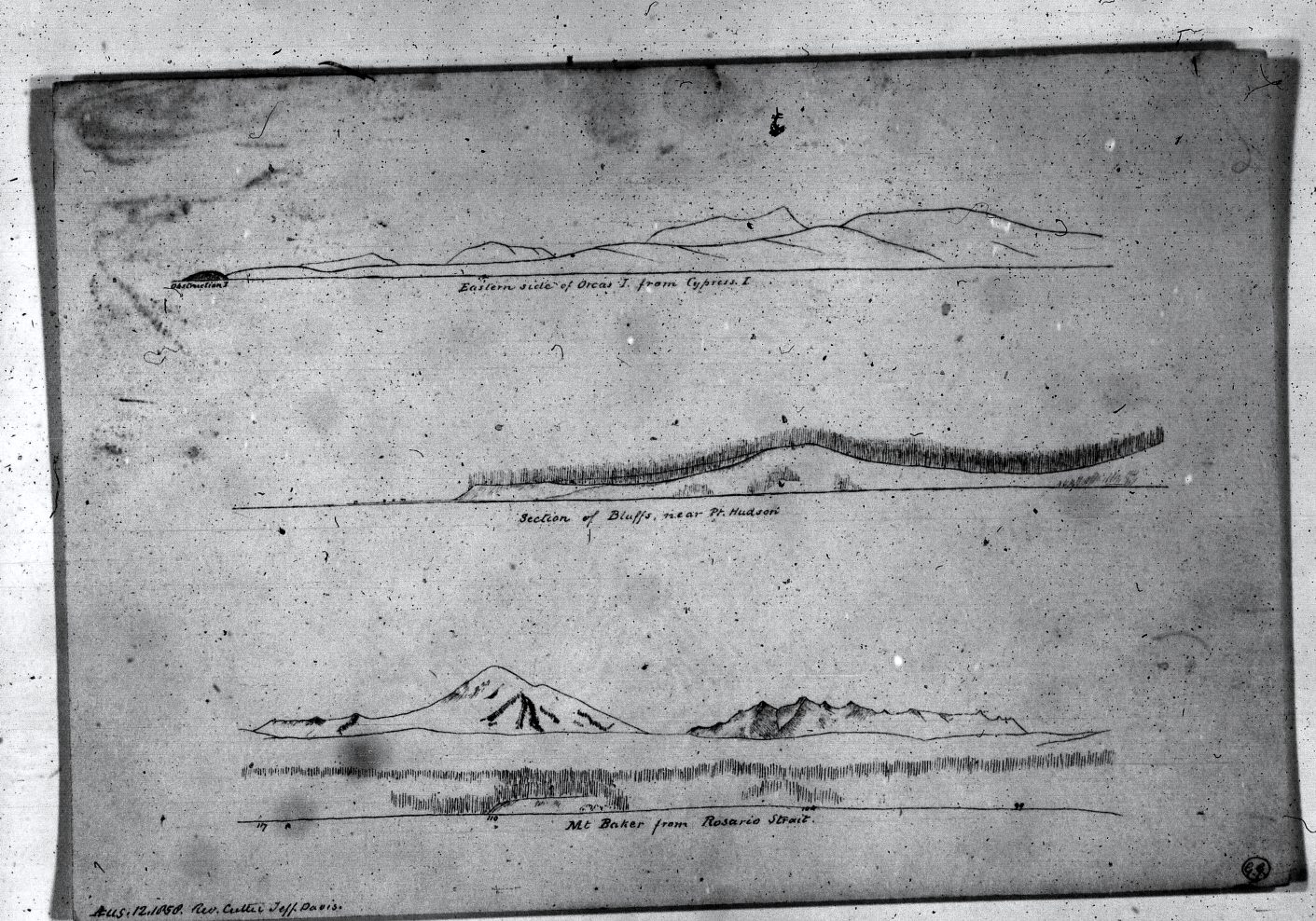
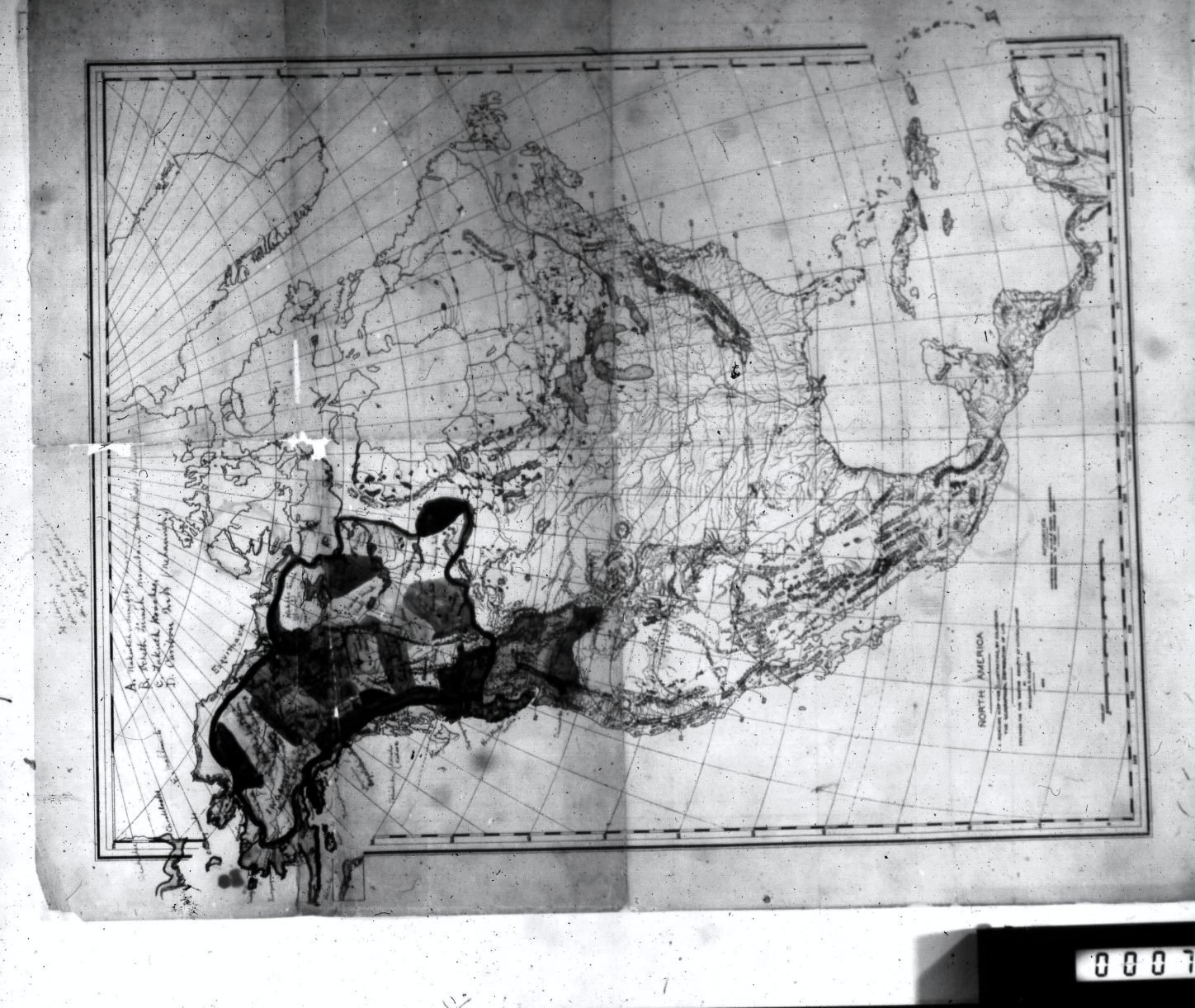
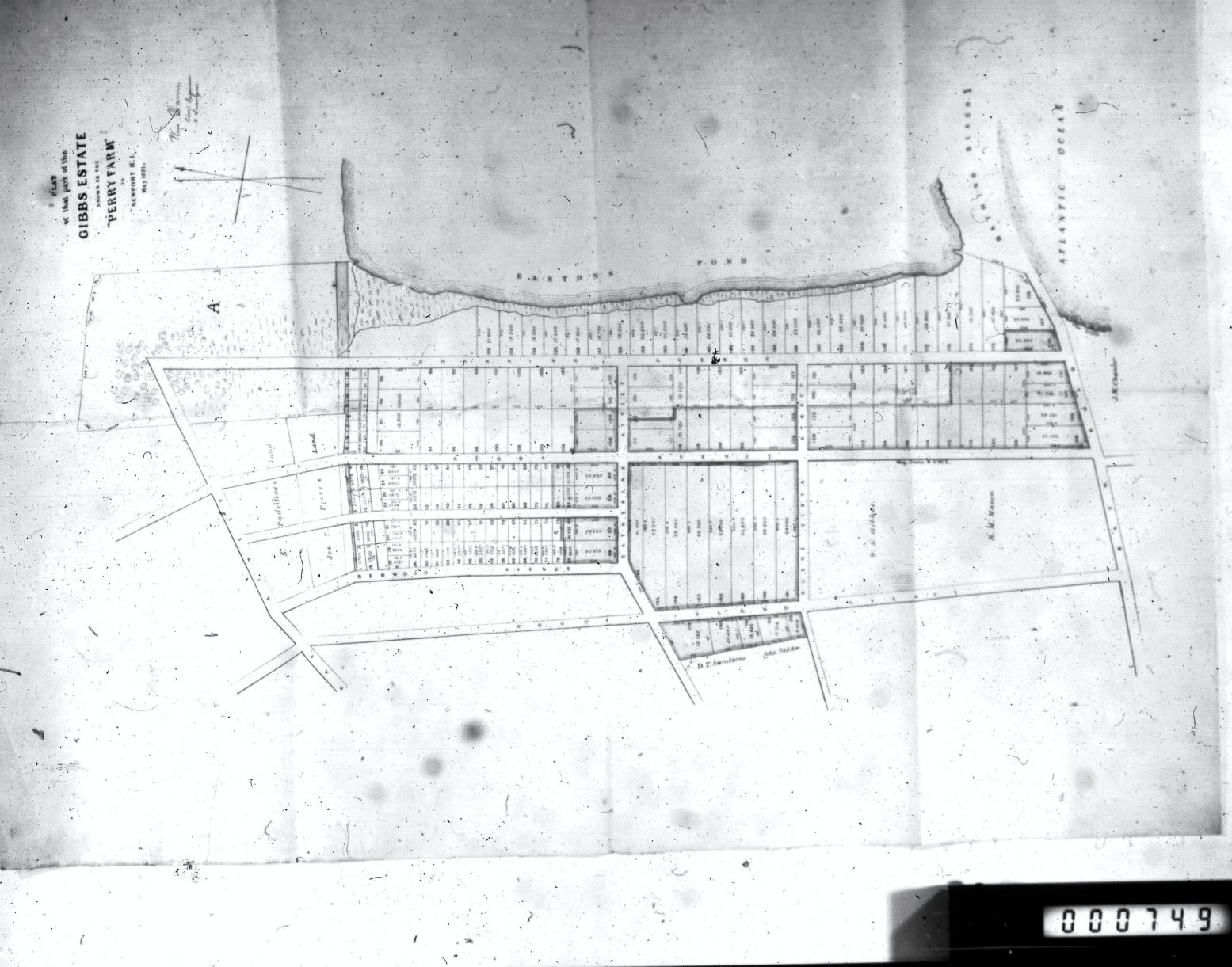
The story of his connection with the Northwest Boundary Survey is largely missing, as there is a gap in the correspondence from June, 1853 to 1861. There is, however, a copy of his memoir on the U.S. Military Road from Fort Vancouver to Fort Steilacoom, his May 1, 1854 report to McClellan on the geological structure of Washington Territory, and his 1856 report on the Indians to I. I. Stevens. Drawings and photographs pertaining to this phase of his career are available in the Society's Visual and Sound Archives, but they also appear on the microfilm edition of the collection. Similarly three maps made or used by Gibbs in his Indian studies have been filmed with the collection, although they are catalogued as part of the Society's map collection.
During the opening months of the Civil War there is correspondence not only written by George Gibbs to his family, but also a group of letters to him from John Austin Stevens, Jr., prominent New York financier, who recorded his conference with Salomon P. Chase, Secretary of the Treasury, concerning the cost and financing of the war. Although both were Republicans, Gibbs and Stevens were frequently sharply critical of Lincoln and other figures in his administration. From 1865 to 1869 there are a few letters from George Gibbs to his family containing reports on a visit with Seward and his son after their attempted assassination, on a talk with George Pickering of Washington Territory, and on President Johnson's unpopularity and impeachment trial.
Not a manuscript: this is page 4 of the typewritten register (finding aid) to the Gibbs Family Papers, filmed at the head of reel 3. Running head 'Gibbs-Reg.-4' at the top of the sheet. The title 'Memoirs of the Administration of Washington and John Adams' is underscored in the typescript. One full line in the second paragraph, between 'That he contemplated historical' and 'from his former school master, George Bancroft', is washed out by a horizontal film flare running across the frame; repeated re-reading and contrast work recovered only scattered letter shapes, so it is left unreconstructed. 'Salomon P. Chase' and 'Kearney' are transcribed as typed (for Salmon P. Chase and Kearny). Text runs to the foot of the sheet with no page number or signature.
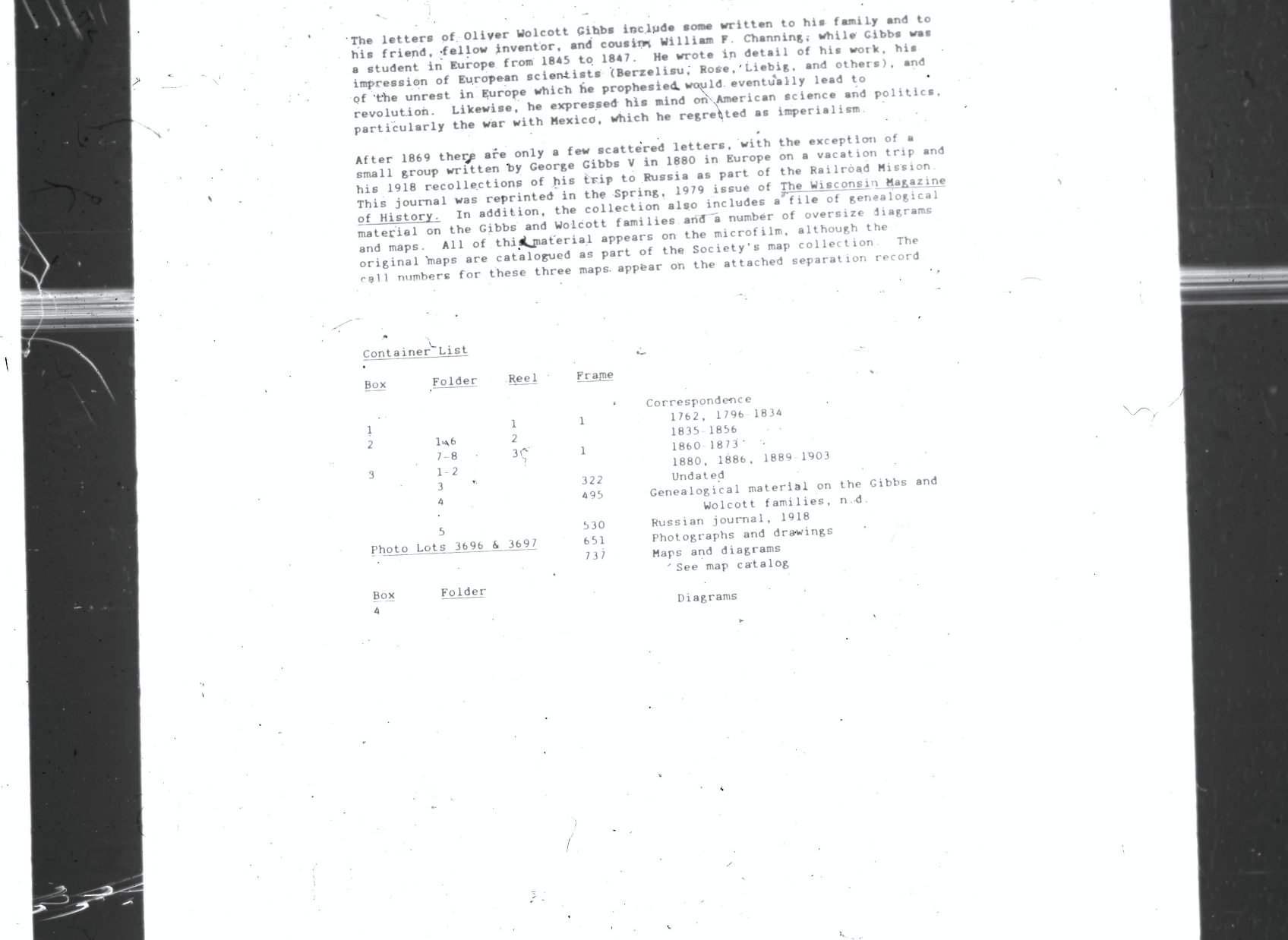
Register p.5: Oliver Wolcott Gibbs's letters to William F. Channing on Berzelius, Rose, Liebig, European unrest, and the Mexican war "which he regretted as imperialism"; George Gibbs V's 1880 Europe trip and 1918 Russia/Railroad Mission recollections (reprinted Spring 1979 Wisconsin Magazine of History); CONTAINER LIST giving Reel 3 = Box 2 folders 7-8 and Box 3, correspondence 1880/1886/1889-1903, Undated frame 322, genealogical material frame 495, Russian journal 1918 frame 530, photographs and drawings frame 651, maps and diagrams frame 737
n.d. (edition Sept. 1987)
"TO THE RESEARCHER" microfilm target, SHSW Form #AR-04-07, Mag card #584965 – reproduction restrictions, copyright caution, and suggested citation "Gibbs Family Papers (microfilm edition, Sept. 1987), State Historical Society of Wisconsin"
Frames 11–44 · 8 documents
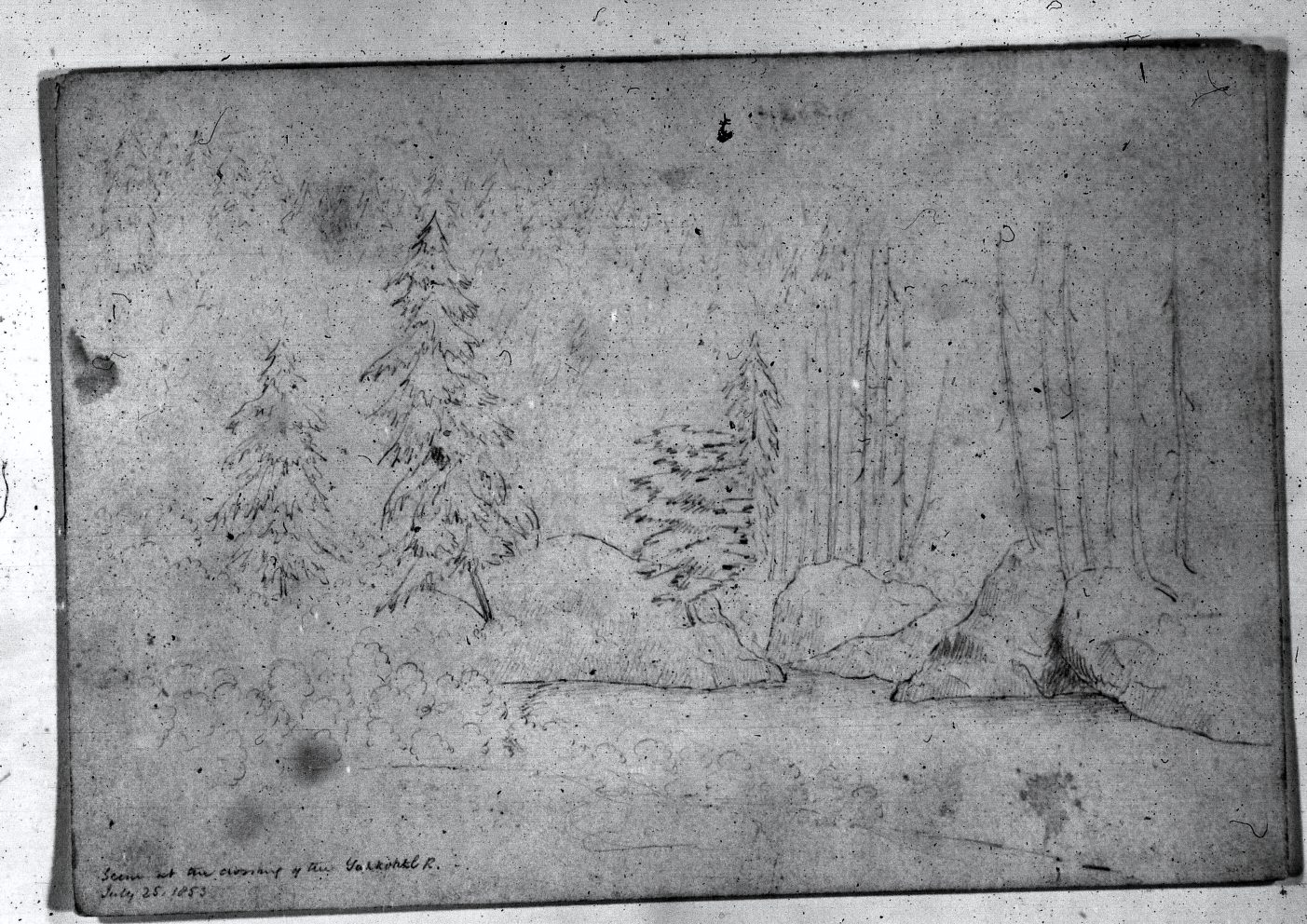
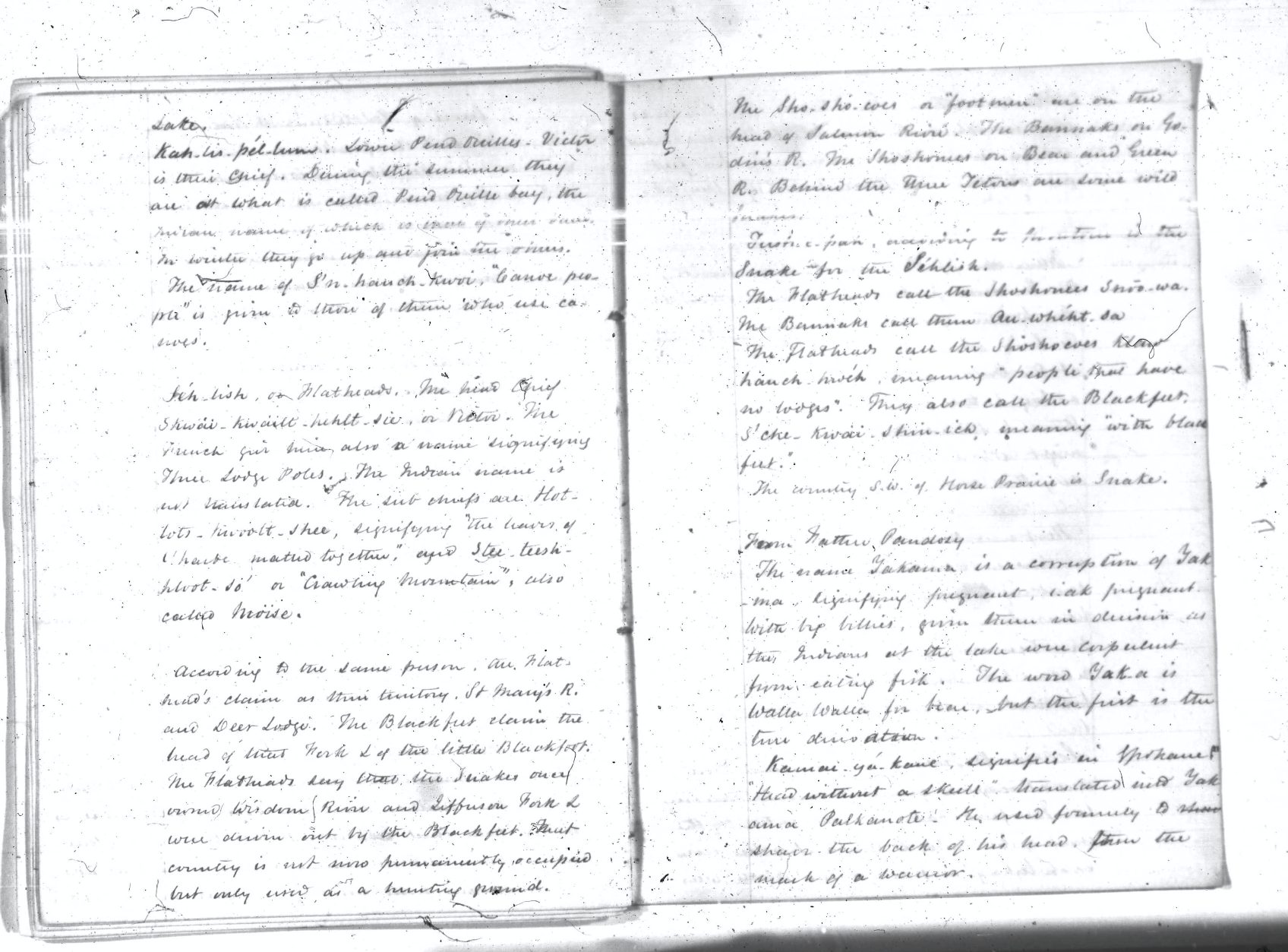
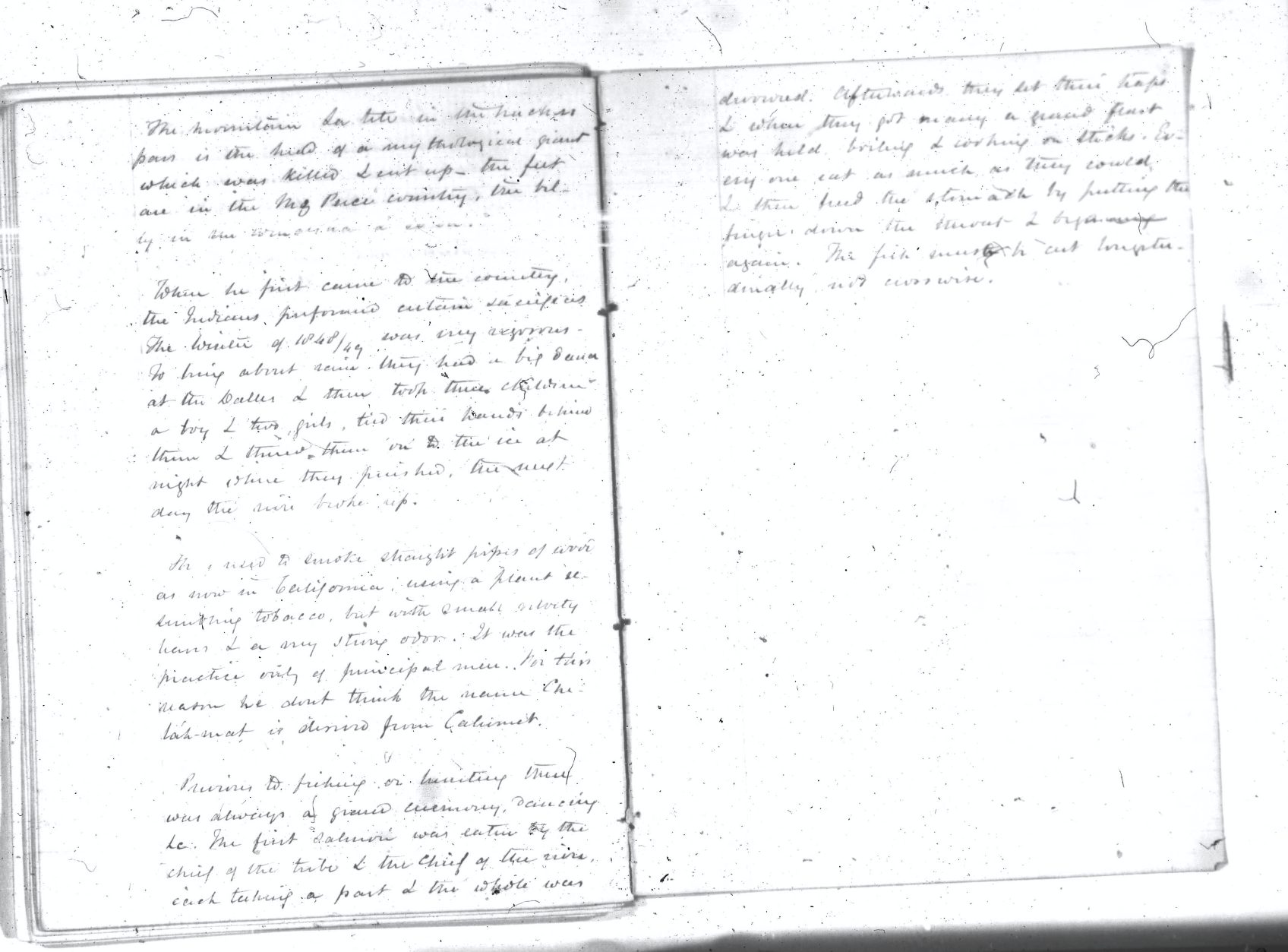
George Gibbs IV’s field notebook for the Northwest Boundary Survey: abstracts of Mackenzie and Bancroft, and an interior tribal census with chief rosters. Ink sketches at 34 and 35.
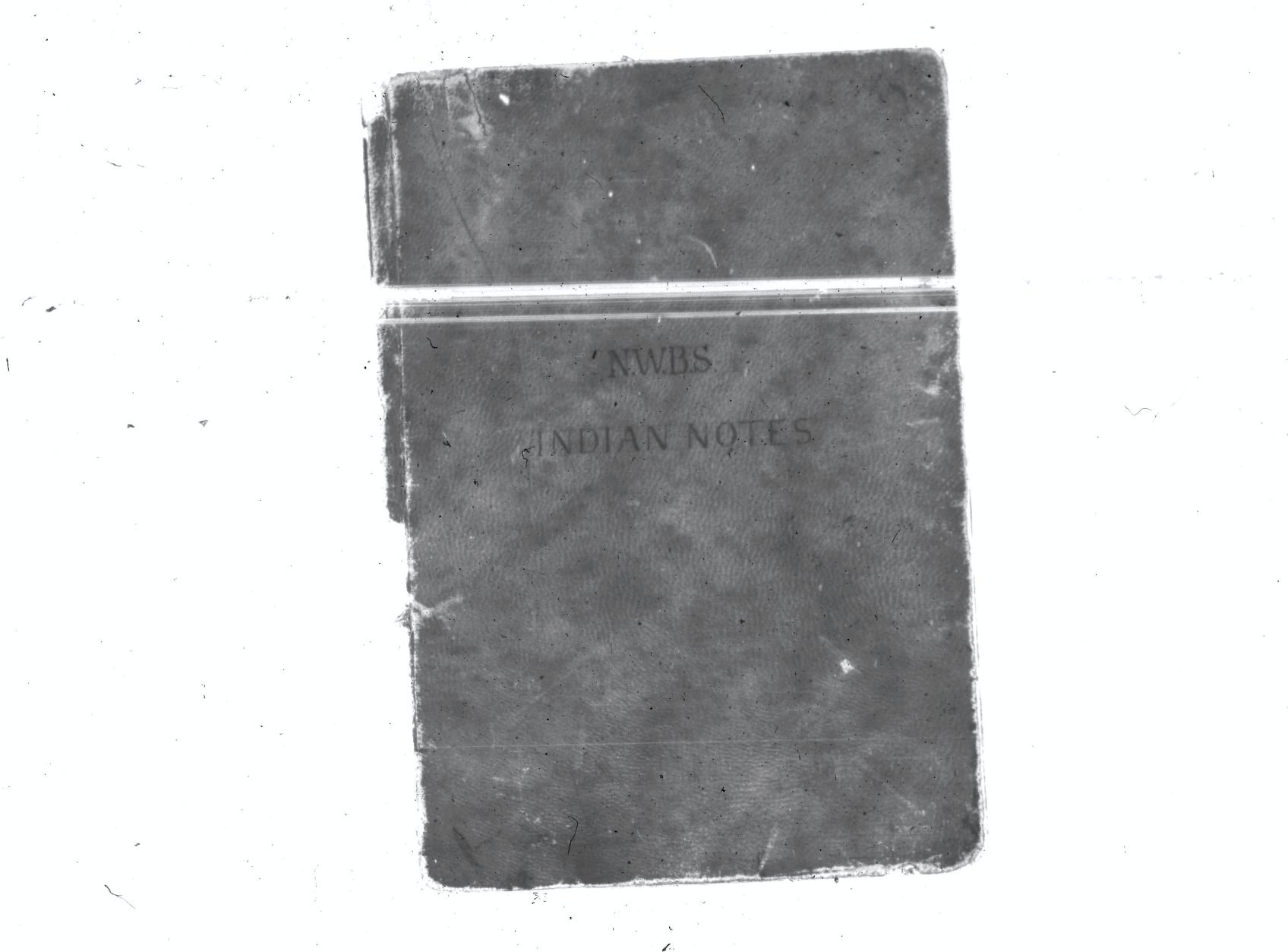
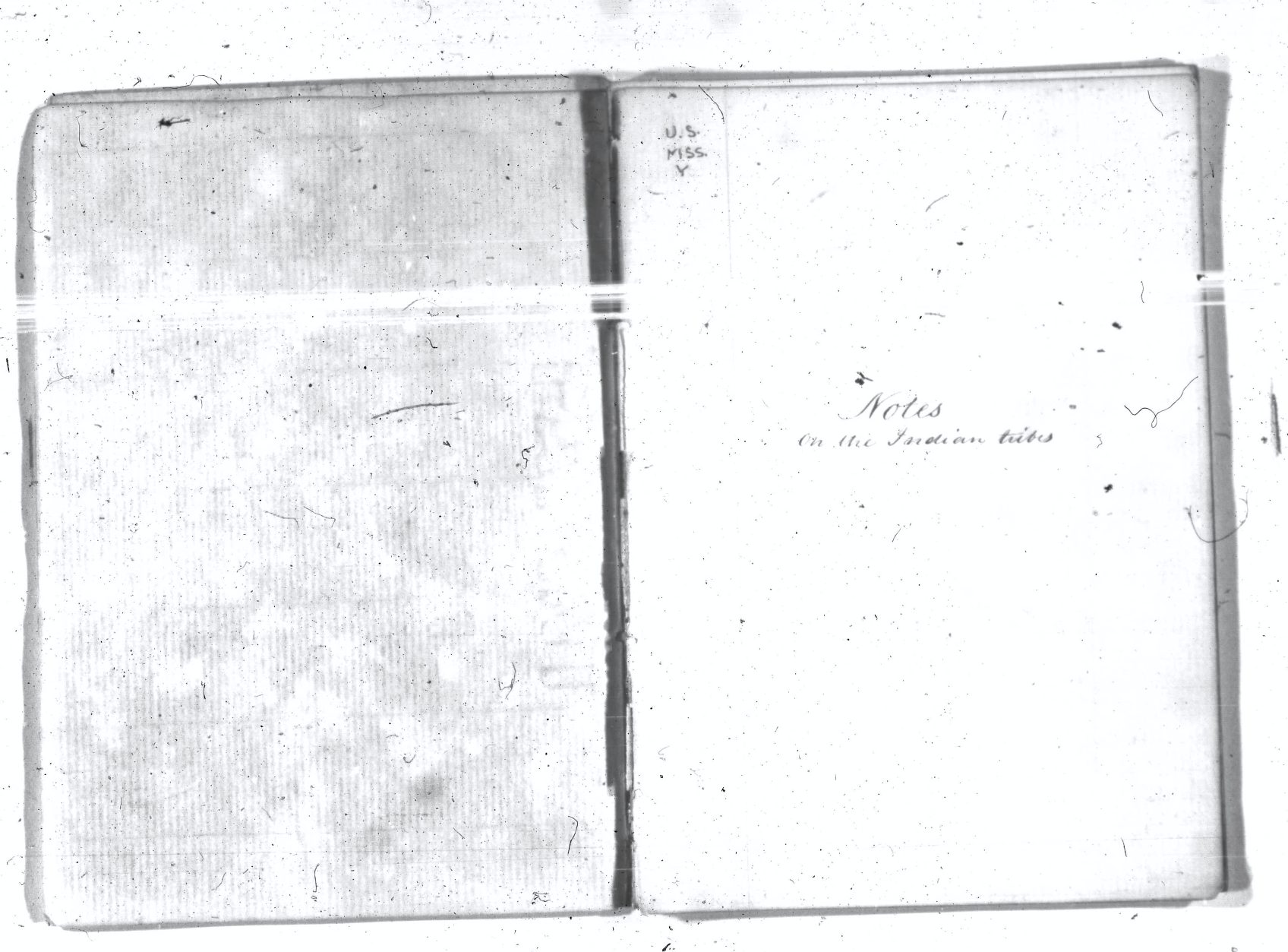
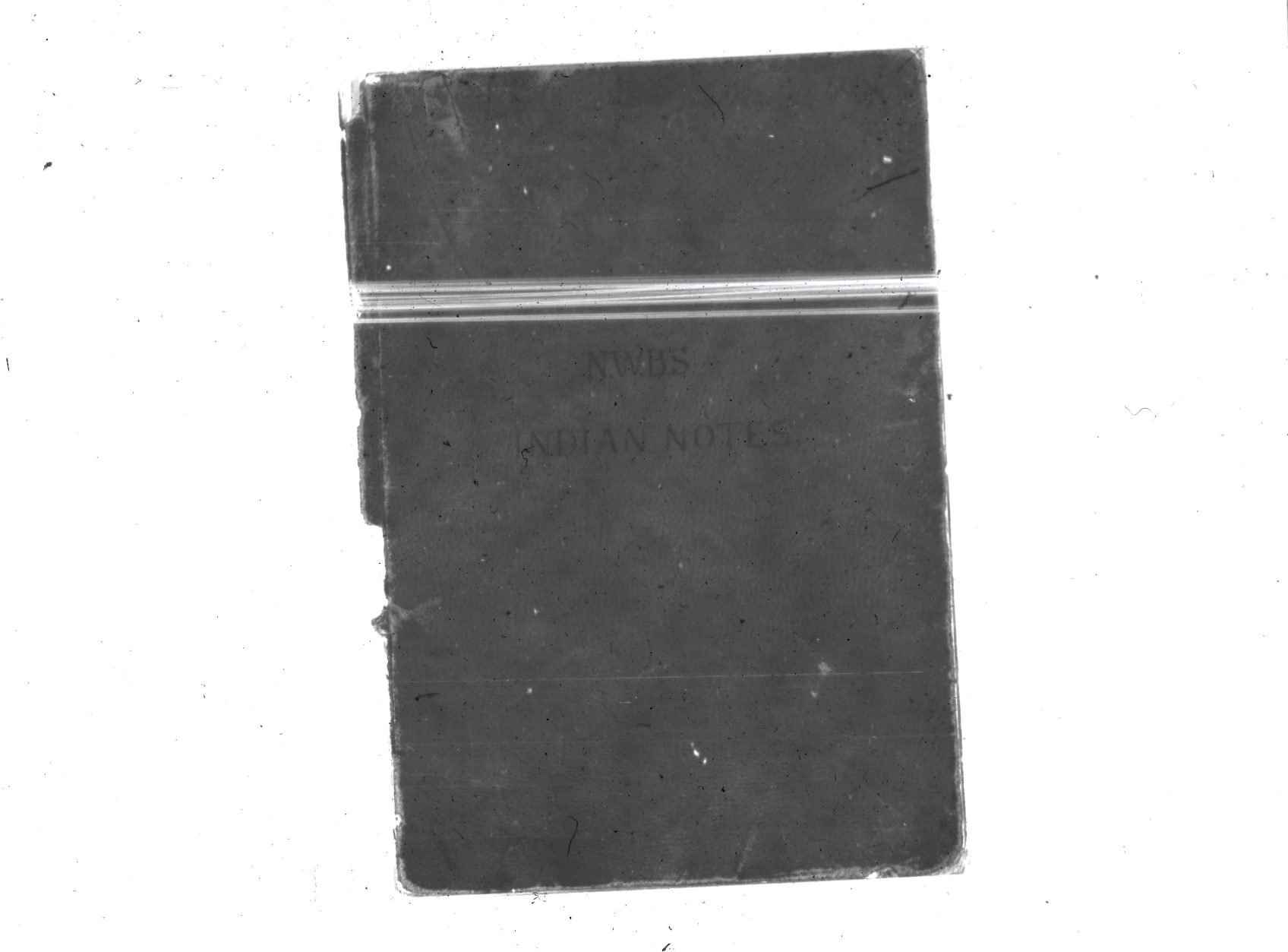
Front cover of a bound field notebook lettered "N.W.B.S. / INDIAN NOTES" (Northwest Boundary Survey Indian notes)
n.d. (1860)
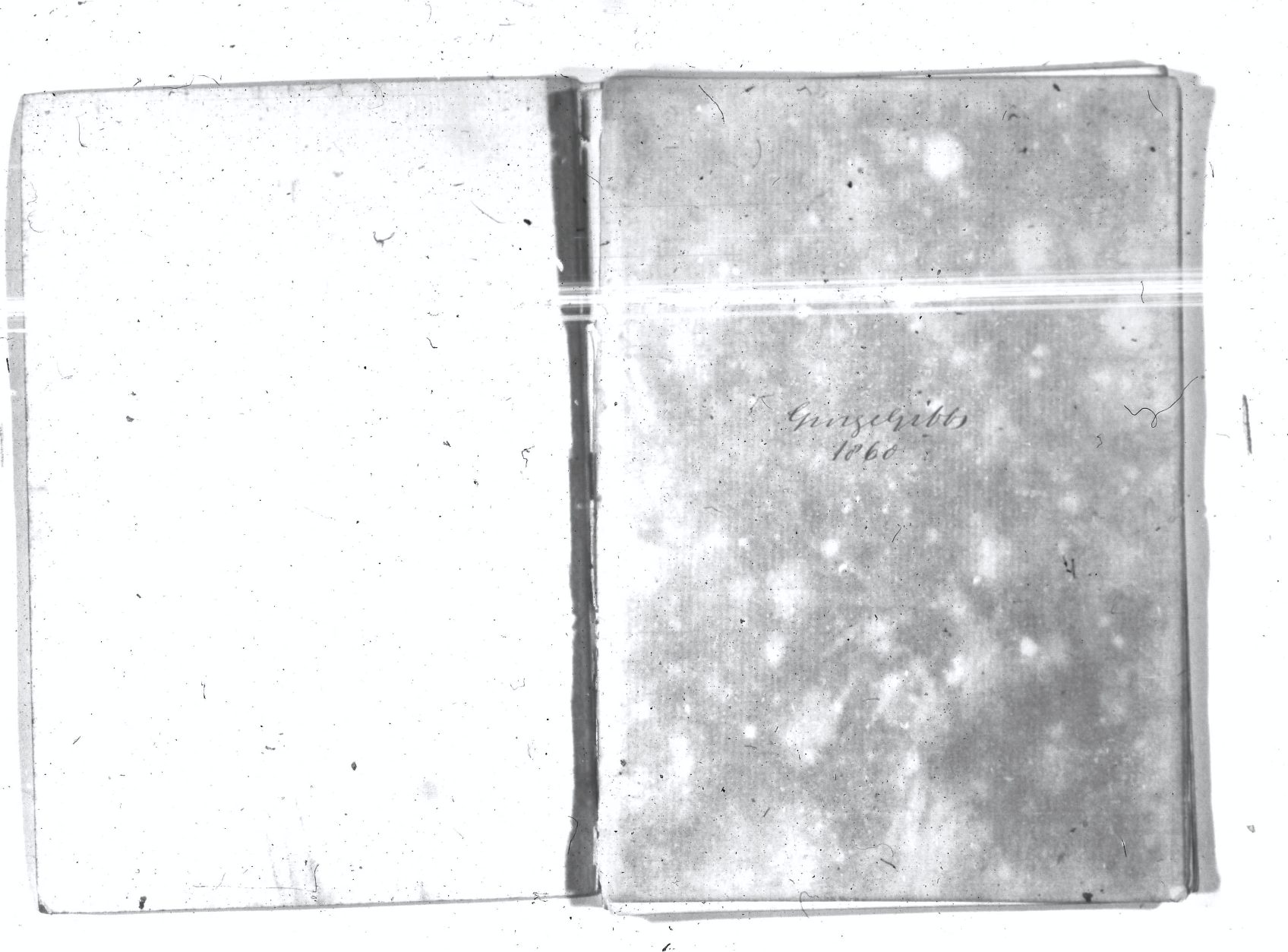
Same notebook opened: blank left leaf and front cover inscribed in ink "Geo. Gibbs / 1860"
Inside cover stamped "U.S. MSS. Y"; title leaf in George Gibbs's hand: "Notes on the Indian tribes"
Section heading leaf: "Mackenzie's Voyages." (facing blank verso)
 FRAME 15
 FRAME 16
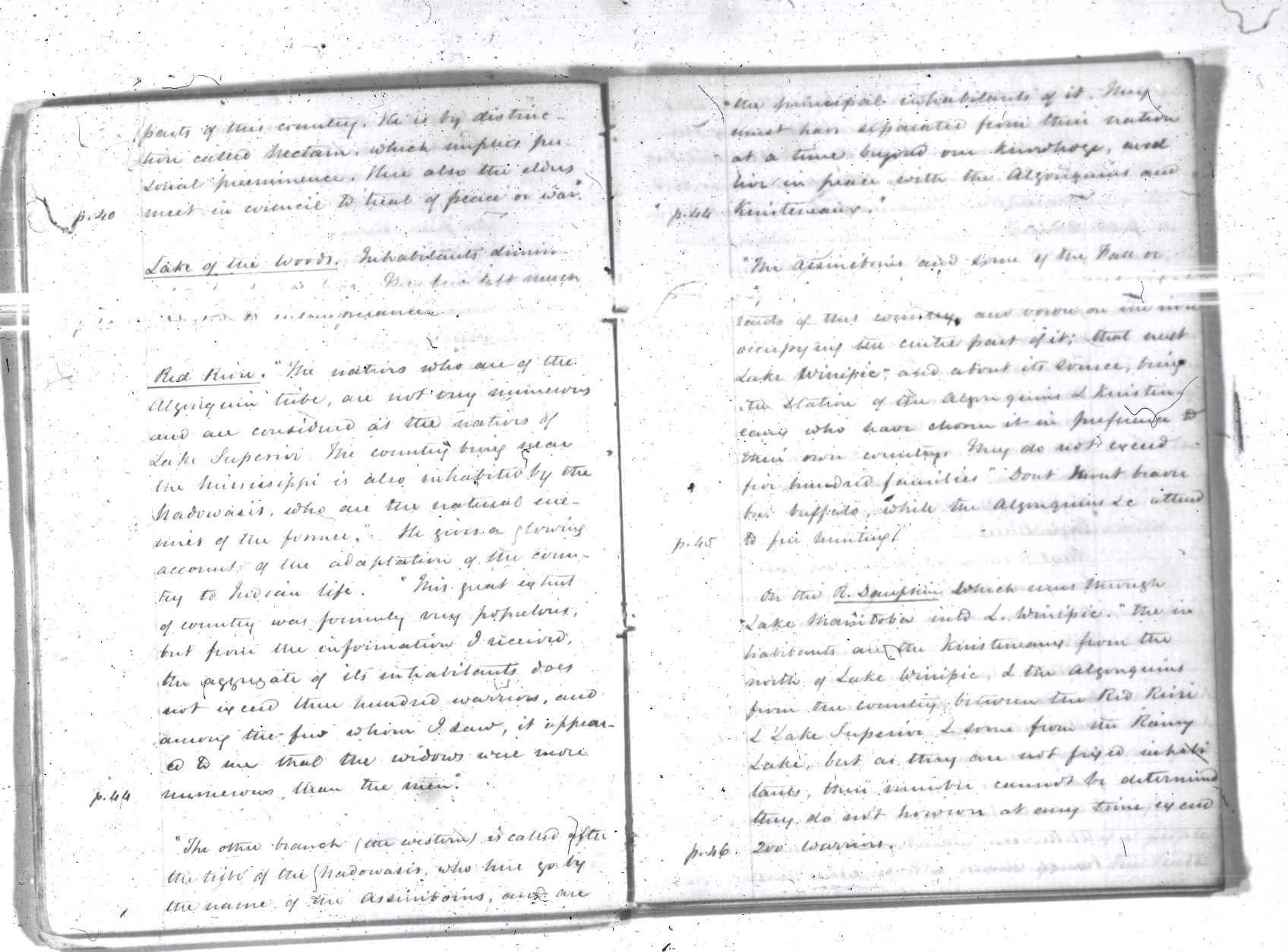 FRAME 17
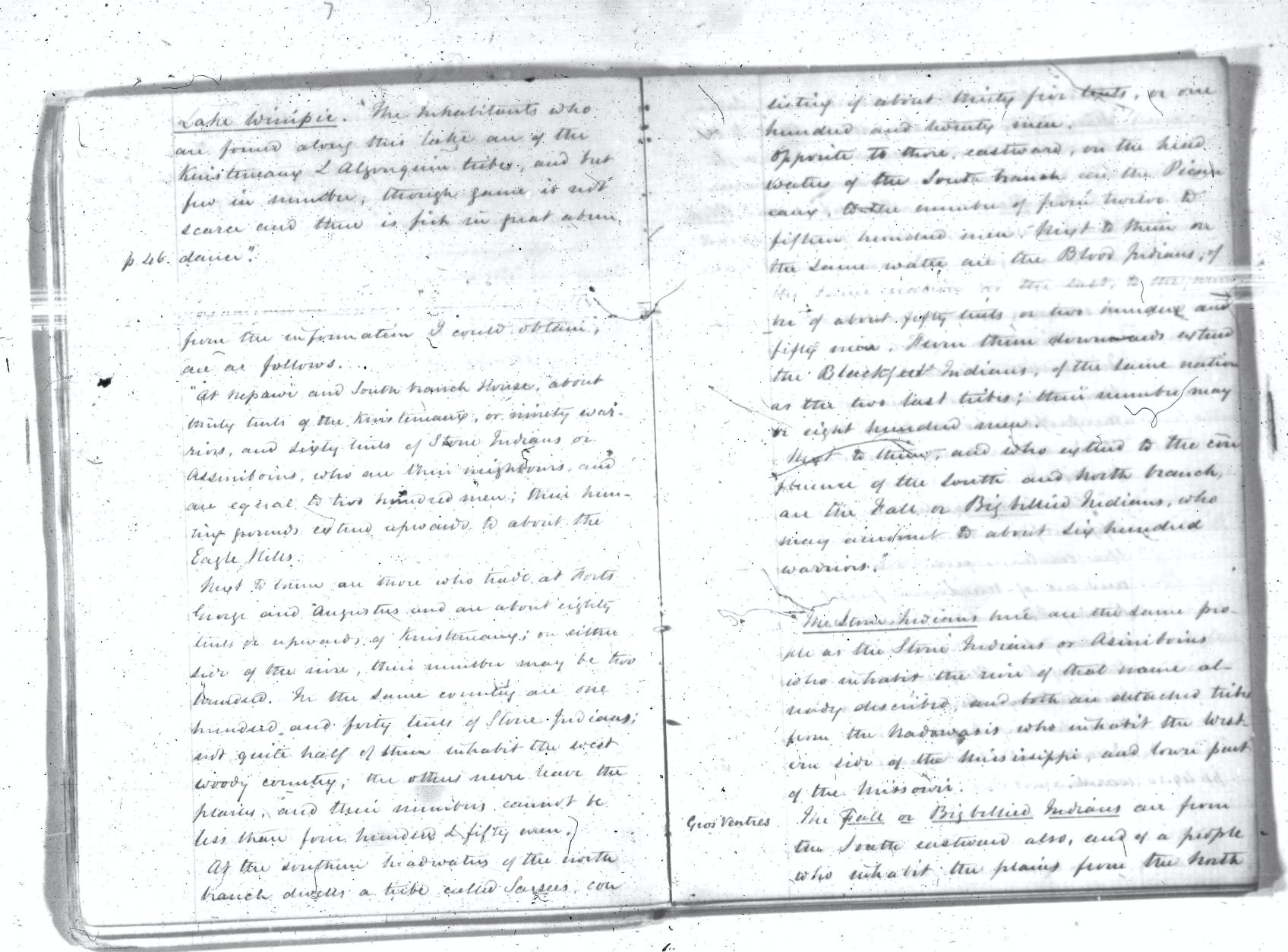 FRAME 18
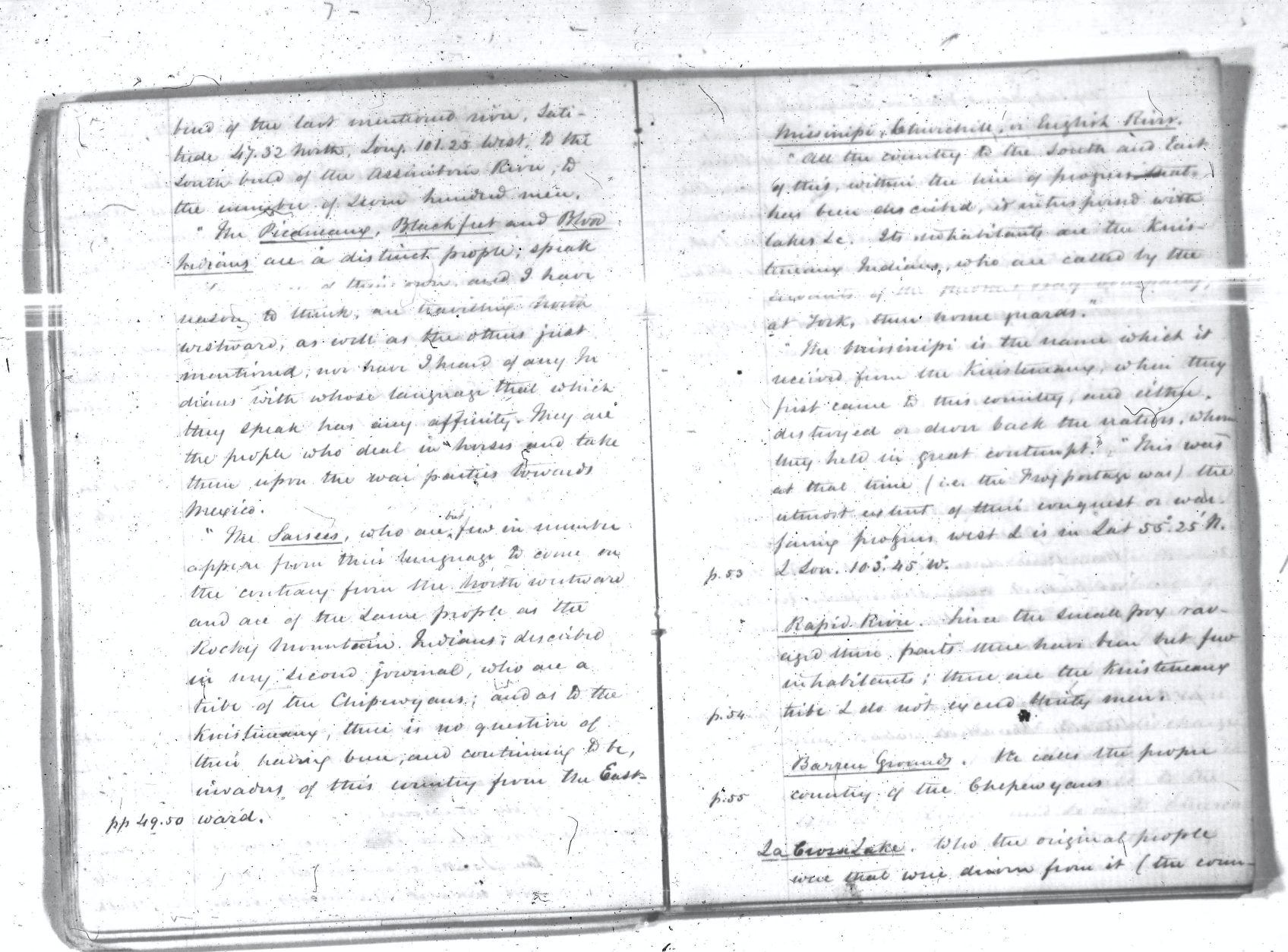 FRAME 19
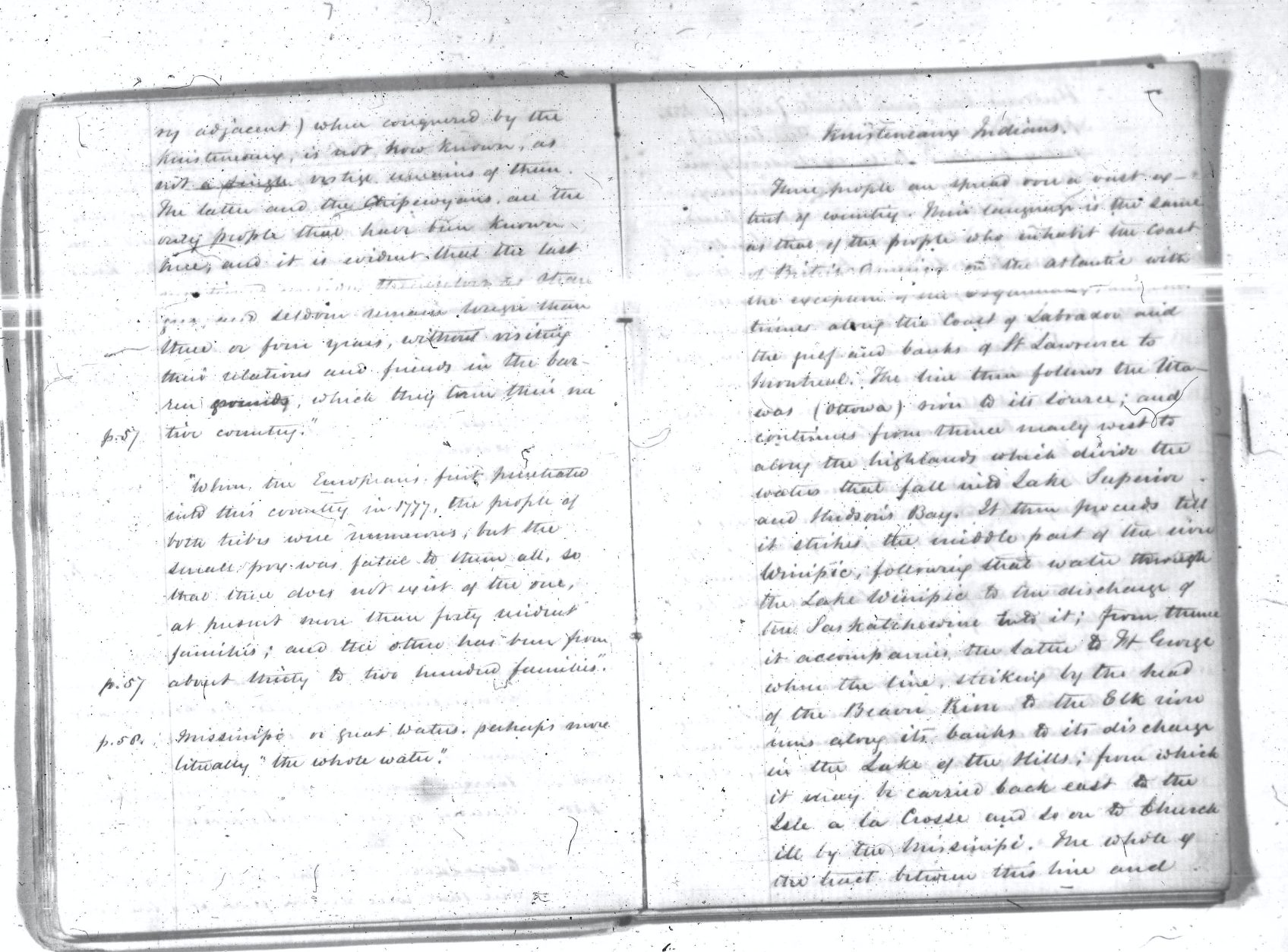 FRAME 20
 FRAME 21
 FRAME 22
 FRAME 23
 FRAME 24
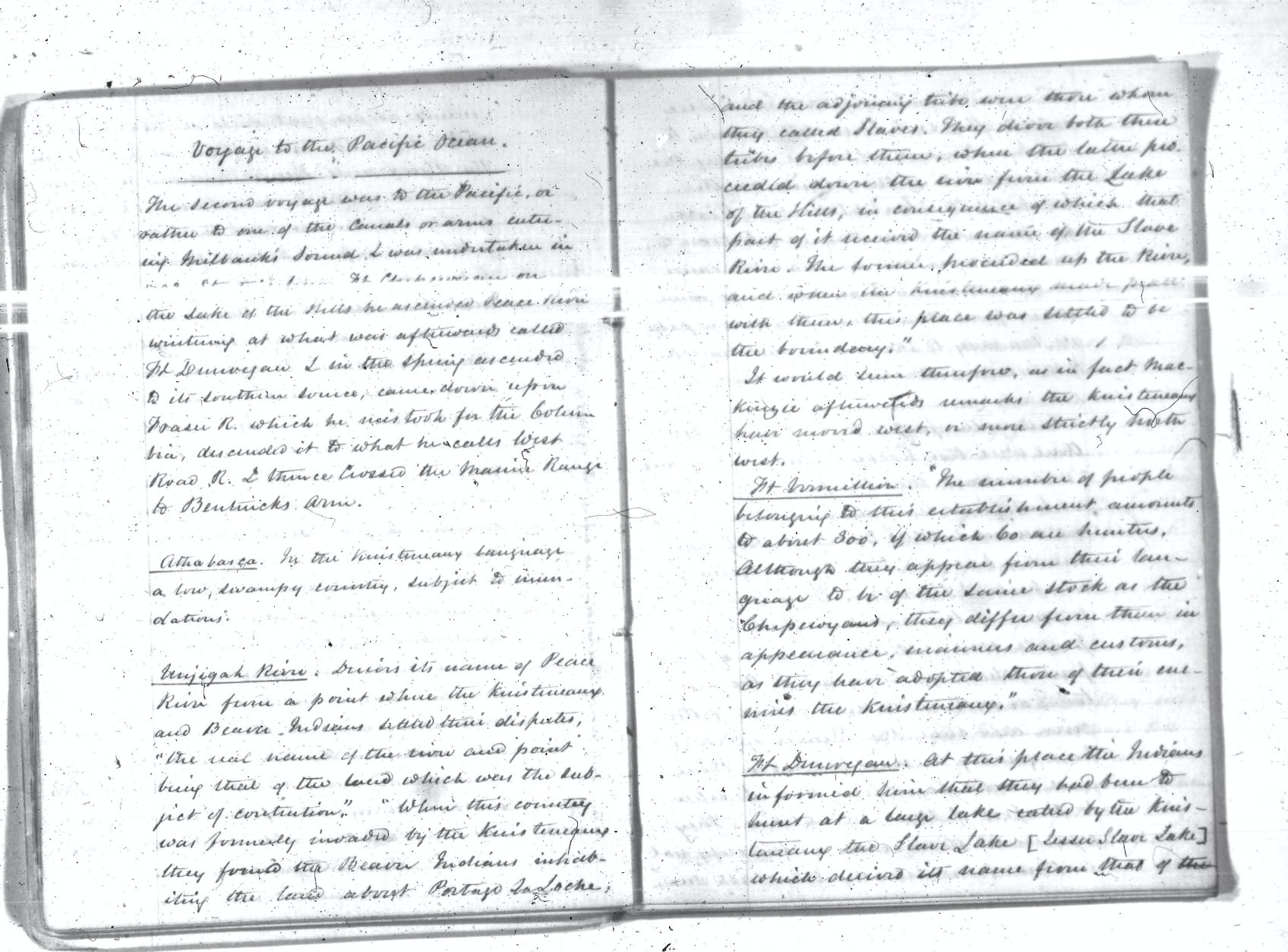 FRAME 25
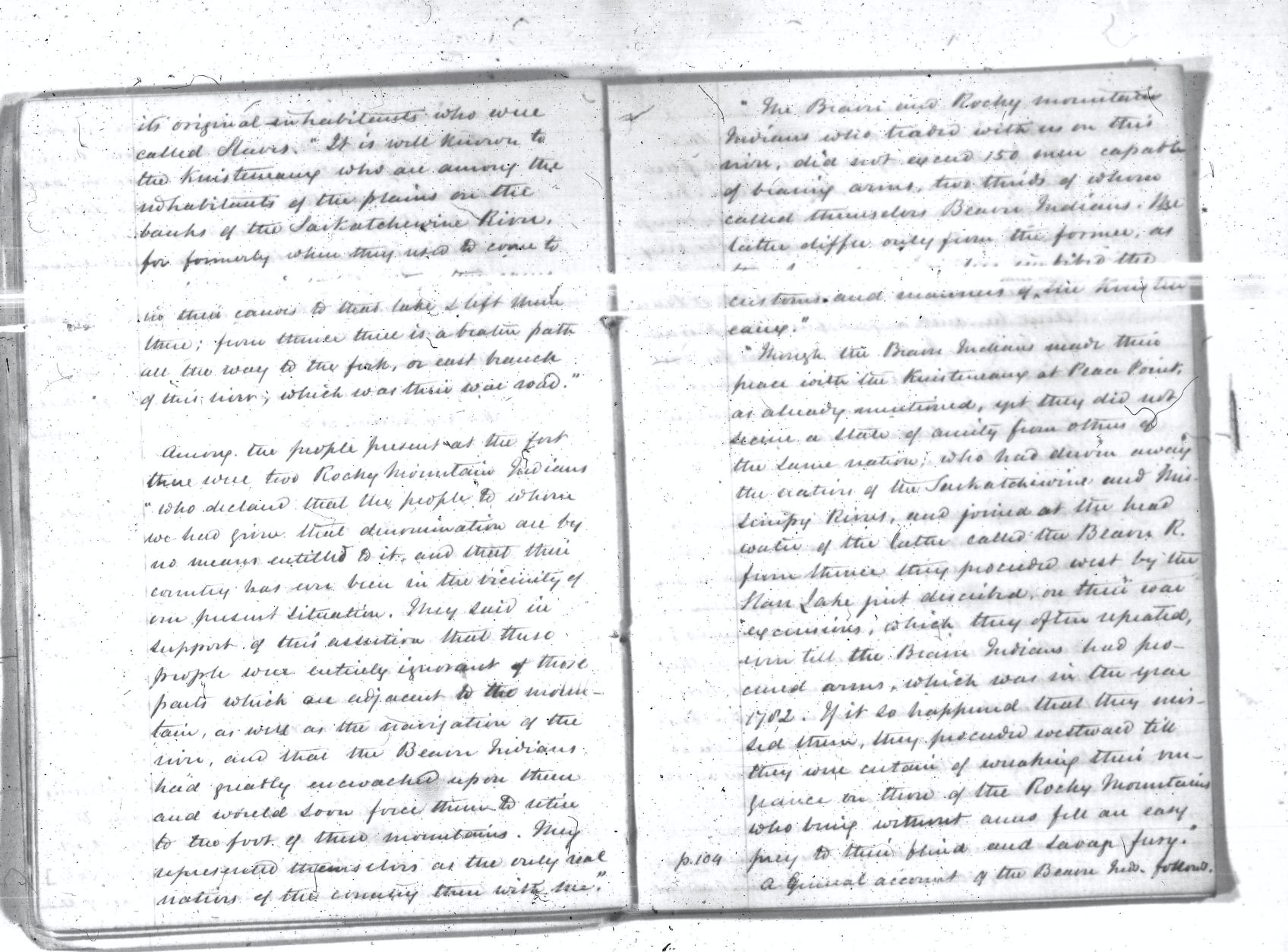 FRAME 26
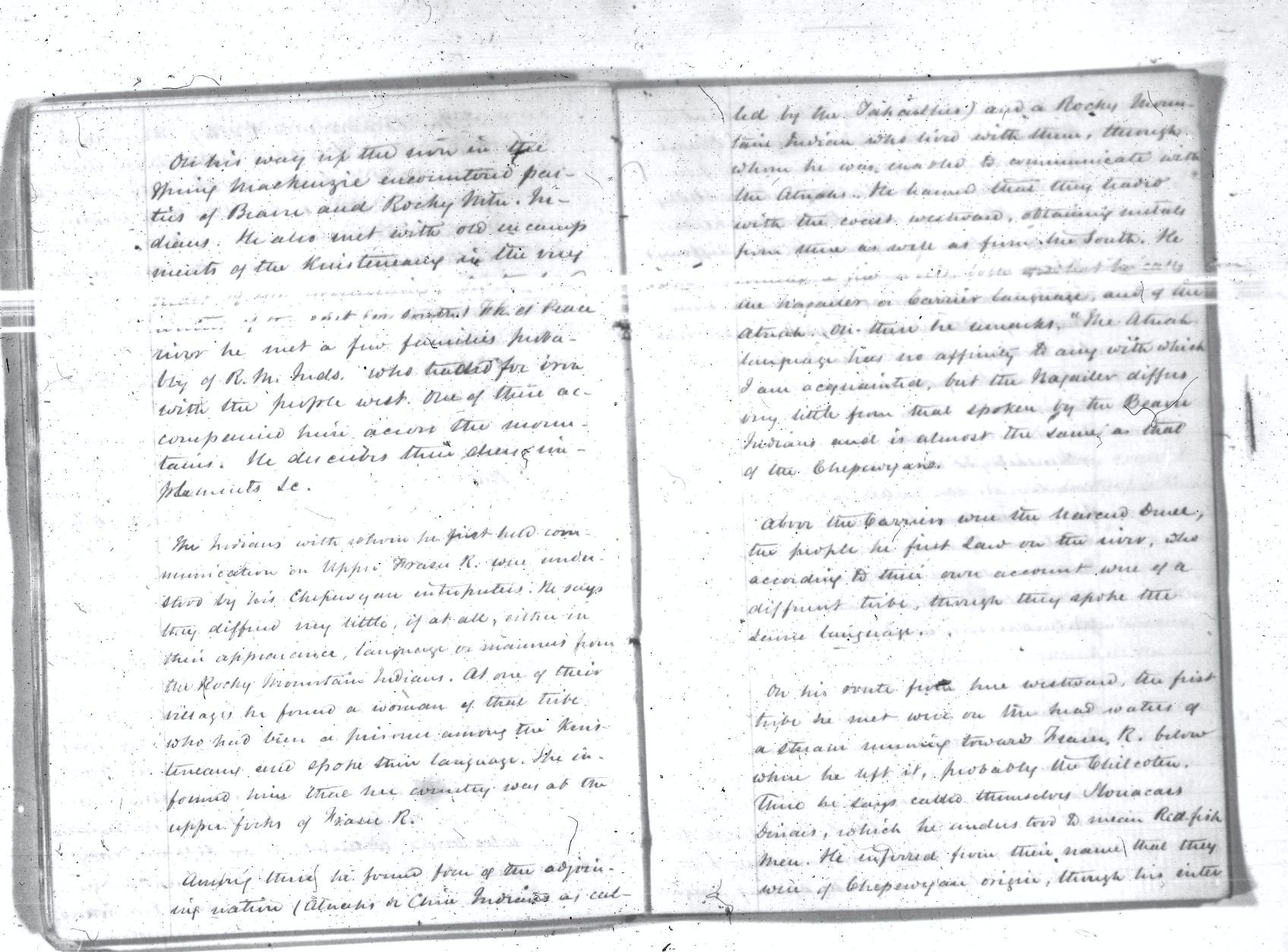 FRAME 27
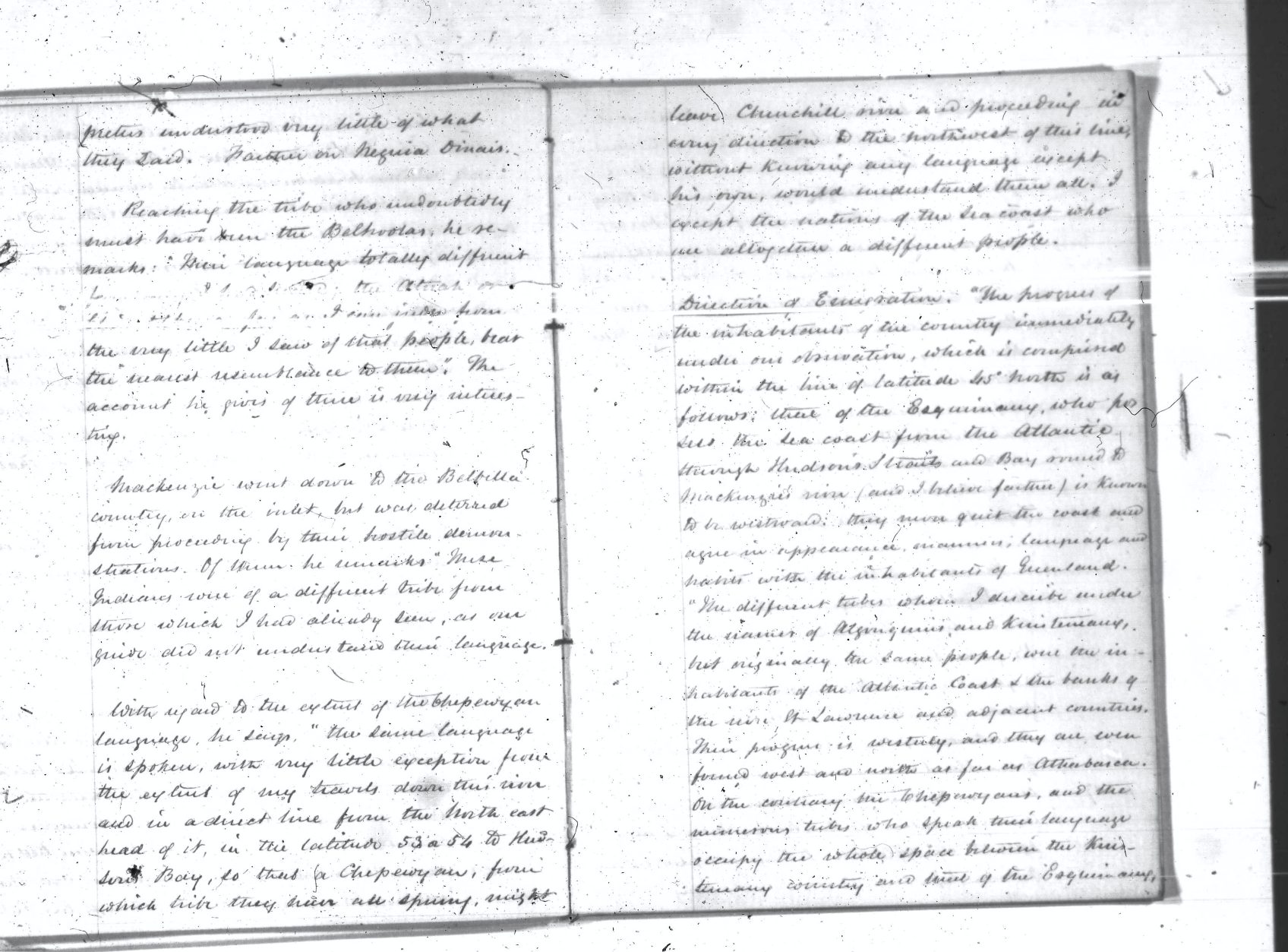 FRAME 28
 FRAME 29
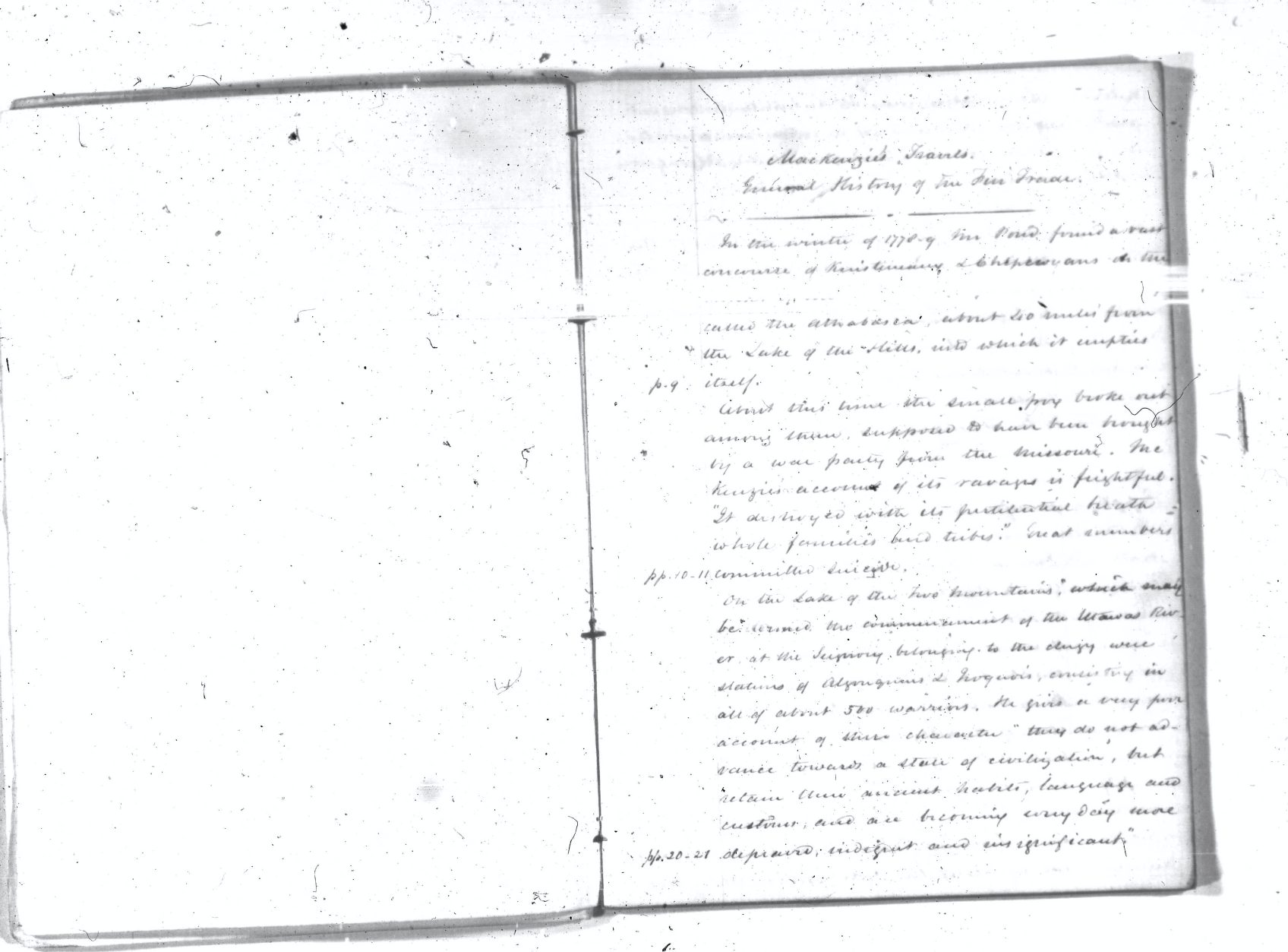
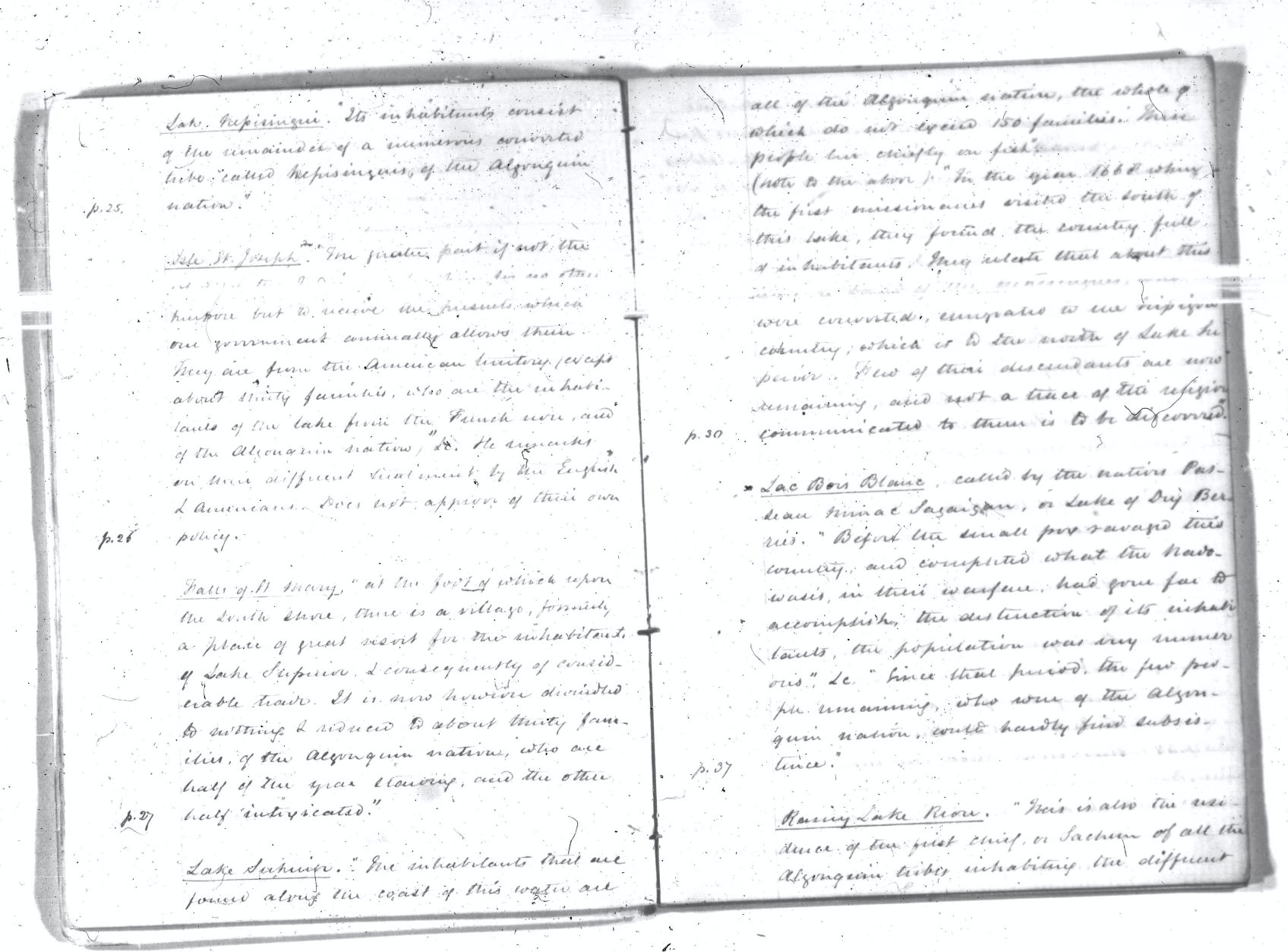
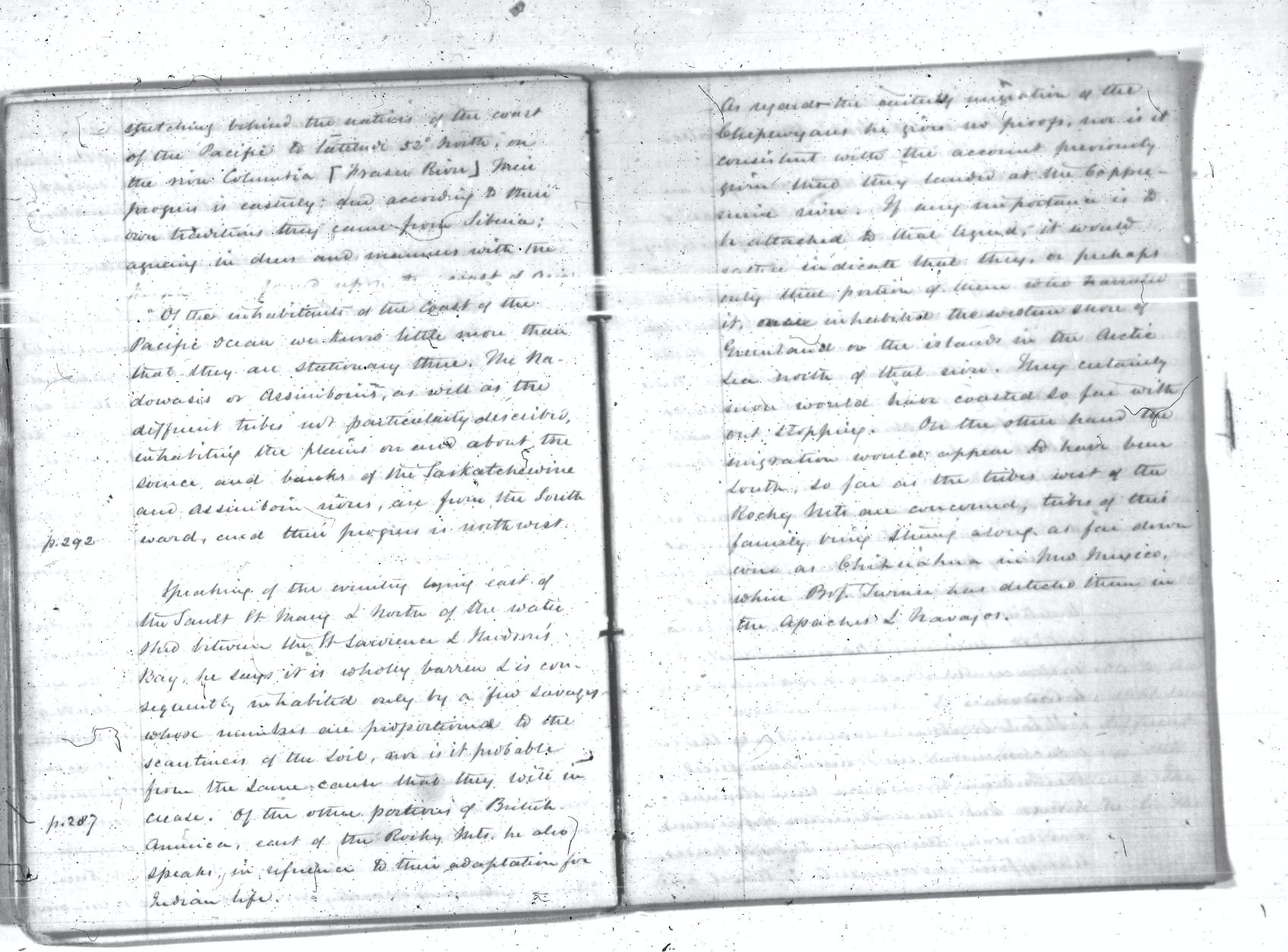
"Mackenzie's Travels. General History of the Fur Trade" – abstract of Peter Pond's winter of 1778-9; smallpox "It destroyed with its pestilential breath whole families and tribes"; Lake of the Two Mountains, Algonquins and Iroquois, about 500 warriors
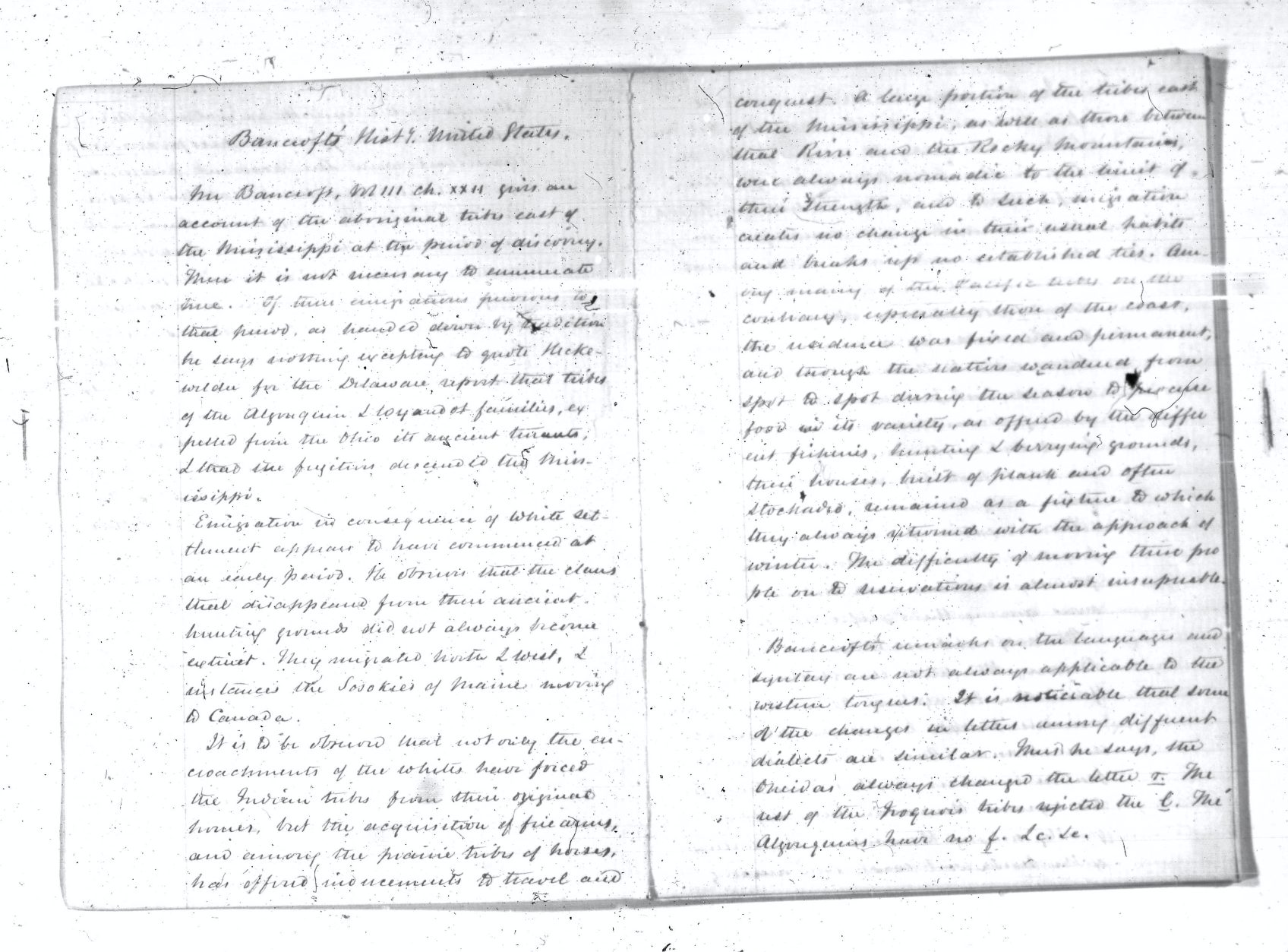
"Bancroft's Hist'y United States" vol. III ch. XXII on the aboriginal tribes east of the Mississippi; Heckewelder and the Delaware report; the Sokokies of Maine; firearms and horses as inducements to conquest; the plank-built stockaded houses of the Pacific coast tribes, "The difficulty of moving these people on to reservations is almost insuperable"; Bancroft on language, "The Algonquins have no f, l or v"
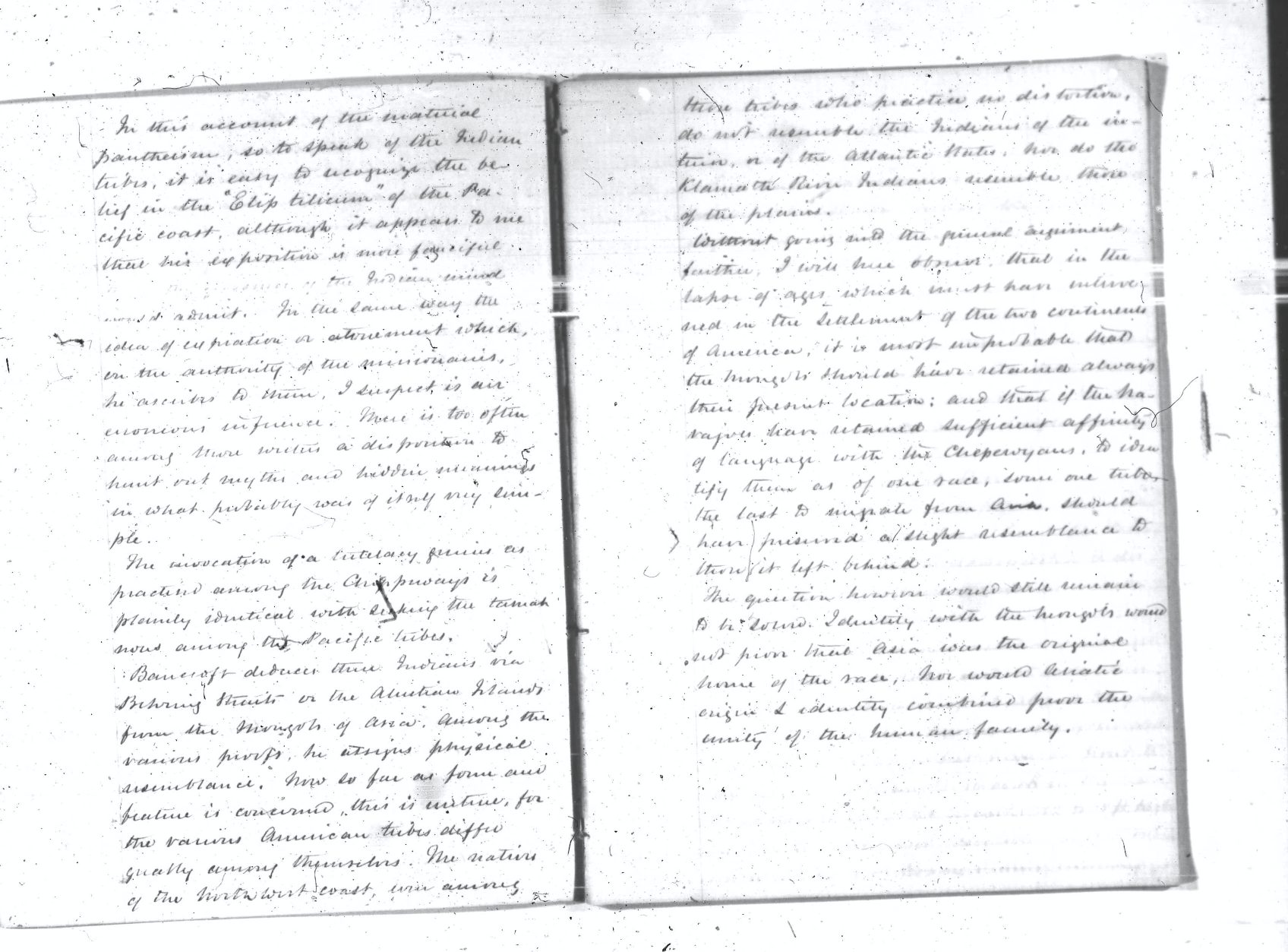
Essay on "material pantheism" of the Indian tribes; the "Elip tilicum" belief of the Pacific coast; invocation of a tutelary genius among the Chippewas identical with "tamahnous" of the Pacific tribes; rejects Bancroft's derivation of the Indians from the Mongols via Behring Straits on grounds of physical dissimilarity
 FRAME 32
 FRAME 33
 FRAME 34
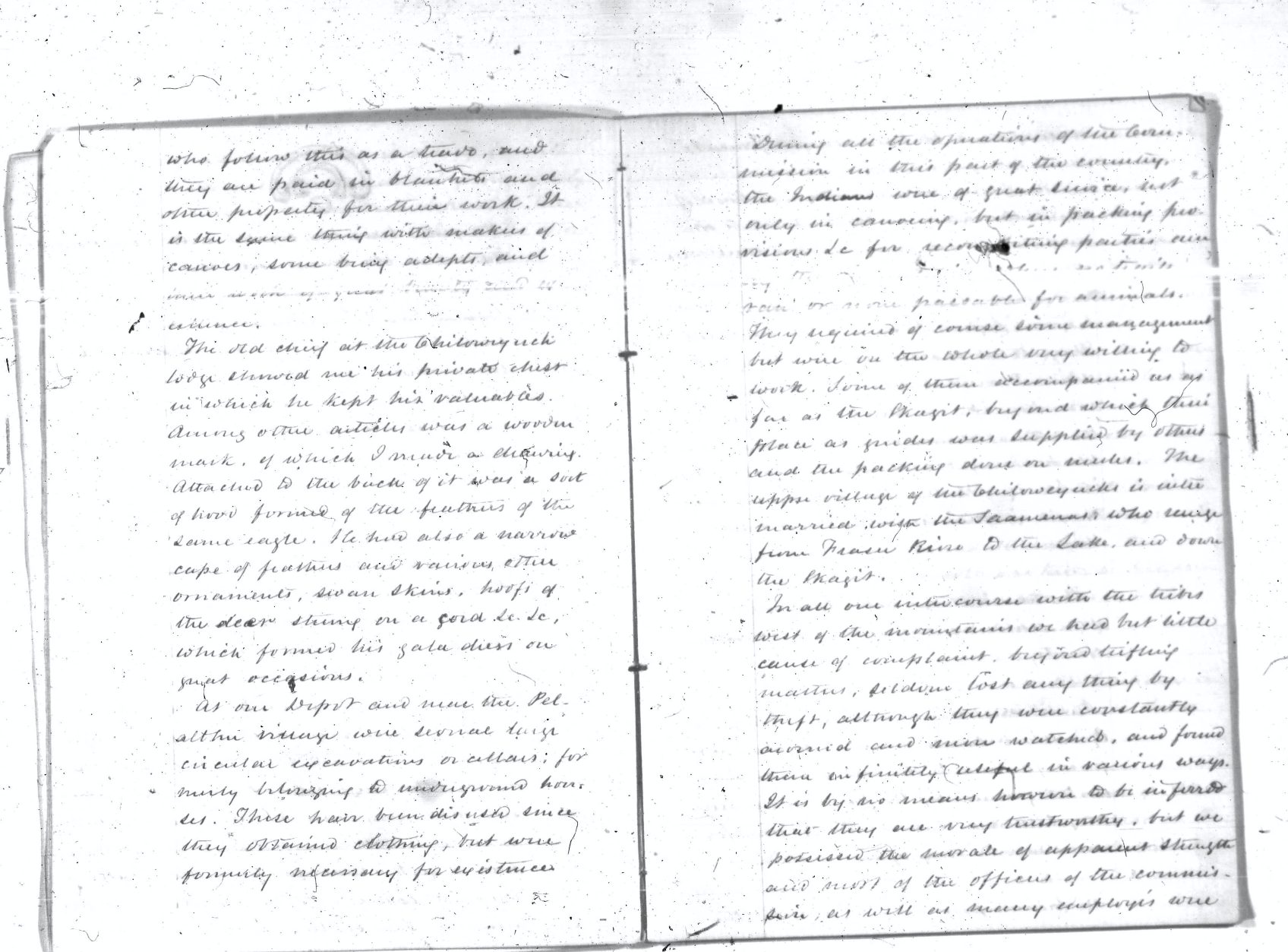 FRAME 35
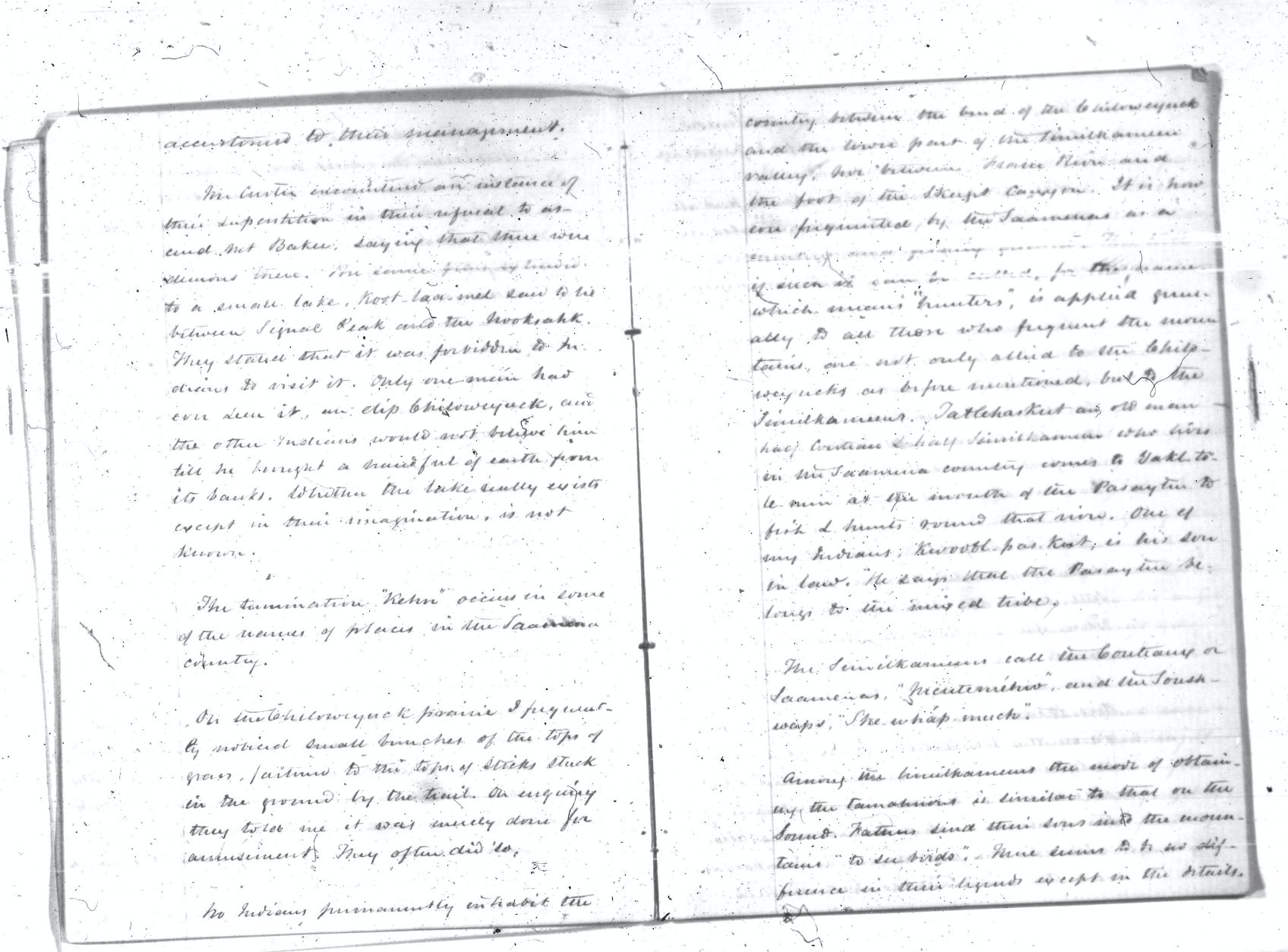 FRAME 36
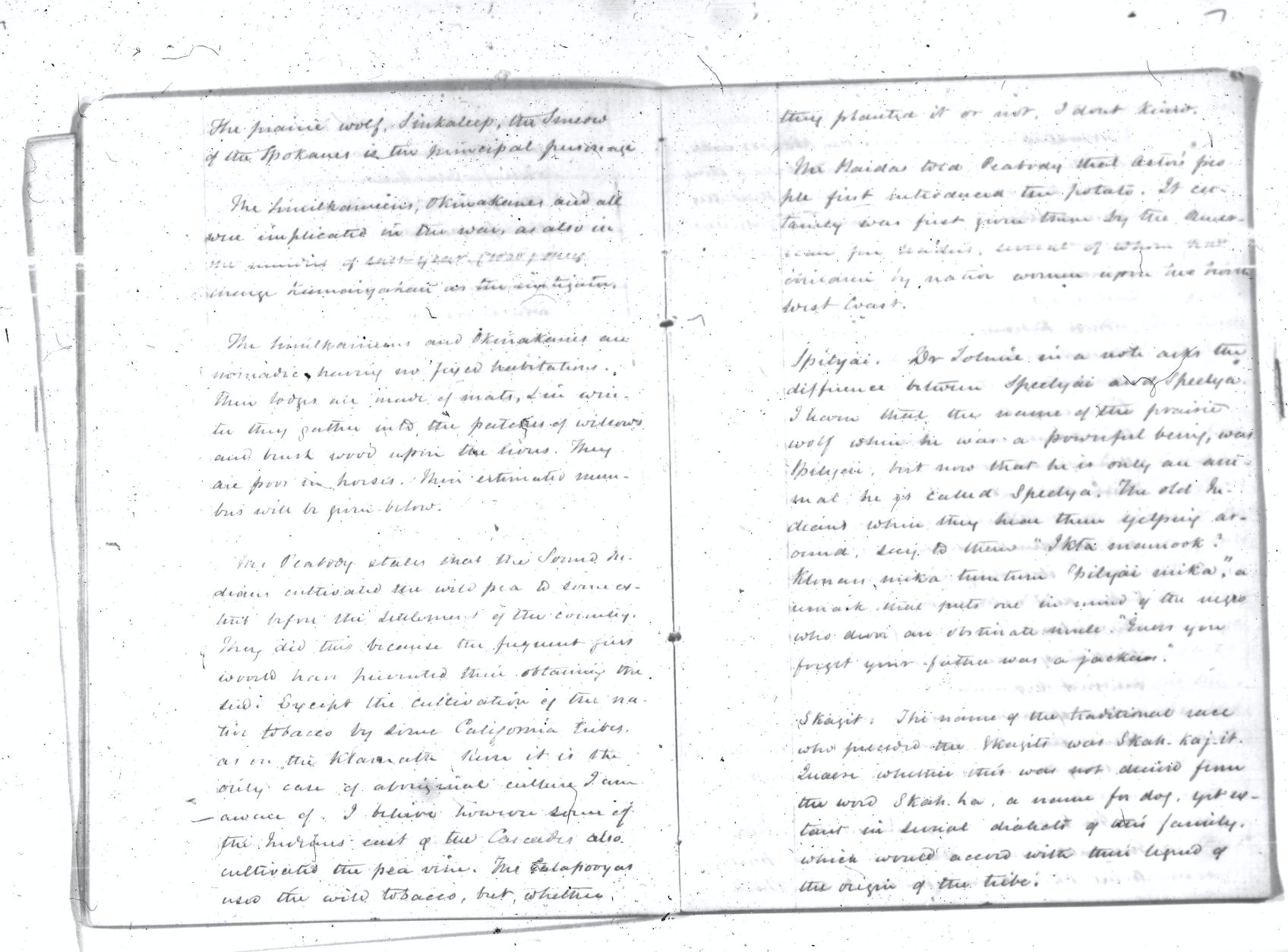 FRAME 37
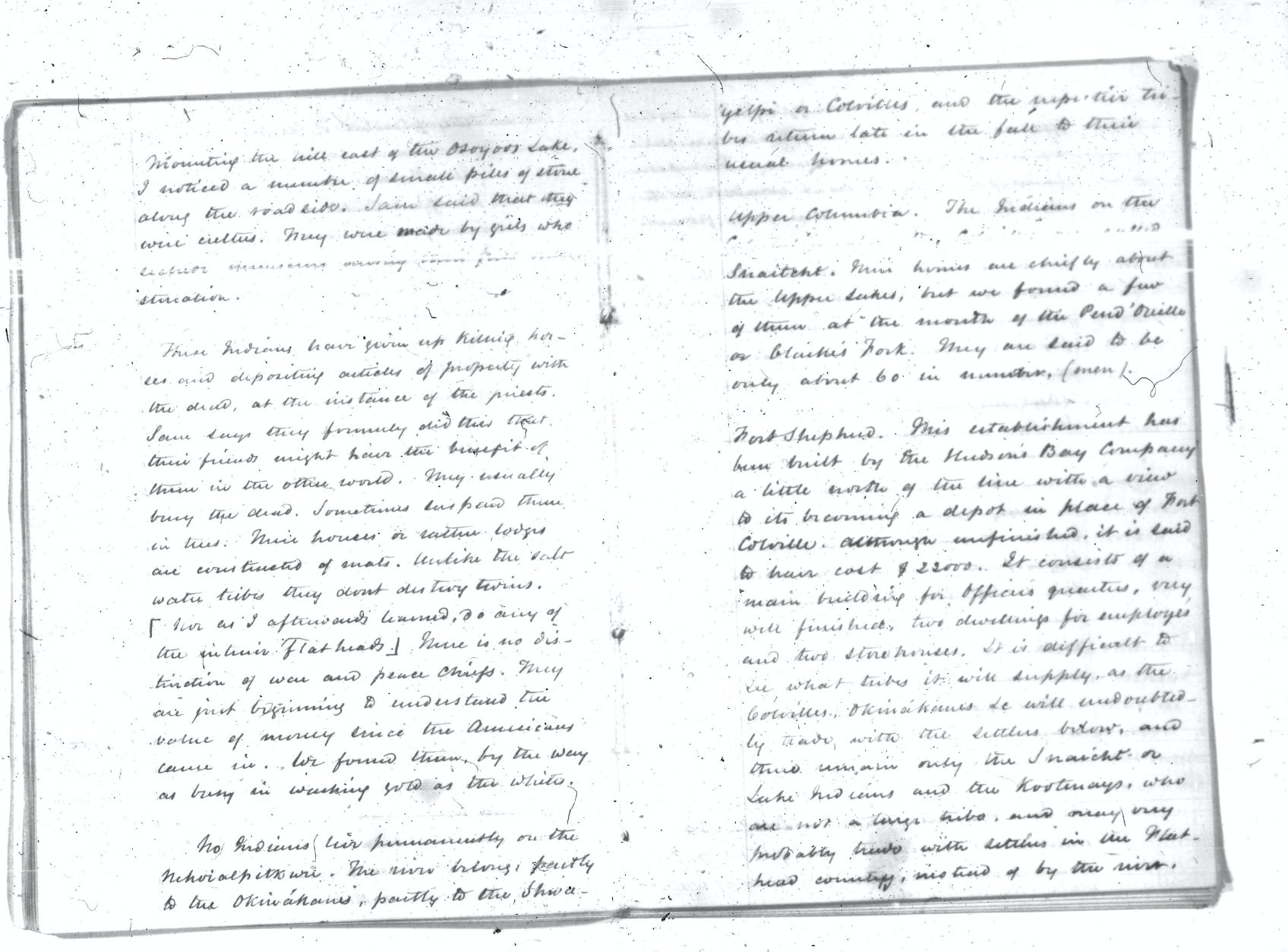 FRAME 38
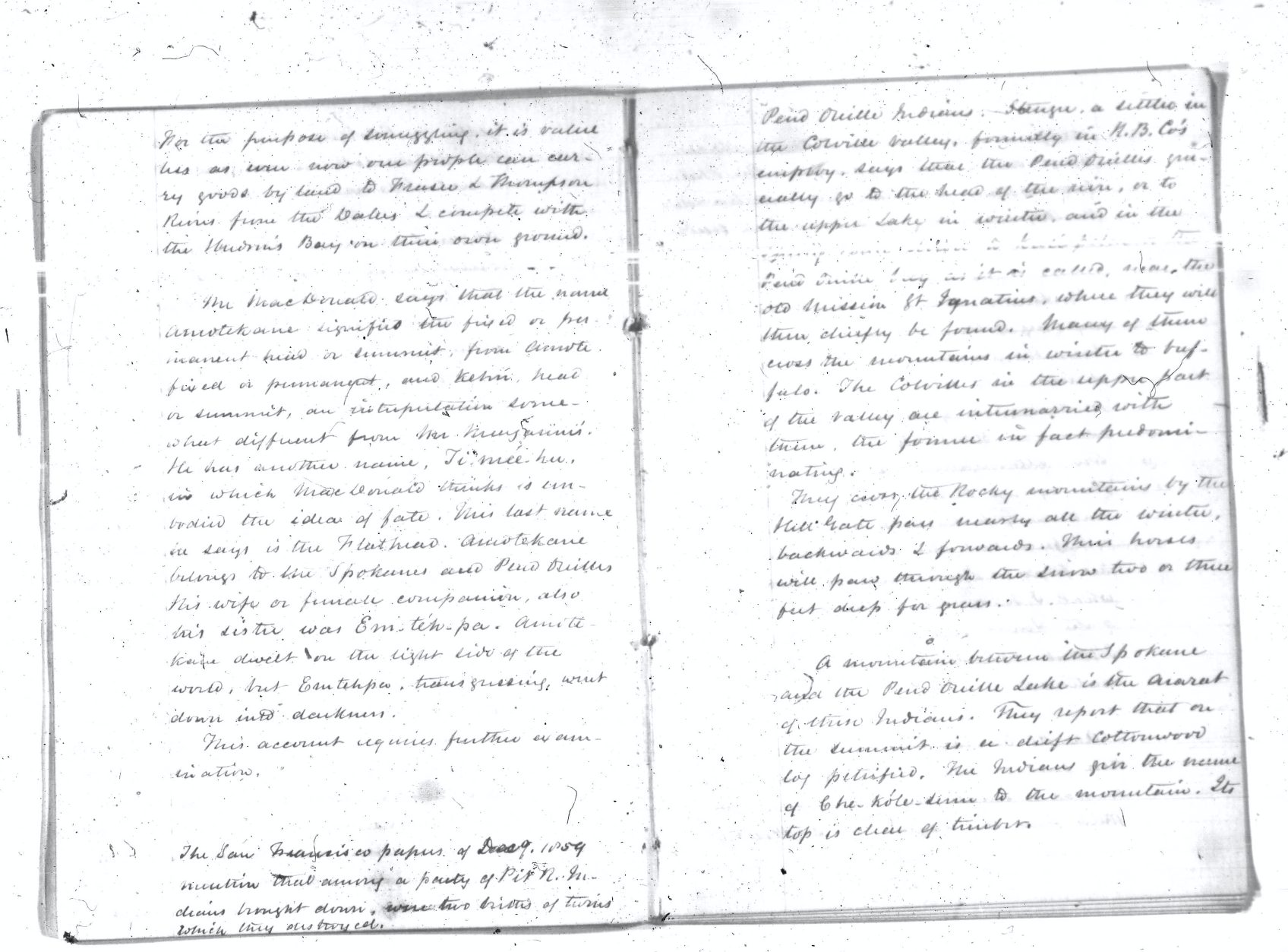 FRAME 39
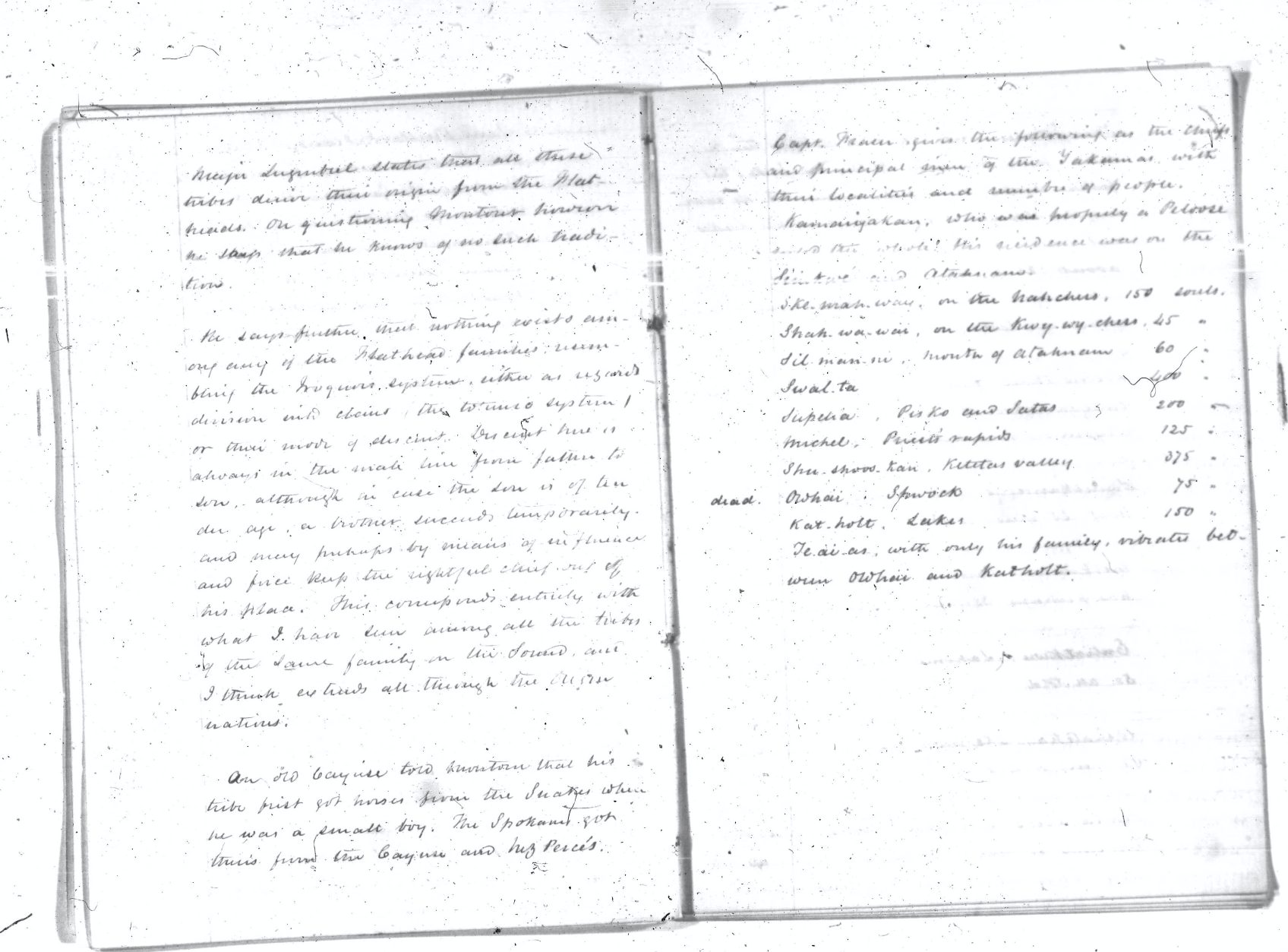 FRAME 40
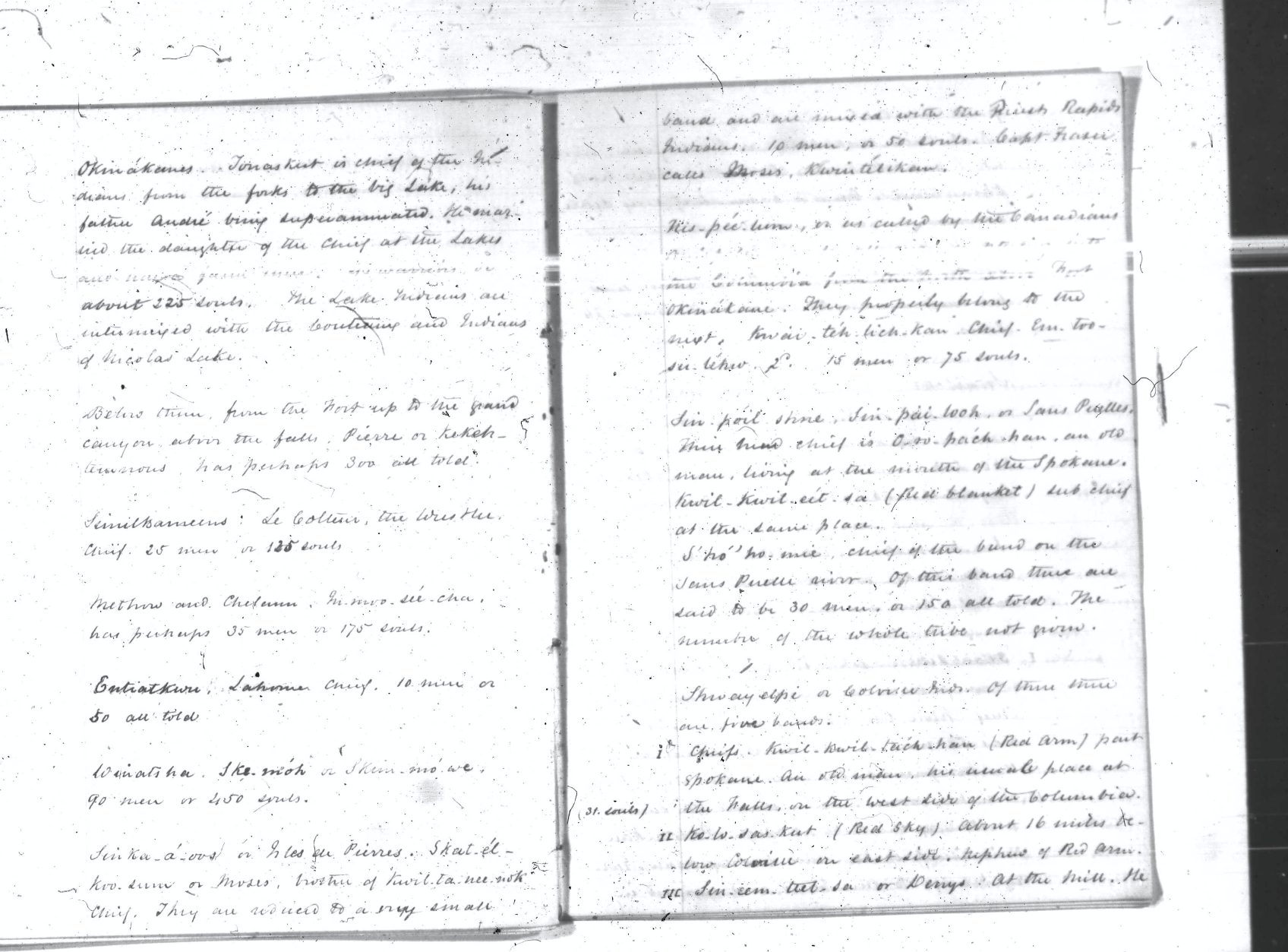 FRAME 41
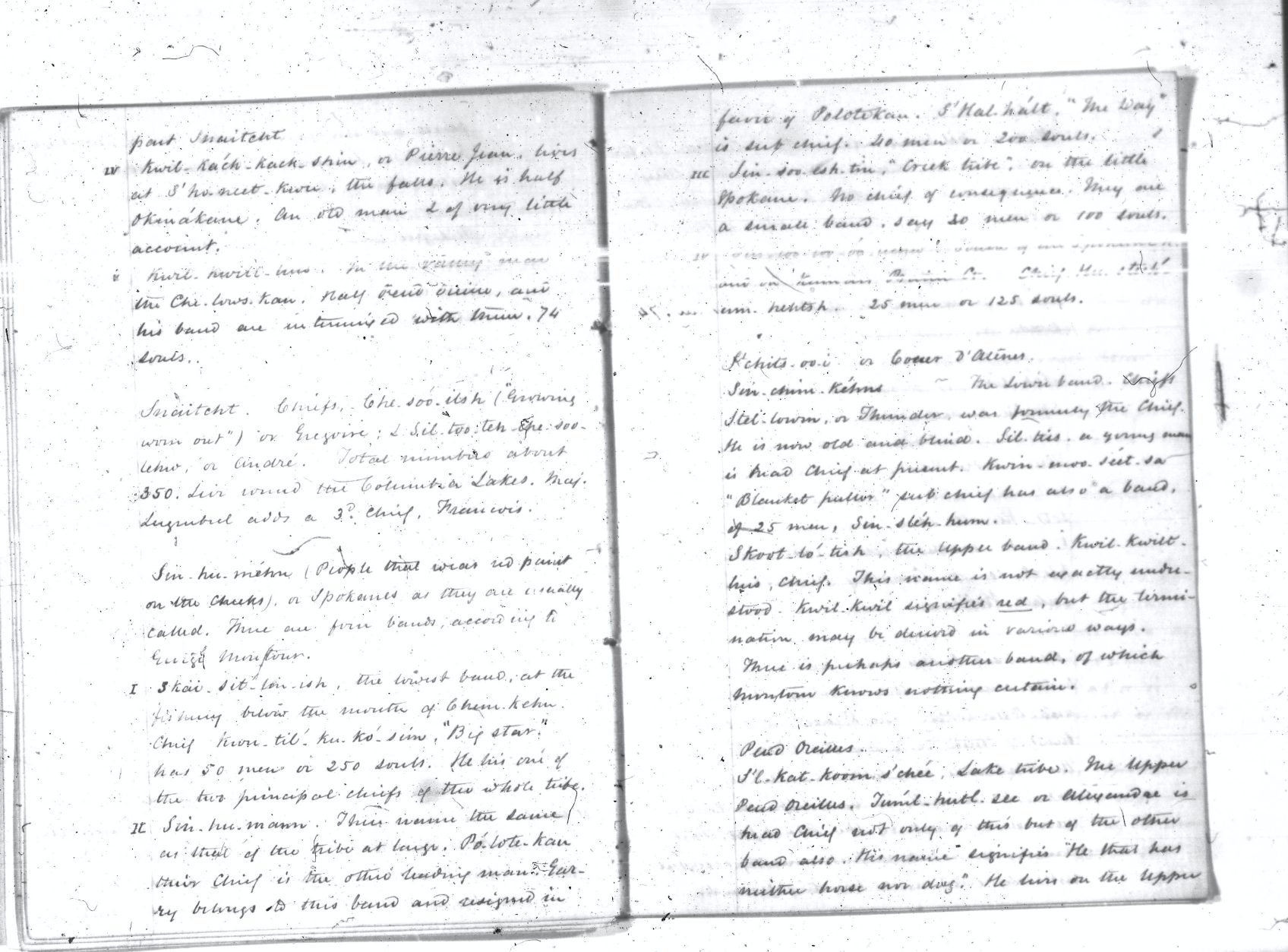 FRAME 42
 FRAME 43
 FRAME 44
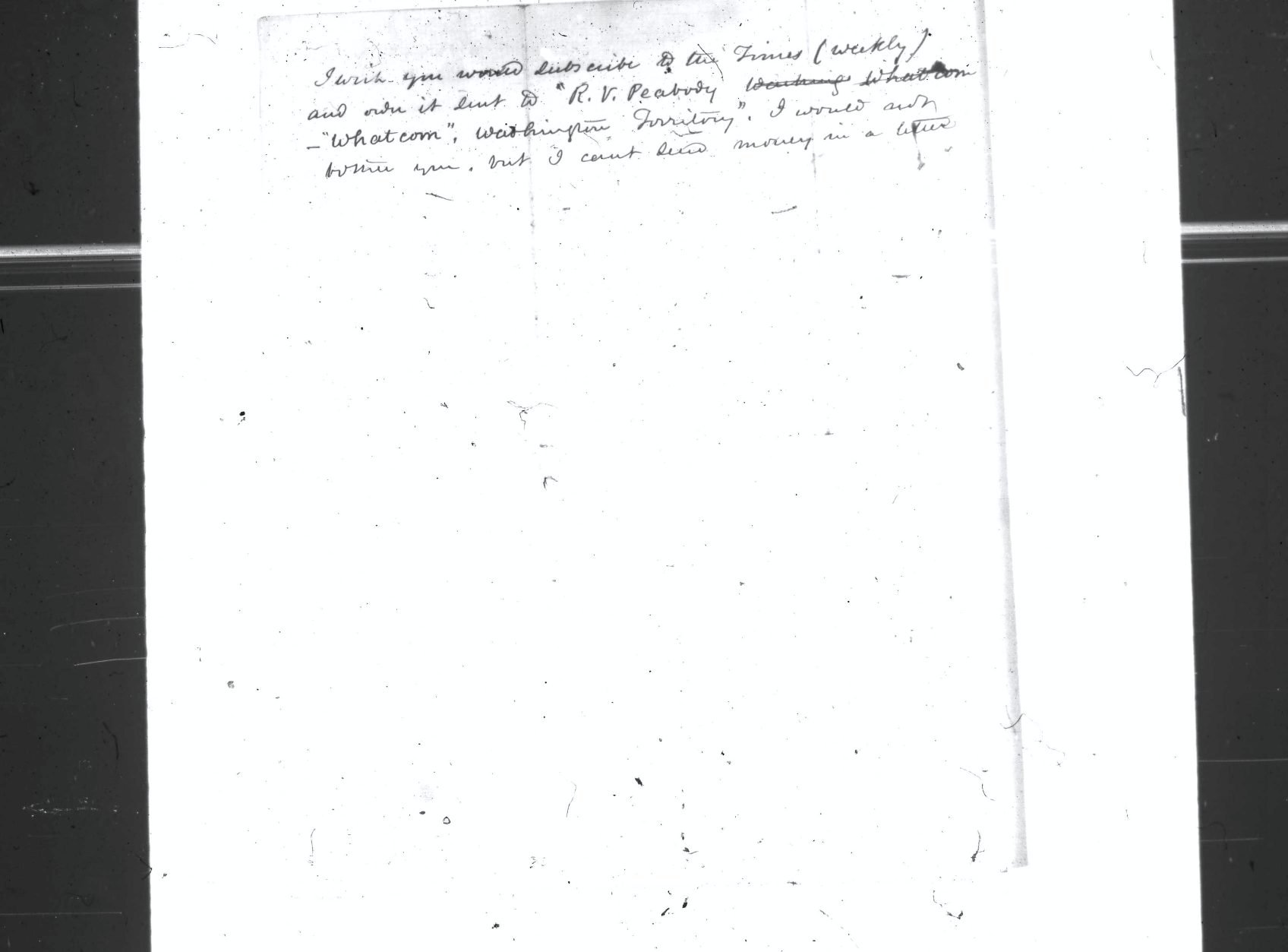
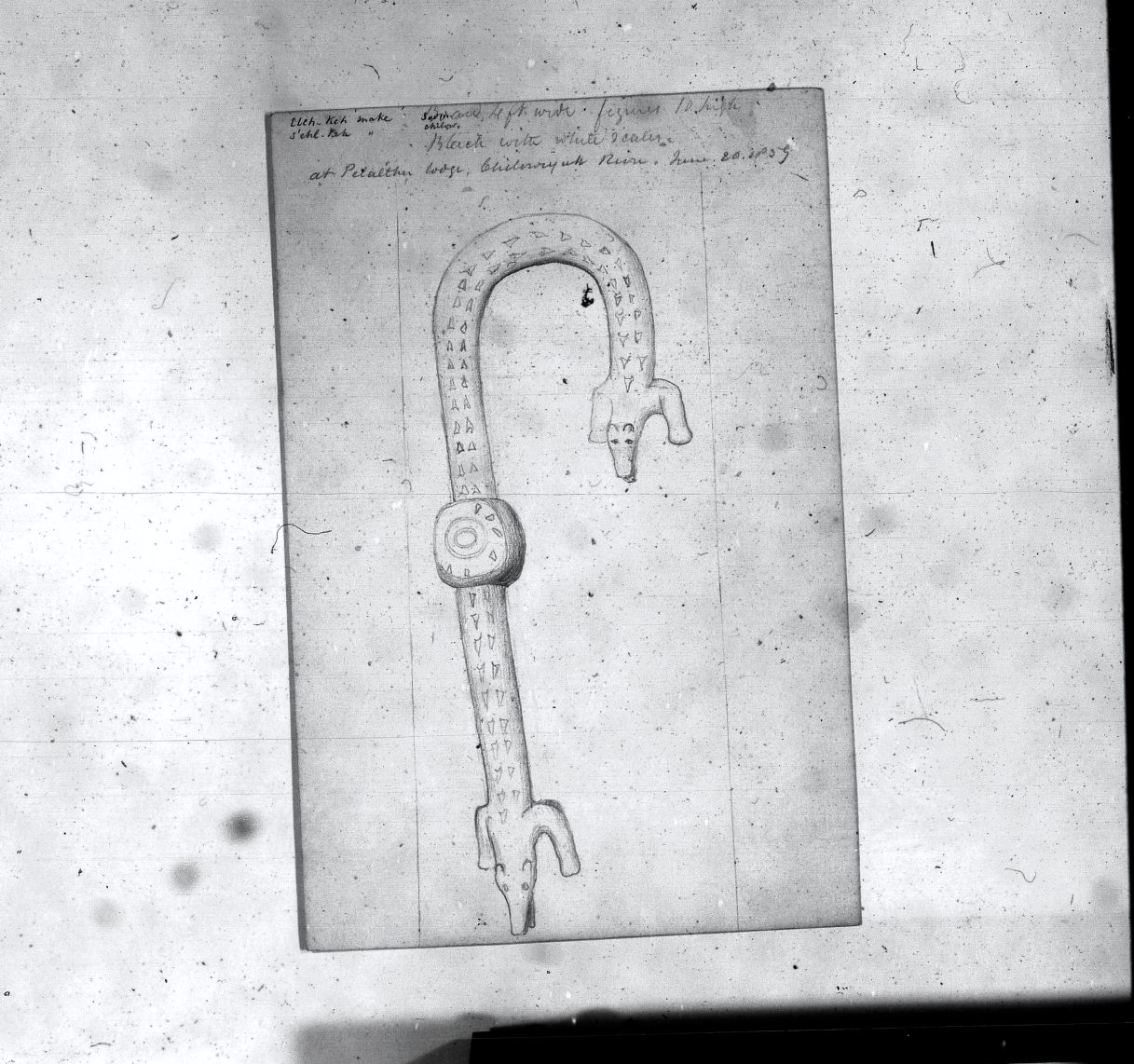
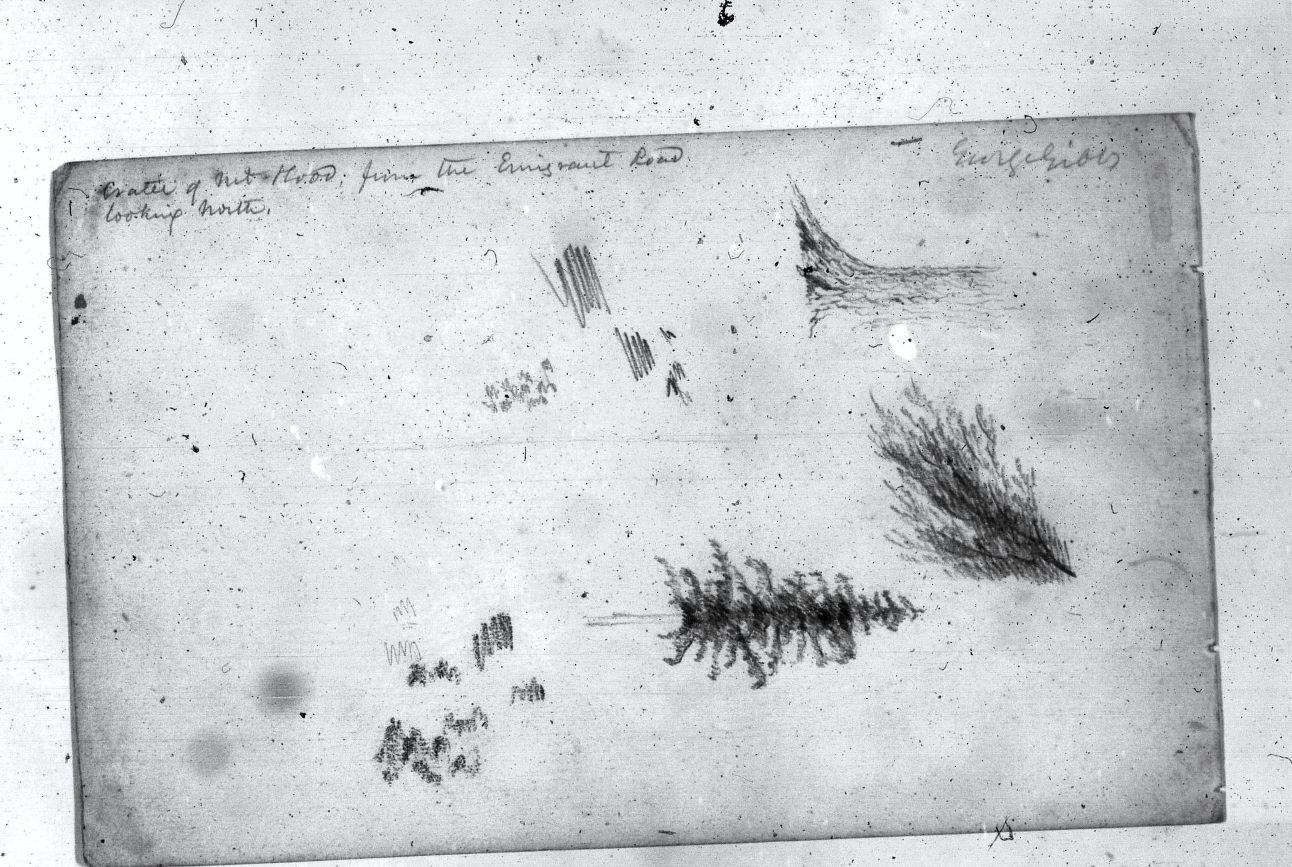
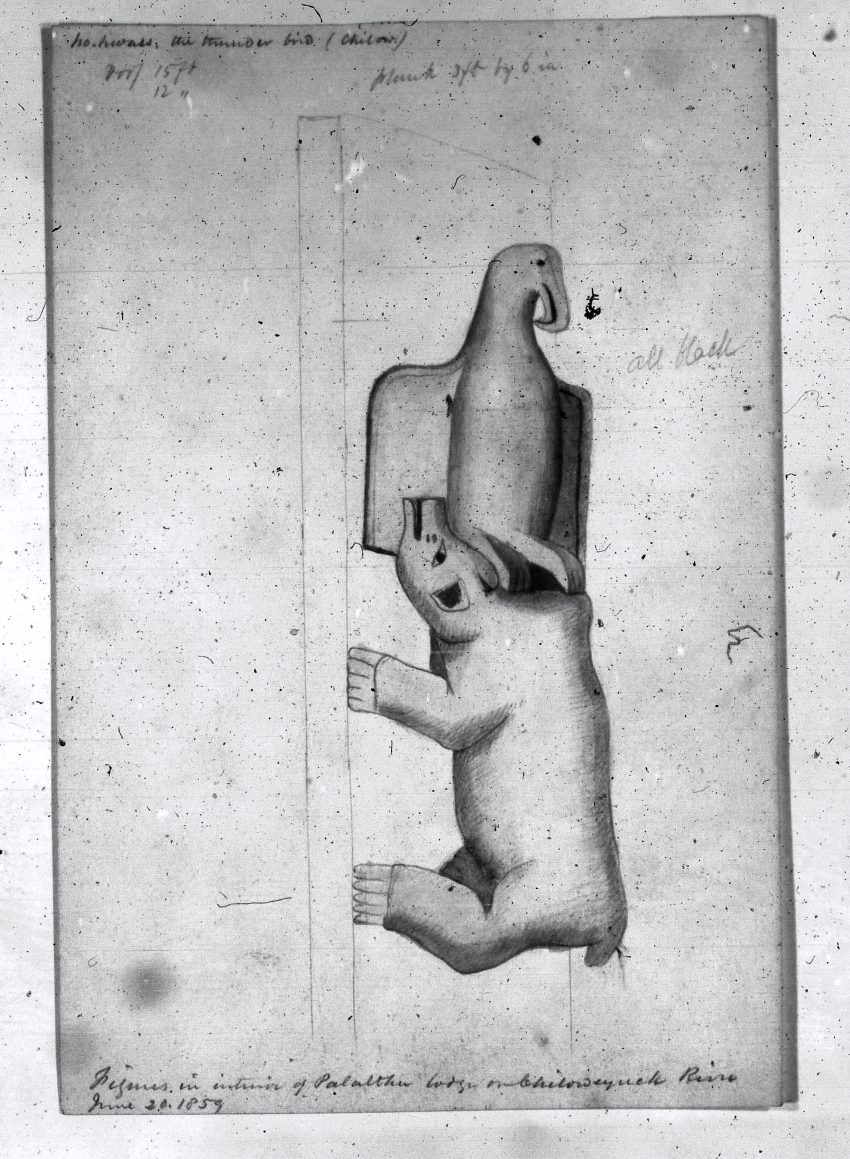
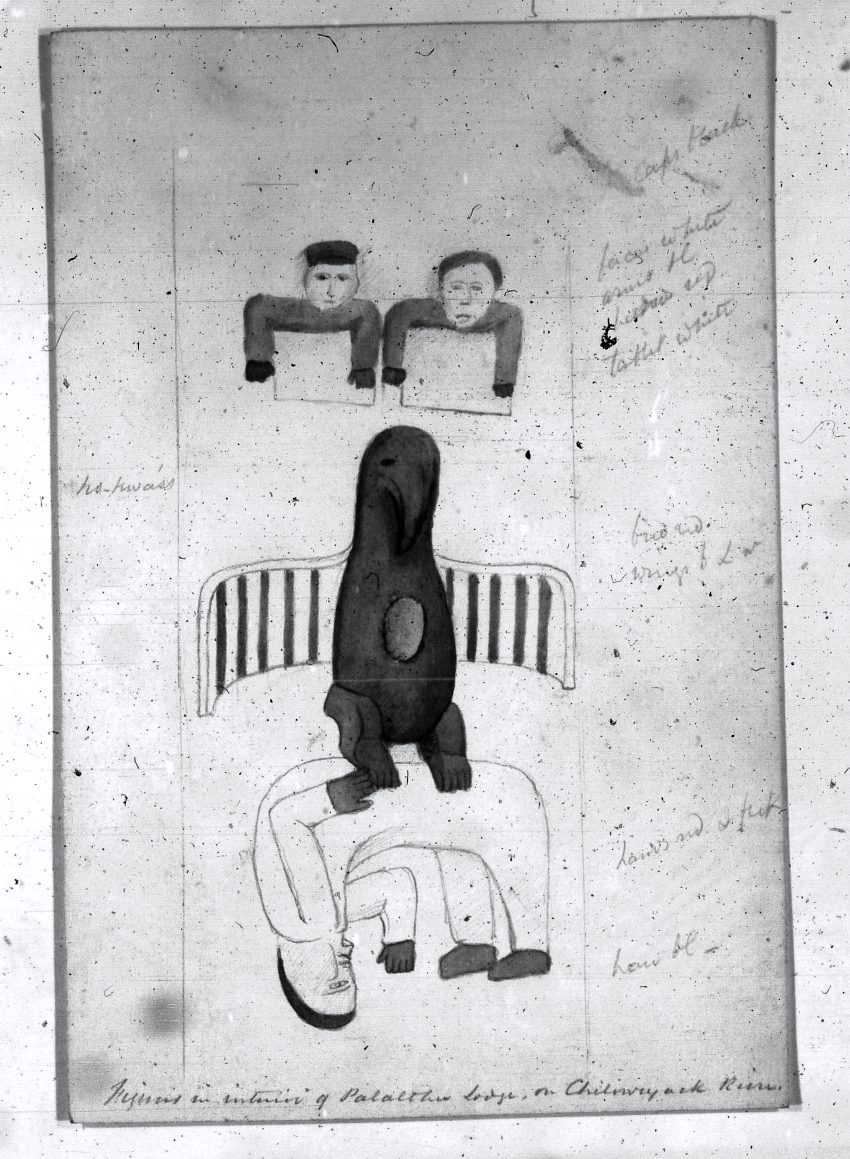
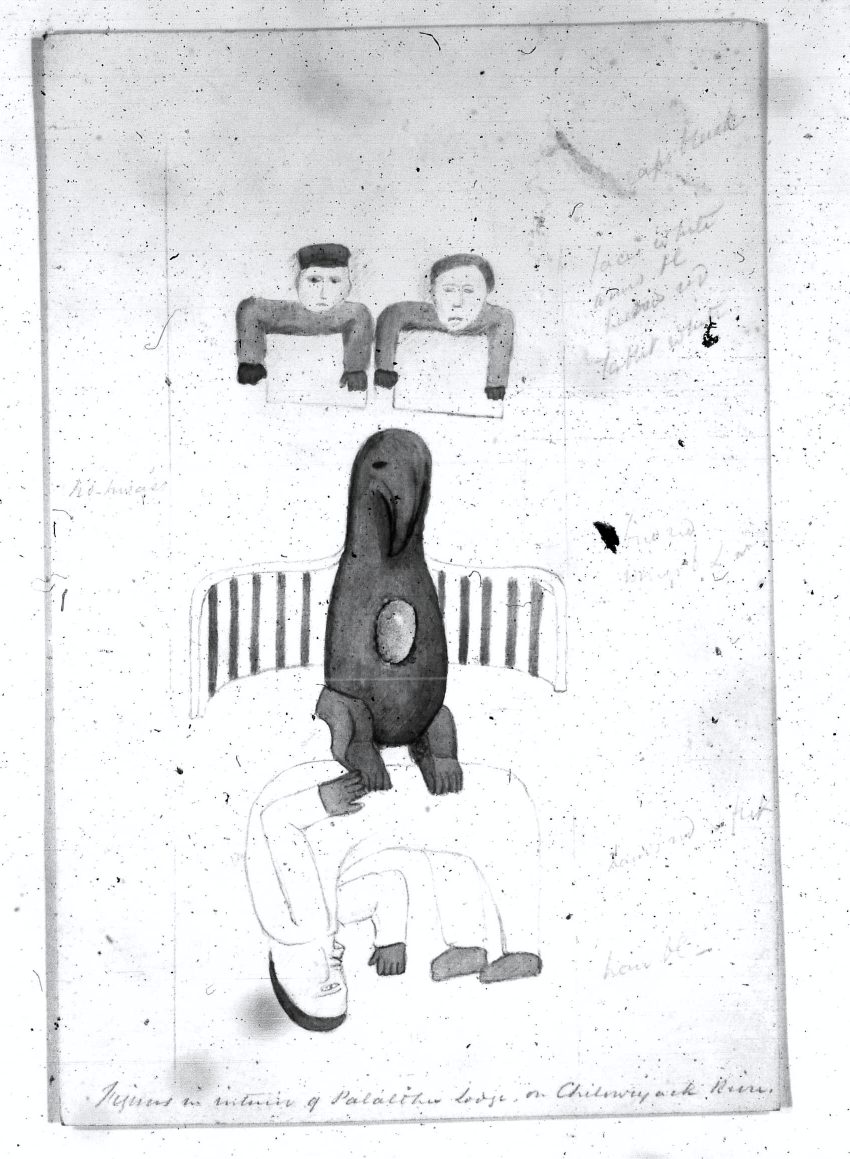
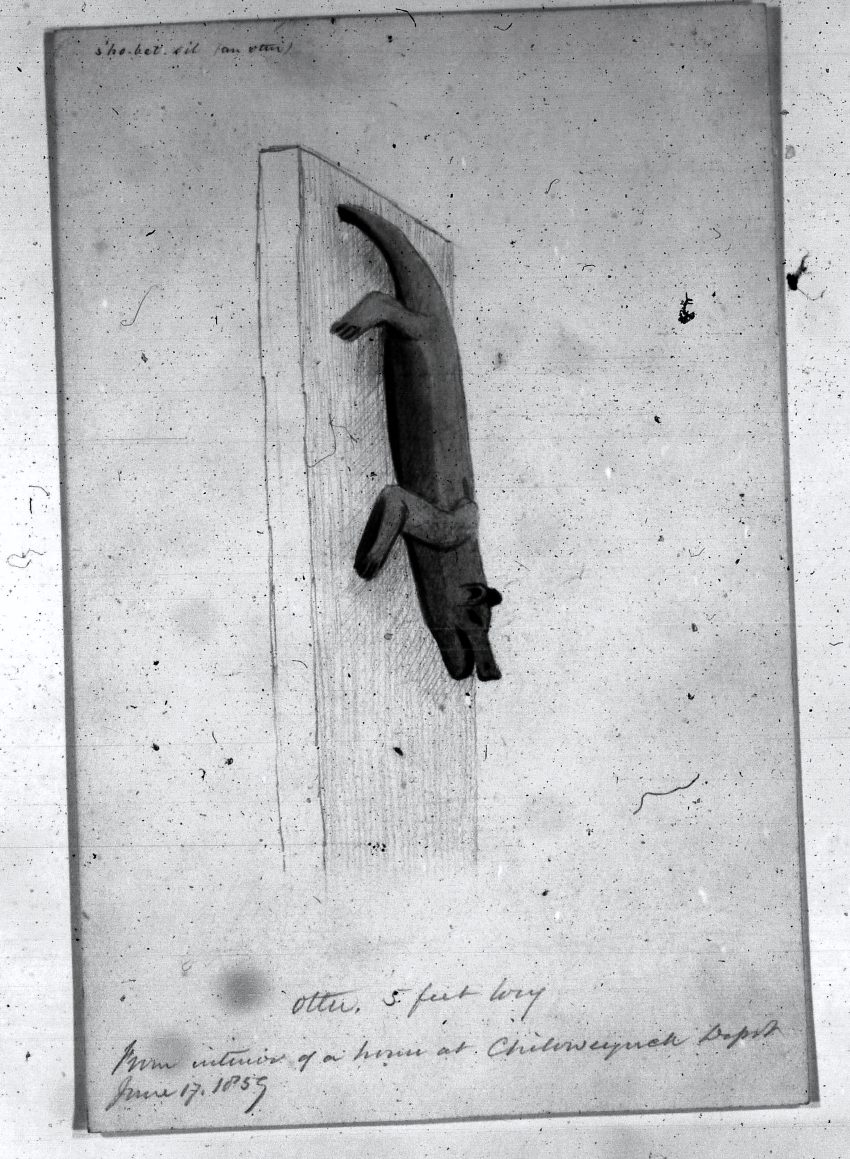
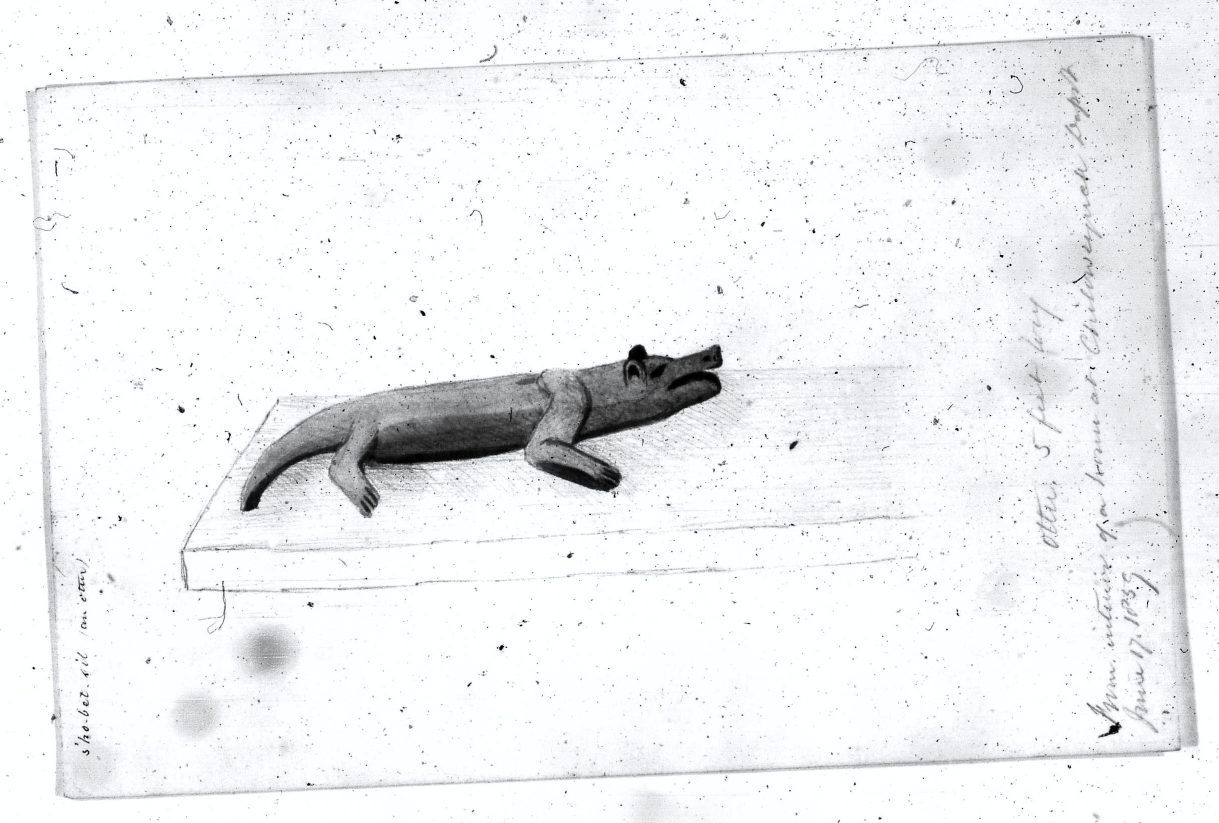
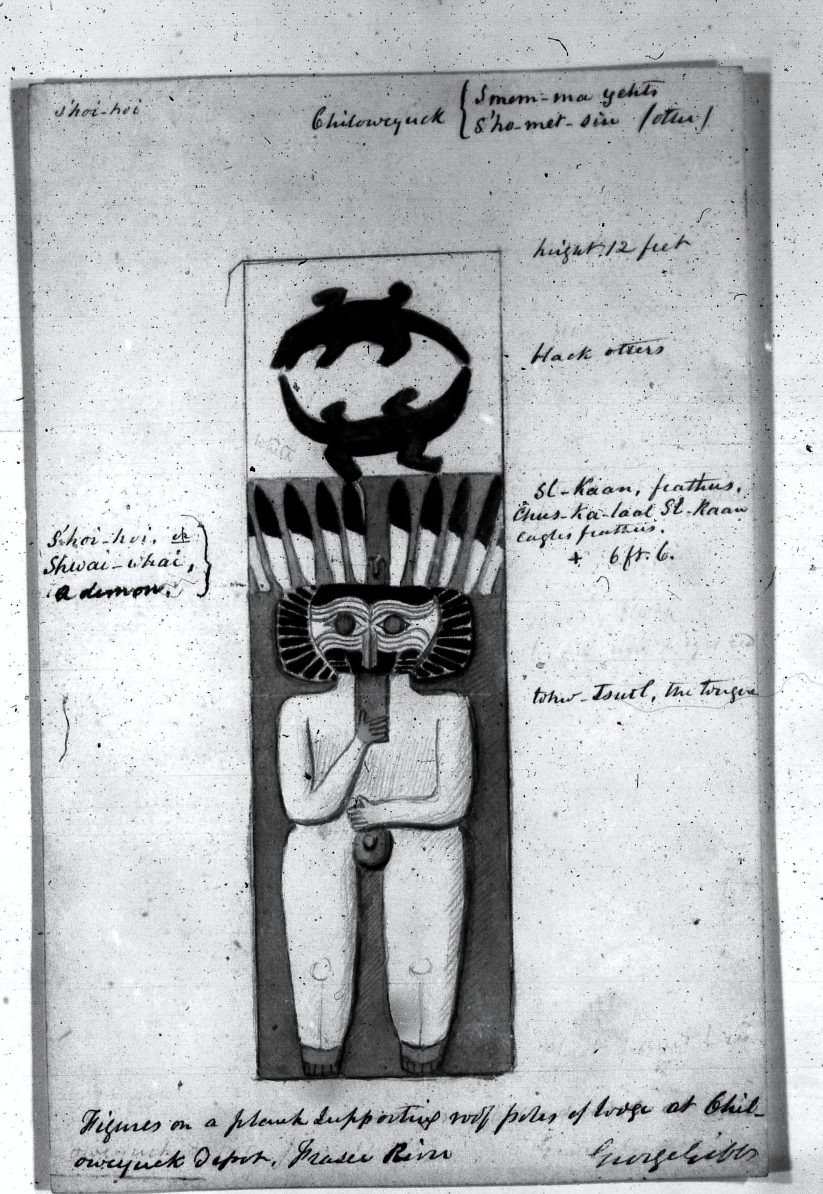
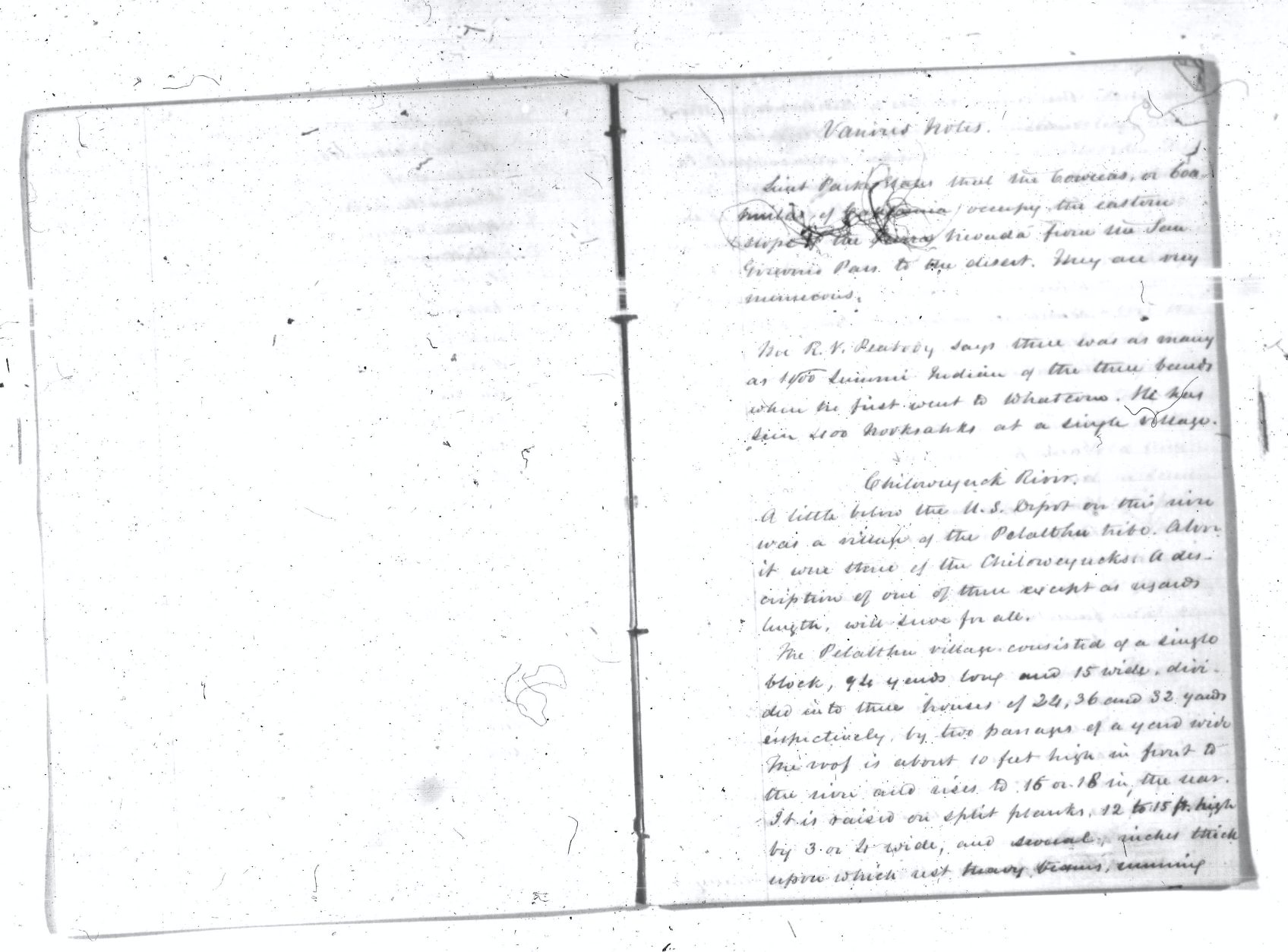
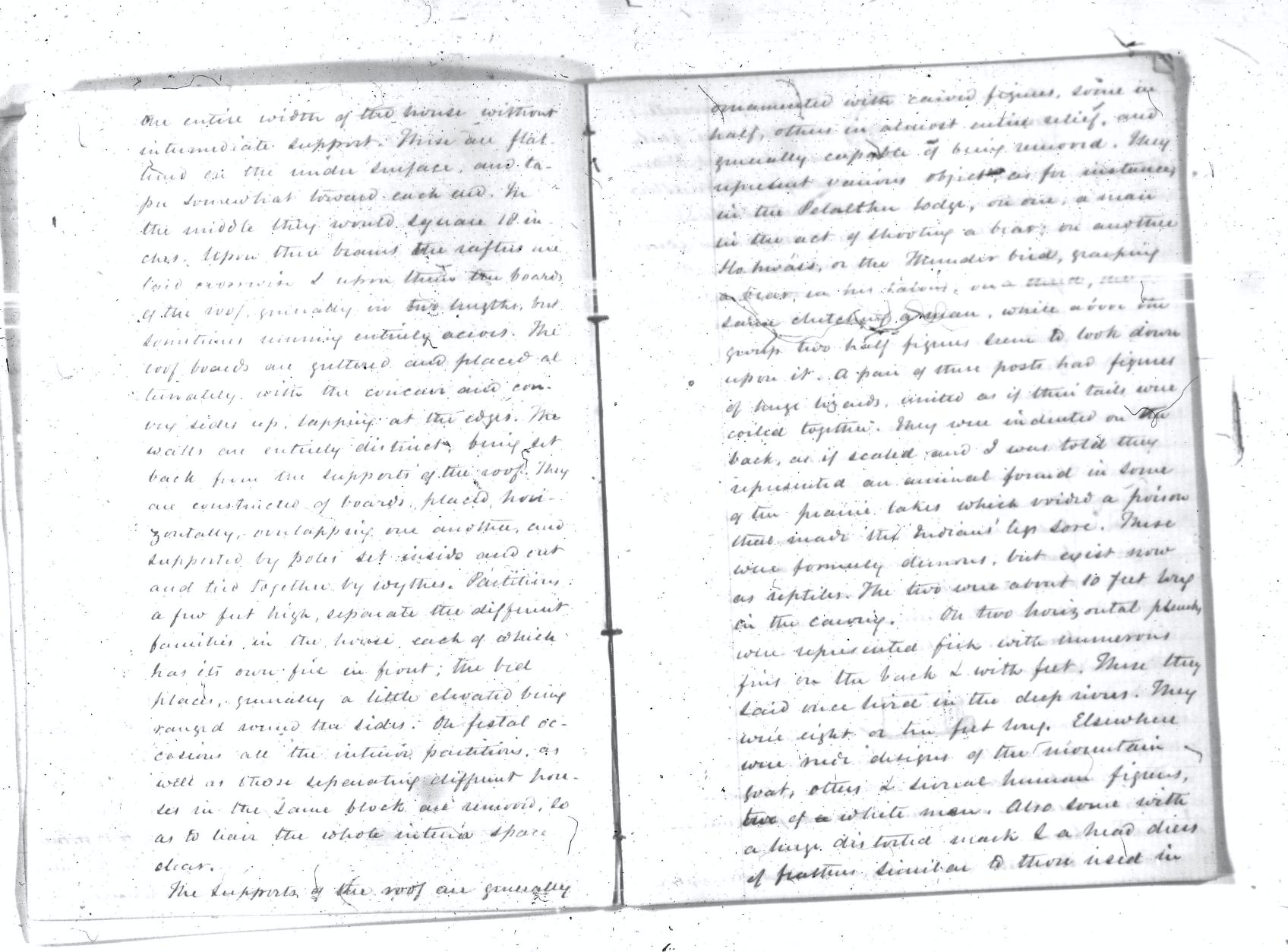
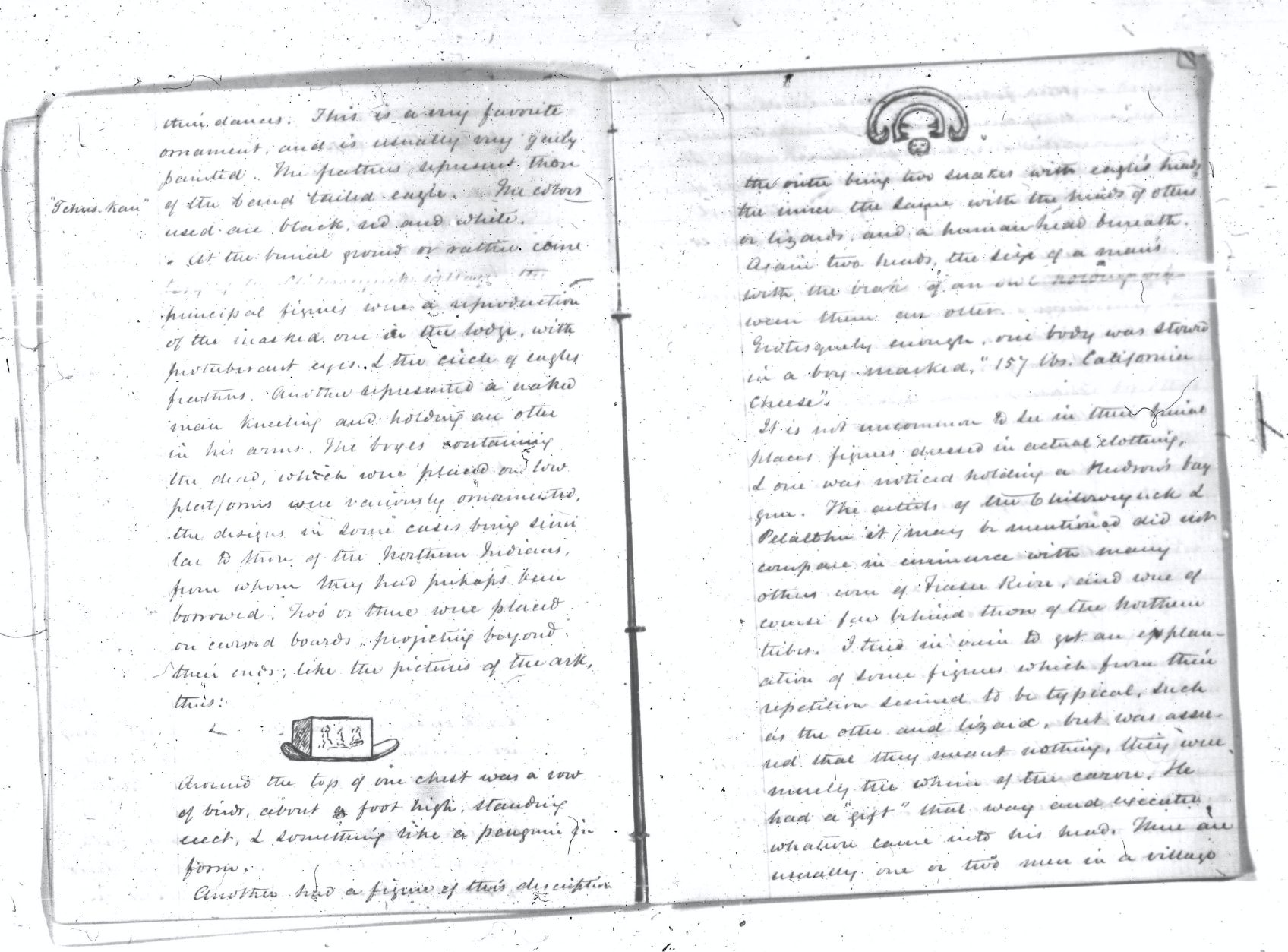
"Various Notes.": Lieut. Parke on the Cahuillas; R. V. Peabody reports 1,000 Lummi of three bands and 400 Nooksacks at a single village; "Chilloweyuck River" (Chilliwack) – Pelalthu village, a single plank block 94 yards long and 15 wide divided into three houses
Frames 45–240 · 64 documents
The heart of the reel, with the John Austin Stevens Jr. series as its spine. Fort Fillmore, Alfred’s arrest of Major Lynde and his parole, the Sheridan letter, the Dragoon standard, and Alfred’s own letters from Fort Riley.
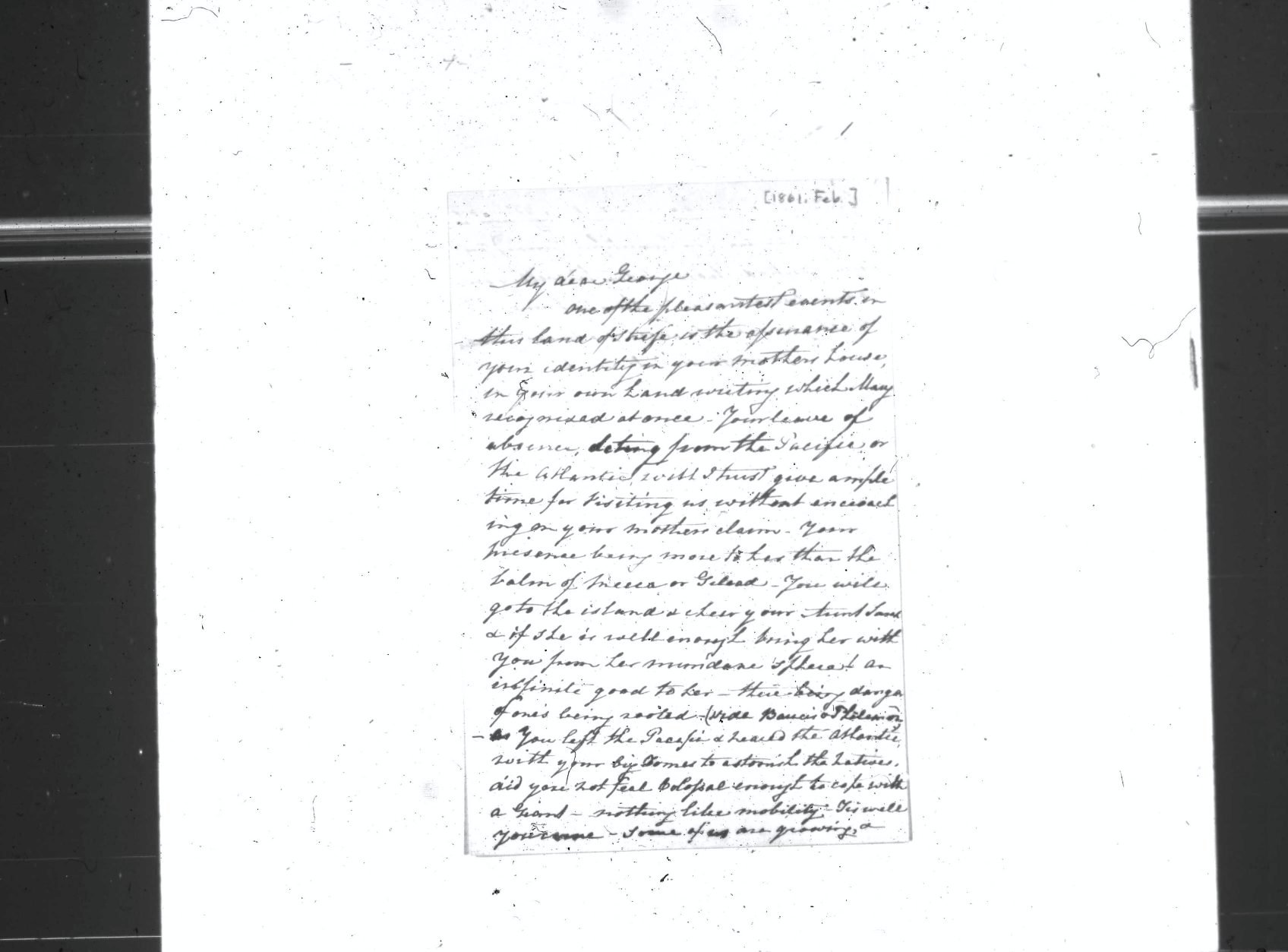
[1861, Feb.]
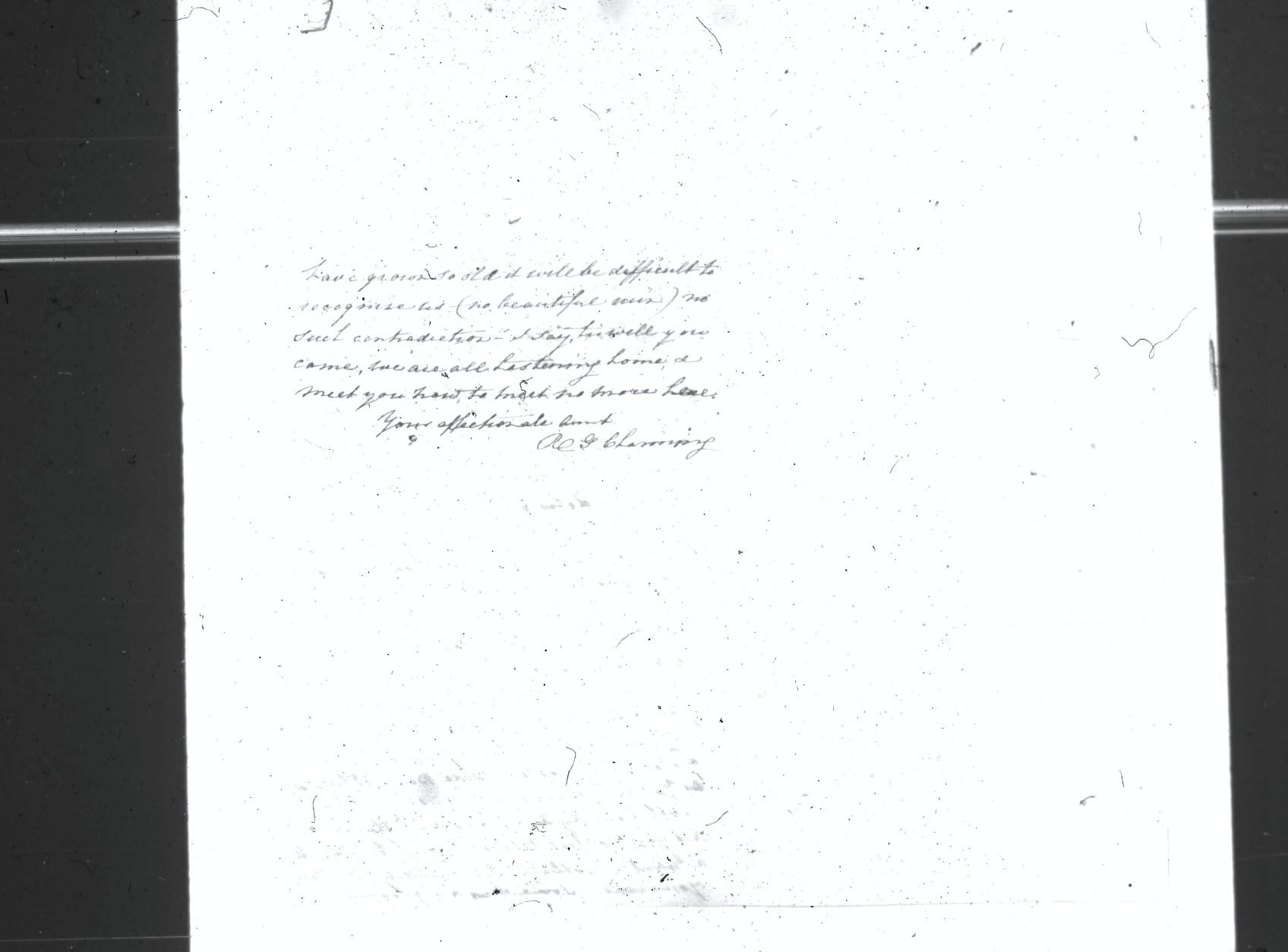
welcome-home letter on George's return from the Pacific: "one of the pleasantest events in this land of strife is the assurance of your identity in your mother's house, in your own hand writing which Mary recognised at once"; "your presence being more to her than the balm of Mecca or Gilead"
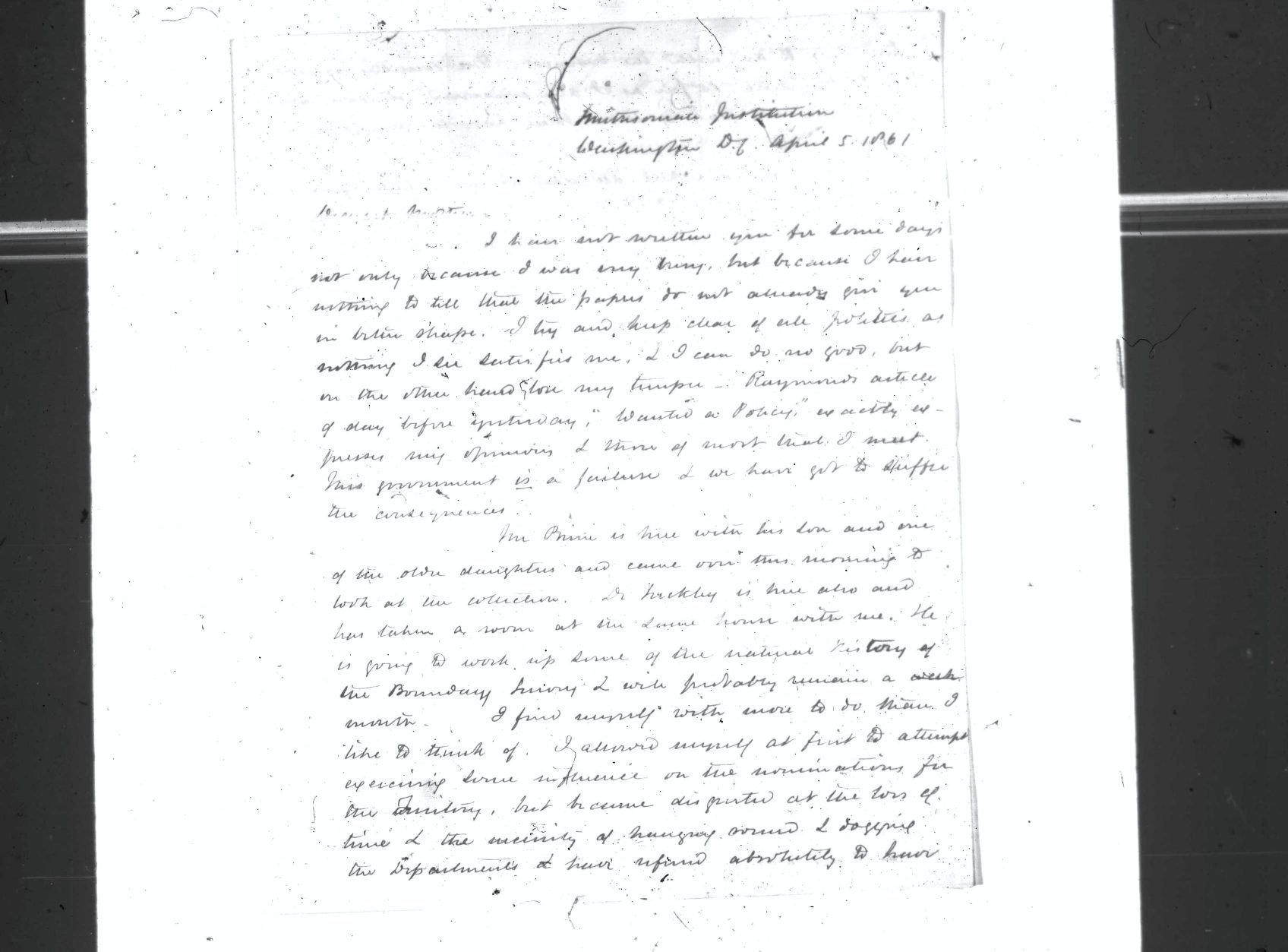
1861-04-05
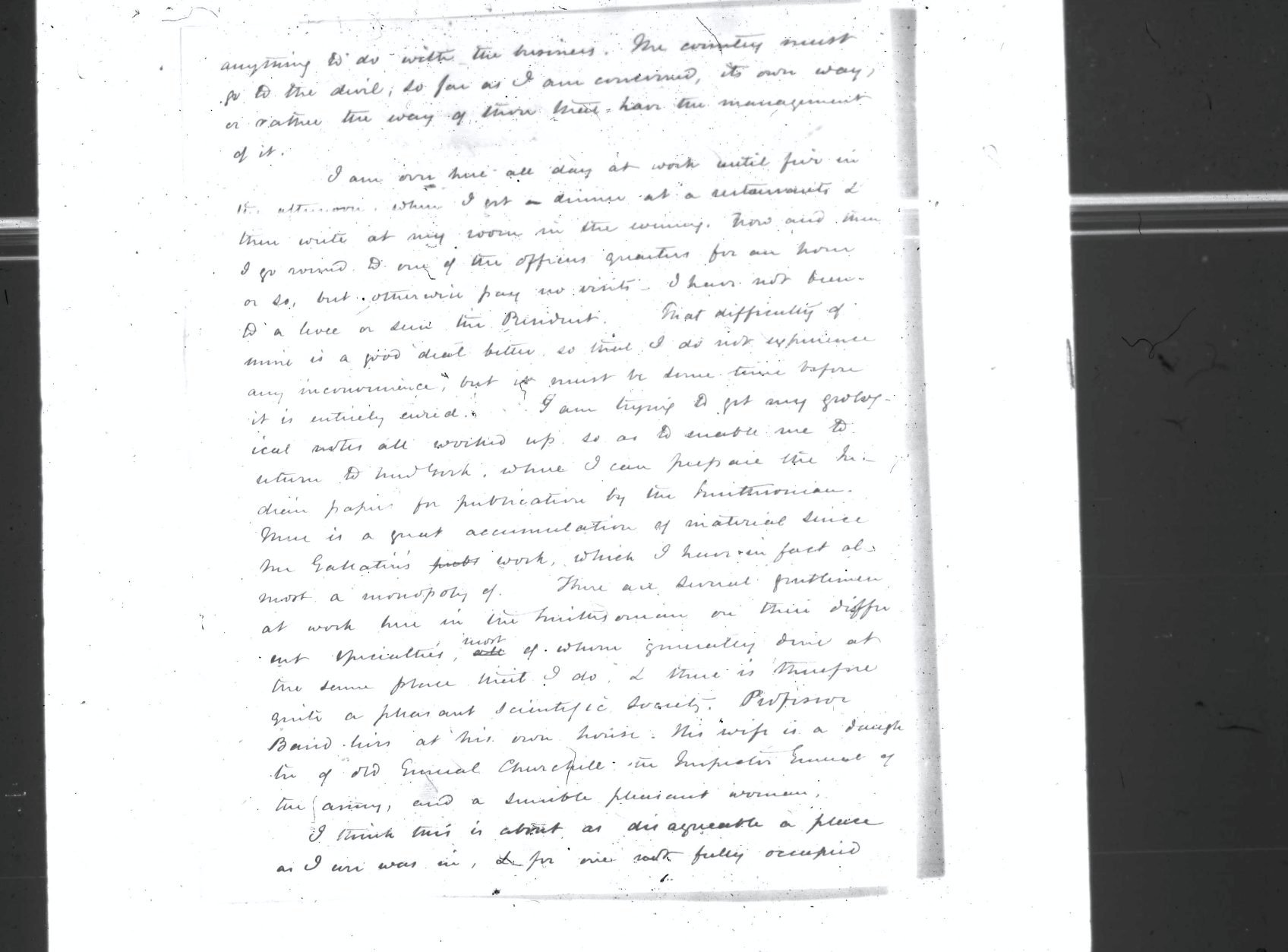
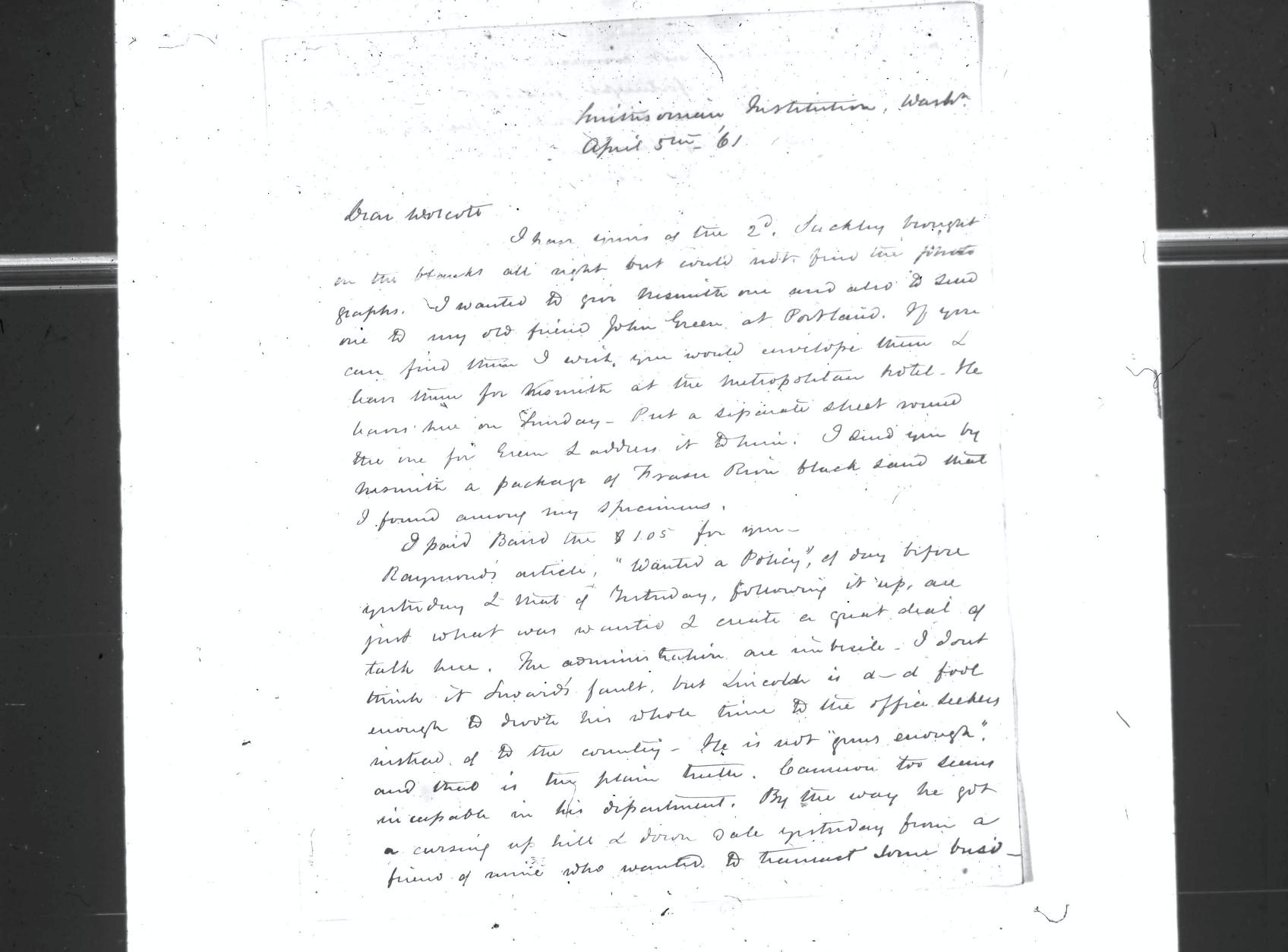
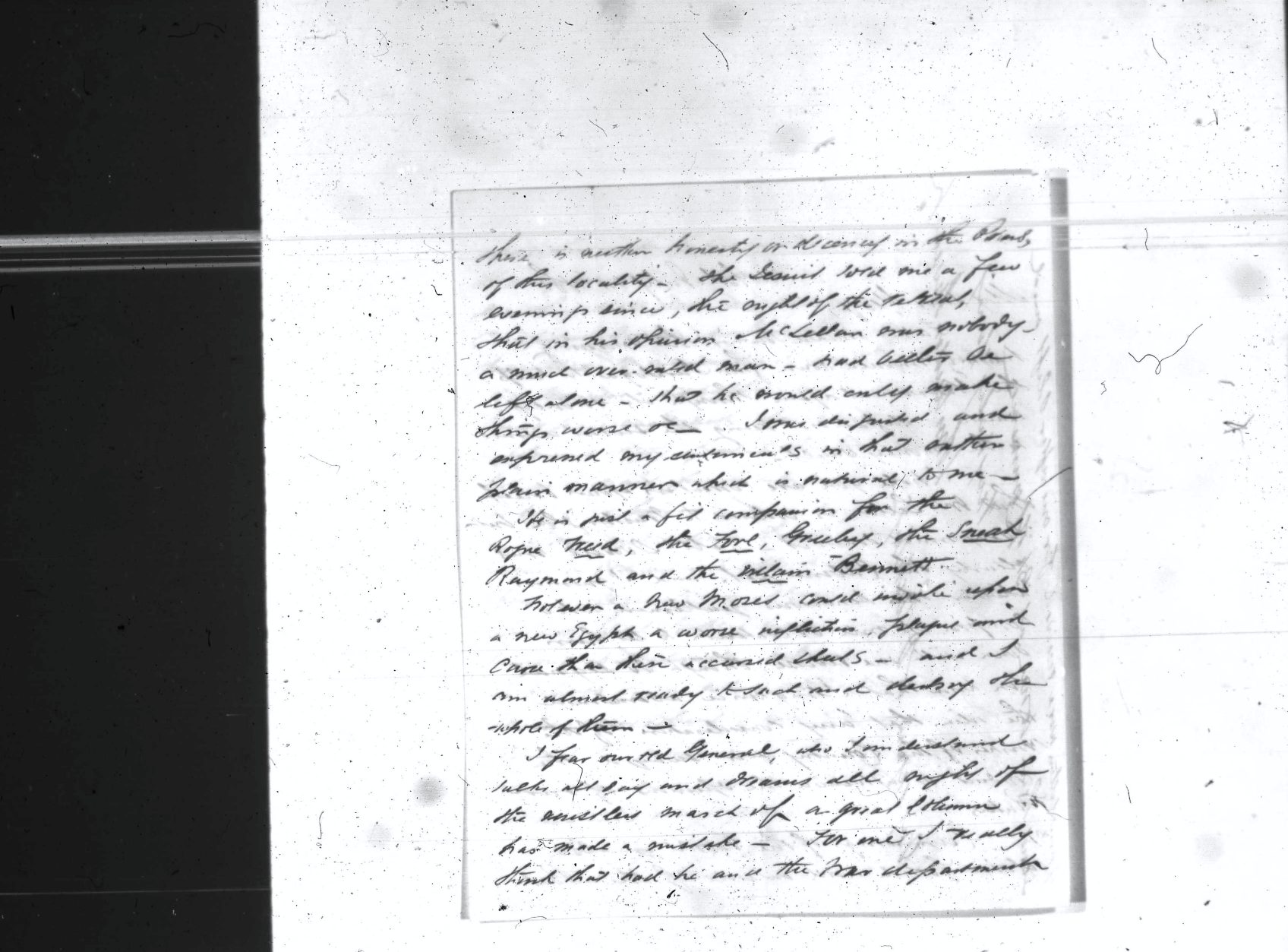
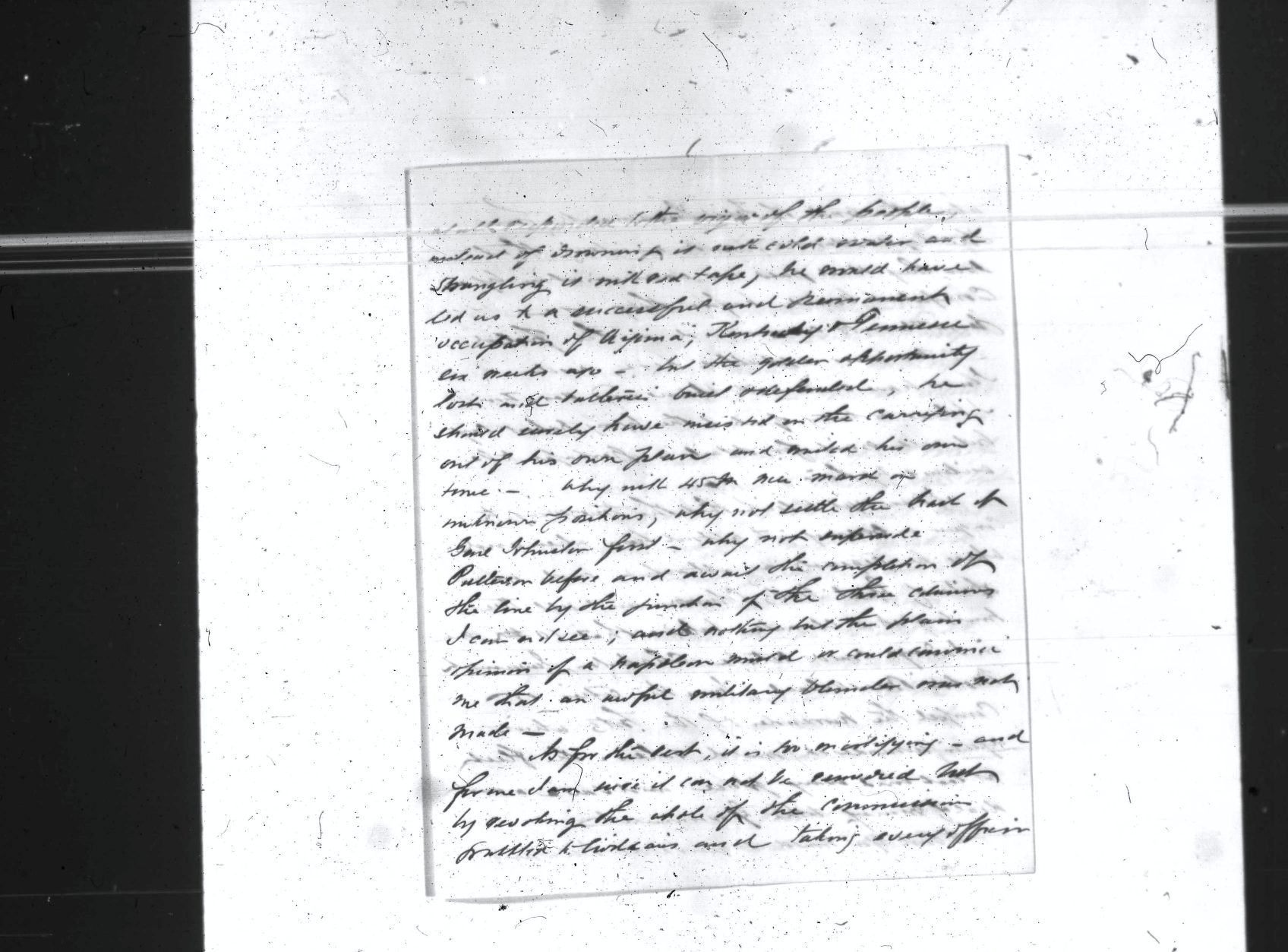
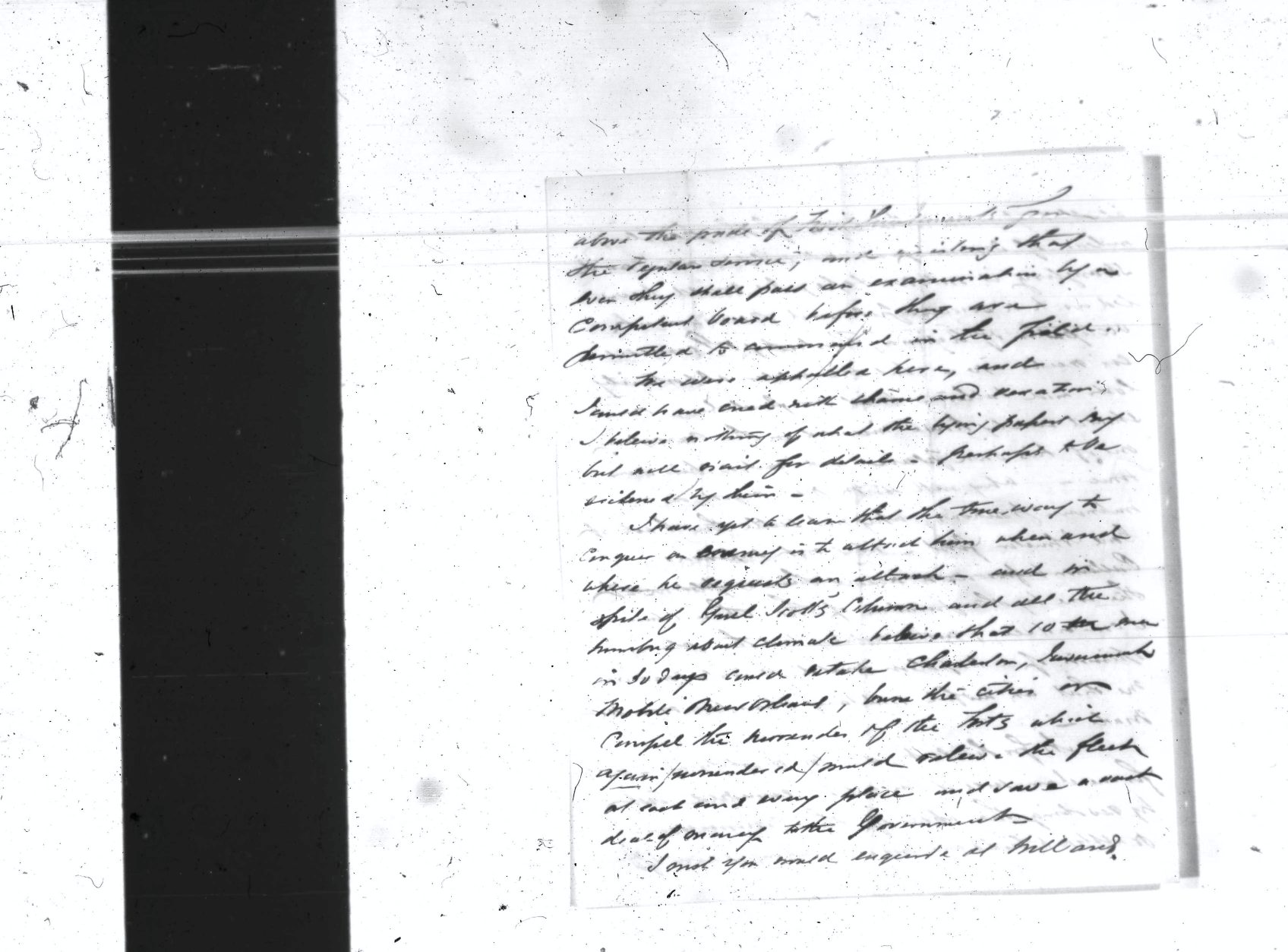
NINE DAYS BEFORE FORT SUMTER: tries to keep clear of politics "as nothing I see satisfies me, & I can do no good"; "Raymond's article of a day before yesterday, 'Wanted a Policy,' exactly expresses my opinions & those of most that I meet. This government is a failure & we have got to suffer the consequences."
1861-04-05
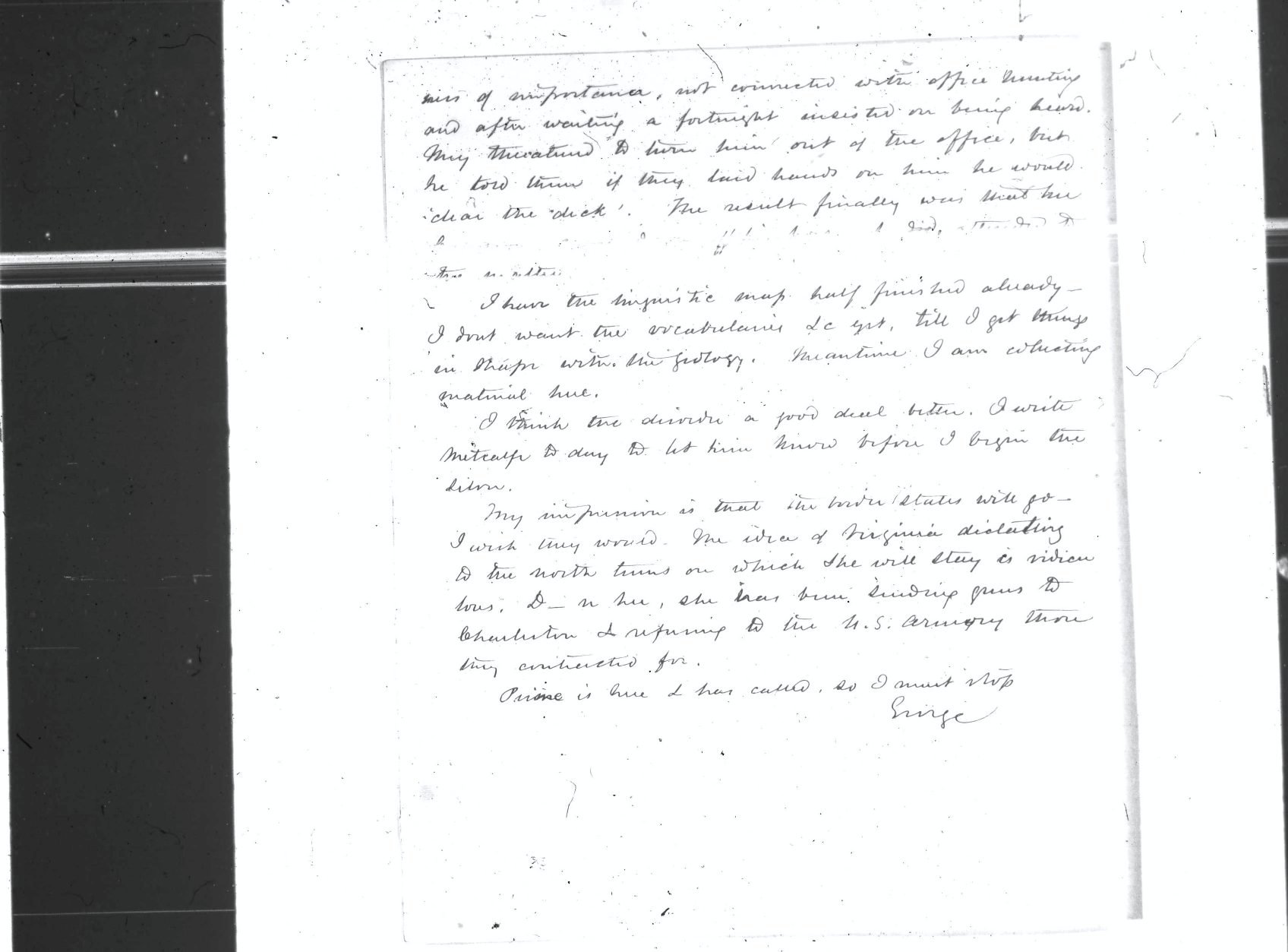
same-day letter to his brother; sends by Nesmith a package of Fraser River black sand; "The administration are imbecile. I dont think it Seward's fault, but Lincoln is a d-d fool enough to devote his whole time to the office seekers instead of to the country. He is not [grand?] enough, and that is the plain truth. Cameron too seems incapable in his department."
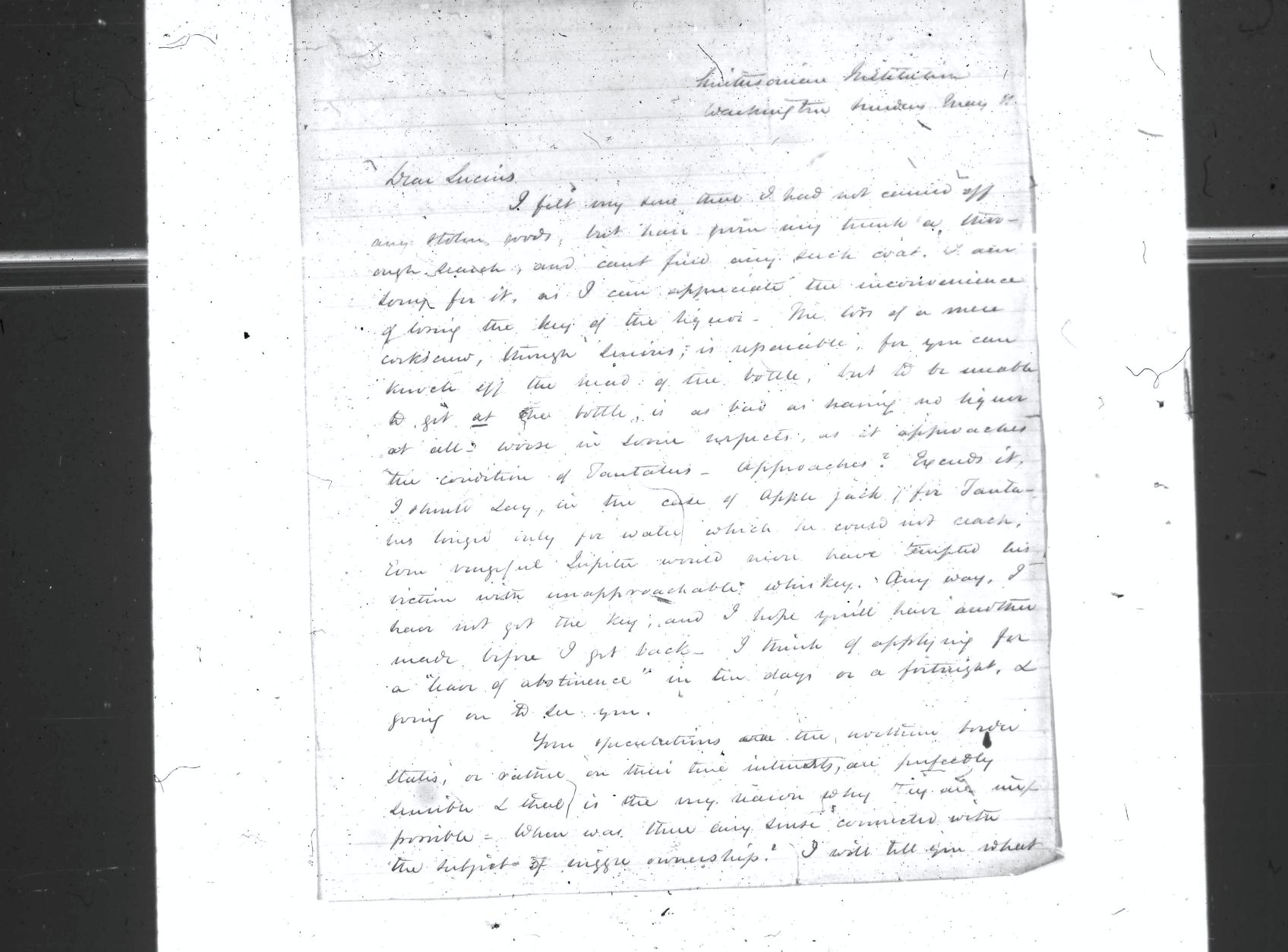
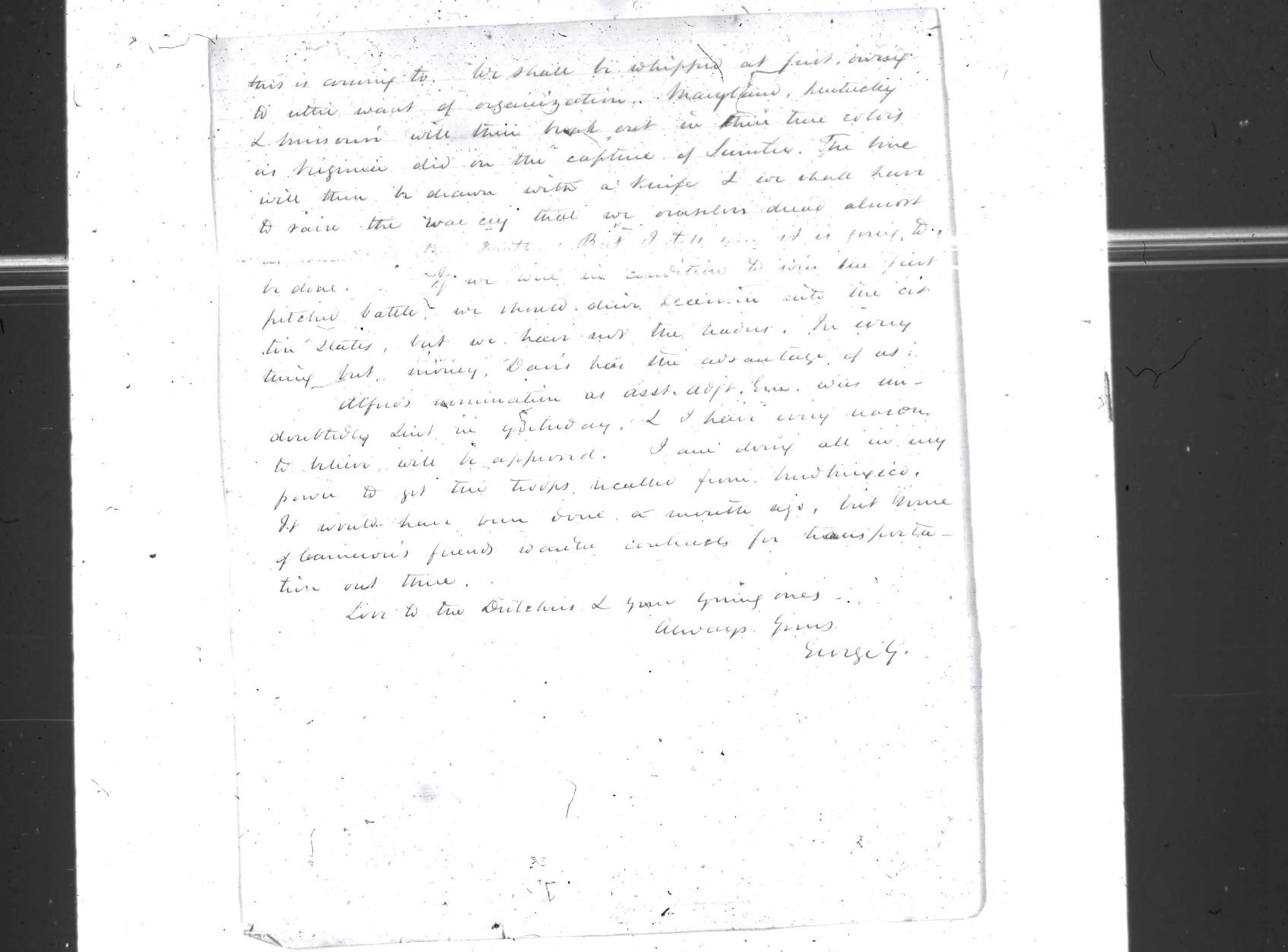
1861-05-12
comic passage on the key of the liquor case and Tantalus; means to apply for "a leave of abstinence"; on the border states, "Your speculations… are perfectly sensible & that is the very reason why they are impossible" (with a racial epithet in the original)
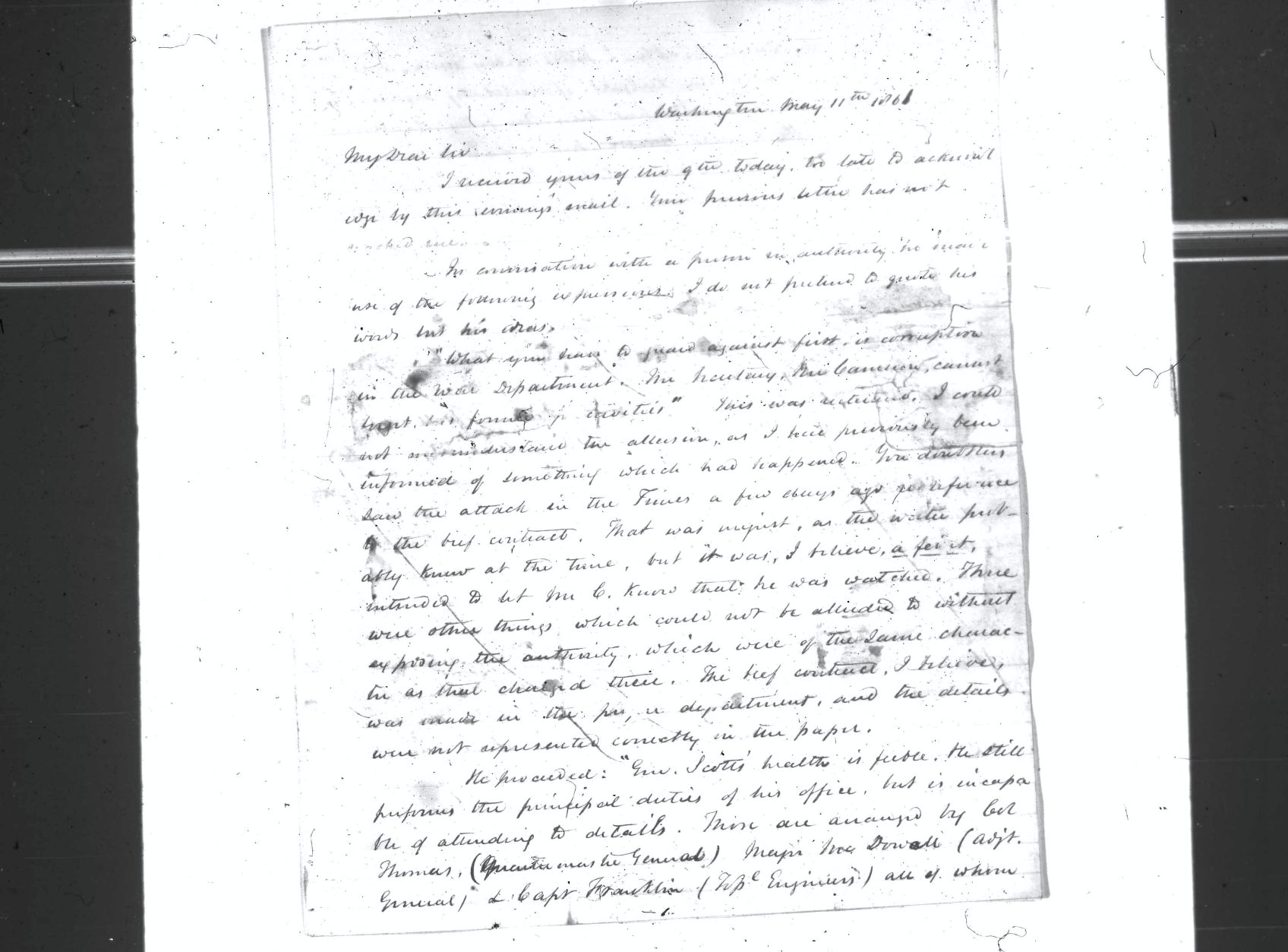
1861-05-11
reports a conversation with "a person in authority": "What you have to guard against first is corruption in the War Department. Mr. Secretary Cameron cannot [control] his family of devils?"; the Times attack on the beef contract "a feint, intended to let Mr. C. know that he was watched"; "Gen. Scott's health is feeble. He still performs the principal duties of his office, but is incapable of attending to details"
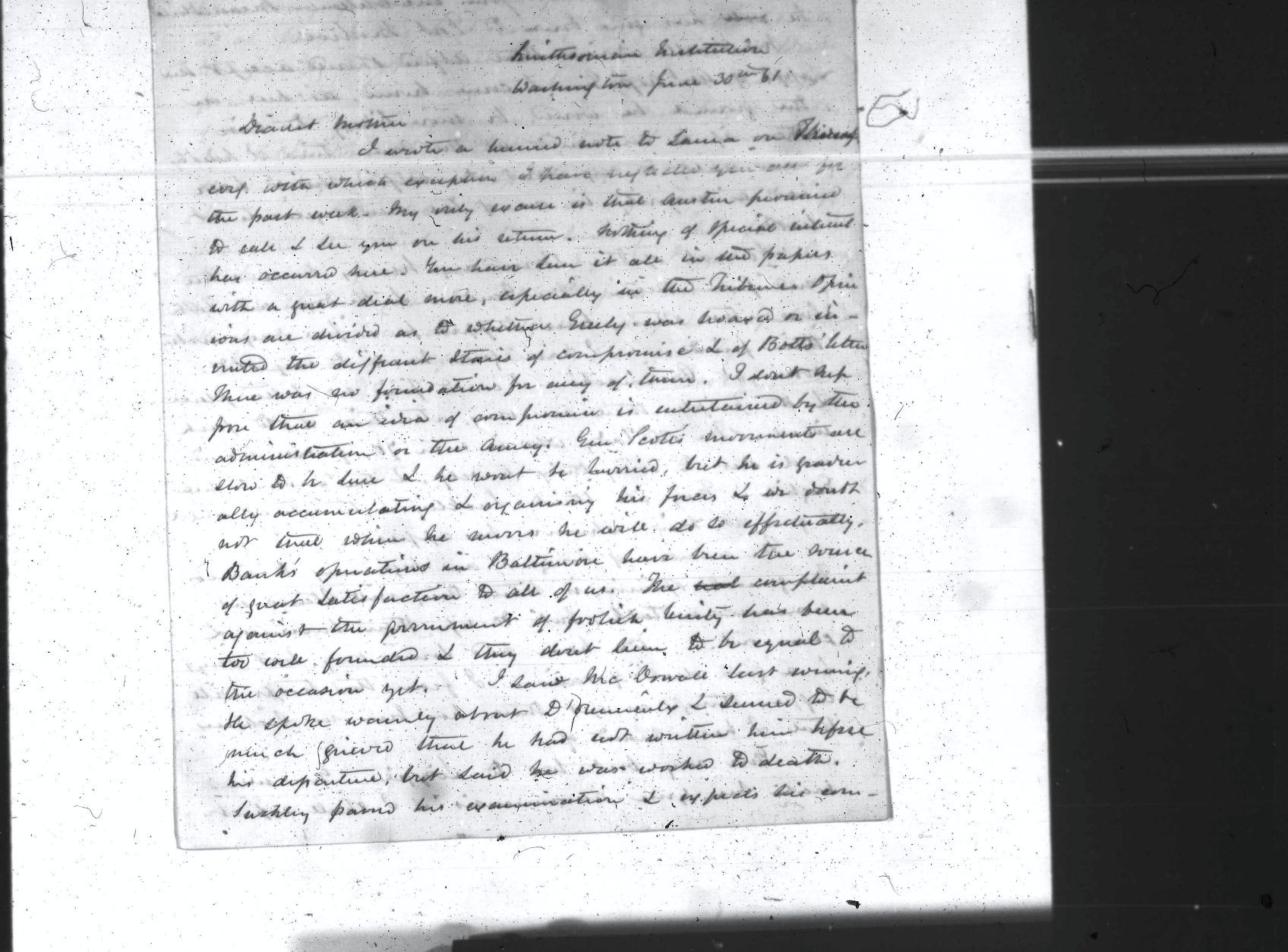
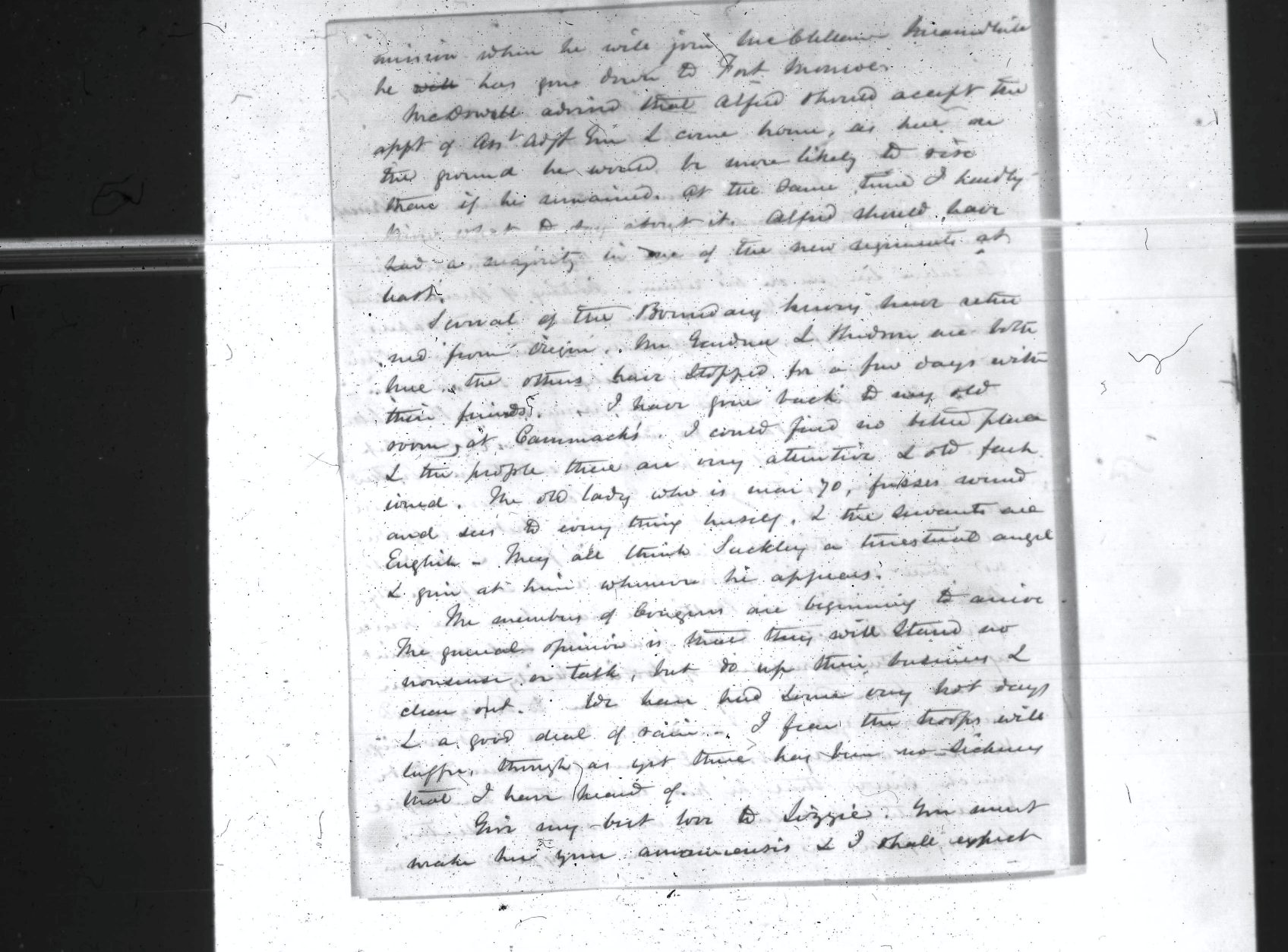
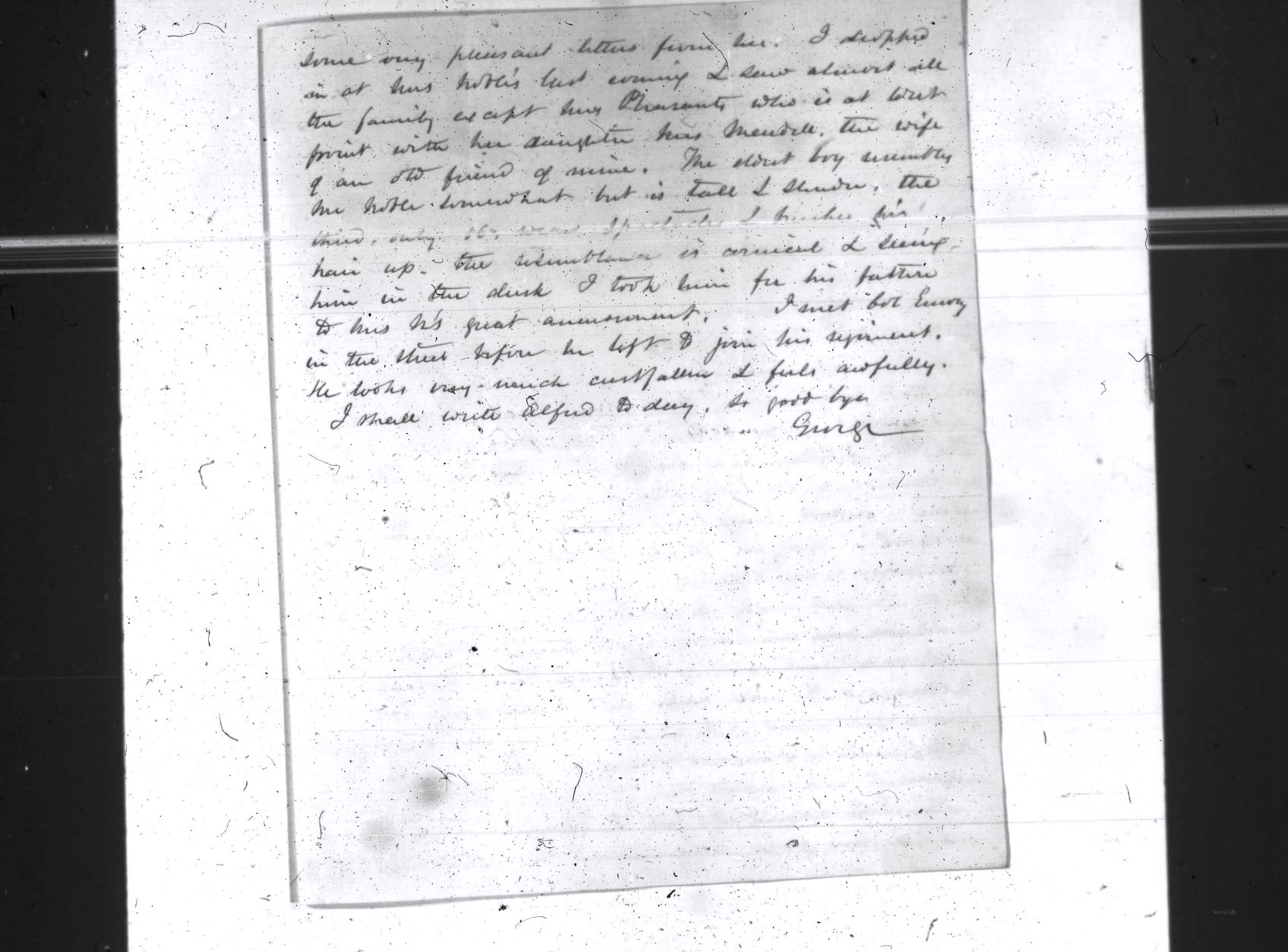
1861-06-30
denies Greeley/Tribune rumors of compromise and the "Botts' letter" ("There was no foundation for any of them"); Gen. Scott slow but "gradually accumulating & organizing his forces"; saw McDowell "last evening," who said he was "worked to death"
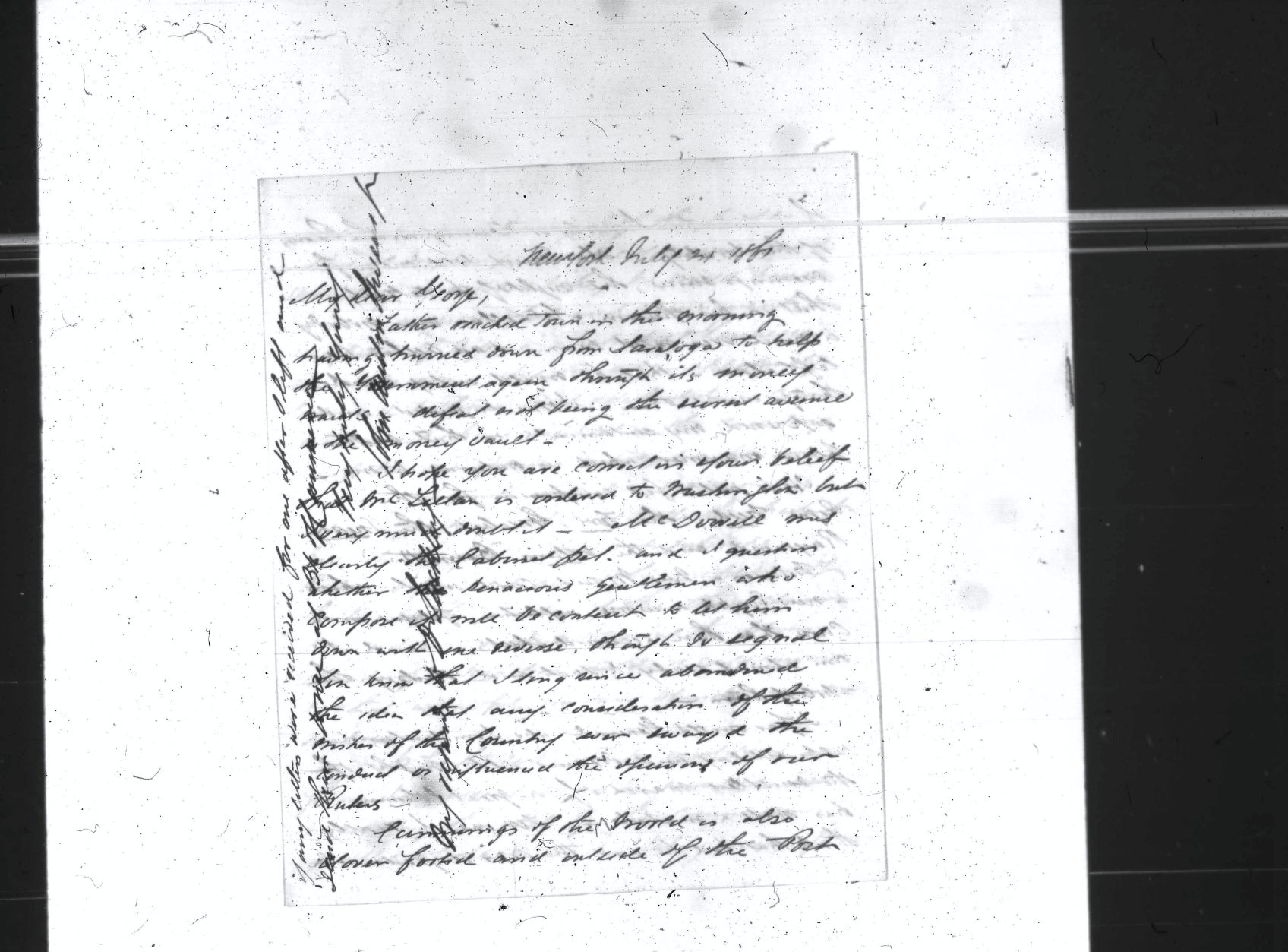
1861-07-24
"Father reached town this morning having hurried down from Saratoga" to help the Government "through its money wants, defeat not being the [surest] avenue to the money vault"; McDowell "was clearly the cabinet pet"
(cont.)
OTHER, GEORGE, CW
1861-09-05
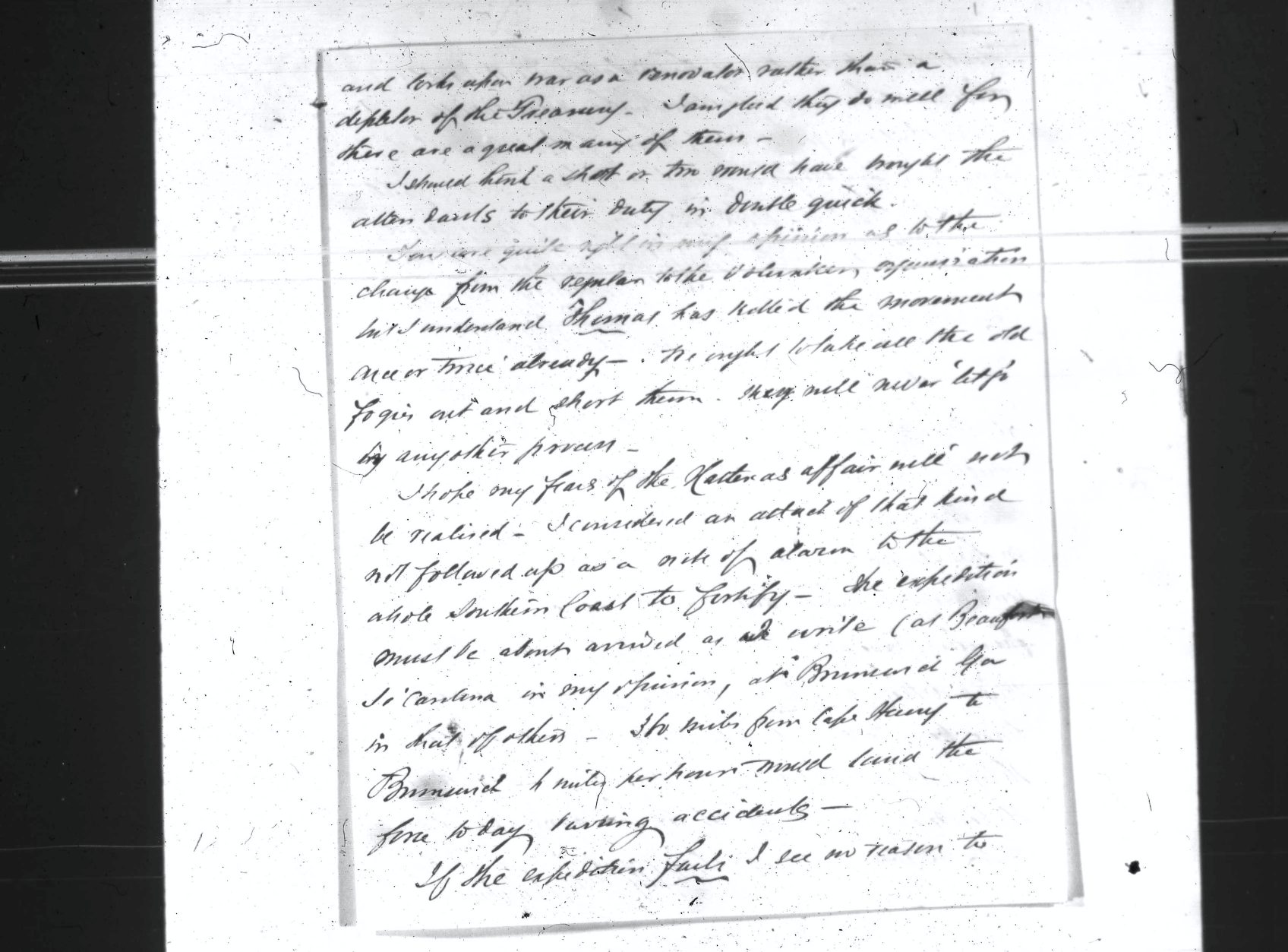
agrees Fremont's Missouri proclamation was "untimely and injudicious"; the Hatteras affair "a very expensive victory" unless followed up
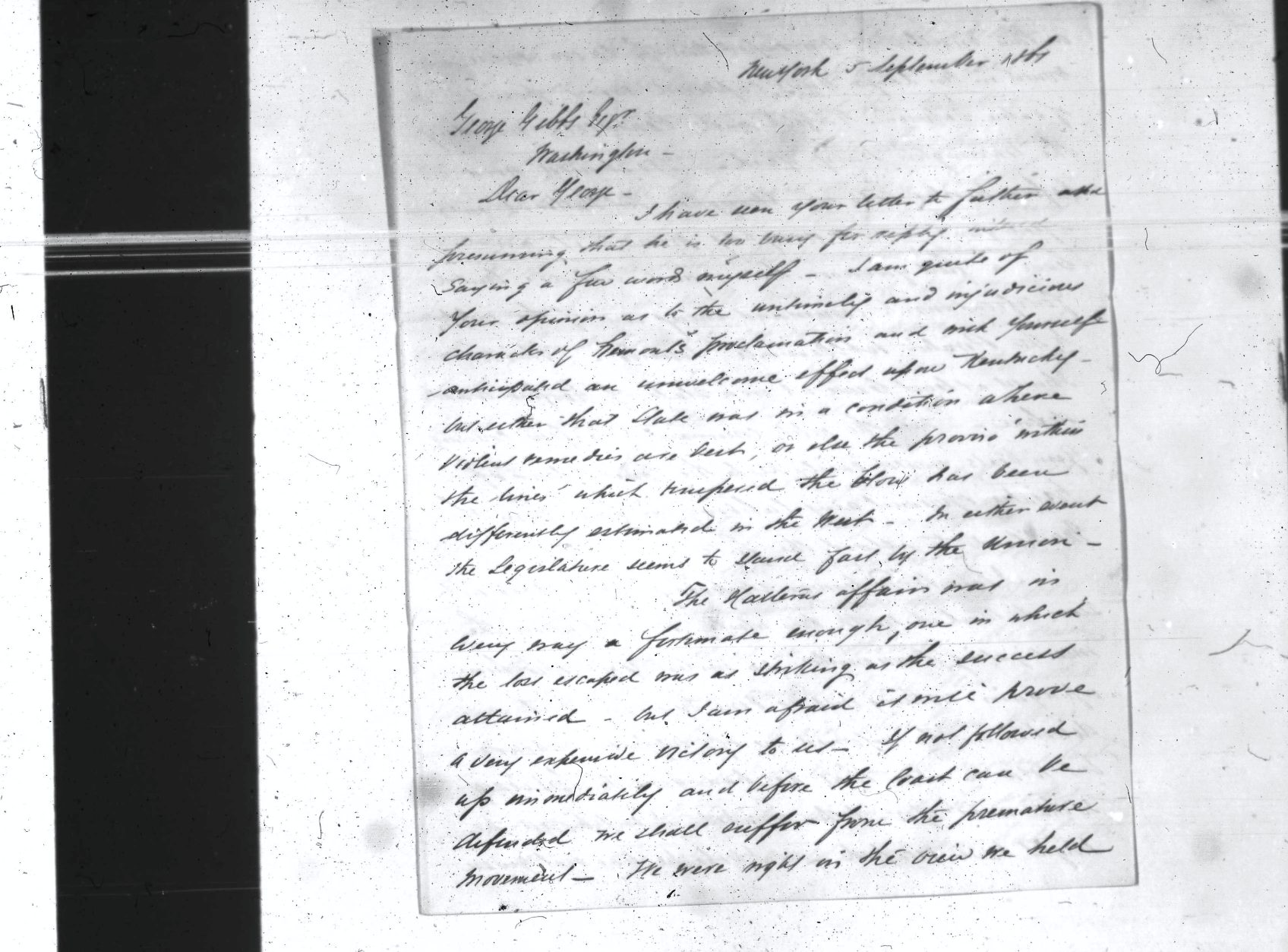
New York 5 September 1861
George Gibbs Esq.r / Washington — / Dear George —
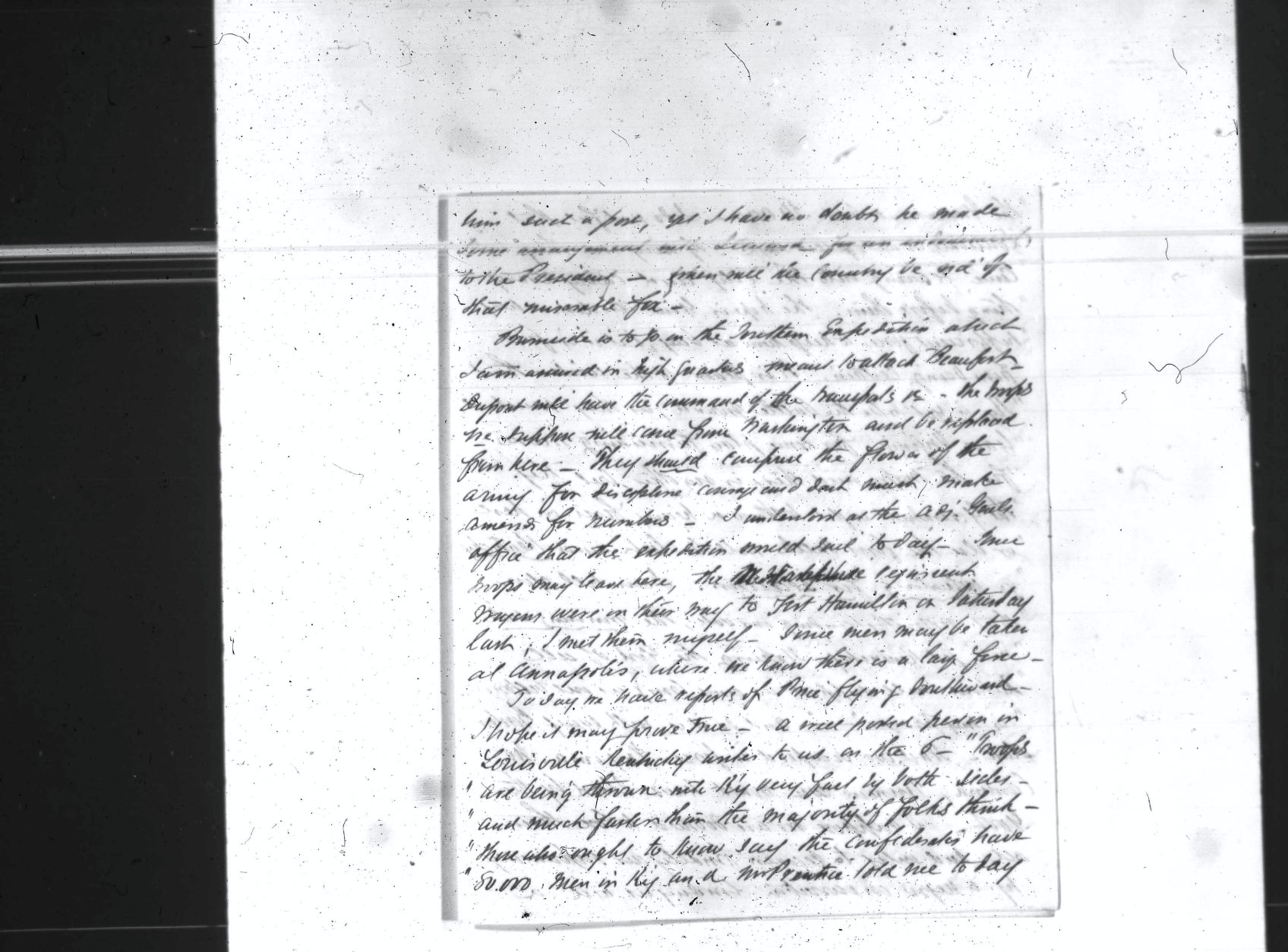
I have seen your letter to father and presuming that he is too busy for reply, will [illegible] saying a few words myself — I am quite of your opinion as to the untimely and injudicious character of Fremont's proclamation and with yourself anticipated an unwelcome effect upon Kentucky — but either that State was in a condition where violent remedies are best, or else the proviso 'within the lines' which tempered the blow has been differently estimated in the West — In either event the Legislature seems to stand fast by the Union —
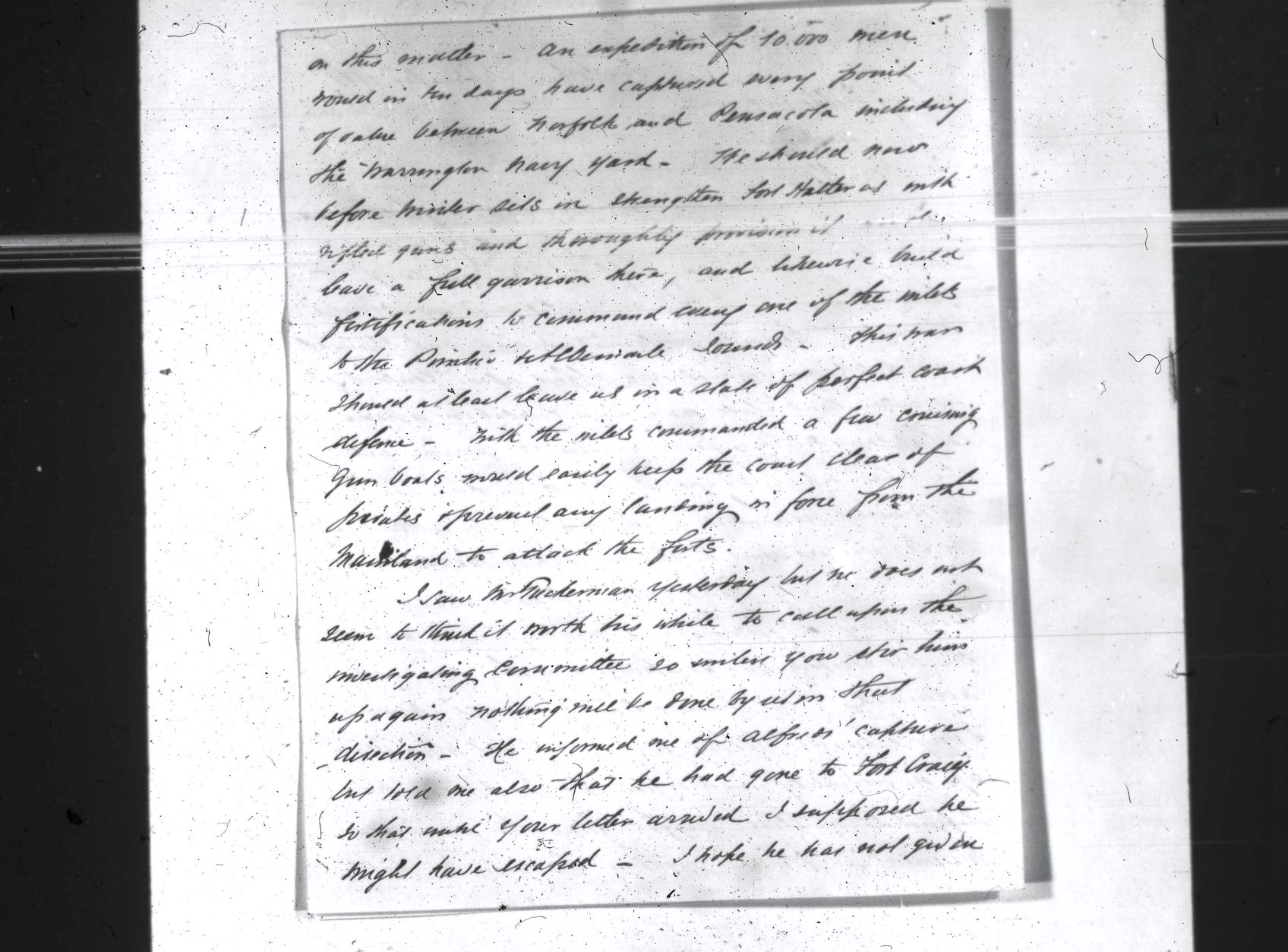
The Hatteras affair was in every way a fortunate enough, one in which the loss escaped was as striking as the success attained — but I am afraid it will prove a very expensive victory to us — If not followed up immediately and before the coast can be defended we shall suffer from the premature movement — We were right in the view we held on this matter — An expedition of 10.000 men would in ten days have captured every point of value between Norfolk and Pensacola including the Warrington Navy Yard — We should now before Winter sets in strengthen Fort Hatteras with rifled guns and thoroughly provision it, leave a full garrison there, and likewise build fortifications to command every one of the inlets to the Pamlico & Albemarle Sounds — this war should at least leave us in a state of perfect coast defence — With the inlets commanded a few cruising Gun boats would easily keep the coast clear of pirates & prevent any landing in force from the Mainland to attack the forts.
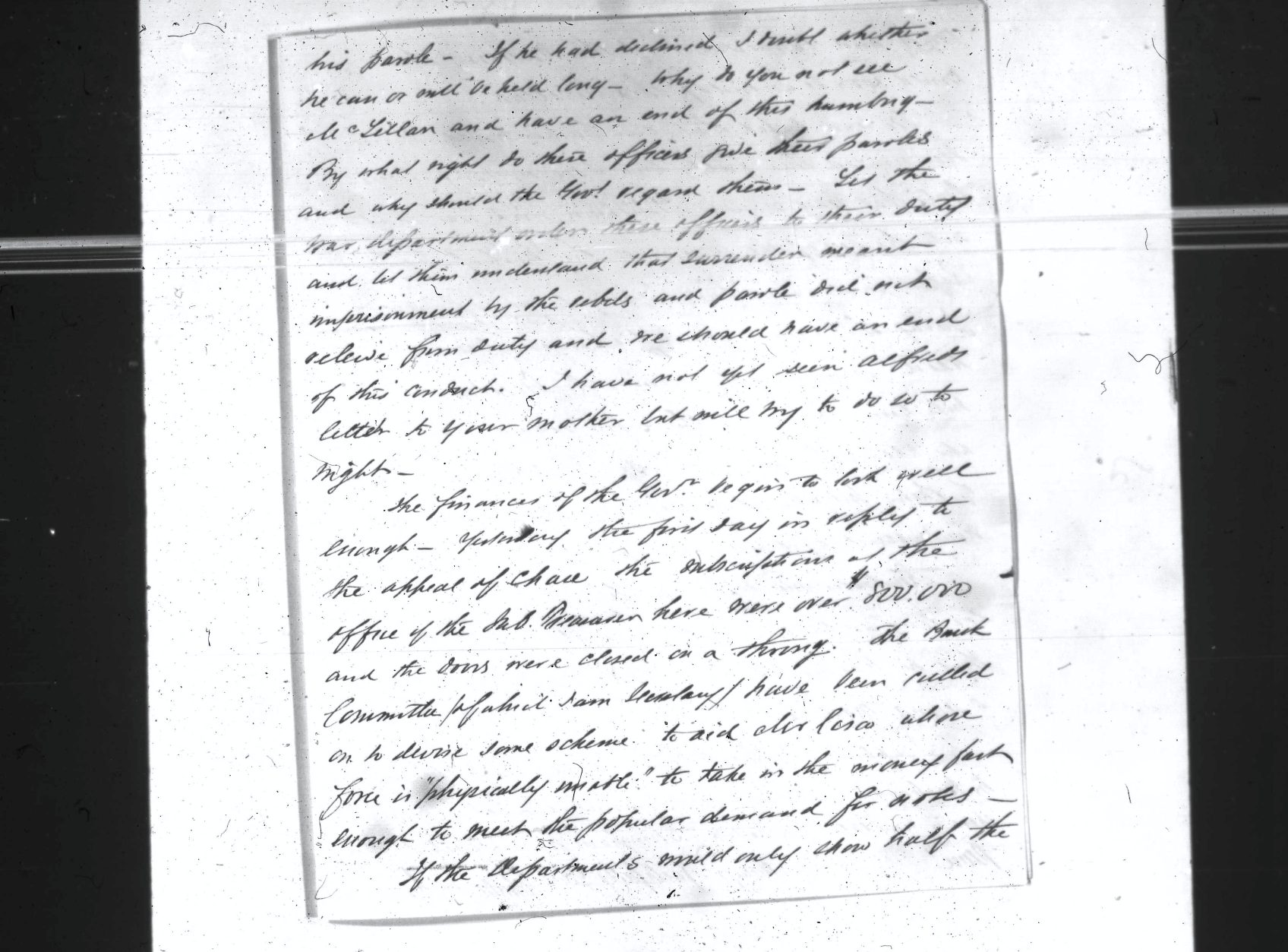
I saw Mr Tuckerman yesterday but he does not seem to think it worth his while to call upon the investigating Committee so unless you stir him up again nothing will be done by us in that direction — He informed me of Alfred's capture but told me also that he had gone to Fort Craig, so that until your letter arrived I supposed he might have escaped — I hope he has not given his parole — If he had declined I doubt whether he can or will be held long — Why do you not see M.c Lellan and have an end of this humbug — By what right do these officers give their paroles and why should the Gov.t regard them — Let the War Department order these officers to their duty and let them understand that surrender meant imprisonment by the rebels and parole did not relieve from duty and we should have an end of this conduct. I have not yet seen Alfred's letter to your mother but will try to do so tonight —
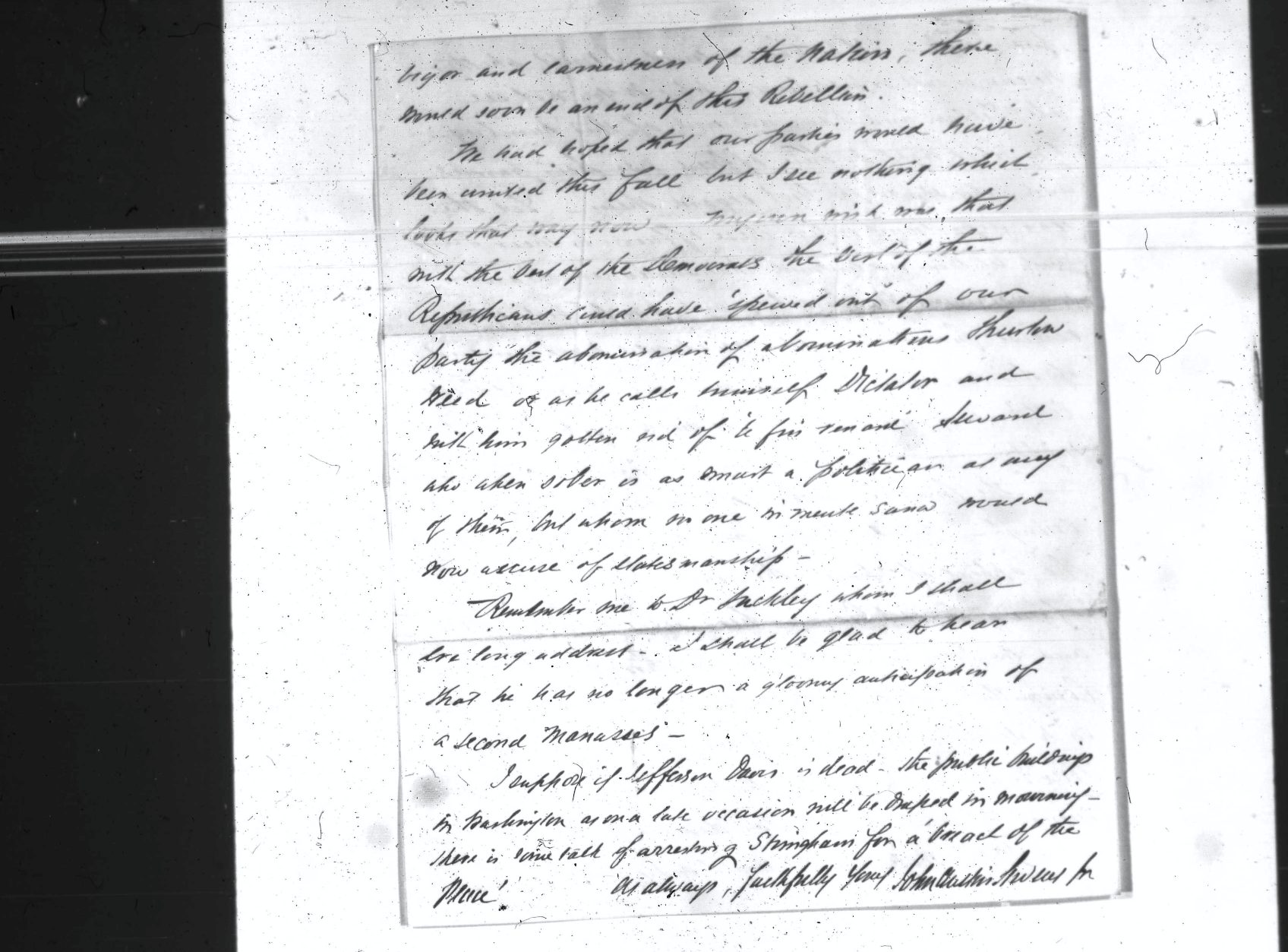
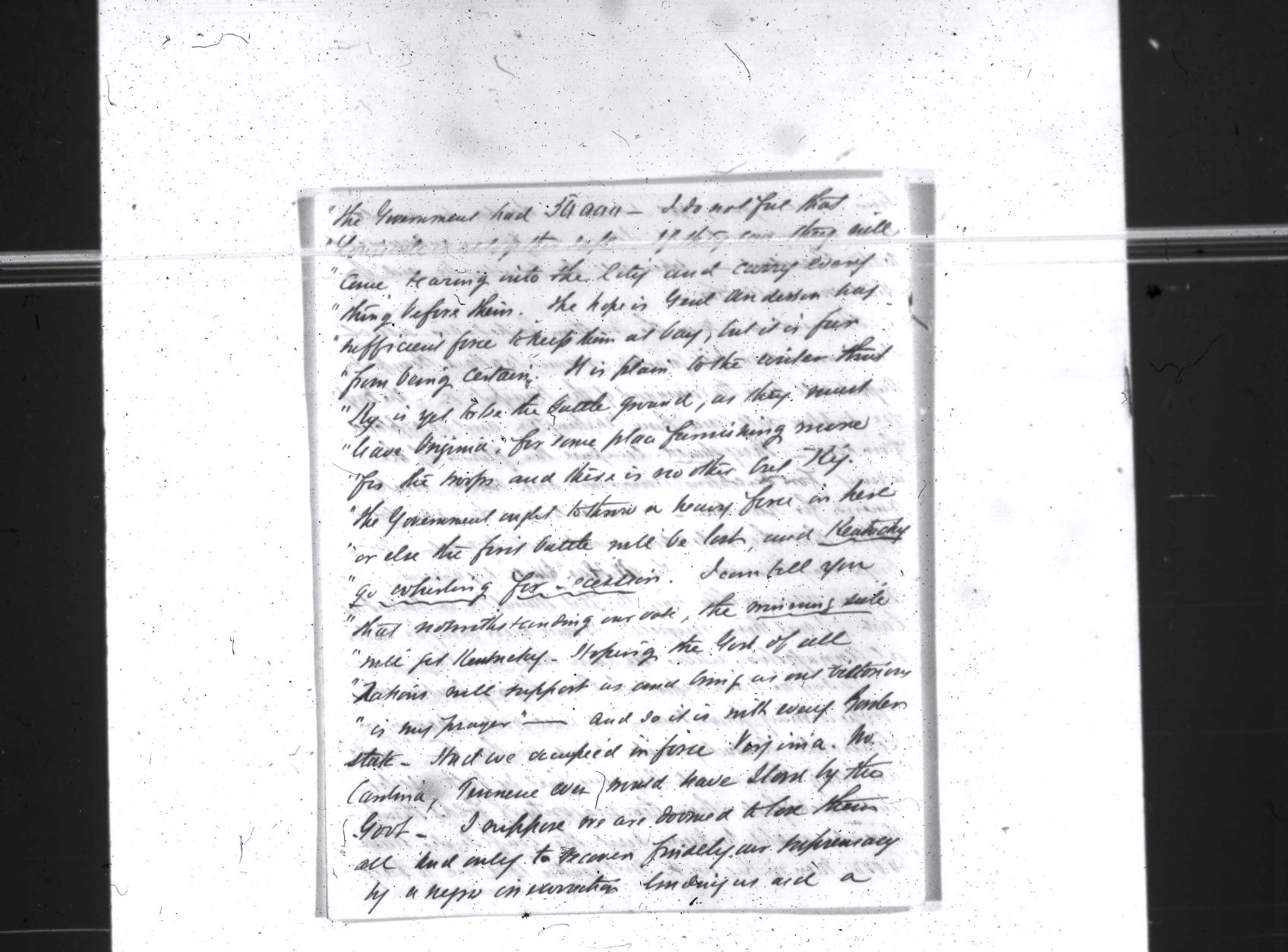
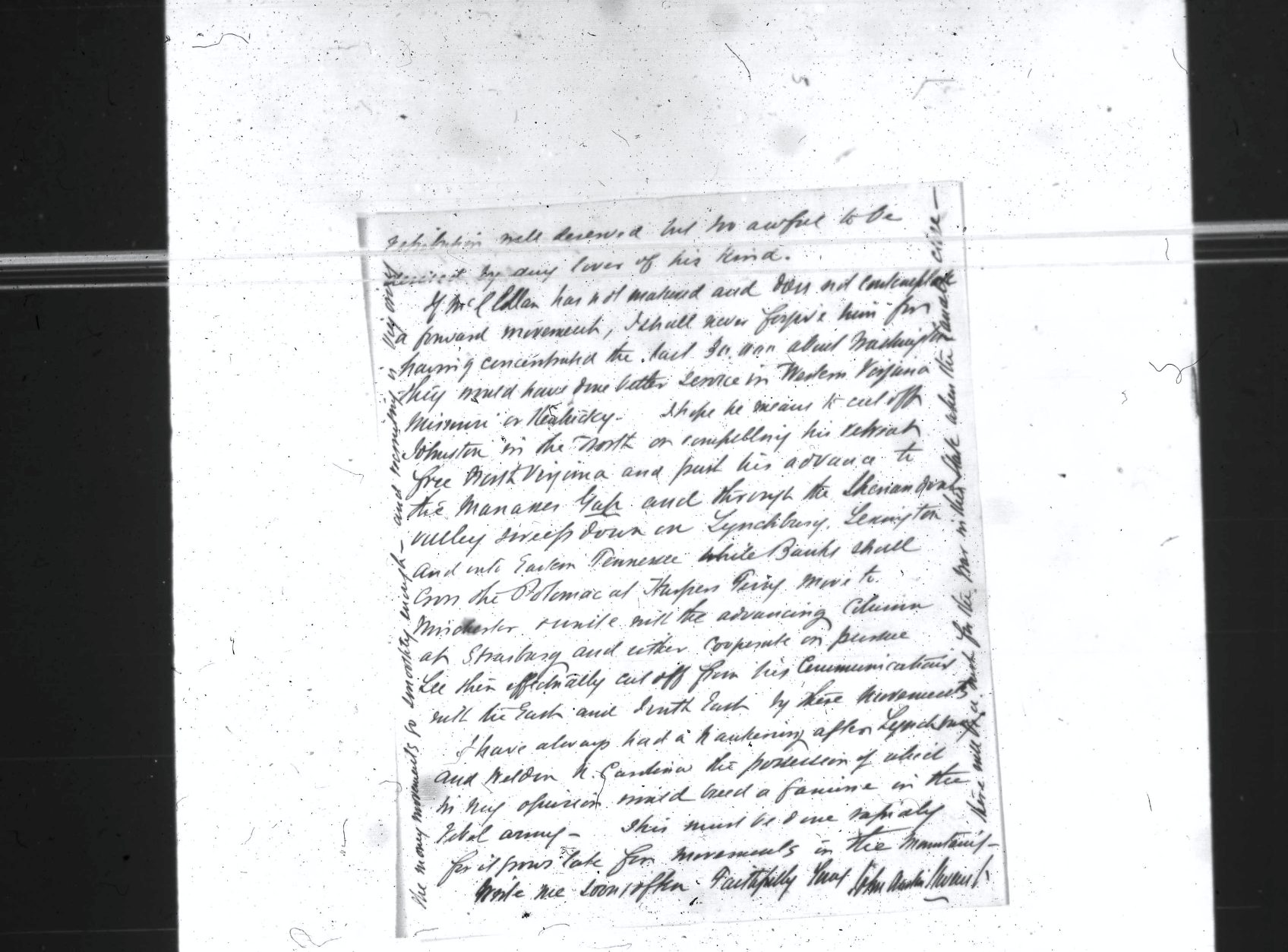
The finances of the Gov.t begin to look well enough — Yesterday the first day in reply to the appeal of Chase the subscriptions at the office of the Sub. Treasurer here were over $800.000 and the doors were closed on a throng. The Bank Committee (of which I am Secretary) have been called on to devise some scheme to aid Mr Cisco whose force is "physically unable" to take in the money fast enough to meet the popular demand for notes — If the Departments would only show half the vigor and earnestness of the Nation, there would soon be an end of this Rebellion.
We had hoped that our parties would have been united this fall but I see nothing which looks that way now — [illegible] wish we(?), that with the best of the Democrats the best of the Republicans could have "spewed out of our party" the abomination of abominations Thurlow Weed or as he calls himself Dictator and with him gotten rid of "le fin renard" Seward who when sober is as smart a Politician as any of them, but whom no one in mente sana would now accuse of Statesmanship —
Remember me to Dr Hackley whom I shall ere long address — I shall be glad to hear that he has no longer a gloomy anticipation of a second Manasses —
I suppose if Jefferson Davis is dead the public buildings in Washington as on a late occasion will be draped in mourning — there is some talk of arresting Stringham for a breach of the 'Peace'.
As always, faithfully Yours
John Austin Stevens Jr
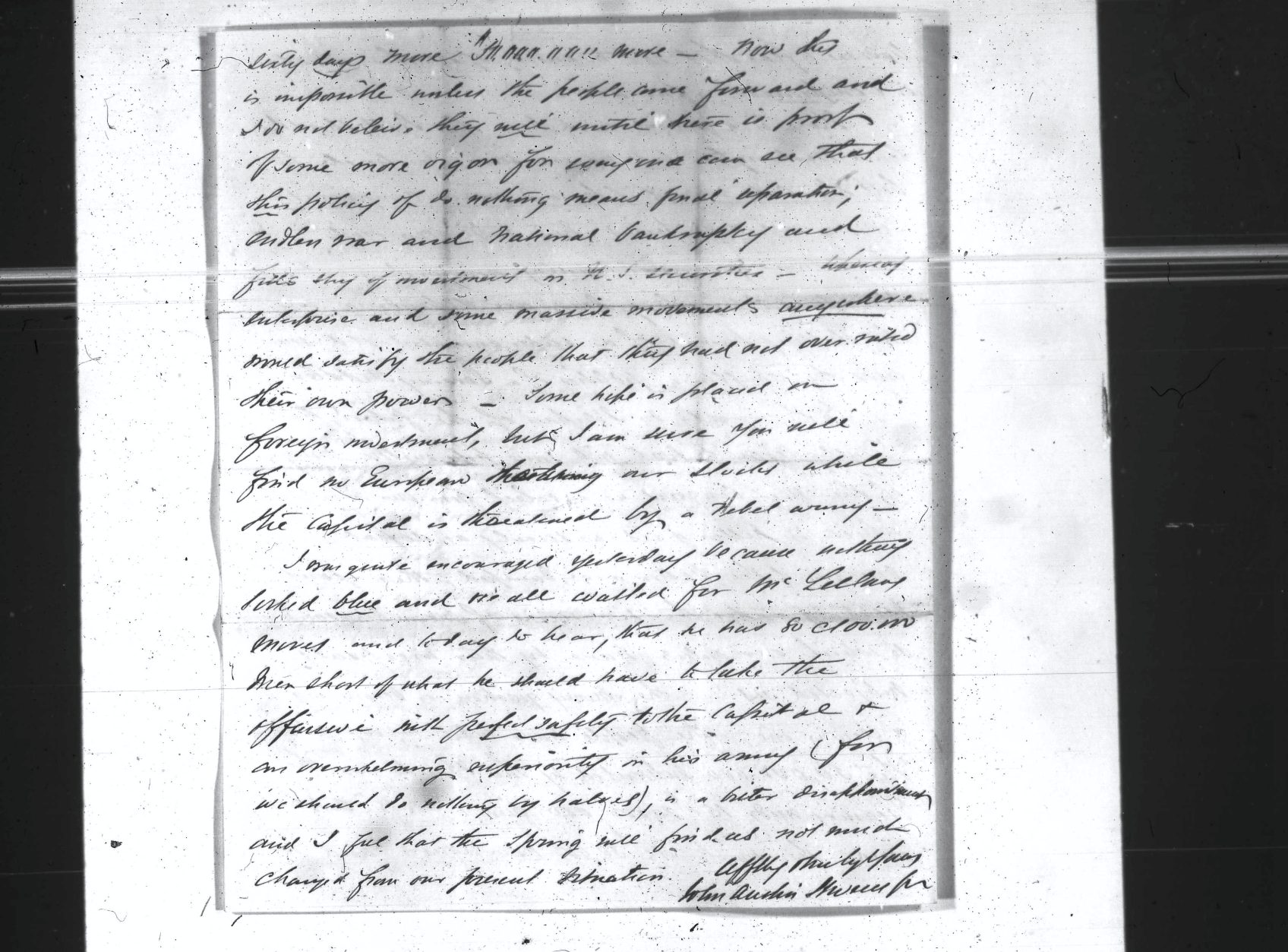
Four frames = four consecutive pages of one bifolium letter; no wrapper or docket filmed. The film is a light, low-contrast negative and several passages required heavy digital enhancement. Two spots defeated reading: the word or two after 'too busy for reply, will' at the foot of the first page (the ink there is rubbed or faded), and a two-word phrase after 'looks that way now' on the last page, transcribed here as '[illegible] wish we(?)'. The clause 'Let the War Department order these officers to their duty' is written in noticeably fainter ink than the surrounding lines. 'pirates' at the foot of page 2 is the literal reading; the sense is privateers. The writer's abbreviations are kept as written (Esq.r, Gov.t, M.c Lellan).
1861-09-10
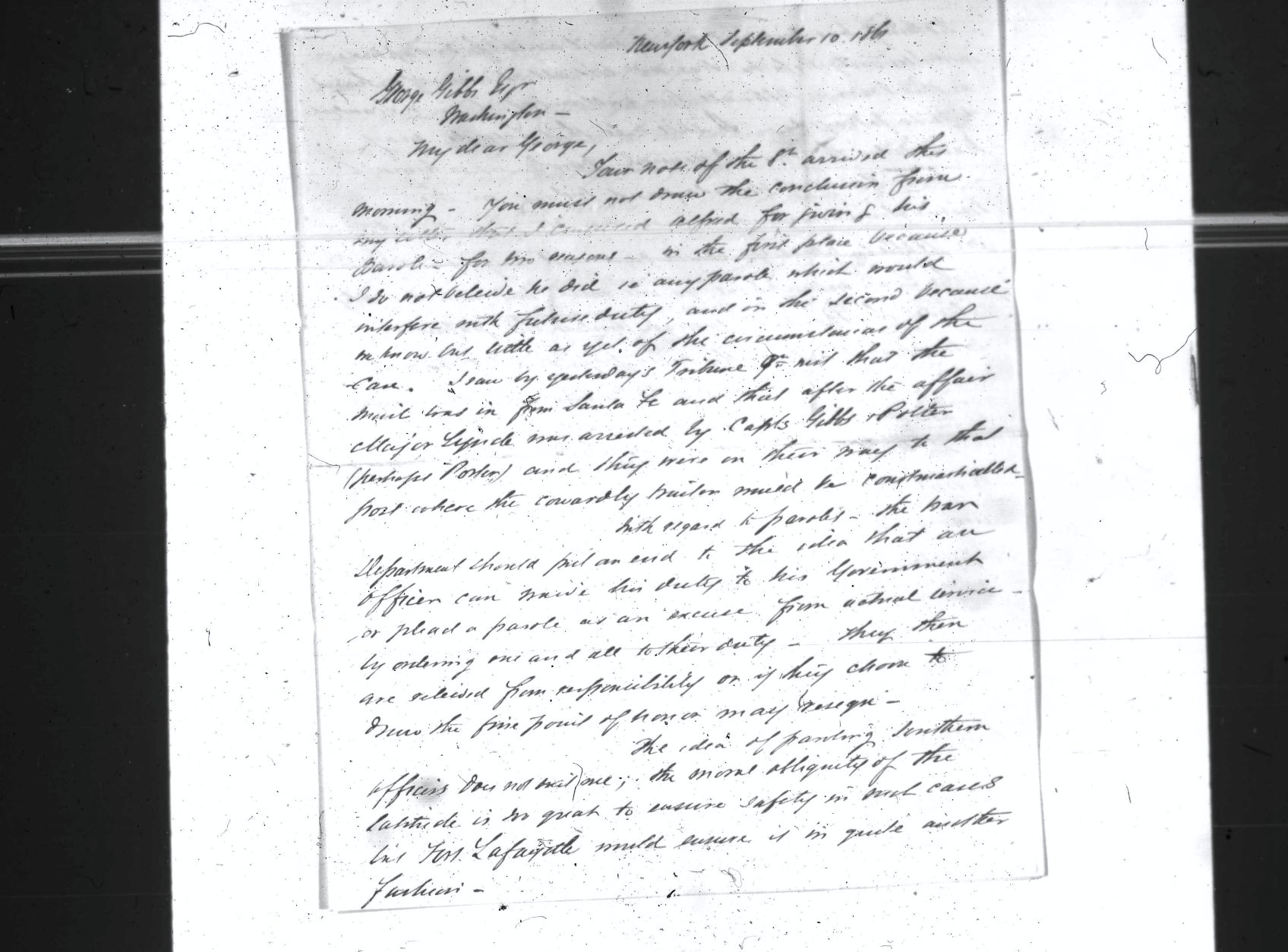
*** ALFRED ARRESTED LYNDE *** "You must not draw the conclusion from my letter that I censured Alfred for giving his parole"; reports from the Santa Fe mail, seen in yesterday's paper, that after the affair MAJOR LYNDE WAS ARRESTED BY CAPTS. GIBBS & POTTER (Porter?) and was being taken to that post where "the cowardly traitor would be courtmartialled"; argues the War Department should end the idea that an officer can plead a parole to excuse himself from service
New York September 10. 1861
George Gibbs Esq.r / Washington — / My dear George,
Your note of the 8.th arrived this morning — You must not draw the conclusion from my letter that I censured Alfred for giving his parole — for two reasons — in the first place because I do not believe he did so in(?) any parole which would interfere with future duty, and in the second because we know but little as yet of the circumstances of the case. I saw by yesterday's Tribune 9.th inst that the mail was in from Santa Fe and that after the affair Major Lynde was arrested by Capt.s Gibbs & Potter (perhaps Porter) and they were on their way to that post where the cowardly traitor would be courtmartialled —
With regard to paroles — the War Department should put an end to the idea that an officer can waive his duty to his Government or plead a parole as an excuse from actual service — they then by ordering one and all to their duty — are relieved from responsibility or if they choose to draw the fine point of honor may resign —
The idea of paroling Southern officers does not suit(?) one; the moral obliquity of the latitude is too great to ensure safety in such cases but Fort Lafayette would ensure it in quite another fashion —
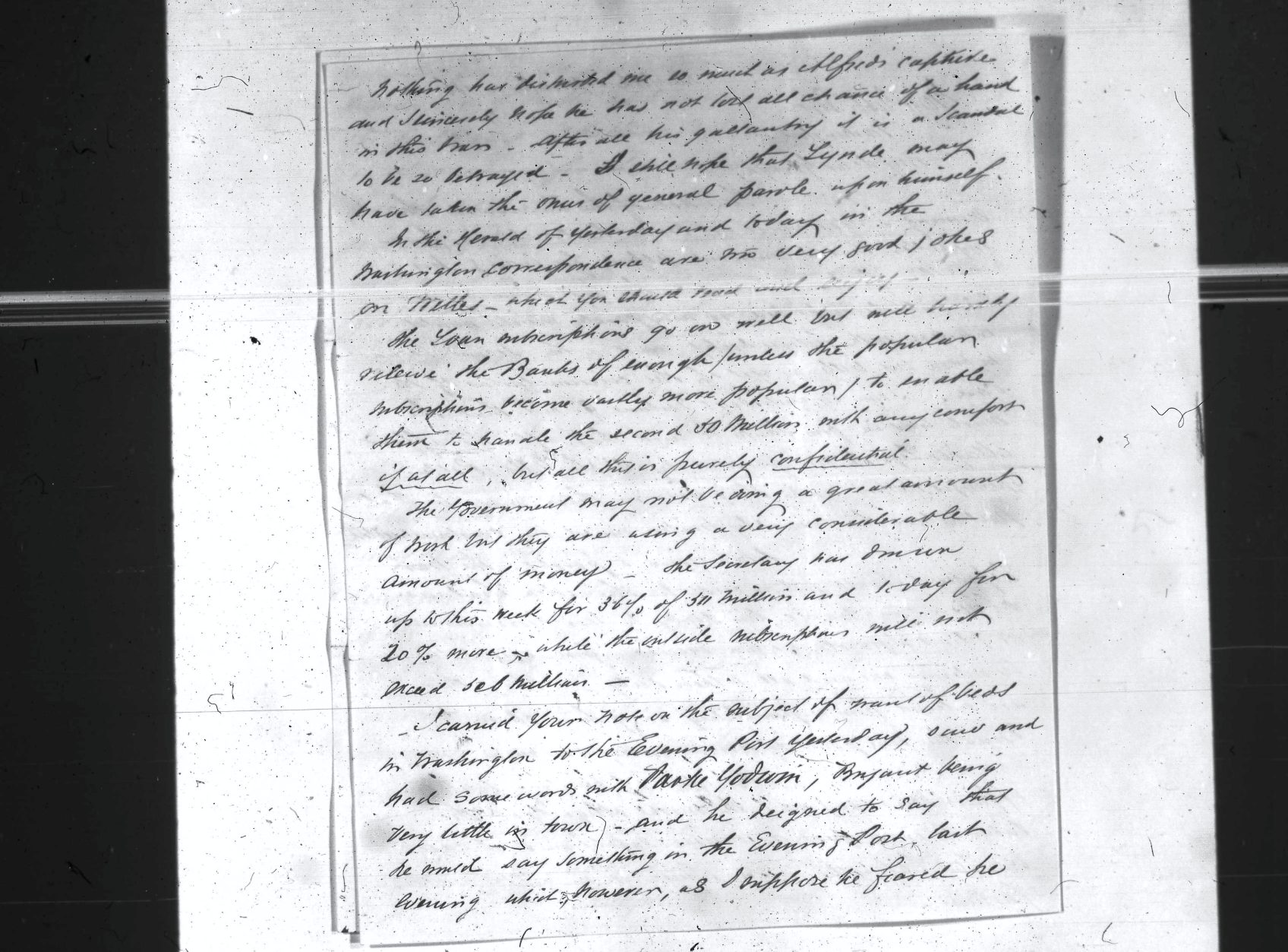
Nothing has disturbed me so much as Alfred's capture and I sincerely hope he has not lost all chance of a hand in this war — After all his gallantry it is a scandal to be so betrayed — I still hope that Lynde may have taken the onus of general parole upon himself.
In the Herald of yesterday and today in the Washington correspondence are two very good jokes on Welles — which you should read and enjoy —
The Loan subscriptions go on well but will hardly relieve the Banks of enough (unless the popular subscriptions become vastly more popular) to enable them to handle the second 50 Million with any comfort if at all, but all this is purely confidential.
The Government may not be doing a great amount of work but they are using a very considerable amount of money — The Secretary has drawn up to this week for 36% of 50 Million and today for 20% more — while the outside subscriptions will not exceed 5 or 6 Million —
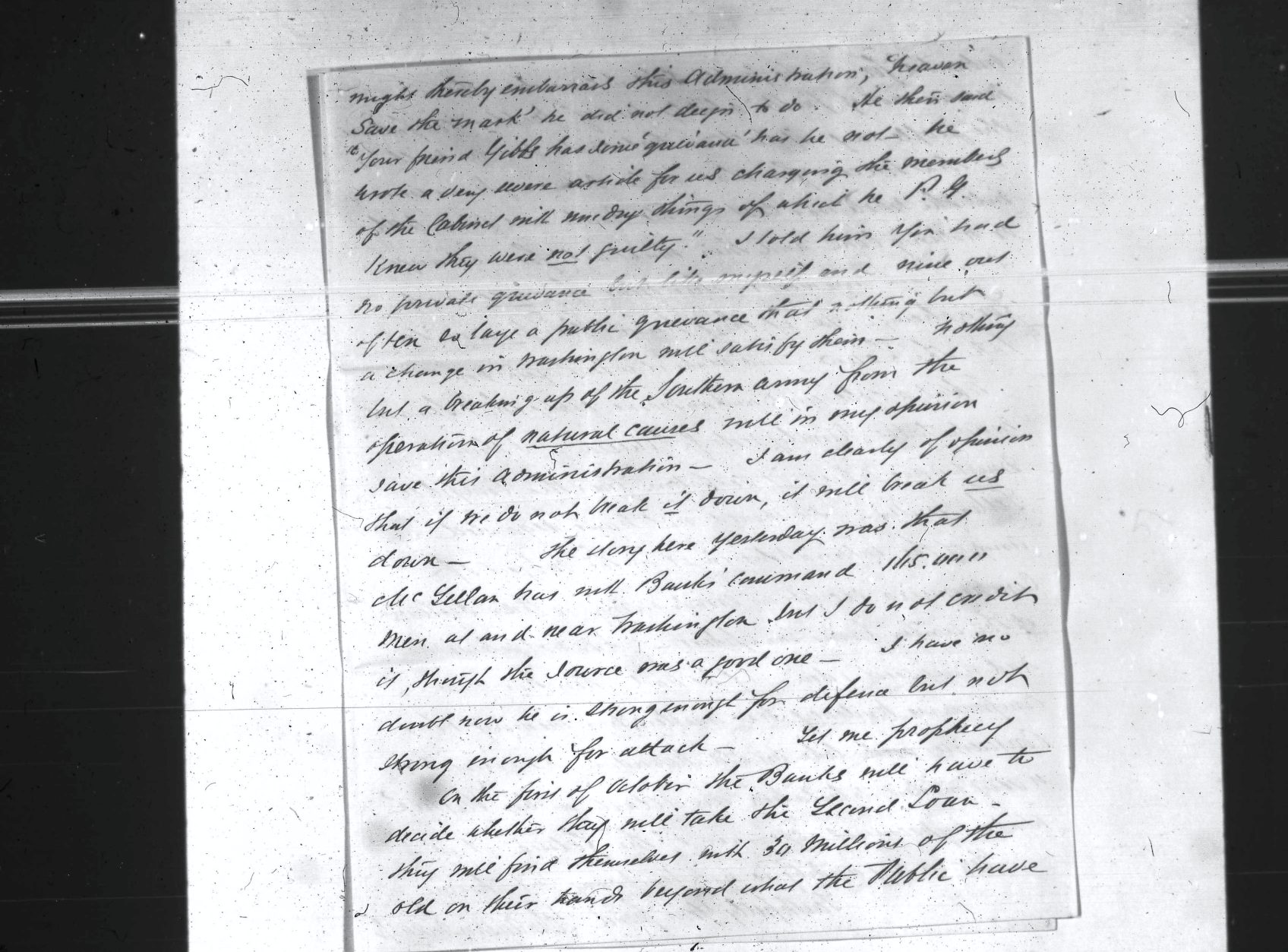
I carried your note on the subject of want of beds in Washington to the Evening Post yesterday, saw and had some words with Parke Godwin, Bryant being very little in town) — and he deigned to say that he would say something in the Evening Post last evening which however, as I suppose he feared he might thereby embarrass this Administration, (Heaven save the mark!) he did not deign to do. He then said "Your friend Gibbs has some 'grievance' has he not — he wrote a very severe article for us charging the members of the Cabinet with sundry things of which he P. G. knew they were not guilty." I told him you had no private grievance (but like myself and nine out of ten so large a public grievance that nothing but a change in Washington will satisfy them — Nothing but a breaking up of the Southern army from the operation of natural causes will in my opinion save this Administration — I am clearly of opinion that if we do not break it down, it will break us down —
The story here yesterday was that M.c Lellan has with Banks' command 115.000 men at and near Washington but I do not credit it, though the source was a good one — I have no doubt now he is strong enough for defence but not strong enough for attack —
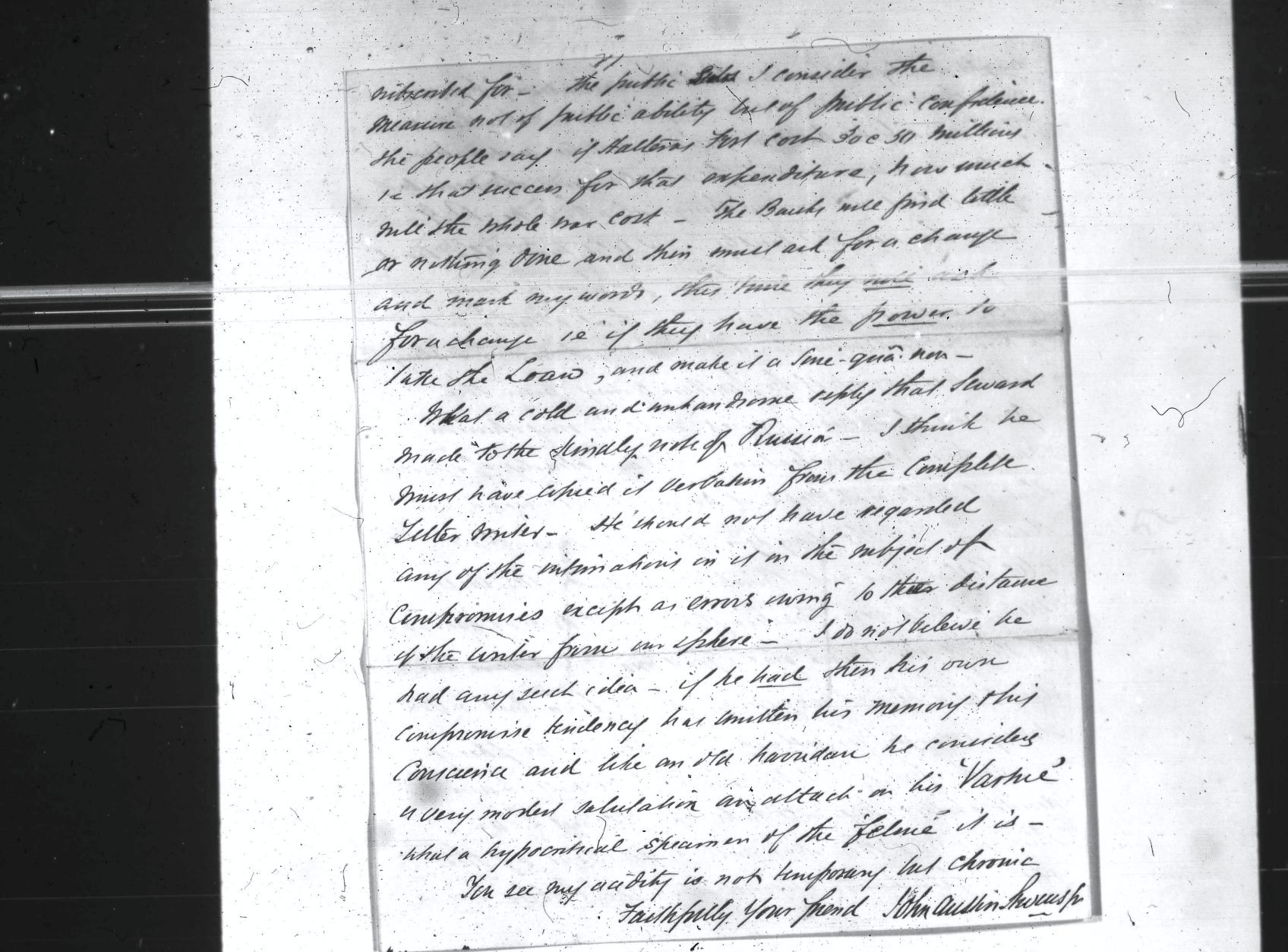
Let me prophecy. On the first of October the Banks will have to decide whether they will take the Second Loan — they will find themselves with 30 Millions of the old on their hands beyond what the Public have subscribed for — The public [word struck out] I consider the measure not of public ability but of public confidence. The people say if Hatteras Fort cost 30 or 50 Millions is that success for that expenditure, how much will the whole war cost — The Banks will find little or nothing done and then must ask for a change and mark my words, this time they will ask for a change so if they have the power to take the Loan, and make it a sine-qua non —
What a cold and unhandsome reply that Seward made to the friendly note of Russia — I think he must have copied it verbatim from the Complete Letter Writer — He should not have regarded any of the intimations in it in the subject of Compromises except as errors owing to their distance of the writer from our sphere — I do not believe he had any such idea — if he had then his own compromise tendency has smitten his memory & his conscience and like an old harridan he considers a very modest salutation an attack on his "Vartue" — what a hypocritical specimen of the Feline it is —
You see my acidity is not temporary but chronic
Faithfully Your friend
John Austin Stevens Jr
Four frames = four consecutive pages of one letter; no wrapper or docket filmed. The historically important passage is on the first page: the Tribune report, via the Santa Fe mail, that Major Lynde had been arrested after the surrender by Capts. Gibbs and Potter — Stevens himself adds the parenthesis '(perhaps Porter)'. Frame 74 has a line of very faint or rubbed ink ('my letter that I censured Alfred for giving his') that is legible only under enhancement; the small word between 'he did so' and 'any parole' is uncertain and marked (?). On frame 77 a word after 'The public' is struck through and cannot be recovered. 'the Feline' near the close is capitalised and carries a stroke over the last letters; the reading is probable but not certain. The writer's unclosed parenthesis after 'Bryant being very little in town)' is as written. Abbreviations kept as written (Esq.r, Capt.s, 8.th, 9.th inst, M.c Lellan, P. G. for Parke Godwin).
1861-09-16
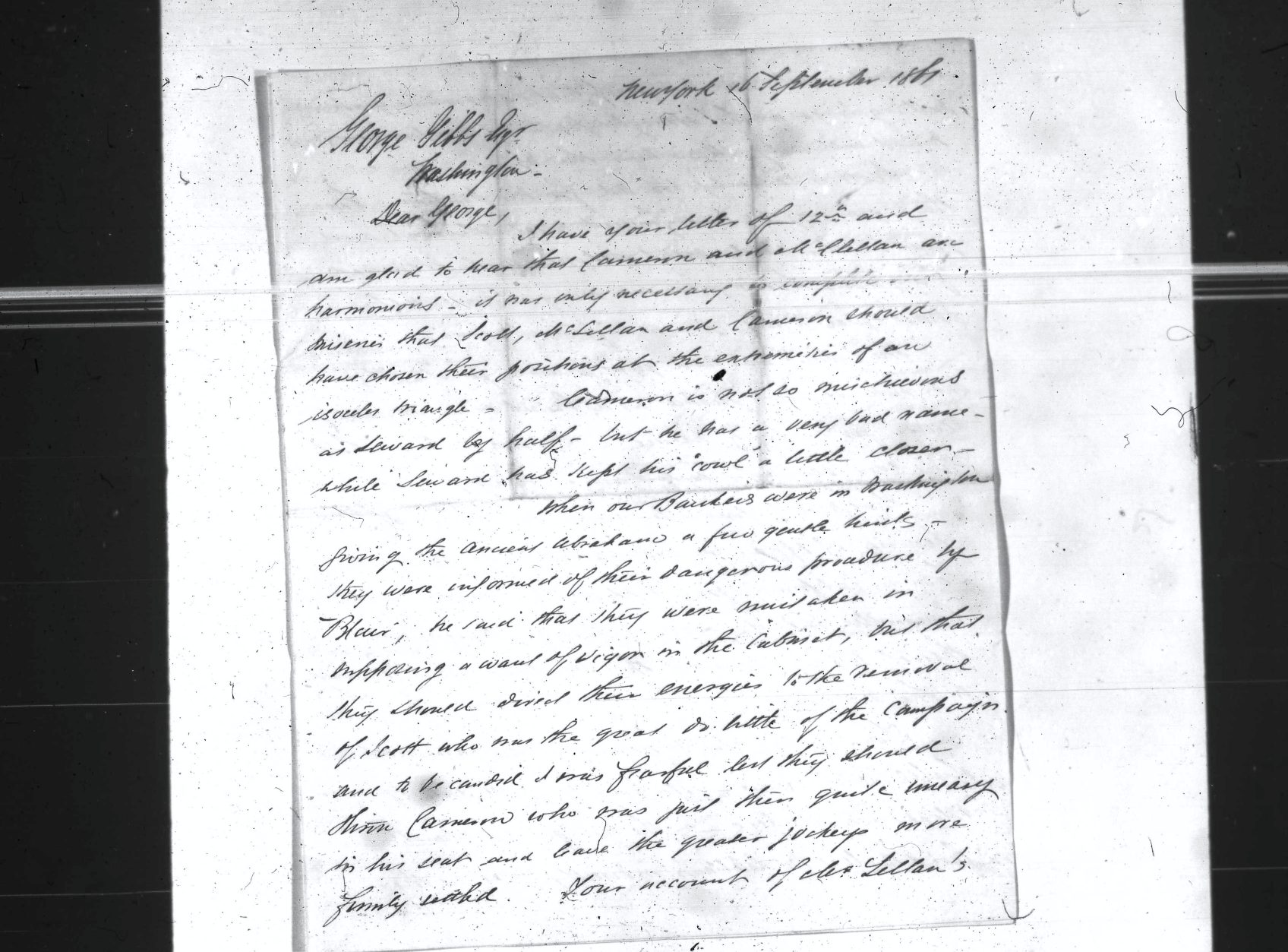
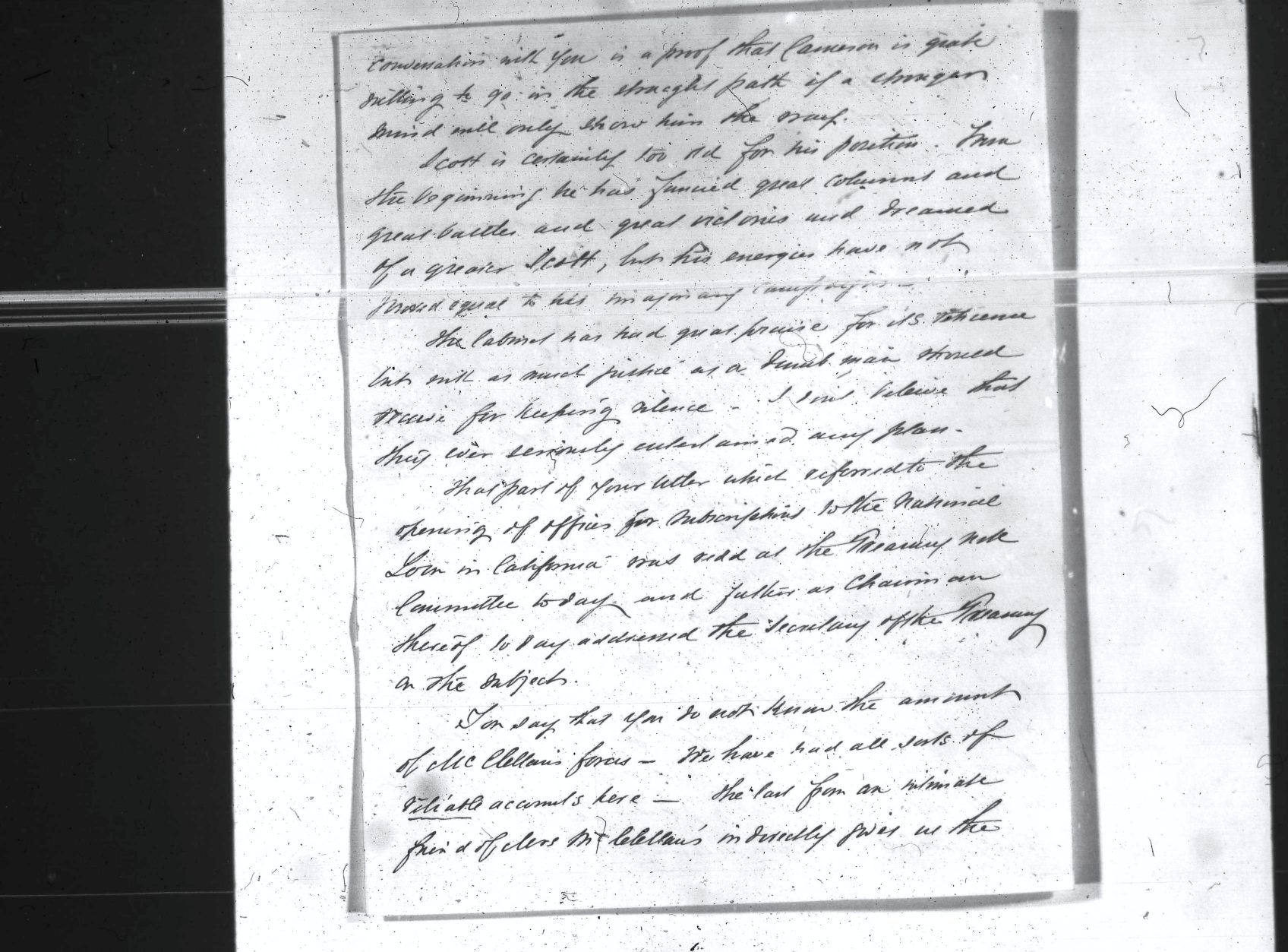
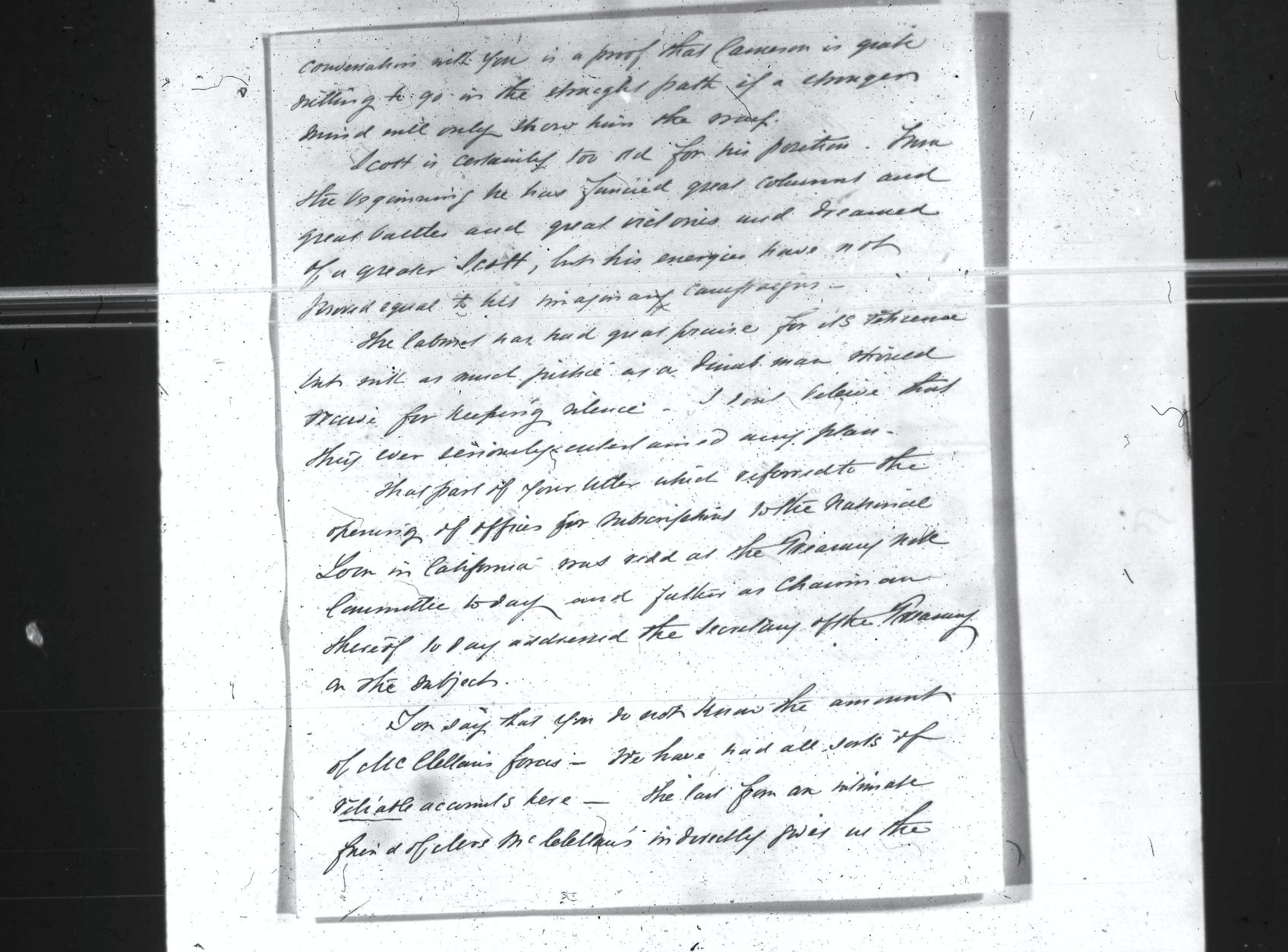
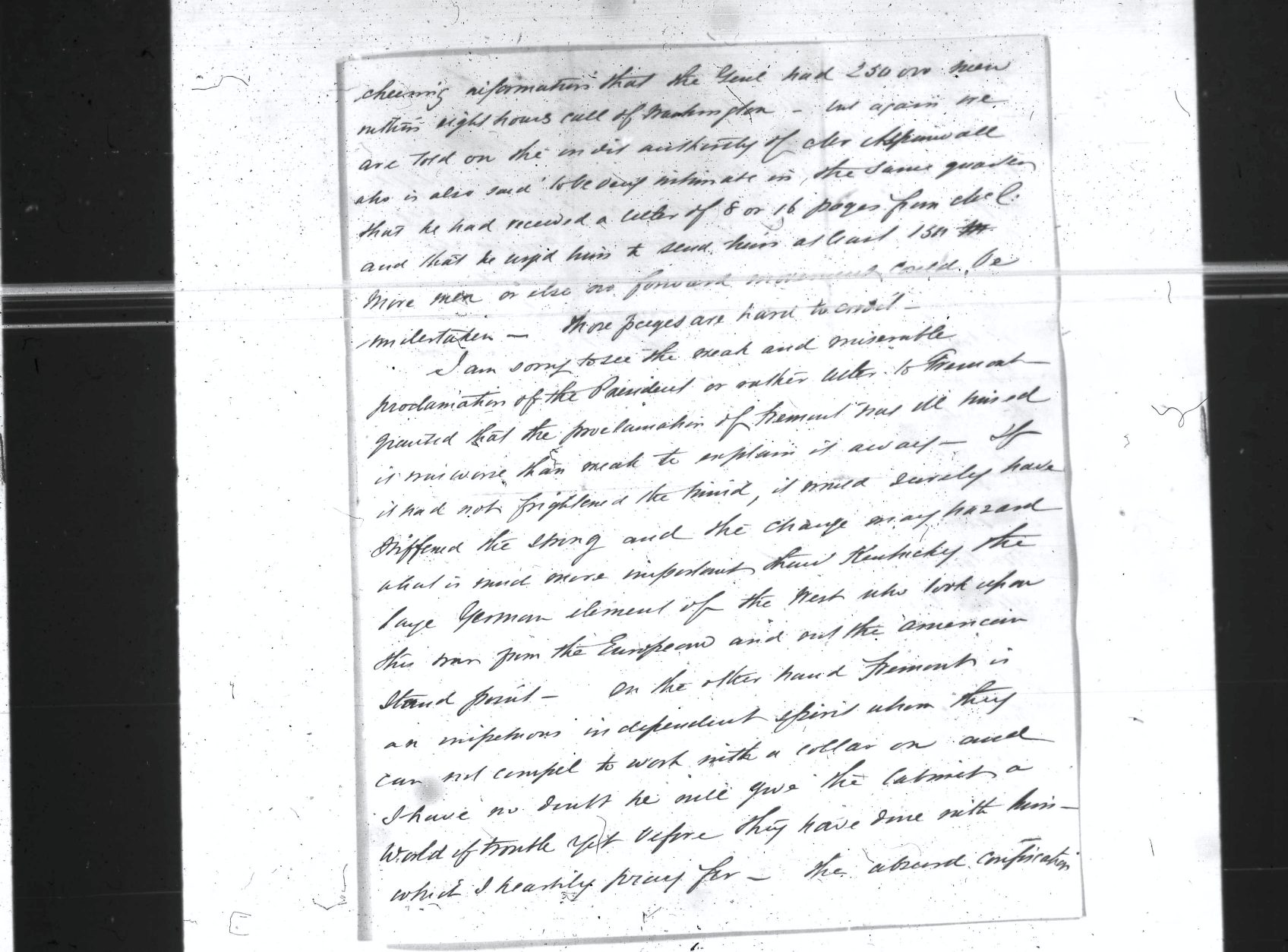
"It was only necessary to complete miseries that Scott, McClellan and Cameron should have chosen their positions at the extremities of an isoceles triangle"; Cameron "not so mischievous as Seward by half"; Blair told the New York bankers the obstacle was Scott
(cont.)
OTHER, GEORGE, CW
1861-09-21
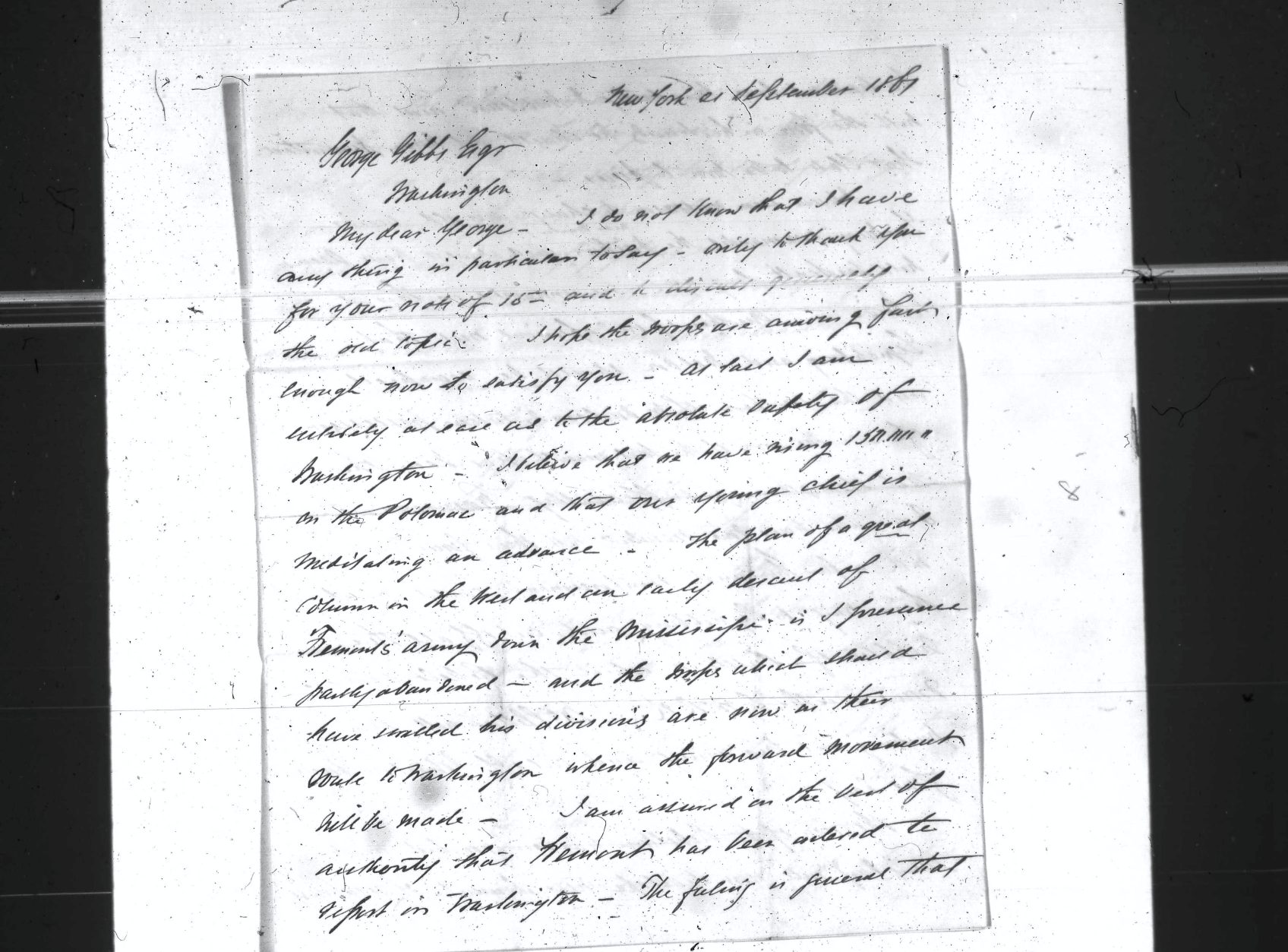
now "entirely at ease as to the absolute safety of Washington," believing rising 150,000 men are on the Potomac; Fremont ordered to report in Washington
New York 21 September 1861
George Gibbs Esqr / Washington / My dear George –
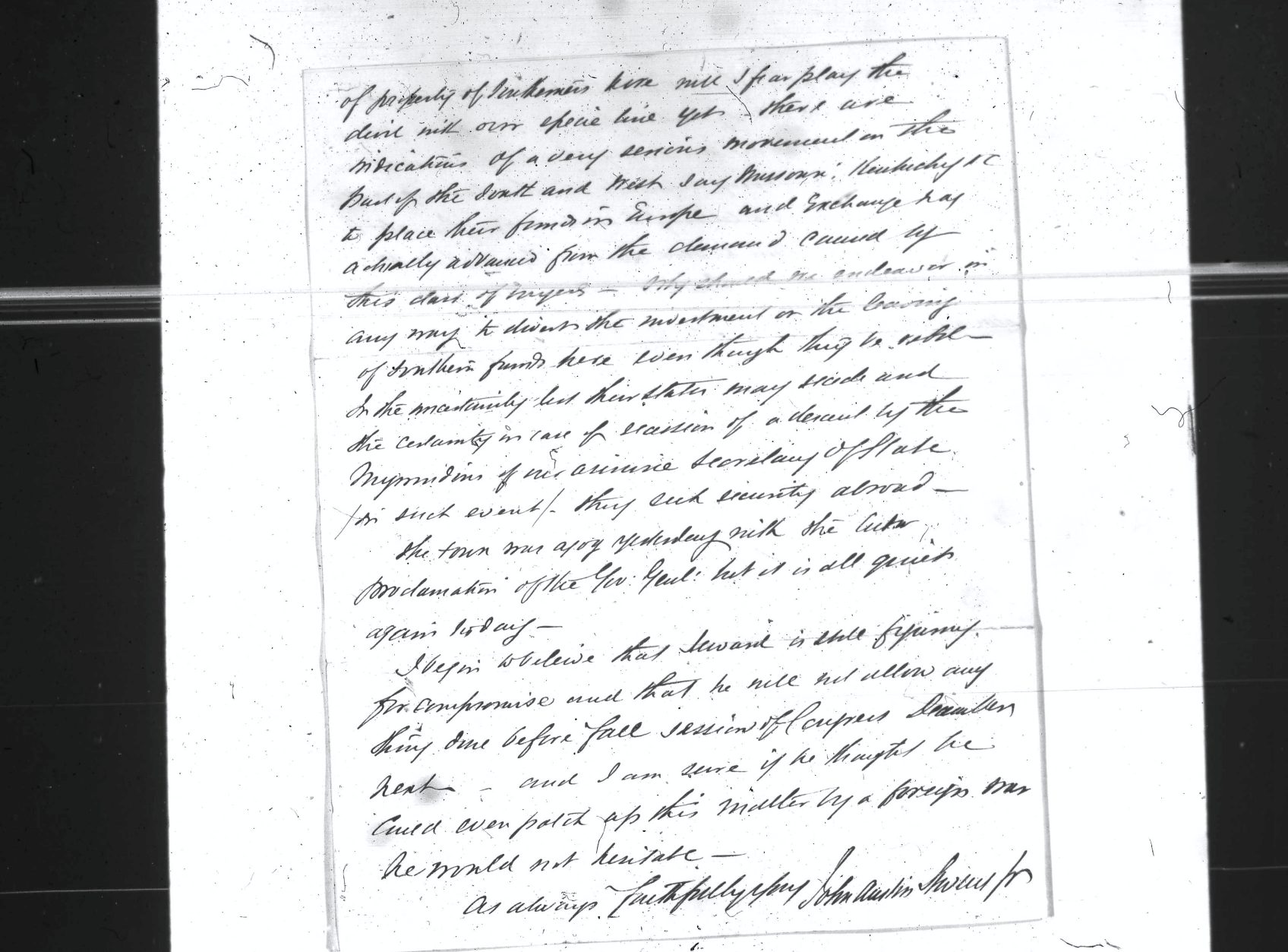
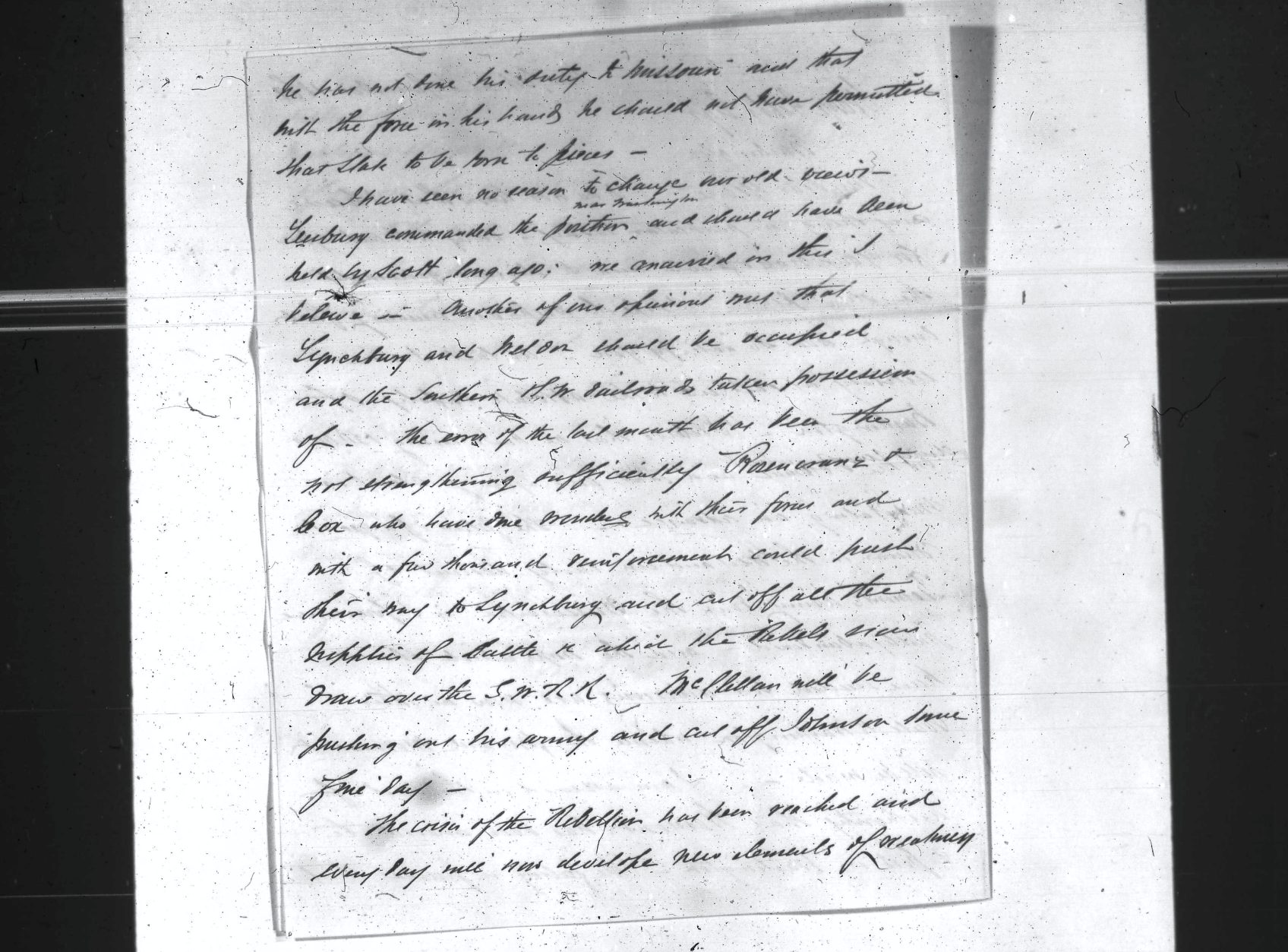
I do not know that I have any thing in particular to say – only to thank you for your note of 15th and to discuss generally the old topic. I hope the troops are arriving fast enough now to satisfy you – At last I am entirely at ease as to the absolute safety of Washington – I believe that we have rising 150.000 m(?) on the Potomac and that our young chief is meditating an advance – The plan of a great column in the West and an early descent of Fremont's army down the Mississippi – is I presume partly abandoned – and the troops which should have swelled his divisions are now on their route to Washington whence the forward movement will be made – I am assured on the best of authority that Fremont has been ordered to report in Washington – The feeling is general that he has not done his duty in Missouri – and that with the force in his hands he should not have permitted that State to be torn to pieces –
I have seen no reason to change our old views – Leesburg commanded the position [interlined: near Washington] and should have been held by Scott long ago; we concurred in this I believe – Another of our opinions was that Lynchburg and Weldon(?) should be occupied and the Southern & W.(?) railroads taken possession of – The error of the last month has been the not strengthening sufficiently Rosencranz & Cox who have done wonders with their force and with a few thousand reinforcements could push their way to Lynchburg and cut off all the supplies of Salt &c which the Rebels now draw over the S. W. R. R. McClellan will be pushing out his army and cut off Johnson some fine day –
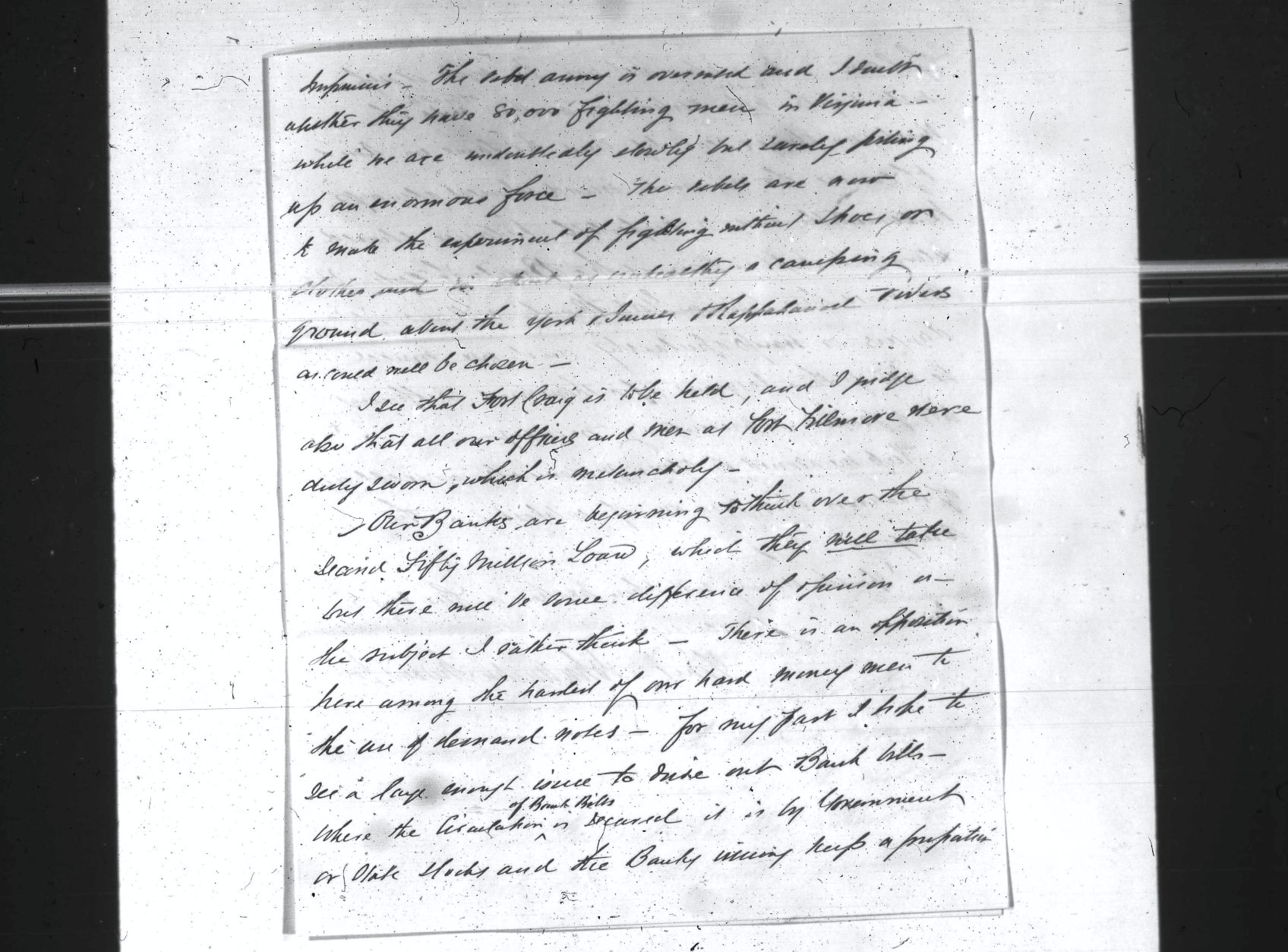
The crisis of the Rebellion has been reached and every day will now develope new elements of weakness & impotence(?) – The rebel army is overrated and I doubt whether they have 80,000 fighting men in Virginia – while we are undoubtedly slowly but surely piling up an enormous force – The rebels are now to make the experiment of fighting without Shoes, or clothes and in [illegible] unhealthy a camping ground about the York, James & Rappahannock rivers as could well be chosen –
I see that Fort Craig is to be held, and I judge also that all our officers and men at Fort Fillmore were duly sworn; which is melancholy –
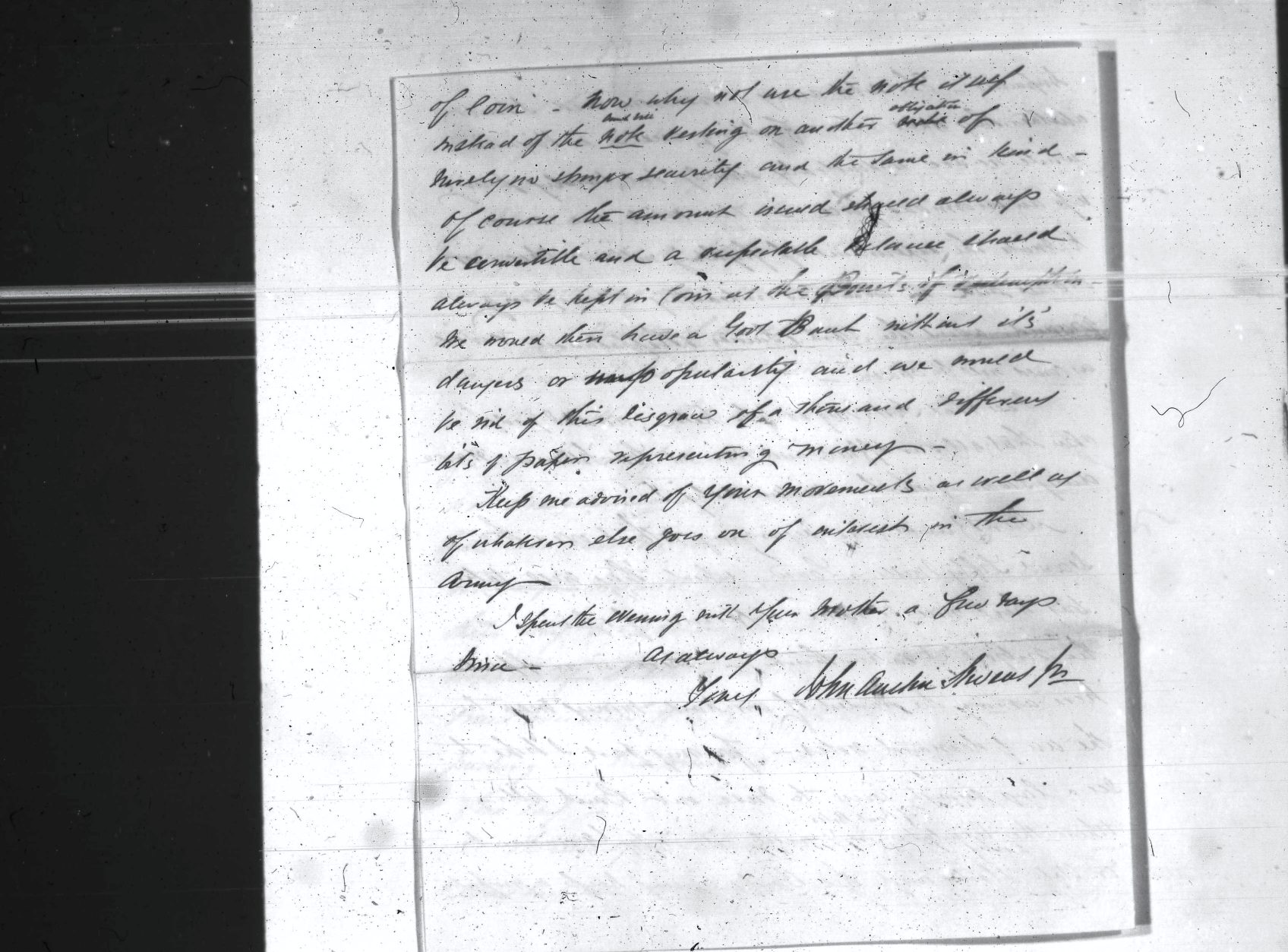
Our Banks are beginning to think over the Second Fifty Million Loan, which they will take – but there will be some difference of opinion on the subject I rather think – There is an opposition here among the hardest of our hard money men to the use of demand notes – For my part I like to see a large enough issue to drive out Bank bills – where the circulation [interlined: of Bank Bills] is decreased it is by Government or State Stocks and the Banks issuing keep a proportion of Coin – Now why not use the note itself instead of the note [interlined: and its] resting on another [interlined: obligation] [illegible] of – surely no stronger security and the same in kind – of course the amount issued should always be convertible and a respectable balance should always be kept in Coin at the points(?) of redemption – We would then have a Govt Bank without it's dangers or [struck, illegible] popularity and we would be rid of this disgrace of a thousand different lots of paper representing money –
Keep me advised of your movements as well as of whatever else goes on of interest in the army –
I spent the evening with your Mother a few days since –
As always
Yours John Austin Stevens Jr
Four frames = four consecutive pages of one folded letter sheet; no wrapper or docket filmed. The ink is pale and the film carries heavy horizontal scratch bands across every frame; all readings were made from contrast-enhanced crops. 'will take' (frame 85) is underlined in the original, as is 'the note' in the sentence beginning 'Now why not use the note itself' (frame 86). Frame 84 carries an interlined 'near Washington' above 'the position'; frame 85 an interlined 'of Bank Bills' above 'the circulation'; frame 86 two interlineations ('and its', 'obligation') over a cancelled word. The words marked (?) resisted certainty: the troop figure on frame 83 is written '150.000' followed by a short abbreviation stroke; 'Weldon' on frame 84 could be read 'Nelson'; the two initials before 'railroads' on frame 84 are indistinct. One badly faded line on frame 85 ('clothes and in … unhealthy a camping ground') could not be fully recovered and is marked [illegible].
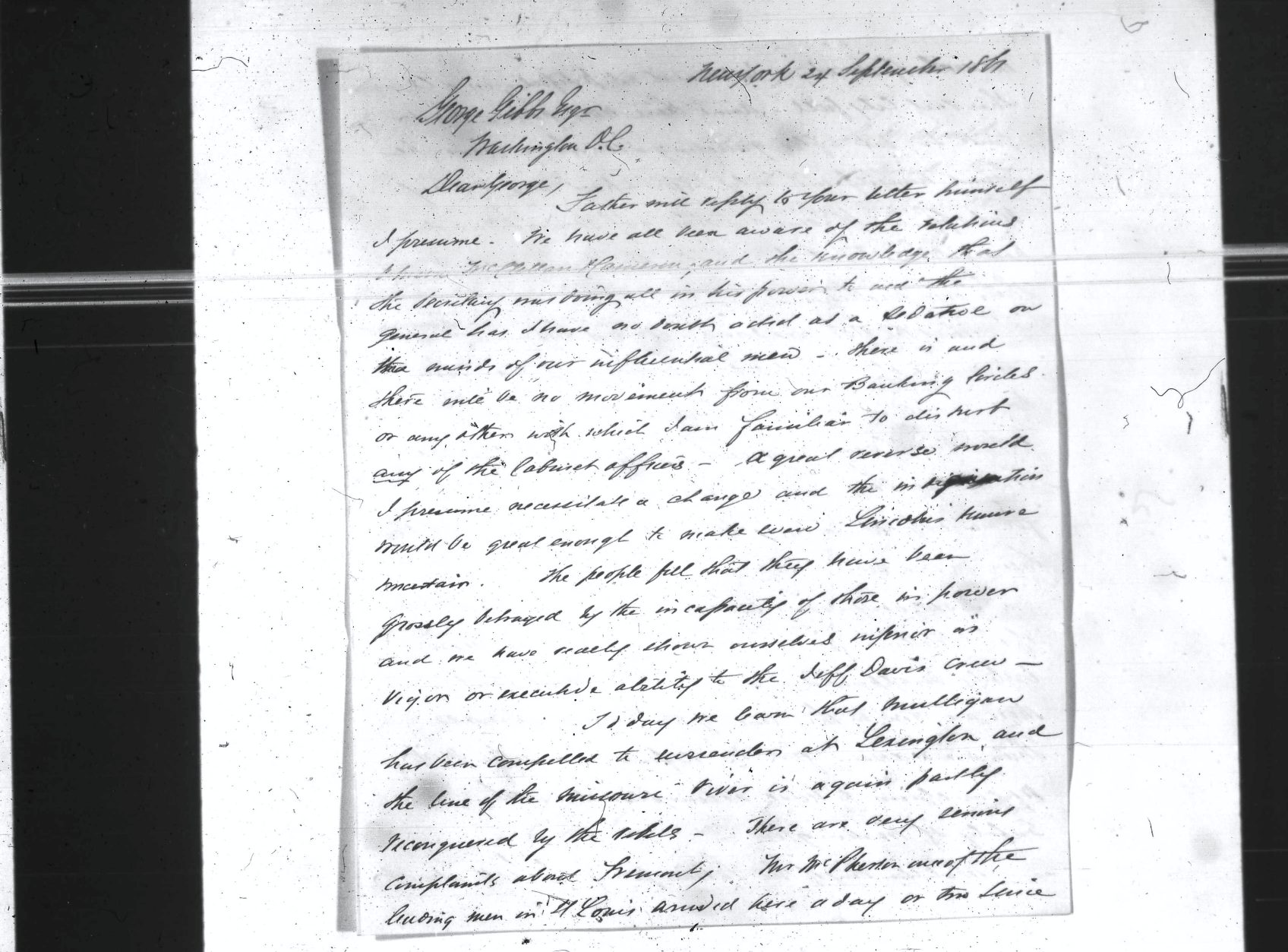
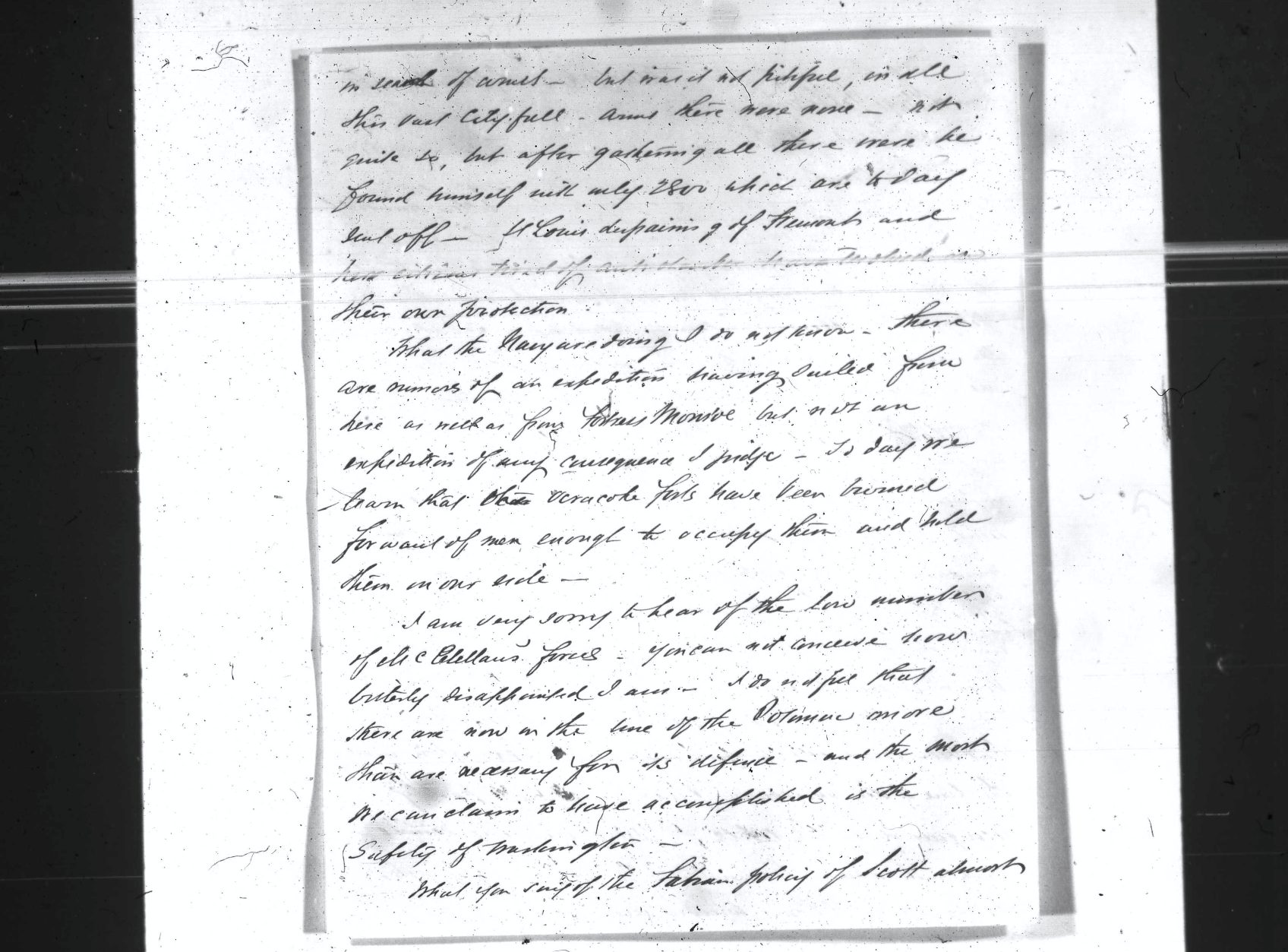
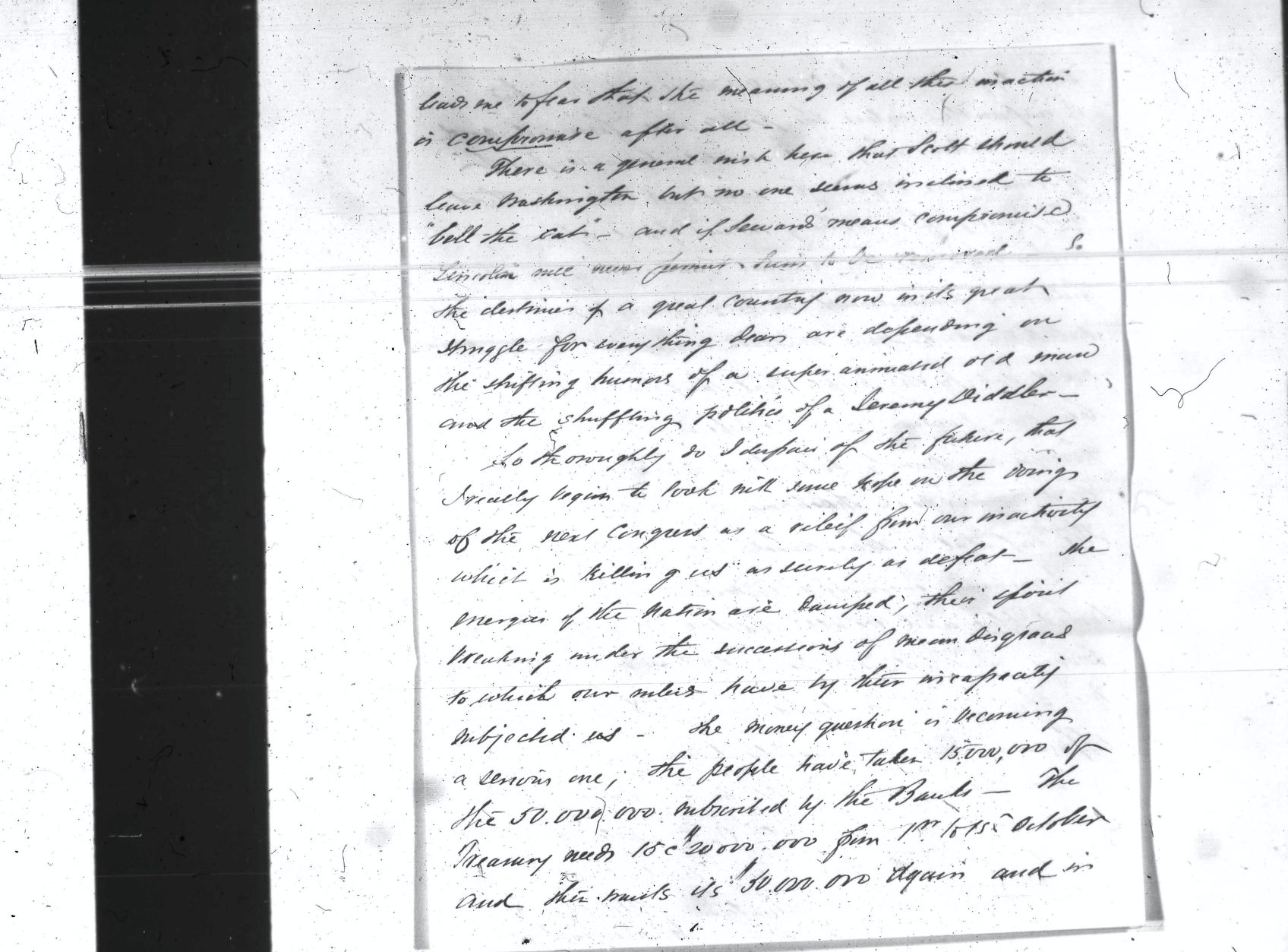
1861-09-24
"The people feel that they have been grossly betrayed by the incapacity of those in power"; today's news that Mulligan has been compelled to surrender at Lexington; deep complaints about Fremont
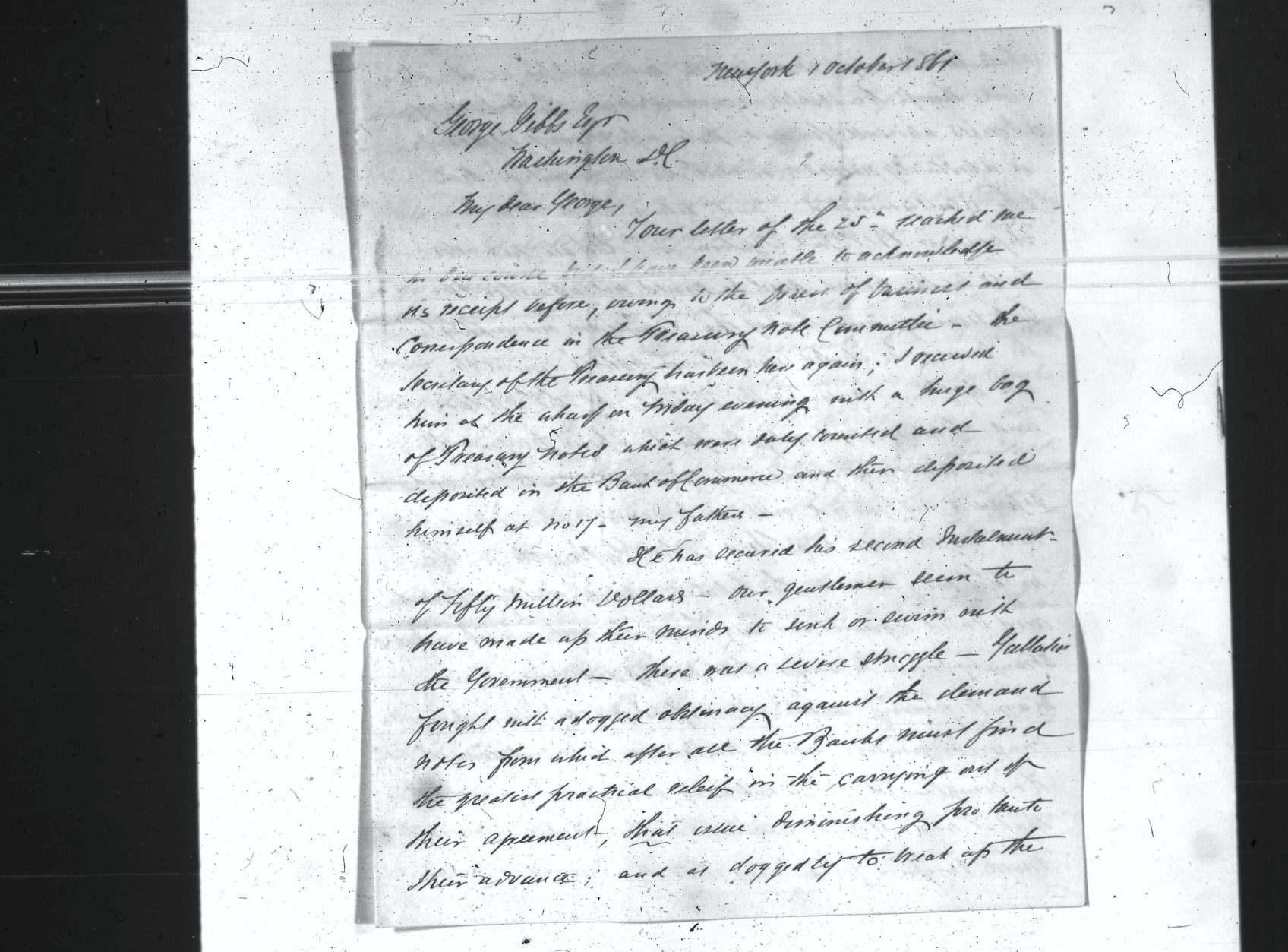
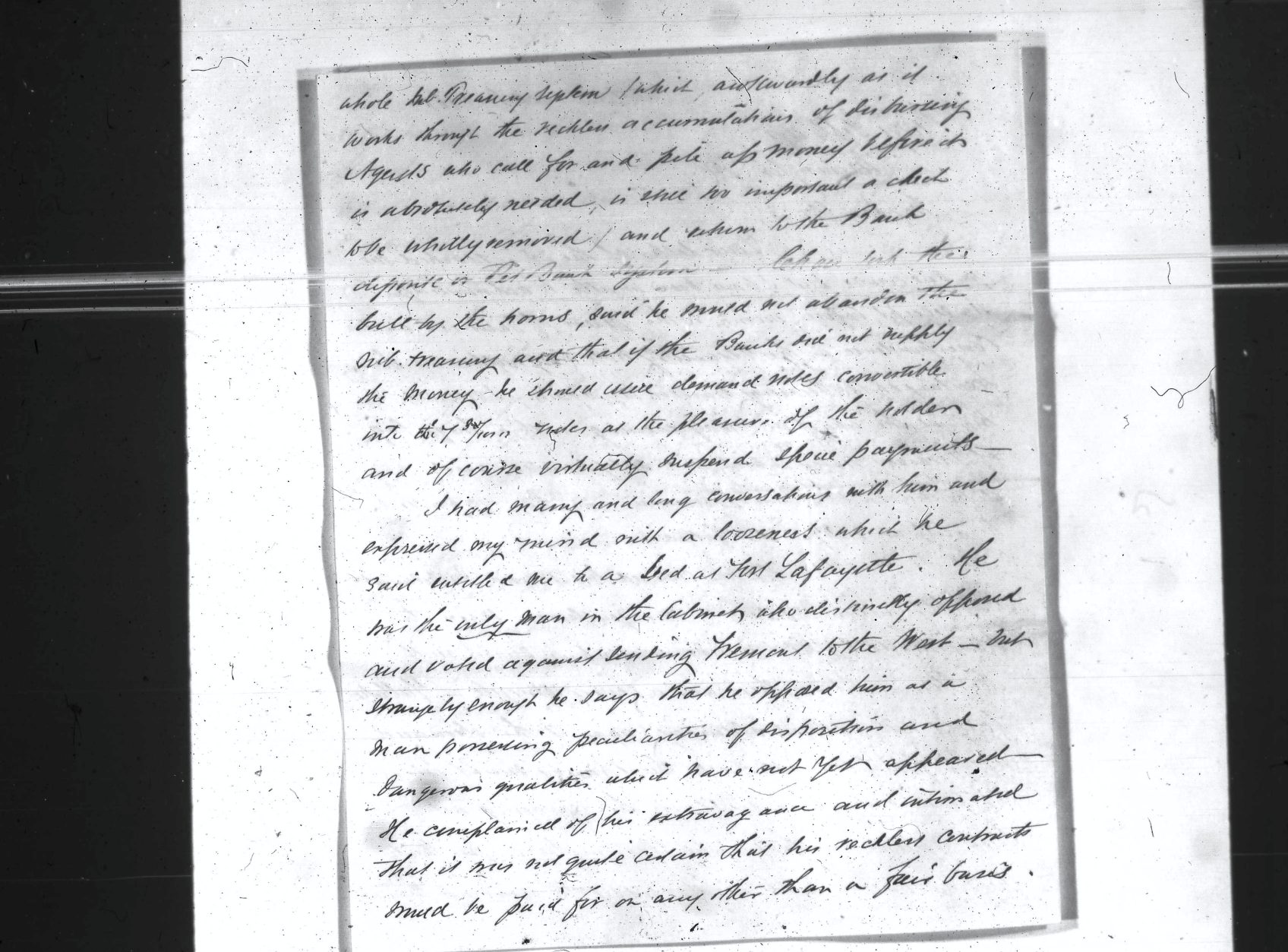
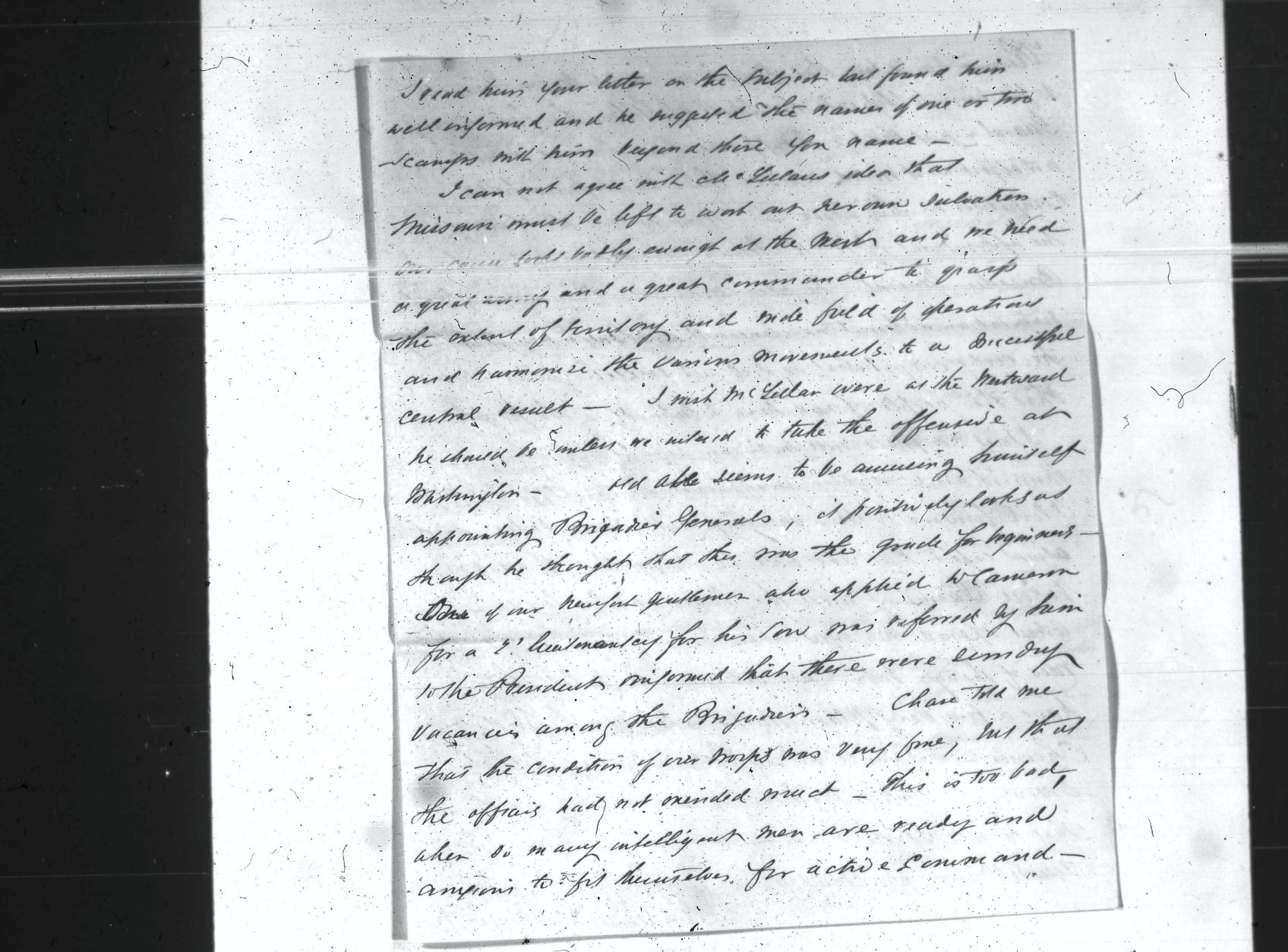
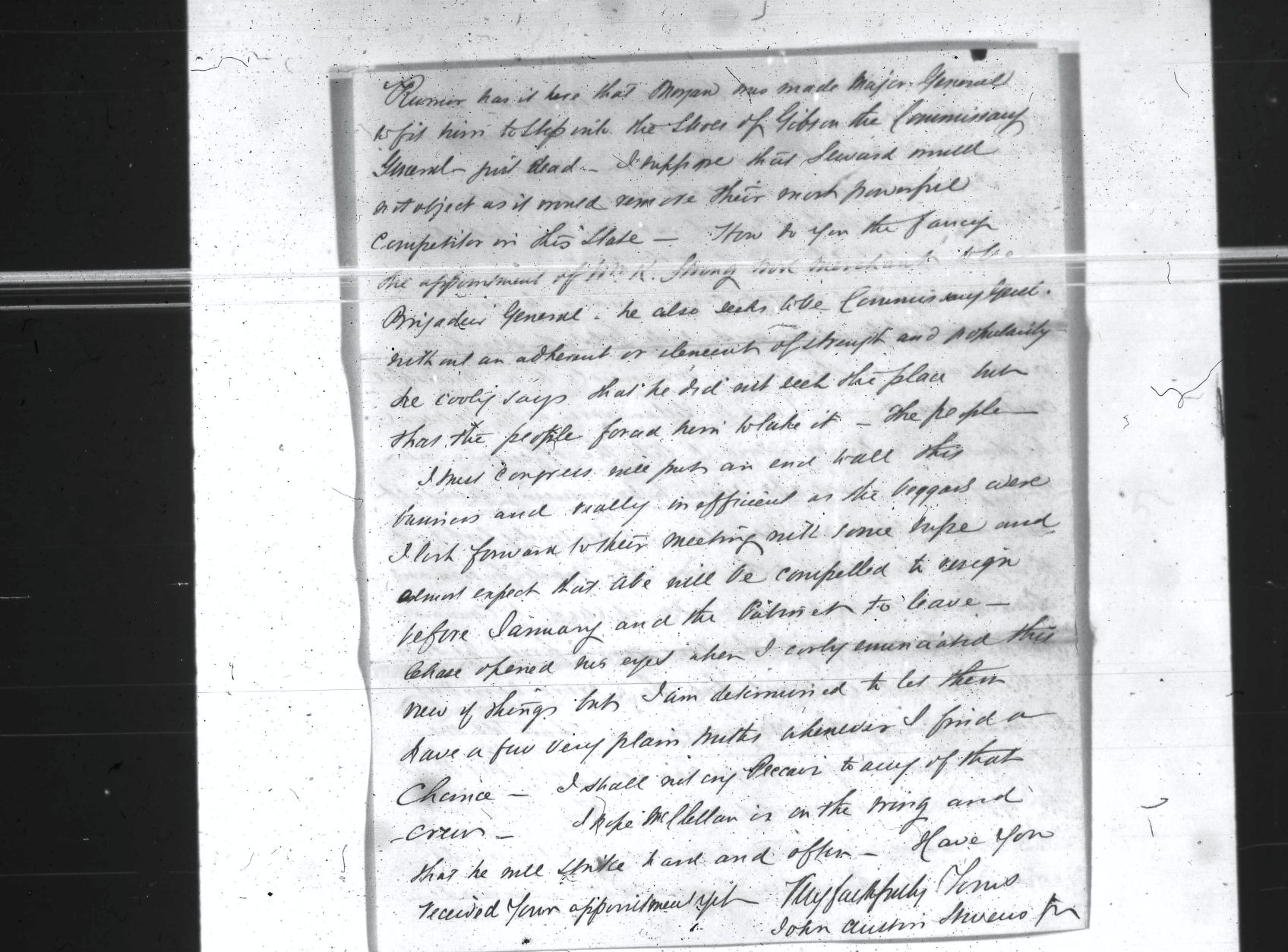
1861-10-01?
met Sec. Chase at the wharf "with a huge bag of Treasury Notes"; Chase has secured the second instalment of fifty million dollars; the New York banks resolved to "sink or swim with the Government"; James Gallatin "fought with a dogged obstinacy" against the demand notes
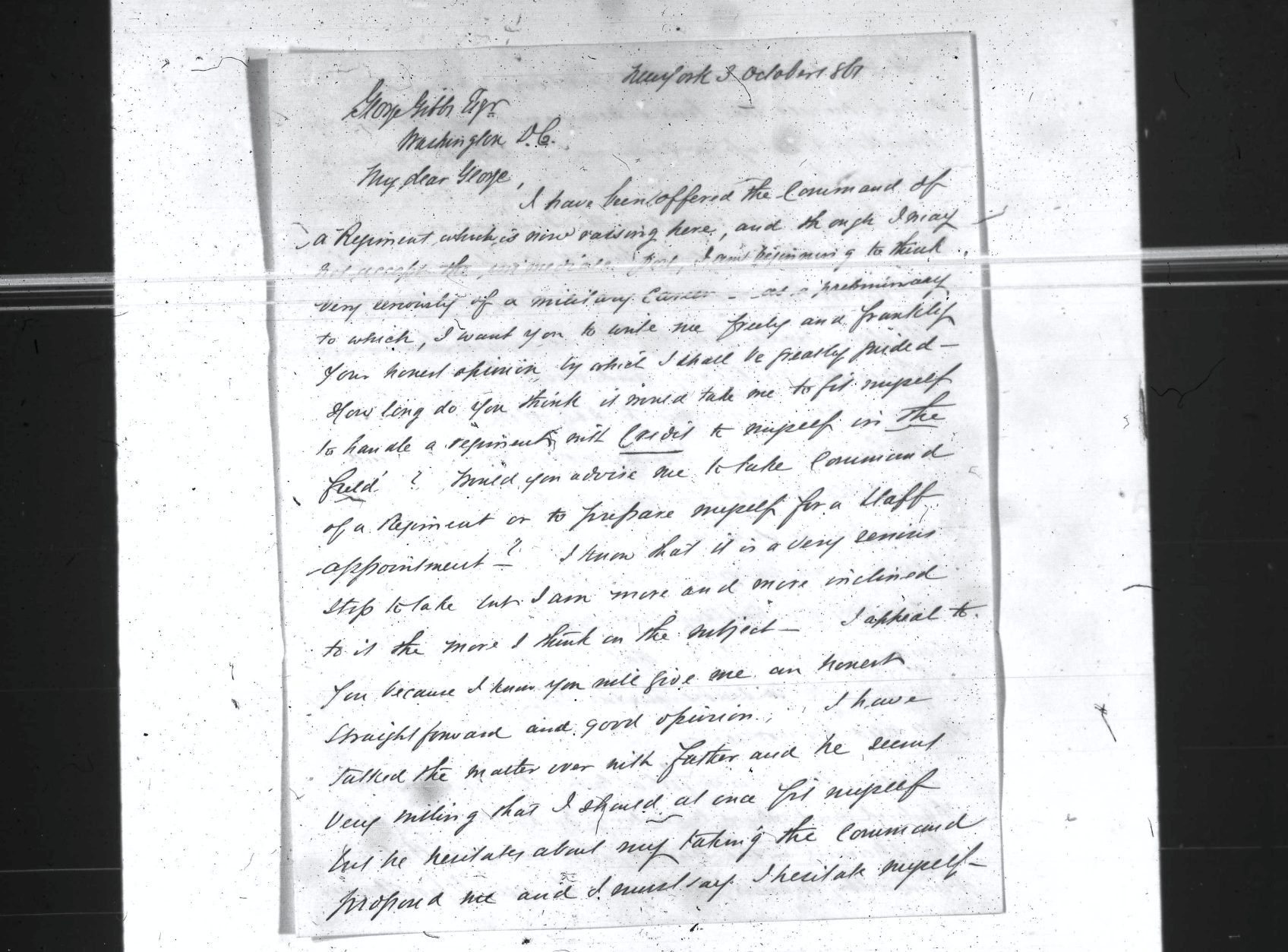
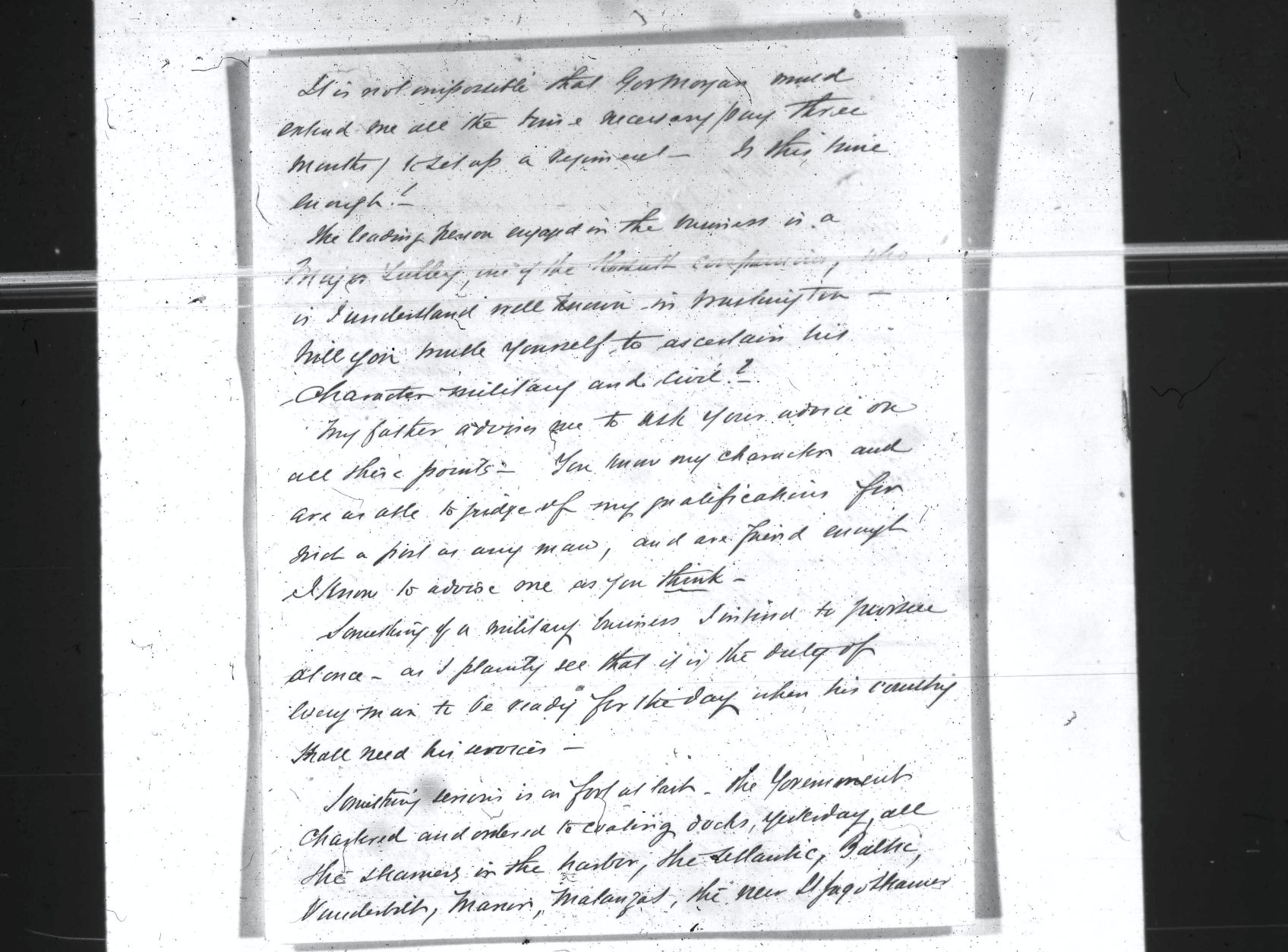
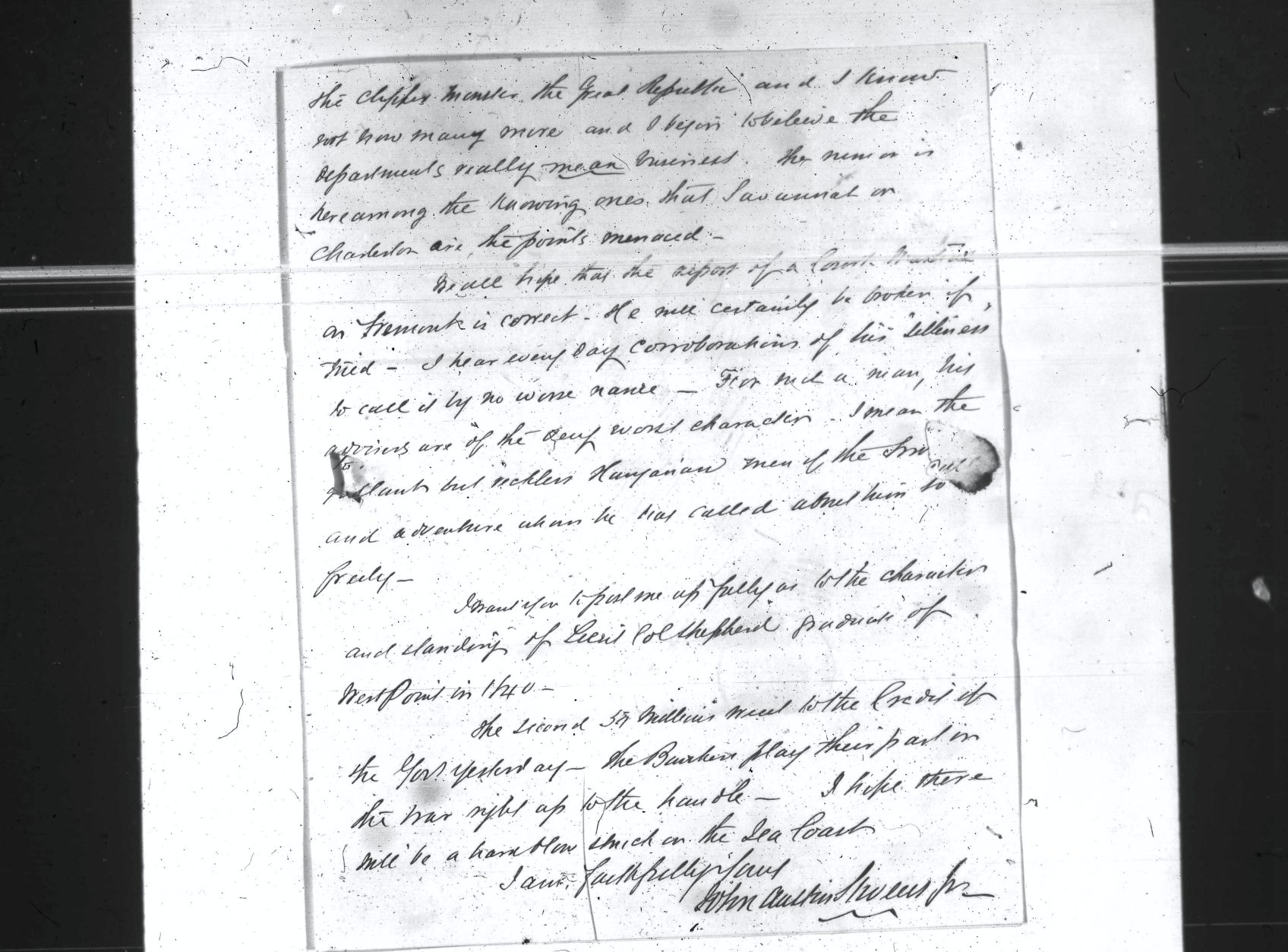
1861-10-03
offered command of a regiment now raising in New York; asks Gibbs's honest opinion how long to fit himself to handle a regiment "with credit to myself in the field"
1861-10-03
GEORGE, OTHER, CW
1861-10-05
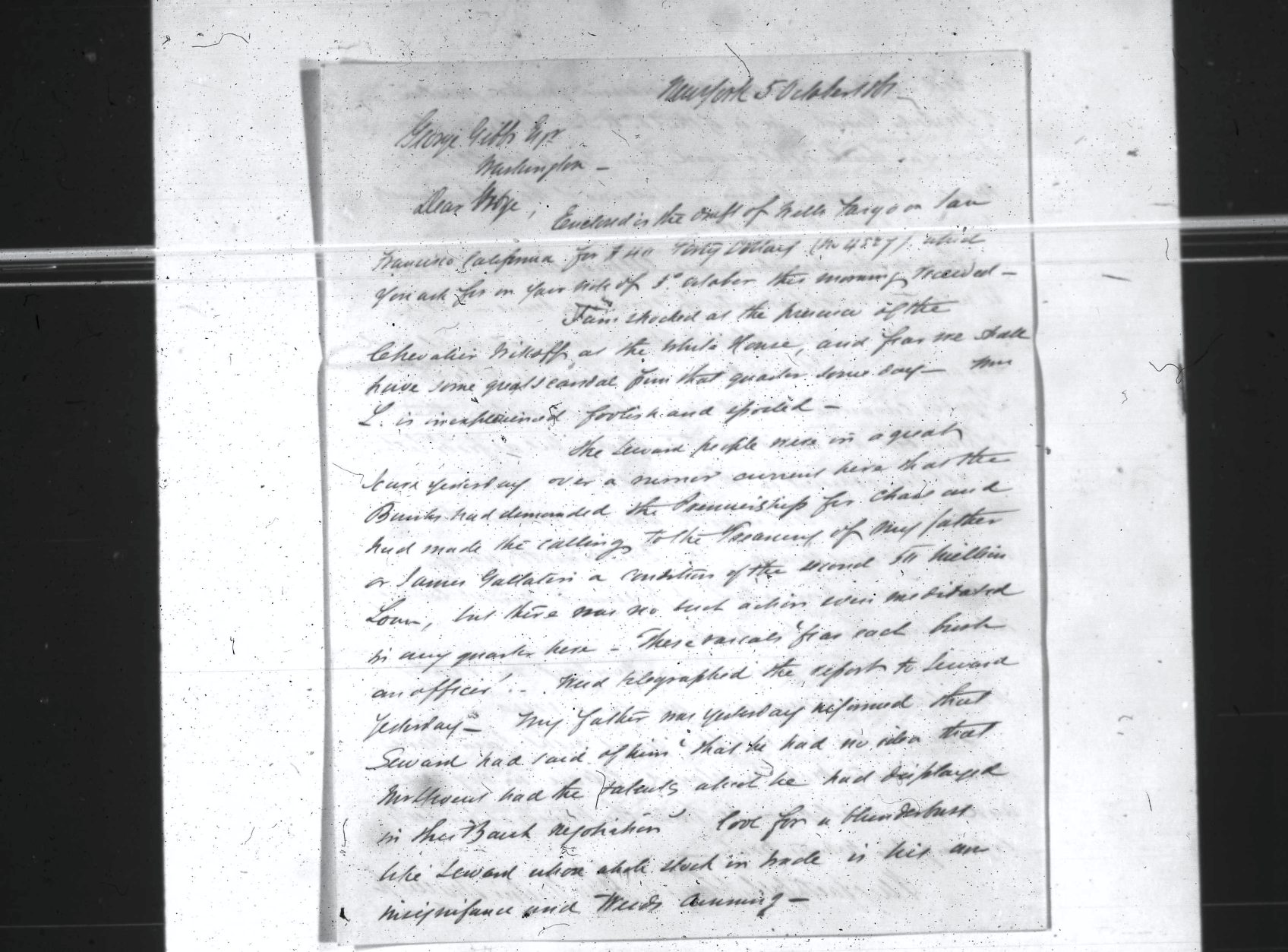
encloses a Wells Fargo draft on San Francisco for $40 (No. 4527); "shocked at the presence of the Chevalier Wikoff at the White House… Mrs. L. is inexperienced, foolish and spoiled"; Seward on Stevens Sr., "had no idea that Mr Stevens had the talents which he had displayed in the Bank negotiation"
New York 5 October 1861 –
George Gibbs Esq.r / Washington – / Dear George,
Enclosed is the draft of Wells Fargo on San Francisco California for $40 Forty Dollars (No 4527) which you ask for in your note of 3d October this morning received –
I am shocked at the presence of the Chevalier Wikoff, at the White House, and fear we shall have some great scandal from that quarter some day – Mrs L. is inexperienced foolish and spoiled –
The Seward people were in a great scare yesterday over a rumor current here that the Banks had demanded the Premiership for Chase and had made the calling to the Treasury of my father or James Gallatin a condition of the second $50 Million(?) Loan, but there was no such action even meditated in any quarter here – These rascals 'fear each bush an officer'.. and telegraphed the report to Seward Yesterday –
My father was yesterday informed that Seward had said of him 'that he had no idea that Mr Stevens had the talents which he had displayed in the Bank negotiation.' look for a thunderbolt like Seward whose whole stock in trade is his own insignificance and Weeds cunning –
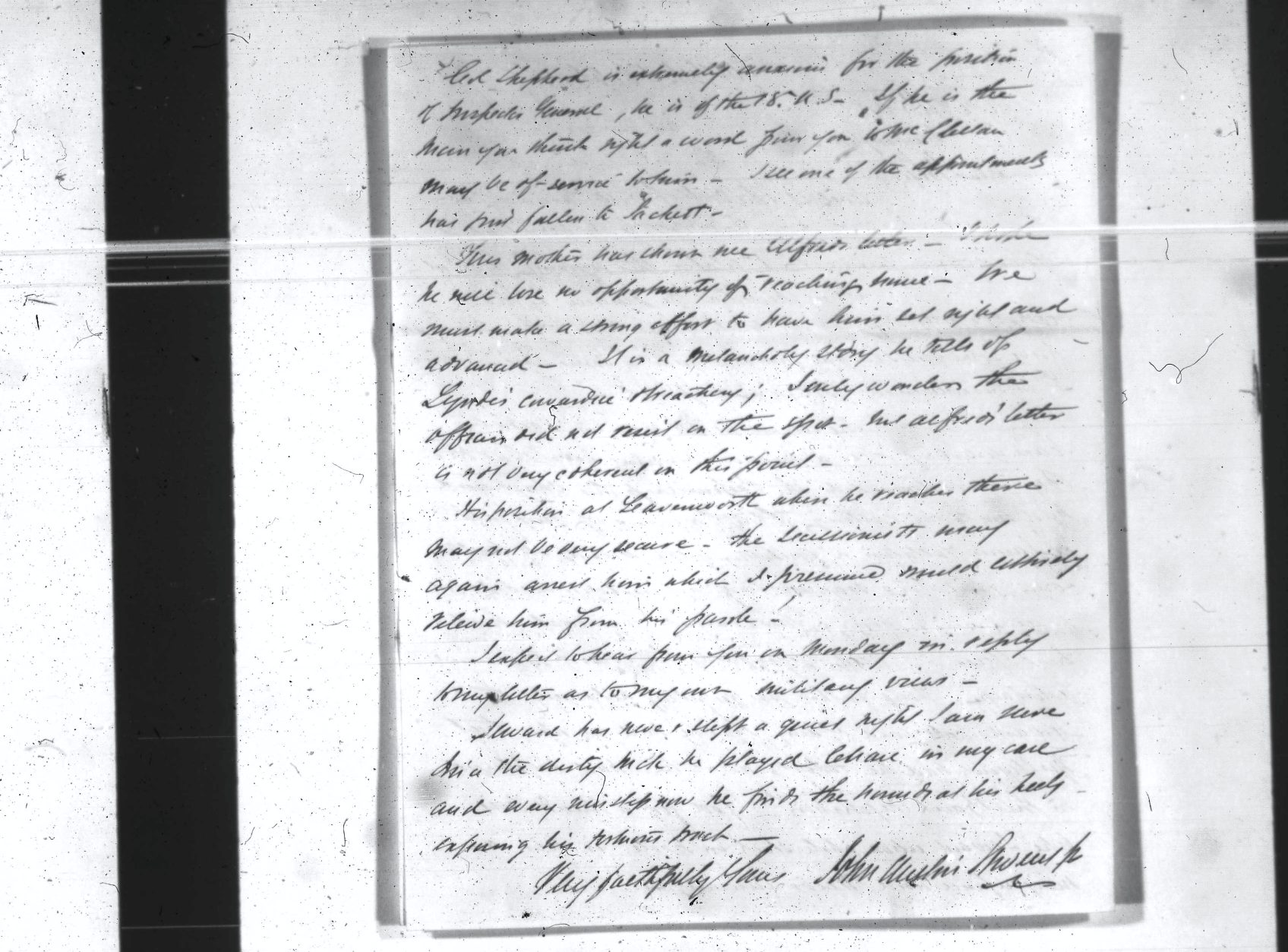
Col. Shepherd is extremely anxious for the position of Inspector General, he is of the 18. U.S. – If he is the man you think right a word from you to McClellan may be of service to him – I see one of the appointments has just fallen to Sackett –
Your mother has shown me Alfreds letter – I trust he will lose no opportunity of reaching home – We must make a strong effort to have him set aright(?) and advanced – It is a melancholy story he tells of Lyndes cowardice 'treachery;' I only wonder the officers did not resist on the spot – but Alfreds letter is not very coherent on this point –
His position at Leavenworth when he reaches there may not be very secure – the Secessionists may again arrest him which I presume would entirely relieve him from his parole –
I expect to hear from you on Monday in reply to my letter as to my own military views –
Seward has never slept a quiet night I am sure since the dirty trick he played Cochrane in my case and every night now he finds the hounds at his heels exposing his tortuous track. –
Very faithfully Yours
John Austin Stevens Jr
[enclosure leaf, frame 102, in the same hand]
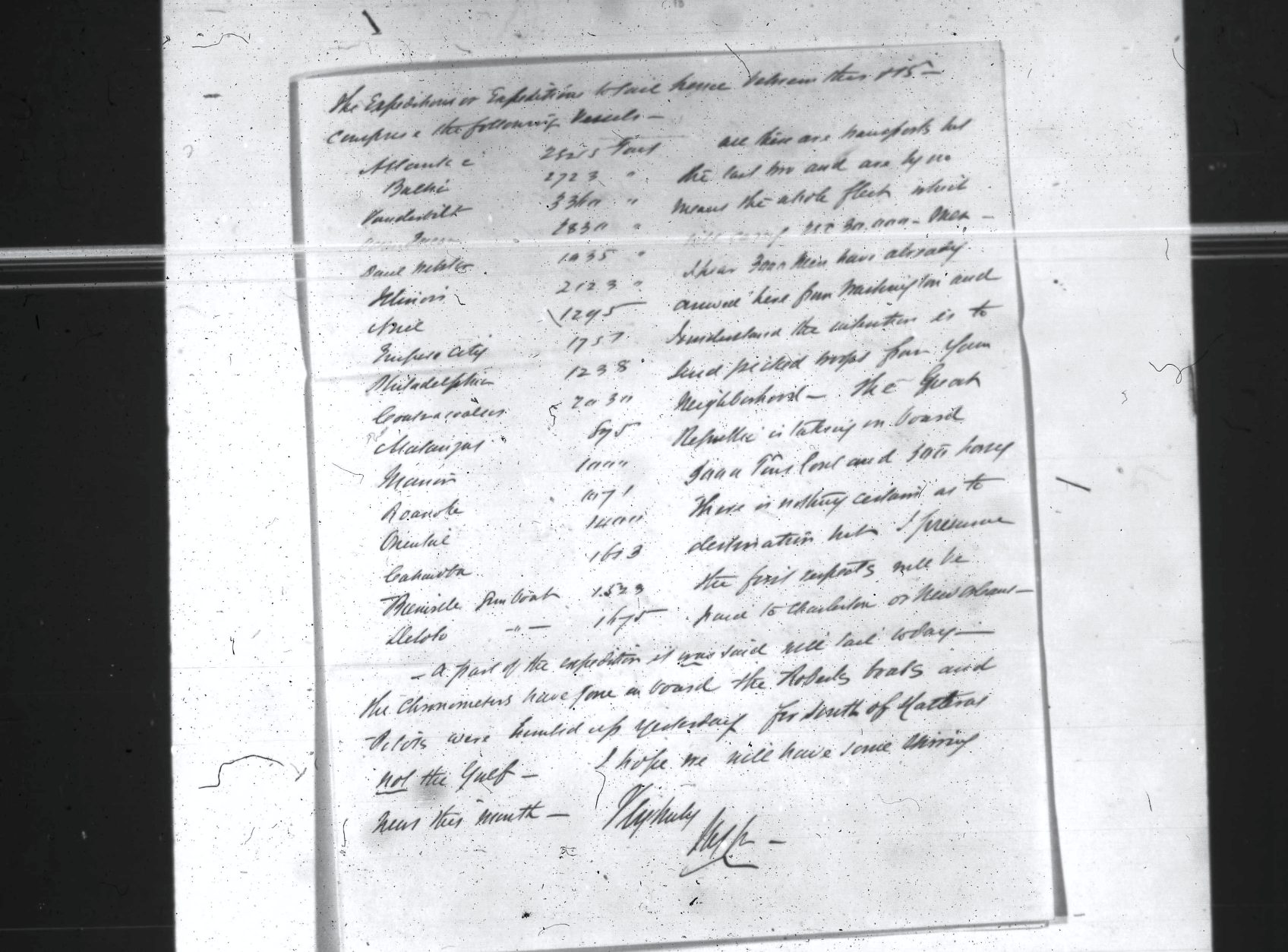
The Expeditions or Expedition to sail hence between this & 15th – Comprise the following Vessels –
Atlantic 2825 Tons
Baltic 2723 "
Vanderbilt 3360 "
Ocean(?) Queen 1830 "
Danl Webster 1035 "
Illinois 2123 "
Ariel 1295
Empire City 1757
Philadelphia 1238
Coatzacoalcos 2030
[2d?] Matanzas 895
Marion 1000
Roanoke 1071
Oriental 1400
Cahawba 1613
Bienville Gun boat 1523
DeSoto "-" 1675
all these are transports but the last two and are by no means the whole fleet, which [illegible] 25 or 30,000 – Men –
I hear 2000 Men have already arrived here from Washington and I understand the intention is to send picked troops from Your neighborhood – the Great Republic is taking on board 9000(?) Tons Coal and 500 horses
There is nothing certain as to destination but I presume the first efforts will be made to Charleston or New Orleans –
– A part of the expedition it was said will sail today – the Chronometers have gone on board the Roberts boats and Pilots were hurried up yesterday for South of Hatteras not the Gulf –
I hope we will have some stirring news this month –
Faithfully
JAS Jr –
Endorsed: J. A. Stevens Jr / Oct. 5. 1861
Autograph letter, John Austin Stevens Jr. to George Gibbs IV. Frames 100-101 are the bifolium letter proper (pages 1-2). Frame 102 is a separate enclosure leaf in the same hand, headed with the expedition/vessel list; it is laid out in two columns – the vessel names with their tonnages down the left, the running commentary down the right – and is transcribed here as list entries followed by the commentary. The tonnage figures sit slightly above the line of the name they belong to, so the pairing of a few names to their figures is inferred from position; a brace joins the Coatzacoalcos and Matanzas entries. The word 'not' in 'not the Gulf' is underlined in the original. One line of the right-hand column ('which … 25 or 30,000 Men') is crossed by a film flare and its first words are lost. Frame 103 is the blank outer leaf carrying only the docket; the letter's writing shows through the paper. Ship identifications are not supplied: names are given as written. The reading 'set aright' at 'have him set aright and advanced' is uncertain. The quotation 'fear each bush an officer' is Shakespeare (3 Henry VI) and is marked with quotation strokes in the original.
1861-10-11
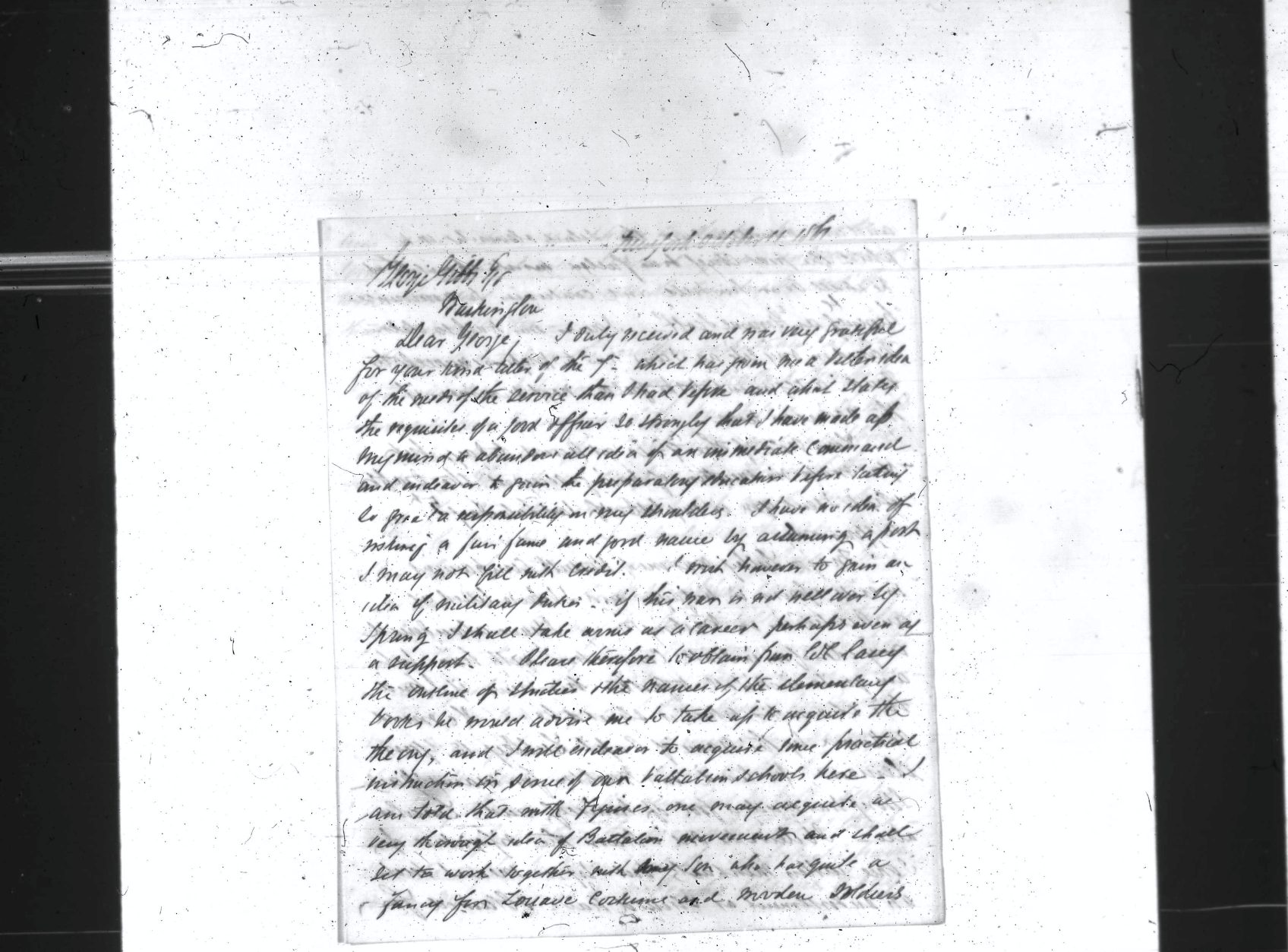
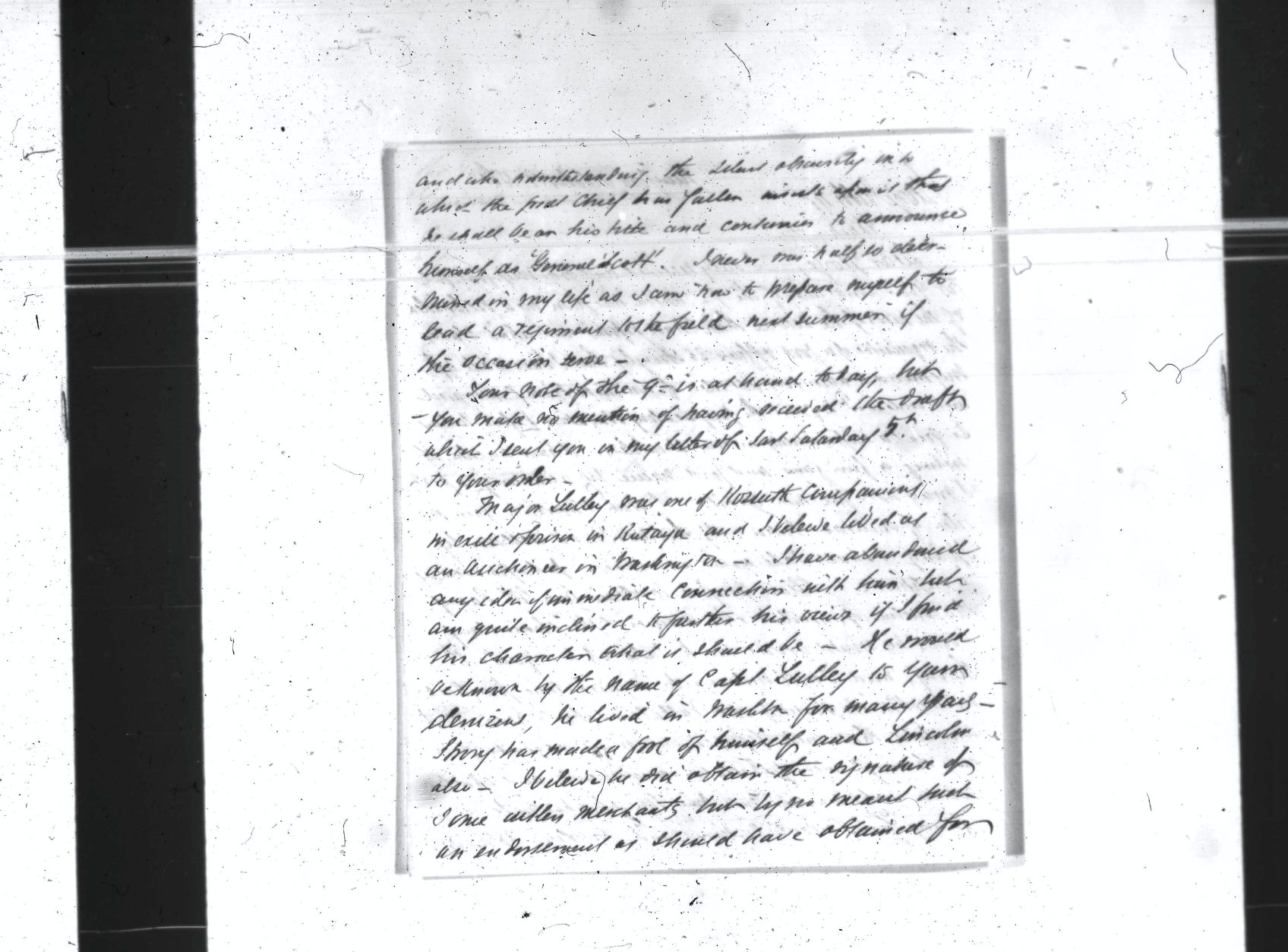
has abandoned all idea of an immediate command; "I have no idea of making a fair fame and good name by assuming a post I may not fill with credit"; asks Gibbs to obtain from Col. Casey the outline of studies
1861-10-12
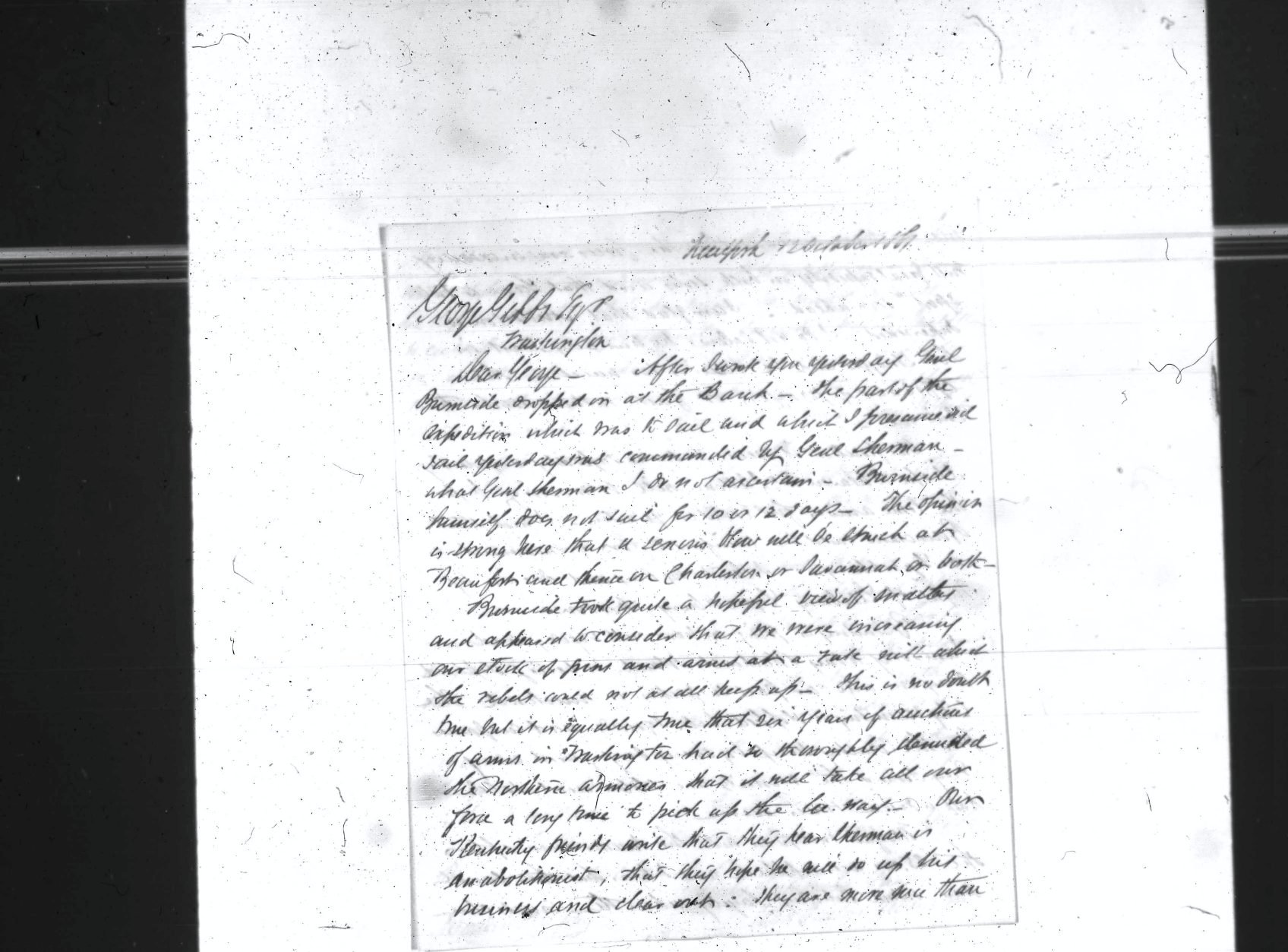
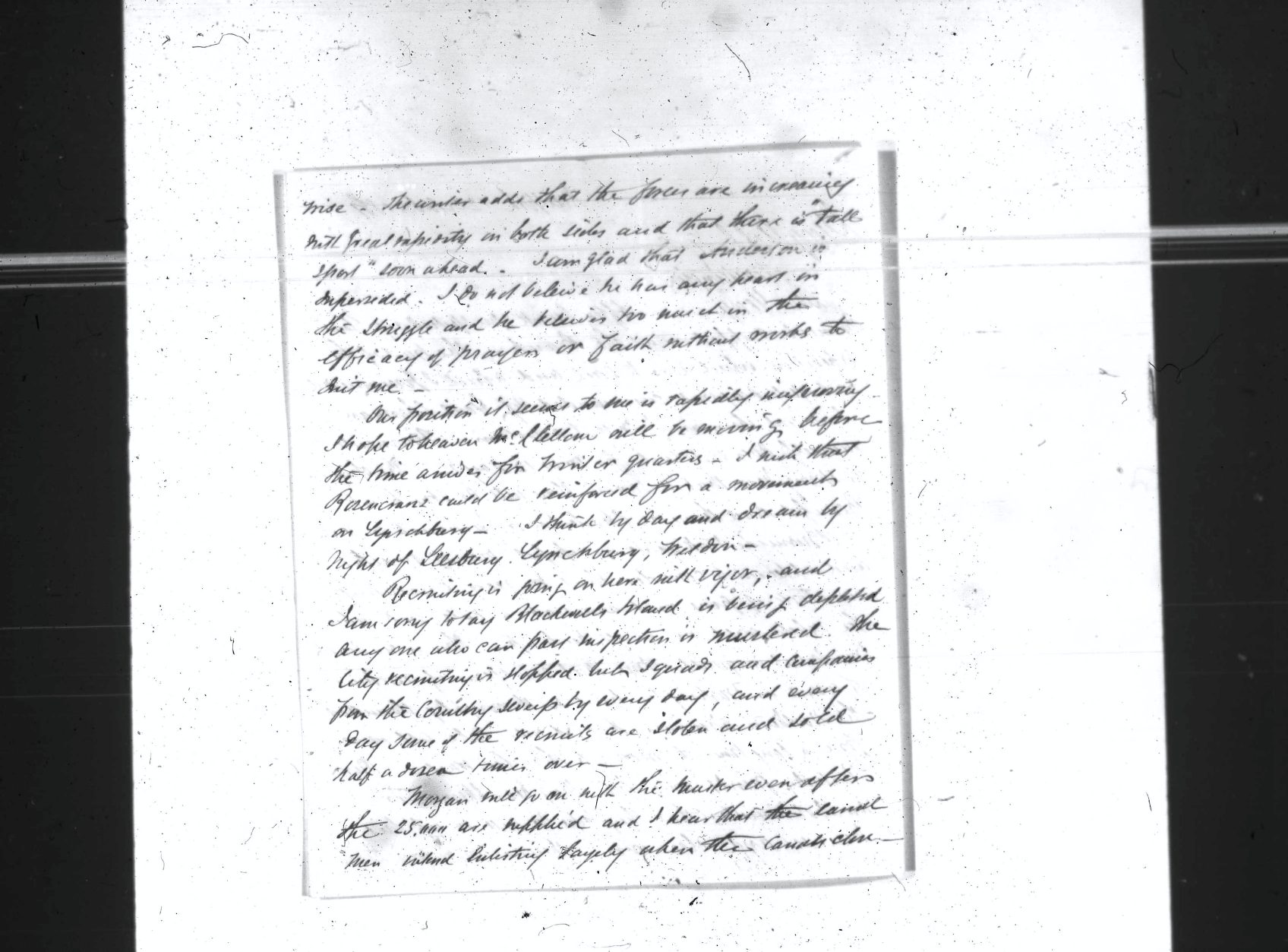
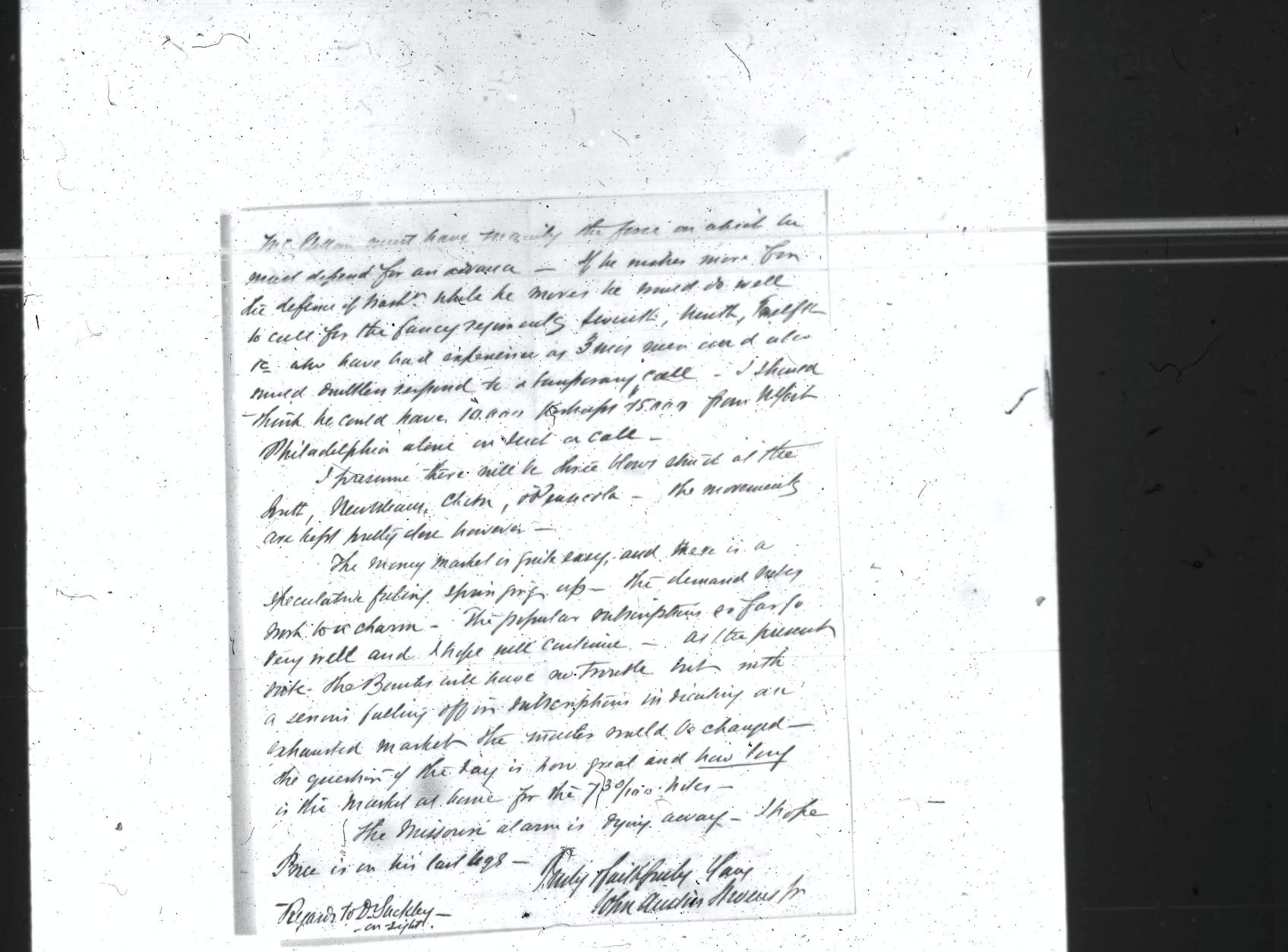
Genl Burnside dropped in at the Bank; the part of the expedition that sailed was commanded by "Genl Sherman – what Genl Sherman I do not ascertain"; six years of "auction of arms in Washington" had denuded the Northern armories
Dark cloth pocket notebook blind-stamped "NWBS" over "INDIAN NOTES" – George Gibbs's Northwest Boundary Survey ethnographic field notebook
1861-10-15
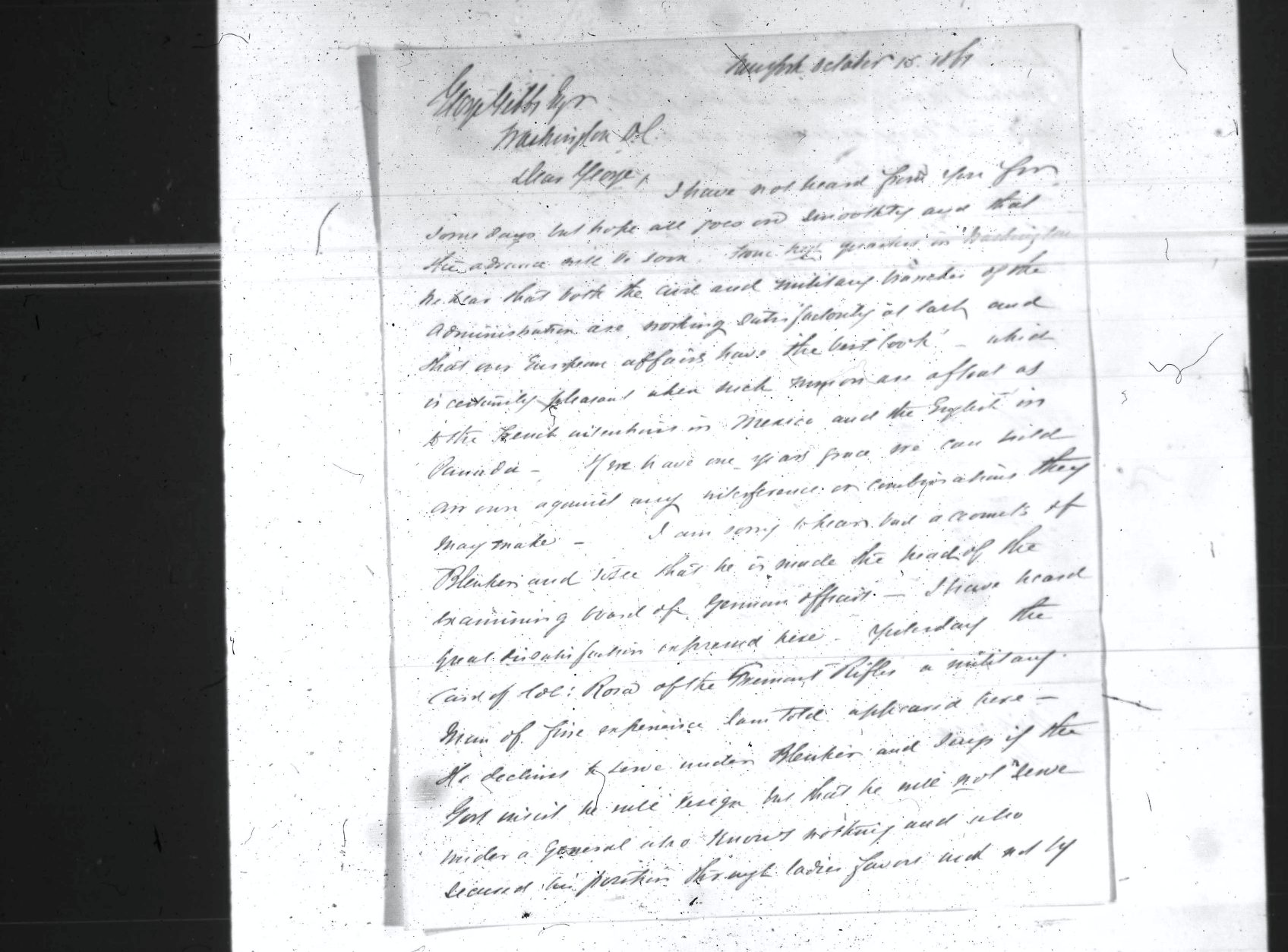
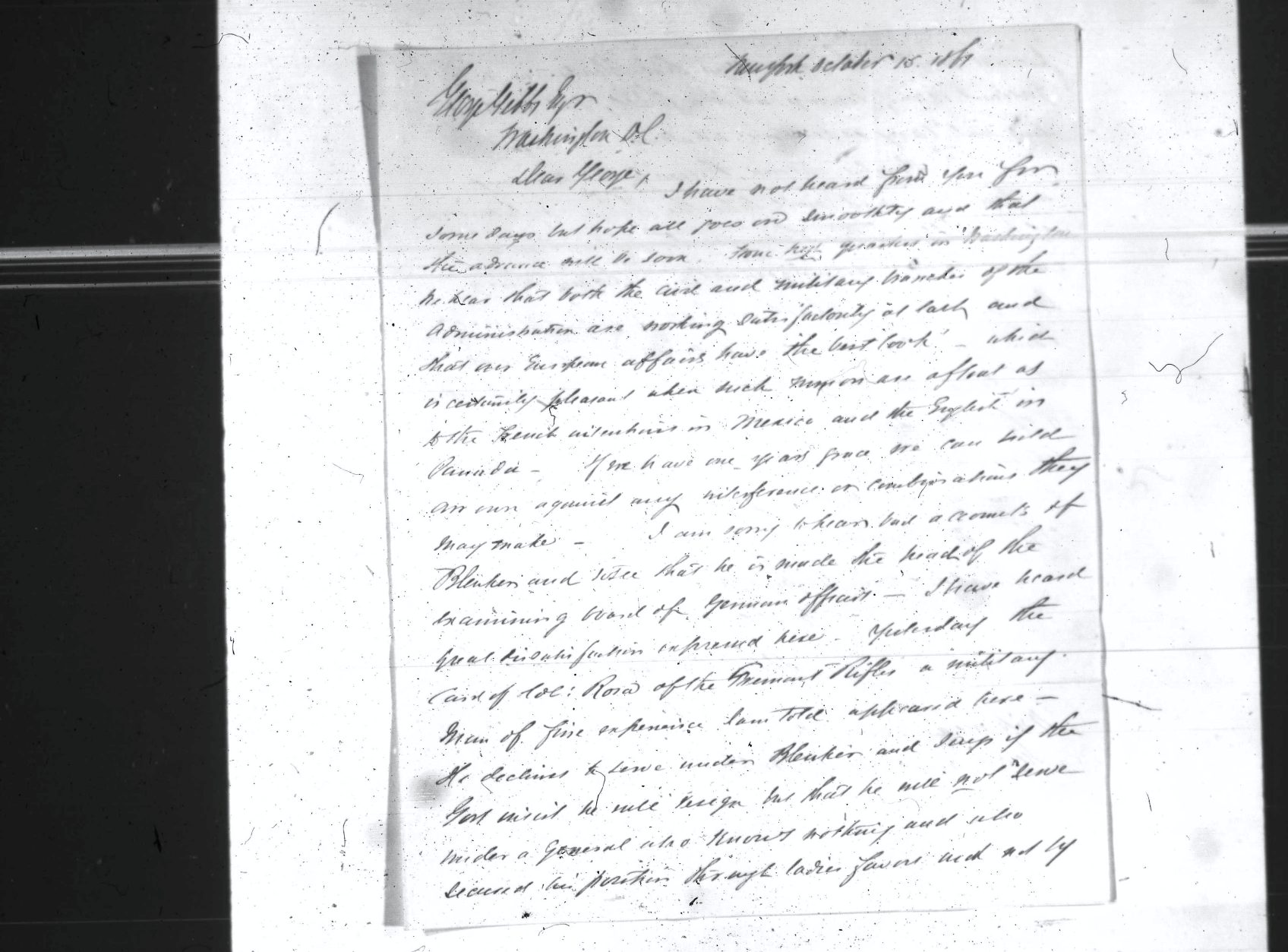
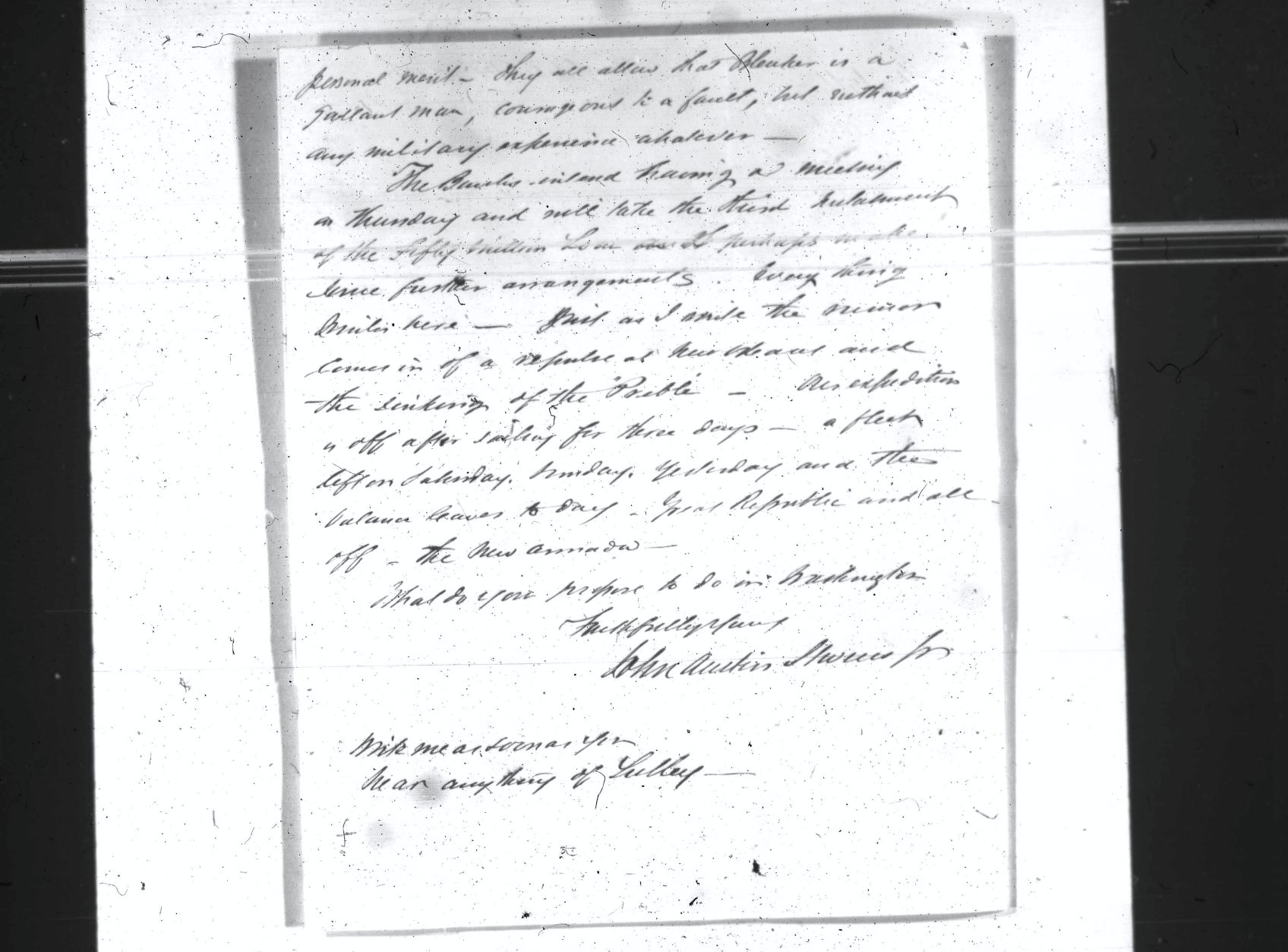
SEPARATE EXPOSURE of the same letter filmed at frame 115, not a byte-identical file: "Geo. Gibbs Esqr, Washington D.C. / Dear George – I have not heard from you for some days but hope all goes on smoothly"; both the civil and military branches of the Administration "working satisfactorily at last"; "the French interference in Mexico and the English in Canada"; "if we have one year's peace we can hold our own against any interference or combinations they may make"; sorry Blenker is made head of the examining board of German officers; Col. Rosa of the Fremont Rifles "a military man of fine experience" declines to serve under Blenker and will resign rather than serve under "a General who knows nothing and who secured his position through ladies' favors"
1861-10-15
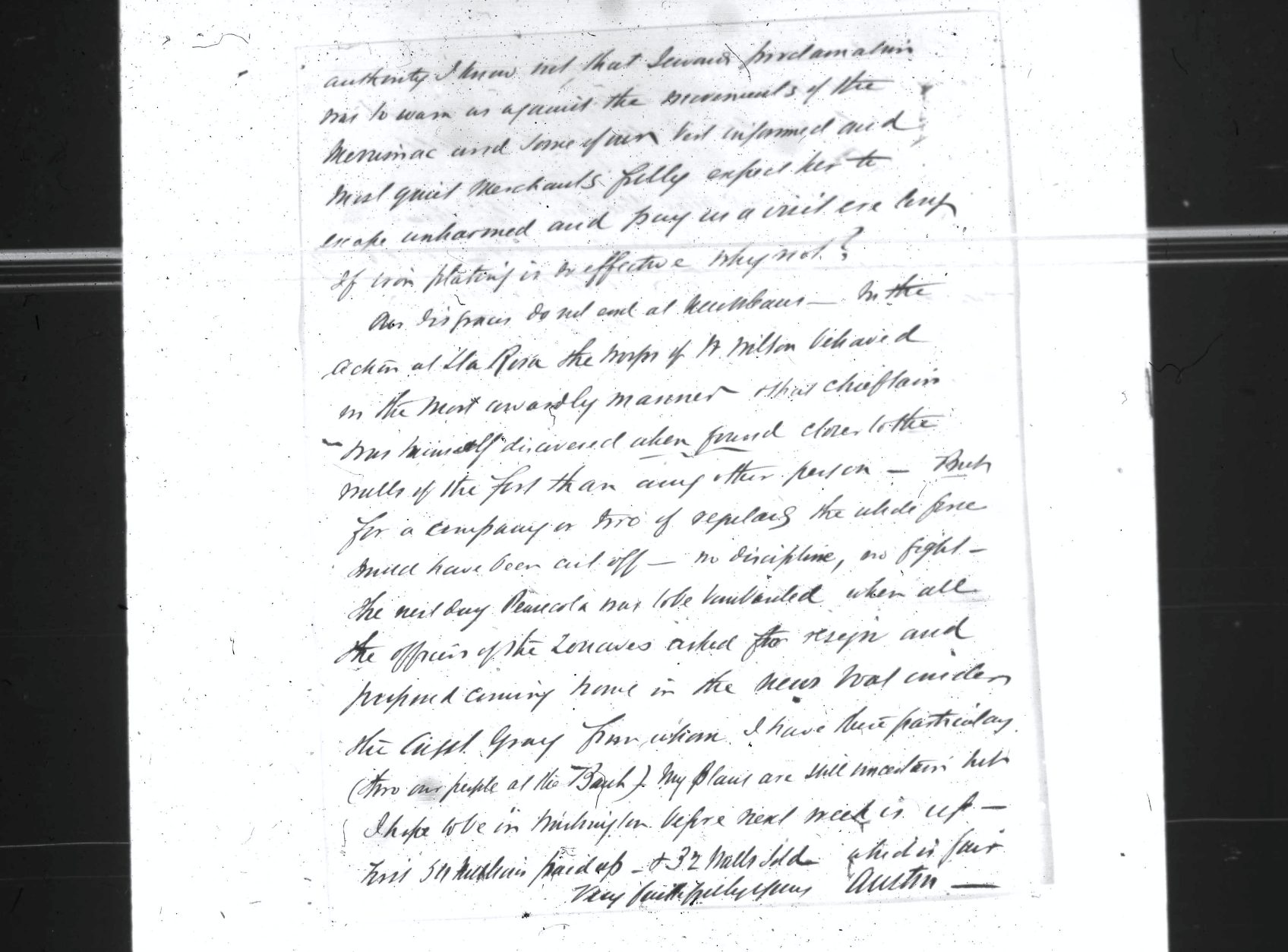
"the French interference in Mexico and the English in Canada"; sorry to see Blenker made head of the examining board of German officers; Col. Rosa of the Fremont Rifles declines to serve under "a General who knows nothing and who secured his position through ladies' favors"
1861-10-17
"Your mother spent a short time in the Bank this morning and I am glad to hear that Alfred is looked for in all this month. Did you see a notice of the surrender in the World Saturday or Sunday last in a letter of a private in the Mounted Rifles – Alfred's name is mentioned"; Laura Gibbs angry that Gen. Scott gave a 30-day pass to Mrs. E. M. Fry; "Miss Lee your mother says is all secesh"
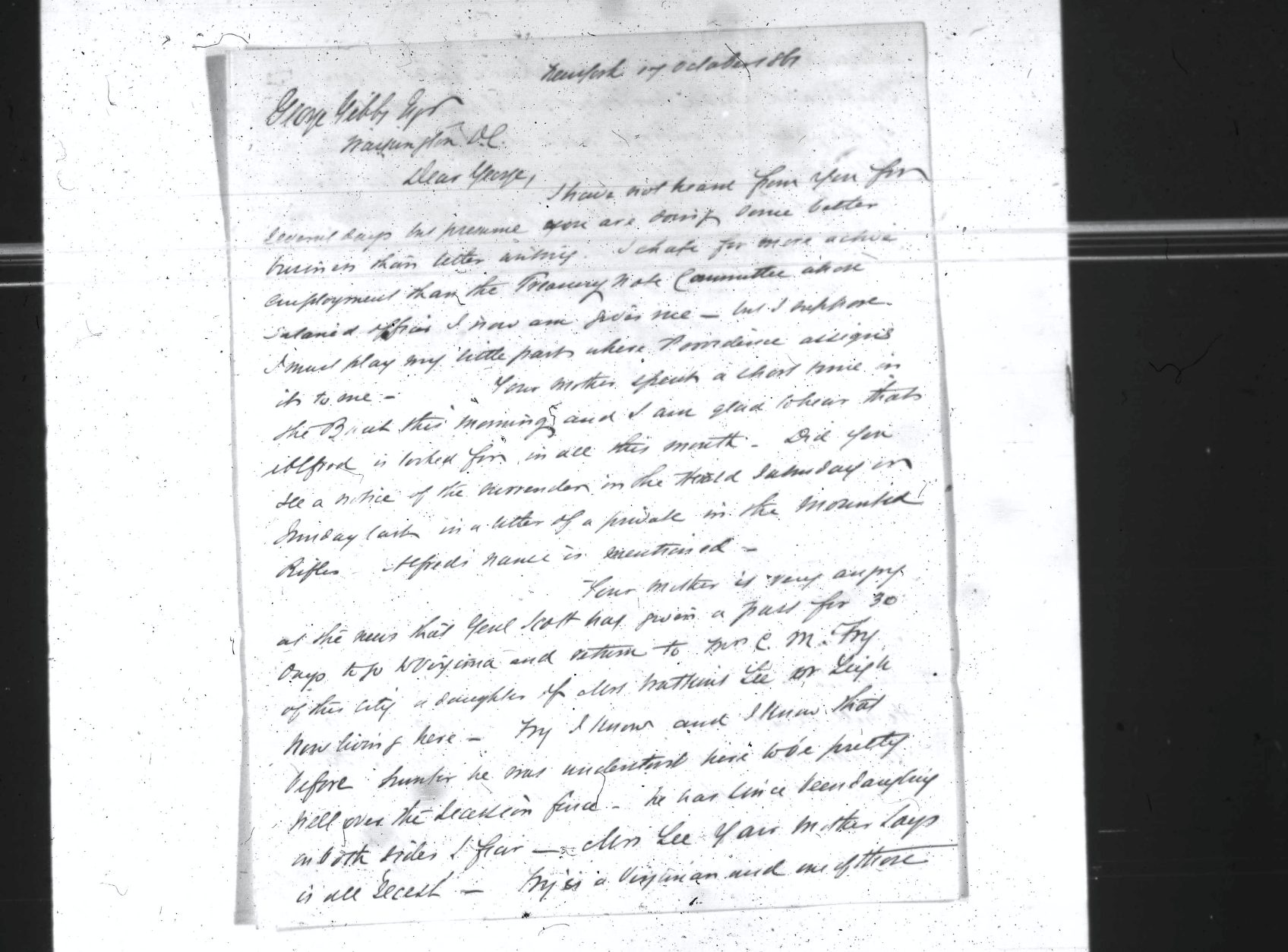
New York 17 October 1861
George Gibbs Esqr / Washington D.C. / Dear George,
I have not heard from you for several days but presume you are doing some better business than letter writing. I chafe for more active employment than the Treasury Note Committee at one salaried offices I now am filling(?) – but I suppose I must play my little part where Providence assigns it to me –
Your mother spent a short time in the Bank this morning and I am glad to hear that Alfred is looked for in all this month. Did you see a notice of the surrender in the World Saturday or Sunday last in a letter of a private in the Mounted Rifles. Alfred's name is mentioned –
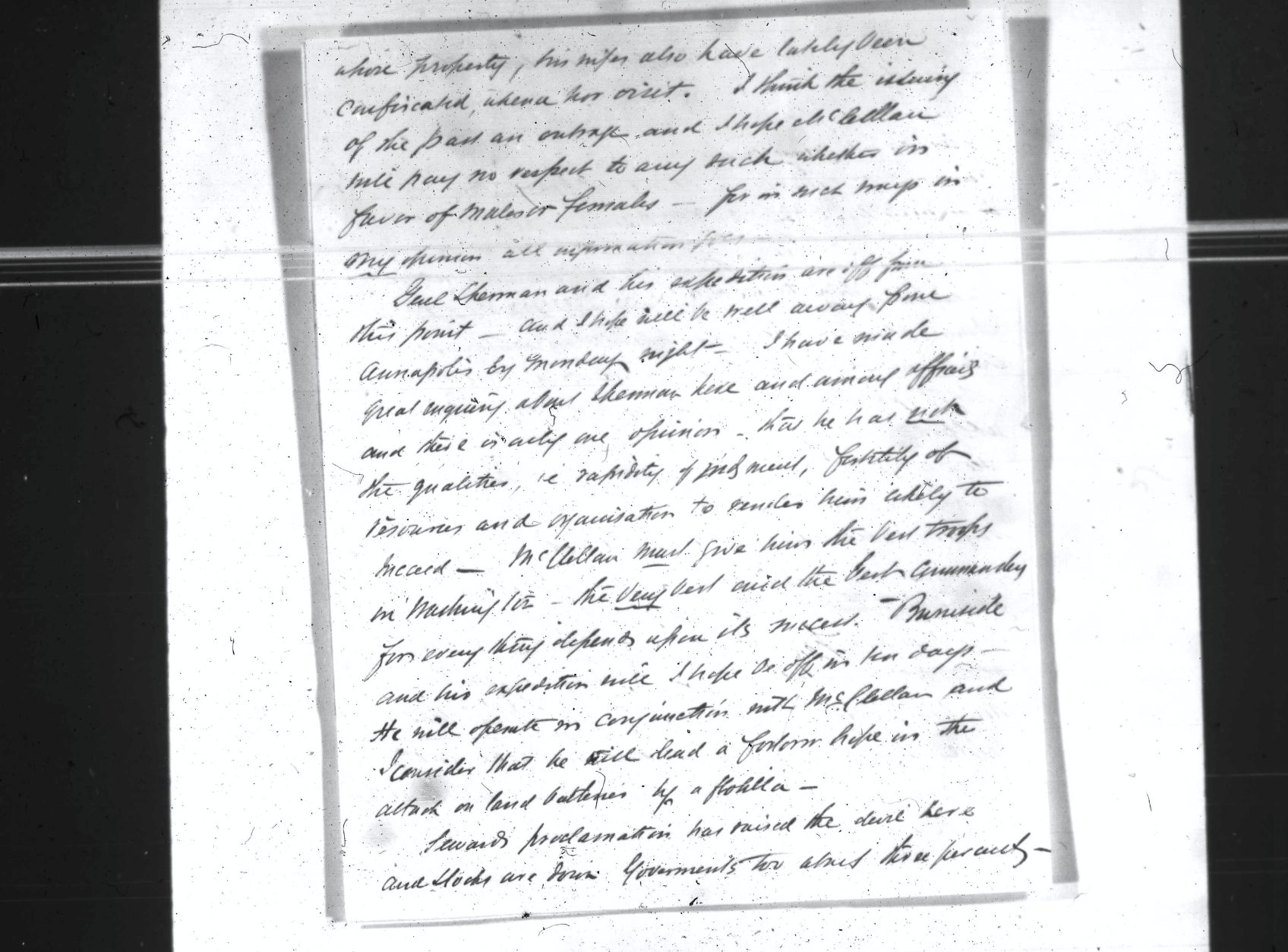
Your mother is very angry at the news that Genl Scott has given a pass for 30 days to go to Virginia and return to Mrs C. M. Fry of this city, a daughter of Mrs Mathews Lee or Leigh now living here – Fry I know and I know that before Sumter he was understood here to be pretty well over the Secession fence – he has since been dallying on both sides I fear – Mrs Lee your Mother says is all Secesh – Fry is a Virginian and one of those whose property, his mines also have lately been confiscated, whereas hers exist. I think the issuing of the pass an outrage and I hope McClellan will pay no respect to any such whether in favor of Males or Females – for in such ways in my opinion all information goes –
Genl Sherman and his expedition are off from this point – and I hope will be well away from Annapolis by Monday night – I have made great enquiry about Sherman here and among officers and there is only one opinion – that he has not the qualities, ie rapidity of judgment, fertility of resources and organisation to render him likely to succeed – McClellan must give him the best troops in Washington – the very best and the best commanders for every thing depends upon its success. – Burnside and his expedition will I hope be off in ten days. He will operate in conjunction with McClellan and I consider that he will lead a forlorn hope in the attack on land batteries by a flotilla –
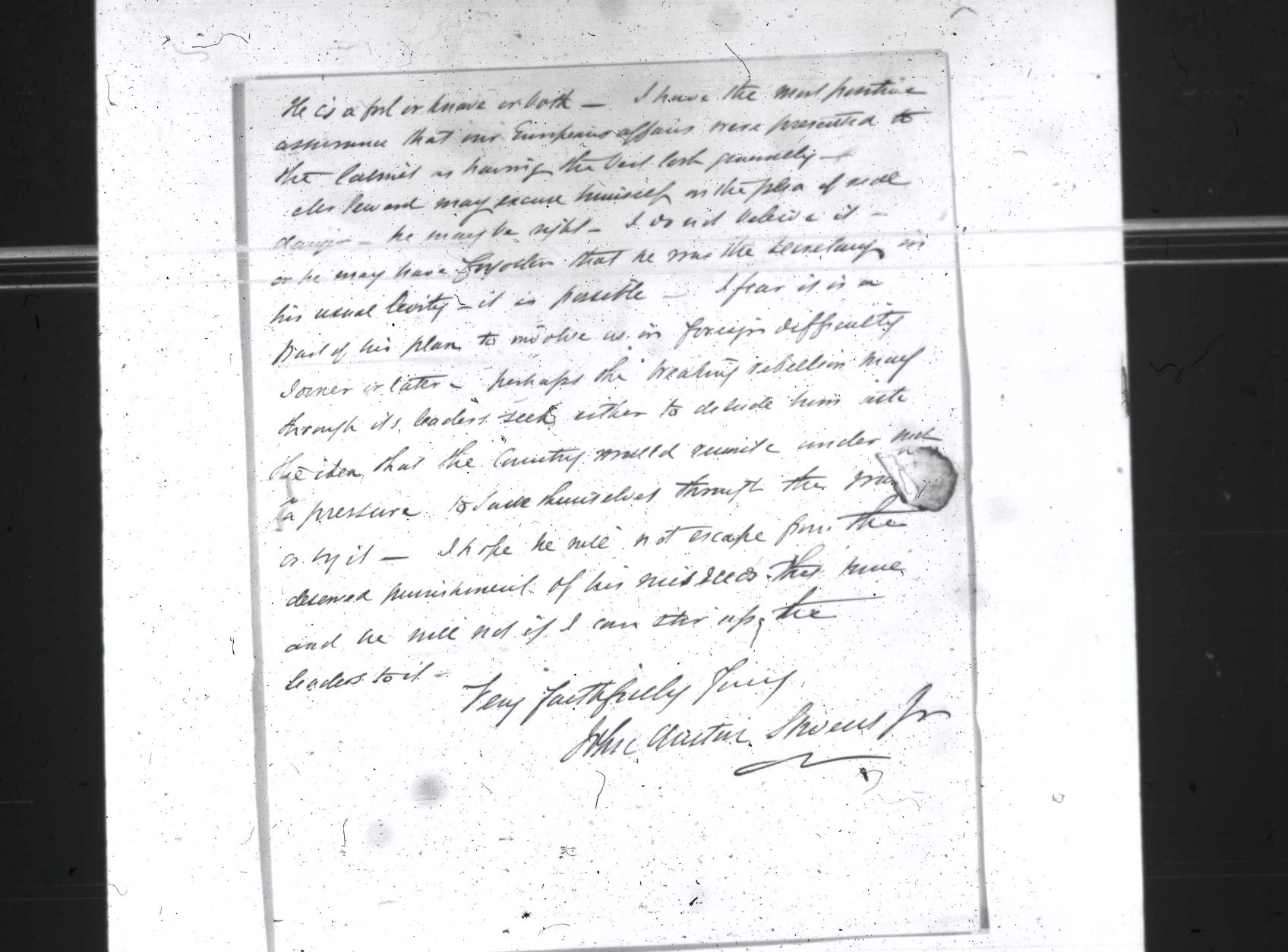
Sewards proclamation has raised the devil here and Stocks are down. Governments too almost three per cent – He is a fool or knave or both – I have the most positive assurance that our European affairs were presented to the Cabinet as having the best look generally – Mr Seward may excuse himself on the plea of a real(?) danger – he may be right – I do not believe it – or he may have forgotten that he was the Secretary in his usual levity – it is possible – I fear it is a part of his plan to involve us in foreign difficulty sooner or later – perhaps the breaking rebellion may through it's leaders seek either to delude him with the idea that the Country would reunite under such a pressure – to save themselves through the [torn] or by it – I hope he will not escape from the deserved punishment of his misdeeds this time and he will not if I can stir up the leaders to it –
Very faithfully Yours,
John Austin Stevens Jr
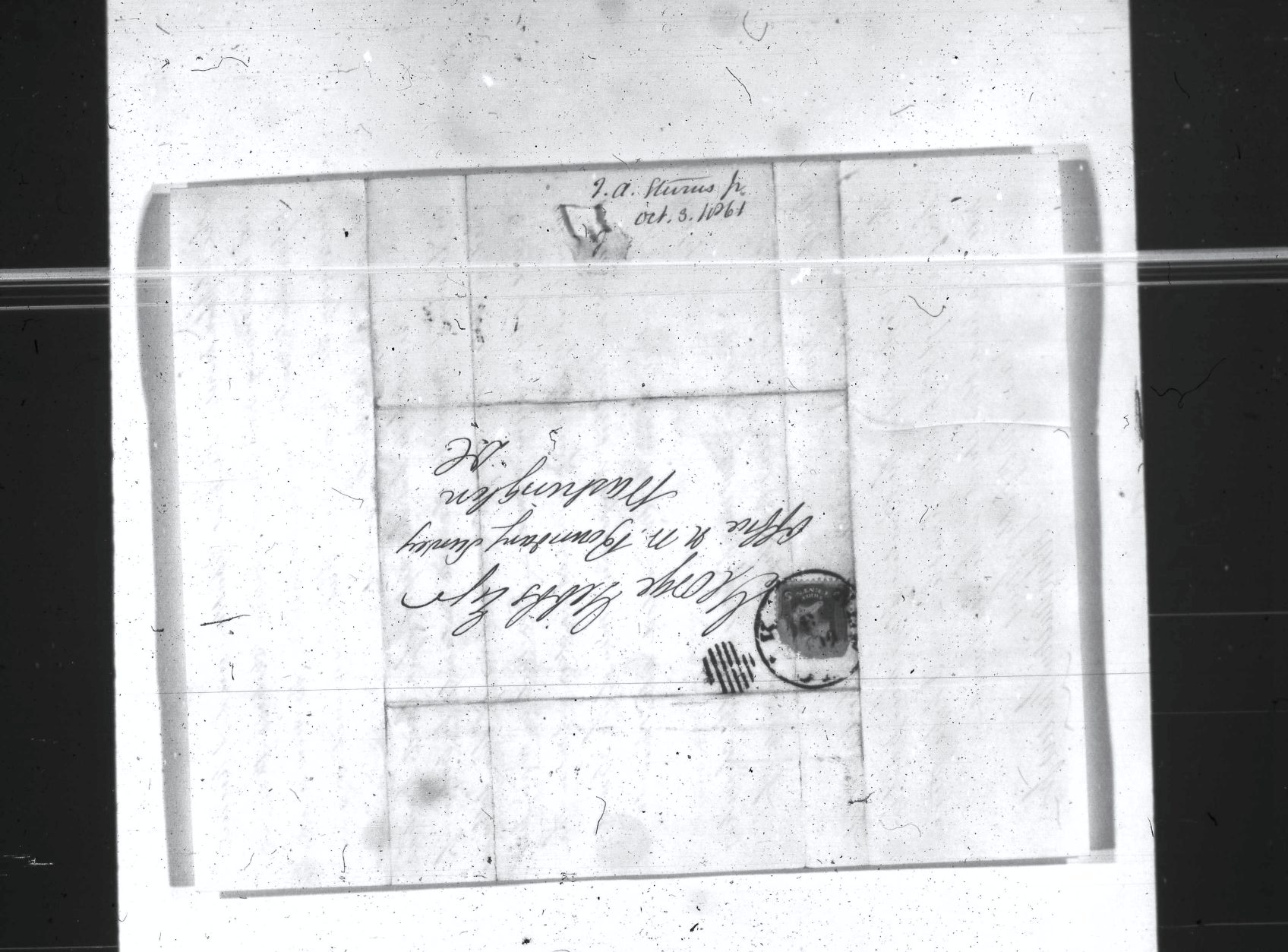
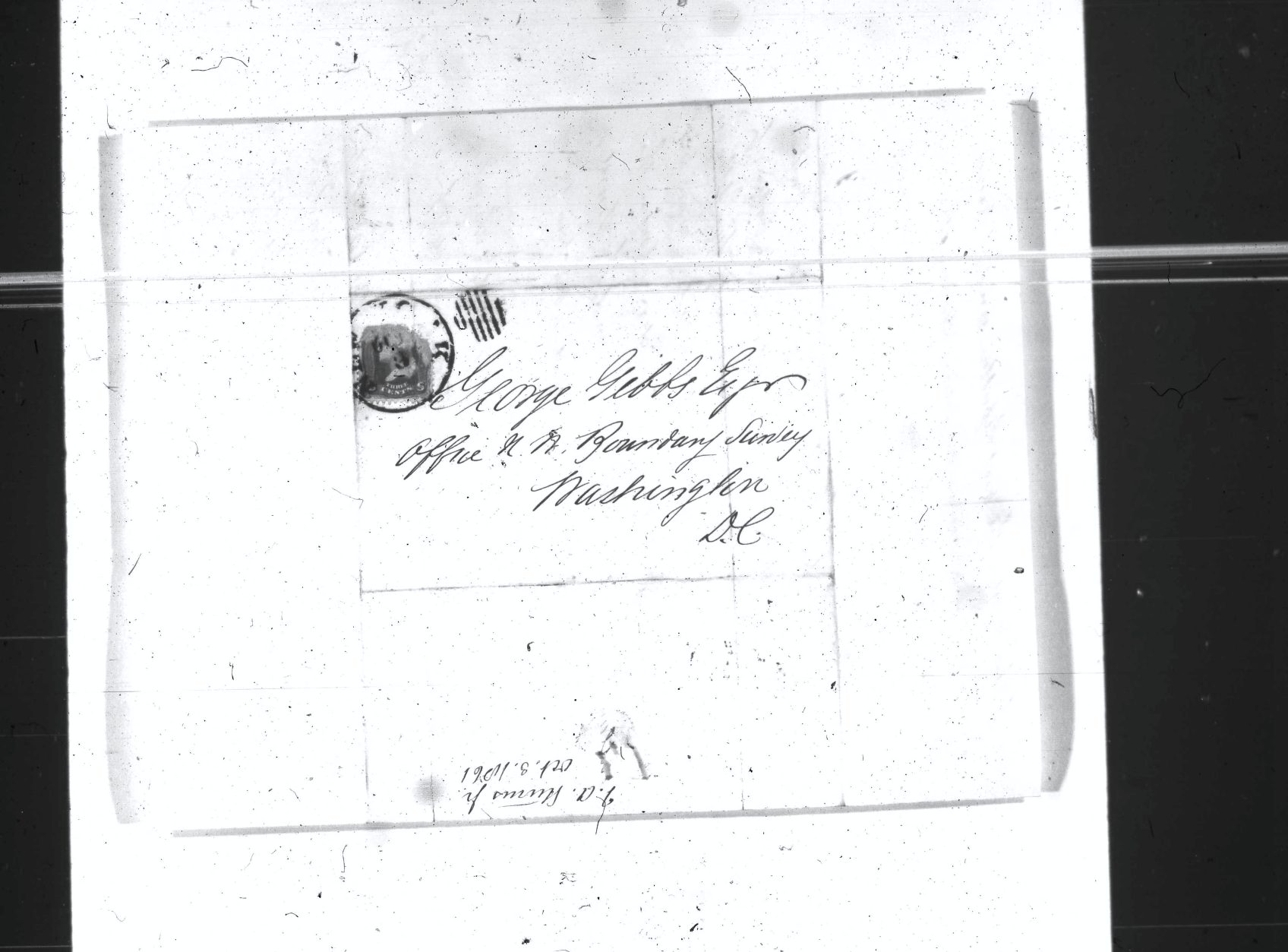
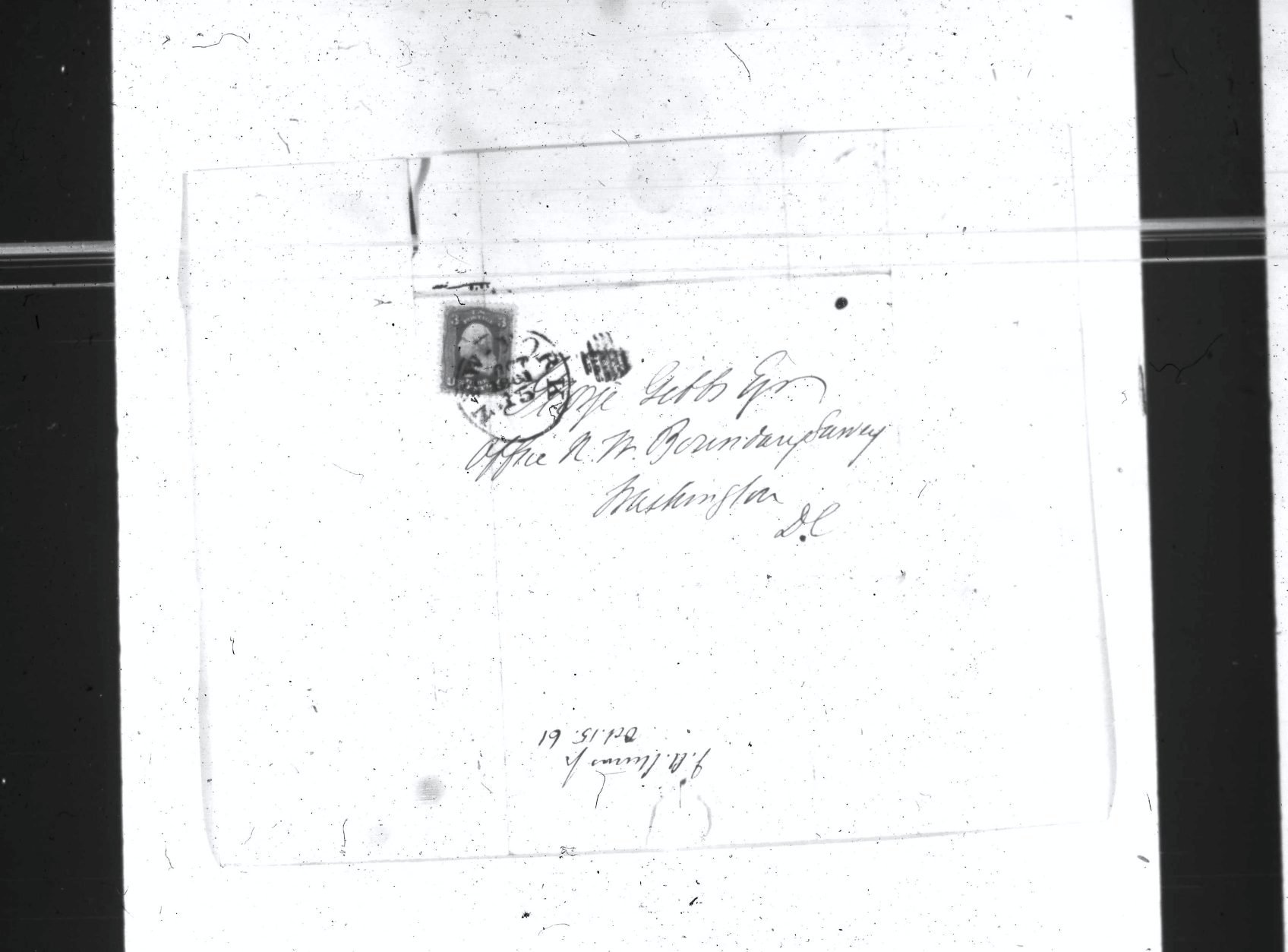
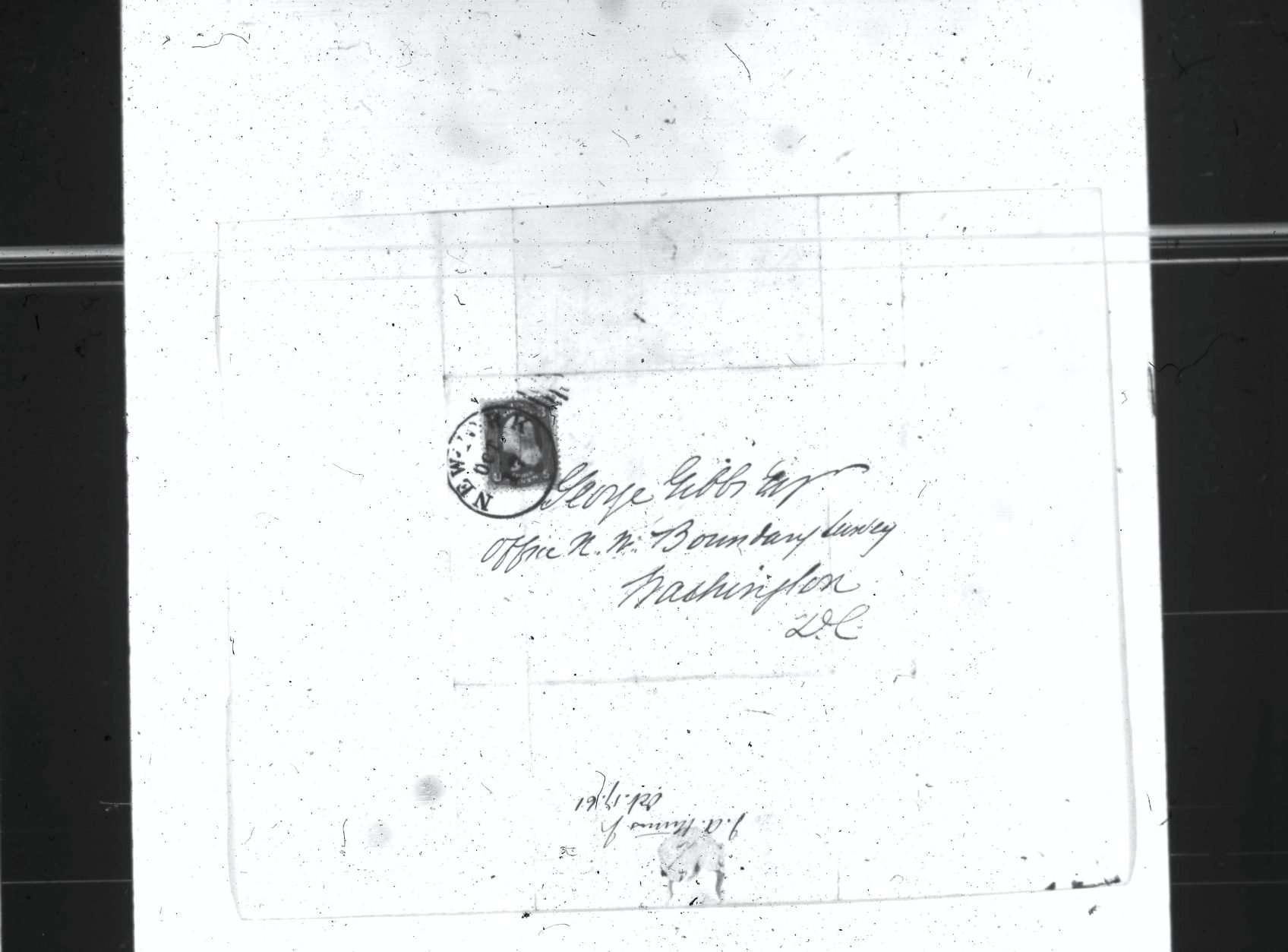
Endorsed: [Wrapper, frame 121, address panel:] George Gibbs Esq / Office N. W. Boundary Survey / Washington / D.C. [circular postmark:] NEW YORK OCT [day illegible] [three-cent stamp, cancelled] [docket, written inverted at the foot of the wrapper:] J. A. Stevens Jr / Oct. 17. /61
Frames 118-120 are the three written pages of a folded letter sheet; frame 121 is the addressed and stamped wrapper, filmed with its docket upside down relative to the address. On frame 119 the word 'not' in 'that he has not the qualities' is interlined and underlined; 'very' in 'the very best' is underlined; 'must' in 'McClellan must give him' is underlined. On frame 120 the right edge of the leaf is damaged and carries a large ink blot: one word in 'to save themselves through the … or by it' is lost and is marked [torn]. The 'Genl Sherman' of the fourth paragraph is Thomas W. Sherman of the Port Royal expedition, then staging at Annapolis. Readings marked (?) are best readings only: the clause 'at one salaried offices I now am filling' on frame 118 is written small and crowded, and 'a real danger' on frame 120 is blotted.
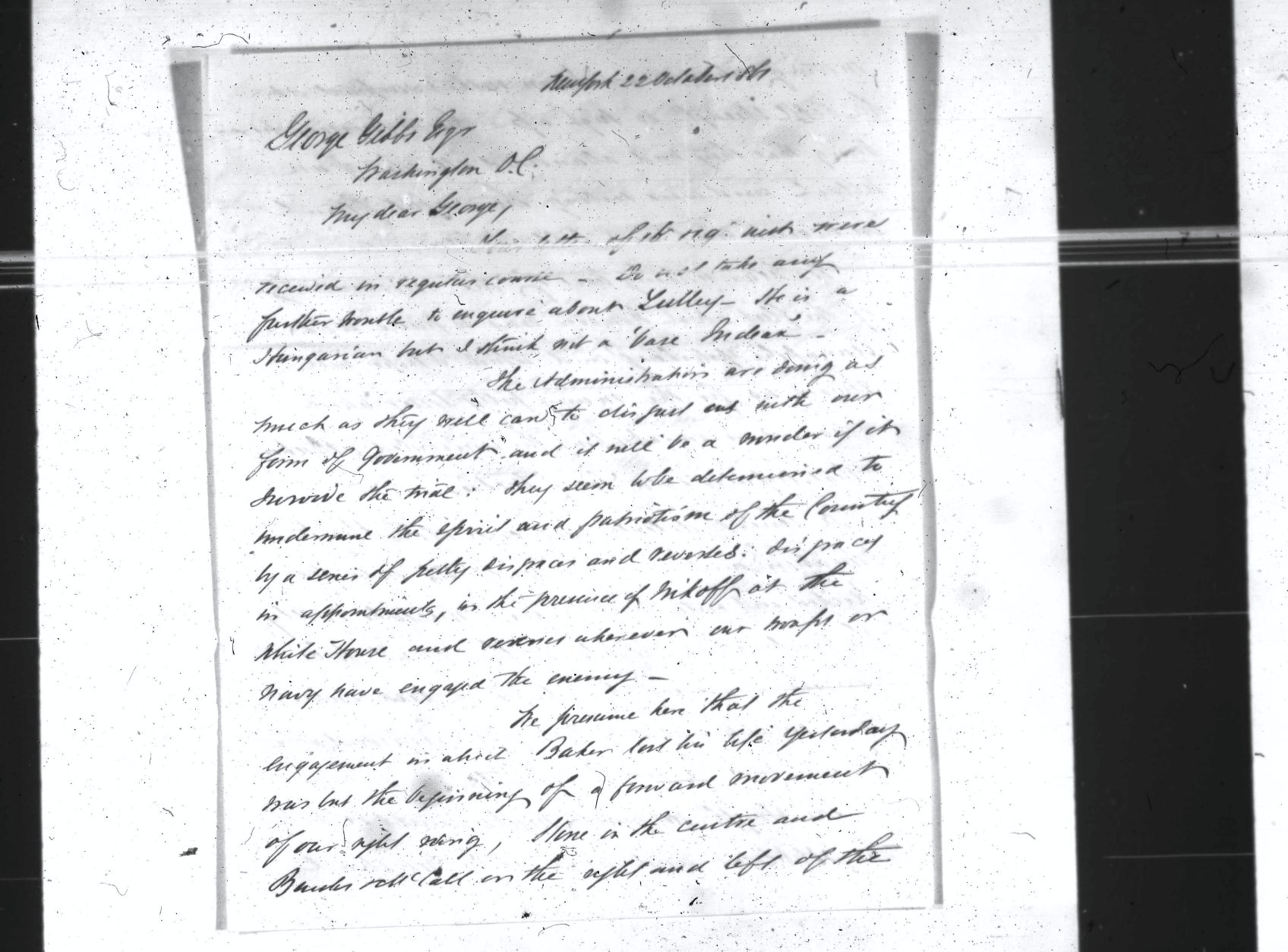
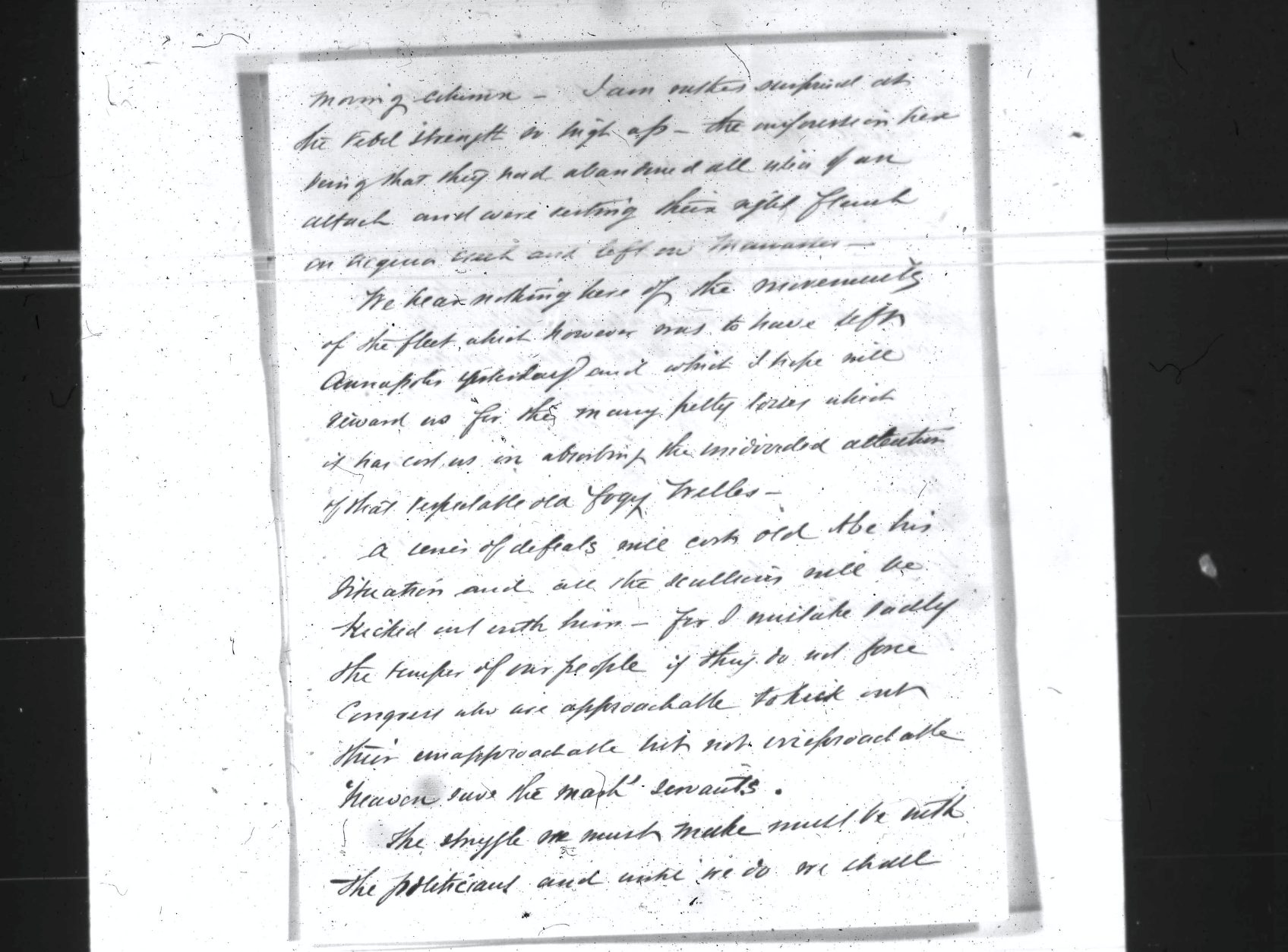
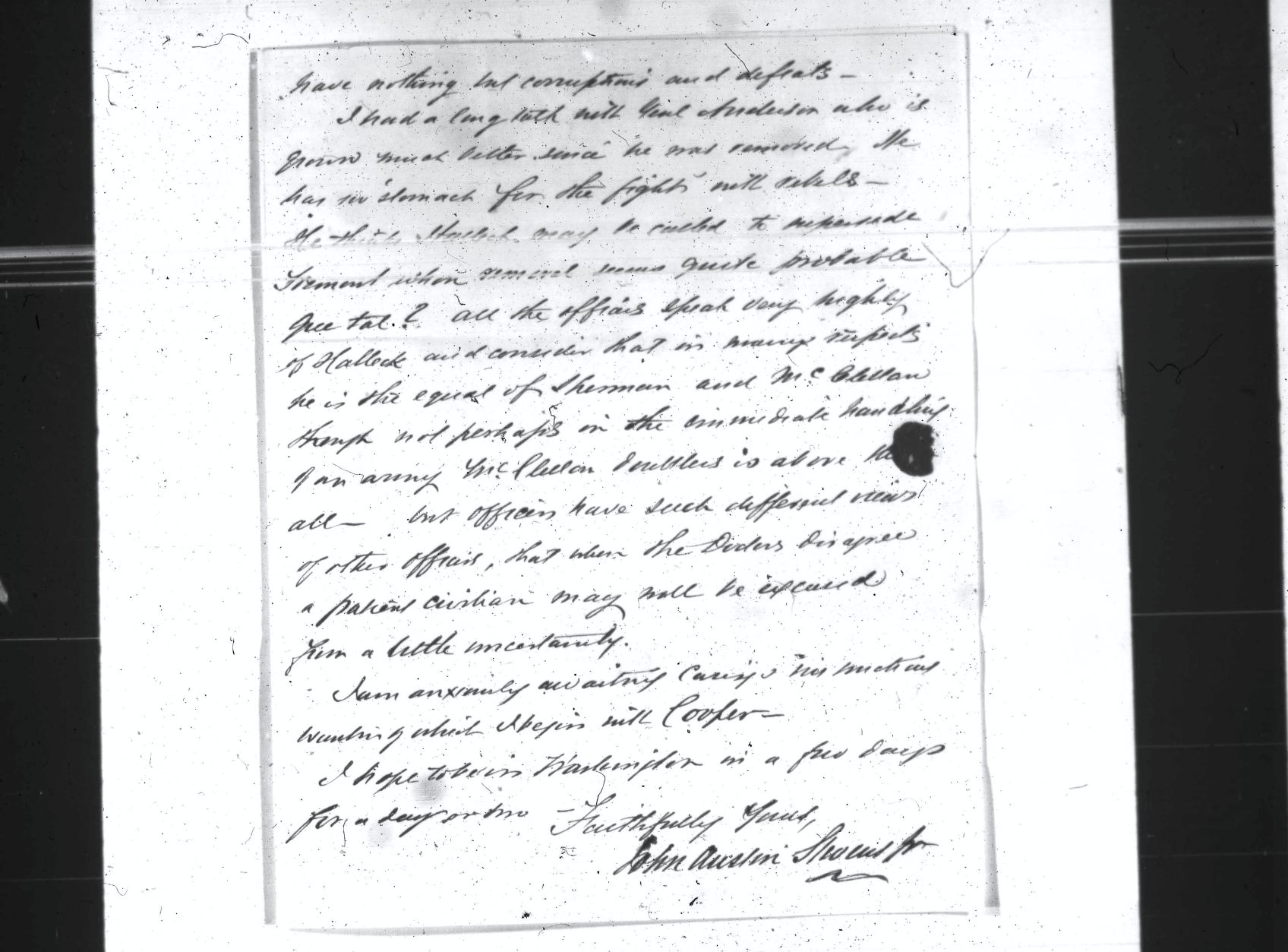
1861-10-22
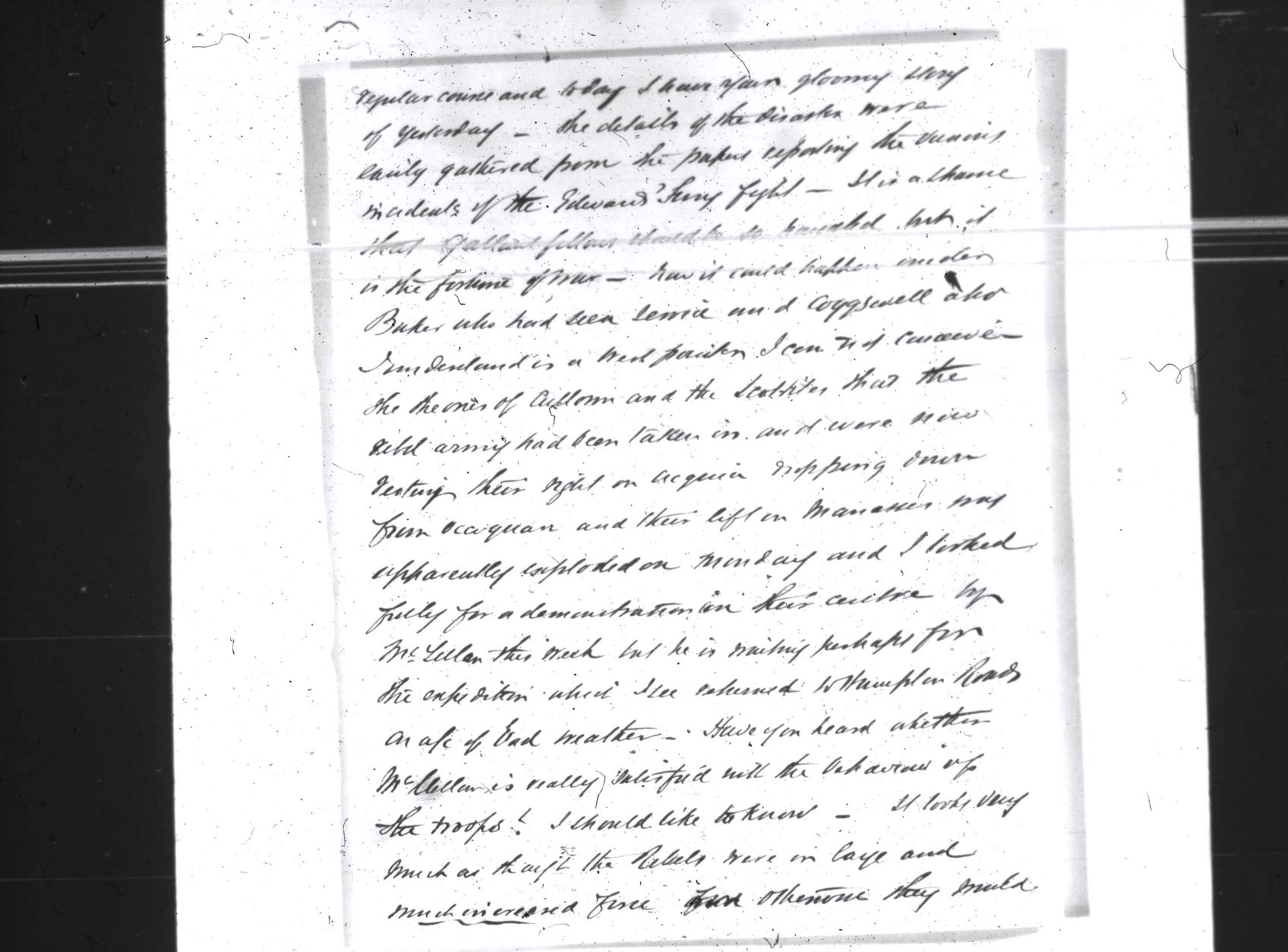
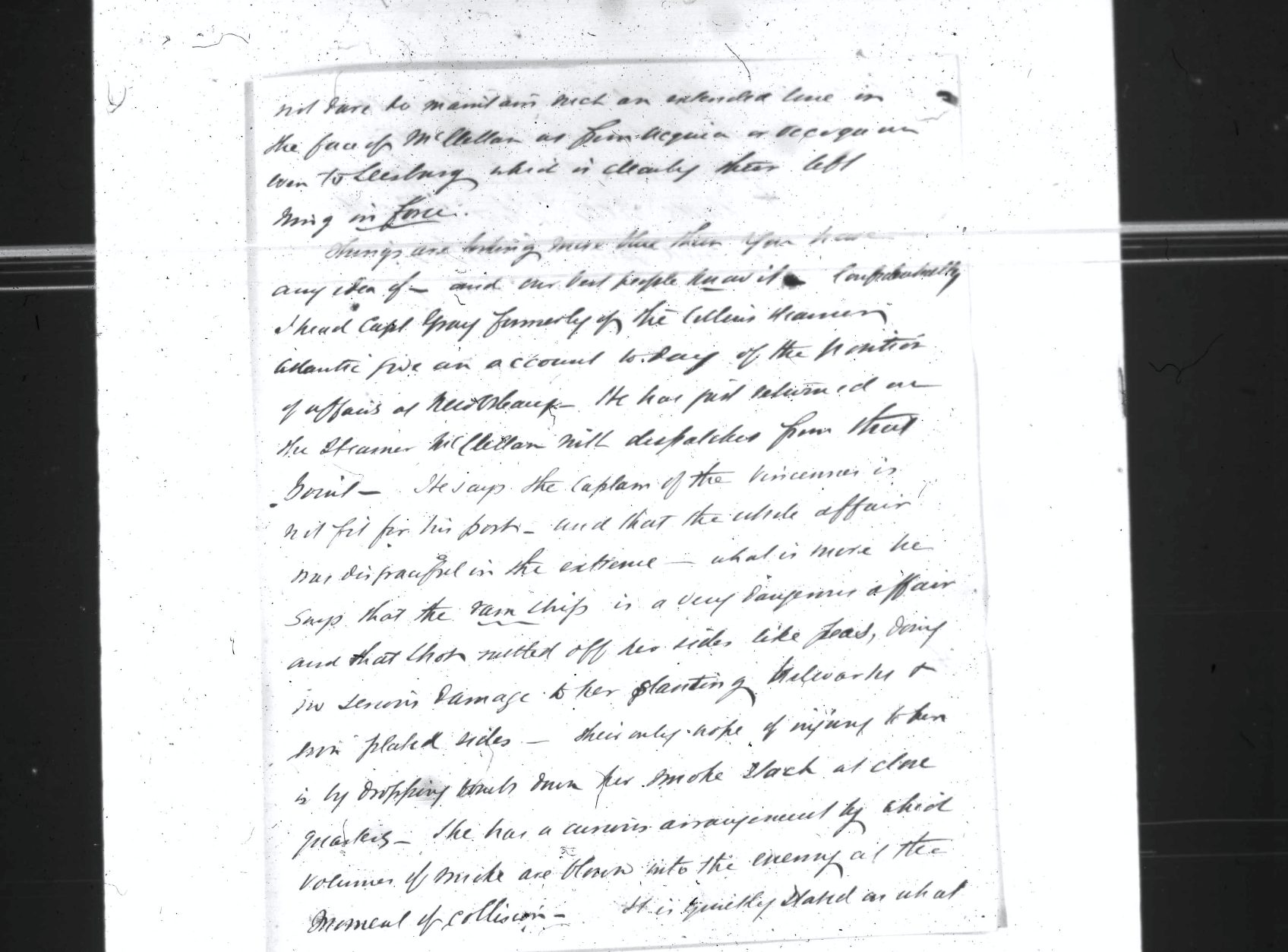
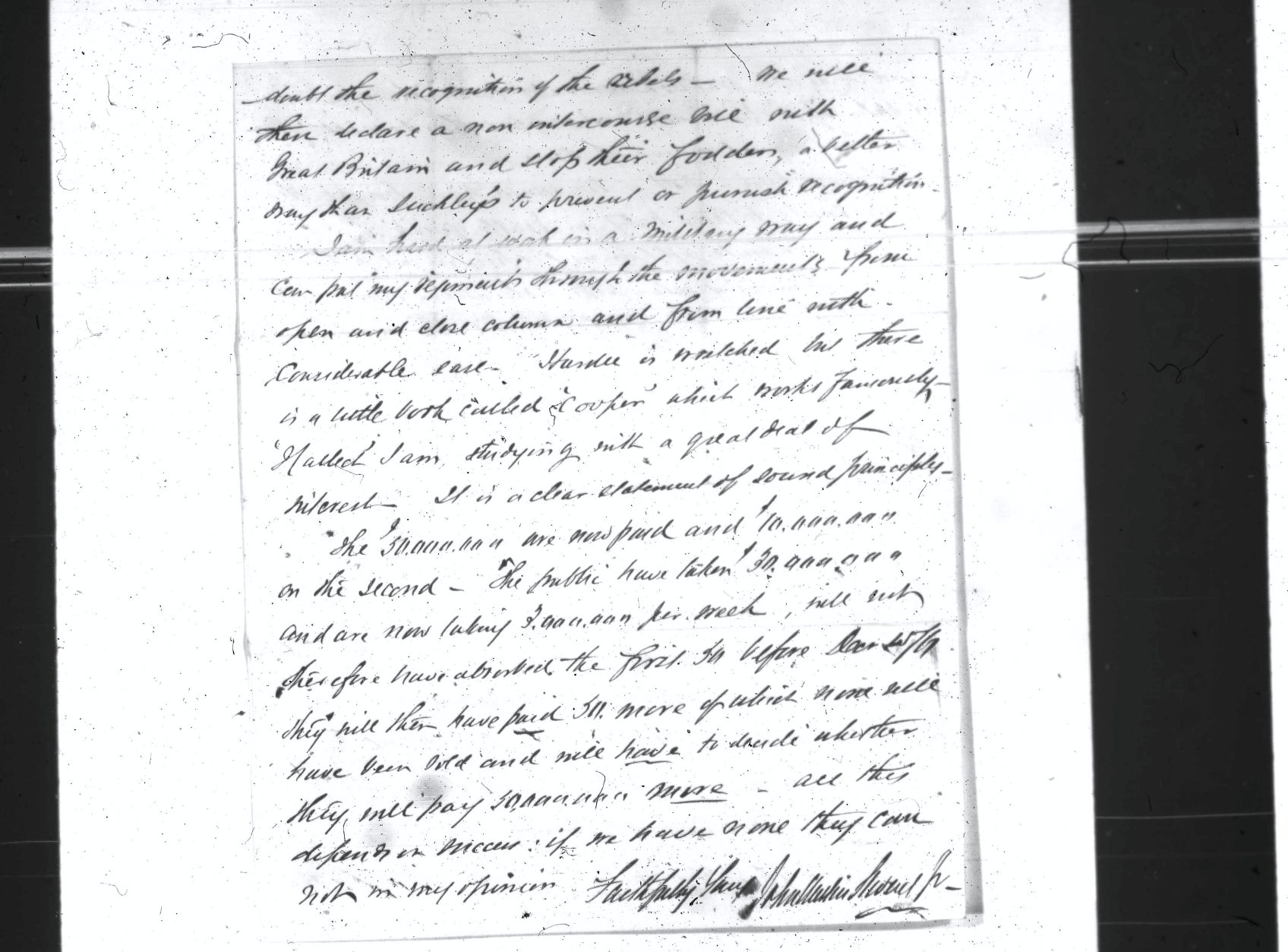
New York; blasts the Administration as "doing as much as they well can to dispense with our form of Government"; reports Col. Baker "lost his life yesterday" (Ball's Bluff, 21 Oct.) and presumes it the beginning of a forward movement with Stone in the centre and Banks and McCall on right and left
1861-10-26?
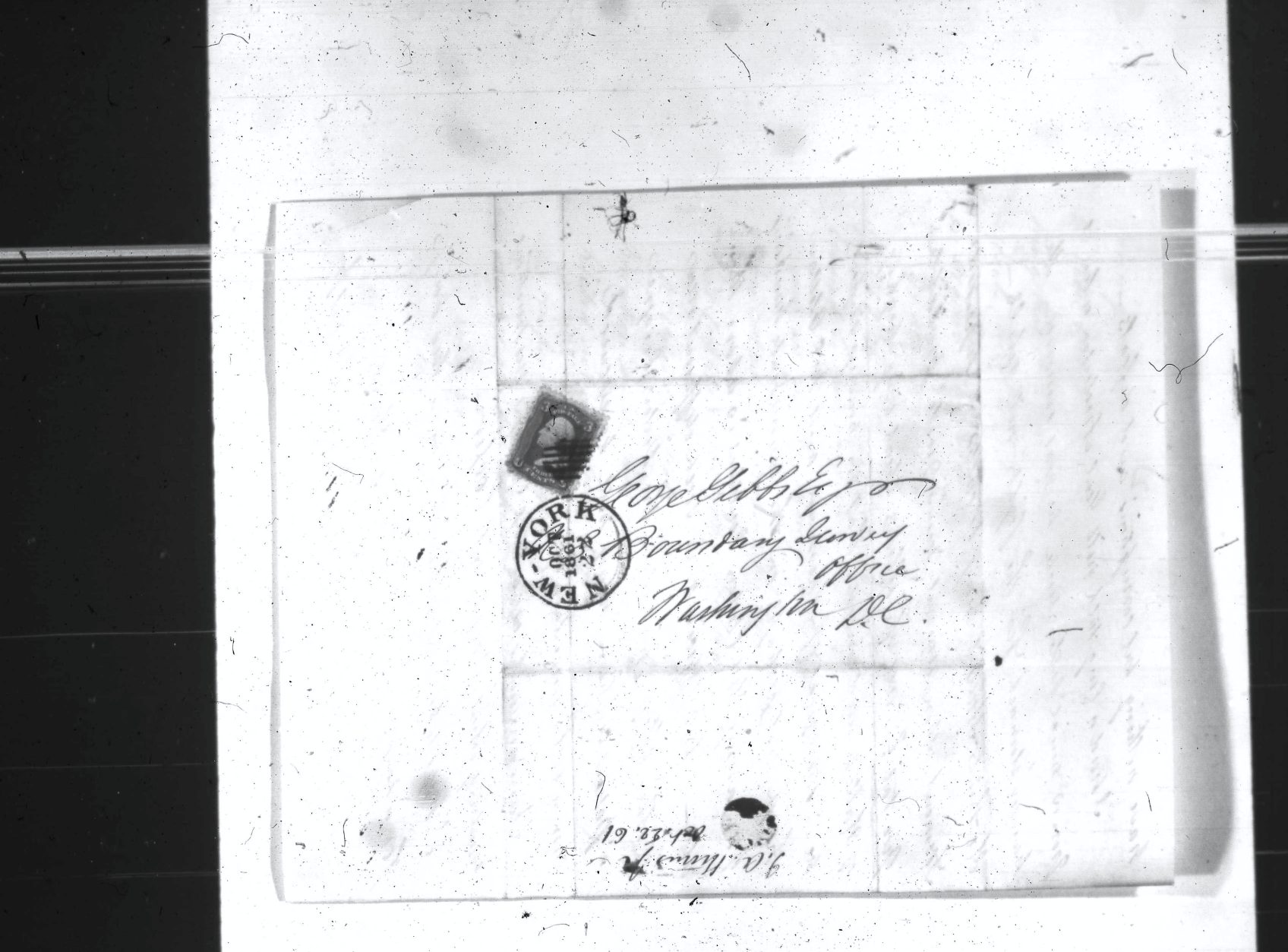
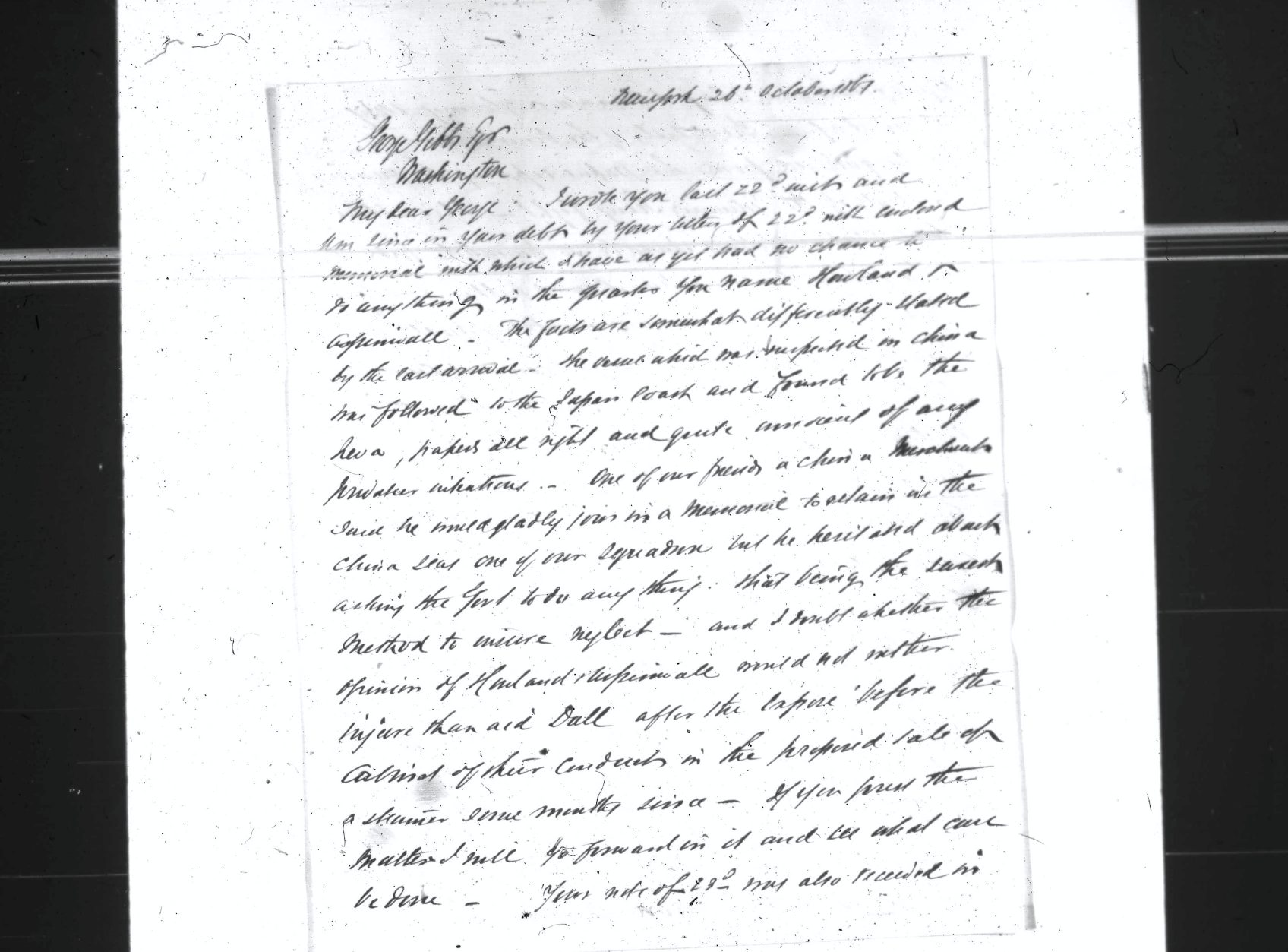
acknowledges Gibbs's letter of the 22d with memorial enclosed; Howland & Aspinwall; a vessel suspected in China found "papers all right and quite innocent of any privateer intentions"; doubts a Howland & Aspinwall endorsement would help "after the expose before the Cabinet of their conduct in the proposed sale of a steamer"
1861-10-29
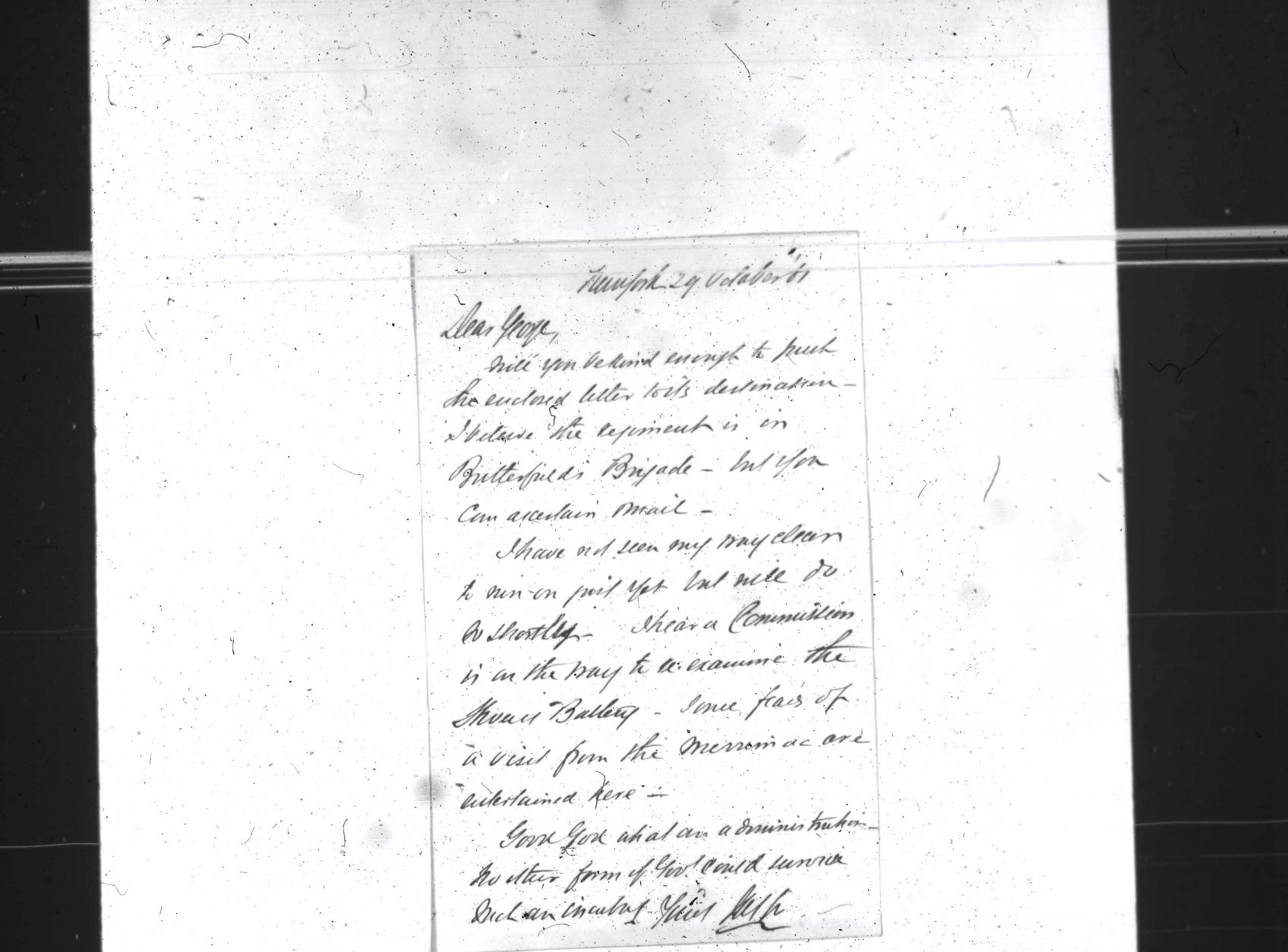
asks Gibbs to forward an enclosed letter, the regiment believed to be in Butterfield's Brigade; a Commission on the way to re-examine the Stevens Battery; "Good God what an administration – no other form of Govt could survive such an incubus"
1861-10-31
George Betts, son of the old Judge, Lt. Colonel of "Hawkins' Zouaves" at Fort Hatteras, writes that the report of the affair "was cut from the whole cloth," not a single rebel killed and only one wounded; "what lying memories for service we are piling up for a future historian"; hundreds of thousands of North Carolinians ready to join the standard of the Republic if armed
1861-12-06
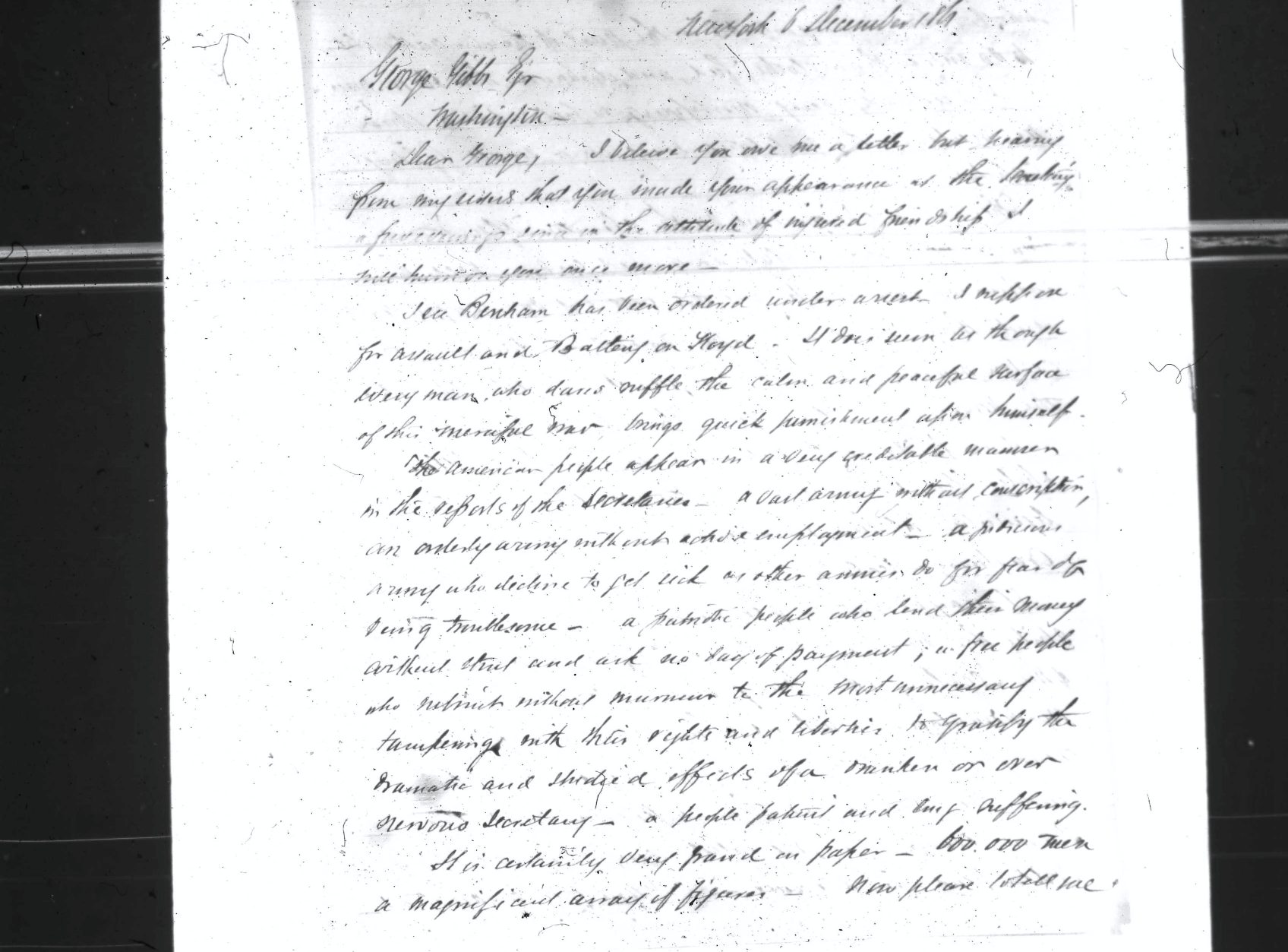
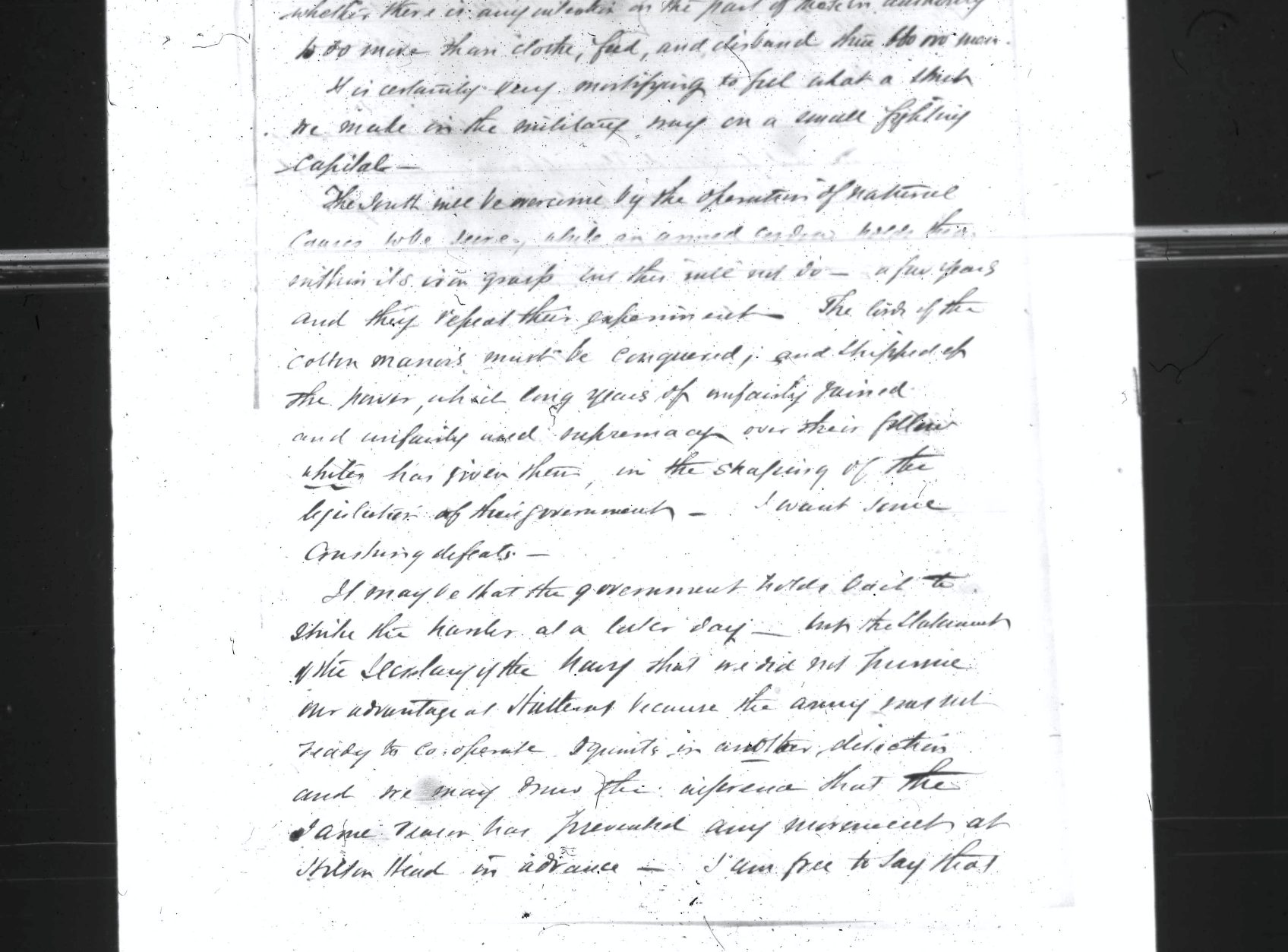
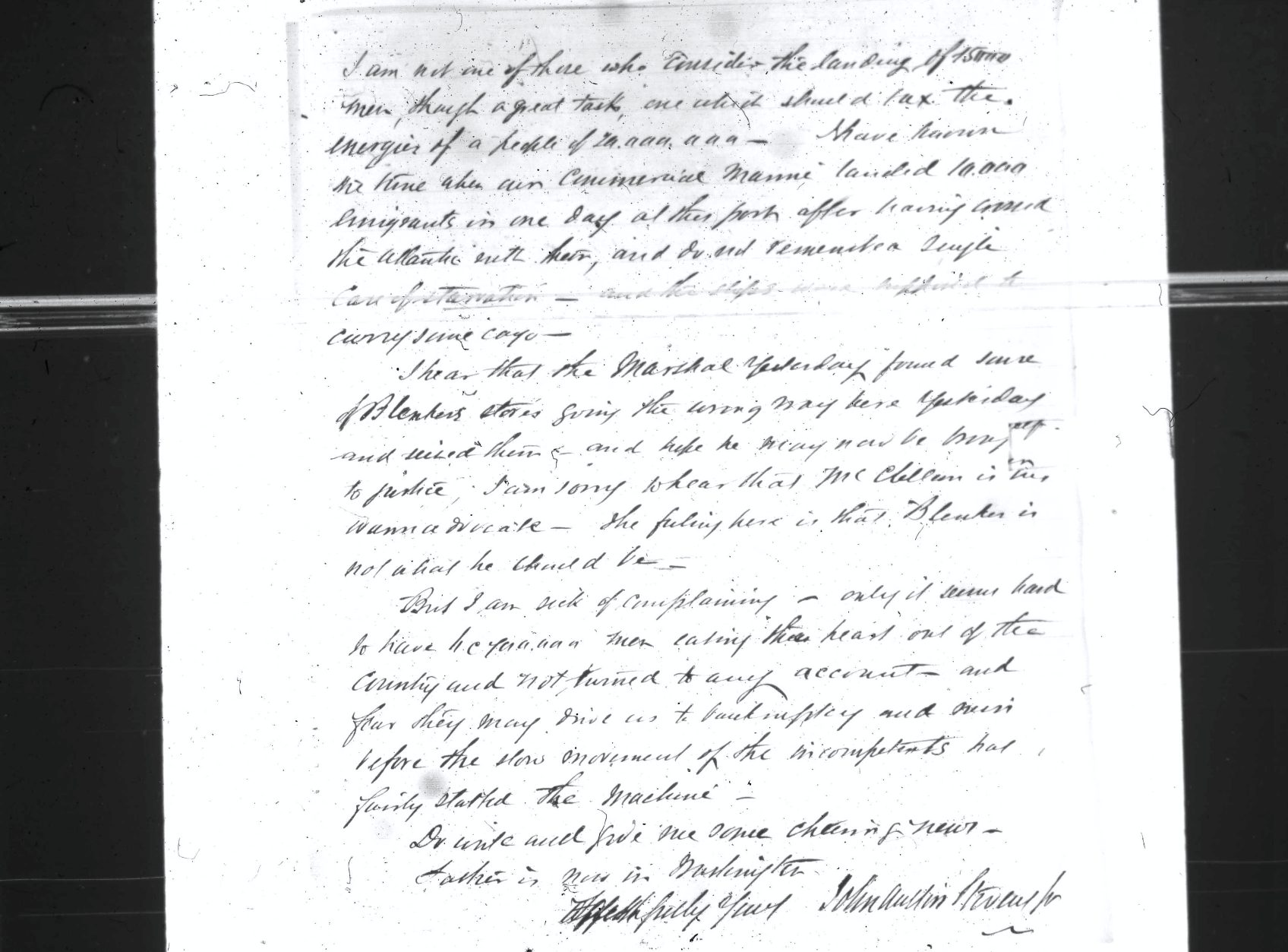
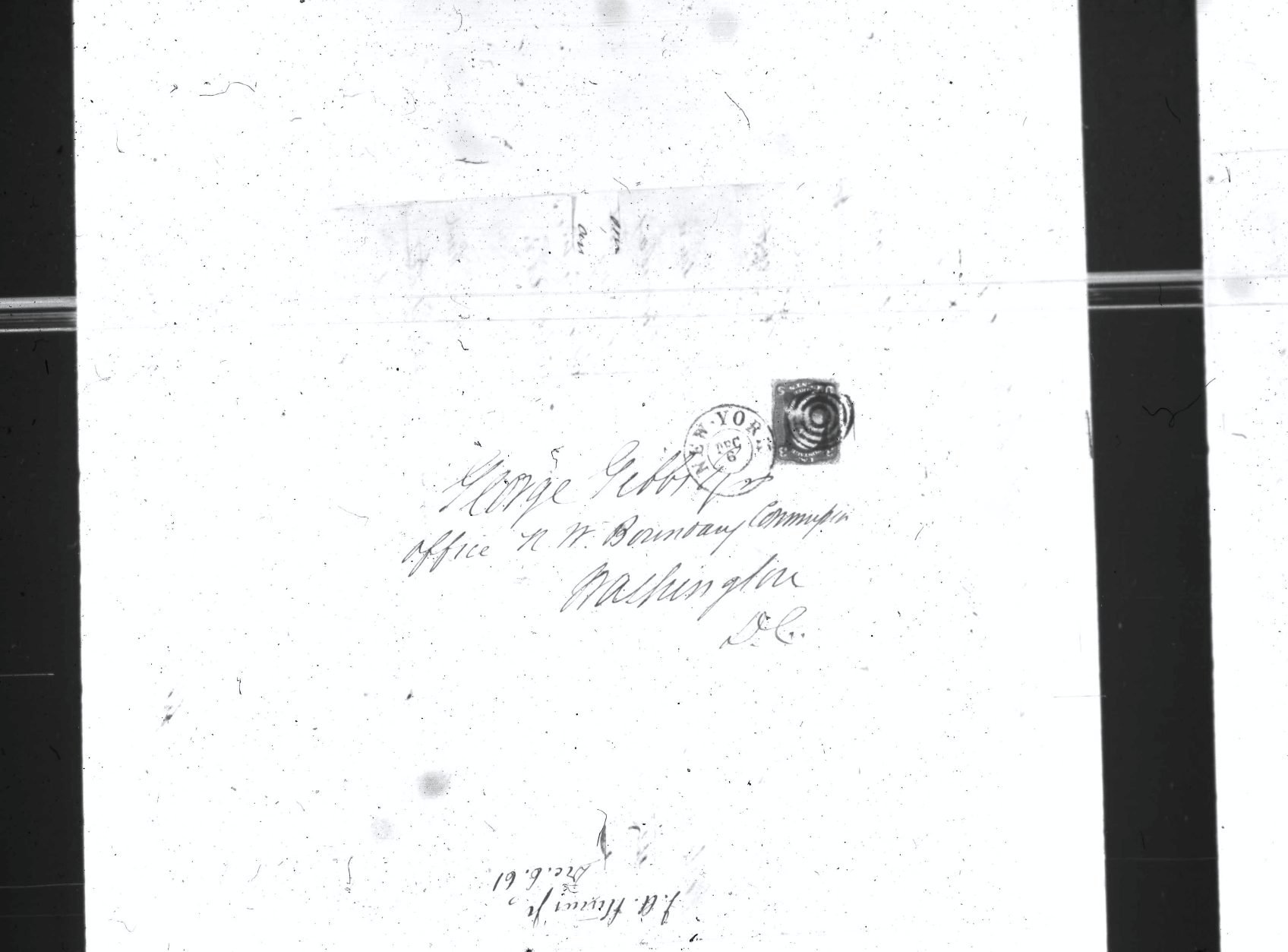
"I see Benham has been ordered under arrest, I suppose for assault and battery on Floyd"; satirizes the Secretaries' reports – "a vast army without conscription, an orderly army without active employment… 600,000 men, a magnificent array of figures"
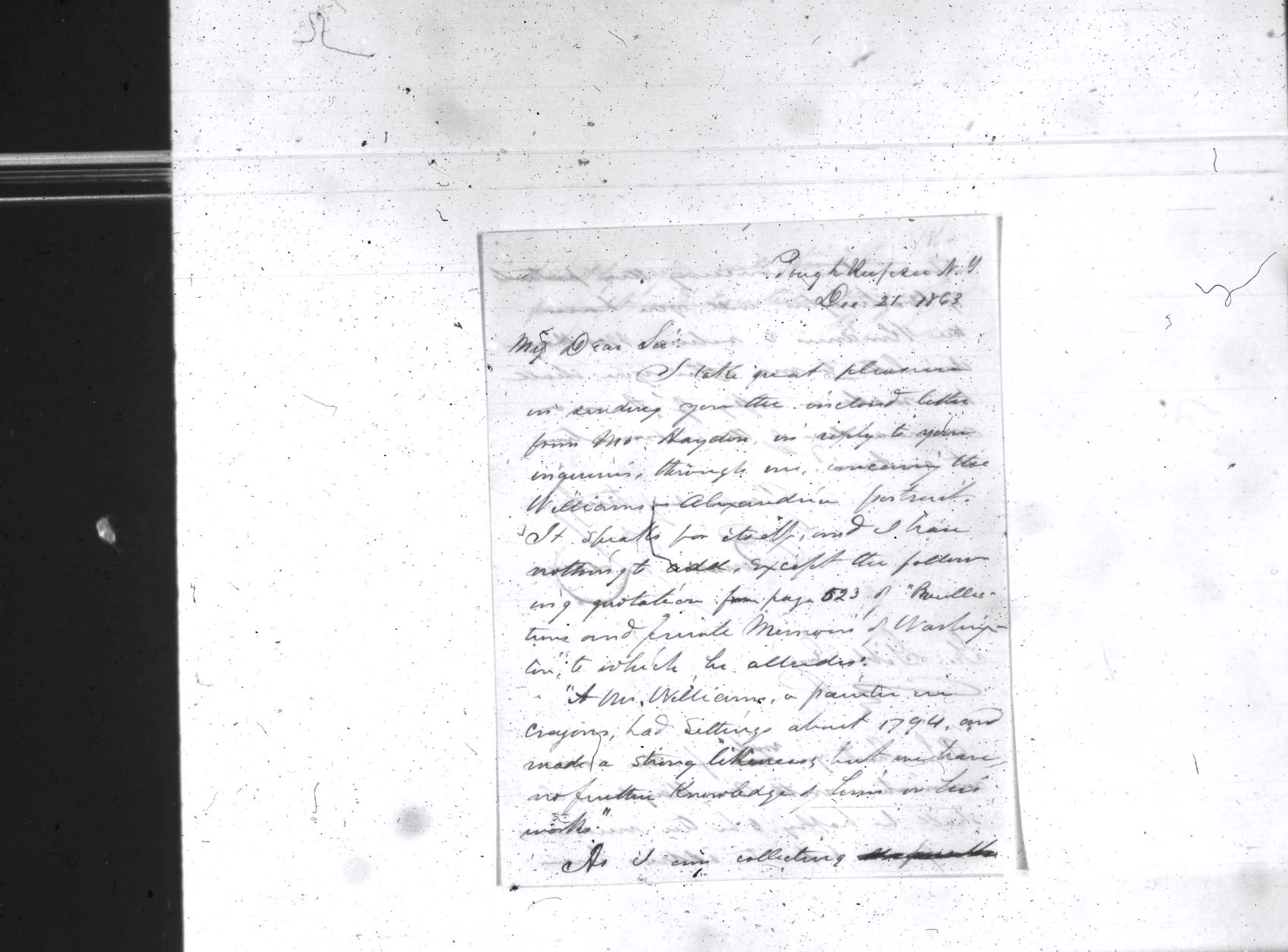
1863-12-21
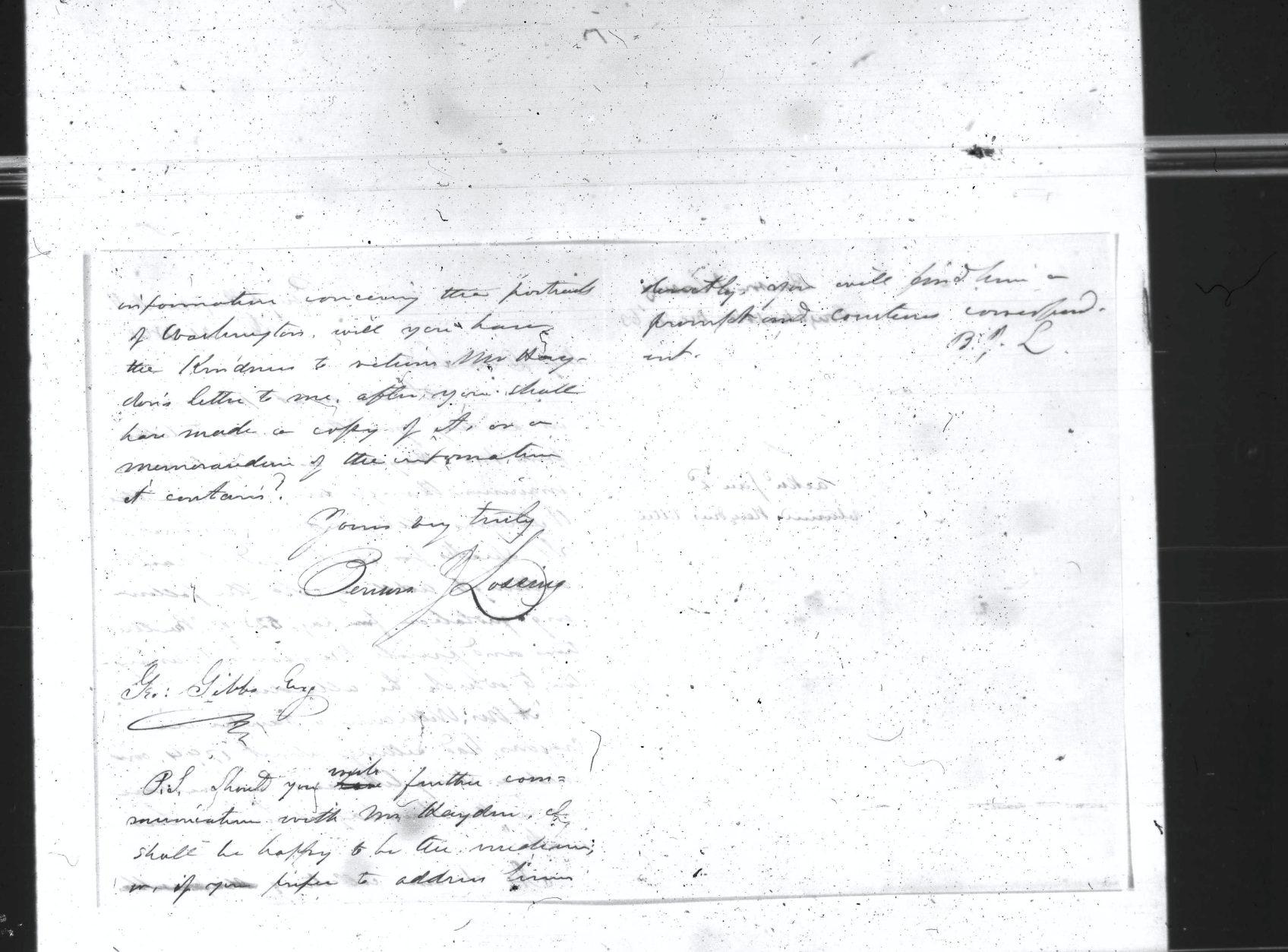
Poughkeepsie N.Y.; encloses a letter from Mr. Haydon on "the Williams' Alexandria portrait" of Washington; quotes "Recollections and Private Memoirs of Washington" p.523 on "A Mr. Williams, a painter in crayons"
1864-03-29
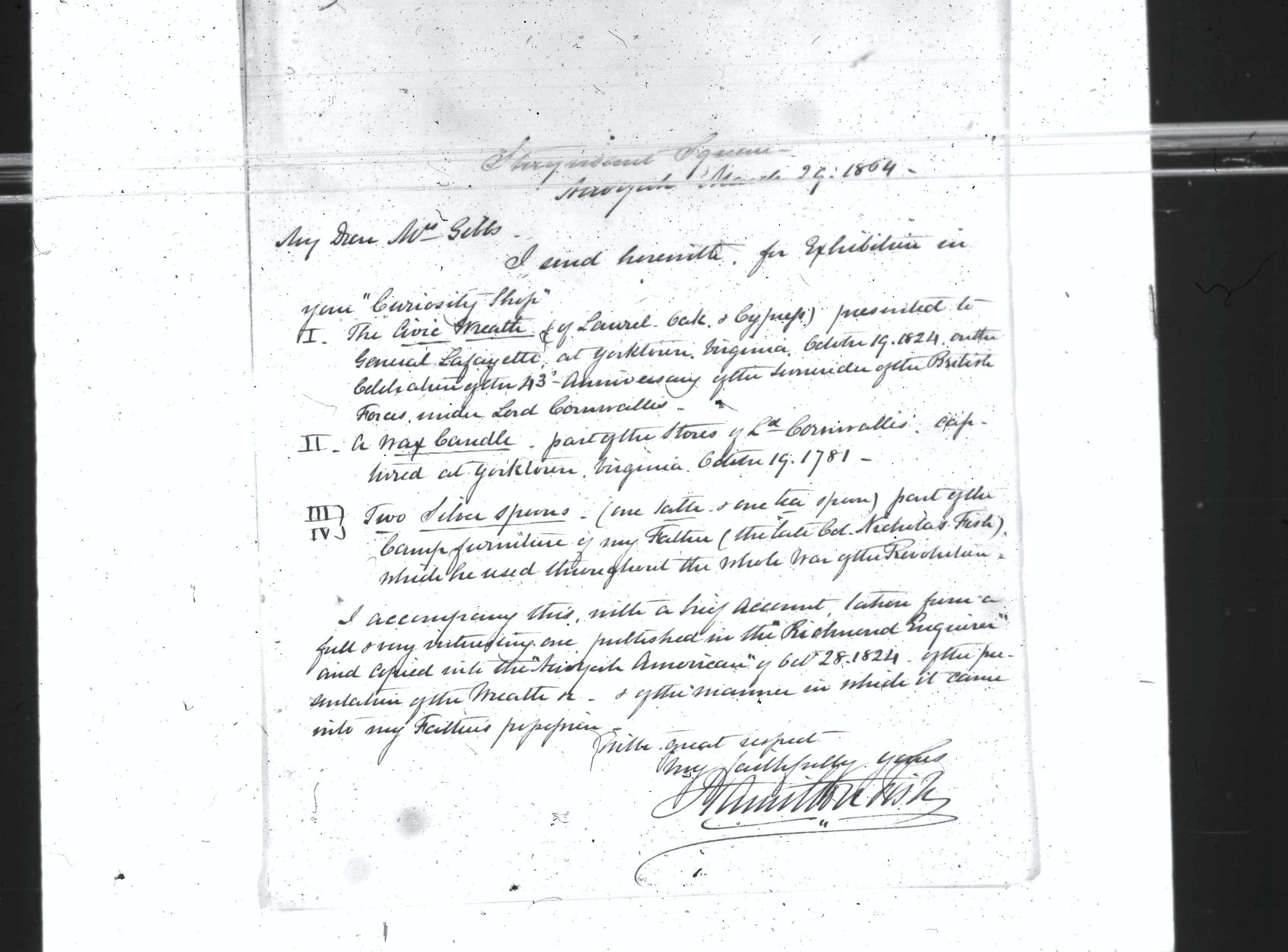
Stuyvesant Square, New York; sends four relics for Gibbs's "Curiosity Shop": the Civic Wreath presented to Lafayette at Yorktown 19 Oct 1824; a wax candle from Cornwallis's captured stores, Yorktown 19 Oct 1781; two silver spoons from the camp furniture of "my Father (the late Col. Nicholas Fish)"
1864-11-01
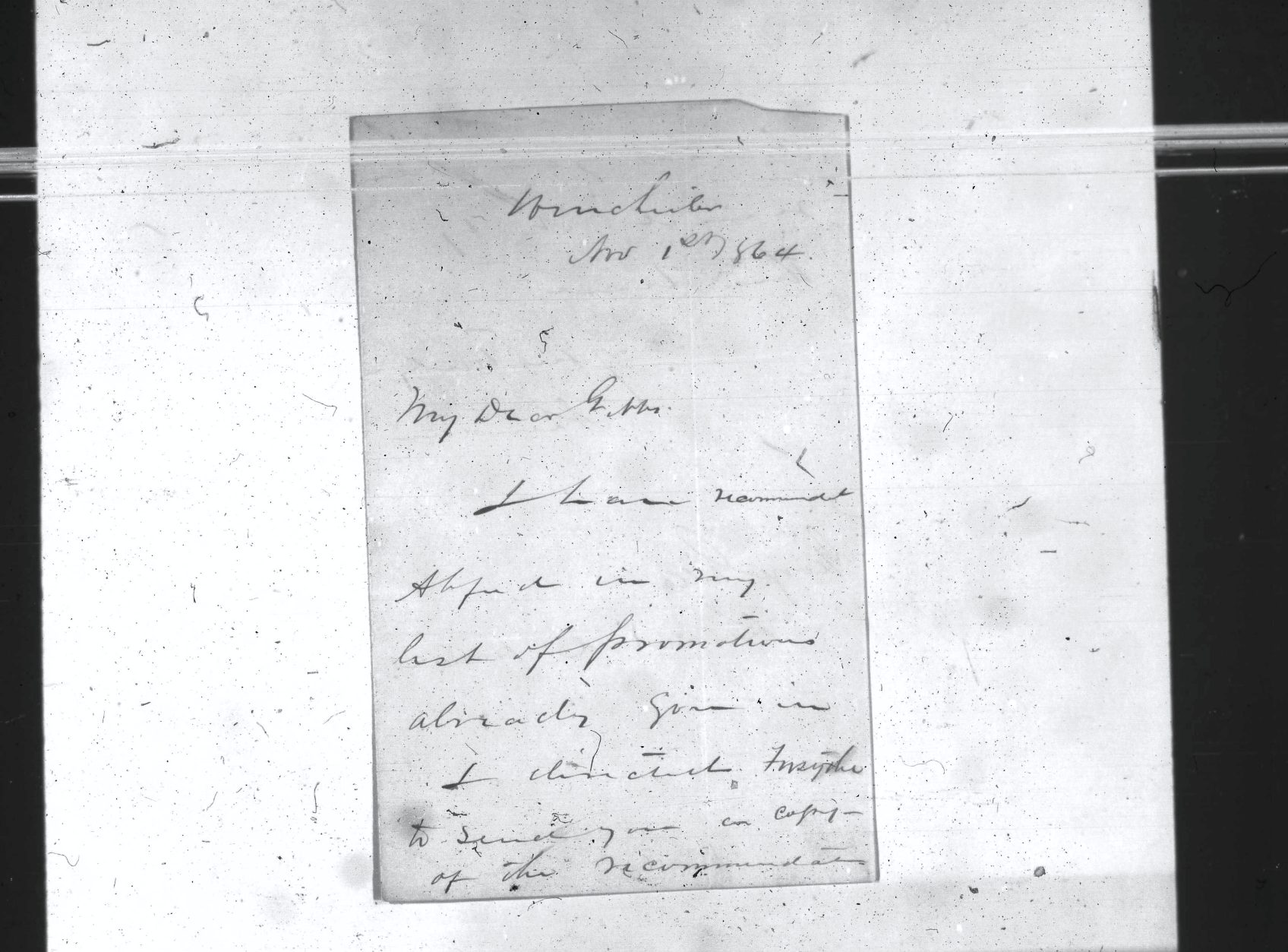
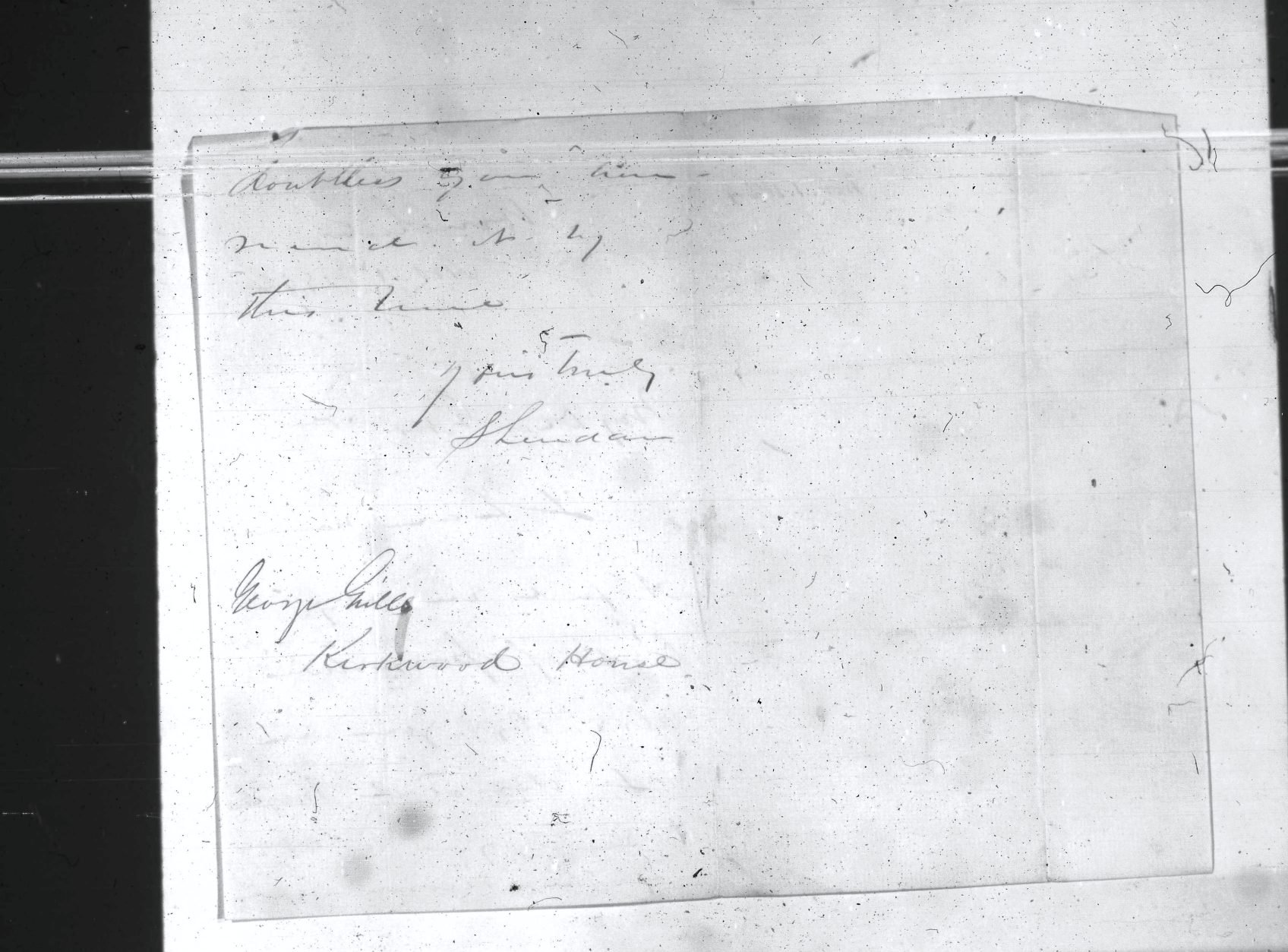
Winchester [Va.]; "My Dear Gibbs – I have recommended Alfred in my list of promotions already given in. I directed Forsyth to send you a copy of the recommendat[ion]"
Winchester / Nov 1st 1864.
My Dear Gibbs.
My Dear Gibbs.
I have recommended Alfred in my list of promotions already given in
I directed Forsythe to send you a copy of the recommendat- doubtless you have received it by this time
Yours truly
Sheridan
George Gibbs
Kirkwood House
Endorsed: Gn. Sheridan / Nov. 1. 1864 –
Autograph letter of Maj. Gen. Philip H. Sheridan to George Gibbs, written from Winchester, Virginia, two weeks after Cedar Creek. Three film frames: frame 144 is the first leaf (place, date, salutation, and the letter down to 'of the recommendat-'); frame 145 is the second leaf, carrying the last three lines, the closing and signature, and, low on the left of the same leaf, the address 'George Gibbs / Kirkwood House' (the Washington hotel); frame 146 is the folded wrapper, blank except for the file docket at the head. The whole letter is in a very pale ink on bluish paper and is close to invisible on the raw film; every reading here was taken from contrast-stretched enlargements. The word 'recommendat-' is written that way at the foot of the first leaf, with no closing letters and no hyphen supplied on the second leaf. 'Forsythe' is spelled so in the manuscript. The docket's first word is an abbreviation of 'General' contracted to what reads as 'Gn.'. Sheridan signs with the surname alone, without rank.
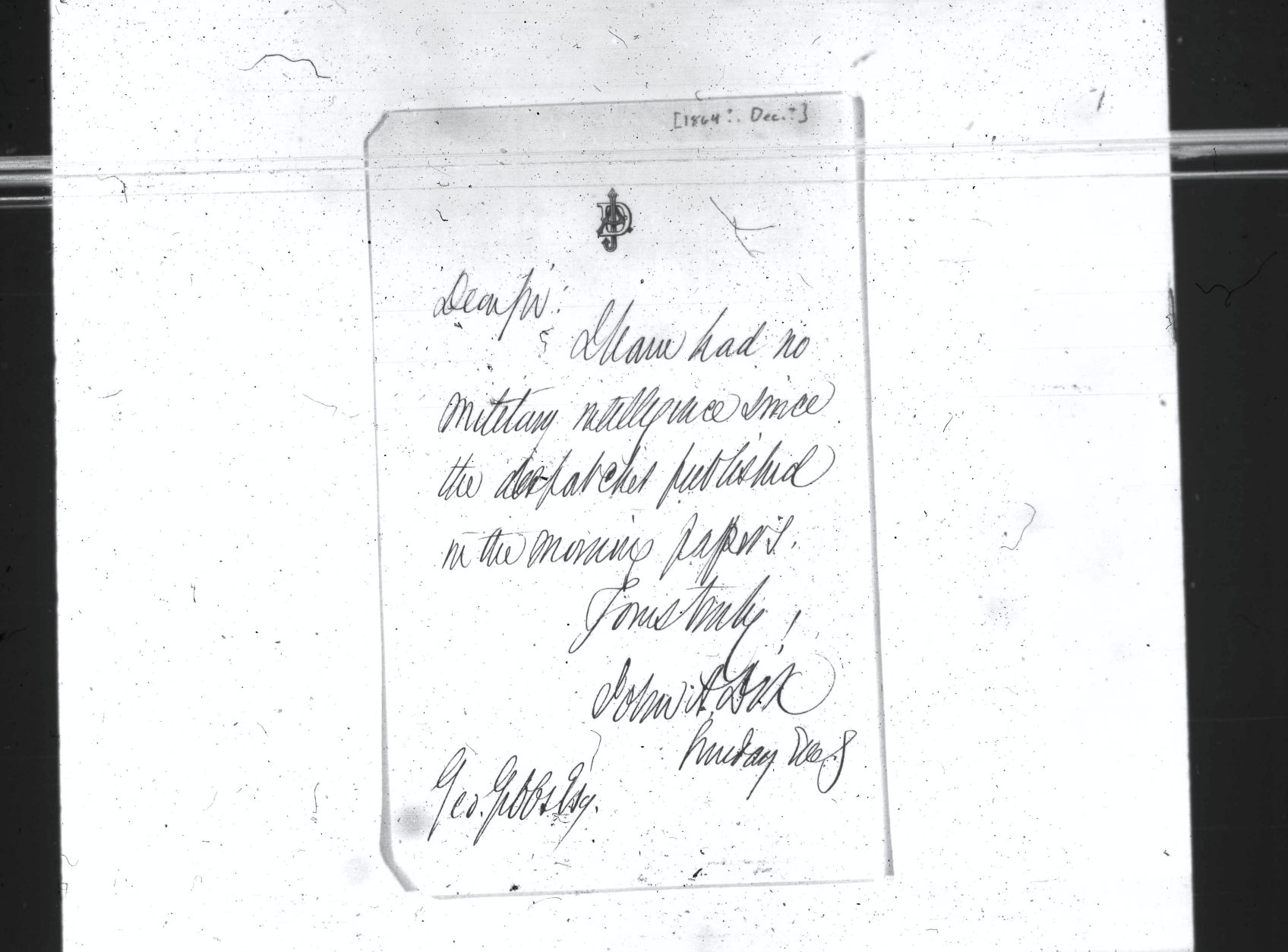
1864-12-08?
Monogrammed "JAD" stationery: "Dear Sir: I have had no military intelligence since the despatches published in the morning papers. Yours truly, John A. Dix"
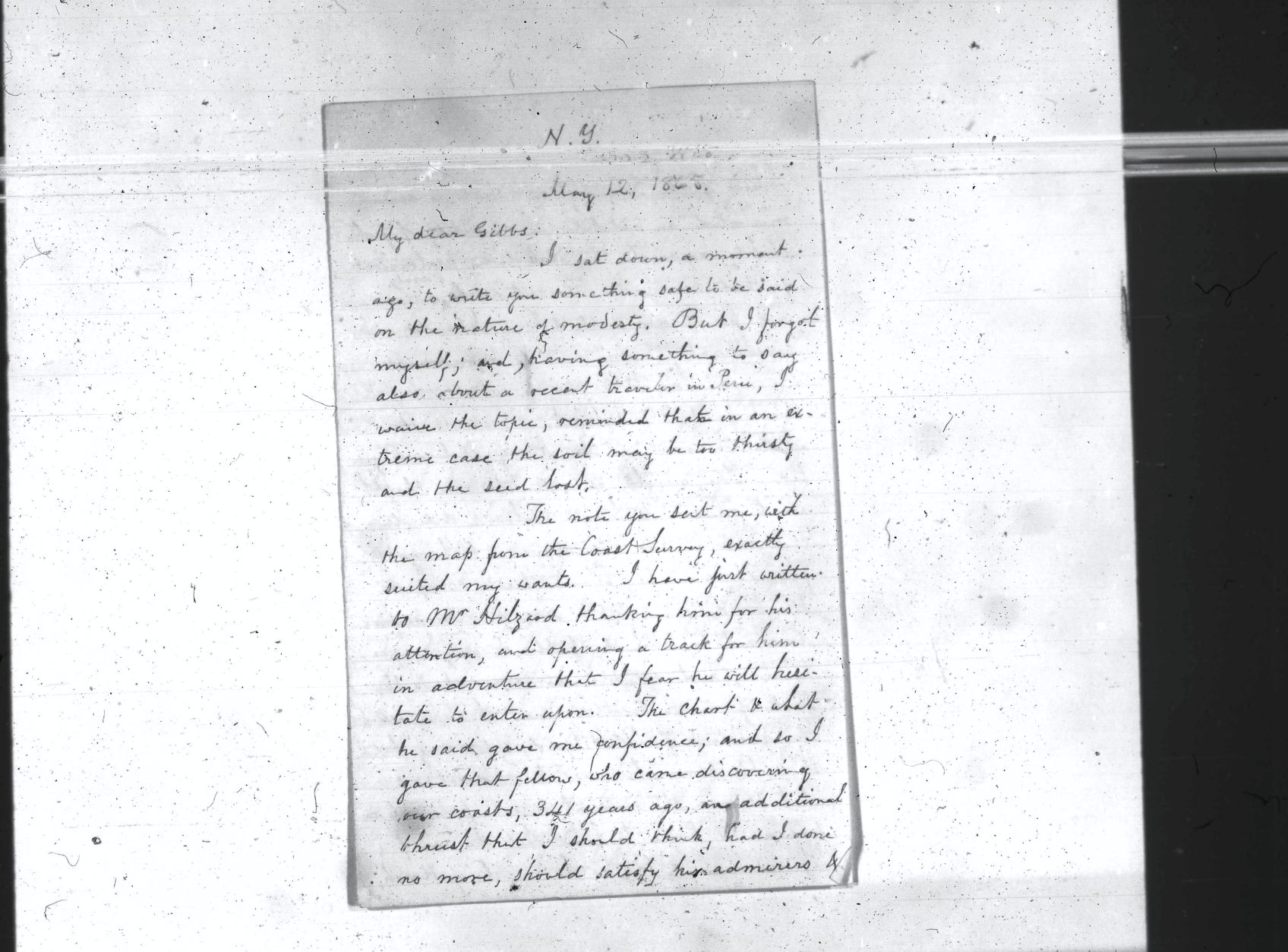
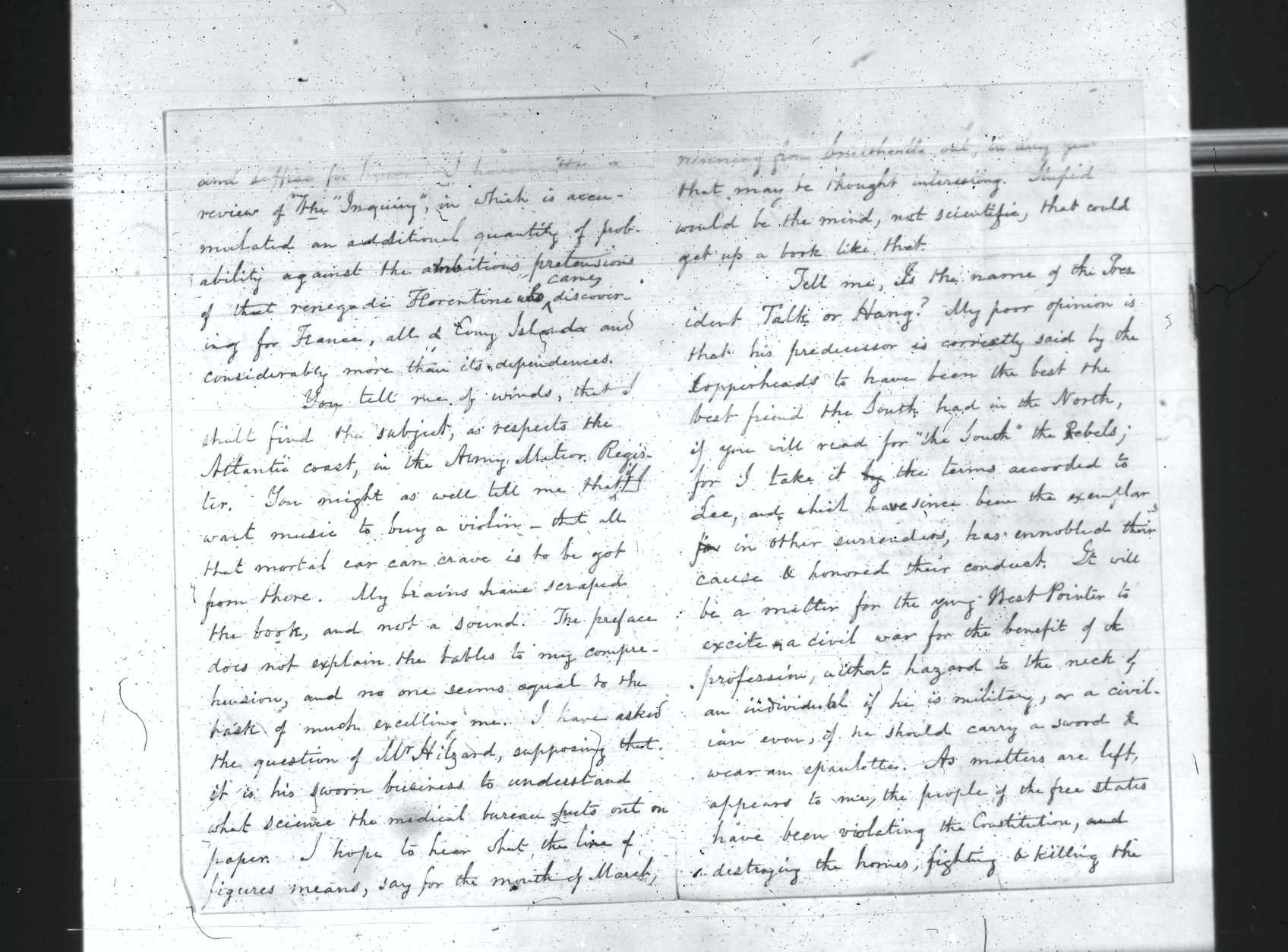
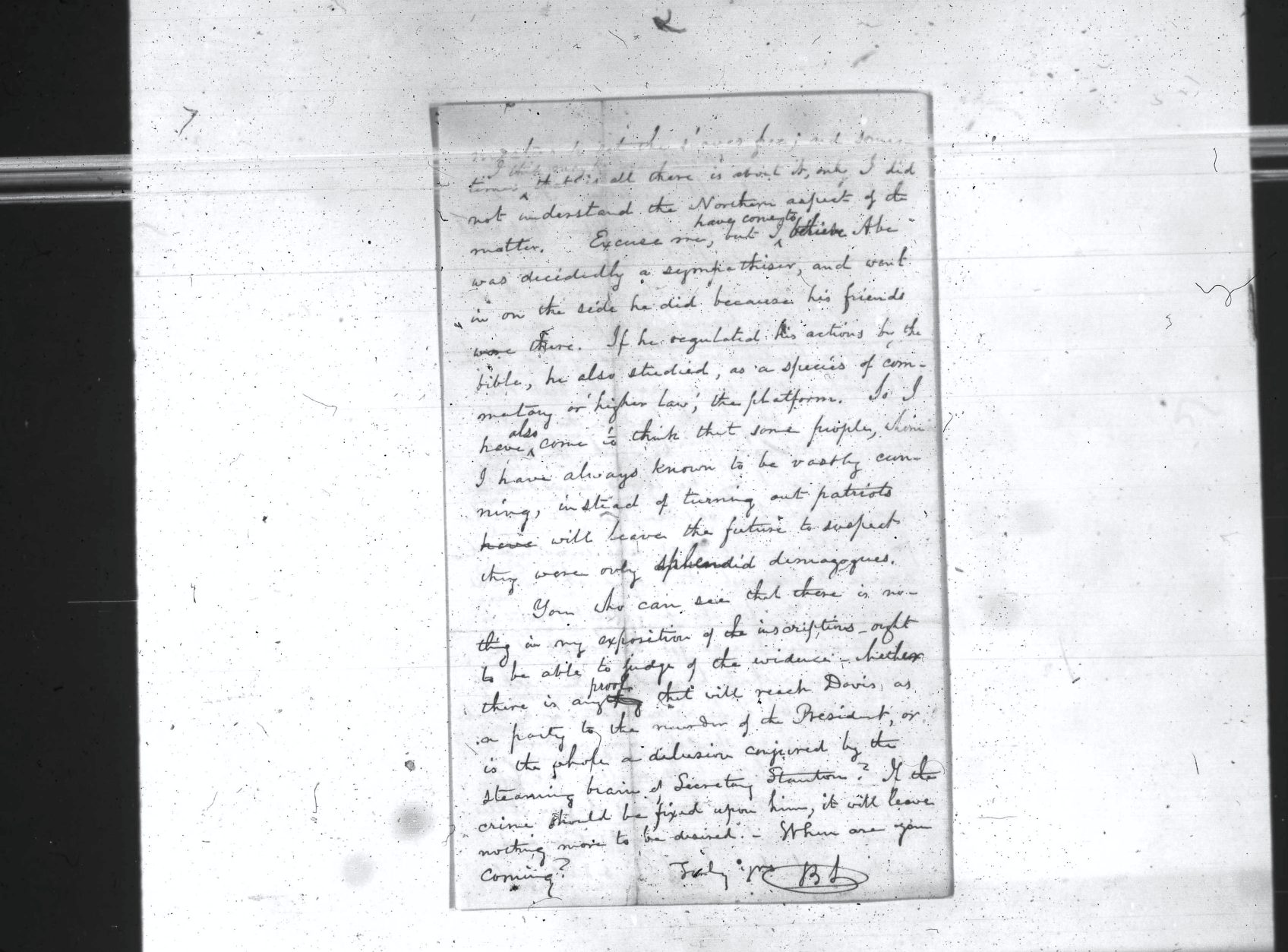
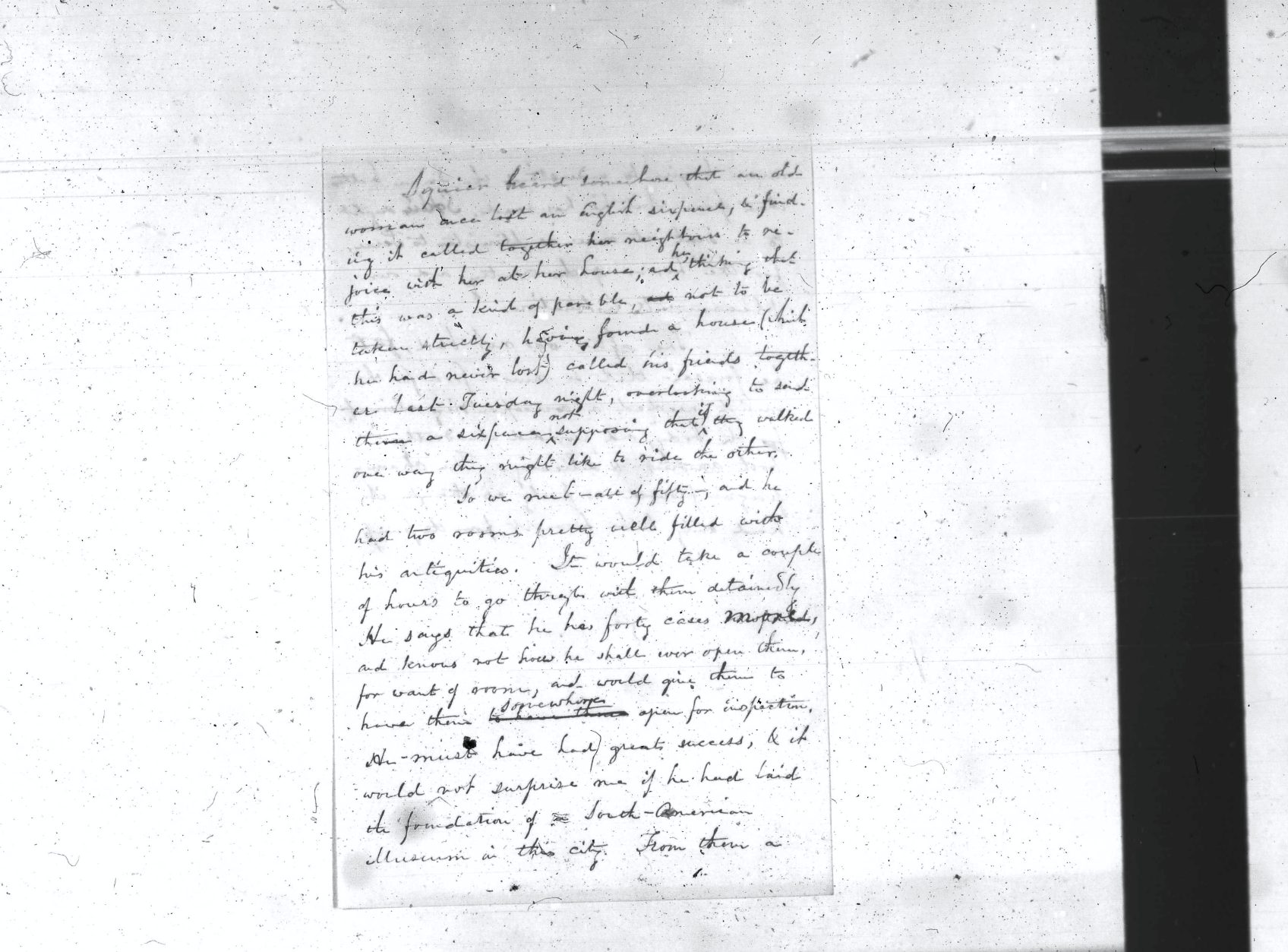
1865-05-12
New York; thanks Gibbs for the note and the map from the Coast Survey; has written to Mr. Hilgard; gave "that fellow, who came discovering our coasts, 341 years ago, an additional thrust" (Verrazzano, 1524)
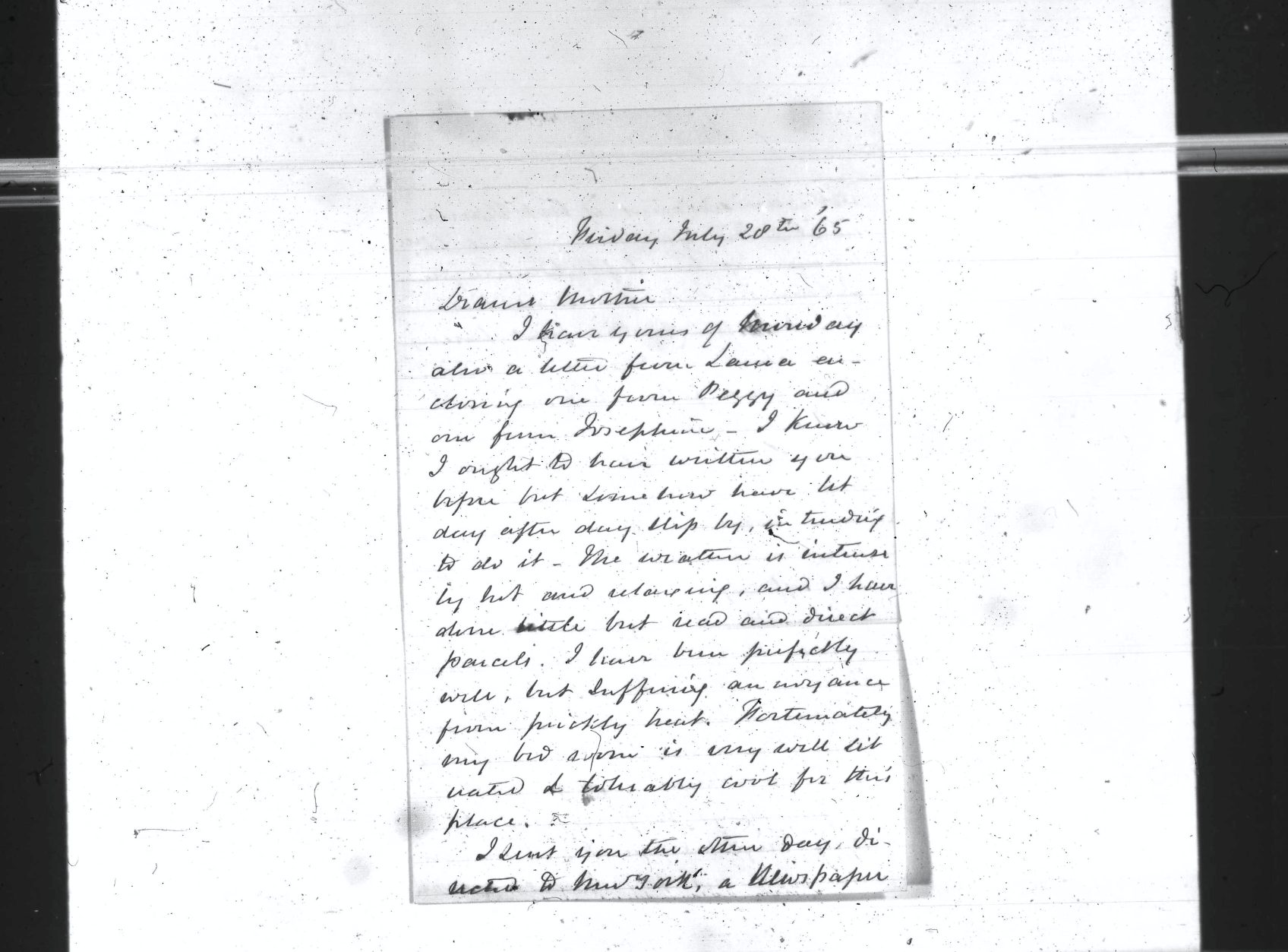
1865-07-20
"Dearest Mother": weather "intensely hot and relaxing"; suffering from prickly heat; sent her a newspaper
1866-03-11?
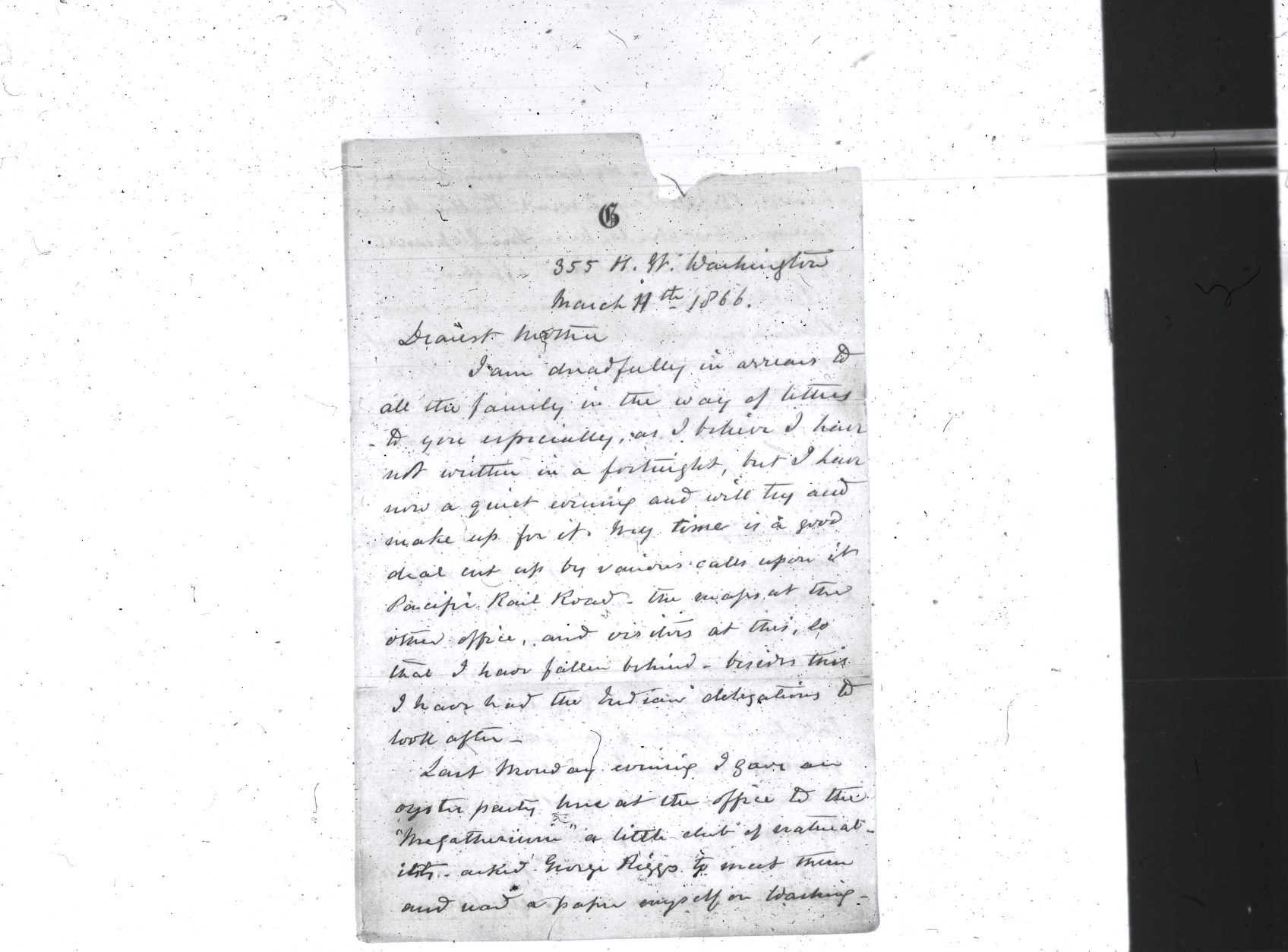
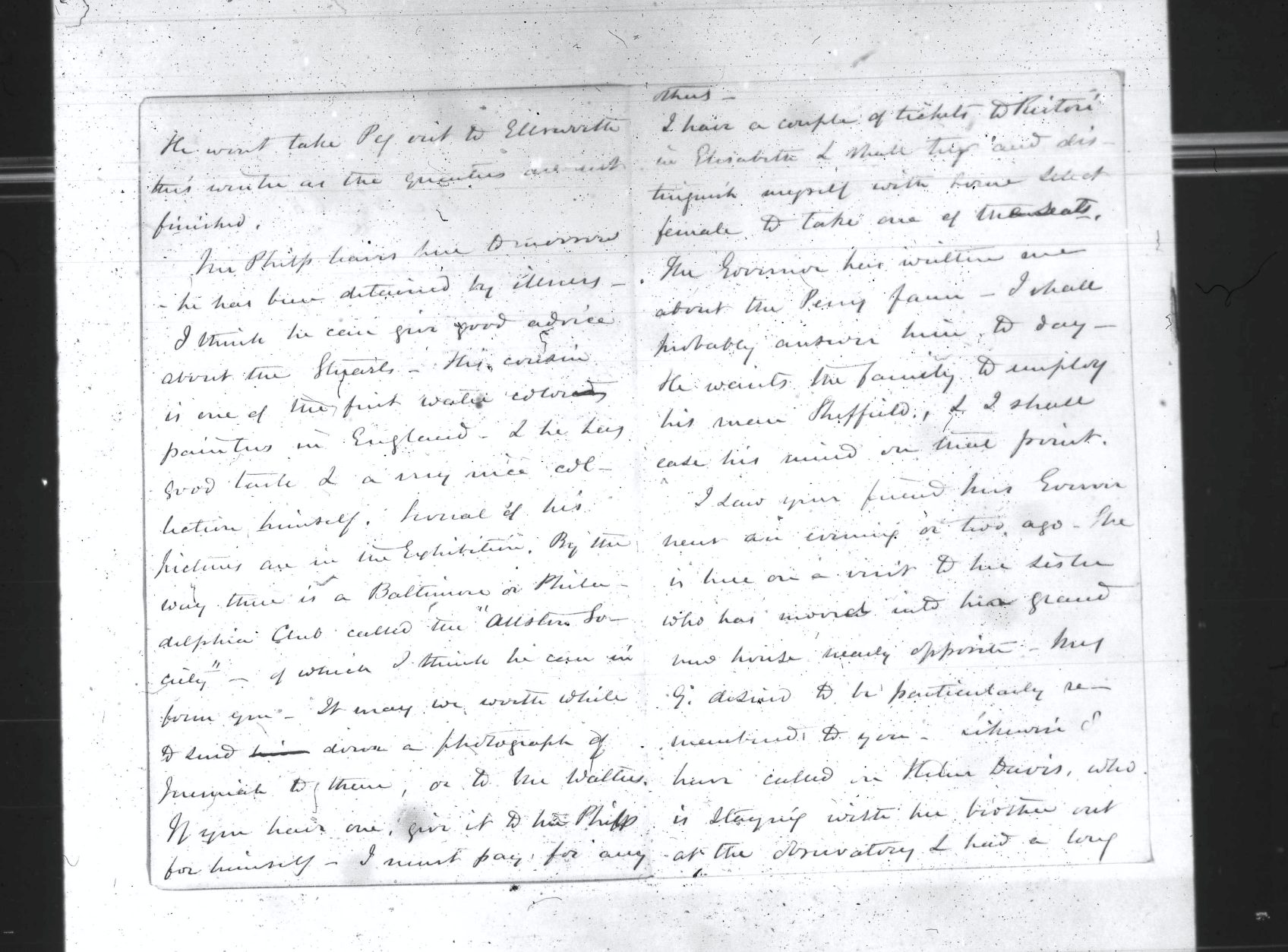
355 H. St. Washington; time cut up by "calls upon the Pacific Rail Road," the maps, "besides this I have had the Indian delegations to look after"; gave an oyster party at the office to the "Megatherium," a little club of naturalists
355 H. St. Washington / March 11th 1866.
Dearest Mother
Dearest Mother
I am dreadfully in arrears to all the family in the way of letters – to you especially, as I believe I have not written in a fortnight, but I have now a quiet evening and will try and make up for it. My time is a good deal cut up by various calls upon it. Pacific Rail Road – the maps at the other office, and visitors at this, so that I have fallen behind – besides this I have had the Indian delegations to look after –
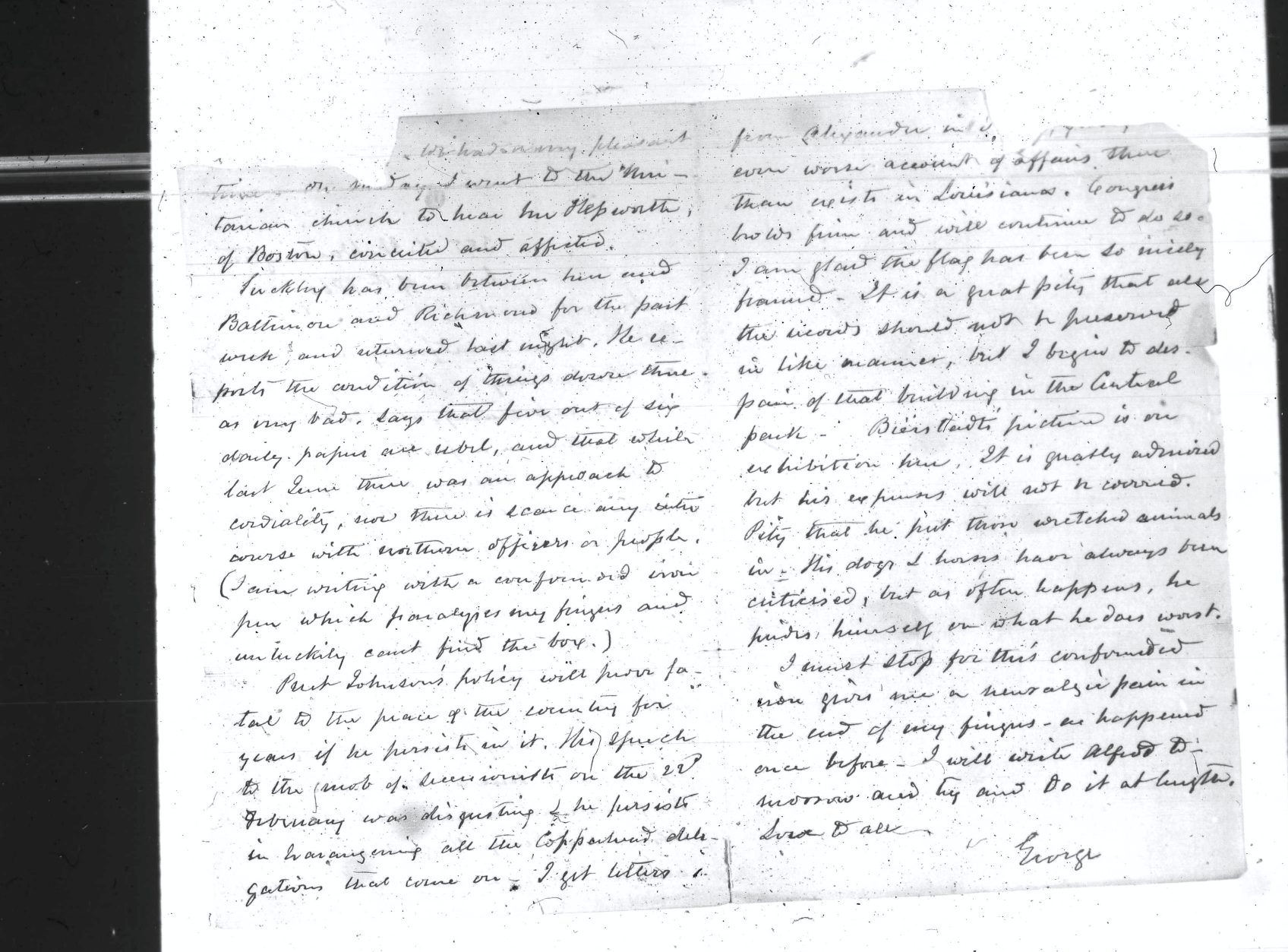
Last Monday evening I gave an oyster party here at the office to the "Megatherium" a little club of naturalists – asked George Riggs to meet them and read a paper myself on Washing- [torn] We had a very pleasant time. On Sunday I went to the Unitarian church to hear Mr Hepworth, of Boston; conceited and affected.
Suckley has been between here and Baltimore and Richmond for the past week, and returned last night. He reports the condition of things down there as very bad. Says that five out of six daily papers are rebel, and that while last June there was an approach to cordiality, now there is scarce any intercourse with northern officers or people. (I am writing with a confounded iron pen which paralyzes my fingers and unluckily cant find the box.)
Prest Johnson's policy will prove fatal to the peace of the country for years if he persists in it. His speech to the mob of secessionists on the 22d February was disgusting & he persists in haranguing all the Copperhead delegations that come on – I get letters from Alexander with an [torn] even worse account of affairs there than exists in Louisiana. Congress holds firm and will continue to do so. I am glad the flag has been so nicely framed – It is a great pity that all the records should not be preserved in like manner, but I begin to despair of that building in the Central park – Bierstadt's picture is on exhibition here, It is greatly admired but his expenses will not be covered. Pity that he put those wretched animals in – His dogs & horses have always been criticised, but as often happens, he prides himself on what he does worst.
I must stop for this confounded iron gives me a neuralgic pain in the end of my fingers – as happened once before – I will write Alfred tomorrow and try and do it at length.
Love to all
George
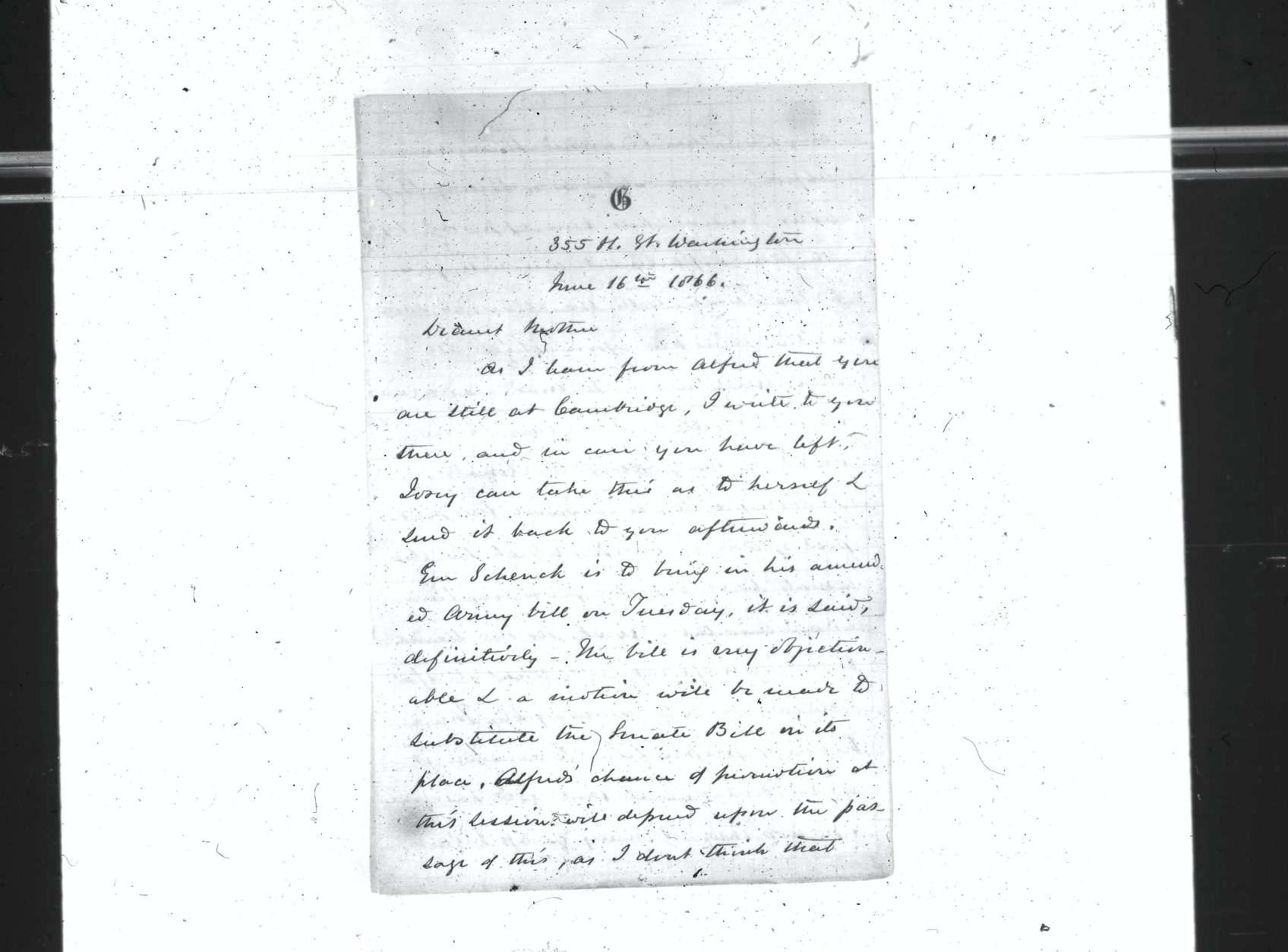
Autograph letter of George Gibbs (IV) to his mother Laura Wolcott Gibbs, written from 355 H St., Washington. Two film frames. Frame 160 is the first leaf, headed with an embossed or printed Gothic monogram letter 'G' at the top centre of the sheet, and carries the place, date, salutation and the first two paragraphs down to 'read a paper myself on Washing-'. Frame 161 films the second leaf's two written pages side by side in a single exposure (left page first, then right page). The head of that second leaf is torn away diagonally: the catchword completing 'Washing-' is lost at the top left, where only 'We had a very pleasant' survives on the surviving flap, and a short stretch after 'from Alexander with an' is lost at the top right. Both losses are marked [torn]. The day of the month is written with two identical strokes and reads '11th'; a reading of '14th' cannot be excluded. 'Prest' (for President) is written as an abbreviation with a long terminal stroke. 'cant' is written without an apostrophe. 'criticised' is spelled so. Persons named: George Riggs, the Washington banker; Dr George Suckley, the naturalist; the Rev. Mr Hepworth of Boston; the painter Albert Bierstadt. The 'Megatherium' was the naturalists' club that met at the Smithsonian.
1866-06-16
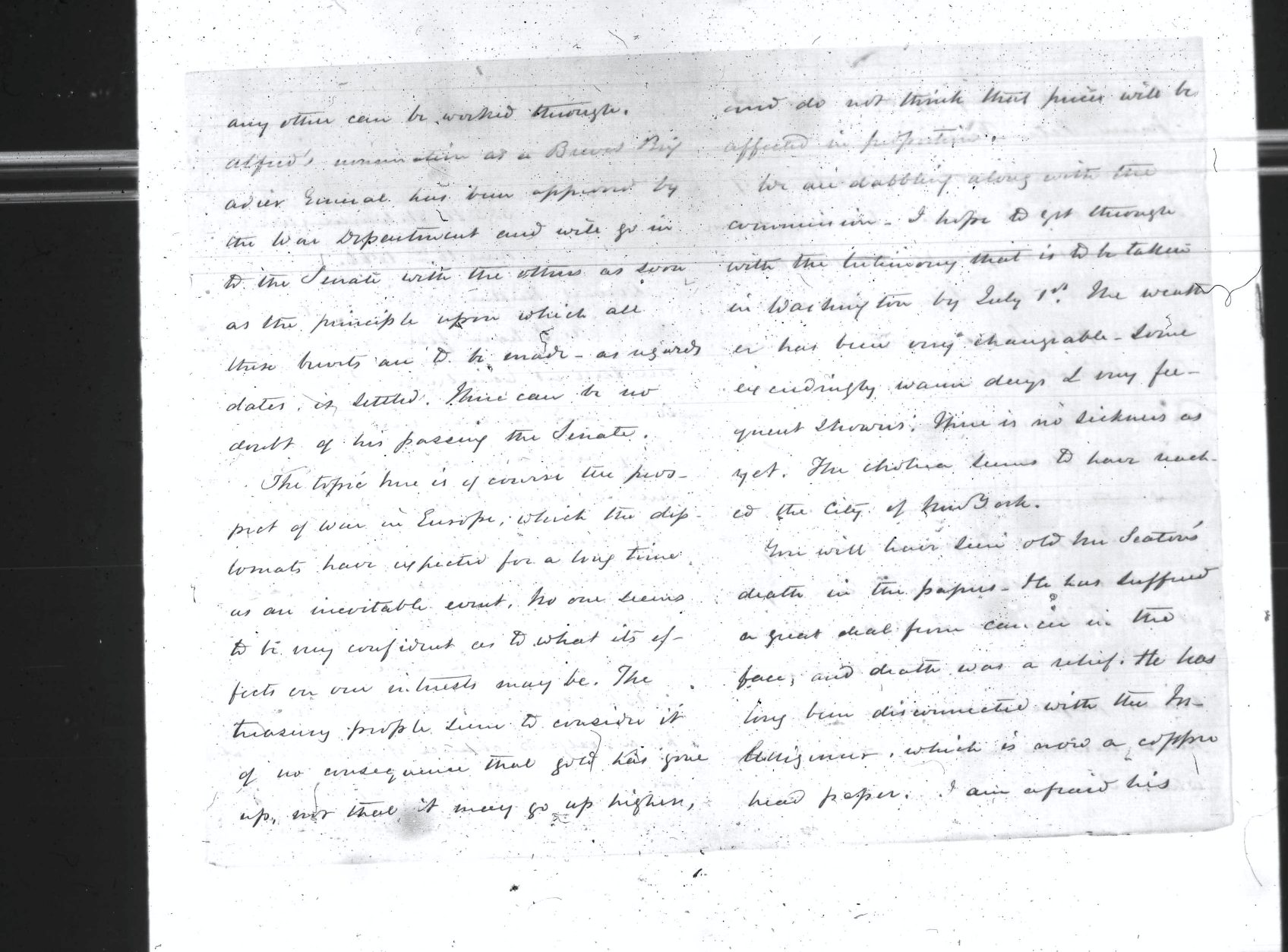
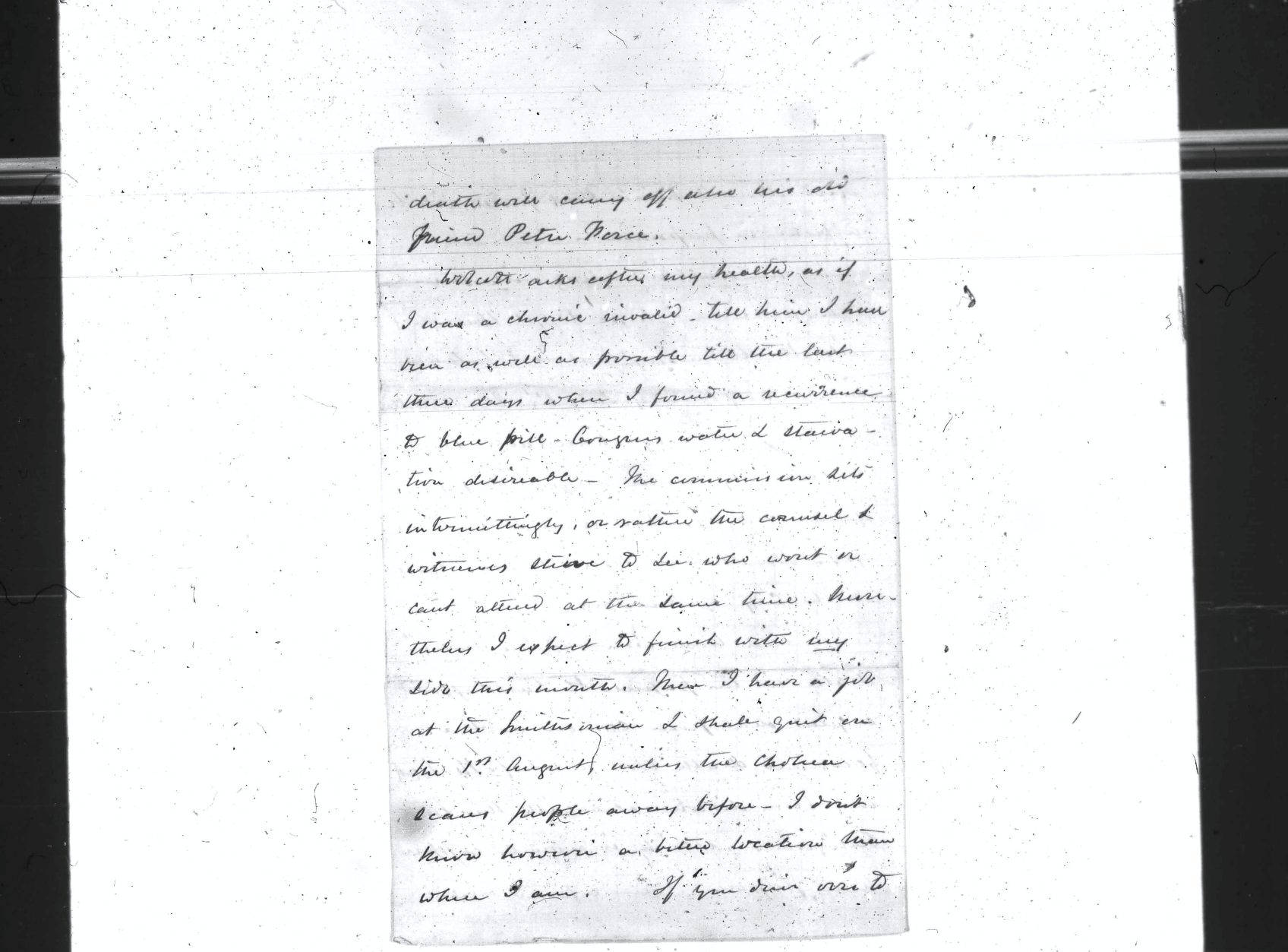
"Gen Schenck is to bring in his amended Army bill on Tuesday… The bill is very objectionable & a motion will be made to substitute the Senate Bill in its place. Alfred's chance of promotion at this session will depend upon the passage of this"
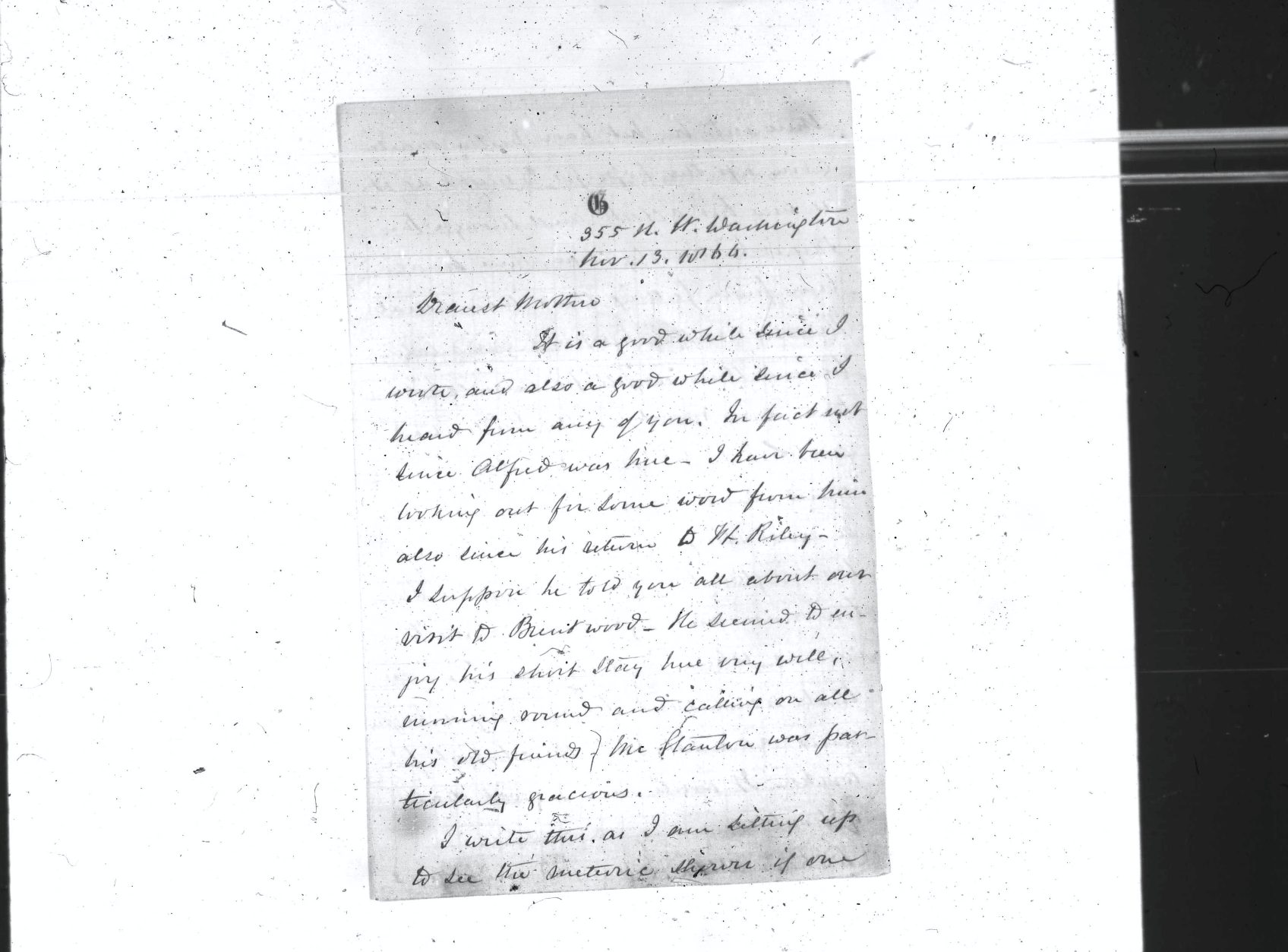
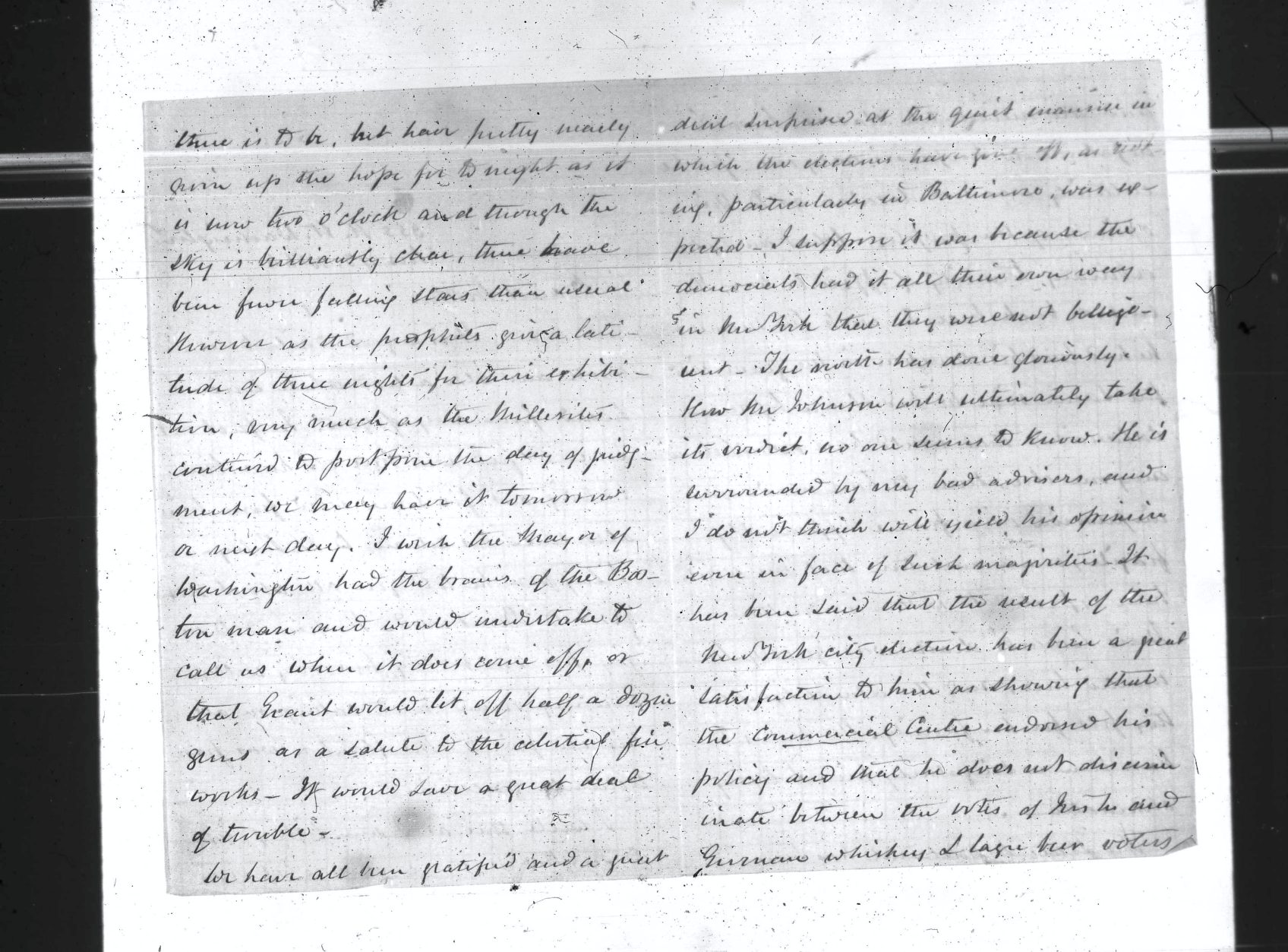
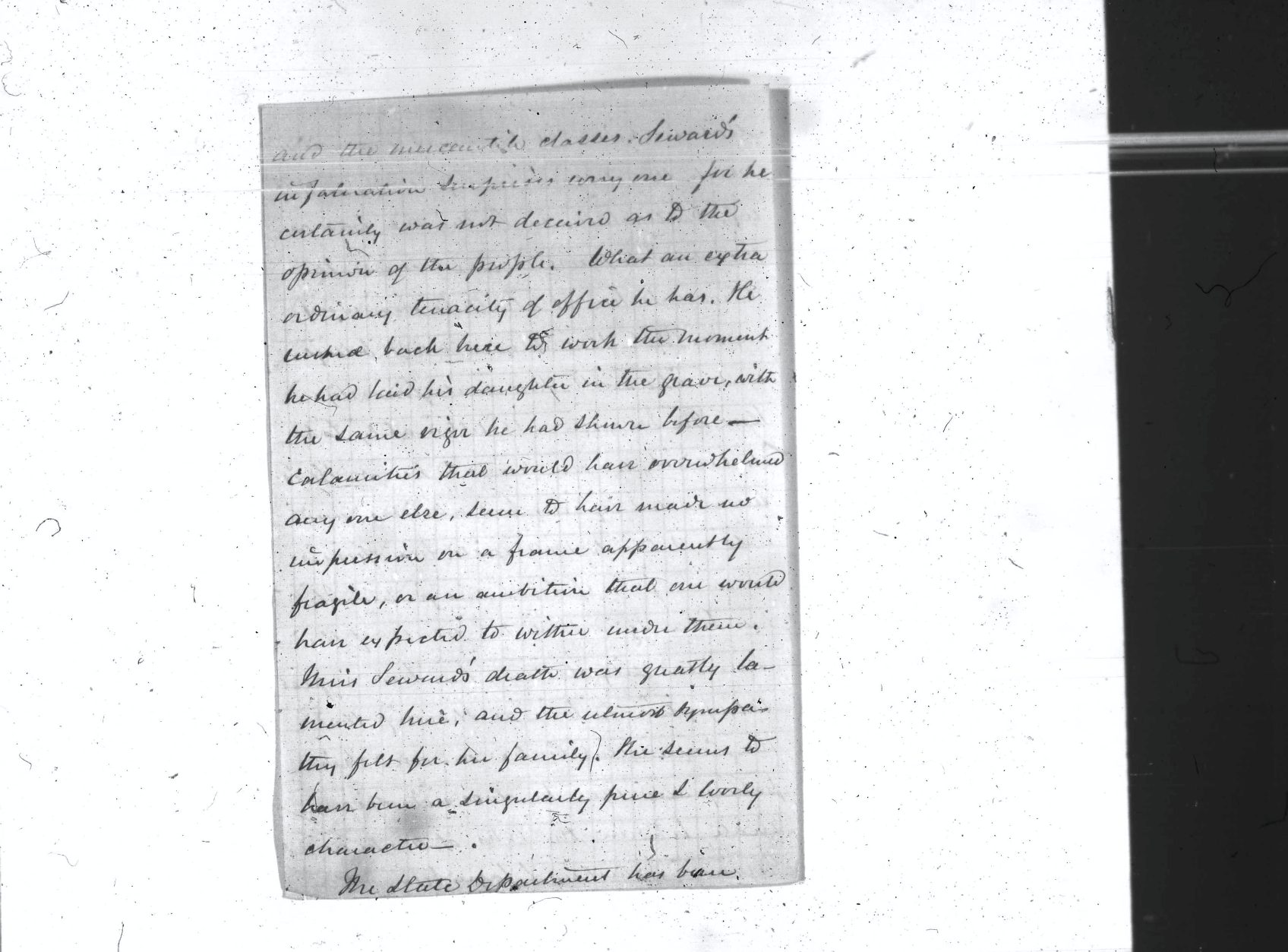
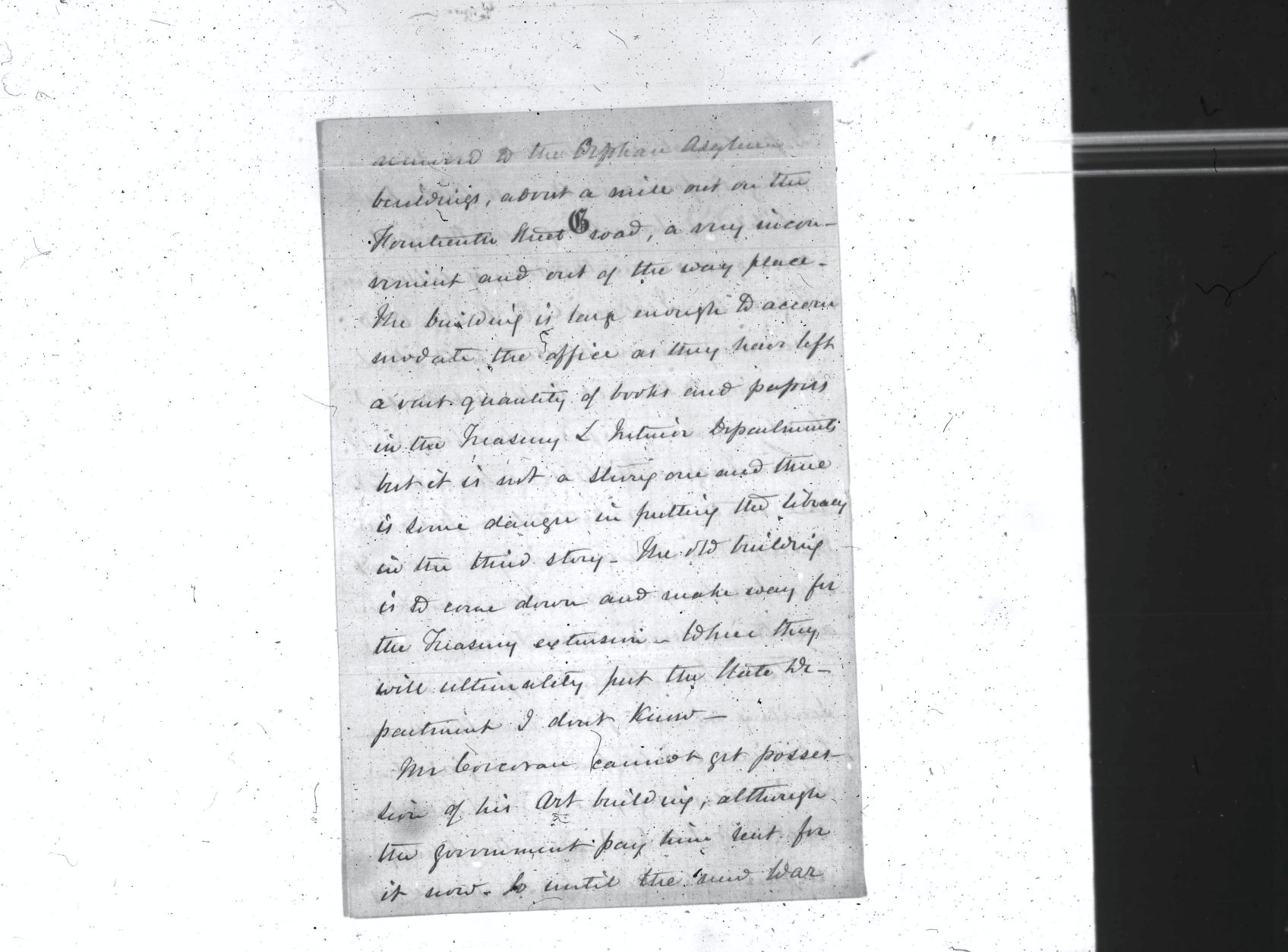
1866-11-13
355 H. St. Washington; "not since Alfred was here"; looking out for word since his return to Ft. Riley; the visit to Brentwood, "Mr Stanton was particularly gracious"; writing while sitting up to watch for the meteoric shower
1866-11-29
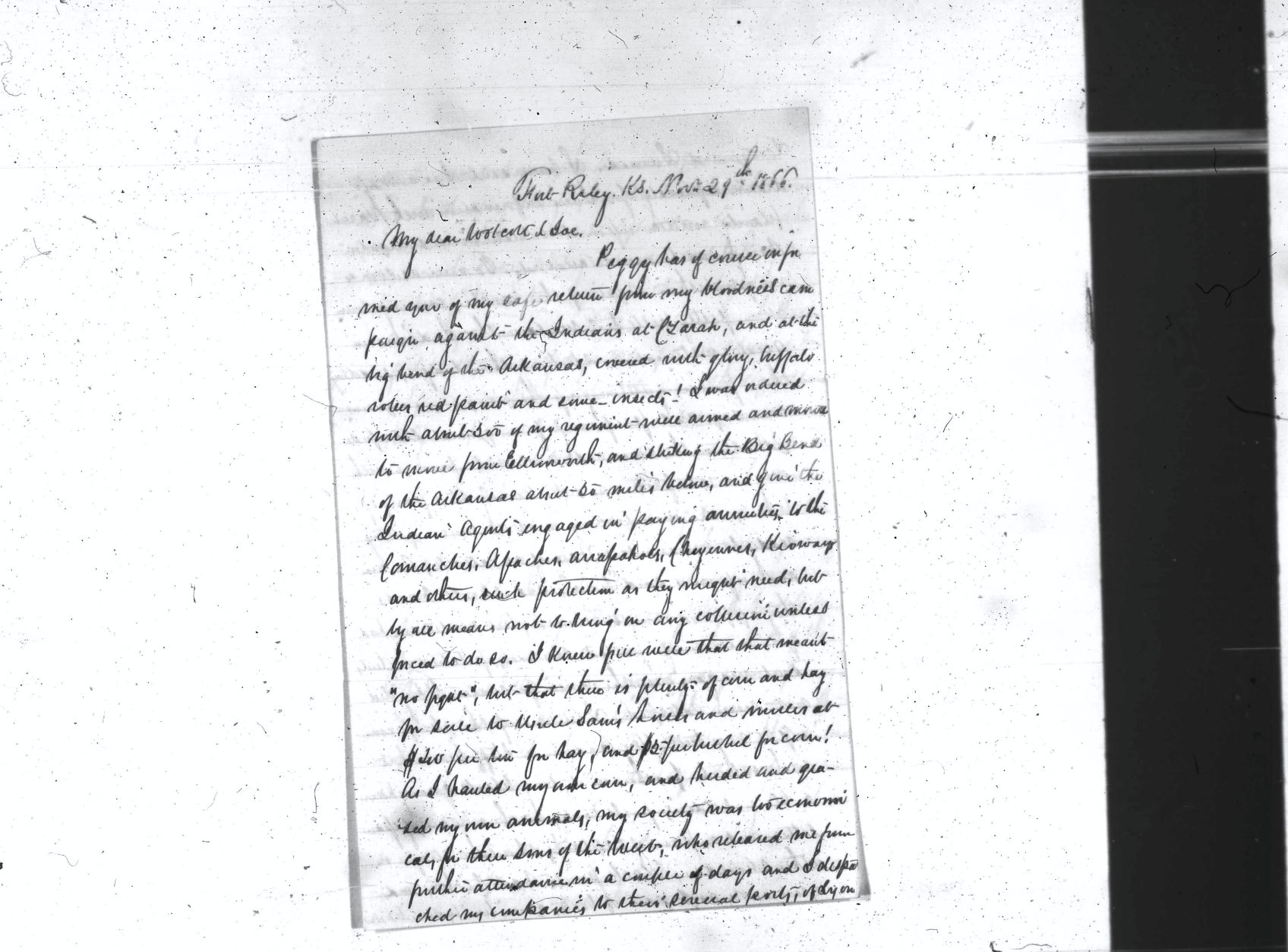
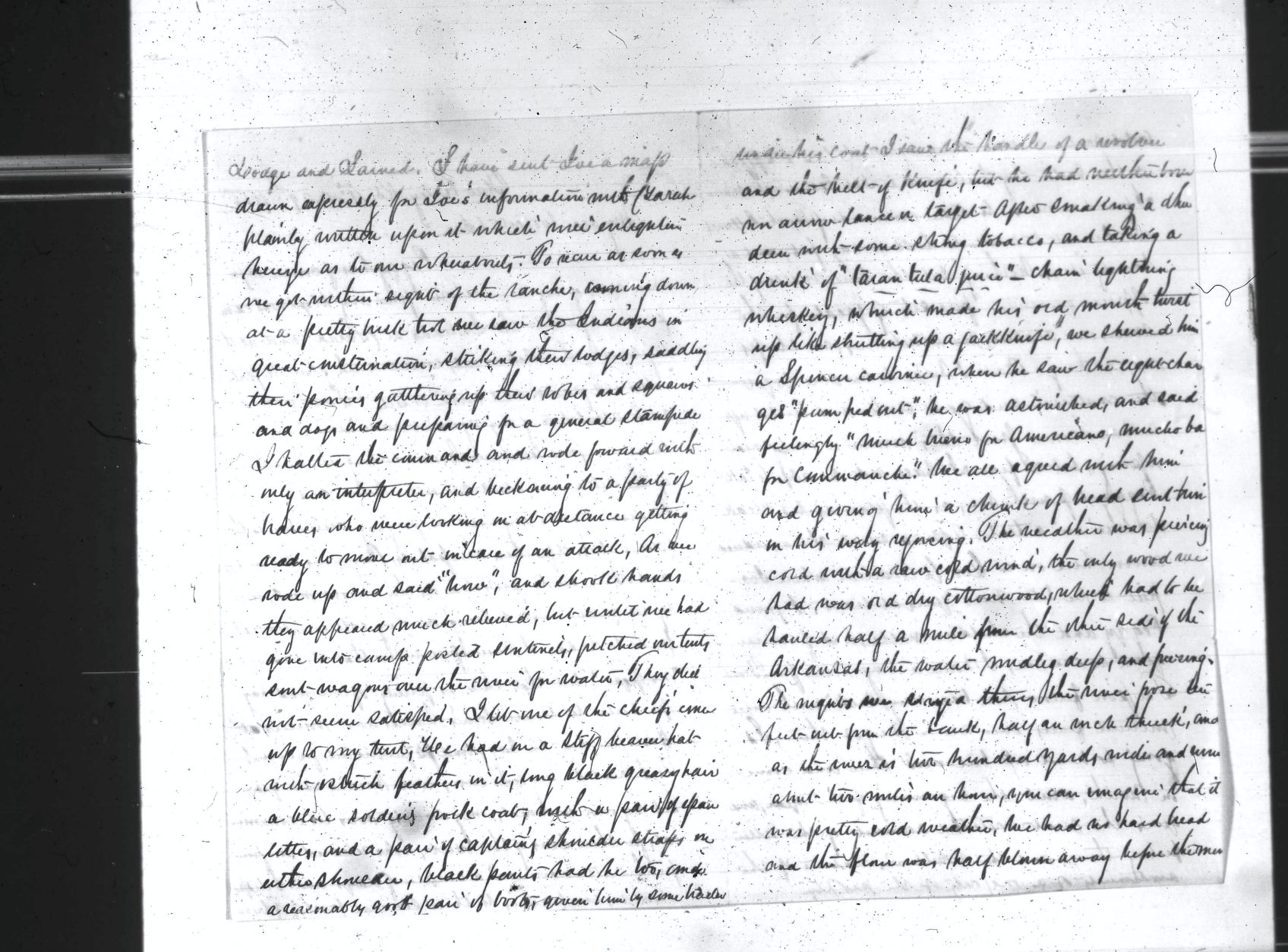
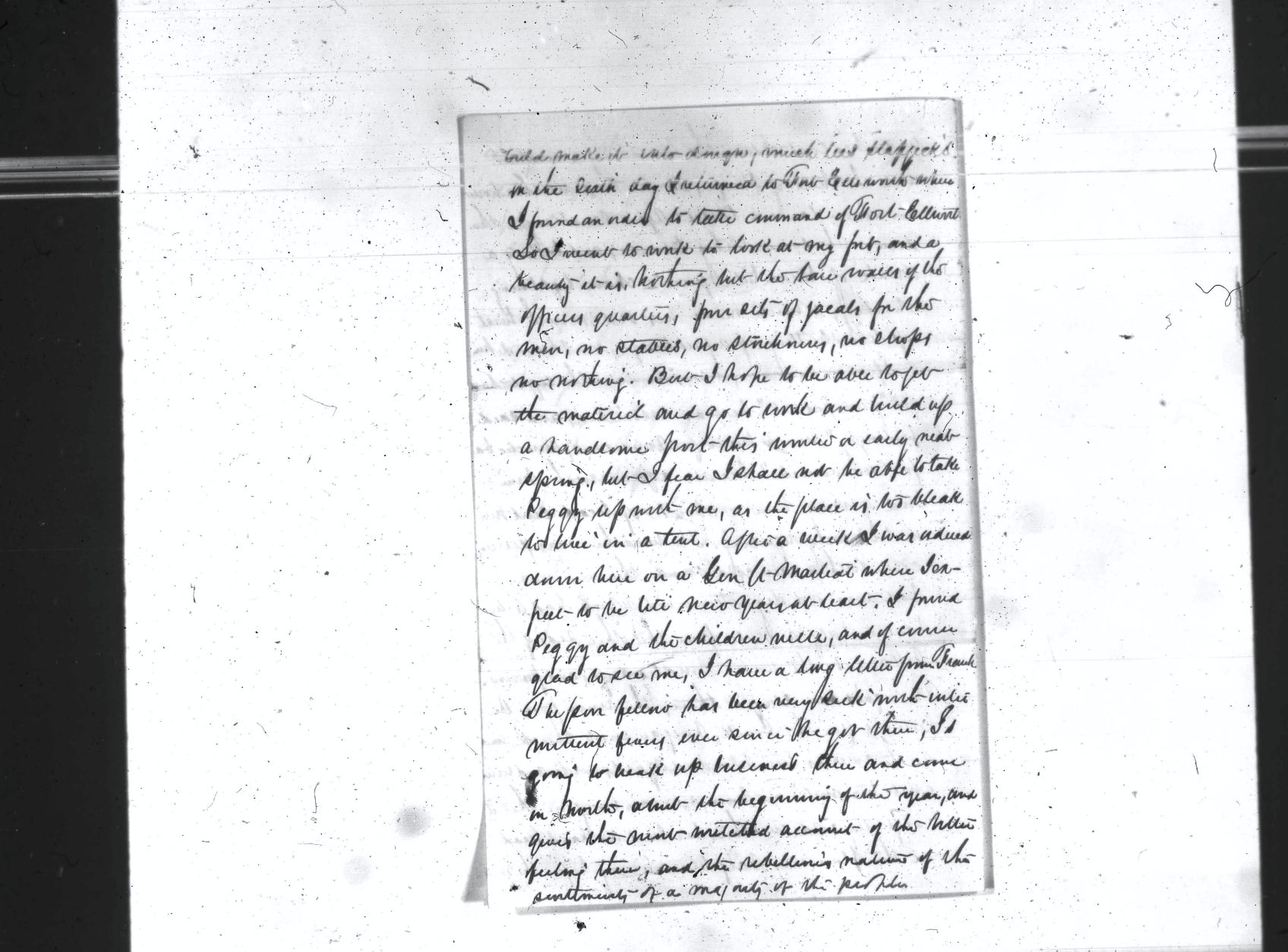
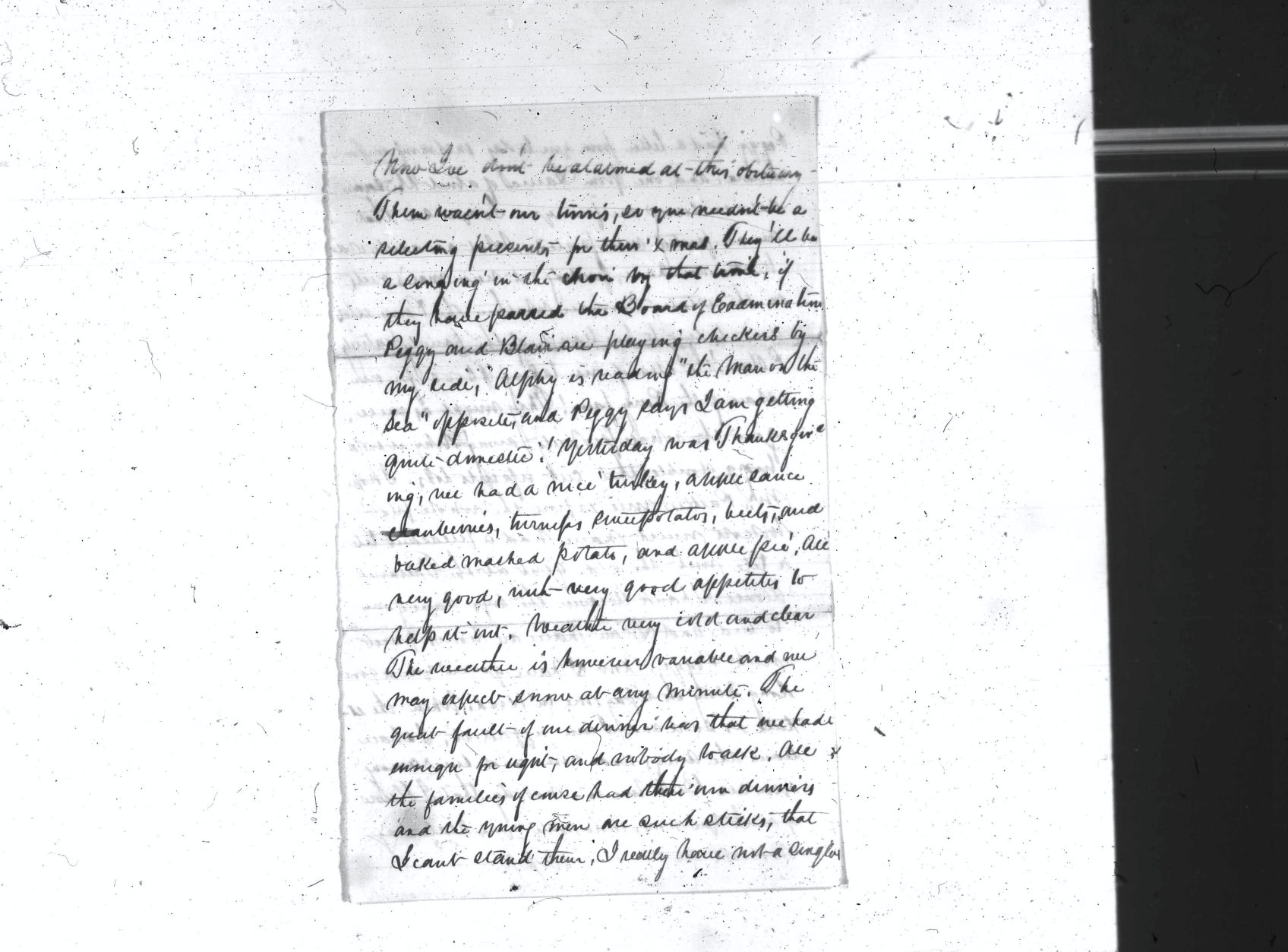
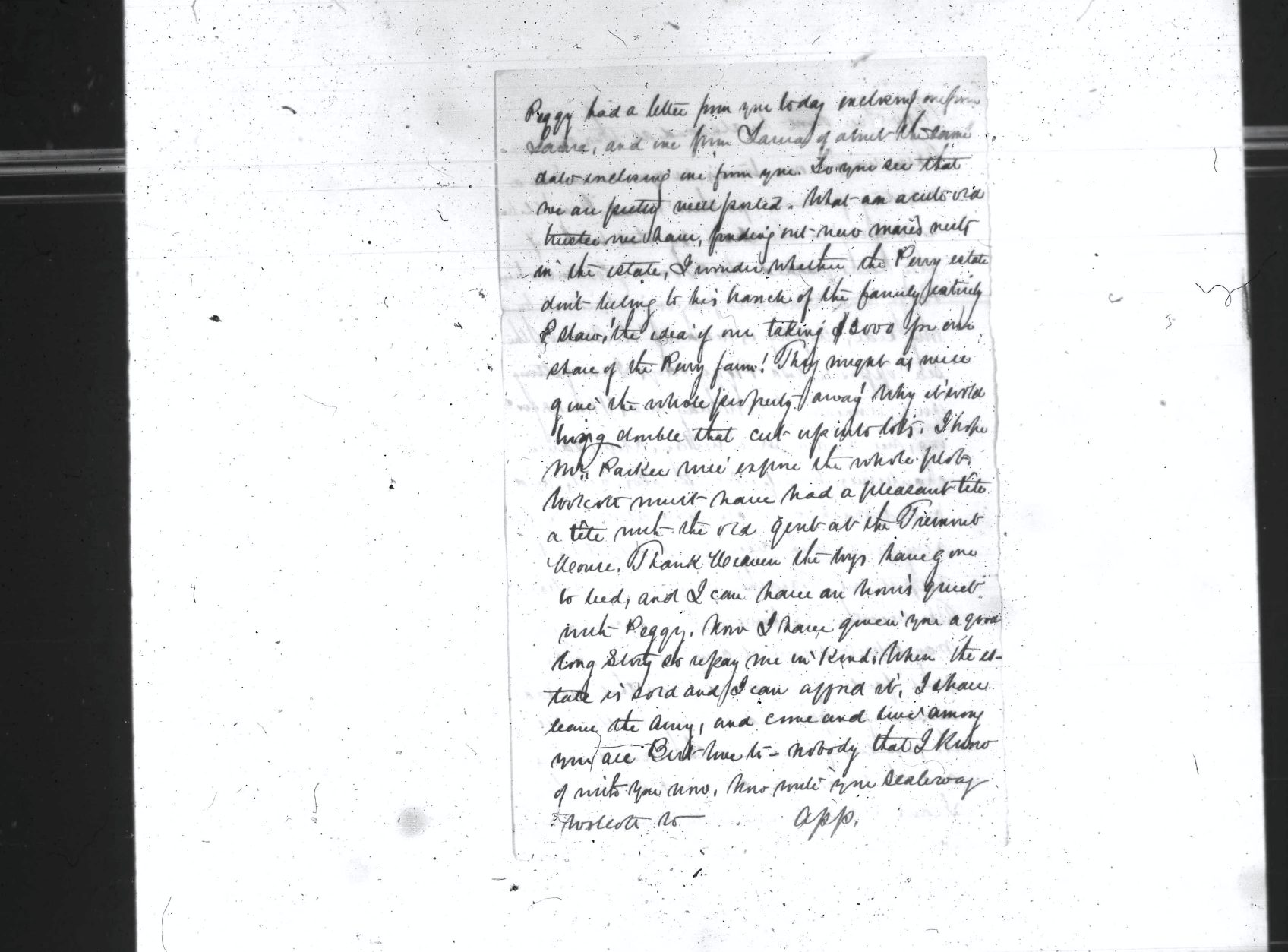
"Fort Riley, Ks. Nov 29th 1866 – My dear Wolcott & Joe": "Peggy has of course informed you of my safe return from my bloodless campaign against the Indians at Zarah, and at the Big bend of the Arkansas, crowned with glory, buffalo robes, red paint and – insects!"; took about 500 of his regiment from Ellsworth to guard the Big Bend and protect the Indian Agents paying annuities to the Comanches, Apaches, Arapahoes, Cheyennes, Kiowas, "but by all means not to bring on any collision unless forced to do so"; hay at "$60 per ton" and corn "$2. per bushel"
1866-12-03
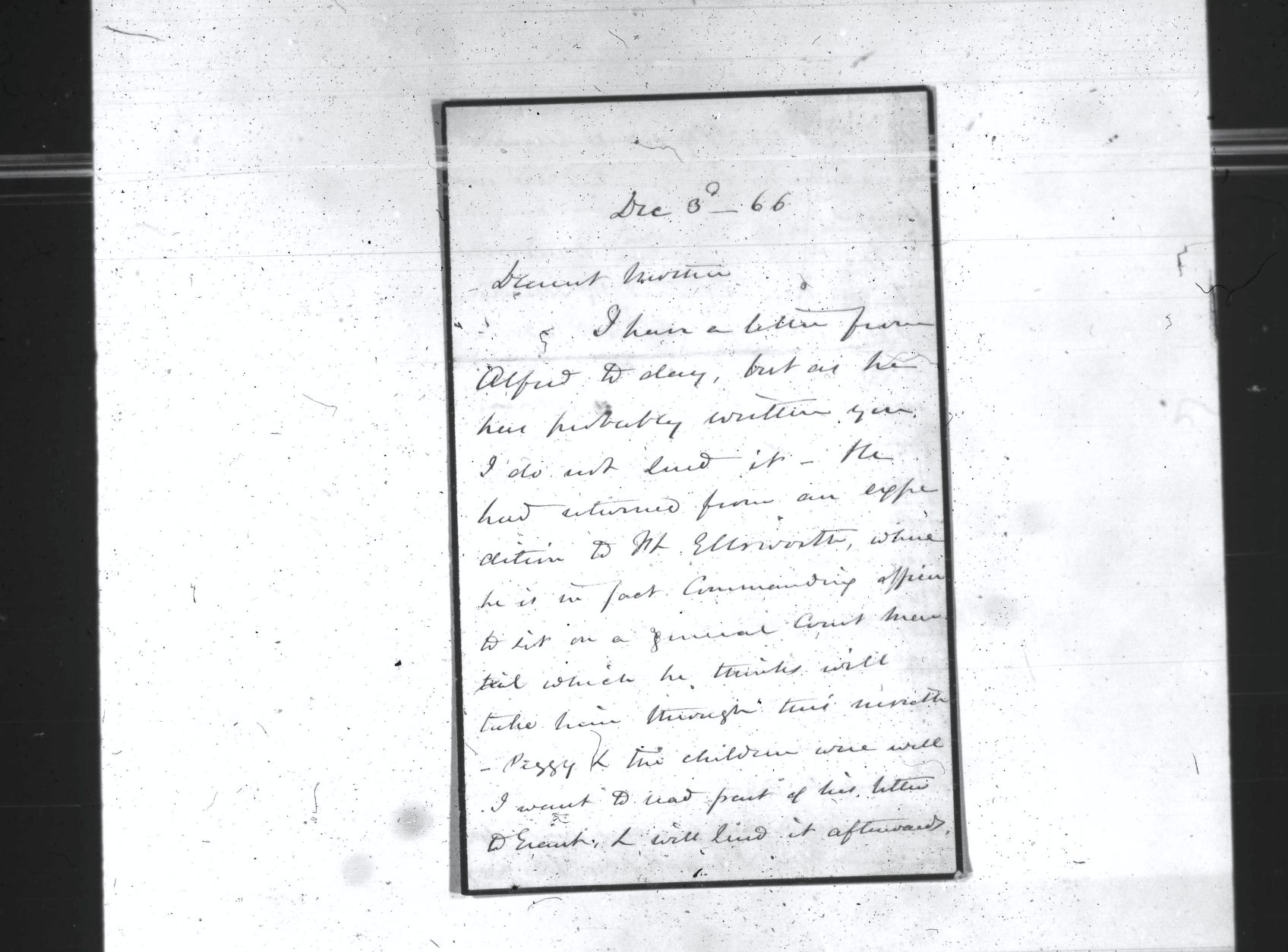
"I have a letter from Alfred today… He had returned from an expedition to Ft. Ellsworth, where he is in fact Commanding officer, to sit on a General Court Martial"; "I want to read part of his letter to Grant, & will send it afterwards"
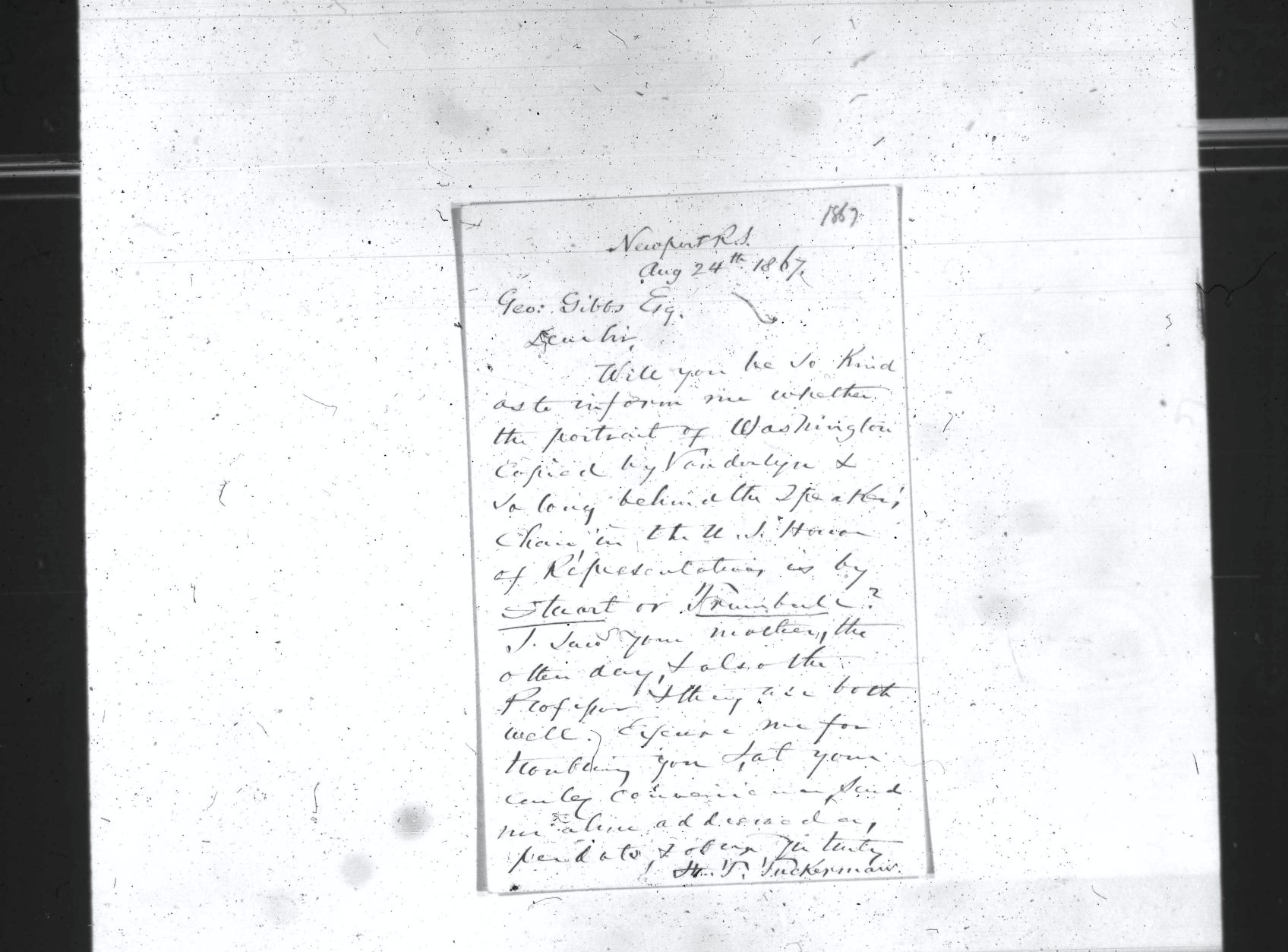
1867-08-24
Newport R.I.; "Will you be so kind as to inform me whether the portrait of Washington copied by Vanderlyn & so long behind the Speaker's Chair in the U.S. House of Representatives is by Stuart or Trumbull?"; saw "your mother the other day & also the Professor, they are both well"
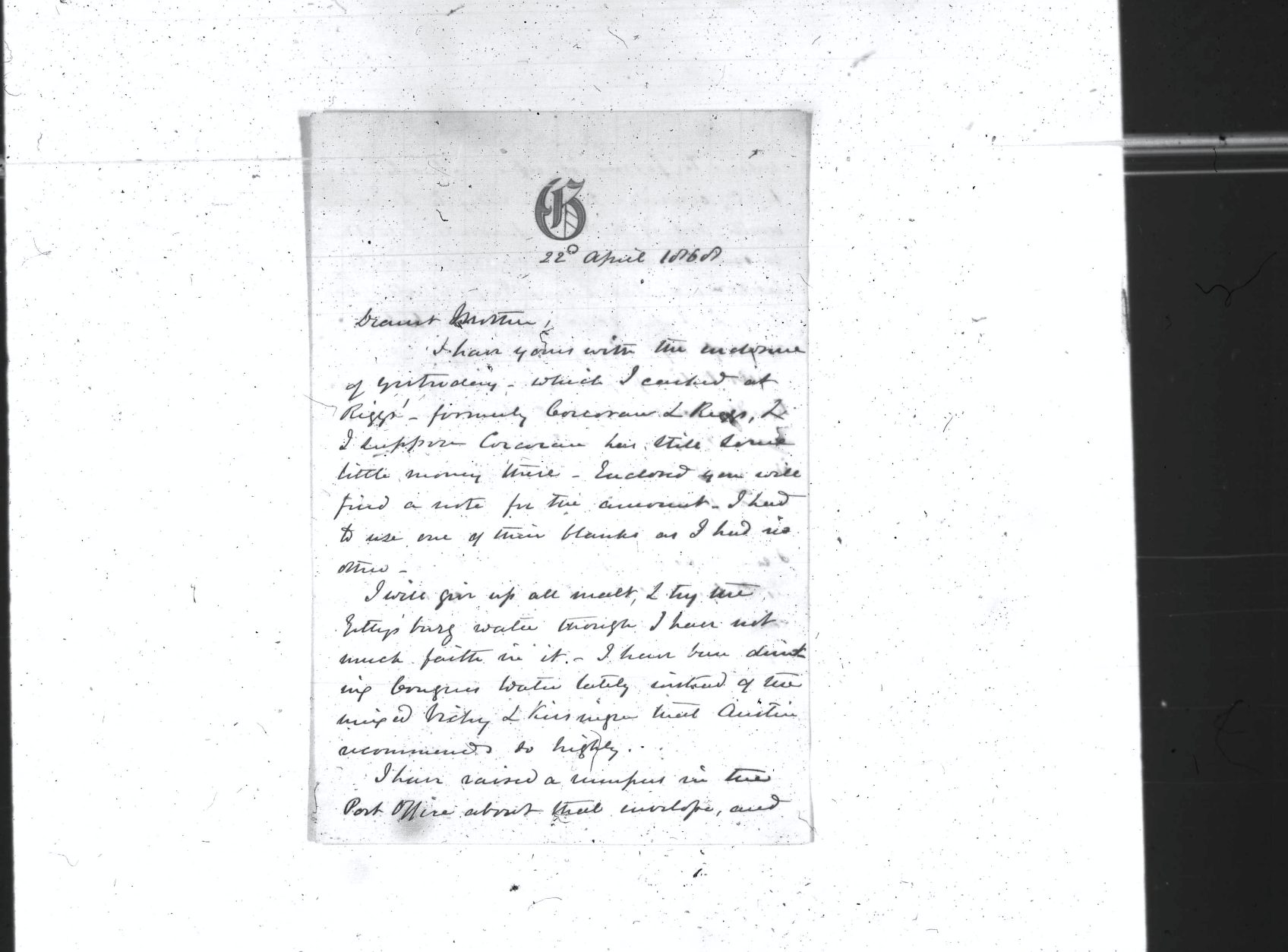
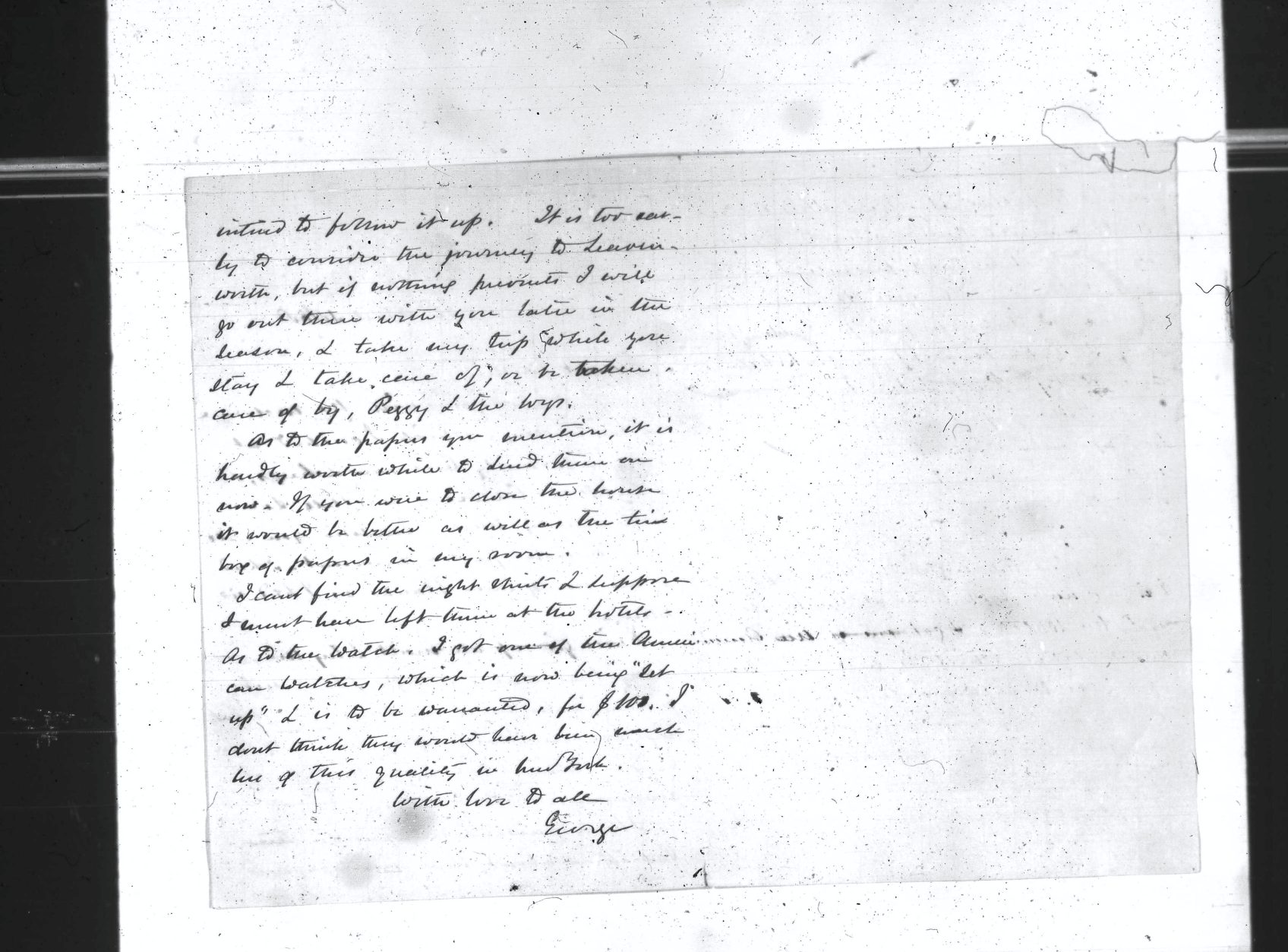
1868-04-22
encloses a note for money cashed at "Riggs' – formerly Corcoran & Riggs"; giving up all malt, drinking Congress Water; "I have raised a rumpus in the Post Office about that envelope"
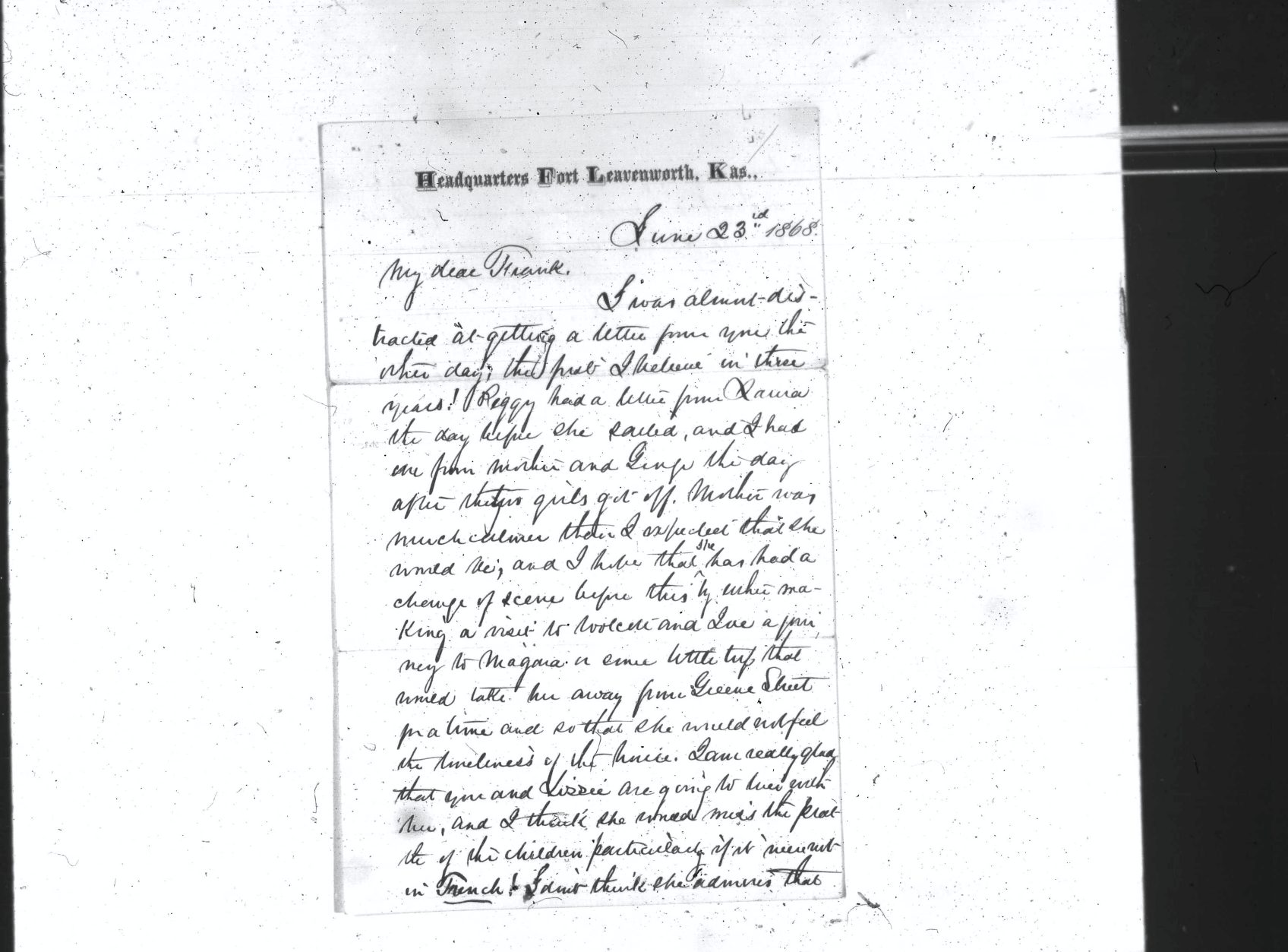
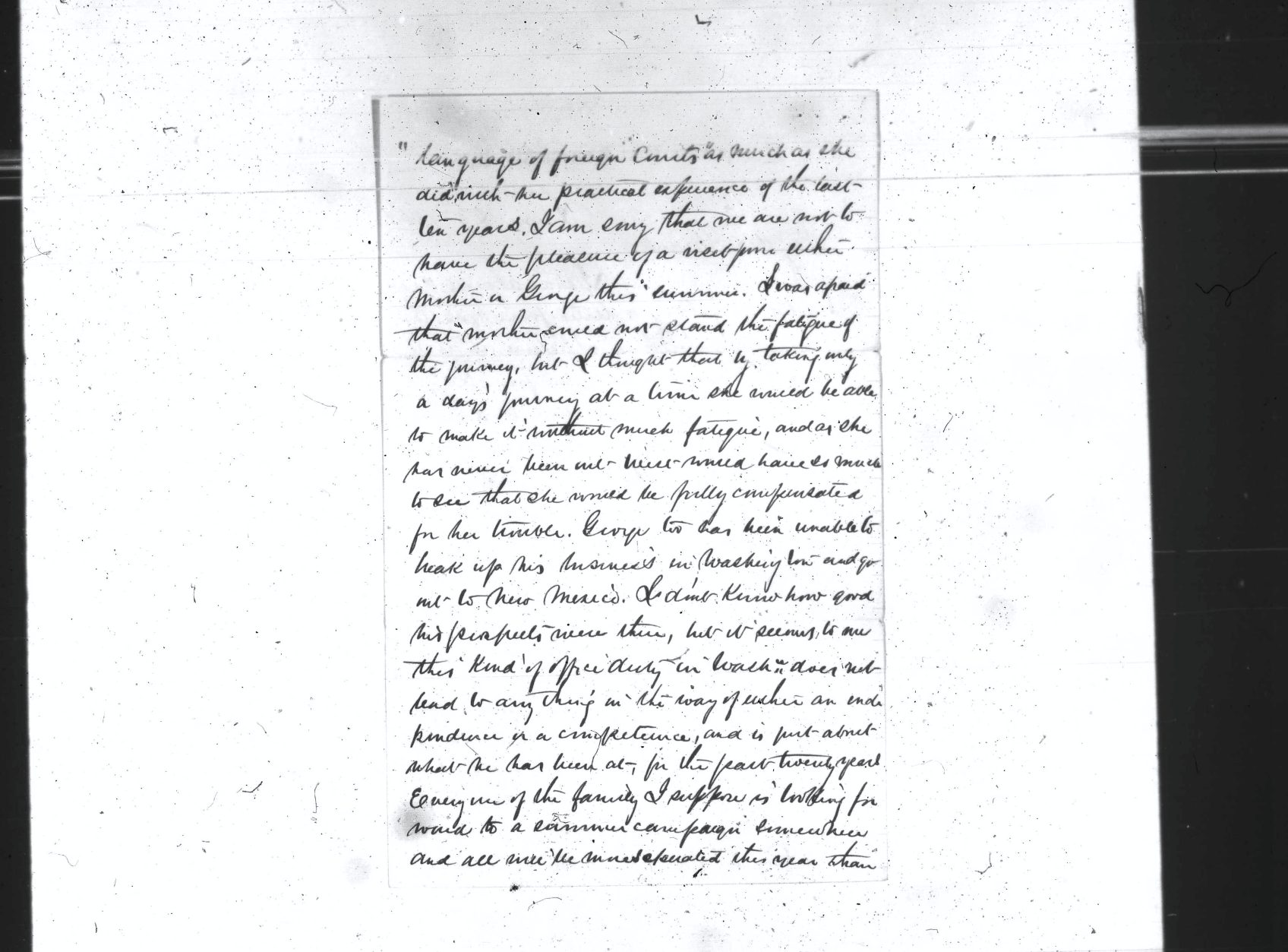
1868-06-23
Printed letterhead "Headquarters Fort Leavenworth, Kas."; first letter from Frank in three years; Mother calmer than expected, hopes she has had a change of scene, a journey to Niagara "to get her away from Greene Street"; glad Frank and Lizzie are going to live with her
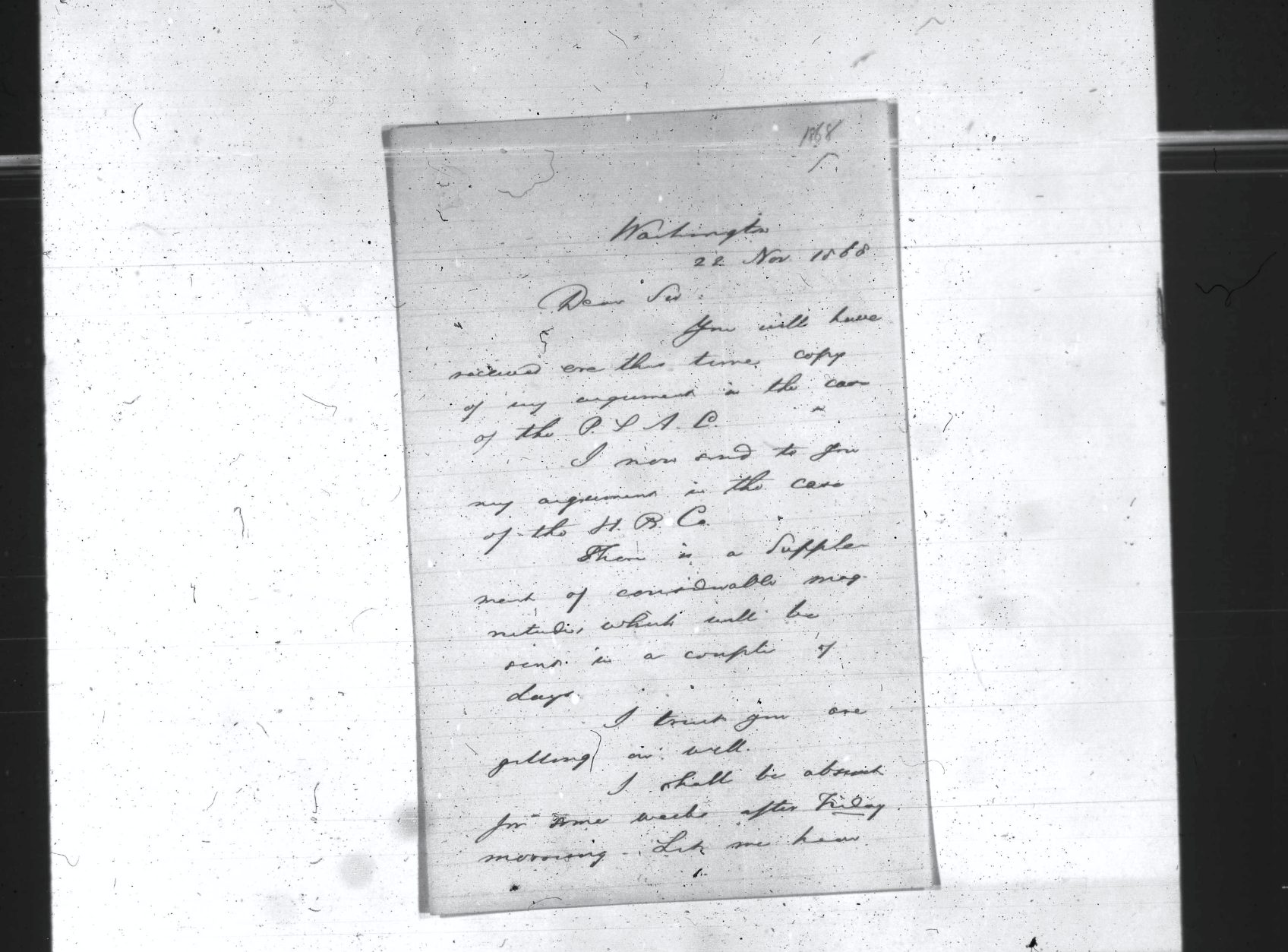
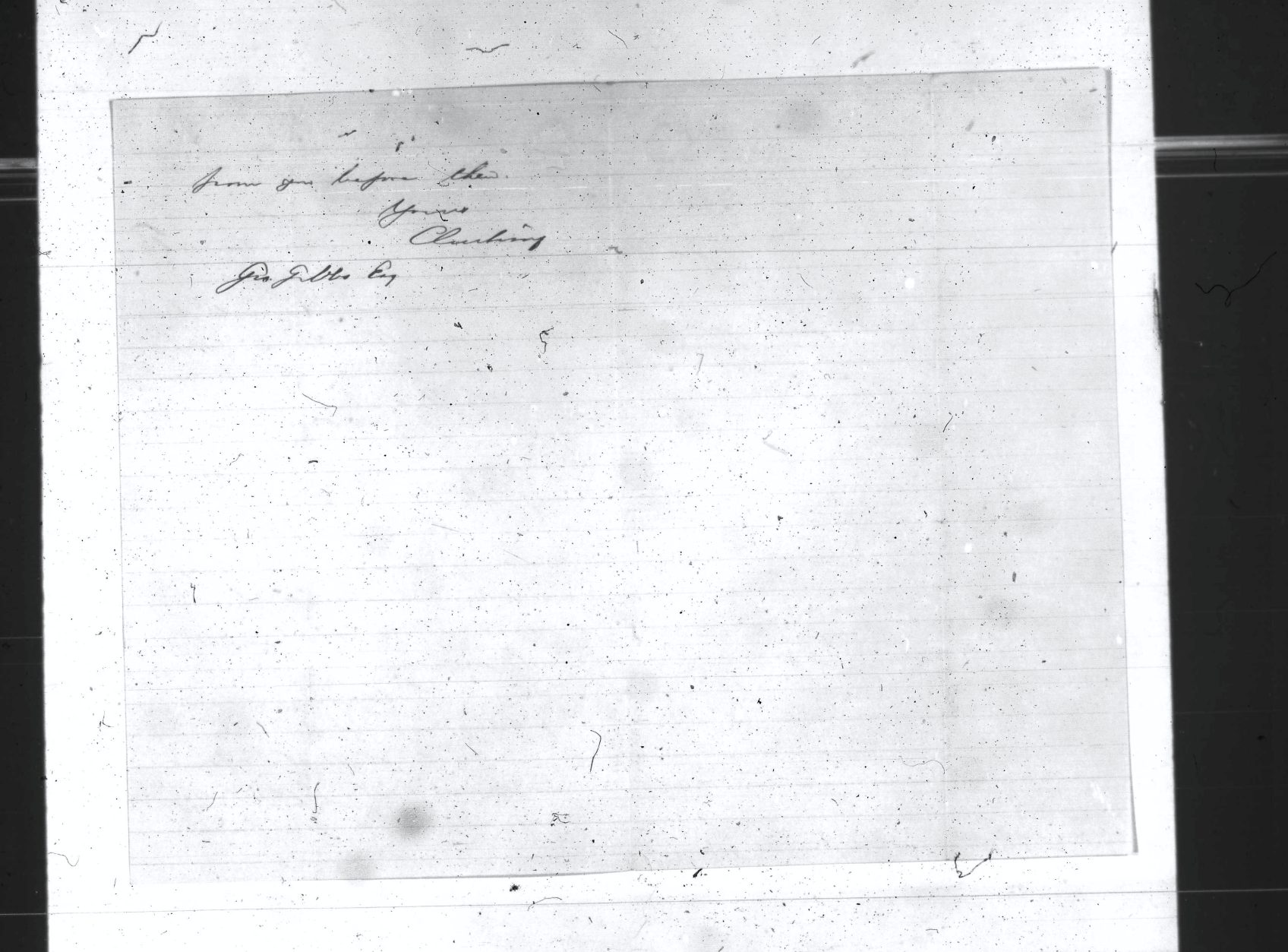
1868-11-22
Washington; has sent his printed argument in the case of the Puget's Sound Agricultural Company and now sends his argument in the Hudson's Bay Company case; a supplement "of considerable magnitude" to follow
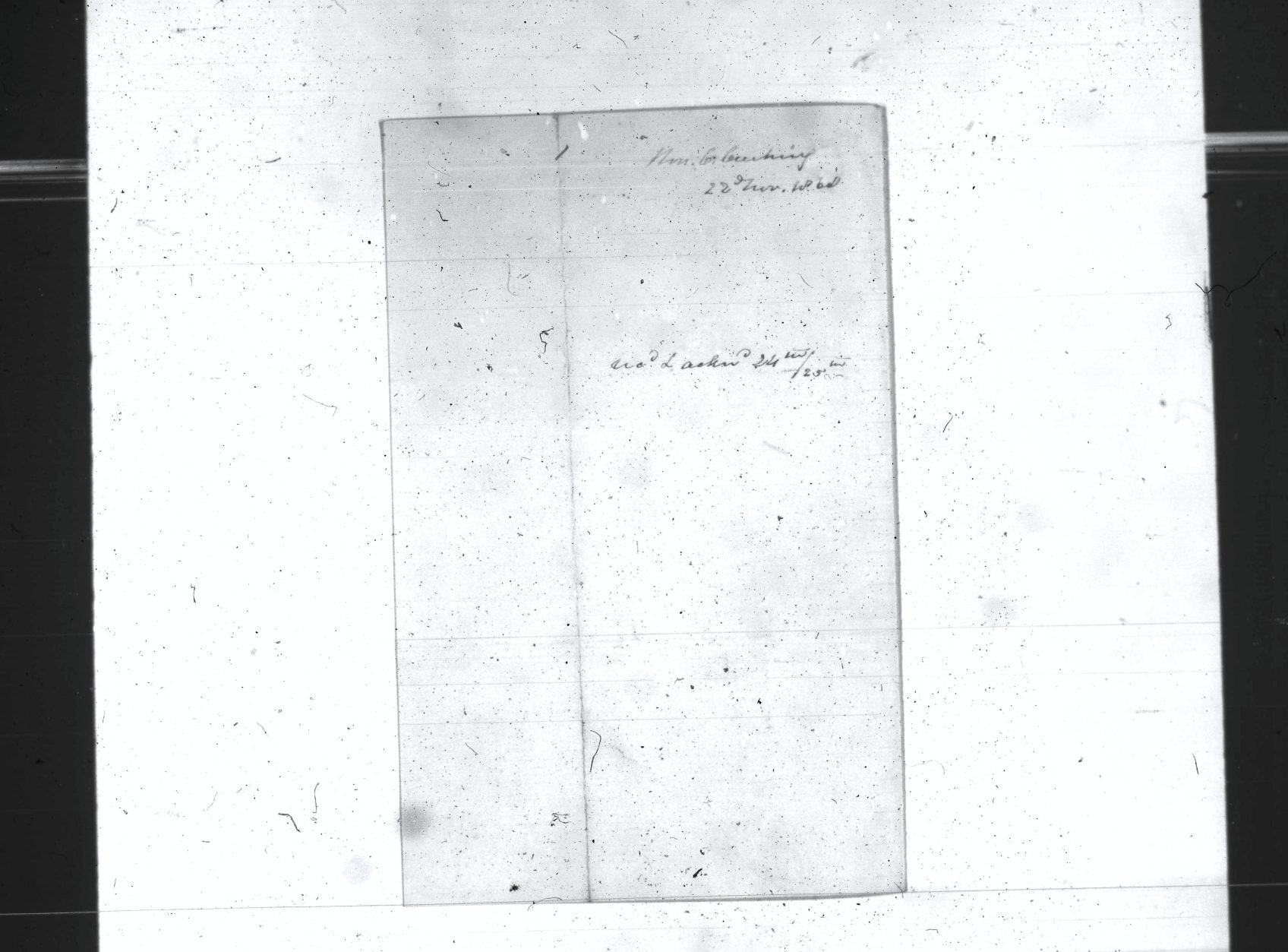
(cont.)
"Hon. C. Cushing / 22 Nov. 1868" with receipt note "rec'd & ackn'd 24 Nov"
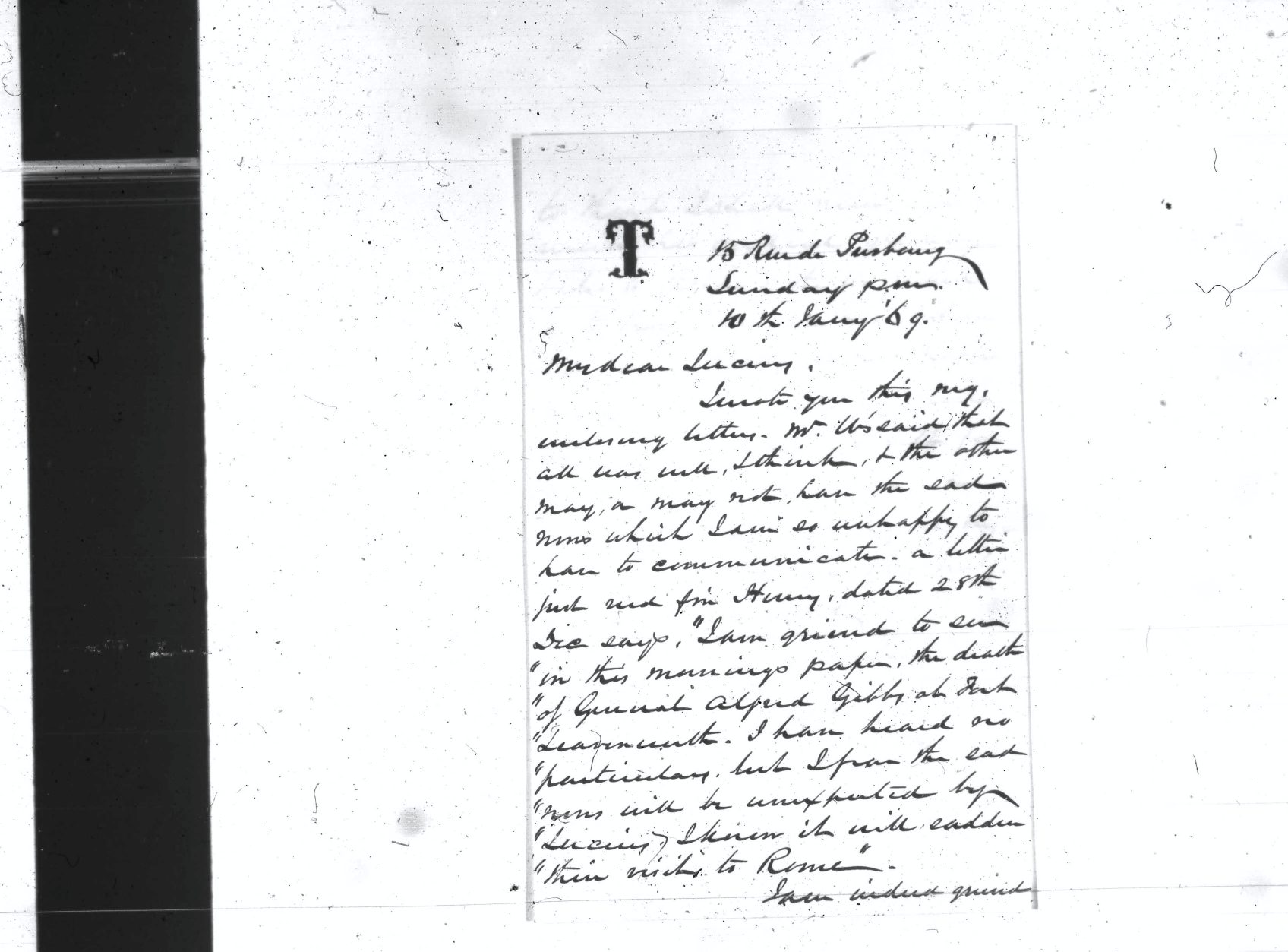
1869-01-10
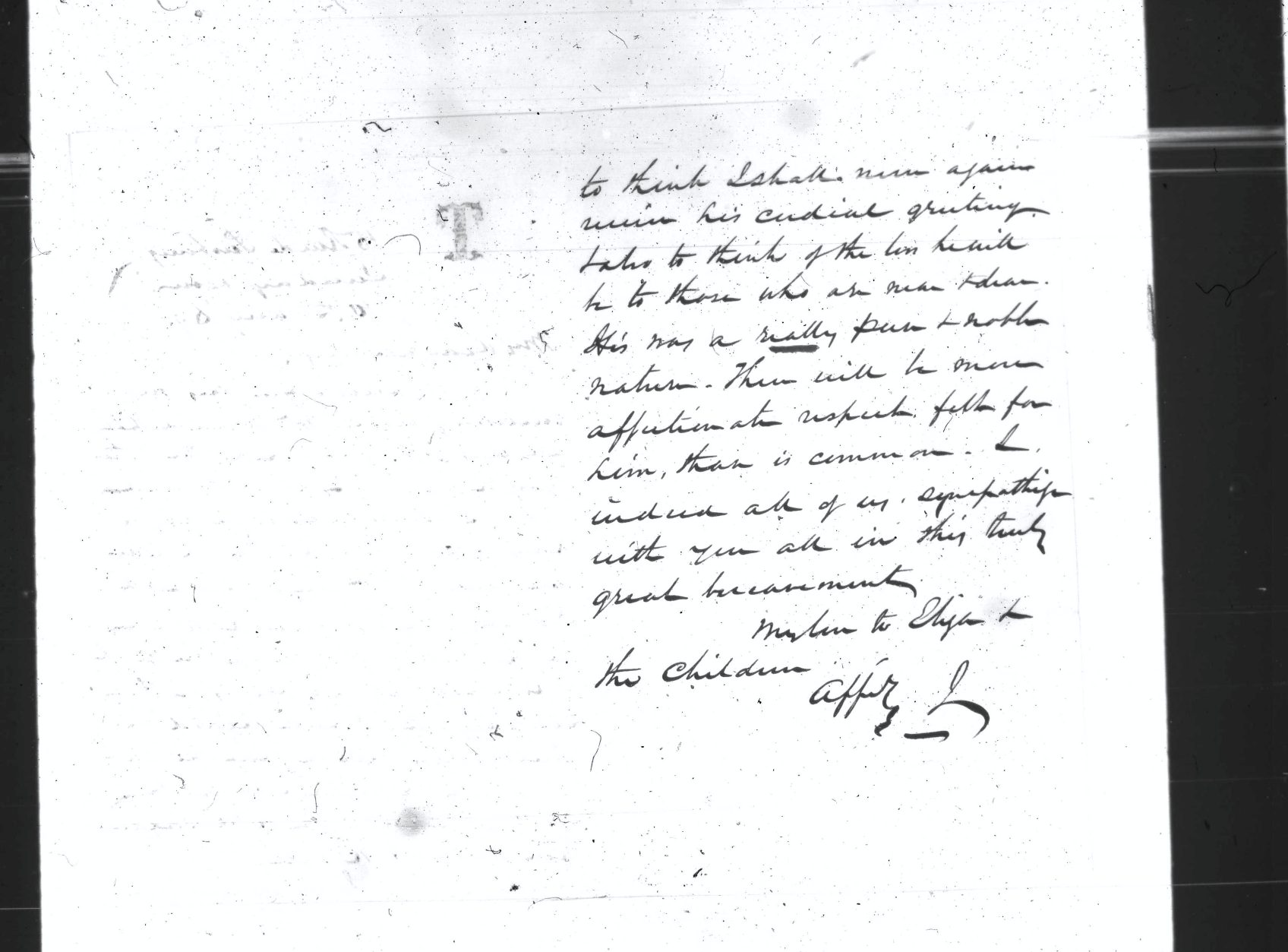
REPORTS THE DEATH OF GENERAL ALFRED GIBBS. Quotes a letter from Henry dated 28 Dec.: "I am grieved to see in this mornings paper, the death of General Alfred Gibbs at Fort Leavenworth. I have heard no particulars, but I fear the sad news will be unexpected by Lucius; I know it will sadden their visit to Rome"
1864-07-05
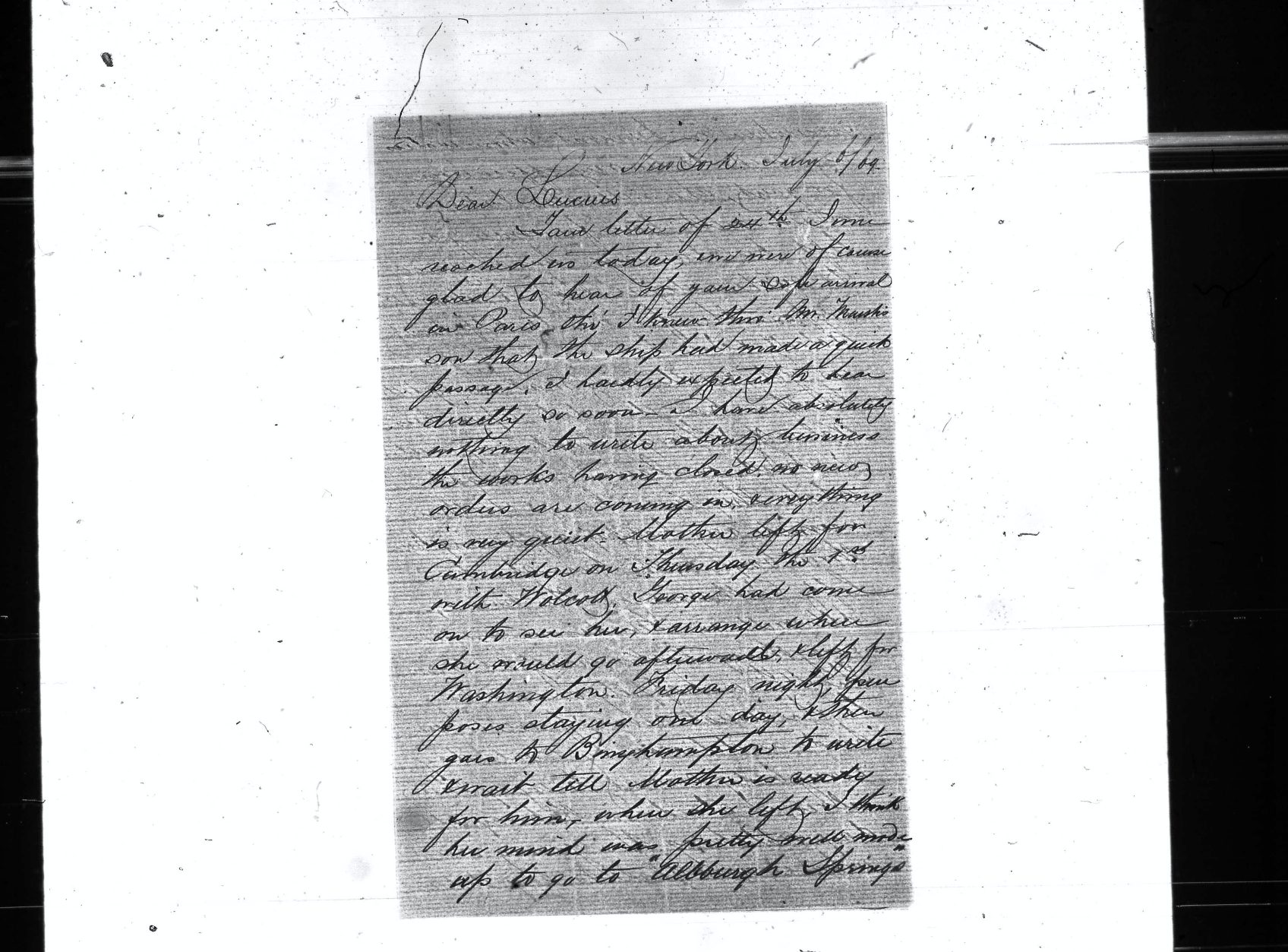
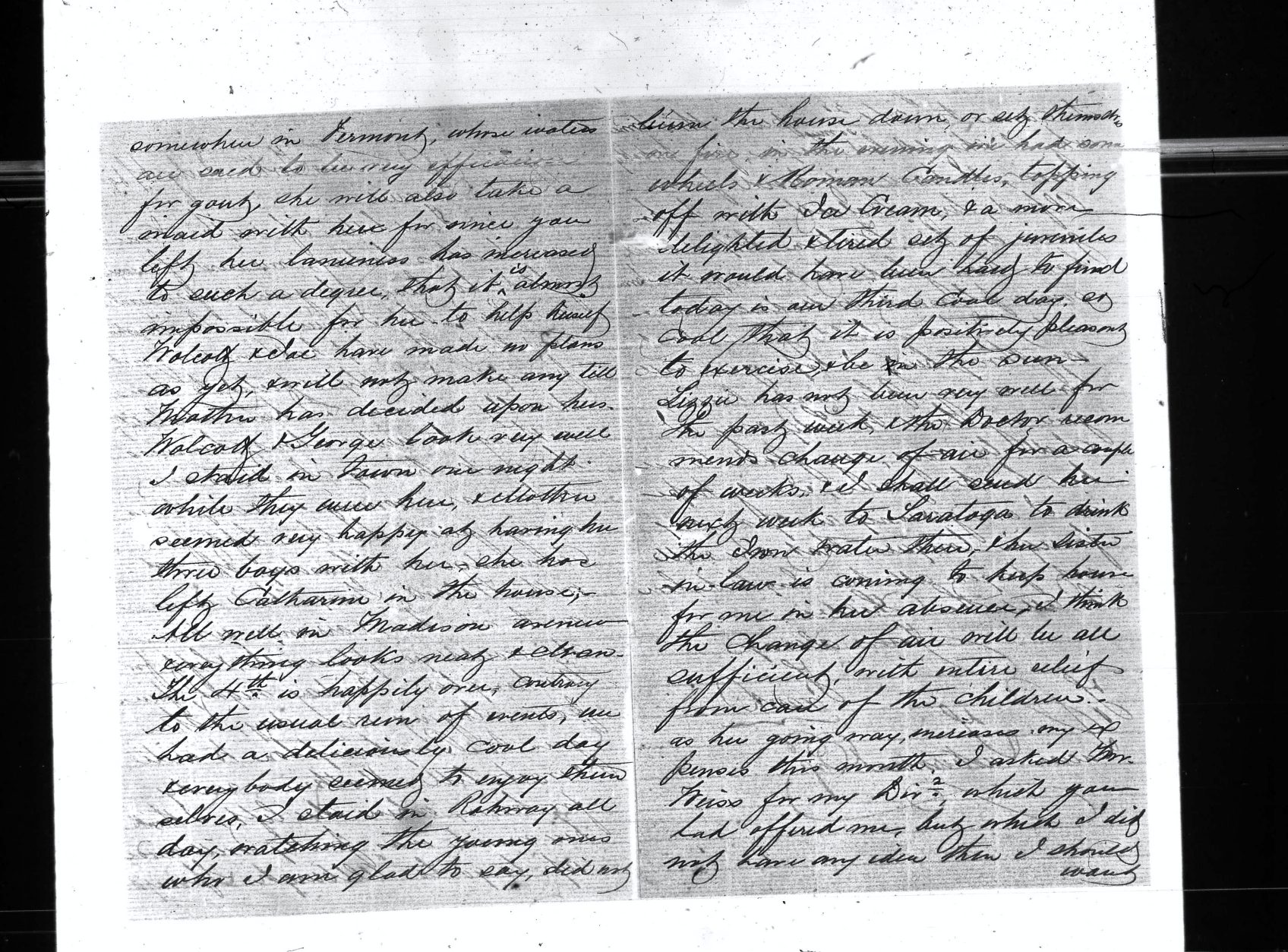
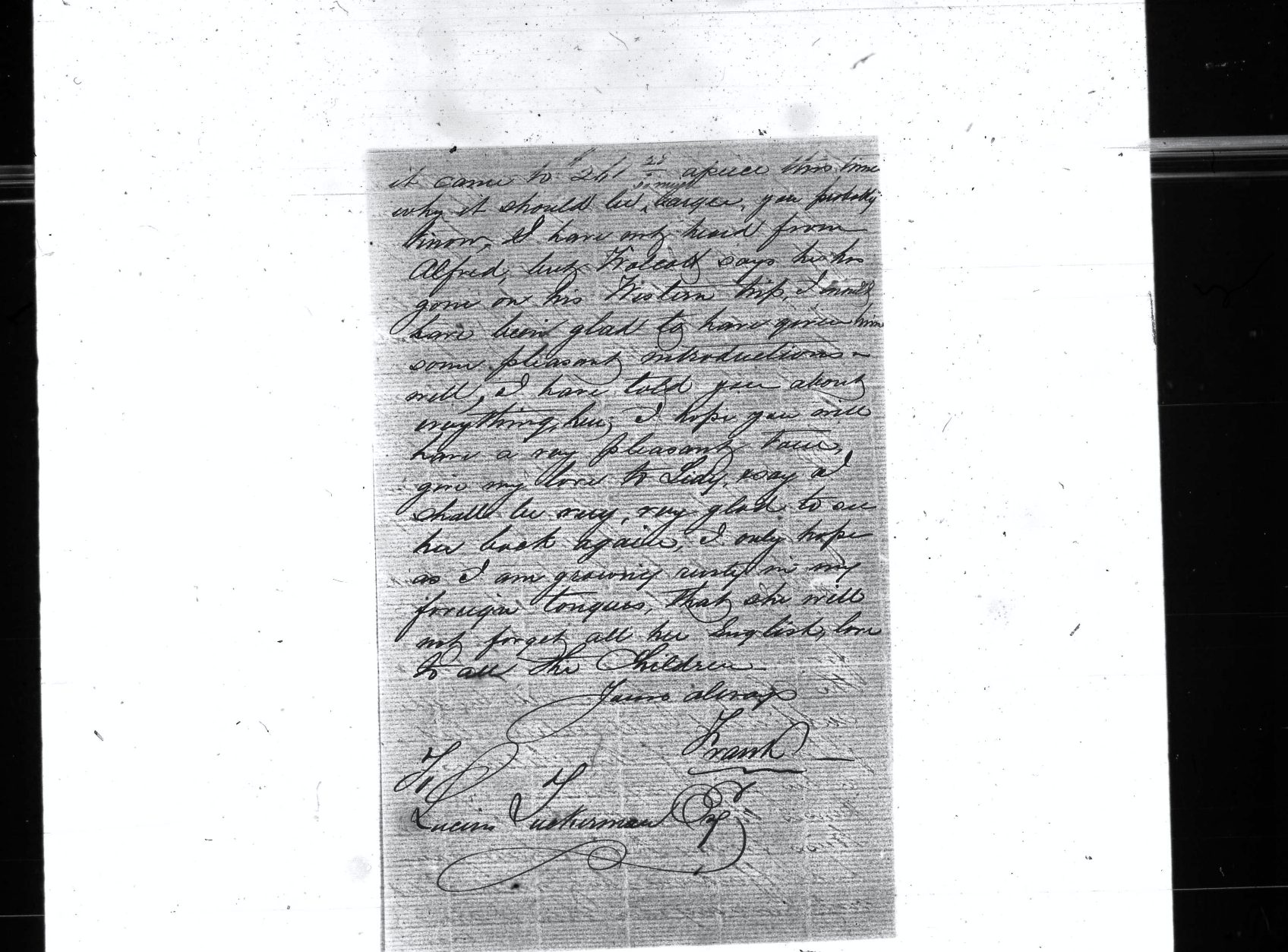
the Works having closed, no new orders coming in; Mother left for Cambridge with Wolcott; George came on to see her then left for Washington; Mother's mind made up to go to "Alburgh Springs"
1867-07-15
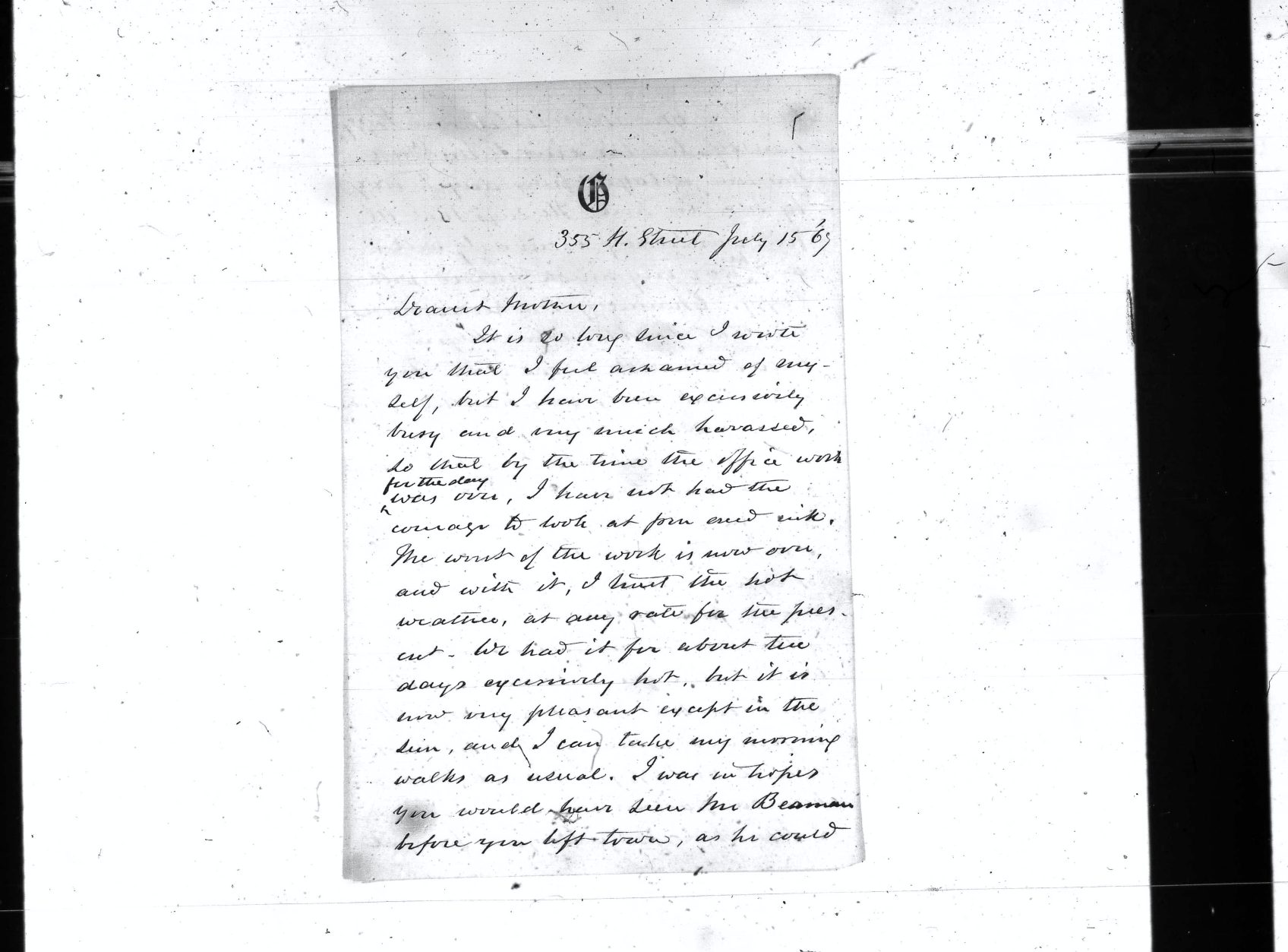
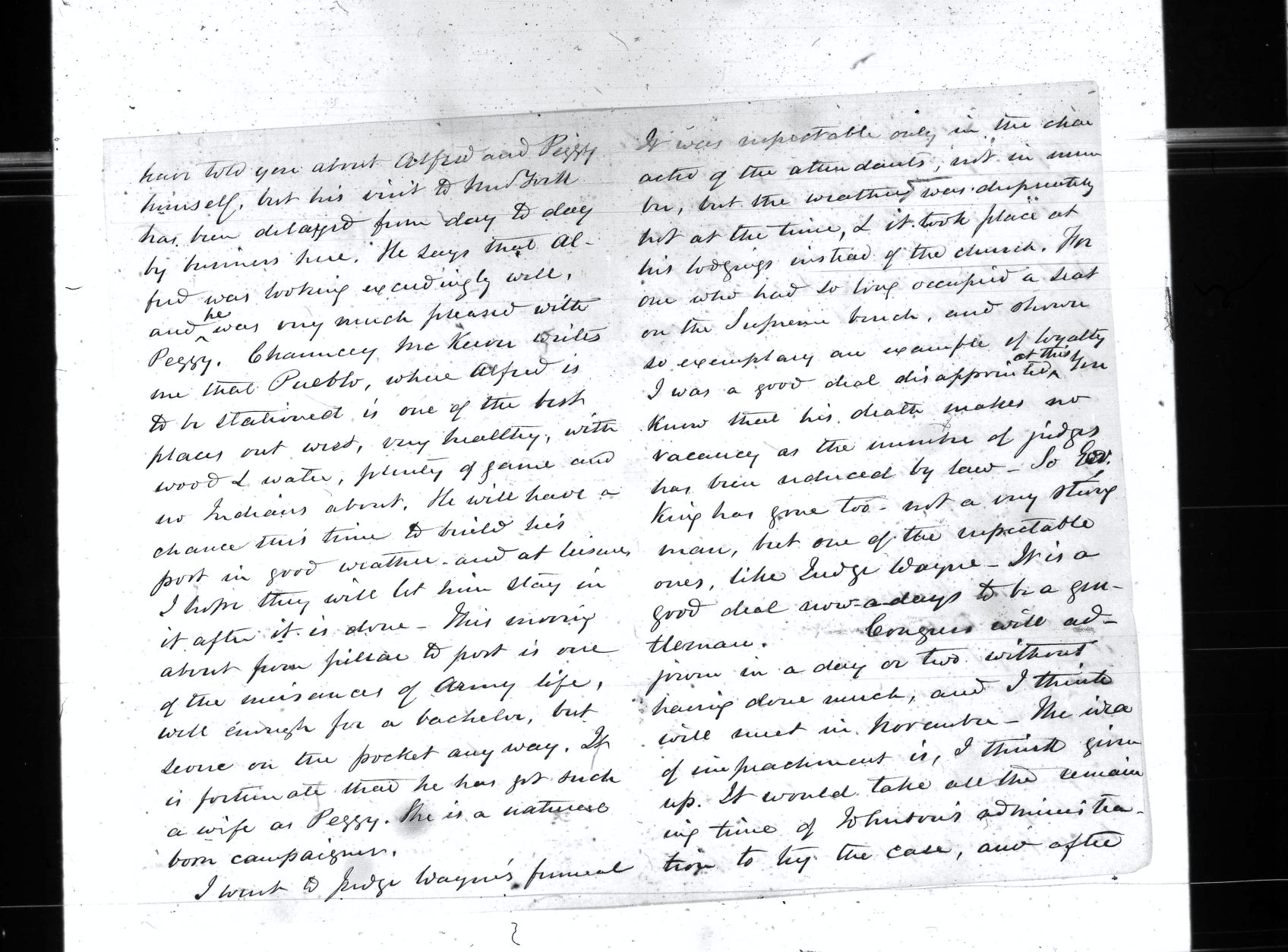
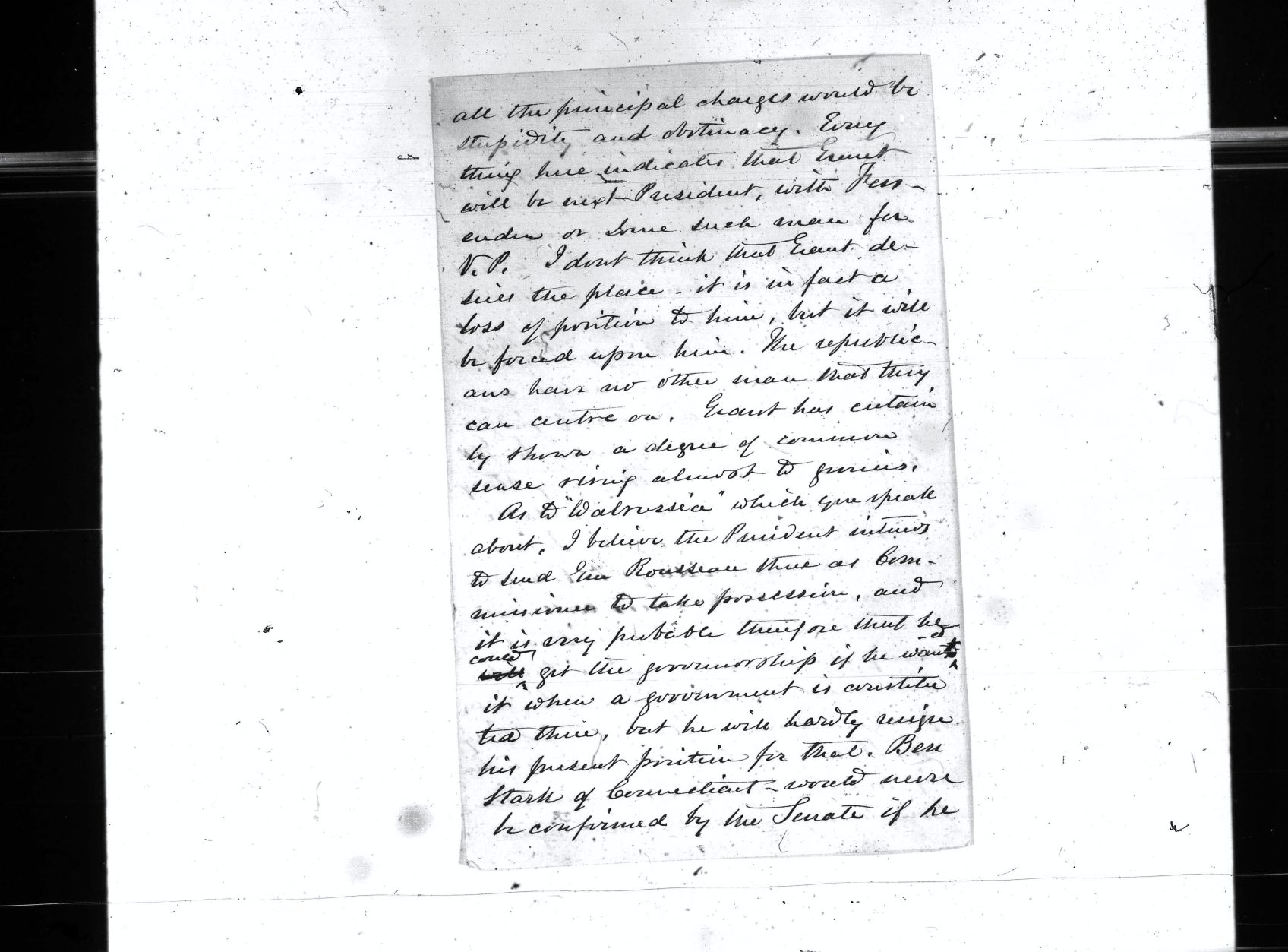
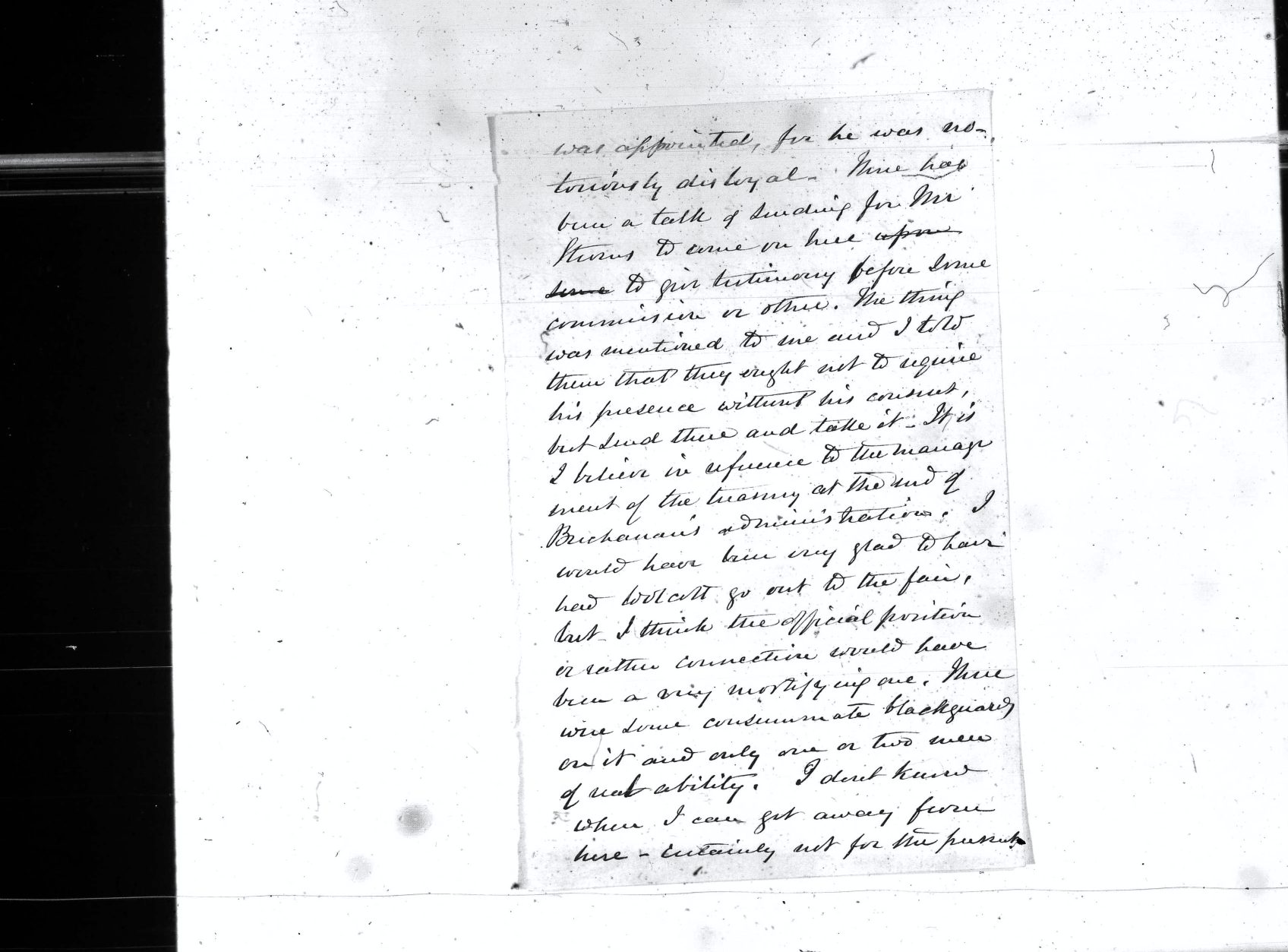
ashamed how long since he wrote, excessively busy and harassed by office work; can take his morning walks again; hoped she would have seen Mr. Beaman before she left town
1865-08-08?
THE DRAGOON FLAG: "has written Col. Thorp" (Thomas J. Thorp, 1st New York Dragoons) and will show her a copy; "The staff I will provide myself"; "the letter of the officers is very admirably expressed and will send a copy to Alfred"; hopes she kept a copy of her own letter to him
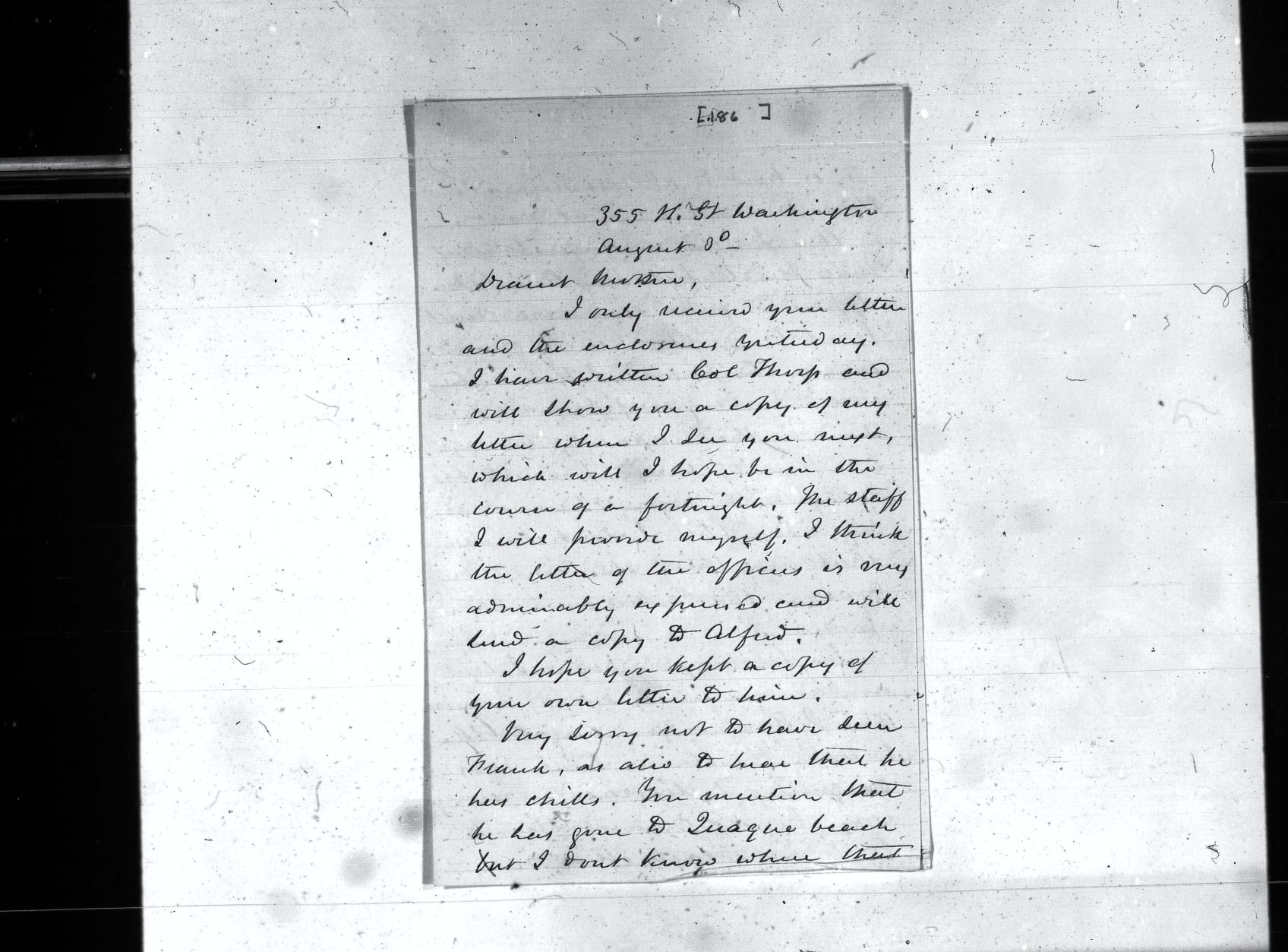
355 H. St Washington / August 8o –
Dearest Mother,
Dearest Mother,
I only received your letter and the enclosures yesterday. I have written Col Thorp and will show you a copy of my letter when I see you next, which will I hope be in the course of a fortnight. The staff I will provide myself. I think the letter of the officers is very admirably expressed and will send a copy to Alfred.
I hope you kept a copy of your own letter to him.
Very sorry not to have seen Frank, as also to hear that he has chills. You mention that he has gone to Quague beach but I dont know where that is, or how to address him. Please send me word at once.
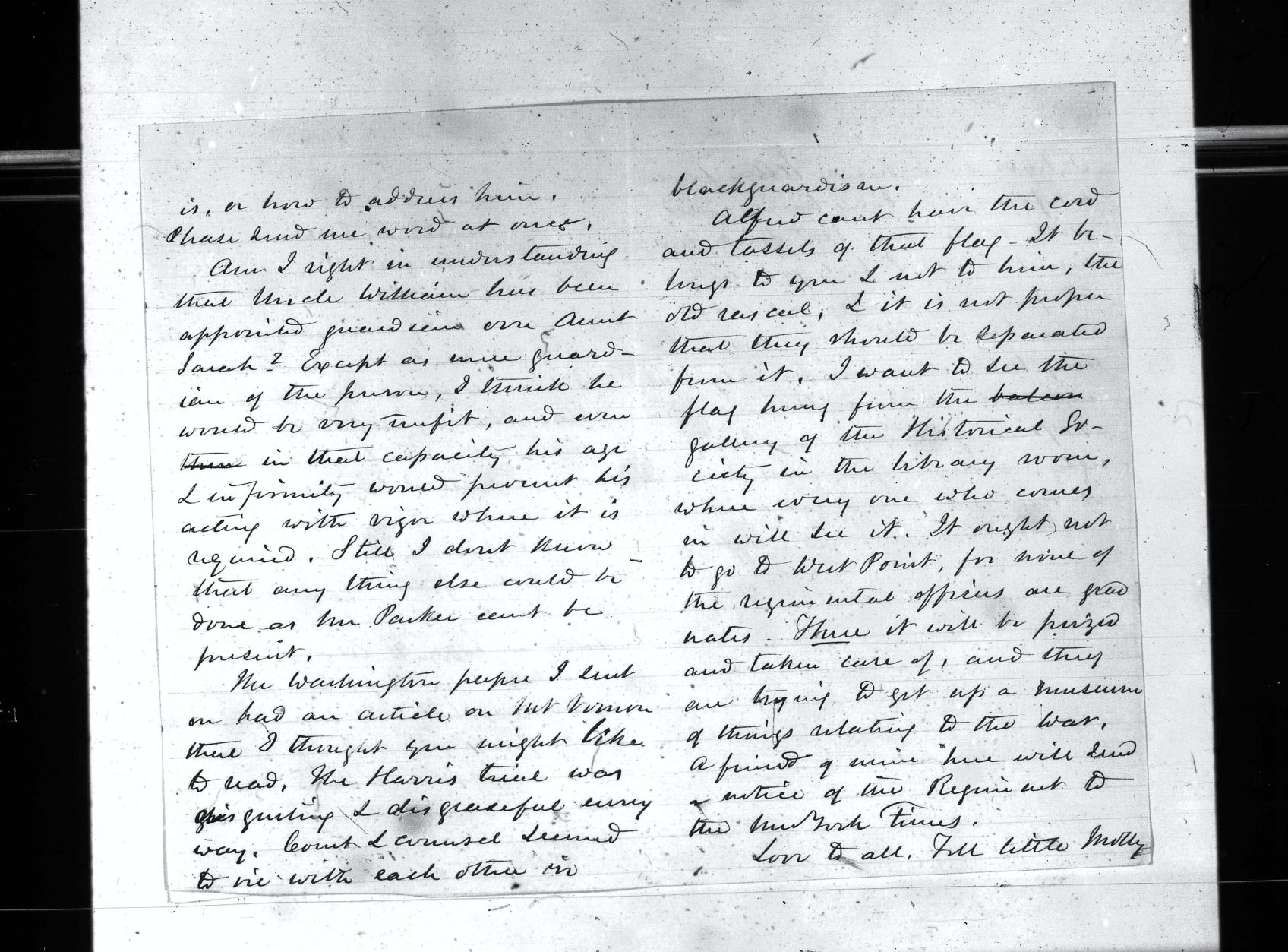
Am I right in understanding that Uncle William has been appointed guardian over Aunt Sarah? Except as mere guardian of the person, I think he would be very unfit, and even [struck through: then] in that capacity his age & infirmity would prevent his acting with vigor where it is required. Still I dont know that any thing else could be done as Mr Parker cant be present.
The Washington paper I sent on had an article on Mt Vernon that I thought you might like to read. The Harris trial was disgusting & disgraceful every way. Court & counsel seemed to vie with each other in blackguardism.
Alfred cant have the cord and tassels of that flag – It belongs to you & not to him, the old rascal; & it is not proper that they should be separated from it. I want to see the flag hung from the [struck through: balcony] gallery of the Historical Society in the library room, where every one who comes in will see it. It ought not to go to West Point, for none of the regimental officers are graduates. There it will be prized and taken care of, and they are trying to get up a museum of things relating to the war. A friend of mine here will send a notice of the Regiment to the New York Times.
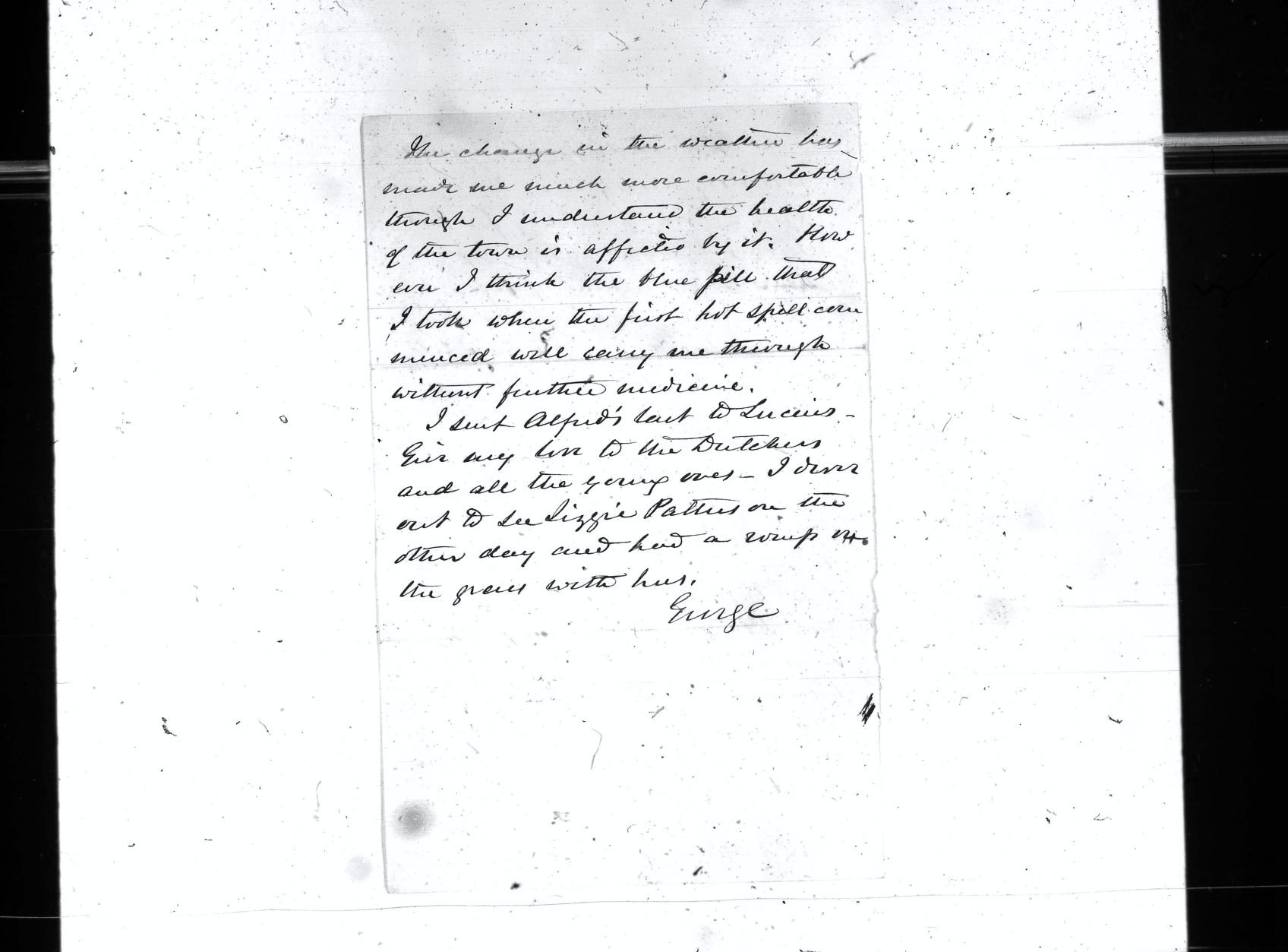
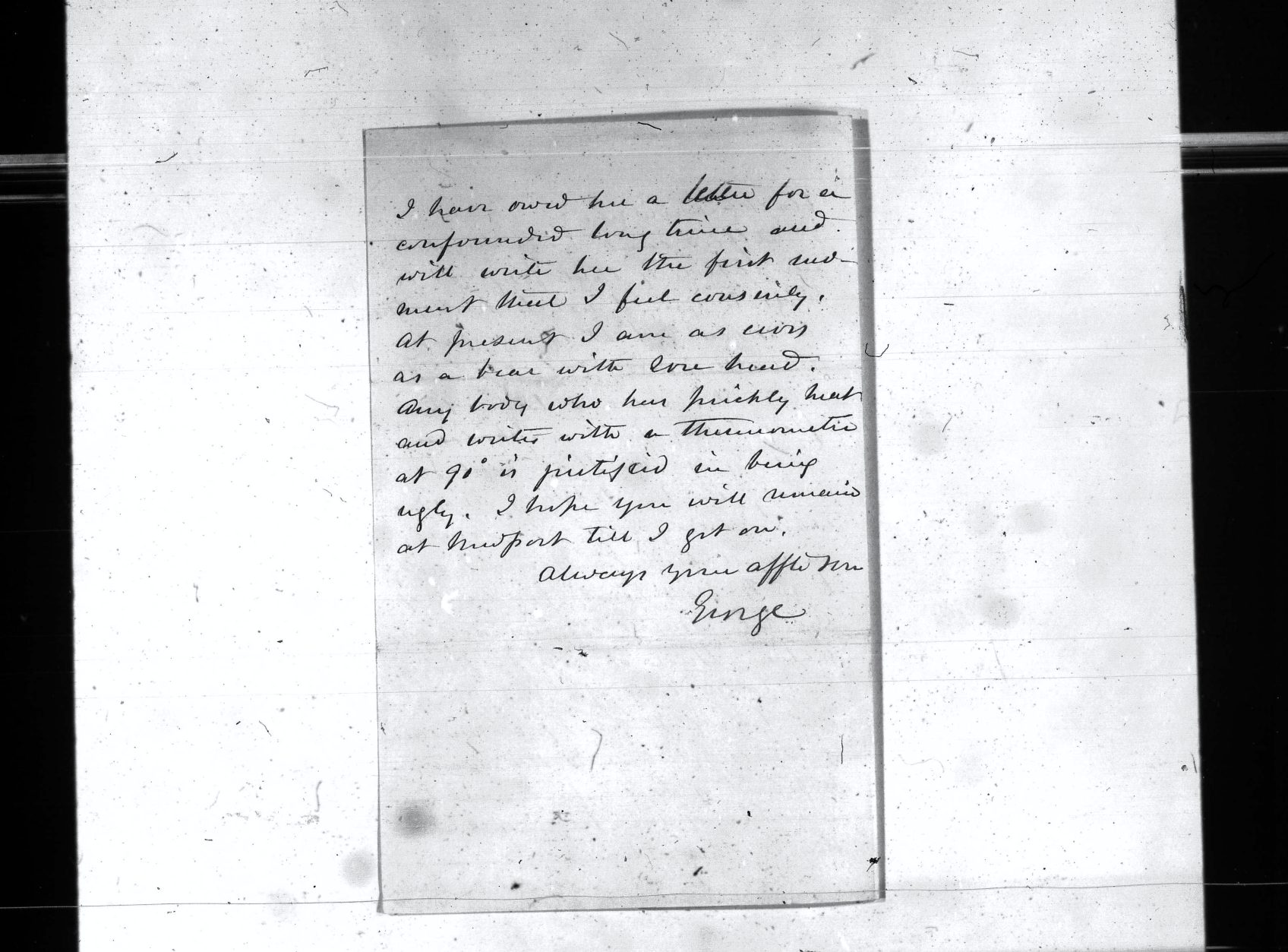
Love to all. Tell little Molly I have owed her a letter for a confounded long time and will write her the first moment that I feel cousinly. At present I am as cross as a bear with sore head. Any body who has prickly heat and writes with a thermometer at 90o is justified in being ugly. I hope you will remain at Newport till I get on.
Always your affte son
Geoge
Endorsed: [186] – modern archival folio number inked at the head of the first leaf, inside square brackets
Autograph letter of George Gibbs (the younger) from 355 H Street, Washington, to his mother. Frame 203 is the first page; frame 204 is the opened middle of the folded sheet, carrying two full pages side by side (the left-hand column continues from frame 203, the right-hand column continues from the left); frame 205 is the last page, ending with the closing and signature, and the rest of that leaf is blank. No wrapper or docket was filmed. The year is not written on the letter; the reference to the Harris trial (the Washington murder trial of Mary Harris, July 1865) and the past-tense discussion of the war place it in August 1865. The date line is written 'August 8o' with a raised o and no year. 'Quague' is spelled so in the manuscript. In the word 'There' in the flag paragraph the writer has underlined the word; that emphasis is his. Two cancellations are shown in square brackets exactly where they stand: a struck 'then' before 'in that capacity', and a struck word beginning 'balcon-' before 'gallery'. The word read here as 'cousinly' is written without much clarity but the strokes and the sense (he owes his young cousin Molly a letter) support the reading. The signature is written hastily and stands as 'Geoge' on the page, for George. Historically the important passage is the flag paragraph: the writer is refusing to let Alfred Gibbs keep the cord and tassels of the 1st New York Dragoons colour, and is directing that the flag itself hang in the library room of the Historical Society rather than go to West Point.
1867-09-26
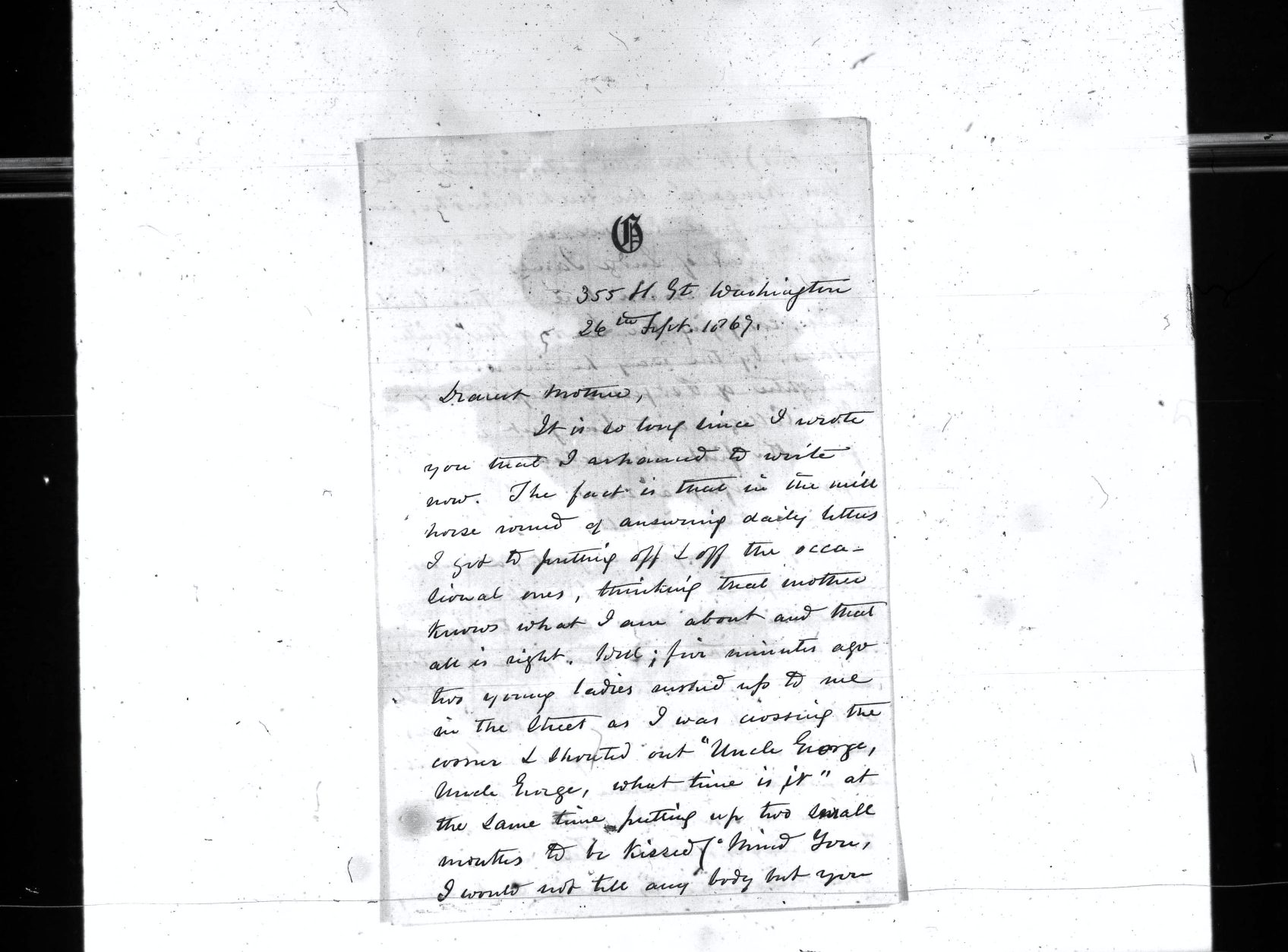
the "mill horse round of answering daily letters"; two young ladies rushed up to him in the street shouting "Uncle George, Uncle George, what time is it," putting up two small mouths to be kissed
(cont.)
no new content
[no place or date on the filmed leaves; internal evidence points to Washington, winter of 1867-68]
[not filmed]
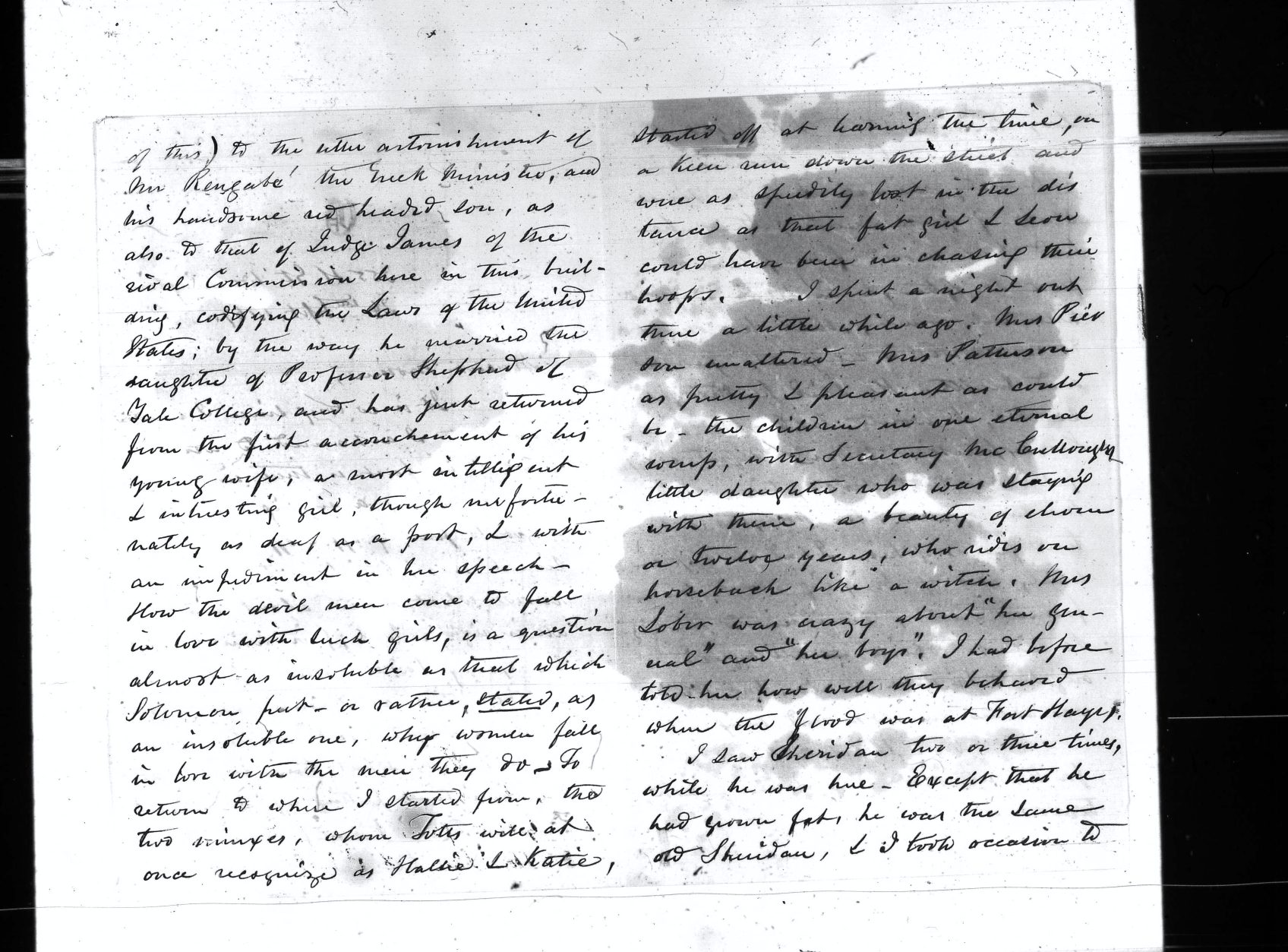
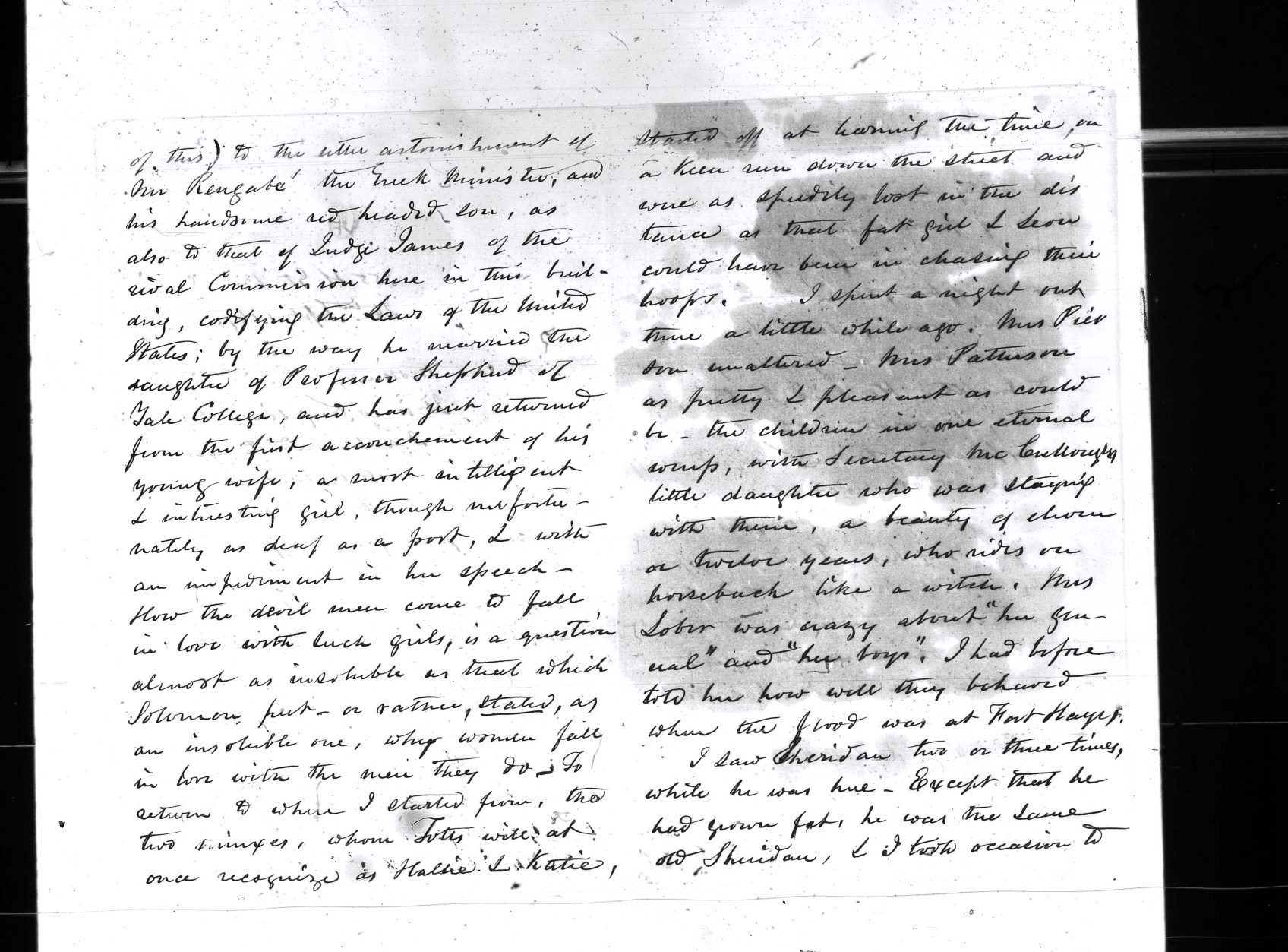
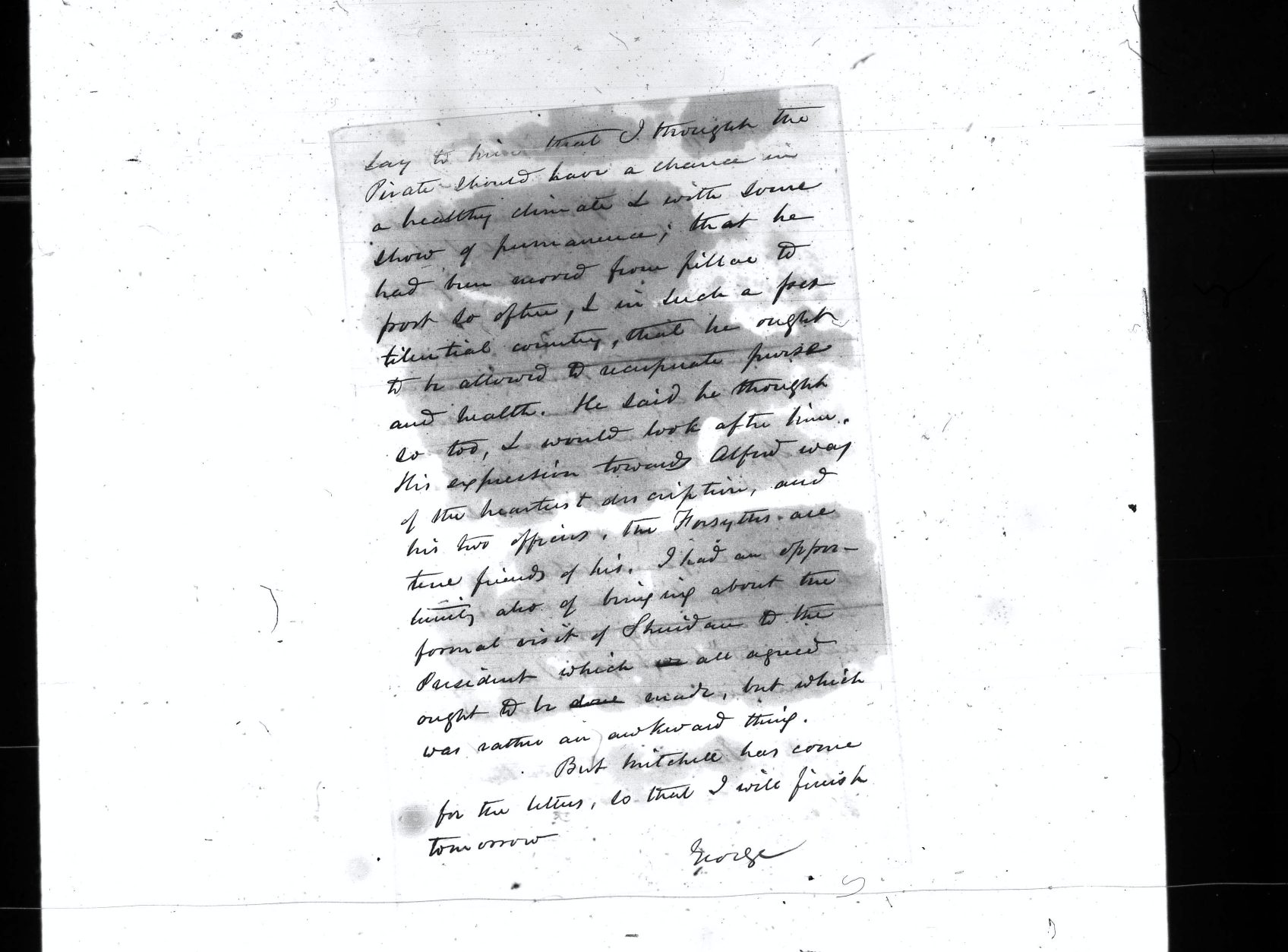
[frame 208, left-hand page – the leaf begins in mid-sentence]
of this) to the utter astonishment of Mr Rengabe' the Greek Minister, and his handsome red headed son, as also to that of Judge James of the civil Commission here in this building, codifying the Laws of the United States; by the way he married the daughter of Professor Shepherd of Yale College, and has just returned from the first accouchement of his young wife, as most intelligent & interesting girl, though unfortunately as deaf as a post, & with an impediment in her speech – How the devil men come to fall in love with such girls, is a question almost as insoluble as that which Solomon put – or rather, stated, as an insoluble one, why women fall in love with the men they do. To return to where I started from, the two minxes, whom Totts will at once recognize as Hallie & Katie,
[frame 208, right-hand page – heavily stained]
started off at hearing the time, on a keen run down the street and were as speedily lost in the distance as that fat girl I saw could have been in chasing their hoops.
I spent a night out there a little while ago. Mrs Pierson unaltered – Mrs Patterson as pretty & pleasant as could be – the children in one eternal romp, with Secretary McCulloughs little daughter who was staying with them, a beauty of eleven or twelve years, who rides on horseback like a witch. Mrs Sober(?) was crazy about "her General" and "her boys". I had before told her how well they behaved when the flood was at Fort Hays.
I saw Sheridan two or three times, while he was here – Except that he had grown fat, he was the same old Sheridan, & I took occasion to
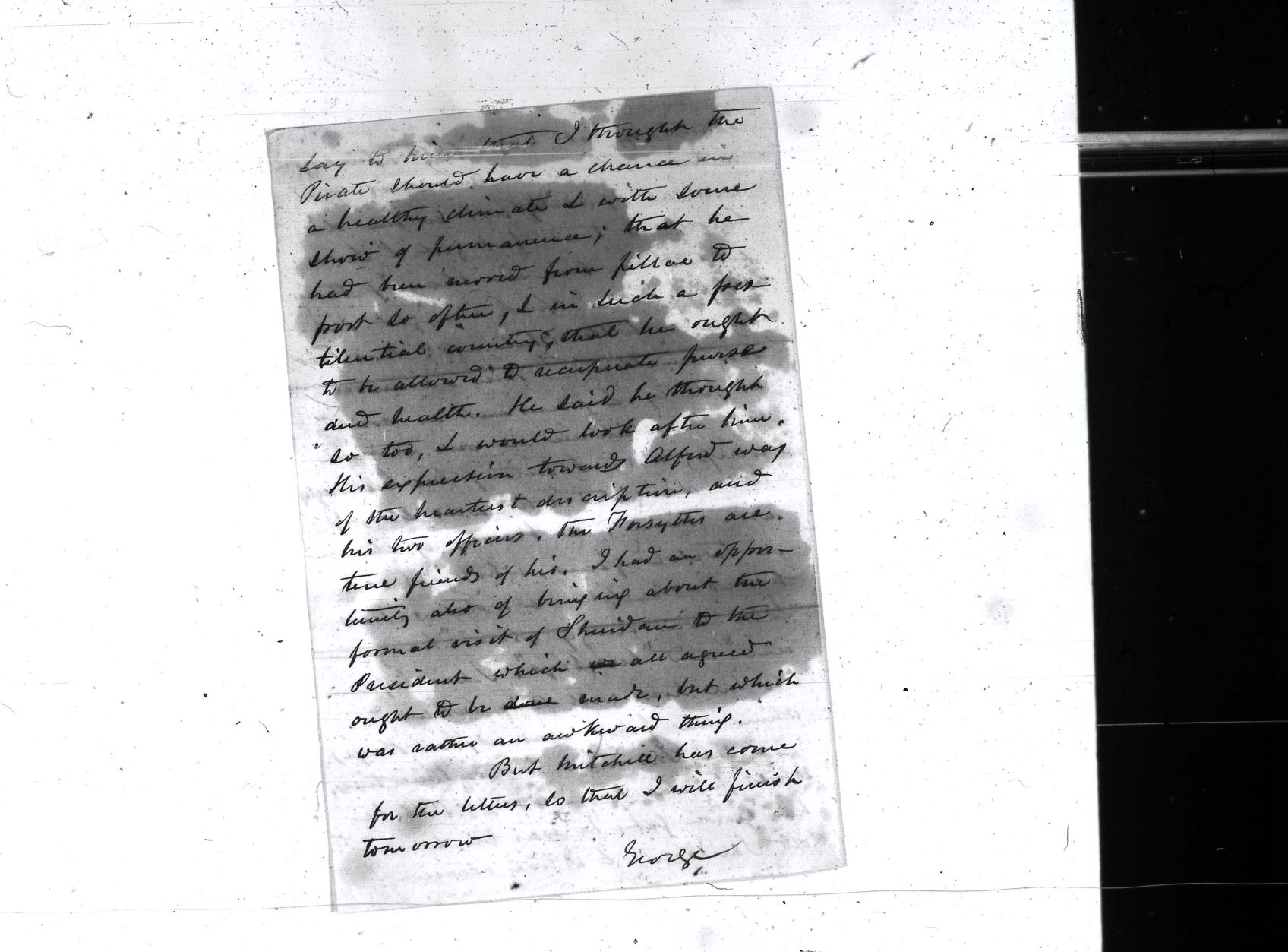
[frame 209 – the last page of the letter, also stained]
say to him [word struck through] that I thought the Pirate should have a chance in a healthy climate & with some show of permanence; that he had been moved from pillar to post so often, & in such a pestilential country, that he ought to be allowed to recuperate purse and health. He said he thought so too, & would look after him. His expression towards Alfred was of the heartiest description, and his two officers, the Forsyths are true friends of his. I had an opportunity also of bringing about the formal visit of Sheridan to the President which [struck through: we] all agreed ought to be [struck through: done] made, but which was rather an awkward thing.
But Mitchell has come for the letters, so that I will finish tomorrow
George
The wave list describes frame 208 as a duplicate exposure of frame 207 carrying no new content. Frame 207 was not among the images supplied here, so that could not be checked; what frames 208 and 209 actually carry is substantial and is transcribed in full above rather than passed over. Frame 208 is the opened middle of a folded sheet, two pages side by side in George Gibbs's hand; frame 209 is the last page, ending with the signature. Both leaves are badly stained – frame 209 has a large dark blot running down the middle of the page – and several words are recoverable only at low contrast; the passages given are what can actually be read. No salutation, place, date or docket was filmed. Dating: the Greek Minister named here is Alexandros Rizos Rangabe, in Washington from 1867; Hugh McCulloch was Secretary of the Treasury to 1869; and the flood at Fort Hays was in June 1867, so the letter belongs to the winter of 1867-68. 'the Pirate' appears to be a family nickname; the sentence that follows it turns immediately to Alfred, and the plea to Sheridan is that he be given a healthy station and a chance to recover his purse and his health. 'Rengabe'' is spelled so in the manuscript, with a stroke over the final e. 'Shepherd', 'McCulloughs' and 'Forsyths' are likewise spelled as the writer wrote them. The name read as 'Mrs Sober' is not certain.
(cont.)
no new content
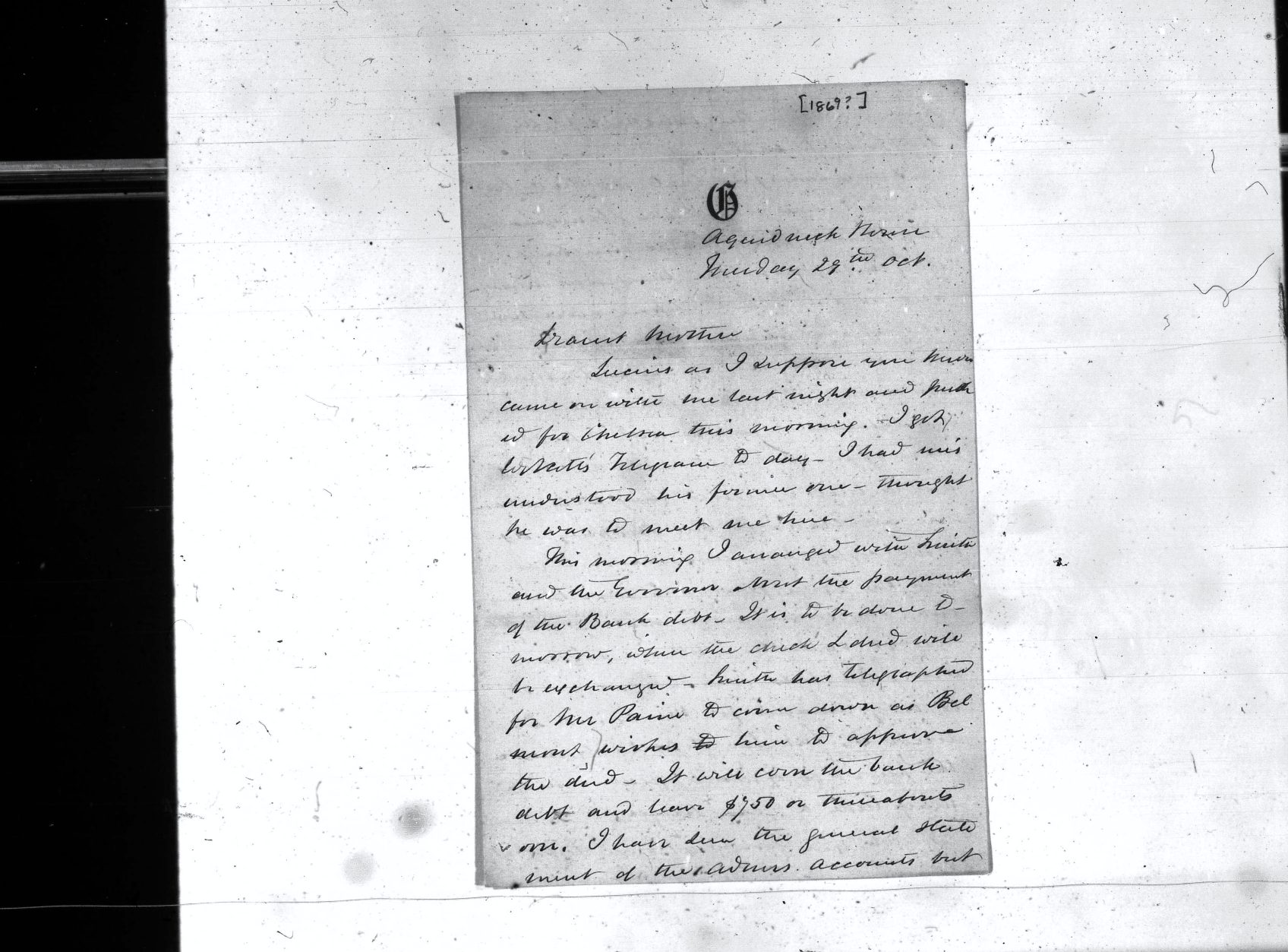
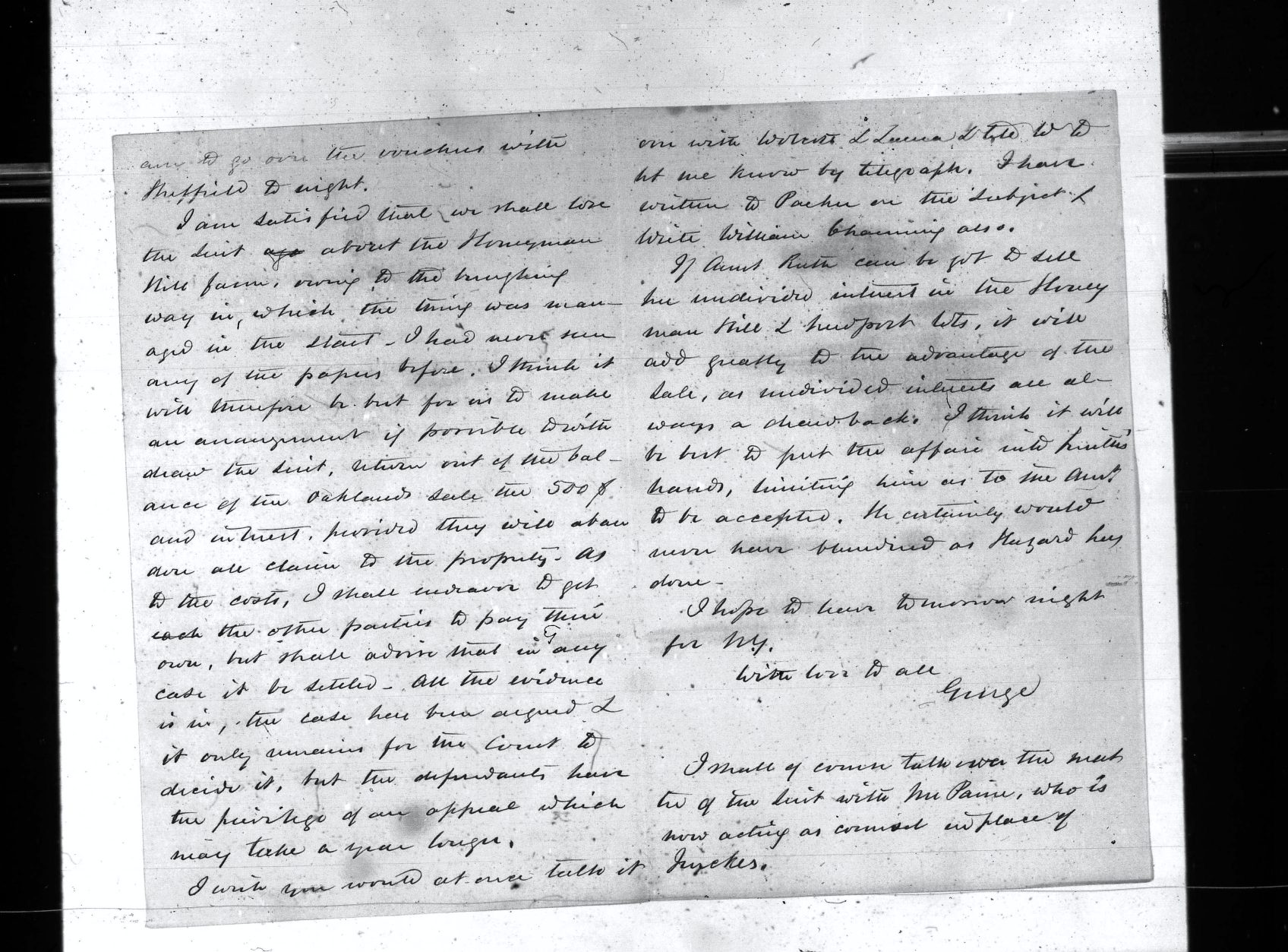
[1869?] Oct 29
Aquidneck House, Newport; arranged with Smith and "the Governor" for payment of the Bank debt; will cover the bank debt and leave $750 or thereabouts; has seen the general statement of the Adams accounts
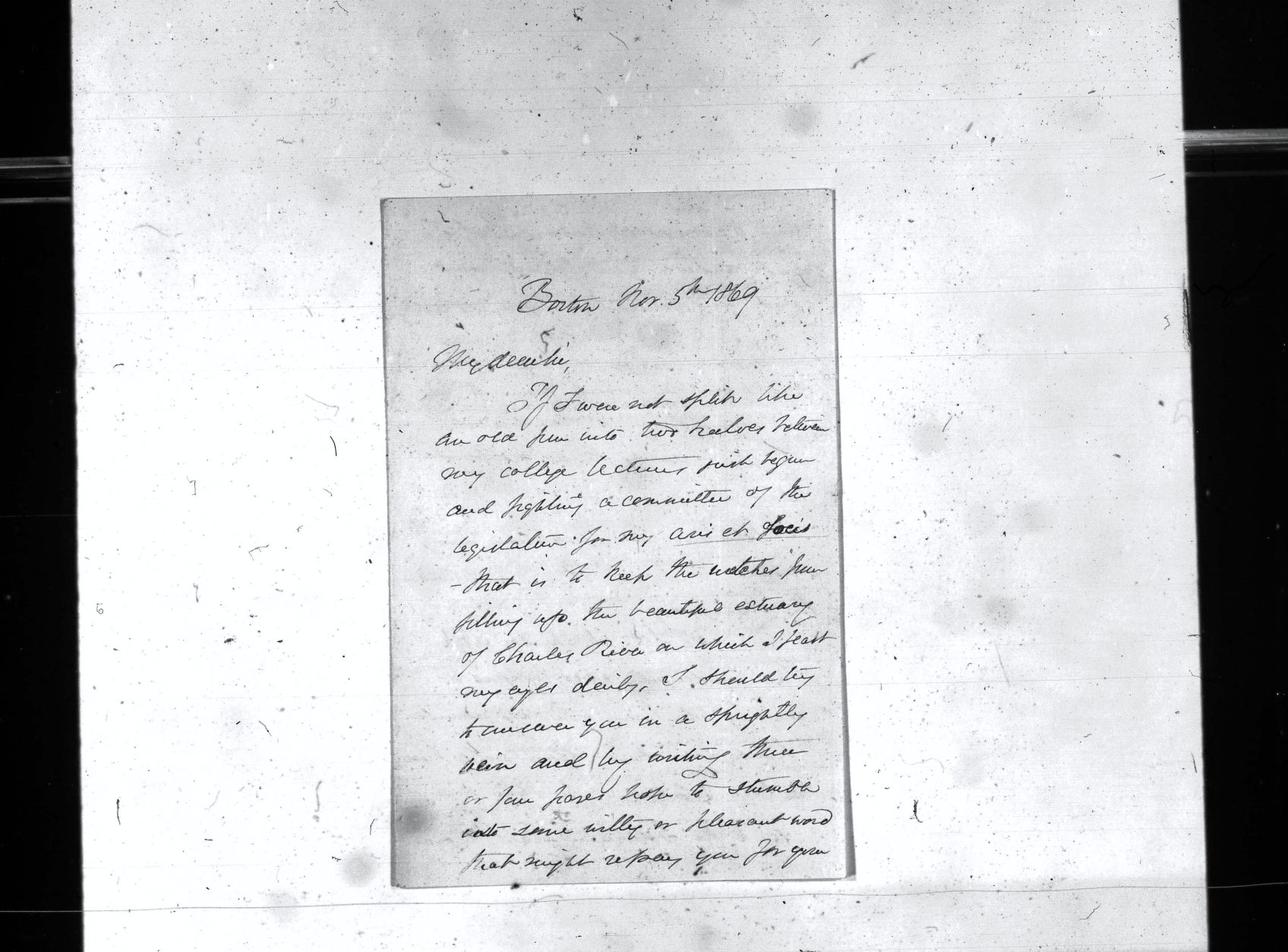
1869-11-05
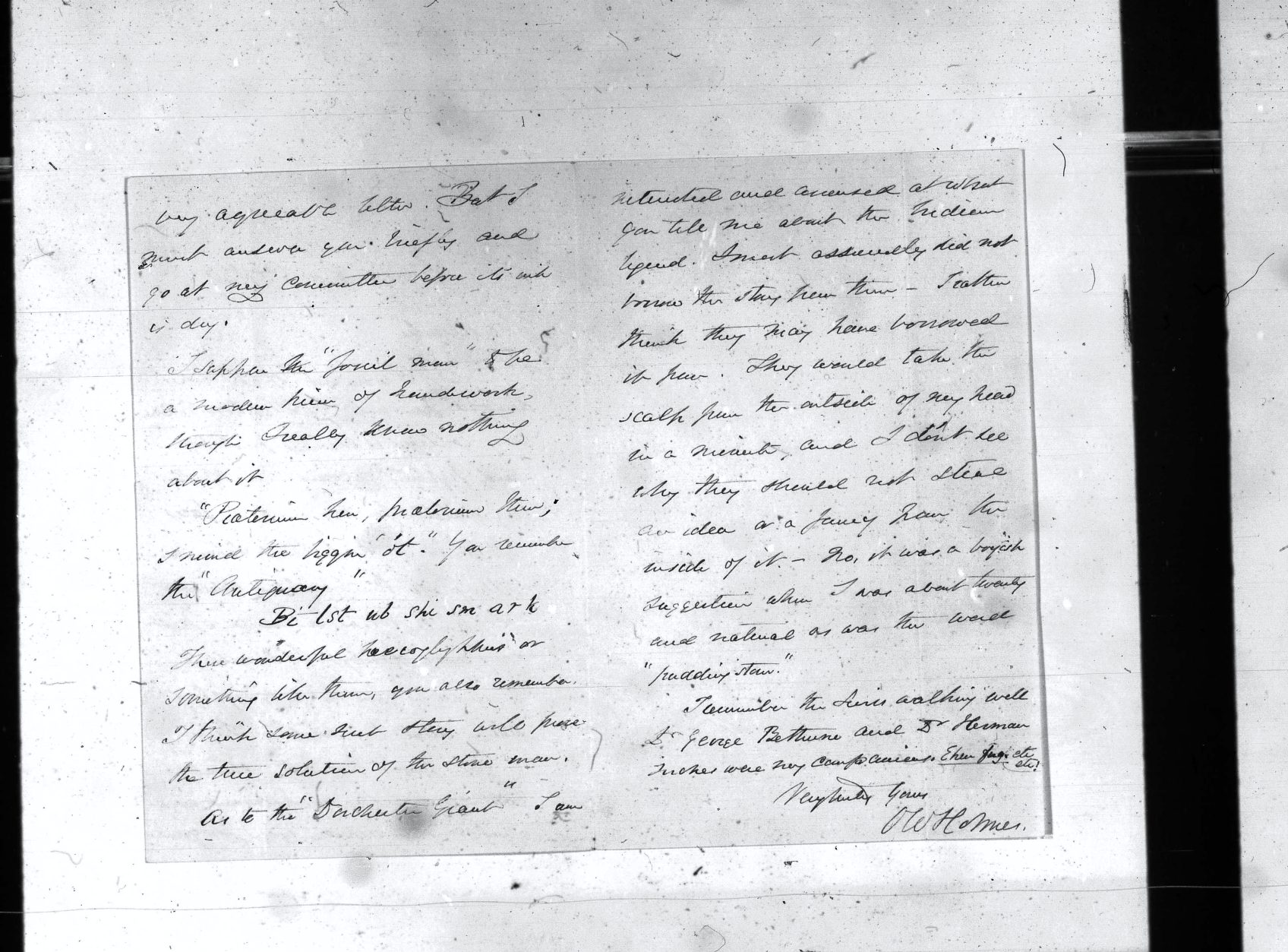
Boston; jokes he is "split like an old pen into two halves" between his college lectures and fighting a committee of the Legislature over his "asi et focis" – keeping "the wretches" from filling up the beautiful estuary of Charles River
1867-11-12
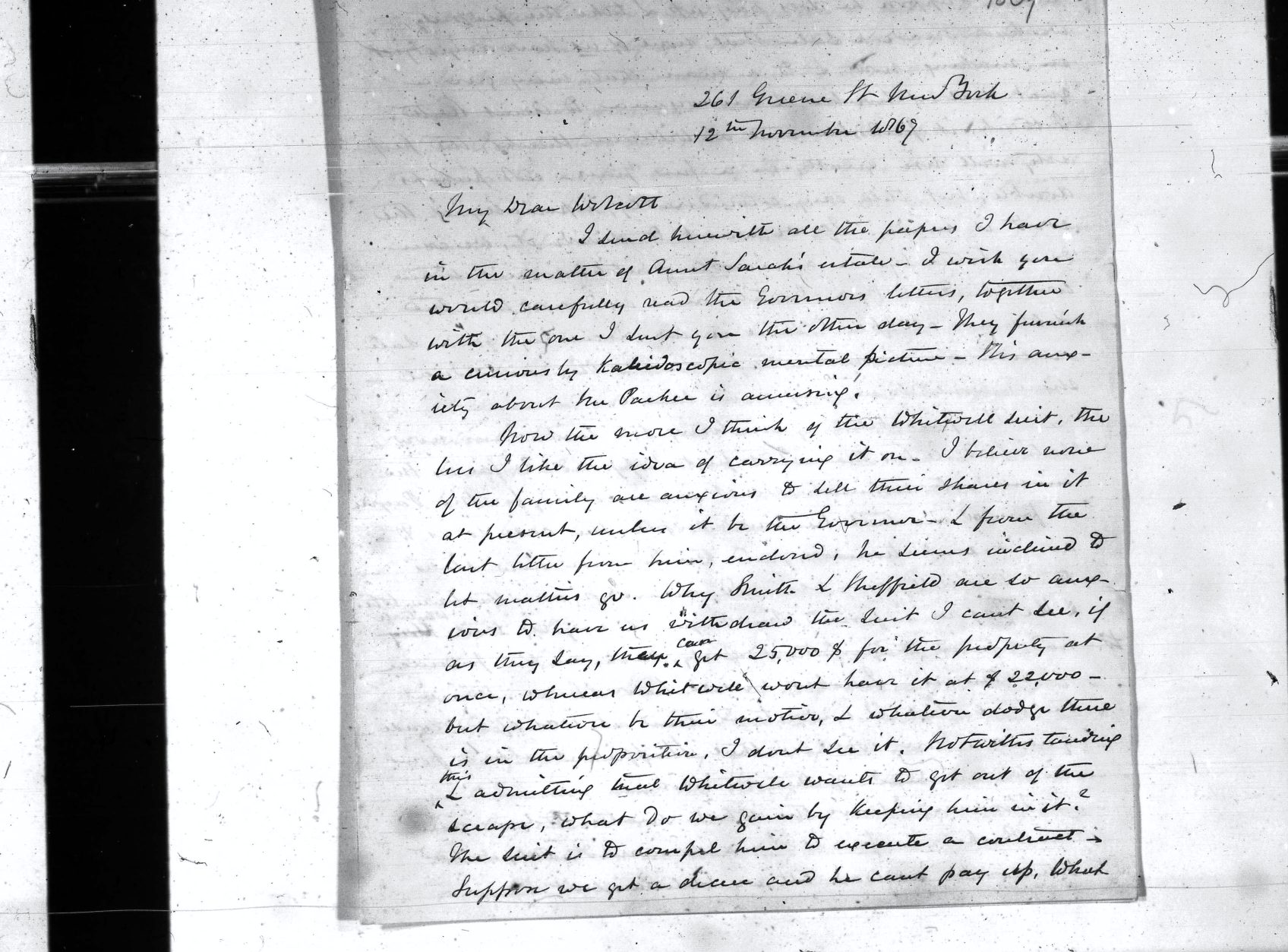
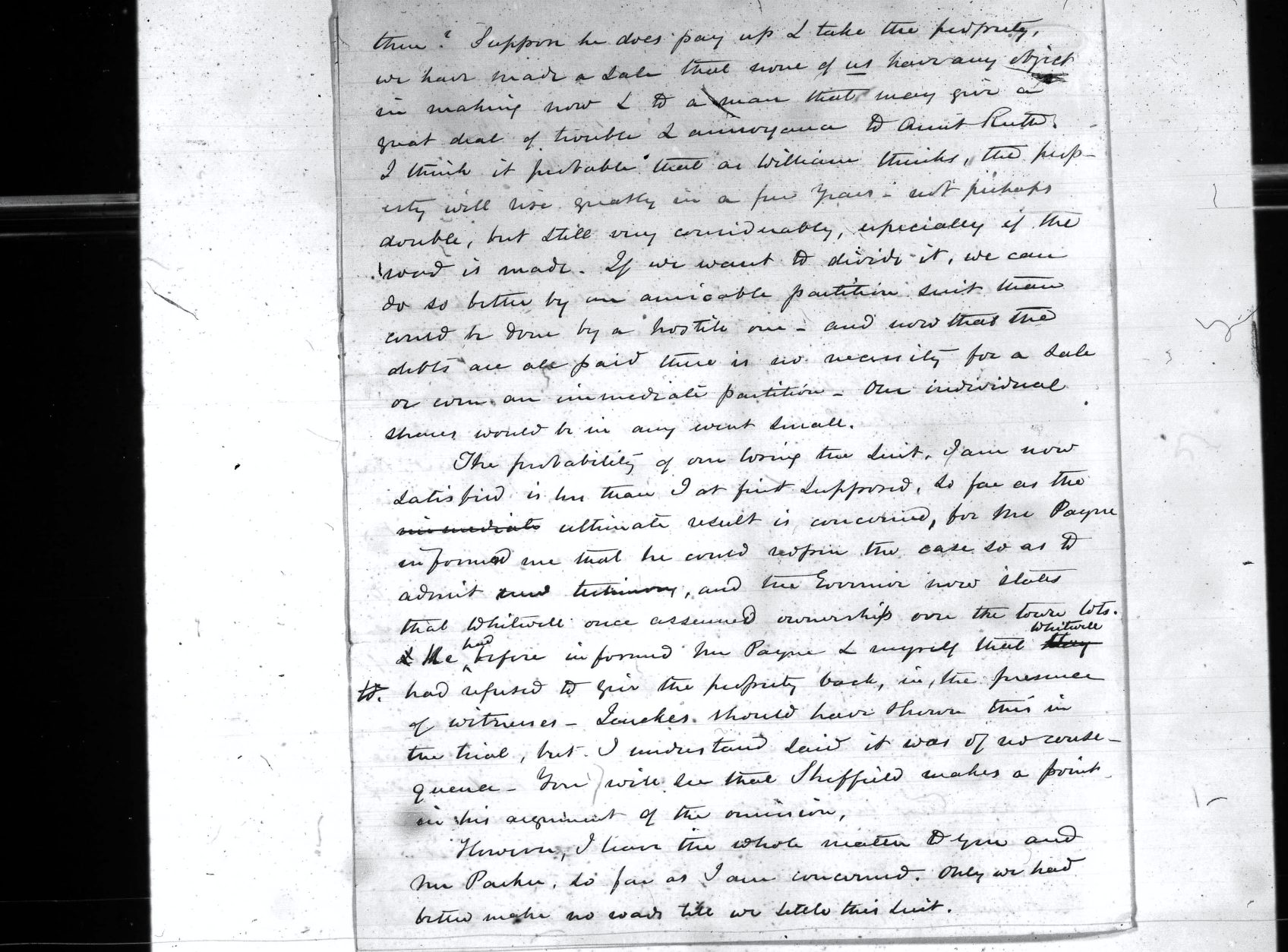
261 Greene St., New York; sends all the papers in the matter of Aunt Sarah's estate; the Governor's letters "a curiously kaleidoscopic mental picture"; argues against carrying on the Whitwell suit
n.d. [186-]
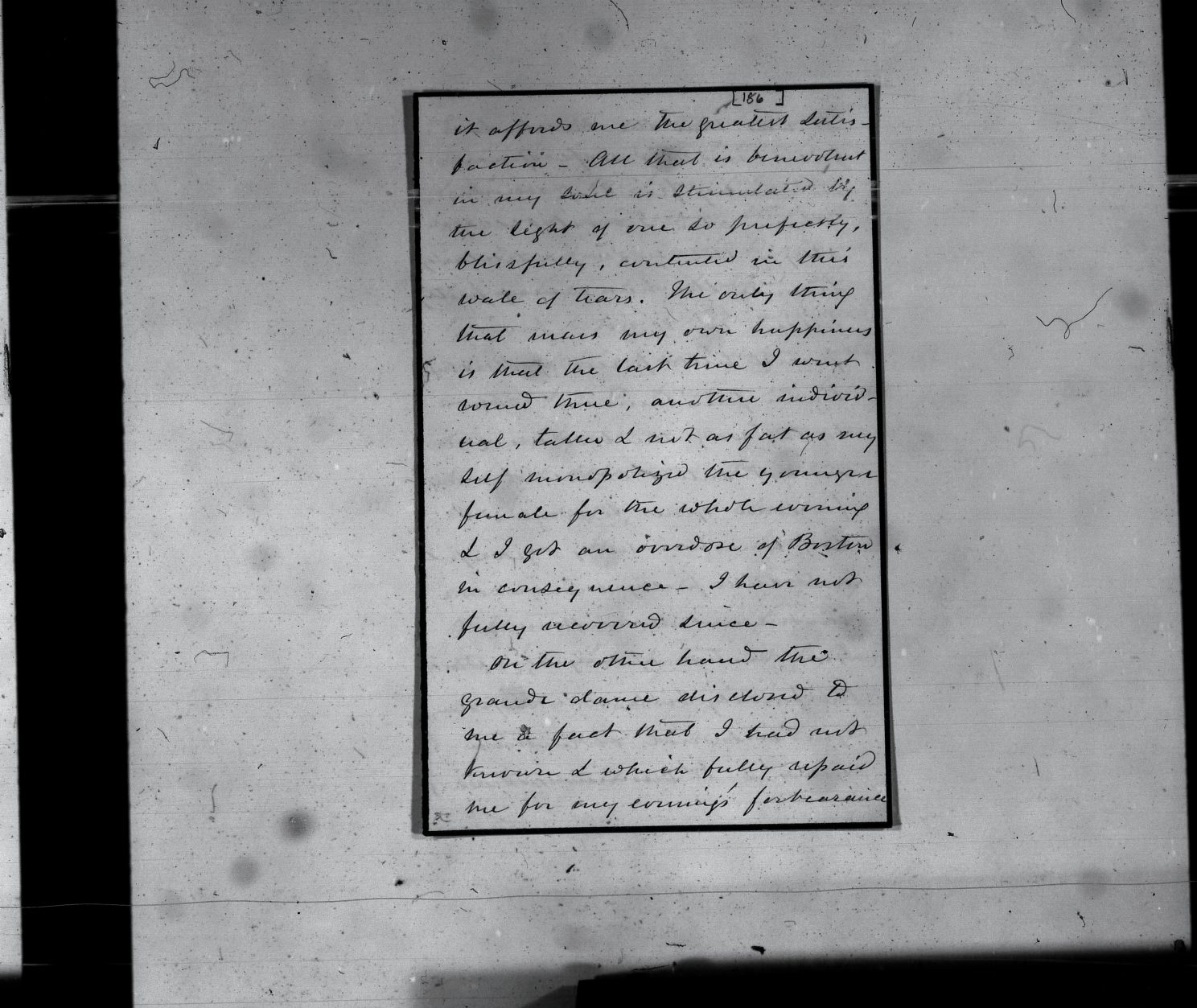
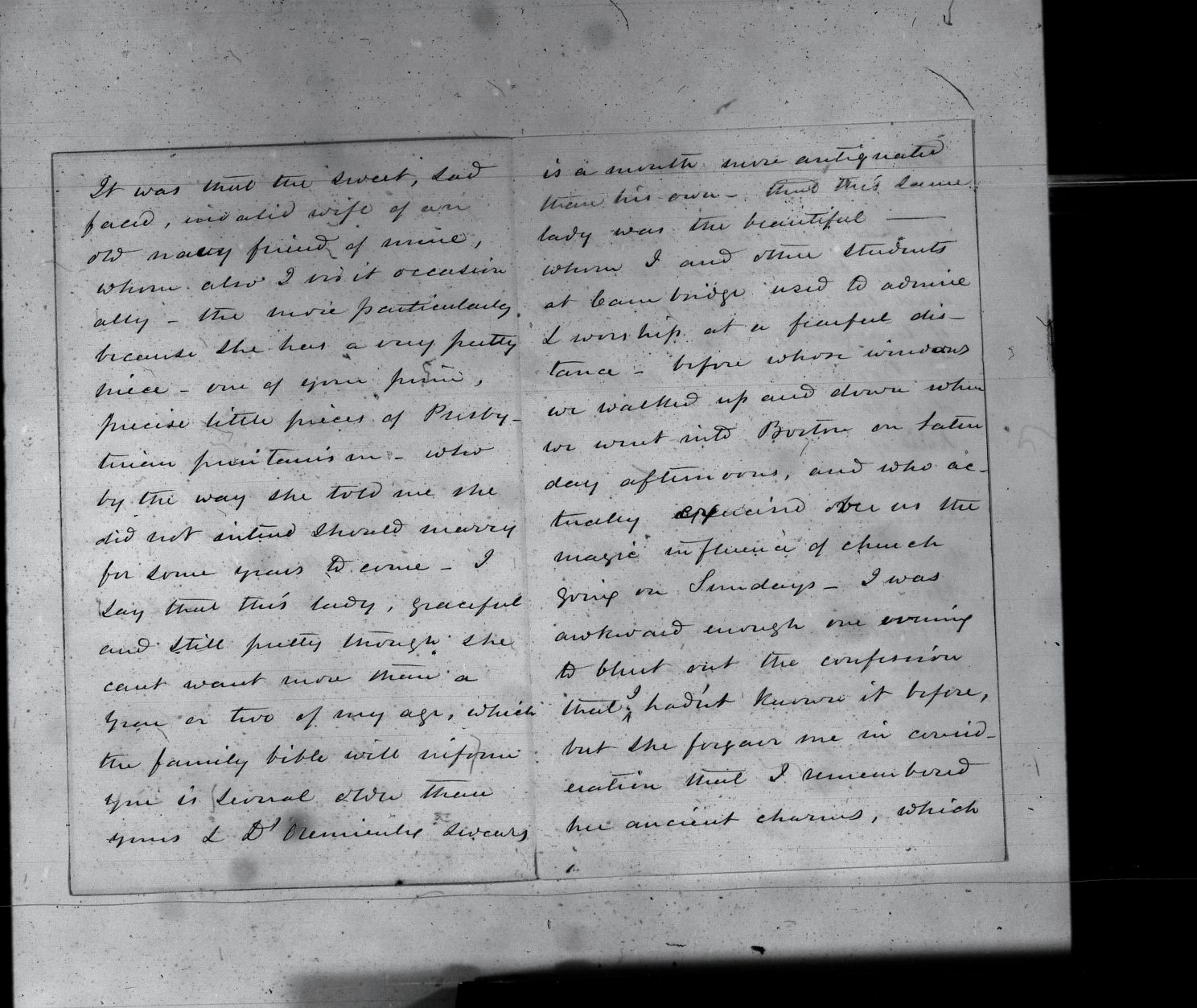
begins mid-sentence; complains that another individual "taller & not as fast as myself" monopolized the younger female for the whole evening and he "got an overdose of Boston in consequence"
May 8 [1868]
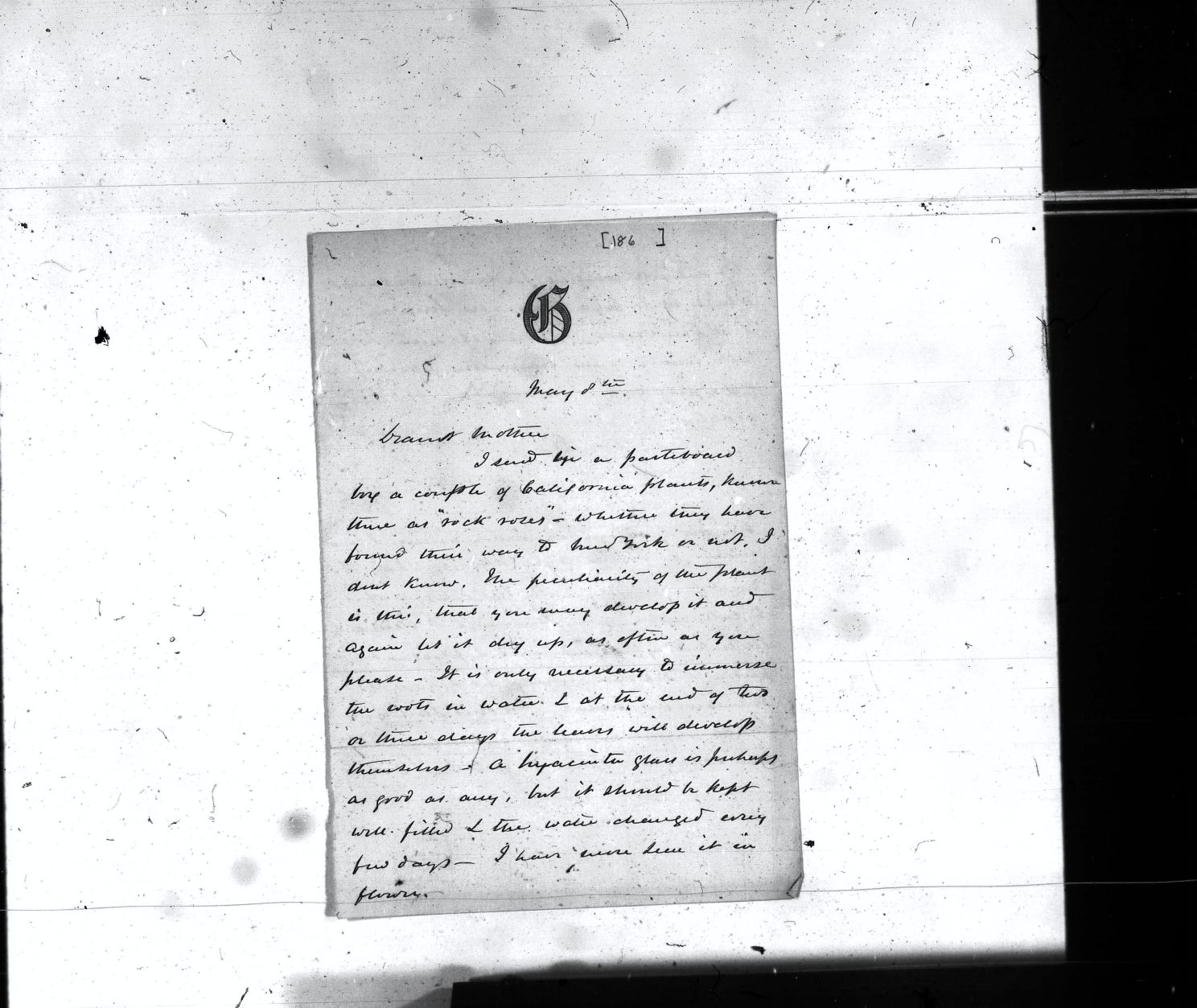
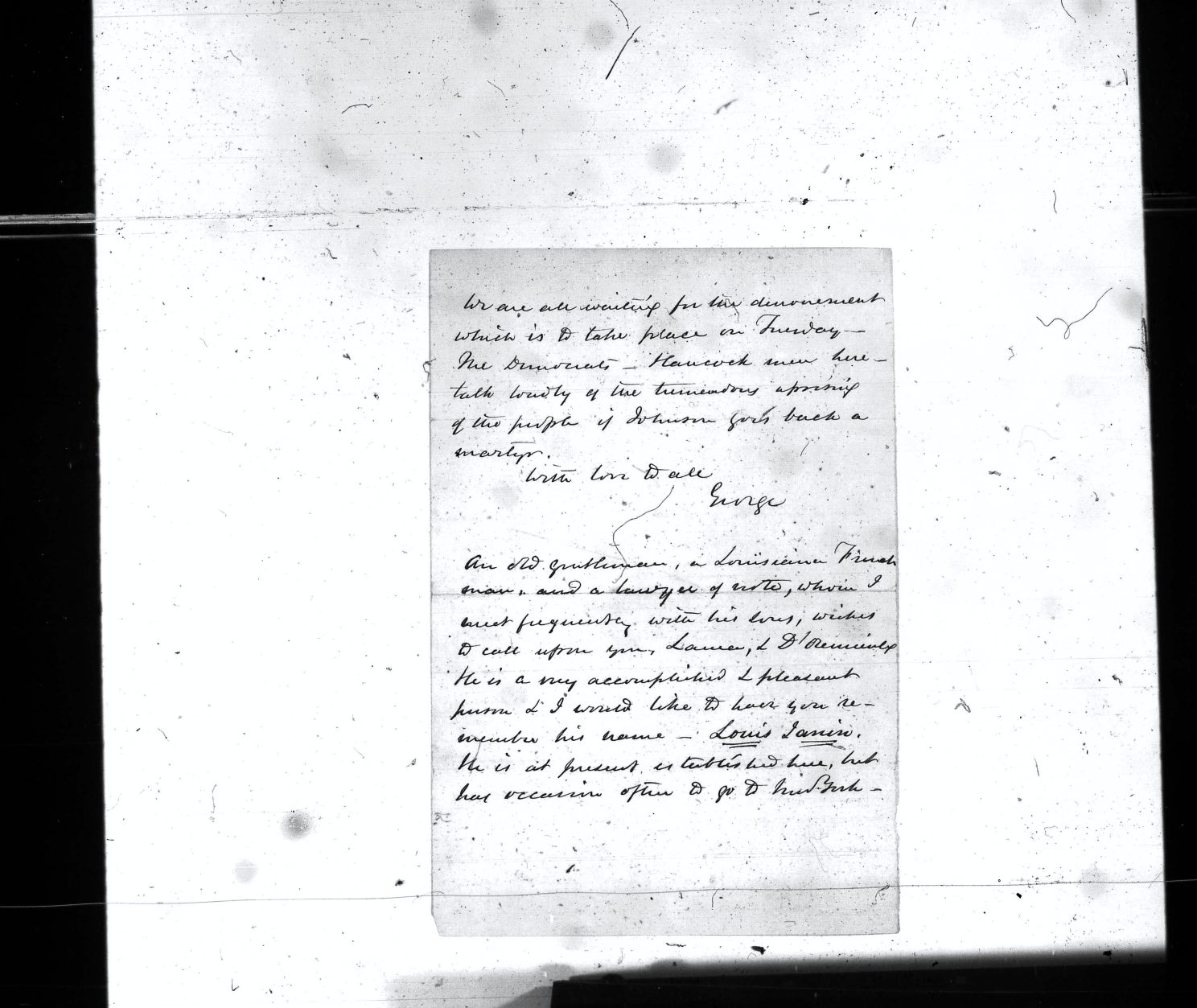
embossed Gothic "G"; sends by pasteboard box a couple of California plants "known there as rock roses"; explains the plant may be revived by immersing the roots in water for two or three days
1873-01-03
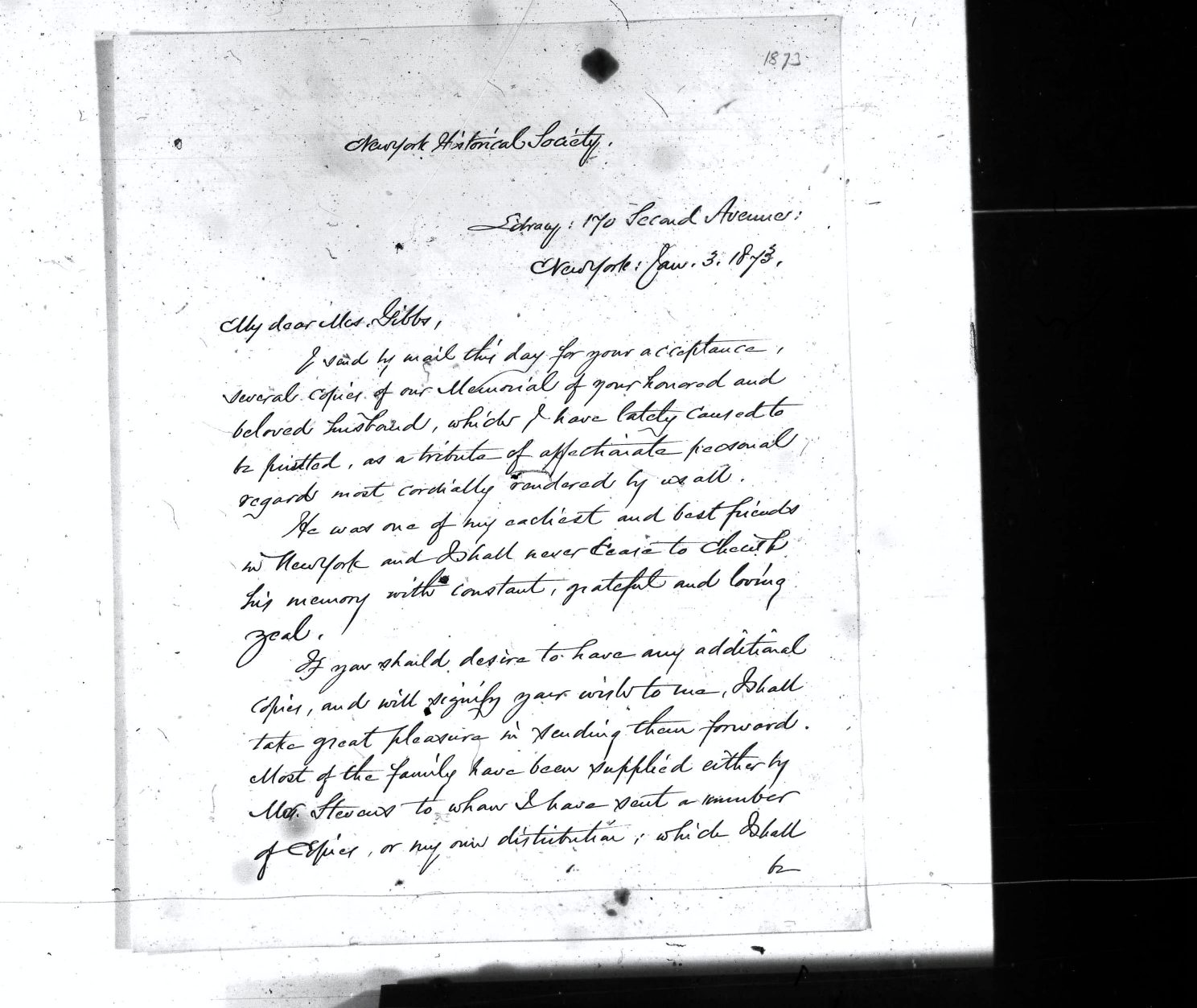
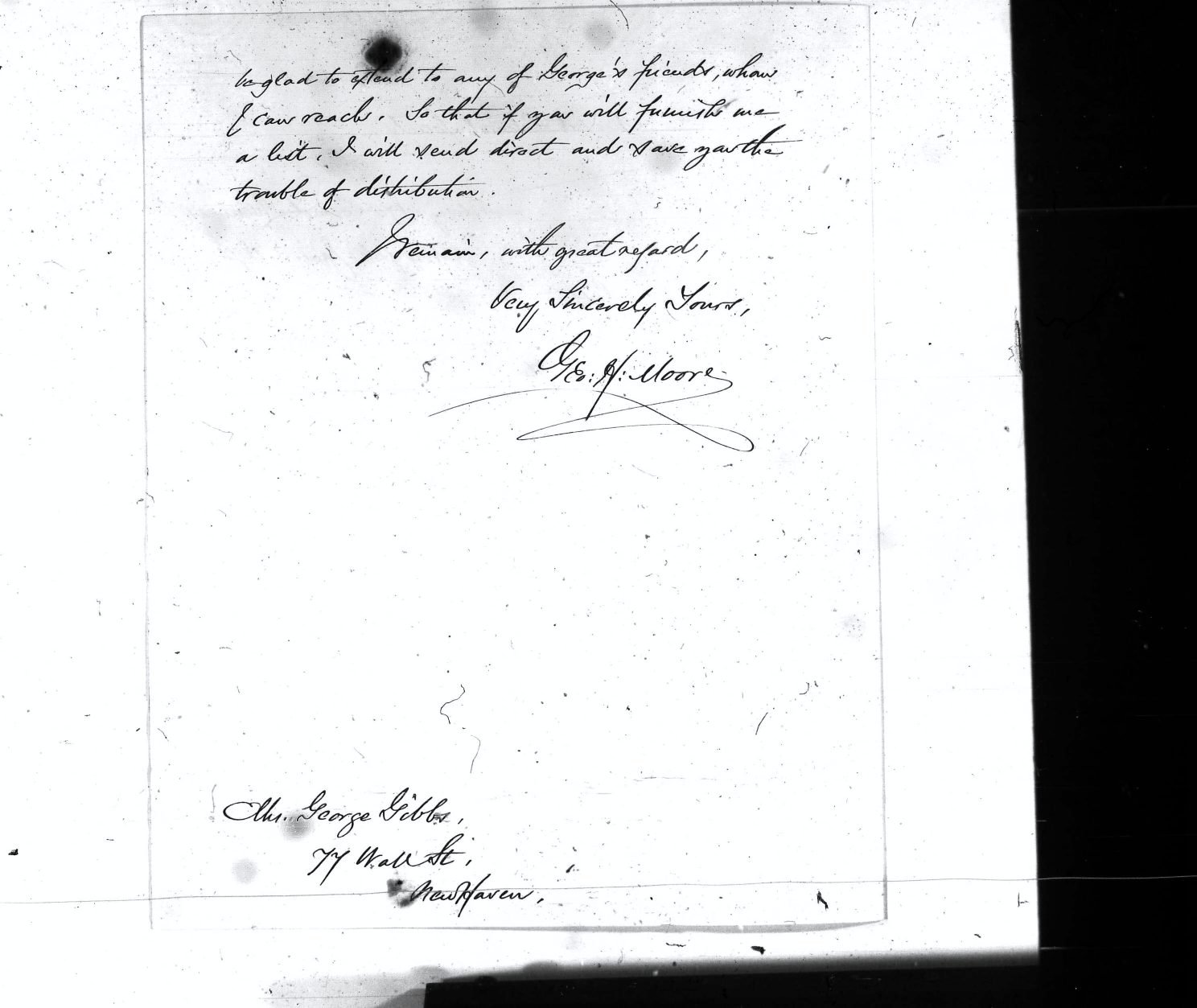
sends several copies of "our Memorial of your honored and beloved husband," printed as a tribute; "He was one of my ancient and best friends in New York and I shall never cease to cherish his memory with constant, grateful and loving zeal"
1880-07-02
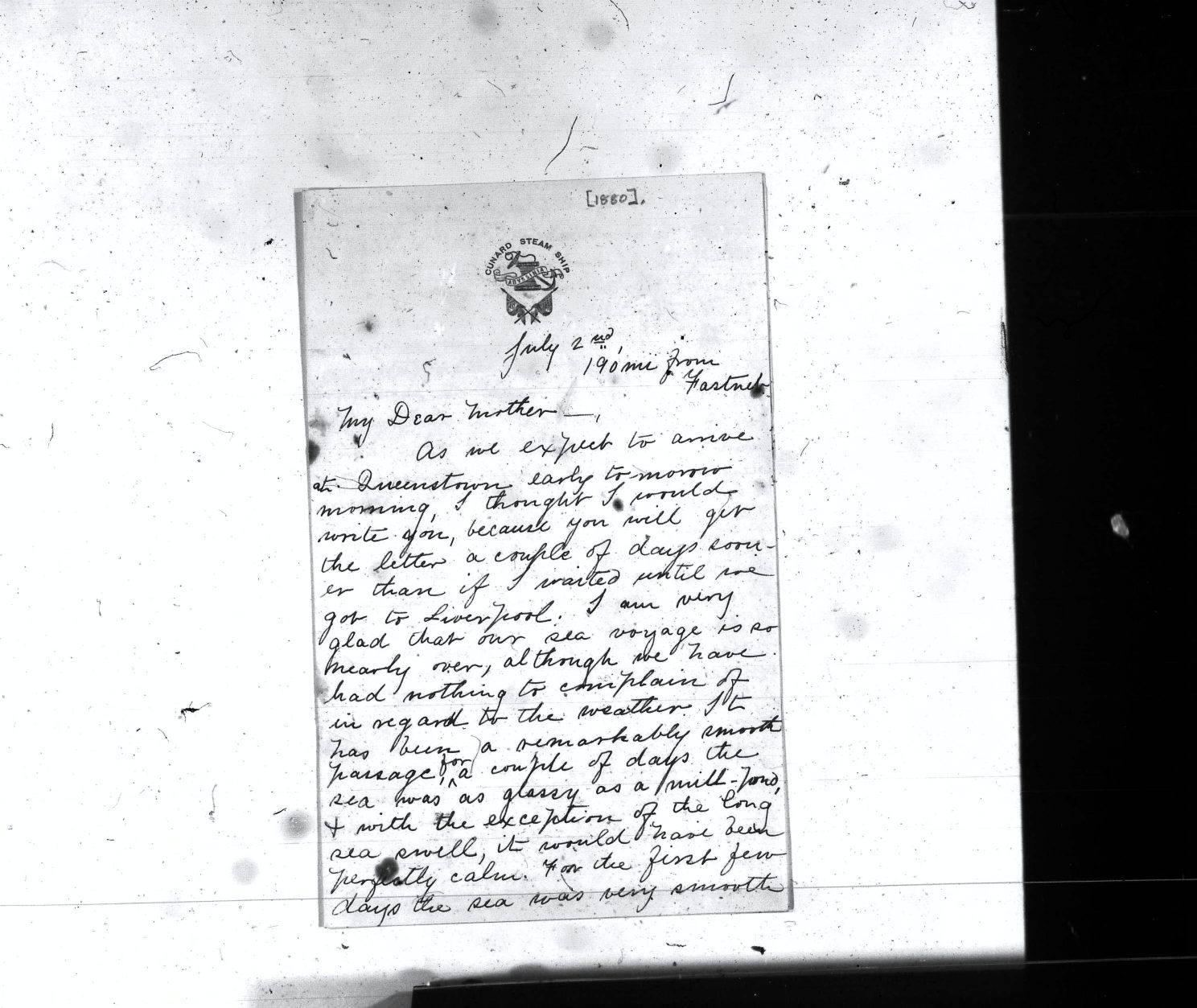
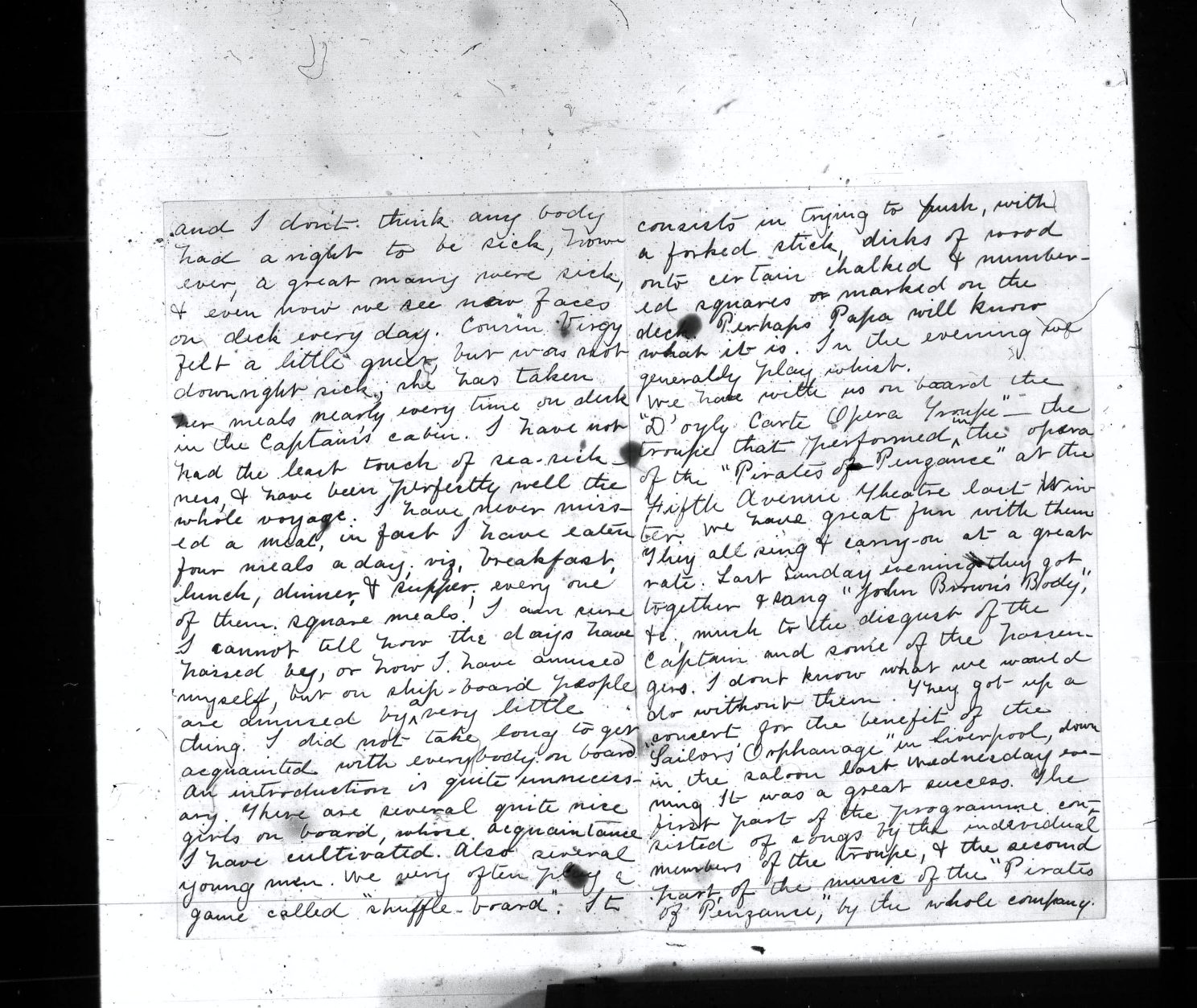
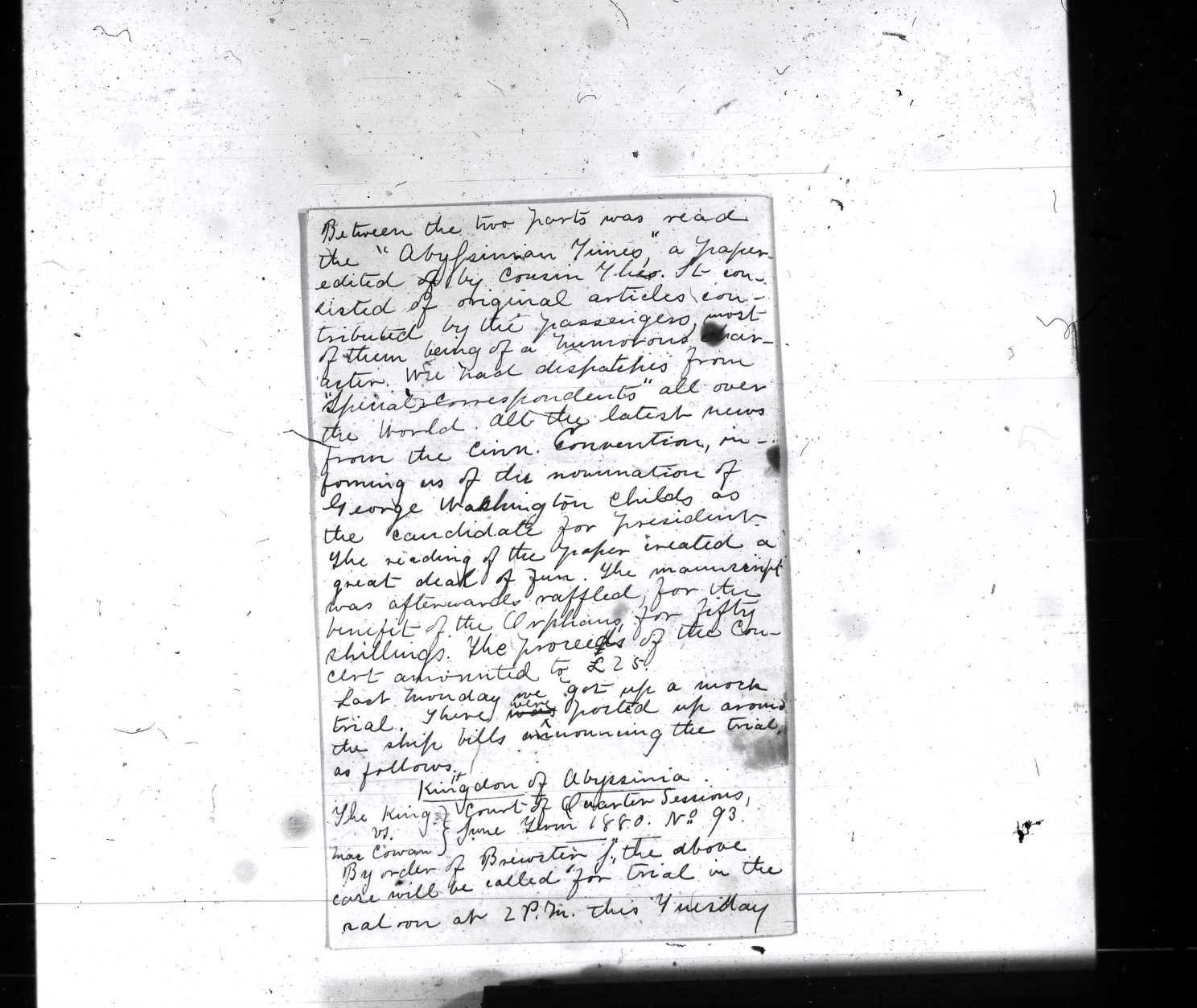
embossed Cunard crest, "July 2nd, 190 mi from Fastnet"; a remarkably smooth passage, for a couple of days "the sea was as glassy as a mill-pond" (FIRST page of the letter whose later pages are filmed at 231-233)
1880-07-05
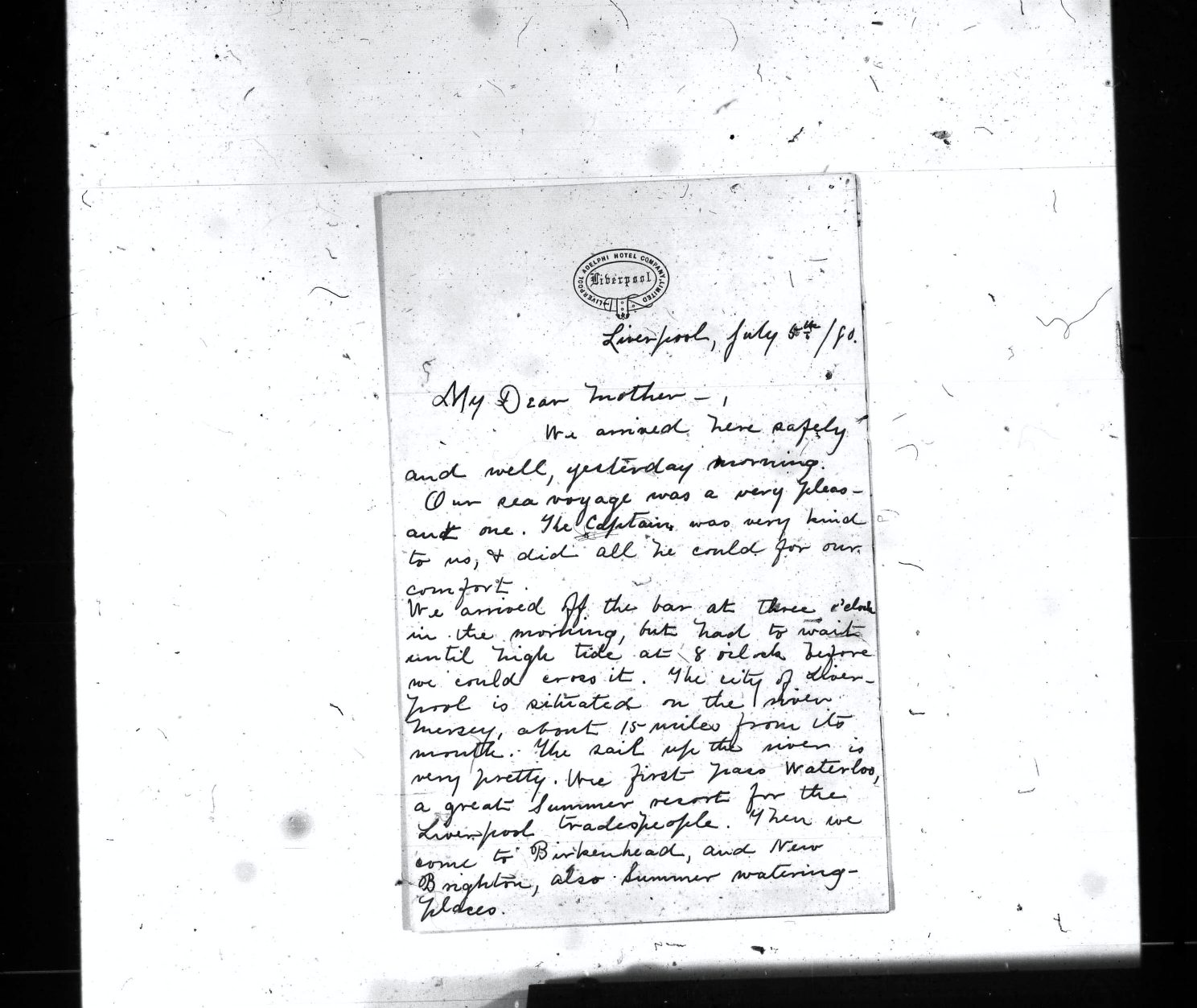
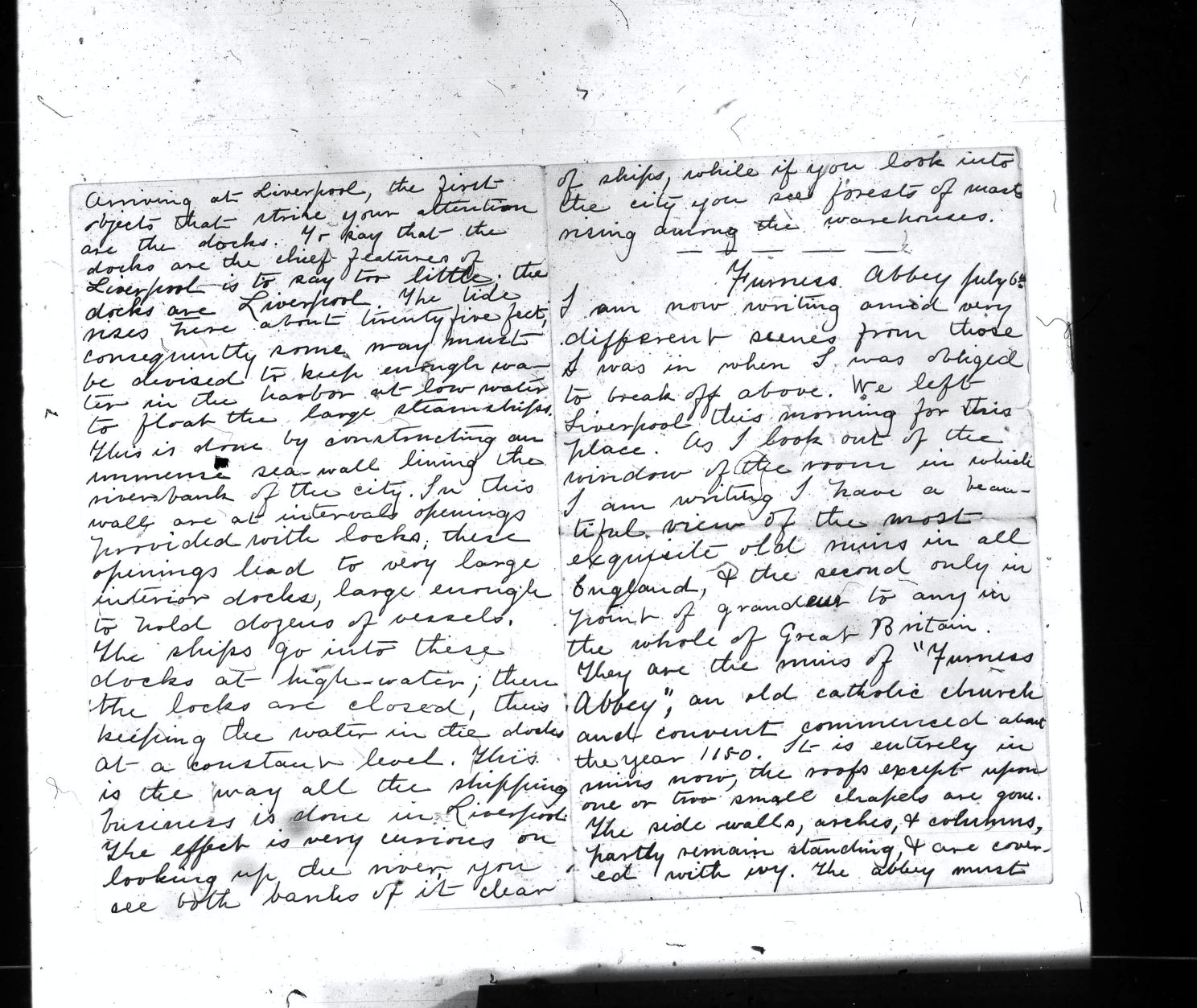
printed Adelphi Hotel Company, Liverpool letterhead; arrived off the bar at three in the morning but had to wait for high tide at 8; Liverpool on the Mersey about 15 miles from its mouth; passing Waterloo, Birkenhead and New Brighton
(cont.)
OTHER
Frames 241–330 · 42 documents
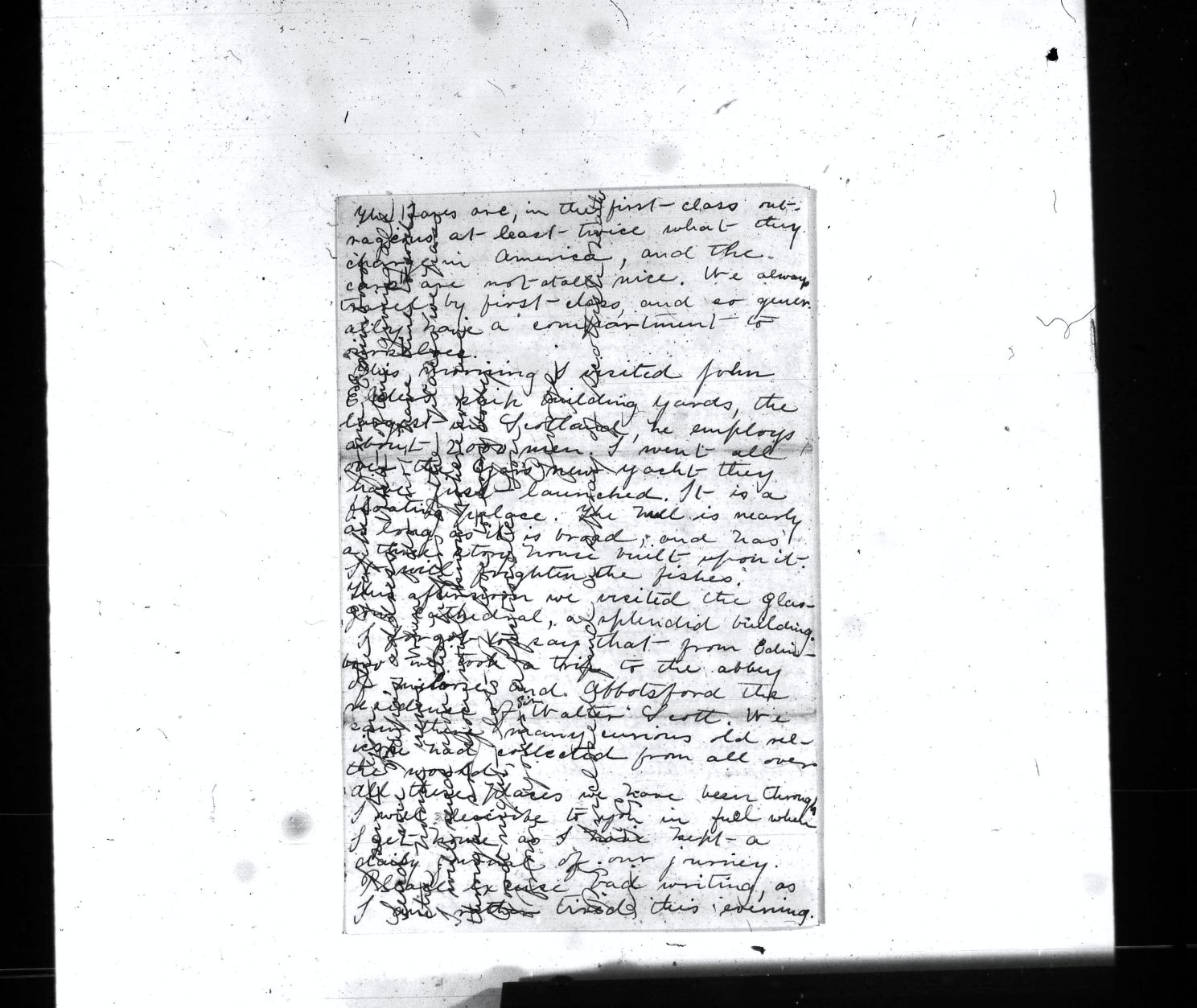
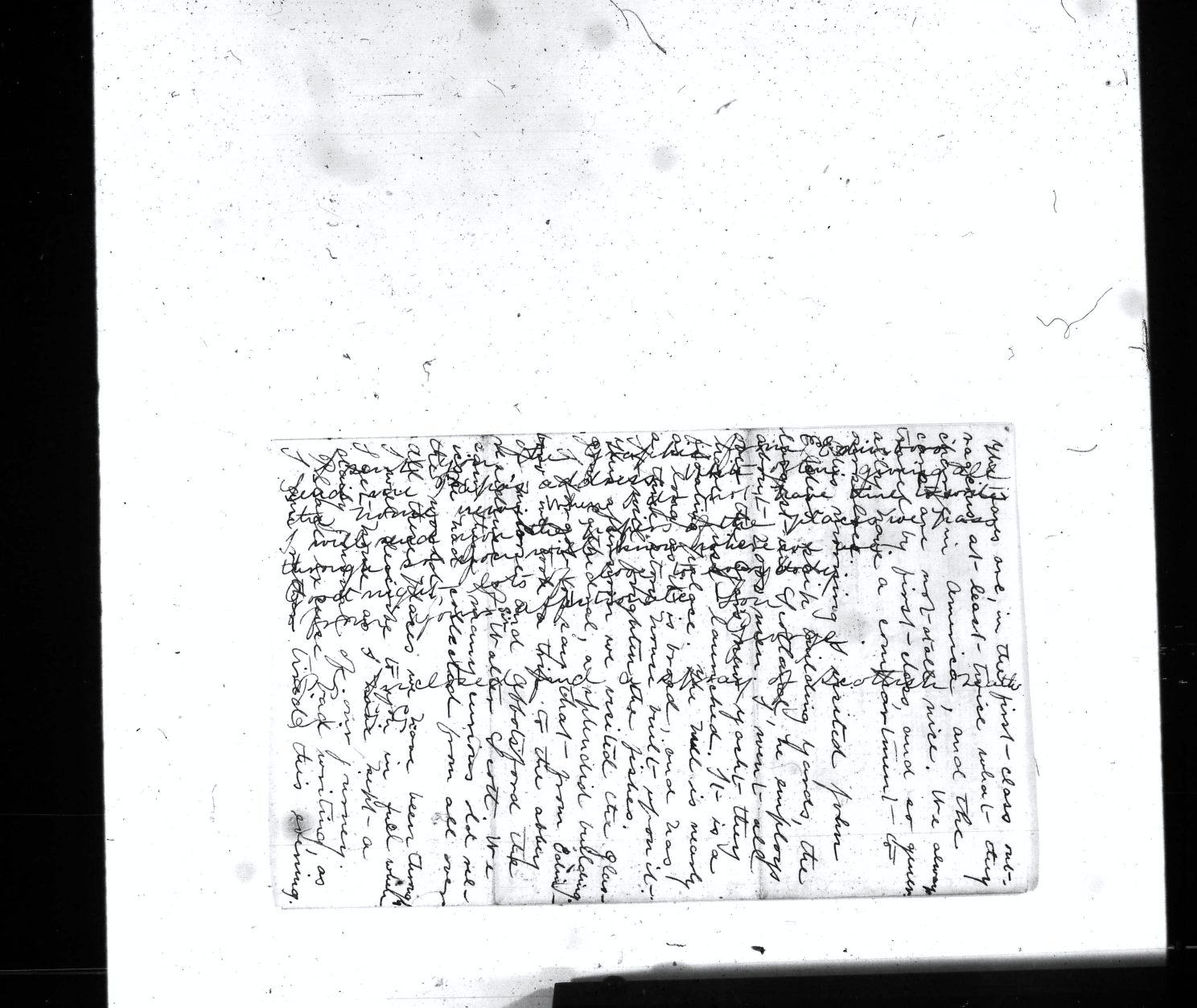
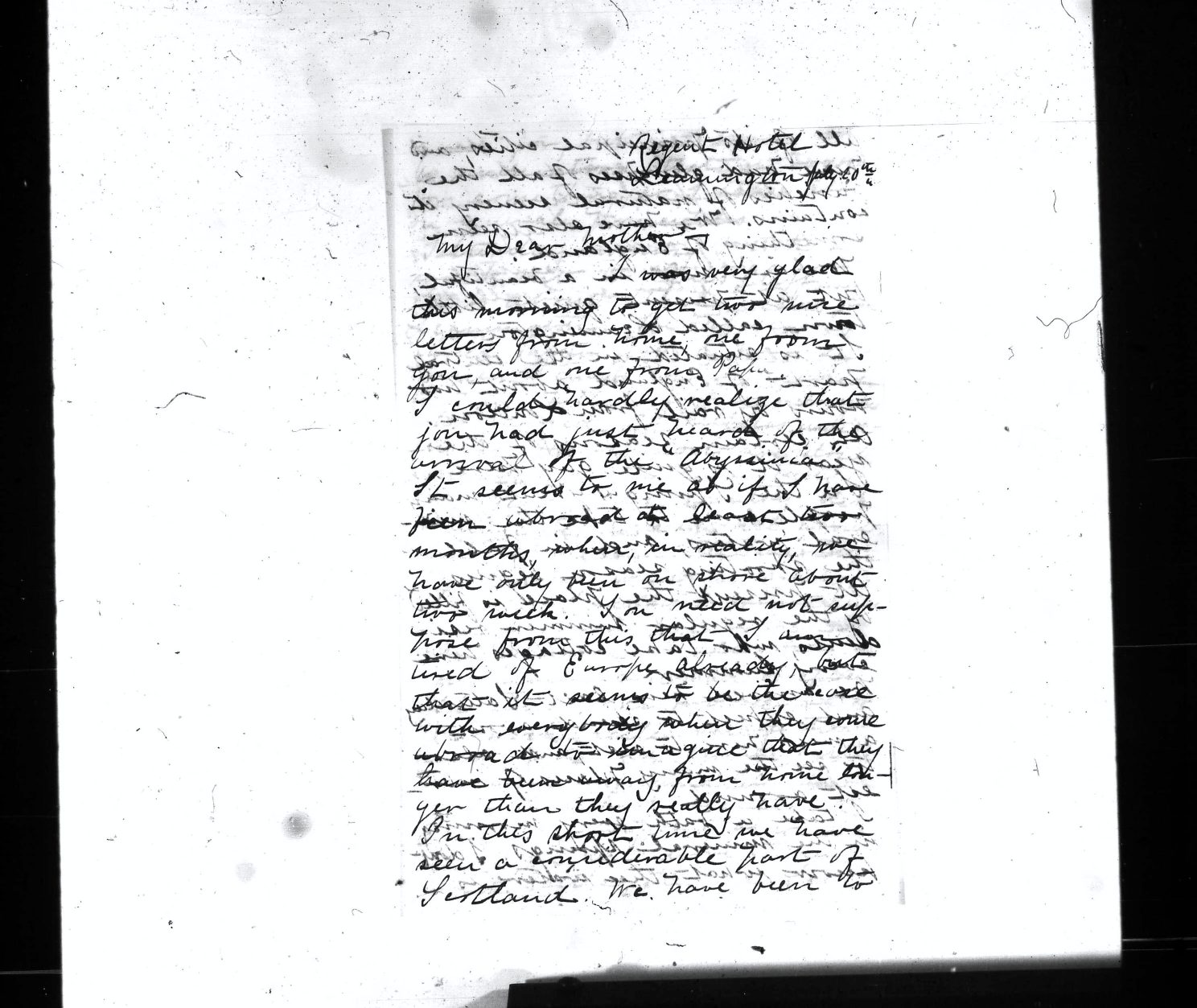
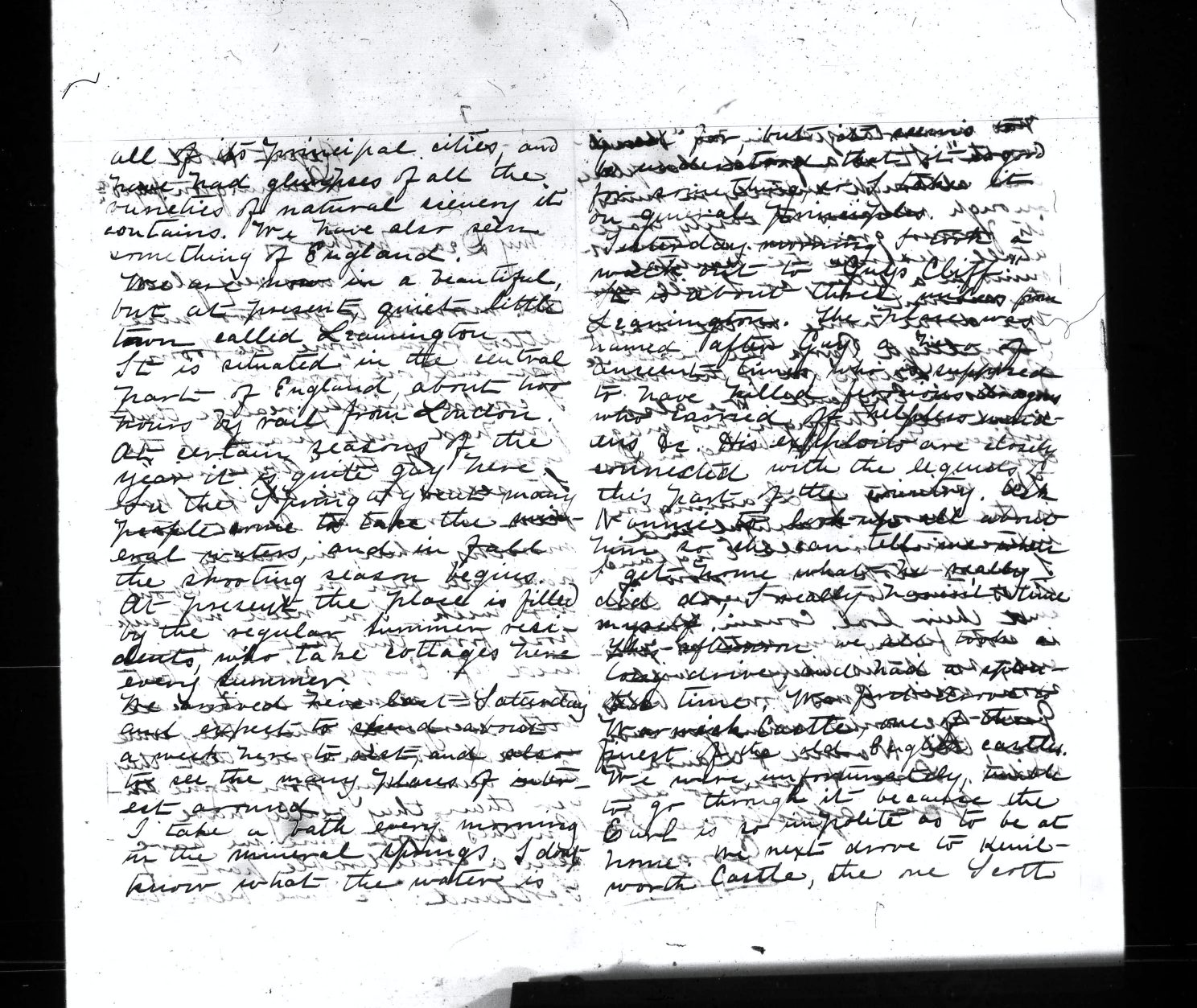
The 1880 European tour, the Ursula Wolcott volume, and the 1894 letter about the Sunswick negatives.
1880-07-09
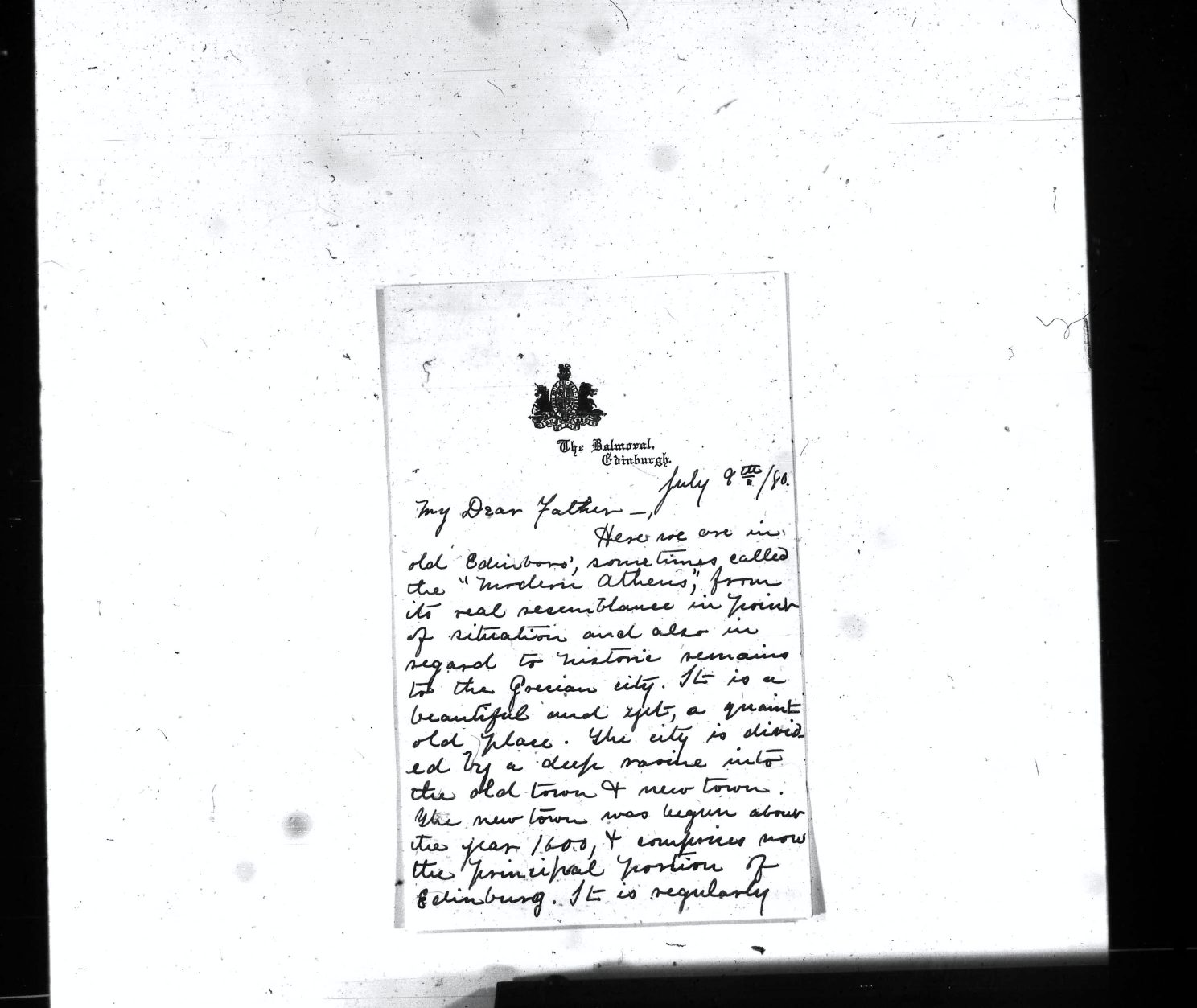
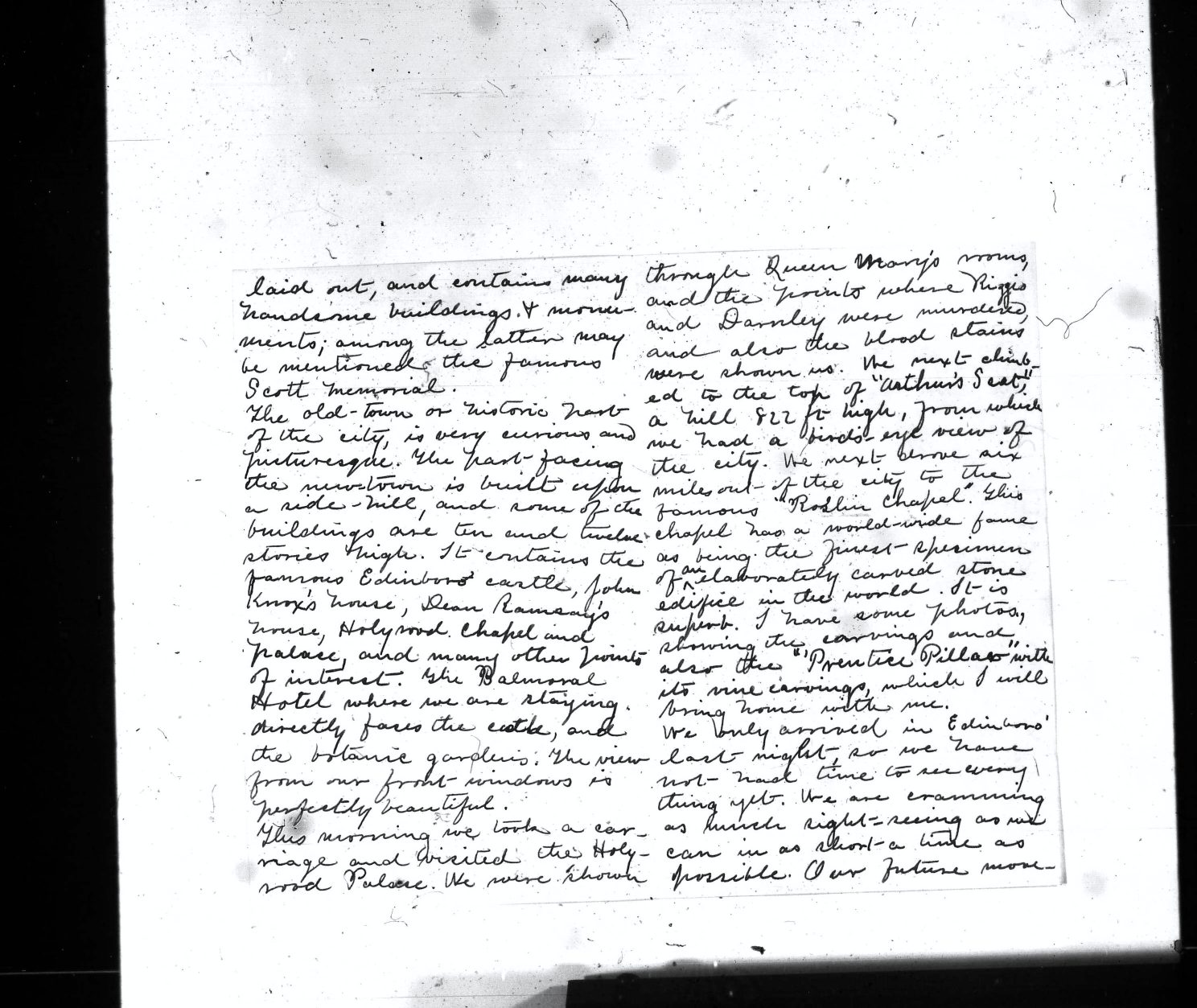
Balmoral Hotel, Edinburgh letterhead; the "modern Athens"; city divided by "a deep ravine" into old town and new town
1880-07-15
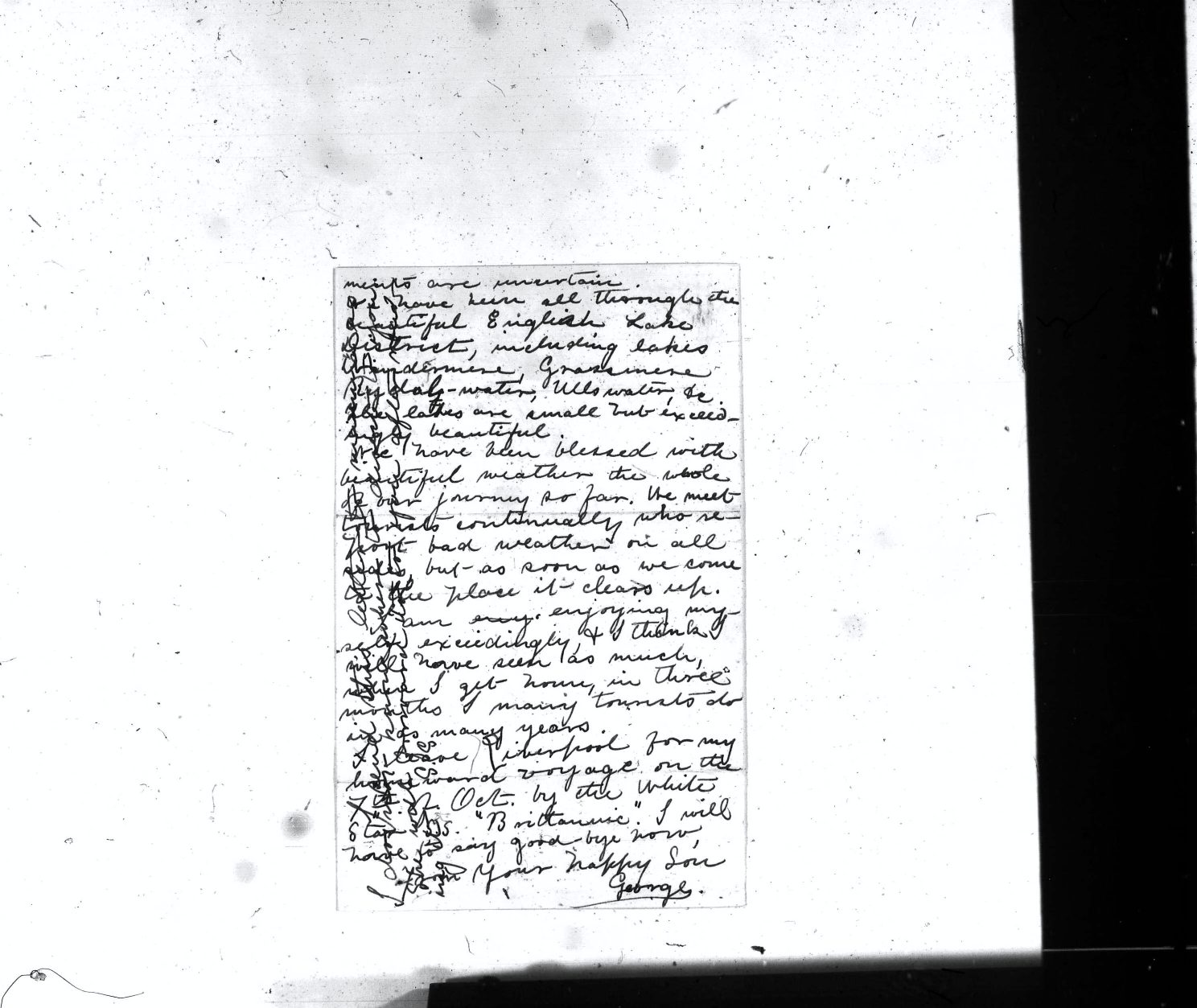
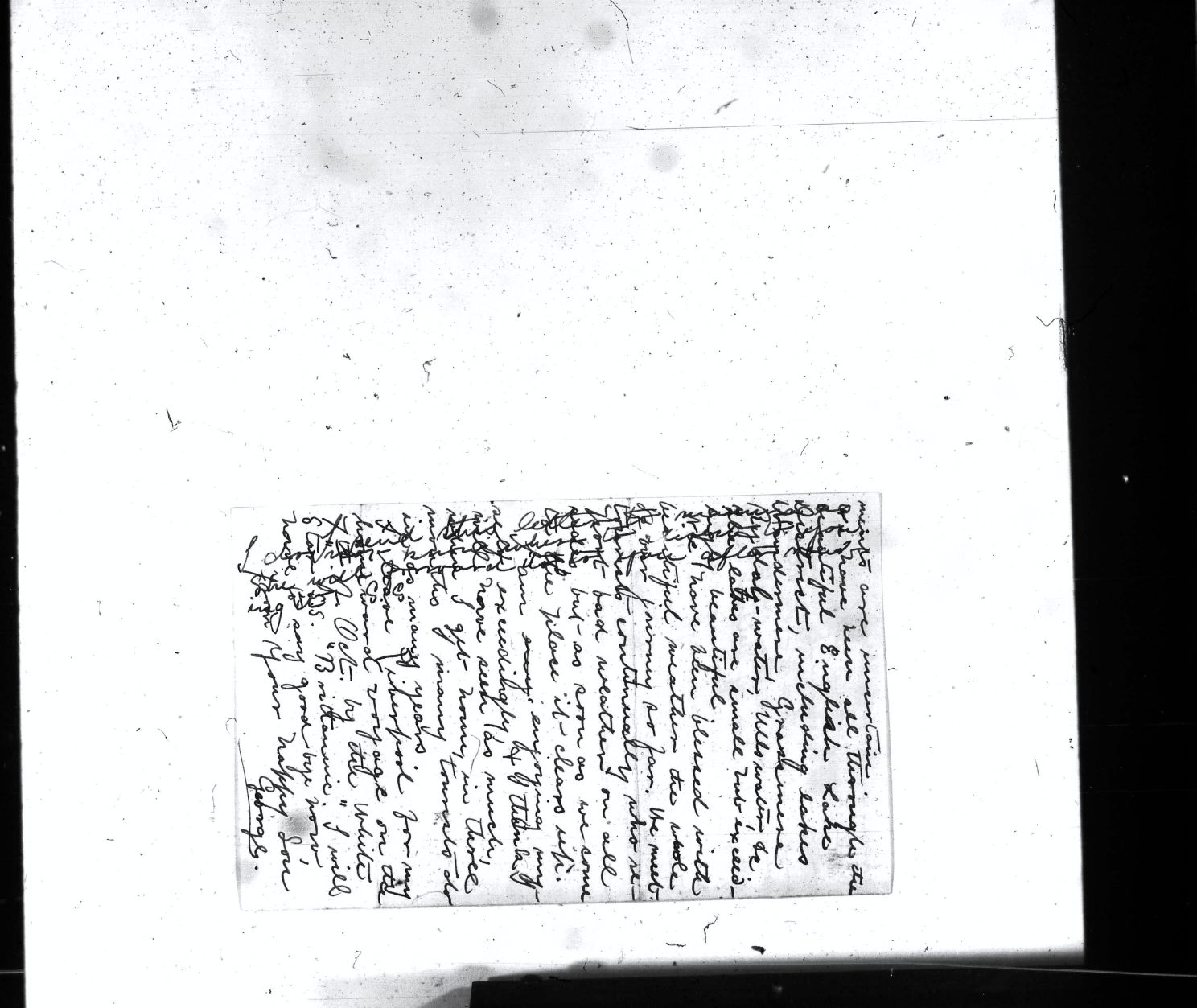
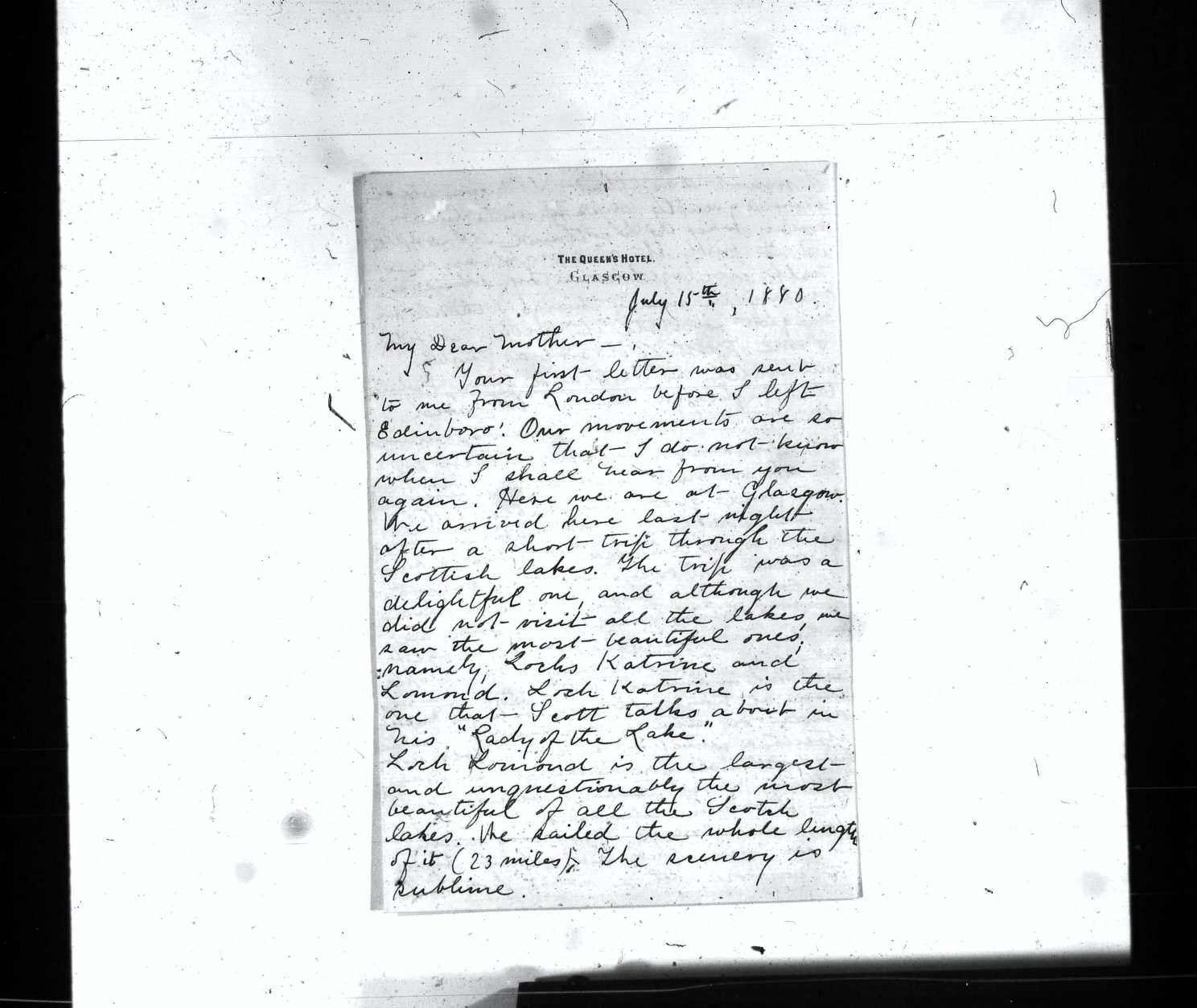
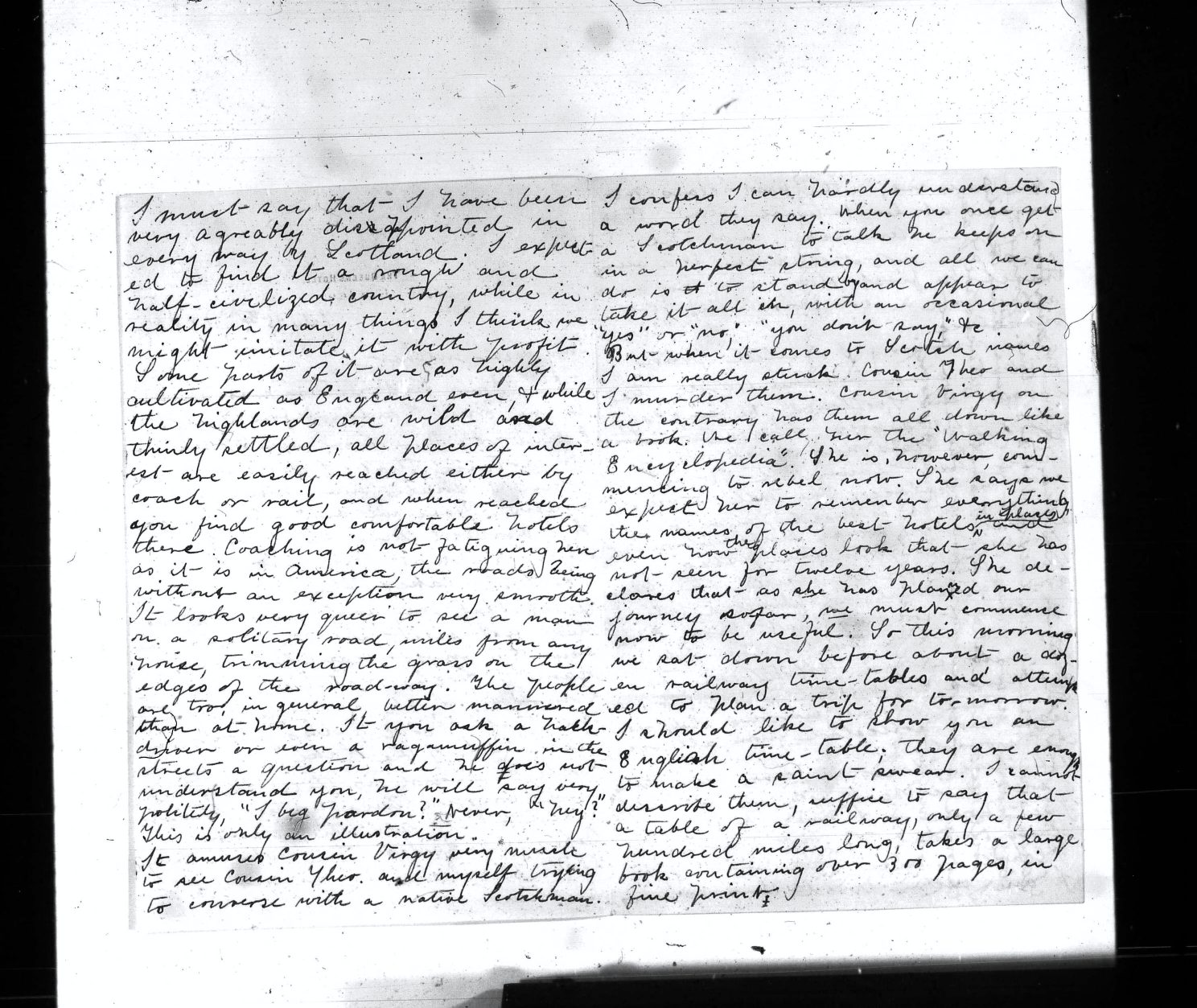
Queen's Hotel, Glasgow letterhead; the Scottish lakes, Lochs Katrine and Lomond; Katrine "the one that Scott talks about in his 'Lady of the Lake'"; sailed the whole length of Loch Lomond, "(23 miles)"
1880-07-20?
Regent Hotel, Leamington letterhead; two letters from home; they had "just heard of the arrival of the Abyssinian"
1880-08-01
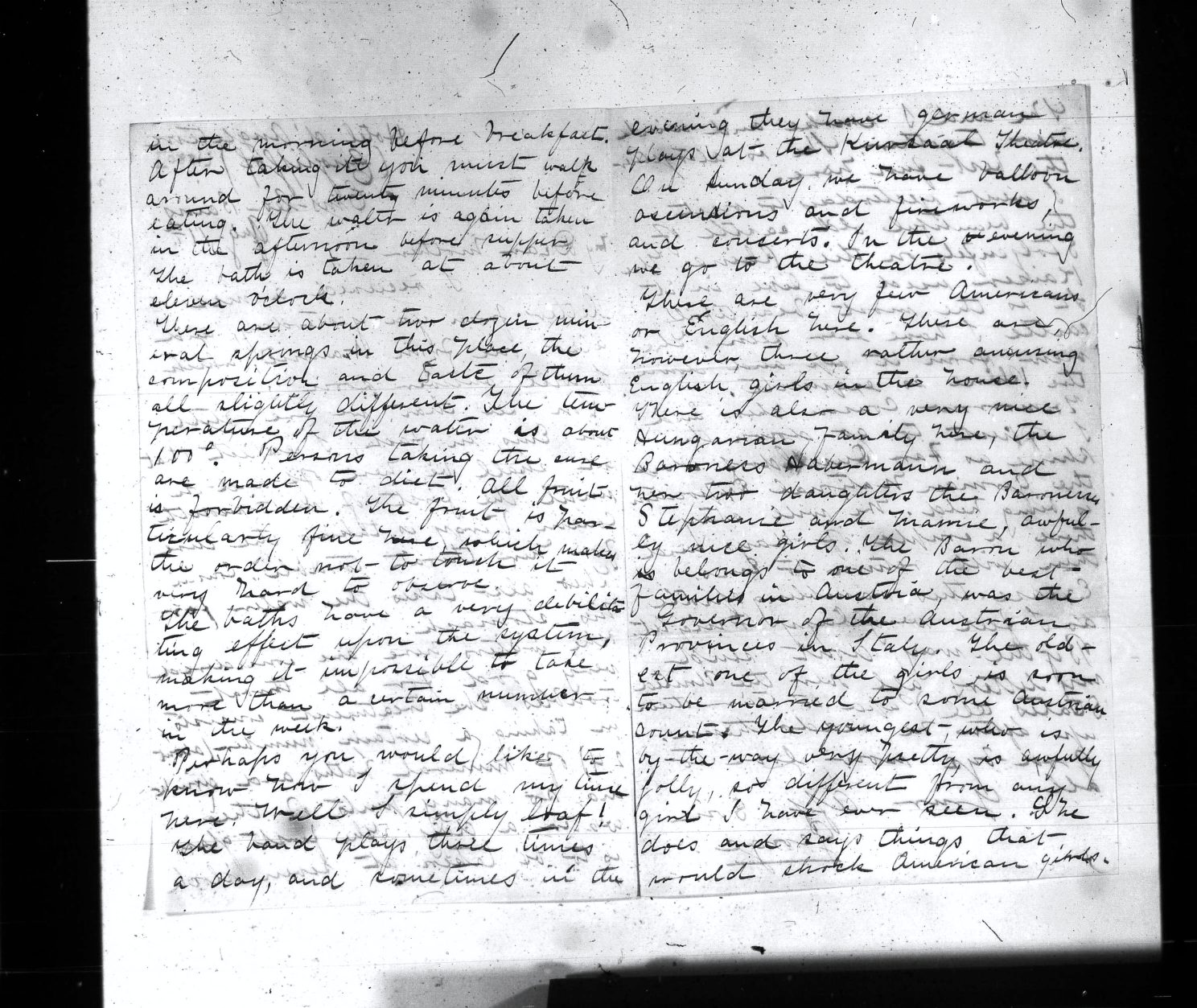
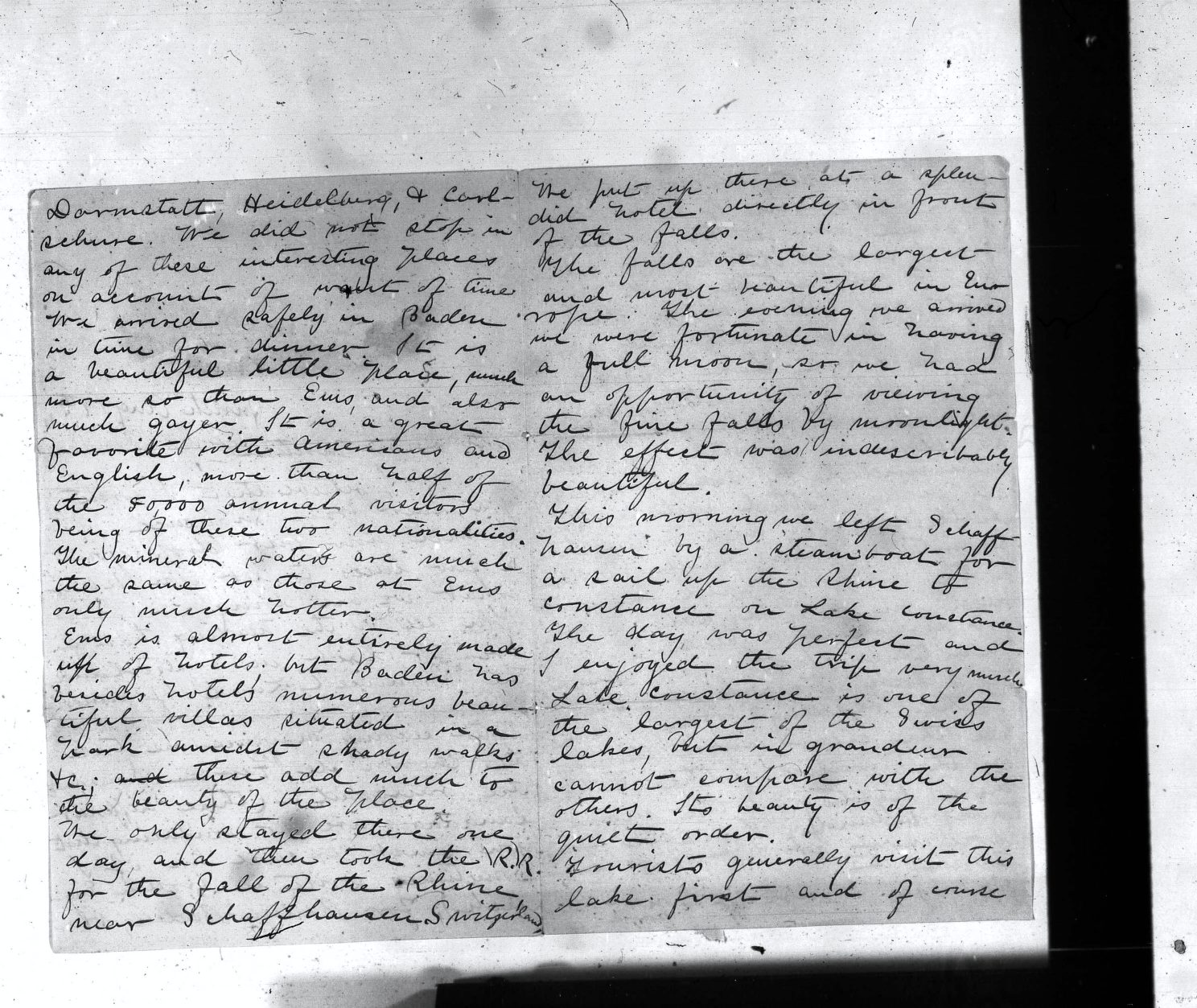
Ems, Germany; London over Sunday, Westminster Abbey, the Houses of Parliament, the National Gallery; a trip to Windsor; the party is "Cousins Virgy and Theo. and Mrs. Maguire, Cousin Virgy's old governess, & myself"
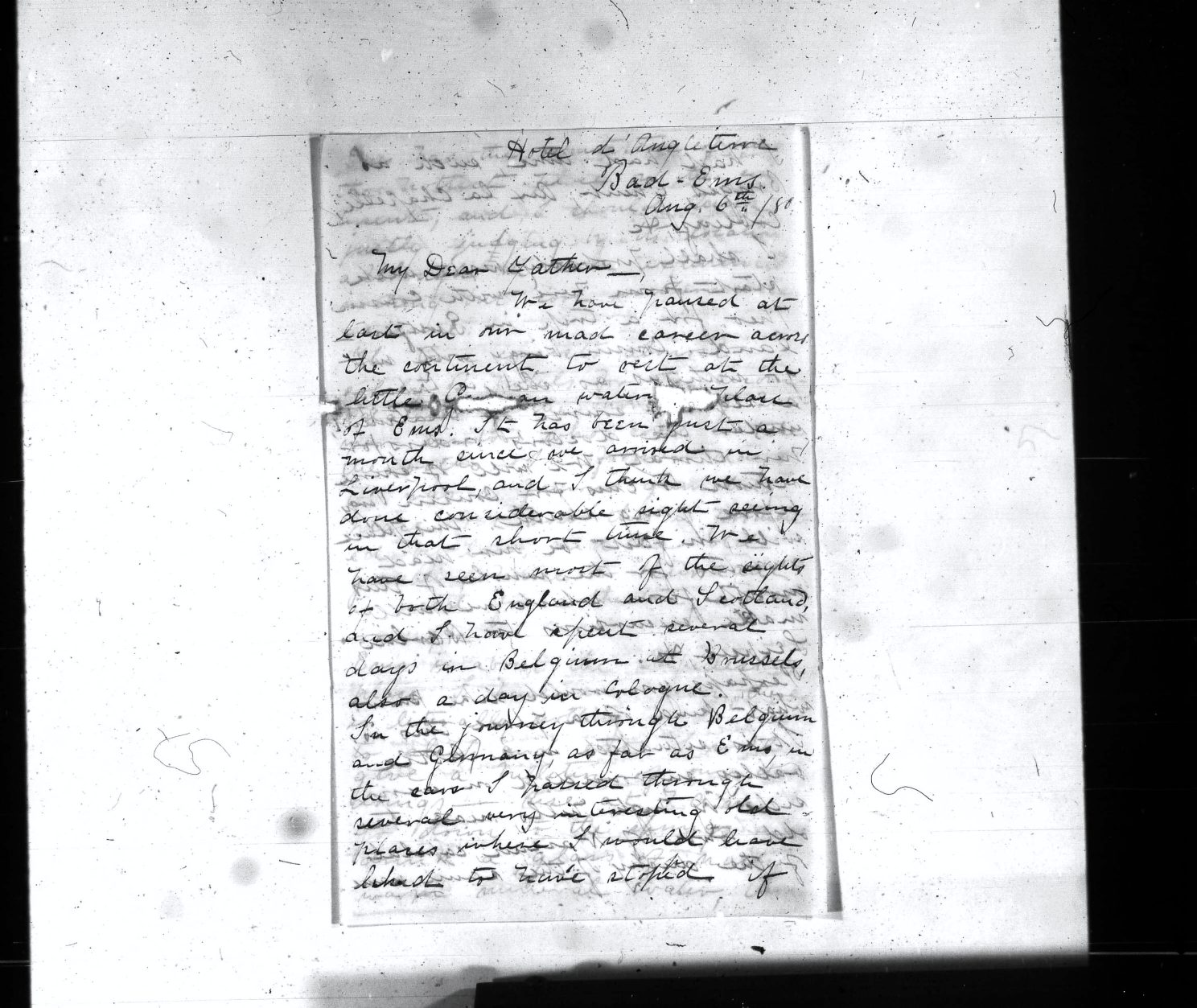
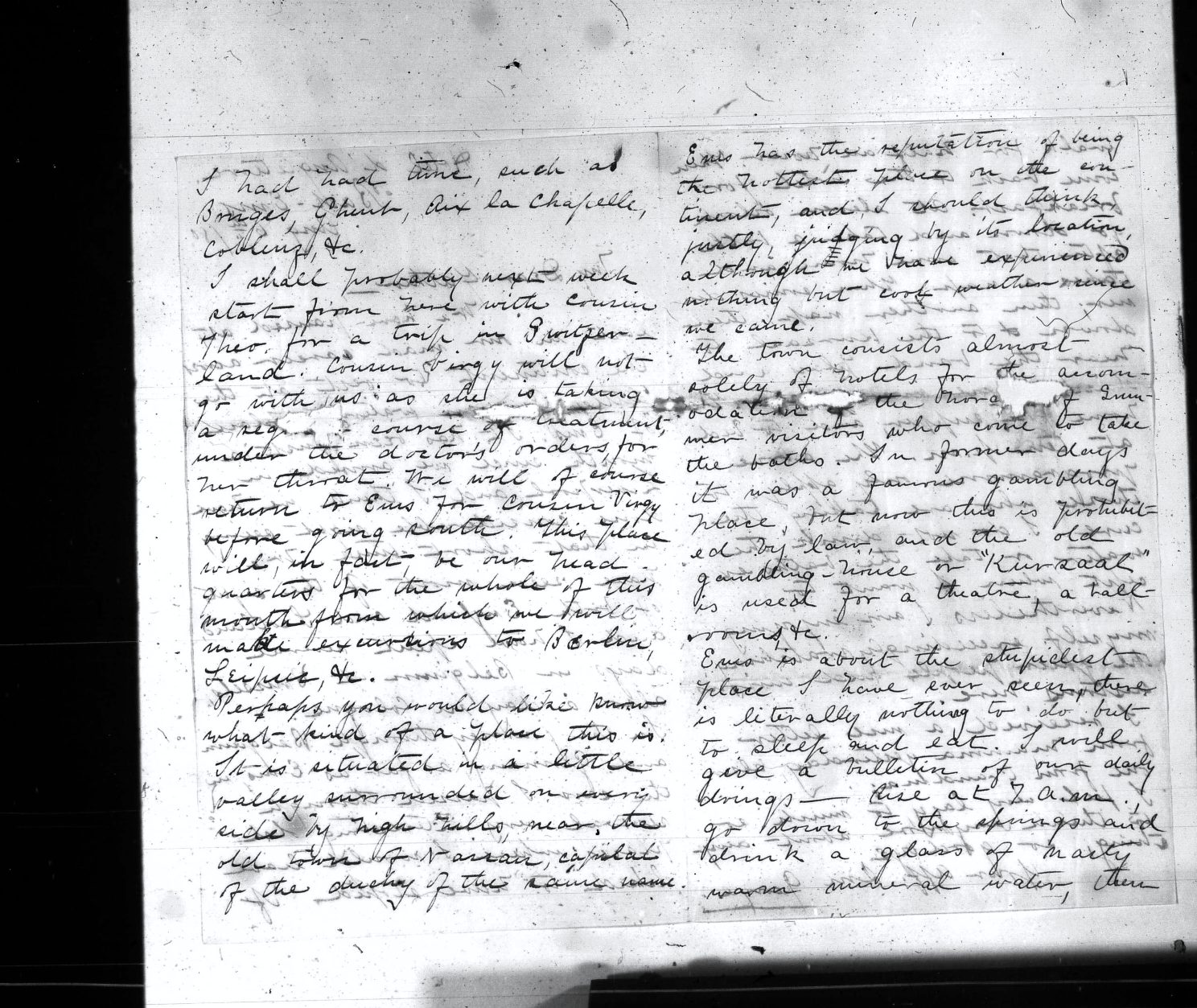
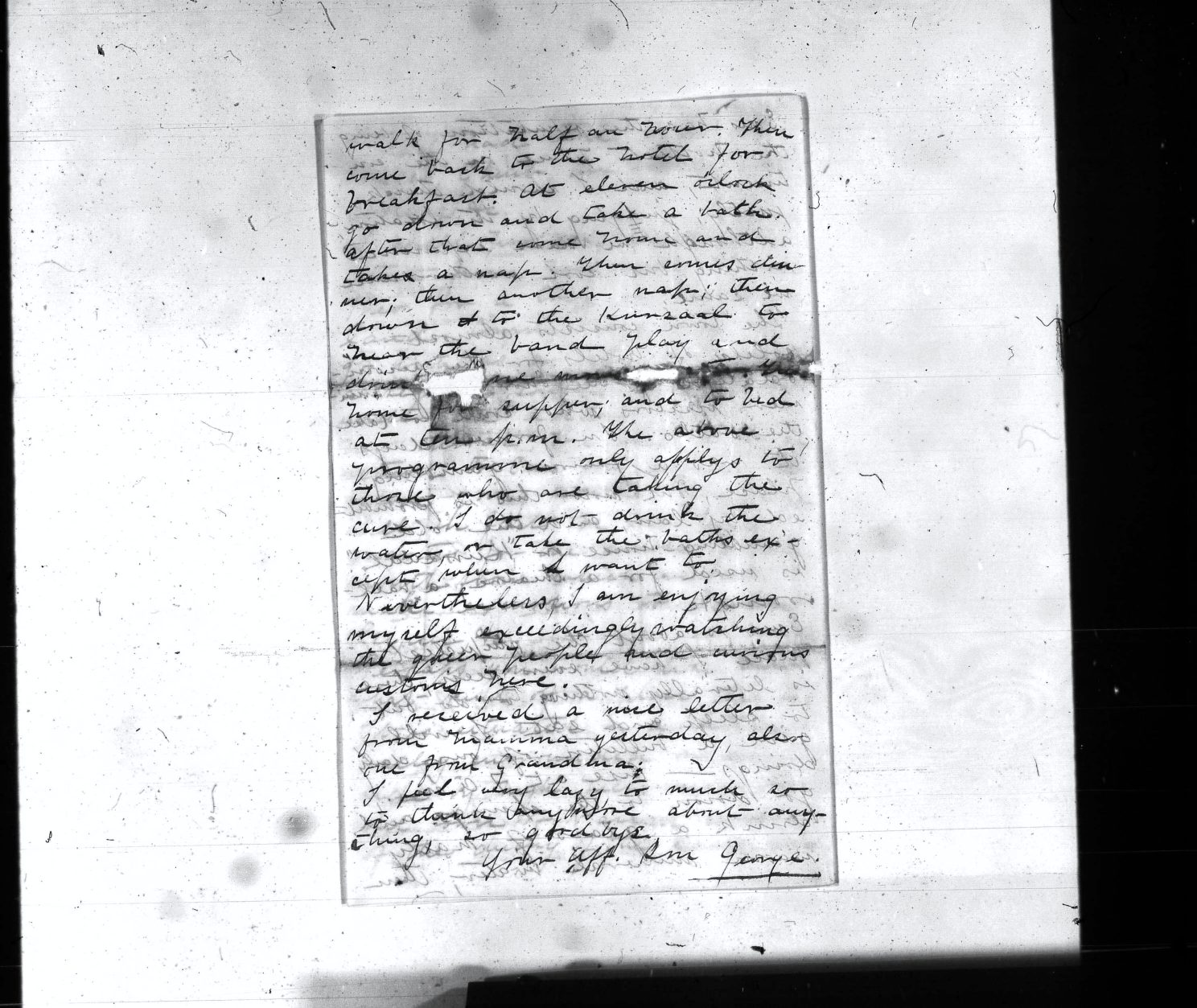
1880-08-06
Hotel d'Angleterre, Bad-Ems letterhead; "We have paused at last in our mad career across the continent"; a month since arriving in Liverpool
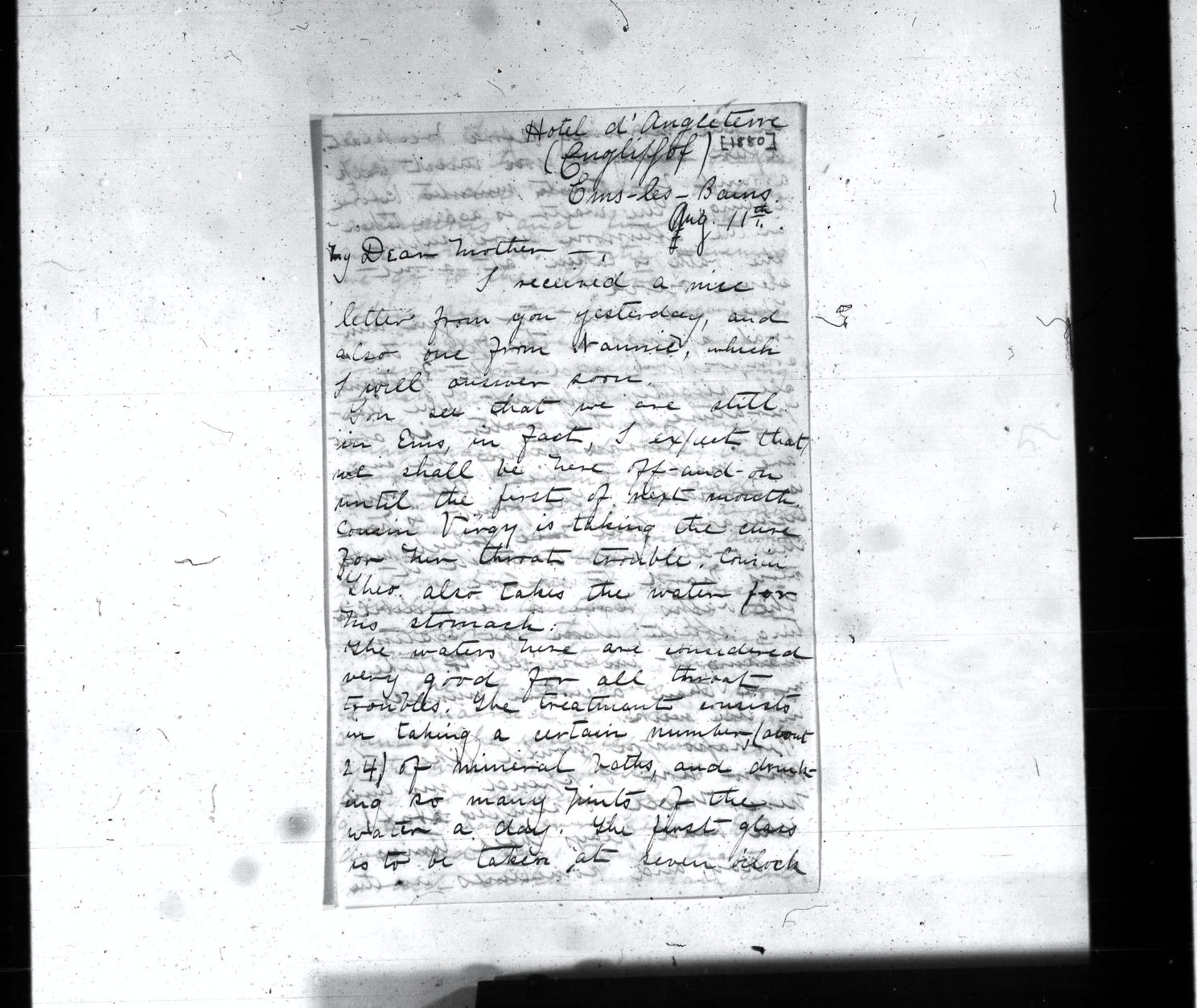
1880-08-11
Hotel d'Angleterre (Englisher Hof), Ems-les-Bains letterhead; Cousin Virgy taking the cure for her throat, Cousin Theo. for his stomach; the treatment "about 24" mineral baths plus so many pints a day
1880-08-16
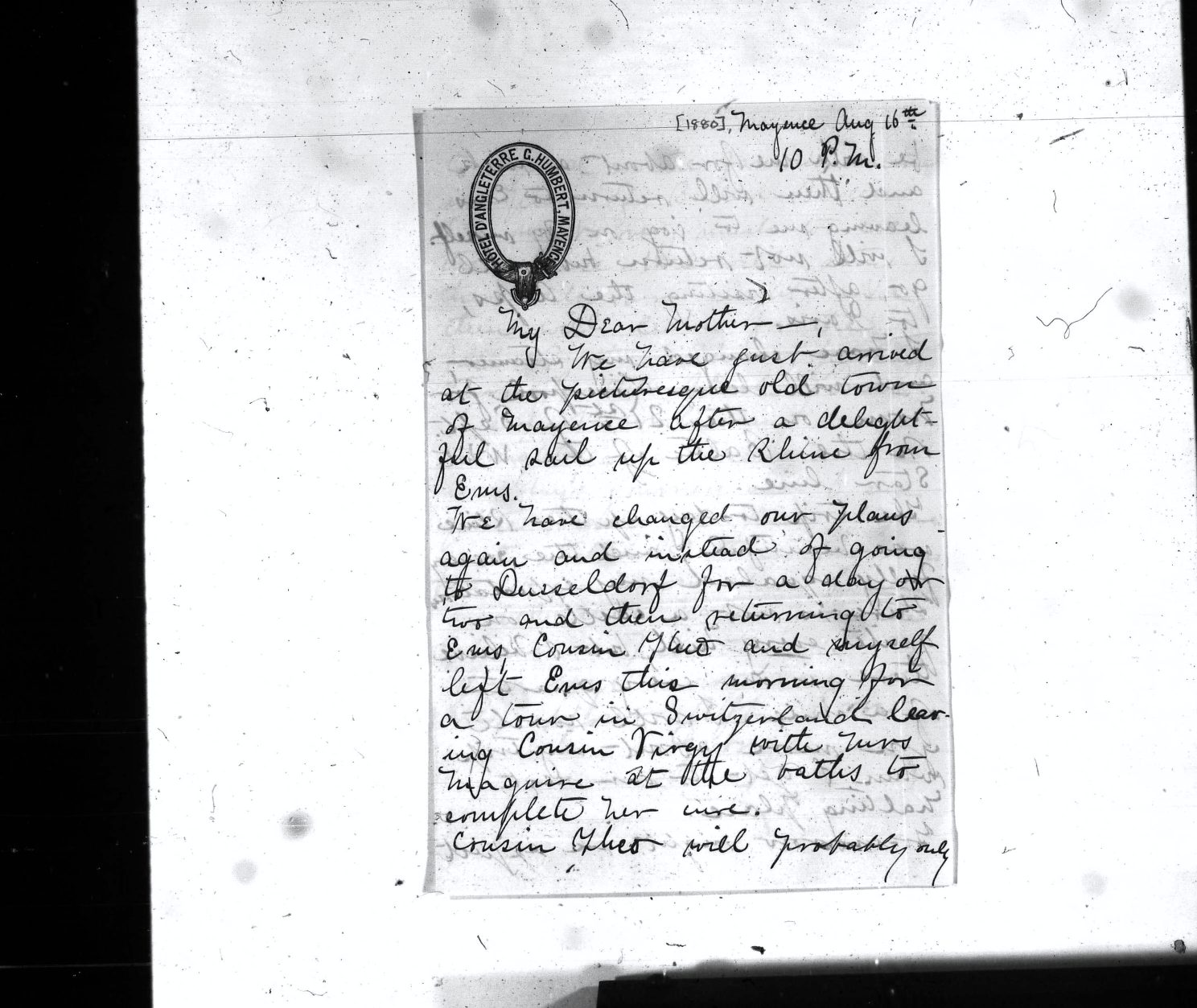
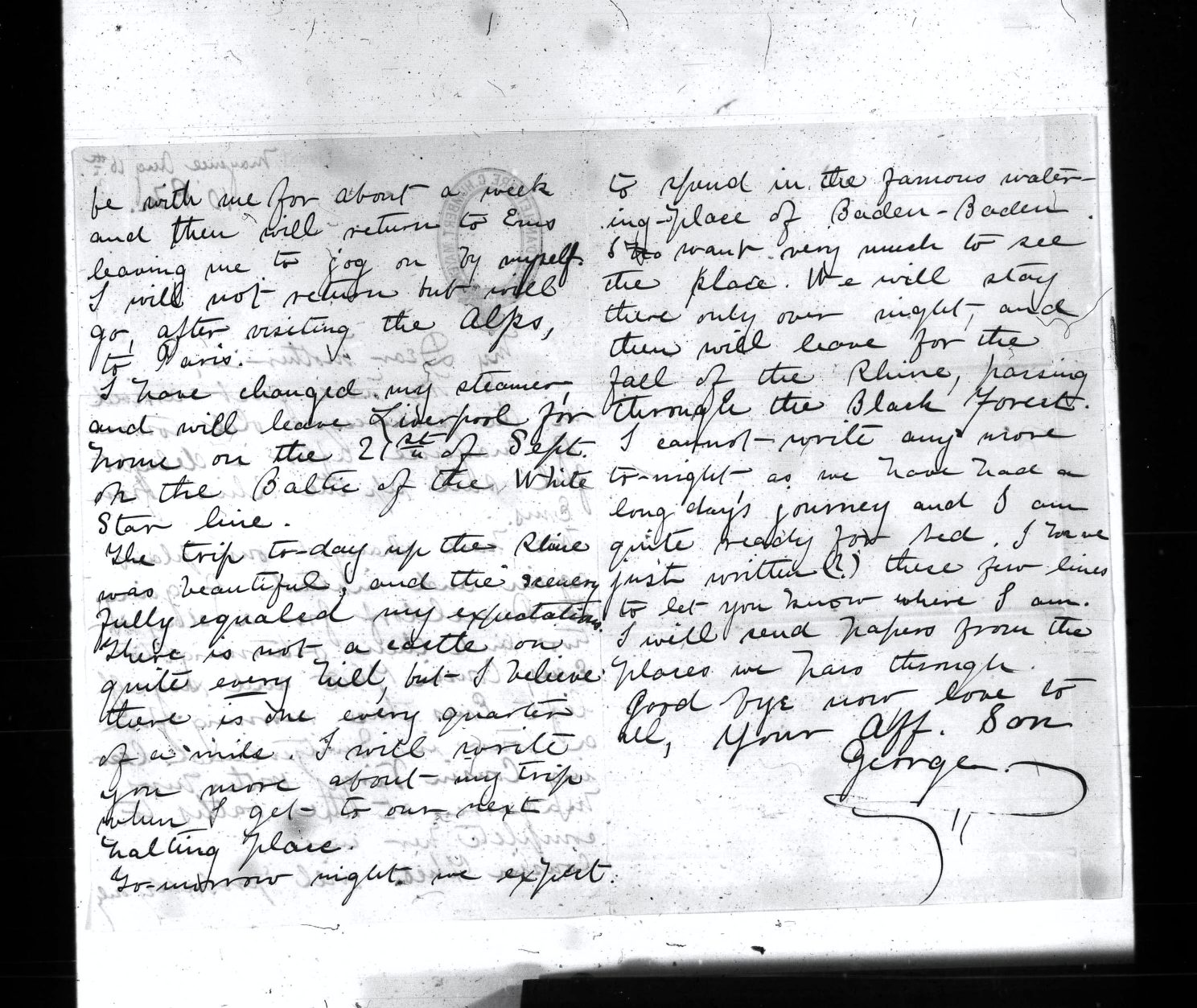
Hotel d'Angleterre, Mayence embossed letterhead; "the picturesque old town of Mayence after a delightful sail up the Rhine from Ems"; leaving Cousin Virgy at the baths
1880-08-19
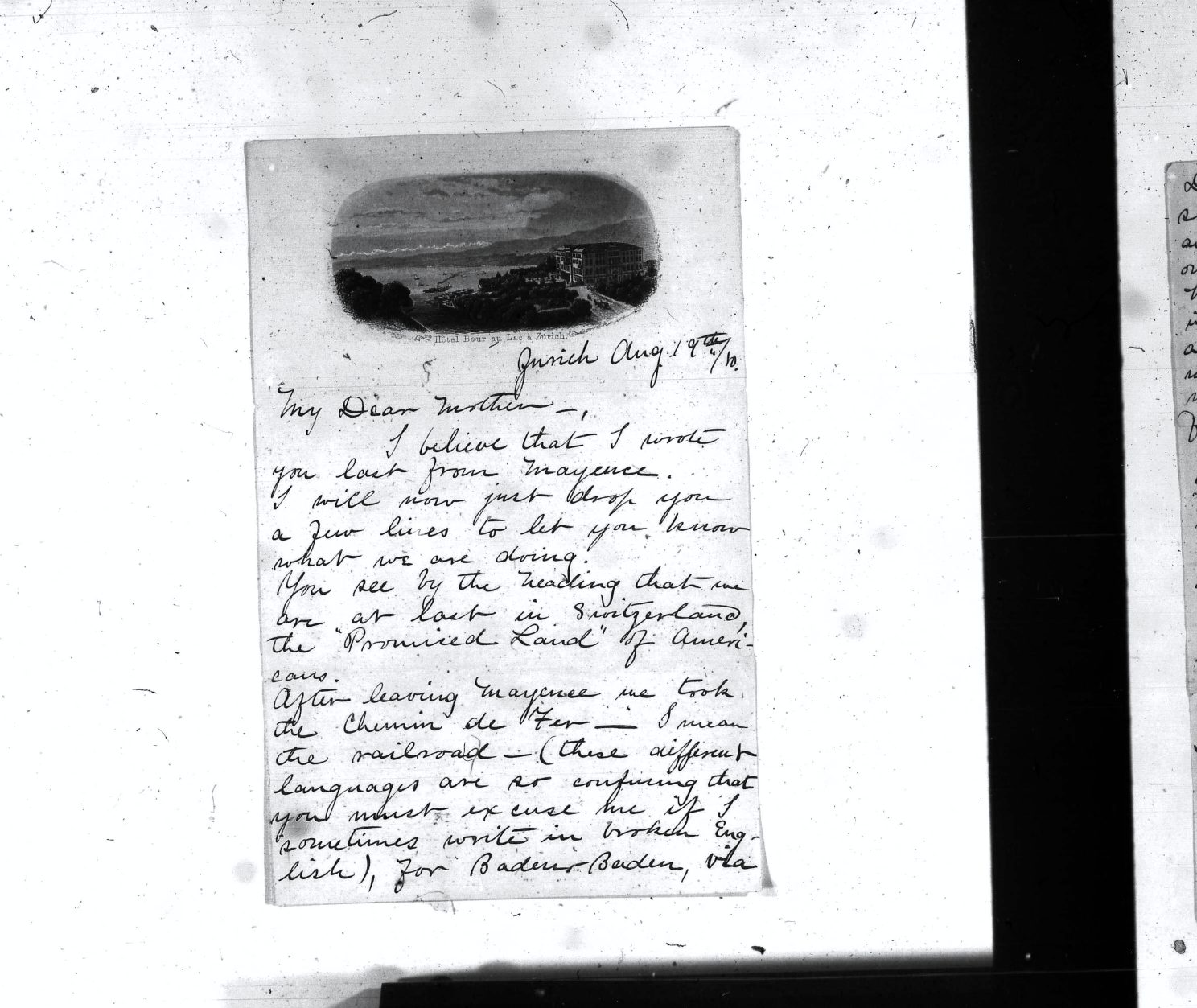
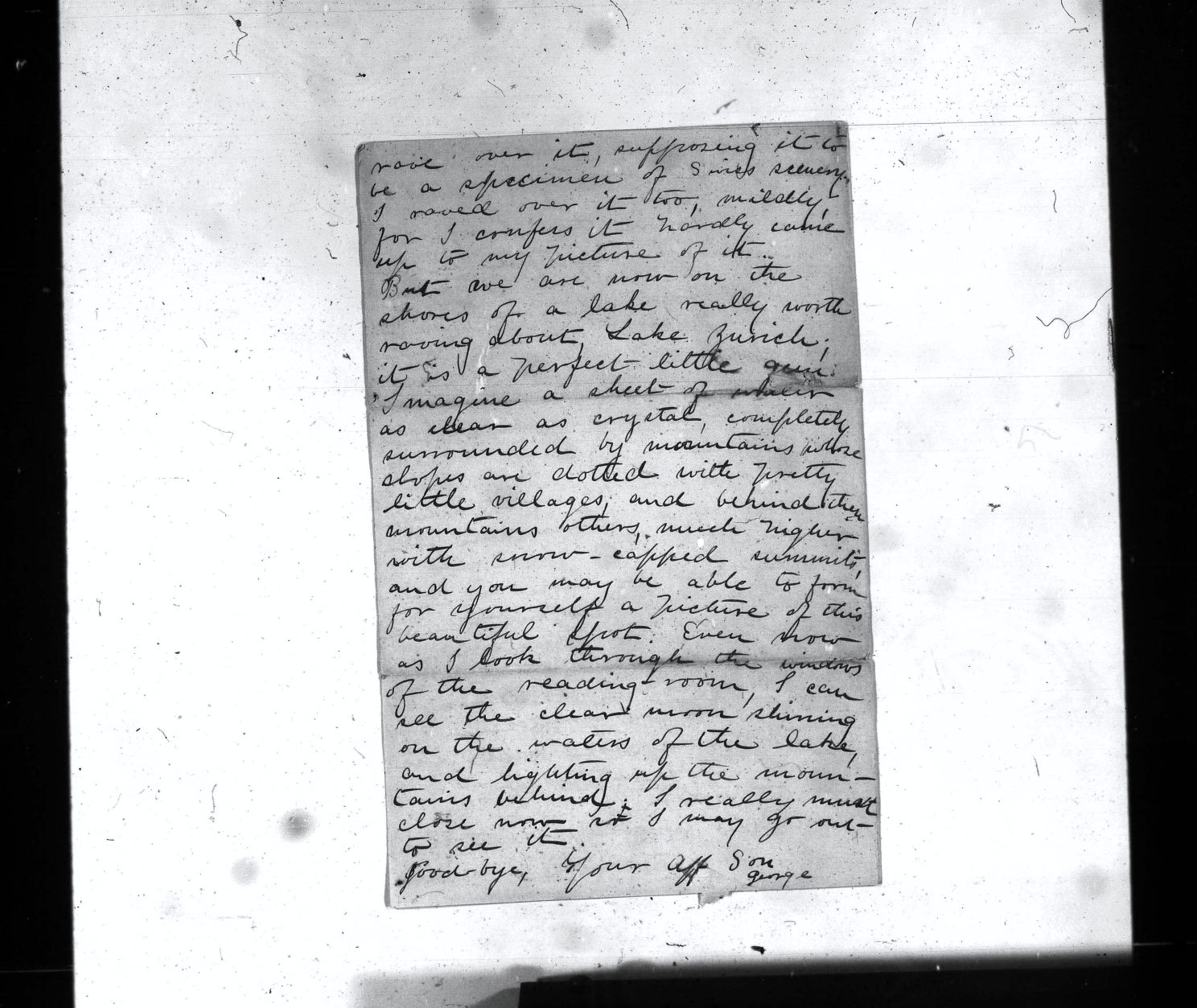
Zurich; PRINTED ILLUSTRATED LETTERHEAD, engraved vignette view of the "Hotel Baur au Lac, Zurich"; Switzerland, "the 'Promised Land' of Americans"; "the Chemin de Fer – I mean the railroad – (these different languages are so confusing…)"
1880-08-26
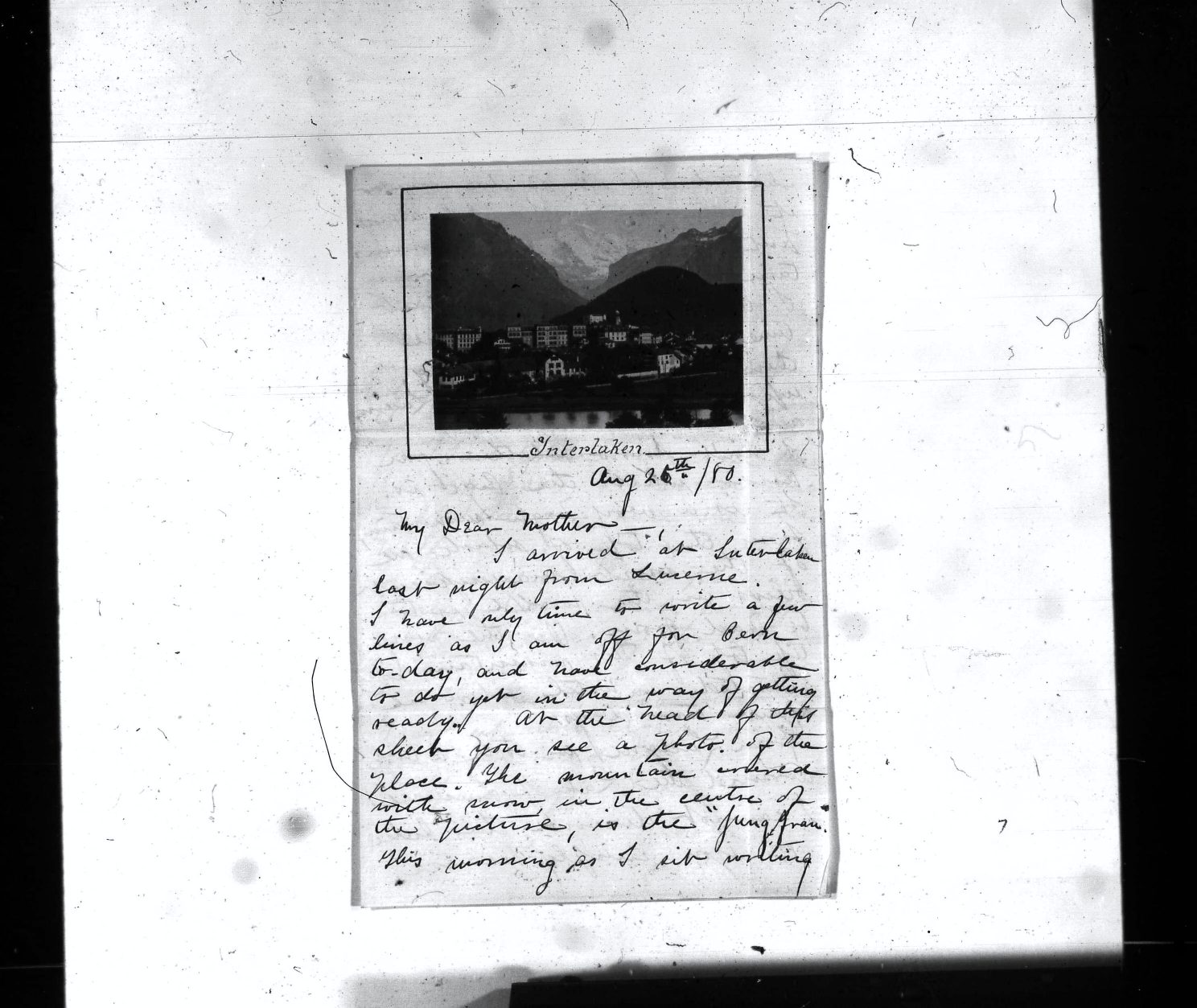
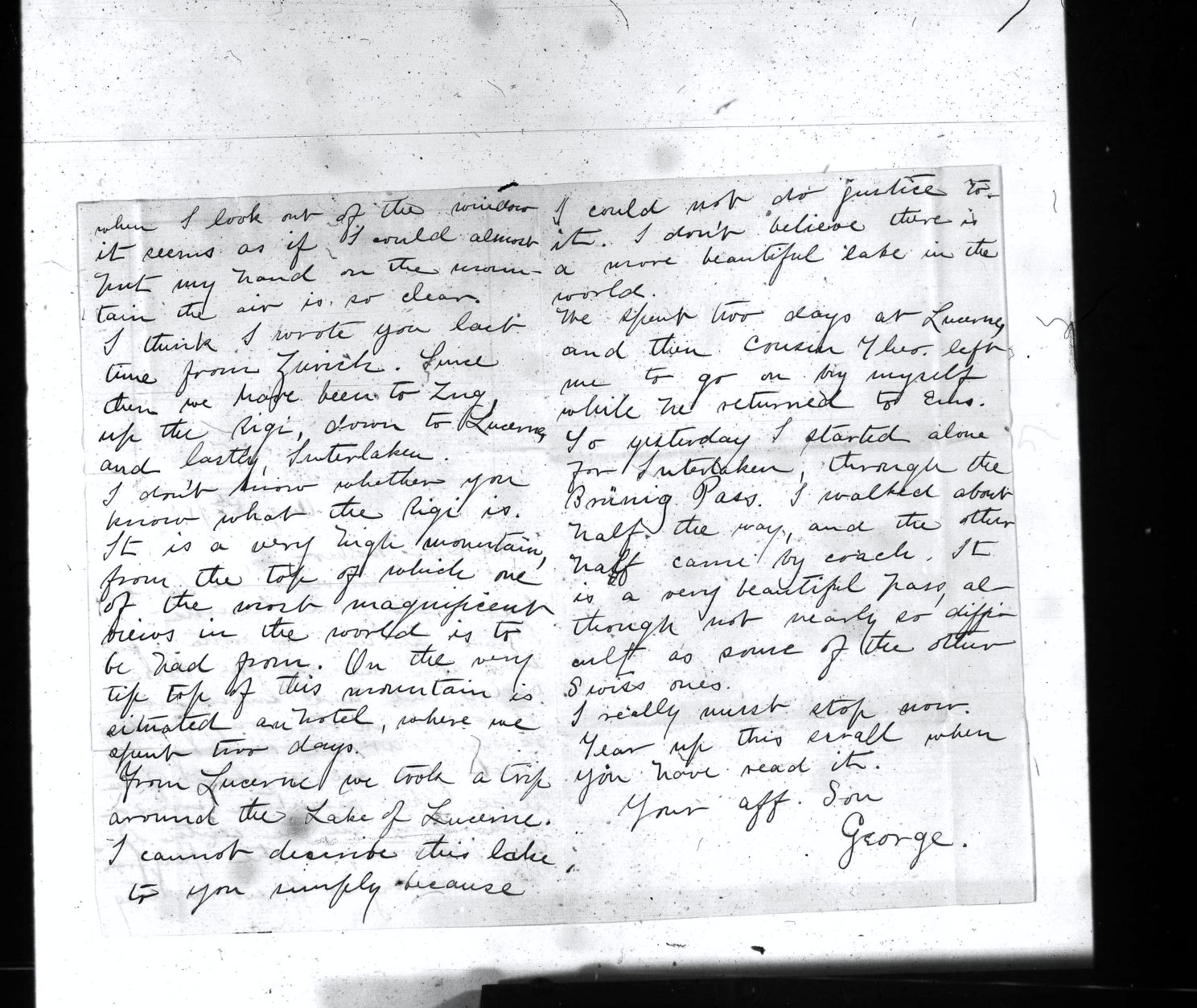
Interlaken; PHOTOGRAPH mounted at the head of the sheet, an albumen view captioned "Interlaken" showing the town and the snow-covered "Jungfrau"
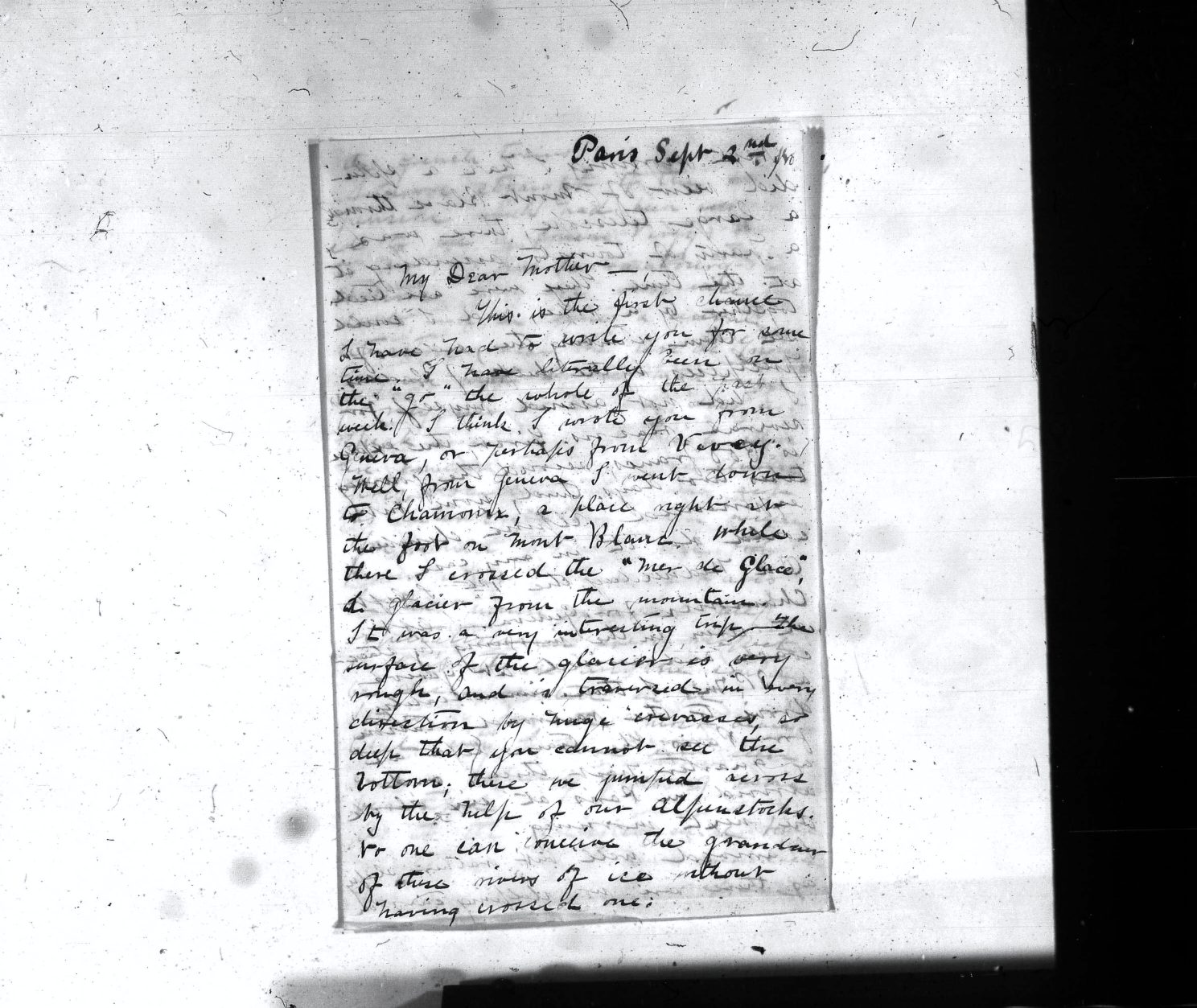
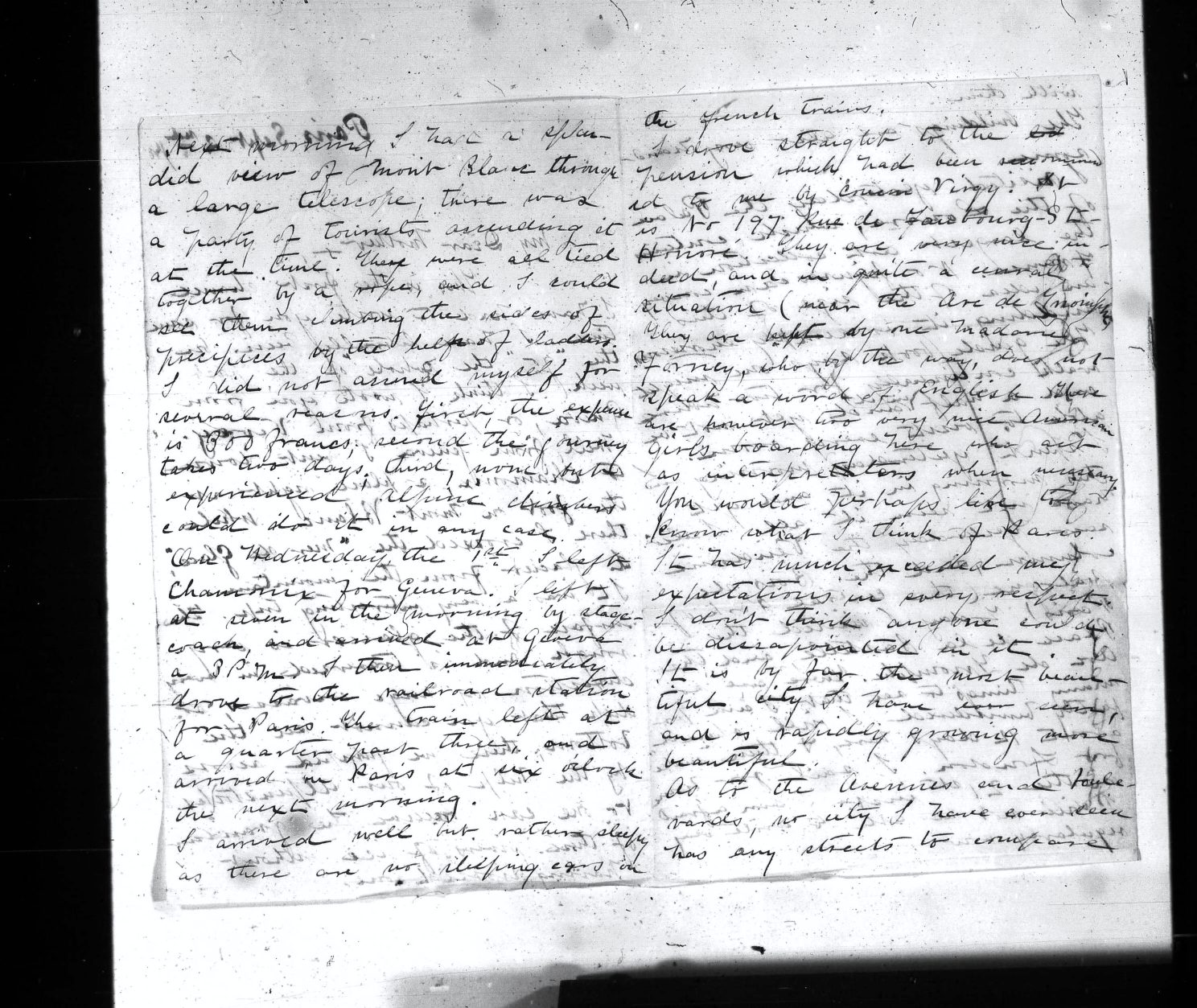
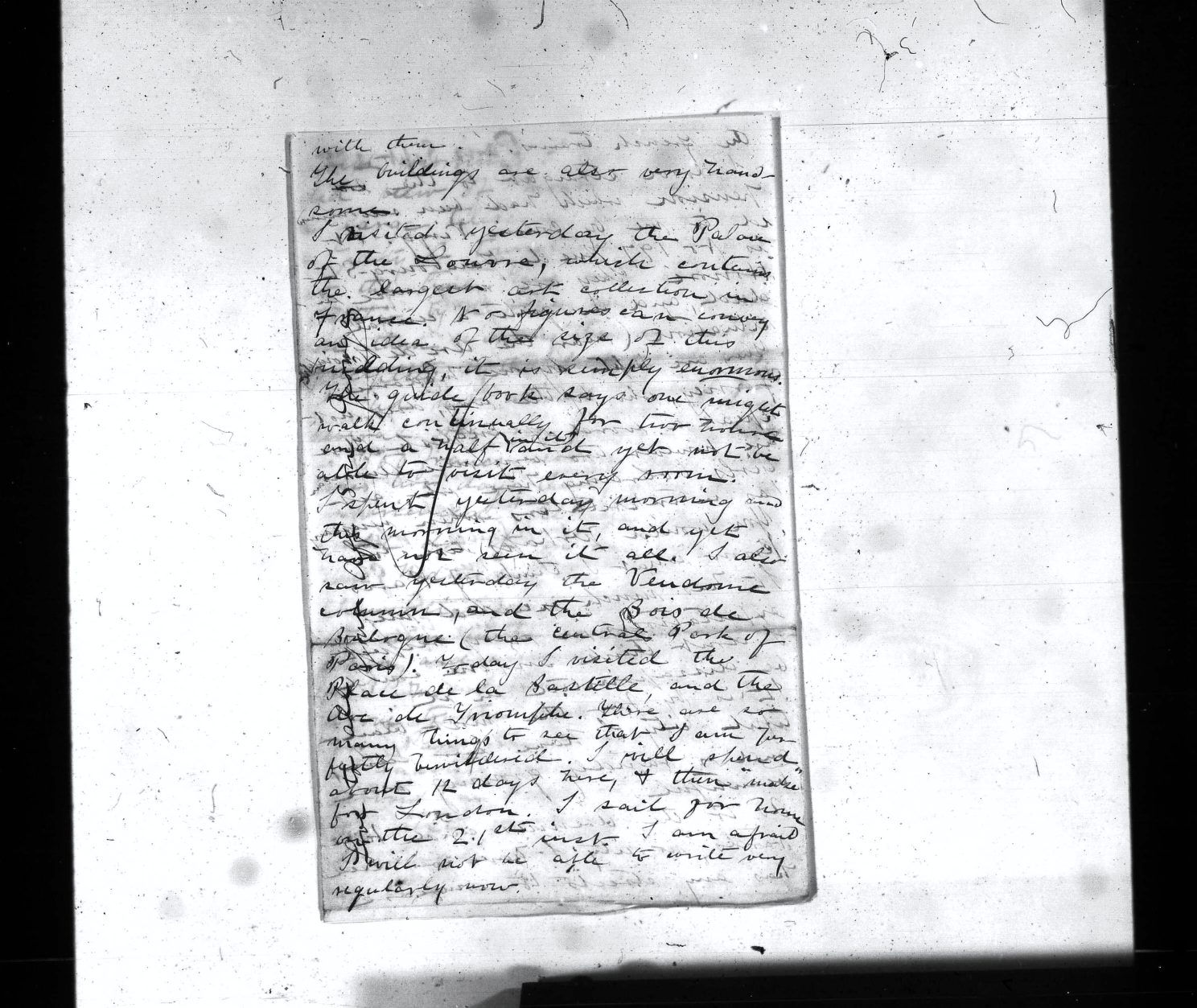
1880-09-02
Paris; from Geneva to Chamounix at the foot of Mont Blanc; crossed the "Mer de Glace," jumping crevasses "so deep that you cannot see the bottom" with "the help of our Alpenstocks"
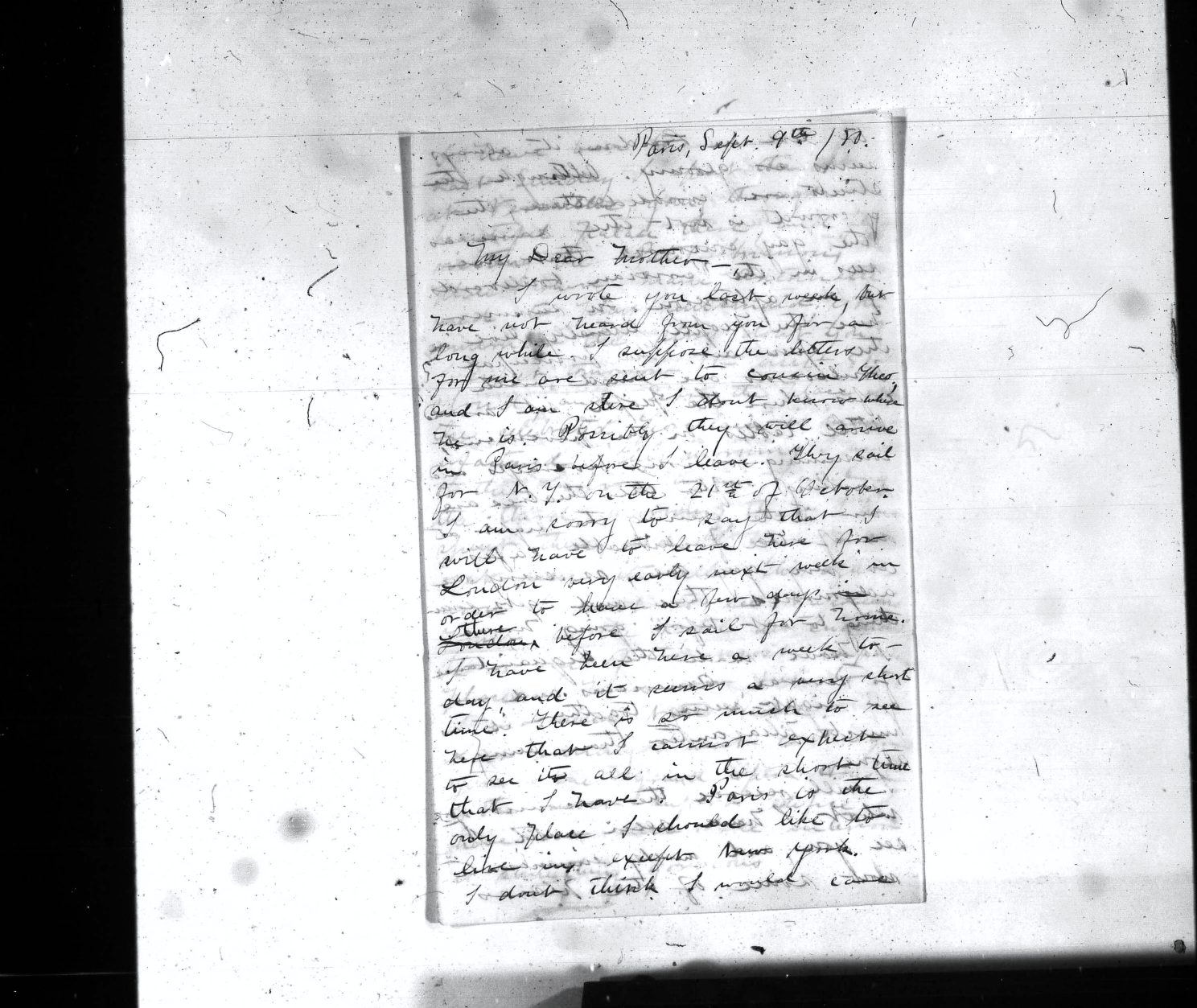
1880-09-09
Paris; "They sail for N.Y. on the 21st of October"; a week in Paris already; "Paris is the only place I should like to live in except New York"
(cont.)
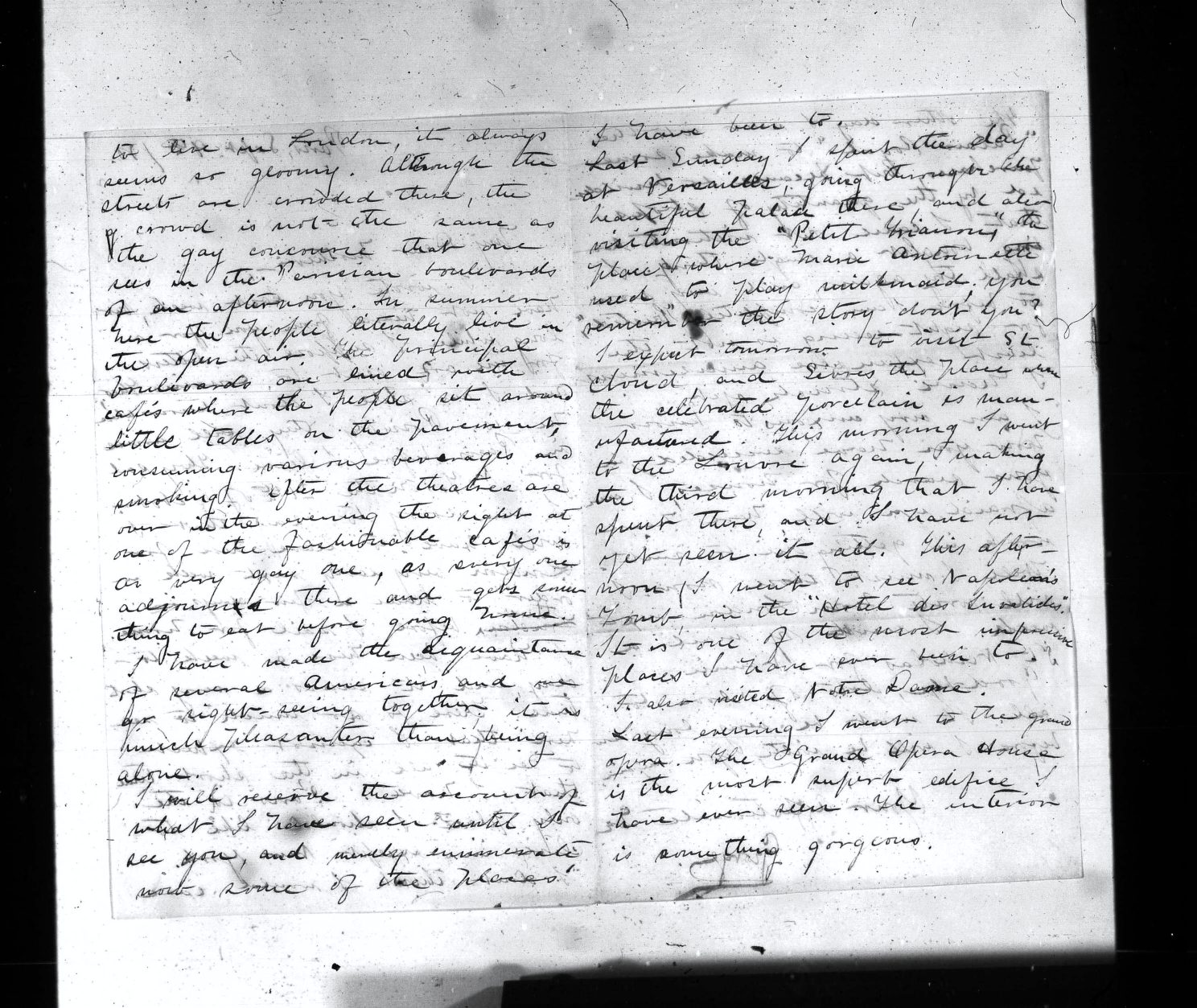
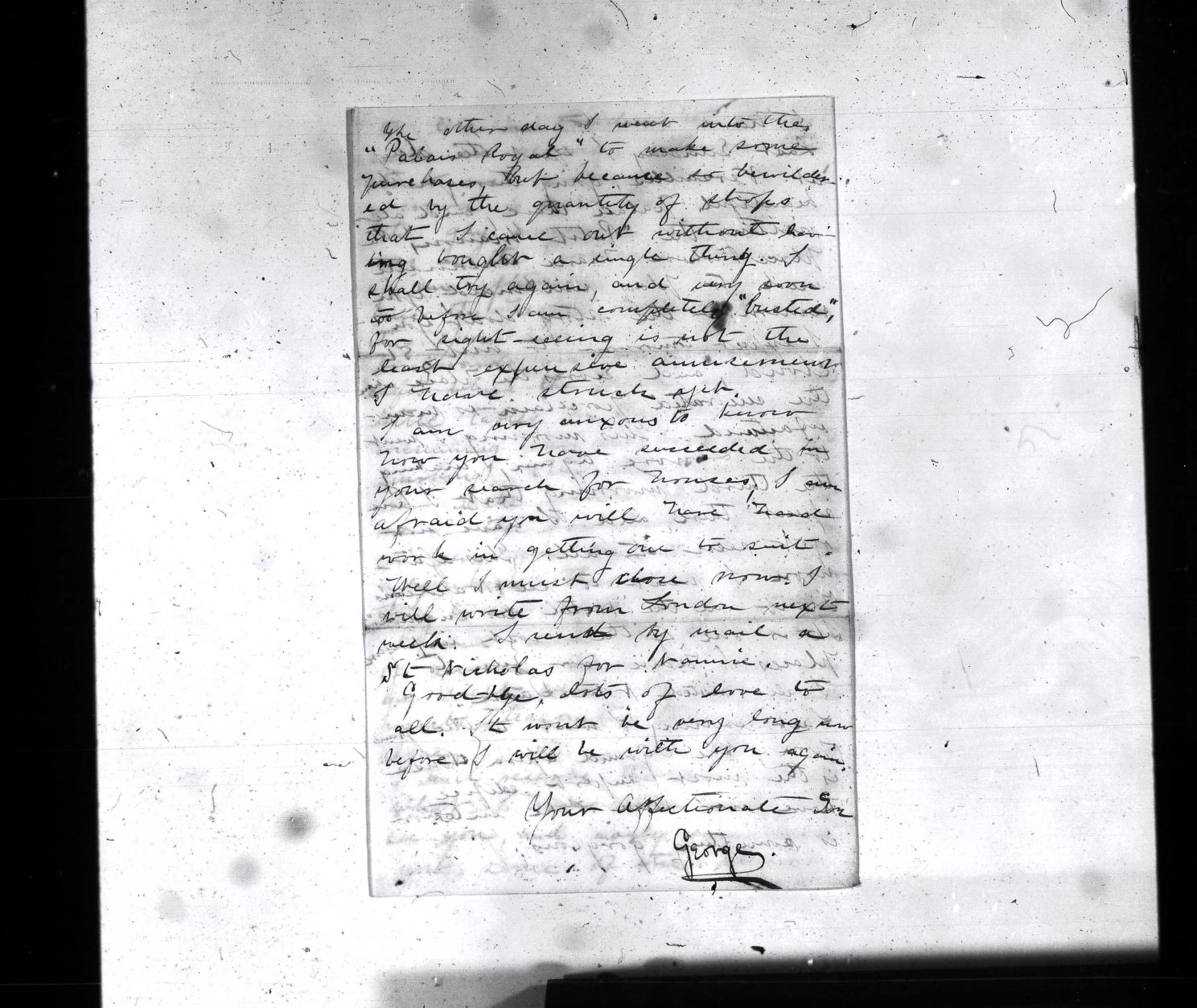
pp.2-3 of a Paris letter: London "always seems so gloomy"; Parisians "literally live in the open air"; Versailles and the "Petit Trianon" where "Marie Antoinette used to play milkmaid"; Napoleon's Tomb; the Grand Opera House "the most superb edifice I have ever seen"
1880-09-15
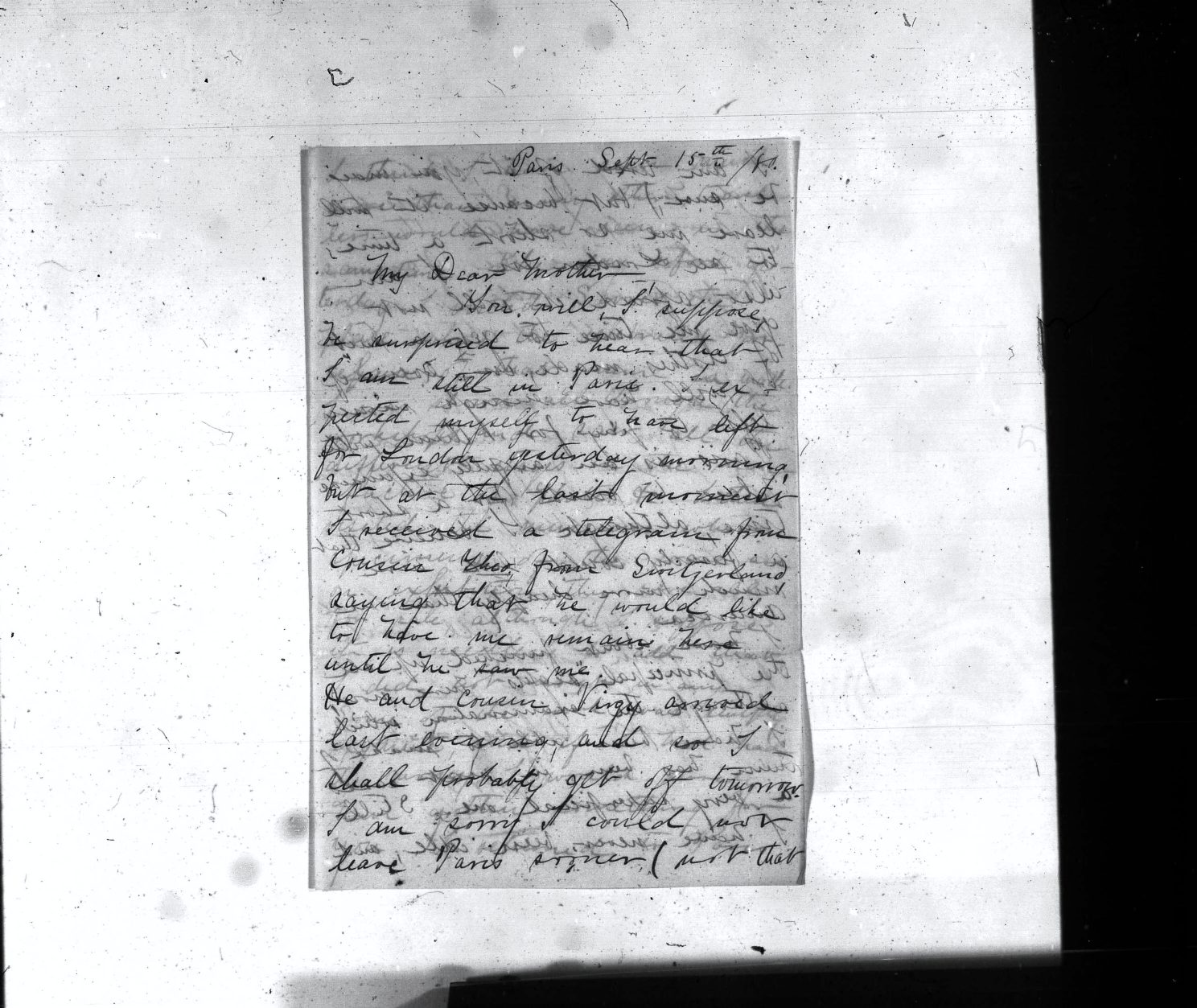
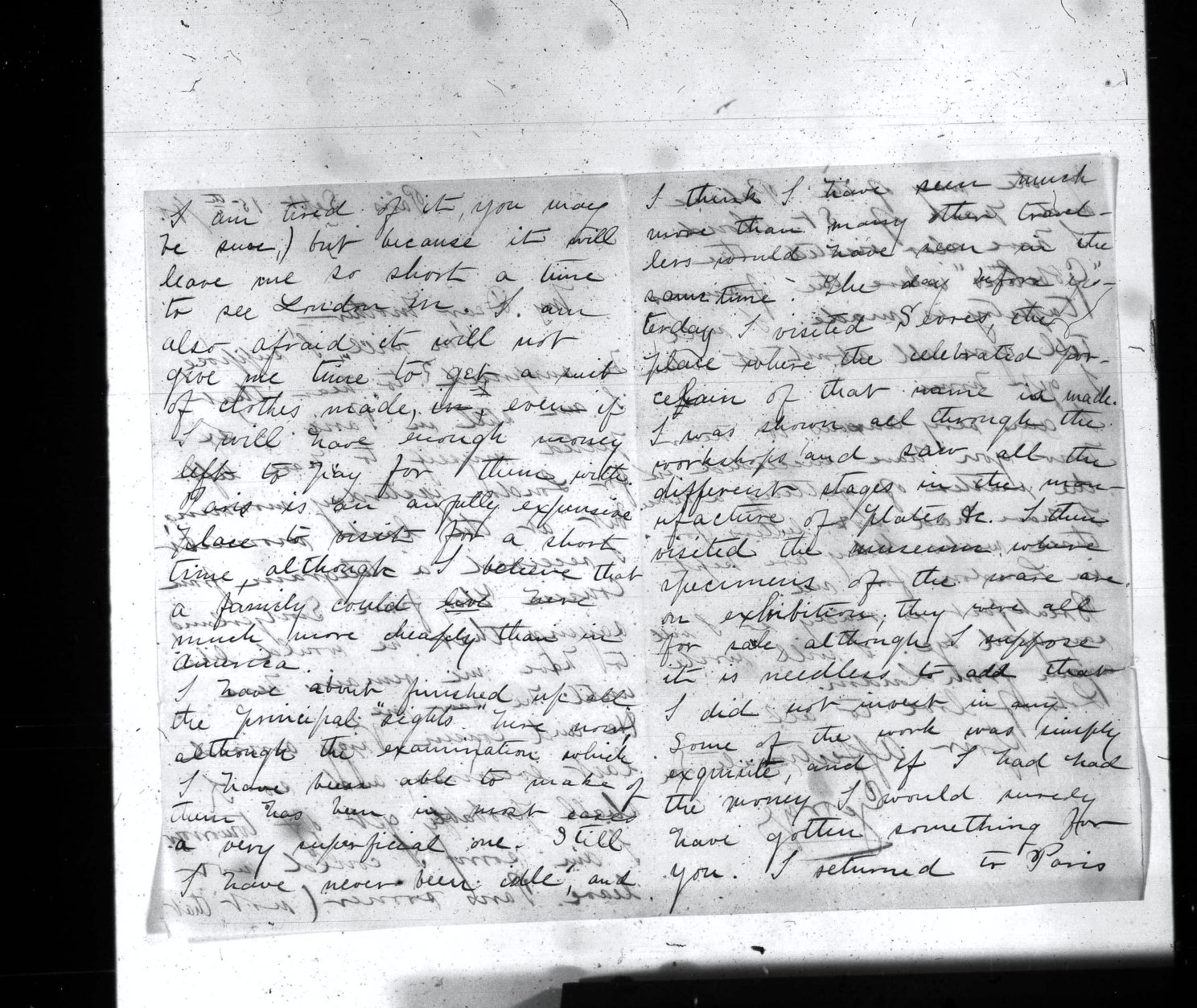
Paris; was to have left for London but got a telegram from "Cousin Theo" in Switzerland asking him to remain
1880-08-22
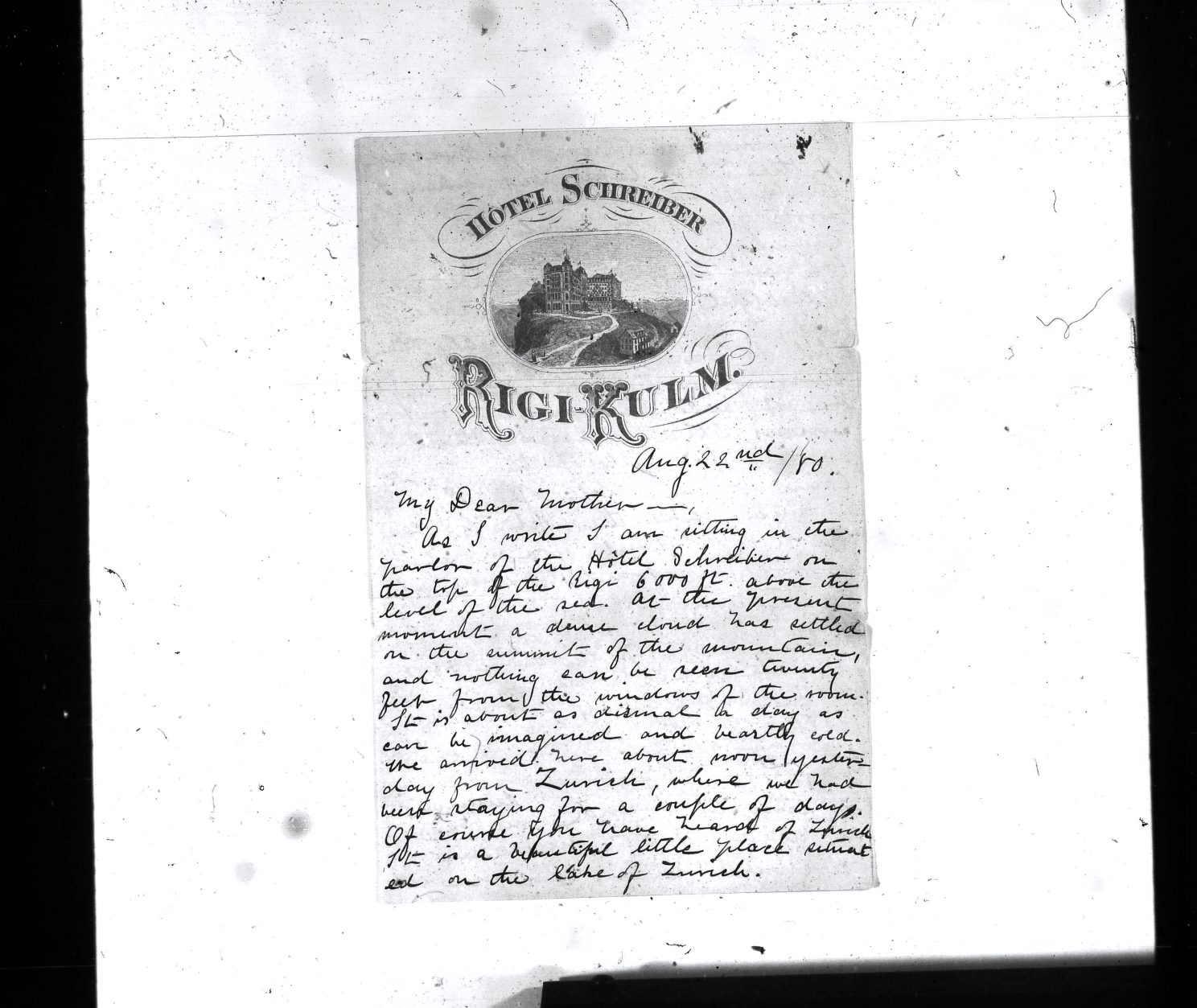
printed pictorial letterhead HOTEL SCHREIBER, RIGI-KULM: writing "on the top of the Rigi 6000 ft. above the level of the sea," a dense cloud on the summit, "nothing can be seen twenty feet from the windows," "beastly cold"
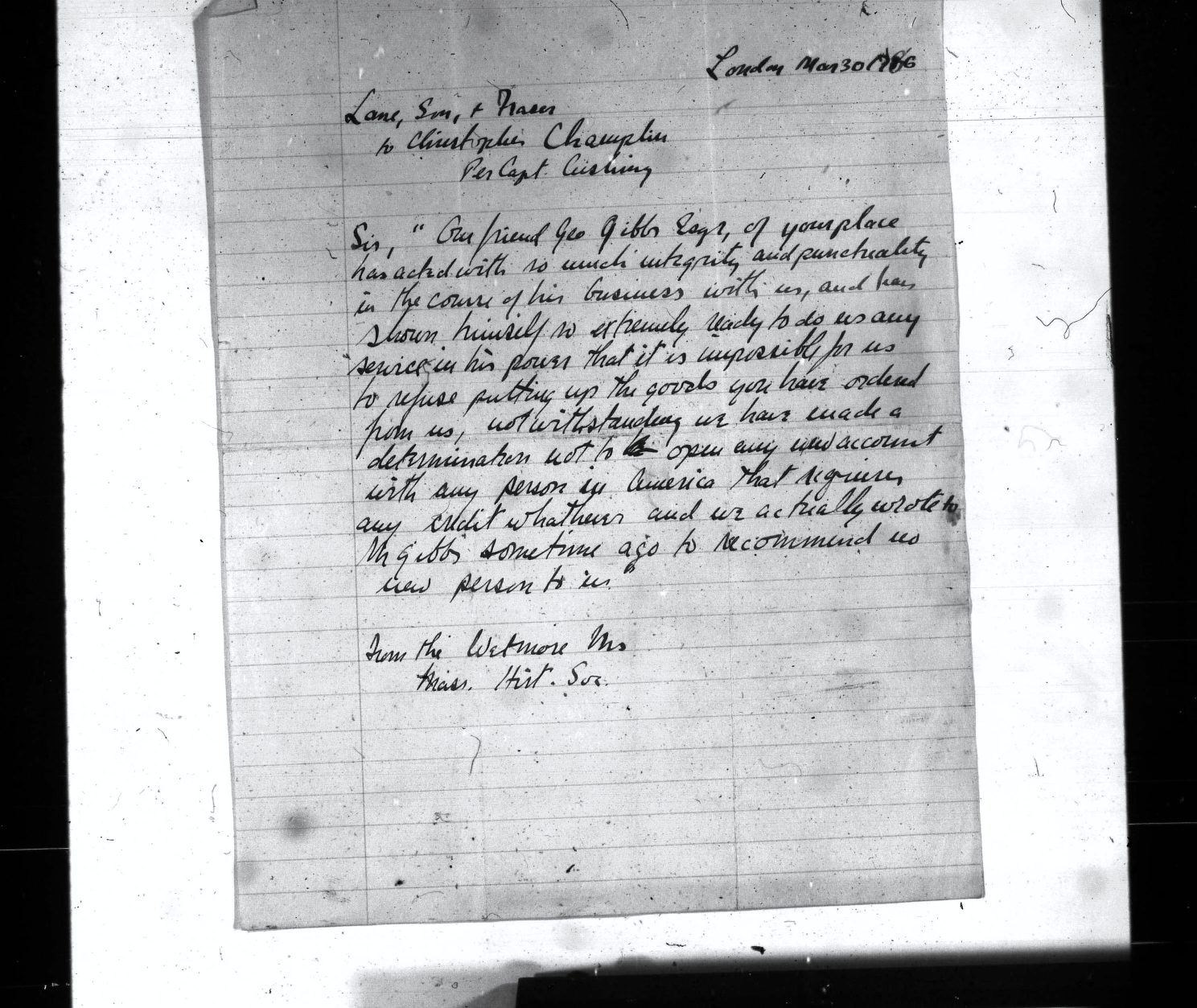
1786-03-30 (research transcript, later hand)
COPIED EXTRACT on the credit of the Newport merchant George Gibbs: "Our friend Geo Gibbs Esqr, of your place has acted with so much integrity and punctuality in the course of his business with us, and has shown himself so extremely ready to do us any service in his power that it is impossible for us to refuse putting up the goods you have ordered from us, notwithstanding we have made a determination not to open any new account with any person in America that requires any credit whatever"; source note "From the Wetmore Mss. Mass. Hist. Soc."
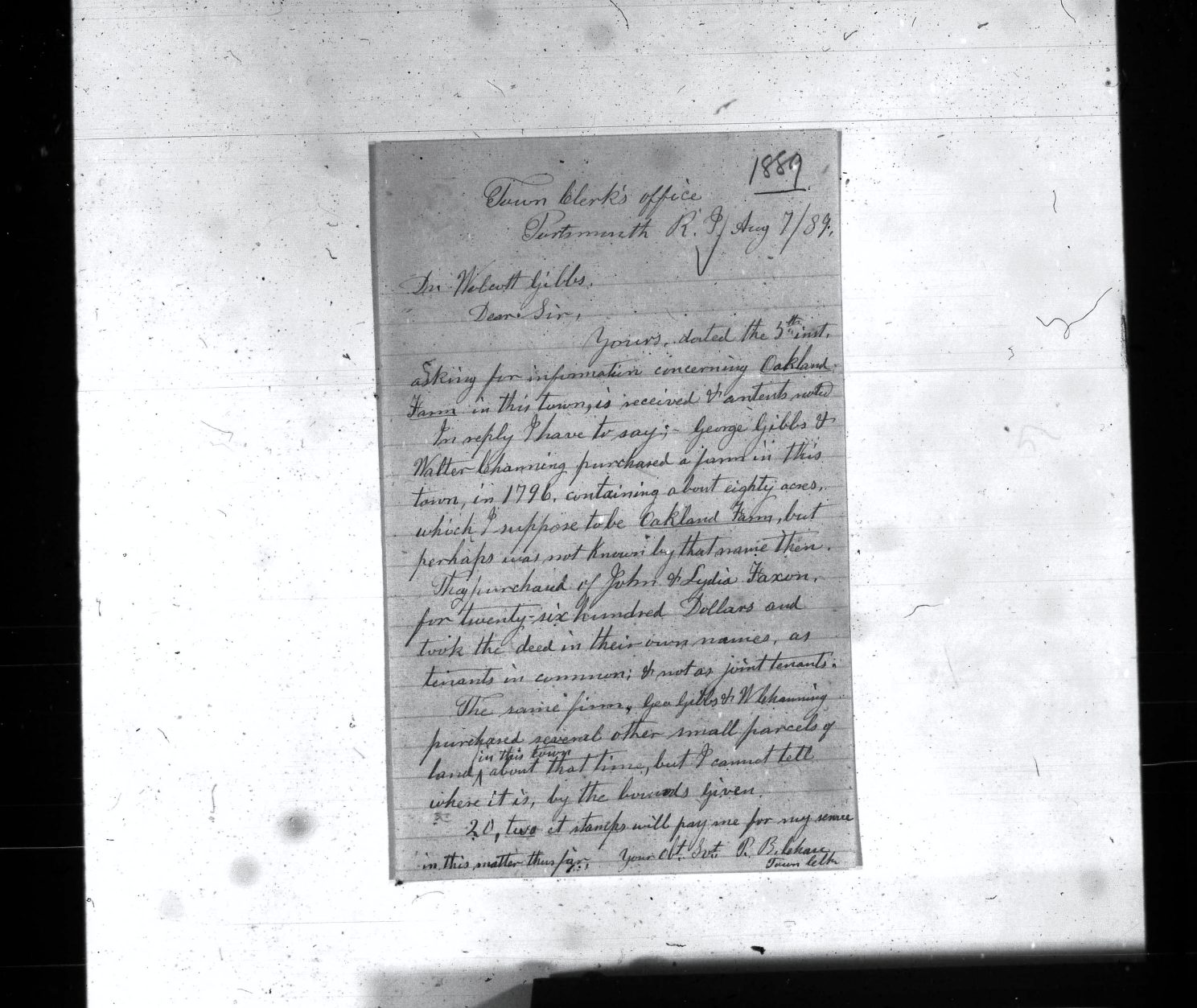
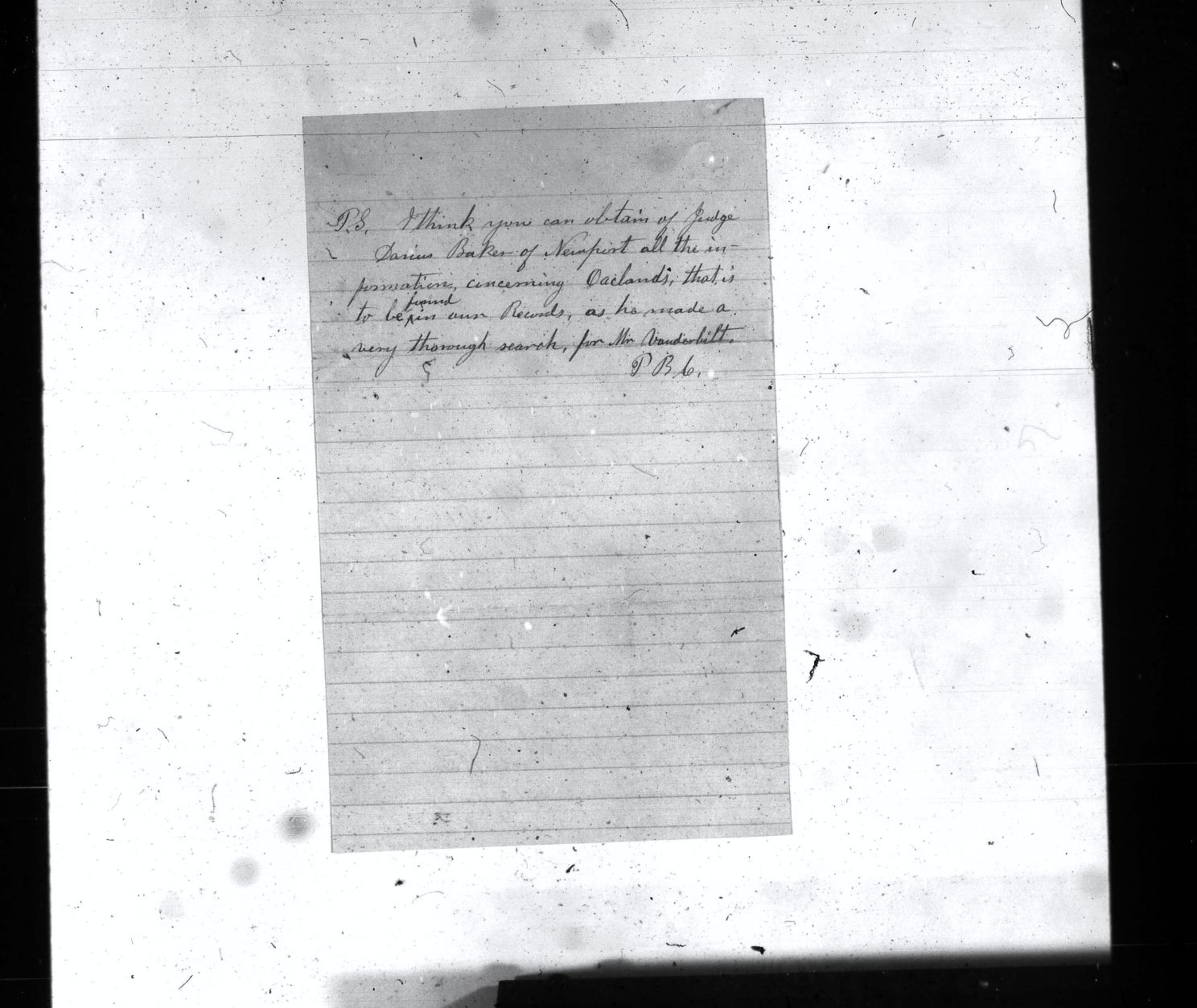
1889-08-07
OAKLAND FARM: "George Gibbs & Walter Channing purchased a farm in this town, in 1796, containing about eighty acres, which I suppose to be Oakland Farm, but perhaps was not known by that name then"; bought of John & Lydia Faxon "for twenty-six hundred Dollars," the deed taken "as tenants in common; & not as joint tenants"; "20, two ct. stamps will pay me for my service in this matter thus far"
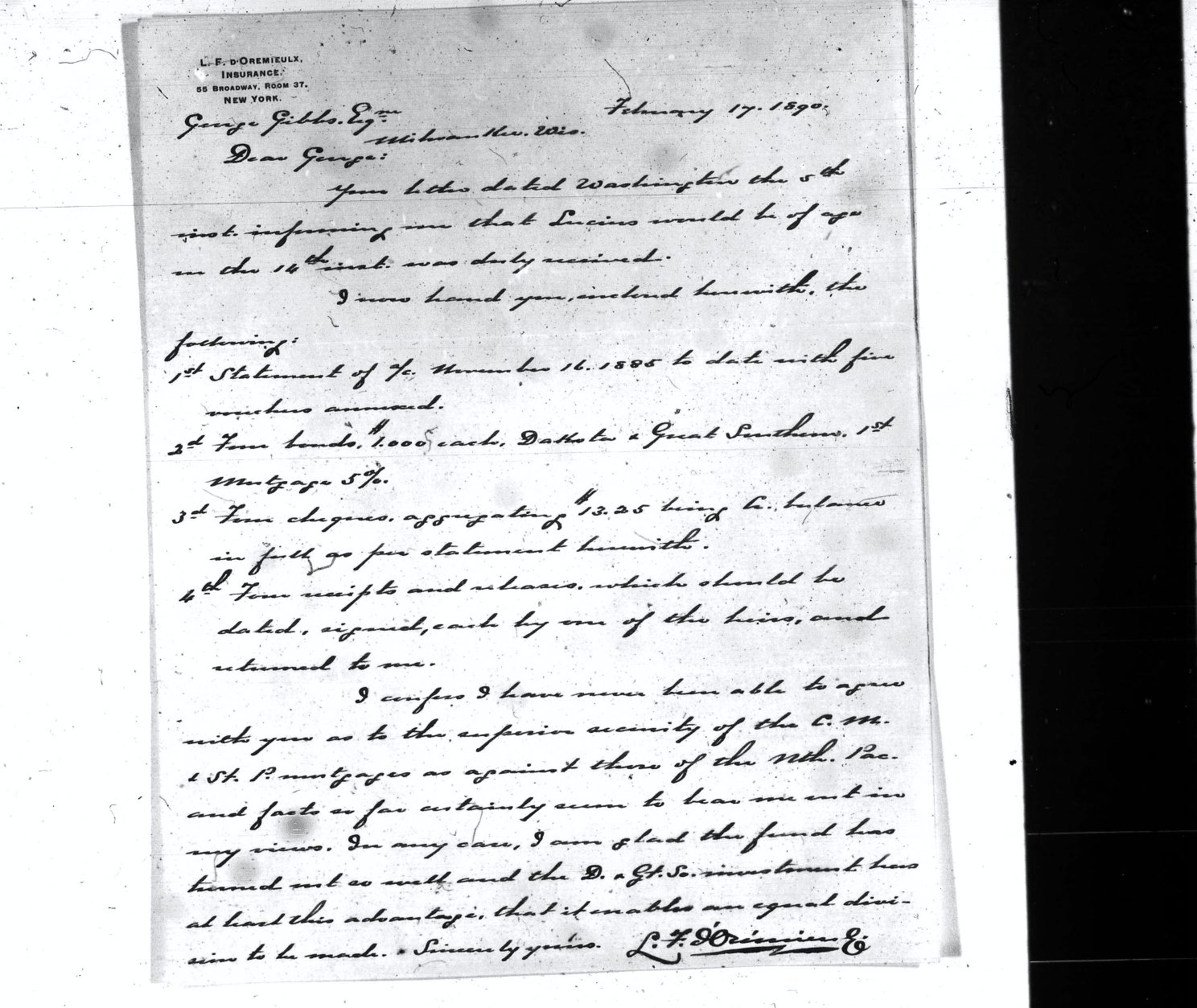
1890-02-17
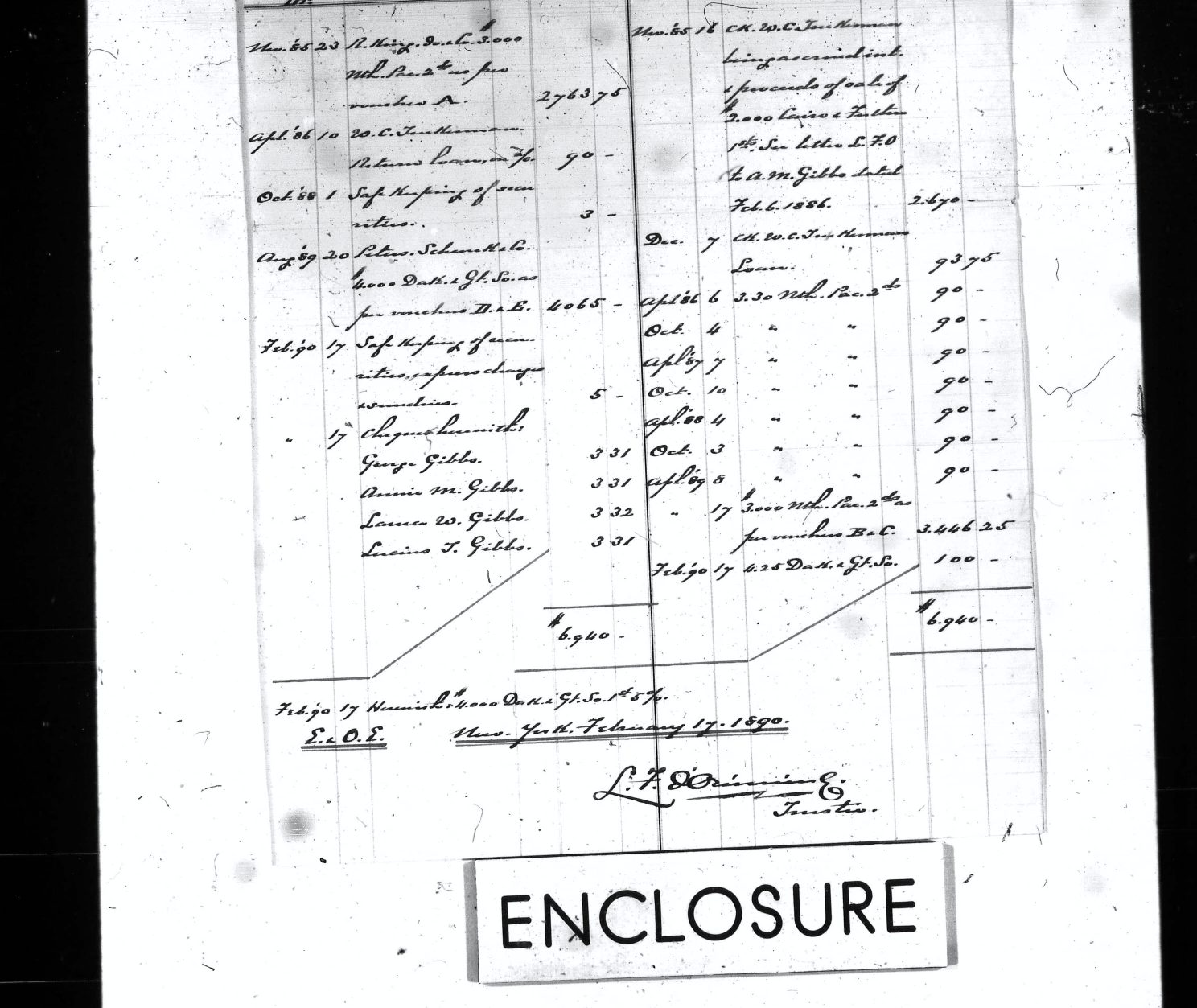
printed letterhead; "Lucius would be of age on the 14th inst."; encloses a statement of account with five vouchers, four bonds $1,000 each Dakota & Great Southern 1st Mortgage 5%, four cheques aggregating $13.25 "being the balance in full," and four receipts and releases "each by one of the heirs"
1890-02-17
TRUSTEE'S ACCOUNT, ruled Dr/Cr sheet: cheques to George Gibbs $3.31, Annie M. Gibbs $3.31, Laura W. Gibbs $3.32, Lucius T. Gibbs $3.31; both sides total $6,940; "E. & O.E." signed L. F. d'Oremieulx, Trustee
1892-07-06
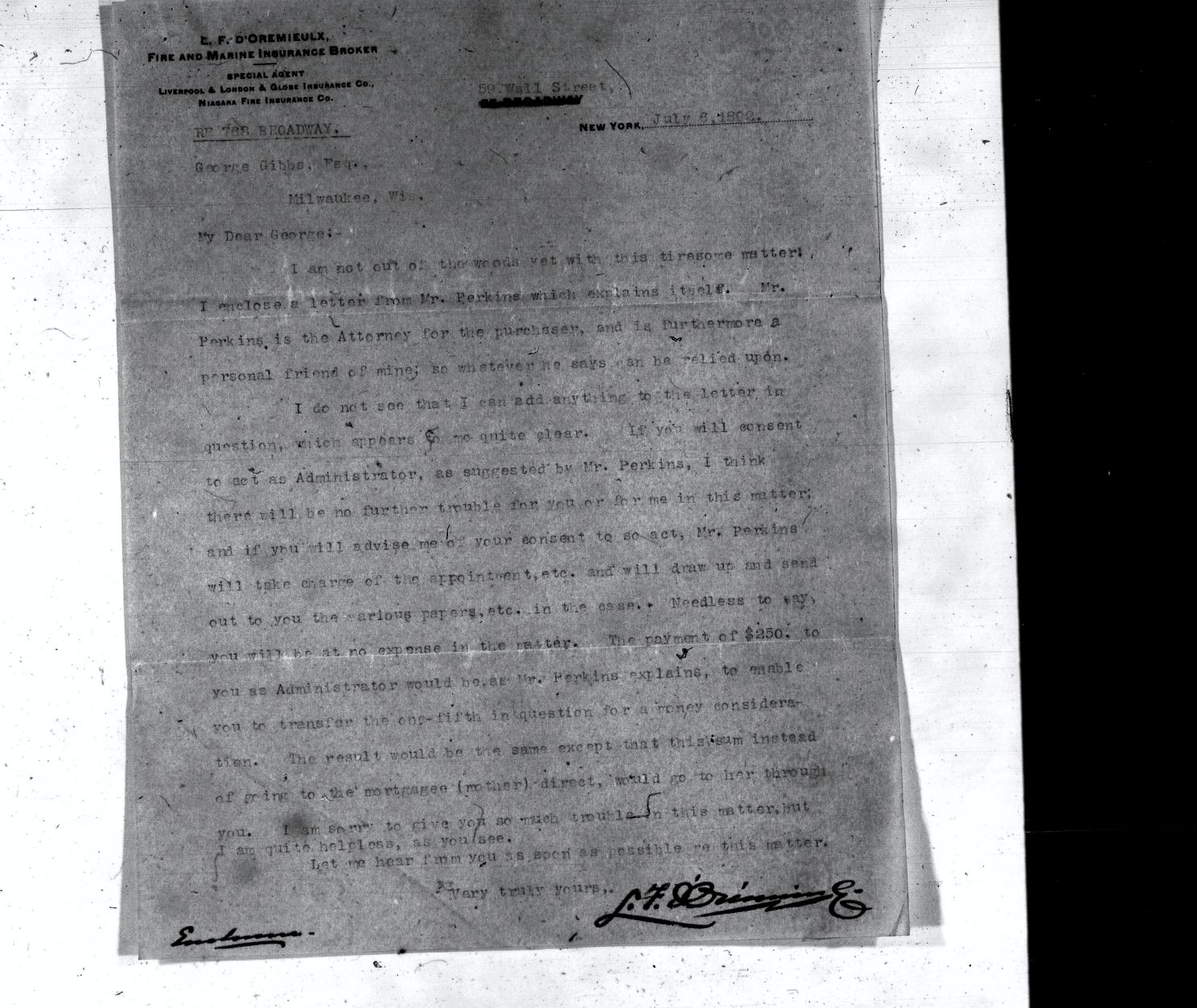
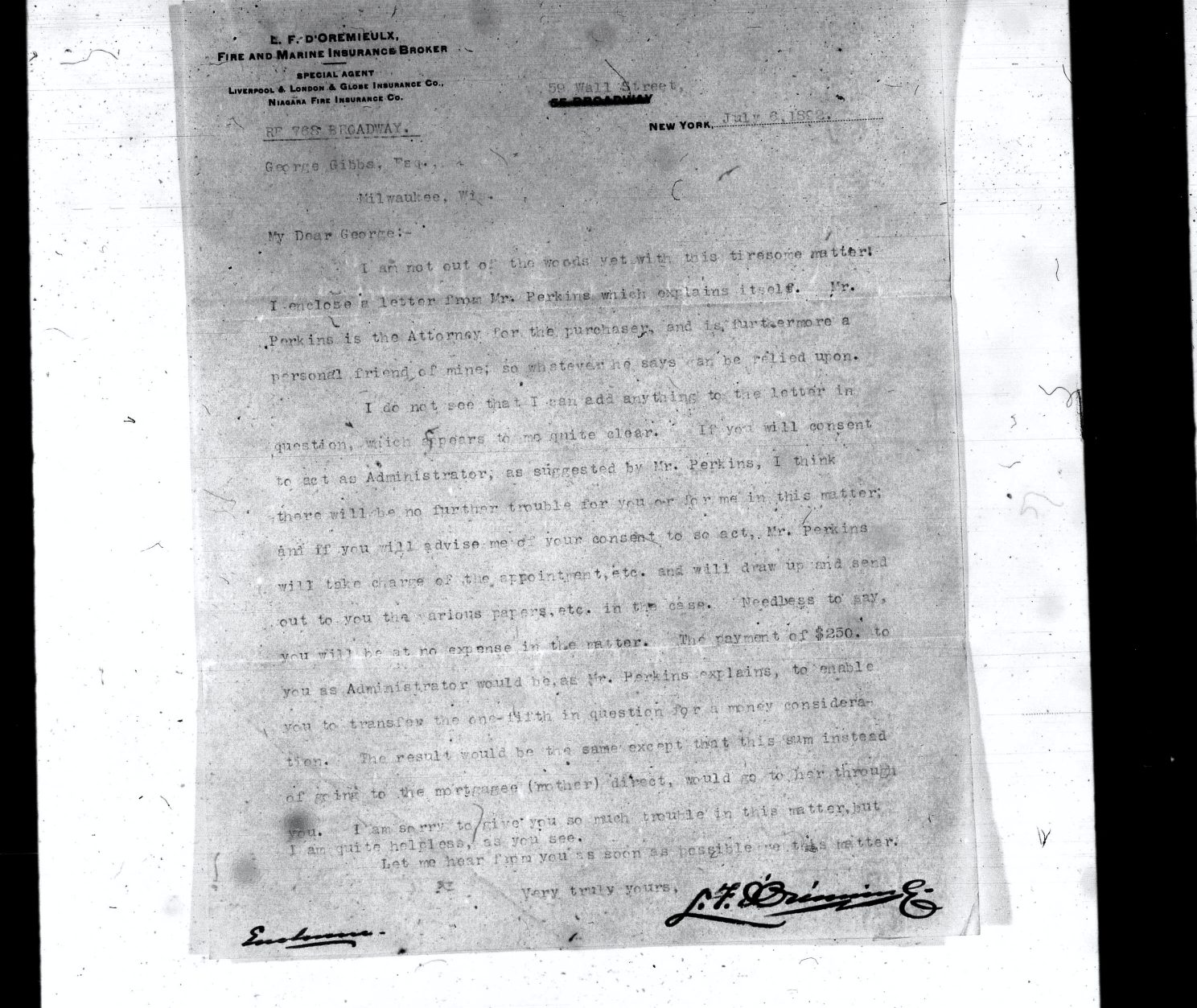
typed, headed "Re 765 Broadway": "I am not out of the woods yet with this tiresome matter"; urges Gibbs to consent to act as Administrator; "I am quite helpless, as you see"
(cont.)
OTHER
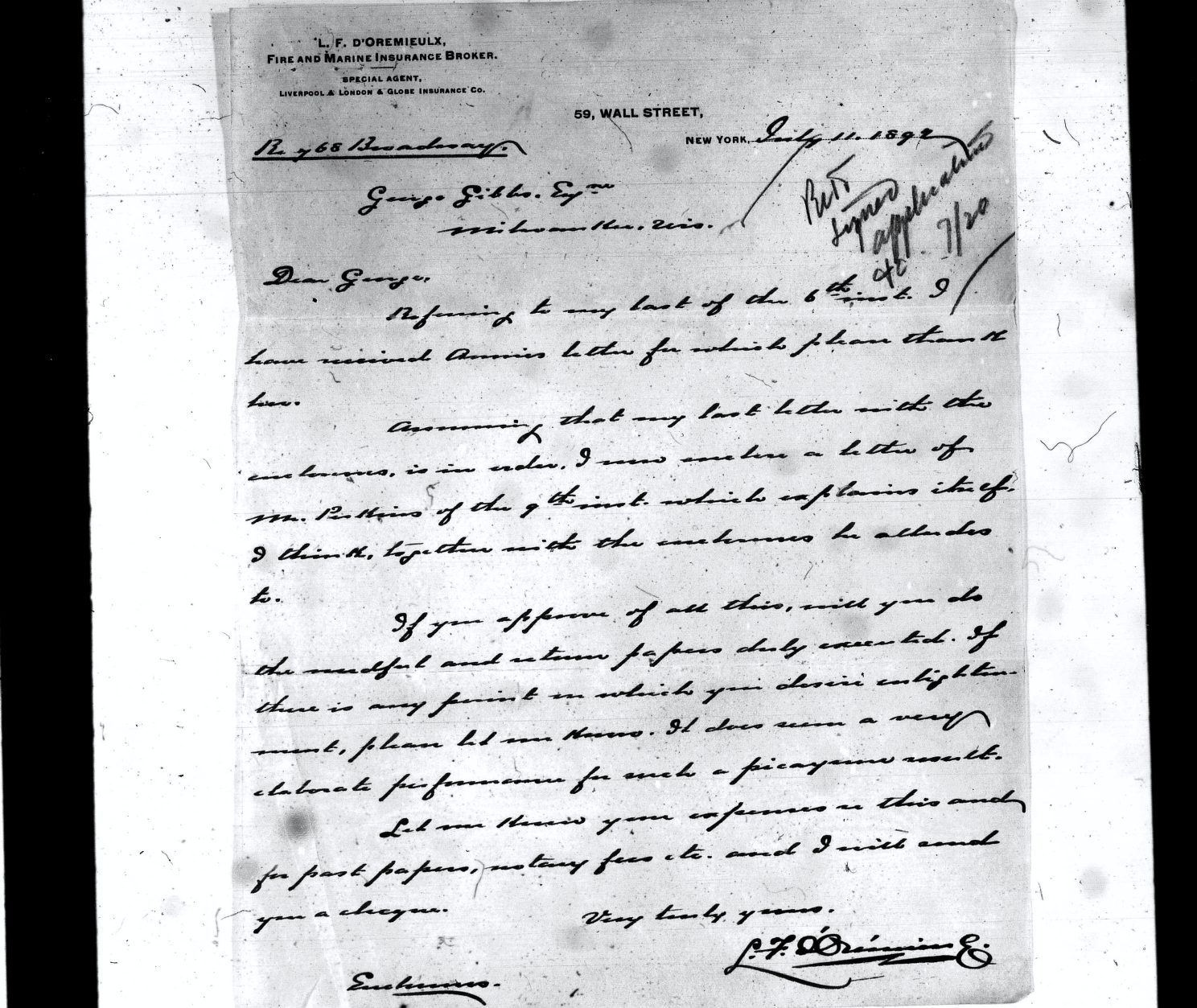
1892-07-11
"Re 765 Broadway"; encloses Mr. Perkins's letter of the 9th; "It does seem a very elaborate performance for such a picayune result"; recipient's docket "Rec'd / signed application / &c 7/20"
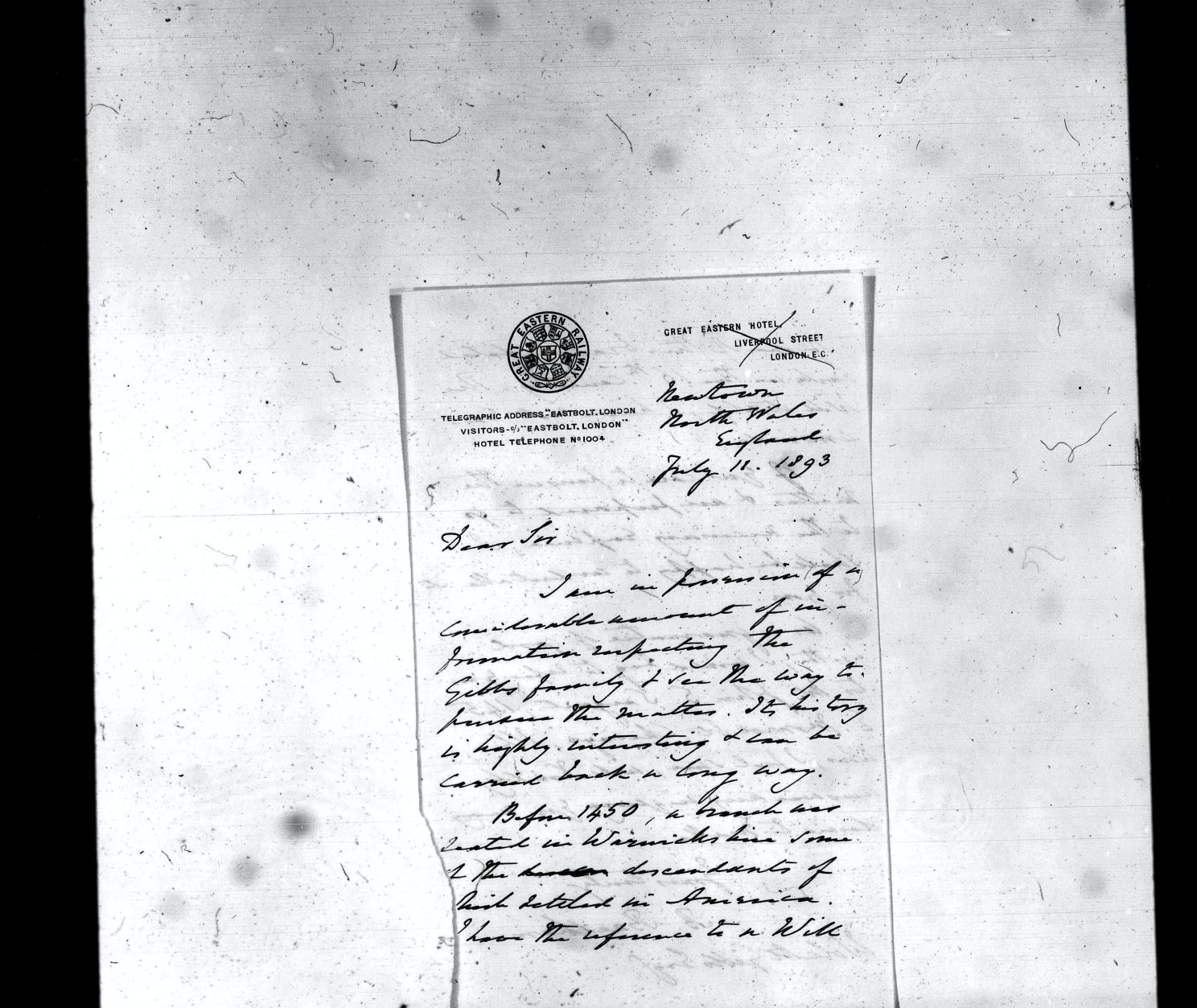
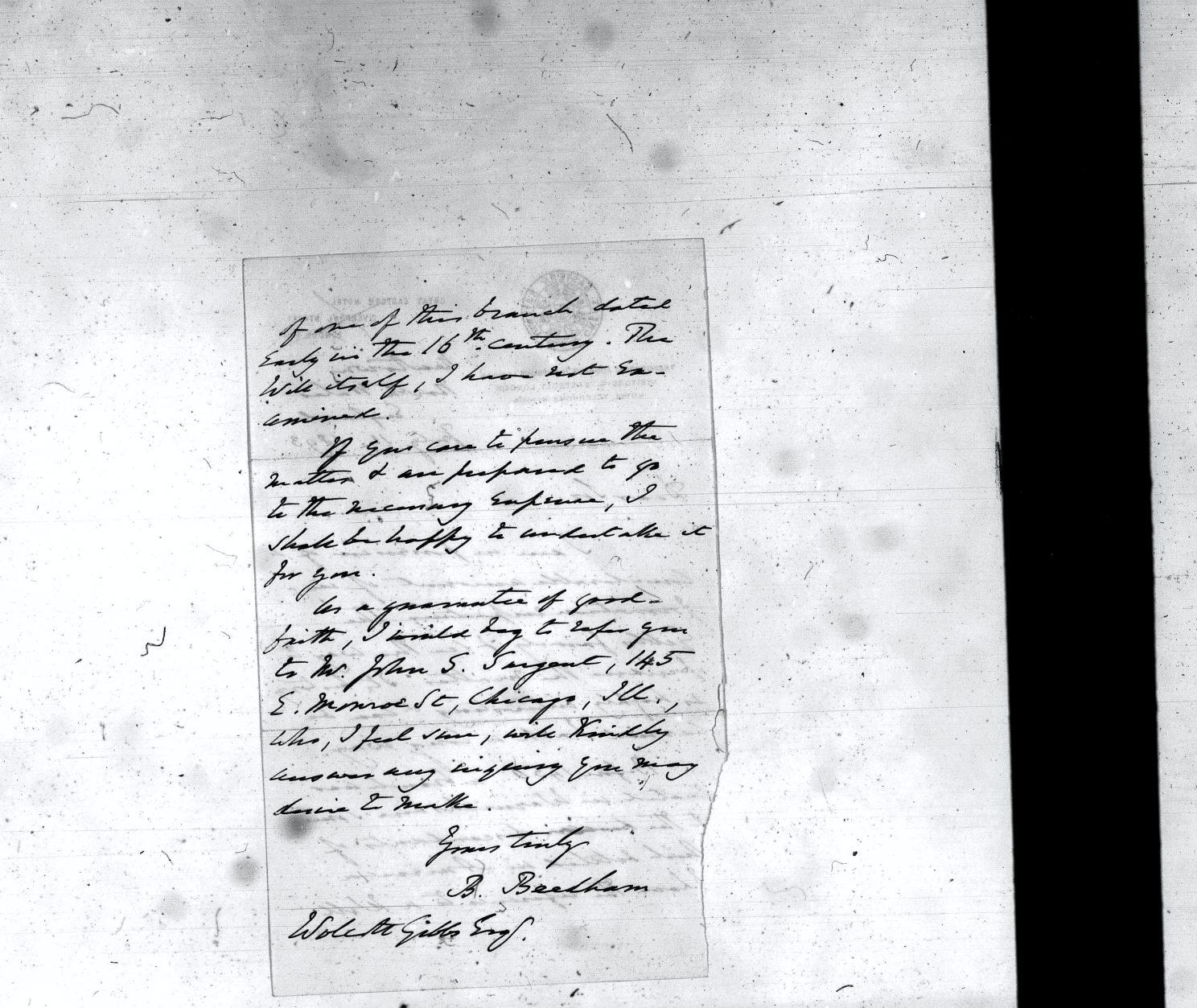
1893-07-11
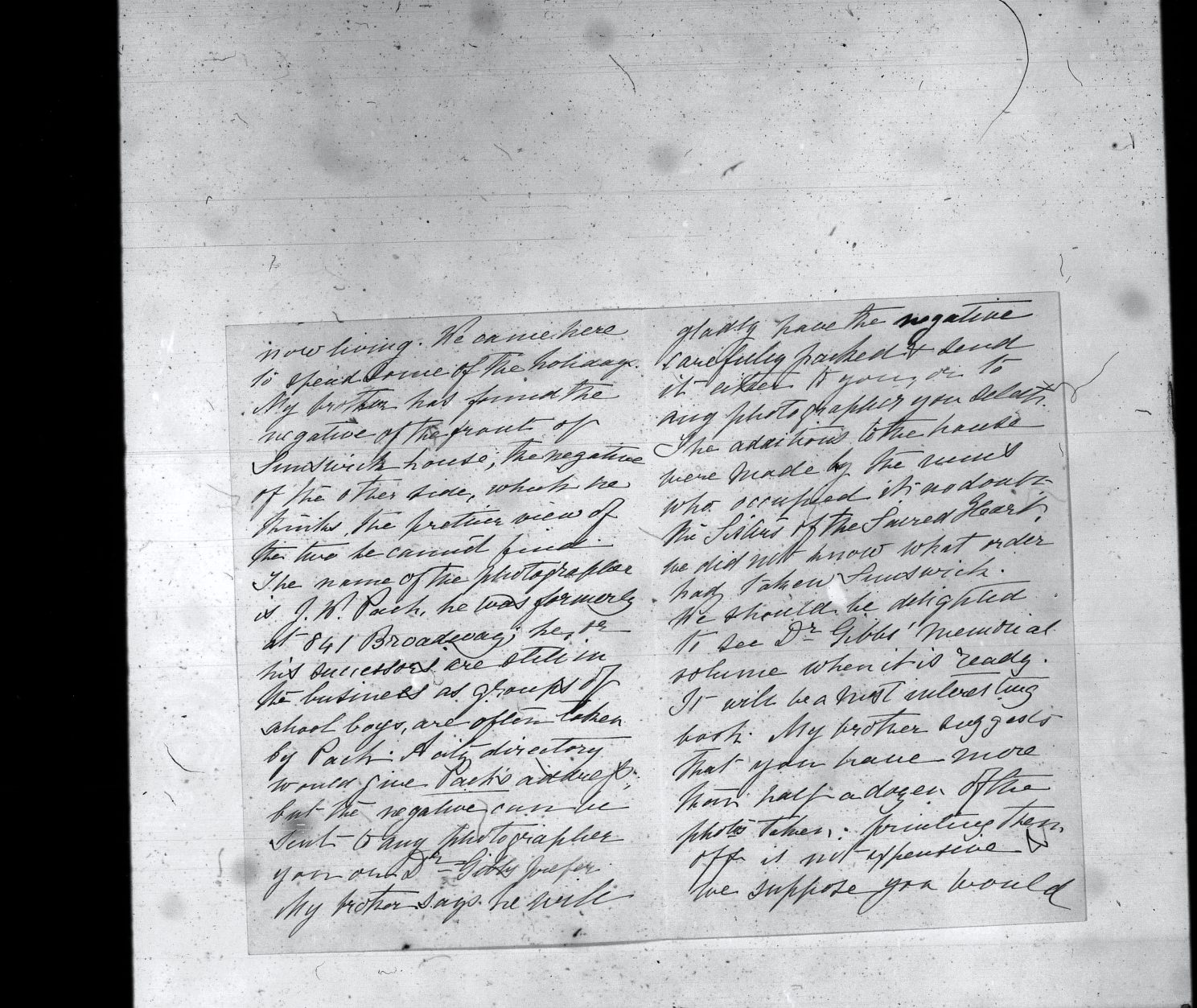
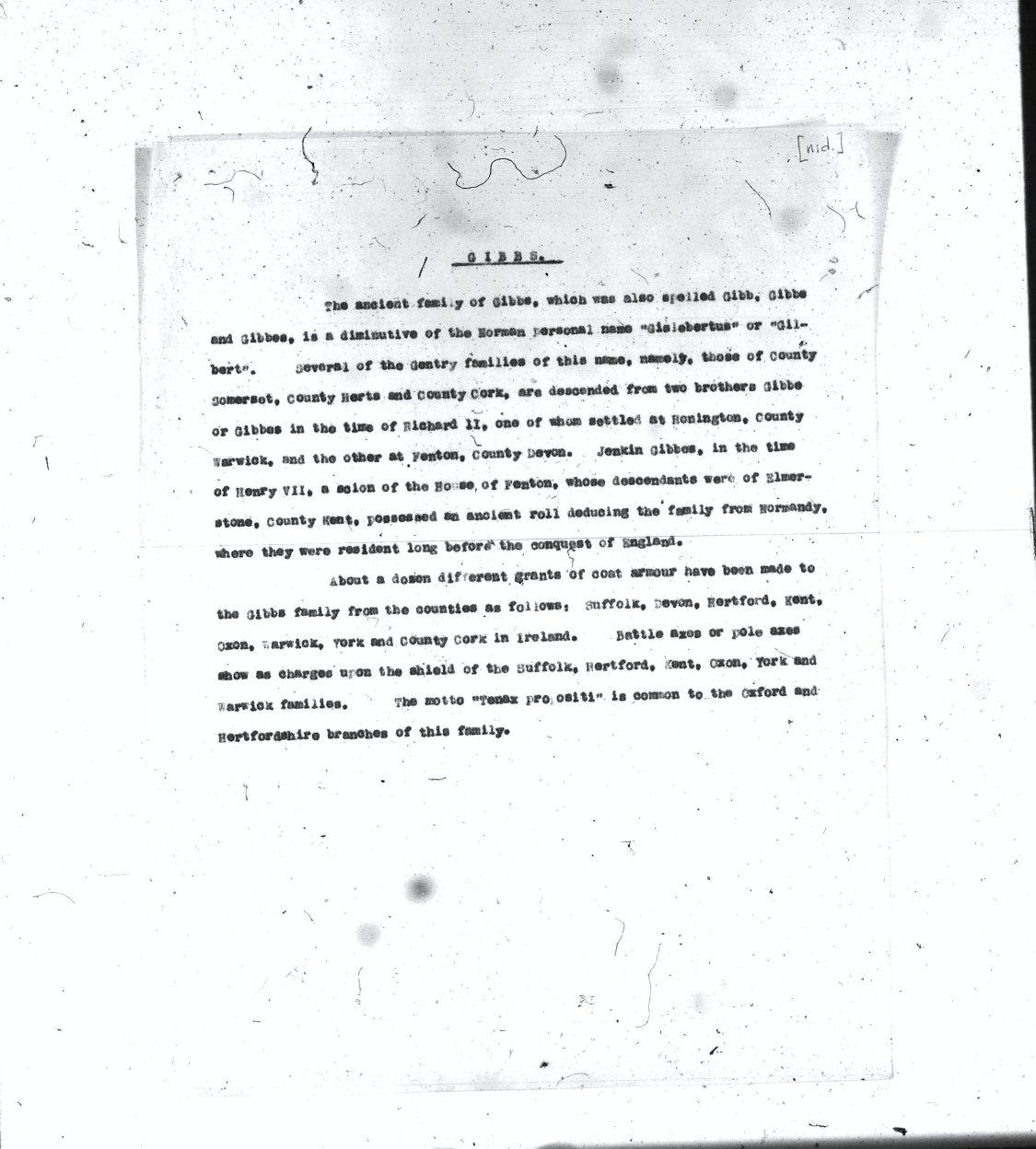
on Great Eastern Hotel, London letterhead: "I am in possession of a considerable amount of information respecting the Gibbs family & see the way to pursue the matter. Its history is highly interesting & can be carried back a long way. Before 1450, a branch was seated in Warwickshire, some of the descendants of which settled in America. I have the reference to a Will"
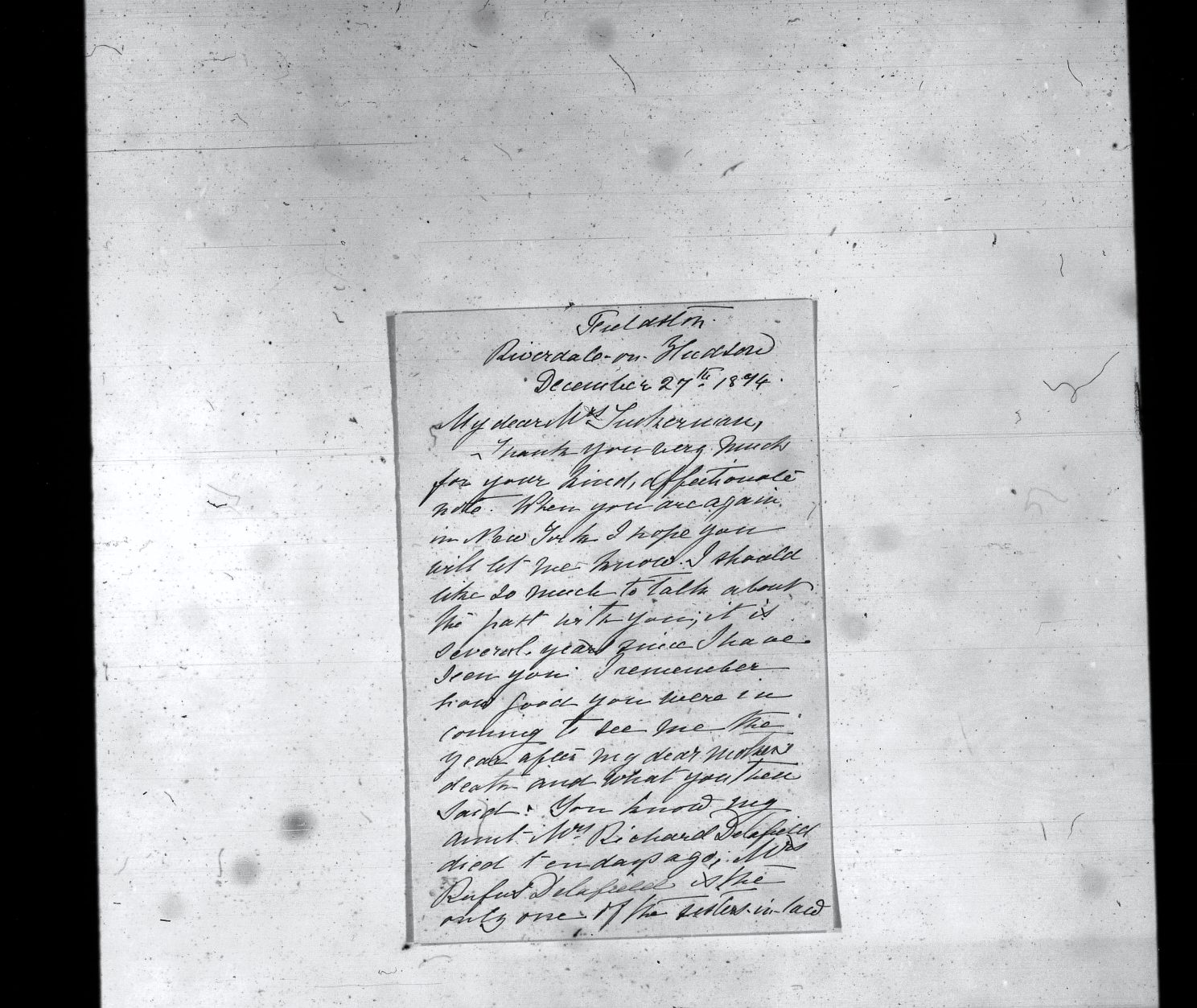
1894-12-27
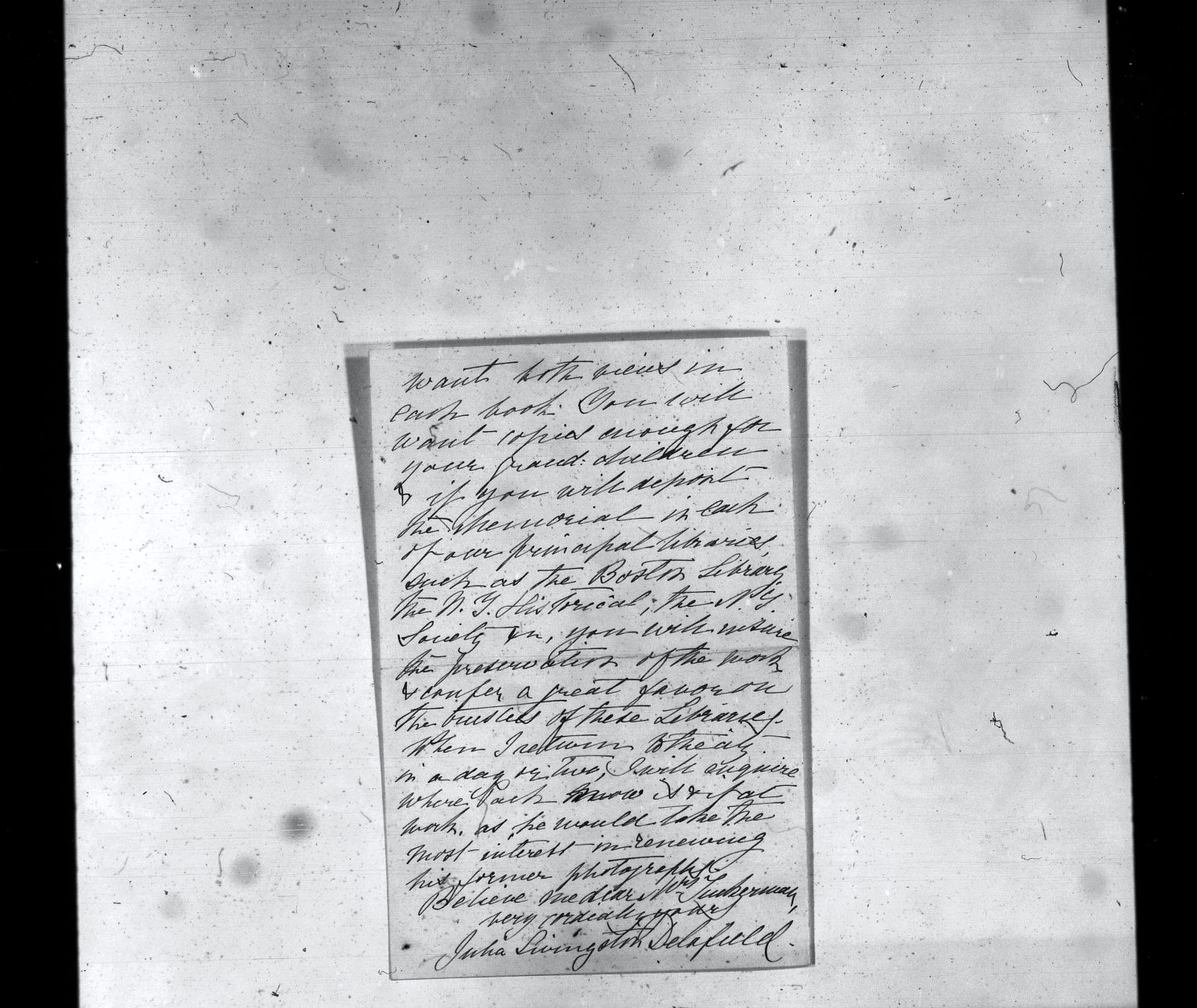
*** THE ORIGINAL OF THE LETTER DEB DODGE TRANSCRIBED *** p.1: thanks for her kind, affectionate note; "several years since I have seen you"; remembers "how good you were in coming to see me the year after my dear Mother's death"; "you know my aunt Mrs Richard Delafield died ten days ago, Mrs Rufus Delafield is the only one of the sisters-in-law"
1895
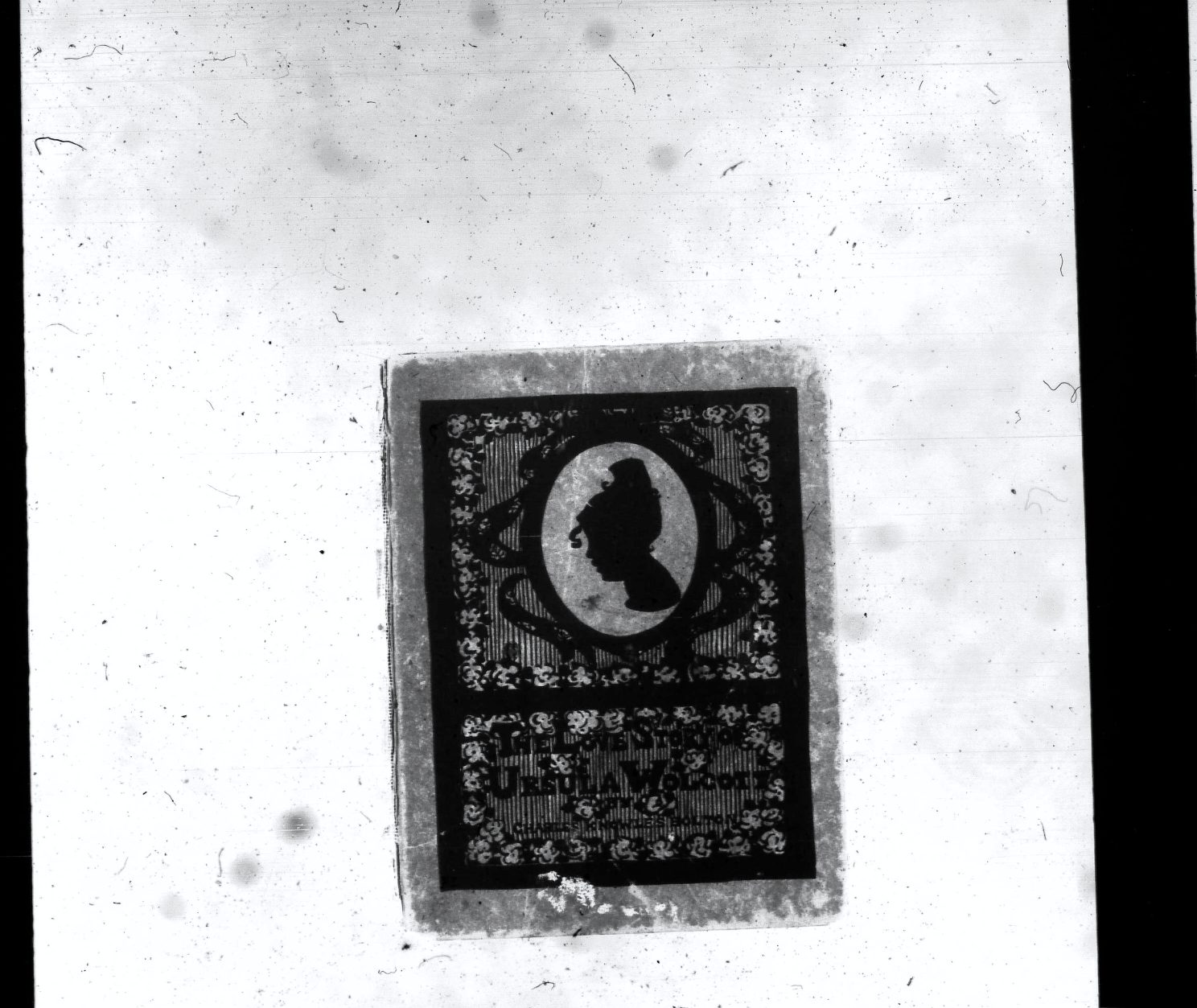
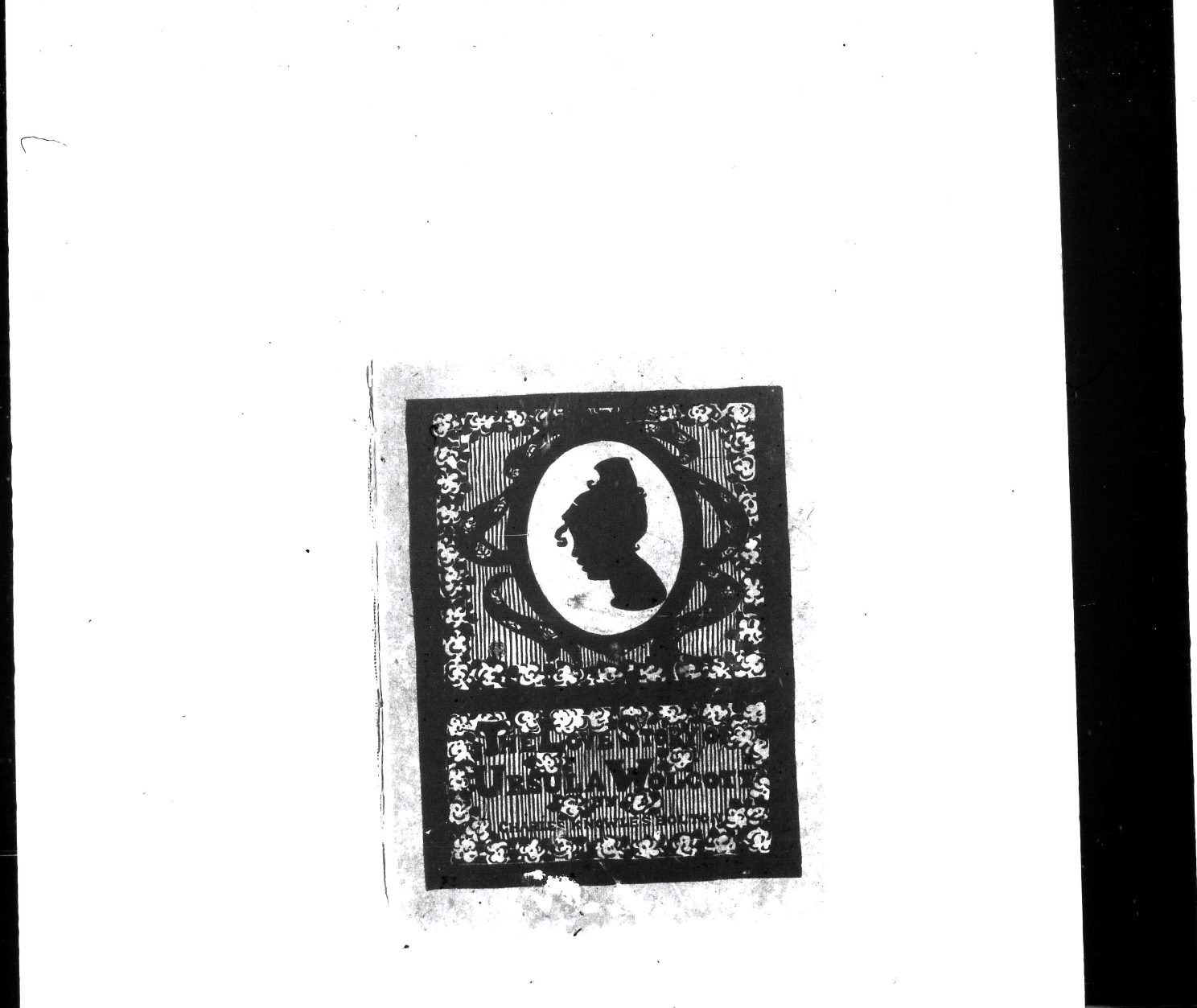
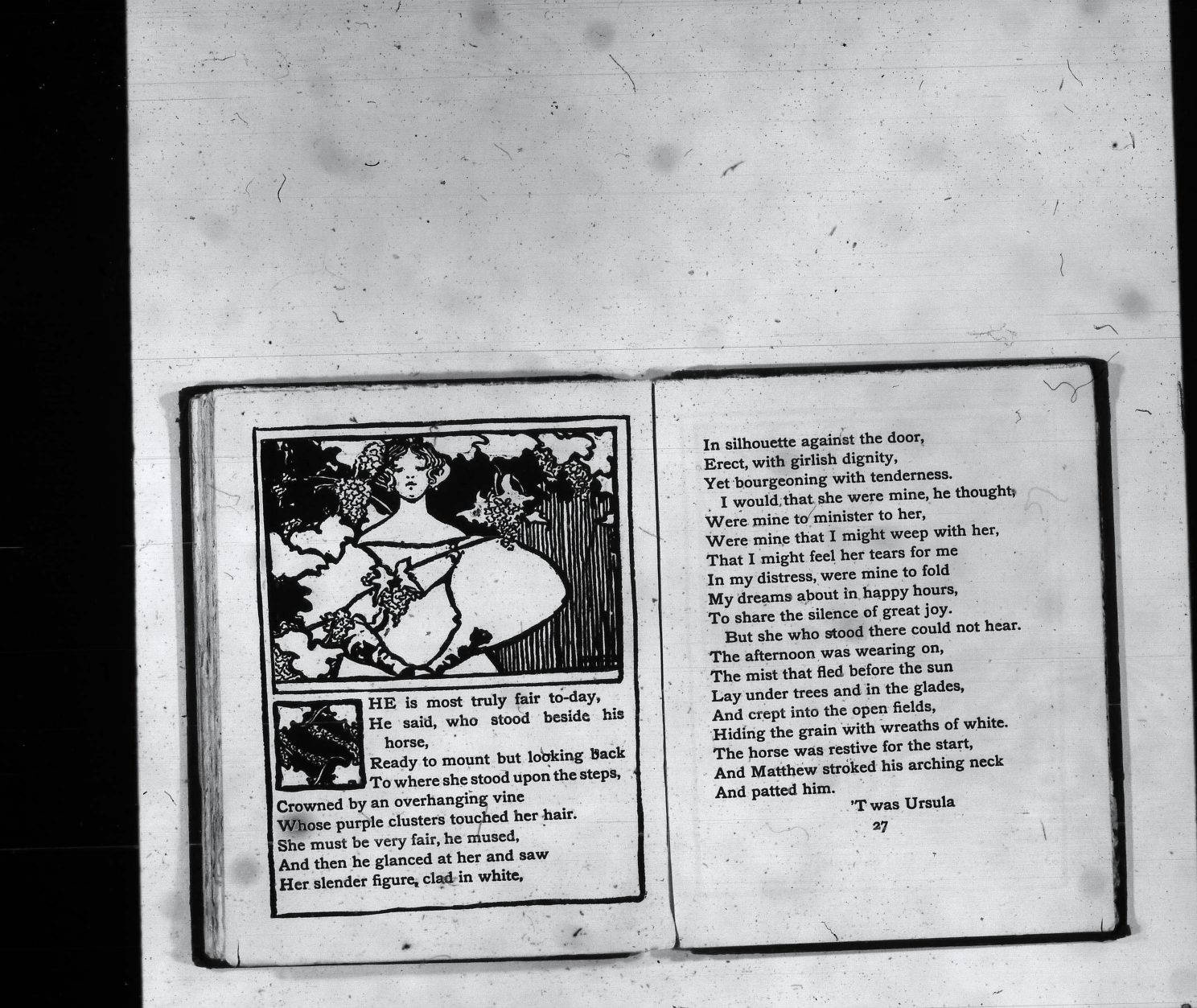
black-ground decorated cover with a woman's silhouette portrait in an oval and a floral/ribbon border, lettered "THE LOVE STORY OF URSULA WOLCOTT"; cover design by Ethel Reed
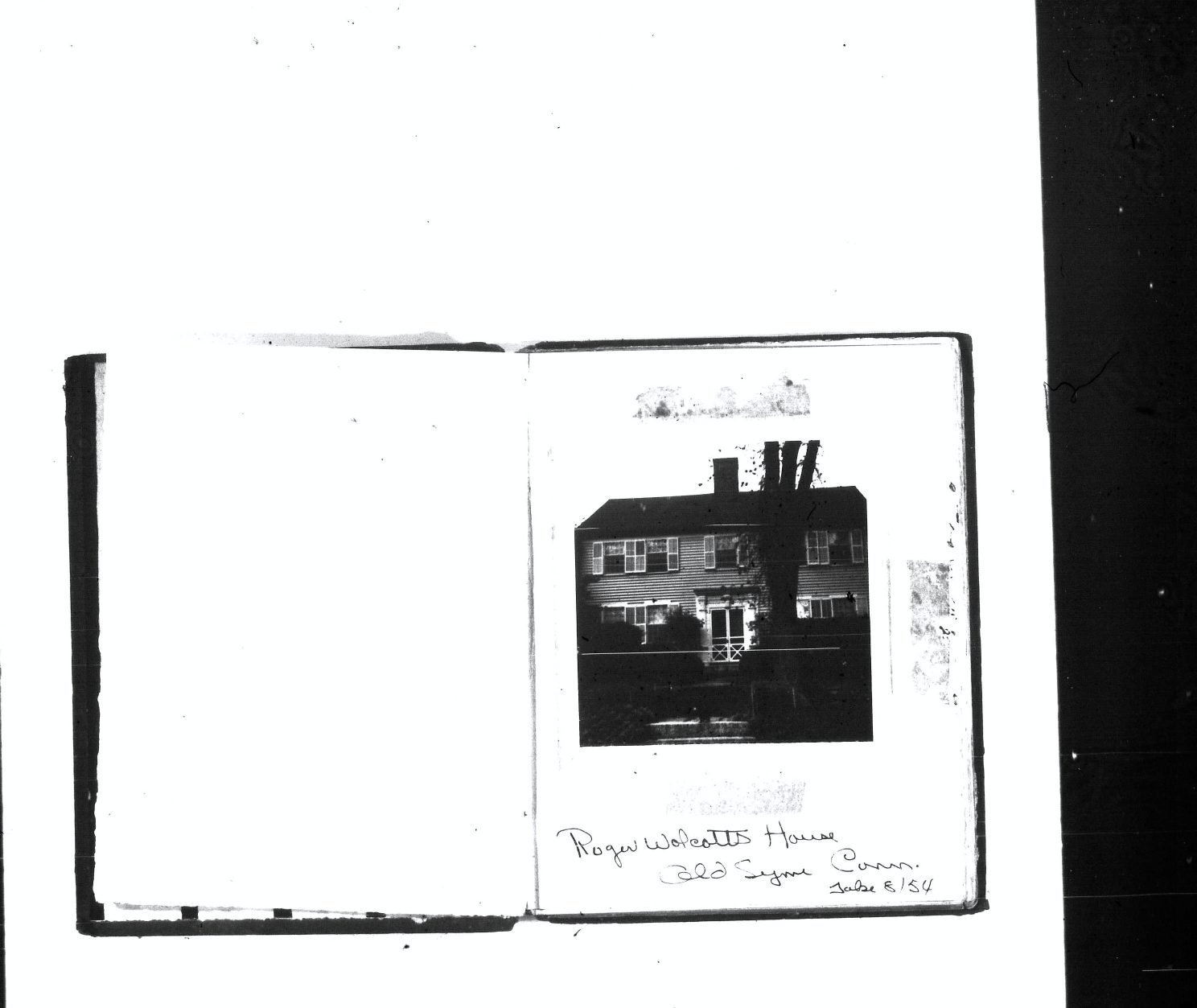
caption "Taken 8/54"
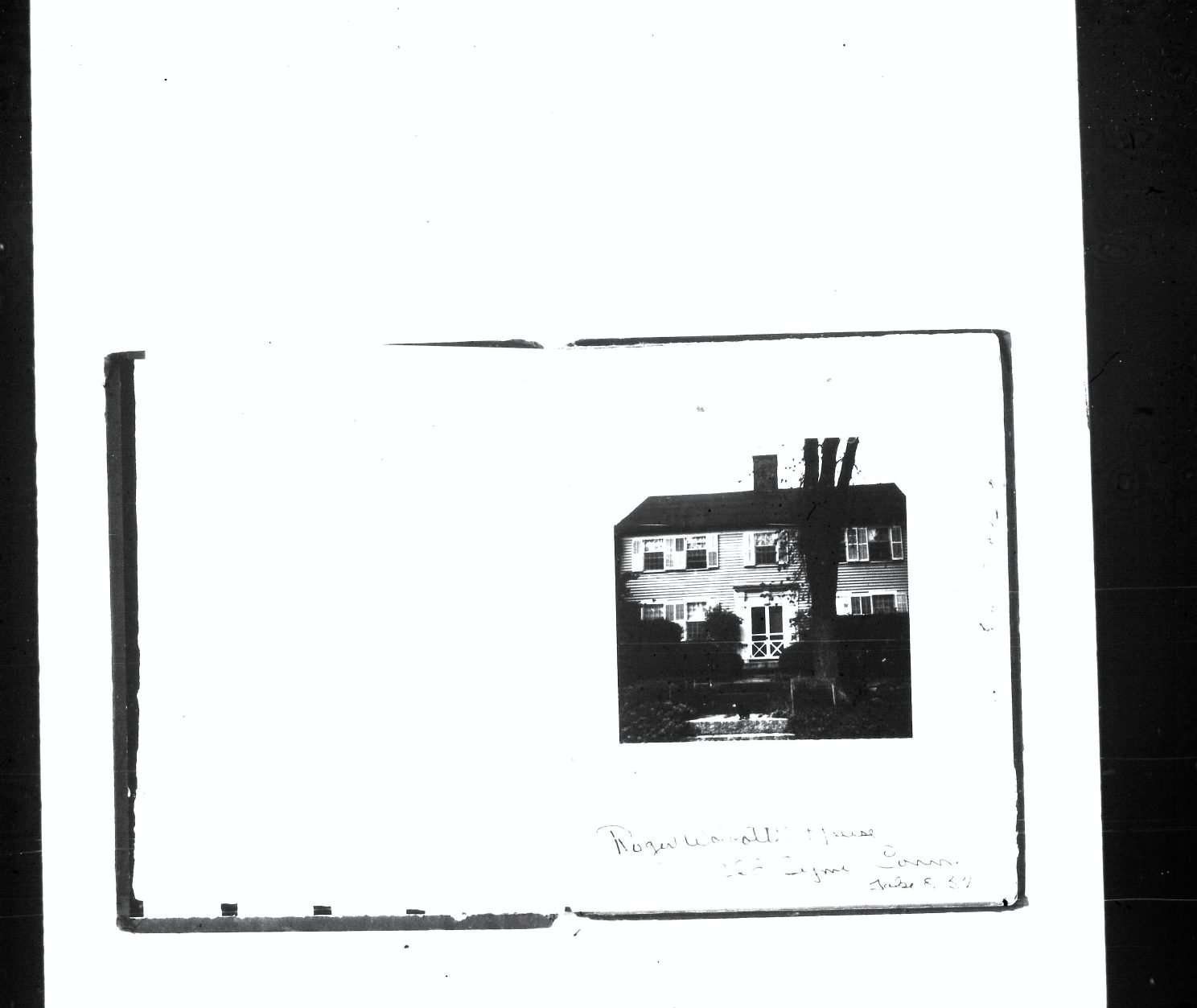
gambrel/clapboard colonial house with two large chimneys and a cross-braced screen door; ink caption "Roger Wolcotts House / Old Lyme Conn. / Taken 8/54"
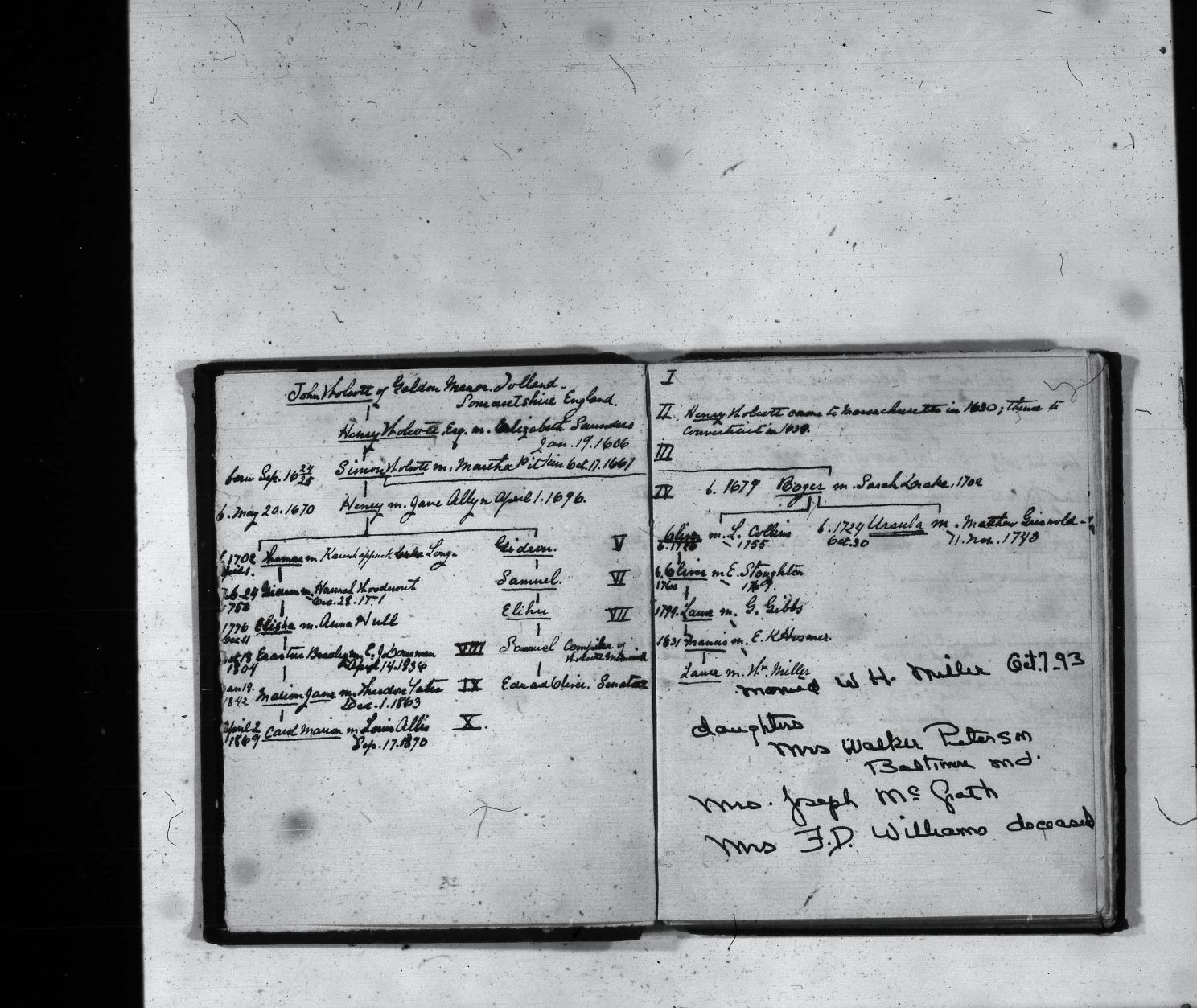
n.d. (latest date noted "Oct 7.93")
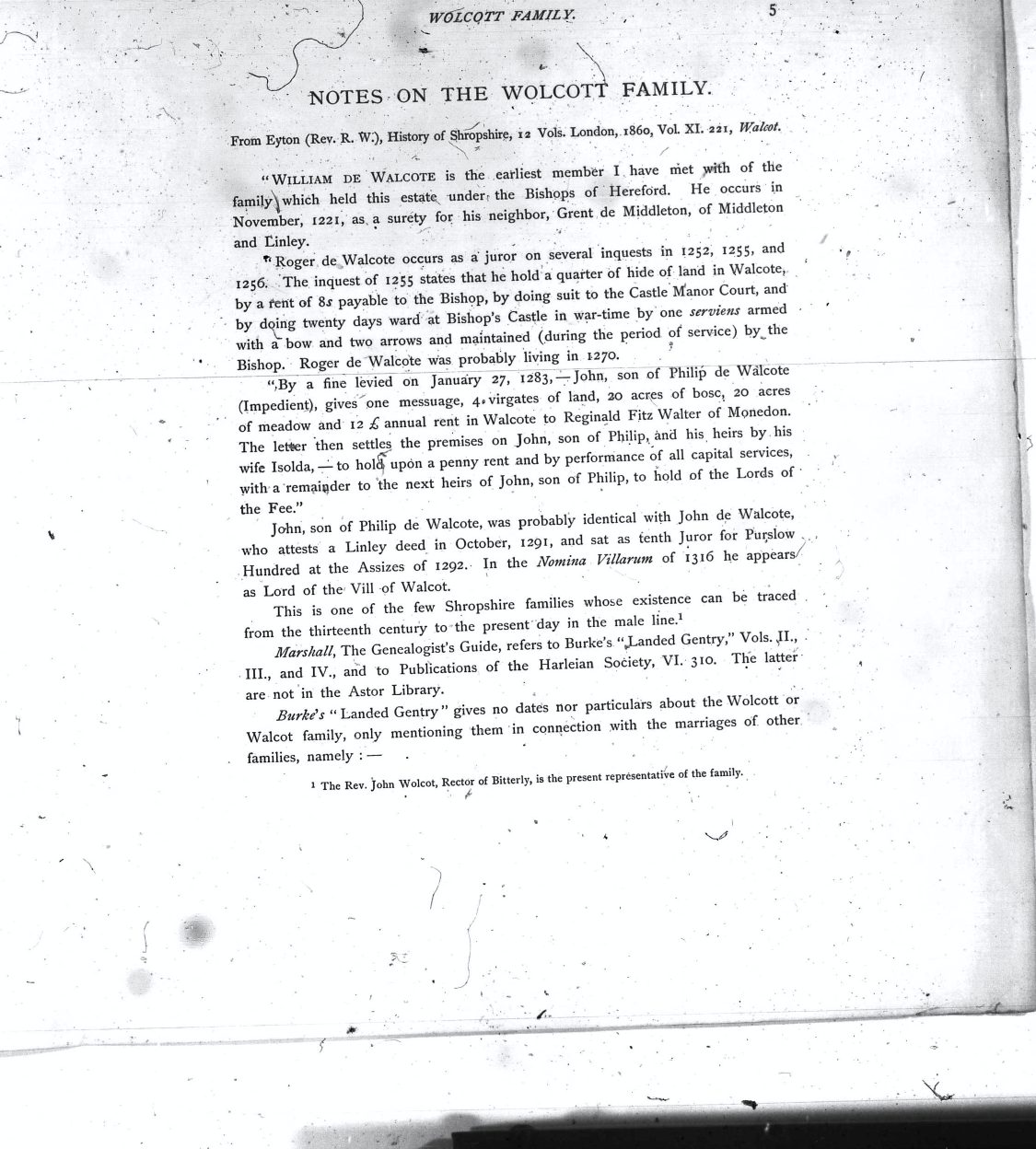
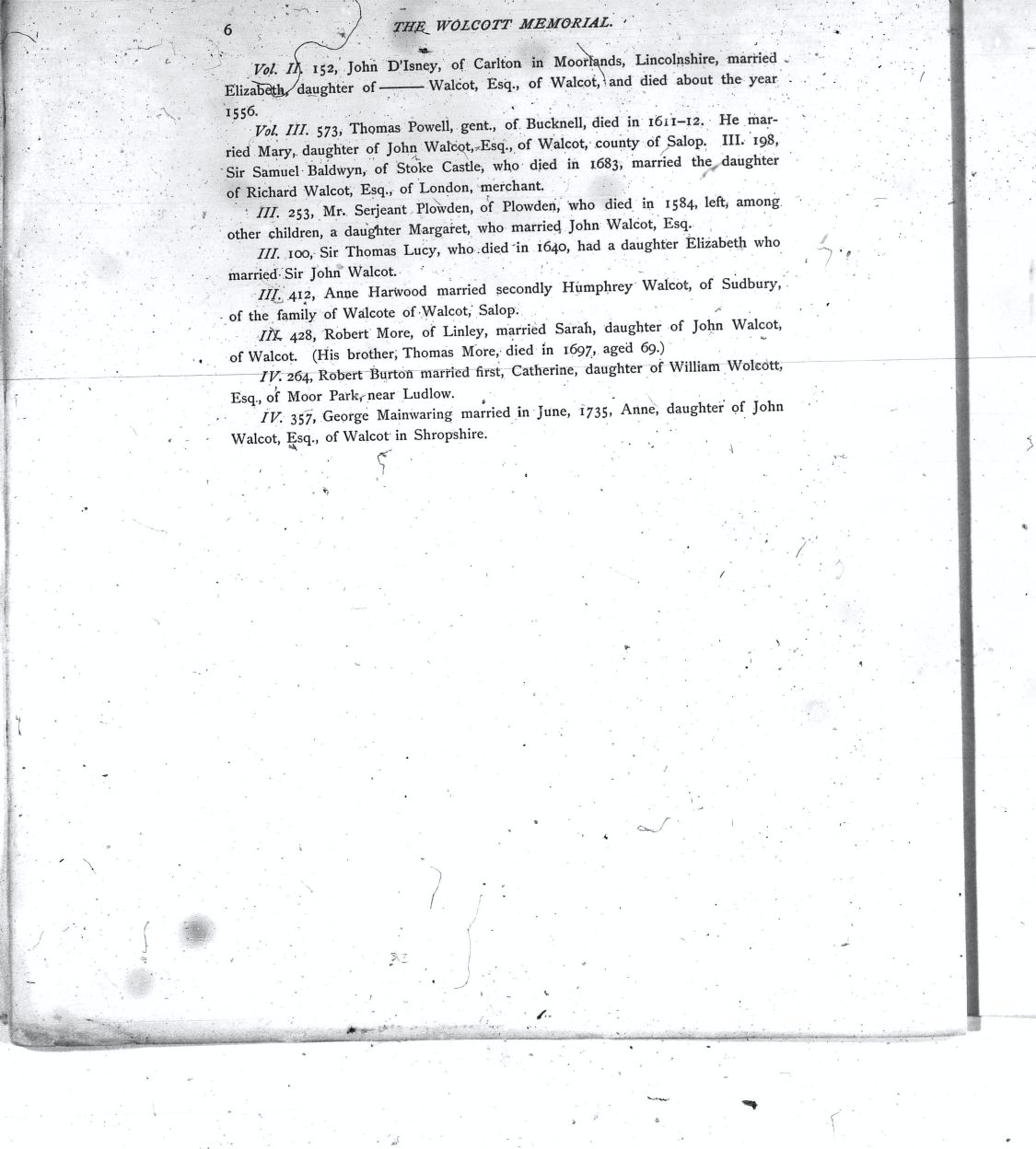
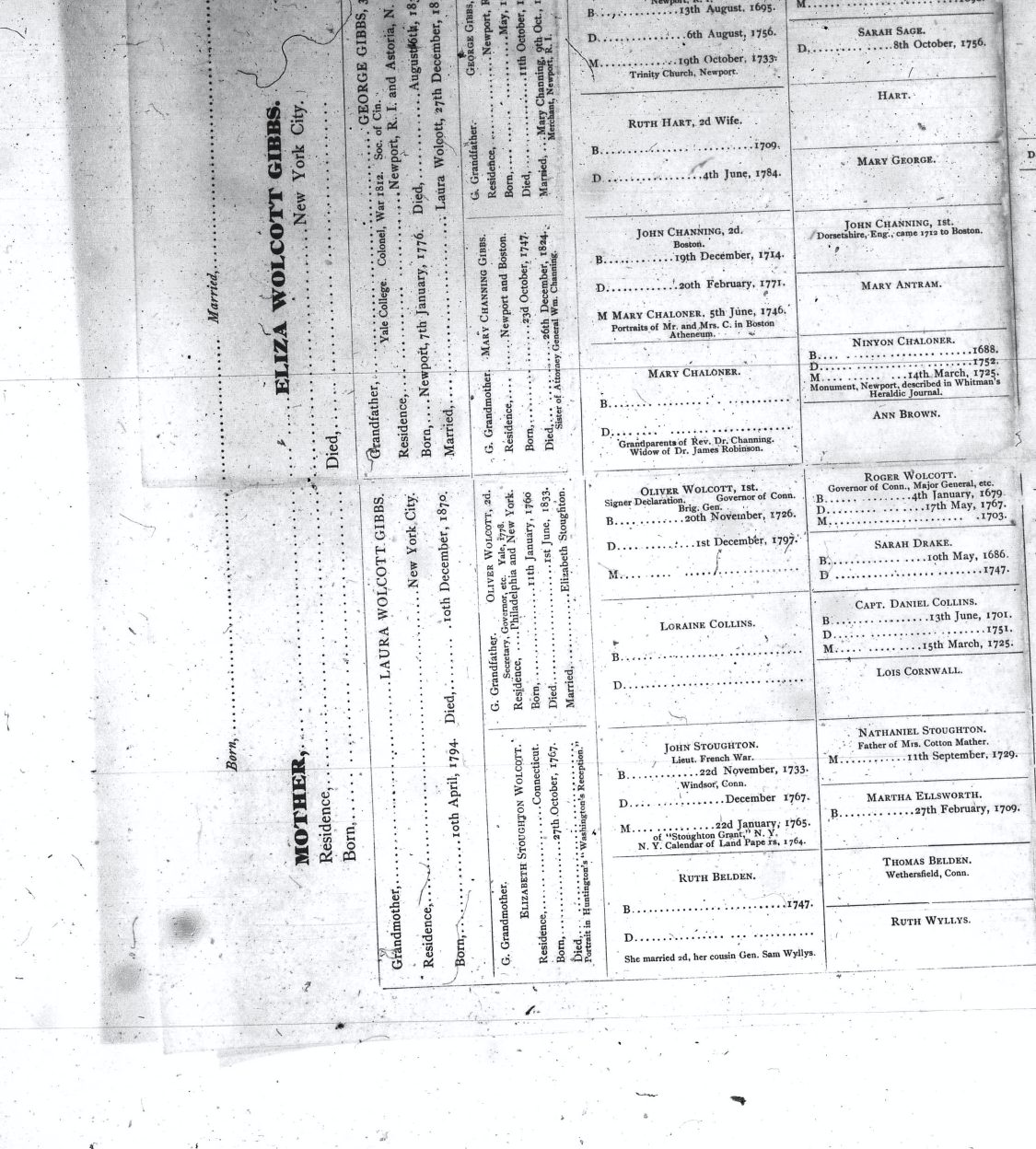
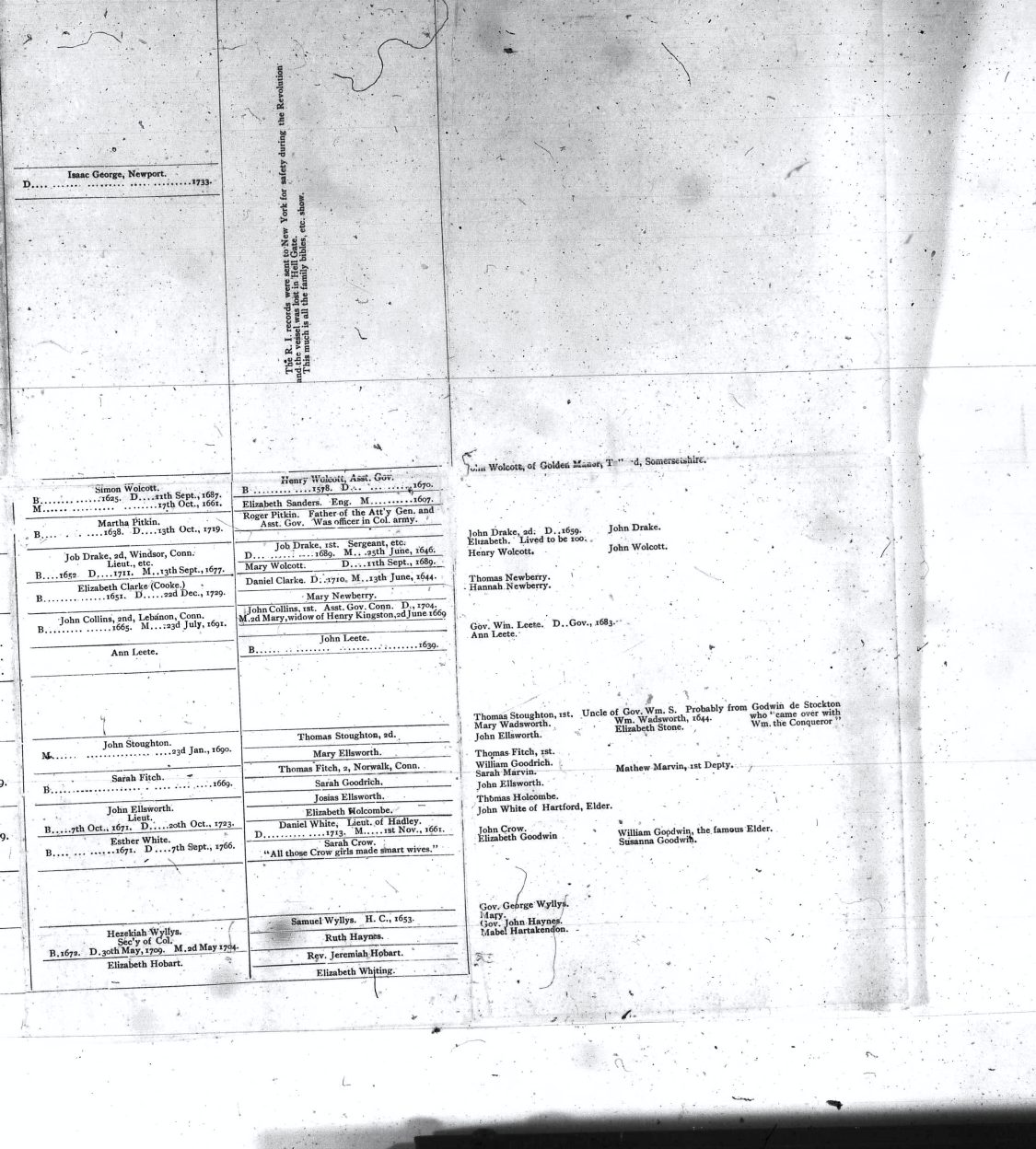
Wolcott descent generations I-X: "John Wolcott of Golden Manor, Tolland, Somersetshire England"; "Henry Wolcott Esq. m. Elizabeth Saunders Jan. 19. 1606"; "II Henry Wolcott came to Massachusetts in 1630; thence to Connecticut in 1638"; "b. 1679 Roger m. Sarah Drake. 1702"; "b. 1724 Ursula (b. Oct. 30) m. Matthew Griswold Nov. 1743"; "b. 1760 Oliver m. E. Stoughton 1789"; "1794 LAURA m. G. GIBBS"; and in a bolder later hand "W. H. Miller Oct. 7.93 / daughters Mrs Walker Peterson, Baltimore Md. / MRS. JOSEPH McGRATH / Mrs. J. D. Williams deceased" [Mrs. J. J. McGrath deposited the collection at Wisconsin in 1948]
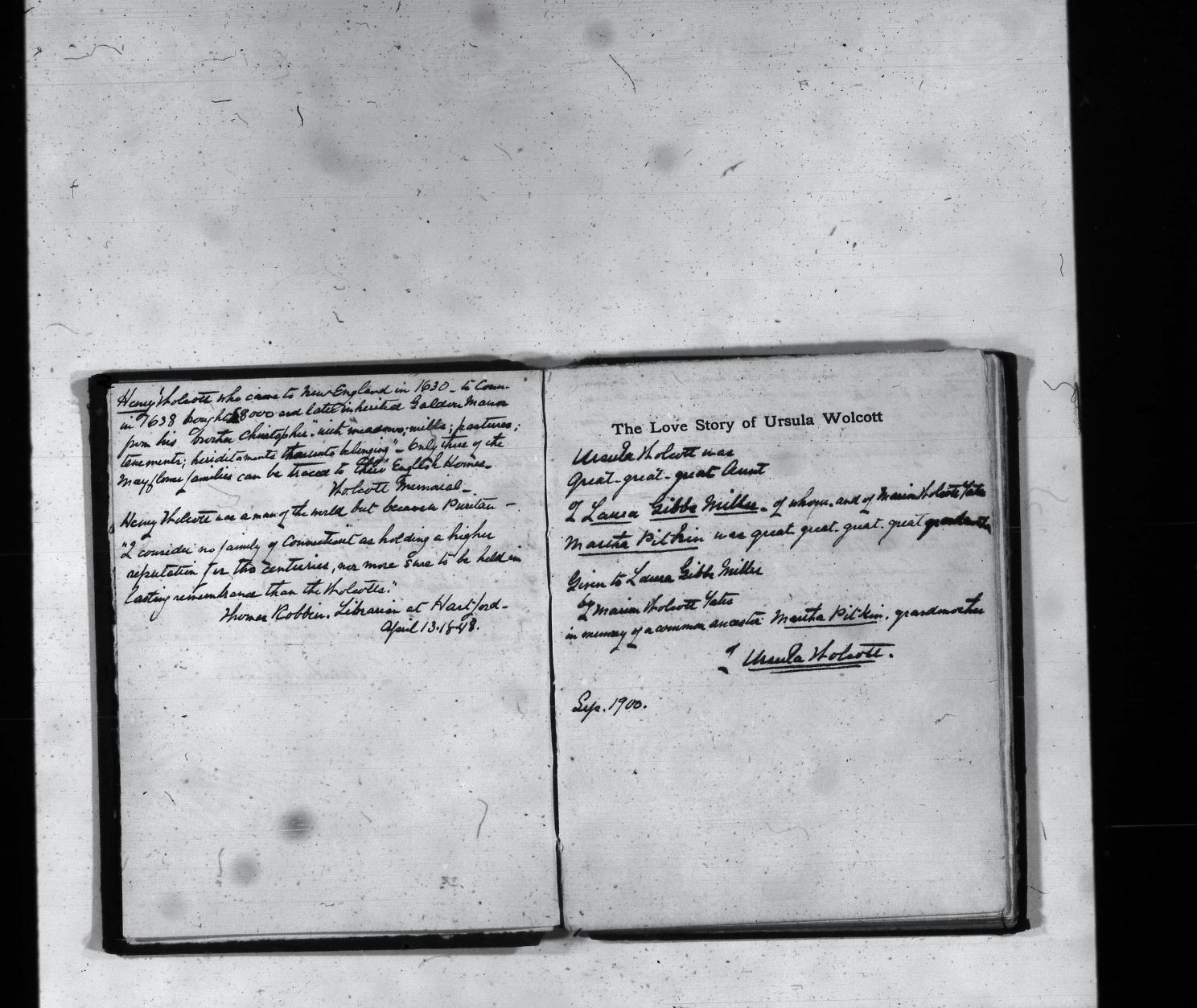
inscribed Sep. 1900; quoted note dated 1848-04-13
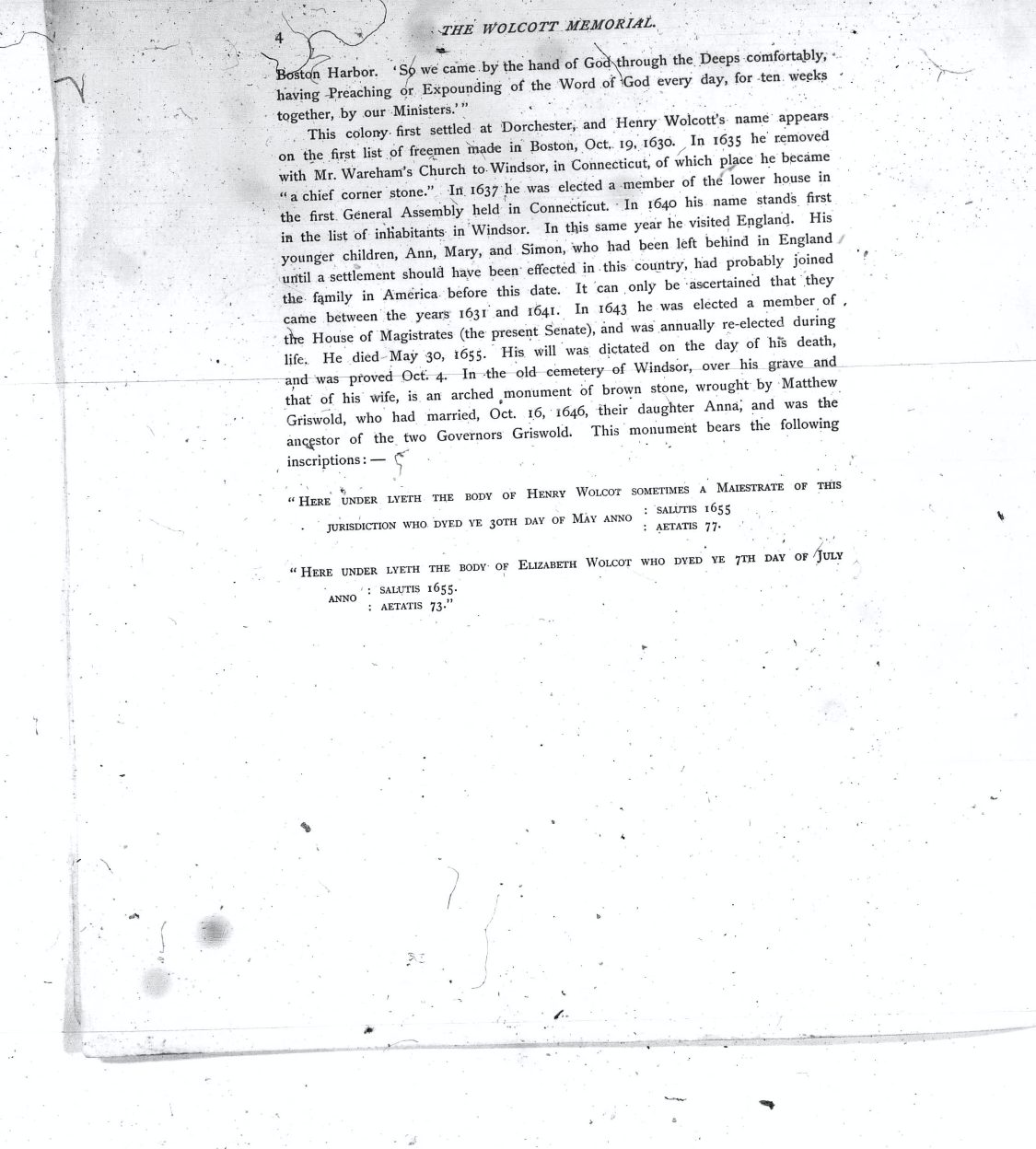
"Henry Wolcott who came to New England in 1630 – to Conn. in 1638 bought 8000 pounds and later inherited Golden Manor from his 'brother Christopher'… Only three of the Mayflower families can be traced to their English Homes. – Wolcott Memorial"; "'I consider no family of Connecticut as holding a higher reputation for two centuries, nor more sure to be held in lasting remembrance than the Wolcotts.' Thomas Robbins. Librarian at Hartford. April 13. 1848."; presentation inscription: "Ursula Wolcott was great-great-great Aunt of Laura Gibbs Miller… Given to Laura Gibbs Miller by Marion Wolcott Yates in memory of a common ancestor Martha Pitkin"
1895
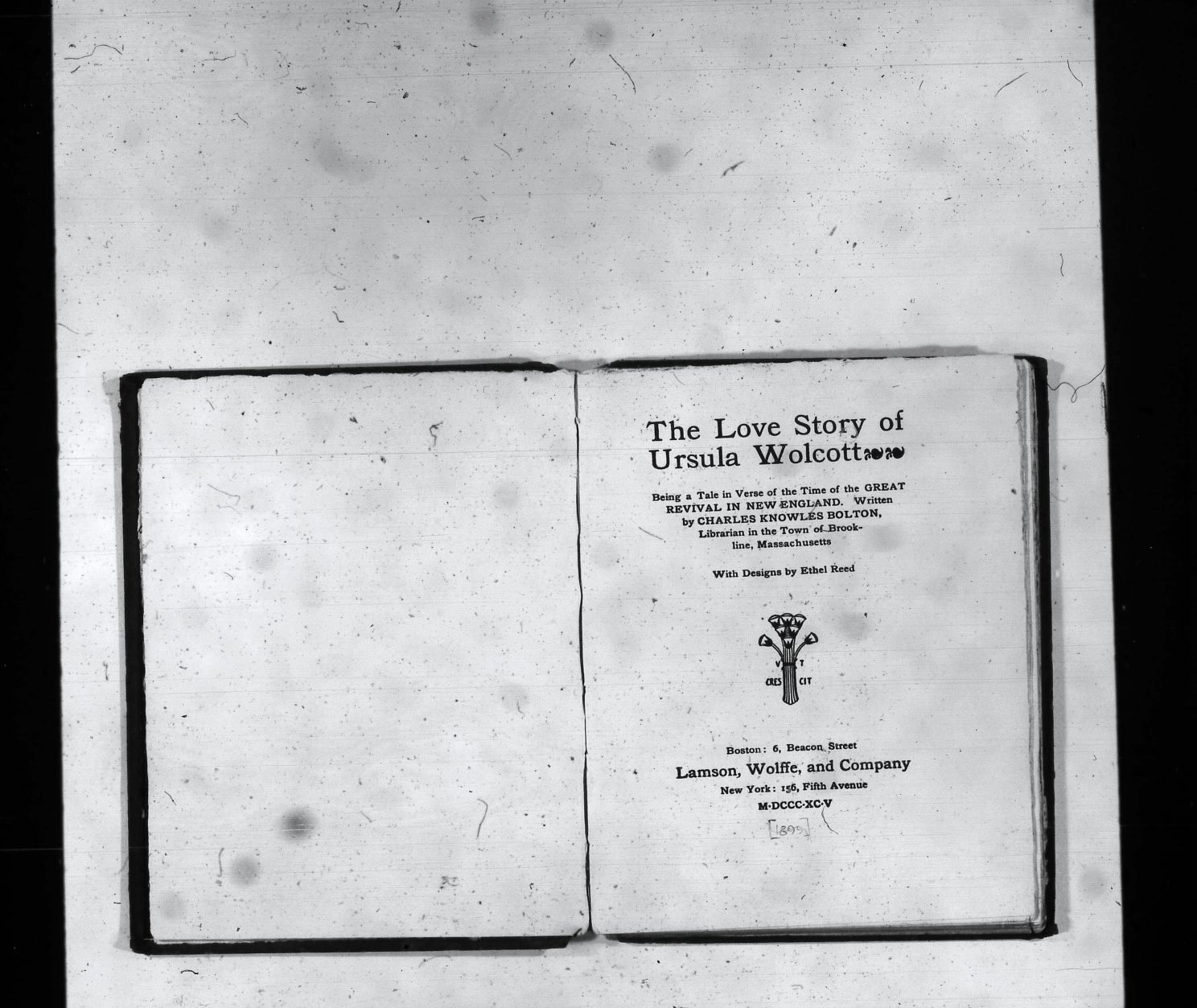
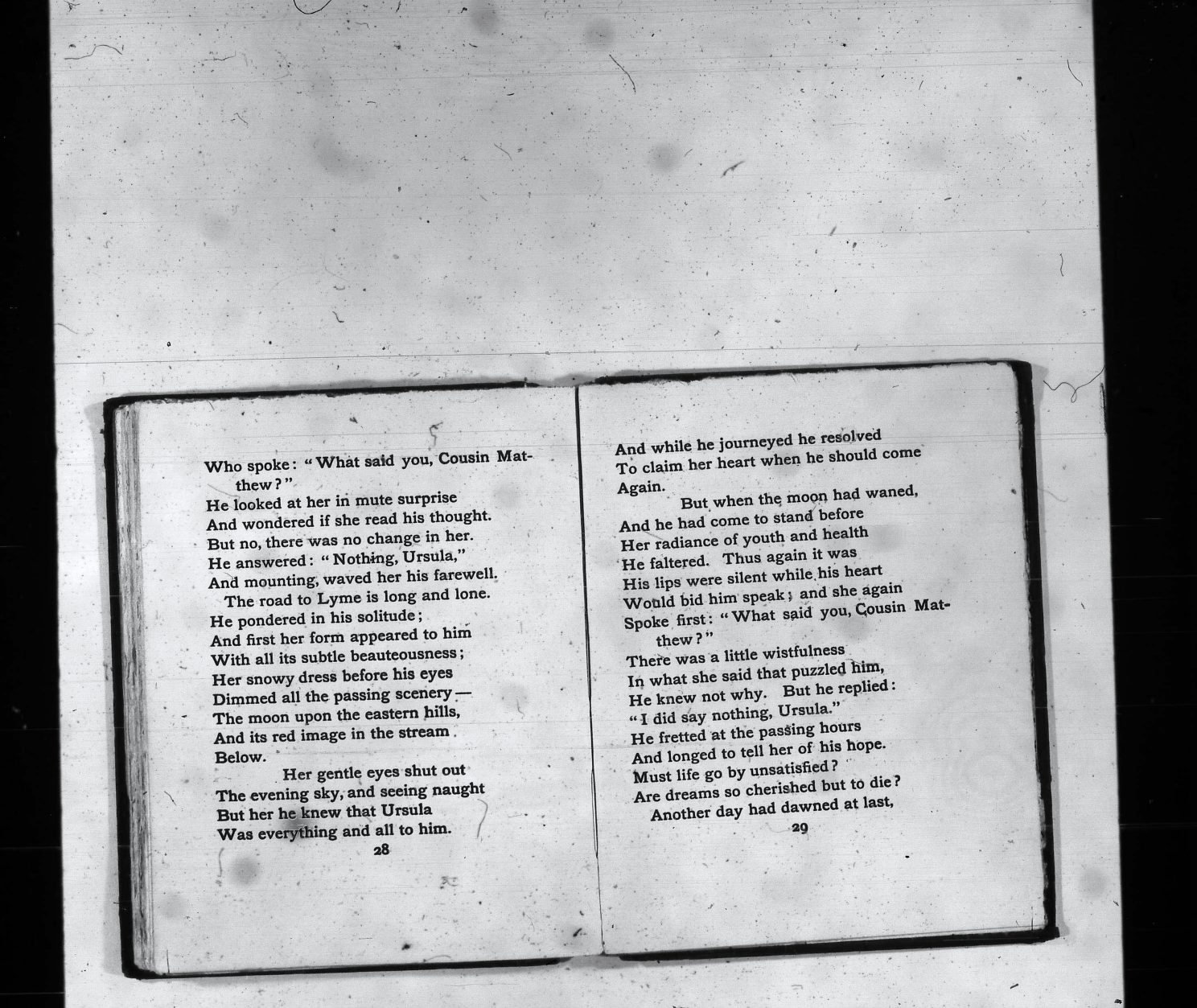
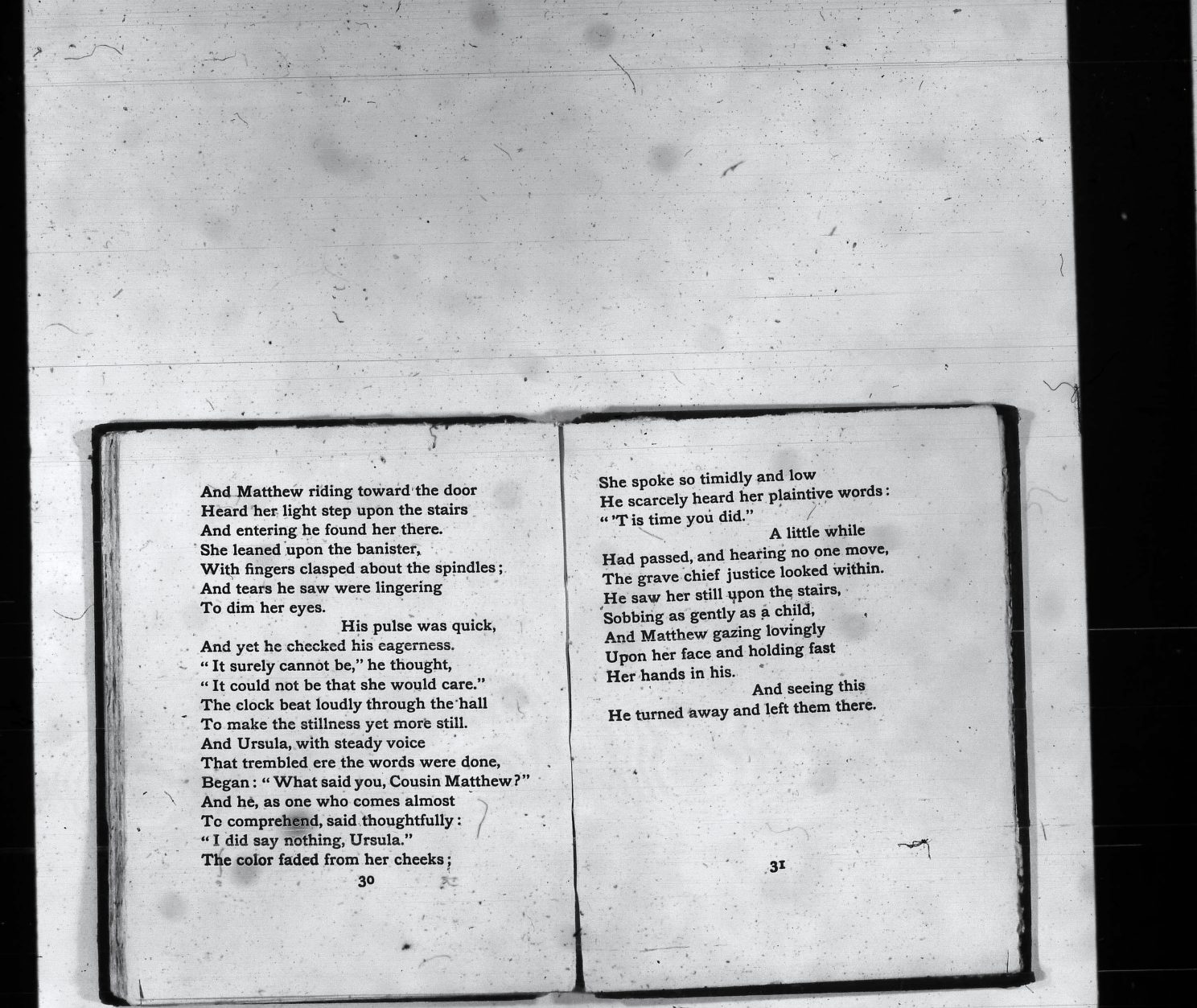
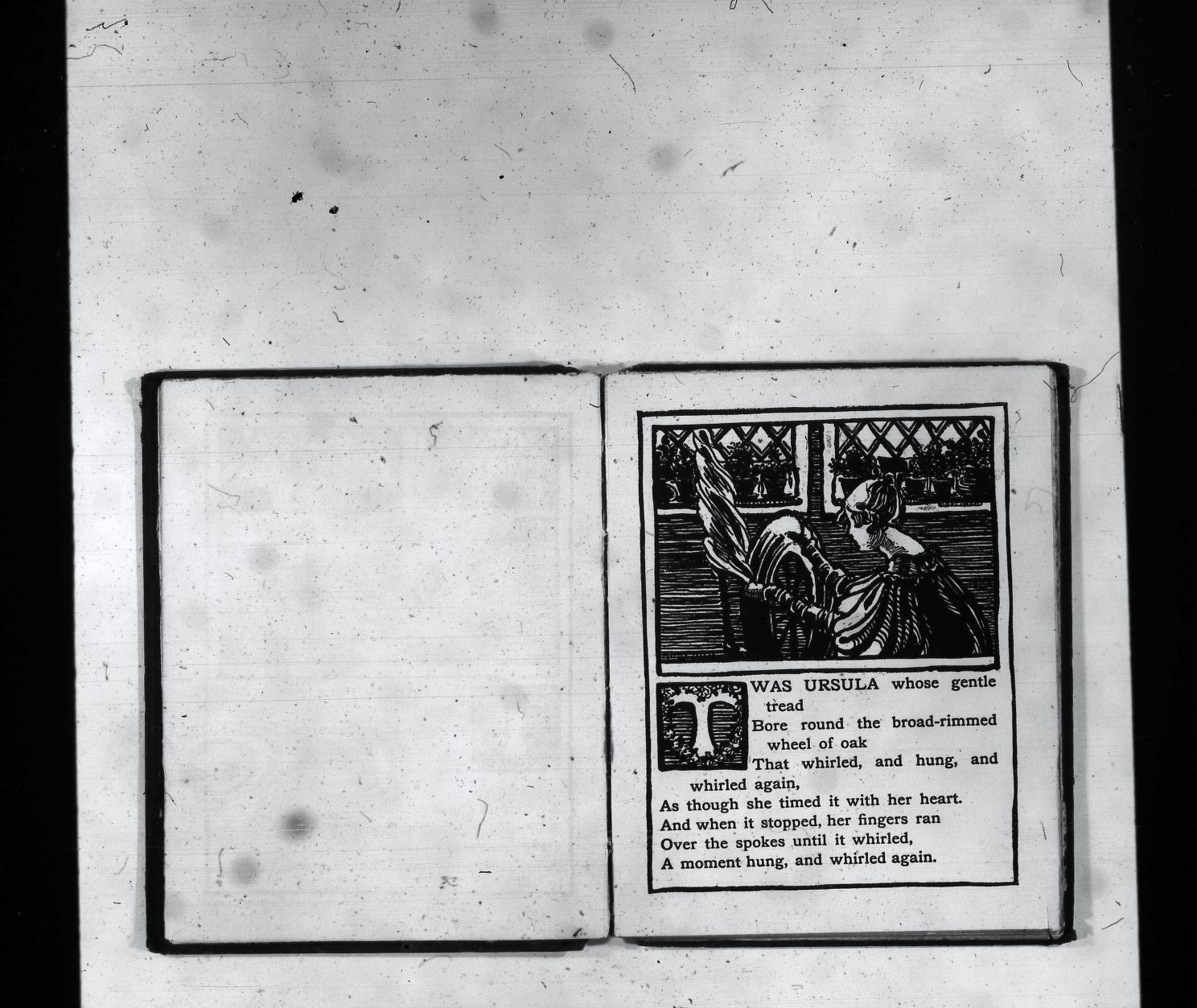
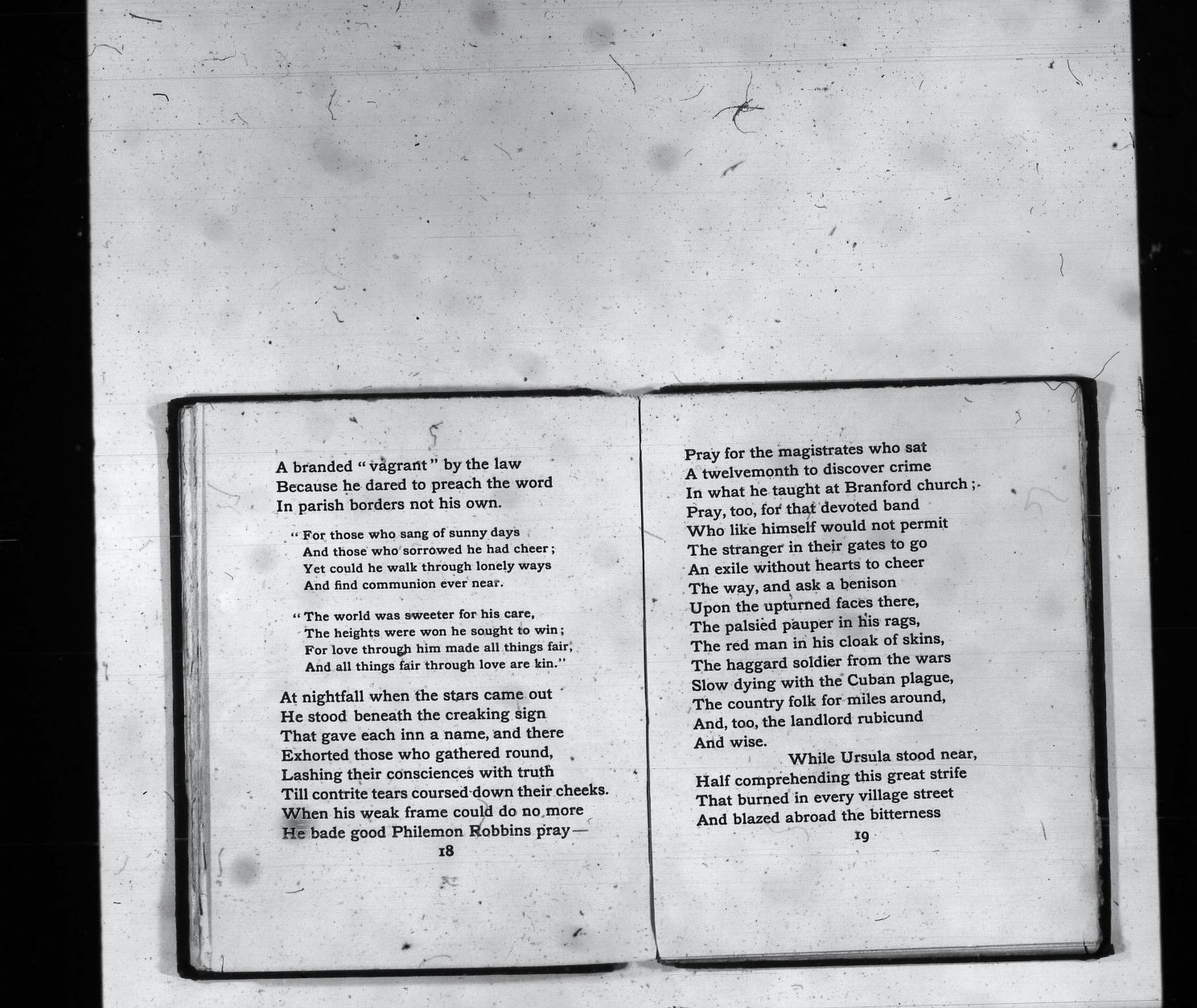
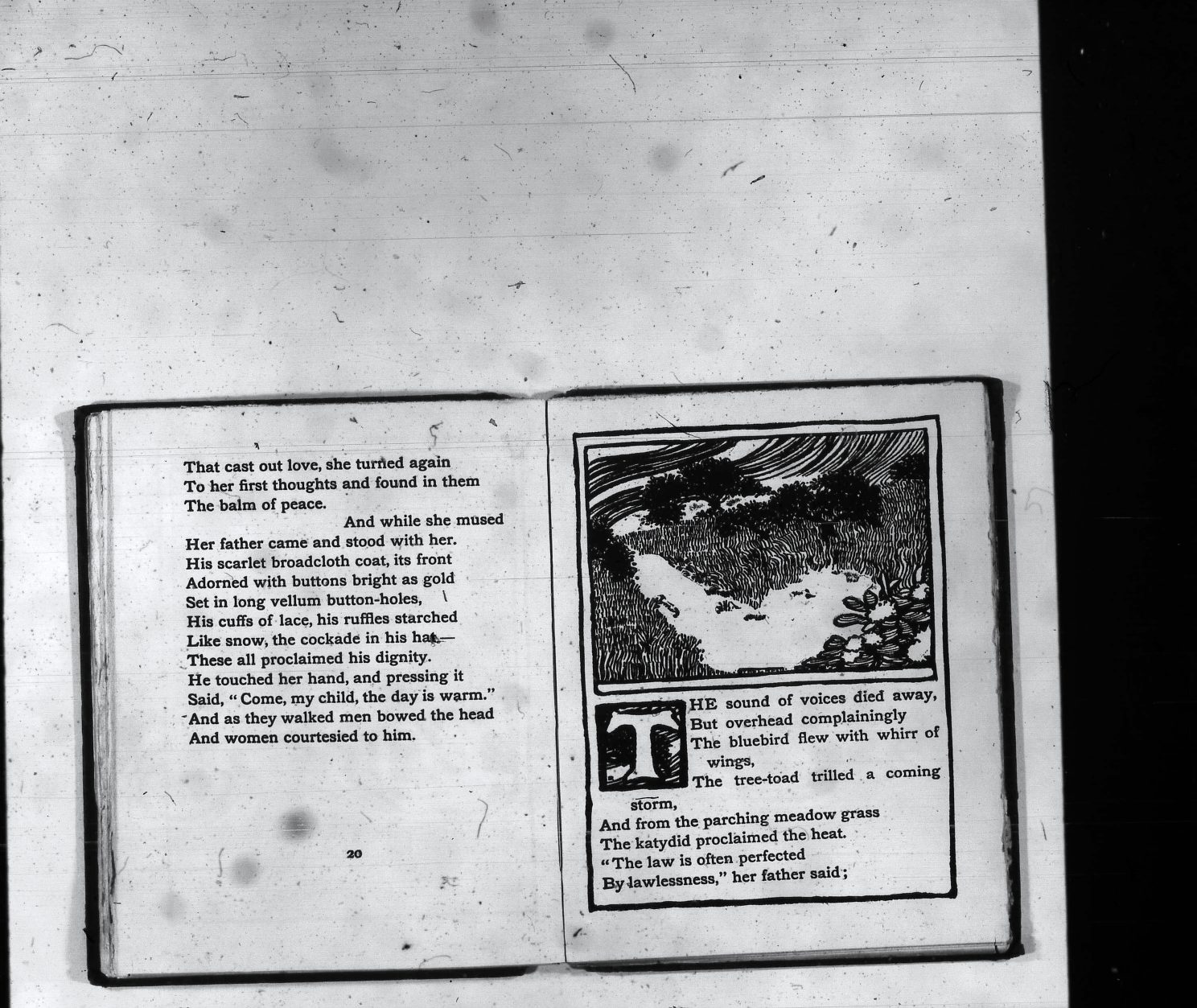
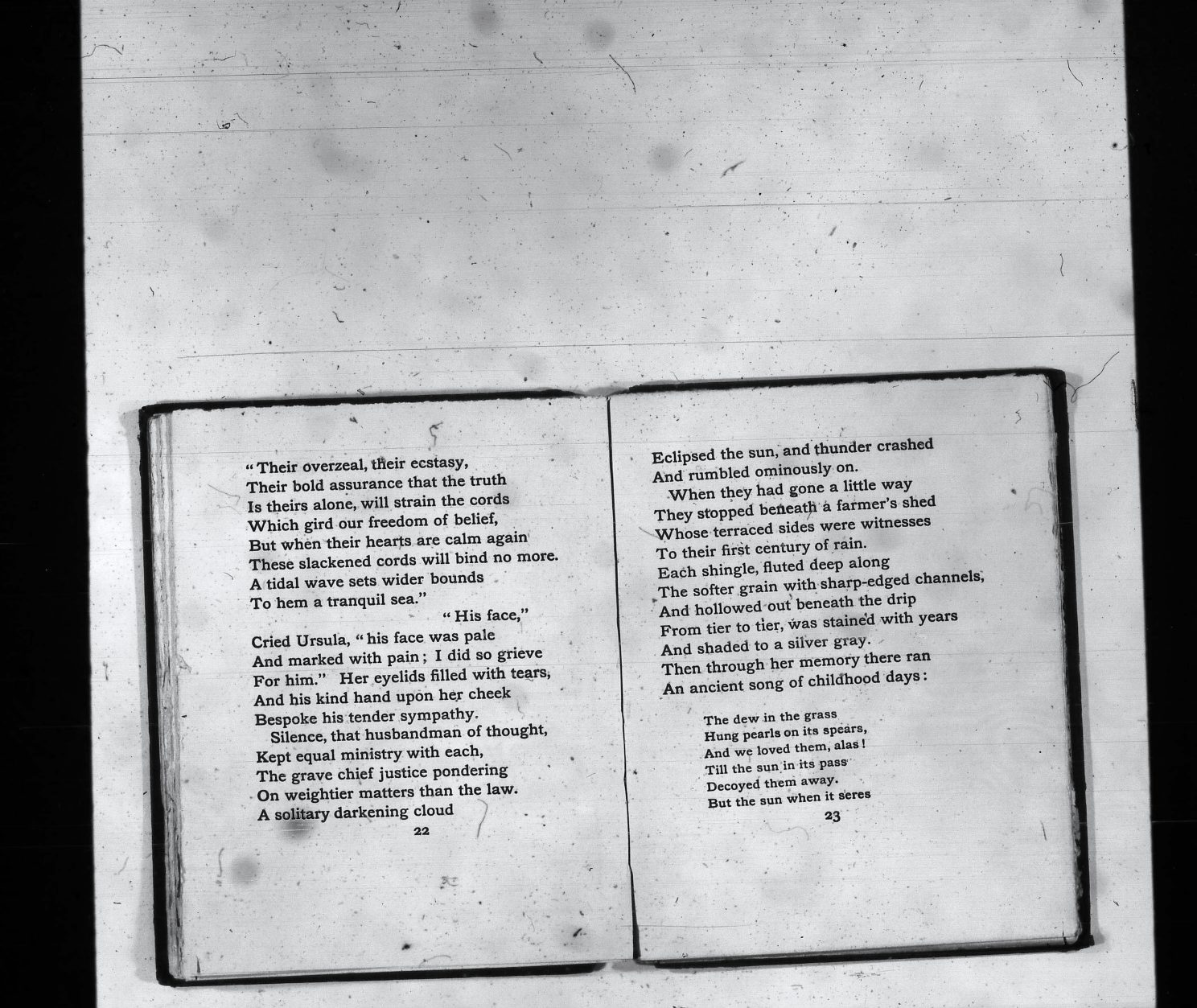
"The Love Story of Ursula Wolcott. Being a Tale in Verse of the Time of the GREAT REVIVAL IN NEW ENGLAND. Written by CHARLES KNOWLES BOLTON, Librarian in the Town of Brookline, Massachusetts. With Designs by Ethel Reed."; "Boston: 6, Beacon Street / Lamson, Wolffe, and Company / New York: 156, Fifth Avenue / M-DCCC-XC-V"
1895
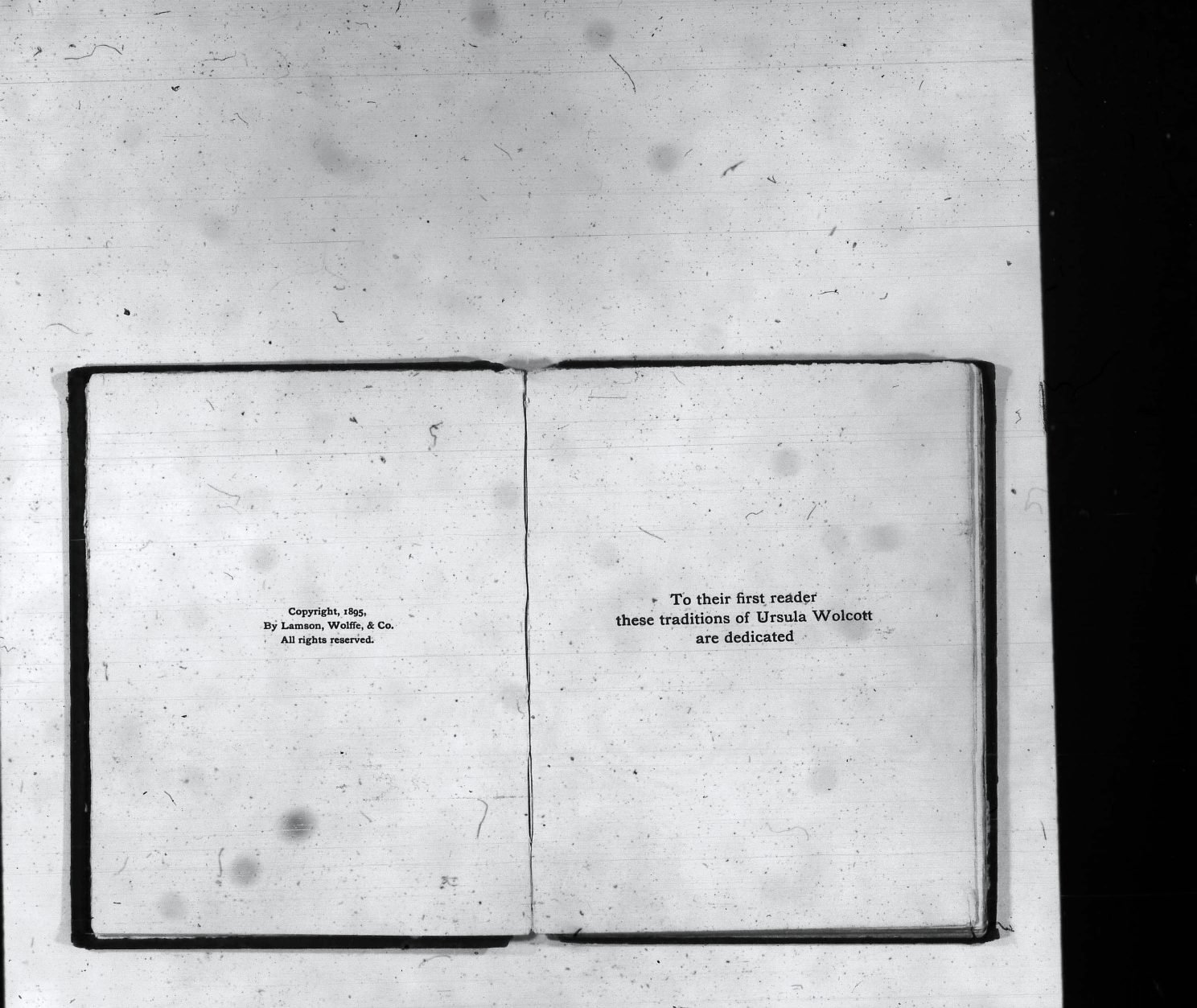
"Copyright, 1895, By Lamson, Wolffe, & Co."; dedication "To their first reader these traditions of Ursula Wolcott are dedicated"
 FRAME 301
 FRAME 302
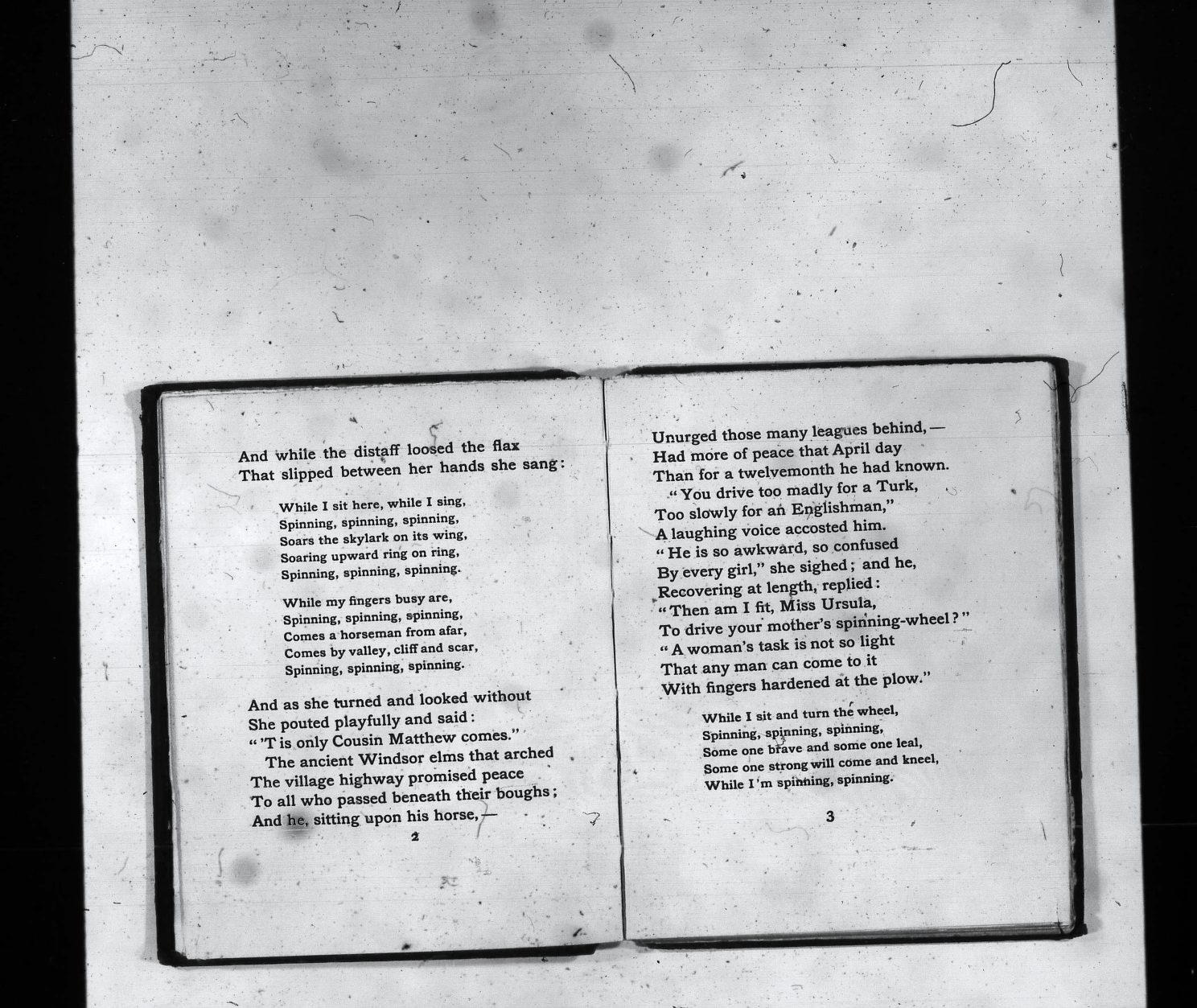 FRAME 303
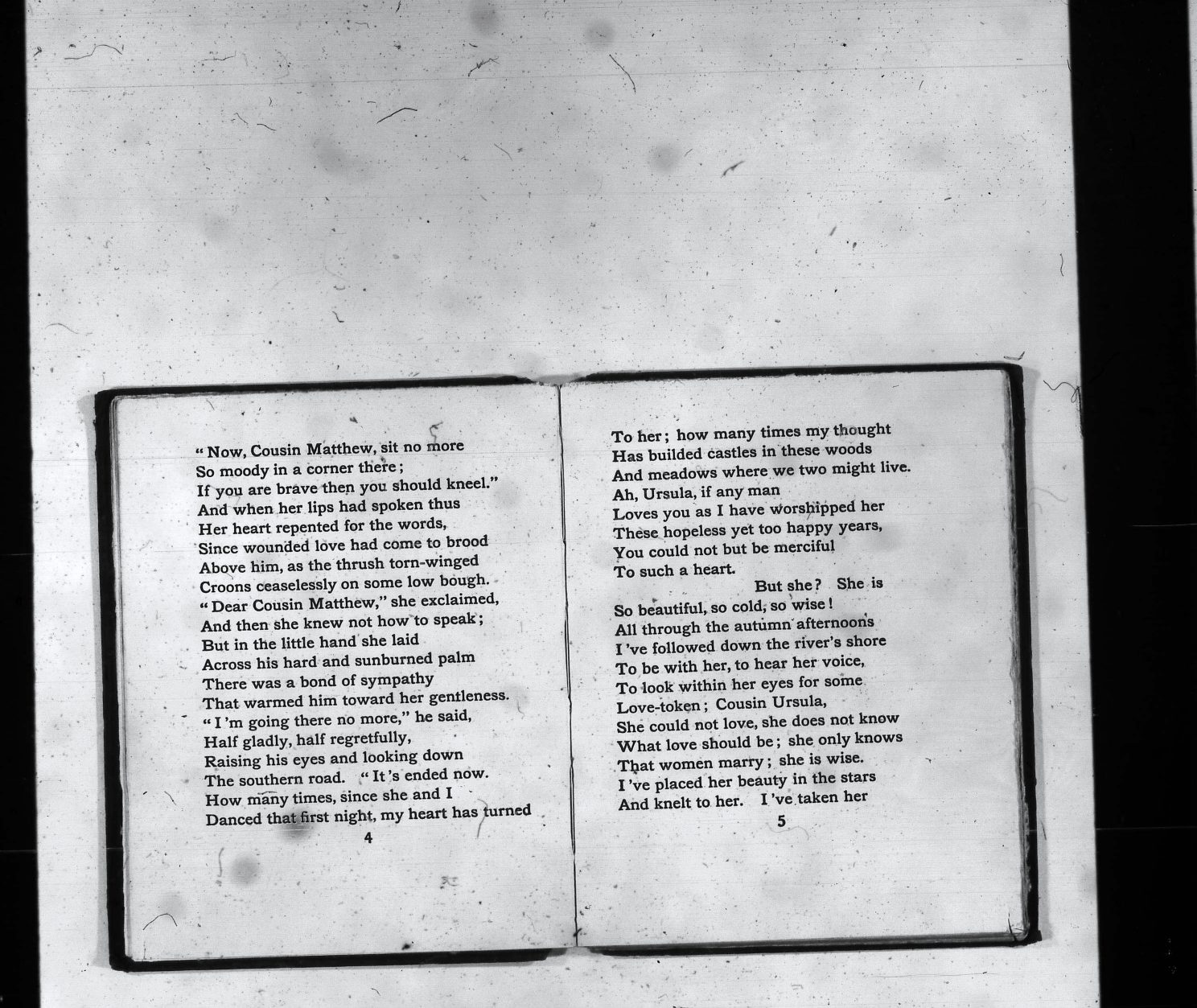 FRAME 304
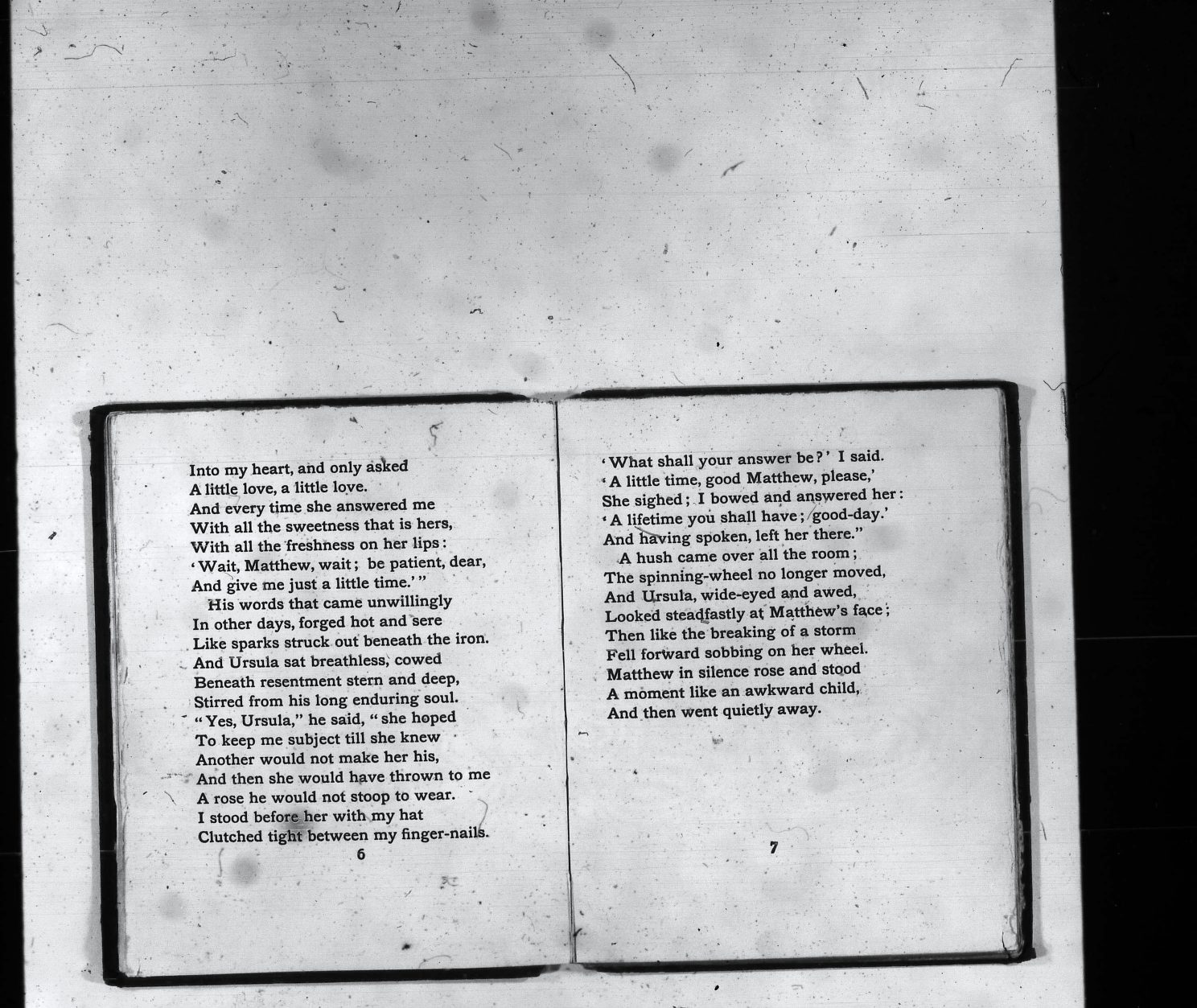 FRAME 305
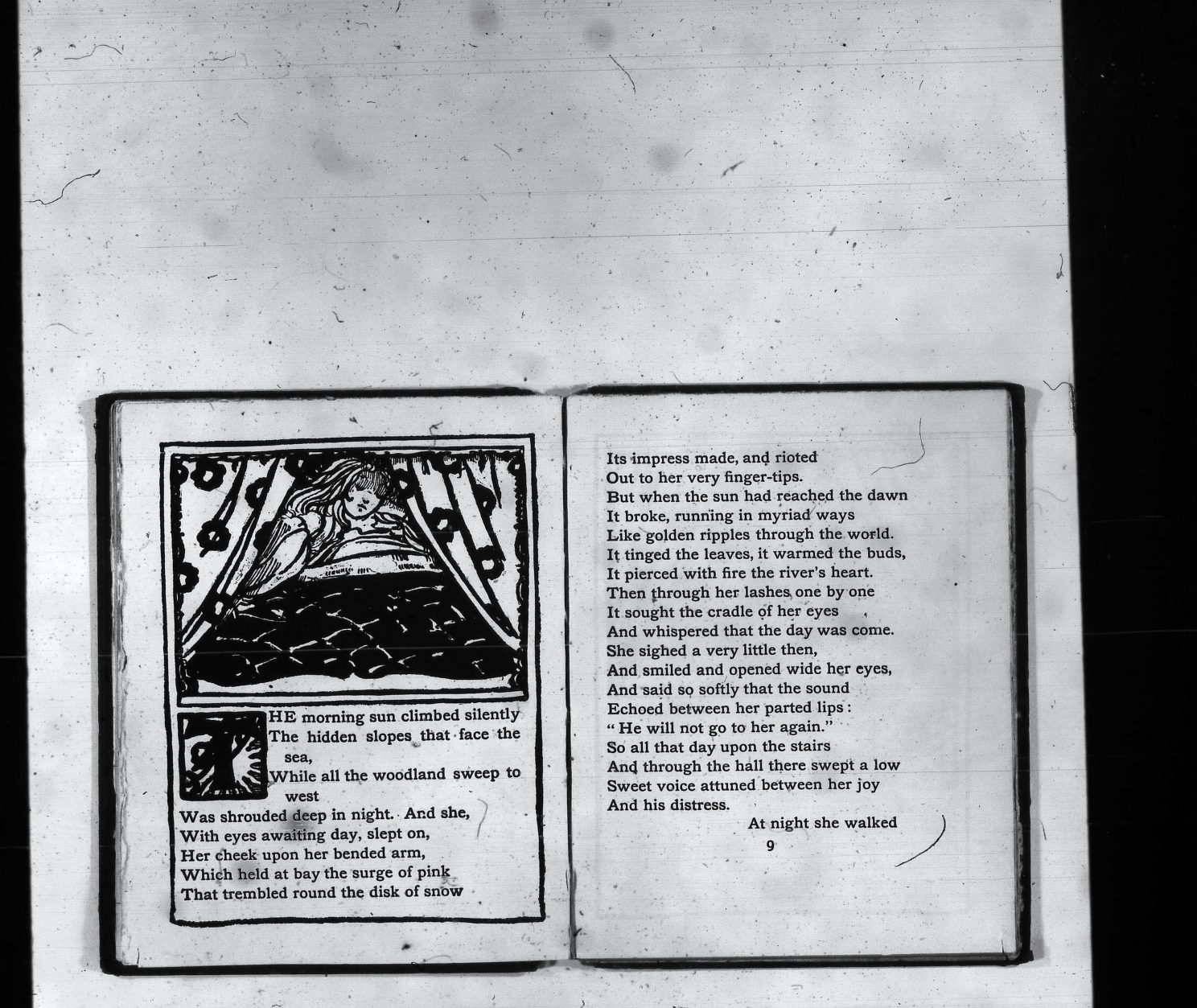 FRAME 306
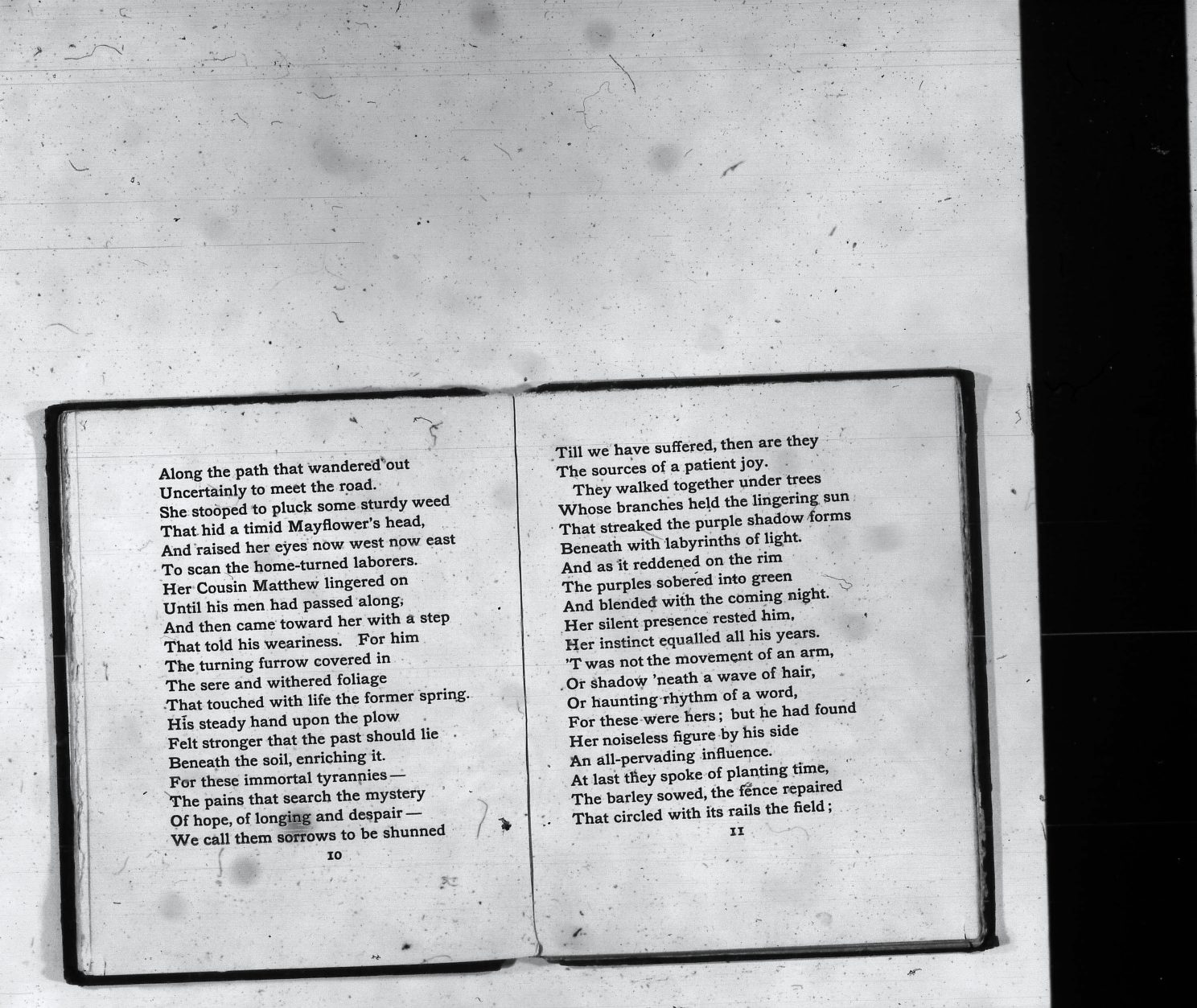 FRAME 307
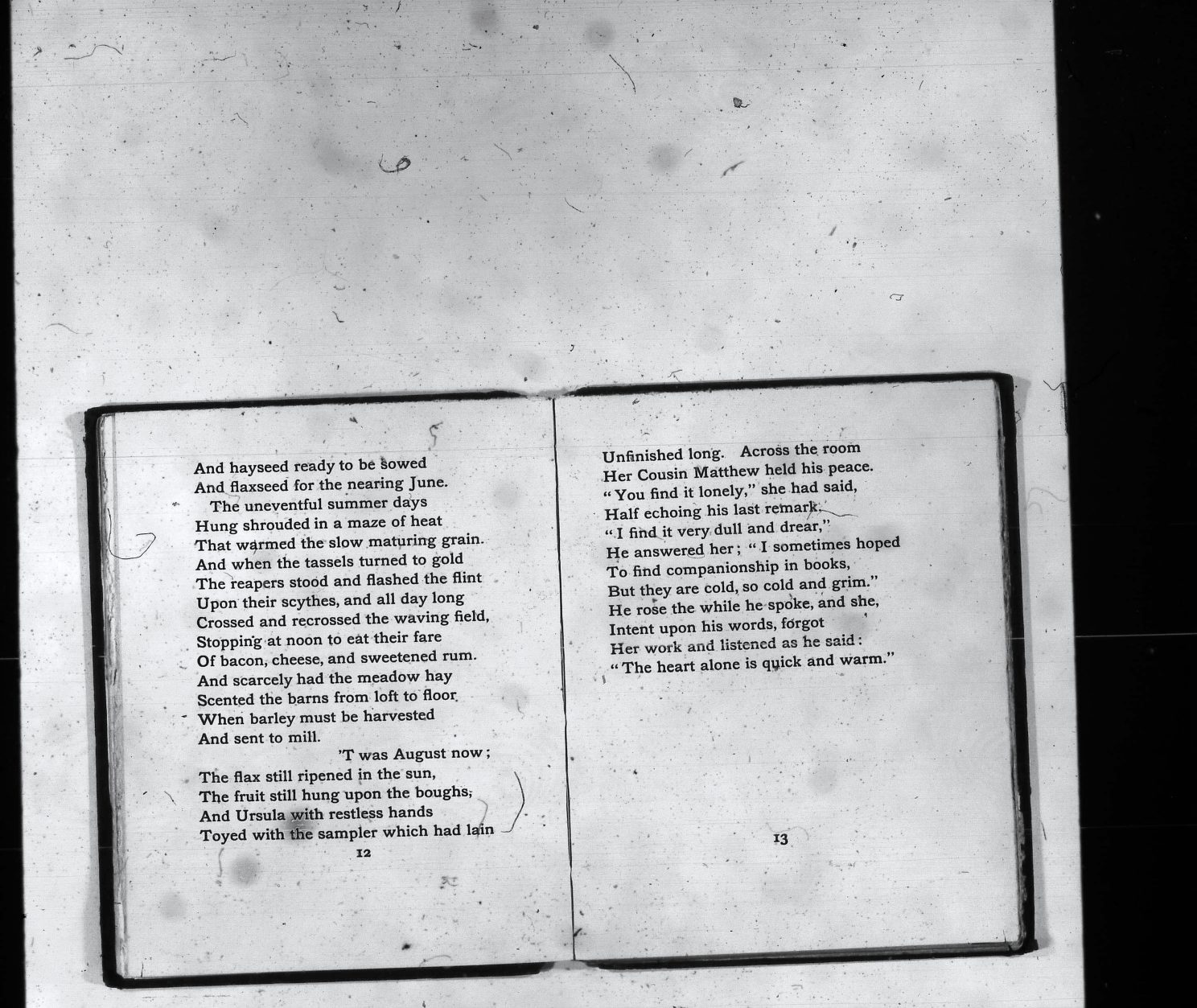 FRAME 308
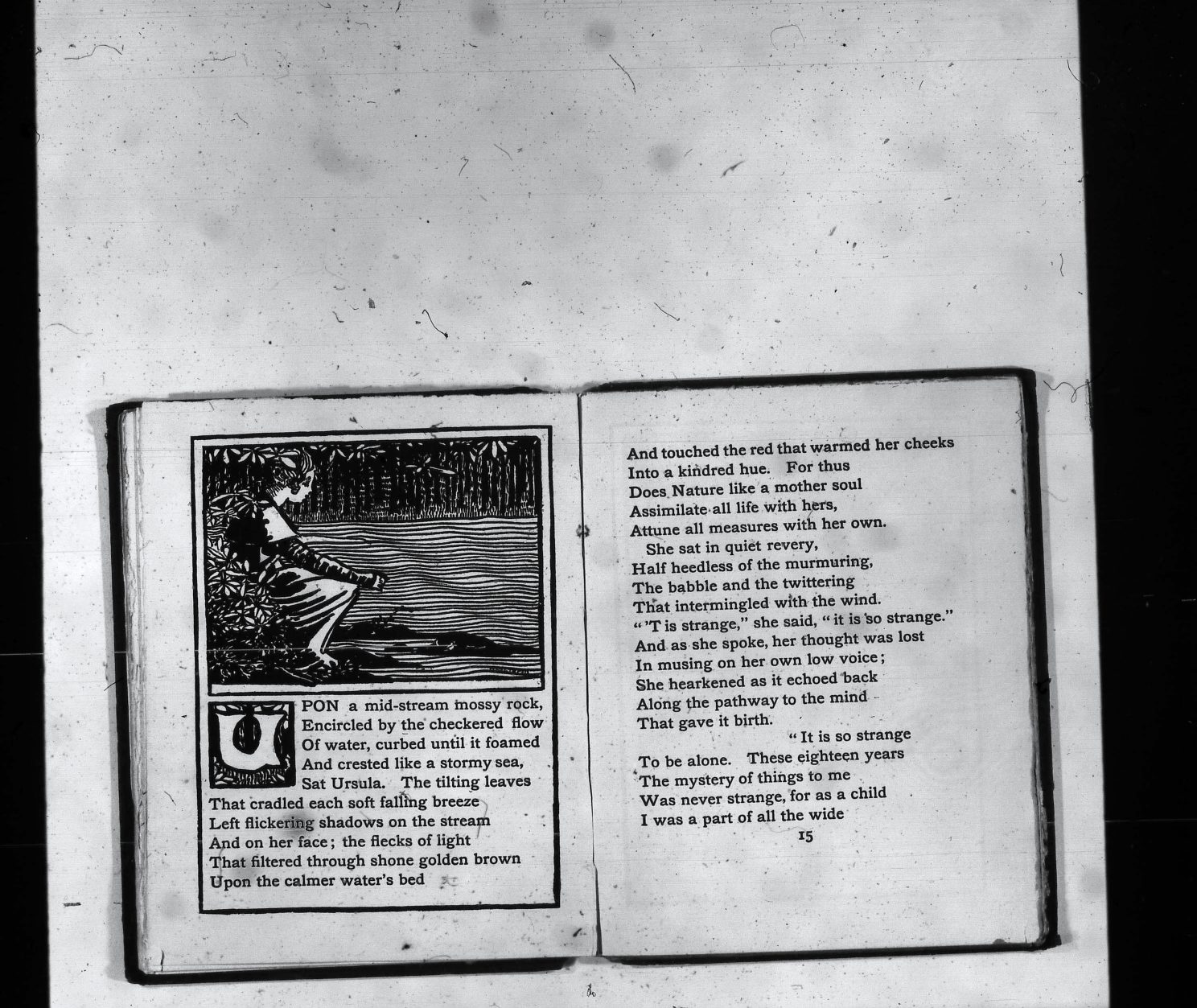 FRAME 309
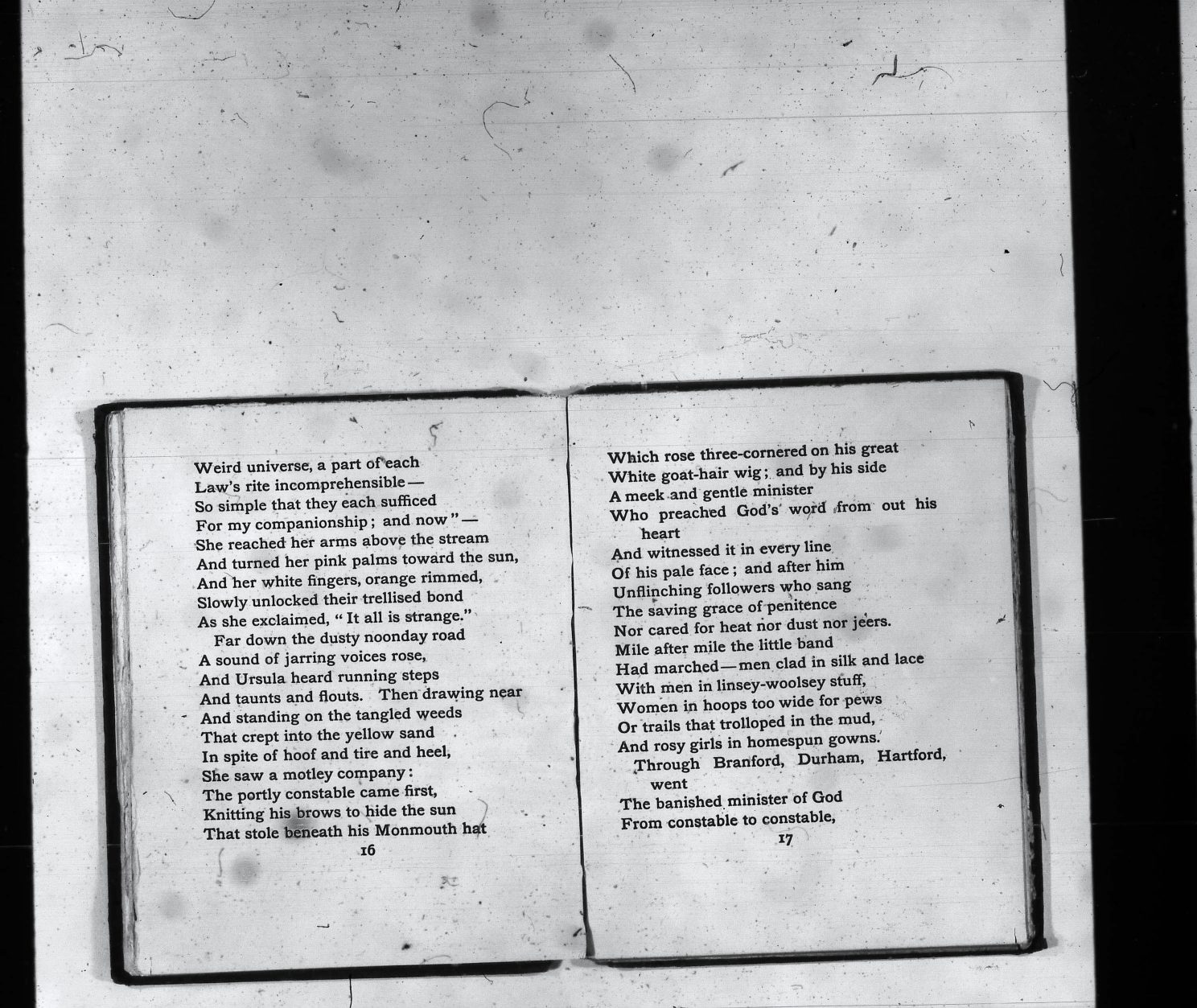 FRAME 310
 FRAME 311
 FRAME 312
 FRAME 313
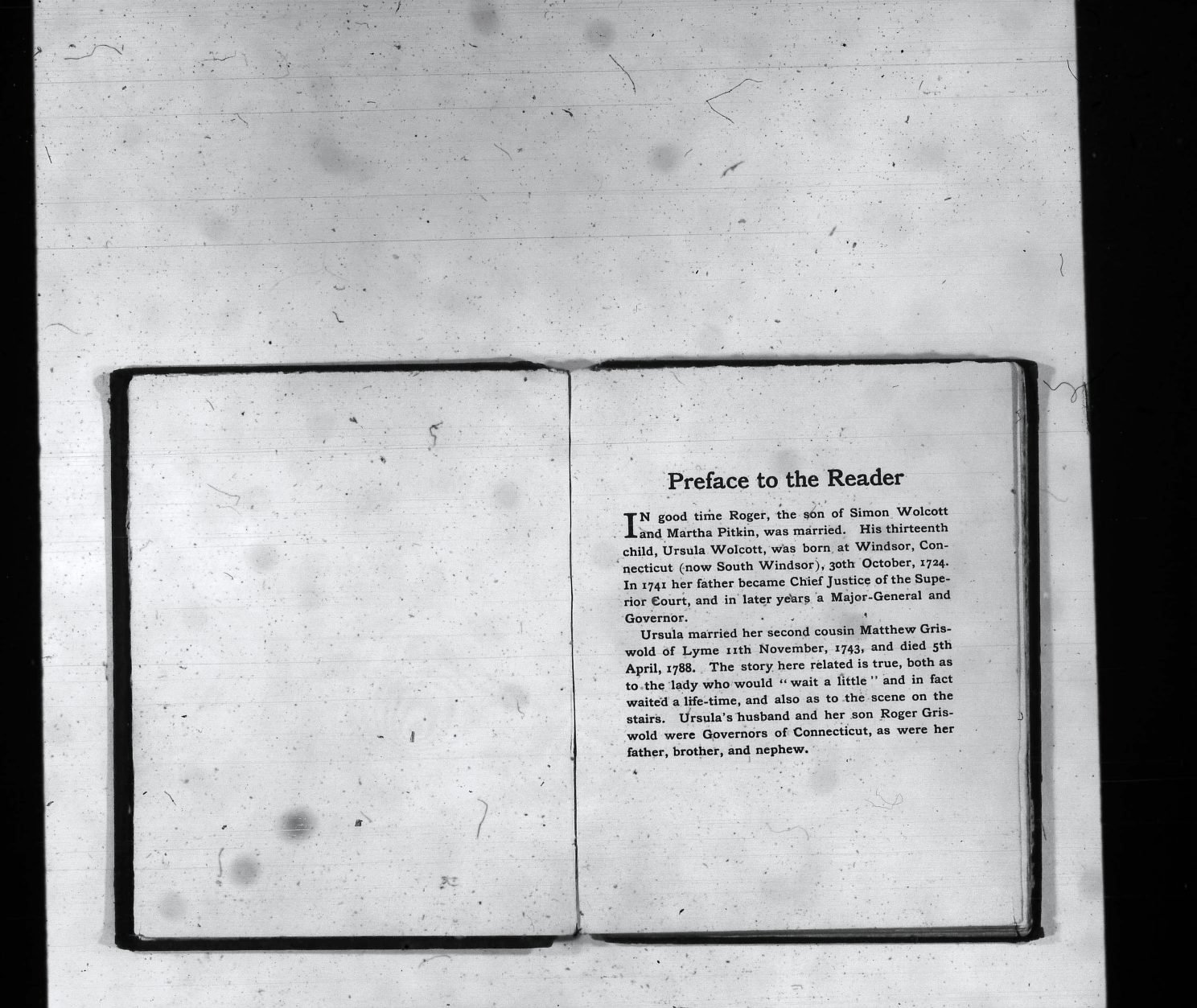
"Preface to the Reader": Roger Wolcott (son of Simon Wolcott and Martha Pitkin); his thirteenth child Ursula Wolcott b. Windsor, Conn. 30 Oct 1724; her father Chief Justice of the Superior Court 1741, later Major-General and Governor; Ursula m. her second cousin Matthew Griswold of Lyme 11 Nov 1743, d. 5 Apr 1788; "the story here related is true, both as to the lady who would 'wait a little' and in fact waited a life-time, and also as to the scene on the stairs"
(cont.)
OTHER
1851-05-11 (Sunday)
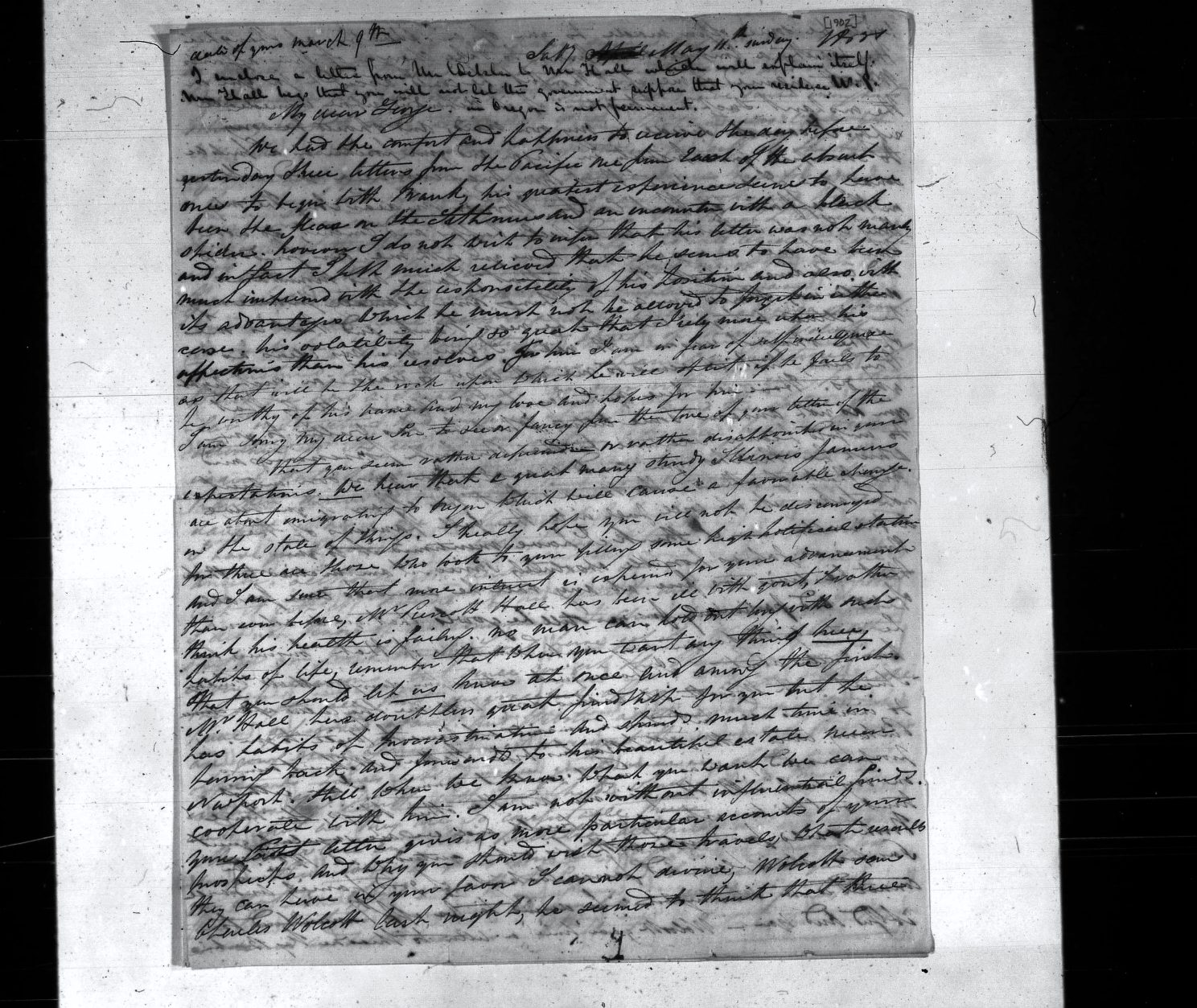
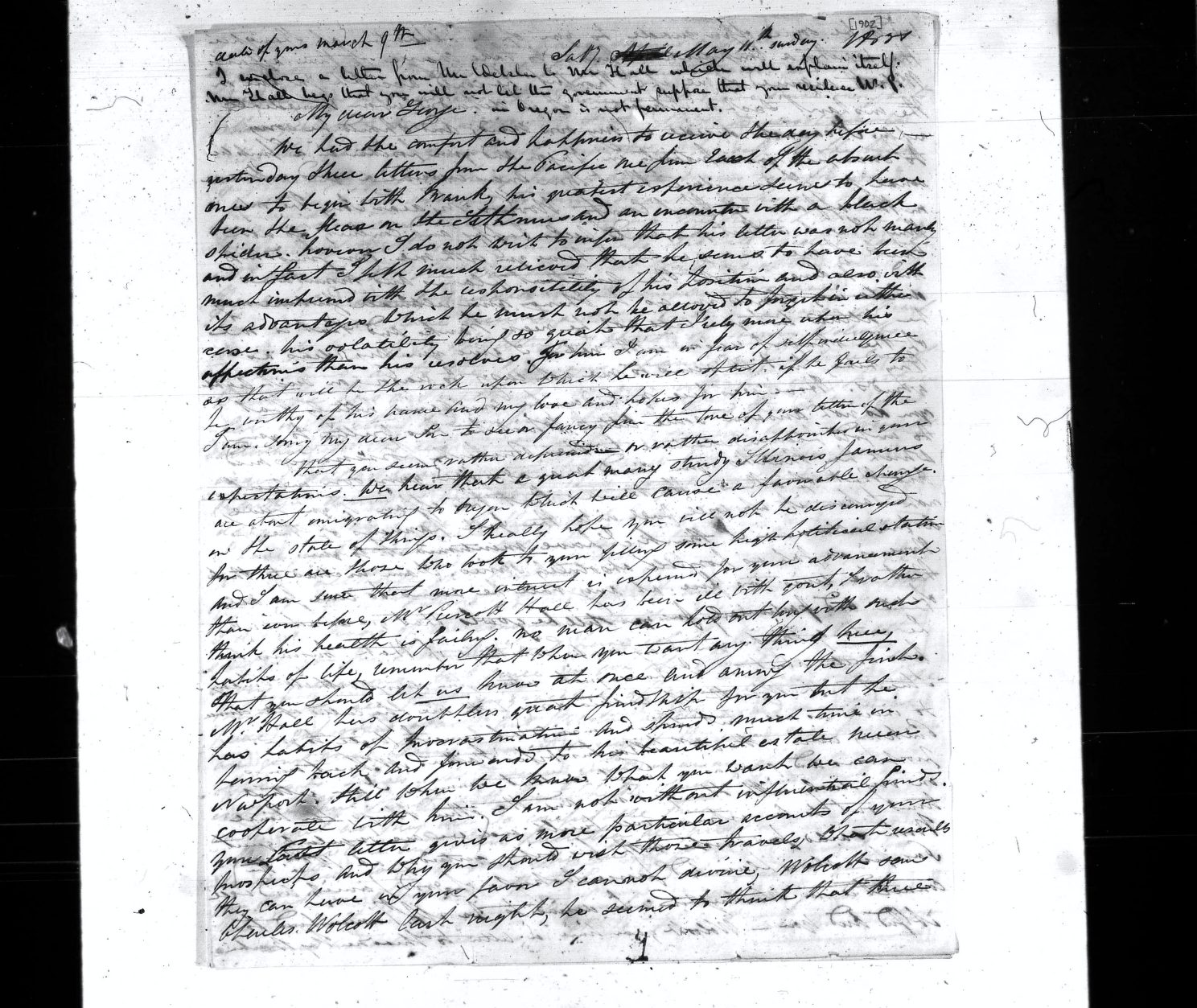
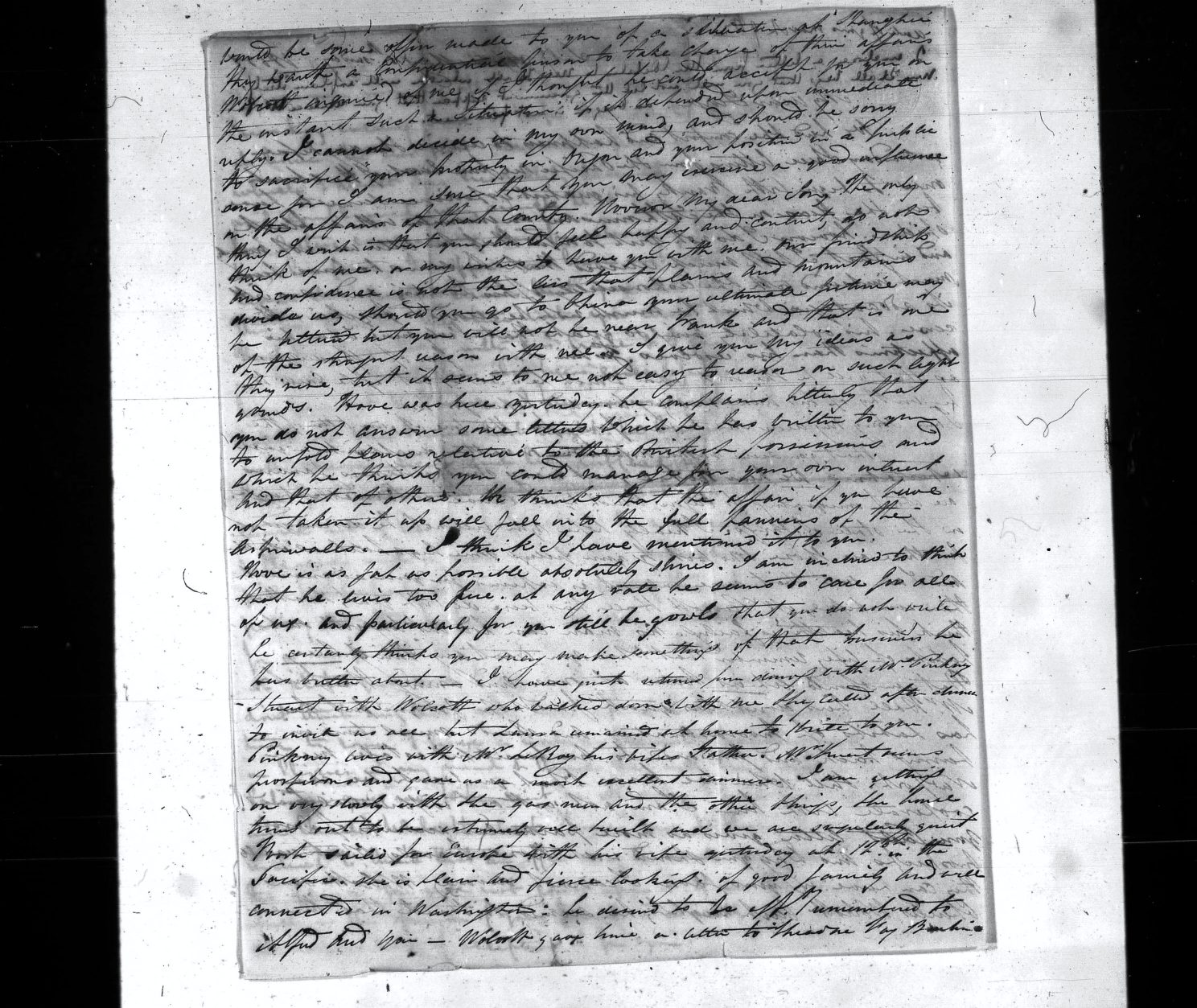
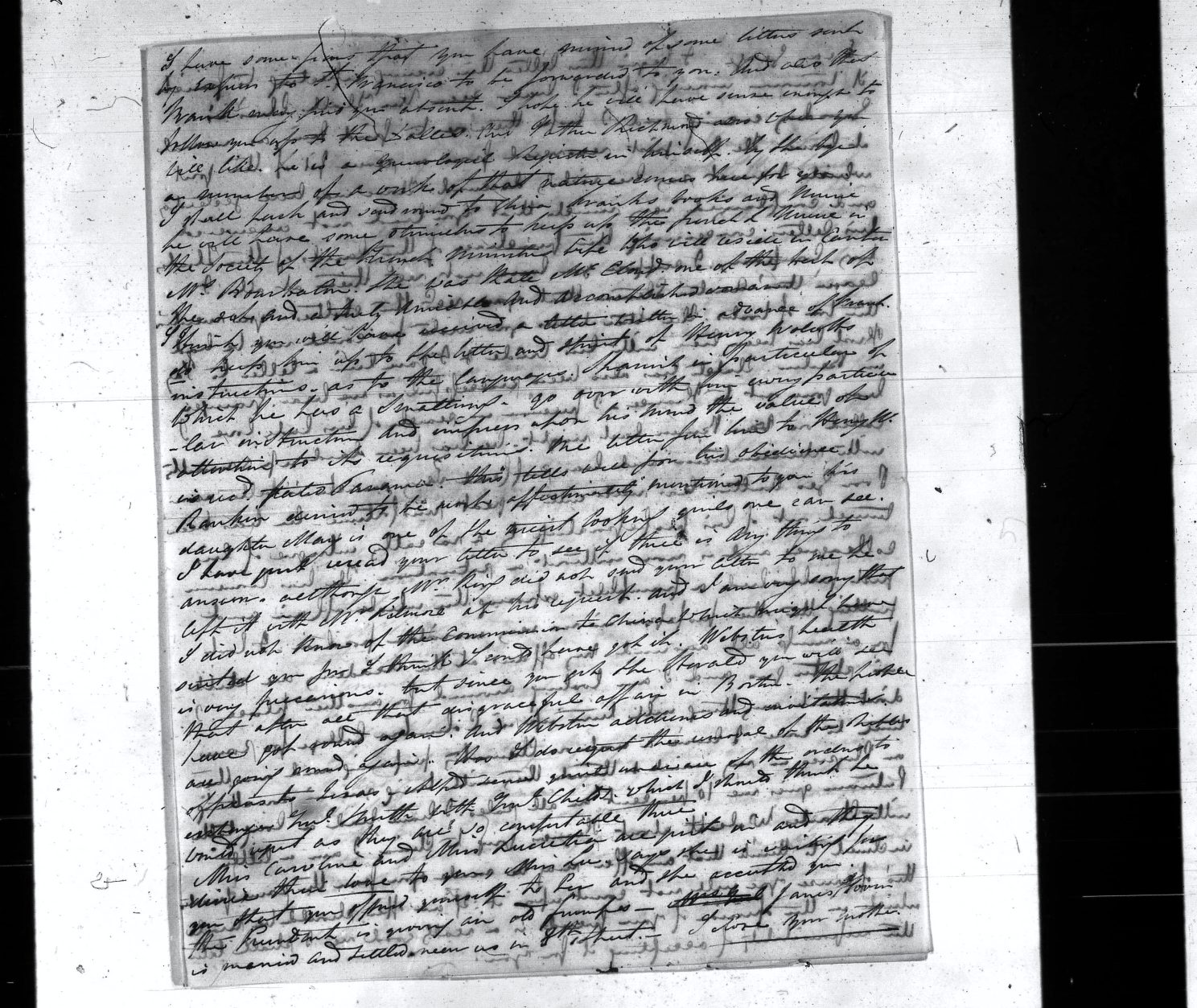
three letters received "from the Pacific one from each of the absent ones"; Frank's crossing of the Isthmus, "his greatest experience seems to have been the fleas on the Isthmus"; warns of his "volatility"; sorry George seems "disheartened in your expectations"; "a great many sturdy Illinois farmers are about emigrating to Oregon which will cause a favorable change"; "I am not without influential friends"
(cont.)
LAURA, GEORGE, FRANCIS
n.d. [spring 1851]
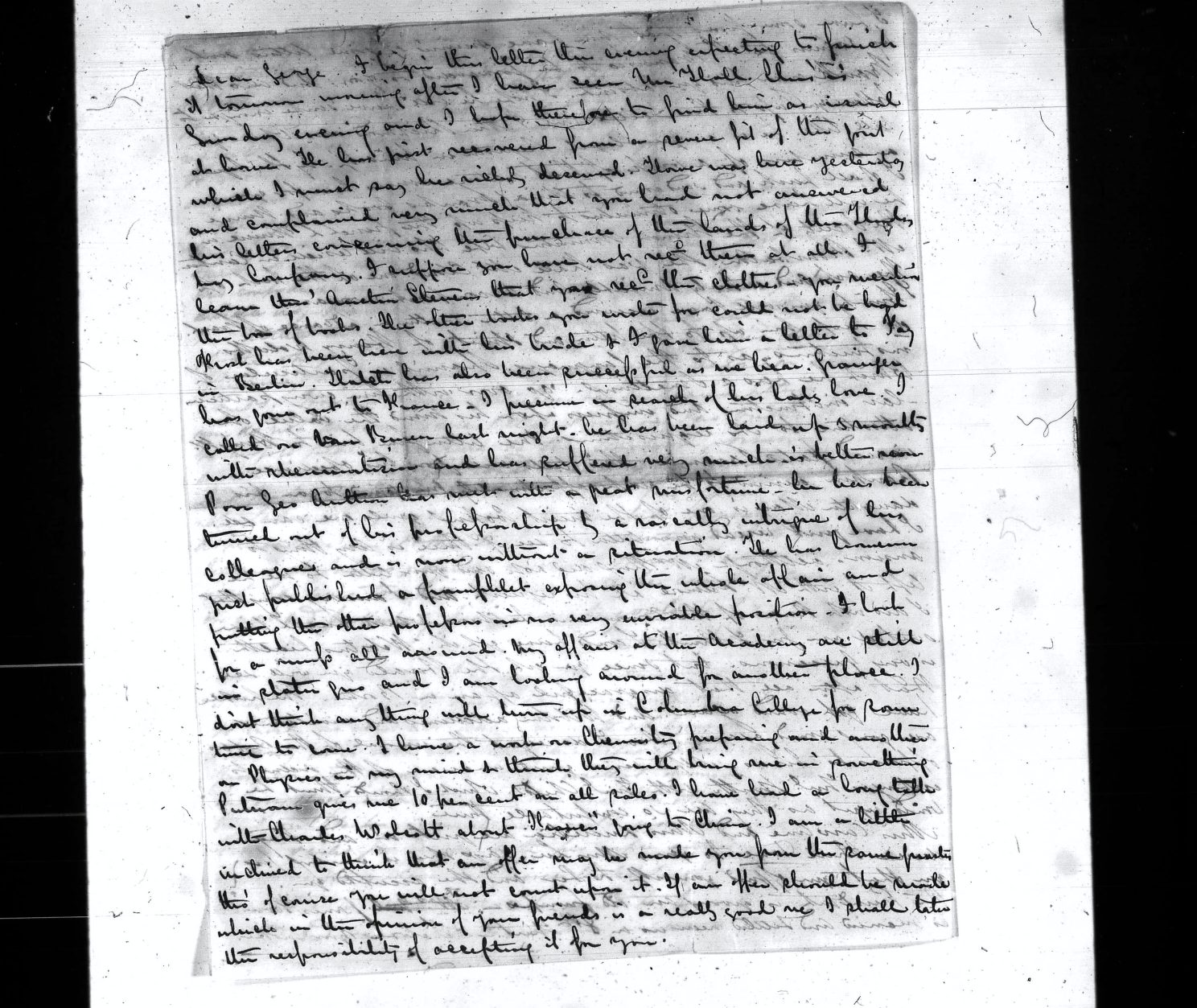
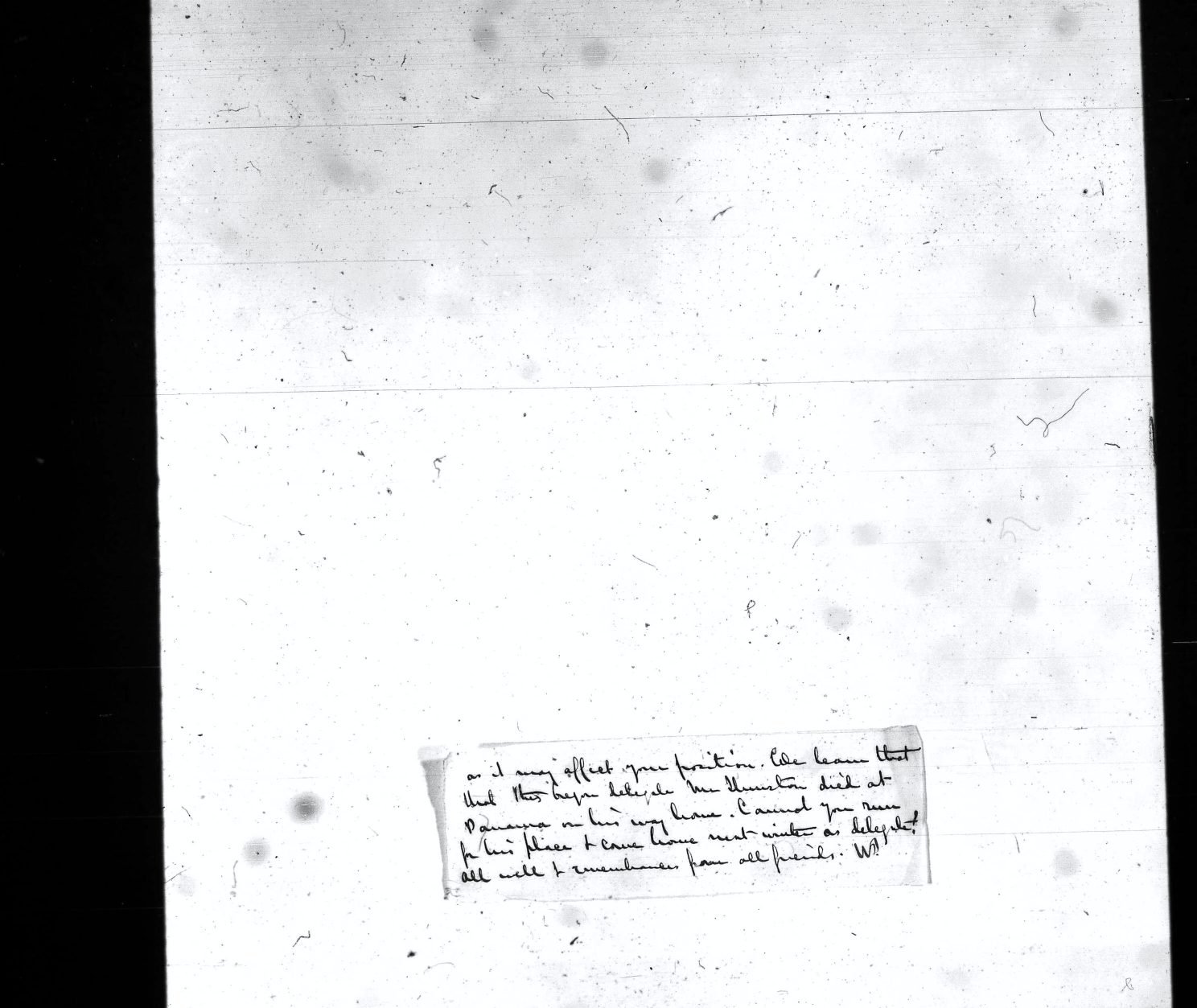
Mr. Hall "has just recovered from a severe fit of the gout which I must say he has richly deserved"; Hove complains George has not answered his letters "concerning the purchase of the lands of the Hudson's Bay Company"; "Poor Geo. Anthon… turned out of his professorship by a rascally intrigue of his colleagues"; "My affairs at the Academy are still in statu quo and I am looking around for another place… I have a work on Chemistry preparing and another in Physics in my mind"; "Putnam gives me 10 per cent on all sales"
1892-09-07
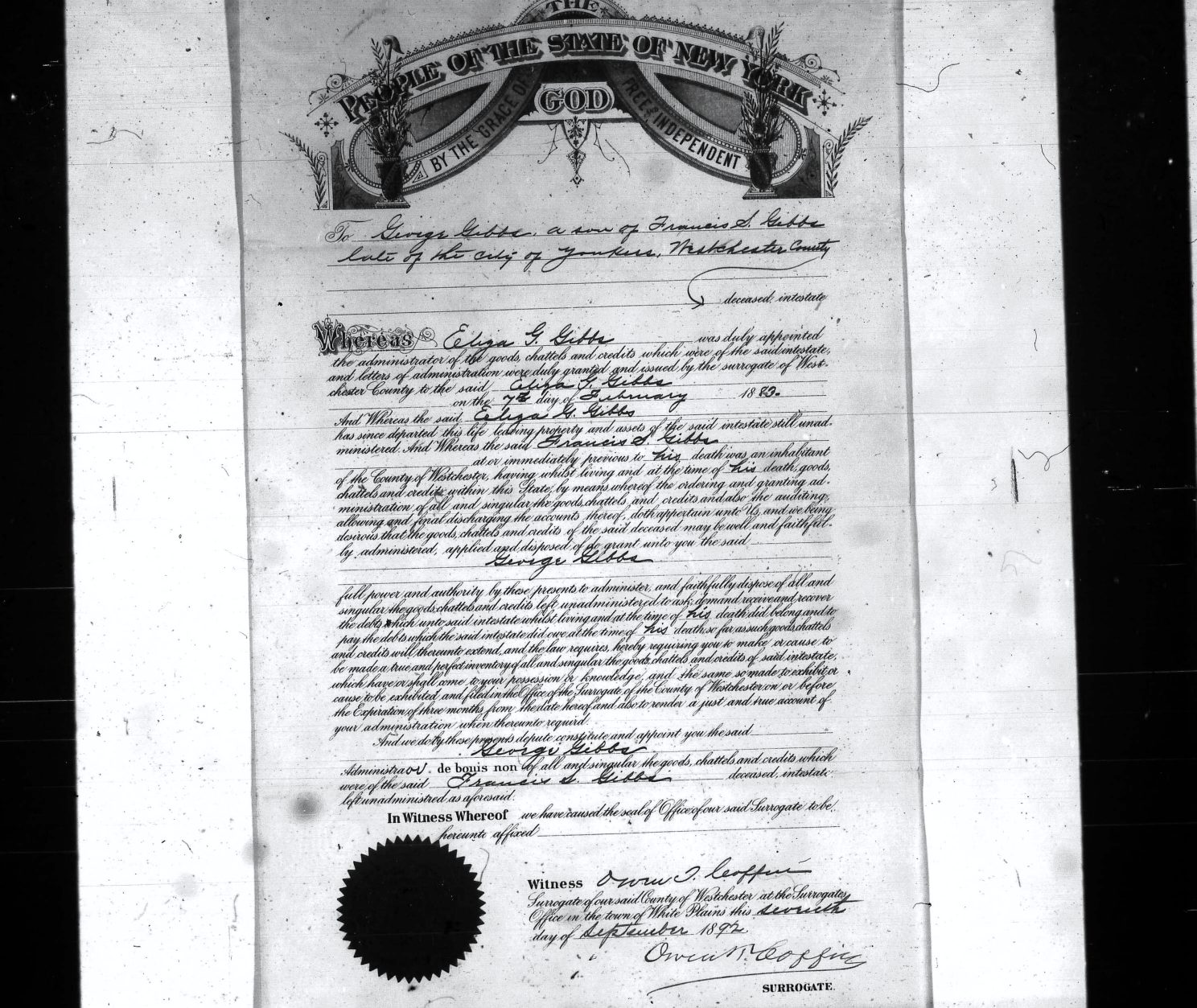
PRINTED FORM with Surrogate's seal: letters of administration de bonis non granted to George Gibbs, "a son of Francis S. Gibbs late of the city of Yonkers, Westchester County, deceased intestate"; recites that Eliza G. Gibbs had been appointed administrator 7 February 1883 and "has since departed this life leaving property and assets of the said intestate still unadministered"
1892
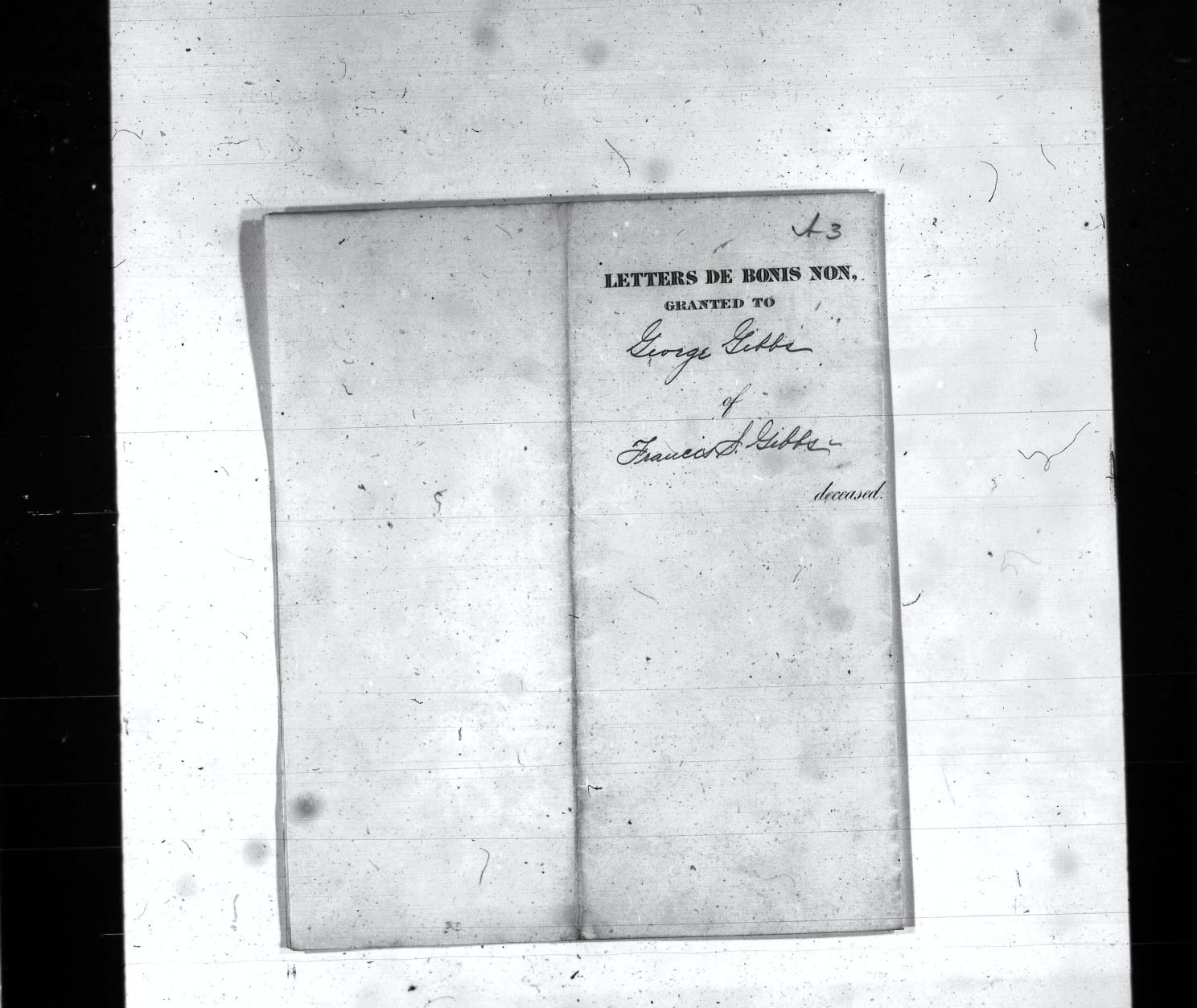
PRINTED docket: "LETTERS DE BONIS NON, GRANTED TO George Gibbs of Francis S. Gibbs deceased," pencilled "A 3"
1903-09-14
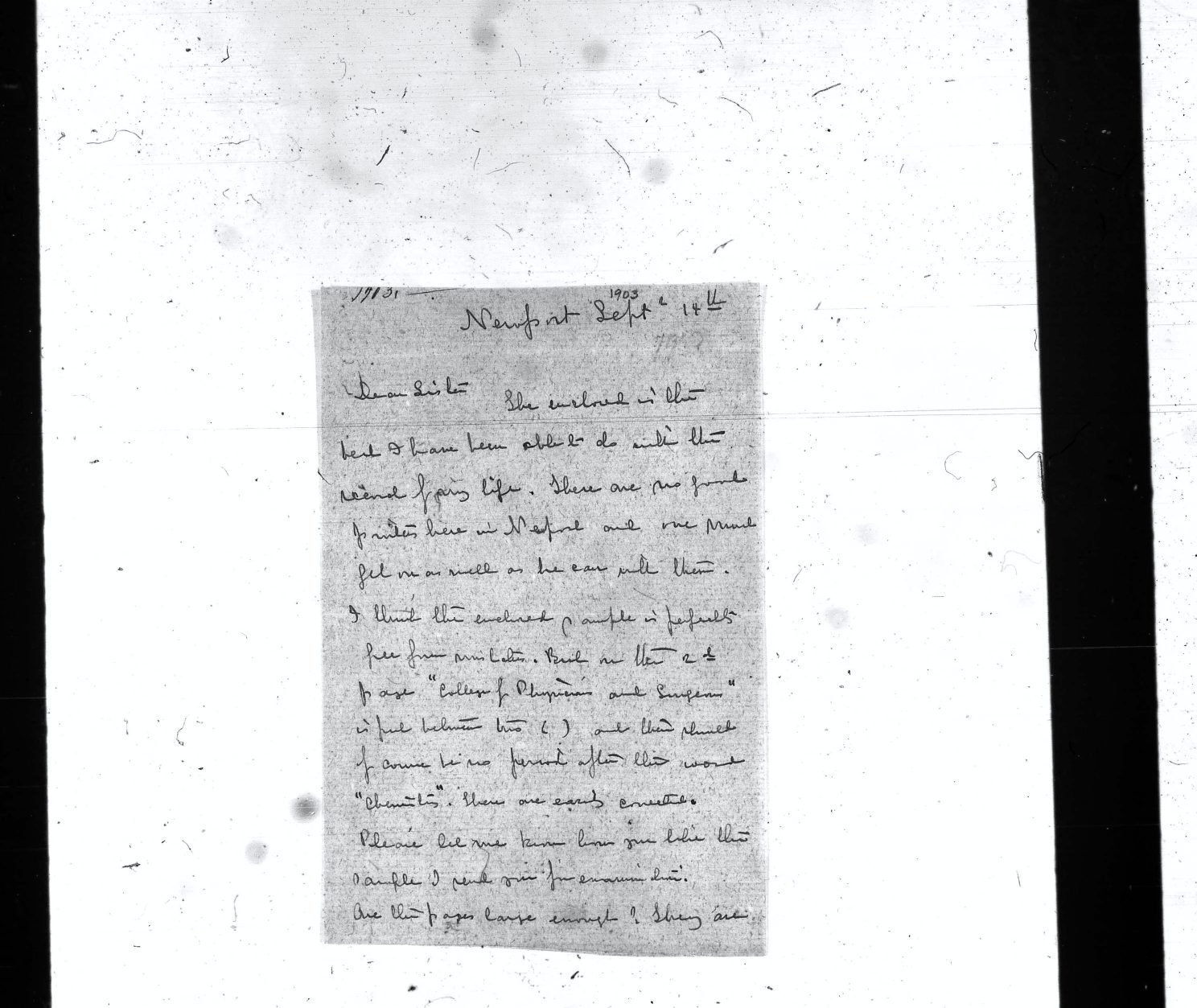
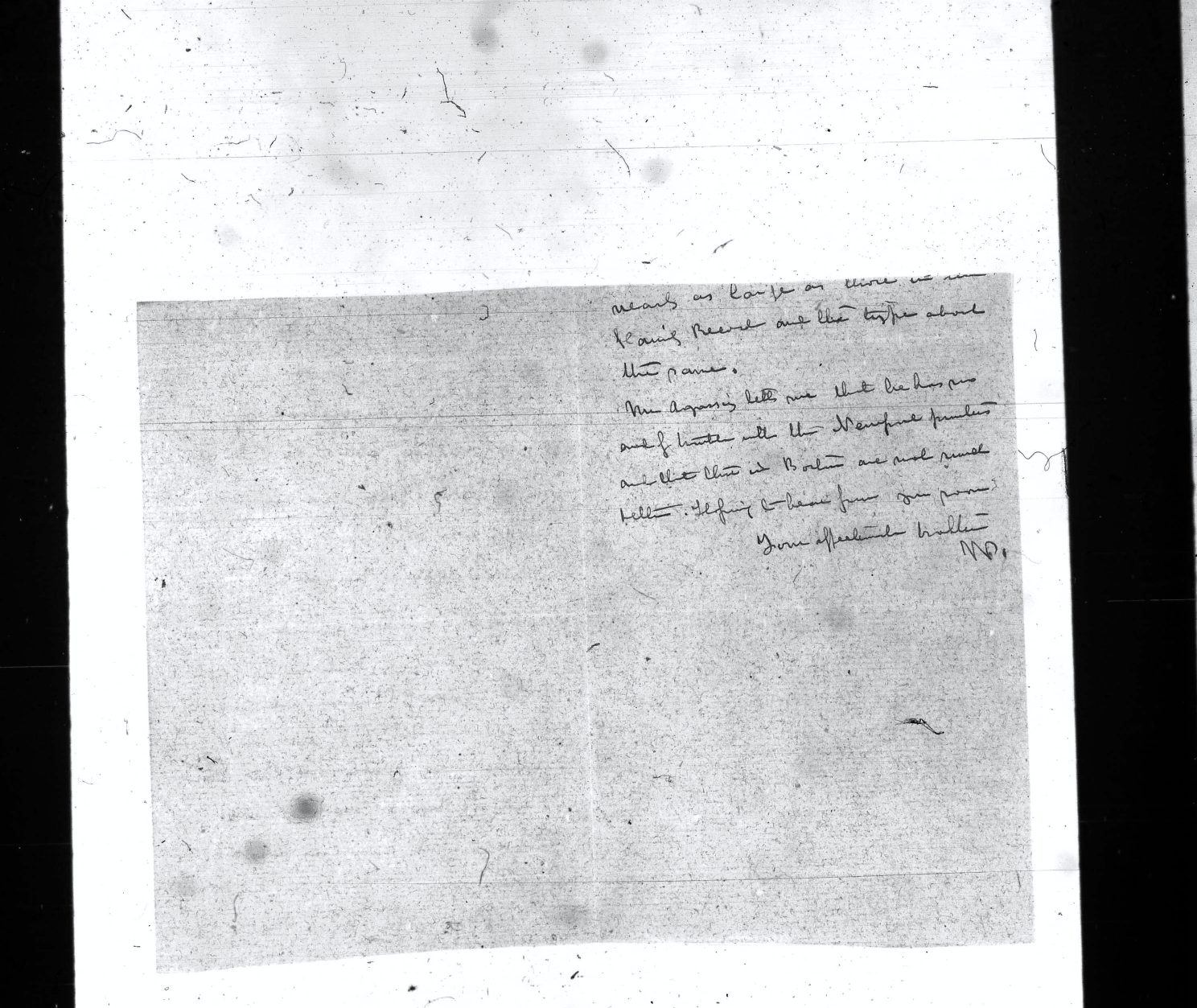
Newport; "The enclosed is the best I have been able to do with the record of my life. There are no good printers here in Newport and one must get on as well as he can with them"; proof corrections, "there should of course be no period after the word 'Chemistry'"
"18_?"
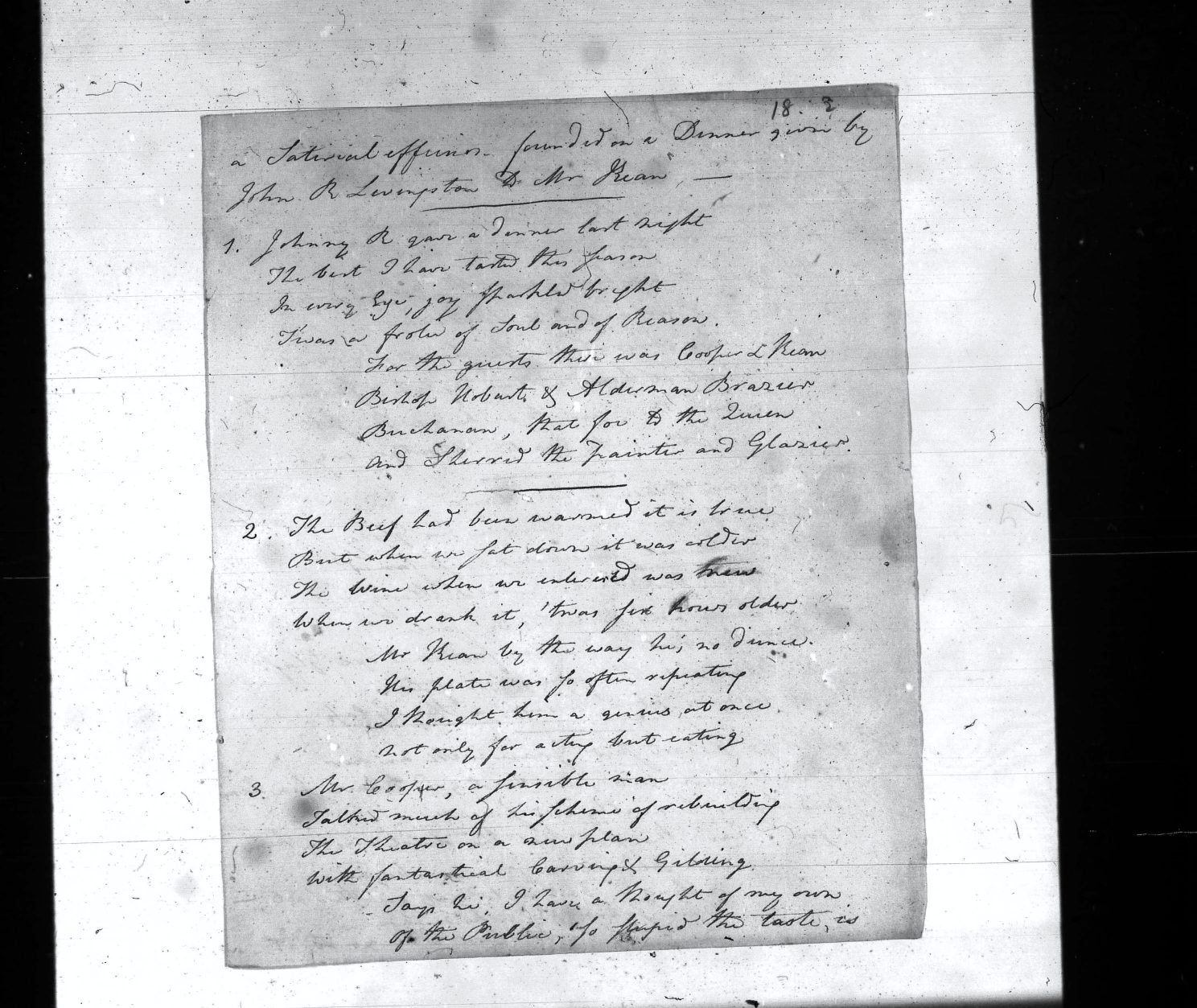
satirical poem, "a Satirical effusion founded on a Dinner given by John R Livingston to Mr Kean": "Johnny R gave a dinner last night / The best I have tasted this season… For the guests there was Cooper & Kean / Bishop Hobart & Alderman Brazier / Buchanan, that foe to the Queen / And Sherred the Painter and Glazier"; the beef "had been warmed it is true / But when we sat down it was colder," Kean "no dunce… Not only for acting but eating"
Frames 331–500 · 99 documents
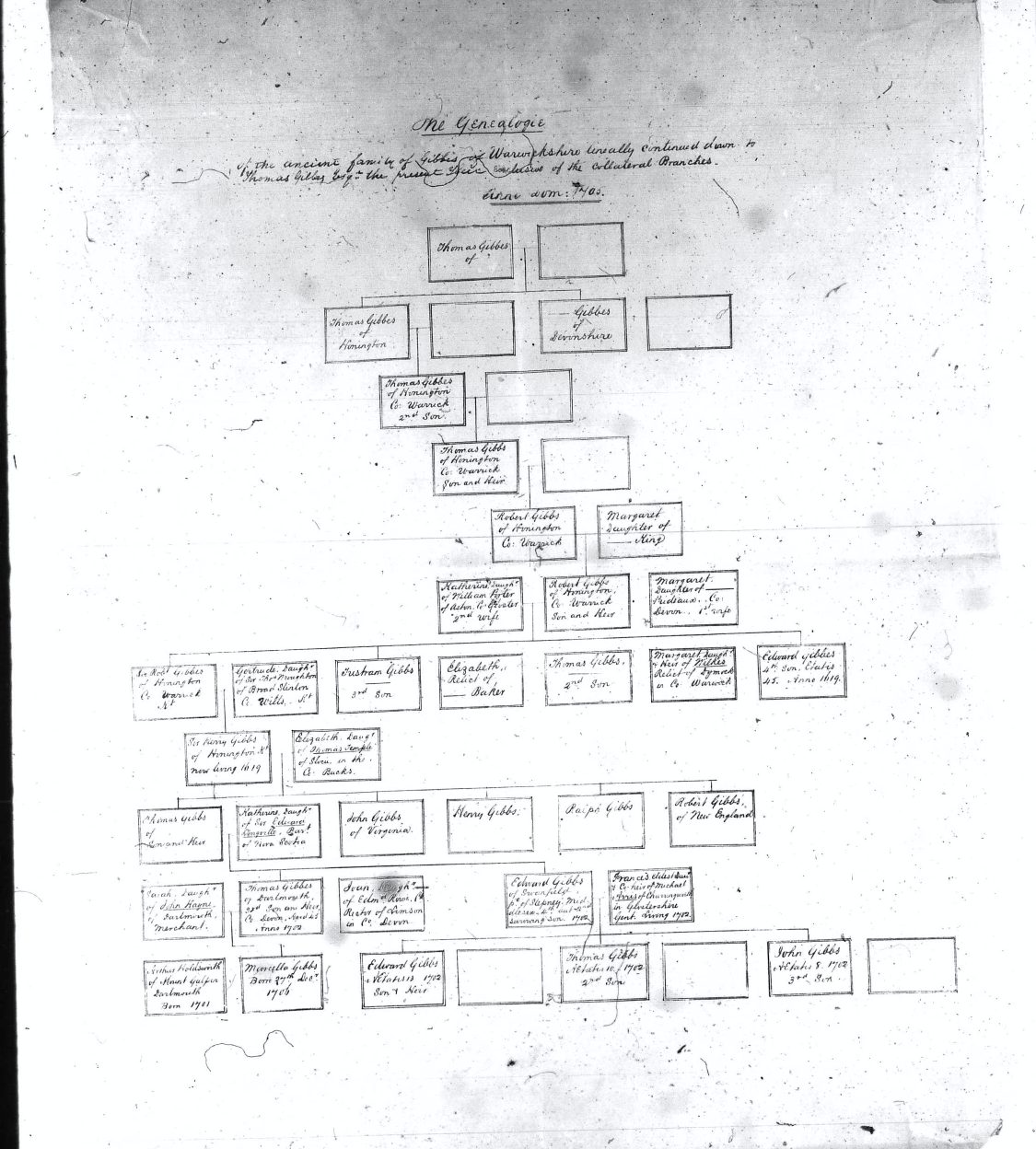
Older business and estate papers, the Sunswick sale, Oliver Wolcott Jr.’s autobiographical memorial, and the family genealogies and pedigree charts.
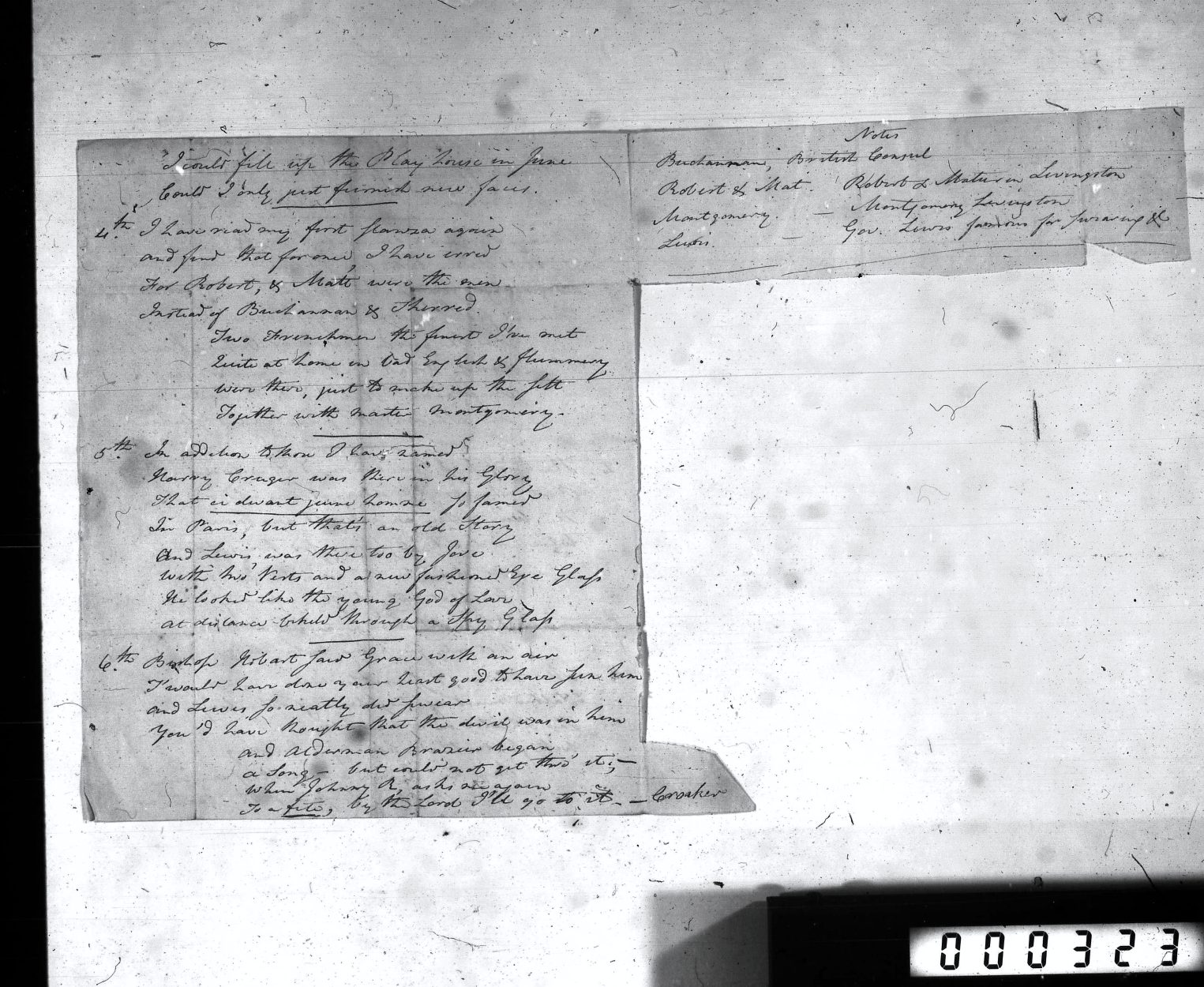
Comic poem on a New York/Newport party: "For Robert, & Matt were the men / Instead of Buchanan & Sherred"; "Bishop Hobart said Grace with an air"; Alderman Brasier began a song "but could not get thro' it". Pasted-on key slip headed "Notes": "Buchanan, British Consul / Robert & Mat. – Robert & Matturin Livingston / Montgomery – Montgomery Livingston / Lewis – Gov. Lewis famous for swearing"
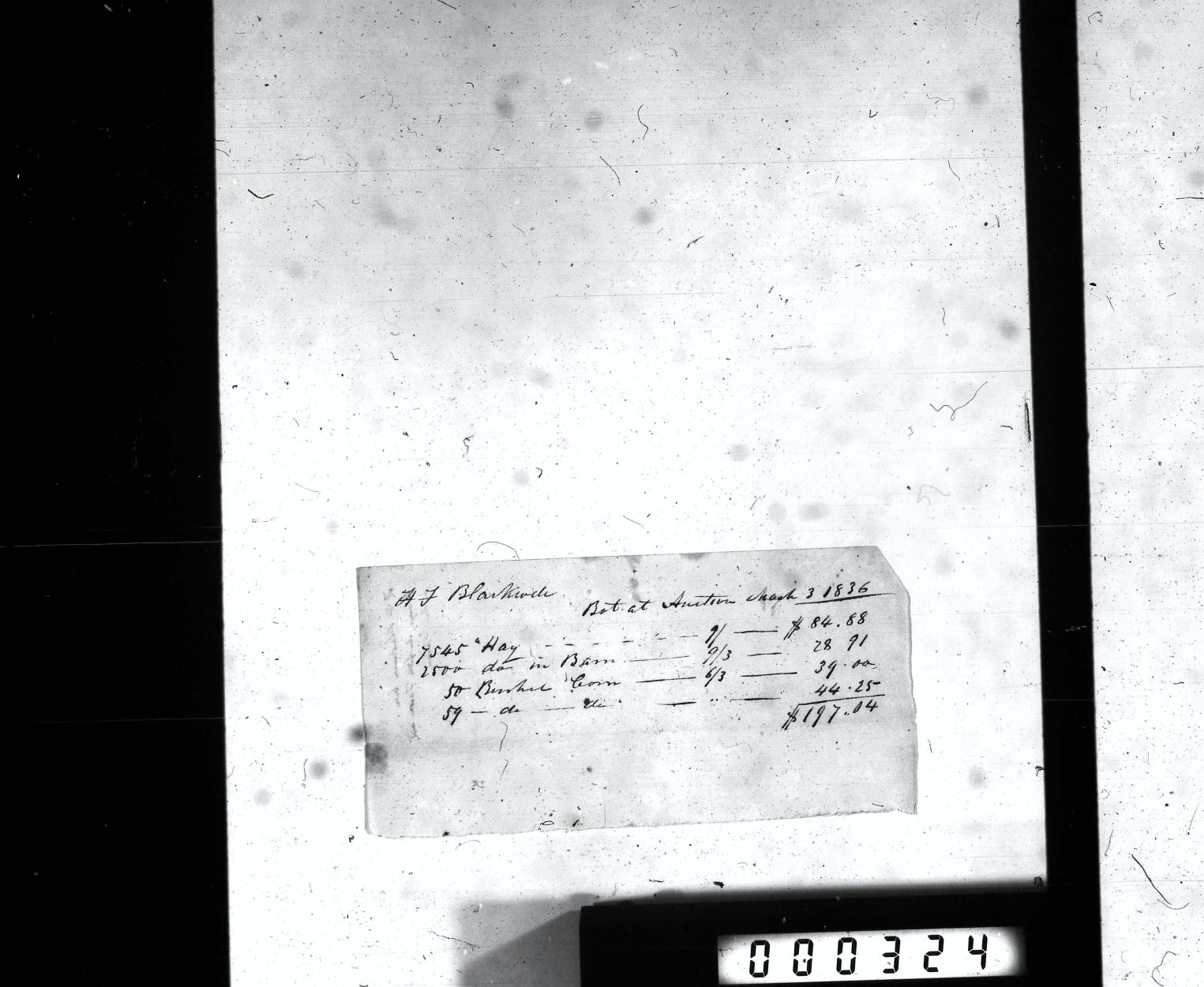
1836-03-03
"Bot at Auction March 3 1836": 7545 lb Hay $84.88; 2500 do. in Barn $28.91; 50 Bushel Corn $39.00; 59 do. do. $44.25; total $197.04
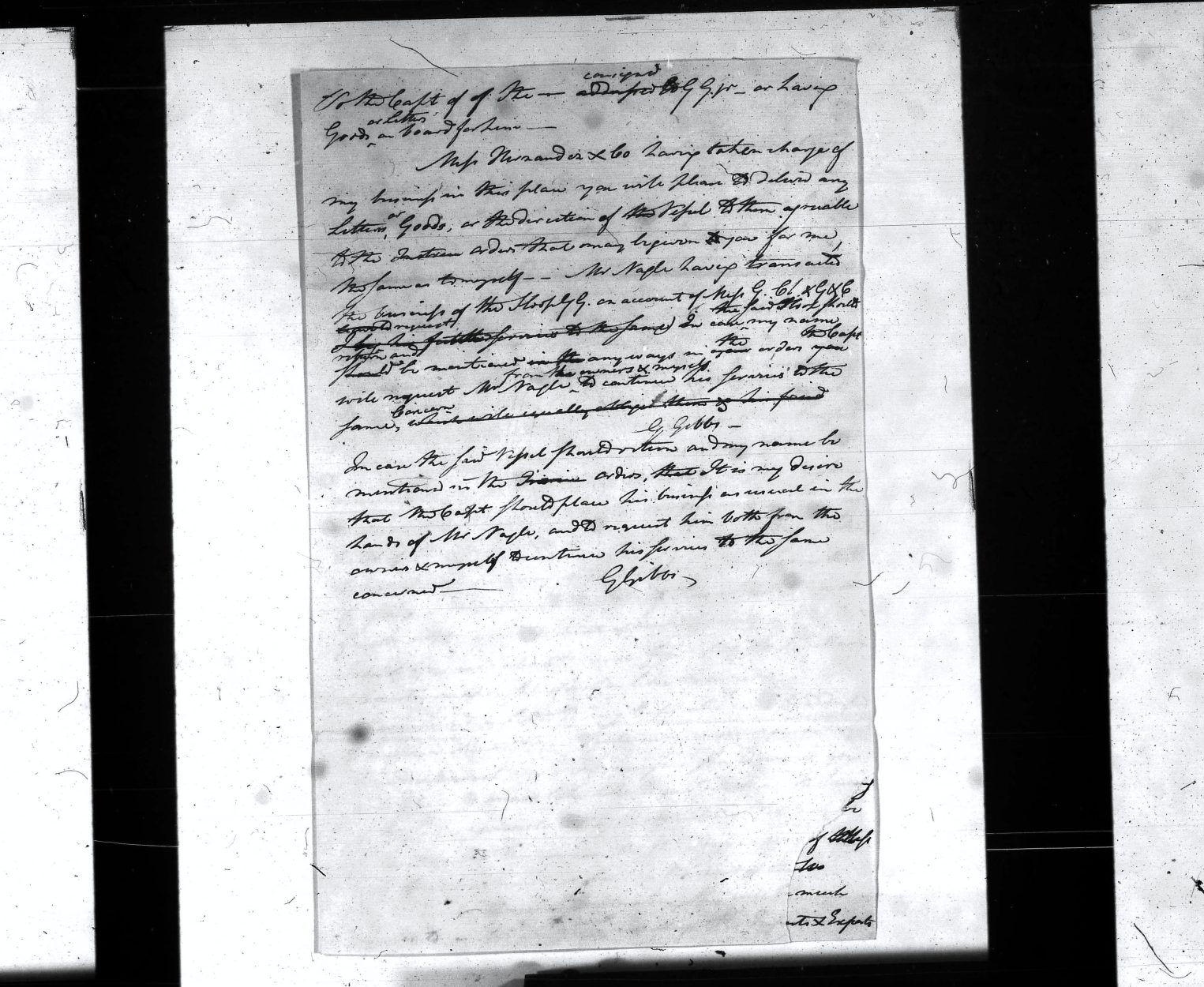
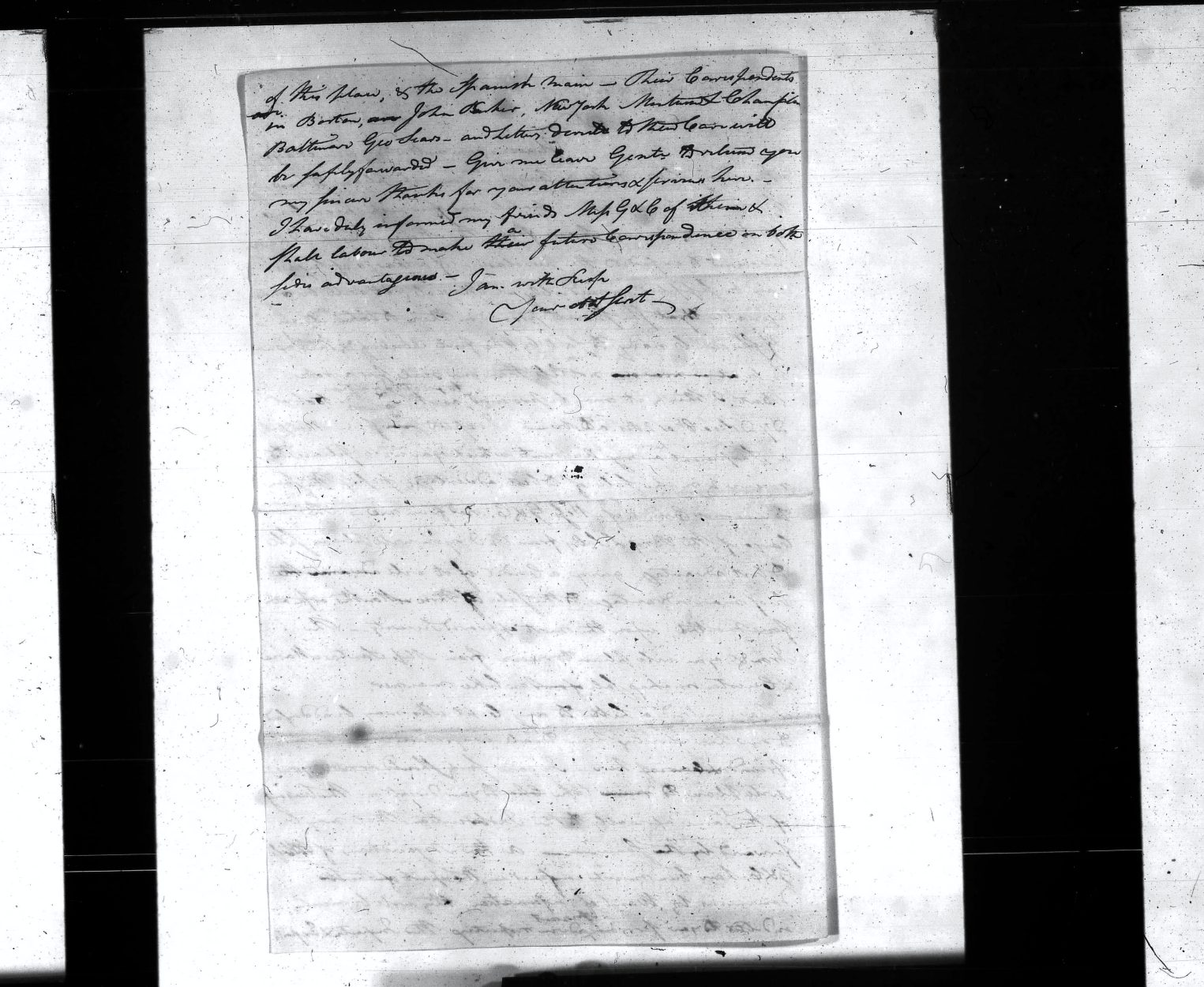
Draft circular of agency: "Mess. Hernandez & Co having taken charge of my business in this place you will please to deliver any Letters or Goods at the direction of the Vessel to them"; asks that Mr Nagle be continued in the vessels' service; signed G. Gibbs twice
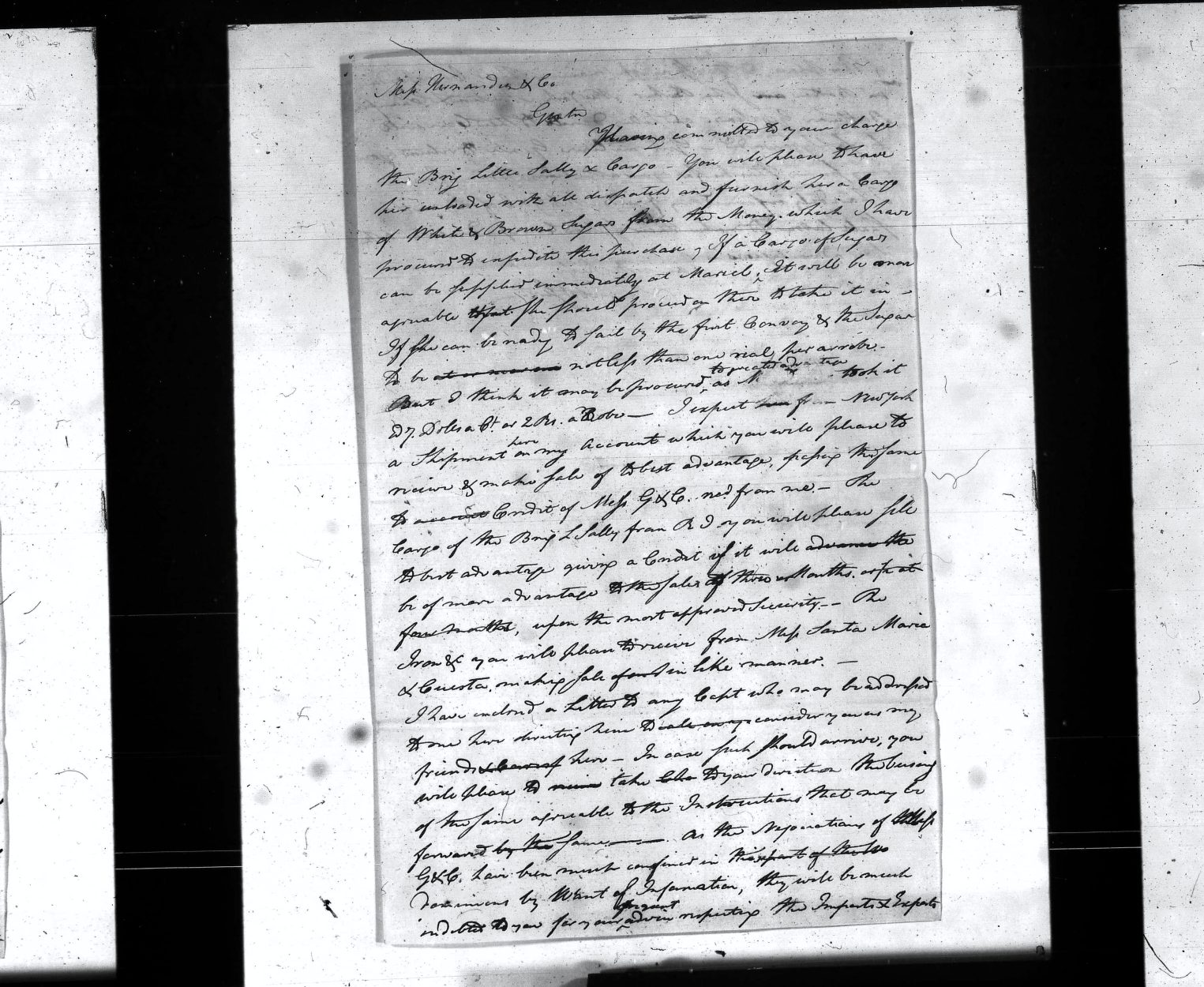
"having committed to your charge the Brig Little Sally & Cargo – you will please to have her unloaded with all dispatch and furnish her a Cargo of White & Brown Sugars"; sugar "to be at not less than one rial per arrobe" though he thinks it may be had "as low as 27 Dollars pr. at 20 lbs. a Box"; cargo from R. I. to be sold on credit of three months
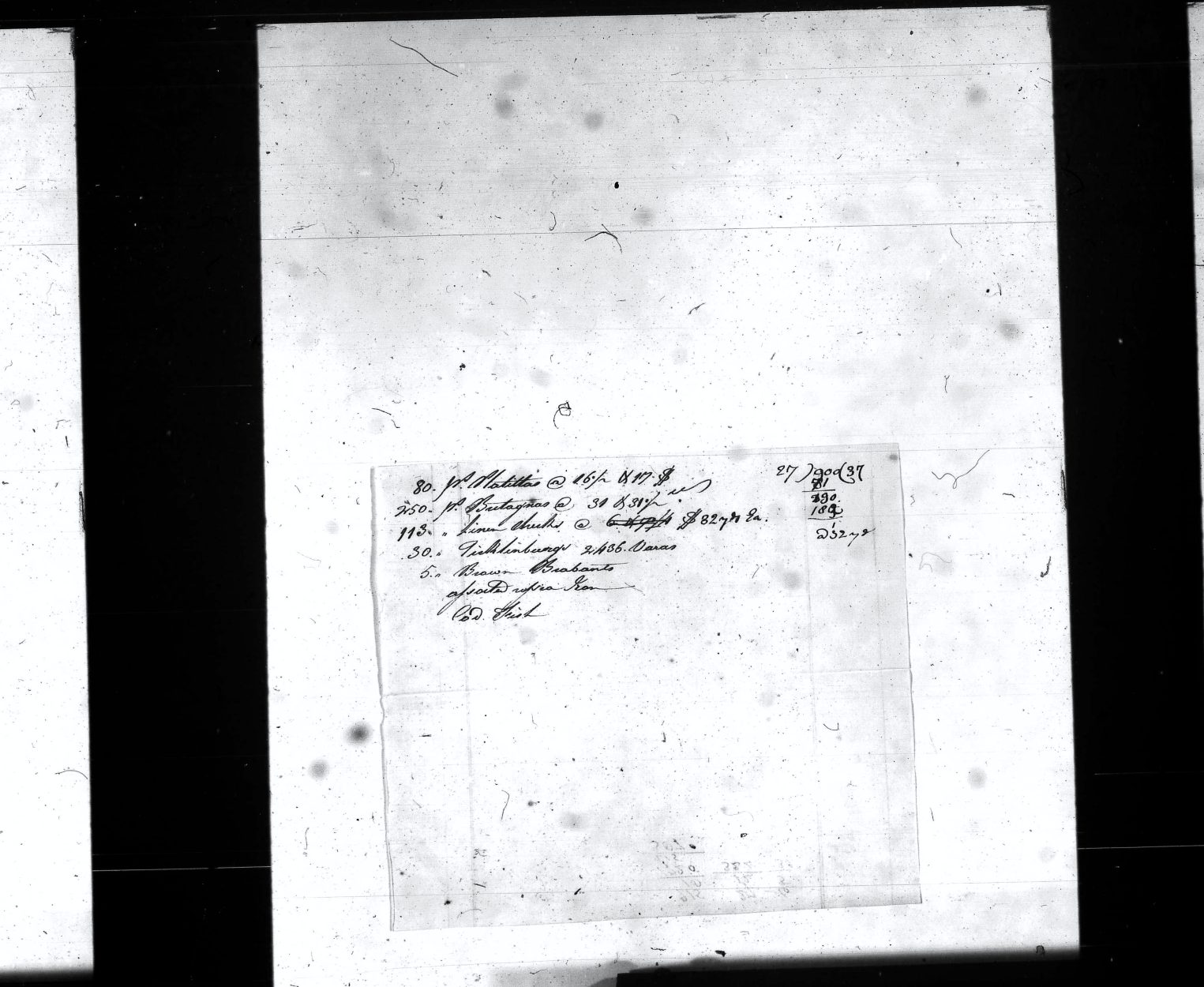
dry goods: "80 ps Platillas @ 16 1/2"; "50 ps Bretagnes @ 30"; "113 ps Linen Checks @ 6"; "30 Ticklenburgs 2,436 Varas"; total near $32,472 (reading uncertain)
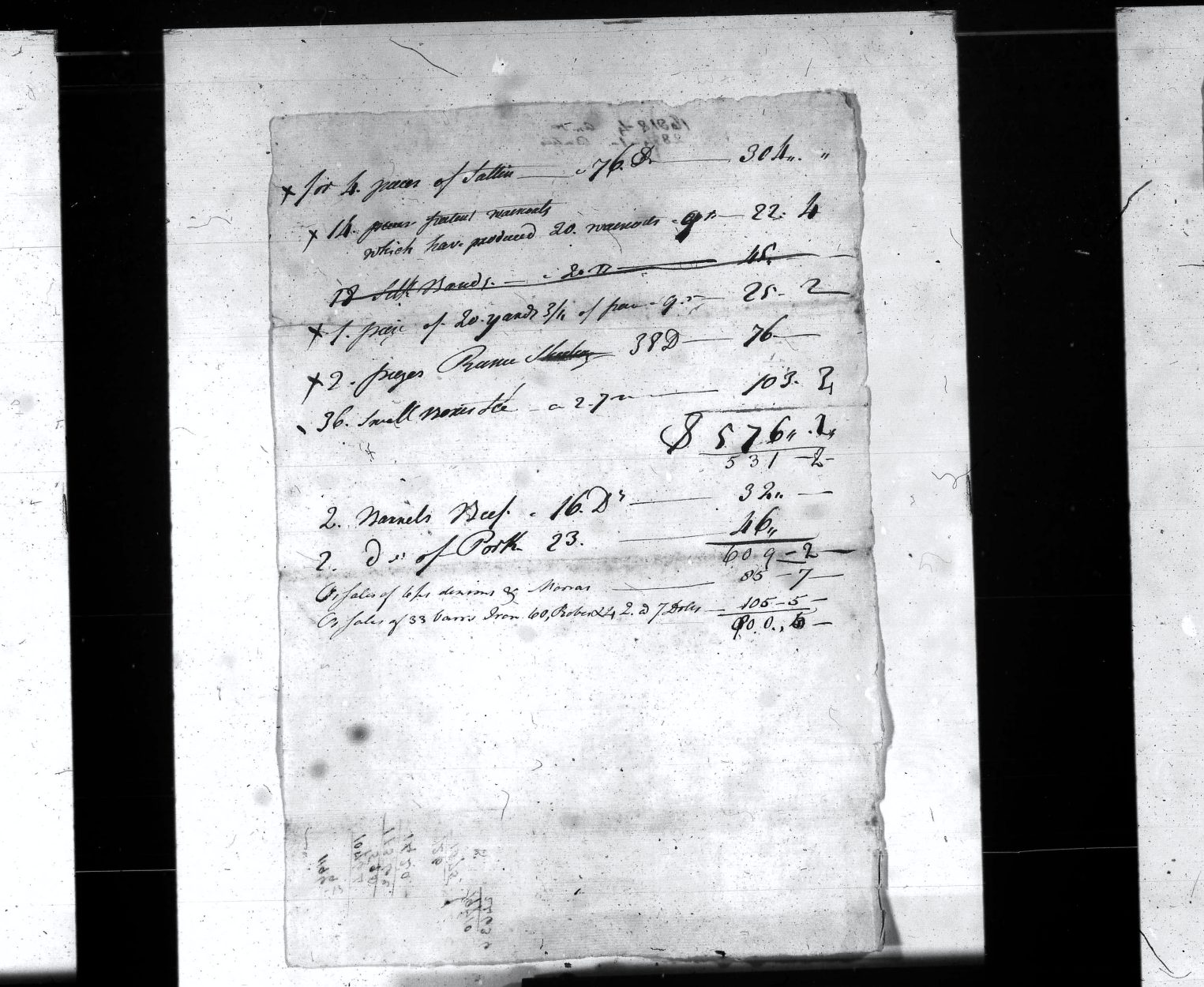
Spanish-colonial currency: "4 pieces of Sattin 76 D – 304"; "18 Silk Bandas [Bandannas] – 46"; "2 pieces Russia Sheeting 38 D – 76"; "36 small Boxes Oil – 103.4"; "2 Barrels Beef 16 Dr – 32"; "33 barrs Iron – 105.5"; foot "800.0.5"
Oct 25 (no year)
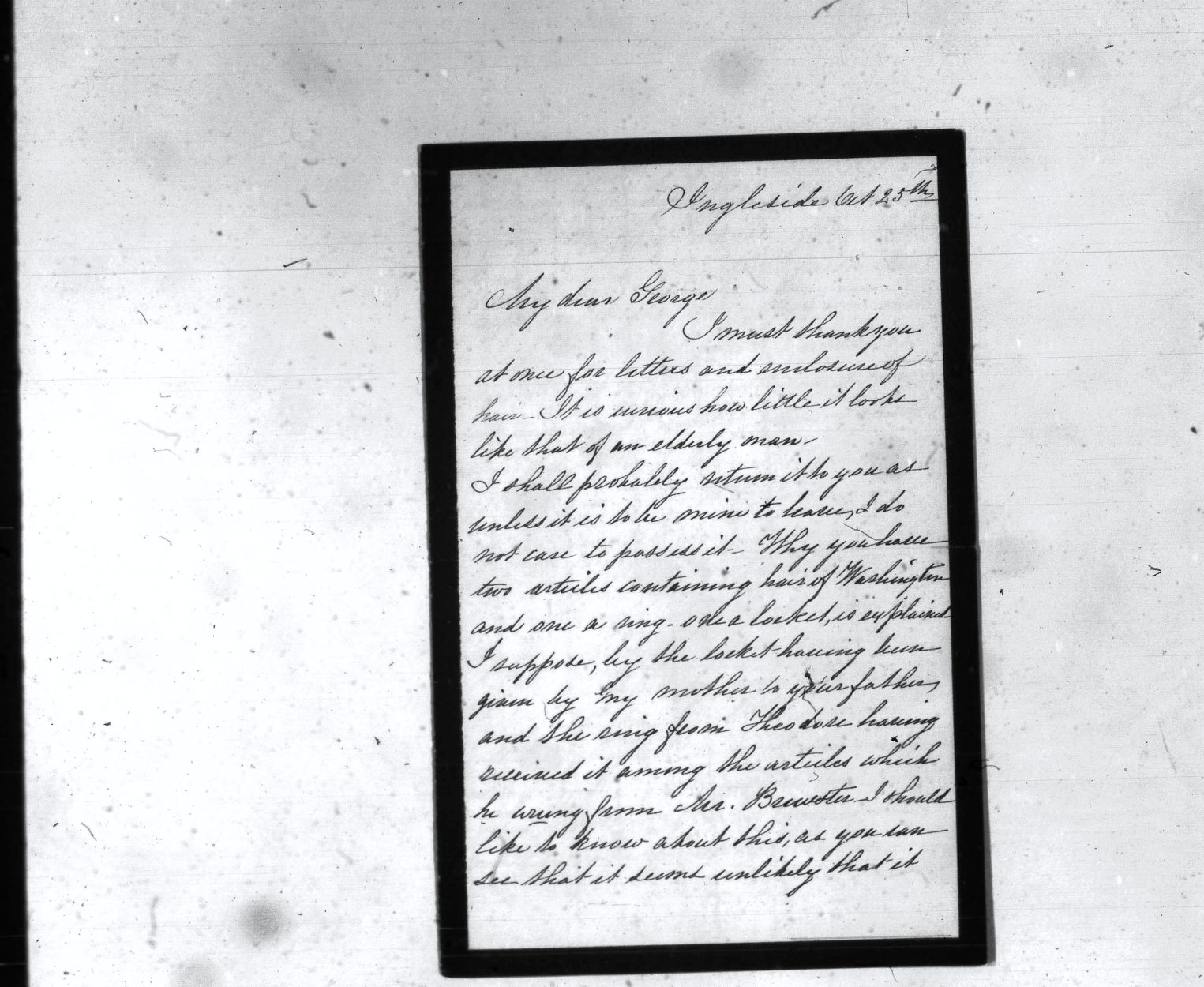
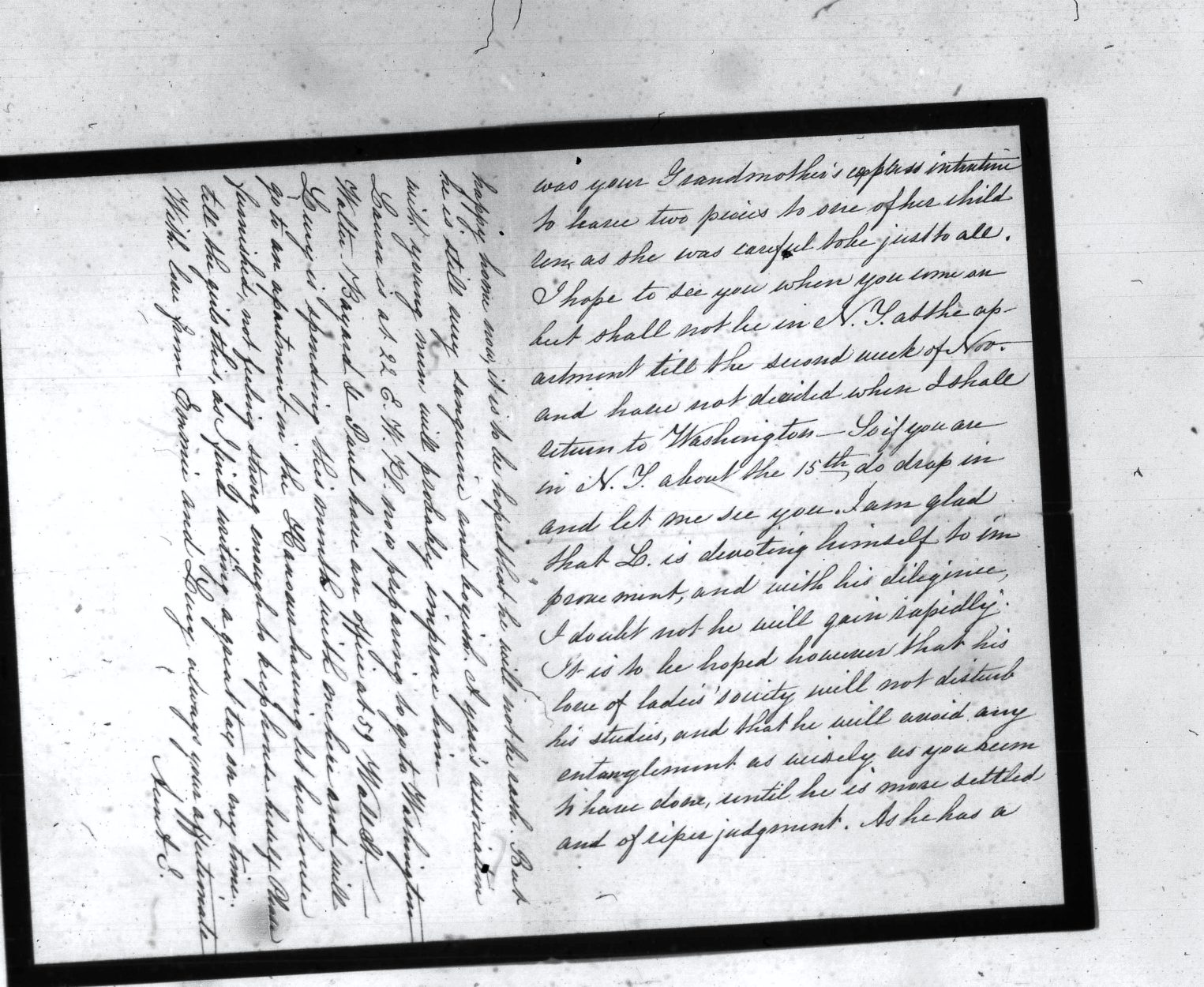
RELIC PROVENANCE: thanks George for "letters and enclosure of hair. It is curious how little it looks like that of an elderly man"; puzzles that "you have two articles containing hair of Washington and one a ring, one a locket," explained "by the locket having been given by my mother to your father, and the ring from Theodore having received it among the articles which he wrung from Mrs. Brewster"
(cont.)
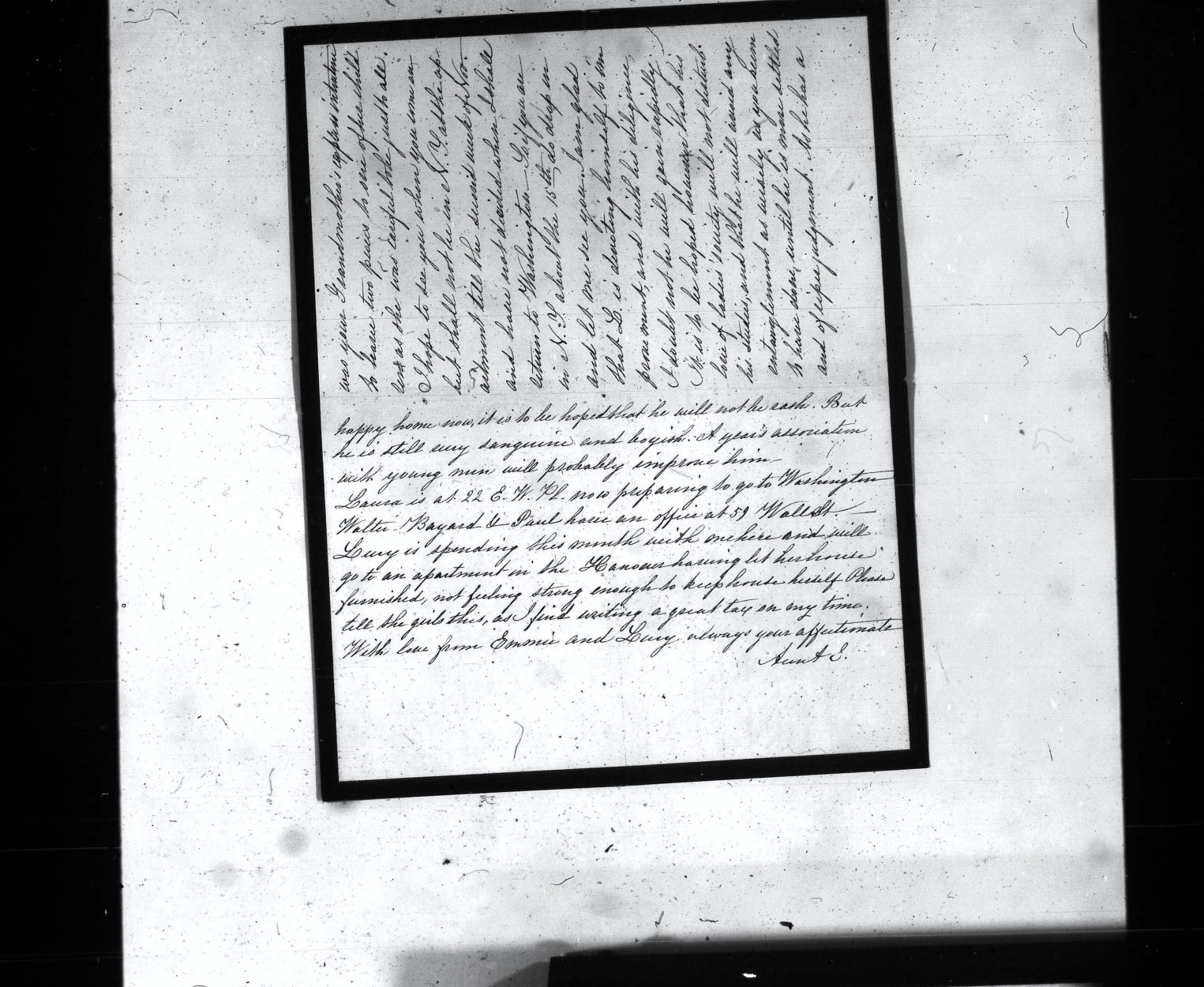
"Laura is at 22 E. W. Pl. now preparing to go to Washington. Walter, Bayard & Paul have an office at 59 Wall St. Lucy is spending this month with me here"; "With love from Emmie and Lucy, always your affectionate – Aunt S."
n.d. [c.1900s]
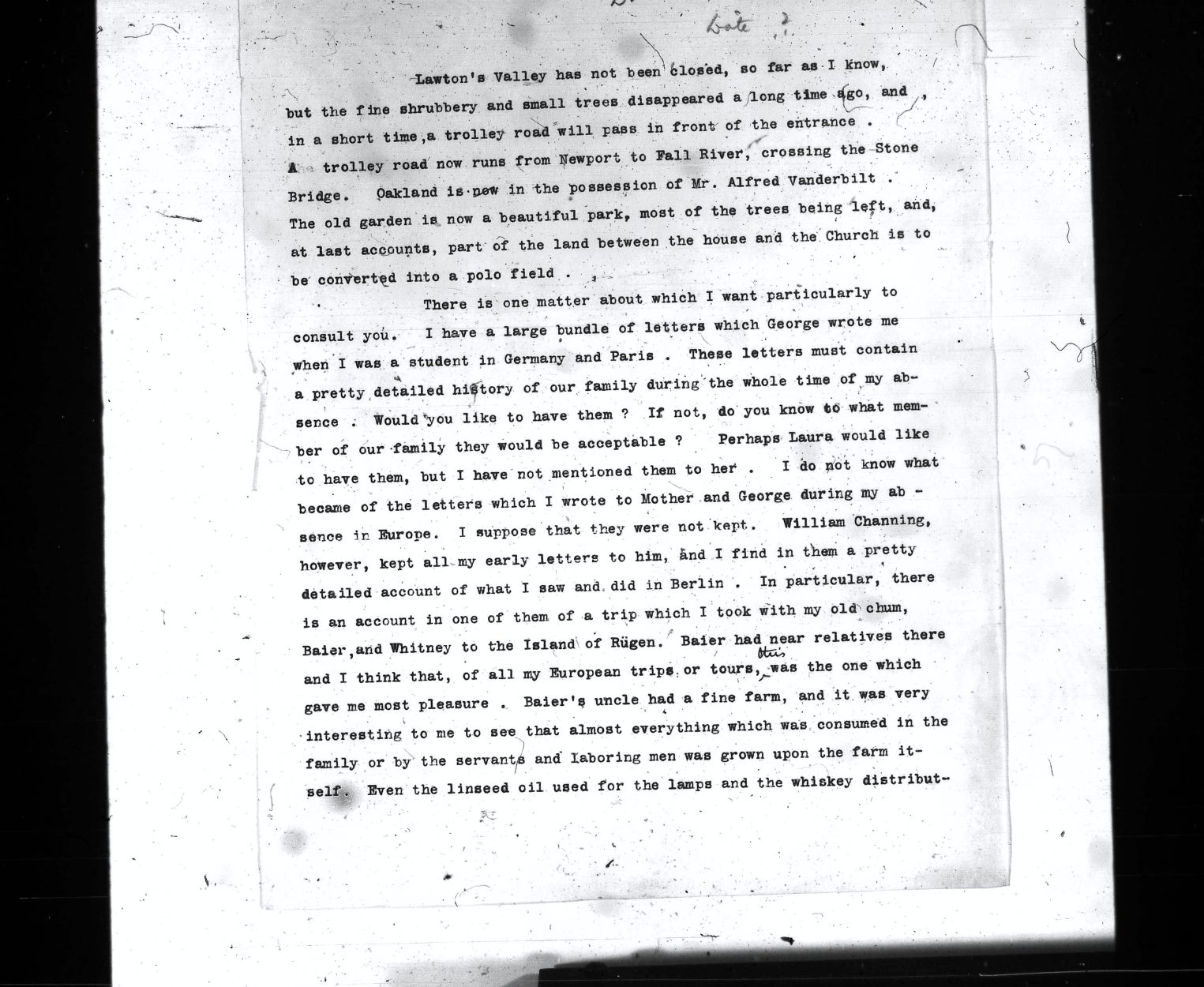
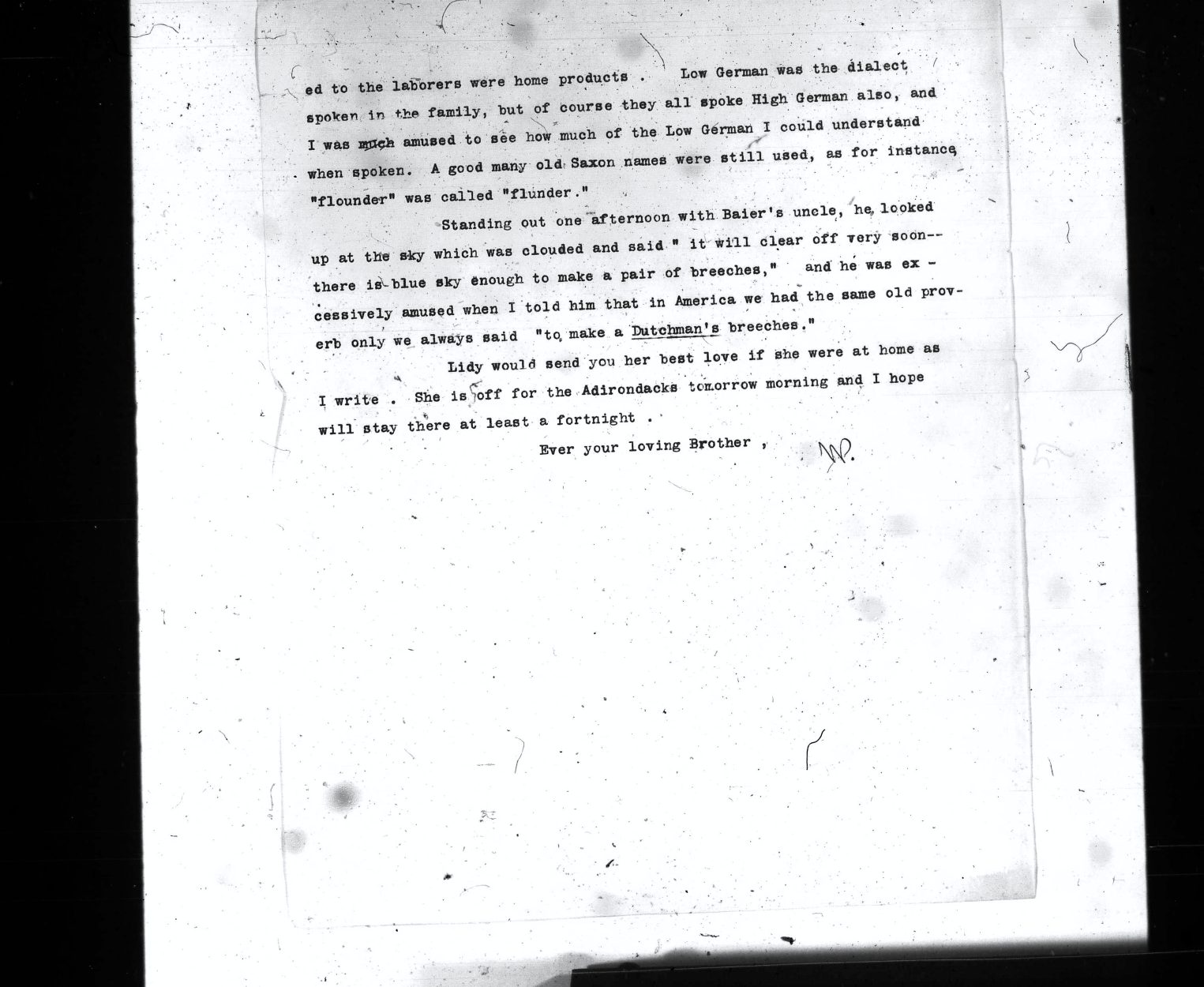
TYPESCRIPT transcript, not manuscript. "Lawton's Valley has not been closed… in a short time a trolley road will pass in front of the entrance… Oakland is now in the possession of Mr. Alfred Vanderbilt."; "I have a large bundle of letters which George wrote me when I was a student in Germany and Paris. These letters must contain a pretty detailed history of our family during the whole time of my absence. Would you like to have them?… Perhaps Laura would like to have them"; "William Channing, however, kept all my early letters to him"
"Sunday" (year blank)
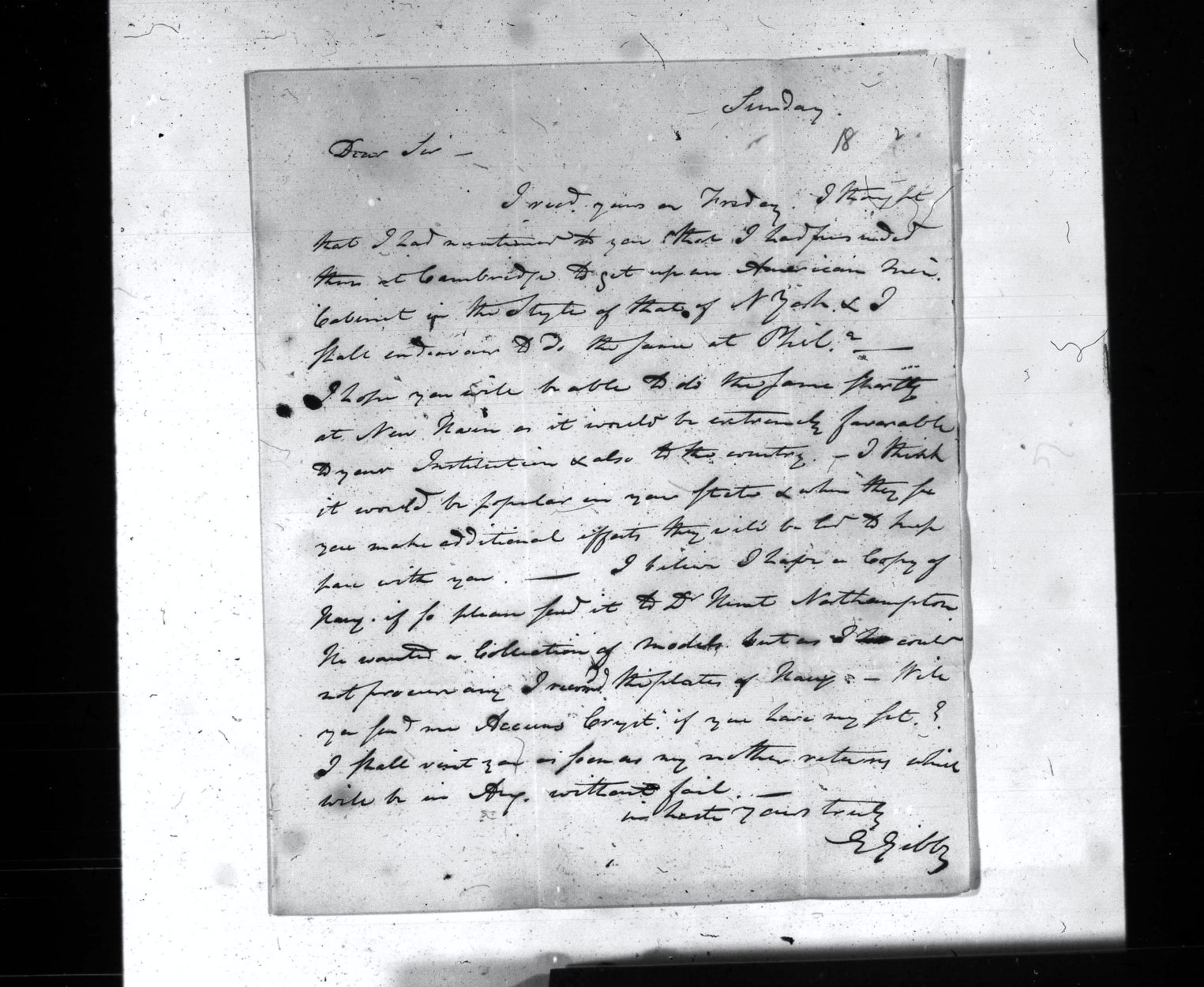
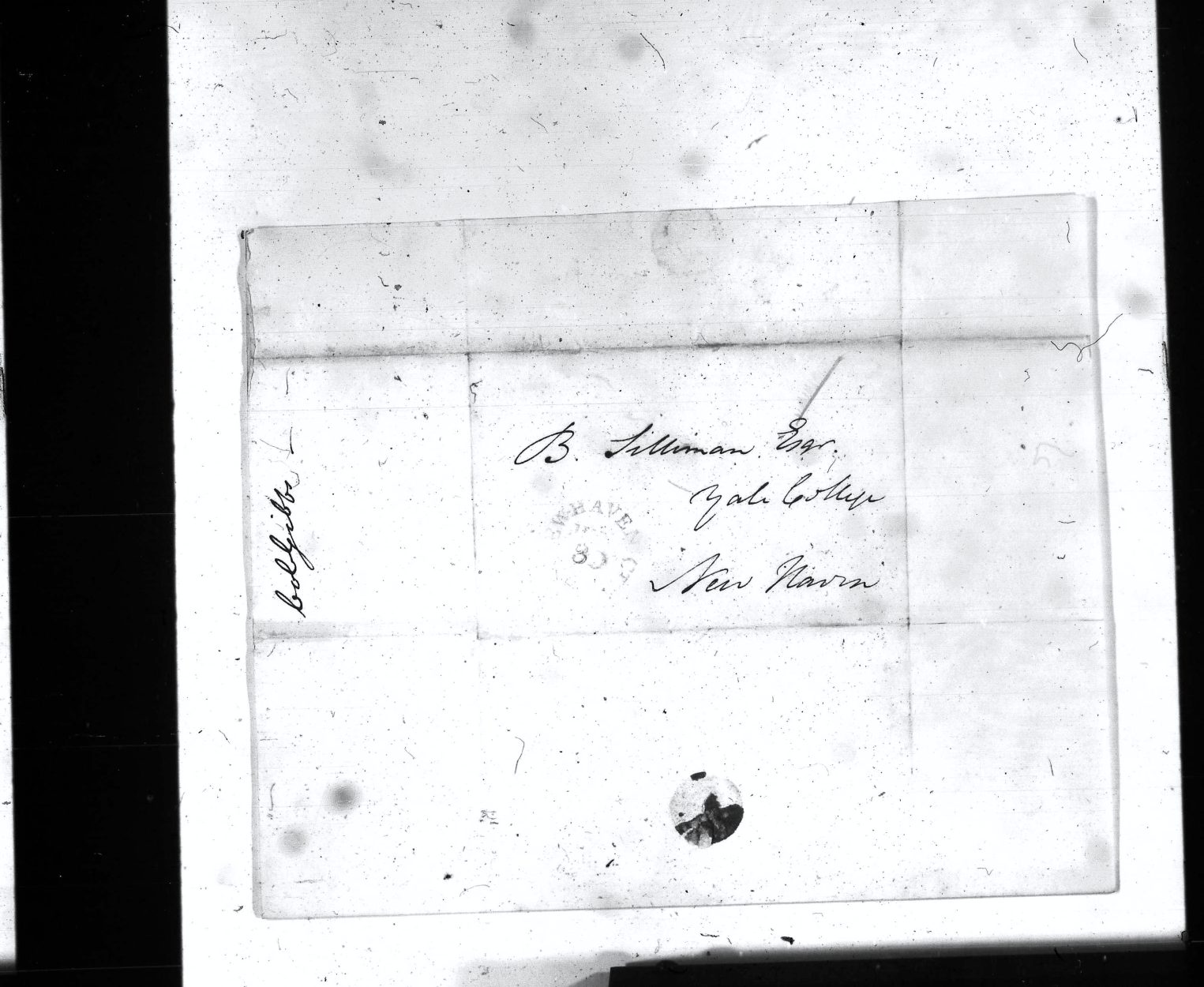
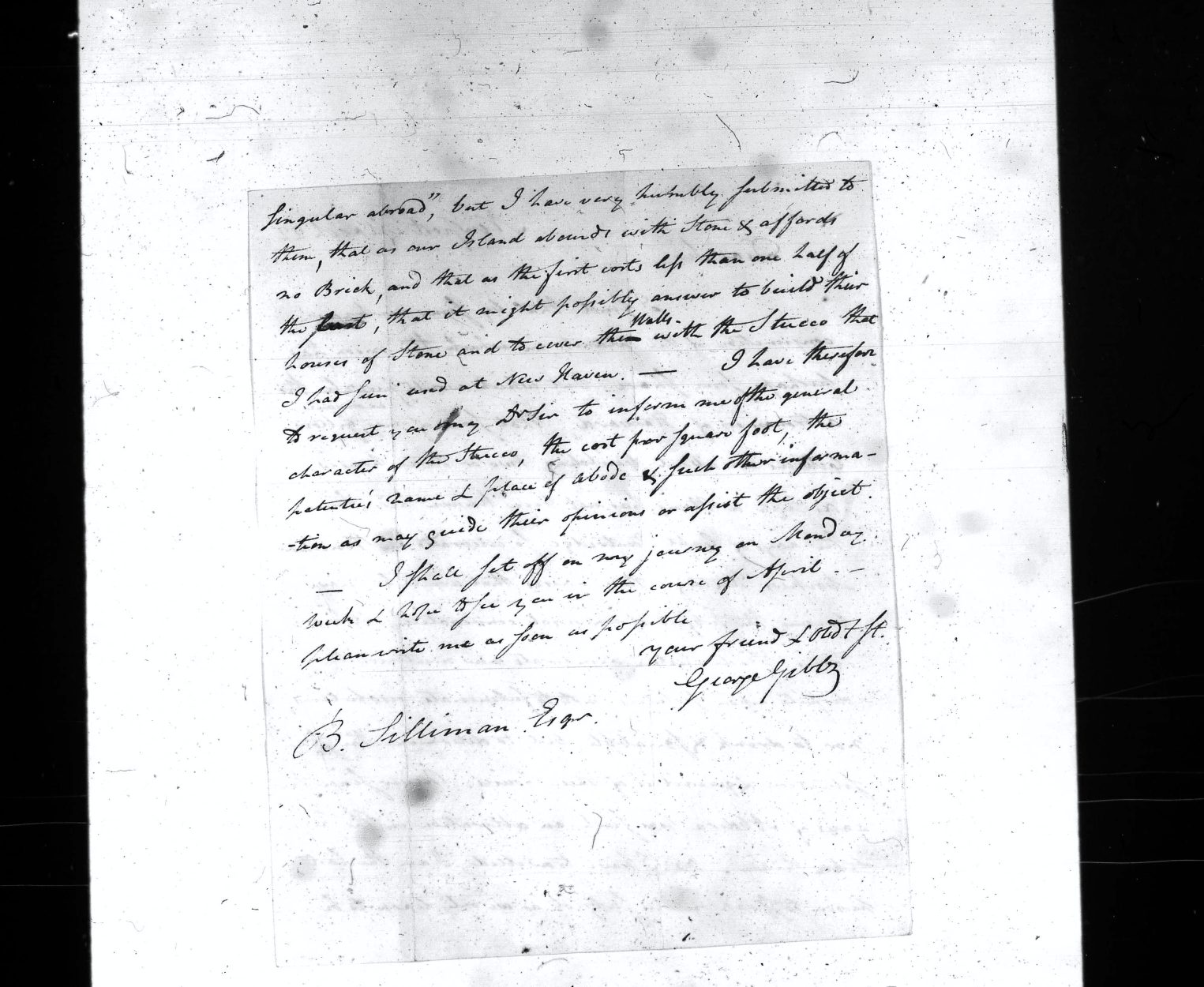
THE MINERAL CABINET: "I had persuaded them at Cambridge to get up an American Min[eral] Cabinet in the stile of that of N. York, & I shall endeavour to do the same at Phil.a. I hope you will be able to do the same partly at New Haven as it would be extremely favorable to your Institution & also to the country."; asks for "Accum's Cryst."; "I shall visit you as soon as my mother returns which will be in Aug. without fail"; signed "G. Gibbs"
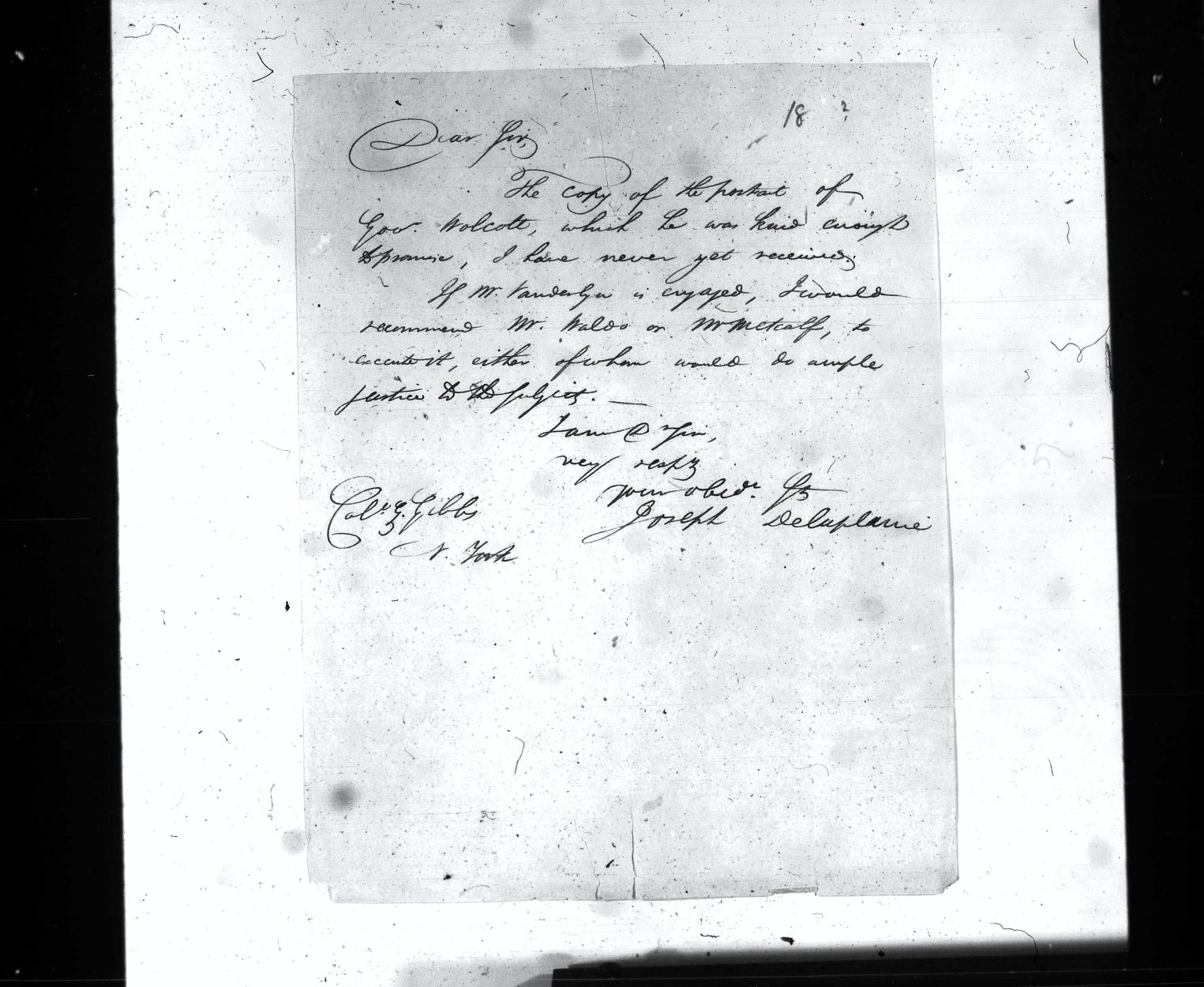
"The copy of the portrait of Gov. Wolcott, which he was kind enough to promise, I have never yet received. If Mr. Vanderlyn is engaged, I would recommend Mr. Waldo or Mr. Metcalf to execute it"
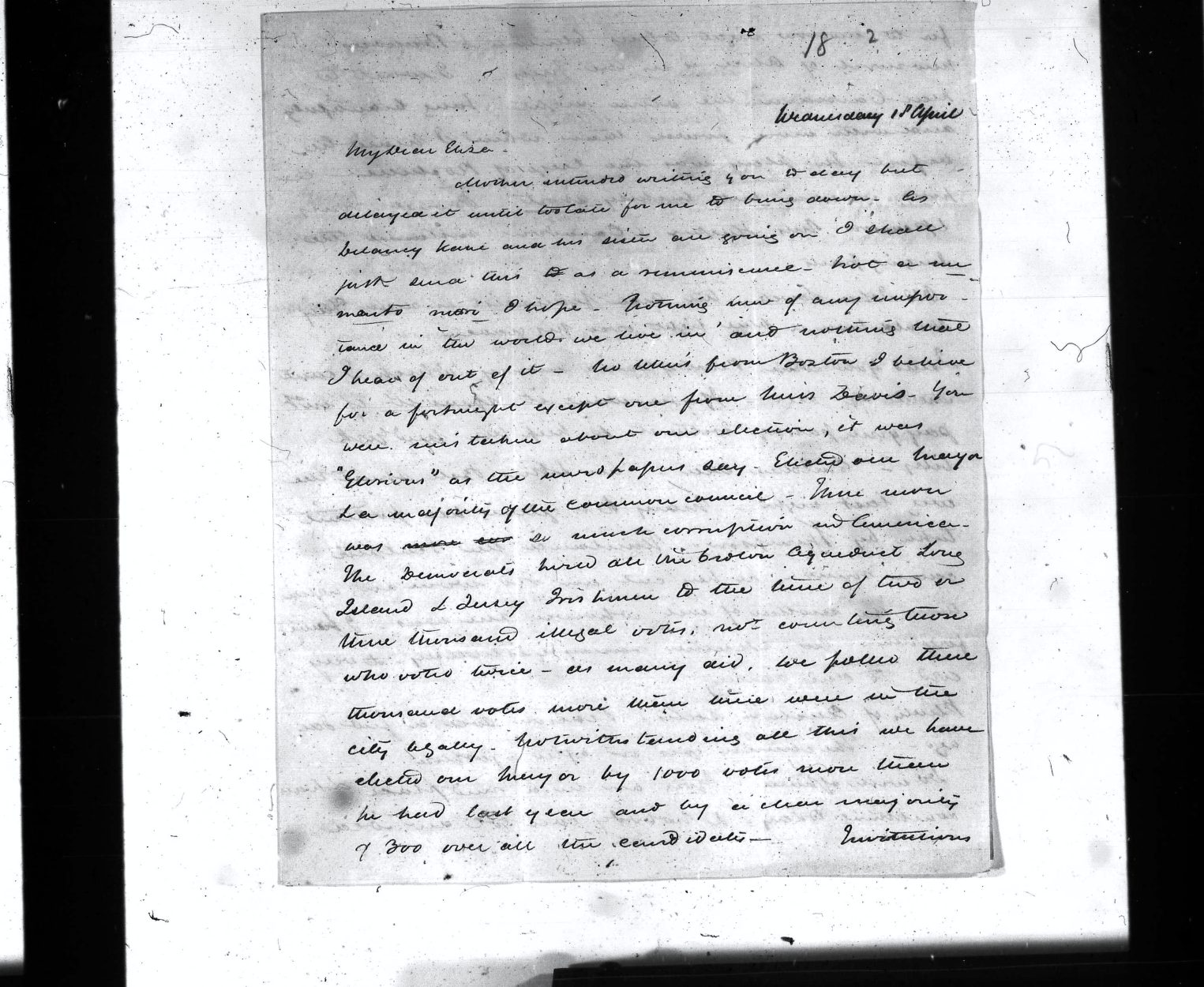
"Wednesday 1st April" (no year)
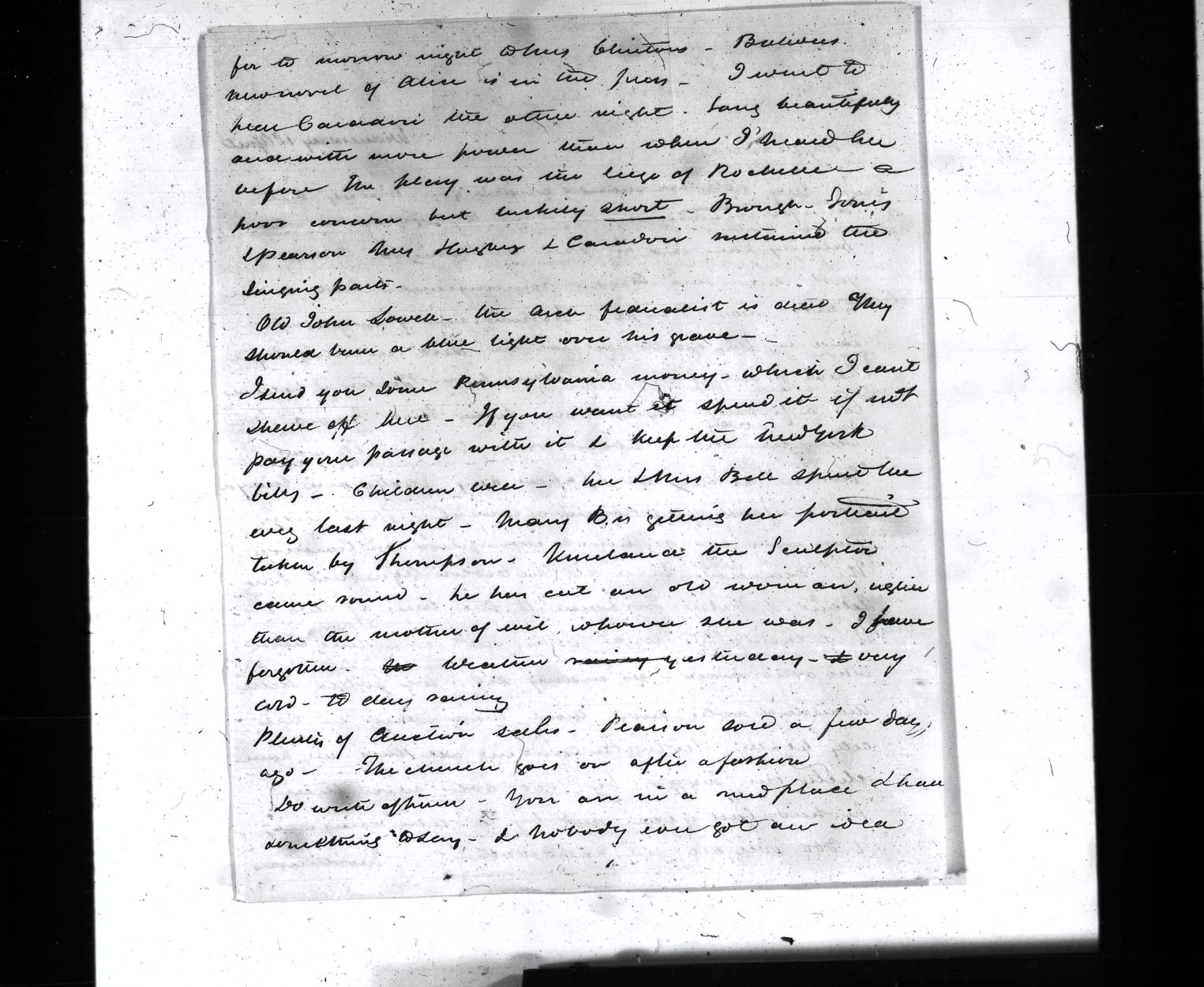
THE NEW YORK CHARTER ELECTION: "it was 'Glorious' as the newspapers say. Elected our mayor & a majority of the common council. There never was so much corruption in America. The Democrats hired all the broken Aqueduct Long Island & Jersey Irishmen to the tune of two or three thousand illegal votes, not counting those who voted twice – as many did. We polled three thousand votes more than there were in the city legally."
(cont.)
GEORGE, ELIZA
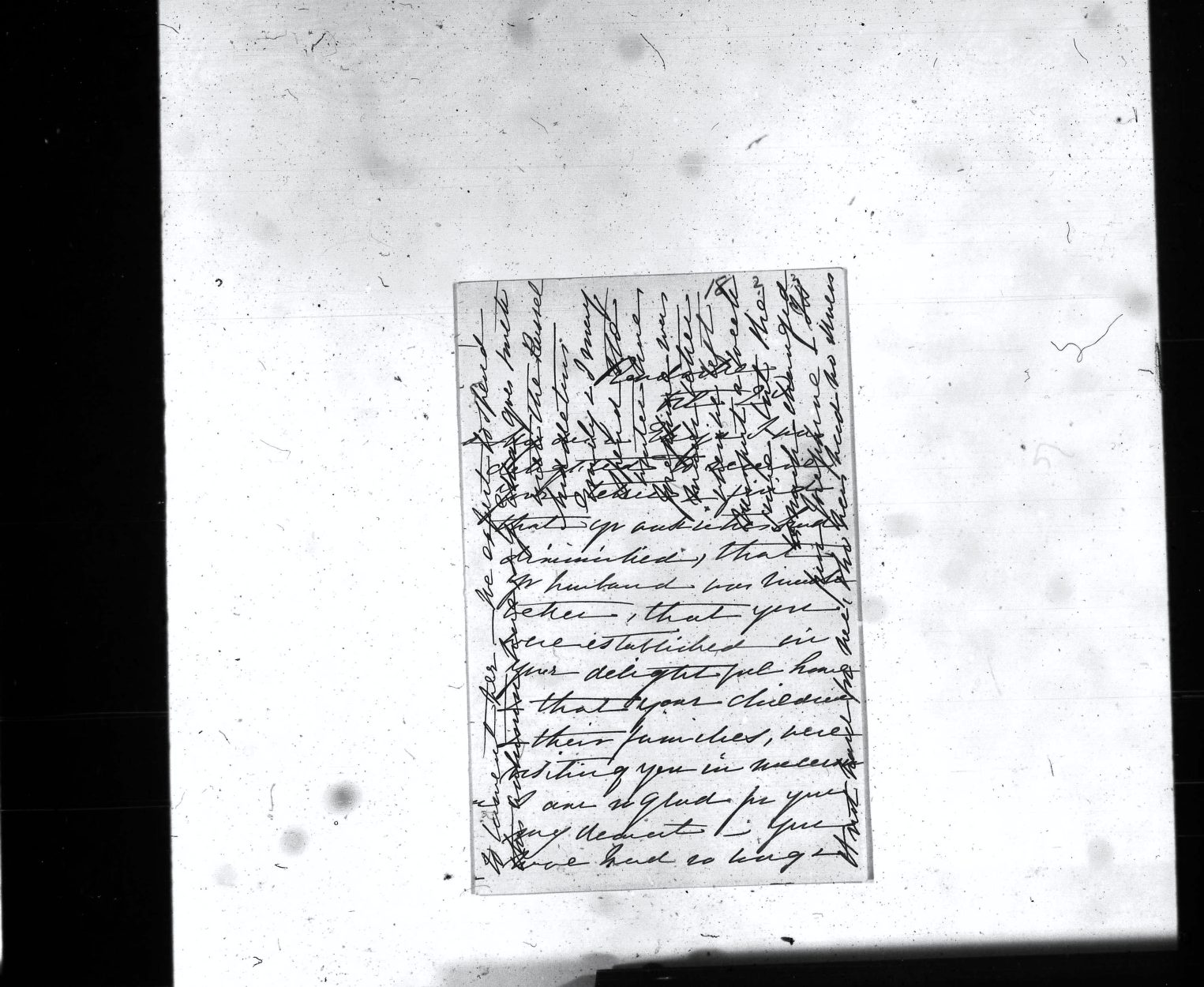
heavily CROSS-WRITTEN, mostly illegible: "…that your anxieties were diminished, that your husband was much better, that you were established in your delightful home"
(cont.)
ELIZA, OTHER
(cont.)
ELIZA, OTHER
"Sunswick Oct" (no year)
WRITTEN FROM SUNSWICK. Condolence on the death of her uncle: "My husband & myself were with him the afternoon before his decease, and we then flattered ourselves that he would enjoy many days of health and happiness… His memory will be ever dear to those feeling minds who regard with pleasure talents combined with domestic virtues." Urges the widow not to settle at Middletown, "which can only recal recollections which must now be soothed"; offers her a home: "we live retired in the country, near your friends in New York, and not too distant from your connexions in Connecticut… Mr. Gibbs will come on for you… We promise you retirement & quiet, our affectionate attentions & the caresses of our dear little boy."
closing page: regrets Frances has been ill, urges a change of climate and "new scenes"; "My husband & sister participate with me in affection & kind wishes"; signed "Laura W. Gibbs"
LAURA, COL-GEORGE, OTHER
n.d. [c.1814 on internal evidence]
THE MOVE TO SUNSWICK: Eliza "having a few minutes since burnt her finger in too eagerly attempting to help herself to Candle desired me to be her amanuensis"; reports Eliza's pleasure at Laura's "intended Removal from Boston to Sunswick"; Eliza "perfectly reconciled to the Marriage State, the Right of Sovereignty having been amicably settled in her favour"
(a) close of a letter, signature illegible: "…winter owing to my care and that I took some good Lessons from the Colo. who knows so well how to take care of you"; (b) opening of a second letter in another hand: "Dear Laura, I am almost afraid to address you since the preference given to William…"
n.d. (archival number "18")
closing leaf: "…rate we can raise the Boy by hand. I long to see you and George & Elizabeth. My Children become more & more the objects of my affection as other attractions of the world are fading from view. Adieu may God bless and preserve you all. Yrs affectionately Oliv. Wolcott"
"Litchfield 30 June 18_2"
THE INFANT GEORGE GIBBS IV AT LITCHFIELD: "his eruption is quite better, and he has become so amazingly fond of me that I am sometimes obliged to decline the pleasure of his society"; while "Papa & J[oh]n" were absent "he eat all his meals with me at the table sitting on an Encyclopaedia in a chair and he now bellows most amazingly at the very intimation of dinner without his presence"; "Dr Buel called to see him on Friday and said he was much better"; "the wonderful phaenomena of a Ball here on the 4th of July"
n.d. ("18_2")
"When I returned I found all well. George has much improved, his eruption is better: he eats like a Monk and in Connecticut phraseology, is a rising Character. I will take good care of the Boy. I shall be glad to see you & Col. Gibbs, whenever it is convenient, provided you consent to leave him as a Hostage." Signed "Yrs affy Oliv. Wolcott"; P.S. "If Mrs Elliot does not return soon I mean to send another woman"
"Friday Morn." ("18_2")
apologises for missing a visit AT SUNSWICK, "severely handled by my Bilious friend since I saw you"; "a harder rub than I experienced at the Cove"; praises her home doctoring, "the courage of your pupil in the self administration of Ipecac & Boneset"; sent for no physician until "I had already conquered"
"New York Sept 8th" (Whig era, 1840s)
opened her letter "to see if you were dead, as in that case it would have been unnecessary to write"; "Lake George just in his most dressing coquetterie seemed to welcome his great namesake, the noble hills on his banks loomed up through the morning mist to a gigantic height"; "We stood over the ruins of Ti. & listened to the… tale of Ethan Allen's invasion of the Fort… in the name of the Great Jehovah & the Continental Congress"; "I quoted not a letter as we strode over the broad lands which your Grandfather sold for the vulgare purpose of paying his debts"
"New York – May 18[__]" (c.1832-36)
just moved house: "I have now arranged my house so as to eat sit and sleep like a human creature, but amid the paint & the dirt & the turmoil George has the measles… It has been fatal here this Spring so that at his age I may think he has had it lightly"; "Laura & Francis are still to come"; the new situation "high & healthy, water good and air here & pure: but noisy & dusty"
the Gibbs coat of arms: crest above a shield charged with three pole-axes, motto ribbon "Tenax Proposit[i]", captioned "Gibbs"
n.d. (after 1824; margin endorsed "Geo Gibbs' hand")
"The family of James Gibbs of Frome, Somersett England": James Gibbs d. "in Bristol R.I. June 1st 1781"; Sarah his wife b.1674 d. Oct 8 1755; children William (1694), Sarah (1693), George (b. Aug 13 1695/6, m. Martha Waldron, d. Aug 6 1755), John (1699), Ann (1702), Jane (1703), James (1711). Second table "Family of George & Martha Gibbs of Newport R.I.": George b. May 19 1735 m. Ruth Channing d. Oct 16 1803; Sarah m. Oliver Champlin d.1821; Mary m. Robinson d.1790; ELIZABETH GIBBS b. Sept 21 1746 m. GREEN, d. Nov 1829; Ruth m. Whitehorn d.1824. Foot: "The above copied partly from Family Bible in possession of Miss S. Gibbs sister of Geo Gibbs of Newport R.I. & partly from record of the town of Bristol R.I."
James Gibbs m. Martha Giddings, "who died in Bristol 5th May 1740 aged 27. Her grave is in the old burying ground & on the stone these lines: 'Death thou hast conquered me / I by thy darts am slain / But Christ has conquered thee / And I shall live again.'"; "Will of Isaac Waldron at Bristol dated June 16th 1740 gives to his daughter Martha Gibbs one half of his house & land"
n.d. (typescript, 20th c., with ms. corrections)
"Family record of James and Sarah Gibbs of Bristol Rhode Island"; "George Gibbs 1st" b. Aug 18 1695, 1st w. Hannah Claggett, 2d w. Ruth Hart b.1709 d. June 4 1784, children George (b. May 19 1735 d. Oct 11 1803), James, Sarah, Ruth
n.d. (typescript p.2)
children of George Gibbs 1st: John (1743-1765) "unm'd"; Mary (1744-1790) m. James Robinson; "ELIZABETH, Sept.21st, 1746; Nov — 1829 m THOMAS GREENE. No issue"; Ruth (1748-1824) m. Sam. W. Whitehorne; then John Gibbs (1699-1760-62) and his two wives
n.d. (typescript p.3)
"James Gibbs 2nd (1711-1795)": 1st w. Martha Giddings, children Sarah and Martha; 2d w. Mary Munro Ingraham, children James (1743-1760), Nathaniel (1749-1756), Ruth, Ann, Francis (b. Jan 23 1744), Hannah
n.d. (typescript p.4)
"George Gibbs 2nd" 1st w. Susannah Scott; 2nd w. Mary Channing, ten children: Susannah (1770-1790), Mary (1772), Mary (1773-1813), GEORGE (JAN 7 1776 – AUG 6 1833) = Col. George Gibbs III the mineralogist, Ruth (1778-1870, m. Wm. R. Channing), John (1781-1797), Sarah (June 27 1784 – June 17 1866) unmarried, Elizabeth (Feb 10 1786 – April 7 1816, m. Luther Bradish), Wm. Channing (Feb 10 1789 – Feb 21 1871, m. Mary Kane), Susannah (1792 – Jan 15 1817)
n.d. (typescript p.5)
"George Gibbs 3rd. w. Laura Wolcott. Children: 1 George born July 17th, 1815; died April 9th, 1873 md Mary Kane Gibbs / 2 Mary / 3 Eliza Wolcott born July 8th, 1819 md Lucius Tuckerman / 4 Oliver Wolcott, Feb. 21st, 1822 md Josephine Mauran / 5 ALFRED, APRIL 22nd, 1823, DIED DEC. 26th, 1868, md Peggy F. Blair / 6 Laura Wolcott, Aug. 12th, 1837 md T.M. d'Oremieulx / 7 Francis Sarason born June 24th, 1831; died Dec. 26th, 1883 md Eliza Gay Hosmer"
n.d. (typescript p.6)
"Wm. Channing Gibbs. w. Mary Kane. Children": George Wm. (1823), Cornelius Van Schelling (1824), Helen Elizabeth (1825-1887), Frederick Augustus (1828), Charles Edward (1830), Eugene Beauharnais (1832-1882), Mary Kane (1827-1876, "md Geo. Gibbs"), Theodore Kane (md Virgie Barrett), Algernon S. (1834-1837), Emily (1835-1837), Sarah (md Robt. M. Thompson)
Aug 21 (Sharon Sprs. Pavilion)
HOWE'S CAVE: cave-hunting excursion to Schoharie with Mr Rankin; the party in "cast off fustian trousers, cowhide boots, striped States prison jackets" giving "a most felonious appearance"; entered after dark with guide, provisions, a hammer and brandy "a very needful precaution"; a subterranean lake crossed by boat
Newport Jany 9 18[3]7?
acknowledges a barrel of apples; has searched for a family to take charge of the farm; offers Joseph T. Perry? "willing to engage for two hundred & twenty dollars pr year"; recommends him as "able bodied, steady and industrious, & of good capacity in making stone wall"
1631/1636/1720 entries
genealogical transcript "Taken from a brass in the wall of St James Church Bristol": Henry Gibbes, Mayor and Alderman, wife Ann, "4 sonnes & 4 daughters", died 19 May 1636 aged 73; Ann died 15 Dec 1631; burial register extracts certified by the clergyman
THE SUNSWICK LAND SALE: report of Mr Bates's auction of the Astoria/Sunswick land, which "did not I fear go off so well as he expected"; closed a sale just before the auction of all the upland north of the smoke house, "14 or 15 acres", two avenues to be laid out "of like dimensions with those laid out on the Map which I send you", width represented as 400 feet; "the sale is to Mr Bates and for 650 dollars per acre"; A MAP WAS ENCLOSED (not filmed here)
n.d. (c.1867-68)
sent them a Tribune; "Now Martial law is to be declared in South Carolina. They are so wild and lawless down there"; the wedding of John Jackson and Miss Gregory; ALFRED AND PEGGY: "I am sure Peggy & Alfred need consolation with the Indian War and insufficient troops"; praises "your Brother George" for his long political letters, "events are so startling and sudden that one hour does not give a sequence to the prior one"
"List of Papers in this Trunk. Brig William, Berbice; Ship Russell, Batavia & Isle of France; Insurance New York; Sloop Becca, Berbice; Brig Samuel, 93; Randolph & Talcy?" – Newport mercantile shipping/insurance docket
June 24
"I am, this morning, again disappointed in not hearing from our Travelling friends"; asks "On what day is it probable that Mr Walter Channing will reach here?"; encloses two notes left for the Colonel
Newport March 22
comic report that "by some unknown conjunction of the planets, in which the moon has perhaps some share" his sedentary fellow citizens are about building two or three houses, unknown "since the days of Capt Partridge, so celebrated in Knickerbocker's History"; "Whigs & Tories, Federalists & democrats now meet, not to dispute upon politics… but to determine the size, situation & qualities of these houses. Never since the days of Abdera has such an alteration in the people taken place."
"Sunswick March 15th 18[–]"
WRITTEN FROM SUNSWICK. expects game by the newly running steam boat; WOLCOTT: "Wolcott continues very robust, fat rosy & healthful in body & mind. I think he has acquired more at home than at any time at school. He wished to write William respecting the eclipse which he pronounced a great cheat, his father having foretold that it would be dark & stars visible, whilst it was only shadowed as during the coming of a thunder storm"; "we make or mar our own fortunes, but I go further & think that will has almost the power of destiny"; "Mothers alone have a right to work themselves to death"
(cont.)
LAURA, WOLCOTT, GEORGE, ELIZA, OTHER
THE SUNSWICK SURVEY: "I thought it best to send out & measure the field which you will find to contain a width of 380 feet from the back of the smoke house to Mr Bates line, being 5 chains 74 links, 66 feet the chain"; "it appears to run back 3 acres, the strip contains about 11 acres"; "the distance from the back of the smoke house to the house being but 1 chain 28 links, 84 feet"; warns, with "manifestly impossible" struck out and "I should think unwise" written above, against disposing of it since "in the event of mischances the sale of the house would be shield[ed]"
n.d. (c.1833-34, settlement of Col. George Gibbs's estate)
encloses "your exemplified Copies of the Will & Codicil and also a certificate that you have duly qualified as Executrix"; on Testamentary Guardians, "no such papers are given under our practice and laws"; doubts whether she could recover the monies "under your testamentary (or Will) Guardianship"
RETAINED DRAFT, heavily struck through and interlined, OFFERING SUNSWICK FOR SALE: called at his house early this morning hoping to see him "before the vicissitudes of summer should take you from the city"; the object was "to mention my desire to dispose of my farm near Hell Gate on Long Island" and the wish that "should your extensive landed connections make it desirable to look to that vicinity that you will make it the object of a visit at some early [hour]"; writes "with the advice of my friend Mr Well[s]"; "your opinion of the property by a personal inspection might be useful to me"; signed "with respect your obt Servt, L. W. Gibbs"
MAP/PLAN: pen-and-ink ground-floor plan of a barn, filmed on its side; Carriage Room, Stables, Horses, Cows, Bins; "20 feet deep" x "30 feet Front"; estimate $365
"This plan shews the ground floor for a Barn 30 feet by 20. 15 feet Posts. to be covered on the upright with Albany boards planed. roof of Cedar Shingles. Floors of Plank groved and tongued… No Painting or Foundation included in the estimate – which is $365"; note "Imitation door"
NEWPORT PROPERTY APPRAISEMENT: "Mansion House, wharf & Stores 4000; Land at the mills at 150 per acre 4500; Lot & House formerly Wickham's 1000; Miller Lot 400; Garden Lot 70; Lot & House of Thos Green 300; Farm at Middletown 10000; Grany House 2500; Ship Yard 400" – total 23170, "half – 11,585"
1792-02-19 (extract made)
HELL GATE LAND TITLE: "Grant of Varkens or Hogge Island by Petrus Stuyvesant unto Francois Fyne 20 Sept. 1651. also of 50 Acres near to Hellgate opposite the aforesaid Island on 6 Feby. 1654. together with another so adjoining, and next to Peter Andriesen of ab. 46 Acres, forfeited by an act of the Govt bearing date the 10th Oct 1665. as belonging to a subject of the United Belgick Provinces. The Grant then confirmed to Capt John Manning the 3d Feby. 1667. by Richard Nicholls the then Governor" – "Extract from a deed in possession of Mr Blackwell made by J. Delafield therefrom"
"Mary Gibbs – parcel of land in Newport. Bounded W. by land belonging to ye heirs of Mr. Bannister dec'd – N. by Mill Street – S. by Pelham Street – East by a Street running from Pelham Street to Mill St. Cons $8500"
c.1828 (entries 1823-1828)
"Rhode Island Bridge Company – in 1828 there is a credit to him of a divd of $20"; "What is the claim of the condemnation of the Brig William at the Isle of France… hostages? April 24 1823"; "What is the situation of a Lot of Land conveyed by Olney to George Gibbs for $3510 in the Year 1799?"; "Query as to Army bounty Land in account of Papers?"
Williams 5,000; Livingston 2,150; Brown 1,800; Mountain 1,350; Attenbury 880; Cummings 1,000; Whiting 500; Ware 600; Dabol 400; Harris 237; Burnet 200; Small 220; Davis 180; Jackson 250; O'Brien 250; Dupee 300; Blackwell 800 = "16,617"; total "$22,565"; small pen SKETCH of a basket/urn at foot
same names in ledger form; J. Brown 2500, J.H. Williams 7000, Holbert 2500, "H.S. Blackwell 880", Laurence 10,000; running sums to "$63,092" less "off Reder 650" = "62,442"
(cont.)
OTHER
folded leaf endorsed "Loose Memorandums" with loose arithmetic pencilled in the margin
LEFT: "It is the opinion of Capt Rogers, Capt Smith & Mr Rogers to cross the Line, so far to the Westward as just to clear the Cabos on the Westward shore of Cape Augustin… say about 28 or 30 degrees West Longitude". RIGHT, how to judge China-trade goods: "Rhubarb has a bitterish [taste]… Its taste is bitter & afterwards aromatic. That which is close, ha[rd] & tinges the Saliva yellow, is proof"; "Camphire of Sumatra far preferable [to that of] Japan"; "Opium is best which is rather so[ft]… is inflammable, of a blackish [colour], a strong fetid smell"; sheet torn, several line-ends lost
n.d. [draft, page 1]
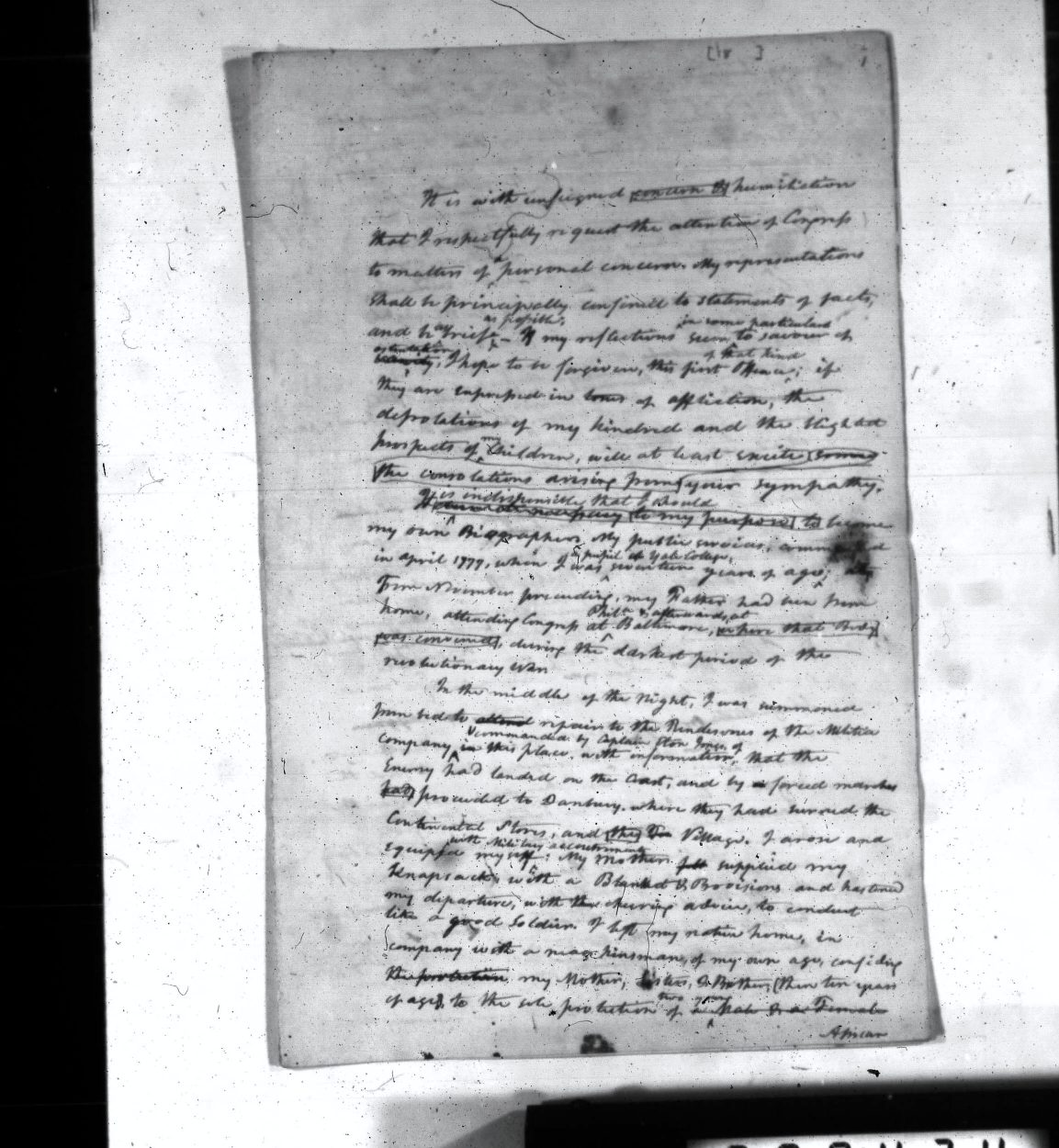 FRAME 438
 FRAME 439
 FRAME 440
 FRAME 441
 FRAME 442
 FRAME 443
 FRAME 444
 FRAME 445
 FRAME 446
 FRAME 447
 FRAME 448
 FRAME 449
 FRAME 450
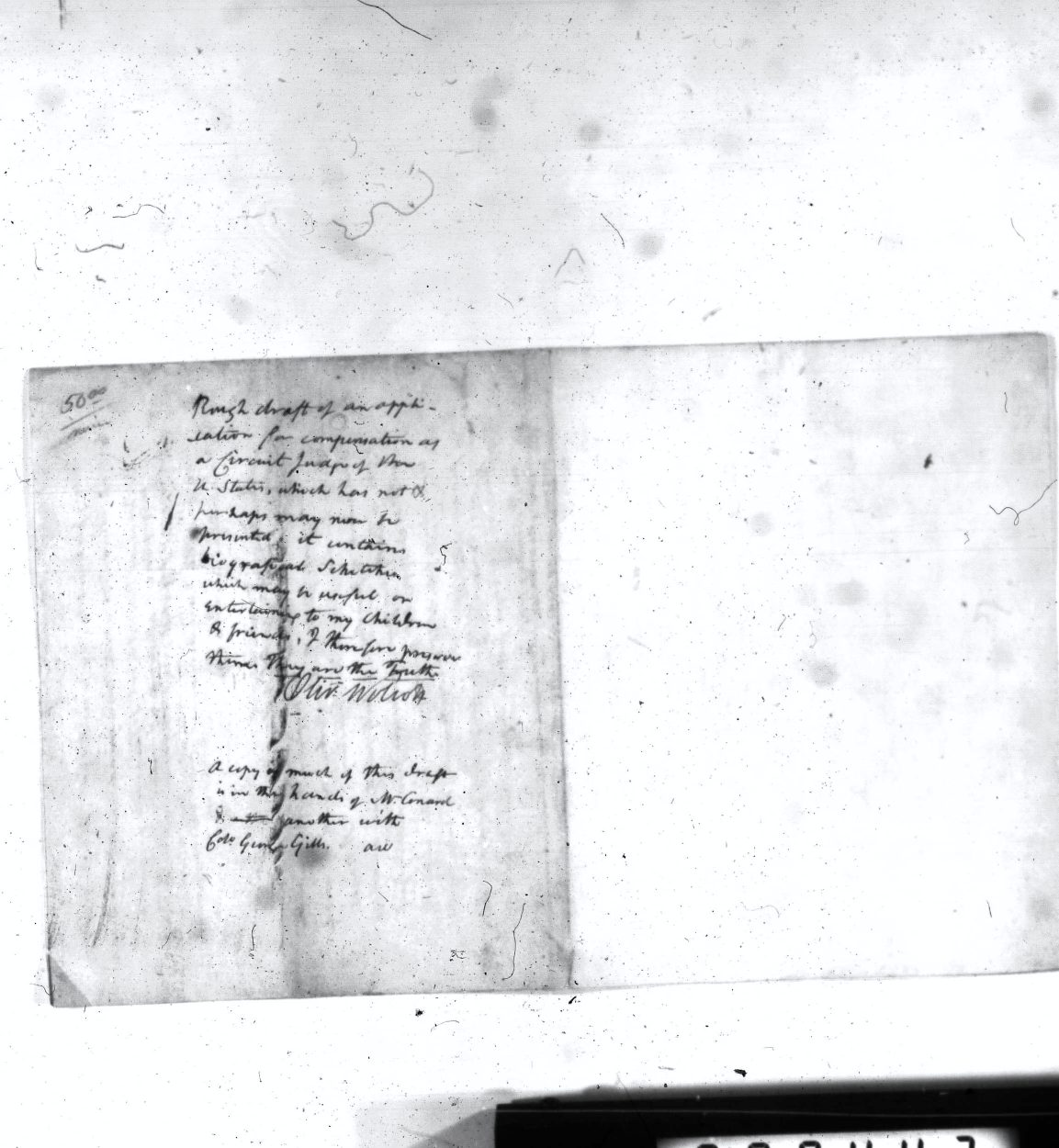 FRAME 451
*** AUTOBIOGRAPHICAL MEMORIAL TO CONGRESS, heavily corrected draft *** "It is with unfeigned humiliation that I respectfully request the attention of Congress to matters of personal concern… It is indispensible that I should become my own biographer. My public services commenced in April 177[7] when I was seventeen years of age, a pupil at Yale College." THE DANBURY RAID: "In the middle of the night, I was summoned from bed to repair to the Rendezvous of the Militia Company… with information that the Enemy had landed on the coast, and by a forced march had proceeded to Danbury, where they had burned the Continental Stores, and the Village. I arose and equipped myself with Military accoutrements; My Mother supplied my Knapsack with a Blanket & Provisions, and hastened my departure, with the cheering advice, to conduct like a good Soldier. I left my native home… confiding my Mother, Sisters, & Brother, (then ten years of age), to the sole protection of two young Male & one Female African"
legal opinion on "the power of feme-covert to devise land within the Commonwealth of Massachusetts," citing "Osgood v. Breed 12. Massachusetts Report. 525," the Statute of Wills, 32 Hen. 8 c.1, and 34 & 35 Henry 8 c.5
*** THE MEMORIAL EXPLAINED *** docket in Wolcott's own hand on the wrapper: "Rough draft of an application for compensation as a Circuit Judge of the U. States, which has not & perhaps may now be presented; it contains biographical sketches which may be useful or entertaining to my children & friends, I therefore preserve them. THEY ARE THE TRUTH." signed "Oliv. Wolcott"; below, "A copy of much of this draft is in the hands of Mr. Conard? & another WITH COL. GEORGE GIBBS" – which is how it came into these papers
"Astoria Orgn March 6th"
letter of introduction from Oregon for "my friends Mr. Allen Miller & his lady," returning to New York "on account of Mrs. Miller's health"; "Tell Laura to give Mrs. M. some music & to play, that I hear it through her ears"; signed "Your son George Gibbs"
"Genealogy of the Gibbs Family," generations I-V: Robert G. born at Elmerston Court in Kent 27 Nov 1634 and Mary Countrey of Brook House, Reculver Parish, "in the isle of Thanet in Kent," married 26 Feb 1639 at Canterbury; Barbados and Saba births 1653-1683; Benjn. G. born at Barbadoes 10 Jany 1681
folded blank wrapper docketed in one line: "Gibbs of South Carolina"
1847-12-29?
"Bristol Town Records. Copied by Peleg Spalding Town Clerk": Gibbs entries 1729-1756 with book and page citations, including "Capt. James Gibbs commander of Sloop Little Bristol bound for Surinam July 25th 1751"; "Mrs. Sarah Gibbs d. Oct 8th 1756 aged 42"; John Gibbs & Sarah Jones married 19 Oct 1729; James Gibbs & Martha Giddins 25 July 1735
"Friday"
"Mamma says that in her Essay on the Northmen, which you will find in the Appendix to the Biography of Francis Lewis, she has related what she could collect of the occasional visits of white men to our continent before the discovery of Columbus"; "the early settlements in Vinland or Rhode Island"
n.d. [c.1852]
densely CROSS-WRITTEN, partly legible: "your uncle William" and trouble in his business; Wolcott's business talents; ALFRED IN NEW MEXICO: "We have very frequent letters from Alfred. The last of… lies before me" on New Mexico, "as the Mexicans and Indians are both marauders there," and "hard warfare, which the small number of troops will oblige very unequally"; "Alfred's health has suffered from the limestone water"; George's articles and a "History of Oregon"
(cont.)
LAURA, FRANCIS, ALFRED, WOLCOTT, GEORGE, MR, STAR
business counsel: "give me particulars of who are the members of the firm, how far interested, their character and qualifications, and what facilities are given to you, and whether you have a fixed salary; let me know your expenses… because I have placed you in a place of great responsibility. You will require more prudence than ever to steer your own way, as there is no authority here to appeal to"; Laura's music, Mr. Scharfenberg, Mendelssohn, Beethoven
CHINA TRADE: "we are offered freights from San Francisco"; "Our arrangements in having a house at Shanghae Canton and Singapore afford us facilities for securing freight to vessels consigned to us, which no other house possesses"; "at the latter port we have constant information from Bombay, Madras, Calcutta, Penang, Batavia & Manila"
n.d. [Aug-Sept 1852]
"My tenants are doing very well with my farm… I could get a very good price for it, but I shall hold on to it as a kind of a nest egg at large. I wish I were out there again"; "I do not admire Gen. Hitchcock's regime at all"; "General Scott is a candidate for the Presidency and so far there is so little excitement that I think he can hardly be elected any way"; "our old Adjutant General Roger Jones is dead… His successor is Colonel Cooper"; Mother "unsuccessful in her effort to get the town to buy the old Mill lot, and Uncle William is so contrary that she can not sell it"; "Wolcott is flirting, philosophically, with Miss Lily Darby"
ON FRANCIS'S DEPARTURE BY SEA: "I left you to go on board the Long Island boat and was disappointed in leaving for Elmirs? and you still at the wharf. But I was becoming ill and when we arrived at New Brighton I got out and drove down to see you pass the point which you did in fine style without believing that mother's eyes were upon the vessel"; "You know my child with what pain I parted with you"; "I tremble at the dangers to which you are exposed but most the moral ones, in every thing spurn the first temptation. Write me fully all that concerns you. Keep a little diary and think nightly of your mother who watches and waits for you"
"Sunday Evening" [1849]
OLIVER WOLCOTT GIBBS'S DANGEROUS FEVER: "Wolcott varies but does not improve… George is so much confined that he is well nigh worn out, even with watchers day and night George and I cannot leave him long enough for rest, getting up at six and going to bed at 12 or 1 o'k while both of us are called to him in the night. He is delirious most of the time and sometimes very wild. It is said that this fever does not give way under six weeks, and we hope his strength will carry him so far and through. George's devotion is unparalleled. I wish you could witness it as a lesson of life."
(cont.)
LAURA, WOLCOTT, GEORGE, FRANCIS
(cont.)
LAURA, WOLCOTT, GEORGE, LAURA-D, FRANCIS
n.d. [c.1849]
"You must not suppose that because we do not write that we forget you. But Mother will have told you that Wolcott has been and is still so ill that we have no time for any thing but to attend to him"; "although there are balls and parties innumerable yet I only hear of them"; "Your affectionately Laura."
n.d. ["Friday Eve," December]
Aunt Sarah's visit cut short by "a snow storm," "she took a great quantity of baggage and a little dog"; money "as regards Oregon"; praises Charles Kuhn, "one of the best fellows I know"
(cont.)
LAURA, FRANCIS, WOLCOTT, ELIZA, LAURA-D, OTHER
n.d. [after 1873-11-01]
LEGAL INDEMNITY p.1: Balestier as administrator executed a lease with the Sailors' Snug Harbor dated 1 Nov 1873 of the premises 968 Broadway, New York; the heirs having assumed "the entire charge and control of said premises," they "for value received agree to hold you harmless and to…"
n.d. ["N.Y. Greene Street, Wednesday"]
anxiety over Mary's mother's illness; "How I wish I were near as I am certainly a very tough old lady, and could take some part either in sympathy or alleviation"
1866-11-25 (Sunday)
"Exactly one month to day since Mr Gibbs left for Wash'n and he is not home yet. I have had the most vexatious, tantalizing time expecting him every day and daily disappointed."; encloses two of Mr Gibbs's letters from Fort Ellsworth "to let you see what an escape we have made"; "Gen. Hancock said he would order Gen. Grant? to assign Mr G. here at once"; cross-written block on a servant and her wages
(cont.)
the servant was paid wages "besides giving many privileges," then "became very insolent, refused to answer a bell and said she had lived with a Capt Somebody who treated her like a sister & had her sit at table with…"
(cont.)
additional cross-written lines on the servant; marginal note "Love to Mother and Joe"
1866-12-12 (Wednesday)
arrival and distribution of a box of oranges and nuts, made into sweetmeats or marmalade; a jar made for Lizzie, "who could not do any where she is"
(cont.)
"Alfred has got back to Ft Riley & they will be there… the other post is not habitable yet and he has a court martial… He writes in good spirits. Peggy is as funny as ever. The boys are just a going to school"
[no place or date on the filmed fragments; internal evidence points to late Nov. or Dec., after Thanksgiving, in a year when Lynde had just been placed on the retired list]
[not filmed]
[frame 496 – single leaf filmed at an angle; body text runs at 90 degrees to the plate. The leaf begins in mid-sentence.]
the arrival of the oranges and nuts, and of their distribution. The bitter ones were all in good order allmost, and remarkably fine of the kind. They are all made into sweetmeats or rather marmalade. Elvira having some and some I sent to Mrs Van as from you. As the marmalade I sent her after her illness was so useful and acceptable. She has made them up with the juice of some sweat ones added and tells me that it is fine. I have a nice jar made for Lizzie who could not do any where she is. You must be glad that she is so content and well off up there. As to the sweet oranges only half are in good order but they have tasted well. and I sent some by Lohan(?) up to Yonkers. I have not heard in several days but shall write to night to let her know that Mrs Cary(?) is at Lucius's and she will come down.
[frame 496, margin – a postscript written across the right-hand margin at right angles to the body, in wide irregular spacing around blots and struck-out words]
Alfred has got back to Ft Riley were his baby(?) [word or words struck through] be there all winter the other Post is not habitable yet and he has a court marshall He writes in good spirits. Peggy is as funny as ever. The boys are just a going to school
[frame 497, left leaf]
We had no Thanksgiving in the family We three ate our turkey and pumpkin pie as usual in our family with the addition of Natalie, Elvira had her own family Alfred or(?) from Cambridge. I do not know whether we shall have a Christmas together or not. Lizzie and the children I shall ask to come to me. It has been a great comfort to me that the servant she has whom I stood to her has been faithful and fond of the baby. I have had on the contrary the greatest changes. and it is but now that I have had a decent cook. The Waithems(?) have been perfectly absurd in their vagaries and their requirements. to day I am without. and the papers full of advertisements. Mrs Sloans(?) has the boy Austin too But he is called Wash not Monkey Whi[illegible – large ink blot] one he coch[illegible](?) They are very fond of him and think he is a marvel of capacity and intelligence. He is quite well attired and handsome. I am rather sorry I did not take him myself. Austin has been to Pen(?) to see his family. I think he must have
[frame 497, upper right fragment]
returned allready. there will be quite a society of New Yorkers there this Winter. Mrs J. A. Kerns(?) and her two Sisters. the Bells. and Mary More. Mrs Bell intends to remain out another year. Your Uncle William continues to give trouble. He has embarrassed the family affairs as much as possible. You will hear all on coming on(?) here. In the mean time we are
[frame 498, single fragment – the rest of the plate is blank]
that old traitor Lynde and put him on the retired list. Loyalty is ill paid when treason gets the same treatment. I have not heard from you for a week. Lizzie has not been down and I am anxious at your being alone there with your chills. nor do I know [one further line survives at the cut edge of the fragment but is too faint and too badly cropped to read – illegible]
Three film frames filmed as loose leaves and cut fragments of what appears to be one long family letter in a single female hand (almost certainly Laura Wolcott Gibbs to her son). Frame 496 is the duplicate, rotated exposure of frame 495: the leaf is laid at an angle and the body text runs at 90 degrees to the plate, so it has to be rotated counter-clockwise to read. The value of the duplicate is that the cross-written margin postscript, which is what carries the Alfred Gibbs news, is now legible. That postscript is written in very wide, irregular spacing around ink blots and at least one struck-out word, so its word order is uncertain in the two lines after 'Ft Riley'; the words are given exactly as they stand on the leaf. Frame 497 carries two separate paper strips – a large left-hand leaf and a smaller strip at the upper right – and frame 498 carries one strip at the upper right with the rest of the plate blank. Every one of these fragments begins and ends in mid-sentence; no salutation, date, place or signature was filmed. Frame 497's left leaf has a heavy ink blot that has destroyed several words in the 'Wash not Monkey' passage. Frame 498's final line is cut by the edge of the fragment and defeated repeated attempts to read it. The film order (496, 497, 498) has been preserved here; it is not certain that it is the order in which the leaves were written. Internal dating: the reference to Lynde being placed on the retired list, taken with Alfred Gibbs being back at Fort Riley, points to the winter after Lynde's restoration to the retired list rather than to 1861.
Anno Dom: 1703
"The Genealogie of the ancient family of Gibbes of Warwickshire lineally continued down to Thomas Gibbes Esq. the present heir, with several of the collateral branches"; Gibbes of Honington, Co. Warwick, and Gibbes of Devon/Dartmouth; emigrant sons named at the foot of the 17th-century tier: "John Gibbs of Virginia," "Robert Gibbs of New England," Henry Gibbs, Ralph Gibbs; no dates for George Gibbs III, Alfred or their siblings
the surname "a diminutive of the Norman personal name 'Gislebertus' or 'Gilbert'"; gentry families of Somerset, Herts and Cork descend from two brothers "in the time of Richard II, one of whom settled at Honington, County Warwick, and the other at Fenton, County Devon"; Jenkin Gibbes, temp. Henry VII, "possessed an ancient roll deducing the family from Normandy"; battle axes or pole axes as charges; motto "Tenax propositi"
Frames 501–537 · 12 documents
On Oliver Wolcott Gibbs and J. Willard Gibbs; the Wolcott Memorial; the Eliza Wolcott Gibbs and Lucius Tuckerman charts.
1900-02-16
TYPESCRIPT extract p.1: genealogical information from Mr. Geo. A. Gibbs, a Pasadena lawyer, who holds a Record of "ten generations of Gibbses from their first landing in America, & the name of the town in England from which they all came"; three brothers Matthew, Jonathan and James Gibbs emigrated "from Venton, in Darlington Parish, in England to New England, I infer about 1640"; "James the third brother, from whom we are descended, settled in Rhode Island"
1916-08-10
editorial "The Wayward Wolcotts" on the Wolcott family reunion in Chicago, "nearly a thousand of them, all claiming descent from the Henry Wolcott who came to Plymouth"; rehearses Roger Wolcott, Oliver the Signer, and Oliver "who succeeded Hamilton as Secretary of the Treasury… he became a New Yorker"; laments that "Oliver" and "Roger" are vanishing from the New York telephone book
1923-08-24
lead article "J. Willard Gibbs and His Contribution to Chemistry" by Dr. Frederick H. Getman; Josiah Willard Gibbs born New Haven 11 February 1839; "descended from Robert Gibbs, the fourth son of Sir Henry Gibbs, of Honington, Warwickshire, who came to this country and settled in Boston in 1658"; "No fewer than six of the descendants of this couple have borne the name Josiah Willard Gibbs"
1936-09-18
PRINTED CLIPPING, "Scientific Notes and News" – the leaf preceding the Gibbs article; no Gibbs content on this page
1936-09-18
PRINTED CLIPPING, Science p.266, opening the article "FROM THE CORRESPONDENCE OF OLIVER WOLCOTT GIBBS": "Three volumes of manuscript letters to and from Oliver Wolcott Gibbs (1822-1908) in the new library of the Franklin Institute in Philadelphia form a delightful and informative chapter in the long history of American science"; Gibbs at Cambridge 1863 until retiring to Newport 1887; president of the National Academy 1895-1900; president of the AAAS 1897
(cont.)
WOLCOTT, STAR
1935-01-14
TYPED LETTER on New York Herald Tribune letterhead, signed in ink; "Dear Cousin George"; encloses "a copy of a speech which was sent to me by Mr. Shipman of Hartford, Conn."; pencil docket "ans 1/30"
n.d. (enclosure)
TYPESCRIPT SPEECH p.1: the speaker's great grandfather looked on "Governor Wolcott – your Oliver Wolcott, Jr. – as a renegade Federalist," prophesying when Wolcott was nominated for Governor in 1817 by the Republicans "that they had caught a Tartar"; the Tartar held office ten years and was "one of the ablest men of his time and of all the Wolcotts as well"
PRINTED PAGE, chapter head "WOLCOTT FAMILY": Kennett's History on "Walcott of Walcotte, a very ancient family in ye Countie of Salop"; a sixteenth-century sarcophagus still standing at Tolland, "whence the family migrated to this country in 1630"; descent from Traharen resting on the Herald's Visitations of Shropshire 1584 and 1623
"NOTES ON THE WOLCOTT FAMILY" from Eyton's History of Shropshire: medieval Walcote deeds 1221-1316, William de Walcote 1221, Roger de Walcote juror 1252-56 holding a quarter hide at 8s rent with "twenty days' ward at Bishop's Castle in war-time by one serviens armed with a bow and two arrows"
ANCESTOR CHART headed "ELIZA WOLCOTT GIBBS. New York City." MOTHER: LAURA WOLCOTT GIBBS, born 10 April 1794, died 10 December 1870. Grandfather: "GEORGE GIBBS, 3d – Yale College, Colonel, War 1812, Soc. of Cin.; Residence Newport, R.I. and Astoria, N.Y.; BORN NEWPORT 7th JANUARY 1776; Died August 1833; Married Laura Wolcott, 27th December 18[–]"; then the Channing, Chaloner, Wolcott, Stoughton, Drake, Collins and Wyllys lines
ANCESTOR CHART headed "LUCIUS TUCKERMAN. New York City. Born, 19th March, 1818. Died, 10th June, 1890." and "ELIZA WOLCOTT GIBBS, 2d April, 1844, by Dr. Dewey" – the marriage of Eliza Wolcott Gibbs into the Tuckerman family; Rev. Dr. Joseph Tuckerman; Edward Tuckerman 2d who "founded with Paul Revere, Mass. Mech. Charitable Asso. 1775"; the Cary, Gray, Kidder, Crosby and Greaves lines
Frames 538–655 · 14 documents
George Gibbs V’s typescript, pages 1 to 107: the Stevens Railway Commission, Petrograd through the July Days, the Kerensky interview, and the journey home through Siberia, China and Japan.
1918-01
TYPESCRIPT p.1, "RUSSIAN TRIP NOTES (From Memoranda In My Note-Books)", dated January 1918: "The following are notes jotted down during my journey to Russia in the summer of 1917 and preserved in this form for my own amusement… it is not intended as a professional report nor for publication. This has been officially dealt with in my report to the Secretary of State."; his connection with the mission "was an unsought for honor"; credits Daniel Willard of the B. & O., Samuel Rea of the Pennsylvania Railroad, and Samuel Vauclain of Baldwin Locomotive
(cont.)
p.4, Japan landfall: rice paddies and night-soil fertilization ("it is dangerous to eat uncooked vegetables"); Yokohama "a fine large city of one-half million inhabitants," losing importance to Tokyo. CARBON TYPESCRIPT with autograph corrections, NOT handwriting. Internal evidence dates the trip to 1917, not the register's 1918
(cont.)
 FRAME 542
 FRAME 543
 FRAME 544
 FRAME 545
 FRAME 546
 FRAME 547
 FRAME 548
 FRAME 549
 FRAME 550
 FRAME 551
 FRAME 552
 FRAME 553
 FRAME 554
 FRAME 555
 FRAME 556
 FRAME 557
OTHER
(cont.)
 FRAME 558
 FRAME 559
 FRAME 560
 FRAME 561
 FRAME 562
 FRAME 563
 FRAME 564
 FRAME 566
 FRAME 567
 FRAME 568
 FRAME 569
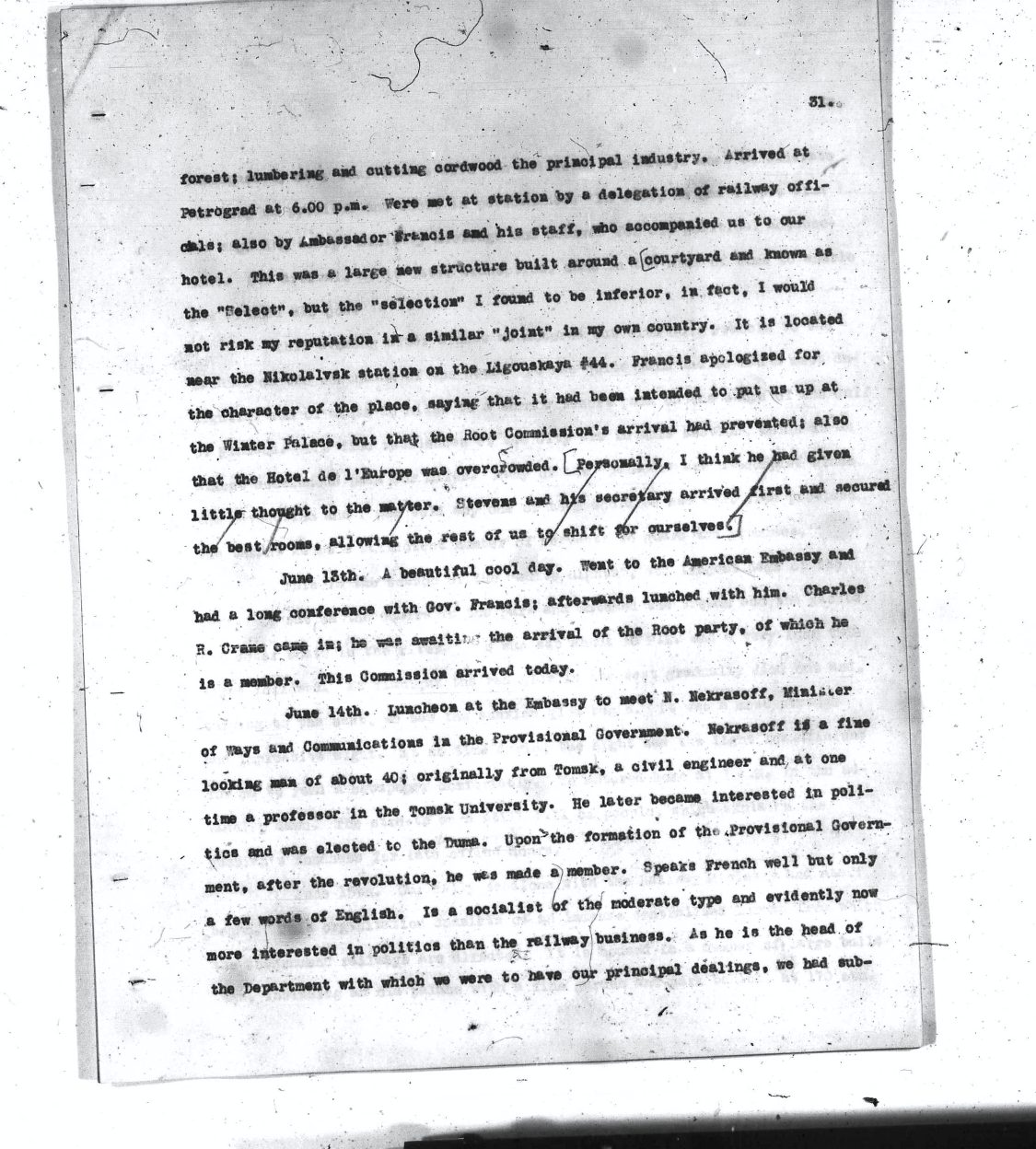 FRAME 570
OTHER
1917-06-15
a Russian minister "long on promises and short in performance"; evening motor with Gov. Francis to the Islands on the north bank of the Neva; the "palaces" unoccupied since the Revolution, offered rent free if the tenant keeps servants to guard them; the season of the "white nights," sunrise glow at midnight; the daily sessions with the Railway Ministry begin, "an immense centralized bureau"
(cont.)
OTHER, STAR
(cont.)
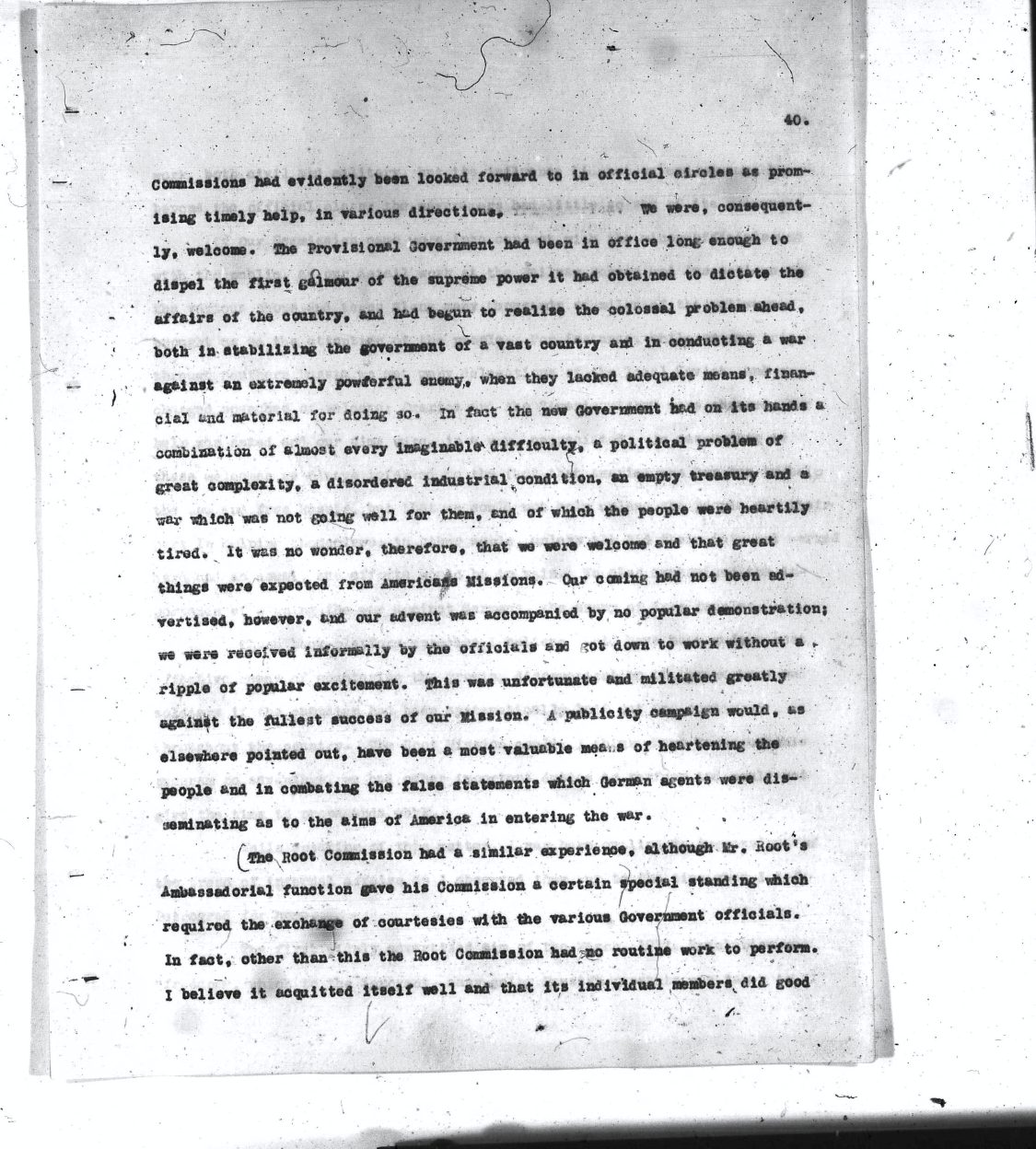 FRAME 581
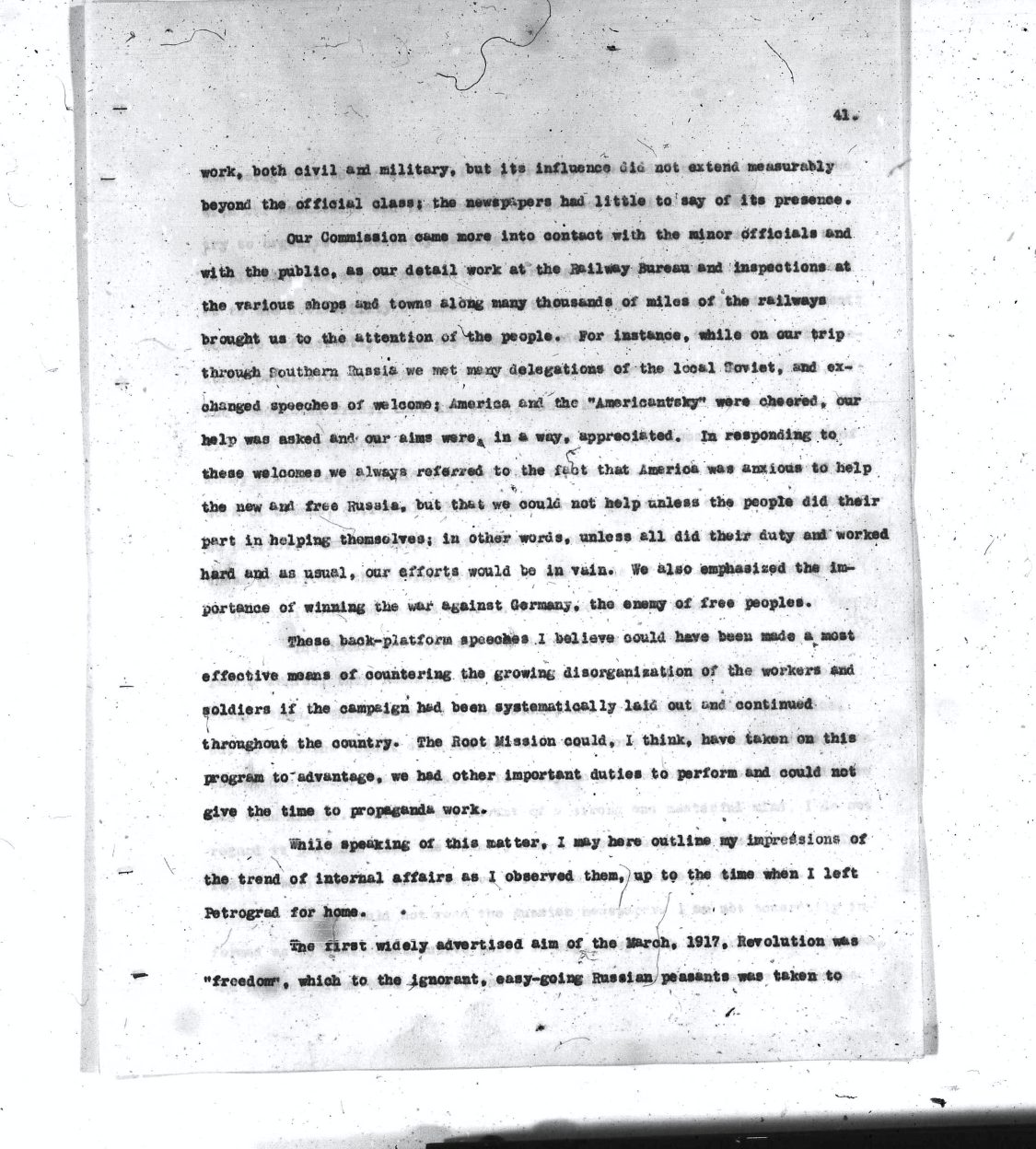 FRAME 582
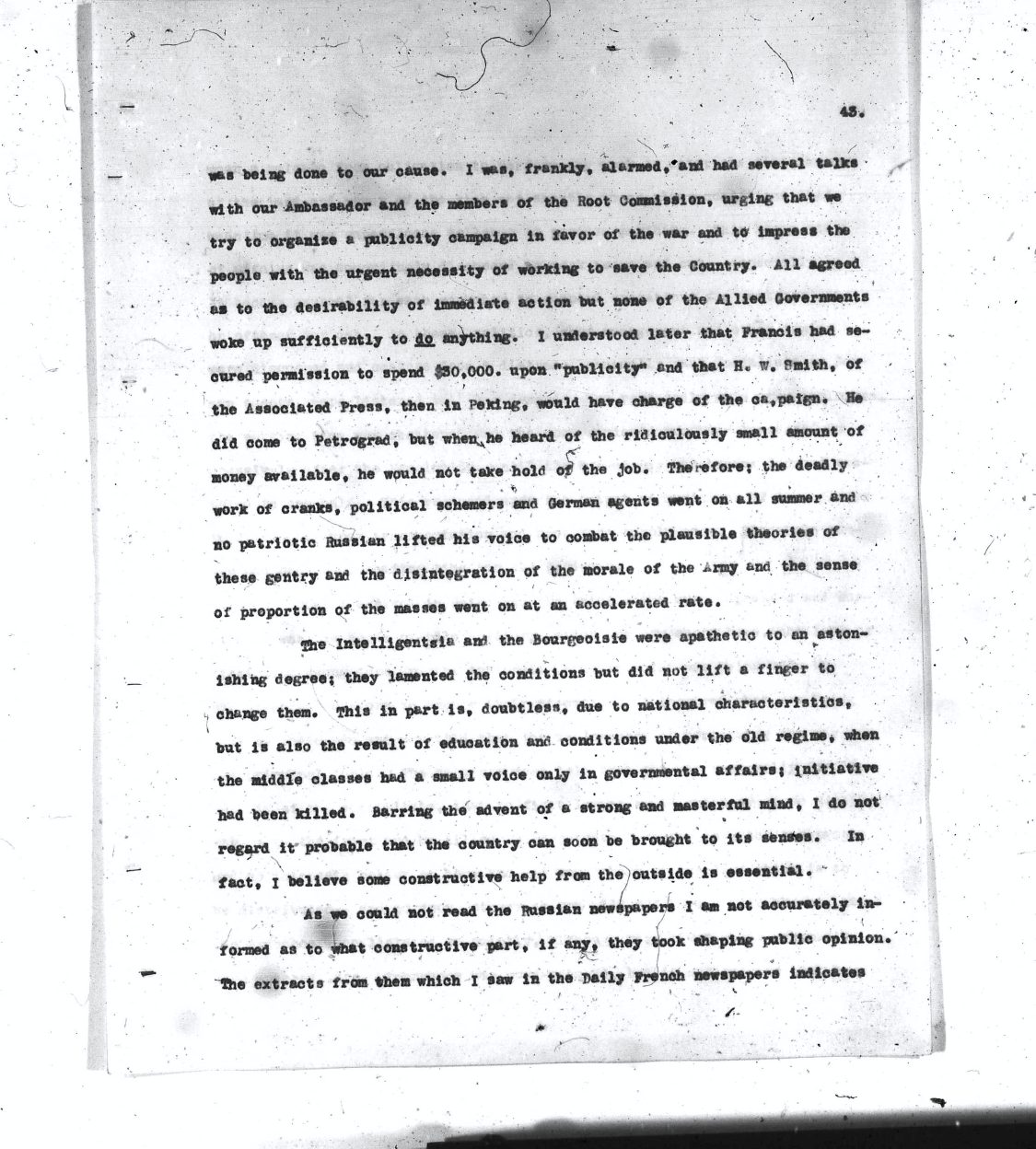 FRAME 583
 FRAME 584
 FRAME 585
 FRAME 586
 FRAME 587
 FRAME 588
 FRAME 589
 FRAME 590
 FRAME 591
 FRAME 592
 FRAME 593
 FRAME 594
 FRAME 595
 FRAME 596
 FRAME 600
OTHER, STAR
1917-07-14/15/16
hotel strike settled with "a bonus of 15 per cent. on all bills"; Gov. Francis "thoughtfully sent us some bread"; sunflower-seed nibbling "the national variant of our chewing gum habit"; "the Cadet members of the Ministry resigned to-day," Kerensky "resisting and says he will not form a new ministry unless given a free hand"
(cont.)
OTHER, STAR
(cont.)
OTHER, STAR
(cont.)
 FRAME 617
 FRAME 618
 FRAME 619
 FRAME 620
 FRAME 621
 FRAME 622
 FRAME 623
 FRAME 624
 FRAME 625
 FRAME 626
 FRAME 627
 FRAME 628
 FRAME 629
 FRAME 630
OTHER, STAR
(cont.)
p.85: Mukden, "the new town lies outside of the walls of the old and is a Japanese concession; the native city is still governed by the Chinese"; the black-brick wall "about 35 ft. high and 25 ft. wide at the base"
(cont.)
 FRAME 638
 FRAME 639
 FRAME 640
 FRAME 641
 FRAME 642
 FRAME 643
 FRAME 644
 FRAME 645
 FRAME 646
 FRAME 647
 FRAME 648
 FRAME 649
 FRAME 650
 FRAME 651
 FRAME 652
 FRAME 653
OTHER
(cont.)
OTHER
Frames 656–690 · 25 documents
Diplomatic passports, then photographs of the Pacific Northwest.
1917-08-27
DOCUMENT PHOTOGRAPH: verso of the cancelled diplomatic passport, rubber stamp "LEGATION OF THE UNITED STATES OF AMERICA / PEKING, CHINA / GOOD / Date AUG 27 1917," a Secretary of Legation's signature, an embossed seal, and a manuscript return address "Return to – Geo. Gibbs, 19 W[est] 43[rd] St., New York, N.Y."?
(cont.)
OTHER
1917-05-08
DOCUMENT + MOUNTED PORTRAIT PHOTOGRAPH: "Passeport Diplomatique / United States of America / Department of State," No. 75, overstruck "CANCELLED"; certifies that "George Gibbs, serving the United States as a Member of the Advisory Commission of Railway Experts to Russia, is about to proceed abroad," requesting free passage "without let or molestation"; signed by Robert Lansing under the embossed Department of State seal. Affixed at upper right is a head-and-shoulders PORTRAIT of George Gibbs V, a mustached man in dark coat, white collar and necktie; description panel reads "Age 56 years… Forehead high / Hair dark / Eyes blue? / Nose straight / Face oval"
(cont.)
OTHER, STAR
1917-06-22 (endorsements 26 Apr, 25 & 30 May 1917)
both halves show a small three-dimensional object against a blank ground: a seated human figure in a brimmed or flat-topped hat under a rude arbor or scaffold of forked bare branches rising from an oval base, a heap of similar branch or root forms at left; reads as a carved or modelled miniature, perhaps a model of a shelter, arbor or grave structure
two adjoining frame buildings in a stump-strewn clearing at the edge of dense coniferous forest: a long single-storey gable-roofed building with a full-length covered veranda and a row of small windows, stovepipe on the ridge; at right a lower shed-roofed board building with a central doorway, barrels and tools stacked against it; Pacific-Northwest character, unidentified
a riverbank settlement seen from the opposite shore: eight to ten low log cabins with plank or shake roofs along a cut bank, three or four conical tents or lodges at the left end beside a large fir, a beached ship's boat or canoe at right; behind, a hillside of standing burnt conifer spars; reads as a fur-trade, survey or mining camp on a Northwest river
half-length three-quarter view of an elderly white man against a plain dark ground: greying hair swept back and full at the sides, full chin beard and moustache, deep-set light eyes, a rough dark sack coat over a shawl-collared waistcoat, soft white shirt open at the throat, no necktie; plain civilian dress, unidentified
"Maj. John Owen / Bitter Root Conn?" – three-quarter-length seated studio portrait of a heavy-set middle-aged man, head propped on the right forefinger against the temple, wild white hair standing out at the sides, long full dark beard, dark frock coat and light figured waistcoat buttoned to the throat. MAJOR JOHN OWEN, the Bitter Root trader and Flathead Indian agent
"Mr Joseph S. Harris NWBS" – half-length studio portrait of a young man, thick dark wavy hair over the ears, short dark beard and moustache, dark frock coat and black bow tie. Northwest Boundary Survey, the same survey on which George Gibbs served
(cont.)
OTHER, GEORGE
"Mission School at Tulalip / Wash. Terry." – outdoor group of twenty-five to thirty Native children and youths in two or three ragged ranks before a screen of brush, water and a far shore behind; nearly all the boys in peaked forage-style caps, several smaller children in light shifts, TWO MEN IN LONG BLACK CLERICAL SOUTANES standing in the middle of the group; a flagstaff at the right edge
(cont.)
NA
three Native people against the weathered vertical planking of a building: an older woman with hair parted centrally wrapped in a dark blanket; a young man in a flat-topped military-style forage cap, hair to the shoulders, boldly striped shirt with sleeves pushed up, arms folded, wearing bracelets; a man in a similar cap and plain dark coat buttoned to the neck
names read approximately "Cheat-Leh.Kwun," "Hooteh.sa.usk?" and "Cheht-tulh?" (spellings uncertain, ink faint on a dark ground); five Native people against a plank wall and door frame: a young person in a broad flat-brimmed hat and long striped tunic; a seated woman in a light dress; a child in a soft brimmed hat with a fur or fringed collar; a barefoot young man with long loose hair, arms folded; a barefoot seated man in a light headband
three Native women and two small children against a plank wall: a woman in a dark blanket with long earrings and hair in two plaits, an infant seated before her; a woman wrapped to the chin in a dark plaid-bordered blanket over a light printed skirt; a woman with two long braids, large earrings and a beaded or metal ornament at the breast, a child looking over her shoulder
head-and-shoulders three-quarter view of an elderly white man: hair receding and grey brushed back, heavy grey moustache, no beard, a very dark garment with a high standing collar closed with a small stud and a line of buttons, a cape or heavy overcoat over both shoulders. NO shoulder straps, epaulettes, corps device, collar insignia or medals are visible, so NO RANK OR SERVICE CAN BE ESTABLISHED; the sitter's apparent age and the print style read as c.1890-1910, well after Gen. Alfred Gibbs's death. UNIDENTIFIED – this is NOT to be taken for Alfred
1849-06-13
*** DRAWING FROM THE MOUNTED RIFLEMEN MARCH *** pencil sketch marked at upper left with an oval ink ownership stamp "G. Gibbs," numbered "no 3," captioned in ink "[S]ioux lodge near Kearneys Crossing / of Platte River, June 13. 1849" and re-dated in pencil at the lower left "June 13-49"; a single tipi on open prairie, poles projecting in a bundle above the smoke flaps, a vertical line of lacing pins down the closed front seam, its long shadow thrown to the right, a faint low bluff or second lodge at far left
1857
DRAWING: pen-and-ink and pencil, initialled "J.M.A.," captioned "Chan-to-ake (Isomi?) Tule House" and dated "1857."; a large low Native dwelling with steeply pitched thatched or matted roof sweeping nearly to the ground, plank or reed walls, a small dark arched doorway at the left end, a plume of smoke rising from a roof opening
DRAWING: pencil, captioned "Figures at an Indian Grave, Victoria harbor / Vancouver Id." and signed "Wm. B. McMurtrie / pinxt."; a low plank-roofed grave shelter of vertical boards, open at the front, sheltering FOUR STANDING CARVED WOODEN MORTUARY FIGURES, two with rounded featureless heads and hands at the waist, two with hats or crested headgear
DRAWING: pencil, inscribed "J. M. Alden – U.S. Steamer 'Active'" and "Indian Graves. Laurel Pt. Victoria Hb[r]."; a row of Northwest Coast grave structures on a low shore: a lattice-fronted grave box under a shed roof, a taller post-and-plank enclosure, FOUR TALL CARVED MORTUARY FIGURES with hatted or crested heads standing in a row before a plank-roofed grave house, a plain gabled grave box and a picket enclosure
MAP: pencil coast-chart of the SANTA BARBARA CHANNEL, southern California: the mainland shore with hachured cliffs from "Pt. Conception" through "Santa Barbara town & mission" and "San Buenaventura town & mission"; the island chain named "Sn. Miguel" (with "Cuyler's Harbor" flagged), "Sta Rosa," "Snta. Cruz" annotated "25 miles long," and "Eneapa" [Anacapa] annotated "5 mi. long"; at lower right "San Nicolas" and beneath it "Russian." No date, scale, signature or title
DRAWING: pencil, inscribed "U.S. St[eame]r 'Active'" and captioned "Indian Cave Sta Rosa Id. Cal." with the initials "J.M.A."; a wide low dark-mouthed cave undercutting a bare rounded hillside, its lip overhung with brush and boulders; two smaller detail vignettes beneath, one repeating the cave mouth in section, the other a rocky headland
Frames 691–720 · 27 documents
George Gibbs IV’s own drawings, several signed.
PENCIL SKETCH MAP, "Sketch of Clear Lake Calif. by Mr Jas. M. Alden": pear-shaped lake with hachured shore hills and a compass rose; labels "Cache Creek," "Indian Sett. Cayampo," "Hachinjama Lake," "Cooktai mt. / Wooka tai," "Big Valley," "Comloktempo"
PENCIL DRAWING, a tule canoe afloat in profile with a paddle beneath; caption "Isomi) Clear Lake Canoe & paddle of Tule -" signed "James M. Alden"
1858-03-11
PENCIL PANORAMA on card: low flat shoreline with conifer clumps and a distant serrated snow range; caption "View fr. Ft. Langley, looking [south?]. Mch. 11, 1858"
PENCIL DRAWING of a snow-mountain summit, crater rim and rock ribs; identified on the verso (695) as the crater of Mt. Hood; refilmed darker at 715
1854-06?
PENCIL MOUNTAIN PROFILE on card, peaks lettered with native names and heights: "Nach-hahk-Elehn (7500 ft)," "Speh-uch (6000 ft)," "T. Ushus-kan (9000 ft)"; caption "Profile taken from head of Ushiwash? River, June 1854," signed "H. Custer"
Aug. 8 (no year)
PENCIL PANORAMA, a forested valley wall rising to a bare ridge, with compass bearings written along the skyline ("N. 20 E.," "N. 24 26 E.," "N. 39 50 E."); note "From Station 60 of Aug. 8th… Gibbs & Shaw's Garden"?
very faint PENCIL SKYLINE PROFILE with three bearing notes, "N. 8. 33 W.," "N. 5. 50 W.," "N. 12. 25 E."; no title or signature
PENCIL LANDSCAPE on card: broken scrub and rock, a long grassed slope, a distant range with one sharp double peak; the foreground lettered "Prairie"; top-edge caption illegible
(cont.)
GEORGE
1859-06
PENCIL DRAWING: a boulder-strewn creek bed, dense brush, a wall of sharp snow peaks lettered "Tummeahai Mtn. 8000 ft" and "Momehaist 9000 ft"; caption "Head of Senehsai Creek, West Fk. June 1859," signed "H. Custer"
FINISHED GREY WASH DRAWING numbered "14": a wide arid basin from above, a terrace of deeply gullied badland bluffs across the middle distance, a river threading the flats
1859-06-20
PENCIL DRAWING of a carved wooden serpent figure, a shaft with a horned animal head at each end, an incised disc boss at the centre and rows of triangular scale marks; notes "Ulch-keh snake / S'chl-toh," "[-] 4 ft wide. figures 10 high. / Black with white scales," "at Petaithn? lodge, Chiloweyuck River. June 20. 1859"
1853-06
PENCIL DRAWING of a carved and painted "TAMANOUS BOARD": a tall plank with four descending rows of stylised round heads in keyhole surrounds, a large profile face in relief down the left edge. Caption: "Tamanous board, originally belonging to the lodge, afterwards placed at the head of the Chief's grave. The Indians say it has no 'signification'" / "Sketched on the Will-o-pah river, Shoalwater bay. June 1853."
1858-10
PENCIL STUDY SHEET, "Bark of Forest Trees.", dated "Camp Chiloweyuck. Oct. 58."; four bark-texture swatches labelled "alder," "old hemlock," "long coned pine," "white Spruce"
PENCIL DRAWING captioned "Chinook baskets.": two coiled cylindrical baskets with banded geometric ornament, plus two small detail motifs, a stick-figure elk and a woven-design sample
1858-03-09
THREE DRAWINGS ON ONE SHEET: (a) a multi-pronged fish spear, "Spear for ducks, Clallams &c."; (b) a raised pole-and-stringer drying rack, "Indian Salmon House, Frazier's R. near Ft. Hope"; (c) a recumbent carved stone with an incised face, "Stone image of a S'koi-yahm, at the Skwaumish fishing, on Frazers River. If any one laughs, teases, or plays near it, it will rain."
1850-10-30
DRAWING of an elaborately carved canoe prow ornament, an upright animal head above a hooded human-like form with pierced slot-work panels. Caption: "Oct. 30. 1850 Figure head of a Canoe at the mouth of Charmus? Creek, above Abernethy's Mill, Columbia River. USED AS A COFFIN."
PENCIL BOTANICAL STUDIES: a spiky bare-limbed young conifer labelled "Thuja," a large skeletal tree labelled "dead thuja," and two detached foliage sprays
TWO PENCIL SKETCHES on one tall sheet: a shore scene with reed rafts drawn up among boulders and a broad-bladed paddle suspended above, annotated "Clear [Lake]… Paddle"; below, a tule canoe afloat in profile
RE-EXPOSURE of frame 694, larger and darker: the crater and snowfields of Mt. Hood with shaded lava ribs and a row of firs along the bottom edge; pencil "no 15" across the top margin
RE-EXPOSURE of frame 695, now legible; also reveals six or seven pencil practice studies of conifer foliage scattered over the sheet, invisible in the earlier exposure
1859-06-20
PENCIL-AND-WASH DRAWING of a carved house post and plank: a standing THUNDERBIRD with hooked beak and folded wings, and below it a bear-like quadruped rearing under the bird's feet. Notes: "ho-hwass. the thunder bird. (Chilow.)" / "post 15 ft / 12 in" / "plank 3 ft by 6 in" / "all black"; caption "Figures in interior of Palalthu lodge, on Chiloweyuck River. June 20. 1859"
1859-06-20?
PENCIL-AND-COLOUR-WASH DRAWING of further carvings from the same house: two half-length human figures in dark capes holding rectangular tablets; below, the thunderbird "ho-hwass" with a pale oval breast plate and striped spread wings, perched on the doubled-over body of a human figure. COLOUR NOTES in the margins: "Cape black," "faces white, arms &c, [beads?] red, tablet white," "bird red, wings & bar," "hands red & feet," "hair bl."; caption "Figures in interior of Palalthu lodge, on Chilowyack River."
(cont.)
GEORGE, NA
1859-06-17
PENCIL-AND-WASH DRAWING of a carved OTTER in high relief on a house plank, head down, paws splayed against the board, tail curling up; title "s'ho-tel-til (an otter)"; caption "otter. 5 feet long / from interior of a house at Chiloweyuck Depot. / June 17. 1859"
Frames 721–759 · 39 documents
Drawings to frame 749, then the maps: the Spokane and Palouse sketch map, the 1835 Sunswick plat, the Easton Farm lithograph in two states, the tracing of Eckert’s ethnographic map of the Russian Empire, and the 1871 Perry Farm plat, which is the last file on the reel.
1859-06-17
PEN-AND-WASH DRAWING of a carved otter figure on a house plank; captioned "s'ho-bet-sit (an otter)" and "Otter, 5 feet long / from interior of a house at Chiloweyuck Depot / June 17. 1859"; sheet filmed sideways
PENCIL BOTANICAL STUDIES of western red cedar: a standing tree labelled "Thuja," a bleached snag labelled "dead thuja," two detached foliage sprays
n.d. (NWBS, 1858?)
TWO INK COASTAL PROFILES on one sheet. Upper: "Waldron I. from the South. Query whether there is not a break in the strata at A." with "Pt. Disney" and the point "A" lettered. Lower: "Sketch of Tuam, or Salt Spring I. from E.S.E." with the bearing "N.88 W. mag." The geological query is Gibbs's own
1858-03-17
INK COASTAL PROFILE, "Entrance to Active Passage (A) from Gulf of Georgia – bearing S. magnetic -"; Gulf Islands, B.C.
WASH DRAWING of two vessels, captioned "Bowls carved from fir tree knots. Columbia River."; signed "George Gibbs"
1858-10
PENCIL SHEET of three conifer studies labelled "Fir in the Mountains," "Thuja stump" and "Abies Menzesii Spruce"; dated "Camp Chilowheyuk Oct. 1858"
PENCIL STUDY of a massive buttressed conifer trunk rising from fern undergrowth; faint effaced caption "Trunk of the [red?] cedar or Cypress"
WASH DRAWING of a fringed Northwest Coast dance blanket with formline design, captioned "Blanket shawl of N.W. Coast" and beneath it the reference "See 'Les Peuples de la Russie.'"; signed "George Gibbs." Links this group directly to the Russian-Empire ethnographic map he traced at frames 756-757
1857
*** WATERCOLOUR BUST PORTRAIT OF LESCHI *** inscribed "Leschi – / Nisqually Chief"; signed in an oval cartouche "Jn. Alden 1857." Leschi was hanged in February 1858, so this is a LIFE PORTRAIT made during or just after his trials
n.d. (Chiloweyuck Depot, Fraser River)
COLOURED DRAWING of a carved and painted house post: two standing figures beneath an oval crest of interlocked otters. Lettered "s'hoi-hoi"; "Chiloweyuck { S'mem-ma yehts / S'ho-met-siu (otter) }"; "S'hoi-hoi ck Shwai-whai, a demon."; "height 12 feet"; "black otters"; "Sl-kaan, feathers… eagles feathers"; "tehw – Tsutl, the tongue." Caption: "Figures on a plank supporting roof poles of lodge at Chiloweyuck Depot, Fraser River." Signed "George Gibbs." A rare eyewitness record of a Sxwayxwey-associated house post
1854
DRAWING of a young woman's shell headdress and hair ornament, captioned "Headdress of Hai-qua or Dentalium shells, worn by a girl at mouth of Chihalis R. W.T."; signed "W. H. Tappan for G.G. 1854"
1859-06-17
COLOURED DRAWING of a Northwest Coast DANCE MASK with protruding tongue and a bird figure on the crown; annotated "s'hui-ya-toos-tulse / dinim(?) face"; COLOUR NOTES at right: "all black / mouth & gums red / iris & teeth white / eyes black & white / unshaded space red & nose / tongue & mouth red." Caption: "Mask used at dances & feasts. Chiloweyuck Depot, June 17. 1859"
(cont.)
GEORGE, NA
MICROFILM TARGET CARD, not a document: "U.S / Mss / Y / Box 4" and along the top "copy negative no. WHi (x3) 21966." Marks the start of the oversize sequence. NOTE: the Register's "maps begin about 737" is off by six – 737 is a target card, drawings continue to 749, and the first true map is 743
WASH DRAWING of a carved horn dipper, captioned "Ladle of Big horn"; signed "George Gibbs"
1858-01-31
INK MOUNTAIN PROFILE, "Mt. Baker & Cascade Range fr. Camp on Fidalgo I. Jan 31. 1858"
1856-11
COLOURED DRAWING of a carved standing human figure, captioned "Carved figure standing in an Indian garden at Port Discovery. Painted red; the face white. Eyebrows & spots on the face black."; signed "George Gibbs"
long narrow INK GEOLOGICAL PROFILE, "Section of Bluffs on Whidbys Island"
1853-07-25
PENCIL LANDSCAPE of a fir forest and river ford, captioned "Scene at the crossing of the Yakkohkl R. / July 25. 1853"; made while Gibbs was with McClellan's party on the Pacific Railroad Survey
MAP, the first true map in the block. Hand-drawn pen sketch map of the SPOKANE / PALOUSE river system and its native divisions, in Gibbs's hand; no title block, scale or compass. District names inked across the drainages: "Kanicausaigan," "Alahai" and "Spokane," the last separated by a dashed boundary line. Stream names along the branches include "Sinukane," "Skanam," "T-Kanicaulyes Skanam," "Kaslan," "Quelyes," "Nekhaine," "Pica" (several uncertain). A hatched rectangular enclosure at lower centre marks a lake or detail inset. Corner note ending "… on the Pelouse." No settlements, forts or roads
(cont.)
GEORGE, NA, STAR
1858-08-12
THREE INK COASTAL/GEOLOGICAL PROFILES: "Eastern side of Orcas I. from Cypress I.", "Section of Bluffs, near Pt. Hudson", and "Mt. Baker from Rosario Strait" with the bearings 117, 110, 104, 99; inscribed "Aug. 12. 1858. Rev. Cutter Jeff. Davis" – drawn aboard the U.S. revenue cutter Jefferson Davis
1851-06
PENCIL TOWNSCAPE, "Milwaukie, on the Willamette R. June 1851": the young Oregon town along the far bank under a wall of firs, a side-wheel steamboat and a schooner at the landing, a single paddler in a dugout in the foreground. The earliest dated item in this block
1851-06
PENCIL RIVER VIEW, "Island in Willamette R. abve Milwaukie / June 1851"; wooded island and its reflection, faint unfinished pencil buildings at the right edge
1860-11-25
INK LANDSCAPE PROFILE of the Columbia's basalt bluffs, "On the Columbia above mouth of Des Chutes / Nov. 25. 1860"; features lettered "grass," "drifted sand," "Columbia River," "Tufts of grass & artemisia"
Surveyed 1835-06-16
*** THE SUNSWICK PLAT *** MANUSCRIPT SURVEY PLAT, title in full at head: "Map of Property at Sunswick, Halletts Cove, / part of the Farm of the late Col.l Gibbs." Below: "Surveyed 16th June 1835." and the signature "H. N. Elphinstone." WATERS AND LANDMARKS lettered: "East River," "Dock," "high water mark," the adjoining "Corporation Farm," and a compass arrow marked "Mn. N." BOUNDARY corners lettered A, B, C, D with courses and distances inked along them ("N 51 1/2 W," "N 65 1/4 E," "6.92 Chs," "1.94 Chs"). AREA "6 Acres 3 roods 24 1/2 sq." No lot numbering – a single parcel, not a subdivision. Documents the estate of Col. George Gibbs III two years after his death
1835-06-16
filmed folded in three panels; endorsed in the centre panel "Map of Property / at Sunswick -" and at the foot "16. June 1835"; blank otherwise
Surveyed 1845-06
MAP. LITHOGRAPHED ESTATE PLAN, FIRST STATE. Title block: "MAP of the FARM known as the EASTON FARM situate at the Town Beach at NEWPORT, R.I. Belonging to the Estate of Mrs Mary Gibbs, Dec.d"; "Surveyed June 1845, by Jno. Stevens."; imprint "Lith. of G. Hayward, 1 Platt St. N.Y." THIS STATE carries a THREE-line sale notice: "Enquire of { W. D. Sohier? Esq. Boston / Wm. C. Gibbs Esq. Newport R.I. / GEO. GIBBS ESQ. 10 WALL ST. N.Y. }"
(cont.)
GEORGE, OTHER, STAR
Surveyed 1845-06
MAP. The SAME Easton Farm lithograph in a LATER STATE: identical title block, but the sale notice RE-LETTERED to two lines, "Enquire of { C. H. Parker, Boston. / A. Smith, Newport, R.I. }" – THE GIBBS NAMES DROPPED. Waters and landmarks lettered: "Easton's Pond," the beach and Atlantic shore, a "Meridian" arrow, "Driftway," "Main Road to the Beach," "Public Road to Easton's Beach," "Mill Lot." Land-use compartments: "Meadow," "Pasture 2a 2r 33 rods," "Corn," "Orchard," "Garden," "Barn." Abutters: "Old Wilbour's land," "Land of David Sears Esq. of Boston," "R. M. Gibbs," "R. W. Mason." No numbered building-lot grid
(cont.)
GEORGE, OTHER, STAR
1862 (map's imprint date)
MAP. MANUSCRIPT PEN TRACING of a printed ethnographic map, full sheet. Title block: "Carte Ethnographique / de / L'Empire de Russie / par / R. Eckert, membre effectif / de la Societe Geographique Imperiale / de Russie, a St. Petersbourg / dessine par H. Kiepert, a Berlin. / 1862"; "Scale 1/16,000,000." SHOWS north-east Siberia and Russian America: the Kolyma and Chukotka coasts, Bering Strait, and Alaska with the Yukon, Norton Sound, the Alaska Peninsula and the Aleutians. Numbered peoples keyed in two legends: "Peuples de l'Amerique Russe { 57 Aleoutes, 58 Eskimos, 59 Kenaitses, 60 Koloches }" and, under "Peuples Ouralo-Altaiques" and "Peuples de la Siberie Orientale," 44 Iakoutes through 56 Ainos. Gibbs's working sheet for Russian-America ethnology, and the same "Peuples de la Russie" he cites on the blanket drawing at frame 730
(cont.)
GEORGE, NA, STAR
MAP. Large PRINTED BASE MAP, filmed sideways, heavily worked over by hand in ink and dark shading, most densely over western North America and the North Pacific. Title block: "NORTH AMERICA / (A WORKING MAP FOR ILLUSTRATING BY COLORATION / THE GEOGRAPHICAL DISTRIBUTION OF LIFE) / PUBLISHED FOR THE AMERICAN? SOCIETY OF NATURALISTS?" – the publisher's name and the "AUTHORITIES:" note are below the resolution of the film and cannot be read; no date legible. A hemispheric projection carrying Europe, northern Asia, the North Pacific and North America on one sheet; a manuscript key of lettered classes inked at lower left, illegible in detail
1871-05
MAP. MANUSCRIPT SUBDIVISION PLAT, title block in full: "PLAN / of that part of the / GIBBS ESTATE / known as the / 'PERRY FARM' / in / NEWPORT R.I. / May 1871." Signed "W[m?]. Barnes, Civil Engineer & Surveyor." Compass rose at upper right with separate true and magnetic north arrows. WATERS AND LANDMARKS: "EASTONS POND" down the eastern side, "BATHING BEACH," and "ATLANTIC OCEAN" at lower right. STREETS: "RHODE ISLAND AVENUE" and "REDWOOD AVENUE" running north-south, "CATHERINE STREET" and "BUENA VISTA STREET" crossing east-west; a further road closes the tract on the south, its name too faint to read. LOT NUMBERING: a dense grid of numbered building lots each with its area in square feet (5000, 5425, 5750 and similar), running through the 18-21, 53-55 and 90-93 ranges; one large undivided parcel at the north lettered "A." ABUTTERS: "S. Padelford's Land," "Jos. T. Perry's Land," "R. M. Gibbs," "R. M. Mason," "D. T. Swinburne," "J. R. Chandler?" The Gibbs estate cut up for sale, two years before George Gibbs IV's death. THE LAST FILE ON THE REEL
Source. Gibbs Family Papers, 1763–1918. Wisconsin Historical Society, Archives Division, U.S. Mss Y; Micro 1117, reel 3; Photo Lots 3696 and 3697. Scanned from the microfilm by Garland H. Green Jr.; read and catalogued frame by frame, 2026. Thumbnails are cropped to the document for legibility; the linked scan is the full uncropped frame.
Views: 16
View this article’s connected sources and media →
This article was brought over from AlfredGibbs.com. Its preserved text, media and citations remain available for comparison.