
Wisconsin manuscript
George Gibbs IV (manuscript volume, ms p. 199) · 1856 (Olympia) and later additions
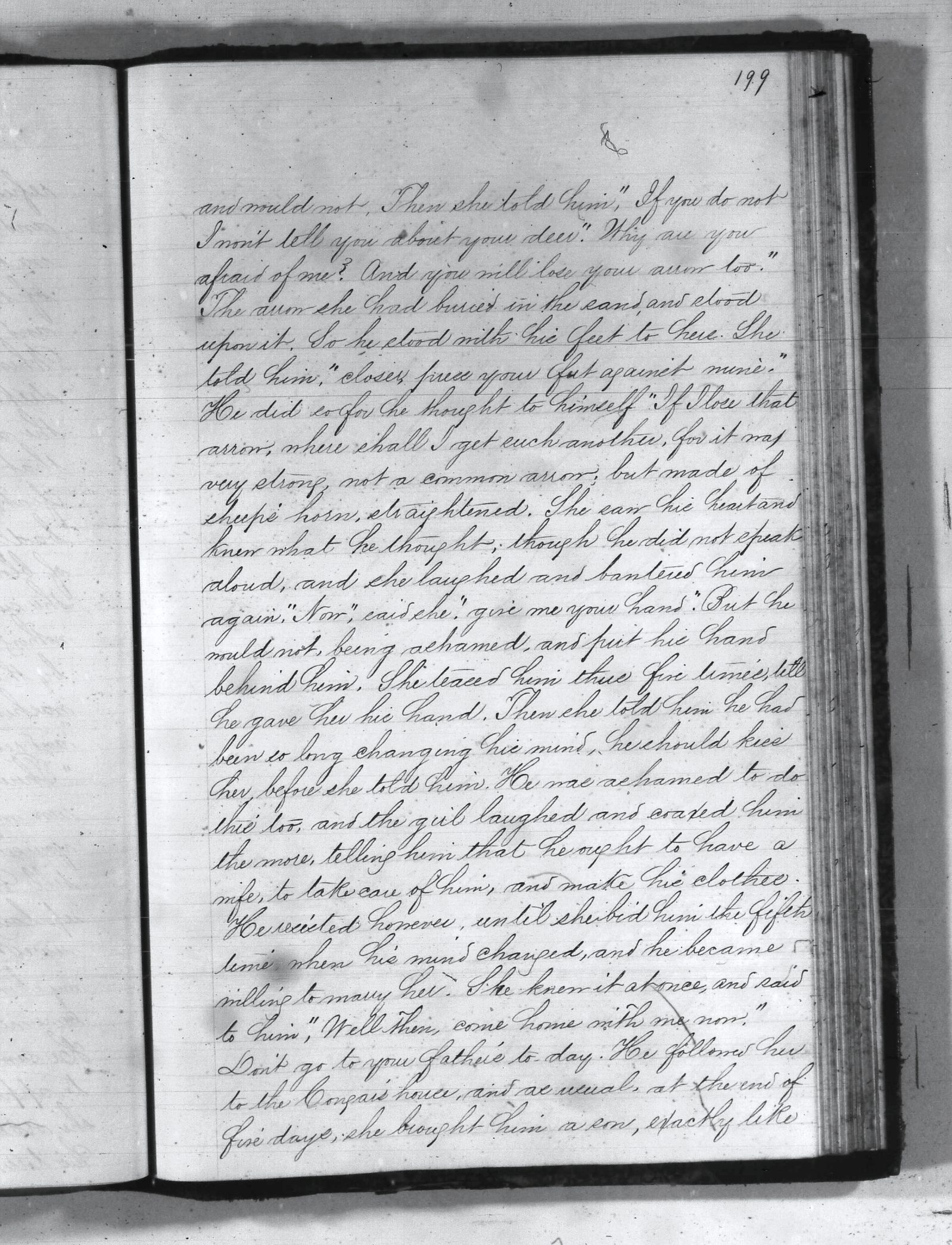
TALE: "The Story of Why-ei-ma" (cont.) — the courtship by fives; the arrow of sheep's horn. "If you do not I won't tell you about your deer. Why are you afraid of me? And you will lose your arrow too."; "The arrow she had buried in the sand, and stood upon it"; she says "closer, press your feet against mine"; he thinks "If I lose that arrow, where shall I get such another, for it was very strong, not a common arrow; but made of sheep's horn, straightened"; "She saw his heart and knew what he thought, though he did not speak aloud"; "Now, said she, give me your hand" — refused, "being ashamed, and put his hand behind him. She teased him thus five times, till he gave her his hand"; then a kiss, "and the girl laughed and coaxed him the more, telling him that he ought to have a wife, to take care of him, and make his clothes"; "He resisted however, until she bid him the fifth time, when his mind changed, and he became willing to marry her"; "Well then, come home with me now. Don't go to your father's to day"; "at the end of five days, she brought him a son, exactly like" No sketch or table.
Wisconsin Historical Society, Gibbs Family Papers, U.S. Mss Y, Micro 1117
Reel 2, frames 3848
Reel 2, frame 3848
Read beside the scan
AI first transcription from the evidence pack; not independently verified. Compare with the scan.
[mark at top centre, possibly "&" or a stray pen flourish]
and would not. Then she told him," If you do not
I won't tell you about your deer". Why are you
afraid of me? And you will lose your arrow too."
The arrow she had buried in the sand, and stood
upon it. So he stood with his feet to hers. She
told him, "closer, press your feet against mine."
He did so for he thought to himself "If I lose that
arrow, where shall I get such another, for it was
very strong, not a common arrow, but made of
sheep's horn, straightened. She saw his heart and
knew what he thought, though he did not speak
aloud, and she laughed and bantered him
again. "Now," said she, "give me your hand". But he
would not, being ashamed, and put his hand
behind him. She teased him thus five times, till
he gave her his hand. Then she told him he had
been so long changing his mind, he should kiss
her, before she told him. He was ashamed to do
this too, and the girl laughed and coaxed him
the more, telling him that he ought to have a
wife, to take care of him, and make his clothes.
He resisted however, until she bid him the fifth
time, when his mind changed, and he became
willing to marry her. She knew it at once, and said
to him, "Well then, come home with me now."
Don't go to your father's to-day. He followed her
to the Cougar's[?] house, and as usual, at the end of
five days, she brought him a son, exactly like
Citation and provenance
Gibbs, G., IV. (1856). [Manuscript volume, ms p. 199]. Gibbs Family Papers, 1763-1918 (U.S. Mss Y, Micro 1117, Reel 2, frame 3848). Wisconsin Historical Society Archives, Madison, WI, United States.
Citation details need editorial review.
Historical sources retain their individual rights and credits. A scan’s presence here does not establish unrestricted reuse.
People identified in the source catalog
These are catalog labels. Individual identities and relationships have not all been reviewed.
Where the book uses this document
No quotation has yet been assigned directly to this catalog record. Its individual frames may have separate connections.